

Epigenetic changes associated with multi-generational trauma: characterization, mechanisms, and therapeutics
Open accessThe DOI matches its Crossref record; 138 of the 138 references it cites were found in a registry or an index; 188 of the 272 sources its claims cite were checked for support.
Abstract
Trauma can contribute to lasting psychological, behavioral, and physiological effects that extend across generations. Intergenerational trauma refers to trauma-related effects observed in children of exposed parents, while transgenerational trauma describes effects observed in later generations without direct exposure. Proposed mechanisms involve interacting biological and psychosocial processes, including stress-responsive regulatory systems, epigenetic variation, and caregiving environments. This review synthesizes evidence on epigenetic changes associated with acute, chronic, and complex traumatic exposures and their relevance to multi-generational outcomes. Studies published between 1990 and 2025 were identified through PubMed and Google Scholar and evaluated for reported epigenetic findings, caregiving patterns, and offspring health outcomes. Across trauma contexts, reported epigenetic variation most consistently involves pathways related to stress-response regulation, immune-inflammatory signaling, neurodevelopment, metabolic processes, and developmental programming. Patterns across exposure types suggest that acute events are most often associated with stress-related and inflammatory signaling that may influence developmental programming, whereas chronic and complex trauma reflect cumulative physiological adaptation involving broader alterations in stress-regulatory, metabolic, and neurodevelopmental systems. Offspring outcomes most consistently include increased vulnerability to anxiety, depressive symptoms, stress-related disorders, and certain chronic medical conditions, often described alongside shifts in caregiving behaviors and psychosocial environments that may shape developmental vulnerability. Interpretation of the current literature is limited by small sample sizes, varying definitions of trauma, and limited multi-generational cohorts. Overall, current evidence supports a model in which trauma-related outcomes across generations reflect interacting biological and caregiving processes, highlighting the importance of integrated molecular and psychosocial frameworks for prevention and intervention.
Overview
CoChat Summary
## TL;DR
This review synthesizes evidence from 1990–2025 on how acute, chronic, and complex trauma may be associated with epigenetic variation and multi-generational outcomes. Across trauma contexts, the most consistent signals involve stress-response, immune-inflammatory, neurodevelopmental, and metabolic pathways, but the paper emphasizes that the evidence is associative rather than causal.
## Key findings
- The authors reviewed studies published between 1990 and 2025 using PubMed and Google Scholar and found that reported epigenetic variation most consistently involved stress-response regulation, immune-inflammatory signaling, neurodevelopment, metabolic processes, and developmental programming.
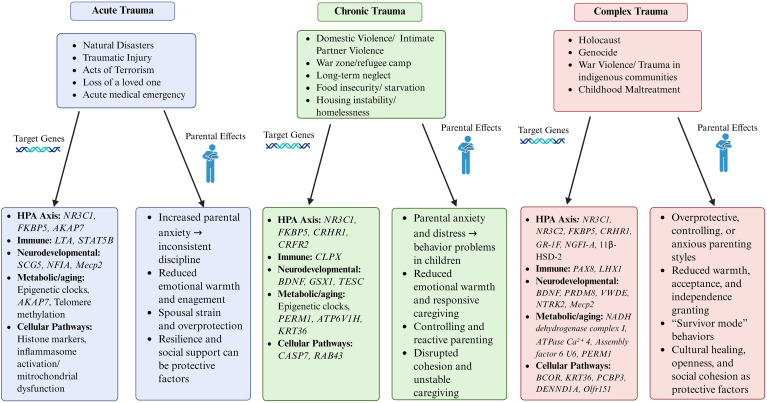
- Acute trauma was described as most often linked to stress-related and inflammatory signaling, especially when exposure occurred during pregnancy; for example, prenatal disaster or terrorism exposure was associated with lower baseline salivary cortisol, altered FKBP5 expression, and NR3C1 methylation changes.
- Chronic and complex trauma were described as involving broader cumulative adaptation across stress-regulatory, metabolic, circadian, and neurodevelopmental systems; examples include differential DNA methylation in NR3C1 and FKBP5 in genocide studies and altered methylation of BDNF, CLPX, and Mecp2 in chronic maltreatment or neglect models.
- Offspring outcomes most consistently included increased vulnerability to anxiety, depressive symptoms, stress-related disorders, and certain chronic medical conditions.
## Methods
- This is a review of multi-generational trauma literature, organized across acute, chronic, and complex trauma categories and also discussing treatment and limitations.
- The authors state that studies from 1990–2025 were identified through PubMed and Google Scholar, and that they were evaluated for epigenetic findings, caregiving patterns, and offspring health outcomes.
- The review synthesizes evidence from human studies and animal models, focusing mainly on DNA methylation, with additional discussion of histone modifications and noncoding RNAs.
## Limitations
- The paper explicitly notes candidate gene bias, sampling constraints, tissue specificity, temporal variability in epigenetic measurement, and uncertainty about the biological meaning of post-fertilization epigenetic reprogramming.
- It states that many human studies have small sample sizes, often fewer than 100 participants, and that this limits statistical power and generalizability.
- It also says many studies rely on peripheral tissues such as blood, saliva, or urine, which may not reflect brain or germline epigenetic processes.
- Evident from the text: the review is narrative/synthesizing rather than a primary empirical study, so its conclusions depend on the quality and heterogeneity of the underlying literature.
Model-written summary. Check it against the paper before relying on it.
Integrity signals
Registry
Cites
Statistics
Figures
Verification
Claims the paper makes
108 Valid · 5 Not valid · 34 Not checked · 44 Own results and interpretations
Some cited sources support this claim and some don’t — read each source’s verdict below.
In the paper
“Genocide exposure has also been associated with epigenetic variation in pathways involved in neurodevelopment and memory processing.”
§ Epigenetic changes associated with multi-generational trauma: characterization, mechanisms, and therapeutics > Complex trauma > Genocide
What the sources say
- Not checked — no full text of the sourcecites [88] Perroud, 2014, The Tutsi genocide and transgenerational transmission of maternal stress: Epigenetics and biology of the HPA axis, World J Biol Psychiatry source
- Partly supportedcites [89] Rudahindwa, 2018, Transgenerational effects of the genocide against the Tutsi in Rwanda: A post-traumatic stress disorder symptom domain analysis, AAS Open Res sourceExperimental — accuracy not yet measured
The Results (Secondary analyses of NR3C1 DNA methylation; page unavailable) associate methylation of NR3C1 with PTSD symptom domains in genocide-exposed mothers and their offspring. The Methods (DNA methylation measures; page unavailable) identify NR3C1 as the locus studied. The paper describes it as a stress-response gene, but does not establish epigenetic variation in pathways involved in neurodevelopment or memory processing. (LLM, conf=0.87)
- Disputedcites [90] Vukojevic, 2014, Epigenetic modification of the glucocorticoid receptor gene is linked to traumatic memory and post-traumatic stress disorder risk in genocide survivors, J Neurosci sourceExperimental — accuracy not yet measured
The Discussion reports that NR3C1 promoter methylation was not related to traumatic load and did not differ between Rwandan genocide survivors and unexposed healthy individuals. Although the paper links this methylation to memory processes, it does not support the claimed association between genocide exposure and epigenetic variation; it suggests the differences may have predated the trauma. (LLM, conf=0.88)
Checked by a reasoning model — may be wrong.
- Not checked — no full text of the sourcecites [91] Preuss, 2009, Post-learning psychosocial stress enhances consolidation of neutral stimuli, Neurobiol Learn Mem source
- Could not verifycites [92] Sep, 2023, Impaired learning, memory, and extinction in posttraumatic stress disorder: Translational meta-analysis of clinical and preclinical studies, Transl Psychiatry sourceExperimental — accuracy not yet measured
The Introduction (page unavailable) discusses individual differences in learning and memory after traumatic stress, but does not address genocide exposure or epigenetic variation. Searches for genocide exposure and epigenetic or methylation variation found no passage in our copy supporting that association. (LLM, conf=0.76)
plainstates an association- Asserted: passes — The authors put it forward as true.
- Checkable: passes — It can be checked against evidence.
- Load-bearing: passes — The paper’s conclusions depend on it.
- Based: passes — The paper gives a reason why it holds.
The cited sources support only part of this claim — read each source’s verdict below.
In the paper
“Multigenerational cohort data indicate parental bereavement corresponds with immune-related outcomes in offspring, including increased risk of asthma, allergic disease, and autoimmune conditions (45).”
§ Epigenetic changes associated with multi-generational trauma: characterization, mechanisms, and therapeutics > Acute trauma > Sudden loss of a loved one
What the sources say
- Partly supportedcites [45] Brew, 2022, Early-life adversity due to bereavement and inflammatory diseases in the next generation: A population study in transgenerational stress exposure, Am J Epidemiol sourceExperimental — accuracy not yet measured
The Results report increased early-onset asthma risk in offspring of women bereaved in childhood and increased autoimmune-disease risk in offspring of men bereaved in childhood. They do not support a general increase in allergic disease: other outcomes were largely unassociated, and the subgroup finding for atopic disease was not supported by further analyses of eczema and allergic rhinitis. Page numbers were not provided in our copy. (LLM, conf=0.90)
hedgedstates an association- Asserted: passes — The authors put it forward as true.
- Checkable: passes — It can be checked against evidence.
- Load-bearing: passes — The paper’s conclusions depend on it.
- Based: passes — The paper gives a reason why it holds.
- Partly supported
Every source the paper cites for this claim was checked and supports it.
In the paper
“Severe injury has been associated with widespread epigenetic alterations, particularly in inflammatory pathways.”
§ Epigenetic changes associated with multi-generational trauma: characterization, mechanisms, and therapeutics > Acute trauma > Traumatic injury
What the sources say
- Supportedcites [29] Eskesen, 2024, Severe traumatic injury is associated with profound changes in DNA methylation, NPJ Genom Med source
The Abstract reports 10,126 differentially methylated CpGs after severe trauma and says the affected sites were enriched in genes and pathways involved in inflammatory response. The Enrichment analyses section likewise identifies immune-system pathways among the most affected. Page numbers were not supplied in our copy. (LLM, conf=0.94)
plainstates an association- Asserted: passes — The authors put it forward as true.
- Checkable: passes — It can be checked against evidence.
- Load-bearing: unclear — It is unclear whether the paper’s conclusions depend on it.
- Based: passes — The paper gives a reason why it holds.
- Supported
The cited sources support only part of this claim — read each source’s verdict below.
In the paper
“Developmental timing appears to play an important role in shaping outcomes, as exposures occurring in utero or during early childhood, periods characterized by heightened biological plasticity, have been associated with more pronounced neurocognitive and psychological effects (7, 10, 11).”
§ Epigenetic changes associated with multi-generational trauma: characterization, mechanisms, and therapeutics > Introduction
What the sources say
- Partly supportedcites [7] Musanabaganwa, 2022, Leukocyte methylomic imprints of exposure to the genocide against the Tutsi in Rwanda: A pilot epigenome-wide analysis, Epigenomics sourceExperimental — accuracy not yet measured
Our copy supports only the in-utero half of the claim: the Discussion states that the in utero-associated DMRs 'may potentially serve as indicators of exposure to extreme trauma in utero that also influence offspring early development and help to predict the mental health status of the offspring', and the Abstract notes a growing body of research linking trauma exposure during pregnancy to offspring outcomes. However, no passage makes the comparative point the claim rests on — that exposures in utero or in early childhood produce MORE PRONOUNCED neurocognitive and psychological effects than exposures at other ages — and our copy nowhere invokes heightened biological plasticity or examines exposure during early childhood (the pilot design contrasts in utero exposure with no exposure, not different developmental periods). The parts of the attributed claim not supported are the developmental-timing comparison, the plasticity characterization, and the early-childhood exposure window. (LLM, conf=0.68)
- Partly supportedcites [10] Wang, 2022, Prenatal earthquake stress exposure in different gestational trimesters is associated with methylation changes in the glucocorticoid receptor gene (Nr3c1) and long-term working memory in adulthood, Transl Psychiatry sourceExperimental — accuracy not yet measured
The Introduction describes the foetal period as vulnerable to lasting cognitive effects and links early-life stress to emotional and cognitive outcomes. The Results report poorer adult memory after prenatal earthquake exposure, with differences by gestational trimester. The paper does not establish that early-childhood exposure has more pronounced neurocognitive or psychological effects than exposure at other ages. Page numbers were not available in our copy. (LLM, conf=0.84)
- Partly supportedcites [11] Li, 2023, Atypical brain structure and function in young adults exposed to disaster-related prenatal maternal stress: Project Ice Storm, J Neurosci Res sourceExperimental — accuracy not yet measured
Our copy supports only the in-utero half of the claim: the Introduction states that 'the consequences of PNMS on offspring brain structure and function vary with the timing of in-utero exposure' (citing Buss et al., 2010 at 19 vs 25/31 weeks, and Scheinost et al., 2020 for 2nd vs 3rd trimester), and the Discussion (Sec. 4) speaks of 'an important vulnerability window in the 3 months prior to conception' and that 'there may be more than one sensitive exposure period', with Sec. 3.4 reporting a timing-by-distress interaction on left occipital pole thickness (p = .0006). What is not in our copy: any exposure during early childhood (the study covers preconception through birth only), and any comparative statement that such early exposures produce MORE PRONOUNCED neurocognitive and psychological effects than exposures at other ages — the reported outcomes are cortical thickness, gray matter volume and resting-state functional connectivity, and the paper explicitly notes that linking these to behavioral outcomes would add relevance. The 'heightened biological plasticity' framing is also absent; the paper's rationale is gestational-age-specific cortical growth (Rakic, 1988; Zecevic et al., 2005). (LLM, conf=0.72)
hedgedstates an association- Asserted: passes — The authors put it forward as true.
- Checkable: passes — It can be checked against evidence.
- Load-bearing: unclear — It is unclear whether the paper’s conclusions depend on it.
- Based: passes — The paper gives a reason why it holds.
- Rests on an assumption not shown here.
- Partly supported
The cited sources support only part of this claim — read each source’s verdict below.
In the paper
“Reduced expression of FKBP5, a regulator of glucocorticoid signaling, has also been reported following prenatal psychological stress (38).”
§ Epigenetic changes associated with multi-generational trauma: characterization, mechanisms, and therapeutics > Acute trauma > Acts of terrorism
What the sources say
- Partly supportedcites [38] Yehuda, 2009, Gene expression patterns associated with posttraumatic stress disorder following exposure to the World Trade Center attacks, Biol Psychiatry sourceExperimental — accuracy not yet measured
The Results and Discussion report significantly reduced FKBP5 expression in people with PTSD after exposure to the World Trade Center attacks, and the Discussion identifies FKBP5 as an inhibitor of glucocorticoid receptor activity. The paper does not report reduced FKBP5 expression following prenatal psychological stress; that condition is not the one studied. (LLM, conf=0.88)
plainstates an association- Asserted: passes — The authors put it forward as true.
- Checkable: passes — It can be checked against evidence.
- Load-bearing: unclear — It is unclear whether the paper’s conclusions depend on it.
- Based: passes — The paper gives a reason why it holds.
- Partly supported
123 more claims · 70 with their cited sources checked
Create a free account to see all 191 claims and to verify the 19 references still open.
- Probably not a substantial claim. 11
- It may state two separate claims as one. 56
Citations
Cites
Epigenetic regulation of the glucocorticoid receptor in human brain associates with childhood abuse
McGowan, P. O., Sasaki, A., D'Alessio, A. C., Dymov, S., Labonté, B., Szyf, M., Turecki, G., & Meaney, M. J. (2009) · Nature Neuroscience · doi:10.1038/nn.2270 · Cited by 3,531 · cited 1×
“Increased methylation of the NR3C1 promoter and reduced glucocorticoid receptor expression have been observed in hippocampal tissue of suicide completers with histories of maltreatment (119, 120).”
Allele-specific FKBP5 DNA demethylation mediates gene–childhood trauma interactions
Klengel, T., Mehta, D., Anacker, C., Rex-Haffner, M., Pruessner, J. C., Pariante, C. M., Pace, T. W. W., Mercer, K. B., Mayberg, H. S., Bradley, B., et al. (2013) · Nature Neuroscience · doi:10.1038/nn.3275 · Cited by 1,447 · cited 3×
“Lower methylation of FKBP5 has been associated with structural variation in brain regions involved in emotional regulation (120, 121).”
Implication of sperm RNAs in transgenerational inheritance of the effects of early trauma in mice
Gapp, K., Jawaid, A., Sarkies, P., Bohacek, J., Pelczar, P., Prados, J., Farinelli, L., Miska, E., & Mansuy, I. M. (2014) · Nature Neuroscience · doi:10.1038/nn.3695 · Cited by 1,306 · cited 8×
“Similar RNA changes were detected in offspring tissues, including brain and serum (116).”
InfluentialEpigenetic transmission of the impact of early stress across generations
Franklin, T. B., Russig, H., Weiss, I. C., Gräff, J., Linder, N., Michalon, A., Vizi, S., & Mansuy, I. M. (2010) · Biological Psychiatry · doi:10.1016/j.biopsych.2010.05.036 · Cited by 1,125 · cited 2×
“These fi ndings include epigenetic modulation of genes involved in synaptic and stress signaling, including Mecp2 , CB1 , and CRFR2 , with methylation differences observed in both germline and neural tissues (64).”
Whitaker, R. C., Phillips, S. M., & Orzol, S. M. (2006) · Pediatrics · doi:10.1542/peds.2006-0239 · Cited by 817
Holocaust Exposure Induced Intergenerational Effects on FKBP5 Methylation
Yehuda, R., Daskalakis, N. P., Bierer, L. M., Bader, H. N., Klengel, T., Holsboer, F., & Binder, E. B. (2016) · Biological Psychiatry · doi:10.1016/j.biopsych.2015.08.005 · Cited by 782 · cited 5×
“FKBP5 methylation differences have been reported across multiple trauma contexts in both survivors and offspring, raising the possibility that stress-response regulatory genes may help distinguish individuals more likely to bene fi t from speci fi c interventions (38, 66, 83, 84, 136).”
InfluentialIntergenerational transmission of trauma effects: putative role of epigenetic mechanisms
Yehuda, R., & Lehrner, A. (2018) · World Psychiatry · doi:10.1002/wps.20568 · Cited by 730
Yehuda, R., Engel, S. M., Brand, S. R., Seckl, J., Marcus, S. M., & Berkowitz, G. S. (2005) · The Journal of Clinical Endocrinology & Metabolism · doi:10.1210/jc.2005-0550 · Cited by 711 · cited 2×
“Following the September 11 attacks, infants born to mothers with PTSD who were directly exposed to the World Trade Center demonstrated lower baseline salivary cortisol levels, particularly with third-trimester exposure (36).”
Alegría-Torres, J. A., Baccarelli, A., & Bollati, V. (2011) · Epigenomics · doi:10.2217/epi.11.22 · Cited by 587 · cited 1×
“However, lifestyle and behavioral factors known to in fl uence epigenetic regulation, including diet, sleep, stress management, and substance use, may represent modi fi able contributors to biological vulnerability (128).”
Placental 11β‐hydroxysteroid dehydrogenase: a key regulator of fetal glucocorticoid exposure
Benediktsson, R., Calder, A. A., Edwards, C. R. W., & Seckl, J. R. (1997) · Clinical Endocrinology · doi:10.1046/j.1365-2265.1997.1230939.x · Cited by 536
Perroud, N., Paoloni-Giacobino, A., Prada, P., Olié, E., Salzmann, A., Nicastro, R., Guillaume, S., Mouthon, D., Stouder, C., Dieben, K., et al. (2011) · Translational Psychiatry · doi:10.1038/tp.2011.60 · Cited by 516 · cited 2×
“Childhood neglect has been associated with increased methylation of NR3C1 , corresponding with altered glucocorticoid signaling and reduced fl exibility of HPA axis regulation (65).”
Yehuda, R., Daskalakis, N. P., Lehrner, A., Desarnaud, F., Bader, H. N., Makotkine, I., Flory, J. D., Bierer, L. M., & Meaney, M. J. (2014) · American Journal of Psychiatry · doi:10.1176/appi.ajp.2014.13121571 · Cited by 514 · cited 7×
“Divergent patterns have been observed depending on parental PTSD status, with paternal PTSD in the absence of maternal PTSD associated with increased methylation of NR3C1 in offspring, whereas combined maternal and paternal PTSD has been associated with decreased methylation (82).”
InfluentialIntergenerational transmission and prevention of adverse childhood experiences (ACEs)
Narayan, A. J., Lieberman, A. F., & Masten, A. S. (2021) · Clinical psychology review · doi:10.1016/j.cpr.2021.101997 · Cited by 436 · cited 2×
“These fi ndings indicate that structured, relationship-centered programs can improve caregiving functioning and child emotional outcomes in families affected by intergenerational trauma (125, 130, 131).”
Laplante, D. P., Brunet, A., Schmitz, N., Ciampi, A., & King, S. (2008) · Journal of the American Academy of Child & Adolescent Psychiatry · doi:10.1097/chi.0b013e31817eec80 · Cited by 424
Ivy, A. S., Brunson, K. L., Sandman, C., & Baram, T. Z. (2008) · Neuroscience · doi:10.1016/j.neuroscience.2008.04.019 · Cited by 407 · cited 2×
“These models show heightened stress reactivity, impaired emotional regulation, and persistent behavioral differences associated with altered expression of stress-related genes (63).”
Stress and birth weight: Evidence from terrorist attacks
Camacho, A. (2008) · American Economic Review · doi:10.1257/aer.98.2.511 · Cited by 397 · cited 1×
“At the population level, prenatal terrorism exposure has been associated with increased schizophrenia risk and lower birth weight, further suggesting sensitivity of fetal neurodevelopment and growth to maternal stress physiology (40, 41).”
Labonte, B., Yerko, V., Gross, J., Mechawar, N., Meaney, M. J., Szyf, M., & Turecki, G. (2012) · Biological Psychiatry · doi:10.1016/j.biopsych.2012.01.034 · Cited by 345
Perroud, N., Rutembesa, E., Paoloni-Giacobino, A., Mutabaruka, J., Mutesa, L., Stenz, L., Malafosse, A., & Karege, F. (2014) · The World Journal of Biological Psychiatry · doi:10.3109/15622975.2013.866693 · Cited by 336 · cited 4×
“For example, increased methylation of NR3C1 has been reported in both earthquake survivors and survivors of the Tutsi genocide, yet associations with cognitive and psychiatric outcomes differ across contexts (10, 88).”
Influentialvan IJzendoorn, M. H., Bakermans‐Kranenburg, M. J., & Sagi‐Schwartz, A. (2003) · Journal of Traumatic Stress · doi:10.1023/a:1025706427300 · Cited by 328
Cao-Lei, L., Massart, R., Suderman, M. J., Machnes, Z., Elgbeili, G., Laplante, D. P., Szyf, M., & King, S. (2014) · PLoS ONE · doi:10.1371/journal.pone.0107653 · Cited by 321
Yehuda, R., Cai, G., Golier, J. A., Sarapas, C., Galea, S., Ising, M., Rein, T., Schmeidler, J., Müller-Myhsok, B., Holsboer, F., et al. (2009) · Biological Psychiatry · doi:10.1016/j.biopsych.2009.02.034 · Cited by 294 · cited 3×
“Reduced expression of FKBP5 , a regulator of glucocorticoid signaling, has also been reported following prenatal psychological stress (38).”
Eltanamly, H., Leijten, P., Jak, S., & Overbeek, G. (2021) · Trauma, Violence, & Abuse · doi:10.1177/1524838019833001 · Cited by 236 · cited 1×
“Across con fl ict-affected populations, exposure to active combat or chronic threat has been associated with harsh, inconsistent, diminished warmth, or overprotective parenting patterns (113 – 115).”
Chemtob, C. M., Nomura, Y., Rajendran, K., Yehuda, R., Schwartz, D., & Abramovitz, R. (2010) · Child Development · doi:10.1111/j.1467-8624.2010.01458.x · Cited by 229 · cited 1×
“Maternal PTSD and depression have been associated with increased emotional and behavioral vulnerability in children, including emotional reactivity and aggression (42).”
Hurley, K. M., Black, M. M., Papas, M. A., & Caufield, L. E. (2008) · The Journal of Nutrition · doi:10.1093/jn/138.4.799 · Cited by 212
Dashorst, P., Mooren, T. M., Kleber, R. J., de Jong, P. J., & Huntjens, R. J. C. (2019) · European Journal of Psychotraumatology · doi:10.1080/20008198.2019.1654065 · Cited by 207 · cited 1×
“Across genocide-affected populations, parental exposure has been associated with altered caregiving patterns characterized by overprotection, controlling behaviors, diminished warmth, and role-reversal dynamics (94 – 97, 100).”
SCHARF, M. (2007) · Development and Psychopathology · doi:10.1017/s0954579407070290 · Cited by 201
Gapp, K., van Steenwyk, G., Germain, P. L., Matsushima, W., Rudolph, K. L. M., Manuella, F., Roszkowski, M., Vernaz, G., Ghosh, T., Pelczar, P., et al. (2020) · Molecular Psychiatry · doi:10.1038/s41380-018-0271-6 · Cited by 195
van Zuiden, M., Geuze, E., Willemen, H. L. D. M., Vermetten, E., Maas, M., Heijnen, C. J., & Kavelaars, A. (2011) · American Journal of Psychiatry · doi:10.1176/appi.ajp.2010.10050706 · Cited by 190 · cited 1×
“Functional alterations in cortisol metabolism, including reduced cortisol excretion in survivors and increased activity of cortisol-inactivating enzymes in offspring, have also been described (82, 85).”
Field, N. P., Muong, S., & Sochanvimean, V. (2013) · American Journal of Orthopsychiatry · doi:10.1111/ajop.12057 · Cited by 174 · cited 1×
“Across genocide-affected populations, parental exposure has been associated with altered caregiving patterns characterized by overprotection, controlling behaviors, diminished warmth, and role-reversal dynamics (94 – 97, 100).”
Nomura, Y., Lambertini, L., Rialdi, A., Lee, M., Mystal, E. Y., Grabie, M., Manaster, I., Huynh, N., Finik, J., Davey, M., et al. (2014) · Reproductive Sciences · doi:10.1177/1933719113492206 · Cited by 169 · cited 1×
“Differences in placental methylation and in fl ammatory signaling across pregnancy complications suggest disruption of coordinated maternal-placental regulation may represent a primary mechanism in fl uencing fetal developmental programming (52).”
Vukojevic, V., Kolassa, I.-T., Fastenrath, M., Gschwind, L., Spalek, K., Milnik, A., Heck, A., Vogler, C., Wilker, S., Demougin, P., et al. (2014) · Journal of Neuroscience · doi:10.1523/jneurosci.1526-14.2014 · Cited by 168 · cited 1×
“Variation at the NGFI-A binding site of NR3C1 has been associated with altered memory processing and sex-speci fi c differences in PTSD risk, with reduced intrusive recall observed in males and lower PTSD risk reported in females (90, 91).”
Transmission of risk from parents with chronic pain to offspring: An integrative conceptual model
Stone, A. L., & Wilson, A. C. (2016) · Pain · doi:10.1097/j.pain.0000000000000637 · Cited by 165
BRAND, S. R., ENGEL, S. M., CANFIELD, R. L., & YEHUDA, R. (2006) · Annals of the New York Academy of Sciences · doi:10.1196/annals.1364.041 · Cited by 163 · cited 1×
“Maternal cortisol levels were associated with infant behavioral responses to novelty (37).”
Bezo, B., & Maggi, S. (2015) · Social Science & Medicine · doi:10.1016/j.socscimed.2015.04.009 · Cited by 161 · cited 2×
“Speci fi c epigenetic mechanisms were not identi fi ed in these reports, although the persistence of these behavioral patterns across generations may re fl ect stress-response and metabolic adaptation (93).”
Cruz, D., Lichten, M., Berg, K., & George, P. (2022) · Frontiers in Psychiatry · doi:10.3389/fpsyt.2022.800687 · Cited by 158 · cited 2×
“Dysfunctional parenting styles encompass patterns such as overprotection, abuse, indifference, inconsistent discipline, and emotional withdrawal (17, 18).”
Paternal grandfather’s access to food predicts all-cause and cancer mortality in grandsons
Vågerö, D., Pinger, P. R., Aronsson, V., & van den Berg, G. J. (2018) · Nature Communications · doi:10.1038/s41467-018-07617-9 · Cited by 150
Tozzi, L., Farrell, C., Booij, L., Doolin, K., Nemoda, Z., Szyf, M., Pomares, F. B., Chiarella, J., O'Keane, V., & Frodl, T. (2018) · Neuropsychopharmacology · doi:10.1038/npp.2017.290 · Cited by 146
Genetic markers for PTSD risk and resilience among survivors of the World Trade Center attacks
Sarapas (2011) · PubMed · doi:10.3233/dma-2011-0764 · Cited by 143 · cited 2×
“Altered expression of genes involved in neural development and emotional regulation, including NFIA , has also been reported (39).”
Genetic markers for PTSD risk and resilience among survivors of the World Trade Center attacks
Sarapas, C., Cai, G., Bierer, L. M., Golier, J. A., Galea, S., Ising, M., Rein, T., Schmeidler, J., Müller-Myhsok, B., Uhr, M., et al. (2011) · Disease Markers · doi:10.1155/2011/328054 · Cited by 143
Rutten, B. P. F., Vermetten, E., Vinkers, C. H., Ursini, G., Daskalakis, N. P., Pishva, E., de Nijs, L., Houtepen, L. C., Eijssen, L., Jaffe, A. E., et al. (2018) · Molecular Psychiatry · doi:10.1038/mp.2017.120 · Cited by 142 · cited 16×
“Divergent patterns have been observed depending on parental PTSD status, with paternal PTSD in the absence of maternal PTSD associated with increased methylation of NR3C1 in offspring, whereas combined maternal and paternal PTSD has been associated with decreased methylation (82).”
InfluentialPreventing intergenerational trauma transmission: A critical interpretive synthesis
Isobel, S., Goodyear, M., Furness, T., & Foster, K. (2019) · Journal of Clinical Nursing · doi:10.1111/jocn.14735 · Cited by 130 · cited 5×
“Prevention remains a central strategy for reducing intergenerational risk, particularly when it targets unresolved trauma symptoms and early relational functioning (19).”
InfluentialRoth, M., Neuner, F., & Elbert, T. (2014) · International Journal of Mental Health Systems · doi:10.1186/1752-4458-8-12 · Cited by 129
Prenatal maternal immune activation causes epigenetic differences in adolescent mouse brain
Basil, P., Li, Q., Dempster, E. L., Mill, J., Sham, P.-C., Wong, C. C. Y., & McAlonan, G. M. (2014) · Translational Psychiatry · doi:10.1038/tp.2014.80 · Cited by 116 · cited 1×
“Maternal immune activation models similarly demonstrate global DNA methylation differences affecting genes involved in synaptic development and neural plasticity, suggesting in fl ammation-mediated signaling may in fl uence fetal development (50).”
Intergenerational transmission of paternal trauma among US Civil War ex-POWs
Costa, D. L., Yetter, N., & DeSomer, H. (2018) · Proceedings of the National Academy of Sciences · doi:10.1073/pnas.1803630115 · Cited by 111 · cited 1×
“Population-level studies further suggest intergenerational stress-related effects of war trauma, including higher psychiatric hospitalization rates among daughters of evacuated Finnish mothers and increased mortality among sons of former prisoners of war (107, 108).”
Sim, A., Bowes, L., & Gardner, F. (2018) · Global Mental Health · doi:10.1017/gmh.2018.33 · Cited by 108 · cited 2×
“Chronic displacement is associated with caregiver psychological distress, emotional dysregulation, and reduced caregiving stability (61, 62).”
Parenting, parental mental health, and child functioning in families residing in supportive housing.
Gewirtz, A. H., DeGarmo, D. S., Plowman, E. J., August, G., & Realmuto, G. (2009) · American Journal of Orthopsychiatry · doi:10.1037/a0016732 · Cited by 105 · cited 1×
“Chronic housing instability is associated with elevated caregiver stress, altered emotional regulation, and competing survival demands, which may in fl uence caregiving consistency and responsiveness (80).”
Mapping epigenetic modifications by sequencing technologies
Chen, X., Xu, H., Shu, X., & Song, C.-X. (2025) · Cell Death & Differentiation · doi:10.1038/s41418-023-01213-1 · Cited by 105
Stein, A. D., Pierik, F. H., Verrips, G. H. W., Susser, E. S., & Lumey, L. H. (2009) · Epidemiology · doi:10.1097/ede.0b013e3181b5f227 · Cited by 103 · cited 1×
“Prenatal famine exposure corresponds with long-term variation in cognitive and emotional regulation consistent with altered neural and glucocorticoid signaling pathways (69, 70).”
Cao-Lei, L., Elgbeili, G., Massart, R., Laplante, D. P., Szyf, M., & King, S. (2015) · Translational Psychiatry · doi:10.1038/tp.2015.13 · Cited by 98 · cited 1×
“The magnitude of these effects appears to re fl ect interaction between objective exposure severity and maternal subjective perception, suggesting coordinated in fl uence of physiological and environmental signaling (22).”
Conger, R. D., Schofield, T. J., Neppl, T. K., & Merrick, M. T. (2013) · Journal of Adolescent Health · doi:10.1016/j.jadohealth.2013.03.014 · Cited by 94 · cited 1×
“Paternal maltreatment history has been associated with increased externalizing behaviors in offspring, partially mediated by harsh parenting (123).”
Post-learning psychosocial stress enhances consolidation of neutral stimuli
Preuß, D., & Wolf, O. T. (2009) · Neurobiology of Learning and Memory · doi:10.1016/j.nlm.2009.03.009 · Cited by 93 · cited 1×
“Variation at the NGFI-A binding site of NR3C1 has been associated with altered memory processing and sex-speci fi c differences in PTSD risk, with reduced intrusive recall observed in males and lower PTSD risk reported in females (90, 91).”
Letourneau, N., Tryphonopoulos, P., Giesbrecht, G., Dennis, C.-L., Bhogal, S., & Watson, B. (2015) · Infant Mental Health Journal · doi:10.1002/imhj.21525 · Cited by 87 · cited 1×
“Attachment-based approaches that strengthen caregiver attentiveness and re fl ective functioning during the postpartum period have been associated with improved attachment outcomes in high-risk families, which may reduce downstream developmental vulnerability (127).”
Intergenerational Effects of Maternal Holocaust Exposure on FKBP5 Methylation
Bierer, L. M., Bader, H. N., Daskalakis, N. P., Lehrner, A., Provençal, N., Wiechmann, T., Klengel, T., Makotkine, I., Binder, E. B., & Yehuda, R. (2020) · American Journal of Psychiatry · doi:10.1176/appi.ajp.2019.19060618 · Cited by 86 · cited 4×
“Variation in FKBP5 methylation across intronic regions has also been reported, with opposite directional patterns observed in survivors and their offspring, corresponding with differences in FKBP5 expression and glucocorticoid receptor sensitivity (83, 84).”
InfluentialWong, V. S., & Langley, B. (2016) · Neuroscience Letters · doi:10.1016/j.neulet.2016.04.009 · Cited by 85
In vitro reconstitution of epigenetic reprogramming in the human germ line
Murase, Y., Yokogawa, R., Yabuta, Y., Nagano, M., Katou, Y., Mizuyama, M., Kitamura, A., Puangsricharoen, P., Yamashiro, C., Hu, B., et al. (2024) · Nature · doi:10.1038/s41586-024-07526-6 · Cited by 80
The effect of parental traumatic brain injury on parenting and child behavior
Uysal, S., Hibbard, M. R., Robillard, D., Pappadopulos, E., & Jaffe, M. (1998) · Journal of Head Trauma Rehabilitation · doi:10.1097/00001199-199812000-00007 · Cited by 71
Goodman, R. D., & West-Olatunji, C. A. (2008) · Journal of Mental Health Counseling · doi:10.17744/mehc.30.2.q52260n242204r84 · Cited by 69
Gustafsson, H., Coffman, J. L., & Cox, M. J. (2015) · Psychology of Violence · doi:10.1037/a0037971 · Cited by 68 · cited 2×
“Evidence across IPV-related exposures implicates interacting biological systems, particularly stress-response regulation, neurodevelopmental signaling, metabolic processes, and immune-in fl ammatory activity (54 – 57).”
Association of Eviction With Adverse Birth Outcomes Among Women in Georgia, 2000 to 2016
Himmelstein, G., & Desmond, M. (2021) · JAMA Pediatrics · doi:10.1001/jamapediatrics.2020.6550 · Cited by 68 · cited 1×
“Maternal exposure to eviction has been associated with altered fetal growth and shortened gestation, suggesting disruption of placental, metabolic, and endocrine regulation (79).”
DNA methylation of FKBP5 and response to exposure-based psychological therapy
Roberts, S., Keers, R., Breen, G., Coleman, J. R. I., Jöhren, P., Kepa, A., Lester, K. J., Margraf, J., Scheider, S., Teismann, T., et al. (2019) · American Journal of Medical Genetics Part B: Neuropsychiatric Genetics · doi:10.1002/ajmg.b.32650 · Cited by 67 · cited 4×
“As trauma biology becomes better characterized, there is also growing interest in whether trauma-associated epigenetic pro fi les could help re fi ne treatment selection or predict response (136, 137).”
InfluentialRamo-Fernández, L., Boeck, C., Koenig, A. M., Schury, K., Binder, E. B., Gündel, H., Fegert, J. M., Karabatsiakis, A., & Kolassa, I.-T. (2019) · Scientific Reports · doi:10.1038/s41598-018-36689-2 · Cited by 67 · cited 2×
“Coordinated epigenetic variation across multiple stress-regulatory genes, including FKBP5 and CRHR1 , supports system-level modulation of stress-response pathways, although variability across generations suggests transmission may depend on environmental context (66).”
Maternal Exposure to the Holocaust and Health Complaints in Offspring
Flory, J. D., Bierer, L. M., & Yehuda, R. (2011) · Disease Markers · doi:10.1155/2011/250470 · Cited by 67
Boričević Maršanić, V., Aukst Margetić, B., Jukić, V., Matko, V., & Grgić, V. (2014) · European Child & Adolescent Psychiatry · doi:10.1007/s00787-013-0462-2 · Cited by 63 · cited 3×
“These caregiving styles have corresponded with increased internalizing and externalizing symptoms in offspring, reduced parental bonding, and family dysfunction (114, 115).”
Multigenerational epigenetic inheritance: One step forward, two generations back
Tuscher, J. J., & Day, J. J. (2019) · Neurobiology of Disease · doi:10.1016/j.nbd.2019.104591 · Cited by 63 · cited 1×
“Alterations across stress-regulatory, neurodevelopmental, immune, and metabolic systems have been linked to increased vulnerability to post-traumatic stress disorder (PTSD), depression, anxiety, suicide, and chronic medical conditions, including metabolic syndrome and immune dysregulation (12).”
Maternal critical care: what can we learn from patient experience? A qualitative study
Hinton, L., Locock, L., & Knight, M. (2015) · BMJ Open · doi:10.1136/bmjopen-2014-006676 · Cited by 62 · cited 4×
“Neurological injury and chronic pain have been associated with reduced emotional availability, lower parental engagement, and inconsistent caregiving, patterns linked to increased emotional and behavioral dif fi culties in children (32, 33).”
InfluentialDalgaard, N. T., Diab, S. Y., Montgomery, E., Qouta, S. R., & Punamäki, R.-L. (2019) · Transcultural Psychiatry · doi:10.1177/1363461518824430 · Cited by 61 · cited 1×
“Parental communication that contextualizes war experiences has been associated with lower psychiatric stress and PTSD symptoms in offspring (134).”
Bierer, L. M., Bader, H. N., Daskalakis, N. P., Lehrner, A. L., Makotkine, I., Seckl, J. R., & Yehuda, R. (2014) · Psychoneuroendocrinology · doi:10.1016/j.psyneuen.2014.06.001 · Cited by 57
Whole-genome DNA methylation status associated with clinical PTSD measures of OIF/OEF veterans
Hammamieh, R., Chakraborty, N., Gautam, A., Muhie, S., Yang, R., Donohue, D., Kumar, R., Daigle, B. J., Zhang, Y., Amara, D. A., et al. (2017) · Translational Psychiatry · doi:10.1038/tp.2017.129 · Cited by 57 · cited 2×
“Differential methylation of sleep and circadian genes such as PAX8 and LHX1 has been reported in veterans with PTSD (103, 109 – 111).”
Rosenblum, K., Lawler, J., Alfafara, E., Miller, N., Schuster, M., & Muzik, M. (2017) · Child Psychiatry & Human Development · doi:10.1007/s10578-017-0757-5 · Cited by 54 · cited 2×
“These fi ndings indicate that structured, relationship-centered programs can improve caregiving functioning and child emotional outcomes in families affected by intergenerational trauma (125, 130, 131).”
Huang, C., Li, Z., Venkat Narayan, K. M., Williamson, D. F., & Martorell, R. (2010) · Journal of Developmental Origins of Health and Disease · doi:10.1017/s2040174410000504 · Cited by 53
Epigenetic reprogramming in mice and humans: From fertilization to primordial germ cell development
Singh, A., Rappolee, D. A., & Ruden, D. M. (2023) · Cells · doi:10.3390/cells12141874 · Cited by 50
African-American homeless and low-income housed mothers: Comparison of parenting practices.
Koblinsky, S. A., Morgan, K. M., & Anderson, E. A. (1997) · American Journal of Orthopsychiatry · doi:10.1037/h0080209 · Cited by 49 · cited 3×
“Disrupted routines and environmental unpredictability may further affect early neurobehavioral regulation and stress-response development in children (81).”
Klarić, M., Frančišković, T., Klarić, B., Kvesić, A., Kaštelan, A., Graovac, M., & Diminić Lisica, I. (2008) · Croatian medical journal · doi:10.3325/cmj.2008.4.491 · Cited by 48
Santavirta, T., Santavirta, N., & Gilman, S. E. (2018) · JAMA Psychiatry · doi:10.1001/jamapsychiatry.2017.3511 · Cited by 48 · cited 1×
“Population-level studies further suggest intergenerational stress-related effects of war trauma, including higher psychiatric hospitalization rates among daughters of evacuated Finnish mothers and increased mortality among sons of former prisoners of war (107, 108).”
Transgenerational epigenetic inheritance of traumatic experience in mammals
Švorcová, J. (2023) · Genes · doi:10.3390/genes14010120 · Cited by 47
Slone, M., & Shoshani, A. (2017) · Frontiers in Psychology · doi:10.3389/fpsyg.2017.01397 · Cited by 43
Reduced representation bisulfite sequencing (RRBS)
Nakabayashi, K., Yamamura, M., Haseagawa, K., & Hata, K. (2023) · Methods in Molecular Biology · doi:10.1007/978-1-0716-2724-2_3 · Cited by 42
Wilker, S., Vukojevic, V., Schneider, A., Pfeiffer, A., Inerle, S., Pauly, M., Elbert, T., Papassotiropoulos, A., de Quervain, D., & Kolassa, I.-T. (2023) · Translational Psychiatry · doi:10.1038/s41398-023-02316-6 · Cited by 42 · cited 2×
“As trauma biology becomes better characterized, there is also growing interest in whether trauma-associated epigenetic pro fi les could help re fi ne treatment selection or predict response (136, 137).”
Bedont, J. L., LeGates, T. A., Buhr, E., Bathini, A., Ling, J. P., Bell, B., Wu, M. N., Wong, P. C., Van Gelder, R. N., Mongrain, V., et al. (2017) · Current Biology · doi:10.1016/j.cub.2016.11.008 · Cited by 41
Sep, M. S. C., Geuze, E., & Joëls, M. (2023) · Translational Psychiatry · doi:10.1038/s41398-023-02660-7 · Cited by 39 · cited 2×
“Methylation differences in survivors of the Tutsi genocide and related con fl icts have been reported in genes regulating synaptic plasticity, neurotrophic signaling, and early developmental programming (88 – 92).”
Mulligan, C. J., Quinn, E. B., Hamadmad, D., Dutton, C. L., Nevell, L., Binder, A. M., Panter-Brick, C., & Dajani, R. (2025) · Scientific Reports · doi:10.1038/s41598-025-89818-z · Cited by 36 · cited 4×
“These molecular patterns vary by trauma type, exposure timing, and biological sex, indicating context-dependent regulatory responses rather than uniform biological effects (59).”
InfluentialMusanabaganwa, C., Wani, A. H., Donglasan, J., Fatumo, S., Jansen, S., Mutabaruka, J., Rutembesa, E., Uwineza, A., Hermans, E. J., Roozendaal, B., et al. (2022) · Epigenomics · doi:10.2217/epi-2021-0310 · Cited by 35
Familial Loss of a Loved One and Biological Aging: NIMHD Social Epigenomics Program
Aiello, A. E., Mishra, A. A., Martin, C. L., Levitt, B., Gaydosh, L., Belsky, D. W., Hummer, R. A., Umberson, D. J., & Harris, K. M. (2024) · JAMA Network Open · doi:10.1001/jamanetworkopen.2024.21869 · Cited by 35 · cited 3×
“Individuals exposed to repeated major losses demonstrate faster progression on DNA methylation-based aging clocks such as PhenoAge, GrimAge, and DunedinPACE (44).”
Yahyavi, S. T., Zarghami, M., Naghshvar, F., & Danesh, A. (2015) · Revista Brasileira de Psiquiatria · doi:10.1590/1516-4446-2014-1414 · Cited by 34 · cited 2×
“These exposures have been associated with coordinated alterations in stress-response regulation, circadian and sleep-related pathways, and metabolic processes (102 – 115).”
The biological impacts of Indigenous residential school attendance on the next generation
Chief Moon-Riley, K., Copeland, J. L., Metz, G. A. S., & Currie, C. L. (2019) · SSM - Population Health · doi:10.1016/j.ssmph.2018.100343 · Cited by 34 · cited 1×
“Similarly, maternal exposure to Canadian residential schools has been linked to higher cortisol, catecholamines, and in fl ammatory cytokine levels in offspring, including cases in which offspring were not raised by their biological parents (104, 105).”
The Aftermath of Combat-Related PTSD: Toward an Understanding of Transgenerational Trauma
Pearrow, M., & Cosgrove, L. (2009) · Communication Disorders Quarterly · doi:10.1177/1525740108328227 · Cited by 33 · cited 1×
“Cognitive behavioral therapy remains a core evidence-based treatment in this context, often supported by stable school and community environments (133).”
Are housing circumstances associated with faster epigenetic ageing?
Clair, A., Baker, E., & Kumari, M. (2024) · Journal of Epidemiology and Community Health · doi:10.1136/jech-2023-220523 · Cited by 33 · cited 2×
“Accelerated epigenetic aging suggests prolonged activation of stress and immune pathways, re fl ecting cumulative physiological burden (77).”
Kessel, E. M., Nelson, B. D., Finsaas, M. C., Kujawa, A., Meyer, A., Bromet, E. J., Carlson, G. A., Hajcak, G., Kotov, R., & Klein, D. N. (2019) · Development and Psychopathology · doi:10.1017/s0954579418001347 · Cited by 30
Serpeloni, F., Nätt, D., Assis, S. G. D., Wieling, E., & Elbert, T. (2020) · Psychophysiology · doi:10.1111/psyp.13382 · Cited by 30
DNA methylation landscape in pregnancy-induced hypertension: progress and challenges
Deng, F., Lei, J., Qiu, J., Zhao, C., Wang, X., Li, M., Sun, M., Zhang, M., & Gao, Q. (2024) · Reproductive Biology and Endocrinology · doi:10.1186/s12958-024-01248-0 · Cited by 25 · cited 1×
“Human pregnancy complications such as gestational hypertension, gestational diabetes, and preeclampsia have been associated with altered DNA methylation patterns in maternal and fetal tissues, particularly in pathways related to placental function, vascular regulation, and fetal growth (51).”
Combatting intergenerational effects of psychotrauma with multifamily therapy
Mooren, T., van Ee, E., Hein, I., & Bala, J. (2023) · Frontiers in Psychiatry · doi:10.3389/fpsyt.2022.867305 · Cited by 24 · cited 4×
“These fi ndings indicate that structured, relationship-centered programs can improve caregiving functioning and child emotional outcomes in families affected by intergenerational trauma (125, 130, 131).”
InfluentialSchafte, K., & Bruna, S. P. (2023) · Epigenetics · doi:10.1080/15592294.2023.2260218 · Cited by 24
Muscle injury causes long-term changes in stem-cell DNA methylation
Michaeli, T. F., Sabag, O., Fok, R., Azria, B., Monin, J., Nevo, Y., Gielchinsky, Y., Berman, B. P., Cedar, H., & Bergman, Y. (2022) · Proceedings of the National Academy of Sciences · doi:10.1073/pnas.2212306119 · Cited by 23 · cited 1×
“Supportive caregiving, emotional availability, and social resilience can mitigate the transmission of trauma-related risk. related signaling during this period may affect both maternal and fetal processes (35).”
Raza, Z., Hussain, S. F., Foster, V. S., Wall, J., Coffey, P. J., Martin, J. F., & Gomes, R. S. M. (2023) · Frontiers in Epidemiology · doi:10.3389/fepid.2023.1066158 · Cited by 23
Dehghan Manshadi, Z., Fallah, A., & Chavoshi, H. (2023) · Child Abuse & Neglect · doi:10.1016/j.chiabu.2022.105949 · Cited by 20
NTRK2 methylation is related to reduced PTSD risk in two African cohorts of trauma survivors
Vukojevic, V., Coynel, D., Ghaffari, N. R., Freytag, V., Elbert, T., Kolassa, I.-T., Wilker, S., McGaugh, J. L., Papassotiropoulos, A., & de Quervain, D. J.-F. (2020) · Proceedings of the National Academy of Sciences · doi:10.1073/pnas.2008415117 · Cited by 19
Brew, B. K., Lundholm, C., Caffrey Osvald, E., Chambers, G., Öberg, S., Fang, F., & Almqvist, C. (2022) · American Journal of Epidemiology · doi:10.1093/aje/kwab236 · Cited by 19 · cited 2×
“Multigenerational cohort data indicate parental bereavement corresponds with immune-related outcomes in offspring, including increased risk of asthma, allergic disease, and autoimmune conditions (45).”
Characterization of genomic regions escaping epigenetic reprogramming in sheep
Braz, C. U., Passamonti, M. M., & Khatib, H. (2024) · Environmental Epigenetics · doi:10.1093/eep/dvad010 · Cited by 19 · cited 2×
“Certain genomic regions, including imprinted loci, non-imprinted loci, and retrotransposable elements, may partially escape complete demethylation (139, 140).”
Improving Early Diagnosis of Child Neglect for a Better Response in Healthcare Settings
Herrero-Roldán, S., León, I., Hernandez-Cabrera, J. A., & López, M. J. R. (2021) · Children · doi:10.3390/children8100859 · Cited by 18 · cited 2×
“These vulnerabilities may be ampli fi ed by co-occurring psychological distress and environmental strain, whereas emotionally supportive caregiving appears to buffer intergenerational risk (68).”
Tolkunova, K., Usoltsev, D., Moguchaia, E., Boyarinova, M., Kolesova, E., Erina, A., Voortman, T., Vasilyeva, E., Kostareva, A., Shlyakhto, E., et al. (2023) · Scientific Reports · doi:10.1038/s41598-023-37119-8 · Cited by 18
Wang, R., Wang, J., Xu, S., Wang, L., Song, M., An, C., & Wang, X. (2022) · Translational Psychiatry · doi:10.1038/s41398-022-01945-7 · Cited by 17 · cited 7×
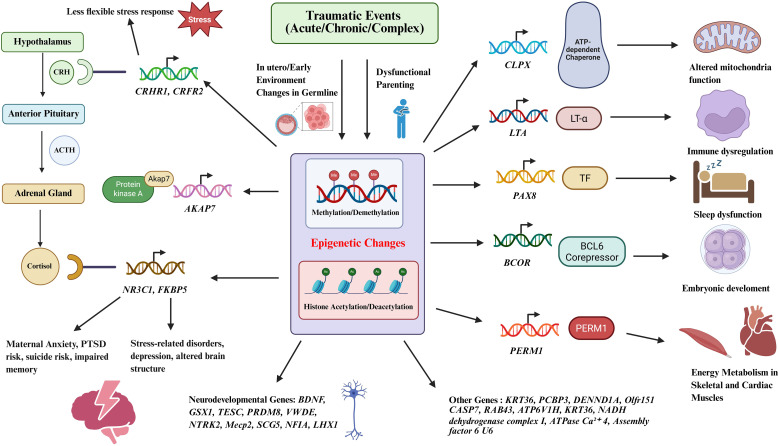
“Evidence from multiple trauma models points to shared involvement of stress-response signaling, immune-in fl ammatory activity, and neurodevelopmental processes (10, 11, 20 – 53 ).”
InfluentialStraight, B., Qiao, X., Ngo, D., Hilton, C. E., Olungah, C. O., Naugle, A., Lalancette, C., & Needham, B. L. (2022) · Epigenetics · doi:10.1080/15592294.2022.2135213 · Cited by 17 · cited 2×
“Drought-related prenatal stress has been associated with differential DNA methylation in genes involved in metabolic, immune, and stress-regulatory pathways (23).”
Weinstein, Y., Levav, I., Gelkopf, M., Roe, D., Yoffe, R., Pugachova, I., & Levine, S. Z. (2018) · Schizophrenia Research · doi:10.1016/j.schres.2018.04.024 · Cited by 16 · cited 1×
“At the population level, prenatal terrorism exposure has been associated with increased schizophrenia risk and lower birth weight, further suggesting sensitivity of fetal neurodevelopment and growth to maternal stress physiology (40, 41).”
Abnormal DNA methylation within HPA-axis genes years after paediatric critical illness
Coppens, G., Vanhorebeek, I., Güiza, F., Derese, I., Wouters, P. J., Téblick, A., Dulfer, K., Joosten, K. F., Verbruggen, S. C., & Van den Berghe, G. (2024) · Clinical Epigenetics · doi:10.1186/s13148-024-01640-y · Cited by 15 · cited 1×
“Similarly, maternal exposure to Canadian residential schools has been linked to higher cortisol, catecholamines, and in fl ammatory cytokine levels in offspring, including cases in which offspring were not raised by their biological parents (104, 105).”
Kerbage, H., Elbejjani, M., Bazzi, O., El-Hage, W., BouKhalil, R., Corruble, E., & Purper-Ouakil, D. (2024) · European Journal of Psychotraumatology · doi:10.1080/20008066.2024.2382650 · Cited by 15 · cited 3×
“Human sample sizes are frequently modest, with many studies enrolling fewer than 100 participants (38, 81, 114).”
Rudahindwa, S., Mutesa, L., Rutembesa, E., Mutabaruka, J., Qu, A., Wildman, D. E., Jansen, S., & Uddin, M. (2020) · Open Research Africa · doi:10.12688/aasopenres.12848.2 · Cited by 14
Zhang, N., Sandler, I. N., Tein, J., Wolchik, S. A., & Donohue, E. (2022) · Mindfulness · doi:10.1007/s12671-021-01807-1 · Cited by 14 · cited 1×
“Caregiver psychological functioning following loss in fl uences emotional availability, warmth, and consistency in parenting (47).”
Wadji, D. L., Morina, N., Martin-Soelch, C., & Wicky, C. (2023) · PLOS ONE · doi:10.1371/journal.pone.0273602 · Cited by 14 · cited 2×
“Additional studies link IPV exposure to altered methylation of NR3C1 , corresponding with differences in stress reactivity and anxiety-related symptoms (55).”
Epigenetic modifications of inflammation in spinal cord injury
Lu, Z.-J., Pan, Q.-L., & Lin, F.-X. (2024) · Biomedicine & Pharmacotherapy · doi:10.1016/j.biopha.2024.117306 · Cited by 14
Lu, W.-T., Zhao, X.-C., Wang, R., Li, N., Song, M., Wang, L., Yu, L.-L., Gao, Y.-Y., Wang, Y.-M., An, C.-X., et al. (2023) · Injury · doi:10.1016/j.injury.2022.07.047 · Cited by 13 · cited 1×
“Individuals exposed prenatally, particularly early in gestation, showed higher rates of depressive symptoms compared with those exposed postnatally or not at all (25).”
Toombs, E., Lund, J. I., Mushquash, A. R., & Mushquash, C. J. (2023) · Frontiers in Public Health · doi:10.3389/fpubh.2022.1029139 · Cited by 13 · cited 1×
“Elevated adverse childhood experience scores and poorer mental and physical health outcomes have also been documented in second and third generation descendants of residential school survivors (106).”
Mattonet, K., Scharpf, F., Block, K., Kumsta, R., & Hecker, T. (2023) · European Journal of Psychotraumatology · doi:10.1080/20008066.2023.2228155 · Cited by 12 · cited 1×
“However, variability across populations highlights the in fl uence of environmental and methodological factors (60).”
Prolonged grief disorder in bereaved parents: Exploring impacts and treatment pathways
Yaffe, Y., & Levkovich, I. (2025) · World Journal of Psychiatry · doi:10.5498/wjp.v15.i5.104711 · Cited by 12 · cited 3×
“Research across bereavement contexts implicates stress-response signaling, immune-in fl ammatory activation, and biological aging processes (44 – 48).”
Rintala, D., Herson, L., & Hudler-Hull, T. (2000) · The Journal of Spinal Cord Medicine · doi:10.1080/10790268.2000.11753533 · Cited by 11 · cited 2×
“Across injury contexts, research demonstrates coordinated activation of immune-in fl ammatory signaling, neuroendocrine regulation, and epigenetic changes (29 – 34).”
Kelstrup, L., & Carlsson, J. (2022) · Psychiatry Research · doi:10.1016/j.psychres.2022.114604 · Cited by 11 · cited 3×
“Current evidence implicates stress-response regulation, neurodevelopmental signaling, metabolic regulation, and in fl ammatory activation (58 – 62).”
Epigenome overlap measure (EPOM) for comparing tissue/cell types based on chromatin states
Li, W. V., Razaee, Z. S., & Li, J. J. (2016) · BMC Genomics · doi:10.1186/s12864-015-2303-9 · Cited by 10 · cited 1×
“Epigenetic regulation is highly tissue-dependent, and most human studies rely on accessible peripheral tissues such as blood, saliva, or urine (138).”
Association of Parental Famine Exposure With Offspring Depression and Cognition Function
Liu, Y., Liu, Y., Lu, Y., Li, J., & He, S. (2022) · Frontiers in Psychiatry · doi:10.3389/fpsyt.2022.812805 · Cited by 10 · cited 2×
“Prenatal famine exposure corresponds with long-term variation in cognitive and emotional regulation consistent with altered neural and glucocorticoid signaling pathways (69, 70).”
Association between gene methylation and experiences of historical trauma in Alaska Native peoples
Rogers-LaVanne, M. P., Bader, A. C., de Flamingh, A., Saboowala, S., Smythe, C., Atchison, B., Moulton, N., Wilson, A., Wildman, D. E., Boraas, A., et al. (2023) · International Journal for Equity in Health · doi:10.1186/s12939-023-01967-7 · Cited by 10 · cited 3×
“Many investigations focus on historically de fi ned trauma-exposed populations, including Holocaust survivors, Rwandan genocide survivors, and Alaska Native communities (8, 82, 98).”
Qiao, X., Straight, B., Ngo, D., Hilton, C. E., Owuor Olungah, C., Naugle, A., Lalancette, C., & Needham, B. L. (2024) · Nature Communications · doi:10.1038/s41467-024-48426-7 · Cited by 10 · cited 1×
“Prenatal disaster exposure has been associated with accelerated epigenetic aging and shorter methylation-based telomeres, markers linked to increased chronic disease risk and immune decline (24).”
War Exposure and DNA Methylation in Syrian Refugee Children and Adolescents
Smeeth, D., Ecker, S., Chervova, O., McEwen, F., Karam, E., Beck, S., & Pluess, M. (2025) · JAMA Psychiatry · doi:10.1001/jamapsychiatry.2024.3714 · Cited by 10 · cited 3×
“Current evidence implicates stress-response regulation, neurodevelopmental signaling, metabolic regulation, and in fl ammatory activation (58 – 62).”
Parental exposure to famine in early life and child overweight in offspring in Chinese populations
Yao, W.-Y., Yu, Y.-F., Li, L., & Xu, W.-H. (2023) · Clinical Nutrition · doi:10.1016/j.clnu.2023.02.013 · Cited by 9 · cited 1×
“Multigenerational fi ndings demonstrate variation in growth, renal function, and mortality, suggesting persistent metabolic and physiological adaptation following early nutritional deprivation (71 – 74).”
A structural equation model of parenting and child's resilience after the earthquake in Türkiye
Kuru, N., & Ungar, M. (2025) · Family Process · doi:10.1111/famp.13061 · Cited by 8 · cited 3×
“These caregiving differences correspond with increased emotional and behavioral dif fi culties in children (26, 27).”
Parental Influence on Child Mental Health Post-Hurricane Harvey
Short, M. B., Kaye, S., Knight, C., Riobueno-Naylor, A., Lai, B., Elkins, S., Schanding, T., & Bistricky, S. L. (2023) · Journal of Child & Adolescent Trauma · doi:10.1007/s40653-023-00554-w · Cited by 7 · cited 2×
“These caregiving differences correspond with increased emotional and behavioral dif fi culties in children (26, 27).”
Li, X., Qureshi, M. N. I., Laplante, D. P., Elgbeili, G., Jones, S. L., Long, X., Paquin, V., Bezgin, G., Lussier, F., King, S., et al. (2023) · Journal of Neuroscience Research · doi:10.1002/jnr.25246 · Cited by 7 · cited 4×
“Developmental timing appears to play an important role in shaping outcomes, as exposures occurring in utero or during early childhood, periods characterized by heightened biological plasticity, have been associated with more pronounced neurocognitive and psychological effects (7, 10, 11).”
InfluentialBékés, V., & Starrs, C. J. (2025) · American Journal of Orthopsychiatry · doi:10.1037/ort0000758 · Cited by 7
Severe traumatic injury is associated with profound changes in DNA methylation
Eskesen, T. O., Almstrup, K., Elgaard, L., Arleth, T., Lassen, M. L., Creutzburg, A., Jensen, A. H., Breindahl, N., Dinesen, F., Vang, M., et al. (2024) · npj Genomic Medicine · doi:10.1038/s41525-024-00438-4 · Cited by 7
Dvilansky, A. S., Zadok, H., Shoshani, A., Samra, N. N., Verbeke, W., Vrticka, P., & Ein-Dor, T. (2025) · Scientific Reports · doi:10.1038/s41598-025-89467-2 · Cited by 7 · cited 2×
“Epigenetic variation has also been observed in pathways involving oxytocin and dopamine signaling, systems central to attachment, motivation, and emotional regulation (46).”
León, I., Góngora, D., López, M. J. R., Herrero-Roldán, S., Rodríguez, M. L., Mitchell, C. M., Fisher, J., & Iturria‐Medina, Y. (2025) · Clinical Epigenetics · doi:10.1186/s13148-025-01839-7 · Cited by 6 · cited 1×
“Individuals with histories of early neglect are more likely to demonstrate reduced emotional engagement, diminished responsiveness, and dif fi culty interpreting children ’ s emotional cues, caregiving patterns linked to differences in offspring emotional and behavioral regulation (67).”
Datta, A., Rahane, D., Bhurle, G., Akundi, S., Mukherjee, U., Dubey, A., Barik, A., Karmarkar, G., Malik, N., Ghosh, B., et al. (2025) · Journal of the American Heart Association · doi:10.1161/jaha.124.039411 · Cited by 6 · cited 3×
“Experimental models of maternal stroke demonstrate widespread epigenetic alterations, including histone methylation changes linked to oxidative stress, mitochondrial dysfunction, and immune activation (49).”
Prevention of Intergenerational Transmission of Child Abuse: A National Priority
Blizard, R. A. (2006) · Journal of Trauma & Dissociation · doi:10.1300/j229v07n03_01 · Cited by 5 · cited 1×
“Trauma-focused care for adults with severe and persistent trauma-related distress, including chronic childhood maltreatment, may reduce symptom burden that interferes with parenting capacity (126).”
Role of Epigenetic Modification in the Intergeneration Transmission of War Trauma
Bolouki, A. (2024) · Indian Journal of Clinical Biochemistry · doi:10.1007/s12291-023-01136-1 · Cited by 5 · cited 1×
“Interventions for trauma related to war and displacement similarly focus on reducing child PTSD symptoms while restoring environmental predictability and safety (132).”
An industrialized diet as a determinant of methylation in the 1F region of the NR3C1 gene promoter
Vieira, T. D. S., Freitas, F. V., Silva Neto, L. C. B., Borçoi, A. R., Mendes, S. O., Olinda, A. S., Moreno, I. A. A., Quaioto, B. R., de Souza, M. L. M., Barbosa, W. M., et al. (2024) · Frontiers in Nutrition · doi:10.3389/fnut.2024.1168715 · Cited by 5 · cited 3×
“While hypothesis-driven candidate gene studies can provide mechanistic insight, narrow locus selection risks overemphasizing the importance of speci fi c genes while overlooking broader regulatory networks (83, 84, 121, 129).”
PANDORA-seq reveals human sperm sncRNA signature endowed with sperm quality assessment
Huang, R., Yang, Y., Jiang, W., Cao, Z., Shi, J., Zhang, X.-O., & Zhang, Y. (2025) · Genes & Diseases · doi:10.1016/j.gendis.2025.101807 · Cited by 5 · cited 1×
“Methods for pro fi ling RNA modi fi cations are less established but continue to develop, with approaches such as m6A sequencing, pseudouridine sequencing, and specialized techniques including PANDORA-seq and cP-RNA-seq expanding the capacity to characterize small noncoding RNAs (14 – 16).”
Kawaguchi, Y., Kurata, S., Kawata, N. Y. S., Yao, A., Nishitani, S., Fujisawa, T. X., & Tomoda, A. (2025) · Scientific Reports · doi:10.1038/s41598-025-92804-0 · Cited by 4
New generation of clinical epigenetics analysis and diagnosis for precision medicine
Song, P., & Li, B. (2025) · Diagnostics · doi:10.3390/diagnostics15121539 · Cited by 4
cP-RNA-seq for tRNA half sequencing
Shigematsu, M., Gumas, J., & Kirino, Y. (2024) · Methods in enzymology on CD-ROM/Methods in enzymology · doi:10.1016/bs.mie.2024.11.002 · Cited by 2
Dysfunctional parenting and suicidal ideation: The moderating role of hostility
Dell’Acqua, C., Imperatori, C., Palomba, D., Ardito, R. B., Farina, B., Adenzato, M., Carbone, G. A., Presti, A. L., Rossi, E. D., Allegrini, G., et al. (2025) · Journal of Affective Disorders · doi:10.1016/j.jad.2025.119695 · Cited by 2 · cited 1×
“Dysfunctional parenting styles encompass patterns such as overprotection, abuse, indifference, inconsistent discipline, and emotional withdrawal (17, 18).”
(2011) · doi:10.3233/dma-2011-0748 · cited 2×
“Across genocide-affected populations, parental exposure has been associated with altered caregiving patterns characterized by overprotection, controlling behaviors, diminished warmth, and role-reversal dynamics (94 – 97, 100).”
Research works printed but not linked: 2
- Bonelli, 2025, From mother to child: The role of epigenetics in the intergenerational trauma due to intimate partner violence, Ital J Psychiatry, 11, 10.36180/2421-4469-2025-915 · doi:10.36180/2421-4469-2025-915
- Carter, 2022, Expressive therapies capstone theses 589: lesley university
Cited by
Izinseka: African somatic epistemology and the neuroscience of bodily knowing
Khumalo, T. (2026) · Inkanyiso · doi:10.4102/ink.v18i1.377
Metadata
- Authors
- Kac, E., Qi, Q., & Ryznar, R.
- Affiliations
- Rocky Vista University (US)
- Corresponding author
- Ryznar, Rebecca
- ORCID
- Ryznar, Rebecca
- Venue
- Frontiers in Psychiatry
- Publisher
- Frontiers Media SA
- Published
- 2026-04-01
- Volume
- 17
- Pages
- 1769422-1769422
- ISSN
- 1664-0640 (ISSN-L)
- PMC
- PMC13079623
- OpenAlex
- W7147418457
- Semantic Scholar
- 8336286569f9ef40e089e9155ba2b42165ef3f03
- Cited by
- 1
- References
- 136
- Citations by year
- 2026: 1
- FWCI
- 0.67
- Type
- journal article
- Language
- en
- Open access
- gold
- doi.org
- Licence
- Locations
- Frontiers in Psychiatry (publishedVersion, cc-by)
- PubMed (publishedVersion)
- PubMed Central (publishedVersion, cc-by)
- DOAJ (DOAJ: Directory of Open Access Journals) (submittedVersion, cc-by-sa)
- Topics
- Life Sciences › Biochemistry, Genetics and Molecular Biology › Molecular Biology › Epigenetics and DNA Methylation
- Social Sciences › Psychology › Clinical Psychology › Child Abuse and Trauma
- Social Sciences › Psychology › Clinical Psychology › Posttraumatic Stress Disorder Research
- Keywords
- intergenerational trauma, epigenetics, complex trauma, chronic trauma, acute trauma, stress response regulation, inflammatory signaling, developmental programming, care environment, offspring mental health, anxiety, depression, epigenetic therapy
About these checks
Registry, retraction, Cites and statistics results are computed, not judged, with one exception: a printed reference that no index lists is read once by a model before it counts as a citation error. Claims are extracted by a model and kept only when their quote appears verbatim in the text; each cited source is then checked, with a model’s help, for whether it says what the claim relies on. Those verdicts can be wrong — read the claim’s quote and the cited source before relying on one.
The claim verdicts this report counts are experimental: their accuracy is not yet measured.
A language model drew the claims from the paper on 2026-10-09, under version 3 of the claim definition (model deepseek-v4.1-flash, prompt extract-v3).
A second model labelled each claim on 2026-10-09 (model jev-1.13-20260917, definition revision gold-guideline-v0.2).
Cited sources are checked with a language model’s help (gpt-6-sol and qwen3.8-omni-flash).
Statistics and arithmetic are recomputed, not judged.
Confidence bands are shown only for fields calibrated on our annotated test set. None is calibrated yet, so no band is shown.
What counts as a claim ›How we measure confidence ›How we check this ›
Are you an author, or do you see a problem with this page? Request a review
Data sources
Bibliographic data: Semantic Scholar, OpenAlex, Crossref.
Contains information from the Semantic Scholar Academic Graph Datasets, made available under the ODC Attribution License (ODC-BY 1.0).
Semantic Scholar’s data is described in: Kinney, R., et al. (2023). The Semantic Scholar Open Data Platform. arXiv:2301.10140.
