

Caring alone: older adult care burdens, practices, and structural imbalances among China's one-child generation
Open accessThe DOI matches its Crossref record; 56 of the 61 references it cites were found in a registry or an index; 38 of the 103 sources its claims cite were checked for support.
Abstract
Background: Between 1980 and 2015, China's one-child policy reshaped family structures. Now, as this generation enters adulthood and their parents age, the only children face the daunting challenge of supporting multiple older parents in an increasingly aging society. Purpose: This study focuses on the practical challenges and needs faced by China's one-child generation in caring for their aging parents. By examining their caregiving experiences, the study aims to reveal the multiple pressures they bear and to provide policy- and system-level insights for alleviating the older adult care burden on this unique generation. Method: This study is a qualitative analysis based on content from social media. A grounded theory analysis of online discussions was conducted using NVivo 14.0 (QSR International). Focusing on questions such as "What happens as the parents of one-child families grow old, and who will ensure their care?," our study systematically gathered and coded discussions from Zhihu, a major social media platform in China. Results: The Chinese only children in this study's sample face intense older adult care pressure, including economic strain, labor shortages, and emotional exhaustion. They struggle to balance caregiving with career development while shouldering dual pressures of supporting both aging parents and young children. Structural inequalities-such as the gap between government promises and actual social security, and disparities between urban and rural areas, as well as within and outside the formal system-worsen the challenge. At the same time, the weakening of traditional filial piety deepens cultural and psychological strains, further fragmenting intergenerational caregiving responsibilities. Discussion: Research indicates that the issue of older adult care for parents of only children in the sample requires not only the reconstruction of a fairer and more sustainable older adult care ethic across society but also urgent institutional efforts to promote more inclusive and equitable support for older adult care and medical services. Meanwhile, the sample observations indicate that the development of technology and the establishment of a high-quality, affordable older adult care service system will become important pathways to easing the caregiving pressure of the one-child generation and providing greater social support.
Overview
CoChat Summary
TL;DR
This qualitative grounded-theory study analyzes Zhihu discussions by China’s one-child generation about caring for aging parents, constructing three core categories: challenges, actions, and reflections. It finds caregiving pressures are economic, labor-related, emotional, and structural, with a neutral-to-slightly pessimistic outlook and calls for caregiver-friendly policies, diversified care culture, community support, the silver economy, and technology.
Key findings
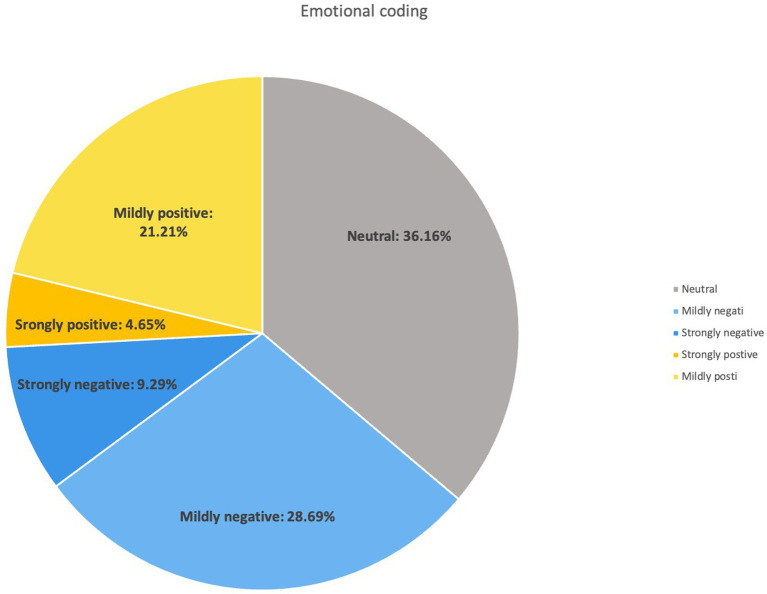
- Among 495 included posts, emotional coding was neutral to somewhat negative: 37.96% negative (9.29% strongly negative, 28.69% mildly negative), 36.16% neutral, and 25.86% optimistic (21.21% mildly positive, 4.65% strongly positive).
- Coding yielded three core categories: practical challenges (284 codes), individual actions (463), and reflections on policies/culture/future (291); main challenges included psychological burden (94), shortage of caregiving manpower (137), financial strain (45), and physical burden (8).
- Structural imbalances were reported: civil servant/SOE parents’ pensions of 7,000–10,000 RMB/month vs urban worker/resident parents at 1,000–3,000 RMB/month vs rural parents at 100–200 RMB/month; the paper states the highest-to-lowest pension gap can reach 35–100 times.
- Actions included active resource preparation (227 codes), physical and mental preparedness (44), replanning the children’s generation (26), guidance for older parents (63), and personal life planning (103); respondents also critiqued traditional filial piety and expressed openness to diversified care, euthanasia, technology-driven care, and the silver economy.
Methods
- Qualitative grounded theory using public Zhihu Q&A discussions; the top three questions spanned July 2012–July 2025, with 1,090 posts and 450,000 words, reduced after inclusion/exclusion criteria to 495 posts and approximately 191,000 words.
- NVivo 14 Plus was used for open coding (45 thematic codes plus five-point emotional coding), axial coding (13 basic categories), and selective coding (3 core categories), with researcher triangulation, contextual judgment, cross-platform comparison, and a saturation test on the final 25% of data.
- The sample included only children caring for parents, spouses of only children, and only children caring for grandparents; professionals in the older adult care industry, parents from one-child families, and non-one-child families were excluded.
Limitations
- Stated: Zhihu users are predominantly highly educated urban young males, limiting generalizability; rural, female, and less-educated voices are underrepresented, and online narratives cannot be independently verified and may include exaggeration or fabrication.
- Stated: grounded theory with a relatively small sample makes statistically significant inferences difficult; future national-level surveys and quantitative/life-course studies are needed.
- Evident: the authors note a digital filtering effect and “missing voices,” and the sample likely reflects urban middle-class men’s perspectives; the authors’ own one-child/caregiving backgrounds may introduce bias, though they report using collective discussion and reflexivity to minimize it.
Model-written summary. Check it against the paper before relying on it.
Integrity signals
Registry
Cites
Statistics
Figures
Verification
Claims the paper makes
33 Valid · 4 Not valid · 42 Not checked · 146 Own results and interpretations
The sources with a verdict support this claim; the rest weren’t checked yet, have no full text we could read, or their verdicts aren’t rated yet.
In the paper
“Social support, defined as the emotional and material assistance provided by society to individuals, is a key predictor of caregiver burden (47–49).”
§ Caring alone: older adult care burdens, practices, and structural imbalances among China’s one-child generation > Discussion > Social support
What the sources say
- Not checked — no full text of the sourcecites [47] Yang Z Tian Y Fan Y Liu L Luo Y Zhou L. The mediating roles of caregiver social support and self-efficacy on caregiver burden in Parkinson’s disease. J Affect Disord. (2019) 256: 302– 8. doi: 10.1016/j.jad.2019.05.064, 31200168 source
- Supportedcites [48] Rodakowski J Skidmore ER Rogers JC Schulz R. Role of social support in predicting caregiver burden. Arch Phys Med Rehabil. (2012) 93: 2229– 36. doi: 10.1016/j.apmr.2012.07.004, 22824248 PMC3508254 source
The Abstract Results report that received social support and social integration were significant independent predictors of caregiver burden. The Discussion says social support contributed meaningfully to variation in burden among caregivers of adults aging with spinal cord injury. (LLM, conf=0.92)
- Not checked — no full text of the sourcecites [49] Chiou CJ Chang H-Y Chen IP Wang HH. Social support and caregiving circumstances as predictors of caregiver burden in Taiwan. Arch Gerontol Geriatr. (2009) 48: 419– 24. doi: 10.1016/j.archger.2008.04.001, 18602706 source
plainstates an association- Asserted: passes — The authors put it forward as true.
- Checkable: passes — It can be checked against evidence.
- Load-bearing: unclear — It is unclear whether the paper’s conclusions depend on it.
- Based: passes — The paper gives a reason why it holds.
The cited sources support only part of this claim — read each source’s verdict below.
In the paper
“Excelling as a caregiver can come at the cost of being a less attentive spouse, employee, friend, or family member (25).”
§ Caring alone: older adult care burdens, practices, and structural imbalances among China’s one-child generation > Discussion > Caregiver burden
What the sources say
- Partly supportedcites [25] MacKenzie J. Caregiving and role conflict distress. Clin Ethics. (2024) 19: 136– 42. doi: 10.1177/14777509231218565 sourceExperimental — accuracy not yet measured
The Introduction says that being a good friend, spouse, or family member can be in tension with the demands of caregiving. Section 2 likewise describes tradeoffs between caregiving obligations and loving relationships. The paper does not establish the claimed cost to one's attentiveness as an employee. (LLM, conf=0.85)
plainstates a cause- Asserted: passes — The authors put it forward as true.
- Checkable: passes — It can be checked against evidence.
- Load-bearing: passes — The paper’s conclusions depend on it.
- Based: passes — The paper gives a reason why it holds.
- Partly supported
The cited sources support only part of this claim — read each source’s verdict below.
In the paper
“Individuals who assume caregiving responsibilities inevitably face conflicting demands arising from the different roles they occupy (26).”
§ Caring alone: older adult care burdens, practices, and structural imbalances among China’s one-child generation > Discussion > Caregiver burden
What the sources say
- Partly supportedcites [26] Kayaalp A Page KJ Rospenda KM. Caregiver burden, work-family conflict, family-work conflict, and mental health of caregivers: a mediational longitudinal study. Work Stress. (2021) 35: 217– 40. doi: 10.1080/02678373.2020.1832609, 34483432 PMC8412180 sourceExperimental — accuracy not yet measured
The Discussion says that combining caregiving with another role can create substantial role conflict, and the Introduction describes how demands on employed caregivers may produce interrole conflict. The claim overstates this as inevitable for all caregivers; the paper uses conditional language and also acknowledges positive effects of occupying multiple roles. The supplied passages have section labels but no page numbers. (LLM, conf=0.88)
boostedstates a cause- Asserted: passes — The authors put it forward as true.
- Checkable: passes — It can be checked against evidence.
- Load-bearing: passes — The paper’s conclusions depend on it.
- Based: passes — The paper gives a reason why it holds.
- Partly supported
The cited sources support only part of this claim — read each source’s verdict below.
In the paper
“A decrease in social support for caregivers corresponds to a heightened risk of social isolation (48).”
§ Caring alone: older adult care burdens, practices, and structural imbalances among China’s one-child generation > Discussion > Social support
What the sources say
- Partly supportedcites [48] Rodakowski J Skidmore ER Rogers JC Schulz R. Role of social support in predicting caregiver burden. Arch Phys Med Rehabil. (2012) 93: 2229– 36. doi: 10.1016/j.apmr.2012.07.004, 22824248 PMC3508254 sourceExperimental — accuracy not yet measured
The Abstract’s Conclusions state that caregivers of people aging with spinal cord injury may experience increased social isolation and that increased isolation comes with decreased social support. This supports an association, but the claim extends it to caregivers generally and frames lower support as a risk for isolation; the paper does not establish that direction of risk. (LLM, conf=0.82)
plainstates an association- Asserted: passes — The authors put it forward as true.
- Checkable: passes — It can be checked against evidence.
- Load-bearing: unclear — It is unclear whether the paper’s conclusions depend on it.
- Based: passes — The paper gives a reason why it holds.
- Partly supported
The cited sources support only part of this claim — read each source’s verdict below.
In the paper
“In China, based on traditional Confucian filial values and relatively low levels of social security, the care of older adults with serious illnesses or disabilities is primarily undertaken by family members (52).”
§ Caring alone: older adult care burdens, practices, and structural imbalances among China’s one-child generation > Discussion > Social support
What the sources say
- Partly supportedcites [52] Hu H Hu X Xu Y. Caring load and family caregivers’ burden in China: the mediating effects of social support and social exclusion. Front. Public Health. (2023) 11: 1194774. doi: 10.3389/fpubh.2023.1194774 PMC10556706 37809000 sourceExperimental — accuracy not yet measured
The Introduction (page not provided) says family caregivers provide most care for older adults with disabilities in China and links this to filial piety and an imperfect social security system. It does not establish the same claim for older adults with serious illnesses who do not have disabilities. (LLM, conf=0.86)
plainstates a cause- Asserted: passes — The authors put it forward as true.
- Checkable: passes — It can be checked against evidence.
- Load-bearing: passes — The paper’s conclusions depend on it.
- Based: passes — The paper gives a reason why it holds.
- Partly supported
77 more claims · 3 with their cited sources checked
Create a free account to see all 225 claims and to verify the 16 references still open.
- Probably not a substantial claim. 85
- It may state two separate claims as one. 85
- The quote only partly states this claim. 3
Self-check
Percentages, sums and reported differences re-computed from the paper’s own numbers.
Each contradiction between two passages listed here was confirmed by an independent check.
Rated minor: it would not touch a result — a value no result rests on, a p-value that stays on the same side of the significance level, or a conflict that is clerical, resolved elsewhere in the paper, or outside its own findings.
In the paper
§ Caring alone: older adult care burdens, practices, and structural imbalances among China’s one-child generation > Discussion > Practical improvements
“with individual parental pensions ranging from 7,000 to 10,000 RMB per month”
§ Caring alone: older adult care burdens, practices, and structural imbalances among China’s one-child generation > Results > Reflections on policies and culture, and visions for the future of older adult care
“After retirement, their combined pension exceeds 20,000 yuan.”
Rated minor: it would not touch a result — a value no result rests on, a p-value that stays on the same side of the significance level, or a conflict that is clerical, resolved elsewhere in the paper, or outside its own findings.
In the paper
§ Caring alone: older adult care burdens, practices, and structural imbalances among China’s one-child generation > Results
“A44 Openness to euthanasia (9)”
§ Caring alone: older adult care burdens, practices, and structural imbalances among China’s one-child generation > Results
“A44 Technology-driven smart older adult care (15)”
Rated minor: it would not touch a result — a value no result rests on, a p-value that stays on the same side of the significance level, or a conflict that is clerical, resolved elsewhere in the paper, or outside its own findings.
In the paper
§ Caring alone: older adult care burdens, practices, and structural imbalances among China’s one-child generation > Discussion > Caregiver burden
“even in well-off families of civil servants, shortages of available caregiving labor are a significant issue.”
§ Caring alone: older adult care burdens, practices, and structural imbalances among China’s one-child generation > Discussion > Practical improvements
“As a result, even in cases of parental disability, these participants face virtually no caregiving burden”
Citations
Cites
The Discovery of Grounded Theory: Strategies for Qualitative Research
Glaser, B. G., & Strauss, A. L. (2017) · Aldine (Routledge reprint) · doi:10.4324/9780203793206 · Cited by 25,789
Goode, W. J. (1960) · American Sociological Review · doi:10.2307/2092933 · Cited by 2,454 · cited 2×
“This can negatively affect caregivers’ psychological well-being, physical health, and financial stability (26, 46, 47).”
Caregiver Weil-Being: A Multidimensional Examination of Family Caregivers of Demented Adults
George, L. K., & Gwyther, L. P. (1986) · The Gerontologist · doi:10.1093/geront/26.3.253 · Cited by 1,393
The effects of China’s universal two-child policy
Zeng, Y., & Hesketh, T. (2016) · The Lancet · doi:10.1016/s0140-6736(16)31405-2 · Cited by 701 · cited 3×
“The first generation of only children in China was born around 1980 and is now in their forties (5).”
Methodological issues in grounded theory
Cutcliffe, J. R. (2000) · Journal of Advanced Nursing · doi:10.1046/j.1365-2648.2000.01430.x · Cited by 642 · cited 4×
“Building on the emergent themes identified during open coding, axial coding further refines, aligns, and categorizes these themes to form distinct thematic categories and prepare for selective coding (36).”
InfluentialA team-based approach to open coding: considerations for creating intercoder consensus
Cascio, M. A., Lee, E., Vaudrin, N., & Freedman, D. A. (2019) · Field Methods · doi:10.1177/1525822x19838237 · Cited by 492
The Evolution of China’s One-Child Policy and Its Effects on Family Outcomes
Zhang, J. (2017) · Journal of Economic Perspectives · doi:10.1257/jep.31.1.141 · Cited by 444 · cited 1×
“Families that exceeded the birth limit were also subjected to punitive measures that threatened their livelihoods, such as fertility penalties (social support fees several times the household income), loss of public employment, and other sanctions (9, 10).”
Caregiver burden—a critical discussion
Bastawrous, M. (2013) · International Journal of Nursing Studies · doi:10.1016/j.ijnurstu.2012.10.005 · Cited by 440 · cited 1×
“This situation mainly occurs during the period when older parents partially or completely lose mobility, and their dependence on their children’s care gradually increases (43).”
Robison, J., Fortinsky, R., Kleppinger, A., Shugrue, N., & Porter, M. (2009) · The Journals of Gerontology Series B: Psychological Sciences and Social Sciences · doi:10.1093/geronb/gbp015 · Cited by 306
Who will care for the elderly in China?
Zhang, Y., & Goza, F. W. (2006) · Journal of Aging Studies · doi:10.1016/j.jaging.2005.07.002 · Cited by 285
Technology and caregiving: emerging interventions and directions for research
Lindeman, D. A., Kim, K. K., Gladstone, C., & Apesoa-Varano, E. C. (2020) · The Gerontologist · doi:10.1093/geront/gnz178 · Cited by 182
Kayaalp, A., Page, K. J., & Rospenda, K. M. (2021) · Work & Stress · doi:10.1080/02678373.2020.1832609 · Cited by 177 · cited 4×
“Individuals who assume caregiving responsibilities inevitably face conflicting demands arising from the different roles they occupy (26).”
InfluentialRole of social support in predicting caregiver burden
Rodakowski, J., Skidmore, E. R., Rogers, J. C., & Schulz, R. (2012) · Archives of Physical Medicine and Rehabilitation · doi:10.1016/j.apmr.2012.07.004 · Cited by 174 · cited 3×
“Empirical studies have shown that caregivers of older adults with chronic severe illnesses, such as Alzheimer’s or Parkinson’s disease, often face insufficient social support during the caregiving process, which increases their risk of social isolation (47, 48).”
InfluentialSocial support and caregiving circumstances as predictors of caregiver burden in Taiwan
Chiou, C. J., Chang, H.-Y., Chen, I. P., & Wang, H. H. (2009) · Archives of Gerontology and Geriatrics · doi:10.1016/j.archger.2008.04.001 · Cited by 173
Application of triangulation in qualitative research
Donkoh, S. (2023) · Journal of Applied Biotechnology & Bioengineering · doi:10.15406/jabb.2023.10.00319 · Cited by 170 · cited 1×
“To enhance the data credibility and the interpretative validity, this study adopted researcher triangulation during the data analysis process (42).”
Thordardottir, B., Malmgren Fänge, A., Lethin, C., Rodriguez Gatta, D., & Chiatti, C. (2019) · BioMed Research International · doi:10.1155/2019/9196729 · Cited by 169
Nemcikova, M., Katreniakova, Z., & Nagyova, I. (2023) · Frontiers in Public Health · doi:10.3389/fpubh.2023.1104250 · Cited by 147
Ageing in the Asia-Pacific Region
(2002) · doi:10.4324/9780203463086 · Cited by 124 · cited 1×
“As early as 2000, scholars had predicted that in the coming decades, the lives of older parents of only children would become a pressing social issue (22).”
The need for community care among older people in China
Zhou, J., & Walker, A. (2015) · Ageing and Society · doi:10.1017/s0144686x15000343 · Cited by 109 · cited 1×
“Develop community care centers to improve long-term and end-of-life care systems (81).”
Fertility restrictions and life cycle outcomes: evidence from the one-child policy in China
Huang, W., Lei, X., & Sun, A. (2021) · The Review of Economics and Statistics · doi:10.1162/rest_a_00921 · Cited by 106 · cited 1×
“The one-child policy has led to a prolonged decline in China’s fertility rate and a continuous increase in the proportion of the older population (11).”
Family care for older adults with disabilities: toward more targeted and interpretable research
Gaugler, J. E., Kane, R. L., & Kane, R. A. (2002) · The International Journal of Aging and Human Development · doi:10.2190/fack-qe61-y2j8-5l68 · Cited by 84
Corbin, J. (2017) · The Journal of Positive Psychology · doi:10.1080/17439760.2016.1262614 · Cited by 78
Kim, J., & Lee, E. (2003) · Public Health Nursing · doi:10.1046/j.1525-1446.2003.20205.x · Cited by 69 · cited 1×
“Under the constraints of this cultural norm, forms of socialized care beyond the family have often been devalued or negatively perceived (72).”
Yang, Z., Tian, Y., Fan, Y., Liu, L., Luo, Y., Zhou, L., & Yu, H. (2019) · Journal of Affective Disorders · doi:10.1016/j.jad.2019.05.064 · Cited by 66
Gui, T., & Koropeckyj-Cox, T. (2016) · Journal of Cross-Cultural Gerontology · doi:10.1007/s10823-016-9295-z · Cited by 62
One-Child Policy, Marriage Distortion, and Welfare Loss
Huang, W., Pan, Y., & Zhou, Y. (2025) · The Review of Economics and Statistics · doi:10.1162/rest_a_01332 · Cited by 54
Wu, H., Wang, Y., Zhang, H., Yin, X., Wang, L., Wang, L., & Wu, J. (2024) · Scientific Reports · doi:10.1038/s41598-024-82443-2 · Cited by 52
The 4-2-1 family structure in China: a survival analysis based on life tables
Jiang, Q., & Sánchez-Barricarte, J. J. (2011) · European Journal of Ageing · doi:10.1007/s10433-011-0189-1 · Cited by 48 · cited 1×
“A large number of so-called ‘4-2-1’ (12) or ‘4-2-2’ (13) families emerged, in which a couple must not only raise one or two children of their own, but also support four aging parents.”
Han, J., Chan, E. H. W., Qian, Q. K., & Yung, E. H. K. (2021) · Sustainability · doi:10.3390/su13158614 · Cited by 45
Zhu, W. X. (2003) · Archives of Disease in Childhood · doi:10.1136/adc.88.6.463 · Cited by 44 · cited 1×
“The one-child policy refers to the regulation that each married couple in China was permitted to have only one-child (6).”
Lorenz, F., Whittaker, L., Tazzeo, J., & Williams, A. (2021) · International Journal of Workplace Health Management · doi:10.1108/ijwhm-10-2019-0136 · Cited by 41
Hu, H., Hu, X., & Xu, Y. (2023) · Frontiers in Public Health · doi:10.3389/fpubh.2023.1194774 · Cited by 35
Evaluation of elderly persons’ functionality and care needs
Lopes, M. J., Escoval, A., Pereira, D. G., Pereira, C. S., Carvalho, C., & Fonseca, C. (2013) · Revista Latino-Americana de Enfermagem · doi:10.1590/s0104-11692013000700008 · Cited by 34 · cited 1×
“Empirical research shows that care needs related to aging and functional decline begin to concentrate in the advanced age stages (67).”
Eastern perspectives on roles, responsibilities and filial piety: a case study
Zhang, L., Han, Y., Ma, Y., Xu, Z., & Fang, Y. (2021) · Nursing Ethics · doi:10.1177/0969733020934143 · Cited by 33
Intra-family stressors among adult siblings sharing caregiving for parents
Ngangana, P. C., Davis, B. L., Burns, D. P., McGee, Z. T., & Montgomery, A. J. (2016) · Journal of Advanced Nursing · doi:10.1111/jan.13065 · Cited by 32 · cited 1×
“Secondly, lack of peer support: Siblings are usually the main source of peer support in older adult care, but the one-child policy means these only children have no siblings to share the responsibility (45).”
Min, S. H., Topaz, M., Lee, C., & Schnall, R. (2023) · GeroScience · doi:10.1007/s11357-023-00729-1 · Cited by 30 · cited 2×
“Given that China’s one-child generation has already begun to face the tangible pressures of caring for their aging parents (24, 37), discussions about the challenges they encounter have increased year by year.”
The care types choice in filial culture: a cross-sectional study of disabled elderly in China
Zang, Z. (2022) · Frontiers in Public Health · doi:10.3389/fpubh.2022.954035 · Cited by 28 · cited 1×
“The essence of filial piety lies in children providing support for their parents in old age, personally attending to their needs, and ensuring their well-being (69, 70).”
Williams, A., Tompa, E., Lero, D. S., Fast, J. E., Yazdani, A., & Zeytinoglu, I. U. (2017) · BMC Public Health · doi:10.1186/s12889-017-4722-9 · Cited by 25 · cited 2×
“Secondly, flexible work arrangements, including remote work, telecommuting, flexible hours, and part-time options, enable caregivers to balance their job responsibilities with caregiving duties (65).”
Tweeting, re-tweeting, and commenting: microblogging and social movements in China
Liu, Y. (2015) · Asian Journal of Communication · doi:10.1080/01292986.2015.1013971 · Cited by 25
The social ecology of caregiving: applying the social–ecological model across the life course
Ornstein, M. T., & Caruso, C. C. (2024) · International Journal of Environmental Research and Public Health · doi:10.3390/ijerph21010119 · Cited by 24 · cited 3×
“As untrained family caregivers, only children are likely to experience prolonged psychological stress and health risks, highlighting the urgent need for external support at the social level (75).”
InfluentialEnd of an era? China’s one-child policy and its unintended consequences
Abrahamson, P. (2016) · Asian Social Work and Policy Review · doi:10.1111/aswp.12101 · Cited by 23 · cited 1×
“However, one consequence of the one-child policy has been the atomization of families and the widespread rise of individualistic culture, both of which have led to questioning of the traditional filial piety culture (73, 74).”
Castora-Binkley, M., Noelker, L. S., Ejaz, F. K., & Rose, M. (2010) · Journal of Aging & Social Policy · doi:10.1080/08959420.2011.532001 · Cited by 23
Kwete, X., Knaul, F. M., Essue, B. M., Touchton, M., Arreola-Ornelas, H., Langer, A., Calderon-Anyosa, R., & Nargund, R. S. (2024) · BMJ Global Health · doi:10.1136/bmjgh-2023-013400 · Cited by 22
Warmenhoven, H., Hoebink, P. R. J., & Janssens, J. M. A. M. (2018) · Journal of Family Issues · doi:10.1177/0192513x18789208 · Cited by 21
Wu, J., Tian, B., Gao, Y., & Wang, L. (2024) · Families in Society The Journal of Contemporary Social Services · doi:10.1177/10443894231183406 · Cited by 16
Sánchez, M., Stampini, M., Ibarrarán, P., Vivanco, F., Castillo Martínez, P., Buenadicha Sánchez, C., Castillo, A., & Okumura, M. (2020) · doi:10.18235/0002598 · Cited by 14
Caregiving and role conflict distress
MacKenzie, J. (2024) · Clinical Ethics · doi:10.1177/14777509231218565 · Cited by 9 · cited 2×
“Excelling as a caregiver can come at the cost of being a less attentive spouse, employee, friend, or family member (25).”
Identification of knowledge anxiety factors among researchers based on grounded theory
Zhenlei, Y., Boyuan, M., Lin, S., Chunxia, G., & Qiang, H. (2024) · Heliyon · doi:10.1016/j.heliyon.2024.e25752 · Cited by 7 · cited 3×
“From the perspective of grounded theory’s conceptual framework, it is particularly suitable for research in relatively underexplored areas (34).”
Karanasios, S., & Zorina, A. (2022) · Journal of the Association for Information Science and Technology · doi:10.1002/asi.24689 · Cited by 7
Parental care among only children in China: motivation, provision, and experiences
Shen, Y., Ciobanu, R. O., van der Horst, M., Kliegel, M., & van Tilburg, T. G. (2025) · Journal of Social and Personal Relationships · doi:10.1177/02654075251346370 · Cited by 7
Educational Advices for New‐Graduate Nurse on Social Media in China: A Grounded Theory Study
Liu, X., Feng, X., Zhang, M., Liu, J., & Chen, M. (2024) · Journal of Nursing Management · doi:10.1155/jonm/1276010 · Cited by 6 · cited 3×
“Since then, the grounded theory approach has been widely applied across multiple disciplines, including anthropology, psychology, gerontology, nursing, and business (29, 33, 34).”
Providing support for family carers: social workers describing their professional role
Alftberg, Å. (2023) · Nordic Social Work Research · doi:10.1080/2156857x.2023.2297978 · Cited by 6 · cited 1×
“Social worker and volunteer networks: Build comprehensive networks of social workers and volunteers within the community to offer ongoing, systematic support to caregivers (83).”
Blackberry, I., Boak, J., Barclay, K., & Khalil, H. (2025) · Frontiers in Public Health · doi:10.3389/fpubh.2025.1540009 · Cited by 6
Nakayama, G., Masumoto, S., Haruta, J., & Maeno, T. (2022) · Journal of General and Family Medicine · doi:10.1002/jgf2.599 · Cited by 5
Liu, C., Lin, L.-J., Chen, H., Liu, T.-H., Lin, H.-L., & Chiou, W.-K. (2025) · Frontiers in Psychology · doi:10.3389/fpsyg.2025.1492692 · Cited by 4
The entombed lives – the experience of sibling abortion under China’s One-Child Policy
Liu, Y. (2025) · Subjectivity · doi:10.1057/s41286-025-00207-3 · Cited by 2 · cited 1×
“Women who became pregnant beyond the permitted quota were subjected to forced abortions, while those who had already given birth faced compulsory sterilization (5, 8).”
Only-Child Older Parents in China
Wang, N., Gu, D., & Feng, Q. (2021) · Springer eBooks · doi:10.1007/978-3-030-22009-9_404 · Cited by 1
Untitled work
Li (2018) · doi:10.13546/j.cnki.tjyjc.2018.13.022
Untitled work
Qiao (2025) · doi:10.19506/j.cnki.cn10-1428/d.2025.01.003
Untitled work
Lv (2024) · doi:10.20181/j.jzxk.jlau.240040
Untitled work
Zhou (2024) · doi:10.19633/j.cnki.11-2579/d.2024.0124
Research works printed but not linked: 11
- Liu D. Development status, causes and countermeasures of population ageing in China. Chin J Gerontol. (2022) 16: 4123– 6.
- Yu X. Research on the old-age care worries of the first generation of only child parents in rural areas—Take Y county in S province as an example [dissertation/master’s thesis]. Hefei (AH): Anhui Agricultural University (2024).
- Chen J. A study on the pension anxiety of the first generation of only child parents in urban area—Taking GL city as an example [dissertation/master’s thesis]. Guilin (GX): Guangxi Normal University (2024).
- Feng X. 2023—2032: the real plight of old age care for parents of first generation one-child policy. J Jiangsu Adm Inst. (2023) 1: 56– 65.
- Williams M Moser T. The art of coding and thematic exploration in qualitative research. Int Manag Rev. (2019) 15: 45– 55.
- Special Production Team NHK. Disconnected society (documentary translation). Shanghai: Shanghai Translation Publishing House (2013).
- Li M Xu R Qin Z. Stratified universalism: the transformation of China’s welfare regime in “the era of social policy”. Chin Public Policy Rev. (2021) 19: 1– 21.
- Luo H. Fairness and disparities: Reflections on the “civil servant fever” phenomenon — a comparative study of pension systems among different groups. World of Labor and Social Security (Theoretical Edition). (2013) 3: 26– 8.
- Fang K Yu J Jiang Z. Towards common prosperity: the evolution of social security system and the adjustment of welfare proximity in China. Chin Public Adm. (2025) 41: 2– 12. doi: 10.19735/j.issn.1006-0863.2025.03.01 · doi:10.19735/j.issn.1006-0863.2025.03.01
- Ji M. A critical study of the tale of “lying on ice to obtain carp.” JinGu Creat Lit (2025) 19: 51– 53. doi: 10.20024/j.cnki.CN42-1911/I.2025.19.016 · doi:10.20024/j.cnki.cn42-1911/i.2025.19.016
- Fründt C. Where individualism grows and hierarchies grumble - a case study on the one-child policy’s influence on the workplace [dissertation/master’s thesis]. Lund: Lund University (2007).
Cited by
Dong, F. (2026) · International Journal of Human-Computer Interaction · doi:10.1080/10447318.2026.2684267 · Cited by 1
Pan, S., Wu, Y. J., Chen, F., et al. (2026) · Frontiers in Psychology · doi:10.3389/fpsyg.2026.1869662
“They typically undertake this complex and demanding role with minimal formal training, inadequate systemic support, and under considerable social and economic pressure (Yu et al., 2025; Xiang et al., 2025).”
Ma, X., & Lin, Z. (2026) · Frontiers in Public Health · doi:10.3389/fpubh.2026.1811046
“Recent studies of caregiving in China likewise point to structural imbalance, heavy burden, and the unequal distribution of responsibility in family-based care for older adults, particularly under the demographic and social conditions facing the one-child generation (14–16).”
Shen, S., Wang, Z., Huang, Y., Huang, H., Gong, C., Song, Y., Qi, W., Li, S., Liu, X., Zeng, J., et al. (2026) · Journal of Health Psychology · doi:10.1177/13591053261475784
Willingness of nursing undergraduates to work in long-term care facilities: A qualitative study
Hou, X., Wang, Y., Wang, F., & Li, Q. (2026) · PLoS ONE · doi:10.1371/journal.pone.0357086
Metadata
- Authors
- Xiang, S., Xiang, H., Ren, Q., & Deng, Q.
- Affiliations
- Guangxi University (CN)
- Chongqing Polytechnic Institute (CN)
- Chongqing University (CN)
- Corresponding author
- Ren, Qiao
- Venue
- Frontiers in Public Health
- Publisher
- Frontiers Media SA
- Published
- 2025-12-15
- Volume
- 13
- Pages
- 1694636-1694636
- ISSN
- 2296-2565 (ISSN-L)
- PMC
- PMC12745236
- OpenAlex
- W4417311064
- Cited by
- 6
- References
- 56
- Citations by year
- 2026: 6
- FWCI
- 10.30
- Type
- journal article
- Language
- en
- Open access
- gold
- doi.org
- Licence
- Locations
- Frontiers in Public Health (publishedVersion, cc-by)
- PubMed (publishedVersion)
- PubMed Central (publishedVersion, cc-by)
- Funders
- Chongqing University
- Guangxi University
- Topics
- Social Sciences › Sociology and Political Science › Intergenerational Family Dynamics and Caregiving
- Social Sciences › Life-span and Life-course Studies › Aging, Elder Care, and Social Issues
- Health Sciences › Nursing › Research and Theory › Nursing care and research
- Keywords
- one-child policy, only children, intergenerational caregiving, filial piety, family structure change, social security, urban-rural disparities, emotional exhaustion, work-care balance, population aging, elderly care, China
- MeSH terms
- Adult, Aged, China, Female, Humans, Male, Middle Aged, Only Child, Parents, Intergenerational Relations, Caregivers, Adult Children, Qualitative Research
About these checks
Registry, retraction, Cites and statistics results are computed, not judged, with one exception: a printed reference that no index lists is read once by a model before it counts as a citation error. Claims are extracted by a model and kept only when their quote appears verbatim in the text; each cited source is then checked, with a model’s help, for whether it says what the claim relies on. Those verdicts can be wrong — read the claim’s quote and the cited source before relying on one.
The claim verdicts this report counts are experimental: their accuracy is not yet measured.
A language model drew the claims from the paper on 2026-10-10, under version 3 of the claim definition (model deepseek-v4.1-flash, prompt extract-v3).
A second model labelled each claim on 2026-10-10 (model jev-1.13-20260917, definition revision gold-guideline-v0.2).
Cited sources are checked with a language model’s help (gpt-6-sol).
Statistics and arithmetic are recomputed, not judged.
Confidence bands are shown only for fields calibrated on our annotated test set. None is calibrated yet, so no band is shown.
What counts as a claim ›How we measure confidence ›How we check this ›
Are you an author, or do you see a problem with this page? Request a review
Data sources
Bibliographic data: Semantic Scholar, OpenAlex, Crossref.
Contains information from the Semantic Scholar Academic Graph Datasets, made available under the ODC Attribution License (ODC-BY 1.0).
Semantic Scholar’s data is described in: Kinney, R., et al. (2023). The Semantic Scholar Open Data Platform. arXiv:2301.10140.
