

The DOI matches its Crossref record; 148 of the 149 references it cites were found in a registry or an index; 1 of the 89 sources its claims cite were checked for support.
Toward the Enhancement of Microalgal Metabolite Production through Microalgae–Bacteria Consortia
Open accessAbstract
Engineered mutualistic consortia of microalgae and bacteria may be a means of assembling a novel combination of metabolic capabilities with potential biotechnological advantages. Microalgae are promising organisms for the sustainable production of metabolites of commercial interest, such as lipids, carbohydrates, pigments, and proteins. Several studies reveal that microalgae growth and cellular storage of these metabolites can be enhanced significantly by co-cultivation with growth-promoting bacteria. This review summarizes the state of the art of microalgae–bacteria consortia for the production of microalgal metabolites. We discuss the current knowledge on microalgae–bacteria mutualism and the mechanisms of bacteria to enhance microalgae metabolism. Furthermore, the potential routes for a microalgae–bacteria biorefinery are outlined in an attempt to overcome the economic failures and negative energy balances of the existing production processes.
Overview
AI snapshot
Written from the paper’s full text.
TL;DR
This review summarizes how mutualistic microalgae–bacteria consortia can enhance microalgal biomass and metabolite production, including lipids, carbohydrates, pigments, and proteins. It also outlines how growth-promoting bacteria could improve microalgae biorefineries through harvesting, CO2 fixation, wastewater treatment, and residual biomass valorization.
Key findings
- Co-cultivation with growth-promoting bacteria can increase microalgal growth and biomass: wastewater-isolated bacteria enhanced *C. reinhardtii*, *C. vulgaris*, and *Euglena gracilis* growth up to 2.8-fold; *Pelagibaca bermudensis* enhanced *Tetraselmis striata* biomass productivity two-fold; four bacterial strains increased *C. vulgaris* population by more than 100%.
- Lipid production is commonly enhanced: *C. reinhardtii* co-cultured with *Azotobacter chroococcum* under nitrogen starvation showed 2.4-fold higher lipid content, 5.9-fold higher lipid production, and up to 19.4-fold higher lipid productivity than axenic cultures; *C. vulgaris* with *A. brasilense* reached up to five-fold higher lipids under autotrophic conditions.
- Carbohydrate and pigment yields also increase: *C. vulgaris* co-cultivated with *A. brasilense* showed up to 72% and 90% increments in total carbohydrates under autotrophic and heterotrophic conditions, while co-immobilization with *A. brasilense* increased chlorophyll a by up to 35%, chlorophyll b by 176%, β-carotene by 186%, lutein by 152%, and violaxanthin by 129%.
- Bacteria may improve biorefinery steps: *Bacillus* sp. aggregation of *Nannochloropsis oceanica* reached up to 95% efficiency in 30 s; *A. brasilense* improved CO2 fixation by 25–50% in *S. obliquus*, 46–87% in *C. vulgaris*, and 41–53% in *C. reinhardtii* under high CO2; leachate treatment removed 100% ammonium and up to 90% nitrate, COD, and phenol.
Methods
- Narrative review of the state of the art on microalgae–bacteria consortia for microalgal metabolite production, mutualistic mechanisms, and biorefinery routes.
- Synthesizes published studies on synthetic and natural co-cultures, including co-cultivation, immobilization, bacterial extracts/volatiles, omics, nanoSIMS, and wastewater/biorefinery applications.
- Main analysis is qualitative synthesis, with tables and figures summarizing reported effects on biomass, lipids, carbohydrates, pigments, proteins, harvesting, CO2 fixation, and nutrient removal; no new experimental data are presented.
Limitations
- The paper states that genomic, transcriptomic, and metabolomic studies in synthetic mutualistic consortia are currently very limited, and that no studies to the authors’ knowledge evaluate microalgae–bacteria consortia in integrated microalgal biorefineries.
- The paper notes that less attention has been paid to bacterial enhancement of microalgal pigments, carbohydrates, and proteins than to lipids.
- Evident from the text: as a narrative review, it lacks a systematic search strategy or quantitative meta-analysis, and it compares findings from diverse species, co-culture setups, and cultivation conditions, which limits direct comparability.
Model-written summary. Check it against the paper before relying on it.
Integrity signals
Registry
Cites
Statistics
Figures
Verification
Claims the paper makes
62 Not checked yet · 8 Own interpretation · 1 Supported so far · 1 No basis given
In the paper
“However, the mechanisms involved in the interaction do seem to be species-specific, depending on the microenvironment and conditions of each microalga [11].”
§ Toward the Enhancement of Microalgal Metabolite Production through Microalgae–Bacteria Consortia † > 2. Mutualistic Interaction in Microalgae–Bacteria Consortia > 2.1. The Concept of Phycosphere
What the sources say
- Not checked yetcites [11] Ramanan, 2016, Algae-bacteria interactions: Evolution, ecology and emerging applications, Biotechnol. Adv. source
hedgedcorrelational- Asserted: passes — The authors put it forward as true.
- Checkable: passes — It can be checked against evidence.
- Load-bearing: unclear — It is unclear whether the paper’s conclusions depend on it.
- Based: passes — The paper gives a reason why it holds.
A conclusion the paper draws from its own results — it cites no other source for it, so there is none to check. The quote shows it is in the paper.
In the paper
“Engineered mutualistic consortia of microalgae and bacteria may be a means of assembling a novel combination of metabolic capabilities with potential biotechnological advantages.”
§ Toward the Enhancement of Microalgal Metabolite Production through Microalgae–Bacteria Consortia † > Abstract
hedgedconditional- Asserted: passes — The authors put it forward as true.
- Checkable: passes — It can be checked against evidence.
- Load-bearing: passes — The paper’s conclusions depend on it.
- Based: passes — The paper gives a reason why it holds.
In the paper
“However, through the use of two species or strains that do not interact in nature, it is possible to construct a synthetic mutualism [25].”
§ Toward the Enhancement of Microalgal Metabolite Production through Microalgae–Bacteria Consortia † > 2. Mutualistic Interaction in Microalgae–Bacteria Consortia > 2.2. Mechanisms Acting in Mutualistic Co-Cultures
What the sources say
- Not checked yetcites [25] Kubo, 2013, Construction of bacteria–eukaryote synthetic mutualism, Biosystems source
hedgeddirect- Asserted: passes — The authors put it forward as true.
- Checkable: passes — It can be checked against evidence.
- Load-bearing: unclear — It is unclear whether the paper’s conclusions depend on it.
- Based: passes — The paper gives a reason why it holds.
A conclusion the paper draws from its own results — it cites no other source for it, so there is none to check. The quote shows it is in the paper.
In the paper
“Several studies reveal that microalgae growth and cellular storage of these metabolites can be enhanced significantly by co-cultivation with growth-promoting bacteria.”
- Also stated in: § 3. Enhancement of Biomass and Metabolite Production · plain
“The cultivation of microalgae with growth-promoting bacteria results not just in the enhancement of biomass production but also in the increment of the intracellular levels of lipids, carbohydrates, pigments, and proteins (Table 2).”
§ Toward the Enhancement of Microalgal Metabolite Production through Microalgae–Bacteria Consortia † > Abstract
plaindirect- Asserted: passes — The authors put it forward as true.
- Checkable: passes — It can be checked against evidence.
- Load-bearing: passes — The paper’s conclusions depend on it.
- Based: passes — The paper gives a reason why it holds.
- Also stated in: § 3. Enhancement of Biomass and Metabolite Production · plain
None of the sources cited for this claim have been checked yet.
In the paper
“The inoculation ratios of the microorganisms play an important role in the performance of the synthetic consortium [28,29].”
§ Toward the Enhancement of Microalgal Metabolite Production through Microalgae–Bacteria Consortia † > 2. Mutualistic Interaction in Microalgae–Bacteria Consortia > 2.2. Mechanisms Acting in Mutualistic Co-Cultures
What the sources say
- Not checked yetcites [28] Nguyen, 2020, Co-culture of microalgae-activated sludge for wastewater treatment and biomass production: Exploring their role under different inoculation ratios, Bioresour. Technol. source
- Not checked yetcites [29] Su, 2012, Synergistic cooperation between wastewater-born algae and activated sludge for wastewater treatment: Influence of algae and sludge inoculation ratios, Bioresour. Technol. source
plaincorrelational- Asserted: passes — The authors put it forward as true.
- Checkable: passes — It can be checked against evidence.
- Load-bearing: unclear — It is unclear whether the paper’s conclusions depend on it.
- Based: passes — The paper gives a reason why it holds.
In the paper
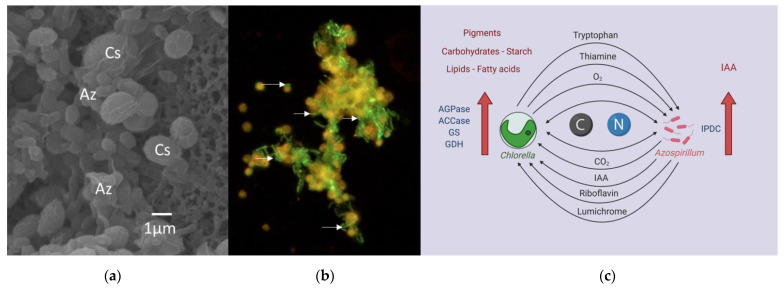
“One of the main tradeoffs in the mutualistic interaction between microalgae and bacteria is the exchange of fixed carbon by microalgae and vitamins produced by the bacteria, which act as cofactors for enzymes in key metabolic pathways in the microalga [23].”
§ Toward the Enhancement of Microalgal Metabolite Production through Microalgae–Bacteria Consortia † > 2. Mutualistic Interaction in Microalgae–Bacteria Consortia > 2.2. Mechanisms Acting in Mutualistic Co-Cultures
What the sources say
- Not checked yetcites [23] Cooper, 2015, Exploring mutualistic interactions between microalgae and bacteria in the omics age, Curr. Opin. Plant Biol. source
plaindirect- Asserted: passes — The authors put it forward as true.
- Checkable: passes — It can be checked against evidence.
- Load-bearing: passes — The paper’s conclusions depend on it.
- Based: passes — The paper gives a reason why it holds.
In the paper
“Croft et al. [15] found that the vitamin B12 producer Halomonas sp., isolated from non-axenic cultures of Amphidinium operculatum, can support the growth of the cobalamin-auxotroph Porphyridium purpureum, similarly to exogenous vitamin B12.”
§ Toward the Enhancement of Microalgal Metabolite Production through Microalgae–Bacteria Consortia † > 2. Mutualistic Interaction in Microalgae–Bacteria Consortia > 2.2. Mechanisms Acting in Mutualistic Co-Cultures
What the sources say
- Not checked yetcites [15] Croft, 2005, Algae acquire vitamin B12 through a symbiotic relationship with bacteria, Nature source
plaindirect- Asserted: passes — The authors put it forward as true.
- Checkable: passes — It can be checked against evidence.
- Load-bearing: unclear — It is unclear whether the paper’s conclusions depend on it.
- Based: passes — The paper gives a reason why it holds.
None of the sources cited for this claim have been checked yet.
In the paper
“Several studies have shown that A. brasilense affects the activities of key enzymes in metabolic pathways in Chlorella spp., resulting in the enhancement in production of metabolites of biotechnological importance, as is discussed later.”
§ Toward the Enhancement of Microalgal Metabolite Production through Microalgae–Bacteria Consortia † > 2. Mutualistic Interaction in Microalgae–Bacteria Consortia > 2.2. Mechanisms Acting in Mutualistic Co-Cultures
What the sources say
- Not checked yetcites [64] Meza, 2015, Involvement of indole-3-acetic acid produced by Azospirillum brasilense in accumulating intracellular ammonium in Chlorella vulgaris, Res. Microbiol. source
- Not checked yetcites [65] Choix, 2014, Enhanced activity of ADP glucose pyrophosphorylase and formation of starch induced by Azospirillum brasilense in Chlorella vulgaris, J. Biotechnol. source
- Not checked yetcites [66] Leyva, 2015, Activity of acetyl-CoA carboxylase is not directly linked to accumulation of lipids when Chlorella vulgaris is co-immobilised with Azospirillum brasilense in alginate under autotrophic and heterotrophic conditions, Ann. Microbiol. source
boosteddirect- Asserted: passes — The authors put it forward as true.
- Checkable: passes — It can be checked against evidence.
- Load-bearing: passes — The paper’s conclusions depend on it.
- Based: passes — The paper gives a reason why it holds.
In the paper
“In a study of bacterial consortia associated with cosmopolite marine diatoms, it was found that Sulfitobacter spp. synthesizes and secretes IAA, which promotes the growth of the diatoms, using diatom-secreted and endogenous tryptophan.”
§ Toward the Enhancement of Microalgal Metabolite Production through Microalgae–Bacteria Consortia † > 2. Mutualistic Interaction in Microalgae–Bacteria Consortia > 2.2. Mechanisms Acting in Mutualistic Co-Cultures
What the sources say
- Not checked yetcites [59] Amin, 2015, Interaction and signaling between a cosmopolitan phytoplankton and associated bacteria, Nature source
plaindirect- Asserted: passes — The authors put it forward as true.
- Checkable: passes — It can be checked against evidence.
- Load-bearing: unclear — It is unclear whether the paper’s conclusions depend on it.
- Based: passes — The paper gives a reason why it holds.
The paper states this without a source or data behind it here, so there is nothing to check it against. The quote shows it is in the paper.
In the paper
“The noteworthy increase in microalgae biomass production as a result of co-cultivation with bacteria has driven the study of these mutualistic interactions to boost the production of several microalgae of commercial interest (Table 1).”
§ Toward the Enhancement of Microalgal Metabolite Production through Microalgae–Bacteria Consortia † > 3. Enhancement of Biomass and Metabolite Production
plaindirect- Asserted: passes — The authors put it forward as true.
- Checkable: passes — It can be checked against evidence.
- Load-bearing: passes — The paper’s conclusions depend on it.
- Based: passes — The paper gives a reason why it holds.
- It may state two separate claims as one. 35
- Probably not a substantial claim. 8
The sources with a verdict support this claim; the rest weren’t checked yet, have no full text we could read, or their verdicts aren’t rated yet.
In the paper
“The use of wastewater as the culture medium for microalgae may reduce the use of commercial fertilizers and at the same time minimize freshwater consumption [95,96,97].”
§ Toward the Enhancement of Microalgal Metabolite Production through Microalgae–Bacteria Consortia † > 4. Green Chemistry Projections and Circular Bioeconomy
What the sources say
- Supportedcites [95] Safafar, 2015, Carotenoids, phenolic compounds and tocopherols contribute to the antioxidative properties of some microalgae species grown on industrial wastewater, Mar. Drugs source
The Introduction states that wastewater can provide both the water medium and nearly all nutrients needed to cultivate microalgae. That supports the qualified claim that using it may reduce commercial fertilizer use and freshwater consumption. (LLM, conf=0.90)
- Not checked yetcites [96] Zhou, 2015, Biomass and pigments production in photosynthetic bacteria wastewater treatment: Effects of photoperiod, Bioresour. Technol. source
- Not checked yetcites [97] Zhou, 2014, Biomass and carotenoid production in photosynthetic bacteria wastewater treatment: Effects of light intensity, Bioresour. Technol. source
hedgedconditional- Asserted: passes — The authors put it forward as true.
- Checkable: passes — It can be checked against evidence.
- Load-bearing: unclear — It is unclear whether the paper’s conclusions depend on it.
- Based: passes — The paper gives a reason why it holds.
It may state two separate claims as one.
- Supported
In the paper
“Nearly 50% of microalgae are auxotrophs for vitamin B12 (cobalamin) and 22% for vitamin B1 (thiamine).”
§ Toward the Enhancement of Microalgal Metabolite Production through Microalgae–Bacteria Consortia † > 2. Mutualistic Interaction in Microalgae–Bacteria Consortia > 2.2. Mechanisms Acting in Mutualistic Co-Cultures
What the sources say
- Not checked yetcites [23] Cooper, 2015, Exploring mutualistic interactions between microalgae and bacteria in the omics age, Curr. Opin. Plant Biol. source
plain- Asserted: passes — The authors put it forward as true.
- Checkable: passes — It can be checked against evidence.
- Load-bearing: passes — The paper’s conclusions depend on it.
- Based: passes — The paper gives a reason why it holds.
It may state two separate claims as one.
None of the sources cited for this claim have been checked yet.
In the paper
“Since these growth-promoting factors are produced by bacteria, microalgae–bacteria consortia have been explored as an alternative route to enhancing microalgae growth and metabolite production [9,10].”
§ Toward the Enhancement of Microalgal Metabolite Production through Microalgae–Bacteria Consortia † > 1. Introduction
What the sources say
- Not checked yetcites [9] Yao, 2019, Microalgae–bacteria symbiosis in microalgal growth and biofuel production: A review, J. Appl. Microbiol. source
- Not checked yetcites [10] Fuentes, J.L., Garbayo, I., Cuaresma, M., Montero, Z., Gonzalez-Del-Valle, M., and Vilchez, C. (2016). Impact of microalgae-bacteria interactions on the production of algal biomass and associated compounds. Mar. Drugs, 14. source
plaindirect- Asserted: passes — The authors put it forward as true.
- Checkable: passes — It can be checked against evidence.
- Load-bearing: passes — The paper’s conclusions depend on it.
- Based: passes — The paper gives a reason why it holds.
It may state two separate claims as one.
None of the sources cited for this claim have been checked yet.
In the paper
“Microalgae exude a part of the photosynthesized organics as dissolved organic carbon (DOC); these are assimilated by heterotrophic bacteria, and in return, bacteria contribute to algal growth through the generation of CO2, micronutrients (such as Fe), vitamins, macronutrients, specifically fixed N and phytohormones [15,17].”
§ Toward the Enhancement of Microalgal Metabolite Production through Microalgae–Bacteria Consortia † > 2. Mutualistic Interaction in Microalgae–Bacteria Consortia > 2.1. The Concept of Phycosphere
What the sources say
plaindirect- Asserted: passes — The authors put it forward as true.
- Checkable: passes — It can be checked against evidence.
- Load-bearing: passes — The paper’s conclusions depend on it.
- Based: passes — The paper gives a reason why it holds.
It may state two separate claims as one.
In the paper
“The authors reported that attachment defines a differential response, while 92–98% of cells of P. tricornutum had attached bacteria and fixed 64% more carbon than axenic cells. In contrast, only 42–63% of N. salina cells had associations with bacteria and fixed just 10% more carbon compared to axenic cells.”
§ Toward the Enhancement of Microalgal Metabolite Production through Microalgae–Bacteria Consortia † > 2. Mutualistic Interaction in Microalgae–Bacteria Consortia > 2.1. The Concept of Phycosphere
What the sources say
- Not checked yetcites [17] Samo, 2018, Attachment between heterotrophic bacteria and microalgae influences symbiotic microscale interactions, Environ. Microbiol. source
plaindirect- Asserted: passes — The authors put it forward as true.
- Checkable: passes — It can be checked against evidence.
- Load-bearing: unclear — It is unclear whether the paper’s conclusions depend on it.
- Based: passes — The paper gives a reason why it holds.
It may state two separate claims as one.
In the paper
“Despite the stability of this synthetic mutualism, the responses of L. rostrata show that the co-culture induces some stress in the microalga, and it must adjust its metabolism accordingly [47].”
§ Toward the Enhancement of Microalgal Metabolite Production through Microalgae–Bacteria Consortia † > 2. Mutualistic Interaction in Microalgae–Bacteria Consortia > 2.2. Mechanisms Acting in Mutualistic Co-Cultures
What the sources say
- Not checked yetcites [47] Helliwell, 2018, Quantitative proteomics of a B12 -dependent alga grown in coculture with bacteria reveals metabolic tradeoffs required for mutualism, New Phytol. source
plaindirectSingle case- Asserted: passes — The authors put it forward as true.
- Checkable: passes — It can be checked against evidence.
- Load-bearing: unclear — It is unclear whether the paper’s conclusions depend on it.
- Based: passes — The paper gives a reason why it holds.
It may state two separate claims as one.
In the paper
“The transfer of carbon and nitrogen compounds between the two organisms was demonstrated by de-Bashan et al. [27]; the bacteria significantly enhanced the growth of the microalgae, while the microalgae supported the growth of the bacteria in a medium where it could not otherwise grow.”
§ Toward the Enhancement of Microalgal Metabolite Production through Microalgae–Bacteria Consortia † > 2. Mutualistic Interaction in Microalgae–Bacteria Consortia > 2.2. Mechanisms Acting in Mutualistic Co-Cultures
What the sources say
- Not checked yetcites [27] Mayali, 2016, Establishment of stable synthetic mutualism without co-evolution between microalgae and bacteria demonstrated by mutual transfer of metabolites (NanoSIMS isotopic imaging) and persistent physical association (Fluorescent in situ hybridization), Algal Res. source
boosteddirect- Asserted: passes — The authors put it forward as true.
- Checkable: passes — It can be checked against evidence.
- Load-bearing: passes — The paper’s conclusions depend on it.
- Based: passes — The paper gives a reason why it holds.
It may state two separate claims as one.
In the paper
“As vitamin B12 is produced only by prokaryotes, it is the source of the vitamin for the microalga in exchange for photosynthates [23].”
§ Toward the Enhancement of Microalgal Metabolite Production through Microalgae–Bacteria Consortia † > 2. Mutualistic Interaction in Microalgae–Bacteria Consortia > 2.2. Mechanisms Acting in Mutualistic Co-Cultures
What the sources say
- Not checked yetcites [23] Cooper, 2015, Exploring mutualistic interactions between microalgae and bacteria in the omics age, Curr. Opin. Plant Biol. source
plaindirect- Asserted: passes — The authors put it forward as true.
- Checkable: passes — It can be checked against evidence.
- Load-bearing: unclear — It is unclear whether the paper’s conclusions depend on it.
- Based: passes — The paper gives a reason why it holds.
It may state two separate claims as one.
In the paper
“The cultivation of Dunaliella bardawil with Halomonas sp. isolated from algae cultures highlighted the siderophores’ key role in microalgal growth under iron deficiency. The bacteria increased Fe solubility, in this way enhancing its availability to the algae, which in turn significantly improved the algal growth rate [56].”
§ Toward the Enhancement of Microalgal Metabolite Production through Microalgae–Bacteria Consortia † > 2. Mutualistic Interaction in Microalgae–Bacteria Consortia > 2.2. Mechanisms Acting in Mutualistic Co-Cultures
What the sources say
- Not checked yetcites [56] Hadar, 1995, Oligotrophic bacteria enhance algal growth under iron-deficient conditions, Appl. Environ. Microbiol. source
plaindirect- Asserted: passes — The authors put it forward as true.
- Checkable: passes — It can be checked against evidence.
- Load-bearing: unclear — It is unclear whether the paper’s conclusions depend on it.
- Based: passes — The paper gives a reason why it holds.
It may state two separate claims as one.
None of the sources cited for this claim have been checked yet.
In the paper
“in co-culture, the thiamine producer Pseudoalteromonas sp. allows the growth of the marine thiamine auxotroph microalgae Ostreococcus lucimarinus [48], and the marine bacterium Dinoroseobacter shibae, isolated from the benthic dinoflagellate Prorocentrum lima, provides vitamins B1 and B12 to its dinoflagellate host [49].”
§ Toward the Enhancement of Microalgal Metabolite Production through Microalgae–Bacteria Consortia † > 2. Mutualistic Interaction in Microalgae–Bacteria Consortia > 2.2. Mechanisms Acting in Mutualistic Co-Cultures
What the sources say
- Not checked yetcites [48] Paerl, 2015, Vitamin B1 ecophysiology of marine picoeukaryotic algae: Strain-specific differences and a new role for bacteria in vitamin cycling, Limnol. Oceanogr. source
- Not checked yetcites [49] Ballhausen, 2010, The complete genome sequence of the algal symbiont Dinoroseobacter shibae: A hitchhiker’s guide to life in the sea, ISME J. source
plaindirect- Asserted: passes — The authors put it forward as true.
- Checkable: passes — It can be checked against evidence.
- Load-bearing: unclear — It is unclear whether the paper’s conclusions depend on it.
- Based: passes — The paper gives a reason why it holds.
It may state two separate claims as one.
None of the sources cited for this claim have been checked yet.
In the paper
“A model interaction for the exchange of vitamin B12 is the one created between the soil rhizobiaceae Mesorhizobium loti and the freshwater green microalga Lobomonas rostrata, where M. loti supplies vitamin B12, and in return, the bacterium receives fixed carbon from the microalga [45,46,47].”
§ Toward the Enhancement of Microalgal Metabolite Production through Microalgae–Bacteria Consortia † > 2. Mutualistic Interaction in Microalgae–Bacteria Consortia > 2.2. Mechanisms Acting in Mutualistic Co-Cultures
What the sources say
- Not checked yetcites [45] Kazamia, 2012, Mutualistic interactions between vitamin B12-dependent algae and heterotrophic bacteria exhibit regulation, Environ. Microbiol. source
- Not checked yetcites [46] Grant, 2014, Direct exchange of vitamin B 12 is demonstrated by modelling the growth dynamics of algal–bacterial cocultures, ISME J. source
- Not checked yetcites [47] Helliwell, 2018, Quantitative proteomics of a B12 -dependent alga grown in coculture with bacteria reveals metabolic tradeoffs required for mutualism, New Phytol. source
plaindirect- Asserted: passes — The authors put it forward as true.
- Checkable: passes — It can be checked against evidence.
- Load-bearing: unclear — It is unclear whether the paper’s conclusions depend on it.
- Based: passes — The paper gives a reason why it holds.
It may state two separate claims as one.
In the paper
“The authors reported an increase of 2.4 times in lipid content and 5.9 times in lipid production with the co-culture and up to 19.4 times the lipid productivity compared with the axenic microalga.”
§ Toward the Enhancement of Microalgal Metabolite Production through Microalgae–Bacteria Consortia † > 3. Enhancement of Biomass and Metabolite Production
What the sources say
- Not checked yetcites [83] Xu, 2018, Enhanced lipid production in Chlamydomonas reinhardtii by co-culturing with Azotobacter chroococcum, Front Plant Sci. source
plaindirect- Asserted: passes — The authors put it forward as true.
- Checkable: passes — It can be checked against evidence.
- Load-bearing: passes — The paper’s conclusions depend on it.
- Based: passes — The paper gives a reason why it holds.
It may state two separate claims as one.
In the paper
“Mathematical models that analyze the nutrient exchange between the microorganisms showed that M. loti regulates the production of cobalamin according to the requirements of the microalga rather than simply releasing nutrients to the medium, in this way creating a true mutualistic interaction with L. rostrata [46].”
§ Toward the Enhancement of Microalgal Metabolite Production through Microalgae–Bacteria Consortia † > 2. Mutualistic Interaction in Microalgae–Bacteria Consortia > 2.2. Mechanisms Acting in Mutualistic Co-Cultures
What the sources say
- Not checked yetcites [46] Grant, 2014, Direct exchange of vitamin B 12 is demonstrated by modelling the growth dynamics of algal–bacterial cocultures, ISME J. source
plaindirect- Asserted: passes — The authors put it forward as true.
- Checkable: passes — It can be checked against evidence.
- Load-bearing: unclear — It is unclear whether the paper’s conclusions depend on it.
- Based: passes — The paper gives a reason why it holds.
It may state two separate claims as one.
In the paper
“Lopez et al. [41] reported that A. brasilense produces riboflavin and lumichrome (a compound produced by the light degradation of riboflavin, which is also suggested as a plant-growth promoter), and both compounds affect the growth and metabolism of Chlorella sorokiniana.”
§ Toward the Enhancement of Microalgal Metabolite Production through Microalgae–Bacteria Consortia † > 2. Mutualistic Interaction in Microalgae–Bacteria Consortia > 2.2. Mechanisms Acting in Mutualistic Co-Cultures
What the sources say
- Not checked yetcites [41] Lopez, 2019, Riboflavin and lumichrome exuded by the bacterium Azospirillum brasilense promote growth and changes in metabolites in Chlorella sorokiniana under autotrophic conditions, Algal Res. source
plaindirect- Asserted: passes — The authors put it forward as true.
- Checkable: passes — It can be checked against evidence.
- Load-bearing: unclear — It is unclear whether the paper’s conclusions depend on it.
- Based: passes — The paper gives a reason why it holds.
It may state two separate claims as one.
In the paper
“Xue et al. [83] reported more than 80% content of C16 and C18 in the fatty acids produced by the microalga C. vulgaris when cultivated with Stenotrophomonas maltophilia as well as an increase of up to 5% when compared to axenic cultures.”
§ Toward the Enhancement of Microalgal Metabolite Production through Microalgae–Bacteria Consortia † > 3. Enhancement of Biomass and Metabolite Production
What the sources say
- Not checked yetcites [83] Xu, 2018, Enhanced lipid production in Chlamydomonas reinhardtii by co-culturing with Azotobacter chroococcum, Front Plant Sci. source
plaindirect- Asserted: passes — The authors put it forward as true.
- Checkable: passes — It can be checked against evidence.
- Load-bearing: passes — The paper’s conclusions depend on it.
- Based: passes — The paper gives a reason why it holds.
It may state two separate claims as one.
In the paper
“In all the co-cultures, the concentration and variety of fatty acids increased, reaching up to eight different fatty acids in microalgae co-immobilized with the MGPB in comparison to four to five in microalgae-only immobilized cells.”
§ Toward the Enhancement of Microalgal Metabolite Production through Microalgae–Bacteria Consortia † > 3. Enhancement of Biomass and Metabolite Production
What the sources say
- Not checked yetcites [75] Bashan, 2002, Increased pigment and lipid content, lipid variety, and cell and population size of the microalgae Chlorella spp. when co-immobilized in alginate beads with the microalgae-growth-promoting bacterium Azospirillum brasilense, Can. J. Microbiol. source
plaindirect- Asserted: passes — The authors put it forward as true.
- Checkable: passes — It can be checked against evidence.
- Load-bearing: passes — The paper’s conclusions depend on it.
- Based: passes — The paper gives a reason why it holds.
It may state two separate claims as one.
In the paper
“At 1% substrate concentration, the total starch productivity as well as lipid productivity increased in all the co-cultures compared to axenic conditions.”
§ Toward the Enhancement of Microalgal Metabolite Production through Microalgae–Bacteria Consortia † > 3. Enhancement of Biomass and Metabolite Production
What the sources say
- Not checked yetcites [72] Higgins, B.T., and Vandergheynst, J.S. (2014). Effects of Escherichia coli on mixotrophic growth of Chlorella minutissima and production of biofuel precursors. PLoS ONE, 9. source
plaindirect- Asserted: passes — The authors put it forward as true.
- Checkable: passes — It can be checked against evidence.
- Load-bearing: unclear — It is unclear whether the paper’s conclusions depend on it.
- Based: passes — The paper gives a reason why it holds.
It may state two separate claims as one.
In the paper
“The co-immobilization of the microorganisms resulted in increments of up to 35% in chlorophyll a, 176% in chlorophyll b, 186% in ß-carotene, 152% in lutein, and 129% in violaxanthin [87].”
§ Toward the Enhancement of Microalgal Metabolite Production through Microalgae–Bacteria Consortia † > 3. Enhancement of Biomass and Metabolite Production
What the sources say
- Not checked yetcites [87] Gonzalez, 2000, Increased growth of the microalga Chlorella vulgaris when coimmobilized and cocultured in alginate beads with the plant-growth-promoting bacterium Azospirillum brasilense, Appl. Environ. Microbiol. source
plaindirect- Asserted: passes — The authors put it forward as true.
- Checkable: passes — It can be checked against evidence.
- Load-bearing: passes — The paper’s conclusions depend on it.
- Based: passes — The paper gives a reason why it holds.
It may state two separate claims as one.
None of the sources cited for this claim have been checked yet.
In the paper
“while C. sorokiniana had an increase in carbohydrate production of around 55% under autotrophic conditions and 21% under heterotrophic conditions.”
§ Toward the Enhancement of Microalgal Metabolite Production through Microalgae–Bacteria Consortia † > 3. Enhancement of Biomass and Metabolite Production
What the sources say
- Not checked yetcites [70] Choix, 2012, Enhanced accumulation of starch and total carbohydrates in alginate-immobilized Chlorella spp. induced by Azospirillum brasilense: I. Autotrophic conditions, Enzym. Microb. Technol. source
- Not checked yetcites [79] Choix, 2012, Enhanced accumulation of starch and total carbohydrates in alginate-immobilized Chlorella spp. induced by Azospirillum brasilense: II. Heterotrophic conditions, Enzym. Microb. Technol. source
plaindirect- Asserted: passes — The authors put it forward as true.
- Checkable: passes — It can be checked against evidence.
- Load-bearing: unclear — It is unclear whether the paper’s conclusions depend on it.
- Based: passes — The paper gives a reason why it holds.
It may state two separate claims as one.
In the paper
“The authors reported 100% removal of ammonium and up to 90% removal efficiencies for nitrate, chemical oxygen demand, and phenol.”
§ Toward the Enhancement of Microalgal Metabolite Production through Microalgae–Bacteria Consortia † > 4. Green Chemistry Projections and Circular Bioeconomy
What the sources say
- Not checked yetcites [102] Tighiri, 2019, Biotreatment of landfill leachate by microalgae-bacteria consortium in sequencing batch mode and product utilization, Bioresour. Technol. source
plainSingle case- Asserted: passes — The authors put it forward as true.
- Checkable: passes — It can be checked against evidence.
- Load-bearing: passes — The paper’s conclusions depend on it.
- Based: passes — The paper gives a reason why it holds.
It may state two separate claims as one.
In the paper
“Powell and Hill [124] explored this way of aggregating algae by cultivating Nannochloropsis oceanica with the bacterium Bacillus sp., reaching up to 95% efficiency, with aggregates formed in 30 s.”
§ Toward the Enhancement of Microalgal Metabolite Production through Microalgae–Bacteria Consortia † > 4. Green Chemistry Projections and Circular Bioeconomy
What the sources say
- Not checked yetcites [124] Powell, 2013, Rapid aggregation of biofuel-producing algae by the bacterium Bacillus sp. strain RP1137, Appl. Environ. Microbiol. source
plaindirectSingle case- Asserted: passes — The authors put it forward as true.
- Checkable: passes — It can be checked against evidence.
- Load-bearing: unclear — It is unclear whether the paper’s conclusions depend on it.
- Based: passes — The paper gives a reason why it holds.
It may state two separate claims as one.
None of the sources cited for this claim have been checked yet.
In the paper
“Therefore, the use of microalgae–bacteria consortia in wastewater treatment has been widely studied, revealing that the microbial community plays an important role on the performance of the system [98,99,100].”
§ Toward the Enhancement of Microalgal Metabolite Production through Microalgae–Bacteria Consortia † > 4. Green Chemistry Projections and Circular Bioeconomy
What the sources say
- Not checked yetcites [98] Paddock, 2020, The effect of the microalgae-bacteria microbiome on wastewater treatment and biomass production, Appl. Microbiol. Biotechnol. source
- Not checked yetcites [99] Solimeno, 2017, Microalgae-bacteria models evolution: From microalgae steady-state to integrated microalgae-bacteria wastewater treatment models–a comparative review, Sci. Total Environ. source
- Not checked yetcites [100] Jia, 2016, Removal of nitrogen from wastewater using microalgae and microalgae–bacteria consortia, Cogent Environ. Sci. source
plaincorrelational- Asserted: passes — The authors put it forward as true.
- Checkable: passes — It can be checked against evidence.
- Load-bearing: fails — The paper’s conclusions may not depend on it.
- Based: passes — The paper gives a reason why it holds.
Probably not a substantial claim. The paper’s conclusions may not depend on it. It may state two separate claims as one.
In the paper
“The harvested biomass contained around 23% lipid content, including fatty acid methyl esters optimal for biodiesel production.”
§ Toward the Enhancement of Microalgal Metabolite Production through Microalgae–Bacteria Consortia † > 4. Green Chemistry Projections and Circular Bioeconomy
What the sources say
- Not checked yetcites [118] Bohutskyi, 2019, Production of lipid-containing algal-bacterial polyculture in wastewater and biomethanation of lipid extracted residues: Enhancing methane yield through hydrothermal pretreatment and relieving solvent toxicity through co-digestion, Sci. Total Environ. source
plain- Asserted: passes — The authors put it forward as true.
- Checkable: passes — It can be checked against evidence.
- Load-bearing: unclear — It is unclear whether the paper’s conclusions depend on it.
- Based: passes — The paper gives a reason why it holds.
It may state two separate claims as one.
In the paper
“The results showed that growth and lipid production was the same or higher when compared to the standard medium, which implies significant savings in the production process.”
§ Toward the Enhancement of Microalgal Metabolite Production through Microalgae–Bacteria Consortia † > 4. Green Chemistry Projections and Circular Bioeconomy
What the sources say
- Not checked yetcites [103] Tremblay, 2018, Cultivation of an algae-bacteria consortium in wastewater from an industrial park: Effect of environmental stress and nutrient deficiency on lipid production, Bioresour. Technol. source
plain- Asserted: passes — The authors put it forward as true.
- Checkable: passes — It can be checked against evidence.
- Load-bearing: passes — The paper’s conclusions depend on it.
- Based: passes — The paper gives a reason why it holds.
It may state two separate claims as one.
In the paper
“Furthermore, the relative toxicity was reduced from 57.32 to 1.12%, while the fatty acid content (C16–18) reached up to 88% of the biomass.”
§ Toward the Enhancement of Microalgal Metabolite Production through Microalgae–Bacteria Consortia † > 4. Green Chemistry Projections and Circular Bioeconomy
What the sources say
- Not checked yetcites [102] Tighiri, 2019, Biotreatment of landfill leachate by microalgae-bacteria consortium in sequencing batch mode and product utilization, Bioresour. Technol. source
plaindirect- Asserted: passes — The authors put it forward as true.
- Checkable: passes — It can be checked against evidence.
- Load-bearing: passes — The paper’s conclusions depend on it.
- Based: passes — The paper gives a reason why it holds.
It may state two separate claims as one.
In the paper
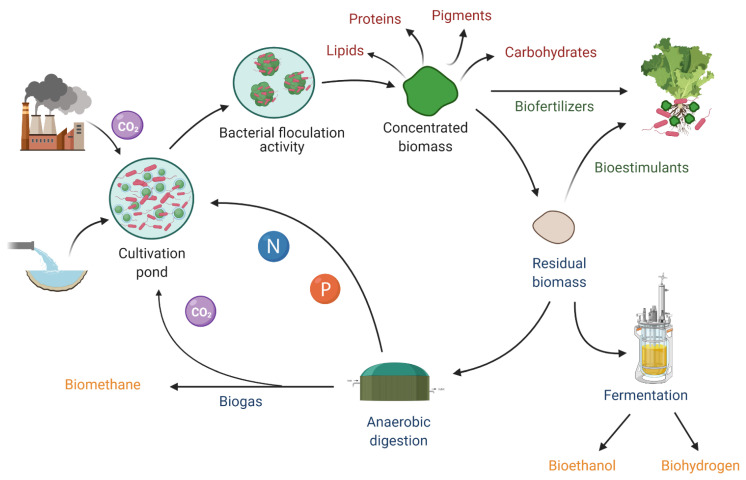
“Although methane production of the lipid-extracted biomass was low (296 ± 2 mL/gVS), the biomethane potential was maximized by hydrothermal liquefaction pretreatment (to increase biomass biodegradability) and co-digestion with sewage sludge (to reduce toxicity due to solvent residues).”
§ Toward the Enhancement of Microalgal Metabolite Production through Microalgae–Bacteria Consortia † > 4. Green Chemistry Projections and Circular Bioeconomy
What the sources say
- Not checked yetcites [118] Bohutskyi, 2019, Production of lipid-containing algal-bacterial polyculture in wastewater and biomethanation of lipid extracted residues: Enhancing methane yield through hydrothermal pretreatment and relieving solvent toxicity through co-digestion, Sci. Total Environ. source
plaindirect- Asserted: passes — The authors put it forward as true.
- Checkable: passes — It can be checked against evidence.
- Load-bearing: passes — The paper’s conclusions depend on it.
- Based: passes — The paper gives a reason why it holds.
It may state two separate claims as one.
In the paper
“The maximum hydrogen yield was found with the cultivation of the hydrogenase-deficient E. coli.”
§ Toward the Enhancement of Microalgal Metabolite Production through Microalgae–Bacteria Consortia † > 4. Green Chemistry Projections and Circular Bioeconomy
What the sources say
- Not checked yetcites [113] Lakatos, 2014, Bacterial symbionts enhance photo-fermentative hydrogen evolution of Chlamydomonas algae, Green Chem. source
plaincorrelationalSingle case- Asserted: passes — The authors put it forward as true.
- Checkable: passes — It can be checked against evidence.
- Load-bearing: fails — The paper’s conclusions may not depend on it.
- Based: passes — The paper gives a reason why it holds.
Probably not a substantial claim. The paper’s conclusions may not depend on it.
In the paper
“The MGPB A. brasilense and Bacillus pumilus remotely enhanced microalgal growth as well as lipids, carbohydrates, and chlorophyll a production [42].”
§ Toward the Enhancement of Microalgal Metabolite Production through Microalgae–Bacteria Consortia † > 4. Green Chemistry Projections and Circular Bioeconomy
What the sources say
- Not checked yetcites [42] Amavizca, 2017, Enhanced performance of the microalga Chlorella sorokiniana remotely induced by the plant growth-promoting bacteria Azospirillum brasilense and Bacillus pumilus, Sci. Rep. source
plaindirect- Asserted: passes — The authors put it forward as true.
- Checkable: passes — It can be checked against evidence.
- Load-bearing: unclear — It is unclear whether the paper’s conclusions depend on it.
- Based: passes — The paper gives a reason why it holds.
It may state two separate claims as one.
In the paper
“For instance, the cultivation of the microalgae Characium sp. in the cell-free filtrate of Pseudomonas composti resulted in an increase of 57% in the microalgal biomass, while lipid productivity increased by 18% [40].”
§ Toward the Enhancement of Microalgal Metabolite Production through Microalgae–Bacteria Consortia † > 4. Green Chemistry Projections and Circular Bioeconomy
What the sources say
- Not checked yetcites [40] Berthold, 2019, Enhancing algal biomass and lipid production through bacterial co-culture, Biomass Bioenergy source
plaindirectSingle case- Asserted: passes — The authors put it forward as true.
- Checkable: passes — It can be checked against evidence.
- Load-bearing: unclear — It is unclear whether the paper’s conclusions depend on it.
- Based: passes — The paper gives a reason why it holds.
It may state two separate claims as one.
None of the sources cited for this claim have been checked yet.
In the paper
“The application of the dry beads increased organic matter, organic carbon, and microbial carbon in the soil.”
§ Toward the Enhancement of Microalgal Metabolite Production through Microalgae–Bacteria Consortia † > 4. Green Chemistry Projections and Circular Bioeconomy
What the sources say
- Not checked yetcites [135] Trejo, 2012, Recycling waste debris of immobilized microalgae and plant growth-promoting bacteria from wastewater treatment as a resource to improve fertility of eroded desert soil, Environ. Exp. Bot. source
- Not checked yetcites [136] Lopez, 2013, Amendment of degraded desert soil with wastewater debris containing immobilized Chlorella sorokiniana and Azospirillum brasilense significantly modifies soil bacterial community structure, diversity, and richness, Biol. Fertil. Soils source
plaindirect- Asserted: passes — The authors put it forward as true.
- Checkable: passes — It can be checked against evidence.
- Load-bearing: passes — The paper’s conclusions depend on it.
- Based: passes — The paper gives a reason why it holds.
It may state two separate claims as one.
None of the sources cited for this claim have been checked yet.
In the paper
“The non-negligible cost of production related to microalgae CO2 consumption can be significantly reduced, not just through the CO2 generated from the bacterial partner but also by using CO2 emissions from industrial plants in the cultivation systems [138,139] or through biogas upgrading [140].”
§ Toward the Enhancement of Microalgal Metabolite Production through Microalgae–Bacteria Consortia † > 4. Green Chemistry Projections and Circular Bioeconomy
What the sources say
- Not checked yetcites [138] 2016, Optimal design of distributed algae-based biorefineries using CO2 emissions from multiple industrial plants, Ind. Eng. Chem. Res. source
- Not checked yetcites [139] Franco, 2010, Microalgae-based systems for carbon dioxide sequestration and industrial biorefineries, Biomass. Croat. Sciyo
- Not checked yetcites [140] Nagarajan, 2019, Integration of anaerobic digestion and microalgal cultivation for digestate bioremediation and biogas upgrading, Bioresour. Technol. source
plaindirect- Asserted: passes — The authors put it forward as true.
- Checkable: passes — It can be checked against evidence.
- Load-bearing: unclear — It is unclear whether the paper’s conclusions depend on it.
- Based: passes — The paper gives a reason why it holds.
It may state two separate claims as one.
- Rests on an assumption: The cost of production related to microalgae CO2 consumption is non-negligible.
In the paper
“Likewise, Cho et al. [81] cultivated C. vulgaris with isolated bacteria from the same culture and observed that the artificial microalgae–bacteria consortia had flocculation efficiency, lipid content, and quality superior to that of the axenic microalgae culture.”
§ Toward the Enhancement of Microalgal Metabolite Production through Microalgae–Bacteria Consortia † > 4. Green Chemistry Projections and Circular Bioeconomy
What the sources say
- Not checked yetcites [81] Cho, 2015, Enhancing microalgal biomass productivity by engineering a microalgal-bacterial community, Bioresour. Technol. source
plaindirectSingle case- Asserted: passes — The authors put it forward as true.
- Checkable: passes — It can be checked against evidence.
- Load-bearing: unclear — It is unclear whether the paper’s conclusions depend on it.
- Based: passes — The paper gives a reason why it holds.
It may state two separate claims as one.
None of the sources cited for this claim have been checked yet.
In the paper
“Application of the beads significantly changed the rhizosphere bacterial population structure, and species richness and diversity increased with the beads containing the microalgae–bacteria association [135,136].”
§ Toward the Enhancement of Microalgal Metabolite Production through Microalgae–Bacteria Consortia † > 4. Green Chemistry Projections and Circular Bioeconomy
What the sources say
- Not checked yetcites [135] Trejo, 2012, Recycling waste debris of immobilized microalgae and plant growth-promoting bacteria from wastewater treatment as a resource to improve fertility of eroded desert soil, Environ. Exp. Bot. source
- Not checked yetcites [136] Lopez, 2013, Amendment of degraded desert soil with wastewater debris containing immobilized Chlorella sorokiniana and Azospirillum brasilense significantly modifies soil bacterial community structure, diversity, and richness, Biol. Fertil. Soils source
plaindirect- Asserted: passes — The authors put it forward as true.
- Checkable: passes — It can be checked against evidence.
- Load-bearing: unclear — It is unclear whether the paper’s conclusions depend on it.
- Based: passes — The paper gives a reason why it holds.
It may state two separate claims as one.
A conclusion the paper draws from its own results — it cites no other source for it, so there is none to check. The quote shows it is in the paper.
In the paper
“Thus, although genomic, transcriptomic, and metabolomic studies in synthetic mutualistic consortia are currently very limited, they are of utmost importance in understanding the underlying mechanisms acting in establishing and stabilizing the mutualism.”
§ Toward the Enhancement of Microalgal Metabolite Production through Microalgae–Bacteria Consortia † > 5. Concluding Remarks
plain- Asserted: passes — The authors put it forward as true.
- Checkable: fails — It may be too vague to check against evidence.
- Load-bearing: fails — The paper’s conclusions may not depend on it.
- Based: fails — The paper may give no reason why it holds.
Probably not a substantial claim. It may be too vague to check against evidence. The paper’s conclusions may not depend on it. The paper may give no reason why it holds. It may state two separate claims as one.
- Rests on an assumption: Genomic, transcriptomic, and metabolomic studies in synthetic mutualistic consortia are currently very limited.
In the paper
“Lastly, the development of circular economy principle-based systems, such as microalgae–bacteria consortia biorefineries, constitutes an option to reduce CO2 emissions within the framework of meeting the international COP21 Paris CO2 emission reduction commitments and UN Sustainable Development Goals [148].”
§ Toward the Enhancement of Microalgal Metabolite Production through Microalgae–Bacteria Consortia † > 5. Concluding Remarks
What the sources say
- Not checked yetcites [148] Mccollum, 2018, Connecting the sustainable development goals by their energy inter-linkages, Environ. Res. Lett. source
hedgedconditional- Asserted: passes — The authors put it forward as true.
- Checkable: passes — It can be checked against evidence.
- Load-bearing: fails — The paper’s conclusions may not depend on it.
- Based: passes — The paper gives a reason why it holds.
Probably not a substantial claim. The paper’s conclusions may not depend on it.
A conclusion the paper draws from its own results — it cites no other source for it, so there is none to check. The quote shows it is in the paper.
In the paper
“The development of microalgal biorefineries based on mutualistic interaction between growth-promoting bacteria and microalgae stands as an attractive alternative in overcoming the drawbacks that currently jeopardize the application of these biorefineries on a large scale.”
§ Toward the Enhancement of Microalgal Metabolite Production through Microalgae–Bacteria Consortia † > 5. Concluding Remarks
plaindirect- Asserted: passes — The authors put it forward as true.
- Checkable: fails — It may be too vague to check against evidence.
- Load-bearing: passes — The paper’s conclusions depend on it.
- Based: fails — The paper may give no reason why it holds.
Probably not a substantial claim. It may be too vague to check against evidence. The paper may give no reason why it holds.
- Rests on an assumption: The cost of production of microalgae-based proteins, lipids, pigments, and carbohydrates is a bottleneck that prevents many industries from shifting to sustainable production.
A conclusion the paper draws from its own results — it cites no other source for it, so there is none to check. The quote shows it is in the paper.
In the paper
“Knowing each of the partners’ specific nutritional and environmental requirements can help the manipulation of the intended biotechnological response.”
§ Toward the Enhancement of Microalgal Metabolite Production through Microalgae–Bacteria Consortia † > 5. Concluding Remarks
plainconditional- Asserted: passes — The authors put it forward as true.
- Checkable: fails — It may be too vague to check against evidence.
- Load-bearing: passes — The paper’s conclusions depend on it.
- Based: fails — The paper may give no reason why it holds.
Probably not a substantial claim. It may be too vague to check against evidence. The paper may give no reason why it holds.
In the paper
“The results revealed that A. brasilense has the ability to mitigate the stress caused by CO2 levels of up to 35%, improving the CO2 fixation rate by 25–50% in S. obliquus, 46–87% in C. vulgaris, and 41–53% in C. reinhardtii.”
§ Toward the Enhancement of Microalgal Metabolite Production through Microalgae–Bacteria Consortia † > 4. Green Chemistry Projections and Circular Bioeconomy
What the sources say
- Not checked yetcites [63] Choix, 2018, Azospirillum brasilense increases CO2 fixation on microalgae Scenedesmus obliquus, Chlorella vulgaris, and Chlamydomonas reinhardtii cultured on high CO2 concentrations, Microb. Ecol. source
plaindirect- Asserted: passes — The authors put it forward as true.
- Checkable: passes — It can be checked against evidence.
- Load-bearing: passes — The paper’s conclusions depend on it.
- Based: passes — The paper gives a reason why it holds.
It may state two separate claims as one.
A conclusion the paper draws from its own results — it cites no other source for it, so there is none to check. The quote shows it is in the paper.
In the paper
“The demonstration of mutual benefits and the association’s self-maintenance duration over several consecutive generations is fundamental to the validation of this approach.”
§ Toward the Enhancement of Microalgal Metabolite Production through Microalgae–Bacteria Consortia † > 5. Concluding Remarks
plain- Asserted: passes — The authors put it forward as true.
- Checkable: fails — It may be too vague to check against evidence.
- Load-bearing: passes — The paper’s conclusions depend on it.
- Based: fails — The paper may give no reason why it holds.
Probably not a substantial claim. It may be too vague to check against evidence. The paper may give no reason why it holds.
A conclusion the paper draws from its own results — it cites no other source for it, so there is none to check. The quote shows it is in the paper.
In the paper
“In summary, a successful microalgae-bacteria consortia must be beneficial to all microorganisms.”
§ Toward the Enhancement of Microalgal Metabolite Production through Microalgae–Bacteria Consortia † > 5. Concluding Remarks
plaindirect- Asserted: passes — The authors put it forward as true.
- Checkable: passes — It can be checked against evidence.
- Load-bearing: passes — The paper’s conclusions depend on it.
- Based: fails — The paper may give no reason why it holds.
Probably not a substantial claim. The paper may give no reason why it holds.
None of the sources cited for this claim have been checked yet.
In the paper
“Besides, as stated before, production costs associated with fertilizer consumption can be minimized either by using wastewater as the culture medium, or by recycling the main nutrients, such as nitrogen and phosphorous recovered after anaerobic digestion [142,143,144] or hydrothermal liquefaction conversion [145,146].”
§ Toward the Enhancement of Microalgal Metabolite Production through Microalgae–Bacteria Consortia † > 4. Green Chemistry Projections and Circular Bioeconomy
What the sources say
- Not checked yetcites [142] Sforza, 2017, Anaerobic digestion of lipid-extracted microalgae: Enhancing nutrient recovery towards a closed loop recycling, Biochem. Eng. J. source
- Not checked yetcites [143] 2015, Production of microalgae using centrate from anaerobic digestion as the nutrient source, Algal Res. source
- Not checked yetcites [144] Eltanahy, 2019, Assessing the fertilizing potential of microalgal digestates using the marine diatom Chaetoceros muelleri, Algal Res. source
- Not checked yetcites [145] Barreiro, 2015, Cultivation of microalgae with recovered nutrients after hydrothermal liquefaction, Algal Res. source
- Not checked yetcites [146] Biller, 2012, Nutrient recycling of aqueous phase for microalgae cultivation from the hydrothermal liquefaction process, Algal Res. source
plaindirect- Asserted: passes — The authors put it forward as true.
- Checkable: passes — It can be checked against evidence.
- Load-bearing: unclear — It is unclear whether the paper’s conclusions depend on it.
- Based: passes — The paper gives a reason why it holds.
It may state two separate claims as one.
The paper relies on this without support.
The mechanisms involved in a synthetic mutualistic interaction between microalgae and bacteria are similar to those found in natural associations.
“The mechanisms involved in a synthetic mutualistic interaction between microalgae and bacteria are similar to those found in natural associations.”
The authors state this as an assumption.
The bacteria grow at the expense of the photosynthates produced by the microalga in the Croft et al. experiment.
“Because the medium where these two microorganisms were growing did not contain any organic carbon source, it is logical to assume that the bacteria grow at the expense of the photosynthates produced by the microalga.”
The paper relies on this without support.
Nutrient exchange is the most common and important type of mutualistic interaction between microalgae and bacteria.
“In general, nutrient exchange has been considered the most common and important.”
The paper relies on this without support.
The cost of production of microalgae-based proteins, lipids, pigments, and carbohydrates is a bottleneck that prevents many industries from shifting to sustainable production.
“The cost of production of microalgae-based proteins, lipids, pigments, and carbohydrates is still a bottleneck that prevents many industries from making this desirable shift.”
The paper relies on this without support.
No studies are evaluating microalgae–bacteria consortia in these kinds of biorefineries.
“Although, as we described earlier, growth-promoting bacteria can significantly enhance the production of these metabolites; to the authors’ knowledge, no studies are evaluating microalgae–bacteria consortia in these kinds of biorefineries.”
The paper relies on this without support.
Natural bacterial communities in wastewater effluents are a combination of beneficial and competing species.
“Because the natural bacterial communities in wastewater effluents are a combination of beneficial and competing species, artificial consortia are preferred to boost microalgal biomass production.”
The paper relies on this without support.
The viability of bacteria after metabolite extraction depends on the target metabolite and the extraction process.
“The viability of bacteria after metabolite extraction depends on the target metabolite and the extraction process.”
The paper relies on this without support.
The cost of production related to microalgae CO2 consumption is non-negligible.
“The non-negligible cost of production related to microalgae CO2 consumption can be significantly reduced”
The paper relies on this without support.
Genomic, transcriptomic, and metabolomic studies in synthetic mutualistic consortia are currently very limited.
“Thus, although genomic, transcriptomic, and metabolomic studies in synthetic mutualistic consortia are currently very limited, they are of utmost importance in understanding the underlying mechanisms acting in establishing and stabilizing the mutualism.”
Claims other papers make about this one
Each is checked against this paper’s own text: does it say what the citing paper says it does?
The cited source says what the claim attributes to it.
In the citing paper
“The reciprocal relationships between microalgae and bacteria can improve the growth of microalgae and increase the production of metabolites, including carbohydrates, pigments, and lipids, which opens up new possibilities for optimising cultivation processes [108].”
From Multi-Sensing Monitoring of the Microalgae Biomass Cultivation Systems for Biofuels and Added Value Products Synthesis—Challenges and Opportunities (2025) · cites this paper as [108]
Self-check
Percentages, sums and reported differences re-computed from the paper’s own numbers.
Each contradiction between two passages listed here was confirmed by an independent check.
Rated minor: it would not touch a result — a value no result rests on, a p-value that stays on the same side of the significance level, or a conflict that is clerical, resolved elsewhere in the paper, or outside its own findings.
In the paper
§ Toward the Enhancement of Microalgal Metabolite Production through Microalgae–Bacteria Consortia † > 3. Enhancement of Biomass and Metabolite Production
“Xue et al. [83] reported more than 80% content of C16 and C18 in the fatty acids produced by the microalga C. vulgaris when cultivated with Stenotrophomonas maltophilia”
§ Toward the Enhancement of Microalgal Metabolite Production through Microalgae–Bacteria Consortia † > References
“83. Xu L. Cheng X. Wang Q. Enhanced lipid production in Chlamydomonas reinhardtii by co-culturing with Azotobacter chroococcum Front Plant Sci. 2018 9 741”
Citations
Cites
Planetary boundaries: Guiding human development on a changing planet
Steffen, W., Richardson, K., Rockström, J., Cornell, S. E., Fetzer, I., Bennett, E. M., Biggs, R., Carpenter, S. R., de Vries, W., de Wit, C. A., et al. (2015) · Science · doi:10.1126/science.1259855 · Cited by 12,527
Plant growth promoting rhizobacteria as biofertilizers
Vessey, J. K. (2003) · Plant and Soil · doi:10.1023/a:1026037216893 · Cited by 3,397
Khan, M. I., Shin, J. H., & Kim, J. D. (2018) · Microbial Cell Factories · doi:10.1186/s12934-018-0879-x · Cited by 2,082
Algae acquire vitamin B12 through a symbiotic relationship with bacteria
Croft, M. T., Lawrence, A. D., Raux-Deery, E., Warren, M. J., & Smith, A. G. (2005) · Nature · doi:10.1038/nature04056 · Cited by 1,536
Algae-bacteria interactions: Evolution, ecology and emerging applications
Ramanan, R., Kim, B.-H., Cho, D.-H., Oh, H.-M., & Kim, H.-S. (2016) · Biotechnology Advances · doi:10.1016/j.biotechadv.2015.12.003 · Cited by 1,301
Zooming in on the phycosphere: the ecological interface for phytoplankton–bacteria relationships
Seymour, J. R., Amin, S. A., Raina, J., & Stocker, R. (2017) · Nature Microbiology · doi:10.1038/nmicrobiol.2017.65 · Cited by 1,184
Interaction and signalling between a cosmopolitan phytoplankton and associated bacteria
Amin, S. A., Hmelo, L. R., van Tol, H. M., Durham, B. P., Carlson, L. T., Heal, K. R., Morales, R. L., Berthiaume, C. T., Parker, M. S., Djunaedi, B., et al. (2015) · Nature · doi:10.1038/nature14488 · Cited by 1,125
Bacterial siderophores in community and host interactions
Kramer, J., Özkaya, Ö., & Kümmerli, R. (2020) · Nature Reviews Microbiology · doi:10.1038/s41579-019-0284-4 · Cited by 998
Co-culture systems and technologies: taking synthetic biology to the next level
Goers, L., Freemont, P. S., & Polizzi, K. M. (2014) · Journal of The Royal Society Interface · doi:10.1098/rsif.2014.0065 · Cited by 623
Our Current Understanding of Mutualism
Bronstein, J. L. (1994) · The Quarterly Review of Biology · doi:10.1086/418432 · Cited by 602
Photolysis of iron–siderophore chelates promotes bacterial–algal mutualism
Amin, S. A., Green, D. H., Hart, M. C., Küpper, F. C., Sunda, W. G., & Carrano, C. J. (2009) · Proceedings of the National Academy of Sciences · doi:10.1073/pnas.0905512106 · Cited by 584
Microalgal Biostimulants and Biofertilisers in Crop Productions
Ronga, D., Biazzi, E., Parati, K., Carminati, D., Carminati, E., & Tava, A. (2019) · Agronomy · doi:10.3390/agronomy9040192 · Cited by 536
Renuka, N., Guldhe, A., Prasanna, R., Singh, P., & Bux, F. (2018) · Biotechnology Advances · doi:10.1016/j.biotechadv.2018.04.004 · Cited by 533
Consortia of cyanobacteria/microalgae and bacteria: Biotechnological potential
Subashchandrabose, S. R., Ramakrishnan, B., Megharaj, M., Venkateswarlu, K., & Naidu, R. (2011) · Biotechnology Advances · doi:10.1016/j.biotechadv.2011.07.009 · Cited by 492
Biller, P., Ross, A. B., Skill, S. C., Lea-Langton, A., Balasundaram, B., Hall, C., Riley, R., & Llewellyn, C. A. (2012) · Algal Research · doi:10.1016/j.algal.2012.02.002 · Cited by 486
Safafar, H., Van Wagenen, J., Møller, P., & Jacobsen, C. (2015) · Marine Drugs · doi:10.3390/md13127069 · Cited by 478
Perspectives on the feasibility of using microalgae for industrial wastewater treatment
Wang, Y., Ho, S., Cheng, C.-L., Guo, W. Q., Nagarajan, D., Ren, N., Lee, D., & Chang, J. (2016) · Bioresource Technology · doi:10.1016/j.biortech.2016.09.106 · Cited by 476
The evolution of interspecific mutualisms
Doebeli, M., & Knowlton, N. (1998) · Proceedings of the National Academy of Sciences · doi:10.1073/pnas.95.15.8676 · Cited by 473
Fuentes, J., Garbayo, I., Cuaresma, M., Montero, Z., González-del-Valle, M., & Vílchez, C. (2016) · Marine Drugs · doi:10.3390/md14050100 · Cited by 462
Siderophores from Neighboring Organisms Promote the Growth of Uncultured Bacteria
Donofrio, A. E., Crawford, J. M., Stewart, E. J., Witt, K., Gavrish, E., Epstein, S. S., Clardy, J., & Lewis, K. (2010) · Chemistry & Biology · doi:10.1016/j.chembiol.2010.02.010 · Cited by 457
Process effect of microalgal-carbon dioxide fixation and biomass production: A review
Zhao, B., & Su, Y. (2014) · Renewable and Sustainable Energy Reviews · doi:10.1016/j.rser.2013.11.054 · Cited by 454
Connecting the sustainable development goals by their energy inter-linkages
McCollum, D. L., Echeverri, L. G., Busch, S., Pachauri, S., Parkinson, S., Rogelj, J., Krey, V., Minx, J. C., Nilsson, M., Stevance, A.-S., et al. (2018) · Environmental Research Letters · doi:10.1088/1748-9326/aaafe3 · Cited by 448
Kazamia, E., Czesnick, H., Nguyen, T. T. V., Croft, M. T., Sherwood, E., Sasso, S., Hodson, S. J., Warren, M. J., & Smith, A. G. (2012) · Environmental Microbiology · doi:10.1111/j.1462-2920.2012.02733.x · Cited by 410
Microbial Pigments in the Food Industry—Challenges and the Way Forward
Sen, T., Barrow, C. J., & Deshmukh, S. K. (2019) · Frontiers in Nutrition · doi:10.3389/fnut.2019.00007 · Cited by 392
Fabris, M., Abbriano, R. M., Pernice, M., Sutherland, D. L., Commault, A. S., Hall, C. C., Labeeuw, L., McCauley, J. I., Kuzhiuparambil, U., Ray, P., et al. (2020) · Frontiers in Plant Science · doi:10.3389/fpls.2020.00279 · Cited by 382
Exploring the potential of algae/bacteria interactions
Kouzuma, A., & Watanabe, K. (2015) · Current Opinion in Biotechnology · doi:10.1016/j.copbio.2015.02.007 · Cited by 344
Nobre, B. P., Villalobos, F., Barragán, B. E., Oliveira, A. C., Batista, A. P., Marques, P. A. S. S., Mendes, R. L., Sovová, H., Palavra, A. F., & Gouveia, L. (2013) · Bioresource Technology · doi:10.1016/j.biortech.2012.11.084 · Cited by 333
Su, Y., Mennerich, A., & Urban, B. (2012) · Bioresource Technology · doi:10.1016/j.biortech.2011.11.113 · Cited by 315
Enhancing microalgal biomass productivity by engineering a microalgal-bacterial community
Cho, D.-H., Ramanan, R., Heo, J., Lee, J., Kim, B.-H., Oh, H.-M., & Kim, H.-S. (2015) · Bioresource Technology · doi:10.1016/j.biortech.2014.10.159 · Cited by 305
Gonzalez, L. E., & Bashan, Y. (2000) · Applied and Environmental Microbiology · doi:10.1128/aem.66.4.1527-1531.2000 · Cited by 304
Microalgae–bacteria symbiosis in microalgal growth and biofuel production: A review
Yao, S., Lyu, S., An, Y., Lu, J., Gjermansen, C., & Schramm, A. (2019) · Journal of Applied Microbiology · doi:10.1111/jam.14095 · Cited by 296
Gerardo, M. L., Hende, S. V. D., Vervaeren, H., Coward, T., & Skill, S. C. (2015) · Algal Research · doi:10.1016/j.algal.2015.06.019 · Cited by 292
Current Bottlenecks and Challenges of the Microalgal Biorefinery
Gifuni, I., Pollio, A., Safi, C., Marzocchella, A., & Olivieri, G. (2019) · Trends in Biotechnology · doi:10.1016/j.tibtech.2018.09.006 · Cited by 281
Species-Specific Bacterial Communities in the Phycosphere of Microalgae?
Sapp, M., Schwaderer, A. S., Wiltshire, K. H., Hoppe, H., Gerdts, G., & Wichels, A. (2007) · Microbial Ecology · doi:10.1007/s00248-006-9162-5 · Cited by 275
Wagner-Döbler, I., Ballhausen, B., Berger, M., Brinkhoff, T., Buchholz, I., Bunk, B., Cypionka, H., Daniel, R., Drepper, T., Gerdts, G., et al. (2010) · The ISME Journal · doi:10.1038/ismej.2009.94 · Cited by 271
Exploring mutualistic interactions between microalgae and bacteria in the omics age
Cooper, M. B., & Smith, A. G. (2015) · Current Opinion in Plant Biology · doi:10.1016/j.pbi.2015.07.003 · Cited by 248
González‐Fernández, C., Sialve, B., Bernet, N., & Steyer, J. (2011) · Biofuels Bioproducts and Biorefining · doi:10.1002/bbb.337 · Cited by 246
Microalgae-associated bacteria play a key role in the flocculation of Chlorella vulgaris
Lee, J., Cho, D.-H., Ramanan, R., Kim, B.-H., Oh, H.-M., & Kim, H.-S. (2013) · Bioresource Technology · doi:10.1016/j.biortech.2012.11.130 · Cited by 238
de-Bashan, L. E., Bashan, Y., Moreno, M., Lebsky, V. K., & Bustillos, J. J. (2002) · Canadian Journal of Microbiology · doi:10.1139/w02-051 · Cited by 222
Self-citationRemoval of nitrogen from wastewater using microalgae and microalgae–bacteria consortia
Jia, H., & Yuan, Q. (2016) · Cogent Environmental Science · doi:10.1080/23311843.2016.1275089 · Cited by 216
Grant, M. A. A., Kazamia, E., Cicuta, P., & Smith, A. G. (2014) · The ISME Journal · doi:10.1038/ismej.2014.9 · Cited by 214
Rasouli, Z., Valverde‐Pérez, B., D’Este, M., Francisci, D. D., & Angelidaki, İ. (2018) · Biochemical Engineering Journal · doi:10.1016/j.bej.2018.03.010 · Cited by 189
Progress on lipid extraction from wet algal biomass for biodiesel production
Naghdi, F. G., González-González, L. M., Chan, W., & Schenk, P. M. (2016) · Microbial Biotechnology · doi:10.1111/1751-7915.12360 · Cited by 186
Self-citationHernández, J.-P., de‐Bashan, L. E., Rodríguez, D., Rodríguez, Y., & Yoav Bashan, A. (2008) · European Journal of Soil Biology · doi:10.1016/j.ejsobi.2008.08.004 · Cited by 181
Self-citationBruckner, C. G., Rehm, C., Grossart, H., & Kroth, P. G. (2011) · Environmental Microbiology · doi:10.1111/j.1462-2920.2010.02411.x · Cited by 179
Ferreira, G. F., Ríos Pinto, L. F., Maciel Filho, R., & Fregolente, L. V. (2019) · Renewable and Sustainable Energy Reviews · doi:10.1016/j.rser.2019.04.052 · Cited by 176 · cited 1×
“Likewise, several studies integrate lipid production from microalgae grown in wastewater [114,115] and the use of the lipid spent biomass for methane production through anaerobic digestion [105,106,116,117].”
BackgroundNguyen, T.-T.-D., Nguyen, T.-T., An Binh, Q., Bui, X.-T., Ngo, H. H., Vo, H. N. P., Andrew Lin, K.-Y., Vo, T.-D.-H., Guo, W., Lin, C., et al. (2020) · Bioresource Technology · doi:10.1016/j.biortech.2020.123754 · Cited by 173
Silambarasan, S., Logeswari, P., Sivaramakrishnan, R., Incharoensakdi, A., Cornejo, P., Kamaraj, B., & Chi, N. T. L. (2021) · Chemosphere · doi:10.1016/j.chemosphere.2020.129323 · Cited by 172
Bio-based products from microalgae cultivated in digestates
Koutra, E., Economou, C. N., Tsafrakidou, P., & Kornaros, M. (2018) · Trends in biotechnology · doi:10.1016/j.tibtech.2018.02.015 · Cited by 168
Chemicals to enhance microalgal growth and accumulation of high-value bioproducts
Yu, X., Chen, L., & Zhang, W. (2015) · Frontiers in Microbiology · doi:10.3389/fmicb.2015.00056 · Cited by 166
Chen, X., Hu, Z., Qi, Y., Song, C., & Chen, G. (2019) · Bioresource Technology · doi:10.1016/j.biortech.2019.122017 · Cited by 161
Production of microalgae using centrate from anaerobic digestion as the nutrient source
Morales-Amaral, M. D. M., Gómez-Serrano, C., Acién, F. G., Fernández-Sevilla, J. M., & Molina-Grima, E. (2015) · Algal Research · doi:10.1016/j.algal.2015.03.018 · Cited by 154
Phycosphere bacterial diversity in green algae reveals an apparent similarity across habitats
Ramanan, R., Kang, Z., Kim, B.-H., Cho, D., Jin, L., Oh, H., & Kim, H.-S. (2015) · Algal Research · doi:10.1016/j.algal.2015.02.003 · Cited by 151
Park, Y., Je, K.-W., Lee, K., Jung, S.-E., & Choi, T.-J. (2008) · Hydrobiologia · doi:10.1007/s10750-007-9152-8 · Cited by 150
Paul, C., Mausz, M. A., & Pohnert, G. (2012) · Metabolomics · doi:10.1007/s11306-012-0453-1 · Cited by 150
Ferreira, A., Ribeiro, B., Ferreira, A. F., Tavares, M. L. A., Vladić, J., Vidović, S. S., Cvetković, D., Melkonyan, L., Avetisova, G., Goginyan, V. B., et al. (2019) · Biofuels Bioproducts and Biorefining · doi:10.1002/bbb.2032 · Cited by 148
Zhou, Q., Zhang, P., & Zhang, G. (2014) · Bioresource Technology · doi:10.1016/j.biortech.2014.08.088 · Cited by 147
Krohn-Molt, I., Wemheuer, B., Alawi, M., Poehlein, A., Güllert, S., Schmeisser, C., Pommerening‐Röser, A., Grundhoff, A. T., Daniel, R., Hanelt, D., et al. (2013) · Applied and Environmental Microbiology · doi:10.1128/aem.01641-13 · Cited by 146
Screening and selection of growth-promoting bacteria for Dunaliella cultures
Chevanton, M. L., Garnier, M., Bougaran, G., Schreiber, N., Lukomska, E., Bérard, J., Fouilland, É., Olivier Bernard, A., & Cadoret, J. (2013) · Algal Research · doi:10.1016/j.algal.2013.05.003 · Cited by 142
Microalgae cultivation and metabolites production: a comprehensive review
Vuppaladadiyam, A. K., Prinsen, P., Raheem, A., Luque, R., & Zhao, M. M. (2018) · Biofuels Bioproducts and Biorefining · doi:10.1002/bbb.1864 · Cited by 142
Makut, B. B., Das, D., & Goswami, G. (2019) · Algal Research · doi:10.1016/j.algal.2018.11.020 · Cited by 137
Cultivation of microalgae with recovered nutrients after hydrothermal liquefaction
López Barreiro, D., Bauer, M., Hornung, U., Posten, C., Kruse, A., & Prins, W. (2015) · Algal Research · doi:10.1016/j.algal.2015.03.007 · Cited by 133
Choix, F. J., de-Bashan, L. E., & Bashan, Y. (2012) · Enzyme and Microbial Technology · doi:10.1016/j.enzmictec.2012.07.012 · Cited by 133
Self-citationMolinuevo-Salces, B., Mahdy, A., Ballesteros, M., & González‐Fernández, C. (2016) · Renewable Energy · doi:10.1016/j.renene.2016.01.090 · Cited by 132
Wang, H., Hill, R. T., Zheng, T., Hu, X., & Wang, B. (2016) · Critical Reviews in Biotechnology · doi:10.3109/07388551.2014.961402 · Cited by 131
Abinandan, S., Subashchandrabose, S. R., Venkateswarlu, K., & Megharaj, M. (2017) · Applied Microbiology and Biotechnology · doi:10.1007/s00253-017-8693-7 · Cited by 124
Amavizca, E., Bashan, Y., Ryu, C.-M., Farag, M. A., Bebout, B. M., & de-Bashan, L. E. (2017) · Scientific Reports · doi:10.1038/srep41310 · Cited by 119
Self-citationAketo, T., Hoshikawa, Y., Nojima, D., Yabu, Y., Maeda, Y., Yoshino, T., Takano, H., & Tanaka, T. (2020) · Journal of Bioscience and Bioengineering · doi:10.1016/j.jbiosc.2019.12.004 · Cited by 118
da Silva, T. L., Gouveia, L., & dos Reis, A. J. D. (2013) · Applied Microbiology and Biotechnology · doi:10.1007/s00253-013-5389-5 · Cited by 117
Process for selective extraction of pigments and functional proteins from Chlorella vulgaris
Kulkarni, S., & Nikolov, Z. L. (2018) · Algal Research · doi:10.1016/j.algal.2018.08.024 · Cited by 117
González-González, L. M., Correa, D. F., Ryan, S., Jensen, P. D., Pratt, S., & Schenk, P. M. (2017) · Renewable and Sustainable Energy Reviews · doi:10.1016/j.rser.2017.09.091 · Cited by 116
Self-citationThe Stabilisation Potential of Individual and Mixed Assemblages of Natural Bacteria and Microalgae
Lubarsky, H. V., Hubas, C., Chocholek, M., Larson, F., Manz, W., Paterson, D. M., & Gerbersdorf, S. U. (2010) · PLoS ONE · doi:10.1371/journal.pone.0013794 · Cited by 115
Kim, E. J., Kim, S., Choi, H.-G., & Han, S. J. (2020) · Biotechnology for Biofuels · doi:10.1186/s13068-020-1660-z · Cited by 113
Nagarajan, D., Lee, D.-J., & Chang, J.-S. (2019) · Bioresource Technology · doi:10.1016/j.biortech.2019.121804 · Cited by 112
Kazamia, E., Helliwell, K. E., Purton, S., & Smith, A. G. (2016) · Ecology Letters · doi:10.1111/ele.12615 · Cited by 109
Wan, M., Jin, X., Xia, J., Rosenberg, J. N., Yu, G., Nie, Z., Oyler, G. A., & Betenbaugh, M. J. (2014) · Applied Microbiology and Biotechnology · doi:10.1007/s00253-014-6088-6 · Cited by 104
Wang, H., Laughinghouse, H. D., Anderson, M. A., Chen, F., Willliams, E., Place, A. R., Zmora, O., Zohar, Y., Zheng, T., & Hill, R. T. (2012) · Applied and Environmental Microbiology · doi:10.1128/aem.06474-11 · Cited by 102
Eukaryotic microalgae as hosts for light-driven heterologous isoprenoid production
Lauersen, K. J. (2018) · Planta · doi:10.1007/s00425-018-3048-x · Cited by 100
Interactions of Botryococcus braunii Cultures with Bacterial Biofilms
Rivas, M., Vargas, P., & Riquelme, C. E. (2010) · Microbial Ecology · doi:10.1007/s00248-010-9686-6 · Cited by 98
Toyama, T., Kasuya, M., Hanaoka, T., Kobayashi, N., Tanaka, Y., Inoue, D., Sei, K., Morikawa, M., & Mori, K. (2018) · Biotechnology for Biofuels · doi:10.1186/s13068-018-1174-0 · Cited by 96
High lipid productivity of an Ankistrodesmus – Rhizobium artificial consortium
Nascimento, M. D., Dublan, M. D. L. Á., Ortiz-Marquez, J. C. F., & Curatti, L. (2013) · Bioresource Technology · doi:10.1016/j.biortech.2013.07.085 · Cited by 95
Bacterial symbionts enhance photo-fermentative hydrogen evolution of Chlamydomonas algae
Lakatos, G., Deák, Z., Vass, I., Rétfalvi, T., Rozgonyi, S., Rákhely, G., Ördög, V., Kondorosi, É., & Maróti, G. (2014) · Green Chem. · doi:10.1039/c4gc00745j · Cited by 95
Applications of de-oiled microalgal biomass towards development of sustainable biorefinery
Maurya, R., Paliwal, C., Ghosh, T., Pancha, I., Chokshi, K., Mitra, M., Ghosh, A., & Mishra, S. (2016) · Bioresource Technology · doi:10.1016/j.biortech.2016.04.115 · Cited by 95
Terpenoid Metabolic Engineering in Photosynthetic Microorganisms
Vavitsas, K., Fabris, M., & Vickers, C. E. (2018) · Genes · doi:10.3390/genes9110520 · Cited by 94
Burmeister, A., Hilgers, F., Langner, A., Westerwalbesloh, C., Kerkhoff, Y., Tenhaef, N., Drepper, T., Kohlheyer, D., von Lieres, E., Noack, S., et al. (2018) · Lab on a Chip · doi:10.1039/c8lc00977e · Cited by 94
Oligotrophic bacteria enhance algal growth under iron-deficient conditions
Keshtacher-Liebso, E., Hadar, Y., & Chen, Y. (1995) · Applied and Environmental Microbiology · doi:10.1128/aem.61.6.2439-2441.1995 · Cited by 93
Rapid aggregation of biofuel-producing algae by the bacterium Bacillus sp. strain RP1137
Powell, R. J., & Hill, R. T. (2013) · Applied and Environmental Microbiology · doi:10.1128/aem.01496-13 · Cited by 92
Gonzalez-Bashan, L. E., Lebsky, V. K., Hernandez, J. P., Bustillos, J. J., & Bashan, Y. (2000) · Canadian Journal of Microbiology · doi:10.1139/w00-041 · Cited by 91
Biorefinery of Dunaliella salina: Sustainable recovery of carotenoids, polar lipids and glycerol
Monte, J., Ribeiro, C., Parreira, C., Costa, L., Brive, L. M., Casal, S. I. P., Brazinha, C., & Crespo, J. G. (2019) · Bioresource Technology · doi:10.1016/j.biortech.2019.122509 · Cited by 91
Palacios, O. A., Gómez-Anduro, G. A., Yoav Bashan, A., & de‐Bashan, L. E. (2016) · FEMS Microbiology Ecology · doi:10.1093/femsec/fiw077 · Cited by 90
Self-citationHiggins, B. T., & VanderGheynst, J. S. (2014) · PLoS ONE · doi:10.1371/journal.pone.0096807 · Cited by 89
Samo, T. J., Kimbrel, J. A., Nilson, D. J., Pett‐Ridge, J., Weber, P. K., & Mayali, X. (2018) · Environmental Microbiology · doi:10.1111/1462-2920.14357 · Cited by 87
Enhancing algal biomass and lipid production through bacterial co-culture
Berthold, D. E., Shetty, K. G., Jayachandran, K., Laughinghouse, H. D., & Gantar, M. (2019) · Biomass and Bioenergy · doi:10.1016/j.biombioe.2019.01.033 · Cited by 86
de‐Bashan, L. E., & Yoav Bashan, A. (2008) · Applied and Environmental Microbiology · doi:10.1128/aem.00518-08 · Cited by 85
Self-citationTrejo, A., de-Bashan, L. E., Hartmann, A., Hernandez, J.-P., Rothballer, M., Schmid, M., & Bashan, Y. (2012) · Environmental and Experimental Botany · doi:10.1016/j.envexpbot.2011.08.007 · Cited by 82
Self-citationPaerl, R. W., Bertrand, E. M., Allen, A. E., Palenik, B., & Azam, F. (2015) · Limnology and Oceanography · doi:10.1002/lno.10009 · Cited by 80
de-Bashan, L. E., Mayali, X., Bebout, B. M., Weber, P. K., Detweiler, A. M., Hernandez, J. P., Prufert-Bebout, L., & Bashan, Y. (2016) · Algal Research · doi:10.1016/j.algal.2016.02.019 · Cited by 79
Self-citationEnhanced lipid production in Chlamydomonas reinhardtii by co-culturing with Azotobacter chroococcum
Xu, L., Cheng, X., & Wang, Q. (2018) · Frontiers in Plant Science · doi:10.3389/fpls.2018.00741 · Cited by 77
Peng, H., de‐Bashan, L. E., Yoav Bashan, A., & Higgins, B. T. (2020) · Algal Research · doi:10.1016/j.algal.2020.101845 · Cited by 77
Self-citationZhou, Q., Zhang, P., Zhang, G., & Peng, M. (2015) · Bioresource Technology · doi:10.1016/j.biortech.2015.04.092 · Cited by 74
The effect of the microalgae-bacteria microbiome on wastewater treatment and biomass production
Paddock, M. B., Fernández-Bayo, J. D., & VanderGheynst, J. S. (2020) · Applied Microbiology and Biotechnology · doi:10.1007/s00253-019-10246-x · Cited by 73
Choix, F. J., de-Bashan, L. E., & Bashan, Y. (2012) · Enzyme and Microbial Technology · doi:10.1016/j.enzmictec.2012.07.013 · Cited by 72
Self-citationCofactor symbiosis for enhanced algal growth, biofuel production, and wastewater treatment
Higgins, B. T., Gennity, I., Samra, S., Kind, T., Fiehn, O., & VanderGheynst, J. S. (2016) · Algal Research · doi:10.1016/j.algal.2016.05.024 · Cited by 67
Choix, F. J., López-Cisneros, C. G., & Méndez-Acosta, H. O. (2018) · Microbial Ecology · doi:10.1007/s00248-017-1139-z · Cited by 66
Chen, C.-Y., Bai, M.-D., & Chang, J.-S. (2013) · Biochemical Engineering Journal · doi:10.1016/j.bej.2013.10.014 · Cited by 65
Sánchez-Bayo, A., López-Chicharro, D., Morales, V., Espada, J. J., Puyol, D., Martı́nez, F., Astals, S., Vicente, G., Bautista, L. F., & Rodrı́guez, R. (2019) · Renewable Energy · doi:10.1016/j.renene.2019.06.148 · Cited by 65
de‐Bashan, L. E., Schmid, M., Rothballer, M., Hartmann, A., & Yoav Bashan, A. (2011) · Journal of Phycology · doi:10.1111/j.1529-8817.2011.01062.x · Cited by 64
Self-citationGuo, H., Chen, H., Fan, L., Linklater, A., Zheng, B., Jiang, D., & Qin, W. (2017) · Renewable Energy · doi:10.1016/j.renene.2017.03.025 · Cited by 63
Meza, B., de-Bashan, L. E., & Bashan, Y. (2015) · Research in Microbiology · doi:10.1016/j.resmic.2014.12.010 · Cited by 61
Self-citationSolimeno, A., & García, J. (2017) · Science of The Total Environment · doi:10.1016/j.scitotenv.2017.07.114 · Cited by 60
Lee, C., Jeon, M. S., Kim, J. Y., Lee, S. H., Kim, D.-G., Roh, S. W., & Choi, Y.-E. (2019) · Algal Research · doi:10.1016/j.algal.2019.101547 · Cited by 59
Park, J., Park, B. S., Wang, P., Patidar, S. K., Kim, J. H., Kim, S.-H., & Han, M. (2017) · Frontiers in Plant Science · doi:10.3389/fpls.2017.00289 · Cited by 58
Rajapitamahuni, S., Bachani, P., Sardar, R. K., & Mishra, S. (2018) · Journal of Applied Phycology · doi:10.1007/s10811-018-1591-2 · Cited by 58
Tighiri, H. O., & Erkurt, E. A. (2019) · Bioresource Technology · doi:10.1016/j.biortech.2019.121396 · Cited by 57
Choix, F. J., Bashan, Y., Mendoza, A., & de-Bashan, L. E. (2014) · Journal of Biotechnology · doi:10.1016/j.jbiotec.2014.02.014 · Cited by 56
Self-citationApplication of a growth-promoting bacteria for stable mass culture of three marine microalgae
Suminto, & Hirayama, K. (1997) · Springer eBooks · doi:10.1007/978-94-017-2097-7_35 · Cited by 54
Bélanger-Lépine, F., Tremblay, A., Huot, Y., & Barnabé, S. (2018) · Bioresource Technology · doi:10.1016/j.biortech.2018.07.099 · Cited by 51
González-González, L. M., Astals, S., Pratt, S., Jensen, P. D., & Schenk, P. M. (2019) · Bioresource Technology Reports · doi:10.1016/j.biteb.2019.100214 · Cited by 51
Self-citationLopez, B. R., Palacios, O. A., Bashan, Y., Hernández-Sandoval, F. E., & de-Bashan, L. E. (2019) · Algal Research · doi:10.1016/j.algal.2019.101696 · Cited by 51
Self-citationPagnussat, L. A., Maroniche, G. A., Curatti, L., & Creus, C. M. (2020) · Algal Research · doi:10.1016/j.algal.2020.101839 · Cited by 49
Helliwell, K. E., Pandhal, J., Cooper, M. B., Longworth, J., Kudahl, U. J., Russo, D. A., Tomsett, E. V., Bunbury, F., Salmon, D. L., Smirnoff, N., et al. (2018) · New Phytologist · doi:10.1111/nph.14832 · Cited by 48
Influence of bacteria on the response of microalgae to contaminant mixtures
Fouilland, É., Galès, A., Beaugelin, I., Lanouguère, É., Pringault, O., & Leboulanger, C. (2018) · Chemosphere · doi:10.1016/j.chemosphere.2018.07.161 · Cited by 47
Synthetic ecology: A model system for cooperation
Dunham, M. J. (2007) · Proceedings of the National Academy of Sciences · doi:10.1073/pnas.0611067104 · Cited by 46
Bohutskyi, P., Phan, D., Spierling, R. E., Kopachevsky, A. M., Bouwer, E. J., Lundquist, T. J., & Betenbaugh, M. J. (2019) · Science of The Total Environment · doi:10.1016/j.scitotenv.2018.11.026 · Cited by 45
Sandhya, S. V., & Vijayan, K. K. (2019) · Journal of Applied Phycology · doi:10.1007/s10811-019-01772-2 · Cited by 41
Chorazyczewski, A. M., Huang, I., Abdulla, H. A. N., Mayali, X., & Zimba, P. V. (2021) · Journal of Phycology · doi:10.1111/jpy.13132 · Cited by 40
Lopez, B. R., Bashan, Y., Trejo, A., & de-Bashan, L. E. (2013) · Biology and Fertility of Soils · doi:10.1007/s00374-013-0799-1 · Cited by 38
Self-citationXue, L., Shang, H., Ma, P., Wang, X., He, X., Niu, J., & Wu, J. (2018) · Journal of Basic Microbiology · doi:10.1002/jobm.201700594 · Cited by 37
Kumar, A. N., Min, B., & Mohan, S. V. (2018) · Bioresource Technology · doi:10.1016/j.biortech.2018.08.059 · Cited by 37
Leyva, L. A., Bashan, Y., & de-Bashan, L. E. (2015) · Annals of Microbiology · doi:10.1007/s13213-014-0866-3 · Cited by 34
Self-citationSforza, E., Barbera, E., Girotto, F., Cossu, R., & Bertucco, A. (2017) · Biochemical Engineering Journal · doi:10.1016/j.bej.2017.02.004 · Cited by 34
Palacios, O. A., López, B. R., Yoav Bashan, A., & de‐Bashan, L. E. (2018) · Microbial Ecology · doi:10.1007/s00248-018-1282-1 · Cited by 34
Self-citationHydrogen-rich energy recovery from microalgae (lipid-extracted) via steam catalytic gasification
Raheem, A., Cui, X., Mangi, F. H., Memon, A. A., Ji, G., Cheng, B., Dong, W., & Zhao, M. M. (2020) · Algal Research · doi:10.1016/j.algal.2020.102102 · Cited by 33
Subasankari., K., Thanappan., V., Jeyapragash, D., Anantharaman, P., & Sarangi, R. K. (2020) · Biocatalysis and Agricultural Biotechnology · doi:10.1016/j.bcab.2020.101790 · Cited by 30
Hernández-Calderón, O. M., Ponce-Ortega, J. M., Ortiz-del-Castillo, J. R., Cervantes-Gaxiola, M. E., Milán-Carrillo, J., Serna-González, M., & Rubio-Castro, E. (2016) · Industrial & Engineering Chemistry Research · doi:10.1021/acs.iecr.5b01684 · Cited by 29
Commault, A. S., Fabris, M., Kuzhiumparambil, U., Adriaans, J., Pernice, M., & Ralph, P. J. (2019) · Algal Research · doi:10.1016/j.algal.2019.101462 · Cited by 28
Vuong, T. T., Kwon, B., Eom, J.-I., Shin, B., & Kim, S. M. (2019) · Journal of Applied Phycology · doi:10.1007/s10811-019-01931-5 · Cited by 28
Palacios, O. A., Yoav Bashan, A., Schmid, M., Hartmann, A., & de‐Bashan, L. E. (2015) · Journal of Applied Phycology · doi:10.1007/s10811-015-0697-z · Cited by 27
Self-citationConstruction of bacteria–eukaryote synthetic mutualism
Kubo, I., Hosoda, K., Suzuki, S., Yamamoto, K., Kihara, K., Mori, K., & Yomo, T. (2013) · Biosystems · doi:10.1016/j.biosystems.2013.05.006 · Cited by 26
González-González, L. M., Astals, S., Pratt, S., Jensen, P. D., & Schenk, P. M. (2021) · Algal Research · doi:10.1016/j.algal.2020.102177 · Cited by 26
Self-citationBioethanol production from microalgae
Özçimen, D., Koçer, A. T., İnan, B., & Özer, T. (2020) · Handbook of Microalgae-Based Processes and Products · doi:10.1016/b978-0-12-818536-0.00014-2 · Cited by 23
Sposób, M., Kim, D., Yun, G.-S., & Yun, Y. (2020) · Biomass and Bioenergy · doi:10.1016/j.biombioe.2020.105702 · Cited by 21
Microalgae-Based Systems for Carbon Dioxide Sequestration and Industrial Biorefineries
Lopes, E. J., & Teixeira, T. (2010) · Sciyo eBooks · doi:10.5772/9772 · Cited by 20
González-González, L. M., Eltanahy, E., & Schenk, P. M. (2019) · Algal Research · doi:10.1016/j.algal.2019.101534 · Cited by 19
Self-citationCommault, A. S., Kuzhiumparambil, U., Herdean, A., Fabris, M., Jaramillo-Madrid, A. C., Abbriano, R. M., Ralph, P. J., & Pernice, M. (2021) · Pharmaceuticals · doi:10.3390/ph14020125 · Cited by 14
A novel light source provided by photobacteria to improve the growth of microalgal biofilm
Zhuang, L.-L., Yu, H., Yang, T., Sun, S., & Wang, J.-Y. (2019) · Bioresource Technology Reports · doi:10.1016/j.biteb.2019.02.015 · Cited by 13
Nagy, K. S., Sipos, O., Gombai, É., Kerényi, Á., Valkai, S., Ormos, P., & Galajda, P. (2014) · Chemical and Biochemical Engineering Quarterly · doi:10.15255/cabeq.2013.1934 · Cited by 12
Chlorella vulgaris as soil amendment : influence of encapsulation and enrichment with rhizobacteria
Raposo, M. F. D. J., & Morais, R. M. S. C. (2011) · Portuguese National Funding Agency for Science, Research and Technology (RCAAP Project by FCT) · Cited by 5
Cited by
Sorted by citations
Microalgae-bacteria consortium for wastewater treatment and biomass production
Aditya, L., Mahlia, T. M. I., Nguyen, L. N., Vu, H. P., & Nghiem, L. D. (2022) · The Science of The Total Environment · doi:10.1016/j.scitotenv.2022.155871 · Cited by 226
Tong, C. Y., Honda, K., & Chan, D. J. C. (2023) · Environmental Research · doi:10.1016/j.envres.2023.115872 · Cited by 158
Sahu, S., Kaur, A., Singh, G., & Arya, S. K. (2023) · Journal of Environmental Management · doi:10.1016/j.jenvman.2023.119004 · Cited by 127
Advancement and role of abiotic stresses in microalgae biorefinery with a focus on lipid production
Bibi, F., Jamal, A., Huang, Z., Urynowicz, M. A., & Ali, M. (2022) · Fuel · doi:10.1016/j.fuel.2022.123192 · Cited by 101
Abate, R., Oon, Y.-S., Oon, Y.-L., & Bi, Y. (2024) · Heliyon · doi:10.1016/j.heliyon.2024.e31170 · Cited by 89
Metadata
- Authors
- González-González, L. M., & de-Bashan, L. E.
- Affiliations
- The Bashan Institute of Science, 1730 Post Oak Ct, Auburn, AL 36830, USA
- Venue
- Biology
- Publisher
- MDPI AG
- Published
- 2021-04-01
- Volume
- 10
- Issue
- 4
- Pages
- 282
- ISSN
- 2079-7737 (ISSN-L)
- PMC
- PMC8065533
- OpenAlex
- W3143606184
- Cited by
- 133
- References
- 149
- Citations by year
- 2026: 21 · 2025: 34 · 2024: 29 · 2023: 19 · 2022: 22 · 2021: 8
- FWCI
- 0.96
- Type
- journal article
- Language
- en
- Open access
- gold
- doi.org
- Licence
- Locations
- Biology (publishedVersion, cc-by)
- PubMed Central (publishedVersion, cc-by)
- PubMed (publishedVersion)
- DOAJ (DOAJ: Directory of Open Access Journals) (submittedVersion, cc-by-sa)
- Topics
- Physical Sciences › Energy › Renewable Energy, Sustainability and the Environment › Algal biology and biofuel production
- Life Sciences › Biochemistry, Genetics and Molecular Biology › Molecular Biology › Microbial Metabolic Engineering and Bioproduction
- Physical Sciences › Environmental Science › Environmental Chemistry › Aquatic Ecosystems and Phytoplankton Dynamics
- Keywords
- microalgae-bacteria consortia, co-culture, growth-promoting bacteria, lipid production, carbohydrate production, pigments, microalgal proteins, biorefinery, energy balance
About these checks
Registry, retraction, Cites and statistics results are computed, not judged, with one exception: a printed reference that no index lists is read once by a model before it counts as a citation error. Claims are extracted by a model and kept only when their quote appears verbatim in the text; each cited source is then checked, with a model’s help, for whether it says what the claim relies on. Those verdicts can be wrong — read the claim’s quote and the cited source before relying on one.
A language model drew the claims from the paper on 2026-10-07, under version 3 of the claim definition (model deepseek-v4.1-flash, prompt extract-v3).
A second model labelled each claim on 2026-10-07 (model jev-1.13-20260917, definition revision gold-guideline-v0.2).
Cited sources are checked with a language model’s help (gpt-6-sol).
Statistics and arithmetic are recomputed, not judged.
Confidence bands are shown only for fields calibrated on our annotated test set. None is calibrated yet, so no band is shown.
What counts as a claim ›How we measure confidence ›How we check this ›
Are you an author, or do you see a problem with this page? Request a review
