

HPA Axis in the Pathomechanism of Depression and Schizophrenia: New Therapeutic Strategies Based on Its Participation
Open accessThe DOI matches its Crossref record; 246 of the 246 references it cites were found in a registry or an index.
Abstract
The hypothalamic-pituitary-adrenal (HPA) axis is involved in the pathophysiology of many neuropsychiatric disorders. Increased HPA axis activity can be observed during chronic stress, which plays a key role in the pathophysiology of depression. Overactivity of the HPA axis occurs in major depressive disorder (MDD), leading to cognitive dysfunction and reduced mood. There is also a correlation between the HPA axis activation and gut microbiota, which has a significant impact on the development of MDD. It is believed that the gut microbiota can influence the HPA axis function through the activity of cytokines, prostaglandins, or bacterial antigens of various microbial species. The activity of the HPA axis in schizophrenia varies and depends mainly on the severity of the disease. This review summarizes the involvement of the HPA axis in the pathogenesis of neuropsychiatric disorders, focusing on major depression and schizophrenia, and highlights a possible correlation between these conditions. Although many effective antidepressants are available, a large proportion of patients do not respond to initial treatment. This review also discusses new therapeutic strategies that affect the HPA axis, such as glucocorticoid receptor (GR) antagonists, vasopressin V1B receptor antagonists and non-psychoactive CB1 receptor agonists in depression and/or schizophrenia.
Overview
The claims and statistics of this paper haven’t been checked yet.
Free: it reads the open-access text and checks the first 5 claims that cite a source we can check. Create a free account to check every claim.
Integrity signals
Registry
Cites
Statistics
Figures
Verification
Claims the paper makes
The claims and statistics of this paper haven’t been checked yet.
Free: it reads the open-access text and checks the first 5 claims that cite a source we can check. Create a free account to check every claim.
Claims other papers make about this one
Each is checked against this paper’s own text: does it say what the citing paper says it does?
The source backs part of the claim, not all of it — or backs it for a different population, condition or comparison.
In the citing paper
“Consequently, a dysregulation of the glucocorticoid negative feedback loop occurs due to glucocorticoid receptor resistance resulting in immune cell pro-inflammatory cytokine release (16).”
From Chronic stress, neuroinflammation, and depression: an overview of pathophysiological mechanisms and emerging anti-inflammatories (2023) · cites this paper as [16]
Experimental — accuracy not yet measuredThe source backs part of the claim, not all of it — or backs it for a different population, condition or comparison.
In the citing paper
“Cytokines sensitize the HPA axis, disrupt the negative feedback loop, and further propagate inflammatory reactions.”
From Chronic stress, neuroinflammation, and depression: an overview of pathophysiological mechanisms and emerging anti-inflammatories (2023) · cites this paper as [16]
Experimental — accuracy not yet measuredThe cited source says what the claim attributes to it.
In the citing paper
“Putative mechanisms link chronic stress to dysregulation of the HPA axis and immune cell glucocorticoid resistance resulting in hyperactivation of the peripheral immune system.”
From Chronic stress, neuroinflammation, and depression: an overview of pathophysiological mechanisms and emerging anti-inflammatories (2023) · cites this paper as [16]
The cited source says what the claim attributes to it.
In the citing paper
“However, persistent stress overstimulates the HPA axis causing an excess release of cortisol.”
From Chronic stress, neuroinflammation, and depression: an overview of pathophysiological mechanisms and emerging anti-inflammatories (2023) · cites this paper as [16]
Self-check
Percentages, sums and reported differences re-computed from the paper’s own numbers.
The self-check needs the paper’s full text.
Citations
Cites
Effects of stress throughout the lifespan on the brain, behaviour and cognition
Lupien, S. J., McEwen, B. S., Gunnar, M. R., & Heim, C. (2009) · Nature Reviews Neuroscience · doi:10.1038/nrn2639 · Cited by 6,256 · cited 1×
“Many studies indicate that prolonged administration of CORT contributes to the development of depression-like behaviors (such as learned helplessness and anhedonia) in the forced swimming test, which is dose- and time-dependent [44].”
BackgroundCommensal microbe-derived butyrate induces the differentiation of colonic regulatory T cells
Furusawa, Y., Obata, Y., Fukuda, S., Endo, T. A., Nakato, G., Takahashi, D., Nakanishi, Y., Uetake, C., Kato, K., Kato, T., et al. (2013) · Nature · doi:10.1038/nature12721 · Cited by 5,549
Indigenous bacteria from the gut microbiota regulate host serotonin biosynthesis
Yano, J. M., Yu, K., Donaldson, G. P., Shastri, G. G., Ann, P., Ma, L., Nagler, C. R., Ismagilov, R. F., Mazmanian, S. K., & Hsiao, E. Y. (2015) · Cell · doi:10.1016/j.cell.2015.02.047 · Cited by 3,614 · cited 1×
“Studies on the effects of probiotic intake indicate an important role for the microbiota in regulating stress and emotional responses [63].”
BackgroundSlavich, G. M., & Irwin, M. R. (2014) · Psychological Bulletin · doi:10.1037/a0035302 · Cited by 2,206 · cited 1×
“This is associated with the development of glucocorticoid resistance and an increase in depressive symptoms [40,41].”
BackgroundThe Corticosteroid Receptor Hypothesis of Depression
Holsboer, F. (2000) · Neuropsychopharmacology · doi:10.1016/s0893-133x(00)00159-7 · Cited by 2,181
Chang, P. V., Hao, L., Offermanns, S., & Medzhitov, R. (2014) · Proceedings of the National Academy of Sciences · doi:10.1073/pnas.1322269111 · Cited by 2,175 · cited 1×
“Furthermore, lipopolysaccharide (LPS), a component of the outer cell membrane of Gram-negative bacteria, is able to cross the intestinal epithelial barrier leading to activation of the HPA axis [79,80].”
BackgroundGlucocorticoids and Hippocampal Atrophy in Neuropsychiatric Disorders
Sapolsky, R. M. (2000) · Archives of General Psychiatry · doi:10.1001/archpsyc.57.10.925 · Cited by 2,016
The HPA axis in major depression: classical theories and new developments
Pariante, C. M., & Lightman, S. L. (2008) · Trends in Neurosciences · doi:10.1016/j.tins.2008.06.006 · Cited by 2,009 · cited 1×
“Because of the close relationship between anxiety and depression, AVP is thought to mediate both diseases [111,112].”
BackgroundHeim, C. (2000) · JAMA · doi:10.1001/jama.284.5.592 · Cited by 1,968 · cited 3×
“It has been shown that patients with psychosis have elevated blood levels of cortisol as well as inflammatory markers, such as IL-6, and IL-1-beta [156].”
BackgroundInfluentialRegulation of the Hypothalamic‐Pituitary‐Adrenocortical Stress Response
Herman, J. P., McKlveen, J. M., Ghosal, S., Kopp, B., Wulsin, A., Makinson, R., Scheimann, J., & Myers, B. (2016) · Comprehensive Physiology · doi:10.1002/cphy.c150015 · Cited by 1,819 · cited 1×
“Metabolites formed in the intestine are able to cross the blood-brain barrier and affect the functioning of the central nervous system [69,70].”
BackgroundThe Prefrontal Cortex—An Update
Fuster, J. M. (2001) · Neuron · doi:10.1016/s0896-6273(01)00285-9 · Cited by 1,775
Kelly, J. R., Borre, Y., O' Brien, C., Patterson, E., El Aidy, S., Deane, J., Kennedy, P. J., Beers, S., Scott, K., Moloney, G., et al. (2016) · Journal of Psychiatric Research · doi:10.1016/j.jpsychires.2016.07.019 · Cited by 1,683
Raison, C. L., Rutherford, R. E., Woolwine, B. J., Shuo, C., Schettler, P., Drake, D. F., Haroon, E., & Miller, A. H. (2013) · JAMA Psychiatry · doi:10.1001/2013.jamapsychiatry.4 · Cited by 1,617
Herman, J. P., Figueiredo, H., Mueller, N. K., Ulrich-Lai, Y., Ostrander, M. M., Choi, D. C., & Cullinan, W. E. (2003) · Frontiers in Neuroendocrinology · doi:10.1016/j.yfrne.2003.07.001 · Cited by 1,586
Read, J., van Os, J., Morrison, A. P., & Ross, C. A. (2005) · Acta Psychiatrica Scandinavica · doi:10.1111/j.1600-0447.2005.00634.x · Cited by 1,534 · cited 1×
“Severe stress experienced in childhood (as in the case of depression) increases the chance of developing schizophrenia [5].”
BackgroundSo depression is an inflammatory disease, but where does the inflammation come from?
Berk, M., Williams, L. J., Jacka, F. N., O’Neil, A., Pasco, J. A., Moylan, S., Allen, N. B., Stuart, A. L., Hayley, A. C., Byrne, M. L., et al. (2013) · BMC Medicine · doi:10.1186/1741-7015-11-200 · Cited by 1,423 · cited 1×
“[233] found that children’s exposure to chronic psychosocial stress can significantly reduce their life expectancy (by 7 to 15 years).”
BackgroundPrinciples and clinical implications of the brain-gut-enteric microbiota axis
Rhee, S. H., Pothoulakis, C., & Mayer, E. A. (2009) · Nature Reviews Gastroenterology & Hepatology · doi:10.1038/nrgastro.2009.35 · Cited by 1,342
Immune system to brain signaling: Neuropsychopharmacological implications
Capuron, L., & Miller, A. H. (2011) · Pharmacology & Therapeutics · doi:10.1016/j.pharmthera.2011.01.014 · Cited by 1,195
Bailey, M. T., Dowd, S. E., Galley, J. D., Hufnagle, A. R., Allen, R. G., & Lyte, M. (2011) · Brain, Behavior, and Immunity · doi:10.1016/j.bbi.2010.10.023 · Cited by 1,123
Stetler, C., & Miller, G. E. (2011) · Psychosomatic Medicine · doi:10.1097/psy.0b013e31820ad12b · Cited by 1,123 · cited 1×
“Cortisol hypersecretion is caused by the stress response [30].”
BackgroundKimura, I., Inoue, D., Maeda, T., Hara, T., Ichimura, A., Miyauchi, S., Kobayashi, M., Hirasawa, A., & Tsujimoto, G. (2011) · Proceedings of the National Academy of Sciences · doi:10.1073/pnas.1016088108 · Cited by 1,106
Cannabidiol enhances anandamide signaling and alleviates psychotic symptoms of schizophrenia
Leweke, F. M., Piomelli, D., Pahlisch, F., Muhl, D., Gerth, C. W., Hoyer, C., Klosterkötter, J., Hellmich, M., & Koethe, D. (2012) · Translational Psychiatry · doi:10.1038/tp.2012.15 · Cited by 1,059 · cited 1×
“According to many scientific reports, depression is a common symptom due to every phase of schizophrenia [183,184].”
BackgroundKeller, J., Gomez, R., Williams, G., Lembke, A., Lazzeroni, L., Murphy, G. M., & Schatzberg, A. F. (2017) · Molecular Psychiatry · doi:10.1038/mp.2016.120 · Cited by 922 · cited 1×
“Cortisol hypersecretion is associated with acute and more severe subtypes of major depressive disorder MDD; however, the enhanced concentration of this hormone is noticeably absent in the atypical subtype [25,26].”
BackgroundBacterial infection causes stress-induced memory dysfunction in mice
Gareau, M. G., Wine, E., Rodrigues, D. M., Cho, J. H., Whary, M. T., Philpott, D. J., MacQueen, G., & Sherman, P. M. (2011) · Gut · doi:10.1136/gut.2009.202515 · Cited by 909 · cited 3×
“Mice exposed to acute stress also showed memory impairment [88].”
BackgroundInfluentialKoolschijn, P. C. M. P., van Haren, N. E. M., Lensvelt‐Mulders, G. J. L. M., Hulshoff Pol, H. E., & Kahn, R. S. (2009) · Human Brain Mapping · doi:10.1002/hbm.20801 · Cited by 902
Glucocorticoids, prenatal stress and the programming of disease
Harris, A., & Seckl, J. (2011) · Hormones and Behavior · doi:10.1016/j.yhbeh.2010.06.007 · Cited by 871
Is depression associated with increased oxidative stress? A systematic review and meta-analysis
Black, C. N., Bot, M., Scheffer, P. G., Cuijpers, P., & Penninx, B. W. J. H. (2015) · Psychoneuroendocrinology · doi:10.1016/j.psyneuen.2014.09.025 · Cited by 711
Cortisol stress reactivity across psychiatric disorders: a systematic review and meta-analysis
Zorn, J. V., Schür, R. R., Boks, M. P., Kahn, R. S., Joëls, M., & Vinkers, C. H. (2017) · Psychoneuroendocrinology · doi:10.1016/j.psyneuen.2016.11.036 · Cited by 697
Glucocorticoids, depression, and mood disorders: Structural remodeling in the brain
McEwen, B. S. (2005) · Metabolism · doi:10.1016/j.metabol.2005.01.008 · Cited by 687
Henry, C. J., Huang, Y., Wynne, A., Hanke, M., Himler, J., Bailey, M. T., Sheridan, J. F., & Godbout, J. P. (2008) · Journal of Neuroinflammation · doi:10.1186/1742-2094-5-15 · Cited by 678
The environment and susceptibility to schizophrenia
Brown, A. S. (2011) · Progress in Neurobiology · doi:10.1016/j.pneurobio.2010.09.003 · Cited by 664
Analysis of endogenous cortisol concentrations in the hair of rhesus macaques
Davenport, M. D., Tiefenbacher, S., Lutz, C. K., Novak, M. A., & Meyer, J. S. (2006) · General and Comparative Endocrinology · doi:10.1016/j.ygcen.2006.01.005 · Cited by 659 · cited 1×
“Researchers also determined cortisol levels in the hair of rhesus monkeys as a biomarker of chronic stress [35,36].”
BackgroundAsano, Y., Hiramoto, T., Nishino, R., Aiba, Y., Kimura, T., Yoshihara, K., Koga, Y., & Sudo, N. (2012) · American Journal of Physiology-Gastrointestinal and Liver Physiology · doi:10.1152/ajpgi.00341.2012 · Cited by 659 · cited 1×
“Furthermore, systemic administration of butyric acid (which belongs to SCFAs) has been shown to exert antidepressant and neuromodulatory effects [81,82].”
BackgroundKappelmann, N., Lewis, G., Dantzer, R., Jones, P. B., & Khandaker, G. M. (2018) · Molecular Psychiatry · doi:10.1038/mp.2016.167 · Cited by 659 · cited 1×
“This is supported by the fact that the administration of interferon (IFN)-alpha, which is a proinflammatory cytokine, induces depressive symptoms [240,241].”
BackgroundRegulation of ACTH Secretion: Variations on a Theme of B
DALLMAN, M. F., AKANA, S. F., CASCIO, C. S., DARLINGTON, D. N., JACOBSON, L., & LEVIN, N. (1987) · Proceedings of the 1986 Laurentian Hormone Conference · doi:10.1016/b978-0-12-571143-2.50010-1 · Cited by 655
Chronic stress, cognitive functioning and mental health
Marin, M.-F., Lord, C., Andrews, J., Juster, R.-P., Sindi, S., Arsenault-Lapierre, G., Fiocco, A. J., & Lupien, S. J. (2011) · Neurobiology of Learning and Memory · doi:10.1016/j.nlm.2011.02.016 · Cited by 654
The Role of Neural Plasticity in Depression: From Hippocampus to Prefrontal Cortex
Liu, W., Ge, T., Leng, Y., Pan, Z., Fan, J., Yang, W., & Cui, R. (2017) · Neural Plasticity · doi:10.1155/2017/6871089 · Cited by 640 · cited 1×
“The hippocampus is closely linked to the hypothalamus, which is part of the HPA axis [96].”
BackgroundNeuroendocrine Regulation in Depression: II. Discrimination of Depressed From Nondepressed Patients
Carroll, B. J. (1976) · Archives of General Psychiatry · doi:10.1001/archpsyc.1976.01770090041003 · Cited by 627
Antidepressant Actions of Histone Deacetylase Inhibitors
Covington, H. E., Maze, I., LaPlant, Q. C., Vialou, V. F., Ohnishi, Y. N., Berton, O., Fass, D. M., Renthal, W., Rush, A. J., Wu, E. Y., et al. (2009) · The Journal of Neuroscience · doi:10.1523/jneurosci.1758-09.2009 · Cited by 624 · cited 2×
“In addition, VOR showed anti-inflammatory effects, suppressed iNOS expression in the induced inflammatory pathway and inhibited iNOS phosphorylation [138].”
BackgroundMcGuire, P., Robson, P., Cubala, W. J., Vasile, D., Morrison, P. D., Barron, R., Taylor, A., & Wright, S. (2018) · American Journal of Psychiatry · doi:10.1176/appi.ajp.2017.17030325 · Cited by 617
Boksa, P. (2010) · Brain, Behavior, and Immunity · doi:10.1016/j.bbi.2010.03.005 · Cited by 603 · cited 1×
“In animal models studies it was proved that neuropsychiatric disorders in newborns may be caused by infections that are transmitted during the prenatal period of life and are associated with impaired regulation of the HPA axis [122].”
BackgroundWellman, C. L. (2001) · Journal of Neurobiology · doi:10.1002/neu.1079 · Cited by 594 · cited 1×
“Exogenous administration of CORT has made it possible to visualize neurobiological changes in the brain that occur during depression, such as reduced hippocampal volume [46], atrophic changes in the prefrontal cortex and hypertrophy of the amygdala dendrites [42,47].”
BackgroundNeuroimmune mechanisms of depression
Hodes, G. E., Kana, V., Menard, C., Merad, M., & Russo, S. J. (2015) · Nature Neuroscience · doi:10.1038/nn.4113 · Cited by 585
Insight in schizophrenia: a meta-analysis
Mintz, A. R., Dobson, K. S., & Romney, D. M. (2003) · Schizophrenia Research · doi:10.1016/s0920-9964(02)00316-x · Cited by 563 · cited 1×
“as social relationships or psychological well-being) [189,198].”
Modulation of the Hypothalamic-Pituitary-Adrenal Axis by Early Life Stress Exposure
van Bodegom, M., Homberg, J. R., & Henckens, M. J. A. G. (2017) · Frontiers in Cellular Neuroscience · doi:10.3389/fncel.2017.00087 · Cited by 562
Ehlert, U., Gaab, J., & Heinrichs, M. (2001) · Biological Psychology · doi:10.1016/s0301-0511(01)00092-8 · Cited by 510 · cited 1×
“An initial increase in cortisol concentration in the blood has a beneficial effect on the body, but a prolonged increase in its concentration is harmful and appears to play a large role in the pathogenesis of psychiatric disorders [141,142].”
BackgroundAmygdala volume in major depressive disorder: a meta-analysis of magnetic resonance imaging studies
Hamilton, J. P., Siemer, M., & Gotlib, I. H. (2008) · Molecular Psychiatry · doi:10.1038/mp.2008.57 · Cited by 497
Meta-analysis of oxidative stress in schizophrenia.
Flatow, J., Buckley, P., & Miller, B. J. (2013) · Biological Psychiatry · doi:10.1016/j.biopsych.2013.03.018 · Cited by 491
Thomas, C. M., Hong, T., van Pijkeren, J. P., Hemarajata, P., Trinh, D. V., Hu, W., Britton, R. A., Kalkum, M., & Versalovic, J. (2012) · PLoS ONE · doi:10.1371/journal.pone.0031951 · Cited by 491 · cited 2×
“The link between the gut microbiota and the neuroendocrine system is also supported by related disorders, such as depression and irritable bowel syndrome (IBS) [65,75,76].”
BackgroundGut microbiota and the neuroendocrine system
Farzi, A., Fröhlich, E. E., & Holzer, P. (2018) · Neurotherapeutics · doi:10.1007/s13311-017-0600-5 · Cited by 478
Oxidative stress, inflammation and treatment response in major depression
Lindqvist, D., Dhabhar, F. S., James, S. J., Hough, C. M., Jain, F. A., Bersani, F. S., Reus, V. I., Verhoeven, J. E., Epel, E. S., Mahan, L., et al. (2017) · Psychoneuroendocrinology · doi:10.1016/j.psyneuen.2016.11.031 · Cited by 473 · cited 1×
“According to other findings [230,231], there are two significant markers of oxidative stress where levels are definitely higher in depression—F2-isoprostanes and 8-OHdG.”
BackgroundStress, epigenetics and depression: A systematic review
Park, C., Rosenblat, J. D., Brietzke, E., Pan, Z., Lee, Y., Cao, B., Zuckerman, H., Kalantarova, A., & McIntyre, R. S. (2019) · Neuroscience & Biobehavioral Reviews · doi:10.1016/j.neubiorev.2019.04.010 · Cited by 465 · cited 1×
“According to other findings [230,231], there are two significant markers of oxidative stress where levels are definitely higher in depression—F2-isoprostanes and 8-OHdG.”
BackgroundRoceri, M., Hendriks, W., Racagni, G., Ellenbroek, B. A., & Riva, M. A. (2002) · Molecular Psychiatry · doi:10.1038/sj.mp.4001036 · Cited by 464
Kiecolt-Glaser, J. K., Gouin, J.-P., Weng, N.-P., Malarkey, W. B., Beversdorf, D. Q., & Glaser, R. (2011) · Psychosomatic Medicine · doi:10.1097/psy.0b013e31820573b6 · Cited by 430 · cited 1×
“[234] proved the increased expression of C-reactive protein (CRP) and IL-6 in women with enhanced predisposition to depression.”
BackgroundDepression in Schizophrenia: Perspective in the Era of “Atypical” Antipsychotic Agents
Siris, S. G. (2000) · American Journal of Psychiatry · doi:10.1176/appi.ajp.157.9.1379 · Cited by 427
Epigenetics of the depressed brain: role of histone acetylation and methylation
Sun, H., Kennedy, P. J., & Nestler, E. J. (2013) · Neuropsychopharmacology · doi:10.1038/npp.2012.73 · Cited by 413 · cited 1×
“[229] reviewed associations between stress, epigenetics and depression in humans.”
BackgroundAcute corticosterone treatment is sufficient to induce anxiety and amygdaloid dendritic hypertrophy
Mitra, R., & Sapolsky, R. M. (2008) · Proceedings of the National Academy of Sciences · doi:10.1073/pnas.0705615105 · Cited by 409 · cited 1×
“Exogenous administration of CORT has made it possible to visualize neurobiological changes in the brain that occur during depression, such as reduced hippocampal volume [46], atrophic changes in the prefrontal cortex and hypertrophy of the amygdala dendrites [42,47].”
BackgroundImpact of Sleep and Its Disturbances on Hypothalamo-Pituitary-Adrenal Axis Activity
Balbo, M., Leproult, R., & Van Cauter, E. (2010) · International Journal of Endocrinology · doi:10.1155/2010/759234 · Cited by 408 · cited 1×
“, the highest cortisol levels are observed in the morning [11,12].”
BackgroundDepression and Schizophrenia: Cause, Consequence or Trans-diagnostic Issue?
Upthegrove, R., Marwaha, S., & Birchwood, M. (2016) · Schizophrenia Bulletin · doi:10.1093/schbul/sbw097 · Cited by 400
Gut microbiome and depression: what we know and what we need to know
Winter, G., Hart, R. A., Charlesworth, R. P. G., & Sharpley, C. F. (2018) · Reviews in the Neurosciences · doi:10.1515/revneuro-2017-0072 · Cited by 394 · cited 1×
“Furthermore, high intestinal permeability and inflammatory mediators are important factors in mental disorders [68].”
BackgroundTafet, G. E., & Nemeroff, C. B. (2016) · The Journal of Neuropsychiatry and Clinical Neurosciences · doi:10.1176/appi.neuropsych.15030053 · Cited by 393
Redox dysregulation, neurodevelopment, and schizophrenia
Do, K. Q., Cabungcal, J. H., Frank, A., Steullet, P., & Cuenod, M. (2009) · Current Opinion in Neurobiology · doi:10.1016/j.conb.2009.05.001 · Cited by 384
Padurariu, M., Ciobica, A., Hritcu, L., Stoica, B., Bild, W., & Stefanescu, C. (2010) · Neuroscience Letters · doi:10.1016/j.neulet.2009.11.033 · Cited by 378 · cited 1×
“Some review papers provide evidence that environmental factors can lead to epigenetic changes in humans [226,227].”
BackgroundNeurobiology and consequences of social isolation stress in animal model—A comprehensive review
Mumtaz, F., Khan, M. I., Zubair, M., & Dehpour, A. R. (2018) · Biomedicine & Pharmacotherapy · doi:10.1016/j.biopha.2018.05.086 · Cited by 369 · cited 2×
“Elucidating the correlation between schizophrenia and depression so as to be able to manage with it is indispensible [190,191].”
BackgroundBrain development under stress: Hypotheses of glucocorticoid actions revisited
Oitzl, M. S., Champagne, D. L., van der Veen, R., & de Kloet, E. R. (2010) · Neuroscience & Biobehavioral Reviews · doi:10.1016/j.neubiorev.2009.07.006 · Cited by 359
New psychoactive substances: a review and updates
Shafi, A., Berry, A. J., Sumnall, H., Wood, D. M., & Tracy, D. K. (2020) · Therapeutic Advances in Psychopharmacology · doi:10.1177/2045125320967197 · Cited by 347
Hill, M. N., & Tasker, J. G. (2012) · Neuroscience · doi:10.1016/j.neuroscience.2011.12.030 · Cited by 341
Johnson, S. A., Fournier, N. M., & Kalynchuk, L. E. (2006) · Behavioural Brain Research · doi:10.1016/j.bbr.2005.11.019 · Cited by 340
Clustering of depression and inflammation in adolescents previously exposed to childhood adversity
Miller, G. E., & Cole, S. W. (2012) · Biological Psychiatry · doi:10.1016/j.biopsych.2012.02.034 · Cited by 331
Role of vagus nerve signaling in CNI-1493-mediated suppression of acute inflammation
Borovikova, L. V., Ivanova, S., Nardi, D., Zhang, M., Yang, H., Ombrellino, M., & Tracey, K. J. (2000) · Autonomic Neuroscience · doi:10.1016/s1566-0702(00)00233-2 · Cited by 322 · cited 1×
“• Enterochromaffin (EC) cells, which control serotonin (5-HT) synthesis [70,71]; • Humoral pathways (via microbiota metabolites and gut hormones); • Activation of immune responses via the vagus nerve [72]; • Production of short-chain fatty acids (SCFAs) in the gut, which affects the balance of microglia and leads to t…”
BackgroundLarge neutral amino acids: dietary effects on brain neurochemistry and function
Fernstrom, J. D. (2013) · Amino Acids · doi:10.1007/s00726-012-1330-y · Cited by 317
Pruessner, M., Cullen, A. E., Aas, M., & Walker, E. F. (2017) · Neuroscience & Biobehavioral Reviews · doi:10.1016/j.neubiorev.2016.12.013 · Cited by 315 · cited 1×
“It has been shown that traumatic childhood events can lead to mutations in GR genes [155].”
BackgroundBrown, H. E., Pearson, N., Braithwaite, R. E., Brown, W. J., & Biddle, S. J. H. (2013) · Sports Medicine · doi:10.1007/s40279-012-0015-8 · Cited by 313
Cortisol and DHEA in development and psychopathology
Kamin, H. S., & Kertes, D. A. (2017) · Hormones and Behavior · doi:10.1016/j.yhbeh.2016.11.018 · Cited by 311
Hill, M. N., McLaughlin, R. J., Morrish, A. C., Viau, V., Floresco, S. B., Hillard, C. J., & Gorzalka, B. B. (2009) · Neuropsychopharmacology · doi:10.1038/npp.2009.114 · Cited by 304
Stress and the HPA Axis: Balancing Homeostasis and Fertility.
Joseph, D., & Whirledge, S. (2017) · International journal of molecular sciences · doi:10.3390/ijms18102224 · Cited by 290 · cited 2×
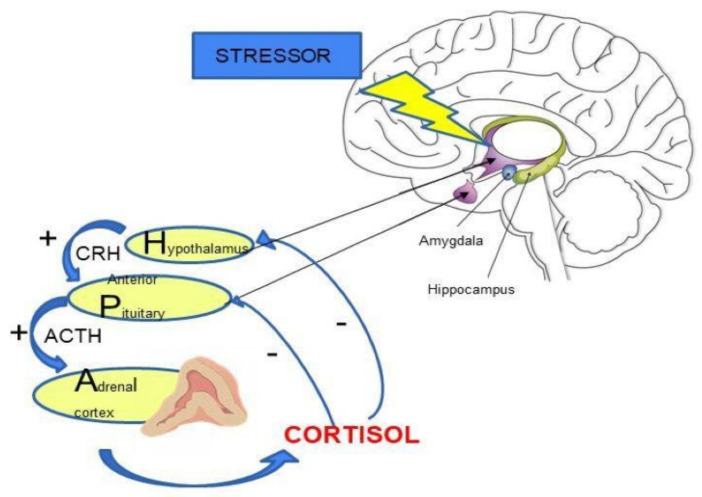
“Increased cortisol level leads to inhibition of CRH and ACTH secretion by a negative feedback loop [7,9] (See Figure 1).”
BackgroundThe neurobiology of depression
Palazidou, E. (2012) · British Medical Bulletin · doi:10.1093/bmb/lds004 · Cited by 288
New Targets for Schizophrenia Treatment beyond the Dopamine Hypothesis
Yang, A., & Tsai, S.-J. (2017) · International Journal of Molecular Sciences · doi:10.3390/ijms18081689 · Cited by 282
DHEA and peripheral androgen and estrogen formation: intracrinology
LABRIE, F., BÉLANGER, A., SIMARD, J., LUU‐THE, V., & LABRIE, C. (1995) · Annals of the New York Academy of Sciences · doi:10.1111/j.1749-6632.1995.tb17369.x · Cited by 280 · cited 1×
“This steroid may also combine with NMDA, nicotinic, glutamate or vanilloid receptors TRPV (transient receptor potential vanilloid channels) [162].”
BackgroundMondelli, V., Dazzan, P., Hepgul, N., Di Forti, M., Aas, M., D'Albenzio, A., Di Nicola, M., Fisher, H., Handley, R., Marques, T. R., et al. (2010) · Schizophrenia Research · doi:10.1016/j.schres.2009.08.013 · Cited by 278 · cited 4×
“A better understanding of the role of the HPA axis in the pathogenesis of schizophrenia, but also of cognitively related diseases, such as MDD, may be the key to developing new chemical molecules that modulate the HPA axis activity [157,158].”
BackgroundInfluentialIncreased stress-induced dopamine release in psychosis
Mizrahi, R., Addington, J., Rusjan, P. M., Suridjan, I., Ng, A., Boileau, I., Pruessner, J. C., Remington, G., Houle, S., & Wilson, A. A. (2012) · Biological Psychiatry · doi:10.1016/j.biopsych.2011.10.009 · Cited by 277
The Concept of Depression as a Dysfunction of the Immune System
E. Leonard, B. (2010) · Current Immunology Reviews · doi:10.2174/157339510791823835 · Cited by 276
The combined dexamethasone/CRH test as a potential surrogate marker in depression
Ising, M., Künzel, H. E., Binder, E. B., Nickel, T., Modell, S., & Holsboer, F. (2005) · Progress in Neuro-Psychopharmacology and Biological Psychiatry · doi:10.1016/j.pnpbp.2005.03.014 · Cited by 271
Fragmentation and Unpredictability of Early-Life Experience in Mental Disorders
Baram, T. Z., Davis, E. P., Obenaus, A., Sandman, C. A., Small, S. L., Solodkin, A., & Stern, H. (2012) · American Journal of Psychiatry · doi:10.1176/appi.ajp.2012.11091347 · Cited by 267
Cortisol and major depressive disorder-translating findings from humans to animal models and Back
Nandam, L. S., Brazel, M., Zhou, M., & Jhaveri, D. J. (2020) · Frontiers in Psychiatry · doi:10.3389/fpsyt.2019.00974 · Cited by 265 · cited 1×
“Cortisol hypersecretion is associated with acute and more severe subtypes of major depressive disorder MDD; however, the enhanced concentration of this hormone is noticeably absent in the atypical subtype [25,26].”
BackgroundA systematic review of the antipsychotic properties of cannabidiol in humans
Iseger, T. A., & Bossong, M. G. (2015) · Schizophrenia Research · doi:10.1016/j.schres.2015.01.033 · Cited by 261
Sterner, E. Y., & Kalynchuk, L. E. (2010) · Progress in Neuro-Psychopharmacology and Biological Psychiatry · doi:10.1016/j.pnpbp.2010.03.005 · Cited by 260
Penner-Goeke, S., & Binder, E. B. (2019) · Dialogues in Clinical Neuroscience · doi:10.31887/dcns.2019.21.4/ebinder · Cited by 254
Hypothalamic-pituitary-adrenocortical axis regulation
Jacobson, L. (2005) · Endocrinology and Metabolism Clinics of North America · doi:10.1016/j.ecl.2005.01.003 · Cited by 248 · cited 2×
“Increased cortisol level leads to inhibition of CRH and ACTH secretion by a negative feedback loop [7,9] (See Figure 1).”
BackgroundA corticosteroid/dopamine hypothesis for psychotic depression and related states
Schatzberg, A. F., Rothschild, A. J., Langlais, P. J., Bird, E. D., & Cole, J. O. (1985) · Journal of Psychiatric Research · doi:10.1016/0022-3956(85)90068-8 · Cited by 244
11β-Hydroxysteroid dehydrogenases and the brain: From zero to hero, a decade of progress
Wyrwoll, C. S., Holmes, M. C., & Seckl, J. R. (2011) · Frontiers in Neuroendocrinology · doi:10.1016/j.yfrne.2010.12.001 · Cited by 244
The ever-changing roles of serotonin
Jones, L. A., Sun, E. W., Martin, A. M., & Keating, D. J. (2020) · The International Journal of Biochemistry & Cell Biology · doi:10.1016/j.biocel.2020.105776 · Cited by 240
Reinforcement learning in depression: a review of computational research
Chen, C., Takahashi, T., Nakagawa, S., Inoue, T., & Kusumi, I. (2015) · Neuroscience & Biobehavioral Reviews · doi:10.1016/j.neubiorev.2015.05.005 · Cited by 233 · cited 2×
“Exogenous administration of CORT to the medial prefrontal cortex decreased plasma ACTH levels in response to acute stress [51].”
BackgroundThe relationship between negative symptoms and depression in schizophrenia: a systematic review
Krynicki, C. R., Upthegrove, R., Deakin, J. F. W., & Barnes, T. R. E. (2018) · Acta Psychiatrica Scandinavica · doi:10.1111/acps.12873 · Cited by 224
Suicide in Schizophrenia: An Educational Overview
Sher, L., & Kahn, R. S. (2019) · Medicina · doi:10.3390/medicina55070361 · Cited by 223
Huo, R., Zeng, B., Zeng, L., Cheng, K., Li, B., Luo, Y., Wang, H., Zhou, C., Fang, L., Li, W., et al. (2017) · Frontiers in Cellular and Infection Microbiology · doi:10.3389/fcimb.2017.00489 · Cited by 221
Provençal, N., Arloth, J., Cattaneo, A., Anacker, C., Cattane, N., Wiechmann, T., Röh, S., Ködel, M., Klengel, T., Czamara, D., et al. (2020) · Proceedings of the National Academy of Sciences · doi:10.1073/pnas.1820842116 · Cited by 209
The Role of cannabinoids in neuroanatomic alterations in cannabis users.
Lorenzetti, V., Solowij, N., & Yücel, M. (2016) · Biological Psychiatry · doi:10.1016/j.biopsych.2015.11.013 · Cited by 208
Du, X., & Pang, T. Y. (2015) · Frontiers in Psychiatry · doi:10.3389/fpsyt.2015.00032 · Cited by 205
Pharmacology of antidepressants
Richelson, E. (2001) · Mayo Clinic Proceedings · doi:10.4065/76.5.511 · Cited by 203
A systematic review and meta-analysis of cognitive remediation in early schizophrenia
Revell, E. R., Neill, J. C., Harte, M., Khan, Z., & Drake, R. J. (2015) · Schizophrenia Research · doi:10.1016/j.schres.2015.08.017 · Cited by 200
Neuropeptide receptor ligands as drugs for psychiatric diseases: the end of the beginning?
Griebel, G., & Holsboer, F. (2012) · Nature Reviews Drug Discovery · doi:10.1038/nrd3702 · Cited by 194 · cited 9×
“VB1 receptors are synthesized in the brain, mainly in the hypothalamus and limbic system.”
BackgroundInfluentialChen, C., Nakagawa, S., An, Y., Ito, K., Kitaichi, Y., & Kusumi, I. (2017) · Frontiers in Neuroendocrinology · doi:10.1016/j.yfrne.2016.12.001 · Cited by 191
Novel therapeutic targets in depression: Minocycline as a candidate treatment
Soczynska, J. K., Mansur, R. B., Brietzke, E., Swardfager, W., Kennedy, S. H., Woldeyohannes, H. O., Powell, A. M., Manierka, M. S., & McIntyre, R. S. (2012) · Behavioural Brain Research · doi:10.1016/j.bbr.2012.07.026 · Cited by 189
Maternal separation produces lasting changes in cortisol and behavior in rhesus monkeys
Feng, X., Wang, L., Yang, S., Qin, D., Wang, J., Li, C., Lv, L., Ma, Y., & Hu, X. (2011) · Proceedings of the National Academy of Sciences · doi:10.1073/pnas.1010943108 · Cited by 181
Oxidative stress, prefrontal cortex hypomyelination and cognitive symptoms in schizophrenia
Maas, D. A., Vallès, A., & Martens, G. J. M. (2017) · Translational Psychiatry · doi:10.1038/tp.2017.138 · Cited by 181
Selective impairments in the stress response in schizophrenic patients
Jansen, L. M. C., Gispen-de Wied, C. C., & Kahn, R. S. (2000) · Psychopharmacology · doi:10.1007/s002130000381 · Cited by 179
Neural Circuitry in the Regulation of Adrenal Corticosterone Rhythmicity
Engeland, W. C., & Arnhold, M. M. (2005) · Endocrine · doi:10.1385/endo:28:3:325 · Cited by 178 · cited 2×
“, the highest cortisol levels are observed in the morning [11,12].”
BackgroundGao, C., Major, A., Rendon, D., Lugo, M., Jackson, V., Shi, Z., Mori-Akiyama, Y., & Versalovic, J. (2015) · mBio · doi:10.1128/mbio.01358-15 · Cited by 176
Moya-Pérez, A., Perez-Villalba, A., Benítez-Páez, A., Campillo, I., & Sanz, Y. (2017) · Brain, Behavior, and Immunity · doi:10.1016/j.bbi.2017.05.011 · Cited by 176
Cannabidiol Reduces Intestinal Inflammation through the Control of Neuroimmune Axis
De Filippis, D., Esposito, G., Cirillo, C., Cipriano, M., De Winter, B. Y., Scuderi, C., Sarnelli, G., Cuomo, R., Steardo, L., De Man, J. G., et al. (2011) · PLoS ONE · doi:10.1371/journal.pone.0028159 · Cited by 173
Liu, D., Xie, K., Yang, X., Gu, J., Ge, L., Wang, X., & Wang, Z. (2014) · Behavioural Brain Research · doi:10.1016/j.bbr.2014.01.039 · Cited by 173
Cannabidiol Reverses MK-801-Induced Disruption of Prepulse Inhibition in Mice
Long, L. E., Malone, D. T., & Taylor, D. A. (2006) · Neuropsychopharmacology · doi:10.1038/sj.npp.1300838 · Cited by 173
Stress and adolescent hippocampal neurogenesis: diet and exercise as cognitive modulators
Hueston, C. M., Cryan, J. F., & Nolan, Y. M. (2017) · Translational Psychiatry · doi:10.1038/tp.2017.48 · Cited by 173
Keck, M. E., Welt, T., Müller, M. B., Uhr, M., Ohl, F., Wigger, A., Toschi, N., Holsboer, F., & Landgraf, R. (2003) · Neuropsychopharmacology · doi:10.1038/sj.npp.1300040 · Cited by 168
Role of the endocannabinoid system in regulation of the hypothalamic-pituitary-adrenocortical axis
STEINER, M., & WOTJAK, C. (2008) · Progress in Brain Research · doi:10.1016/s0079-6123(08)00433-0 · Cited by 167
Dehydroepiandrosterone: A neuroactive steroid
Stárka, L., Dušková, M., & Hill, M. (2015) · The Journal of Steroid Biochemistry and Molecular Biology · doi:10.1016/j.jsbmb.2014.03.008 · Cited by 167
Hindin, S. B., & Zelinski, E. M. (2012) · Journal of the American Geriatrics Society · doi:10.1111/j.1532-5415.2011.03761.x · Cited by 164
Magariños, A. M., Orchinik, M., & McEwen, B. S. (1998) · Brain Research · doi:10.1016/s0006-8993(98)00882-8 · Cited by 163
Implications for reactive oxygen species in schizophrenia pathogenesis
Koga, M., Serritella, A. V., Sawa, A., & Sedlak, T. W. (2016) · Schizophrenia Research · doi:10.1016/j.schres.2015.06.022 · Cited by 159
Beyond depression: the expanding role of inflammation in psychiatric disorders
Miller, A. H. (2020) · World Psychiatry · doi:10.1002/wps.20723 · Cited by 156
Physical Exercise and Neuroinflammation in Major Depressive Disorder
Ignácio, Z. M., da Silva, R. S., Plissari, M. E., Quevedo, J., & Réus, G. Z. (2019) · Molecular Neurobiology · doi:10.1007/s12035-019-01670-1 · Cited by 153
Minocycline as Adjunctive Therapy for Schizophrenia: An Open-Label Study
Miyaoka, T., Yasukawa, R., Yasuda, H., Hayashida, M., Inagaki, T., & Horiguchi, J. (2008) · Clinical Neuropharmacology · doi:10.1097/wnf.0b013e3181593d45 · Cited by 146 · cited 1×
“The rodents studied showed improvements in positive and negative symptoms, measured by the Scale for Assessment of Negative Symptoms (SANS) [127].”
MethodLimbic and HPA axis function in an animal model of chronic neuropathic pain
Ulrich-Lai, Y. M., Xie, W., Meij, J. T. A., Dolgas, C. M., Yu, L., & Herman, J. P. (2006) · Physiology & Behavior · doi:10.1016/j.physbeh.2006.03.012 · Cited by 146 · cited 12×
“The hippocampus, whose volume is significantly reduced in MDD, has been shown to be responsible for HPA axis regulation and neurogenesis [146].”
BackgroundResultInfluentialMuscatell, K. A., Moieni, M., Inagaki, T. K., Dutcher, J. M., Jevtic, I., Breen, E. C., Irwin, M. R., & Eisenberger, N. I. (2016) · Brain, Behavior, and Immunity · doi:10.1016/j.bbi.2016.03.022 · Cited by 146
Ciufolini, S., Dazzan, P., Kempton, M. J., Pariante, C. M., & Mondelli, V. (2014) · Neuroscience & Biobehavioral Reviews · doi:10.1016/j.neubiorev.2014.09.004 · Cited by 145
Rukmini, M. S., D’Souza, B., & D’Souza, V. (2004) · Indian Journal of Clinical Biochemistry · doi:10.1007/bf02894268 · Cited by 144
The effects of chronic mild stress on male Sprague–Dawley and Long Evans rats
Bielajew, C. H., Konkle, A. T. M., & Merali, Z. (2002) · Behavioural Brain Research · doi:10.1016/s0166-4328(02)00222-x · Cited by 142
The influence of unpredictable, fragmented parental signals on the developing brain
Glynn, L. M., & Baram, T. Z. (2019) · Frontiers in Neuroendocrinology · doi:10.1016/j.yfrne.2019.01.002 · Cited by 142
Leptin and the hypothalamo-pituitary–adrenal stress axis
Roubos, E. W., Dahmen, M., Kozicz, T., & Xu, L. (2012) · General and Comparative Endocrinology · doi:10.1016/j.ygcen.2012.01.009 · Cited by 140
Role of the intestinal microbiome, intestinal barrier and psychobiotics in depression
Trzeciak, P., & Herbet, M. (2021) · Nutrients · doi:10.3390/nu13030927 · Cited by 139 · cited 1×
“The microbiota not only affects the release of various intestinal peptides (peptide YY, glucagon-like peptide 1) but is also involved in their production (Bifidobacterium dentium are able to produce γ-aminobutyric acid (GABA)) [83,84].”
BackgroundSelf-citationBanister, S. D., & Connor, M. A. (2018) · Handbook of experimental pharmacology · doi:10.1007/164_2018_144 · Cited by 137
Barna, I., Zelena, D., Arszovszki, A. C., & Ledent, C. (2004) · Life Sciences · doi:10.1016/j.lfs.2004.06.006 · Cited by 136 · cited 1×
“fact that HPA axis dysfunction is more important in the pathogenesis of diseases associated with mood disorders [151,152].”
BackgroundInflammation and the developing brain: Consequences for hippocampal neurogenesis and behavior
Green, H. F., & Nolan, Y. M. (2014) · Neuroscience & Biobehavioral Reviews · doi:10.1016/j.neubiorev.2014.01.004 · Cited by 130
Goh, C., & Agius, M. (2010) · PubMed · Cited by 129
Cannabidiol as a potential treatment for psychosis
Schubart, C. D., Sommer, I. E., Fusar‐Poli, P., de Witte, L. D., Kahn, R. S., & Boks, M. P. (2013) · European Neuropsychopharmacology · doi:10.1016/j.euroneuro.2013.11.002 · Cited by 125
Cognitive impairment is related to oxidative stress and chemokine levels in first psychotic episodes
Martínez-Cengotitabengoa, M., Mac-Dowell, K. S., Leza, J. C., Micó, J. A., Fernandez, M., Echevarría, E., Sanjuan, J., Elorza, J., & González-Pinto, A. (2012) · Schizophrenia Research · doi:10.1016/j.schres.2012.03.004 · Cited by 122
Neurosteroids and potential therapeutics: Focus on pregnenolone
Vallée, M. (2015) · The Journal of Steroid Biochemistry and Molecular Biology · doi:10.1016/j.jsbmb.2015.09.030 · Cited by 121
Pruessner, M., Béchard‐Evans, L., Boekestyn, L., Iyer, S. N., Pruessner, J. C., & MALLA, A. K. (2013) · Schizophrenia Research · doi:10.1016/j.schres.2013.02.019 · Cited by 120
Wulsin, A. C., Herman, J. P., & Solomon, M. B. (2010) · Psychoneuroendocrinology · doi:10.1016/j.psyneuen.2010.01.011 · Cited by 119
Kinlein, S. A., Phillips, D. J., Keller, C. R., & Karatsoreos, I. N. (2019) · Psychoneuroendocrinology · doi:10.1016/j.psyneuen.2018.12.010 · Cited by 119
Othmen, L. B., Mechri, A., Fendri, C., Bost, M., Chazot, G., Gaha, L., & Kerkeni, A. (2007) · Progress in Neuro-Psychopharmacology and Biological Psychiatry · doi:10.1016/j.pnpbp.2007.08.003 · Cited by 117
Gonzalez-Liencres, C., Tas, C., Brown, E. C., Erdin, S., Onur, E., Cubukcoglu, Z., Aydemir, O., Esen-Danaci, A., & Brüne, M. (2014) · BMC Psychiatry · doi:10.1186/s12888-014-0268-x · Cited by 117
Prevalence of comorbid depression in schizophrenia: A meta-analysis of observational studies
Li, W., Yang, Y., An, F., Zhang, L., Ungvari, G. S., Jackson, T., Yuan, Z., & Xiang, Y. (2020) · Journal of Affective Disorders · doi:10.1016/j.jad.2020.04.056 · Cited by 117
Salivary cortisol in early psychosis: New findings and meta-analysis
Chaumette, B., Kébir, O., Mam-Lam-Fook, C., Morvan, Y., Bourgin, J., Godsil, B. P., Plaze, M., Gaillard, R., Jay, T. M., & Krebs, M. (2015) · Psychoneuroendocrinology · doi:10.1016/j.psyneuen.2015.10.007 · Cited by 110
Majidi, J., Kosari-Nasab, M., & Salari, A.-A. (2016) · Brain Research Bulletin · doi:10.1016/j.brainresbull.2015.10.009 · Cited by 109 · cited 2×
“Administration of LPS led to anxiety and depression in the rodents [123,124].”
BackgroundCherian, K. N., Schatzberg, A. F., & Keller, J. (2019) · Schizophrenia Research · doi:10.1016/j.schres.2019.07.003 · Cited by 105
Banister, S. D., & Connor, M. A. (2018) · Handbook of experimental pharmacology · doi:10.1007/164_2018_143 · Cited by 105
Majadas, S., Olivares, J. M., Galan, J., & Díez, T. (2011) · Comprehensive Psychiatry · doi:10.1016/j.comppsych.2011.03.009 · Cited by 104
Inoue, D., Kimura, I., Wakabayashi, M., Tsumoto, H., Ozawa, K., Hara, T., Takei, Y., Hirasawa, A., Ishihama, Y., & Tsujimoto, G. (2012) · FEBS Letters · doi:10.1016/j.febslet.2012.04.021 · Cited by 99
Weill‐Engerer, S., David, J.-P., Sazdovitch, V., Lière, P., Schumacher, M., Delacourte, A., Baulieu, É.-É., & Akwa, Y. (2003) · Brain Research · doi:10.1016/s0006-8993(03)02288-1 · Cited by 95
Ayesa‐Arriola, R., Alcaraz, E. G., Vicente-Hernández, B., Pérez‐Iglesias, R., López-Moríñigo, J.-D., Duta, R., David, A. S., Tabarés‐Seisdedos, R., & Crespo‐Facorro, B. (2015) · European Neuropsychopharmacology · doi:10.1016/j.euroneuro.2015.09.008 · Cited by 93
Yue, Y., Yuan, Y., Hou, Z., Jiang, W., Bai, F., & Zhang, Z. (2013) · PLoS ONE · doi:10.1371/journal.pone.0075058 · Cited by 93
Zhong, H., Ding, Q., Chen, W., & Luo, R. (2013) · International Immunopharmacology · doi:10.1016/j.intimp.2013.06.027 · Cited by 86
Ge, J., Qi, C., & Zhou, J. (2013) · Behavioural Brain Research · doi:10.1016/j.bbr.2013.04.020 · Cited by 85
Yang, X.-H., Song, S.-Q., & Xu, Y. (2017) · Neuropsychiatric Disease and Treatment · doi:10.2147/ndt.s150028 · Cited by 84 · cited 5×
“Furthermore, FA inhibits depression-induced NF-κB activation in the hippocampus of offspring rats [117,119].”
BackgroundInfluentialThe endocannabinoid system in modulating fear, anxiety, and stress
Maldonado, R., Cabañero, D., & Martín-García, E. (2020) · Dialogues in Clinical Neuroscience · doi:10.31887/dcns.2020.22.3/rmaldonado · Cited by 84
Pearson-Fuhrhop, K. M., Dunn, E. C., Mortero, S., Devan, W. J., Falcone, G. J., Lee, P., Holmes, A. J., Hollinshead, M. O., Roffman, J. L., Smoller, J. W., et al. (2014) · PLoS ONE · doi:10.1371/journal.pone.0093772 · Cited by 81
Murialdo, G., Barreca, A., Nobili, F. M., Rollero, A., Timossi, G., Gianelli, M. V., Copello, F., Rodriguez, G., & POLLERI, A. (2001) · Journal of Endocrinological Investigation · doi:10.1007/bf03343833 · Cited by 80
Quality of life in patients who have remitted from their first episode of psychosis
Cotton, S., Gleeson, J., Álvarez‐Jiménez, M., & McGorry, P. D. (2010) · Schizophrenia Research · doi:10.1016/j.schres.2010.05.027 · Cited by 80
Serum Oxidative Stress Marker Levels in Unmedicated and Medicated Patients with Schizophrenia
Bai, Z., Li, X., Chen, G.-Y., Du, Y., Wei, Z., Chen, X., Zheng, G.-E., Deng, W., & Cheng, Y. (2018) · Journal of Molecular Neuroscience · doi:10.1007/s12031-018-1165-4 · Cited by 80
Histone Deacetylase Inhibitors: The Epigenetic Therapeutics That Repress Hypoxia‐Inducible Factors
Chen, S., & Sang, N. (2010) · BioMed Research International · doi:10.1155/2011/197946 · Cited by 79
de Andrade, J. S., Céspedes, I. C., Abrão, R. O., Santos, T. B., Diniz, L., Britto, L. R. G., Spadari-Bratfisch, R. C., Ortolani, D., Melo-Thomas, L., da Silva, R. C. B., et al. (2013) · Behavioural Brain Research · doi:10.1016/j.bbr.2013.04.031 · Cited by 79
The effect of 1-trans-Δ9-tetrahydrocannabinol on the hypothalamo-hypophyseal-adrenal axis of rats
Dewey, W. L., Peng, T., & Harris, L. S. (1970) · European Journal of Pharmacology · doi:10.1016/0014-2999(70)90094-4 · Cited by 78
Zoubovsky, S. P., Hoseus, S., Tumukuntala, S., Schulkin, J., Williams, M. T., Vorhees, C. V., & Muglia, L. J. (2020) · Translational Psychiatry · doi:10.1038/s41398-020-0704-2 · Cited by 78
Epigenetics, Depression and Antidepressant Treatment
Menke, A., Klengel, T., & B. Binder, E. (2012) · Current Pharmaceutical Design · doi:10.2174/138161212803523590 · Cited by 77
de Jong, R. A., Nijman, H. W., Boezen, H. M., Volmer, M., ten Hoor, K. A., Krijnen, J., van der Zee, A. G. J., Hollema, H., & Kema, I. P. (2011) · International Journal of Gynecological Cancer · doi:10.1097/igc.0b013e31822017fb · Cited by 77
Nongenomic actions of adrenal steroids in the central nervous system
Evanson, N. K., Herman, J. P., Sakai, R. R., & Krause, E. G. (2010) · Journal of Neuroendocrinology · doi:10.1111/j.1365-2826.2010.02000.x · Cited by 76
Molecular Regulation of Parturition: A Myometrial Perspective
Renthal, N. E., Williams, K., Montalbano, A. P., Chen, C.-C., Gao, L., & Mendelson, C. R. (2015) · Cold Spring Harbor Perspectives in Medicine · doi:10.1101/cshperspect.a023069 · Cited by 73
Effect of social isolation on CB1 and D2 receptor and fatty acid amide hydrolase expression in rats
Malone, D. T., Kearn, C. S., Chongue, L., Mackie, K., & TAYLOR, D. A. H. B. (2007) · Neuroscience · doi:10.1016/j.neuroscience.2007.10.043 · Cited by 72
Shalev, I., Israel, S., Uzefovsky, F., Gritsenko, I., Kaitz, M., & Ebstein, R. P. (2011) · Hormones and Behavior · doi:10.1016/j.yhbeh.2011.04.005 · Cited by 71
Chen, C., Zhao, S., Han, X., Cui, M., & Fan, S. (2016) · Journal of Materials Processing Technology · doi:10.1016/j.jmatprotec.2016.03.006 · Cited by 70
Shapiro, L. P., Parsons, R. G., Koleske, A. J., & Gourley, S. L. (2017) · Journal of Neuroscience Research · doi:10.1002/jnr.23960 · Cited by 70
Stawski, R. S., Almeida, D. M., Lachman, M. E., Tun, P. A., Rosnick, C. B., & Seeman, T. (2011) · The Journals of Gerontology Series B: Psychological Sciences and Social Sciences · doi:10.1093/geronb/gbq094 · Cited by 69
Glucocorticoid antagonists in neuropsychotic disorders
Schatzberg, A. F., & Lindley, S. E. (2008) · European Journal of Pharmacology · doi:10.1016/j.ejphar.2008.01.001 · Cited by 68
Farzi, A., Reichmann, F., Meinitzer, A., Mayerhofer, R., Jain, P., Hassan, A. M., Fröhlich, E. E., Wagner, K., Painsipp, E., Rinner, B., et al. (2015) · Brain Behavior and Immunity · doi:10.1016/j.bbi.2014.08.011 · Cited by 68 · cited 2×
“There are studies that suggest that activation of the HPA axis by the gut microbiota may result from increased permeability of the intestinal barrier and gut microbiota-induced inflammation [79].”
BackgroundA randomized, controlled trial of a brief interventional package for schizophrenic out‐patients
Cunningham Owens, D. G., Carroll, A., Fattah, S., Clyde, Z., Coffey, I., & Johnstone, E. C. (2001) · Acta Psychiatrica Scandinavica · doi:10.1034/j.1600-0447.2001.00132.x · Cited by 68
Davis, E. P., Korja, R., Karlsson, L., Glynn, L. M., Sandman, C. A., Vegetabile, B., Kataja, E.-L., Nolvi, S., Sinervä, E., Pelto, J., et al. (2019) · eBioMedicine · doi:10.1016/j.ebiom.2019.07.025 · Cited by 68
Herbet, M., Korga, A., Gawrońska-Grzywacz, M., Izdebska, M., Piątkowska-Chmiel, I., Poleszak, E., Wróbel, A., Matysiak, W., Jodłowska-Jędrych, B., & Dudka, J. (2017) · Oxidative Medicine and Cellular Longevity · doi:10.1155/2017/7313090 · Cited by 66
Self-citationPace, T. W. W., & Spencer, R. L. (2005) · American Journal of Physiology-Endocrinology and Metabolism · doi:10.1152/ajpendo.00521.2004 · Cited by 65
The Endocannabinoid System and Anxiety
Lisboa, S. F. D. S., Gomes, F. V., Terzian, A. L. B., de Aguiar, D. C., Moreira, F. A., Resstel, L. B. M., & Guimarães, F. S. (2016) · Vitamins and hormones · doi:10.1016/bs.vh.2016.09.006 · Cited by 65
Marić, N. P., & Adžić, M. (2013) · PubMed · Cited by 64
Soria, V., González-Rodríguez, A., Huerta-Ramos, E., Usall, J., Cobo, J., Bioque, M., Barbero, J. D., García-Rizo, C., Tost, M., Monreal, J. A., et al. (2018) · Psychoneuroendocrinology · doi:10.1016/j.psyneuen.2018.04.012 · Cited by 64
Mailliet, F., Qi, H., Rocher, C., Spedding, M., Svenningsson, P., & Jay, T. M. (2008) · Experimental Neurology · doi:10.1016/j.expneurol.2008.02.030 · Cited by 63
Gardiner, J., Barton, D., Overall, R., & Marc, J. (2009) · The Neuroscientist · doi:10.1177/1073858408325269 · Cited by 62
Dai, J., Du, X., Yin, G., Zhang, Y., Xia, H., Li, X., Cassidy, R. M., Tong, Q., Chen, D., Teixeira, A. L., et al. (2017) · Schizophrenia Research · doi:10.1016/j.schres.2017.06.029 · Cited by 62
Increased serum neurotrophin-4/5 levels in bipolar disorder
Walz, J. C., Magalhães, P. V. D. S., Giglio, L. M. F., Cunha, A. B. M., Stertz, L., Fries, G. R., Andreazza, A. C., & Kapczinski, F. P. (2008) · Journal of Psychiatric Research · doi:10.1016/j.jpsychires.2008.10.005 · Cited by 61
Gallagher, P., Watson, S., Smith, M. S., Ferrier, I. N., & Young, A. H. (2004) · Biological Psychiatry · doi:10.1016/j.biopsych.2004.10.017 · Cited by 61
Doolin, K., Farrell, C., Tozzi, L., Harkin, A., Frodl, T., & O’Keane, V. (2017) · International Journal of Molecular Sciences · doi:10.3390/ijms18102226 · Cited by 61
Perceived stress and hair cortisol: Differences in bipolar disorder and schizophrenia
Streit, F., Memić, A., Hasandedic-Dapo, L., Rietschel, L., Frank, J., Lang, M., Witt, S. H., Forstner, A. J., Degenhardt, F., Wüst, S., et al. (2016) · Psychoneuroendocrinology · doi:10.1016/j.psyneuen.2016.03.010 · Cited by 60
Ritsner, M. S., Bawakny, H., & Kreinin, A. (2014) · Psychiatry and Clinical Neurosciences · doi:10.1111/pcn.12150 · Cited by 58
Ge, J., Peng, L., Cheng, J., Pan, C., Tang, J., Chen, F., & Li, J. (2013) · Pharmacology Biochemistry and Behavior · doi:10.1016/j.pbb.2013.10.028 · Cited by 58
Doosti, M.-H., Bakhtiari, A., Zare, P., Amani, M., Majidi-Zolbanin, N., Babri, S., & Salari, A.-A. (2013) · Progress in Neuro-Psychopharmacology and Biological Psychiatry · doi:10.1016/j.pnpbp.2012.12.003 · Cited by 56
Stress and serum cortisol levels in major depressive disorder: a cross-sectional study
G Bertollo, A., 1 Laboratory of Physiology Pharmacology and Psychopathology, G. P. I. B. S., E Grolli, R., E Plissari, M., A Gasparin, V., Quevedo, J., Z Réus, G., D Bagatini, M., M Ignácio, Z., 2 Santa Catarina State University, W. H. E. C., et al. (2020) · AIMS Neuroscience · doi:10.3934/neuroscience.2020028 · Cited by 56 · cited 2×
“Patients suffering from MDD had significantly higher stress and cortisol levels than control subjects [37].”
BackgroundIijima, M., Yoshimizu, T., Shimazaki, T., Tokugawa, K., Fukumoto, K., Kurosu, S., Kuwada, T., Sekiguchi, Y., & Chaki, S. (2014) · British Journal of Pharmacology · doi:10.1111/bph.12699 · Cited by 55
Effects of cocaine on the hypothalamic–pituitary–adrenal axis
Manetti, L., Cavagnini, F., Martino, E., & Ambrogio, A. G. (2014) · Journal of Endocrinological Investigation · doi:10.1007/s40618-014-0091-8 · Cited by 54
Pregnenolone, Dehydroepiandrosterone, and Schizophrenia: Alterations and Clinical Trials
Ritsner, M. S. (2010) · CNS Neuroscience & Therapeutics · doi:10.1111/j.1755-5949.2009.00118.x · Cited by 52
Sorgdrager, F. J. H., Doornbos, B., Penninx, B. W. J. H., de Jonge, P., & Kema, I. P. (2017) · Journal of Affective Disorders · doi:10.1016/j.jad.2017.06.052 · Cited by 51
Žarković, M., Ignjatović, S., Dajak, M., Ćirić, J., Beleslin, B., Savić, S., Stojković, M., Bulat, P., & Trbojević, B. (2008) · European Journal of Endocrinology · doi:10.1530/eje-08-0544 · Cited by 47
Oxidative stress and inflammation in schizophrenia
Sawa, A., & Sedlak, T. W. (2016) · Schizophrenia Research · doi:10.1016/j.schres.2016.06.014 · Cited by 47
Research works printed but not linked: 2
- Kostowski, 2004, Contemporary directions of research on pathomechanism of stress and depression and their importance in shaping views on the effects of antidepressants. Novel studies on stress and depression and their influence on opinions about mechanisms of action of antidepressants, Psychiatry, 1, 63
- Gazzaniga, M.S. (2000). The New Cognitive Neurosciences, MIT Press.
Cited by
Hassamal, S. (2023) · Frontiers in Psychiatry · doi:10.3389/fpsyt.2023.1130989 · Cited by 578
“HPA-axis (16) Overproduction of glucocorticoids elicits immune cells to release pro-inflammatory cytokines Vasopressin 1 b receptor antagonists Cortisol”
BackgroundJames, K. A., Stromin, J. I., Steenkamp, N., & Combrinck, M. I. (2023) · Frontiers in Endocrinology · doi:10.3389/fendo.2023.1085950 · Cited by 364
PI3K/AKT signaling pathway: Molecular mechanisms and therapeutic potential in depression
Guo, N., Wang, X., Xu, M., Bai, J., Yu, H., & Zhang, L. (2024) · Pharmacological Research · doi:10.1016/j.phrs.2024.107300 · Cited by 218
Depression and Its Phytopharmacotherapy—A Narrative Review
Dobrek, Ł., & Głowacka, K. (2023) · International Journal of Molecular Sciences · doi:10.3390/ijms24054772 · Cited by 198
Dietary Nutrient Deficiencies and Risk of Depression (Review Article 2018–2023)
Zielińska, M., Łuszczki, E., & Dereń, K. (2023) · Nutrients · doi:10.3390/nu15112433 · Cited by 180
Metadata
- Authors
- Mikulska, J., Juszczyk, G., Gawrońska-Grzywacz, M., & Herbet, M.
- Affiliations
- Medical University of Lublin (PL)
- Chair and Department of Toxicology, Faculty of Pharmacy, Medical University of Lublin, 8b Jaczewskiego Street, 20-090 Lublin, Poland
- Venue
- Brain Sciences
- Publisher
- MDPI AG
- Published
- 2021-09-30
- Volume
- 11
- Issue
- 10
- Pages
- 1298
- ISSN
- 2076-3425 (ISSN-L)
- PMC
- PMC8533829
- OpenAlex
- W3204457954
- Cited by
- 450
- References
- 245
- Citations by year
- 2026: 108 · 2025: 133 · 2024: 113 · 2023: 62 · 2022: 31 · 2021: 2
- FWCI
- 6.27
- Type
- journal article
- Language
- en
- Open access
- gold
- doi.org
- Licence
- Locations
- Brain Sciences (publishedVersion, cc-by)
- PubMed Central (publishedVersion, cc-by)
- PubMed (publishedVersion)
- DOAJ (DOAJ: Directory of Open Access Journals) (submittedVersion, cc-by-sa)
- Topics
- Life Sciences › Neuroscience › Behavioral Neuroscience › Stress Responses and Cortisol
- Life Sciences › Neuroscience › Biological Psychiatry › Tryptophan and brain disorders
- Health Sciences › Medicine › Pharmacology (medical) › Treatment of Major Depression
- Keywords
- hypothalamic-pituitary-adrenal axis, major depressive disorder, schizophrenia, chronic stress, gut microbiota, cytokines, glucocorticoid receptor antagonist, CB1 receptor agonists, antidepressant resistance, neuropsychiatric disorders
About these checks
Registry, retraction, Cites and statistics results are computed, not judged, with one exception: a printed reference that no index lists is read once by a model before it counts as a citation error. Claims are extracted by a model and kept only when their quote appears verbatim in the text; each cited source is then checked, with a model’s help, for whether it says what the claim relies on. Those verdicts can be wrong — read the claim’s quote and the cited source before relying on one.
Statistics and arithmetic are recomputed, not judged.
Confidence bands are shown only for fields calibrated on our annotated test set. None is calibrated yet, so no band is shown.
What counts as a claim ›How we measure confidence ›How we check this ›
Are you an author, or do you see a problem with this page? Request a review
Data sources
Bibliographic data: Semantic Scholar, OpenAlex, Crossref.
Contains information from the Semantic Scholar Academic Graph Datasets, made available under the ODC Attribution License (ODC-BY 1.0).
Semantic Scholar’s data is described in: Kinney, R., et al. (2023). The Semantic Scholar Open Data Platform. arXiv:2301.10140.
