

Federated Learning in Smart Healthcare: A Comprehensive Review on Privacy, Security, and Predictive Analytics with IoT Integration
Open accessThe DOI matches its Crossref record; 119 of the 127 references it cites were found in a registry or an index, and 4 are not checked yet; 53 of the 137 sources its claims cite were checked for support.
Abstract
Federated learning (FL) is revolutionizing healthcare by enabling collaborative machine learning across institutions while preserving patient privacy and meeting regulatory standards. This review delves into FL’s applications within smart health systems, particularly its integration with IoT devices, wearables, and remote monitoring, which empower real-time, decentralized data processing for predictive analytics and personalized care. It addresses key challenges, including security risks like adversarial attacks, data poisoning, and model inversion. Additionally, it covers issues related to data heterogeneity, scalability, and system interoperability. Alongside these, the review highlights emerging privacy-preserving solutions, such as differential privacy and secure multiparty computation, as critical to overcoming FL’s limitations. Successfully addressing these hurdles is essential for enhancing FL’s efficiency, accuracy, and broader adoption in healthcare. Ultimately, FL offers transformative potential for secure, data-driven healthcare systems, promising improved patient outcomes, operational efficiency, and data sovereignty across the healthcare ecosystem.
Verified 2026-11-25 · 4 references not checked yet
Overview
CoChat Summary
## TL;DR
This is a systematic review of federated learning (FL) in smart healthcare, focusing on privacy, security, predictive analytics, and IoT integration. It argues that FL enables collaborative model training without sharing raw patient data, but adoption is constrained by heterogeneity, communication costs, and security threats such as poisoning and model inversion.
## Key findings
- FL is presented as a way to train models across hospitals, clinics, IoT devices, and wearables without centralizing raw data, supporting privacy and regulatory compliance with HIPAA and GDPR.
- The review highlights reported improvements from FL use cases, including a multi-hospital diabetes study where FL reportedly reduced data breach risk by 40% and improved predicted outcomes by 15% in EHR analysis, and disease prediction collaborations that improved model generalizability by 20%.
- In the text’s examples, FL-enabled remote monitoring with wearables reached 90% precision in detecting chronic diseases, and one cited breast tumor prediction approach improved local model precision by up to 20%.
- Security threats emphasized include adversarial attacks, data poisoning, and model inversion; the paper points to mitigation tools such as differential privacy, secure multiparty computation, homomorphic encryption, robust aggregation, and blockchain.
## Methods
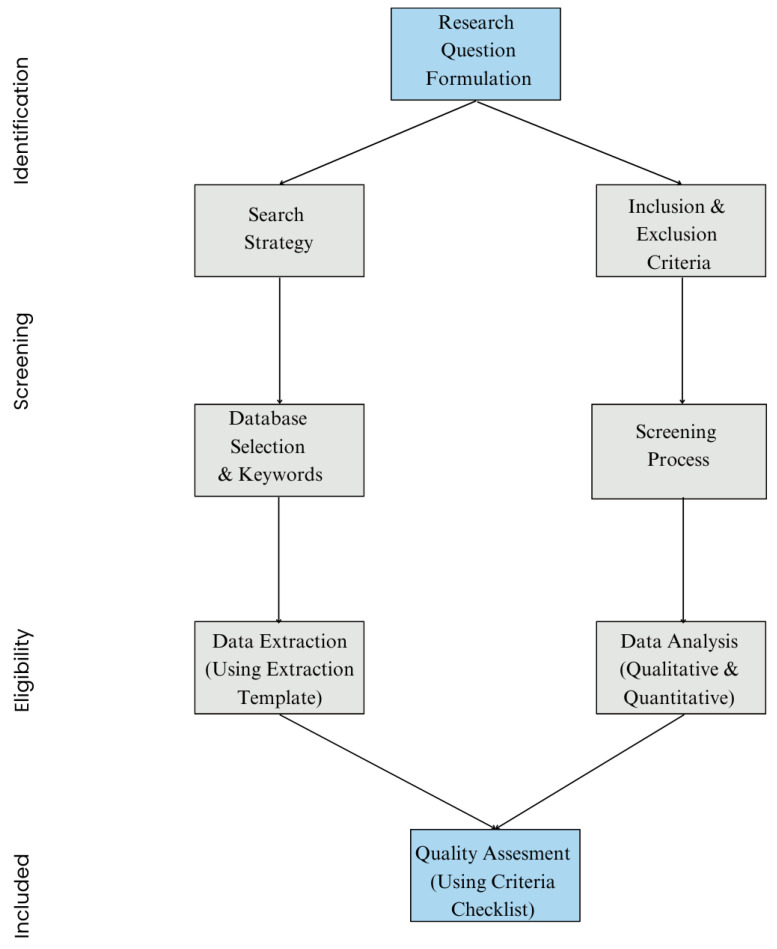
- This is a systematic review covering studies published from 2023 to 2024 on FL in healthcare.
- The authors searched SpringerLink, PubMed, ScienceDirect, ACM Digital Library, and IEEE Xplore using healthcare/FL/IOT/privacy/security keyword combinations, then screened studies with title/abstract review followed by full-text review.
- Inclusion focused on peer-reviewed journal or conference papers on FL in smart health/healthcare and privacy/security techniques; analysis combined qualitative theme synthesis and a quantitative summary of metrics such as privacy loss, model accuracy, and computational cost.
## Limitations
- The paper states an English-only restriction and notes that this can cause selection bias and reduce the global scope of included studies.
- It also states that the fast-moving FL literature means some recent publications may not yet have been indexed, limiting comprehensiveness.
- Evident from the text: the review’s evidence base is limited to 2023–2024 studies, so older foundational work is largely outside scope.
Model-written summary. Check it against the paper before relying on it.
Integrity signals
Registry
Cites
Statistics
Figures
Verification
Claims the paper makes
45 Valid · 8 Not valid · 75 Not checked · 46 Own results and interpretations
Every source the paper cites for this claim was checked and supports it.
In the paper
“The approach is also bandwidth-efficient, as only model updates need to be communicated, reducing the need for large data transfers [13].”
§ Federated Learning in Smart Healthcare: A Comprehensive Review on Privacy, Security, and Predictive Analytics with IoT Integration > 1. Introduction > 1.2. Federated Learning
What the sources say
- Supportedcites [13] Zhang T. Gao L. He C. Zhang M. Krishnamachari B. Avestimehr A.S. Federated learning for the Internet of Things: Applications, challenges, and opportunities IEEE Internet Things Mag. 2022 5 24 29 10.1109/IOTM.004.2100182 source
Section II (p. 1) says raw data stay on devices and only model updates are sent to the central server. Section II (p. 2) adds that avoiding transmission of raw IoT data reduces communication costs, especially on low-bandwidth networks. (LLM, conf=0.93)
plainstates a cause- Asserted: passes — The authors put it forward as true.
- Checkable: passes — It can be checked against evidence.
- Load-bearing: unclear — It is unclear whether the paper’s conclusions depend on it.
- Based: passes — The paper gives a reason why it holds.
- Supported
The cited sources support only part of this claim — read each source’s verdict below.
In the paper
“For example, using sophisticated privacy-preserving techniques like differential privacy, a memory-aware curriculum FL strategy increased the precision of local models in breast tumor prediction by up to 20% while protecting patient information confidentiality [4].”
§ Federated Learning in Smart Healthcare: A Comprehensive Review on Privacy, Security, and Predictive Analytics with IoT Integration > 1. Introduction > 1.1. Background and Motivation
What the sources say
- Partly supportedcites [4] Jiménez-Sánchez A. Tardy M. Ballester M.A.G. Mateus D. Piella G. Memory-aware curriculum federated learning for breast cancer classification Comput. Methods Programs Biomed. 2023 229 107318 10.1016/j.cmpb.2022.107318 36592580 sourceExperimental — accuracy not yet measured
The paper says it uses differential privacy for data protection (section B), and Table III reports improved average precision–recall AUC for its federated method, from 0.77 to 0.82. It does not report a 20% increase in local-model precision. The Discussion also cautions that patient reidentification or information leakage cannot be ruled out, so the confidentiality claim is too strong. (LLM, conf=0.89)
plainstates a cause- Asserted: passes — The authors put it forward as true.
- Checkable: passes — It can be checked against evidence.
- Load-bearing: unclear — It is unclear whether the paper’s conclusions depend on it.
- Based: passes — The paper gives a reason why it holds.
- Partly supported
The cited sources support only part of this claim — read each source’s verdict below.
In the paper
“Early cancer diagnosis accuracy has been shown to significantly improve with FL.”
§ Federated Learning in Smart Healthcare: A Comprehensive Review on Privacy, Security, and Predictive Analytics with IoT Integration > 1. Introduction > 1.1. Background and Motivation
What the sources say
- Partly supportedcites [4] Jiménez-Sánchez A. Tardy M. Ballester M.A.G. Mateus D. Piella G. Memory-aware curriculum federated learning for breast cancer classification Comput. Methods Programs Biomed. 2023 229 107318 10.1016/j.cmpb.2022.107318 36592580 sourceExperimental — accuracy not yet measured
The Abstract reports improved breast-cancer classification metrics for the proposed method, and the results section (‘a)’, page not provided) says its improvement over other federated approaches was statistically significant. The source does not establish that federated learning generally improves early cancer diagnosis accuracy: it tests a specific breast-cancer classification method, primarily against other federated methods. (LLM, conf=0.88)
- Partly supportedcites [5] Hossain M.M. Islam M.R. Ahamed M.F. Ahsan M. Haider J. A Collaborative Federated Learning Framework for Lung and Colon Cancer Classifications Technologies 2024 12 151 10.3390/technologies12090151 sourceExperimental — accuracy not yet measured
The Abstract reports high accuracy for federated classification of lung and colon cancer images and says the framework performed better than other approaches. It does not show that federated learning significantly improved the accuracy of early-stage cancer diagnosis; early diagnosis is discussed as a potential benefit in the Introduction, not evaluated as an outcome. (LLM, conf=0.86)
plainstates a cause- Asserted: passes — The authors put it forward as true.
- Checkable: passes — It can be checked against evidence.
- Load-bearing: unclear — It is unclear whether the paper’s conclusions depend on it.
- Based: passes — The paper gives a reason why it holds.
- Partly supported
The cited sources support only part of this claim — read each source’s verdict below.
In the paper
“FL has seen notable applications in disease prediction and early diagnosis, particularly for situations requiring large, different datasets to train perfect models [41].”
§ Federated Learning in Smart Healthcare: A Comprehensive Review on Privacy, Security, and Predictive Analytics with IoT Integration > 3. Overview of Federated Learning in Healthcare > 3.1. Key Applications of Federated Learning in Healthcare
What the sources say
- Partly supportedcites [41] Moshawrab M. Adda M. Bouzouane A. Ibrahim H. Raad A. Reviewing federated machine learning and its use in diseases prediction Sensors 2023 23 2112 10.3390/s23042112 36850717 PMC9958993 sourceExperimental — accuracy not yet measured
Section 3.3 (Discussion) says FL can train disease-diagnosis models on large, distributed patient datasets from different facilities, and section 3.2 describes its use in disease prediction and detection. The citing sentence’s claim about training “perfect models” goes beyond the paper: section 3.3.1 says FL’s results are not yet sufficient to establish a performance advantage over conventional ML in disease prediction. (LLM, conf=0.88)
plainstates an association- Asserted: passes — The authors put it forward as true.
- Checkable: passes — It can be checked against evidence.
- Load-bearing: passes — The paper’s conclusions depend on it.
- Based: passes — The paper gives a reason why it holds.
- Partly supported
The cited sources support only part of this claim — read each source’s verdict below.
In the paper
“Using a variety of patient data from several institutions, FL has developed more broadly applicable models for predicting diseases like sepsis and acute kidney damage (AKI) in precision medicine.”
§ Federated Learning in Smart Healthcare: A Comprehensive Review on Privacy, Security, and Predictive Analytics with IoT Integration > 3. Overview of Federated Learning in Healthcare > 3.4. Case Studies in Federated Learning for Healthcare
What the sources say
- Partly supportedcites [64] Rajendran S. Xu Z. Pan W. Ghosh A. Wang F. Data heterogeneity in federated learning with Electronic Health Records: Case studies of risk prediction for acute kidney injury and sepsis diseases in critical care PLoS Digit. Health 2023 2 e0000117 10.1371/journal.pdig.0000117 36920974 PMC10016691 sourceExperimental — accuracy not yet measured
The Results report federated AKI and sepsis prediction models using patient data from seven hospitals, and the Discussion says they generally outperformed local models. But the Discussion cautions that data heterogeneity makes it difficult to justify a conclusion about generalizability, so the claim overstates how firmly the paper establishes that the models are more broadly applicable. (LLM, conf=0.86)
plainstates a cause- Asserted: passes — The authors put it forward as true.
- Checkable: passes — It can be checked against evidence.
- Load-bearing: unclear — It is unclear whether the paper’s conclusions depend on it.
- Based: passes — The paper gives a reason why it holds.
- Partly supported
64 more claims · 12 with their cited sources checked
Create a free account to see all 174 claims and to verify the 33 references still open.
- It may state two separate claims as one. 91
- Probably not a substantial claim. 27
Claims other papers make about this one
Each is checked against this paper’s own text: does it say what the citing paper says it does?
The check wasn’t confident either way, so it gives no verdict — never disputed.
In the citing paper
“Many studies on XAI in healthcare remain in the proof-of-concept stage or are only tested on retrospective datasets [34,35].”
From Explainable AI in Clinical Decision Support Systems: A Meta-Analysis of Methods, Applications, and Usability Challenges (2025) · cites this paper as [34]
Experimental — accuracy not yet measured
Self-check
Percentages, sums and reported differences re-computed from the paper’s own numbers.
Self-check results appear here once an independent check has confirmed them.
Cited works that were retracted
Works this paper cites that were later retracted, from the retraction notices publishers deposit. Major when the notice came out before this paper was published.
A note, not an issue: for example, a cited work that was retracted only after this paper was published, which its authors could not have known.
In the paper
“Sharafaddini, A.M., Esfahani, K.K., and Mansouri, N. (2024). Deep learning approaches to detect breast cancer: A comprehensive review. Multimed. Tools Appl., 1–112.”
Cited work 10.1007/s11042-024-20011-6 · retracted 2026-04-16 · notice 10.1007/s11042-026-21595-x · this paper published 2024-12-22
Citations
Cites
1 retracted
RETRACTED ARTICLE: Deep learning approaches to detect breast cancer: a comprehensive review
Sharafaddini, A. M., Esfahani, K. K., & Mansouri, N. (2024) · Multimedia Tools and Applications · doi:10.1007/s11042-024-20011-6 · Cited by 104
RetractedFederated Optimization in Heterogeneous Networks
Li, T., Sahu, A. K., Zaheer, M., Sanjabi, M., Talwalkar, A., & Smith, V. (2018) · arXiv · doi:10.48550/arxiv.1812.06127 · Cited by 4,023
SCAFFOLD: Stochastic Controlled Averaging for Federated Learning
Karimireddy, S. P., Kale, S., Mohri, M., Reddi, S. J., Stich, S. U., & Suresh, A. T. (2019) · arXiv · doi:10.48550/arxiv.1910.06378 · Cited by 1,734
Federated Learning for Internet of Things: A Comprehensive Survey
Nguyen, D. C., Ding, M., Pathirana, P. N., Seneviratne, A., Li, J., & Vincent Poor, H. (2021) · IEEE Communications Surveys & Tutorials · doi:10.1109/comst.2021.3075439 · Cited by 1,503
Tackling the Objective Inconsistency Problem in Heterogeneous Federated Optimization
Wang, J., Liu, Q., Liang, H., Joshi, G., & Poor, H. V. (2020) · arXiv · doi:10.48550/arxiv.2007.07481 · Cited by 927
Federated Learning for Internet of Things: A Comprehensive Survey
Nguyen, D., Ding, M., Pathirana, P. N., Seneviratne, A., Li, J., & Poor, H. (2021) · Deakin Research Online (Deakin University) · Cited by 889
Federated learning for smart healthcare: A survey
Nguyen, D. C., Pham, Q.-V., Pathirana, P. N., Ding, M., Seneviratne, A., Lin, Z., Dobre, O., & Hwang, W.-J. (2023) · ACM Computing Surveys · doi:10.1145/3501296 · Cited by 827
Fairness in machine learning: A survey
Caton, S., & Haas, C. (2024) · ACM Computing Surveys · doi:10.1145/3616865 · Cited by 646
Fairness in Machine Learning: A Survey
Caton, S., & Haas, C. (2020) · arXiv · doi:10.48550/arxiv.2010.04053 · Cited by 646
Decentralized federated learning: Fundamentals, state of the art, frameworks, trends, and challenges
Martínez Beltrán, E. T., Pérez, M. Q., Sánchez, P. M. S., Bernal, S. L., Bovet, G., Pérez, M. G., Pérez, G. M., & Celdrán, A. H. (2023) · IEEE Communications Surveys & Tutorials · doi:10.1109/comst.2023.3315746 · Cited by 625
Fairness of artificial intelligence in healthcare: review and recommendations
Ueda, D., Kakinuma, T., Fujita, S., Kamagata, K., Fushimi, Y., Ito, R., Matsui, Y., Nozaki, T., Nakaura, T., Fujima, N., et al. (2024) · Japanese Journal of Radiology · doi:10.1007/s11604-023-01474-3 · Cited by 607
Federated learning for healthcare: Systematic review and architecture proposal
Antunes, R. S., André da Costa, C., Küderle, A., Yari, I. A., & Eskofier, B. (2022) · ACM Transactions on Intelligent Systems and Technology · doi:10.1145/3501813 · Cited by 595
Williamson, S. M., & Prybutok, V. (2024) · Applied Sciences · doi:10.3390/app14020675 · Cited by 567
Federated learning review: Fundamentals, enabling technologies, and future applications
Banabilah, S., Aloqaily, M., Alsayed, E., Malik, N., & Jararweh, Y. (2022) · Information Processing & Management · doi:10.1016/j.ipm.2022.103061 · Cited by 556
The emergence of AI-based wearable sensors for digital health technology: a review
Shajari, S., Kuruvinashetti, K., Komeili, A., & Sundararaj, U. (2023) · Sensors · doi:10.3390/s23239498 · Cited by 535
Federated learning for medical image analysis: A survey
Guan, H., Yap, P.-T., Bozoki, A., & Liu, M. (2024) · Pattern Recognition · doi:10.1016/j.patcog.2024.110424 · Cited by 518
Federated learning for the Internet of Things: Applications, challenges, and opportunities
Zhang, T., Gao, L., He, C., Zhang, M., Krishnamachari, B., & Avestimehr, A. S. (2022) · IEEE Internet of Things Magazine · doi:10.1109/iotm.004.2100182 · Cited by 412
Rahman, A., Hossain, M. S., Muhammad, G., Kundu, D., Debnath, T., Rahman, M., Khan, M. S. I., Tiwari, P., & Band, S. S. (2023) · Cluster Computing · doi:10.1007/s10586-022-03658-4 · Cited by 399
Decentralized Federated Averaging
Sun, T., Li, D., & Wang, B. (2023) · IEEE Transactions on Pattern Analysis and Machine Intelligence · doi:10.1109/tpami.2022.3196503 · Cited by 388
A robust privacy-preserving federated learning model against model poisoning attacks
Yazdinejad, A., Dehghantanha, A., Karimipour, H., Srivastava, G., & Parizi, R. M. (2024) · IEEE Transactions on Information Forensics and Security · doi:10.1109/tifs.2024.3420126 · Cited by 380
Vertical Federated Learning: Concepts, Advances, and Challenges
Liu, Y., Kang, Y., Zou, T., Pu, Y., He, Y., Ye, X., Ouyang, Y., Zhang, Y.-Q., & Yang, Q. (2024) · IEEE Transactions on Knowledge and Data Engineering · doi:10.1109/tkde.2024.3352628 · Cited by 378
Blockchain-Based Federated Learning for Securing Internet of Things: A Comprehensive Survey
Issa, W., Moustafa, N., Turnbull, B., Sohrabi, N., & Tari, Z. (2023) · ACM Computing Surveys · doi:10.1145/3560816 · Cited by 319
Rauniyar, A., Hagos, D. H., Jha, D., Håkegård, J. E., Bagci, U., Rawat, D. B., & Vlassov, V. (2024) · IEEE Internet of Things Journal · doi:10.1109/jiot.2023.3329061 · Cited by 315
Blockchain-empowered Federated Learning: Challenges, Solutions, and Future Directions
Zhu, J., Cao, J., Saxena, D., Jiang, S., & Ferradi, H. (2023) · ACM Computing Surveys · doi:10.1145/3570953 · Cited by 309
Federated learning for smart cities: A comprehensive survey
Pandya, S., Srivastava, G., Jhaveri, R., Babu, M. R., Bhattacharya, S., Maddikunta, P. K. R., Mastorakis, S., Piran, M. J., & Gadekallu, T. R. (2023) · Sustainable Energy Technologies and Assessments · doi:10.1016/j.seta.2022.102987 · Cited by 297
Nguyen (2022) · doi:10.1145/3453476 · Cited by 286
Federated learning for secure IoMT-applications in smart healthcare systems: A comprehensive review
Rani, S., Kataria, A., Kumar, S., & Tiwari, P. (2023) · Knowledge-Based Systems · doi:10.1016/j.knosys.2023.110658 · Cited by 228
Privacy preservation for federated learning in health care
Pati, S., Kumar, S., Varma, A., Edwards, B., Lu, C., Qu, L., Wang, J. J., Lakshminarayanan, A., Wang, S.-H., Sheller, M. J., et al. (2024) · Patterns · doi:10.1016/j.patter.2024.100974 · Cited by 227
Artificial Intelligence for Clinical Prediction: Exploring Key Domains and Essential Functions
Khalifa, M., & Albadawy, M. (2024) · Computer Methods and Programs in Biomedicine Update · doi:10.1016/j.cmpbup.2024.100148 · Cited by 201
Kumar, M., Kumar, A., Verma, S., Bhattacharya, P., Ghimire, D., Kim, S.-H., & Hosen, A. S. M. S. (2023) · Electronics · doi:10.3390/electronics12092050 · Cited by 199
Ahmad, S., Shakeel, I., Mehfuz, S., & Ahmad, J. (2023) · Computer Science Review · doi:10.1016/j.cosrev.2023.100568 · Cited by 197
Bashir, A. K., Victor, N., Bhattacharya, S., Huynh-The, T., Chengoden, R., Yenduri, G., Maddikunta, P. K. R., Pham, Q.-V., Gadekallu, T. R., & Liyanage, M. (2023) · IEEE Internet of Things Journal · doi:10.1109/jiot.2023.3304790 · Cited by 183
Gala, D., Behl, H., Shah, M., & Makaryus, A. N. (2024) · Healthcare · doi:10.3390/healthcare12040481 · Cited by 183
Myrzashova, R., Alsamhi, S. H., Shvetsov, A. V., Hawbani, A., & Wei, X. (2023) · IEEE Internet of Things Journal · doi:10.1109/jiot.2023.3263598 · Cited by 178
Apell, P., & Eriksson, H. (2023) · Technology Analysis & Strategic Management · doi:10.1080/09537325.2021.1971188 · Cited by 152
Wan, Y., Qu, Y., Ni, W., Xiang, Y., Gao, L., & Hossain, E. (2024) · IEEE Communications Surveys & Tutorials · doi:10.1109/comst.2024.3361451 · Cited by 152
Ethical Framework for Harnessing the Power of AI in Healthcare and Beyond
Nasir, S., Khan, R. A., & Bai, S. (2024) · IEEE Access · doi:10.1109/access.2024.3369912 · Cited by 152
Clustered federated learning with adaptive local differential privacy on heterogeneous IoT data
He, Z., Wang, L., & Cai, Z. (2024) · IEEE Internet of Things Journal · doi:10.1109/jiot.2023.3299947 · Cited by 143
Communication-efficient distributed learning: An overview
Cao, X., Başar, T., Diggavi, S., Eldar, Y. C., Letaief, K. B., Poor, H. V., & Zhang, J. (2023) · IEEE Journal on Selected Areas in Communications · doi:10.1109/jsac.2023.3242710 · Cited by 139
A Review of Privacy Enhancement Methods for Federated Learning in Healthcare Systems
Gu, X., Sabrina, F., Fan, Z., & Sohail, S. (2023) · International Journal of Environmental Research and Public Health · doi:10.3390/ijerph20156539 · Cited by 139
Recommendations to advance digital health equity: A systematic review of qualitative studies
Wilson, S., Tolley, C., Mc Ardle, R., Lawson, L., Beswick, E., Hassan, N., Slight, R., & Slight, S. (2024) · npj Digital Medicine · doi:10.1038/s41746-024-01177-7 · Cited by 139
Federated learning for healthcare applications
Chaddad, A., Wu, Y., & Desrosiers, C. (2024) · IEEE Internet of Things Journal · doi:10.1109/jiot.2023.3325822 · Cited by 136
Federated learning meets blockchain in decentralized data-sharing: Healthcare use case
Alsamhi, S. H., Myrzashova, R., Hawbani, A., Kumar, S., Srivastava, S., Zhao, L., Wei, X., Guizan, M., & Curry, E. (2024) · IEEE Internet of Things Journal · doi:10.1109/jiot.2024.3367249 · Cited by 131
Topology-aware Federated Learning in Edge Computing: A Comprehensive Survey
Wu, J., Dong, F., Leung, H., Zhu, Z., Zhou, J., & Drew, S. (2024) · ACM Computing Surveys · doi:10.1145/3659205 · Cited by 130
A comprehensive survey on federated learning techniques for healthcare informatics
Dasaradharami Reddy, K., & Gadekallu, T. R. (2023) · Computational Intelligence and Neuroscience · doi:10.1155/2023/8393990 · Cited by 126
The Role of Wearable Devices in Chronic Disease Monitoring and Patient Care: A Comprehensive Review
Jafleh, E. A., Alnaqbi, F. A., Almaeeni, H. A., Faqeeh, S., Alzaabi, M. A., & Al Zaman, K. (2024) · Cureus · doi:10.7759/cureus.68921 · Cited by 125
Sachin, D. N., Annappa, B., Hegde, S., Abhijit, C. S., & Ambesange, S. (2024) · IEEE Access · doi:10.1109/access.2024.3357514 · Cited by 117
Memory-aware curriculum federated learning for breast cancer classification
Jiménez-Sánchez, A., Tardy, M., González Ballester, M. A., Mateus, D., & Piella, G. (2023) · Computer Methods and Programs in Biomedicine · doi:10.1016/j.cmpb.2022.107318 · Cited by 114
Reviewing Federated Machine Learning and Its Use in Diseases Prediction
Moshawrab, M., Adda, M., Bouzouane, A., Ibrahim, H., & Raad, A. (2023) · Sensors · doi:10.3390/s23042112 · Cited by 114
A systematic review on federated learning in medical image analysis
Sohan, M. F., & Basalamah, A. (2023) · IEEE Access · doi:10.1109/access.2023.3260027 · Cited by 114
Badidi, E. (2023) · Future Internet · doi:10.3390/fi15110370 · Cited by 113
A blockchain-based federated learning mechanism for privacy preservation of healthcare IoT data
Moulahi, W., Jdey, I., Moulahi, T., Alawida, M., & Alabdulatif, A. (2023) · Computers in Biology and Medicine · doi:10.1016/j.compbiomed.2023.107630 · Cited by 103
Transforming Healthcare: Harnessing the Power of AI in the Modern Era
Patil, S., & Shankar, H. (2023) · International Journal of Multidisciplinary Sciences and Arts · doi:10.47709/ijmdsa.v2i1.2513 · Cited by 97
Abimannan, S., El-Alfy, E.-S. M., Hussain, S., Chang, Y., Shukla, S., Satheesh, D., & Breslin, J. G. (2023) · Sustainability · doi:10.3390/su151813951 · Cited by 94
ProtoHAR: Prototype Guided Personalized Federated Learning for Human Activity Recognition
Cheng, D., Zhang, L., Bu, C., Wang, X., Wu, H., & Song, A. (2023) · IEEE Journal of Biomedical and Health Informatics · doi:10.1109/jbhi.2023.3275438 · Cited by 92
Ali, M. S., Ahsan, M. M., Tasnim, L., Afrin, S., Biswas, K., Hossain, M. M., Ahmed, M. M., Hashan, R., Islam, M. K., & Raman, S. (2024) · arXiv (Cornell University) · doi:10.48550/arxiv.2405.13832 · Cited by 92
Khan, M. F., & Abaoud, M. (2023) · IEEE Access · doi:10.1109/access.2023.3326155 · Cited by 87
Yang, R., Zhao, T., Yu, F. R., Li, M., Zhang, D., & Zhao, X. (2024) · IEEE Internet of Things Journal · doi:10.1109/jiot.2024.3379395 · Cited by 85
Pierre, K., Haneberg, A. G., Kwak, S., Peters, K. R., Hochhegger, B., Sananmuang, T., Tunlayadechanont, P., Tighe, P. J., Mancuso, A., & Forghani, R. (2023) · Seminars in Roentgenology · doi:10.1053/j.ro.2023.02.003 · Cited by 79
Personalized Federated Graph Learning on Non-IID Electronic Health Records
Tang, T., Han, Z., Cai, Z., Yu, S., Zhou, X., Oseni, T., & Das, S. K. (2024) · IEEE Transactions on Neural Networks and Learning Systems · doi:10.1109/tnnls.2024.3370297 · Cited by 79
A Systematic Review of Adversarial Machine Learning Attacks, Defensive Controls and Technologies
Malik, J., Muthalagu, R., & Pawar, P. M. (2024) · IEEE Access · doi:10.1109/access.2024.3423323 · Cited by 76
Blockchain-Based Personalized Federated Learning for Internet of Medical Things
Lian, Z., Wang, W., Han, Z., & Su, C. (2023) · IEEE Transactions on Sustainable Computing · doi:10.1109/tsusc.2023.3279111 · Cited by 75
Communication-Efficient Large-Scale Distributed Deep Learning: A Comprehensive SurveyPreprint
Liang, F., Zhang, Z., Lu, H., Leung, V. C. M., Guo, Y., & Hu, X. (2024) · arXiv · doi:10.48550/arxiv.2404.06114 · Cited by 68
Federated Learning for Healthcare: A Comprehensive Review
Dhade, P., & Shirke, P. (2024) · RAiSE-2023 · doi:10.3390/engproc2023059230 · Cited by 67
A survey for federated learning evaluations: Goals and measures
Chai, D., Wang, L., Yang, L., Zhang, J., Chen, K., & Yang, Q. (2024) · IEEE Transactions on Knowledge and Data Engineering · doi:10.1109/tkde.2024.3382002 · Cited by 64
Rajendran, S., Xu, Z., Pan, W., Ghosh, A., & Wang, F. (2023) · PLOS Digital Health · doi:10.1371/journal.pdig.0000117 · Cited by 61
Olatunji, A. O., Olaboye, J. A., Maha, C. C., et al. (2024) · International Journal of Applied Research in Social Sciences · doi:10.51594/ijarss.v6i7.1332 · Cited by 61
A Survey of Security Strategies in Federated Learning: Defending Models, Data, and Privacy
Manzoor, H. U., Shabbir, A., Chen, A., Flynn, D., & Zoha, A. (2024) · Future Internet · doi:10.3390/fi16100374 · Cited by 58
Review on Federated Learning for digital transformation in healthcare through big data analytics
Babar, M., Qureshi, B., & Koubaa, A. (2024) · Future Generation Computer Systems · doi:10.1016/j.future.2024.05.046 · Cited by 55
Remote Health Monitoring Systems for Elderly People: A Survey
Ahmed, S., Irfan, S., Kiran, N., Masood, N., Anjum, N., & Ramzan, N. (2023) · Sensors · doi:10.3390/s23167095 · Cited by 52
Exploring privacy measurement in federated learning
Jagarlamudi, G. K., Yazdinejad, A., Parizi, R. M., & Pouriyeh, S. (2024) · The Journal of Supercomputing · doi:10.1007/s11227-023-05846-4 · Cited by 52
Artificial Intelligence Algorithm for Subclinical Breast Cancer Detection
Gjesvik, J., Moshina, N., Lee, C. I., Miglioretti, D. L., & Hofvind, S. S. H. (2024) · JAMA Network Open · doi:10.1001/jamanetworkopen.2024.37402 · Cited by 46
Adam, M., & Baroudi, U. (2024) · IEEE Open Journal of the Communications Society · doi:10.1109/ojcoms.2024.3506214 · Cited by 46
Exploring Adversarial Attacks in Federated Learning for Medical Imaging
Darzi, E., Dubost, F., Sijtsema, N. M., & van Ooijen, P. M. A. (2024) · IEEE Transactions on Industrial Informatics · doi:10.1109/tii.2024.3423457 · Cited by 45
Advancements in Federated Learning: Models, Methods, and Privacy
Chen, H., Wang, H., Long, Q., Jin, D., & Li, Y. (2025) · ACM Computing Surveys · doi:10.1145/3664650 · Cited by 44
A Collaborative Federated Learning Framework for Lung and Colon Cancer Classifications
Hossain, M. M., Islam, M. R., Ahamed, M. F., Ahsan, M., & Haider, J. (2024) · Technologies · doi:10.3390/technologies12090151 · Cited by 44
Heterogeneity-aware fair federated learning
Li, X., Zhao, S., Chen, C., & Zheng, Z. (2023) · Information Sciences · doi:10.1016/j.ins.2022.11.031 · Cited by 43
Federated learning architecture: Design, implementation, and challenges in distributed AI systems
Shanmugam, L., Tillu, R., & Tomar, M. (2023) · Journal of Knowledge Learning and Science Technology ISSN: 2959-6386 (online) · doi:10.60087/jklst.vol2.n2.p384 · Cited by 42
Threats and Defenses in the Federated Learning Life Cycle: A Comprehensive Survey and Challenges
Li, Y., Guo, Z., Yang, N., Chen, H., Yuan, D., & Ding, W. (2025) · IEEE Transactions on Neural Networks and Learning Systems · doi:10.1109/tnnls.2025.3563537 · Cited by 38
BayBFed: Bayesian Backdoor Defense for Federated Learning
Kumari, K., Rieger, P., Fereidooni, H., Jadliwala, M., & Sadeghi, A.-R. (2023) · 2023 IEEE Symposium on Security and Privacy (SP) · doi:10.1109/sp46215.2023.10179362 · Cited by 37
Urina‐Triana, M., Piñeres-Melo, M. A., Mantilla-Morrón, M., Butt, S. A., Galeano-Muñoz, L., Naz, S., & Ariza-Colpas, P. (2024) · IEEE Access · doi:10.1109/access.2024.3378277 · Cited by 37
Ran, A. R., Wang, X., Chan, P. P. M., Wong, M. O. M., Yuen, H. K. L., Lam, N. M., Chan, N. C. Y., Yip, W. W. K., Young, A. L., Yung, H.-W., et al. (2023) · British Journal of Ophthalmology · doi:10.1136/bjo-2023-324188 · Cited by 36
Federated learning vulnerabilities, threats and defenses: A systematic review and future directions
Almutairi, S., & Barnawi, A. (2023) · Internet of Things · doi:10.1016/j.iot.2023.100947 · Cited by 35
Papadopoulos, C., Kollias, K.-F., & Fragulis, G. F. (2024) · Future Internet · doi:10.3390/fi16110415 · Cited by 35
A survey on federated learning applications in healthcare, finance, and data privacy/data security
Nevrataki, T., Iliadou, A., Ntolkeras, G., Sfakianakis, I., Lazaridis, L., Maraslidis, G., Asimopoulos, N., & Fragulis, G. F. (2023) · AIP Conference Proceedings · doi:10.1063/5.0182160 · Cited by 32
A federated learning architecture for secure and private neuroimaging analysis
Stripelis, D., Gupta, U., Saleem, H., Dhinagar, N., Ghai, T., Anastasiou, C., Sánchez, R., Steeg, G. V., Ravi, S., Naveed, M., et al. (2024) · Patterns · doi:10.1016/j.patter.2024.101031 · Cited by 31
Privacy-Preserving Federated Learning with Resource Adaptive Compression for Edge Devices
Hidayat, M. A., Nakamura, Y., & Arakawa, Y. (2024) · IEEE Internet of Things Journal · doi:10.1109/jiot.2023.3347552 · Cited by 29
Zijie, F., Al-Shareeda, M. A., Saare, M. A., Manickam, S., & Karuppayah, S. (2023) · Indonesian Journal of Electrical Engineering and Computer Science · doi:10.11591/ijeecs.v31.i2.pp1190-1200 · Cited by 28
Wearable Sensors: A New Way to Track Health and Wellness
George, A. S. H., Shahul, A., & George, D. A. S. (2023) · Zenodo · doi:10.5281/zenodo.8260878 · Cited by 28
A Blockchain-Reinforced Federated Intrusion Detection Architecture for IIoT
Jiang, D., Wang, Z., Wang, Y., Tan, L., Wang, J., & Zhang, P. (2024) · IEEE Internet of Things Journal · doi:10.1109/jiot.2024.3406602 · Cited by 28
Medical Data Integration and Interoperability through Remote Monitoring of Healthcare Devices
Malathi, D., Nair, S. S., Madhumitha, N., et al. (2022) · Journal of Wireless Mobile Networks Ubiquitous Computing and Dependable Applications · doi:10.58346/jowua.2024.i2.005 · Cited by 28
Secure and Efficient Federated Learning Schemes for Healthcare Systems
Song, C., Wang, Z., Peng, W., & Yang, N. (2024) · Electronics · doi:10.3390/electronics13132620 · Cited by 27
Federated Learning for Privacy-Preserving Medical Data Sharing in Drug Development
Yang, M., Huang, D., Wan, W., & Jin, M. (2024) · Applied and Computational Engineering · doi:10.54254/2755-2721/2025.ld17879 · Cited by 27
The role of federated learning models in medical imaging
Kwak, L., & Bai, H. (2023) · Radiology Artificial Intelligence · doi:10.1148/ryai.230136 · Cited by 25
Privacy-Preserving Data Sharing in Healthcare: Advances in Secure Multiparty Computation
Ahammed, M. F., & Labu, M. R. (2024) · Journal of Medical and Health Studies · doi:10.32996/jmhs.2024.5.2.4 · Cited by 25
Federated Cross Learning for Medical Image SegmentationPreprint
Xu, X., Deng, H. H., Chen, T., Kuang, T., Barber, J. C., Kim, D., Gateño, J., Xia, J. J., & Yan, P. (2022) · arXiv (Cornell University) · doi:10.48550/arxiv.2204.02450 · Cited by 24
Federated learning as a smart tool for research on infectious diseases
Zwiers, L. C., Grobbee, D. E., Uijl, A., & Ong, D. S. Y. (2024) · BMC Infectious Diseases · doi:10.1186/s12879-024-10230-5 · Cited by 24
Federated Learning for Privacy-Preserving Medical Data Sharing in Drug Development
Yang, M., Huang, D., Wan, W., & Jin, M. (2025) · Applied and Computational Engineering · doi:10.54254/2755-2721/2025.20847 · Cited by 23
Artificial Intelligence in the Diagnosis of Colorectal Cancer: A Literature Review
Uchikov, P., Khalid, U., Kraev, K., Hristov, B., Kraeva, M., Tenchev, T., Chakarov, D., Sandeva, M., Dragusheva, S., Taneva, D., et al. (2024) · Diagnostics · doi:10.3390/diagnostics14050528 · Cited by 22
FedRDF: A Robust and Dynamic Aggregation Function Against Poisoning Attacks in Federated Learning
Campos, E. M., Gonzalez-Vidal, A., Hernández-Ramos, J. L., & Skarmeta, A. (2025) · IEEE Transactions on Emerging Topics in Computing · doi:10.1109/tetc.2024.3474484 · Cited by 22
Raza, A. (2023) · theses.fr (ABES) · doi:10.70675/ac35dc8az89ccz4977z8f25zb7c8937f7cf0 · Cited by 22
Kolli, S., V., P. K. A., Ashok, J., & Manikandan, A. (2023) · Advances in Healthcare Information Systems and Administration · doi:10.4018/978-1-6684-8913-0.ch008 · Cited by 21
Mitigating Adversarial Attacks in Federated Learning with Trusted Execution Environments
Queyrut, S., Schiavoni, V., & Felber, P. (2023) · 2023 IEEE 43rd International Conference on Distributed Computing Systems (ICDCS) · doi:10.1109/icdcs57875.2023.00069 · Cited by 18
BapFL: You can Backdoor Personalized Federated Learning
Ye, T., Chen, C., Wang, Y., Li, X., & Gao, M. (2024) · ACM Transactions on Knowledge Discovery from Data · doi:10.1145/3649316 · Cited by 17
Federated Learning for Privacy-Preserving Medical Data Sharing in Drug DevelopmentPreprint
Yang, M., Huang, D., & Zhan, X. (2024) · Preprints.org · doi:10.20944/preprints202410.1641.v1 · Cited by 17
Digest: Fast and communication efficient decentralized learning with local updates
Gholami, P., & Seferoglu, H. (2024) · IEEE Transactions on Machine Learning in Communications and Networking · doi:10.1109/tmlcn.2024.3354236 · Cited by 14
Sen, J., Waghela, H., & Rakshit, S. (2025) · IntechOpen eBooks · doi:10.5772/intechopen.1006677 · Cited by 14
Artificial Intelligence Techniques Based on Federated Learning in Smart Healthcare
Naithani, K., Raiwani, Y. P., Tiwari, S., et al. (2024) · Chapman & Hall/CRC eBooks · doi:10.1201/9781003489368-5 · Cited by 11
Siew, M., Arunasalam, S., Ruan, Y., Zhu, Z., Su, L., Ioannidis, S., Yeh, E. M., & Joe‐Wong, C. (2023) · ACM/IEEE International Conference on Information Processing in Sensor Networks (IPSN) · doi:10.1145/3583120.3589835 · Cited by 10
RAZA, A. (2023) · University of Kent · doi:10.22024/unikent/01.02.102717 · Cited by 10
Bhambri, P., Soni, R., & Tran, T. A. (2024) · CRC Press eBooks · doi:10.1201/9781032698519 · Cited by 10
Deloitte Consulting, L. L. P., & Hampiholi, N. (2023) · International Journal of Engineering Applied Sciences and Technology · doi:10.33564/ijeast.2023.v08i05.005 · Cited by 8
Context-Aware Approaches in IoT-based Healthcare Systems using Deep Learning Techniques: A Study
Prasanna, K. L., & Rao, Y. N. (2024) · International Conference on Applied Artificial Intelligence and Computing (ICAAIC) · doi:10.1109/icaaic60222.2024.10575875 · Cited by 8
Pneumonia Detection from Chest X-rays Using the CheXNet Deep Learning Algorithm
Bairwa, H., & `Jangid, R. (2024) · doi:10.20944/preprints202407.0104.v1 · Cited by 8
IoT-based Technologies for Addressing the Unique Healthcare Needs of the Elderly Population
Ali, S. A., & Khan, R. (2023) · doi:10.20944/preprints202303.0088.v1 · Cited by 7
Healthcare Informatics Security Issues and Solutions Using Federated Learning
Goswami, S. A., Dave, S., & Patel, K. C. (2024) · Federated Learning for Smart Communication using IoT Application · doi:10.1201/9781003489368-7 · Cited by 7
Bhardwaj, S., & Kim, D.-S. (2023) · 2023 Fourteenth International Conference on Ubiquitous and Future Networks (ICUFN) · doi:10.1109/icufn57995.2023.10199843 · Cited by 6
Federated Learning in Predicting Heart Disease
Ülver, B., Yurtoğlu, R. A., Dervişoğlu, H., et al. (2023) · Signal Processing and Communications Applications Conference (SIU) · doi:10.1109/siu59756.2023.10223935 · Cited by 6
A Federated Learning Approach for Disease Prediction and Remedies Recommendation
Sehag, A., Jayasankar, V., Poojitha, S., Raman, S. S., & Sarasvathi, V. (2024) · IEEE International Conference for Convergence in Technology (I2CT) · doi:10.1109/i2ct61223.2024.10544309 · Cited by 6
Privacy Preservation for the IoMT Using Federated Learning and Blockchain Technologies
Alalawi, S., Alalawi, M., & Alrae, R. (2024) · Lecture Notes in Networks and Systems · doi:10.1007/978-3-031-65522-7_62 · Cited by 6
FBLearn: Decentralized Platform for Federated Learning on Blockchain
Djolev, D., Lazarova, M., & Nakov, O. (2024) · Electronics · doi:10.3390/electronics13183672 · Cited by 5
(2023) · KSII Transactions on Internet and Information Systems · doi:10.3837/tiis.2024.04.001 · Cited by 4
Horchidan, S. (2020) · KTH Publication Database DiVA (KTH Royal Institute of Technology) · Cited by 2
On Using Secure Aggregation in Differentially Private Federated Learning with Multiple Local Steps
Heikkilä, M. A. (2024) · arXiv · doi:10.48550/arxiv.2407.19286
Research works printed but not linked: 5
- Shiwlani A. Khan M. Sherani A.M.K. Qayyum M.U. Hussain H.K. Revolutionizing healthcare: The impact of artificial intelligence on patient care, diagnosis, and treatment JURIHUM J. Inov. Dan Hum. 2024 1 779 790
- Thummisetti B.S.P. Atluri H. Advancing healthcare informatics for empowering privacy and security through federated learning paradigms Int. J. Sustain. Dev. Comput. Sci. 2024 6 1 16
- Heikkilä M.A. On Joint Noise Scaling in Differentially Private Federated Learning with Multiple Local Steps arXiv 2024 2407.19286
- Henry E. AI-Driven Optimization in Healthcare: Machine Learning Models for Predictive Diagnostics and Personalized Treatment Strategies Well Test. J. 2024 33 10 33
- Rehan H. AI-Powered Genomic Analysis in the Cloud: Enhancing Precision Medicine and Ensuring Data Security in Biomedical Research J. Deep Learn. Genom. Data Anal. 2023 3 37 71
Cited by
Abbas, Q., Jeong, W., & Lee, S. W. (2025) · Healthcare · doi:10.3390/healthcare13172154 · Cited by 236
“Many studies on XAI in healthcare remain in the proof-of-concept stage or are only tested on retrospective datasets [34,35].”
Self-citationA scoping review of the governance of federated learning in healthcare
Eden, R., Chukwudi, I., Bain, C., Barbieri, S., Callaway, L. K., de Jersey, S., George, Y., Gorse, A., Lawley, M., Marendy, P., et al. (2025) · npj Digital Medicine · doi:10.1038/s41746-025-01836-3 · Cited by 115
“FL is revolutionising healthcare by enabling collaborative ML across institutions while preserving patient privacy 5,11,12 .”
Abdelwanis, M., Simsekler, M. C. E., Gabor, A. F., Sleptchenko, A., & Omar, M. (2025) · Safety Science · doi:10.1016/j.ssci.2025.107028 · Cited by 102
Ali, M., Ali, S., Abbas, Q., Abbas, Z., & Lee, S. (2025) · Digital Health · doi:10.1177/20552076251395548 · Cited by 116
“66 Behavioral activity monitoring.”
Self-citationCioboată, R., Bălteanu, M. A., Osman, A., Vlăsceanu, S. G., Zlatian, O. M., Mitroi, D. M., Catană, O. M., Socaci, A., & Țieranu, E. N. (2025) · Journal of Clinical Medicine · doi:10.3390/jcm14072154 · Cited by 42
Metadata
- Authors
- Abbas, S. R., Abbas, Z., Zahir, A., & Lee, S. W.
- Affiliations
- COMSATS University Islamabad (PK)
- Sungkyunkwan University (KR)
- Corresponding author
- Lee, Seung Won
- Venue
- Healthcare
- Publisher
- MDPI AG
- Published
- 2024-12-22
- Volume
- 12
- Issue
- 24
- Pages
- 2587
- ISSN
- 2227-9032 (ISSN-L)
- PMC
- PMC11728217
- OpenAlex
- W4405701133
- Cited by
- 228
- References
- 127
- Citations by year
- 2026: 142 · 2025: 85 · 2024: 1
- FWCI
- 7.79
- Type
- journal article
- Language
- en
- Open access
- gold
- doi.org
- Licence
- Locations
- Healthcare (publishedVersion, cc-by)
- PubMed Central (publishedVersion, cc-by)
- PubMed (publishedVersion)
- Funders
- SungKyunKwan University (NRF[2021-R1-I1A2(059735)], RS[2024-0040(5650)], RS[2024-0044(0881)], RS[2019- II19(0421)])
- Ministry of Education (NRF[2021-R1-I1A2(059735)], RS[2024-0040(5650)], RS[2024-0044(0881)], RS[2019- II19(0421)])
- National Research Foundation of Korea (NRF) (NRF[2021-R1-I1A2(059735)], RS[2024-0040(5650)], RS[2024-0044(0881)], RS[2019- II19(0421)])
- Ministry of Science and ICT (MSIT) (NRF[2021-R1-I1A2(059735)], RS[2024-0040(5650)], RS[2024-0044(0881)], RS[2019- II19(0421)])
- Topics
- Physical Sciences › Computer Science › Artificial Intelligence › Privacy-Preserving Technologies in Data
- Physical Sciences › Computer Science › Information Systems › Internet of Things and AI
- Physical Sciences › Computer Science › Information Systems › Blockchain Technology Applications and Security
- Keywords
- federated learning, smart healthcare, privacy-preserving machine learning, Internet of Medical Things, wearable devices, remote patient monitoring, predictive analytics, adversarial attacks, data poisoning, model inversion attacks, data heterogeneity, scalability, interoperability, differential privacy, secure multi-party computation, data sovereignty
About these checks
Registry, retraction, Cites and statistics results are computed, not judged, with one exception: a printed reference that no index lists is read once by a model before it counts as a citation error. Claims are extracted by a model and kept only when their quote appears verbatim in the text; each cited source is then checked, with a model’s help, for whether it says what the claim relies on. Those verdicts can be wrong — read the claim’s quote and the cited source before relying on one.
The claim verdicts this report counts are experimental: their accuracy is not yet measured.
A language model drew the claims from the paper on 2026-10-09, under version 3 of the claim definition (model deepseek-v4.1-flash, prompt extract-v3).
A second model labelled each claim on 2026-10-09 (model jev-1.13-20260917, definition revision gold-guideline-v0.2).
Cited sources are checked with a language model’s help (gpt-6-sol).
Statistics and arithmetic are recomputed, not judged.
Confidence bands are shown only for fields calibrated on our annotated test set. None is calibrated yet, so no band is shown.
What counts as a claim ›How we measure confidence ›How we check this ›
Are you an author, or do you see a problem with this page? Request a review
Data sources
Bibliographic data: Semantic Scholar, OpenAlex, Crossref.
Contains information from the Semantic Scholar Academic Graph Datasets, made available under the ODC Attribution License (ODC-BY 1.0).
Semantic Scholar’s data is described in: Kinney, R., et al. (2023). The Semantic Scholar Open Data Platform. arXiv:2301.10140.
