

RAS Mutations in Advanced Colorectal Cancer: Mechanisms, Clinical Implications, and Novel Therapeutic Approaches
Open accessThe DOI matches its Crossref record; 110 of the 111 references it cites were found in a registry or an index; 24 of the 147 sources its claims cite were checked for support.
Abstract
Colorectal cancer (CRC) remains a leading cause of cancer-related mortality globally, posing significant treatment challenges, particularly in its metastatic form (mCRC). This review comprehensively examines the pivotal role of RAS mutations, specifically KRAS and NRAS, which are detected in approximately 40–45% of mCRC cases, and their impact on treatment decisions and patient outcomes. We assess the effectiveness of standard treatments within the RAS mutant population, highlighting the challenges and limitations these therapies face. Recent advancements in targeted therapies, particularly the focus on novel agents such as KRAS G12C inhibitors, including sotorasib and adagrasib, have shown promising efficacy in overcoming resistance to conventional treatments. Furthermore, this review discusses future directions, emphasizing the need for research into non-RAS targets to address the complexities of resistance mechanisms and improve therapeutic outcomes. This review aims to provide a detailed overview of the current treatments and innovative approaches, supporting the development of personalized management strategies for patients with mCRC.
Overview
CoChat Summary
TL;DR
This review summarizes how RAS mutations, found in approximately 40–45% of metastatic colorectal cancer (mCRC), drive resistance to anti-EGFR therapies and shape prognosis. It highlights retained activity of anti-angiogenic agents and emerging KRAS G12C inhibitor combinations, alongside investigational strategies for other RAS variants.
Key findings
- RAS mutations (mostly KRAS/NRAS) are detected in approximately 40–45% of mCRC; anti-EGFR agents should not be used first-line in KRAS-mutant tumors, and extended RAS testing is needed before targeted therapy.
- In CodeBreaK-300, sotorasib 960 mg plus panitumumab achieved mPFS 5.6 months and ORR 26%, versus mPFS 3.9 months and ORR 6% for sotorasib 240 mg; the control arm had no objective responses. In KRYSTAL-1, adagrasib monotherapy ORR was 19% (95% CI 8–33) and adagrasib plus cetuximab ORR was 46% (95% CI 28–66); NCCN recommends these combinations for pretreated KRAS G12C mCRC.
- Anti-angiogenic agents retain efficacy in RAS-mutant tumors: ML18147 showed no significant KRAS interaction for PFS (p = 0.443) or OS (p = 0.126); RAISE showed significant mPFS improvement in RAS-mutant patients (p = 0.021); a meta-analysis of 14 phase III trials found OS interaction p = 0.003 (RAS WT HR 0.78 vs. mutant HR 0.91).
- Immunotherapy findings differ by MSI status: in CheckMate 142, ORR was 41% in RAS/BRAF wild-type versus 27% in RAS-mutant MSI-H mCRC; in MSS MAYA, temozolomide followed by nivolumab–ipilimumab gave mPFS 7.1 months (95% CI 5.6–8.4), with 72% RAS-mutant patients and no significant ORR difference between RAS mutant and wild-type (p = 0.660).
Methods
- Narrative review; literature selection described in the Introduction using PubMed, Scopus, and ClinicalTrials.gov, with keywords including “RAS mutation,” “colorectal cancer,” “KRAS,” and “targeted therapy.”
- Timeframe January 2010 to March 2025; both peer-reviewed original articles and clinical trial results were considered.
- No formal systematic review protocol, risk-of-bias assessment, or quantitative meta-analysis is reported.
Limitations
- The paper does not state a formal limitations section; it notes future challenges including equitable access to biomarker testing, cost-related barriers, and expanding molecular profiling infrastructure across diverse clinical settings.
- Evident from the text: this is a narrative review with a brief literature-selection description, no reported systematic risk-of-bias assessment, and no quantitative synthesis, so conclusions depend on the selected published trials and may not be exhaustive.
Model-written summary. Check it against the paper before relying on it.
Integrity signals
Registry
Cites
Statistics
Figures
Verification
Claims the paper makes
15 Valid · 6 Not valid · 110 Not checked · 18 Own results and interpretations
At least one cited source doesn’t support this claim or points to a different paper, and none confirmed it — see the verdicts below.
In the paper
“Approximately 45% of patients diagnosed with mCRC have KRAS mutations, and the presence of mutations is important both in terms of prognosis [9,10].”
§ RAS Mutations in Advanced Colorectal Cancer: Mechanisms, Clinical Implications, and Novel Therapeutic Approaches > 1. Introduction > 1.2. Prognostic and Predictive Role of RAS Mutation in Patients Diagnosed with mCRC
What the sources say
- Disputedcites [9] Modest D.P. Ricard I. Heinemann V. Hegewisch-Becker S. Schmiegel W. Porschen R. Stintzing S. Graeven U. Arnold D. Von Weikersthal L. Outcome according to KRAS-, NRAS-and BRAF-mutation as well as KRAS mutation variants: Pooled analysis of five randomized trials in metastatic colorectal cancer by the AIO colorectal cancer study group Ann. Oncol. 2016 27 1746 1753 10.1093/annonc/mdw261 27358379 PMC4999563 sourceExperimental — accuracy not yet measured
The mutations section reports KRAS mutations in 462 of 1,239 analyzed mCRC tumors (37.3%), not approximately 45%. The introduction’s approximately 50% figure refers to KRAS and NRAS combined, not KRAS alone. (LLM, conf=0.88)
Checked by a reasoning model — may be wrong.
- Disputedcites [10] Zocche D.M. Ramirez C. Fontao F.M. Costa L.D. Redal M.A. Global impact of KRAS mutation patterns in FOLFOX treated metastatic colorectal cancer Front. Genet. 2015 6 116 10.3389/fgene.2015.00116 25870609 PMC4378307 sourceExperimental — accuracy not yet measured
The Results (Patient Characteristics) report KRAS mutations in 48 of 148 patients with metastatic colorectal cancer (32%), not approximately 45%. The Introduction gives a broader colorectal-cancer estimate of 30–40%, which also does not support 45%. (LLM, conf=0.87)
Checked by a reasoning model — may be wrong.
plain- Asserted: passes — The authors put it forward as true.
- Checkable: passes — It can be checked against evidence.
- Load-bearing: unclear — It is unclear whether the paper’s conclusions depend on it.
- Based: passes — The paper gives a reason why it holds.
- Disputed
Every source the paper cites for this claim was checked and supports it.
In the paper
“In studies evaluating the addition of bevacizumab to chemotherapy agents, the addition of bevacizumab contributes to PFS, regardless of KRAS mutation status [17,18].”
§ RAS Mutations in Advanced Colorectal Cancer: Mechanisms, Clinical Implications, and Novel Therapeutic Approaches > 1. Introduction > 1.2. Prognostic and Predictive Role of RAS Mutation in Patients Diagnosed with mCRC
What the sources say
- Supportedcites [17] Price T.J. Bruhn M.A. Lee C.K. Hardingham J.E. Townsend A.R. Mann K.P. Simes J. Weickhardt A. Wrin J.W. Wilson K. Correlation of extended RAS and PIK3CA gene mutation status with outcomes from the phase III AGITG MAX STUDY involving capecitabine alone or in combination with bevacizumab plus or minus mitomycin C in advanced colorectal cancer Br. J. Cancer 2015 112 963 970 10.1038/bjc.2015.37 25742472 PMC4366893 source
The Results (Progression-free survival) report longer PFS with bevacizumab plus capecitabine than with capecitabine alone in both RAS-mutant and RAS-wild-type groups, with no significant treatment interaction by RAS status. The Discussion also states that KRAS exon 2 mutation status was not predictive of bevacizumab effect. The paper provides direct evidence for this claim in advanced colorectal cancer treated with capecitabine. (LLM, conf=0.92)
- Supportedcites [18] Hurwitz H.I. Yi J. Ince W. Novotny W.F. Rosen O. The clinical benefit of bevacizumab in metastatic colorectal cancer is independent of K-ras mutation status: Analysis of a phase III study of bevacizumab with chemotherapy in previously untreated metastatic colorectal cancer Oncologist 2009 14 22 28 10.1634/theoncologist.2008-0213 19144677 source
The Predictive Value of K-ras Mutations section reports significantly longer progression-free survival with bevacizumab added to IFL chemotherapy in both wild-type and mutant K-ras groups. The finding is from previously untreated metastatic colorectal cancer patients receiving this specific chemotherapy regimen; the copy does not provide a page number. (LLM, conf=0.93)
plainstates a cause- Asserted: passes — The authors put it forward as true.
- Checkable: passes — It can be checked against evidence.
- Load-bearing: passes — The paper’s conclusions depend on it.
- Based: passes — The paper gives a reason why it holds.
- Supported
The cited sources that could be checked couldn’t confirm or dispute this claim.
In the paper
“The interaction test by KRAS status showed no statistically significant difference in bevacizumab efficacy between KRAS mutant and wild-type tumors, with p = 0.443 for PFS and p = 0.126 for OS [23].”
§ RAS Mutations in Advanced Colorectal Cancer: Mechanisms, Clinical Implications, and Novel Therapeutic Approaches > 1. Introduction > 1.2. Prognostic and Predictive Role of RAS Mutation in Patients Diagnosed with mCRC
What the sources say
- Could not verifycites [23] Van Cutsem E. Lenz H.-J. Köhne C.-H. Heinemann V. Tejpar S. Melezínek I. Beier F. Stroh C. Rougier P. Van Krieken J.H. Fluorouracil, leucovorin, and irinotecan plus cetuximab treatment and RAS mutations in colorectal cancer J. Clin. Oncol. 2015 33 692 700 10.1200/JCO.2014.59.4812 25605843 sourceExperimental — accuracy not yet measured
The Efficacy According to RAS Mutation Status and Discussion passages concern cetuximab in the CRYSTAL study, not bevacizumab in ML18147. Searches for ML18147, bevacizumab, the KRAS interaction test, and the stated P values found no passage addressing the claim in our copy; page numbers were unavailable. (LLM, conf=0.78)
plain- Asserted: passes — The authors put it forward as true.
- Checkable: passes — It can be checked against evidence.
- Load-bearing: unclear — It is unclear whether the paper’s conclusions depend on it.
- Based: passes — The paper gives a reason why it holds.
- Could not verify
The cited sources support only part of this claim — read each source’s verdict below.
In the paper
“The results showed a significant advantage for upfront FOLFOXIRI plus bevacizumab in terms of PFS2 with an mPFS2 of 19.1 months vs. 16.4 months for the comparator arm (HR 0.74, p < 0.001).”
§ RAS Mutations in Advanced Colorectal Cancer: Mechanisms, Clinical Implications, and Novel Therapeutic Approaches > 1. Introduction > 1.2. Prognostic and Predictive Role of RAS Mutation in Patients Diagnosed with mCRC
What the sources say
- Partly supportedcites [33] Cremolini C. Antoniotti C. Rossini D. Lonardi S. Loupakis F. Pietrantonio F. Bordonaro R. Latiano T.P. Tamburini E. Santini D. Upfront FOLFOXIRI plus bevacizumab and reintroduction after progression versus mFOLFOX6 plus bevacizumab followed by FOLFIRI plus bevacizumab in the treatment of patients with metastatic colorectal cancer (TRIBE2): A multicentre, open-label, phase 3, randomised, controlled trial Lancet Oncol. 2020 21 497 507 32164906 sourceExperimental — accuracy not yet measured
The Results section of our copy confirms a significant PFS2 advantage for upfront FOLFOXIRI plus bevacizumab: median PFS2 19•2 months (95% CI 17•3-21•4) in the experimental group versus 16•4 months (15•1-17•5) in the control group, HR 0•74 (0•63-0•88), p<0•001 (figure 2A). The control median (16.4), the HR (0.74) and the p-value (p<0.001) match the claim exactly, but the experimental median is 19.2 months in the source, not the 19.1 months the citing sentence reports. No other part of the attribution is unsupported (PFS2 is indeed the trial's primary endpoint, per section 9.1). (LLM, conf=0.70)
plainstates a cause- Asserted: passes — The authors put it forward as true.
- Checkable: passes — It can be checked against evidence.
- Load-bearing: unclear — It is unclear whether the paper’s conclusions depend on it.
- Based: passes — The paper gives a reason why it holds.
- Partly supported
Every source the paper cites for this claim was checked and supports it.
In the paper
“Furthermore, the addition of anti-angiogenic treatment was significantly less effective in RAS mutant tumors compared to wild-type tumors, with a notable interaction effect (wt: HR = 0.78 vs. mut: HR = 0.91) (Table 2).”
§ RAS Mutations in Advanced Colorectal Cancer: Mechanisms, Clinical Implications, and Novel Therapeutic Approaches > 1. Introduction > 1.3. Differential Benefits of Single-Agent Bevacizumab Maintenance Therapy: Subgroup Analysis Insights
What the sources say
- Supportedcites [41] Stahler A. Heinemann V. Ricard I. von Einem J.C. Giessen-Jung C. Westphalen C.B. Michl M. Heinrich K. Miller-Phillips L. Jelas I. Current treatment options in RAS mutant metastatic colorectal cancer patients: A meta-analysis of 14 randomized phase III trials J. Cancer Res. Clin. Oncol. 2020 146 2077 2087 10.1007/s00432-020-03290-y 32561975 PMC7324435 source
The Results section, under ‘Efficacy analysis in RAS WT vs. MUT tumors across all treatment lines,’ states that adding anti-angiogenic treatment was significantly less effective for overall survival in RAS-mutant than in wild-type tumors. It reports the claimed hazard ratios (WT 0.78; MUT 0.91) and a significant interaction (p = 0.039). (LLM, conf=0.95)
plainstates a cause- Asserted: passes — The authors put it forward as true.
- Checkable: passes — It can be checked against evidence.
- Load-bearing: passes — The paper’s conclusions depend on it.
- Based: passes — The paper gives a reason why it holds.
- Supported
75 more claims · 7 with their cited sources checked
Create a free account to see all 149 claims and to verify the 123 references still open.
- It may state two separate claims as one. 66
- Probably not a substantial claim. 4
Claims other papers make about this one
Each is checked against this paper’s own text: does it say what the citing paper says it does?
The source backs part of the claim, not all of it — or backs it for a different population, condition or comparison.
In the citing paper
“Mutations in RAS, importantly, the KRAS-mutated tumors, are associated with around forty percent of CRCs [12,18,19], while NRAS is less frequent but remains a clinically relevant contributor to tumor heterogeneity.”
From Overcoming Resistance to Anti-EGFR Therapies: Mechanisms of Cetuximab and Panitumumab Resistance and Emerging Combination Strategies (2026) · cites this paper as [19]
Experimental — accuracy not yet measured
Self-check
Percentages, sums and reported differences re-computed from the paper’s own numbers.
Each contradiction between two passages listed here was confirmed by an independent check.
Rated minor: it would not touch a result — a value no result rests on, a p-value that stays on the same side of the significance level, or a conflict that is clerical, resolved elsewhere in the paper, or outside its own findings.
In the paper
§ RAS Mutations in Advanced Colorectal Cancer: Mechanisms, Clinical Implications, and Novel Therapeutic Approaches > 1. Introduction > 1.2. Prognostic and Predictive Role of RAS Mutation in Patients Diagnosed with mCRC
“In the ECOG 3200 study, the addition of bevacizumab to chemotherapy, specifically FOLFOX 4 and chemotherapy alone, demonstrated significantly prolonged mOS and mPFS compared to the control groups [31,32].”
§ RAS Mutations in Advanced Colorectal Cancer: Mechanisms, Clinical Implications, and Novel Therapeutic Approaches > References
“Bevacizumab plus chemotherapy continued beyond first progression in patients with metastatic colorectal cancer previously treated with bevacizumab plus chemotherapy: ML18147 study KRAS subgroup findings”
Rated minor: it would not touch a result — a value no result rests on, a p-value that stays on the same side of the significance level, or a conflict that is clerical, resolved elsewhere in the paper, or outside its own findings.
In the paper
§ RAS Mutations in Advanced Colorectal Cancer: Mechanisms, Clinical Implications, and Novel Therapeutic Approaches > 1. Introduction > 1.9. Immunotherapy
“In the phase II clinical trial Keynote-016, pembrolizumab treatment achieved a 40% objective response rate in patients diagnosed with MSI mCRC who have progression under standard treatments [83].”
§ RAS Mutations in Advanced Colorectal Cancer: Mechanisms, Clinical Implications, and Novel Therapeutic Approaches > References
“Phase 3, open-label, randomized study of first-line pembrolizumab (pembro) vs. investigator-choice chemotherapy for mismatch repair-deficient (dMMR) or microsatellite instability-high (MSI-H) metastatic colorectal carcinoma (mCRC): KEYNOTE-177”
Rated minor: it would not touch a result — a value no result rests on, a p-value that stays on the same side of the significance level, or a conflict that is clerical, resolved elsewhere in the paper, or outside its own findings.
In the paper
§ RAS Mutations in Advanced Colorectal Cancer: Mechanisms, Clinical Implications, and Novel Therapeutic Approaches > 1. Introduction > 1.5. Trifluridine/Tipiracil Plus Bevacizumab
“In FRESCO-2, OS benefit was observed regardless of RAS mutation status, with HRs of 0.66 in RAS WT patients and 0.68 in RAS-mutant patients [50,51].”
§ RAS Mutations in Advanced Colorectal Cancer: Mechanisms, Clinical Implications, and Novel Therapeutic Approaches > References
“Regorafenib plus nivolumab in patients with advanced gastric or colorectal cancer: An open-label, dose-escalation, and dose-expansion phase Ib trial (REGONIVO, EPOC1603)”
Citations
Cites
K-ras Mutations and Benefit from Cetuximab in Advanced Colorectal Cancer
Karapetis, C. S., Khambata-Ford, S., Jonker, D. J., O'Callaghan, C. J., Tu, D., Tebbutt, N. C., Simes, R. J., Chalchal, H., Shapiro, J. D., Robitaille, S., et al. (2008) · New England Journal of Medicine · doi:10.1056/nejmoa0804385 · Cited by 3,622 · cited 1×
“A comparison of cetuximab and the best supportive care in 394 mCRC patients who had undergone multiple treatment lines did not demonstrate cetuximab’s superiority in those with KRAS-activating mutations [12].”
Grothey, A., Cutsem, E. V., Sobrero, A., Siena, S., Falcone, A., Ychou, M., Humblet, Y., Bouché, O., Mineur, L., Barone, C., et al. (2013) · The Lancet · doi:10.1016/s0140-6736(12)61900-x · Cited by 2,895 · cited 2×
“The CORRECT study, which evaluated 760 patients (255 placebo vs. 505 regorafenib), demonstrated the superiority of rego-rafenib in the primary endpoint of overall survival at 6.4 months vs. 5.0 months (HR) 0.77 (95% CI 0.64–0.94 p = 0.0052) [42].”
InfluentialOverman, M. J., McDermott, R., Leach, J. L., Lonardi, S., Lenz, H.-J., Morse, M. A., Desai, J., Hill, A., Axelson, M., Moss, R. A., et al. (2017) · The Lancet Oncology · doi:10.1016/s1470-2045(17)30422-9 · Cited by 2,836 · cited 1×
“The Checkmate-142 phase II study demonstrated the effectiveness of nivolumab in previously treated MSI-H mCRC patients [84].”
Panitumumab–FOLFOX4 Treatment and RAS Mutations in Colorectal Cancer
Douillard, J.-Y., Oliner, K. S., Siena, S., Tabernero, J., Burkes, R., Barugel, M., Humblet, Y., Bodoky, G., Cunningham, D., Jassem, J., et al. (2013) · New England Journal of Medicine · doi:10.1056/nejmoa1305275 · Cited by 2,263 · cited 1×
“Further analysis of molecular subgroups in this study showed that adding panitumumab significantly improved mPFS and mOS in the non-mutated KRAS group but was ineffective in patients with KRAS non-exon 2 mutations [15].”
KRAS Mutation Status Is Predictive of Response to Cetuximab Therapy in Colorectal Cancer
Lièvre, A., Bachet, J.-B., Le Corre, D., Boige, V., Landi, B., Emile, J.-F., Côté, J.-F., Tomasic, G., Penna, C., Ducreux, M., et al. (2006) · Cancer Research · doi:10.1158/0008-5472.can-06-0191 · Cited by 2,229 · cited 1×
“Lievre et al. assessed the effectiveness of a cetuximab–irinotecan combination in patients who had progressed following chemotherapy, revealing that all 11 patients responding to treatment were KRAS WT, while 13 out of 19 non-responders had KRAS mutations [11].”
Heinemann, V., von Weikersthal, L. F., Decker, T., Kiani, A., Vehling-Kaiser, U., Al-Batran, S.-E., Heintges, T., Lerchenmüller, C., Kahl, C., Seipelt, G., et al. (2014) · The Lancet Oncology · doi:10.1016/s1470-2045(14)70330-4 · Cited by 1,740 · cited 2×
“[8].”
KRAS G12C Inhibition with Sotorasib in Advanced Solid Tumors
Hong, D. S., Fakih, M. G., Strickler, J. H., Desai, J., Durm, G. A., Shapiro, G. I., Falchook, G. S., Price, T. J., Sacher, A., Denlinger, C. S., et al. (2020) · New England Journal of Medicine · doi:10.1056/nejmoa1917239 · Cited by 1,733
Randomized Trial of TAS-102 for Refractory Metastatic Colorectal Cancer
Mayer, R. J., Van Cutsem, E., Falcone, A., Yoshino, T., Garcia-Carbonero, R., Mizunuma, N., Yamazaki, K., Shimada, Y., Tabernero, J., Komatsu, Y., et al. (2015) · New England Journal of Medicine · doi:10.1056/nejmoa1414325 · Cited by 1,431 · cited 2×
“Additionally, TAS-102 prolonged the time to worsening performance status compared to placebo, emphasizing its efficacy in delaying disease progression [44].”
T-Cell Transfer Therapy Targeting Mutant KRAS in Cancer
Tran, E., Robbins, P. F., Lu, Y.-C., Prickett, T. D., Gartner, J. J., Jia, L., Pasetto, A., Zheng, Z., Ray, S., Groh, E. M., et al. (2016) · New England Journal of Medicine · doi:10.1056/nejmoa1609279 · Cited by 1,368 · cited 1×
“A recent publication presented the relationship between the KRASG12D mutation and TCRs in a patient diagnosed with metastatic mCRC with lung metastasis [106].”
The MAPK signalling pathways and colorectal cancer
Fang, J. Y., & Richardson, B. C. (2005) · The Lancet Oncology · doi:10.1016/s1470-2045(05)70168-6 · Cited by 1,185 · cited 1×
“Additionally, targeting the Janus kinase/signal transducer and activator of transcription (JAK/STAT) and phosphatidylinositol-3 kinase (PI3K), which affect the MAPK pathway, has been explored in the treatment of colon cancer [64].”
Bennouna, J., Sastre, J., Arnold, D., Österlund, P., Greil, R., Van Cutsem, E., von Moos, R., Viéitez, J. M., Bouché, O., Borg, C., et al. (2013) · The Lancet Oncology · doi:10.1016/s1470-2045(12)70477-1 · Cited by 1,166 · cited 2×
“In the ECOG 3200 study, the addition of bevacizumab to chemotherapy, specifically FOLFOX 4 and chemotherapy alone, demonstrated significantly prolonged mOS and mPFS compared to the control groups [31,32].”
Cremolini, C., Loupakis, F., Antoniotti, C., Lupi, C., Sensi, E., Lonardi, S., Mezi, S., Tomasello, G., Ronzoni, M., Zaniboni, A., et al. (2015) · The Lancet Oncology · doi:10.1016/s1470-2045(15)00122-9 · Cited by 1,092 · cited 1×
“In the TRIBE trial comparing the effectiveness of triplet plus bevacizumab treatment and doublet plus bevacizumab treatment, its contribution to survival was demonstrated, and it was shown to be effective regardless of RAS mutation status [20].”
Increasing complexity of Ras signaling
Campbell, S. L., Khosravi-Far, R., Rossman, K. L., Clark, G. J., & Der, C. J. (1998) · Oncogene · doi:10.1038/sj.onc.1202174 · Cited by 1,079 · cited 2×
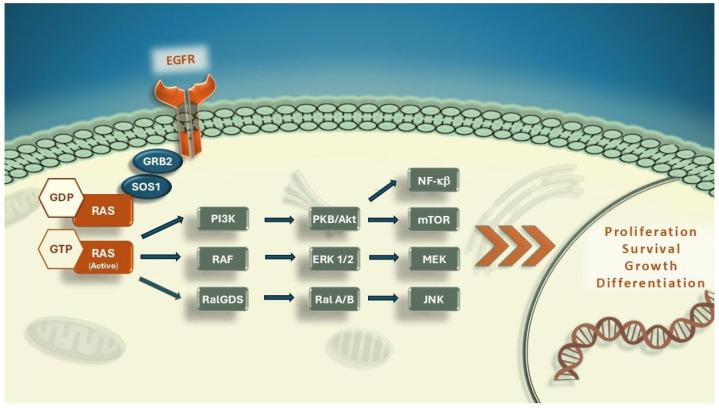
“RAS proteins function as binary molecular switches that control intracellular signaling networks and regulate proliferation, differentiation, and survival functions (Figure 1) [4].”
Maughan, T. S., Adams, R. A., Smith, C. G., Meade, A. M., Seymour, M. T., Wilson, R. H., Idziaszczyk, S., Harris, R., Fisher, D., Kenny, S. L., et al. (2011) · The Lancet · doi:10.1016/s0140-6736(11)60613-2 · Cited by 960 · cited 1×
“In the COIN study, the effectiveness of cetuximab added to chemotherapy was evaluated, and in contrast to expectations, no positive or detrimental effect of the addition of anti-EGFR was observed in RAS-wild and RAS-mutated patients [13].”
Tabernero, J., Yoshino, T., Cohn, A. L., Obermannova, R., Bodoky, G., Garcia-Carbonero, R., Ciuleanu, T.-E., Portnoy, D. C., Van Cutsem, E., Grothey, A., et al. (2015) · The Lancet Oncology · doi:10.1016/s1470-2045(15)70127-0 · Cited by 952 · cited 1×
“The RAISE trial aimed to assess the effectiveness of ramucirumab in combination with FOLFIRI compared to placebo plus FOLFIRI in mCRC cases [37].”
Venook, A. P., Niedzwiecki, D., Lenz, H.-J., Innocenti, F., Fruth, B., Meyerhardt, J. A., Schrag, D., Greene, C., O'Neil, B. H., Atkins, J. N., et al. (2017) · JAMA · doi:10.1001/jama.2017.7105 · Cited by 898 · cited 1×
“Similarly, the CALGB/SWOG 80405 trial showed that both cetuximab and bevacizumab provided comparable outcomes when combined with chemotherapy in the overall population, but the benefit of anti-EGFR therapy was again limited to RAS wild-type tumors [21].”
Fukuoka, S., Hara, H., Takahashi, N., Kojima, T., Kawazoe, A., Asayama, M., Yoshii, T., Kotani, D., Tamura, H., Mikamoto, Y., et al. (2020) · Journal of Clinical Oncology · doi:10.1200/jco.19.03296 · Cited by 890 · cited 1×
“In FRESCO-2, OS benefit was observed regardless of RAS mutation status, with HRs of 0.66 in RAS WT patients and 0.68 in RAS-mutant patients [50,51].”
InfluentialHecht, J. R., Mitchell, E., Chidiac, T., Scroggin, C., Hagenstad, C., Spigel, D., Marshall, J., Cohn, A., McCollum, D., Stella, P., et al. (2009) · Journal of Clinical Oncology · doi:10.1200/jco.2008.19.8135 · Cited by 850 · cited 1×
“The PACCE study evaluated the addition of panitumumab to chemotherapy and bevacizumab, showing that the combined use of two biological agents may result in adverse outcomes irrespective of RAS mutation status [19].”
Li, J., Qin, S., Xu, R., Yau, T. C. C., Ma, B., Pan, H., Xu, J., Bai, Y., Chi, Y., Wang, L., et al. (2015) · The Lancet Oncology · doi:10.1016/s1470-2045(15)70156-7 · Cited by 813 · cited 2×
“The international phase 3 CONCUR study evaluated regorafenib in a larger population of Asian patients with refractory mCRC [43].”
Van Cutsem, E., Lenz, H.-J., Köhne, C.-H., Heinemann, V., Tejpar, S., Melezínek, I., Beier, F., Stroh, C., Rougier, P., van Krieken, J. H., et al. (2015) · Journal of Clinical Oncology · doi:10.1200/jco.2014.59.4812 · Cited by 789 · cited 1×
“The interaction test by KRAS status showed no statistically significant difference in bevacizumab efficacy between KRAS mutant and wild-type tumors, with p = 0.443 for PFS and p = 0.126 for OS [23].”
InfluentialIdentification of MRTX1133, a Noncovalent, Potent, and Selective KRAS G12D Inhibitor
Wang, X., Allen, S., Blake, J. F., Bowcut, V., Briere, D. M., Calinisan, A., Dahlke, J. R., Fell, J. B., Fischer, J. P., Gunn, R. J., et al. (2022) · Journal of Medicinal Chemistry · doi:10.1021/acs.jmedchem.1c01688 · Cited by 769 · cited 1×
“MRTX1133 exhibits high binding affinity to GDP-loaded KRAS G12D (KD: ~0.2 pM, IC50: 2 nM) and is approximately 700-fold more selective than KRAS WT [97].”
InfluentialDe Roock, W., Jonker, D. J., Di Nicolantonio, F., Sartore-Bianchi, A., Tu, D., Siena, S., Lamba, S., Arena, S., Frattini, M., Piessevaux, H., et al. (2010) · JAMA · doi:10.1001/jama.2010.1535 · Cited by 748 · cited 1×
“The median PFS and mOS were significantly better in KRAS G13D mutant patients resistant to chemotherapy than those with other KRAS mutations [16].”
Douillard, J. Y., Siena, S., Cassidy, J., Tabernero, J., Burkes, R., Barugel, M., Humblet, Y., Bodoky, G., Cunningham, D., Jassem, J., et al. (2014) · Annals of Oncology · doi:10.1093/annonc/mdu141 · Cited by 606 · cited 1×
“In contrast, a detrimental effect was observed in the KRAS exon 2 mutant group [14].”
Tveit, K. M., Guren, T., Glimelius, B., Pfeiffer, P., Sorbye, H., Pyrhonen, S., Sigurdsson, F., Kure, E., Ikdahl, T., Skovlund, E., et al. (2012) · Journal of Clinical Oncology · doi:10.1200/jco.2011.38.0915 · Cited by 533
Adagrasib with or without Cetuximab in Colorectal Cancer with Mutated KRAS G12C
Yaeger, R., Weiss, J., Pelster, M. S., Spira, A. I., Barve, M., Ou, S.-H. I., Leal, T. A., Bekaii-Saab, T. S., Paweletz, C. P., Heavey, G. A., et al. (2023) · New England Journal of Medicine · doi:10.1056/nejmoa2212419 · Cited by 527 · cited 4×
“The phase I/II KRYSTAL-1 study assessed the efficacy of adagrasib, another KRAS G12C inhibitor, in patients with mCRC who had progressed under standard chemotherapy [3].”
InfluentialTargeting the MAPK pathway in KRAS-driven tumors
Drosten, M., & Barbacid, M. (2020) · Cancer Cell · doi:10.1016/j.ccell.2020.03.013 · Cited by 512 · cited 1×
“In KRAS mutant cancers, the mitogen-activated protein kinase (MAPK) pathway plays an active role [63].”
Hainsworth, J. D., Meric-Bernstam, F., Swanton, C., Hurwitz, H., Spigel, D. R., Sweeney, C., Burris, H. A., Bose, R., Yoo, B., Stein, A., et al. (2018) · Journal of Clinical Oncology · doi:10.1200/jco.2017.75.3780 · Cited by 506 · cited 1×
“In the phase 2 MyPathway study, which focused on HER2-positive patients with mCRC, mPFS and mOS were poorer for patients with RAS mutations treated with trastuzumab-pertuzumab compared to the RAS WT group [26].”
Trifluridine–tipiracil and bevacizumab in refractory metastatic colorectal cancer
Prager, G. W., Taieb, J., Fakih, M., Ciardiello, F., Van Cutsem, E., Elez, E., Cruz, F. M., Wyrwicz, L., Stroyakovskiy, D., Pápai, Z., et al. (2023) · New England Journal of Medicine · doi:10.1056/nejmoa2214963 · Cited by 467 · cited 1×
“The multinational Phase III SUNLIGHT study assessed FTD/TPI plus bevacizumab as third-line therapy for patients with unresectable metastatic CRC [46].”
PI3K Pathway Activation Mediates Resistance to MEK Inhibitors in KRAS Mutant Cancers
Wee, S., Jagani, Z., Xiang, K. X., Loo, A., Dorsch, M., Yao, Y.-M., Sellers, W. R., Lengauer, C., & Stegmeier, F. (2009) · Cancer Research · doi:10.1158/0008-5472.can-08-4765 · Cited by 455 · cited 1×
“Another resistance pathway is the PI3K pathway, and combining MEK inhibition with PI3K inhibition has shown antitumorigenic efficacy in vivo [76].”
Implications for KRAS status and EGFR-targeted therapies in metastatic CRC
Normanno, N., Tejpar, S., Morgillo, F., De Luca, A., Van Cutsem, E., & Ciardiello, F. (2009) · Nature Reviews Clinical Oncology · doi:10.1038/nrclinonc.2009.111 · Cited by 436
Li, J., Qin, S., Xu, R.-H., Shen, L., Xu, J., Bai, Y., Yang, L., Deng, Y., Chen, Z.-D., Zhong, H., et al. (2018) · JAMA · doi:10.1001/jama.2018.7855 · Cited by 425 · cited 1×
“Its efficacy in patients with disease progression after standard treatments has been demonstrated in the phase III FRESCO-1 study in China and the international FRESCO-2 trial [48,49].”
Sotorasib plus Panitumumab in Refractory Colorectal Cancer with Mutated KRAS G12C
Fakih, M. G., Salvatore, L., Esaki, T., Modest, D. P., Lopez-Bravo, D. P., Taieb, J., Karamouzis, M. V., Ruiz-Garcia, E., Kim, T.-W., Kuboki, Y., et al. (2023) · New England Journal of Medicine · doi:10.1056/nejmoa2308795 · Cited by 398
Hillig, R. C., Sautier, B., Schroeder, J., Moosmayer, D., Hilpmann, A., Stegmann, C. M., Werbeck, N. D., Briem, H., Boemer, U., Weiske, J., et al. (2019) · Proceedings of the National Academy of Sciences · doi:10.1073/pnas.1812963116 · Cited by 388 · cited 1×
“Selective SOS1 inhibitors, such as BAY-293 and BI-3406, have demonstrated synergistic antiproliferative activity in the KRASG12C mutant cell line by inhibiting the RAS-RAF-MEK-ERK pathway [66,67].”
Frequency of KRAS, BRAF, and NRAS mutations in colorectal cancer
Vaughn, C. P., ZoBell, S. D., Furtado, L. V., Baker, C. L., & Samowitz, W. S. (2011) · Genes, Chromosomes and Cancer · doi:10.1002/gcc.20854 · Cited by 377 · cited 2×
“In colorectal epithelial cells, oncogenic mutations in KRAS or NRAS—most commonly affecting codons 12, 13, or 61—result in the constitutive activation of RAS, maintaining it in a GTP-bound state independent of upstream EGFR stimulation [5].”
Dasari, A., Lonardi, S., Garcia-Carbonero, R., Elez, E., Yoshino, T., Sobrero, A., Yao, J., García-Alfonso, P., Kocsis, J., Cubillo Gracian, A., et al. (2023) · The Lancet · doi:10.1016/s0140-6736(23)00772-9 · Cited by 368 · cited 1×
“Its efficacy in patients with disease progression after standard treatments has been demonstrated in the phase III FRESCO-1 study in China and the international FRESCO-2 trial [48,49].”
Modest, D. P., Ricard, I., Heinemann, V., Hegewisch-Becker, S., Schmiegel, W., Porschen, R., Stintzing, S., Graeven, U., Arnold, D., von Weikersthal, L. F., et al. (2016) · Annals of Oncology · doi:10.1093/annonc/mdw261 · Cited by 351 · cited 1×
“Approximately 45% of patients diagnosed with mCRC have KRAS mutations, and the presence of mutations is important both in terms of prognosis [9,10].”
Blumenschein, G. R., Smit, E. F., Planchard, D., Kim, D.-W., Cadranel, J., De Pas, T., Dunphy, F., Udud, K., Ahn, M.-J., Hanna, N. H., et al. (2015) · Annals of Oncology · doi:10.1093/annonc/mdv072 · Cited by 349 · cited 1×
“However, due to resistance acquisition, MEK inhibitors have shown limited benefit as monotherapy in KRAS mutant CRC [73,74].”
Cremolini, C., Antoniotti, C., Rossini, D., Lonardi, S., Loupakis, F., Pietrantonio, F., Bordonaro, R., Latiano, T. P., Tamburini, E., Santini, D., et al. (2020) · The Lancet Oncology · doi:10.1016/s1470-2045(19)30862-9 · Cited by 334 · cited 1×
“The continuation of bevacizumab beyond the first-line triplet chemotherapy/bevacizumab regimen was evaluated in the TRIBE-2 trial [33].”
Single-Agent Divarasib (GDC-6036) in Solid Tumors with a KRAS G12C Mutation
Sacher, A., LoRusso, P., Patel, M. R., Miller, W. H., Garralda, E., Forster, M. D., Santoro, A., Falcon, A., Kim, T. W., Paz-Ares, L., et al. (2023) · New England Journal of Medicine · doi:10.1056/nejmoa2303810 · Cited by 328
Ou, S.-H. I., Jänne, P. A., Leal, T. A., Rybkin, I. I., Sabari, J. K., Barve, M. A., Bazhenova, L., Johnson, M. L., Velastegui, K. L., Cilliers, C., et al. (2022) · Journal of Clinical Oncology · doi:10.1200/jco.21.02752 · Cited by 322
Fakih, M. G., Kopetz, S., Kuboki, Y., Kim, T. W., Munster, P. N., Krauss, J. C., Falchook, G. S., Han, S.-W., Heinemann, V., Muro, K., et al. (2022) · The Lancet Oncology · doi:10.1016/s1470-2045(21)00605-7 · Cited by 320
SHP2 inhibition prevents adaptive resistance to MEK inhibitors in multiple cancer models
Fedele, C., Ran, H., Diskin, B., Wei, W., Jen, J., Geer, M. J., Araki, K., Ozerdem, U., Simeone, D. M., Miller, G., et al. (2018) · Cancer Discovery · doi:10.1158/2159-8290.cd-18-0444 · Cited by 315 · cited 1×
“In addition, it has been shown that SHP2 inhibitors effectively overcome adaptive resistance to MEK inhibitors in KRAS mutant cancers [70,71].”
Nivolumab plus Ipilimumab in Microsatellite-Instability–High Metastatic Colorectal Cancer
André, T., Elez, E., Van Cutsem, E., Jensen, L. H., Bennouna, J., Mendez, G., Schenker, M., de la Fouchardiere, C., Limon, M. L., Yoshino, T., et al. (2024) · New England Journal of Medicine · doi:10.1056/nejmoa2402141 · Cited by 286 · cited 1×
“The recently published Checkmate 8HW phase 3 study established the routine practice of the nivolumab–ipilimimumab combination [87,88].”
Pant, S., Wainberg, Z. A., Weekes, C. D., Furqan, M., Kasi, P. M., Devoe, C. E., Leal, A. D., Chung, V., Basturk, O., VanWyk, H., et al. (2024) · Nature Medicine · doi:10.1038/s41591-023-02760-3 · Cited by 267 · cited 1×
“In the recently published and promising AMPLIFY-201 study, the effectiveness of the cancer vaccine ELI-002 2P was demonstrated [108].”
Strickler, J. H., Cercek, A., Siena, S., André, T., Ng, K., Van Cutsem, E., Wu, C., Paulson, A. S., Hubbard, J. M., Coveler, A. L., et al. (2023) · The Lancet Oncology · doi:10.1016/s1470-2045(23)00150-x · Cited by 259 · cited 1×
“Notably, RAS mutant patients were excluded from the MOUNTAINEER study, which evaluated the efficacy of tucatinib, and only two RAS mutant patients were included in the DESTINY-CRC01 study, assessing the efficacy of trastuzumab deruxtecan [27,28].”
André, T., Elez, E., Lenz, H.-J., Jensen, L. H., Touchefeu, Y., Van Cutsem, E., Garcia-Carbonero, R., Tougeron, D., Mendez, G. A., Schenker, M., et al. (2025) · The Lancet · doi:10.1016/s0140-6736(24)02848-4 · Cited by 256
Chehelgerdi, M., Chehelgerdi, M., Khorramian-Ghahfarokhi, M., Shafieizadeh, M., Mahmoudi, E., Eskandari, F., Rashidi, M., Arshi, A., & Mokhtari-Farsani, A. (2024) · Molecular Cancer · doi:10.1186/s12943-023-01925-5 · Cited by 251 · cited 2×
“Several strategies—such as using high-fidelity Cas variants, inducible expression systems, or RNA-guided base editing tools—are under development to mitigate these concerns [104].”
Hegewisch-Becker, S., Graeven, U., Lerchenmüller, C. A., Killing, B., Depenbusch, R., Steffens, C.-C., Al-Batran, S.-E., Lange, T., Dietrich, G., Stoehlmacher, J., et al. (2015) · The Lancet Oncology · doi:10.1016/s1470-2045(15)00042-x · Cited by 251 · cited 1×
“In the AIO-KRK-0207 study, subgroup analysis for mPFS demonstrated a significant advantage in patients with wild-type tumors who received bevacizumab maintenance therapy compared to those who did not (HR 2.21, 95% CI 1.38–3.52) [38].”
InfluentialInhibition of SHP2-mediated dephosphorylation of Ras suppresses oncogenesis
Bunda, S., Burrell, K., Heir, P., Zeng, L., Alamsahebpour, A., Kano, Y., Raught, B., Zhang, Z.-Y., Zadeh, G., & Ohh, M. (2015) · Nature Communications · doi:10.1038/ncomms9859 · Cited by 249 · cited 1×
“Blocking SHP2 prevents the loading of GTP into the RAS, and it is aimed to provide anticancer activity in this way [68,69].”
Richman, S. D., Southward, K., Chambers, P., Cross, D., Barrett, J., Hemmings, G., Taylor, M., Wood, H., Hutchins, G., Foster, J. M., et al. (2016) · The Journal of Pathology · doi:10.1002/path.4679 · Cited by 241 · cited 1×
“HER2 overexpression/amplification occurs in 3–5% of patients with mCRC, rising to 5–14% among those with RAS WT [25].”
Identification of T-cell Receptors Targeting KRAS-Mutated Human Tumors
Wang, Q. J., Yu, Z., Griffith, K., Hanada, K.-I., Restifo, N. P., & Yang, J. C. (2016) · Cancer Immunology Research · doi:10.1158/2326-6066.cir-15-0188 · Cited by 240 · cited 1×
“…of expanding TCRs in an ex vivo environment, a complete response was observed in lung lesions, resulting in prolonged PFS. Building on these results, TCRs targeting KRASG12D and KRASG12V were produced in HLAA11:01 transgenic mice, and peripheral blood lymphocytes were generated retrovirally [107].”
Hurwitz, H. I., Yi, J., Ince, W., Novotny, W. F., & Rosen, O. (2009) · The Oncologist · doi:10.1634/theoncologist.2008-0213 · Cited by 239 · cited 1×
“In studies evaluating the addition of bevacizumab to chemotherapy agents, the addition of bevacizumab contributes to PFS, regardless of KRAS mutation status [17,18].”
Approach for targeting Ras with small molecules that activate SOS-mediated nucleotide exchange
Burns, M. C., Sun, Q., Daniels, R. N., Camper, D., Kennedy, J. P., Phan, J., Olejniczak, E. T., Lee, T., Waterson, A. G., Rossanese, O. W., et al. (2014) · Proceedings of the National Academy of Sciences · doi:10.1073/pnas.1315798111 · Cited by 199 · cited 1×
“In KRAS mutant CRC, where the KRAS protein toggles between its GDP-bound inactive and GTP-bound active states, acting as a molecular switch, SOS1 inhibition emerges as a significant therapeutic approach [65].”
MEK inhibitors activate Wnt signalling and induce stem cell plasticity in colorectal cancer
Zhan, T., Ambrosi, G., Wandmacher, A. M., Rauscher, B., Betge, J., Rindtorff, N., Häussler, R. S., Hinsenkamp, I., Bamberg, L., Hessling, B., et al. (2019) · Nature Communications · doi:10.1038/s41467-019-09898-0 · Cited by 189 · cited 1×
“The activation of the WNT pathway has been cited as a reason for the ineffectiveness of MEK inhibitors in CRC [75].”
Yoshino, T., Di Bartolomeo, M., Raghav, K., Masuishi, T., Loupakis, F., Kawakami, H., Yamaguchi, K., Nishina, T., Wainberg, Z., Elez, E., et al. (2023) · Nature Communications · doi:10.1038/s41467-023-38032-4 · Cited by 178 · cited 1×
“Notably, RAS mutant patients were excluded from the MOUNTAINEER study, which evaluated the efficacy of tucatinib, and only two RAS mutant patients were included in the DESTINY-CRC01 study, assessing the efficacy of trastuzumab deruxtecan [27,28].”
Platforms for Production of Protein-Based Vaccines: From Classical to Next-Generation Strategies
Cid, R., & Bolívar, J. (2021) · Biomolecules · doi:10.3390/biom11081072 · Cited by 176 · cited 1×
“Targeted molecular immunogen technology is an immunotherapy platform based on recombinant Saccharomyces cerevisiae yeast engineered to express one or more target protein antigens [109].”
RAS signaling pathways, mutations and their role in colorectal cancer
Zenonos, K. (2013) · World Journal of Gastrointestinal Oncology · doi:10.4251/wjgo.v5.i5.97 · Cited by 156 · cited 1×
“They are also associated with lower response rates to chemotherapy and shorter overall survival in several clinical cohorts [7].”
Divarasib plus cetuximab in KRAS G12C-positive colorectal cancer: a phase 1b trial
Desai, J., Alonso, G., Kim, S. H., Cervantes, A., Karasic, T., Medina, L., Shacham-Shmueli, E., Cosman, R., Falcon, A., Gort, E., et al. (2024) · Nature Medicine · doi:10.1038/s41591-023-02696-8 · Cited by 144
Morano, F., Raimondi, A., Pagani, F., Lonardi, S., Salvatore, L., Cremolini, C., Murgioni, S., Randon, G., Palermo, F., Antonuzzo, L., et al. (2022) · Journal of Clinical Oncology · doi:10.1200/jco.21.02583 · Cited by 134 · cited 1×
“After two treatment cycles, patients who did not progress were given a combination of temozolomide–nivolumab–ipilimumab [90].”
Lee, M. S., Helms, T. L., Feng, N., Gay, J., Chang, Q. E., Tian, F., Wu, J. Y., Toniatti, C., Heffernan, T. P., Powis, G., et al. (2016) · Oncotarget · doi:10.18632/oncotarget.9153 · Cited by 123 · cited 1×
“The combination of CDK 4/6 inhibitors with MEK inhibition has been shown to synergistically reduce the growth of KRAS-mutant CRC both in vitro and in vivo [82].”
Kubicka, S., Greil, R., André, T., Bennouna, J., Sastre, J., Van Cutsem, E., von Moos, R., Österlund, P., Reyes-Rivera, I., Müller, T., et al. (2013) · Annals of Oncology · doi:10.1093/annonc/mdt231 · Cited by 104 · cited 1×
“In the ECOG 3200 study, the addition of bevacizumab to chemotherapy, specifically FOLFOX 4 and chemotherapy alone, demonstrated significantly prolonged mOS and mPFS compared to the control groups [31,32].”
Kuboki, Y., Fakih, M., Strickler, J., Yaeger, R., Masuishi, T., Kim, E. J., Bestvina, C. M., Kopetz, S., Falchook, G. S., Langer, C., et al. (2024) · Nature Medicine · doi:10.1038/s41591-023-02717-6 · Cited by 103
Tyrosyl phosphorylation of KRAS stalls GTPase cycle via alteration of switch I and II conformation
Kano, Y., Gebregiworgis, T., Marshall, C. B., Radulovich, N., Poon, B. P. K., St-Germain, J., Cook, J. D., Valencia-Sama, I., Grant, B. M. M., Herrera, S. G., et al. (2019) · Nature Communications · doi:10.1038/s41467-018-08115-8 · Cited by 103 · cited 1×
“Blocking SHP2 prevents the loading of GTP into the RAS, and it is aimed to provide anticancer activity in this way [68,69].”
Wainberg, Z. A., Alsina, M., Soares, H. P., Braña, I., Britten, C. D., Del Conte, G., Ezeh, P., Houk, B., Kern, K. A., Leong, S., et al. (2017) · Targeted Oncology · doi:10.1007/s11523-017-0530-5 · Cited by 98 · cited 1×
“However, the combination of MEK and PI3K inhibitors in clinical practice has been limited in effectiveness and identified as having high toxicity [77].”
Expanding the scope of electrophiles capable of targeting K-Ras oncogenes
McGregor, L. M., Jenkins, M. L., Kerwin, C., Burke, J. E., & Shokat, K. M. (2017) · Biochemistry · doi:10.1021/acs.biochem.7b00271 · Cited by 97 · cited 1×
“In addition, the Switch II pocket of KRAS G12D lacks the reactive residues required to form a strong covalent bond, making it difficult to target [96].”
Targeting mutant KRAS with CRISPR-Cas9 controls tumor growth
Kim, W., Lee, S., Kim, H. S., Song, M., Cha, Y. H., Kim, Y.-H., Shin, J., Lee, E.-S., Joo, Y., Song, J. J., et al. (2018) · Genome Research · doi:10.1101/gr.223891.117 · Cited by 97 · cited 1×
“In particular, allele-specific CRISPR approaches targeting mutant KRAS alleles (such as G12D or G12V) have shown promise in selectively disrupting oncogenic signaling while sparing the wild-type allele [103].”
Aparicio, T., Ghiringhelli, F., Boige, V., Le Malicot, K., Taieb, J., Bouché, O., Phelip, J.-M., François, E., Borel, C., Faroux, R., et al. (2018) · Journal of Clinical Oncology · doi:10.1200/jco.2017.75.2931 · Cited by 91 · cited 1×
“In the PRODIGE-9 study, subgroup assessment for mPFS indicated a favorable HR of bevacizumab as a single agent in KRAS WT patients compared to those receiving no maintenance: 0.72 (95% CI 0.54–0.95), but this was not significant in KRAS mutation patients (HR: 1.07, 95% CI 0.79–1.44) [39].”
InfluentialStrategies to tackle RAS-mutated metastatic colorectal cancer
Patelli, G., Tosi, F., Amatu, A., Mauri, G., Curaba, A., Patanè, D. A., Pani, A., Scaglione, F., Siena, S., & Sartore-Bianchi, A. (2021) · ESMO Open · doi:10.1016/j.esmoop.2021.100156 · Cited by 86
Precision therapy in RAS mutant colorectal cancer
Dienstmann, R., Connor, K., Byrne, A. T., Fridman, W. H., Lambrechts, D., Sadanandam, A., Trusolino, L., Prehn, J. H. M., Tabernero, J., & Kolch, W. (2020) · Gastroenterology · doi:10.1053/j.gastro.2019.12.051 · Cited by 73 · cited 1×
“In RAS-mutant CRC, CRISPR has been increasingly employed in preclinical models to interrogate pathway dependencies, identify synthetic lethal interactions, and understand resistance mechanisms to targeted therapies [102].”
Zimmer, L., Barlesi, F., Martinez-Garcia, M., Dieras, V., Schellens, J. H. M., Spano, J.-P., Middleton, M. R., Calvo, E., Paz-Ares, L., Larkin, J., et al. (2014) · Clinical Cancer Research · doi:10.1158/1078-0432.ccr-14-0341 · Cited by 71 · cited 1×
“However, due to resistance acquisition, MEK inhibitors have shown limited benefit as monotherapy in KRAS mutant CRC [73,74].”
Jänne, P. A., Bigot, F., Papadopoulos, K., Eberst, L., Sommerhalder, D., Lebellec, L., Voon, P. J., Pellini, B., Kalinka, E., Arbour, K., et al. (2023) · Molecular Cancer Therapeutics · doi:10.1158/1535-7163.targ-23-pr014 · Cited by 63 · cited 1×
“In a Phase I clinical trial, RMC-6291 demonstrated significant anti-tumoral efficacy in patients with KRASG12C-mutated solid tumors, even in cases where resistance had developed after prior KRASG12C(OFF) inhibitor treatments [93].”
Andre, T., Elez, E., Van Cutsem, E., Jensen, L. H., Bennouna, J., Mendez, G., Schenker, M., De La Fouchardiere, C., Limon, M. L., Yoshino, T., et al. (2024) · Journal of Clinical Oncology · doi:10.1200/jco.2024.42.3_suppl.lba768 · Cited by 63 · cited 1×
“In another phase II study evaluating the effectiveness of nivolumab–ipilimumab combination therapy in first-line treatment, the objective response rate with combination immunotherapy was found to be 80% in the RAS mutant patient group [85].”
Shiu, K.-K., Andre, T., Kim, T. W., Jensen, B. V., Jensen, L. H., Punt, C. J. A., Smith, D. M., Garcia-Carbonero, R., Benavides, M., Gibbs, P., et al. (2021) · Journal of Clinical Oncology · doi:10.1200/jco.2021.39.3_suppl.6 · Cited by 59 · cited 1×
“The effectiveness of pembrolizumab as a first-line treatment for mCRC was investigated in the phase III Keynote 177 study [86].”
Modest, D. P., von Weikersthal, L. F., Decker, T. W., Vehling‐Kaiser, U., Uhlig, J., Schenk, M., Freiberg‐Richter, J., Peuser, B., Denzlinger, C., Reddemann, C. P. G., et al. (2018) · Journal of Clinical Oncology · doi:10.1200/jco.18.00052 · Cited by 56
van Geel, R. M. J. M., van Brummelen, E. M. J., Eskens, F. A. L. M., Huijberts, S. C. F. A., de Vos, F. Y. F. L., Lolkema, M. P. J. K., Devriese, L. A., Opdam, F. L., Marchetti, S., Steeghs, N., et al. (2020) · British Journal of Cancer · doi:10.1038/s41416-020-0776-z · Cited by 55
Strickler, J. H., Yoshino, T., Stevinson, K., Eichinger, C. S., Giannopoulou, C., Rehn, M., & Modest, D. P. (2023) · The Oncologist · doi:10.1093/oncolo/oyad138 · Cited by 54 · cited 1×
“A pan-RAS inhibitor targeting the entire RAS pathway was needed to be an effective treatment agent [99].”
Global impact of KRAS mutation patterns in FOLFOX treated metastatic colorectal cancer
Zocche, D. M., Ramirez, C., Fontao, F. M., Costa, L. D., & Redal, M. A. (2015) · Frontiers in Genetics · doi:10.3389/fgene.2015.00116 · Cited by 50 · cited 2×
“Approximately 45% of patients diagnosed with mCRC have KRAS mutations, and the presence of mutations is important both in terms of prognosis [9,10].”
Sabari, J. K., Park, H., Tolcher, A. W., Ou, S.-H. I., Garon, E. B., George, B., Janne, P. A., Moody, S. E., Tan, E. Y., Sen, S. K., et al. (2021) · Journal of Clinical Oncology · doi:10.1200/jco.2021.39.3_suppl.tps146 · Cited by 50 · cited 1×
“On the other hand, it has also been shown that TNO155, an SHP2 inhibitor, can increase the efficacy of KRASG12C covalent inhibitors against KRASG12C mutant mCRC [72].”
Van Cutsem, E., Joulain, F., Hoff, P. M., Mitchell, E., Ruff, P., Lakomý, R., Prausová, J., Moiseyenko, V. M., van Hazel, G., Cunningham, D., et al. (2016) · Targeted Oncology · doi:10.1007/s11523-015-0402-9 · Cited by 49
Cohn, A., Morse, M. A., O’Neil, B., Whiting, S., Coeshott, C., Ferraro, J., Bellgrau, D., Apelian, D., & Rodell, T. C. (2018) · Journal of Immunotherapy · doi:10.1097/cji.0000000000000219 · Cited by 41 · cited 1×
“GI-4000, produced in this way, targets KRAS mutations in codons 12 and 61 and provides a stable response rate of 23% in patients diagnosed with mCRC in the phase I study [110].”
Ghiringhelli, F., Chibaudel, B., Taieb, J., Bennouna, J., Martin-Babau, J., Fonck, M., Borg, C., Cohen, R., Thibaudin, M., Limagne, E., et al. (2020) · Journal of Clinical Oncology · doi:10.1200/jco.2020.38.15_suppl.3006 · Cited by 40 · cited 1×
“Another study evaluating the efficacy of immunotherapy as a first-line treatment in MSS mCRC patients was the phase Ib/II MEDETREME trial [91].”
Price, T. J., Bruhn, M. A., Lee, C. K., Hardingham, J. E., Townsend, A. R., Mann, K. P., Simes, J., Weickhardt, A., Wrin, J. W., Wilson, K., et al. (2015) · British Journal of Cancer · doi:10.1038/bjc.2015.37 · Cited by 39 · cited 1×
“In studies evaluating the addition of bevacizumab to chemotherapy agents, the addition of bevacizumab contributes to PFS, regardless of KRAS mutation status [17,18].”
Velour trial biomarkers update: Impact of RAS, BRAF, and sidedness on aflibercept activity
Wirapati, P., Pomella, V., Vandenbosch, B., Kerr, P., Maiello, E., Jeffery Grahame, M., Curca, R.-O. D., Karthaus, M., Bridgewater, J. A., Mihailov, A. C., et al. (2017) · Annals of Oncology · doi:10.1093/annonc/mdx302.004 · Cited by 39 · cited 1×
“In biomarker analysis, HRs for mOS favored WT KRAS exon 2 and extended RAS, although no significant interaction was found ( p = 0.38) despite a trend favoring RAS WT [35].”
InfluentialFernández Montes, A., Martínez Lago, N., Covela Rúa, M., de la Cámara Gómez, J., González Villaroel, P., Méndez Méndez, J. C., Jorge Fernández, M., Salgado Fernández, M., Reboredo López, M., Quintero Aldana, G., et al. (2019) · Cancer Medicine · doi:10.1002/cam4.1903 · Cited by 38 · cited 1×
“Evidence from randomized phase III studies suggests that the sustained inhibition of tumor angio-Medicina genesis using agents like bevacizumab, aflibercept, or ramucirumab beyond the initial progression may contribute to enhanced OS [30].”
Fang, X., Zhu, N., Zhong, C., Wang, L., Li, J., Weng, S., Hu, H., Dong, C., Li, D., Song, Y., et al. (2023) · EClinicalMedicine · doi:10.1016/j.eclinm.2023.102123 · Cited by 38 · cited 1×
“A similar protocol-designed study from China is ongoing, investigating the efficacy of first-line treatment with the Sintilimab–Capecitabine–Oxaliplatin–Bevacizumab combination [92].”
Foote, J. B., Mattox, T. E., Keeton, A. B., Chen, X., Smith, F., Berry, K. L., Holmes, T., Wang, J., Huang, C.-H., Ward, A., et al. (2024) · Cancer Research · doi:10.1158/0008-5472.can-24-0323 · Cited by 37
Brummelen, E. M. J., Huijberts, S., Herpen, C., Desar, I., Opdam, F., Geel, R., Marchetti, S., Steeghs, N., Monkhorst, K., Thijssen, B., et al. (2021) · The Oncologist · doi:10.1002/onco.13631 · Cited by 32 · cited 1×
“…clinical trials evaluating combinations such as afatinib (a pan-HER inhibitor) with selumetinib (a MEK inhibitor), dacomitinib (a panHER inhibitor) with PD-0325901 (a MEK1/2 inhibitor), and cobimetinib (a MEK inhibitor) with atezolizumab (an anti-PDL1), have failed to prove efficacy [78–80].”
Salvatore, L., Bria, E., Sperduti, I., Hinke, A., Hegewisch-Becker, S., Aparicio, T., Le Malicot, K., Boige, V., Koeberle, D., Baertschi, D., et al. (2021) · Cancer Treatment Reviews · doi:10.1016/j.ctrv.2021.102202 · Cited by 26 · cited 1×
“Moreover, a meta-analysis by Lisa Salvatore et al. revealed consistent benefits with bevacizumab across clinical subgroups, except for patients with RAS mutations [40].”
Plangger, A., Rath, B., Stickler, S., Hochmair, M., Lang, C., Weigl, L., Funovics, M., & Hamilton, G. (2022) · Discover Oncology · doi:10.1007/s12672-022-00550-w · Cited by 25 · cited 1×
“Selective SOS1 inhibitors, such as BAY-293 and BI-3406, have demonstrated synergistic antiproliferative activity in the KRASG12C mutant cell line by inhibiting the RAS-RAF-MEK-ERK pathway [66,67].”
Nicolazzo, C., Belardinilli, F., Vestri, A., Magri, V., De Renzi, G., De Meo, M., Caponnetto, S., Di Nicolantonio, F., Cortesi, E., Giannini, G., et al. (2022) · Cancers · doi:10.3390/cancers14030802 · Cited by 21 · cited 1×
“Importantly, patients treated with chemotherapy in combination with bevacizumab exhibited a higher rate of RAS conversion compared to those receiving chemotherapy alone [54].”
Stahler, A., Heinemann, V., Ricard, I., von Einem, J. C., Giessen-Jung, C., Westphalen, C. B., Michl, M., Heinrich, K., Miller-Phillips, L., Jelas, I., et al. (2020) · Journal of Cancer Research and Clinical Oncology · doi:10.1007/s00432-020-03290-y · Cited by 21 · cited 1×
“The study demonstrated that the improvement in OS was significantly more pronounced in patients with RAS WT tumors than those with RAS mutant tumors across all included studies ( p for interaction = 0.003) [41].”
InfluentialZheng, W., Yang, Z., Song, P., Sun, Y., Liu, P., Yue, L., Lv, K., Wang, X., Shen, Y., Si, J., et al. (2023) · Cancer Letters · doi:10.1016/j.canlet.2022.216029 · Cited by 21 · cited 1×
“In addition, it has been shown that SHP2 inhibitors effectively overcome adaptive resistance to MEK inhibitors in KRAS mutant cancers [70,71].”
Guo, Y., Zhang, W., Ying, J., Zhang, Y., Pan, Y., Qiu, W., Su, W., Tan, P., Yin, H., Wang, Y., et al. (2021) · Journal of Clinical Oncology · doi:10.1200/jco.2021.39.15_suppl.2514 · Cited by 20 · cited 1×
“In FRESCO-2, OS benefit was observed regardless of RAS mutation status, with HRs of 0.66 in RAS WT patients and 0.68 in RAS-mutant patients [50,51].”
InfluentialTabernero, J., Taieb, J., Fakih, M., Prager, G. W., Van Cutsem, E., Ciardiello, F., Mayer, R. J., Amellal, N., Skanji, D., Calleja, E., et al. (2024) · ESMO Open · doi:10.1016/j.esmoop.2024.102945 · Cited by 18 · cited 1×
“…SUNLIGHT trial demonstrated that FTD/TPI plus bevacizumab treatment resulted in better overall survival compared to FTD/TPI alone in both the RAS mutant and RAS wild-type groups; the median OS (mOS) was 10.1 months vs. 7.1 months for mRAS and 11.4 months vs. 7.4 months for wtRAS, respectively [47].”
InfluentialOsumi, H., Takashima, A., Ooki, A., Yoshinari, Y., Wakatsuki, T., Hirano, H., Nakayama, I., Okita, N., Sawada, R., Ouchi, K., et al. (2023) · Translational Oncology · doi:10.1016/j.tranon.2023.101718 · Cited by 16 · cited 2×
“Clinical factors such as a smaller tumor burden and the absence of liver metastases were significantly linked to this shift, suggesting specific patient profiles may predispose individuals to NeoRAS WT emergence [52].”
Siena, S., Sartore-Bianchi, A., Personeni, N., Pietrantonio, F., Germano, G., Amatu, A., Bonoldi, E., Valtorta, E., Barault, L., Di Nicolantonio, F., et al. (2019) · Journal of Clinical Oncology · doi:10.1200/jco.2019.37.15_suppl.tps2659 · Cited by 15 · cited 1×
“In the phase 2 ARETHUSA trial, the efficacy of pembrolizumab following temozolomide (TMZ) in heavily pretreated RAS-mutant CRC patients was explored [89].”
Xu, R.-H., Xu, Y., Yan, D., Münster, P. N., Ruan, D., Deng, Y., Pan, H., Underhill, C. R., Richardson, G. E., Nordman, I. I. C., et al. (2023) · Annals of Oncology · doi:10.1016/j.annonc.2023.09.1741 · Cited by 15
Ready, Set, Go: Setting Off on the Mission to Target KRAS in Colorectal Cancer
Pellatt, A. J., Bhamidipati, D., & Subbiah, V. (2024) · JCO Oncology Practice · doi:10.1200/op.24.00295 · Cited by 14 · cited 1×
“The KRAS G12D mutation is seen in 12% of metastatic CRC and is the most common KRAS mutation in CRC [95].”
Foote, J. B., Mattox, T. E., Keeton, A. B., Chen, X., Smith, F., Berry, K. L., Holmes, T., Wang, J., Huang, C.-H., Ward, A. B., et al. (2023) · doi:10.1101/2023.05.17.541233 · Cited by 13 · cited 2×
“This selectivity enables ADT-007 to target mutant RAS in cancer cells without disrupting the function of WT RAS isoforms in normal cells, which is crucial for cell renewal and replacement in rapidly dividing tissues [100].”
Yuan, Y., Deng, Y., Jin, Y., Pan, Y., Wang, C., Wang, Z., Zhang, Z., Meng, X., Hu, Y., Zhao, M., et al. (2023) · Annals of Oncology · doi:10.1016/j.annonc.2023.10.241 · Cited by 12
Chen, C.-P., Ke, T.-W., Cheng, R., & Wang, J.-Y. (2020) · Translational Cancer Research · doi:10.21037/tcr-20-608 · Cited by 11 · cited 2×
“Notably, improvements in overall survival were observed with ramucirumab across all patients, including those with RAS/BRAF mutations, with a significant improvement in mPFS observed in the RAS mutant patients ( p = 0.021) [36].”
InfluentialAoki, Y., Nakamura, Y., Denda, T., Ohta, T., Esaki, T., Shiozawa, M., Yamaguchi, K., Yamazaki, K., Sunakawa, Y., Kato, T., et al. (2023) · JCO Precision Oncology · doi:10.1200/po.22.00688 · Cited by 11 · cited 1×
“The SCRUM-Japan GOZILA study found 19% of patients transitioned to NeoRAS WT status, where EGFR inhibitors showed potential efficacy, achieving partial responses or stable disease for six months or more [53].”
Diaz, L. A., Le, D. T., Yoshino, T., Andre, T., Bendell, J. C., Koshiji, M., Zhang, Y., Kang, S. P., Lam, B., & Jaeger, D. (2017) · Journal of Clinical Oncology · doi:10.1200/jco.2017.35.15_suppl.tps3618 · Cited by 11 · cited 1×
“In the phase II clinical trial Keynote-Medicina 016, pembrolizumab treatment achieved a 40% objective response rate in patients diagnosed with MSI mCRC who have progression under standard treatments [83].”
Yildirim, H. C., Gunenc, D., Almuradova, E., Sutcuoglu, O., & Yalcin, S. (2025) · Medicina · doi:10.3390/medicina61030408 · Cited by 10 · cited 1×
“Beyond their effect on signaling, RAS mutations in CRC have been implicated in remodeling the tumor microenvironment, promoting angiogenesis, modulating immune infiltration, and enhancing metastatic potential [6].”
Self-citationBendell, J., Tae Won, K., Cheng Ean, C., Yung-Jue, B., Lee, C., Desai, J., Lewin, J., Wallin, J., Das Thakur, M., Mwawasi, G., et al. (2016) · Annals of Oncology · doi:10.1093/annonc/mdw237.01 · Cited by 9
Tajiknia, V., El-Deiry, W. S., Schwermann, M., Huntington, K., Zhou, L., & Srinivasan, P. (2023) · Journal of Clinical Oncology · doi:10.1200/jco.2023.41.16_suppl.e16301 · Cited by 8 · cited 1×
“In addition, MRTX1133 has been suggested to exhibit a synergistic effect with fluorouracil [98].”
Wang, Y., Neve, R. M., Staunton, J., & Webster, K. R. (2024) · Cancer Research · doi:10.1158/1538-7445.am2024-5948 · Cited by 7 · cited 1×
“Adding to this innovation, FMC-376, a dual-action inhibitor targeting both KRASG12C-(ON) and KRASG12C(OFF) states, has shown notable anti-tumor activity in preclinical in vivo models [94].”
Huang, F., Yang, H., Bao, W., Bin, Y., Zhou, S., Wang, M., & Lv, X. (2023) · Clinical and Translational Oncology · doi:10.1007/s12094-023-03268-5 · Cited by 6 · cited 1×
“A comprehensive meta-analysis showed that TAS-102 demonstrated significant mOS benefits in both KRAS WT patients (HR: 0.66, 95% CI 0.55, 0.79) and KRAS mutant patients (HR: 0.75, 95% CI 0.62, 0.91) [45].”
InfluentialBonato, A., Bomben, R., Chakraborty, S., Felician, G., Martines, C., Zucchetto, A., Chiarenza, A., Del Poeta, G., Marasca, R., Tafuri, A., et al. (2021) · Blood · doi:10.1182/blood-2021-149442 · Cited by 3 · cited 1×
“Moreover, CRISPR activation (CRISPRa) and interference (CRISPRi) systems allow researchers to modulate gene expression without inducing double-strand breaks, expanding the versatility of CRISPR beyond simple knockouts [105].”
Van Cutsem, E., Yaeger, R., Delord, J.-P., Tabernero, J., Siu, L. L., Ducreux, M., Siena, S., Elez, E., Kasper, S., Zander, T., et al. (2023) · The Oncologist · doi:10.1093/oncolo/oyad210 · Cited by 3 · cited 1×
“Consequently, a phase Ib/II study combining MEK inhibitors with anti-EGFR agents was planned, but it yielded an objective response rate of 6.7% while severe toxicities were observed in 30–62.5% of cases [81].”
InfluentialAbstract 1658: ADT-007 binds RAS and inhibits RAS signaling
Keeton, A. B., Chen, X., Valiyaveettil, J., Huang, C.-H., Mattox, T. E., Fadlalla, K., Foote, J. B., Buchsbaum, D. J., Berry, K. L., Nurmemmedov, E., et al. (2023) · Cancer Research · doi:10.1158/1538-7445.am2023-1658 · Cited by 1 · cited 1×
“RAS wild-type (WT) cancer cells with GTP-activated RAS due to upstream mutations also exhibit sensitivity to ADT-007 [101].”
Cited by
Kamel, E. M., Khadrawy, S. M., Ali, M. A. M., Abukhadra, M. R., Yassin, N. Y. S., Alkhedhairi, S., Alkhayl, F. F. A., & Lamsabhi, A. M. (2026) · Frontiers in Chemistry · doi:10.3389/fchem.2026.1808601 · Cited by 3
“…suppression when combined with trametinib and produced superior antitumor activity compared with either agent alone; this combination logic was a central rationale for advancing SOS1 inhibitors into MEK-inhibitor combinations in early clinical testing (Hofmann et al., 2021; Sütcüoğlu et al., 2025).”
Diaz, F. C., Waldrup, B., Carranza, F., Manjarrez, S., & Velazquez-Villarreal, E. I. (2026) · Cancers · doi:10.3390/cancers18020239 · Cited by 2
Henrykowska, G., Bartusik-Aebisher, D., Dynarowicz, K., Ramesh, T. S., Smolak, B., & Aebisher, D. (2026) · Pharmaceuticals · doi:10.3390/ph19071041 · Cited by 1
Effects of Tyrphostin A9 and Structurally Related Tyrphostins on Colorectal Carcinoma Cells
Tahtamouni, L. H., Almasri, A. Y., Hamad, M. A., Hussein, N. E., Saleh, K. M., Yasin, S. R., Schobert, R., & Biersack, B. (2025) · Future Pharmacology · doi:10.3390/futurepharmacol5040057 · Cited by 1
Shen, J., Ma, Y., Wang, Y., Yang, M., Liang, T., & Guo, L. (2026) · Biochemical Pharmacology · doi:10.1016/j.bcp.2026.118184 · Cited by 1
Metadata
- Authors
- Sütcüoğlu, O., Yıldırım, H. Ç., Almuradova, E., Günenç, D., & Yalçın, Ş.
- Affiliations
- Department of Medical Oncology, Gazi University, Ankara 06560, Turkey
- Department of Medical Oncology, Niğde Research and Training Hospital, Niğde 51100, Turkey
- Department of Medical Oncology, Medicana International İzmir Hospital, İzmir 35170, Turkey
- Ege University (TR)
- Hacettepe University (TR)
- Venue
- Medicina
- Publisher
- MDPI AG
- Published
- 2025-06-30
- Volume
- 61
- Issue
- 7
- Pages
- 1202
- ISSN
- 1010-660X (ISSN-L)
- 1648-9144
- PMC
- PMC12299888
- OpenAlex
- W4411902113
- Semantic Scholar
- 462e15cd6a754c3946344410b05543b29153cfa7
- Cited by
- 10
- References
- 110
- Citations by year
- 2026: 7 · 2025: 3
- FWCI
- 1.17
- Type
- journal article
- Language
- en
- Open access
- gold
- doi.org
- Licence
- Locations
- Medicina (publishedVersion, cc-by)
- PubMed Central (publishedVersion, cc-by)
- PubMed (publishedVersion)
- DOAJ (DOAJ: Directory of Open Access Journals) (submittedVersion, cc-by-sa)
- Topics
- Health Sciences › Medicine › Oncology › Colorectal Cancer Treatments and Studies
- Health Sciences › Medicine › Oncology › Colorectal Cancer Surgical Treatments
- Life Sciences › Biochemistry, Genetics and Molecular Biology › Molecular Biology › Protein Kinase Regulation and GTPase Signaling
- Keywords
- RAS mutations, KRAS, NRAS, metastatic colorectal cancer, KRAS G12C inhibitors, sotorasib, adagrasib, treatment resistance, targeted therapy, personalized cancer management
- MeSH terms
- Antineoplastic Agents, Humans, Membrane Proteins, Mutation, Colorectal Neoplasms, Proto-Oncogene Proteins p21(ras), GTP Phosphohydrolases, Molecular Targeted Therapy
About these checks
Registry, retraction, Cites and statistics results are computed, not judged, with one exception: a printed reference that no index lists is read once by a model before it counts as a citation error. Claims are extracted by a model and kept only when their quote appears verbatim in the text; each cited source is then checked, with a model’s help, for whether it says what the claim relies on. Those verdicts can be wrong — read the claim’s quote and the cited source before relying on one.
The claim verdicts this report counts are experimental: their accuracy is not yet measured.
A language model drew the claims from the paper on 2026-10-06, under version 3 of the claim definition (model deepseek-v4.1-flash, prompt extract-v3).
A second model labelled each claim on 2026-10-06 (model jev-1.13-20260917, definition revision gold-guideline-v0.2).
Cited sources are checked with a language model’s help (gpt-6-sol and qwen3.8-omni-flash).
Statistics and arithmetic are recomputed, not judged.
Confidence bands are shown only for fields calibrated on our annotated test set. None is calibrated yet, so no band is shown.
What counts as a claim ›How we measure confidence ›How we check this ›
Are you an author, or do you see a problem with this page? Request a review
Data sources
Bibliographic data: Semantic Scholar, OpenAlex, Crossref.
Contains information from the Semantic Scholar Academic Graph Datasets, made available under the ODC Attribution License (ODC-BY 1.0).
Semantic Scholar’s data is described in: Kinney, R., et al. (2023). The Semantic Scholar Open Data Platform. arXiv:2301.10140.
