

Why They Speak Up (or Don’t): Reasons For and Against Cybergrooming Disclosure Among Adolescent Victims
Open accessThe DOI matches its Crossref record; 81 of the 84 references it cites were found in a registry or an index; 11 of the 64 sources its claims cite were checked for support.
Abstract
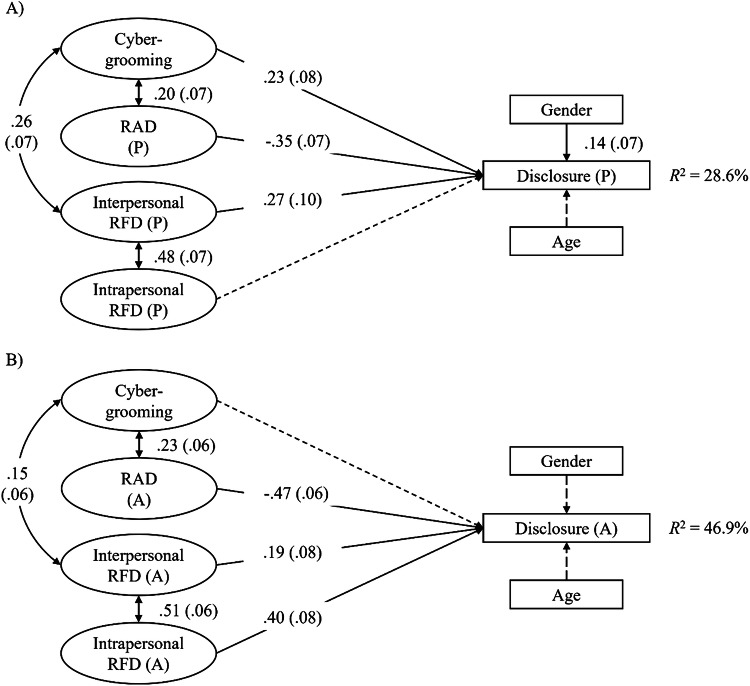
The ubiquitous use of information and communication technologies among adolescents carries the risk of exposure to online victimization during this vulnerable stage of development, including cybergrooming as a form of sexual victimization. Although established in traditional abuse research, studies on disclosure processes in the specific context of cybergrooming victimization are still pending. The present study exploratively investigated reasons for and against disclosure following cybergrooming victimization in the subsample of n = 400 victims (44.1%; M age = 15.48 years, girls: 57.5%) from N = 908 adolescent participants. Most victims disclosed to someone (86%), with peer disclosure being more frequent (73%) than disclosure to adults (55%). Findings indicated differences of small effect sizes in reasons for and against disclosure depending on the confidant (peers vs. adults; for example, the reporting of similar experiences by others was more relevant in peer disclosure). However, gender had almost no influence on the assessed reasons. In structural equation models, latent factors of reasons against, and intra- and interindividual reasons for disclosure predicted peer and adult disclosure to varying degrees, with reasons against disclosure being the most predictive in both cases. Disclosure to adults could be better explained than disclosure to peers ( R 2 peers = 28.6%, R 2 adults = 46.9%). In open-ended items, participants provided further reasons, which were grouped into categories (e.g., help-seeking, warning/prevention, fear of bullying/social exclusion). Practical implications like the aspired congruence between reasons for disclosure and confidants’ reactions, and limitations such as the neglect of the processual character of disclosure are outlined.
Overview
CoChat Summary
TL;DR
In a German sample of 908 adolescents, 400 (44.1%) reported cybergrooming victimization; most victims disclosed (86%), more often to peers (73%) than adults (55%). Reasons against disclosure were the strongest predictors of actual disclosure in SEMs, and adult disclosure was better explained (R² = 46.9%) than peer disclosure (R² = 28.6%).
Key findings
- Cybergrooming victimization was reported by 44.1% of participants (n = 400); girls were more often victims than boys (48.3% vs. 39.4%; χ²(1) = 7.03, p = 0.008, h = 0.18). Most victims disclosed to someone (86%, n = 344): 42% disclosed to both peers and adults, 31% only to peers, and 13% only to adults. Peer disclosure was 73% and adult disclosure 55%; girls disclosed to peers more than boys (77% vs. 67%; p = 0.037, h = 0.22), while adult disclosure rates were similar (girls 54.3%, boys 55.9%).
- The strongest reason for disclosure was the wish for improvement of well-being (peers M = 4.24, adults M = 4.11); the strongest reason against disclosure was embarrassment (peers M = 3.33, adults M = 3.25), and the weakest reason against was blackmail/threats/interdictions by the perpetrator (M = 2.14 for both). Confidant differences were small: reporting of similar experiences by others was stronger for peer disclosure (M = 3.60 vs. 3.17, |d| = 0.37), while wish for victimization to end and wish for punishment of the perpetrator were stronger for adult disclosure (M = 3.94 vs. 3.59 and 3.53 vs. 3.27).
- Open-ended responses added categories such as exchange of experiences (n = 40), warning (n = 24), help-seeking (n = 24), and safety/fear (n = 22) for peer disclosure; bullying/social exclusion (n = 13) was the most frequent reason against peer disclosure. For adult disclosure, help-seeking/competence (n = 51) and safety/protection/fear (n = 22) were most frequent; overreaction (n = 4) and lack of understanding (n = 4) were reasons against adult disclosure.
- In SEMs, reasons against disclosure were the strongest predictor of disclosure to adults (β = −0.47) and peers (β = −0.35). Intrapersonal reasons for disclosure predicted adult disclosure (β = 0.40), while interindividual reasons predicted peer disclosure more strongly (β = 0.27) than adult disclosure (β = 0.19). Cybergrooming frequency predicted only peer disclosure (β = 0.23), and gender had a small effect on peer disclosure (β = 0.14).
Methods
- Preregistered cross-sectional online survey conducted in Germany; final sample N = 908 adolescents aged 14–17 (M = 15.43, 52.4% female), with a victim subsample of n = 400 (44.1%; M = 15.48, 57.5% girls). Data were collected by a market research company (KB&B) with parental consent; ethics approval was from the University of Münster.
- Cybergrooming victimization was assessed with a short version of the Multidimensional Online Grooming Questionnaire (five strategy items) plus one global item. Disclosure to peers and adults was measured dichotomously; reasons for and against disclosure were assessed separately for peers and adults with five closed-ended items each plus open-ended items.
- Analyses in R included chi-square tests, paired and Welch’s t-tests, Cohen’s h and d, open-ended category coding with Cohen’s kappa, and latent variable analyses using CFA and SEM in lavaan (MLR for CFA; WLSMV for SEM with dichotomous disclosure).
Limitations
- The paper states that generalization is limited because the sample was well-educated, gender minorities were excluded (n = 6 participants with another gender), and only adolescents were surveyed. It also states that no reference period was specified, so recall bias is possible; disclosure was measured dichotomously and thus treated as a single event rather than a process; and contextual reasons and formal recipients were not adequately assessed.
- The text makes evident that the cross-sectional self-report design cannot establish temporal or causal ordering between reasons and disclosure behavior. It also notes that open-ended categories were not claimed to be distinct, and some reliability estimates were weaker (e.g., interindividual reasons for peer disclosure had ω = 0.55; some Other categories had only moderate kappa, such as κ = 0.46 and κ = 0.56).
Model-written summary. Check it against the paper before relying on it.
Integrity signals
Registry
Cites
Statistics
Figures
Verification
Claims the paper makes
8 Valid · 3 Not valid · 42 Not checked · 124 Own results and interpretations
At least one cited source doesn’t support this claim or points to a different paper, and none confirmed it — see the verdicts below.
In the paper
“Furthermore, in the event of disclosure, peers are preferred over adults as confidants (e.g., Priebe et al., 2013).”
§ Why They Speak Up (or Don’t): Reasons For and Against Cybergrooming Disclosure Among Adolescent Victims > Introduction > Disclosure Processes Following Sexual Victimization
What the sources say
- Disputedcites Priebe et al., 2013 matched to “To tell or not to tell? Youth’s responses to unwanted Internet experiences” (2013) sourceExperimental — accuracy not yet measured
Results, Table 1 (page unavailable), does not show a general preference for peers: more youth told a friend than a parent about sexual solicitation, but more told a parent than a friend about online harassment and unwanted exposure to pornography. The Results text says youth most often told “a friend or parent,” not that peers were preferred over adults. (LLM, conf=0.88)
Checked by a reasoning model — may be wrong.
plainstates an association- Asserted: passes — The authors put it forward as true.
- Checkable: passes — It can be checked against evidence.
- Load-bearing: unclear — It is unclear whether the paper’s conclusions depend on it.
- Based: passes — The paper gives a reason why it holds.
- Disputed
Every source the paper cites for this claim was checked and supports it.
In the paper
“This aligns with research findings on victims of sexual solicitation preferring peer disclosure as they perceived their parents to be unfamiliar with experiences of online sexual abuse (Gemara et al., 2025).”
§ Why They Speak Up (or Don’t): Reasons For and Against Cybergrooming Disclosure Among Adolescent Victims > Discussion > Disclosure Rates and Chosen Confidants
What the sources say
- Supportedcites Gemara et al., 2025 matched to “‘If my parents find out, I will not see my phone anymore’: Who do children choose to disclose online sexual solicitation to?” (2025) source
The Findings (§3.2.1, Sexuality) say children preferred telling peers because they felt peers could relate to online sexual abuse while parents could not. The Discussion (§4) likewise says participants viewed parents as unfamiliar with their virtual sexual world and were more likely to disclose to peers. (LLM, conf=0.93)
plainstates a cause- Asserted: passes — The authors put it forward as true.
- Checkable: passes — It can be checked against evidence.
- Load-bearing: unclear — It is unclear whether the paper’s conclusions depend on it.
- Based: passes — The paper gives a reason why it holds.
- Supported
Every source the paper cites for this claim was checked and supports it.
In the paper
“Still, regarding peers, the quality of relationships is central for the willingness to share and discuss secrets and personal information (e.g., Costello et al., 2024).”
§ Why They Speak Up (or Don’t): Reasons For and Against Cybergrooming Disclosure Among Adolescent Victims > Discussion > Disclosure Rates and Chosen Confidants
What the sources say
- Supportedcites Costello et al., 2024 matched to “Adolescent social learning within supportive friendships: Self‐disclosure and relationship quality from adolescence to adulthood” (2024) source
The Discussion reports that adolescents in higher-quality close friendships showed greater increases in self-disclosure, while those in lower-quality relationships might feel less encouraged to disclose. The paper defines self-disclosure as sharing personal or private information, matching the citing sentence’s reference to sharing secrets and personal information. (LLM, conf=0.90)
plainstates an association- Asserted: passes — The authors put it forward as true.
- Checkable: passes — It can be checked against evidence.
- Load-bearing: unclear — It is unclear whether the paper’s conclusions depend on it.
- Based: passes — The paper gives a reason why it holds.
- Supported
The cited sources support only part of this claim — read each source’s verdict below.
In the paper
“It is crucial to prevent such responses, as reactions to disclosure that are perceived as negative can harm the victim’s well-being beyond the victimization itself (Easton, 2019; McTavish et al., 2019).”
§ Why They Speak Up (or Don’t): Reasons For and Against Cybergrooming Disclosure Among Adolescent Victims > Discussion > Practical Implications
What the sources say
- Partly supportedcites Easton, 2019 matched to “Childhood disclosure of sexual abuse and mental health outcomes in adulthood: Assessing merits of early disclosure and discussion” (2019) sourceExperimental — accuracy not yet measured
The Methods (Measures) rate survivors’ perceived response to first disclosure from very unhelpful to very helpful, and the Results report that more helpful responses were associated with less adult mental distress after accounting for abuse-severity measures. This supports the concern about negative reactions beyond the abuse itself, but the study examined male survivors and an association; it does not establish that negative reactions cause harm to victims generally. (LLM, conf=0.86)
- Not checked — no full text of the sourcecites McTavish et al., 2019 matched to “Child sexual abuse, disclosure and PTSD: A systematic and critical review” (2019) source
plainstates a cause- Asserted: passes — The authors put it forward as true.
- Checkable: passes — It can be checked against evidence.
- Load-bearing: passes — The paper’s conclusions depend on it.
- Based: passes — The paper gives a reason why it holds.
- Partly supported
Every source the paper cites for this claim was checked and supports it.
In the paper
“Victims have reported fears of this kind of punishment as a barrier to disclosure, for example, in the context of cyberbullying (Mishna et al., 2009) and online sexual solicitation (Gemara et al., 2025).”
§ Why They Speak Up (or Don’t): Reasons For and Against Cybergrooming Disclosure Among Adolescent Victims > Discussion > Differences in Reasons For and Against Disclosure
What the sources say
- Supportedcites Mishna et al., 2009 matched to “Ongoing and online: Children and youth's perceptions of cyber bullying” (2009) source
The Discussion reports that participants identified fear of parents removing Internet or cell phone privileges as a primary barrier to telling adults about cyberbullying. It also says children viewed that loss of access as punishment. The Mishna et al. citation supports the cyberbullying part of the citing sentence; online sexual solicitation is attributed to a different source. (LLM, conf=0.92)
- Supportedcites Gemara et al., 2025 matched to “‘If my parents find out, I will not see my phone anymore’: Who do children choose to disclose online sexual solicitation to?” (2025) source
For online sexual solicitation, the Technology section (3.2.2) says children feared that parents would confiscate devices or ban social media use. The Discussion (section 4) explicitly says that fear deterred disclosure to parents. The separate cyberbullying claim is attributed to a different citation. (LLM, conf=0.93)
plainstates a cause- Asserted: passes — The authors put it forward as true.
- Checkable: passes — It can be checked against evidence.
- Load-bearing: unclear — It is unclear whether the paper’s conclusions depend on it.
- Based: passes — The paper gives a reason why it holds.
- Supported
101 more claims · 2 with their cited sources checked
Create a free account to see all 177 claims and to verify the 4 references still open.
- Probably not a substantial claim. 39
- It may state two separate claims as one. 42
- The quote only partly states this claim. 1
Statistics recomputed
Every reported test result, recomputed from its test statistic and degrees of freedom. A result shows as not adding up only once an independent check has confirmed it.
- Consistentχ²(1) = 7.03reported p = .008 · recomputed p = .008
“χ2(1) = 7.03, p = .008”
- Consistentχ²(1) = 4.34reported p = .037 · recomputed p = .037
“χ2(1) = 4.34, p = .037”
- Consistentχ²(1) = 0.04reported p = .84 · recomputed p = .841
“χ2(1) = 0.04, p = .840”
- Consistentt(376.2) = 2.56reported p = .01 · recomputed p = .011
“t(376.2) = 2.56, p = .01”
- Consistentt(375.3) = -2.03reported p = .04 · recomputed p = .043
“t(375.3) = −2.03, p = .04”
2 more recomputed tests
Create a free account to see every test the Stats check recomputed.
Self-check
Percentages, sums and reported differences re-computed from the paper’s own numbers.
Each contradiction between two passages listed here was confirmed by an independent check.
Rated minor: it would not touch a result — a value no result rests on, a p-value that stays on the same side of the significance level, or a conflict that is clerical, resolved elsewhere in the paper, or outside its own findings.
In the paper
§ Why They Speak Up (or Don’t): Reasons For and Against Cybergrooming Disclosure Among Adolescent Victims > Methods > Analytical Approach
“Since structural equation models incorporated disclosure behavior as a dichotomous exogenous variable, Weighted Least Squares Means and Variance adjusted (WLSMV) estimation was applied (Beauducel & Herzberg, 2006).”
§ Why They Speak Up (or Don’t): Reasons For and Against Cybergrooming Disclosure Among Adolescent Victims > Results > Associations of Reasons With Actual Disclosure Behavior
“In separate models for disclosure to peers and adults, disclosure was regressed on cybergrooming, reasons, age, and gender.”
Citations
Cites
Hu, L., & Bentler, P. M. (1999) · Structural Equation Modeling A Multidisciplinary Journal · doi:10.1080/10705519909540118 · Cited by 108,788
The Measurement of Observer Agreement for Categorical Data
Landis, J. R., & Koch, G. G. (1977) · Biometrics · doi:10.2307/2529310 · Cited by 81,148 · cited 1×
“The interrater reliability was almost perfect for each category, including non-reported redundant categories, except for two Other categories where it was only moderate (Landis & Koch, 1977).”
lavaan : An R Package for Structural Equation Modeling
Rosseel, Y. (2012) · Journal of Statistical Software · doi:10.18637/jss.v048.i02 · Cited by 27,955 · cited 1×
“Latent variable analyses were performed to address the fourth objective more in-depth, using the R package lavaan (Rosseel, 2012 (Kalkbrenner, 2023).”
Alternative Ways of Assessing Model Fit
Browne, M. W., & Cudeck, R. (1992) · Sociological Methods & Research · doi:10.1177/0049124192021002005 · Cited by 27,200
The Ecology of Human Development: Experiments by Nature and Design
Bronfenbrenner, U. (1979) · Harvard University Press eBooks · doi:10.4159/9780674028845 · Cited by 26,084
Comparative fit indexes in structural models.
Bentler, P. M. (1990) · Psychological Bulletin · doi:10.1037/0033-2909.107.2.238 · Cited by 25,266
The ecology of human development : experiments by nature and design
Bronfenbrenner, U. (1979) · Cited by 12,580
The Performance of RMSEA in Models With Small Degrees of Freedom
Kenny, D. A., Kaniskan, B., & McCoach, D. B. (2015) · Sociological Methods & Research · doi:10.1177/0049124114543236 · Cited by 2,841 · cited 1×
“These measurement models were considered appropriate despite higher RMSEA values, as in simple models with few degrees of freedom, as was the case here, the RMSEA can underestimate the model fi t (Kenny et al., 2015).”
Beauducel, A., & Herzberg, P. Y. (2006) · Structural Equation Modeling: A Multidisciplinary Journal · doi:10.1207/s15328007sem1302_2 · Cited by 1,272 · cited 1×
“Since structural equation models incorporated disclosure behavior as a dichotomous exogenous variable, Weighted Least Squares Means and Variance adjusted (WLSMV) estimation was applied (Beauducel & Herzberg, 2006).”
Three Decades of Research: The Case for Comprehensive Sex Education
Goldfarb, E. S., & Lieberman, L. D. (2021) · Journal of Adolescent Health · doi:10.1016/j.jadohealth.2020.07.036 · Cited by 840 · cited 1×
“Research indicates that school-based sex education is effective for preventing sexual abuse and promoting media literacy (Goldfarb & Lieberman, 2021).”
Test Theory: A Unified Treatment
McDonald, R. P. (2013) · Psychology Press eBooks · doi:10.4324/9781410601087 · Cited by 738
Giordano, P. C. (2003) · Annual Review of Sociology · doi:10.1146/annurev.soc.29.010202.100047 · Cited by 664 · cited 1×
“…victimization, as adolescence represents a developmental phase in which young people increasingly use the Internet for social interaction (Feierabend et al., 2022), explore their sexuality on-and of fl ine (e.g., Eleuteri et al., 2017), and seek extrafamilial social relationships (Giordano, 2003).”
Facilitators and Barriers to Child Sexual Abuse (CSA) Disclosures: A Research Update (2000–2016)
Alaggia, R., Collin-Vézina, D., & Lateef, R. (2019) · Trauma, Violence, & Abuse · doi:10.1177/1524838017697312 · Cited by 636 · cited 2×
“…this categorization, Table 1 depicts examples of intrapersonal (e.g., Jacques-Tiura et al., 2010; Schaeffer et al., 2011), interpersonal (e.g., Lemaigre et al., 2017; McElvaney et al., 2014), and contextual reasons (e.g., Alaggia et al., 2019; Collin-Vézina et al., 2015) for and against disclosure.”
Ongoing and online: Children and youth's perceptions of cyber bullying
Mishna, F., Saini, M., & Solomon, S. (2009) · Children and Youth Services Review · doi:10.1016/j.childyouth.2009.05.004 · Cited by 560 · cited 1×
“Victims have reported fears of this kind of punishment as a barrier to disclosure, for example, in the context of cyberbul-lying (Mishna et al., 2009) and online sexual solicitation (Gemara et al., 2025).”
Kalkbrenner, M. T. (2023) · Counseling Outcome Research and Evaluation · doi:10.1080/21501378.2021.1940118 · Cited by 395
Child sexual abuse is largely hidden from the adult society
Priebe, G., & Svedin, C. G. (2008) · Child Abuse & Neglect · doi:10.1016/j.chiabu.2008.04.001 · Cited by 364 · cited 1×
“Further, even if parents understood interference and restrictions on Internet use to protect their children from further victimization, young people could ultimately perceive it as a punishment (Priebe & Svedin, 2008).”
Collin-Vézina, D., De La Sablonnière-Griffin, M., Palmer, A. M., & Milne, L. (2015) · Child Abuse & Neglect · doi:10.1016/j.chiabu.2015.03.010 · Cited by 298 · cited 4×
“In prior research, fear of labeling effects was considered a contextual reason and denoted, for instance, the fear of stigmas associated with rigid gender roles (e.g., being perceived as gay, weak, or “ impure ” ; Collin-Vézina et al., 2015; Zinzow et al., 2022).”
InfluentialLemaigre, C., Taylor, E. P., & Gittoes, C. (2017) · Child Abuse & Neglect · doi:10.1016/j.chiabu.2017.05.009 · Cited by 287 · cited 1×
“…on this categorization, Table 1 depicts examples of intrapersonal (e.g., Jacques-Tiura et al., 2010; Schaeffer et al., 2011), interpersonal (e.g., Lemaigre et al., 2017; McElvaney et al., 2014), and contextual reasons (e.g., Alaggia et al., 2019; Collin-Vézina et al., 2015) for and against…”
Machimbarrena, J. M., Calvete, E., Fernández-González, L., Álvarez-Bardón, A., Álvarez-Fernández, L., & González-Cabrera, J. (2018) · International Journal of Environmental Research and Public Health · doi:10.3390/ijerph15112471 · Cited by 273 · cited 1×
“However, previously reported fi gures often indicated a 12-month prevalence, or less (e.g., Machimbarrena et al., 2018; Wachs et al., 2016), whereas a speci fi c reference period was not used in the present study.”
Sextortion of Minors: Characteristics and Dynamics
Wolak, J., Finkelhor, D., Walsh, W., & Treitman, L. (2018) · Journal of Adolescent Health · doi:10.1016/j.jadohealth.2017.08.014 · Cited by 249 · cited 2×
“Therefore, research on related phenomena such as online sexual solicitation (Gemara et al., 2025), Internet child sexual abuse (Katz et al., 2021), and sextortion (Wolak et al., 2018) is highly informative in the context of cybergrooming.”
Li, C., Wang, P., Martin-Moratinos, M., Bella-Fernández, M., & Blasco-Fontecilla, H. (2024) · European Child & Adolescent Psychiatry · doi:10.1007/s00787-022-02128-x · Cited by 239 · cited 1×
“…(Haddock et al., 2022), it also harbors developmental risks for young people as various forms of victimization have likewise migrated to the digital world – for example, cyberbullying (Li et al., 2024), online hate speech (Castellanos et al., 2023), and cybergrooming (Ringenberg et al., 2022).”
Disclosing the Trauma of Child Sexual Abuse: A Gender Analysis
Alaggia, R. (2005) · Journal of Loss and Trauma · doi:10.1080/15325020500193895 · Cited by 235 · cited 1×
“For example, as previous research on sexual victimization suggests, men in particular are afraid of experiencing stigmatization and being perceived as a victim or labeled as “ unmanly ” , weak, or gay (Alaggia, 2005; Edwards et al., 2023).”
Easton, S. D., Saltzman, L. Y., & Willis, D. G. (2014) · Psychology of Men & Masculinity · doi:10.1037/a0034223 · Cited by 216 · cited 2×
“Negative disclosure experiences may reduce the likelihood of the process progressing – e.g., reporting to authorities – and future disclosure in the event of re-victimization (Easton et al., 2014; Jackson et al., 2017).”
McElvaney, R., Greene, S., & Hogan, D. (2014) · Journal of Interpersonal Violence · doi:10.1177/0886260513506281 · Cited by 201
The importance of belonging and the avoidance of social risk taking in adolescence
Tomova, L., Andrews, J. L., & Blakemore, S.-J. (2021) · Developmental Review · doi:10.1016/j.dr.2021.100981 · Cited by 196 · cited 1×
“This illustrates that adolescents ’ motivation to avoid social rejection strongly in fl uences their decisions and behavior (Tomova et al., 2021).”
Children's disclosures of sexual abuse: Learning from direct inquiry
Schaeffer, P., Leventhal, J. M., & Asnes, A. G. (2011) · Child Abuse & Neglect · doi:10.1016/j.chiabu.2011.01.014 · Cited by 188 · cited 1×
“Based on this categorization, Table 1 depicts examples of intrapersonal (e.g., Jacques-Tiura et al., 2010; Schaeffer et al., 2011), interpersonal (e.g., Lemaigre et al., 2017; McElvaney et al., 2014), and contextual reasons (e.g., Alaggia et al., 2019; Collin-Vézina et al., 2015) for and against…”
The prevalence of technology-facilitated sexual violence: A meta-analysis and systematic review
Patel, U., & Roesch, R. (2022) · Trauma, Violence, & Abuse · doi:10.1177/1524838020958057 · Cited by 175 · cited 1×
“These include post-traumatic stress (Patel & Roesch, 2022), non-suicidal self-harm (Wright & Wachs, 2024), and suicidal ideation, suicide plan, and attempt (Srivastava et al., 2022).”
Positive Effects of Digital Technology Use by Adolescents: A Scoping Review of the Literature
Haddock, A., Ward, N., Yu, R., & O’Dea, N. (2022) · International Journal of Environmental Research and Public Health · doi:10.3390/ijerph192114009 · Cited by 153 · cited 1×
“Despite evident bene fi ts of digital technology use in multiple areas of development (Haddock et al., 2022), it also harbors developmental risks for young people as various forms of victimization have likewise migrated to the digital world – for example, cyberbullying (Li et al., 2024), online hate…”
Jacques-Tiura, A. J., Tkatch, R., Abbey, A., & Wegner, R. (2010) · Journal of Trauma & Dissociation · doi:10.1080/15299730903502938 · Cited by 128 · cited 1×
“Based on this categorization, Table 1 depicts examples of intrapersonal (e.g., Jacques-Tiura et al., 2010; Schaeffer et al., 2011), interpersonal (e.g., Lemaigre et al., 2017; McElvaney et al., 2014), and contextual reasons (e.g., Alaggia et al., 2019; Collin-Vézina et al., 2015) for and against…”
Gámez-Guadix, M., & Mateos-Pérez, E. (2019) · Computers in Human Behavior · doi:10.1016/j.chb.2019.01.004 · Cited by 124 · cited 1×
“Furthermore, perpetrators ’ grooming strategies may include the justi fi cation and normalization of sexual behavior, such as sharing explicit material online (Gámez-Guadix & Mateos-Pérez, 2019).”
Children’s disclosures of sexual abuse in a population-based sample
Lahtinen, H.-M., Laitila, A. A., Korkman, J., & Ellonen, N. (2017) · Child Abuse & Neglect · doi:10.1016/j.chiabu.2017.10.011 · Cited by 116 · cited 1×
“They were assessed separately for disclosure to adults and peers with six items each, guided by prior research on disclosure processes after sexual victimization (Kellogg & Huston, 1995; Lahtinen et al., 2018; Von Moy, 2012).”
Wachs, S., Wright, M. F., Gámez-Guadix, M., & Döring, N. (2021) · International Journal of Environmental Research and Public Health · doi:10.3390/ijerph18052597 · Cited by 109 · cited 1×
“As pointed out in the context of sexting, prevention and educational efforts should refrain from mor-alizing adolescents ’ sexual behavior or even blaming them for engaging in such behavior (Wachs et al., 2021).”
Self-citationRecipients of children’s and adolescents’ disclosures of childhood sexual abuse: A systematic review
Manay, N., & Collin-Vézina, D. (2021) · Child Abuse & Neglect · doi:10.1016/j.chiabu.2019.104192 · Cited by 100 · cited 6×
“This is in line with previous fi ndings indicating that, in the context of CSA, adult disclosure is particularly motivated by the wish for the abuse to stop and for help in contacting authorities (Manay & Collin-Vézina, 2021).”
InfluentialVictim-blaming and image-based sexual abuse
Flynn, A., Cama, E. J., Powell, A., & Scott, A. J. (2022) · Journal of Criminology · doi:10.1177/26338076221135327 · Cited by 100 · cited 1×
“For example, societal attitudes associated with victim-blaming, such as attributing responsibility to victims based on clothing or online self-presentation (Flynn et al., 2023), may enhance self-blame and shame.”
(2012) · PubMed · Cited by 98
Self-citationVictims’ Voices: The Impact of Online Grooming and Sexual Abuse
C. Whittle, H., Hamilton-Giachritsis, C., & R. Beech, A. (2013) · Universal Journal of Psychology · doi:10.13189/ujp.2013.010206 · Cited by 98 · cited 1×
“Speci fi cally, cybergrooming victims reported higher depressive symptoms and anxiety (Gámez-Guadix, De Santisteban, et al., 2021), reduced health-related quality of life (Calvete et al., 2020), and adverse social consequences (e.g., peer and intrafamilial problems; Whittle et al., 2013).”
Disclosure of Sexual Assault Among Sexual and Gender Minorities: A Systematic Literature Review
Edwards, K. M., Mauer, V. A., Huff, M., Farquhar-Leicester, A., Sutton, T. E., & Ullman, S. E. (2023) · Trauma, Violence, & Abuse · doi:10.1177/15248380211073842 · Cited by 97 · cited 3×
“However, previous research suggests that there are reasons against disclosure of sexual victimization that are unique to sexual and gender minorities, such as fear of shedding negative light on the LGBTQ + community or being “ outed ” (Edwards et al., 2023).”
Zinzow, H. M., Littleton, H., Muscari, E., & Sall, K. (2022) · Victims & Offenders · doi:10.1080/15564886.2021.1978023 · Cited by 90 · cited 2×
“In prior research, fear of labeling effects was considered a contextual reason and denoted, for instance, the fear of stigmas associated with rigid gender roles (e.g., being perceived as gay, weak, or “ impure ” ; Collin-Vézina et al., 2015; Zinzow et al., 2022).”
Emotion and Memory: Implications for Self-Report
(1999) · The Science of Self-report · doi:10.4324/9781410601261-12 · Cited by 84
A scoping review of child grooming strategies: pre- and post-internet
Ringenberg, T. R., Seigfried-Spellar, K. C., Rayz, J. M., & Rogers, M. K. (2022) · Child Abuse & Neglect · doi:10.1016/j.chiabu.2021.105392 · Cited by 83 · cited 2×
“…by manipulating the victim into perceiving the situation as an exclusive and unique relationship that requires protection from others, or by threatening to release sexually explicit material sent by the victim if they disclose the situation (Moosburner et al., 2025; Ringenberg et al., 2022).”
Jackson, M. A., Valentine, S. E., Woodward, E. N., & Pantalone, D. W. (2017) · Sexuality Research and Social Policy · doi:10.1007/s13178-016-0249-6 · Cited by 82 · cited 1×
“Negative disclosure experiences may reduce the likelihood of the process progressing – e.g., reporting to authorities – and future disclosure in the event of re-victimization (Easton et al., 2014; Jackson et al., 2017).”
Child sexual abuse, disclosure and PTSD: A systematic and critical review
McTavish, J. R., Sverdlichenko, I., MacMillan, H. L., & Wekerle, C. (2019) · Child Abuse & Neglect · doi:10.1016/j.chiabu.2019.04.006 · Cited by 81 · cited 3×
“It is crucial to prevent such responses, as reactions to disclosure that are perceived as negative can harm the victim ’ s well-being beyond the victimization itself (Easton, 2019; McTavish et al., 2019).”
Eleuteri, S., Saladino, V., & Verrastro, V. (2017) · Sexual and Relationship Therapy · doi:10.1080/14681994.2017.1397953 · Cited by 79 · cited 1×
“…victimization, as adolescence represents a developmental phase in which young people increasingly use the Internet for social interaction (Feierabend et al., 2022), explore their sexuality on-and of fl ine (e.g., Eleuteri et al., 2017), and seek extrafamilial social relationships (Giordano, 2003).”
Ray, A., & Henry, N. (2025) · Trauma, Violence, & Abuse · doi:10.1177/15248380241277271 · Cited by 76 · cited 1×
“In comparison to other types of sexual victimization (e.g., sexual solicitation, sexting coercion; Ray & Henry, 2025), perpetrators of cybergrooming systematically establish relationships with the minor victims, whereby the duration and depth of the contact can vary (Van Gijn-Grosvenor & Lamb,…”
Wachs, S., Jiskrova, G. K., Vazsonyi, A. T., Wolf, K. D., & Junger, M. (2016) · Psicología Educativa · doi:10.1016/j.pse.2016.01.002 · Cited by 72 · cited 1×
“However, previously reported fi gures often indicated a 12-month prevalence, or less (e.g., Machimbarrena et al., 2018; Wachs et al., 2016), whereas a speci fi c reference period was not used in the present study.”
Self-citationRogers, A. A., Nielson, M. G., & Santos, C. E. (2021) · Psychology of Men & Masculinities · doi:10.1037/men0000296 · Cited by 72 · cited 1×
“As adolescent development includes masculine role socialization (Rogers et al., 2021), it is conceivable that these fears already manifest in male adolescents.”
Mennicke, A., Coates, C. A., Jules, B., & Langhinrichsen-Rohling, J. (2022) · Journal of Interpersonal Violence · doi:10.1177/08862605211050107 · Cited by 72 · cited 1×
“Despite the potential bene fi ts of disclosure, a substantial proportion of young people who become victims of sexual violence do not disclose their experiences to anyone (e.g., Maschke & Stecher, 2021; Mennicke et al., 2022).”
Unwanted Sexual Expreriences in Adolescents: Patterns of Disclosure
Kellogg, N. D., & Huston, R. L. (1995) · Clinical Pediatrics · doi:10.1177/000992289503400603 · Cited by 70 · cited 1×
“They were assessed separately for disclosure to adults and peers with six items each, guided by prior research on disclosure processes after sexual victimization (Kellogg & Huston, 1995; Lahtinen et al., 2018; Von Moy, 2012).”
Internet-related child sexual abuse: What children tell us in their testimonies
Katz, C. (2013) · Children and Youth Services Review · doi:10.1016/j.childyouth.2013.06.006 · Cited by 67 · cited 1×
“Research on related phenomena further discussed self-blame and embarrassment (Katz, 2013) as well as fear of dissemination of intimate material by the perpetrator (Katz et al., 2021), adverse reactions such as blame or disbelief (Gemara et al., 2025), and getting in trouble or being punished (Wolak…”
Easton, S. D. (2019) · Child Abuse & Neglect · doi:10.1016/j.chiabu.2019.04.005 · Cited by 59 · cited 2×
“For the bene fi cial effects of disclosure, the con fi dants ’ reactions – e.g., helpful versus non-helpful (Easton, 2019) – are relevant; however, this falls beyond the scope of the present study.”
Edwards, K. M., Waterman, E. A., Ullman, S. E., Rodriguez, L. M., Dardis, C. M., & Dworkin, E. R. (2022) · Journal of Interpersonal Violence · doi:10.1177/0886260520934437 · Cited by 59 · cited 1×
“Second, that knowledge is needed to raise general awareness of how to react appropriately to disclosure as a con fi dant (Edwards et al., 2022).”
Gámez-Guadix, M., De Santisteban, P., & Alcazar, M. Á. (2018) · Sexual Abuse · doi:10.1177/1079063217724766 · Cited by 58
Widman, L., Javidi, H., Maheux, A. J., Evans, R., Nesi, J., & Choukas-Bradley, S. (2021) · Sexuality & Culture · doi:10.1007/s12119-021-09866-1 · Cited by 58 · cited 2×
“…could be linked, for example, to the fact that adults are perceived as less familiar with digital sexual topics and online sexual abuse than peers (Gemara et al., 2025; Widman et al., 2021), and peers are therefore more likely to believe the victim due to similar experiences they have already made.”
Digital Sexual Violence and Suicide Risk in a National Sample of Sexual Minority Adolescents
Srivastava, A., Rusow, J. A., Schrager, S. M., Stephenson, R. B., & Goldbach, J. T. (2022) · Journal of Interpersonal Violence · doi:10.1177/08862605221116317 · Cited by 57 · cited 1×
“These include post-traumatic stress (Patel & Roesch, 2022), non-suicidal self-harm (Wright & Wachs, 2024), and suicidal ideation, suicide plan, and attempt (Srivastava et al., 2022).”
Characteristics and Post-Decision Attitudes of Non-Reporting Sexual Violence Victims
Ceelen, M., Dorn, T., van Huis, F. S., & Reijnders, U. J. L. (2019) · Journal of Interpersonal Violence · doi:10.1177/0886260516658756 · Cited by 53 · cited 1×
“…fi dants ’ endeavors to contact authorities to initiate the prosecution of the perpetrator must be undertaken with the victim ’ s will and state in mind, as they may not be emotionally prepared or willing to share their experience with formal agents like police of fi cers (e.g., Ceelen et al., 2019).”
Social media and adolescent psychosocial development: a systematic review
Senekal, J. S., Ruth Groenewald, G., Wolfaardt, L., Jansen, C., & Williams, K. (2023) · South African Journal of Psychology · doi:10.1177/00812463221119302 · Cited by 53 · cited 1×
“In short, their psychosocial development unfolds substantially in a digital environment (Senekal et al., 2023).”
A Comparison of Victim and Offender Perspectives of Grooming and Sexual Abuse
Whittle, H. C., Hamilton-Giachritsis, C. E., & Beech, A. R. (2015) · Deviant Behavior · doi:10.1080/01639625.2014.944074 · Cited by 52 · cited 1×
“Some young people might even view cybergrooming situations as genuine relationships (Whittle et al., 2015).”
Gámez-Guadix, M., De Santisteban, P., Wachs, S., & Wright, M. (2021) · Child Abuse & Neglect · doi:10.1016/j.chiabu.2021.105250 · Cited by 43
Self-citationOkur, P., van der Knaap, L. M., & Bogaerts, S. (2020) · Journal of Interpersonal Violence · doi:10.1177/0886260517720732 · Cited by 40 · cited 6×
“This is in line with previous fi ndings indicating that, in the context of CSA, adult disclosure is particularly motivated by the wish for the abuse to stop and for help in contacting authorities (Manay & Collin-Vézina, 2021).”
InfluentialBrattfjell, M. L., & Flåm, A. M. (2019) · Child Abuse & Neglect · doi:10.1016/j.chiabu.2018.11.022 · Cited by 40 · cited 1×
“Importantly, it does not represent a single event but rather a complex process that involves the victims evaluating whether to tell, withhold, or even recant the victimization experience, which con fi dants to disclose to, and how con-fi dants react to the disclosure (e.g., Brattfjell & Flåm, 2019).”
Hate speech in adolescents: A binational study on prevalence and demographic differences
Castellanos, M., Wettstein, A., Wachs, S., Kansok-Dusche, J., Ballaschk, C., Krause, N., & Bilz, L. (2023) · Frontiers in Education · doi:10.3389/feduc.2023.1076249 · Cited by 39 · cited 1×
“…(Haddock et al., 2022), it also harbors developmental risks for young people as various forms of victimization have likewise migrated to the digital world – for example, cyberbullying (Li et al., 2024), online hate speech (Castellanos et al., 2023), and cybergrooming (Ringenberg et al., 2022).”
Self-citationVillacampa, C., & Gómez, M. J. (2017) · International Review of Victimology · doi:10.1177/0269758016682585 · Cited by 35
To tell or not to tell? Youth’s responses to unwanted Internet experiences
Priebe, G., Mitchell, K. J., & Finkelhor, D. (2013) · Cyberpsychology: Journal of Psychosocial Research on Cyberspace · doi:10.5817/cp2013-1-6 · Cited by 32
Wright, M. F., & Wachs, S. (2024) · Archives of Sexual Behavior · doi:10.1007/s10508-023-02764-7 · Cited by 31 · cited 1×
“These include post-traumatic stress (Patel & Roesch, 2022), non-suicidal self-harm (Wright & Wachs, 2024), and suicidal ideation, suicide plan, and attempt (Srivastava et al., 2022).”
Self-citation“Stop Waking the Dead”: Internet Child Sexual Abuse and Perspectives on Its Disclosure
Katz, C., Piller, S., Glucklich, T., & Matty, D. E. (2021) · Journal of Interpersonal Violence · doi:10.1177/0886260518796526 · Cited by 30 · cited 2×
“Therefore, research on related phenomena such as online sexual solicitation (Gemara et al., 2025), Internet child sexual abuse (Katz et al., 2021), and sextortion (Wolak et al., 2018) is highly informative in the context of cybergrooming.”
Chiu, J., & Quayle, E. (2022) · Child Abuse & Neglect · doi:10.1016/j.chiabu.2022.105600 · Cited by 30 · cited 1×
“In a study investigating of fl ine meetings stemming from cybergrooming processes, it was noted that con fi ded peers could serve as a source of comfort but also as agents of safety to intervene (Chiu & Quayle, 2022).”
Suppression weakens unwanted memories via a sustained reduction of neural reactivation
Meyer, A.-K., & Benoit, R. G. (2022) · eLife · doi:10.7554/elife.71309 · Cited by 27
Schittenhelm, C., Kops, M., Moosburner, M., Fischer, S. M., & Wachs, S. (2025) · Adolescent Research Review · doi:10.1007/s40894-024-00248-w · Cited by 25 · cited 1×
“A current systematic review indicated that most reported prevalence rates range between 10 and 20%, with most relating to a reference period of up to one year (Schittenhelm et al., 2024).”
Self-citationGámez‐Guadix, M., Mateos‐Pérez, E., Alcázar, M. A., Martínez‐Bacaicoa, J., & Wachs, S. (2023) · Journal of Adolescence · doi:10.1002/jad.12240 · Cited by 22 · cited 1×
“However, in longitudinal studies examining longer periods, overall prevalence rates increased to 25 – 35% (e.g., Gámez-Guadix et al., 2023).”
Self-citationCostello, M. A., Pettit, C., Hellwig, A. F., Hunt, G. L., Bailey, N. A., & Allen, J. P. (2024) · Journal of Research on Adolescence · doi:10.1111/jora.12947 · Cited by 20 · cited 1×
“Still, regarding peers, the quality of relationships is central for the willingness to share and discuss secrets and personal information (e.g., Costello et al., 2024).”
Calvete, E., Fernández-González, L., González-Cabrera, J., Machimbarrena, J. M., & Orue, I. (2020) · Cyberpsychology, Behavior, and Social Networking · doi:10.1089/cyber.2019.0705 · Cited by 19 · cited 1×
“Speci fi cally, cybergrooming victims reported higher depressive symptoms and anxiety (Gámez-Guadix, De Santisteban, et al., 2021), reduced health-related quality of life (Calvete et al., 2020), and adverse social consequences (e.g., peer and intrafamilial problems; Whittle et al., 2013).”
Gámez-Guadix, M., Román, F., Mateos, E., & de Santiesteban, P. (2021) · Behavioral Psychology/Psicología Conductual · doi:10.51668/bp.8321204s · Cited by 19
Gemara, N., Mishna, F., & Katz, C. (2025) · Child & Family Social Work · doi:10.1111/cfs.13069 · Cited by 18 · cited 9×
“Victims have reported fears of this kind of punishment as a barrier to disclosure, for example, in the context of cyberbul-lying (Mishna et al., 2009) and online sexual solicitation (Gemara et al., 2025).”
InfluentialYoung adult perceptions of internet communications and the grooming concept
Wood, A. C., & Wheatcroft, J. M. (2020) · Sage Open · doi:10.1177/2158244020914573 · Cited by 17 · cited 1×
“There may be a lack of knowledge about cybergrooming as a phenomenon and a criminal offense, along with its recognition as an abusive situation (Gámez-Guadix, Román, et al., 2021; Wood & Wheatcroft, 2020).”
Online groomer typology scheme
van Gijn-Grosvenor, E. L., & Lamb, M. (2021) · Psychology, Crime and Law · doi:10.1080/1068316x.2021.1876048 · Cited by 15 · cited 1×
“…comparison to other types of sexual victimization (e.g., sexual solicitation, sexting coercion; Ray & Henry, 2025), perpetrators of cybergrooming systematically establish relationships with the minor victims, whereby the duration and depth of the contact can vary (Van Gijn-Grosvenor & Lamb, 2021).”
Mapes, A. R., & Cavell, T. A. (2021) · Journal of Community Psychology · doi:10.1002/jcop.22666 · Cited by 13 · cited 1×
“This preference for peer disclosure among young people is evident across different types of sexual victimization – online and of fl ine – and different countries (e.g., Gemara et al., 2025; Mapes & Cavell, 2021).”
Erfahrungen von Jugendlichen mit Cybergrooming: Schülerbefragung – Jugenddelinquenz
Bergmann, M. C., & Baier, D. (2016) · Rechtspsychologie · doi:10.5771/2365-1083-2016-2-172 · Cited by 12 · cited 1×
“…between the grooming process and sexual abuse is also re fl ected in empirical research, as measuring cybergrooming victimization often includes items related to the exchange of sexually explicit material, of fl ine abuse, and sextortion (e.g., Bergmann & Baier, 2016; Gámez-Guadix et al., 2018).”
Rau, T., Ohlert, J., Fegert, J. M., & Allroggen, M. (2016) · Praxis der Kinderpsychologie und Kinderpsychiatrie · doi:10.13109/prkk.2016.65.9.638 · Cited by 12 · cited 3×
“Disclosure represents a critical factor in fl uencing the course of victimization and the initiation of therapeutic and legal steps (e.g., Rau et al., 2016).”
InfluentialMoosburner, M., Weber, C., Kuban, T., Wachs, S., Schmidt, A. F., Etzler, S., & Rettenberger, M. (2026) · Trauma, Violence, & Abuse · doi:10.1177/15248380251316223 · Cited by 11 · cited 1×
“…by manipulating the victim into perceiving the situation as an exclusive and unique relationship that requires protection from others, or by threatening to release sexually explicit material sent by the victim if they disclose the situation (Moosburner et al., 2025; Ringenberg et al., 2022).”
Self-citationZoellner, L. A., Sheikh, I. S., Walker, R. W., Rosencrans, P., Garcia, N. M., Marks, E. H., Ojalehto, H. J., & Bedard-Gilligan, M. A. (2019) · Handbook of Sexual Assault and Sexual Assault Prevention · doi:10.1007/978-3-030-23645-8_20 · Cited by 6
Sexualisierte Gewalt an Förderschuler*innen
Maschke, S., & Stecher, L. (2022) · Sexuelle Bildung für das Lehramt · doi:10.30820/9783837978254-205 · Cited by 3
Research works printed but not linked: 2
- Von Moy, Y. (2012). Disclosure und soziale reaktionen bei betroffenen von missbrauch durch vertreter der katholischen kirche [Diploma thesis, University of Vienna]. PHAIDRA. https://phaidra.univie.ac.at/o:1290663
- Webster, S., Davidson, J., Bifulco, A., Gottschalk, P., Caretti, V., Pham, T., Grove-Hills, J., Turley, C., Tompkins, C., Ciulla, S., Milazzo, V., Schimmenti, A., & Craparo, G. (2012). European online grooming project - final report. www.researchgate.net/publication/257941820_European_Online_Grooming_Project_-_Final_Report
Cited by
Xu, Y., Lu, A., Li, X., Xue, S., Ao, L., Chen, W., & Chen, J. (2025) · Journal of Youth and Adolescence · doi:10.1007/s10964-025-02303-8 · Cited by 6
“…al., 2025), and social threat environments created by bul - lying (Schacter et al., 2024), may lead adolescents to perceive emotional expression as unsafe (Schittenhelm et al., 2025), or they may believe that traditional coping mecha - nisms are ineffective when faced with more powerful bul - lies.”
Stability of Cybergrooming Victimization Among Adolescents: A One-Year Latent Transition Analysis
Schittenhelm, C., Gámez‐Guadix, M., & Wachs, S. (2026) · Journal of Youth and Adolescence · doi:10.1007/s10964-026-02333-w · Cited by 3
“Drawing from self-report data, a systematic review showed that most reported prevalence rates among adolescents ranged from 10% to 20% (Schittenhelm et al., 2025a).”
InfluentialSelf-citationDigital Media Reporting on Online Grooming: A Framing Analysis of National Media Outlets in Ireland
Aşçı, S., & Norman, J. O. (2025) · Sexuality & Culture · doi:10.1007/s12119-025-10484-4
Bafjaish, S., Ali, R., Hassan, D. A., Erbad, A., & Yankouskaya, A. (2025) · Research Square · doi:10.21203/rs.3.rs-8402209/v1
Çelik, F., Rohde-Abuba, C., & Stelzmann, D. (2026) · Springer eBooks · doi:10.1007/978-3-658-26545-8_111-1
Metadata
- Authors
- Schittenhelm, C., Weber, C., Kops, M., & Wachs, S.
- Affiliations
- University of Münster (DE)
- Bundeskriminalamt (DE)
- Corresponding author
- Schittenhelm, Catherine
- Venue
- Journal of Youth and Adolescence
- Published
- 2025-05-12
- Volume
- 54
- Issue
- 9
- Pages
- 2269-2287
- ISSN
- 0047-2891 (ISSN-L)
- 1573-6601
- PMC
- PMC12420724
- OpenAlex
- W4410303596
- Cited by
- 9
- References
- 84
- Citations by year
- 2026: 6 · 2025: 3
- FWCI
- 10.59
- Type
- journal article
- Language
- en
- Open access
- hybrid
- doi.org
- Licence
- cc-by
- creativecommons.org/licenses/by/4.0 (tdm)
- creativecommons.org/licenses/by/4.0 (vor)
- Locations
- Journal of Youth and Adolescence (publishedVersion, cc-by)
- PubMed (publishedVersion)
- PubMed Central (publishedVersion, cc-by)
- Funders
- Bundesministerium für Bildung und Forschung (13N16616)
- Topics
- Social Sciences › Psychology › Clinical Psychology › Child Abuse and Trauma
- Social Sciences › Gender Studies › Sexual Assault and Victimization Studies
- Social Sciences › Psychology › Social Psychology › Bullying, Victimization, and Aggression
- Keywords
- online grooming, disclosure, child victims, online sexual victimization, peer disclosure, help-seeking, gender differences, confidants, social exclusion
- MeSH terms
- Cyberbullying, Adolescent, Adolescent Behavior, Adult, Female, Humans, Male, Peer Group, Self Disclosure, Crime Victims, Disclosure
About these checks
Registry, retraction, Cites and statistics results are computed, not judged, with one exception: a printed reference that no index lists is read once by a model before it counts as a citation error. Claims are extracted by a model and kept only when their quote appears verbatim in the text; each cited source is then checked, with a model’s help, for whether it says what the claim relies on. Those verdicts can be wrong — read the claim’s quote and the cited source before relying on one.
The claim verdicts this report counts are experimental: their accuracy is not yet measured.
A language model drew the claims from the paper on 2026-10-10, under version 3 of the claim definition (model deepseek-v4.1-flash, prompt extract-v3).
A second model labelled each claim on 2026-10-10 (model jev-1.13-20260917, definition revision gold-guideline-v0.2).
Cited sources are checked with a language model’s help (gpt-6-sol).
Statistics and arithmetic are recomputed, not judged.
Confidence bands are shown only for fields calibrated on our annotated test set. None is calibrated yet, so no band is shown.
What counts as a claim ›How we measure confidence ›How we check this ›
Are you an author, or do you see a problem with this page? Request a review
Data sources
Bibliographic data: Semantic Scholar, OpenAlex, Crossref.
Contains information from the Semantic Scholar Academic Graph Datasets, made available under the ODC Attribution License (ODC-BY 1.0).
Semantic Scholar’s data is described in: Kinney, R., et al. (2023). The Semantic Scholar Open Data Platform. arXiv:2301.10140.
