

The DOI matches its Crossref record; 133 of the 133 references it cites were found in a registry or an index.
Crosstalk between the microbiota-gut-brain axis and depression
Open accessAbstract
Nutritional and microbiological psychiatry, especially the contribution of the gut microbiota to depression, has become a promising research field over the past several decades. An imbalance in the "microbiota-gut-brain axis", which reflects the constant bidirectional communication between the central nervous system and the gastrointestinal tract, has been used as a hypothesis to interpret the pathogenesis of depression. Alterations in gut microbiota composition could increase the permeability of the gut barrier, activate systemic inflammation and immune responses, regulate the release and efficacy of monoamine neurotransmitters, alter the activity and function of the hypothalamic-pituitary-adrenal (HPA) axis, and modify the abundance of brain-derived neurotrophic factor (BDNF), eventually leading to depression. In this article, we review changes in gut microbiota in depressive states, the association between these changes and depression-like behavior, the potential mechanism linking gut microbiota disruptions and depression, and preliminary attempts at using gut microbiota intervention for the treatment of depression. In summary, although the link between gut microbiota and depression and the potential mechanism have been discussed, a more detailed mechanistic understanding is needed to fully realize the importance of the microbiota-gut-brain axis in depression. Future efforts should aim to determine the potential causative mechanisms, which will require further animal and clinical research as well as the development of analytical approaches.
Overview
The claims and statistics of this paper haven’t been checked yet.
Run the check — free, no account needed. It reads the open-access text and checks the sources it cites.
Integrity signals
Registry
Cites
Statistics
Figures
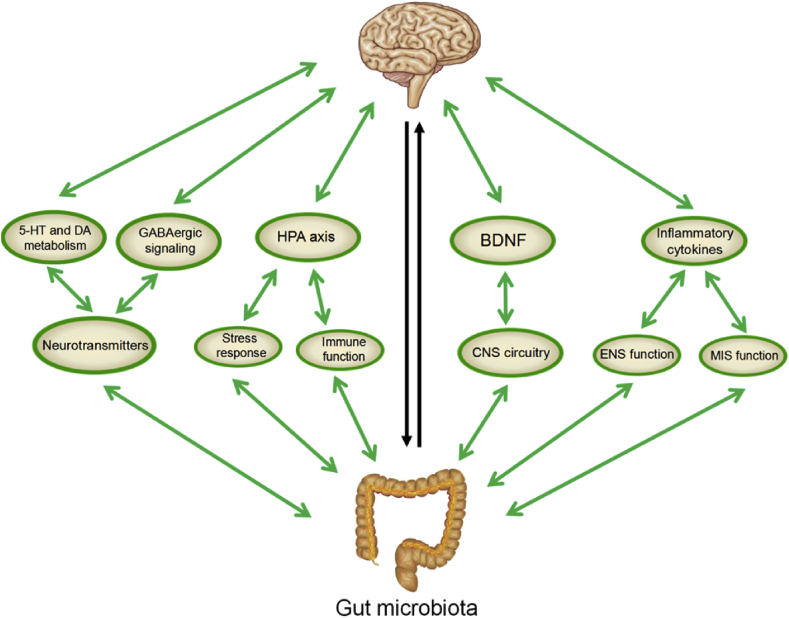
Verification
Claims the paper makes
The claims and statistics of this paper haven’t been checked yet.
Run the check — free, no account needed. It reads the open-access text and checks the sources it cites.
Claims other papers make about this one
Each is checked against this paper’s own text: does it say what the citing paper says it does?
In the citing paper
“Initial clinical evidence of MGB interactions primarily stems from associations between dysbiosis and CNS disorders, such as autism, anxiety-depressive behaviors, and functional gastrointestinal disorders (63, 65–72).”
From Signalling cognition: The gut microbiota and hypothalamic-pituitary-adrenal axis (2023) · cites this paper as [69]
Self-check
Percentages, sums and reported differences re-computed from the paper’s own numbers.
The self-check needs the paper’s full text.
Citations
Cites
Molecular Mechanisms of Depression: Perspectives on New Treatment Strategies
Lang, U. E., & Borgwardt, S. (2013) · Cellular Physiology and Biochemistry · doi:10.1159/000350094 · Cited by 8,526
Diversity of the Human Intestinal Microbial Flora
Eckburg, P. B., Bik, E. M., Bernstein, C. N., Purdom, E., Dethlefsen, L., Sargent, M., Gill, S. R., Nelson, K. E., & Relman, D. A. (2005) · Science · doi:10.1126/science.1110591 · Cited by 7,913
Human gut microbiome viewed across age and geography
Yatsunenko, T., Rey, F. E., Manary, M. J., Trehan, I., Dominguez-Bello, M. G., Contreras, M., Magris, M., Hidalgo, G., Baldassano, R. N., Anokhin, A. P., et al. (2012) · Nature · doi:10.1038/nature11053 · Cited by 7,815
Changes of Intestinal Functions in Liver Cirrhosis
Fukui, H., & Wiest, R. (2016) · Inflammatory Intestinal Diseases · doi:10.1159/000444436 · Cited by 6,820
Metabolic Endotoxemia Initiates Obesity and Insulin Resistance
Cani, P. D., Amar, J., Iglesias, M. A., Poggi, M., Knauf, C., Bastelica, D., Neyrinck, A. M., Fava, F., Tuohy, K. M., Chabo, C., et al. (2007) · Diabetes · doi:10.2337/db06-1491 · Cited by 6,638
Gibson, G. R., Hutkins, R., Sanders, M. E., Prescott, S. L., Reimer, R. A., Salminen, S. J., Scott, K., Stanton, C., Swanson, K. S., Cani, P. D., et al. (2017) · Nature Reviews Gastroenterology & Hepatology · doi:10.1038/nrgastro.2017.75 · Cited by 5,634
Cani, P. D., Bibiloni, R., Knauf, C., Waget, A., Neyrinck, A. M., Delzenne, N. M., & Burcelin, R. (2008) · Diabetes · doi:10.2337/db07-1403 · Cited by 4,819
Dominguez-Bello, M. G., Costello, E. K., Contreras, M., Magris, M., Hidalgo, G., Fierer, N., & Knight, R. (2010) · Proceedings of the National Academy of Sciences · doi:10.1073/pnas.1002601107 · Cited by 4,774
A Meta-Analysis of Cytokines in Major Depression
Dowlati, Y., Herrmann, N., Swardfager, W., Liu, H., Sham, L., Reim, E. K., & Lanctôt, K. L. (2010) · Biological Psychiatry · doi:10.1016/j.biopsych.2009.09.033 · Cited by 4,729
Mind-altering microorganisms: the impact of the gut microbiota on brain and behaviour
Cryan, J. F., & Dinan, T. G. (2012) · Nature Reviews Neuroscience · doi:10.1038/nrn3346 · Cited by 4,572
Gut microbiota in health and disease
Sekirov, I., Russell, S. L., Antunes, L. C. M., & Finlay, B. B. (2010) · Physiological Reviews · doi:10.1152/physrev.00045.2009 · Cited by 4,182
Bravo, J. A., Forsythe, P., Chew, M. V., Escaravage, E., Savignac, H. M., Dinan, T. G., Bienenstock, J., & Cryan, J. F. (2011) · Proceedings of the National Academy of Sciences · doi:10.1073/pnas.1102999108 · Cited by 3,888
Indigenous bacteria from the gut microbiota regulate host serotonin biosynthesis
Yano, J. M., Yu, K., Donaldson, G. P., Shastri, G. G., Ann, P., Ma, L., Nagler, C. R., Ismagilov, R. F., Mazmanian, S. K., & Hsiao, E. Y. (2015) · Cell · doi:10.1016/j.cell.2015.02.047 · Cited by 3,614
Ecological and Evolutionary Forces Shaping Microbial Diversity in the Human Intestine
Ley, R. E., Peterson, D. A., & Gordon, J. I. (2006) · Cell · doi:10.1016/j.cell.2006.02.017 · Cited by 3,358
Gut microbiota composition correlates with diet and health in the elderly
Claesson, M. J., Jeffery, I. B., Conde, S., Power, S. E., O’Connor, E. M., Cusack, S., Harris, H. M. B., Coakley, M., Lakshminarayanan, B., O’Sullivan, O., et al. (2012) · Nature · doi:10.1038/nature11319 · Cited by 3,314
Sudo, N., Chida, Y., Aiba, Y., Sonoda, J., Oyama, N., Yu, X., Kubo, C., & Koga, Y. (2004) · The Journal of Physiology · doi:10.1113/jphysiol.2004.063388 · Cited by 2,735
Cani, P. D., Possemiers, S., Van de Wiele, T., Guiot, Y., Everard, A., Rottier, O., Geurts, L., Naslain, D., Neyrinck, A., Lambert, D. M., et al. (2009) · Gut · doi:10.1136/gut.2008.165886 · Cited by 2,518
Gut–brain axis: How the microbiome influences anxiety and depression
Foster, J. A., & McVey Neufeld, K.-A. (2013) · Trends in Neurosciences · doi:10.1016/j.tins.2013.01.005 · Cited by 2,460 · cited 2×
“Similarly, probiotic treatment has shown promise as a preventative or therapeutic approach for counteracting behavioral deficits by inducing changes in the gut microbiota and BDNF expression [14, 129].”
BackgroundAltered fecal microbiota composition in patients with major depressive disorder
Jiang, H., Ling, Z., Zhang, Y., Mao, H., Ma, Z., Yin, Y., Wang, W., Tang, W., Tan, Z., Shi, J., et al. (2015) · Brain, Behavior, and Immunity · doi:10.1016/j.bbi.2015.03.016 · Cited by 2,275
Local and systemic insulin resistance resulting from hepatic activation of IKK-β and NF-κB
Cai, D., Yuan, M., Frantz, D. F., Melendez, P. A., Hansen, L., Lee, J., & Shoelson, S. E. (2005) · Nature Medicine · doi:10.1038/nm1166 · Cited by 2,245
Zheng, P., Zeng, B., Zhou, C., Liu, M., Fang, Z., Xu, X., Zeng, L., Chen, J., Fan, S., Du, X., et al. (2016) · Molecular Psychiatry · doi:10.1038/mp.2016.44 · Cited by 2,023
Interactions between the microbiota, immune and nervous systems in health and disease
Fung, T. C., Olson, C. A., & Hsiao, E. Y. (2017) · Nature Neuroscience · doi:10.1038/nn.4476 · Cited by 1,900
Clarke, G., Grenham, S., Scully, P., Fitzgerald, P., Moloney, R. D., Shanahan, F., Dinan, T. G., & Cryan, J. F. (2013) · Molecular Psychiatry · doi:10.1038/mp.2012.77 · Cited by 1,893
Cani, P. D., Neyrinck, A. M., Fava, F., Knauf, C., Burcelin, R., Tuohy, K. M., Gibson, G. R., & Delzenne, N. M. (2007) · Diabetologia · doi:10.1007/s00125-007-0791-0 · Cited by 1,770
Bercik, P., Denou, E., Collins, J., Jackson, W., Lu, J., Jury, J., Deng, Y., Blennerhassett, P., Macri, J., McCoy, K. D., et al. (2011) · Gastroenterology · doi:10.1053/j.gastro.2011.04.052 · Cited by 1,748
Kelly, J. R., Borre, Y., O' Brien, C., Patterson, E., El Aidy, S., Deane, J., Kennedy, P. J., Beers, S., Scott, K., Moloney, G., et al. (2016) · Journal of Psychiatric Research · doi:10.1016/j.jpsychires.2016.07.019 · Cited by 1,683
Gershon, M. D., & Tack, J. (2007) · Gastroenterology · doi:10.1053/j.gastro.2006.11.002 · Cited by 1,563
Nemeroff, C. B., Widerlöv, E., Bissette, G., Walléus, H., Karlsson, I., Eklund, K., Kilts, C. D., Loosen, P. T., & Vale, W. (1984) · Science · doi:10.1126/science.6334362 · Cited by 1,485
Depression Is the Leading Cause of Disability Around the World
Friedrich, M. J. (2017) · JAMA · doi:10.1001/jama.2017.3826 · Cited by 1,459
Kynurenines: Tryptophan’s metabolites in exercise, inflammation, and mental health
Cervenka, I., Agudelo, L. Z., & Ruas, J. L. (2017) · Science · doi:10.1126/science.aaf9794 · Cited by 1,382
Cytokine-Associated Emotional and Cognitive Disturbances in Humans
Reichenberg, A., Yirmiya, R., Schuld, A., Kraus, T., Haack, M., Morag, A., & Pollmächer, T. (2001) · Archives of General Psychiatry · doi:10.1001/archpsyc.58.5.445 · Cited by 1,365
Messaoudi, M., Lalonde, R., Violle, N., Javelot, H., Desor, D., Nejdi, A., Bisson, J.-F., Rougeot, C., Pichelin, M., Cazaubiel, M., et al. (2011) · British Journal of Nutrition · doi:10.1017/s0007114510004319 · Cited by 1,324
Decreased serum brain-derived neurotrophic factor levels in major depressed patients
Karege, F., Perret, G., Bondolfi, G., Schwald, M., Bertschy, G., & Aubry, J.-M. (2002) · Psychiatry Research · doi:10.1016/s0165-1781(02)00005-7 · Cited by 1,232
The spectrum of behaviors influenced by serotonin
Lucki, I. (1998) · Biological Psychiatry · doi:10.1016/s0006-3223(98)00139-5 · Cited by 1,179
γ-Aminobutyric acid production by culturable bacteria from the human intestine
Barrett, E., Ross, R. P., O'Toole, P. W., Fitzgerald, G. F., & Stanton, C. (2012) · Journal of Applied Microbiology · doi:10.1111/j.1365-2672.2012.05344.x · Cited by 1,156
Diet dominates host genotype in shaping the murine gut microbiota
Carmody, R. N., Gerber, G. K., Luevano, J. M., Gatti, D. M., Somes, L., Svenson, K. L., & Turnbaugh, P. J. (2015) · Cell Host & Microbe · doi:10.1016/j.chom.2014.11.010 · Cited by 1,103
Adams, J. B., Johansen, L. J., Powell, L. D., Quig, D., & Rubin, R. A. (2011) · BMC Gastroenterology · doi:10.1186/1471-230x-11-22 · Cited by 1,076
O'Mahony, S. M., Marchesi, J. R., Scully, P., Codling, C., Ceolho, A.-M., Quigley, E. M. M., Cryan, J. F., & Dinan, T. G. (2009) · Biological Psychiatry · doi:10.1016/j.biopsych.2008.06.026 · Cited by 1,069
Correlation between the human fecal microbiota and depression
Naseribafrouei, A., Hestad, K., Avershina, E., Sekelja, M., Linløkken, A., Wilson, R., & Rudi, K. (2014) · Neurogastroenterology & Motility · doi:10.1111/nmo.12378 · Cited by 1,044
Evidence for an immune response in major depression: A review and hypothesis
Maes, M. (1995) · Progress in Neuro-Psychopharmacology and Biological Psychiatry · doi:10.1016/0278-5846(94)00101-m · Cited by 1,003
Effects of the probiotic Bifidobacterium infantis in the maternal separation model of depression
Desbonnet, L., Garrett, L., Clarke, G., Kiely, B., Cryan, J. F., & Dinan, T. G. (2010) · Neuroscience · doi:10.1016/j.neuroscience.2010.08.005 · Cited by 999
The stress system in the human brain in depression and neurodegeneration
Swaab, D. F., Bao, A.-M., & Lucassen, P. J. (2005) · Ageing Research Reviews · doi:10.1016/j.arr.2005.03.003 · Cited by 984
Brain-gut-microbe communication in health and disease
Grenham, S., Clarke, G., Cryan, J. F., & Dinan, T. G. (2011) · Frontiers in Physiology · doi:10.3389/fphys.2011.00094 · Cited by 952
Desbonnet, L., Garrett, L., Clarke, G., Bienenstock, J., & Dinan, T. G. (2008) · Journal of Psychiatric Research · doi:10.1016/j.jpsychires.2008.03.009 · Cited by 952
Cytokine, Sickness Behavior, and Depression
Dantzer, R. (2009) · Immunology and Allergy Clinics of North America · doi:10.1016/j.iac.2009.02.002 · Cited by 789
Theoharides, T. C., Alysandratos, K., Angelidou, A., Delivanis, D.-A., Sismanopoulos, N., Zhang, B., Asadi, S., Vasiadi, M., Weng, Z., Miniati, A., et al. (2010) · Biochimica et Biophysica Acta (BBA) - Molecular Basis of Disease · doi:10.1016/j.bbadis.2010.12.014 · Cited by 772
Inter-kingdom signalling: Communication between bacteria and their hosts
Hughes, D. T., & Sperandio, V. (2008) · Nature Reviews Microbiology · doi:10.1038/nrmicro1836 · Cited by 761
Gut microbiota depletion from early adolescence in mice: implications for brain and behaviour
Desbonnet, L., Clarke, G., Traplin, A., O’Sullivan, O., Crispie, F., Moloney, R. D., Cotter, P. D., Dinan, T. G., & Cryan, J. F. (2015) · Brain Behavior and Immunity · doi:10.1016/j.bbi.2015.04.004 · Cited by 760
Dopamine system dysregulation in major depressive disorders
Belujon, P., & Grace, A. A. (2017) · International Journal of Neuropsychopharmacology · doi:10.1093/ijnp/pyx056 · Cited by 754
Williams, B. B., Van Benschoten, A. H., Cimermancic, P., Donia, M. S., Zimmermann, M., Taketani, M., Ishihara, A., Kashyap, P. C., Fraser, J. S., & Fischbach, M. A. (2014) · Cell Host & Microbe · doi:10.1016/j.chom.2014.09.001 · Cited by 732
Kynurenine pathway metabolism and the microbiota-gut-brain axis
Kennedy, P. J., Cryan, J. F., Dinan, T. G., & Clarke, G. (2017) · Neuropharmacology · doi:10.1016/j.neuropharm.2016.07.002 · Cited by 724
Pruessner, J. C., Champagne, F., Meaney, M. J., & Dagher, A. (2004) · The Journal of Neuroscience · doi:10.1523/jneurosci.3422-03.2004 · Cited by 709
Bacterial translocation (BT) in cirrhosis†
Wiest, R., & Garcia‐Tsao, G. (2005) · Hepatology · doi:10.1002/hep.20632 · Cited by 677
Neurotransmitters: The Critical Modulators Regulating Gut–Brain Axis
Mittal, R., Debs, L. H., Patel, A. P., Nguyen, D., Patel, K. V., O’Connor, G., Grati, M., Mittal, J., Yan, D. L. S., Eshraghi, A. A., et al. (2016) · Journal of Cellular Physiology · doi:10.1002/jcp.25518 · Cited by 661
Liang, S., Wang, T., Hu, X., Luo, J., Li, W., Wu, X., Duan, Y., & Jin, F. (2015) · Neuroscience · doi:10.1016/j.neuroscience.2015.09.033 · Cited by 651
Bajaj, J. S., Kassam, Z., Fagan, A., Gavis, E. A., Liu, E., Cox, I. J., Kheradman, R., Heuman, D. M., Wang, J., Gurry, T., et al. (2017) · Hepatology · doi:10.1002/hep.29306 · Cited by 647
Our gut microbiome: The evolving inner self
Kundu, P., Blacher, E., Elinav, E., & Pettersson, S. (2017) · Cell · doi:10.1016/j.cell.2017.11.024 · Cited by 633
Ait-Belgnaoui, A., Durand, H., Cartier, C., Chaumaz, G., Eutamene, H., Ferrier, L., Houdeau, E., Fioramonti, J., Bueno, L., & Theodorou, V. (2012) · Psychoneuroendocrinology · doi:10.1016/j.psyneuen.2012.03.024 · Cited by 612
New Insights in the Biology of BDNF Synthesis and Release: Implications in CNS Function
Greenberg, M. E., Xu, B., Lu, B., & Hempstead, B. L. (2009) · The Journal of Neuroscience · doi:10.1523/jneurosci.3566-09.2009 · Cited by 597
Petra, A. I., Panagiotidou, S., Hatziagelaki, E., Stewart, J. M., Conti, P., & Theoharides, T. C. (2015) · Clinical Therapeutics · doi:10.1016/j.clinthera.2015.04.002 · Cited by 592
Assessing anhedonia in depression: potentials and pitfalls
Rizvi, S. J., Pizzagalli, D. A., Sproule, B. A., & Kennedy, S. H. (2016) · Neuroscience & Biobehavioral Reviews · doi:10.1016/j.neubiorev.2016.03.004 · Cited by 571
Inflammasome signaling affects anxiety- and depressive-like behavior and gut microbiome composition
Wong, M.-L., Inserra, A., Lewis, M. D., Mastronardi, C. A., Leong, L., Choo, J., Kentish, S., Xie, P., Morrison, M., Wesselingh, S. L., et al. (2016) · Molecular Psychiatry · doi:10.1038/mp.2016.46 · Cited by 568
Fallani, M., Young, D., Scott, J. A., Norin, E. L., Amarri, S., Adam, R., Aguilera, J., Khanna, S., Gil, Á., Edwards, C. A., et al. (2010) · Journal of Pediatric Gastroenterology and Nutrition · doi:10.1097/mpg.0b013e3181d1b11e · Cited by 559
Linkage of gut microbiome with cognition in hepatic encephalopathy
Bajaj, J. S., Ridlon, J. M., Hylemon, P. B., Thacker, L. R., Heuman, D. M., Smith, S., Sikaroodi, M., & Gillevet, P. M. (2012) · American Journal of Physiology-Gastrointestinal and Liver Physiology · doi:10.1152/ajpgi.00190.2011 · Cited by 547
Signaling pathways underlying the rapid antidepressant actions of ketamine
Duman, R. S., Li, N., Liu, R.-J., Duric, V., & Aghajanian, G. (2012) · Neuropharmacology · doi:10.1016/j.neuropharm.2011.08.044 · Cited by 537
The microbiome: a key regulator of stress and neuroinflammation
Rea, K., Dinan, T. G., & Cryan, J. F. (2016) · Neurobiology of Stress · doi:10.1016/j.ynstr.2016.03.001 · Cited by 508
Feeding the microbiota–gut–brain axis: Diet, microbiome, and neuropsychiatry
Sandhu, K. V., Sherwin, E., Schellekens, H., Stanton, C., Dinan, T. G., & Cryan, J. F. (2017) · Translational Research · doi:10.1016/j.trsl.2016.10.002 · Cited by 491
Depression, stress and immunological activation: The role of cytokines in depressive disorders
Connor, T. J., & Leonard, B. E. (1998) · Life Sciences · doi:10.1016/s0024-3205(97)00990-9 · Cited by 480
Gareau, M. G., Jury, J., MacQueen, G., Sherman, P. M., & Perdue, M. H. (2007) · Gut · doi:10.1136/gut.2006.117176 · Cited by 472
Ait‐Belgnaoui, A., Colom, A., Braniste, V., Ramalho, L., Marrot, A., Cartier, C., Houdeau, E., Theodorou, V., & Tompkins, T. (2014) · Neurogastroenterology & Motility · doi:10.1111/nmo.12295 · Cited by 434
Don't worry ‘B’ happy!: a role for GABAB receptors in anxiety and depression
Cryan, J. F., & Kaupmann, K. (2004) · Trends in Pharmacological Sciences · doi:10.1016/j.tips.2004.11.004 · Cited by 429
Sharma, S., & Fulton, S. (2013) · International Journal of Obesity · doi:10.1038/ijo.2012.48 · Cited by 424
Melancholic microbes: a link between gut microbiota and depression
Dinan, T. G., & Cryan, J. F. (2013) · Neurogastroenterology & Motility · doi:10.1111/nmo.12198 · Cited by 424
Implication of the hypothalamic-pituitary-adrenal axis in the physiopathology of depression
Barden, N. (2004) · Journal of Psychiatry and Neuroscience · doi:10.1139/jpn.0421 · Cited by 416
The gut microbiome and diet in psychiatry: focus on depression
Dash, S., Clarke, G., Berk, M., & Jacka, F. N. (2015) · Current Opinion in Psychiatry · doi:10.1097/yco.0000000000000117 · Cited by 369
Yu, M., Jia, H., Zhou, C., Yang, Y., Zhao, Y., Yang, M., & Zou, Z. (2017) · Journal of Pharmaceutical and Biomedical Analysis · doi:10.1016/j.jpba.2017.02.008 · Cited by 369
Kelly, J. R., Allen, A. P., Temko, A., Hutch, W., Kennedy, P. J., Farid, N., Murphy, E., Boylan, G., Bienenstock, J., Cryan, J. F., et al. (2017) · Brain, Behavior, and Immunity · doi:10.1016/j.bbi.2016.11.018 · Cited by 355
The gut-brain axis: the missing link in depression
Evrensel, A., & Ceylan, M. E. (2015) · Clinical Psychopharmacology and Neuroscience · doi:10.9758/cpn.2015.13.3.239 · Cited by 338
Luna, R. A., & Foster, J. A. (2015) · Current Opinion in Biotechnology · doi:10.1016/j.copbio.2014.10.007 · Cited by 325
Association of high-sensitivity C-reactive protein with de novo major depression
Pasco, J. A., Nicholson, G. C., Williams, L. J., Jacka, F. N., Henry, M. J., Kotowicz, M. A., Schneider, H. G., Leonard, B. E., & Berk, M. (2010) · British Journal of Psychiatry · doi:10.1192/bjp.bp.109.076430 · Cited by 321
Role of mast cells in chronic stress induced colonic epithelial barrier dysfunction in the rat
Santos, J., Yang, P.-C., Söderholm, J. D., Benjamin, M., & Perdue, M. H. (2001) · Gut · doi:10.1136/gut.48.5.630 · Cited by 313
Altered colonic function and microbiota profile in a mouse model of chronic depression
Park, A. J., Collins, J., Blennerhassett, P. A., Ghia, J., Verdu, E. F., Berčík, P., & Collins, S. M. (2013) · Neurogastroenterology & Motility · doi:10.1111/nmo.12153 · Cited by 306
Modulation of Gut Microbiota–Brain Axis by Probiotics, Prebiotics, and Diet
Liu, X., Cao, S., & Zhang, X. (2015) · Journal of Agricultural and Food Chemistry · doi:10.1021/acs.jafc.5b02404 · Cited by 304
Bangsgaard Bendtsen, K. M., Krych, L., Sørensen, D. B., Pang, W., Nielsen, D. S., Josefsen, K., Hansen, L. H., Sørensen, S. J., & Hansen, A. K. (2012) · PLoS ONE · doi:10.1371/journal.pone.0046231 · Cited by 299
Janik, R., Thomason, L. A. M., Stanisz, A. M., Forsythe, P., Bienenstock, J., & Stanisz, G. J. (2016) · NeuroImage · doi:10.1016/j.neuroimage.2015.11.018 · Cited by 283
Lower dopamine transporter binding potential in striatum during depression
Meyer, J. H., Krüger, S., Wilson, A. A., Christensen, B. K., Goulding, V. S., Schaffer, A., Minifie, C., Houle, S., Hussey, D., & Kennedy, S. H. (2001) · Neuroreport · doi:10.1097/00001756-200112210-00052 · Cited by 269
Robertson, R. C., Seira Oriach, C., Murphy, K., Moloney, G. M., Cryan, J. F., Dinan, T. G., Paul Ross, R., & Stanton, C. (2017) · Brain Behavior and Immunity · doi:10.1016/j.bbi.2016.07.145 · Cited by 268
Effects of obesity on depression: A role for inflammation and the gut microbiota
Schachter, J., Martel, J., Lin, C.-S., Chang, C., Wu, T.-R., Lu, C., Ko, Y., Lai, H., Ojcius, D. M., & Young, J. D. (2017) · Brain Behavior and Immunity · doi:10.1016/j.bbi.2017.08.026 · Cited by 263
Emerging treatment mechanisms for depression: focus on glutamate and synaptic plasticity
Gerhard, D. M., Wohleb, E. S., & Duman, R. S. (2016) · Drug Discovery Today · doi:10.1016/j.drudis.2016.01.016 · Cited by 261
Tian, P., Wang, G., Zhao, J., Zhang, H., & Chen, W. (2019) · The Journal of Nutritional Biochemistry · doi:10.1016/j.jnutbio.2019.01.007 · Cited by 257
Wang, S.-S., Kamphuis, W., Huitinga, I., Zhou, J.-N., & Swaab, D. F. (2008) · Molecular Psychiatry · doi:10.1038/mp.2008.38 · Cited by 254
Davey, K. J., Cotter, P. D., O'Sullivan, O., Crispie, F., Dinan, T. G., Cryan, J. F., & O'Mahony, S. M. (2013) · Translational Psychiatry · doi:10.1038/tp.2013.83 · Cited by 236
Bharwani, A., Mian, M. F., Surette, M. G., Bienenstock, J., & Forsythe, P. (2017) · BMC Medicine · doi:10.1186/s12916-016-0771-7 · Cited by 236
NLRP3 gene knockout blocks NF-κB and MAPK signaling pathway in CUMS-induced depression mouse model
Su, W., Zhang, Y., Chen, Y., Gong, H., Lian, Y., Wei, P., Liu, Y., Wang, Y., You, Z., Feng, S.-J., et al. (2017) · Behavioural Brain Research · doi:10.1016/j.bbr.2017.01.018 · Cited by 215
Arseneault-Bréard, J., Rondeau, I., Gilbert, K., Girard, S.-A., Tompkins, T. A., Godbout, R., & Rousseau, G. (2012) · British Journal of Nutrition · doi:10.1017/s0007114511005137 · Cited by 205
Griffiths, E. A., Duffy, L. C., Schanbacher, F. L., Qiao, H., Dryja, D., Leavens, A., Rossman, J., Rich, G. A., DiRienzo, D. B., & Ogra, P. L. O. (2004) · Digestive Diseases and Sciences · doi:10.1023/b:ddas.0000026302.92898.ae · Cited by 199
Probiotic treatment reduces depressive-like behaviour in rats independently of diet
Abildgaard, A., Elfving, B., Hokland, M., Wegener, G., & Lund, S. (2017) · Psychoneuroendocrinology · doi:10.1016/j.psyneuen.2017.02.014 · Cited by 196 · cited 1×
“Moreover, probiotics treatment consisting of eight bacterial strains, including Bifidobacterium bifidum, markedly reduces the immobility time in the FST by 34%, and the underlying mechanism may be associated with the HPA axis, the immune system and microbial tryptophan metabolism [56].”
BackgroundShafiee, M., Arekhi, S., Omranzadeh, A., & Sahebkar, A. (2017) · Journal of Affective Disorders · doi:10.1016/j.jad.2017.11.020 · Cited by 185
Karlsson, F. H., Ussery, D. W., Nielsen, J., & Nookaew, I. (2011) · Microbial Ecology · doi:10.1007/s00248-010-9796-1 · Cited by 181
Moya-Pérez, Á., Pérez‐Villalba, A., Benítez‐Páez, A., Campillo, I., & Sanz, Y. (2017) · Brain Behavior and Immunity · doi:10.1016/j.bbi.2017.05.011 · Cited by 181
Key role of gut microbiota in anhedonia-like phenotype in rodents with neuropathic pain
Yang, C., Fang, X., Zhan, G., Huang, N., Li, S., Bi, J., Jiang, R., Yang, L., Miao, L., Zhu, B., et al. (2019) · Translational Psychiatry · doi:10.1038/s41398-019-0379-8 · Cited by 176
Bao, A., Hestiantoro, A., Someren, E. J. W. V., Swaab, D. F., & Zhou, J. (2005) · Brain · doi:10.1093/brain/awh448 · Cited by 175
Waclawiková, B., & El Aidy, S. (2018) · Pharmaceuticals · doi:10.3390/ph11030063 · Cited by 172
Hassan, A. M., Mancano, G., Kashofer, K., Fröhlich, E. E., Matak, A., Mayerhofer, R., Reichmann, F., Olivares, M., Neyrinck, A. M., Delzenne, N. M., et al. (2019) · Nutritional Neuroscience · doi:10.1080/1028415x.2018.1465713 · Cited by 166
Tryptophan depletion decreases the recognition of fear in female volunteers
Harmer, C. J., Rogers, R. D., Tunbridge, E. M., Cowen, P. J., & Goodwin, G. M. (2003) · Psychopharmacology · doi:10.1007/s00213-003-1401-6 · Cited by 165
A Possible Link between Food and Mood: Dietary Impact on Gut Microbiota and Behavior in BALB/c Mice
Jørgensen, B. P., Hansen, J. T., Krych, Ł., Larsen, C. S., Klein, A. B., Nielsen, D. S., Josefsen, K. E., Hansen, A. K., & Sørensen, D. B. (2014) · PLoS ONE · doi:10.1371/journal.pone.0103398 · Cited by 157
Medical research: If depression were cancer
Ledford, H. K. (2014) · Nature · doi:10.1038/515182a · Cited by 118
Teitelbaum, A. A., Gareau, M. G., Jury, J., Yang, P. C., & Perdue, M. H. (2008) · American Journal of Physiology-Gastrointestinal and Liver Physiology · doi:10.1152/ajpgi.90210.2008 · Cited by 116
Dietary magnesium deficiency alters gut microbiota and leads to depressive-like behaviour
Winther, G., Jørgensen, B. M., Elfving, B., Nielsen, D. S., Kihl, P., Lund, S. A., Sørensen, D. B., & Wegener, G. (2015) · Acta Neuropsychiatrica · doi:10.1017/neu.2015.7 · Cited by 105
Mice lacking the dopamine transporter display altered regulation of distal colonic motility
Walker, J. K. L., Gainetdinov, R. R., Mangel, A. W., Caron, M. G., & Shetzline, M. A. (2000) · American Journal of Physiology-Gastrointestinal and Liver Physiology · doi:10.1152/ajpgi.2000.279.2.g311 · Cited by 96
THE ROLE OF MICROBIOTA IN DEPRESSION - A BRIEF REVIEW
Zalar, B., Haslberger, A., & Peterlin, B. (2018) · Psychiatria Danubina · doi:10.24869/psyd.2018.136 · Cited by 95
Mika, A., Day, H. E. W., Martinez, A. S., Rumian, N. L., Greenwood, B. N., Chichlowski, M., Berg, B. M., & Fleshner, M. (2016) · European Journal of Neuroscience · doi:10.1111/ejn.13444 · Cited by 91
Risk factors of development of gut-derived bacterial translocation in thermally injured rats
Zhong-tang, W. (2004) · World Journal of Gastroenterology · doi:10.3748/wjg.v10.i11.1619 · Cited by 90
Villageliú, D. N., & Lyte, M. (2018) · PLoS ONE · doi:10.1371/journal.pone.0207038 · Cited by 89
Diabesity and mood disorders: Multiple links through the microbiota-gut-brain axis
Farzi, A., Hassan, A. M., Zenz, G., & Holzer, P. D. (2018) · Molecular Aspects of Medicine · doi:10.1016/j.mam.2018.11.003 · Cited by 83
van der Kleij, H. P. M., O’Mahony, C., Shanahan, F., O’Mahony, L., & Bienenstock, J. (2008) · American Journal of Physiology-Regulatory, Integrative and Comparative Physiology · doi:10.1152/ajpregu.90434.2008 · Cited by 69
Kim, G., Arseneault-Bréard, J., Monaco, F. F., Beaudoin, A., Bah, T. M., Tompkins, T. A., Godbout, R., & Rousseau, G. (2012) · British Journal Of Nutrition · doi:10.1017/s0007114512003807 · Cited by 68
THE ROLE OF MICROBIOTA IN DEPRESSION - A BRIEF REVIEW
Zalar, B., Haslberger, A. G., & Peterlin, B. (2018) · Psychiatria Danubina · doi:10.24869/spsih.2018.136 · Cited by 62
Bhattarai, Y. (2018) · Neurogastroenterology & Motility · doi:10.1111/nmo.13366 · Cited by 61
Han, Y.-X., Chen, T., Gao, X., Wang, L., Jiang, F.-H., Wang, C., Fang, K., Chen, X.-X., Chen, Z., & Ge, J. (2018) · Frontiers in Neuroscience · doi:10.3389/fnins.2018.00731 · Cited by 58
Self-citationLow-grade chronic inflammation mediated by mast cells in fibromyalgia: role of IL-37.
Mastrangelo, F., Frydas, I., Ronconi, G., Kritas, S. K., Tettamanti, L., Caraffa, A., Ovidio, C. D., Younes, A., Gallenga, C. E., & Conti, P. (2018) · PubMed · Cited by 49
Rosario, A. D., McDermott, M. M., & Panee, J. (2012) · British Journal Of Nutrition · doi:10.1017/s0007114511006738 · Cited by 48
Ruan, X., Shi, H., Xia, G., Xiao, Y., Dong, J., Ming, F.-P., & Wang, S. (2007) · Nutrition · doi:10.1016/j.nut.2007.07.002 · Cited by 42
Federico, A., Dallio, M., Caprio, G. G., Ormando, V. M., & Loguercio, C. (2017) · Minerva Gastroenterology · doi:10.23736/s1121-421x.17.02375-3 · Cited by 37
Anti-inflammatory treatment and risk for depression
Wium‐Andersen, I. K., Wium‐Andersen, M. K., Jørgensen, M. B., & Osler, M. (2017) · Journal of Psychiatry and Neuroscience · doi:10.1503/jpn160244 · Cited by 36
Investigational drugs for treating major depressive disorder
Dhir, A. (2016) · Expert Opinion on Investigational Drugs · doi:10.1080/13543784.2017.1267727 · Cited by 31
Clinical science workshop: targeting the gut-liver-brain axis
Patel, V., White, H., Støy, S. H., Bajaj, J. S., & Shawcross, D. L. (2015) · Metabolic Brain Disease · doi:10.1007/s11011-015-9743-4 · Cited by 28
Koch, M. (2016) · Journal of Clinical Gastroenterology · doi:10.1097/mcg.0000000000000699 · Cited by 23
Lu, J., Guo, P., Liu, X., Zhang, Y., Guo, X., Gao, X. Y., & Chen, Y. (2019) · Evidence-based Complementary and Alternative Medicine · doi:10.1155/2019/8302950 · Cited by 23
Self-citationSu, J., Liu, H. F., Zhang, H. L., He, Y. J., & Nie, Y. (2018) · PubMed · Cited by 14
Franza, L., Carusi, V., Altamura, S., Gasbarrini, A., Caraffa, A., Kritas, S. K., Ronconi, G., Gallenga, C. E., Virgilio, F. D., & Pandolfi, F. (2019) · PubMed · Cited by 7
[Current progress in neuroimaging research on treatment resistant depression].
Peng, W. J., Jia, Z., & Gong, Q. (2018) · PubMed Central · doi:10.7507/1001-5515.201705086 · Cited by 4
Bailey (1999) · doi:10.1002/(sici)1098-2302(199909)35:2
Cited by
Sorted by citations
Signalling cognition: The gut microbiota and hypothalamic-pituitary-adrenal axis
Rusch, J. A., Layden, B. T., & Dugas, L. R. (2023) · Frontiers in Endocrinology · doi:10.3389/fendo.2023.1130689 · Cited by 415
Kouba, B. R., Borba, L. A., de Souza, P. B., Gil‐Mohapel, J., & Rodrigues, A. L. S. (2024) · Cells · doi:10.3390/cells13050423 · Cited by 248
Alli, S. R., Gorbovskaya, I., Liu, J. C. W., Kolla, N. J., Brown, L., & Müller, D. J. (2022) · International Journal of Molecular Sciences · doi:10.3390/ijms23094494 · Cited by 202
Toro-Barbosa, M. D., Hurtado‐Romero, A., García-Amezquita, L. E., & García‐Cayuela, T. (2020) · Nutrients · doi:10.3390/nu12123896 · Cited by 204
Gut Microbiota in Anxiety and Depression: Unveiling the Relationships and Management Options
Kumar, A., Pramanik, J., Goyal, N., Chauhan, D., Sivamaruthi, B. S., Prajapati, B. G., & Chaiyasut, C. (2023) · Pharmaceuticals · doi:10.3390/ph16040565 · Cited by 174
Metadata
- Authors
- Du, Y., Gao, X.-R., Peng, L., & Ge, J.-F.
- Affiliations
- Anhui Medical University (CN)
- Corresponding author
- Ge, Jin-Fang
- Venue
- Heliyon
- Publisher
- Elsevier BV
- Published
- 2020-06
- Volume
- 6
- Issue
- 6
- Pages
- e04097
- ISSN
- 2405-8440 (ISSN-L)
- PMC
- PMC7276434
- OpenAlex
- W3033040644
- Cited by
- 191
- References
- 133
- Citations by year
- 2026: 21 · 2025: 28 · 2024: 38 · 2023: 56 · 2022: 28 · 2021: 17 · 2020: 3
- FWCI
- 2.49
- Type
- journal article
- Language
- en
- Open access
- gold
- doi.org
- Licence
- Locations
- Heliyon (publishedVersion, cc-by-nc-nd)
- PubMed Central (publishedVersion, cc-by-nc-nd)
- PubMed (publishedVersion)
- DOAJ (DOAJ: Directory of Open Access Journals) (submittedVersion, cc-by-sa)
- Funders
- National Natural Science Foundation of China (81870403, 81401122)
- Topics
- Life Sciences › Biochemistry, Genetics and Molecular Biology › Molecular Biology › Gut microbiota and health
- Life Sciences › Neuroscience › Biological Psychiatry › Tryptophan and brain disorders
- Health Sciences › Medicine › Gastroenterology › Gastrointestinal motility and disorders
- Keywords
- microbiota-gut-brain axis, depression, gut microbiota, intestinal permeability, systemic inflammation, monoamines, hypothalamic-pituitary-adrenal axis, brain-derived neurotrophic factor, depression-like behavior, nutritional psychiatry
About these checks
Registry, retraction, Cites and statistics results are computed, not judged, with one exception: a printed reference that no index lists is read once by a model before it counts as a citation error. Claims are extracted by a model and kept only when their quote appears verbatim in the text; each cited source is then checked, with a model’s help, for whether it says what the claim relies on. Those verdicts can be wrong — read the claim’s quote and the cited source before relying on one.
Statistics and arithmetic are recomputed, not judged.
Confidence bands are shown only for fields calibrated on our annotated test set. None is calibrated yet, so no band is shown.
What counts as a claim ›How we measure confidence ›How we check this ›
Are you an author, or do you see a problem with this page? Request a review
