

Senolytics improve physical function and increase lifespan in old age
Open accessThe DOI matches its Crossref record; 66 of the 66 references it cites were found in a registry or an index; 7 of the 9 sources its claims cite were checked for support.
Abstract
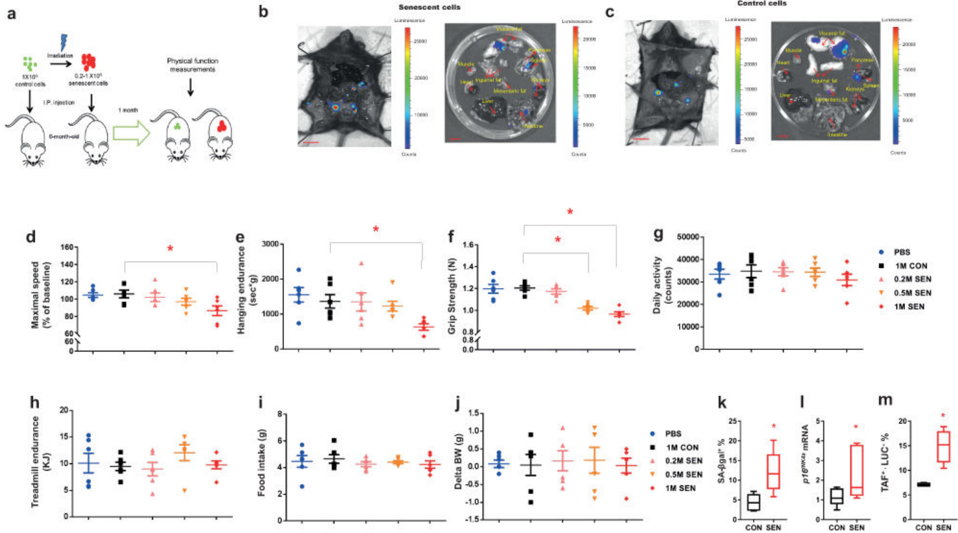
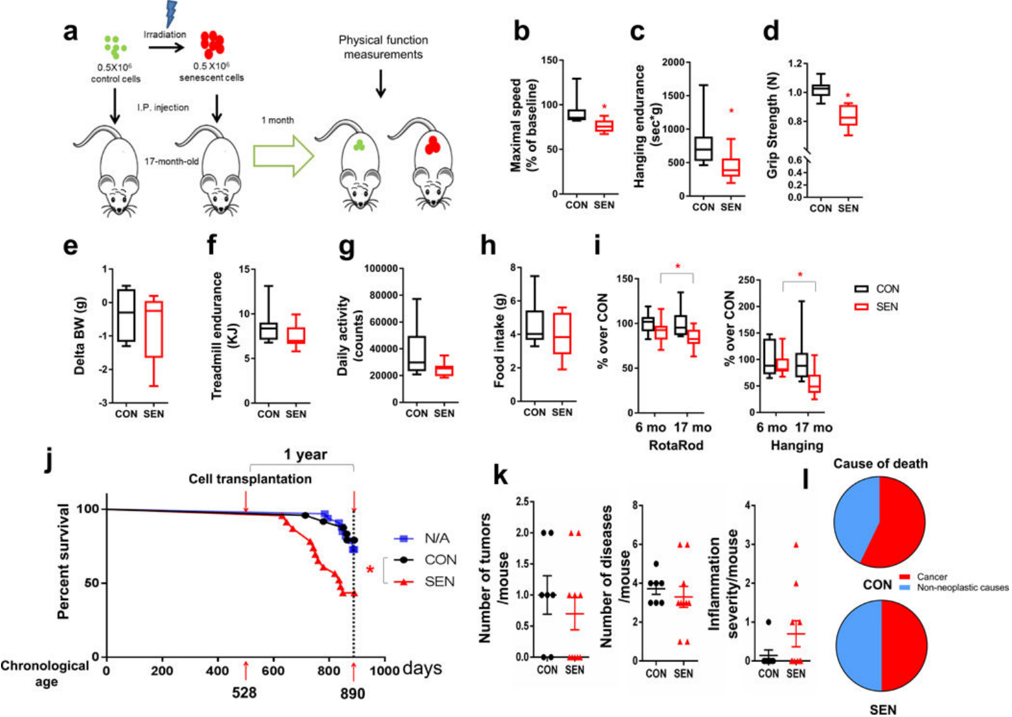
Physical function declines in old age, portending disability, increased health expenditures, and mortality. Cellular senescence, leading to tissue dysfunction, may contribute to these consequences of aging, but whether senescence can directly drive age-related pathology and be therapeutically targeted is still unclear. Here we demonstrate that transplanting relatively small numbers of senescent cells into young mice is sufficient to cause persistent physical dysfunction, as well as to spread cellular senescence to host tissues. Transplanting even fewer senescent cells had the same effect in older recipients and was accompanied by reduced survival, indicating the potency of senescent cells in shortening health- and lifespan. The senolytic cocktail, dasatinib plus quercetin, which causes selective elimination of senescent cells, decreased the number of naturally occurring senescent cells and their secretion of frailty-related proinflammatory cytokines in explants of human adipose tissue. Moreover, intermittent oral administration of senolytics to both senescent cell-transplanted young mice and naturally aged mice alleviated physical dysfunction and increased post-treatment survival by 36% while reducing mortality hazard to 65%. Our study provides proof-of-concept evidence that senescent cells can cause physical dysfunction and decreased survival even in young mice, while senolytics can enhance remaining health- and lifespan in old mice.
Overview
CoChat Summary
TL;DR
Transplanting small numbers of senescent cells into mice caused persistent physical dysfunction and, in older recipients, reduced survival; intermittent senolytics (dasatinib plus quercetin, D+Q) alleviated dysfunction and extended remaining lifespan in old mice. D+Q also reduced senescent-cell markers and SASP cytokine secretion in human adipose tissue explants.
Key findings
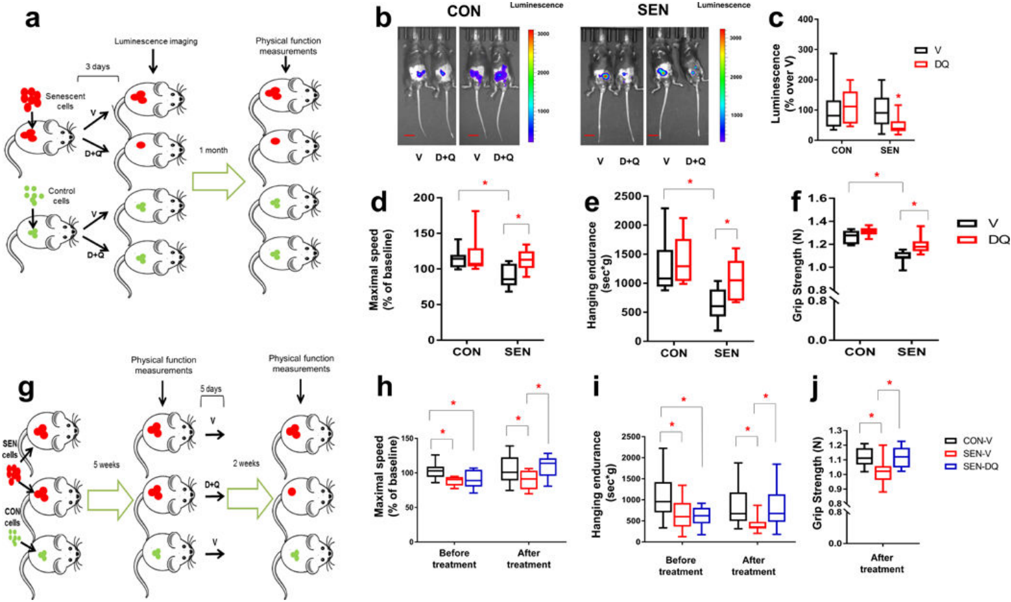
- In young 6-month-old mice, transplanting 10^6 senescent preadipocytes lowered maximal walking speed, hanging endurance, and grip strength by 1 month versus controls; 0.5 × 10^6 senescent cells was sufficient to impair grip strength and walking speed, while 0.2 × 10^6 had no detectable effects. The authors estimate this corresponds to 0.01–0.03% of body cells or 0.28% locally.
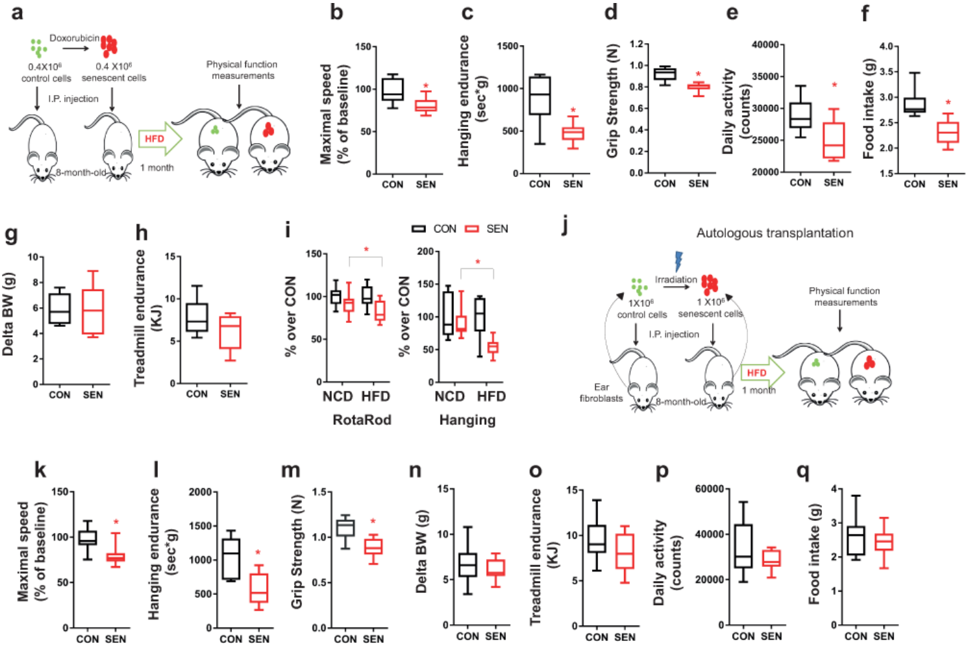
- In 17-month-old mice, 0.5 × 10^6 senescent cells caused lower walking speed, hanging endurance, and grip strength, and was associated with a 5.2-fold higher risk of death over the following year (mortality hazard ratio, P = 0.006). High-fat diet exacerbated senescent-cell-induced dysfunction.
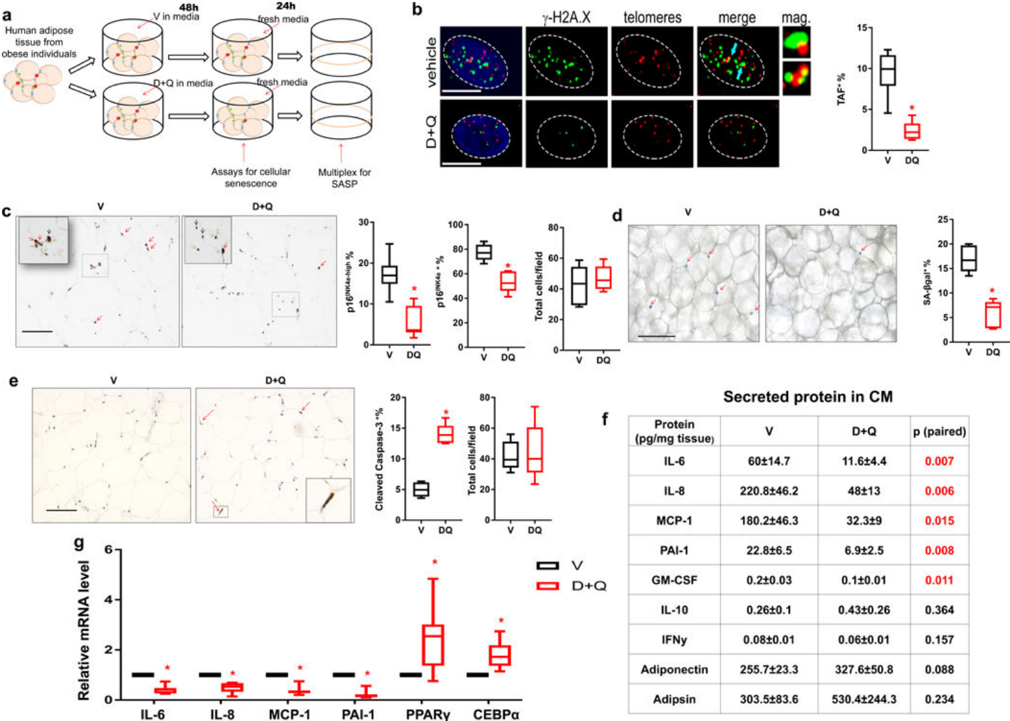
- In human omental adipose tissue explants from 8 obese subjects (BMI 45.5 ± 9.1 kg/m²; age 45.7 ± 8.3 years), D+Q (1 μM dasatinib + 20 μM quercetin) for 48 h reduced TAF+, p16INK4A-high, and SA-βgal+ cells, increased apoptosis, and lowered secretion of IL-6, IL-8, MCP-1, PAI-1, and GM-CSF.
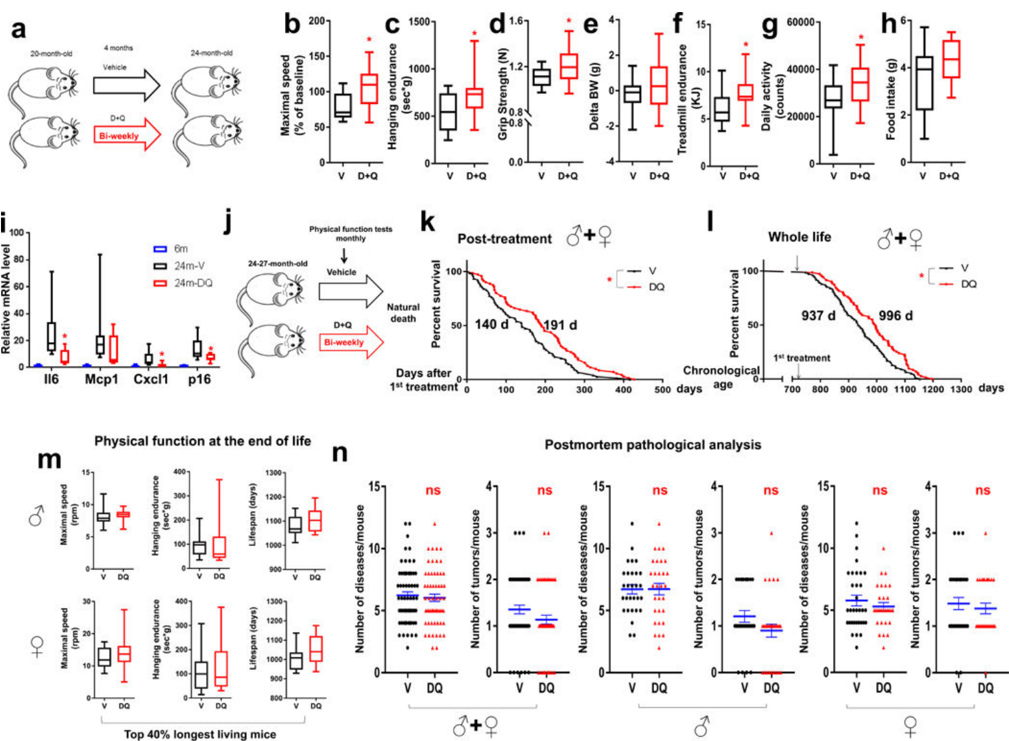
- In aged mice, intermittent D+Q starting at 24–27 months increased median post-treatment lifespan by 36% and reduced mortality hazard to 64.9% (P = 0.01), while physical function in the last 2 months of life was not lower than vehicle-treated mice.
Methods
- Mouse transplantation studies used senescent or control preadipocytes, mainly induced by 10 Gy radiation (>85% senescent), injected intraperitoneally into young (6-month), older (17-month), high-fat-diet, autologous, and SCID-beige models; physical function was assessed by RotaRod, grip strength, hanging test, treadmill, and daily activity/food intake.
- Human omental adipose tissue explants from obese subjects were treated ex vivo with D+Q or vehicle for 48 h, then assessed by SA-βgal, TAF, p16INK4A immunostaining, apoptosis markers, and multiplex cytokine analysis of conditioned medium.
- Aged-mouse studies treated 20-month-old mice with D+Q or vehicle intermittently for 4 months, and 24–27-month-old mice every 2 weeks for 3 consecutive days; survival was analyzed with Cox proportional hazard models, with INK-ATTAC/AP20187 used as a genetic clearance comparison.
Limitations
- The paper states that efficacy of senolytics in tissues from older humans needs to be compared with explants from obese subjects, and that preclinical toxicity studies and optimized regimens are required before trials in relatively healthy humans; it also notes dasatinib can have serious side effects such as pulmonary edema after 8–48 months of daily administration, though mouse side effects may differ from humans.
- The paper states that no statistical power analysis was used; sample sizes were based on previous experiments.
- Evident from the text: the causal transplantation and lifespan evidence is in mice, while the human data are ex vivo adipose explants rather than clinical outcomes; the study also focuses mainly on preadipocytes/adipose tissue and selected senolytic agents.
Model-written summary. Check it against the paper before relying on it.
Integrity signals
Registry
Cites
Statistics
Figures
Verification
Claims the paper makes
3 Valid · 2 Not valid · 1 Not checked · 124 Own results and interpretations
The cited sources support only part of this claim — read each source’s verdict below.
In the paper
“That D+Q can specifically kill senescent cells in human adipose tissue is supported by the following evidence: 1) We previously showed that D+Q induce apoptosis only in senescent human cells, rather than non-senescent control cells in vitro35; 2) D+Q significantly decreased senescent cells by three different assessments, while D+Q did not reduce the overall number of cells in adipose tissue; and 3”
§ Senolytics Improve Physical Function and Increase Lifespan in Old Age > Discussion
What the sources say
- Partly supportedcites [35] 35. Zhu Y The Achilles’ heel of senescent cells: from transcriptome to senolytic drugs Aging Cell 14 644 658 2015 25754370 10.1111/acel.12344 PMC4531078 sourceExperimental — accuracy not yet measured
In Results, 'Candidate senolytic drugs in vitro' (page unavailable), D+Q selectively reduced the viability of senescent human preadipocytes and endothelial cells, while parallel nonsenescent cultures increased in number. The passage supports selective killing, but does not establish that the cell death was specifically apoptosis or that no nonsenescent control cells underwent apoptosis. (LLM, conf=0.86)
plainstates a cause- Asserted: passes — The authors put it forward as true.
- Checkable: passes — It can be checked against evidence.
- Load-bearing: passes — The paper’s conclusions depend on it.
- Based: passes — The paper gives a reason why it holds.
- Partly supported
The cited sources that could be checked couldn’t confirm or dispute this claim.
In the paper
“We used preadipocytes for transplantation since these cells appear to be less susceptible to immune rejection than other cell types26, a reason for their increasing clinical use in cell transplantation studies.”
§ Senolytics Improve Physical Function and Increase Lifespan in Old Age > Discussion
What the sources say
- Could not verifycites [26] 26. Ryan JM Barry FP Murphy JM Mahon BP Mesenchymal stem cells avoid allogeneic rejection J Inflamm (Lond) 2 8 2005 16045800 10.1186/1476-9255-2-8 PMC1215510 sourceExperimental — accuracy not yet measured
The sections “MSC evade allorejection” and “MSC are hypoimmunogenic” discuss reduced immune rejection of mesenchymal stem cells, not preadipocytes. Searches for preadipocytes and adipose-derived cells found no passage in our copy establishing that preadipocytes are less susceptible to rejection than other cell types. (LLM, conf=0.74)
hedgedstates an association- Asserted: passes — The authors put it forward as true.
- Checkable: passes — It can be checked against evidence.
- Load-bearing: passes — The paper’s conclusions depend on it.
- Based: passes — The paper gives a reason why it holds.
- Could not verify
The cited sources support only part of this claim — read each source’s verdict below.
In the paper
“Several studies have shown that the percentage of senescent cells in adipose tissue from aged animals can be up to 2-10%14,15,20, indicating there might be at least 7 million endogenous senescent cells in adipose tissue of aged mice.”
§ Senolytics Improve Physical Function and Increase Lifespan in Old Age > Discussion
What the sources say
- Could not verifycites [14] 14. Xu M JAK inhibition alleviates the cellular senescence-associated secretory phenotype and frailty in old age Proc Natl Acad Sci U S A 112 E6301 6310 2015 26578790 10.1073/pnas.1515386112 PMC4655580 sourceExperimental — accuracy not yet measured
The paper’s Abstract describes a capillary analog of muscle contraction, not senescent cells in adipose tissue. Searches for senescent cells, aged animals, adipose tissue, and the 2–10% figure found no passage addressing the claim. (LLM, conf=0.78)
- Partly supportedcites [15] 15. Xu M Targeting senescent cells enhances adipogenesis and metabolic function in old age Elife 4 e12997 2015 26687007 10.7554/eLife.12997 PMC4758946 sourceExperimental — accuracy not yet measured
The Introduction says senescent cells accumulate in adipose tissue with aging. The Results (Figure 4 caption) say the authors measured the percentage of senescence-marker-positive cells in white adipose tissue from 18-month-old mice, but the available text does not give the claimed 2–10% range. (LLM, conf=0.82)
- Partly supportedcites [20] 20. Baker DJ Naturally occurring p16(Ink4a)-positive cells shorten healthy lifespan Nature 530 184 189 2016 26840489 10.1038/nature16932 PMC4845101 sourceExperimental — accuracy not yet measured
The section “ATTAC clears senescent adipocyte progenitor cells” reports senescence-associated cells in aged mouse adipose tissue, but quantifies X-Gal-positive cells at 1.6% of total inguinal white adipose tissue cells in untreated controls. It does not establish the attributed 2–10% range. (LLM, conf=0.85)
plain- Asserted: passes — The authors put it forward as true.
- Checkable: passes — It can be checked against evidence.
- Load-bearing: unclear — It is unclear whether the paper’s conclusions depend on it.
- Based: passes — The paper gives a reason why it holds.
- Could not verify
The cited sources support only part of this claim — read each source’s verdict below.
In the paper
“D can have side effects, occasionally including serious ones such as pulmonary edema, which can occur after 8-48 months of daily administration55.”
§ Senolytics Improve Physical Function and Increase Lifespan in Old Age > Discussion
What the sources say
- Partly supportedcites [55] 55. Montani D Pulmonary arterial hypertension in patients treated by dasatinib Circulation 125 2128 2137 2012 22451584 10.1161/CIRCULATIONAHA.111.079921 sourceExperimental — accuracy not yet measured
The SCAPs section (page not provided) discusses the risk of side effects from continuous senolytic exposure and identifies dasatinib as a senolytic. It does not identify pulmonary edema as a dasatinib side effect or give an 8–48-month timeframe for daily administration. (LLM, conf=0.84)
plainstates a possible cause- Asserted: passes — The authors put it forward as true.
- Checkable: passes — It can be checked against evidence.
- Load-bearing: passes — The paper’s conclusions depend on it.
- Based: passes — The paper gives a reason why it holds.
- Partly supported
A result the paper reports from its own data — it cites no other source for it, so there is none to check. The quote shows it is in the paper.
In the paper
“D+Q increased expression of PPARγ and CEBPα, two key transcription factors that are required for adipose tissue function through regulating adipogenesis and adipose tissue insulin responsiveness15,37 (Fig. 4g).”
§ Senolytics Improve Physical Function and Increase Lifespan in Old Age > Results > D+Q reduces senescent cell burden and decreases pro-inflammatory cytokine secretion in human adipose tissue
plainstates a cause- Asserted: passes — The authors put it forward as true.
- Checkable: passes — It can be checked against evidence.
- Load-bearing: unclear — It is unclear whether the paper’s conclusions depend on it.
- Based: passes — The paper gives a reason why it holds.
78 more claims
Create a free account to see all 130 claims and every source verdict.
- Probably not a substantial claim. 20
- It may state two separate claims as one. 32
Claims other papers make about this one
Each is checked against this paper’s own text: does it say what the citing paper says it does?
The source backs part of the claim, not all of it — or backs it for a different population, condition or comparison.
In the citing paper
“In preclinical studies, co-administration of Dasatinib and Quercetin (DQ) improved aspects related to physical function (e.g., endurance and speed) and cognition (e.g., reduced neurofibrillary tangle density/neuron loss).7,15,24”
From A pilot study of senolytics to improve cognition and mobility in older adults at risk for Alzheimer's disease (2025) · cites this paper as [7]
Experimental — accuracy not yet measuredThe source backs part of the claim, not all of it — or backs it for a different population, condition or comparison.
In the citing paper
“In 30–70% of senescent cells, this SASP entails pro-inflammatory, proapoptotic and pro-fibrotic factors7,31,40,59–64, some of which can cause previously non-senescent cells to become senescent both locally and at a distance in an endocrine manner24,39,47.”
From Cellular senescence and senolytics: the path to the clinic (2022) · cites this paper as [24]
Experimental — accuracy not yet measuredThe source backs part of the claim, not all of it — or backs it for a different population, condition or comparison.
In the citing paper
“Many such stressors activate DNA damage response signaling and activation of the p53/p21CIP1/WAF1, p16INK4a/retinoblastoma protein or other pathways, resulting in cell cycle arrest and the development of a senescence-associated secretory phenotype (SASP)24,40,48−53”
From Cellular senescence and senolytics: the path to the clinic (2022) · cites this paper as [24]
Experimental — accuracy not yet measuredThe source backs part of the claim, not all of it — or backs it for a different population, condition or comparison.
In the citing paper
“However, if a threshold burden of senescent cells is exceeded, senescent cells can accumulate, perhaps because proapoptotic SASP-expressing senescent cells induce paracrine and endocrine spread of senescence at a rate exceeding immune clearance of preexisting and newly formed senescent cells24,62”
From Cellular senescence and senolytics: the path to the clinic (2022) · cites this paper as [24]
Experimental — accuracy not yet measuredThe source backs part of the claim, not all of it — or backs it for a different population, condition or comparison.
In the citing paper
“This sterile inflammatory state can provoke dysfunction of neighboring and distant non-senescent cells, such as progenitor cells, contributing to impaired tissue function and reduced regenerative capacity18,21,24,26,34.”
From Cellular senescence and senolytics: the path to the clinic (2022) · cites this paper as [24]
Experimental — accuracy not yet measured
55 more claims about this paper
Create a free account to see every claim other papers make about this one.
Self-check
Percentages, sums and reported differences re-computed from the paper’s own numbers.
Each contradiction between two passages listed here was confirmed by an independent check.
Rated minor: it would not touch a result — a value no result rests on, a p-value that stays on the same side of the significance level, or a conflict that is clerical, resolved elsewhere in the paper, or outside its own findings.
In the paper
§ Senolytics Improve Physical Function and Increase Lifespan in Old Age > Results > Clearance of senescent cells alleviates physical dysfunction and increases late-life survival without extending morbidity in aged mice
“concordant with lower secretion of SASP factors by human adipose tissue treated by D+Q (Fig. 4g).”
§ Senolytics Improve Physical Function and Increase Lifespan in Old Age > Results > D+Q reduces senescent cell burden and decreases pro-inflammatory cytokine secretion in human adipose tissue
“D+Q increased expression of PPARγ and CEBPα, two key transcription factors that are required for adipose tissue function through regulating adipogenesis and adipose tissue insulin responsiveness15,37 (Fig. 4g).”
Rated minor: it would not touch a result — a value no result rests on, a p-value that stays on the same side of the significance level, or a conflict that is clerical, resolved elsewhere in the paper, or outside its own findings.
In the paper
§ Senolytics Improve Physical Function and Increase Lifespan in Old Age > Results > D+Q reduces senescent cell burden and decreases pro-inflammatory cytokine secretion in human adipose tissue
“BMI 45.5±9.1 kg/m2; age 45.7±8.3 years”
§ Senolytics Improve Physical Function and Increase Lifespan in Old Age > Online Methods > Human Adipose Tissue Explants
“Ages of subjects were 45.8±8.2 years (means ± SD; range 36–58). Mean body mass index (BMI) was 45.5±9.1 kg/m2”
Citations
Cites
Frailty in Older Adults: Evidence for a Phenotype
Fried, L. P., Tangen, C. M., Walston, J., Newman, A. B., Hirsch, C., Gottdiener, J., Seeman, T., Tracy, R., Kop, W. J., Burke, G., et al. (2001) · The Journals of Gerontology Series A: Biological Sciences and Medical Sciences · doi:10.1093/gerona/56.3.m146 · Cited by 24,907
The metabolic phenotype in obesity: Fat mass, body fat distribution, and adipose tissue function
Goossens, G. H. (2017) · Obesity Facts · doi:10.1159/000471488 · Cited by 8,481
Cellular senescence: when bad things happen to good cells
Campisi, J., & d'Adda di Fagagna, F. (2007) · Nature Reviews Molecular Cell Biology · doi:10.1038/nrm2233 · Cited by 4,441
Clearance of p16Ink4a-positive senescent cells delays ageing-associated disorders
Baker, D. J., Wijshake, T., Tchkonia, T., LeBrasseur, N. K., Childs, B. G., van de Sluis, B., Kirkland, J. L., & van Deursen, J. M. (2011) · Nature · doi:10.1038/nature10600 · Cited by 3,670
Self-citationAging, natural death, and the compression of morbidity
Fries, J. F. (1980) · New England Journal of Medicine · doi:10.1056/nejm198007173030304 · Cited by 3,356
Prevalence of frailty in community-dwelling older persons: a systematic review
Collard, R. M., Boter, H., Schoevers, R. A., & Oude Voshaar, R. C. (2012) · Journal of the American Geriatrics Society · doi:10.1111/j.1532-5415.2012.04054.x · Cited by 3,073
Naturally occurring p16Ink4a-positive cells shorten healthy lifespan
Baker, D. J., Childs, B. G., Durik, M., Wijers, M. E., Sieben, C. J., Zhong, J., A. Saltness, R., Jeganathan, K. B., Verzosa, G. C., Pezeshki, A., et al. (2016) · Nature · doi:10.1038/nature16932 · Cited by 2,876
Self-citationThe Achilles' heel of senescent cells: from transcriptome to senolytic drugs
Zhu, Y., Tchkonia, T., Pirtskhalava, T., Gower, A. C., Ding, H., Giorgadze, N., Palmer, A. K., Ikeno, Y., Hubbard, G. B., Lenburg, M., et al. (2015) · Aging Cell · doi:10.1111/acel.12344 · Cited by 2,584
Self-citationA complex secretory program orchestrated by the inflammasome controls paracrine senescence
Acosta, J. C., Banito, A., Wuestefeld, T., Georgilis, A., Janich, P., Morton, J. P., Athineos, D., Kang, T.-W., Lasitschka, F., Andrulis, M., et al. (2013) · Nature Cell Biology · doi:10.1038/ncb2784 · Cited by 2,278
The Frailty Syndrome: Definition and Natural History
Xue, Q.-L. (2011) · Clinics in Geriatric Medicine · doi:10.1016/j.cger.2010.08.009 · Cited by 2,061
Cited by
Hallmarks of aging: An expanding universe
López-Otín, C., Blasco, M. A., Partridge, L., Serrano, M., & Kroemer, G. (2023) · Cell · doi:10.1016/j.cell.2022.11.001 · Cited by 6,549
Cellular Senescence: Defining a Path Forward
Gorgoulis, V., Adams, P. D., Alimonti, A., Bennett, D. C., Bischof, O., Bishop, C., Campisi, J., Collado, M., Evangelou, K., Ferbeyre, G., et al. (2019) · Cell · doi:10.1016/j.cell.2019.10.005 · Cited by 3,225
Self-citationThe cGAS–STING pathway as a therapeutic target in inflammatory diseases
Decout, A., Katz, J. D., Venkatraman, S., & Ablasser, A. (2021) · Nature Reviews Immunology · doi:10.1038/s41577-021-00524-z · Cited by 2,309
Cellular senescence in ageing: from mechanisms to therapeutic opportunities
Di Micco, R., Krizhanovsky, V., Baker, D., & d’Adda di Fagagna, F. (2021) · Nature Reviews Molecular Cell Biology · doi:10.1038/s41580-020-00314-w · Cited by 2,277
From discoveries in ageing research to therapeutics for healthy ageing
Campisi, J., Kapahi, P., Lithgow, G. J., Melov, S., Newman, J. C., & Verdin, E. (2019) · Nature · doi:10.1038/s41586-019-1365-2 · Cited by 1,389
Hickson, L. J., Langhi Prata, L. G. P., Bobart, S. A., Evans, T. K., Giorgadze, N., Hashmi, S. K., Herrmann, S. M., Jensen, M. D., Jia, Q., Jordan, K. L., et al. (2019) · EBioMedicine · doi:10.1016/j.ebiom.2019.08.069 · Cited by 1,383
“Additionally, in old mice, D + Q delayed age-related diseases as a group and extended their remaining lifespan by 36% [28].”
BackgroundInfluentialSelf-citationSenolytics in idiopathic pulmonary fibrosis: Results from a first-in-human, open-label, pilot study
Justice, J. N., Nambiar, A. M., Tchkonia, T., LeBrasseur, N. K., Pascual, R., Hashmi, S. K., Prata, L., Masternak, M. M., Kritchevsky, S. B., Musi, N., et al. (2019) · EBioMedicine · doi:10.1016/j.ebiom.2018.12.052 · Cited by 1,261
“consistent with preclinical findings of marked improvements in treadmill endurance and frailty following the selective ablation of senescent cells in progeroid, naturally aged, and lung-injured murine models [5,11,24,26].”
BackgroundMethodResultInfluentialSelf-citationSenolytic drugs: from discovery to translation
Kirkland, J. L., & Tchkonia, T. (2020) · Journal of Internal Medicine · doi:10.1111/joim.13141 · Cited by 1,227
Self-citationSenescence and the SASP: many therapeutic avenues
Birch, J., & Gil, J. (2020) · Genes & Development · doi:10.1101/gad.343129.120 · Cited by 1,177
Cellular senescence: the good, the bad and the unknown
Huang, W., Hickson, L. J., Eirin, A., Kirkland, J. L., & Lerman, L. O. (2022) · Nature Reviews Nephrology · doi:10.1038/s41581-022-00601-z · Cited by 1,150
Self-citationCellular senescence and senolytics: the path to the clinic
Chaib, S., Tchkonia, T., & Kirkland, J. L. (2022) · Nature Medicine · doi:10.1038/s41591-022-01923-y · Cited by 1,134
Self-citationSenolytic CAR T cells reverse senescence-associated pathologies
Amor, C., Feucht, J., Leibold, J., Ho, Y.-J., Zhu, C., Alonso-Curbelo, D., Mansilla-Soto, J., Boyer, J. A., Li, X., Giavridis, T., et al. (2020) · Nature · doi:10.1038/s41586-020-2403-9 · Cited by 1,098
cGAS–STING drives ageing-related inflammation and neurodegeneration
Gulen, M. F., Samson, N., Keller, A., Schwabenland, M., Liu, C., Glück, S., Thacker, V. V., Favre, L., Mangeat, B., Kroese, L. J., et al. (2023) · Nature · doi:10.1038/s41586-023-06373-1 · Cited by 1,104
Zhang, P., Kishimoto, Y., Grammatikakis, I., Gottimukkala, K., Cutler, R. G., Zhang, S., Abdelmohsen, K., Bohr, V. A., Misra Sen, J., Gorospe, M., et al. (2019) · Nature Neuroscience · doi:10.1038/s41593-019-0372-9 · Cited by 977
An aged immune system drives senescence and ageing of solid organs
Yousefzadeh, M. J., Flores, R. R., Zhu, Y., Schmiechen, Z. C., Brooks, R. W., Trussoni, C. E., Cui, Y., Angelini, L., Lee, K.-A., McGowan, S. J., et al. (2021) · Nature · doi:10.1038/s41586-021-03547-7 · Cited by 972
Self-citationThe senescence-associated secretory phenotype and its physiological and pathological implications
Wang, B., Han, J., Elisseeff, J. H., & Demaria, M. (2024) · Nature Reviews Molecular Cell Biology · doi:10.1038/s41580-024-00727-x · Cited by 948
“Removal of naturally occurring senescent cells along with their SASP significantly improved the health span of aged animals 153,178 .”
Exploiting senescence for the treatment of cancer
Wang, L., Lankhorst, L., & Bernards, R. (2022) · Nature Reviews Cancer · doi:10.1038/s41568-022-00450-9 · Cited by 867
Kidney fibrosis: from mechanisms to therapeutic medicines
Huang, R., Fu, P., & Ma, L. (2023) · Signal Transduction and Targeted Therapy · doi:10.1038/s41392-023-01379-7 · Cited by 781
Senescence and cancer — role and therapeutic opportunities
Schmitt, C. A., Wang, B., & Demaria, M. (2022) · Nature Reviews Clinical Oncology · doi:10.1038/s41571-022-00668-4 · Cited by 794
Benefits of Metformin in Attenuating the Hallmarks of Aging
Kulkarni, A. S., Gubbi, S., & Barzilai, N. (2020) · Cell Metabolism · doi:10.1016/j.cmet.2020.04.001 · Cited by 766
Mechanisms and therapeutic implications of cellular senescence in osteoarthritis
Coryell, P. R., Diekman, B. O., & Loeser, R. F. (2021) · Nature Reviews Rheumatology · doi:10.1038/s41584-020-00533-7 · Cited by 761
Fang, E. F., Xie, C., Schenkel, J. A., Wu, C., Long, Q., Cui, H., Aman, Y., Frank, J., Liao, J., Zou, H., et al. (2020) · Ageing Research Reviews · doi:10.1016/j.arr.2020.101174 · Cited by 675
Metal–organic frameworks as photoluminescent biosensing platforms: mechanisms and applications
Zhao, Y., Zeng, H., Zhu, X.-W., Lu, W., & Li, D. (2021) · Chemical Society Reviews · doi:10.1039/d0cs00955e · Cited by 690
The metabolic roots of senescence: mechanisms and opportunities for intervention
Wiley, C. D., & Campisi, J. (2021) · Nature Metabolism · doi:10.1038/s42255-021-00483-8 · Cited by 691
Targeting cellular senescence with senotherapeutics: senolytics and senomorphics
Zhang, L., Pitcher, L. E., Prahalad, V., Niedernhofer, L. J., & Robbins, P. D. (2023) · The FEBS Journal · doi:10.1111/febs.16350 · Cited by 621
Self-citationTargeting senescent cells alleviates obesity-induced metabolic dysfunction
Palmer, A. K., Xu, M., Zhu, Y., Pirtskhalava, T., Weivoda, M. M., Hachfeld, C. M., Prata, L. G., van Dijk, T. H., Verkade, E., Casaclang‐Verzosa, G., et al. (2019) · Aging Cell · doi:10.1111/acel.12950 · Cited by 658
“…type 2 diabetes hyporeactivity, osteoporosis, hepatic steatosis, physical dysfunction, neurodegeneration, and neuropsychiatric dysfunction (Farr et al., 2017; Kirkland & Tchkonia, 2017; Kirkland et al., 2017; Musi et al., 2018; Ogrodnik et al., 2017,2019; Roos et al., 2016; Xu et al., 2018).”
BackgroundSelf-citationCellular senescence: a key therapeutic target in aging and diseases
Zhang, L., Pitcher, L. E., Yousefzadeh, M. J., Niedernhofer, L. J., Robbins, P. D., & Zhu, Y. (2022) · Journal of Clinical Investigation · doi:10.1172/jci158450 · Cited by 631
“Notably, transplanting a small number of SnCs into young healthy animals recapitulates age-related impaired physical functions (57, 58).”
BackgroundSelf-citationThe physical frailty syndrome as a transition from homeostatic symphony to cacophony
Fried, L. P., Cohen, A. A., Xue, Q.-L., Walston, J., Bandeen-Roche, K., & Varadhan, R. (2021) · Nature Aging · doi:10.1038/s43587-020-00017-z · Cited by 584
Quercetin alleviates acute kidney injury by inhibiting ferroptosis
Wang, Y., Quan, F., Cao, Q., Lin, Y., Yue, C., Bi, R., Cui, X., Yang, H., Yang, Y., Birnbaumer, L., et al. (2021) · Journal of Advanced Research · doi:10.1016/j.jare.2020.07.007 · Cited by 597
Measuring biological age using omics data
Rutledge, J., Oh, H., & Wyss-Coray, T. (2022) · Nature Reviews Genetics · doi:10.1038/s41576-022-00511-7 · Cited by 570
Cellular Senescence as a Mechanism and Target in Chronic Lung Diseases
Barnes, P. J., Baker, J., & Donnelly, L. E. (2019) · American Journal of Respiratory and Critical Care Medicine · doi:10.1164/rccm.201810-1975tr · Cited by 555
Obesity-Induced Cellular Senescence Drives Anxiety and Impairs Neurogenesis
Ogrodnik, M., Zhu, Y., Langhi, L. G. P., Tchkonia, T., Krüger, P., Fielder, E., Victorelli, S., Ruswhandi, R. A., Giorgadze, N., Pirtskhalava, T., et al. (2019) · Cell Metabolism · doi:10.1016/j.cmet.2018.12.008 · Cited by 536
Self-citationThe role of cellular senescence in ageing and endocrine disease
Khosla, S., Farr, J. N., Tchkonia, T., & Kirkland, J. L. (2020) · Nature Reviews Endocrinology · doi:10.1038/s41574-020-0335-y · Cited by 523
Self-citationMechanisms underlying T cell ageing
Goronzy, J. J., & Weyand, C. M. (2019) · Nature Reviews Immunology · doi:10.1038/s41577-019-0180-1 · Cited by 506
CAR T therapy beyond cancer: the evolution of a living drug
Baker, D. J., Arany, Z., Baur, J. A., Epstein, J. A., & June, C. H. (2023) · Nature · doi:10.1038/s41586-023-06243-w · Cited by 504
“Senolysis has been shown to increase muscular strength, health and lifespan of mice, and it is possible that a senolytic CAR T cell could have similar effects 60,68 .”
Strategies for targeting senescent cells in human disease
Gasek, N. S., Kuchel, G. A., Kirkland, J. L., & Xu, M. (2021) · Nature Aging · doi:10.1038/s43587-021-00121-8 · Cited by 501
Self-citationThe aging lung: Physiology, disease, and immunity
Schneider, J. L., Rowe, J. H., Garcia-de-Alba, C., Kim, C. F., Sharpe, A. H., & Haigis, M. C. (2021) · Cell · doi:10.1016/j.cell.2021.03.005 · Cited by 500
López-Otín, C., & Kroemer, G. (2021) · Cell · doi:10.1016/j.cell.2020.11.034 · Cited by 499
Senescent cell clearance by the immune system: Emerging therapeutic opportunities
Prata, L. G. P. L., Ovsyannikova, I. G., Tchkonia, T., & Kirkland, J. L. (2018) · Seminars in Immunology · doi:10.1016/j.smim.2019.04.003 · Cited by 497
“Consistent with this, transgenic IL-10 knock-out mice (IL-10 is a cytokine with anti-inflammatory properties) have a premature aging-like phenotype and have increased SCs and SASP factors in their tissues [10].”
BackgroundInfluentialSelf-citationAdvances in pathogenesis and therapeutic strategies for osteoporosis
Song, S., Guo, Y., Yang, Y., & Fu, D. (2022) · Pharmacology & Therapeutics · doi:10.1016/j.pharmthera.2022.108168 · Cited by 476
Aging Hallmarks and the Role of Oxidative Stress
Maldonado, E., Morales-Pison, S., Urbina, F., & Solari, A. (2023) · Antioxidants · doi:10.3390/antiox12030651 · Cited by 425
Acceleration of β Cell Aging Determines Diabetes and Senolysis Improves Disease Outcomes
Aguayo-Mazzucato, C., Andle, J., Lee, T. B., Midha, A., Talemal, L., Chipashvili, V., Hollister-Lock, J., van Deursen, J., Weir, G., & Bonner-Weir, S. (2019) · Cell Metabolism · doi:10.1016/j.cmet.2019.05.006 · Cited by 469
The quest to slow ageing through drug discovery
Partridge, L., Fuentealba, M., & Kennedy, B. K. (2020) · Nature Reviews Drug Discovery · doi:10.1038/s41573-020-0067-7 · Cited by 468
The BCL2 family: from apoptosis mechanisms to new advances in targeted therapy
Vogler, M., Braun, Y., Smith, V. M., Westhoff, M.-A., Pereira, R. S., Pieper, N. M., Anders, M., Callens, M., Vervliet, T., Abbas, M., et al. (2025) · Signal Transduction and Targeted Therapy · doi:10.1038/s41392-025-02176-0 · Cited by 462
“508 This combination has not only been shown to improve physical function and increase the lifespan in aged mice, 510 but also to reduce the presence of senescent cells in a phase I clinical trial in patients with diabetic kidney disease.”
Defined p16High Senescent Cell Types Are Indispensable for Mouse Healthspan
Grosse, L., Wagner, N., Emelyanov, A., Molina, C., Lacas-Gervais, S., Wagner, K.-D., & Bulavin, D. V. (2020) · Cell Metabolism · doi:10.1016/j.cmet.2020.05.002 · Cited by 460
The ageing epigenome and its rejuvenation
Zhang, W., Qu, J., Liu, G.-H., & Belmonte, J. C. I. (2020) · Nature Reviews Molecular Cell Biology · doi:10.1038/s41580-019-0204-5 · Cited by 458
Ageing and atherosclerosis: vascular intrinsic and extrinsic factors and potential role of IL-6
Tyrrell, D. J., & Goldstein, D. R. (2021) · Nature Reviews Cardiology · doi:10.1038/s41569-020-0431-7 · Cited by 429
Novais, E. J., Tran, V. A., Johnston, S. N., Darris, K. R., Roupas, A. J., Sessions, G. A., Shapiro, I. M., Diekman, B. O., & Risbud, M. V. (2021) · Nature Communications · doi:10.1038/s41467-021-25453-2 · Cited by 440
Senolysis by glutaminolysis inhibition ameliorates various age-associated disorders
Johmura, Y., Yamanaka, T., Omori, S., Wang, T.-W., Sugiura, Y., Matsumoto, M., Suzuki, N., Kumamoto, S., Yamaguchi, K., Hatakeyama, S., et al. (2021) · Science · doi:10.1126/science.abb5916 · Cited by 440
Skeletal Muscle as Potential Central Link between Sarcopenia and Immune Senescence
Nelke, C., Dziewas, R., Minnerup, J., Meuth, S. G., & Ruck, T. (2019) · eBioMedicine · doi:10.1016/j.ebiom.2019.10.034 · Cited by 437
“limination of senescent cells in old mice through pharmacologial or genetic interventions was able to highly improve function of ged muscle, thus delineating a potential treatment modality for he management of sarcopenia and its associated ailments [57] .”
BackgroundZhu, Y., Ouyang, Z., Du, H., Wang, M., Wang, J., Sun, H., Kong, L., Xu, Q., Ma, H., & Sun, Y. (2022) · Acta Pharmaceutica Sinica B · doi:10.1016/j.apsb.2022.08.022 · Cited by 414
The aging gut microbiome and its impact on host immunity
Bosco, N., & Noti, M. (2021) · Genes & Immunity · doi:10.1038/s41435-021-00126-8 · Cited by 413
Senescence atlas reveals an aged-like inflamed niche that blunts muscle regeneration
Moiseeva, V., Cisneros, A., Sica, V., Deryagin, O., Lai, Y., Jung, S., Andrés, E., An, J., Segalés, J., Ortet, L., et al. (2023) · Nature · doi:10.1038/s41586-022-05535-x · Cited by 423
Senescent cells promote tissue NAD+ decline during ageing via the activation of CD38+ macrophages
Covarrubias, A. J., Kale, A., Perrone, R., Lopez-Dominguez, J. A., Pisco, A. O., Kasler, H. G., Schmidt, M. S., Heckenbach, I., Kwok, R., Wiley, C. D., et al. (2020) · Nature Metabolism · doi:10.1038/s42255-020-00305-3 · Cited by 420
SenNet recommendations for detecting senescent cells in different tissues
Suryadevara, V., Hudgins, A. D., Rajesh, A., Pappalardo, A., Karpova, A., Dey, A. K., Hertzel, A., Agudelo, A., Rocha, A., Soygur, B., et al. (2024) · Nature Reviews Molecular Cell Biology · doi:10.1038/s41580-024-00738-8 · Cited by 408
Self-citationOgrodnik, M., Evans, S. A., Fielder, E., Victorelli, S., Kruger, P., Salmonowicz, H., Weigand, B. M., Patel, A. D., Pirtskhalava, T., Inman, C. L., et al. (2021) · Aging Cell · doi:10.1111/acel.13296 · Cited by 405
Self-citationThe senescence-associated secretome as an indicator of age and medical risk
Schafer, M. J., Zhang, X., Kumar, A., Atkinson, E. J., Zhu, Y., Jachim, S., Mazula, D. L., Brown, A. K., Berning, M., Aversa, Z., et al. (2020) · JCI Insight · doi:10.1172/jci.insight.133668 · Cited by 401
“(8), cardiovascular disease (9, 10), hepatic steatosis (11), osteoporosis (12), diabetes (13), physical decline (14, 15), and brain dysfunction (16–18).”
BackgroundSelf-citationCai, Y., Zhou, H., Zhu, Y., Sun, Q., Ji, Y., Xue, A., Wang, Y., Chen, W., Yu, X., Wang, L., et al. (2020) · Cell Research · doi:10.1038/s41422-020-0314-9 · Cited by 397
Immune ageing at single-cell resolution
Mogilenko, D. A., Shchukina, I., & Artyomov, M. N. (2022) · Nature Reviews Immunology · doi:10.1038/s41577-021-00646-4 · Cited by 381
Mechanisms and Regulation of Cellular Senescence
Roger, L., Tomas, F., & Gire, V. (2021) · International Journal of Molecular Sciences · doi:10.3390/ijms222313173 · Cited by 395
“Similarly, transplantation of senescent cells in young mice induced senescence in neighboring cells and caused physical dysfunction [295].”
BackgroundInfluentialTGF-β Signaling in Cellular Senescence and Aging-Related Pathology
Tominaga, K., & Suzuki, H. I. (2019) · International Journal of Molecular Sciences · doi:10.3390/ijms20205002 · Cited by 393
“The depletion of senescent cells using genetic engineering and senolytic drug administration has been shown to delay aging-related disorders and alleviate physical dysfunction in mice [16,17].”
BackgroundAging Biomarker Consortium, Bao, H., Cao, J., Chen, M., Chen, M., Chen, W., Chen, X., Chen, Y., Chen, Y., Chen, Y., et al. (2023) · Science China Life Sciences · doi:10.1007/s11427-023-2305-0 · Cited by 376
Identification and characterization of Cardiac Glycosides as senolytic compounds
Triana-Martínez, F., Picallos-Rabina, P., Da Silva-Álvarez, S., Pietrocola, F., Llanos, S., Rodilla, V., Soprano, E., Pedrosa, P., Ferreirós, A., Barradas, M., et al. (2019) · Nature Communications · doi:10.1038/s41467-019-12888-x · Cited by 384
The integration of inflammaging in age-related diseases
Fulop, T., Witkowski, J. M., Olivieri, F., & Larbi, A. (2018) · Seminars in Immunology · doi:10.1016/j.smim.2018.09.003 · Cited by 348
Senolytic Drugs: Reducing Senescent Cell Viability to Extend Health Span
Robbins, P. D., Jurk, D., Khosla, S., Kirkland, J. L., LeBrasseur, N. K., Miller, J. D., Passos, J. F., Pignolo, R. J., Tchkonia, T., & Niedernhofer, L. J. (2021) · Annual Review of Pharmacology and Toxicology · doi:10.1146/annurev-pharmtox-050120-105018 · Cited by 360
“Conversely, transplantation of as few as 1 million Sncs into a mouse is sufficient to drive frailty and age-related disease (17).”
BackgroundInfluentialSelf-citationTherapy-Induced Senescence: Opportunities to Improve Anticancer Therapy
Prasanna, P. G., Citrin, D. E., Hildesheim, J., Ahmed, M. M., Venkatachalam, S., Riscuta, G., Xi, D., Zheng, G., Deursen, J. V., Goronzy, J., et al. (2021) · JNCI: Journal of the National Cancer Institute · doi:10.1093/jnci/djab064 · Cited by 348
Self-citationTargeted Elimination of Senescent Beta Cells Prevents Type 1 Diabetes
Thompson, P. J., Shah, A., Ntranos, V., Van Gool, F., Atkinson, M., & Bhushan, A. (2019) · Cell Metabolism · doi:10.1016/j.cmet.2019.01.021 · Cited by 353
Role of immune cells in the removal of deleterious senescent cells
Kale, A., Sharma, A., Stolzing, A., Desprez, P.-Y., & Campisi, J. (2020) · Immunity & Ageing · doi:10.1186/s12979-020-00187-9 · Cited by 351
Virus-induced senescence is a driver and therapeutic target in COVID-19
Lee, S., Yu, Y., Trimpert, J., Benthani, F., Mairhofer, M., Richter-Pechanska, P., Wyler, E., Belenki, D., Kaltenbrunner, S., Pammer, M., et al. (2021) · Nature · doi:10.1038/s41586-021-03995-1 · Cited by 350
CD38 ecto-enzyme in immune cells is induced during aging and regulates NAD+ and NMN levels
Chini, C. C. S., Peclat, T. R., Warner, G. M., Kashyap, S., Espindola-Netto, J. M., de Oliveira, G. C., Gomez, L. S., Hogan, K. A., Tarragó, M. G., Puranik, A. S., et al. (2020) · Nature Metabolism · doi:10.1038/s42255-020-00298-z · Cited by 349
Self-citationLiu, Y. J., McIntyre, R. L., Janssens, G. E., & Houtkooper, R. H. (2020) · Mechanisms of Ageing and Development · doi:10.1016/j.mad.2020.111212 · Cited by 334
The flavonoid procyanidin C1 has senotherapeutic activity and increases lifespan in mice
Xu, Q., Fu, Q., Li, Z., Liu, H., Wang, Y., Lin, X., He, R., Zhang, X., Ju, Z., Campisi, J., et al. (2021) · Nature Metabolism · doi:10.1038/s42255-021-00491-8 · Cited by 341
Self-citationAdipose tissue aging: mechanisms and therapeutic implications
Ou, M.-Y., Zhang, H., Tan, P.-C., Zhou, S.-B., & Li, Q.-F. (2022) · Cell Death & Disease · doi:10.1038/s41419-022-04752-6 · Cited by 300
Cellular senescence: at the nexus between ageing and diabetes
Palmer, A. K., Gustafson, B., Kirkland, J. L., & Smith, U. (2019) · Diabetologia · doi:10.1007/s00125-019-4934-x · Cited by 337
Self-citationCellular senescence: all roads lead to mitochondria
Martini, H., & Passos, J. F. (2023) · The FEBS Journal · doi:10.1111/febs.16361 · Cited by 334
Mechanisms of Vascular Aging, A Geroscience Perspective
Ungvari, Z., Tarantini, S., Sorond, F., Merkely, B., & Csiszar, A. (2020) · Journal of the American College of Cardiology · doi:10.1016/j.jacc.2019.11.061 · Cited by 328
YAP/TAZ activity in stromal cells prevents ageing by controlling cGAS–STING
Sladitschek-Martens, H. L., Guarnieri, A., Brumana, G., Zanconato, F., Battilana, G., Xiccato, R. L., Panciera, T., Forcato, M., Bicciato, S., Guzzardo, V., et al. (2022) · Nature · doi:10.1038/s41586-022-04924-6 · Cited by 331
Mitochondrial dysfunction and cell senescence: deciphering a complex relationship
Chapman, J., Fielder, E., & Passos, J. F. (2019) · FEBS Letters · doi:10.1002/1873-3468.13498 · Cited by 325
Skin Senescence: Mechanisms and Impact on Whole-Body Aging
Franco, A. C., Aveleira, C., & Cavadas, C. (2022) · Trends in Molecular Medicine · doi:10.1016/j.molmed.2021.12.003 · Cited by 321
“In addition, the administration of D+Q alleviated physical dysfunction and increased survival in mice [55].”
BackgroundInterconnections between Inflammageing and Immunosenescence during Ageing
Teissier, T., Boulanger, E., & Cox, L. S. (2022) · Cells · doi:10.3390/cells11030359 · Cited by 301
Senolytics reduce coronavirus-related mortality in old mice
Camell, C. D., Yousefzadeh, M. J., Zhu, Y., Prata, L. G. P. L., Huggins, M. A., Pierson, M., Zhang, L., O’Kelly, R. D., Pirtskhalava, T., Xun, P., et al. (2021) · Science · doi:10.1126/science.abe4832 · Cited by 320
“Second, we tested a different well-established senolytic cocktail, Dasatinib plus Quercetin (D+Q) (12, 13), and directly compared it with fisetin in the same survival experiment.”
Self-citationNew hallmarks of ageing: a 2022 Copenhagen ageing meeting summary
Schmauck-Medina, T., Molière, A., Lautrup, S., Zhang, J., Chlopicki, S., Madsen, H. B., Cao, S., Soendenbroe, C., Mansell, E., Vestergaard, M. B., et al. (2022) · Aging · doi:10.18632/aging.204248 · Cited by 319
Aged-senescent cells contribute to impaired heart regeneration
Lewis‐McDougall, F. C., Ruchaya, P. J., Domenjo‐Vila, E., Shin Teoh, T., Prata, L., Cottle, B. J., Clark, J. E., Punjabi, P. P., Awad, W., Torella, D., et al. (2019) · Aging Cell · doi:10.1111/acel.12931 · Cited by 317
“Recent studies have documented the use of senolytic drugs for the selective clearance of senescent cells from ‘aged’ tissues [16-27].”
BackgroundMethodInfluentialSelf-citationIslam, M. T., Tuday, E., Allen, S., Kim, J., Trott, D. W., Holland, W. L., Donato, A. J., & Lesniewski, L. A. (2023) · Aging Cell · doi:10.1111/acel.13767 · Cited by 313
Cellular senescence in brain aging
Sikora, E., Bielak-Zmijewska, A., Dudkowska, M., Krzystyniak, A., Mosieniak, G., Wesierska, M., & Wlodarczyk, J. (2021) · Frontiers in Aging Neuroscience · doi:10.3389/fnagi.2021.646924 · Cited by 304
“The attachment of heterochromatin to the nuclear membrane is mediated by lamin B1, which preferentially binds histone H3 trimethylated on lysine 27 (H3K27me3) and 9 (H3K9me3) i.e., modifications associated with transcriptional repression (Yang and Sen, 2018).”
BackgroundThe role of cellular senescence in cardiac disease: basic biology and clinical relevance
Mehdizadeh, M., Aguilar, M., Thorin, E., Ferbeyre, G., & Nattel, S. (2022) · Nature Reviews Cardiology · doi:10.1038/s41569-021-00624-2 · Cited by 304
Aging, Cell Senescence, and Chronic Disease: Emerging Therapeutic Strategies
Tchkonia, T., & Kirkland, J. L. (2018) · JAMA · doi:10.1001/jama.2018.12440 · Cited by 302
Self-citationNambiar, A., Kellogg, D., Justice, J., Goros, M., Gelfond, J., Pascual, R., Hashmi, S., Masternak, M., Prata, L., LeBrasseur, N., et al. (2023) · eBioMedicine · doi:10.1016/j.ebiom.2023.104481 · Cited by 298
Self-citationTargeting senescent cells in translational medicine
Paez‐Ribes, M., González‐Gualda, E., Doherty, G. J., & Muñoz‐Espín, D. (2019) · EMBO Molecular Medicine · doi:10.15252/emmm.201810234 · Cited by 293
Therapy-Induced Senescence: An “Old” Friend Becomes the Enemy
Saleh, T., Bloukh, S., Carpenter, V. J., Alwohoush, E., Bakeer, J., Darwish, S., Azab, B., & Gewirtz, D. A. (2020) · Cancers · doi:10.3390/cancers12040822 · Cited by 290
Hallmarks of cardiovascular ageing
Abdellatif, M., Rainer, P. P., Sedej, S., & Kroemer, G. (2023) · Nature Reviews Cardiology · doi:10.1038/s41569-023-00881-3 · Cited by 274
Cellular Senescence in the Kidney
Docherty, M.-H., O’Sullivan, E. D., Bonventre, J. V., & Ferenbach, D. A. (2019) · Journal of the American Society of Nephrology · doi:10.1681/asn.2018121251 · Cited by 291
Suda, M., Shimizu, I., Katsuumi, G., Yoshida, Y., Hayashi, Y., Ikegami, R., Matsumoto, N., Yoshida, Y., Mikawa, R., Katayama, A., et al. (2021) · Nature Aging · doi:10.1038/s43587-021-00151-2 · Cited by 290
Cytoplasmic DNA: sources, sensing, and role in aging and disease
Miller, K. N., Victorelli, S. G., Salmonowicz, H., Dasgupta, N., Liu, T., Passos, J. F., & Adams, P. D. (2021) · Cell · doi:10.1016/j.cell.2021.09.034 · Cited by 288
Heterogeneity in old fibroblasts is linked to variability in reprogramming and wound healing
Mahmoudi, S., Mancini, E., Xu, L., Moore, A., Jahanbani, F., Hebestreit, K., Srinivasan, R., Li, X., Devarajan, K., Prélot, L., et al. (2019) · Nature · doi:10.1038/s41586-019-1658-5 · Cited by 285
Immune Senescence, Immunosenescence and Aging
Lee, K.-A., Flores, R. R., Jang, I. H., Saathoff, A., & Robbins, P. D. (2022) · Frontiers in Aging · doi:10.3389/fragi.2022.900028 · Cited by 283
Self-citationHe, Y., Zhang, X., Chang, J., Kim, H.-N., Zhang, P., Wang, Y., Khan, S., Liu, X., Zhang, X., Lv, D., et al. (2020) · Nature Communications · doi:10.1038/s41467-020-15838-0 · Cited by 280
Cellular senescence in development, regeneration and disease
Rhinn, M., Ritschka, B., & Keyes, W. M. (2019) · Development · doi:10.1242/dev.151837 · Cited by 279
Lagoumtzi, S. M., & Chondrogianni, N. (2021) · Free Radical Biology and Medicine · doi:10.1016/j.freeradbiomed.2021.05.003 · Cited by 279
Aging Hallmarks and Progression and Age-Related Diseases: A Landscape View of Research Advancement
Tenchov, R., Sasso, J. M., Wang, X., & Zhou, Q. A. (2024) · ACS Chemical Neuroscience · doi:10.1021/acschemneuro.3c00531 · Cited by 276
Metadata
- Authors
- Xu, M., Pirtskhalava, T., Farr, J. N., Weigand, B. M., Palmer, A. K., Weivoda, M. M., Inman, C. L., Ogrodnik, M. B., Hachfeld, C. M., Fraser, D. G., Onken, J. L., Johnson, K. O., Verzosa, G. C., Langhi, L. G. P., Weigl, M., Giorgadze, N., LeBrasseur, N. K., Miller, J. D., Jurk, D., Singh, R. J., Allison, D. B., Ejima, K., Hubbard, G. B., Ikeno, Y., Cubro, H., Garovic, V. D., Hou, X., Weroha, S. J., Robbins, P. D., Niedernhofer, L. J., Khosla, S., Tchkonia, T., & Kirkland, J. L.
- Affiliations
- Mayo Clinic (US)
- Newcastle University (GB)
- University of Alabama at Birmingham (US)
- The University of Texas at San Antonio Health Science Center (US)
- Scripps Research Institute (US)
- Corresponding author
- Xu, Ming
- Kirkland, James L.
- ORCID
- Xu, Ming
- Pirtskhalava, Tamar
- Farr, Joshua N.
- Palmer, Allyson K.
- Weivoda, Megan M.
- Ogrodnik, Mikolaj B.
- Johnson, Kurt O.
- Weigl, Moritz
- LeBrasseur, Nathan K.
- Miller, Jordan D.
- Jurk, Diana
- Singh, Ravinder J.
- Allison, David B.
- Ejima, Keisuke
- Ikeno, Yuji
- Garovic, Vesna D.
- Hou, Xiaonan
- Weroha, S. John
- Robbins, Paul D.
- Niedernhofer, Laura J.
- Khosla, Sundeep
- Kirkland, James L.
- Venue
- Nature Medicine
- Published
- 2018-07-09
- Volume
- 24
- Issue
- 8
- Pages
- 1246-1256
- ISSN
- 1078-8956 (ISSN-L)
- 1546-170X
- PMC
- PMC6082705
- OpenAlex
- W2860743873
- Semantic Scholar
- 918fb15a620d71230dc7ee961c0c2cfce924e9a7
- Cited by
- 2,287
- References
- 66
- Citations by year
- 2026: 275 · 2025: 310 · 2024: 327 · 2023: 306 · 2022: 304 · 2021: 275 · 2020: 257 · 2019: 182 · 2018: 47
- FWCI
- 130.81
- Type
- journal article
- Language
- en
- Open access
- green
- www.ncbi.nlm.nih.gov
- Licence
- www.springer.com/tdm (tdm)
- www.springer.com/tdm (vor)
- Locations
- Nature Medicine (publishedVersion)
- PubMed (publishedVersion)
- Europe PMC (PubMed Central) (acceptedVersion)
- PubMed Central (acceptedVersion)
- Newcastle University ePrints (Newcastle Univesity)
- Funders
- National Institutes of Health (UL1TR002377)
- National Institute on Aging (P01AG043376, F30AG046061, R01AG048792, R01AG044376, P01AG004875, R01AG013925, R21AG049182, P30AG013319, R37AG013925, U19AG056278, P30AG050886)
- National Heart, Lung, and Blood Institute (R01HL141819)
- National Institute of Diabetes and Digestive and Kidney Diseases (P30DK050456)
- National Institute of Arthritis and Musculoskeletal and Skin Diseases (K01AR070281, K01AR070241)
- National Center for Advancing Translational Sciences
- Topics
- Life Sciences › Biochemistry, Genetics and Molecular Biology › Cell Biology › Telomeres, Telomerase, and Senescence
- Life Sciences › Biochemistry, Genetics and Molecular Biology › Aging › Genetics, Aging, and Longevity in Model Organisms
- Health Sciences › Medicine › Geriatrics and Gerontology › Sirtuins and Resveratrol in Medicine
- Keywords
- senolytics, cellular senescence, physical function, lifespan extension, aging, dasatinib, quercetin, frailty, inflammatory cytokines, adipose tissue, mortality, healthspan
- MeSH terms
- Dasatinib, Adipose Tissue, Animals, Longevity, Mice, Inbred C57BL, Quercetin, Stress, Physiological, Survival Analysis, Cytokines, Cellular Senescence, Cell Transplantation, Inflammation Mediators, Diet, High-Fat
About these checks
Registry, retraction, Cites and statistics results are computed, not judged, with one exception: a printed reference that no index lists is read once by a model before it counts as a citation error. Claims are extracted by a model and kept only when their quote appears verbatim in the text; each cited source is then checked, with a model’s help, for whether it says what the claim relies on. Those verdicts can be wrong — read the claim’s quote and the cited source before relying on one.
The claim verdicts this report counts are experimental: their accuracy is not yet measured.
A language model drew the claims from the paper on 2026-11-08, under version 3 of the claim definition (model deepseek-v4.1-flash, prompt extract-v3).
A second model labelled each claim on 2026-11-08 (model jev-1.13-20260917, definition revision gold-guideline-v0.2).
Cited sources are checked with a language model’s help (gpt-6-sol).
Statistics and arithmetic are recomputed, not judged.
Confidence bands are shown only for fields calibrated on our annotated test set. None is calibrated yet, so no band is shown.
What counts as a claim ›How we measure confidence ›How we check this ›
Are you an author, or do you see a problem with this page? Request a review
Data sources
Bibliographic data: Semantic Scholar, OpenAlex, Crossref.
Contains information from the Semantic Scholar Academic Graph Datasets, made available under the ODC Attribution License (ODC-BY 1.0).
Semantic Scholar’s data is described in: Kinney, R., et al. (2023). The Semantic Scholar Open Data Platform. arXiv:2301.10140.
