

The DOI matches its Crossref record; 106 of the 107 references it cites were found in a registry or an index, and 1 are not checked yet; none of the 105 sources its claims cite is checked for support yet.
A systematic review of Stimulated Recall (SR) in educational research from 2012 to 2022
Open accessAbstract
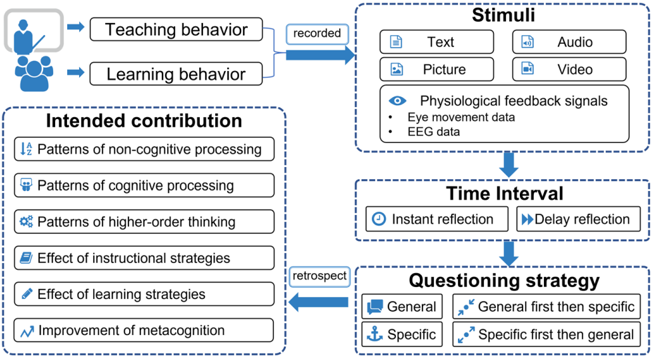
Stimulated Recall (SR) has long been used in educational settings as an approach of retrospection. However, with the fast growing of digital learning and advanced technologies in educational settings over the past decade, the extent to which stimulated recall has been effectively implemented by researchers remains minimal. This systematic review reveals that SR has been primarily employed to probe the patterns of participants’ thinking, to examine the effects of instructional strategies, and to promote metacognitive level. Notably, SR video stimuli have advanced, and the sources of stimuli have become more diverse, including the incorporation of physiological data. Additionally, researchers have applied various strategies, such as flexible intervals and questioning techniques, in SR interviews. Furthermore, this article discusses the relationships between different SR research items, including stimuli and learning contexts. The review and analysis also demonstrate that stimulated recall may be further enhanced by integrating multiple data sources, applying intelligent algorithms, and incorporating conversational agents enabled by generative artificial intelligence such as ChatGPT. This article provides a comprehensive analysis of SR studies in the realm of education and proposes a promising avenue for researchers to proactively apply stimulated recall in investigating educational issues in the digital era.
Checked 2026-11-14 · 1 reference not checked yet
Overview
CoChat Summary
TL;DR
This systematic review analyzes 257 empirical studies of Stimulated Recall (SR) in education from 2012 to 2022, mapping research aims, stimuli, timing, and interview strategies. It finds SR is used mainly to probe thinking and instructional effects, with video stimuli dominant and growing use of physiological and multimodal data, and proposes AI-supported directions for future SR.
Key findings
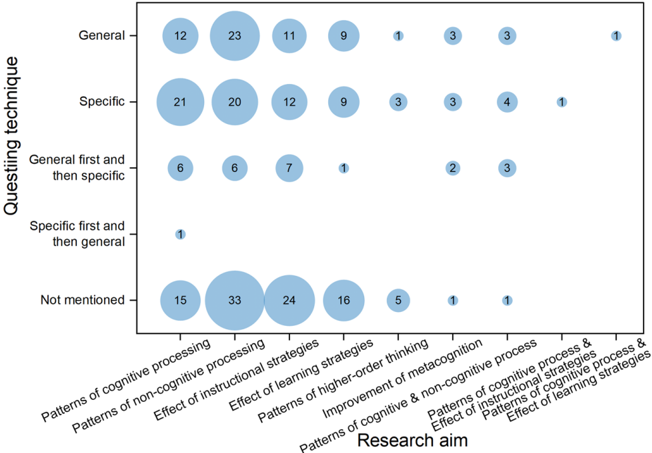
- Across 257 articles, SR was most often used to explore thought patterns (157 studies: 82 non-cognitive, 55 cognitive, 11 both, 9 higher-order thinking), followed by effects of educational strategies (35 learning strategies, 54 instructional techniques) and improving metacognition (9).
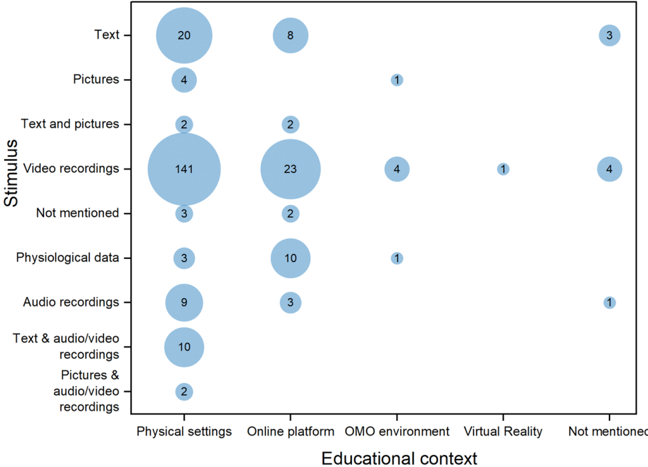
- Video recordings were the dominant stimulus, used in nearly 70% (173 articles) and as a singular or combined source in over 70% (185 articles); biofeedback data appeared in 14 articles, and multi-source stimuli in only 16 articles (under 10%).
- Among 149 studies specifying interview interval, 126 used instant reflection and 23 deliberately delayed (e.g., 2–4 weeks); questioning varied: 88 studies used open/general questions, 25 recommended open-to-specific, and 99 articles used targeted questions.
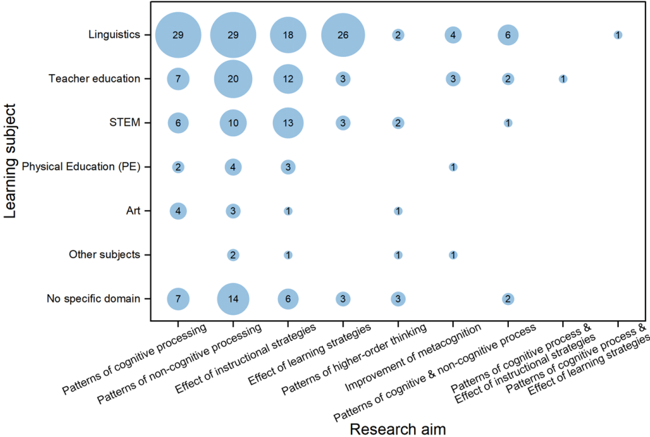
- SR was concentrated in linguistics (115 articles) and teacher education (48), with fewer in arts (9); video was used in 141 physical-setting studies and 23 digital/OMO studies, while physiological data were most frequent online (10 articles). The review proposes future improvements via multiple data sources, intelligent algorithms, and generative-AI conversational agents such as ChatGPT.
Methods
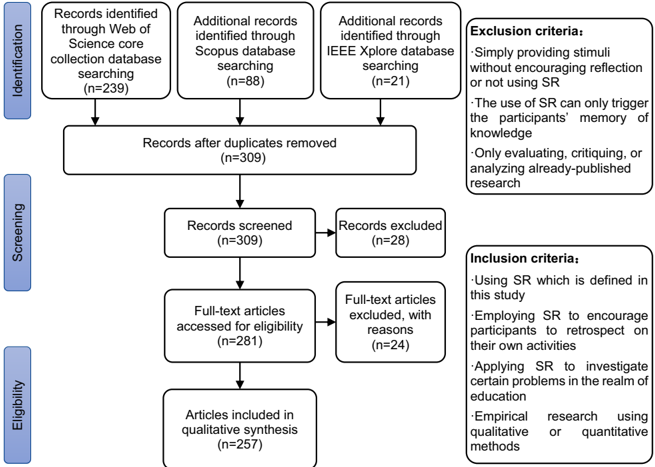
- Systematic review with qualitative content analysis following PRISMA; searched Web of Science core collection, Scopus, and IEEE Xplore with keyword “SR” refined to education/educational research, yielding 309 records, 281 full-text articles assessed, 24 excluded, and 257 included.
- Coding framework based on Gass and Mackey covered research aim, stimuli, questioning technique, questioning interval, learning subject, and educational context; three experts coded, with Fleiss Kappa 0.874–0.973, and final coding accepted if all or at least two agreed.
- Analysis identified patterns and themes and examined relationships among coding items, presented with descriptive tables and bubble charts.
Limitations
- Paper-stated: the sample is restricted to articles available through Web of Science, IEEE, and Scopus; relevant high-quality studies outside these databases may exist. The paper also says future work is needed for SR in Metaverse, AI, and AIGC 3D virtual learning environments.
- Paper-stated/evident: the review did not differentiate instructor and student groups, focusing on participants’ consciousness and thinking regardless of role.
- Evident from the text: findings are descriptive content-analysis counts from included studies rather than a meta-analysis of effects; the proposed use of generative-AI virtual agents raises ethical and privacy concerns that the paper says require attention.
Model-written summary. Check it against the paper before relying on it.
Integrity signals
Registry
Cites
Statistics
Figures
Verification
Claims the paper makes
0 Valid · 7 Not valid · 61 Not checked · 82 Own results and interpretations
A result the paper reports from its own data — it cites no other source for it, so there is none to check. The quote shows it is in the paper.
In the paper
“As shown in Table 3, over half (157 in total) of the research reviewed employed SR to achieve this objective.”
§ A systematic review of Stimulated Recall (SR) in educational research from 2012 to 2022 > Results and discussion
plain- Asserted: passes — The authors put it forward as true.
- Checkable: passes — It can be checked against evidence.
- Load-bearing: unclear — It is unclear whether the paper’s conclusions depend on it.
- Based: passes — The paper gives a reason why it holds.
None of the sources cited for this claim have been checked yet.
In the paper
“In addition, fifty-five studies explored patterns of cognitive processing, probing the epistemic thinking of diverse participants in various subjects, including language learning, STEM, and the arts (Bogard et al., 2013;dos Santos and Loveridge, 2014;Révész et al., 2017).”
§ A systematic review of Stimulated Recall (SR) in educational research from 2012 to 2022 > Results and discussion
What the sources say
plain- Asserted: passes — The authors put it forward as true.
- Checkable: passes — It can be checked against evidence.
- Load-bearing: unclear — It is unclear whether the paper’s conclusions depend on it.
- Based: passes — The paper gives a reason why it holds.
A result the paper states — it cites no source for it, so there is none to check. The quote shows it is in the paper.
In the paper
“Notably, SR video stimuli have advanced, and the sources of stimuli have become more diverse, including the incorporation of physiological data.”
§ A systematic review of Stimulated Recall (SR) in educational research from 2012 to 2022 > Abstract
plain- Asserted: passes — The authors put it forward as true.
- Checkable: passes — It can be checked against evidence.
- Load-bearing: unclear — It is unclear whether the paper’s conclusions depend on it.
- Based: passes — The paper gives a reason why it holds.
A result the paper reports from its own data — it cites no other source for it, so there is none to check. The quote shows it is in the paper.
In the paper
“Exploring thought patterns is the primary focus of most educational research that uses SR.”
§ A systematic review of Stimulated Recall (SR) in educational research from 2012 to 2022 > Results and discussion
plain- Asserted: passes — The authors put it forward as true.
- Checkable: passes — It can be checked against evidence.
- Load-bearing: unclear — It is unclear whether the paper’s conclusions depend on it.
- Based: passes — The paper gives a reason why it holds.
A result the paper states — it cites no source for it, so there is none to check. The quote shows it is in the paper.
In the paper
“It is worth mentioning that a total of 11 papers explored both cognitive and non-cognitive thought processes with SR.”
§ A systematic review of Stimulated Recall (SR) in educational research from 2012 to 2022 > Results and discussion
plain- Asserted: passes — The authors put it forward as true.
- Checkable: passes — It can be checked against evidence.
- Load-bearing: unclear — It is unclear whether the paper’s conclusions depend on it.
- Based: passes — The paper gives a reason why it holds.
65 more claims
Create a free account to see all 150 claims and to verify the 75 references still open.
- Probably not a substantial claim. 52
- It may state two separate claims as one. 45
Self-check
Percentages, sums and reported differences re-computed from the paper’s own numbers.
Each contradiction between two passages listed here was confirmed by an independent check.
Rated minor: it would not touch a result — a value no result rests on, a p-value that stays on the same side of the significance level, or a conflict that is clerical, resolved elsewhere in the paper, or outside its own findings.
In the paper
§ A systematic review of Stimulated Recall (SR) in educational research from 2012 to 2022 > Optimizing video stimuli.
“nearly 70% of the reviewed studies (173 articles) that utilized them.”
§ A systematic review of Stimulated Recall (SR) in educational research from 2012 to 2022 > The relationship between questioning strategy and research aim.
“over 70% of the studies (185 articles) employ video recordings as a singular or combined source of stimuli”
Citations
Cites
Preferred reporting items for systematic reviews and meta-analyses: The PRISMA statement
Moher, D., Liberati, A., Tetzlaff, J., Altman, D. G., & the PRISMA Group* (2009) · Annals of Internal Medicine · doi:10.7326/0003-4819-151-4-200908180-00135 · Cited by 37,554
The PRISMA 2020 Statement: An Updated Guideline for Reporting Systematic Reviews
Page, M. J., McKenzie, J. E., Bossuyt, P. M., Boutron, I., Hoffmann, T. C., Mulrow, C. D., Shamseer, L., Tetzlaff, J. M., Akl, E. A., Brennan, S. E., et al. (2021) · International Journal of Surgery · doi:10.1016/j.ijsu.2021.105906 · Cited by 11,748
Metacognition and cognitive monitoring: A new area of cognitive–developmental inquiry
Flavell, J. H. (1979) · American Psychologist · doi:10.1037/0003-066x.34.10.906 · Cited by 11,282 · cited 1×
“Metacognition refers to an individual ’ s awareness of their thinking processes and understanding of the underlying patterns (Flavell, 1979).”
Mayer, R. (2020) · doi:10.1017/9781316941355 · Cited by 7,777
Nine Ways to Reduce Cognitive Load in Multimedia Learning
Mayer, R. E., & Moreno, R. (2003) · Educational Psychologist · doi:10.1207/s15326985ep3801_6 · Cited by 4,207
Cognitive principles of multimedia learning: The role of modality and contiguity.
Moreno, R., & Mayer, R. E. (1999) · Journal of Educational Psychology · doi:10.1037//0022-0663.91.2.358 · Cited by 1,527
Gomez M, P. J., & Jacome S, J. E. (2018) · DSPACE System - Metalibrary (University of the Coast) · Cited by 978
Stimulated Recall Methodology in Second Language Research
Gass, S. M., Gass, S. M., Mackey, A., & Mackey, A. (2013) · Routledge eBooks · doi:10.4324/9781410606006 · Cited by 969
Stimulated recall: a report on its use in naturalistic research
Lyle, J. (2003) · British Educational Research Journal · doi:10.1080/0141192032000137349 · Cited by 774
Open AI in Education, the Responsible and Ethical Use of ChatGPT Towards Lifelong Learning
Mhlanga, D. (2023) · Sustainable Development Goals Series · doi:10.1007/978-3-031-37776-1_17 · Cited by 718
Engineering Education in the Era of ChatGPT: Promise and Pitfalls of Generative AI for Education
Qadir, J. (2023) · 2023 IEEE Global Engineering Education Conference (EDUCON) · doi:10.1109/educon54358.2023.10125121 · Cited by 707 · cited 1×
“For instance, OpenAI has developed several cutting-edge AI technologies, including the GPT series of language models such as ChatGPT, which can presumably be applied to provide personalized intelligent tutoring services in which feedback-enabled iterative learning occurs (Qadir, 2022).”
Jacobson, M. J., & Wilensky, U. (2006) · Journal of the Learning Sciences · doi:10.1207/s15327809jls1501_4 · Cited by 679
A review of using eye-tracking technology in exploring learning from 2000 to 2012
Lai, M.-L., Tsai, M.-J., Yang, F.-Y., Hsu, C.-Y., Liu, T.-C., Lee, S. W.-Y., Lee, M.-H., Chiou, G.-L., Liang, J.-C., & Tsai, C.-C. (2013) · Educational Research Review · doi:10.1016/j.edurev.2013.10.001 · Cited by 626
Self-citationStimulated recall: A method for research on teaching
CALDERHEAD, J. (1981) · British Journal of Educational Psychology · doi:10.1111/j.2044-8279.1981.tb02474.x · Cited by 533
In search of the focus of attention in working memory: 13 years of the retro-cue effect
Souza, A. S., & Oberauer, K. (2016) · Attention, Perception, & Psychophysics · doi:10.3758/s13414-016-1108-5 · Cited by 455
Xie, X., Liu, X., & McNay, I. (2023) · Humanities and Social Sciences Communications · doi:10.1057/s41599-022-01483-z · Cited by 393
Mamun, M. A. A., Lawrie, G., & Wright, T. (2020) · Computers & Education · doi:10.1016/j.compedu.2019.103695 · Cited by 283
Goldberg, P., Sümer, Ö., Stürmer, K., Wagner, W., Göllner, R., Gerjets, P., Kasneci, E., & Trautwein, U. (2021) · Educational Psychology Review · doi:10.1007/s10648-019-09514-z · Cited by 280
Constructing an Edu-Metaverse Ecosystem: A New and Innovative Framework
Wang, M., Yu, H., Bell, Z., & Chu, X. (2022) · IEEE Transactions on Learning Technologies · doi:10.1109/tlt.2022.3210828 · Cited by 271
Self-citationLin, C., Zhang, Y., & Zheng, B. (2017) · Computers & Education · doi:10.1016/j.compedu.2017.05.014 · Cited by 252
ChatGPT is not all you need. A state-of-the-art review of large generative AI models
Gozalo-Brizuela, R., & Garrido-Merchan, E. C. (2023) · arXiv · doi:10.48550/arxiv.2301.04655 · Cited by 245
Effects of Task Complexity on L2 Writing Behaviors and Linguistic Complexity
Révész, A., Kourtali, N., & Mazgutova, D. (2017) · Language Learning · doi:10.1111/lang.12205 · Cited by 225
LAMBERT, C., & ZHANG, G. (2019) · The Modern Language Journal · doi:10.1111/modl.12560 · Cited by 189
Smithers, L. G., Sawyer, A. C. P., Chittleborough, C. R., Davies, N. M., Davey Smith, G., & Lynch, J. W. (2018) · Nature Human Behaviour · doi:10.1038/s41562-018-0461-x · Cited by 175
Education as a Complex System: Conceptual and Methodological Implications
Jacobson, M. J., Levin, J. A., & Kapur, M. (2019) · Educational Researcher · doi:10.3102/0013189x19826958 · Cited by 174
Amador, J. M., Bragelman, J., & Superfine, A. C. (2020) · Teaching and Teacher Education · doi:10.1016/j.tate.2020.103256 · Cited by 154
Teacher noticing in science education: do you see what I see?
Chan, K. K. H., Xu, L., Cooper, R., Berry, A. K., & DRIEL, J. H. V. (2020) · Studies in Science Education · doi:10.1080/03057267.2020.1755803 · Cited by 140
Shintani, N. (2015) · Computer Assisted Language Learning · doi:10.1080/09588221.2014.993400 · Cited by 139
Teaching writing in primary education: Classroom practice, time, teachers’ beliefs and skills.
Rietdijk, S., van Weijen, D., Janssen, T., van den Bergh, H., & Rijlaarsdam, G. (2018) · Journal of Educational Psychology · doi:10.1037/edu0000237 · Cited by 133
Yu, S., & Hu, G. (2017) · Assessing Writing · doi:10.1016/j.asw.2017.03.004 · Cited by 132
Content familiarity, task repetition and Chinese EFL learners’ engagement in second language use
Qiu, X., & Lo, Y. Y. (2017) · Language Teaching Research · doi:10.1177/1362168816684368 · Cited by 128
Rissanen, I., Kuusisto, E., Tuominen, M., & Tirri, K. (2019) · Teaching and Teacher Education · doi:10.1016/j.tate.2018.10.002 · Cited by 123
Dinçer, S., & Doğanay, A. (2017) · Computers & Education · doi:10.1016/j.compedu.2017.04.005 · Cited by 121
Ucan, S., & Webb, M. (2015) · International Journal of Science Education · doi:10.1080/09500693.2015.1083634 · Cited by 118
Schindler, M., & Lilienthal, A. J. (2019) · Educational Studies in Mathematics · doi:10.1007/s10649-019-9878-z · Cited by 113
How Teachers Make Dashboard Information Actionable
Molenaar, I., & Knoop-van Campen, C. A. N. (2019) · IEEE Transactions on Learning Technologies · doi:10.1109/tlt.2018.2851585 · Cited by 112
Stimulated Recall Methodology in Applied Linguistics and L2 Research
Gass, S. M., & Mackey, A. (2016) · doi:10.4324/9781315813349 · Cited by 109
Yu, S. (2020) · Assessment & Evaluation in Higher Education · doi:10.1080/02602938.2020.1742872 · Cited by 105
The implications of teachers’ implicit theories for moral education: A case study from Finland
Rissanen, I., Kuusisto, E., Hanhimäki, E., & Tirri, K. A. (2017) · Journal of Moral Education · doi:10.1080/03057240.2017.1374244 · Cited by 99
Cao, Z., Yu, S., & Huang, J. (2019) · Studies In Educational Evaluation · doi:10.1016/j.stueduc.2019.08.001 · Cited by 89
Measuring fraction comparison strategies with eye-tracking
Obersteiner, A., & Tumpek, C. (2016) · ZDM · doi:10.1007/s11858-015-0742-z · Cited by 78
Using video to promote early childhood teachers' thinking and reflection
Cherrington, S., & Loveridge, J. (2014) · Teaching and Teacher Education · doi:10.1016/j.tate.2014.03.004 · Cited by 74
Lee, C. (2019) · Computer Assisted Language Learning · doi:10.1080/09588221.2018.1544152 · Cited by 73
Investigating L2 writing processes across independent and integrated tasks: A mixed-methods study
Michel, M., Révész, A., Lu, X., Kourtali, N.-E., Lee, M., & Borges, L. (2020) · Second Language Research · doi:10.1177/0267658320915501 · Cited by 73
Retrospective attention enhances visual working memory in the young but not the old: An ERP study
Duarte, A., Hearons, P., Jiang, Y., Delvin, M. C., Newsome, R. N., & Verhaeghen, P. (2013) · Psychophysiology · doi:10.1111/psyp.12034 · Cited by 63
Supervisor and Student Perspectives on Undergraduate Thesis Supervision in Higher Education
Agricola, B. T., Prins, F. J., van der Schaaf, M. F., & van Tartwijk, J. (2020) · Scandinavian Journal of Educational Research · doi:10.1080/00313831.2020.1775115 · Cited by 60
On-Site Pedagogical Content Knowledge Development
Chan, K. K. H., & Yung, B. H. W. (2015) · International Journal of Science Education · doi:10.1080/09500693.2015.1033777 · Cited by 59
Kautzmann, T. R., & Jaques, P. A. (2018) · Computers & Education · doi:10.1016/j.compedu.2018.10.017 · Cited by 58
Schneider, D. A., Barth, A., Getzmann, S., & Wascher, E. (2017) · Biological Psychology · doi:10.1016/j.biopsycho.2017.01.006 · Cited by 57
Thinking and Speech and Protocol Analysis
Smagorinsky, P. (1998) · Mind, Culture, and Activity · doi:10.1207/s15327884mca0503_2 · Cited by 56
Tan, S. T., Tan, S. T., & Tan, S. S. (2021) · International Journal of Environmental Research and Public Health · doi:10.3390/ijerph18137125 · Cited by 56
Schindler, M., & Lilienthal, A. J. (2020) · International Journal of Science and Mathematics Education · doi:10.1007/s10763-019-10033-0 · Cited by 45
Understanding English language learning in tertiary English-medium instruction contexts in China
Hu, J., & Wu, P. (2020) · System · doi:10.1016/j.system.2020.102305 · Cited by 45
Corrective feedback, learners' perceptions, and second language development
Rassaei, E. (2013) · System · doi:10.1016/j.system.2013.05.002 · Cited by 44
Teacher education matters: Finnish teacher educators’ concerns, beliefs, and values
Maaranen, K., Kynäslahti, H., Byman, R., Jyrhämä, R., & Sintonen, S. (2019) · European Journal of Teacher Education · doi:10.1080/02619768.2019.1566317 · Cited by 44
An E-learning System based on Affective Computing
Duo, S., & Song, L. X. (2012) · Physics Procedia · doi:10.1016/j.phpro.2012.02.278 · Cited by 43
Teacher interaction strategies and situated willingness to communicate
Peng, J. (2020) · ELT Journal · doi:10.1093/elt/ccaa012 · Cited by 42
Ramakrishnan, A., Zylich, B., Ottmar, E., LoCasale‐Crouch, J., & Whitehill, J. (2021) · IEEE Transactions on Affective Computing · doi:10.1109/taffc.2021.3059209 · Cited by 42
Mediation strategies in L2 writing processes: a case study of two Korean language learners
Kang, Y.-S., & Pyun, D. O. (2013) · Language Culture and Curriculum · doi:10.1080/07908318.2012.762012 · Cited by 41
Kurki, K., Järvenoja, H., Järvelä, S., & Mykkänen, A. (2016) · International Journal of Educational Research · doi:10.1016/j.ijer.2016.02.002 · Cited by 40
Functions of oral monologic tasks: Effects of topic familiarity on L2 speaking performance
Qiu, X. (2020) · Language Teaching Research · doi:10.1177/1362168819829021 · Cited by 40
Stimulated recall — An effective methodology for examining successful teaching in science
Meade, P., & McMeniman, M. (1992) · The Australian Educational Researcher · doi:10.1007/bf03219515 · Cited by 39
Karimi, M. N., & Norouzi, M. (2017) · System · doi:10.1016/j.system.2016.12.015 · Cited by 39
Gazdag, E., Nagy, K., & Szivák, J. (2019) · International Journal of Educational Research · doi:10.1016/j.ijer.2019.02.015 · Cited by 39
Evaluation of reflective practice in teacher education
Belvis, E., Pineda, P., Armengol, C., & Moreno, V. (2013) · European Journal of Teacher Education · doi:10.1080/02619768.2012.718758 · Cited by 37
Student-teachers’ strategies in classroom interaction in the context of the teaching practicum
Heikonen, L., Toom, A., Pyhältö, K., Pietarinen, J., & Soini, T. (2017) · Journal of Education for Teaching · doi:10.1080/02607476.2017.1355080 · Cited by 37
Perkins, R., Aufegger, L., & Williamon, A. (2014) · International Journal of Music Education · doi:10.1177/0255761414531544 · Cited by 34
Using video technology to enable student voice in assessment feedback
Van der Kleij, F., Adie, L., & Cumming, J. (2017) · British Journal of Educational Technology · doi:10.1111/bjet.12536 · Cited by 34
Students’ Metacognitive Awareness and Its Impact on Writing Skill
Ramadhanti, D., & Yanda, D. P. (2021) · International Journal of Language Education · doi:10.26858/ijole.v5i3.18978 · Cited by 34
Park, M. (2018) · ReCALL · doi:10.1017/s0958344017000362 · Cited by 32
Video-stimulated recall as a catalyst for teacher professional learning
Geiger, V., Muir, T., & Lamb, J. (2016) · Journal of Mathematics Teacher Education · doi:10.1007/s10857-015-9306-y · Cited by 31
Opportunities for and obstacles to science in preschools: views from a community perspective
Sundberg, B., Areljung, S., Due, K., Ekström, K., Ottander, C., & Tellgren, B. (2018) · International Journal of Science Education · doi:10.1080/09500693.2018.1518615 · Cited by 30
Bogard, T., Liu, M., & Chiang, Y.-H. V. (2013) · Educational Technology Research and Development · doi:10.1007/s11423-013-9295-4 · Cited by 28
Zhai, X., Fang, Q., Dong, Y., Wei, Z., Yuan, J., Cacciolatti, L., & Yang, Y. (2018) · Journal of Computer Assisted Learning · doi:10.1111/jcal.12284 · Cited by 26
Self-citationWorking memory load and the retro-cue effect: A diffusion model account.
Shepherdson, P., Oberauer, K., & Souza, A. S. (2018) · Journal of Experimental Psychology: Human Perception and Performance · doi:10.1037/xhp0000448 · Cited by 26
Judy, C. (2018) · Language Testing in Asia · doi:10.1186/s40468-018-0073-4 · Cited by 26
Physiological measurements and emotional experiences of drawing and clay forming
Rankanen, M., Leinikka, M., Groth, C., Seitamaa‐Hakkarainen, P., Mäkelä, M., & Huotilainen, M. (2022) · The Arts in Psychotherapy · doi:10.1016/j.aip.2022.101899 · Cited by 26
Introspective Verbal Reports: Think-Alouds and Stimulated Recall
Bowles, M. A. (2018) · Palgrave Macmillan UK eBooks · doi:10.1057/978-1-137-59900-1_16 · Cited by 25
Consuegra, E., Engels, N., & Willegems, V. (2016) · Teachers and Teaching · doi:10.1080/13540602.2016.1158958 · Cited by 24
Language teacher noticing: A socio-cognitive window on classroom realities
Jackson, D. O., & Cho, M. (2018) · Language Teaching Research · doi:10.1177/1362168816663754 · Cited by 24
Becoming Reflective Practitioners: A Case Study of Three Beginning Pre-service Teachers
Tiainen, O., Korkeamäki, R.-L., & Dreher, M. J. (2018) · Scandinavian Journal of Educational Research · doi:10.1080/00313831.2016.1258673 · Cited by 24
Lichtinger, E., & Kaplan, A. (2015) · Metacognition and Learning · doi:10.1007/s11409-014-9131-1 · Cited by 23
Egi, T. (2008) · Language Awareness · doi:10.1080/09658410802146859 · Cited by 23
Satō, R. (2017) · Innovation in Language Learning and Teaching · doi:10.1080/17501229.2017.1375506 · Cited by 21
'Would you perhaps consider ...': hedged comments in ESL writing
Nurmukhamedov, U., & Kim, S. H. (2010) · ELT Journal · doi:10.1093/elt/ccp063 · Cited by 19
Harvey, W., Wilkinson, S., Pressé, C., Joober, R., & Grizenko, N. (2014) · Physical Education and Sport Pedagogy · doi:10.1080/17408989.2012.754000 · Cited by 19
Appropriation of resources by bilingual students for self-regulated learning of science
Hu, J., & Gao, X. A. (2017) · International Journal of Bilingual Education and Bilingualism · doi:10.1080/13670050.2017.1386615 · Cited by 19
Measuring individual and group flow in collaborative improvisational dance
Łucznik, K., & May, J. (2021) · Thinking Skills and Creativity · doi:10.1016/j.tsc.2021.100847 · Cited by 19
Myrtil, M. J., Lin, T., Chen, J., Purtell, K. M., Justice, L. M., Logan, J. A. R., & Hamilton, A. (2020) · Early Childhood Research Quarterly · doi:10.1016/j.ecresq.2020.11.011 · Cited by 18
Unpacking students’ epistemic cognition in a physics problem‐solving environment
Lindfors, M., Bodin, M., & Simon, S. (2020) · Journal of Research in Science Teaching · doi:10.1002/tea.21606 · Cited by 16
Using video-stimulated recall to understand the reflections of ambitious social studies teachers
Martinelle, R. (2020) · The Journal of Social Studies Research · doi:10.1016/j.jssr.2020.03.001 · Cited by 16
Journal writing as a means of enhancing EFL learners’ awareness and effectiveness of recasts
Rassaei, E. (2015) · Linguistics and Education · doi:10.1016/j.linged.2015.10.002 · Cited by 15
Sedentary behavior and not physical activity predicts study progress in distance education
Gijselaers, H. J. M., Kirschner, P. A., Verboon, P., & de Groot, R. H. M. (2016) · Learning and Individual Differences · doi:10.1016/j.lindif.2016.06.021 · Cited by 13
Rassaei, E. (2020) · System · doi:10.1016/j.system.2019.102193 · Cited by 13
Ways of using musical knowledge to think about one's piano repertoire learning: three case studies
dos Santos, R. A. T. (2018) · Music Education Research · doi:10.1080/14613808.2018.1463979 · Cited by 12
Sanchez, H. S., & Grimshaw, T. (2019) · The Routledge Handbook of Research Methods in Applied Linguistics · doi:10.4324/9780367824471-27 · Cited by 12
Physical Education Teachers’ Content Knowledge of Movement Capability
Nyberg, G., & Larsson, H. (2017) · Journal of Teaching in Physical Education · doi:10.1123/jtpe.2015-0180 · Cited by 11
Ramnarain, U. D., & Modiba, M. (2013) · International Journal of Science Education · doi:10.1080/09500693.2012.742593 · Cited by 10
Wilby, K. J., Govaerts, M. J. B., Austin, Z., & Dolmans, D. H. J. M. (2017) · BMC Medical Education · doi:10.1186/s12909-017-0899-y · Cited by 10
Zhai, X., Xu, J., Chen, N., Shen, J., Li, Y., Wang, Y., Chu, X., & Zhu, Y. (2022) · Journal of Educational Computing Research · doi:10.1177/07356331221115663 · Cited by 10
Self-citationElementary Schoolchildren’s Self- and Social Perceptions of Success
Määttä, E., Mykkänen, A., & Järvelä, S. (2016) · Journal of Research in Childhood Education · doi:10.1080/02568543.2016.1143418 · Cited by 8
White, C., Direnzo, R., & Bortolotto, C. (2016) · System · doi:10.1016/j.system.2016.06.008 · Cited by 8
What can Interpersonal Process Recall (IPR) offer academic development?
Wass, R., & Moskal, A. (2017) · The International Journal for Academic Development · doi:10.1080/1360144x.2017.1340295 · Cited by 8
Stolpe, K., & Björklund, L. (2013) · Scandinavian Journal of Educational Research · doi:10.1080/00313831.2012.656278 · Cited by 5
Praxis and poiesis in piano repertoire preparation
Dos Santos, R. A. T., & Hentschke, L. (2011) · Music Education Research · doi:10.1080/14613808.2011.603042 · Cited by 5
Attending to learners’ affective needs: Teachers’ knowledge and practices
Thararuedee, P., & Wette, R. (2020) · System · doi:10.1016/j.system.2020.102375 · Cited by 5
Pratt, S. M., & Martin, A. M. (2017) · Reading Psychology · doi:10.1080/02702711.2017.1290726 · Cited by 3
Research works printed but not linked: 19
- Bloom BS (1953) Thought-processes in lectures and discussions. J Gen Educ 7(3):160–169
- Bozkurt A (2023) Generative artificial intelligence (AI) powered conversational educational agents: the inevitable paradigm shift. Asian J Distance Educ 18(1):198–204
- Chu X, Zhai X (2023) A Systematic Review of Stimulated Recall
- (SR) in Education from 2012 to 2021. In: Shih JL et al. (eds.), Main Conference Proceedings (English Paper) of the 27th Global Chinese Conference on Computers in Education (GCCCE 2023) (pp. 100-108). China: Beijing Normal University. https://aic-fe.bnu.edu.cn/fj/lunwenji2023/EnglishPaper.pdf
- D’Oca G, Hrynaszkiewicz I (2015) Palgrave Communications’ commitment to promoting transparency and reproducibility in research. Palgr Commun. 1(1):1–3
- Deng L (2020) Laptops and mobile phones at self-study time: examining the mechanism behind interruption and multitasking. Australas J Educ Technol 36(1):55–67
- El E, Windeatt S (2019) Eye tracking analysis of EAP Students’ regions of interest in computer-based feedback on grammar, usage, mechanics, style and organization and development. System 83:36–49
- Endacott JL (2016) Using video-stimulated recall to enhance preservice-teacher reflection. N Educ 12(1):28–47
- Farahian M (2015) Assessing EFL learners’ writing metacognitive awareness. J Lang Linguist Stud 11(2):39–51
- Jensen A (2019) Fostering preservice teacher agency in 21st century writing instruction. Engl Teach Pract Crit 18(3):298–311
- Keith MJ (1988) Stimulated recall and teachers’ thought processes: a critical review of the methodology and an alternative perspective. Paper presented at the 17th Annual Meeting of the Mid-South Educational Research Association, Louisville, KY, 9−11
- Koltovskaia S (2020) Student engagement with automated written corrective feedback (AWCF) provided by Grammarly: a multiple case study. Assess 44:100450
- Martinelle R (2018) Video-stimulated recall: aiding teacher practice. Educ Leadersh 76(3):55
- Mayer RE, Moreno R (1998) A cognitive theory of multimedia learning: Implications for design principles. J Educ Psychol 91(2):358–368
- Walan S, Enochsson AB (2019) The potential of using a combination of storytelling and drama, when teaching young children science. Eur Early Child Educ Res J 27(6):821–836
- Wijayasundara M (2020) Integration of ICT in teaching and learning in schools. Int J Res 1(10):198–209
- Wu SC (2019) Researching children’s learning and play in a Chinese context: children’s perspectives on their play and learning. Eur Early Child Educ Res J 27(4):551–565
- Zahid M, Khanam A (2019) Effect of reflective teaching practices on the performance of prospective teachers. Turk Online J Educ Technol 18(1):32–43
- Zhai X, Chu X, Meng N et al. (2022) The effect of multi-mode stimuli of feedforward and eye tracking on metacognition—an exploratory study using digital dictionaries. Educ Technol Soc 25(1):213–227
Cited by
Research agenda on well-being and language education
Mercer, S., & Murillo-Miranda, C. (2025) · Language Teaching · doi:10.1017/s0261444825000060 · Cited by 35
Lang, Q., Tian, S., Wang, M., & Wang, J. (2024) · IEEE Transactions on Learning Technologies · doi:10.1109/tlt.2024.3456128 · Cited by 31
Self-citationLong, Q., Li, S., An, R., Yasmin, F., & Akbar, A. (2025) · Acta Psychologica · doi:10.1016/j.actpsy.2025.105410 · Cited by 25
RetractedKaya, M. H., & Adıgüzel, T. (2025) · Frontiers in Education · doi:10.3389/feduc.2025.1652292 · Cited by 25
Chinese EFL learners’ engagement with ChatGPT feedback on academic writing: A case study in Malaysia
Kailin, Z., & Saeed, M. A. (2025) · Computers & composition/Computers and composition · doi:10.1016/j.compcom.2025.102976 · Cited by 20
Metadata
- Authors
- Zhai, X., Chu, X., Wang, M., Tsai, C.-C., Liang, J.-C., & Spector, J. M.
- Affiliations
- Zhejiang University (CN)
- San Diego State University (US)
- National Taiwan Normal University (TW)
- University of North Texas (US)
- Corresponding author
- Chu, Xiaoyan
- Wang, Minjuan
- ORCID
- Venue
- Humanities and Social Sciences Communications
- Published
- 2024-04-05
- Volume
- 11
- Issue
- 1
- ISSN
- 2055-1045 (ISSN-L)
- 2662-9992
- OpenAlex
- W4393994134
- Semantic Scholar
- c3cdcc4ba0182fa64a765dd53f1d0861ba5e8e92
- Cited by
- 47
- References
- 107
- Citations by year
- 2026: 30 · 2025: 16 · 2024: 1
- FWCI
- 2.19
- Type
- journal article
- Language
- en
- Open access
- gold
- doi.org
- Licence
- cc-by
- creativecommons.org/licenses/by/4.0 (tdm)
- creativecommons.org/licenses/by/4.0 (vor)
- Locations
- Humanities and Social Sciences Communications (publishedVersion, cc-by)
- University of North Texas Digital Library (University of North Texas) (submittedVersion)
- RePEc: Research Papers in Economics (submittedVersion)
- DOAJ (DOAJ: Directory of Open Access Journals) (submittedVersion)
- Funders
- National Natural Science Foundation of China (62177042)
- National Science and Technology Major Project (2022ZD0115904)
- Natural Science Foundation of Zhejiang Province
- Topics
- Social Sciences › Education › Educational Research and Methods
- Social Sciences › Psychology › Developmental and Educational Psychology › Innovative Teaching and Learning Methods
- Life Sciences › Neuroscience › Cognitive Neuroscience › Memory Processes and Influences
- Keywords
- stimulated recall, metacognition, teaching methods, video stimuli, physiological signals, questioning strategies, generative AI, ChatGPT, chatbots, online learning, multi-source data
About these checks
Registry, retraction, Cites and statistics results are computed, not judged, with one exception: a printed reference that no index lists is read once by a model before it counts as a citation error. Claims are extracted by a model and kept only when their quote appears verbatim in the text; each cited source is then checked, with a model’s help, for whether it says what the claim relies on. Those verdicts can be wrong — read the claim’s quote and the cited source before relying on one.
A language model drew the claims from the paper on 2026-11-14, under version 3 of the claim definition (model deepseek-v4.1-flash, prompt extract-v3).
A second model labelled each claim on 2026-11-14 (model jev-1.13-20260917, definition revision gold-guideline-v0.2).
Statistics and arithmetic are recomputed, not judged.
Confidence bands are shown only for fields calibrated on our annotated test set. None is calibrated yet, so no band is shown.
What counts as a claim ›How we measure confidence ›How we check this ›
Are you an author, or do you see a problem with this page? Request a review
Data sources
Bibliographic data: Semantic Scholar, OpenAlex, Crossref.
Contains information from the Semantic Scholar Academic Graph Datasets, made available under the ODC Attribution License (ODC-BY 1.0).
Semantic Scholar’s data is described in: Kinney, R., et al. (2023). The Semantic Scholar Open Data Platform. arXiv:2301.10140.
