

A grounded theory of positive youth development through sport based on results from a qualitative meta-study
Open accessThe DOI matches its Crossref record; 142 of the 142 references it cites were found in a registry or an index; none of the 46 sources its claims cite is checked for support yet.
Abstract
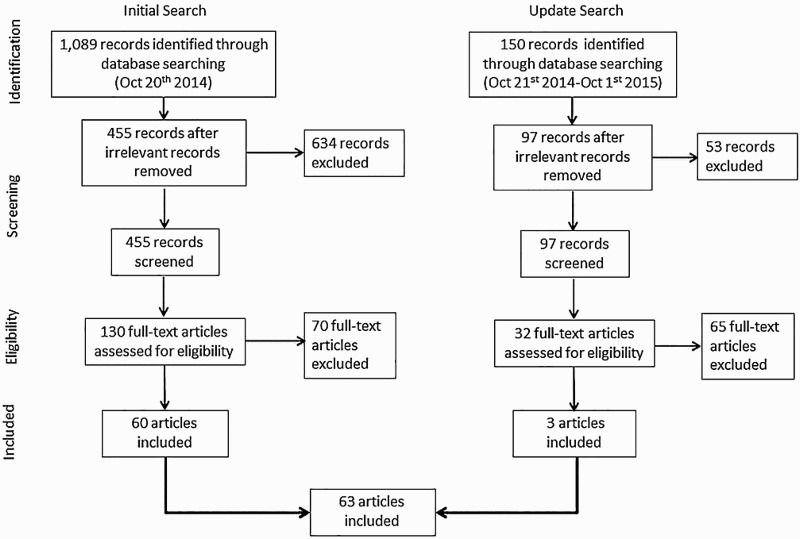
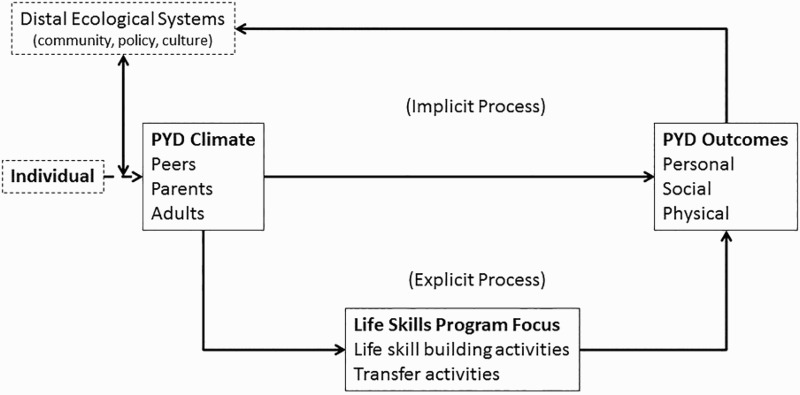
The overall purpose of this study was to create a model of positive youth development (PYD) through sport grounded in the extant qualitative literature. More specifically, the first objective was to review and evaluate qualitative studies of PYD in sport. The second objective was to analyze and synthesize findings from these studies. Following record identification and screening, 63 articles were retained for analysis. Meta-method analysis revealed strengths of studies were the use of multiple data collection and validity techniques, which produced high-quality data. Weaknesses were limited use of 'named' methodologies and inadequate reporting of sampling procedures. Philosophical perspectives were rarely reported, and theory was used sparingly. Results of an inductive meta-data analysis produced three categories: PYD climate (adult relationships, peer relationships, and parental involvement), life skills program focus (life skill building activities and transfer activities), and PYD outcomes (in personal, social, and physical domains). A model that distinguishes between implicit and explicit processes to PYD is presented.
Overview
CoChat Summary
TL;DR
This qualitative meta-study synthesized 63 articles on positive youth development (PYD) through sport and proposed a grounded model linking social context, life skills programming, and PYD outcomes. The model distinguishes implicit pathways (PYD climate alone) from explicit pathways (PYD climate plus life skills and transfer activities) and was built from evidence across more than 2,400 participants.
Key findings
- After screening, the authors retained 63 articles for analysis; the model was based on a meta-study of qualitative research in sport.
- Meta-method findings: strengths were multiple data collection and validity techniques; weaknesses were limited use of named methodologies and inadequate reporting of sampling procedures.
- Meta-data synthesis produced three categories: PYD climate (adult relationships, peer relationships, parental involvement), life skills program focus (life skill building activities, transfer activities), and PYD outcomes (personal, social, physical domains).
- Reported outcome frequencies included 30 studies for personal outcomes, 32 for social outcomes, and 7 for physical outcomes; transfer was reported in 17 studies and adult/peer relationship themes each drew on 19 studies, parental involvement on 9 studies.
Methods
- Qualitative meta-study using meta-method, meta-theory, and meta-data analysis, followed by a final meta-synthesis framed by grounded theory and an interpretive paradigm.
- Search strategy combined PYD and sport terms across databases, with searches run on 20 October 2014 and repeated on 1 October 2015; inclusion required primary qualitative data from sport-related settings with explicit PYD relevance.
- Screening yielded 1,089 records, then 455 articles, 130 full texts, and finally 63 included articles; extracted findings were organized into a database of over 29,000 words for inductive coding.
Limitations
- The authors state they did not review quantitative studies and note a need for a systematic review of them.
- They state the model does not account for developmental change (for example, differences between children and adolescents) and that they did not include negative outcomes associated with sport participation.
- Evident from the text: the synthesis is limited by the underlying literature, where philosophical perspectives were rarely reported, theory was used sparingly, and sampling procedures were often poorly reported.
Model-written summary. Check it against the paper before relying on it.
Integrity signals
Registry
Cites
Statistics
Figures
Verification
Claims the paper makes
0 Valid · 0 Not valid · 45 Not checked · 78 Own results and interpretations
A result the paper reports from its own data — it cites no other source for it, so there is none to check. The quote shows it is in the paper.
In the paper
“Meta-method analysis revealed strengths of studies were the use of multiple data collection and validity techniques, which produced high-quality data.”
§ A grounded theory of positive youth development through sport based on results from a qualitative meta-study > Abstract
plainstates a cause- Asserted: passes — The authors put it forward as true.
- Checkable: passes — It can be checked against evidence.
- Load-bearing: unclear — It is unclear whether the paper’s conclusions depend on it.
- Based: passes — The paper gives a reason why it holds.
None of the sources cited for this claim have been checked yet.
In the paper
“It was not possible to calculate precisely the total number of participants who had provided data, because two studies (Armour & Sandford, 2013; Armour et al., 2013) appeared to draw participants from the same sample (of 486 students), one study (Weiss et al., 2013) reported 95 youth and 36 coaches in the total sample, but it was not clear which individuals provided qualitative data, and one study”
§ A grounded theory of positive youth development through sport based on results from a qualitative meta-study > Results > Meta-method analysis (see Table 1)
What the sources say
- Not matchedcites Armour & Sandford, 2013
An author–year citation the paper’s reference list doesn’t settle. We don’t search these by name.
- Not matchedcites Armour et al., 2013
An author–year citation the paper’s reference list doesn’t settle. We don’t search these by name.
- Not checked — no full text of the sourcecites Weiss et al., 2013 matched to “‘More than a game’: impact of The First Tee life skills programme on positive youth development: project introduction and Year 1 findings” (2013) source
plain- Asserted: passes — The authors put it forward as true.
- Checkable: passes — It can be checked against evidence.
- Load-bearing: unclear — It is unclear whether the paper’s conclusions depend on it.
- Based: passes — The paper gives a reason why it holds.
- Not matched
A result the paper reports from its own data — it cites no other source for it, so there is none to check. The quote shows it is in the paper.
In the paper
“Philosophical perspectives were rarely reported, and theory was used sparingly.”
- Also stated in: § Meta-theory analysis (Table 1) · plain
“No theoretical model or conceptual framework was specified clearly in 26 studies.”
§ A grounded theory of positive youth development through sport based on results from a qualitative meta-study > Abstract
plain- Asserted: passes — The authors put it forward as true.
- Checkable: passes — It can be checked against evidence.
- Load-bearing: unclear — It is unclear whether the paper’s conclusions depend on it.
- Based: passes — The paper gives a reason why it holds.
- Also stated in: § Meta-theory analysis (Table 1) · plain
A result the paper reports from its own data — it cites no other source for it, so there is none to check. The quote shows it is in the paper.
In the paper
“Results of an inductive meta-data analysis produced three categories: PYD climate (adult relationships, peer relationships, and parental involvement), life skills program focus (life skill building activities and transfer activities), and PYD outcomes (in personal, social, and physical domains).”
§ A grounded theory of positive youth development through sport based on results from a qualitative meta-study > Abstract
plain- Asserted: passes — The authors put it forward as true.
- Checkable: passes — It can be checked against evidence.
- Load-bearing: passes — The paper’s conclusions depend on it.
- Based: passes — The paper gives a reason why it holds.
A result the paper reports from its own data — it cites no other source for it, so there is none to check. The quote shows it is in the paper.
In the paper
“We were not able to compile accurate statistics on social and demographic factors (e.g., socioeconomic states, gender, ethnicity) because these data were not reported with sufficient clarity across the studies.”
§ A grounded theory of positive youth development through sport based on results from a qualitative meta-study > Results > Meta-method analysis (see Table 1)
plainstates a cause- Asserted: passes — The authors put it forward as true.
- Checkable: passes — It can be checked against evidence.
- Load-bearing: unclear — It is unclear whether the paper’s conclusions depend on it.
- Based: passes — The paper gives a reason why it holds.
50 more claims
Create a free account to see all 123 claims and to verify the 1 reference still open.
- Probably not a substantial claim. 55
- It may state two separate claims as one. 22
- The quote only partly states this claim. 3
Citations
Cites
The Discovery of Grounded Theory: Strategies for Qualitative Research.
Wagner, H. R., Glaser, B. G., & Strauss, A. L. (1968) · Social Forces · doi:10.2307/2575405 · Cited by 46,361
Situated Learning: Legitimate Peripheral Participation.
Bloch, M., Lave, J., & Wenger, E. (1994) · Man · doi:10.2307/2804509 · Cited by 39,454
The Discovery of Grounded Theory; Strategies for Qualitative Research
Glaser, B. G., Strauss, A. L., & Strutzel, E. (1968) · Nursing Research · doi:10.1097/00006199-196807000-00014 · Cited by 39,449
Qualitative research and evaluation methods
Patton, M. Q. (1980) · Cited by 35,733
Situated Learning: Legitimate Peripheral Participation
Lave, J., & Wenger, E. (1991) · Cambridge University Press eBooks · doi:10.1017/cbo9780511815355 · Cited by 35,324
The "what" and "why" of goal pursuits: Human needs and the self-determination of behavior
Deci, E. L., & Ryan, R. M. (2000) · Psychological Inquiry · doi:10.1207/s15327965pli1104_01 · Cited by 34,210 · cited 1×
“…and Baker (2012) To explore the coaching in a soccer program aimed at promoting life skills to disadvantaged youth UK Selfdetermination theory (Deci & Ryan, 2000) Interpretive Case study 3 males (aged 17– 18 years) Not specified Nonparticipant observation Video footage Semi-structured…”
BackgroundBasics of Qualitative Research: Grounded Theory Procedures and Techniques.
Ellis, C., Strauss, A., & Corbin, J. (1992) · Contemporary Sociology · doi:10.2307/2074814 · Cited by 29,249
(1998) · Medical Entomology and Zoology · Cited by 18,397
Basics of Qualitative Research: Grounded Theory Procedures and Techniques
Long, D. R., Strauss, A., & Corbin, J. (1993) · The Modern Language Journal · doi:10.2307/328955 · Cited by 17,576
The Logic of Scientific Discovery.
Hutchison, T. W., & Popper, K. R. (1959) · Economica · doi:10.2307/2550489 · Cited by 7,499
Self-determination theory: A macrotheory of human motivation, development, and health
Deci, E. L., & Ryan, R. M. (2008) · Canadian Psychology / Psychologie canadienne · doi:10.1037/a0012801 · Cited by 6,664 · cited 1×
“…to examine the atmosphere of a PYD program grounded in selfdetermination theory (SDT) through the eyes of participants US Selfdetermination theory (Deci & Ryan, 2008) Not specified Case study (with some elements of ethnography) 23 children (14 males, 9 females) 4th and 5th grade Children enrolled…”
Building a Network Theory of Social Capital
Lin, N. (2017) · Social Capital · doi:10.4324/9781315129457-1 · Cited by 3,807
Yin, R. K. (2009). Case study research: Design and methods (4th Ed.). Thousand Oaks, CA: Sage.
Aberdeen, T. (2013) · The Canadian Journal of Action Research · doi:10.33524/cjar.v14i1.73 · Cited by 3,250
Noblit, G., & Hare, R. (1988) · doi:10.4135/9781412985000 · Cited by 2,723 · cited 1×
“The database provided a rich source of data that were subjected to an inductive open coding procedure (Corbin & Strauss, 2015), similar to the way that interview data from transcripts would be coded in an original study (Noblit & Hare, 1988; Paterson et al., 2001).”
MethodFoundations of Qualitative Research: Interpretive and Critical Approaches
Willis, J. (2007) · Sage eBooks · doi:10.4135/9781452230108 · Cited by 2,602 · cited 1×
“tory power, possess logical internal consistency, and have practical utility (Corbin & Strauss, 2015; Merriam, 1998; Wacker, 1998; Willis, 2007).”
BackgroundMeta-Ethnography: Synthesizing Qualitative Studies
Noblit, G. W., & Hare, R. D. (1988) · Medical Entomology and Zoology · Cited by 2,191
Community Programs to Promote Youth Development
(2002) · National Academies Press eBooks · doi:10.17226/10022 · Cited by 2,020
Meta‐synthesis method for qualitative research: a literature review
Walsh, D., & Downe, S. (2005) · Journal of Advanced Nursing · doi:10.1111/j.1365-2648.2005.03380.x · Cited by 1,246 · cited 1×
“We conducted a qualitative meta-synthesis with the aim of creating a model that could explain the findings from a group of similar qualitative studies; quantitative studies were therefore excluded (Walsh & Downe, 2005).”
MethodYouth sport programs: An avenue to foster positive youth development
Fraser-Thomas, J. L., Côté, J., & Deakin, J. (2005) · Physical Education & Sport Pedagogy · doi:10.1080/1740898042000334890 · Cited by 1,162
Self-citationAn integrative definition of coaching effectiveness and expertise
Côté, J., & Gilbert, W. (2009) · International Journal of Sports Science & Coaching · doi:10.1260/174795409789623892 · Cited by 1,131 · cited 1×
“For instance, PYD-related training remains largely absent from coach education programs and youth sport programing (Côté & Gilbert, 2009; Vargas-Tonsing, 2007; Vella, Oades, & Crowe, 2013).”
BackgroundSelf-citationWacker, J. G. (1998) · Journal of Operations Management · doi:10.1016/s0272-6963(98)00019-9 · Cited by 1,042
What is positive youth development?
Damon, W. (2004) · The ANNALS of the American Academy of Political and Social Science · doi:10.1177/0002716203260092 · Cited by 1,026
Life skills development through sport: current status and future directions
Gould, D., & Carson, S. (2008) · International Review of Sport and Exercise Psychology · doi:10.1080/17509840701834573 · Cited by 948 · cited 8×
“In another important article based on a narrative review of the PYD literature, Gould and Carson (2008) presented a heuristic model explaining how life skills are coached through sport.”
BackgroundInfluentialNATIONAL RESEARCH COUNCIL AND INSTITUTE OF MEDICINE
Care, A. T., Edmunds, M., & Coye, M. J. (1998) · Cited by 873
Coach Education and Continuing Professional Development: Experience and Learning to Coach
Cushion, C. J., Armour, K. M., & Jones, R. L. (2003) · Quest · doi:10.1080/00336297.2003.10491800 · Cited by 791
Liberty: Thriving and Civic Engagement among America's Youth
Lerner, R. (2004) · doi:10.4135/9781452233581 · Cited by 728 · cited 4×
“Studies of life skills were included, as this research fits in the overall umbrella of PYD (Lerner, 2004).”
BackgroundMethodInfluentialKnowledge Translation in Health Care: Moving from Evidence to Practice
(2009) · International Journal of Health Care Quality Assurance · doi:10.1108/ijhcqa.2009.06222fae.002 · Cited by 694
Meta-Study of Qualitative Health Research
Paterson, B., Thorne, S., Canam, C., & Jillings, C. (2001) · doi:10.4135/9781412985017 · Cited by 664 · cited 4×
“Only those studies that did not meet the inclusion criteria in some clear and uncontestable manner were excluded, to minimize the risk of relevant studies being discarded (Paterson et al., 2001).”
BackgroundMethodInfluentialDiffering profiles of developmental experiences across types of organized youth activities.
Larson, R. W., Hansen, D. M., & Moneta, G. (2006) · Developmental Psychology · doi:10.1037/0012-1649.42.5.849 · Cited by 643 · cited 3×
“…approach was developed in order to compare adolescents’ developmental experiences across different contexts, namely faith-based service activities, academic and leadership activities, performance and fine arts, community organizations and vocational clubs, and organized sport (Larson et al., 2006).”
BackgroundInfluentialGerring, J. (1999) · Polity · doi:10.2307/3235246 · Cited by 622 · cited 1×
“Johnston, Harwood, and Minniti (2013) Examined the assets considered necessary to develop in young swimmers to ensure individual and sport-specific development UK Gerring’s (1999) critical framework of concept formation Interpretive Not specified 10 adults (Mage = 44.”
BackgroundYouth Sports: What Counts as “Positive Development?”
Coakley, J. (2011) · Journal of Sport and Social Issues · doi:10.1177/0193723511417311 · Cited by 598
Essentials of Qualitative Inquiry
Mayan, M. J. (2016) · Routledge eBooks · doi:10.4324/9781315429250 · Cited by 589 · cited 3×
“More use of named methodologies may improve the overall methodological coherence and rigor of studies by providing ‘guides’ for appropriately building and combining the different components of a study (Holt & Tamminen, 2010; Mayan, 2009).”
BackgroundMethodA Framework for Planning Youth Sport Programs That Foster Psychosocial Development
Petitpas, A. J., Cornelius, A. E., Van Raalte, J. L., & Jones, T. (2005) · The Sport Psychologist · doi:10.1123/tsp.19.1.63 · Cited by 493 · cited 9×
“…see if under achieving male students can transfer life skills from sports to an educational setting UK Life skills frameworks (Gould & Carson, 2008; Petitpas et al., 2005) Not specified Not specified 20 males (aged 12–13 years) 2/3 of participants spoke English as a second language Not specified…”
BackgroundInfluentialAdolescents' Accounts of Growth Experiences in Youth Activities
Dworkin, J. B., Larson, R., & Hansen, D. (2003) · Journal of Youth and Adolescence · doi:10.1023/a:1021076222321 · Cited by 455 · cited 1×
“Published by Informa UK Limited, trading as Taylor & Francis Group This is an Open Access article distributed under the terms of the Creative Commons Attribution-NonCommercial-NoDerivatives License (http://creativecommons.org/licenses/by-nc-nd/4.0/), which permits non-commercial re-use,…”
MethodInfluentialMeta-study of Qualitative Health Research: A Practical Guide to Meta-analysis and Meta-synthesis
(2001) · International Journal of Health Care Quality Assurance · doi:10.1108/ijhcqa.2001.06214fae.007 · Cited by 455
Positive Youth Development and Relational‐Developmental‐Systems
Lerner, R. M., Lerner, J. V., P. Bowers, E., & John Geldhof, G. (2015) · Handbook of Child Psychology and Developmental Science · doi:10.1002/9781118963418.childpsy116 · Cited by 449
Understanding Adolescents’ Positive and Negative Developmental Experiences in Sport
Fraser-Thomas, J., & Côté, J. (2009) · The Sport Psychologist · doi:10.1123/tsp.23.1.3 · Cited by 442 · cited 3×
“…character and life skills Participant observation Semistructured interviews Thematic analysis Pilot interviews Team approach to analysis Journaling Fraser-Thomas and Côté (2009) To gain an understanding of adolescents’ positive and negative experiences in sport from a developmental perspective…”
BackgroundMethodSelf-citationHarwood, C. G., Keegan, R. J., Smith, J. M. J., & Raine, A. S. (2015) · Psychology of Sport and Exercise · doi:10.1016/j.psychsport.2014.11.005 · Cited by 374
Essentials of Qualitative Inquiry
Mayan, M. J. (2023) · Routledge eBooks · doi:10.4324/b23331 · Cited by 373
Coaching Life Skills through Football: A Study of Award Winning High School Coaches
Gould, D., Collins, K., Lauer, L., & Chung, Y. (2007) · Journal of Applied Sport Psychology · doi:10.1080/10413200601113786 · Cited by 352 · cited 5×
“Pragmatic (Gould et al., 2007) and realist (Holt et al.”
BackgroundMethodInfluentialPositive Youth Development Through Sport
(2007) · Routledge eBooks · doi:10.4324/9780203944783 · Cited by 344
Theory unmasked: The uses and guises of theory in qualitative research
Sandelowski, M. (1993) · Research in Nursing & Health · doi:10.1002/nur.4770160308 · Cited by 335 · cited 1×
“Sandelowski (1993) explained that, in qualitative studies, theory may inform the conceptual context and research questions and may be used during the analysis or in the interpretation/discussion of results.”
BackgroundPOSITIVE YOUTH DEVELOPMENT THROUGH SPORT: A REVIEW
Holt, N. L., & Neely, K. C. (2011) · Revista iberoamericana de psicología del ejercicio y el deporte · Cited by 324
Self-citationPositive Youth Development Through Sport
Holt, N. L., Deal, C. J., & Pankow, K. (2020) · Handbook of Sport Psychology · doi:10.1002/9781119568124.ch20 · Cited by 314
Self-citationLerner, R. M., & Castellino, D. R. (2002) · Journal of Adolescent Health · doi:10.1016/s1054-139x(02)00495-0 · Cited by 302 · cited 1×
“Proponents of PYD search for characteristics of individuals and their social environments that can be harnessed to build strengths and foster positive developmental change (Lerner & Castellino, 2002).”
BackgroundCatalano, R. F., Berglund, M. L., Ryan, J. A. M., Lonczak, H. S., & Hawkins, J. D. (2002) · Prevention & Treatment · doi:10.1037//1522-3736.5.1.515a · Cited by 293
A New Paradigm for Developmental Science: Relationism and Relational-Developmental Systems
Overton, W. F. (2013) · Applied Developmental Science · doi:10.1080/10888691.2013.778717 · Cited by 292 · cited 1×
“because it focuses the model on a particular ‘moment of analysis’ (Overton, 2013).”
BackgroundHolt, N. L., Kingsley, B. C., Tink, L. N., & Scherer, J. (2011) · Psychology of Sport and Exercise · doi:10.1016/j.psychsport.2011.05.007 · Cited by 290
Self-citationVella, S. A., Oades, L. G., & Crowe, T. P. (2013) · Physical Education & Sport Pedagogy · doi:10.1080/17408989.2012.726976 · Cited by 279
Creating Metasummaries of Qualitative Findings
Sandelowski, M., & Barroso, J. (2003) · Nursing Research · doi:10.1097/00006199-200307000-00004 · Cited by 273
Erwin, E. J., Brotherson, M. J., & Summers, J. A. (2011) · Journal of Early Intervention · doi:10.1177/1053815111425493 · Cited by 272
Positive Youth Development From Sport to Life: Explicit or Implicit Transfer?
Turnnidge, J., Côté, J., & Hancock, D. J. (2014) · Quest · doi:10.1080/00336297.2013.867275 · Cited by 262
Self-citationAggregating Qualitative Findings: An Approach to Theory Development
Estabrooks, C. A., Field, P. A., & Morse, J. M. (1994) · Qualitative Health Research · doi:10.1177/104973239400400410 · Cited by 261 · cited 3×
“arising from individual studies themselves (Estabrooks et al., 1994).”
BackgroundInfluentialThe Effectiveness of Teaching a Life Skills Program in a Sport Context
Papacharisis, V., Goudas, M., Danish, S. J., & Theodorakis, Y. (2005) · Journal of Applied Sport Psychology · doi:10.1080/10413200591010139 · Cited by 256
Coaching and Transferring Life Skills: Philosophies and Strategies Used by Model High School Coaches
Camiré, M., Trudel, P., & Forneris, T. (2012) · The Sport Psychologist · doi:10.1123/tsp.26.2.243 · Cited by 243 · cited 5×
“L.H O LT ET A L. Camiré, Trudel, and Forneris (2012) To examine philosophies and strategies used by model high school coaches to coach life skills and to see how the skills transfer into other domains from a coach’s and athlete’s perspective Canada Model of coaching life skills (Gould & Carson,…”
BackgroundInfluentialSelf-citationTeam Building in an Exercise Setting
Carron, A. V., & Spink, K. S. (1993) · The Sport Psychologist · doi:10.1123/tsp.7.1.8 · Cited by 226 · cited 1×
“…To explain youth ice hockey coaches’ perceptions of the effectiveness of a team-building intervention program Canada Team building conceptual model (Carron & Spink, 1993) Not specified Not specified 8 coaches of players aged 11–13 years Not specified Pre and post intervention…”
BackgroundExploring the life skills needs of British adolescent athletes
Jones, M. I., & Lavallee, D. E. (2008) · Psychology of sport and exercise · doi:10.1016/j.psychsport.2008.06.005 · Cited by 222 · cited 6×
“…academics Not specified Document analysis Individual interviews Thematic analysis Team approach to analysis Reflexive journal Expert review Jones and Lavallee (2009a) To explore how life skills are defined, which life skills British adolescent athletes need, and which life skills are…”
BackgroundMethodInfluentialKinesiologia Slovenica: scientific journal on sport
(2022) · Kinesiologia Slovenica scientific journal on sport · doi:10.52165/kinsi · Cited by 207
Journal of Operations Management
(2019) · Journal of Operations Management · doi:10.1002/(issn)1873-1317 · Cited by 199
(2008) · DOAJ (DOAJ: Directory of Open Access Journals) · Cited by 192
Self-citationAn integrative review of sport-based youth development literature
Jones, G. J., Edwards, M. B., Bocarro, J. N., Bunds, K. S., & Smith, J. W. (2016) · Sport in Society · doi:10.1080/17430437.2015.1124569 · Cited by 191
Examining how model youth sport coaches learn to facilitate positive youth development
Camiré, M., Trudel, P., & Forneris, T. (2012) · Physical Education and Sport Pedagogy · doi:10.1080/17408989.2012.726975 · Cited by 188 · cited 2×
“Other reviews and frameworks of the PYD literature have been presented (Camiré, 2014; Côté et al., 2014; FraserThomas, Côté, & Deakin, 2005; Holt, 2008; Holt & Neely, 2011; Turnnidge, Côté, & Hancock, 2014; Weiss & Wiese-Bjornstal, 2009), yet none reported systematic searching strategies combined…”
BackgroundMethodSelf-citationA new view: exploring positive youth development in elite sport contexts
Strachan, L., Côté, J., & Deakin, J. (2011) · Qualitative Research in Sport, Exercise and Health · doi:10.1080/19398441.2010.541483 · Cited by 173 · cited 4×
“…10 hours per week Focus groups Photo elicitation Deductive content analysis Peer review of coding as reliability check Transcripts checked by participants Strachan, Côté, and Deakin (2011) To investigate the presence of setting features within elite youth sport contexts from a coach’s perspective.”
BackgroundMethodInfluentialSelf-citationResearch Synthesis and Meta-Analysis
Valentine, J. C., & Cooper, H. (2008) · doi:10.4324/9780203887882-10 · Cited by 168
Developing a Conceptual Framework for Life Skills Interventions
Hodge, K., Danish, S., & Martin, J. (2013) · The Counseling Psychologist · doi:10.1177/0011000012462073 · Cited by 166 · cited 1×
“It is incumbent on researchers to articulate clearly their use of theory within a qualitative study, and there is clearly a need for more theoretically informed studies of PYD through sport (cf. Hodge et al., 2012).”
BackgroundHolt, N. L., Sehn, Z. L., Spence, J. C., Newton, A. S., & Ball, G. D. C. (2011) · Physical Education and Sport Pedagogy · doi:10.1080/17408989.2010.548062 · Cited by 166 · cited 1×
“…success included strategies to establish high expectations and accountability for behavior (Brown & Fry, 2011; Flett et al., 2013; Harwood, 2008; Holt et al., 2012; Olushola et al., 2013; Trottier & Robitaille, 2014; Walsh, 2007), role modeling of desired behaviors (Camiré et al., 2012;…”
BackgroundSelf-citationRelationism and Relational Developmental Systems
Overton, W. F. (2013) · Advances in Child Development and Behavior · doi:10.1016/b978-0-12-397947-6.00002-7 · Cited by 165
Wright, P. M., & Burton, S. (2008) · Journal of Teaching in Physical Education · doi:10.1123/jtpe.27.2.138 · Cited by 157 · cited 2×
“…interviews Inductive content analysis Triangulation of data sources Team approach to analysis (multiple codes, consensus validation) Peer review Wright and Burton (2008) To explore implementation and short-term outcomes of a responsibilitybased physical activity program that was integrated…”
BackgroundMethodStrauss, A., & Corbin, J. M. (1990) · Journal of International Crisis and Risk Communication Research · Cited by 155
Exploring the '5Cs' of Positive Youth Development in sport.
Jones, M. I., Dunn, J. G. H., Holt, N. L., Sullivan, P., & Bloom, G. A. (2011) · Journal of sport behavior · Cited by 154
Self-citationTrottier, C., & Robitaille, S. (2014) · The Sport Psychologist · doi:10.1123/tsp.2012-0094 · Cited by 154 · cited 8×
“…reflecting the notion of implicit transfer, the idea that skills could ‘easily’ transfer from sport to life was reported: ‘Everything about the ability to manage stress and 34 N. L. HOLT ET AL. emotions, I think that athletes can easily transfer to their life’ (Trottier & Robitaille, 2014, p. 16).”
BackgroundMethodInfluentialThe Role of the Coach in Facilitating Positive Youth Development: Moving from Theory to Practice
Vella, S., Oades, L., & Crowe, T. (2011) · Journal of Applied Sport Psychology · doi:10.1080/10413200.2010.511423 · Cited by 151 · cited 2×
“…sampling of athletes specified Semi-structured interviews Inductive and deductive content analysis Team approach to analysis Peer reliability check Vella et al. (2011) Explored coaching practitioners’ understanding of their leadership role and the outcomes that they desired for their athletes as…”
BackgroundMethodQualitative Research in Sport Psychology Journals: The Next Decade 2000-2009 and Beyond
Culver, D. M., Gilbert, W., & Sparkes, A. (2012) · The Sport Psychologist · doi:10.1123/tsp.26.2.261 · Cited by 141
Weiss, M. R., Stuntz, C. P., Bhalla, J. A., Bolter, N. D., & Price, M. S. (2013) · Qualitative Research in Sport, Exercise and Health · doi:10.1080/2159676x.2012.712997 · Cited by 140 · cited 3×
“to draw participants from the same sample (of 486 students), one study (Weiss et al., 2013)”
BackgroundWalsh, D. S., Ozaeta, J., & Wright, P. M. (2009) · Physical Education and Sport Pedagogy · doi:10.1080/17408980802401252 · Cited by 140 · cited 3×
“Respect was also widely reported (Camiré & Trudel, 2010; Harrist & Witt, 2014; Holt et al., 2008; Jones & Lavallee, 2009a; Vella et al., 2011; Walsh et al., 2010).”
BackgroundMethodTeaching Values And Implementing Philosophies: Dilemmas of The Youth Sport Coach
McCallister, S. G., Blinde, E. M., & Weiss, W. M. (2000) · The Physical Educator · Cited by 139
Developmental Consulting in a Professional Football Academy: The 5Cs Coaching Efficacy Program
Harwood, C. (2008) · The Sport Psychologist · doi:10.1123/tsp.22.1.109 · Cited by 138 · cited 12×
“Study Purpose Setting Theoretical Model/ Conceptual Framework Philosophical Perspective Methodology Sample Sampling Strategy Data Collection Data Analysis Validity Chinkov and Holt (2015) To explore the transfer of life skills among adults who participated in Brazilian jiu-jitsu Canada Not specified Interpretive Quali…”
BackgroundMethodInfluentialArmour, K., Sandford, R. A., & Duncombe, R. (2012) · Physical Education and Sport Pedagogy · doi:10.1080/17408989.2012.666791 · Cited by 138 · cited 6×
“participant in Armour et al.’s (2013) study highlighted the importance of creating positive 32 N.”
BackgroundMethodInfluentialAdolescence: Development, Diversity, Context, and Application
Lerner, R. M. (2001) · Medical Entomology and Zoology · Cited by 137
Psychometric properties of the youth experience survey with young athletes
MacDonald, D. J., Côté, J., Eys, M., & Deakin, J. M. (2011) · Psychology of sport and exercise · doi:10.1016/j.psychsport.2011.09.001 · Cited by 136
Self-citationHardcastle, S. J., Tye, M., Glassey, R., & Hagger, M. S. (2014) · Psychology of sport and exercise · doi:10.1016/j.psychsport.2014.10.005 · Cited by 135 · cited 4×
“solving skills (Goudas & Giannoudis, 2010; Hardcastle et al., 2015; Jones & Lavallee, 2009a; Newin et al., 2008), stress management (Fraser-Thomas & Côté, 2009; Hayden”
BackgroundInfluentialLee, H., Tamminen, K. A., Clark, A. M., Slater, L., Spence, J. C., & Holt, N. L. (2015) · International Journal of Behavioral Nutrition and Physical Activity · doi:10.1186/s12966-015-0165-9 · Cited by 127 · cited 4×
“Following a procedure informed by previous research (Lee et al., 2015; Tamminen & Holt, 2010) and recommendations from the systematic review literature (Paterson, Thorne, Canam, & Jillings, 2001), a librarian with expertise in advanced database searching, in consultation with the lead investigator,…”
BackgroundMethodInfluentialSelf-citationHigh school athletes’ perspectives on support, communication, negotiation and life skill development
Camiré, M., Trudel, P., & Forneris, T. (2009) · Qualitative Research in Sport and Exercise · doi:10.1080/19398440802673275 · Cited by 124 · cited 3×
“You tell yourself, I play volleyball and I’m good at it’ (Camiré et al., 2009b, p. 81).”
BackgroundSelf-citationAn interpretive analysis of life skills associated with sport participation
Holt, N. L., Tamminen, K. A., Tink, L. N., & Black, D. E. (2009) · Qualitative Research in Sport and Exercise · doi:10.1080/19398440902909017 · Cited by 124
Self-citationThe dynamic process of development through sport
Côté, J., Turnnidge, J., & Evans, M. B. (2014) · Kinesiologia Slovenica scientific journal on sport · doi:10.52165/kinsi.20.3.14-26 · Cited by 123 · cited 3×
“More recently, Côté, Turnidge, and Evans (2014) proposed the Personal Assets Framework (PAF) as a set of key elements that should be combined to design and deliver sport programs that positively contribute to youth development.”
BackgroundHigh school athletes’ perspectives on character development through sport participation
Camiré, M., & Trudel, P. (2010) · Physical Education & Sport Pedagogy · doi:10.1080/17408980902877617 · Cited by 118 · cited 2×
“…(Mage = 16 years) 9 coaches Purposeful sampling to identify model coaches Semi-structured interviews Thematic Analysis Peer review of analysis Camiré and Trudel (2010) To document the perspectives of high school athletes on the development of character Canada Framework of character…”
BackgroundSelf-citationAllen, G., Rhind, D. J. A., & Koshy, V. (2014) · Qualitative Research in Sport Exercise and Health · doi:10.1080/2159676x.2014.893898 · Cited by 111 · cited 17×
“(2006), Riley and Anderson-Butcher (2012) Peer relationships Strong relationships among youth, including opportunities for peer leadership (including sense of community) Allen et al. (2015), Armour et al. (2013), Bean et al. (2014), Whitley et al.”
BackgroundInfluentialCoaches' Preferences for Continuing Coaching Education
Vargas-Tonsing, T. M. (2007) · International Journal of Sports Science & Coaching · doi:10.1260/174795407780367186 · Cited by 110 · cited 1×
“For instance, PYD-related training remains largely absent from coach education programs and youth sport programing (Côté & Gilbert, 2009; Vargas-Tonsing, 2007; Vella, Oades, & Crowe, 2013).”
BackgroundImplicit Transfer of Life Skills Through Participation in Brazilian Jiu-Jitsu
Chinkov, A. E., & Holt, N. L. (2016) · Journal of Applied Sport Psychology · doi:10.1080/10413200.2015.1086447 · Cited by 109 · cited 12×
“Study Purpose Setting Theoretical Model/ Conceptual Framework Philosophical Perspective Methodology Sample Sampling Strategy Data Collection Data Analysis Validity Chinkov and Holt (2015) To explore the transfer of life skills among adults who participated in Brazilian jiu-jitsu Canada Not specified Interpretive Quali…”
BackgroundInfluentialSelf-citationPositive Youth Development in Swimming: Clarification and Consensus of Key Psychosocial Assets
Johnston, J., Harwood, C., & Minniti, A. M. (2013) · Journal of Applied Sport Psychology · doi:10.1080/10413200.2012.747571 · Cited by 109 · cited 1×
“L.H O LT ET A L. Johnston, Harwood, and Minniti (2013) Examined the assets considered necessary to develop in young swimmers to ensure individual and sport-specific development UK Gerring’s (1999) critical framework of concept formation Interpretive Not specified 10 adults (Mage = 44.6 years; 4…”
BackgroundInfluentialYouth Development in North American High School Sport: Review and Recommendations
Camiré, M. (2014) · Quest · doi:10.1080/00336297.2014.952448 · Cited by 108 · cited 3×
“…Model/ Conceptual Framework Philosophical Perspective Methodology Sample Sampling Strategy Data Collection Data Analysis Validity Koh, Ong, and Camiré (2014) To investigate the perspectives of physical education (PE) teachers, sports coaches, PE students and athletes from a Singaporean school…”
BackgroundSelf-citationEscartí, A., Gutiérrez, M., Pascual, C., & Goig, R. L. (2010) · Revista internacional de psicología y terapia psicológica/Revista internacional de psicología y terapia psicológica · Cited by 107
Parents’ Perspectives on the Benefits of Sport Participation for Young Children
Neely, K. C., & Holt, N. L. (2014) · The Sport Psychologist · doi:10.1123/tsp.2013-0094 · Cited by 107 · cited 1×
“…women coaching girls and men coaching boys were eligible to participate Semi-structured interviews Content analysis Team approach to analysis Neely and Holt (2014) To examine parents’ perspectives on the benefits of sport participation for their young children Canada Not specified…”
MethodSelf-citationThe development of compassionate and caring leadership among adolescents
Martinek, T., Schilling, T., & Hellison, D. (2006) · Physical Education & Sport Pedagogy · doi:10.1080/17408980600708346 · Cited by 105 · cited 3×
“reported 95 youth and 36 coaches in the total sample, but it was not clear which individuals provided qualitative data, and one study (Martinek et al., 2006) did not clearly specify”
BackgroundInfluentialPromoting Life Skills for Adolescent Males Through Sport
Hodge, K. P., & Danish, S. J. (1999) · Sage eBooks · doi:10.4135/9781452220390.n4 · Cited by 98 · cited 1×
“Sport psychology researchers have defined life skills as the physical, behavioral, or cognitive skills required to deal with the demands and challenges of everyday life (Hodge & Danish, 1999).”
BackgroundExploring perceived life skills development and participation in sport
Jones, M. I., & Lavallee, D. (2009) · Qualitative Research in Sport and Exercise · doi:10.1080/19398440802567931 · Cited by 97 · cited 6×
“…academics Not specified Document analysis Individual interviews Thematic analysis Team approach to analysis Reflexive journal Expert review Jones and Lavallee (2009a) To explore how life skills are defined, which life skills British adolescent athletes need, and which life skills are…”
BackgroundMethodInfluentialArmour, K., & Sandford, R. A. (2012) · Educational Review · doi:10.1080/00131911.2011.648169 · Cited by 96 · cited 11×
“It was not possible to calculate precisely the total number of participants who had provided data, because two studies (Armour & Sandford, 2013; Armour et al., 2013) appeared to draw participants from the same sample (of 486 students), one study (Weiss et al., 2013) reported 95 youth and 36 coaches…”
BackgroundMethodInfluentialRiley, A., & Anderson‐Butcher, D. (2012) · Children and Youth Services Review · doi:10.1016/j.childyouth.2012.03.008 · Cited by 90
Best Coaching Practices for Developing Team Captains
Gould, D. R., Voelker, D. K., & Griffes, K. R. (2013) · The Sport Psychologist · doi:10.1123/tsp.27.1.13 · Cited by 87 · cited 1×
“L.H O LT ET A L. Gould, Voelker, and Griffes (2013) To gain an understanding of the youth leadership development process in sport through qualitative interviews with high school coaches who have a reputation for cultivating leadership in their captains US Not specified Not specified Not specified…”
BackgroundKoh, K. T., Ong, S. W., & Camiré, M. (2016) · Physical Education and Sport Pedagogy · doi:10.1080/17408989.2014.990369 · Cited by 83 · cited 12×
“Study Purpose Setting Theoretical Model/ Conceptual Framework Philosophical Perspective Methodology Sample Sampling Strategy Data Collection Data Analysis Validity Chinkov and Holt (2015) To explore the transfer of life skills among adults who participated in Brazilian jiu-jitsu Canada Not specified Interpretive Quali…”
BackgroundInfluentialSelf-citationRetention in an Urban Extended Day Program: A Process-Based Assessment
Hellison, D., & Wright, P. (2003) · Journal of Teaching in Physical Education · doi:10.1123/jtpe.22.4.369 · Cited by 82 · cited 11×
“…Peer review Martinek, Schilling, and Hellison (2006) To describe how youth leadership evolved into two programs for lowincome minority youth US TPSR (Hellison & Wright, 2003) Not Specified Not specified Not specified Not specified Focus groups, interviews, leaders written reflections, field notes…”
BackgroundMethodInfluentialMoving forward with grounded theory in sport and exercise psychology
Holt, N. L., & Tamminen, K. A. (2010) · Psychology of sport and exercise · doi:10.1016/j.psychsport.2010.07.009 · Cited by 77 · cited 1×
“More use of named methodologies may improve the overall methodological coherence and rigor of studies by providing ‘guides’ for appropriately building and combining the different components of a study (Holt & Tamminen, 2010; Mayan, 2009).”
MethodSelf-citationA Case Study of a High School Sport Program Designed to Teach Athletes Life Skills and Values
Camiré, M., Trudel, P., & Bernard, D. (2013) · The Sport Psychologist · doi:10.1123/tsp.27.2.188 · Cited by 76 · cited 7×
“They [coaches] are sort of like our fathers on the road… ’ (Camiré et al., 2013, p. 193).”
BackgroundMethodInfluentialSelf-citationFuller, R. D., Percy, V. E., Bruening, J. E., & Cotrufo, R. J. (2013) · Research Quarterly for Exercise and Sport · doi:10.1080/02701367.2013.839025 · Cited by 75 · cited 2×
“Maintaining a positive attitude was reported in several studies (Fuller et al., 2013; Goudas & Giannoudis, 2010; Hardcastle et al., 2015; Weiss et al., 2013), as well as learning problemsolving skills (Goudas & Giannoudis, 2010; Hardcastle et al., 2015; Jones & Lavallee, 2009a; Newin et al., 2008),…”
BackgroundPascual, C., Escartí, A., Goig, R. L., Gutiérrez, M., Suelves, D. M., & Wright, P. M. (2011) · Research Quarterly for Exercise and Sport · doi:10.1080/02701367.2011.10599783 · Cited by 74 · cited 1×
“…4 parents 7 school administrators 4 player mentors Snowball Sampling Semi-structured interviews, group interviews Thematic Analysis Not specified Pascual et al. (2011) To examine the implementation of a program Teaching Personal and Social Responsibility (TPSR) Spain TSPR (Hellison & Wright,…”
An Investigation of Commitment among Participants in an Extended Day Physical Activity Program
Schilling, T. A. (2001) · Research Quarterly for Exercise and Sport · doi:10.1080/02701367.2001.10608972 · Cited by 72 · cited 1×
“…10–12 years Semi-structured interviews Grounded theory analytic techniques Negative case analysis Memos and audit trail Peer debriefing Member checking Schilling (2001) To examine underserved youth participants’ perceptions of program commitment over a multiyear period to an extended day physical…”
BackgroundLight, R. L. (2010) · Journal of Sport and Social Issues · doi:10.1177/0193723510383848 · Cited by 71 · cited 7×
“L.H O LT ET A L. Riley and AndersonButcher (2012) To gain a greater understanding of parents’ perceptions of the impact of a sportbased summer PYD camp US Learning in fitness and Education (LiFE) based on TPSR (Hellison & Wright, 2003) Not specified Grounded Theory 10 parents (age range 31–58 years) Purposeful samplin…”
BackgroundMethodInfluentialYouth Ice Hockey Coaches’ Perceptions of a Team-Building Intervention Program
Newin, J., Bloom, G. A., & Loughead, T. M. (2008) · The Sport Psychologist · doi:10.1123/tsp.22.1.54 · Cited by 71 · cited 2×
“Social life skill building activities included team building (Brown & Fry, 2011; Newin et al., 2008; Olushola et al., 2013), volunteer work (Camiré et al., 2013; Olushola et al., 2013), and mentoring (Olushola et al., 2013).”
BackgroundYick, A. G. (2008) · Qualitative Health Research · doi:10.1177/1049732308321772 · Cited by 70 · cited 2×
“Individual qualitative studies published across a range of disciplines, in the absence of systematic review, can inadvertently produce a fragmented body of knowledge (Lee et al., 2015; Yick, 2008).”
BackgroundTough Love for Underserved Youth: A Comparison of More and Less Effective Coaching
Flett, M. R., Gould, D. R., Griffes, K. R., & Lauer, L. (2013) · The Sport Psychologist · doi:10.1123/tsp.27.4.325 · Cited by 70 · cited 4×
“A coach in another study explained his approach to building relationships when he said that athletes ‘have to believe I care about them … I really do have their best interest at heart’ (Flett et al., 2013, p. 330).”
BackgroundInfluentialAn in-Depth Investigation of a Model Sport Program for Athletes with a Physical Disability
Turnnidge, J., Vierimaa, M., & Côté, J. (2012) · Psychology · doi:10.4236/psych.2012.312a167 · Cited by 66 · cited 3×
“…Semi-structured interviews Deductive and inductive content analysis Researcher debriefing Participants verified individual summaries of findings Turnnidge, Vierimaa, and Côté (2012) To describe the sport experiences of athletes with physical disabilities in a model swim program that has been…”
BackgroundMethodLerner, R. M., Bowers, E. P., Geldhof, G. J., Gestsdóttir, S., & DeSouza, L. (2012) · New Directions for Youth Development · doi:10.1002/yd.20034 · Cited by 53
Bean, C. N., Forneris, T., & Halsall, T. (2014) · SpringerPlus · doi:10.1186/2193-1801-3-401 · Cited by 53 · cited 3×
“Other pedagogical strategies designed to foster life skills included having discussions about life skills (Bean et al., 2014; Brown & Fry, 2011; Trottier & Robitaille, 2014), taking advantage of teachable moments (Camiré et al., 2012; Trottier & Robitaille, 2014; Wright & Burton, 2008), and…”
BackgroundDeveloping sport-based after-school programmes using a participatory action research approach
Holt, N. L., McHugh, T.-L. F., Tink, L. N., Kingsley, B. C., Coppola, A. M., Neely, K. C., & McDonald, R. (2013) · Qualitative Research in Sport, Exercise and Health · doi:10.1080/2159676x.2013.809377 · Cited by 51 · cited 2×
“…recruited via a non profit Semi-structured interviews Thematic analysis Team approach to analysis Triangulation of data sources Expert feedback Holt et al. (2013) Develop, implement and evaluate sport-based after school programs for students in low-income areas Canada Not specified Not…”
BackgroundMethodSelf-citationTamminen, K. A., & Holt, N. L. (2010) · Journal of Sports Sciences · doi:10.1080/02640414.2010.512642 · Cited by 50 · cited 2×
“Following a procedure informed by previous research (Lee et al., 2015; Tamminen & Holt, 2010) and recommendations from the systematic review literature (Paterson, Thorne, Canam, & Jillings, 2001), a librarian with expertise in advanced database searching, in consultation with the lead investigator,…”
MethodSelf-citationFuture Directions for Positive Youth Development through Sport
Holt, N. L., Deal, C. J., & Smyth, C. L. (2016) · Positive Youth Development Through Sport · doi:10.4324/9781315709499-19 · Cited by 49
Self-citationThe voice of youth: atmosphere in positive youth development program
Ward, S., & Parker, M. (2013) · Physical Education & Sport Pedagogy · doi:10.1080/17408989.2012.726974 · Cited by 47 · cited 12×
“Study Purpose Setting Theoretical Model/ Conceptual Framework Philosophical Perspective Methodology Sample Sampling Strategy Data Collection Data Analysis Validity Chinkov and Holt (2015) To explore the transfer of life skills among adults who participated in Brazilian jiu-jitsu Canada Not specified Interpretive Quali…”
MethodInfluentialYouth Leaders' Perceptions of Commitment to a Responsibility-Based Physical Activity Program
Schilling, T. A., Martinek, T., & Carson, S. (2007) · Research Quarterly for Exercise and Sport · doi:10.1080/02701367.2007.10599403 · Cited by 47 · cited 1×
“…current involvement Individual interviews Focus groups Thematic analysis Member checking External collaborator during data analysis Peer debriefing Schilling, Martinek, and Carson (2007) To evaluate both the processes and outcomes of program commitment within the context of a specific…”
MethodResearch synthesis and meta‐analysis
Norris, J., Ortega, L., & Plonsky, L. (2012) · International Journal of Applied Linguistics · doi:10.1111/ijal.12004_3 · Cited by 46
Bengoechea, E. G. (2002) · Quest · doi:10.1080/00336297.2002.10491763 · Cited by 43
Iachini, A. L., Beets, M. W., Ball, A., & Lohman, M. (2014) · Evaluation and Program Planning · doi:10.1016/j.evalprogplan.2014.05.001 · Cited by 41 · cited 2×
“In another study a program leader reflected on giving a parent … the parent manual and all so she could follow along; and now when she picks her daughter up, she stays up with us and asks me how to go over the lesson again at the house to reintegrate what she learned (Iachini et al., 2014, p. 4).”
BackgroundWHICH “CHARACTER” SHOULD SPORT DEVELOP?
Rudd, A. (2005) · The Physical Educator · Cited by 37
SUPPORTING YOUTH DEVELOPMENT OUTCOMES: AN EVALUATION OF A RESPONSIBILITY MODEL-BASED PROGRAM
Walsh, D. S. (2007) · The Physical Educator · Cited by 37
Whitley, M. A., Hayden, L. A., & Gould, D. R. (2015) · International Journal of Sport and Exercise Psychology · doi:10.1080/1612197x.2015.1036095 · Cited by 34 · cited 1×
“L.H O LT ET A L. Whitley, Hayden, and Gould (2015) To understand the nature of sport and sport-based youth development in the community of Kayamandi Township in South Africa South Africa No specific framework, but sport for development and PYD used for conceptual context Constructivist…”
BackgroundAn exploration of life skill development through sport in three international high schools
Hayden, L. A., Whitley, M. A., Cook, A. L., Dumais, A., Silva, M., & Scherer, A. (2015) · Qualitative Research in Sport, Exercise and Health · doi:10.1080/2159676x.2015.1011217 · Cited by 33 · cited 3×
“The total number of studies listed here equals 65 because one study (Hayden et al., 2015) drew participants from three countries.”
BackgroundMethodWeiss, M. R. (2016) · Routledge eBooks · doi:10.4324/9781315709499-2 · Cited by 33 · cited 2×
“longitudinal and experimental studies are needed to study the predictions associated with PYD (cf. Holt et al., 2016; Weiss, 2016) and to compare the extent to which different”
BackgroundParents' perspectives on the practice of high school sport in a Canadian context
Camiré, M., Trudel, P., & Forneris, T. (2009) · Qualitative Research in Sport and Exercise · doi:10.1080/19398440903192324 · Cited by 32 · cited 3×
“You tell yourself, I play volleyball and I’m good at it’ (Camiré et al., 2009b, p. 81).”
BackgroundSelf-citationBruening, J. E., Dover, K. M., & Clark, B. S. (2009) · Research Quarterly for Exercise and Sport · doi:10.1080/02701367.2009.10599533 · Cited by 32 · cited 3×
“Furthermore, 27 studies included data collected from multiple samples, such as athletes and coaches/program leaders/teachers (e.g., Armour et al., 2013; Koh et al., 2014) or athletes and parents (e.g., Bruening et al., 2009; Fuller et al., 2013).”
BackgroundInfluentialPositive Youth Development and Talent Development
Harwood, C., & Johnston, J. W. (2016) · doi:10.4324/9781315709499-10 · Cited by 29
Olushola, J. O., Jones, D. F., Dixon, M. A., et al. (2012) · Sport Management Review · doi:10.1016/j.smr.2012.07.002 · Cited by 28 · cited 3×
“…strategies to establish high expectations and accountability for behavior (Brown & Fry, 2011; Flett et al., 2013; Harwood, 2008; Holt et al., 2012; Olushola et al., 2013; Trottier & Robitaille, 2014; Walsh, 2007), role modeling of desired behaviors (Camiré et al., 2012; Trottier & Robitaille,…”
BackgroundClick! Using photo elicitation to explore youth experiences and positive youth development in sport
Strachan, L., & Davies, K. (2015) · Qualitative Research in Sport, Exercise and Health · doi:10.1080/2159676x.2013.867410 · Cited by 27 · cited 3×
“…of individuals involved in program for at least one year Semi-Structured interviews Open coding, transversal analysis Team approach to analysis Strachan and Davies (2015) Used photo elicitation to explore youth experiences and positive development in sport Canada National Research Council…”
BackgroundMethodSelf-citationGraham, I. D., Tetroe, J., & the KT Theories Group (2013) · Knowledge Translation in Health Care · doi:10.1002/9781118413555.ch26 · Cited by 23 · cited 2×
“In particular, knowledge synthesis is a crucial step in bridging the research-to-practice gap, as demonstrated in the health care literature (Graham & Tetroe, 2009).”
BackgroundMethodDinan-Thompson, M., Sellwood, J., & Carless, F. (2008) · The Australian Journal of Indigenous Education · doi:10.1017/s1326011100016197 · Cited by 19
Outcome Study of an After-School Program for Youth in a High-Risk Environment
Daud, R., & Carruthers, C. P. (2008) · Journal of Park and Recreation Administration · Cited by 17
Bridging the gap between self-determination theory and coaching soccer to disadvantaged youth
(2012) · Loughborough University Institutional Repository (Loughborough University) · doi:10.1080/10413200.2011.650820 · Cited by 16 · cited 3×
“, 2008) and self-determination theory (Cowan et al., 2012; Ward & Parker, 2013) were also used. Sandelowski (1993) explained that, in qualitat-”
MethodCalling the Screens: Self-Reported Developmental Outcomes in Competitive Basketball
Harrist, C. J., & Witt, P. A. (2014) · Journal of Adolescent Research · doi:10.1177/0743558414561293 · Cited by 16
Introduction: positive youth development through sport
Holt, N. L. (2007) · doi:10.4324/9780203944783-8 · Cited by 15
Self-citationSeeing the court: a qualitative inquiry into youth basketball as a positive developmental context.
Harrist, C. J., & Witt, P. (2012) · Journal of sport behavior · Cited by 14
Peralta, L. R., O’Connor, D., Cotton, W. G., & Bennie, A. (2014) · Health · doi:10.4236/health.2014.618284 · Cited by 14
Bruening, J. E., Clark, B. S., & Mudrick, M. T. (2015) · Journal of Park and Recreation Administration · Cited by 12
Strong Girls: A Physical-Activity/Life-Skills Intervention for Girls Transitioning to Junior High
Brown, T. C., & Fry, M. D. (2011) · Journal of Sport Psychology in Action · doi:10.1080/21520704.2011.573060 · Cited by 9 · cited 6×
“Social life skill building activities included team building (Brown & Fry, 2011; Newin et al., 2008; Olushola et al., 2013), volunteer work (Camiré et al., 2013; Olushola et al., 2013), and mentoring (Olushola et al., 2013).”
BackgroundMethodInfluentialTheories and Models of Knowledge to Action
Graham, I. D., Tetroe, J., Hutchinson, A., Estabrooks, C. A., Denis, J., Lehoux, P., & Sales, A. (2009) · Knowledge Translation in Health Care · doi:10.1002/9781444311747.ch4
Research works printed but not linked: 24
- 10.1080/174089989.2012.666791 · doi:10.1080/174089989.2012.666791
- Bruening J., 2015, Journal of Park and Recreation Administration, 33, 87
- Catalano R. F., 2002, Prevention & Treatment, 5, 98
- Côté J., 2014, Kinesiologia Slovenica, 20, 14
- Danish S. J., 2002, SUPER (Sports United to Promote Education and Recreation) program leader manual
- Daud R., 2008, Journal of Parks and Recreation Administration, 26, 95
- Escarti A., 2010, International Journal of Psychology and Psychological Therapy, 10, 387
- Goudas M., 2010, Hellenic Journal of Psychology, 7, 315
- Harrist C. J., 2012, Journal of Sport Behavior, 35, 125
- Harrist C. J., 2014, Journal of Adolescent Research, 1
- Higham A., 2005, Momentum in soccer: Controlling the game
- Holt N. L., 2011, Revista de Iberoamericana de Psicología del Ejercicio y el Deporte (English version), 6, 299
- Holt N. L., 2008, Canadian Journal of Education, 31, 281
- Jones M. I., 2011, Journal of Sport Behavior, 34, 250
- Kellogg Foundation W. K., 2004, Using logic models to bring together planning, evaluation, and action: Logic model development guide
- Lin N., 1999, Connections, 22, 28
- McCallister S. G., 2000, Physical Educator, 57, 35
- Roth J. L., 2003, Enhancing the life chances of youth and families: Public Service Systems and Public Policy Perspectives, 2, 197
- Search Institute, 2005, Developmental assets profile technical manual
- Simard S., 2014, Journal of Sport for Development, 2, 1
- Walsh D. S., 2007, Physical Educator, 64, 48
- Weiss M. R., 2009, President’s Council on Physical Fitness and Sports. Research Digest, 10, 1
- Whitley M. A., 2013, Journal of Sport for Development, 1, 53
- Yin R. K., 2003, Case study research
Cited by
Malm, C., Jakobsson, J., & Isaksson, A. (2019) · Sports · doi:10.3390/sports7050127 · Cited by 610
“Holt [56] argued that the environment for positive development in young people is distinctly different from an environment for performance, as the latter is based on being measured and assessed.”
BackgroundInfluentialPositive Youth Development Through Sport
Holt, N. L., Deal, C. J., & Pankow, K. (2020) · Handbook of Sport Psychology · doi:10.1002/9781119568124.ch20 · Cited by 314
Self-citationThe Implicit/Explicit Continuum of Life Skills Development and Transfer
Bean, C., Kramers, S., Forneris, T., & Camiré, M. (2018) · Quest · doi:10.1080/00336297.2018.1451348 · Cited by 206
“…2008b’s, levels of social–emotional and life skills development through sport; Turnnidge et al., 2014’s, implicit and explicit approaches) and (b) align with recent frameworks that model PYD and life skills development and transfer in sport (Holt et al., 2017; Pierce, Gould, & Camiré, 2017).”
BackgroundResultInfluentialSelf-citationJakobsson, J., Malm, C., Furberg, M., Ekelund, U., & Svensson, M. (2020) · Frontiers in Sports and Active Living · doi:10.3389/fspor.2020.00057 · Cited by 172
“In addition to promoting PA, taking part in sports gives the participant a chance for psychosocial development, being part of a community, and developing a social network (Holt et al., 2017).”
BackgroundBruner, M. W., McLaren, C. D., Sutcliffe, J. T., Gardner, L. A., Lubans, D. R., Smith, J. J., & Vella, S. A. (2023) · International Review of Sport and Exercise Psychology · doi:10.1080/1750984x.2021.1875496 · Cited by 158
“While two of the outcome categories leveraged past reviews (e.g. Holt et al., 2017) to understand generally the sample of tested variables (i.e. health and PYD climate), the remaining two make up one-half of the widely used 4 C ’ s conceptualization – character and connection (Côté et al., 2010).”
BackgroundMethodInfluential
Metadata
- Authors
- Holt, N. L., Neely, K. C., Slater, L. G., Camiré, M., Côté, J., Fraser-Thomas, J., MacDonald, D., Strachan, L., & Tamminen, K. A.
- Affiliations
- University of Alberta (CA)
- University of Ottawa (CA)
- Queen's University (CA)
- York University (CA)
- University of Prince Edward Island (CA)
- University of Manitoba (CA)
- University of Toronto (CA)
- Corresponding author
- Holt, Nicholas L.
- ORCID
- Venue
- International Review of Sport and Exercise Psychology
- Publisher
- Informa UK Limited
- Published
- 2016-09-04
- Volume
- 10
- Issue
- 1
- Pages
- 1-49
- ISSN
- 1750-984X (ISSN-L)
- 1750-9858
- PMC
- PMC5020349
- OpenAlex
- W2512505877
- Cited by
- 720
- References
- 142
- Citations by year
- 2026: 94 · 2025: 78 · 2024: 82 · 2023: 81 · 2022: 82 · 2021: 95 · 2020: 91 · 2019: 51 · 2018: 45 · 2017: 20 · 2016: 1
- FWCI
- 95.15
- Type
- journal article
- Language
- en
- Open access
- hybrid
- doi.org
- Licence
- Locations
- International Review of Sport and Exercise Psychology (publishedVersion, cc-by-nc-nd)
- Europe PMC (PubMed Central) (publishedVersion, cc-by-nc-nd)
- PubMed Central (publishedVersion, cc-by-nc-nd)
- PubMed (publishedVersion)
- TSpace (University of Toronto) (submittedVersion)
- Stirling Online Research Repository (University of Stirling) (submittedVersion, cc-by-nc-nd)
- IslandScholar (University of Prince Edward Island) (submittedVersion, cc-by-nd)
- Funders
- Social Sciences and Humanities Research Council of Canada (Grant # 890-2014-0022)
- Topics
- Social Sciences › Psychology › Developmental and Educational Psychology › Youth Development and Social Support
- Social Sciences › Psychology › Developmental and Educational Psychology › Sport Psychology and Performance
- Social Sciences › Education › Physical Education and Pedagogy
- Keywords
- positive youth development, sport, grounded theory, adult relationships, peer relationships, parental involvement, life skills program, transfer activities
About these checks
Registry, retraction, Cites and statistics results are computed, not judged, with one exception: a printed reference that no index lists is read once by a model before it counts as a citation error. Claims are extracted by a model and kept only when their quote appears verbatim in the text; each cited source is then checked, with a model’s help, for whether it says what the claim relies on. Those verdicts can be wrong — read the claim’s quote and the cited source before relying on one.
A language model drew the claims from the paper on 2026-10-10, under version 3 of the claim definition (model deepseek-v4.1-flash, prompt extract-v3).
A second model labelled each claim on 2026-10-10 (model jev-1.13-20260917, definition revision gold-guideline-v0.2).
Statistics and arithmetic are recomputed, not judged.
Confidence bands are shown only for fields calibrated on our annotated test set. None is calibrated yet, so no band is shown.
What counts as a claim ›How we measure confidence ›How we check this ›
Are you an author, or do you see a problem with this page? Request a review
Data sources
Bibliographic data: Semantic Scholar, OpenAlex, Crossref.
Contains information from the Semantic Scholar Academic Graph Datasets, made available under the ODC Attribution License (ODC-BY 1.0).
Semantic Scholar’s data is described in: Kinney, R., et al. (2023). The Semantic Scholar Open Data Platform. arXiv:2301.10140.
