

The DOI matches its Crossref record; 150 of the 155 references it cites were found in a registry or an index; none of the 116 sources its claims cite is checked for support yet.
Impact of Sleep and Its Disturbances on Hypothalamo-Pituitary-Adrenal Axis Activity
Open accessAbstract
The daily rhythm of cortisol secretion is relatively stable and primarily under the influence of the circadian clock. Nevertheless, several other factors affect hypothalamo-pituitary-adrenal (HPA) axis activity. Sleep has modest but clearly detectable modulatory effects on HPA axis activity. Sleep onset exerts an inhibitory effect on cortisol secretion while awakenings and sleep offset are accompanied by cortisol stimulation. During waking, an association between cortisol secretory bursts and indices of central arousal has also been detected. Abrupt shifts of the sleep period induce a profound disruption in the daily cortisol rhythm, while sleep deprivation and/or reduced sleep quality seem to result in a modest but functionally important activation of the axis. HPA hyperactivity is clearly associated with metabolic, cognitive and psychiatric disorders and could be involved in the well-documented associations between sleep disturbances and the risk of obesity, diabetes and cognitive dysfunction. Several clinical syndromes, such as insomnia, depression, Cushing's syndrome, sleep disordered breathing (SDB) display HPA hyperactivity, disturbed sleep, psychiatric and metabolic impairments. Further research to delineate the functional links between sleep and HPA axis activity is needed to fully understand the pathophysiology of these syndromes and to develop adequate strategies of prevention and treatment.
Overview
AI snapshot
Written from the paper’s full text.
TL;DR
This review summarizes evidence that sleep has modest but detectable modulatory effects on hypothalamo-pituitary-adrenal (HPA) axis activity, with sleep onset inhibiting cortisol and awakenings stimulating it. It argues that sleep loss, shifted sleep, and sleep disruption can activate the HPA axis and that HPA hyperactivity is linked with insomnia, depression, Cushing's syndrome, and sleep disordered breathing.
Key findings
- Sleep onset exerts a modest inhibitory effect on cortisol lasting 1–2 hours, while nocturnal awakenings transiently elevate cortisol and final morning awakening produces a rapid rise persisting about one hour.
- Abrupt 8-hour sleep-wake delays profoundly disrupt the 24-hour cortisol rhythm: on the first shifted day, the quiescent period was reduced by more than 3 hours, relative amplitude fell by approximately 40%, and the acrophase was delayed by about 3 hours 30 minutes; by day 5 the profile had essentially adapted.
- An 8-hour advance shifted the nadir by about 3 hours 20 minutes and reduced the quiescent period mainly via an advance of its offset by more than 3 hours, with the rising phase lengthened by nearly 3 hours and no shift in acrophase.
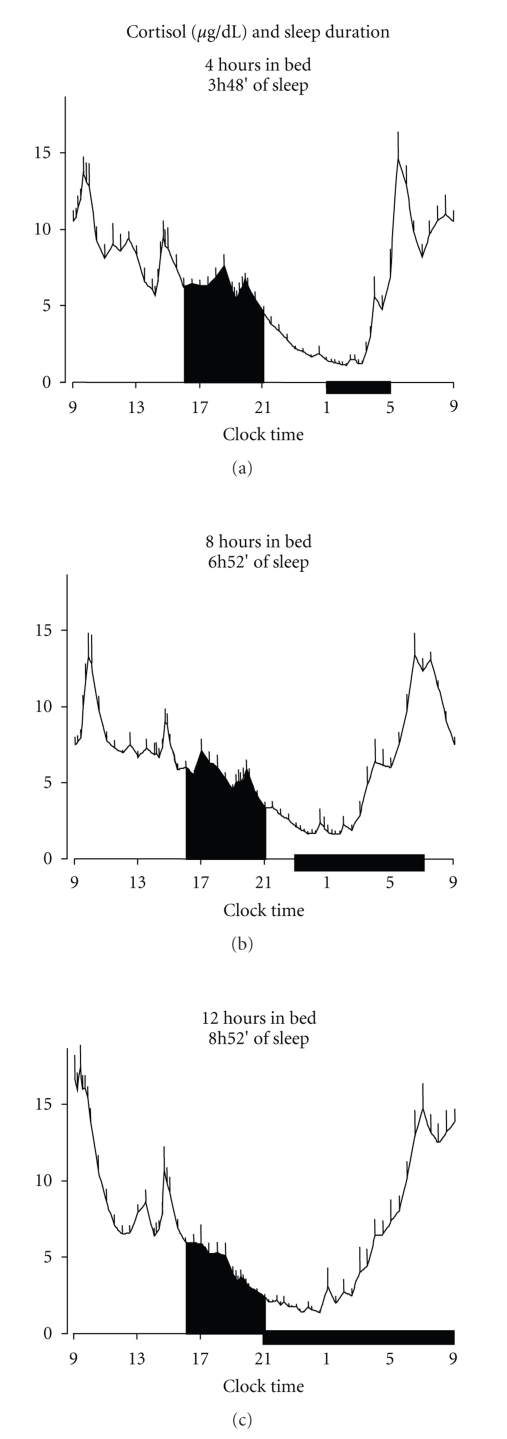
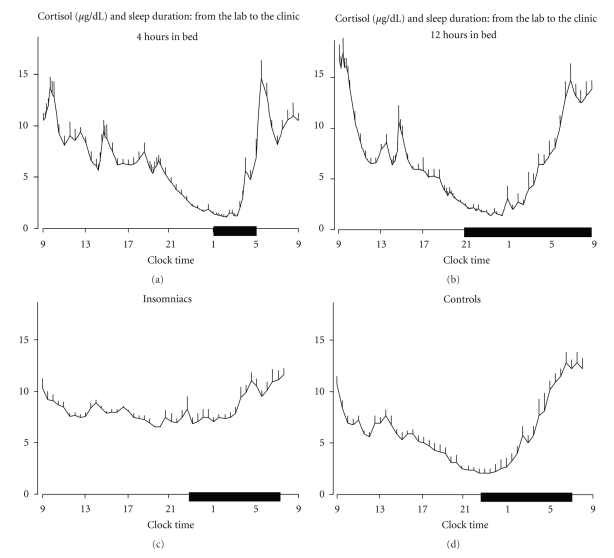
- Partial sleep restriction elevated evening cortisol: after 6 nights of 4 hours in bed in 11 young men, the quiescent period onset was delayed by nearly 1.5 hours and salivary free cortisol decline from 16:00 to 21:00 was about six times slower than when fully rested; after only 1 night of 4 hours in bed, plasma cortisol over 18:00–23:00 was 37% higher and quiescent onset occurred 1 hour later.
Methods
- Narrative review of human and animal studies on sleep, sleep disturbances, and HPA axis activity, including experimental protocols such as constant routine, shifted sleep, ultradian schedules, total sleep deprivation, partial sleep restriction, sleep-stage suppression, and sleep fragmentation.
- Synthesizes findings from clinical syndromes including insomnia, major depression, Cushing's syndrome, and sleep disordered breathing/obstructive sleep apnea, with cited sample sizes and outcomes where reported.
- No primary data collection or new statistical analysis is reported; the paper is a qualitative synthesis of the literature.
Limitations
- The paper states that further research is needed to delineate functional links between sleep and HPA axis activity and to understand the pathophysiology of associated syndromes.
- It explicitly notes contradictory findings and methodological limitations in sleep-deprivation and SDB studies, including small sample sizes, variable sleep-recording hours, variable SDB severity, single-time-point cortisol measures, and variable CPAP compliance.
- Evident from the text: as a narrative review, it does not describe a systematic search strategy, formal quality assessment, or quantitative meta-analysis.
Model-written summary. Check it against the paper before relying on it.
Integrity signals
Registry
Cites
Statistics
Figures
Verification
Claims the paper makes
75 Not checked yet · 11 Own interpretation · 2 Own result · 2 No basis given
In the paper
“In addition, the rate of decrease of free cortisol concentrations in saliva between 16.00 hours and 21.00 hours was about six times slower in the sleep-debt than in the fully rested condition.”
§ Impact of Sleep and Its Disturbances on Hypothalamo-Pituitary-Adrenal Axis Activity > 5. Effects of Sleep Loss and Sleep Disrupion on HPA Axis > 5.2. Semichronic Partial Sleep Restriction
What the sources say
- Not checked yetcites [83] source
plaincorrelationaln = 11- Asserted: passes — The authors put it forward as true.
- Checkable: passes — It can be checked against evidence.
- Load-bearing: passes — The paper’s conclusions depend on it.
- Based: passes — The paper gives a reason why it holds.
None of the sources cited for this claim have been checked yet.
In the paper
“Indeed, some authors have reported no change [41, 43, 74, 75] or even a slight decrease in cortisol levels [76, 77] after one or several nights of total sleep deprivation.”
§ Impact of Sleep and Its Disturbances on Hypothalamo-Pituitary-Adrenal Axis Activity > 5. Effects of Sleep Loss and Sleep Disrupion on HPA Axis > 5.1. Acute Total Sleep Loss
What the sources say
plain- Asserted: passes — The authors put it forward as true.
- Checkable: passes — It can be checked against evidence.
- Load-bearing: unclear — It is unclear whether the paper’s conclusions depend on it.
- Based: passes — The paper gives a reason why it holds.
None of the sources cited for this claim have been checked yet.
In the paper
“while in some studies cortisol secretion seemed to be almost unaffected by recovery sleep following prolonged wakefulness [78–80]”
§ Impact of Sleep and Its Disturbances on Hypothalamo-Pituitary-Adrenal Axis Activity > 5. Effects of Sleep Loss and Sleep Disrupion on HPA Axis > 5.1. Acute Total Sleep Loss
What the sources say
hedged- Asserted: passes — The authors put it forward as true.
- Checkable: passes — It can be checked against evidence.
- Load-bearing: unclear — It is unclear whether the paper’s conclusions depend on it.
- Based: passes — The paper gives a reason why it holds.
In the paper
“Interestingly, cortisol evening levels observed under 8-hour bedtime condition were intermediate between those measured under 4-hour and 12-hour bedtime conditions [84] (Figure 5).”
§ Impact of Sleep and Its Disturbances on Hypothalamo-Pituitary-Adrenal Axis Activity > 5. Effects of Sleep Loss and Sleep Disrupion on HPA Axis > 5.2. Semichronic Partial Sleep Restriction
What the sources say
- Not checked yetcites [84] source
plaincorrelationaln = 9- Asserted: passes — The authors put it forward as true.
- Checkable: passes — It can be checked against evidence.
- Load-bearing: unclear — It is unclear whether the paper’s conclusions depend on it.
- Based: passes — The paper gives a reason why it holds.
None of the sources cited for this claim have been checked yet.
In the paper
“No significant changes in cortisol profiles were found.”
§ Impact of Sleep and Its Disturbances on Hypothalamo-Pituitary-Adrenal Axis Activity > 5. Effects of Sleep Loss and Sleep Disrupion on HPA Axis > 5.3. Impact of Disrupted Sleep Quality
What the sources say
plain- Asserted: passes — The authors put it forward as true.
- Checkable: passes — It can be checked against evidence.
- Load-bearing: unclear — It is unclear whether the paper’s conclusions depend on it.
- Based: passes — The paper gives a reason why it holds.
A result the paper reports from its own data — it cites no other source for it, so there is none to check. The quote shows it is in the paper.
In the paper
“In this protocol, however, there was a temporal coincidence between the phase markers and the sleep-wake and dark-light transition (at 23:00), which elicited robust cortisol pulses.”
§ Impact of Sleep and Its Disturbances on Hypothalamo-Pituitary-Adrenal Axis Activity > 4. Effects of Shifted Sleep on Hpa Axis > 4.2. Advance of the Sleep-Wake Cycle
plaindirect- Asserted: passes — The authors put it forward as true.
- Checkable: passes — It can be checked against evidence.
- Load-bearing: passes — The paper’s conclusions depend on it.
- Based: passes — The paper gives a reason why it holds.
A result the paper reports from its own data — it cites no other source for it, so there is none to check. The quote shows it is in the paper.
In the paper
“the findings of this study showed that an abrupt 8-hour advance of the sleep-wake, rest-activity and dark-light cycle results in a 3- to 4-hour advance of the timing of the nadir and of the end of the quiescent period, which are both reliable markers of central circadian rhythmicity.”
§ Impact of Sleep and Its Disturbances on Hypothalamo-Pituitary-Adrenal Axis Activity > 4. Effects of Shifted Sleep on Hpa Axis > 4.2. Advance of the Sleep-Wake Cycle
boosteddirect- Asserted: passes — The authors put it forward as true.
- Checkable: passes — It can be checked against evidence.
- Load-bearing: passes — The paper’s conclusions depend on it.
- Based: passes — The paper gives a reason why it holds.
In the paper
“In this regard, it is notable that chronic short sleepers have been found to have higher nocturnal cortisol levels compared with chronic long sleepers [40]”
§ Impact of Sleep and Its Disturbances on Hypothalamo-Pituitary-Adrenal Axis Activity > 5. Effects of Sleep Loss and Sleep Disrupion on HPA Axis > 5.2. Semichronic Partial Sleep Restriction
What the sources say
- Not checked yetcites [40] source
plaincorrelational- Asserted: passes — The authors put it forward as true.
- Checkable: passes — It can be checked against evidence.
- Load-bearing: passes — The paper’s conclusions depend on it.
- Based: passes — The paper gives a reason why it holds.
In the paper
“Decreased cortisol levels have been reported in a study of REM suppression [92].”
§ Impact of Sleep and Its Disturbances on Hypothalamo-Pituitary-Adrenal Axis Activity > 5. Effects of Sleep Loss and Sleep Disrupion on HPA Axis > 5.3. Impact of Disrupted Sleep Quality
What the sources say
- Not checked yetcites [92] 1988, Biological Psychiatry source
plaindirect- Asserted: passes — The authors put it forward as true.
- Checkable: passes — It can be checked against evidence.
- Load-bearing: unclear — It is unclear whether the paper’s conclusions depend on it.
- Based: passes — The paper gives a reason why it holds.
None of the sources cited for this claim have been checked yet.
In the paper
“Notably, the decrease in plasma or urinary cortisol found by Kant et al. [77] and Åkerstedt et al. [76] occurred after 48 hours or more of prolonged wakefulness.”
§ Impact of Sleep and Its Disturbances on Hypothalamo-Pituitary-Adrenal Axis Activity > 5. Effects of Sleep Loss and Sleep Disrupion on HPA Axis > 5.1. Acute Total Sleep Loss
What the sources say
plaincorrelational- Asserted: passes — The authors put it forward as true.
- Checkable: passes — It can be checked against evidence.
- Load-bearing: passes — The paper’s conclusions depend on it.
- Based: passes — The paper gives a reason why it holds.
- It may state two separate claims as one. 32
- Probably not a substantial claim. 8
In the paper
“The state of sleep debt, as compared to the fully rested state, was associated with elevated cortisol concentrations in the afternoon and in the early evening and with a shorter quiescent period, due to a delay in its onset by nearly 1.5 hour.”
§ Impact of Sleep and Its Disturbances on Hypothalamo-Pituitary-Adrenal Axis Activity > 5. Effects of Sleep Loss and Sleep Disrupion on HPA Axis > 5.2. Semichronic Partial Sleep Restriction
What the sources say
- Not checked yetcites [83] source
plaincorrelationaln = 11- Asserted: passes — The authors put it forward as true.
- Checkable: passes — It can be checked against evidence.
- Load-bearing: passes — The paper’s conclusions depend on it.
- Based: passes — The paper gives a reason why it holds.
It may state two separate claims as one.
In the paper
“Following 2 nights of experimental sleep fragmentation across all stages, an increase in morning cortisol levels was observed, in association with a shift in the sympatho-vagal balance, estimated from the analysis of the heart rate variability towards an increase of sympathetic nervous system activity, and a decrease in insulin sensitivity.”
§ Impact of Sleep and Its Disturbances on Hypothalamo-Pituitary-Adrenal Axis Activity > 5. Effects of Sleep Loss and Sleep Disrupion on HPA Axis > 5.3. Impact of Disrupted Sleep Quality
What the sources say
- Not checked yetcites [93] source
hedgedcorrelational- Asserted: passes — The authors put it forward as true.
- Checkable: passes — It can be checked against evidence.
- Load-bearing: passes — The paper’s conclusions depend on it.
- Based: passes — The paper gives a reason why it holds.
It may state two separate claims as one.
None of the sources cited for this claim have been checked yet.
In the paper
“Several studies have reported an elevation of cortisol levels both during the night of total sleep deprivation [13, 35, 72] and, if wakefulness was further prolonged, during the following day, particularly in the afternoon and evening [63, 73].”
§ Impact of Sleep and Its Disturbances on Hypothalamo-Pituitary-Adrenal Axis Activity > 5. Effects of Sleep Loss and Sleep Disrupion on HPA Axis > 5.1. Acute Total Sleep Loss
What the sources say
plaincorrelational- Asserted: passes — The authors put it forward as true.
- Checkable: passes — It can be checked against evidence.
- Load-bearing: unclear — It is unclear whether the paper’s conclusions depend on it.
- Based: passes — The paper gives a reason why it holds.
It may state two separate claims as one.
In the paper
“Short sleep duration was associated with an acute increased cortisol awakening response and both short sleep duration and disturbances were independently associated with a slower rate of decline of cortisol levels across the day and thus with increased evening levels.”
§ Impact of Sleep and Its Disturbances on Hypothalamo-Pituitary-Adrenal Axis Activity > 5. Effects of Sleep Loss and Sleep Disrupion on HPA Axis > 5.2. Semichronic Partial Sleep Restriction
What the sources say
- Not checked yetcites [85] source
plaincorrelationaln = 2,700- Asserted: passes — The authors put it forward as true.
- Checkable: passes — It can be checked against evidence.
- Load-bearing: passes — The paper’s conclusions depend on it.
- Based: passes — The paper gives a reason why it holds.
It may state two separate claims as one.
The paper states this without a source or data behind it here, so there is nothing to check it against. The quote shows it is in the paper.
In the paper
“Therefore, despite a relatively fast adaptation of some circadian markers, the lack of adaptation of acrophase, the longer duration of the rising phase, and the shorter duration of the quiescent period resulted in elevated cortisol levels at the time of the usual trough of the profile.”
§ Impact of Sleep and Its Disturbances on Hypothalamo-Pituitary-Adrenal Axis Activity > 4. Effects of Shifted Sleep on Hpa Axis > 4.2. Advance of the Sleep-Wake Cycle
plaindirect- Asserted: passes — The authors put it forward as true.
- Checkable: passes — It can be checked against evidence.
- Load-bearing: passes — The paper’s conclusions depend on it.
- Based: passes — The paper gives a reason why it holds.
It may state two separate claims as one.
In the paper
“Vgontzas et al. [81] found a significant decrease in plasma cortisol levels, that appeared to be negatively correlated with the rebound increase of SWS.”
§ Impact of Sleep and Its Disturbances on Hypothalamo-Pituitary-Adrenal Axis Activity > 5. Effects of Sleep Loss and Sleep Disrupion on HPA Axis > 5.1. Acute Total Sleep Loss
What the sources say
- Not checked yetcites [81] source
hedgedcorrelational- Asserted: passes — The authors put it forward as true.
- Checkable: passes — It can be checked against evidence.
- Load-bearing: unclear — It is unclear whether the paper’s conclusions depend on it.
- Based: passes — The paper gives a reason why it holds.
It may state two separate claims as one.
In the paper
“In this study, plasma cortisol levels over the 1800–2300 hour period were 37% higher on the day following the night of restricted sleep than on the previous day, and the onset of the quiescent period occurred 1 hour later.”
§ Impact of Sleep and Its Disturbances on Hypothalamo-Pituitary-Adrenal Axis Activity > 5. Effects of Sleep Loss and Sleep Disrupion on HPA Axis > 5.2. Semichronic Partial Sleep Restriction
What the sources say
- Not checked yetcites [73] 1997, Sleep
plaindirect- Asserted: passes — The authors put it forward as true.
- Checkable: passes — It can be checked against evidence.
- Load-bearing: passes — The paper’s conclusions depend on it.
- Based: passes — The paper gives a reason why it holds.
It may state two separate claims as one.
None of the sources cited for this claim have been checked yet.
In the paper
“An important interplay is also the excitatory reciprocal interaction between the HPA axis and the brainstem sympathetic locus coeruleus (LC)-norepinephrine (NE) system: CRH activates the LC; in turn, NE, a known wake-promoting neurotransmitter, activates hypothalamic CRH [9, 10].”
§ Impact of Sleep and Its Disturbances on Hypothalamo-Pituitary-Adrenal Axis Activity > 2. Physiology of Hypothalamo-Pituitary-Adrenal (HPA) Axis
plaindirect- Asserted: passes — The authors put it forward as true.
- Checkable: passes — It can be checked against evidence.
- Load-bearing: unclear — It is unclear whether the paper’s conclusions depend on it.
- Based: passes — The paper gives a reason why it holds.
It may state two separate claims as one.
In the paper
“Circadian rhythms are generated by the endogenous master pacemaker located in the paired suprachiasmatic nucleus (SCN) of the hypothalamus and are kept entrained to the local conditions by environmental timing cues; the most important of these cues is light, that signaled to the SCN by direct input from the retina via the retinohypothalamic tract [1].”
§ Impact of Sleep and Its Disturbances on Hypothalamo-Pituitary-Adrenal Axis Activity > 1. Introduction
What the sources say
- Not checked yetcites [1] source
plaindirect- Asserted: passes — The authors put it forward as true.
- Checkable: passes — It can be checked against evidence.
- Load-bearing: fails — The paper’s conclusions may not depend on it.
- Based: passes — The paper gives a reason why it holds.
Probably not a substantial claim. The paper’s conclusions may not depend on it. It may state two separate claims as one.
A conclusion the paper draws from its own results — it cites no other source for it, so there is none to check. The quote shows it is in the paper.
In the paper
“The daylong cortisol decline may represent the rate of recovery of the axis from this endogenous challenge.”
§ Impact of Sleep and Its Disturbances on Hypothalamo-Pituitary-Adrenal Axis Activity > 2. Physiology of Hypothalamo-Pituitary-Adrenal (HPA) Axis
hedgedconditional- Asserted: passes — The authors put it forward as true.
- Checkable: passes — It can be checked against evidence.
- Load-bearing: fails — The paper’s conclusions may not depend on it.
- Based: passes — The paper gives a reason why it holds.
Probably not a substantial claim. The paper’s conclusions may not depend on it.
None of the sources cited for this claim have been checked yet.
In the paper
“awakenings and sleep offset are accompanied by cortisol stimulation”
- Also stated in: § 3.1. Impact of Sleep Onset and Offset · boosted
“An influence of sleep-wake transitions on cortisol secretion is also detectable during nocturnal awakenings which are consistently associated with a transient elevation of cortisol levels, followed by temporary inhibition of cortisol secretion [38].”
§ Impact of Sleep and Its Disturbances on Hypothalamo-Pituitary-Adrenal Axis Activity > Abstract
boosteddirect- Asserted: passes — The authors put it forward as true.
- Checkable: passes — It can be checked against evidence.
- Load-bearing: passes — The paper’s conclusions depend on it.
- Based: passes — The paper gives a reason why it holds.
It may state two separate claims as one.
- Also stated in: § 3.1. Impact of Sleep Onset and Offset · boosted
None of the sources cited for this claim have been checked yet.
In the paper
“circadian oscillators have been found in a number of peripheral tissues, such as liver, heart, lung, skeletal muscle, and adrenal glands [2, 3].”
§ Impact of Sleep and Its Disturbances on Hypothalamo-Pituitary-Adrenal Axis Activity > 1. Introduction
plain- Asserted: passes — The authors put it forward as true.
- Checkable: passes — It can be checked against evidence.
- Load-bearing: fails — The paper’s conclusions may not depend on it.
- Based: passes — The paper gives a reason why it holds.
Probably not a substantial claim. The paper’s conclusions may not depend on it.
In the paper
“In addition, the HPA axis receives relevant feedback from other areas of the brain, such as the hippocampus and amygdala [8].”
§ Impact of Sleep and Its Disturbances on Hypothalamo-Pituitary-Adrenal Axis Activity > 2. Physiology of Hypothalamo-Pituitary-Adrenal (HPA) Axis
What the sources say
- Not checked yetcites [8] source
plaindirect- Asserted: passes — The authors put it forward as true.
- Checkable: passes — It can be checked against evidence.
- Load-bearing: fails — The paper’s conclusions may not depend on it.
- Based: passes — The paper gives a reason why it holds.
Probably not a substantial claim. The paper’s conclusions may not depend on it.
In the paper
“Thus, the late night rise in cortisol appears to dampen amygdala-dependent emotional processing and could exert a protective function by preventing excessive emotionality in memory.”
§ Impact of Sleep and Its Disturbances on Hypothalamo-Pituitary-Adrenal Axis Activity > 3. Effects of Normal Sleep on HPA Axis > 3.2. Modulatory Effects of Sleep Stages
What the sources say
- Not checked yetcites [58] source
hedgedconditional- Asserted: passes — The authors put it forward as true.
- Checkable: passes — It can be checked against evidence.
- Load-bearing: passes — The paper’s conclusions depend on it.
- Based: passes — The paper gives a reason why it holds.
It may state two separate claims as one.
In the paper
“Both a higher nadir value, due to the lack of the inhibitory effect of sleep onset, and a lower acrophase value, due to the lack of the stimulatory effect of awakening, were observed.”
§ Impact of Sleep and Its Disturbances on Hypothalamo-Pituitary-Adrenal Axis Activity > 4. Effects of Shifted Sleep on Hpa Axis > 4.1. Delay of the Sleep-Wake Cycle
What the sources say
- Not checked yetcites [67] 2000, Sleep
plaindirect- Asserted: passes — The authors put it forward as true.
- Checkable: passes — It can be checked against evidence.
- Load-bearing: passes — The paper’s conclusions depend on it.
- Based: passes — The paper gives a reason why it holds.
It may state two separate claims as one.
In the paper
“ApEn analysis revealed that greater age is associated with more irregular patterns of cortisol, but not ACTH secretion”
§ Impact of Sleep and Its Disturbances on Hypothalamo-Pituitary-Adrenal Axis Activity > 2. Physiology of Hypothalamo-Pituitary-Adrenal (HPA) Axis
What the sources say
- Not checked yetcites [33] 1998, European Journal of Endocrinology source
plaincorrelational- Asserted: passes — The authors put it forward as true.
- Checkable: passes — It can be checked against evidence.
- Load-bearing: passes — The paper’s conclusions depend on it.
- Based: passes — The paper gives a reason why it holds.
It may state two separate claims as one.
In the paper
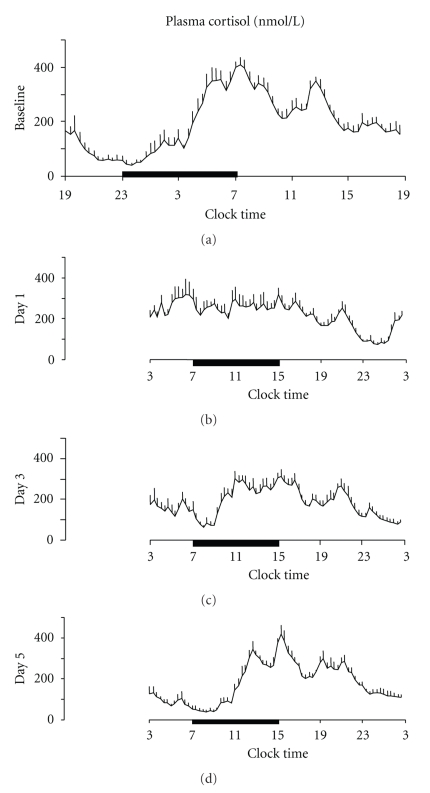
“On the third day, as a sign of partial adaptation to the new schedule, the circadian onset of cortisol was delayed by more than 5 hours, while the timing of the acrophase was delayed by more than 6 hours.”
§ Impact of Sleep and Its Disturbances on Hypothalamo-Pituitary-Adrenal Axis Activity > 4. Effects of Shifted Sleep on Hpa Axis > 4.1. Delay of the Sleep-Wake Cycle
What the sources say
- Not checked yetcites [67] 2000, Sleep
plaindirect- Asserted: passes — The authors put it forward as true.
- Checkable: passes — It can be checked against evidence.
- Load-bearing: unclear — It is unclear whether the paper’s conclusions depend on it.
- Based: passes — The paper gives a reason why it holds.
It may state two separate claims as one.
None of the sources cited for this claim have been checked yet.
In the paper
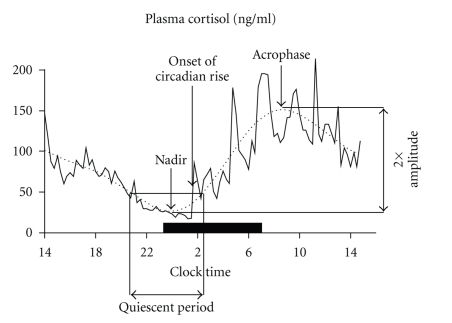
“In the cortisol profile, the end of the quiescent period and the onset of the daily rise are mostly under the control of circadian rhythmicity, while the timing of the acrophase and the amplitude of the diurnal variation are more influenced by sleep-wake transitions.”
§ Impact of Sleep and Its Disturbances on Hypothalamo-Pituitary-Adrenal Axis Activity > 4. Effects of Shifted Sleep on Hpa Axis
What the sources say
plaindirect- Asserted: passes — The authors put it forward as true.
- Checkable: passes — It can be checked against evidence.
- Load-bearing: passes — The paper’s conclusions depend on it.
- Based: passes — The paper gives a reason why it holds.
It may state two separate claims as one.
In the paper
“In this study, mean ACTH concentrations, basal and pulsatile ACTH secretion directly correlated with BMI and were higher in men than in women, after controlling of BMI.”
§ Impact of Sleep and Its Disturbances on Hypothalamo-Pituitary-Adrenal Axis Activity > 2. Physiology of Hypothalamo-Pituitary-Adrenal (HPA) Axis
What the sources say
- Not checked yetcites [32] source
plaincorrelational- Asserted: passes — The authors put it forward as true.
- Checkable: passes — It can be checked against evidence.
- Load-bearing: unclear — It is unclear whether the paper’s conclusions depend on it.
- Based: passes — The paper gives a reason why it holds.
It may state two separate claims as one.
In the paper
“In addition, in men, ACTH-cortisol feedforward synchrony and cortisol-ACTH feedback synchrony both decline with age, as quantified by cross-ApEn, denoting a deterioration of coordinate control of ACTH and cortisol secretion patterns.”
§ Impact of Sleep and Its Disturbances on Hypothalamo-Pituitary-Adrenal Axis Activity > 2. Physiology of Hypothalamo-Pituitary-Adrenal (HPA) Axis
What the sources say
- Not checked yetcites [32] source
plaindirect- Asserted: passes — The authors put it forward as true.
- Checkable: passes — It can be checked against evidence.
- Load-bearing: unclear — It is unclear whether the paper’s conclusions depend on it.
- Based: passes — The paper gives a reason why it holds.
It may state two separate claims as one.
In the paper
“Given that high-frequency EEG over 20 Hz is considered a marker of daytime arousal [64], a functional link between the regulatory mechanisms controlling the HPA activity and the level of central arousal has been hypothesized.”
§ Impact of Sleep and Its Disturbances on Hypothalamo-Pituitary-Adrenal Axis Activity > 3. Effects of Normal Sleep on HPA Axis > 3.2. Modulatory Effects of Sleep Stages
What the sources say
- Not checked yetcites [64] 2000, NeuroReport source
hedgedcorrelational- Asserted: fails — The authors may not put it forward as true.
- Checkable: passes — It can be checked against evidence.
- Load-bearing: fails — The paper’s conclusions may not depend on it.
- Based: passes — The paper gives a reason why it holds.
Probably not a substantial claim. The authors may not put it forward as true. The paper’s conclusions may not depend on it.
In the paper
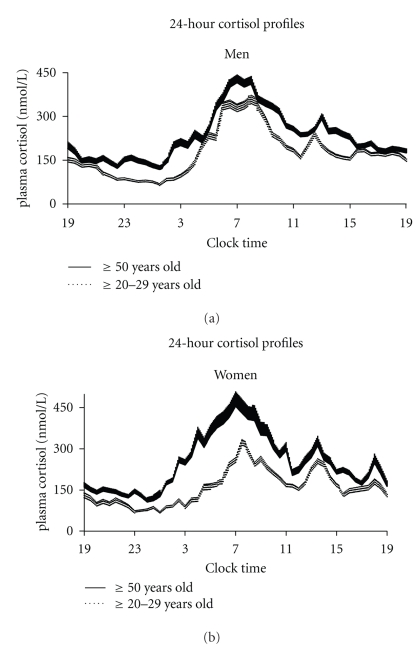
“In young adulthood, women appeared to have, compared to men, lower 24-hour mean cortisol levels, a longer quiescent period (that started earlier and ended later), a lower acrophase, and a lower absolute amplitude of the circadian variation.”
§ Impact of Sleep and Its Disturbances on Hypothalamo-Pituitary-Adrenal Axis Activity > 2. Physiology of Hypothalamo-Pituitary-Adrenal (HPA) Axis
What the sources say
- Not checked yetcites [31] source
hedgedcorrelational- Asserted: passes — The authors put it forward as true.
- Checkable: passes — It can be checked against evidence.
- Load-bearing: unclear — It is unclear whether the paper’s conclusions depend on it.
- Based: passes — The paper gives a reason why it holds.
It may state two separate claims as one.
In the paper
“In addition, the timing of the nadir and of the onset of the nocturnal cortisol rise are advanced in older adults of both sexes and the circadian amplitude, when expressed as a percentage of the 24-hour mean level, is decreased”
§ Impact of Sleep and Its Disturbances on Hypothalamo-Pituitary-Adrenal Axis Activity > 2. Physiology of Hypothalamo-Pituitary-Adrenal (HPA) Axis
What the sources say
- Not checked yetcites [31] source
plaincorrelational- Asserted: passes — The authors put it forward as true.
- Checkable: passes — It can be checked against evidence.
- Load-bearing: unclear — It is unclear whether the paper’s conclusions depend on it.
- Based: passes — The paper gives a reason why it holds.
It may state two separate claims as one.
In the paper
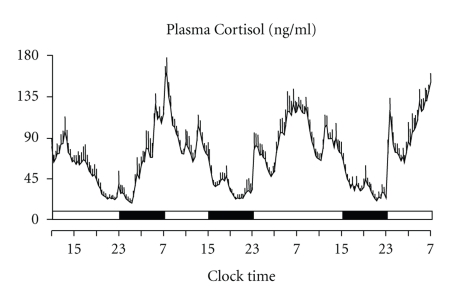
“During the second postshift period (day 3), minor signs of further adaptation of the cortisol profiles were detected: there was no further advance of the timing of the nadir and only a minor additional advance of the onset of the quiescent period.”
§ Impact of Sleep and Its Disturbances on Hypothalamo-Pituitary-Adrenal Axis Activity > 4. Effects of Shifted Sleep on Hpa Axis > 4.2. Advance of the Sleep-Wake Cycle
What the sources say
- Not checked yetcites [68] 2002, American Journal of Physiology source
plainn = 8- Asserted: passes — The authors put it forward as true.
- Checkable: passes — It can be checked against evidence.
- Load-bearing: unclear — It is unclear whether the paper’s conclusions depend on it.
- Based: passes — The paper gives a reason why it holds.
It may state two separate claims as one.
In the paper
“Metyrapone suppressed cortisol concentrations, especially the rise in cortisol during late sleep, and decreased time spent in SWS, which was replaced by shallow NREM sleep. REM sleep was preserved.”
§ Impact of Sleep and Its Disturbances on Hypothalamo-Pituitary-Adrenal Axis Activity > 3. Effects of Normal Sleep on HPA Axis > 3.2. Modulatory Effects of Sleep Stages
What the sources say
- Not checked yetcites [58] source
plaindirect- Asserted: passes — The authors put it forward as true.
- Checkable: passes — It can be checked against evidence.
- Load-bearing: passes — The paper’s conclusions depend on it.
- Based: passes — The paper gives a reason why it holds.
It may state two separate claims as one.
In the paper
“While memory for the neutral texts was reduced, interestingly metyrapone even amplified emotional enhancement in text recall”
§ Impact of Sleep and Its Disturbances on Hypothalamo-Pituitary-Adrenal Axis Activity > 3. Effects of Normal Sleep on HPA Axis > 3.2. Modulatory Effects of Sleep Stages
What the sources say
- Not checked yetcites [58] source
plaindirect- Asserted: passes — The authors put it forward as true.
- Checkable: passes — It can be checked against evidence.
- Load-bearing: passes — The paper’s conclusions depend on it.
- Based: passes — The paper gives a reason why it holds.
It may state two separate claims as one.
In the paper
“On the first day after the shift, profound disruptions in the 24-hour cortisol rhythm were found: a reduction of more than 3 hours in the duration of the quiescent period resulted in an increase of the 24-hour mean levels and in the advance of the circadian onset.”
§ Impact of Sleep and Its Disturbances on Hypothalamo-Pituitary-Adrenal Axis Activity > 4. Effects of Shifted Sleep on Hpa Axis > 4.1. Delay of the Sleep-Wake Cycle
What the sources say
- Not checked yetcites [67] 2000, Sleep
plaindirect- Asserted: passes — The authors put it forward as true.
- Checkable: passes — It can be checked against evidence.
- Load-bearing: passes — The paper’s conclusions depend on it.
- Based: passes — The paper gives a reason why it holds.
It may state two separate claims as one.
In the paper
“In the first postshift period, compared with the baseline profile, the timing of the nadir was advanced by about 3 hours and 20 minutes; the quiescent period was markedly reduced mainly due to an advance of the offset by more than 3 hours.”
§ Impact of Sleep and Its Disturbances on Hypothalamo-Pituitary-Adrenal Axis Activity > 4. Effects of Shifted Sleep on Hpa Axis > 4.2. Advance of the Sleep-Wake Cycle
What the sources say
- Not checked yetcites [68] 2002, American Journal of Physiology source
plaindirectn = 8- Asserted: passes — The authors put it forward as true.
- Checkable: passes — It can be checked against evidence.
- Load-bearing: passes — The paper’s conclusions depend on it.
- Based: passes — The paper gives a reason why it holds.
It may state two separate claims as one.
In the paper
“In the same study, aging was associated, in both sexes, with a progressive increase of 24-hour mean levels from the 2nd to the 8th decade, associated with a shorter quiescent period and higher nadir values.”
§ Impact of Sleep and Its Disturbances on Hypothalamo-Pituitary-Adrenal Axis Activity > 2. Physiology of Hypothalamo-Pituitary-Adrenal (HPA) Axis
What the sources say
- Not checked yetcites [31] source
plaincorrelational- Asserted: passes — The authors put it forward as true.
- Checkable: passes — It can be checked against evidence.
- Load-bearing: unclear — It is unclear whether the paper’s conclusions depend on it.
- Based: passes — The paper gives a reason why it holds.
It may state two separate claims as one.
None of the sources cited for this claim have been checked yet.
In the paper
“Retention of declarative memory critically depends on the integrity of the hippocampus and has been shown to benefit specifically from early nocturnal sleep, in which SWS predominates and cortisol concentrations are minimal [52, 53].”
§ Impact of Sleep and Its Disturbances on Hypothalamo-Pituitary-Adrenal Axis Activity > 3. Effects of Normal Sleep on HPA Axis > 3.2. Modulatory Effects of Sleep Stages
What the sources say
plaindirect- Asserted: passes — The authors put it forward as true.
- Checkable: passes — It can be checked against evidence.
- Load-bearing: passes — The paper’s conclusions depend on it.
- Based: passes — The paper gives a reason why it holds.
It may state two separate claims as one.
In the paper
“No shift in the timing of the acrophase occurred, thus the duration of the rising phase of cortisol secretion was increased by nearly 3 hours and presented a biphasic pattern.”
§ Impact of Sleep and Its Disturbances on Hypothalamo-Pituitary-Adrenal Axis Activity > 4. Effects of Shifted Sleep on Hpa Axis > 4.2. Advance of the Sleep-Wake Cycle
What the sources say
- Not checked yetcites [68] 2002, American Journal of Physiology source
plaindirectn = 8- Asserted: passes — The authors put it forward as true.
- Checkable: passes — It can be checked against evidence.
- Load-bearing: passes — The paper’s conclusions depend on it.
- Based: passes — The paper gives a reason why it holds.
It may state two separate claims as one.
In the paper
“Hence, a biphasic HPA response to sleep deprivation has been suggested [63] where activation of the HPA axis, as part of the stress response, may be one of the arousal mechanisms recruited early on to adapt to sleep loss; however, when wakefulness is prolonged, the increased sleep pressure may eventually cause a blunting of the HPA axis activity.”
§ Impact of Sleep and Its Disturbances on Hypothalamo-Pituitary-Adrenal Axis Activity > 5. Effects of Sleep Loss and Sleep Disrupion on HPA Axis > 5.1. Acute Total Sleep Loss
What the sources say
- Not checked yetcites [63] source
hedgedconditional- Asserted: passes — The authors put it forward as true.
- Checkable: passes — It can be checked against evidence.
- Load-bearing: passes — The paper’s conclusions depend on it.
- Based: passes — The paper gives a reason why it holds.
It may state two separate claims as one.
In the paper
“The findings of high glucocorticoid levels in a condition of acute sleep loss have been interpreted as reflecting the stress of the effort to maintain wakefulness and is consistent with the positive correlation found between high frequency EEG activity in wake, indices of arousal, and cortisol release [63].”
§ Impact of Sleep and Its Disturbances on Hypothalamo-Pituitary-Adrenal Axis Activity > 5. Effects of Sleep Loss and Sleep Disrupion on HPA Axis > 5.1. Acute Total Sleep Loss
What the sources say
- Not checked yetcites [63] source
plaincorrelational- Asserted: passes — The authors put it forward as true.
- Checkable: passes — It can be checked against evidence.
- Load-bearing: unclear — It is unclear whether the paper’s conclusions depend on it.
- Based: passes — The paper gives a reason why it holds.
It may state two separate claims as one.
A conclusion the paper draws from its own results — it cites no other source for it, so there is none to check. The quote shows it is in the paper.
In the paper
“Even if modest, this elevation may result, under conditions of chronic sleep loss, in a significant glucocorticoid overload and consequently expose the body to the central and peripheral deleterious effects associated with glucocorticoid excess.”
§ Impact of Sleep and Its Disturbances on Hypothalamo-Pituitary-Adrenal Axis Activity > 5. Effects of Sleep Loss and Sleep Disrupion on HPA Axis > 5.2. Semichronic Partial Sleep Restriction
hedgedconditional- Asserted: passes — The authors put it forward as true.
- Checkable: passes — It can be checked against evidence.
- Load-bearing: passes — The paper’s conclusions depend on it.
- Based: passes — The paper gives a reason why it holds.
It may state two separate claims as one.
In the paper
“there is in turn strong evidence that elevated CRH tone increases sleep EEG frequency, thereby decreasing SWS, and increasing light sleep and wakefulness [94].”
§ Impact of Sleep and Its Disturbances on Hypothalamo-Pituitary-Adrenal Axis Activity > 6. HPA Axis and Sleep Disturbances in Clinical Syndromes
What the sources say
- Not checked yetcites [94] 1988, Neuroendocrinology source
boosteddirect- Asserted: passes — The authors put it forward as true.
- Checkable: passes — It can be checked against evidence.
- Load-bearing: passes — The paper’s conclusions depend on it.
- Based: passes — The paper gives a reason why it holds.
It may state two separate claims as one.
In the paper
“Recurrent partial sleep restriction has become a widespread habit in modern society [82]”
§ Impact of Sleep and Its Disturbances on Hypothalamo-Pituitary-Adrenal Axis Activity > 5. Effects of Sleep Loss and Sleep Disrupion on HPA Axis > 5.2. Semichronic Partial Sleep Restriction
What the sources say
- Not checked yetcites [82] 2005, Morbidity and Mortality Weekly Report
plain- Asserted: passes — The authors put it forward as true.
- Checkable: passes — It can be checked against evidence.
- Load-bearing: fails — The paper’s conclusions may not depend on it.
- Based: passes — The paper gives a reason why it holds.
Probably not a substantial claim. The paper’s conclusions may not depend on it.
A conclusion the paper draws from its own results — it cites no other source for it, so there is none to check. The quote shows it is in the paper.
In the paper
“Findings of decreased cortisol levels after sleep deprivation have been interpreted as related to an increase in fatigue and sleepiness.”
§ Impact of Sleep and Its Disturbances on Hypothalamo-Pituitary-Adrenal Axis Activity > 5. Effects of Sleep Loss and Sleep Disrupion on HPA Axis > 5.1. Acute Total Sleep Loss
plaincorrelational- Asserted: passes — The authors put it forward as true.
- Checkable: passes — It can be checked against evidence.
- Load-bearing: fails — The paper’s conclusions may not depend on it.
- Based: passes — The paper gives a reason why it holds.
Probably not a substantial claim. The paper’s conclusions may not depend on it.
A conclusion the paper draws from its own results — it cites no other source for it, so there is none to check. The quote shows it is in the paper.
In the paper
“These discrepancies could be due to a lack of control of experimental conditions, such as physical activity and posture, and/or to an insufficient frequency of blood sampling; indeed, short naps may have gone undetected and estimation of cortisol levels with infrequent blood sampling are often inaccurate.”
§ Impact of Sleep and Its Disturbances on Hypothalamo-Pituitary-Adrenal Axis Activity > 5. Effects of Sleep Loss and Sleep Disrupion on HPA Axis > 5.1. Acute Total Sleep Loss
hedgedconditional- Asserted: passes — The authors put it forward as true.
- Checkable: passes — It can be checked against evidence.
- Load-bearing: unclear — It is unclear whether the paper’s conclusions depend on it.
- Based: passes — The paper gives a reason why it holds.
It may state two separate claims as one.
A conclusion the paper draws from its own results — it cites no other source for it, so there is none to check. The quote shows it is in the paper.
In the paper
“The timing of the period of recovery sleep is likely to have played a role in these conflicting findings.”
§ Impact of Sleep and Its Disturbances on Hypothalamo-Pituitary-Adrenal Axis Activity > 5. Effects of Sleep Loss and Sleep Disrupion on HPA Axis > 5.1. Acute Total Sleep Loss
hedgedconditional- Asserted: passes — The authors put it forward as true.
- Checkable: passes — It can be checked against evidence.
- Load-bearing: fails — The paper’s conclusions may not depend on it.
- Based: passes — The paper gives a reason why it holds.
Probably not a substantial claim. The paper’s conclusions may not depend on it.
The paper relies on this without support.
HPA hyperactivity is clearly associated with metabolic, cognitive and psychiatric disorders.
“HPA hyperactivity is clearly associated with metabolic, cognitive and psychiatric disorders”
The paper relies on this without support.
Several clinical syndromes, such as insomnia, depression, Cushing's syndrome, and sleep disordered breathing, display HPA hyperactivity, disturbed sleep, psychiatric and metabolic impairments.
“Several clinical syndromes, such as insomnia, depression, Cushing's syndrome, sleep disordered breathing (SDB) display HPA hyperactivity, disturbed sleep, psychiatric and metabolic impairments.”
The paper relies on this without support.
Sleep onset exerts a modest but clearly detectable inhibitory effect on the activity of the HPA axis.
“Given the modest but clearly detectable inhibitory effect exerted by sleep onset on the activity of the HPA axis, it has been hypothesized that sleep loss might increase cortisol levels.”
Claims other papers make about this one
Each is checked against this paper’s own text: does it say what the citing paper says it does?
In the citing paper
“various doses of recovery sleep (0, 2, 4, 6, 8, and 10 h) following five nights of experimental sleep restriction resulted in a sleep-dose-dependent decrease of lapses (i.e., reaction times over 500 ms) in the psychomotor vigilance test”
From The Sleep-Immune Crosstalk in Health and Disease (2019) · cites this paper as [28]
In the citing paper
“performance did not return to baseline levels after a single night with a 10-h sleep opportunity (28) or three nights with an 8-h sleep opportunity (32), suggesting that a longer recovery sleep period is needed to fully resolve any performance decrements due to experimental sleep deficiency”
From The Sleep-Immune Crosstalk in Health and Disease (2019) · cites this paper as [28]
Citations
Cites
Diagnostic and Statistical Manual of Mental Disorders
Williams, J. B. W., & First, M. B. (2013) · Oxford University Press eBooks · doi:10.1093/acrefore/9780199975839.013.104 · Cited by 109,845
Memory and the hippocampus: A synthesis from findings with rats, monkeys, and humans.
Squire, L. R. (1992) · Psychological Review · doi:10.1037/0033-295x.99.2.195 · Cited by 5,376 · cited 1×
“Retention of declarative memory critically depends on the integrity of the hippocampus and has been shown to benefit specifically from early nocturnal sleep, in which SWS predominates and cortisol concentrations are minimal [52, 53].”
BackgroundImpact of sleep debt on metabolic and endocrine function
Spiegel, K., Leproult, R., & Van Cauter, E. (1999) · The Lancet · doi:10.1016/s0140-6736(99)01376-8 · Cited by 3,668 · cited 1×
“The first systematic study of HPA axis activity in a state of sleep debt assessed the effect of 6 consecutive nights of 4 hours in bed in eleven young men [83].”
BackgroundSelf-citationHypothalamic-pituitary-adrenal axis, neuroendocrine factors and stress
Tsigos, C., & Chrousos, G. P. (2002) · Journal of Psychosomatic Research · doi:10.1016/s0022-3999(02)00429-4 · Cited by 2,822
Sympathetic neural mechanisms in obstructive sleep apnea.
Somers, V. K., Dyken, M. E., Clary, M. P., & Abboud, F. M. (1995) · Journal of Clinical Investigation · doi:10.1172/jci118235 · Cited by 2,527
Epidemiologic study of sleep disturbances and psychiatric disorders. An opportunity for prevention?
Ford, D. E. (1989) · JAMA · doi:10.1001/jama.262.11.1479 · Cited by 2,440
Adverse metabolic and cardiovascular consequences of circadian misalignment
Scheer, F. A. J. L., Hilton, M. F., Mantzoros, C. S., & Shea, S. A. (2009) · Proceedings of the National Academy of Sciences · doi:10.1073/pnas.0808180106 · Cited by 2,351 · cited 1×
“On the first day after the shift, profound disruptions in the 24-hour cortisol rhythm were found: a reduction of more than 3 hours in the duration of the quiescent period resulted in an increase of the 24-hour mean levels and in the advance of the circadian onset.”
BackgroundEpidemiologic Study of Sleep Disturbances and Psychiatric Disorders: An Opportunity for Prevention?
Ford, D. E. (1989) · JAMA · doi:10.1001/jama.1989.03430110069030 · Cited by 2,252
Loss of a circadian adrenal corticosterone rhythm following suprachiasmatic lesions in the rat
Moore, R. Y., & Eichler, V. B. (1972) · Brain Research · doi:10.1016/0006-8993(72)90054-6 · Cited by 2,135 · cited 1×
“As a confirmation, lesions of the SCN in rats result in the loss of corticosteroid periodicity [15, 16].”
BackgroundA Serum Shock Induces Circadian Gene Expression in Mammalian Tissue Culture Cells
Balsalobre, A., Damiola, F., & Schibler, U. (1998) · Cell · doi:10.1016/s0092-8674(00)81199-x · Cited by 2,001 · cited 1×
“In addition to the master clock in the SCN, circadian oscillators have been found in a number of peripheral tissues, such as liver, heart, lung, skeletal muscle, and adrenal glands [2, 3].”
Background
Research works printed but not linked: 19
- 1995, Sleep, 18, 549
- 1998, Hormone and Metabolic Research, 30, 311
- 2000, American Journal of Physiology, 279, R1357
- 1974, Journal of Clinical Endocrinology and Metabolism, 38, 1018, 10.1210/jcem-38-6-1018 · DOI · Paper page
- 1985, Journal of Endocrinological Investigation, 8, 381, 10.1007/bf03348519 · DOI · Paper page
- 2004, Current Opinion in Neurobiology, 26, 221
- 1998, Journal of Clinical Endocrinology and Metabolism, 83, 4263
- 2000, Sleep, 23, 915
- 1997, Sleep, 20, 865
- 1994, Journal of Clinical Endocrinology and Metabolism, 79, 1797
- 2005, Morbidity and Mortality Weekly Report, 54, article 933
- 2002, Organization of the brainstem
- 2007, Journal of Clinical Sleep Medicine, 3, S7
- 2001, Revue Neurologique, 157, S57
- 2007, Acta Psychiatrica Scandinavica. Supplementum, 31
- 2000, Sleep Research Online, 3, 15
- 1996, Zhongguo Yao Li Xue Bao, 17, 489
- 1989, American Review of Respiratory Disease, 139, article a80
- 1991, American Review of Respiratory Disease, 143, article a382
Cited by
Sorted by citations
Items 201–300 of 403
Hypercortisolism as a Potential Concern for Submariners
Reini, S. A. (2010) · Aviation Space and Environmental Medicine · doi:10.3357/asem.2875.2010 · Cited by 10
Dynamic Tests in Pituitary Endocrinology: Pitfalls in Interpretation during Aging
Caputo, M., Mele, C., Ferrero, A., Leone, I., Daffara, T., Marzullo, P., Prodam, F., & Aimaretti, G. (2021) · Neuroendocrinology · doi:10.1159/000514434 · Cited by 11
Garland, S. N., Ivers, H., & Savard, J. (2022) · Frontiers in Neuroscience · doi:10.3389/fnins.2021.817933 · Cited by 13
“, HPA axis dysregulation) that may explain both (Balbo et al., 2010), but this requires further investigation.”
BackgroundFang, J. S., Wu, W., Chen, Y., Zhang, N., Wu, Y., & Zhang, M. (2025) · BMC Geriatrics · doi:10.1186/s12877-025-06273-1 · Cited by 12
“Furthermore, HPA axis dysregulation offers a key biological pathway, as the resulting hyper-cortisolemia [52]—often linked to depression—simul-taneously disrupts sleep architecture while promoting the catabolic processes, such as sarcopenia, that are core to the frailty syndrome [53].”
Loh, H. H., Tay, S. P., Koa, A. J., Yong, M. C., Said, A., Chai, C.-S., Malik, N. M. A., Su, A. T., Tang, B. B. C., Tan, F. H. S., et al. (2025) · Tropical Medicine and Health · doi:10.1186/s41182-025-00742-4 · Cited by 9
“Moreover, a prior study by Balbo et al. has demonstrated that sleep fragmentation and repeated arousals throughout the night increase stress level, which in turn stimulate ACTH release from the pituitary [34].”
Effects of air and light pollution on brain and behavioral function: Potential synergy
Sharma, P., Elliott, B. D., & Nelson, R. J. (2025) · Neuroscience & Biobehavioral Reviews · doi:10.1016/j.neubiorev.2025.106293 · Cited by 8
Prenatal depression and successful lactation
Syam, A., Iskandar, I., Hendrarti, W., & Salam, A. (2021) · Medicina Clínica Práctica · doi:10.1016/j.mcpsp.2021.100234 · Cited by 11
Diabetes and anxiety were associated with insomnia among Japanese male truck drivers
Sugano, Y., Miyachi, T., Ando, T., Iwata, T., Yamanouchi, T., Mishima, K., & Nomura, K. (2022) · Sleep Medicine · doi:10.1016/j.sleep.2022.01.014 · Cited by 10
Photomodulatory effects in the hypothalamus of sleep-deprived young and aged rats
Lutfy, R. H., Salam, S. A., Mohammed, H. S., Shakweer, M. M., & Essawy, A. E. (2023) · Behavioural Brain Research · doi:10.1016/j.bbr.2023.114731 · Cited by 10
Lin, P.-C., Chang, S., & Ho, H. (2020) · Applied Sciences · doi:10.3390/app10051695 · Cited by 10
“, growth hormone, adrenaline, and insulin) [49,50].”
Stenger, S., Vorobyev, A., Bieber, K., Lange, T., Ludwig, R. J., & Hundt, J. E. (2025) · Frontiers in Network Physiology · doi:10.3389/fnetp.2025.1499297 · Cited by 8
Rötger, A., Schuffelen, J., Maurer, L., Lorenz, N., Pollok, B., & Gieselmann, A. (2024) · Journal of Sleep Research · doi:10.1111/jsr.14173 · Cited by 8
“…processes: neurotransmitters such as serotonin and dopamine (Adrien, 2002) as well as changes in the activity of the hypothalamic – pituitary – adrenal axis (Balbo et al., 2010) represent common neurobiological mechanisms underlying impaired regulation of both mood and sleep – wake rhythm.”
Gao, C., & Scullin, M. K. (2024) · Psychosomatic Medicine · doi:10.1097/psy.0000000000001301 · Cited by 9
Microbiome-Based Therapeutics for Insomnia
Li, C., Chen, S., Wang, Y., & Su, Q. (2024) · International Journal of Molecular Sciences · doi:10.3390/ijms252313208 · Cited by 11
“Conversely, upon awakening, HPA axis activity increases, resulting in heightened plasma levels of ACTH and cortisol [23,24].”
Wachid, N., Gayatri, D., & Pujasari, H. (2019) · AIP conference proceedings · doi:10.1063/1.5096751 · Cited by 8
Alshehri, M. M., Alenazi, A. M., Hoover, J. C., Alothman, S., Phadnis, M. A., RUCKER, J. L., Befort, C. A., Miles, J. M., Kluding, P. M., & Siengsukon, C. F. (2019) · JMIR Research Protocols · doi:10.2196/14647 · Cited by 8
“Increasing the number of awakenings during a night of sleep is a part of poor sleep quality [12], which may further contribute in activation of the stress system [13].”
Tseng, Y.-T., Zhao, B., Liu, J., Ding, H., Wang, F., & Wang, L. (2020) · Biochemical and Biophysical Research Communications · doi:10.1016/j.bbrc.2020.04.061 · Cited by 8
Hong, S., Kim, S., Park, D., Ryu, S., Ha, J. H., & Jeon, H. J. (2021) · Journal of Korean Medical Science · doi:10.3346/jkms.2021.36.e30 · Cited by 8
Wang, F., Chow, I. H. I., Li, L., Li, X., Ng, C. H., Ungvari, G. S., Wang, A., Jia, F., Zhang, Y., & Xiang, Y. (2019) · Perspectives In Psychiatric Care · doi:10.1111/ppc.12353 · Cited by 8
Isehunwa, O. O., Warner, E. T., Spiegelman, D. L., Huang, T., Tworoger, S. S., Kent, B. V., & Shields, A. E. (2021) · Comprehensive Psychoneuroendocrinology · doi:10.1016/j.cpnec.2021.100064 · Cited by 10
Chen, Y., Zhang, Y., Feng, G., Lei, Y., Liu, Q., & Liu, Y. (2023) · PLoS ONE · doi:10.1371/journal.pone.0286569 · Cited by 8
“…main efferent pathway via which the SCN regulates the circadian rhythmicity of glucocorticoids (GCs, which are a class of steroid hormones including cortisol and cortico-sterone) production and GC-related activities (such as arousal, immune, inflammation responses and sleep-awake behavior) [49,50].”
BackgroundMohamed, A. H., Shaban, M., Mohammed, H. H., et al. (2024) · Journal of Integrative Nursing · doi:10.4103/jin.jin_3_24 · Cited by 7
Advancing the allostatic load model in military training research: from theory to application
Feigel, E., Koltun, K., Lovalekar, M., Friedl, K., Martin, B., & Nindl, B. (2025) · Frontiers in Physiology · doi:10.3389/fphys.2025.1638451 · Cited by 7
“However, chronic short sleepers ( 5 h∙night − 1 ) have been shown to have elevated cortisol concentrations compared to normal sleepers, suggesting that the downregulation of the HPA axis may fail to occur in some individuals (Balbo et al., 2010).”
Hemati, N., Shiri, F., Ahmadi, F., Najafi, F., Moradinazar, M., Norouzi, E., & Khazaie, H. (2023) · BMC Nephrology · doi:10.1186/s12882-023-03177-3 · Cited by 8
Yang, S., Zhang, N., Liang, Z., Han, Y., Luo, H., Ge, Y., Yin, J., Ding, C., Li, C., Zhang, Q., et al. (2023) · Frontiers in Cardiovascular Medicine · doi:10.3389/fcvm.2023.1210171 · Cited by 7
“Physiological changes that could happen include elevated blood pressure (57), impaired glucose metabolism (58), and a rise in cortisol levels (59).”
BackgroundWoods, D. L., & Yefimova, M. (2012) · Biological Research For Nursing · doi:10.1177/1099800412451118 · Cited by 7
Park, I. H., Kim, S., Kim, Y., Yun, B., & Yoon, J. (2022) · Sleep Medicine · doi:10.1016/j.sleep.2022.08.011 · Cited by 7
An earlier time of scan is associated with greater threat-related amygdala reactivity
Baranger, D. A. A., Margolis, S., Hariri, A. R., & Bogdan, R. (2017) · Social Cognitive and Affective Neuroscience · doi:10.1093/scan/nsx057 · Cited by 8
“…sleep quality, which is associated with disrupted circadian rhythmicity, is predictive of elevated morning cortisol (Hatzinger et al., 2008, 2010; Balbo et al., 2010; Bostock and Steptoe, 2013; Abell et al., 2016) and we found that self-reported poor sleep quality was associated with increased…”
BackgroundAssociation of Insomnia, Lipid Profile, and Lipid-Lowering Medications: A Narrative Review
Jia, F., Shi, S., Fei, S.-F., Zhou, M., & Li, J. (2025) · Reviews in Cardiovascular Medicine · doi:10.31083/rcm24978 · Cited by 6
Sun-Suslow, N., Balon, E., Montoya, J. L., Saloner, R., Campbell, L. M., Serrano, V., Ellis, R. J., & Moore, D. J. (2021) · AIDS Research and Human Retroviruses · doi:10.1089/aid.2020.0158 · Cited by 6
“Problematic sleep impacts the hypothalamus-pituitary-adrenal axis and hypothalamic-pituitary-gonadal axis functions 38 and elevations in cortisol positively correlate with frailty.”
Cortisol, Prolactin, and Breastmilk Volume; A Promising Pattern for Reducing Postpartum Depression
Syam, A., Qasim, M., Iskandar, I., & Kadir, A. (2022) · Open Access Macedonian Journal of Medical Sciences · doi:10.3889/oamjms.2022.9545 · Cited by 6
“The secretion increases in the morning to noon and it decreases at night since it depends on sleep time pattern [17].”
BackgroundNordstoga, A. L., Mork, P. J., Meisingset, I., Nilsen, T. I. L., & Skarpsno, E. S. (2022) · Sleep Medicine · doi:10.1016/j.sleep.2022.07.003 · Cited by 5
UP165, A Standardized Corn Leaf Extract for Improving Sleep Quality and Mood State
Talbott, S., Talbott, J. A., Brownell, L. A., & Yimam, M. (2022) · Journal of Medicinal Food · doi:10.1089/jmf.2021.0197 · Cited by 6
“It has been known that high cortisol level is strongly linked to premature nocturnal awakening, decrease in deep sleep, and hence poor sleep quality.(24,25) Reducing cortisol level is a fundamental step for maintaining sleep homeostasis and, hence, improved sleep quality.”
BackgroundBurek, K., Rabstein, S., Kantermann, T., Vetter, C., Wang‐Sattler, R., Lehnert, M., Pallapies, D., Jöckel, K., Brüning, T., & Behrens, T. (2024) · Psychoneuroendocrinology · doi:10.1016/j.psyneuen.2024.107066 · Cited by 7
“…30 – 45 minutes after awakening (i.e., cortisol awakening response, CAR), declining levels throughout daytime, a quiescent period of minimal secretory activity around midnight, and again an onset of increasing levels in anticipation of waking (Balbo et al., 2010; Copinschi and Challet, 2015).”
Crofts, C. A. P., Neill, A. M., Campbell, A. J., Bartley, J., & White, D. E. (2018) · Journal of Metabolic Health · doi:10.4102/jir.v3i1.34 · Cited by 6
Chen, T., Lee, S., & Buxton, O. M. (2025) · SLEEP · doi:10.1093/sleep/zsaf098 · Cited by 8
Malaei, B., Farajdokht, F., Mohaddes, G., Mansouri, B., Hamidi, N., & Alipour, M. R. (2025) · Journal of Cellular and Molecular Medicine · doi:10.1111/jcmm.70770 · Cited by 5
Bidirectional effects of physical activity and sleep on health: evidence and future directions
Clemente‐Suárez, V. J., Redondo-Flórez, L., Beltrán-Velasco, A. I., Ramos‐Campo, D. J., Ruisoto, P., Sepulveda, R. A. Y., Martín-Rodríguez, A., & Tornero-Aguilera, J. F. (2026) · Frontiers in Sports and Active Living · doi:10.3389/fspor.2026.1739588 · Cited by 5
Ren, N., Zhang, X., Yu, Z., Che, Y., Zhang, Y., Song, M., & Mao, H. (2026) · Neuropsychiatric Disease and Treatment · doi:10.2147/ndt.s585611 · Cited by 6
“89 Also, heightened cortisol can suppress neurotrophic factor expression and reduce hippocampal neurogenesis, worsening sleep disorders.”
The Impact of Sleep Problems on Rheumatoid Arthritis Disease Activity
Azzam, A. I. (2024) · Sleep Medicine Research · doi:10.17241/smr.2023.02075 · Cited by 5
“Contrarily, chronic glucocorticoid administration has been linked to worsened sleep quality, longer waking times, increased rapid eye movement sleep, and increased sleep latency [29].”
BackgroundPagani, E., Valle, E., Barbero, R., Osella, M. C., Schiavone, A., & Prola, L. (2017) · Institutional Research Information System University of Turin (University of Turin) · Cited by 5
The Relationship between Insomnia and Lifestyle-Related Diseases among Japanese Male Truck Drivers
Ando, T., Miyachi, T., Sugano, Y., Kamatsuka, M., Mishima, K., & Nomura, K. (2023) · The Tohoku Journal of Experimental Medicine · doi:10.1620/tjem.2023.j052 · Cited by 5
Sleep Quality in Rheumatoid Arthritis
Kumar, A., Handa, R., Upadhyaya, S. K., Gupta, S. J., & Malgutte, D. R. (2022) · Indian Journal of Rheumatology · doi:10.4103/injr.injr_151_21 · Cited by 5
“[38] To the best of our knowledge, our study is the only study in literature that has used a composite scale to measure socioeconomic status, instead of individual parameters of socioeconomic status.”
Insomnia mediates the longitudinal association between loneliness and burnout among nurses
Świtaj, P., Baka, Ł., Kapica, Ł., Bugajska, J., Januszczak, J., & Sienkiewicz‐Jarosz, H. (2025) · Scientific Reports · doi:10.1038/s41598-025-11264-8 · Cited by 8
“First, sleep disturbances can induce an excessive activation of the hypothalamic–pituitary–adrenal (HPA) axis, resulting in elevated cortisol levels 81,82 .”
Synergistic pathways to psychosis: understanding developmental risk and resilience factors
O’Brien, K. J., Huque, Z. M., Pike, M. R., Smith, E. C., Davies, N. L., & Ellman, L. M. (2025) · Neuropsychopharmacology · doi:10.1038/s41386-025-02261-6 · Cited by 12
Huang, S., Yu, S., Zhang, W., Qi, D., Pei, X., Lu, D., Ba, M., Xuan, S., Huang, D., Yang, J., et al. (2026) · Communications Biology · doi:10.1038/s42003-026-09657-0 · Cited by 5
Meneo, D., Baldi, E., Benz, F., & Fabris, M. A. (2025) · Cogent Mental Health · doi:10.1080/28324765.2025.2541697 · Cited by 6
Pham, H., Svensson, T., Chung, U., & Svensson, A. K. (2022) · International Journal of Environmental Research and Public Health · doi:10.3390/ijerph19095095 · Cited by 4
“Not only does sleep deprivation lead to desynchronization of hormonal and metabolic regulations together with SNS and HPA axis activation [49] but recurrent hypoxia also exacerbates the cardiometabolic dysfunction”
BackgroundKinnunen, U. M., Laethem, M. V., Sianoja, M., & de Bloom, J. (2022) · Stress and Health · doi:10.1002/smi.3185 · Cited by 4
Kim, H. J., Kim, H., Kim, Y. J., Gil, S., Suh, H. J., Chang, Y. B., & Lee, H. (2024) · Food Bioscience · doi:10.1016/j.fbio.2024.104584 · Cited by 4
Sørensen, C., Kåreholt, I., Kalpouzos, G., Udeh‐Momoh, C. T., Holleman, J., Aspö, M., Hagman, G., Spulber, G., Kivipelto, M., Solomon, A., et al. (2024) · The Journal of Prevention of Alzheimer s Disease · doi:10.14283/jpad.2024.145 · Cited by 7
“The stress hormone cortisol is the end product of the Hypothalamic-Pituitary-Adrenal (HPA) axis, and the interaction between the HPA-axis and sleep are both highly complex and bidirectional (26, 28).”
van Dalfsen, J. H., & Markus, C. R. (2018) · Stress · doi:10.1080/10253890.2018.1475472 · Cited by 4
“In support for this postulation, increased basal HPA activity following sleep deprivation is generally regarded as an adaptive arousal mechanism (Balbo et al., 2010) and, hence, a similar mechanism might account for a stress-induced increase in cortisol levels.”
BackgroundAzari, Z. N., Aghamohammadi, M., & Abazari, M. (2019) · Journal of Health and Care · doi:10.29252/jhc.20.4.280 · Cited by 4
Kazemi, M., Aliyari, H., Tekieh, E., Tavakoli, H., Golabi, S., Sahraei, H., Meftahi, G. H., Salehi, M., & Saberi, M. (2021) · Basic and Clinical Neuroscience Journal · doi:10.32598/bcn.2021.724.8 · Cited by 4
The Interrelations Between Sleep and Fear/Anxiety
Babson, K. A. (2015) · Elsevier eBooks · doi:10.1016/b978-0-12-417188-6.00007-4 · Cited by 5
Fritschi, C., Fink, A. M., & Professor, A. (2012) · US Endocrinology · doi:10.17925/use.2012.08.02.84 · Cited by 4
Wang, Y., Wu, Y., Yu, K., Xie, H., Gui, Y., Chen, C., & Wang, N.-H. (2024) · Journal of Chinese Integrative Medicine · doi:10.1016/j.joim.2024.11.001 · Cited by 5
Brown, R. B. (2025) · Clocks & Sleep · doi:10.3390/clockssleep8010001 · Cited by 3
“In-deed, HPA-axis activation elevates nighttime cortisol levels and is associated with restless and fragmented sleep [56], and eating at night raised overnight cortisol levels in night-shift workers [51].”
Schimenes, B. C., Alvarenga, T. A., Toricelli, M., Moysés‐Oliveira, M., Vasco, M. B., Tufik, S. B., & Andersen, M. L. (2026) · Reviews in Endocrine and Metabolic Disorders · doi:10.1007/s11154-026-10030-z · Cited by 3
“Both sleep loss and metabolic stress alter HPA axis activity and appetite hormone balance [65, 66], suggesting a hor-monal-metabolic crosstalk that connects diet, stress physiology, and reproductive endocrine control.”
Nakakubo, S., Doi, T., Tsutsumimoto, K., Kiuchi, Y., Nishimoto, K., & Shimada, H. (2026) · Geriatrics and gerontology international/Geriatrics & gerontology international · doi:10.1111/ggi.70620 · Cited by 3
“Regarding sleep-related hormonal pathways, poor sleep quality has been associated with decreased secretion of growth hormone, insulin-like growth factor 1, and testosterone, which results in the deterioration of muscle mass [27].”
Sleep Disturbance among Type II Diabetic Patients and Influence of Glycemic Control
Nefaie, T. A., Alnefaie, G., Alqahtani, S., Alqasem, S., Althobaiti, A., Alharthi, A., & Amanallah, A. (2022) · Journal of Diabetes Mellitus · doi:10.4236/jdm.2022.122010 · Cited by 3
Barreto, A. C. M., Oliveira, J. N. S., & Suchecki, D. (2024) · Frontiers in Neuroscience · doi:10.3389/fnins.2024.1452429 · Cited by 3
Ashizawa, R., Hamaoka, K., Honda, H., & Yoshimoto, Y. (2024) · Journal of Physical Therapy Science · doi:10.1589/jpts.36.656 · Cited by 3
“Insomnia, a stress behavior, also promotes chronic activation of the hypothalamic-pituitary-adrenal axis and may play an important role in the development of depression 49, 50 ) .”
BackgroundIndividual and joint association of Life’s Essential 8 metrics with pre-sarcopenia among U.S. adults
Lin, M.-S., Lin, Z.-R., Guo, X.-Q., Lin, H., & Ye, M.-F. (2024) · BMC Musculoskeletal Disorders · doi:10.1186/s12891-024-07911-2 · Cited by 3
Wu, Q., Fan, S., Zhou, B., et al. (2024) · International Journal of Occupational Medicine and Environmental Health · doi:10.13075/ijomeh.1896.02468 · Cited by 3
“A rise in basal cortisol levels may lead to sleep disorders [26].”
Minno, A. D., Morone, M. V., Buccato, D. G., Lellis, L. F. D., Ullah, H., Piccinocchi, R., Cordara, M., Larsen, D. S., Guglielmo, A. D., Baldi, A., et al. (2025) · Nutrients · doi:10.3390/nu17091491 · Cited by 3
“These hormonal imbalances may elevate the risk of insomnia-related conditions, including diabetes, obesity, and cognitive impairment [6].”
Guo, M., Cai, M., Dong, H., Wan, H., Zhao, Z., Wei, L., & Chen, Q. (2025) · Experimental Gerontology · doi:10.1016/j.exger.2025.112844 · Cited by 3
“Poor sleep quality disrupts the hypothalamic-pituitary-adrenal (HPA) axis, leading to elevated cortisol levels that accelerate bone resorption by inhibiting osteoblast activity and promoting osteoclast function (Balbo et al., 2010).”
Exploring the Association Between Sleep Quality and Menstrual Abnormalities in Adolescents
Zhang, J., Sarris, G. K., Fernandez-Bergnes, D. G., Salloum, T., Hofmann, K. M., Duncan, E., & Simms-Cendan, J. S. (2025) · Journal of Pediatric and Adolescent Gynecology · doi:10.1016/j.jpag.2025.08.001 · Cited by 3
Impact of sleep quality on glycaemic control in type 2 diabetes: a cross-sectional study
Ayinla, G., Ayinmode, B. A., Kuranga, I. S., Okesina, K. B., Uthman, Y. A., & Ayinla, M. T. (2023) · Journal of African Association of Physiological Sciences · doi:10.4314/jaaps.v11i1.6 · Cited by 3
Zaky, D. A., Mehny, K. A., Abdelrahman, S. S. M., El-Yamany, M. F., & Kamel, A. S. E. D. (2024) · European Journal of Pharmacology · doi:10.1016/j.ejphar.2024.176869 · Cited by 3
Golmohammadi, M., Attari, V. E., Salimi, Y., Nachvak, S. M., & Samadi, M. (2024) · Trials · doi:10.1186/s13063-024-08486-y · Cited by 3
Sato, M., & Kanikowska, D. (2025) · International Journal of Biometeorology · doi:10.1007/s00484-025-02906-7 · Cited by 3
“Consequently, stress contributes to the autonomic nervous system, melatonin secretion, and hypothalamic-pituitary-adrenal axis; in the consequences can be observed disturbances in the sleep-wake cycle and quality of sleep (Balbo et al. 2010) (Nollet et al. 2020).”
Exploring the relationship between ultra-processed foods and chronic insomnia
Fatima, G., Halmy, L. G., Takács, K., & Halmy, E. (2025) · Acta Alimentaria · doi:10.1556/066.2025.00057 · Cited by 6
Nguyen, L. T. H., Choi, M.-J., Shin, H., & Yang, I. (2022) · Evidence-based Complementary and Alternative Medicine · doi:10.1155/2022/1307173 · Cited by 3
Demiralay, C., Agorastos, A., Jahn, H., Kellner, M. B., Yassouridis, A., & Wiedemann, K. (2015) · Psychiatry Research · doi:10.1016/j.psychres.2015.02.008 · Cited by 3
“This may have clinical implications for the treatment of disorders related to nocturnal HPA axis hyperactivity, such as major depression (Young et al., 1994; Reul et al., 2000; Balbo et al., 2010).”
BackgroundInfluence of Sleeping Habits on Adaptive Thermogenesis during Weight Loss in Adults
Chaput, J., & Doyon, C. Y. (2012) · Bioenergetics Open access · doi:10.4172/2167-7662.1000103 · Cited by 3
“Interestingly, lack of sleep is a stressor for the human organism and is associated with an increased sympathetic tone [40].”
BackgroundFat Intake and Stress Modify Sleep Duration Effects on Abdominal Obesity
Chung, S., & Kwock, C. K. (2019) · Nutrients · doi:10.3390/nu11102535 · Cited by 3
“Two mechanisms relating SSD and obesity may be physiologically explained as follows: (1) SSD increases ghrelin, an appetite-stimulating hormone, and decreases leptin, an appetite-suppressing hormone, in plasma [16–18]; (2) SSD also increases the secretion of cortisol [19], which results in increased calorie intake and…”
BackgroundDie Beiträge von Emil Kraepelin zum Wissen über Schlafstörungen und deren Behandlung
Becker, K., Kluge, M., & Steinberg, H. (2015) · Der Nervenarzt · doi:10.1007/s00115-015-4296-7 · Cited by 3
Jun, J. C., & Polotsky, V. Y. (2016) · European Respiratory Journal · doi:10.1183/13993003.01920-2015 · Cited by 3
Yogeshwar, D., & Vipinnath, E. N. (2023) · International Journal of Research in Medical Sciences · doi:10.18203/2320-6012.ijrms20230862 · Cited by 4
Santana, K. D. G. F. P., Confortin, S. C., Bragança, M. L. B. M., Batista, R. F. L., Santos, I. S., & da Sílva, A. A. M. (2022) · Cadernos de Saúde Pública · doi:10.1590/0102-311x00078721 · Cited by 3
Goldstein, M. A., & Goldstein, M. C. (2024) · Oxford University Press eBooks · doi:10.1093/med/9780197640739.003.0001 · Cited by 2
Lin, H., Lin, M. F., Xu, Z., Li, H., & Sun, D. (2024) · Frontiers in Public Health · doi:10.3389/fpubh.2024.1434244 · Cited by 2
“Sleep disruption causes dysfunction of the hypothalamic–pituitary– adrenal axis and gonadal axis, decreased cortisol responsiveness, and decreased levels of growth hormone and insulin-like growth factor-1 (36), which are crucial in frailty development.”
Sleep, gut microbiota, and mind-body medicine
Das, M., Muralitharan, G., Saini, S., & Patra, S. (2025) · Brain Behavior and Immunity Integrative · doi:10.1016/j.bbii.2025.100128 · Cited by 3
Michaud, D. S., & Guay, M. (2025) · Journal of Sleep Research · doi:10.1111/jsr.70105 · Cited by 2
“Sleep disturbance of a significant severity can result in biological changes involved in the progression toward long-term adverse health effects (Chattu et al. 2018; Balbo et al. 2010).”
Mendelian randomization studies on the causal relationship between insomnia and disease
Hou, X., Wei, Y., Wang, Y., & Wang, L. (2026) · Frontiers in Medicine · doi:10.3389/fmed.2025.1709983 · Cited by 4
Maki, K. A., Barb, J. J., Xu, S., Papneja, S., Alkhatib, J., Butera, G., & Wallen, G. R. (2026) · Neuroscience & Biobehavioral Reviews · doi:10.1016/j.neubiorev.2026.106609 · Cited by 5
Pastore, C. M. D. A., & Maffezzolli, E. C. F. (2018) · ReMark - Revista Brasileira de Marketing · doi:10.5585/remark.v17i3.3700 · Cited by 2
Elucidating Neural Mechanisms of Poverty on Child Development Leads Back to Psychosocial Mechanisms.
Luby, J. (2021) · Biological Psychiatry · doi:10.1016/j.biopsych.2021.04.022 · Cited by 2
Bahrami-Nejad, Z., Zhao, M. L., Tholen, S., Hunerdosse, D. M., Tkach, K. E., van Schie, S. N. S., Chung, M., & Teruel, M. N. (2018) · Yearbook of pediatric endocrinology · doi:10.1530/ey.15.15.13 · Cited by 3
Powlson, A., Annamalai, A. K., Moir, S., Webb, A., Bala, L., Graggaber, J., Kandasamy, N., Koulouri, O., Halsall, D. J., Shneerson, J. M., et al. (2023) · Clinical Endocrinology · doi:10.1111/cen.14994 · Cited by 4
“35,36 Notably, the consequence of these arousals is a severe attenuation of the deeper sleep stages, such that subjects spend far longer in stage 1 sleep, and far less time in slow wave and REM sleep (Figure 3).”
BackgroundLee, S., Park, J., Cho, H., & Yoo, J. (2024) · Korean Journal of Family Medicine · doi:10.4082/kjfm.23.0161 · Cited by 2
“This can activate the sympathetic nervous system and induce cortisol dysregulation, leading to an increased risk of high blood pressure and contributing to insulin resistance and visceral adiposity [14].”
Chen, Y.-R., Wang, H. Z., Yang, Y., Li, J., Luo, T., Wei, H., Wei, F., & Chen, W. (2024) · Western Journal of Nursing Research · doi:10.1177/01939459241296728 · Cited by 4
“10 Therefore, precise evaluation of sleep quality in patients with GDM and identification of contributing factors are imperative for enhancing both their sleep quality and glycemic management.”
Kapan, A., Ristić, M., Felsinger, R., & Waldhoer, T. (2025) · Journal of the American Medical Directors Association · doi:10.1016/j.jamda.2024.105477 · Cited by 3
Wang, W., Mo, R., Chen, X., et al. (2025) · Frontiers in Public Health · doi:10.3389/fpubh.2025.1606751 · Cited by 2
“Existing studies suggest that chronic depression may disrupt appetite regulation mechanisms through abnormal activation of the HPA axis, which in turn influences eating preferences, sleep patterns, and even the willingness to exercise (18, 19).”
Troika of Posture, Occlusion and Airway
Dasgupta, S., & Rozario, J. E. (2019) · Indian Journal of Otolaryngology and Head & Neck Surgery · doi:10.1007/s12070-019-01734-7 · Cited by 2
“This leads to increased blood pressure, increased heart beat and increased stress hormone cortisol in the blood stream leading to stress build up [12].”
BackgroundBidirectional Relationships Between Work and Sleep
Jackson, C. L., Lee, S., Crain, T. L., & Buxton, O. M. (2019) · Oxford University Press eBooks · doi:10.1093/oso/9780190930448.003.0013 · Cited by 3
Taylor, T. R., Kirk, K. V., Tapscott, D., Bernard, M. D., Llano, J., & Mellman, T. A. (2014) · Journal of Racial and Ethnic Health Disparities · doi:10.1007/s40615-014-0070-y · Cited by 2
“These findings are not surprising given that sleep disturbance such as trouble falling and staying asleep (insomnia) are common symptoms of PTSD [14], and sleep impairments are known to be associated with alterations in the HPA axis [15].”
BackgroundThe Optimization of Natural Healing
Rogers, C., & Gobbi, A. W. (2017) · Springer eBooks · doi:10.1007/978-3-662-54181-4_1 · Cited by 3
Stress and Sleep Interact to Selectively Consolidate and Transform Negative Emotional Memories
Payne, J. D. (2020) · Oxford University Press eBooks · doi:10.1093/oso/9780190881511.003.0007 · Cited by 2
Metadata
- Authors
- Balbo, M., Leproult, R., & Van Cauter, E.
- Affiliations
- University of Chicago (US)
- Sleep, Chronobiology and Neuroendocrinology Research Laboratory, Department of Medicine, The University of Chicago, Chicago, IL 60637, USA
- ORCID
- Leproult, Rachel
- Venue
- International Journal of Endocrinology
- Publisher
- Wiley
- Published
- 2010
- Volume
- 2010
- Pages
- 1-16
- ISSN
- 1687-8337 (ISSN-L)
- 1687-8345
- PMC
- PMC2902103
- OpenAlex
- W2013718939
- Semantic Scholar
- 222089b5db5564615cd54a1b79fae94417205c62
- Cited by
- 408
- References
- 155
- Citations by year
- 2026: 50 · 2025: 43 · 2024: 40 · 2023: 31 · 2022: 26 · 2021: 32 · 2020: 19 · 2019: 22 · 2018: 24 · 2017: 17 · 2016: 14 · 2015: 21 · 2014: 16 · 2013: 17 · 2012: 20
- FWCI
- 7.30
- Type
- journal article
- Language
- en
- Open access
- gold
- doi.org
- Locations
- International Journal of Endocrinology (publishedVersion, cc-by)
- PubMed Central (publishedVersion, cc-by)
- PubMed (publishedVersion)
- Dépôt institutionnel de l'Université libre de Bruxelles (Université Libre de Bruxelles) (submittedVersion)
- DOAJ (DOAJ: Directory of Open Access Journals) (submittedVersion, cc-by-sa)
- Topics
- Life Sciences › Neuroscience › Behavioral Neuroscience › Stress Responses and Cortisol
- Life Sciences › Neuroscience › Cognitive Neuroscience › Sleep and Wakefulness Research
- Life Sciences › Neuroscience › Endocrine and Autonomic Systems › Circadian rhythm and melatonin
- Keywords
- sleep, sleep disorders, hypothalamic-pituitary-adrenal axis, cortisol secretion, circadian rhythm, sleep deprivation, sleep quality, insomnia, depression, Cushing's syndrome, sleep-disordered breathing, obesity, diabetes mellitus, cognitive impairment
About these checks
Registry, retraction, Cites and statistics results are computed, not judged, with one exception: a printed reference that no index lists is read once by a model before it counts as a citation error. Claims are extracted by a model and kept only when their quote appears verbatim in the text; each cited source is then checked, with a model’s help, for whether it says what the claim relies on. Those verdicts can be wrong — read the claim’s quote and the cited source before relying on one.
A language model drew the claims from the paper on 2026-10-10, under version 3 of the claim definition (model deepseek-v4.1-flash, prompt extract-v3).
A second model labelled each claim on 2026-10-10 (model jev-1.13-20260917, definition revision gold-guideline-v0.2).
Statistics and arithmetic are recomputed, not judged.
Confidence bands are shown only for fields calibrated on our annotated test set. None is calibrated yet, so no band is shown.
What counts as a claim ›How we measure confidence ›How we check this ›
Are you an author, or do you see a problem with this page? Request a review
