

The DOI matches its Crossref record; 150 of the 155 references it cites were found in a registry or an index; 1 of the 116 sources its claims cite were checked for support.
Impact of Sleep and Its Disturbances on Hypothalamo-Pituitary-Adrenal Axis Activity
Open accessAbstract
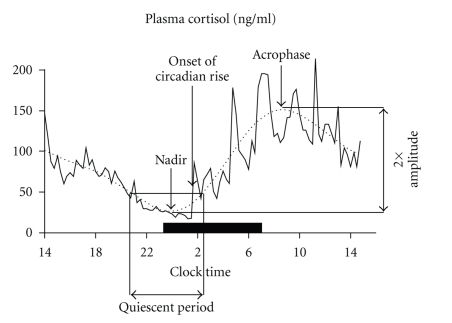
The daily rhythm of cortisol secretion is relatively stable and primarily under the influence of the circadian clock. Nevertheless, several other factors affect hypothalamo-pituitary-adrenal (HPA) axis activity. Sleep has modest but clearly detectable modulatory effects on HPA axis activity. Sleep onset exerts an inhibitory effect on cortisol secretion while awakenings and sleep offset are accompanied by cortisol stimulation. During waking, an association between cortisol secretory bursts and indices of central arousal has also been detected. Abrupt shifts of the sleep period induce a profound disruption in the daily cortisol rhythm, while sleep deprivation and/or reduced sleep quality seem to result in a modest but functionally important activation of the axis. HPA hyperactivity is clearly associated with metabolic, cognitive and psychiatric disorders and could be involved in the well-documented associations between sleep disturbances and the risk of obesity, diabetes and cognitive dysfunction. Several clinical syndromes, such as insomnia, depression, Cushing's syndrome, sleep disordered breathing (SDB) display HPA hyperactivity, disturbed sleep, psychiatric and metabolic impairments. Further research to delineate the functional links between sleep and HPA axis activity is needed to fully understand the pathophysiology of these syndromes and to develop adequate strategies of prevention and treatment.
Overview
AI snapshot
Written from the paper’s full text.
TL;DR
This review summarizes evidence that sleep has modest but detectable modulatory effects on hypothalamo-pituitary-adrenal (HPA) axis activity, with sleep onset inhibiting cortisol and awakenings stimulating it. It argues that sleep loss, shifted sleep, and sleep disruption can activate the HPA axis and that HPA hyperactivity is linked with insomnia, depression, Cushing's syndrome, and sleep disordered breathing.
Key findings
- Sleep onset exerts a modest inhibitory effect on cortisol lasting 1–2 hours, while nocturnal awakenings transiently elevate cortisol and final morning awakening produces a rapid rise persisting about one hour.
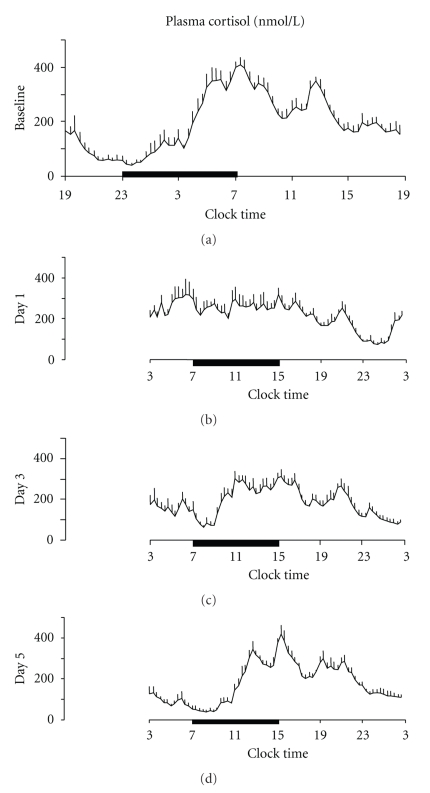
- Abrupt 8-hour sleep-wake delays profoundly disrupt the 24-hour cortisol rhythm: on the first shifted day, the quiescent period was reduced by more than 3 hours, relative amplitude fell by approximately 40%, and the acrophase was delayed by about 3 hours 30 minutes; by day 5 the profile had essentially adapted.
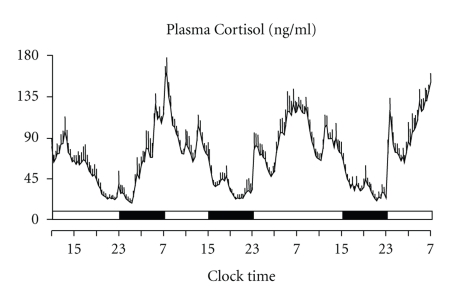
- An 8-hour advance shifted the nadir by about 3 hours 20 minutes and reduced the quiescent period mainly via an advance of its offset by more than 3 hours, with the rising phase lengthened by nearly 3 hours and no shift in acrophase.
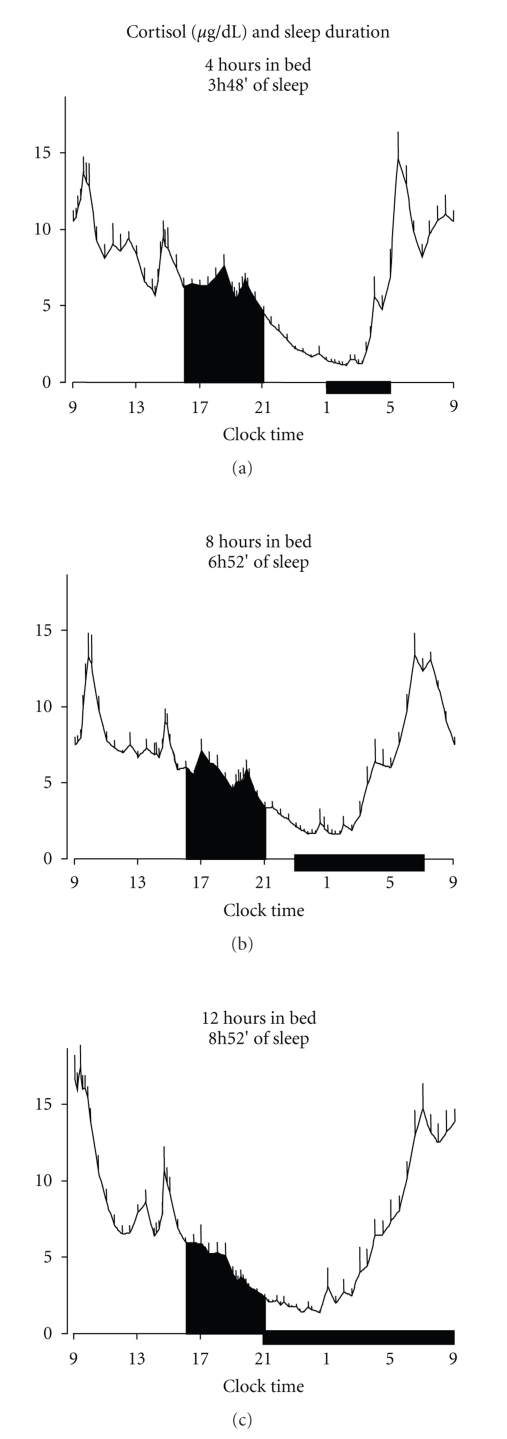
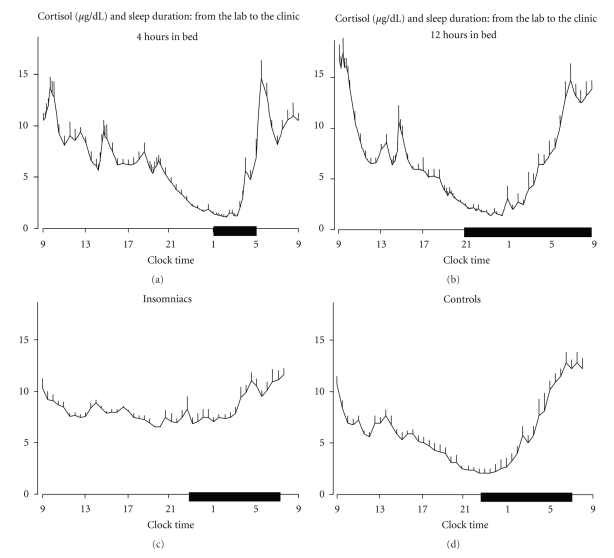
- Partial sleep restriction elevated evening cortisol: after 6 nights of 4 hours in bed in 11 young men, the quiescent period onset was delayed by nearly 1.5 hours and salivary free cortisol decline from 16:00 to 21:00 was about six times slower than when fully rested; after only 1 night of 4 hours in bed, plasma cortisol over 18:00–23:00 was 37% higher and quiescent onset occurred 1 hour later.
Methods
- Narrative review of human and animal studies on sleep, sleep disturbances, and HPA axis activity, including experimental protocols such as constant routine, shifted sleep, ultradian schedules, total sleep deprivation, partial sleep restriction, sleep-stage suppression, and sleep fragmentation.
- Synthesizes findings from clinical syndromes including insomnia, major depression, Cushing's syndrome, and sleep disordered breathing/obstructive sleep apnea, with cited sample sizes and outcomes where reported.
- No primary data collection or new statistical analysis is reported; the paper is a qualitative synthesis of the literature.
Limitations
- The paper states that further research is needed to delineate functional links between sleep and HPA axis activity and to understand the pathophysiology of associated syndromes.
- It explicitly notes contradictory findings and methodological limitations in sleep-deprivation and SDB studies, including small sample sizes, variable sleep-recording hours, variable SDB severity, single-time-point cortisol measures, and variable CPAP compliance.
- Evident from the text: as a narrative review, it does not describe a systematic search strategy, formal quality assessment, or quantitative meta-analysis.
Model-written summary. Check it against the paper before relying on it.
Integrity signals
Registry
Cites
Statistics
Figures
Verification
Claims the paper makes
74 Not checked yet · 11 Own interpretation · 2 Own result · 2 No basis given · 1 Supported
Every source the paper cites for this claim was checked and supports it.
In the paper
“Cortisol levels have been shown to decrease in the first 20 minutes after the onset of SWS [41]”
§ Impact of Sleep and Its Disturbances on Hypothalamo-Pituitary-Adrenal Axis Activity > 3. Effects of Normal Sleep on HPA Axis > 3.2. Modulatory Effects of Sleep Stages
What the sources say
- Supportedcites [41] 1992, Sleep source
The Slow-wave sleep section reports that mean plasma cortisol decreased during the first 20 minutes after SWS onset following sleep deprivation. It also reports significant decreases in the two 10-minute samples after SWS onset during the second half of nights without sleep deprivation. No page number is provided in our copy. (LLM, conf=0.94)
boosteddirect- Asserted: passes — The authors put it forward as true.
- Checkable: passes — It can be checked against evidence.
- Load-bearing: passes — The paper’s conclusions depend on it.
- Based: passes — The paper gives a reason why it holds.
- Supported
In the paper
“In addition, the rate of decrease of free cortisol concentrations in saliva between 16.00 hours and 21.00 hours was about six times slower in the sleep-debt than in the fully rested condition.”
§ Impact of Sleep and Its Disturbances on Hypothalamo-Pituitary-Adrenal Axis Activity > 5. Effects of Sleep Loss and Sleep Disrupion on HPA Axis > 5.2. Semichronic Partial Sleep Restriction
What the sources say
- Not checked yetcites [83] source
plaincorrelationaln = 11- Asserted: passes — The authors put it forward as true.
- Checkable: passes — It can be checked against evidence.
- Load-bearing: passes — The paper’s conclusions depend on it.
- Based: passes — The paper gives a reason why it holds.
None of the sources cited for this claim have been checked yet.
In the paper
“Indeed, some authors have reported no change [41, 43, 74, 75] or even a slight decrease in cortisol levels [76, 77] after one or several nights of total sleep deprivation.”
§ Impact of Sleep and Its Disturbances on Hypothalamo-Pituitary-Adrenal Axis Activity > 5. Effects of Sleep Loss and Sleep Disrupion on HPA Axis > 5.1. Acute Total Sleep Loss
What the sources say
plain- Asserted: passes — The authors put it forward as true.
- Checkable: passes — It can be checked against evidence.
- Load-bearing: unclear — It is unclear whether the paper’s conclusions depend on it.
- Based: passes — The paper gives a reason why it holds.
None of the sources cited for this claim have been checked yet.
In the paper
“while in some studies cortisol secretion seemed to be almost unaffected by recovery sleep following prolonged wakefulness [78–80]”
§ Impact of Sleep and Its Disturbances on Hypothalamo-Pituitary-Adrenal Axis Activity > 5. Effects of Sleep Loss and Sleep Disrupion on HPA Axis > 5.1. Acute Total Sleep Loss
What the sources say
hedged- Asserted: passes — The authors put it forward as true.
- Checkable: passes — It can be checked against evidence.
- Load-bearing: unclear — It is unclear whether the paper’s conclusions depend on it.
- Based: passes — The paper gives a reason why it holds.
In the paper
“Interestingly, cortisol evening levels observed under 8-hour bedtime condition were intermediate between those measured under 4-hour and 12-hour bedtime conditions [84] (Figure 5).”
§ Impact of Sleep and Its Disturbances on Hypothalamo-Pituitary-Adrenal Axis Activity > 5. Effects of Sleep Loss and Sleep Disrupion on HPA Axis > 5.2. Semichronic Partial Sleep Restriction
What the sources say
- Not checked yetcites [84] source
plaincorrelationaln = 9- Asserted: passes — The authors put it forward as true.
- Checkable: passes — It can be checked against evidence.
- Load-bearing: unclear — It is unclear whether the paper’s conclusions depend on it.
- Based: passes — The paper gives a reason why it holds.
None of the sources cited for this claim have been checked yet.
In the paper
“No significant changes in cortisol profiles were found.”
§ Impact of Sleep and Its Disturbances on Hypothalamo-Pituitary-Adrenal Axis Activity > 5. Effects of Sleep Loss and Sleep Disrupion on HPA Axis > 5.3. Impact of Disrupted Sleep Quality
What the sources say
plain- Asserted: passes — The authors put it forward as true.
- Checkable: passes — It can be checked against evidence.
- Load-bearing: unclear — It is unclear whether the paper’s conclusions depend on it.
- Based: passes — The paper gives a reason why it holds.
A result the paper reports from its own data — it cites no other source for it, so there is none to check. The quote shows it is in the paper.
In the paper
“In this protocol, however, there was a temporal coincidence between the phase markers and the sleep-wake and dark-light transition (at 23:00), which elicited robust cortisol pulses.”
§ Impact of Sleep and Its Disturbances on Hypothalamo-Pituitary-Adrenal Axis Activity > 4. Effects of Shifted Sleep on Hpa Axis > 4.2. Advance of the Sleep-Wake Cycle
plaindirect- Asserted: passes — The authors put it forward as true.
- Checkable: passes — It can be checked against evidence.
- Load-bearing: passes — The paper’s conclusions depend on it.
- Based: passes — The paper gives a reason why it holds.
A result the paper reports from its own data — it cites no other source for it, so there is none to check. The quote shows it is in the paper.
In the paper
“the findings of this study showed that an abrupt 8-hour advance of the sleep-wake, rest-activity and dark-light cycle results in a 3- to 4-hour advance of the timing of the nadir and of the end of the quiescent period, which are both reliable markers of central circadian rhythmicity.”
§ Impact of Sleep and Its Disturbances on Hypothalamo-Pituitary-Adrenal Axis Activity > 4. Effects of Shifted Sleep on Hpa Axis > 4.2. Advance of the Sleep-Wake Cycle
boosteddirect- Asserted: passes — The authors put it forward as true.
- Checkable: passes — It can be checked against evidence.
- Load-bearing: passes — The paper’s conclusions depend on it.
- Based: passes — The paper gives a reason why it holds.
In the paper
“In this regard, it is notable that chronic short sleepers have been found to have higher nocturnal cortisol levels compared with chronic long sleepers [40]”
§ Impact of Sleep and Its Disturbances on Hypothalamo-Pituitary-Adrenal Axis Activity > 5. Effects of Sleep Loss and Sleep Disrupion on HPA Axis > 5.2. Semichronic Partial Sleep Restriction
What the sources say
- Not checked yetcites [40] source
plaincorrelational- Asserted: passes — The authors put it forward as true.
- Checkable: passes — It can be checked against evidence.
- Load-bearing: passes — The paper’s conclusions depend on it.
- Based: passes — The paper gives a reason why it holds.
In the paper
“Decreased cortisol levels have been reported in a study of REM suppression [92].”
§ Impact of Sleep and Its Disturbances on Hypothalamo-Pituitary-Adrenal Axis Activity > 5. Effects of Sleep Loss and Sleep Disrupion on HPA Axis > 5.3. Impact of Disrupted Sleep Quality
What the sources say
- Not checked yetcites [92] 1988, Biological Psychiatry source
plaindirect- Asserted: passes — The authors put it forward as true.
- Checkable: passes — It can be checked against evidence.
- Load-bearing: unclear — It is unclear whether the paper’s conclusions depend on it.
- Based: passes — The paper gives a reason why it holds.
- It may state two separate claims as one. 32
- Probably not a substantial claim. 8
In the paper
“The state of sleep debt, as compared to the fully rested state, was associated with elevated cortisol concentrations in the afternoon and in the early evening and with a shorter quiescent period, due to a delay in its onset by nearly 1.5 hour.”
§ Impact of Sleep and Its Disturbances on Hypothalamo-Pituitary-Adrenal Axis Activity > 5. Effects of Sleep Loss and Sleep Disrupion on HPA Axis > 5.2. Semichronic Partial Sleep Restriction
What the sources say
- Not checked yetcites [83] source
plaincorrelationaln = 11- Asserted: passes — The authors put it forward as true.
- Checkable: passes — It can be checked against evidence.
- Load-bearing: passes — The paper’s conclusions depend on it.
- Based: passes — The paper gives a reason why it holds.
It may state two separate claims as one.
In the paper
“Following 2 nights of experimental sleep fragmentation across all stages, an increase in morning cortisol levels was observed, in association with a shift in the sympatho-vagal balance, estimated from the analysis of the heart rate variability towards an increase of sympathetic nervous system activity, and a decrease in insulin sensitivity.”
§ Impact of Sleep and Its Disturbances on Hypothalamo-Pituitary-Adrenal Axis Activity > 5. Effects of Sleep Loss and Sleep Disrupion on HPA Axis > 5.3. Impact of Disrupted Sleep Quality
What the sources say
- Not checked yetcites [93] source
hedgedcorrelational- Asserted: passes — The authors put it forward as true.
- Checkable: passes — It can be checked against evidence.
- Load-bearing: passes — The paper’s conclusions depend on it.
- Based: passes — The paper gives a reason why it holds.
It may state two separate claims as one.
None of the sources cited for this claim have been checked yet.
In the paper
“Several studies have reported an elevation of cortisol levels both during the night of total sleep deprivation [13, 35, 72] and, if wakefulness was further prolonged, during the following day, particularly in the afternoon and evening [63, 73].”
§ Impact of Sleep and Its Disturbances on Hypothalamo-Pituitary-Adrenal Axis Activity > 5. Effects of Sleep Loss and Sleep Disrupion on HPA Axis > 5.1. Acute Total Sleep Loss
What the sources say
plaincorrelational- Asserted: passes — The authors put it forward as true.
- Checkable: passes — It can be checked against evidence.
- Load-bearing: unclear — It is unclear whether the paper’s conclusions depend on it.
- Based: passes — The paper gives a reason why it holds.
It may state two separate claims as one.
In the paper
“Short sleep duration was associated with an acute increased cortisol awakening response and both short sleep duration and disturbances were independently associated with a slower rate of decline of cortisol levels across the day and thus with increased evening levels.”
§ Impact of Sleep and Its Disturbances on Hypothalamo-Pituitary-Adrenal Axis Activity > 5. Effects of Sleep Loss and Sleep Disrupion on HPA Axis > 5.2. Semichronic Partial Sleep Restriction
What the sources say
- Not checked yetcites [85] source
plaincorrelationaln = 2,700- Asserted: passes — The authors put it forward as true.
- Checkable: passes — It can be checked against evidence.
- Load-bearing: passes — The paper’s conclusions depend on it.
- Based: passes — The paper gives a reason why it holds.
It may state two separate claims as one.
The paper states this without a source or data behind it here, so there is nothing to check it against. The quote shows it is in the paper.
In the paper
“Therefore, despite a relatively fast adaptation of some circadian markers, the lack of adaptation of acrophase, the longer duration of the rising phase, and the shorter duration of the quiescent period resulted in elevated cortisol levels at the time of the usual trough of the profile.”
§ Impact of Sleep and Its Disturbances on Hypothalamo-Pituitary-Adrenal Axis Activity > 4. Effects of Shifted Sleep on Hpa Axis > 4.2. Advance of the Sleep-Wake Cycle
plaindirect- Asserted: passes — The authors put it forward as true.
- Checkable: passes — It can be checked against evidence.
- Load-bearing: passes — The paper’s conclusions depend on it.
- Based: passes — The paper gives a reason why it holds.
It may state two separate claims as one.
In the paper
“Vgontzas et al. [81] found a significant decrease in plasma cortisol levels, that appeared to be negatively correlated with the rebound increase of SWS.”
§ Impact of Sleep and Its Disturbances on Hypothalamo-Pituitary-Adrenal Axis Activity > 5. Effects of Sleep Loss and Sleep Disrupion on HPA Axis > 5.1. Acute Total Sleep Loss
What the sources say
- Not checked yetcites [81] source
hedgedcorrelational- Asserted: passes — The authors put it forward as true.
- Checkable: passes — It can be checked against evidence.
- Load-bearing: unclear — It is unclear whether the paper’s conclusions depend on it.
- Based: passes — The paper gives a reason why it holds.
It may state two separate claims as one.
In the paper
“In this study, plasma cortisol levels over the 1800–2300 hour period were 37% higher on the day following the night of restricted sleep than on the previous day, and the onset of the quiescent period occurred 1 hour later.”
§ Impact of Sleep and Its Disturbances on Hypothalamo-Pituitary-Adrenal Axis Activity > 5. Effects of Sleep Loss and Sleep Disrupion on HPA Axis > 5.2. Semichronic Partial Sleep Restriction
What the sources say
- Not checked yetcites [73] 1997, Sleep
plaindirect- Asserted: passes — The authors put it forward as true.
- Checkable: passes — It can be checked against evidence.
- Load-bearing: passes — The paper’s conclusions depend on it.
- Based: passes — The paper gives a reason why it holds.
It may state two separate claims as one.
None of the sources cited for this claim have been checked yet.
In the paper
“An important interplay is also the excitatory reciprocal interaction between the HPA axis and the brainstem sympathetic locus coeruleus (LC)-norepinephrine (NE) system: CRH activates the LC; in turn, NE, a known wake-promoting neurotransmitter, activates hypothalamic CRH [9, 10].”
§ Impact of Sleep and Its Disturbances on Hypothalamo-Pituitary-Adrenal Axis Activity > 2. Physiology of Hypothalamo-Pituitary-Adrenal (HPA) Axis
plaindirect- Asserted: passes — The authors put it forward as true.
- Checkable: passes — It can be checked against evidence.
- Load-bearing: unclear — It is unclear whether the paper’s conclusions depend on it.
- Based: passes — The paper gives a reason why it holds.
It may state two separate claims as one.
In the paper
“Circadian rhythms are generated by the endogenous master pacemaker located in the paired suprachiasmatic nucleus (SCN) of the hypothalamus and are kept entrained to the local conditions by environmental timing cues; the most important of these cues is light, that signaled to the SCN by direct input from the retina via the retinohypothalamic tract [1].”
§ Impact of Sleep and Its Disturbances on Hypothalamo-Pituitary-Adrenal Axis Activity > 1. Introduction
What the sources say
- Not checked yetcites [1] source
plaindirect- Asserted: passes — The authors put it forward as true.
- Checkable: passes — It can be checked against evidence.
- Load-bearing: fails — The paper’s conclusions may not depend on it.
- Based: passes — The paper gives a reason why it holds.
Probably not a substantial claim. The paper’s conclusions may not depend on it. It may state two separate claims as one.
A conclusion the paper draws from its own results — it cites no other source for it, so there is none to check. The quote shows it is in the paper.
In the paper
“The daylong cortisol decline may represent the rate of recovery of the axis from this endogenous challenge.”
§ Impact of Sleep and Its Disturbances on Hypothalamo-Pituitary-Adrenal Axis Activity > 2. Physiology of Hypothalamo-Pituitary-Adrenal (HPA) Axis
hedgedconditional- Asserted: passes — The authors put it forward as true.
- Checkable: passes — It can be checked against evidence.
- Load-bearing: fails — The paper’s conclusions may not depend on it.
- Based: passes — The paper gives a reason why it holds.
Probably not a substantial claim. The paper’s conclusions may not depend on it.
None of the sources cited for this claim have been checked yet.
In the paper
“awakenings and sleep offset are accompanied by cortisol stimulation”
- Also stated in: § 3.1. Impact of Sleep Onset and Offset · boosted
“An influence of sleep-wake transitions on cortisol secretion is also detectable during nocturnal awakenings which are consistently associated with a transient elevation of cortisol levels, followed by temporary inhibition of cortisol secretion [38].”
§ Impact of Sleep and Its Disturbances on Hypothalamo-Pituitary-Adrenal Axis Activity > Abstract
boosteddirect- Asserted: passes — The authors put it forward as true.
- Checkable: passes — It can be checked against evidence.
- Load-bearing: passes — The paper’s conclusions depend on it.
- Based: passes — The paper gives a reason why it holds.
It may state two separate claims as one.
- Also stated in: § 3.1. Impact of Sleep Onset and Offset · boosted
None of the sources cited for this claim have been checked yet.
In the paper
“circadian oscillators have been found in a number of peripheral tissues, such as liver, heart, lung, skeletal muscle, and adrenal glands [2, 3].”
§ Impact of Sleep and Its Disturbances on Hypothalamo-Pituitary-Adrenal Axis Activity > 1. Introduction
plain- Asserted: passes — The authors put it forward as true.
- Checkable: passes — It can be checked against evidence.
- Load-bearing: fails — The paper’s conclusions may not depend on it.
- Based: passes — The paper gives a reason why it holds.
Probably not a substantial claim. The paper’s conclusions may not depend on it.
In the paper
“In addition, the HPA axis receives relevant feedback from other areas of the brain, such as the hippocampus and amygdala [8].”
§ Impact of Sleep and Its Disturbances on Hypothalamo-Pituitary-Adrenal Axis Activity > 2. Physiology of Hypothalamo-Pituitary-Adrenal (HPA) Axis
What the sources say
- Not checked yetcites [8] source
plaindirect- Asserted: passes — The authors put it forward as true.
- Checkable: passes — It can be checked against evidence.
- Load-bearing: fails — The paper’s conclusions may not depend on it.
- Based: passes — The paper gives a reason why it holds.
Probably not a substantial claim. The paper’s conclusions may not depend on it.
In the paper
“Thus, the late night rise in cortisol appears to dampen amygdala-dependent emotional processing and could exert a protective function by preventing excessive emotionality in memory.”
§ Impact of Sleep and Its Disturbances on Hypothalamo-Pituitary-Adrenal Axis Activity > 3. Effects of Normal Sleep on HPA Axis > 3.2. Modulatory Effects of Sleep Stages
What the sources say
- Not checked yetcites [58] source
hedgedconditional- Asserted: passes — The authors put it forward as true.
- Checkable: passes — It can be checked against evidence.
- Load-bearing: passes — The paper’s conclusions depend on it.
- Based: passes — The paper gives a reason why it holds.
It may state two separate claims as one.
In the paper
“Both a higher nadir value, due to the lack of the inhibitory effect of sleep onset, and a lower acrophase value, due to the lack of the stimulatory effect of awakening, were observed.”
§ Impact of Sleep and Its Disturbances on Hypothalamo-Pituitary-Adrenal Axis Activity > 4. Effects of Shifted Sleep on Hpa Axis > 4.1. Delay of the Sleep-Wake Cycle
What the sources say
- Not checked yetcites [67] 2000, Sleep
plaindirect- Asserted: passes — The authors put it forward as true.
- Checkable: passes — It can be checked against evidence.
- Load-bearing: passes — The paper’s conclusions depend on it.
- Based: passes — The paper gives a reason why it holds.
It may state two separate claims as one.
In the paper
“ApEn analysis revealed that greater age is associated with more irregular patterns of cortisol, but not ACTH secretion”
§ Impact of Sleep and Its Disturbances on Hypothalamo-Pituitary-Adrenal Axis Activity > 2. Physiology of Hypothalamo-Pituitary-Adrenal (HPA) Axis
What the sources say
- Not checked yetcites [33] 1998, European Journal of Endocrinology source
plaincorrelational- Asserted: passes — The authors put it forward as true.
- Checkable: passes — It can be checked against evidence.
- Load-bearing: passes — The paper’s conclusions depend on it.
- Based: passes — The paper gives a reason why it holds.
It may state two separate claims as one.
In the paper
“On the third day, as a sign of partial adaptation to the new schedule, the circadian onset of cortisol was delayed by more than 5 hours, while the timing of the acrophase was delayed by more than 6 hours.”
§ Impact of Sleep and Its Disturbances on Hypothalamo-Pituitary-Adrenal Axis Activity > 4. Effects of Shifted Sleep on Hpa Axis > 4.1. Delay of the Sleep-Wake Cycle
What the sources say
- Not checked yetcites [67] 2000, Sleep
plaindirect- Asserted: passes — The authors put it forward as true.
- Checkable: passes — It can be checked against evidence.
- Load-bearing: unclear — It is unclear whether the paper’s conclusions depend on it.
- Based: passes — The paper gives a reason why it holds.
It may state two separate claims as one.
None of the sources cited for this claim have been checked yet.
In the paper
“In the cortisol profile, the end of the quiescent period and the onset of the daily rise are mostly under the control of circadian rhythmicity, while the timing of the acrophase and the amplitude of the diurnal variation are more influenced by sleep-wake transitions.”
§ Impact of Sleep and Its Disturbances on Hypothalamo-Pituitary-Adrenal Axis Activity > 4. Effects of Shifted Sleep on Hpa Axis
What the sources say
plaindirect- Asserted: passes — The authors put it forward as true.
- Checkable: passes — It can be checked against evidence.
- Load-bearing: passes — The paper’s conclusions depend on it.
- Based: passes — The paper gives a reason why it holds.
It may state two separate claims as one.
In the paper
“In this study, mean ACTH concentrations, basal and pulsatile ACTH secretion directly correlated with BMI and were higher in men than in women, after controlling of BMI.”
§ Impact of Sleep and Its Disturbances on Hypothalamo-Pituitary-Adrenal Axis Activity > 2. Physiology of Hypothalamo-Pituitary-Adrenal (HPA) Axis
What the sources say
- Not checked yetcites [32] source
plaincorrelational- Asserted: passes — The authors put it forward as true.
- Checkable: passes — It can be checked against evidence.
- Load-bearing: unclear — It is unclear whether the paper’s conclusions depend on it.
- Based: passes — The paper gives a reason why it holds.
It may state two separate claims as one.
In the paper
“In addition, in men, ACTH-cortisol feedforward synchrony and cortisol-ACTH feedback synchrony both decline with age, as quantified by cross-ApEn, denoting a deterioration of coordinate control of ACTH and cortisol secretion patterns.”
§ Impact of Sleep and Its Disturbances on Hypothalamo-Pituitary-Adrenal Axis Activity > 2. Physiology of Hypothalamo-Pituitary-Adrenal (HPA) Axis
What the sources say
- Not checked yetcites [32] source
plaindirect- Asserted: passes — The authors put it forward as true.
- Checkable: passes — It can be checked against evidence.
- Load-bearing: unclear — It is unclear whether the paper’s conclusions depend on it.
- Based: passes — The paper gives a reason why it holds.
It may state two separate claims as one.
In the paper
“Given that high-frequency EEG over 20 Hz is considered a marker of daytime arousal [64], a functional link between the regulatory mechanisms controlling the HPA activity and the level of central arousal has been hypothesized.”
§ Impact of Sleep and Its Disturbances on Hypothalamo-Pituitary-Adrenal Axis Activity > 3. Effects of Normal Sleep on HPA Axis > 3.2. Modulatory Effects of Sleep Stages
What the sources say
- Not checked yetcites [64] 2000, NeuroReport source
hedgedcorrelational- Asserted: fails — The authors may not put it forward as true.
- Checkable: passes — It can be checked against evidence.
- Load-bearing: fails — The paper’s conclusions may not depend on it.
- Based: passes — The paper gives a reason why it holds.
Probably not a substantial claim. The authors may not put it forward as true. The paper’s conclusions may not depend on it.
In the paper
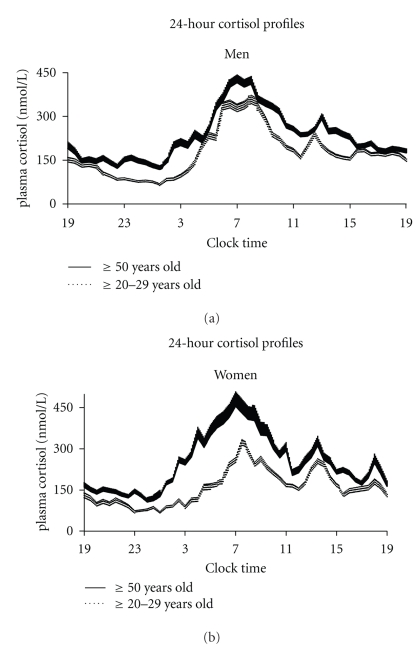
“In young adulthood, women appeared to have, compared to men, lower 24-hour mean cortisol levels, a longer quiescent period (that started earlier and ended later), a lower acrophase, and a lower absolute amplitude of the circadian variation.”
§ Impact of Sleep and Its Disturbances on Hypothalamo-Pituitary-Adrenal Axis Activity > 2. Physiology of Hypothalamo-Pituitary-Adrenal (HPA) Axis
What the sources say
- Not checked yetcites [31] source
hedgedcorrelational- Asserted: passes — The authors put it forward as true.
- Checkable: passes — It can be checked against evidence.
- Load-bearing: unclear — It is unclear whether the paper’s conclusions depend on it.
- Based: passes — The paper gives a reason why it holds.
It may state two separate claims as one.
In the paper
“In addition, the timing of the nadir and of the onset of the nocturnal cortisol rise are advanced in older adults of both sexes and the circadian amplitude, when expressed as a percentage of the 24-hour mean level, is decreased”
§ Impact of Sleep and Its Disturbances on Hypothalamo-Pituitary-Adrenal Axis Activity > 2. Physiology of Hypothalamo-Pituitary-Adrenal (HPA) Axis
What the sources say
- Not checked yetcites [31] source
plaincorrelational- Asserted: passes — The authors put it forward as true.
- Checkable: passes — It can be checked against evidence.
- Load-bearing: unclear — It is unclear whether the paper’s conclusions depend on it.
- Based: passes — The paper gives a reason why it holds.
It may state two separate claims as one.
In the paper
“During the second postshift period (day 3), minor signs of further adaptation of the cortisol profiles were detected: there was no further advance of the timing of the nadir and only a minor additional advance of the onset of the quiescent period.”
§ Impact of Sleep and Its Disturbances on Hypothalamo-Pituitary-Adrenal Axis Activity > 4. Effects of Shifted Sleep on Hpa Axis > 4.2. Advance of the Sleep-Wake Cycle
What the sources say
- Not checked yetcites [68] 2002, American Journal of Physiology source
plainn = 8- Asserted: passes — The authors put it forward as true.
- Checkable: passes — It can be checked against evidence.
- Load-bearing: unclear — It is unclear whether the paper’s conclusions depend on it.
- Based: passes — The paper gives a reason why it holds.
It may state two separate claims as one.
In the paper
“Metyrapone suppressed cortisol concentrations, especially the rise in cortisol during late sleep, and decreased time spent in SWS, which was replaced by shallow NREM sleep. REM sleep was preserved.”
§ Impact of Sleep and Its Disturbances on Hypothalamo-Pituitary-Adrenal Axis Activity > 3. Effects of Normal Sleep on HPA Axis > 3.2. Modulatory Effects of Sleep Stages
What the sources say
- Not checked yetcites [58] source
plaindirect- Asserted: passes — The authors put it forward as true.
- Checkable: passes — It can be checked against evidence.
- Load-bearing: passes — The paper’s conclusions depend on it.
- Based: passes — The paper gives a reason why it holds.
It may state two separate claims as one.
In the paper
“While memory for the neutral texts was reduced, interestingly metyrapone even amplified emotional enhancement in text recall”
§ Impact of Sleep and Its Disturbances on Hypothalamo-Pituitary-Adrenal Axis Activity > 3. Effects of Normal Sleep on HPA Axis > 3.2. Modulatory Effects of Sleep Stages
What the sources say
- Not checked yetcites [58] source
plaindirect- Asserted: passes — The authors put it forward as true.
- Checkable: passes — It can be checked against evidence.
- Load-bearing: passes — The paper’s conclusions depend on it.
- Based: passes — The paper gives a reason why it holds.
It may state two separate claims as one.
In the paper
“On the first day after the shift, profound disruptions in the 24-hour cortisol rhythm were found: a reduction of more than 3 hours in the duration of the quiescent period resulted in an increase of the 24-hour mean levels and in the advance of the circadian onset.”
§ Impact of Sleep and Its Disturbances on Hypothalamo-Pituitary-Adrenal Axis Activity > 4. Effects of Shifted Sleep on Hpa Axis > 4.1. Delay of the Sleep-Wake Cycle
What the sources say
- Not checked yetcites [67] 2000, Sleep
plaindirect- Asserted: passes — The authors put it forward as true.
- Checkable: passes — It can be checked against evidence.
- Load-bearing: passes — The paper’s conclusions depend on it.
- Based: passes — The paper gives a reason why it holds.
It may state two separate claims as one.
In the paper
“In the first postshift period, compared with the baseline profile, the timing of the nadir was advanced by about 3 hours and 20 minutes; the quiescent period was markedly reduced mainly due to an advance of the offset by more than 3 hours.”
§ Impact of Sleep and Its Disturbances on Hypothalamo-Pituitary-Adrenal Axis Activity > 4. Effects of Shifted Sleep on Hpa Axis > 4.2. Advance of the Sleep-Wake Cycle
What the sources say
- Not checked yetcites [68] 2002, American Journal of Physiology source
plaindirectn = 8- Asserted: passes — The authors put it forward as true.
- Checkable: passes — It can be checked against evidence.
- Load-bearing: passes — The paper’s conclusions depend on it.
- Based: passes — The paper gives a reason why it holds.
It may state two separate claims as one.
In the paper
“In the same study, aging was associated, in both sexes, with a progressive increase of 24-hour mean levels from the 2nd to the 8th decade, associated with a shorter quiescent period and higher nadir values.”
§ Impact of Sleep and Its Disturbances on Hypothalamo-Pituitary-Adrenal Axis Activity > 2. Physiology of Hypothalamo-Pituitary-Adrenal (HPA) Axis
What the sources say
- Not checked yetcites [31] source
plaincorrelational- Asserted: passes — The authors put it forward as true.
- Checkable: passes — It can be checked against evidence.
- Load-bearing: unclear — It is unclear whether the paper’s conclusions depend on it.
- Based: passes — The paper gives a reason why it holds.
It may state two separate claims as one.
None of the sources cited for this claim have been checked yet.
In the paper
“Retention of declarative memory critically depends on the integrity of the hippocampus and has been shown to benefit specifically from early nocturnal sleep, in which SWS predominates and cortisol concentrations are minimal [52, 53].”
§ Impact of Sleep and Its Disturbances on Hypothalamo-Pituitary-Adrenal Axis Activity > 3. Effects of Normal Sleep on HPA Axis > 3.2. Modulatory Effects of Sleep Stages
What the sources say
plaindirect- Asserted: passes — The authors put it forward as true.
- Checkable: passes — It can be checked against evidence.
- Load-bearing: passes — The paper’s conclusions depend on it.
- Based: passes — The paper gives a reason why it holds.
It may state two separate claims as one.
In the paper
“No shift in the timing of the acrophase occurred, thus the duration of the rising phase of cortisol secretion was increased by nearly 3 hours and presented a biphasic pattern.”
§ Impact of Sleep and Its Disturbances on Hypothalamo-Pituitary-Adrenal Axis Activity > 4. Effects of Shifted Sleep on Hpa Axis > 4.2. Advance of the Sleep-Wake Cycle
What the sources say
- Not checked yetcites [68] 2002, American Journal of Physiology source
plaindirectn = 8- Asserted: passes — The authors put it forward as true.
- Checkable: passes — It can be checked against evidence.
- Load-bearing: passes — The paper’s conclusions depend on it.
- Based: passes — The paper gives a reason why it holds.
It may state two separate claims as one.
In the paper
“Hence, a biphasic HPA response to sleep deprivation has been suggested [63] where activation of the HPA axis, as part of the stress response, may be one of the arousal mechanisms recruited early on to adapt to sleep loss; however, when wakefulness is prolonged, the increased sleep pressure may eventually cause a blunting of the HPA axis activity.”
§ Impact of Sleep and Its Disturbances on Hypothalamo-Pituitary-Adrenal Axis Activity > 5. Effects of Sleep Loss and Sleep Disrupion on HPA Axis > 5.1. Acute Total Sleep Loss
What the sources say
- Not checked yetcites [63] source
hedgedconditional- Asserted: passes — The authors put it forward as true.
- Checkable: passes — It can be checked against evidence.
- Load-bearing: passes — The paper’s conclusions depend on it.
- Based: passes — The paper gives a reason why it holds.
It may state two separate claims as one.
In the paper
“The findings of high glucocorticoid levels in a condition of acute sleep loss have been interpreted as reflecting the stress of the effort to maintain wakefulness and is consistent with the positive correlation found between high frequency EEG activity in wake, indices of arousal, and cortisol release [63].”
§ Impact of Sleep and Its Disturbances on Hypothalamo-Pituitary-Adrenal Axis Activity > 5. Effects of Sleep Loss and Sleep Disrupion on HPA Axis > 5.1. Acute Total Sleep Loss
What the sources say
- Not checked yetcites [63] source
plaincorrelational- Asserted: passes — The authors put it forward as true.
- Checkable: passes — It can be checked against evidence.
- Load-bearing: unclear — It is unclear whether the paper’s conclusions depend on it.
- Based: passes — The paper gives a reason why it holds.
It may state two separate claims as one.
A conclusion the paper draws from its own results — it cites no other source for it, so there is none to check. The quote shows it is in the paper.
In the paper
“Even if modest, this elevation may result, under conditions of chronic sleep loss, in a significant glucocorticoid overload and consequently expose the body to the central and peripheral deleterious effects associated with glucocorticoid excess.”
§ Impact of Sleep and Its Disturbances on Hypothalamo-Pituitary-Adrenal Axis Activity > 5. Effects of Sleep Loss and Sleep Disrupion on HPA Axis > 5.2. Semichronic Partial Sleep Restriction
hedgedconditional- Asserted: passes — The authors put it forward as true.
- Checkable: passes — It can be checked against evidence.
- Load-bearing: passes — The paper’s conclusions depend on it.
- Based: passes — The paper gives a reason why it holds.
It may state two separate claims as one.
In the paper
“there is in turn strong evidence that elevated CRH tone increases sleep EEG frequency, thereby decreasing SWS, and increasing light sleep and wakefulness [94].”
§ Impact of Sleep and Its Disturbances on Hypothalamo-Pituitary-Adrenal Axis Activity > 6. HPA Axis and Sleep Disturbances in Clinical Syndromes
What the sources say
- Not checked yetcites [94] 1988, Neuroendocrinology source
boosteddirect- Asserted: passes — The authors put it forward as true.
- Checkable: passes — It can be checked against evidence.
- Load-bearing: passes — The paper’s conclusions depend on it.
- Based: passes — The paper gives a reason why it holds.
It may state two separate claims as one.
In the paper
“Recurrent partial sleep restriction has become a widespread habit in modern society [82]”
§ Impact of Sleep and Its Disturbances on Hypothalamo-Pituitary-Adrenal Axis Activity > 5. Effects of Sleep Loss and Sleep Disrupion on HPA Axis > 5.2. Semichronic Partial Sleep Restriction
What the sources say
- Not checked yetcites [82] 2005, Morbidity and Mortality Weekly Report
plain- Asserted: passes — The authors put it forward as true.
- Checkable: passes — It can be checked against evidence.
- Load-bearing: fails — The paper’s conclusions may not depend on it.
- Based: passes — The paper gives a reason why it holds.
Probably not a substantial claim. The paper’s conclusions may not depend on it.
A conclusion the paper draws from its own results — it cites no other source for it, so there is none to check. The quote shows it is in the paper.
In the paper
“Findings of decreased cortisol levels after sleep deprivation have been interpreted as related to an increase in fatigue and sleepiness.”
§ Impact of Sleep and Its Disturbances on Hypothalamo-Pituitary-Adrenal Axis Activity > 5. Effects of Sleep Loss and Sleep Disrupion on HPA Axis > 5.1. Acute Total Sleep Loss
plaincorrelational- Asserted: passes — The authors put it forward as true.
- Checkable: passes — It can be checked against evidence.
- Load-bearing: fails — The paper’s conclusions may not depend on it.
- Based: passes — The paper gives a reason why it holds.
Probably not a substantial claim. The paper’s conclusions may not depend on it.
A conclusion the paper draws from its own results — it cites no other source for it, so there is none to check. The quote shows it is in the paper.
In the paper
“These discrepancies could be due to a lack of control of experimental conditions, such as physical activity and posture, and/or to an insufficient frequency of blood sampling; indeed, short naps may have gone undetected and estimation of cortisol levels with infrequent blood sampling are often inaccurate.”
§ Impact of Sleep and Its Disturbances on Hypothalamo-Pituitary-Adrenal Axis Activity > 5. Effects of Sleep Loss and Sleep Disrupion on HPA Axis > 5.1. Acute Total Sleep Loss
hedgedconditional- Asserted: passes — The authors put it forward as true.
- Checkable: passes — It can be checked against evidence.
- Load-bearing: unclear — It is unclear whether the paper’s conclusions depend on it.
- Based: passes — The paper gives a reason why it holds.
It may state two separate claims as one.
A conclusion the paper draws from its own results — it cites no other source for it, so there is none to check. The quote shows it is in the paper.
In the paper
“The timing of the period of recovery sleep is likely to have played a role in these conflicting findings.”
§ Impact of Sleep and Its Disturbances on Hypothalamo-Pituitary-Adrenal Axis Activity > 5. Effects of Sleep Loss and Sleep Disrupion on HPA Axis > 5.1. Acute Total Sleep Loss
hedgedconditional- Asserted: passes — The authors put it forward as true.
- Checkable: passes — It can be checked against evidence.
- Load-bearing: fails — The paper’s conclusions may not depend on it.
- Based: passes — The paper gives a reason why it holds.
Probably not a substantial claim. The paper’s conclusions may not depend on it.
The paper relies on this without support.
HPA hyperactivity is clearly associated with metabolic, cognitive and psychiatric disorders.
“HPA hyperactivity is clearly associated with metabolic, cognitive and psychiatric disorders”
The paper relies on this without support.
Several clinical syndromes, such as insomnia, depression, Cushing's syndrome, and sleep disordered breathing, display HPA hyperactivity, disturbed sleep, psychiatric and metabolic impairments.
“Several clinical syndromes, such as insomnia, depression, Cushing's syndrome, sleep disordered breathing (SDB) display HPA hyperactivity, disturbed sleep, psychiatric and metabolic impairments.”
The paper relies on this without support.
Sleep onset exerts a modest but clearly detectable inhibitory effect on the activity of the HPA axis.
“Given the modest but clearly detectable inhibitory effect exerted by sleep onset on the activity of the HPA axis, it has been hypothesized that sleep loss might increase cortisol levels.”
Claims other papers make about this one
Each is checked against this paper’s own text: does it say what the citing paper says it does?
The check wasn’t confident either way, so it gives no verdict — never disputed.
In the citing paper
“performance did not return to baseline levels after a single night with a 10-h sleep opportunity (28) or three nights with an 8-h sleep opportunity (32), suggesting that a longer recovery sleep period is needed to fully resolve any performance decrements due to experimental sleep deficiency”
From The Sleep-Immune Crosstalk in Health and Disease (2019) · cites this paper as [28]
Experimental — accuracy not yet measuredIn the citing paper
“various doses of recovery sleep (0, 2, 4, 6, 8, and 10 h) following five nights of experimental sleep restriction resulted in a sleep-dose-dependent decrease of lapses (i.e., reaction times over 500 ms) in the psychomotor vigilance test”
From The Sleep-Immune Crosstalk in Health and Disease (2019) · cites this paper as [28]
Citations
Cites
Diagnostic and Statistical Manual of Mental Disorders
Williams, J. B. W., & First, M. B. (2013) · Oxford University Press eBooks · doi:10.1093/acrefore/9780199975839.013.104 · Cited by 109,845
Memory and the hippocampus: A synthesis from findings with rats, monkeys, and humans.
Squire, L. R. (1992) · Psychological Review · doi:10.1037/0033-295x.99.2.195 · Cited by 5,376 · cited 1×
“Retention of declarative memory critically depends on the integrity of the hippocampus and has been shown to benefit specifically from early nocturnal sleep, in which SWS predominates and cortisol concentrations are minimal [52, 53].”
BackgroundImpact of sleep debt on metabolic and endocrine function
Spiegel, K., Leproult, R., & Van Cauter, E. (1999) · The Lancet · doi:10.1016/s0140-6736(99)01376-8 · Cited by 3,668 · cited 1×
“The first systematic study of HPA axis activity in a state of sleep debt assessed the effect of 6 consecutive nights of 4 hours in bed in eleven young men [83].”
BackgroundSelf-citationHypothalamic-pituitary-adrenal axis, neuroendocrine factors and stress
Tsigos, C., & Chrousos, G. P. (2002) · Journal of Psychosomatic Research · doi:10.1016/s0022-3999(02)00429-4 · Cited by 2,822
Sympathetic neural mechanisms in obstructive sleep apnea.
Somers, V. K., Dyken, M. E., Clary, M. P., & Abboud, F. M. (1995) · Journal of Clinical Investigation · doi:10.1172/jci118235 · Cited by 2,527
Epidemiologic study of sleep disturbances and psychiatric disorders. An opportunity for prevention?
Ford, D. E. (1989) · JAMA · doi:10.1001/jama.262.11.1479 · Cited by 2,440
Adverse metabolic and cardiovascular consequences of circadian misalignment
Scheer, F. A. J. L., Hilton, M. F., Mantzoros, C. S., & Shea, S. A. (2009) · Proceedings of the National Academy of Sciences · doi:10.1073/pnas.0808180106 · Cited by 2,351 · cited 1×
“On the first day after the shift, profound disruptions in the 24-hour cortisol rhythm were found: a reduction of more than 3 hours in the duration of the quiescent period resulted in an increase of the 24-hour mean levels and in the advance of the circadian onset.”
BackgroundEpidemiologic Study of Sleep Disturbances and Psychiatric Disorders: An Opportunity for Prevention?
Ford, D. E. (1989) · JAMA · doi:10.1001/jama.1989.03430110069030 · Cited by 2,252
Loss of a circadian adrenal corticosterone rhythm following suprachiasmatic lesions in the rat
Moore, R. Y., & Eichler, V. B. (1972) · Brain Research · doi:10.1016/0006-8993(72)90054-6 · Cited by 2,135 · cited 1×
“As a confirmation, lesions of the SCN in rats result in the loss of corticosteroid periodicity [15, 16].”
BackgroundA Serum Shock Induces Circadian Gene Expression in Mammalian Tissue Culture Cells
Balsalobre, A., Damiola, F., & Schibler, U. (1998) · Cell · doi:10.1016/s0092-8674(00)81199-x · Cited by 2,001 · cited 1×
“In addition to the master clock in the SCN, circadian oscillators have been found in a number of peripheral tissues, such as liver, heart, lung, skeletal muscle, and adrenal glands [2, 3].”
Background
Research works printed but not linked: 19
- 1995, Sleep, 18, 549
- 1998, Hormone and Metabolic Research, 30, 311
- 2000, American Journal of Physiology, 279, R1357
- 1974, Journal of Clinical Endocrinology and Metabolism, 38, 1018, 10.1210/jcem-38-6-1018 · DOI · Paper page
- 1985, Journal of Endocrinological Investigation, 8, 381, 10.1007/bf03348519 · DOI · Paper page
- 2004, Current Opinion in Neurobiology, 26, 221
- 1998, Journal of Clinical Endocrinology and Metabolism, 83, 4263
- 2000, Sleep, 23, 915
- 1997, Sleep, 20, 865
- 1994, Journal of Clinical Endocrinology and Metabolism, 79, 1797
- 2005, Morbidity and Mortality Weekly Report, 54, article 933
- 2002, Organization of the brainstem
- 2007, Journal of Clinical Sleep Medicine, 3, S7
- 2001, Revue Neurologique, 157, S57
- 2007, Acta Psychiatrica Scandinavica. Supplementum, 31
- 2000, Sleep Research Online, 3, 15
- 1996, Zhongguo Yao Li Xue Bao, 17, 489
- 1989, American Review of Respiratory Disease, 139, article a80
- 1991, American Review of Respiratory Disease, 143, article a382
Cited by
Sorted by citations
The Sleep-Immune Crosstalk in Health and Disease
Besedovsky, L., Lange, T., & Haack, M. (2019) · Physiological Reviews · doi:10.1152/physrev.00010.2018 · Cited by 1,479
Sleep deficiency and chronic pain: potential underlying mechanisms and clinical implications
Haack, M., Simpson, N. S., Sethna, N. F., Kaur, S., & Mullington, J. M. (2019) · Neuropsychopharmacology · doi:10.1038/s41386-019-0439-z · Cited by 696
Insomnia and the risk of depression: a meta-analysis of prospective cohort studies
Li, L., Wu, C., Gan, Y., Qu, X., & Lu, Z. (2016) · BMC Psychiatry · doi:10.1186/s12888-016-1075-3 · Cited by 626
“Secondly, sustained arousal and chronic activation of hyperactivity of the hypothalamic–pituitary–adrenal (HPA) axis, the major neuroendocrine mediator of stress response, have been suggested as playing a vital role in the development of depression in insomniacs with objective short sleep duration [14, 61].”
BackgroundThe Functional and Clinical Significance of the 24-Hour Rhythm of Circulating Glucocorticoids
Oster, H., Challet, E., Ott, V., Arvat, E., de Kloet, E. R., Dijk, D.-J., Lightman, S., Vgontzas, A., & Van Cauter, E. (2017) · Endocrine Reviews · doi:10.1210/er.2015-1080 · Cited by 548
“Severe fatigue is present in about half of the patients and is associated with sleep disturbances (339, 361).”
Interactions between sleep, stress, and metabolism: From physiological to pathological conditions
Hirotsu, C., Tufik, S., & Andersen, M. L. (2015) · Sleep Science · doi:10.1016/j.slsci.2015.09.002 · Cited by 567
“[17] Balbo M, Leproult R, Van Cauter E.”
InfluentialMikulska, J., Juszczyk, G., Gawrońska-Grzywacz, M., & Herbet, M. (2021) · Brain Sciences · doi:10.3390/brainsci11101298 · Cited by 450
“, the highest cortisol levels are observed in the morning [11,12].”
BackgroundGardani, M., Bradford, D. R. R., Russell, K., Allan, S., Beattie, L., Ellis, J. G., & Akram, U. (2022) · Sleep Medicine Reviews · doi:10.1016/j.smrv.2021.101565 · Cited by 368
Metabolic, Endocrine, and Immune Consequences of Sleep Deprivation
AlDabal, L. M. J. A., & BaHammam, A. S. (2011) · The Open Respiratory Medicine Journal · doi:10.2174/1874306401105010031 · Cited by 371
“In addition, hypoxemia (in patients with sleep disordered breathing) and a state of altered inflammatory and pro-inflammatory pathways exist that is accompanied by hormonal pathway changes that collectively cause similar metabolic derangements [60-68].”
BackgroundSex differences in circadian timing systems: implications for disease
Bailey, M., & Silver, R. (2014) · Frontiers in Neuroendocrinology · doi:10.1016/j.yfrne.2013.11.003 · Cited by 348
van Dalfsen, J. H., & Markus, C. R. (2018) · Sleep Medicine Reviews · doi:10.1016/j.smrv.2017.10.002 · Cited by 329
Sleep and muscle recovery: Endocrinological and molecular basis for a new and promising hypothesis
Dattilo, M., Antunes, H. K. M., Medeiros, A., Mônico Neto, M., Souza, H. S., Tufik, S., & de Mello, M. T. (2011) · Medical Hypotheses · doi:10.1016/j.mehy.2011.04.017 · Cited by 290
“Among the hormonal changes, it is worth noting that major axes are negatively affected, including the hypothalamic–pituitary–adrenal axis [9,15] and hypothalamic–pituitary–gonadal axis”
BackgroundObstructive Sleep Apnea and Incident Diabetes. A Historical Cohort Study
Kendzerska, T., Gershon, A. S., Hawker, G., Tomlinson, G., & Leung, R. S. (2014) · American Journal of Respiratory and Critical Care Medicine · doi:10.1164/rccm.201312-2209oc · Cited by 280
The links between sleep duration, obesity and type 2 diabetes mellitus
Antza, C., Kostopoulos, G., Mostafa, S., Nirantharakumar, K., & Tahrani, A. (2021) · Journal of Endocrinology · doi:10.1530/joe-21-0155 · Cited by 310
“Glucocorticoids secretion is increased mainly around the onset of awaking and dropped down during sleep (Balbo et al. 2010).”
Sleep deprivation potentiates HPA axis stress reactivity in healthy adults.
Minkel, J., Moreta, M., Muto, J., Htaik, O., Jones, C., Basner, M., & Dinges, D. (2014) · Health Psychology · doi:10.1037/a0034219 · Cited by 261
Obesity and sleep disturbance: The chicken or the egg?
Muscogiuri, G., Barrea, L., Annunziata, G., Di Somma, C., Laudisio, D., Colao, A., & Savastano, S. (2019) · Critical Reviews in Food Science and Nutrition · doi:10.1080/10408398.2018.1506979 · Cited by 214
“…of the hypothalamus-pituitary-adrenal axis (HPA) activity as the consequence of a chronic stress induced by long-time altered sleep and consistent with a disorder of central nervous system hyper arousal (Vgontzas and Chrousos 2002; Kumari et al. 2009; Ruan et al. 2015; Balbo et al. 2010).”
BackgroundThe impact of sleep on age-related sarcopenia: Possible connections and clinical implications
Piovezan, R. D., Abucham, J., dos Santos, R. V. T., de Mello, M. T., Tufik, S., & Poyares, D. R. (2015) · Ageing Research Reviews · doi:10.1016/j.arr.2015.07.003 · Cited by 222
“Evening cortisol levels increase after age 50, possibly as a consequence of sleep fragmentation and REM sleep decline (Balbo et al., 2010; Blackman et al., 2002).”
BackgroundDiabetes and sleep: a complex cause-and-effect relationship
Barone, M. T. U., & Menna-Barreto, L. (2011) · Diabetes Research and Clinical Practice · doi:10.1016/j.diabres.2010.07.011 · Cited by 209
“Among the pathways through which SNS activation is likely to predispose to obesity, glucose impairment, metabolic syndrome and T2DM [43,44], the two most well known are the inhibition of leptin secretion [45] and the stimulation of the hypothalamic–pituitary–adrenal axis (HPA), resulting in excessive cortisol secretio…”
InfluentialSleep and Antibody Response to Hepatitis B Vaccination
Prather, A. A., Hall, M., Fury, J. M., Ross, D. C., Muldoon, M. F., Cohen, S., & Marsland, A. L. (2012) · SLEEP · doi:10.5665/sleep.1990 · Cited by 207
Zebrafish in Endocrine Systems: Recent Advances and Implications for Human Disease
Löhr, H., & Hammerschmidt, M. (2011) · Annual Review of Physiology · doi:10.1146/annurev-physiol-012110-142320 · Cited by 204
Sleep Duration and Diabetes Risk: Population Trends and Potential Mechanisms
Grandner, M. A., Seixas, A. A., Shetty, S., & Shenoy, S. (2016) · Current Diabetes Reports · doi:10.1007/s11892-016-0805-8 · Cited by 201
Sleep and cardiometabolic risk in children and adolescents
Quist, J. S., Sjödin, A. M., Chaput, J., & Hjorth, M. F. (2015) · Sleep Medicine Reviews · doi:10.1016/j.smrv.2015.09.001 · Cited by 165
Zhang, M.-M., Ma, Y., Du, L.-T., Wang, K., Li, Z., Zhu, W., Sun, Y.-H., Lü, L., Bao, Y., & Li, S. (2022) · Neuroscience & Biobehavioral Reviews · doi:10.1016/j.neubiorev.2022.104532 · Cited by 160
Nicolaides, N. C., Charmandari, E., Kino, T., & Chrousos, G. P. (2017) · Frontiers in Endocrinology · doi:10.3389/fendo.2017.00070 · Cited by 154
“On the other hand, a dysfunctional HPA axis could promote insomnia (69) or be affected by obstructive sleep apnea (118, 119).”
BackgroundHypothalamic‐Pituitary‐Adrenocortical Axis: Neuropsychiatric Aspects
Jacobson, L. (2014) · Comprehensive physiology · doi:10.1002/cphy.c130036 · Cited by 153
Liu, Z., Liu, R., Zhang, Y., Zhang, R., Liang, L., Wang, Y., Wei, Y., Zhu, R., & Wang, F. (2021) · Journal of Affective Disorders · doi:10.1016/j.jad.2021.05.028 · Cited by 147
Phagocytic elimination of synapses by microglia during sleep
Choudhury, M. E., Miyanishi, K., Takeda, H., Islam, A., Matsuoka, N., Kubo, M., Matsumoto, S., Kunieda, T., Nomoto, M., Yano, H., et al. (2019) · Glia · doi:10.1002/glia.23698 · Cited by 128
Association between night-shift work, sleep quality and metabolic syndrome
Lim, Y. C., Hoe, V. C. W., Darus, A., & Bhoo‐Pathy, N. (2018) · Occupational and Environmental Medicine · doi:10.1136/oemed-2018-105104 · Cited by 126
Lucassen, E. A., & Cizza, G. (2012) · Current Obesity Reports · doi:10.1007/s13679-012-0028-5 · Cited by 122
“A combination of altered HPA-axis function and obesity is often observed in subjects suffering from insomnia, depression or obstructive sleep apnea [10, 16, 38].”
BackgroundInfluentialThe interplay between sleep and gut microbiota
Han, M., Yuan, S., & Zhang, J. (2022) · Brain Research Bulletin · doi:10.1016/j.brainresbull.2021.12.016 · Cited by 123
Relationship between self-reported sleep quality and metabolic syndrome in general population
Okubo, N., Matsuzaka, M., Takahashi, I., Sawada, K., Sato, S., Akimoto, N., Umeda, T., & Nakaji, S. (2014) · BMC Public Health · doi:10.1186/1471-2458-14-562 · Cited by 115
“Poor sleep quality and prolonged sleep latency activate HPA, enhancing stress hormone secretion such as cortisol and catecholamine [24,25].”
BackgroundBuenaver, L. F., Quartana, P. J., Grace, E. G., Sarlani, E., Simango, M., Edwards, R. R., Haythornthwaite, J. A., & Smith, M. T. (2012) · Pain · doi:10.1016/j.pain.2012.01.023 · Cited by 110
“It should be noted that pain catastrophizing and sleep disturbance have each been linked to alterations in hypothalamicpituitary-adrenocortical axis functioning [1,55] and enhanced circulating levels of inflammation [22,46].”
BackgroundAssociation between weekend catch-up sleep duration and hypertension in Korean adults
Hwangbo, Y., Kim, W., Chu, M. K., Yun, C., & Yang, K. I. (2013) · Sleep Medicine · doi:10.1016/j.sleep.2013.02.009 · Cited by 102
The Cortisol Awakening Response: Regulation and Functional Significance
Stalder, T., Oster, H., Abelson, J. L., Huthsteiner, K., Klucken, T., & Clow, A. (2024) · Endocrine Reviews · doi:10.1210/endrev/bnae024 · Cited by 124
Sleep and obsessive-compulsive disorder (OCD)
Paterson, J. L., Reynolds, A. C., Ferguson, S. A., & Dawson, D. E. (2013) · Sleep Medicine Reviews · doi:10.1016/j.smrv.2012.12.002 · Cited by 107
Sleep Duration, Sleep Quality, and Markers of Subclinical Arterial Disease in Healthy Men and Women
Kim, C., Chang, Y., Zhao, D., Cainzos‐Achirica, M., Ryu, S., Jung, H. S., Yun, K. E., Choi, Y., Ahn, J., Zhang, Y., et al. (2015) · Arteriosclerosis Thrombosis and Vascular Biology · doi:10.1161/atvbaha.115.306110 · Cited by 94
Thompson, K. I., Chau, M., Lorenzetti, M. S., Hill-Bowen, L. D., Fins, A. I., & Tartar, J. L. (2022) · Frontiers in Behavioral Neuroscience · doi:10.3389/fnbeh.2022.945661 · Cited by 123
“Whereas, experimental evidence in humans indicates that cortisol levels elevate in response to acute sleep deprivation (Balbo et al., 2010; Omisade et al., 2010), a range of studies have found that cortisol levels decrease (Weibel et al.”
BackgroundGoodin, B. R., Smith, M. T., Quinn, N. B., King, C. D., & McGuire, L. M. (2012) · Biological Psychology · doi:10.1016/j.biopsycho.2012.02.020 · Cited by 90
The role of emotional eating and stress in the influence of short sleep on food consumption
Dweck, J. S., Jenkins, S. M., & Nolan, L. J. (2013) · Appetite · doi:10.1016/j.appet.2013.10.001 · Cited by 93
Addressing sleep disturbances: an opportunity to prevent cardiometabolic disease?
Grandner, M. A. (2014) · International Review of Psychiatry · doi:10.3109/09540261.2014.911148 · Cited by 88
“…Laugsand et al., 2012; Motivala, 2011; Okun et al., 2011), impaired heart rate variability (De Zambotti et al., 2011; Israel et al., 2012; Spiegelhalder et al., 2011; Stein & Pu, 2012), and other risk factors (Balbo et al., 2010; Lattova et al., 2011; Laugsand et al., 2013; Strand et al., 2013).”
BackgroundRepeating patterns of sleep restriction and recovery: Do we get used to it?
Simpson, N. S., Diolombi, M. S., Scott‐Sutherland, J., Yang, H., Bhatt, V. D., Gautam, S., Mullington, J. M., & Haack, M. (2016) · Brain Behavior and Immunity · doi:10.1016/j.bbi.2016.06.001 · Cited by 91
“Sleep loss appears to be a somewhat unique physical stressor, in that the HPA response to sleep loss compared to other stressors is mild (Balbo et al., 2010; Guyon et al., 2014; Meerlo et al., 2008).”
Insufficient Sleep as a Contributor to Weight Gain: An Update
Chaput, J., & Tremblay, A. (2012) · Current Obesity Reports · doi:10.1007/s13679-012-0026-7 · Cited by 89
Szpunar, M. J., & Parry, B. L. (2017) · Archives of Women s Mental Health · doi:10.1007/s00737-017-0787-9 · Cited by 87
“Altered sleep onset, offset, and duration change cortisol production (Balbo et al. 2010).”
Sustained sleep fragmentation affects brain temperature, food intake and glucose tolerance in mice
Baud, M. O., Magistretti, P. J., & PETIT, J. (2012) · Journal of Sleep Research · doi:10.1111/j.1365-2869.2012.01029.x · Cited by 81
“Although the major factor controlling GC levels is circadian time, arousals lead to a transient increase (Balbo et al., 2010).”
BackgroundFrom pillow to podium: a review on understanding sleep for elite athletes
O’Donnell, S., Beaven, C. M., & Driller, M. W. (2018) · Nature and Science of Sleep · doi:10.2147/nss.s158598 · Cited by 95
“48,49 A study by Omisade et al 50 examined the levels of cortisol and leptin (hormone associated with feelings of satiety) in 15 young women following acute sleep restriction of a 3-hour total sleep period.”
BackgroundD’Aurea, C. V. R., Poyares, D. R., Piovezan, R. D., Passos, G. S., Tufik, S., & de Mello, M. T. (2015) · Arquivos de Neuro-Psiquiatria · doi:10.1590/0004-282x20150053 · Cited by 81
Pillai, V., & Drake, C. L. (2015) · Elsevier eBooks · doi:10.1016/b978-0-12-417188-6.00010-4 · Cited by 92
Altered ultradian cortisol rhythmicity as a potential neurobiologic substrate for chronic insomnia
Vargas, I., Vgontzas, A. N., Abelson, J. L., Faghih, R. T., Morales, K. H., & Perlis, M. L. (2018) · Sleep Medicine Reviews · doi:10.1016/j.smrv.2018.03.003 · Cited by 86
Zhuo, K., Gao, C., Wang, X., Zhang, C., & Wang, Z. (2020) · General Psychiatry · doi:10.1136/gpsych-2020-100260 · Cited by 81
An Integrative Approach to HPA Axis Dysfunction: From Recognition to Recovery
Ring, M. (2025) · The American Journal of Medicine · doi:10.1016/j.amjmed.2025.05.044 · Cited by 89
Gut microbiota: A new target of traditional Chinese medicine for insomnia
Feng, W., Yang, Z., Liu, Y., Chen, R., Song, Z., Pan, G., Zhang, Y., Guo, Z., Ding, X., Chen, L., et al. (2023) · Biomedicine & Pharmacotherapy · doi:10.1016/j.biopha.2023.114344 · Cited by 88
Sleep problems are associated with binge eating in women
Trace, S. E., Thornton, L. M., Runfola, C. D., Lichtenstein, P., Pedersen, N. L., & Bulik, C. M. (2012) · International Journal of Eating Disorders · doi:10.1002/eat.22003 · Cited by 81
Effects of Sleep Deprivation on the Tryptophan Metabolism
Bhat, A., Pires, A. S., Tan, V. X., Chidambaram, S. B., & Guillemin, G. J. (2020) · International Journal of Tryptophan Research · doi:10.1177/1178646920970902 · Cited by 81
Salivary cortisol and sleep problems among civil servants
Hansen, Å. M., Thomsen, J. F., Kærgaard, A., Kolstad, H. A., Kærlev, L., Mors, O. N., Rugulies, R., Bonde, J. P., Andersen, J. H., & Mikkelsen, S. (2011) · Psychoneuroendocrinology · doi:10.1016/j.psyneuen.2011.12.005 · Cited by 76
“The HPA system responds to stressful events in daily life as well as to the diurnal cycle of rest and activity (Chrousos and Gold, 1998) and is clearly associated with metabolic, cognitive and psychiatric disorders (Balbo et al., 2010).”
BackgroundZhao, F.-Y., Spencer, S. J., Kennedy, G. A., Zheng, Z., Conduit, R., Zhang, W., Xu, P., Yue, L.-P., Wang, Y.-M., Xu, Y., et al. (2023) · Sleep Medicine Reviews · doi:10.1016/j.smrv.2023.101892 · Cited by 76
Sleep quality and its impact on glycaemic control in patients with type 2 diabetes mellitus
Zhu, B., Li, X., Wang, D., & Yu, X. (2014) · International Journal of Nursing Sciences · doi:10.1016/j.ijnss.2014.05.020 · Cited by 78
“[8] Balbo M, Leproult R, Van Cauter E.”
BackgroundStress hormones, sleep deprivation and cognition in older adults
Maggio, M. G., Colizzi, E., Fisichella, A., Valenti, G., Ceresini, G., Dall’Aglio, E., Ruffini, L., Lauretani, F., Parrino, L., & Ceda, G. P. (2013) · Maturitas · doi:10.1016/j.maturitas.2013.06.006 · Cited by 79
“This elevation may esult in a significant glucocorticoid overload [4].”
BackgroundSchwarz, J., Gerhardsson, A., van Leeuwen, W., Lekander, M., Ericson, M. O., Fischer, H., Kecklund, G., & Åkerstedt, T. (2018) · Psychoneuroendocrinology · doi:10.1016/j.psyneuen.2018.06.003 · Cited by 75
Cortisol as a Biomarker of Stress in Term Human Labor
Benfield, R. D., Newton, E. R., Tanner, C. J., & Heitkemper, M. M. (2013) · Biological Research For Nursing · doi:10.1177/1099800412471580 · Cited by 68
The impact of glucocorticoids and statins on sleep quality
Szmyd, B., Rogut, M., Białasiewicz, P., & Gabryelska, A. (2021) · Sleep Medicine Reviews · doi:10.1016/j.smrv.2020.101380 · Cited by 66
Bahrami-Nejad, Z., Zhao, M. L., Tholen, S., Hunerdosse, D., Tkach, K. E., van Schie, S., Chung, M., & Teruel, M. N. (2018) · Cell Metabolism · doi:10.1016/j.cmet.2018.03.012 · Cited by 65
“…oscillations,’’ due to irregular feeding or sleep cycles, prolonged treatment with glucocorticoid hormones, chronic stress, or metabolic diseases such as Cushing’s disease have all been shown to closely correlate with increased obesity (Balbo et al., 2010; Dallman et al., 2000; Lee et al., 2014).”
Lin, W., Wu, B., Chen, B., Lai, G., Huang, S., Li, S., Liu, K., Zhong, C., Huang, W., Yuan, S., et al. (2020) · Journal of Affective Disorders · doi:10.1016/j.jad.2020.11.114 · Cited by 74
“, 2007), persistent arousal and chronic activation of hyperactivity in the hypothalamic–pituitary–adrenal (HPA) axis (Balbo et al., 2010).”
Neurophysiological Effects of Sleep Deprivation in Healthy Adults, a Pilot Study
Klumpers, U. M. H., Veltman, D. J., van Tol, M., Kloet, R. W., Boellaard, R., Lammertsma, A. A., & Hoogendijk, W. J. G. (2015) · PLoS ONE · doi:10.1371/journal.pone.0116906 · Cited by 65
Gender Differences in Animal Models of Posttraumatic Stress Disorder
Cohen, H., & Yehuda, R. (2011) · Disease Markers · doi:10.3233/dma-2011-0778 · Cited by 73
Gender Differences in Animal Models of Posttraumatic Stress Disorder
Cohen, H., & Yehuda, R. (2011) · Disease Markers · doi:10.1155/2011/734372 · Cited by 80
Continuous free cortisol profiles-circadian rhythms in healthy men
Bhake, R. C., Kluckner, V, Stassen, H., Russell, G. M., Leendertz, J., Stevens, K., Linthorst, A. C. E., & Lightman, S. L. (2019) · The Journal of Clinical Endocrinology & Metabolism · doi:10.1210/jc.2019-00449 · Cited by 64
Subba, R., Sandhir, R., Singh, S. P., Mallick, B. N., & Mondal, A. C. (2021) · European Journal of Neuroscience · doi:10.1111/ejn.15136 · Cited by 69
Effects of aircraft noise exposure on saliva cortisol near airports in France
Lefèvre, M., Carlier, M.-C., Champelovier, P., Lambert, J., Laumon, B., & Evrard, A.-S. (2017) · Occupational and Environmental Medicine · doi:10.1136/oemed-2016-104208 · Cited by 62
Cohen, S., Kozlovsky, N., Matar, M. A., Kaplan, Z., Zohar, J., & Cohen, H. (2012) · Neuropsychopharmacology · doi:10.1038/npp.2012.94 · Cited by 62
The effect of working on-call on stress physiology and sleep: A systematic review
Hall, S. J., Ferguson, S. A., Turner, A. I., Robertson, S. J., Vincent, G. E., & Aisbett, B. (2016) · Sleep Medicine Reviews · doi:10.1016/j.smrv.2016.06.001 · Cited by 68
Vargas, I., & Lopez‐Duran, N. L. (2017) · Psychoneuroendocrinology · doi:10.1016/j.psyneuen.2017.01.030 · Cited by 62
Salo, P., Sivertsen, B., Oksanen, T., Sjösten, N., Pentti, J., Virtanen, M., Mika Kivimaki, B., & Vahtera, J. (2011) · Sleep Medicine · doi:10.1016/j.sleep.2011.06.022 · Cited by 64
“In persistent insomnia, sustained arousal and chronic activation of the hypothalamopituitary–adrenal (HPA) axis, the major neuroendocrine mediator of stress response, have been suggested as playing a role in the pathogenesis of depressive disorders [18,33].”
BackgroundIs Posthospital Syndrome a Result of Hospitalization-Induced Allostatic Overload?
Goldwater, D. S., Dharmarajan, K., McEwen, B. S., & Krumholz, H. M. (2018) · Journal of Hospital Medicine · doi:10.12788/jhm.2986 · Cited by 60
Goosby, B. J., Straley, E., & Cheadle, J. E. (2017) · Population Research and Policy Review · doi:10.1007/s11113-017-9439-z · Cited by 57
Perceived Discrimination and Adolescent Sleep in a Community Sample
Goosby, B. J., Cheadle, J. E., Strong‐Bak, W., Roth, T., & Nelson, T. D. (2018) · RSF The Russell Sage Foundation Journal of the Social Sciences · doi:10.7758/rsf.2018.4.4.03 · Cited by 55
Chen, D., Yang, H., Yang, L., Tang, Y., Zeng, H., He, J., Chen, W., Qu, Y., Hu, Y., Xu, Y., et al. (2023) · British Journal of Anaesthesia · doi:10.1016/j.bja.2023.10.015 · Cited by 60
Daily family stress and HPA axis functioning during adolescence: The moderating role of sleep
Chiang, J. J., Tsai, K. M., Park, H., Bower, J. E., Almeida, D. M., Dahl, R. E., Irwin, M. R., Seeman, T. E., & Fuligni, A. J. (2016) · Psychoneuroendocrinology · doi:10.1016/j.psyneuen.2016.05.009 · Cited by 54
“Fam fficiency (i.e., below the mean). ow and subsequently rise throughout the sleep period until orning awakening (Balbo et al., 2010).”
BackgroundMonzon, A. D., McDonough, R., Meltzer, L. J., & Patton, S. R. (2018) · Pediatric Diabetes · doi:10.1111/pedi.12797 · Cited by 53
“tions, cortisol levels may rise but the neuroendocrine regulatory process may take days to adapt to a change in sleep patterns.(23)”
BackgroundCampanini, M. Z., Mesas, A. E., Carnicero, J. A. C., Rodríguez‐Artalejo, F., & López‐García, E. (2018) · Aging and Disease · doi:10.14336/ad.2018.0611 · Cited by 51
“For example, poor sleep quality affect hypothalamus-pituitary-adrenal axis activity (35), resulting in hormone imbalances, such reduced growth hormone (36) and testosterone levels (37), and increased cortisol (38), favoring proteolysis and modifying body composition toward skeletal muscle loss (34).”
BackgroundBi-Directional Associations Between Psychological Arousal, Cortisol, and Sleep
Garde, A. H., Albertsen, K., Persson, R., Hansen, Å. M., & Rugulies, R. (2012) · Behavioral Sleep Medicine · doi:10.1080/15402002.2012.636272 · Cited by 51
“Sleep onset exerts an inhibitory effect on cortisol secretion, whereas awakening and sleep offset are accompanied by cortisol stimulation (Balbo et al., 2010).”
BackgroundResultNapping in College Students and Its Relationship With Nighttime Sleep
Ye, L., Johnson, S. H., Keane, K., Manasia, M., & Gregas, M. (2014) · Journal of American College Health · doi:10.1080/07448481.2014.983926 · Cited by 52
“Napping can alter the sleep–wake cycle, which is associated with hypothalamic–pituitary–adrenal axis dysregulation in young adults, and may lead to negative health consequences such as depression, decreased glucose tolerance and insulin sensitivity, altered adrenal function, and increased evening cortisol levels.(26,2…”
BackgroundShorter Sleep Duration is Associated with Decreased Insulin Sensitivity in Healthy White Men
Wong, P. M., Manuck, S. B., DiNardo, M. M., Korytkowski, M., & Muldoon, M. F. (2015) · Sleep · doi:10.5665/sleep.4402 · Cited by 49
Hair Cortisol Concentration as a Biomarker of Sleep Quality and Related Disorders
Mlili, N. E., Ahabrach, H., & Cauli, O. (2021) · Life · doi:10.3390/life11020081 · Cited by 50
Saz‐Lara, A., Lucerón‐Lucas‐Torres, M., Mesas, A. E., Notario‐Pacheco, B., López‐Gil, J. F., & Cavero‐Redondo, I. (2022) · Sleep Health · doi:10.1016/j.sleh.2022.07.001 · Cited by 51
Tell, D., Mathews, H. L., & Janusek, L. W. (2014) · Psychosomatic Medicine · doi:10.1097/psy.0000000000000097 · Cited by 48
“Conversely, sleep onset, nocturnal awakenings, and sleep duration are also known to influence the profile of the nextday cortisol diurnal rhythm (13).”
BackgroundCardiovascular disease and lifestyle choices: Spotlight on circadian rhythms and sleep
Figueiro, M. G., & Pedler, D. R. (2023) · Progress in Cardiovascular Diseases · doi:10.1016/j.pcad.2023.02.004 · Cited by 51
Woods, D. L., Kim, H. T., & Yefimova, M. (2011) · Biological Research For Nursing · doi:10.1177/1099800411420861 · Cited by 45
Nakakubo, S., Doi, T., Tsutsumimoto, K., Kurita, S., Ishii, H. H., & Shimada, H. (2021) · Journal of Cachexia Sarcopenia and Muscle · doi:10.1002/jcsm.12735 · Cited by 45
“Regarding sleep-related hormonal pathways, poor sleep quality has been associated with decreased secretion of growth hormone, insulin-like growth factor 1, and testosterone, which results in the deterioration of muscle mass.(33,34) In addition, circadian rhythms and the molecular clock may be critical for both mainten…”
Backgroundvan Marle, H. J. F., Hermans, E. J., Qin, S., Overeem, S., & Fernández, G. (2013) · Psychoneuroendocrinology · doi:10.1016/j.psyneuen.2013.01.009 · Cited by 44
“…opted not to implement such a design because of the inherent confound of different circadian rhythm-determined levels of cortisol (in case of AM—PM paradigms), or likely increases in stress hormones due to sleep deprivation (in case of a simultaneous waking control condition) (Balbo et al., 2010).”
BackgroundInfluentialLim, Y. C., Hoe, V. C. W., Darus, A., & Bhoo‐Pathy, N. (2020) · BMJ Open · doi:10.1136/bmjopen-2019-034455 · Cited by 44
Chronic stress influences attentional and judgement bias and the activity of the HPA axis in sheep
Verbeek, E., Colditz, I. G., Blache, D., & Lee, C. (2019) · PLoS ONE · doi:10.1371/journal.pone.0211363 · Cited by 44
Baddam, S. K. R., Olvera, R. L., Canapari, C. A., Crowley, M. J., & Williamson, D. E. (2019) · Behavioral Sciences · doi:10.3390/bs9100108 · Cited by 41
“Dysregulated Hypothalamus—Pituitary—Adrenal (HPA) axis along with altered feedback mechanisms have been identified in stressful events [30], anxiety [31], depressive symptoms [32], and disruption of sleep patterns [33].”
BackgroundThe Biology of Chronic Pain and Its Implications for Pain Neuroscience Education: State of the Art
Zimney, K. J., Bogaert, W. V., & Louw, A. (2023) · Journal of Clinical Medicine · doi:10.3390/jcm12134199 · Cited by 40
“The alterations in the HPA axis have been found to affect cortisol levels leading to various pain sensitivity problems [78].”
BackgroundFarhangi, M. A. (2019) · Community Mental Health Journal · doi:10.1007/s10597-019-00395-8 · Cited by 39
Ghorbani, A., Hajizadeh, F., Sheykhi, M. R., et al. (2019) · Journal of Caring Sciences · doi:10.15171/jcs.2019.031 · Cited by 39
Labad, J., Salvat‐Pujol, N., Armario, A., Cabezas, Á., de Arriba‐Arnau, A., Nadal, R. A., Martorell, L., Urretavizcaya, M., Monreal, J. A., Crespo, J. M., et al. (2020) · International Journal of Environmental Research and Public Health · doi:10.3390/ijerph17207600 · Cited by 48
“Sleep onset has an inhibitory effect on the HPA axis, which has been mostly attributed to slow-wave sleep [33].”
BackgroundCollomp, K., Baillot, A., Forget, H., Coquerel, A., Rieth, N., & Vibarel-Rebot, N. (2016) · Physiology & Behavior · doi:10.1016/j.physbeh.2016.05.039 · Cited by 41
Effects of sleep deprivation on serum cortisol level and mental health in servicemen
Song, H., Sun, X., Ting-shu, Y., Zhang, L.-Y., Yang, J.-L., & Bai, J. (2015) · International Journal of Psychophysiology · doi:10.1016/j.ijpsycho.2015.04.008 · Cited by 42
“This negative relationship has been advocated by several correlational studies (Balbo et al., 2010), as well as by experimental studies on total or partial sleep deprivation (Rodenbeck et al., 2002; Vgontzas et al., 2003).”
BackgroundBidirectional relationships between sleep and biomarkers of stress and immunity in youth
LaVoy, E. C. P., Palmer, C. A., So, C. J., & Alfano, C. A. (2020) · International Journal of Psychophysiology · doi:10.1016/j.ijpsycho.2020.10.010 · Cited by 39
Integrative Model of the Relationship Between Sleep Problems and Risk for Youth Substance Use
Edwards, S. M., Reeves, G. M., & Fishbein, D. H. (2015) · Current Addiction Reports · doi:10.1007/s40429-015-0052-0 · Cited by 36
Kim, C., Chang, Y., Sung, E., Yun, K. E., Jung, H. S., Ko, B., Kwon, M., Hyun, Y. Y., Lee, K., Kim, H. Y., et al. (2017) · PLoS ONE · doi:10.1371/journal.pone.0175298 · Cited by 36
Metadata
- Authors
- Balbo, M., Leproult, R., & Van Cauter, E.
- Affiliations
- University of Chicago (US)
- Sleep, Chronobiology and Neuroendocrinology Research Laboratory, Department of Medicine, The University of Chicago, Chicago, IL 60637, USA
- ORCID
- Leproult, Rachel
- Venue
- International Journal of Endocrinology
- Publisher
- Wiley
- Published
- 2010
- Volume
- 2010
- Pages
- 1-16
- ISSN
- 1687-8337 (ISSN-L)
- 1687-8345
- PMC
- PMC2902103
- OpenAlex
- W2013718939
- Semantic Scholar
- 222089b5db5564615cd54a1b79fae94417205c62
- Cited by
- 408
- References
- 155
- Citations by year
- 2026: 50 · 2025: 43 · 2024: 40 · 2023: 31 · 2022: 26 · 2021: 32 · 2020: 19 · 2019: 22 · 2018: 24 · 2017: 17 · 2016: 14 · 2015: 21 · 2014: 16 · 2013: 17 · 2012: 20
- FWCI
- 7.30
- Type
- journal article
- Language
- en
- Open access
- gold
- doi.org
- Locations
- International Journal of Endocrinology (publishedVersion, cc-by)
- PubMed Central (publishedVersion, cc-by)
- PubMed (publishedVersion)
- Dépôt institutionnel de l'Université libre de Bruxelles (Université Libre de Bruxelles) (submittedVersion)
- DOAJ (DOAJ: Directory of Open Access Journals) (submittedVersion, cc-by-sa)
- Topics
- Life Sciences › Neuroscience › Behavioral Neuroscience › Stress Responses and Cortisol
- Life Sciences › Neuroscience › Cognitive Neuroscience › Sleep and Wakefulness Research
- Life Sciences › Neuroscience › Endocrine and Autonomic Systems › Circadian rhythm and melatonin
- Keywords
- sleep, sleep disorders, hypothalamic-pituitary-adrenal axis, cortisol secretion, circadian rhythm, sleep deprivation, sleep quality, insomnia, depression, Cushing's syndrome, sleep-disordered breathing, obesity, diabetes mellitus, cognitive impairment
About these checks
Registry, retraction, Cites and statistics results are computed, not judged, with one exception: a printed reference that no index lists is read once by a model before it counts as a citation error. Claims are extracted by a model and kept only when their quote appears verbatim in the text; each cited source is then checked, with a model’s help, for whether it says what the claim relies on. Those verdicts can be wrong — read the claim’s quote and the cited source before relying on one.
A language model drew the claims from the paper on 2026-10-10, under version 3 of the claim definition (model deepseek-v4.1-flash, prompt extract-v3).
A second model labelled each claim on 2026-10-10 (model jev-1.13-20260917, definition revision gold-guideline-v0.2).
Cited sources are checked with a language model’s help (gpt-6-sol).
Statistics and arithmetic are recomputed, not judged.
Confidence bands are shown only for fields calibrated on our annotated test set. None is calibrated yet, so no band is shown.
What counts as a claim ›How we measure confidence ›How we check this ›
Are you an author, or do you see a problem with this page? Request a review
