

The DOI matches its Crossref record; 150 of the 155 references it cites were found in a registry or an index; 1 of the 116 sources its claims cite were checked for support.
Impact of Sleep and Its Disturbances on Hypothalamo-Pituitary-Adrenal Axis Activity
Open accessAbstract
The daily rhythm of cortisol secretion is relatively stable and primarily under the influence of the circadian clock. Nevertheless, several other factors affect hypothalamo-pituitary-adrenal (HPA) axis activity. Sleep has modest but clearly detectable modulatory effects on HPA axis activity. Sleep onset exerts an inhibitory effect on cortisol secretion while awakenings and sleep offset are accompanied by cortisol stimulation. During waking, an association between cortisol secretory bursts and indices of central arousal has also been detected. Abrupt shifts of the sleep period induce a profound disruption in the daily cortisol rhythm, while sleep deprivation and/or reduced sleep quality seem to result in a modest but functionally important activation of the axis. HPA hyperactivity is clearly associated with metabolic, cognitive and psychiatric disorders and could be involved in the well-documented associations between sleep disturbances and the risk of obesity, diabetes and cognitive dysfunction. Several clinical syndromes, such as insomnia, depression, Cushing's syndrome, sleep disordered breathing (SDB) display HPA hyperactivity, disturbed sleep, psychiatric and metabolic impairments. Further research to delineate the functional links between sleep and HPA axis activity is needed to fully understand the pathophysiology of these syndromes and to develop adequate strategies of prevention and treatment.
Overview
AI snapshot
Written from the paper’s full text.
TL;DR
This review summarizes evidence that sleep has modest but detectable modulatory effects on hypothalamo-pituitary-adrenal (HPA) axis activity, with sleep onset inhibiting cortisol and awakenings stimulating it. It argues that sleep loss, shifted sleep, and sleep disruption can activate the HPA axis and that HPA hyperactivity is linked with insomnia, depression, Cushing's syndrome, and sleep disordered breathing.
Key findings
- Sleep onset exerts a modest inhibitory effect on cortisol lasting 1–2 hours, while nocturnal awakenings transiently elevate cortisol and final morning awakening produces a rapid rise persisting about one hour.
- Abrupt 8-hour sleep-wake delays profoundly disrupt the 24-hour cortisol rhythm: on the first shifted day, the quiescent period was reduced by more than 3 hours, relative amplitude fell by approximately 40%, and the acrophase was delayed by about 3 hours 30 minutes; by day 5 the profile had essentially adapted.
- An 8-hour advance shifted the nadir by about 3 hours 20 minutes and reduced the quiescent period mainly via an advance of its offset by more than 3 hours, with the rising phase lengthened by nearly 3 hours and no shift in acrophase.
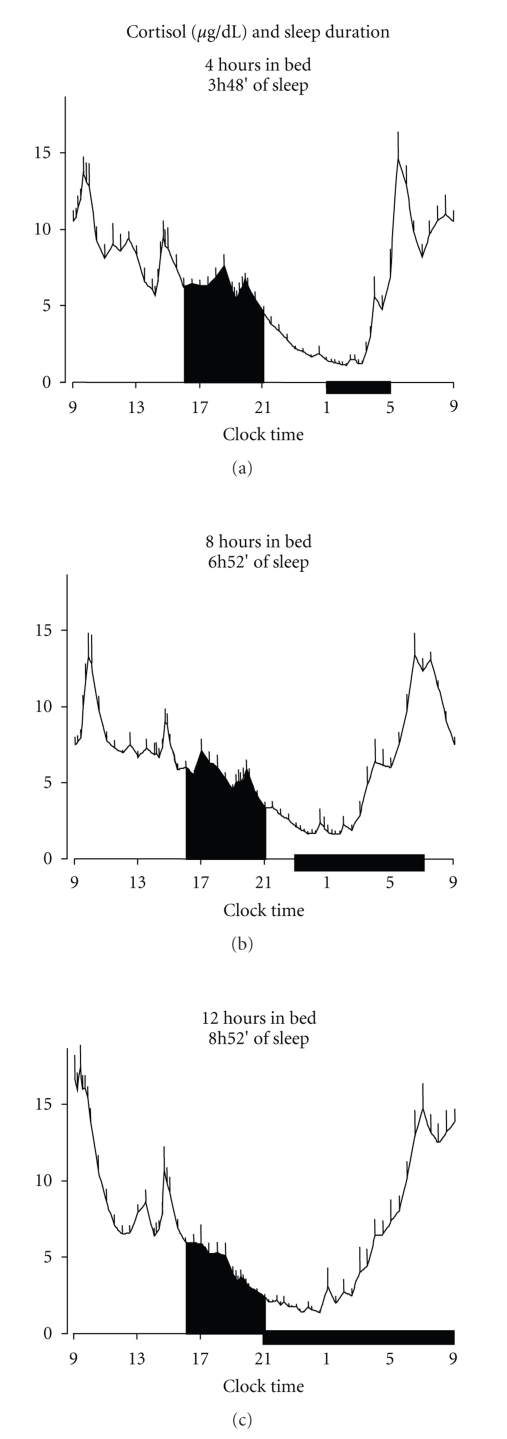
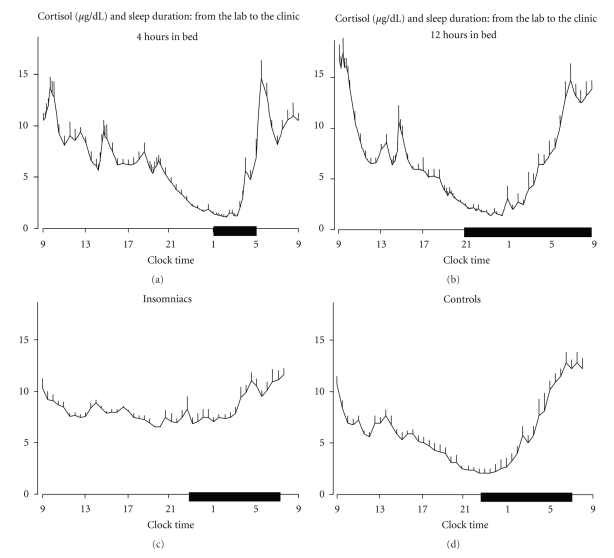
- Partial sleep restriction elevated evening cortisol: after 6 nights of 4 hours in bed in 11 young men, the quiescent period onset was delayed by nearly 1.5 hours and salivary free cortisol decline from 16:00 to 21:00 was about six times slower than when fully rested; after only 1 night of 4 hours in bed, plasma cortisol over 18:00–23:00 was 37% higher and quiescent onset occurred 1 hour later.
Methods
- Narrative review of human and animal studies on sleep, sleep disturbances, and HPA axis activity, including experimental protocols such as constant routine, shifted sleep, ultradian schedules, total sleep deprivation, partial sleep restriction, sleep-stage suppression, and sleep fragmentation.
- Synthesizes findings from clinical syndromes including insomnia, major depression, Cushing's syndrome, and sleep disordered breathing/obstructive sleep apnea, with cited sample sizes and outcomes where reported.
- No primary data collection or new statistical analysis is reported; the paper is a qualitative synthesis of the literature.
Limitations
- The paper states that further research is needed to delineate functional links between sleep and HPA axis activity and to understand the pathophysiology of associated syndromes.
- It explicitly notes contradictory findings and methodological limitations in sleep-deprivation and SDB studies, including small sample sizes, variable sleep-recording hours, variable SDB severity, single-time-point cortisol measures, and variable CPAP compliance.
- Evident from the text: as a narrative review, it does not describe a systematic search strategy, formal quality assessment, or quantitative meta-analysis.
Model-written summary. Check it against the paper before relying on it.
Integrity signals
Registry
Cites
Statistics
Figures
Verification
Claims the paper makes
74 Not checked yet · 11 Own interpretation · 2 Own result · 2 No basis given · 1 Supported
Every source the paper cites for this claim was checked and supports it.
In the paper
“Cortisol levels have been shown to decrease in the first 20 minutes after the onset of SWS [41]”
§ Impact of Sleep and Its Disturbances on Hypothalamo-Pituitary-Adrenal Axis Activity > 3. Effects of Normal Sleep on HPA Axis > 3.2. Modulatory Effects of Sleep Stages
What the sources say
- Supportedcites [41] 1992, Sleep source
The Slow-wave sleep section reports that mean plasma cortisol decreased during the first 20 minutes after SWS onset following sleep deprivation. It also reports significant decreases in the two 10-minute samples after SWS onset during the second half of nights without sleep deprivation. No page number is provided in our copy. (LLM, conf=0.94)
boosteddirect- Asserted: passes — The authors put it forward as true.
- Checkable: passes — It can be checked against evidence.
- Load-bearing: passes — The paper’s conclusions depend on it.
- Based: passes — The paper gives a reason why it holds.
- Supported
In the paper
“In addition, the rate of decrease of free cortisol concentrations in saliva between 16.00 hours and 21.00 hours was about six times slower in the sleep-debt than in the fully rested condition.”
§ Impact of Sleep and Its Disturbances on Hypothalamo-Pituitary-Adrenal Axis Activity > 5. Effects of Sleep Loss and Sleep Disrupion on HPA Axis > 5.2. Semichronic Partial Sleep Restriction
What the sources say
- Not checked yetcites [83] source
plaincorrelationaln = 11- Asserted: passes — The authors put it forward as true.
- Checkable: passes — It can be checked against evidence.
- Load-bearing: passes — The paper’s conclusions depend on it.
- Based: passes — The paper gives a reason why it holds.
None of the sources cited for this claim have been checked yet.
In the paper
“Indeed, some authors have reported no change [41, 43, 74, 75] or even a slight decrease in cortisol levels [76, 77] after one or several nights of total sleep deprivation.”
§ Impact of Sleep and Its Disturbances on Hypothalamo-Pituitary-Adrenal Axis Activity > 5. Effects of Sleep Loss and Sleep Disrupion on HPA Axis > 5.1. Acute Total Sleep Loss
What the sources say
plain- Asserted: passes — The authors put it forward as true.
- Checkable: passes — It can be checked against evidence.
- Load-bearing: unclear — It is unclear whether the paper’s conclusions depend on it.
- Based: passes — The paper gives a reason why it holds.
None of the sources cited for this claim have been checked yet.
In the paper
“while in some studies cortisol secretion seemed to be almost unaffected by recovery sleep following prolonged wakefulness [78–80]”
§ Impact of Sleep and Its Disturbances on Hypothalamo-Pituitary-Adrenal Axis Activity > 5. Effects of Sleep Loss and Sleep Disrupion on HPA Axis > 5.1. Acute Total Sleep Loss
What the sources say
hedged- Asserted: passes — The authors put it forward as true.
- Checkable: passes — It can be checked against evidence.
- Load-bearing: unclear — It is unclear whether the paper’s conclusions depend on it.
- Based: passes — The paper gives a reason why it holds.
In the paper
“Interestingly, cortisol evening levels observed under 8-hour bedtime condition were intermediate between those measured under 4-hour and 12-hour bedtime conditions [84] (Figure 5).”
§ Impact of Sleep and Its Disturbances on Hypothalamo-Pituitary-Adrenal Axis Activity > 5. Effects of Sleep Loss and Sleep Disrupion on HPA Axis > 5.2. Semichronic Partial Sleep Restriction
What the sources say
- Not checked yetcites [84] source
plaincorrelationaln = 9- Asserted: passes — The authors put it forward as true.
- Checkable: passes — It can be checked against evidence.
- Load-bearing: unclear — It is unclear whether the paper’s conclusions depend on it.
- Based: passes — The paper gives a reason why it holds.
None of the sources cited for this claim have been checked yet.
In the paper
“No significant changes in cortisol profiles were found.”
§ Impact of Sleep and Its Disturbances on Hypothalamo-Pituitary-Adrenal Axis Activity > 5. Effects of Sleep Loss and Sleep Disrupion on HPA Axis > 5.3. Impact of Disrupted Sleep Quality
What the sources say
plain- Asserted: passes — The authors put it forward as true.
- Checkable: passes — It can be checked against evidence.
- Load-bearing: unclear — It is unclear whether the paper’s conclusions depend on it.
- Based: passes — The paper gives a reason why it holds.
A result the paper reports from its own data — it cites no other source for it, so there is none to check. The quote shows it is in the paper.
In the paper
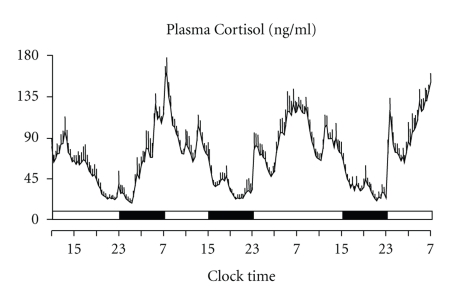
“In this protocol, however, there was a temporal coincidence between the phase markers and the sleep-wake and dark-light transition (at 23:00), which elicited robust cortisol pulses.”
§ Impact of Sleep and Its Disturbances on Hypothalamo-Pituitary-Adrenal Axis Activity > 4. Effects of Shifted Sleep on Hpa Axis > 4.2. Advance of the Sleep-Wake Cycle
plaindirect- Asserted: passes — The authors put it forward as true.
- Checkable: passes — It can be checked against evidence.
- Load-bearing: passes — The paper’s conclusions depend on it.
- Based: passes — The paper gives a reason why it holds.
A result the paper reports from its own data — it cites no other source for it, so there is none to check. The quote shows it is in the paper.
In the paper
“the findings of this study showed that an abrupt 8-hour advance of the sleep-wake, rest-activity and dark-light cycle results in a 3- to 4-hour advance of the timing of the nadir and of the end of the quiescent period, which are both reliable markers of central circadian rhythmicity.”
§ Impact of Sleep and Its Disturbances on Hypothalamo-Pituitary-Adrenal Axis Activity > 4. Effects of Shifted Sleep on Hpa Axis > 4.2. Advance of the Sleep-Wake Cycle
boosteddirect- Asserted: passes — The authors put it forward as true.
- Checkable: passes — It can be checked against evidence.
- Load-bearing: passes — The paper’s conclusions depend on it.
- Based: passes — The paper gives a reason why it holds.
In the paper
“In this regard, it is notable that chronic short sleepers have been found to have higher nocturnal cortisol levels compared with chronic long sleepers [40]”
§ Impact of Sleep and Its Disturbances on Hypothalamo-Pituitary-Adrenal Axis Activity > 5. Effects of Sleep Loss and Sleep Disrupion on HPA Axis > 5.2. Semichronic Partial Sleep Restriction
What the sources say
- Not checked yetcites [40] source
plaincorrelational- Asserted: passes — The authors put it forward as true.
- Checkable: passes — It can be checked against evidence.
- Load-bearing: passes — The paper’s conclusions depend on it.
- Based: passes — The paper gives a reason why it holds.
In the paper
“Decreased cortisol levels have been reported in a study of REM suppression [92].”
§ Impact of Sleep and Its Disturbances on Hypothalamo-Pituitary-Adrenal Axis Activity > 5. Effects of Sleep Loss and Sleep Disrupion on HPA Axis > 5.3. Impact of Disrupted Sleep Quality
What the sources say
- Not checked yetcites [92] 1988, Biological Psychiatry source
plaindirect- Asserted: passes — The authors put it forward as true.
- Checkable: passes — It can be checked against evidence.
- Load-bearing: unclear — It is unclear whether the paper’s conclusions depend on it.
- Based: passes — The paper gives a reason why it holds.
- It may state two separate claims as one. 32
- Probably not a substantial claim. 8
In the paper
“The state of sleep debt, as compared to the fully rested state, was associated with elevated cortisol concentrations in the afternoon and in the early evening and with a shorter quiescent period, due to a delay in its onset by nearly 1.5 hour.”
§ Impact of Sleep and Its Disturbances on Hypothalamo-Pituitary-Adrenal Axis Activity > 5. Effects of Sleep Loss and Sleep Disrupion on HPA Axis > 5.2. Semichronic Partial Sleep Restriction
What the sources say
- Not checked yetcites [83] source
plaincorrelationaln = 11- Asserted: passes — The authors put it forward as true.
- Checkable: passes — It can be checked against evidence.
- Load-bearing: passes — The paper’s conclusions depend on it.
- Based: passes — The paper gives a reason why it holds.
It may state two separate claims as one.
In the paper
“Following 2 nights of experimental sleep fragmentation across all stages, an increase in morning cortisol levels was observed, in association with a shift in the sympatho-vagal balance, estimated from the analysis of the heart rate variability towards an increase of sympathetic nervous system activity, and a decrease in insulin sensitivity.”
§ Impact of Sleep and Its Disturbances on Hypothalamo-Pituitary-Adrenal Axis Activity > 5. Effects of Sleep Loss and Sleep Disrupion on HPA Axis > 5.3. Impact of Disrupted Sleep Quality
What the sources say
- Not checked yetcites [93] source
hedgedcorrelational- Asserted: passes — The authors put it forward as true.
- Checkable: passes — It can be checked against evidence.
- Load-bearing: passes — The paper’s conclusions depend on it.
- Based: passes — The paper gives a reason why it holds.
It may state two separate claims as one.
None of the sources cited for this claim have been checked yet.
In the paper
“Several studies have reported an elevation of cortisol levels both during the night of total sleep deprivation [13, 35, 72] and, if wakefulness was further prolonged, during the following day, particularly in the afternoon and evening [63, 73].”
§ Impact of Sleep and Its Disturbances on Hypothalamo-Pituitary-Adrenal Axis Activity > 5. Effects of Sleep Loss and Sleep Disrupion on HPA Axis > 5.1. Acute Total Sleep Loss
What the sources say
plaincorrelational- Asserted: passes — The authors put it forward as true.
- Checkable: passes — It can be checked against evidence.
- Load-bearing: unclear — It is unclear whether the paper’s conclusions depend on it.
- Based: passes — The paper gives a reason why it holds.
It may state two separate claims as one.
In the paper
“Short sleep duration was associated with an acute increased cortisol awakening response and both short sleep duration and disturbances were independently associated with a slower rate of decline of cortisol levels across the day and thus with increased evening levels.”
§ Impact of Sleep and Its Disturbances on Hypothalamo-Pituitary-Adrenal Axis Activity > 5. Effects of Sleep Loss and Sleep Disrupion on HPA Axis > 5.2. Semichronic Partial Sleep Restriction
What the sources say
- Not checked yetcites [85] source
plaincorrelationaln = 2,700- Asserted: passes — The authors put it forward as true.
- Checkable: passes — It can be checked against evidence.
- Load-bearing: passes — The paper’s conclusions depend on it.
- Based: passes — The paper gives a reason why it holds.
It may state two separate claims as one.
The paper states this without a source or data behind it here, so there is nothing to check it against. The quote shows it is in the paper.
In the paper
“Therefore, despite a relatively fast adaptation of some circadian markers, the lack of adaptation of acrophase, the longer duration of the rising phase, and the shorter duration of the quiescent period resulted in elevated cortisol levels at the time of the usual trough of the profile.”
§ Impact of Sleep and Its Disturbances on Hypothalamo-Pituitary-Adrenal Axis Activity > 4. Effects of Shifted Sleep on Hpa Axis > 4.2. Advance of the Sleep-Wake Cycle
plaindirect- Asserted: passes — The authors put it forward as true.
- Checkable: passes — It can be checked against evidence.
- Load-bearing: passes — The paper’s conclusions depend on it.
- Based: passes — The paper gives a reason why it holds.
It may state two separate claims as one.
In the paper
“Vgontzas et al. [81] found a significant decrease in plasma cortisol levels, that appeared to be negatively correlated with the rebound increase of SWS.”
§ Impact of Sleep and Its Disturbances on Hypothalamo-Pituitary-Adrenal Axis Activity > 5. Effects of Sleep Loss and Sleep Disrupion on HPA Axis > 5.1. Acute Total Sleep Loss
What the sources say
- Not checked yetcites [81] source
hedgedcorrelational- Asserted: passes — The authors put it forward as true.
- Checkable: passes — It can be checked against evidence.
- Load-bearing: unclear — It is unclear whether the paper’s conclusions depend on it.
- Based: passes — The paper gives a reason why it holds.
It may state two separate claims as one.
In the paper
“In this study, plasma cortisol levels over the 1800–2300 hour period were 37% higher on the day following the night of restricted sleep than on the previous day, and the onset of the quiescent period occurred 1 hour later.”
§ Impact of Sleep and Its Disturbances on Hypothalamo-Pituitary-Adrenal Axis Activity > 5. Effects of Sleep Loss and Sleep Disrupion on HPA Axis > 5.2. Semichronic Partial Sleep Restriction
What the sources say
- Not checked yetcites [73] 1997, Sleep
plaindirect- Asserted: passes — The authors put it forward as true.
- Checkable: passes — It can be checked against evidence.
- Load-bearing: passes — The paper’s conclusions depend on it.
- Based: passes — The paper gives a reason why it holds.
It may state two separate claims as one.
None of the sources cited for this claim have been checked yet.
In the paper
“An important interplay is also the excitatory reciprocal interaction between the HPA axis and the brainstem sympathetic locus coeruleus (LC)-norepinephrine (NE) system: CRH activates the LC; in turn, NE, a known wake-promoting neurotransmitter, activates hypothalamic CRH [9, 10].”
§ Impact of Sleep and Its Disturbances on Hypothalamo-Pituitary-Adrenal Axis Activity > 2. Physiology of Hypothalamo-Pituitary-Adrenal (HPA) Axis
plaindirect- Asserted: passes — The authors put it forward as true.
- Checkable: passes — It can be checked against evidence.
- Load-bearing: unclear — It is unclear whether the paper’s conclusions depend on it.
- Based: passes — The paper gives a reason why it holds.
It may state two separate claims as one.
In the paper
“Circadian rhythms are generated by the endogenous master pacemaker located in the paired suprachiasmatic nucleus (SCN) of the hypothalamus and are kept entrained to the local conditions by environmental timing cues; the most important of these cues is light, that signaled to the SCN by direct input from the retina via the retinohypothalamic tract [1].”
§ Impact of Sleep and Its Disturbances on Hypothalamo-Pituitary-Adrenal Axis Activity > 1. Introduction
What the sources say
- Not checked yetcites [1] source
plaindirect- Asserted: passes — The authors put it forward as true.
- Checkable: passes — It can be checked against evidence.
- Load-bearing: fails — The paper’s conclusions may not depend on it.
- Based: passes — The paper gives a reason why it holds.
Probably not a substantial claim. The paper’s conclusions may not depend on it. It may state two separate claims as one.
A conclusion the paper draws from its own results — it cites no other source for it, so there is none to check. The quote shows it is in the paper.
In the paper
“The daylong cortisol decline may represent the rate of recovery of the axis from this endogenous challenge.”
§ Impact of Sleep and Its Disturbances on Hypothalamo-Pituitary-Adrenal Axis Activity > 2. Physiology of Hypothalamo-Pituitary-Adrenal (HPA) Axis
hedgedconditional- Asserted: passes — The authors put it forward as true.
- Checkable: passes — It can be checked against evidence.
- Load-bearing: fails — The paper’s conclusions may not depend on it.
- Based: passes — The paper gives a reason why it holds.
Probably not a substantial claim. The paper’s conclusions may not depend on it.
None of the sources cited for this claim have been checked yet.
In the paper
“awakenings and sleep offset are accompanied by cortisol stimulation”
- Also stated in: § 3.1. Impact of Sleep Onset and Offset · boosted
“An influence of sleep-wake transitions on cortisol secretion is also detectable during nocturnal awakenings which are consistently associated with a transient elevation of cortisol levels, followed by temporary inhibition of cortisol secretion [38].”
§ Impact of Sleep and Its Disturbances on Hypothalamo-Pituitary-Adrenal Axis Activity > Abstract
boosteddirect- Asserted: passes — The authors put it forward as true.
- Checkable: passes — It can be checked against evidence.
- Load-bearing: passes — The paper’s conclusions depend on it.
- Based: passes — The paper gives a reason why it holds.
It may state two separate claims as one.
- Also stated in: § 3.1. Impact of Sleep Onset and Offset · boosted
None of the sources cited for this claim have been checked yet.
In the paper
“circadian oscillators have been found in a number of peripheral tissues, such as liver, heart, lung, skeletal muscle, and adrenal glands [2, 3].”
§ Impact of Sleep and Its Disturbances on Hypothalamo-Pituitary-Adrenal Axis Activity > 1. Introduction
plain- Asserted: passes — The authors put it forward as true.
- Checkable: passes — It can be checked against evidence.
- Load-bearing: fails — The paper’s conclusions may not depend on it.
- Based: passes — The paper gives a reason why it holds.
Probably not a substantial claim. The paper’s conclusions may not depend on it.
In the paper
“In addition, the HPA axis receives relevant feedback from other areas of the brain, such as the hippocampus and amygdala [8].”
§ Impact of Sleep and Its Disturbances on Hypothalamo-Pituitary-Adrenal Axis Activity > 2. Physiology of Hypothalamo-Pituitary-Adrenal (HPA) Axis
What the sources say
- Not checked yetcites [8] source
plaindirect- Asserted: passes — The authors put it forward as true.
- Checkable: passes — It can be checked against evidence.
- Load-bearing: fails — The paper’s conclusions may not depend on it.
- Based: passes — The paper gives a reason why it holds.
Probably not a substantial claim. The paper’s conclusions may not depend on it.
In the paper
“Thus, the late night rise in cortisol appears to dampen amygdala-dependent emotional processing and could exert a protective function by preventing excessive emotionality in memory.”
§ Impact of Sleep and Its Disturbances on Hypothalamo-Pituitary-Adrenal Axis Activity > 3. Effects of Normal Sleep on HPA Axis > 3.2. Modulatory Effects of Sleep Stages
What the sources say
- Not checked yetcites [58] source
hedgedconditional- Asserted: passes — The authors put it forward as true.
- Checkable: passes — It can be checked against evidence.
- Load-bearing: passes — The paper’s conclusions depend on it.
- Based: passes — The paper gives a reason why it holds.
It may state two separate claims as one.
In the paper
“Both a higher nadir value, due to the lack of the inhibitory effect of sleep onset, and a lower acrophase value, due to the lack of the stimulatory effect of awakening, were observed.”
§ Impact of Sleep and Its Disturbances on Hypothalamo-Pituitary-Adrenal Axis Activity > 4. Effects of Shifted Sleep on Hpa Axis > 4.1. Delay of the Sleep-Wake Cycle
What the sources say
- Not checked yetcites [67] 2000, Sleep
plaindirect- Asserted: passes — The authors put it forward as true.
- Checkable: passes — It can be checked against evidence.
- Load-bearing: passes — The paper’s conclusions depend on it.
- Based: passes — The paper gives a reason why it holds.
It may state two separate claims as one.
In the paper
“ApEn analysis revealed that greater age is associated with more irregular patterns of cortisol, but not ACTH secretion”
§ Impact of Sleep and Its Disturbances on Hypothalamo-Pituitary-Adrenal Axis Activity > 2. Physiology of Hypothalamo-Pituitary-Adrenal (HPA) Axis
What the sources say
- Not checked yetcites [33] 1998, European Journal of Endocrinology source
plaincorrelational- Asserted: passes — The authors put it forward as true.
- Checkable: passes — It can be checked against evidence.
- Load-bearing: passes — The paper’s conclusions depend on it.
- Based: passes — The paper gives a reason why it holds.
It may state two separate claims as one.
In the paper
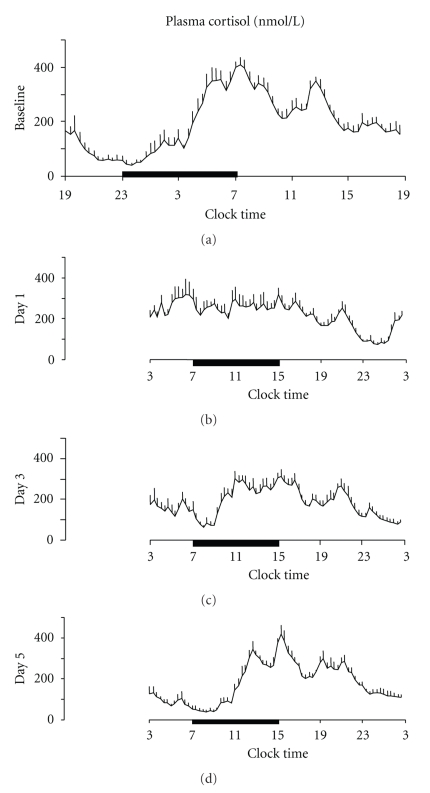
“On the third day, as a sign of partial adaptation to the new schedule, the circadian onset of cortisol was delayed by more than 5 hours, while the timing of the acrophase was delayed by more than 6 hours.”
§ Impact of Sleep and Its Disturbances on Hypothalamo-Pituitary-Adrenal Axis Activity > 4. Effects of Shifted Sleep on Hpa Axis > 4.1. Delay of the Sleep-Wake Cycle
What the sources say
- Not checked yetcites [67] 2000, Sleep
plaindirect- Asserted: passes — The authors put it forward as true.
- Checkable: passes — It can be checked against evidence.
- Load-bearing: unclear — It is unclear whether the paper’s conclusions depend on it.
- Based: passes — The paper gives a reason why it holds.
It may state two separate claims as one.
None of the sources cited for this claim have been checked yet.
In the paper
“In the cortisol profile, the end of the quiescent period and the onset of the daily rise are mostly under the control of circadian rhythmicity, while the timing of the acrophase and the amplitude of the diurnal variation are more influenced by sleep-wake transitions.”
§ Impact of Sleep and Its Disturbances on Hypothalamo-Pituitary-Adrenal Axis Activity > 4. Effects of Shifted Sleep on Hpa Axis
What the sources say
plaindirect- Asserted: passes — The authors put it forward as true.
- Checkable: passes — It can be checked against evidence.
- Load-bearing: passes — The paper’s conclusions depend on it.
- Based: passes — The paper gives a reason why it holds.
It may state two separate claims as one.
In the paper
“In this study, mean ACTH concentrations, basal and pulsatile ACTH secretion directly correlated with BMI and were higher in men than in women, after controlling of BMI.”
§ Impact of Sleep and Its Disturbances on Hypothalamo-Pituitary-Adrenal Axis Activity > 2. Physiology of Hypothalamo-Pituitary-Adrenal (HPA) Axis
What the sources say
- Not checked yetcites [32] source
plaincorrelational- Asserted: passes — The authors put it forward as true.
- Checkable: passes — It can be checked against evidence.
- Load-bearing: unclear — It is unclear whether the paper’s conclusions depend on it.
- Based: passes — The paper gives a reason why it holds.
It may state two separate claims as one.
In the paper
“In addition, in men, ACTH-cortisol feedforward synchrony and cortisol-ACTH feedback synchrony both decline with age, as quantified by cross-ApEn, denoting a deterioration of coordinate control of ACTH and cortisol secretion patterns.”
§ Impact of Sleep and Its Disturbances on Hypothalamo-Pituitary-Adrenal Axis Activity > 2. Physiology of Hypothalamo-Pituitary-Adrenal (HPA) Axis
What the sources say
- Not checked yetcites [32] source
plaindirect- Asserted: passes — The authors put it forward as true.
- Checkable: passes — It can be checked against evidence.
- Load-bearing: unclear — It is unclear whether the paper’s conclusions depend on it.
- Based: passes — The paper gives a reason why it holds.
It may state two separate claims as one.
In the paper
“Given that high-frequency EEG over 20 Hz is considered a marker of daytime arousal [64], a functional link between the regulatory mechanisms controlling the HPA activity and the level of central arousal has been hypothesized.”
§ Impact of Sleep and Its Disturbances on Hypothalamo-Pituitary-Adrenal Axis Activity > 3. Effects of Normal Sleep on HPA Axis > 3.2. Modulatory Effects of Sleep Stages
What the sources say
- Not checked yetcites [64] 2000, NeuroReport source
hedgedcorrelational- Asserted: fails — The authors may not put it forward as true.
- Checkable: passes — It can be checked against evidence.
- Load-bearing: fails — The paper’s conclusions may not depend on it.
- Based: passes — The paper gives a reason why it holds.
Probably not a substantial claim. The authors may not put it forward as true. The paper’s conclusions may not depend on it.
In the paper
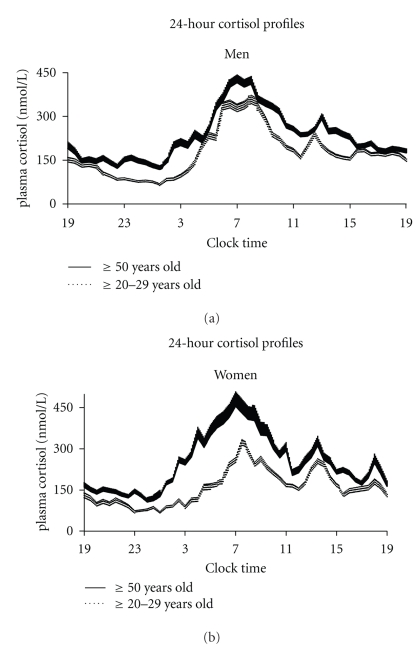
“In young adulthood, women appeared to have, compared to men, lower 24-hour mean cortisol levels, a longer quiescent period (that started earlier and ended later), a lower acrophase, and a lower absolute amplitude of the circadian variation.”
§ Impact of Sleep and Its Disturbances on Hypothalamo-Pituitary-Adrenal Axis Activity > 2. Physiology of Hypothalamo-Pituitary-Adrenal (HPA) Axis
What the sources say
- Not checked yetcites [31] source
hedgedcorrelational- Asserted: passes — The authors put it forward as true.
- Checkable: passes — It can be checked against evidence.
- Load-bearing: unclear — It is unclear whether the paper’s conclusions depend on it.
- Based: passes — The paper gives a reason why it holds.
It may state two separate claims as one.
In the paper
“In addition, the timing of the nadir and of the onset of the nocturnal cortisol rise are advanced in older adults of both sexes and the circadian amplitude, when expressed as a percentage of the 24-hour mean level, is decreased”
§ Impact of Sleep and Its Disturbances on Hypothalamo-Pituitary-Adrenal Axis Activity > 2. Physiology of Hypothalamo-Pituitary-Adrenal (HPA) Axis
What the sources say
- Not checked yetcites [31] source
plaincorrelational- Asserted: passes — The authors put it forward as true.
- Checkable: passes — It can be checked against evidence.
- Load-bearing: unclear — It is unclear whether the paper’s conclusions depend on it.
- Based: passes — The paper gives a reason why it holds.
It may state two separate claims as one.
In the paper
“During the second postshift period (day 3), minor signs of further adaptation of the cortisol profiles were detected: there was no further advance of the timing of the nadir and only a minor additional advance of the onset of the quiescent period.”
§ Impact of Sleep and Its Disturbances on Hypothalamo-Pituitary-Adrenal Axis Activity > 4. Effects of Shifted Sleep on Hpa Axis > 4.2. Advance of the Sleep-Wake Cycle
What the sources say
- Not checked yetcites [68] 2002, American Journal of Physiology source
plainn = 8- Asserted: passes — The authors put it forward as true.
- Checkable: passes — It can be checked against evidence.
- Load-bearing: unclear — It is unclear whether the paper’s conclusions depend on it.
- Based: passes — The paper gives a reason why it holds.
It may state two separate claims as one.
In the paper
“Metyrapone suppressed cortisol concentrations, especially the rise in cortisol during late sleep, and decreased time spent in SWS, which was replaced by shallow NREM sleep. REM sleep was preserved.”
§ Impact of Sleep and Its Disturbances on Hypothalamo-Pituitary-Adrenal Axis Activity > 3. Effects of Normal Sleep on HPA Axis > 3.2. Modulatory Effects of Sleep Stages
What the sources say
- Not checked yetcites [58] source
plaindirect- Asserted: passes — The authors put it forward as true.
- Checkable: passes — It can be checked against evidence.
- Load-bearing: passes — The paper’s conclusions depend on it.
- Based: passes — The paper gives a reason why it holds.
It may state two separate claims as one.
In the paper
“While memory for the neutral texts was reduced, interestingly metyrapone even amplified emotional enhancement in text recall”
§ Impact of Sleep and Its Disturbances on Hypothalamo-Pituitary-Adrenal Axis Activity > 3. Effects of Normal Sleep on HPA Axis > 3.2. Modulatory Effects of Sleep Stages
What the sources say
- Not checked yetcites [58] source
plaindirect- Asserted: passes — The authors put it forward as true.
- Checkable: passes — It can be checked against evidence.
- Load-bearing: passes — The paper’s conclusions depend on it.
- Based: passes — The paper gives a reason why it holds.
It may state two separate claims as one.
In the paper
“On the first day after the shift, profound disruptions in the 24-hour cortisol rhythm were found: a reduction of more than 3 hours in the duration of the quiescent period resulted in an increase of the 24-hour mean levels and in the advance of the circadian onset.”
§ Impact of Sleep and Its Disturbances on Hypothalamo-Pituitary-Adrenal Axis Activity > 4. Effects of Shifted Sleep on Hpa Axis > 4.1. Delay of the Sleep-Wake Cycle
What the sources say
- Not checked yetcites [67] 2000, Sleep
plaindirect- Asserted: passes — The authors put it forward as true.
- Checkable: passes — It can be checked against evidence.
- Load-bearing: passes — The paper’s conclusions depend on it.
- Based: passes — The paper gives a reason why it holds.
It may state two separate claims as one.
In the paper
“In the first postshift period, compared with the baseline profile, the timing of the nadir was advanced by about 3 hours and 20 minutes; the quiescent period was markedly reduced mainly due to an advance of the offset by more than 3 hours.”
§ Impact of Sleep and Its Disturbances on Hypothalamo-Pituitary-Adrenal Axis Activity > 4. Effects of Shifted Sleep on Hpa Axis > 4.2. Advance of the Sleep-Wake Cycle
What the sources say
- Not checked yetcites [68] 2002, American Journal of Physiology source
plaindirectn = 8- Asserted: passes — The authors put it forward as true.
- Checkable: passes — It can be checked against evidence.
- Load-bearing: passes — The paper’s conclusions depend on it.
- Based: passes — The paper gives a reason why it holds.
It may state two separate claims as one.
In the paper
“In the same study, aging was associated, in both sexes, with a progressive increase of 24-hour mean levels from the 2nd to the 8th decade, associated with a shorter quiescent period and higher nadir values.”
§ Impact of Sleep and Its Disturbances on Hypothalamo-Pituitary-Adrenal Axis Activity > 2. Physiology of Hypothalamo-Pituitary-Adrenal (HPA) Axis
What the sources say
- Not checked yetcites [31] source
plaincorrelational- Asserted: passes — The authors put it forward as true.
- Checkable: passes — It can be checked against evidence.
- Load-bearing: unclear — It is unclear whether the paper’s conclusions depend on it.
- Based: passes — The paper gives a reason why it holds.
It may state two separate claims as one.
None of the sources cited for this claim have been checked yet.
In the paper
“Retention of declarative memory critically depends on the integrity of the hippocampus and has been shown to benefit specifically from early nocturnal sleep, in which SWS predominates and cortisol concentrations are minimal [52, 53].”
§ Impact of Sleep and Its Disturbances on Hypothalamo-Pituitary-Adrenal Axis Activity > 3. Effects of Normal Sleep on HPA Axis > 3.2. Modulatory Effects of Sleep Stages
What the sources say
plaindirect- Asserted: passes — The authors put it forward as true.
- Checkable: passes — It can be checked against evidence.
- Load-bearing: passes — The paper’s conclusions depend on it.
- Based: passes — The paper gives a reason why it holds.
It may state two separate claims as one.
In the paper
“No shift in the timing of the acrophase occurred, thus the duration of the rising phase of cortisol secretion was increased by nearly 3 hours and presented a biphasic pattern.”
§ Impact of Sleep and Its Disturbances on Hypothalamo-Pituitary-Adrenal Axis Activity > 4. Effects of Shifted Sleep on Hpa Axis > 4.2. Advance of the Sleep-Wake Cycle
What the sources say
- Not checked yetcites [68] 2002, American Journal of Physiology source
plaindirectn = 8- Asserted: passes — The authors put it forward as true.
- Checkable: passes — It can be checked against evidence.
- Load-bearing: passes — The paper’s conclusions depend on it.
- Based: passes — The paper gives a reason why it holds.
It may state two separate claims as one.
In the paper
“Hence, a biphasic HPA response to sleep deprivation has been suggested [63] where activation of the HPA axis, as part of the stress response, may be one of the arousal mechanisms recruited early on to adapt to sleep loss; however, when wakefulness is prolonged, the increased sleep pressure may eventually cause a blunting of the HPA axis activity.”
§ Impact of Sleep and Its Disturbances on Hypothalamo-Pituitary-Adrenal Axis Activity > 5. Effects of Sleep Loss and Sleep Disrupion on HPA Axis > 5.1. Acute Total Sleep Loss
What the sources say
- Not checked yetcites [63] source
hedgedconditional- Asserted: passes — The authors put it forward as true.
- Checkable: passes — It can be checked against evidence.
- Load-bearing: passes — The paper’s conclusions depend on it.
- Based: passes — The paper gives a reason why it holds.
It may state two separate claims as one.
In the paper
“The findings of high glucocorticoid levels in a condition of acute sleep loss have been interpreted as reflecting the stress of the effort to maintain wakefulness and is consistent with the positive correlation found between high frequency EEG activity in wake, indices of arousal, and cortisol release [63].”
§ Impact of Sleep and Its Disturbances on Hypothalamo-Pituitary-Adrenal Axis Activity > 5. Effects of Sleep Loss and Sleep Disrupion on HPA Axis > 5.1. Acute Total Sleep Loss
What the sources say
- Not checked yetcites [63] source
plaincorrelational- Asserted: passes — The authors put it forward as true.
- Checkable: passes — It can be checked against evidence.
- Load-bearing: unclear — It is unclear whether the paper’s conclusions depend on it.
- Based: passes — The paper gives a reason why it holds.
It may state two separate claims as one.
A conclusion the paper draws from its own results — it cites no other source for it, so there is none to check. The quote shows it is in the paper.
In the paper
“Even if modest, this elevation may result, under conditions of chronic sleep loss, in a significant glucocorticoid overload and consequently expose the body to the central and peripheral deleterious effects associated with glucocorticoid excess.”
§ Impact of Sleep and Its Disturbances on Hypothalamo-Pituitary-Adrenal Axis Activity > 5. Effects of Sleep Loss and Sleep Disrupion on HPA Axis > 5.2. Semichronic Partial Sleep Restriction
hedgedconditional- Asserted: passes — The authors put it forward as true.
- Checkable: passes — It can be checked against evidence.
- Load-bearing: passes — The paper’s conclusions depend on it.
- Based: passes — The paper gives a reason why it holds.
It may state two separate claims as one.
In the paper
“there is in turn strong evidence that elevated CRH tone increases sleep EEG frequency, thereby decreasing SWS, and increasing light sleep and wakefulness [94].”
§ Impact of Sleep and Its Disturbances on Hypothalamo-Pituitary-Adrenal Axis Activity > 6. HPA Axis and Sleep Disturbances in Clinical Syndromes
What the sources say
- Not checked yetcites [94] 1988, Neuroendocrinology source
boosteddirect- Asserted: passes — The authors put it forward as true.
- Checkable: passes — It can be checked against evidence.
- Load-bearing: passes — The paper’s conclusions depend on it.
- Based: passes — The paper gives a reason why it holds.
It may state two separate claims as one.
In the paper
“Recurrent partial sleep restriction has become a widespread habit in modern society [82]”
§ Impact of Sleep and Its Disturbances on Hypothalamo-Pituitary-Adrenal Axis Activity > 5. Effects of Sleep Loss and Sleep Disrupion on HPA Axis > 5.2. Semichronic Partial Sleep Restriction
What the sources say
- Not checked yetcites [82] 2005, Morbidity and Mortality Weekly Report
plain- Asserted: passes — The authors put it forward as true.
- Checkable: passes — It can be checked against evidence.
- Load-bearing: fails — The paper’s conclusions may not depend on it.
- Based: passes — The paper gives a reason why it holds.
Probably not a substantial claim. The paper’s conclusions may not depend on it.
A conclusion the paper draws from its own results — it cites no other source for it, so there is none to check. The quote shows it is in the paper.
In the paper
“Findings of decreased cortisol levels after sleep deprivation have been interpreted as related to an increase in fatigue and sleepiness.”
§ Impact of Sleep and Its Disturbances on Hypothalamo-Pituitary-Adrenal Axis Activity > 5. Effects of Sleep Loss and Sleep Disrupion on HPA Axis > 5.1. Acute Total Sleep Loss
plaincorrelational- Asserted: passes — The authors put it forward as true.
- Checkable: passes — It can be checked against evidence.
- Load-bearing: fails — The paper’s conclusions may not depend on it.
- Based: passes — The paper gives a reason why it holds.
Probably not a substantial claim. The paper’s conclusions may not depend on it.
A conclusion the paper draws from its own results — it cites no other source for it, so there is none to check. The quote shows it is in the paper.
In the paper
“These discrepancies could be due to a lack of control of experimental conditions, such as physical activity and posture, and/or to an insufficient frequency of blood sampling; indeed, short naps may have gone undetected and estimation of cortisol levels with infrequent blood sampling are often inaccurate.”
§ Impact of Sleep and Its Disturbances on Hypothalamo-Pituitary-Adrenal Axis Activity > 5. Effects of Sleep Loss and Sleep Disrupion on HPA Axis > 5.1. Acute Total Sleep Loss
hedgedconditional- Asserted: passes — The authors put it forward as true.
- Checkable: passes — It can be checked against evidence.
- Load-bearing: unclear — It is unclear whether the paper’s conclusions depend on it.
- Based: passes — The paper gives a reason why it holds.
It may state two separate claims as one.
A conclusion the paper draws from its own results — it cites no other source for it, so there is none to check. The quote shows it is in the paper.
In the paper
“The timing of the period of recovery sleep is likely to have played a role in these conflicting findings.”
§ Impact of Sleep and Its Disturbances on Hypothalamo-Pituitary-Adrenal Axis Activity > 5. Effects of Sleep Loss and Sleep Disrupion on HPA Axis > 5.1. Acute Total Sleep Loss
hedgedconditional- Asserted: passes — The authors put it forward as true.
- Checkable: passes — It can be checked against evidence.
- Load-bearing: fails — The paper’s conclusions may not depend on it.
- Based: passes — The paper gives a reason why it holds.
Probably not a substantial claim. The paper’s conclusions may not depend on it.
The paper relies on this without support.
HPA hyperactivity is clearly associated with metabolic, cognitive and psychiatric disorders.
“HPA hyperactivity is clearly associated with metabolic, cognitive and psychiatric disorders”
The paper relies on this without support.
Several clinical syndromes, such as insomnia, depression, Cushing's syndrome, and sleep disordered breathing, display HPA hyperactivity, disturbed sleep, psychiatric and metabolic impairments.
“Several clinical syndromes, such as insomnia, depression, Cushing's syndrome, sleep disordered breathing (SDB) display HPA hyperactivity, disturbed sleep, psychiatric and metabolic impairments.”
The paper relies on this without support.
Sleep onset exerts a modest but clearly detectable inhibitory effect on the activity of the HPA axis.
“Given the modest but clearly detectable inhibitory effect exerted by sleep onset on the activity of the HPA axis, it has been hypothesized that sleep loss might increase cortisol levels.”
Claims other papers make about this one
Each is checked against this paper’s own text: does it say what the citing paper says it does?
The check wasn’t confident either way, so it gives no verdict — never disputed.
In the citing paper
“performance did not return to baseline levels after a single night with a 10-h sleep opportunity (28) or three nights with an 8-h sleep opportunity (32), suggesting that a longer recovery sleep period is needed to fully resolve any performance decrements due to experimental sleep deficiency”
From The Sleep-Immune Crosstalk in Health and Disease (2019) · cites this paper as [28]
Experimental — accuracy not yet measuredIn the citing paper
“various doses of recovery sleep (0, 2, 4, 6, 8, and 10 h) following five nights of experimental sleep restriction resulted in a sleep-dose-dependent decrease of lapses (i.e., reaction times over 500 ms) in the psychomotor vigilance test”
From The Sleep-Immune Crosstalk in Health and Disease (2019) · cites this paper as [28]
Citations
Cites
Diagnostic and Statistical Manual of Mental Disorders
Williams, J. B. W., & First, M. B. (2013) · Oxford University Press eBooks · doi:10.1093/acrefore/9780199975839.013.104 · Cited by 109,845
Memory and the hippocampus: A synthesis from findings with rats, monkeys, and humans.
Squire, L. R. (1992) · Psychological Review · doi:10.1037/0033-295x.99.2.195 · Cited by 5,376 · cited 1×
“Retention of declarative memory critically depends on the integrity of the hippocampus and has been shown to benefit specifically from early nocturnal sleep, in which SWS predominates and cortisol concentrations are minimal [52, 53].”
BackgroundImpact of sleep debt on metabolic and endocrine function
Spiegel, K., Leproult, R., & Van Cauter, E. (1999) · The Lancet · doi:10.1016/s0140-6736(99)01376-8 · Cited by 3,668 · cited 1×
“The first systematic study of HPA axis activity in a state of sleep debt assessed the effect of 6 consecutive nights of 4 hours in bed in eleven young men [83].”
BackgroundSelf-citationHypothalamic-pituitary-adrenal axis, neuroendocrine factors and stress
Tsigos, C., & Chrousos, G. P. (2002) · Journal of Psychosomatic Research · doi:10.1016/s0022-3999(02)00429-4 · Cited by 2,822
Sympathetic neural mechanisms in obstructive sleep apnea.
Somers, V. K., Dyken, M. E., Clary, M. P., & Abboud, F. M. (1995) · Journal of Clinical Investigation · doi:10.1172/jci118235 · Cited by 2,527
Epidemiologic study of sleep disturbances and psychiatric disorders. An opportunity for prevention?
Ford, D. E. (1989) · JAMA · doi:10.1001/jama.262.11.1479 · Cited by 2,440
Adverse metabolic and cardiovascular consequences of circadian misalignment
Scheer, F. A. J. L., Hilton, M. F., Mantzoros, C. S., & Shea, S. A. (2009) · Proceedings of the National Academy of Sciences · doi:10.1073/pnas.0808180106 · Cited by 2,351 · cited 1×
“On the first day after the shift, profound disruptions in the 24-hour cortisol rhythm were found: a reduction of more than 3 hours in the duration of the quiescent period resulted in an increase of the 24-hour mean levels and in the advance of the circadian onset.”
BackgroundEpidemiologic Study of Sleep Disturbances and Psychiatric Disorders: An Opportunity for Prevention?
Ford, D. E. (1989) · JAMA · doi:10.1001/jama.1989.03430110069030 · Cited by 2,252
Loss of a circadian adrenal corticosterone rhythm following suprachiasmatic lesions in the rat
Moore, R. Y., & Eichler, V. B. (1972) · Brain Research · doi:10.1016/0006-8993(72)90054-6 · Cited by 2,135 · cited 1×
“As a confirmation, lesions of the SCN in rats result in the loss of corticosteroid periodicity [15, 16].”
BackgroundA Serum Shock Induces Circadian Gene Expression in Mammalian Tissue Culture Cells
Balsalobre, A., Damiola, F., & Schibler, U. (1998) · Cell · doi:10.1016/s0092-8674(00)81199-x · Cited by 2,001 · cited 1×
“In addition to the master clock in the SCN, circadian oscillators have been found in a number of peripheral tissues, such as liver, heart, lung, skeletal muscle, and adrenal glands [2, 3].”
BackgroundResetting central and peripheral circadian oscillators in transgenic rats
Yamazaki, S., Numano, R., Abe, M., Hida, A., Takahashi, R.-I., Ueda, M., Block, G. D., Sakaki, Y., Menaker, M., & Tei, H. (2000) · Science · doi:10.1126/science.288.5466.682 · Cited by 1,907 · cited 1×
“In addition to the master clock in the SCN, circadian oscillators have been found in a number of peripheral tissues, such as liver, heart, lung, skeletal muscle, and adrenal glands [2, 3].”
BackgroundMcEwen, B. S., & Sapolsky, R. M. (1995) · Current Opinion in Neurobiology · doi:10.1016/0959-4388(95)80028-x · Cited by 1,889 · cited 1×
“On the first day after the shift, profound disruptions in the 24-hour cortisol rhythm were found: a reduction of more than 3 hours in the duration of the quiescent period resulted in an increase of the 24-hour mean levels and in the advance of the circadian onset.”
BackgroundHuman emotion and memory: Interactions of the amygdala and hippocampal complex
Phelps, E. A. (2004) · Current Opinion in Neurobiology · doi:10.1016/j.conb.2004.03.015 · Cited by 1,577 · cited 1×
“Declarative memory for emotional events, although still hippocampusdependent, is under critical modulation by the amygdala [57].”
BackgroundInsomnia: Definition, Prevalence, Etiology, and Consequences
Roth, T. G. (2007) · Journal of Clinical Sleep Medicine · doi:10.5664/jcsm.26929 · Cited by 1,539 · cited 1×
“Insomnia is a sleep disorder characterized by difficulties falling or staying asleep or having restorative sleep, associated with daytime impairment or distress [99].”
BackgroundPruessner, J. C., Wolf, O. T., Hellhammer, D. H., Buske-Kirschbaum, A., von Auer, K., Jobst, S., Kaspers, F., & Kirschbaum, C. (1997) · Life Sciences · doi:10.1016/s0024-3205(97)01008-4 · Cited by 1,450 · cited 1×
“In addition, it is detectable independently of the time and the mode of awakening (naturally or induced) [39], both in long and short sleepers [40].”
BackgroundThe role of corticotropin-releasing factor in depression and anxiety disorders
Arborelius, L., Owens, M., Plotsky, P., & Nemeroff, C. (1999) · Journal of Endocrinology · doi:10.1677/joe.0.1600001 · Cited by 1,378 · cited 17×
“Responsiveness of ACTH to CRH administration has been shown to be higher in obese patients without OSA compared with lean subjects and to be even higher in obese patients with OSA [145], probably as the result of an alteration in the central control of ACTH secretion, as well as of an impaired sensitivity to the negat…”
BackgroundInfluentialObstructive Sleep Apnea Is Independently Associated with Insulin Resistance
Ip, M. S. M., Lam, B., Ng, M. M. T., Lam, W. K., Tsang, K. W. T., & Lam, K. S. L. (2002) · American Journal of Respiratory and Critical Care Medicine · doi:10.1164/ajrccm.165.5.2103001 · Cited by 1,300 · cited 1×
“Even though, until recently, it was unclear if alterations in glucose metabolism and hypertension were the results of obesity or of SDB per se, there is a growing evidence to indicate that SDB may represent an independent risk factor in the pathogenesis of these metabolic alterations [133–136].”
BackgroundDISEASES OF THE NERVOUS SYSTEM
Jelliffe, S. E., & White, W. A. (1918) · The American Journal of the Medical Sciences · doi:10.1097/00000441-191803000-00015 · Cited by 1,281
Twenty-four hour pattern of the episodic secretion of cortisol in normal subjects
WEITZMAN, E. D., FUKUSHIMA, D., NOGEIRE, C., ROFFWARG, H., GALLAGHER, T. F., & HELLMAN, L. (1971) · The Journal of Clinical Endocrinology & Metabolism · doi:10.1210/jcem-33-1-14 · Cited by 1,258 · cited 1×
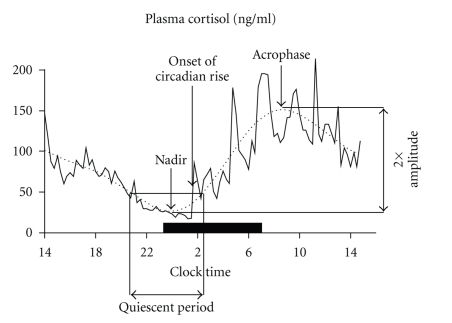
“The amplitude of the circadian oscillation is generally defined as 50% of the difference between the value of the acrophase and the value of the nadir [11–13] (Figure 1).”
BackgroundVgontzas, A. N., Papanicolaou, D. A., Bixler, E. O., Hopper, K. D., Lotsikas, A. J., LIN, H., Kales, A., & Chrousos, G. P. (2000) · The Journal of Clinical Endocrinology & Metabolism · doi:10.1210/jcem.85.3.6484 · Cited by 1,209 · cited 1×
“Even though, until recently, it was unclear if alterations in glucose metabolism and hypertension were the results of obesity or of SDB per se, there is a growing evidence to indicate that SDB may represent an independent risk factor in the pathogenesis of these metabolic alterations [133–136].”
BackgroundAdvances in biochemical psychopharmacology
Aprison, M. H. (1970) · Neuropharmacology · doi:10.1016/0028-3908(70)90062-6 · Cited by 1,177
The role of sleep in learning and memory
Maquet, P. (2001) · Science · doi:10.1126/science.1062856 · Cited by 1,177
Effects of early and late nocturnal sleep on declarative and procedural memory
Plihal, W., & Born, J. (1997) · Journal of Cognitive Neuroscience · doi:10.1162/jocn.1997.9.4.534 · Cited by 1,026 · cited 1×
“Retention of declarative memory critically depends on the integrity of the hippocampus and has been shown to benefit specifically from early nocturnal sleep, in which SWS predominates and cortisol concentrations are minimal [52, 53].”
BackgroundSpiegel, K., Leproult, R., L’Hermite-Balériaux, M., Copinschi, G., Penev, P. D., & Van Cauter, E. (2004) · The Journal of Clinical Endocrinology & Metabolism · doi:10.1210/jc.2004-1003 · Cited by 1,006
Self-citationBuckley, T. M., & Schatzberg, A. F. (2005) · The Journal of Clinical Endocrinology & Metabolism · doi:10.1210/jc.2004-1056 · Cited by 964 · cited 3×
“In times of stress, amygdala GRs may be preferentially activated, increasing CRH secretion, therefore promoting sleep disruption [8].”
BackgroundEffects of gender and age on the levels and circadian rhythmicity of plasma cortisol
Van Cauter, E. (1996) · Journal of Clinical Endocrinology & Metabolism · doi:10.1210/jc.81.7.2468 · Cited by 951 · cited 1×
“Further research to delineate the functional links between sleep and HPA axis activity is needed to fully understand the pathophysiology of these syndromes and to develop adequate strategies of prevention and treatment.”
BackgroundSelf-citationBright Light Induction of Strong (Type 0) Resetting of the Human Circadian Pacemaker
Czeisler, C. A., Kronauer, R. E., Allan, J. S., Duffy, J. F., Jewett, M. E., Brown, E. N., & Ronda, J. M. (1989) · Science · doi:10.1126/science.2734611 · Cited by 946 · cited 1×
“Indeed, in studies of real and simulated jet-lag, the synchronization of the acrophase to the new clocktime occurred faster than the adaptation of the quiescent period [14, 66].”
BackgroundAmygdala activity related to enhanced memory for pleasant and aversive stimuli
Hamann, S. B., Ely, T. D., Grafton, S. T., & Kilts, C. D. (1999) · Nature Neuroscience · doi:10.1038/6404 · Cited by 941 · cited 1×
“Sleep complains in older adults are more common in women than in men and this could play a role in the greater female reduction of the quiescent period.”
BackgroundSlow-wave sleep and the risk of type 2 diabetes in humans
Tasali, E., Leproult, R., Ehrmann, D. A., & Van Cauter, E. (2008) · Proceedings of the National Academy of Sciences · doi:10.1073/pnas.0706446105 · Cited by 921 · cited 2×
“It is likely that an increase in the sympathetic activity, secondary to the respiratory distress [137] or to the sleep loss/fragmentation per se [91] plays”
BackgroundSelf-citationVgontzas, A. N., Bixler, E. O., Lin, H.-M., Prolo, P., Mastorakos, G., Vela-Bueno, A., Kales, A., & Chrousos, G. P. (2001) · The Journal of Clinical Endocrinology & Metabolism · doi:10.1210/jcem.86.8.7778 · Cited by 884 · cited 2×
“Moreover, a study that collected 24-hour plasma ACTH and cortisol profiles in young insomniacs and in matched healthy controls found mean ACTH and cortisol levels higher in insomniacs than in controls, with the stronger elevations observed in the afternoon, in the late evening and in the early part of the night [105]…”
BackgroundCoughlin, S. R. (2004) · European Heart Journal · doi:10.1016/j.ehj.2004.02.021 · Cited by 848 · cited 1×
“Even though, until recently, it was unclear if alterations in glucose metabolism and hypertension were the results of obesity or of SDB per se, there is a growing evidence to indicate that SDB may represent an independent risk factor in the pathogenesis of these metabolic alterations [133–136].”
BackgroundFeast and Famine: Critical Role of Glucocorticoids with Insulin in Daily Energy Flow
Dallman, M. F., Strack, A. M., Akana, S. F., Bradbury, M. J., Hanson, E. S., Scribner, K. A., & Smith, M. (1993) · Frontiers in Neuroendocrinology · doi:10.1006/frne.1993.1010 · Cited by 796 · cited 1×
“On the first day after the shift, profound disruptions in the 24-hour cortisol rhythm were found: a reduction of more than 3 hours in the duration of the quiescent period resulted in an increase of the 24-hour mean levels and in the advance of the circadian onset.”
BackgroundSleep duration as a risk factor for the development of type 2 diabetes
Yaggi, H. K., Araujo, A. B., & McKinlay, J. B. (2006) · Diabetes Care · doi:10.2337/diacare.29.03.06.dc05-0879 · Cited by 790 · cited 1×
“An increasing number of epidemiological studies have reported an association between short sleep duration and higher risk of developing obesity and type II diabetes [86– 89].”
BackgroundVan Cauter, E. (2000) · JAMA · doi:10.1001/jama.284.7.861 · Cited by 773 · cited 1×
“Most early studies investigating this topic, limited by small sample sizes and heterogeneous composition, seemed to indicate that there are no major sex and age differences in basal functioning of the HPA axis [27–29].”
BackgroundSleep Loss Results in an Elevation of Cortisol Levels the Next Evening
(1997) · Sleep · doi:10.1093/sleep/20.10.865 · Cited by 745 · cited 1×
“Several studies have reported an elevation of cortisol levels both during the night of total sleep deprivation [13, 35, 72] and, if wakefulness was further prolonged, during the following day, particularly in the afternoon and evening [63, 73].”
BackgroundSelf-citationCanli, T., Zhao, Z., Brewer, J., Gabrieli, J. D. E., & Cahill, L. (2000) · The Journal of Neuroscience · doi:10.1523/jneurosci.20-19-j0004.2000 · Cited by 697 · cited 1×
“Sleep complains in older adults are more common in women than in men and this could play a role in the greater female reduction of the quiescent period.”
BackgroundHasler, G., Buysse, D. J., Klaghofer, R., Gamma, A., Ajdacic, V., Eich, D., Rössler, W., & Angst, J. (2004) · Sleep · doi:10.1093/sleep/27.4.661 · Cited by 672
The combined dexamethasone/CRH test: A refined laboratory test for psychiatric disorders
Heuser, I., Yassouridis, A., & Holsboer, F. (1994) · Journal of Psychiatric Research · doi:10.1016/0022-3956(94)90017-5 · Cited by 662 · cited 1×
“Well-documented neuroendocrine changes in depressed patients include increased cortisol levels, in particular at the time of the cortisol nadir [112, 113], increased ACTH levels [113], lack of inhibition of cortisol to the suppression test with dexamethasone [114, 115] or exaggerated response of ACTH and cortisol to t…”
BackgroundEffects of Sleep Fragmentation on Glucose Metabolism in Normal Subjects
Stamatakis, K. A., & Punjabi, N. M. (2010) · Chest · doi:10.1378/chest.09-0791 · Cited by 614 · cited 1×
“A recent experiment of sleep fragmentation led to different findings [93].”
ResultWagner, U., Gais, S., & Born, J. (2001) · Learning & Memory · doi:10.1101/lm.36801 · Cited by 605 · cited 1×
“When declarative memory for highly emotional rather than neutral material is assessed, the data point to a more beneficial influence of REM sleep which prevails during the late night, when cortisol concentrations rise [56].”
BackgroundNewman, A. B. (2001) · American Journal of Epidemiology · doi:10.1093/aje/154.1.50 · Cited by 603 · cited 1×
“Moreover, important metabolic impairments are part of the clinical features that characterize this syndrome: indeed, SDB is associated with elevated body mass index (BMI), hypertension, increased risk of diabetes, insulin resistance and dyslipidemia [132].”
BackgroundLight activates the adrenal gland: Timing of gene expression and glucocorticoid release
Ishida, A., Mutoh, T., Ueyama, T., Bando, H., Masubuchi, S., Nakahara, D., Tsujimoto, G., & Okamura, H. (2005) · Cell Metabolism · doi:10.1016/j.cmet.2005.09.009 · Cited by 589 · cited 1×
“In addition, significant evidence now points to a neural SCN-adrenal gland connection, via the autonomic nervous system and independent from the HPA axis activation [19, 20]: this multisynaptic pathway from the SCN to the adrenal gland is able to transmit light information to the adrenal glands, modulating corticoster…”
BackgroundWong, M., Kling, M. A., Munson, P. J., Listwak, S. J., Licinio, J., Prolo, P., Karp, B., McCutcheon, I. E., Geracioti, T. D., DeBellis, M. D., et al. (2000) · Proceedings of the National Academy of Sciences · doi:10.1073/pnas.97.1.325 · Cited by 581 · cited 1×
“Well-documented neuroendocrine changes in depressed patients include increased cortisol levels, in particular at the time of the cortisol nadir [112, 113], increased ACTH levels [113], lack of inhibition of cortisol to the suppression test with dexamethasone [114, 115] or exaggerated response of ACTH and cortisol to t…”
BackgroundCircadian clocks: regulators of endocrine and metabolic rhythms
Hastings, M., O’Neill, J. S., & Maywood, E. S. (2007) · Journal of Endocrinology · doi:10.1677/joe-07-0378 · Cited by 426 · cited 1×
“Circadian rhythms are generated by the endogenous master pacemaker located in the paired suprachiasmatic nucleus (SCN) of the hypothalamus and are kept entrained to the local conditions by environmental timing cues; the most important of these cues is light, that signaled to the SCN by direct input from the retina via…”
BackgroundVorona, R. D., Winn, M. P., Babineau, T. W., Eng, B. P., Feldman, H. R., & Ware, J. C. (2005) · Archives of Internal Medicine · doi:10.1001/archinte.165.1.25 · Cited by 405
Chronic insomnia and activity of the stress system
Vgontzas, A. N., Tsigos, C., Bixler, E. O., Stratakis, C. A., Zachman, K., Kales, A., Vela-Bueno, A., & Chrousos, G. P. (1998) · Journal of Psychosomatic Research · doi:10.1016/s0022-3999(97)00302-4 · Cited by 401 · cited 1×
“On the contrary, in a more recent experiment, 24-hour urinary free cortisol excretion was positively correlated with polysomnographic indices of sleep disturbance in a group of adult insomniacs [104].”
ResultImpaired declarative memory for emotional material following bilateral amygdala damage in humans.
Adolphs, R., Cahill, L., Schul, R., & Babinsky, R. (1997) · Learning & Memory · doi:10.1101/lm.4.3.291 · Cited by 389
Dinges, D. F., Douglas, S. D., Zaugg, L., Campbell, D. E., McMann, J. M., Whitehouse, W. G., Orne, E. C., Kapoor, S. C., Icaza, E., & Orne, M. T. (1994) · Journal of Clinical Investigation · doi:10.1172/jci117184 · Cited by 361 · cited 1×
“Indeed, some authors have reported no change [41, 43, 74, 75] or even a slight decrease in cortisol levels [76, 77] after one or several nights of total sleep deprivation.”
BackgroundBoscaro, M., Barzon, L., Fallo, F., & Sonino, N. (2001) · The Lancet · doi:10.1016/s0140-6736(00)04172-6 · Cited by 344
Aging and Hypothalamic-Pituitary-Adrenal Response to Challenge in Humans*
Seeman, T. E., & Robbins, R. J. (1994) · Endocrine Reviews · doi:10.1210/edrv-15-2-233 · Cited by 335
Linkowski, P., Mendlewicz, J., Kerkhofs, M., Leclercq, R., GOLSTEIN, J., Brasseur, M., Copinschi, G., & Cauter, E. V. (1987) · The Journal of Clinical Endocrinology & Metabolism · doi:10.1210/jcem-65-1-141 · Cited by 318 · cited 2×
“One report documented a normalization of both ACTHcortisol profiles and REM sleep in adult patients after recovery [117], but in other studies, cortisol levels or the response to Dex-CRH test were improved after recovery, but pathological sleep-EEG persisted [121–123].”
ResultSelf-citationNeuroendocrine Dysfunction in Sleep Apnea: Reversal by Continuous Positive Airways Pressure Therapy*
GRUNSTEIN, R. R., HANDELSMAN, D. J., LAWRENCE, S. J., BLACKWELL, C., CATERSON, I. D., & SULLIVAN, C. E. (1989) · The Journal of Clinical Endocrinology & Metabolism · doi:10.1210/jcem-68-2-352 · Cited by 302 · cited 1×
“Some authors have reported that CPAP does not reduce cortisol levels [147] or that acute withdrawal of CPAP treatment does not result in an increase in cortisol levels [148].”
BackgroundNeuroendocrine Aspects of Primary Endogenous Depression
Rubín, R. T. (1987) · Archives of General Psychiatry · doi:10.1001/archpsyc.1987.01800160032006 · Cited by 287 · cited 1×
“An alteration of circadian rhythmicity, namely, a phase advance of the ACTH and cortisol nadir has been found in some studies [117, 118], but not in others [119, 120].”
ResultSleep‐disordered breathing and glucose metabolism in hypertensive men: a population‐based study
Elmasry, A., Lindberg, E., Berne, C., Janson, C., Gíslason, Þ., Tageldin, M. A., & Boman, G. (2001) · Journal of Internal Medicine · doi:10.1046/j.1365-2796.2001.00787.x · Cited by 286 · cited 1×
“Even though, until recently, it was unclear if alterations in glucose metabolism and hypertension were the results of obesity or of SDB per se, there is a growing evidence to indicate that SDB may represent an independent risk factor in the pathogenesis of these metabolic alterations [133–136].”
BackgroundAdaptation to abrupt time shifts of the oscillator(s) controlling human circadian rhythms.
Mills, J. N., Minors, D. S., & Waterhouse, J. M. (1978) · The Journal of Physiology · doi:10.1113/jphysiol.1978.sp012582 · Cited by 285 · cited 1×
“Themost common study protocols involve shifts of the sleep period (with volunteers kept awake at night and allowed to sleep at different times of the day), sleep deprivation, including constant routine conditions (in which human volunteers remain awake for 30–60 hours, in a semirecumbent position, in dim light and rec…”
BackgroundRodenbeck, A., Huether, G., Rüther, E., & Hajak, G. (2002) · Neuroscience Letters · doi:10.1016/s0304-3940(02)00192-1 · Cited by 267 · cited 1×
“In fact, evening cortisol levels while awake correlate with the number of awakenings during the subsequent night in subjects with and without insomnia [106, 107].”
BackgroundSleep disruption alters nocturnal ACTH and cortisol secretory patterns
Späth-Schwalbe, E., Gofferje, M., Kern, W., Born, J., & Fehm, H. L. (1991) · Biological Psychiatry · doi:10.1016/0006-3223(91)90093-2 · Cited by 266 · cited 1×
“An influence of sleep-wake transitions on cortisol secretion is also detectable during nocturnal awakenings which are consistently associated with a transient elevation of cortisol levels, followed by temporary inhibition of cortisol secretion [38].”
BackgroundCortisol Secretion Is Inhibited during Sleep in Normal Man*
WEITZMAN, E. D., ZIMMERMAN, J. C., CZEISLER, C. A., & RONDA, J. (1983) · The Journal of Clinical Endocrinology & Metabolism · doi:10.1210/jcem-56-2-352 · Cited by 265 · cited 3×
“This was evident in subjects undergoing a 3-hour sleep-wake cycle [34], in subjects reversing the phase of sleepwake cycle by 180◦ [35] and during temporal isolation (free running condition) [36].”
BackgroundHolsboer, F., von Bardeleben, U., & Steiger, A. (2008) · Neuroendocrinology · doi:10.1159/000124986 · Cited by 255 · cited 1×
“While sleep loss and sleep disruption are generally thought of as activating the HPA axis, there is in turn strong evidence that elevated CRH tone increases sleep EEG frequency, thereby decreasing SWS, and increasing light sleep and wakefulness [94].”
BackgroundMelancholic symptom features and DSM-IV
Rush, A. J., & Weissenburger, J. (1994) · American Journal of Psychiatry · doi:10.1176/ajp.151.4.489 · Cited by 254 · cited 1×
“Well-documented neuroendocrine changes in depressed patients include increased cortisol levels, in particular at the time of the cortisol nadir [112, 113], increased ACTH levels [113], lack of inhibition of cortisol to the suppression test with dexamethasone [114, 115] or exaggerated response of ACTH and cortisol to t…”
BackgroundEffects of sleep deprivation on human immune functions
Moldofsky, H., Lue, F. A., Davidson, J. R., & Gorczynski, R. (1989) · The FASEB Journal · doi:10.1096/fasebj.3.8.2785942 · Cited by 250 · cited 1×
“Again contradictory results have been reported: while in some studies cortisol secretion seemed to be almost unaffected by recovery sleep following prolonged wakefulness [78–80], Vgontzas et al.”
ResultVgontzas, A. N., Mastorakos, G., Bixler, E. O., Kales, A., Gold, P. W., & Chrousos, G. P. (1999) · Clinical Endocrinology · doi:10.1046/j.1365-2265.1999.00763.x · Cited by 249 · cited 1×
“[81] found a significant decrease in plasma cortisol levels, that appeared to be negatively correlated with the rebound increase of SWS.”
BackgroundObstructive Sleep Apnea Syndrome and Circadian Rhythms of Hormones and Cytokines
Entzian, P., Linnemann, K., Schlaak, M. S., & Zabel, P. (1996) · American Journal of Respiratory and Critical Care Medicine · doi:10.1164/ajrccm.153.3.8630548 · Cited by 248 · cited 1×
“Elevated cortisol levels have been found in patients with OSA present in some studies [141, 142] but not in others [143, 144].”
BackgroundWEITZMAN, E. D., NOGEIRE, C., PERLOW, M., FUKUSHIMA, D., SASSIN, J., MCGREGOR, P., GALLAGHER, T. F., & HELLMAN, L. (1974) · The Journal of Clinical Endocrinology & Metabolism · doi:10.1210/jcem-38-6-1018 · Cited by 235 · cited 2×
“This was evident in subjects undergoing a 3-hour sleep-wake cycle [34], in subjects reversing the phase of sleepwake cycle by 180◦ [35] and during temporal isolation (free running condition) [36].”
BackgroundStudy, T. M. A. C., Meisinger, C., Heier, M., & Loewel, H. (2005) · Diabetologia · doi:10.1007/s00125-004-1634-x · Cited by 234
Kumari, M., Badrick, E., Ferrie, J., Perski, A., Marmot, M., & Chandola, T. (2009) · The Journal of Clinical Endocrinology & Metabolism · doi:10.1210/jc.2009-0555 · Cited by 229 · cited 1×
“In a cross-sectional analysis of data collected from the Whitehall II study, the relationship between self-reported sleep duration, sleep disturbances, and salivary cortisol levels has been assessed in a cohort of more than 2700 middle-aged men and women [85].”
MethodSteiger, A., Guldner, J., Hemmeter, U., Rothe, B., Wiedemann, K., & Holsboer, F. (2008) · Neuroendocrinology · doi:10.1159/000126275 · Cited by 209
Physiological and psychological differences between good and poor sleepers
Adam, K., Tomeny, M., & Oswald, I. (1986) · Journal of Psychiatric Research · doi:10.1016/0022-3956(86)90033-6 · Cited by 195 · cited 1×
“An early study failed to show any difference in urinary cortisol excretion between control and self-reported poor sleepers [103].”
BackgroundSleep studies on a 90-minute day
Carskadon, M. A., & Dement, W. C. (1975) · Electroencephalography and Clinical Neurophysiology · doi:10.1016/0013-4694(75)90004-8 · Cited by 194 · cited 1×
“minutes “day,” with 2/3 of the time awake and 1/3 of the time asleep) [5–7].”
BackgroundNocturnal Cortisol Release in Relation to Sleep Structure
Follenius, M., Brandenberger, G., Bandesapt, J. J., Libert, J. P., & Ehrhart, J. (1992) · Sleep · doi:10.1093/sleep/15.1.21 · Cited by 185 · cited 4×
“An association between REM sleep and periods of low adrenal cortex secretory activity has been reported [48] and it has been shown that a significant proportion of REM sleep phases starts at a time of stable or decreasing cortisol levels, but may persist after cortisol increases again [41].”
BackgroundResultInfluentialNeural Circuitry in the Regulation of Adrenal Corticosterone Rhythmicity
Engeland, W. C., & Arnhold, M. M. (2005) · Endocrine · doi:10.1385/endo:28:3:325 · Cited by 178 · cited 3×
“The SCN shows, indeed, direct and indirect projections (mainly via the subparaventricular zone and the dorsomedial nucleus of the hypothalamus) to the PVN [17, 18].”
BackgroundSZAFARCZYK, A., IXART, G., MALAVAL, F., NOUGUIER-SOULÉ, J., & ASSENMACHER, I. (1979) · Journal of Endocrinology · doi:10.1677/joe.0.0830001 · Cited by 177 · cited 1×
“As a confirmation, lesions of the SCN in rats result in the loss of corticosteroid periodicity [15, 16].”
BackgroundBorn, J. (1988) · Psychoneuroendocrinology · doi:10.1016/0306-4530(88)90021-2 · Cited by 172
Memory consolidation in human sleep depends on inhibition of glucocorticoid release
Plihal, W., & Born, J. (1999) · NeuroReport · doi:10.1097/00001756-199909090-00009 · Cited by 171 · cited 1×
“Consistent with a role for quiescent cortisol release in this process, hippocampusdependent declarative memory has been impaired by the infusion of a low dose of cortisol during a period of early SWS-rich sleep [54].”
BackgroundSu, G., Kintner, D. B., Flagella, M., Shull, G. E., & Sun, D. (2002) · American Journal of Physiology-Cell Physiology · doi:10.1152/ajpcell.00538.2001 · Cited by 169
Bratel, T., Wennlund, A., & Carlström, K. (1999) · Respiratory Medicine · doi:10.1016/s0954-6111(99)90068-9 · Cited by 168 · cited 2×
“On the contrary, CPAP does reverse hypercortisolemia according to other authors [149, 150], particularly with prolonged use [142].”
BackgroundSteiger, A., von Bardeleben, U., Herth, T., & Holsboer, F. (1989) · Journal of Affective Disorders · doi:10.1016/0165-0327(89)90073-6 · Cited by 160 · cited 1×
“One report documented a normalization of both ACTHcortisol profiles and REM sleep in adult patients after recovery [117], but in other studies, cortisol levels or the response to Dex-CRH test were improved after recovery, but pathological sleep-EEG persisted [121–123].”
ResultClinical Correlates of Major Depression in Cushing’s Disease
Sonino, N., Fava, G. A., Raffi, A. R., Boscaro, M., & Fallo, F. (1998) · Psychopathology · doi:10.1159/000029054 · Cited by 150 · cited 1×
“Moreover, it is well known that activation of HPA axis plays an essential causative role in the pathogenesis of metabolic and mood disorders that are often also associated with sleep disturbances [97, 98].”
BackgroundIssa, F., & Sullivan, C. E. (1986) · Electroencephalography and Clinical Neurophysiology · doi:10.1016/0013-4694(86)90056-8 · Cited by 141 · cited 1×
“Major sleep disturbances result from this condition when untreated: total sleep time and sleep efficiency are reduced and sleep is more fragmented; wake, stage 1 and stage 2 are increased, SWS and REM sleep are markedly reduced [129, 130].”
BackgroundHPA axis and sleep: Identifying subtypes of major depression
Antonijevic, I. A., & Antonijevic, I. A. (2008) · Stress · doi:10.1080/10253890701378967 · Cited by 140 · cited 2×
“Interestingly, it has been hypothesized that the nature and the extent of the alterations in HPA axis activity and in sleep architecture may help to identify distinct subtypes within major depression [124].”
BackgroundCortisol Secretion in Relation to Age in Major Depression1
Asnis, G. M., Sachar, E. J., Halbreich, U. M., Nathan, S. R., NOVACENKO, H., & Ostrow, L. C. (1981) · Psychosomatic Medicine · doi:10.1097/00006842-198106000-00005 · Cited by 137 · cited 1×
“Well-documented neuroendocrine changes in depressed patients include increased cortisol levels, in particular at the time of the cortisol nadir [112, 113], increased ACTH levels [113], lack of inhibition of cortisol to the suppression test with dexamethasone [114, 115] or exaggerated response of ACTH and cortisol to t…”
BackgroundWaltman, C., Blackman, M. R., Chrousos, G. P., Riemann, C. D., & Harman, S. M. (1991) · The Journal of Clinical Endocrinology & Metabolism · doi:10.1210/jcem-73-3-495 · Cited by 134
Diagnostic concordance for DSM-IV sleep disorders: a report from the APA/NIMH DSM-IV field trial
Buysse, D. J., Reynolds, C. F., Hauri, P., Roth, T. G., Stepanski, E. J., Thorpy, M. J., Bixler, E. O., Kales, A., Manfredi, R. L., & Vgontzas, A. N. (1994) · American Journal of Psychiatry · doi:10.1176/ajp.151.9.1351 · Cited by 132 · cited 1×
“Even though it is one of the most commonly encountered sleep disorders in medical practice, the understanding of its neurobiological basis and etiology is still limited and therefore even the treatment of this condition is challenging and often unsatisfactory [100].”
BackgroundSleep Architecture and Sleep Apnea in Patients with Cushing's Disease
Shipley, J. E., SCHTEINGART, D. E., Tandon, R., & Starkman, M. N. (1992) · SLEEP · doi:10.1093/sleep/15.6.514 · Cited by 129 · cited 1×
“A reduction of SWS has been reported [46, 128].”
BackgroundThe Role of Adrenal Nerves in the Regulation of Adrenocortical Functionsa
HOLZWARTH, M. A., CUNNINGHAM, L. A., & KLEITMAN, N. (1987) · Annals of the New York Academy of Sciences · doi:10.1111/j.1749-6632.1987.tb24980.x · Cited by 129 · cited 1×
“In addition, significant evidence now points to a neural SCN-adrenal gland connection, via the autonomic nervous system and independent from the HPA axis activation [19, 20]: this multisynaptic pathway from the SCN to the adrenal gland is able to transmit light information to the adrenal glands, modulating corticoster…”
BackgroundHenley, D., Russell, G. M., Douthwaite, J. A., Wood, S. A., Buchanan, F., Gibson, R. H., Woltersdorf, W. W. W., Catterall, J. R., & Lightman, S. L. (2009) · The Journal of Clinical Endocrinology & Metabolism · doi:10.1210/jc.2009-1174 · Cited by 129 · cited 1×
“On the contrary, CPAP does reverse hypercortisolemia according to other authors [149, 150], particularly with prolonged use [142].”
BackgroundVgontzas, A. N., Pejovic, S., Zoumakis, E., Lin, H. ‐., Bentley, C. M., Bixler, E. O., Sarrigiannidis, A., Basta, M., & Chrousos, G. P. (2007) · The Journal of Clinical Endocrinology & Metabolism · doi:10.1210/jc.2007-0774 · Cited by 129 · cited 1×
“In a recent study that measured nocturnal cortisol profiles, sleep apnea in obese men compared with nonapneic obese controls was associated with an elevation of cortisol levels, which was corrected after 3 months of CPAP use [151].”
BackgroundNeuroendocrine dysregulation in primary insomnia.
Rodenbeck, A., & Hajak, G. (2001) · PubMed · Cited by 125
Vrang, N., Larsen, P. J., & Mikkelsen, J. D. (1995) · Brain Research · doi:10.1016/0006-8993(95)00425-p · Cited by 123 · cited 1×
“The SCN shows, indeed, direct and indirect projections (mainly via the subparaventricular zone and the dorsomedial nucleus of the hypothalamus) to the PVN [17, 18].”
BackgroundEffects of Cortisol Suppression on Sleep-Associated Consolidation of Neutral and Emotional Memory
Wagner, U., Degirmenci, M., Drosopoulos, S., Perras, B., & Born, J. (2005) · Biological Psychiatry · doi:10.1016/j.biopsych.2005.05.008 · Cited by 119 · cited 1×
“metyrapone on sleep-associated consolidation of memory for texts of either neutral and emotional valence [58].”
Backgroundvon Treuer, K., Norman, T. R., & Armstrong, S. M. (1996) · Journal of Pineal Research · doi:10.1111/j.1600-079x.1996.tb00232.x · Cited by 116 · cited 1×
“Several studies have reported an elevation of cortisol levels both during the night of total sleep deprivation [13, 35, 72] and, if wakefulness was further prolonged, during the following day, particularly in the afternoon and evening [63, 73].”
BackgroundKrieger, D. T., & Glick, S. M. (1974) · The Journal of Clinical Endocrinology & Metabolism · doi:10.1210/jcem-39-6-986 · Cited by 116 · cited 2×
“A reduction of SWS has been reported [46, 128].”
BackgroundDÉSIR, D., VAN CAUTER, E., FANG, V. S., MARTINO, E., JADOT, C., SPIRE, J.-P., NOEL, P., REFETOFF, S., COPINSCHI, G., & GOLSTEIN, J. (1981) · The Journal of Clinical Endocrinology & Metabolism · doi:10.1210/jcem-52-4-628 · Cited by 112
Night-time plasma cortisol secretion is associated with specific sleep stages
Jan Born, A., Kern, W., Bieber, K., Fehm‐Wolfsdorf, G., Schiebe, M., & Fehm, H. L. (1986) · Biological Psychiatry · doi:10.1016/0006-3223(86)90333-1 · Cited by 110 · cited 1×
“An association between REM sleep and periods of low adrenal cortex secretory activity has been reported [48] and it has been shown that a significant proportion of REM sleep phases starts at a time of stable or decreasing cortisol levels, but may persist after cortisol increases again [41].”
BackgroundComparative Effect of Night and Daytime Sleep on the 24-Hour Cortisol Secretory Profile
Weibel, L., FOLLENIUS, M., Spiegel, K., Ehrhart, J., & BRANDENBERGER, G. (1995) · SLEEP · doi:10.1093/sleep/18.7.549 · Cited by 110 · cited 4×
“Nevertheless, some authors have questioned the direction of the inverse link found between cortisol and SWS, suggesting that a decreased HPA tone may promote sleep deepening and, conversely, that increasing cortisol levels may prevent the occurrence of SWS [13, 46].”
BackgroundInfluentialUltrashort sleep-waking schedule. I. Evidence of ultradian rhythmicity in ‘sleepability’
Lavie, P., & Scherson, A. (1981) · Electroencephalography and Clinical Neurophysiology · doi:10.1016/0013-4694(81)90164-4 · Cited by 109 · cited 1×
“minutes “day,” with 2/3 of the time awake and 1/3 of the time asleep) [5–7].”
BackgroundDifferential stress responsivity in diet-induced obese and resistant rats
Levin, B. E., Richard, D., Michel, C., & Servatius, R. J. (2000) · American Journal of Physiology-Regulatory, Integrative and Comparative Physiology · doi:10.1152/ajpregu.2000.279.4.r1357 · Cited by 106 · cited 1×
“Correspondingly, mild transient hyperglycemia has been shown to suppress HPA secretory activity in rats [25].”
Background24-h Monitoring of plasma norepinephrine, MHPG, cortisol, growth hormone and prolactin in depression
Koenigsberg, H. W., Teicher, M. H., Mitropoulou, V., Navalta, C., New, A. S., Trestman, R., & Siever, L. J. (2004) · Journal of Psychiatric Research · doi:10.1016/j.jpsychires.2004.03.006 · Cited by 104 · cited 1×
“An alteration of circadian rhythmicity, namely, a phase advance of the ACTH and cortisol nadir has been found in some studies [117, 118], but not in others [119, 120].”
ResultSlow Wave Sleep Drives Inhibition of Pituitary‐AdrenalSecretion in Humans
Bierwolf, C., Struve, K., Marshall, L., Born, J., & Fehm, H. L. (1997) · Journal of Neuroendocrinology · doi:10.1046/j.1365-2826.1997.00605.x · Cited by 104
Multifactorial control of the 24-hour secretory profiles of pituitary hormones
Van Cauter, E., & Refetoff, S. (1985) · Journal of Endocrinological Investigation · doi:10.1007/bf03348519 · Cited by 104 · cited 1×
“In addition, the HPA axis receives relevant feedback from other areas of the brain, such as the hippocampus and amygdala [8].”
BackgroundSelf-citationElectroencephalographic Sleep in Psychotic Depression
Thase, M. E. (1986) · Archives of General Psychiatry · doi:10.1001/archpsyc.1986.01800090076010 · Cited by 104
Cardiovascular risk in Cushing’s syndrome
Arnaldi, G., Mancini, T., Polenta, B., & Boscaro, M. (2004) · Pituitary · doi:10.1007/s11102-005-1172-7 · Cited by 103 · cited 1×
“Moreover, it is well known that activation of HPA axis plays an essential causative role in the pathogenesis of metabolic and mood disorders that are often also associated with sleep disturbances [97, 98].”
BackgroundHeinzer, R. C., Gaudreau, H., Décary, A., Sforza, E. A., Petit, D., Morisson, F., & Montplaisir, J. Y. (2001) · CHEST Journal · doi:10.1378/chest.119.6.1807 · Cited by 101 · cited 1×
“Treatment with continuous positive airway pressure (CPAP), that represents at the moment the most efficacious therapy for sleep apnea, has been shown to improve sleep architecture in SDB patients [131].”
BackgroundPHYSIOLOGY OF GLUCOSE COUNTERREGULATION TO HYPOGLYCEMIA
Bolli, G. B., & Fanelli, C. G. (1999) · Endocrinology and Metabolism Clinics of North America · doi:10.1016/s0889-8529(05)70083-9 · Cited by 99 · cited 1×
“In response to HPA axis activation, both liver and kidney increase endogenous glucose production, ensuring sufficient glucose supply to glucose-dependent organs, in particular the brain [24].”
BackgroundAdrenocortical and Gonadal Steroids During Sleep Deprivation
Åkerstedt, T., Palmblad, J., de la Torre, B., Marana, R., & Gillberg, M. (1980) · Sleep · doi:10.1093/sleep/3.1.23 · Cited by 94
Hatzinger, M., Hemmeter, U., Brand, S., Ising, M., & Holsboer‐Trachsler, E. (2004) · Journal of Psychiatric Research · doi:10.1016/j.jpsychires.2004.01.010 · Cited by 94 · cited 1×
“One report documented a normalization of both ACTHcortisol profiles and REM sleep in adult patients after recovery [117], but in other studies, cortisol levels or the response to Dex-CRH test were improved after recovery, but pathological sleep-EEG persisted [121–123].”
ResultVeldhuis, J., & Pincus, S. (1998) · European Journal of Endocrinology · doi:10.1530/eje.0.1380358 · Cited by 92 · cited 1×
“The secretory regularity of ACTH and cortisol was also evaluated with approximate entropy (ApEn) statistic; the univariate ApEn quantifies the orderliness of a single hormone release, while the bivariate crossApEn quantitates the relative pattern synchrony of coupled time series: increased randomness of coupled hormon…”
MethodDexamethasone blocks sleep induced improvement of declarative memory
Plihal, W., Pietrowsky, R., & Born, J. (1999) · Psychoneuroendocrinology · doi:10.1016/s0306-4530(98)00080-8 · Cited by 90 · cited 1×
“A similar result has been achieved with the administration of the glucocorticoid receptor (GR) agonist dexamethasone [55].”
BackgroundThe combined DEX-CRH test in treatment course and long-term outcome of major depression
Hatzinger, M., Hemmeter, U., Baumann, K., Brand, S., & Holsboer‐Trachsler, E. (2002) · Journal of Psychiatric Research · doi:10.1016/s0022-3956(02)00021-3 · Cited by 90 · cited 1×
“One report documented a normalization of both ACTHcortisol profiles and REM sleep in adult patients after recovery [117], but in other studies, cortisol levels or the response to Dex-CRH test were improved after recovery, but pathological sleep-EEG persisted [121–123].”
ResultThe Pituitary-Adrenal Glucocorticoid Response Is Altered by Gender and Disease
Greenspan, S. L., Rowe, J. W., Maitland, L. A., McAloon-Dyke, M., & Elahi, D. (1993) · Journal of Gerontology · doi:10.1093/geronj/48.3.m72 · Cited by 90 · cited 1×
“a challenge (resiliency), rather than the rate of the initial response or the magnitude of the response [29, 30].”
BackgroundSpath-Schwalbe, E. (1993) · Journal of Clinical Endocrinology & Metabolism · doi:10.1210/jc.77.5.1170 · Cited by 86
Functional Innervation of the Adrenal Cortex by the Splanchnic Nerve
Engeland, W. C. (1998) · Hormone and Metabolic Research · doi:10.1055/s-2007-978890 · Cited by 85 · cited 1×
“In addition, significant evidence now points to a neural SCN-adrenal gland connection, via the autonomic nervous system and independent from the HPA axis activation [19, 20]: this multisynaptic pathway from the SCN to the adrenal gland is able to transmit light information to the adrenal glands, modulating corticoster…”
BackgroundBRUN, J., CHAMBA, G., KHALFALLAH, Y., GIRARD, P., BOISSY, I., BASTUJI, H., SASSOLAS, G., & CLAUSTRAT, B. (1998) · Journal of Sleep Research · doi:10.1046/j.1365-2869.1998.00100.x · Cited by 85 · cited 1×
“Again contradictory results have been reported: while in some studies cortisol secretion seemed to be almost unaffected by recovery sleep following prolonged wakefulness [78–80], Vgontzas et al.”
ResultSymptoms of atypical depression
Posternak, M. A., & Zimmerman, M. A. (2001) · Psychiatry Research · doi:10.1016/s0165-1781(01)00301-8 · Cited by 84
Aging and hypothalamic-pituitary-adrenal response to challenge in humans
Seeman, T. E. (1994) · Endocrine Reviews · doi:10.1210/er.15.2.233 · Cited by 84
Delta sleep EEG in depressed adolescent females and healthy controls
Armitage, R., Emslie, G. J., Hoffmann, R. F., Rintelmann, J. W., & Rush, A. J. (2001) · Journal of Affective Disorders · doi:10.1016/s0165-0327(00)00194-4 · Cited by 83 · cited 1×
“Spectral analysis further reveals lower slow-wave activity during the first non-REM period [111].”
BackgroundEffect of low blood glucose on plasma CRF, ACTH, and cortisol during prolonged physical exercise
Tabata, I., Ogita, F., Miyachi, M., & Shibayama, H. (1991) · Journal of Applied Physiology · doi:10.1152/jappl.1991.71.5.1807 · Cited by 83 · cited 1×
“The HPA axis plays a key role in mobilizing energy resources in conditions of reduced energy supply, such as during hypoglycemia [23].”
BackgroundValenzuela, F. J., Torres-Farfan, C., Richter, H. G., Mendez, N., Campino, C., Torrealba, F., Valenzuela, G. J., & Serón-Ferré, M. (2008) · Endocrinology · doi:10.1210/en.2007-1518 · Cited by 74 · cited 1×
“has recently demonstrated the rhythmic expression of clock genes in the adrenal cortex of a diurnal primate [22].”
BackgroundChapotot, F., Gronfier, C., Jouny, C. C., Muzet, A. G., & BRANDENBERGER, G. (1998) · The Journal of Clinical Endocrinology & Metabolism · doi:10.1210/jcem.83.12.5326 · Cited by 74
Chapotot, F., Buguet, A., Gronfier, C., & Brandenberger, G. (2001) · Neuroendocrinology · doi:10.1159/000054648 · Cited by 72 · cited 4×
“correlation found between high frequency EEG activity in wake, indices of arousal, and cortisol release [63].”
BackgroundInfluentialCauter, E. V., Polonsky, K. S., Blackman, J. D., Roland, D., Sturis, J., Byrne, M. M., & Scheen, A. J. (1994) · The Journal of Clinical Endocrinology & Metabolism · doi:10.1210/jcem.79.6.7989487 · Cited by 69
Self-citationAcute Withdrawal of Nasal CPAP in Obstructive Sleep Apnea Does Not Cause a Rise in Stress Hormones
Grunstein, R. R., Stewart, D. A., Lloyd, H., Akinci, M., Cheng, N., & Sullivan, C. E. (1996) · SLEEP · doi:10.1093/sleep/19.10.774 · Cited by 67 · cited 1×
“Some authors have reported that CPAP does not reduce cortisol levels [147] or that acute withdrawal of CPAP treatment does not result in an increase in cortisol levels [148].”
BackgroundAspects of short REM latency in affective states: A revisit
Kupfer, D. J., Reynolds, C. F., Grochocinski, V. J., Ulrich, R. F., & McEachran, A. B. (1986) · Psychiatry Research · doi:10.1016/0165-1781(86)90041-7 · Cited by 64 · cited 1×
“Characteristic sleep-EEG findings in depressed patients include disturbed sleep continuity, increased wakefulness, shorter REM latency, and increased REM density [108–110].”
BackgroundVerma, A., Radtke, R. A., VanLandingham, K., KING, J. H., & Husain, A. M. (2001) · Sleep Medicine · doi:10.1016/s1389-9457(00)00069-1 · Cited by 62 · cited 1×
“Major sleep disturbances result from this condition when untreated: total sleep time and sleep efficiency are reduced and sleep is more fragmented; wake, stage 1 and stage 2 are increased, SWS and REM sleep are markedly reduced [129, 130].”
BackgroundJensen, H. K., & Blichert-Toft, M. (1971) · European Journal of Endocrinology · doi:10.1530/acta.0.0660025 · Cited by 61 · cited 1×
“Further research to delineate the functional links between sleep and HPA axis activity is needed to fully understand the pathophysiology of these syndromes and to develop adequate strategies of prevention and treatment.”
BackgroundCRH₁ receptor antagonists for the treatment of depression and anxiety.
Ising, M., & Holsboer, F. (2007) · Experimental and Clinical Psychopharmacology · doi:10.1037/1064-1297.15.6.519 · Cited by 59
Lanfranco, F., Gianotti, L., Pivetti, S., Navone, F., Rossetto, R., Tassone, F., Gai, V., Ghigo, E., & Maccario, M. (2004) · Clinical Endocrinology · doi:10.1111/j.1365-2265.2004.01938.x · Cited by 58 · cited 6×
“Responsiveness of ACTH to CRH administration has been shown to be higher in obese patients without OSA compared with lean subjects and to be even higher in obese patients with OSA [145], probably as the result of an alteration in the central control of ACTH secretion, as well as of an impaired sensitivity to the negat…”
BackgroundInfluentialImmediate effects of an 8-h advance shift of the rest-activity cycle on 24-h profiles of cortisol
Caufriez, A., Moreno‐Reyes, R., Leproult, R., Vertongen, F., Cauter, E. V., & Copinschi, G. (2002) · American Journal of Physiology-Endocrinology and Metabolism · doi:10.1152/ajpendo.00525.2001 · Cited by 58 · cited 2×
“Cortisol levels have been shown to decrease in the first 20 minutes after the onset of SWS [41]; in addition, a study that compared morning sleep after a regular night of sleep, with morning recovery sleep after a night of sleep deprivation, found increased SWS and decreased cortisol levels in the…”
BackgroundSelf-citationBuxton, O. M., Copinschi, G., Onderbergen, A. V., Karrison, T. G., & Cauter, E. V. (2000) · SLEEP · doi:10.1093/sleep/23.7.1g · Cited by 57 · cited 1×
“The effect of an abrupt 8hour delay of the sleep-wake cycle on plasma cortisol profiles was investigated in a study designed to mimic westward travel across eight time zones [67].”
BackgroundSelf-citationCarneiro, G., Togeiro, S. M., Hayashi, L. F., Ribeiro‐Filho, F. F., Ribeiro, A. B., Tufik, S. B., & Zanella, M. T. (2008) · American Journal of Physiology-Endocrinology and Metabolism · doi:10.1152/ajpendo.00780.2007 · Cited by 56 · cited 1×
“In a recent study the existence of a mild hypercortisolism in OSA patients has been suggested by the finding of a blunted response of cortisol to the dexamethasone suppression test [146].”
BackgroundEffect of sleep apnea syndrome on the circadian profile of cortisol in obese men
Dadoun, F., Darmon, P., Achard, V., Boullu‐Ciocca, S., Philip‐Joet, F., Alessi, M., Rey, M. F., Grino, M., & Dutour, A. (2007) · American Journal of Physiology-Endocrinology and Metabolism · doi:10.1152/ajpendo.00126.2007 · Cited by 53 · cited 1×
“Elevated cortisol levels have been found in patients with OSA present in some studies [141, 142] but not in others [143, 144].”
BackgroundAntonijevic, I. A., Murck, H., Frieboes, R.-M., & Steiger, A. (2000) · PubMed · Cited by 52
Effects of 72 Hour Sleep Deprivation on Urinary Cortisol and Indices of Metabolism
Kant, G. J., Genser, S. G., Thorne, D. R., Pfalser, H. L., & Mougey, E. H. (1984) · Sleep · doi:10.1093/sleep/7.2.142 · Cited by 52 · cited 1×
“Indeed, some authors have reported no change [41, 43, 74, 75] or even a slight decrease in cortisol levels [76, 77] after one or several nights of total sleep deprivation.”
BackgroundVeldhuis, J. D., Roelfsema, F., Iranmanesh, A., Carroll, B. J., Keenan, D. M., & Pincus, S. M. (2009) · The Journal of Clinical Endocrinology & Metabolism · doi:10.1210/jc.2009-1143 · Cited by 51 · cited 1×
“Another recent protocol investigated the effect of age, gender and BMI on the pulsatile pattern of secretion of ACTH and cortisol [32].”
BackgroundGronfier, C., Luthringer, R., Follenius, M., Schaltenbrand, N., Macher, J. P., Muzet, A., & Brandenberger, G. (1997) · Electroencephalography and Clinical Neurophysiology · doi:10.1016/s0013-4694(97)00013-1 · Cited by 50 · cited 1×
“These authors showed that, during the period of pulsatile release, the cortisol secretory variations were concomitant with or anticipated opposite variations in SWA, by 10–20 minutes [47], suggesting the existence of a common central control.”
BackgroundWeitzman, E. D., Ca, C., Jc, Z., & Moore‐Ede, M. C. (1981) · PubMed · Cited by 48
ACTH and cortisol responses to hypoxia in dogs
Raff, H., Tzankoff, S. P., & Fitzgerald, R. S. (1981) · Journal of Applied Physiology · doi:10.1152/jappl.1981.51.5.1257 · Cited by 43 · cited 1×
“An additional activating factor could be hypoxia, able to stimulate ACTH and cortisol secretion both in animals and in humans [138–140].”
BackgroundCoryell, W. H. (2007) · Acta Psychiatrica Scandinavica · doi:10.1111/j.1600-0447.2007.00960.x · Cited by 40 · cited 1×
“Well-documented neuroendocrine changes in depressed patients include increased cortisol levels, in particular at the time of the cortisol nadir [112, 113], increased ACTH levels [113], lack of inhibition of cortisol to the suppression test with dexamethasone [114, 115] or exaggerated response of ACTH and cortisol to t…”
BackgroundSpath-Schwalbe, E. (1992) · Journal of Clinical Endocrinology & Metabolism · doi:10.1210/jc.75.6.1431 · Cited by 39 · cited 2×
“In addition, it is detectable independently of the time and the mode of awakening (naturally or induced) [39], both in long and short sleepers [40].”
BackgroundSeifritz, E., Hemmeter, U., Trachsel, L., Lauer, C. J., Hatzinger, M., Emrich, H. M., Holsboer, F., & Holsboer-Trachsler, E. (1995) · Psychopharmacology · doi:10.1007/bf02245817 · Cited by 38 · cited 2×
“Cortisol levels have been shown to decrease in the first 20 minutes after the onset of SWS [41]; in addition, a study that compared morning sleep after a regular night of sleep, with morning recovery sleep after a night of sleep deprivation, found increased SWS and decreased cortisol levels in the latter condition [43…”
BackgroundResultBenedict, C., Kern, W., Schmid, S. M., Schultes, B., Born, J., & Hallschmid, M. (2009) · Psychoneuroendocrinology · doi:10.1016/j.psyneuen.2008.10.010 · Cited by 37
Kupfer, D. J., Targ, E., & STACK, J. A. (1982) · The Journal of Nervous and Mental Disease · doi:10.1097/00005053-198208000-00009 · Cited by 35
Problems of Re-entrainment of Circadian Rhythms: Asymmetry Effect, Dissociation and Partition
Aschoff, J. (1978) · Proceedings in life sciences · doi:10.1007/978-3-642-66981-1_30 · Cited by 34 · cited 1×
“The rate of re-entrainment of the biological rhythms to the new environmental time has been recognized to be different among physiologic variables, being slower for those mainly controlled by the circadian process, and faster for those mainly under the sleep-wake homeostasis control [65].”
BackgroundInfluences of partial REM sleep deprivation and awakenings on nocturnal cortisol release
Born, J., Schenk, U., Späth-Schwalbe, E., & Fehm, H. L. (1988) · Biological Psychiatry · doi:10.1016/0006-3223(88)90256-9 · Cited by 28 · cited 1×
“Decreased cortisol levels have been reported in a study of REM suppression [92].”
BackgroundHigh frequency waking EEG: reflection of a slow ultradian rhythm in daytime arousal
Chapotot, F., Jouny, C., Muzet, A., Buguet, A., & Brandenberger, G. (2000) · NeuroReport · doi:10.1097/00001756-200007140-00032 · Cited by 26 · cited 1×
“Given that high-frequency EEG over 20 Hz is considered a marker of daytime arousal [64], a functional link between the regulatory mechanisms controlling the HPA activity and the level of central arousal has been hypothesized.”
BackgroundBasu, M., Sawhney, R. C., Kumar, S., Pal, K., Prasad, R., & Selvamurthy, W. (2002) · Hormone and Metabolic Research · doi:10.1055/s-2002-33260 · Cited by 21 · cited 1×
“An additional activating factor could be hypoxia, able to stimulate ACTH and cortisol secretion both in animals and in humans [138–140].”
BackgroundHypoxia effects on hypothalamic corticotropin-releasing hormone and anterior pituitary cAMP.
Chen, Z., & Du, J.-Z. (1996) · PubMed · Cited by 20
Roles of Early and Late Nocturnal Sleep for the Consolidation of Human Memories
Jan Born, A., & Gais, S. (2003) · Oxford University Press eBooks · doi:10.1093/acprof:oso/9780198574002.003.0004 · Cited by 18 · cited 1×
“It is well known that a central cognitive function of sleep is to consolidate newly acquired memories for long-term storage [50] and, moreover, different sleep stages seem to be implicated in the consolidation of different types of memory [51].”
BackgroundRhythms of pituitary-adrenal activity during sleep in patients with Cushing's disease
Bierwolf, C., Kern, W., Mölle, M., Jan Born, A., & Fehm, H. L. (2000) · Experimental and Clinical Endocrinology & Diabetes · doi:10.1055/s-2000-8143 · Cited by 16 · cited 2×
“Thus, even though the normal nocturnal circadian oscillation of pituitary-adrenal activity is absent or markedly blunted in Cushing patients, a link between pituitary-adrenal activity and the ultradian rhythmicity of REM-non REM sleep appears to be preserved [127].”
BackgroundCircadian patterns of urine 17-OHC and VMA excretion during sleep deprivation.
Poland, R. E., Rt, R., Br, C., & Gouin, P. R. (1972) · PubMed · Cited by 8
Research works printed but not linked: 19
- 1995, Sleep, 18, 549
- 1998, Hormone and Metabolic Research, 30, 311
- 2000, American Journal of Physiology, 279, R1357
- 1974, Journal of Clinical Endocrinology and Metabolism, 38, 1018, 10.1210/jcem-38-6-1018 · DOI · Paper page
- 1985, Journal of Endocrinological Investigation, 8, 381, 10.1007/bf03348519 · DOI · Paper page
- 2004, Current Opinion in Neurobiology, 26, 221
- 1998, Journal of Clinical Endocrinology and Metabolism, 83, 4263
- 2000, Sleep, 23, 915
- 1997, Sleep, 20, 865
- 1994, Journal of Clinical Endocrinology and Metabolism, 79, 1797
- 2005, Morbidity and Mortality Weekly Report, 54, article 933
- 2002, Organization of the brainstem
- 2007, Journal of Clinical Sleep Medicine, 3, S7
- 2001, Revue Neurologique, 157, S57
- 2007, Acta Psychiatrica Scandinavica. Supplementum, 31
- 2000, Sleep Research Online, 3, 15
- 1996, Zhongguo Yao Li Xue Bao, 17, 489
- 1989, American Review of Respiratory Disease, 139, article a80
- 1991, American Review of Respiratory Disease, 143, article a382
Cited by
Sorted by citations
The Sleep-Immune Crosstalk in Health and Disease
Besedovsky, L., Lange, T., & Haack, M. (2019) · Physiological Reviews · doi:10.1152/physrev.00010.2018 · Cited by 1,479
Sleep deficiency and chronic pain: potential underlying mechanisms and clinical implications
Haack, M., Simpson, N. S., Sethna, N. F., Kaur, S., & Mullington, J. M. (2019) · Neuropsychopharmacology · doi:10.1038/s41386-019-0439-z · Cited by 696
Insomnia and the risk of depression: a meta-analysis of prospective cohort studies
Li, L., Wu, C., Gan, Y., Qu, X., & Lu, Z. (2016) · BMC Psychiatry · doi:10.1186/s12888-016-1075-3 · Cited by 626
“Secondly, sustained arousal and chronic activation of hyperactivity of the hypothalamic–pituitary–adrenal (HPA) axis, the major neuroendocrine mediator of stress response, have been suggested as playing a vital role in the development of depression in insomniacs with objective short sleep duration [14, 61].”
BackgroundThe Functional and Clinical Significance of the 24-Hour Rhythm of Circulating Glucocorticoids
Oster, H., Challet, E., Ott, V., Arvat, E., de Kloet, E. R., Dijk, D.-J., Lightman, S., Vgontzas, A., & Van Cauter, E. (2017) · Endocrine Reviews · doi:10.1210/er.2015-1080 · Cited by 548
“Severe fatigue is present in about half of the patients and is associated with sleep disturbances (339, 361).”
Interactions between sleep, stress, and metabolism: From physiological to pathological conditions
Hirotsu, C., Tufik, S., & Andersen, M. L. (2015) · Sleep Science · doi:10.1016/j.slsci.2015.09.002 · Cited by 567
“[17] Balbo M, Leproult R, Van Cauter E.”
Influential
Metadata
- Authors
- Balbo, M., Leproult, R., & Van Cauter, E.
- Affiliations
- University of Chicago (US)
- Sleep, Chronobiology and Neuroendocrinology Research Laboratory, Department of Medicine, The University of Chicago, Chicago, IL 60637, USA
- ORCID
- Leproult, Rachel
- Venue
- International Journal of Endocrinology
- Publisher
- Wiley
- Published
- 2010
- Volume
- 2010
- Pages
- 1-16
- ISSN
- 1687-8337 (ISSN-L)
- 1687-8345
- PMC
- PMC2902103
- OpenAlex
- W2013718939
- Semantic Scholar
- 222089b5db5564615cd54a1b79fae94417205c62
- Cited by
- 408
- References
- 155
- Citations by year
- 2026: 50 · 2025: 43 · 2024: 40 · 2023: 31 · 2022: 26 · 2021: 32 · 2020: 19 · 2019: 22 · 2018: 24 · 2017: 17 · 2016: 14 · 2015: 21 · 2014: 16 · 2013: 17 · 2012: 20
- FWCI
- 7.30
- Type
- journal article
- Language
- en
- Open access
- gold
- doi.org
- Locations
- International Journal of Endocrinology (publishedVersion, cc-by)
- PubMed Central (publishedVersion, cc-by)
- PubMed (publishedVersion)
- Dépôt institutionnel de l'Université libre de Bruxelles (Université Libre de Bruxelles) (submittedVersion)
- DOAJ (DOAJ: Directory of Open Access Journals) (submittedVersion, cc-by-sa)
- Topics
- Life Sciences › Neuroscience › Behavioral Neuroscience › Stress Responses and Cortisol
- Life Sciences › Neuroscience › Cognitive Neuroscience › Sleep and Wakefulness Research
- Life Sciences › Neuroscience › Endocrine and Autonomic Systems › Circadian rhythm and melatonin
- Keywords
- sleep, sleep disorders, hypothalamic-pituitary-adrenal axis, cortisol secretion, circadian rhythm, sleep deprivation, sleep quality, insomnia, depression, Cushing's syndrome, sleep-disordered breathing, obesity, diabetes mellitus, cognitive impairment
About these checks
Registry, retraction, Cites and statistics results are computed, not judged, with one exception: a printed reference that no index lists is read once by a model before it counts as a citation error. Claims are extracted by a model and kept only when their quote appears verbatim in the text; each cited source is then checked, with a model’s help, for whether it says what the claim relies on. Those verdicts can be wrong — read the claim’s quote and the cited source before relying on one.
A language model drew the claims from the paper on 2026-10-10, under version 3 of the claim definition (model deepseek-v4.1-flash, prompt extract-v3).
A second model labelled each claim on 2026-10-10 (model jev-1.13-20260917, definition revision gold-guideline-v0.2).
Cited sources are checked with a language model’s help (gpt-6-sol).
Statistics and arithmetic are recomputed, not judged.
Confidence bands are shown only for fields calibrated on our annotated test set. None is calibrated yet, so no band is shown.
What counts as a claim ›How we measure confidence ›How we check this ›
Are you an author, or do you see a problem with this page? Request a review
