

The DOI matches its Crossref record; 150 of the 155 references it cites were found in a registry or an index; none of the 116 sources its claims cite is checked for support yet.
Impact of Sleep and Its Disturbances on Hypothalamo-Pituitary-Adrenal Axis Activity
Open accessAbstract
The daily rhythm of cortisol secretion is relatively stable and primarily under the influence of the circadian clock. Nevertheless, several other factors affect hypothalamo-pituitary-adrenal (HPA) axis activity. Sleep has modest but clearly detectable modulatory effects on HPA axis activity. Sleep onset exerts an inhibitory effect on cortisol secretion while awakenings and sleep offset are accompanied by cortisol stimulation. During waking, an association between cortisol secretory bursts and indices of central arousal has also been detected. Abrupt shifts of the sleep period induce a profound disruption in the daily cortisol rhythm, while sleep deprivation and/or reduced sleep quality seem to result in a modest but functionally important activation of the axis. HPA hyperactivity is clearly associated with metabolic, cognitive and psychiatric disorders and could be involved in the well-documented associations between sleep disturbances and the risk of obesity, diabetes and cognitive dysfunction. Several clinical syndromes, such as insomnia, depression, Cushing's syndrome, sleep disordered breathing (SDB) display HPA hyperactivity, disturbed sleep, psychiatric and metabolic impairments. Further research to delineate the functional links between sleep and HPA axis activity is needed to fully understand the pathophysiology of these syndromes and to develop adequate strategies of prevention and treatment.
Overview
AI snapshot
Written from the paper’s full text.
TL;DR
This review summarizes evidence that sleep has modest but detectable modulatory effects on hypothalamo-pituitary-adrenal (HPA) axis activity, with sleep onset inhibiting cortisol and awakenings stimulating it. It argues that sleep loss, shifted sleep, and sleep disruption can activate the HPA axis and that HPA hyperactivity is linked with insomnia, depression, Cushing's syndrome, and sleep disordered breathing.
Key findings
- Sleep onset exerts a modest inhibitory effect on cortisol lasting 1–2 hours, while nocturnal awakenings transiently elevate cortisol and final morning awakening produces a rapid rise persisting about one hour.
- Abrupt 8-hour sleep-wake delays profoundly disrupt the 24-hour cortisol rhythm: on the first shifted day, the quiescent period was reduced by more than 3 hours, relative amplitude fell by approximately 40%, and the acrophase was delayed by about 3 hours 30 minutes; by day 5 the profile had essentially adapted.
- An 8-hour advance shifted the nadir by about 3 hours 20 minutes and reduced the quiescent period mainly via an advance of its offset by more than 3 hours, with the rising phase lengthened by nearly 3 hours and no shift in acrophase.
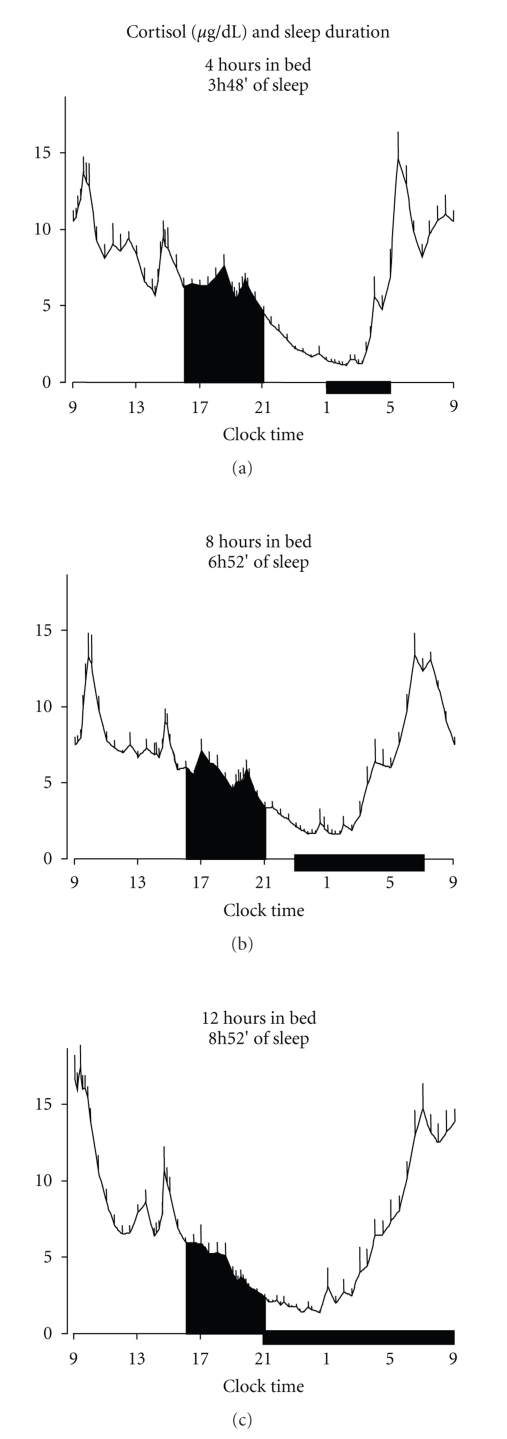
- Partial sleep restriction elevated evening cortisol: after 6 nights of 4 hours in bed in 11 young men, the quiescent period onset was delayed by nearly 1.5 hours and salivary free cortisol decline from 16:00 to 21:00 was about six times slower than when fully rested; after only 1 night of 4 hours in bed, plasma cortisol over 18:00–23:00 was 37% higher and quiescent onset occurred 1 hour later.
Methods
- Narrative review of human and animal studies on sleep, sleep disturbances, and HPA axis activity, including experimental protocols such as constant routine, shifted sleep, ultradian schedules, total sleep deprivation, partial sleep restriction, sleep-stage suppression, and sleep fragmentation.
- Synthesizes findings from clinical syndromes including insomnia, major depression, Cushing's syndrome, and sleep disordered breathing/obstructive sleep apnea, with cited sample sizes and outcomes where reported.
- No primary data collection or new statistical analysis is reported; the paper is a qualitative synthesis of the literature.
Limitations
- The paper states that further research is needed to delineate functional links between sleep and HPA axis activity and to understand the pathophysiology of associated syndromes.
- It explicitly notes contradictory findings and methodological limitations in sleep-deprivation and SDB studies, including small sample sizes, variable sleep-recording hours, variable SDB severity, single-time-point cortisol measures, and variable CPAP compliance.
- Evident from the text: as a narrative review, it does not describe a systematic search strategy, formal quality assessment, or quantitative meta-analysis.
Model-written summary. Check it against the paper before relying on it.
Integrity signals
Registry
Cites
Statistics
Figures
Verification
Claims the paper makes
75 Not checked yet · 11 Own interpretation · 2 Own result · 2 No basis given
In the paper
“In addition, the rate of decrease of free cortisol concentrations in saliva between 16.00 hours and 21.00 hours was about six times slower in the sleep-debt than in the fully rested condition.”
§ Impact of Sleep and Its Disturbances on Hypothalamo-Pituitary-Adrenal Axis Activity > 5. Effects of Sleep Loss and Sleep Disrupion on HPA Axis > 5.2. Semichronic Partial Sleep Restriction
What the sources say
- Not checked yetcites [83] source
plaincorrelationaln = 11- Asserted: passes — The authors put it forward as true.
- Checkable: passes — It can be checked against evidence.
- Load-bearing: passes — The paper’s conclusions depend on it.
- Based: passes — The paper gives a reason why it holds.
None of the sources cited for this claim have been checked yet.
In the paper
“Indeed, some authors have reported no change [41, 43, 74, 75] or even a slight decrease in cortisol levels [76, 77] after one or several nights of total sleep deprivation.”
§ Impact of Sleep and Its Disturbances on Hypothalamo-Pituitary-Adrenal Axis Activity > 5. Effects of Sleep Loss and Sleep Disrupion on HPA Axis > 5.1. Acute Total Sleep Loss
What the sources say
plain- Asserted: passes — The authors put it forward as true.
- Checkable: passes — It can be checked against evidence.
- Load-bearing: unclear — It is unclear whether the paper’s conclusions depend on it.
- Based: passes — The paper gives a reason why it holds.
None of the sources cited for this claim have been checked yet.
In the paper
“while in some studies cortisol secretion seemed to be almost unaffected by recovery sleep following prolonged wakefulness [78–80]”
§ Impact of Sleep and Its Disturbances on Hypothalamo-Pituitary-Adrenal Axis Activity > 5. Effects of Sleep Loss and Sleep Disrupion on HPA Axis > 5.1. Acute Total Sleep Loss
What the sources say
hedged- Asserted: passes — The authors put it forward as true.
- Checkable: passes — It can be checked against evidence.
- Load-bearing: unclear — It is unclear whether the paper’s conclusions depend on it.
- Based: passes — The paper gives a reason why it holds.
In the paper
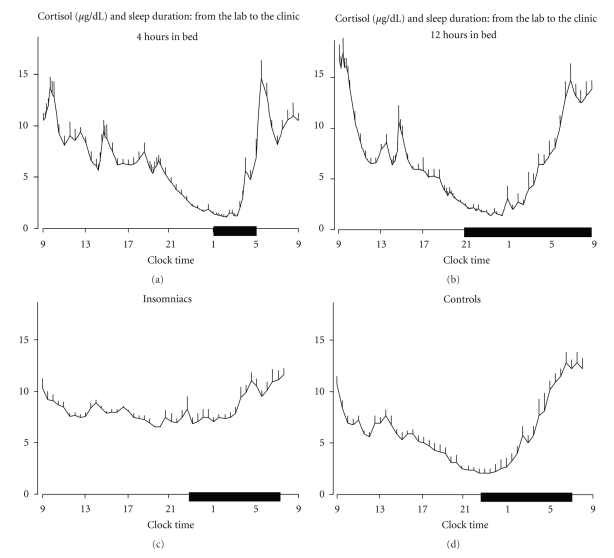
“Interestingly, cortisol evening levels observed under 8-hour bedtime condition were intermediate between those measured under 4-hour and 12-hour bedtime conditions [84] (Figure 5).”
§ Impact of Sleep and Its Disturbances on Hypothalamo-Pituitary-Adrenal Axis Activity > 5. Effects of Sleep Loss and Sleep Disrupion on HPA Axis > 5.2. Semichronic Partial Sleep Restriction
What the sources say
- Not checked yetcites [84] source
plaincorrelationaln = 9- Asserted: passes — The authors put it forward as true.
- Checkable: passes — It can be checked against evidence.
- Load-bearing: unclear — It is unclear whether the paper’s conclusions depend on it.
- Based: passes — The paper gives a reason why it holds.
None of the sources cited for this claim have been checked yet.
In the paper
“No significant changes in cortisol profiles were found.”
§ Impact of Sleep and Its Disturbances on Hypothalamo-Pituitary-Adrenal Axis Activity > 5. Effects of Sleep Loss and Sleep Disrupion on HPA Axis > 5.3. Impact of Disrupted Sleep Quality
What the sources say
plain- Asserted: passes — The authors put it forward as true.
- Checkable: passes — It can be checked against evidence.
- Load-bearing: unclear — It is unclear whether the paper’s conclusions depend on it.
- Based: passes — The paper gives a reason why it holds.
A result the paper reports from its own data — it cites no other source for it, so there is none to check. The quote shows it is in the paper.
In the paper
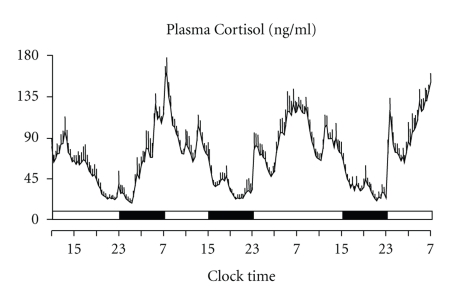
“In this protocol, however, there was a temporal coincidence between the phase markers and the sleep-wake and dark-light transition (at 23:00), which elicited robust cortisol pulses.”
§ Impact of Sleep and Its Disturbances on Hypothalamo-Pituitary-Adrenal Axis Activity > 4. Effects of Shifted Sleep on Hpa Axis > 4.2. Advance of the Sleep-Wake Cycle
plaindirect- Asserted: passes — The authors put it forward as true.
- Checkable: passes — It can be checked against evidence.
- Load-bearing: passes — The paper’s conclusions depend on it.
- Based: passes — The paper gives a reason why it holds.
A result the paper reports from its own data — it cites no other source for it, so there is none to check. The quote shows it is in the paper.
In the paper
“the findings of this study showed that an abrupt 8-hour advance of the sleep-wake, rest-activity and dark-light cycle results in a 3- to 4-hour advance of the timing of the nadir and of the end of the quiescent period, which are both reliable markers of central circadian rhythmicity.”
§ Impact of Sleep and Its Disturbances on Hypothalamo-Pituitary-Adrenal Axis Activity > 4. Effects of Shifted Sleep on Hpa Axis > 4.2. Advance of the Sleep-Wake Cycle
boosteddirect- Asserted: passes — The authors put it forward as true.
- Checkable: passes — It can be checked against evidence.
- Load-bearing: passes — The paper’s conclusions depend on it.
- Based: passes — The paper gives a reason why it holds.
In the paper
“In this regard, it is notable that chronic short sleepers have been found to have higher nocturnal cortisol levels compared with chronic long sleepers [40]”
§ Impact of Sleep and Its Disturbances on Hypothalamo-Pituitary-Adrenal Axis Activity > 5. Effects of Sleep Loss and Sleep Disrupion on HPA Axis > 5.2. Semichronic Partial Sleep Restriction
What the sources say
- Not checked yetcites [40] source
plaincorrelational- Asserted: passes — The authors put it forward as true.
- Checkable: passes — It can be checked against evidence.
- Load-bearing: passes — The paper’s conclusions depend on it.
- Based: passes — The paper gives a reason why it holds.
In the paper
“Decreased cortisol levels have been reported in a study of REM suppression [92].”
§ Impact of Sleep and Its Disturbances on Hypothalamo-Pituitary-Adrenal Axis Activity > 5. Effects of Sleep Loss and Sleep Disrupion on HPA Axis > 5.3. Impact of Disrupted Sleep Quality
What the sources say
- Not checked yetcites [92] 1988, Biological Psychiatry source
plaindirect- Asserted: passes — The authors put it forward as true.
- Checkable: passes — It can be checked against evidence.
- Load-bearing: unclear — It is unclear whether the paper’s conclusions depend on it.
- Based: passes — The paper gives a reason why it holds.
None of the sources cited for this claim have been checked yet.
In the paper
“Notably, the decrease in plasma or urinary cortisol found by Kant et al. [77] and Åkerstedt et al. [76] occurred after 48 hours or more of prolonged wakefulness.”
§ Impact of Sleep and Its Disturbances on Hypothalamo-Pituitary-Adrenal Axis Activity > 5. Effects of Sleep Loss and Sleep Disrupion on HPA Axis > 5.1. Acute Total Sleep Loss
What the sources say
plaincorrelational- Asserted: passes — The authors put it forward as true.
- Checkable: passes — It can be checked against evidence.
- Load-bearing: passes — The paper’s conclusions depend on it.
- Based: passes — The paper gives a reason why it holds.
- It may state two separate claims as one. 32
- Probably not a substantial claim. 8
In the paper
“The state of sleep debt, as compared to the fully rested state, was associated with elevated cortisol concentrations in the afternoon and in the early evening and with a shorter quiescent period, due to a delay in its onset by nearly 1.5 hour.”
§ Impact of Sleep and Its Disturbances on Hypothalamo-Pituitary-Adrenal Axis Activity > 5. Effects of Sleep Loss and Sleep Disrupion on HPA Axis > 5.2. Semichronic Partial Sleep Restriction
What the sources say
- Not checked yetcites [83] source
plaincorrelationaln = 11- Asserted: passes — The authors put it forward as true.
- Checkable: passes — It can be checked against evidence.
- Load-bearing: passes — The paper’s conclusions depend on it.
- Based: passes — The paper gives a reason why it holds.
It may state two separate claims as one.
In the paper
“Following 2 nights of experimental sleep fragmentation across all stages, an increase in morning cortisol levels was observed, in association with a shift in the sympatho-vagal balance, estimated from the analysis of the heart rate variability towards an increase of sympathetic nervous system activity, and a decrease in insulin sensitivity.”
§ Impact of Sleep and Its Disturbances on Hypothalamo-Pituitary-Adrenal Axis Activity > 5. Effects of Sleep Loss and Sleep Disrupion on HPA Axis > 5.3. Impact of Disrupted Sleep Quality
What the sources say
- Not checked yetcites [93] source
hedgedcorrelational- Asserted: passes — The authors put it forward as true.
- Checkable: passes — It can be checked against evidence.
- Load-bearing: passes — The paper’s conclusions depend on it.
- Based: passes — The paper gives a reason why it holds.
It may state two separate claims as one.
None of the sources cited for this claim have been checked yet.
In the paper
“Several studies have reported an elevation of cortisol levels both during the night of total sleep deprivation [13, 35, 72] and, if wakefulness was further prolonged, during the following day, particularly in the afternoon and evening [63, 73].”
§ Impact of Sleep and Its Disturbances on Hypothalamo-Pituitary-Adrenal Axis Activity > 5. Effects of Sleep Loss and Sleep Disrupion on HPA Axis > 5.1. Acute Total Sleep Loss
What the sources say
plaincorrelational- Asserted: passes — The authors put it forward as true.
- Checkable: passes — It can be checked against evidence.
- Load-bearing: unclear — It is unclear whether the paper’s conclusions depend on it.
- Based: passes — The paper gives a reason why it holds.
It may state two separate claims as one.
In the paper
“Short sleep duration was associated with an acute increased cortisol awakening response and both short sleep duration and disturbances were independently associated with a slower rate of decline of cortisol levels across the day and thus with increased evening levels.”
§ Impact of Sleep and Its Disturbances on Hypothalamo-Pituitary-Adrenal Axis Activity > 5. Effects of Sleep Loss and Sleep Disrupion on HPA Axis > 5.2. Semichronic Partial Sleep Restriction
What the sources say
- Not checked yetcites [85] source
plaincorrelationaln = 2,700- Asserted: passes — The authors put it forward as true.
- Checkable: passes — It can be checked against evidence.
- Load-bearing: passes — The paper’s conclusions depend on it.
- Based: passes — The paper gives a reason why it holds.
It may state two separate claims as one.
The paper states this without a source or data behind it here, so there is nothing to check it against. The quote shows it is in the paper.
In the paper
“Therefore, despite a relatively fast adaptation of some circadian markers, the lack of adaptation of acrophase, the longer duration of the rising phase, and the shorter duration of the quiescent period resulted in elevated cortisol levels at the time of the usual trough of the profile.”
§ Impact of Sleep and Its Disturbances on Hypothalamo-Pituitary-Adrenal Axis Activity > 4. Effects of Shifted Sleep on Hpa Axis > 4.2. Advance of the Sleep-Wake Cycle
plaindirect- Asserted: passes — The authors put it forward as true.
- Checkable: passes — It can be checked against evidence.
- Load-bearing: passes — The paper’s conclusions depend on it.
- Based: passes — The paper gives a reason why it holds.
It may state two separate claims as one.
In the paper
“Vgontzas et al. [81] found a significant decrease in plasma cortisol levels, that appeared to be negatively correlated with the rebound increase of SWS.”
§ Impact of Sleep and Its Disturbances on Hypothalamo-Pituitary-Adrenal Axis Activity > 5. Effects of Sleep Loss and Sleep Disrupion on HPA Axis > 5.1. Acute Total Sleep Loss
What the sources say
- Not checked yetcites [81] source
hedgedcorrelational- Asserted: passes — The authors put it forward as true.
- Checkable: passes — It can be checked against evidence.
- Load-bearing: unclear — It is unclear whether the paper’s conclusions depend on it.
- Based: passes — The paper gives a reason why it holds.
It may state two separate claims as one.
In the paper
“In this study, plasma cortisol levels over the 1800–2300 hour period were 37% higher on the day following the night of restricted sleep than on the previous day, and the onset of the quiescent period occurred 1 hour later.”
§ Impact of Sleep and Its Disturbances on Hypothalamo-Pituitary-Adrenal Axis Activity > 5. Effects of Sleep Loss and Sleep Disrupion on HPA Axis > 5.2. Semichronic Partial Sleep Restriction
What the sources say
- Not checked yetcites [73] 1997, Sleep
plaindirect- Asserted: passes — The authors put it forward as true.
- Checkable: passes — It can be checked against evidence.
- Load-bearing: passes — The paper’s conclusions depend on it.
- Based: passes — The paper gives a reason why it holds.
It may state two separate claims as one.
None of the sources cited for this claim have been checked yet.
In the paper
“An important interplay is also the excitatory reciprocal interaction between the HPA axis and the brainstem sympathetic locus coeruleus (LC)-norepinephrine (NE) system: CRH activates the LC; in turn, NE, a known wake-promoting neurotransmitter, activates hypothalamic CRH [9, 10].”
§ Impact of Sleep and Its Disturbances on Hypothalamo-Pituitary-Adrenal Axis Activity > 2. Physiology of Hypothalamo-Pituitary-Adrenal (HPA) Axis
plaindirect- Asserted: passes — The authors put it forward as true.
- Checkable: passes — It can be checked against evidence.
- Load-bearing: unclear — It is unclear whether the paper’s conclusions depend on it.
- Based: passes — The paper gives a reason why it holds.
It may state two separate claims as one.
In the paper
“Circadian rhythms are generated by the endogenous master pacemaker located in the paired suprachiasmatic nucleus (SCN) of the hypothalamus and are kept entrained to the local conditions by environmental timing cues; the most important of these cues is light, that signaled to the SCN by direct input from the retina via the retinohypothalamic tract [1].”
§ Impact of Sleep and Its Disturbances on Hypothalamo-Pituitary-Adrenal Axis Activity > 1. Introduction
What the sources say
- Not checked yetcites [1] source
plaindirect- Asserted: passes — The authors put it forward as true.
- Checkable: passes — It can be checked against evidence.
- Load-bearing: fails — The paper’s conclusions may not depend on it.
- Based: passes — The paper gives a reason why it holds.
Probably not a substantial claim. The paper’s conclusions may not depend on it. It may state two separate claims as one.
A conclusion the paper draws from its own results — it cites no other source for it, so there is none to check. The quote shows it is in the paper.
In the paper
“The daylong cortisol decline may represent the rate of recovery of the axis from this endogenous challenge.”
§ Impact of Sleep and Its Disturbances on Hypothalamo-Pituitary-Adrenal Axis Activity > 2. Physiology of Hypothalamo-Pituitary-Adrenal (HPA) Axis
hedgedconditional- Asserted: passes — The authors put it forward as true.
- Checkable: passes — It can be checked against evidence.
- Load-bearing: fails — The paper’s conclusions may not depend on it.
- Based: passes — The paper gives a reason why it holds.
Probably not a substantial claim. The paper’s conclusions may not depend on it.
None of the sources cited for this claim have been checked yet.
In the paper
“awakenings and sleep offset are accompanied by cortisol stimulation”
- Also stated in: § 3.1. Impact of Sleep Onset and Offset · boosted
“An influence of sleep-wake transitions on cortisol secretion is also detectable during nocturnal awakenings which are consistently associated with a transient elevation of cortisol levels, followed by temporary inhibition of cortisol secretion [38].”
§ Impact of Sleep and Its Disturbances on Hypothalamo-Pituitary-Adrenal Axis Activity > Abstract
boosteddirect- Asserted: passes — The authors put it forward as true.
- Checkable: passes — It can be checked against evidence.
- Load-bearing: passes — The paper’s conclusions depend on it.
- Based: passes — The paper gives a reason why it holds.
It may state two separate claims as one.
- Also stated in: § 3.1. Impact of Sleep Onset and Offset · boosted
None of the sources cited for this claim have been checked yet.
In the paper
“circadian oscillators have been found in a number of peripheral tissues, such as liver, heart, lung, skeletal muscle, and adrenal glands [2, 3].”
§ Impact of Sleep and Its Disturbances on Hypothalamo-Pituitary-Adrenal Axis Activity > 1. Introduction
plain- Asserted: passes — The authors put it forward as true.
- Checkable: passes — It can be checked against evidence.
- Load-bearing: fails — The paper’s conclusions may not depend on it.
- Based: passes — The paper gives a reason why it holds.
Probably not a substantial claim. The paper’s conclusions may not depend on it.
In the paper
“In addition, the HPA axis receives relevant feedback from other areas of the brain, such as the hippocampus and amygdala [8].”
§ Impact of Sleep and Its Disturbances on Hypothalamo-Pituitary-Adrenal Axis Activity > 2. Physiology of Hypothalamo-Pituitary-Adrenal (HPA) Axis
What the sources say
- Not checked yetcites [8] source
plaindirect- Asserted: passes — The authors put it forward as true.
- Checkable: passes — It can be checked against evidence.
- Load-bearing: fails — The paper’s conclusions may not depend on it.
- Based: passes — The paper gives a reason why it holds.
Probably not a substantial claim. The paper’s conclusions may not depend on it.
In the paper
“Thus, the late night rise in cortisol appears to dampen amygdala-dependent emotional processing and could exert a protective function by preventing excessive emotionality in memory.”
§ Impact of Sleep and Its Disturbances on Hypothalamo-Pituitary-Adrenal Axis Activity > 3. Effects of Normal Sleep on HPA Axis > 3.2. Modulatory Effects of Sleep Stages
What the sources say
- Not checked yetcites [58] source
hedgedconditional- Asserted: passes — The authors put it forward as true.
- Checkable: passes — It can be checked against evidence.
- Load-bearing: passes — The paper’s conclusions depend on it.
- Based: passes — The paper gives a reason why it holds.
It may state two separate claims as one.
In the paper
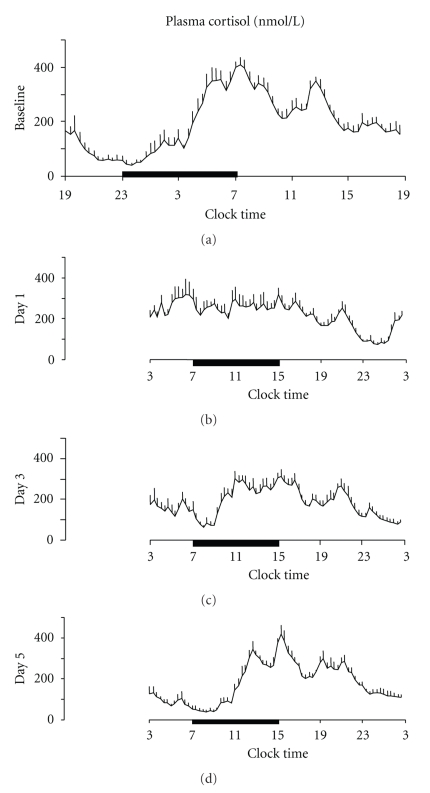
“Both a higher nadir value, due to the lack of the inhibitory effect of sleep onset, and a lower acrophase value, due to the lack of the stimulatory effect of awakening, were observed.”
§ Impact of Sleep and Its Disturbances on Hypothalamo-Pituitary-Adrenal Axis Activity > 4. Effects of Shifted Sleep on Hpa Axis > 4.1. Delay of the Sleep-Wake Cycle
What the sources say
- Not checked yetcites [67] 2000, Sleep
plaindirect- Asserted: passes — The authors put it forward as true.
- Checkable: passes — It can be checked against evidence.
- Load-bearing: passes — The paper’s conclusions depend on it.
- Based: passes — The paper gives a reason why it holds.
It may state two separate claims as one.
In the paper
“ApEn analysis revealed that greater age is associated with more irregular patterns of cortisol, but not ACTH secretion”
§ Impact of Sleep and Its Disturbances on Hypothalamo-Pituitary-Adrenal Axis Activity > 2. Physiology of Hypothalamo-Pituitary-Adrenal (HPA) Axis
What the sources say
- Not checked yetcites [33] 1998, European Journal of Endocrinology source
plaincorrelational- Asserted: passes — The authors put it forward as true.
- Checkable: passes — It can be checked against evidence.
- Load-bearing: passes — The paper’s conclusions depend on it.
- Based: passes — The paper gives a reason why it holds.
It may state two separate claims as one.
In the paper
“On the third day, as a sign of partial adaptation to the new schedule, the circadian onset of cortisol was delayed by more than 5 hours, while the timing of the acrophase was delayed by more than 6 hours.”
§ Impact of Sleep and Its Disturbances on Hypothalamo-Pituitary-Adrenal Axis Activity > 4. Effects of Shifted Sleep on Hpa Axis > 4.1. Delay of the Sleep-Wake Cycle
What the sources say
- Not checked yetcites [67] 2000, Sleep
plaindirect- Asserted: passes — The authors put it forward as true.
- Checkable: passes — It can be checked against evidence.
- Load-bearing: unclear — It is unclear whether the paper’s conclusions depend on it.
- Based: passes — The paper gives a reason why it holds.
It may state two separate claims as one.
None of the sources cited for this claim have been checked yet.
In the paper
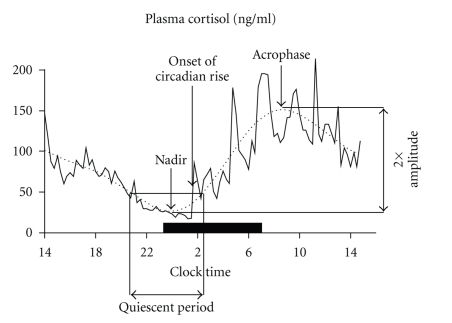
“In the cortisol profile, the end of the quiescent period and the onset of the daily rise are mostly under the control of circadian rhythmicity, while the timing of the acrophase and the amplitude of the diurnal variation are more influenced by sleep-wake transitions.”
§ Impact of Sleep and Its Disturbances on Hypothalamo-Pituitary-Adrenal Axis Activity > 4. Effects of Shifted Sleep on Hpa Axis
What the sources say
plaindirect- Asserted: passes — The authors put it forward as true.
- Checkable: passes — It can be checked against evidence.
- Load-bearing: passes — The paper’s conclusions depend on it.
- Based: passes — The paper gives a reason why it holds.
It may state two separate claims as one.
In the paper
“In this study, mean ACTH concentrations, basal and pulsatile ACTH secretion directly correlated with BMI and were higher in men than in women, after controlling of BMI.”
§ Impact of Sleep and Its Disturbances on Hypothalamo-Pituitary-Adrenal Axis Activity > 2. Physiology of Hypothalamo-Pituitary-Adrenal (HPA) Axis
What the sources say
- Not checked yetcites [32] source
plaincorrelational- Asserted: passes — The authors put it forward as true.
- Checkable: passes — It can be checked against evidence.
- Load-bearing: unclear — It is unclear whether the paper’s conclusions depend on it.
- Based: passes — The paper gives a reason why it holds.
It may state two separate claims as one.
In the paper
“In addition, in men, ACTH-cortisol feedforward synchrony and cortisol-ACTH feedback synchrony both decline with age, as quantified by cross-ApEn, denoting a deterioration of coordinate control of ACTH and cortisol secretion patterns.”
§ Impact of Sleep and Its Disturbances on Hypothalamo-Pituitary-Adrenal Axis Activity > 2. Physiology of Hypothalamo-Pituitary-Adrenal (HPA) Axis
What the sources say
- Not checked yetcites [32] source
plaindirect- Asserted: passes — The authors put it forward as true.
- Checkable: passes — It can be checked against evidence.
- Load-bearing: unclear — It is unclear whether the paper’s conclusions depend on it.
- Based: passes — The paper gives a reason why it holds.
It may state two separate claims as one.
In the paper
“Given that high-frequency EEG over 20 Hz is considered a marker of daytime arousal [64], a functional link between the regulatory mechanisms controlling the HPA activity and the level of central arousal has been hypothesized.”
§ Impact of Sleep and Its Disturbances on Hypothalamo-Pituitary-Adrenal Axis Activity > 3. Effects of Normal Sleep on HPA Axis > 3.2. Modulatory Effects of Sleep Stages
What the sources say
- Not checked yetcites [64] 2000, NeuroReport source
hedgedcorrelational- Asserted: fails — The authors may not put it forward as true.
- Checkable: passes — It can be checked against evidence.
- Load-bearing: fails — The paper’s conclusions may not depend on it.
- Based: passes — The paper gives a reason why it holds.
Probably not a substantial claim. The authors may not put it forward as true. The paper’s conclusions may not depend on it.
In the paper
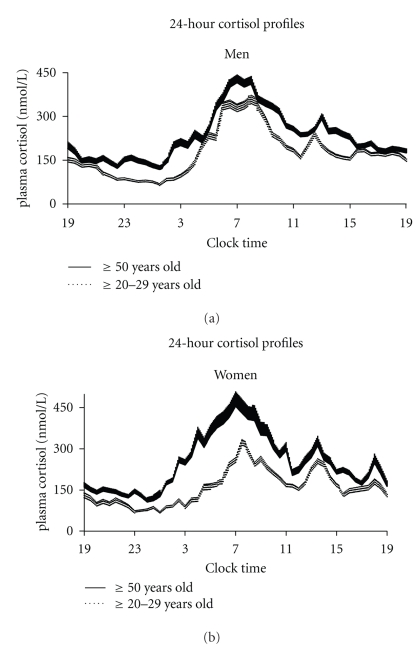
“In young adulthood, women appeared to have, compared to men, lower 24-hour mean cortisol levels, a longer quiescent period (that started earlier and ended later), a lower acrophase, and a lower absolute amplitude of the circadian variation.”
§ Impact of Sleep and Its Disturbances on Hypothalamo-Pituitary-Adrenal Axis Activity > 2. Physiology of Hypothalamo-Pituitary-Adrenal (HPA) Axis
What the sources say
- Not checked yetcites [31] source
hedgedcorrelational- Asserted: passes — The authors put it forward as true.
- Checkable: passes — It can be checked against evidence.
- Load-bearing: unclear — It is unclear whether the paper’s conclusions depend on it.
- Based: passes — The paper gives a reason why it holds.
It may state two separate claims as one.
In the paper
“In addition, the timing of the nadir and of the onset of the nocturnal cortisol rise are advanced in older adults of both sexes and the circadian amplitude, when expressed as a percentage of the 24-hour mean level, is decreased”
§ Impact of Sleep and Its Disturbances on Hypothalamo-Pituitary-Adrenal Axis Activity > 2. Physiology of Hypothalamo-Pituitary-Adrenal (HPA) Axis
What the sources say
- Not checked yetcites [31] source
plaincorrelational- Asserted: passes — The authors put it forward as true.
- Checkable: passes — It can be checked against evidence.
- Load-bearing: unclear — It is unclear whether the paper’s conclusions depend on it.
- Based: passes — The paper gives a reason why it holds.
It may state two separate claims as one.
In the paper
“During the second postshift period (day 3), minor signs of further adaptation of the cortisol profiles were detected: there was no further advance of the timing of the nadir and only a minor additional advance of the onset of the quiescent period.”
§ Impact of Sleep and Its Disturbances on Hypothalamo-Pituitary-Adrenal Axis Activity > 4. Effects of Shifted Sleep on Hpa Axis > 4.2. Advance of the Sleep-Wake Cycle
What the sources say
- Not checked yetcites [68] 2002, American Journal of Physiology source
plainn = 8- Asserted: passes — The authors put it forward as true.
- Checkable: passes — It can be checked against evidence.
- Load-bearing: unclear — It is unclear whether the paper’s conclusions depend on it.
- Based: passes — The paper gives a reason why it holds.
It may state two separate claims as one.
In the paper
“Metyrapone suppressed cortisol concentrations, especially the rise in cortisol during late sleep, and decreased time spent in SWS, which was replaced by shallow NREM sleep. REM sleep was preserved.”
§ Impact of Sleep and Its Disturbances on Hypothalamo-Pituitary-Adrenal Axis Activity > 3. Effects of Normal Sleep on HPA Axis > 3.2. Modulatory Effects of Sleep Stages
What the sources say
- Not checked yetcites [58] source
plaindirect- Asserted: passes — The authors put it forward as true.
- Checkable: passes — It can be checked against evidence.
- Load-bearing: passes — The paper’s conclusions depend on it.
- Based: passes — The paper gives a reason why it holds.
It may state two separate claims as one.
In the paper
“While memory for the neutral texts was reduced, interestingly metyrapone even amplified emotional enhancement in text recall”
§ Impact of Sleep and Its Disturbances on Hypothalamo-Pituitary-Adrenal Axis Activity > 3. Effects of Normal Sleep on HPA Axis > 3.2. Modulatory Effects of Sleep Stages
What the sources say
- Not checked yetcites [58] source
plaindirect- Asserted: passes — The authors put it forward as true.
- Checkable: passes — It can be checked against evidence.
- Load-bearing: passes — The paper’s conclusions depend on it.
- Based: passes — The paper gives a reason why it holds.
It may state two separate claims as one.
In the paper
“On the first day after the shift, profound disruptions in the 24-hour cortisol rhythm were found: a reduction of more than 3 hours in the duration of the quiescent period resulted in an increase of the 24-hour mean levels and in the advance of the circadian onset.”
§ Impact of Sleep and Its Disturbances on Hypothalamo-Pituitary-Adrenal Axis Activity > 4. Effects of Shifted Sleep on Hpa Axis > 4.1. Delay of the Sleep-Wake Cycle
What the sources say
- Not checked yetcites [67] 2000, Sleep
plaindirect- Asserted: passes — The authors put it forward as true.
- Checkable: passes — It can be checked against evidence.
- Load-bearing: passes — The paper’s conclusions depend on it.
- Based: passes — The paper gives a reason why it holds.
It may state two separate claims as one.
In the paper
“In the first postshift period, compared with the baseline profile, the timing of the nadir was advanced by about 3 hours and 20 minutes; the quiescent period was markedly reduced mainly due to an advance of the offset by more than 3 hours.”
§ Impact of Sleep and Its Disturbances on Hypothalamo-Pituitary-Adrenal Axis Activity > 4. Effects of Shifted Sleep on Hpa Axis > 4.2. Advance of the Sleep-Wake Cycle
What the sources say
- Not checked yetcites [68] 2002, American Journal of Physiology source
plaindirectn = 8- Asserted: passes — The authors put it forward as true.
- Checkable: passes — It can be checked against evidence.
- Load-bearing: passes — The paper’s conclusions depend on it.
- Based: passes — The paper gives a reason why it holds.
It may state two separate claims as one.
In the paper
“In the same study, aging was associated, in both sexes, with a progressive increase of 24-hour mean levels from the 2nd to the 8th decade, associated with a shorter quiescent period and higher nadir values.”
§ Impact of Sleep and Its Disturbances on Hypothalamo-Pituitary-Adrenal Axis Activity > 2. Physiology of Hypothalamo-Pituitary-Adrenal (HPA) Axis
What the sources say
- Not checked yetcites [31] source
plaincorrelational- Asserted: passes — The authors put it forward as true.
- Checkable: passes — It can be checked against evidence.
- Load-bearing: unclear — It is unclear whether the paper’s conclusions depend on it.
- Based: passes — The paper gives a reason why it holds.
It may state two separate claims as one.
None of the sources cited for this claim have been checked yet.
In the paper
“Retention of declarative memory critically depends on the integrity of the hippocampus and has been shown to benefit specifically from early nocturnal sleep, in which SWS predominates and cortisol concentrations are minimal [52, 53].”
§ Impact of Sleep and Its Disturbances on Hypothalamo-Pituitary-Adrenal Axis Activity > 3. Effects of Normal Sleep on HPA Axis > 3.2. Modulatory Effects of Sleep Stages
What the sources say
plaindirect- Asserted: passes — The authors put it forward as true.
- Checkable: passes — It can be checked against evidence.
- Load-bearing: passes — The paper’s conclusions depend on it.
- Based: passes — The paper gives a reason why it holds.
It may state two separate claims as one.
In the paper
“No shift in the timing of the acrophase occurred, thus the duration of the rising phase of cortisol secretion was increased by nearly 3 hours and presented a biphasic pattern.”
§ Impact of Sleep and Its Disturbances on Hypothalamo-Pituitary-Adrenal Axis Activity > 4. Effects of Shifted Sleep on Hpa Axis > 4.2. Advance of the Sleep-Wake Cycle
What the sources say
- Not checked yetcites [68] 2002, American Journal of Physiology source
plaindirectn = 8- Asserted: passes — The authors put it forward as true.
- Checkable: passes — It can be checked against evidence.
- Load-bearing: passes — The paper’s conclusions depend on it.
- Based: passes — The paper gives a reason why it holds.
It may state two separate claims as one.
In the paper
“Hence, a biphasic HPA response to sleep deprivation has been suggested [63] where activation of the HPA axis, as part of the stress response, may be one of the arousal mechanisms recruited early on to adapt to sleep loss; however, when wakefulness is prolonged, the increased sleep pressure may eventually cause a blunting of the HPA axis activity.”
§ Impact of Sleep and Its Disturbances on Hypothalamo-Pituitary-Adrenal Axis Activity > 5. Effects of Sleep Loss and Sleep Disrupion on HPA Axis > 5.1. Acute Total Sleep Loss
What the sources say
- Not checked yetcites [63] source
hedgedconditional- Asserted: passes — The authors put it forward as true.
- Checkable: passes — It can be checked against evidence.
- Load-bearing: passes — The paper’s conclusions depend on it.
- Based: passes — The paper gives a reason why it holds.
It may state two separate claims as one.
In the paper
“The findings of high glucocorticoid levels in a condition of acute sleep loss have been interpreted as reflecting the stress of the effort to maintain wakefulness and is consistent with the positive correlation found between high frequency EEG activity in wake, indices of arousal, and cortisol release [63].”
§ Impact of Sleep and Its Disturbances on Hypothalamo-Pituitary-Adrenal Axis Activity > 5. Effects of Sleep Loss and Sleep Disrupion on HPA Axis > 5.1. Acute Total Sleep Loss
What the sources say
- Not checked yetcites [63] source
plaincorrelational- Asserted: passes — The authors put it forward as true.
- Checkable: passes — It can be checked against evidence.
- Load-bearing: unclear — It is unclear whether the paper’s conclusions depend on it.
- Based: passes — The paper gives a reason why it holds.
It may state two separate claims as one.
A conclusion the paper draws from its own results — it cites no other source for it, so there is none to check. The quote shows it is in the paper.
In the paper
“Even if modest, this elevation may result, under conditions of chronic sleep loss, in a significant glucocorticoid overload and consequently expose the body to the central and peripheral deleterious effects associated with glucocorticoid excess.”
§ Impact of Sleep and Its Disturbances on Hypothalamo-Pituitary-Adrenal Axis Activity > 5. Effects of Sleep Loss and Sleep Disrupion on HPA Axis > 5.2. Semichronic Partial Sleep Restriction
hedgedconditional- Asserted: passes — The authors put it forward as true.
- Checkable: passes — It can be checked against evidence.
- Load-bearing: passes — The paper’s conclusions depend on it.
- Based: passes — The paper gives a reason why it holds.
It may state two separate claims as one.
In the paper
“there is in turn strong evidence that elevated CRH tone increases sleep EEG frequency, thereby decreasing SWS, and increasing light sleep and wakefulness [94].”
§ Impact of Sleep and Its Disturbances on Hypothalamo-Pituitary-Adrenal Axis Activity > 6. HPA Axis and Sleep Disturbances in Clinical Syndromes
What the sources say
- Not checked yetcites [94] 1988, Neuroendocrinology source
boosteddirect- Asserted: passes — The authors put it forward as true.
- Checkable: passes — It can be checked against evidence.
- Load-bearing: passes — The paper’s conclusions depend on it.
- Based: passes — The paper gives a reason why it holds.
It may state two separate claims as one.
In the paper
“Recurrent partial sleep restriction has become a widespread habit in modern society [82]”
§ Impact of Sleep and Its Disturbances on Hypothalamo-Pituitary-Adrenal Axis Activity > 5. Effects of Sleep Loss and Sleep Disrupion on HPA Axis > 5.2. Semichronic Partial Sleep Restriction
What the sources say
- Not checked yetcites [82] 2005, Morbidity and Mortality Weekly Report
plain- Asserted: passes — The authors put it forward as true.
- Checkable: passes — It can be checked against evidence.
- Load-bearing: fails — The paper’s conclusions may not depend on it.
- Based: passes — The paper gives a reason why it holds.
Probably not a substantial claim. The paper’s conclusions may not depend on it.
A conclusion the paper draws from its own results — it cites no other source for it, so there is none to check. The quote shows it is in the paper.
In the paper
“Findings of decreased cortisol levels after sleep deprivation have been interpreted as related to an increase in fatigue and sleepiness.”
§ Impact of Sleep and Its Disturbances on Hypothalamo-Pituitary-Adrenal Axis Activity > 5. Effects of Sleep Loss and Sleep Disrupion on HPA Axis > 5.1. Acute Total Sleep Loss
plaincorrelational- Asserted: passes — The authors put it forward as true.
- Checkable: passes — It can be checked against evidence.
- Load-bearing: fails — The paper’s conclusions may not depend on it.
- Based: passes — The paper gives a reason why it holds.
Probably not a substantial claim. The paper’s conclusions may not depend on it.
A conclusion the paper draws from its own results — it cites no other source for it, so there is none to check. The quote shows it is in the paper.
In the paper
“These discrepancies could be due to a lack of control of experimental conditions, such as physical activity and posture, and/or to an insufficient frequency of blood sampling; indeed, short naps may have gone undetected and estimation of cortisol levels with infrequent blood sampling are often inaccurate.”
§ Impact of Sleep and Its Disturbances on Hypothalamo-Pituitary-Adrenal Axis Activity > 5. Effects of Sleep Loss and Sleep Disrupion on HPA Axis > 5.1. Acute Total Sleep Loss
hedgedconditional- Asserted: passes — The authors put it forward as true.
- Checkable: passes — It can be checked against evidence.
- Load-bearing: unclear — It is unclear whether the paper’s conclusions depend on it.
- Based: passes — The paper gives a reason why it holds.
It may state two separate claims as one.
A conclusion the paper draws from its own results — it cites no other source for it, so there is none to check. The quote shows it is in the paper.
In the paper
“The timing of the period of recovery sleep is likely to have played a role in these conflicting findings.”
§ Impact of Sleep and Its Disturbances on Hypothalamo-Pituitary-Adrenal Axis Activity > 5. Effects of Sleep Loss and Sleep Disrupion on HPA Axis > 5.1. Acute Total Sleep Loss
hedgedconditional- Asserted: passes — The authors put it forward as true.
- Checkable: passes — It can be checked against evidence.
- Load-bearing: fails — The paper’s conclusions may not depend on it.
- Based: passes — The paper gives a reason why it holds.
Probably not a substantial claim. The paper’s conclusions may not depend on it.
The paper relies on this without support.
HPA hyperactivity is clearly associated with metabolic, cognitive and psychiatric disorders.
“HPA hyperactivity is clearly associated with metabolic, cognitive and psychiatric disorders”
The paper relies on this without support.
Several clinical syndromes, such as insomnia, depression, Cushing's syndrome, and sleep disordered breathing, display HPA hyperactivity, disturbed sleep, psychiatric and metabolic impairments.
“Several clinical syndromes, such as insomnia, depression, Cushing's syndrome, sleep disordered breathing (SDB) display HPA hyperactivity, disturbed sleep, psychiatric and metabolic impairments.”
The paper relies on this without support.
Sleep onset exerts a modest but clearly detectable inhibitory effect on the activity of the HPA axis.
“Given the modest but clearly detectable inhibitory effect exerted by sleep onset on the activity of the HPA axis, it has been hypothesized that sleep loss might increase cortisol levels.”
Claims other papers make about this one
Each is checked against this paper’s own text: does it say what the citing paper says it does?
In the citing paper
“various doses of recovery sleep (0, 2, 4, 6, 8, and 10 h) following five nights of experimental sleep restriction resulted in a sleep-dose-dependent decrease of lapses (i.e., reaction times over 500 ms) in the psychomotor vigilance test”
From The Sleep-Immune Crosstalk in Health and Disease (2019) · cites this paper as [28]
In the citing paper
“performance did not return to baseline levels after a single night with a 10-h sleep opportunity (28) or three nights with an 8-h sleep opportunity (32), suggesting that a longer recovery sleep period is needed to fully resolve any performance decrements due to experimental sleep deficiency”
From The Sleep-Immune Crosstalk in Health and Disease (2019) · cites this paper as [28]
Citations
Cites
Diagnostic and Statistical Manual of Mental Disorders
Williams, J. B. W., & First, M. B. (2013) · Oxford University Press eBooks · doi:10.1093/acrefore/9780199975839.013.104 · Cited by 109,845
Memory and the hippocampus: A synthesis from findings with rats, monkeys, and humans.
Squire, L. R. (1992) · Psychological Review · doi:10.1037/0033-295x.99.2.195 · Cited by 5,376 · cited 1×
“Retention of declarative memory critically depends on the integrity of the hippocampus and has been shown to benefit specifically from early nocturnal sleep, in which SWS predominates and cortisol concentrations are minimal [52, 53].”
BackgroundImpact of sleep debt on metabolic and endocrine function
Spiegel, K., Leproult, R., & Van Cauter, E. (1999) · The Lancet · doi:10.1016/s0140-6736(99)01376-8 · Cited by 3,668 · cited 1×
“The first systematic study of HPA axis activity in a state of sleep debt assessed the effect of 6 consecutive nights of 4 hours in bed in eleven young men [83].”
BackgroundSelf-citationHypothalamic-pituitary-adrenal axis, neuroendocrine factors and stress
Tsigos, C., & Chrousos, G. P. (2002) · Journal of Psychosomatic Research · doi:10.1016/s0022-3999(02)00429-4 · Cited by 2,822
Sympathetic neural mechanisms in obstructive sleep apnea.
Somers, V. K., Dyken, M. E., Clary, M. P., & Abboud, F. M. (1995) · Journal of Clinical Investigation · doi:10.1172/jci118235 · Cited by 2,527
Epidemiologic study of sleep disturbances and psychiatric disorders. An opportunity for prevention?
Ford, D. E. (1989) · JAMA · doi:10.1001/jama.262.11.1479 · Cited by 2,440
Adverse metabolic and cardiovascular consequences of circadian misalignment
Scheer, F. A. J. L., Hilton, M. F., Mantzoros, C. S., & Shea, S. A. (2009) · Proceedings of the National Academy of Sciences · doi:10.1073/pnas.0808180106 · Cited by 2,351 · cited 1×
“On the first day after the shift, profound disruptions in the 24-hour cortisol rhythm were found: a reduction of more than 3 hours in the duration of the quiescent period resulted in an increase of the 24-hour mean levels and in the advance of the circadian onset.”
BackgroundEpidemiologic Study of Sleep Disturbances and Psychiatric Disorders: An Opportunity for Prevention?
Ford, D. E. (1989) · JAMA · doi:10.1001/jama.1989.03430110069030 · Cited by 2,252
Loss of a circadian adrenal corticosterone rhythm following suprachiasmatic lesions in the rat
Moore, R. Y., & Eichler, V. B. (1972) · Brain Research · doi:10.1016/0006-8993(72)90054-6 · Cited by 2,135 · cited 1×
“As a confirmation, lesions of the SCN in rats result in the loss of corticosteroid periodicity [15, 16].”
BackgroundA Serum Shock Induces Circadian Gene Expression in Mammalian Tissue Culture Cells
Balsalobre, A., Damiola, F., & Schibler, U. (1998) · Cell · doi:10.1016/s0092-8674(00)81199-x · Cited by 2,001 · cited 1×
“In addition to the master clock in the SCN, circadian oscillators have been found in a number of peripheral tissues, such as liver, heart, lung, skeletal muscle, and adrenal glands [2, 3].”
Background
Research works printed but not linked: 19
- 1995, Sleep, 18, 549
- 1998, Hormone and Metabolic Research, 30, 311
- 2000, American Journal of Physiology, 279, R1357
- 1974, Journal of Clinical Endocrinology and Metabolism, 38, 1018, 10.1210/jcem-38-6-1018 · DOI · Paper page
- 1985, Journal of Endocrinological Investigation, 8, 381, 10.1007/bf03348519 · DOI · Paper page
- 2004, Current Opinion in Neurobiology, 26, 221
- 1998, Journal of Clinical Endocrinology and Metabolism, 83, 4263
- 2000, Sleep, 23, 915
- 1997, Sleep, 20, 865
- 1994, Journal of Clinical Endocrinology and Metabolism, 79, 1797
- 2005, Morbidity and Mortality Weekly Report, 54, article 933
- 2002, Organization of the brainstem
- 2007, Journal of Clinical Sleep Medicine, 3, S7
- 2001, Revue Neurologique, 157, S57
- 2007, Acta Psychiatrica Scandinavica. Supplementum, 31
- 2000, Sleep Research Online, 3, 15
- 1996, Zhongguo Yao Li Xue Bao, 17, 489
- 1989, American Review of Respiratory Disease, 139, article a80
- 1991, American Review of Respiratory Disease, 143, article a382
Cited by
Sorted by citations
Items 301–400 of 403
Rafiee, S. H., Taklavi, S., Abolghasemi, A., & Hatamianc, H. (2021) · Caspian Journal of Neurological Sciences · doi:10.32598/cjns.7.25.4 · Cited by 4
Lifestyle Factors Contributing to HPA-Axis Activation and Chronic Illness in Americans
Snipes, D. E. (2019) · Archives in Neurology & Neuroscience · doi:10.33552/ann.2019.05.000608 · Cited by 3
Editorial: The bidirectional relationship between sleep and neuroendocrinology
Suchecki, D., Meerlo, P., & Wu, T. J. (2024) · Frontiers in Endocrinology · doi:10.3389/fendo.2024.1372967 · Cited by 2
Sleep disorders in obese patients
P'yanykh, O. P., Lebedeva, D. D., & Айдаровна, К. Р. (2023) · Endocrinology News Opinions Training · doi:10.33029/2304-9529-2023-12-2-63-68 · Cited by 1
Cytokines and Obstructive Sleep Apnea in Childhood: Study of a Group of Children
Nosetti, L. M., Tirelli, C., Marino, F., et al. (2024) · Biologics · doi:10.3390/biologics4010004 · Cited by 1
“Furthermore, the sleep fragmentation associated with OSA may interfere with the hypothalamic–pituitary–adrenocortical (HPA) axis: cortisol has a nadir around 2 am and a peak 30–60 min after awakening while TNF-α displays a symmetrical pattern [13].”
BackgroundGolob, L., Munoz, Y. M., Liu, W., Singh, A., Hodges, J. S., Siegel, L. K., Morero, H., Gao, Z., Tipp, A., Simon, S. L., et al. (2024) · The Journal of Clinical Endocrinology & Metabolism · doi:10.1210/clinem/dgae836 · Cited by 1
Leventelis, C., Barmpas, P. T., Kampitsi, A., Iliopoulou, K., Toutouktsi, N., Malakopoulos, P., Tasoulis, S. K., & Veskoukis, A. S. (2025) · Substance Use & Addiction Journal · doi:10.1177/29767342251342666 · Cited by 1
“64 Additionally, this study reports a negative correlation of sleep quality with melatonin concentration, suggesting that higher levels of this hormone are related to sleep improvement.”
Sun, J., Zhao, R., Chen, J., Yao, K., Chen, T., Lu, T., & Cicchella, A. (2025) · BMC Psychology · doi:10.1186/s40359-025-03457-7 · Cited by 1
“These patterns illuminate promising intervention pathways—encompassing physiological mechanisms such as metabolic regulation [40] and behavioral mechanisms like habit formation [41]— through which stress, dietary habits, and sleep collectively interact.”
Exploration of the Relationship between Yin-Yang Defensive Qi Circulation and Insomnia
陈, 卓. (2025) · Journal of Clinical Personalized Medicine · doi:10.12677/jcpm.2026.51017 · Cited by 1
Natali, C. Y., John, J. R., Mathew, N. E., Masi, A., Ong, L. K., Eapen, V., Lin, P., & Walker, A. K. (2026) · Psychoneuroendocrinology · doi:10.1016/j.psyneuen.2026.107769 · Cited by 1
Neurocognitive changes after radiation to the pituitary region
Murphy, P., Mitchell, A. C., Edge, D., Shekhda, K. M., Baldeweg, S. E., & Kosmin, M. (2026) · Endocrine Reviews · doi:10.1210/endrev/bnag002 · Cited by 1
Sleep deprivation silently undermines immunity
Zhou, Q., Feng, C., Li, S., Zhangyan, M., & Sun, Y. (2025) · International Journal of Surgery · doi:10.1097/js9.0000000000004071 · Cited by 2
Chen, Y.-Y., Wei, Y.-X., & Lei, X. (2026) · Physiology and Behavior · doi:10.1016/j.physbeh.2026.115291 · Cited by 1
Qin, Q., Zhu, H., Yu, M., Bao, J., Ma, Z., Zhu, X.-Y., Tang, K., & Zhang, P.-Y. (2026) · Frontiers in Psychiatry · doi:10.3389/fpsyt.2026.1711613 · Cited by 1
Delgado‐Lista, J., Carretero‐Gómez, J., Gómez-Delgado, F., Pascual, V., Diaz, J., Guijarro, C., Pedro‐Botet, J., Pérez, A., Carbonell, A. M. P., Ferrer, C. S., et al. (2026) · Clínica e Investigación en Arteriosclerosis · doi:10.1016/j.arteri.2026.500910 · Cited by 1
Beyond Hot Flashes: The Cognitive Dimension of Sleep Disruption in Menopause and Sexual Function
Toricelli, M., Ishikura, I. A., Hachul, H., Tufik, S., & Andersen, M. L. (2026) · Current Sexual Health Reports · doi:10.1007/s11930-026-00421-3 · Cited by 2
Zhou, Y., Huang, Y., & Bi, X. (2026) · Frontiers in Neuroscience · doi:10.3389/fnins.2026.1784251 · Cited by 2
“…event is likely to engage this axis, progressing from hypothalamic corticotropin-releasing hormone (CRH) to pituitary adrenocorticotropic hormone (ACTH) and then adrenal cortisol, with negative-feedback control involving higher brain regions including the hippocampus (Balbo et al., 2010).”
InfluentialMarano, G., Valle, E. L., Carriero, G., Brisi, C., Traversi, G., Mazza, O., Sani, G., & Mazza, M. (2026) · Nutrients · doi:10.3390/nu18142366 · Cited by 1
“The HPA axis is a major neuroendocrine system involved in stress adaptation and follows a robust circadian rhythm, with low nocturnal cortisol levels, a rise during the latter part of the sleep period, and a peak in the early morning [34,35].”
InfluentialElmageed, A. A., Sherif, W. I., & Shady, R. H. A. (2022) · Mansoura Nursing Journal · doi:10.21608/mnj.2022.295605 · Cited by 1
Diabetes mellitus, metabolic syndrome, and sleep disorders: An underestimated relationship
Patil, S. V., Tak, S., & Mirza, A. W. (2024) · Annals of Medical Science and Research · doi:10.4103/amsr.amsr_3_24 · Cited by 2
Ibinaiye, P. O., Olarinoye-Akorede, S. A., Igashi, J. B., et al. (2024) · Journal of Radiation Medicine in the Tropics · doi:10.4103/jrmt.jrmt_14_24 · Cited by 1
Circadian Rhythm in Panic Disorder
Levitan, M. N., & Papelbaum, M. (2016) · Springer eBooks · doi:10.1007/978-3-319-12538-1_8 · Cited by 1
Total Sleep Deprivation Reduces Quality of Spermatozoa in Male Albino Rat (Rattus norvegicus)
Arjadi, F., Wisesa, S., & Indriani, V. (2023) · Berkala Kedokteran · doi:10.20527/jbk.v19i1.15719 · Cited by 1
A REVIEW OF DIABETES RISK AND SLEEP DURATION: TRENDS IN THE POPULATION AND POTENTIAL MECHANISMS.
Shankar, A. (2023) · Student s Journal of Health Research Africa · doi:10.51168/sjhrafrica.v4i6.499
Metabolic Consequences of Sleep Disorders
Gozal, D. (2012) · Humana Press eBooks · doi:10.1007/978-1-60761-725-9_36 · Cited by 1
van Dalfsen (2019) · Research Publications (Maastricht University) · doi:10.26481/dis.20190320jd · Cited by 2
Vasomotor symptoms and negative affect: An ambulatory assessment of midlife women
Gibson, C. J. (2015) · D-Scholarship@Pitt (University of Pittsburgh)
Does sleep affect socio-emotional functioning?
Beattie, L. (2015) · Enlighten: Theses (The University of Glasgow)
Manque de sommeil et maladies métaboliques
Guyon, A. (2013) · Médecine du Sommeil · doi:10.1016/j.msom.2013.06.001
Le manque de sommeil fait-il engraisser ?
Chaput, J. (2014) · Revue de l’Université de Moncton · doi:10.7202/1023984ar
“En effet, ce stimulus semble favoriser un état de stress neurogénique par l’activation de l’axe corticotrope, aboutissant à une hausse des niveaux circulants de cortisol (Balbo et al., 2010).”
BackgroundRueggeberg, R. (2011) · Spectrum Research Repository (Concordia University)
Effects of sleep deprivation on serum testosterone and cortisol response followed aerobic activity
Raeesi, M., Behpoor, N., Hematfar, A., & Kamareh, M. H. N. (2014) · Journal of North Khorasan University of Medical Sciences · doi:10.29252/jnkums.5.4.763
Portillo-Sánchez, P., Ramírez‐Rivera, A., Villarreal-Coindreau, G., Valdez-López, H. G., & Villela-Martínez, L. (2012) · Revista de Endocrinología y Nutrición
EXAMINATION OF BASAL NEUROENDOCRINE LEVELS IN OIF/OEF/OND VETERANS
Hawn, S. E. (2015) · VCU Scholars Compass (Virginia Commonwealth University) · doi:10.25772/6w94-6153
Sleep and Dreams in Cardiovascular Pathophysiology
Michele, L. D. (2016) · Springer eBooks · doi:10.1007/978-3-319-33214-7_5
Effect of one night of sleep deprivation on the diurnal patterns of steroid hormones
Labsy, Z., Vibarel-Rebot, N., Rieth, N., Do, M. C., Gagey, O., Zorgati, H., & Collomp, K. (2017) · Science & Sports · doi:10.1016/j.scispo.2016.06.008
Polanka, B. M. (2017) · Purdue e-Pubs (Purdue University System) · doi:10.7912/c2kw93
Sleep Disorders in Perimenopausal Women and Metabolic Syndrome, is that True?
Pilnik, S. (2018) · Open Access Journal of Reproductive System and Sexual Disorders · doi:10.32474/oajrsd.2018.01.000109
Sleeping to perform: examining sleep and exercise in elite female athletes
O’Donnell, S. (2018) · Research Commons (University of Waikato)
Neurological Modulations of Sleep
Bowles, N. P., & McHill, A. W. (2020) · Elsevier eBooks · doi:10.1016/b978-0-12-816658-1.00032-6
Schmidt, M. H., Lippert, J., Adamantidis, A., & Huber, R. (2020) · Elsevier eBooks · doi:10.1016/b978-3-437-21321-2.00002-8
A study on sleep apnea in patients with abnormal sewda type of depression
Gul, A., Memtily, N., Mijit, P., Wushuer, P., Talifu, A., Imin, M., Rui, H., & Nuermaimaiti, Z. (2020) · Traditional Medicine and Modern Medicine · doi:10.1142/s2575900020500044
Supplemental light exposure for sleep disturbances associated with type 2 diabetes
Pradhan, A. (2021) · Queensland University of Technology · doi:10.5204/thesis.eprints.208390
Koren, D. (2021) · Springer eBooks · doi:10.1007/978-3-030-65574-7_5 · Cited by 1
Progress in Study of Chronic Insomnia Comorbid Obstructive Sleep Apnea-Hypopnea Syndrome
吕, 梦. (2021) · International Journal of Psychiatry and Neurology · doi:10.12677/ijpn.2021.102004
Purnamasari, S., Laeto, A. B., Inggarsih, R., et al. (2021) · Jurnal Pengabdian Masyarakat Humanity and Medicine · doi:10.32539/hummed.v2i1.45
Rakhmayanti, R., Minuljo, T. T., Suryawati, H., et al. (2021) · Journal of Biomedicine and Translational Research · doi:10.14710/jbtr.v7i1.9247
Engstrøm, M. M. (2013) · NORA - Norwegian Open Research Archives
Gu, C., Liu, X., Lv, A., et al. (2022) · Research Square · doi:10.21203/rs.3.rs-1530108/v1
Monzon, A. D., Marker, A. M., & Patton, S. R. (2021) · Springer eBooks · doi:10.1007/978-3-030-65574-7_57
Insomnia in the Elderly and Its Treatment
Özgören, M., & Öniz, A. (2023) · Healthy ageing and longevity · doi:10.1007/978-3-031-22468-3_23
Gök, D. K., İsmailoğulları, S., Aldemir, R., Tokmakçı, M., Fırat, S. T., Karaca, Z., Keleştimur, F., & Zararsız, G. (2023) · Neurophysiologie Clinique · doi:10.1016/j.neucli.2023.102893 · Cited by 1
Dangerous Liaisons: Obstructive Sleep Apnea, Dysbiosis, and Chronic Inflammation
Sánchez‐Ramón, S., & Guzmán, M. G. (2023) · Springer eBooks · doi:10.1007/978-3-031-35225-6_17
Sleep and Mental Health in the Ageing Population
Amidi, A., Buskbjerg, C. R., Christensen, D. S., Wu, L. M., & Zachariae, R. H. (2024) · Healthy ageing and longevity · doi:10.1007/978-3-031-68513-2_19 · Cited by 2
Microbiome and Circadian Rhythms: Implications for Sleep, Aging, and Therapeutic Strategies
Najumuddin, Ullah, I., Taqveem, A., & Khurshid, M. (2024) · Springer eBooks · doi:10.1007/978-981-97-3790-1_10
Galasso, L., Amicis, R. S. D., Castelli, L., Ciorciari, A. M., Mulè, A., Battezzati, A., Bertoli, S., Foppiani, A., Leone, A., Esposito, F., et al. (2025) · Frontiers in Sports and Active Living · doi:10.3389/fspor.2025.1455731 · Cited by 3
“Additionally, it is important to note that PA may not be the only factor in fl uencing the association between sleep quality and health conditions, such as maintaining a normal BMI; other factors, for example, hormonal imbalances, may also play an important role (36, 37).”
Besedovsky, L., & Haack, M. (2025) · Oxford University Press eBooks · doi:10.1093/med/9780197756782.003.0016
Natural Healing: Can We Improve It?
Rogers, C. J., Ambach, M. A., Ha, C. T., & Gobbi, A. W. (2025) · Springer eBooks · doi:10.1007/978-3-031-84693-9_2
Tell me who you sleep with, and I will tell you how good your sleep is
Suchecki, D. (2025) · Sleep Medicine Reviews · doi:10.1016/j.smrv.2025.102098
Lin, H., Yang, X., Li, G., & Sun, D. (2025) · Journal of Evaluation in Clinical Practice · doi:10.1111/jep.70133
Endocrine and Metabolic Mechanisms Underlying Fatigue in Perimenopausal Women
Vohra, A. (2025) · International Journal on Science and Technology · doi:10.71097/ijsat.v16.i2.6657
Fong-Isariyawongse, J. S. (2025) · doi:10.64628/aai.wxyppsgpd
Unrefreshing sleep following polysomnography: An analysis of daily habits and sleep metrics
Sekizuka, H., Saitoh, T., & Ono, Y. (2025) · CRANIO® · doi:10.1080/08869634.2025.2567095
Polysomnographic Evaluation of Sleep Quality in Patients Experiencing Orofacial Pain and Headache
Gobbino, M., Zani, F., Galofaro, V., & Auh, Q. (2025) · Annals Journal of Dental and Medical Assisting · doi:10.51847/ftdl7vjavm
Zhang, Y., Miao, C., & Gao, X. (2025) · Sleep Science and Practice · doi:10.1186/s41606-025-00160-9
“Meanwhile, OSA-related sleep fragmentation, sleep deprivation, and hypoxia also lead to HPA axis overactivation, stimulating cortisol and ACTH secretion (Balbo et al. 2010).”
Wang, M., Liu, M., Wang, J., Zuo, H., Wang, B., Xiong, J., & Lai, W. (2025) · BMC Public Health · doi:10.1186/s12889-025-25715-4
“Prolonged elevated cortisol levels adversely affect the plasticity of hippocampus neurons and hinder emotional control [26].”
Canever, J. B., Cândido, L. M., Moreira, B. D. S., Danielewicz, A. L., Lima‐Costa, M. F., Cimarosti, H., & de Avelar, N. C. P. (2025) · Ageing International · doi:10.1007/s12126-025-09641-9
“Some mechanisms may explain the asso - ciation between sleep problems and mobility difficulties, being the imbalance in the hypothalamic-pituitary-adrenal (HPA) axis, one of the most studied (Balbo et al., 2010).”
Kishino, T., Nagumo, Y., Hamada, Y., Narita, M., Yoshizawa, T., Takise, J., Mori, T., Suda, Y., Kuzumaki, N., & Narita, M. (2025) · Research Square · doi:10.21203/rs.3.rs-8228487/v1
Effects of Adolescent Caffeine Consumption on Anxiety and Stress in Adulthood
Scott, T. (2014) · CU Scholar (University of Colorado Boulder)
Relationship of nighttime arousals and nocturnal cortisol in IBS and normal subjects
Bradford, M. C. (2012) · ResearchWorks at the University of Washington (University of Washington)
Chang, X., Guo, C., Zhou, H., & Liu, L. (2023) · Figshare · doi:10.6084/m9.figshare.22610608
Peoples, A. R., Damerell, V., Ose, J., Siegel, E. M., Lin, T., Hardikar, S. S., Himbert, C., Ilozumba, M. N., Schrotz‐King, P., Crowder, S. L., et al. (2026) · Cancer Medicine · doi:10.1002/cam4.71576
Garcêz, A., Vilela, S., da Silva, J. C., Kohl, I. S., Arruda, H. C., & Olinto, M. T. A. (2026) · Diseases · doi:10.3390/diseases14020043
“Additionally, sleep deprivation is associated with heightened activation of the hypothalamic–pituitary–adrenal (HPA) axis, resulting in elevated cortisol levels, which further promotes fat storage [45,49,50].”
Shao, Y., Song, Z., Fu, L., Liu, L., Chen, Y., Zhou, L., & Huang, J. (2026) · Ear Nose & Throat Journal · doi:10.1177/01455613251413546
Thisanjula, M. D., Somendrika, D., & Abeysundara, P. D. A. (2026) · Journal of Medicinal Food · doi:10.1177/1096620x261425916
“127,142 The hypothalamic-pituitary-adrenal axis is an essential regulator of circadian rhythms in humans.”
Manque de sommeil et maladies métaboliques
Guyon, A. (2013) · theses.fr (ABES) · doi:10.70675/7335d3efz7b92z4c08z8e32z2fe58a54983e
Delgado‐Lista, J., Carretero‐Gómez, J., Delgado, F. G., Pascual, V., Díaz, J. L., Guijarro, C., Pedro‐Botet, J., Pérez, A., Carbonell, A. M. P., Ferrer, C. S., et al. (2026) · Clínica e Investigación en Arteriosclerosis (English Edition) · doi:10.1016/j.artere.2026.500910
Shi, H., Zhang, L., Fang, F., Zhang, Y., Xu, X., Gou, L., Tang, X. C., Wang, H., Cui, L., Song, H., et al. (2026) · Frontiers in Pediatrics · doi:10.3389/fped.2026.1759221
“Mechanistically, sleep deprivation or circadian disruption may activate the hypothalamic-pituitary-adrenal axis, altering cortisol and sympathetic tone, thereby affecting thymic output, peripheral T cell survival, and Th subset balance (25).”
Qiu, R., Zhou, Y., Wang, G., Yu, J., Li, Y., Mao, L., Lubamba, G. P., & Bi, X. (2026) · Frontiers in Oncology · doi:10.3389/fonc.2026.1739508
Moon, J., Jeon, S., Jung, S., & Cho, S. J. (2026) · Journal of Korean Medical Science · doi:10.3346/jkms.2026.41.e199
“From a neurobiological perspective, chronic activation of the HPA axis in insomnia 49 is associated with a risk of depression.”
Broodryk, A., & Broodryk, R. (2026) · Sports · doi:10.3390/sports14050179 · Cited by 1
“Cortisol, a glucocorticoid hormone secreted by the adrenal glands [26], is central to the body’s stress response and recovery processes [27].”
InfluentialNightmares and cardiometabolic diseases in an adult population-based sample
Liu, K., Solelhac, G., Marchi, N. A., Heinzer, R. C., & Marques-Vidal, P. M. (2026) · Journal of Psychosomatic Research · doi:10.1016/j.jpsychores.2026.112867
Ferreira, A. B. D. M., Halson, S. L., Coelho, N. L. G., de Almeida, R. N., Nakamura, F. Y., & Mortatti, A. L. (2026) · The Journal of Strength and Conditioning Research · doi:10.1519/jsc.0000000000005416
Su, N., Huang, J., Li, H., et al. (2026) · BMJ Open · doi:10.1136/bmjopen-2025-113145
“12 These effects are hypothesised to stem from the disruption of the hypothalamic- pituitary-ovarian (HPO) axis function, 13 which regulates reproductive hormones such as gonadotropin-releasing hormone, follicle-stimulating hormone (FSH) and luteinising hormone (LH), thereby affecting ovulation.”
Wallack, E. M., Eagle, D. E., Garland, S. N., Proeschold‐Bell, R. J., Tice, L. C., & Rash, J. A. (2026) · Sleep Science and Practice · doi:10.1186/s41606-026-00193-8
“…arousal and chronic activation of the hypothalamic-pituitary-adrenal (HPA) axis have also been proposed as having an important role in the development of depression among individuals with insomnia who have objective short sleep duration (Balbo et al. 2010; Fer-nandez-Mendoza and Vgontzas 2013).”
Dutil, C., Podinic, I., Walsh, J. J., et al. (2026) · Journal of Sleep Research · doi:10.1111/jsr.70375
“Sleep deprivation elevates cortisol levels, a hallmark of HPA axis activation (Dutil and Chaput 2017; Balbo et al. 2010; Leproult et al. 1997).”
Lu, T., Yang, S., Lin, Y., Lv, W., Wu, X., Chen, L., & Zhang, Q. (2026) · International Journal of Clinical Practice · doi:10.1155/ijcp/2394987
Lipocalin-type Prostaglandin D Synthase (L-PGDS) and its Association with Obesity and Inflammation
Ripon, M. A. R., Islam, M. M., Islam, M. M., Rahman, M. A., & Hossain, M. S. (2026) · Indian Journal of Clinical Biochemistry · doi:10.1007/s12291-026-01434-4
Chen, L., Deng, H., & Meng, L. (2026) · Journal of Cardiothoracic Surgery · doi:10.1186/s13019-026-04469-z
Enterochromaffin Cells Drive Anxiety-Like Behaviors in Sleep-Deprived Mice
Zhai, Y., Ma, L., Zhuo, L., Wang, F., Zhang, L., Han, J., Qin, Y., Luo, P., Wang, X., Zhou, G., et al. (2026) · Biological Psychiatry · doi:10.1016/j.biopsych.2026.06.014
Adipsic hypernatremia associated with hypothalamic dysfunction and sleep disorders
Draidi, M., Ataelmanan, M., Moursi, M. O., et al. (2026) · JCEM Case Reports · doi:10.1210/jcemcr/luag173
“Furthermore, sleep fragmentation elevates cortisol levels and alters ACTH dynamics, which is partially reversible with CPAP [3, 11, 14, 15].”
Circadian–immune crosstalk in insomnia disorder: mechanisms and therapeutic implications
Huang, Y., Wang, X., Chen, X., & Liu, Y. (2026) · Frontiers in Neuroscience · doi:10.3389/fnins.2026.1881195 · Cited by 1
“Circadian disruption may be associated with impaired sleep initiation and maintenance, stress-system activation, sympathetic excitation, and altered inflammatory rhythmicity (Balbo et al., 2010; Cermakian et al., 2014).”
Syndrome d’apnées obstructives du sommeil et diabète : une forte relation maintenant modifiable
Valensi, P. E., & Benmohammed, K. (2026) · Médecine des Maladies Métaboliques · doi:10.1016/j.mmm.2026.06.003
Afşar, E., Ayran, Ş., Oral, N., BahadırKuzzu, K., Şanlı, E., Avci, M., & Göz, M. S. (2026) · Oral and Maxillofacial Surgery · doi:10.1007/s10006-026-01606-9
“We hypothesize that possible SB, characterized by nocturnal microarousals and disrupted sleep architecture [ 11 ], may be associated with higher salivary cortisol and KYN levels.”
InfluentialA cost-optimized 5-protein panel revolutionizes systemic lupus erythematosus diagnosis
Lv, W., Shang, Z., Sun, C., Zou, Y., Wei, S., Chen, H., Tao, J., Tian, H., Dong, Y., Zhang, C., et al. (2026) · PLoS Computational Biology · doi:10.1371/journal.pcbi.1014513
Özdemir, E. (2026) · Doğu Karadeniz Sağlık Bilimleri Dergisi · doi:10.59312/ebshealth.1933914
Li, J.-K., Wang, R., Meng, X.-Y., & Kang, J. (2026) · Signal Transduction and Targeted Therapy · doi:10.1038/s41392-026-02890-3
“378 This combination of neuroendocrine dysfunction and low-grade systemic in fl ammation is thought to directly contribute to the sensation of bodily exhaustion and lack of energy.”
Liu, J., Huang, X., Hu, Y., Wang, C., Hu, X., & Yu, X. (2026) · The journal of nutrition health & aging · doi:10.1016/j.jnha.2026.100957
“The association between sleep habits and the transitions of PPC-MM during follow-up (n = 7586). emotion regulation [30].”
罗, 娟. (2026) · Journal of Clinical Personalized Medicine · doi:10.12677/jcpm.2026.54279
孙, 媛. (2026) · Advances in Clinical Medicine · doi:10.12677/acm.2026.1693059
Metadata
- Authors
- Balbo, M., Leproult, R., & Van Cauter, E.
- Affiliations
- University of Chicago (US)
- Sleep, Chronobiology and Neuroendocrinology Research Laboratory, Department of Medicine, The University of Chicago, Chicago, IL 60637, USA
- ORCID
- Leproult, Rachel
- Venue
- International Journal of Endocrinology
- Publisher
- Wiley
- Published
- 2010
- Volume
- 2010
- Pages
- 1-16
- ISSN
- 1687-8337 (ISSN-L)
- 1687-8345
- PMC
- PMC2902103
- OpenAlex
- W2013718939
- Semantic Scholar
- 222089b5db5564615cd54a1b79fae94417205c62
- Cited by
- 408
- References
- 155
- Citations by year
- 2026: 50 · 2025: 43 · 2024: 40 · 2023: 31 · 2022: 26 · 2021: 32 · 2020: 19 · 2019: 22 · 2018: 24 · 2017: 17 · 2016: 14 · 2015: 21 · 2014: 16 · 2013: 17 · 2012: 20
- FWCI
- 7.30
- Type
- journal article
- Language
- en
- Open access
- gold
- doi.org
- Locations
- International Journal of Endocrinology (publishedVersion, cc-by)
- PubMed Central (publishedVersion, cc-by)
- PubMed (publishedVersion)
- Dépôt institutionnel de l'Université libre de Bruxelles (Université Libre de Bruxelles) (submittedVersion)
- DOAJ (DOAJ: Directory of Open Access Journals) (submittedVersion, cc-by-sa)
- Topics
- Life Sciences › Neuroscience › Behavioral Neuroscience › Stress Responses and Cortisol
- Life Sciences › Neuroscience › Cognitive Neuroscience › Sleep and Wakefulness Research
- Life Sciences › Neuroscience › Endocrine and Autonomic Systems › Circadian rhythm and melatonin
- Keywords
- sleep, sleep disorders, hypothalamic-pituitary-adrenal axis, cortisol secretion, circadian rhythm, sleep deprivation, sleep quality, insomnia, depression, Cushing's syndrome, sleep-disordered breathing, obesity, diabetes mellitus, cognitive impairment
About these checks
Registry, retraction, Cites and statistics results are computed, not judged, with one exception: a printed reference that no index lists is read once by a model before it counts as a citation error. Claims are extracted by a model and kept only when their quote appears verbatim in the text; each cited source is then checked, with a model’s help, for whether it says what the claim relies on. Those verdicts can be wrong — read the claim’s quote and the cited source before relying on one.
A language model drew the claims from the paper on 2026-10-10, under version 3 of the claim definition (model deepseek-v4.1-flash, prompt extract-v3).
A second model labelled each claim on 2026-10-10 (model jev-1.13-20260917, definition revision gold-guideline-v0.2).
Statistics and arithmetic are recomputed, not judged.
Confidence bands are shown only for fields calibrated on our annotated test set. None is calibrated yet, so no band is shown.
What counts as a claim ›How we measure confidence ›How we check this ›
Are you an author, or do you see a problem with this page? Request a review
