

Do Salient Social Norms Moderate Mortality Salience Effects? A (Challenging) Meta-Analysis of Terror Management Studies
Open accessThe DOI matches its Crossref record; 175 of the 177 references it cites were found in a registry or an index, and 2 are not checked yet; 15 of the 100 sources its claims cite were checked for support.
Abstract
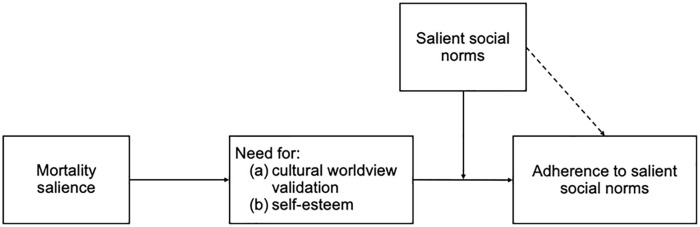
Terror management theory postulates that mortality salience (MS) increases the motivation to defend one’s cultural worldviews. How that motivation is expressed may depend on the social norm that is momentarily salient. Meta-analyses were conducted on studies that manipulated MS and social norm salience. Results based on 64 effect sizes for the hypothesized interaction between MS and norm salience revealed a small-to-medium effect of g = 0.34, 95% confidence interval [0.26, 0.41]. Bias-adjustment techniques suggested the presence of publication bias and/or the exploitation of researcher degrees of freedom and arrived at smaller effect size estimates for the hypothesized interaction, in several cases reducing the effect to nonsignificance (range g corrected = −0.36 to 0.15). To increase confidence in the idea that MS and norm salience interact to influence behavior, preregistered, high-powered experiments using validated norm salience manipulations are necessary. Concomitantly, more specific theorizing is needed to identify reliable boundary conditions of the effect.
Verified 2026-11-22 · 2 references not checked yet
Overview
CoChat Summary
## TL;DR
This meta-analysis of 61 studies and 64 effect sizes found a significant MS × norm salience interaction, with unadjusted estimates suggesting a medium effect (g = 0.34, 95% CI [0.26, 0.41]). However, multiple publication-bias adjustments reduced the estimate, sometimes to nonsignificance, so the authors conclude the effect is promising but uncertain.
## Key findings
- Across 64 effect sizes, the hypothesized MS × norm salience interaction was significant and small-to-medium: g = 0.34, 95% CI [0.26, 0.41], p < .001; heterogeneity was moderate-to-substantial (τ = 0.24, I2 = 62.41%).
- In the simple-effects analyses, MS increased norm-congruent outcomes when a norm was salient (g = 0.40, 95% CI [0.30, 0.50]) but decreased them when no norm was salient (g = −0.19, 95% CI [−0.30, −0.08]).
- Norm salience increased norm-congruent behavior under MS (g = 0.48, 95% CI [0.32, 0.64]) but not without MS (g = −0.08, 95% CI [−0.18, 0.02]).
- Moderator analyses found larger effects for explicit than subtle norm manipulations (g = 0.42 vs. 0.20), and for descriptive/personal norms than injunctive norms (descriptive g = .56; personal g = 0.47; injunctive g = 0.25).
## Methods
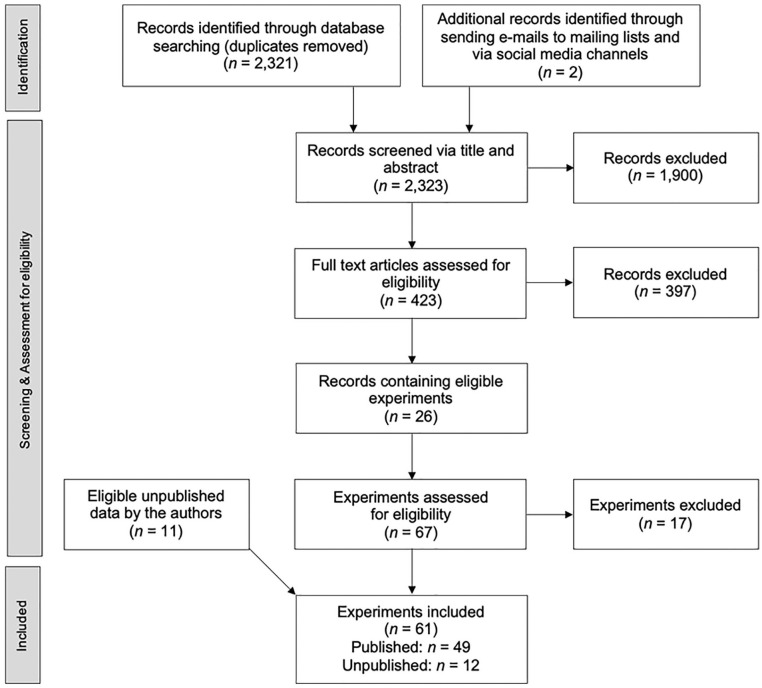
- Meta-analysis of studies that experimentally manipulated mortality salience and social norm salience; the final dataset included 61 studies and 64 effect sizes, with 49 published and 12 unpublished studies.
- Searches were run in PsycINFO, PsycARTICLES, and Web of Science, plus requests for unpublished data; included studies used Hedges’s g and robust variance estimation to handle dependent effect sizes.
- Main analyses used mixed-effects RVE models, with moderator analyses and multiple publication-bias corrections (Egger’s regression, SPET, SPEESE, p-uniform, 3PSM, and p-curve).
## Limitations
- The paper explicitly states that many studies used non-validated norm salience manipulations, and that none of the included studies empirically tested whether the primed norms were actually relevant to participants’ worldview and self-esteem.
- The authors explicitly note inconsistency across bias-adjustment methods and warn that results should be interpreted with caution because publication bias and/or researcher degrees of freedom may be present.
- Evident from the text: several moderator analyses were exploratory, and many subgroup tests depended on small numbers of studies/effect sizes, which limits precision.
Model-written summary of a shortened version of the paper’s full text (it is longer than we read). Check it against the paper before relying on it.
Integrity signals
Registry
Cites
Statistics
Figures
Verification
Claims the paper makes
14 Valid · 7 Not valid · 53 Not checked · 123 Own results and interpretations
Every source the paper cites for this claim was checked and supports it.
In the paper
“Across 17 labs (N = 1,550), the authors report no significant MS effect on a classic measure of worldview defense”
§ Do Salient Social Norms Moderate Mortality Salience Effects? A (Challenging) Meta-Analysis of Terror Management Studies > Meta-Analytical Evidence and Replicability of MS Effects
What the sources say
- Supportedcites Klein et al., 2022 matched to “Many Labs 4: Failure to Replicate Mortality Salience Effect With and Without Original Author Involvement” (2022) source
The Discussion reports usable data from 17 labs and 1,550 participants, with little evidence that mortality salience increased worldview defense. The Research Question 1 results report nonsignificant aggregate effects across all three exclusion sets (p = .187, .135, and .193) on the pro- versus anti-American essay-author preference measure. (LLM, conf=0.94)
plainn = 1,550- Asserted: passes — The authors put it forward as true.
- Checkable: passes — It can be checked against evidence.
- Load-bearing: passes — The paper’s conclusions depend on it.
- Based: passes — The paper gives a reason why it holds.
- Supported
The cited sources support only part of this claim — read each source’s verdict below.
In the paper
“However, the various conceptualizations and operationalizations in the TMT literature do not allow a clear distinction between when a primed concept is a social norm and when it is a personal norm.”
§ Do Salient Social Norms Moderate Mortality Salience Effects? A (Challenging) Meta-Analysis of Terror Management Studies > Method > Inclusion Criteria
What the sources say
- Not checked — no full text of the sourcecites Hogg, 2010 matched to “Influence and Leadership” (2010) source
- Not checked — no full text of the sourcecites Horne & Mollborn, 2020 matched to “Norms: An Integrated Framework” (2020) source
- Partly supportedcites Legros & Cislaghi, 2020 matched to “Mapping the Social-Norms Literature: An Overview of Reviews” (2020) sourceExperimental — accuracy not yet measured
The Results section (‘What pathways of normative influence are commonly identified in the literature?’; page unavailable) reports disagreement over whether internalized personal norms count as social norms. That supports the general difficulty of distinguishing them, but the passage does not address conceptualizations or operationalizations in terror management theory, or whether a primed concept can be classified as one or the other. (LLM, conf=0.82)
plain- Asserted: passes — The authors put it forward as true.
- Checkable: passes — It can be checked against evidence.
- Load-bearing: passes — The paper’s conclusions depend on it.
- Based: passes — The paper gives a reason why it holds.
Every source the paper cites for this claim was checked and supports it.
In the paper
“At the same time, there are benign causes that produce small-study effects other than publication bias (Page et al., 2021).”
§ Do Salient Social Norms Moderate Mortality Salience Effects? A (Challenging) Meta-Analysis of Terror Management Studies > Method > Statistical Analyses
What the sources say
- Supportedcites Page et al., 2021 matched to “Investigating and dealing with publication bias and other reporting biases in meta-analyses of health research: a review” (2021) source
The discussion of funnel-plot asymmetry (section labelled “This article is protected by copyright. All rights reserved.”) explains that genuine differences in intervention effects between smaller and larger studies can cause asymmetry, and that asymmetry can arise by chance. These are causes of small-study effects other than publication bias. (LLM, conf=0.93)
plainstates a cause- Asserted: passes — The authors put it forward as true.
- Checkable: passes — It can be checked against evidence.
- Load-bearing: passes — The paper’s conclusions depend on it.
- Based: passes — The paper gives a reason why it holds.
- Supported
The sources with a verdict support this claim; the rest weren’t checked yet, have no full text we could read, or their verdicts aren’t rated yet.
In the paper
“Bias adjustments can improve performance relative to a meta-analysis that does not adjust for publication bias (Carter et al., 2019; McShane et al., 2016; Moreno et al., 2009; Simonsohn et al., 2014).”
§ Do Salient Social Norms Moderate Mortality Salience Effects? A (Challenging) Meta-Analysis of Terror Management Studies > Method > Statistical Analyses
What the sources say
- Not checked yetcites Carter et al., 2019 matched to “Correcting for Bias in Psychology: A Comparison of Meta-Analytic Methods” (2019) source
Checked before — its earlier verdict is held back until a new check runs.
- Supportedcites McShane et al., 2016 matched to “Adjusting for Publication Bias in Meta-Analysis: An Evaluation of Selection Methods and Some Cautionary Notes” (2016) source
In Simulation 3 (page not specified), the standard meta-analytic approach generally underestimates heterogeneity when studies are selected for publication, while the publication-bias-adjusted selection method does reasonably well with sufficient data. The paper cautions that selection methods rely on idealistic assumptions, but the claim says only that adjustments *can* improve performance. (LLM, conf=0.90)
- Supportedcites Moreno et al., 2009 matched to “Assessment of regression-based methods to adjust for publication bias through a comprehensive simulation study” (2009) source
The Discussion (page unavailable) says standard meta-analysis models perform poorly when publication bias is present. The Results (page unavailable) report scenarios in which adjustment methods performed favourably, supporting the qualified claim that adjustments can improve performance relative to an unadjusted meta-analysis. (LLM, conf=0.91)
plainstates a cause- Asserted: passes — The authors put it forward as true.
- Checkable: passes — It can be checked against evidence.
- Load-bearing: unclear — It is unclear whether the paper’s conclusions depend on it.
- Based: passes — The paper gives a reason why it holds.
- Not checked yet
The cited sources support only part of this claim — read each source’s verdict below.
In the paper
“In this case, SPET and SPEESE may underestimate effects if there is a benign cause for the small-study effect (e.g., Page et al., 2021).”
§ Do Salient Social Norms Moderate Mortality Salience Effects? A (Challenging) Meta-Analysis of Terror Management Studies > Discussion > Adjustments for Publication Bias
What the sources say
- Partly supportedcites Page et al., 2021 matched to “Investigating and dealing with publication bias and other reporting biases in meta-analyses of health research: a review” (2021) sourceExperimental — accuracy not yet measured
The 'True heterogeneity' section (page unavailable) says small studies can show genuinely larger effects, and Section 3.6 warns that uncritical use of regression-based adjustments can lead to inappropriate conclusions. Our copy does not name SPET or SPEESE or say that either method may underestimate effects when small-study effects have a benign cause. (LLM, conf=0.78)
hedgedstates a possible cause- Asserted: passes — The authors put it forward as true.
- Checkable: passes — It can be checked against evidence.
- Load-bearing: unclear — It is unclear whether the paper’s conclusions depend on it.
- Based: passes — The paper gives a reason why it holds.
- Partly supported
72 more claims · 1 with their cited sources checked
Create a free account to see all 197 claims and to verify the 17 references still open.
- Probably not a substantial claim. 66
- It may state two separate claims as one. 72
Claims other papers make about this one
Each is checked against this paper’s own text: does it say what the citing paper says it does?
The source backs part of the claim, not all of it — or backs it for a different population, condition or comparison.
In the citing paper
“but this is consistent with recent meta- analytic findings (Chen et al. 2022; Schindler et al. 2023).”
From Terror Management Theory in the Consumer Domain: A Systematic Review and Meta‐Analysis on Mortality Salience Driven Consumer Responses (2025) · cites this paper as Schindler et al. 2023
Experimental — accuracy not yet measuredThe cited source says what the claim attributes to it.
In the citing paper
“Earlier syntheses of MS effects suggest that publication bias is likely present in TMT research (e.g., Chen etal.2022; Schindler et al. 2023).”
From Terror Management Theory in the Consumer Domain: A Systematic Review and Meta‐Analysis on Mortality Salience Driven Consumer Responses (2025) · cites this paper as Schindler et al. 2023
The cited source says what the claim attributes to it.
In the citing paper
“Earlier syntheses of MS effects suggest that publication bias is likely present in TMT research (e.g., Chen et al. 2022; Schindler et al. 2023).”
From Terror Management Theory in the Consumer Domain: A Systematic Review and Meta‐Analysis on Mortality Salience Driven Consumer Responses (2025) · cites this paper as Schindler et al. 2023
The cited source says what the claim attributes to it.
In the citing paper
“a recent meta- analysis found a small to medium- sized interaction effect of MS and norm primes (Schindler et al. 2023)”
From Terror Management Theory in the Consumer Domain: A Systematic Review and Meta‐Analysis on Mortality Salience Driven Consumer Responses (2025) · cites this paper as Schindler et al. 2023
The cited source says what the claim attributes to it.
In the citing paper
“but noted that it is often unclear whether a certain worldview is present in participants, and thus that norm primes might not activate the worldview that researchers expect it to do.”
From Terror Management Theory in the Consumer Domain: A Systematic Review and Meta‐Analysis on Mortality Salience Driven Consumer Responses (2025) · cites this paper as Schindler et al. 2023
Statistics that don’t add up
Each reported p-value recomputed from its test statistic and degrees of freedom, each partial η² from its F, and each ratio, mean difference or B printed with a p checked against its own confidence interval.
Rated minor: it would not touch a result — a value no result rests on, a p-value that stays on the same side of the significance level, or a conflict that is clerical, resolved elsewhere in the paper, or outside its own findings.
In the paper
“F(4, 8.9) = 0.52, p = .276”
§ Do Salient Social Norms Moderate Mortality Salience Effects? A (Challenging) Meta-Analysis of Terror Management Studies > Results > Main Analyses
Reported p = .276 · recomputed p = .724
Statistics recomputed
Every reported test result, recomputed from its test statistic and degrees of freedom. A result shows as not adding up only once an independent check has confirmed it.
- Doesn’t add upF(4, 8.9) = 0.52reported p = .276 · recomputed p = .724
“F(4, 8.9) = 0.52, p = .276”
- Consistentt(50) = 2.87reported p = .006 · recomputed p = .006
“t(50.0) = 2.87, p = .006”
- Consistentt(22.9) = -0.19reported p = .851 · recomputed p = .851
“t(22.9) = −0.19, p = .851”
- ConsistentF(2, 14.8) = 5.41reported p = .017 · recomputed p = .017
“F(2, 14.8) = 5.41, p = .017”
- ConsistentF(2, 12.3) = 3.01reported p = .086 · recomputed p = .086
“F(2, 12.3) = 3.01, p = .086”
20 more recomputed tests
Create a free account to see every test the Stats check recomputed.
Self-check
Percentages, sums and reported differences re-computed from the paper’s own numbers.
Self-check results appear here once an independent check has confirmed them.
Citations
Cites
Measuring inconsistency in meta-analyses
Higgins, J. P. T., Thompson, S. G., Deeks, J. J., & Altman, D. G. (2003) · BMJ · doi:10.1136/bmj.327.7414.557 · Cited by 63,139
Bias in meta-analysis detected by a simple, graphical test
Egger, M., Smith, G. D., Schneider, M., & Minder, C. (1997) · BMJ · doi:10.1136/bmj.315.7109.629 · Cited by 56,722
Statistical power analyses using G∗Power 3.1: tests for correlation and regression analyses
Faul, F., Erdfelder, E., Buchner, A., & Lang, A.-G. (2009) · Behavior Research Methods · doi:10.3758/brm.41.4.1149 · Cited by 37,615 · cited 3×
“Accordingly, an a priori power analysis in G*power (Faul et al., 2009) reveals a total sample size of N = 366 needed to detect effect sizes 218 Personality and Social Psychology Review 27(2) larger than g = 0.34 (analysis of variance [ANOVA]: main effects and interactions; f = 0.17 [equals g =…”
MethodInfluentialThe Presentation of Self in Everyday Life
Goffman, E. (2023) · Social Theory Re-Wired · doi:10.4324/9781003320609-59 · Cited by 17,562
Breiman, L. (1996) · Machine Learning · doi:10.1007/bf00058655 · Cited by 16,325
Schwartz, S. H. (1992) · Advances in Experimental Social Psychology · doi:10.1016/s0065-2601(08)60281-6 · Cited by 14,619 · cited 4×
“…referred to as such; instead, the primed worldview concepts often fall into the additional category of personal norms (i.e., internalized social norms), in the sense of social values that serve as guiding principles in people’s lives and self-expectations for how to behave (Schwartz, 1992).”
BackgroundInfluentialDuval, S., & Tweedie, R. (2000) · Biometrics · doi:10.1111/j.0006-341x.2000.00455.x · Cited by 14,099 · cited 1×
“We avoided some popular tools due to their poor performance: The trim-and-fill method (Duval & Tweedie, 2000) tends to adjust too little when bias is strong (Carter et al., 2019), and Fail-Safe N (Rosenthal, 1979) neither tests nor adjusts for the presence of bias.”
MethodThe Social Construction of Reality
Rose, D. M., Berger, P. L., & Luckmann, T. (1967) · The Modern Language Journal · doi:10.2307/323448 · Cited by 13,820
(2000) · Cited by 9,198
The file drawer problem and tolerance for null results.
Rosenthal, R. (1979) · Psychological Bulletin · doi:10.1037/0033-2909.86.3.638 · Cited by 9,068 · cited 3×
“, 2019), and Fail-Safe N (Rosenthal, 1979) neither tests nor adjusts for the presence of bias.”
BackgroundMethodEstimating the reproducibility of psychological science
Open Science Collaboration (2015) · Science · doi:10.1126/science.aac4716 · Cited by 8,515
Rediscovering the Social Group: A Self‐Categorization Theory
REID, F. (1987) · British Journal of Social Psychology · doi:10.1111/j.2044-8309.1987.tb00799.x · Cited by 8,091
Social Influence: Compliance and Conformity
Cialdini, R. B., & Goldstein, N. J. (2004) · Annual Review of Psychology · doi:10.1146/annurev.psych.55.090902.142015 · Cited by 6,077
Cialdini, R. B., Reno, R. R., & Kallgren, C. A. (1990) · Journal of Personality and Social Psychology · doi:10.1037/0022-3514.58.6.1015 · Cited by 5,965 · cited 3×
“It should be said that previous research often used primes in the form of direct appeals, such as “please do not litter” (Cialdini et al., 1990)”
BackgroundMethodDistribution Theory for Glass's Estimator of Effect Size and Related Estimators
Hedges, L. V. (1981) · Journal of Educational Statistics · doi:10.2307/1164588 · Cited by 5,695 · cited 2×
“Effect sizes were extracted as standardized mean differences (Hedges’s g; Hedges, 1981) and their standard errors2 using”
MethodNormative Influences on Altruism
Schwartz, S. H. (1977) · Advances in Experimental Social Psychology · doi:10.1016/s0065-2601(08)60358-5 · Cited by 5,364 · cited 2×
“Norms differ according to how internalized they are (e.g., Ajzen & Fishbein, 1970; Schwartz, 1977).”
BackgroundThe Social Self: On Being the Same and Different at the Same Time
Brewer, M. B. (1991) · Personality and Social Psychology Bulletin · doi:10.1177/0146167291175001 · Cited by 5,107 · cited 2×
“…do not identify—or even disidentify—with the reference group or conventional society (e.g., Giannakakis & Fritsche, 2011), want to stress individuality after experiences of depersonalization (Brewer, 1991), or perceive injunctive and descriptive norms to contradict each other (Smith et al., 2012).”
BackgroundThe Handbook of Research Synthesis and Meta-Analysis
(2019) · doi:10.7758/9781610448864 · Cited by 4,553
The Psychology of Self-Affirmation: Sustaining the Integrity of the Self
Steele, C. M. (1988) · Advances in Experimental Social Psychology · doi:10.1016/s0065-2601(08)60229-4 · Cited by 3,697 · cited 2×
“…to buffer against MS. Self-affirmation, for example, is assumed to have the salutary effect of making people secure toward threatening events (Steele, 1988), that is, self-affirmation manipulations already refer to manipulating adherence to personal norms and values (e.g., Schmeichel &…”
BackgroundCialdini, R. B., Kallgren, C. A., & Reno, R. R. (1991) · Advances in Experimental Social Psychology · doi:10.1016/s0065-2601(08)60330-5 · Cited by 3,143 · cited 7×
“This result is not in line with predictions of the focus theory of normative conduct (Cialdini et al., 1991; Reno et al., 1993) but does correspond to several studies showing no norm prime effects on norm conformity (e.g., Bergquist & Nilsson, 2016, study 1; Hamann et al., 2015; Kallgren et al.,…”
BackgroundResultInfluentialThe Causes and Consequences of a Need for Self-Esteem: A Terror Management Theory
Greenberg, J., Pyszczynski, T., & Solomon, S. (1986) · Public Self and Private Self · doi:10.1007/978-1-4613-9564-5_10 · Cited by 3,032 · cited 2×
“Terror management theory (TMT; Greenberg et al., 1986) postulates that people deal with their mortality by defending and living up to their cultural worldviews.”
BackgroundBargh, J. A., Chen, M., & Burrows, L. (1996) · Journal of Personality and Social Psychology · doi:10.1037/0022-3514.71.2.230 · Cited by 2,736
(1998) · Cited by 2,641
Bargh, J. A., Chen, M. I.-C., & Burrows, L. (1996) · Journal of Personality and Social Psychology · doi:10.1037//0022-3514.71.2.230 · Cited by 2,636
Schwartz, S. H., & Bilsky, W. (1990) · Journal of Personality and Social Psychology · doi:10.1037//0022-3514.58.5.878 · Cited by 2,337 · cited 1×
“These reflect values that serve as guiding principles in people’s lives and self-expectations regarding behavior (Schwartz, 1977, 1992; Schwartz & Bilsky, 1990).”
BackgroundMeasuring the Prevalence of Questionable Research Practices With Incentives for Truth Telling
John, L. K., Loewenstein, G., & Prelec, D. (2012) · Psychological Science · doi:10.1177/0956797611430953 · Cited by 2,239 · cited 3×
“Given that publication bias and researcher degrees of freedom are understood to be pervasive problems in psychological science (Bakker et al., 2012; Franco et al., 2014, 2016; Hesse, 2018; John et al., 2012), unadjusted effect sizes are likely to be overestimated (Kvarven et al., 2020).”
BackgroundRobust variance estimation in meta‐regression with dependent effect size estimates
Hedges, L. V., Tipton, E., & Johnson, M. C. (2010) · Research Synthesis Methods · doi:10.1002/jrsm.5 · Cited by 2,086 · cited 1×
“To account for the dependency of the effect sizes, we used robust variance estimation (RVE; Hedges et al., 2010).”
MethodSolomon, S., Greenberg, J., & Pyszczynski, T. (1991) · Advances in Experimental Social Psychology · doi:10.1016/s0065-2601(08)60328-7 · Cited by 1,636 · cited 1×
“To cope with this terror, TMT posits that it is necessary to maintain self-esteem—that is, the “sense that we are valuable parts of a meaningful, important, and enduring existence” (Solomon et al., 1991, p. 106).”
BackgroundPublication bias in the social sciences: Unlocking the file drawer
Franco, A., Malhotra, N., & Simonovits, G. (2014) · Science · doi:10.1126/science.1255484 · Cited by 1,542 · cited 3×
“Given that publication bias and researcher degrees of freedom are understood to be pervasive problems in psychological science (Bakker et al., 2012; Franco et al., 2014, 2016; Hesse, 2018; John et al., 2012), unadjusted effect sizes are likely to be overestimated (Kvarven et al., 2020).”
BackgroundP-curve: A key to the file-drawer.
Simonsohn, U., Nelson, L. D., & Simmons, J. P. (2014) · Journal of Experimental Psychology: General · doi:10.1037/a0033242 · Cited by 1,500 · cited 5×
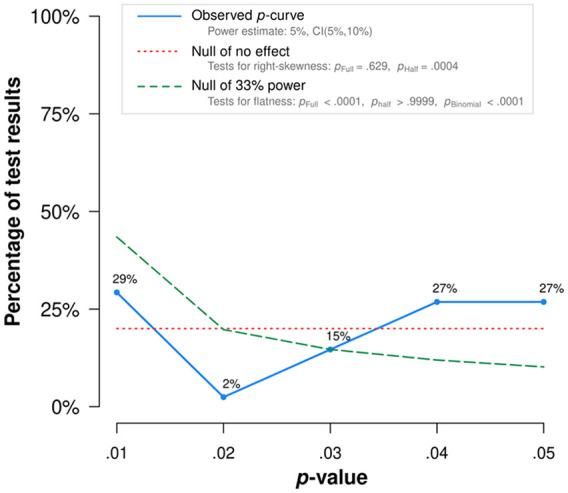
“05), at least one simple effect is likely to be highly significant (p < .01; Simonsohn et al., 2014).”
BackgroundInfluentialGreenberg, J., Pyszczynski, T., Solomon, S., Rosenblatt, A., Veeder, M., Kirkland, S., & Lyon, D. (1990) · Journal of Personality and Social Psychology · doi:10.1037/0022-3514.58.2.308 · Cited by 1,412
Social Identity, Self-Categorization, and the Communication of Group Norms
Hogg, M. A., & Reid, S. A. (2006) · Communication Theory · doi:10.1111/j.1468-2885.2006.00003.x · Cited by 1,399 · cited 1×
“That is, descriptive norms refer to information about what most members of a group are doing in a given situation (Goldstein & Cialdini, 2007; Hogg & Reid, 2006).”
BackgroundRosenblatt, A., Greenberg, J., Solomon, S., Pyszczynski, T., & Lyon, D. (1989) · Journal of Personality and Social Psychology · doi:10.1037/0022-3514.57.4.681 · Cited by 1,323 · cited 3×
“In the first empirical investigation of the MS hypothesis, for example, MS increased punishment toward a person who violated important worldview aspects (a prostitute); on the other hand, MS increased support for a person who acted in line with these aspects (Rosenblatt et al., 1989).”
BackgroundThe automaticity of everyday life.
Bargh, J. A. (1997) · Lawrence Erlbaum Associates eBooks · Cited by 1,229
Two Decades of Terror Management Theory: A Meta-Analysis of Mortality Salience Research
Burke, B. L., Martens, A., & Faucher, E. H. (2010) · Personality and Social Psychology Review · doi:10.1177/1088868309352321 · Cited by 1,188 · cited 5×
“In the most comprehensive MS meta-analysis to date (k = 277), Burke et al. (2010) reported a moderate to strong effect of MS (d = 0.75) across diverse aspects of the anxiety buffer.”
BackgroundInfluentialSelf-citationThe theory of planned behaviour: self identity, social identity and group norms.
Terry, D. J., Hogg, M. A., & White, K. M. (1999) · British Journal of Social Psychology · doi:10.1348/014466699164149 · Cited by 1,126 · cited 2×
“…to social norms when they are highly identified with the reference group (Masson & Fritsche, 2014; Reinhard et al., 2014; Schindler et al., 2016; Terry et al., 1999), are personally uncertain (Smith et al., 2007), experience a threat to self-esteem (vanDellen et al., 2011), or to control…”
BackgroundAn MTurk Crisis? Shifts in Data Quality and the Impact on Study Results
Chmielewski, M., & Kucker, S. C. (2020) · Social Psychological and Personality Science · doi:10.1177/1948550619875149 · Cited by 1,027 · cited 2×
“Addressing the debate about data quality in online studies (especially via MTurk; Chmielewski & Kucker, 2019), we analyzed data collection (laboratory vs. internet vs. field) as a potential moderator.”
BackgroundManaging social norms for persuasive impact
Cialdini, R. B., Demaine, L. J., Sagarin, B. J., Barrett, D. W., Rhoads, K., & Winter, P. L. (2006) · Social Influence · doi:10.1080/15534510500181459 · Cited by 1,017 · cited 2×
“or “please don’t remove the petrified wood from the park” (Cialdini et al., 2006).”
MethodA Focus Theory of Normative Conduct: When Norms Do and Do not Affect Behavior
Kallgren, C. A., Reno, R. R., & Cialdini, R. B. (2000) · Personality and Social Psychology Bulletin · doi:10.1177/01461672002610009 · Cited by 1,005 · cited 2×
“…does correspond to several studies showing no norm prime effects on norm conformity (e.g., Bergquist & Nilsson, 2016, study 1; Hamann et al., 2015; Kallgren et al., 2000, study 1; Lawrence, 2015), providing a further data point that decreases confidence in the validity of social norm priming…”
BackgroundThe transsituational influence of social norms.
Reno, R. R., Cialdini, R. B., & Kallgren, C. A. (1993) · Journal of Personality and Social Psychology · doi:10.1037/0022-3514.64.1.104 · Cited by 976 · cited 2×
“This result is not in line with predictions of the focus theory of normative conduct (Cialdini et al., 1991; Reno et al., 1993) but does correspond to several studies showing no norm prime effects on norm conformity (e.g., Bergquist & Nilsson, 2016, study 1; Hamann et al., 2015; Kallgren et al.,…”
ResultSterling, T. D. (1959) · Journal of the American Statistical Association · doi:10.1080/01621459.1959.10501497 · Cited by 964 · cited 1×
“These causes of overestimation can dramatically increase Type I error rates in the metaanalysis (Sterling, 1959).”
BackgroundStanley, T. D., & Doucouliagos, H. (2014) · Research Synthesis Methods · doi:10.1002/jrsm.1095 · Cited by 916 · cited 3×
“Stanley & Doucouliagos (2013), Pustejovsky & Rodgers (2019) p-uniform p-uniform estimates the true effect size using the distribution of p values for only those studies that produced a statistically significant result.”
BackgroundMethodRole of consciousness and accessibility of death-related thoughts in mortality salience effects.
Greenberg, J., Pyszczynski, T., Solomon, S., Simon, L., & Breus, M. (1994) · Journal of Personality and Social Psychology · doi:10.1037/0022-3514.67.4.627 · Cited by 901 · cited 1×
“In these studies—without norm priming—MS was expected, for example, to enhance derogation of an anti-American author by American participants (Greenberg et al., 1994).”
BackgroundSocial Cognition and Social Perception
Higgins, E. T., & Bargh, J. A. (1987) · Annual Review of Psychology · doi:10.1146/annurev.ps.38.020187.002101 · Cited by 893 · cited 1×
“That is, like every cognitive construct (e.g., E. T. Higgins & Bargh, 1987), norms must be salient in attention or high in accessibility to influence behavior.”
BackgroundThe prediction of behavior from attitudinal and normative variables
Ajzen, I., & Fishbein, M. (1970) · Journal of Experimental Social Psychology · doi:10.1016/0022-1031(70)90057-0 · Cited by 881 · cited 1×
“Norms differ according to how internalized they are (e.g., Ajzen & Fishbein, 1970; Schwartz, 1977).”
BackgroundSmall sample adjustments for robust variance estimation with meta-regression.
Tipton, E. (2015) · Psychological Methods · doi:10.1037/met0000011 · Cited by 810 · cited 1×
“The small-sample correction for degrees of freedom (Tipton, 2015) was applied.”
MethodThe rules of the game called psychological science
Bakker, M., van Dijk, A., & Wicherts, J. M. (2012) · Perspectives on Psychological Science · doi:10.1177/1745691612459060 · Cited by 800 · cited 5×
“Given that publication bias and researcher degrees of freedom are understood to be pervasive problems in psychological science (Bakker et al., 2012; Franco et al., 2014, 2016; Hesse, 2018; John et al., 2012), unadjusted effect sizes are likely to be overestimated (Kvarven et al., 2020).”
BackgroundResultInfluentialHow Much Does Education Improve Intelligence? A Meta-Analysis
Ritchie, S. J., & Tucker-Drob, E. M. (2018) · Psychological Science · doi:10.1177/0956797618774253 · Cited by 680 · cited 1×
“Although these adjustments tend to draw attention when the bias-adjusted effect is no longer significant, there is ample literature in which a significant effect remains after bias adjustment (e.g., Bücker et al., 2018; Hamilton et al., 2020; Ritchie & Tucker-Drob, 2018).”
Background(2009) · Cited by 670
Muthukrishna, M., & Henrich, J. (2019) · Nature Human Behaviour · doi:10.1038/s41562-018-0522-1 · Cited by 638 · cited 1×
“…already mentioned, we briefly discuss recommendations for future work—concerning both theoretical and methodological aspects—to establish the necessary conditions to reliably show the effect and to advance the research (Fiedler, 2017; Muthukrishna & Henrich, 2019; Oberauer & Lewandowsky, 2019).”
BackgroundSimulation-Based Power Analysis for Factorial Analysis of Variance Designs
Lakens, D., & Caldwell, A. R. (2021) · Advances in Methods and Practices in Psychological Science · doi:10.1177/2515245920951503 · Cited by 602 · cited 2×
“Therefore, we should consider the pattern of the expected interaction, as this has major implications for a priori power analyses (Blake & Gangestad, 2020; Giner-Sorolla, 2018; Lakens & Caldwell, 2021).”
BackgroundMethodInfluentialCarter, E. C., Kofler, L. M., Forster, D. E., & McCullough, M. E. (2015) · Journal of Experimental Psychology: General · doi:10.1037/xge0000083 · Cited by 594 · cited 1×
“In application, these methods successfully identified the overestimation of ego depletion effects, for example (Carter et al., 2015; Carter & McCullough, 2014).”
MethodCorrecting for Bias in Psychology: A Comparison of Meta-Analytic Methods
Carter, E. C., Schönbrodt, F. D., Gervais, W. M., & Hilgard, J. (2019) · Advances in Methods and Practices in Psychological Science · doi:10.1177/2515245919847196 · Cited by 588 · cited 13×
“Naturally, both regression models require substantial extrapolation, but they often provide better estimates than unadjusted metaanalysis or trim-and-fill (Carter & McCullough, 2014; Carter et al., 2019; Moreno et al., 2009).”
BackgroundMethodResultInfluentialSelf-citationSubjective well-being and academic achievement: A meta-analysis
Bücker, S., Nuraydin, S., Simonsmeier, B. A., Schneider, M., & Luhmann, M. (2018) · Journal of Research in Personality · doi:10.1016/j.jrp.2018.02.007 · Cited by 569 · cited 1×
“Although these adjustments tend to draw attention when the bias-adjusted effect is no longer significant, there is ample literature in which a significant effect remains after bias adjustment (e.g., Bücker et al., 2018; Hamilton et al., 2020; Ritchie & Tucker-Drob, 2018).”
BackgroundThirty Years of Terror Management Theory
Pyszczynski, T., Solomon, S., & Greenberg, J. (2015) · Advances in Experimental Social Psychology · doi:10.1016/bs.aesp.2015.03.001 · Cited by 509 · cited 4×
“Although different hypotheses derived from TMT have been tested, most research addressed the MS hypothesis stating that being confronted with their own mortality increases people’s need for the protection provided by their cultural worldview and self-esteem (Burke et al., 2010; Pyszczynski et al., 2015).”
BackgroundInfluentialI belong, therefore, I exist: ingroup identification, ingroup entitativity, and ingroup bias.
Castano, E., Yzerbyt, V., Paladino, M.-P., & Sacchi, S. (2002) · Personality and Social Psychology Bulletin · doi:10.1177/0146167202282001 · Cited by 493
Greenberg, J., Simon, L., Pyszczynski, T., Solomon, S., & Chatel, D. (1992) · Journal of Personality and Social Psychology · doi:10.1037/0022-3514.63.2.212 · Cited by 487 · cited 5×
“In an early study, Greenberg et al. (1992) provided initial support for this idea by showing that activating the concept of tolerance reduced the tendency to devaluate different others after MS.”
BackgroundResultInfluentialOf wealth and death: Materialism, mortality salience, and consumption behavior
Kasser, T., & Sheldon, K. M. (2000) · Psychological Science · doi:10.1111/1467-9280.00269 · Cited by 483 · cited 1×
“…et al., 1992), and forgiveness and compassion (Schimel et al., 2006; Vail et al., 2009); conversely, MS also promoted aggression (McGregor et al., 1998; Pyszczynski et al., 2006), punishment (Rosenblatt et al., 1989), materialism, and accumulation of personal wealth (Kasser & Sheldon, 2000).”
BackgroundAddressing the theory crisis in psychology
Oberauer, K., & Lewandowsky, S. (2019) · Psychonomic Bulletin & Review · doi:10.3758/s13423-019-01645-2 · Cited by 462 · cited 1×
“…already mentioned, we briefly discuss recommendations for future work—concerning both theoretical and methodological aspects—to establish the necessary conditions to reliably show the effect and to advance the research (Fiedler, 2017; Muthukrishna & Henrich, 2019; Oberauer & Lewandowsky, 2019).”
BackgroundReactance Theory - 40 Years Later
Miron, A. M., & Brehm, J. W. (2006) · Zeitschrift für Sozialpsychologie · doi:10.1024/0044-3514.37.1.9 · Cited by 461 · cited 1×
“Instead, people may contradict norms when they feel pressured to conform (see research on reactance; Miron & Brehm, 2006), do not identify—or even disidentify—with the reference group or conventional society (e.g., Giannakakis & Fritsche, 2011), want to stress individuality after experiences of…”
BackgroundJonas, E., McGregor, I., Klackl, J., Agroskin, D., Fritsche, I., Holbrook, C., Nash, K., Proulx, T., & Quirin, M. (2014) · Advances in Experimental Social Psychology · doi:10.1016/b978-0-12-800052-6.00004-4 · Cited by 447 · cited 2×
“By contrast, they suggest that MS induction causes active search for cues of social and cultural norms, facilitating the detection of norm cues and explaining the effect of MS on norm compliance (Jonas et al., 2008, 2014).”
BackgroundSelf-citationMortality salience, martyrdom, and military might: The Great Satan versus the Axis of Evil
Pyszczynski, T., Abdollahi, A., Solomon, S., Greenberg, J., Cohen, F., & Weise, D. (2006) · Personality and Social Psychology Bulletin · doi:10.1177/0146167205282157 · Cited by 432 · cited 2×
“, 2009); conversely, MS also promoted aggression (McGregor et al., 1998; Pyszczynski et al., 2006), punishment (Rosenblatt et al.”
BackgroundThe Scrooge Effect: Evidence that mortality salience increases prosocial attitudes and behavior
Jonas, E., Schimel, J., Greenberg, J., & Pyszczynski, T. (2002) · Personality and Social Psychology Bulletin · doi:10.1177/014616702236834 · Cited by 420 · cited 2×
“Correspondingly, earlier studies showed that MS increased helping (Jonas et al., 2002), tolerance (Greenberg et al.”
BackgroundMcGregor, H. A., Lieberman, J. D., Greenberg, J., Solomon, S., Arndt, J., Simon, L., & Pyszczynski, T. (1998) · Journal of Personality and Social Psychology · doi:10.1037/0022-3514.74.3.590 · Cited by 403 · cited 2×
“…(Greenberg et al., 1992), and forgiveness and compassion (Schimel et al., 2006; Vail et al., 2009); conversely, MS also promoted aggression (McGregor et al., 1998; Pyszczynski et al., 2006), punishment (Rosenblatt et al., 1989), materialism, and accumulation of personal wealth (Kasser &…”
BackgroundMcShane, B. B., Böckenholt, U., & Hansen, K. T. (2016) · Perspectives on Psychological Science · doi:10.1177/1745691616662243 · Cited by 398 · cited 4×
“…(van Assen et al., 2015; as implemented in the puniform package, van Aert, 2019), the three-parameter selection model (3PSM; Hedges & Vevea, 1996; McShane et al., 2016; as implemented in the weightr package, Coburn & Vevea, 2019), and p-curve (Simonsohn et al., 2014; p-curve app 4.06). p-uniform…”
BackgroundInfluentialMapping the Social-Norms Literature: An Overview of Reviews
Legros, S., & Cislaghi, B. (2020) · Perspectives on Psychological Science · doi:10.1177/1745691619866455 · Cited by 388
Why Hypothesis Testers Should Spend Less Time Testing Hypotheses
Scheel, A. M., Tiokhin, L., Isager, P. M., & Lakens, D. (2021) · Perspectives on Psychological Science · doi:10.1177/1745691620966795 · Cited by 382 · cited 1×
“Thus, it becomes evident that more specific theorizing enables more precise operationalizations and more adequate empirical testing (Scheel et al., 2021).”
BackgroundCarter, E. C., & McCullough, M. E. (2014) · Frontiers in Psychology · doi:10.3389/fpsyg.2014.00823 · Cited by 381 · cited 2×
“In application, these methods successfully identified the overestimation of ego depletion effects, for example (Carter et al., 2015; Carter & McCullough, 2014).”
MethodWeingarten, E., Chen, Q., McAdams, M., Yi, J., Hepler, J., & Albarracín, D. (2016) · Psychological Bulletin · doi:10.1037/bul0000030 · Cited by 380
Moreno, S. G., Sutton, A. J., Ades, A., Stanley, T. D., Abrams, K. R., Peters, J. L., & Cooper, N. J. (2009) · BMC Medical Research Methodology · doi:10.1186/1471-2288-9-2 · Cited by 373
Tipton, E., & Pustejovsky, J. E. (2015) · Journal of Educational and Behavioral Statistics · doi:10.3102/1076998615606099 · Cited by 362
Testing for funnel plot asymmetry of standardized mean differences
Pustejovsky, J. E., & Rodgers, M. A. (2019) · Research Synthesis Methods · doi:10.1002/jrsm.1332 · Cited by 354 · cited 4×
“Stanley & Doucouliagos (2013), Pustejovsky & Rodgers (2019) p-uniform p-uniform estimates the true effect size using the distribution of p values for only those studies that produced a statistically significant result.”
BackgroundMethodInfluentialSimonsohn, U., Simmons, J. P., & Nelson, L. D. (2015) · Journal of Experimental Psychology General · doi:10.1037/xge0000104 · Cited by 343 · cited 1×
“To address the possibility of “ambitious p-hacking,” that is, exploitation of researcher degrees of freedom to reach p values substantially below .05, Simonsohn et al. (2015) proposed a p-curve of only p values less than .025 (i.e., in our case 16 p values).”
BackgroundDoes Self-Control Training Improve Self-Control? A Meta-Analysis
Friese, M., Frankenbach, J., Job, V., & Loschelder, D. D. (2017) · Perspectives on Psychological Science · doi:10.1177/1745691617697076 · Cited by 334
Congruent or conflicted? The impact of injunctive and descriptive norms on environmental intentions.
Smith, J. R., Louis, W. R., Terry, D. J., Greenaway, K. H., Clarke, M. R., & Cheng, X. (2012) · Journal of Environmental Psychology · doi:10.1016/j.jenvp.2012.06.001 · Cited by 324 · cited 2×
“…do not identify—or even disidentify—with the reference group or conventional society (e.g., Giannakakis & Fritsche, 2011), want to stress individuality after experiences of depersonalization (Brewer, 1991), or perceive injunctive and descriptive norms to contradict each other (Smith et al., 2012).”
BackgroundI am not an animal: Mortality salience, disgust, and the denial of human creatureliness.
Goldenberg, J. L., Pyszczynski, T., Greenberg, J., Solomon, S., Kluck, B., & Cornwell, R. (2001) · Journal of Experimental Psychology: General · doi:10.1037/0096-3445.130.3.427 · Cited by 323
On Being Both With Us and Against Us: A Normative Conflict Model of Dissent in Social Groups
Packer, D. J. (2008) · Personality and Social Psychology Review · doi:10.1177/1088868307309606 · Cited by 311 · cited 1×
“Research on “loyal deviance” (Packer, 2008; Packer et al., 2013) has found that people who are highly identified with their group deviate from norms contradicting ideal or injunctive in-group norms (Masson & Fritsche, 2018).”
ResultPage, M. J., Sterne, J. A. C., Higgins, J. P. T., & Egger, M. (2021) · Research Synthesis Methods · doi:10.1002/jrsm.1468 · Cited by 294 · cited 2×
“At the same time, there are benign causes that produce small-study effects other than publication bias (Page et al., 2021).”
BackgroundComparing meta-analyses and preregistered multiple-laboratory replication projects
Kvarven, A., Strømland, E., & Johannesson, M. (2019) · Nature Human Behaviour · doi:10.1038/s41562-019-0787-z · Cited by 271 · cited 3×
“, 2012), unadjusted effect sizes are likely to be overestimated (Kvarven et al., 2020).”
BackgroundMeta-analysis using effect size distributions of only statistically significant studies.
van Assen, M. A. L. M., van Aert, R. C. M., & Wicherts, J. M. (2015) · Psychological Methods · doi:10.1037/met0000025 · Cited by 265 · cited 1×
“We applied p-uniform (van Assen et al., 2015; as implemented in the puniform package, van Aert, 2019), the three-parameter selection model (3PSM; Hedges & Vevea, 1996; McShane et al., 2016; as implemented in the weightr package, Coburn & Vevea, 2019), and p-curve (Simonsohn et al., 2014; p-curve…”
MethodThe spyglass self: A model of vicarious self-perception.
Goldstein, N. J., & Cialdini, R. B. (2007) · Journal of Personality and Social Psychology · doi:10.1037/0022-3514.92.3.402 · Cited by 264 · cited 1×
“That is, descriptive norms refer to information about what most members of a group are doing in a given situation (Goldstein & Cialdini, 2007; Hogg & Reid, 2006).”
BackgroundThe role of control motivation in mortality salience effects on ingroup support and defense
Fritsche, I., Jonas, E., & Fankhänel, T. (2008) · Journal of Personality and Social Psychology · doi:10.1037/a0012666 · Cited by 252 · cited 5×
“As an alternative social identity–inspired approach, group-based control theory (Fritsche, 2022) predicts that people increasingly act on the collective level of their self (i.e., act in terms of ingroup norms; Stollberg et al., 2017) to restore a sense of control after their personal-level control has been threatened…”
BackgroundResultInfluentialSelf-citationContent and process priming: A review
Janiszewski, C., & Wyer, R. S. (2014) · Journal of Consumer Psychology · doi:10.1016/j.jcps.2013.05.006 · Cited by 244
Models Are Stupid, and We Need More of Them
Smaldino, P. E. (2017) · Computational Social Psychology · doi:10.4324/9781315173726-14 · Cited by 236 · cited 1×
“Formal modeling can contribute to this aim (Glöckner & Betsch, 2011; Smaldino, 2017).”
BackgroundA time to tan: Proximal and distal effects of mortality salience on sun exposure intentions
Routledge, C., Arndt, J., & Goldenberg, J. L. (2004) · Personality and Social Psychology Bulletin · doi:10.1177/0146167204264056 · Cited by 223
Hedges, L. V., & Vevea, J. L. (1996) · Journal of Educational and Behavioral Statistics · doi:10.2307/1165338 · Cited by 221 · cited 2×
“We applied p-uniform (van Assen et al., 2015; as implemented in the puniform package, van Aert, 2019), the three-parameter selection model (3PSM; Hedges & Vevea, 1996; McShane et al., 2016; as implemented in the weightr package, Coburn & Vevea, 2019), and p-curve (Simonsohn et al., 2014; p-curve…”
MethodSchmeichel, B. J., & Martens, A. (2005) · Personality and Social Psychology Bulletin · doi:10.1177/0146167204271567 · Cited by 220 · cited 1×
“…buffer against MS. Self-affirmation, for example, is assumed to have the salutary effect of making people secure toward threatening events (Steele, 1988), that is, self-affirmation manipulations already refer to manipulating adherence to personal norms and values (e.g., Schmeichel & Martens, 2005).”
Backgroundvan Aert, R. C. M., Wicherts, J. M., & van Assen, M. A. L. M. (2016) · Perspectives on Psychological Science · doi:10.1177/1745691616650874 · Cited by 219
clubSandwich: Cluster-Robust (Sandwich) Variance Estimators with Small-Sample Corrections
Pustejovsky, J. E. (2016) · CRAN: Contributed Packages · doi:10.32614/cran.package.clubsandwich · Cited by 216
(2025) · Edward Elgar Publishing eBooks · doi:10.4337/9781035306596 · Cited by 203
Klein, R. A., Cook, C. L., Ebersole, C. R., Vitiello, C., Nosek, B. A., Hilgard, J., Ahn, P. H., Brady, A. J., Chartier, C. R., Christopherson, C. D., et al. (2022) · Collabra Psychology · doi:10.1525/collabra.35271 · Cited by 193 · cited 1×
“Another work refers to a large-scale replication project called Many Labs 4 (Klein et al., 2022).”
BackgroundSelf-citationvan Elk, M., Matzke, D., Gronau, Q. F., Guan, M., Vandekerckhove, J., & Wagenmakers, E.-J. (2015) · Frontiers in Psychology · doi:10.3389/fpsyg.2015.01365 · Cited by 192
Jonas, E., Martens, A., Niesta Kayser, D., Fritsche, I., Sullivan, D., & Greenberg, J. (2008) · Journal of Personality and Social Psychology · doi:10.1037/a0013593 · Cited by 189 · cited 9×
“…(Cialdini et al., 1991), a substantial body of experimental studies has provided support for the idea that reactions to mortality salience (MS) depend on the salience of social norms, providing a possible explanation for seemingly contradictory findings in TMT research (e.g., Jonas et al., 2008).”
BackgroundResultInfluentialThe Focus Theory of Normative Conduct
Cialdini, R. B. (2012) · Handbook of Theories of Social Psychology · doi:10.4135/9781446249222.n41 · Cited by 187
Norms: An Integrated Framework
Horne, C., & Mollborn, S. (2020) · Annual Review of Sociology · doi:10.1146/annurev-soc-121919-054658 · Cited by 184 · cited 1×
“Due to the popularity of the study of social norms across different research fields, there exists significant variation in what constitutes a social norm (Hogg, 2010; Horne & Mollborn, 2020; Legros & Cislaghi, 2020).”
BackgroundSassenberg, K., & Ditrich, L. (2019) · Advances in Methods and Practices in Psychological Science · doi:10.1177/2515245919838781 · Cited by 176 · cited 1×
“It is important, however, to emphasize that higher power in terms of a larger sample size alone is not enough to gain research progress—power and sample size always need to be interpreted within the theoretical and methodological context (Sassenberg & Ditrich, 2019).”
BackgroundvanDellen, M. R., Campbell, W. K., Hoyle, R. H., & Bradfield, E. K. (2011) · Personality and Social Psychology Review · doi:10.1177/1088868310372950 · Cited by 175
Mortality salience increases adherence to salient norms and values
Gailliot, M. T., Stillman, T. F., Schmeichel, B. J., Maner, J. K., & Plant, E. A. (2008) · Personality and Social Psychology Bulletin · doi:10.1177/0146167208316791 · Cited by 174 · cited 2×
“In the past decade, many additional experiments have been published, providing evidence for the idea regarding various additional social norms, such as helping and responsibility (Gailliot et al., 2008), honesty (Schindler & Reinhard, 2015a; Schindler, Reinhard, et al.”
BackgroundExistential threat and compliance with pro-environmental norms
Fritsche, I., Jonas, E., Kayser, D. N., & Koranyi, N. (2010) · Journal of Environmental Psychology · doi:10.1016/j.jenvp.2009.08.007 · Cited by 169 · cited 5×
“…and collectivism (Courtney et al., 2021; Giannakakis & Fritsche, 2011; Jonas & Fritsche, 2012), religious norms (Rothschild et al., 2009; Schumann et al., 2014), pro-environmental norms (Fritsche et al., 2010; Harrison & Mallett, 2013), and the norm of reciprocity (Schindler et al., 2012, 2013).”
BackgroundInfluentialSelf-citationLambert, A. J., Eadeh, F. R., Peak, S. A., Scherer, L. D., Schott, J. P., & Slochower, J. M. (2014) · Journal of Personality and Social Psychology · doi:10.1037/a0036353 · Cited by 162 · cited 1×
“As previous research by Lambert et al. (2014) shows, conscious affect following MS manipulations may have independent (and sometimes contrary) effects on anxiety buffer measures that may conceal specific existential threat effects.”
BackgroundFiedler, K. (2017) · Perspectives on Psychological Science · doi:10.1177/1745691616654458 · Cited by 160 · cited 2×
“…already mentioned, we briefly discuss recommendations for future work—concerning both theoretical and methodological aspects—to establish the necessary conditions to reliably show the effect and to advance the research (Fiedler, 2017; Muthukrishna & Henrich, 2019; Oberauer & Lewandowsky, 2019).”
BackgroundAn extended theory of planned behavior for parent-for-child health behaviors: A meta-analysis.
Hamilton, K., van Dongen, A., & Hagger, M. S. (2020) · Health Psychology · doi:10.1037/hea0000940 · Cited by 160
Wisman, A., & Koole, S. L. (2003) · Journal of Personality and Social Psychology · doi:10.1037/0022-3514.84.3.511 · Cited by 159
Blake, K. R., & Gangestad, S. (2020) · Personality and Social Psychology Bulletin · doi:10.1177/0146167220913363 · Cited by 159 · cited 1×
“Therefore, we should consider the pattern of the expected interaction, as this has major implications for a priori power analyses (Blake & Gangestad, 2020; Giner-Sorolla, 2018; Lakens & Caldwell, 2021).”
BackgroundRothschild, Z. K., Abdollahi, A., & Pyszczynski, T. (2009) · Journal of Experimental Social Psychology · doi:10.1016/j.jesp.2009.05.016 · Cited by 157 · cited 2×
“…Vail et al., 2019), individualism and collectivism (Courtney et al., 2021; Giannakakis & Fritsche, 2011; Jonas & Fritsche, 2012), religious norms (Rothschild et al., 2009; Schumann et al., 2014), pro-environmental norms (Fritsche et al., 2010; Harrison & Mallett, 2013), and the norm of…”
BackgroundAdherence to climate change‐related ingroup norms: Do dimensions of group identification matter?
Masson, T., & Fritsche, I. (2014) · European Journal of Social Psychology · doi:10.1002/ejsp.2036 · Cited by 150 · cited 1×
“On the contrary, people may conform to social norms when they are highly identified with the reference group (Masson & Fritsche, 2014; Reinhard et al., 2014; Schindler et al., 2016; Terry et al., 1999), are personally uncertain (Smith et al., 2007), experience a threat to self-esteem (vanDellen et…”
BackgroundSelf-citationPerceived collective continuity and ingroup identification as defence against death awareness
Sani, F., Herrera, M., & Bowe, M. (2008) · Journal of Experimental Social Psychology · doi:10.1016/j.jesp.2008.07.019 · Cited by 147 · cited 1×
“Supporting this idea, MS was shown to increase identification with salient ingroups (Castano et al., 2002; Fritsche et al., 2008; Giannakakis & Fritsche, 2011; Jonas & Fritsche, 2012; Sani et al., 2009).”
ResultHogg, M. A. (2010) · Handbook of Social Psychology · doi:10.1002/9780470561119.socpsy002031 · Cited by 138
Klein, R. A., Cook, C. L., Ebersole, C. R., et al. (2019) · doi:10.31234/osf.io/vef2c · Cited by 125 · cited 1×
“Another work refers to a large-scale replication project called Many Labs 4 (Klein et al., 2022).”
BackgroundSelf-citationUncertainty and the influence of group norms in the attitude–behaviour relationship
Smith, J. R., Hogg, M. A., Martin, R., & Terry, D. J. (2007) · British Journal of Social Psychology · doi:10.1348/014466606x164439 · Cited by 124 · cited 2×
“, 1999), are personally uncertain (Smith et al., 2007), experience a threat to self-esteem (vanDellen et al.”
BackgroundCharting the future of social psychology on stormy seas: Winners, losers, and recommendations
Baumeister, R. F. (2016) · Journal of Experimental Social Psychology · doi:10.1016/j.jesp.2016.02.003 · Cited by 122 · cited 2×
“Some scholars have expressed concerns about the quality of measurement or efficacy of manipulation in largesample research, expecting small-sample research to yield larger effects due to more intense and effortful manipulations and a more impactful procedure (Baumeister, 2016).”
BackgroundUnderreporting in Psychology Experiments: Evidence From a Study Registry
Franco, A., Malhotra, N., & Simonovits, G. (2016) · Social Psychological and Personality Science · doi:10.1177/1948550615598377 · Cited by 117
Social Identities, Group Norms, and Threat: On the Malleability of Ingroup Bias
Giannakakis, A. E., & Fritsche, I. (2011) · Personality and Social Psychology Bulletin · doi:10.1177/0146167210386120 · Cited by 110
Self-citationMany Labs 5: Testing Pre-Data-Collection Peer Review as an Intervention to Increase Replicability
Ebersole, C. R., Mathur, M. B., Baranski, E., Bart-Plange, D.-J., Buttrick, N. R., Chartier, C. R., Corker, K. S., Corley, M., Hartshorne, J. K., IJzerman, H., et al. (2020) · Advances in Methods and Practices in Psychological Science · doi:10.1177/2515245920958687 · Cited by 105 · cited 1×
“In addition, recent investigations failed to show evidence for the claim that researchers’ expertise and diligence generally produce larger or more precise effect sizes and higher replication success (Ebersole et al., 2020; Protzko & Schooler, 2020).”
Resultrobumeta: Robust Variance Meta-Regression
Fisher, Z., Tipton, E., & Zhipeng, H. (2014) · CRAN: Contributed Packages · doi:10.32614/cran.package.robumeta · Cited by 105
On defeating death: Group reification and social identification as immortality strategies
Castano, E., & Dechesne, M. (2005) · European Review of Social Psychology · doi:10.1080/10463280500436024 · Cited by 101 · cited 1×
“Castano and colleagues (Castano & Dechesne, 2005; Castano et al., 2002) have proposed group membership, or social identity, as an independent anxiety buffer because it provides a way for individuals to distance themselves from the parts of their personal identity that are going to die and to define…”
BackgroundHamann, K. R. S., Reese, G., Seewald, D., & Loeschinger, D. C. (2015) · Journal of Environmental Psychology · doi:10.1016/j.jenvp.2015.08.003 · Cited by 94 · cited 1×
“…et al., 1993) but does correspond to several studies showing no norm prime effects on norm conformity (e.g., Bergquist & Nilsson, 2016, study 1; Hamann et al., 2015; Kallgren et al., 2000, study 1; Lawrence, 2015), providing a further data point that decreases confidence in the validity of…”
ResultJonas, E., & Fritsche, I. (2013) · American Psychologist · doi:10.1037/a0033052 · Cited by 94 · cited 1×
“Social norms can thus have an impact on the escalation or de-escalation of violent intergroup conflicts (Jonas & Fritsche, 2013): If norms of intragroup cooperation are established within a society, this could prevent these conflicts instead of catalyzing them as a consequence of MS.”
BackgroundSelf-citationI saw the sign: Promoting energy conservation via normative prompts
Bergquist, M., & Nilsson, A. (2016) · Journal of Environmental Psychology · doi:10.1016/j.jenvp.2016.03.005 · Cited by 92 · cited 1×
“…conduct (Cialdini et al., 1991; Reno et al., 1993) but does correspond to several studies showing no norm prime effects on norm conformity (e.g., Bergquist & Nilsson, 2016, study 1; Hamann et al., 2015; Kallgren et al., 2000, study 1; Lawrence, 2015), providing a further data point that…”
ResultThe empirical content of theories in judgment and decision making: Shortcomings and remedies
Glöckner, A., & Betsch, T. (2011) · Judgment and Decision Making · doi:10.1017/s1930297500004149 · Cited by 87 · cited 2×
“Falsifiability needs theory specification (Glöckner & Betsch, 2011).”
BackgroundJonas, E., Sullivan, D., & Greenberg, J. (2013) · Journal of Economic Psychology · doi:10.1016/j.joep.2012.12.005 · Cited by 85 · cited 2×
“…(Schindler & Reinhard, 2015a; Schindler, Reinhard, et al., 2019), modesty (Du & Jonas, 2015), justice and fairness (Hirschberger et al., 2016; Jonas et al., 2013), tolerance (Greenberg et al., 1992; Vail et al., 2019), individualism and collectivism (Courtney et al., 2021; Giannakakis &…”
BackgroundAgency Through the We: Group-Based Control Theory
Fritsche, I. (2022) · Current Directions in Psychological Science · doi:10.1177/09637214211068838 · Cited by 84 · cited 2×
“As an alternative social identity–inspired approach, group-based control theory (Fritsche, 2022) predicts that people increasingly act on the collective level of their self (i.”
BackgroundSelf-citationInzlicht, M., Gervais, W., & Berkman, E. (2015) · SSRN Electronic Journal · doi:10.2139/ssrn.2659409 · Cited by 82 · cited 2×
“This demonstrates that such techniques on their own may not be sufficiently robust to firmly establish the presence or absence of an effect (Inzlicht et al., 2015; Kvarven et al., 2020).”
BackgroundHalloran, M. J., & Kashima, E. S. (2004) · Personality and Social Psychology Bulletin · doi:10.1177/0146167204264080 · Cited by 80 · cited 2×
“…if taking a social identity perspective on TMT, those norms should be most identifiable as ingroup norms on which the ingroup markedly differs from a salient outgroup (e.g., when people of a collective culture compare with people from a group known to be individualistic; Halloran & Kashima, 2004).”
BackgroundBeyond terror: Towards a paradigm shift in the study of threat and culture
Martin, L. L., & van den Bos, K. (2014) · European Review of Social Psychology · doi:10.1080/10463283.2014.923144 · Cited by 76 · cited 2×
“(L. L. Martin & van den Bos, 2014, p. 40).”
ResultEstimating Population Mean Power Under Conditions of Heterogeneity and Selection for Significance
Brunner, J., & Schimmack, U. (2020) · Meta-Psychology · doi:10.15626/mp.2018.874 · Cited by 76 · cited 1×
“214 Personality and Social Psychology Review 27(2) On the other hand, this could also be an overestimate of average study power, as heterogeneity in effect sizes can cause the p-curve to overestimate mean power (Brunner & Schimmack, 2020; McShane et al., 2016).”
BackgroundFiedler, K., McCaughey, L., & Prager, J. (2021) · Perspectives on Psychological Science · doi:10.1177/1745691620970602 · Cited by 73 · cited 1×
“For an adequate and informative test of the MS × Norm salience interaction hypothesis, a valid norm salience manipulation is needed (see Fiedler et al., 2021).”
BackgroundA Little Piece of Me: When Mortality Reminders Lead to Giving to Others
Dunn, L., White, K., & Dahl, D. W. (2020) · Journal of Consumer Research · doi:10.1093/jcr/ucaa020 · Cited by 69 · cited 1×
“On the other hand, preregistered and high-powered studies on MS effects are rare (for exceptions, see Courtney et al., 2021; Dunn et al., 2020; Schindler, Pfattheicher, et al., 2019; Vail et al., 2019).”
BackgroundStollberg, J., Fritsche, I., & Jonas, E. (2017) · Social Cognition · doi:10.1521/soco.2017.35.4.374 · Cited by 66 · cited 3×
“…when they are highly identified with the reference group (Masson & Fritsche, 2014; Reinhard et al., 2014; Schindler et al., 2016; Terry et al., 1999), are personally uncertain (Smith et al., 2007), experience a threat to self-esteem (vanDellen et al., 2011), or to control (Stollberg et al., 2017).”
BackgroundSelf-citationSchimel, J., Wohl, M. J. A., & Williams, T. (2006) · Motivation and Emotion · doi:10.1007/s11031-006-9040-y · Cited by 65 · cited 2×
“, 1992), and forgiveness and compassion (Schimel et al., 2006; Vail et al., 2009); conversely, MS also promoted aggression (McGregor et al.”
BackgroundBless, H., & Burger, A. M. (2016) · Perspectives on Psychological Science · doi:10.1177/1745691615621278 · Cited by 64
Motyl, M. S., Hart, J., & Pyszczynski, T. (2009) · Journal of Experimental Social Psychology · doi:10.1016/j.jesp.2009.08.012 · Cited by 60
Arndt, J., Cox, C. R., Goldenberg, J. L., Vess, M., Routledge, C., Cooper, D. P., & Cohen, F. (2009) · Journal of Personality and Social Psychology · doi:10.1037/a0015182 · Cited by 59 · cited 1×
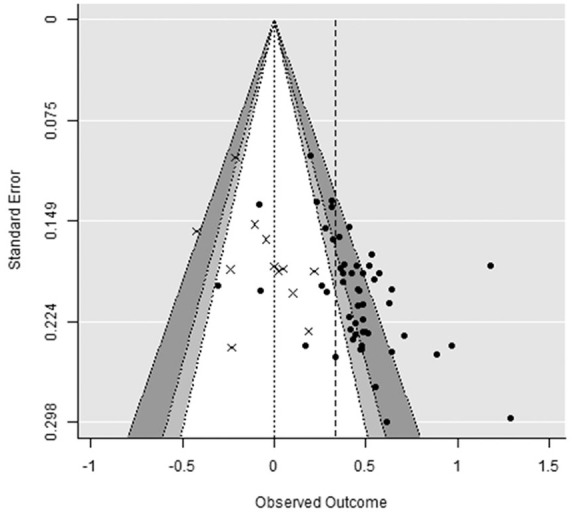
“Inspection of the funnel plot suggests that the regression slope is likely to be pulled by the small studies with very large effect sizes (e.g., Arndt et al., 2009, g = 1.28) and a large study with a significant negative effect (Schindler & Reinhard, 2015c, unpublished study 8, g = –0.42).”
BackgroundInfluentialSchumann, K., McGregor, I., Nash, K. A., & Ross, M. (2014) · Journal of Personality and Social Psychology · doi:10.1037/a0036739 · Cited by 58 · cited 2×
“, 2021; Giannakakis & Fritsche, 2011; Jonas & Fritsche, 2012), religious norms (Rothschild et al., 2009; Schumann et al., 2014), pro-environmental norms (Fritsche et al.”
BackgroundGo with the flow: conforming to others in the face of existential threat
Renkema, L. J., Stapel, D. A., & Van Yperen, N. W. (2008) · European Journal of Social Psychology · doi:10.1002/ejsp.468 · Cited by 57 · cited 1×
“We decided to exclude two eligible studies published by Renkema et al. (2008).”
BackgroundCourtney, E. P., Felig, R. N., & Goldenberg, J. L. (2022) · British Journal of Social Psychology · doi:10.1111/bjso.12487 · Cited by 53 · cited 4×
“…and fairness (Hirschberger et al., 2016; Jonas et al., 2013), tolerance (Greenberg et al., 1992; Vail et al., 2019), individualism and collectivism (Courtney et al., 2021; Giannakakis & Fritsche, 2011; Jonas & Fritsche, 2012), religious norms (Rothschild et al., 2009; Schumann et al., 2014),…”
BackgroundMethodInfluentialweightr: Estimating Weight-Function Models for Publication Bias
Coburn, K. M., & Vevea, J. L. (2016) · CRAN: Contributed Packages · doi:10.32614/cran.package.weightr · Cited by 52
Chatard, A., Hirschberger, G., & Pyszczynski, T. (2020) · doi:10.31234/osf.io/ejubn · Cited by 51
Can psychology walk the walk of open science?
Hesse, B. W. (2018) · American Psychologist · doi:10.1037/amp0000197 · Cited by 47 · cited 2×
“Given that publication bias and researcher degrees of freedom are understood to be pervasive problems in psychological science (Bakker et al., 2012; Franco et al., 2014, 2016; Hesse, 2018; John et al., 2012), unadjusted effect sizes are likely to be overestimated (Kvarven et al., 2020).”
BackgroundHighlighting the injunctive norm to reduce phone-related distracted driving
Lawrence, N. K. (2015) · Social Influence · doi:10.1080/15534510.2015.1007082 · Cited by 40 · cited 2×
“, 1993) but does correspond to several studies showing no norm prime effects on norm conformity (e.g., Bergquist & Nilsson, 2016, study 1; Hamann et al., 2015; Kallgren et al., 2000, study 1; Lawrence, 2015), providing a further data point that decreases confidence in the validity of social norm priming effects—at lea…”
BackgroundResultDefending one's worldview under mortality salience: Testing the validity of an established idea
Schindler, S., Reinhardt, N., & Reinhard, M.-A. (2021) · Journal of Experimental Social Psychology · doi:10.1016/j.jesp.2020.104087 · Cited by 40 · cited 7×
“Given that most of these studies applied the classic MS paradigm (see Schindler et al., 2021), many MS effects on worldview defense can thus be seen as conceptually replicated.”
BackgroundMethodInfluentialSelf-citationVail III, K. E., Arndt, J., Motyl, M., & Pyszczynski, T. (2009) · Analyses of Social Issues and Public Policy · doi:10.1111/j.1530-2415.2009.01190.x · Cited by 38
Believing in Karma: The Effect of Mortality Salience on Excessive Consumption
Chen, S., Wei, H., Meng, L., & Ran, Y. (2019) · Frontiers in Psychology · doi:10.3389/fpsyg.2019.01519 · Cited by 35
Overestimation of Action-Game Training Effects: Publication Bias and Salami Slicing
Hilgard, J., Sala, G., Boot, W. R., & Simons, D. J. (2019) · Collabra: Psychology · doi:10.1525/collabra.231 · Cited by 34 · cited 1×
“SPET and SPEESE have a downward bias in the presence of p-hacking (Carter et al., 2019), and negative and statistically significant SPET estimates have been observed in both simulation studies (Carter et al., 2019) and meta-analysis (Hilgard et al., 2019).”
ResultSelf-citationMortality Salience Motivates the Defense of Environmental Values and Increases Collective Ecoguilt
Harrison, P. R., & Mallett, R. K. (2013) · Ecopsychology · doi:10.1089/eco.2012.0070 · Cited by 33 · cited 2×
“In one study, Harrison and Mallett (2013), for example, found that the MS × Norm salience interaction effect on experiencing environmental guilt only occurred for people who strongly endorsed pro-environmental values.”
BackgroundResearcher Effects on Mortality Salience Research: A Meta-Analytic Moderator Analysis
Yen, C.-L., & Cheng, C.-P. (2013) · Death Studies · doi:10.1080/07481187.2012.682290 · Cited by 30 · cited 1×
“Given that researcher effects had been documented to show larger effects being observed by the “American team” (Yen & Cheng, 2013), we explored whether effect sizes vary across research teams.”
BackgroundTit for tat in the face of death: The effect of mortality salience on reciprocal behavior
Schindler, S., Reinhard, M.-A., & Stahlberg, D. (2013) · Journal of Experimental Social Psychology · doi:10.1016/j.jesp.2012.06.002 · Cited by 30 · cited 1×
“…and collectivism (Courtney et al., 2021; Giannakakis & Fritsche, 2011; Jonas & Fritsche, 2012), religious norms (Rothschild et al., 2009; Schumann et al., 2014), pro-environmental norms (Fritsche et al., 2010; Harrison & Mallett, 2013), and the norm of reciprocity (Schindler et al., 2012, 2013).”
BackgroundSelf-citationFollow the Norm!: Terror Management Theory and the Influence of Descriptive Norms
Jonas, E., & Fritsche, I. (2012) · Social Psychology · doi:10.1027/1864-9335/a000077 · Cited by 29 · cited 5×
“For instance, Jonas and Fritsche (2012) manipulated the descriptive norm of optimism about the performance of people’s national soccer teams by directly providing alleged information about betting odds at betting agencies.”
BackgroundMethodResultInfluentialSelf-citationFear of death amplifies retributive justice motivations and encourages political violence.
Hirschberger, G., Pyszczynski, T., Ein‐Dor, T., Shani-Sherman, T., Kadah, E., Kesebir, P., & Park, Y. C. (2016) · Peace and Conflict Journal of Peace Psychology · doi:10.1037/pac0000129 · Cited by 28 · cited 2×
“, 2019), modesty (Du & Jonas, 2015), justice and fairness (Hirschberger et al., 2016; Jonas et al., 2013), tolerance (Greenberg et al.”
BackgroundRebels with a cause: A goal conflict approach to understanding when conscientious people dissent
Packer, D. J., Fujita, K., & Herman, S. (2013) · Journal of Experimental Social Psychology · doi:10.1016/j.jesp.2013.05.001 · Cited by 27 · cited 1×
“Research on “loyal deviance” (Packer, 2008; Packer et al., 2013) has found that people who are highly identified with their group deviate from norms contradicting ideal or injunctive in-group norms (Masson & Fritsche, 2018).”
ResultImproving Statistical Analysis in Team Science: The Case of a Bayesian Multiverse of Many Labs 4
Hoogeveen, S., Berkhout, S. W., Gronau, Q. F., Wagenmakers, E., & Haaf, J. M. (2023) · Advances in Methods and Practices in Psychological Science · doi:10.1177/25152459231182318 · Cited by 25
Mortality Salience Increases Personal Relevance of the Norm of Reciprocity
Schindler, S., Reinhard, M.-A., & Stahlberg, D. (2012) · Psychological Reports · doi:10.2466/20.02.21.pr0.111.5.565-574 · Cited by 24 · cited 1×
“…and collectivism (Courtney et al., 2021; Giannakakis & Fritsche, 2011; Jonas & Fritsche, 2012), religious norms (Rothschild et al., 2009; Schumann et al., 2014), pro-environmental norms (Fritsche et al., 2010; Harrison & Mallett, 2013), and the norm of reciprocity (Schindler et al., 2012, 2013).”
BackgroundSelf-citationVail, K. E., Courtney, E., & Arndt, J. (2019) · Political Psychology · doi:10.1111/pops.12579 · Cited by 23 · cited 3×
“…et al., 2019), modesty (Du & Jonas, 2015), justice and fairness (Hirschberger et al., 2016; Jonas et al., 2013), tolerance (Greenberg et al., 1992; Vail et al., 2019), individualism and collectivism (Courtney et al., 2021; Giannakakis & Fritsche, 2011; Jonas & Fritsche, 2012), religious norms…”
BackgroundMethodThe attenuating effect of mortality salience on dishonest behavior
Schindler, S., Reinhard, M., Dobiosch, S., Steffan-Fauseweh, I., Özdemir, G., & Greenberg, J. (2018) · Motivation and Emotion · doi:10.1007/s11031-018-9734-y · Cited by 22
Self-citationFairlamb, S., & Cinnirella, M. (2020) · British Journal of Social Psychology · doi:10.1111/bjso.12407 · Cited by 22
Sad to Say: Is it Time for Sorrow Management Theory?
Kastenbaum, R., & Heflick, N. A. (2011) · OMEGA - Journal of Death and Dying · doi:10.2190/om.62.4.a · Cited by 21 · cited 1×
“This is surprising because analyzing and categorizing these answers might lead to theoretical development and potentially to crucial moderators (Kastenbaum & Heflick, 2011).”
BackgroundImproving Statistical Analysis in Team Science: The Case of a Bayesian Multiverse of Many Labs 4Preprint
Hoogeveen, S., Berkhout, S. W., Gronau, Q. F., et al. (2020) · doi:10.31234/osf.io/cb9er · Cited by 21
Du, H., & Jonas, E. (2014) · Scandinavian Journal of Psychology · doi:10.1111/sjop.12175 · Cited by 20
Sladekova, M., Webb, L. E. A., & Field, A. P. (2023) · Psychological Methods · doi:10.1037/met0000470 · Cited by 20 · cited 1×
“Thus, researchers should consider a variety of adjustments and interpret them according to their strengths, weaknesses, and model assumptions (Carter et al., 2019; Inzlicht et al., 2015; Kvarven et al., 2020; Sladekova et al., 2022; van Elk et al., 2015).”
BackgroundAre we truly special and unique? A replication of Goldenberg et al. (2001)
Rodríguez-Ferreiro, J., Barberia, I., González-Guerra, J., & Vadillo, M. A. (2019) · Royal Society Open Science · doi:10.1098/rsos.191114 · Cited by 19 · cited 2×
“…through meta-analysis and inspection for publication bias seems advisable, given the lack of preregistered replication attempts on this idea and given that recent replication attempts of other MS findings have not been uniformly successful (Rodríguez-Ferreiro et al., 2019; Schindler et al., 2021).”
BackgroundInfluentialAbdollahi, A., Henthorn, C., & Pyszczynski, T. (2009) · Behavioral Sciences of Terrorism and Political Aggression · doi:10.1080/19434470903319466 · Cited by 17
Many Labs 5: Testing pre-data collection peer review as an intervention to increase replicabilityPreprint
Ebersole, C. R., Nosek, B. A., Kidwell, M. C., Buttrick, N., Baranski, E. N., Chartier, C. R., Mathur, M. B., IJzerman, H. R., Lazarević, L. B., Corker, K. S., et al. (2020) · PsyArXiv (OSF Preprints) · doi:10.31234/osf.io/jmnsq · Cited by 17
The Bicultural Phenomenon: The Interplay of Group Prototypicality and Cultural Identity Switching
Schindler, S., Reinhard, M.-A., Knab, M., & Stahlberg, D. (2016) · Social Psychology · doi:10.1027/1864-9335/a000276 · Cited by 16 · cited 1×
“…people may conform to social norms when they are highly identified with the reference group (Masson & Fritsche, 2014; Reinhard et al., 2014; Schindler et al., 2016; Terry et al., 1999), are personally uncertain (Smith et al., 2007), experience a threat to self-esteem (vanDellen et al.,…”
BackgroundSelf-citationMcCabe, S., Arndt, J., Goldenberg, J. L., Vess, M., Vail, K., Gibbons, F., & Rogers, R. (2015) · Health Psychology · doi:10.1037/hea0000154 · Cited by 15
Masson, T., & Fritsche, I. (2019) · European Journal of Social Psychology · doi:10.1002/ejsp.2501 · Cited by 15 · cited 1×
“Research on “loyal deviance” (Packer, 2008; Packer et al., 2013) has found that people who are highly identified with their group deviate from norms contradicting ideal or injunctive in-group norms (Masson & Fritsche, 2018).”
ResultSelf-citationSchindler, S., & Reinhard, M. (2015) · Frontiers in Psychology · doi:10.3389/fpsyg.2015.01312 · Cited by 14 · cited 2×
“…providing evidence for the idea regarding various additional social norms, such as helping and responsibility (Gailliot et al., 2008), honesty (Schindler & Reinhard, 2015a; Schindler, Reinhard, et al., 2019), modesty (Du & Jonas, 2015), justice and fairness (Hirschberger et al., 2016; Jonas…”
BackgroundInfluentialSelf-citationChen, L., Benjamin, R., Lai, A., & Heine, S. (2022) · doi:10.31234/osf.io/kuhy6 · Cited by 14
‘Heroes aren’t always so great!’–Heroic perceptions under mortality salience
Schindler, S., Pfattheicher, S., Reinhard, M.-A., & Greenberg, J. (2019) · Social Influence · doi:10.1080/15534510.2019.1656668 · Cited by 13 · cited 2×
“…those MS studies that manipulated descriptive ingroup norms (e.g., Jonas & Fritsche, 2012) should be more suitable for testing this hypothesis than those that primed general norms or universal values of human conduct, such as benevolence (Jonas et al., 2008) or honesty (Schindler et al., 2019).”
BackgroundSelf-citationWhen Death Is Compelling: Door-in-the-Face Compliance Under Mortality Salience
Schindler, S., & Reinhard, M.-A. (2015) · Social Psychology · doi:10.1027/1864-9335/a000252 · Cited by 11 · cited 2×
“…providing evidence for the idea regarding various additional social norms, such as helping and responsibility (Gailliot et al., 2008), honesty (Schindler & Reinhard, 2015a; Schindler, Reinhard, et al., 2019), modesty (Du & Jonas, 2015), justice and fairness (Hirschberger et al., 2016; Jonas…”
BackgroundInfluentialSelf-citationReinhard, M.-A., Schindler, S., & Stahlberg, D. (2014) · Group Processes & Intergroup Relations · doi:10.1177/1368430213507319 · Cited by 10
Self-citationpuniform: Meta-Analysis Methods Correcting for Publication Bias
van Aert, R. C. M. (2018) · doi:10.32614/cran.package.puniform · Cited by 10
Protzko, J., & Schooler, J. W. (2020) · PeerJ · doi:10.7717/peerj.8014 · Cited by 9 · cited 1×
“In addition, recent investigations failed to show evidence for the claim that researchers’ expertise and diligence generally produce larger or more precise effect sizes and higher replication success (Ebersole et al., 2020; Protzko & Schooler, 2020).”
ResultThe power of directional predictions in psychology
Trafimow, D. (2022) · Journal for the Theory of Social Behaviour · doi:10.1111/jtsb.12343 · Cited by 5 · cited 1×
“Thus, investigating the classic MS manipulation itself and being specific about the related auxiliary assumptions to make the manipulation work may be a fruitful endeavor (see also Trafimow, 2022).”
BackgroundMortality Salience, Group Membership, & Reciprocity
Martin, F. A. (2020) · Loyola eCommons (Loyola University of Chicago) · Cited by 3
Rocky Mountain Psychological Association 1961 Convention
(1961) · PsycEXTRA Dataset · doi:10.1037/e589962009-001 · Cited by 1
Daley, J. D., & Becker, E. (1975) · The Family Coordinator · doi:10.2307/583063 · Cited by 1
(1987)
Research works printed but not linked: 2
- Becker E. (1962). The birth and death of meaning. Free Press.
- Routledge C. Vess M. (2019). Handbook of terror management. Elsevier.
Cited by
König, L., Zitzmann, S., Fütterer, T., Campos, D., Scherer, R., & Hecht, M. (2023) · doi:10.31234/osf.io/ybu3w · Cited by 33
König, L., Zitzmann, S., Fütterer, T., Campos, D., Scherer, R., & Hecht, M. (2024) · Research Synthesis Methods · doi:10.1002/jrsm.1762 · Cited by 40
Treger, S., Benau, E. M., & Timko, C. A. (2023) · PLOS ONE · doi:10.1371/journal.pone.0285267 · Cited by 25
Stollberg, J., Fritsche, I., & Jonas, E. (2024) · Self and Identity · doi:10.1080/15298868.2024.2399869 · Cited by 9
“The present studies support previous findings that threat increases norm conformity (Schindler et al., 2022; Stollberg, Fritsche, & Jonas, 2017).”
ResultSelf-citationUsing Large Language Models to Embed Relational Cues in the Dialogue of Collaborating Digital Twins
Salman, S., & Richards, D. (2025) · Systems · doi:10.3390/systems13050353 · Cited by 7
Metadata
- Authors
- Schindler, S., Hilgard, J., Fritsche, I., Burke, B., & Pfattheicher, S.
- Affiliations
- University of Kassel (DE)
- Illinois State University (US)
- Leipzig University (DE)
- Fort Lewis College (US)
- Aarhus University (DK)
- Corresponding author
- Schindler, Simon
- Venue
- Personality and Social Psychology Review
- Publisher
- SAGE Publications
- Published
- 2022-08-11
- Volume
- 27
- Issue
- 2
- Pages
- 195-225
- ISSN
- 1088-8683 (ISSN-L)
- 1532-7957
- PMC
- PMC10115940
- OpenAlex
- W4291004404
- Cited by
- 43
- References
- 175
- Citations by year
- 2026: 8 · 2025: 16 · 2024: 11 · 2023: 6
- FWCI
- 1.09
- Type
- journal article
- Language
- en
- Open access
- hybrid
- doi.org
- Licence
- cc-by
- creativecommons.org/licenses/by/4.0/ (unspecified)
- journals.sagepub.com/page/policies/text-and-data-mining-license (tdm)
- Locations
- Personality and Social Psychology Review (publishedVersion, cc-by)
- PsyArXiv (OSF Preprints) (submittedVersion, public-domain)
- PubMed Central (publishedVersion, cc-by)
- PubMed (publishedVersion)
- PsyArXiv (OSF Preprints) (submittedVersion)
- Kobra (Universitätsbibliothek Kassel) (cc-by)
- Funders
- Deutsche Forschungsgemeinschaft (SCHI 1341/2-1)
- Topics
- Social Sciences › Psychology › Social Psychology › Death Anxiety and Social Exclusion
- Social Sciences › Anthropology › Death, Funerary Practices, and Mourning
- Social Sciences › Sociology and Political Science › Social and Intergroup Psychology
- Keywords
- terror management theory, mortality salience, interaction effects, publication bias, researcher degrees of freedom, preregistration, boundary conditions
- MeSH terms
- Attitude to Death, Humans, Mental Processes, Motivation, Social Behavior, Social Norms
About these checks
Registry, retraction, Cites and statistics results are computed, not judged, with one exception: a printed reference that no index lists is read once by a model before it counts as a citation error. Claims are extracted by a model and kept only when their quote appears verbatim in the text; each cited source is then checked, with a model’s help, for whether it says what the claim relies on. Those verdicts can be wrong — read the claim’s quote and the cited source before relying on one.
The claim verdicts this report counts are experimental: their accuracy is not yet measured.
A language model drew the claims from the paper on 2026-10-10, under version 3 of the claim definition (model deepseek-v4.1-flash, prompt extract-v3).
A second model labelled each claim on 2026-10-10 (model jev-1.13-20260917, definition revision gold-guideline-v0.2).
Cited sources are checked with a language model’s help (gpt-6-sol).
Statistics and arithmetic are recomputed, not judged.
Confidence bands are shown only for fields calibrated on our annotated test set. None is calibrated yet, so no band is shown.
What counts as a claim ›How we measure confidence ›How we check this ›
Are you an author, or do you see a problem with this page? Request a review
Data sources
Bibliographic data: Semantic Scholar, OpenAlex, Crossref.
Contains information from the Semantic Scholar Academic Graph Datasets, made available under the ODC Attribution License (ODC-BY 1.0).
Semantic Scholar’s data is described in: Kinney, R., et al. (2023). The Semantic Scholar Open Data Platform. arXiv:2301.10140.
