

WGCNA: an R package for weighted correlation network analysis
Open accessThe DOI matches its Crossref record; 49 of the 49 references it cites were found in a registry or an index.
Abstract
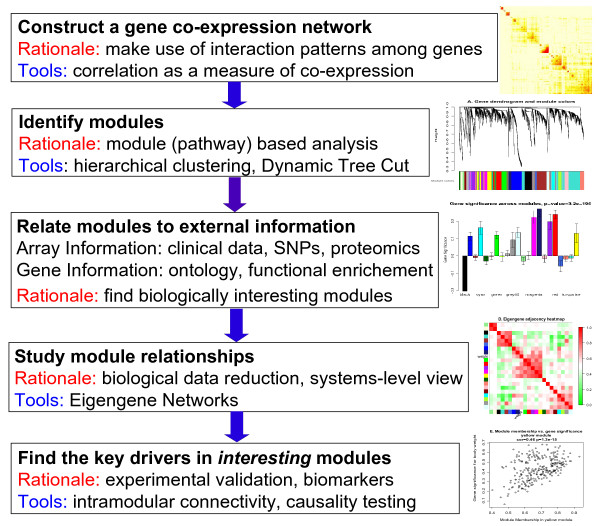
BACKGROUND: Correlation networks are increasingly being used in bioinformatics applications. For example, weighted gene co-expression network analysis is a systems biology method for describing the correlation patterns among genes across microarray samples. Weighted correlation network analysis (WGCNA) can be used for finding clusters (modules) of highly correlated genes, for summarizing such clusters using the module eigengene or an intramodular hub gene, for relating modules to one another and to external sample traits (using eigengene network methodology), and for calculating module membership measures. Correlation networks facilitate network based gene screening methods that can be used to identify candidate biomarkers or therapeutic targets. These methods have been successfully applied in various biological contexts, e.g. cancer, mouse genetics, yeast genetics, and analysis of brain imaging data. While parts of the correlation network methodology have been described in separate publications, there is a need to provide a user-friendly, comprehensive, and consistent software implementation and an accompanying tutorial. RESULTS: The WGCNA R software package is a comprehensive collection of R functions for performing various aspects of weighted correlation network analysis. The package includes functions for network construction, module detection, gene selection, calculations of topological properties, data simulation, visualization, and interfacing with external software. Along with the R package we also present R software tutorials. While the methods development was motivated by gene expression data, the underlying data mining approach can be applied to a variety of different settings. CONCLUSION: The WGCNA package provides R functions for weighted correlation network analysis, e.g. co-expression network analysis of gene expression data. The R package along with its source code and additional material are freely available at http://www.genetics.ucla.edu/labs/horvath/CoexpressionNetwork/Rpackages/WGCNA.
Overview
The claims and statistics of this paper haven’t been checked yet.
Free: it reads the open-access text and checks the first 5 claims that cite a source we can check. Create a free account to check every claim.
Integrity signals
Registry
Cites
Statistics
Figures
Verification
Claims the paper makes
The claims and statistics of this paper haven’t been checked yet.
Free: it reads the open-access text and checks the first 5 claims that cite a source we can check. Create a free account to check every claim.
Claims other papers make about this one
Each is checked against this paper’s own text: does it say what the citing paper says it does?
The source backs part of the claim, not all of it — or backs it for a different population, condition or comparison.
In the citing paper
“The most frequently used programs for differential clustering analysis, which have also been compared with others programs, are WGCNA [54], DICER [4] and DiffCoEx [100], all of which first identify modules co-expressed across the full set of study samples.”
From Gene co-expression analysis for functional classification and gene–disease predictions (2017) · cites this paper as [54]
Experimental — accuracy not yet measuredThe source backs part of the claim, not all of it — or backs it for a different population, condition or comparison.
In the citing paper
“Protein–protein interaction (PPI) networks and weighted gene co-expression network analysis (WGCNA) based on the RNA sequencing and microarray data have been revealed to establish potent organized biological strategies for mining the functional gene modules and detecting novel prognostic biomarkers [11,12].”
From Bioinformatics Analysis and Validation of Potential Markers Associated with Prediction and Prognosis of Gastric Cancer (2024) · cites this paper as [11]
Experimental — accuracy not yet measuredThe source backs part of the claim, not all of it — or backs it for a different population, condition or comparison.
In the citing paper
“Subsequently, methods such as Weighted Gene Co-expression Network Analysis (WGCNA) enhanced network granularity by identifying modules of highly co-expressed genes, offering biologically relevant insights into co-regulated pathways implicated in AD244,299.”
From Artificial intelligence-driven multi-omics approaches in Alzheimer's disease: Progress, challenges, and future directions (2025) · cites this paper as [299]
Experimental — accuracy not yet measuredThe source backs part of the claim, not all of it — or backs it for a different population, condition or comparison.
In the citing paper
“We identified four modules—ME5, ME7, ME12 and ME15—that were significantly associated with MLs containing foamy microglia (Fig. 3e).”
From Foamy microglia link oxylipins to disease progression in multiple sclerosis (2026) · cites this paper as [39]
Experimental — accuracy not yet measuredThe cited source says what the claim attributes to it.
In the citing paper
“A major family of methods in this category is based on co-expression analysis (reviewed in [32]), and has been broadly used on bulk gene expression data (e.g. GENIE3 [33] and WGCNA [34], see [27, 35] for benchmark comparisons).”
From Mapping gene regulatory networks from single-cell omics data (2018) · cites this paper as [34]
11 more claims about this paper
Create a free account to see every claim other papers make about this one.
Self-check
Percentages, sums and reported differences re-computed from the paper’s own numbers.
The self-check needs the paper’s full text.
Citations
Cites
Cytoscape: A software Environment for integrated models of biomolecular interaction networks
Shannon, P., Markiel, A., Ozier, O., Baliga, N. S., Wang, J. T., Ramage, D., Amin, N., Schwikowski, B., & Ideker, T. (2003) · Genome Research · doi:10.1101/gr.1239303 · Cited by 51,888 · cited 1×
“For example, our R functions exportNetworkToVisANT and exportNetworkToCyto-scape allow the user to export networks in a format suitable for VisANT [37] and Cytoscape [38], respectively.”
Gene Ontology: tool for the unification of biology
Ashburner, M., Ball, C. A., Blake, J. A., Botstein, D., Butler, H., Cherry, J. M., Davis, A. P., Dolinski, K., Dwight, S. S., Eppig, J. T., et al. (2000) · Nature Genetics · doi:10.1038/75556 · Cited by 43,206
Collective dynamics of ‘small-world’ networks
Watts, D. J., & Strogatz, S. H. (1998) · Nature · doi:10.1038/30918 · Cited by 43,060 · cited 2×
“where A (q) denotes the n (q) × n (q) adjacency matrix corresponding to the sub-network formed by the genes of module q. Another useful concept is the clustering coefficient of gene i, which is a measure of 'cliquishness' [ 34 ].”
BackgroundMethodFinding groups in data: an introduction to cluster analysis
(1991) · Choice Reviews Online · doi:10.5860/choice.28-4558 · Cited by 10,474
DAVID: Database for Annotation, Visualization, and Integrated Discovery
Dennis, G., Sherman, B. T., Hosack, D. A., Yang, J., Gao, W., Lane, H. C., & Lempicki, R. A. (2003) · Genome Biology · doi:10.1186/gb-2003-4-5-p3 · Cited by 9,327 · cited 2×
“We used the online software David [40] to determine whether the three body weight related modules were significantly enriched with regard to known gene ontologies.”
MethodFinding Groups in Data: An Introduction to Cluster Analysis
Kaufman, L., & Rousseeuw, P. J. (1990) · Wiley Series in Probability and Statistics · doi:10.1002/9780470316801 · Cited by 7,344
A General Framework for Weighted Gene Co-Expression Network Analysis
Zhang, B., & Horvath, S. (2005) · Statistical Applications in Genetics and Molecular Biology · doi:10.2202/1544-6115.1128 · Cited by 5,684 · cited 6×
“For weighted networks, 0 ≤ aij ≤ 1 implies that 0 ≤ ClusterCoefi ≤ 1 [5].”
InfluentialSelf-citationMissing Value Estimation Methods for DNA Microarrays
Troyanskaya, O., Cantor, M., Sherlock, G., Brown, P., Hastie, T., Tibshirani, R., Botstein, D., & Altman, R. B. (2001) · Bioinformatics · doi:10.1093/bioinformatics/17.6.520 · Cited by 4,230 · cited 1×
“Eigengene calculation incorporates imputation of missing values implemented in the package impute [31,32].”
MethodHierarchical Organization of Modularity in Metabolic Networks
Ravasz, E., Somera, A. L., Mongru, D. A., Oltvai, Z. N., & Barabási, A.-L. (2002) · Science · doi:10.1126/science.1073374 · Cited by 4,224 · cited 1×
“The mean clustering coefficient has been used to measure the extent of module structure present in a network [26,34].”
MethodBioinformatics and Computational Biology Solutions Using R and Bioconductor
(2005) · Statistics for Biology and Health · doi:10.1007/0-387-29362-0 · Cited by 3,289
Research works printed but not linked: 1
- (2006) FDT fields: Tools for Spatial Data Tech rep, National Center for Atmospheric Research, Boulder, CO 2007
Cited by
Items 1,101–1,200 of 1,268
Ding, Z., Weissmann, S., Wang, M., Du, B., Huang, L., Wang, L., Tu, X., Zhong, S., Myers, C., Brutnell, T. P., et al. (2015) · PLOS ONE · doi:10.1371/journal.pone.0140629 · Cited by 55
Mahalingam, R., Duhan, N., Kaundal, R., Smertenko, A., Nazarov, T., & Bregitzer, P. (2022) · Frontiers in Plant Science · doi:10.3389/fpls.2022.1066421 · Cited by 53
Brito, L. F., Oliveira, H. R., Houlahan, K., Fonseca, P. A. S., Lam, S., Butty, A. M., Seymour, D. J., Vargas, G., Chud, T. C. S., Silva, F. F., et al. (2020) · Canadian Journal of Animal Science · doi:10.1139/cjas-2019-0193 · Cited by 53
A rat epigenetic clock recapitulates phenotypic aging and co-localizes with heterochromatin
Levine, M., McDevitt, R. A., Meer, M., Perdue, K., Di Francesco, A., Meade, T., Farrell, C., Thrush, K., Wang, M., Dunn, C., et al. (2020) · eLife · doi:10.7554/elife.59201 · Cited by 52
Jiang, J., Ding, Y., Wu, M., Lyu, X., Wang, H., Chen, Y., Wang, H., & Teng, L. (2020) · Frontiers in Oncology · doi:10.3389/fonc.2020.01765 · Cited by 52
The regulatory landscape of the yeast phosphoproteome
Leutert, M., Barente, A. S., Fukuda, N. K., Rodriguez-Mias, R. A., & Villén, J. (2023) · Nature Structural & Molecular Biology · doi:10.1038/s41594-023-01115-3 · Cited by 52
Large‐scale deep proteomic analysis in Alzheimer's disease brain regions across race and ethnicity
Seifar, F., Fox, E. J., Shantaraman, A., Liu, Y., Dammer, E. B., Modeste, E., Duong, D. M., Yin, L., Trautwig, A. N., Guo, Q., et al. (2024) · Alzheimer's & Dementia · doi:10.1002/alz.14360 · Cited by 52
The regulatory landscape of the yeast phosphoproteome
Leutert, M., Barente, A. S., Fukuda, N. K., Rodriguez-Mias, R. A., & Villén, J. (2022) · doi:10.1101/2022.10.23.513432 · Cited by 52
Matsunami, M., Suzuki, M., Haramoto, Y., Fukui, A., Inoue, T., Yamaguchi, K., Uchiyama, I., Mori, K., Tashiro, K., Ito, Y., et al. (2019) · DNA Research · doi:10.1093/dnares/dsz003 · Cited by 51
Paranjpe, M. D., Belonwu, S., Wang, J. K., Oskotsky, T., Gupta, A., Taubes, A., Zalocusky, K. A., Paranjpe, I., Glicksberg, B. S., Huang, Y., et al. (2021) · Frontiers in Aging Neuroscience · doi:10.3389/fnagi.2021.735611 · Cited by 49
Review of multi-omics data resources and integrative analysis for human brain disorders
Dong, X., Liu, C., & Dozmorov, M. (2021) · Briefings in Functional Genomics · doi:10.1093/bfgp/elab024 · Cited by 47
Chia, M., Li, C., Marques, S., Pelechano, V., Luscombe, N. M., & van Werven, F. J. (2021) · Genome Biology · doi:10.1186/s13059-020-02245-3 · Cited by 47
Identification of distinct and age‐dependent p16High microglia subtypes
Talma, N., Gerrits, E., Wang, B., Eggen, B. J. L., & Demaria, M. (2021) · Aging Cell · doi:10.1111/acel.13450 · Cited by 46
Xie, W., Ke, Y., You, Q., Li, J., Chen, L., Li, D., Fang, J., Chen, X., Zhou, Y., Chen, L., et al. (2022) · Arteriosclerosis, Thrombosis, and Vascular Biology · doi:10.1161/atvbaha.121.316883 · Cited by 46
Baltussen, T. J. H., Coolen, J. P. M., Zoll, J., Verweij, P. E., & Melchers, W. J. G. (2018) · Fungal Genetics and Biology · doi:10.1016/j.fgb.2018.04.013 · Cited by 43
AlzBase: An Integrative Database for Gene Dysregulation in Alzheimer’s Disease
Bai, Z., Han, G., Xie, B., Wang, J., Song, F., Peng, X., & Lei, H. (2016) · Molecular Neurobiology · doi:10.1007/s12035-014-9011-3 · Cited by 44
Cai, Y., Fu, Y., Liu, C., Wang, X., You, P., Li, X., Song, Y., Mu, X., Fang, T., Yang, Y., et al. (2022) · Cell Death & Disease · doi:10.1038/s41419-022-04625-y · Cited by 44
Emerging roles for ncRNAs in alcohol use disorders
Mayfield, R. D. (2017) · Alcohol · doi:10.1016/j.alcohol.2017.01.004 · Cited by 43
Callegaro, G., Kunnen, S. J., Trairatphisan, P., Grosdidier, S., Niemeijer, M., den Hollander, W., Guney, E., Piñero Gonzalez, J., Furlong, L., Webster, Y. W., et al. (2021) · Archives of Toxicology · doi:10.1007/s00204-021-03141-w · Cited by 43
Jacobi, N., Seeboeck, R., Hofmann, E., Schweiger, H., Smolinska, V., Mohr, T., Boyer, A., Sommergruber, W., Lechner, P., Pichler-Huebschmann, C., et al. (2017) · Oncotarget · doi:10.18632/oncotarget.22475 · Cited by 43
Hsu, M.-J., Karkossa, I., Schäfer, I., Christ, M., Kühne, H., Schubert, K., Rolle-Kampczyk, U. E., Kalkhof, S., Nickel, S., Seibel, P., et al. (2020) · Biomedicines · doi:10.3390/biomedicines8090350 · Cited by 43
Zheng, Y., Conrad, R. D., Green, E. J., Burks, E. J., Betke, M., Beane, J. E., & Kolachalama, V. B. (2024) · IEEE Transactions on Medical Imaging · doi:10.1109/tmi.2024.3386108 · Cited by 44
Peng, G., Cui, G., Ke, J., & Jing, N. (2020) · Annual Review of Genomics and Human Genetics · doi:10.1146/annurev-genom-120219-083220 · Cited by 42
Han, H., Chen, Y., Yang, H., Cheng, W., Zhang, S., Liu, Y., Liu, Q., Liu, D., Yang, G., & Li, K. (2022) · Frontiers in Endocrinology · doi:10.3389/fendo.2022.876960 · Cited by 42
Willis-Owen, S. A. G., Thompson, A., Kemp, P. R., Polkey, M. I., Cookson, W. O. C. M., Moffatt, M. F., & Natanek, S. A. (2018) · Scientific Reports · doi:10.1038/s41598-018-29789-6 · Cited by 42
Network-based approach to identify molecular signatures in the brains of depressed suicides
Zeng, D., He, S., Ma, C., Wen, Y., Song, W., Xu, Q., Zhao, N., Wang, Q., Yu, Y., Shen, Y., et al. (2020) · Psychiatry Research · doi:10.1016/j.psychres.2020.113513 · Cited by 42
Teyssonnière, E. M., Trébulle, P., Muenzner, J., Loegler, V., Ludwig, D., Amari, F., Mülleder, M., Friedrich, A., Hou, J., Ralser, M., et al. (2024) · Proceedings of the National Academy of Sciences · doi:10.1073/pnas.2319211121 · Cited by 40
In vivo single-cell CRISPR uncovers distinct TNF programmes in tumour evolution
Renz, P. F., Ghoshdastider, U., Baghai Sain, S., Valdivia-Francia, F., Khandekar, A., Ormiston, M., Bernasconi, M., Duré, C., Kretz, J. A., Lee, M., et al. (2024) · Nature · doi:10.1038/s41586-024-07663-y · Cited by 40
Hoang, L. T., Domingo‐Sabugo, C., Starren, E. S., Willis‐Owen, S. A. G., Morris‐Rosendahl, D. J., Nicholson, A. G., Cookson, W. O. C. M., & Moffatt, M. F. (2019) · Molecular Oncology · doi:10.1002/1878-0261.12568 · Cited by 39
Li, Y., Wang, G.-D., Wang, M.-S., Irwin, D. M., Wu, D.-D., & Zhang, Y.-P. (2014) · Genome Biology and Evolution · doi:10.1093/gbe/evu245 · Cited by 38
Cross‐species systems analysis of evolutionary toolkits of neurogenomic response to social challenge
Saul, M. C., Blatti, C., Yang, W., Bukhari, S. A., Shpigler, H. Y., Troy, J. M., Seward, C. H., Sloofman, L., Chandrasekaran, S., Bell, A. M., et al. (2019) · Genes, Brain and Behavior · doi:10.1111/gbb.12502 · Cited by 38
Xie, F., Xu, L., Wang, Y., & Mao, S. (2021) · mSystems · doi:10.1128/msystems.00915-21 · Cited by 38
Pandey, R. S., Graham, L., Uyar, A., Preuss, C., Howell, G. R., & Carter, G. W. (2019) · Molecular Neurodegeneration · doi:10.1186/s13024-019-0351-3 · Cited by 37
Wang, J., Gao, J., Zheng, L., Fu, Y., Ji, L., Wang, C., Yuan, S., Yang, J., Liu, J., Li, G., et al. (2023) · Journal of Hazardous Materials · doi:10.1016/j.jhazmat.2023.130947 · Cited by 37
Gene expression-based modeling of human cortical synaptic density
Goyal, M. S., & Raichle, M. E. (2013) · Proceedings of the National Academy of Sciences · doi:10.1073/pnas.1303453110 · Cited by 37
Huang, Z., Merrihew, G. E., Larson, E. B., Park, J., Plubell, D., Fox, E. J., Montine, K. S., Latimer, C. S., Dirk Keene, C., Zou, J. Y., et al. (2023) · Nature Communications · doi:10.1038/s41467-023-38376-x · Cited by 37
GeneNetwork: framework for web-based genetics
Sloan, Z., Arends, D., W. Broman, K., Centeno, A., Furlotte, N., Nijveen, H., Yan, L., Zhou, X., W. Williams, R., & Prins, P. (2016) · The Journal of Open Source Software · doi:10.21105/joss.00025 · Cited by 37
Epigenome-wide association study of alcohol use disorder in five brain regions
Zillich, L., Frank, J., Streit, F., Friske, M. M., Foo, J. C., Sirignano, L., Heilmann-Heimbach, S., Dukal, H., Degenhardt, F., Hoffmann, P., et al. (2022) · Neuropsychopharmacology · doi:10.1038/s41386-021-01228-7 · Cited by 36
Blood DNA methylation signatures to detect dementia prior to overt clinical symptoms
Fransquet, P. D., Lacaze, P., Saffery, R., Phung, J., Parker, E., Shah, R., Murray, A., Woods, R. L., & Ryan, J. (2020) · Alzheimer's & Dementia: Diagnosis, Assessment & Disease Monitoring · doi:10.1002/dad2.12056 · Cited by 36
Kaurani, L., Besse, M., Methfessel, I., Methi, A., Zhou, J., Pradhan, R., Burkhardt, S., Kranaster, L., Sartorius, A., Habel, U., et al. (2023) · Translational Psychiatry · doi:10.1038/s41398-023-02582-4 · Cited by 36
Breen, M. S., Wingo, A. P., Koen, N., Donald, K. A., Nicol, M., Zar, H. J., Ressler, K. J., Buxbaum, J. D., & Stein, D. J. (2018) · Brain, Behavior, and Immunity · doi:10.1016/j.bbi.2018.05.016 · Cited by 35
Littman, R., Cheng, M., Wang, N., Peng, C., & Yang, X. (2023) · iScience · doi:10.1016/j.isci.2023.107124 · Cited by 35
Zhu, X., Fang, H., Gladysz, K., Barbour, J. A., & Wong, J. W. H. (2021) · European Journal of Cancer · doi:10.1016/j.ejca.2021.08.003 · Cited by 35
Bo, H., Zhu, F., Liu, Z., Deng, Q., Liu, G., Li, R., Zhu, W., Tan, Y., Liu, G., Fan, J., et al. (2021) · Cell Death Discovery · doi:10.1038/s41420-021-00588-9 · Cited by 35
X chromosome dosage and the genetic impact across human tissues
Viuff, M., Skakkebæk, A., Johannsen, E. B., Chang, S., Pedersen, S. B., Lauritsen, K. M., Pedersen, M. G. B., Trolle, C., Just, J., & Gravholt, C. H. (2023) · Genome Medicine · doi:10.1186/s13073-023-01169-4 · Cited by 34
Saba, V., Premi, E., Cristillo, V., Gazzina, S., Palluzzi, F., Zanetti, O., Gasparotti, R., Padovani, A., Borroni, B., & Grassi, M. (2019) · Frontiers in Neuroscience · doi:10.3389/fnins.2019.00211 · Cited by 33
Single cell epigenomic atlas of the developing human brain and organoids
Ziffra, R. S., Kim, C. N., Wilfert, A., Turner, T. N., Haeussler, M., Casella, A. M., Przytycki, P. F., Kreimer, A., Pollard, K. S., Ament, S. A., et al. (2019) · doi:10.1101/2019.12.30.891549 · Cited by 33
Genes and Gene Networks Implicated in Aggression Related Behaviour
Malki, K., Pain, O., Du Rietz, E., Tosto, M. G., Paya-Cano, J., Sandnabba, K. N., de Boer, S., Schalkwyk, L. C., & Sluyter, F. (2014) · neurogenetics · doi:10.1007/s10048-014-0417-x · Cited by 33
Nonredundant, isoform-specific roles of HDAC1 in glioma stem cells
Lo Cascio, C., McNamara, J. B., Melendez, E. L., Lewis, E. M., Dufault, M. E., Sanai, N., Plaisier, C. L., & Mehta, S. (2021) · JCI Insight · doi:10.1172/jci.insight.149232 · Cited by 33
Gupta, C., Xu, J., Jin, T., Khullar, S., Liu, X., Alatkar, S., Cheng, F., & Wang, D. (2022) · PLOS Computational Biology · doi:10.1371/journal.pcbi.1010287 · Cited by 33
miR-129-5p as a biomarker for pathology and cognitive decline in Alzheimer’s disease
Han, S.-W., Pyun, J.-M., Bice, P. J., Bennett, D. A., Saykin, A. J., Kim, S. Y., Park, Y. H., & Nho, K. (2024) · Alzheimer's Research & Therapy · doi:10.1186/s13195-023-01366-8 · Cited by 33
(2022) · doi:10.1101/2022.01.09.475548 · Cited by 33
Integrated approach reveals diet, APOE genotype and sex affect immune response in APP mice
Nam, K. N., Wolfe, C. M., Fitz, N. F., Letronne, F., Castranio, E. L., Mounier, A., Schug, J., Lefterov, I., & Koldamova, R. (2018) · Biochimica et Biophysica Acta (BBA) - Molecular Basis of Disease · doi:10.1016/j.bbadis.2017.10.018 · Cited by 32
Linker, S. B., Mendes, A. P. D., & Marchetto, M. C. (2020) · Molecular Autism · doi:10.1186/s13229-020-00359-w · Cited by 31
Identification of metabolism-related subtypes and feature genes in Alzheimer’s disease
Lian, P., Cai, X., Wang, C., Liu, K., Yang, X., Wu, Y., Zhang, Z., Ma, Z., Cao, X., & Xu, Y. (2023) · Journal of Translational Medicine · doi:10.1186/s12967-023-04324-y · Cited by 29
Gao, X., Huang, Z., Feng, C., Guan, C., Li, R., Xie, H., Chen, J., Li, M., Que, R., Deng, B., et al. (2021) · Briefings in Bioinformatics · doi:10.1093/bib/bbaa244 · Cited by 29
Golden, C. E. M., Breen, M. S., Koro, L., Sonar, S., Niblo, K., Browne, A., Burlant, N., Di Marino, D., De Rubeis, S., Baxter, M. G., et al. (2019) · Cerebral Cortex · doi:10.1093/cercor/bhz029 · Cited by 29
Sequence of proteome profiles in preclinical and symptomatic Alzheimer's disease
Li, X., Tsolis, K. C., Koper, M. J., Ronisz, A., Ospitalieri, S., von Arnim, C. A. F., Vandenberghe, R., Tousseyn, T., Scheuerle, A., Economou, A., et al. (2021) · Alzheimer's & Dementia · doi:10.1002/alz.12345 · Cited by 27
Single-cell RNA-seq unveils critical regulators of human FOXP3+ regulatory T cell stability
Yi, G., Zhao, Y., Xie, F., Zhu, F., Wan, Z., Wang, J., Wang, X., Gao, K., Cao, L., Li, X., et al. (2020) · Science Bulletin · doi:10.1016/j.scib.2020.01.002 · Cited by 27
Zong, J., Chen, P., Luo, Q., Gao, J., Qin, R., Wu, C., Lv, Q., Zhao, T., & Fu, Y. (2023) · International Journal of Molecular Sciences · doi:10.3390/ijms241814398 · Cited by 27
Rastogi, M., Bartolucci, M., Nanni, M., Aloisio, M., Vozzi, D., Petretto, A., Contestabile, A., & Cancedda, L. (2024) · Neuron · doi:10.1016/j.neuron.2024.05.002 · Cited by 26
Molecular Network-Based Identification of Competing Endogenous RNAs in Thyroid Carcinoma
Lu, M., Xu, X., Xi, B., Dai, Q., Li, C., Su, L., Zhou, X., Tang, M., Yao, Y., & Yang, J. (2018) · Genes · doi:10.3390/genes9010044 · Cited by 25
Using blood transcriptome analysis for Alzheimer's disease diagnosis and patient stratification
Zhong, H., Zhou, X., Uhm, H., Jiang, Y., Cao, H., Chen, Y., Mak, T. T. W., Lo, R. M. N., Wong, B. W. Y., Cheng, E. Y. L., et al. (2024) · Alzheimer's & Dementia · doi:10.1002/alz.13691 · Cited by 25
Bo, T., Li, J., Hu, G., Zhang, G., Wang, W., Lv, Q., Zhao, S., Ma, J., Qin, M., Yao, X., et al. (2023) · Nature Communications · doi:10.1038/s41467-023-37246-w · Cited by 25
Zuo, Y., Iemolo, A., Montilla-Perez, P., Li, H.-R., Yang, X., & Telese, F. (2022) · Neuropsychopharmacology · doi:10.1038/s41386-022-01413-2 · Cited by 25
Murphy, K. B., Hu, D., Wolfs, L., Rohde, S. K., Fauró, G. L., Geric, I., Mancuso, R., De Strooper, B., & Marzi, S. J. (2025) · Nature Communications · doi:10.1038/s41467-025-60099-4 · Cited by 25
Human-specific gene expansions contribute to brain evolution
(2025) · doi:10.1016/j.cell.2025.06.037 · Cited by 25
Jia, R., Zhang, R., Gangurde, S. S., Tang, C., Jiang, B., Li, G., & Wang, Z. (2022) · Frontiers in Plant Science · doi:10.3389/fpls.2022.993682 · Cited by 20
Uncovering Plaque-Glia Niches in Human Alzheimer’s Disease Brains Using Spatial Transcriptomics
Avey, D. R., Ng, B., Vialle, R. A., Kearns, N. A., de Paiva Lopes, K., Iatrou, A., De Tissera, S., Vyas, H., Saunders, D. M., Flood, D. J., et al. (2024) · doi:10.1101/2024.09.05.611566 · Cited by 24
Zhou, L., Li, H., Cai, H., Liu, W., Pan, E., Yu, D., & He, S. (2022) · Frontiers in Oncology · doi:10.3389/fonc.2022.809589 · Cited by 24
A novel tp53-associated nomogram to predict the overall survival in patients with pancreatic cancer
Liu, X., Chen, B., Chen, J., & Sun, S. (2021) · BMC Cancer · doi:10.1186/s12885-021-08066-2 · Cited by 24
Zabana, Y., Lorén, V., Domènech, E., Aterido, A., Garcia-Jaraquemada, A., Julià, A., Vicario, M., Pedrosa, E., Ferreiro, M., Troya, J., et al. (2020) · American Journal of Physiology-Gastrointestinal and Liver Physiology · doi:10.1152/ajpgi.00027.2020 · Cited by 24
Zhang, T., & Nie, Y. (2022) · Dermatology · doi:10.1159/000515764 · Cited by 23
Single-cell proteomic landscape of the developing human brain
Wu, T., Jiang, L., Mukhtar, T., Wang, L., Jian, R., Wang, C., Trinh, T., Kriegstein, A. R., Snyder, M., & Li, J. (2026) · Nature Biotechnology · doi:10.1038/s41587-025-02980-7 · Cited by 23
Single Cell Proteomics in the Developing Human Brain
Wu, T., Jiang, L., Mukhtar, T., Wang, L., Jian, R., Wang, C., Trinh, T., Kriegstein, A. R., Snyder, M., & Li, J. (2025) · doi:10.1101/2025.06.23.660079 · Cited by 23
Zheng, Y., Wang, N., Zhang, Z., Liu, W., & Xie, W. (2022) · Frontiers in Plant Science · doi:10.3389/fpls.2022.877908 · Cited by 22
Wang, S., Song, Z., Tan, B., Zhang, J., Zhang, J., & Liu, S. (2021) · Frontiers in Oncology · doi:10.3389/fonc.2021.614531 · Cited by 22
Wu, T., Ning, S., Zhang, H., Cao, Y., Li, X., Hao, J., & Wang, L. (2024) · Journal of Cellular and Molecular Medicine · doi:10.1111/jcmm.18396 · Cited by 22
Peng, W., Sun, Y., & Zhang, L. (2022) · BMC Cardiovascular Disorders · doi:10.1186/s12872-022-02481-4 · Cited by 21
Liu, M., Luo, M., Sun, H., Ni, B., & Shao, Y. (2017) · The Tohoku Journal of Experimental Medicine · doi:10.1620/tjem.243.263 · Cited by 20
Su, Y., Zhang, T., Lu, J., Qian, L., Fei, Y., Zhang, L., Fan, S., Zhou, J., Tang, J., Chen, H., et al. (2023) · Cells · doi:10.3390/cells12010180 · Cited by 20
Brain-wide alterations revealed by spatial transcriptomics and proteomics in COVID-19 infection
Zhang, T., Li, Y., Pan, L., Sha, J., Bailey, M., Faure-Kumar, E., Williams, C. K., Wohlschlegel, J., Magaki, S., Niu, C., et al. (2024) · Nature Aging · doi:10.1038/s43587-024-00730-z · Cited by 20
Epigenetic profiles associated with major depression in the human brain
Bustamante, A. C., Armstrong, D. L., & Uddin, M. (2018) · Psychiatry Research · doi:10.1016/j.psychres.2017.12.010 · Cited by 18
Guild-Level Microbiome Signature Associated with COVID-19 Severity and Prognosis
Guo, M., Wu, G., Tan, Y., Li, Y., Jin, X., Qi, W., Guo, X., Zhang, C., Zhu, Z., & Zhao, L. (2023) · mBio · doi:10.1128/mbio.03519-22 · Cited by 19
Newton, D. F., Oh, H., Shukla, R., Misquitta, K., Fee, C., Banasr, M., & Sibille, E. (2022) · Biological Psychiatry · doi:10.1016/j.biopsych.2021.10.015 · Cited by 19
D’Oliveira Albanus, R., Finan, G. M., Brase, L., Sweeney, N., Kim, T. Y., Chen, S., Ryoo, Y., Park, J., Guo, Q., Iyer, A. K., et al. (2025) · Science Translational Medicine · doi:10.1126/scitranslmed.adx0027 · Cited by 19
Deletion of Abi3/Gngt2 influences age-progressive amyloid β and tau pathologies in distinctive ways
Ibanez, K. R., McFarland, K. N., Phillips, J., Allen, M., Lessard, C. B., Zobel, L., De La Cruz, E. G., Shah, S., Vo, Q., Wang, X., et al. (2022) · Alzheimer's Research & Therapy · doi:10.1186/s13195-022-01044-1 · Cited by 18
Lu, W., Li, Y., Dai, Y., & Chen, K. (2022) · Frontiers in Cardiovascular Medicine · doi:10.3389/fcvm.2022.900810 · Cited by 18
Liu, H., Li, P., Zhu, M., Wang, X., Lu, J., & Yu, T. (2016) · PLOS ONE · doi:10.1371/journal.pone.0158247 · Cited by 17
Transcriptome dynamics and hub genes of green alga Nannochloris sp. JB17 under NaHCO3 stress
Wang, M., Ye, X., Wang, Y., Su, D., Liu, S., & Bu, Y. (2021) · Algal Research · doi:10.1016/j.algal.2021.102185 · Cited by 17
Kaurani, L., Islam, M. R., Heilbronner, U., Krüger, D. M., Zhou, J., Methi, A., Strauss, J., Pradhan, R., Schröder, S., Burkhardt, S., et al. (2024) · The EMBO Journal · doi:10.1038/s44318-024-00067-8 · Cited by 17
Turano, P. S., Akbulut, E., Dewald, H. K., Vasilopoulos, T., Fitzgerald-Bocarsly, P., Herbig, U., & Martínez-Zamudio, R. I. (2026) · Cell Reports · doi:10.1016/j.celrep.2025.116795 · Cited by 16
Xiong, J., Chen, G., Liu, Z., Wu, X., Xu, S., Xiong, J., Ji, S., & Wu, M. (2023) · Precision Clinical Medicine · doi:10.1093/pcmedi/pbad009 · Cited by 16
Le Luyer, J., Schull, Q., Auffret, P., Lopez, P., Crusot, M., Belliard, C., Basset, C., Carradec, Q., Poulain, J., Planes, S., et al. (2021) · Animal Microbiome · doi:10.1186/s42523-021-00097-1 · Cited by 16
Tao, Y., Xiong, M., Peng, Y., Yao, L., Zhu, H., Zhou, Q., & Ouyang, J. (2025) · Gene · doi:10.1016/j.gene.2024.149015 · Cited by 16
Le Luyer, J., Schull, Q., Auffret, P., lopez, P., Crusot, M., Belliard, C., Basset, C., Carradec, Q., Poulain, J., Planes, S., et al. (2020) · doi:10.1101/2020.08.26.247221 · Cited by 16
Bi, X.-P., 深圳518083,中国, 深., BGI-Shenzhen, S., Zhang, G.-J., 650223,中国, 中. 昆., 650223,中国, 中. 昆., Villum Center for Biodiversity Genomics, S. F. E. A. E., Center for Excellence in Animal Evolution and Genetics, C. A. O. S., State Key Laboratory of Genetic Resources and Evolution, K. I. O. Z., & Villum Center for Biodiversity Genomics, S. F. E. A. E. (2021) · Zoological Research · doi:10.24272/j.issn.2095-8137.2021.066 · Cited by 15
Jo, T., Kim, J., Bice, P., Huynh, K., Wang, T., Arnold, M., Meikle, P. J., Giles, C., Kaddurah-Daouk, R., Saykin, A. J., et al. (2023) · eBioMedicine · doi:10.1016/j.ebiom.2023.104820 · Cited by 15
Tsumagari, K., Sato, Y., Shimozawa, A., Aoyagi, H., Okano, H., & Kuromitsu, J. (2022) · iScience · doi:10.1016/j.isci.2022.104832 · Cited by 15
Vanhatalo, A., L'Heureux, J. E., Black, M. I., Blackwell, J. R., Aizawa, K., Thompson, C., Williams, D. W., van der Giezen, M., Winyard, P. G., & Jones, A. M. (2025) · Free Radical Biology and Medicine · doi:10.1016/j.freeradbiomed.2025.07.002 · Cited by 15
Metadata
- Authors
- Langfelder, P., & Horvath, S.
- Affiliations
- University of California, Los Angeles (US)
- Corresponding author
- Horvath, Steve
- Venue
- BMC Bioinformatics
- Published
- 2008-12
- Volume
- 9
- Issue
- 1
- Pages
- 559-559
- ISSN
- 1471-2105 (ISSN-L)
- PMC
- PMC2631488
- OpenAlex
- W1966327575
- Cited by
- 27,252
- References
- 49
- Citations by year
- 2026: 3010 · 2025: 3785 · 2024: 4034 · 2023: 3455 · 2022: 3414 · 2021: 2988 · 2020: 2101 · 2019: 1423 · 2018: 869 · 2017: 721 · 2016: 514 · 2015: 335 · 2014: 228 · 2013: 160 · 2012: 103
- FWCI
- 13.70
- Type
- journal article
- Language
- en
- Open access
- gold
- doi.org
- Licence
- cc-by
- creativecommons.org/licenses/by/2.0 (tdm)
- Locations
- BMC Bioinformatics (publishedVersion, cc-by)
- PubMed Central (publishedVersion, cc-by)
- PubMed (publishedVersion)
- DOAJ (DOAJ: Directory of Open Access Journals) (submittedVersion)
- Funders
- National Cancer Institute (P50CA092131, P30CA016042)
- National Institute of Neurological Disorders and Stroke (R01NS050151, NS050151-01)
- Topics
- Life Sciences › Biochemistry, Genetics and Molecular Biology › Molecular Biology › Bioinformatics and Genomic Networks
- Life Sciences › Biochemistry, Genetics and Molecular Biology › Molecular Biology › Gene expression and cancer classification
- Life Sciences › Biochemistry, Genetics and Molecular Biology › Molecular Biology › Gene Regulatory Network Analysis
- Keywords
- weighted gene co-expression network analysis, gene co-expression network, module detection, module eigengenes, hub genes, module membership, gene expression data, R package, biomarker discovery, drug target identification, network topology
- MeSH terms
- Algorithms, Animals, Computer Graphics, Computing Methodologies, Humans, Pattern Recognition, Automated, Programming Languages, Software, Computational Biology, Oligonucleotide Array Sequence Analysis, Gene Expression Profiling, Databases, Genetic, Systems Biology, Mice
About these checks
Registry, retraction, Cites and statistics results are computed, not judged, with one exception: a printed reference that no index lists is read once by a model before it counts as a citation error. Claims are extracted by a model and kept only when their quote appears verbatim in the text; each cited source is then checked, with a model’s help, for whether it says what the claim relies on. Those verdicts can be wrong — read the claim’s quote and the cited source before relying on one.
Statistics and arithmetic are recomputed, not judged.
Confidence bands are shown only for fields calibrated on our annotated test set. None is calibrated yet, so no band is shown.
What counts as a claim ›How we measure confidence ›How we check this ›
Are you an author, or do you see a problem with this page? Request a review
Data sources
Bibliographic data: Semantic Scholar, OpenAlex, Crossref.
Contains information from the Semantic Scholar Academic Graph Datasets, made available under the ODC Attribution License (ODC-BY 1.0).
Semantic Scholar’s data is described in: Kinney, R., et al. (2023). The Semantic Scholar Open Data Platform. arXiv:2301.10140.
