

The Warwick-Edinburgh Mental Well-being Scale (WEMWBS): development and UK validation
Open accessThe DOI matches its Crossref record; 30 of the 36 references it cites were found in a registry or an index; none of the 2 sources its claims cite is checked for support yet.
Abstract
Background: There is increasing international interest in the concept of mental well-being and its contribution to all aspects of human life. Demand for instruments to monitor mental well-being at a population level and evaluate mental health promotion initiatives is growing. This article describes the development and validation of a new scale, comprised only of positively worded items relating to different aspects of positive mental health: the Warwick-Edinburgh Mental Well-Being Scale (WEMWBS). Methods: WEMWBS was developed by an expert panel drawing on current academic literature, qualitative research with focus groups, and psychometric testing of an existing scale. It was validated on a student and representative population sample. Content validity was assessed by reviewing the frequency of complete responses and the distribution of responses to each item. Confirmatory factor analysis was used to test the hypothesis that the scale measured a single construct. Internal consistency was assessed using Cronbach's alpha. Criterion validity was explored in terms of correlations between WEMWBS and other scales and by testing whether the scale discriminated between population groups in line with pre-specified hypotheses. Test-retest reliability was assessed at one week using intra-class correlation coefficients. Susceptibility to bias was measured using the Balanced Inventory of Desired Responding. Results: WEMWBS showed good content validity. Confirmatory factor analysis supported the single factor hypothesis. A Cronbach's alpha score of 0.89 (student sample) and 0.91 (population sample) suggests some item redundancy in the scale. WEMWBS showed high correlations with other mental health and well-being scales and lower correlations with scales measuring overall health. Its distribution was near normal and the scale did not show ceiling effects in a population sample. It discriminated between population groups in a way that is largely consistent with the results of other population surveys. Test-retest reliability at one week was high (0.83). Social desirability bias was lower or similar to that of other comparable scales. Conclusion: WEMWBS is a measure of mental well-being focusing entirely on positive aspects of mental health. As a short and psychometrically robust scale, with no ceiling effects in a population sample, it offers promise as a tool for monitoring mental well-being at a population level. Whilst WEMWBS should appeal to those evaluating mental health promotion initiatives, it is important that the scale's sensitivity to change is established before it is recommended in this context.
Overview
CoChat Summary
## TL;DR
WEMWBS is a new 14-item, all-positive mental well-being scale developed in the UK and validated in a student sample and two representative Scottish population datasets. It showed strong psychometric performance, including a single-factor structure, Cronbach’s alpha of 0.89–0.91, test-retest reliability of 0.83, and no ceiling effects in the population sample.
## Key findings
- The final WEMWBS had 14 items covering hedonic and eudaimonic well-being, including positive affect, relationships, and positive functioning.
- Confirmatory factor analysis supported a single-factor structure: in the population sample GFI = 0.91, AGFI = 0.87, RMSEA = 0.0502; in the student sample GFI = 0.93, AGFI = 0.89, RMSEA = 0.0551.
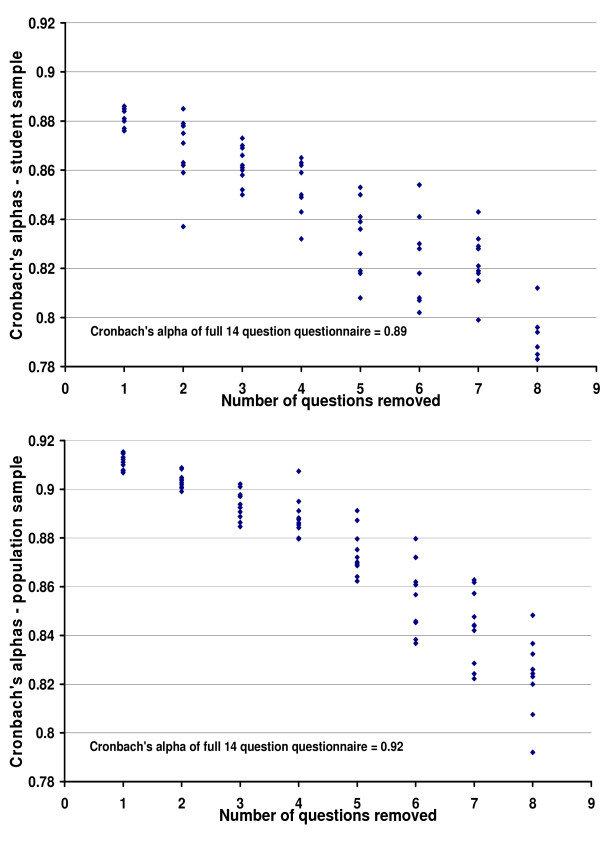
- Internal consistency was high: Cronbach’s alpha = 0.89 in the student sample and 0.91 in the population sample; test-retest reliability at one week was 0.83.
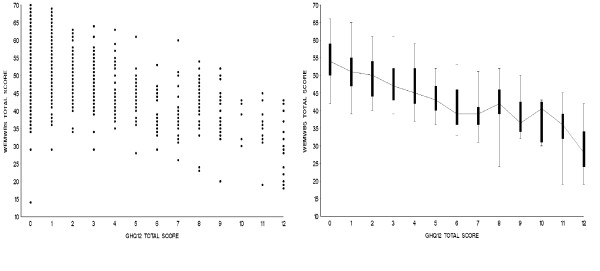
- Criterion validity was supported by correlations in the expected directions, including r = 0.77 with WHO-5, 0.74 with SPWB, 0.73 with SDHS and SWLS, 0.71 with PANAS-PA, -0.54 with PANAS-NA, and -0.53 with GHQ-12 in the population sample.
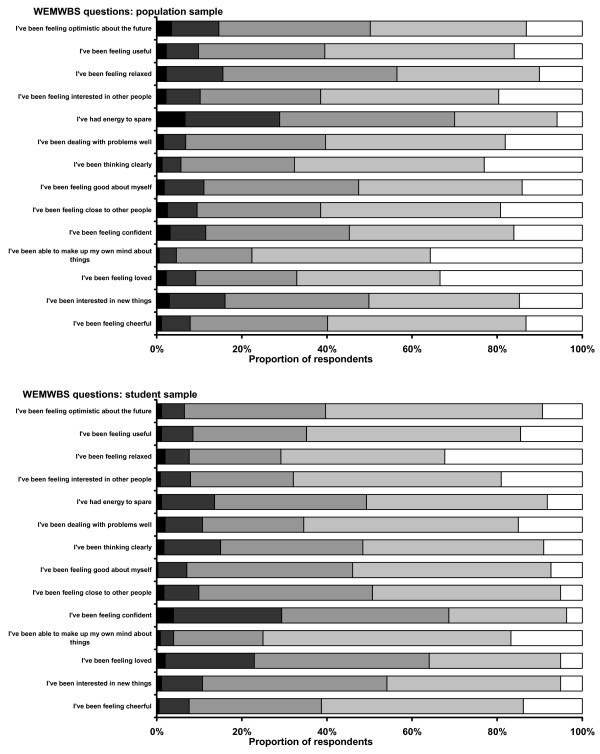
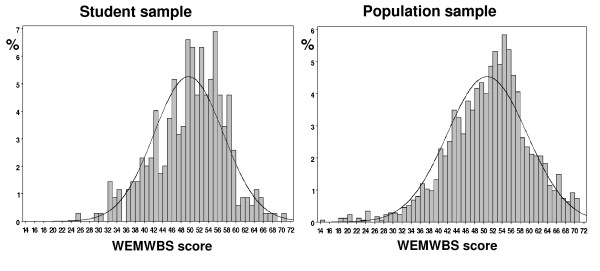
- The population sample showed no ceiling effects; median WEMWBS scores were 50 in the student sample and 51 in the population sample.
## Methods
- Scale development used an expert panel, nine focus groups (3 in England, 6 in Scotland; 56 participants total), and psychometric testing of the existing Affectometer 2.
- Validation used two samples: a student sample of 354 students from Warwick and Edinburgh universities, and a population sample combining 1749 respondents from two Scottish surveys.
- Analyses included content review, confirmatory factor analysis, Cronbach’s alpha, item-total correlations, Spearman correlations with other scales, Jonckheere/Wilcoxon/Kruskal-Wallis tests for group differences, test-retest ICCs, and assessment of social desirability bias with the BIDR.
## Limitations
- The paper states that sensitivity to change had not yet been established, and recommends further research before WEMWBS is used to evaluate mental health promotion interventions.
- The paper states that test-retest reliability was assessed only in the student sample and only over one week; it calls for replication in a population sample and over a longer interval.
- Evident from the text: the population sample could not test all eight validation scales used in the student sample because of space constraints, so some criterion-validity evidence is based only on the student sample.
Model-written summary. Check it against the paper before relying on it.
Integrity signals
Registry
Cites
Statistics
Figures
Verification
Claims the paper makes
0 Valid · 0 Not valid · 2 Not checked · 52 Own results and interpretations
A result the paper reports from its own data — it cites no other source for it, so there is none to check. The quote shows it is in the paper.
In the paper
“WEMWBS showed good content validity.”
- Also stated in: § Discussion · hedged
“The scale appears to have good content validity: response rates were high in both samples, although lower in the population sample than in the student sample.”
§ The Warwick-Edinburgh Mental Well-being Scale (WEMWBS): development and UK validation > Abstract > Results
hedged- Asserted: passes — The authors put it forward as true.
- Checkable: passes — It can be checked against evidence.
- Load-bearing: unclear — It is unclear whether the paper’s conclusions depend on it.
- Based: passes — The paper gives a reason why it holds.
- Also stated in: § Discussion · hedged
A result the paper reports from its own data — it cites no other source for it, so there is none to check. The quote shows it is in the paper.
In the paper
“A moderate negative correlation was observed between WEMWBS and the PANAS-NA (r = -0.54, p < 0.01) (Table 2).”
§ The Warwick-Edinburgh Mental Well-being Scale (WEMWBS): development and UK validation > Results > Criterion validity
plainstates an association- Asserted: passes — The authors put it forward as true.
- Checkable: passes — It can be checked against evidence.
- Load-bearing: passes — The paper’s conclusions depend on it.
- Based: passes — The paper gives a reason why it holds.
A result the paper reports from its own data — it cites no other source for it, so there is none to check. The quote shows it is in the paper.
In the paper
“In the student sample, overall health, as represented by the EQ-5D VAS, showed a low to moderate significant correlation (r = 0.43, p < 0.01), as hypothesised (Table 2).”
§ The Warwick-Edinburgh Mental Well-being Scale (WEMWBS): development and UK validation > Results > Criterion validity
plainstates an association- Asserted: passes — The authors put it forward as true.
- Checkable: passes — It can be checked against evidence.
- Load-bearing: unclear — It is unclear whether the paper’s conclusions depend on it.
- Based: passes — The paper gives a reason why it holds.
A result the paper reports from its own data — it cites no other source for it, so there is none to check. The quote shows it is in the paper.
In the paper
“Confirmatory factor analysis supported the single factor hypothesis.”
- Also stated in: § Construct validity · plain
“From these results, both samples showed verification of the pre-hypothesised one-factor scale structure.”
§ The Warwick-Edinburgh Mental Well-being Scale (WEMWBS): development and UK validation > Abstract > Results
plainstates an associationn = 1,749- Asserted: passes — The authors put it forward as true.
- Checkable: passes — It can be checked against evidence.
- Load-bearing: passes — The paper’s conclusions depend on it.
- Based: passes — The paper gives a reason why it holds.
- Also stated in: § Construct validity · plain
A result the paper reports from its own data — it cites no other source for it, so there is none to check. The quote shows it is in the paper.
In the paper
“The two life satisfaction scales showed higher than anticipated correlations with WEWMBS (SWLS r = 0.73, p < 0.01, GLS 0.53, p < 0.01) (Table 2).”
§ The Warwick-Edinburgh Mental Well-being Scale (WEMWBS): development and UK validation > Results > Criterion validity
plainstates an association- Asserted: passes — The authors put it forward as true.
- Checkable: passes — It can be checked against evidence.
- Load-bearing: unclear — It is unclear whether the paper’s conclusions depend on it.
- Based: passes — The paper gives a reason why it holds.
22 more claims
Create a free account to see all 54 claims and to verify the 2 references still open.
- It may state two separate claims as one. 21
- Probably not a substantial claim. 8
Claims other papers make about this one
Each is checked against this paper’s own text: does it say what the citing paper says it does?
The cited source doesn’t support the claim as written.
In the citing paper
“the Warwick-Edinburgh Mental Wellbeing Scale43,44 would be most useful to include as a main outcome, given that it showed greater sensitivity to change than the other measures examined.”
From Feasibility of RESTORE: An online Acceptance and Commitment Therapy intervention to improve palliative care staff wellbeing. (2023) · cites this paper as [44]
Checked by a reasoning model — may be wrong.
Experimental — accuracy not yet measuredThe source backs part of the claim, not all of it — or backs it for a different population, condition or comparison.
In the citing paper
“All participants filled out the European Quality of Life-5 Dimensions (EQ-5D-5L) (an online questionnaire on sociodemographic characteristics) and the Short-Warwick-Edinburgh Mental Well-being Scale (SWEMWBS) [20,21].”
From Long-term Weight Loss in a Primary Care-Anchored eHealth Lifestyle Coaching Program: Randomized Controlled Trial (2022) · cites this paper as [21]
Experimental — accuracy not yet measuredThe source backs part of the claim, not all of it — or backs it for a different population, condition or comparison.
In the citing paper
“They also found that over a quarter (27.4%) scored in the low wellbeing range on the Short Warwick–Edinburgh Mental Wellbeing Scale (SWEMWBS; Tennant et al., 2007).”
From Content Moderator Mental Health and Associations with Coping Styles: Replication and Extension of Previous Studies (2025) · cites this paper as Tennant et al., 2007
Experimental — accuracy not yet measuredThe source backs part of the claim, not all of it — or backs it for a different population, condition or comparison.
In the citing paper
“During baseline, the average Wellbeing scores of ~ 43 demonstrate that the level of wellbeing of this sample is somewhat below the average and median of 51 of the norm group (student population; Tennant et al., 2007).”
From Group cognitive behavioral therapy for reducing procrastination in college students: a randomized controlled trial (2026) · cites this paper as Tennant et al., 2007
Experimental — accuracy not yet measuredThe source backs part of the claim, not all of it — or backs it for a different population, condition or comparison.
In the citing paper
“Internal consistency was acceptable in the present study (α = .75).”
From An internet-delivered acceptance and commitment therapy program for anxious affect, depression, and wellbeing: A randomized, parallel, two-group, waitlist-controlled trial in a Middle Eastern sample of college students (2024) · cites this paper as [41]
Experimental — accuracy not yet measured
20 more claims about this paper
Create a free account to see every claim other papers make about this one.
Citations
Cites
Hu, L., & Bentler, P. M. (1999) · Structural Equation Modeling A Multidisciplinary Journal · doi:10.1080/10705519909540118 · Cited by 108,788 · cited 1×
“06 level [33], thus indicating only a small amount of unexplained variance or residual.”
BackgroundDevelopment and validation of brief measures of positive and negative affect: The PANAS scales.
Watson, D., Clark, L. A., & Tellegen, A. (1988) · Journal of Personality and Social Psychology · doi:10.1037/0022-3514.54.6.1063 · Cited by 32,433 · cited 1×
“The commonly-used twenty-item PANAS scale [14] describes affective-emotional aspects of well-being and is comprised of two dimensions: positive and negative affect (PANAS-PA and PANAS-NA) which are reported as distinct and independent concepts.”
MethodThe satisfaction with life scale
Diener, E., Emmons, R. A., Larsen, R. J., & Griffin, S. (1985) · Journal of Personality Assessment · doi:10.1207/s15327752jpa4901_13 · Cited by 31,768
Comparative fit indexes in structural models.
Bentler, P. M. (1990) · Psychological Bulletin · doi:10.1037/0033-2909.107.2.238 · Cited by 25,266 · cited 1×
“The goodness of fit index (GFI) and adjusted goodness of fit index (AGFI), based on a correction for degrees of freedom, were assessed with their desired levels being > 0.9 and > 0.8 respectively [ 31 ,32].”
MethodInfluentialSignificance tests and goodness of fit in the analysis of covariance structures.
Bentler, P. M., & Bonett, D. G. (1980) · Psychological Bulletin · doi:10.1037//0033-2909.88.3.588 · Cited by 19,023 · cited 1×
“05, indicates a significant amount of actual covariance between measures that was unexplained by the models [34].”
BackgroundOn Happiness and Human Potentials: A Review of Research on Hedonic and Eudaimonic Well-Being
Ryan, R. M., & Deci, E. L. (2001) · Annual Review of Psychology · doi:10.1146/annurev.psych.52.1.141 · Cited by 11,567 · cited 1×
“It is a complex construct, covering both affect and psychological functioning with two distinct perspectives:- the hedonic perspective, which focuses on the subjective experience of happiness and life satisfaction, and the eudaimonic perspective, focusing on psychological functioning and self realisation [3].”
BackgroundThe structure of psychological well-being revisited.
Ryff, C. D., & Keyes, C. L. M. (1995) · Journal of Personality and Social Psychology · doi:10.1037//0022-3514.69.4.719 · Cited by 10,285 · cited 8×
“Also as hypothesised, scales measuring components of affect or well-being all showed significant high correlations with WEMWBS: (PANAS-PA r = 0.71, p 0.01, SPWB r = 0.74, p 0.01, SDHS r = 0.73, p 0.01, WHO-5 0.77, p 0.01) (Table 2).”
ResultInfluential(1988) · NFER-Nelson eBooks · Cited by 5,560
Development and validation of a measure of emotional intelligence
Schutte, N. S., Malouff, J. M., Hall, L. E., Haggerty, D. J., Cooper, J. T., Golden, C. J., & Dornheim, L. (1998) · Personality and Individual Differences · doi:10.1016/s0191-8869(98)00001-4 · Cited by 3,856 · cited 5×
“As hypothesised, the EIS showed a low to moderate correlation with WEMWBS (r = 0.48, p 0.01) (Table 2).”
InfluentialThe Validity of Two Versions of the GHQ in the WHO Study of Mental Illness in General Health Care
GOLDBERG, D. P., GATER, R., SARTORIUS, N., USTUN, T. B., PICCINELLI, M., GUREJE, O., & RUTTER, C. (1997) · Psychological Medicine · doi:10.1017/s0033291796004242 · Cited by 3,657 · cited 1×
“01) using a Likert score, which persisted when a dichotomous scoring method, (with the four GHQ response categories being scored 0,0,1,1 [37]) was used (p < 0.”
Method
Research works printed but not linked: 8
- World Health Organisation: Strengthening mental health promotion. Geneva; World Health Organisation; 2001.
- Linley PA, Joseph S, (Eds.): Positive psychology in practice. Hoboken, NJ: Wiley; 2004.
- Bech P: Measuring the dimensions of psychological general well-being by the WHO-5. QoL Newsletter 2004, 32: 15–16.
- Stewart-Brown S: Measuring parts most measures do not reach: a necessity for evaluation in mental health promotion. J Mental Health Promotion 2002, 1: 4–9.
- Tennant R, Fishwick R, Platt S, Joseph S, Stewart-Brown S: Monitoring positive mental health in Scotland: validating the Affectometer 2 scale and developing the Warwick-Edinburgh Mental Well-being Scale for the UK. Edinburgh, NHS Health Scotland; 2006.
- Singleton HLG, (Ed): Better or worse: a longitudinal study of adults living in private households in Great Britain. London: The Stationery Office; 2003.
- Braunholtz S, Davidson S, Myant K, O'Connor R: Well? What do you think? (2006) The third national Scottish survey of public attitudes to mental health, mental wellbeing and mental health problems. Scottish Executive: Edinburgh; 2007.
- Nunnally JC: Psychometric Theory. 2nd edition. McGraw-Hill, London; 1978.
Cited by
Items 101–200 of 350
Liu, Y., Wang, R., Lu, Y., Li, Z., Chen, H., Cao, M., Zhang, Y., & Song, Y. (2020) · Urban Forestry & Urban Greening · doi:10.1016/j.ufug.2019.126576 · Cited by 185
Bond, L., Kearns, A., Mason, P., Tannahill, C., Egan, M., & Whitely, E. (2012) · BMC Public Health · doi:10.1186/1471-2458-12-48 · Cited by 189
“(cid:129) examine whether mental wellbeing scores for residents of deprived areas are associated with residents ’ perceptions of aspects of housing and neighbour-hoods upon which regeneration might act ; (cid:129) estimate the relative strength of those associations so as to identify the relative importance of differe…”
InfluentialConfidence: the best non-cognitive predictor of academic achievement?
Stankov, L., Morony, S., & Lee, Y. P. (2014) · Educational Psychology · doi:10.1080/01443410.2013.814194 · Cited by 188
A systematic map of research exploring the effect of greenspace on mental health
Collins, R. M., Spake, R., Brown, K. A., Ogutu, B. O., Smith, D., & Eigenbrod, F. (2020) · Landscape and Urban Planning · doi:10.1016/j.landurbplan.2020.103823 · Cited by 187
Validity of the Brief Resilience Scale and Brief Resilient Coping Scale in a Chinese Sample
Fung, S.-F. (2020) · International Journal of Environmental Research and Public Health · doi:10.3390/ijerph17041265 · Cited by 184
Koydemir, S., Sökmez, A. B., & Schütz, A. (2021) · Applied Research in Quality of Life · doi:10.1007/s11482-019-09788-z · Cited by 190
Marselle, M., Irvine, K., & Warber, S. (2013) · International Journal of Environmental Research and Public Health · doi:10.3390/ijerph10115603 · Cited by 181
Exploring the psychology of suicidal ideation: a theory driven network analysis.
De Beurs, D., Fried, E. I., Wetherall, K., Cleare, S., O’ Connor, D. B., Ferguson, E., O'Carroll, R. E., & O’ Connor, R. C. (2019) · Behaviour Research and Therapy · doi:10.1016/j.brat.2019.103419 · Cited by 171
The EQ-HWB: Overview of the Development of a Measure of Health and Wellbeing and Key Results
Brazier, J., Peasgood, T., Mukuria, C., Marten, O., Kreimeier, S., Luo, N., Mulhern, B., Pickard, A. S., Augustovski, F., Greiner, W., et al. (2022) · Value in Health · doi:10.1016/j.jval.2022.01.009 · Cited by 177
A randomized controlled trial of three smartphone apps for enhancing public mental health
Bakker, D., Kazantzis, N., Rickwood, D., & Rickard, N. (2018) · Behaviour Research and Therapy · doi:10.1016/j.brat.2018.08.003 · Cited by 176
Dong, H., & Qin, B. (2017) · Landscape and Urban Planning · doi:10.1016/j.landurbplan.2017.04.005 · Cited by 176
Phillips, E. A., Gordeev, V. S., & Schreyögg, J. (2019) · Scandinavian Journal of Work, Environment & Health · doi:10.5271/sjweh.3839 · Cited by 148
Bartram, D. J., Yadegarfar, G., & Baldwin, D. S. (2009) · Social Psychiatry and Psychiatric Epidemiology · doi:10.1007/s00127-009-0030-8 · Cited by 174
“There is also a significant difference in mean WEMWBS between genders adjusted for age: the mean score for females is 1.65 less than the mean score for males (b = -1.65, 95% CI: -2.55 to -0.74, P \ 0.001).”
InfluentialThe Routledge Companion to Rural Planning: A Handbook for Practice
(2019) · Routledge eBooks · doi:10.4324/9781315102375 · Cited by 174
Houghton, S., Kyron, M., Hunter, S. C., Lawrence, D., Hattie, J., Carroll, A., & Zadow, C. (2022) · Journal of Adolescence · doi:10.1002/jad.12017 · Cited by 185
Tušl, M., Brauchli, R., Kerksieck, P., & Bauer, G. F. (2021) · BMC Public Health · doi:10.1186/s12889-021-10788-8 · Cited by 173
Effects of COVID‐19 lockdown on eating disorders and obesity: A systematic review and meta‐analysis
Sideli, L., Lo Coco, G., Bonfanti, R. C., Borsarini, B., Fortunato, L., Sechi, C., & Micali, N. (2021) · European Eating Disorders Review · doi:10.1002/erv.2861 · Cited by 173
Selecting outcome measures in mental health: the views of service users
Crawford, M. J., Robotham, D., Thana, L., Patterson, S., Weaver, T., Barber, R., Wykes, T., & Rose, D. (2011) · Journal of Mental Health · doi:10.3109/09638237.2011.577114 · Cited by 172
Why garden? – Attitudes and the perceived health benefits of home gardening
Chalmin-Pui, L. S., Griffiths, A., Roe, J., Heaton, T., & Cameron, R. (2021) · Cities · doi:10.1016/j.cities.2021.103118 · Cited by 171
Rolland, B., Haesebaert, F., Zante, E., Benyamina, A., Haesebaert, J., & Franck, N. (2021) · JMIR Public Health and Surveillance · doi:10.2196/31906 · Cited by 170
Winter, T., Riordan, B. C., Pakpour, A. H., Griffiths, M. D., Mason, A., Poulgrain, J. W., & Scarf, D. (2023) · International Journal of Mental Health and Addiction · doi:10.1007/s11469-020-00342-9 · Cited by 169
““I’ve been feeling optimistic about the future”, “I’ve been feeling close to other people”) (Tennant et al. 2007).”
BackgroundTrajectories of Response to Dorsolateral Prefrontal rTMS in Major Depression: A THREE-D Study
Kaster, T. S., Downar, J., Vila-Rodriguez, F., Thorpe, K. E., Feffer, K., Noda, Y., Giacobbe, P., Knyahnytska, Y., Kennedy, S. H., Lam, R. W., et al. (2019) · American Journal of Psychiatry · doi:10.1176/appi.ajp.2018.18091096 · Cited by 168
Johnson, C., Burke, C., Brinkman, S., & Wade, T. (2016) · Behaviour Research and Therapy · doi:10.1016/j.brat.2016.03.002 · Cited by 167
Powell, J., Hamborg, T., Stallard, N., Burls, A., McSorley, J., Bennett, K., Griffiths, K. M., & Christensen, H. (2012) · Journal of Medical Internet Research · doi:10.2196/jmir.2240 · Cited by 156
Do well-being and resilience predict the Foreign Language Teaching Enjoyment of teachers of Italian?
Proietti Ergün, A. L., & Dewaele, J.-M. (2021) · System · doi:10.1016/j.system.2021.102506 · Cited by 166
Osborn, T. L., Rodriguez, M., Wasil, A. R., Venturo-Conerly, K. E., Gan, J., Alemu, R. G., Roe, E., Arango G., S., Otieno, B. H., Wasanga, C. M., et al. (2020) · Journal of Consulting and Clinical Psychology · doi:10.1037/ccp0000505 · Cited by 164
“…content, and criterion validity as well as internal consistency ( .89), have been documented with a general population in the United Kingdom (Tennant et al., 2007) as well as in Denmark and Norway (Haver, Akerjordet, Caputi, Furunes, & Magee, 2015; Smith, Alves, Knapstad, Haug, & Aarø,…”
BackgroundMethodInfluentialWatts, R., Kettner, H., Geerts, D., Gandy, S., Kartner, L., Mertens, L., Timmermann, C., Nour, M. M., Kaelen, M., Nutt, D., et al. (2022) · Psychopharmacology · doi:10.1007/s00213-022-06187-5 · Cited by 164
“The highest correlations with secondary measures were observed between CTO and wellbeing (WEMWBS, r = 0.82), social connectedness (SCS, r = 0.78) and flourishing (FS, r = 0.72), which were greater than the square root of the AVE, meaning that discriminant validity for this subscale could not be established against the…”
MethodInfluentialPsychosocial working conditions and work-related stressors among UK veterinary surgeons
Bartram, D. J., Yadegarfar, G., & Baldwin, D. S. (2009) · Occupational Medicine · doi:10.1093/occmed/kqp072 · Cited by 164
Schrank, B., Brownell, T., Jakaite, Z., Larkin, C., Pesola, F., Riches, S., Tylee, A., & Slade, M. (2016) · Epidemiology and Psychiatric Sciences · doi:10.1017/s2045796015000141 · Cited by 160
“The primary outcome measure was the 14-item WarwickEdinburgh Mental Well-Being Scale (WEMWBS) which measures positive personal wellbeing framed as a multidimensional construct with mean scores between 1 and 5 (Tennant et al. 2007).”
MethodInfluentialNeighbourhood cohesion and mental wellbeing among older adults: A mixed methods approach
Elliott, J., Gale, C. R., Parsons, S., & Kuh, D. (2014) · Social Science & Medicine · doi:10.1016/j.socscimed.2014.02.027 · Cited by 158
Ringdal, R., Bradley Eilertsen, M.-E., Bjørnsen, H. N., Espnes, G. A., & Moksnes, U. K. (2018) · Scandinavian Journal of Public Health · doi:10.1177/1403494817735391 · Cited by 157
“[11] found the WEMWbs to be unidimensional with an acceptable fit with the data in the CFA after adding covariance between some of the items, they also suggested that the scale may have some redundancy due to the high value of Cronbach’s α.”
BackgroundMethodResultInfluentialKettner, H., Gandy, S., Haijen, E. C. H. M., & Carhart-Harris, R. L. (2019) · International Journal of Environmental Research and Public Health · doi:10.3390/ijerph16245147 · Cited by 157
Weich, S., Brugha, T., King, M., McManus, S., Bebbington, P., Jenkins, R., Cooper, C., McBride, O., & Stewart-Brown, S. (2011) · British Journal of Psychiatry · doi:10.1192/bjp.bp.111.091496 · Cited by 153
Self-citationTrousselard, M., Steiler, D., Dutheil, F., Claverie, D., Canini, F., Fenouillet, F., Naughton, G., Stewart-Brown, S., & Franck, N. (2016) · Psychiatry Research · doi:10.1016/j.psychres.2016.08.050 · Cited by 152
Self-citationBeaumont, E., Durkin, M., Hollins Martin, C. J., & Carson, J. (2016) · Counselling and Psychotherapy Research · doi:10.1002/capr.12054 · Cited by 149
Positive expectations predict improved mental-health outcomes linked to psychedelic microdosing
Kaertner, L. S., Steinborn, M. B., Kettner, H., Spriggs, M. J., Roseman, L., Buchborn, T., Balaet, M., Timmermann, C., Erritzoe, D., & Carhart-Harris, R. L. (2021) · Scientific Reports · doi:10.1038/s41598-021-81446-7 · Cited by 145
Beshai, S., McAlpine, L., Weare, K., & Kuyken, W. (2016) · Mindfulness · doi:10.1007/s12671-015-0436-1 · Cited by 141
“The WEMWBS has been shown to have good validity, internal consistency and test– retest reliability with a large sample of students (N=354) and a general population sample (N=2075; Tennant et al. 2007).”
MethodPeill, J. M., Trinci, K. E., Kettner, H., Mertens, L. J., Roseman, L., Timmermann, C., Rosas, F. E., Lyons, T., & Carhart-Harris, R. L. (2022) · Journal of Psychopharmacology · doi:10.1177/02698811211066709 · Cited by 141
“The Warwick–Edinburgh Mental Well-Being Scale (WEMWBS) is a validated, 14-item scale that was developed to assess positive mental health, which captures both hedonic and eudaimonic perspectives of psychological functioning (Tennant et al., 2007).”
BackgroundMethodInfluentialPriebe, S., Kelley, L., Omer, S., Golden, E., Walsh, S., Khanom, H., Kingdon, D., Rutterford, C., McCrone, P., & McCabe, R. (2015) · Psychotherapy and Psychosomatics · doi:10.1159/000430991 · Cited by 140
Lawson, L. P., Richdale, A. L., Haschek, A., Flower, R. L., Vartuli, J., Arnold, S. R., & Trollor, J. N. (2020) · Autism · doi:10.1177/1362361320908107 · Cited by 138
Chio, F. H. N., Mak, W. W. S., & Yu, B. C. L. (2021) · Clinical Psychology Review · doi:10.1016/j.cpr.2021.101986 · Cited by 135
Pontin, E., Schwannauer, M., Tai, S., & Kinderman, P. (2013) · Health and Quality of Life Outcomes · doi:10.1186/1477-7525-11-150 · Cited by 134
“Tennant R, Hiller L, Fishwick R, Platt S, Joseph S, Weich S, Parkinson J, Secker J, Stewart-Brown S: The Warwick-Edinburgh Mental Well-being Scale (WEMWBS): development and UK validation.”
BackgroundInfluentialCommunity gardening: Stress, well-being, and resilience potentials
Koay, W. I., & Dillon, D. (2020) · International Journal of Environmental Research and Public Health · doi:10.3390/ijerph17186740 · Cited by 132
“Higher relaxation is also deemed a vital component of well-being [84].”
BackgroundStranges, S., Samaraweera, P. C., Taggart, F., Kandala, N.-B., & Stewart-Brown, S. (2014) · BMJ Open · doi:10.1136/bmjopen-2014-005878 · Cited by 130
Self-citationSatici, S. A., Gocet Tekin, E., Deniz, M. E., & Satici, B. (2023) · Applied Research in Quality of Life · doi:10.1007/s11482-022-10110-7 · Cited by 131
Freeman, D., Emsley, R., Diamond, R., Collett, N., Bold, E., Chadwick, E., Isham, L., Bird, J. C., Edwards, D., Kingdon, D., et al. (2021) · The Lancet Psychiatry · doi:10.1016/s2215-0366(21)00158-9 · Cited by 127
Treatable clinical intervention targets for patients with schizophrenia
Freeman, D., Taylor, K. M., Molodynski, A., & Waite, F. (2019) · Schizophrenia Research · doi:10.1016/j.schres.2019.07.016 · Cited by 125
Carvalho, H. W. D., Andreoli, S. B., Lara, D. R., Patrick, C. J., Quintana, M. I., Bressan, R. A., Melo, M. F. D., Mari, J. D. J., & Jorge, M. R. (2013) · Revista Brasileira de Psiquiatria · doi:10.1590/1516-4446-2012-0957 · Cited by 126
Pointon-Haas, J., Waqar, L., Upsher, R., Foster, J., Byrom, N., & Oates, J. (2024) · BJPsych Open · doi:10.1192/bjo.2023.603 · Cited by 135
McKay, M. T., & Andretta, J. R. (2017) · Psychiatry Research · doi:10.1016/j.psychres.2017.06.071 · Cited by 122
Brandel, M., Vescovelli, F., & Ruini, C. (2017) · Clinical Psychology & Psychotherapy · doi:10.1002/cpp.2104 · Cited by 113
Brief group‐based acceptance and commitment therapy for stroke survivors.
Majumdar, S., & Morris, R. (2019) · British Journal of Clinical Psychology · doi:10.1111/bjc.12198 · Cited by 107
Alvarez-Jimenez, M., Rice, S., D'Alfonso, S., Leicester, S., Bendall, S., Pryor, I., Russon, P., McEnery, C., Santesteban-Echarri, O., Da Costa, G., et al. (2020) · Journal of Medical Internet Research · doi:10.2196/17155 · Cited by 106
Spriggs, M. J., Kettner, H., & Carhart-Harris, R. L. (2021) · Eating and Weight Disorders - Studies on Anorexia, Bulimia and Obesity · doi:10.1007/s40519-020-01000-8 · Cited by 105
Sheaves, B., Freeman, D., Isham, L., McInerney, J., Nickless, A., Yu, L.-M., Rek, S., Bradley, J., Reeve, S., Attard, C., et al. (2018) · Psychological Medicine · doi:10.1017/s0033291717003191 · Cited by 104
“Minimisation balanced groups by stratifying on the ISI (symptoms of insomnia, score 0 – 14 v. insomnia disorder, score >14), the Warwick – Edinburgh Mental Wellbeing Scale (WEMWBS; low wellbeing, score 0 – 35 v. high wellbeing, score 36 – 70) and participant diagnosis made by the ward consultant psychiatrist (non-affe…”
InfluentialHelp-seeking behaviors and mental well-being of first year undergraduate university students
Goodwin, J., Behan, L., Kelly, P., McCarthy, K., & Horgan, A. (2016) · Psychiatry Research · doi:10.1016/j.psychres.2016.09.015 · Cited by 103
Kayis, A. R., Satici, B., Deniz, M. E., Satici, S. A., & Griffiths, M. D. (2022) · Behaviour & Information Technology · doi:10.1080/0144929x.2021.1933181 · Cited by 104
McConachie, D. A. J., McKenzie, K., Morris, P. G., & Walley, R. M. (2014) · Research in Developmental Disabilities · doi:10.1016/j.ridd.2014.03.005 · Cited by 103
Ponzo, S., Morelli, D., Kawadler, J. M., Hemmings, N. R., Bird, G., & Plans, D. (2020) · JMIR mHealth and uHealth · doi:10.2196/17767 · Cited by 100
Older People Going Online: Its Value and Before-After Evaluation of Volunteer Support
Jones, R. B., Ashurst, E. J., Atkey, J., & Duffy, B. (2015) · Journal of Medical Internet Research · doi:10.2196/jmir.3943 · Cited by 93
Dodd, A. L., Priestley, M., Tyrrell, K., Cygan, S., Newell, C., & Byrom, N. C. (2021) · Journal of Mental Health · doi:10.1080/09638237.2021.1875419 · Cited by 89
Vaingankar, J., Subramaniam, M., Chong, S. A., Abdin, E., Orlando Edelen, M., Picco, L., Lim, Y. W., Phua, M. Y., Chua, B. Y., Tee, J. Y., et al. (2011) · Health and Quality of Life Outcomes · doi:10.1186/1477-7525-9-92 · Cited by 89
Kuettel, A., Pedersen, A. K., & Larsen, C. H. (2021) · Psychology of Sport and Exercise · doi:10.1016/j.psychsport.2020.101837 · Cited by 89
Rooksby, J., Morrison, A., & Murray-Rust, D. (2019) · Proceedings of the 2019 CHI Conference on Human Factors in Computing Systems · doi:10.1145/3290605.3300655 · Cited by 87
Roestorf, A., Bowler, D. M., Deserno, M. K., Howlin, P., Klinger, L., McConachie, H., Parr, J. R., Powell, P., Van Heijst, B. F. C., & Geurts, H. M. (2019) · Research in Autism Spectrum Disorders · doi:10.1016/j.rasd.2018.08.007 · Cited by 87
Carl, J. R., Miller, C. B., Henry, A. L., Davis, M. L., Stott, R., Smits, J. A. J., Emsley, R., Gu, J., Shin, O., Otto, M. W., et al. (2020) · Depression and Anxiety · doi:10.1002/da.23079 · Cited by 86
Assessing expectancy and suggestibility in a trial of escitalopram v. psilocybin for depression
Szigeti, B., Weiss, B., Rosas, F. E., Erritzoe, D., Nutt, D., & Carhart-Harris, R. (2024) · Psychological Medicine · doi:10.1017/s0033291723003653 · Cited by 89
Weber, S., Lorenz, C., & Hemmings, N. (2019) · Frontiers in Psychology · doi:10.3389/fpsyg.2019.02745 · Cited by 74
A systematic review of interventions embedded in curriculum to improve university student wellbeing
Upsher, R., Nobili, A., Hughes, G., & Byrom, N. (2022) · Educational Research Review · doi:10.1016/j.edurev.2022.100464 · Cited by 82
the MYRIAD team, Kuyken, W., Nuthall, E., Byford, S., Crane, C., Dalgleish, T., Ford, T., Greenberg, M. T., Ukoumunne, O. C., Viner, R. M., et al. (2017) · Trials · doi:10.1186/s13063-017-1917-4 · Cited by 77
“005; wellbeing, (Warwick-Edinburgh Mental Wellbeing Scale; WEMWBS [65]), 3.”
BackgroundInfluentialCleary, A., Roiko, A., Burton, N. W., Fielding, K. S., Murray, Z., & Turrell, G. (2019) · Health & Place · doi:10.1016/j.healthplace.2019.102201 · Cited by 79
Compassionate Mind Training: An 8‐week group for the general public
Irons, C., & Heriot‐Maitland, C. (2021) · Psychology and Psychotherapy: Theory, Research and Practice · doi:10.1111/papt.12320 · Cited by 79
Treating sleep problems in young people at ultra-high risk of psychosis: a feasibility case series
Bradley, J., Freeman, D., Chadwick, E., Harvey, A. G., Mullins, B., Johns, L., Sheaves, B., Lennox, B., Broome, M., & Waite, F. (2018) · Behavioural and Cognitive Psychotherapy · doi:10.1017/s1352465817000601 · Cited by 78
“The Warwick–Edinburgh Mental Well-being Scale (Tennant et al., 2007) and the Work and Social Adjustment Scale (Mundt et al., 2002) were used to assess quality of life.”
MethodElston, J., Gradinger, F., Asthana, S., Lilley-Woolnough, C., Wroe, S., Harman, H., & Byng, R. (2019) · Primary Health Care Research & Development · doi:10.1017/s1463423619000598 · Cited by 78
“…® (13 items, scoring 0 – 100, or levels 1 – 4) and Warwick-Edinburgh Mental Health and Well-being Scale (WEMWBS) (14 Likert questions, each scoring 1 – 5) (Tennant et al. , 2007) and the Rockwood Clinical Frailty Scale (RCFS) [scoring 1 (very fit) to 10 (terminally ill), with frailty ≥ 5]…”
Stenhoff, A., Steadman, L., Nevitt, S., Benson, L., & White, R. G. (2020) · Journal of Contextual Behavioral Science · doi:10.1016/j.jcbs.2020.08.008 · Cited by 77
O’Dea, B., Han, J., Batterham, P. J., Achilles, M. R., Calear, A. L., Werner‐Seidler, A., Parker, B., Shand, F., & Christensen, H. (2020) · Journal of Child Psychology and Psychiatry · doi:10.1111/jcpp.13294 · Cited by 77
“The Short Warwick Edinburg Mental Wellbeing Scale (SWEMWBS), a seven-item scale, assessed wellbeing over the past two weeks (Tennant et al., 2007) The items were rated on a fivepoint Likert scale from 1 (none of the time) to 5 (all of the time), with total scores ranging from 7 to 35.”
MethodBartram, D. J., Sinclair, J. M., & Baldwin, D. S. (2013) · Quality of Life Research · doi:10.1007/s11136-012-0144-4 · Cited by 76
“Psychometric properties of the WEMWBS have been reported for UK adult and student general population samples [4, 5] and the UK veterinary profession [6].”
InfluentialAre minority status children’s cross-ethnic friendships beneficial in a multiethnic context?
Bagci, S. C., Rutland, A., Kumashiro, M., Smith, P. K., & Blumberg, H. (2014) · British Journal of Developmental Psychology · doi:10.1111/bjdp.12028 · Cited by 75
Study Protocol for “Psilocybin as a Treatment for Anorexia Nervosa: A Pilot Study”
Spriggs, M. J., Douglass, H. M., Park, R. J., Read, T., Danby, J. L., de Magalhães, F. J. C., Alderton, K. L., Williams, T. M., Blemings, A., Lafrance, A., et al. (2021) · Frontiers in Psychiatry · doi:10.3389/fpsyt.2021.735523 · Cited by 75
Systematic review of interventions to improve the psychological well-being of general practitioners
Murray, M., Murray, L., & Donnelly, M. (2016) · BMC Family Practice · doi:10.1186/s12875-016-0431-1 · Cited by 75
Blake, H., Yildirim, M., Wood, B., Knowles, S., Mancini, H., Coyne, E., & Cooper, J. (2020) · International Journal of Environmental Research and Public Health · doi:10.3390/ijerph17249401 · Cited by 74
Skogen, J. C., Hjetland, G. J., Bøe, T., Hella, R. T., & Knudsen, A. K. (2021) · International Journal of Environmental Research and Public Health · doi:10.3390/ijerph18063319 · Cited by 73
“Quality of Life Quality of Life (QoL) was measured using the Warwick–Edinburgh Well-being Scale (WEMWBS; Tennant, Hiller [41]).”
MethodClarke, J., & Draper, S. (2020) · Internet Interventions · doi:10.1016/j.invent.2019.100293 · Cited by 65
“Short Warwick-Edinburgh Mental Well-Being Scale (SWEMWBS; Stewart-Brown et al., 2009) The SWEMWBS is a 7-item version of the original 14-item Warwick – Edinburgh Mental Well-being Scale (WEMWBS; Tennant et al., 2007) which measures a combination of eudaimonic and hedonic wellbeing.”
MethodDunn, B. D., Widnall, E., Reed, N., Owens, C., Campbell, J., & Kuyken, W. (2019) · Behaviour Research and Therapy · doi:10.1016/j.brat.2019.103418 · Cited by 70
Emotion regulation in autism: reappraisal and suppression interactions
Cai, R. Y., Richdale, A. L., Dissanayake, C., Trollor, J., & Uljarević, M. (2019) · Autism · doi:10.1177/1362361318774558 · Cited by 71
Digital Technology and Media Use by Adolescents: Latent Class Analysis
Moreno, M. A., Binger, K., Zhao, Q., Eickhoff, J., Minich, M., & Uhls, Y. T. (2022) · JMIR Pediatrics and Parenting · doi:10.2196/35540 · Cited by 66
“Mental well-being was measured using the Short Warwick-Edinburgh Mental Well-being Scale [77].”
MethodInfluentialAbulfaraj, G. G., Upsher, R., Zavos, H. M. S., & Dommett, E. J. (2024) · Education Sciences · doi:10.3390/educsci14050510 · Cited by 67
Medlicott, E., Phillips, A., Crane, C., Hinze, V., Taylor, L., Tickell, A., Montero-Marin, J., & Kuyken, W. (2021) · International Journal of Environmental Research and Public Health · doi:10.3390/ijerph18116023 · Cited by 67
Digital Technology and Media Use by Adolescents: Latent Class Analysis (Preprint)
(2022) · doi:10.2196/preprints.35540 · Cited by 66
Hazell, C. M., Hayward, M., Cavanagh, K., Jones, A.-M., & Strauss, C. (2018) · Schizophrenia Research · doi:10.1016/j.schres.2017.10.004 · Cited by 65
Marshall, J., Devane, N., Talbot, R., Caute, A., Cruice, M., Hilari, K., MacKenzie, G., Maguire, K., Patel, A., Roper, A., et al. (2020) · PLOS ONE · doi:10.1371/journal.pone.0239715 · Cited by 65
Student- and School-Level Factors Associated With Mental Health and Well-Being in Early Adolescence
Hinze, V., Montero-Marin, J., Blakemore, S.-J., Byford, S., Dalgleish, T., Degli Esposti, M., Greenberg, M. T., Jones, B. G., Slaghekke, Y., Ukoumunne, O. C., et al. (2024) · Journal of the American Academy of Child & Adolescent Psychiatry · doi:10.1016/j.jaac.2023.10.004 · Cited by 65
Roulston, A., Montgomery, L., Campbell, A., & Davidson, G. (2018) · Social Work Education · doi:10.1080/02615479.2017.1388776 · Cited by 62
Beckham, A. J., Greene, T. B., & Meltzer-Brody, S. (2013) · Archives of Women's Mental Health · doi:10.1007/s00737-012-0318-7 · Cited by 62
“The WEMWBS is a 14-item scale with five potential response categories for each item (Tennant et al. 2007).”
Data resource profile: Adult Psychiatric Morbidity Survey (APMS)
McManus, S., Bebbington, P. E., Jenkins, R., Morgan, Z., Brown, L., Collinson, D., & Brugha, T. (2020) · International Journal of Epidemiology · doi:10.1093/ije/dyz224 · Cited by 62
Harrop, E., Scott, H., Sivell, S., Seddon, K., Fitzgibbon, J., Morgan, F., Pickett, S., Byrne, A., Nelson, A., & Longo, M. (2020) · BMC Palliative Care · doi:10.1186/s12904-020-0532-4 · Cited by 61
Eating Disorders Spectrum During the COVID Pandemic: A Systematic Review
Miniati, M., Marzetti, F., Palagini, L., Marazziti, D., Orrù, G., Conversano, C., & Gemignani, A. (2021) · Frontiers in Psychology · doi:10.3389/fpsyg.2021.663376 · Cited by 61
“…to the impact of lockdown and some validated questionnaires to assess mental well-being [short Warwick-Edinburgh mental well-being scale (SWEMWBS)] (Tennant et al., 2007), perceived stress scale (PSS) (Cohen et al., 1983), social support [ENRICHD social support instrument (ESSI)] (Vaglio et al.,…”
Psychiatric risks for worsened mental health after psychedelic use
Marrocu, A., Kettner, H., Weiss, B., Zeifman, R. J., Erritzoe, D., & Carhart-Harris, R. L. (2024) · Journal of Psychopharmacology · doi:10.1177/02698811241232548 · Cited by 60
Cheng, V. W. S., Davenport, T. A., Johnson, D., Vella, K., Mitchell, J., & Hickie, I. B. (2018) · JMIR Mental Health · doi:10.2196/11068 · Cited by 62
Gale, C. R., Cooper, R., Craig, L., Elliott, J., Kuh, D., Richards, M., Starr, J. M., Whalley, L. J., & Deary, I. J. (2012) · PLoS ONE · doi:10.1371/journal.pone.0044860 · Cited by 60
“[17] This scale was Cognitive Ability and Mental Wellbeing”
BackgroundMethodInfluential
Metadata
- Authors
- Tennant, R., Hiller, L., Fishwick, R., Platt, S., Joseph, S., Weich, S., Parkinson, J., Secker, J., & Stewart-Brown, S.
- Affiliations
- University of Warwick (GB)
- University of Edinburgh (GB)
- University of Nottingham (GB)
- National Health Service Scotland (GB)
- Anglia Ruskin University (GB)
- Corresponding author
- Stewart-Brown, Sarah
- Venue
- Health and Quality of Life Outcomes
- Published
- 2007-11-27
- Volume
- 5
- Issue
- 1
- Pages
- 63-63
- ISSN
- 1477-7525 (ISSN-L)
- PMC
- PMC2222612
- OpenAlex
- W2123552131
- Cited by
- 5,031
- References
- 36
- Citations by year
- 2026: 489 · 2025: 663 · 2024: 612 · 2023: 522 · 2022: 574 · 2021: 525 · 2020: 365 · 2019: 282 · 2018: 222 · 2017: 187 · 2016: 159 · 2015: 136 · 2014: 85 · 2013: 82 · 2012: 58
- FWCI
- 17.46
- Type
- journal article
- Language
- en
- Open access
- gold
- doi.org
- Licence
- cc-by
- Locations
- Health and Quality of Life Outcomes (publishedVersion, cc-by)
- PubMed Central (publishedVersion, cc-by)
- PubMed (publishedVersion)
- White Rose Research Online (University of Leeds, The University of Sheffield, University of York) (acceptedVersion)
- Warwick Research Archive Portal (University of Warwick) (acceptedVersion)
- Anglia Ruskin Research Online (Anglia Ruskin University) (submittedVersion)
- Open Scholarship Institutional Repository (Washington University in St. Louis) (submittedVersion)
- DOAJ (DOAJ: Directory of Open Access Journals) (submittedVersion)
- Figshare (submittedVersion, cc-by)
- Edinburgh Research Explorer (University of Edinburgh) (submittedVersion, cc-by)
- Funders
- NHS Health Scotland
- University of Stirling
- Topics
- Social Sciences › Psychology › Social Psychology › Psychological Well-being and Life Satisfaction
- Social Sciences › Decision Sciences › Management Science and Operations Research › Psychometric Methodologies and Testing
- Health Sciences › Nursing › Research and Theory › Health Education and Validation
- Keywords
- Warwick-Edinburgh Mental Well-being Scale, psychological well-being, positive mental health, scale development, psychometric validation, content validity, test-retest reliability, social desirability bias, mental health promotion, student population
- MeSH terms
- Adult, Aged, Factor Analysis, Statistical, Female, United Kingdom, Health Status, Humans, Mental Health, Middle Aged, Personal Satisfaction, Psychometrics, Surveys and Questionnaires, Socioeconomic Factors, Students, Translations, Focus Groups
About these checks
Registry, retraction, Cites and statistics results are computed, not judged, with one exception: a printed reference that no index lists is read once by a model before it counts as a citation error. Claims are extracted by a model and kept only when their quote appears verbatim in the text; each cited source is then checked, with a model’s help, for whether it says what the claim relies on. Those verdicts can be wrong — read the claim’s quote and the cited source before relying on one.
A language model drew the claims from the paper on 2026-10-11, under version 3 of the claim definition (model deepseek-v4.1-flash, prompt extract-v3).
A second model labelled each claim on 2026-10-11 (model jev-1.13-20260917, definition revision gold-guideline-v0.2).
Statistics and arithmetic are recomputed, not judged.
Confidence bands are shown only for fields calibrated on our annotated test set. None is calibrated yet, so no band is shown.
What counts as a claim ›How we measure confidence ›How we check this ›
Are you an author, or do you see a problem with this page? Request a review
Data sources
Bibliographic data: Semantic Scholar, OpenAlex, Crossref.
Contains information from the Semantic Scholar Academic Graph Datasets, made available under the ODC Attribution License (ODC-BY 1.0).
Semantic Scholar’s data is described in: Kinney, R., et al. (2023). The Semantic Scholar Open Data Platform. arXiv:2301.10140.
