

Myofibrillar protein synthesis following ingestion of soy protein isolate at rest and after resistance exercise in elderly men
Open accessThe DOI matches its Crossref record; 40 of the 42 references it cites were found in a registry or an index.
Abstract
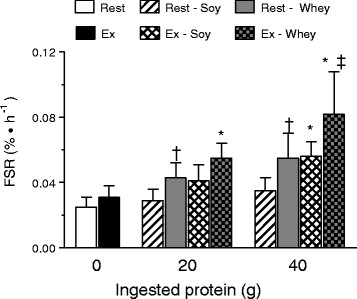
Background: Increased amino acid availability stimulates muscle protein synthesis, however, aged muscle appears less responsive to the anabolic effects of amino acids when compared to the young. We aimed to compare changes in myofibrillar protein synthesis (MPS) in elderly men at rest and after resistance exercise following ingestion of different doses of soy protein and compare the responses to those we previously observed with ingestion of whey protein isolate. Methods: Thirty elderly men (age 71 ± 5 y) completed a bout of unilateral knee-extensor resistance exercise prior to ingesting no protein (0 g), or either 20 g or 40 g of soy protein isolate (0, S20, and S40 respectively). We compared these responses to previous responses from similar aged men who had ingested 20 g and 40 g of whey protein isolate (W20 and W40). A primed constant infusion of L-[1- 13 C]leucine and L-[ ring - 13 C 6 ]phenylalanine and skeletal muscle biopsies were used to measure whole-body leucine oxidation and MPS over 4 h post-protein consumption in both exercised and non-exercised legs. Results: Whole-body leucine oxidation increased with protein ingestion and was significantly greater for S20 vs. W20 ( P = 0.003). Rates of MPS for S20 were less than W20 ( P = 0.02) and not different from 0 g ( P = 0.41) in both exercised and non-exercised leg muscles. For S40, MPS was also reduced compared with W40 under both rested and post-exercise conditions (both P < 0.005); however S40 increased MPS greater than 0 g under post-exercise conditions ( P = 0.04). Conclusions: The relationship between protein intake and MPS is both dose and protein source-dependent, with isolated soy showing a reduced ability, as compared to isolated whey protein, to stimulate MPS under both rested and post-exercise conditions. These differences may relate to the lower postprandial leucinemia and greater rates of amino acid oxidation following ingestion of soy versus whey protein.
Overview
The claims and statistics of this paper haven’t been checked yet.
Free: it reads the open-access text and checks the first 5 claims that cite a source we can check. Create a free account to check every claim.
Integrity signals
Registry
Cites
Statistics
Figures
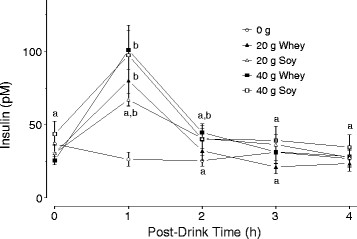
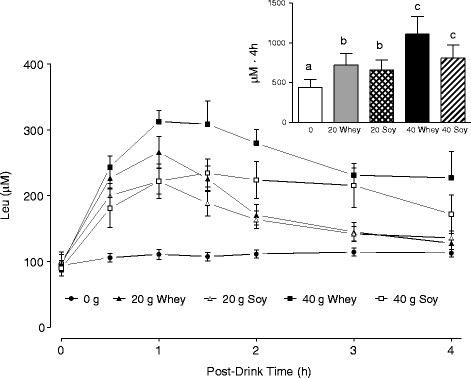
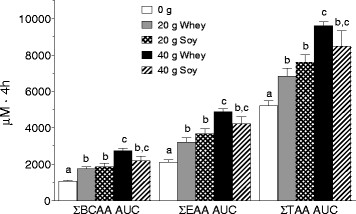
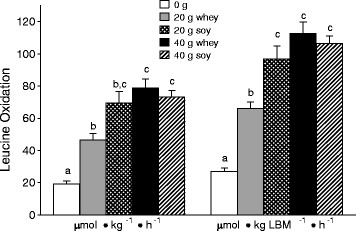
Verification
Claims the paper makes
The claims and statistics of this paper haven’t been checked yet.
Free: it reads the open-access text and checks the first 5 claims that cite a source we can check. Create a free account to check every claim.
Claims other papers make about this one
Each is checked against this paper’s own text: does it say what the citing paper says it does?
The cited source says what the claim attributes to it.
In the citing paper
“In what is still an emerging area of research, various plant sources of protein have been examined for their ability to stimulate increases in muscle protein synthesis [77, 97] and promote exercise training adaptations [98].”
From ISSN exercise & sports nutrition review update: research & recommendations (2018) · cites this paper as [97]
The cited source says what the claim attributes to it.
In the citing paper
“Studies comparing the MPS response following wheat or soy protein ingestion to animal-based sources support the above narrative [[84], [85], [86]].”
From Nutritional Considerations for the Vegan Athlete (2023) · cites this paper as [86]
The cited source says what the claim attributes to it.
In the citing paper
“However, consumption of soy protein does not stimulate acute post-exercise muscle synthesis to the same magnitude as whey or milk protein when compared on an isonitrogenous basis [18,28,29]”
In the citing paper
“An increase in dietary protein intake may alleviate inactivityinduced muscle loss (9,10).”
In the citing paper
“An emerging theme is that differences between animal- and plant- based sources are absent when higher doses of protein (presumably obviating any individual amino acid deficiencies) are compared (∼30 g protein), though this is not always the case [53,86].”
From Nutritional Considerations for the Vegan Athlete (2023) · cites this paper as [86]
4 more claims about this paper
Create a free account to see every claim other papers make about this one.
Self-check
Percentages, sums and reported differences re-computed from the paper’s own numbers.
The self-check needs the paper’s full text.
Citations
Cites
Slow and fast dietary proteins differently modulate postprandial protein accretion
Boirie, Y., Dangin, M., Gachon, P., Vasson, M.-P., Maubois, J.-L., & Beaufrère, B. (1997) · Proceedings of the National Academy of Sciences · doi:10.1073/pnas.94.26.14930 · Cited by 1,453
Anabolic signaling deficits underlie amino acid resistance of wasting, aging muscle
Cuthbertson, D., Smith, K., Babraj, J., Leese, G., Waddell, T., Atherton, P., Wackerhage, H., Taylor, P. M., & Rennie, M. J. (2005) · The FASEB Journal · doi:10.1096/fj.04-2640fje · Cited by 1,211
Tang, J. E., Moore, D. R., Kujbida, G. W., Tarnopolsky, M. A., & Phillips, S. M. (2009) · Journal of Applied Physiology · doi:10.1152/japplphysiol.00076.2009 · Cited by 998
Self-citationMoore, D. R., Robinson, M. J., Fry, J. L., Tang, J. E., Glover, E. I., Wilkinson, S. B., Prior, T., Tarnopolsky, M. A., & Phillips, S. M. (2009) · The American Journal of Clinical Nutrition · doi:10.3945/ajcn.2008.26401 · Cited by 973 · cited 8×
“Further, our results confirm that the elderly benefit from significantly greater doses of protein after exercise [6,12] than do the young, who we have shown mount a maximal MPS response with ingestion of ~20 g protein [5] or ~10 g EAA [2].”
BackgroundMethodResultInfluentialSelf-citationKatsanos, C. S., Kobayashi, H., Sheffield-Moore, M., Aarsland, A., & Wolfe, R. R. (2006) · American Journal of Physiology-Endocrinology and Metabolism · doi:10.1152/ajpendo.00488.2005 · Cited by 923 · cited 3×
“For example, Katsanos and colleagues [13] reported that while 6.”
BackgroundResultAnthony, J. C., Yoshizawa, F., Anthony, T. G., Vary, T. C., Jefferson, L. S., & Kimball, S. R. (2000) · The Journal of Nutrition · doi:10.1093/jn/130.10.2413 · Cited by 801
Sarcopenia: origins and clinical relevance
Rosenberg, I. H. (2011) · Clinics in Geriatric Medicine · doi:10.1016/j.cger.2011.03.003 · Cited by 786 · cited 1×
“Ageing is associated with sarcopenia [1] that ultimately results from an imbalance between rates of muscle protein synthesis and breakdown.”
BackgroundKumar, V., Selby, A., Rankin, D., Patel, R., Atherton, P., Hildebrandt, W., Williams, J., Smith, K., Seynnes, O., Hiscock, N., et al. (2009) · The Journal of Physiology · doi:10.1113/jphysiol.2008.164483 · Cited by 740 · cited 1×
“; licensee BioMed Central Lt Commons Attribution License (http://creativec reproduction in any medium, provided the or (MPS) in response to amino acids [2,3] and resistance exercise [4] is attenuated compared to that seen in the young; a phenomenon termed ‘anabolic resistance’ [2].”
BackgroundPennings, B., Boirie, Y., Senden, J. M., Gijsen, A. P., Kuipers, H., & van Loon, L. J. (2011) · The American Journal of Clinical Nutrition · doi:10.3945/ajcn.110.008102 · Cited by 656 · cited 5×
“Whey protein [7,9,10] and bovine milk [8] (~20% whey protein) appear to stimulate greater rates of muscle protein synthesis than do proteins such as micellar casein or soy both at rest and following resistance exercise.”
BackgroundInfluentialThe digestion rate of protein is an independent regulating factor of postprandial protein retention
Dangin, M., Boirie, Y., Garcia-Rodenas, C., Gachon, P., Fauquant, J., Callier, P., Ballèvre, O., & Beaufrère, B. (2001) · American Journal of Physiology-Endocrinology and Metabolism · doi:10.1152/ajpendo.2001.280.2.e340 · Cited by 572
Cited by
Items 101–200 of 285
Niccoli, S., Kolobov, A., Bon, T., Rafilovich, S., Munro, H., Tanner, K., Pearson, T., & Lees, S. J. (2017) · Journal of Nutrition in Gerontology and Geriatrics · doi:10.1080/21551197.2017.1391732 · Cited by 48
“Moreover, previous studies have shown that whey protein can increase post-exercise myofibrillar protein synthesis.(29) However, these previous studies have focused on cellular events and the effects following an acute bout of exercise and with participants who were not frail,(13,29) and were able to perform resistance…”
ResultNutritionism in a food policy context: the case of ‘animal protein’
Leroy, F., Beal, T., Gregorini, P., McAuliffe, G. A., & van Vliet, S. (2022) · Animal Production Science · doi:10.1071/an21237 · Cited by 57
D'Souza, R. F., Markworth, J. F., Figueiredo, V. C., Della Gatta, P. A., Petersen, A. C., Mitchell, C. J., & Cameron-Smith, D. (2014) · Physiological Reports · doi:10.14814/phy2.12112 · Cited by 47
“Nevertheless, the magnitude of the MPS response to feeding 40 g of protein was slightly less in older men than that which was observed in young men who were fed a maximally effective 20 g dose of protein (Yang et al. 2012a; Churchward-Venne et al. 2013b).”
InfluentialBranched-Chain Amino Acids (Leucine, Isoleucine, and Valine) and Skeletal Muscle
Gorissen, S. H. M., & Phillips, S. M. (2019) · Nutrition and Skeletal Muscle · doi:10.1016/b978-0-12-810422-4.00016-6 · Cited by 45
Self-citationAlternative dietary protein sources to support healthy and active skeletal muscle aging
van der Heijden, I., Monteyne, A. J., Stephens, F. B., & Wall, B. T. (2023) · Nutrition Reviews · doi:10.1093/nutrit/nuac049 · Cited by 45
Morgan, P. T., & Breen, L. (2021) · Nutrition & Metabolism · doi:10.1186/s12986-021-00574-z · Cited by 44
Self-citationProtein synthesis rates of muscle, tendon, ligament, cartilage, and bone tissue in vivo in humans
Smeets, J. S. J., Horstman, A. M. H., Vles, G. F., Emans, P. J., Goessens, J. P. B., Gijsen, A. P., van Kranenburg, J. M. X., & van Loon, L. J. C. (2019) · PLoS ONE · doi:10.1371/journal.pone.0224745 · Cited by 54
Hartono, F. A., Martin-Arrowsmith, P. W., Peeters, W., & Churchward‐Venne, T. A. (2022) · Sports Medicine · doi:10.1007/s40279-021-01620-9 · Cited by 53
“For example, it has been previously reported that whey protein resulted in greater MPS rates in younger [95] and older men [97] during recovery after single-mode resistance exercise when compared with soy and/or micellar casein protein.”
BackgroundSelf-citationConsideration of the role of protein quality in determining dietary protein recommendations
Wolfe, R. R., Church, D. D., Ferrando, A. A., & Moughan, P. J. (2024) · Frontiers in Nutrition · doi:10.3389/fnut.2024.1389664 · Cited by 61
“For example, the response of peripheral blood levels of EAAs following consumption of soy protein is limited by extensive splanchnic clearance of absorbed EAAs (94, 95).”
Protein and amino acid supplementation in older humans
Fukagawa, N. K. (2013) · Amino Acids · doi:10.1007/s00726-013-1480-6 · Cited by 57
Rojas, D. M., Nilsson, A. E., Santoro, A., Bazzocchi, A., de Groot, C. P. G. M., Feskens, E. J. M., Berendsen, A. A. M., Madej, D., Kałuża, J., Pietruszka, B., et al. (2020) · Nutrients · doi:10.3390/nu12123601 · Cited by 51
“However, several studies examining effects of plant-derived proteins on protein synthesis were based on isolated and generally low digestible plant sources, such as soya and wheat [24,25,51,52,56].”
BackgroundNutritional Considerations for the Vegan Athlete
West, S., Monteyne, A. J., van der Heijden, I., Stephens, F. B., & Wall, B. T. (2023) · Advances in Nutrition · doi:10.1016/j.advnut.2023.04.012 · Cited by 42
“doses of protein (presumably obviating any individual amino acid deficiencies) are compared (~30 g protein), though this is not always the case [53,86].”
BackgroundInflammation and metabolism: the role of adiposity in sarcopenic obesity
Lynch, G. M., Murphy, C. H., Castro, E. D. M., & Roche, H. M. (2020) · Proceedings of the Nutrition Society · doi:10.1017/s0029665120007119 · Cited by 41
“Whey protein is a high quality protein that results in greater stimulation of MPS compared with other protein sources at rest and following resistance exercise in older adults((164,165)).”
BackgroundOikawa, S. Y., Bahniwal, R., Holloway, T. M., Lim, C., McLeod, J. C., McGlory, C., Baker, S. K., & Phillips, S. M. (2020) · Nutrients · doi:10.3390/nu12051235 · Cited by 41
Self-citationVerzola, D., Picciotto, D., Saio, M., Aimasso, F., Bruzzone, F., Sukkar, S. G., Massarino, F., Esposito, P. B., Viazzi, F. C., & Garibotto, G. (2020) · Nutrients · doi:10.3390/nu13010083 · Cited by 48
“[95] compared changes in muscle protein synthesis following the ingestion of different doses of soy protein and a whey protein isolate in elderly men at rest and after resistance exercise.”
BackgroundPlant Proteins and Exercise: What Role Can Plant Proteins Have in Promoting Adaptations to Exercise?
Kerksick, C. M., Jagim, A., Hagele, A., & Jäger, R. (2021) · Nutrients · doi:10.3390/nu13061962 · Cited by 41
“[4] extended these findings and determined that a 20-g dose of soy protein isolate elicited a myofibrillar protein synthetic response that was significantly less than an equivalent dose of whey protein, but more importantly that the rates observed from a 20-g dose of soy protein were not significantly increased from c…”
BackgroundMethodInfluentialBehrouzi, P., Grootswagers, P., Keizer, P., Smeets, E. T. H. C., Feskens, E. J. M., de Groot, C. P. G. M., & van Eeuwijk, F. A. (2019) · Journal of Nutrition · doi:10.1093/jn/nxz269 · Cited by 44
Bergia, R. E., Hudson, J. L., & Campbell, W. W. (2018) · Nutrition Reviews · doi:10.1093/nutrit/nuy017 · Cited by 39
Hone, M., Nugent, A. P., Walton, J., McNulty, B. A., & Egan, B. (2020) · Journal of Human Nutrition and Dietetics · doi:10.1111/jhn.12736 · Cited by 48
“261 The protein distribution pattern over the course of a typical day is a key determinant of 262 cumulative rates of MPS (2-5).”
BackgroundInfluentialNiitsu, M., Ichinose, D., Hirooka, T., Mitsutomi, K., Morimoto, Y., Sarukawa, J., Nishikino, S., Yamauchi, K., & Yamazaki, K. (2015) · Clinical Nutrition · doi:10.1016/j.clnu.2015.07.006 · Cited by 39
“Previous studies demonstrated that the ingestion of whey protein or EAA pre- and post-exercise appeared to be superior in its ability to stimulate muscle protein synthesis compared with exercise without subsequent whey protein intake or only whey protein intake or EAA alone [8,15].”
ResultOlaniyan, E. T., O’Halloran, F., & McCarthy, A. L. (2020) · Nutrition Research Reviews · doi:10.1017/s0954422420000219 · Cited by 48
Jang, Y. J. (2022) · Journal of Microbiology and Biotechnology · doi:10.4014/jmb.2210.10014 · Cited by 49
“Although animal-based protein such as milk protein or WPI is more effective than plant-based protein for overcoming sarcopenia, various sources of plant-based protein should be developed as protein sources for the same goal, as the numbers of vegetarian and environment-related issues continue to increase.”
BackgroundMethodInfluentialCao, X., Liu, H., Yang, M., Mao, K., Wang, X., Chen, Z., Ran, M., & Hao, L. (2024) · Food Chemistry · doi:10.1016/j.foodchem.2024.141178 · Cited by 47
Valenzuela, P. L., Ordóñez, F. M., Morales, J. S., Castillo‐García, A., & Lucía, A. (2019) · Nutrients · doi:10.3390/nu11061429 · Cited by 53
“In this regard, numerous protein sources have been investigated for their effect on muscle anabolism, including milk [5], eggs [6], soy [7], rice [8] or bovine colostrum [9].”
BackgroundOrsatti, F. L., Maestá, N., de Oliveira, E. P., Nahas Neto, J., Burini, R. C., Nunes, P. R. P., Souza, A. P., Martins, F. M., & Nahas, E. P. (2018) · Journal of Dietary Supplements · doi:10.1080/19390211.2017.1330794 · Cited by 37
Holwerda, A. M., Paulussen, K. J. M., Overkamp, M., Goessens, J. P. B., Kramer, I.-F., Wodzig, W. K. W. H., Verdijk, L. B., de Groot, L. C. P. G. M., & van Loon, L. J. C. (2019) · American Journal of Physiology-Endocrinology and Metabolism · doi:10.1152/ajpendo.00073.2019 · Cited by 36
“We (34) and others (53, 54) have shown that increasing protein intake can compensate for this anabolic resistance, with as much as 45 g of protein being required to achieve a robust anabolic response during exercise recovery in older individuals.”
BackgroundReid-McCann, R., Brennan, S., Ward, N. A., Logan, D., McKinley, M. C., & McEvoy, C. T. (2025) · Nutrition Reviews · doi:10.1093/nutrit/nuae200 · Cited by 52
“…there appears to be a disconnect between longer-term studies, which found similar effects of soy and milk protein on muscle mass, and acute studies, which suggest a superiority of milk protein on MPS. 74,75,77 It has previously been shown that MPS is a poor predictor of long-term muscle growth.”
Plant Proteins: Methods of Quality Assessment and the Human Health Benefits of Pulses
Nosworthy, M. G., Medina, G., Lu, Z., & House, J. D. (2023) · Foods · doi:10.3390/foods12152816 · Cited by 48
“However, a comparison between protein synthesis in elderly males after soy and whey protein isolate ingestion still determined that soy isolate was relatively ineffective in stimulating muscle protein synthesis compared to whey [106].”
BackgroundMundi, M. S., Patel, J. J., McClave, S. A., & Hurt, R. T. (2018) · Clinical Interventions in Aging · doi:10.2147/cia.s134919 · Cited by 42
“In elderly men, 20 and 40 g of soy protein produced reduced MPS, as compared with whey protein during both resting and postexercise conditions.(69)”
ResultDietary protein and amino acid intakes for mitigating sarcopenia in humans
He, W., Connolly, E. D., Cross, H. R., & Wu, G. (2024) · Critical Reviews in Food Science and Nutrition · doi:10.1080/10408398.2024.2348549 · Cited by 42
“In addition, both young and older adults responded to a single ingestion of plant-sourced proteins, such as 20–40 g soy protein (Yang et al. 2012b; Mitchell et al. 2015a), 30 g potato protein (Pinckaers et al. 2022b), 60 g wheat protein, or 30 g plant protein blend (15 g wheat protein, 7.5 g corn…”
InfluentialChurchward-Venne, T. A., Pinckaers, P. J., Smeets, J. S., Peeters, W. M., Zorenc, A. H., Schierbeek, H., Rollo, I., Verdijk, L. B., & van Loon, L. J. (2019) · The Journal of Nutrition · doi:10.1093/jn/nxy244 · Cited by 31
Self-citationThe mechanistic and ergogenic effects of phosphatidic acid in skeletal muscle
Shad, B. J., Smeuninx, B., Atherton, P. J., & Breen, L. (2015) · Applied Physiology, Nutrition, and Metabolism · doi:10.1139/apnm-2015-0350 · Cited by 31
“This so-called “anabolic resistance” to protein-based nutrition and resistance exercise appears to be an important factor in the dysregulation of muscle protein turnover in old age and may underpin the progression of sarcopenia (Fiatarone et al. 1994; Yang et al. 2012a, 2012b).”
BackgroundSelf-citationWitard, O. C., Combet, E., & Gray, S. R. (2019) · Proceedings of The Nutrition Society · doi:10.1017/s0029665119000922 · Cited by 39
Brain tissue plasticity: protein synthesis rates of the human brain
Smeets, J. S. J., Horstman, A. M. H., Schijns, O. E. M. G., Dings, J. T. A., Hoogland, G., Gijsen, A. P., Goessens, J. P. B., Bouwman, F. G., Wodzig, W. K. W. H., Mariman, E. C. M., et al. (2018) · Brain · doi:10.1093/brain/awy015 · Cited by 53
Lower Integrated Muscle Protein Synthesis in Masters Compared with Younger Athletes
DOERING, T. M., JENKINS, D. G., REABURN, P. R., BORGES, N. R., HOHMANN, E., & PHILLIPS, S. M. (2016) · Medicine & Science in Sports & Exercise · doi:10.1249/mss.0000000000000935 · Cited by 29
Self-citationMuscle endocrinology and its relation with nutrition
Romagnoli, C., Pampaloni, B., & Brandi, M. L. (2019) · Aging Clinical and Experimental Research · doi:10.1007/s40520-019-01188-5 · Cited by 34
Escobar, K. A., VanDusseldorp, T. A., & Kerksick, C. M. (2016) · British Journal of Nutrition · doi:10.1017/s0007114516003949 · Cited by 29
“Even modest amounts of intact proteins (approximately 20–25g) rich in essential amino and/or branched-chain amino acids are capable of optimally stimulating muscle protein synthesis((77,114,115)).”
BackgroundVAN DER HEIJDEN, I., MONTEYNE, A. J., WEST, S., MORTON, J. P., LANGAN-EVANS, C., HEARRIS, M. A., ABDELRAHMAN, D. R., MURTON, A. J., STEPHENS, F. B., & WALL, B. T. (2024) · Medicine & Science in Sports & Exercise · doi:10.1249/mss.0000000000003432 · Cited by 29
“…regarded as an optimal postexercise dietary protein source to support post-exercise muscle reconditioning, since its ingestion has reliably been shown to stimulate MyoPS rates to a greater extent, albeit not always (14), than isonitrogenous doses of soy (10,12) or wheat (15) protein isolates.”
Pinckaers, P. J., Smeets, J. S. J., Kouw, I. W. K., Goessens, J. P. B., Gijsen, A. P., de Groot, C. P. G. M., Verdijk, L. B., van Loon, L. J. C., & Snijders, T. (2024) · European Journal of Nutrition · doi:10.1007/s00394-023-03295-6 · Cited by 31
“…directly compared the muscle protein synthetic response following the ingestion of a plant-derived protein versus high(er) quality animal-derived proteins, demonstrating equivocal results, with muscle protein synthesis rates being either lower [14, 19–21], higher [14], or not different [22–24].”
InfluentialAchieving High Protein Quality Is a Challenge in Vegan Diets: A Narrative Review
Soh, B. X. P., Smith, N. W., von Hurst, P. R., & McNabb, W. C. (2024) · Nutrition Reviews · doi:10.1093/nutrit/nuae176 · Cited by 38
“129 In a similar comparison of ASPs and PSPs in healthy older men ( n ¼ 60; > 71 years old), the consumption of casein and whey protein resulted in greater postprandial increase in plasma AA concentrations, particularly leucine, and a greater rate of myofibrillar protein synthesis, compared with an…”
Protein and muscle health during aging: benefits and concerns related to animal-based protein
Hackney, K. J., Trautman, K. A., Johnson, N., McGrath, R. P., & Stastny, S. (2019) · Animal Frontiers · doi:10.1093/af/vfz030 · Cited by 33
Berrazaga, I., Salles, J., Laleg, K., Guillet, C., Patrac, V., Giraudet, C., Bacquer, O. L., Gueugneau, M., Denis, P., Pouyet, C., et al. (2020) · Nutrients · doi:10.3390/nu12061596 · Cited by 36
“[37] showed that the muscle protein synthesis rate was lower in people fed soy protein isolate than those fed whey protein isolate in both rested and post-exercise conditions.”
BackgroundNakayama, K., Saito, Y., Sanbongi, C., Murata, K., & Urashima, T. (2021) · European Journal of Nutrition · doi:10.1007/s00394-020-02302-4 · Cited by 27
“Actually, the mean value of plasma leucine increase (119 ± 6 μM) in the MILK group after ingestion of the acidified milk protein drink was comparable to previous studies [49, 50], which shows positive effects of protein source ingestion on muscle protein anabolic response in older adults.”
ResultLim, C., Janssen, T. A. H., Currier, B. S., Paramanantharajah, N., McKendry, J., Sawan, S. A., & Phillips, S. M. (2024) · Current Developments in Nutrition · doi:10.1016/j.cdnut.2024.103769 · Cited by 33
Self-citationBagheri, R., Robinson, I., Moradi, S., Purcell, J., Schwab, E., Silva, T. N., Baker, B., & CAMERA, D. M. (2022) · Sports Medicine · doi:10.1007/s40279-022-01707-x · Cited by 38
Antonio, J., Evans, C., Ferrando, A. A., Stout, J. R., Antonio, B., Cintineo, H. P., Harty, P., Arent, S. M., Candow, D. G., Forbes, S. C., et al. (2024) · Journal of the International Society of Sports Nutrition · doi:10.1080/15502783.2024.2341903 · Cited by 27
“Importantly, VE and VG may need to increase the amount of plant-based protein consumed to ensure they are obtaining adequate amounts of EAA (especially leucine) that are comparable to animal protein products [88,94,97,114].”
BackgroundInfluentialGrootswagers, P., Mensink, M., Berendsen, A. A. M., Deen, C. P. J., Kema, I. P., Bakker, S. J. L., Santoro, A., Franceschi, C., Meunier, N., Malpuech‐Brugère, C., et al. (2020) · American Journal of Clinical Nutrition · doi:10.1093/ajcn/nqaa368 · Cited by 35
“Nutrient content was calculated by using local food composition tables [NEVO 2011 in the Netherlands (26), McCance and Widdowson in the UK (27), INRAN and BDA in Italy (28, 29), NFNI in Poland (30), and CIQUAL French food composition table in France (31)].”
MethodInfluentialPikosky, M. A., Cifelli, C. J., Agarwal, S., & Fulgoni, V. L. I. (2022) · Frontiers in Nutrition · doi:10.3389/fnut.2022.873512 · Cited by 31
The importance of dietary protein for muscle health in inactive, hospitalized older adults
Thalacker‐Mercer, A. E., & Drummond, M. J. (2014) · Annals of the New York Academy of Sciences · doi:10.1111/nyas.12509 · Cited by 29
Jarzaguet, M., Polakof, S., David, J., Migné, C., Joubrel, G., Efstathiou, T., Rémond, D., Mosoni, L., & Dardevet, D. P. (2018) · Food & Function · doi:10.1039/c8fo01903g · Cited by 29
van Vliet, S., Beals, J. W., Holwerda, A. M., Emmons, R. S., Goessens, J. P. B., Paluska, S. A., Lisio, M. D., van Loon, L. J. C., & Burd, N. A. (2019) · Journal of Applied Physiology · doi:10.1152/japplphysiol.00608.2019 · Cited by 36
Self-citationDomić, J., Pinckaers, P. J., Grootswagers, P., Siebelink, E., Gerdessen, J. C., van Loon, L. J. C., & de Groot, C. P. G. M. (2024) · Journal of Nutrition · doi:10.1016/j.tjnut.2024.12.019 · Cited by 30
The Role of Amino Acids in Skeletal Muscle Adaptation to Exercise
Aguirre, N., van Loon, L. J. C., & Baar, K. (2013) · Nestlé Nutrition Institute Workshop series · doi:10.1159/000350261 · Cited by 28
Gingrich, A., Spiegel, A., Gradl, J. E., Skurk, T., Hauner, H., Sieber, C. C., Volkert, D., & Kiesswetter, E. (2018) · Aging Clinical and Experimental Research · doi:10.1007/s40520-018-1081-z · Cited by 26
Ispoglou, T., Deighton, K., King, R. F., White, H., & Lees, M. (2017) · Nutrition Journal · doi:10.1186/s12937-017-0298-6 · Cited by 21
“One of the reasons whey protein elevates muscle protein synthesis to a greater extent than lower quality proteins [44, 61] is due to higher leucine content [62, 63], which plays a crucial role in the regulation of muscle protein synthesis [39].”
BackgroundHolwerda, A. M., Lenaerts, K., Bierau, J., & van Loon, L. J. C. (2016) · Nutrients · doi:10.3390/nu8040221 · Cited by 24
“The post-prandial muscle protein synthetic response can be modulated by changing the type [10,16], amount [3,4,17,18], and timing [19,20] of protein ingestion.”
Houchins, J. A., Cifelli, C. J., Demmer, E., & Fulgoni, V. L. I. (2016) · The journal of nutrition health & aging · doi:10.1007/s12603-016-0819-6 · Cited by 21
“Whey, a by-product of cheese production has also been shown to stimulate muscle protein synthesis to a greater extent than casein and soy protein at rest and after exercise (44-46).”
Nunes, E. A., Currier, B. S., Lim, C., & Phillips, S. M. (2021) · Proceedings of the Nutrition Society · doi:10.1017/s0029665120007892 · Cited by 19
“In addition, 40 g soya protein only mildly stimulated MPS in older adults((45)).”
BackgroundSelf-citationPinckaers, P. J., Weijzen, M. E. G., Houben, L. H. P., Zorenc, A. H. G., Kouw, I. W. K., de Groot, C. P. G. M., Verdijk, L. B., Snijders, T., & van Loon, L. J. C. (2024) · Amino Acids · doi:10.1007/s00726-023-03377-z · Cited by 23
“These unexpected findings may be attributed to the selection of healthy young volunteers in the present study, in contrast to the older individuals selected in the previous studies (Gorissen et al. 2016; Yang et al. 2012) who may have been suffering from some level of anabolic resistance.”
Monteyne, A. J., West, S., Stephens, F. B., & Wall, B. T. (2024) · American Journal of Clinical Nutrition · doi:10.1016/j.ajcnut.2024.04.032 · Cited by 20
Witard, O. C., Bath, S. C., Dineva, M., Sellem, L., Mulet-Cabero, A.-I., Dongen, L. H. V., Zheng, J.-S., Valenzuela, C., & Smeuninx, B. (2022) · Frontiers in Nutrition · doi:10.3389/fnut.2022.800559 · Cited by 15
Castro, E. D. M., Valli, G., Buffière, C., Guillet, C., Mullen, B., Pratt, J., Horner, K. M., Gola, S., Bader‐Mittermaier, S., Paganini, M., et al. (2022) · Nutrients · doi:10.3390/nu15010035 · Cited by 24
“Thus, the test meals were designed to address the potential attenuated efficacy of plant proteins on MPS, in comparison to animal proteins, primarily ascribed to the lower leucine content and secondly to unfavourable digestion kinetics compared to animal proteins [24,64].”
Influentialvan der Heijden, I., West, S., Monteyne, A. J., Finnigan, T. J. A., Abdelrahman, D. R., Murton, A. J., Stephens, F. B., & Wall, B. T. (2023) · Journal of Nutrition · doi:10.1016/j.tjnut.2023.08.035 · Cited by 22
Lees, M. J., Nolan, D. A., Amigo‐Benavent, M., Raleigh, C. J., Khatib, N., Harnedy‐Rothwell, P. A., Fitzgerald, R. J., Egan, B., & Carson, B. P. (2021) · Nutrients · doi:10.3390/nu13020647 · Cited by 18
“For instance, whey protein hydrolysate (WPH) induces a more pronounced aminoacidaemia than micellar casein [27], free AAs [28], or soy protein isolate [27,29], and is associated with a more robust stimulation of MPS than these other sources [27,29].”
BackgroundDavies, R. W., Kozior, M., Lynch, A. E., Bass, J. J., Atherton, P. J., Smith, K., & Jakeman, P. M. (2022) · Nutrients · doi:10.3390/nu14183688 · Cited by 18
“However, this approach seems redundant from an ecological, economic, practical, and, arguably, health perspective—given proof-of-concept has already been established [7,9].”
BackgroundResultInfluentialDehnavi, Z., Barghchi, H., Esfehani, A. J., Barati, M., Khorasanchi, Z., Farsi, F., Ostad, A. N., Ranjbar, G., Rezvani, R., Rezaie, M., et al. (2023) · Food Science & Nutrition · doi:10.1002/fsn3.3417 · Cited by 24
Leucine Differentially Regulates Gene-Specific Translation in Mouse Skeletal Muscle
Drummond, M. J., Reidy, P. T., Baird, L. M., Dalley, B. K., & Howard, M. T. (2017) · Journal of Nutrition · doi:10.3945/jn.117.251181 · Cited by 20
The role of L-type amino acid transporter 1 (Slc7a5) during in vitro myogenesis
Collao, N., Akohene-Mensah, P., Nallabelli, J., Binet, E. R., Askarian, A., Lloyd, J. C., Niemiro, G. M., Beals, J. W., van Vliet, S., Rajgara, R. F., et al. (2022) · American Journal of Physiology-Cell Physiology · doi:10.1152/ajpcell.00162.2021 · Cited by 17
Self-citationHolwerda, A. M., Lenaerts, K., Bierau, J., Wodzig, W. K. W. H., & van Loon, L. J. C. (2017) · Applied Physiology, Nutrition, and Metabolism · doi:10.1139/apnm-2016-0522 · Cited by 17
Matta, J., Mayo, N. E., Dionne, I. J., Gaudreau, P., Fülöp, T., Tessier, D., Gray‐Donald, K., Shatenstein, B., & Morais, J. A. (2015) · The journal of nutrition health & aging · doi:10.1007/s12603-015-0554-4 · Cited by 17
“There is was also evidence from intervention studies demonstrating greater muscle mass in subjects receiving animal protein as oppose to vegetal sources of protein (48, 49).”
Church, D. D., Hirsch, K. R., Kviatkovsky, S. A., Matthews, J. J., Ferrando, A. A., Azhar, G., & Wolfe, R. R. (2024) · American Journal of Clinical Nutrition · doi:10.1016/j.ajcnut.2024.08.030 · Cited by 19
Bolster, D. R., Rahn, M., Kamil, A., Bristol, L. T., Goltz, S. R., Leidy, H. J., Blaze, M., Nunez, M. A., Guo, E., Wang, J., et al. (2018) · Journal of Nutrition · doi:10.1093/jn/nxy023 · Cited by 15
Nutrition and physical activity countermeasures for sarcopenia: Time to get personal?
Murphy, C. H., & Roche, H. M. (2018) · Nutrition Bulletin · doi:10.1111/nbu.12351 · Cited by 16
“Indeed, plant-based proteins such as soya and wheat were shown to stimulate postprandial MPS in older adults to a lesser extent than some higher quality, animal-based sources (Phillips 2012; Yang et al. 2012; Gorissen et al. 2016).”
BackgroundNakayama, K., Tagawa, R., Saito, Y. A., & Sanbongi, C. (2019) · Nutrition & Metabolism · doi:10.1186/s12986-019-0417-9 · Cited by 18
Nutrition for Master Athletes: Is There a Need for Specific Recommendations?
Louis, J., Vercruyssen, F., Dupuy, O., & Bernard, T. (2020) · Journal of Aging and Physical Activity · doi:10.1123/japa.2019-0190 · Cited by 15
van der Heijden, I., West, S., Monteyne, A. J., Finnigan, T. J. A., Abdelrahman, D. R., Murton, A. J., Stephens, F. B., & Wall, B. T. (2024) · British Journal Of Nutrition · doi:10.1017/s0007114524000163 · Cited by 17
Variation in Protein Origin and Utilization: Research and Clinical Application
Paddon‐Jones, D., Coss‐Bu, J. A., Morris, C. R., Phillips, S. M., & Wernerman, J. (2017) · Nutrition in Clinical Practice · doi:10.1177/0884533617691244 · Cited by 20
Self-citationNutritional Analysis of Plant-Based Meat: Current Advances and Future Potential
Shankaran, P. I., & Kumari, P. (2024) · Applied Sciences · doi:10.3390/app14104154 · Cited by 16
Hiol, A. N., von Hurst, P. R., Conlon, C. A., & Beck, K. L. (2023) · Journal of Nutritional Science · doi:10.1017/jns.2023.76 · Cited by 15
Physiological Responses and Nutritional Intake during a 7-Day Treadmill Running World Record
BERGER, N. J. A., Cooley, D., Graham, M., Harrison, C., & Best, R. (2020) · International Journal of Environmental Research and Public Health · doi:10.3390/ijerph17165962 · Cited by 14
Paulussen, K. J. M., Askow, A. T., Deutz, M. T., McKenna, C. F., Garvey, S. M., Guice, J. L., Kesler, R. M., Barnes, T. M., Tinker, K. M., Paluska, S. A., et al. (2024) · Journal of Nutrition · doi:10.1016/j.tjnut.2024.03.009 · Cited by 13
“For example, previous studies have shown decreased digestion and absorption rates from plant-derived dietary protein sources such as soy, pea, and wheat [7 – 9] compared with higher quality animal-based protein sources such as whey, beef, and milk [5,10,11].”
BackgroundSelf-citationPlant proteins and peptides as key contributors to good health: A focus on pulses
Luzardo‐Ocampo, I., & de Mejía, E. G. (2025) · Food Research International · doi:10.1016/j.foodres.2025.116346 · Cited by 15
Considerations for Protein Supplementation in Warfighters
Phillips, S. M. (2013) · Journal of Nutrition · doi:10.3945/jn.113.176545 · Cited by 12
Self-citationYimam, M. A., Andreini, M., Carnevale, S., & Muscaritoli, M. (2025) · Nutrients · doi:10.3390/nu17020211 · Cited by 10
“The lower postprandial leucinemia and greater rates of amino acid oxidation following the ingestion of soy versus whey protein resulted in the inability to stimulate MPS at rest [85].”
InfluentialDijk, F. J., Hofman, Z., Luiking, Y. C., Furber, M., Roberts, J., van Helvoort, A., & van Dijk, M. (2023) · Nutrients · doi:10.3390/nu15112569 · Cited by 12
Korzepa, M., Quinlan, J. I., Marshall, R. N., Rogers, L. M., Belfield, A. E., Elhassan, Y., Lawson, A., Ayre, C., Senden, J. M., Goessens, J. P. B., et al. (2025) · American Journal of Clinical Nutrition · doi:10.1016/j.ajcnut.2025.04.019 · Cited by 13
Self-citationÁlvarez‐Herms, J. (2024) · Microorganisms · doi:10.3390/microorganisms12061138 · Cited by 12
“Therefore, the stimulus required to promote muscle protein synthesis requires primarily muscle activation with exercise but also nutrient bioavailability [59].”
BackgroundNutritive and Therapeutic Aspects of Whey Proteins
Lagrange, V., & Clark, D. C. (2018) · Elsevier eBooks · doi:10.1016/b978-0-12-812124-5.00016-3 · Cited by 13
Effectiveness of Whey Protein Supplement in Resistance Trained Individuals
Naclerio, F. (2013) · Journal of Sports Medicine & Doping Studies · doi:10.4172/2161-0673.1000130 · Cited by 10
“This impact of amino acid absorption speed on protein metabolism is true when proteins are given alone, this might be blunted in more complex meals that could affect gastric emptying (lipids) and or insulin response (carbohydrates) [41].”
BackgroundTraylor, D. A., Kamal, M. J., Nunes, E. A., Prior, T., Gorissen, S. H. M., Lees, M. J., Gesel, F., Lim, C., & Phillips, S. M. (2021) · Current Developments in Nutrition · doi:10.1093/cdn/nzab080 · Cited by 9
“, ∼10 g) in a mixed meal or as isolated proteins do not robustly increase aminoacidemia or MPS in older persons (27, 28).”
BackgroundSelf-citationDijk, F. J., van Dijk, M., Roberts, J., van Helvoort, A., & Furber, M. (2024) · European Journal of Nutrition · doi:10.1007/s00394-024-03506-8 · Cited by 9
“Unfortunately, most of these studies are conducted in combination with exercise [17], in young-adult animals models [18] or young human subjects [19] and only a few studies include older subjects with higher anabolic resistance [15].”
Korzepa, M., Marshall, R. N., Rogers, L. M., Belfield, A. E., Quinlan, J. I., Huang, Y., Gritsas, A., Churchward‐Venne, T. A., Glover, E. I., van Loon, L. J. C., et al. (2025) · European Journal of Nutrition · doi:10.1007/s00394-025-03605-0 · Cited by 9
“Indeed, postprandial MPS stimulation is generally greater with animal-derived compared with plant-derived proteins, when consumed in isolated supplemental form [30, 31] or in a mixed meal [32].”
Self-citationKoshinaka, K., Honda, A., Iizumi, R., Miyazawa, Y., Kawanaka, K., & Satô, A. (2021) · Nutrients · doi:10.3390/nu13062042 · Cited by 10
“In comparison to soy protein, previous studies have demonstrated that single-dose (acute) WHE ingestion produced more muscle protein synthesis [6,7], and chronic WHE ingestion with resistance training led to more muscle gain [8].”
ResultZbinden‐Foncea, H., Ramos-Navarro, C., Hevia-Larraín, V., Castro‐Sepúlveda, M., Saúl, M. J., Rosales, C. A. K., & Deldicque, L. (2023) · Nutrients · doi:10.3390/nu15061365 · Cited by 11
“The magnitude of the increase in MPS in protein-matched sources is generally greater in response to animalderived proteins [4,5].”
BackgroundHermans, W. J. H., Fuchs, C. J., Nyakayiru, J., Hendriks, F. K., Houben, L. H. P., Senden, J. M., van Loon, L. J. C., & Verdijk, L. B. (2022) · Journal of Nutrition · doi:10.1016/j.tjnut.2022.10.003 · Cited by 12
Feeding Modulation of Amino Acid Utilization
Atherton, P. J., Wilkinson, D. J., & Smith, K. (2016) · Elsevier eBooks · doi:10.1016/b978-0-12-802167-5.00009-8 · Cited by 12
Fernandes, A. L., Hayashi, A. P., Filho, J. C. J., de Capitani, M. D., de Santana, D. A., Gualano, B., & Roschel, H. (2017) · Nutrition and Health · doi:10.1177/0260106017737465 · Cited by 10
“…it has been well documented that milk-derived protein (i.e., whey protein) is superior to soy protein in stimulating postprandial MPS, in combination (Reidy et al., 2013; Tang et al., 2009; Wilkinson et al., 2007; Yang et al., 2012b) or not (Tang et al., 2009; Yang et al., 2012b) with exercise.”
BackgroundInfluentialBarnes, T. M., Deutz, M. T., Zupančič, Ž., Askow, A. T., Moore, D. R., & Burd, N. A. (2023) · Applied Physiology, Nutrition, and Metabolism · doi:10.1139/apnm-2022-0373 · Cited by 11
Self-citationBar-Maisels, M., Menahem, C., Gabet, Y., Hiram‐Bab, S., Phillip, M., & Gat‐Yablonski, G. (2021) · Frontiers in Nutrition · doi:10.3389/fnut.2021.739607 · Cited by 11
Coelho‐Júnior, H. J., Calvani, R., Picca, A., Cacciatore, S., Tosato, M., Landi, F., & Marzetti, E. (2023) · Nutrients · doi:10.3390/nu15132963 · Cited by 8
“An experimental study reported that the ingestion of soy protein promoted lower muscle protein synthesis than whey protein in older men under resting conditions and after exercise, regardless of protein dose [71].”
Background
Metadata
- Authors
- Yang, Y., Churchward-Venne, T. A., Burd, N. A., Breen, L., Tarnopolsky, M. A., & Phillips, S. M.
- Affiliations
- McMaster University (CA)
- Corresponding author
- Phillips, Stuart M
- Venue
- Nutrition & Metabolism
- Published
- 2012-06-14
- Volume
- 9
- Issue
- 1
- Pages
- 57-57
- ISSN
- 1743-7075 (ISSN-L)
- PMC
- PMC3478988
- OpenAlex
- W2150738098
- Cited by
- 286
- References
- 42
- Citations by year
- 2026: 10 · 2025: 13 · 2024: 25 · 2023: 22 · 2022: 25 · 2021: 25 · 2020: 28 · 2019: 23 · 2018: 24 · 2017: 14 · 2016: 25 · 2015: 18 · 2014: 14 · 2013: 17 · 2012: 3
- FWCI
- 7.87
- Type
- journal article
- Language
- en
- Open access
- gold
- doi.org
- Licence
- cc-by
- Locations
- Nutrition & Metabolism (publishedVersion, cc-by)
- Europe PMC (PubMed Central) (publishedVersion, cc-by)
- PubMed Central (publishedVersion, cc-by)
- PubMed (publishedVersion)
- DOAJ (DOAJ: Directory of Open Access Journals) (submittedVersion, cc-by-sa)
- University of Birmingham Research Portal (University of Birmingham) (submittedVersion, other-oa)
- Funders
- Canadian Institutes of Health Research
- Natural Sciences and Engineering Research Council of Canada
- Topics
- Health Sciences › Nursing › Nutrition and Dietetics › Muscle metabolism and nutrition
- Life Sciences › Biochemistry, Genetics and Molecular Biology › Molecular Biology › Muscle Physiology and Disorders
- Health Sciences › Medicine › Physiology (medical) › Nutrition and Health in Aging
- Keywords
- myofibrillar protein synthesis, soy protein isolate, whey protein isolate, resistance training, older men, leucine oxidation, amino acid oxidation, protein dose, protein sources, skeletal muscle
About these checks
Registry, retraction, Cites and statistics results are computed, not judged, with one exception: a printed reference that no index lists is read once by a model before it counts as a citation error. Claims are extracted by a model and kept only when their quote appears verbatim in the text; each cited source is then checked, with a model’s help, for whether it says what the claim relies on. Those verdicts can be wrong — read the claim’s quote and the cited source before relying on one.
Statistics and arithmetic are recomputed, not judged.
Confidence bands are shown only for fields calibrated on our annotated test set. None is calibrated yet, so no band is shown.
What counts as a claim ›How we measure confidence ›How we check this ›
Are you an author, or do you see a problem with this page? Request a review
Data sources
Bibliographic data: Semantic Scholar, OpenAlex, Crossref.
Contains information from the Semantic Scholar Academic Graph Datasets, made available under the ODC Attribution License (ODC-BY 1.0).
Semantic Scholar’s data is described in: Kinney, R., et al. (2023). The Semantic Scholar Open Data Platform. arXiv:2301.10140.
