

Recent advances in materials and flexible electronics for peripheral nerve interfaces
Open accessThe DOI matches its Crossref record; 77 of the 79 references it cites were found in a registry or an index.
Abstract
Peripheral nerve interfaces are a central technology in advancing bioelectronic medicines because these medical devices can record and modulate the activity of nerves that innervate visceral organs. Peripheral nerve interfaces that use electrical signals for recording or stimulation have advanced our collective understanding of the peripheral nervous system. Furthermore, devices such as cuff electrodes and multielectrode arrays of various form factors have been implanted in the peripheral nervous system of humans in several therapeutic contexts. Substantive advances have been made using devices composed of off-the-shelf commodity materials. However, there is also a demand for improved device performance including extended chronic reliability, enhanced biocompatibility, and increased bandwidth for recording and stimulation. These aspirational goals manifest as much needed improvements in device performance including: increasing mechanical compliance (reducing Young's modulus and increasing extensibility); improving the barrier properties of encapsulation materials; reducing impedance and increasing the charge injection capacity of electrode materials; and increasing the spatial resolution of multielectrode arrays. These proposed improvements require new materials and novel microfabrication strategies. This mini-review highlights selected recent advances in flexible electronics for peripheral nerve interfaces. The foci of this mini-review include novel materials for flexible and stretchable substrates, non-conventional microfabrication techniques, strategies for improved device packaging, and materials to improve signal transduction across the tissue-electrode interface. Taken together, this article highlights challenges and opportunities in materials science and processing to improve the performance of peripheral nerve interfaces and advance bioelectronic medicine.
Overview
The claims and statistics of this paper haven’t been checked yet.
Free: it reads the open-access text and checks the first 5 claims that cite a source we can check. Create a free account to check every claim.
Integrity signals
Registry
Cites
Statistics
Figures
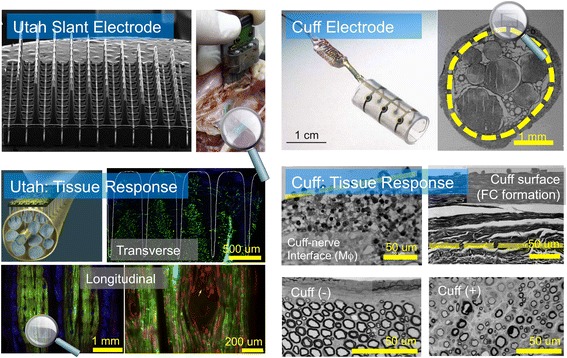
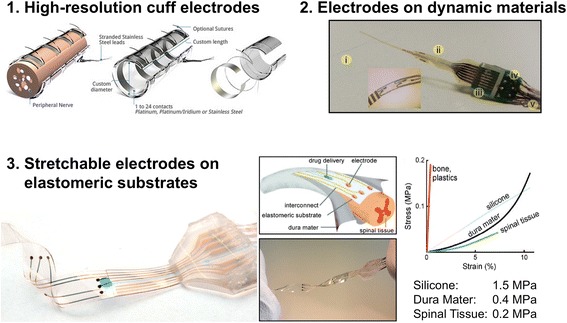
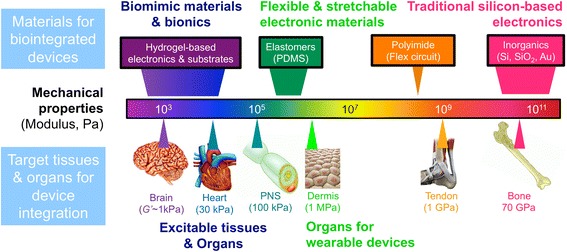
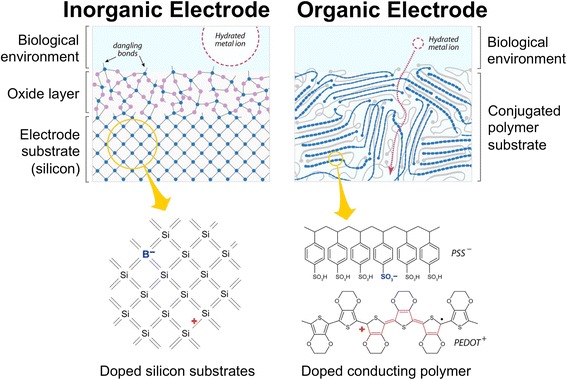
Verification
Claims the paper makes
The claims and statistics of this paper haven’t been checked yet.
Free: it reads the open-access text and checks the first 5 claims that cite a source we can check. Create a free account to check every claim.
Claims other papers make about this one
Each is checked against this paper’s own text: does it say what the citing paper says it does?
The source backs part of the claim, not all of it — or backs it for a different population, condition or comparison.
In the citing paper
“These implants are constructed from a library of materials that are readily absorbed into the body such as silk and polyurethanes for insulation and magnesium for electrical conductors.”
From Peripheral nerve bionic interface: a review of electrodes (2019) · cites this paper as Bettinger 2018
Experimental — accuracy not yet measuredThe cited source says what the claim attributes to it.
In the citing paper
“In recent years, profiting from the academic interest and deep exploration in neuroscience, flexible implantable stimulators with various mechanisms (electrical,[521–523] optogenetic,[524,525] ultrasonic,[526,527] magnetic[528]) are being developed as non-pharmacological treatment options.”
From Flexible Electronics and Devices as Human–Machine Interfaces for Medical Robotics (2022) · cites this paper as [527]
The cited source says what the claim attributes to it.
In the citing paper
“They are designed to dissolve post-implantation after a period has elapsed removing the need for surgery to remove the implant.”
From Peripheral nerve bionic interface: a review of electrodes (2019) · cites this paper as Bettinger 2018
The cited source says what the claim attributes to it.
In the citing paper
“For example, Hoffmann etal. state that there has yet be a standardised method for quality electrical encapsulation, though composite bilayers are offering a potential solution (Bettinger 2018; Hoffmann etal. 2006).”
From Peripheral nerve bionic interface: a review of electrodes (2019) · cites this paper as Bettinger 2018
Self-check
Percentages, sums and reported differences re-computed from the paper’s own numbers.
The self-check needs the paper’s full text.
Citations
Cites
Neural Stimulation and Recording Electrodes
Cogan, S. F. (2008) · Annual Review of Biomedical Engineering · doi:10.1146/annurev.bioeng.10.061807.160518 · Cited by 2,243 · cited 1×
“Charge injection capacities (CIC) of ~ 1 mC/cm2 or larger can achieved by texturing electrodes to increase the geometric surface area (Cogan, 2008).”
MethodDissolvable films of silk fibroin for ultrathin conformal bio-integrated electronics
Kim, D.-H., Viventi, J., Amsden, J. J., Xiao, J., Vigeland, L., Kim, Y.-S., Blanco, J. A., Panilaitis, B., Frechette, E. S., Contreras, D., et al. (2010) · Nature Materials · doi:10.1038/nmat2745 · Cited by 1,721
Embedded 3D Printing of Strain Sensors within Highly Stretchable Elastomers
Muth, J. T., Vogt, D. M., Truby, R. L., Mengüç, Y., Kolesky, D. B., Wood, R. J., & Lewis, J. A. (2014) · Advanced Materials · doi:10.1002/adma.201400334 · Cited by 1,611
Transfer printing by kinetic control of adhesion to an elastomeric stamp
Meitl, M. A., Zhu, Z.-T., Kumar, V., Lee, K. J., Feng, X., Huang, Y. Y., Adesida, I., Nuzzo, R. G., & Rogers, J. A. (2006) · Nature Materials · doi:10.1038/nmat1532 · Cited by 1,548
A tough biodegradable elastomer
Wang, Y., Ameer, G. A., Sheppard, B. J., & Langer, R. (2002) · Nature Biotechnology · doi:10.1038/nbt0602-602 · Cited by 1,314
A Physically Transient Form of Silicon Electronics
Hwang, S.-W., Tao, H., Kim, D.-H., Cheng, H., Song, J.-K., Rill, E., Brenckle, M. A., Panilaitis, B., Won, S. M., Kim, Y.-S., et al. (2012) · Science · doi:10.1126/science.1226325 · Cited by 1,286
Calculation of interfacial tension in polymer systems
Wu, S. (1971) · Journal of Polymer Science Part C: Polymer Symposia · doi:10.1002/polc.5070340105 · Cited by 1,198
Electronic dura mater for long-term multimodal neural interfaces
Minev, I. R., Musienko, P., Hirsch, A., Barraud, Q., Wenger, N., Moraud, E. M., Gandar, J., Capogrosso, M., Milekovic, T., Asboth, L., et al. (2015) · Science · doi:10.1126/science.1260318 · Cited by 1,082
“Green” electronics: biodegradable and biocompatible materials and devices for sustainable future
Irimia-Vladu, M. (2014) · Chem. Soc. Rev. · doi:10.1039/c3cs60235d · Cited by 1,044
3D Printing of Free Standing Liquid Metal Microstructures
Ladd, C., So, J., Muth, J., & Dickey, M. D. (2013) · Advanced Materials · doi:10.1002/adma.201301400 · Cited by 926
Mannoor, M. S., Jiang, Z., James, T., Kong, Y. L., Malatesta, K. A., Soboyejo, W. O., Verma, N., Gracias, D. H., & McAlpine, M. C. (2013) · Nano Letters · doi:10.1021/nl4007744 · Cited by 874
Stretchable nanoparticle conductors with self-organized conductive pathways
Kim, Y., Zhu, J., Yeom, B., Di Prima, M., Su, X., Kim, J.-G., Yoo, S. J., Uher, C., & Kotov, N. A. (2013) · Nature · doi:10.1038/nature12401 · Cited by 852
Catechol‐Based Biomimetic Functional Materials
Sedó, J., Saiz‐Poseu, J., Busqué, F., & Ruiz‐Molina, D. (2013) · Advanced Materials · doi:10.1002/adma.201202343 · Cited by 752
Flexible and Stretchable Electronics for Biointegrated Devices
Kim, D.-H., Ghaffari, R., Lu, N., & Rogers, J. A. (2012) · Annual Review of Biomedical Engineering · doi:10.1146/annurev-bioeng-071811-150018 · Cited by 749
The Rise of Organic Bioelectronics
Rivnay, J., Owens, R. M., & Malliaras, G. G. (2014) · Chemistry of Materials · doi:10.1021/cm4022003 · Cited by 713
Jakus, A. E., Secor, E. B., Rutz, A. L., Jordan, S. W., Hersam, M. C., & Shah, R. N. (2015) · ACS Nano · doi:10.1021/acsnano.5b01179 · Cited by 710
3D Printing for the Rapid Prototyping of Structural Electronics
Macdonald, E., Salas, R., Espalin, D., Perez, M., Aguilera, E., Muse, D., & Wicker, R. B. (2014) · IEEE Access · doi:10.1109/access.2014.2311810 · Cited by 606
Novel Citric Acid‐Based Biodegradable Elastomers for Tissue Engineering
Yang, J., Webb, A. R., & Ameer, G. A. (2004) · Advanced Materials · doi:10.1002/adma.200306264 · Cited by 590
Hassler, C., Boretius, T., & Stieglitz, T. (2011) · Journal of Polymer Science Part B: Polymer Physics · doi:10.1002/polb.22169 · Cited by 501
Implanted Neural Interfaces: Biochallenges and Engineered Solutions
Grill, W. M., Norman, S. E., & Bellamkonda, R. V. (2009) · Annual Review of Biomedical Engineering · doi:10.1146/annurev-bioeng-061008-124927 · Cited by 488 · cited 2×
“Microfabricated multielectrode arrays for PNI have grown in complexity leading to form factors that including Michigan arrays, Utah arrays, Utah slant arrays, transverse intrafascicular multielectrodes (TIME), longitudinal intrafascicular electrodes (LIFE), regenerative sieve electrodes, tissueengineered electrodes, a…”
BackgroundMaterials for stretchable electronics
Wagner, S., & Bauer, S. (2012) · MRS Bulletin · doi:10.1557/mrs.2012.37 · Cited by 449
THIN SILICONE MEMBRANES‐THEIR PERMEATION PROPERTIES AND SOME APPLICATIONS
Robb, W. L. (1968) · Annals of the New York Academy of Sciences · doi:10.1111/j.1749-6632.1968.tb20277.x · Cited by 429
Diffusion of Gases in Silicone Polymers: Molecular Dynamics Simulations
Charati, S. G., & Stern, S. A. (1998) · Macromolecules · doi:10.1021/ma980387e · Cited by 423
Organic Thin‐Film Transistors Fabricated on Resorbable Biomaterial Substrates
Bettinger, C. J., & Bao, Z. (2010) · Advanced Materials · doi:10.1002/adma.200902322 · Cited by 423
Self-citationIn vivo degradation characteristics of poly(glycerol sebacate)
Wang, Y., Kim, Y. M., & Langer, R. (2003) · Journal of Biomedical Materials Research Part A · doi:10.1002/jbm.a.10534 · Cited by 389
In vitro electrical properties for iridium oxide versus titanium nitride stimulating electrodes
Weiland, J. D., Anderson, D. J., & Humayun, M. S. (2002) · IEEE Transactions on Biomedical Engineering · doi:10.1109/tbme.2002.805487 · Cited by 382 · cited 1×
“However, capacitive coupling using platinum (Pt) and titanium nitride (TiN) electrodes face limits on charge injection, which restricts the lower bound on electrode size (Weiland et al., 2002).”
MethodMicromachined, Polyimide-Based Devices for Flexible Neural Interfaces
Stieglitz, T., Beutel, H., Schuettler, M., & Meyer, J.-U. (2000) · Biomedical Microdevices · doi:10.1023/a:1009955222114 · Cited by 343 · cited 1×
“Polymer substrates such as polyimide and parylene-based polymers have enabled progress in flexible peripheral nerve interfaces in recent decades (Stieglitz et al., 2000; Stieglitz et al., 2005).”
BackgroundZhang, Y., Xu, S., Fu, H., Lee, J., Su, J., Hwang, K.-C., Rogers, J. A., & Huang, Y. (2013) · Soft Matter · doi:10.1039/c3sm51360b · Cited by 307
Synthesis and Characterization of Photocurable Elastomers from Poly(glycerol-co-sebacate)
Nijst, C. L. E., Bruggeman, J. P., Karp, J. M., Ferreira, L., Zumbuehl, A., Bettinger, C. J., & Langer, R. (2007) · Biomacromolecules · doi:10.1021/bm070423u · Cited by 295
Self-citationThree‐Dimensional Microfluidic Tissue‐Engineering Scaffolds Using a Flexible Biodegradable Polymer
Bettinger, C. J., Weinberg, E. J., Kulig, K. M., Vacanti, J. P., Wang, Y., Borenstein, J. T., & Langer, R. (2006) · Advanced Materials · doi:10.1002/adma.200500438 · Cited by 291
Self-citationDynamic mechanical properties of human brain tissue
Fallenstein, G. T., Hulce, V. D., & Melvin, J. W. (1969) · Journal of Biomechanics · doi:10.1016/0021-9290(69)90079-7 · Cited by 288
Parylene as a Chronically Stable, Reproducible Microelectrode Insulator
Loeb, G. E., Bak, M. J., Salcman, M., & Schmidt, E. M. (1977) · IEEE Transactions on Biomedical Engineering · doi:10.1109/tbme.1977.326115 · Cited by 258
High‐Density Soft‐Matter Electronics with Micron‐Scale Line Width
Gozen, B. A., Tabatabai, A., Ozdoganlar, O. B., & Majidi, C. (2014) · Advanced Materials · doi:10.1002/adma.201400502 · Cited by 238
Origami and Kirigami Nanocomposites
Xu, L., Shyu, T. C., & Kotov, N. A. (2017) · ACS Nano · doi:10.1021/acsnano.7b03287 · Cited by 232
Microfabrication of poly (glycerol–sebacate) for contact guidance applications
Bettinger, C. J., Orrick, B., Misra, A., Langer, R., & Borenstein, J. T. (2006) · Biomaterials · doi:10.1016/j.biomaterials.2005.11.029 · Cited by 231
Self-citationOver-pulsing degrades activated iridium oxide films used for intracortical neural stimulation
Cogan, S. F., Guzelian, A. A., Agnew, W. F., Yuen, T. G. H., & McCreery, D. B. (2004) · Journal of Neuroscience Methods · doi:10.1016/j.jneumeth.2004.02.019 · Cited by 210 · cited 2×
“Electrodes composed of redoxactive inorganics such as activated iridium oxide (Cogan et al., 2004) (AIROF) use Faradaic charge transfer to increase the intrinsic injection capacity (CICAIROF ~ 1–4 mC/cm(2)).”
BackgroundFavre, E., Schaetzel, P., Nguygen, Q. T., Clément, R., & Néel, J. (1994) · Journal of Membrane Science · doi:10.1016/0376-7388(94)00060-3 · Cited by 209
Hwang, S.-W., Park, G., Edwards, C., Corbin, E. A., Kang, S.-K., Cheng, H., Song, J.-K., Kim, J.-H., Yu, S., Ng, J., et al. (2014) · ACS Nano · doi:10.1021/nn500847g · Cited by 202
Hung, K., Tseng, C., & Hsu, S. (2014) · Advanced Healthcare Materials · doi:10.1002/adhm.201400018 · Cited by 202
Sputtered iridium oxide films for neural stimulation electrodes
Cogan, S. F., Ehrlich, J., Plante, T. D., Smirnov, A., Shire, D. B., Gingerich, M., & Rizzo, J. F. (2009) · Journal of Biomedical Materials Research Part B: Applied Biomaterials · doi:10.1002/jbm.b.31223 · Cited by 188
Vagus nerve stimulation therapy summary: Five years after FDA approval
Schachter, S. C. (2002) · Neurology · doi:10.1212/wnl.59.6_suppl_4.s15 · Cited by 178
Nolta, N. F., Christensen, M. B., Crane, P. D., Skousen, J. L., & Tresco, P. A. (2015) · Biomaterials · doi:10.1016/j.biomaterials.2015.02.081 · Cited by 175
Tan, D. W., Schiefer, M. A., Keith, M. W., Anderson, J. R., & Tyler, D. J. (2015) · Journal of Neural Engineering · doi:10.1088/1741-2560/12/2/026002 · Cited by 175
Cogan, S. F., Troyk, P. R., Ehrlich, J., & Plante, T. D. (2005) · IEEE Transactions on Biomedical Engineering · doi:10.1109/tbme.2005.851503 · Cited by 162 · cited 4×
“In vitro comparison of the chargeinjection limits of activated iridium oxide (AIROF) and platinum-iridium microelectrodes.”
BackgroundInfluentialWafer bonding using microwave heating of parylene intermediate layers
Noh, H. “., Moon, K., Cannon, A. H., Hesketh, P. J., & Wong, C. P. (2004) · Journal of Micromechanics and Microengineering · doi:10.1088/0960-1317/14/4/025 · Cited by 158
Amino alcohol-based degradable poly(ester amide) elastomers
Bettinger, C. J., Bruggeman, J. P., Borenstein, J. T., & Langer, R. (2008) · Biomaterials · doi:10.1016/j.biomaterials.2008.01.029 · Cited by 153
Self-citationWark, H. A. C., Sharma, R., Mathews, K. S., Fernandez, E., Yoo, J., Christensen, B., Tresco, P., Rieth, L., Solzbacher, F., Normann, R. A., et al. (2013) · Journal of Neural Engineering · doi:10.1088/1741-2560/10/4/045003 · Cited by 148 · cited 1×
“Insertional PNI with 25 electrodes/mm2 have been used in various animal studies (Wark et al., 2013) while pilot studies of cuff-type electrodes in humans employed electrodes on the order of ~ 1 electrode/mm2 (Tan et al., 2015).”
MethodImplantable biomedical microsystems for neural prostheses
Stieglitz, T., Schuetter, M., & Koch, K. P. (2005) · IEEE Engineering in Medicine and Biology Magazine · doi:10.1109/memb.2005.1511501 · Cited by 140
Biodegradable Elastomers for Tissue Engineering and Cell–Biomaterial Interactions
Bettinger, C. J. (2011) · Macromolecular Bioscience · doi:10.1002/mabi.201000397 · Cited by 140
Self-citationGuo, L., Guvanasen, G. S., Liu, X., Tuthill, C., Nichols, T. R., & DeWeerth, S. P. (2013) · IEEE Transactions on Biomedical Circuits and Systems · doi:10.1109/tbcas.2012.2192932 · Cited by 139
Xie, X., Rieth, L., Williams, L., Negi, S., Bhandari, R., Caldwell, R., Sharma, R., Tathireddy, P., & Solzbacher, F. (2014) · Journal of Neural Engineering · doi:10.1088/1741-2560/11/2/026016 · Cited by 137
The foreign body response to the Utah Slant Electrode Array in the cat sciatic nerve
Christensen, M. B., Pearce, S. M., Ledbetter, N. M., Warren, D. J., Clark, G. A., & Tresco, P. A. (2014) · Acta Biomaterialia · doi:10.1016/j.actbio.2014.07.010 · Cited by 135
Parylene micromolding, a rapid and low-cost fabrication method for parylene microchannel
Noh, H. “., Huang, Y. H., & Hesketh, P. J. (2004) · Sensors and Actuators B Chemical · doi:10.1016/j.snb.2003.09.038 · Cited by 135
Materials and processing approaches for foundry-compatible transient electronics
Chang, J., Fang, H., Bower, C. A., Song, E., Yu, X., & Rogers, J. A. (2017) · Proceedings of the National Academy of Sciences · doi:10.1073/pnas.1707849114 · Cited by 131
The Chemistry and Properties of the Medical-Grade Silicones
BRALEY, S. A. (1970) · Journal of Macromolecular Science Part A - Chemistry · doi:10.1080/00222337008074361 · Cited by 128
Performance of conducting polymer electrodes for stimulating neuroprosthetics
Green, R. A., Matteucci, P. B., Hassarati, R. T., Giraud, B., Dodds, C. W. D., Chen, S., Byrnes-Preston, P. J., Suaning, G. J., Poole-Warren, L. A., & Lovell, N. H. (2013) · Journal of Neural Engineering · doi:10.1088/1741-2560/10/1/016009 · Cited by 126
Biomaterials‐based organic electronic devices
Bettinger, C. J., & Bao, Z. (2010) · Polymer International · doi:10.1002/pi.2827 · Cited by 126
Self-citationLee, J. H., Kim, H., Kim, J. H., & Lee, S.-H. (2016) · Lab on a Chip · doi:10.1039/c5lc00842e · Cited by 124
Stiff subcircuit islands of diamondlike carbon for stretchable electronics
Lacour, S. P., Wagner, S., Narayan, R. J., Li, T., & Suo, Z. (2006) · Journal of Applied Physics · doi:10.1063/1.2210170 · Cited by 118
Ziegler, D., Suzuki, T., & Takeuchi, S. (2006) · Journal of Microelectromechanical Systems · doi:10.1109/jmems.2006.879681 · Cited by 117
Stretchable and Conformable Oxide Thin‐Film Electronics
Munzenrieder, N. S., Cantarella, G., Vogt, C., Petti, L., Büthe, L., Salvatore, G. A., Fang, Y., Andri, R., Lam, Y., Libanori, R., et al. (2015) · Advanced Electronic Materials · doi:10.1002/aelm.201400038 · Cited by 105
Tissue-engineered peripheral nerve interfaces
Spearman, B. S., Desai, V. H., Mobini, S., McDermott, M. D., Graham, J. B., Otto, K. J., Judy, J. W., & Schmidt, C. E. (2018) · Advanced Functional Materials · doi:10.1002/adfm.201701713 · Cited by 96
A three-dimensional self-opening intraneural peripheral interface (SELINE)
Cutrone, A., Valle, J. D., Santos, D., Badia, J., Filippeschi, C., Micera, S., Navarro, X., & Bossi, S. (2015) · Journal of Neural Engineering · doi:10.1088/1741-2560/12/1/016016 · Cited by 82
Wang, Z., Zhang, L., Duan, S., Jiang, H., Shen, J., & Li, C. (2017) · Journal of Materials Chemistry C · doi:10.1039/c7tc01727h · Cited by 80
Xie, X., Rieth, L., Merugu, S., Tathireddy, P., & Solzbacher, F. (2012) · Applied Physics Letters · doi:10.1063/1.4748322 · Cited by 75
Espinosa, J. A., Aiello, M. T., & Naritoku, D. K. (1999) · Surgical Neurology · doi:10.1016/s0090-3019(99)00046-4 · Cited by 74
Medical applications of diamond particles & surfaces
Narayan, R. J., Boehm, R. D., & Sumant, A. V. (2011) · Materials Today · doi:10.1016/s1369-7021(11)70087-6 · Cited by 74
Topographic substrates as strain relief features in stretchable organic thin film transistors
Wu, H., Kustra, S., Gates, E. M., & Bettinger, C. J. (2013) · Organic Electronics · doi:10.1016/j.orgel.2013.02.037 · Cited by 67
Self-citationTransfer Printing of Metallic Microstructures on Adhesion‐Promoting Hydrogel Substrates
Wu, H., Sariola, V., Zhu, C., Zhao, J., Sitti, M., & Bettinger, C. J. (2015) · Advanced Materials · doi:10.1002/adma.201500954 · Cited by 57
Self-citationDetermination of the Water Vapor Permeability and Continuity of Ultrathin Parylene Membranes
Spivack, M. A., & Ferrante, G. (1969) · Journal of The Electrochemical Society · doi:10.1149/1.2411625 · Cited by 57
Hara, S. A., Kim, B. J., Kuo, J. T. W., Lee, C. D., Meng, E., & Pikov, V. (2016) · Journal of Neural Engineering · doi:10.1088/1741-2560/13/6/066020 · Cited by 57
Wang, Y., & Xiao, J. (2017) · Soft Matter · doi:10.1039/c7sm01071k · Cited by 39
Caldwell, R., Mandal, H., Sharma, R., Solzbacher, F., Tathireddy, P., & Rieth, L. (2017) · Journal of Neural Engineering · doi:10.1088/1741-2552/aa69d3 · Cited by 36
In vitro and in vivo degradation of poly(1,3‐diamino‐2‐hydroxypropane‐co‐polyol sebacate) elastomers
Bettinger, C. J., Bruggeman, J. P., Borenstein, J. T., & Langer, R. (2008) · Journal of Biomedical Materials Research Part A · doi:10.1002/jbm.a.32306 · Cited by 32
Self-citationElastomeric Conducting Polyaniline Formed Through Topological Control of Molecular Templates
Ding, H., Zhong, M., Wu, H., Park, S., Mohin, J. W., Klosterman, L., Yang, Z., Yang, H., Matyjaszewski, K. A., & Bettinger, C. J. (2016) · ACS Nano · doi:10.1021/acsnano.6b01520 · Cited by 32
Self-citationComposition‐dependent underwater adhesion of catechol‐bearing hydrogels
Wu, H., Sariola, V., Zhao, J., Ding, H., Sitti, M., & Bettinger, C. J. (2016) · Polymer International · doi:10.1002/pi.5246 · Cited by 20
Self-citationJeong (2000) · doi:10.1002/(sici)1097-4636(200005)50:2
Research works printed but not linked: 2
- 24. Grill WM, Mortimer JT. Neural and connective tissue response to long-term implantation of multiple contact nerve cuff electrodes. J Biomed Mater Res. 2000;50:215-26. · doi:10.1002/(sici)1097-4636(200005)50:2<215::aid-jbm17>3.0.co;2-a
- 74. Xie X, et al. Long-term reliability of Al 2 O 3 and Parylene C bilayer encapsulated Utah electrode array based neural interfaces for chronic implantation. J Neural Eng. 2014b;11:026016. · DOI · Paper page
Cited by
Flexible Electronics and Devices as Human–Machine Interfaces for Medical Robotics
Heng, W., Solomon, S., & Gao, W. (2022) · Advanced Materials · doi:10.1002/adma.202107902 · Cited by 609
Stretchable electrochemical energy storage devices
Mackanic, D. G., Chang, T.-H., Huang, Z., Cui, Y., & Bao, Z. (2020) · Chemical Society Reviews · doi:10.1039/d0cs00035c · Cited by 335
Water-responsive supercontractile polymer films for bioelectronic interfaces
Yi, J., Zou, G., Huang, J., Ren, X., Tian, Q., Yu, Q., Wang, P., Yuan, Y., Tang, W., Wang, C., et al. (2023) · Nature · doi:10.1038/s41586-023-06732-y · Cited by 240
“(Supplementary Note 3), which has a contraction ratio greater than 50% and Young’s modulus less than 100 kPa after contraction, offering good mechanical match 3,35,36 with tissues such as peripheral nerves.”
Bai, W., Shin, J. H., Fu, R., Kandela, I. K., Lu, D., Ni, X., Park, Y., Liu, Z., Hang, T., Wu, D., et al. (2019) · Nature Biomedical Engineering · doi:10.1038/s41551-019-0435-y · Cited by 149
Recent Progress in Materials Chemistry to Advance Flexible Bioelectronics in Medicine
Balakrishnan, G., Song, J., Mou, C., & Bettinger, C. J. (2022) · Advanced Materials · doi:10.1002/adma.202106787 · Cited by 137
Self-citation
Metadata
- Authors
- Bettinger, C. J.
- Affiliations
- Carnegie Mellon University (US)
- Corresponding author
- Bettinger, Christopher J.
- Venue
- Bioelectronic Medicine
- Published
- 2018-05-23
- Volume
- 4
- Issue
- 1
- Pages
- 6-6
- ISSN
- 2332-8886 (ISSN-L)
- PMC
- PMC7098226
- OpenAlex
- W2805175178
- Semantic Scholar
- 4a967a97c3653980298d16543c89ce0f531f8fef
- Cited by
- 77
- References
- 79
- Citations by year
- 2026: 6 · 2025: 10 · 2024: 7 · 2023: 10 · 2022: 14 · 2021: 13 · 2020: 8 · 2019: 9
- FWCI
- 0.97
- Type
- journal article
- Language
- en
- Open access
- gold
- doi.org
- Licence
- cc-by
- creativecommons.org/licenses/by/4.0/ (tdm)
- creativecommons.org/licenses/by/4.0/ (vor)
- Locations
- Bioelectronic Medicine (publishedVersion, cc-by)
- PubMed Central (publishedVersion, cc-by)
- PubMed (publishedVersion)
- DOAJ (DOAJ: Directory of Open Access Journals) (submittedVersion, cc-by-sa)
- Funders
- Defense Advanced Research Projects Agency (D14AP00040)
- Division of Materials Research (DMR1542196)
- National Institutes of Health (R21NS095250)
- Topics
- Life Sciences › Neuroscience › Cellular and Molecular Neuroscience › Neuroscience and Neural Engineering
- Physical Sciences › Engineering › Biomedical Engineering › Advanced Sensor and Energy Harvesting Materials
- Physical Sciences › Materials Science › Polymers and Plastics › Conducting polymers and applications
- Keywords
- peripheral nerve interfaces, flexible electronics, stretchable substrates, cuff electrodes, microelectrode arrays, biocompatibility, electrode-tissue interface, microfabrication, device packaging, encapsulation materials, electrode materials
About these checks
Registry, retraction, Cites and statistics results are computed, not judged, with one exception: a printed reference that no index lists is read once by a model before it counts as a citation error. Claims are extracted by a model and kept only when their quote appears verbatim in the text; each cited source is then checked, with a model’s help, for whether it says what the claim relies on. Those verdicts can be wrong — read the claim’s quote and the cited source before relying on one.
Statistics and arithmetic are recomputed, not judged.
Confidence bands are shown only for fields calibrated on our annotated test set. None is calibrated yet, so no band is shown.
What counts as a claim ›How we measure confidence ›How we check this ›
Are you an author, or do you see a problem with this page? Request a review
Data sources
Bibliographic data: Semantic Scholar, OpenAlex, Crossref.
Contains information from the Semantic Scholar Academic Graph Datasets, made available under the ODC Attribution License (ODC-BY 1.0).
Semantic Scholar’s data is described in: Kinney, R., et al. (2023). The Semantic Scholar Open Data Platform. arXiv:2301.10140.
