

Valorization of Fruit Waste for Bioactive Compounds and Their Applications in the Food Industry
Open accessThe DOI matches its Crossref record; 211 of the 225 references it cites were found in a registry or an index; 28 of the 143 sources its claims cite were checked for support.
Abstract
The fruit production and processing sectors produce tremendous amounts of by-products and waste that cause significant economic losses and an undesirable impact on the environment. The effective utilization of these fruit wastes can help to reduce the carbon footprint and greenhouse gas emissions, thereby achieving sustainable development goals. These by-products contain a variety of bioactive compounds, such as dietary fiber, flavonoids, phenolic compounds, antioxidants, polysaccharides, and several other health-promoting nutrients and phytochemicals. These bioactive compounds can be extracted and used as value-added products in different industrial applications. The bioactive components extracted can be used in developing nutraceutical products, functional foods, or food additives. This review provides a comprehensive review of the recent developments in fruit waste valorization techniques and their application in food industries. The various extraction techniques, including conventional and emerging methods, have been discussed. The antioxidant and antimicrobial activities of the active compounds extracted and isolated from fruit waste have been described. The most important food industrial application of bioactive compounds extracted from fruit waste (FW) has been provided. Finally, challenges, future direction, and concluding remarks on the topic are summarized.
Overview
CoChat Summary
TL;DR
This review summarizes valorization of fruit waste as a source of bioactive compounds and their food-industry applications, covering conventional and emerging extraction methods. It reports that fruit and vegetable waste is substantial and that peels, seeds, pomace, and other by-products contain phenolic compounds, dietary fiber, carotenoids, and antimicrobial/antioxidant constituents useful for fortification and preservation.
Key findings
- Fruit and vegetable waste is large: about 46% of produced fruits and vegetables (1400 million tons) are wasted; fruit peel waste accounts for 15–60% of fruit waste; mango and orange 30–50%, pineapple 40–50%, and banana 20%; common fruits account for 25–57 million tons of waste annually.
- By-products are rich in bioactives: apple peels can contain up to 3300 mg/100 g dry matter phenolics; mango peels have total phenolics roughly 13–47% higher than flesh and 32% higher than seeds; papaya peels about 1.2 times higher than seeds; apple pomace has 15% soluble and 36% insoluble dietary fiber; grape pomace total dietary fiber is around 78% (9.5% soluble, 68% insoluble); mango peels total dietary fiber is 40–72%.
- Extraction techniques discussed include Soxhlet, maceration, supercritical fluid extraction, microwave-assisted extraction, enzyme-assisted extraction, pulsed electric field extraction, high-pressure/pressurized liquid extraction, and ultrasound-assisted extraction; novel methods are described as faster, more selective, and less solvent-intensive, but with higher cost and scale-up challenges.
- Food applications include apple pomace up to 30% in baked/extruded snacks; mango peel powder up to 20% in biscuits and up to 30% in cookies; apple pomace 2–8% in beef patties (up to 6% acceptable); 1% apple pomace in yogurt; lemon fiber 2–6% lowered cholesterol and saturated fatty acids in low-fat beef burgers; orange peel as a fat replacer reduced peroxide levels by >90%; grape seed extracts at 40 and 60 mg delayed lipid oxidation in cooked chicken for 14 days. Antimicrobial examples: elderberry skin/seed extracts gave an inhibition zone of almost 20 mm against *Bacillus cereus*; mandarin by-product extracts gave zones of 16.1 and 17 mm; muscadine grape polyphenols reduced *Staphylococcus aureus* viability by nearly 5 log10 CFU/mL over 6 h.
Methods
- This is a review; electronic searches were conducted mainly in PubMed, Google Scholar, Scopus, and ScienceDirect using broad terms such as valorization, fruit waste utilization, fruit by-products, extraction techniques, and bioactive components.
- The search returned 300 scholarly items, including research articles, reviews, books, patents, and other publicly accessible internet sources; about 200 items published after 2000 were shortlisted, and articles published before 2015 were also chosen due to scarcity of contemporary studies; selected articles were thoroughly studied and critically analyzed, and the review was written based on PRISMA guidelines.
- No primary experimental design or new data are reported; the paper synthesizes existing literature.
Limitations
- Stated: bioactive components can degrade quickly, and extraction parameters such as pressure, temperature, light, and pH can cause losses (e.g., a 22% reduction in phenolic content was reported in strawberries); extraction and isolation methods remain lab-intensive and lengthy; novel technologies have higher cost and difficulties in scaling up to industrial standards; fruit and vegetable waste is perishable, dispersed, and often a complex mixture that increases extraction cost; in vivo analysis is needed to validate bioactivity, stability, safety, and bioavailability; further research is needed to determine best extraction procedures for food fortification and other applications.
- Evident: as a narrative review, the findings depend on the selected literature and no systematic meta-analysis or primary validation is reported; the paper also notes that in many antimicrobial studies the principal components responsible for activity have not been evaluated.
Model-written summary. Check it against the paper before relying on it.
Integrity signals
Registry
Cites
Statistics
Figures
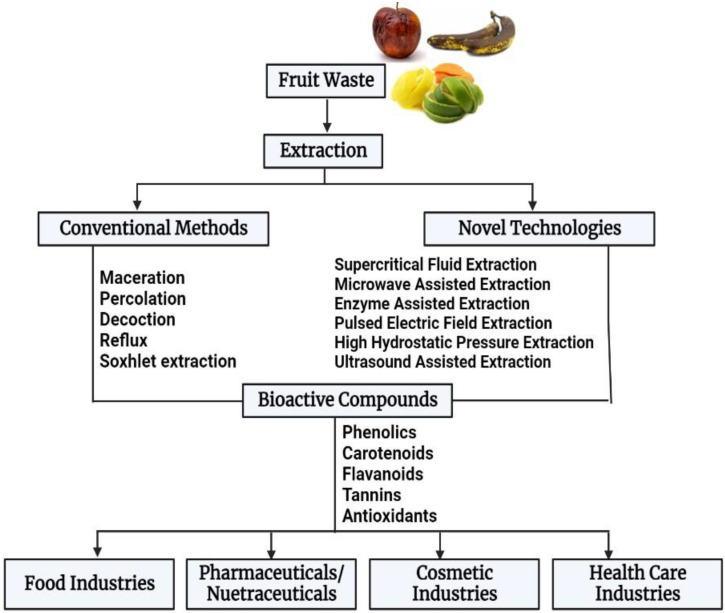
Verification
Claims the paper makes
24 Valid · 6 Not valid · 83 Not checked · 21 Own results and interpretations
The cited sources support only part of this claim — read each source’s verdict below.
In the paper
“The polarity/ionic strength of various solvents in use, along with the usage of heat and/or mixing, are the key factors influencing the effectiveness of conventional extraction processes [87].”
§ Valorization of Fruit Waste for Bioactive Compounds and Their Applications in the Food Industry > 5. Extraction Techniques > 5.1. Conventional Methods
What the sources say
- Partly supportedcites [87] Zhang Q.-W. Lin L.-G. Ye W.-C. Techniques for extraction and isolation of natural products: A comprehensive review Chin. Med. 2018 13 1 26 10.1186/s13020-018-0177-x 29692864 PMC5905184 sourceExperimental — accuracy not yet measured
The Extraction section (page not provided) identifies solvent polarity and temperature as factors affecting extraction efficiency. It does not identify mixing as a key factor in conventional extraction, and its discussion of ionic strength concerns ion-exchange chromatography under Separation methods, not extraction. (LLM, conf=0.88)
plainstates a cause- Asserted: passes — The authors put it forward as true.
- Checkable: passes — It can be checked against evidence.
- Load-bearing: unclear — It is unclear whether the paper’s conclusions depend on it.
- Based: passes — The paper gives a reason why it holds.
- Partly supported
The cited sources support only part of this claim — read each source’s verdict below.
In the paper
“According to reports, tomato seeds contain a variety of bioactive substances, including bioactive peptides, flavonoids, carotenoids, pectin, and vitamins (tocopherol) [36].”
§ Valorization of Fruit Waste for Bioactive Compounds and Their Applications in the Food Industry > 4. Bioactive Compounds from Fruit Waste
What the sources say
- Partly supportedcites [36] Kumar M. Tomar M. Bhuyan D.J. Punia S. Grasso S. Sa A.G.A. Carciofi B.A.M. Arrutia F. Changan S. Radha Tomato (Solanum lycopersicum L.) seed: A review on bioactives and biomedical activities Biomed Pharm. 2021 142 112018 10.1016/j.biopha.2021.112018 34449317 sourceExperimental — accuracy not yet measured
Section 2 identifies flavonoids and carotenoids in tomato seeds, and the Introduction identifies α- and γ-tocopherols. The review also discusses bioactive peptides produced from tomato seed proteins, but the passages do not establish that unprocessed seeds contain those peptides. No passage found supports pectin as a tomato-seed constituent. (LLM, conf=0.86)
plain- Asserted: passes — The authors put it forward as true.
- Checkable: passes — It can be checked against evidence.
- Load-bearing: unclear — It is unclear whether the paper’s conclusions depend on it.
- Based: passes — The paper gives a reason why it holds.
- Partly supported
The cited sources that could be checked couldn’t confirm or dispute this claim.
In the paper
“Several studies have also reported the antibacterial effectiveness of grape extracts against lactic acid bacteria, foodborne pathogens, and wine-rotting yeasts [202,203,204,205,206,207].”
§ Valorization of Fruit Waste for Bioactive Compounds and Their Applications in the Food Industry > 7. Application of Bioactive Compounds in the Food Industry > 7.2. Food Preservation
What the sources say
- Could not verifycites [202] Brown J.C. Huang G. Haley-Zitlin V. Jiang X. Antibacterial effects of grape extracts on Helicobacter pylori Appl. Environ. Microbiol. 2009 75 848 852 10.1128/AEM.01595-08 19047390 PMC2632137 sourceExperimental — accuracy not yet measured
The paper’s results (p. 848–852) report inhibition of Helicobacter pylori by grape extracts, but do not address the organisms named in the citing sentence. Searches for lactic acid bacteria, foodborne pathogens, and wine-spoilage yeasts found no passage establishing effectiveness against those groups. (LLM, conf=0.78)
- Not checked — no full text of the sourcecites [203] Baydar N.G. Özkan G. Sağdiç O. Total phenolic contents and antibacterial activities of grape (Vitis vinifera L.) extracts Food Control 2004 15 335 339 10.1016/S0956-7135(03)00083-5 source
- Not checked — no full text of the sourcecites [204] Jayaprakash G. Selvi T. Sakariah K. Antibacterial and antioxidant activities of grape (Vitis vinifera) seed extract Food Res. Int. 2003 36 117 122 10.1016/S0963-9969(02)00116-3 source
- Not checked — no full text of the sourcecites [205] Pastorkova E. Zakova T. Landa P. Novakova J. Vadlejch J. Kokoska Growth inhibitory effect of grape phenolics against wine spoilage yeasts and acetic acid bacteria Int. J. Food Microbiol. 2013 161 209 213 10.1016/j.ijfoodmicro.2012.12.018 23334100 source
- Not checked — no full text of the sourcecites [206] Perumalla A. Hettiarachchy N.S. Green tea and grape seed extracts—Potential applications in food safety and quality Food Res. Int. 2011 44 827 839 10.1016/j.foodres.2011.01.022 source
- Not checked — no full text of the sourcecites [207] Katalinić V. Možina S.S. Skroza D. Generalić I. Abramovič H. Miloš M. Ljubenkov I. Piskernik S. Pezo I. Terpinc P. Polyphenolic profile, antioxidant properties and antimicrobial activity of grape skin extracts of 14 Vitis vinifera varieties grown in Dalmatia (Croatia) Food Chem. 2010 119 715 723 10.1016/j.foodchem.2009.07.019 source
plainstates a cause- Asserted: passes — The authors put it forward as true.
- Checkable: passes — It can be checked against evidence.
- Load-bearing: passes — The paper’s conclusions depend on it.
- Based: passes — The paper gives a reason why it holds.
- Could not verify
The cited sources support only part of this claim — read each source’s verdict below.
In the paper
“These fruit wastes can pose major environmental challenges, such as water and soil pollution, the greenhouse effect, eutrophication, global warming, and other health problems if not effectively handled due to their high biodegradability and fermentability [17].”
§ Valorization of Fruit Waste for Bioactive Compounds and Their Applications in the Food Industry > 3. Fruit Loss and Processing Waste
What the sources say
- Partly supportedcites [17] de Medeiros V.P.B. Pimentel T.C. Varandas R.C.R. Dos Santos S.A. de Souza Pedrosa G.T. da Costa Sassi C.F. da Conceicao M.M. Magnani M. Exploiting the use of agro-industrial residues from fruit and vegetables as alternative microalgae culture medium Food Res. Int. 2020 137 109722 10.1016/j.foodres.2020.109722 33233291 sourceExperimental — accuracy not yet measured
The Introduction says fruit and vegetable residues are an environmental problem because of their high fermentability and biodegradability, and that they can contribute to greenhouse-gas emissions and landfill discharge contamination. It also mentions reducing soil contaminants through composting. It does not specifically link these wastes to water pollution, eutrophication, or health problems; global warming is implied by greenhouse-gas emissions rather than stated separately. (LLM, conf=0.87)
plainstates a cause- Asserted: passes — The authors put it forward as true.
- Checkable: passes — It can be checked against evidence.
- Load-bearing: passes — The paper’s conclusions depend on it.
- Based: passes — The paper gives a reason why it holds.
- Partly supported
Every source the paper cites for this claim was checked and supports it.
In the paper
“Onion peel is reported to be rich source of flavonoids, including athocyanins, kaempferol, and quercetin derivatives (quercetin diglucoside, quercetin aglycone, and quercetin 4-O-glucoside) [23,24].”
§ Valorization of Fruit Waste for Bioactive Compounds and Their Applications in the Food Industry > 4. Bioactive Compounds from Fruit Waste
What the sources say
- Supportedcites [23] Shabir I. Pandey V.K. Dar A.H. Pandiselvam R. Manzoor S. Mir S.A. Shams R. Dash K.K. Fayaz U. Khan S.A. Nutritional Profile, Phytochemical Compounds, Biological Activities, and Utilisation of Onion Peel for Food Applications: A Review Sustainability 2022 14 11958 10.3390/su141911958 source
The Composition/Nutritional Profile section (p. 2) describes onion peel as a rich source of flavonoids. The Plant secondary metabolites section (p. 2) names anthocyanins, kaempferol, quercetin diglucoside, quercetin aglycone, and quercetin 4-O-glucoside among onion flavonoids, noting that the latter compounds are abundant in the outer layer. (LLM, conf=0.94)
- Supportedcites [24] Kumar M. Barbhai M.D. Hasan M. Punia S. Dhumal S. Rais N. Chandran D. Pandiselvam R. Kothakota A. Tomar M. Onion (Allium cepa L.) peels: A review on bioactive compounds and biomedical activities Biomed. Pharmacother. 2022 146 112498 10.1016/j.biopha.2021.112498 34953395 source
Section 2 describes onion peel as rich in flavonoids and identifies anthocyanins in onion skins. It also lists kaempferol, quercetin 3,4′-diglucoside, quercetin aglycone, and quercetin 4′-O-glucoside. The reported concentrations vary by onion variety, but the claim does not assert that all varieties contain equal amounts. (LLM, conf=0.93)
plain- Asserted: passes — The authors put it forward as true.
- Checkable: passes — It can be checked against evidence.
- Load-bearing: unclear — It is unclear whether the paper’s conclusions depend on it.
- Based: passes — The paper gives a reason why it holds.
- Supported
51 more claims · 8 with their cited sources checked
Create a free account to see all 134 claims and to verify the 8 references still open.
- Probably not a substantial claim. 35
- It may state two separate claims as one. 53
- The quote only partly states this claim. 1
Self-check
Percentages, sums and reported differences re-computed from the paper’s own numbers.
Each contradiction between two passages listed here was confirmed by an independent check.
Rated minor: it would not touch a result — a value no result rests on, a p-value that stays on the same side of the significance level, or a conflict that is clerical, resolved elsewhere in the paper, or outside its own findings.
In the paper
§ Valorization of Fruit Waste for Bioactive Compounds and Their Applications in the Food Industry > 7. Application of Bioactive Compounds in the Food Industry > 7.1. Food Fortification
“A study developed beef patties with 2–8% apple pomace as a beef substitute [175].”
§ Valorization of Fruit Waste for Bioactive Compounds and Their Applications in the Food Industry > References
“175. Younis K. Ahmad S. Quality evaluation of buffalo meat patties incorporated with apple pomace powder Buffalo Bull. 2018 37 389 401”
Rated minor: it would not touch a result — a value no result rests on, a p-value that stays on the same side of the significance level, or a conflict that is clerical, resolved elsewhere in the paper, or outside its own findings.
In the paper
§ Valorization of Fruit Waste for Bioactive Compounds and Their Applications in the Food Industry > 7. Application of Bioactive Compounds in the Food Industry > 7.1. Food Fortification
“Similarly, the addition of 3% pomace to stirred yogurt caused a noticeably lower level of syneresis and an increase in the matrix’s stiffness, cohesion, and viscosity [178].”
§ Valorization of Fruit Waste for Bioactive Compounds and Their Applications in the Food Industry > References
“178. Wang J. Mukhtar H. Ma L. Pang Q. Wang X. VHH Antibodies: Reagents for Mycotoxin Detection in Food Products Sensor 2018 18 485 10.3390/s18020485 29415506 PMC5855929”
Rated minor: it would not touch a result — a value no result rests on, a p-value that stays on the same side of the significance level, or a conflict that is clerical, resolved elsewhere in the paper, or outside its own findings.
In the paper
§ Valorization of Fruit Waste for Bioactive Compounds and Their Applications in the Food Industry > 7. Application of Bioactive Compounds in the Food Industry > 7.1. Food Fortification
“Similarly, it was reported that red grape pomace could enhance the color stability and acceptability of pork burgers by reducing lipid oxidation. When the percentage of fruit pomace replacement exceeded 6%, a decrease in hardness and cohesiveness was found [176].”
§ Valorization of Fruit Waste for Bioactive Compounds and Their Applications in the Food Industry > References
“176. Younis K. Ahmad S. Ahmad S. Waste utilization of apple pomace as a source of functional ingredient in buffalo meat sausage Cogent Food Agric. 2015 1 1119397 10.1080/23311932.2015.1119397”
Citations
Cites
Essential oils: Their antibacterial properties and potential applications in foods—A review
Burt, S. (2004) · International Journal of Food Microbiology · doi:10.1016/j.ijfoodmicro.2004.03.022 · Cited by 10,488
Techniques for extraction of bioactive compounds from plant materials: A review
Azmir, J., Zaidul, I. S. M., Rahman, M. M., Sharif, K. M., Mohamed, A., Sahena, F., Jahurul, M. H. A., Ghafoor, K., Norulaini, N. A. N., & Omar, A. K. M. (2013) · Journal of Food Engineering · doi:10.1016/j.jfoodeng.2013.01.014 · Cited by 2,870 · cited 2×
“An efficient extraction approach should be able to target bioactive compounds from the plant matrix, have high selectivity towards analytical procedures and bioassays, and provide a robust and reproducible method that is free of fluctuations in the sample matrix [58].”
Techniques for extraction and isolation of natural products: A comprehensive review
Zhang, Q.-W., Lin, L.-G., & Ye, W.-C. (2018) · Chinese Medicine · doi:10.1186/s13020-018-0177-x · Cited by 2,321 · cited 2×
“The polarity/ionic strength of various solvents in use, along with the usage of heat and/or mixing, are the key factors influencing the effectiveness of conventional extraction processes [87].”
Quercetin, Inflammation and Immunity
Li, Y., Yao, J., Han, C., Yang, J., Chaudhry, M., Wang, S., Liu, H., & Yin, Y. (2016) · Nutrients · doi:10.3390/nu8030167 · Cited by 1,999
Antioxidant activity of apple peels
Wolfe, K., Wu, X., & Liu, R. H. (2003) · Journal of Agricultural and Food Chemistry · doi:10.1021/jf020782a · Cited by 1,873
Anthocyanins: Natural Colorants with Health-Promoting Properties
He, J., & Giusti, M. M. (2010) · Annual Review of Food Science and Technology · doi:10.1146/annurev.food.080708.100754 · Cited by 1,637
Dietary polyphenols, oxidative stress and antioxidant and anti-inflammatory effects
Zhang, H., & Tsao, R. (2016) · Current Opinion in Food Science · doi:10.1016/j.cofs.2016.02.002 · Cited by 1,519
Applications and opportunities for ultrasound assisted extraction in the food industry — A review
Vilkhu, K., Mawson, R., Simons, L., & Bates, D. (2008) · Innovative Food Science & Emerging Technologies · doi:10.1016/j.ifset.2007.04.014 · Cited by 1,394 · cited 1×
“This event releases a significant amount of energy, which causes cell rupture [86].”
Microalgae biorefinery: High value products perspectives
Chew, K. W., Yap, J. Y., Show, P. L., Suan, N. H., Juan, J. C., Ling, T. C., Lee, D.-J., & Chang, J.-S. (2017) · Bioresource Technology · doi:10.1016/j.biortech.2017.01.006 · Cited by 1,336 · cited 1×
“Additionally, these wastes are renewable and viable resources that could be valorized to create commodities with a high market value following the “circular economy” concept [19].”
A review on the extraction methods use in medicinal plants, principle, strength and limitation
(2015) · Medicinal & Aromatic Plants · doi:10.4172/2167-0412.1000196 · Cited by 1,325
Kumar, K., Srivastav, S., & Sharanagat, V. S. (2021) · Ultrasonics Sonochemistry · doi:10.1016/j.ultsonch.2020.105325 · Cited by 1,312
Galanakis, C. M. (2012) · Trends in Food Science & Technology · doi:10.1016/j.tifs.2012.03.003 · Cited by 1,240 · cited 1×
“The latter category includes a large variety of residues depending on the source type [4].”
Fruit and Vegetable Waste: Bioactive Compounds, Their Extraction, and Possible Utilization
Sagar, N. A., Pareek, S., Sharma, S., Yahia, E. M., & Lobo, M. G. (2018) · Comprehensive Reviews in Food Science and Food Safety · doi:10.1111/1541-4337.12330 · Cited by 1,237 · cited 2×
“Polyphenolic compounds can be divided into several classes, including flavonoids (subclasses: flavonols, flavanones, flavanonols, flavanols, flavones, isoflavones, and anthocyanidins), tannins, phenolic acids, lignans, and stilbenes [25].”
Benavente-García, O., & Castillo, J. (2008) · Journal of Agricultural and Food Chemistry · doi:10.1021/jf8006568 · Cited by 1,158
Antimicrobial effects of Finnish plant extracts containing flavonoids and other phenolic compounds
Rauha, J.-P., Remes, S., Heinonen, M., Hopia, A., Kähkönen, M., Kujala, T., Pihlaja, K., Vuorela, H., & Vuorela, P. (2000) · International Journal of Food Microbiology · doi:10.1016/s0168-1605(00)00218-x · Cited by 1,139
Li, Y., Guo, C., Yang, J., Wei, J., Xu, J., & Cheng, S. (2006) · Food Chemistry · doi:10.1016/j.foodchem.2005.02.033 · Cited by 1,058
Concept, mechanism, and applications of phenolic antioxidants in foods
Zeb, A. (2020) · Journal of Food Biochemistry · doi:10.1111/jfbc.13394 · Cited by 862
Carotenoid extraction methods: A review of recent developments
Saini, R. K., & Keum, Y.-S. (2018) · Food Chemistry · doi:10.1016/j.foodchem.2017.07.099 · Cited by 857 · cited 1×
“19 mg/100 g) are considered a key source of β-carotene [42], and βcarotene is widely utilized in the food additive, cosmetics, health care, and pharmaceutical industries.”
Sun, J., Wang, W., & Yue, Q. (2016) · Materials · doi:10.3390/ma9040231 · Cited by 792
Soxhlet extraction: Past and present panacea
Luque de Castro, M. D., & Priego-Capote, F. (2010) · Journal of Chromatography A · doi:10.1016/j.chroma.2009.11.027 · Cited by 768 · cited 1×
“However, the high temperature and prolonged heat exposure could increase the thermal degradation of the bioactive compounds [69].”
Advances in ultrasound assisted extraction of bioactive compounds from cash crops–A review
Wen, C., Zhang, J., Zhang, H., Dzah, C. S., Zandile, M., Duan, Y., Ma, H., & Luo, X. (2018) · Ultrasonics Sonochemistry · doi:10.1016/j.ultsonch.2018.07.018 · Cited by 721
Phenolic compounds: Current industrial applications, limitations and future challenges
Albuquerque, B. R., Heleno, S. A., Oliveira, M. B. P. P., Barros, L., & Ferreira, I. C. F. R. (2021) · Food & Function · doi:10.1039/d0fo02324h · Cited by 716
Phenolic composition, antioxidant potential and health benefits of citrus peel
Singh, B., Singh, J. P., Kaur, A., & Singh, N. (2020) · Food Research International · doi:10.1016/j.foodres.2020.109114 · Cited by 711
Supercritical fluid extraction of bioactive compounds
da Silva, R. P. F. F., Rocha-Santos, T. A. P., & Duarte, A. C. (2016) · TrAC Trends in Analytical Chemistry · doi:10.1016/j.trac.2015.11.013 · Cited by 704 · cited 2×
“• Ideal for extracting thermolabile compounds • Minimal waste generation • Needs a sophisticated mechanism as a precise temperature and pressure should be maintained • Not suitable for extracting polar compounds Flavonoids, antioxidants, carotenoids, fatty acids, essential oils, terpenes, and polyphenols [73]”
Enzyme assisted extraction of biomolecules as an approach to novel extraction technology: A review
Nadar, S. S., Rao, P., & Rathod, V. K. (2018) · Food Research International · doi:10.1016/j.foodres.2018.03.006 · Cited by 696 · cited 2×
“The plant cell wall is destroyed, releasing the bound bioactive chemicals attached to the lipid and carbohydrate chains [76,77].”
Antibacterial and antioxidant activities of grape (Vitis vinifera) seed extracts
Jayaprakasha, G. K., Selvi, T., & Sakariah, K. K. (2003) · Food Research International · doi:10.1016/s0963-9969(02)00116-3 · Cited by 660
Sudha, M. L., Baskaran, V., & Leelavathi, K. (2007) · Food Chemistry · doi:10.1016/j.foodchem.2006.12.016 · Cited by 659 · cited 1×
“The amounts of soluble and insoluble dietary fiber in apple pomace are 15% and 36%, respectively [53].”
An industrial approach in the search of natural antioxidants from vegetable and fruit wastes
Peschel, W., Sánchez-Rabaneda, F., Diekmann, W., Plescher, A., Gartzía, I., Jiménez, D., Lamuela-Raventós, R., Buxaderas, S., & Codina, C. (2006) · Food Chemistry · doi:10.1016/j.foodchem.2005.03.033 · Cited by 649
Uwineza, P. A., & Waśkiewicz, A. (2020) · Molecules · doi:10.3390/molecules25173847 · Cited by 638 · cited 1×
“The efficiency of SFE in extracting bioactive components from plant matrices has been reported in various studies [91].”
Phenolic-Compound-Extraction Systems for Fruit and Vegetable Samples
Garcia-Salas, P., Morales-Soto, A., Segura-Carretero, A., & Fernández-Gutiérrez, A. (2010) · Molecules · doi:10.3390/molecules15128813 · Cited by 623 · cited 1×
“Reflux or solid–liquid extraction • Uses less solvent and has a shorter extraction time • Easy • High repeatability • Not suitable for volatile and heat-sensitive compounds Essential oils, flavonoids, and polyphenols [25,67,68]”
Converting citrus wastes into value-added products: Economic and environmently friendly approaches
Sharma, K., Mahato, N., Cho, M. H., & Lee, Y. R. (2017) · Nutrition · doi:10.1016/j.nut.2016.09.006 · Cited by 617
Absorption, metabolism and health effects of dietary flavonoids in man
Hollman, P., & Katan, M. (1997) · Biomedicine & Pharmacotherapy · doi:10.1016/s0753-3322(97)88045-6 · Cited by 609
Green tea and grape seed extracts—Potential applications in food safety and quality
Perumalla, A. V. S., & Hettiarachchy, N. S. (2011) · Food Research International · doi:10.1016/j.foodres.2011.01.022 · Cited by 471
Sultana, B., & Anwar, F. (2008) · Food Chemistry · doi:10.1016/j.foodchem.2007.11.053 · Cited by 467 · cited 1×
“In fruits, they are present mainly as quercetin [50].”
Fruit and vegetable waste management: Conventional and emerging approaches
Esparza, I., Jiménez-Moreno, N., Bimbela, F., Ancín-Azpilicueta, C., & Gandía, L. M. (2020) · Journal of Environmental Management · doi:10.1016/j.jenvman.2020.110510 · Cited by 467 · cited 1×
“Handling this waste requires a holistic approach encompassing the isolation of the majority of the waste and usage, such as for the synthesis, extraction, or preparation of high-valued compounds [7].”
Mango (Mangifera indica L.) by-products and their valuable components: A review
Jahurul, M. H. A., Zaidul, I. S. M., Ghafoor, K., Al-Juhaimi, F. Y., Nyam, K.-L., Norulaini, N. A. N., Sahena, F., & Mohd Omar, A. K. (2015) · Food Chemistry · doi:10.1016/j.foodchem.2015.03.046 · Cited by 445
Lycopene as a Natural Antioxidant Used to Prevent Human Health Disorders
Imran, M., Ghorat, F., Ul-Haq, I., Ur-Rehman, H., Aslam, F., Heydari, M., Shariati, M. A., Okuskhanova, E., Yessimbekov, Z., Thiruvengadam, M., et al. (2020) · Antioxidants · doi:10.3390/antiox9080706 · Cited by 426
Ćujić, N., Šavikin, K., Janković, T., Pljevljakušić, D., Zdunić, G., & Ibrić, S. (2016) · Food Chemistry · doi:10.1016/j.foodchem.2015.08.008 · Cited by 424
Zhang, H.-F., Yang, X.-H., & Wang, Y. (2011) · Trends in Food Science & Technology · doi:10.1016/j.tifs.2011.07.003 · Cited by 421 · cited 1×
“Microwave-assisted extraction (MAE) • Reduced extraction time • Lower solvent usage • Cost-effective • Better extraction yield compared with traditional methods • Not suitable for heat-sensitive compounds • Not effective for non-polar compounds Phenolic compounds, glycosides, flavonoids, terpenoids, essential oils, al…”
Katalinić, V., Možina, S. S., Skroza, D., Generalić, I., Abramovič, H., Miloš, M., Ljubenkov, I., Piskernik, S., Pezo, I., Terpinc, P., et al. (2010) · Food Chemistry · doi:10.1016/j.foodchem.2009.07.019 · Cited by 414
Chen, X.-M., Tait, A. R., & Kitts, D. D. (2017) · Food Chemistry · doi:10.1016/j.foodchem.2016.09.016 · Cited by 414
Spanos, G. A., & Wrolstad, R. E. (1992) · Journal of Agricultural and Food Chemistry · doi:10.1021/jf00021a002 · Cited by 360
Kanatt, S. R., Chander, R., & Sharma, A. (2010) · International Journal of Food Science & Technology · doi:10.1111/j.1365-2621.2009.02124.x · Cited by 357
Total phenolic contents and antibacterial activities of grape (Vitis vinifera L.) extracts
Baydar, N. G., Özkan, G., & Sağdiç, O. (2004) · Food Control · doi:10.1016/s0956-7135(03)00083-5 · Cited by 355
Chen, Y., Xie, M.-Y., & Gong, X.-F. (2007) · Journal of Food Engineering · doi:10.1016/j.jfoodeng.2006.10.018 · Cited by 354 · cited 1×
“MAE can be used to extract a variety of bioactive components, such as flavonoids [103], isoflavone [104], saponins [105], piperine [106], carotenoids [107], terpenes [108], essential oils [109,110], polysaccharides [111], etc.”
Enzyme-assisted extractions of polyphenols—A comprehensive review
Gligor, O., Mocan, A., Moldovan, C., Locatelli, M., Crișan, G., & Ferreira, I. C. F. R. (2019) · Trends in Food Science & Technology · doi:10.1016/j.tifs.2019.03.029 · Cited by 352 · cited 2×
“The plant cell wall is destroyed, releasing the bound bioactive chemicals attached to the lipid and carbohydrate chains [76,77].”
Techniques and modeling of polyphenol extraction from food: A review
Sridhar, A., Ponnuchamy, M., Kumar, P. S., Kapoor, A., Vo, D.-V. N., & Prabhakar, S. (2021) · Environmental Chemistry Letters · doi:10.1007/s10311-021-01217-8 · Cited by 348 · cited 3×
“Microwave-assisted extraction (MAE) • Reduced extraction time • Lower solvent usage • Cost-effective • Better extraction yield compared with traditional methods • Not suitable for heat-sensitive compounds • Not effective for non-polar compounds Phenolic compounds, glycosides, flavonoids, terpenoids, essential oils, al…”
Mahato, N., Sharma, K., Sinha, M., & Cho, M. H. (2018) · Journal of Functional Foods · doi:10.1016/j.jff.2017.11.015 · Cited by 324
Conversion of food and kitchen waste to value-added products
Sindhu, R., Gnansounou, E., Rebello, S., Binod, P., Varjani, S., Thakur, I. S., Nair, R. B., & Pandey, A. (2019) · Journal of Environmental Management · doi:10.1016/j.jenvman.2019.02.053 · Cited by 312 · cited 1×
“While incineration involves the production and expulsion of different pollutants, the latter involves the discharge of carbon dioxide and methane, proffering extreme environmental and health impacts [6].”
Antioxidant and antiproliferative activities of mango (Mangifera indica L.) flesh and peel
Kim, H., Moon, J. Y., Kim, H., Lee, D.-S., Cho, M., Choi, H.-K., Kim, Y. S., Mosaddik, A., & Cho, S. K. (2010) · Food Chemistry · doi:10.1016/j.foodchem.2009.12.060 · Cited by 305
Gómez-Mejía, E., Rosales-Conrado, N., León-González, M. E., & Madrid, Y. (2019) · Food Chemistry · doi:10.1016/j.foodchem.2019.05.136 · Cited by 282
Rababah, T. M., Hettiarachchy, N. S., & Horax, R. (2004) · Journal of Agricultural and Food Chemistry · doi:10.1021/jf049645z · Cited by 279
Valorization of fruits and vegetable wastes and by-products to produce natural pigments
Sharma, M., Usmani, Z., Gupta, V. K., & Bhat, R. (2021) · Critical Reviews in Biotechnology · doi:10.1080/07388551.2021.1873240 · Cited by 275 · cited 1×
“Fruit wastes and/or by-products that food agro-industries accumulate are typically made up of underutilized residual biomasses that are rich in various bioactive functional components [20].”
Rifna, E. J., Misra, N. N., & Dwivedi, M. (2023) · Critical Reviews in Food Science and Nutrition · doi:10.1080/10408398.2021.1952923 · Cited by 275 · cited 1×
“Although some fruit waste is used as animal feed [18], landfill, incineration, and open burning are the most frequently used methods to dispose of fruit waste [5].”
Sogi, D. S., Siddiq, M., Greiby, I., & Dolan, K. D. (2013) · Food Chemistry · doi:10.1016/j.foodchem.2013.05.053 · Cited by 274 · cited 1×
“poorer in terms of their total phenolic content and antioxidant activity [41].”
Lutein as a functional food ingredient: Stability and bioavailability
Ochoa Becerra, M., Mojica Contreras, L., Hsieh Lo, M., Mateos Díaz, J., & Castillo Herrera, G. (2020) · Journal of Functional Foods · doi:10.1016/j.jff.2019.103771 · Cited by 274 · cited 1×
“Lutein is a yellow–orange carotenoid that is a member of the xanthophyll family and is frequently found in fruits [47].”
Mango peel dietary fibre: Composition and associated bound phenolics
Ajila, C. M., & Prasada Rao, U. J. S. (2013) · Journal of Functional Foods · doi:10.1016/j.jff.2012.11.017 · Cited by 271 · cited 1×
“Ajila and Prasada Rao [57] evaluated the total dietary fiber in mango peels and revealed their content to be 40–72%, with glucose, galactose, and arabinose being the main neutral sugars in the soluble and insoluble dietary fibers.”
Quantifying household waste of fresh fruit and vegetables in the EU
De Laurentiis, V., Corrado, S., & Sala, S. (2018) · Waste Management · doi:10.1016/j.wasman.2018.04.001 · Cited by 269 · cited 1×
“The average amount of fresh produce purchased by (EU) families wasted is 29% [10].”
Rammuni, M. N., Ariyadasa, T. U., Nimarshana, P. H. V., & Attalage, R. A. (2019) · Food Chemistry · doi:10.1016/j.foodchem.2018.10.066 · Cited by 269 · cited 1×
“Markedly, it has demonstrated several advantages, including improved human immunity, antioxidant activity, protection against various malignancies, and a reduced risk of cardiovascular illnesses due to its ability to manage cholesterol levels [43].”
The effect of apple pomace on the texture, rheology and microstructure of set type yogurt
Wang, X., Kristo, E., & LaPointe, G. (2019) · Food Hydrocolloids · doi:10.1016/j.foodhyd.2019.01.004 · Cited by 257
Trigo, J. P., Alexandre, E. M. C., Saraiva, J. A., & Pintado, M. E. (2020) · Critical Reviews in Food Science and Nutrition · doi:10.1080/10408398.2019.1572588 · Cited by 247 · cited 1×
“residues derived from the processing of raw material into higher-value products [3].”
Onion (Allium cepa L.) peels: A review on bioactive compounds and biomedical activities
Kumar, M., Barbhai, M. D., Hasan, M., Punia, S., Dhumal, S., Radha, Rais, N., Chandran, D., Pandiselvam, R., Kothakota, A., et al. (2022) · Biomedicine & Pharmacotherapy · doi:10.1016/j.biopha.2021.112498 · Cited by 240 · cited 1×
“Onion peel is reported to be rich source of flavonoids, including athocyanins, kaempferol, and quercetin derivatives (quercetin diglucoside, quercetin aglycone, and quercetin 4-O-glucoside) [23,24].”
Self-citationGrape seed extract as antioxidant in cooked, cold stored turkey meat
Mielnik, M. B., Olsen, E., Vogt, G., Adeline, D., & Skrede, G. (2006) · LWT - Food Science and Technology · doi:10.1016/j.lwt.2005.02.003 · Cited by 239
Mango seed: Functional and nutritional properties
Torres-León, C., Rojas, R., Contreras-Esquivel, J. C., Serna-Cock, L., Belmares-Cerda, R. E., & Aguilar, C. N. (2016) · Trends in Food Science & Technology · doi:10.1016/j.tifs.2016.06.009 · Cited by 239
Wu, S., & Tian, L. (2017) · Molecules · doi:10.3390/molecules22101606 · Cited by 235
Bioactive Compounds Extracted from Tomato Processing by-Products as a Source of Valuable Nutrients
Szabo, K., Cătoi, A.-F., & Vodnar, D. C. (2018) · Plant Foods for Human Nutrition · doi:10.1007/s11130-018-0691-0 · Cited by 231 · cited 1×
“Along with β-carotene and lutein, lycopene is one of the primary carotenoids extracted from tomato waste [44].”
López-Vargas, J. H., Fernández-López, J., Pérez-Álvarez, J. A., & Viuda-Martos, M. (2013) · Food Research International · doi:10.1016/j.foodres.2013.01.055 · Cited by 227 · cited 1×
“Passion fruit seeds and pulp are known to have much higher total phenolic and flavonoid concentrations, although they have lower total dietary fiber [34].”
Advances in the extraction of natural ingredients by high pressure extraction technology
Huang, H.-W., Hsu, C.-P., Yang, B. B., & Wang, C.-Y. (2013) · Trends in Food Science & Technology · doi:10.1016/j.tifs.2013.07.001 · Cited by 221
Pulsed electric field treatment of citrus fruits: Improvement of juice and polyphenols extraction
El Kantar, S., Boussetta, N., Lebovka, N., Foucart, F., Rajha, H. N., Maroun, R. G., Louka, N., & Vorobiev, E. (2018) · Innovative Food Science & Emerging Technologies · doi:10.1016/j.ifset.2017.09.024 · Cited by 219
Soxhlet extraction of phenolic compounds from Vernonia cinerea leaves and its antioxidant activity
Alara, O. R., Abdurahman, N. H., & Ukaegbu, C. I. (2018) · Journal of Applied Research on Medicinal and Aromatic Plants · doi:10.1016/j.jarmap.2018.07.003 · Cited by 219
Ekezie, F.-G. C., Sun, D.-W., & Cheng, J.-H. (2017) · Trends in Food Science & Technology · doi:10.1016/j.tifs.2017.06.006 · Cited by 216 · cited 2×
“The phytochemicals in plant matrices can be either disseminated in the cell cytoplasm or found attached to the polysaccharide–lignin network by hydrogen or hydrophobic interactions, making the compounds inaccessible for extraction using a solvent in a typical extraction technique [102].”
Using drying treatments to stabilise mango peel and seed: Effect on antioxidant activity
Dorta, E., Lobo, M. G., & González, M. (2012) · LWT - Food Science and Technology · doi:10.1016/j.lwt.2011.08.016 · Cited by 202 · cited 1×
“It was formerly reported that the total phenolic content of mango peels is roughly 13–47% higher than that of the flesh and 32% higher than that of the seeds [29,30].”
Review of the application of pulsed electric fields (PEF) technology for food processing in China
Niu, D., Zeng, X.-A., Ren, E.-F., Xu, F.-Y., Li, J., Wang, M.-S., & Wang, R. (2020) · Food Research International · doi:10.1016/j.foodres.2020.109715 · Cited by 199
Evaluation of the antiradical and antioxidant potential of grape extracts
Göktürk Baydar, N., Özkan, G., & Yaşar, S. (2007) · Food Control · doi:10.1016/j.foodcont.2006.06.011 · Cited by 197 · cited 2×
“MAE can be used to extract a variety of bioactive components, such as flavonoids [103], isoflavone [104], saponins [105], piperine [106], carotenoids [107], terpenes [108], essential oils [109,110], polysaccharides [111], etc.”
Phenolic acid profiles of mangosteen fruits (Garcinia mangostana)
Zadernowski, R., Czaplicki, S., & Naczk, M. (2009) · Food Chemistry · doi:10.1016/j.foodchem.2008.06.030 · Cited by 195 · cited 1×
“[27] noted that mangosteen peel and rinds have been shown to contain around two times more total phenolics and phenolic acid than the aril, whereas the mangosteen pericarp has been observed to have a total level of seven primary xanthones that is eight times greater than that in the aril [28].”
Current and Potential Use of Citrus Essential Oils
Palazzolo, E., Armando Laudicina, V., & Antonietta Germanà, M. (2013) · Current Organic Chemistry · doi:10.2174/13852728113179990122 · Cited by 195
Jiménez-Moreno, N., Esparza, I., Bimbela, F., Gandía, L. M., & Ancín-Azpilicueta, C. (2020) · Critical Reviews in Environmental Science and Technology · doi:10.1080/10643389.2019.1694819 · Cited by 188
Hardouin, K., Bedoux, G., Burlot, A.-S., Donnay-Moreno, C., Bergé, J.-P., Nyvall-Collén, P., & Bourgougnon, N. (2016) · Algal Research · doi:10.1016/j.algal.2016.03.013 · Cited by 184
Atanasova-Penichon, V., Barreau, C., & Richard-Forget, F. (2016) · Frontiers in Microbiology · doi:10.3389/fmicb.2016.00566 · Cited by 180
Iqbal, A., Schulz, P., & Rizvi, S. S. H. (2021) · Food Bioscience · doi:10.1016/j.fbio.2021.101384 · Cited by 175
Apple pomace as food fortification ingredient: A systematic review and meta-analysis
Antonic, B., Jancikova, S., Dordevic, D., & Tremlova, B. (2020) · Journal of Food Science · doi:10.1111/1750-3841.15449 · Cited by 170
Potential application of spice and herb extracts as natural preservatives in cheese
Shan, B., Cai, Y.-Z., Brooks, J. D., & Corke, H. (2011) · Journal of Medicinal Food · doi:10.1089/jmf.2010.0009 · Cited by 168
Xi, W., Lu, J., Qun, J., & Jiao, B. (2017) · Journal of Food Science and Technology · doi:10.1007/s13197-017-2544-5 · Cited by 168
Characterization of novel antimicrobial compounds from mango (Mangifera indica L.) kernel seeds
Kabuki, T. (2000) · Food Chemistry · doi:10.1016/s0308-8146(00)00126-6 · Cited by 166
Leontowicz, H., Leontowicz, M., Latocha, P., Jesion, I., Park, Y.-S., Katrich, E., Barasch, D., Nemirovski, A., & Gorinstein, S. (2016) · Food Chemistry · doi:10.1016/j.foodchem.2015.08.127 · Cited by 163
Enzyme-assisted extraction of bioactive compounds from ginger (Zingiber officinale Roscoe)
Nagendra chari, K. L., Manasa, D., Srinivas, P., & Sowbhagya, H. B. (2013) · Food Chemistry · doi:10.1016/j.foodchem.2013.01.099 · Cited by 162
Rajha, H. N., Boussetta, N., Louka, N., Maroun, R. G., & Vorobiev, E. (2014) · Food Research International · doi:10.1016/j.foodres.2014.04.024 · Cited by 161 · cited 1×
“PEFE can be used for extracting polyphenols [80], flavonoids [79], proteins [81], anthocyanins [82], and carbohydrates [78].”
Microwave assisted extraction of soy isoflavones
Rostagno, M. A., Palma, M., & Barroso, C. G. (2007) · Analytica Chimica Acta · doi:10.1016/j.aca.2007.02.010 · Cited by 161 · cited 1×
“MAE can be used to extract a variety of bioactive components, such as flavonoids [103], isoflavone [104], saponins [105], piperine [106], carotenoids [107], terpenes [108], essential oils [109,110], polysaccharides [111], etc.”
(1994) · Food technology · Cited by 154
Comparison of proanthocyanidins in commercial antioxidants: Grape seed and pine bark extracts
Weber, H. A., Hodges, A. E., Guthrie, J. R., O'Brien, B. M., Robaugh, D., Clark, A. P., Harris, R. K., Algaier, J. W., & Smith, C. S. (2007) · Journal of Agricultural and Food Chemistry · doi:10.1021/jf063150n · Cited by 151
Green techniques for extraction of bioactive carbohydrates
Mena-García, A., Ruiz-Matute, A. I., Soria, A. C., & Sanz, M. L. (2019) · TrAC Trends in Analytical Chemistry · doi:10.1016/j.trac.2019.07.023 · Cited by 151 · cited 1×
“These procedures are referred to as non-conventional or green extraction methods, or novel extraction methods [89].”
Saleem, M., & Saeed, M. T. (2020) · Journal of King Saud University - Science · doi:10.1016/j.jksus.2019.02.013 · Cited by 147
Figueroa, J. G., Borrás-Linares, I., Lozano-Sánchez, J., & Segura-Carretero, A. (2018) · Food Research International · doi:10.1016/j.foodres.2017.11.082 · Cited by 142
Leong, Y. K., & Chang, J.-S. (2022) · Bioresource Technology · doi:10.1016/j.biortech.2022.127459 · Cited by 142 · cited 1×
“Common fruits, including the mango, banana, orange, watermelon, and lemon, account for between 25 and 57 million tons of waste annually [16].”
Terefe, N. S., Matthies, K., Simons, L., & Versteeg, C. (2009) · Innovative Food Science & Emerging Technologies · doi:10.1016/j.ifset.2008.12.003 · Cited by 139
Rind of the rambutan, Nephelium lappaceum, a potential source of natural antioxidants
Palanisamy, U., Cheng, H. M., Masilamani, T., Subramaniam, T., Ling, L. T., & Radhakrishnan, A. K. (2008) · Food Chemistry · doi:10.1016/j.foodchem.2007.12.018 · Cited by 135
Citrus reticulata Blanco peels as a source of antioxidant and anti-proliferative phenolic compounds
Ferreira, S. S., Silva, A. M., & Nunes, F. M. (2018) · Industrial Crops and Products · doi:10.1016/j.indcrop.2017.10.009 · Cited by 133
Pinelo, M., Zornoza, B., & Meyer, A. S. (2008) · Separation and Purification Technology · doi:10.1016/j.seppur.2008.07.007 · Cited by 132
Redondo, D., Venturini, M. E., Luengo, E., Raso, J., & Arias, E. (2018) · Innovative Food Science & Emerging Technologies · doi:10.1016/j.ifset.2017.12.004 · Cited by 132
Lal, A. M. N., Prince, M. V., Kothakota, A., Pandiselvam, R., Thirumdas, R., Mahanti, N. K., & Sreeja, R. (2021) · Innovative Food Science & Emerging Technologies · doi:10.1016/j.ifset.2021.102844 · Cited by 131
Self-citationAntibacterial activity of a grape seed extract and its fractions against Campylobacter spp
Silván, J. M., Mingo, E., Hidalgo, M., de Pascual-Teresa, S., Carrascosa, A. V., & Martinez-Rodriguez, A. J. (2013) · Food Control · doi:10.1016/j.foodcont.2012.05.063 · Cited by 130
Figueroa, J. G., Borrás-Linares, I., Lozano-Sánchez, J., & Segura-Carretero, A. (2018) · Food Chemistry · doi:10.1016/j.foodchem.2017.12.011 · Cited by 130
Tomato (Solanum lycopersicum L.) seed: A review on bioactives and biomedical activities
Kumar, M., Tomar, M., Bhuyan, D. J., Punia, S., Grasso, S., Sá, A. G. A., Carciofi, B. A. M., Arrutia, F., Changan, S., Radha, et al. (2021) · Biomedicine & Pharmacotherapy · doi:10.1016/j.biopha.2021.112018 · Cited by 130 · cited 1×
“According to reports, tomato seeds contain a variety of bioactive substances, including bioactive peptides, flavonoids, carotenoids, pectin, and vitamins (tocopherol) [36].”
High pressure extraction and its application in the extraction of bio-active compounds: A review
Khan, S. A., Aslam, R., & Makroo, H. A. (2019) · Journal of Food Process Engineering · doi:10.1111/jfpe.12896 · Cited by 128 · cited 1×
“High-hydrostaticpressure extraction • Low energy consumption • High yield • Effective in extracting both polar and non-polar compounds • Needs expensive equipment • Need a lot of maintenance Phenolic compounds, carotenoids, flavonoids, pectin, lutein, lycopene, and catechin [83]”
Yan, L.-G., He, L., & Xi, J. (2017) · Critical Reviews in Food Science and Nutrition · doi:10.1080/10408398.2015.1077193 · Cited by 126 · cited 1×
“PEFE can be used for extracting polyphenols [80], flavonoids [79], proteins [81], anthocyanins [82], and carbohydrates [78].”
Grape pomace as a potential food fiber
VALIENTE, C., ARRIGONI, E., ESTEBAN, R. M., & AMADO, R. (1995) · Journal of Food Science · doi:10.1111/j.1365-2621.1995.tb06237.x · Cited by 125 · cited 1×
“5% is soluble and the remaining 68% is insoluble [56].”
(2006) · Cited by 124
Medina‐Meza, I. G., & Barbosa‐Cánovas, G. V. (2015) · Journal of Food Engineering · doi:10.1016/j.jfoodeng.2015.06.012 · Cited by 121 · cited 1×
“PEFE can be used for extracting polyphenols [80], flavonoids [79], proteins [81], anthocyanins [82], and carbohydrates [78].”
Composition and physicochemical properties of dried berry pomace
Reißner, A., Al‐Hamimi, S., Quiles, A., Schmidt, C., Struck, S., Hernando, I., Turner, C., & Rohm, H. (2019) · Journal of the Science of Food and Agriculture · doi:10.1002/jsfa.9302 · Cited by 121 · cited 1×
“The pomace powder of blackcurrants, red currants, gooseberries, rowanberries, and chokeberries is also reported to have a high fiber content (>550 g/kg) [55].”
Microwave heating and its applications in surface engineering: a review
Vasudev, H., Singh, G., Bansal, A., et al. (2019) · Materials Research Express · doi:10.1088/2053-1591/ab3674 · Cited by 121 · cited 1×
“Electromagnetic radiation with frequencies between 300 MHz and 300 GHz is known as microwaves [100].”
Zhang, Y., Liao, J., & Qi, J. (2020) · LWT · doi:10.1016/j.lwt.2020.109397 · Cited by 121 · cited 1×
“Fruit peel waste accounts for between 15 and 60% of the various types of fruit waste that are produced, and it is usually discarded [15].”
Xu, C., Yagiz, Y., Hsu, W.-Y., Simonne, A., Lu, J., & Marshall, M. R. (2014) · Journal of Agricultural and Food Chemistry · doi:10.1021/jf501073q · Cited by 118
Chen, Z., Chu, H.-L., Chyau, C.-C., Chu, C., & Duh, P. (2012) · Food Chemistry · doi:10.1016/j.foodchem.2012.07.041 · Cited by 116
Supercritical CO2 extraction of bioactive compounds from Hibiscus sabdariffa
Pimentel-Moral, S., Borrás-Linares, I., Lozano-Sánchez, J., Arráez-Román, D., Martínez-Férez, A., & Segura-Carretero, A. (2019) · The Journal of Supercritical Fluids · doi:10.1016/j.supflu.2018.11.005 · Cited by 116 · cited 1×
“SFE can be used to extract alkaloids, such as Pyrrolidine [92], caffeine [93], Olchicine [94], and Vinblastine [95], essential oils [96], terpenes [97], flavonoids [98], and phenolic compounds [99].”
Therapeutic potentials of bioactive compounds from mango fruit wastes
Asif, A., Farooq, U., Akram, K., Hayat, Z., Shafi, A., Sarfraz, F., Sidhu, M. A. I., Rehman, H.-U., & Aftab, S. (2016) · Trends in Food Science & Technology · doi:10.1016/j.tifs.2016.05.004 · Cited by 113
Mutua, J. K., Imathiu, S., & Owino, W. (2017) · Food Science & Nutrition · doi:10.1002/fsn3.399 · Cited by 113
Csiktusnádi Kiss, G. A., Forgács, E., Cserháti, T., Mota, T., Morais, H., & Ramos, A. (2000) · Journal of Chromatography A · doi:10.1016/s0021-9673(00)00440-4 · Cited by 111
Kaneria, M., Kanani, B., & Chanda, S. V. (2012) · Asian Pacific Journal of Tropical Biomedicine · doi:10.1016/s2221-1691(12)60041-0 · Cited by 110
Teixeira, C. B., Macedo, G. A., Macedo, J. A., da Silva, L. H. M., & Rodrigues, A. M. D. C. (2013) · Bioresource Technology · doi:10.1016/j.biortech.2012.11.057 · Cited by 110
Szabo, K., Dulf, F. V., Diaconeasa, Z. M., & Vodnar, D. C. (2019) · LWT · doi:10.1016/j.lwt.2019.108558 · Cited by 110
Kumar, R., Vijayalakshmi, S. P., & Nadanasabapathi, S. (2017) · Defence Life Science Journal · doi:10.14429/dlsj.2.11359 · Cited by 107 · cited 1×
“For instance, elderberry contains a significant amount of quercetin derivatives, and quercetin is reported to have positive benefits on health; typically, they are well-known for their antioxidant, antiobesity, and anti-inflammatory properties, and can be used in preventing cardiovascular illnesses [51,52].”
(2016) · Journal of chemical and pharmaceutical research · Cited by 106
Masi, E., Taiti, C., Heimler, D., et al. (2015) · Food Chemistry · doi:10.1016/j.foodchem.2015.06.090 · Cited by 104
Almeida, D., Pinto, D., Santos, J., Vinha, A. F., Palmeira, J., Ferreira, H. N., Rodrigues, F., & Oliveira, M. B. P. P. (2018) · Food Chemistry · doi:10.1016/j.foodchem.2018.03.113 · Cited by 103
Okino Delgado, C. H., & Fleuri, L. F. (2016) · Food Reviews International · doi:10.1080/87559129.2015.1041183 · Cited by 102
Microwave-Assisted Extraction of Piperine from Piper nigrum
Raman, G., & Gaikar, V. G. (2002) · Industrial & Engineering Chemistry Research · doi:10.1021/ie010359b · Cited by 102
Apple pomace as a potential ingredient for the development of new functional foods
Reis, S. F., Rai, D. K., & Abu‐Ghannam, N. (2014) · International Journal of Food Science & Technology · doi:10.1111/ijfs.12477 · Cited by 101
Huynh, N. T., Smagghe, G., Gonzales, G. B., Van Camp, J., & Raes, K. (2014) · Journal of Agricultural and Food Chemistry · doi:10.1021/jf502543c · Cited by 101
(2015) · Cited by 100
Kim, D.-H., Jeong, D., Kim, H., & Seo, K.-H. (2019) · Critical Reviews in Food Science and Nutrition · doi:10.1080/10408398.2018.1428168 · Cited by 100
Ran, X.-L., Zhang, M., Wang, Y., & Adhikari, B. (2019) · Critical Reviews in Food Science and Nutrition · doi:10.1080/10408398.2017.1377149 · Cited by 98 · cited 1×
“Peels, pomace, and seed fractions make up the majority of fruit by-products, and they have the potential to be a decent source of bioactive compounds with high added value, such as proteins, dietary fibers, polysaccharides, flavor compounds, and phytochemicals [21].”
Anti-inflammatory effect of lycopene in SW480 human colorectal cancer cells
Cha, J. H., Kim, W. K., Ha, A. W., Kim, M. H., & Chang, M. J. (2017) · Nutrition Research and Practice · doi:10.4162/nrp.2017.11.2.90 · Cited by 97
Recent trends on the valorization strategies for the management of citrus by-products
Panwar, D., Panesar, P. S., & Chopra, H. K. (2021) · Food Reviews International · doi:10.1080/87559129.2019.1695834 · Cited by 94
Wittenauer, J., Falk, S., Schweiggert-Weisz, U., & Carle, R. (2012) · Food Chemistry · doi:10.1016/j.foodchem.2012.02.094 · Cited by 90 · cited 1×
“[27] noted that mangosteen peel and rinds have been shown to contain around two times more total phenolics and phenolic acid than the aril, whereas the mangosteen pericarp has been observed to have a total level of seven primary xanthones that is eight times greater than that in the aril [28].”
Sánchez-Ávila, N., Priego‐Capote, F., Ruiz‐Jiménez, J., & LUQUEDECASTRO, M. (2008) · Talanta · doi:10.1016/j.talanta.2008.10.037 · Cited by 89
Sultana, B., Hussain, Z., Asif, M., & Munir, A. (2012) · Journal of Food Science · doi:10.1111/j.1750-3841.2012.02807.x · Cited by 88
Antibacterial Effects of Grape Extracts on Helicobacter pylori
Brown, J. C., Huang, G., Haley-Zitlin, V., & Jiang, X. (2009) · Applied and Environmental Microbiology · doi:10.1128/aem.01595-08 · Cited by 88
Multari, S., Licciardello, C., Caruso, M., & Martens, S. (2020) · Food Research International · doi:10.1016/j.foodres.2020.109228 · Cited by 88
Coman, M. M., Oancea, A. M., Verdenelli, M. C., Cecchini, C., Bahrim, G. E., Orpianesi, C., Cresci, A., & Silvi, S. (2018) · European Food Research and Technology · doi:10.1007/s00217-017-2997-9 · Cited by 86
ANTIOXIDANT PROPERTIES OF DIFFERENT FRUIT SEEDS AND PEELS
Duda‐Chodak, A., & Tarko, T. (2007) · Acta Scientiarum Polonorum Technologia Alimentaria · Cited by 84
Mattsson, L., Williams, H., & Berghel, J. (2018) · Resources, Conservation and Recycling · doi:10.1016/j.resconrec.2017.10.037 · Cited by 84 · cited 1×
“Bananas are the most wasted fruit due to brown markings or slight bruising in stores, according to a study from Sweden [14].”
Effect of UV‐C radiation on bioactive compounds of pineapple (Ananas comosus L. Merr.) by‐products
Freitas, A., Moldão‐Martins, M., Costa, H. S., Albuquerque, T. G., Valente, A., & Sanches‐Silva, A. (2015) · Journal of the Science of Food and Agriculture · doi:10.1002/jsfa.6751 · Cited by 83 · cited 1×
“It has been previously reported that pineapple skin contains substantially more lutein, α-carotene, and β-carotene than the core [39].”
Raymond Chia, T. W., & Dykes, G. A. (2010) · Pharmaceutical Biology · doi:10.3109/13880200903273922 · Cited by 81
Chemical characterization of the flour of peel and seed from two papaya cultivars
Santos, C. M. D., Abreu, C. M. P. D., Freire, J. M., Queiroz, E. D. R., & Mendonça, M. M. (2014) · Food Science and Technology (Campinas) · doi:10.1590/fst.2014.0048 · Cited by 78 · cited 1×
“On the other hand, the biochemical indices of the crude fiber of papaya seeds are much greater than those of the pulp and peel, although they have a lower total fiber content [32,33].”
Waste utilization of apple pomace as a source of functional ingredient in buffalo meat sausage
Younis, K., & Ahmad, S. (2015) · Cogent Food & Agriculture · doi:10.1080/23311932.2015.1119397 · Cited by 76
Antioxidant Activity of Different Extracts of Red Pitaya (Hylocereus polyrhizus) Seed
Adnan, L., Osman, A., & Abdul Hamid, A. (2011) · International Journal of Food Properties · doi:10.1080/10942911003592787 · Cited by 75
De Camargo, A. C., Schwember, A. R., Parada, R., Garcia, S., Maróstica Júnior, M. R., Franchin, M., Regitano-d’Arce, M. A. B., & Shahidi, F. (2018) · International Journal of Molecular Sciences · doi:10.3390/ijms19113498 · Cited by 75
Fattouch, S., Caboni, P., Coroneo, V., Tuberoso, C. I. G., Angioni, A., Dessì, S., Marzouki, M. N., & Cabras, P. (2008) · Journal of Agricultural and Food Chemistry · doi:10.1021/jf072409e · Cited by 74
Novel Secoiridoids with Antioxidant Activity from Australian Olive Mill Waste
Obied, H. K., Karuso, P., Prenzler, P. D., & Robards, K. (2007) · Journal of Agricultural and Food Chemistry · doi:10.1021/jf063300u · Cited by 74
Srinivas, Y., Mathew, S. M., Kothakota, A., Sagarika, N., & Pandiselvam, R. (2020) · Innovative Food Science & Emerging Technologies · doi:10.1016/j.ifset.2020.102541 · Cited by 74
Self-citationHurtado-Fernández, E., Carrasco-Pancorbo, A., & Fernández-Gutiérrez, A. (2011) · Journal of Agricultural and Food Chemistry · doi:10.1021/jf104276a · Cited by 73
Ouédraogo, J. C. W., Dicko, C., Kini, F. B., Bonzi-Coulibaly, Y. L., & Dey, E. S. (2017) · The Journal of Supercritical Fluids · doi:10.1016/j.supflu.2017.08.017 · Cited by 72 · cited 1×
“SFE can be used to extract alkaloids, such as Pyrrolidine [92], caffeine [93], Olchicine [94], and Vinblastine [95], essential oils [96], terpenes [97], flavonoids [98], and phenolic compounds [99].”
Mango extracts and the mango component mangiferin promote endothelial cell migration
Daud, N. H., Aung, C. S., Hewavitharana, A. K., Wilkinson, A. S., Pierson, J.-T., Roberts-Thomson, S. J., Shaw, P. N., Monteith, G. R., Gidley, M. J., & Parat, M.-O. (2010) · Journal of Agricultural and Food Chemistry · doi:10.1021/jf100249s · Cited by 69 · cited 1×
“It was formerly reported that the total phenolic content of mango peels is roughly 13–47% higher than that of the flesh and 32% higher than that of the seeds [29,30].”
Kumar, M., Kapoor, S., Dhumal, S., Tkaczewska, J., Changan, S., Saurabh, V., Mekhemar, M., Radha, Rais, N., Satankar, V., et al. (2022) · Food Chemistry · doi:10.1016/j.foodchem.2022.132694 · Cited by 69 · cited 1×
“Guava seeds are also reservoirs of bioactive components, such as fatty acids, including palmitic, linoleic, and oleic acid, as well as vitamin C, vanillin, and vanillic acid [37].”
Self-citationYou, Y., Han, X., Guo, J., Guo, Y., Yin, M., Liu, G., Huang, W., & Zhan, J. (2018) · Journal of Functional Foods · doi:10.1016/j.jff.2017.12.025 · Cited by 65 · cited 1×
“The main anthocyanin found in many fruits is cyanidin 3-O-glucoside, which is the most prevalent anthocyanin in plants and has been linked to anti-obesity, anti-inflammatory, antioxidant, and anti-tumor characteristics [48,49].”
Growth inhibitory effect of grape phenolics against wine spoilage yeasts and acetic acid bacteria
Pastorkova, E., Zakova, T., Landa, P., Novakova, J., Vadlejch, J., & Kokoska, L. (2013) · International Journal of Food Microbiology · doi:10.1016/j.ijfoodmicro.2012.12.018 · Cited by 64
Shabir, I., Pandey, V. K., Dar, A. H., Pandiselvam, R., Manzoor, S., Mir, S. A., Shams, R., Dash, K. K., Fayaz, U., Khan, S. A., et al. (2022) · Sustainability · doi:10.3390/su141911958 · Cited by 64 · cited 1×
“Onion peel is reported to be rich source of flavonoids, including athocyanins, kaempferol, and quercetin derivatives (quercetin diglucoside, quercetin aglycone, and quercetin 4-O-glucoside) [23,24].”
Self-citationWine industry residue as antioxidant in cooked chicken meat
Shirahigue, L. D., Plata‐Oviedo, M., De Alencar, S. M., D’Arce, M. A. B. R., De Souza Vieira, T. M. F., Oldoni, T. L. C., & Contreras‐Castillo, C. J. (2010) · International Journal of Food Science & Technology · doi:10.1111/j.1365-2621.2010.02201.x · Cited by 63
Rijo, P. M., Fale, P. L. V., Serralheiro, M. L., Simões, M. F., Gomes, A., & Reis, C. P. (2014) · Measurement · doi:10.1016/j.measurement.2014.08.045 · Cited by 62
Kinetics of cassava starch hydrolysis with Termamyl® enzyme
Paolucci-Jeanjean, D., Belleville, M.-P., Zakhia, N., & Rios, G. M. (2000) · Biotechnology and Bioengineering · doi:10.1002/(sici)1097-0290(20000405)68:1<71::aid-bit8>3.0.co;2-5 · Cited by 61
Evaluation of enzyme treatment conditions on extraction of anthocyanins from Prunus nepalensis L
Swer, T. L., Chauhan, K., Paul, P. K., & Mukhim, C. (2016) · International Journal of Biological Macromolecules · doi:10.1016/j.ijbiomac.2016.07.105 · Cited by 59
Anti-Inflammatory and Neuroprotective Constituents from the Peels of Citrus grandis
Kuo, P.-C., Liao, Y.-R., Hung, H.-Y., Chuang, C.-W., Hwang, T.-L., Huang, S.-C., Shiao, Y.-J., Kuo, D.-H., & Wu, T.-S. (2017) · Molecules · doi:10.3390/molecules22060967 · Cited by 57
(2014) · Cited by 56
de Medeiros, V. P. B., Pimentel, T. C., Varandas, R. C. R., dos Santos, S. A., de Souza Pedrosa, G. T., da Costa Sassi, C. F., da Conceição, M. M., & Magnani, M. (2020) · Food Research International · doi:10.1016/j.foodres.2020.109722 · Cited by 55 · cited 1×
“These fruit wastes can pose major environmental challenges, such as water and soil pollution, the greenhouse effect, eutrophication, global warming, and other health problems if not effectively handled due to their high biodegradability and fermentability [17].”
İçen, H., & Gürü, M. (2010) · The Journal of Supercritical Fluids · doi:10.1016/j.supflu.2010.07.009 · Cited by 54 · cited 1×
“SFE can be used to extract alkaloids, such as Pyrrolidine [92], caffeine [93], Olchicine [94], and Vinblastine [95], essential oils [96], terpenes [97], flavonoids [98], and phenolic compounds [99].”
VHH Antibodies: Reagents for Mycotoxin Detection in Food Products
Wang, J., Mukhtar, H., Ma, L., Pang, Q., & Wang, X. (2018) · Sensors · doi:10.3390/s18020485 · Cited by 53
Thermal and Non-Thermal Physical Methods for Improving Polyphenol Extraction in Red Winemaking
Maza, M., Álvarez, I., & Raso, J. (2019) · Beverages · doi:10.3390/beverages5030047 · Cited by 53
Filocamo, A., Bisignano, C., Mandalari, G., & Navarra, M. (2015) · Evidence-based Complementary and Alternative Medicine · doi:10.1155/2015/856243 · Cited by 52
Hacke, A. C. M., Granato, D., Maciel, L. G., Weinert, P. L., do Prado‐Silva, L., Alvarenga, V. O., Sant’Ana, A. S., Bataglion, G. A., Eberlin, M. N., & Rosso, N. D. (2016) · Journal of Food Science · doi:10.1111/1750-3841.13405 · Cited by 52
Supercritical fluid extraction of vinblastine from Catharanthus roseus
Falcão, M. A., Scopel, R., Almeida, R. N., Santo, A. T. D. E., Franceschini, G. D. N., Garcez, J. J., Vargas, R. M. F., & Cassel, E. (2017) · The Journal of Supercritical Fluids · doi:10.1016/j.supflu.2017.03.018 · Cited by 52 · cited 1×
“SFE can be used to extract alkaloids, such as Pyrrolidine [92], caffeine [93], Olchicine [94], and Vinblastine [95], essential oils [96], terpenes [97], flavonoids [98], and phenolic compounds [99].”
Shelf life extension of chicken packed in active film developed with mango peel extract
Kanatt, S. R., & Chawla, S. P. (2018) · Journal of Food Safety · doi:10.1111/jfs.12385 · Cited by 52
Gunwantrao, B. B., Bhausaheb, S. K., Ramrao, B. S., & Subhash, K. S. (2016) · Annals of Phytomedicine : An International Journal · doi:10.21276/ap.2016.5.2.22 · Cited by 50
Trôst, K., Klančnik, A., Vodopivec, B. M., Lemut, M. S., Katja, J. N., Raspor, P., & Možina, S. S. (2016) · Journal of the Science of Food and Agriculture · doi:10.1002/jsfa.7981 · Cited by 49
Mordi, R. C., Fadiaro, A. E., Owoeye, T. F., Olanrewaju, I. O., Uzoamaka, G. C., & Olorunshol, S. J. (2016) · Research Journal of Phytochemistry · doi:10.3923/rjphyto.2016.39.44 · Cited by 48
Supercritical extraction of essential oils of Piper auritum and Porophyllum ruderale
Conde-Hernández, L. A., Espinosa-Victoria, J. R., & Guerrero-Beltrán, J. Á. (2017) · The Journal of Supercritical Fluids · doi:10.1016/j.supflu.2017.03.026 · Cited by 48 · cited 1×
“SFE can be used to extract alkaloids, such as Pyrrolidine [92], caffeine [93], Olchicine [94], and Vinblastine [95], essential oils [96], terpenes [97], flavonoids [98], and phenolic compounds [99].”
Ellington, E., Bastida, J., Viladomat, F., & Codina, C. (2003) · Phytochemical Analysis · doi:10.1002/pca.702 · Cited by 47 · cited 1×
“SFE can be used to extract alkaloids, such as Pyrrolidine [92], caffeine [93], Olchicine [94], and Vinblastine [95], essential oils [96], terpenes [97], flavonoids [98], and phenolic compounds [99].”
Bhat, T. A., Rather, A. H., Hussain, S. Z., Naseer, B., Qadri, T., & Nazir, N. (2021) · Journal of Food Measurement and Characterization · doi:10.1007/s11694-021-01017-2 · Cited by 44
Magro, L. D., Dalagnol, L. M. G., Manfroi, V., Hertz, P. F., Klein, M. P., & Rodrigues, R. C. (2016) · LWT · doi:10.1016/j.lwt.2016.04.046 · Cited by 43
Grozdanovic, M. M., Burazer, L., & Gavrovic-Jankulovic, M. (2013) · International Dairy Journal · doi:10.1016/j.idairyj.2013.03.001 · Cited by 42
Calvano, C. D., & Tamborrino, A. (2022) · Foods · doi:10.3390/foods11060768 · Cited by 41
Application of pectinases for recovery of grape seeds phenolics
Štambuk, P., Tomašković, D., Tomaz, I., Maslov, L., Stupić, D., & Karoglan Kontić, J. (2016) · 3 Biotech · doi:10.1007/s13205-016-0537-0 · Cited by 40
Song, J., Pan, T., Wu, J., & Ren, F. (2016) · Journal of Food Science and Technology · doi:10.1007/s13197-016-2407-5 · Cited by 39
Sun, Y., & Li, L. (2018) · Clinical and Experimental Pharmacology and Physiology · doi:10.1111/1440-1681.12970 · Cited by 38 · cited 1×
“The main anthocyanin found in many fruits is cyanidin 3-O-glucoside, which is the most prevalent anthocyanin in plants and has been linked to anti-obesity, anti-inflammatory, antioxidant, and anti-tumor characteristics [48,49].”
Lee, F. Y., Vo, G. T., Barrow, C. J., Dunshea, F. R., & Suleria, H. A. R. (2021) · Journal of Food Processing and Preservation · doi:10.1111/jfpp.15618 · Cited by 38
Qu, L., Liu, Q., Zhang, Q., Liu, D., Zhang, C., Fan, D., Deng, J., & Yang, H. (2019) · Journal of Functional Foods · doi:10.1016/j.jff.2018.12.003 · Cited by 37
Liaotrakoon, W., Van Buggenhout, S., Christiaens, S., Houben, K., De Clercq, N., Dewettinck, K., & Hendrickx, M. E. (2013) · European Food Research and Technology · doi:10.1007/s00217-013-1997-7 · Cited by 36 · cited 1×
“Both the peel and pulp of the dragon fruit contain a considerable amount of pectic compounds; however, the peel exhibits a higher level of pectic compounds than the pulp [35].”
Yim, H. S., Ng, L. Y., Ang, Y. K., & Khoo, H. E. (2012) · Research Journal of Phytochemistry · doi:10.3923/rjphyto.2012.61.74 · Cited by 35 · cited 2×
“2 times higher than that in the seeds [31].”
Kumar, M., Barbhai, M. D., Esatbeyoglu, T., Zhang, B., Sheri, V., Dhumal, S., Rais, N., Radha, Said Al Masry, E. M., Chandran, D., et al. (2022) · Food Bioscience · doi:10.1016/j.fbio.2022.102155 · Cited by 34 · cited 1×
“Apple seeds are also reported to be a rich source of bioactive compounds [54].”
Self-citationSoncu, E. D., Kolsarici, N., Cicek, N., Ozturk, G. S., Akoglu, I. T., & Arici, Y. K. (2015) · Korean Journal for Food Science of Animal Resources · doi:10.5851/kosfa.2015.35.3.370 · Cited by 31
BIOCHEMICAL PROPERTIES IN PEEL, PULP AND SEEDS OF CARICA PAPAYA
Parni, B., & Verma, Y. (2014) · Cited by 30
Naviglio, D., Formato, A., Vitulano, M., Cozzolino, I., Ferrara, L., Zanoelo, É. F., & Gallo, M. (2016) · Journal of Food Process Engineering · doi:10.1111/jfpe.12350 · Cited by 30
Feng, C., Martín, J. F. G., Lavado, M., López‐Barrera, M. D. C., & Mateos, P. Á. (2020) · International Journal of Food Science & Technology · doi:10.1111/ijfs.14576 · Cited by 30
Jamun (Syzygium cumini (L.) Skeels) seed bioactives and its biological activities: A review
Kumar, M., Hasan, M., Lorenzo, J. M., Dhumal, S., Nishad, J., Rais, N., Verma, A., Changan, S., Barbhai, M. D., Radha, et al. (2022) · Food Bioscience · doi:10.1016/j.fbio.2022.102109 · Cited by 28 · cited 1×
“The presence of phytochemical components, such as phenols, tannins, flavonoids, saponins, triterpenoids, steroids, and alkaloids, in the Jamun seed is associated with its bioactivity [38].”
Self-citationApplication of enzyme preparations for extraction of berry skin phenolics in withered winegrapes
Benucci, I., Río Segade, S., Cerreti, M., Giacosa, S., Paissoni, M. A., Liburdi, K., Bautista-Ortín, A. B., Gómez-Plaza, E., Gerbi, V., Esti, M., et al. (2017) · Food Chemistry · doi:10.1016/j.foodchem.2017.06.003 · Cited by 27
de Souza Pedrosa, G. T., de Carvalho, R. J., Berdejo, D., de Souza, E. L., Pagán, R., & Magnani, M. (2019) · Journal of Food Science · doi:10.1111/1750-3841.14474 · Cited by 27
Supercritical Fluid Extraction of Pyrrolidine Alkaloid from Leaves of Piper amalago L.
Carrara, V. S., Filho, L. C., Garcia, V. A. S., Faiões, V. S., Cunha-Júnior, E. F., Torres-Santos, E. C., & Cortez, D. A. G. (2017) · Evidence-based Complementary and Alternative Medicine · doi:10.1155/2017/7401748 · Cited by 25 · cited 1×
“SFE can be used to extract alkaloids, such as Pyrrolidine [92], caffeine [93], Olchicine [94], and Vinblastine [95], essential oils [96], terpenes [97], flavonoids [98], and phenolic compounds [99].”
Sagarika, N., Prince, M. V., Kothakota, A., et al. (2018) · Journal of Essential Oil Bearing Plants · doi:10.1080/0972060x.2018.1517613 · Cited by 25
Self-citationParkar, S. G., Simmons, L., Herath, T. D., Phipps, J. E., Trower, T. M., Hedderley, D. I., McGhie, T. K., Blatchford, P., Ansell, J., Sutton, K. H., et al. (2018) · International Journal of Food Science & Technology · doi:10.1111/ijfs.13697 · Cited by 25
da Costa, M. R., de Alencar, E. R., dos Santos Leandro, E., Mendonça, M. A., & de Souza Ferreira, W. F. (2018) · Journal of Food Science and Technology · doi:10.1007/s13197-018-3419-0 · Cited by 23
Ruviaro, A. R., Barbosa, P. D. P. M., Martins, I. M., de Ávila, A. R. A., Nakajima, V. M., Dos Prazeres, A. R., Macedo, J. A., & Macedo, G. A. (2020) · Food Bioscience · doi:10.1016/j.fbio.2020.100787 · Cited by 23
Research works printed but not linked: 9
- Caipang C.M.A. Mabuhay-Omar J. Gonzales-Plasus M.M. Plant and fruit waste products as phytogenic feed additives in aquaculture Aquac. Aquar. Conserv. Legis. 2019 12 261 268
- Rathore S.K. Bhatt S. Dhyani S. Jain A. Preliminary phytochemical screening of medicinal plant Ziziphus mauritiana Lam. fruits Int. J. Curr. Pharm. Res. 2012 4 160 162
- Leela C. Shashank B. Suresh D. Phytochemical screening of secondary metabolites of euphorbia Neriifolia linn Glob. J. Res. Med. Plants Indig. Med. 2013 2 292
- Kumar P. Effect of temperature and time intervals on the solvent extraction of essential oil from azadirachta indica (neem) leaf powder by using soxhlet extraction method World J. Pharm. Res. 2018 8 939 946
- Danalache F. Mata P. Alves V.D. Moldão-Martins M. Enzyme-assisted extraction of fruit juices Fruit Juices Elsevier Amsterdam, The Netherlands 2018 183 200
- del Castillo M.D. Iriondo-DeHond A. Martinez-Saez N. Fernandez-Gomez B. Iriondo-DeHond M. Zhou J.-R. Applications of recovered compounds in food products Handbook of Coffee Processing By-Products Elsevier Amsterdam, The Netherlands 2017 171 194
- Fakhlaei R. Khoo H.E. Chiaw Mei Sia W. Yim H.S. Extraction And Evaluation of Antioxidant Potential in Rambutan Rind as Food Waste Carpathian J. Food Sci. Technol. 2015 7 35 44
- Younis K. Ahmad S. Quality evaluation of buffalo meat patties incorporated with apple pomace powder Buffalo Bull. 2018 37 389 401
- Anna B. Vizma N. Dmitry B. Anti-Helicobacter activity of certain food plant extracts and juices and their composition in vitro Food Nutr. Sci. 2011 2011 868 877
Cited by
Emerging Trends in Green Extraction Techniques for Bioactive Natural Products
Usman, M., Nakagawa, M., & Cheng, S. (2023) · Processes · doi:10.3390/pr11123444 · Cited by 210
Green Extraction Techniques of Bioactive Compounds: A State-of-the-Art Review
Martins, R., Barbosa, A., Advinha, B., Sales, H., Pontes, R., & Nunes, J. (2023) · Processes · doi:10.3390/pr11082255 · Cited by 204
“This method is inexpensive and very suitable for thermolabile compounds since the temperature can be adjusted accordingly [41].”
BackgroundMethodAït‐Kaddour, A., Hassoun, A., Tarchi, I., Loudiyi, M., Boukria, O., Cahyana, Y., Özoğul, F., & Khwaldia, K. (2024) · The Science of The Total Environment · doi:10.1016/j.scitotenv.2024.176872 · Cited by 165
Salehi, M., & Rashidinejad, A. (2024) · International Journal of Biological Macromolecules · doi:10.1016/j.ijbiomac.2024.138855 · Cited by 119
The high-value and sustainable utilization of grape pomace: A review
Wang, C., You, Y., Huang, W., & Zhan, J. (2024) · Food Chemistry: X · doi:10.1016/j.fochx.2024.101845 · Cited by 85
Metadata
- Authors
- Nirmal, N., Khanashyam, A., Mundanat, A., Shah, K., Babu, K., Thorakkattu, P., Al-Asmari, F., & Pandiselvam, R.
- Affiliations
- Mahidol University (TH)
- Central Coastal Agricultural Research Institute (IN)
- National Institute of Food Technology Entrepreneurship and Management (IN)
- Sargento Foods, 305 Pine Street, Elkhart Lake, WI 53020, USA
- Kansas State University (US)
- Department of Food Science and Nutrition, College of Agriculture and Food Sciences, King Faisal University, P.O. Box 400, Al-Ahsa 31982, Saudi Arabia
- Central Plantation Crops Research Institute (IN)
- Corresponding author
- Nirmal, Nilesh
- Pandiselvam, Ravi
- Venue
- Foods
- Publisher
- MDPI AG
- Published
- 2023-01-27
- Volume
- 12
- Issue
- 3
- Pages
- 556
- ISSN
- 2304-8158 (ISSN-L)
- PMC
- PMC9914274
- OpenAlex
- W4318485290
- Semantic Scholar
- bc641512fdf2663faade0ba81041803b8a55198a
- Cited by
- 305
- References
- 225
- Citations by year
- 2026: 96 · 2025: 115 · 2024: 73 · 2023: 21
- FWCI
- 6.04
- Type
- journal article
- Language
- en
- Open access
- gold
- doi.org
- Licence
- Locations
- Foods (publishedVersion, cc-by)
- PubMed Central (publishedVersion, cc-by)
- PubMed (publishedVersion)
- DOAJ (DOAJ: Directory of Open Access Journals) (submittedVersion, cc-by-sa)
- Funders
- Mahidol University (MRC-IM-06/2565)
- Topics
- Health Sciences › Medicine › Biochemistry (medical) › Phytochemicals and Antioxidant Activities
- Life Sciences › Agricultural and Biological Sciences › Food Science › Agricultural and Biological Research
- Health Sciences › Nursing › Nutrition and Dietetics › Food Science and Nutritional Studies
- Keywords
- fruit waste valorization, bioactive compounds, fruit by-products, phenolic compounds, flavonoids, dietary fiber, polysaccharides, antioxidant activity, antimicrobial activity, extraction methods, nutraceuticals, functional foods, food additives, sustainable food production
About these checks
Registry, retraction, Cites and statistics results are computed, not judged, with one exception: a printed reference that no index lists is read once by a model before it counts as a citation error. Claims are extracted by a model and kept only when their quote appears verbatim in the text; each cited source is then checked, with a model’s help, for whether it says what the claim relies on. Those verdicts can be wrong — read the claim’s quote and the cited source before relying on one.
The claim verdicts this report counts are experimental: their accuracy is not yet measured.
A language model drew the claims from the paper on 2026-10-10, under version 3 of the claim definition (model deepseek-v4.1-flash, prompt extract-v3).
A second model labelled each claim on 2026-10-10 (model jev-1.13-20260917, definition revision gold-guideline-v0.2).
Cited sources are checked with a language model’s help (gpt-6-sol).
Statistics and arithmetic are recomputed, not judged.
Confidence bands are shown only for fields calibrated on our annotated test set. None is calibrated yet, so no band is shown.
What counts as a claim ›How we measure confidence ›How we check this ›
Are you an author, or do you see a problem with this page? Request a review
Data sources
Bibliographic data: Semantic Scholar, OpenAlex, Crossref.
Contains information from the Semantic Scholar Academic Graph Datasets, made available under the ODC Attribution License (ODC-BY 1.0).
Semantic Scholar’s data is described in: Kinney, R., et al. (2023). The Semantic Scholar Open Data Platform. arXiv:2301.10140.
