

When Can AI Models Explain Learning? Validity Criteria for AI as Cognitive Models in Education
Open accessThe DOI matches its Crossref record; 191 of the 192 references it cites were found in a registry or an index, and 1 are not checked yet.
Abstract
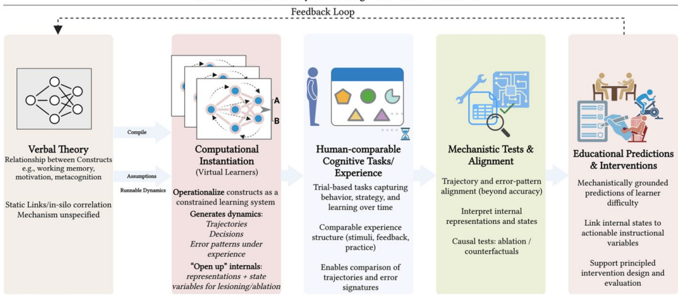
Traditional verbal theories in educational psychology often remain underspecified at the mechanistic level. While they offer rich descriptive constructs and conceptual insights, they provide limited accounts of how learning processes unfold dynamically and causally. Here, “verbal” denotes theories stated in prose and qualitative relations rather than as formal, computational process models. This lack of mechanistic precision constrains rigorous theory testing, limits integration across levels of analysis, and reduces the potential to design interventions grounded in explanatory understanding of learning processes. In this Review, we synthesize an emerging paradigm that treats artificial intelligence (AI) systems not merely as predictive tools or instructional technologies, but as cognitive models of learners, explicit, runnable instantiations of theoretical assumptions about cognition and learning. Our central question is not whether AI systems can serve as cognitive models, but when they should be allowed to count as such. We therefore organize the Review around explicit validity criteria, theoretical grounding, construct validity, mechanistic transparency, alignment with human learning trajectories, error-signature matching, causal-intervention tests, ecological validity, and instructional usefulness, that an AI system must satisfy before its cognitive-model status is granted rather than assumed. We examine how major families of AI models, including neural networks, reinforcement learning agents, cognitive architectures, and large language models, have been used to operationalize core educational constructs such as memory, strategy use, motivation, self-regulation, and social learning. Across these approaches, we highlight how mechanistic transparency, interpretability, and alignment with human learning trajectories and error patterns are essential for explanatory validity. We further discuss methodological tools, such as representation analysis, ablation, and trajectory-level comparison, that enable causal inference about learning mechanisms within models. Finally, we outline key challenges and future directions, including construct validity, ecological realism, individual differences, and ethical accountability. By positioning AI as a theoretical instrument rather than solely an engineering solution, this Review argues that AI-based cognitive models can, when they satisfy these criteria, help transform abstract learning theories into precise, testable, and educationally actionable accounts of how students learn.
Overview
The claims and statistics of this paper haven’t been checked yet.
Free: it reads the open-access text and checks the first 5 claims that cite a source we can check. Create a free account to check every claim.
Integrity signals
Registry
Cites
Statistics
Figures
Verification
Claims the paper makes
The claims and statistics of this paper haven’t been checked yet.
Free: it reads the open-access text and checks the first 5 claims that cite a source we can check. Create a free account to check every claim.
Claims other papers make about this one
Each is checked against this paper’s own text: does it say what the citing paper says it does?
The source backs part of the claim, not all of it — or backs it for a different population, condition or comparison.
In the citing paper
“A further distinction, developed for neural models of cognition more broadly, separates failures that depend on a model's current operating regime from failures that reflect its architectural and representational capacity [50,51].”
From Hallucination as epistemic pollution: epistemic injustice and credibility in futures-oriented science education (2026) · cites this paper as [51]
Experimental — accuracy not yet measured
Self-check
Percentages, sums and reported differences re-computed from the paper’s own numbers.
The self-check needs the paper’s full text.
Citations
Cites
Vaswani, A., Shazeer, N., Parmar, N., Uszkoreit, J., Jones, L., Gomez, A. N., Kaiser, L., & Polosukhin, I. (2017) · arXiv · doi:10.48550/arxiv.1706.03762 · Cited by 120,404 · cited 1×
“Neural networks have a long history in cognitive modeling, from early connectionist work in the 1980 s and 1990 s (Rumelhart et al., 1986 ) to modern deep learning architectures such as recurrent networks (Ji-An et al., 2025 ) and Transformers (Vaswani et al., 2017 ).”
LeCun, Y., Bengio, Y., & Hinton, G. (2015) · Nature · doi:10.1038/nature14539 · Cited by 84,126
Ryan, R. M., & Deci, E. L. (2000) · American Psychologist · doi:10.1037//0003-066x.55.1.68 · Cited by 54,599 · cited 1×
“…well as non-cognitive constructs, such as working memory (Baddeley, 1992 ), learning strategies (Mayer, 2002 ), metacognition (Flavell, 1979 ), motivation (Ryan & Deci, 2000 ), self-efficacy (Bandura, 1997 ), and emotions (Pekrun et al., 2011 ) that are used to explain how students think and learn.”
Reinforcement Learning: An Introduction
Sutton, R. S., & Barto, A. G. (1998) · IEEE Transactions on Neural Networks · doi:10.1109/tnn.1998.712192 · Cited by 27,225
Parallel Distributed Processing: Explorations in the Microstructure of Cognition: Foundations
Rumelhart, D. E., McClelland, J. L., & AU (1986) · doi:10.7551/mitpress/5236.001.0001 · Cited by 15,686
Metacognition and cognitive monitoring: A new area of cognitive–developmental inquiry
Flavell, J. H. (1979) · American Psychologist · doi:10.1037/0003-066x.34.10.906 · Cited by 11,282 · cited 1×
“…set of cognitive as well as non-cognitive constructs, such as working memory (Baddeley, 1992 ), learning strategies (Mayer, 2002 ), metacognition (Flavell, 1979 ), motivation (Ryan & Deci, 2000 ), self-efficacy (Bandura, 1997 ), and emotions (Pekrun et al., 2011 ) that are used to explain how…”
Elman, J. L. (1990) · Cognitive Science · doi:10.1207/s15516709cog1402_1 · Cited by 11,212 · cited 1×
“Work in the 1980 s and 1990 s extended this program with symbolic production-rule systems and early neural networks to simulate how skills are acquired and how language develops (Elman, 1990 ; Laird et al., 1987 ).”
Rudin, C. (2019) · Nature Machine Intelligence · doi:10.1038/s42256-019-0048-x · Cited by 10,561 · cited 2×
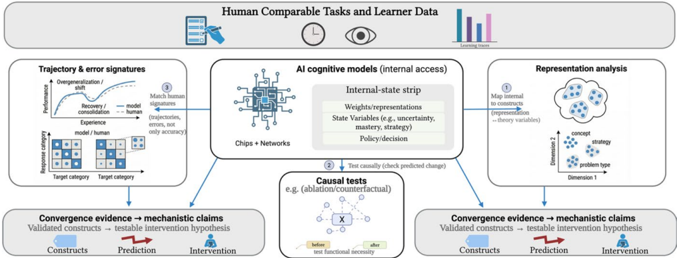
“In this context, interpret - ability requires two steps: (a) identifying what information internal variables carry and (b) demonstrating a causal role in producing behavior, not mere correlation (Lip - ton, 2018; Rudin, 2019 ).”
Estimating the reproducibility of psychological science
Open Science Collaboration (2015) · Science · doi:10.1126/science.aac4716 · Cited by 8,515 · cited 2×
“These constructs are often presented as static categories, supported mainly by discursive argumentation or correlational evidence (Open Science Collaboration, 2015 ), rather than as a dynamic, complex system whose interactions unfold over time and can be instantiated, observed, and evaluated at each step of a learning…”
ChatGPT for good? On opportunities and challenges of large language models for education
Kasneci, E., Sessler, K., Küchemann, S., Bannert, M., Dementieva, D., Fischer, F., Gasser, U., Groh, G., Günnemann, S., Hüllermeier, E., et al. (2023) · Learning and Individual Differences · doi:10.1016/j.lindif.2023.102274 · Cited by 7,326 · cited 2×
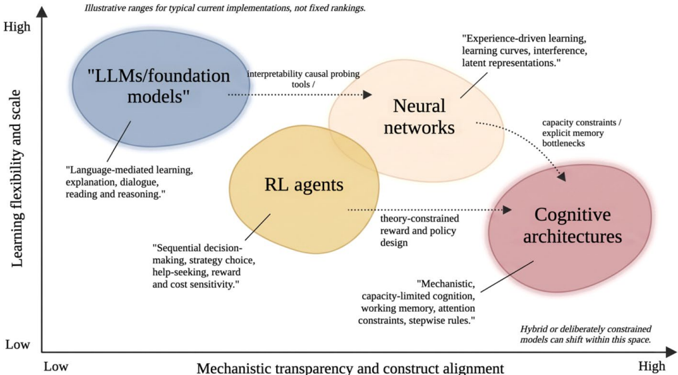
“…pos - sibility for educational cognitive modeling: a single model that can perform a wide variety of language-mediated tasks that resemble classroom activity, including reading, explaining, generating feedback, and participating in dialogue (Baidoo-Anu & Owusu Ansah, 2023; Kasneci et al., 2023 ).”
Lipton, Z. C. (2018) · Queue · doi:10.1145/3236386.3241340 · Cited by 5,427 · cited 1×
“Interpretability remains the central challenge when neural networks are used for educational theory-building (Lipton, 2018 ).”
The Mythos of Model Interpretability
Lipton, Z. C. (2016) · arXiv · doi:10.48550/arxiv.1606.03490 · Cited by 5,422 · cited 1×
“Interpretability remains the central challenge when neural networks are used for educational theory-building (Lipton, 2018 ).”
Baddeley, A. (1992) · Science · doi:10.1126/science.1736359 · Cited by 5,258
Survey of Hallucination in Natural Language Generation
Ji, Z., Lee, N., Frieske, R., Yu, T., Su, D., Xu, Y., Ishii, E., Bang, Y. J., Madotto, A., & Fung, P. (2023) · ACM Computing Surveys · doi:10.1145/3571730 · Cited by 5,025 · cited 1×
“At the same time, LLMs can exhibit distinctly non-human failure modes, includ - ing fluent confabulation (Ji et al., 2023 ), inconsistency over long reasoning chains (Dziri et al., 2023 ), and errors that reflect statistical association rather than grounded understanding (Saparov & He, 2023 ).”
Predictive reward signal of dopamine neurons
Schultz, W. (1998) · Journal of Neurophysiology · doi:10.1152/jn.1998.80.1.1 · Cited by 4,564 · cited 1×
“Within an RL model, an agent selects actions, experiences outcomes, and updates a policy to maximize cumulative reward, echoing core ideas in operant conditioning and goal-directed decision making (Dayan & Daw, 2008; Schultz, 1998 ).”
Chain-Of-Thought Prompting Elicits Reasoning in Large Language Models
Wei, J., Wang, X., Schuurmans, D., Bosma, M., Ichter, B., Xia, F., Chi, E., Le, Q. V., & Zhou, D. (2022) · Advances in Neural Information Processing Systems 35 · doi:10.52202/068431-1800 · Cited by 4,505 · cited 1×
“For example, prompting models to produce explicit step-by-step reasoning often improves performance (Wei et al., 2022 ), which parallels the human benefit of structured analytic reasoning over intuitive responses in some tasks (Stanovich & West, 2000 ).”
Messick, S. (1995) · American Psychologist · doi:10.1037/0003-066x.50.9.741 · Cited by 4,198
Planning and acting in partially observable stochastic domains
Kaelbling, L. P., Littman, M. L., & Cassandra, A. R. (1998) · Artificial Intelligence · doi:10.1016/s0004-3702(98)00023-x · Cited by 4,149
BAİDOO-ANU, D., & OWUSU ANSAH, L. (2023) · Journal of AI · doi:10.61969/jai.1337500 · Cited by 3,939
Reasoning the fast and frugal way: Models of bounded rationality.
Gigerenzer, G., & Goldstein, D. G. (1996) · Psychological Review · doi:10.1037/0033-295x.103.4.650 · Cited by 3,504 · cited 1×
“…psychology often benefits from constraints: models that must learn via bounded memory, limited attention, strategy selection, or retrieval dynamics are less likely to exploit dataset quirks that have no psychological analogue (Bai et al., 2023 ; Gigerenzer & Goldstein, 1996; Kasneci et al., 2023 ).”
Representational similarity analysis-connecting the branches of systems neuroscience
Kriegeskorte, N. (2008) · Frontiers in Systems Neuroscience · doi:10.3389/neuro.06.004.2008 · Cited by 3,355
Hestenes, D., Wells, M., & Swackhamer, G. (1992) · The Physics Teacher · doi:10.1119/1.2343497 · Cited by 3,235 · cited 1×
“If a physics model makes the same systematic confusions as students (e.g., conflating velocity and acceleration, Hestenes et al., 1992 ) and those confusions can be traced to specific representational structure or inference routines, the model offers a plausible mechanistic account; qualitatively…”
Continual lifelong learning with neural networks: A review
Parisi, G. I., Kemker, R., Part, J. L., Kanan, C., & Wermter, S. (2019) · Neural Networks · doi:10.1016/j.neunet.2019.01.012 · Cited by 3,117
Baidoo-Anu, D., & Owusu Ansah, L. (2023) · doi:10.2139/ssrn.4337484 · Cited by 3,004 · cited 1×
“…pos - sibility for educational cognitive modeling: a single model that can perform a wide variety of language-mediated tasks that resemble classroom activity, including reading, explaining, generating feedback, and participating in dialogue (Baidoo-Anu & Owusu Ansah, 2023; Kasneci et al., 2023 ).”
Individual differences in reasoning: Implications for the rationality debate?
Stanovich, K. E., & West, R. F. (2000) · Behavioral and Brain Sciences · doi:10.1017/s0140525x00003435 · Cited by 2,762
Building machines that learn and think like people
Lake, B. M., Ullman, T. D., Tenenbaum, J. B., & Gershman, S. J. (2017) · Behavioral and Brain Sciences · doi:10.1017/s0140525x16001837 · Cited by 2,550
SOAR: An Architecture for General Intelligence
Laird, J. E., Newell, A., & Rosenbloom, P. S. (1987) · Artificial Intelligence · doi:10.1016/0004-3702(87)90050-6 · Cited by 2,535 · cited 1×
“Work in the 1980 s and 1990 s extended this program with symbolic production-rule systems and early neural networks to simulate how skills are acquired and how language develops (Elman, 1990 ; Laird et al., 1987 ).”
Shmueli, G. (2010) · Statistical Science · doi:10.1214/10-sts330 · Cited by 2,517
Cognitive Architecture and Instructional Design: 20 Years Later
Sweller, J., van Merriënboer, J. J. G., & Paas, F. (2019) · Educational Psychology Review · doi:10.1007/s10648-019-09465-5 · Cited by 2,337 · cited 1×
“…a “working memory module” is only meaningful if it shows hallmark properties educational psychologists care about (Oberauer, 2019 ), such as capacity limits, decay, interference, and selective load effects that parallel learners’ performance under instructional demands (Sweller et al., 2019 ).”
Knowledge tracing: Modeling the acquisition of procedural knowledge
Corbett, A. T., & Anderson, J. R. (1995) · User Modelling and User-Adapted Interaction · doi:10.1007/bf01099821 · Cited by 2,324 · cited 1×
“…state variables support instructionally interpretable diagnoses, for instance, separating skill components, identifying misconception-like states, or tracking strategic engagement, rather than collapsing everything into a single “proficiency” axis (Corbett & Anderson, 1994 ; Tong & Ren, 2025 ).”
Pekrun, R., Goetz, T., Frenzel, A. C., Barchfeld, P., & Perry, R. P. (2011) · Contemporary Educational Psychology · doi:10.1016/j.cedpsych.2010.10.002 · Cited by 2,248 · cited 1×
“…well as non-cognitive constructs, such as working memory (Baddeley, 1992 ), learning strategies (Mayer, 2002 ), metacognition (Flavell, 1979 ), motivation (Ryan & Deci, 2000 ), self-efficacy (Bandura, 1997 ), and emotions (Pekrun et al., 2011 ) that are used to explain how students think and learn.”
Shortcut learning in deep neural networks
Geirhos, R., Jacobsen, J.-H., Michaelis, C., Zemel, R., Brendel, W., Bethge, M., & Wichmann, F. A. (2020) · Nature Machine Intelligence · doi:10.1038/s42256-020-00257-z · Cited by 2,224 · cited 3×
“…reflect broad pattern acquisition rather than developmental learning trajectories, and they may solve problems by exploiting surface regularities rather than constructing the kinds of representations students form through instruction and practice (Geirhos et al., 2020 ; Parisi et al., 2019 ).”
Choosing Prediction Over Explanation in Psychology: Lessons From Machine Learning
Yarkoni, T., & Westfall, J. (2017) · Perspectives on Psychological Science · doi:10.1177/1745691617693393 · Cited by 1,916 · cited 1×
“This guards against a subtle interpretive overfitting: re-label - ing arbitrary internal states as psychologically meaningful because they correlate with behavior (Wang et al. 2025a, b, c, 2026a, b, c; Yarkoni and Westfall 2017 ).”
Curiosity-Driven Exploration by Self-Supervised Prediction
Pathak, D., Agrawal, P., Efros, A. A., & Darrell, T. (2017) · 2017 IEEE Conference on Computer Vision and Pattern Recognition Workshops (CVPRW) · doi:10.1109/cvprw.2017.70 · Cited by 1,815 · cited 1×
“Extensions such as intrinsic motivation, curiosity bonuses, and novelty rewards allow modeling of exploration drives that resemble human curiosity and interest in uncertain environments (Oudeyer et al., 2007 ; Pathak et al., 2017 ).”
Artificial intelligence: A powerful paradigm for scientific research
Xu, Y., Liu, X., Cao, X., Huang, C., Liu, E., Qian, S., Liu, X., Wu, Y., Dong, F., Qiu, C.-W., et al. (2021) · The Innovation · doi:10.1016/j.xinn.2021.100179 · Cited by 1,726 · cited 1×
“In this Review, “AI” refers primarily to contemporary learning-enabled computational methods that acquire task competence from data or interaction, including deep neural networks, reinforcement learning agents, and large language models (Frank & Goodman, 2025; Xu et al., 2021 ).”
How Can the Human Mind Occur in the Physical Universe?
Anderson, J. R. (2007) · doi:10.1093/acprof:oso/9780195324259.001.0001 · Cited by 1,483
Network analysis of multivariate data in psychological science
Borsboom, D., Deserno, M. K., Rhemtulla, M., Epskamp, S., Fried, E. I., McNally, R. J., Robinaugh, D. J., Perugini, M., Dalege, J., Costantini, G., et al. (2021) · Nature Reviews Methods Primers · doi:10.1038/s43586-021-00055-w · Cited by 1,371 · cited 1×
“…discursive argumentation or correlational evidence (Open Science Collaboration, 2015 ), rather than as a dynamic, complex system whose interactions unfold over time and can be instantiated, observed, and evaluated at each step of a learning process (Borsboom et al. 2021; Wang et al. 2026a, b, c ).”
A Review of Artificial Intelligence (AI) in Education from 2010 to 2020
Zhai, X., Chu, X., Chai, C. S., Jong, M. S. Y., Istenic, A., Spector, M., Liu, J.-B., Yuan, J., & Li, Y. (2021) · Complexity · doi:10.1155/2021/8812542 · Cited by 1,364 · cited 2×
“Unlike the broader “AI in Education” agenda (Holmes & Tuomi, 2022; Zhai et al., 2021 ), which typically emphasizes applications such as tutoring systems or predic - tive analytics, this paradigm treats AI as a theoretical instrument: algorithms become explicit proxies for cognitive processes that…”
Evolution and Revolution in Artificial Intelligence in Education
Roll, I., & Wylie, R. (2016) · International Journal of Artificial Intelligence in Education · doi:10.1007/s40593-016-0110-3 · Cited by 1,229 · cited 1×
“When these standards are met, AI models become powerful tools for both research and practice in education (Roll & Wylie, 2016 ).”
Intrinsic Motivation Systems for Autonomous Mental Development
Oudeyer, P.-Y., Kaplan, F., & Hafner, V. V. (2007) · IEEE Transactions on Evolutionary Computation · doi:10.1109/tevc.2006.890271 · Cited by 1,126
State of the art and practice in AI in education
Holmes, W., & Tuomi, I. (2022) · European Journal of Education · doi:10.1111/ejed.12533 · Cited by 1,093 · cited 1×
“Unlike the broader “AI in Education” agenda (Holmes & Tuomi, 2022; Zhai et al., 2021 ), which typically emphasizes applications such as tutoring systems or predic - tive analytics, this paradigm treats AI as a theoretical instrument: algorithms become explicit proxies for cognitive processes that…”
Overregularization in language acquisition
Marcus, G. F., Pinker, S., Ullman, M., Hollander, M., Rosen, T. J., Xu, F., & Clahsen, H. (1992) · Monographs of the Society for Research in Child Development · doi:10.2307/1166115 · Cited by 1,065 · cited 1×
“…only reproduced the characteristic U-shaped learning trajectory observed in children (initial success, subsequent overgeneralization, and later recovery, Marcus et al., 1992 ), but also afforded direct inspection of internal representations, clarifying how regularities and exceptions were encoded.”
Artificial Intelligence in Education: A Systematic Literature Review
Wang, S., Wang, F., Zhu, Z., Wang, J., Tran, T., & Du, Z. (2024) · Expert Systems with Applications · doi:10.1016/j.eswa.2024.124167 · Cited by 977 · cited 2×
“A concrete illustration is emotions in learning (Wang et al. 2024a, b ): common accounts propose that states such as anxiety, boredom, and enjoyment shape engagement and achievement (Dewaele et al., 2023 ), but they often leave implicit the precise sequence of appraisals, emotion regulation,…”
Right for the Wrong Reasons: Diagnosing Syntactic Heuristics in Natural Language Inference
McCoy, R. T., Pavlick, E., & Linzen, T. (2019) · Proceedings of the 57th Annual Meeting of the Association for Computational Linguistics · doi:10.18653/v1/p19-1334 · Cited by 944 · cited 1×
“As a result, even when an LLM produces a human-like answer or error, it can be difficult to determine whether the underlying process resembles human cognition or merely matches outcomes through different means (McCoy et al., 2019 ).”
Representational geometry: integrating cognition, computation, and the brain
Kriegeskorte, N., & Kievit, R. A. (2013) · Trends in Cognitive Sciences · doi:10.1016/j.tics.2013.06.007 · Cited by 911
Andreas, J., Rohrbach, M., Darrell, T., & Klein, D. (2016) · 2016 IEEE Conference on Computer Vision and Pattern Recognition (CVPR) · doi:10.1109/cvpr.2016.12 · Cited by 908
Aleven, V. A. W. M. M., & Koedinger, K. R. (2002) · Cognitive Science · doi:10.1207/s15516709cog2602_1 · Cited by 895
Olah, C., Mordvintsev, A., & Schubert, L. (2017) · Distill · doi:10.23915/distill.00007 · Cited by 880
Rote Versus Meaningful Learning
Mayer, R. E. (2002) · Theory Into Practice · doi:10.1207/s15430421tip4104_4 · Cited by 877 · cited 1×
“…behaviors offers a rich set of cognitive as well as non-cognitive constructs, such as working memory (Baddeley, 1992 ), learning strategies (Mayer, 2002 ), metacognition (Flavell, 1979 ), motivation (Ryan & Deci, 2000 ), self-efficacy (Bandura, 1997 ), and emotions (Pekrun et al., 2011 )…”
ACT: A simple theory of complex cognition.
Anderson, J. R. (1996) · American Psychologist · doi:10.1037/0003-066x.51.4.355 · Cited by 830
The parallel distributed processing approach to semantic cognition
McClelland, J. L., & Rogers, T. T. (2003) · Nature Reviews Neuroscience · doi:10.1038/nrn1076 · Cited by 795
Koedinger, K. R., Corbett, A. T., & Perfetti, C. (2012) · Cognitive Science · doi:10.1111/j.1551-6709.2012.01245.x · Cited by 772 · cited 2×
“For educational psychology, that means aligning training conditions with plausible learning environments (Koedinger et al., 2012 ): limited exposure, noisy feedback, varying item formats, and instructional sequences.”
What Learning Systems do Intelligent Agents Need? Complementary Learning Systems Theory Updated
Kumaran, D., Hassabis, D., & McClelland, J. L. (2016) · Trends in Cognitive Sciences · doi:10.1016/j.tics.2016.05.004 · Cited by 759 · cited 1×
“Most impor - tantly, standard networks do not naturally separate short-term working memory from long-term memory, nor do they impose the sharp capacity limits that constrain human information processing (Kumaran et al., 2016 ).”
Cognitive architectures: Research issues and challenges
Langley, P., Laird, J. E., & Rogers, S. (2009) · Cognitive Systems Research · doi:10.1016/j.cogsys.2006.07.004 · Cited by 728 · cited 1×
“A key requirement of this research program is interpretability and theoretical alignment (Langley et al., 2009; Olah et al., 2018 ).”
Agentic AI: Autonomous intelligence for complex goals–a comprehensive survey
Acharya, D. B., Kuppan, K., & Divya, B. (2025) · IEEE Access · doi:10.1109/access.2025.3532853 · Cited by 717 · cited 1×
“…from memory and attention (e.g., Leelaluk et al., 2024; Singh et al., 2025; Trabelsi et al., 2023 ) to higher-order problem-solving (see surveys: Acharya et al., 2025; Kostopoulos et al., 2025 ), self-regulation (Azevedo & Gašević, 2019 ; Dieker et al., 2024 ), and motivation (Pourtousi et al.,…”
Reinforcement learning in the brain
Niv, Y. (2009) · Journal of Mathematical Psychology · doi:10.1016/j.jmp.2008.12.005 · Cited by 717 · cited 1×
“Reinforcement learning provides a computational framework for learning through trial-and-error interaction with an environment, making it a natural formalization of learning from feedback, rewards, and penalties (Niv, 2009 ; Sutton & Barto, 1998 ).”
Artificial intelligence innovation in education: A twenty-year data-driven historical analysis
Guan, C., Mou, J., & Jiang, Z. (2020) · International Journal of Innovation Studies · doi:10.1016/j.ijis.2020.09.001 · Cited by 665 · cited 1×
“Prior uses of AI for human learn - ing have largely prioritized predictive performance over insight, producing models whose internal parameters are opaque and difficult to relate to psychological con - structs (Baker, 2016 ; Guan et al., 2020 ).”
Working memory and attention - a conceptual analysis and review
Oberauer, K. (2019) · Journal of Cognition · doi:10.5334/joc.58 · Cited by 634 · cited 2×
“…calling a recurrent layer a “working memory module” is only meaningful if it shows hallmark properties educational psychologists care about (Oberauer, 2019 ), such as capacity limits, decay, interference, and selective load effects that parallel learners’ performance under instructional…”
Ferguson, C. J., & Heene, M. (2012) · Perspectives on Psychological Science · doi:10.1177/1745691612459059 · Cited by 603 · cited 1×
“Negative results matter here: documenting that a model fails to represent misconceptions, merges distinct skills, or uses spurious cues helps prevent “good accuracy” from being overread as theoretical confirmation (Ferguson & Heene, 2012 ).”
The Building Blocks of Interpretability
Olah, C., Satyanarayan, A., Johnson, I., Carter, S., Schubert, L., Ye, K., & Mordvintsev, A. (2018) · Distill · doi:10.23915/distill.00010 · Cited by 591 · cited 1×
“A key requirement of this research program is interpretability and theoretical alignment (Langley et al., 2009; Olah et al., 2018 ).”
Decision theory, reinforcement learning, and the brain
Dayan, P., & Daw, N. D. (2008) · Cognitive, Affective, & Behavioral Neuroscience · doi:10.3758/cabn.8.4.429 · Cited by 580 · cited 1×
“Within an RL model, an agent selects actions, experiences outcomes, and updates a policy to maximize cumulative reward, echoing core ideas in operant conditioning and goal-directed decision making (Dayan & Daw, 2008; Schultz, 1998 ).”
Learning to reinforcement learn
Wang, J. X., Kurth-Nelson, Z., Tirumala, D., Soyer, H., Leibo, J. Z., Munos, R., Blundell, C., Kumaran, D., & Botvinick, M. (2016) · arXiv · doi:10.48550/arxiv.1611.05763 · Cited by 579
Computational Explorations in Cognitive Neuroscience: Understanding the Mind by Simulating the Brain
O'Reilly, R. C., & Munakata, Y. (2000) · The MIT Press eBooks · doi:10.7551/mitpress/2014.001.0001 · Cited by 568
Using cognitive psychology to understand GPT-3
Binz, M., & Schulz, E. (2023) · Proceedings of the National Academy of Sciences · doi:10.1073/pnas.2218523120 · Cited by 559 · cited 2×
“…& Kaiser, 2019 ), reinforcement learning agents (Sutton & Barto, 1998 ), cognitive architectures, and large language models (Binz et al., 2025 ; Binz & Schulz, 2023 ), substantially expand the space of testable learning theories by enabling researchers to instantiate hypotheses about memory,…”
Cognitive computational neuroscience
Kriegeskorte, N., & Douglas, P. K. (2018) · Nature Neuroscience · doi:10.1038/s41593-018-0210-5 · Cited by 535 · cited 2×
“…higher-level, human-legible variables and establishing causal evidence: intervene on a candidate internal signal and test whether behavior changes in the predicted direction and matches human signatures under comparable manipula-1 tions (Kriegeskorte & Douglas, 2018 ; Meng et al., 2023 ).”
Role play with large language models
Shanahan, M., McDonell, K., & Reynolds, L. (2023) · Nature · doi:10.1038/s41586-023-06647-8 · Cited by 491 · cited 1×
“Moreover, they do not possess intrinsic goals, affect, or motivation unless these are simulated indirectly via prompting or fine-tuning (Shanahan et al., 2023; Shevlin et al., 2019 ), which complicates their use for model - ing motivational and self-regulatory constructs in a mechanistically…”
Role-Play with Large Language Models
Shanahan, M., McDonell, K., & Reynolds, L. (2023) · arXiv · doi:10.48550/arxiv.2305.16367 · Cited by 490 · cited 1×
“Moreover, they do not possess intrinsic goals, affect, or motivation unless these are simulated indirectly via prompting or fine-tuning (Shanahan et al., 2023; Shevlin et al., 2019 ), which complicates their use for model - ing motivational and self-regulatory constructs in a mechanistically…”
Cognitive Tutor: Applied research in mathematics education
Ritter, S., Anderson, J. R., Koedinger, K. R., & Corbett, A. (2007) · Psychonomic Bulletin & Review · doi:10.3758/bf03194060 · Cited by 483 · cited 1×
“…an ACT-R model solving algebra can retrieve a formula from declarative memory and apply production rules that correspond to strategy steps, with retrieval success shaped by activation levels that decay over time, providing a direct mechanism for forgetting and fluency (Ritter et al., 2007 ).”
How Computational Modeling Can Force Theory Building in Psychological Science
Guest, O., & Martin, A. E. (2021) · Perspectives on Psychological Science · doi:10.1177/1745691620970585 · Cited by 460 · cited 2×
“However, without careful theoretical constraints and systematic interpretability work, they offer limited leverage for advancing mechanistic explana - tions of educationally meaningful constructs (Guest & Martin, 2021 ).”
Deep Neural Networks as Scientific Models
Cichy, R. M., & Kaiser, D. (2019) · Trends in Cognitive Sciences · doi:10.1016/j.tics.2019.01.009 · Cited by 454 · cited 1×
“Modern AI techniques (LeCun et al., 2015 ), including deep neural networks (Cichy & Kaiser, 2019 ), reinforcement learning agents (Sutton & Barto, 1998 ), cognitive architectures, and large language models (Binz et al., 2025 ; Binz & Schulz, 2023 ), substantially expand the space of testable…”
The Importance of Falsification in Computational Cognitive Modeling
Palminteri, S., Wyart, V., & Koechlin, E. (2017) · Trends in Cognitive Sciences · doi:10.1016/j.tics.2017.03.011 · Cited by 448 · cited 2×
“Importantly, such techniques should be treated as hypothesis-generating tools, and their claims should be checked with causal tests such as ablations, counterfactual inputs, and triangulation across analyses (Palminteri et al., 2017 ).”
Prediction and explanation in social systems
Hofman, J. M., Sharma, A., & Watts, D. J. (2017) · Science · doi:10.1126/science.aal3856 · Cited by 429 · cited 1×
“Many modern systems can forecast student responses or optimize tutoring policies while remaining opaque about why they work (Hofman et al., 2017 ).”
Stupid tutoring systems, intelligent humans
Baker, R. S. (2016) · International Journal of Artificial Intelligence in Education · doi:10.1007/s40593-016-0105-0 · Cited by 425 · cited 1×
“Prior uses of AI for human learn - ing have largely prioritized predictive performance over insight, producing models whose internal parameters are opaque and difficult to relate to psychological con - structs (Baker, 2016 ; Guan et al., 2020 ).”
Solving the Black Box Problem: A Normative Framework for Explainable Artificial Intelligence
Zednik, C. (2021) · Philosophy & Technology · doi:10.1007/s13347-019-00382-7 · Cited by 419 · cited 1×
“…mechanisms may remain opaque: knowledge is distributed across high-dimensional weight space (McCloskey, 1991 ), and canonical educational constructs such as attention, memory strength, strategy choice, or mis-conception do not map neatly onto localized components (Eliasmith, 2013; Zednik, 2019 ).”
Toward Meta-cognitive Tutoring: A Model of Help Seeking with a Cognitive Tutor
Aleven, V., McLaren, B., Roll, I., & Koedinger, K. (2006) · International Journal of Artificial Intelligence in Education · doi:10.3233/irg-2006-16(2)02 · Cited by 406
Laird, J. E., Lebiere, C., & Rosenbloom, P. S. (2017) · AI Magazine · doi:10.1609/aimag.v38i4.2744 · Cited by 392 · cited 1×
“Unlike modern AI systems, especially large-scale deep learning models, cognitive architectures offer a transparent language for modeling strategies and misconcep - tions, and their evaluation over time (Laird et al., 2017 ).”
Unpacking the exploration–exploitation tradeoff: A synthesis of human and animal literatures.
Mehlhorn, K., Newell, B. R., Todd, P. M., Lee, M. D., Morgan, K., Braithwaite, V. A., Hausmann, D., Fiedler, K., & Gonzalez, C. (2015) · Decision · doi:10.1037/dec0000033 · Cited by 383 · cited 1×
“…the dynamics of exploration and exploi - tation: agents often undergo phases of trying diverse approaches and then consoli-dating around effective ones, resembling how students experiment with strategies and later adopt more efficient methods (Mehlhorn et al., 2015 ; Schulz & Gershman, 2019 ).”
Roll, I., Aleven, V., McLaren, B. M., & Koedinger, K. R. (2011) · Learning and Instruction · doi:10.1016/j.learninstruc.2010.07.004 · Cited by 382 · cited 1×
“For example, an agent can be designed to choose whether to attempt a problem or request a hint, with rewards structured to balance immediate success and long-term learning, and the resulting policy can be compared to student patterns in tutoring systems (Aleven et al., 2006; Roll et al., 2011 ).”
Computational models of collective behavior
Goldstone, R. L., & Janssen, M. A. (2005) · Trends in Cognitive Sciences · doi:10.1016/j.tics.2005.07.009 · Cited by 359 · cited 1×
“This logic also extends to communal-level theories (Goldstone & Janssen, 2005 ): multi-agent, interactive systems can serve as testbeds for social learning and collective cognition (Sun, 2006 ), allowing researchers to examine how individual learning dynamics scale up to group-level phenomena such…”
How to Build a Brain: A Neural Architecture for Biological Cognition
Eliasmith, C. (2013) · Oxford University Press eBooks · doi:10.1093/acprof:oso/9780199794546.001.0001 · Cited by 356 · cited 1×
“…mechanisms may remain opaque: knowledge is distributed across high-dimensional weight space (McCloskey, 1991 ), and canonical educational constructs such as attention, memory strength, strategy choice, or mis-conception do not map neatly onto localized components (Eliasmith, 2013; Zednik, 2019 ).”
Azevedo, R., & Gašević, D. (2019) · Computers in Human Behavior · doi:10.1016/j.chb.2019.03.025 · Cited by 345 · cited 1×
“…memory and attention (e.g., Leelaluk et al., 2024; Singh et al., 2025; Trabelsi et al., 2023 ) to higher-order problem-solving (see surveys: Acharya et al., 2025; Kostopoulos et al., 2025 ), self-regulation (Azevedo & Gašević, 2019 ; Dieker et al., 2024 ), and motivation (Pourtousi et al., 2021 ).”
Logan, G. D. (1992) · Journal of Experimental Psychology: Learning, Memory, and Cognition · doi:10.1037//0278-7393.18.5.883 · Cited by 341 · cited 1×
“…increase the likeli - hood of selecting strategies that yield correct solutions, providing a computational account of strategy refinement with practice, including shifts from effortful proce - dural approaches toward more fluent retrieval-based performance (Haith & Krakauer, 2013 ; Logan, 1992 ).”
The debate over understanding in AI’s large language models
Mitchell, M., & Krakauer, D. C. (2023) · Proceedings of the National Academy of Sciences · doi:10.1073/pnas.2215907120 · Cited by 340 · cited 1×
“LLMs provide a provocative comparison case: their broad pretraining often yields flexible performance, but understanding whether this flexibil - ity reflects human-like abstraction or different mechanisms remains a central inter - pretability question (Mitchell & Krakauer, 2023 ).”
Diedrichsen, J., & Kriegeskorte, N. (2017) · PLOS Computational Biology · doi:10.1371/journal.pcbi.1005508 · Cited by 333 · cited 1×
“Representation analysis can also expose theoretical mismatches (Diedrichsen & Kriegeskorte, 2017 ).”
Pavlik, P. I., & Anderson, J. R. (2005) · Cognitive Science · doi:10.1207/s15516709cog0000_14 · Cited by 311 · cited 1×
“If an ACT-R model includes acti - vation values that rise with practice and decay over time, plotting those trajectories and comparing them to empirical forgetting curves helps validate whether the parameter behaves like the intended construct of memory strength (Pavlik Jr & Anderson, 2005 ).”
Attention in Psychology, Neuroscience, and Machine Learning
Lindsay, G. W. (2020) · Frontiers in Computational Neuroscience · doi:10.3389/fncom.2020.00029 · Cited by 309 · cited 1×
“…mechanism that is sometimes compared to human attention, model attention is not inherently a scarce cognitive resource: absent explicit constraints, attention can be spread broadly across the input, whereas human attention is often limited, selective, and vulnerable to overload (Lindsay, 2020 ).”
Letting structure emerge: connectionist and dynamical systems approaches to cognition
McClelland, J. L., Botvinick, M. M., Noelle, D. C., Plaut, D. C., Rogers, T. T., Seidenberg, M. S., & Smith, L. B. (2010) · Trends in Cognitive Sciences · doi:10.1016/j.tics.2010.06.002 · Cited by 305 · cited 1×
“In contrast, a proper AI cognitive model, such as a tiny recurrent neural network (Ji-An et al., 2025 ), offers full observability (Kriegeskorte & Douglas, 2018 ) ing (McClelland et al., 2010 ).”
Inductive biases for deep learning of higher-level cognition
Goyal, A., & Bengio, Y. (2022) · Proceedings of the Royal Society A: Mathematical, Physical and Engineering Sciences · doi:10.1098/rspa.2021.0068 · Cited by 300
Model-Based and Model-Free Mechanisms of Human Motor Learning
Haith, A. M., & Krakauer, J. W. (2013) · Advances in Experimental Medicine and Biology · doi:10.1007/978-1-4614-5465-6_1 · Cited by 263
Probing Classifiers: Promises, Shortcomings, and Advances
Belinkov, Y. (2022) · Computational Linguistics · doi:10.1162/coli_a_00422 · Cited by 249 · cited 2×
“…has motivated interpretability efforts aimed at finding “hooks” that connect internal activations to human-interpretable concepts, such as neurons or activation patterns associated with semantic categories, syntactic roles, or reasoning-relevant features (Belinkov, 2022; Zhang et al., 2024 ).”
Medical digital twins: enabling precision medicine and medical artificial intelligence
Sadée, C., Testa, S., Barba, T., Hartmann, K., Schuessler, M., Thieme, A. H., Church, G. M., Okoye, I. J., Hernandez‐Boussard, T., Hood, L., et al. (2025) · The Lancet Digital Health · doi:10.1016/j.landig.2025.02.004 · Cited by 248 · cited 1×
“…accuracy; they can function as ‘virtual learners’ that allow researchers to test the plausibility and mechanistic detail of psychological hypotheses: an idea that resonates with the wider scientific notion of a “digital twin” (Saariluoma et al., 2020; Sabri et al., 2025; Sadée et al., 2025 ).”
The Place of Modeling in Cognitive Science
McClelland, J. L. (2009) · Topics in Cognitive Science · doi:10.1111/j.1756-8765.2008.01003.x · Cited by 245 · cited 1×
“…and Other Challenges AI-based cognitive modeling can sharpen learning theory, but it also raises the bar for evidence (Guest & Martin, 2021 ): any link between a model component and a psy - chological construct should be treated as a claim to be tested, not a convenient label (McClelland, 2009 ).”
Deep Learning: How the Mind Overrides Experience
Ohlsson, S. (2011) · Cambridge University Press eBooks · doi:10.1017/cbo9780511780295 · Cited by 235
Locating and Editing Factual Associations in GPT
Meng, K., Bau, D., Andonian, A., & Belinkov, Y. (2022) · arXiv · doi:10.48550/arxiv.2202.05262 · Cited by 230 · cited 1×
“…higher-level, human-legible variables and establishing causal evidence: intervene on a candidate internal signal and test whether behavior changes in the predicted direction and matches human signatures under comparable manipula-1 tions (Kriegeskorte & Douglas, 2018 ; Meng et al., 2023 ).”
Dewaele, J.-M., Botes, E., & Greiff, S. (2023) · Studies in Second Language Acquisition · doi:10.1017/s0272263122000328 · Cited by 215 · cited 1×
“…in learning (Wang et al. 2024a, b ): common accounts propose that states such as anxiety, boredom, and enjoyment shape engagement and achievement (Dewaele et al., 2023 ), but they often leave implicit the precise sequence of appraisals, emotion regulation, attention shifts, and strategy choices…”
Self-citationTrabelsi, Z., Alnajjar, F., Parambil, M. M. A., Gochoo, M., & Ali, L. (2023) · Big Data and Cognitive Computing · doi:10.3390/bdcc7010048 · Cited by 212 · cited 1×
“…rel - evant domains, these models have been applied to processes ranging from memory and attention (e.g., Leelaluk et al., 2024; Singh et al., 2025; Trabelsi et al., 2023 ) to higher-order problem-solving (see surveys: Acharya et al., 2025; Kostopoulos et al., 2025 ), self-regulation (Azevedo &…”
Developing a generalizable detector of when students game the system
Baker, R. S. J. D., Corbett, A. T., Roll, I., & Koedinger, K. R. (2008) · User Modeling and User-Adapted Interaction · doi:10.1007/s11257-007-9045-6 · Cited by 203 · cited 1×
“For example, sensor-free affect detectors and detectors of off-task and “gaming the system” behavior have been developed from interaction traces (Baker et al., 2008 ; Peddy - cord-Liu et al., 2013 ).”
Advancing the network theory of mental disorders: A computational model of panic disorder.
Robinaugh, D. J., Haslbeck, J. M. B., Waldorp, L., Kossakowski, J. J., Fried, E. I., Millner, A. J., McNally, R. J., Ryan, O., de Ron, J., van der Maas, H. L. J., et al. (2024) · Psychological Review · doi:10.1037/rev0000515 · Cited by 197 · cited 1×
“…the sense that they are stated as natural-language descriptions of constructs and their qualitative relations (Van Rooij & Blok - poel, 2020 ), often summarized in conceptual diagrams, rather than as formal process models with explicit step-by-step mechanisms (Robinaugh et al., 2024; Sun, 2008 ).”
Gigerenzer, G. (1998) · Theory & Psychology · doi:10.1177/0959354398082006 · Cited by 196 · cited 1×
“…factors under the umbrella of learning behaviors, but they often do not specify how those factors operate moment by moment in the learner’s mind, which makes it difficult to derive clear, falsifiable predictions and to validate the proposed causal story with decisive evidence (Gigerenzer, 1998 ).”
A computational reward learning account of social media engagement
Lindström, B., Bellander, M., Schultner, D. T., Chang, A., Tobler, P. N., & Amodio, D. M. (2021) · Nature Communications · doi:10.1038/s41467-020-19607-x · Cited by 185 · cited 1×
“…including affective and social costs/bene - fits) in a single computational framework, and for studying how incentives, feedback timing, and perceived costs (e.g., effort or embarrassment in help-seeking) influence learning trajectories (Lindström et al., 2021; Schultner et al., 2025 ).”
The algorithmic architecture of exploration in the human brain
Schulz, E., & Gershman, S. J. (2019) · Current Opinion in Neurobiology · doi:10.1016/j.conb.2018.11.003 · Cited by 184 · cited 1×
“…the dynamics of exploration and exploi - tation: agents often undergo phases of trying diverse approaches and then consoli-dating around effective ones, resembling how students experiment with strategies and later adopt more efficient methods (Mehlhorn et al., 2015 ; Schulz & Gershman, 2019 ).”
Networks and Theories: The Place of Connectionism in Cognitive Science
McCloskey, M. (1991) · Psychological Science · doi:10.1111/j.1467-9280.1991.tb00173.x · Cited by 183 · cited 1×
“…model behaviour aligns with human data, the underlying mechanisms may remain opaque: knowledge is distributed across high-dimensional weight space (McCloskey, 1991 ), and canonical educational constructs such as attention, memory strength, strategy choice, or mis-conception do not map neatly onto…”
Explaining Neural Scaling Laws
Bahri, Y., Dyer, E., Kaplan, J., Lee, J., & Sharma, U. (2021) · arXiv · doi:10.48550/arxiv.2102.06701 · Cited by 182 · cited 1×
“…to complex tasks or large knowledge bases can therefore be challenging without considerable modeling investment, and modeling human-like novelty may be difficult if relevant strategies, misconceptions, and/or error modes are not explicitly represented in the rule set (Bahri et al., 2024 ).”
Explaining neural scaling laws
Bahri, Y., Dyer, E., Kaplan, J., Lee, J., & Sharma, U. (2024) · Proceedings of the National Academy of Sciences · doi:10.1073/pnas.2311878121 · Cited by 181 · cited 1×
“…to complex tasks or large knowledge bases can therefore be challenging without considerable modeling investment, and modeling human-like novelty may be difficult if relevant strategies, misconceptions, and/or error modes are not explicitly represented in the rule set (Bahri et al., 2024 ).”
ChatGPT: The cognitive effects on learning and memory
Bai, L., Liu, X., & Su, J. (2023) · Brain‐X · doi:10.1002/brx2.30 · Cited by 180 · cited 1×
“…psychology often benefits from constraints: models that must learn via bounded memory, limited attention, strategy selection, or retrieval dynamics are less likely to exploit dataset quirks that have no psychological analogue (Bai et al., 2023 ; Gigerenzer & Goldstein, 1996; Kasneci et al., 2023 ).”
Meta-learning in natural and artificial intelligence
Wang, J. X. (2021) · Current Opinion in Behavioral Sciences · doi:10.1016/j.cobeha.2021.01.002 · Cited by 171
Performance vs. competence in human–machine comparisons
Firestone, C. (2020) · Proceedings of the National Academy of Sciences · doi:10.1073/pnas.1905334117 · Cited by 150 · cited 2×
“…cues (forces, conservation relations) ver - sus superficial artifacts (Geirhos et al., 2020 ), motivating stronger controls (counter - factual variants, adversarial rephrasings, or datasets designed to break shortcuts) so alignment cannot be obtained spuriously (Firestone, 2020; Yudkowsky, 2016 ).”
Neural language models as psycholinguistic subjects: Representations of syntactic state
Futrell, R., Wilcox, E., Morita, T., Qian, P., Ballesteros, M., & Levy, R. (2019) · Proceedings of the 2019 Conference of the North · doi:10.18653/v1/n19-1004 · Cited by 144 · cited 1×
“This breadth makes LLMs attractive as candidate mod - els of integrated competencies that matter for education, especially for tasks where language is the medium of learning, reasoning, and assessment (Futrell et al., 2019 ).”
Reinforcement Learning in Education: A Literature Review
Mon, B. F., Wasfi, A., Hayajneh, M., Slim, A., & Ali, N. A. A. (2023) · Informatics · doi:10.3390/informatics10030074 · Cited by 134 · cited 1×
“…modeling learning as goal-directed adaptation over time and for linking motivation, feedback, and strategy selection within a principled computational framework, but it often requires augmentations to represent memory-rich cognition and self-reflective control (Fahad Mon et al., 2023; Wang, 2021 ).”
The synergy of embodied cognition and cognitive load theory for optimized learning
Zou, L., Zhang, Z., Mavilidi, M., Chen, Y., Herold, F., Ouwehand, K., & Paas, F. (2025) · Nature Human Behaviour · doi:10.1038/s41562-025-02152-2 · Cited by 131 · cited 1×
“Many educational activities involve diagrams, gestures, physical manipulation, and spatial reasoning; theories of embodied cognition propose that interaction can reduce load by offloading computa - tion to the environment (Zou et al., 2025 ).”
Faith and Fate: Limits of Transformers on Compositionality
Dziri, N., Lu, X., Sclar, M., Li, X. L., Jiang, L., Lin, B. Y., West, P., Bhagavatula, C., Bras, R. L., Hwang, J. D., et al. (2023) · arXiv · Cited by 124 · cited 1×
“At the same time, LLMs can exhibit distinctly non-human failure modes, includ - ing fluent confabulation (Ji et al., 2023 ), inconsistency over long reasoning chains (Dziri et al., 2023 ), and errors that reflect statistical association rather than grounded understanding (Saparov & He, 2023 ).”
Advancing the Network Theory of Mental Disorders: A Computational Model of Panic Disorder
Robinaugh, D., Haslbeck, J. M. B., Waldorp, L., Kossakowski, J. J., Fried, E. I., Millner, A., McNally, R. J., Ryan, O., de Ron, J., van der Maas, H., et al. (2019) · doi:10.31234/osf.io/km37w · Cited by 120
A foundation model to predict and capture human cognition
Binz, M., Akata, E., Bethge, M., Brändle, F., Callaway, F., Coda-Forno, J., Dayan, P., Demircan, C., Eckstein, M. K., Éltető, N., et al. (2025) · Nature · doi:10.1038/s41586-025-09215-4 · Cited by 119 · cited 1×
“…neural networks (Cichy & Kaiser, 2019 ), reinforcement learning agents (Sutton & Barto, 1998 ), cognitive architectures, and large language models (Binz et al., 2025 ; Binz & Schulz, 2023 ), substantially expand the space of testable learning theories by enabling researchers to instantiate…”
Content and cluster analysis: Assessing representational similarity in neural systems
Laakso, A., & Cottrell, G. (2000) · Philosophical Psychology · doi:10.1080/09515080050002726 · Cited by 107 · cited 1×
“Techniques such as dimensionality reduction and clustering can reveal whether representations group by concept, strategy, or problem type (Laakso & Cottrell, 2000 ).”
On the Predictive Power of Neural Language Models for Human Real-Time Comprehension Behavior
Wilcox, E., Gauthier, J., Hu, J., Qian, P., & Lévy, R. (2020) · arXiv (Cornell University) · doi:10.48550/arxiv.2006.01912 · Cited by 105 · cited 1×
“Emerging studies report partial alignment between certain LLM behaviors and human patterns in domains such as reading time prediction (Wilcox et al., 2020 ), reasoning heuristics (Dasgupta et al., 2024 ), and performance on standardized academic assess - ments (OpenAI et al., 2024 ).”
Open Problems and Fundamental Limitations of Reinforcement Learning from Human Feedback
Casper, S., Davies, X., Shi, C., Gilbert, T. K., Scheurer, J., Rando, J., Freedman, R., Korbak, T., Lindner, D., Freire, P., et al. (2023) · arXiv · doi:10.48550/arxiv.2307.15217 · Cited by 101 · cited 1×
“Such capabilities must be explicitly introduced through meta-RL, hierarchical control, uncertainty estimation, or separate monitoring components (Casper et al., 2023; Wang et al., 2017; Wise et al., 2024 ).”
The Dynamic Nature of Emotions in Language Learning Context: Theory, Method, and Analysis
Wang, P., Ganushchak, L. Y., Welie, C., & van Steensel, R. (2024) · Educational Psychology Review · doi:10.1007/s10648-024-09946-2 · Cited by 98 · cited 2×
“A concrete illustration is emotions in learning (Wang et al. 2024a, b ): common accounts propose that states such as anxiety, boredom, and enjoyment shape engagement and achievement (Dewaele et al., 2023 ), but they often leave implicit the precise sequence of appraisals, emotion regulation,…”
Self-citationPersonality-aware Student Simulation for Conversational Intelligent Tutoring Systems
Liu, Z., Yin, S. X., Lin, G., & Chen, N. F. (2024) · Conference on Empirical Methods in Natural Language Processing (EMNLP) · doi:10.18653/v1/2024.emnlp-main.37 · Cited by 98
Reclaiming AI as a Theoretical Tool for Cognitive Science
van Rooij, I., Guest, O., Adolfi, F., de Haan, R., Kolokolova, A., & Rich, P. (2024) · Computational Brain & Behavior · doi:10.1007/s42113-024-00217-5 · Cited by 97 · cited 1×
“…but in education, the key question is not only what a model can predict, but what it can help explain about learning in context: how students’ knowledge, strategies, attention, and persistence change across practice, instruction, feedback, and social interaction (van Rooij et al., 2024 ).”
Theoretical status of computational cognitive modeling
Sun, R. (2008) · Cognitive Systems Research · doi:10.1016/j.cogsys.2008.07.002 · Cited by 94 · cited 2×
“…should reflect the theory’s causal story rather than being added after the fact; during training, the model should be probed for qualitative signatures linked to the construct; during analysis, multiple methods should triangulate what the model is using (not one convenient probe) (Sun, 2009 ).”
A cognitive approach to human–AI complementarity in dynamic decision-making
González, C., & Heidari, H. (2025) · Nature Reviews Psychology · doi:10.1038/s44159-025-00499-x · Cited by 94 · cited 1×
“Mechanistic validation therefore relies on converging evidence that extends beyond a single internal analysis (Gonzalez & Heidari, 2025 ; O’Reilly & Munakata, 2000 ).”
Formalizing Verbal Theories: A Tutorial by Dialogue
van Rooij, I., & Blokpoel, M. (2020) · Social Psychology · doi:10.1027/1864-9335/a000428 · Cited by 88
Right for the Wrong Reasons: Diagnosing Syntactic Heuristics in Natural Language InferencePreprint
McCoy, R. T., Pavlick, E., & Linzen, T. (2019) · arXiv (Cornell University) · doi:10.48550/arxiv.1902.01007 · Cited by 86 · cited 1×
“As a result, even when an LLM produces a human-like answer or error, it can be difficult to determine whether the underlying process resembles human cognition or merely matches outcomes through different means (McCoy et al., 2019 ).”
Shevlin, H., Vold, K., Crosby, M., & Halina, M. (2019) · EMBO reports · doi:10.15252/embr.201949177 · Cited by 82 · cited 1×
“…they do not possess intrinsic goals, affect, or motivation unless these are simulated indirectly via prompting or fine-tuning (Shanahan et al., 2023; Shevlin et al., 2019 ), which complicates their use for model - ing motivational and self-regulatory constructs in a mechanistically grounded way.”
Comprehensive review of Transformer‐based models in neuroscience, neurology, and psychiatry
Cong, S., Wang, H., Zhou, Y., Wang, Z., Yao, X., & Yang, C. (2024) · Brain‐X · doi:10.1002/brx2.57 · Cited by 82 · cited 1×
“…can be modified to implement separable memory systems, capacity lim - its, and control processes that bring their internal dynamics closer to hypothesized human mechanisms, thereby improving their plausibility as cognitive process models in complex instructional settings (Cong et al., 2024 ).”
Yu, H., & Lowie, W. (2020) · Applied Linguistics · doi:10.1093/applin/amz040 · Cited by 82 · cited 1×
“…the precise sequence of appraisals, emotion regulation, attention shifts, and strategy choices through which these effects arise during learning, as well as how short-term emotional fluctuations accumulate into longer-term learn - ing trajectories (Lowie & Verspoor, 2022 ; Yu & Lowie, 2020 ).”
Where’s the Reward?: A Review of Reinforcement Learning for Instructional Sequencing
Doroudi, S., Aleven, V., & Brunskill, E. (2019) · International Journal of Artificial Intelligence in Education · doi:10.1007/s40593-019-00187-x · Cited by 80 · cited 1×
“However, standard RL also faces important limitations when the goal is to model educational cognition in a richer, psychologically grounded way (Doroudi et al., 2019 ).”
Weird Generalization and Inductive Backdoors: New Ways to Corrupt LLMsPreprint
Betley, J., Cocola, J., Feng, D., Chua, J., Arditi, A., Sztyber, A., & Evans, O. (2025) · arXiv (Cornell University) · doi:10.48550/arxiv.2512.09742 · Cited by 78
AI for Education (AI4EDU): Advancing Personalized Education with LLM and Adaptive Learning
Wen, Q., Liang, J., Carles Sierra, A., Luckin, R., Tong, R. J., Liu, Z., Cui, P., & Tang, J. (2024) · ACM SIGKDD Conference on Knowledge Discovery and Data Mining (KDD) · doi:10.1145/3637528.3671498 · Cited by 77 · cited 2×
“This explanatory focus matters because the ultimate goal is effective support (Tong & Ren, 2025; Wen et al., 2024 ).”
Simulated Learners in Educational Technology: A Systematic Literature Review and a Turing-like Test
Käser, T., & Alexandron, G. (2023) · International Journal of Artificial Intelligence in Education · doi:10.1007/s40593-023-00337-2 · Cited by 74 · cited 1×
“…and error patterns, comparing them to those observed in students; when interpretable components correspond to recognizable skills or misconceptions, the model offers concrete candidate mechanisms for how learners organize knowl - edge and why they err (Käser & Alexandron, 2024 ; McNamara, 2024 ).”
Impact Of Explainable AI On Cognitive Load: Insights From An Empirical StudyPreprint
Herm, L.-V. (2023) · arXiv (Cornell University) · doi:10.48550/arxiv.2304.08861 · Cited by 72 · cited 1×
“…load effects that are directly relevant to instructional design: when a task requires maintaining too many items simultaneously, performance slows or errors increase due to buffer limitations or the need to swap information into focus, paralleling human behavior under high load (Herm, 2023 ).”
Naturalistic reinforcement learning
Wise, T., Emery, K. J., & Radulescu, A. (2023) · Trends in Cognitive Sciences · doi:10.1016/j.tics.2023.08.016 · Cited by 72 · cited 1×
“Such capabilities must be explicitly introduced through meta-RL, hierarchical control, uncertainty estimation, or separate monitoring components (Casper et al., 2023; Wang et al., 2017; Wise et al., 2024 ).”
Agentic AI in Education: State of the Art and Future Directions
Kostopoulos, G., Gkamas, V., Rigou, M., & Kotsiantis, S. (2025) · IEEE Access · doi:10.1109/access.2025.3620473 · Cited by 69 · cited 1×
“…memory and attention (e.g., Leelaluk et al., 2024; Singh et al., 2025; Trabelsi et al., 2023 ) to higher-order problem-solving (see surveys: Acharya et al., 2025; Kostopoulos et al., 2025 ), self-regulation (Azevedo & Gašević, 2019 ; Dieker et al., 2024 ), and motivation (Pourtousi et al., 2021 ).”
Language models, like humans, show content effects on reasoning tasks
Lampinen, A. K., Dasgupta, I., Chan, S. C. Y., Sheahan, H. R., Creswell, A., Kumaran, D., McClelland, J. L., & Hill, F. (2024) · PNAS Nexus · doi:10.1093/pnasnexus/pgae233 · Cited by 69
Apply rich psychological terms in AI with care
Shevlin, H., & Halina, M. (2019) · Nature Machine Intelligence · doi:10.1038/s42256-019-0039-y · Cited by 68 · cited 2×
“…they do not possess intrinsic goals, affect, or motivation unless these are simulated indirectly via prompting or fine-tuning (Shanahan et al., 2023; Shevlin et al., 2019 ), which complicates their use for model - ing motivational and self-regulatory constructs in a mechanistically grounded way.”
Chunyan, T., & Ren, C. (2025) · Scientific Reports · doi:10.1038/s41598-025-10497-x · Cited by 65 · cited 3×
“This explanatory focus matters because the ultimate goal is effective support (Tong & Ren, 2025; Wen et al., 2024 ).”
Discovering cognitive strategies with tiny recurrent neural networks
Ji-An, L., Benna, M. K., & Mattar, M. G. (2025) · Nature · doi:10.1038/s41586-025-09142-4 · Cited by 64 · cited 4×
“For example, very small recurrent networks can be trained to recover distinct, human-interpretable cognitive strategies from sequential behavior, providing a compact bridge between observed learning curves and candidate internal algorithms (Ji-An et al., 2025 ).”
InfluentialBridging the data gap between children and large language models
Frank, M. C. (2023) · Trends in Cognitive Sciences · doi:10.1016/j.tics.2023.08.007 · Cited by 63 · cited 1×
“In edu - cation, they may be most useful as both tool and foil: tools for simulating complex language-heavy tasks (explanations, feedback, dialogue) and foils that force theorists to specify what counts as genuine mechanistic explanation versus surface-level similarity (Frank, 2023 ).”
Aligning generalization between humans and machines
Ilievski, F., Hammer, B., van Harmelen, F., Paaßen, B., Saralajew, S., Schmid, U., Biehl, M. L., Bolognesi, M., Dong, X., Gashteovski, K., et al. (2025) · Nature Machine Intelligence · doi:10.1038/s42256-025-01109-4 · Cited by 60 · cited 1×
“Internal access becomes scientifically informative only when it can be translated into psychologically meaningful variables and shown to play a functional role in generating behavior (Ilievski et al., 2025 ).”
Towards responsible AI for education: Hybrid human-AI to confront the elephant in the room
Hooshyar, D., Šír, G., Yang, Y., Kikas, E., Hämäläinen, R., Kärkkäinen, T., Gašević, D., & Azevedo, R. (2025) · Computers and Education Artificial Intelligence · doi:10.1016/j.caeai.2025.100524 · Cited by 57 · cited 1×
“…attractive: models can combine the learning capacity of neural methods with the interpretability and constraint structure of cognitive architectures, or embed language-model components within decision-making agents to support richer, educationally realistic tasks (Hooshyar et al., 2025 ).”
Multimodality of AI for Education: Toward Artificial General Intelligence
Lee, G., Shi, L., Latif, E., Gao, Y., Bewersdorff, A., Nyaaba, M., Guo, S., Liu, Z., Mai, G., Liu, T., et al. (2025) · IEEE Transactions on Learning Technologies · doi:10.1109/tlt.2025.3574466 · Cited by 55 · cited 1×
“A fourth direction is expanding beyond text-and-symbol tasks to multi-modal and embodied learning (Lee et al., 2025; Zhang et al., 2025 ).”
Cognitive Modeling Using Artificial Intelligence
Frank, M. C., & Goodman, N. D. (2025) · Annual Review of Psychology · doi:10.1146/annurev-psych-030625-040748 · Cited by 55 · cited 2×
“The ability to “open up” a model and connect internal structure to observable behavior is a central advantage of AI-as-cog - nitive-models (Frank & Goodman, 2025 ): it supports mechanistic explanations that are otherwise inaccessible in real learners (Aberšek et al., 2023 ; McClelland & Rog - ers,…”
Language models show human-like content effects on reasoning tasks
Dasgupta, I., Lampinen, A. K., Chan, S. C. Y., Sheahan, H. R., Creswell, A., Kumaran, D., McClelland, J. L., & Hill, F. (2022) · arXiv · doi:10.48550/arxiv.2207.07051 · Cited by 53 · cited 2×
“LLMs can also display recognizable human-like biases and fallacies, suggesting that exposure to human-generated cultural artifacts may induce convergent error tendencies, even if the underlying mechanisms differ (Dasgupta et al., 2024 ).”
Thought Cloning: Learning to Think while Acting by Imitating Human Thinking
Hu, S., & Clune, J. (2023) · neural information processing systems · doi:10.52202/075280-1924 · Cited by 52
A step-by-step tutorial on using the cognitive architecture ACT-R in combination with fMRI data
Borst, J. P., & Anderson, J. R. (2016) · Journal of Mathematical Psychology · doi:10.1016/j.jmp.2016.05.005 · Cited by 51 · cited 1×
“Because cognitive architectures implement constraints that resemble human limitations, they can reproduce fine-grained educational phenomena beyond final accuracy, including reaction time distributions, dual-task interference, and qualitative error patterns (Borst & Anderson, 2017 ).”
LLM Agents Grounded in Self-Reports Enable General-Purpose Simulation of Individuals
Park, J. S., Zou, C. Q., Kamphorst, J., Egan, N., Shaw, A., Hill, B. M., Cai, C., Morris, M. R., Liang, P., Willer, R., et al. (2024) · arXiv · doi:10.48550/arxiv.2411.10109 · Cited by 49 · cited 1×
“We can contrast the explicit intermediate steps of rule-based accounts against the similarity structures of exemplar retrieval, validating these models against human-centric data like reaction times and error signatures rather than mere final scores (Park et al., 2024 ; Schunn & Wallach, 2005 ).”
BASED-XAI: Breaking Ablation Studies Down for Explainable Artificial IntelligencePreprint
Hameed, I., Sharpe, S., Barcklow, D., Au-Yeung, J. C., Verma, S., Huang, J., Barr, B., & Bruss, C. B. (2022) · arXiv (Cornell University) · doi:10.48550/arxiv.2207.05566 · Cited by 48 · cited 1×
“Ablation is also useful for testing whether purported metacognitive machinery matters (Hameed et al., 2022 ): compare a model that includes monitoring and con - trol processes (for example, assessing uncertainty and choosing what to study next) with a version that lacks them.”
From internal models toward metacognitive AI
Kawato, M., & Cortese, A. (2021) · Biological Cybernetics · doi:10.1007/s00422-021-00904-7 · Cited by 47 · cited 1×
“If only the metacognitive version reproduces student behavior, that difference provides causal evidence that metacognitive mechanisms may be necessary to explain the data (Kawato & Cortese, 2021 ).”
Language Models Are Greedy Reasoners: A Systematic Formal Analysis of Chain-of-Thought
Saparov, A., & He, H. (2022) · arXiv · doi:10.48550/arxiv.2210.01240 · Cited by 46 · cited 1×
“At the same time, LLMs can exhibit distinctly non-human failure modes, includ - ing fluent confabulation (Ji et al., 2023 ), inconsistency over long reasoning chains (Dziri et al., 2023 ), and errors that reflect statistical association rather than grounded understanding (Saparov & He, 2023 ).”
Inductive Biases for Deep Learning of Higher-Level CognitionPreprint
Goyal, A., & Bengio, Y. (2020) · arXiv (Cornell University) · doi:10.48550/arxiv.2011.15091 · Cited by 43 · cited 1×
“Researchers have therefore introduced cognitively motivated bottlenecks and constraints, such as limiting layer sizes, restricting attention heads, adding noise or penalties under high information load, or incorporating memory modules that impose capacity-like limitations (Goyal & Bengio, 2020 ).”
Revisiting the role of computational neuroimaging in the era of integrative neuroscience
Loosen, A. M., Kato, A., & Gu, X. (2024) · Neuropsychopharmacology · doi:10.1038/s41386-024-01946-8 · Cited by 42 · cited 1×
“Stronger support comes from converging external evidence, for example, when computational models are paired with human neuroimaging data showing that similar internal representations or processing dynamics are engaged during human cognition (Loosen et al., 2025 ).”
Knowledge Engineering using Large Language ModelsPreprint
Allen, B. P., Stork, L., & Groth, P. (2023) · arXiv (Cornell University) · doi:10.48550/arxiv.2310.00637 · Cited by 41 · cited 1×
“These systems often require substantial manual knowledge engi - neering, making them labour-intensive to build and frequently task-specific in scope (Allen et al., 2023 ).”
Ghimire, S., Abdulla, S., Joseph, L. P., Prasad, S., Murphy, A. F., Devi, A., Barua, P. D., Deo, R. C., Acharya, U. R., & Yaseen, Z. M. (2024) · Computers and Education Artificial Intelligence · doi:10.1016/j.caeai.2024.100331 · Cited by 39 · cited 1×
“…value is the ability to run “what-if” simulations for instructional design: under a model that accurately captures a learner’s constraints, researchers can test which interventions should help that learner and then evaluate those predictions empirically (Ghimire et al., 2024; Wen et al., 2024 ).”
AI Surrogates and illusions of generalizability in cognitive science
Crockett, M. J., & Messeri, L. R. (2025) · Trends in Cognitive Sciences · doi:10.1016/j.tics.2025.09.012 · Cited by 36 · cited 1×
“However, correspondence between model outcomes and observed social phenomena alone does not demonstrate the correctness of the underlying mechanisms, as different models can often reproduce similar aggregate patterns (Crockett & Messeri, 2025 ).”
Wang, P., Liu, A., & Sun, X. S. (2025) · Interdisciplinary medicine · doi:10.1002/inmd.20240095 · Cited by 33 · cited 3×
“This guards against a subtle interpretive overfitting: re-label - ing arbitrary internal states as psychologically meaningful because they correlate with behavior (Wang et al. 2025a, b, c, 2026a, b, c; Yarkoni and Westfall 2017 ).”
Self-citationBenchmarking the Pedagogical Knowledge of Large Language ModelsPreprint
Lelièvre, M., Waldock, A., Liu, M., Aspillaga, N. V., Mackintosh, A., Portela, M. J. O., Lee, J., Atherton, P., Ince, R. A. A., & Garrod, O. (2025) · arXiv (Cornell University) · doi:10.48550/arxiv.2506.18710 · Cited by 28 · cited 1×
“A useful benchmark suite would emphasize phenomena and signatures rather than only task accuracy (Lelièvre et al., 2025 ): forgetting curves, spacing and interleaving effects, dual-task interference, canonical misconception patterns, strategy shifts, and transfer tests across systematically varied…”
Brummer, L., de Boer, H., Mouw, J. M., & Strijbos, J.-W. (2024) · Learning Environments Research · doi:10.1007/s10984-024-09501-4 · Cited by 25 · cited 1×
“Evaluation should include classic learning signatures, such as spacing and interference effects, transfer gradients, robust misconception profiles, and instructional sensitiv - ity, because these phenomena are often more diagnostic of mechanism than aggregate scores (Brummer et al., 2024 ).”
Leelaluk, S., Tang, C. C., Minematsu, T., Taniguchi, Y., Okubo, F., Yamashita, T., & Shimada, A. (2024) · IEEE Access · doi:10.1109/access.2024.3429554 · Cited by 25 · cited 1×
“…this backdrop, and across educationally rel - evant domains, these models have been applied to processes ranging from memory and attention (e.g., Leelaluk et al., 2024; Singh et al., 2025; Trabelsi et al., 2023 ) to higher-order problem-solving (see surveys: Acharya et al., 2025; Kostopoulos et…”
Human Digital Twins and Cognitive Mimetic
Saariluoma, P. O., Cañas, J. J., & Karvonen, A. (2020) · Advances in intelligent systems and computing · doi:10.1007/978-3-030-55307-4_15 · Cited by 24
AIED: From Cognitive Simulations to Learning Engineering, with Humans in the Middle
McNamara, D. S. (2023) · International Journal of Artificial Intelligence in Education · doi:10.1007/s40593-023-00349-y · Cited by 22 · cited 1×
“…and error patterns, comparing them to those observed in students; when interpretable components correspond to recognizable skills or misconceptions, the model offers concrete candidate mechanisms for how learners organize knowl - edge and why they err (Käser & Alexandron, 2024 ; McNamara, 2024 ).”
Cheng, Y.-A., Sanayei, M., Chen, X., Jia, K., Li, S., Fang, F., Watanabe, T., Thiele, A., & Zhang, R. (2025) · Nature Human Behaviour · doi:10.1038/s41562-025-02149-x · Cited by 22 · cited 2×
“…or predic - tive analytics, this paradigm treats AI as a theoretical instrument: algorithms become explicit proxies for cognitive processes that can be implemented, inspected, and experimentally manipulated (Cheng et al. 2025 ; MacLellan et al. 2018; Wang et al. 2026a, b, c; Wang and Jiang 2025 ).”
Wang, P., Liu, H., Shi, Y., Liu, A., Zhu, Q., Albu, I., Pacholec, M., Cheng, L. L., Sun, X. S., & Chi, X. (2025) · Med Research · doi:10.1002/mdr2.70017 · Cited by 22 · cited 3×
“This guards against a subtle interpretive overfitting: re-label - ing arbitrary internal states as psychologically meaningful because they correlate with behavior (Wang et al. 2025a, b, c, 2026a, b, c; Yarkoni and Westfall 2017 ).”
Self-citationPersonalized deep neural networks reveal mechanisms of math learning disabilities in children
Strock, A., Mistry, P. K., & Menon, V. (2025) · Science Advances · doi:10.1126/sciadv.adq9990 · Cited by 19 · cited 4×
“Rather than fitting a single “average learner,” models can incorporate parameters that represent stable traits or situational states (e.g., prior knowledge, working memory capacity, anxiety sensitivity, persistence costs) and estimate them from learner data (Strock et al., 2025 ).”
InfluentialOverloaded minds and machines: a cognitive load framework for human-AI symbiosis
Wang, P., Liu, H., Zou, L.-Y., & Paas, F. (2026) · Artificial Intelligence Review · doi:10.1007/s10462-026-11510-z · Cited by 17 · cited 3×
“…or predic - tive analytics, this paradigm treats AI as a theoretical instrument: algorithms become explicit proxies for cognitive processes that can be implemented, inspected, and experimentally manipulated (Cheng et al. 2025 ; MacLellan et al. 2018; Wang et al. 2026a, b, c; Wang and Jiang 2025 ).”
Self-citationUsing an Artificial Intelligence (AI) Agent to Support Teacher Instruction and Student Learning
Dieker, L., Hines, R., Wilkins, I., Hughes, C., Hawkins Scott, K., Smith, S., Ingraham, K., Ali, K., Zaugg, T., & Shah, S. (2024) · Journal of Special Education Preparation · doi:10.33043/d8xb94q7 · Cited by 16 · cited 1×
“…memory and attention (e.g., Leelaluk et al., 2024; Singh et al., 2025; Trabelsi et al., 2023 ) to higher-order problem-solving (see surveys: Acharya et al., 2025; Kostopoulos et al., 2025 ), self-regulation (Azevedo & Gašević, 2019 ; Dieker et al., 2024 ), and motivation (Pourtousi et al., 2021 ).”
AI and Cognitive Modelling for Education
Aberšek, B., Flogie, A., & Pesek, I. (2023) · Springer eBooks · doi:10.1007/978-3-031-35331-4 · Cited by 15 · cited 1×
“…to “open up” a model and connect internal structure to observable behavior is a central advantage of AI-as-cog - nitive-models (Frank & Goodman, 2025 ): it supports mechanistic explanations that are otherwise inaccessible in real learners (Aberšek et al., 2023 ; McClelland & Rog - ers, 2003 ).”
Neural basis of cooperative behavior in biological and artificial intelligence systems
Jiang, M., Gu, L., Ma, M., Li, Q., Kao, J. C., & Hong, W. (2025) · Science · doi:10.1126/science.adw8151 · Cited by 15 · cited 2×
“Beyond individual learning, neural-network-based agents embedded in multi-agent environments can model how cooperation and coordination emerge and break down, offering testbeds for classroom-relevant collective cogni - tion such as peer learning and norm formation (Jiang et al., 2026 ).”
Beyond Interpretability: The Gains of Feature Monosemanticity on Model Robustness
Zhang, Q., Wang, Y., Cui, J., Pan, X., Lei, Q., Jegelka, S., & Wang, Y. (2025) · International Conference on Learning Representations · doi:10.48550/arxiv.2410.21331 · Cited by 14 · cited 1×
“…has motivated interpretability efforts aimed at finding “hooks” that connect internal activations to human-interpretable concepts, such as neurons or activation patterns associated with semantic categories, syntactic roles, or reasoning-relevant features (Belinkov, 2022; Zhang et al., 2024 ).”
Pourtousi, Z., Khalijian, S., Ghanizadeh, A., Babanezhad, M., Nakhjiri, A. T., Marjani, A., & Shirazian, S. (2021) · Scientific Reports · doi:10.1038/s41598-021-89005-w · Cited by 14 · cited 1×
“…memory and attention (e.g., Leelaluk et al., 2024; Singh et al., 2025; Trabelsi et al., 2023 ) to higher-order problem-solving (see surveys: Acharya et al., 2025; Kostopoulos et al., 2025 ), self-regulation (Azevedo & Gašević, 2019 ; Dieker et al., 2024 ), and motivation (Pourtousi et al., 2021 ).”
A Complex Dynamic Systems Theory Perspective on Speaking in Second Language Development
Lowie, W. M., & Verspoor, M. H. (2022) · Routledge eBooks · doi:10.4324/9781003022497-5 · Cited by 14 · cited 1×
“…the precise sequence of appraisals, emotion regulation, attention shifts, and strategy choices through which these effects arise during learning, as well as how short-term emotional fluctuations accumulate into longer-term learn - ing trajectories (Lowie & Verspoor, 2022 ; Yu & Lowie, 2020 ).”
Network insights: Transforming brain science and mental health through innovative analysis
Wang, P., & Cheng, L. L. (2024) · Brain‐X · doi:10.1002/brx2.53 · Cited by 13 · cited 1×
“Learn - ers differ in prior knowledge, language proficiency, cultural familiarity, cognitive resources, and affective-motivational states; a single “average learner” model can mis - characterize variability and amplify inequities (Rose, 2016 ; Wang & Cheng, 2024 ).”
Self-citationThought Cloning: Learning to Think while Acting by Imitating Human Thinking
Hu, S., & Clune, J. (2023) · arXiv · doi:10.48550/arxiv.2306.00323 · Cited by 13 · cited 1×
“The goal is not simply to predict student performance, but to propose “how and why” learning occurs by letting hypotheses “run” inside a model and then checking the resulting dynamics against human data (e.g., response times, gaze, speech and think-aloud data, Hu & Clune, 2023 ).”
AI-driven complex systems redefine cognitive science
Wang, P., Sun, X., Zou, L., Law, E. L., & PAAS, F. G. W. C. (2026) · The Innovation · doi:10.1016/j.xinn.2026.101314 · Cited by 12 · cited 3×
“…or predic - tive analytics, this paradigm treats AI as a theoretical instrument: algorithms become explicit proxies for cognitive processes that can be implemented, inspected, and experimentally manipulated (Cheng et al. 2025 ; MacLellan et al. 2018; Wang et al. 2026a, b, c; Wang and Jiang 2025 ).”
Self-citationAI for education: Trends and insights
Wang, Y., & Jiang, X. (2025) · The Innovation · doi:10.1016/j.xinn.2025.100872 · Cited by 10 · cited 1×
“…or predic - tive analytics, this paradigm treats AI as a theoretical instrument: algorithms become explicit proxies for cognitive processes that can be implemented, inspected, and experimentally manipulated (Cheng et al. 2025 ; MacLellan et al. 2018; Wang et al. 2026a, b, c; Wang and Jiang 2025 ).”
Embodied cognitive intelligence guided Moon sample collection
Zhang, C., Liu, C., Duan, S., Zheng, X., Yu, T., & Zhang, J. (2025) · The Innovation · doi:10.1016/j.xinn.2025.100939 · Cited by 9 · cited 2×
“These domains often require sensitive per - sonal data, raising issues of privacy, informed consent, data security, and the potential for unintended surveillance (Zhang et al., 2025 ).”
Sabri, S., Aghaabbasi, M., Atkinson, S. R., Amon, M. J., Hancock, P. A., Azevedo, R., Wiedbusch, M. D., Maraj, C. S., Mondesire, S. C., Soykan, B., et al. (2025) · Cognitive Systems Research · doi:10.1016/j.cogsys.2025.101414 · Cited by 8 · cited 1×
“…accuracy; they can function as ‘virtual learners’ that allow researchers to test the plausibility and mechanistic detail of psychological hypotheses: an idea that resonates with the wider scientific notion of a “digital twin” (Saariluoma et al., 2020; Sabri et al., 2025; Sadée et al., 2025 ).”
Fan, Y., Wei, X., Gong, R., Ma, Y., Zhang, X., Zhang, Q., & Liu, X. (2024) · Proceedings of the AAAI Conference on Artificial Intelligence · doi:10.1609/aaai.v38i11.29080 · Cited by 8 · cited 1×
“Some behaviors, such as selective focus, may emerge under appropriate costs (Fan et al., 2024 ), while others may require explicit caps to match human failure patterns.”
State and capacity in neural models of cognition and consciousness
Wang, P., Liu, H., Ilievski, F., Ganushchak, L., Zou, L., Laureys, S., & Paas, F. (2026) · Trends Open · doi:10.1016/j.treopn.2026.04.004 · Cited by 8 · cited 3×
“…or predic - tive analytics, this paradigm treats AI as a theoretical instrument: algorithms become explicit proxies for cognitive processes that can be implemented, inspected, and experimentally manipulated (Cheng et al. 2025 ; MacLellan et al. 2018; Wang et al. 2026a, b, c; Wang and Jiang 2025 ).”
Self-citationAffective Computing in Education
Das, D. K., Patnaik, P., Nayak, N., Das, S. K., & Baral, M. (2024) · Advances in computational intelligence and robotics book series · doi:10.4018/979-8-3693-7011-7.ch005 · Cited by 8
A Comparison of Approximations for Base-Level Activation in ACT-R
Fisher, C. R., Houpt, J. W., & Glenn Gunzelmann, A. (2018) · Computational Brain & Behavior · doi:10.1007/s42113-018-0015-3 · Cited by 6 · cited 1×
“…for modeling memory and attention because these constructs are embedded directly into the architecture: working memory capacity is limited and explicit, long-term memory items vary in activation and decay, and attentional focus is constrained by serial processing bottlenecks (Fisher et al., 2018 ).”
Artificial Intelligence and Accessibility
Wang, P., Zhao, M., & Cheng, L. L. (2025) · Springer eBooks · doi:10.1007/978-3-031-40858-8_466-1 · Cited by 6
Self-citationFodor and Pylyshyn’s Critique of Connectionism and the Brain as Basis of the Mind
von der Malsburg, C. (2024) · Human Arenas · doi:10.1007/s42087-024-00452-z · Cited by 6
Reward is enough for social learning
Schultner, D. T., Molleman, L., & Lindström, B. (2025) · Trends in Cognitive Sciences · doi:10.1016/j.tics.2025.06.012 · Cited by 5 · cited 1×
“…including affective and social costs/bene - fits) in a single computational framework, and for studying how incentives, feedback timing, and perceived costs (e.g., effort or embarrassment in help-seeking) influence learning trajectories (Lindström et al., 2021; Schultner et al., 2025 ).”
Human-like Forgetting Curves in Deep Neural NetworksPreprint
Kline, D. (2025) · arXiv (Cornell University) · doi:10.48550/arxiv.2506.12034 · Cited by 4
Analysis Methods in Neural Language Processing: A SurveyPreprint
Belinkov, Y., & Glass, J. (2018) · arXiv (Cornell University) · doi:10.48550/arxiv.1812.08951 · Cited by 3 · cited 2×
“One involves post-hoc analysis: probing representations, visualizing activations, identifying units correlated with interpretable concepts (Belinkov & Glass, 2019; Olah et al., 2017 ).”
Using Artificial Neural Networks to Simulate Social Category Learning: A Tutorial
Singh, S. K., Benton, D. T., & Lei, R. F. (2025) · Social Cognition · doi:10.1521/soco.2025.43.3.152 · Cited by 2 · cited 1×
“…educationally rel - evant domains, these models have been applied to processes ranging from memory and attention (e.g., Leelaluk et al., 2024; Singh et al., 2025; Trabelsi et al., 2023 ) to higher-order problem-solving (see surveys: Acharya et al., 2025; Kostopoulos et al., 2025 ),…”
Can We Test Consciousness Theories on AI? Ablations, Markers, and RobustnessPreprint
Phua, Y. J. (2025) · arXiv (Cornell University) · doi:10.48550/arxiv.2512.19155 · Cited by 2 · cited 1×
“A second powerful method is lesioning or ablation, which tests the causal role of model components by disabling them and observing behavioral change (Phua, 2025 ).”
A unified theory of learningPreprint
Katayose, T. (2022) · arXiv (Cornell University) · doi:10.48550/arxiv.2203.16941 · Cited by 1 · cited 1×
“When a cognitive architecture performs a task, researchers can inspect the sequence of operations, the retrievals from memory, the application of procedural rules, and the timing of these events (Katayose, 2022 ).”
OpenAI, Achiam, J., Adler, S., Agarwal, S., Ahmad, L., Akkaya, I., Aleman, F. L., Almeida, D., Altenschmidt, J., Altman, S., et al. (2023) · arXiv · doi:10.48550/arxiv.2303.08774
On the proper role of linguistically-oriented deep net analysis in linguistic theorizing
Baroni, M. (2021) · arXiv · doi:10.48550/arxiv.2106.08694 · cited 1×
“Overall, LLMs offer an unusually broad platform for modeling language-mediated cognition and for stress-testing claims about behavioral alignment, but they demand extra care in interpretability and in claims about mechanism (Baroni, 2022 ).”
Curiosity-driven Exploration by Self-supervised Prediction
Pathak, D., Agrawal, P., Efros, A. A., & Darrell, T. (2017) · arXiv · doi:10.48550/arxiv.1705.05363 · cited 1×
“Extensions such as intrinsic motivation, curiosity bonuses, and novelty rewards allow modeling of exploration drives that resemble human curiosity and interest in uncertain environments (Oudeyer et al., 2007 ; Pathak et al., 2017 ).”
Network Insights: Transforming Brain Science and Mental Health through Innovative Analysis
Wang, P., & Cheng, L. (2024) · doi:10.31234/osf.io/4tdkb
Self-citation
Research works printed but not linked: 23
- Anderson, J. R., & Schunn, C. D. (2000). Implications of the ACT-R learning theory: No magic bullets. In R. Glaser (Ed.), Advances in instructional psychology: Educational design and cognitive science (Vol. Vol. 5, pp. 1-33). Lawrence Erlbaum Associates Publishers.
- Bandura, A. (1997). Self-efficacy: The exercise of control (pp. ix-604).
- Beck, J., Woolf, B., & Beal, C. (2000). ADVISOR: A machine learning architecture for intelligent tutor construction. 106 Page 28 of 36 Educational Psychology Review (2026) 38:106
- Breiman, L. (2003). Statistical modeling: The two cultures. Quality Control and Applied Statistics, 48(1), 81-82.
- Chi, M. T., De Leeuw, N., Chiu, M. H., & LaVancher, C. (1994). Eliciting self-explanations improves understanding. Cognitive Science, 18(3), 439-477.
- Conati, C., Porayska-Pomsta, K., & Mavrikis, M. (2018). AI in Education needs interpretable machine learning: Lessons from Open Learner Modelling. arXiv.Org. https://arxiv.org/abs/1807.
- Elhage, N., Nanda, N., Olsson, C., Henighan, T., Joseph, N., Mann, B., Askell, A., Bai, Y., Chen, A., & Conerly, T. (2021). A mathematical framework for transformer circuits. Transformer Circuits Thread, 1(1), 12.
- Gal, Y., & Ghahramani, Z. (2016). Dropout as a bayesian approximation: Representing model uncertainty in deep learning. International Conference on Machine Learning, 1050-1059.
- Graves, A., Wayne, G., & Danihelka, I. (2014). Neural Turing Machines. arXiv.Org. h t t p s : / / a r x i v . o r g / a b s / 1 4 1 0 . 5 4 0 1 v 2
- Kharchenko, J., Roosta, T., Chadha, A., & Shah, C. (2025). How well do LLMs represent values across cultures? Empirical analysis of LLM responses based on Hofstede cultural dimensions. In Proceed- ings of the 31st ACM SIGKDD Conference on Knowledge Discovery and Data Mining (KDD '25). Association for Computing Machinery.
- MacLellan, C. J., Harpstead, E., Marinier, I. I. I., R. P., & Koedinger, K. R. (2018). A framework for natural cognitive system training interactions. Advances in Cognitive Systems, 6, 1-16.
- Messick, S. (1989). Validity. In R. L. Linn (Ed.), Educational measurement (3rd ed, pp. 13-103).
- Newell, A., & Simon, H. A. (1972). Human problem solving (Vol. 104, Number 9). Prentice-hall Engle- wood Cliffs, NJ.
- Newell, A., Shaw, J. C., & Simon, H. A. (1959). Report on a general problem solving program. IFIP Congress, 256(1), 1959.
- Piech, C., Bassen, J., Huang, J., Ganguli, S., Sahami, M., Guibas, L. J., & Sohl-Dickstein, J. (2015). Deep knowledge tracing. Advances in Neural Information Processing Systems, 28.
- Rose, T. (2016). The end of average: How to succeed in a world that values sameness. Penguin UK.
- Selwyn, N. (2019). Should robots replace teachers? AI and the future of education. John Wiley & Sons.
- Singh, S., Lewis, R., & Barto, A. (2009). Where Do Rewards Come From? In Proceedings of the 31st Annual Meeting of the Cognitive Science Society.
- Sun, R. (2006). Cognition and multi-agent interaction: From cognitive modeling to social simulation. Cambridge University Press.
- Sun, R. (2008). The Cambridge handbook of computational psychology. Cambridge University Press.
- Vanlehn, K., Ohlsson, S., & Nason, R. (1998). Applications of Simulated Students: An Exploration. Jour- nal of Artificial Intelligence in Education, 5(2), 135-175.
- Winne, P. H., & Hadwin, A. F. (1998). Studying as self-regulated learning. In D. J. Hacker, J. Dunlosky, & A. C. Graesser (Eds.), Metacognition in educational theory and practice (pp. 277-304).
- Yudkowsky, E. (2016). The AI alignment problem: Why it is hard, and where to start. Symbolic Systems Distinguished Speaker, 4(1) , 1-20.
Cited by
Küçükuncular, A. (2026) · Discover Artificial Intelligence · doi:10.1007/s44163-026-02318-5 · Cited by 1
“5.1 [50, 51], so that the residual risk does not fall to zero as the tooling improves.”
InfluentialZhang, Z., Jiang, C., & Shen, Y. (2026) · Global Education Bulletin · doi:10.71052/grb2025/tjtu6716
Fronzi, M. (2026) · Cognitive Computation · doi:10.1007/s12559-026-10668-6
“Drawing on criteria recently articulated for computational models in cognitive science [39], a genuinely explanatory claim requires at minimum: (a) construct validity — the model’s latent variables must correspond to mea - surable empirical constructs; (b) trajectory correspondence — not only…”
Metadata
- Authors
- Wang, P., Viberg, O., Law, E. L.-C., & Greiff, S.
- Affiliations
- University of Liège (BE)
- Digital Futures (SE)
- Durham University (GB)
- Technical University of Munich (DE)
- Corresponding author
- Wang, Peng
- Venue
- Educational Psychology Review
- Published
- 2026-07-18
- Volume
- 38
- Issue
- 1
- ISSN
- 1040-726X (ISSN-L)
- 1573-336X
- OpenAlex
- W7169613397
- Cited by
- 3
- References
- 172
- Citations by year
- 2026: 3
- FWCI
- 10.25
- Type
- journal article
- Language
- en
- Open access
- hybrid
- doi.org
- Licence
- cc-by
- creativecommons.org/licenses/by/4.0 (tdm)
- creativecommons.org/licenses/by/4.0 (vor)
- Locations
- Educational Psychology Review (publishedVersion, cc-by)
- EUR Research Repository (Erasmus University Rotterdam) (publishedVersion, cc-by)
- Durham Research Online (Durham University) (acceptedVersion, other-oa)
- Durham Research Online (Durham University) (submittedVersion, cc-by)
- VU Research Portal (submittedVersion, other-oa)
- Funders
- China Scholarship Council (202208060121)
- Canada Excellence Research Chair in Neuroplasticity (Canada Excellence Research Chair in Neuroplasticity)
- Topics
- Physical Sciences › Computer Science › Artificial Intelligence › Intelligent Tutoring Systems and Adaptive Learning
- Social Sciences › Education › Artificial Intelligence in Education
- Social Sciences › Psychology › Experimental and Cognitive Psychology › Visual and Cognitive Learning Processes
- Keywords
- validity criteria, construct validity, ecological validity, causal inference, large language models, reinforcement learning agents, cognitive architecture, artificial neural networks, memory, strategy use, motivation, self-regulation, social learning, individual differences, ethical accountability, theory testing
About these checks
Registry, retraction, Cites and statistics results are computed, not judged, with one exception: a printed reference that no index lists is read once by a model before it counts as a citation error. Claims are extracted by a model and kept only when their quote appears verbatim in the text; each cited source is then checked, with a model’s help, for whether it says what the claim relies on. Those verdicts can be wrong — read the claim’s quote and the cited source before relying on one.
Statistics and arithmetic are recomputed, not judged.
Confidence bands are shown only for fields calibrated on our annotated test set. None is calibrated yet, so no band is shown.
What counts as a claim ›How we measure confidence ›How we check this ›
Are you an author, or do you see a problem with this page? Request a review
Data sources
Bibliographic data: Semantic Scholar, OpenAlex, Crossref.
Contains information from the Semantic Scholar Academic Graph Datasets, made available under the ODC Attribution License (ODC-BY 1.0).
Semantic Scholar’s data is described in: Kinney, R., et al. (2023). The Semantic Scholar Open Data Platform. arXiv:2301.10140.
