

The DOI matches its Crossref record; 153 of the 153 references it cites were found in a registry or an index; none of the 63 sources its claims cite is checked for support yet.
Mediterranean Diet and Obesity-related Disorders: What is the Evidence?
Open accessAbstract
Purpose of Review: Obesity is a chronic disease, a major public health problem due to its association with non-communicable diseases and all-cause mortality. Indeed, people with obesity are at increased risk for a variety of obesity-related disorders including hypertension, dyslipidemia, type 2 diabetes mellitus, cardiovascular disease, and several cancers. Many popular diets with very different macronutrient composition, including the Mediterranean diet (MD), have been used, proposed, and studied for prevention and management of obesity. In particular, MD has been the subject of countless studies over the years and now boasts a large body of scientific literature. In this review, we aimed to update current knowledge by summarizing the most recent evidence on the effect of MD on obesity and obesity-related disorders. Recent Findings: The negative effects of obesity are partly reversed by substantial weight loss that can be achieved with MD, especially when low-calorie and in combination with adequate physical activity. In addition, the composition of MD has been correlated with an excellent effect on reducing dyslipidemia. It also positively modulates the gut microbiota and immune system, significantly decreasing inflammatory mediators, a common ground for many obesity-related disorders. Summary: People with obesity are at increased risk for a variety of medical disorders including hypertension, dyslipidemia, type 2 diabetes mellitus, and cardiovascular disease. Therefore, there is an inevitable need for measures to manage obesity and its related disorders. At this point, MD has been proposed as a valuable nutritional intervention. It is characterized by a high consumption of vegetables, fruit, nuts, cereals, whole grains, and extra virgin olive oil, as well as a moderate consumption of fish and poultry, and a limited intake of sweets, red meat, and dairy products. MD proves to be the healthiest dietary pattern available to tackle obesity and prevent several non-communicable diseases, including cardiovascular disease and type 2 diabetes.
Overview
AI snapshot
Written from the paper’s full text.
TL;DR
This narrative review summarizes evidence that the Mediterranean diet (MD) helps manage obesity and obesity-related disorders, especially when energy-restricted and combined with physical activity, and is associated with improved type 2 diabetes, dyslipidemia, cardiovascular outcomes, and some cancers. MD also favorably modulates gut microbiota and immune/inflammatory pathways, though the authors note further research is needed for several associations.
Key findings
- MD is effective for weight loss, particularly with energy restriction and exercise: a meta-analysis of 16 RCTs (n = 3436) found greater weight loss versus control diets, with larger effects when energy restriction (mean difference −3.88 kg; 95% CI −6.54 to −1.21), increased physical activity (−4.01 kg; 95% CI −5.79 to −2.23), or follow-up >6 months (−2.69 kg; 95% CI −3.99 to −1.38) were included. In PREDIMED (n = 7447), ad libitum MD did not significantly change body weight versus low-fat diet, but MD with nuts reduced waist circumference (−0.923 cm; 95% CI −1.604 to −0.241; p = 0.008).
- MD is associated with lower type 2 diabetes risk and improved glycemic control: prior meta-analyses reported 19–23% prevention, and in the Women’s Health Study (n = 25,317) higher MD intake was related to a 30% relative risk decrease over 20 years. In a network meta-analysis of 10 RCTs (n = 921 patients with type 2 diabetes), MD was superior to low-fat diet for HbA1c (−0.45%; 95% CI −0.55 to −0.34), fasting plasma glucose (−1.24 mmol/L; 95% CI −1.57 to −0.91), weight (−1.18 kg; 95% CI −1.99 to −0.37), waist circumference (−0.73 cm; 95% CI −1.26 to −0.19), triglycerides (−0.21 mmol/L; 95% CI −0.27 to −0.16), and HDL-C (+0.07 mmol/L; 95% CI 0.04 to 0.11).
- MD is linked to lower cardiovascular and cancer risks: a meta-analysis of 38 cohort studies and 3 RCTs in diabetes found lower CHD (RR 0.73; 95% CI 0.62 to 0.86), MI (RR 0.73; 95% CI 0.61 to 0.88), stroke (RR 0.80; 95% CI 0.71 to 0.90), and total CVD death (RR 0.79; 95% CI 0.77 to 0.82). A cancer meta-analysis including 2,130,753 participants found lower cancer mortality (RR 0.86; 95% CI 0.81 to 0.91), colorectal cancer (RR 0.82; 95% CI 0.75 to 0.88), breast cancer (RR 0.92; 95% CI 0.87 to 0.96), gastric cancer (RR 0.72; 95% CI 0.60 to 0.86), liver cancer (RR 0.58; 95% CI 0.46 to 0.73), head and neck cancer (RR 0.49; 95% CI 0.37 to 0.66), and prostate cancer (RR 0.96; 95% CI 0.92 to 1.00).
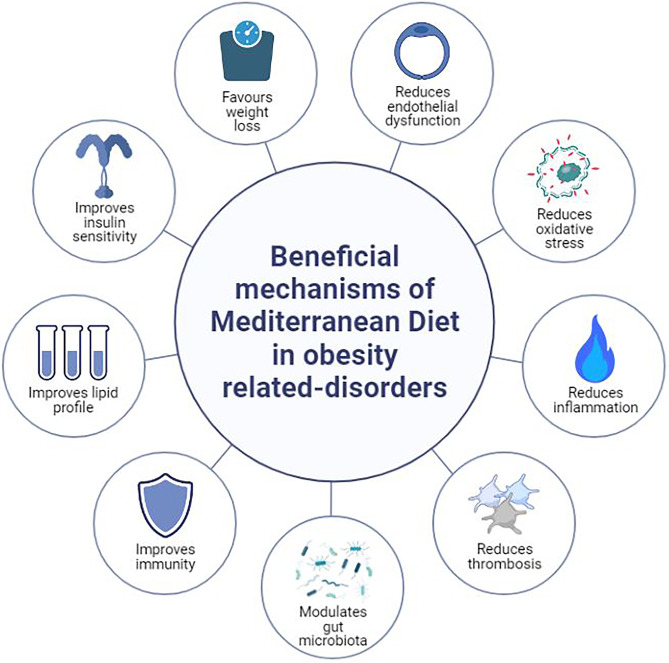
- MD favorably affects dyslipidemia and inflammation: the review reports that MD composition is correlated with excellent effects on reducing dyslipidemia and that it positively modulates gut microbiota and the immune system, significantly decreasing inflammatory mediators common to many obesity-related disorders.
Methods
- Design: narrative review aimed at updating current knowledge on the effect of MD on obesity and obesity-related disorders; no systematic review protocol, search strategy, or formal quality assessment is reported in the text.
- Data/sample: synthesizes evidence from RCTs, meta-analyses, prospective cohort studies, and cross-sectional studies, including major trials and cohorts such as PREDIMED, EPIC, the Women’s Health Study, and others; tables summarize meta-analyses of MD effects on obesity-associated disorders.
- Analysis: narrative synthesis of reported effect estimates, confidence intervals, and mechanistic findings; no new primary data are presented.
Limitations
- The paper states that further research is needed to establish the effects of MD on cardiovascular morbidity and mortality in patients with type 2 diabetes, to clarify the link between MD and diabetic neuropathy, and to determine which foods and nutrients are most effective for cancer outcomes; it also notes it remains unclear whether MD is more effective than other dietary interventions for reducing central adiposity.
- Evident from the text: as a narrative review, it does not report a systematic search, inclusion criteria, or risk-of-bias assessment, so the evidence base is heterogeneous and conclusions rely on varied study designs and populations.
- Evident from the text: some cited findings come from small or short-term studies (e.g., n = 11 crossover, n = 35 vs. n = 31 pilot), and effects may differ by Mediterranean versus non-Mediterranean populations, limiting generalizability.
Model-written summary. Check it against the paper before relying on it.
Integrity signals
Registry
Cites
Statistics
Figures
Verification
Claims the paper makes
45 Not checked yet · 10 Own interpretation · 1 Own method
In the paper
“Emerging evidence suggests that MD can reduce central adiposity and visceral fat, both of which have been associated with the risk of type 2 diabetes and CVD [26].”
§ Mediterranean Diet and Obesity-related Disorders: What is the Evidence? > Mediterranean Diet and Body Composition
What the sources say
- Not checked yetcites [26] Prasad DS, Kabir Z, Dash AK, Das BC. Abdominal obesity, an independent cardiovascular risk factor in Indian subcontinent: a clinico epidemiological evidence summary. J Cardiovasc Dis Res. 2011;2(4):199–205. source
hedgedconditional- Asserted: passes — The authors put it forward as true.
- Checkable: passes — It can be checked against evidence.
- Load-bearing: passes — The paper’s conclusions depend on it.
- Based: passes — The paper gives a reason why it holds.
None of the sources cited for this claim have been checked yet.
In the paper
“all of which render obesity to be consistently associated with increased mortality [7, 8].”
§ Mediterranean Diet and Obesity-related Disorders: What is the Evidence? > Introduction
What the sources say
- Not checked yetcites [7] Flegal KM, Kit BK, Orpana H, Graubard BI. Association of all-cause mortality with overweight and obesity using standard body mass index categories: a systematic review and meta-analysis. JAMA. 2013;309(1):71–82. source
- Not checked yetcites [8] Di Angelantonio E, Bhupathiraju SN, Wormser D, Gao P, Kaptoge S, De Gonzalez AB, et al. Body-mass index and all-cause mortality: individual-participant-data meta-analysis of 239 prospective studies in four continents. Lancet. 2016;388(10046):776–86. source
boostedcorrelational- Asserted: passes — The authors put it forward as true.
- Checkable: passes — It can be checked against evidence.
- Load-bearing: unclear — It is unclear whether the paper’s conclusions depend on it.
- Based: passes — The paper gives a reason why it holds.
In the paper
“The beneficial effect of MD on reducing central adiposity and visceral fat could be related to its high content of polyunsaturated fatty acids (PUFA) and MUFA and low intake of saturated fatty acids (SFA) [11].”
§ Mediterranean Diet and Obesity-related Disorders: What is the Evidence? > Mediterranean Diet and Body Composition
What the sources say
- Not checked yetcites [11] Marventano S, Kolacz P, Castellano S, Galvano F, Buscemi S, Mistretta A, et al. A review of recent evidence in human studies of n-3 and n-6 PUFA intake on cardiovascular disease, cancer, and depressive disorders: does the ratio really matter? Int J Food Sci Nutr. 2015;66(6):611–22. source
hedgedconditional- Asserted: passes — The authors put it forward as true.
- Checkable: passes — It can be checked against evidence.
- Load-bearing: passes — The paper’s conclusions depend on it.
- Based: passes — The paper gives a reason why it holds.
None of the sources cited for this claim have been checked yet.
In the paper
“Previous meta-analyses showed that adherence to MD could prevent type 2 diabetes development by 19–23% [49, 50].”
§ Mediterranean Diet and Obesity-related Disorders: What is the Evidence? > Mediterranean Diet and Type 2 Diabetes Prevention
What the sources say
- Not checked yetcites [49] Koloverou E, Esposito K, Giugliano D, Panagiotakos D. The effect of Mediterranean diet on the development of type 2 diabetes mellitus: a meta-analysis of 10 prospective studies and 136,846 participants. Metabolism. 2014;63(7):903–11. source
- Not checked yetcites [50] Schwingshackl L, Missbach B, Konig J, Hoffmann G. Adherence to a Mediterranean diet and risk of diabetes: a systematic review and meta-analysis. Public Health Nutr. 2015;18(7):1292–9. source
plaindirect- Asserted: passes — The authors put it forward as true.
- Checkable: passes — It can be checked against evidence.
- Load-bearing: unclear — It is unclear whether the paper’s conclusions depend on it.
- Based: passes — The paper gives a reason why it holds.
What the paper did — it cites no source for this, so there is none to check. The quote shows it is in the paper.
In the paper
“However, most of those studies did not include assessments of physical activity or capture total energy intake, which could serve as significant confounders.”
§ Mediterranean Diet and Obesity-related Disorders: What is the Evidence? > Mediterranean Diet and Body Composition
hedged- Asserted: passes — The authors put it forward as true.
- Checkable: passes — It can be checked against evidence.
- Load-bearing: unclear — It is unclear whether the paper’s conclusions depend on it.
- Based: passes — The paper gives a reason why it holds.
In the paper
“A meta-analysis of 50 studies including an overall population of nearly half a million subjects concluded that MD had beneficial effects on the risk of metabolic syndrome and its individual components, including WC (mean difference −0.42 cm; 95% CI −0.81 to −0.02) [36].”
§ Mediterranean Diet and Obesity-related Disorders: What is the Evidence? > Mediterranean Diet and Body Composition
What the sources say
- Not checked yetcites [36] Kastorini CM, Milionis HJ, Esposito K, Giugliano D, Goudevenos JA, Panagiotakos DB. The effect of Mediterranean diet on metabolic syndrome and its components: a meta-analysis of 50 studies and 534,906 individuals. J Am Coll Cardiol. 2011;57(11):1299–313. source
plaindirect- Asserted: passes — The authors put it forward as true.
- Checkable: passes — It can be checked against evidence.
- Load-bearing: passes — The paper’s conclusions depend on it.
- Based: passes — The paper gives a reason why it holds.
In the paper
“Moreover, higher adherence to MD is associated with increased likelihood of weight loss maintenance [19].”
§ Mediterranean Diet and Obesity-related Disorders: What is the Evidence? > Mediterranean Diet and Body Composition
What the sources say
- Not checked yetcites [19] Poulimeneas D, Anastasiou CA, Santos I, Hill JO, Panagiotakos DB, Yannakoulia M. Exploring the relationship between the Mediterranean diet and weight loss maintenance: the MedWeight study. Br J Nutr. 2020;124(8):874–80. source
plaincorrelational- Asserted: passes — The authors put it forward as true.
- Checkable: passes — It can be checked against evidence.
- Load-bearing: passes — The paper’s conclusions depend on it.
- Based: passes — The paper gives a reason why it holds.
In the paper
“The analysis of 18 interventional trials (7186 total subjects and 5168 subjects assigned to MD) concluded that MD could diminish abdominal adiposity as evidenced by reduction in WC, waist-hip ratio, or visceral fat [37].”
§ Mediterranean Diet and Obesity-related Disorders: What is the Evidence? > Mediterranean Diet and Body Composition
What the sources say
- Not checked yetcites [37] • Bendall CL, Mayr HL, Opie RS, Bes-Rastrollo M, Itsiopoulos C, Thomas CJ. Central obesity and the Mediterranean diet: a systematic review of intervention trials. Crit Rev Food Sci Nutr. 2018;58(18):3070–84 This systematic review highlights the potential for a Mediterranean diet intervention to reduce central obesity and in turn reduce obesity-related chronic disease risk and associated public health burden. source
hedgedconditionaln = 7,186- Asserted: passes — The authors put it forward as true.
- Checkable: passes — It can be checked against evidence.
- Load-bearing: passes — The paper’s conclusions depend on it.
- Based: passes — The paper gives a reason why it holds.
In the paper
“A meta-analysis incorporating 19 weight-loss intervention study groups (n = 2711) in type 2 diabetes demonstrated that energy restricted Mediterranean style diet combined with 175 min of physical activity weekly was one of only two interventions achieving the recommended 5% weight loss at 12 months [25].”
§ Mediterranean Diet and Obesity-related Disorders: What is the Evidence? > Mediterranean Diet and Body Composition
What the sources say
- Not checked yetcites [25] Franz MJ, Boucher JL, Rutten-Ramos S, VanWormer JJ. Lifestyle weight-loss intervention outcomes in overweight and obese adults with type 2 diabetes: a systematic review and meta-analysis of randomized clinical trials. J Acad Nutr Diet. 2015;115(9):1447–63. source
boosteddirectn = 2,711- Asserted: passes — The authors put it forward as true.
- Checkable: passes — It can be checked against evidence.
- Load-bearing: passes — The paper’s conclusions depend on it.
- Based: passes — The paper gives a reason why it holds.
In the paper
“The evidence from interventional studies on MD suggest that the weight effect depends more on energy content rather than macronutrient composition [20].”
§ Mediterranean Diet and Obesity-related Disorders: What is the Evidence? > Mediterranean Diet and Body Composition
What the sources say
- Not checked yetcites [20] Kim JY. Optimal diet strategies for weight loss and weight loss maintenance. J Obes Metab Syndr. 2021;30(1):20–31. source
hedgedcorrelational- Asserted: passes — The authors put it forward as true.
- Checkable: passes — It can be checked against evidence.
- Load-bearing: passes — The paper’s conclusions depend on it.
- Based: passes — The paper gives a reason why it holds.
None of the sources cited for this claim have been checked yet.
In the paper
“Furthermore, an inverse association between adherence to MD and the prevalence of metabolic syndrome and prediabetes has been reported [52, 53].”
§ Mediterranean Diet and Obesity-related Disorders: What is the Evidence? > Mediterranean Diet and Type 2 Diabetes Prevention
What the sources say
- Not checked yetcites [52] Ortega E, Franch J, Castell C, Goday A, Ribas-Barba L, Soriguer F, et al. Mediterranean diet adherence in individuals with prediabetes and unknown diabetes: the Di@bet.es Study. Ann Nutr Metab. 2013;62(4):339–46. source
- Not checked yetcites [53] Viscogliosi G, Cipriani E, Liguori ML, Marigliano B, Saliola M, Ettorre E, et al. Mediterranean dietary pattern adherence: associations with prediabetes, metabolic syndrome, and related microinflammation. Metab Syndr Relat Disord. 2013;11(3):210–6. source
plaincorrelational- Asserted: passes — The authors put it forward as true.
- Checkable: passes — It can be checked against evidence.
- Load-bearing: passes — The paper’s conclusions depend on it.
- Based: passes — The paper gives a reason why it holds.
In the paper
“In comparison with low-fat diet, neither arm of ad libitum MD demonstrated significant difference in body weight: −0.410 kg (95% CI −0.830 to 0.01; p = 0.056) for MD supplemented with olive oil and −0.016 kg (95% CI −0.453 to 0.421; p = 0.942) for MD supplemented with nuts.”
§ Mediterranean Diet and Obesity-related Disorders: What is the Evidence? > Mediterranean Diet and Body Composition
What the sources say
- Not checked yetcites [21] Estruch R, Martinez-Gonzalez MA, Corella D, Salas-Salvado J, Fito M, Chiva-Blanch G, et al. Effect of a high-fat Mediterranean diet on bodyweight and waist circumference: a prespecified secondary outcomes analysis of the PREDIMED randomised controlled trial. Lancet Diabetes Endocrinol. 2019;7(5):e6–17. source
plain- Asserted: passes — The authors put it forward as true.
- Checkable: passes — It can be checked against evidence.
- Load-bearing: passes — The paper’s conclusions depend on it.
- Based: passes — The paper gives a reason why it holds.
None of the sources cited for this claim have been checked yet.
In the paper
“epidemiological studies have described an inverse association of adherence to MD with Body Mass Index (BMI) and weight gain [17, 18].”
§ Mediterranean Diet and Obesity-related Disorders: What is the Evidence? > Mediterranean Diet and Body Composition
What the sources say
- Not checked yetcites [17] Sanchez-Villegas A, Bes-Rastrollo M, Martinez-Gonzalez MA, Serra-Majem L. Adherence to a Mediterranean dietary pattern and weight gain in a follow-up study: the SUN cohort. Int J Obes. 2006;30(2):350–8. source
- Not checked yetcites [18] Schroder H, Marrugat J, Vila J, Covas MI, Elosua R. Adherence to the traditional mediterranean diet is inversely associated with body mass index and obesity in a spanish population. J Nutr. 2004;134(12):3355–61. source
plaincorrelational- Asserted: passes — The authors put it forward as true.
- Checkable: passes — It can be checked against evidence.
- Load-bearing: passes — The paper’s conclusions depend on it.
- Based: passes — The paper gives a reason why it holds.
A conclusion the paper draws from its own results — it cites no other source for it, so there is none to check. The quote shows it is in the paper.
In the paper
“However, even when not energy restricted, this diet is not associated with weight gain.”
§ Mediterranean Diet and Obesity-related Disorders: What is the Evidence? > Mediterranean Diet and Body Composition
plainn = 7,447- Asserted: passes — The authors put it forward as true.
- Checkable: passes — It can be checked against evidence.
- Load-bearing: passes — The paper’s conclusions depend on it.
- Based: passes — The paper gives a reason why it holds.
In the paper
“There was evidence that MD was associated with less gain of central adiposity as shown by the adjusted difference in WC after 5 years of −0.466 cm (95% CI −1.109 to 0.176; p = 0.154) in MD with olive oil and −0.923 cm (95% CI −1.604 to −0.241; p = 0.008) in the nut group, compared with low-fat diet group.”
§ Mediterranean Diet and Obesity-related Disorders: What is the Evidence? > Mediterranean Diet and Body Composition
What the sources say
- Not checked yetcites [21] Estruch R, Martinez-Gonzalez MA, Corella D, Salas-Salvado J, Fito M, Chiva-Blanch G, et al. Effect of a high-fat Mediterranean diet on bodyweight and waist circumference: a prespecified secondary outcomes analysis of the PREDIMED randomised controlled trial. Lancet Diabetes Endocrinol. 2019;7(5):e6–17. source
hedgedcorrelational- Asserted: passes — The authors put it forward as true.
- Checkable: passes — It can be checked against evidence.
- Load-bearing: passes — The paper’s conclusions depend on it.
- Based: passes — The paper gives a reason why it holds.
A conclusion the paper draws from its own results — it cites no other source for it, so there is none to check. The quote shows it is in the paper.
In the paper
“MD has the potential to reduce abdominal adiposity, in particular metabolically detrimental visceral fat, independently of weight loss”
§ Mediterranean Diet and Obesity-related Disorders: What is the Evidence? > Mediterranean Diet and Body Composition
hedgedconditional- Asserted: passes — The authors put it forward as true.
- Checkable: passes — It can be checked against evidence.
- Load-bearing: passes — The paper’s conclusions depend on it.
- Based: passes — The paper gives a reason why it holds.
In the paper
“In a more recent cohort study (n = 25,317 female participants from the Women’s Health Study), a higher MD intake was related to a 30% relative risk decrease in type 2 diabetes incidence during a 20-year follow-up [51].”
§ Mediterranean Diet and Obesity-related Disorders: What is the Evidence? > Mediterranean Diet and Type 2 Diabetes Prevention
What the sources say
- Not checked yetcites [51] Ahmad S, Demler OV, Sun Q, Moorthy MV, Li C, Lee IM, et al. Association of the Mediterranean diet with onset of diabetes in the women’s health study. JAMA Netw Open. 2020;3(11):e2025466. source
plaincorrelational- Asserted: passes — The authors put it forward as true.
- Checkable: passes — It can be checked against evidence.
- Load-bearing: passes — The paper’s conclusions depend on it.
- Based: passes — The paper gives a reason why it holds.
None of the sources cited for this claim have been checked yet.
In the paper
“In cross-sectional studies, adherence to MD has been shown to be inversely associated with abdominal adiposity [17, 27, 28].”
§ Mediterranean Diet and Obesity-related Disorders: What is the Evidence? > Mediterranean Diet and Body Composition
What the sources say
- Not checked yetcites [17] Sanchez-Villegas A, Bes-Rastrollo M, Martinez-Gonzalez MA, Serra-Majem L. Adherence to a Mediterranean dietary pattern and weight gain in a follow-up study: the SUN cohort. Int J Obes. 2006;30(2):350–8. source
- Not checked yetcites [27] Bertoli S, Leone A, Vignati L, Bedogni G, Martinez-Gonzalez MA, Bes-Rastrollo M, et al. Adherence to the Mediterranean diet is inversely associated with visceral abdominal tissue in Caucasian subjects. Clin Nutr. 2015;34(6):1266–72. source
- Not checked yetcites [28] Martinez-Gonzalez MA, Garcia-Arellano A, Toledo E, Salas-Salvado J, Buil-Cosiales P, Corella D, et al. A 14-item Mediterranean diet assessment tool and obesity indexes among high-risk subjects: the PREDIMED trial. PLoS ONE. 2012;7(8):e43134. source
plaincorrelational- Asserted: passes — The authors put it forward as true.
- Checkable: passes — It can be checked against evidence.
- Load-bearing: passes — The paper’s conclusions depend on it.
- Based: passes — The paper gives a reason why it holds.
In the paper
“Increased adherence to MD has been associated with lower risk of developing diabetic retinopathy (HR 0.34; 95% CI 0.13 to 0.89; p = 0.001 for trend) among 3614 patients with type 2 diabetes (aged 55–80 years) from the PREvención con DIeta MEDiterránea (PREDIMED) study [70].”
§ Mediterranean Diet and Obesity-related Disorders: What is the Evidence? > Mediterranean Diet and Diabetic Microvascular Complications
What the sources say
- Not checked yetcites [70] Diaz-Lopez A, Babio N, Martinez-Gonzalez MA, Corella D, Amor AJ, Fito M, et al. Mediterranean diet, retinopathy, nephropathy, and microvascular diabetes complications: a post hoc analysis of a randomized trial. Diabetes Care. 2015;38(11):2134–41. source
plaincorrelationaln = 3,614- Asserted: passes — The authors put it forward as true.
- Checkable: passes — It can be checked against evidence.
- Load-bearing: passes — The paper’s conclusions depend on it.
- Based: passes — The paper gives a reason why it holds.
None of the sources cited for this claim have been checked yet.
In the paper
“In this context, MD was shown to improve biochemical and histological features of NAFLD [97, 98].”
§ Mediterranean Diet and Obesity-related Disorders: What is the Evidence? > Mediterranean Diet and Non-alcoholic Fatty Liver Disease
What the sources say
- Not checked yetcites [97] Abenavoli L, Di Renzo L, Boccuto L, Alwardat N, Gratteri S, De Lorenzo A. Health benefits of Mediterranean diet in nonalcoholic fatty liver disease. Expert Rev Gastroenterol Hepatol. 2018;12(9):873–81. source
- Not checked yetcites [98] Saeed N, Nadeau B, Shannon C, Tincopa M. Evaluation of dietary approaches for the treatment of non-alcoholic fatty liver disease: a systematic review. Nutrients. 2019;11(12):3064. source
plaindirect- Asserted: passes — The authors put it forward as true.
- Checkable: passes — It can be checked against evidence.
- Load-bearing: passes — The paper’s conclusions depend on it.
- Based: passes — The paper gives a reason why it holds.
In the paper
“In another randomized trial (n = 215 newly diagnosed patients with type 2 diabetes), HbA1c was significantly reduced by 1.2 and 0.9% at year 1 and 4, respectively, in patients on MD [57].”
§ Mediterranean Diet and Obesity-related Disorders: What is the Evidence? > Mediterranean Diet and Cardiometabolic Risk Factors
What the sources say
- Not checked yetcites [57] de Carvalho GB, Dias-Vasconcelos NL, Santos RKF, Brandao-Lima PN, da Silva DG, Pires LV. Effect of different dietary patterns on glycemic control in individuals with type 2 diabetes mellitus: a systematic review. Crit Rev Food Sci Nutr. 2020;60(12):1999–2010. source
plaindirectn = 215- Asserted: passes — The authors put it forward as true.
- Checkable: passes — It can be checked against evidence.
- Load-bearing: passes — The paper’s conclusions depend on it.
- Based: passes — The paper gives a reason why it holds.
A conclusion the paper draws from its own results — it cites no other source for it, so there is none to check. The quote shows it is in the paper.
In the paper
“The composition of MD has been related to an excellent effect on reducing dyslipidemia.”
§ Mediterranean Diet and Obesity-related Disorders: What is the Evidence? > Conclusion
boosteddirect- Asserted: passes — The authors put it forward as true.
- Checkable: passes — It can be checked against evidence.
- Load-bearing: passes — The paper’s conclusions depend on it.
- Based: unclear — It is unclear why the paper says it holds.
None of the sources cited for this claim have been checked yet.
In the paper
“Some reports examine the adherence to MD and have shown that individuals with obesity and with low adherence to MD presented worse anthropometric measurements and metabolic profile compared with subjects who were good sleepers and with an average adherence, independently of age and gender [88, 122, 127].”
§ Mediterranean Diet and Obesity-related Disorders: What is the Evidence? > Mediterranean Diet and Dyslipidemia
What the sources say
- Not checked yetcites [88] Muscogiuri G, Barrea L, Di Somma C, Altieri B, Vecchiarini M, Orio F, et al. Patient empowerment and the Mediterranean diet as a possible tool to tackle prediabetes associated with overweight or obesity: a pilot study. Hormones (Athens). 2019;18(1):75–84. source
- Not checked yetcites [122] Barrea L, Tarantino G, Somma CD, Muscogiuri G, Macchia PE, Falco A, et al. Adherence to the Mediterranean diet and circulating levels of sirtuin 4 in obese patients: a novel association. Oxid Med Cell Longev. 2017;2017:6101254. source
- Not checked yetcites [127] Muscogiuri G, Barrea L, Aprano S, Framondi L, Di Matteo R, Laudisio D, et al. Sleep Quality in obesity: does adherence to the Mediterranean diet matter? Nutrients. 2020;12(5):1364. source
plaincorrelational- Asserted: passes — The authors put it forward as true.
- Checkable: passes — It can be checked against evidence.
- Load-bearing: unclear — It is unclear whether the paper’s conclusions depend on it.
- Based: passes — The paper gives a reason why it holds.
In the paper
“Among women with type 2 diabetes, moderate and high MD scores were related to significantly reduced rates of diabetic nephropathy by 62% (OR 0.38; 95% CI 0.20 to 0.73) and 86% (OR 0.14; 95% CI 0.06 to 0.33), respectively, compared with a low MD score [66].”
§ Mediterranean Diet and Obesity-related Disorders: What is the Evidence? > Mediterranean Diet and Diabetic Microvascular Complications
What the sources say
- Not checked yetcites [66] Jayedi A, Mirzaei K, Rashidy-Pour A, Yekaninejad MS, Zargar MS, Akbari Eidgahi MR. Dietary approaches to stop hypertension, mediterranean dietary pattern, and diabetic nephropathy in women with type 2 diabetes: a case-control study. Clin Nutr ESPEN. 2019;33:164–70. source
plaincorrelational- Asserted: passes — The authors put it forward as true.
- Checkable: passes — It can be checked against evidence.
- Load-bearing: passes — The paper’s conclusions depend on it.
- Based: passes — The paper gives a reason why it holds.
In the paper
“In patients with type 2 diabetes, following MD led to significant reductions in CVD incidence (RR 0.62; 95% CI 0.5 to 0.78) [83].”
§ Mediterranean Diet and Obesity-related Disorders: What is the Evidence? > Mediterranean Diet and Diabetic Macrovascular Complications
What the sources say
- Not checked yetcites [83] Kahleova H, Salas-Salvado J, Rahelic D, Kendall CW, Rembert E, Sievenpiper JL. Dietary patterns and cardiometabolic outcomes in diabetes: a summary of systematic reviews and meta-analyses. Nutrients. 2019;11(9):2209. source
plaindirect- Asserted: passes — The authors put it forward as true.
- Checkable: passes — It can be checked against evidence.
- Load-bearing: passes — The paper’s conclusions depend on it.
- Based: passes — The paper gives a reason why it holds.
In the paper
“MD leads to an increase in the number of intestinal bacterial species responsible for producing short-chain fatty acids (SCFAs) such as acetate, propionate, and butyrate, essential for proper functioning in preventing metabolic diseases [115].”
§ Mediterranean Diet and Obesity-related Disorders: What is the Evidence? > Mediterranean Diet and Dyslipidemia
What the sources say
- Not checked yetcites [115] Merra G, Noce A, Marrone G, Cintoni M, Tarsitano MG, Capacci A, et al. Influence of Mediterranean diet on human gut microbiota. Nutrients. 2020;13(1):7. source
plaindirect- Asserted: passes — The authors put it forward as true.
- Checkable: passes — It can be checked against evidence.
- Load-bearing: unclear — It is unclear whether the paper’s conclusions depend on it.
- Based: passes — The paper gives a reason why it holds.
In the paper
“Of note, increases in MD score by 1-point were associated with 10% lower risk of CKD (mean follow-up 20.6 ± 7.0 years) as shown in a meta-analysis (13 studies, n = 27,618 individuals) [67].”
§ Mediterranean Diet and Obesity-related Disorders: What is the Evidence? > Mediterranean Diet and Diabetic Microvascular Complications
What the sources say
- Not checked yetcites [67] Hansrivijit P, Oli S, Khanal R, Ghahramani N, Thongprayoon C, Cheungpasitporn W. Mediterranean diet and the risk of chronic kidney disease: a systematic review and meta-analysis. Nephrology (Carlton). 2020;25(12):913–8. source
plaincorrelationaln = 27,618- Asserted: passes — The authors put it forward as true.
- Checkable: passes — It can be checked against evidence.
- Load-bearing: passes — The paper’s conclusions depend on it.
- Based: passes — The paper gives a reason why it holds.
In the paper
“Mean HbA1c was 8.57 (±standard deviation, SD 1.94), 7.63 (±1.32), and 6.47 (±0.7) % in patients with low, moderate, and high adherence to MD, respectively [56].”
§ Mediterranean Diet and Obesity-related Disorders: What is the Evidence? > Mediterranean Diet and Cardiometabolic Risk Factors
What the sources say
- Not checked yetcites [56] Mirahmadizadeh A, Khorshidsavar H, Seif M, Sharifi MH. Adherence to medication, diet and physical activity and the associated factors amongst patients with type 2 diabetes. Diabetes Ther. 2020;11(2):479–94. source
plaincorrelationaln = 500- Asserted: passes — The authors put it forward as true.
- Checkable: passes — It can be checked against evidence.
- Load-bearing: passes — The paper’s conclusions depend on it.
- Based: passes — The paper gives a reason why it holds.
A conclusion the paper draws from its own results — it cites no other source for it, so there is none to check. The quote shows it is in the paper.
In the paper
“In sum, in patients with type 2 diabetes, MD may minimize the risk of diabetic micro and macrovascular complications, although further evidence is required.”
§ Mediterranean Diet and Obesity-related Disorders: What is the Evidence? > Mediterranean Diet and Diabetic Macrovascular Complications
hedgedconditional- Asserted: passes — The authors put it forward as true.
- Checkable: passes — It can be checked against evidence.
- Load-bearing: passes — The paper’s conclusions depend on it.
- Based: passes — The paper gives a reason why it holds.
- It may state two separate claims as one. 25
- Probably not a substantial claim. 4
In the paper
“MD was somewhat superior in producing weight loss compared to low-fat diets (range of mean weight loss −4.1 to −10.1 kg vs. −2.9 to −5.0 kg) but (similar to) same as low-carbohydrate diet and the American Diabetes Association (ADA) diet.”
§ Mediterranean Diet and Obesity-related Disorders: What is the Evidence? > Mediterranean Diet and Body Composition
What the sources say
- Not checked yetcites [23] Mancini JG, Filion KB, Atallah R, Eisenberg MJ. Systematic review of the Mediterranean diet for long-term weight loss. Am J Med. 2016;129(4):407–15. source
plaindirectn = 998- Asserted: passes — The authors put it forward as true.
- Checkable: passes — It can be checked against evidence.
- Load-bearing: passes — The paper’s conclusions depend on it.
- Based: passes — The paper gives a reason why it holds.
It may state two separate claims as one.
A conclusion the paper draws from its own results — it cites no other source for it, so there is none to check. The quote shows it is in the paper.
In the paper
“MD may be more effective in Southern European populations due to better availability of specific food produce, cultural and other factors.”
§ Mediterranean Diet and Obesity-related Disorders: What is the Evidence? > Mediterranean Diet and Body Composition
hedgedconditional- Asserted: passes — The authors put it forward as true.
- Checkable: passes — It can be checked against evidence.
- Load-bearing: fails — The paper’s conclusions may not depend on it.
- Based: fails — The paper may give no reason why it holds.
Probably not a substantial claim. The paper’s conclusions may not depend on it. The paper may give no reason why it holds.
In the paper
“The adherence to MD dietary pattern has been showed to be protective against the occurrence of several diseases, in particular obesity and CVD [12].”
§ Mediterranean Diet and Obesity-related Disorders: What is the Evidence? > Introduction
What the sources say
- Not checked yetcites [12] Sofi F, Abbate R, Gensini GF, Casini A. Accruing evidence on benefits of adherence to the Mediterranean diet on health: an updated systematic review and meta-analysis. Am J Clin Nutr. 2010;92(5):1189–96. source
plaindirect- Asserted: passes — The authors put it forward as true.
- Checkable: passes — It can be checked against evidence.
- Load-bearing: passes — The paper’s conclusions depend on it.
- Based: passes — The paper gives a reason why it holds.
It may state two separate claims as one.
A conclusion the paper draws from its own results — it cites no other source for it, so there is none to check. The quote shows it is in the paper.
In the paper
“In conclusion, MD is an effective tool in reducing body weight, particularly when energy restricted and in combination with increased exercise.”
§ Mediterranean Diet and Obesity-related Disorders: What is the Evidence? > Mediterranean Diet and Body Composition
plaindirect- Asserted: passes — The authors put it forward as true.
- Checkable: passes — It can be checked against evidence.
- Load-bearing: passes — The paper’s conclusions depend on it.
- Based: passes — The paper gives a reason why it holds.
It may state two separate claims as one.
None of the sources cited for this claim have been checked yet.
In the paper
“People with obesity are at increased risk for a variety of medical disorders including hypertension, dyslipidemia, type 2 diabetes mellitus, cardiovascular disease (CVD), and several cancers [4–6]”
§ Mediterranean Diet and Obesity-related Disorders: What is the Evidence? > Introduction
What the sources say
- Not checked yetcites [4] Li Y, Pan A, Wang DD, Liu X, Dhana K, Franco OH, et al. Impact of healthy lifestyle factors on life expectancies in the US population. Circulation. 2018;138(4):345–55. source
- Not checked yetcites [5] Smith AD, Crippa A, Woodcock J, Brage S. Physical activity and incident type 2 diabetes mellitus: a systematic review and dose–response meta-analysis of prospective cohort studies. Diabetologia. 2016;59(12):2527–45. source
- Not checked yetcites [6] Valencia WM, Stoutenberg M, Florez H. Weight loss and physical activity for disease prevention in obese older adults: an important role for lifestyle management. Curr Diab Rep. 2014;14(10):539. source
plaindirect- Asserted: passes — The authors put it forward as true.
- Checkable: passes — It can be checked against evidence.
- Load-bearing: passes — The paper’s conclusions depend on it.
- Based: passes — The paper gives a reason why it holds.
It may state two separate claims as one.
In the paper
“In conclusion, high fat, unrestricted calories MD was associated with little weight changes and less central adiposity compared with low-fat diet long term [21].”
§ Mediterranean Diet and Obesity-related Disorders: What is the Evidence? > Mediterranean Diet and Body Composition
What the sources say
- Not checked yetcites [21] Estruch R, Martinez-Gonzalez MA, Corella D, Salas-Salvado J, Fito M, Chiva-Blanch G, et al. Effect of a high-fat Mediterranean diet on bodyweight and waist circumference: a prespecified secondary outcomes analysis of the PREDIMED randomised controlled trial. Lancet Diabetes Endocrinol. 2019;7(5):e6–17. source
plaincorrelational- Asserted: passes — The authors put it forward as true.
- Checkable: passes — It can be checked against evidence.
- Load-bearing: passes — The paper’s conclusions depend on it.
- Based: passes — The paper gives a reason why it holds.
It may state two separate claims as one.
In the paper
“Mediterranean dietary pattern compared to other diets has been reported as having proved to be the most effective in prevention of obesity and obesity-related diseases [15].”
§ Mediterranean Diet and Obesity-related Disorders: What is the Evidence? > Introduction
What the sources say
- Not checked yetcites [15] Romaguera D, Norat T, Mouw T, May AM, Bamia C, Slimani N, et al. Adherence to the Mediterranean diet is associated with lower abdominal adiposity in European men and women. J Nutr. 2009;139(9):1728–37. source
boosteddirect- Asserted: passes — The authors put it forward as true.
- Checkable: passes — It can be checked against evidence.
- Load-bearing: fails — The paper’s conclusions may not depend on it.
- Based: passes — The paper gives a reason why it holds.
Probably not a substantial claim. The paper’s conclusions may not depend on it.
A conclusion the paper draws from its own results — it cites no other source for it, so there is none to check. The quote shows it is in the paper.
In the paper
“MD is the healthiest dietary pattern available to prevent several non-communicable diseases, including cardiovascular disease and type 2 diabetes.”
§ Mediterranean Diet and Obesity-related Disorders: What is the Evidence? > Conclusion
plaindirect- Asserted: passes — The authors put it forward as true.
- Checkable: passes — It can be checked against evidence.
- Load-bearing: passes — The paper’s conclusions depend on it.
- Based: passes — The paper gives a reason why it holds.
It may state two separate claims as one.
A conclusion the paper draws from its own results — it cites no other source for it, so there is none to check. The quote shows it is in the paper.
In the paper
“Additionally, it positively modulates the gut microbiota and immune system, significantly decreasing inflammation mediators, common ground for many obesity-related disorders.”
§ Mediterranean Diet and Obesity-related Disorders: What is the Evidence? > Conclusion
plaindirect- Asserted: passes — The authors put it forward as true.
- Checkable: passes — It can be checked against evidence.
- Load-bearing: passes — The paper’s conclusions depend on it.
- Based: passes — The paper gives a reason why it holds.
It may state two separate claims as one.
In the paper
“Data from the PREDIMED study showed that after a mean follow-up of 4.8 years, the observed rates of breast cancer were lower in the intervention groups with EVOO or with nuts than in the control group with a low-fat diet. After multivariate adjustment, the group supplementing MD with EVOO had a significantly lower risk of developing breast cancer than the control group; for every 5% additional”
§ Mediterranean Diet and Obesity-related Disorders: What is the Evidence? > Mediterranean Diet and Cancer
What the sources say
- Not checked yetcites [148] Toledo E, Salas-Salvado J, Donat-Vargas C, Buil-Cosiales P, Estruch R, Ros E, et al. Mediterranean diet and invasive breast cancer risk among women at high cardiovascular risk in the PREDIMED trial: a randomized clinical trial. JAMA Intern Med. 2015;175(11):1752–60. source
plaindirect- Asserted: passes — The authors put it forward as true.
- Checkable: passes — It can be checked against evidence.
- Load-bearing: passes — The paper’s conclusions depend on it.
- Based: passes — The paper gives a reason why it holds.
It may state two separate claims as one.
In the paper
“MD is a dietary pattern recommended for cardiovascular prevention and has been promoted by the European Society of Cardiology/European Atherosclerosis Society (ESC/EAS) 2019 guidelines for the management of dyslipidemia in addition to other lifestyle changes (Table 1) [103].”
§ Mediterranean Diet and Obesity-related Disorders: What is the Evidence? > Mediterranean Diet and Dyslipidemia
What the sources say
- Not checked yetcites [103] Mach F, Baigent C, Catapano AL, Koskinas KC, Casula M, Badimon L, et al. 2019 ESC/EAS Guidelines for the management of dyslipidaemias: lipid modification to reduce cardiovascular risk. Eur Heart J. 2020;41(1):111–88. source
plain- Asserted: passes — The authors put it forward as true.
- Checkable: passes — It can be checked against evidence.
- Load-bearing: fails — The paper’s conclusions may not depend on it.
- Based: passes — The paper gives a reason why it holds.
Probably not a substantial claim. The paper’s conclusions may not depend on it. It may state two separate claims as one.
In the paper
“Of interest, very recently in a cross-sectional, observational study, it was reported that high adherence to MD was associated with low BMI in 617 individuals, probably through the antioxidant and anti-inflammatory effects synergistically exerted by either high vitamin D levels or high adherence to MD on body weight [145••].”
§ Mediterranean Diet and Obesity-related Disorders: What is the Evidence? > Mediterranean Diet and Dyslipidemia
What the sources say
- Not checked yetcites [145••]
hedgedcorrelationaln = 617- Asserted: passes — The authors put it forward as true.
- Checkable: passes — It can be checked against evidence.
- Load-bearing: unclear — It is unclear whether the paper’s conclusions depend on it.
- Based: passes — The paper gives a reason why it holds.
It may state two separate claims as one.
In the paper
“A meta-analysis including 2,130,753 participants concluded that greater adherence to MD was associated with a significantly lower risk of cancer mortality (RR 0.86; 95% CI 0.81 to 0.91), colorectal cancer (RR 0.82; 95% CI 0.75 to 0.88), breast cancer (RR 0.92; 95% CI 0.87 to 0.96), gastric cancer (RR 0.72; 95% CI 0.60 to 0.86), liver cancer (RR 0.58; 95% CI 0.46 to 0.73), head and neck cancer (RR”
§ Mediterranean Diet and Obesity-related Disorders: What is the Evidence? > Mediterranean Diet and Cancer
What the sources say
- Not checked yetcites [146] Schwingshackl L, Schwedhelm C, Galbete C, Hoffmann G. Adherence to Mediterranean diet and risk of cancer: an updated systematic review and meta-analysis. Nutrients. 2017;9(10):1063. source
plaincorrelational- Asserted: passes — The authors put it forward as true.
- Checkable: passes — It can be checked against evidence.
- Load-bearing: passes — The paper’s conclusions depend on it.
- Based: passes — The paper gives a reason why it holds.
It may state two separate claims as one.
In the paper
“A recent meta-analysis of 38 cohort studies and 3 RCTs (including patients with type 2 diabetes) found that adherence to MD was associated with significantly lower incidences of CHD (RR 0.73; 95% CI 0.62 to 0.86), MI (RR 0.73; 95% CI 0.61 to 0.88), and stroke (RR 0.80; 95% CI 0.71 to 0.90), as well as of CHD mortality (RR 0.83; 95% CI 0.75 to 0.92), stroke mortality (RR 0.87; 95% CI 0.80 to 0.96),”
§ Mediterranean Diet and Obesity-related Disorders: What is the Evidence? > Mediterranean Diet and Diabetic Macrovascular Complications
What the sources say
- Not checked yetcites [84] Becerra-Tomas N, Blanco Mejia S, Viguiliouk E, Khan T, Kendall CWC, Kahleova H, et al. Mediterranean diet, cardiovascular disease and mortality in diabetes: a systematic review and meta-analysis of prospective cohort studies and randomized clinical trials. Crit Rev Food Sci Nutr. 2020;60(7):1207–27. source
plaincorrelational- Asserted: passes — The authors put it forward as true.
- Checkable: passes — It can be checked against evidence.
- Load-bearing: passes — The paper’s conclusions depend on it.
- Based: passes — The paper gives a reason why it holds.
It may state two separate claims as one.
A conclusion the paper draws from its own results — it cites no other source for it, so there is none to check. The quote shows it is in the paper.
In the paper
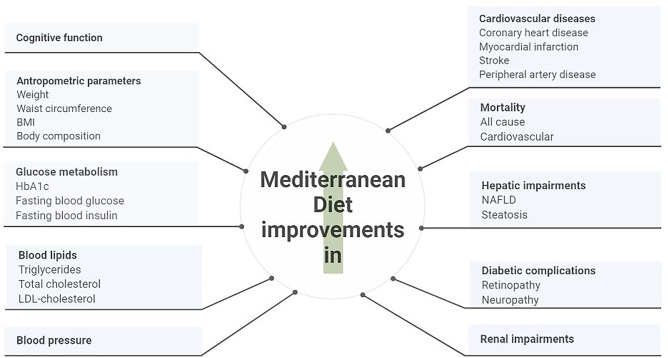
“Overall, adherence to MD exerts several health benefits by improving cardiometabolic risk factors, including glucose and lipid metabolism, obesity indexes and NAFLD (Fig. 2).”
§ Mediterranean Diet and Obesity-related Disorders: What is the Evidence? > Mediterranean Diet and Non-alcoholic Fatty Liver Disease
plaindirect- Asserted: passes — The authors put it forward as true.
- Checkable: passes — It can be checked against evidence.
- Load-bearing: passes — The paper’s conclusions depend on it.
- Based: passes — The paper gives a reason why it holds.
It may state two separate claims as one.
In the paper
“de Oliveira et al. in the Multi-Ethnic Study of Atherosclerosis (n = 5209) reported that a higher intake of SFA from meat products is related to the development of ASCVD; on the other hand, a lower ASCVD risk has been correlated to a higher intake of SFA from dairy products [125].”
§ Mediterranean Diet and Obesity-related Disorders: What is the Evidence? > Mediterranean Diet and Dyslipidemia
What the sources say
- Not checked yetcites [125] de Oliveira Otto MC, Mozaffarian D, Kromhout D, Bertoni AG, Sibley CT, Jacobs DR Jr, et al. Dietary intake of saturated fat by food source and incident cardiovascular disease: the Multi-Ethnic Study of Atherosclerosis. Am J Clin Nutr. 2012;96(2):397–404. source
plaincorrelationaln = 5,209- Asserted: passes — The authors put it forward as true.
- Checkable: passes — It can be checked against evidence.
- Load-bearing: passes — The paper’s conclusions depend on it.
- Based: passes — The paper gives a reason why it holds.
It may state two separate claims as one.
None of the sources cited for this claim have been checked yet.
In the paper
“In addition, it has been negatively related to various chronic diseases, such as CVD [106], cancer [107], obesity [108], type 2 diabetes [88], and other metabolic conditions [109].”
§ Mediterranean Diet and Obesity-related Disorders: What is the Evidence? > Mediterranean Diet and Dyslipidemia
What the sources say
- Not checked yetcites [106] Migliaccio S, Brasacchio C, Pivari F, Salzano C, Barrea L, Muscogiuri G, et al. What is the best diet for cardiovascular wellness? A comparison of different nutritional models. Int J Obes Suppl. 2020;10(1):50–61. source
- Not checked yetcites [107] Laudisio D, Castellucci B, Barrea L, Pugliese G, Savastano S, Colao A, et al. Mediterranean diet and breast cancer risk: a narrative review. Minerva Endocrinol (Torino). 2021;46(4):441–52.
- Not checked yetcites [108] Barrea L, Pugliese G, Laudisio D, Colao A, Savastano S, Muscogiuri G. Mediterranean diet as medical prescription in menopausal women with obesity: a practical guide for nutritionists. Crit Rev Food Sci Nutr. 2021;61(7):1201–11. source
plaincorrelational- Asserted: passes — The authors put it forward as true.
- Checkable: passes — It can be checked against evidence.
- Load-bearing: passes — The paper’s conclusions depend on it.
- Based: passes — The paper gives a reason why it holds.
It may state two separate claims as one.
A conclusion the paper draws from its own results — it cites no other source for it, so there is none to check. The quote shows it is in the paper.
In the paper
“In conclusion, all the above results suggest that adherence to MD may contribute to the reduction of various cancers and also of overall cancer-related mortality.”
§ Mediterranean Diet and Obesity-related Disorders: What is the Evidence? > Mediterranean Diet and Cancer
hedgedconditional- Asserted: passes — The authors put it forward as true.
- Checkable: passes — It can be checked against evidence.
- Load-bearing: passes — The paper’s conclusions depend on it.
- Based: passes — The paper gives a reason why it holds.
It may state two separate claims as one.
None of the sources cited for this claim have been checked yet.
In the paper
“In patients with type 2 diabetes, MD can beneficially affect glycemic control and cardiovascular risk [54, 55].”
§ Mediterranean Diet and Obesity-related Disorders: What is the Evidence? > Mediterranean Diet and Cardiometabolic Risk Factors
What the sources say
- Not checked yetcites [54] Martin-Pelaez S, Fito M, Castaner O. Mediterranean diet effects on type 2 diabetes prevention, disease progression, and related mechanisms. A review. Nutrients. 2020;12(8):2236. source
- Not checked yetcites [55] Pascual Fuster V, Perez Perez A, Carretero Gomez J, Caixas Pedragos A, Gomez-Huelgas R, Perez-Martinez P. Executive summary: updates to the dietary treatment of prediabetes and type 2 diabetes mellitus. Endocrinol Diabetes Nutr (Engl Ed). 2021;68(4):277–87.
plainconditional- Asserted: passes — The authors put it forward as true.
- Checkable: passes — It can be checked against evidence.
- Load-bearing: passes — The paper’s conclusions depend on it.
- Based: passes — The paper gives a reason why it holds.
It may state two separate claims as one.
In the paper
“Adherence to MD was associated with reduced risk of metabolic syndrome (log HR −0.69; 95% CI −1.24 to −1.16). Results from clinical studies revealed the protective role of MD on components of metabolic syndrome, like WC (mean difference −0.42 cm; 95% CI −0.82 to −0.02), HDL-C (mean difference 1.17 mg/dl; 95% CI 0.38 to 1.96), TG (mean difference −6.14 mg/dl; 95% CI −10.35 to −1.93), systolic (mean”
§ Mediterranean Diet and Obesity-related Disorders: What is the Evidence? > Mediterranean Diet and Cancer
What the sources say
- Not checked yetcites [36] Kastorini CM, Milionis HJ, Esposito K, Giugliano D, Goudevenos JA, Panagiotakos DB. The effect of Mediterranean diet on metabolic syndrome and its components: a meta-analysis of 50 studies and 534,906 individuals. J Am Coll Cardiol. 2011;57(11):1299–313. source
plaincorrelationaln = 534,906- Asserted: passes — The authors put it forward as true.
- Checkable: passes — It can be checked against evidence.
- Load-bearing: passes — The paper’s conclusions depend on it.
- Based: passes — The paper gives a reason why it holds.
It may state two separate claims as one.
In the paper
“MD has been proposed as an effective nutrition therapy for patients with type 2 diabetes and/or NAFLD, representing the first-line treatment for these metabolic diseases [93, 95•, 96].”
§ Mediterranean Diet and Obesity-related Disorders: What is the Evidence? > Mediterranean Diet and Non-alcoholic Fatty Liver Disease
What the sources say
- Not checked yetcites [93, 95•, 96]
plaindirect- Asserted: passes — The authors put it forward as true.
- Checkable: passes — It can be checked against evidence.
- Load-bearing: passes — The paper’s conclusions depend on it.
- Based: passes — The paper gives a reason why it holds.
It may state two separate claims as one.
In the paper
“Data from the Italian EPIC study involving 42,275 participants aged 25–70 years who did not have cancer at baseline found that increased adherence to MD was associated with an 8–11% lower risk of colorectal cancer in men and women [154]. The protective effect was observed mainly for distal colon and rectal cancer, whereas it was lower for proximal colon cancer [154].”
§ Mediterranean Diet and Obesity-related Disorders: What is the Evidence? > Mediterranean Diet and Cancer
What the sources say
- Not checked yetcites [154] Bamia C, Lagiou P, Buckland G, Grioni S, Agnoli C, Taylor AJ, et al. Mediterranean diet and colorectal cancer risk: results from a European cohort. Eur J Epidemiol. 2013;28(4):317–28. source
plaincorrelational- Asserted: passes — The authors put it forward as true.
- Checkable: passes — It can be checked against evidence.
- Load-bearing: passes — The paper’s conclusions depend on it.
- Based: passes — The paper gives a reason why it holds.
It may state two separate claims as one.
In the paper
“A previous umbrella review of meta-analyses found that high adherence to MD was associated with a reduced risk of overall mortality, CVD, coronary heart disease (CHD), myocardial infarction (MI), overall cancer incidence, type 2 diabetes, and neurodegenerative diseases [77].”
§ Mediterranean Diet and Obesity-related Disorders: What is the Evidence? > Mediterranean Diet and Diabetic Macrovascular Complications
What the sources say
- Not checked yetcites [77] Dinu M, Pagliai G, Casini A, Sofi F. Mediterranean diet and multiple health outcomes: an umbrella review of meta-analyses of observational studies and randomised trials. Eur J Clin Nutr. 2018;72(1):30–43. source
plaincorrelational- Asserted: passes — The authors put it forward as true.
- Checkable: passes — It can be checked against evidence.
- Load-bearing: unclear — It is unclear whether the paper’s conclusions depend on it.
- Based: passes — The paper gives a reason why it holds.
It may state two separate claims as one.
In the paper
“They concluded that a high intake of dairy products was associated with hyperlipidemia (higher levels of total cholesterol and HDL-C), while a diet with an excessive amount of meat products caused a form of dyslipidemia (higher total cholesterol and TG levels and lower HDL-C levels) [126].”
§ Mediterranean Diet and Obesity-related Disorders: What is the Evidence? > Mediterranean Diet and Dyslipidemia
What the sources say
- Not checked yetcites [126] Formisano E, Pasta A, Cremonini AL, Di Lorenzo I, Sukkar SG, Pisciotta L. Effects of a Mediterranean diet, dairy, and meat products on different phenotypes of dyslipidemia: a preliminary retrospective analysis. Nutrients. 2021;13(4):1161. source
plaindirectn = 106- Asserted: passes — The authors put it forward as true.
- Checkable: passes — It can be checked against evidence.
- Load-bearing: passes — The paper’s conclusions depend on it.
- Based: passes — The paper gives a reason why it holds.
Probably not a substantial claim. It may state two separate claims as one.
None of the sources cited for this claim have been checked yet.
In the paper
“Therefore, low vitamin D status has been associated with increased BP [139, 140], dyslipidemia [139, 140], impaired insulin metabolism [138], sleep disturbances [141, 142], thus increasing the risk of cardiovascular atherosclerosis [139, 140].”
§ Mediterranean Diet and Obesity-related Disorders: What is the Evidence? > Mediterranean Diet and Dyslipidemia
What the sources say
- Not checked yetcites [139] Muscogiuri G, Barrea L, Altieri B, Di Somma C, Bhattoa HP, Laudisio D, et al. Calcium and vitamin D supplementation. Myths and realities with regard to cardiovascular risk. Curr Vasc Pharmacol. 2019;17(6):610–7. source
- Not checked yetcites [140] Savanelli MC, Scarano E, Muscogiuri G, Barrea L, Vuolo L, Rubino M, et al. Cardiovascular risk in adult hypopituitaric patients with growth hormone deficiency: is there a role for vitamin D? Endocrine. 2016;52(1):111–9. source
- Not checked yetcites [138] Altieri B, Grant WB, Della Casa S, Orio F, Pontecorvi A, Colao A, et al. Vitamin D and pancreas: the role of sunshine vitamin in the pathogenesis of diabetes mellitus and pancreatic cancer. Crit Rev Food Sci Nutr. 2017;57(16):3472–88. source
- Not checked yetcites [141] Muscogiuri G, Barrea L, Annunziata G, Di Somma C, Laudisio D, Colao A, et al. Obesity and sleep disturbance: the chicken or the egg? Crit Rev Food Sci Nutr. 2019;59(13):2158–65. source
- Not checked yetcites [142] Muscogiuri G, Barrea L, Scannapieco M, Di Somma C, Scacchi M, Aimaretti G, et al. The lullaby of the sun: the role of vitamin D in sleep disturbance. Sleep Med. 2019;54:262–5. source
plaincorrelational- Asserted: passes — The authors put it forward as true.
- Checkable: passes — It can be checked against evidence.
- Load-bearing: unclear — It is unclear whether the paper’s conclusions depend on it.
- Based: passes — The paper gives a reason why it holds.
It may state two separate claims as one.
In the paper
“Overall, MD has been shown to prevent CKD, as well as decrease renal function decline and improve survival in patients with CKD [69].”
§ Mediterranean Diet and Obesity-related Disorders: What is the Evidence? > Mediterranean Diet and Diabetic Microvascular Complications
What the sources say
- Not checked yetcites [69] Chauveau P, Aparicio M, Bellizzi V, Campbell K, Hong X, Johansson L, et al. Mediterranean diet as the diet of choice for patients with chronic kidney disease. Nephrol Dial Transplant. 2018;33(5):725–35. source
plaindirect- Asserted: passes — The authors put it forward as true.
- Checkable: passes — It can be checked against evidence.
- Load-bearing: passes — The paper’s conclusions depend on it.
- Based: passes — The paper gives a reason why it holds.
It may state two separate claims as one.
In the paper
“In an intervention study conducted by Llorente-Cortés et al. in 2010 on a population with a high risk of ASCVD (n = 49), it was found that after 3 months, subjects who followed MD integrated with virgin olive oil or nuts showed not only a reduction in interleukin-6 and soluble intercellular adhesion molecule-1, significant inflammation mediators in the adhesion of leukocytes to the endothelial”
§ Mediterranean Diet and Obesity-related Disorders: What is the Evidence? > Mediterranean Diet and Dyslipidemia
What the sources say
- Not checked yetcites [120] Llorente-Cortes V, Estruch R, Mena MP, Ros E, Gonzalez MA, Fito M, et al. Effect of Mediterranean diet on the expression of pro-atherogenic genes in a population at high cardiovascular risk. Atherosclerosis. 2010;208(2):442–50. source
plaindirectn = 49- Asserted: passes — The authors put it forward as true.
- Checkable: passes — It can be checked against evidence.
- Load-bearing: unclear — It is unclear whether the paper’s conclusions depend on it.
- Based: passes — The paper gives a reason why it holds.
It may state two separate claims as one.
Claims other papers make about this one
Each is checked against this paper’s own text: does it say what the citing paper says it does?
In the citing paper
“One of the main dietary interventions evaluated in women with PCOS is the Mediterranean diet (MD), which has proven to have anti-inflammatory effect and help decrease body weight [11, 18].”
From Ketogenic Diet as Medical Prescription in Women with Polycystic Ovary Syndrome (PCOS) (2023) · cites this paper as [18]
Self-check
Percentages, sums and reported differences re-computed from the paper’s own numbers.
Each contradiction between two passages listed here was confirmed by an independent check.
Rated minor: it would not touch a result — a value no result rests on, a p-value that stays on the same side of the significance level, or a conflict that is clerical, resolved elsewhere in the paper, or outside its own findings.
In the paper
§ Mediterranean Diet and Obesity-related Disorders: What is the Evidence? > Mediterranean Diet and Diabetic Microvascular Complications
“a meta-analysis (13 studies, n = 27,618 individuals) [67]”
§ Mediterranean Diet and Obesity-related Disorders: What is the Evidence? > Mediterranean Diet and Cancer
“| Hansrivijit et al. [67] | 4 prospective studies | 8467 subjects ≥ 18 years of age without CKD |”
Rated minor: it would not touch a result — a value no result rests on, a p-value that stays on the same side of the significance level, or a conflict that is clerical, resolved elsewhere in the paper, or outside its own findings.
In the paper
“10 prospective studies (1 clinical trial, 9 prospective and 7 cross-sectional)”
§ Mediterranean Diet and Obesity-related Disorders: What is the Evidence? > Mediterranean Diet and Cancer
Reported 10 · recomputed 17
Rated minor: it would not touch a result — a value no result rests on, a p-value that stays on the same side of the significance level, or a conflict that is clerical, resolved elsewhere in the paper, or outside its own findings.
In the paper
§ Mediterranean Diet and Obesity-related Disorders: What is the Evidence? > Mediterranean Diet and Cancer
“50 RCTs”
§ Mediterranean Diet and Obesity-related Disorders: What is the Evidence? > Mediterranean Diet and Cancer
“(35 clinical trials, 2 prospective and 13 cross-sectional)”
Rated minor: it would not touch a result — a value no result rests on, a p-value that stays on the same side of the significance level, or a conflict that is clerical, resolved elsewhere in the paper, or outside its own findings.
In the paper
§ Mediterranean Diet and Obesity-related Disorders: What is the Evidence? > Mediterranean Diet and Dyslipidemia
“Finally, MD recommends reducing simple sugar intake and eliminating alcohol.”
§ Mediterranean Diet and Obesity-related Disorders: What is the Evidence? > Mediterranean Diet and Dyslipidemia
“This dietary pattern is high on food groups such as fruits and vegetables, fibers, olive oil, fish, and red wine,”
Rated minor: it would not touch a result — a value no result rests on, a p-value that stays on the same side of the significance level, or a conflict that is clerical, resolved elsewhere in the paper, or outside its own findings.
In the paper
§ Mediterranean Diet and Obesity-related Disorders: What is the Evidence? > Mediterranean Diet and Cancer
“log HR −0.69”
§ Mediterranean Diet and Obesity-related Disorders: What is the Evidence? > Mediterranean Diet and Cancer
“95% CI −1.24 to −1.16”
Citations
Cites
3 retracted
RETRACTED: Primary Prevention of Cardiovascular Disease with a Mediterranean Diet
Estruch, R., Ros, E., Salas-Salvadó, J., Covas, M.-I., Corella, D., Arós, F., Gómez-Gracia, E., Ruiz-Gutiérrez, V., Fiol, M., Lapetra, J., et al. (2013) · New England Journal of Medicine · doi:10.1056/nejmoa1200303 · Cited by 4,257
RetractedEstruch, R., Martínez‐González, M. Á., Corella, D., Salas‐Salvadó, J., Fitó, M., Chiva‐Blanch, G., Fiol, M., Gómez‐Gracia, E., Arós, F., Lapetra, J., et al. (2016) · The Lancet Diabetes & Endocrinology · doi:10.1016/s2213-8587(16)30085-7 · Cited by 200
RetractedEstruch, R., Martínez-González, M. A., Corella, D., Salas-Salvadó, J., Fitó, M., Chiva-Blanch, G., Fiol, M., Gómez-Gracia, E., Arós, F., Lapetra, J., et al. (2019) · The Lancet Diabetes & Endocrinology · doi:10.1016/s2213-8587(19)30074-9 · Cited by 147
RetractedYounossi, Z. M., Koenig, A. B., Abdelatif, D., Fazel, Y., Henry, L., & Wymer, M. (2016) · Hepatology · doi:10.1002/hep.28431 · Cited by 10,781
Mach, F., Baigent, C., Catapano, A. L., Koskinas, K. C., Casula, M., Badimon, L., Chapman, M. J., De Backer, G. G., Delgado, V., Ference, B. A., et al. (2020) · European Heart Journal · doi:10.1093/eurheartj/ehz455 · Cited by 8,961
The metabolic phenotype in obesity: Fat mass, body fat distribution, and adipose tissue function
Goossens, G. H. (2017) · Obesity Facts · doi:10.1159/000471488 · Cited by 8,481
Mach, F., Baigent, C., Catapano, A. L., Koskinas, K. C., Casula, M., Badimon, L., Chapman, M. J., De Backer, G. G., Delgado, V., Ference, B. A., et al. (2019) · Atherosclerosis · doi:10.1016/j.atherosclerosis.2019.08.014 · Cited by 4,854
Flegal, K. M., Kit, B. K., Orpana, H., & Graubard, B. I. (2013) · JAMA · doi:10.1001/jama.2012.113905 · Cited by 3,998
Davies, M. J., D’Alessio, D. A., Fradkin, J., Kernan, W. N., Mathieu, C., Mingrone, G., Rossing, P., Tsapas, A., Wexler, D. J., & Buse, J. B. (2018) · Diabetes Care · doi:10.2337/dci18-0033 · Cited by 3,518
Chooi, Y. C., Ding, C., & Magkos, F. (2018) · Metabolism · doi:10.1016/j.metabol.2018.09.005 · Cited by 2,997
Research works printed but not linked: 2
- Network GBoDC. Global Burden of Disease Study 2015 (GBD 2015) Obesity and Overweight Prevalence 1980–2015. IHME Seattle; 2017.
- Federation ID. IDF diabetes atlas. 1st ed. Brussels, Belgium: International Diabetes Federation; 2019.
Cited by
Sorted by citations
Obesity and Its Related Diseases: A New Escalating Alarming in Global Health
Mohajan, D., & Mohajan, H. K. (2023) · Journal of Innovations in Medical Research · doi:10.56397/jimr/2023.03.04 · Cited by 207
Reytor-González, C., Simancas-Racines, D., Román-Galeano, N. M., Annunziata, G., Galasso, M., Zambrano-Villacres, R., Verde, L., Muscogiuri, G., Frias-Toral, E., & Barrea, L. (2025) · Nutrients · doi:10.3390/nu17132135 · Cited by 88
Self-citationResidual cardiovascular risk: When should we treat it?
Gómez-Delgado, F., Raya‐Cruz, M., Katsiki, N., Delgado‐Lista, J., & Pérez‐Martínez, P. (2023) · European Journal of Internal Medicine · doi:10.1016/j.ejim.2023.10.013 · Cited by 82
Self-citationNurkolis, F., Taslim, N. A., Qhabibi, F. R., Kang, S., Moon, M., Choi, J., Choi, M. S., Park, M. N., Mayulu, N., & Kim, B. (2023) · Molecules · doi:10.3390/molecules28031365 · Cited by 65
Ketogenic Diet as Medical Prescription in Women with Polycystic Ovary Syndrome (PCOS)
Barrea, L., Verde, L., Camajani, E., Cernea, S., Frias-Toral, E., Lamabadusuriya, D., Ceriani, F., Savastano, S., Colao, A., & Muscogiuri, G. (2023) · Current Nutrition Reports · doi:10.1007/s13668-023-00456-1 · Cited by 62
Self-citation
Metadata
- Authors
- Muscogiuri, G., Verde, L., Sulu, C., Katsiki, N., Hassapidou, M., Frias-Toral, E., Cucalón, G., Pazderska, A., Yumuk, V. D., Colao, A., & Barrea, L.
- Affiliations
- Federico II University Hospital (IT)
- University of Naples Federico II (IT)
- Istanbul University-Cerrahpaşa (TR)
- International Hellenic University (GR)
- Escuela Superior Politecnica del Litoral (EC)
- Pegaso University (IT)
- Corresponding author
- Muscogiuri, Giovanna
- Barrea, Luigi
- ORCID
- Venue
- Current Obesity Reports
- Published
- 2022-09-30
- Volume
- 11
- Issue
- 4
- Pages
- 287-304
- ISSN
- 2162-4968 (ISSN-L)
- PMC
- PMC9729142
- OpenAlex
- W4298087838
- Semantic Scholar
- d1b33c7fd6f0066a8680aafc8ebffbf5e9e2f76d
- Cited by
- 207
- References
- 153
- Citations by year
- 2026: 36 · 2025: 62 · 2024: 67 · 2023: 40 · 2022: 2
- FWCI
- 8.49
- Type
- journal article
- Language
- en
- Open access
- hybrid
- doi.org
- Locations
- Current Obesity Reports (publishedVersion, cc-by)
- PubMed Central (publishedVersion, cc-by)
- PubMed (publishedVersion)
- Greater South Information System
- Funders
- Università degli Studi di Napoli Federico II
- Topics
- Health Sciences › Medicine › Public Health, Environmental and Occupational Health › Nutritional Studies and Diet
- Health Sciences › Medicine › Physiology (medical) › Diet and metabolism studies
- Health Sciences › Medicine › Physiology (medical) › Dietary Effects on Health
- Keywords
- Mediterranean diet, obesity, obesity-related disorders, weight loss, dyslipidemia, hypertension, type 2 diabetes, cardiovascular disease, gut microbiota, inflammation, extra virgin olive oil, non-communicable diseases, dietary intervention
- MeSH terms
- Noncommunicable Diseases, Cardiovascular Diseases, Diabetes Mellitus, Type 2, Humans, Hypertension, Obesity, Diet, Mediterranean
About these checks
Registry, retraction, Cites and statistics results are computed, not judged, with one exception: a printed reference that no index lists is read once by a model before it counts as a citation error. Claims are extracted by a model and kept only when their quote appears verbatim in the text; each cited source is then checked, with a model’s help, for whether it says what the claim relies on. Those verdicts can be wrong — read the claim’s quote and the cited source before relying on one.
A language model drew the claims from the paper on 2026-10-06, under version 3 of the claim definition (model deepseek-v4.1-flash, prompt extract-v3).
A second model labelled each claim on 2026-10-06 (model jev-1.13-20260917, definition revision gold-guideline-v0.2).
Statistics and arithmetic are recomputed, not judged.
Confidence bands are shown only for fields calibrated on our annotated test set. None is calibrated yet, so no band is shown.
What counts as a claim ›How we measure confidence ›How we check this ›
Are you an author, or do you see a problem with this page? Request a review
