

From serendipity to strategy: molecular glue degraders in cancer therapeutics
Open accessThe DOI matches its Crossref record; 262 of the 266 references it cites were found in a registry or an index, and 1 are not checked yet; 149 of the 278 sources its claims cite were checked for support.
Abstract
Targeted protein degradation is an elegant therapeutic strategy that harnesses the cell's own degradation machinery to selectively eliminate target proteins. This approach marks a paradigm shift in drug discovery, moving beyond traditional occupancy-based inhibition toward target degradation, thereby silencing proteins that have historically resisted pharmacological intervention. Degrader molecules function by inducing proximity between target proteins and effectors, most commonly E3 ubiquitin ligases, triggering their ubiquitylation and proteasomal degradation. Molecular glue degraders - monovalent small molecules that promote these neo-interactions - have emerged as powerful tools in this space. Serendipity was once synonymous with molecular glue discovery, but increasing mechanistic understanding is now guiding their rational design. In this review, we trace their evolution from chance discovery, explore the biological mechanisms that underpin molecular glue activity, examine key examples that have advanced into the clinic, and discuss the challenges that remain in harnessing these compounds for broader therapeutic impact.
Verified 2026-11-22 · 1 reference not checked yet
Overview
CoChat Summary
TL;DR
Molecular glue degraders are monovalent small molecules that induce or stabilize ternary complexes between target proteins and E3 ubiquitin ligases, driving selective proteasomal degradation of proteins previously considered undruggable. This review traces their evolution from serendipitous natural-product and IMiD discoveries toward rational design, highlighting clinical successes and remaining challenges in cancer therapeutics.
Key findings
- Molecular glue degraders can target proteins lacking defined pockets; the review states that >85% of proteins from disease-causing genes are considered “undruggable,” and that degraders act sub-stoichiometrically rather than through 1:1 occupancy.
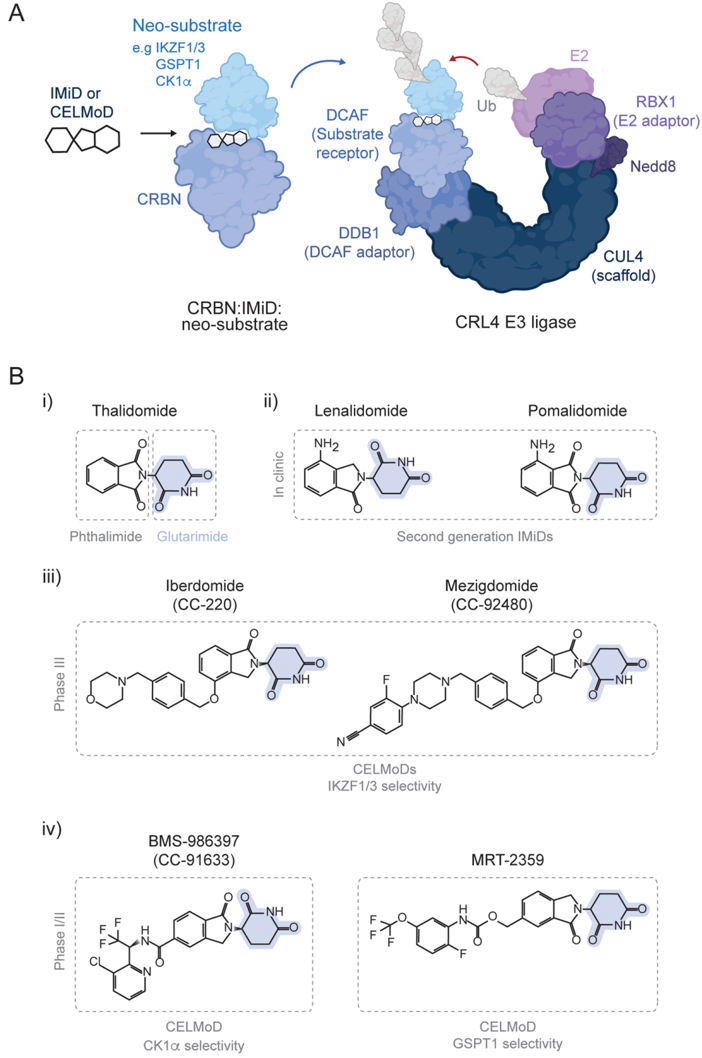
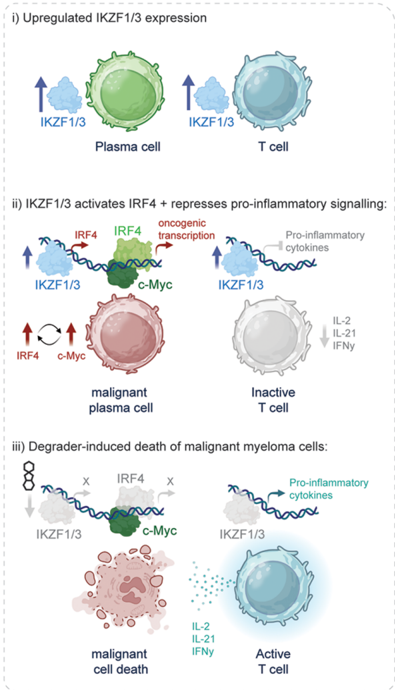
- IMiDs thalidomide, lenalidomide, and pomalidomide degrade IKZF1/IKZF3 via CRBN; lenalidomide also degrades CK1α in 5q-MDS. For IKZF1 degradation, celMoD potency is listed as CFT7455 > mezigdomide > CC-99282 > iberdomide > avadomide > pomalidomide > lenalidomide > thalidomide.
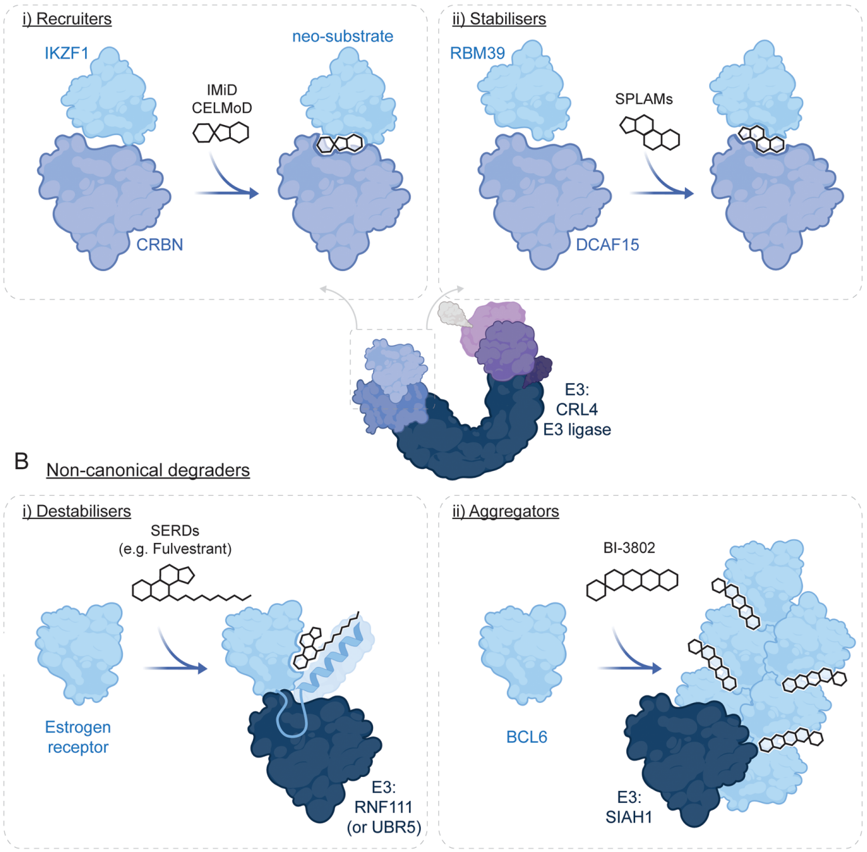
- Additional glue mechanisms include SPLAMs such as indisulam/e7820 stabilizing RBM39–DCAF15 (ternary Kd 0.1 µM vs DCAF15–RBM39 ~5 µM and DCAF15–indisulam >20 µM), UM171 with InsP6 increasing HDAC1 affinity for CRL3-KBTBD4 by 25-fold, and BI-3802 inducing BCL6 polymerization and SIAH1-mediated degradation.
- Clinically, >70% of molecular glue degraders in use or trials target IKZF1/IKZF3; 18 PROTACs are in clinical trials, 13 of which use CRL4-CRBN. Iberdomide and mezigdomide are in Phase III, e7820 in Phase II, NVP-DKY709 in Phase I, MRT-2359 in Phase I/II, and KPG-121 in Phase II/III.
Methods
- Narrative review of published literature on molecular glue degraders, their mechanisms, discovery strategies, and clinical development in cancer.
- No primary experimental data, systematic search strategy, inclusion criteria, or meta-analysis are reported; the synthesis draws on cited preclinical studies, structural studies, and clinical trials.
- The review organizes evidence thematically: historical serendipitous discoveries, CRBN/IMiD biology, alternative E3 ligases and glue mechanisms, rational screening/design platforms, and clinical targets including IKZF1/3, IKZF2, GSPT1, RBM39, CK1α, cyclin K, and NEK7.
Limitations
- The paper states that clinical efficacy of molecular glues is still at an early stage and requires careful monitoring for glue-induced toxicities, including unintended disruption of an E3 ligase’s native substrates, especially with pan-tissue effectors such as CRBN.
- The paper notes resistance challenges: CRBN mutations occur in approximately 30% of relapsed/refractory myeloma patients versus <1% in newly diagnosed patients; sulfonamides have shown modest clinical responses, and e7820 showed a discrepancy between 50% RBM39 loss in a Phase II trial and 90% loss in preclinical models.
- Evident from the text: as a narrative review, it does not systematically appraise study quality or provide quantitative synthesis, and several clinical programs are described as ongoing or promising without mature outcome data.
Model-written summary. Check it against the paper before relying on it.
Integrity signals
Registry
Cites
Statistics
Figures


Verification
Claims the paper makes
117 Valid · 4 Not valid · 72 Not checked · 60 Own results and interpretations
Every source the paper cites for this claim was checked and supports it.
In the paper
“A comprehensive structural analysis of unbound cRBN and its iMiD-and substrate-bound counterpart revealed that cRBN harbors a high-degree of flexibility within its c-terminal substrate binding domain (Hartmann et al. 2015).”
§ molecular glue degraders in cancer therapeutics > CRBN's expanding potential as a master effector
What the sources say
- Supportedcites Hartmann et al. 2015 matched to “Structural Dynamics of the Cereblon Ligand Binding Domain” (2015) source
The Conclusions report an unexpected degree of structural flexibility in the thalidomide-binding domain, with three interconnected flexible regions that fold upon substrate binding. The Results and Discussion section on mouse cereblon says this flexibility is also relevant to animal cereblon. (LLM, conf=0.94)
plain- Asserted: passes — The authors put it forward as true.
- Checkable: passes — It can be checked against evidence.
- Load-bearing: passes — The paper’s conclusions depend on it.
- Based: passes — The paper gives a reason why it holds.
- Supported
The cited sources support only part of this claim — read each source’s verdict below.
In the paper
“the second breakthrough came in 2014 when a series of landmark studies revealed that thalidomide, and its more potent derivative lenalidomide, did not behave as inhibitors but in fact functioned as molecular glue degraders analogous to the auxin degrader tiR1 (chamberlain et al. 2014;Fischer et al. 2014;gandhi et al. 2014;Krönke et al. 2014;lu et al. 2014).”
§ molecular glue degraders in cancer therapeutics > Thalidomide's target -cereblon
What the sources say
- Not checked — no full text of the sourcecites Chamberlain et al. 2014 matched to “Structure of the human Cereblon-DDB1-lenalidomide complex reveals basis for responsiveness to thalidomide analogs” (2014) source
- Partly supportedcites Fischer et al. 2014 matched to “Structure of the DDB1–CRBN E3 ubiquitin ligase in complex with thalidomide” (2014) sourceExperimental — accuracy not yet measured
The paper’s Abstract and “Thalidomide is an agonist and antagonist” section describe IMiD-driven Ikaros/Aiolos degradation and explicitly compare the proposed mechanism with auxin-induced degradation by TIR1. But the claim’s contrast with inhibitors is too absolute: the paper also says IMiDs block recruitment of the endogenous substrate MEIS2. It describes lenalidomide as more effective than thalidomide at targeting Ikaros for degradation. (LLM, conf=0.88)
- Partly supportedcites Gandhi et al. 2014 matched to “Immunomodulatory agents lenalidomide and pomalidomide co‐stimulate Tcells by inducing degradation of Tcell repressors Ikaros and Aiolos via modulation of the E 3 ubiquitin ligase complex CRL 4 CRBN” (2014) sourceExperimental — accuracy not yet measured
The Discussion (page unavailable) reports that lenalidomide promotes CRL4CRBN-mediated recruitment and degradation of Ikaros and Aiolos, rather than simply inhibiting the ligase. The paper studies lenalidomide and pomalidomide, not thalidomide as a degrader, and the cited passages do not establish an analogy to auxin–TIR1. (LLM, conf=0.86)
plainstates a cause- Asserted: passes — The authors put it forward as true.
- Checkable: passes — It can be checked against evidence.
- Load-bearing: passes — The paper’s conclusions depend on it.
- Based: passes — The paper gives a reason why it holds.
Every source the paper cites for this claim was checked and supports it.
In the paper
“By conjugating JQ1 to a thalidomide derivative, dBet1 successfully recruited cRBN to induce rapid and selective degradation of BRD2, BRD3 and BRD4.”
§ molecular glue degraders in cancer therapeutics > CRBN's expanding potential as a master effector
What the sources say
- Supportedcites Winter et al. 2015 matched to “Phthalimide conjugation as a strategy for in vivo target protein degradation” (2015) source
The paper’s text (section labelled Abstract; page unavailable) describes dBET1 as a JQ1–phthalimide conjugate that promotes CRBN-dependent BET protein degradation. Its proteomic results report marked depletion of BRD2, BRD3 and BRD4 after two hours, with high specificity among 7,429 detected proteins; a separate time course shows rapid BRD4 loss. (LLM, conf=0.93)
plainstates a cause- Asserted: passes — The authors put it forward as true.
- Checkable: passes — It can be checked against evidence.
- Load-bearing: passes — The paper’s conclusions depend on it.
- Based: passes — The paper gives a reason why it holds.
- Supported
The cited sources support only part of this claim — read each source’s verdict below.
In the paper
“A prime example that has reached the clinic is ARv-471, an estrogen receptor-targeting PROtAc, now in Phase iii trials for eR+ metastatic breast cancer (Nct05654623) (Hamilton et al. 2024).”
§ molecular glue degraders in cancer therapeutics > CRBN's expanding potential as a master effector
What the sources say
- Not matchedcites NCT05654623
This doesn’t read as a citation we can look up.
- Supportedcites Hamilton et al. 2024 matched to “VERITAC-2: a Phase III study of vepdegestrant, a PROTAC ER degrader, versus fulvestrant in ER+/HER2- advanced breast cancer” (2024) source
The Background section identifies vepdegestrant as ARV-471 and an estrogen receptor-targeting PROTAC degrader. The VERITAC-2 Study design section identifies NCT05654623 as a Phase III trial in adults with ER+/HER2- advanced breast cancer, and the Assignment to interventions section says enrollment was ongoing. (LLM, conf=0.94)
plain- Asserted: passes — The authors put it forward as true.
- Checkable: passes — It can be checked against evidence.
- Load-bearing: unclear — It is unclear whether the paper’s conclusions depend on it.
- Based: passes — The paper gives a reason why it holds.
- Not matched
The cited sources support only part of this claim — read each source’s verdict below.
In the paper
“their recruitment to cRl4 cRBN , upon lenalidomide treatment, led to their selective ubiquitylation and proteasomal degradation, ablating their role at promoters of their target genes (Krönke et al. 2014;lu et al. 2014).”
§ molecular glue degraders in cancer therapeutics > Thalidomide's target -cereblon
What the sources say
- Partly supportedcites Krönke et al. 2014 matched to “Lenalidomide Causes Selective Degradation of IKZF1 and IKZF3 in Multiple Myeloma Cells” (2014) sourceExperimental — accuracy not yet measured
The paper’s Abstract reports that lenalidomide promotes IKZF1 and IKZF3 binding to CRBN-CRL4, followed by selective ubiquitination and degradation. It also reports that depletion of IKZF3 de-represses the IL2 promoter in T cells. It does not establish loss of both factors’ roles at promoters of their target genes generally. (LLM, conf=0.83)
- Not matchedcites Lu et al. 2014
This doesn’t read as a citation we can look up.
plainstates a cause- Asserted: passes — The authors put it forward as true.
- Checkable: passes — It can be checked against evidence.
- Load-bearing: passes — The paper’s conclusions depend on it.
- Based: passes — The paper gives a reason why it holds.
- Partly supported
152 more claims · 75 with their cited sources checked
Create a free account to see all 253 claims and to verify the 6 references still open.
- It may state two separate claims as one. 80
- Probably not a substantial claim. 25
- The quote only partly states this claim. 1
Self-check
Percentages, sums and reported differences re-computed from the paper’s own numbers.
Each contradiction between two passages listed here was confirmed by an independent check.
Rated minor: it would not touch a result — a value no result rests on, a p-value that stays on the same side of the significance level, or a conflict that is clerical, resolved elsewhere in the paper, or outside its own findings.
In the paper
§ molecular glue degraders in cancer therapeutics > Future perspectives: degraders as a pancancer modality
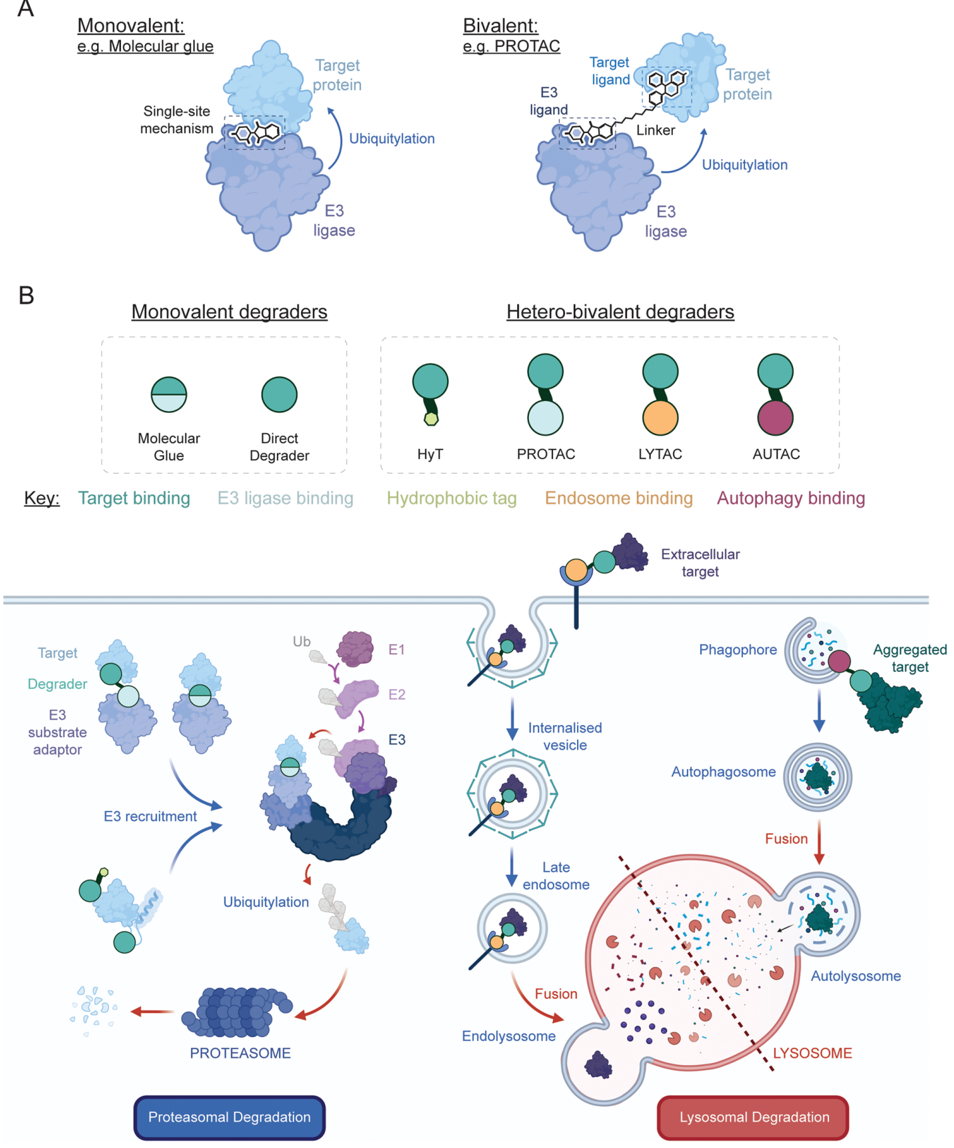
“molecular glues, direct degraders, ProtaCs and hyts all recruit e3 ligases and rely on proteasomal degradation (blue).”
§ molecular glue degraders in cancer therapeutics > Molecular glue degraders: taking inspiration from nature
“unlike ProtaCs and molecular glues, which mediate degradation through e3 ligase recruitment, hyts bypass this, relying instead on the cell's innate ability to clear unfolded or aberrantly exposed hydrophobic proteins.”
Citations
Cites
Hallmarks of Cancer: The Next Generation
Hanahan, D., & Weinberg, R. A. (2011) · Cell · doi:10.1016/j.cell.2011.02.013 · Cited by 66,590 · cited 1×
“…belongs to the ikaros family and plays an important role in immune evasion is a transcription factor that has been successfully targeted using a glue degrader approach. tumors evade immune detection by disrupting adaptive immunity, a key hallmark of tumor progression (Hanahan and weinberg 2011).”
Tissue-based map of the human proteome
Uhlén, M., Fagerberg, L., Hallström, B. M., Lindskog, C., Oksvold, P., Mardinoglu, A., Sivertsson, Å., Kampf, C., Sjöstedt, E., Asplund, A., et al. (2015) · Science · doi:10.1126/science.1260419 · Cited by 15,286 · cited 2×
“…across the human tissue proteome showed that cRBN exhibits low tissue specificity, with medium or high expression scores across 44 tissue types (uhlén et al. 2015). cRBN’s pan tissue expression highlights its capacity to target a diverse array of aberrant proteins in disease-specific contexts,…”
(2023) · doi:10.1126/science · Cited by 6,063
Primary, Adaptive, and Acquired Resistance to Cancer Immunotherapy
Sharma, P., Hu-Lieskovan, S., Wargo, J. A., & Ribas, A. (2017) · Cell · doi:10.1016/j.cell.2017.01.017 · Cited by 5,588
PD-1 and Its Ligands in Tolerance and Immunity
Keir, M. E., Butte, M. J., Freeman, G. J., & Sharpe, A. H. (2008) · Annual Review of Immunology · doi:10.1146/annurev.immunol.26.021607.090331 · Cited by 5,378 · cited 1×
“Many cancers overexpress PD-l1, triggering this checkpoint and evading immune detection (Keir et al. 2008; Francisco et al. 2010).”
Genomic classification and prognosis in acute myeloid leukemia
Papaemmanuil, E., Gerstung, M., Bullinger, L., Gaidzik, V. I., Paschka, P., Roberts, N. D., Potter, N. E., Heuser, M., Thol, F., Bolli, N., et al. (2016) · New England Journal of Medicine · doi:10.1056/nejmoa1516192 · Cited by 4,350 · cited 1×
“Splicing factor mutations are common in AMl and other blood malignancies and are often mutually exclusive (Haferlach et al. 2014; Papaemmanuil et al. 2016), indicating that cancers harboring such mutations may rely on an intact splicing machinery for survival (lee et al. 2018). in AMl, RBM39…”
Calcineurin is a common target of cyclophilin-cyclosporin A and FKBP-FK506 complexes
Liu, J., Farmer, J. D., Lane, W. S., Friedman, J., Weissman, I., & Schreiber, S. L. (1991) · Cell · doi:10.1016/0092-8674(91)90124-h · Cited by 4,116 · cited 2×
“A race ensued; their combined research revealed that these natural products remodeled their target proteins, a group of proteins named the immunophilins, recruiting novel interacting proteins to form entirely new ternary complexes (liu et al. 1991; Brown et al. 1994; Sabatini et al. 1994).”
PROTAC targeted protein degraders: the past is prologue
Békés, M., Langley, D. R., & Crews, C. M. (2022) · Nature Reviews Drug Discovery · doi:10.1038/s41573-021-00371-6 · Cited by 3,395 · cited 1×
“Monovalent and bivalent degraders have been extensively reviewed elsewhere (Farnaby et al. 2021; Kastl et al. 2021; Békés et al. 2022; Konstantinidou and Arkin 2024; lemaitre et al. 2024; Robinson et al. 2024; tan et al. 2024; Zhong et al. 2024). in this review, we focus on molecular glue…”
Sakamoto, K. M., Kim, K. B., Kumagai, A., Mercurio, F., Crews, C. M., & Deshaies, R. J. (2001) · Proceedings of the National Academy of Sciences · doi:10.1073/pnas.141230798 · Cited by 2,609 · cited 3×
“…while auxin was the first molecular glue degrader to be described, it was not the first recorded use of induced proximity as a tool for targeted protein degradation. the concept of targeted protein degradation was first introduced by crews, Deshaies and colleagues in 2001 (Sakamoto et al. 2001).”
Antitumor Activity of Thalidomide in Refractory Multiple Myeloma
Singhal, S., Mehta, J., Desikan, R., Ayers, D., Roberson, P., Eddlemon, P., Munshi, N., Anaissie, E., Wilson, C., Dhodapkar, M., et al. (1999) · New England Journal of Medicine · doi:10.1056/nejm199911183412102 · Cited by 2,575 · cited 1×
“…that thalidomide could be repurposed as an anti-cancer agent. clinical trials in multiple myeloma showed promising results where it was thought that its anti-inflammatory properties could disrupt the dependence of myeloma on inflammatory signaling (Singhal et al. 1999; Barlogie et al. 2001).”
Thalidomide is an inhibitor of angiogenesis.
D'Amato, R., Loughnan, M., Flynn, E., & Folkman, J. (1994) · Proceedings of the National Academy of Sciences of the United States of America · doi:10.1097/00006982-199616030-00022 · Cited by 2,466
Thalidomide is an inhibitor of angiogenesis.
D'Amato, R. J., Loughnan, M. S., Flynn, E., & Folkman, J. (1994) · Proceedings of the National Academy of Sciences · doi:10.1073/pnas.91.9.4082 · Cited by 2,454
The PD‐1 pathway in tolerance and autoimmunity
Francisco, L. M., Sage, P. T., & Sharpe, A. H. (2010) · Immunological Reviews · doi:10.1111/j.1600-065x.2010.00923.x · Cited by 2,300 · cited 1×
“Many cancers overexpress PD-l1, triggering this checkpoint and evading immune detection (Keir et al. 2008; Francisco et al. 2010).”
Identification of a Primary Target of Thalidomide Teratogenicity
Ito, T., Ando, H., Suzuki, T., Ogura, T., Hotta, K., Imamura, Y., Yamaguchi, Y., & Handa, H. (2010) · Science · doi:10.1126/science.1177319 · Cited by 2,136 · cited 3×
“…specificity for the cRl4 complex (Angers et al. 2006). cRBN was found to bind thalidomide, altering the substrate specificity of the ligase (ito et al. 2010). whilst it was initially hypothesized that thalidomide inhibited the ubiquitylating activity of cRl4 cRBN , the true nature of this…”
InfluentialThe mechanism of action of cyclosporin A and FK506
Schreiber, S. L., & Crabtree, G. R. (1992) · Immunology Today · doi:10.1016/0167-5699(92)90111-j · Cited by 2,127
A mammalian protein targeted by G1-arresting rapamycin–receptor complex
Brown, E. J., Albers, M. W., Bum Shin, T., ichikawa, K., Keith, C. T., Lane, W. S., & Schreiber, S. L. (1994) · Nature · doi:10.1038/369756a0 · Cited by 2,053 · cited 2×
“…of PP2B and the kinase mtOR, respectively, explaining the immunosuppressant behavior of these natural products (Schreiber and crabtree 1992; Brown et al. 1994; Sabatini et al. 1994). their race – remembered in a recent review by Schreiber (Schreiber 2021) – brought about the new field of…”
Lenalidomide Causes Selective Degradation of IKZF1 and IKZF3 in Multiple Myeloma Cells
Krönke, J., Udeshi, N. D., Narla, A., Grauman, P., Hurst, S. N., McConkey, M., Svinkina, T., Heckl, D., Comer, E., Li, X., et al. (2014) · Science · doi:10.1126/science.1244851 · Cited by 1,879 · cited 7×
“…leukemia (list et al. 2006). initially, it was thought that the efficacy of lenalidomide was a result of cRl4 cRBN targeting genes within the eponymous deleted region of chromosome 5. this depletion would mimic a biallelic, or homozygous, deletion that would not be tolerated (Krönke et al. 2014).”
InfluentialPhthalimide conjugation as a strategy for in vivo target protein degradation
Winter, G. E., Buckley, D. L., Paulk, J., Roberts, J. M., Souza, A., Dhe-Paganon, S., & Bradner, J. E. (2015) · Science · doi:10.1126/science.aab1433 · Cited by 1,760 · cited 2×
“…as the recruited ligase (tsai et al. 2024). the first engineered cRBN-mediated degrader was dBet1, a PROtAc developed in a landmark proof-of-concept study (winter et al. 2015). the aim was to target a ubiquitously expressed Bet protein, BRD4, using the high affinity Bet bromodomain inhibitor JQ1.”
Mechanism of auxin perception by the TIR1 ubiquitin ligase
Tan, X., Calderon-Villalobos, L. I. A., Sharon, M., Zheng, C., Robinson, C. V., Estelle, M., & Zheng, N. (2007) · Nature · doi:10.1038/nature05731 · Cited by 1,688 · cited 2×
“Structural studies revealed that auxin stabilized the interaction between an e3 ligase (specifically the F-box substrate adaptor, tiR1, from the multimeric e3 ligase ScF tiR1 ) and its endogenous substrates (tan et al. 2007).”
The Myeloma Drug Lenalidomide Promotes the Cereblon-Dependent Destruction of Ikaros Proteins
Lu, G., Middleton, R. E., Sun, H., Naniong, M., Ott, C. J., Mitsiades, C. S., Wong, K.-K., Bradner, J. E., & Kaelin, W. G. (2014) · Science · doi:10.1126/science.1244917 · Cited by 1,583 · cited 6×
“…2012; weilemann et al. 2015). interestingly, iKZF1 and iKZF3 regulate the expression of iRF4 and c-Myc and their loss reduces the levels of these factors suggesting a therapeutic potential for targeting these proteins in blood malignancies (lu et al. 2014; Bjorklund et al. 2015) (Figure 5A, ii).”
InfluentialLandscape of genetic lesions in 944 patients with myelodysplastic syndromes
Haferlach, T., Nagata, Y., Grossmann, V, Okuno, Y., Bacher, U., Nagae, G., Schnittger, S., Sanada, M., Kon, A., Alpermann, T., et al. (2014) · Leukemia · doi:10.1038/leu.2013.336 · Cited by 1,532 · cited 1×
“Splicing factor mutations are common in AMl and other blood malignancies and are often mutually exclusive (Haferlach et al. 2014; Papaemmanuil et al. 2016), indicating that cancers harboring such mutations may rely on an intact splicing machinery for survival (lee et al. 2018). in AMl, RBM39…”
Cancer Research Communications
(2021) · doi:10.1158/1078-0432 · Cited by 1,532
Sabatini, D. M., Erdjument-Bromage, H., Lui, M., Tempst, P., & Snyder, S. H. (1994) · Cell · doi:10.1016/0092-8674(94)90570-3 · Cited by 1,509 · cited 2×
“…the kinase mtOR, respectively, explaining the immunosuppressant behavior of these natural products (Schreiber and crabtree 1992; Brown et al. 1994; Sabatini et al. 1994). their race – remembered in a recent review by Schreiber (Schreiber 2021) – brought about the new field of induced proximity…”
Biological effects of cyclosporin A: A new antilymphocytic agent
Borel, J. F., Feurer, C., Gubler, H. U., & Stähelin, H. (1976) · Agents and Actions · doi:10.1007/bf01973261 · Cited by 1,509 · cited 1×
“…in the early 1990s. the founding members of these “proximity inducers” were three natural products: cyclosporin A (csA), FK506 (tacrolimus) and rapamycin. their immunosuppressive activity piqued the curiosity of a handful of researchers (Borel et al. 1976; Sawada et al. 1987; Schreiber 1991).”
Chemistry and Biology of the Immunophilins and Their Immunosuppressive Ligands
Schreiber, S. L. (1991) · Science · doi:10.1126/science.1702904 · Cited by 1,494 · cited 1×
“…in the early 1990s. the founding members of these “proximity inducers” were three natural products: cyclosporin A (csA), FK506 (tacrolimus) and rapamycin. their immunosuppressive activity piqued the curiosity of a handful of researchers (Borel et al. 1976; Sawada et al. 1987; Schreiber 1991).”
Lenalidomide in the Myelodysplastic Syndrome with Chromosome 5q Deletion
List, A., Dewald, G., Bennett, J., Giagounidis, A., Raza, A., Feldman, E., Powell, B., Greenberg, P., Thomas, D., Stone, R., et al. (2006) · New England Journal of Medicine · doi:10.1056/nejmoa061292 · Cited by 1,319 · cited 1×
“…for 5q-MDS, a myelodysplastic syndrome with heterozygous deletion of the long arm of chromosome 5, which can progress into more aggressive leukemia (list et al. 2006). initially, it was thought that the efficacy of lenalidomide was a result of cRl4 cRBN targeting genes within the eponymous deleted…”
Estey, E., & Döhner, H. (2006) · The Lancet · doi:10.1016/s0140-6736(06)69780-8 · Cited by 1,296
NEK7 is an essential mediator of NLRP3 activation downstream of potassium efflux
He, Y., Zeng, M. Y., Yang, D., Motro, B., & Núñez, G. (2016) · Nature · doi:10.1038/nature16959 · Cited by 1,295 · cited 1×
“…activity, NeK7 has since been identified as a scaffolding component of the NlRP3 inflammasome which is a key driver of pro-inflammatory signaling (He et al. 2016; Sharif et al. 2019). it has been suggested these dual functions are mutually exclusive from each other and NeK7 appears to behave as…”
ESR1 ligand-binding domain mutations in hormone-resistant breast cancer
Toy, W., Shen, Y., Won, H., Green, B., Sakr, R. A., Will, M., Li, Z., Gala, K., Fanning, S., King, T. A., et al. (2013) · Nature Genetics · doi:10.1038/ng.2822 · Cited by 1,248 · cited 1×
“…the eR, rather than inhibition, is beneficial for treating cancers as it effectively counter-acts resistance mechanisms and alleviates the paradoxical “estrogen-agonistic” side effects observed with long-term use of traditional hormonal agents like tamoxifen (Robinson et al. 2013; toy et al. 2013).”
Lenalidomide plus Dexamethasone for Relapsed Multiple Myeloma in North America
Weber, D. M., Chen, C., Niesvizky, R., Wang, M., Belch, A., Stadtmauer, E. A., Siegel, D., Borrello, I., Rajkumar, S. V., Chanan-Khan, A. A., et al. (2007) · New England Journal of Medicine · doi:10.1056/nejmoa070596 · Cited by 1,233 · cited 2×
“Since then, lenalidomide has become a mainstay in haematological therapies for both newly diagnosed and relapsed/refractory disease. in combination with dexamethasone, it became a first-line treat-ment for newly diagnosed multiple myeloma (weber et al. 2007).”
Lysosome-targeting chimaeras for degradation of extracellular proteins
Banik, S. M., Pedram, K., Wisnovsky, S., Ahn, G., Riley, N. M., & Bertozzi, C. R. (2020) · Nature · doi:10.1038/s41586-020-2545-9 · Cited by 1,199 · cited 1×
“Other bivalent degraders follow a similar logic: lysosome-targeting chimeras (lytAcs) engage lysosomal degradation pathways (Banik et al. 2020) whereas autophagy-targeting chime-ras (AutAcs) interact with autophagosomal components to initiate autophagy (li et al. 2019; takahashi et al. 2019).”
T-cell exhaustion in the tumor microenvironment
Jiang, Y., Li, Y., & Zhu, B. (2015) · Cell Death & Disease · doi:10.1038/cddis.2015.162 · Cited by 1,157 · cited 1×
“…marked by reduced proliferation, decreased cytokine production and heightened inhibitory checkpoints which ultimately weaken anti-tumor immunity (Jiang et al. 2015; Neyens et al. 2023; Hetemäki et al. 2025). iKZF2 is upregulated in leukemia and lymphoma, including leukemia stem cells, where it…”
Activating ESR1 mutations in hormone-resistant metastatic breast cancer
Robinson, D. R., Wu, Y.-M., Vats, P., Su, F., Lonigro, R. J., Cao, X., Kalyana-Sundaram, S., Wang, R., Ning, Y., Hodges, L., et al. (2013) · Nature Genetics · doi:10.1038/ng.2823 · Cited by 1,145 · cited 1×
“…the eR, rather than inhibition, is beneficial for treating cancers as it effectively counter-acts resistance mechanisms and alleviates the paradoxical “estrogen-agonistic” side effects observed with long-term use of traditional hormonal agents like tamoxifen (Robinson et al. 2013; toy et al. 2013).”
THALIDOMIDE AND CONGENITAL ABNORMALITIES
Mcbride, W. G. (1961) · The Lancet · doi:10.1016/s0140-6736(61)90927-8 · Cited by 1,141 · cited 1×
“…of pharmaceutical failure into a pioneering agent in targeted protein degradation. introduced in the late 1950s as a sedative and anti-nausea treatment for pregnant women, thalido-mide was rapidly withdrawn after its teratogenic effects led to thousands of birth defects (McBride 1961; Somers 1962).”
Structure of the DDB1–CRBN E3 ubiquitin ligase in complex with thalidomide
Fischer, E. S., Böhm, K., Lydeard, J. R., Yang, H., Stadler, M. B., Cavadini, S., Nagel, J., Serluca, F., Acker, V., Lingaraju, G. M., et al. (2014) · Nature · doi:10.1038/nature13527 · Cited by 1,141
Counting the Zinc-Proteins Encoded in the Human Genome
Andreini, C., Banci, L., Bertini, I., & Rosato, A. (2006) · Journal of Proteome Research · doi:10.1021/pr050361j · Cited by 1,109 · cited 2×
“For example, transcription factors often harbor zinc-finger domains and zinc-finger proteins comprise around >5% of the genome making them particularly challenging to selectively target (Andreini et al. 2006).”
(1991) · PubMed · Cited by 1,101
Encoded combinatorial chemistry.
Brenner, S., & Lerner, R. A. (1992) · Proceedings of the National Academy of Sciences · doi:10.1073/pnas.89.12.5381 · Cited by 1,014 · cited 1×
“Originally conceived by Brenner and lerner, Dels are built through iterative chemical synthesis in which each small molecule is covalently linked to a unique DNA tag that enables the parallel screening of millions of pooled compounds (Brenner and lerner 1992).”
Winston, J. T., Strack, P., Beer-Romero, P., Chu, C. Y., Elledge, S. J., & Harper, J. W. (1999) · Genes & Development · doi:10.1101/gad.13.3.270 · Cited by 954 · cited 1×
“Post-translational modifications often act as glues to enhance substrate recognition by e3 ligases, as exemplified by phospho-degrons that recruit the e3 ligase ScF β-tRcP (winston et al. 1999).”
Human Fetal Hemoglobin Expression Is Regulated by the Developmental Stage-Specific Repressor BCL11A
Sankaran, V. G., Menne, T. F., Xu, J., Akie, T. E., Lettre, G., Van Handel, B., Mikkola, H. K. A., Hirschhorn, J. N., Cantor, A. B., & Orkin, S. H. (2008) · Science · doi:10.1126/science.1165409 · Cited by 919
The genetic architecture of multiple myeloma
Morgan, G. J., Walker, B. A., & Davies, F. E. (2012) · Nature Reviews Cancer · doi:10.1038/nrc3257 · Cited by 913 · cited 1×
“…by abnormal gene expression and chromosomal translocations, often involving the transcription factors iRF4 and Myc (Bergsagel et al. 1996; Morgan et al. 2012). iRF4 and c-Myc work together in a positive-feedback loop to drive gene expression profiles associated with myeloma progression…”
Thalidomide-induced Teratogenesis: History and Mechanisms
Vargesson, N. (2015) · Birth Defects Research Part C Embryo Today Reviews · doi:10.1002/bdrc.21096 · Cited by 912 · cited 1×
“…worldwide were affected by thalidomide, of which approximately 10,000 resulted in live births. the majority of these babies suffered from severe deformities (vargesson 2015), and as a consequence thalidomide’s reputation was tarnished and rel-egated to be a cautionary tale in drug safety lore.”
Lenalidomide induces ubiquitination and degradation of CK1α in del(5q) MDS
Krönke, J., Fink, E. C., Hollenbach, P. W., MacBeth, K. J., Hurst, S. N., Udeshi, N. D., Chamberlain, P. P., Mani, D. R., Man, H. W., Gandhi, A. K., et al. (2015) · Nature · doi:10.1038/nature14610 · Cited by 863 · cited 2×
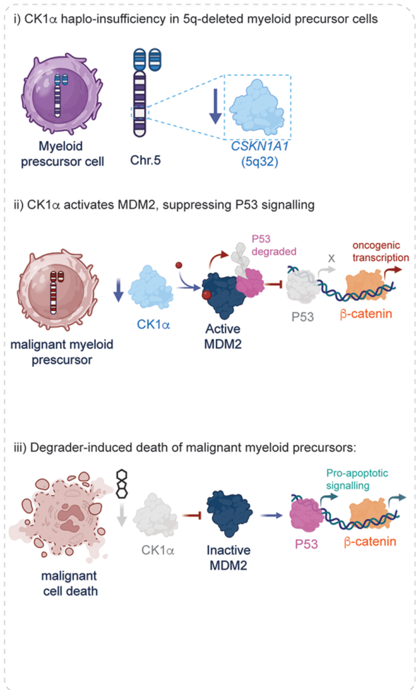
“…and leads to clonal arrest of the 5q-deleted population which ultimately drives disease regression (wei et al. 2009; Schneider et al. 2014; Krönke et al. 2015). while cK1α plays a multifaceted role in the cell it is thought that its direct phosphorylation of MDM2 contributes to 5q-MDS…”
The target landscape of clinical kinase drugs
Klaeger, S., Heinzlmeir, S., Wilhelm, M., Polzer, H., Vick, B., Koenig, P.-A., Reinecke, M., Ruprecht, B., Petzoldt, S., Meng, C., et al. (2017) · Science · doi:10.1126/science.aan4368 · Cited by 854 · cited 3×
“Over the years, a vast number of small molecule kinase inhibitors have been developed that exhibit significant clinical benefits (Klaeger et al. 2017).”
InfluentialOridonin is a covalent NLRP3 inhibitor with strong anti-inflammasome activity
He, H., Jiang, H., Chen, Y., Ye, J., Wang, A., Wang, C., Liu, Q., Liang, G., Deng, X., Jiang, W., et al. (2018) · Nature Communications · doi:10.1038/s41467-018-04947-6 · Cited by 827 · cited 1×
“…which are all characterized by chronic inflammation (Zhao et al. 2020). inhibitors directly disrupting the NeK7-NlRP3 interaction have achieved some preclinical success by effectively decreasing inflammasome signaling which highlights the therapeutic value of NeK7 targeting (He et al. 2018, 2024).”
Structural mechanism for NEK7-licensed activation of NLRP3 inflammasome
Sharif, H., Wang, L., Wang, W. L., Magupalli, V. G., Andreeva, L., Qiao, Q., Hauenstein, A. V., Wu, Z., Núñez, G., Mao, Y., et al. (2019) · Nature · doi:10.1038/s41586-019-1295-z · Cited by 824 · cited 1×
“…has since been identified as a scaffolding component of the NlRP3 inflammasome which is a key driver of pro-inflammatory signaling (He et al. 2016; Sharif et al. 2019). it has been suggested these dual functions are mutually exclusive from each other and NeK7 appears to behave as a cellular…”
Lopez-Girona, A., Mendy, D., Ito, T., Miller, K., Gandhi, A. K., Kang, J., Karasawa, S., Carmel, G., Jackson, P., Abbasian, M., et al. (2012) · Leukemia · doi:10.1038/leu.2012.119 · Cited by 814 · cited 1×
“…properties but exhibited greater potency in immuno-modulation and anti-inflammatory responses (weber et al. 2007; lacy and Rajkumar 2010; lopez-girona et al. 2012). thalidomide, lenalidomide and pomalido-mide – collectively named iMiDs – have since been shown to be effective…”
Anticancer sulfonamides target splicing by inducing RBM39 degradation via recruitment to DCAF15
Han, T., Goralski, M., Gaskill, N., Capota, E., Kim, J., Ting, T. C., Xie, Y., Williams, N. S., & Nijhawan, D. (2017) · Science · doi:10.1126/science.aal3755 · Cited by 762 · cited 18×
“Several targets, already engaged by glue degraders in the clinic, show promise as pan-cancer therapies. given their crucial roles in several essential cellular processes RBM39 and gSPt1 represent attractive candidates for a pan-cancer approach. custom celMoDs targeting gSPt1 have already demonstrated potential across…”
InfluentialShi, H., Wang, Y., Li, X., Zhan, X., Tang, M., Fina, M., Su, L., Pratt, D., Bu, C. H., Hildebrand, S., et al. (2016) · Nature Immunology · doi:10.1038/ni.3333 · Cited by 745 · cited 1×
“…which is a key driver of pro-inflammatory signaling (He et al. 2016; Sharif et al. 2019). it has been suggested these dual functions are mutually exclusive from each other and NeK7 appears to behave as a cellular switch preventing inflammatory signaling during cell division (Shi et al. 2016).”
IRF4 addiction in multiple myeloma
Shaffer, A. L., Emre, N. C. T., Lamy, L., Ngo, V. N., Wright, G., Xiao, W., Powell, J., Dave, S., Yu, X., Zhao, H., et al. (2008) · Nature · doi:10.1038/nature07064 · Cited by 730 · cited 2×
“…Morgan et al. 2012). iRF4 and c-Myc work together in a positive-feedback loop to drive gene expression profiles associated with myeloma progression (Shaffer et al. 2008; Bjorklund et al. 2015). iRF4-dependency is also a hallmark of other haematopoietic malignancies, including B cell lymphomas,…”
A novel cereblon modulator recruits GSPT1 to the CRL4CRBN ubiquitin ligase
Matyskiela, M. E., Lu, G., Ito, T., Pagarigan, B., Lu, C.-C., Miller, K., Fang, W., Wang, N.-Y., Nguyen, D., Houston, J., et al. (2016) · Nature · doi:10.1038/nature18611 · Cited by 701 · cited 8×
“…its degradation by the cRl4 cRBN complex explained the anti-proliferative effects of cc-885 which had been observed in many malignant cell types (Matyskiela et al. 2016). this is consistent with earlier findings that gSPt1 depletion leads to g1 cell cycle arrest in colorectal cancer cell lines…”
InfluentialAUTACs: Cargo-Specific Degraders Using Selective Autophagy
Takahashi, D., Moriyama, J., Nakamura, T., Miki, E., Takahashi, E., Sato, A., Akaike, T., Itto-Nakama, K., & Arimoto, H. (2019) · Molecular Cell · doi:10.1016/j.molcel.2019.09.009 · Cited by 675 · cited 1×
“Other bivalent degraders follow a similar logic: lysosome-targeting chimeras (lytAcs) engage lysosomal degradation pathways (Banik et al. 2020) whereas autophagy-targeting chime-ras (AutAcs) interact with autophagosomal components to initiate autophagy (li et al. 2019; takahashi et al. 2019).”
Molecular architecture and assembly of the DDB1–CUL4A ubiquitin ligase machinery
Angers, S., Li, T., Yi, X., MacCoss, M. J., Moon, R. T., & Zheng, N. (2006) · Nature · doi:10.1038/nature05175 · Cited by 674 · cited 2×
“…(cRBN), a substrate receptor component of the multimeric e3 ligase cRl4 cRBN (cul4-RBX1-DDB1 cRBN ) (Figure 3A) (ito et al. 2010). the cRl4 cRBN complex consists of a core cullin scaffold cul4, which binds to both RBX1 – the subunit that directly recruits an e2 – and DDB1 (Angers et al. 2006).”
Mitsiades, N., Mitsiades, C. S., Poulaki, V., Chauhan, D., Richardson, P. G., Hideshima, T., Munshi, N. C., Treon, S. P., & Anderson, K. C. (2002) · Blood · doi:10.1182/blood.v99.12.4525 · Cited by 669 · cited 1×
“…phenotypic assays, which allowed candidates including lenalidomide to translate to the clinic before the molecular mechanism was fully elucidated (Mitsiades et al. 2002). the first breakthrough came when the primary cellular target of thalidomide was identified: cereblon (cRBN), a substrate…”
Schneekloth, A. R., Pucheault, M., Tae, H. S., & Crews, C. M. (2008) · Bioorganic & Medicinal Chemistry Letters · doi:10.1016/j.bmcl.2008.07.114 · Cited by 635 · cited 2×
“…on this proof-of-concept study, which employed a bulky peptide to recruit ScF β-tRcP , researchers later developed a small molecule based PROtAc (Schneekloth et al. 2008). employing small molecule binders helped to address challenges related to cell permeability and poor bioavailability which…”
Structural basis of lenalidomide-induced CK1α degradation by the CRL4CRBN ubiquitin ligase
Petzold, G., Fischer, E. S., & Thomä, N. H. (2016) · Nature · doi:10.1038/nature16979 · Cited by 620 · cited 7×
“…as additional neo-substrates were discovered, such as cK1α, gSPt1, and p63, it was hypothesized that cRBN might not recognize a sequence-specific motif as these new substrates lacked the zinc-finger consensus sequence (Matyskiela et al. 2016; Petzold et al. 2016; Asatsuma-Okumura et al. 2019).”
InfluentialGandhi, A. K., Kang, J., Havens, C. G., Conklin, T., Ning, Y., Wu, L., Ito, T., Ando, H., Waldman, M. F., Thakurta, A., et al. (2014) · British Journal of Haematology · doi:10.1111/bjh.12708 · Cited by 619
Cereblon expression is required for the antimyeloma activity of lenalidomide and pomalidomide
Zhu, Y. X., Braggio, E., Shi, C.-X., Bruins, L. A., Schmidt, J. E., Van Wier, S., Chang, X.-B., Bjorklund, C. C., Fonseca, R., Bergsagel, P. L., et al. (2011) · Blood · doi:10.1182/blood-2011-05-356063 · Cited by 607 · cited 1×
“…lower cRBN expression correlates to resistance, with acquired cRBN deletion recognized as the key genetic event in iMiD-resistant cell line models (Zhu et al. 2011). certain cancers, particularly t cell malignancies that have inherently lower cRBN expression exhibited poor responses to iMiD…”
Targeted protein degradation by PROTACs
Neklesa, T. K., Winkler, J. D., & Crews, C. M. (2017) · Pharmacology & Therapeutics · doi:10.1016/j.pharmthera.2017.02.027 · Cited by 599 · cited 1×
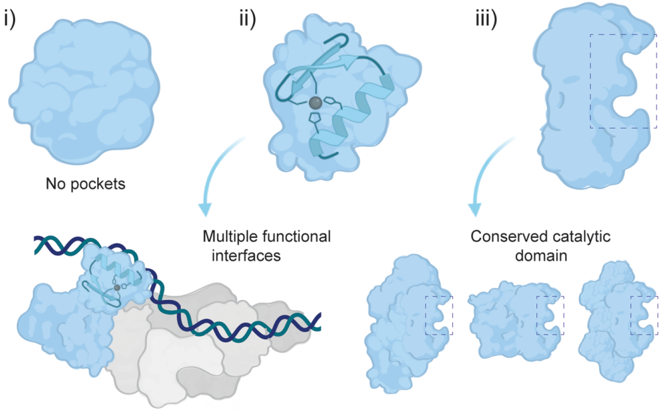
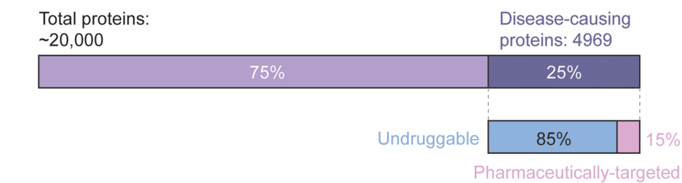
“%) of proteins arising from disease-causing genes are considered “undruggable” (Neklesa et al. 2017) (Figure 1A). their low tractability often stems from small or featureless functional interfaces; the lack of defined hydrophobic pockets is detri-mentally challenging for ligand binding (Figure 1B,…”
Schreiber, S. L. (2021) · Cell · doi:10.1016/j.cell.2020.12.020 · Cited by 598 · cited 3×
“By triggering the autophagy pathway, autaCs label the target protein for sequestration within autophagosomes, which subsequently fuze with lysosomes, leading to degradation. autaCs offer an alternative approach for degrading aggregated, misfolded, or long-lived proteins that are less accessible to the ubiquitin-protea…”
InfluentialProteasome-dependent degradation of the human estrogen receptor
Nawaz, Z., Lonard, D. M., Dennis, A. P., Smith, C. L., & O’Malley, B. W. (1999) · Proceedings of the National Academy of Sciences · doi:10.1073/pnas.96.5.1858 · Cited by 589 · cited 1×
“…hydrophobic cleft. while this is a signal for cofactor binding, it is also a recognized degron for the uBR5 e3 ligase to induce degradation (Nawaz et al. 1999; tsai et al. 2023). without the formation of a ternary complex, these hormones are not classically considered as molecular glues,…”
Ikaros DNA-Binding Proteins Direct Formation of Chromatin Remodeling Complexes in Lymphocytes
Kim, J., Sif, S., Jones, B., Jackson, A., Koipally, J., Heller, E., Winandy, S., Viel, A., Sawyer, A., Ikeda, T., et al. (1999) · Immunity · doi:10.1016/s1074-7613(00)80034-5 · Cited by 587 · cited 1×
“…et al. 2013). interestingly, iKZF1 behaves in a promiscuous manner, interacting with both activator and repressor chromatin-remodeling complexes (Kim et al. 1999; O’Neill et al. 2000). through this mechanism, iKZF1 – and its other family members – regulate cell-fate decisions during…”
Pyrimidoindole derivatives are agonists of human hematopoietic stem cell self-renewal
Fares, I., Chagraoui, J., Gareau, Y., Gingras, S., Ruel, R., Mayotte, N., Csaszar, E., Knapp, D. J. H. F., Miller, P., Ngom, M., et al. (2014) · Science · doi:10.1126/science.1256337 · Cited by 565 · cited 1×
“…Nct03441958), has recently had its degrader mechanism-of-action retrospectively elucidated (Xie et al. 2025; yeo et al. 2025). like Bi-3802, it was discovered following a high-throughput screen – one designed to identify compounds that promote haematopoietic stem cell expansion (Fares et al. 2014).”
Allele-selective lowering of mutant HTT protein by HTT–LC3 linker compounds
Li, Z., Wang, C., Wang, Z., Zhu, C., Li, J., Sha, T., Ma, L., Gao, C., Yang, Y., Sun, Y., et al. (2019) · Nature · doi:10.1038/s41586-019-1722-1 · Cited by 551 · cited 1×
“Other bivalent degraders follow a similar logic: lysosome-targeting chimeras (lytAcs) engage lysosomal degradation pathways (Banik et al. 2020) whereas autophagy-targeting chime-ras (AutAcs) interact with autophagosomal components to initiate autophagy (li et al. 2019; takahashi et al. 2019).”
Barlogie, B., Desikan, R., Eddlemon, P., Spencer, T., Zeldis, J., Munshi, N., Badros, A., Zangari, M., Anaissie, E., Epstein, J., et al. (2001) · Blood · doi:10.1182/blood.v98.2.492 · Cited by 541 · cited 1×
“…that thalidomide could be repurposed as an anti-cancer agent. clinical trials in multiple myeloma showed promising results where it was thought that its anti-inflammatory properties could disrupt the dependence of myeloma on inflammatory signaling (Singhal et al. 1999; Barlogie et al. 2001).”
Defining the human C2H2 zinc finger degrome targeted by thalidomide analogs through CRBN
Sievers, Q. L., Petzold, G., Bunker, R. D., Renneville, A., Słabicki, M., Liddicoat, B. J., Abdulrahman, W., Mikkelsen, T., Ebert, B. L., & Thomä, N. H. (2018) · Science · doi:10.1126/science.aat0572 · Cited by 537 · cited 3×
“…called a “g-loop” (a β-hairpin α-turn containing a glycine (g) residue at a key position within the loop). the transcription factors iKZF1 and iKZF3 possess a cys2-His2 (c 2 H 2 )-type zinc-finger domain featuring a characteristic “cXXcg” sequence that harbors this degron (Sievers et al. 2018).”
InfluentialChamberlain, P. P., Lopez-Girona, A., Miller, K., Carmel, G., Pagarigan, B., Chie-Leon, B., Rychak, E., Corral, L. G., Ren, Y. J., Wang, M., et al. (2014) · Nature Structural & Molecular Biology · doi:10.1038/nsmb.2874 · Cited by 531 · cited 5×
“…a “hotspot” of unsatisfied hydrogen bonds making cRBN more receptive to proteins with a complementary degron. these proteins are called neo-substrates (chamberlain et al. 2014) (Figure 3A). unlike most degrons, that are sequence-specific and exist in accessible unstructured regions, cRBN…”
InfluentialExploiting Synthetic Lethality for the Therapy of ABC Diffuse Large B Cell Lymphoma
Yang, Y., Shaffer, A. L., Emre, N. C. T., Ceribelli, M., Zhang, M., Wright, G., Xiao, W., Powell, J., Platig, J., Kohlhammer, H., et al. (2012) · Cancer Cell · doi:10.1016/j.ccr.2012.05.024 · Cited by 521 · cited 1×
“…2015). iRF4-dependency is also a hallmark of other haematopoietic malignancies, including B cell lymphomas, particularly DlBcl and t cell lymphomas (yang et al. 2012; weilemann et al. 2015). interestingly, iKZF1 and iKZF3 regulate the expression of iRF4 and c-Myc and their loss reduces the levels…”
Mutant p53 in cancer: from molecular mechanism to therapeutic modulation
Chen, X., Zhang, T., Su, W., Dou, Z., Zhao, D., Jin, X., Lei, H., Wang, J., Xie, X., Cheng, B., et al. (2022) · Cell Death & Disease · doi:10.1038/s41419-022-05408-1 · Cited by 494 · cited 1×
“However, since TP53 is the most commonly mutated gene in cancer (chen et al. 2022), stratifying patients based on their TP53 status may help predict their response to cK1α directed therapy. in prostate cancer, cK1α depletion has shown promise in resensitising resistant tumors to hormonal therapies…”
Therapeutic targeting of “undruggable” MYC
Llombart, V., & Mansour, M. R. (2022) · eBioMedicine · doi:10.1016/j.ebiom.2021.103756 · Cited by 472 · cited 1×
“Only upon assembly with cofactors does it adopt a structured and functional conformation; this dynamic nature restricts the effectiveness of standard structure-guided drug design (llombart and Mansour 2022).”
Georgopoulos, K., Moore, D. D., & Derfler, B. (1992) · Science · doi:10.1126/science.1439790 · Cited by 464 · cited 1×
“…(tsai et al. 2024). iKZF1 was first discovered in the early 1990s as a transcription factor that played a key role in lymphocyte development (georgopoulos et al. 1992). it became the founding member of the ikaros family of transcription factors comprising five members: ikaros (iKZF1),…”
Stable inhibitory activity of regulatory T cells requires the transcription factor Helios
Kim, H.-J., Barnitz, R. A., Kreslavsky, T., Brown, F. D., Moffett, H., Lemieux, M. E., Kaygusuz, Y., Meissner, T., Holderried, T. A. W., Chan, S., et al. (2015) · Science · doi:10.1126/science.aad0616 · Cited by 441 · cited 1×
“However, its loss can shift tRegs toward a pro-inflammatory state such they secrete il-2 and iFN-γ and behave like tumor-fighting teff-like cells (Kim et al. 2015; Nakagawa et al. 2016). iKZF2 has therefore been linked to t cell exhaustion, a state marked by reduced proliferation, decreased…”
Targeted protein degradation: from mechanisms to clinic
Tsai, J. M., Nowak, R. P., Ebert, B. L., & Fischer, E. S. (2024) · Nature Reviews Molecular Cell Biology · doi:10.1038/s41580-024-00729-9 · Cited by 438 · cited 2×
“…used and represents the leader of the field. indeed, of the 18 PROtAcs currently in clinical trials 13 utilize cRl4 cRBN as the recruited ligase (tsai et al. 2024). the first engineered cRBN-mediated degrader was dBet1, a PROtAc developed in a landmark proof-of-concept study (winter et al.…”
The CDK inhibitor CR8 acts as a molecular glue degrader that depletes cyclin K
Słabicki, M., Kozicka, Z., Petzold, G., Li, Y.-D., Manojkumar, M., Bunker, R. D., Donovan, K. A., Sievers, Q. L., Koeppel, J., Suchyta, D., et al. (2020) · Nature · doi:10.1038/s41586-020-2374-x · Cited by 433 · cited 5×
“…prior to degradation by the SiAH1 e3 ligase. these aggregates were shown to form Bcl6 homodimers that then self-assemble into polymeric filaments (Słabicki et al. 2020b) (Figure 4B, ii). it was hypothesized that polymerization either exposed the SiAH1 degron (vXP) within Bcl6 or the multivalent…”
InfluentialSmall-molecule hydrophobic tagging–induced degradation of HaloTag fusion proteins
Neklesa, T. K., Tae, H. S., Schneekloth, A. R., Stulberg, M. J., Corson, T. W., Sundberg, T. B., Raina, K., Holley, S. A., & Crews, C. M. (2011) · Nature Chemical Biology · doi:10.1038/nchembio.597 · Cited by 429 · cited 1×
“Hydrophobic tagging strategies (Hyts) exploit the cell’s quality control machinery to trigger degradation (Neklesa et al. 2011) (see table 1 and Figure 2B).”
(1988) · PubMed · Cited by 416
Fulvestrant: an oestrogen receptor antagonist with a novel mechanism of action
Osborne, C. K., Wakeling, A., & Nicholson, R. I. (2004) · British Journal of Cancer · doi:10.1038/sj.bjc.6601629 · Cited by 414 · cited 1×
“Subsequent mechanistic studies revealed fulvestrant to be a direct degrader of the estrogen receptor (eR) and was later classified as a selective estrogen receptor degrader (SeRD) (Osborne et al. 2004).”
Novel immunosuppressive agent, FK506. In vitro effects on the cloned T cell activation.
Sawada, S., Suzuki, G., Kawase, Y., & Takaku, F. (1987) · The Journal of Immunology · doi:10.4049/jimmunol.139.6.1797 · Cited by 413 · cited 1×
“…in the early 1990s. the founding members of these “proximity inducers” were three natural products: cyclosporin A (csA), FK506 (tacrolimus) and rapamycin. their immunosuppressive activity piqued the curiosity of a handful of researchers (Borel et al. 1976; Sawada et al. 1987; Schreiber 1991).”
Selective degradation of splicing factor CAPERα by anticancer sulfonamides
Uehara, T., Minoshima, Y., Sagane, K., Sugi, N. H., Mitsuhashi, K. O., Yamamoto, N., Kamiyama, H., Takahashi, K., Kotake, Y., Uesugi, M., et al. (2017) · Nature Chemical Biology · doi:10.1038/nchembio.2363 · Cited by 396 · cited 3×
“…and similar SPlAMs were serendipitously discovered to degrade RBM39 by stabilizing its native interaction with cRl4 DcAF15 (Han et al. 2017; uehara et al. 2017) (Figure 4A). genes responsive to RBM39-regulated alternative splicing can be linked to a variety of cell cycle check-points…”
InfluentialRecent advances in targeting the “undruggable” proteins: from drug discovery to clinical trials
Xie, X., Yu, T., Li, X., Zhang, N., Foster, L. J., Peng, C., Huang, W., & He, G. (2023) · Signal Transduction and Targeted Therapy · doi:10.1038/s41392-023-01589-z · Cited by 396 · cited 1×
“…struggle to overcome the challenge of selectivity (Figure 1B, iii) (Klaeger et al. 2017). with so many of these undruggable proteins classed as oncogenic, tackling this challenge has become a high priority in cancer therapeutics and a variety of approaches are being employed (Xie et al. 2023).”
Rational discovery of molecular glue degraders via scalable chemical profiling
Mayor-Ruiz, C., Bauer, S., Brand, M., Kozicka, Z., Siklos, M., Imrichova, H., Kaltheuner, I. H., Hahn, E., Seiler, K., Koren, A., et al. (2020) · Nature Chemical Biology · doi:10.1038/s41589-020-0594-x · Cited by 369
Morgan, B., Sun, L., Avitahl, N., Andrikopoulos, K., Ikeda, T., Gonzales, E., Wu, P., Neben, S., & Georgopoulos, K. (1997) · The EMBO Journal · doi:10.1093/emboj/16.8.2004 · Cited by 367 · cited 1×
“…decisions during haematopoiesis, primarily in the development of the adaptive immune system. iKZF3 shows high sequence homology to iKZF1 with which it forms a heterodimer (Morgan et al. 1997). whilst iKZF1 plays a diverse role in haematological cell fate, iKZF3 expression is limited to B cells.”
Promiscuous translocations into immunoglobulin heavy chain switch regions in multiple myeloma
Bergsagel, P. L., Chesi, M., Nardini, E., Brents, L. A., Kirby, S. L., & Kuehl, W. M. (1996) · Proceedings of the National Academy of Sciences · doi:10.1073/pnas.93.24.13931 · Cited by 367 · cited 5×
“Additionally, RBM39 is a coactivator of transcription factors. it has been seen to enhance the transcriptional activity of c-Jun (within AP-1 complex), as well as steroidal nuclear receptors such as estrogen (eRα and β) and progesterone receptors (Dowhan et al. 2005; Mai et al. 2016b; Xu et al. 2021). this allosteric…”
InfluentialVif hijacks CBF-β to degrade APOBEC3G and promote HIV-1 infection
Jäger, S., Kim, D. Y., Hultquist, J. F., Shindo, K., LaRue, R. S., Kwon, E., Li, M., Anderson, B. D., Yen, L., Stanley, D., et al. (2012) · Nature · doi:10.1038/nature10693 · Cited by 352 · cited 2×
“…viruses, including Hiv and HPv, have also employed this strategy in mammalian cells as they use both peptides and nucleotides to induce proximity between host e3 ligases and their selected targets to increase viral infectivity (Huh et al. 2007; Jäger et al. 2011; ito et al. 2023; li et al. 2023).”
Therapeutic Targeting of CDK12/CDK13 in Triple-Negative Breast Cancer
Quereda, V., Bayle, S., Vena, F., Frydman, S. M., Monastyrskyi, A., Roush, W. R., & Duckett, D. R. (2019) · Cancer Cell · doi:10.1016/j.ccell.2019.09.004 · Cited by 352 · cited 1×
“…was later found to operate through the same DDB1-dependent degrader mechanism. it has demonstrated profound anti-tumor efficacy in several preclinical models including those for breast, gastric, colorectal and skin cancers (Quereda et al. 2019; wu et al. 2021; Dai et al. 2022; Houles et al. 2023).”
DNA-Encoded Chemical Libraries: A Comprehensive Review with Succesful Stories and Future Challenges
Gironda-Martínez, A., Donckele, E. J., Samain, F., & Neri, D. (2021) · ACS Pharmacology & Translational Science · doi:10.1021/acsptsci.1c00118 · Cited by 344 · cited 1×
“Over the years Dels have yielded several high-affinity binders to pharmaceutical targets (gironda-Martinez et al. 2021). it is only recently, however, that Del-based technologies have been applied to identify binders that engage both targets and effectors in ternary complexes. in a PROtAc-based…”
Dupaul-Chicoine, J., Arabzadeh, A., Dagenais, M., Douglas, T., Champagne, C., Morizot, A., Rodrigue-Gervais, I. G., Breton, V., Colpitts, S. L., Beauchemin, N., et al. (2015) · Immunity · doi:10.1016/j.immuni.2015.08.013 · Cited by 342 · cited 1×
“…metastasis in multiple solid cancers, whereas il-18 release can play a protective role in colorectal cancers by activating the innate immune response (Dupaul-chicoine et al. 2015; guo et al. 2016; wang et al. 2016; Hamarsheh and Zeiser 2020). these opposing roles suggest that degradation of NeK7,…”
Immunophilin-sensitive protein phosphatase action in cell signaling pathways
Schreiber, S. L. (1992) · Cell · doi:10.1016/0092-8674(92)90158-9 · Cited by 342 · cited 1×
“…in a recent review by Schreiber (Schreiber 2021) – brought about the new field of induced proximity and as such molecular glues. the term “molecular glue” was first coined by Schreiber in 1992 (Schreiber 1992), yet its significance was not immediately realized and the term faded from use.”
SALL4 mediates teratogenicity as a thalidomide-dependent cereblon substrate
Matyskiela, M. E., Couto, S., Zheng, X., Lu, G., Hui, J., Stamp, K., Drew, C., Ren, Y., Wang, M., Carpenter, A., et al. (2018) · Nature Chemical Biology · doi:10.1038/s41589-018-0129-x · Cited by 338 · cited 1×
“…link to embryopathies (Kodytková et al. 2024). thalidomide-induced degradation of SAll4, and to some extent PlZF and p63 (Asatsuma-Okumura et al. 2019; yamanaka et al. 2021), was confirmed as the root cause of the teratogenic deformities affecting thousands of babies (Matyskiela et al. 2018).”
Targeting an RNA-Binding Protein Network in Acute Myeloid Leukemia
Wang, E., Lu, S. X., Pastore, A., Chen, X., Imig, J., Chun-Wei Lee, S., Hockemeyer, K., Ghebrechristos, Y. E., Yoshimi, A., Inoue, D., et al. (2019) · Cancer Cell · doi:10.1016/j.ccell.2019.01.010 · Cited by 338 · cited 2×
“…cancers including solid and haematological malignancies (Sillars-Hardebol et al. 2012; chai et al. 2014; Mercier et al. 2014; campbell et al. 2018; wang et al. 2019; tong et al. 2020). it was first identified as a prevalent auto-antigen in a hepatocellular carcinoma patient (imai et al. 1993).”
Targeted protein degradation: advances in drug discovery and clinical practice
Zhong, G., Chang, X., Xie, W., & Zhou, X. (2024) · Signal Transduction and Targeted Therapy · doi:10.1038/s41392-024-02004-x · Cited by 326 · cited 3×
“PROtAcs targeting PlK1, BtK, BRAF (v600e) and NtRK have exhibited promising pre-clinical and clinical success across a range of cancers (li et al. 2020; lier et al. 2022; Zhong et al. 2024).”
Discovery of Novel Antitumor Sulfonamides Targeting G1 Phase of the Cell Cycle
Owa, T., Yoshino, H., Okauchi, T., Yoshimatsu, K., Ozawa, Y., Sugi, N. H., Nagasu, T., Koyanagi, N., & Kitoh, K. (1999) · Journal of Medicinal Chemistry · doi:10.1021/jm9902638 · Cited by 322 · cited 1×
“…hoped to be repurposed as cancer-targeting compounds on account of their anti-proliferative properties. indisulam (originally named e7070) was identified from a systematic screen of sulfonamide variants as a promising drug candidate that targeted the g1 phase of the cell cycle (Owa et al. 1999).”
Aiolos Regulates B Cell Activation and Maturation to Effector State
Wang, J.-H., Avitahl, N., Cariappa, A., Friedrich, C., Ikeda, T., Renold, A., Andrikopoulos, K., Liang, L., Pillai, S., Morgan, B. A., et al. (1998) · Immunity · doi:10.1016/s1074-7613(00)80637-8 · Cited by 321 · cited 1×
“As such, loss of iKZF3 results in increased immature B cell precursors but has a limited effect in t cell development and differentiation (wang et al. 1998; liippo et al. 1999).”
Robertson, J. F. R., Llombart-Cussac, A., Rolski, J., Feltl, D., Dewar, J., Macpherson, E., Lindemann, J., & Ellis, M. J. (2009) · Journal of Clinical Oncology · doi:10.1200/jco.2008.21.1136 · Cited by 310 · cited 1×
“Fulvestrant has since become a first-line therapy for metastatic eR+ breast cancer (Robertson et al. 2009; Blancas et al. 2021).”
Targeting inflammasome/IL-1 pathways for cancer immunotherapy
Guo, B., Fu, S., Zhang, J., Liu, B., & Li, Z. (2016) · Scientific Reports · doi:10.1038/srep36107 · Cited by 302 · cited 2×
“…cancers, whereas il-18 release can play a protective role in colorectal cancers by activating the innate immune response (Dupaul-chicoine et al. 2015; guo et al. 2016; wang et al. 2016; Hamarsheh and Zeiser 2020). these opposing roles suggest that degradation of NeK7, to limit NlRP3 activity,…”
Small-molecule-induced polymerization triggers degradation of BCL6
Słabicki, M., Yoon, H., Koeppel, J., Nitsch, L., Roy Burman, S. S., Di Genua, C., Donovan, K. A., Sperling, A. S., Hunkeler, M., Tsai, J. M., et al. (2020) · Nature · doi:10.1038/s41586-020-2925-1 · Cited by 270 · cited 5×
“…prior to degradation by the SiAH1 e3 ligase. these aggregates were shown to form Bcl6 homodimers that then self-assemble into polymeric filaments (Słabicki et al. 2020b) (Figure 4B, ii). it was hypothesized that polymerization either exposed the SiAH1 degron (vXP) within Bcl6 or the multivalent…”
InfluentialHuh, K., Zhou, X., Hayakawa, H., Cho, J.-Y., Libermann, T. A., Jin, J., Wade Harper, J., & Munger, K. (2007) · Journal of Virology · doi:10.1128/jvi.00881-07 · Cited by 259 · cited 3×
“For HPv, induced degradation of retinoblastoma protein (Rb) results in oncogenic transformation (Huh et al. 2007).”
Structural basis of indisulam-mediated RBM39 recruitment to DCAF15 E3 ligase complex
Bussiere, D. E., Xie, L., Srinivas, H., Shu, W., Burke, A., Be, C., Zhao, J., Godbole, A., King, D., Karki, R. G., et al. (2020) · Nature Chemical Biology · doi:10.1038/s41589-019-0411-6 · Cited by 257 · cited 1×
“…receptor component of the cRl4 DcAF15 ligase complex (Han et al. 2017; uehara et al. 2017). indisulam, and other SPlAMs, stabilize the ternary complex with RBM39 and DcAF15 through non-polar interactions between DcAF15 and the alpha-helical degron in RBM39 (Du et al. 2019; Bussiere et al. 2020).”
Kortüm, K. M., Mai, E. K., Hanafiah, N. H., Shi, C.-X., Zhu, Y.-X., Bruins, L., Barrio, S., Jedlowski, P., Merz, M., Xu, J., et al. (2016) · Blood · doi:10.1182/blood-2016-02-698092 · Cited by 255 · cited 1×
“…treated with prolonged iMiD-based therapy, the frequency of CRBN mutations that lead to lenalidomide-and pomalidomide-refractory disease increases (Kortüm et al. 2016; Franssen et al. 2018). these resistance-associated mutations do not typically occur within the iMiD binding pocket but instead…”
(1996) · Europe PMC (PubMed Central) · Cited by 246
The Role of MDM2 Amplification and Overexpression in Tumorigenesis
Oliner, J. D., Saiki, A. Y., & Caenepeel, S. (2016) · Cold Spring Harbor Perspectives in Medicine · doi:10.1101/cshperspect.a026336 · Cited by 246 · cited 1×
“…those driven by oncogenic transcriptional programs (Zhang et al. 2016). cK1α degraders have emerged as a promising strategy for restoring P53 function. this approach holds potential as a broad-spectrum cancer therapy given the widespread upregulation of MDM2 in cancers (Oliner et al. 2016).”
Structural Basis for an Unexpected Mode of SERM-Mediated ER Antagonism
Wu, Y.-L., Yang, X., Ren, Z., McDonnell, D. P., Norris, J. D., Willson, T. M., & Greene, G. L. (2005) · Molecular Cell · doi:10.1016/j.molcel.2005.04.014 · Cited by 232 · cited 1×
“Structural studies revealed that fulvestrant binding induces a conformational change in eRα, exposing a c-terminal helix that increases eRα external hydrophobicity, and increasing its recognition by the endogenous degradation machinery (wu et al. 2005) (Figure 4B, i).”
The Ikaros gene family: Transcriptional regulators of hematopoiesis and immunity
John, L. B., & Ward, A. C. (2011) · Molecular Immunology · doi:10.1016/j.molimm.2011.03.006 · Cited by 231 · cited 2×
“…but it primarily drives repressive chromatin remodeling and is a key component of transcriptional corepressor complexes (Sridharan and Smale 2007; John and ward 2011). while the full breadth of its gene targets remains unknown, its repression of pro-inflammatory il-2 is critical for cancer…”
NLRP3 Inflammasome Activation in Cancer: A Double-Edged Sword
Hamarsheh, S., & Zeiser, R. (2020) · Frontiers in Immunology · doi:10.3389/fimmu.2020.01444 · Cited by 230 · cited 2×
“…a protective role in colorectal cancers by activating the innate immune response (Dupaul-chicoine et al. 2015; guo et al. 2016; wang et al. 2016; Hamarsheh and Zeiser 2020). these opposing roles suggest that degradation of NeK7, to limit NlRP3 activity, should only be considered in a…”
Surka, C., Jin, L., Mbong, N., Lu, C.-C., Jang, I. S., Rychak, E., Mendy, D., Clayton, T., Tindall, E., Hsu, C., et al. (2021) · Blood · doi:10.1182/blood.2020008676 · Cited by 229 · cited 4×
“Several of these rationally optimized celMoDs are now in clinical trials for both solid and haematological malignancies, demonstrating the potential for rational compound optimization (Nct05519085, Nct04975997, Nct05827016, Nct03891953) (Surka et al. 2021).”
InfluentialStructural assembly of cullin-RING ubiquitin ligase complexes
Zimmerman, E. S., Schulman, B. A., & Zheng, N. (2010) · Current Opinion in Structural Biology · doi:10.1016/j.sbi.2010.08.010 · Cited by 227 · cited 3×
“…cRBN and DcAF15. cDK12 therefore acts as a pseudo-substrate receptor which positions cycK within the expansive ubiquitylation zone of cRl4 ligases (Zimmerman et al. 2010; Słabicki et al. 2020a). interestingly, while the basal affinity between DDB1 and the cDK12-cycK complex is relatively weak…”
PRosettaC: Rosetta Based Modeling of PROTAC Mediated Ternary Complexes
Zaidman, D., Prilusky, J., & London, N. (2020) · Journal of Chemical Information and Modeling · doi:10.1021/acs.jcim.0c00589 · Cited by 224 · cited 1×
“Another promising in silico approach involves computational modeling to predict ternary complex formation, adapting strategies currently employed for PROtAc design to monovalent interactions (Zaidman et al. 2020; weng et al. 2021). these are reviewed in detail elsewhere (Domostegui et al. 2022).”
Targeted protein degradation via intramolecular bivalent glues
Hsia, O., Hinterndorfer, M., Cowan, A. D., Iso, K., Ishida, T., Sundaramoorthy, R., Nakasone, M. A., Imrichova, H., Schätz, C., Rukavina, A., et al. (2024) · Nature · doi:10.1038/s41586-024-07089-6 · Cited by 222 · cited 3×
“Similarly, tR-FRet and fluorescence polarization (FP) assays offer robust scalable formats for detecting molecular glue-induced interactions in vitro (Simonetta et al. 2019; wang et al. 2021; Hsia et al. 2024; Kozicka et al. 2024).”
Bjorklund, C. C., Lu, L., Kang, J., Hagner, P. R., Havens, C. G., Amatangelo, M., Wang, M., Ren, Y., Couto, S., Breider, M., et al. (2015) · Blood Cancer Journal · doi:10.1038/bcj.2015.66 · Cited by 221 · cited 2×
“…2012; weilemann et al. 2015). interestingly, iKZF1 and iKZF3 regulate the expression of iRF4 and c-Myc and their loss reduces the levels of these factors suggesting a therapeutic potential for targeting these proteins in blood malignancies (lu et al. 2014; Bjorklund et al. 2015) (Figure 5A, ii).”
Synthetic Lethal and Convergent Biological Effects of Cancer-Associated Spliceosomal Gene Mutations
Lee, S. C.-W., North, K., Kim, E., Jang, E., Obeng, E., Lu, S. X., Liu, B., Inoue, D., Yoshimi, A., Ki, M., et al. (2018) · Cancer Cell · doi:10.1016/j.ccell.2018.07.003 · Cited by 219 · cited 1×
“…et al. 2014; Papaemmanuil et al. 2016), indicating that cancers harboring such mutations may rely on an intact splicing machinery for survival (lee et al. 2018). in AMl, RBM39 degradation leads to mis-splicing of transcriptional regulators essential for leukemia cell survival, including HOXA9…”
Prospective discovery of small molecule enhancers of an E3 ligase-substrate interaction
Simonetta, K. R., Taygerly, J., Boyle, K., Basham, S. E., Padovani, C., Lou, Y., Cummins, T. J., Yung, S. L., von Soly, S. K., Kayser, F., et al. (2019) · Nature Communications · doi:10.1038/s41467-019-09358-9 · Cited by 217 · cited 2×
“Similarly, tR-FRet and fluorescence polarization (FP) assays offer robust scalable formats for detecting molecular glue-induced interactions in vitro (Simonetta et al. 2019; wang et al. 2021; Hsia et al. 2024; Kozicka et al. 2024).”
Bromodomain and extraterminal (BET) proteins: biological functions, diseases and targeted therapy
Wang, Z.-Q., Zhang, Z.-C., Wu, Y.-Y., Pi, Y.-N., Lou, S.-H., Liu, T.-B., Lou, G., & Yang, C. (2023) · Signal Transduction and Targeted Therapy · doi:10.1038/s41392-023-01647-6 · Cited by 216 · cited 2×
“…a key transcriptional regulator. unsurprisingly, inhibiting BRD4 disrupts transcriptional programs and drives cell death in BRD4-addicted cancers (wang et al. 2023). while Bet inhibitors showed promise in preclinical models their reversible binding led to only partial or transient inhibition,…”
Discovery of a molecular glue promoting CDK12-DDB1 interaction to trigger cyclin K degradation
Lv, L., Chen, P., Cao, L., Li, Y., Zeng, Z., Cui, Y., Wu, Q., Li, J., Wang, J.-H., Dong, M.-Q., et al. (2020) · eLife · doi:10.7554/elife.59994 · Cited by 215 · cited 10×
“Notably, two independent studies also discovered structurally distinct cycK degraders (lv et al. 2020; Mayor-Ruiz et al. 2020) and since then numerous cycK degraders have been discovered in both serendipitous screens and through more targeted approaches (Dieter et al. 2021; Houles et al. 2023;…”
InfluentialChemically Induced Degradation of the Oncogenic Transcription Factor BCL6
Kerres, N., Steurer, S., Schlager, S., Bader, G., Berger, H., Caligiuri, M., Dank, C., Engen, J. R., Ettmayer, P., Fischerauer, B., et al. (2017) · Cell Reports · doi:10.1016/j.celrep.2017.08.081 · Cited by 207 · cited 2×
“Bi-3802 demonstrated potential by reducing Bcl6 protein levels, resulting in the de-repression of Bcl6 target genes (Kerres et al. 2017). the anti-proliferative effects observed in lymphoma models closely mirrored genetic BCL6 deletion, surpassing the efficacy of non-degrading Bcl6 inhibitors such…”
Novel steroidal pure antiestrogens
Bowler, J., Lilley, T. J., Pittam, J. D., & Wakeling, A. E. (1989) · Steroids · doi:10.1016/0039-128x(89)90076-7 · Cited by 206 · cited 2×
“Although its degrader mechanism-of-action was not understood, fulvestrant emerged from a large-scale screen of chemically modified derivatives of estradiol, a potent natural estrogen (Bowler et al. 1989; wakeling et al. 1991).”
Targeting the p53–MDM2 interaction to treat cancer
Klein, C., & Vassilev, L. T. (2004) · British Journal of Cancer · doi:10.1038/sj.bjc.6602164 · Cited by 204 · cited 1×
“Many cancers exploit this pathway by upregulating MDM2, thereby suppressing P53 and enabling malignant cells to evade programmed cell death (Klein and vassilev 2004). in 5q-MDS, cK1α degradation in response to lenalidomide shifts this balance and restores P53 stability which leads to tumor…”
THALIDOMIDE AND CONGENITAL ABNORMALITIES
Somers, G. F. (1962) · The Lancet · doi:10.1016/s0140-6736(62)91943-8 · Cited by 201 · cited 1×
“…of pharmaceutical failure into a pioneering agent in targeted protein degradation. introduced in the late 1950s as a sedative and anti-nausea treatment for pregnant women, thalido-mide was rapidly withdrawn after its teratogenic effects led to thousands of birth defects (McBride 1961; Somers 1962).”
Chasing molecular glue degraders: screening approaches
Domostegui, A., Nieto-Barrado, L., Perez-Lopez, C., & Mayor-Ruiz, C. (2022) · Chemical Society Reviews · doi:10.1039/d2cs00197g · Cited by 200 · cited 1×
“Another promising in silico approach involves computational modeling to predict ternary complex formation, adapting strategies currently employed for PROtAc design to monovalent interactions (Zaidman et al. 2020; weng et al. 2021). these are reviewed in detail elsewhere (Domostegui et al. 2022).”
GTP Hydrolysis by eRF3 Facilitates Stop Codon Decoding during Eukaryotic Translation Termination
Salas-Marco, J., & Bedwell, D. M. (2004) · Molecular and Cellular Biology · doi:10.1128/mcb.24.17.7769-7778.2004 · Cited by 200 · cited 1×
“…the release of the nascent polypeptides, whereas gSPt1 functions as an active gtPase to fuel this release from the ribosome (Frolova et al. 1996; Salas-Marco and Bedwell 2004; chauvin et al. 2005; cheng et al. 2009) (Figure 5c, i). with their featureless interfaces, gtPases are classically…”
Lacy, M. Q., Hayman, S. R., Gertz, M. A., Short, K. D., Dispenzieri, A., Kumar, S., Greipp, P. R., Lust, J. A., Russell, S. J., Dingli, D., et al. (2010) · Leukemia · doi:10.1038/leu.2010.190 · Cited by 197 · cited 1×
“Pomalidomide, also combined with dexamethasone (Pom/Dex), has since provided an option for lenalidomide-refractory patients (lacy et al. 2010). while iMiDs are crucial in treating multiple myeloma, resistance often arises from mutations in cRl4 cRBN or alterations in the iRF4/c-Myc signaling axis,…”
The E3 ligase adapter cereblon targets the C-terminal cyclic imide degron
Ichikawa, S., Flaxman, H. A., Xu, W., Vallavoju, N., Lloyd, H. C., Wang, B., Shen, D., Pratt, M. R., & Woo, C. M. (2022) · Nature · doi:10.1038/s41586-022-05333-5 · Cited by 195 · cited 1×
“…residues. these potentially defective protein fragments are cleared by the cRl4 cRBN complex to prevent their toxic accumulation (Heim et al. 2022; ichikawa et al. 2022). importantly, in terms of iMiD binding, the residual “non-glutarimide” part of the drug (the phthalimide moiety) remained…”
Dowhan, D. H., Hong, E. P., Auboeuf, D., Dennis, A. P., Wilson, M. M., Berget, S. M., & O'Malley, B. W. (2005) · Molecular Cell · doi:10.1016/j.molcel.2004.12.025 · Cited by 193 · cited 1×
“…activity of c-Jun (within AP-1 complex), as well as steroidal nuclear receptors such as estrogen (eRα and β) and progesterone receptors (Dowhan et al. 2005; Mai et al. 2016b; Xu et al. 2021). this allosteric role in gene expression has also been suggested to influence metabolism via…”
Wei, S., Chen, X., Rocha, K., Epling-Burnette, P. K., Djeu, J. Y., Liu, Q., Byrd, J., Sokol, L., Lawrence, N., Pireddu, R., et al. (2009) · Proceedings of the National Academy of Sciences · doi:10.1073/pnas.0811267106 · Cited by 192 · cited 1×
“…triggers p53 activation, enhances apoptosis and leads to clonal arrest of the 5q-deleted population which ultimately drives disease regression (wei et al. 2009; Schneider et al. 2014; Krönke et al. 2015). while cK1α plays a multifaceted role in the cell it is thought that its direct…”
The rise, fall and subsequent triumph of thalidomide: lessons learned in drug development
Rehman, W., Arfons, L. M., & Lazarus, H. M. (2011) · Therapeutic Advances in Hematology · doi:10.1177/2040620711413165 · Cited by 192 · cited 1×
“Following its FDA approval for multiple myeloma in 2006 thalidomide’s reputation was restored, transformed from infamy to clinical success as an anti-cancer therapeutic (Rehman et al. 2011).”
Role of Casein Kinase 1A1 in the Biology and Targeted Therapy of del(5q) MDS
Schneider, R. K., Ademà, V., Heckl, D., Järås, M., Mallo, M., Lord, A. M., Chu, L. P., McConkey, M. E., Kramann, R., Mullally, A., et al. (2014) · Cancer Cell · doi:10.1016/j.ccr.2014.08.001 · Cited by 188 · cited 1×
“…activation, enhances apoptosis and leads to clonal arrest of the 5q-deleted population which ultimately drives disease regression (wei et al. 2009; Schneider et al. 2014; Krönke et al. 2015). while cK1α plays a multifaceted role in the cell it is thought that its direct phosphorylation of MDM2…”
Molecular glues for protein-protein interactions: Progressing toward a new dream
Konstantinidou, M., & Arkin, M. R. (2024) · Cell Chemical Biology · doi:10.1016/j.chembiol.2024.04.002 · Cited by 187 · cited 1×
“Monovalent and bivalent degraders have been extensively reviewed elsewhere (Farnaby et al. 2021; Kastl et al. 2021; Békés et al. 2022; Konstantinidou and Arkin 2024; lemaitre et al. 2024; Robinson et al. 2024; tan et al. 2024; Zhong et al. 2024). in this review, we focus on molecular glue…”
Expanding PROTACtable genome universe of E3 ligases
Liu, Y., Yang, J., Wang, T., Luo, M., Chen, Y., Chen, C., Ronai, Z., Zhou, Y., Ruppin, E., & Han, L. (2023) · Nature Communications · doi:10.1038/s41467-023-42233-2 · Cited by 186 · cited 1×
“…iMiDs and next-generation celMoDs, makes cRBN a prime adaptor in targeted protein degradation. while over 70 e3 ligases have been identified as potential effectors in PROtAc approaches, only four effectors have been well-validated: cRBN, vHl, iAPs, and MDM2 (Jevtic et al. 2021; liu y et al. 2023).”
Activation of NLRP3 inflammasome enhances the proliferation and migration of A549 lung cancer cells
WANG, Y., KONG, H., ZENG, X., LIU, W., WANG, Z., YAN, X., WANG, H., & XIE, W. (2016) · Oncology Reports · doi:10.3892/or.2016.4569 · Cited by 186 · cited 1×
“…release can play a protective role in colorectal cancers by activating the innate immune response (Dupaul-chicoine et al. 2015; guo et al. 2016; wang et al. 2016; Hamarsheh and Zeiser 2020). these opposing roles suggest that degradation of NeK7, to limit NlRP3 activity, should only be…”
Breaking bad in the germinal center: how deregulation of BCL6 contributes to lymphomagenesis
Hatzi, K., & Melnick, A. (2014) · Trends in Molecular Medicine · doi:10.1016/j.molmed.2014.03.001 · Cited by 183 · cited 1×
“Bcl6 is a non-enzymatic oncogenic driver of several B cell malignancies, diffuse large B cell lymphoma (DlBcl) and follicular lymphoma (Hatzi and Melnick 2014).”
Du, X., Volkov, O. A., Czerwinski, R. M., Tan, H., Huerta, C., Morton, E. R., Rizzi, J. P., Wehn, P. M., Xu, R., Nijhawan, D., et al. (2019) · Structure · doi:10.1016/j.str.2019.10.005 · Cited by 181 · cited 16×
“…(K d ~5µM and >20µM respectively) but synergistic binding of DcAF15 to both leads to the formation of the high-affinity ternary complex (K d 0.1 µM) (Du et al. 2019). this synergistic mechanism represents a new method of glue-induced binding, differing from the iMiDs. iMiDs first tightly bind to…”
InfluentialGerminal center‐derived lymphomas: The darkest side of humoral immunity
Mlynarczyk, C., Fontán, L., & Melnick, A. (2019) · Immunological Reviews · doi:10.1111/imr.12755 · Cited by 179 · cited 1×
“As a master transcriptional repressor Bcl6, along with its corepressors, enables lymphomas to sustain proliferation and tolerate genomic instability (Mlynarczyk et al. 2019). given its function as a transcription factor, typically considered an intractable target, Bcl6 had largely resisted previous…”
The Nek6 and Nek7 Protein Kinases Are Required for Robust Mitotic Spindle Formation and Cytokinesis
O'Regan, L., & Fry, A. M. (2009) · Molecular and Cellular Biology · doi:10.1128/mcb.01867-08 · Cited by 178 · cited 1×
“…was first characterized as a mitotic regulator which cooperates with other NeK kinases in spindle formation and cytokinesis (yissachar et al. 2006; O’Regan and Fry 2009). independent from its kinase activity, NeK7 has since been identified as a scaffolding component of the NlRP3 inflammasome…”
Nakagawa, H., Sido, J. M., Reyes, E. E., Kiers, V., Cantor, H., & Kim, H.-J. (2016) · Proceedings of the National Academy of Sciences · doi:10.1073/pnas.1604765113 · Cited by 176 · cited 1×
“…can shift tRegs toward a pro-inflammatory state such they secrete il-2 and iFN-γ and behave like tumor-fighting teff-like cells (Kim et al. 2015; Nakagawa et al. 2016). iKZF2 has therefore been linked to t cell exhaustion, a state marked by reduced proliferation, decreased cytokine production…”
Common pitfalls in preclinical cancer target validation
Kaelin, W. G. (2017) · Nature Reviews Cancer · doi:10.1038/nrc.2017.32 · Cited by 175 · cited 1×
“…avoiding common issues observed in loss-of-signal assays such as false positives arising from global inhibition of transcription or translation (Kaelin 2017). in an elegant proof-of-concept screen, iKZF1 was fused to DcK to identify novel molecular glue degraders. given that iKZF1 is a…”
Gooding, S., Ansari-Pour, N., Towfic, F., Ortiz Estévez, M., Chamberlain, P. P., Tsai, K.-T., Flynt, E., Hirst, M., Rozelle, D., Dhiman, P., et al. (2021) · Blood · doi:10.1182/blood.2020007081 · Cited by 172 · cited 3×
“…pomalidomide-refractory disease increases (Kortüm et al. 2016; Franssen et al. 2018). these resistance-associated mutations do not typically occur within the iMiD binding pocket but instead arise along the length of the cRBN protein suggesting broader structural defects (gooding et al. 2021).”
InfluentialStructural insights into eRF3 and stop codon recognition by eRF1
Cheng, Z., Saito, K., Pisarev, A. V., Wada, M., Pisareva, V. P., Pestova, T. V., Gajda, M., Round, A., Kong, C., Lim, M., et al. (2009) · Genes & Development · doi:10.1101/gad.1770109 · Cited by 170 · cited 1×
“…gSPt1 functions as an active gtPase to fuel this release from the ribosome (Frolova et al. 1996; Salas-Marco and Bedwell 2004; chauvin et al. 2005; cheng et al. 2009) (Figure 5c, i). with their featureless interfaces, gtPases are classically deemed as undruggable – the most famous of which is Ras…”
Biology and mode of action of pure antioestrogens
Wakeling, A. E., & Bowler, J. (1988) · Journal of Steroid Biochemistry · doi:10.1016/0022-4731(88)90086-6 · Cited by 170 · cited 1×
“Paradoxically, classical hormonal therapies, e.g. tamoxifen, often induced both estrogen-antagonistic and -agonistic responses (gottardis and Jordan 1988). to address this, there was a focused effort to identify selective anti-estrogen compounds (wakeling and Bowler 1988; Bowler et al. 1989).”
Discovery and characterization of a selective IKZF2 glue degrader for cancer immunotherapy
Bonazzi, S., d’Hennezel, E., Beckwith, R. E. J., Xu, L., Fazal, A., Magracheva, A., Ramesh, R., Cernijenko, A., Antonakos, B., Bhang, H.-E. C., et al. (2023) · Cell Chemical Biology · doi:10.1016/j.chembiol.2023.02.005 · Cited by 167 · cited 3×
“…design led to the development of flexible imide analogues that selectively degrade iKZF2 and the structurally related iKZF4. these custom-designed derivatives overcome the steric hindrance from the histidine, making them potent iKZF2 degraders (wang et al. 2021; Bonazzi et al. 2023).”
Deshaies, R. J. (2015) · Nature Chemical Biology · doi:10.1038/nchembio.1887 · Cited by 162 · cited 2×
“Deshaies famously remarked, “the gold rush is on”, signaling the promise of this approach (Deshaies 2015). two decades later his statement still rings true. their groundbreaking work not only validated the degrader approach but also spurred the creation of numerous tPD-focused biotech companies and…”
An Ikaros-Containing Chromatin-Remodeling Complex in Adult-Type Erythroid Cells
O'Neill, D. W., Schoetz, S. S., Lopez, R. A., Castle, M., Rabinowitz, L., Shor, E., Krawchuk, D., Goll, M. G., Renz, M., Seelig, H.-P., et al. (2000) · Molecular and Cellular Biology · doi:10.1128/mcb.20.20.7572-7582.2000 · Cited by 160 · cited 1×
“…interestingly, iKZF1 behaves in a promiscuous manner, interacting with both activator and repressor chromatin-remodeling complexes (Kim et al. 1999; O’Neill et al. 2000). through this mechanism, iKZF1 – and its other family members – regulate cell-fate decisions during haematopoiesis, primarily in…”
The Oncogenic Action of NRF2 Depends on De-glycation by Fructosamine-3-Kinase
Sanghvi, V. R., Leibold, J., Mina, M., Mohan, P., Berishaj, M., Li, Z., Miele, M. M., Lailler, N., Zhao, C., de Stanchina, E., et al. (2019) · Cell · doi:10.1016/j.cell.2019.07.031 · Cited by 155 · cited 1×
“…of suicide genes, such as DcK or HSv-tK, to transcriptional reporters enabled the identification of genes essential for diverse signaling pathways (Sanghvi et al. 2019; lampson et al. 2024). this demonstrates the scalability and versatility of this positive-selection approach for both functional…”
Structural basis and regulation of the reductive stress response
Manford, A. G., Mena, E. L., Shih, K. Y., Gee, C. L., McMinimy, R., Martínez-González, B., Sherriff, R., Lew, B., Zoltek, M., Rodríguez-Pérez, F., et al. (2021) · Cell · doi:10.1016/j.cell.2021.09.002 · Cited by 152 · cited 1×
“…elements can serve as molecular glues; zinc ions enable the cRl2 FeM1B e3 complex to selectively recruit new substrates during reductive stress (Manford et al. 2021). viruses, including Hiv and HPv, have also employed this strategy in mammalian cells as they use both peptides and nucleotides…”
An E3 ligase guide to the galaxy of small-molecule-induced protein degradation
Jevtić, P., Haakonsen, D. L., & Rapé, M. (2021) · Cell Chemical Biology · doi:10.1016/j.chembiol.2021.04.002 · Cited by 143 · cited 6×
“Several targets, already engaged by glue degraders in the clinic, show promise as pan-cancer therapies. given their crucial roles in several essential cellular processes RBM39 and gSPt1 represent attractive candidates for a pan-cancer approach. custom celMoDs targeting gSPt1 have already demonstrated potential across…”
InfluentialTemplate-assisted covalent modification underlies activity of covalent molecular glues
Li, Y.-D., Ma, M. W., Hassan, M. M., Hunkeler, M., Teng, M., Puvar, K., Rutter, J. C., Lumpkin, R. J., Sandoval, B., Jin, C. Y., et al. (2024) · Nature Chemical Biology · doi:10.1038/s41589-024-01668-4 · Cited by 143 · cited 1×
“…why other cul4 substrate receptors, such as DcAF15 and DcAF16, have been successfully targeted by degraders (Han et al. 2017; Hsia et al. 2024; li et al. 2024; campos et al. 2025). interestingly, while this flexibility enhances targeted protein degradation, viruses also exploit it by…”
McCoull, W., Cheung, T., Anderson, E., Barton, P., Burgess, J., Byth, K., Cao, Q., Castaldi, M. P., Chen, H., Chiarparin, E., et al. (2018) · ACS Chemical Biology · doi:10.1021/acschembio.8b00698 · Cited by 139 · cited 1×
“…the efficacy of non-degrading Bcl6 inhibitors such as Bi-3812 or PROtAc-based Bcl6 degraders, which had only shown modest pre-clinical success (Mccoull et al. 2018; Schlager et al. 2020). integrated time-resolved microscopy and structural analyses revealed that Bcl6 monomers accumulated into…”
p63 is a cereblon substrate involved in thalidomide teratogenicity
Asatsuma-Okumura, T., Ando, H., De Simone, M., Yamamoto, J., Sato, T., Shimizu, N., Asakawa, K., Yamaguchi, Y., Ito, T., Guerrini, L., et al. (2019) · Nature Chemical Biology · doi:10.1038/s41589-019-0366-7 · Cited by 134
Predominant Interaction of Both Ikaros and Helios with the NuRD Complex in Immature Thymocytes
Sridharan, R., & Smale, S. T. (2007) · Journal of Biological Chemistry · doi:10.1074/jbc.m702541200 · Cited by 130 · cited 1×
“…a transcriptional activator but it primarily drives repressive chromatin remodeling and is a key component of transcriptional corepressor complexes (Sridharan and Smale 2007; John and ward 2011). while the full breadth of its gene targets remains unknown, its repression of pro-inflammatory il-2 is…”
Integrative Modeling of PROTAC-Mediated Ternary Complexes
Weng, G., Li, D., Kang, Y., & Hou, T. (2021) · Journal of Medicinal Chemistry · doi:10.1021/acs.jmedchem.1c01576 · Cited by 130 · cited 1×
“Another promising in silico approach involves computational modeling to predict ternary complex formation, adapting strategies currently employed for PROtAc design to monovalent interactions (Zaidman et al. 2020; weng et al. 2021). these are reviewed in detail elsewhere (Domostegui et al. 2022).”
Casein kinase 1α: biological mechanisms and theranostic potential
Jiang, S., Zhang, M., Sun, J., & Yang, X. (2018) · Cell Communication and Signaling · doi:10.1186/s12964-018-0236-z · Cited by 130 · cited 2×
“…(Figure 5B, i). cK1α is a ubiquitously expressed serine/threonine kinase that plays a critical role in wnt/β-catenin and p53 signaling pathways (Jiang et al. 2018). in 5q-MDS, the loss of a single cK1α allele stabilizes β-catenin, which promotes self-renewal and clonal dominance of the…”
Kikuchi, Y., Shimatake, H., & Kikuchi, A. (1988) · The EMBO Journal · doi:10.1002/j.1460-2075.1988.tb02928.x · Cited by 126 · cited 1×
“…protein gSPt1, a translation termination factor, was first identified in yeast from a screen for mutants defective in the g1-to-S-phase transition (Kikuchi et al. 1988; chauvin et al. 2005). together with its partner eRF1 they are the principal drivers of translation termination in mammals: eRF1…”
Ferreirós-Vidal, I., Carroll, T., Taylor, B., Terry, A., Liang, Z., Bruno, L., Dharmalingam, G., Khadayate, S., Cobb, B. S., Smale, S. T., et al. (2013) · Blood · doi:10.1182/blood-2012-08-450114 · Cited by 125
Acute pharmacological degradation of Helios destabilizes regulatory T cells
Wang, E. S., Verano, A. L., Nowak, R. P., Yuan, J. C., Donovan, K. A., Eleuteri, N. A., Yue, H., Ngo, K. H., Lizotte, P. H., Gokhale, P. C., et al. (2021) · Nature Chemical Biology · doi:10.1038/s41589-021-00802-w · Cited by 124 · cited 2×
“Similarly, tR-FRet and fluorescence polarization (FP) assays offer robust scalable formats for detecting molecular glue-induced interactions in vitro (Simonetta et al. 2019; wang et al. 2021; Hsia et al. 2024; Kozicka et al. 2024).”
Imai, H., Chan, E. K., Kiyosawa, K., Fu, X. D., & Tan, E. M. (1993) · Journal of Clinical Investigation · doi:10.1172/jci116848 · Cited by 122 · cited 1×
“…cancers including solid and haematological malignancies (Sillars-Hardebol et al. 2012; chai et al. 2014; Mercier et al. 2014; campbell et al. 2018; wang et al. 2019; tong et al. 2020). it was first identified as a prevalent auto-antigen in a hepatocellular carcinoma patient (imai et al. 1993).”
Yissachar, N., Salem, H., Tennenbaum, T., & Motro, B. (2006) · FEBS Letters · doi:10.1016/j.febslet.2006.10.069 · Cited by 118 · cited 1×
“…kinase that was first characterized as a mitotic regulator which cooperates with other NeK kinases in spindle formation and cytokinesis (yissachar et al. 2006; O’Regan and Fry 2009). independent from its kinase activity, NeK7 has since been identified as a scaffolding component of the…”
Mining the CRBN target space redefines rules for molecular glue-induced neosubstrate recognition
Petzold, G., Gainza, P., Annunziato, S., Lamberto, I., Trenh, P., McAllister, L. A., DeMarco, B., Schwander, L., Bunker, R. D., Zlotosch, M., et al. (2025) · Science · doi:10.1126/science.adt6736 · Cited by 117 · cited 6×
“From these additional screens two distinct new classes of cRBN degron were uncovered: “helical g-loops” and “surface mimics”, the latter being particularly intriguing as they lack the eponymous glycine thought to be essential in cRBN recruitment (Petzold et al. 2025).”
InfluentialHelios Induces Epigenetic Silencing of Il2 Gene Expression in Regulatory T Cells
Baine, I., Basu, S., Ames, R., Sellers, R. S., & Macian, F. (2013) · The Journal of Immunology · doi:10.4049/jimmunol.1200792 · Cited by 116 · cited 1×
“…chromatin remodeling and is a key component of transcriptional corepressor complexes (Sridharan and Smale 2007; John and ward 2011). while the full breadth of its gene targets remains unknown, its repression of pro-inflammatory il-2 is critical for cancer immune evasion (Baine et al. 2013).”
Hamilton, E. P., Ma, C., De Laurentiis, M., Iwata, H., Hurvitz, S. A., Wander, S. A., Danso, M., Lu, D. R., Perkins Smith, J., Liu, Y., et al. (2024) · Future Oncology · doi:10.1080/14796694.2024.2377530 · Cited by 116 · cited 1×
“…has reached the clinic is ARv-471, an estrogen receptor-targeting PROtAc, now in Phase iii trials for eR+ metastatic breast cancer (Nct05654623) (Hamilton et al. 2024). the versatility of cRl4 cRBN , combined with novel celMoD compounds, positions cRBN as a master effector in targeted protein…”
Design principles for cyclin K molecular glue degraders
Kozicka, Z., Suchyta, D. J., Focht, V., Kempf, G., Petzold, G., Jentzsch, M., Zou, C., Di Genua, C., Donovan, K. A., Coomar, S., et al. (2024) · Nature Chemical Biology · doi:10.1038/s41589-023-01409-z · Cited by 113 · cited 2×
“Similarly, tR-FRet and fluorescence polarization (FP) assays offer robust scalable formats for detecting molecular glue-induced interactions in vitro (Simonetta et al. 2019; wang et al. 2021; Hsia et al. 2024; Kozicka et al. 2024).”
Fukuoka, K., Usuda, J., Iwamoto, Y., Fukumoto, H., Nakamura, T., Yoneda, T., Narita, N., Saijo, N., & Nishio, K. (2001) · Investigational New Drugs · doi:10.1023/a:1010608317361 · Cited by 112 · cited 2×
“Further investigation revealed that indisulam’s activity was not limited to g1 arrest. the downregulation of key cell cycle effectors – including cyclin A, cyclin B, cDK1 and cDK2 – via p21/p53-dependent mechanisms perturbed multiple checkpoints throughout the cell cycle (Fukuoka et al. 2001).”
CK1α Plays a Central Role in Mediating MDM2 Control of p53 and E2F-1 Protein Stability
Huart, A.-S., MacLaine, N. J., Meek, D. W., & Hupp, T. R. (2009) · Journal of Biological Chemistry · doi:10.1074/jbc.m109.052647 · Cited by 110 · cited 1×
“…a shared mechanistic pathway (Nishiguchi et al. 2024). cK1α phosphorylates and activates MDM2, an e3 ubiquitin ligase that promotes the degradation of the P53 tumor suppressor (Huart et al. 2009) (Figure 5B, ii). under normal conditions, MDM2 regulates P53 levels to prevent excessive apoptosis.”
Approaches to Study Phosphatases
Fahs, S., Luján, P., & Köhn, M. (2016) · ACS Chemical Biology · doi:10.1021/acschembio.6b00570 · Cited by 110 · cited 1×
“For example, subfamilies of phosphatases and transcription factors often possess similarly structured functional domains, making it challenging to achieve selectivity among family members (Andreini et al. 2006; Fahs et al. 2016).”
Nijhuis, A., Sikka, A., Yogev, O., Herendi, L., Balcells, C., Ma, Y., Poon, E., Eckold, C., Valbuena, G. N., Xu, Y., et al. (2022) · Nature Communications · doi:10.1038/s41467-022-28907-3 · Cited by 110 · cited 1×
“…proteomic analyses of indisulam-treated neuroblastoma cell lines revealed an upregulation in proteins involved in RNA processing and spliceosomal components (Nijhuis et al. 2022). this highlights the adaptability of cancer cells, which can develop compensatory mechanisms to counteract RBM39 loss.”
Zhao, N., Li, C.-C., Di, B., & Xu, L.-L. (2020) · Journal of Autoimmunity · doi:10.1016/j.jaut.2020.102515 · Cited by 103 · cited 1×
“…has been implicated in metabolic, cardiovascular, autoimmune and neurodegenerative conditions, which are all characterized by chronic inflammation (Zhao et al. 2020). inhibitors directly disrupting the NeK7-NlRP3 interaction have achieved some preclinical success by effectively decreasing…”
Essential role of IRF4 and MYC signaling for survival of anaplastic large cell lymphoma
Weilemann, A., Grau, M., Erdmann, T., Merkel, O., Sobhiafshar, U., Anagnostopoulos, I., Hummel, M., Siegert, A., Hayford, C., Madle, H., et al. (2014) · Blood · doi:10.1182/blood-2014-08-594507 · Cited by 102 · cited 1×
“…is also a hallmark of other haematopoietic malignancies, including B cell lymphomas, particularly DlBcl and t cell lymphomas (yang et al. 2012; weilemann et al. 2015). interestingly, iKZF1 and iKZF3 regulate the expression of iRF4 and c-Myc and their loss reduces the levels of these factors…”
IKZF2 Drives Leukemia Stem Cell Self-Renewal and Inhibits Myeloid Differentiation
Park, S.-M., Cho, H., Thornton, A. M., Barlowe, T. S., Chou, T., Chhangawala, S., Fairchild, L., Taggart, J., Chow, A., Schurer, A., et al. (2019) · Cell Stem Cell · doi:10.1016/j.stem.2018.10.016 · Cited by 97 · cited 2×
“…malignancies dependent on its function. in acute myeloid leukemia (AMl), iKZF2 drives self-renewal while blocking myeloid differentiation (Park et al. 2019). this drives the uncontrolled growth of immature myeloid cells in this aggressive cancer which is the most common myeloid…”
A molecular glue degrader of the WIZ transcription factor for fetal hemoglobin induction
Ting, P. Y., Borikar, S., Kerrigan, J. R., Thomsen, N. M., Aghania, E., Hinman, A. E., Reyes, A., Pizzato, N., Fodor, B. D., Wu, F., et al. (2024) · Science · doi:10.1126/science.adk6129 · Cited by 97 · cited 1×
“…for compounds that better increase the expression of HbF identified dwiZ-2 as a molecular glue degrader that targets the transcription factor wiZ (ting et al. 2024). wiZ, a previously identified neo-substrate of cRBN, was efficiently degraded and its loss induced high levels of HbF without…”
Degradation of CCNK/CDK12 is a druggable vulnerability of colorectal cancer
Dieter, S. M., Siegl, C., Codó, P. L., Huerta, M., Ostermann-Parucha, A. L., Schulz, E., Zowada, M. K., Martin, S., Laaber, K., Nowrouzi, A., et al. (2021) · Cell Reports · doi:10.1016/j.celrep.2021.109394 · Cited by 95 · cited 1×
“…studies also discovered structurally distinct cycK degraders (lv et al. 2020; Mayor-Ruiz et al. 2020) and since then numerous cycK degraders have been discovered in both serendipitous screens and through more targeted approaches (Dieter et al. 2021; Houles et al. 2023; Kozicka et al. 2024).”
Chagraoui, J., Girard, S., Spinella, J.-F., Simon, L., Bonneil, E., Mayotte, N., MacRae, T., Coulombe-Huntington, J., Bertomeu, T., Moison, C., et al. (2021) · Cell Stem Cell · doi:10.1016/j.stem.2020.12.002 · Cited by 93 · cited 1×
“Subsequent studies revealed that uM171 destabilizes coReSt and lSD1, two key components of the lSD1-HDAc1/2-coReSt (lHc) corepressor complex, thereby alleviating the lHc-mediated repression of self-renewal genes (Subramaniam et al. 2020; chagraoui et al. 2021).”
Csnk1a1 inhibition has p53-dependent therapeutic efficacy in acute myeloid leukemia
Järås, M., Miller, P. G., Chu, L. P., Puram, R. V., Fink, E. C., Schneider, R. K., Al-Shahrour, F., Peña, P., Breyfogle, L. J., Hartwell, K. A., et al. (2014) · Journal of Experimental Medicine · doi:10.1084/jem.20131033 · Cited by 92 · cited 1×
“…modest therapeutic effect (Sekeres et al. 2011). cK1α is essential for AMl cell survival and yet only a subset of myeloid cell lines were sensitive to lenalidomide (Järås et al. 2014). in 5q-MDS patients P53 is a key effector whereas in the more aggressive AMl TP53 is commonly mutated (Shin 2023).”
Chauvin, C., Salhi, S., Le Goff, C., Viranaicken, W., Diop, D., & Jean-Jean, O. (2005) · Molecular and Cellular Biology · doi:10.1128/mcb.25.14.5801-5811.2005 · Cited by 90 · cited 3×
“…gtPases are classically deemed as undruggable – the most famous of which is Ras which has evaded pharmacological intervention for many years (Figure 1B, i). loss of gSPt1 increases readthrough of stop codons and destabilizes eRF1, emphasizing their mutual inter-dependence (chauvin et al. 2005).”
InfluentialYamanaka, S., Murai, H., Saito, D., Abe, G., Tokunaga, E., Iwasaki, T., Takahashi, H., Takeda, H., Suzuki, T., Shibata, N., et al. (2021) · The EMBO Journal · doi:10.15252/embj.2020105375 · Cited by 89 · cited 1×
“…link to embryopathies (Kodytková et al. 2024). thalidomide-induced degradation of SAll4, and to some extent PlZF and p63 (Asatsuma-Okumura et al. 2019; yamanaka et al. 2021), was confirmed as the root cause of the teratogenic deformities affecting thousands of babies (Matyskiela et al. 2018).”
Nek7 kinase targeting leads to early mortality, cytokinesis disturbance and polyploidy
Salem, H., Rachmin, I., Yissachar, N., Cohen, S., Amiel, A., Haffner, R., Lavi, L., & Motro, B. (2010) · Oncogene · doi:10.1038/onc.2010.162 · Cited by 86 · cited 1×
“…defects were observed in fibroblasts derived from Nek7 knockout mice indicating that prolonged loss of NeK7 could have potential safety concerns (Salem et al. 2010). cDKs, cK1a and NeK7 are not the only kinases to be targeted by degraders, as a molecular glue degrader was recently discovered…”
Aiolos Promotes Anchorage Independence by Silencing p66Shc Transcription in Cancer Cells
Li, X., Xu, Z., Du, W., Zhang, Z., Wei, Y., Wang, H., Zhu, Z., Qin, L., Wang, L., Niu, Q., et al. (2014) · Cancer Cell · doi:10.1016/j.ccr.2014.03.020 · Cited by 85 · cited 1×
“…et al. 2021). while iKZF1 and iKZF3 are considered to have tumor suppressive qualities in certain types of leukemia, their expression is upregulated in many haematological cancers and some solid tumors (Antica et al. 2008; Duhamel et al. 2008; li et al. 2014; cai et al. 2016) (Figure 5A, i).”
DNA-encoded library-enabled discovery of proximity-inducing small molecules
Mason, J. W., Chow, Y. T., Hudson, L., Tutter, A., Michaud, G., Westphal, M. V., Shu, W., Ma, X., Tan, Z. Y., Coley, C. W., et al. (2024) · Nature Chemical Biology · doi:10.1038/s41589-023-01458-4 · Cited by 83 · cited 2×
“…applied to identify binders that engage both targets and effectors in ternary complexes. in a PROtAc-based proof-of-concept study, a Del approach streamlined the development of these bivalent degraders, leading to the direct discovery of a potent vHl-dependent BRD4 degrader (Mason et al. 2024).”
Valouev, I. A., Kushnirov, V. V., & Ter‐Avanesyan, M. D. (2002) · Cell Motility · doi:10.1002/cm.10040 · Cited by 81 · cited 1×
“Beyond its primary function in translation termination, loss of gSPt1 disrupted key cellular pathways including cell cycle regulation, cytoskeletal organization and mtOR signaling (valouev et al. 2002; chauvin et al. 2007; Maksiutenko et al. 2024).”
Sekeres, M. A., Gundacker, H., Lancet, J., Advani, A., Petersdorf, S., Liesveld, J., Mulford, D., Norwood, T., Willman, C. L., Appelbaum, F. R., et al. (2011) · Blood · doi:10.1182/blood-2011-02-337303 · Cited by 80 · cited 1×
“…progressing into AMl and many AMl patients harboring 5q abnormalities, targeting cK1α with lenalidomide showed only a modest therapeutic effect (Sekeres et al. 2011). cK1α is essential for AMl cell survival and yet only a subset of myeloid cell lines were sensitive to lenalidomide (Järås et…”
Shigdel, U. K., Lee, S.-J., Sowa, M. E., Bowman, B. R., Robison, K., Zhou, M., Pua, K. H., Stiles, D. T., Blodgett, J. A. V., Udwary, D. W., et al. (2020) · Proceedings of the National Academy of Sciences · doi:10.1073/pnas.2006560117 · Cited by 80 · cited 1×
“…this paradigm shift is further exemplified by a glue that engages a virtually featureless coiled-coil surface of a centromeric protein ceP250 (Shigdel et al. 2020). indeed, glues have expanded the scope of tractable targets challenging the long-held belief that certain proteins cannot be…”
RNA-binding protein 39: a promising therapeutic target for cancer
Xu, C., Chen, X., Zhang, X., Zhao, D., Dou, Z., Xie, X., Li, H., Yang, H., Li, Q., Zhang, H., et al. (2021) · Cell Death Discovery · doi:10.1038/s41420-021-00598-7 · Cited by 78 · cited 2×
“…AP-1 complex), as well as steroidal nuclear receptors such as estrogen (eRα and β) and progesterone receptors (Dowhan et al. 2005; Mai et al. 2016b; Xu et al. 2021). this allosteric role in gene expression has also been suggested to influence metabolism via NF-κB/c-Myc signaling pathway (Kang et…”
The application and biology of immunomodulatory drugs (IMiDs) in cancer
Pan, B., & Lentzsch, S. (2012) · Pharmacology & Therapeutics · doi:10.1016/j.pharmthera.2012.07.004 · Cited by 76 · cited 2×
“…agents for several blood cancers, particularly for both newly diagnosed and relapsed multiple myeloma and for myelodysplastic syndrome (5q-MDS) (Pan and lentzsch 2012). lenalidomide, marketed as Revlimid, garnered huge clinical success, with sales at their height exceeding an unprecedented…”
Lysine-specific demethylase 1A restricts ex vivo propagation of human HSCs and is a target of UM171
Subramaniam, A., Žemaitis, K., Talkhoncheh, M. S., Yudovich, D., Bäckström, A., Debnath, S., Chen, J., Jain, M. V., Galeev, R., Gaetani, M., et al. (2020) · Blood · doi:10.1182/blood.2020005827 · Cited by 75 · cited 1×
“Subsequent studies revealed that uM171 destabilizes coReSt and lSD1, two key components of the lSD1-HDAc1/2-coReSt (lHc) corepressor complex, thereby alleviating the lHc-mediated repression of self-renewal genes (Subramaniam et al. 2020; chagraoui et al. 2021).”
The structural basis for HIV-1 Vif antagonism of human APOBEC3G
Li, Y.-L., Langley, C. A., Azumaya, C. M., Echeverria, I., Chesarino, N. M., Emerman, M., Cheng, Y., & Gross, J. D. (2023) · Nature · doi:10.1038/s41586-023-05779-1 · Cited by 71 · cited 1×
“…viruses, including Hiv and HPv, have also employed this strategy in mammalian cells as they use both peptides and nucleotides to induce proximity between host e3 ligases and their selected targets to increase viral infectivity (Huh et al. 2007; Jäger et al. 2011; ito et al. 2023; li et al. 2023).”
Hypoxia-induced long non-coding RNA DARS-AS1 regulates RBM39 stability to promote myeloma malignancy
Tong, J., Xu, X., Zhang, Z., Ma, C.-N., Xiang, R., Liu, J., Xu, W., Wu, C., Li, J., Zhan, F., et al. (2019) · Haematologica · doi:10.3324/haematol.2019.218289 · Cited by 70 · cited 1×
“…cancers including solid and haematological malignancies (Sillars-Hardebol et al. 2012; chai et al. 2014; Mercier et al. 2014; campbell et al. 2018; wang et al. 2019; tong et al. 2020). it was first identified as a prevalent auto-antigen in a hepatocellular carcinoma patient (imai et al. 1993).”
UBR5 forms ligand-dependent complexes on chromatin to regulate nuclear hormone receptor stability
Tsai, J. M., Aguirre, J. D., Li, Y.-D., Brown, J., Focht, V., Kater, L., Kempf, G., Sandoval, B., Schmitt, S., Rutter, J. C., et al. (2023) · Molecular Cell · doi:10.1016/j.molcel.2023.06.028 · Cited by 68 · cited 3×
“…cleft. while this is a signal for cofactor binding, it is also a recognized degron for the uBR5 e3 ligase to induce degradation (Nawaz et al. 1999; tsai et al. 2023). without the formation of a ternary complex, these hormones are not classically considered as molecular glues, like auxin, and…”
InfluentialTan, X., Huang, Z., Pei, H., Jia, Z., & Zheng, J. (2024) · iScience · doi:10.1016/j.isci.2024.110712 · Cited by 66 · cited 2×
“…elsewhere (Farnaby et al. 2021; Kastl et al. 2021; Békés et al. 2022; Konstantinidou and Arkin 2024; lemaitre et al. 2024; Robinson et al. 2024; tan et al. 2024; Zhong et al. 2024). in this review, we focus on molecular glue degraders, exploring the evolution of these molecules, their diverse…”
Franssen, L. E., Nijhof, I. S., Couto, S., Levin, M.-D., Bos, G. M. J., Broijl, A., Klein, S. K., Ren, Y., Wang, M., Koene, H. R., et al. (2018) · Haematologica · doi:10.3324/haematol.2017.186601 · Cited by 66 · cited 2×
“…resistance often arises from mutations in cRl4 cRBN or alterations in the iRF4/c-Myc signaling axis, especially in relapsed/refractory cases (Franssen et al. 2018; gooding et al. 2021). to combat this, celMoDs have been custom designed using structural insights to offer improved target…”
Global regulation of alternative RNA splicing by the SR-rich protein RBM39
Mai, S., Qu, X., Li, P., Ma, Q., Cao, C., & Liu, X. (2016) · Biochimica et Biophysica Acta (BBA) - Gene Regulatory Mechanisms · doi:10.1016/j.bbagrm.2016.06.007 · Cited by 64 · cited 4×
“…et al. 2023; lishman-walker and coffey 2024). in addition, its involvement in supporting the survival of various solid tumors, including colorectal, kidney and lung cancers, suggests its wider therapeutic potential (Bowman et al. 2015; Mai et al. 2016; Richter et al. 2018; Nishiguchi et al. 2024).”
InfluentialMolecular glues and induced proximity: An evolution of tools and discovery
Robinson, S. A., Co, J., & Banik, S. M. (2024) · Cell chemical biology · doi:10.1016/j.chembiol.2024.04.001 · Cited by 63 · cited 1×
“…been extensively reviewed elsewhere (Farnaby et al. 2021; Kastl et al. 2021; Békés et al. 2022; Konstantinidou and Arkin 2024; lemaitre et al. 2024; Robinson et al. 2024; tan et al. 2024; Zhong et al. 2024). in this review, we focus on molecular glue degraders, exploring the evolution of these…”
Development of PDE6D and CK1α Degraders through Chemical Derivatization of FPFT-2216
Teng, M., Lu, W., Donovan, K. A., Sun, J., Krupnick, N. M., Nowak, R. P., Li, Y.-D., Sperling, A. S., Zhang, T., Ebert, B. L., et al. (2022) · Journal of Medicinal Chemistry · doi:10.1021/acs.jmedchem.1c01832 · Cited by 63 · cited 1×
“Several cK1α-targeting degraders now exist including tMX-4116 (teng et al. 2022), SJ3149 (Nishiguchi et al. 2024), QXg-6442 (geng et al. 2025) and cc-91633 (or BMS-986397). the latter has entered Phase i clinical trials for use in relapsed/refractory AMl and other high-risk myeloid syndromes…”
Transforming targeted cancer therapy with PROTACs: A forward-looking perspective
Farnaby, W., Koegl, M., McConnell, D. B., & Ciulli, A. (2021) · Current Opinion in Pharmacology · doi:10.1016/j.coph.2021.02.009 · Cited by 62 · cited 1×
“Monovalent and bivalent degraders have been extensively reviewed elsewhere (Farnaby et al. 2021; Kastl et al. 2021; Békés et al. 2022; Konstantinidou and Arkin 2024; lemaitre et al. 2024; Robinson et al. 2024; tan et al. 2024; Zhong et al. 2024). in this review, we focus on molecular glue…”
Bewersdorf, J. P., Stahl, M., Taylor, J., Mi, X., Chandhok, N. S., Watts, J., Derkach, A., Wysocki, M., Lu, S. X., Bourcier, J., et al. (2023) · Leukemia · doi:10.1038/s41375-023-02050-4 · Cited by 62 · cited 15×
“Several targets, already engaged by glue degraders in the clinic, show promise as pan-cancer therapies. given their crucial roles in several essential cellular processes RBM39 and gSPt1 represent attractive candidates for a pan-cancer approach. custom celMoDs targeting gSPt1 have already demonstrated potential across…”
InfluentialThe Ikaros family of zinc-finger proteins
Fan, Y., & Lu, D. (2016) · Acta Pharmaceutica Sinica B · doi:10.1016/j.apsb.2016.06.002 · Cited by 61 · cited 2×
“…factors comprising five members: ikaros (iKZF1), Helios (iKZF2), Aiolos (iKZF3), eos (iKZF4) and Pegasus (iKZF5) (John and ward 2011). iKZF1, iKZF2 and iKZF3 are the most well-studied and all actively regulate gene expression patterns throughout the haematopoietic system (Fan and lu 2016).”
Abaza, A., Sid Idris, F., Anis Shaikh, H., Vahora, I., Moparthi, K. P., Al Rushaidi, M. T., Muddam, M. R., Obajeun, O. A., Jaramillo, A. P., & Khan, S. (2023) · Cureus · doi:10.7759/cureus.44582 · Cited by 59 · cited 1×
“However, some tumors develop resistance due to t cell exhaustion (Abaza et al. 2023).”
Chauvin, C., Salhi, S., & Jean-Jean, O. (2007) · Molecular and Cellular Biology · doi:10.1128/mcb.00035-07 · Cited by 58 · cited 2×
“…of this complex causes severe defects in translation leading to widespread defects in protein expression and lethal consequences for the cell (chauvin et al. 2007) (Figure 5c, ii) comparative transcriptomic and proteomic studies of cells harboring an inactive gSPt1 mutant confirmed its…”
UM171 glues asymmetric CRL3–HDAC1/2 assembly to degrade CoREST corepressors
Yeo, M. J. R., Zhang, O., Xie, X., Nam, E., Payne, N. C., Gosavi, P. M., Kwok, H. S., Iram, I., Lee, C., Li, J., et al. (2025) · Nature · doi:10.1038/s41586-024-08532-4 · Cited by 58 · cited 3×
“Structural analyses demonstrated that uM171 functions as a molecular glue degrader by strengthening the interaction between HDAc1, the third member of the lHc complex, and KBtBD4, a cRl3 substrate adaptor protein (yeo et al. 2025).”
InfluentialMYCN controls an alternative RNA splicing program in high-risk metastatic neuroblastoma
Zhang, S., Wei, J. S., Li, S. Q., Badgett, T. C., Song, Y. K., Agarwal, S., Coarfa, C., Tolman, C., Hurd, L., Liao, H., et al. (2016) · Cancer Letters · doi:10.1016/j.canlet.2015.11.045 · Cited by 58 · cited 2×
“RBM39 degradation disrupts pre-mRNA splicing and metabolism which likely drives the observed anti-proliferative effects seen with sulfonamide treatment (Zhang et al. 2016). these data indicate that RBM39 glue degraders could have a potentially broader therapeutic application.”
Nishiguchi, G., Mascibroda, L. G., Young, S. M., Caine, E. A., Abdelhamed, S., Kooijman, J. J., Miller, D. J., Das, S., McGowan, K., Mayasundari, A., et al. (2024) · Nature Communications · doi:10.1038/s41467-024-44698-1 · Cited by 57 · cited 7×
“Several cK1α-targeting degraders now exist including tMX-4116 (teng et al. 2022), SJ3149 (Nishiguchi et al. 2024), QXg-6442 (geng et al. 2025) and cc-91633 (or BMS-986397). the latter has entered Phase i clinical trials for use in relapsed/refractory AMl and other high-risk myeloid syndromes…”
InfluentialDual IKZF2 and CK1α degrader targets acute myeloid leukemia cells
Park, S.-M., Miyamoto, D. K., Han, G. Y. Q., Chan, M., Curnutt, N. M., Tran, N. L., Velleca, A., Kim, J. H., Schurer, A., Chang, K., et al. (2023) · Cancer Cell · doi:10.1016/j.ccell.2023.02.010 · Cited by 56 · cited 2×
“…why lenalidomide is less effective in AMl patients, even those with 5q abnormalities. in support with this, a large-scale screen in cancer cell lines found that only wild-type TP53 AMl cells responded to a novel cK1α degrader while TP53 -mutant cells remained resistant (Park et al. 2023).”
Targeting cereblon in hematologic malignancies
Fuchs, O. (2023) · Blood Reviews · doi:10.1016/j.blre.2022.100994 · Cited by 55 · cited 4×
“…to the micromolar values obtained for lenalidomide and pomalidomide. using iKZF1 as an example, the degra-tive potency of celMoDs compared to iMiDs can be listed as follows: cFt7455 > mezigdomide > cc-99282 > iberdomide > avadomide > pomalidomide > lenalido - mide > thalidomide (Fuchs 2023).”
InfluentialRazumkov, H., Jiang, Z., Baek, K., You, I., Geng, Q., Donovan, K. A., Tang, M. T., Metivier, R. J., Mageed, N., Seo, P., et al. (2024) · Journal of the American Chemical Society · doi:10.1021/jacs.4c06127 · Cited by 53 · cited 1×
“…knockout mice indicating that prolonged loss of NeK7 could have potential safety concerns (Salem et al. 2010). cDKs, cK1a and NeK7 are not the only kinases to be targeted by degraders, as a molecular glue degrader was recently discovered for the wee1 cell cycle regulator (Razumkov et al. 2024).”
Flexible Cullins in Cullin-RING E3 Ligases Allosterically Regulate Ubiquitination
Liu, J., & Nussinov, R. (2011) · Journal of Biological Chemistry · doi:10.1074/jbc.m111.277236 · Cited by 52 · cited 1×
“…where allosteric interactions can regulate their conformation. cul4, like all cullins, harbors hinge regions that allow both N-and c-terminal tilting, enabling cullins to ubiquitylate a wide-range of substrates regardless of their size and shape (Zimmerman et al. 2010; liu and Nussinov 2011).”
Cited by
PhenoDEL as a Novel Screening Strategy Based on Intracellular Protein Degradation ActivityPreprint
Onda, Y., Ochi, Y., Araki, T., Kageoka, M., Takeda, S., Yamada, K. D., Ueda, T., Ohno, K., Tanaka, M., Sakai, D., et al. (2025) · bioRxiv (Cold Spring Harbor Laboratory) · doi:10.1101/2025.11.26.690606 · Cited by 3
PROTACs in cancer therapy: targeted degradation of GPX4, PARP and epigenetic regulators
Periyasamy, S., Jarrett, T., Truong, J., & Skouta, R. (2026) · Journal of Enzyme Inhibition and Medicinal Chemistry · doi:10.1080/14756366.2026.2636394 · Cited by 2
Xu, L., Wang, B., Li, W., Luo, X., Wang, L., & Zheng, Y. (2026) · Frontiers in Immunology · doi:10.3389/fimmu.2026.1820785 · Cited by 1
“A molecular glue degrader is a small molecule that induces or stabilizes an interaction between an E3 ubiquitin ligase and a target protein, promoting target ubiquitination and proteasomal degradation (168).”
Al-Karmalawy, A. A., Attia, M. I., Yousef, T. A., Al-Qazzan, M. B., Al-Akeedi, M., Khatib, A. O. A., & Hawas, S. S. (2026) · Archiv der Pharmazie · doi:10.1002/ardp.70261 · Cited by 2
Xu, N., Shao, J., Jiang, L., Zhao, H., & Zheng, W. (2026) · Biochimica et Biophysica Acta (BBA) - Reviews on Cancer · doi:10.1016/j.bbcan.2026.189653 · Cited by 2
Metadata
- Authors
- Darling, S., Bajrami, I., & West, S. C.
- Affiliations
- The Francis Crick Institute (GB)
- Corresponding author
- Darling, Sarah
- West, Stephen C.
- Venue
- Critical Reviews in Biochemistry and Molecular Biology
- Publisher
- Informa UK Limited
- Published
- 2025-10
- Volume
- 60
- Issue
- 4-6
- Pages
- 200-230
- ISSN
- 0045-6411 (ISSN-L)
- 1040-9238
- 1549-7798
- OpenAlex
- W4414691781
- Cited by
- 9
- References
- 258
- Citations by year
- 2026: 9
- FWCI
- 0.68
- Type
- journal article
- Language
- en
- Open access
- hybrid
- doi.org
- Licence
- Locations
- Critical Reviews in Biochemistry and Molecular Biology (publishedVersion, cc-by)
- PubMed (publishedVersion)
- Figshare (submittedVersion, cc-by)
- Funders
- Francis Crick Institute (cc2098)
- Topics
- Life Sciences › Biochemistry, Genetics and Molecular Biology › Molecular Biology › Protein Degradation and Inhibitors
- Life Sciences › Biochemistry, Genetics and Molecular Biology › Molecular Biology › Ubiquitin and proteasome pathways
- Physical Sciences › Chemistry › Organic Chemistry › Chemical Synthesis and Analysis
- Keywords
- molecular glues, targeted protein degradation, E3 ubiquitin ligase, ubiquitination, proteasomal degradation, cancer therapeutics, small molecule drug discovery
- MeSH terms
- Animals, Antineoplastic Agents, Humans, Neoplasms, Ubiquitin-Protein Ligases, Proteasome Endopeptidase Complex, Ubiquitination, Drug Discovery, Proteolysis
About these checks
Registry, retraction, Cites and statistics results are computed, not judged, with one exception: a printed reference that no index lists is read once by a model before it counts as a citation error. Claims are extracted by a model and kept only when their quote appears verbatim in the text; each cited source is then checked, with a model’s help, for whether it says what the claim relies on. Those verdicts can be wrong — read the claim’s quote and the cited source before relying on one.
The claim verdicts this report counts are experimental: their accuracy is not yet measured.
A language model drew the claims from the paper on 2026-10-12, under version 3 of the claim definition (model deepseek-v4.1-flash, prompt extract-v3).
A second model labelled each claim on 2026-10-12 (model jev-1.13-20260917, definition revision gold-guideline-v0.2).
Cited sources are checked with a language model’s help (gpt-6-sol).
Statistics and arithmetic are recomputed, not judged.
Confidence bands are shown only for fields calibrated on our annotated test set. None is calibrated yet, so no band is shown.
What counts as a claim ›How we measure confidence ›How we check this ›
Are you an author, or do you see a problem with this page? Request a review
Data sources
Bibliographic data: Semantic Scholar, OpenAlex, Crossref.
Contains information from the Semantic Scholar Academic Graph Datasets, made available under the ODC Attribution License (ODC-BY 1.0).
Semantic Scholar’s data is described in: Kinney, R., et al. (2023). The Semantic Scholar Open Data Platform. arXiv:2301.10140.
