

The DOI matches its Crossref record; 67 of the 67 references it cites were found in a registry or an index; 33 of the 98 sources its claims cite were checked for support.
Dysfunctional breathing: a review of the literature and proposal for classification
Open accessAbstract
Dysfunctional breathing is a term describing breathing disorders where chronic changes in breathing pattern result in dyspnoea and other symptoms in the absence or in excess of the magnitude of physiological respiratory or cardiac disease. We reviewed the literature and propose a classification system for the common dysfunctional breathing patterns described. The literature was searched using the terms: dysfunctional breathing, hyperventilation, Nijmegen questionnaire and thoraco-abdominal asynchrony. We have summarised the presentation, assessment and treatment of dysfunctional breathing, and propose that the following system be used for classification. 1) Hyperventilation syndrome: associated with symptoms both related to respiratory alkalosis and independent of hypocapnia. 2) Periodic deep sighing: frequent sighing with an irregular breathing pattern. 3) Thoracic dominant breathing: can often manifest in somatic disease, if occurring without disease it may be considered dysfunctional and results in dyspnoea. 4) Forced abdominal expiration: these patients utilise inappropriate and excessive abdominal muscle contraction to aid expiration. 5) Thoraco-abdominal asynchrony: where there is delay between rib cage and abdominal contraction resulting in ineffective breathing mechanics. This review highlights the common abnormalities, current diagnostic methods and therapeutic implications in dysfunctional breathing. Future work should aim to further investigate the prevalence, clinical associations and treatment of these presentations.
Overview
AI snapshot
Written from the paper’s full text.
TL;DR
Dysfunctional breathing describes chronic abnormal breathing patterns causing dyspnoea and other symptoms in the absence of, or out of proportion to, organic disease. The authors review the literature and propose five categories: hyperventilation syndrome, periodic deep sighing, thoracic dominant breathing, forced abdominal expiration, and thoraco-abdominal asynchrony.
Key findings
- The literature search returned 115 papers, of which 59 were considered relevant; the proposed classification is based on the reviewed literature and clinical experience.
- Hyperventilation syndrome is the most studied pattern (43 papers in the proposed table), with estimated prevalence around 6–10% in the general population and 29% in asthmatics; one validation study found approximately 34% in asthmatics, while asthmatic children were around 5%.
- The Nijmegen questionnaire was validated with sensitivity 91% and specificity 95%, and a score >23 is commonly used as a cut-off, although the original gold standard (hyperventilation provocation test) is no longer considered reliable.
- The other proposed patterns have far less evidence: periodic deep sighing (12 papers), thoracic dominant breathing (4), forced abdominal expiration (2), and thoraco-abdominal asynchrony (6); no prevalence data are available for these patterns.
Methods
- Narrative literature review: PubMed and Embase were searched using the terms dysfunctional breathing, hyperventilation, Nijmegen questionnaire, and thoraco-abdominal asynchrony.
- The authors summarise presentation, assessment, and treatment, then propose a classification system for common dysfunctional breathing patterns.
- The proposal is based on the reviewed literature and the authors’ clinical experience; the paper does not report a formal systematic review, meta-analysis, or primary data collection.
Limitations
- The paper states there is no formal definition of dysfunctional breathing and no gold standard diagnostic method, making prevalence and research interpretation difficult.
- It states the Nijmegen questionnaire was developed and validated only in exercise-induced hyperventilation syndrome but has been extrapolated inappropriately to other forms and settings; many studies had low sample sizes, mixed breathing patterns, and likely publication bias.
- Treatment evidence is described as limited and largely uncontrolled, with most published treatment proposals targeted at hyperventilation syndrome and not necessarily appropriate for other proposed patterns; no prevalence data exist for non-hyperventilation patterns.
Model-written summary. Check it against the paper before relying on it.
Integrity signals
Registry
Cites
Statistics
Figures
Verification
Claims the paper makes
30 No full text of the sources · 28 No basis given · 24 Own interpretation · 15 Partly supported · 4 Supported so far · 3 Supported · 3 Couldn’t confirm · 2 Not supported · 2 Not checked yet · 1 Own result · accuracy not yet measured
At least one cited source doesn’t support this claim or points to a different paper, and none confirmed it — see the verdicts below.
In the paper
“| Periodic deep sighing | 12 | [8, 9, 45–47] | Asthma Panic disorder |”
§ Dysfunctional breathing: a review of the literature and proposal for classification > Types of dysfunctional breathing: a proposal for classification
What the sources say
- Not checked — no full text of the sourcecites [8] source
- Not checked — no full text of the sourcecites [9] source
- Disputedcites [45] Hormbrey, 1988, CO2 response and pattern of breathing in patients with symptomatic hyperventilation, compared to asthmatic and normal subjects, Eur Respir J sourceExperimental — accuracy not yet measured
The Sighs section (page unavailable) reports that sighs were most frequent in patients with symptomatic hyperventilation, while asthmatic subjects sighed about as often as controls—not an asthma-specific link. The paper does not identify its symptomatic-hyperventilation patients as having panic disorder, so it does not establish that part of the claim either. (LLM, conf=0.85)
Checked by a reasoning model — may be wrong.
- Not checked — no full text of the sourcecites [46] source
- Not checked — no full text of the sourcecites [47] source
plaincorrelational- Asserted: passes — The authors put it forward as true.
- Checkable: passes — It can be checked against evidence.
- Load-bearing: unclear — It is unclear whether the paper’s conclusions depend on it.
- Based: passes — The paper gives a reason why it holds.
The sources with a verdict support this claim; the rest weren’t checked yet, have no full text we could read, or their verdicts aren’t rated yet.
In the paper
“There is an extensive body of research that implicates respiratory processes and particularly hyperventilation in panic disorder [21, 22].”
§ Dysfunctional breathing: a review of the literature and proposal for classification > Dysfunctional breathing patterns and associated conditions
What the sources say
- Supportedcites [21] source
Section 2.5 (Conclusion) says that a substantial body of literature suggests respiratory processes, particularly those linked to hyperventilation, are involved in panic disorder. The claim preserves that qualified conclusion; the section also notes that empirical findings are not always unequivocal. (LLM, conf=0.95)
- Not checked — no full text of the sourcecites [22] source
plaincorrelational- Asserted: passes — The authors put it forward as true.
- Checkable: passes — It can be checked against evidence.
- Load-bearing: unclear — It is unclear whether the paper’s conclusions depend on it.
- Based: passes — The paper gives a reason why it holds.
- Supported
The sources with a verdict support this claim; the rest weren’t checked yet, have no full text we could read, or their verdicts aren’t rated yet.
In the paper
“More recent studies of dysfunctional breathing in asthma have looked at combining use of the Nijmegen questionnaire with symptom limited exercise testing in attempt to improve specificity for dysfunctional breathing [16, 19].”
§ Dysfunctional breathing: a review of the literature and proposal for classification > Dysfunctional breathing patterns and associated conditions
What the sources say
- Supportedcites [16] source
The Methods describe symptom-limited exercise testing, and the Introduction says progressive exercise testing was suggested to confirm positive Nijmegen scores in asthma patients. The Discussion reports that only 16 patients—59.3% of those with positive Nijmegen scores—were confirmed by exercise testing, supporting the stated aim of improving diagnostic specificity. Page numbers were not supplied. (LLM, conf=0.92)
- Not checked — no full text of the sourcecites [19] source
plain- Asserted: passes — The authors put it forward as true.
- Checkable: passes — It can be checked against evidence.
- Load-bearing: unclear — It is unclear whether the paper’s conclusions depend on it.
- Based: passes — The paper gives a reason why it holds.
- Supported
The cited sources support only part of this claim — read each source’s verdict below.
In the paper
“Recognising variations in breathing pattern in asthmatics may provide a way of identifying those patients who would benefit from breathing retraining to target abnormal breathing mechanics [18].”
§ Dysfunctional breathing: a review of the literature and proposal for classification > Dysfunctional breathing patterns and associated conditions
What the sources say
- Partly supportedcites [18] sourceExperimental — accuracy not yet measured
The Introduction (page unavailable) says dysfunctional breathing can coexist with genuine asthma and reports that patients treated for asthma who had symptoms suggestive of dysfunctional breathing benefited from breathing retraining. The paper does not establish that recognising variations in breathing pattern identifies which patients with asthma will benefit: its Intervention section says the asthma comparison group received no retraining. (LLM, conf=0.84)
hedgedconditional- Asserted: passes — The authors put it forward as true.
- Checkable: passes — It can be checked against evidence.
- Load-bearing: unclear — It is unclear whether the paper’s conclusions depend on it.
- Based: passes — The paper gives a reason why it holds.
- Partly supported
The cited sources support only part of this claim — read each source’s verdict below.
In the paper
“The diagnosis is based on the Nijmegen questionnaire only after organic disease has been ruled out or optimally controlled, and is often difficult to distinguish from asthma and anxiety disorders [5, 16, 21].”
§ Dysfunctional breathing: a review of the literature and proposal for classification > Types of dysfunctional breathing: a proposal for classification > Hyperventilation syndrome and its subcategories
What the sources say
- Partly supportedcites [5] sourceExperimental — accuracy not yet measured
The Participants and methods section describes the Nijmegen questionnaire as a screening instrument, and the Limitations of study section says it identifies characteristic symptom patterns but cannot establish a certain diagnosis. Neither section says organic disease must first be ruled out or optimally controlled. Page numbers were not available in our copy. (LLM, conf=0.86)
- Partly supportedcites [16] sourceExperimental — accuracy not yet measured
The Material and methods section says the Nijmegen questionnaire was used to screen for dysfunctional breathing in adults with asthma, with positive results confirmed by progressive exercise testing. The Discussion (Incidence of dysfunctional breathing) likewise distinguishes a positive questionnaire score from a confirmed diagnosis. The paper does not state that organic disease must first be ruled out or optimally controlled, or that the questionnaire alone establishes the diagnosis. (LLM, conf=0.86)
- Could not verifycites [21] sourceExperimental — accuracy not yet measured
Section 1 says that criteria for hyperventilation syndrome were never agreed upon; it does not describe diagnosis using the Nijmegen questionnaire. Searches for the questionnaire and for a requirement to rule out or optimally control organic disease found no passage establishing the claimed diagnostic procedure. The copy has no page numbers for these passages. (LLM, conf=0.72)
plain- Asserted: passes — The authors put it forward as true.
- Checkable: passes — It can be checked against evidence.
- Load-bearing: unclear — It is unclear whether the paper’s conclusions depend on it.
- Based: passes — The paper gives a reason why it holds.
- Partly supported
The cited sources that could be checked couldn’t confirm or dispute this claim.
In the paper
“Although currently no literature exists regarding pulmonary rehabilitation for dysfunctional breathing further research would be beneficial to assess its efficacy in such patients [44].”
§ Dysfunctional breathing: a review of the literature and proposal for classification > Treatment
What the sources say
- Could not verifycites [44] sourceExperimental — accuracy not yet measured
The Asthma section discusses breathing retraining for people with asthma, and the Conclusion lists conditions with documented pulmonary-rehabilitation benefits. Neither addresses whether literature exists on pulmonary rehabilitation for dysfunctional breathing; searches for “dysfunctional breathing” and the claimed absence of literature found no such passage in our copy. (LLM, conf=0.72)
plain- Asserted: passes — The authors put it forward as true.
- Checkable: passes — It can be checked against evidence.
- Load-bearing: unclear — It is unclear whether the paper’s conclusions depend on it.
- Based: passes — The paper gives a reason why it holds.
- Could not verify
The cited sources support only part of this claim — read each source’s verdict below.
In the paper
“The diagnosis is based on the Nijmegen questionnaire only after organic disease has been ruled out or optimally controlled, and is often difficult to distinguish from asthma and anxiety disorders [5, 16, 21].”
§ Dysfunctional breathing: a review of the literature and proposal for classification > Types of dysfunctional breathing: a proposal for classification > Hyperventilation syndrome and its subcategories
What the sources say
- Partly supportedcites [5] sourceExperimental — accuracy not yet measured
The Introduction says the syndrome’s symptoms overlap with those of other diseases and that diagnosing dysfunctional breathing can be difficult. The Discussion specifically describes an unrecognised diagnostic overlap with asthma. Although the Introduction lists anxiety as a symptom, the paper does not specifically say the syndrome is difficult to distinguish from anxiety disorders; page numbers were not available in our copy. (LLM, conf=0.84)
- Partly supportedcites [16] sourceExperimental — accuracy not yet measured
The Introduction (page unavailable) says dysfunctional breathing can be misdiagnosed as asthma and that no technique has been validated to identify it in the presence of asthma. The Discussion on asthma co-morbidities (page unavailable) links dysfunctional breathing with anxiety disorders, especially panic disorder, but does not say it is difficult to distinguish from anxiety disorders. (LLM, conf=0.84)
- Supportedcites [21] source
Section 1 says diagnostic criteria for hyperventilation syndrome were never agreed upon and questions whether its symptoms are sufficiently specific. Section 3.1 notes that a symptom questionnaire includes shortness of breath and chest tightness, which are common to both anxiety and asthma. Together, these passages support the claimed difficulty in distinguishing the conditions. (LLM, conf=0.85)
plaincorrelational- Asserted: passes — The authors put it forward as true.
- Checkable: passes — It can be checked against evidence.
- Load-bearing: unclear — It is unclear whether the paper’s conclusions depend on it.
- Based: passes — The paper gives a reason why it holds.
- Partly supported
The cited sources support only part of this claim — read each source’s verdict below.
In the paper
“Exercise-induced hyperventilation occurs in a subgroup of patients who develop chest discomfort and dyspnoea during cardiopulmonary exercise testing independent of bronchospasm and unresponsive to beta agonist therapy, thus distinguishing it from exercise-induced asthma [58, 59].”
§ Dysfunctional breathing: a review of the literature and proposal for classification > Types of dysfunctional breathing: a proposal for classification > Hyperventilation syndrome and its subcategories
What the sources say
plaincorrelational- Asserted: passes — The authors put it forward as true.
- Checkable: passes — It can be checked against evidence.
- Load-bearing: unclear — It is unclear whether the paper’s conclusions depend on it.
- Based: passes — The paper gives a reason why it holds.
The sources with a verdict support this claim; the rest weren’t checked yet, have no full text we could read, or their verdicts aren’t rated yet.
In the paper
“| Forced abdominal expiration | 2 | [50, 51] | COPD |”
§ Dysfunctional breathing: a review of the literature and proposal for classification > Types of dysfunctional breathing: a proposal for classification
What the sources say
- Not checked — no full text of the sourcecites [50] source
- Supportedcites [51] source
The Abstract and Results link expiratory abdominal muscle recruitment to COPD. Specifically, the study found that patients with severe COPD recruited abdominal muscles during expiration under acute bronchoconstriction, supporting the table’s broad association. (LLM, conf=0.90)
plaincorrelational- Asserted: passes — The authors put it forward as true.
- Checkable: passes — It can be checked against evidence.
- Load-bearing: unclear — It is unclear whether the paper’s conclusions depend on it.
- Based: passes — The paper gives a reason why it holds.
Every source the paper cites for this claim was checked and supports it.
In the paper
“A further study showed improvement in both the Nijmegen questionnaire and dyspnoea-12 scores post-retraining [39].”
§ Dysfunctional breathing: a review of the literature and proposal for classification > Treatment
What the sources say
- Supportedcites [39] source
The Methods in the abstract say that Nijmegen questionnaire (NQ) and Dyspnoea-12 (D12) scores were recorded before and after physiotherapy breathing retraining. The Results report statistically significant pre-to-post differences in both scores, and the Conclusion describes a significant improvement in symptoms after retraining. (LLM, conf=0.94)
plaindirect- Asserted: passes — The authors put it forward as true.
- Checkable: passes — It can be checked against evidence.
- Load-bearing: unclear — It is unclear whether the paper’s conclusions depend on it.
- Based: passes — The paper gives a reason why it holds.
- Supported
- It may state two separate claims as one. 49
- Probably not a substantial claim. 35
At least one cited source doesn’t support this claim or points to a different paper, and none confirmed it — see the verdicts below.
In the paper
“It is important to note that, other than MARM and the Nijmegen questionnaire (which correlate weakly), these methods have yet to been shown to correlate with one another [31].”
§ Dysfunctional breathing: a review of the literature and proposal for classification > Methods of assessment
What the sources say
- Disputedcites [31] sourceExperimental — accuracy not yet measured
Table 4 shows no significant correlation between either MARM measure and the Nijmegen Questionnaire (p = .70 and .90), contrary to the claimed weak correlation. The Results also report strong correlations between the two symptom questionnaires and between the two breath-holding measures, contrary to the claim that the other methods have not been shown to correlate. Page numbers are not available in our copy. (LLM, conf=0.88)
Checked by a reasoning model — may be wrong.
plain- Asserted: passes — The authors put it forward as true.
- Checkable: passes — It can be checked against evidence.
- Load-bearing: unclear — It is unclear whether the paper’s conclusions depend on it.
- Based: passes — The paper gives a reason why it holds.
It may state two separate claims as one.
- Disputed
The cited sources that could be checked couldn’t confirm or dispute this claim.
In the paper
“It has been shown to have good inter-examiner reliability and is consistent with older and more complex methods such as respiratory induction plethysmography (RIP), which has limitations when posture is slumped [29].”
§ Dysfunctional breathing: a review of the literature and proposal for classification > Methods of assessment
What the sources say
- Could not verifycites [29] sourceExperimental — accuracy not yet measured
The methods passage (Psychiatric assessment; page unavailable) describes measuring breathing with a pneumotachograph and capnograph, while the Discussion addresses agreement between end-tidal and arterial PCO₂. Searches for MARM, inter-examiner reliability, RIP, and slumped posture found no passage addressing the attributed comparison or posture limitation. (LLM, conf=0.76)
plaincorrelational- Asserted: passes — The authors put it forward as true.
- Checkable: passes — It can be checked against evidence.
- Load-bearing: unclear — It is unclear whether the paper’s conclusions depend on it.
- Based: passes — The paper gives a reason why it holds.
It may state two separate claims as one.
- Could not verify
The cited sources support only part of this claim — read each source’s verdict below.
In the paper
“Most data are available for HVS, the prevalence of which is estimated to be in the region of 6–10% in the general population, rising to 29% in asthmatics [5, 12].”
§ Dysfunctional breathing: a review of the literature and proposal for classification > Epidemiology and comorbid conditions
What the sources say
- Partly supportedcites [5] sourceExperimental — accuracy not yet measured
The Results report that 29% of respondents treated for asthma in one general practice scored above the Nijmegen questionnaire threshold for dysfunctional breathing. The paper does not give a 6–10% estimate for the general population, and its Limitations of study section cautions that a questionnaire score does not establish a diagnosis of hyperventilation syndrome. (LLM, conf=0.88)
- Partly supportedcites [12] sourceExperimental — accuracy not yet measured
The Results report 9.5% positive screening scores in the overall adult population and 29% among people diagnosed and treated for asthma, consistent with the quoted estimates. But the Methods and Discussion describe these as Nijmegen Questionnaire scores suggesting dysfunctional breathing, not confirmed HVS diagnoses; the paper also does not establish that most available data concern HVS. No page numbers are available in our copy. (LLM, conf=0.85)
hedged- Asserted: passes — The authors put it forward as true.
- Checkable: passes — It can be checked against evidence.
- Load-bearing: unclear — It is unclear whether the paper’s conclusions depend on it.
- Based: passes — The paper gives a reason why it holds.
It may state two separate claims as one.
- Partly supported
Every source the paper cites for this claim was checked and supports it.
In the paper
“It must also be noted that the Nijmegen questionnaire has not been validated in children and that symptoms of dysfunctional breathing specific to children are not included in the Nijmegen questionnaire [17].”
§ Dysfunctional breathing: a review of the literature and proposal for classification > Epidemiology and comorbid conditions
What the sources say
- Supportedcites [17] source
The Discussion states that the Nijmegen Questionnaire has not been validated in children. It also says that symptoms reported in children, including deep sighing and excessive yawning, are not captured by the questionnaire. (LLM, conf=0.94)
plain- Asserted: passes — The authors put it forward as true.
- Checkable: passes — It can be checked against evidence.
- Load-bearing: unclear — It is unclear whether the paper’s conclusions depend on it.
- Based: passes — The paper gives a reason why it holds.
It may state two separate claims as one.
- Supported
The cited sources support only part of this claim — read each source’s verdict below.
In the paper
“Other suggested methods of diagnosis include other questionnaires such as the Self Evaluation of Breathing Questionnaire (SEBQ), end-tidal carbon dioxide measurement”
- Also stated in: § Methods of assessment · plain
“and manual assessment of respiratory motion (MARM) [27–30].”
§ Dysfunctional breathing: a review of the literature and proposal for classification > Methods of assessment
What the sources say
- Not checked — no full text of the sourcecites [27] source
- Not checked — no full text of the sourcecites [28] source
- Partly supportedcites [29] sourceExperimental — accuracy not yet measured
The Psychiatric assessment section reports measuring end-tidal PCO₂, and the Discussion says those measurements accurately reflected arterial PCO₂ in patients with mild or moderate asthma. The paper does not suggest the SEBQ, breath-holding time, or MARM as diagnostic methods; its questionnaires were the STAI and BDI. (LLM, conf=0.88)
- Not checked — no full text of the sourcecites [30] source
plain- Asserted: passes — The authors put it forward as true.
- Checkable: passes — It can be checked against evidence.
- Load-bearing: fails — The paper’s conclusions may not depend on it.
- Based: passes — The paper gives a reason why it holds.
Probably not a substantial claim. The paper’s conclusions may not depend on it. It may state two separate claims as one.
- Also stated in: § Methods of assessment · plain
The cited sources support only part of this claim — read each source’s verdict below.
In the paper
“Asthmatics with HVS tend to be female, have poor asthma control, frequent exacerbations and comorbid anxiety states [16].”
§ Dysfunctional breathing: a review of the literature and proposal for classification > Epidemiology and comorbid conditions
What the sources say
- Partly supportedcites [16] sourceExperimental — accuracy not yet measured
The Results (Table 1; page unavailable) show that asthmatics with dysfunctional breathing were more often female, lacked asthma control, and were frequent exacerbators; the Results and Discussion also report anxiety disorders in this group. The study assessed dysfunctional breathing, however, not a separately identified hyperventilation syndrome (HVS) group, so it does not establish the full profile specifically for asthmatics with HVS. (LLM, conf=0.82)
plaincorrelational- Asserted: passes — The authors put it forward as true.
- Checkable: passes — It can be checked against evidence.
- Load-bearing: unclear — It is unclear whether the paper’s conclusions depend on it.
- Based: passes — The paper gives a reason why it holds.
It may state two separate claims as one.
- Partly supported
The cited sources support only part of this claim — read each source’s verdict below.
In the paper
“In asthmatic children the prevalence appears to be much lower in the region of 5% [17], although this study was performed in severe asthmatics and is therefore difficult to extrapolate to all patients.”
§ Dysfunctional breathing: a review of the literature and proposal for classification > Epidemiology and comorbid conditions
What the sources say
- Partly supportedcites [17] sourceExperimental — accuracy not yet measured
The Discussion reports dysfunctional breathing in about 5% of children with asthma, much lower than the rate reported in adults. The study was conducted in a specialist clinic, which limits extrapolation to all children with asthma, but describing its participants simply as “severe asthmatics” overstates the source: the Discussion calls them relatively severe or difficult to treat, while the Results say most had well-controlled asthma. (LLM, conf=0.82)
hedged- Asserted: passes — The authors put it forward as true.
- Checkable: passes — It can be checked against evidence.
- Load-bearing: unclear — It is unclear whether the paper’s conclusions depend on it.
- Based: passes — The paper gives a reason why it holds.
It may state two separate claims as one.
- Partly supported
The cited sources that could be checked couldn’t confirm or dispute this claim.
In the paper
“Asthma itself is associated with an increased prevalence of reported panic disorder at 9.7% [5, 23].”
§ Dysfunctional breathing: a review of the literature and proposal for classification > Dysfunctional breathing patterns and associated conditions
What the sources say
- Could not verifycites [5] sourceExperimental — accuracy not yet measured
The Introduction links asthma with increased anxiety and depression indices, but does not report panic disorder prevalence. The Methods and Results assess dysfunctional breathing, not panic disorder; searches for “9.7%” and “panic disorder prevalence” found no supporting passage in our copy. (LLM, conf=0.76)
- Not checked — no full text of the sourcecites [23] source
plaincorrelational- Asserted: passes — The authors put it forward as true.
- Checkable: passes — It can be checked against evidence.
- Load-bearing: fails — The paper’s conclusions may not depend on it.
- Based: passes — The paper gives a reason why it holds.
Probably not a substantial claim. The paper’s conclusions may not depend on it.
- Could not verify
The cited sources support only part of this claim — read each source’s verdict below.
In the paper
“| Hyperventilation syndrome | 43 | [1, 2, 5, 15] | Asthma Panic disorder |”
§ Dysfunctional breathing: a review of the literature and proposal for classification > Types of dysfunctional breathing: a proposal for classification
What the sources say
- Not checked — no full text of the sourcecites [1] Folgering, 1999, The pathophysiology of hyperventilation syndrome, Monaldi Arch Chest Dis
- Not checked — no full text of the sourcecites [2] source
- Partly supportedcites [5] sourceExperimental — accuracy not yet measured
The Introduction (page not supplied) says asthma has been linked with symptomatic hyperventilation. It mentions anxiety in asthmatic patients and lists references about panic disorder, but does not establish a link between hyperventilation syndrome and panic disorder. (LLM, conf=0.84)
- Not checked — no full text of the sourcecites [15] source
plaincorrelational- Asserted: passes — The authors put it forward as true.
- Checkable: passes — It can be checked against evidence.
- Load-bearing: unclear — It is unclear whether the paper’s conclusions depend on it.
- Based: passes — The paper gives a reason why it holds.
It may state two separate claims as one.
The cited sources support only part of this claim — read each source’s verdict below.
In the paper
“Another study comparing the Buteyko method with asthma education in asthmatics that scored over 23 on the Nijmegen questionnaire showed improvement post-training at 6 months in HADS, asthma-related quality of life and Nijmegen questionnaire scores with no change in respiratory physiology [40].”
§ Dysfunctional breathing: a review of the literature and proposal for classification > Treatment
What the sources say
- Partly supportedcites [40] sourceExperimental — accuracy not yet measured
Split into 2 atoms — 0 confirmed, 2 partially supported, 0 disputed, 0 misattributed, 0 unverifiable. Expand the claim to see per-atom verdicts.
plaindirect- Asserted: passes — The authors put it forward as true.
- Checkable: passes — It can be checked against evidence.
- Load-bearing: unclear — It is unclear whether the paper’s conclusions depend on it.
- Based: passes — The paper gives a reason why it holds.
It may state two separate claims as one.
- Partly supported
The cited sources support only part of this claim — read each source’s verdict below.
In the paper
“In recent years, yoga has been trialled in patients with COPD and asthma with limited effect and studies remain highly heterogeneous in design [33, 41, 42].”
§ Dysfunctional breathing: a review of the literature and proposal for classification > Treatment
What the sources say
- Not checked — no full text of the sourcecites [33] source
- Partly supportedcites [41] sourceExperimental — accuracy not yet measured
The Results section (page unavailable) reports four yoga-breathing trials in people with COPD, with a disease-related quality-of-life effect in only one, supporting the limited-effect portion. The paper excludes diseases other than COPD and does not establish effects in asthma; its Conclusion describes variable trial quality, not highly heterogeneous study designs. (LLM, conf=0.86)
- Partly supportedcites [42] sourceExperimental — accuracy not yet measured
The Abstract reports a trial in asthma of a device mimicking pranayama, a yoga breathing technique, with no significant difference in bronchial responsiveness between groups. The Discussion notes differences in design between this and previous controlled studies. The paper does not address COPD, and its findings on one aspect of yoga do not establish that yoga trials across both conditions have had limited effects or are highly heterogeneous. (LLM, conf=0.86)
plain- Asserted: passes — The authors put it forward as true.
- Checkable: passes — It can be checked against evidence.
- Load-bearing: unclear — It is unclear whether the paper’s conclusions depend on it.
- Based: passes — The paper gives a reason why it holds.
It may state two separate claims as one.
The cited sources support only part of this claim — read each source’s verdict below.
In the paper
“Another small study showed a similar improvement over 24 months in both the Nijmegen questionnaire and HADS, but no correlation between the two scores [38].”
§ Dysfunctional breathing: a review of the literature and proposal for classification > Treatment
What the sources say
- Partly supportedcites [38] sourceExperimental — accuracy not yet measured
The P203 abstract (Thorax supplement, p. A149) reports no correlation between pre-intervention Nijmegen and HAD scores, and a reduction in Nijmegen scores after a six-week intervention. It does not report improvement in HAD scores. Its 24-month period describes patient referrals, not follow-up or improvement over 24 months. (LLM, conf=0.90)
plain- Asserted: passes — The authors put it forward as true.
- Checkable: passes — It can be checked against evidence.
- Load-bearing: unclear — It is unclear whether the paper’s conclusions depend on it.
- Based: passes — The paper gives a reason why it holds.
It may state two separate claims as one.
- Partly supported
The cited sources support only part of this claim — read each source’s verdict below.
In the paper
“This may be a normal physiological adaptation in patients with COPD and pulmonary hyperinflation, but is typically dysfunctional in the absence of these conditions [63].”
§ Dysfunctional breathing: a review of the literature and proposal for classification > Types of dysfunctional breathing: a proposal for classification > Forced abdominal expiration
What the sources say
- Partly supportedcites [63] sourceExperimental — accuracy not yet measured
The Introduction (page unavailable) reports enhanced abdominal-muscle use in patients with COPD and describes some changes as adaptations. It does not identify forced abdominal expiration as a normal adaptation; instead, it says most breathing abnormalities suggest respiratory-muscle malfunction. The paper also does not establish that forced abdominal expiration is typically dysfunctional in people without COPD or hyperinflation. (LLM, conf=0.78)
hedgedconditional- Asserted: passes — The authors put it forward as true.
- Checkable: passes — It can be checked against evidence.
- Load-bearing: unclear — It is unclear whether the paper’s conclusions depend on it.
- Based: passes — The paper gives a reason why it holds.
It may state two separate claims as one.
- Partly supported
The cited sources support only part of this claim — read each source’s verdict below.
In the paper
“Sighing occurs in healthy individuals and asthmatics, but is more frequent (up to 15 times in a 15 min period) and associated with dyspnoea in those with dysfunctional breathing [8, 45, 46, 61].”
§ Dysfunctional breathing: a review of the literature and proposal for classification > Types of dysfunctional breathing: a proposal for classification > Periodic deep sighing
What the sources say
- Not checked — no full text of the sourcecites [8] source
- Partly supportedcites [45] Hormbrey, 1988, CO2 response and pattern of breathing in patients with symptomatic hyperventilation, compared to asthmatic and normal subjects, Eur Respir J sourceExperimental — accuracy not yet measured
The Sighs section reports sighs in healthy controls and asthmatics and a higher frequency in patients with symptomatic hyperventilation. It gives a range of 4–18 sighs per run, not an upper limit of 15 in 15 minutes. The Subjects section reports breathing discomfort in these patients, but does not establish that sighing itself was associated with dyspnoea. (LLM, conf=0.88)
- Not checked — no full text of the sourcecites [46] source
- Not checked — no full text of the sourcecites [61] source
plaincorrelational- Asserted: passes — The authors put it forward as true.
- Checkable: passes — It can be checked against evidence.
- Load-bearing: unclear — It is unclear whether the paper’s conclusions depend on it.
- Based: passes — The paper gives a reason why it holds.
It may state two separate claims as one.
The cited sources support only part of this claim — read each source’s verdict below.
In the paper
“This may be due to the influences of the vestibular system on the autonomic and respiratory systems, which may be over stimulated in HVS [60].”
§ Dysfunctional breathing: a review of the literature and proposal for classification > Types of dysfunctional breathing: a proposal for classification > Hyperventilation syndrome and its subcategories
What the sources say
- Partly supportedcites [60] sourceExperimental — accuracy not yet measured
The Discussion (page not specified) suggests that an autonomic reflex affecting respiratory drive may be enhanced in patients with HVS. It does not mention the vestibular system or attribute that enhancement to vestibular overstimulation. (LLM, conf=0.85)
hedgedconditional- Asserted: passes — The authors put it forward as true.
- Checkable: passes — It can be checked against evidence.
- Load-bearing: fails — The paper’s conclusions may not depend on it.
- Based: passes — The paper gives a reason why it holds.
Probably not a substantial claim. The paper’s conclusions may not depend on it.
- Partly supported
The sources with a verdict support this claim; the rest weren’t checked yet, have no full text we could read, or their verdicts aren’t rated yet.
In the paper
“Sighing occurs in healthy individuals and asthmatics, but is more frequent (up to 15 times in a 15 min period) and associated with dyspnoea in those with dysfunctional breathing [8, 45, 46, 61].”
§ Dysfunctional breathing: a review of the literature and proposal for classification > Types of dysfunctional breathing: a proposal for classification > Periodic deep sighing
What the sources say
- Not checked — no full text of the sourcecites [8] source
- Supportedcites [45] Hormbrey, 1988, CO2 response and pattern of breathing in patients with symptomatic hyperventilation, compared to asthmatic and normal subjects, Eur Respir J source
The Sighs section reports sighs in both normal controls and asthmatics, with similar frequencies. The supplied passage does not specify a page. (LLM, conf=0.95)
- Not checked — no full text of the sourcecites [46] source
- Not checked — no full text of the sourcecites [61] source
plain- Asserted: passes — The authors put it forward as true.
- Checkable: passes — It can be checked against evidence.
- Load-bearing: unclear — It is unclear whether the paper’s conclusions depend on it.
- Based: passes — The paper gives a reason why it holds.
It may state two separate claims as one.
The paper states this without a source or data behind it here, so there is nothing to check it against. The quote shows it is in the paper.
In the paper
“There is no formal definition of dysfunctional breathing and no gold standard diagnostic method.”
§ Dysfunctional breathing: a review of the literature and proposal for classification > Introduction
plain- Asserted: passes — The authors put it forward as true.
- Checkable: passes — It can be checked against evidence.
- Load-bearing: passes — The paper’s conclusions depend on it.
- Based: passes — The paper gives a reason why it holds.
Probably not a substantial claim. It may state two separate claims as one.
A result the paper reports from its own data — it cites no other source for it, so there is none to check. The quote shows it is in the paper.
In the paper
“A total of 115 papers were returned, of which 59 were considered relevant to this topic.”
§ Dysfunctional breathing: a review of the literature and proposal for classification > Literature review
plain- Asserted: passes — The authors put it forward as true.
- Checkable: passes — It can be checked against evidence.
- Load-bearing: fails — The paper’s conclusions may not depend on it.
- Based: passes — The paper gives a reason why it holds.
Probably not a substantial claim. The paper’s conclusions may not depend on it. It may state two separate claims as one.
In the paper
“This questionnaire, developed by a group in the Netherlands, comprises 16 questions about symptoms. Of these, seven relate to respiratory symptoms, four to excessive ventilation and five concern central nervous system symptoms relating to hypocapnia and “central tetany” [25].”
§ Dysfunctional breathing: a review of the literature and proposal for classification > Methods of assessment
What the sources say
- Not checked — no full text of the sourcecites [25] source
plain- Asserted: passes — The authors put it forward as true.
- Checkable: passes — It can be checked against evidence.
- Load-bearing: fails — The paper’s conclusions may not depend on it.
- Based: passes — The paper gives a reason why it holds.
Probably not a substantial claim. The paper’s conclusions may not depend on it. It may state two separate claims as one.
A claim is checked only against the cited paper’s full text, never its abstract, and none is available for its sources.
In the paper
“Breathlessness may manifest as hyperventilation, or symptoms that occur independently of hypocapnia and respiratory alkalosis such as deep sighing or the sensation of air hunger [2, 8, 9].”
§ Dysfunctional breathing: a review of the literature and proposal for classification > Introduction
What the sources say
hedgedconditional- Asserted: passes — The authors put it forward as true.
- Checkable: passes — It can be checked against evidence.
- Load-bearing: unclear — It is unclear whether the paper’s conclusions depend on it.
- Based: passes — The paper gives a reason why it holds.
It may state two separate claims as one.
In the paper
“A score of >23 is commonly used as a cut-off for HVS, although this was calculated using a positive hyperventilation provocation test as the gold standard, which itself is no longer considered a reliable way of diagnosing HVS [26].”
§ Dysfunctional breathing: a review of the literature and proposal for classification > Methods of assessment
What the sources say
- Not checked — no full text of the sourcecites [26] source
plain- Asserted: passes — The authors put it forward as true.
- Checkable: passes — It can be checked against evidence.
- Load-bearing: fails — The paper’s conclusions may not depend on it.
- Based: passes — The paper gives a reason why it holds.
Probably not a substantial claim. The paper’s conclusions may not depend on it.
In the paper
“The key symptom in dysfunctional breathing is breathlessness after organic causes have been ruled out, but associated symptoms may be attributable to hyperventilation (increased minute ventilation) and respiratory alkalosis (e.g. tingling, tetany and numbness), but these are not specific to dysfunctional breathing [7].”
§ Dysfunctional breathing: a review of the literature and proposal for classification > Introduction
What the sources say
- Not checked — no full text of the sourcecites [7] source
hedgedconditional- Asserted: passes — The authors put it forward as true.
- Checkable: passes — It can be checked against evidence.
- Load-bearing: unclear — It is unclear whether the paper’s conclusions depend on it.
- Based: passes — The paper gives a reason why it holds.
It may state two separate claims as one.
In the paper
“The SEBQ describes two factors reported commonly by patients with dysfunctional breathing: the feelings of “lack of air” and “restriction of breathing” [32].”
§ Dysfunctional breathing: a review of the literature and proposal for classification > Methods of assessment
What the sources say
- Not checked — no full text of the sourcecites [32] source
plain- Asserted: passes — The authors put it forward as true.
- Checkable: passes — It can be checked against evidence.
- Load-bearing: fails — The paper’s conclusions may not depend on it.
- Based: passes — The paper gives a reason why it holds.
Probably not a substantial claim. The paper’s conclusions may not depend on it.
The paper states this without a source or data behind it here, so there is nothing to check it against. The quote shows it is in the paper.
In the paper
“There are no data available to estimate the prevalence of other patterns of dysfunctional breathing either in the general population or in people with respiratory disease”
§ Dysfunctional breathing: a review of the literature and proposal for classification > Epidemiology and comorbid conditions
plain- Asserted: passes — The authors put it forward as true.
- Checkable: passes — It can be checked against evidence.
- Load-bearing: fails — The paper’s conclusions may not depend on it.
- Based: fails — The paper may give no reason why it holds.
Probably not a substantial claim. The paper’s conclusions may not depend on it. The paper may give no reason why it holds.
The paper states this without a source or data behind it here, so there is nothing to check it against. The quote shows it is in the paper.
In the paper
“The patients' overwhelming symptom is dyspnoea despite exclusion of, or treatment optimisation for, any organic disease.”
§ Dysfunctional breathing: a review of the literature and proposal for classification > Introduction
plain- Asserted: passes — The authors put it forward as true.
- Checkable: passes — It can be checked against evidence.
- Load-bearing: passes — The paper’s conclusions depend on it.
- Based: passes — The paper gives a reason why it holds.
Probably not a substantial claim.
In the paper
“There is limited and largely uncontrolled evidence that when dyspnoea is related to an abnormal breathing pattern it may be improved by breathing retraining, but the sensation of dyspnoea may still remain [11].”
§ Dysfunctional breathing: a review of the literature and proposal for classification > Introduction
What the sources say
- Not checked — no full text of the sourcecites [11] source
hedgedconditional- Asserted: passes — The authors put it forward as true.
- Checkable: passes — It can be checked against evidence.
- Load-bearing: unclear — It is unclear whether the paper’s conclusions depend on it.
- Based: passes — The paper gives a reason why it holds.
It may state two separate claims as one.
The paper states this without a source or data behind it here, so there is nothing to check it against. The quote shows it is in the paper.
In the paper
“4) Forced abdominal expiration: these patients utilise inappropriate and excessive abdominal muscle contraction to aid expiration.”
§ Dysfunctional breathing: a review of the literature and proposal for classification > Abstract
plaindirect- Asserted: passes — The authors put it forward as true.
- Checkable: passes — It can be checked against evidence.
- Load-bearing: fails — The paper’s conclusions may not depend on it.
- Based: fails — The paper may give no reason why it holds.
Probably not a substantial claim. The paper’s conclusions may not depend on it. The paper may give no reason why it holds.
A claim is checked only against the cited paper’s full text, never its abstract, and none is available for its sources.
In the paper
“The Papworth method (where patients are taught diaphragmatic breathing with an emphasis on controlled, slow nasal breathing) has resulted in some symptom relief and increasing carbon dioxide tension using small sample sizes of moderate asthmatics, but data on long-term follow-up are lacking [14, 37].”
§ Dysfunctional breathing: a review of the literature and proposal for classification > Treatment
What the sources say
plaindirect- Asserted: passes — The authors put it forward as true.
- Checkable: passes — It can be checked against evidence.
- Load-bearing: unclear — It is unclear whether the paper’s conclusions depend on it.
- Based: passes — The paper gives a reason why it holds.
It may state two separate claims as one.
The paper states this without a source or data behind it here, so there is nothing to check it against. The quote shows it is in the paper.
In the paper
“This method has been shown to reduce symptoms in asthmatics and reduce bronchodilator use without changing lung function, although the Buteyko method itself involves active encouragement to reduce use of bronchodilators.”
§ Dysfunctional breathing: a review of the literature and proposal for classification > Treatment
plaindirect- Asserted: passes — The authors put it forward as true.
- Checkable: passes — It can be checked against evidence.
- Load-bearing: unclear — It is unclear whether the paper’s conclusions depend on it.
- Based: passes — The paper gives a reason why it holds.
It may state two separate claims as one.
The paper states this without a source or data behind it here, so there is nothing to check it against. The quote shows it is in the paper.
In the paper
“5) Thoraco-abdominal asynchrony: where there is delay between rib cage and abdominal contraction resulting in ineffective breathing mechanics.”
§ Dysfunctional breathing: a review of the literature and proposal for classification > Abstract
plaindirect- Asserted: passes — The authors put it forward as true.
- Checkable: passes — It can be checked against evidence.
- Load-bearing: passes — The paper’s conclusions depend on it.
- Based: passes — The paper gives a reason why it holds.
Probably not a substantial claim.
The paper states this without a source or data behind it here, so there is nothing to check it against. The quote shows it is in the paper.
In the paper
“The patients in this study had asthma and high Nijmegen questionnaire scores, but it was not clear that they had dysfunctional breathing.”
§ Dysfunctional breathing: a review of the literature and proposal for classification > Treatment
plain- Asserted: passes — The authors put it forward as true.
- Checkable: passes — It can be checked against evidence.
- Load-bearing: passes — The paper’s conclusions depend on it.
- Based: passes — The paper gives a reason why it holds.
It may state two separate claims as one.
The paper states this without a source or data behind it here, so there is nothing to check it against. The quote shows it is in the paper.
In the paper
“The quantity and quality of research varies considerably between subtypes, with HVS having the largest evidence base.”
§ Dysfunctional breathing: a review of the literature and proposal for classification > Types of dysfunctional breathing: a proposal for classification
plaincorrelational- Asserted: passes — The authors put it forward as true.
- Checkable: passes — It can be checked against evidence.
- Load-bearing: unclear — It is unclear whether the paper’s conclusions depend on it.
- Based: passes — The paper gives a reason why it holds.
It may state two separate claims as one.
The paper states this without a source or data behind it here, so there is nothing to check it against. The quote shows it is in the paper.
In the paper
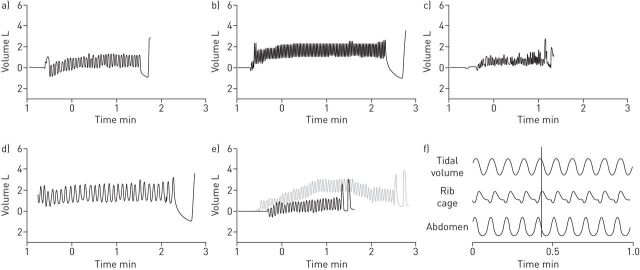
“This is the most commonly described and researched form of dysfunctional breathing (figure 1b).”
§ Dysfunctional breathing: a review of the literature and proposal for classification > Types of dysfunctional breathing: a proposal for classification > Hyperventilation syndrome and its subcategories
plain- Asserted: passes — The authors put it forward as true.
- Checkable: passes — It can be checked against evidence.
- Load-bearing: fails — The paper’s conclusions may not depend on it.
- Based: passes — The paper gives a reason why it holds.
Probably not a substantial claim. The paper’s conclusions may not depend on it.
The paper states this without a source or data behind it here, so there is nothing to check it against. The quote shows it is in the paper.
In the paper
“As we have demonstrated, there is a significant difficulty in reaching a consensus on the epidemiology, comorbidities and management of dysfunctional breathing while there is no clear agreement on the definition of the condition(s).”
§ Dysfunctional breathing: a review of the literature and proposal for classification > Types of dysfunctional breathing: a proposal for classification
boosted- Asserted: passes — The authors put it forward as true.
- Checkable: passes — It can be checked against evidence.
- Load-bearing: passes — The paper’s conclusions depend on it.
- Based: passes — The paper gives a reason why it holds.
Probably not a substantial claim. It may state two separate claims as one.
The paper states this without a source or data behind it here, so there is nothing to check it against. The quote shows it is in the paper.
In the paper
“2) Periodic deep sighing: frequent sighing with an irregular breathing pattern.”
§ Dysfunctional breathing: a review of the literature and proposal for classification > Abstract
plain- Asserted: passes — The authors put it forward as true.
- Checkable: passes — It can be checked against evidence.
- Load-bearing: fails — The paper’s conclusions may not depend on it.
- Based: fails — The paper may give no reason why it holds.
Probably not a substantial claim. The paper’s conclusions may not depend on it. The paper may give no reason why it holds.
In the paper
“One study found a weak relationship between hyperventilation symptoms and breathing pattern in 74% of patients indicating that a large number of patients with elevated Nijmegen questionnaire score had abnormal breathing patterns [11].”
§ Dysfunctional breathing: a review of the literature and proposal for classification > Methods of assessment
What the sources say
- Not checked — no full text of the sourcecites [11] source
hedgedcorrelational- Asserted: passes — The authors put it forward as true.
- Checkable: passes — It can be checked against evidence.
- Load-bearing: unclear — It is unclear whether the paper’s conclusions depend on it.
- Based: passes — The paper gives a reason why it holds.
It may state two separate claims as one.
The paper states this without a source or data behind it here, so there is nothing to check it against. The quote shows it is in the paper.
In the paper
“Two common breathing techniques have been used: the Papworth and Buteyko methods.”
§ Dysfunctional breathing: a review of the literature and proposal for classification > Treatment
plain- Asserted: passes — The authors put it forward as true.
- Checkable: passes — It can be checked against evidence.
- Load-bearing: fails — The paper’s conclusions may not depend on it.
- Based: passes — The paper gives a reason why it holds.
Probably not a substantial claim. The paper’s conclusions may not depend on it.
The paper states this without a source or data behind it here, so there is nothing to check it against. The quote shows it is in the paper.
In the paper
“This type of dysfunctional breathing is characterised by frequent sighing and irregular breathing patterns, sometimes overlapping with hyperventilation (figure 1c).”
§ Dysfunctional breathing: a review of the literature and proposal for classification > Types of dysfunctional breathing: a proposal for classification > Periodic deep sighing
plaincorrelational- Asserted: passes — The authors put it forward as true.
- Checkable: passes — It can be checked against evidence.
- Load-bearing: fails — The paper’s conclusions may not depend on it.
- Based: passes — The paper gives a reason why it holds.
Probably not a substantial claim. The paper’s conclusions may not depend on it. It may state two separate claims as one.
The paper states this without a source or data behind it here, so there is nothing to check it against. The quote shows it is in the paper.
In the paper
“Many studies have used the Nijmegen questionnaire as a method of diagnosis and extrapolated its use to different dysfunctional breathing patterns in settings other than exercise-induced HVS.”
§ Dysfunctional breathing: a review of the literature and proposal for classification > Discussion
plain- Asserted: passes — The authors put it forward as true.
- Checkable: passes — It can be checked against evidence.
- Load-bearing: passes — The paper’s conclusions depend on it.
- Based: fails — The paper may give no reason why it holds.
Probably not a substantial claim. The paper may give no reason why it holds.
The paper states this without a source or data behind it here, so there is nothing to check it against. The quote shows it is in the paper.
In the paper
“HVS remains the most extensively studied dysfunctional breathing pattern, although other forms may coexist or appear in isolation.”
§ Dysfunctional breathing: a review of the literature and proposal for classification > Discussion
plain- Asserted: passes — The authors put it forward as true.
- Checkable: passes — It can be checked against evidence.
- Load-bearing: fails — The paper’s conclusions may not depend on it.
- Based: fails — The paper may give no reason why it holds.
Probably not a substantial claim. The paper’s conclusions may not depend on it. The paper may give no reason why it holds. It may state two separate claims as one.
The paper states this without a source or data behind it here, so there is nothing to check it against. The quote shows it is in the paper.
In the paper
“This is the least described breathing pattern in the literature, but can be observed in the clinical setting particularly in patients with COPD.”
§ Dysfunctional breathing: a review of the literature and proposal for classification > Types of dysfunctional breathing: a proposal for classification > Forced abdominal expiration
plaincorrelational- Asserted: passes — The authors put it forward as true.
- Checkable: passes — It can be checked against evidence.
- Load-bearing: unclear — It is unclear whether the paper’s conclusions depend on it.
- Based: passes — The paper gives a reason why it holds.
It may state two separate claims as one.
A claim is checked only against the cited paper’s full text, never its abstract, and none is available for its sources.
In the paper
“This type of breathing often occurs in patients with increasing ventilation needs such as those with cardiac or respiratory disease or those with decreased abdominal compliance such as the morbidly obese, but in their absence it can be termed dysfunctional [11, 48, 49].”
§ Dysfunctional breathing: a review of the literature and proposal for classification > Types of dysfunctional breathing: a proposal for classification > Thoracic dominant breathing
What the sources say
plaincorrelational- Asserted: passes — The authors put it forward as true.
- Checkable: passes — It can be checked against evidence.
- Load-bearing: passes — The paper’s conclusions depend on it.
- Based: passes — The paper gives a reason why it holds.
It may state two separate claims as one.
The paper states this without a source or data behind it here, so there is nothing to check it against. The quote shows it is in the paper.
In the paper
“Without further diagnostic criteria and with an ongoing lack of awareness of dysfunctional breathing sample sizes were often low and included mixed breathing patterns.”
§ Dysfunctional breathing: a review of the literature and proposal for classification > Discussion
plaindirect- Asserted: passes — The authors put it forward as true.
- Checkable: passes — It can be checked against evidence.
- Load-bearing: passes — The paper’s conclusions depend on it.
- Based: passes — The paper gives a reason why it holds.
It may state two separate claims as one.
The paper states this without a source or data behind it here, so there is nothing to check it against. The quote shows it is in the paper.
In the paper
“The presentation of varying breathing patterns under the umbrella term of “dysfunctional breathing” appears to be relatively widely appreciated (anecdotally), but there is little recognition of this in the literature, and hence the topic presents a significant challenge for clinicians.”
§ Dysfunctional breathing: a review of the literature and proposal for classification > Discussion
hedged- Asserted: passes — The authors put it forward as true.
- Checkable: passes — It can be checked against evidence.
- Load-bearing: passes — The paper’s conclusions depend on it.
- Based: fails — The paper may give no reason why it holds.
Probably not a substantial claim. The paper may give no reason why it holds. It may state two separate claims as one.
In the paper
“The most widely recognised form of dysfunctional breathing is hyperventilation syndrome (HVS), which was first described over 70 years ago [6].”
§ Dysfunctional breathing: a review of the literature and proposal for classification > Introduction
What the sources say
- Not checked — no full text of the sourcecites [6] Kerr, 1938, Physical phenomena associated with anxiety states: the hyperventilation syndrome, Cal West Med
plain- Asserted: passes — The authors put it forward as true.
- Checkable: passes — It can be checked against evidence.
- Load-bearing: fails — The paper’s conclusions may not depend on it.
- Based: passes — The paper gives a reason why it holds.
Probably not a substantial claim. The paper’s conclusions may not depend on it.
A conclusion the paper draws from its own results — it cites no other source for it, so there is none to check. The quote shows it is in the paper.
In the paper
“This term is often also used synonymously with dysfunctional breathing, whereas in fact it is just one type of breathing pattern disorder and hyperventilation is not necessarily seen in dysfunctional breathers.”
§ Dysfunctional breathing: a review of the literature and proposal for classification > Introduction
plain- Asserted: passes — The authors put it forward as true.
- Checkable: passes — It can be checked against evidence.
- Load-bearing: passes — The paper’s conclusions depend on it.
- Based: passes — The paper gives a reason why it holds.
Probably not a substantial claim. It may state two separate claims as one.
A conclusion the paper draws from its own results — it cites no other source for it, so there is none to check. The quote shows it is in the paper.
In the paper
“Many of these breathing patterns may occur as a physiological response to disease, but in the absence of organic abnormalities they can be considered pathological.”
§ Dysfunctional breathing: a review of the literature and proposal for classification > Introduction
hedged- Asserted: passes — The authors put it forward as true.
- Checkable: passes — It can be checked against evidence.
- Load-bearing: passes — The paper’s conclusions depend on it.
- Based: fails — The paper may give no reason why it holds.
Probably not a substantial claim. The paper may give no reason why it holds. It may state two separate claims as one.
A conclusion the paper draws from its own results — it cites no other source for it, so there is none to check. The quote shows it is in the paper.
In the paper
“Many of the studies assessing epidemiology use the Nijmegen questionnaire as a method of diagnosis, which may not be valid in some circumstances.”
§ Dysfunctional breathing: a review of the literature and proposal for classification > Epidemiology and comorbid conditions
hedgedconditional- Asserted: passes — The authors put it forward as true.
- Checkable: passes — It can be checked against evidence.
- Load-bearing: passes — The paper’s conclusions depend on it.
- Based: passes — The paper gives a reason why it holds.
It may state two separate claims as one.
In the paper
“Dyspnoea is unlikely to be caused solely by inadequate or inefficient ventilation either due to hyperventilation or an abnormal breathing pattern and additional factors, such as poor subjective awareness of breathing by patients, are thought to play a role [10].”
§ Dysfunctional breathing: a review of the literature and proposal for classification > Introduction
What the sources say
- Not checked yetcites [10] van Dixhoorn, 1997, Hyperventilation and dysfunctional breathing, Biol Psychol
hedged- Asserted: passes — The authors put it forward as true.
- Checkable: passes — It can be checked against evidence.
- Load-bearing: passes — The paper’s conclusions depend on it.
- Based: passes — The paper gives a reason why it holds.
It may state two separate claims as one.
In the paper
“These factors were said to represent both biomechanical and chemoreceptive factors contributing to dysfunctional breathing, which have often been implicated in other studies [33].”
§ Dysfunctional breathing: a review of the literature and proposal for classification > Methods of assessment
What the sources say
- Not checked — no full text of the sourcecites [33] source
hedgeddirect- Asserted: passes — The authors put it forward as true.
- Checkable: passes — It can be checked against evidence.
- Load-bearing: fails — The paper’s conclusions may not depend on it.
- Based: passes — The paper gives a reason why it holds.
Probably not a substantial claim. The paper’s conclusions may not depend on it.
A conclusion the paper draws from its own results — it cites no other source for it, so there is none to check. The quote shows it is in the paper.
In the paper
“Although this questionnaire was developed and validated only in people with exercise induced HVS its use has since been extrapolated, probably inappropriately, to aid the diagnosis of all forms of dysfunctional breathing in many settings.”
§ Dysfunctional breathing: a review of the literature and proposal for classification > Methods of assessment
hedged- Asserted: passes — The authors put it forward as true.
- Checkable: passes — It can be checked against evidence.
- Load-bearing: passes — The paper’s conclusions depend on it.
- Based: passes — The paper gives a reason why it holds.
It may state two separate claims as one.
A conclusion the paper draws from its own results — it cites no other source for it, so there is none to check. The quote shows it is in the paper.
In the paper
“Dysfunctional breathing patterns may occur where there is coexistent respiratory disease, in particular asthma, and so difficulty arises when trying to untangle which of the two are contributing most to the reported symptoms.”
§ Dysfunctional breathing: a review of the literature and proposal for classification > Dysfunctional breathing patterns and associated conditions
hedgedcorrelational- Asserted: passes — The authors put it forward as true.
- Checkable: passes — It can be checked against evidence.
- Load-bearing: passes — The paper’s conclusions depend on it.
- Based: passes — The paper gives a reason why it holds.
It may state two separate claims as one.
A conclusion the paper draws from its own results — it cites no other source for it, so there is none to check. The quote shows it is in the paper.
In the paper
“The proposed categories include patterns described or observed in isolation as well as coexisting with one another.”
§ Dysfunctional breathing: a review of the literature and proposal for classification > Types of dysfunctional breathing: a proposal for classification
plain- Asserted: passes — The authors put it forward as true.
- Checkable: passes — It can be checked against evidence.
- Load-bearing: fails — The paper’s conclusions may not depend on it.
- Based: passes — The paper gives a reason why it holds.
Probably not a substantial claim. The paper’s conclusions may not depend on it. It may state two separate claims as one.
A conclusion the paper draws from its own results — it cites no other source for it, so there is none to check. The quote shows it is in the paper.
In the paper
“1) Hyperventilation syndrome: associated with symptoms both related to respiratory alkalosis and independent of hypocapnia.”
§ Dysfunctional breathing: a review of the literature and proposal for classification > Abstract
plaincorrelational- Asserted: passes — The authors put it forward as true.
- Checkable: passes — It can be checked against evidence.
- Load-bearing: passes — The paper’s conclusions depend on it.
- Based: fails — The paper may give no reason why it holds.
Probably not a substantial claim. The paper may give no reason why it holds.
A conclusion the paper draws from its own results — it cites no other source for it, so there is none to check. The quote shows it is in the paper.
In the paper
“To extrapolate these data to all dysfunctional breathers is difficult and must be interpreted in the context of the studied sample population.”
§ Dysfunctional breathing: a review of the literature and proposal for classification > Treatment
plain- Asserted: passes — The authors put it forward as true.
- Checkable: fails — It may be too vague to check against evidence.
- Load-bearing: passes — The paper’s conclusions depend on it.
- Based: passes — The paper gives a reason why it holds.
Probably not a substantial claim. It may be too vague to check against evidence. It may state two separate claims as one.
A conclusion the paper draws from its own results — it cites no other source for it, so there is none to check. The quote shows it is in the paper.
In the paper
“In fact many patterns of dysfunctional breathing patterns are described in the literature (and evident in our clinical practice), and review of the symptoms and physiology described has enabled us to classify each into the following proposed categories (summarised in table 1 and figure 1).”
§ Dysfunctional breathing: a review of the literature and proposal for classification > Types of dysfunctional breathing: a proposal for classification
boosteddirect- Asserted: passes — The authors put it forward as true.
- Checkable: passes — It can be checked against evidence.
- Load-bearing: passes — The paper’s conclusions depend on it.
- Based: passes — The paper gives a reason why it holds.
It may state two separate claims as one.
The paper states this without a source or data behind it here, so there is nothing to check it against. The quote shows it is in the paper.
In the paper
“Pulmonary rehabilitation has clear benefits in COPD patients and has been trialled in other respiratory conditions.”
§ Dysfunctional breathing: a review of the literature and proposal for classification > Treatment
boosteddirect- Asserted: passes — The authors put it forward as true.
- Checkable: passes — It can be checked against evidence.
- Load-bearing: fails — The paper’s conclusions may not depend on it.
- Based: fails — The paper may give no reason why it holds.
Probably not a substantial claim. The paper’s conclusions may not depend on it. The paper may give no reason why it holds. It may state two separate claims as one.
In the paper
“Patients with both elevated Nijmegen questionnaire scores and abnormal breathing patterns as assessed by MARM may benefit from breathing retraining to produce more efficient breathing patterns [34].”
§ Dysfunctional breathing: a review of the literature and proposal for classification > Methods of assessment
What the sources say
- Not checked — no full text of the sourcecites [34] source
hedgedconditional- Asserted: passes — The authors put it forward as true.
- Checkable: passes — It can be checked against evidence.
- Load-bearing: fails — The paper’s conclusions may not depend on it.
- Based: passes — The paper gives a reason why it holds.
Probably not a substantial claim. The paper’s conclusions may not depend on it.
A conclusion the paper draws from its own results — it cites no other source for it, so there is none to check. The quote shows it is in the paper.
In the paper
“3) Thoracic dominant breathing: can often manifest in somatic disease, if occurring without disease it may be considered dysfunctional and results in dyspnoea.”
§ Dysfunctional breathing: a review of the literature and proposal for classification > Abstract
hedgeddirect- Asserted: passes — The authors put it forward as true.
- Checkable: passes — It can be checked against evidence.
- Load-bearing: passes — The paper’s conclusions depend on it.
- Based: fails — The paper may give no reason why it holds.
Probably not a substantial claim. The paper may give no reason why it holds. It may state two separate claims as one.
A conclusion the paper draws from its own results — it cites no other source for it, so there is none to check. The quote shows it is in the paper.
In the paper
“It is possible that several dysfunctional breathing patterns may coexist.”
§ Dysfunctional breathing: a review of the literature and proposal for classification > Types of dysfunctional breathing: a proposal for classification
hedgedcorrelational- Asserted: passes — The authors put it forward as true.
- Checkable: passes — It can be checked against evidence.
- Load-bearing: passes — The paper’s conclusions depend on it.
- Based: passes — The paper gives a reason why it holds.
Probably not a substantial claim.
A conclusion the paper draws from its own results — it cites no other source for it, so there is none to check. The quote shows it is in the paper.
In the paper
“Treatment for dysfunctional breathing starts with an accurate diagnosis, which in itself can provide significant reassurance and relief of anxiety, and may be enough to reduce the severity and frequency of the symptoms.”
§ Dysfunctional breathing: a review of the literature and proposal for classification > Treatment
hedgedconditional- Asserted: passes — The authors put it forward as true.
- Checkable: passes — It can be checked against evidence.
- Load-bearing: fails — The paper’s conclusions may not depend on it.
- Based: fails — The paper may give no reason why it holds.
Probably not a substantial claim. The paper’s conclusions may not depend on it. The paper may give no reason why it holds. It may state two separate claims as one.
In the paper
“Thoraco-abdominal asynchrony is sometimes seen as a normal physiological response in upper airway obstruction, neuromuscular disorders and in patients with acute respiratory failure, but may be seen in patients without evidence of these, and therefore considered dysfunctional [52].”
§ Dysfunctional breathing: a review of the literature and proposal for classification > Types of dysfunctional breathing: a proposal for classification > Thoraco-abdominal asynchrony
What the sources say
- Not checked — no full text of the sourcecites [52] source
hedgedcorrelational- Asserted: passes — The authors put it forward as true.
- Checkable: passes — It can be checked against evidence.
- Load-bearing: passes — The paper’s conclusions depend on it.
- Based: passes — The paper gives a reason why it holds.
It may state two separate claims as one.
A conclusion the paper draws from its own results — it cites no other source for it, so there is none to check. The quote shows it is in the paper.
In the paper
“Dysfunctional breathing may present alone, as a somatic manifestation of psychological conditions or as a manifestation of underlying disease; and in any individual there may be more than one of these factors at play.”
§ Dysfunctional breathing: a review of the literature and proposal for classification > Discussion
hedgedconditional- Asserted: passes — The authors put it forward as true.
- Checkable: passes — It can be checked against evidence.
- Load-bearing: passes — The paper’s conclusions depend on it.
- Based: passes — The paper gives a reason why it holds.
Probably not a substantial claim. It may state two separate claims as one.
A conclusion the paper draws from its own results — it cites no other source for it, so there is none to check. The quote shows it is in the paper.
In the paper
“In addition, as for many conditions that lack clear criteria for diagnosis there is likely to be a significant publication bias.”
§ Dysfunctional breathing: a review of the literature and proposal for classification > Discussion
hedged- Asserted: passes — The authors put it forward as true.
- Checkable: passes — It can be checked against evidence.
- Load-bearing: fails — The paper’s conclusions may not depend on it.
- Based: passes — The paper gives a reason why it holds.
Probably not a substantial claim. The paper’s conclusions may not depend on it.
A conclusion the paper draws from its own results — it cites no other source for it, so there is none to check. The quote shows it is in the paper.
In the paper
“For example, people with HVS may also have periodic deep sighing, and indeed the same patient may experience different forms of dysfunctional breathing at different times.”
§ Dysfunctional breathing: a review of the literature and proposal for classification > Discussion
hedgedcorrelational- Asserted: passes — The authors put it forward as true.
- Checkable: passes — It can be checked against evidence.
- Load-bearing: passes — The paper’s conclusions depend on it.
- Based: passes — The paper gives a reason why it holds.
It may state two separate claims as one.
A conclusion the paper draws from its own results — it cites no other source for it, so there is none to check. The quote shows it is in the paper.
In the paper
“Without defined diagnostic criteria, current research is difficult to interpret.”
§ Dysfunctional breathing: a review of the literature and proposal for classification > Discussion
plaindirect- Asserted: passes — The authors put it forward as true.
- Checkable: fails — It may be too vague to check against evidence.
- Load-bearing: passes — The paper’s conclusions depend on it.
- Based: passes — The paper gives a reason why it holds.
Probably not a substantial claim. It may be too vague to check against evidence.
A conclusion the paper draws from its own results — it cites no other source for it, so there is none to check. The quote shows it is in the paper.
In the paper
“Many current breathing retraining methods have yet to be rigorously tested, and without clear definitions for cases and controls linking any improvements seen is difficult.”
§ Dysfunctional breathing: a review of the literature and proposal for classification > Discussion
plaincorrelational- Asserted: passes — The authors put it forward as true.
- Checkable: passes — It can be checked against evidence.
- Load-bearing: passes — The paper’s conclusions depend on it.
- Based: passes — The paper gives a reason why it holds.
It may state two separate claims as one.
A conclusion the paper draws from its own results — it cites no other source for it, so there is none to check. The quote shows it is in the paper.
In the paper
“Currently most published treatment proposals are targeted at HVS, but these may not be appropriate (and in our experience do not work) in patients with, for example, forced abdominal expiration or thoraco-abdominal asynchrony.”
§ Dysfunctional breathing: a review of the literature and proposal for classification > Discussion
hedgedconditional- Asserted: passes — The authors put it forward as true.
- Checkable: passes — It can be checked against evidence.
- Load-bearing: passes — The paper’s conclusions depend on it.
- Based: passes — The paper gives a reason why it holds.
It may state two separate claims as one.
The paper relies on this without support.
Dysfunctional breathing patterns occur in some patients with COPD and interstitial lung disease.
“A clear link between dysfunctional breathing and other respiratory diseases has not been made in the literature, but in our experience dysfunctional breathing patterns do occur in some patients with diseases such as chronic obstructive pulmonary disease (COPD) and interstitial lung disease.”
The paper relies on this without support.
Efficient breathing requires coordination between the diaphragm, abdominal muscles and muscles of the rib cage.
“Efficient breathing requires coordination between the diaphragm, abdominal muscles and muscles of the rib cage.”
Claims other papers make about this one
Each is checked against this paper’s own text: does it say what the citing paper says it does?
The source backs part of the claim, not all of it — or backs it for a different population, condition or comparison.
In the citing paper
“The treatment of HVS involves an educational approach, exercises for ventilatory control through voluntary hypoventilation, as well as specific therapeutic elements, according to the patient's symptoms, such as exercise training or relaxation.9,12,13,27,36,37”
From Physiotherapy Education and Breathing Retraining for Patients With Hyperventilation Syndrome: An Observational Study (2026) · cites this paper as [9]
Experimental — accuracy not yet measuredThe source backs part of the claim, not all of it — or backs it for a different population, condition or comparison.
In the citing paper
“However, the clinical community acknowledge physiotherapy as an effective treatment for HVS and, more broadly, for chronic dysfunctional breathing.”
From Physiotherapy Education and Breathing Retraining for Patients With Hyperventilation Syndrome: An Observational Study (2026) · cites this paper as [9]
Experimental — accuracy not yet measuredThe cited source says what the claim attributes to it.
In the citing paper
“This has also led to DB being often ill-defined, with considerable ambiguity surrounding its definition, diagnosis and optimal management (9,10).”
From How is dysfunctional breathing characterised in the clinical literature? A scoping review (2026) · cites this paper as [10]
The cited source says what the claim attributes to it.
In the citing paper
“Four classification systems for DB have been proposed, as referenced in sources (4,7,8,10), with further details provided in Supplementary Materials 2.”
From How is dysfunctional breathing characterised in the clinical literature? A scoping review (2026) · cites this paper as [10]
The cited source says what the claim attributes to it.
In the citing paper
“A further consequence of this lack of consensus is the absence of a universally accepted diagnostic instrument for assessment (9,10).”
From How is dysfunctional breathing characterised in the clinical literature? A scoping review (2026) · cites this paper as [10]
The cited source says what the claim attributes to it.
In the citing paper
“The absence of a universally accepted definition, gold-standard diagnostic criteria, or standardized assessment tools creates a significant challenge in establishing a consensus on the optimal assessment method (9,10).”
From How is dysfunctional breathing characterised in the clinical literature? A scoping review (2026) · cites this paper as [10]
Citations
Cites
Recommendations for the management of cough in adults
Morice, A. H. (2006) · Thorax · doi:10.1136/thx.2006.065144 · Cited by 585
Altered Respiratory Physiology in Obesity
Parameswaran, K., Todd, D. C., & Soth, M. (2006) · Canadian Respiratory Journal · doi:10.1155/2006/834786 · Cited by 527
Efficacy of Nijmegen questionnaire in recognition of the hyperventilation syndrome
van Dixhoorn, J., & Duivenvoorden, H. J. (1985) · Journal of Psychosomatic Research · doi:10.1016/0022-3999(85)90042-x · Cited by 445
Distinguishable Types of Dyspnea in Patients with Shortness of Breath
Simon, P. M., Schwartzstein, R. M., Weiss, J. W., Fencl, V., Teghtsoonian, M., & Weinberger, S. E. (1990) · American Review of Respiratory Disease · doi:10.1164/ajrccm/142.5.1009 · Cited by 433
Chronic obstructive pulmonary disease
室, 繁. (2012) · 臨床免疫・アレルギー科 · Cited by 407
Tobin, M. J., Chadha, T. S., Jenouri, G., Birch, S. J., Gazeroglu, H. B., & Sackner, M. A. (1983) · Chest · doi:10.1378/chest.84.3.286 · Cited by 357
Bhattacharya, D., Aldus, C. F., Barton, G., Bond, C. M., Boonyaprapa, S., Charles, I. S., Fleetcroft, R., Holland, R., Jerosch‐Herold, C., Salter, C., et al. (2016) · Cited by 339
The Pathophysiology of Hyperventilation Disorders
Gardner, W. N. (1996) · Chest · doi:10.1378/chest.109.2.516 · Cited by 312
Thomas, M., McKinley, R. K., Freeman, E., & Foy, C. (2001) · BMJ · doi:10.1136/bmj.322.7294.1098 · Cited by 294
Asthma and Panic in Young Adults
Hasler, G., Gergen, P. J., Kleinbaum, D. G., Ajdacic, V., Gamma, A., Eich, D., Rössler, W., & Angst, J. (2005) · American Journal of Respiratory and Critical Care Medicine · doi:10.1164/rccm.200412-1669oc · Cited by 248
Research works printed but not linked: 1
- van Dixhoorn, 1997, Hyperventilation and dysfunctional breathing, Biol Psychol, 46, 90
Cited by
Sorted by citations
Four-Month Clinical Status of a Cohort of Patients After Hospitalization for COVID-19
Morin, L., Savale, L., Pham, T. O., Colle, R., Figueiredo, S., Harrois, A., Gasnier, M., Lecoq, A.-L., Meyrignac, O., Noël, N., et al. (2021) · JAMA · doi:10.1001/jama.2021.3331 · Cited by 612
Chronic Fatigue and Postexertional Malaise in People Living With Long COVID: An Observational Study
Twomey, R., DeMars, J., Franklin, K., Culos-Reed, S. N., Weatherald, J. C., & Wrightson, J. G. (2022) · Physical Therapy · doi:10.1093/ptj/pzac005 · Cited by 326
Montani, D., Savale, L., Noël, N., Meyrignac, O., Colle, R., Gasnier, M., Corruble, E., Beurnier, A., Jutant, E., Pham, T. O., et al. (2022) · European Respiratory Review · doi:10.1183/16000617.0185-2021 · Cited by 277
“Dysfunctional breathing is a term describing a group of breathing disorders resulting in dyspnoea and often non-respiratory symptoms in the absence of or in excess of organic respiratory disease [21].”
Co‐morbidities in severe asthma: Clinical impact and management
Porsbjerg, C., & Menzies‐Gow, A. (2017) · Respirology · doi:10.1111/resp.13026 · Cited by 233
Breathing exercises for adults with asthma
Santino, T. A., Chaves, G. S., Freitas, D. A., Fregonezi, G. A., & Mendonça, K. M. (2020) · Cochrane Database of Systematic Reviews · doi:10.1002/14651858.cd001277.pub4 · Cited by 185
Wang, Y., Hu, M., Li, Q., Zhang, X.-P. S., Zhai, G., & Yao, N. (2020) · arXiv (Cornell University) · doi:10.48550/arxiv.2002.05534 · Cited by 178
“Many clinical literatures suggested that abnormal respiratory patterns are able to predict a few specific diseases [4], providing relatively detailed clues for clinical treatments [5, 6].”
BackgroundAdly, A. S., Adly, A. S., & Adly, M. S. (2020) · Journal of Medical Internet Research · doi:10.2196/19104 · Cited by 138
Dysfunctional breathing: what do we know?
Vidotto, L. S., Carvalho, C. R. F. D., Harvey, A., & Jones, M. (2019) · Jornal Brasileiro de Pneumologia · doi:10.1590/1806-3713/e20170347 · Cited by 116
“, the “fi ght-or-fl ight response” occurs) in all individuals, patients with DB commonly experience abnormal psychophysiological responses when facing similar scenarios.(9) DB induces signifi cant changes in the respiratory rate, breath-holding time, and depth of breathing that are primarily mediated by current or pre…”
BackgroundFrésard, I., Genecand, L., Altarelli, M., Gex, G., Vremaroiu, P., Vremaroiu-Coman, A., Lawi, D., & Bridevaux, P.-O. (2022) · BMJ Open Respiratory Research · doi:10.1136/bmjresp-2021-001126 · Cited by 113
Novel assessment tool to detect breathing pattern disorder in patients with refractory asthma
Todd, S., Walsted, E. S., Grillo, L., Livingston, R., Menzies‐Gow, A., & Hull, J. H. (2018) · Respirology · doi:10.1111/resp.13173 · Cited by 96
Factors Associated with Dysfunctional Breathing in Patients with Difficult to Treat Asthma
Denton, E. J., Bondarenko, J., Tay, T. R., Lee, J., Radhakrishna, N., Hore‐Lacy, F., Martin, C., Hoy, R. F., O’Hehir, R. E., Dabscheck, E. J., et al. (2018) · The Journal of Allergy and Clinical Immunology In Practice · doi:10.1016/j.jaip.2018.11.037 · Cited by 79
“All are inefficient methods of breathing that can result in symptoms.(5) Furthermore, these patterns of dysfunctional breathing have been shown to commonly overlap within the same patient.”
MethodRespiratory rehabilitation for Covid-19 related persistent dyspnoea: A one-year experience
Bouteleux, B., Henrot, P., Ernst, R., Grassion, L., Rahérison, C., Beaufils, F., Zysman, M., & Delorme, M. (2021) · Respiratory Medicine · doi:10.1016/j.rmed.2021.106648 · Cited by 79
Stubbs, M. A., Clark, V. L., Gibson, P. G., Yorke, J., & McDonald, V. M. (2022) · Respiratory Research · doi:10.1186/s12931-022-02266-5 · Cited by 89
“When faced with emotionally challenging situations, abnormal psychophysiological responses are noted in patients with dysfunctional breathing [42].”
BackgroundMedically unexplained symptoms: assessment and management
Husain, M., & Chalder, T. (2021) · Clinical Medicine · doi:10.7861/clinmed.2020-0947 · Cited by 76
Cardiopulmonary Exercise Testing in the Assessment of Dysfunctional Breathing
Ionescu, M. F., Mani-Babu, S., Degani‐Costa, L. H., Johnson, M., Paramasivan, C., Sylvester, K. P., & Fuld, J. P. (2021) · Frontiers in Physiology · doi:10.3389/fphys.2020.620955 · Cited by 82
The impact of comorbidities on severe asthma
Rogliani, P., Sforza, M., & Calzetta, L. (2019) · Current Opinion in Pulmonary Medicine · doi:10.1097/mcp.0000000000000640 · Cited by 72
Detection of Respiratory Infections Using RGB-Infrared Sensors on Portable Device
Jiang, Z., Hu, M., Gao, Z., Fan, L., Dai, R., Pan, Y., Tang, W., Zhai, G., & Lü, Y. (2020) · IEEE Sensors Journal · doi:10.1109/jsen.2020.3004568 · Cited by 70
“be important factors for the diagnosis of some specific diseases [3].”
BackgroundPoulos, L. M., Ampon, R. D., Currow, D. C., Marks, G. B., Toelle, B. G., & Reddel, H. K. (2021) · Respirology · doi:10.1111/resp.14070 · Cited by 65
High incidence of hyperventilation syndrome after COVID-19
Taverne, J., Salvator, H., Leboulch, C., Barizien, N., Ballester, M., Imhaus, E., Chabi-Charvillat, M.-L., Boulin, A., Goyard, C., Chabrol, A., et al. (2021) · Journal of Thoracic Disease · doi:10.21037/jtd-20-2753 · Cited by 49
“Although there is no gold standard for the diagnosis of HVS, the combination of Nijmegen score, hyperventilation test and CPET is robust to establish this diagnosis (3).”
BackgroundMethodRespNet: A deep learning model for extraction of respiration from photoplethysmogram
Ravichandran, V., Murugesan, B., Vaishali, B., Ram, K., Preejith, S. P., Joseph, J., & Sivaprakasam, M. (2019) · Annual International Conference of the IEEE Engineering in Medicine and Biology Society (EMBC) · doi:10.1109/embc.2019.8856301 · Cited by 58
“Dysfunctional breathing refer to a group of breathing disorders that has been associated with a wide range of chronic respiratory ailments such as asthma and chronic obstructive pulmonary disease (COPD) [2].”
BackgroundBiologics for severe asthma—Which, when and why?
Shah, P. A., & Brightling, C. E. (2023) · Respirology · doi:10.1111/resp.14520 · Cited by 63
Stewart, J. M., Pianosi, P., Shaban, M. A., Terilli, C., Svistunova, M., Visintainer, P., & Medow, M. S. (2018) · Journal of the American Heart Association · doi:10.1161/jaha.118.008854 · Cited by 55
Becker, R. C. (2021) · Journal of Thrombosis and Thrombolysis · doi:10.1007/s11239-021-02549-6 · Cited by 61
Porsbjerg, C. M., Ulrik, C. S., Skjold, T., Backer, V., Lærum, B. N., Lehman, S., Janson, C., Sandström, T., Bjermer, L. H., Dahlén, B., et al. (2018) · European Clinical Respiratory Journal · doi:10.1080/20018525.2018.1440868 · Cited by 58
“symptoms, in the absence or in excess of the magnitude of physiological respiratory or cardiac disease’ [69], DB is observed in up to 52% of subjects with difficult asthma.”
BackgroundRespiratory therapy for the treatment of anxiety: Meta-analytic review and regression
Leyro, T. M., Versella, M. V., Yang, M.-J., Brinkman, H. R., Hoyt, D. L., & Lehrer, P. (2021) · Clinical Psychology Review · doi:10.1016/j.cpr.2021.101980 · Cited by 53
Dysfunctional breathing in children and adults with asthma
Connett, G. J., & Thomas, M. (2018) · Frontiers in Pediatrics · doi:10.3389/fped.2018.00406 · Cited by 58
“These include periodic deep sighing, thoracic dominant breathing, forced abdominal expiration and thoracic-abdominal asynchrony (7, 8).”
BackgroundBreath Tools: A Synthesis of Evidence-Based Breathing Strategies to Enhance Human Running
Harbour, E. T., STÖGGL, T. L., Schwameder, H., & Finkenzeller, T. (2022) · Frontiers in Physiology · doi:10.3389/fphys.2022.813243 · Cited by 56
Reilly, C. C., Floyd, S. V., Lee, K., Warwick, G., James, S., Gall, N., & Rafferty, G. F. (2020) · Autonomic Neuroscience · doi:10.1016/j.autneu.2019.102601 · Cited by 48
“Dysfunctional breathing (DB) is an umbrella term describing breathing disorders in which chronic changes in breathing pattern result in breathlessness and other symptoms in the absence or in excess of the magnitude of physiological respiratory or cardiac disease [11].”
BackgroundPediatric Dysfunctional Breathing: Proposed Components, Mechanisms, Diagnosis, and Management
Barker, N., Thevasagayam, R., Ugonna, K., & Kirkby, J. C. (2020) · Frontiers in Pediatrics · doi:10.3389/fped.2020.00379 · Cited by 47
“” The commonest triggers in young people are exercise and emotional states, particularly anxiety where dysfunctional breathing is more common in chronic anxiety states (15).”
BackgroundInfluentialThe impact of dysfunctional breathing on the level of asthma control in difficult asthma
Sedeh, F. B., von Bülow, A., Backer, V., Bødtger, U. C. S., Søes‐Petersen, U., Vest, S., Hull, J. H., & Porsbjerg, C. M. (2020) · Respiratory Medicine · doi:10.1016/j.rmed.2020.105894 · Cited by 45
The Role of Comorbidities in Difficult-to-Control Asthma in Adults and Children
Gaffin, J. M., Castro, M., Bacharier, L. B., & Fuhlbrigge, A. L. (2021) · The Journal of Allergy and Clinical Immunology In Practice · doi:10.1016/j.jaip.2021.11.016 · Cited by 46
Heidbreder, A., Sonnweber, T., Stefani, A., Ibrahim, A., Cesari, M., Bergmann, M., Brandauer, E., Tancevski, I., Löffler‐Ragg, J., & Högl, B. (2021) · Sleep Medicine · doi:10.1016/j.sleep.2021.01.051 · Cited by 41
“However, typical patterns for dysfunctional breathing, such as paradoxical breathing, tachypnea, or periodic sighing [14] were not present during v-PSG.”
BackgroundClinical Interpretation of Cardiopulmonary Exercise Testing: Current Pitfalls and Limitations
Neder, J. A., Phillips, D. B., Marillier, M., Bernard, A., Berton, D. C., & O’Donnell, D. E. (2021) · Frontiers in Physiology · doi:10.3389/fphys.2021.552000 · Cited by 42
Breathing training for dysfunctional breathing in asthma: taking a multidimensional approach
Courtney, R. (2017) · ERJ Open Research · doi:10.1183/23120541.00065-2017 · Cited by 42
Management of severe asthma: targeting the airways, comorbidities and risk factors
Gibson, P. G., & McDonald, V. M. (2017) · Internal Medicine Journal · doi:10.1111/imj.13441 · Cited by 41
Managing comorbid conditions in severe asthma
Bardin, P. G., Rangaswamy, J., & Yo, S. W. (2018) · The Medical Journal of Australia · doi:10.5694/mja18.00196 · Cited by 42
Enhanced Breathing Pattern Detection during Running Using Wearable Sensors
Harbour, E. T., Lasshofer, M., Genitrini, M., & Schwameder, H. (2021) · Sensors · doi:10.3390/s21165606 · Cited by 41
“This behavior is not simply a statistical outlier, but indeed reflects an important clinical phenomenon that is reflected in BRV [30].”
BackgroundInfluentialBansal, T., Haji, G. S., Rossiter, H. B., Polkey, M. I., & Hull, J. H. (2018) · Respiratory Physiology & Neurobiology · doi:10.1016/j.resp.2018.05.002 · Cited by 40
Minute ventilation/carbon dioxide production in patients with dysfunctional breathing
Watson, M. L., Ionescu, M. F., Sylvester, K. P., & Fuld, J. P. (2021) · European Respiratory Review · doi:10.1183/16000617.0182-2020 · Cited by 42
What is New in the Management of Childhood Asthma?
Gupta, A. K., Bhat, G., & Pianosi, P. T. (2018) · The Indian Journal of Pediatrics · doi:10.1007/s12098-018-2705-1 · Cited by 39
“A recent general review of the topic described some of these breathing strategies [9].”
BackgroundSzulczewski, M. T. (2019) · PLoS ONE · doi:10.1371/journal.pone.0218550 · Cited by 40
RF Sensing Based Breathing Patterns Detection Leveraging USRP Devices
Rehman, M., Shah, R. A., Khan, M. B., et al. (2021) · Sensors · doi:10.3390/s21113855 · Cited by 39
“Several clinical studies propose that abnormal breathing patterns can forecast specific diseases [8], thus providing comprehensive evidence for medical treatment [9].”
BackgroundNon-pharmacological interventions for chronic cough: The past, present and future
Chamberlain, S. A. F., Ellis, J., Ludlow, S., Pandyan, A. D., & Birring, S. S. (2019) · Pulmonary Pharmacology & Therapeutics · doi:10.1016/j.pupt.2019.02.006 · Cited by 37
Genecand, L., Altarelli, M., Binkova, A., Loew, S., Vaudan, S., Gex, G., Bridevaux, P.-O., & Frésard, I. (2023) · BMJ Open Respiratory Research · doi:10.1136/bmjresp-2023-001770 · Cited by 37
“considered together as this was suggested in a recent review [10].”
Govindharaj, K., Manoharan, M., Muthumalai, K., Saravanan, P., Thirugnanam, S., Haldorai, Y., & Kumar, R. T. R. (2024) · Chemical Engineering Journal · doi:10.1016/j.cej.2024.148759 · Cited by 36
Jiang, Z., Hu, M., Fan, L., Pan, Y., Tang, W., Zhai, G., & Lü, Y. (2020) · arXiv (Cornell University) · doi:10.48550/arxiv.2004.06912 · Cited by 41
“Many clinical literature suggests that abnormal respiratory symptoms may be important factors for diagnosis of some specific diseases [3].”
BackgroundInvestigating hyperventilation syndrome in patients suffering from empty nose syndrome
Mangin, D., Béquignon, É., Zerah-Lancner, F., Isabey, D., Louis, B., Adnot, S., Papon, J., Coste, A., Boyer, L., & du Mayne, M. D. (2017) · The Laryngoscope · doi:10.1002/lary.26599 · Cited by 34
“Diagnosing HVS is a matter of debate.(18) Although the Nijmegen score has a sensitivity of 91% and a specificity of 95% in the general population,(20) it has not been not formally established as a diagnostic test for HVS.”
BackgroundMethodLaw, N., Ruane, L. E., Low, K., Hamza, K., & Bardin, P. G. (2017) · Respiratory Physiology & Neurobiology · doi:10.1016/j.resp.2017.08.011 · Cited by 33
van Voorthuizen, E. L., van Helvoort, H. A. C., Peters, J. B., van den Heuvel, M. M., & van den Borst, B. (2022) · Physical Therapy · doi:10.1093/ptj/pzac105 · Cited by 31
“Whereas dysfunctional breathing has been described as a condition that can coexist in other respiratory diseases, mainly in obstructive lung diseases, 14 we are, to the best of our knowledge, unaware of controlled studies examining breathing dysregulation after other respiratory infections.”
BackgroundChronic cough in Vocal Cord Dysfunction: Description of a clinical entity.
Vertigan, A. E., Kapela, S. L., & Gibson, P. (2020) · Respiratory Medicine · doi:10.1016/j.rmed.2020.105990 · Cited by 27
Szulczewski, M. T. (2021) · Neuromodulation Technology at the Neural Interface · doi:10.1111/ner.13458 · Cited by 33
Schwellnus, M. P., Adami, P. E., Bougault, V., Budgett, R., Clemm, H. H., Derman, W. E., Erdener, U., Fitch, K. D., Hull, J. H., McIntosh, C., et al. (2022) · British Journal of Sports Medicine · doi:10.1136/bjsports-2022-105567 · Cited by 32
“3 Dysfunctional breathing / breathing pattern disorders Dysfunctional breathing can be defined as an altered biomechanical pattern of breathing, leading to intrusive symptoms that can impact athletic performance and quality of life.(173, 174) Several terms have been used to describe this issue, including exercise-asso…”
BackgroundAsthma and Comorbid Conditions—Pulmonary Comorbidity
Gibson, P. G., McDonald, V. M., Granchelli, A., & Olin, J. T. (2021) · The Journal of Allergy and Clinical Immunology In Practice · doi:10.1016/j.jaip.2021.08.028 · Cited by 31
2021 Brazilian Thoracic Association recommendations for the management of severe asthma
Carvalho‐Pinto, R. M., Cançado, J. E. D., Pizzichini, M. M. M., Fiterman, J., Rubin, A. S., Neto, A. C., Cruz, Á. A., Fernandes, A. L. G., Araujo, A., Blanco, D. C., et al. (2021) · Jornal Brasileiro de Pneumologia · doi:10.36416/1806-3756/e20210273 · Cited by 40
“Dysfunctional breathing involves abnormal breathing patterns(91) described and classified elsewhere,(92,93) a disordered breathing pattern being a major component of dysfunctional breathing.”
BackgroundDenton, E. J., Bondarenko, J., O’Hehir, R. E., & Hew, M. J. (2018) · Allergy · doi:10.1111/all.13611 · Cited by 29
“To the Editor, Breathing pattern disorder (BPD), or dysfunctional breathing, encompasses heterogeneous disorders characterized by abnormal breathing patterns resulting in symptoms that mimic asthma.(1) BPD affects 24%‐29% of patients with asthma and 30%‐64% of patients with difficult asthma.”
BackgroundMethodBreathing Re-Education and Phenotypes of Sleep Apnea: A Review
McKeown, P., O’Connor-Reina, C., & Plaza, G. (2021) · Journal of Clinical Medicine · doi:10.3390/jcm10030471 · Cited by 34
Residual Exertional Dyspnea in Cardiopulmonary Disease
Neder, J. A. (2020) · Annals of the American Thoracic Society · doi:10.1513/annalsats.202004-398fr · Cited by 28
Abnormal patterns of response to incremental CPET
Neder, J. A., Berton, D. C., Rocha, A., Arbex, F. F., Alencar, M. C. N., Degani‐Costa, L. H., Ferreira, E. V. M., Ramos, R. P., & O’Donnell, D. E. (2018) · European Respiratory Society eBooks · doi:10.1183/2312508x.10011017 · Cited by 28
Physiotherapy assessment of breathing pattern disorder: a qualitative evaluation
Grillo, L., Russell, A.-M., Shannon, H., & Lewis, A. (2023) · BMJ Open Respiratory Research · doi:10.1136/bmjresp-2022-001395 · Cited by 27
“See: https://creativecommons.org/ licenses/by/4.0/.”
InfluentialPulmonary Rehabilitation for People With Persistent Symptoms After COVID-19
Daynes, E., Mills, G., Hull, J. H., BISHOP, N. C., Bakali, M., Burtin, C., McAuley, H. J. C., Singh, S. J., & Greening, N. J. (2024) · CHEST Journal · doi:10.1016/j.chest.2024.01.029 · Cited by 27
Hylton, H., Long, A., Francis, C., Taylor, R. R., Ricketts, W. M., Singh, R., & Pfeffer, P. (2022) · Clinical Medicine · doi:10.7861/clinmed.2021-0759 · Cited by 26
Price, O. J., Walsted, E. S., Bonini, M., Brannan, J. D., Bougault, V., Carlsen, K., Couto, M., Kippelen, P., Moreira, A. M., Pité, H., et al. (2022) · Allergy · doi:10.1111/all.15431 · Cited by 30
In-Cabin MIMO Radar System for Human Dysfunctional Breathing Detection
López, M.-J., Palacios, C., Romeu, J., & Jofre, L. (2022) · IEEE Sensors Journal · doi:10.1109/jsen.2022.3221052 · Cited by 24
“According to [22], dysfunctional breathing can be classified into five different patterns.”
BackgroundDysfunctional breathing: a dimensional, transdiagnostic perspective
Vlemincx, E. (2023) · European Respiratory Journal · doi:10.1183/13993003.00629-2023 · Cited by 24
The psychophysiology of the sigh: II: The sigh from the psychological perspective
Vlemincx, E., Severs, L. J., & Ramirez, J. (2022) · Biological Psychology · doi:10.1016/j.biopsycho.2022.108386 · Cited by 24
“One type of dysfunctional breathing is periodic sighing (Boulding et al., 2016), also known as sigh syndrome, sighing dyspnea or sighing breathing (Aljadeff et al., 1993; Hurvitz & Weinberger, 2021; Sody, Kiderman, Biton, & Furst, 2008; Wong, Chiu, Huang, & Huang, 2009; Wong, Huang, Huang, & Chiu,…”
Frizzelli, A., Spigno, F. D., Moderato, L., Hálasz, G., Aiello, M., Tzani, P., Manari, G., Calzetta, L., Pisi, R., Pelà, G. M., et al. (2022) · Journal of Clinical Medicine · doi:10.3390/jcm11247388 · Cited by 23
“DB is defined as a neural breathing disorder f the central nervous system, where an abnormal breathing drive results in respiratory discomfort in the absence of underlying cardiopulmonary disease [10].”
BackgroundInfluentialStewart, J. M., Pianosi, P. T., Shaban, M., Terilli, C., Svistunova, M., Visintainer, P., & Medow, M. S. (2018) · Journal of Applied Physiology · doi:10.1152/japplphysiol.00377.2018 · Cited by 22
Validating the Breathing Vigilance Questionnaire for use in dysfunctional breathing
Steinmann, J., Lewis, A. P., Ellmers, T. J., Jones, M., MacBean, V., & Kal, E. C. (2023) · European Respiratory Journal · doi:10.1183/13993003.00031-2023 · Cited by 22
Breathing difficulties after covid-19: a guide for primary care
Evans, R. A., Pick, A., Lardner, R., Masey, V., Smith, N., & Greenhalgh, T. (2023) · BMJ · doi:10.1136/bmj-2023-074937 · Cited by 23
Exercise-Associated Dyspnea and Stridor: Thinking Beyond Asthma
Hull, J. H., Godbout, K., & Boulet, L. (2020) · The Journal of Allergy and Clinical Immunology In Practice · doi:10.1016/j.jaip.2020.01.057 · Cited by 22
Comparison of respiratory parameters in participants with and without chronic low back pain
Shah, S. G., Choezom, T., & Prabu Raja, G. (2019) · Journal of Bodywork and Movement Therapies · doi:10.1016/j.jbmt.2019.03.008 · Cited by 24
Inducible Laryngeal Obstruction Differential Diagnosis in Adolescents and Adults: A Tutorial
Sandage, M. J., Milstein, C. F., & Nauman, E. (2022) · American Journal of Speech-Language Pathology · doi:10.1044/2022_ajslp-22-00187 · Cited by 21
Exercise Physiology and Cardiopulmonary Exercise Testing
Sietsema, K. E., & Rossiter, H. B. (2023) · Seminars in Respiratory and Critical Care Medicine · doi:10.1055/s-0043-1770362 · Cited by 26
Post–COVID-19 Ongoing Symptoms and Health-Related Quality of Life: Does Rehabilitation Matter?
Mammi, P., Ranza, E., Rampello, A., et al. (2022) · American Journal of Physical Medicine & Rehabilitation · doi:10.1097/phm.0000000000002089 · Cited by 18
Respiratory comorbidities in severe asthma: focus on the pediatric age
Licari, A., Andrenacci, B., Cicco, M. D., Leone, M., Marseglia, G. L., & Tosca, M. (2023) · Expert Review of Respiratory Medicine · doi:10.1080/17476348.2023.2168261 · Cited by 20
“DB includes many conditions such as hyperventilation, periodic deep sighing, thoraco-abdominal asynchrony, thoracicprevalent breathing, or forced abdominal expiration, which could lead to hypocapnia and emotional distress [70,83,84].”
BackgroundMilstein, C. F., Patel, R. R., Laurash, E., & Kampert, M. (2023) · Journal of Voice · doi:10.1016/j.jvoice.2023.01.006 · Cited by 18
Nolasco, S., Kjarsgaard, M., Lauks, S., Treleaven, O., Ho, T. N., Huang, C., Radford, K., Swindall, T., Venegas, C., Bhalla, A., et al. (2025) · American Journal of Respiratory and Critical Care Medicine · doi:10.1164/rccm.202412-2438oc · Cited by 20
Comparative analysis between available challenge tests in the hyperventilation syndrome
Tiotiu, A. I., Ioan, I. C., Poussel, M., Schweitzer, C., & Kafi, S. A. (2021) · Respiratory Medicine · doi:10.1016/j.rmed.2021.106329 · Cited by 16
Smyth, C., Winter, S. L., & Dickinson, J. W. (2021) · Sensors · doi:10.3390/s21113714 · Cited by 17
“Thoracic dominant DBPs involve an increase in the vertical motion of the ribcage with minimal abdomen movement [1].”
BackgroundInfluentialMultidisciplinary management of inducible laryngeal obstruction and breathing pattern disorder
Ludlow, S., Daly, R., Elsey, L., Hope, H., Sheehan, R., & Fowler, S. J. (2023) · Breathe · doi:10.1183/20734735.0088-2023 · Cited by 18
Self-citationReduced athletic performance post-COVID-19 is associated with reduced anaerobic threshold
Barker-Davies, R. M., Ladlow, P., Chamley, R. R., Nicol, E. D., & Holdsworth, D. (2023) · BMJ Case Reports · doi:10.1136/bcr-2022-250191 · Cited by 16
Dysfunctional Breathing in Children: A Literature Review
Karkouli, G., Douros, K., Moriki, D., Moutsatsou, P., Giannopoulou, I., Maratou, E., & Koumpagioti, D. (2024) · Children · doi:10.3390/children11050556 · Cited by 19
“…upper thorax with an absence of lateral costal expansion; forced abdominal expiration, which is observed with inappropriate and excessive abdominal muscle contraction in support of expiration; and thoraco-abdominal asynchrony caused by a postponement between ribcage and abdominal contraction [5].”
BackgroundInfluentialBreathing retraining in sleep apnoea: a review of approaches and potential mechanisms
Courtney, R. (2020) · Sleep And Breathing · doi:10.1007/s11325-020-02013-4 · Cited by 18
Reference equations for tidal breathing parameters using structured light plethysmography
Motamedi‐Fakhr, S., Iles, R. W., Barker, N., et al. (2021) · ERJ Open Research · doi:10.1183/23120541.00050-2021 · Cited by 16
Smyth, C., Winter, S. L., & Dickinson, J. W. (2022) · Translational Sports Medicine · doi:10.1155/2022/2816781 · Cited by 18
“Characteristics of these movements have been identifed including apical/thoracic dominant breathing [4, 5], thoracoabdominal asynchrony [6], and/or irregular breathing rhythm, which have been used to diagnose BPD [7].”
BackgroundMethodInfluentialJoshi, E., Gibson, P. G., McDonald, V. M., & Murphy, V. E. (2023) · European Respiratory Review · doi:10.1183/16000617.0105-2023 · Cited by 18
“Dysfunctional breathing is a term used to define a group of respiratory disorders in which dyspnoea occurs despite lack of organic cause or disproportionate to the magnitude of the condition [96].”
BackgroundThe role of cardiopulmonary exercise testing in evaluating children with exercise induced dyspnoea
Goddard, T. R., & Sonnappa, S. (2020) · Paediatric Respiratory Reviews · doi:10.1016/j.prrv.2020.08.002 · Cited by 15
KICHLOO, A., ALJADAH, M., GRUBB, B., & KANJWAL, K. (2021) · Journal of Innovations in Cardiac Rhythm Management · doi:10.19102/icrm.2021.120705 · Cited by 15
Shimozawa, Y., Kurihara, T., Kusagawa, Y., Hori, M., Numasawa, S., Sugiyama, T., Tanaka, T., Suga, T., Terada, R. S., Isaka, T., et al. (2022) · The Journal of Strength and Conditioning Research · doi:10.1519/jsc.0000000000004253 · Cited by 14
“Although abdominal expansion in the sagittal plane is not observed in a thoracic-dominant breathing pattern, an abdominal-only breathing pattern is accompanied by a compensatory increase in abdominal expansion during inspiration (41) and an inappropriate and excessive abdominal muscle contraction to assist expiration…”
BackgroundInfluentialBringing the treatable traits approach to primary care asthma management
Pfeffer, P., Rupani, H., & Simoni, A. D. (2023) · Frontiers in Allergy · doi:10.3389/falgy.2023.1240375 · Cited by 14
Freeman, A. T., Abraham, S., Kadalayil, L., Varkonyi-Sepp, J., Ainsworth, B., Hudson-Colby, J. J., Barber, C., Dennison, P., Azim, A., Mistry, H. M., et al. (2023) · The Journal of Allergy and Clinical Immunology In Practice · doi:10.1016/j.jaip.2023.11.036 · Cited by 14
Hyperventilation syndrome: diagnosis and reassurance
Wilson, C. (2018) · Journal of Paramedic Practice · doi:10.12968/jpar.2018.10.9.370 · Cited by 15
Prevalence of hyperventilation in patients with asthma
Deenstra, D. D., van Helvoort, H. A. C., Djamin, R. S., van Zelst, C. M., Veen, J. C. C. M. I. ’., Antons, J. C., Spruit, M. A., & Hul, A. J. V. ‘. (2021) · Journal of Asthma · doi:10.1080/02770903.2021.1959926 · Cited by 13
“This finding is not surprising considering that only five of the sixteen questions of the NQ refer to central nervous system symptoms relating to hypocapnia (13).”
BackgroundPeiffer, C., Pautrat, J., Benzouid, C., Fuchs‐Climent, D., Buridans-Travier, N., Houdouin, V., Bokov, P., & Delclaux, C. (2022) · Pediatric Pulmonology · doi:10.1002/ppul.26052 · Cited by 15
“types of changes in breathing patterns associated with a variety of intermittent or chronic symptoms which may be respiratory, notably dyspnea, and/or nonrespiratory in the absence or in excess of, organic disease, affecting both adults and children.(1,2) The corresponding clinical conditions are referred to as “hyper…”
BackgroundWood, J., TABACOF, L. R., Tosto-Mancuso, J. M., McCarthy, D., Kontorovich, A., & Putrino, D. F. (2021) · Journal of Breath Research · doi:10.1088/1752-7163/ac3c18 · Cited by 12
Temperature Profile of Nasal Breathing for Respiration Monitoring in Ambulatory Settings
Kumar, A., Bajpai, R., & Joshi, D. (2022) · IEEE Sensors Journal · doi:10.1109/jsen.2022.3212920 · Cited by 13
“aspects of BRV measurements, the time intervals between two successive peaks Tpp intervals were used for diagnostic purposes for asthma, anxiety, cardiac symptoms, and lung sickness [54], [55].”
BackgroundMethodSystematic Approach to Asthma of Varying Severity
Khurana, S., & Jarjour, N. N. (2018) · Clinics in Chest Medicine · doi:10.1016/j.ccm.2018.10.004 · Cited by 13
Nonpharmacological Interventions for Dysfunctional Breathing in Adults: A Systematic Review
Bondarenko, J., Burge, A. T., Bremner, J., Webb, E., Nakazawa, A., Corso, S. D., Pepin, V., Button, B., Hew, M. J., & Holland, A. E. (2025) · The Journal of Allergy and Clinical Immunology In Practice · doi:10.1016/j.jaip.2025.04.053 · Cited by 13
Neck Pain and Disability: Are They Related to Dysfunctional Breathing and Stress?
Stephen, S. A., Brandt, C., & Olivier, B. (2021) · Physiotherapy Canada · doi:10.3138/ptc-2020-0085 · Cited by 15
Clinical Characteristics and Impact of Inducible Laryngeal Obstruction in the UK National Registry
Haines, J., Simpson, A., Slinger, C., et al. (2024) · The Journal of Allergy and Clinical Immunology In Practice · doi:10.1016/j.jaip.2024.01.030 · Cited by 12
Self-citation
Metadata
- Authors
- Boulding, R., Stacey, R., Niven, R., & Fowler, S. J.
- Affiliations
- Lancashire Teaching Hospitals NHS Foundation Trust (GB)
- Venue
- European Respiratory Review
- Publisher
- European Respiratory Society (ERS)
- Published
- 2016-08-31
- Volume
- 25
- Issue
- 141
- Pages
- 287-294
- ISSN
- 0905-9180 (ISSN-L)
- 1600-0617
- PMC
- PMC9487208
- OpenAlex
- W2510142779
- Semantic Scholar
- cdf601a50ef9aaf1c91c7e46ee7639e329b01194
- Cited by
- 372
- References
- 67
- Citations by year
- 2026: 46 · 2025: 59 · 2024: 40 · 2023: 51 · 2022: 46 · 2021: 44 · 2020: 28 · 2019: 22 · 2018: 21 · 2017: 9
- FWCI
- 13.76
- Type
- journal article
- Language
- en
- Open access
- diamond
- doi.org
- Licence
- cc-by-nc
- Locations
- European Respiratory Review (publishedVersion, cc-by-nc)
- PubMed (publishedVersion)
- Research Explorer (The University of Manchester) (publishedVersion, cc-by-nc)
- PubMed Central (submittedVersion, cc-by-nc)
- DOAJ (DOAJ: Directory of Open Access Journals) (submittedVersion, cc-by-sa)
- Topics
- Health Sciences › Medicine › Pulmonary and Respiratory Medicine › Respiratory and Cough-Related Research
- Health Sciences › Medicine › Psychiatry and Mental health › Psychosomatic Disorders and Their Treatments
- Health Sciences › Medicine › Pulmonary and Respiratory Medicine › Asthma and respiratory diseases
- Keywords
- dysfunctional breathing, hyperventilation syndrome, dyspnea, respiratory alkalosis, hypocapnia, Nijmegen questionnaire, breathing pattern classification, breathing disorders
- MeSH terms
- Dyspnea, Humans, Lung, Terminology as Topic, Predictive Value of Tests, Respiration Disorders, Risk Factors, Respiratory Mechanics, Comorbidity
About these checks
Registry, retraction, Cites and statistics results are computed, not judged, with one exception: a printed reference that no index lists is read once by a model before it counts as a citation error. Claims are extracted by a model and kept only when their quote appears verbatim in the text; each cited source is then checked, with a model’s help, for whether it says what the claim relies on. Those verdicts can be wrong — read the claim’s quote and the cited source before relying on one.
A language model drew the claims from the paper on 2026-10-22, under version 3 of the claim definition (model deepseek-v4.1-flash, prompt extract-v3).
A second model labelled each claim on 2026-10-22 (model jev-1.13-20260917, definition revision gold-guideline-v0.2).
Cited sources are checked with a language model’s help (gpt-6-sol).
Statistics and arithmetic are recomputed, not judged.
Confidence bands are shown only for fields calibrated on our annotated test set. None is calibrated yet, so no band is shown.
What counts as a claim ›How we measure confidence ›How we check this ›
Are you an author, or do you see a problem with this page? Request a review
