

Online Pestkoppenstoppen: systematic and theory-based development of a web-based tailored intervention for adolescent cyberbully victims to combat and prevent cyberbullying
Open accessThe DOI matches its Crossref record; 125 of the 131 references it cites were found in a registry or an index.
Abstract
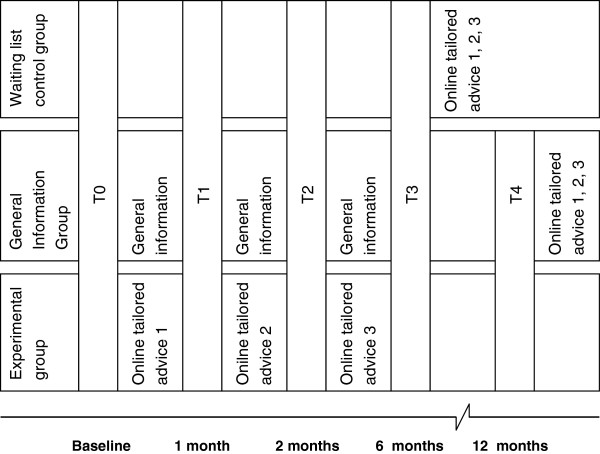
BACKGROUND: The purpose of this article is to give an integrative insight into the theoretical and empirical-based development of the Online Pestkoppenstoppen (Stop Bullies Online/Stop Online Bullies). This intervention aims to reduce the number of cyberbully victims and their symptoms of depression and anxiety (program goal), by teaching cyberbully victims how to cope in an adequate and effective manner with cyberbully incidents (program's outcomes). METHOD/DESIGN: In developing the program the different steps of the Intervention Mapping protocol are systematically used. In this article we describe each step of Intervention Mapping. Sources used for the development were a literature review, a Delphi study among experts, focus group interviews with the target group, and elements from a proven effective anti-bullying program. The result is a fully automated web-based tailored intervention for cyberbully victims (12-15 years) consisting of three web-based advice sessions delivered over three months. The first advice aims to teach participants how behavior is influenced by the thoughts they have, how to recognize and dispute irrational thoughts and how to form rational thoughts. In the second advice, participants will learn about the way bullying emerges, how their behavior influences bullying and how they can use effective coping strategies in order to stop (online) bullying. In the third advice, participants receive feedback and will learn how to use the Internet and mobile phones in a safe manner. Each advice is tailored to the participant's personal characteristics (e.g., personality, self-efficacy, coping strategies used and (ir)rational thoughts). To ensure implementation of the program after testing it for effectiveness, the intervention was pretested in the target-population and an implementation plan was designed. Finally, we will elaborate on the planned randomized controlled trial in which the intervention will be compared to a general information group and waiting list control group. This evaluation will provide insight into the intervention's efficacy to reduce cyberbullying and its negative effects. DISCUSSION: Intervention Mapping is a time consuming but profound way to ensure that each step of developing an intervention is taken, and resulted in three web-based tailored pieces of advices that teach adolescents how to cope more effectively with cyberbullying experiences. TRIAL REGISTRATION: NTR3613, 14-09-2012.
Overview
The claims and statistics of this paper haven’t been checked yet.
Free: it reads the open-access text and checks the first 5 claims that cite a source we can check. Create a free account to check every claim.
Integrity signals
Registry
Cites
Statistics
Figures

Verification
Claims the paper makes
The claims and statistics of this paper haven’t been checked yet.
Free: it reads the open-access text and checks the first 5 claims that cite a source we can check. Create a free account to check every claim.
Claims other papers make about this one
Each is checked against this paper’s own text: does it say what the citing paper says it does?
The cited source says what the claim attributes to it.
In the citing paper
“One such example for children and adolescents, is the web-based intervention Online Pestkoppenstoppen (Stop Bullies Online/Stop Online Bullies) which aims to teach victims effective ways of dealing with anxiety and depression associated with cyber victimisation (Jacobs et al., 2014).”
From A review of cyberbullying and suggestions for online psychological therapy (2015) · cites this paper as Jacobs et al., 2014
Self-check
Percentages, sums and reported differences re-computed from the paper’s own numbers.
The self-check needs the paper’s full text.
Citations
Cites
Self-efficacy: The exercise of control
Bandura, A., Freeman, W. H., & Lightsey, R. (1999) · Journal of Cognitive Psychotherapy · doi:10.1891/0889-8391.13.2.158 · Cited by 46,835
Eysenck, H. J. (1985) · Behaviour Research and Therapy · doi:10.1016/0005-7967(85)90087-7 · Cited by 31,975
“Stress: appraisal and coping,”
Folkman, S. (2013) · Encyclopedia of Behavioral Medicine · doi:10.1007/978-1-4419-1005-9_215 · Cited by 27,833
Self-efficacy: the exercise of control
(1997) · Choice Reviews Online · doi:10.5860/choice.35-1826 · Cited by 24,281
(1985) · Medical Entomology and Zoology · Cited by 19,180
The Elaboration Likelihood Model of Persuasion
Petty, R. E., & Cacioppo, J. T. (1986) · Advances in Experimental Social Psychology · doi:10.1016/s0065-2601(08)60214-2 · Cited by 8,822
Perceived self-efficacy in cognitive development and functioning
Bandura, A. (1993) · Educational Psychologist · doi:10.1207/s15326985ep2802_3 · Cited by 7,655 · cited 1×
“For example, to influence determinants such as self-efficacy, modeling [99,100] can be used as a theoretical method.”
MethodPetty, R. E., & Cacioppo, J. T. (1986) · doi:10.1007/978-1-4612-4964-1 · Cited by 5,219
Handbook of Personality : Theory and Research
Pervin, L. A. (1992) · Cited by 4,543
Cyberbullying: Its nature and impact in secondary school pupils
Smith, P. K., Mahdavi, J., Carvalho, M., Fisher, S., Russell, S., & Tippett, N. (2008) · Journal of Child Psychology and Psychiatry · doi:10.1111/j.1469-7610.2007.01846.x · Cited by 3,639
Handbook of personality theory and research
Wilson, G. (1991) · Personality and Individual Differences · doi:10.1016/0191-8869(91)90043-b · Cited by 3,538
Integrative Guide for the 1991 CBCL/4-18, Ysr, and Trf Profiles
Achenbach, T. M. (1991) · Medical Entomology and Zoology · Cited by 3,198
Tokunaga, R. S. (2010) · Computers in Human Behavior · doi:10.1016/j.chb.2009.11.014 · Cited by 2,566 · cited 2×
“They should also block or ignore the cyberbully [88], or seek social support [3].”
BackgroundWebb, T. L., Joseph, J., Yardley, L., & Michie, S. (2010) · Journal of Medical Internet Research · doi:10.2196/jmir.1376 · Cited by 2,517
Planning health promotion programs an intervention mapping approach
Bartholomew, L. K., Parcel, G. S., Kok, G., & Gottlieb, N. (2006) · Research Publications (Maastricht University) · Cited by 2,321
Does tailoring matter? Meta-analytic review of tailored print health behavior change interventions
Noar, S. M., Benac, C. N., & Harris, M. S. (2007) · Psychological Bulletin · doi:10.1037/0033-2909.133.4.673 · Cited by 2,136 · cited 4×
“Furthermore, web-based interventions can be used whenever and wher-ever the individual prefers [35], can reach a lot of people in a relatively cheap way [36], and have the possibility to use tailoring [37], which appears to be a successful health promotion technique [38,39].”
BackgroundInfluentialBullying, Cyberbullying, and Suicide
Hinduja, S., & Patchin, J. W. (2010) · Archives of Suicide Research · doi:10.1080/13811118.2010.494133 · Cited by 2,078 · cited 1×
“Research has indicated that cybervictimization is associated with serious internalizing difficulties such as depression [4,5], anxiety [6], emotional distress [5] and suicidality [7,8].”
BackgroundCyberbullying: Another main type of bullying?
SLONJE, R., & SMITH, P. K. (2008) · Scandinavian Journal of Psychology · doi:10.1111/j.1467-9450.2007.00611.x · Cited by 1,844 · cited 2×
“Moreover, cyberbully victims often are unwilling to talk to a parent [14], teacher [2,30] or other adults [31].”
BackgroundPlanning Health Promotion Programs: An Intervention Mapping Approach
Hicking-Woodison, L. (2017) · Nursing Standard · doi:10.7748/ns.32.6.33.s38 · Cited by 1,841
Michie, S., Johnston, M., Francis, J., Hardeman, W., & Eccles, M. (2008) · Applied Psychology · doi:10.1111/j.1464-0597.2008.00341.x · Cited by 1,789 · cited 1×
“…a description of what works, under what circumstances and for whom [41], with a thorough insight in the relevant determinants of behavioral change, the theoretical methods to change these determinants and how the theoretical methods are translated into practical intervention strategies [42,43].”
BackgroundPredictors of bullying and victimization in childhood and adolescence: A meta-analytic investigation
Cook, C. R., Williams, K. R., Guerra, N. G., Kim, T. E., & Sadek, S. (2010) · School Psychology Quarterly · doi:10.1037/a0020149 · Cited by 1,758 · cited 1×
“Victims apparently have negative self-related attitudes, thoughts [71], and self-blaming attributions [72] after a bully experience.”
Background(1999) · Cited by 1,648
Lewinsohn, P. M., Hops, H., Roberts, R. E., Seeley, J. R., & Andrews, J. A. (1993) · Journal of Abnormal Psychology · doi:10.1037/0021-843x.102.1.133 · Cited by 1,547 · cited 1×
“Cyberbully victims also more often have experienced drugs, alcohol, physical or sexual abuse, have displayed delinquent and aggressive behavior, have problems at school and have dropped out of school [9-16].”
BackgroundCyberbullying: An Exploratory Analysis of Factors Related to Offending and Victimization
Hinduja, S., & Patchin, J. W. (2008) · Deviant Behavior · doi:10.1080/01639620701457816 · Cited by 1,497 · cited 2×
“Additionally, this intervention may also affect offline victimization, because despite the differences, cyberbullying and traditional bullying also have some overlapping characteristics [24,25,27].”
BackgroundPeer harassment in school: the plight of the vulnerable and victimized
(2002) · Choice Reviews Online · doi:10.5860/choice.39-4110 · Cited by 1,357
Sniehotta, F. F., Scholz, U., & Schwarzer, R. (2005) · Psychology & Health · doi:10.1080/08870440512331317670 · Cited by 1,350 · cited 1×
“Research indicates that planning is a powerful self-regulatory tool in the process of behavior change [111,112].”
BackgroundHealth Program Planning: An Educational and Ecological Approach
Green, L. W., & Kreuter, M. W. (1991) · Cited by 1,332
Online aggressor/targets, aggressors, and targets: a comparison of associated youth characteristics
Ybarra, M. L., & Mitchell, K. J. (2004) · Journal of Child Psychology and Psychiatry · doi:10.1111/j.1469-7610.2004.00328.x · Cited by 1,310 · cited 1×
“Research has indicated that cybervictimization is associated with serious internalizing difficulties such as depression [4,5], anxiety [6], emotional distress [5] and suicidality [7,8].”
BackgroundA catalog of biases in questionnaires.
Choi, B. C. K., & Pak, A. W. P. (2005) · Preventing Chronic Disease · Cited by 1,098
Involvement in traditional and electronic bullying among adolescents.
Raskauskas, J., & Stoltz, A. D. (2007) · Developmental Psychology · doi:10.1037/0012-1649.43.3.564 · Cited by 1,017
Action planning and coping planning for long-term lifestyle change: theory and assessment
Sniehotta, F. F., Schwarzer, R., Scholz, U., & Schüz, B. (2005) · European Journal of Social Psychology · doi:10.1002/ejsp.258 · Cited by 981 · cited 5×
“In coping planning, individuals anticipate on possible risk situations beforehand by already defining suitable and effective response behavior linked to these potential barriers [112].”
BackgroundInfluentialSchneider, S. K., O'Donnell, L., Stueve, A., & Coulter, R. W. S. (2012) · American Journal of Public Health · doi:10.2105/ajph.2011.300308 · Cited by 966 · cited 2×
“Research has indicated that cybervictimization is associated with serious internalizing difficulties such as depression [4,5], anxiety [6], emotional distress [5] and suicidality [7,8].”
BackgroundThe nature of cyberbullying, and strategies for prevention
Slonje, R., Smith, P. K., & Frisén, A. (2013) · Computers in Human Behavior · doi:10.1016/j.chb.2012.05.024 · Cited by 940 · cited 1×
“Unfortunately, intervention programs that deal specifically with cyberbullying are scarce [19].”
BackgroundBullying Beyond the Schoolyard: Preventing and Responding to Cyberbullying
Hinduja, S., & Patchin, J. W. (2008) · Cited by 876
Cyberbullying: bullying in the digital age
(2012) · Choice Reviews Online · doi:10.5860/choice.50-1536 · Cited by 870
Adolescent Internet use: What we expect, what teens report
Gross, E. F. (2004) · Journal of Applied Developmental Psychology · doi:10.1016/j.appdev.2004.09.005 · Cited by 866 · cited 1×
“The growing popularity of social media (e.g. Facebook, Twitter) and instant messenger services (e.g. IMchat, Twitter) [1] does not always lead to positive experiences.”
BackgroundA meta-analysis of computer-tailored interventions for health behavior change
Krebs, P., Prochaska, J. O., & Rossi, J. S. (2010) · Preventive Medicine · doi:10.1016/j.ypmed.2010.06.004 · Cited by 854 · cited 4×
“Furthermore, web-based interventions can be used whenever and wher-ever the individual prefers [35], can reach a lot of people in a relatively cheap way [36], and have the possibility to use tailoring [37], which appears to be a successful health promotion technique [38,39].”
BackgroundInfluentialCyberbullying: Youngsters' experiences and parental perception
Dehue, F., Bolman, C., & Völlink, T. (2008) · CyberPsychology & Behavior · doi:10.1089/cpb.2007.0008 · Cited by 802 · cited 4×
“Some pretend to ignore the bullying, others actually ignore the it [58].”
BackgroundMethodInfluentialSelf-citationNowicki, S., & Duke, M. P. (1994) · Journal of Nonverbal Behavior · doi:10.1007/bf02169077 · Cited by 783 · cited 1×
“is important for an adolescent’s social and cognitive development to correctly perceive and attribute emotions [84].”
BackgroundCyber-Harassment: A Study of a New Method for an Old Behavior
Li, T. B. Q. (2005) · Journal of Educational Computing Research · doi:10.2190/8yqm-b04h-pg4d-bllh · Cited by 672 · cited 1×
“Cyberbully victims also more often have experienced drugs, alcohol, physical or sexual abuse, have displayed delinquent and aggressive behavior, have problems at school and have dropped out of school [9-16].”
BackgroundTailoring Health Messages: Customizing Communication With Computer Technology
Farrell, D. W., Rimer, B. K., Olevitch, L. R., Brennan, L. K., & Kreuter, M. W. (1999) · Cited by 635
Offline Consequences of Online Victimization: School Violence and Delinquency
Hinduja, S., & Patchin, J. W. (2007) · Journal of School Violence · doi:10.1300/j202v06n03_06 · Cited by 619 · cited 1×
“Similarly, RE (B)T has proven effective in the treatment of problems re-lated to cyberbullying [59,78,79] and bullying [4,80], such as anxiety, depression and behavioral problems in adolescents [81,82].”
BackgroundEffects of fear and specificity of recommendation upon attitudes and behavior.
Leventhal, H., Singer, R., & Jones, S. (1965) · Journal of Personality and Social Psychology · doi:10.1037/h0022089 · Cited by 614 · cited 1×
“There are two types of plans: action plans [113], or implementation intentions [114], and coping plans [112].”
BackgroundThe Interplay Between Goal Intentions and Implementation Intentions
Sheeran, P., Webb, T. L., & Gollwitzer, P. M. (2005) · Personality and Social Psychology Bulletin · doi:10.1177/0146167204271308 · Cited by 597 · cited 1×
“In action planning, individuals link goal-directed behavior to certain environmental cues by specifying when, where and how to act [112] in if-then statements [115].”
BackgroundCyberbullying Among Adolescents: The Role of Affective and Cognitive Empathy, and Gender
Ang, R. P., & Goh, D. H. (2010) · Child Psychiatry & Human Development · doi:10.1007/s10578-010-0176-3 · Cited by 591
Personality, well-being and health correlates of trait emotional intelligence
Austin, E. J., Saklofske, D. H., & Egan, V. (2005) · Personality and Individual Differences · doi:10.1016/j.paid.2004.05.009 · Cited by 571
Cyberbullying among youngsters: profiles of bullies and victims
Vandebosch, H., & Van Cleemput, K. (2009) · New Media & Society · doi:10.1177/1461444809341263 · Cited by 555 · cited 1×
“A lot of cyberbully victims frequently use the Internet, most of the time in a risky manner [2,78,95].”
BackgroundErdur-Baker, Ö. (2010) · New Media & Society · doi:10.1177/1461444809341260 · Cited by 552 · cited 2×
“Similarly, RE (B)T has proven effective in the treatment of problems re-lated to cyberbullying [59,78,79] and bullying [4,80], such as anxiety, depression and behavioral problems in adolescents [81,82].”
BackgroundThe Relationship between Cyberbullying and School Bullying
Beran, T., & Li, Q. (2008) · The Journal of Student Wellbeing · doi:10.21913/jsw.v1i2.172 · Cited by 540 · cited 1×
“Cyberbully victims also more often have experienced drugs, alcohol, physical or sexual abuse, have displayed delinquent and aggressive behavior, have problems at school and have dropped out of school [9-16].”
BackgroundYbarra, M. L., Mitchell, K. J., Wolak, J., & Finkelhor, D. (2006) · Pediatrics · doi:10.1542/peds.2006-0815 · Cited by 539 · cited 1×
“Moreover, cyberbully victims often are unwilling to talk to a parent [14], teacher [2,30] or other adults [31].”
BackgroundObserving bullying at school: The mental health implications of witness status.
Rivers, I., Poteat, V. P., Noret, N., & Ashurst, N. (2009) · School Psychology Quarterly · doi:10.1037/a0018164 · Cited by 510 · cited 1×
“Observing victimization on its own can have negative consequences on psychological wellbeing [120].”
BackgroundTraditional and Nontraditional Bullying Among Youth: A Test of General Strain Theory
Patchin, J. W., & Hinduja, S. (2011) · Youth & Society · doi:10.1177/0044118x10366951 · Cited by 473 · cited 2×
“…strategies on the basis of individual needs of the student [21]; (2) offer health education and teach emotional self-management competencies [22]; (3) increase victims´ knowledge of reactive (e.g. deleting, blocking and ignoring messages), preventive (e.g. increased awareness and security)…”
BackgroundA longitudinal study of cyberbullying: Examining riskand protective factors
Fanti, K. A., Demetriou, A. G., & Hawa, V. V. (2012) · European Journal of Developmental Psychology · doi:10.1080/17405629.2011.643169 · Cited by 468 · cited 1×
“Seeking social support from family is likely to help [89].”
BackgroundPerren, S., Dooley, J., Shaw, T., & Cross, D. (2010) · Child and Adolescent Psychiatry and Mental Health · doi:10.1186/1753-2000-4-28 · Cited by 443 · cited 2×
“Similarly, RE (B)T has proven effective in the treatment of problems re-lated to cyberbullying [59,78,79] and bullying [4,80], such as anxiety, depression and behavioral problems in adolescents [81,82].”
BackgroundCyber bullying behaviors among middle and high school students.
Mishna, F., Cook, C., Gadalla, T., Daciuk, J., & Solomon, S. (2010) · American Journal of Orthopsychiatry · doi:10.1111/j.1939-0025.2010.01040.x · Cited by 440 · cited 1×
“For example, cyberbully victims should try to get help from bystanders, because one quarter of cyberbullying occurs in the presence of witnesses [87].”
BackgroundYbarra, M. L. (2004) · CyberPsychology & Behavior · doi:10.1089/109493104323024500 · Cited by 425 · cited 1×
“Cyberbully victims also more often have experienced drugs, alcohol, physical or sexual abuse, have displayed delinquent and aggressive behavior, have problems at school and have dropped out of school [9-16].”
BackgroundPast, present, and future of computer-tailored nutrition education
Brug, J., Oenema, A., & Campbell, M. (2003) · The American Journal of Clinical Nutrition · doi:10.1093/ajcn/77.4.1028s · Cited by 392 · cited 1×
“Tailored messages are better read, saved and remembered than non-tailored messages [103].”
BackgroundKatzer, C., Fetchenhauer, D., & Belschak, F. (2009) · Journal of Media Psychology · doi:10.1027/1864-1105.21.1.25 · Cited by 389
Intervention Mapping: Protocol for Applying Health Psychology Theory to Prevention Programmes
Kok, G., Schaalma, H., Ruiter, R. A. C., Van Empelen, P., & Brug, J. (2004) · Journal of Health Psychology · doi:10.1177/1359105304038379 · Cited by 362 · cited 2×
“Theoretical parameters for modeling state that modeling is effective when the individual is able to identify with the model, the model demonstrates adequate skills and is reinforced for the behavior displayed [98].”
BackgroundMethodCampbell, M., Spears, B., Slee, P., Butler, D., & Kift, S. (2012) · Emotional and Behavioural Difficulties · doi:10.1080/13632752.2012.704316 · Cited by 351 · cited 1×
“Research has indicated that cybervictimization is associated with serious internalizing difficulties such as depression [4,5], anxiety [6], emotional distress [5] and suicidality [7,8].”
BackgroundCyberbullying: Predicting Victimisation and Perpetration
Walrave, M., & Heirman, W. (2011) · Children & Society · doi:10.1111/j.1099-0860.2009.00260.x · Cited by 343 · cited 1×
“’ ) systematically underestimates the problem [47,58], an implicit approach was used; the individual rates his or her experience with different cyberbullying behaviors.”
MethodKokkinos, C. M., & Kipritsi, E. (2012) · Social Psychology of Education · doi:10.1007/s11218-011-9168-9 · Cited by 341 · cited 1×
“The understanding and experiencing of emotions of others seems to inhibit antisocial behavior [85], and adolescents who are able to perceive, handle, understand and express their emotions tend to experience better social relationships and are more socially accepted [86].”
BackgroundPeer Victimization: The Role of Emotions in Adaptive and Maladaptive Coping
Kochenderfer‐Ladd, B. (2004) · Social Development · doi:10.1111/j.1467-9507.2004.00271.x · Cited by 341 · cited 2×
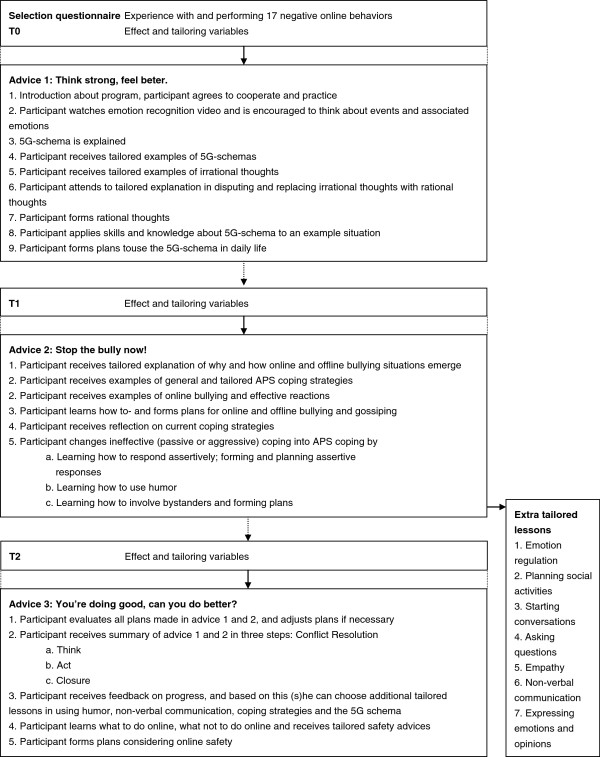
“These three steps together form the skill conflict resolution, which is associated with reductions in victimization and fewer internalizing problems [90].”
BackgroundChild/Adolescent Anxiety Multimodal Study (CAMS): rationale, design, and methods
Compton, S. N., Walkup, J. T., Albano, A. M., Piacentini, J. C., Birmaher, B., Sherrill, J. T., Ginsburg, G. S., Rynn, M. A., McCracken, J. T., Waslick, B. D., et al. (2010) · Child and Adolescent Psychiatry and Mental Health · doi:10.1186/1753-2000-4-1 · Cited by 336
(1999) · Patient Education and Counseling · doi:10.1016/s0738-3991(98)00127-x · Cited by 327 · cited 2×
“Furthermore, web-based interventions can be used whenever and wher-ever the individual prefers [35], can reach a lot of people in a relatively cheap way [36], and have the possibility to use tailoring [37], which appears to be a successful health promotion technique [38,39].”
BackgroundMahady Wilton, M. M., Craig, W. M., & Pepler, D. J. (2000) · Social Development · doi:10.1111/1467-9507.00121 · Cited by 315 · cited 4×
“APS strategies appear to resolve the bullying situation and allows the victim to act assertively [54].”
BackgroundInfluentialBullying and cyberbullying: Convergent and divergent predictor variables
Casas, J. A., Del Rey, R., & Ortega-Ruiz, R. (2013) · Computers in Human Behavior · doi:10.1016/j.chb.2012.11.015 · Cited by 314 · cited 3×
“Additionally, this intervention may also affect offline victimization, because despite the differences, cyberbullying and traditional bullying also have some overlapping characteristics [24,25,27].”
BackgroundCost-Effectiveness of Interventions to Promote Physical Activity: A Modelling Study
Cobiac, L. J., Vos, T., & Barendregt, J. J. (2009) · PLoS Medicine · doi:10.1371/journal.pmed.1000110 · Cited by 310 · cited 2×
“Furthermore, web-based interventions can be used whenever and wher-ever the individual prefers [35], can reach a lot of people in a relatively cheap way [36], and have the possibility to use tailoring [37], which appears to be a successful health promotion technique [38,39].”
BackgroundSchool Bullying and Youth Violence: Causes or Consequences of Psychopathologic Behavior?
Kim, Y. S., Leventhal, B. L., Koh, Y.-J., Hubbard, A., & Boyce, W. T. (2006) · Archives of General Psychiatry · doi:10.1001/archpsyc.63.9.1035 · Cited by 309
Barlińska, J., Szuster, A., & Winiewski, M. (2013) · Journal of Community & Applied Social Psychology · doi:10.1002/casp.2137 · Cited by 296 · cited 1×
“…enable victims to cope with the experienced stress and negative emotions [23]; (4) aim at reducing traditional bullying as well [24], because victims are often involved in both forms of bullying [25-27]; and (5) include training in empathy, Internet etiquette, and healthy Internet behavior [28,29].”
BackgroundCyberbullying in a Rural Intermediate School: An Exploratory Study
Bauman, S. (2010) · The Journal of Early Adolescence · doi:10.1177/0272431609350927 · Cited by 282 · cited 1×
“Victims apparently have negative self-related attitudes, thoughts [71], and self-blaming attributions [72] after a bully experience.”
BackgroundLewinsohn, P. M., Hops, H., Roberts, R. E., & Seeley, J. R. (1993) · Journal of Abnormal Psychology · doi:10.1037//0021-843x.102.4.517 · Cited by 282
Cyber Bullying: The New Moral Frontier
Kowalski, R. M., Limber, S. P., & Agatston, P. W. (2008) · Wiley eBooks · doi:10.1002/9780470694176 · Cited by 282
Clement, I. (2010) · Psychosocial Foundation of Nursing · doi:10.5005/jp/books/11375_8 · Cited by 261
(2010) · Youth studies Australia · Cited by 252
Peer victimization and its relationship to self-concept and depression among schoolgirls
Neary, A., & Joseph, S. (1994) · Personality and Individual Differences · doi:10.1016/0191-8869(94)90122-8 · Cited by 252
Riebel, J., Jäger, R. S., & Fischer, U. C. (2009) · Psychology science · Cited by 249
Age differences in adolescents' perceptions of their peer groups.
Gavin, L. A., & Furman, W. (1989) · Developmental Psychology · doi:10.1037//0012-1649.25.5.827 · Cited by 239 · cited 1×
“…of secondary education [46-48]; (2) in this period of development the interaction with peers is highly valued and new social networks are formed [49]; and (3) adolescents have an open mind and are eager to learn new skills which enable them to learn how to cope more effectively with problems…”
BackgroundHemphill, S. A., Kotevski, A., Tollit, M., Smith, R., Herrenkohl, T. I., Toumbourou, J. W., & Catalano, R. F. (2012) · Journal of Adolescent Health · doi:10.1016/j.jadohealth.2011.11.019 · Cited by 231 · cited 1×
“increased awareness and security) [23] and effective strategies and resources that enable victims to cope with the experienced stress and negative emotions [23]; (4) aim at reducing traditional bullying as well [24], because victims are often involved in both forms of bullying [25-27]; and (5) include training in empa…”
Backgroundde Vries, H., Kremers, S. P. J., Smeets, T., Brug, J., & Eijmael, K. (2008) · American Journal of Health Promotion · doi:10.4278/ajhp.22.6.417 · Cited by 215
Rational Emotive Therapy With Children and Adolescents: A Meta-Analysis
Gonzalez, J. E., Nelson, J. R., Gutkin, T. B., Saunders, A., Galloway, A., & Shwery, C. S. (2004) · Journal of Emotional and Behavioral Disorders · doi:10.1177/10634266040120040301 · Cited by 195 · cited 1×
“Similarly, RE (B)T has proven effective in the treatment of problems re-lated to cyberbullying [59,78,79] and bullying [4,80], such as anxiety, depression and behavioral problems in adolescents [81,82].”
BackgroundBoulton, M. J., Smith, P. K., & Cowie, H. (2010) · School Psychology International · doi:10.1177/0143034310362329 · Cited by 194
Responding to Bullying: What Works?
Craig, W., Pepler, D., & Blais, J. (2007) · School Psychology International · doi:10.1177/0143034307084136 · Cited by 194
Völlink, T., Bolman, C. A. W., Dehue, F., & Jacobs, N. C. L. (2013) · Journal of Community & Applied Social Psychology · doi:10.1002/casp.2142 · Cited by 193 · cited 2×
“, ineffective coping appears to yield depression- and health complaints) [68,69].”
BackgroundSelf-citationChanging rational-emotive therapy (RET) to rational emotive behavior therapy (REBT)
Ellis, A. (1995) · Journal of Rational-Emotive & Cognitive-Behavior Therapy · doi:10.1007/bf02354453 · Cited by 193 · cited 2×
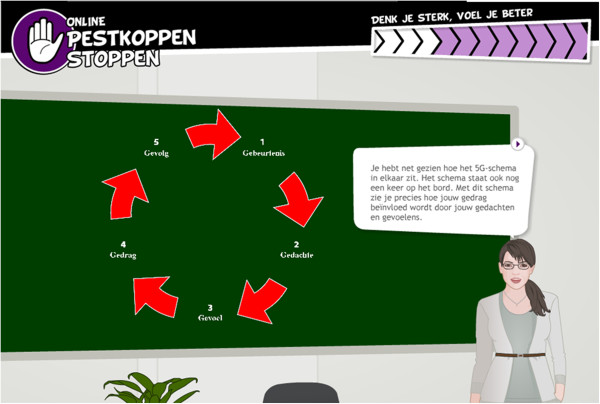
“PaS is partly based on principles of Rational Emotive (Behavioral) Therapy (RE(B)T) [73,74], and uses the 5G-schema [75] (see Figure 2) to raise awareness in the relation between a thought, feeling and behavior, and to replace irrational thoughts with more rational thoughts.”
BackgroundMethodKristensen, S. M., & Smith, P. K. (2003) · Scandinavian Journal of Psychology · doi:10.1046/j.1467-9450.2003.00369.x · Cited by 190 · cited 2×
“crying, expressing emotions) [54-56], or they use emotion focused and aggressive coping strategies (e.”
BackgroundMethodCyberbullying: The New Era of Bullying
Wade, A., & Beran, T. (2011) · Canadian Journal of School Psychology · doi:10.1177/0829573510396318 · Cited by 190 · cited 1×
“…are just starting to attend secondary school, because: (1) cyberbullying appears to occur more frequently in lower levels of secondary education [46-48]; (2) in this period of development the interaction with peers is highly valued and new social networks are formed [49]; and (3) adolescents…”
BackgroundCamodeca, M., & Goossens, F. A. (2005) · Educational Research · doi:10.1080/0013188042000337587 · Cited by 178 · cited 1×
“Moreover, victims and adolescents not involved in bullying most frequently indicated assertiveness as an intervention strategy [94].”
BackgroundAppraisal and coping strategy use in victims of school bullying
Hunter, S. C., & Boyle, J. M. E. (2004) · British Journal of Educational Psychology · doi:10.1348/000709904322848833 · Cited by 176 · cited 1×
“It appears that the use of ineffective coping strategies maintains (cyber)bullying [52,54-56,63-67], and that the negative effects of cyberbullying are influenced by the coping style victims use (e.”
BackgroundLong-term study of safe Internet use of young children
Valcke, M., De Wever, B., Van Keer, H., & Schellens, T. (2011) · Computers & Education · doi:10.1016/j.compedu.2011.01.010 · Cited by 175 · cited 1×
“They share passwords, openly display personal information (e.g. addresses, phone numbers) and communicate with strangers [96,97].”
BackgroundAndreou, E. (2001) · Educational Psychology · doi:10.1080/01443410125042 · Cited by 174 · cited 1×
“It appears that the use of ineffective coping strategies maintains (cyber)bullying [52,54-56,63-67], and that the negative effects of cyberbullying are influenced by the coping style victims use (e.”
BackgroundCyberbullying and subjective health
Låftman, S. B., Modin, B., & Östberg, V. (2013) · Children and Youth Services Review · doi:10.1016/j.childyouth.2012.10.020 · Cited by 172
Improving diet and exercise in pregnancy with Video Doctor counseling: A randomized trial
Jackson, R., Stotland, N. E., Caughey, A. B., & Gerbert, B. (2010) · Patient Education and Counseling · doi:10.1016/j.pec.2010.05.019 · Cited by 168 · cited 1×
“For example, previous research indicated that video-counseling - in which a real human speaks and asks questions - can be a promising technique for health interventions [109].”
BackgroundDeterminants of chronic victimization by peers: A review and new model of family influence.
Perry, D. G., Hodges, E. V. E., & Egan, S. K. (2001) · Cited by 167
Kanetsuna, T., Smith, P. K., & Morita, Y. (2006) · Aggressive Behavior · doi:10.1002/ab.20156 · Cited by 163 · cited 1×
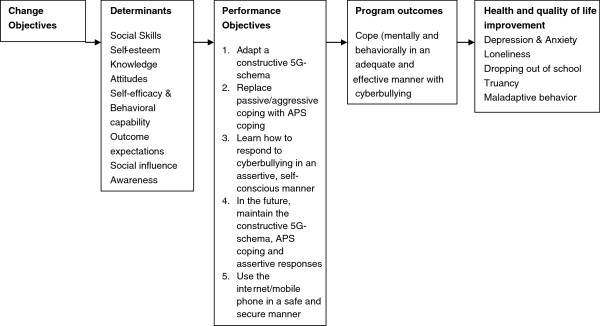
“It appears that the use of ineffective coping strategies maintains (cyber)bullying [52,54-56, 63-67 63-67 ], and that the negative effects of cyberbullying are Step 2: Matrices of change objectives Next, the focus shifts from the needs assessment to the formation of a change model (Figure 1).”
BackgroundCyberbullying: Prevention and Intervention to Protect Our Children and Youth
Snakenborg, J., Van Acker, R., & Gable, R. A. (2011) · Preventing School Failure: Alternative Education for Children and Youth · doi:10.1080/1045988x.2011.539454 · Cited by 162
Oenema, A., Brug, J., Dijkstra, A., de Weerdt, I., & de Vries, H. (2008) · Annals of Behavioral Medicine · doi:10.1007/s12160-008-9023-1 · Cited by 162 · cited 2×
“Furthermore, web-based interventions can be used whenever and wher-ever the individual prefers [35], can reach a lot of people in a relatively cheap way [36], and have the possibility to use tailoring [37], which appears to be a successful health promotion technique [38,39].”
BackgroundCyber Aggression: The Relation between Online Offenders and Offline Social Competence
Schoffstall, C. L., & Cohen, R. (2011) · Social Development · doi:10.1111/j.1467-9507.2011.00609.x · Cited by 155 · cited 1×
“The more adolescents engage in cyber aggression, the more loneliness they feel, the lower their global self-worth is, the fewer mutual friendships they have and the lower their ratings of social acceptance and popularity by peers are [17].”
BackgroundThe internet and nutrition education: challenges and opportunities
Brug, J., Oenema, A., Kroeze, W., & Raat, H. (2005) · European Journal of Clinical Nutrition · doi:10.1038/sj.ejcn.1602186 · Cited by 154 · cited 2×
“To increase the effectiveness of such an intervention, a planned, systematic and theory-based approach is needed [40].”
BackgroundCoping strategies and perceived effectiveness in fourth through eighth grade victims of bullying
Tenenbaum, L. S., Varjas, K., Meyers, J., & Parris, L. (2011) · School Psychology International · doi:10.1177/0143034311402309 · Cited by 151 · cited 3×
“They need knowledge of reactive and preventive strategies (PO 6) and should change their ineffective coping strategies into effective coping strategies (PO 7) [23].”
BackgroundInfluentialMcManus, I., Livingston, G., & Katona, C. (2006) · BMC Medical Education · doi:10.1186/1472-6920-6-11 · Cited by 150 · cited 1×
“The intervention is for example tailored to personality (ST) as measured by the Big 5 Questionnaire – Short form [104].”
MethodHigh School Students’ Perceptions of Coping With Cyberbullying
Parris, L., Varjas, K., Meyers, J., & Cutts, H. (2012) · Youth & Society · doi:10.1177/0044118x11398881 · Cited by 150 · cited 1×
“Additionally, adolescents coping with cyberbullying are less likely to seek social support, compared to other strategies [30,53,58,62].”
Background(2002) · Choice Reviews Online · doi:10.5860/choice.39-3660 · Cited by 137
Webb, M., Burns, J., & Collin, P. (2008) · Early Intervention in Psychiatry · doi:10.1111/j.1751-7893.2008.00066.x · Cited by 130 · cited 2×
“They spend a lot of time online [32], prefer to get anonymous help [33], and report a need for information and help through the Internet [34].”
BackgroundEmotion recognition abilities and empathy of victims of bullying
Woods, S. N., Wolke, D., Nowicki, S., & Hall, L. E. (2009) · Child Abuse & Neglect · doi:10.1016/j.chiabu.2008.11.002 · Cited by 130 · cited 1×
“Relational bullyvictims often have problems with the correct encoding and interpretation of emotions [83].”
BackgroundSchool bullying by one or more ways: Does it matter and how do students cope?
Skrzypiec, G., Slee, P., Murray-Harvey, R., & Pereira, B. (2011) · School Psychology International · doi:10.1177/0143034311402308 · Cited by 113 · cited 2×
“Individuals that are bullied in multiple ways even tend to cope less effectively [63].”
BackgroundEffectiveness of school-based programs to reduce bullying: a commentary
Smith, P. K., Salmivalli, C., & Cowie, H. (2012) · Journal of Experimental Criminology · doi:10.1007/s11292-012-9142-3 · Cited by 112 · cited 1×
“A theoretically sound and evidence-based intervention should provide a description of what works, under what circumstances and for whom [41], with a thorough insight in the relevant determinants of behavioral change, the theoretical methods to change these determinants and how the theoretical…”
BackgroundAraujo-Soares, V., McIntyre, T., & Sniehotta, F. F. (2008) · Health Education Research · doi:10.1093/her/cyn005 · Cited by 107 · cited 1×
“Implementation intentions, action and coping plans are found to be effective in translating various intentions into actions [116-118], and appear to be working synergistically in adolescents [119].”
Reuter, T., Ziegelmann, J. P., Wiedemann, A. U., Geiser, C., Lippke, S., Schüz, B., & Schwarzer, R. (2010) · Journal of Health Psychology · doi:10.1177/1359105309360071 · Cited by 91 · cited 1×
“Implementation intentions, action and coping plans are found to be effective in translating various intentions into actions [116-118], and appear to be working synergistically in adolescents [119].”
BackgroundRelapse prevention in a national smoking cessation contest: Effects of coping planning
van Osch, L., Lechner, L., Reubsaet, A., Wigger, S., & de Vries, H. (2008) · British Journal of Health Psychology · doi:10.1348/135910707x224504 · Cited by 91
Self-citationCoping with peer arguments in school‐age children with bully/victim problems
Bijttebier, P., & Vertommen, H. (1998) · British Journal of Educational Psychology · doi:10.1111/j.2044-8279.1998.tb01299.x · Cited by 85 · cited 1×
“It appears that the use of ineffective coping strategies maintains (cyber)bullying [52,54-56, 63-67 63-67 ], and that the negative effects of cyberbullying are Step 2: Matrices of change objectives Next, the focus shifts from the needs assessment to the formation of a change model (Figure 1).”
BackgroundGanging up or sticking together? Group processes and children's responses to text‐message bullying
Jones, S. E., Manstead, A. S. R., & Livingstone, A. G. (2011) · British Journal of Psychology · doi:10.1348/000712610x502826 · Cited by 77 · cited 1×
“Additionally, interventions should also focus on improving peer relationships in general [88], because social acceptance [92] and integration [93] moderate the impact and consequences of different forms of cyberbullying.”
BackgroundDeterminants of adolescents' ineffective and improved coping with cyberbullying: A Delphi study
Jacobs, N. C. L., Dehue, F., Völlink, T., & Lechner, L. (2014) · Journal of Adolescence · doi:10.1016/j.adolescence.2014.02.011 · Cited by 77 · cited 4×
“Second, the intervention aims to change multiple determinants that were found in a study done by Jacobs et al., [70].”
BackgroundMethodInfluentialSelf-citationWiedemann, A. U., Lippke, S., Reuter, T., Ziegelmann, J. P., & Schwarzer, R. (2011) · European Journal of Social Psychology · doi:10.1002/ejsp.724 · Cited by 64 · cited 1×
“Implementation intentions, action and coping plans are found to be effective in translating various intentions into actions [116-118], and appear to be working synergistically in adolescents [119].”
BackgroundPaul, S., Smith, P. K., & Blumberg, H. H. (2012) · Pastoral Care in Education · doi:10.1080/02643944.2012.679957 · Cited by 63
Vandelanotte, C., & Mummery, W. K. (2011) · International Journal of Behavioral Nutrition and Physical Activity · doi:10.1186/1479-5868-8-70 · Cited by 53 · cited 1×
“The short videos were professionally recorded [110].”
Ellis, A. (1984) · Journal of Rational-Emotive & Cognitive-Behavior Therapy · doi:10.1007/bf02283005 · Cited by 50
Adolescents' views about an internet platform for adolescents with mental health problems
Havas, J., de Nooijer, J., Crutzen, R., & Feron, F. (2011) · Health Education · doi:10.1108/09654281111123466 · Cited by 45 · cited 1×
“They spend a lot of time online [32], prefer to get anonymous help [33], and report a need for information and help through the Internet [34].”
BackgroundDooley, J. J., Shaw, T., & Cross, D. (2012) · European Journal of Developmental Psychology · doi:10.1080/17405629.2011.648425 · Cited by 45 · cited 1×
“Similarly, cyberbully victims report using aggressive and passive coping strategies [57] (e.g. bullying the bully, deleting messages or pretending to ignore the bullying [58]).”
BackgroundMany Sources, One Theme: Analysis of Cyberbullying Prevention and Intervention Websites
Ahlfors (2010) · Journal of Social Sciences · doi:10.3844/jssp.2010.515.522 · Cited by 43
The theories underpinning rational emotive behaviour therapy:
MacInnes, D. L. (2004) · International Journal of Nursing Studies · doi:10.1016/j.ijnurstu.2004.02.004 · Cited by 39 · cited 1×
“According to RE(B) T, evaluative thoughts mediate the view people have about events that happen and the emotional, behavioral, and inferential reactions to these events [74,76,77].”
BackgroundBanks, T. I., & Zionts, P. (2008) · Journal of Rational-Emotive & Cognitive-Behavior Therapy · doi:10.1007/s10942-008-0081-x · Cited by 34 · cited 1×
“Similarly, RE (B)T has proven effective in the treatment of problems re-lated to cyberbullying [59,78,79] and bullying [4,80], such as anxiety, depression and behavioral problems in adolescents [81,82].”
BackgroundSchool-based strategies to address cyber bullying
CROSS, D. S., Monks, H., Campbell, M. A., Spears, B. A., & Slee, P. T. (2011) · QUT ePrints (Queensland University of Technology) · Cited by 26
Invited expert discussion paper Cyberbullying: An overrated phenomenon?
Olweus, D. (2012) · Cited by 22
The 300th birthday of Jean-Jacques Rousseau: An introduction by the editor
Koops, W. (2012) · European Journal of Developmental Psychology · doi:10.1080/17405629.2012.733311 · Cited by 9
Plezier op school: sterker naar de brugklas
Faber, M., Verkerk, G., van Aken, M. A. G., Lissenburg, L., & Geerlings, M. (2006) · Kind & Adolescent Praktijk · doi:10.1007/bf03059577 · Cited by 8
Perren, S., Corcoran, L., Cowie, H., Dehue, F., Garcia, D., Mc Guckin, C., Sevcikova, A., Tsatsou, P., & Völlink, T. (2012) · Institute for Interdisciplinary Conflict and Violence Research, Bielefeld University · doi:10.4119/unibi/ijcv.244
Self-citation
Research works printed but not linked: 7
- Ybarra ML Mitchell KJ Wolak J Finkelhor D Examining characteristics and associated distress related to internet harassment: findings from the second youth internet safety survey Pediatrics 2007 118 4 1169 1177 17015505 · DOI · Paper page
- Lenhart A Purcell K Smith A Zickuhr K Social Media & Mobile Internet Use among Teens and Young Adults 2010 Washington, DC: Pew Research Center, Pew Internet & American Life Project
- van der Vegt AL den Blanken M Jepma I Nationale scholierenmonitor: meting voorjaar 2007 Onderwijsvernieuwingenrosernl 2007 http://www.hetccv.nl/dossiers/geweld-op-school/landelijk---nationale-scholierenmonitor-2007
- Acirak OT Psychiatric symptomatology as predictor of cyberbullying among university students Eurasian J Educ Res 2009 34 167 184
- Ringrose HJ Nijenhuis EH Bang zijn voor andere kinderen 1986 Groningen: Wolters-Noordhoff
- Gollwitzer PM Sheeran P Implementation intentions: Bibliothek der Universität Konstanz 2008
- Geerlings M Lissenburg L Evaluatieonderzoek naar de effectiviteit van de cursus ‘Plezier op school’ 2005 Utrecht: Universiteit Utrecht
Cited by
A Comparative Analysis of Machine Learning Techniques for Cyberbullying Detection on Twitter
Muneer, A., & Fati, S. M. (2020) · Future Internet · doi:10.3390/fi12110187 · Cited by 208
“Thus, the accuracy of the overall iteration is enhanced [102].”
BackgroundAnti-bullying programs and Information and Communication Technologies (ICTs): A systematic review
Nocentini, A., Zambuto, V., & Menesini, E. (2015) · Aggression and Violent Behavior · doi:10.1016/j.avb.2015.05.012 · Cited by 129
Impact of the ConRed program on different cyberbulling roles
Del Rey, R., Casas, J. A., & Ortega, R. (2016) · Aggressive Behavior · doi:10.1002/ab.21608 · Cited by 99
A review of cyberbullying and suggestions for online psychological therapy
Foody, M., Samara, M., & Carlbring, P. (2015) · Internet Interventions · doi:10.1016/j.invent.2015.05.002 · Cited by 97
“Bullies) which aims to teach victims effective ways of dealing with anxiety and depression associated with cyber victimisation (Jacobs et al., 2014).”
BackgroundInfluentialKutok, E. R., Dunsiger, S., Patena, J. V., Nugent, N. R., Riese, A., Rosen, R. K., & Ranney, M. L. (2021) · JMIR Mental Health · doi:10.2196/26029 · Cited by 61
“Some use long and intensive in-person sessions plus electronic content [24,25], some are educational simulation video games [26], and several include web-based informational sites [27].”
BackgroundInfluential
Metadata
- Authors
- Jacobs, N. C., Völlink, T., Dehue, F., & Lechner, L.
- Affiliations
- Open University of the Netherlands (NL)
- Corresponding author
- Jacobs, Niels CL
- Venue
- BMC Public Health
- Published
- 2014-04-24
- Volume
- 14
- Issue
- 1
- Pages
- 396-396
- ISSN
- 1471-2458 (ISSN-L)
- PMC
- PMC4040503
- OpenAlex
- W1976930398
- Cited by
- 75
- References
- 131
- Citations by year
- 2026: 1 · 2025: 1 · 2024: 4 · 2023: 8 · 2022: 9 · 2021: 7 · 2020: 6 · 2019: 6 · 2018: 6 · 2017: 6 · 2016: 10 · 2015: 9 · 2014: 2
- FWCI
- 13.31
- Type
- journal article
- Language
- en
- Open access
- gold
- doi.org
- Licence
- Locations
- BMC Public Health (publishedVersion, cc-by)
- Europe PMC (PubMed Central) (publishedVersion, cc-by)
- PubMed Central (publishedVersion, cc-by)
- PubMed (publishedVersion)
- DSpace (Open University in the Netherlands) (submittedVersion, other-oa)
- Topics
- Social Sciences › Psychology › Social Psychology › Bullying, Victimization, and Aggression
- Social Sciences › Sociology and Political Science › Impact of Technology on Adolescents
- Physical Sciences › Computer Science › Artificial Intelligence › Hate Speech and Cyberbullying Detection
- Keywords
- cyberbullying, cyberbullying victims, adolescents, online intervention, personalized interventions, intervention mapping, cognitive behavioral therapy, coping strategies, depression, anxiety, online safety, bullying prevention, implementation planning
- MeSH terms
- Adaptation, Psychological, Adolescent, Child, Female, Humans, Male, Social Support, Randomized Controlled Trials as Topic, Program Development, Focus Groups, Crime Victims, Internet, Cell Phone, Evidence-Based Practice, Bullying
About these checks
Registry, retraction, Cites and statistics results are computed, not judged, with one exception: a printed reference that no index lists is read once by a model before it counts as a citation error. Claims are extracted by a model and kept only when their quote appears verbatim in the text; each cited source is then checked, with a model’s help, for whether it says what the claim relies on. Those verdicts can be wrong — read the claim’s quote and the cited source before relying on one.
Statistics and arithmetic are recomputed, not judged.
Confidence bands are shown only for fields calibrated on our annotated test set. None is calibrated yet, so no band is shown.
What counts as a claim ›How we measure confidence ›How we check this ›
Are you an author, or do you see a problem with this page? Request a review
Data sources
Bibliographic data: Semantic Scholar, OpenAlex, Crossref.
Contains information from the Semantic Scholar Academic Graph Datasets, made available under the ODC Attribution License (ODC-BY 1.0).
Semantic Scholar’s data is described in: Kinney, R., et al. (2023). The Semantic Scholar Open Data Platform. arXiv:2301.10140.
