

Feasibility of group-based acceptance and commitment therapy for adolescents (AHEAD) with multiple functional somatic syndromes: a pilot study
Open accessThe DOI matches its Crossref record; 95 of the 97 references it cites were found in a registry or an index, and 1 are not checked yet; 38 of the 94 sources its claims cite were checked for support.
Abstract
Background: Recurrent and impairing functional somatic syndromes (FSS) are common in adolescents. Despite a high need for care, empirically supported treatments are lacking for youth. The aim of this uncontrolled pilot study was to assess feasibility and treatment potential of a new intervention with group-based Acceptance and Commitment Therapy (ACT) in a generic treatment approach for adolescents with multiple FSS. Methods: Twenty-one patients received 'ACT for Health in Adolescents' (AHEAD) (30 h), specifically developed for adolescents (aged 15-19 years) with moderate to severe FSS. Close relatives attended an information meeting to facilitate support of the patients throughout treatment. Treatment satisfaction was evaluated by means of self-report and relatives' impressions. Self-reported physical health at 3 months follow-up (FU) after end of treatment was the primary outcome whereas secondary outcomes included symptom burden, limitation due to symptoms, illness worry, emotional distress and physical and emotional symptoms. Treatment targets were assessed by measures on illness behaviour, illness perception and psychological inflexibility. Results: Nineteen patients (90.5%) completed the treatment with a high overall attendance rate of 93%. All would recommend the treatment to a friend with similar problems. Close relatives rated it valuable to participate in an information meeting. Patients' physical health improved significantly from assessment to FU with a clinically relevant mean change of 8.9 points (95% CI [5.4; 12.4]; SRM 0.91 [0.26;1.57]). Improvement was also seen on all secondary outcome measures, from assessment to FU. Maladaptive illness behaviours and perceptions as well as psychological inflexibility showed a significant decline from assessment to FU. Conclusion: AHEAD was feasible and potentially efficacious and warrants testing in a larger clinical trial. Trial registration: Clinical Trials gov NCT04464447, registration date July 9th, 2020. Retrospectively registered. © 2020 The Author(s).
Verified 2026-11-25 · 1 reference not checked yet
Overview
CoChat Summary
## TL;DR
This uncontrolled pilot study found that a 30-hour group-based ACT program (AHEAD) for adolescents with multiple functional somatic syndromes was feasible, with high attendance and positive satisfaction from patients and relatives. It also showed pre–post improvement in self-reported physical health and several secondary outcomes, but the authors stress that efficacy needs testing in a randomized trial.
## Key findings
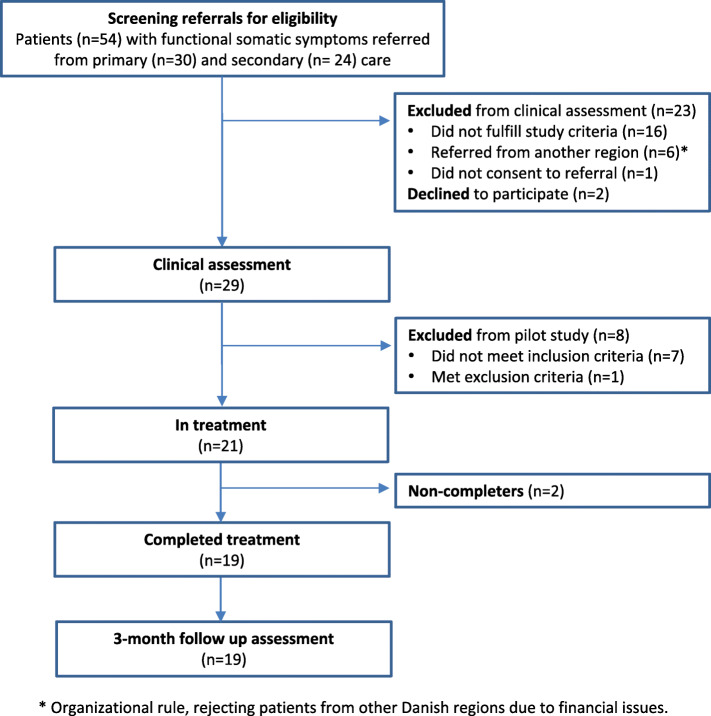
- Of 21 included patients, 19 (90.5%) completed treatment; overall attendance among completers was 93%, with 9 attending all 9 modules, 9 missing one module, and 1 missing 3 modules.
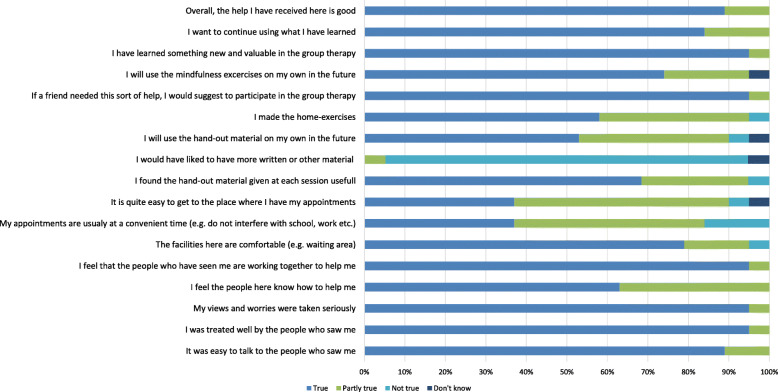
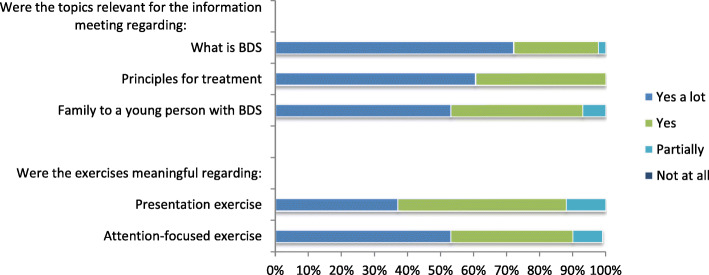
- All patients said they would recommend the treatment to a friend with similar problems, and relatives rated participation in the information meeting as valuable.
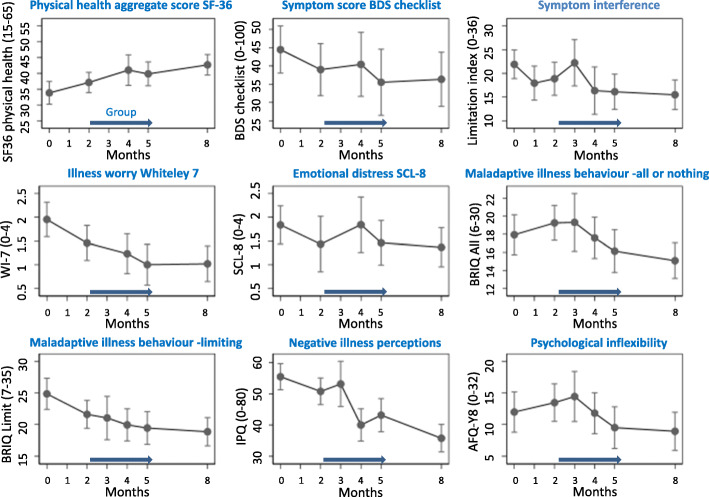
- Self-reported physical health (SF-36 aggregate score) improved from 33.8 at assessment to 42.7 at 3-month follow-up, a mean change of 8.9 points (95% CI [5.4; 12.4]; SRM 0.91 [0.26; 1.57]); from group start to follow-up the change was 5.5 points.
- Improvement was reported on all secondary outcomes from assessment to follow-up, and treatment targets declined as well: all-or-nothing behaviour by −2.9, limiting behaviour by −6.0, and psychological inflexibility/avoidance-fusion by a total follow-up score of 8.9, similar to healthy school-age girls (9.2).
## Methods
- Open, uncontrolled pilot trial conducted from May 2013 to April 2015 at a specialized university hospital service; 54 referred adolescents were screened and 21 included.
- Included adolescents were 15–19 years old with multi-organ BDS, at least three functional somatic symptoms from at least three symptom groups, moderate to severe daily impairment, and symptoms lasting at least 12 months; all participants were girls, mean age 18.5 years.
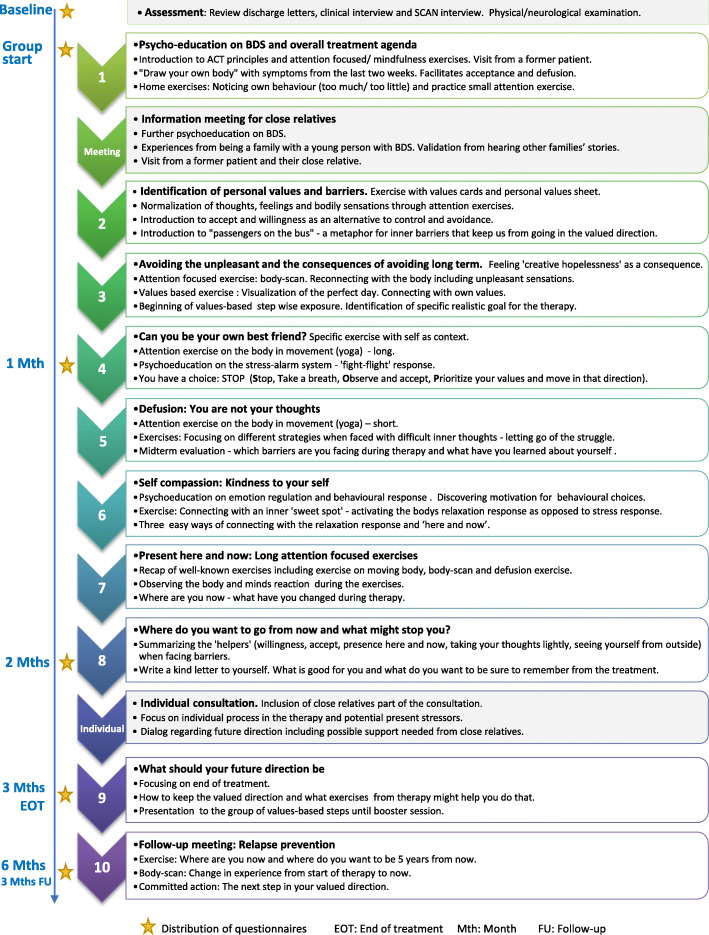
- Intervention combined comprehensive assessment, psychoeducation, and group-based ACT (“AHEAD”): 9 modules over 3 months plus a 3-hour follow-up meeting 3 months later; analysis used unadjusted mixed models with time as the fixed effect and random intercepts.
## Limitations
- The paper explicitly states that the uncontrolled design and small sample size limit the validity of overall conclusions and that findings should be replicated in a larger randomized controlled trial.
- The paper states that not all questionnaires were distributed at all time points in all three pilot groups because of respondent burden, which may affect validity.
- The paper states that ad hoc changes to the AHEAD program during the study may limit evaluation of the overall treatment.
- Evident from the text: only girls were included, and only two clinicians delivered all treatment, reducing generalisability.
Model-written summary. Check it against the paper before relying on it.
Integrity signals
Registry
Cites
Statistics
Figures
Verification
Claims the paper makes
25 Valid · 1 Not valid · 21 Not checked · 68 Own results and interpretations
The cited sources support only part of this claim — read each source’s verdict below.
In the paper
“and in adults with various FSS [28–31].”
§ Feasibility of group-based acceptance and commitment therapy for adolescents (AHEAD) with multiple functional somatic syndromes: a pilot study > Background
What the sources say
- Supportedcites [28] Frostholm L, Rask CU. Third wave treatments for functional somatic syndromes and health anxiety across the age span: a narrative review. Clin Psychol Eur. 2019;1(1):1–33. 10.32872/cpe.v1i1.32217. source
The review’s “ACT for FSS” section reports clinically relevant improvements in adult chronic-pain trials and promising effects in two fibromyalgia trials. It also reports improved patient-rated overall health in a trial involving multiple FSS, although that finding did not extend to its secondary outcomes. (LLM, conf=0.90)
- Not checked — no full text of the sourcecites [29] Luciano JV Guallar JA Aguado J López-Del-Hoyo Y Olivan B Magallón R Effectiveness of group acceptance and commitment therapy for fibromyalgia: a 6-month randomized controlled trial (EFFIGACT study) Pain. 2014 155 4 693 702 10.1016/j.pain.2013.12.029 24378880 source
- Partly supportedcites [30] McCracken LM Sato A Taylor GJ A trial of a brief group-based form of acceptance and commitment therapy (ACT) for chronic pain in general practice: pilot outcome and process results J Pain 2013 14 11 1398 1406 10.1016/j.jpain.2013.06.011 24035351 PMC3824075 sourceExperimental — accuracy not yet measured
The Results report promising effects of ACT in adults with chronic pain, including lower depression and disability than with usual treatment. The Methods describe varied pain-related diagnoses, including fibromyalgia, but the paper does not establish promising results across various functional somatic syndromes as distinct conditions. (LLM, conf=0.83)
- Supportedcites [31] Ferreira NB Gillanders D Morris PG Eugenicos M Pilot study of acceptance and commitment therapy for irritable bowel syndrome: a preliminary analysis of treatment outcomes and processes of change Clin Psychol 2018 22 2 241 250 10.1111/cp.12123 source
The Participants section reports adults with IBS (ages 20–71). The Discussion reports significant improvements in symptom severity, quality of life, and avoidant behaviours after ACT, supporting this paper as one example within the cited group of studies on functional somatic syndromes. It does not study multiple syndromes itself. (LLM, conf=0.90)
plainstates a possible cause- Asserted: passes — The authors put it forward as true.
- Checkable: passes — It can be checked against evidence.
- Load-bearing: passes — The paper’s conclusions depend on it.
- Based: passes — The paper gives a reason why it holds.
- Supported
The cited sources support only part of this claim — read each source’s verdict below.
In the paper
“parental overprotective behaviour can increase distress and disability in the young [18–21]”
§ Feasibility of group-based acceptance and commitment therapy for adolescents (AHEAD) with multiple functional somatic syndromes: a pilot study > Background
What the sources say
- Not checked — no full text of the sourcecites [18] Landry BW Fischer PR Driscoll SW Koch KM Harbeck-Weber C Mack KJ Managing chronic pain in children and adolescents: a clinical review PM R 2015 7 11 Suppl S295 S315 10.1016/j.pmrj.2015.09.006 26568508 source
- Partly supportedcites [19] Palermo TM Valrie CR Karlson CW Family and parent influences on pediatric chronic pain: a developmental perspective Am Psychol 2014 69 2 142 152 10.1037/a0035216 24547800 PMC4056332 sourceExperimental — accuracy not yet measured
In “Parent Emotions and Behaviors” (page unavailable), the paper says protective parental responses are related to increased disability in children with recurrent or chronic pain. It does not establish that those responses increase the young people’s distress, and the reported relationship does not establish causation. The passage is not specific to young people with functional somatic symptoms (FSS). (LLM, conf=0.86)
- Not checked — no full text of the sourcecites [20] Guite JW McCue RL Sherker JL Sherry DD Rose JB Relationships among pain, protective parental responses, and disability for adolescents with chronic musculoskeletal pain: the mediating role of pain catastrophizing Clin J Pain 2011 27 9 775 781 10.1097/AJP.0b013e31821d8fb4 21593664 source
- Partly supportedcites [21] Logan DE Simons LE Carpino EA Too sick for school? Parent influences on school functioning among children with chronic pain Pain. 2012 153 2 437 443 10.1016/j.pain.2011.11.004 22169177 PMC3884564 sourceExperimental — accuracy not yet measured
The Results (Multivariate regression analyses; page unavailable) report that parental protective behavior predicted poorer school outcomes in children with chronic pain, supporting the disability aspect. The paper does not establish that protectiveness increases the young people’s distress; child depressive symptoms were controlled for, not reported as an outcome of protectiveness. Its study population was children with chronic pain, rather than young people with FSS generally. (LLM, conf=0.86)
plainstates a possible cause- Asserted: passes — The authors put it forward as true.
- Checkable: passes — It can be checked against evidence.
- Load-bearing: passes — The paper’s conclusions depend on it.
- Based: passes — The paper gives a reason why it holds.
The sources with a verdict support this claim; the rest weren’t checked yet, have no full text we could read, or their verdicts aren’t rated yet.
In the paper
“Acceptance and commitment therapy (ACT) is a newer development within CBT that has shown promising results in children and adolescents with chronic pain [26–28]”
§ Feasibility of group-based acceptance and commitment therapy for adolescents (AHEAD) with multiple functional somatic syndromes: a pilot study > Background
What the sources say
- Not checked — no full text of the sourcecites [26] Wicksell RK Melin L Lekander M Olsson GL Evaluating the effectiveness of exposure and acceptance strategies to improve functioning and quality of life in longstanding pediatric pain--a randomized controlled trial Pain. 2009 141 3 248 257 10.1016/j.pain.2008.11.006 19108951 source
- Supportedcites [27] Gauntlett-Gilbert J Connell H Clinch J McCracken LM Acceptance and values-based treatment of adolescents with chronic pain: outcomes and their relationship to acceptance J Pediatr Psychol 2013 38 1 72 81 10.1093/jpepsy/jss098 23071352 source
The paper reports improved functioning and other outcomes after ACT-based treatment for adolescents with chronic pain (p. 1). It also describes positive effects in earlier pediatric ACT studies (p. 2). The Discussion (p. 6) cautions that its own uncontrolled trial cannot establish that ACT caused the improvements, which is consistent with the claim’s cautious wording, “promising results.” (LLM, conf=0.91)
- Supportedcites [28] Frostholm L, Rask CU. Third wave treatments for functional somatic syndromes and health anxiety across the age span: a narrative review. Clin Psychol Eur. 2019;1(1):1–33. 10.32872/cpe.v1i1.32217. source
The ACT for FSS section (p. 18) reports improved functioning and other outcomes in adolescents with chronic pain, including results favoring ACT in a small randomized trial. The review cautions that evidence in younger age groups is sparse and mostly from small or uncontrolled studies (pp. 18, 21), which is consistent with the claim's cautious wording, “promising results.” (LLM, conf=0.88)
plainstates a possible cause- Asserted: passes — The authors put it forward as true.
- Checkable: passes — It can be checked against evidence.
- Load-bearing: passes — The paper’s conclusions depend on it.
- Based: passes — The paper gives a reason why it holds.
The sources with a verdict support this claim; the rest weren’t checked yet, have no full text we could read, or their verdicts aren’t rated yet.
In the paper
“Recent reviews show that psychological interventions, particularly based on cognitive behavioural therapy (CBT) principles, are effective for FSS in children and adolescents in reducing symptom load, disability and school absence [24, 25].”
§ Feasibility of group-based acceptance and commitment therapy for adolescents (AHEAD) with multiple functional somatic syndromes: a pilot study > Background
What the sources say
- Supportedcites [24] Bonvanie IJ Kallesoe KH Janssens KAM Schroder A Rosmalen JGM Rask CU Psychological Interventions for Children with Functional Somatic Symptoms: A Systematic Review and Meta-Analysis J Pediatr 2017 187 272 81.e17 10.1016/j.jpeds.2017.03.017 28416243 source
The Discussion reports that psychological treatments improved symptom load, disability, and school attendance in children and adolescents with functional somatic symptoms. The Treatments and Controls section says 15 of the 27 included studies investigated CBT-based treatments. The paper cautions that effect sizes should be interpreted carefully because of heterogeneous outcomes and possible publication bias. (LLM, conf=0.94)
- Not checked — no full text of the sourcecites [25] Fisher E Law E Dudeney J Palermo TM Stewart G Eccleston C Psychological therapies for the management of chronic and recurrent pain in children and adolescents Cochrane Database Syst Rev 2018 9 CD003968 30270423 PMC6257251 source
plainstates a cause- Asserted: passes — The authors put it forward as true.
- Checkable: passes — It can be checked against evidence.
- Load-bearing: passes — The paper’s conclusions depend on it.
- Based: passes — The paper gives a reason why it holds.
- Supported
The cited sources support only part of this claim — read each source’s verdict below.
In the paper
“and maladaptive illness behaviours (e.g. avoidance, control and ‘all-or-nothing’ behaviour) [17].”
§ Feasibility of group-based acceptance and commitment therapy for adolescents (AHEAD) with multiple functional somatic syndromes: a pilot study > Background
What the sources say
- Partly supportedcites [17] Sullivan N Phillips LA Pigeon WR Quigley KS Graff F Litke DR Coping with medically unexplained physical symptoms: the role of illness beliefs and behaviors Int J Behav Med 2019 26 6 665 672 10.1007/s12529-019-09817-z 31701389 sourceExperimental — accuracy not yet measured
The Discussion (p. 6) links all-or-nothing and limiting behaviours to worse disability in veterans with long-standing medically unexplained symptoms, and the Introduction (p. 2) describes activity avoidance as associated with greater disability. But the paper treats perceived control as a protective illness belief, not a maladaptive behaviour. Its cross-sectional findings also do not establish that these behaviours maintain symptoms across all functional somatic syndromes. (LLM, conf=0.86)
plainstates a cause- Asserted: passes — The authors put it forward as true.
- Checkable: passes — It can be checked against evidence.
- Load-bearing: passes — The paper’s conclusions depend on it.
- Based: passes — The paper gives a reason why it holds.
- Partly supported
46 more claims · 10 with their cited sources checked
Create a free account to see all 115 claims and every source verdict.
- Probably not a substantial claim. 43
- It may state two separate claims as one. 28
- The quote only partly states this claim. 3
Citations
Cites
Acceptance and commitment therapy: model, processes and outcomes
Hayes, S. C., Luoma, J. B., Bond, F. W., Masuda, A., & Lillis, J. (2006) · Behaviour Research and Therapy · doi:10.1016/j.brat.2005.06.006 · Cited by 6,587
Norman, G. R., Sloan, J. A., & Wyrwich, K. W. (2003) · Medical Care · doi:10.1097/01.mlr.0000062554.74615.4c · Cited by 4,700
The Brief Illness Perception Questionnaire
Broadbent, E., Petrie, K. J., Main, J., & Weinman, J. (2006) · Journal of Psychosomatic Research · doi:10.1016/j.jpsychores.2005.10.020 · Cited by 3,431
SCAN: Schedules fonr Clinical Assessment in Neuropsychiatry
Wing, J. K. (1990) · Archives of General Psychiatry · doi:10.1001/archpsyc.1990.01810180089012 · Cited by 2,517
Lr, D., & Derogatis, L. R. (1983) · Medical Entomology and Zoology · Cited by 2,027
Confirmation of the dimensional structure of the scl-90: A study in construct validation
Derogatis, L. R., & Cleary, P. A. (1977) · Journal of Clinical Psychology · doi:10.1002/1097-4679(197710)33:4<981::aid-jclp2270330412>3.0.co;2-0 · Cited by 1,563
Pain in children and adolescents: a common experience
Perquin, C. W., Hazebroek-Kampschreur, A. A. J. M., Hunfeld, J. A. M., Bohnen, A. M., van Suijlekom-Smit, L. W. A., Passchier, J., & van der Wouden, J. C. (2000) · Pain · doi:10.1016/s0304-3959(00)00269-4 · Cited by 1,114
Psychological therapies for the management of chronic and recurrent pain in children and adolescents
Eccleston, C., Palermo, T. M., Williams, A. C. D. C., Lewandowski Holley, A., Morley, S., Fisher, E., & Law, E. (2014) · Cochrane Database of Systematic Reviews · doi:10.1002/14651858.cd003968.pub4 · Cited by 745
A systematic review and meta-analysis of the Brief Illness Perception Questionnaire
Broadbent, E., Wilkes, C., Koschwanez, H., Weinman, J., Norton, S., & Petrie, K. J. (2015) · Psychology & Health · doi:10.1080/08870446.2015.1070851 · Cited by 706
Assessing the clinical significance of change scores recorded on subjective outcome measures
Hurst, H., & Bolton, J. (2004) · Journal of Manipulative and Physiological Therapeutics · doi:10.1016/j.jmpt.2003.11.003 · Cited by 702
Ware, J. E. (1996) · JAMA · doi:10.1001/jama.276.13.1039b · Cited by 556
Meta-analysis of dropout from cognitive behavioral therapy: Magnitude, timing, and moderators.
Fernandez, E., Salem, D., Swift, J. K., & Ramtahal, N. (2015) · Journal of Consulting and Clinical Psychology · doi:10.1037/ccp0000044 · Cited by 551
Meeus, M., & Nijs, J. (2007) · Clinical Rheumatology · doi:10.1007/s10067-006-0433-9 · Cited by 541
Greco, L. A., Lambert, W., & Baer, R. A. (2008) · Psychological Assessment · doi:10.1037/1040-3590.20.2.93 · Cited by 514
Recurrent abdominal pain, anxiety, and depression in primary care
Campo, J. V., Bridge, J., Ehmann, M., Altman, S., Lucas, A., Birmaher, B., Lorenzo, C. D., Iyengar, S., & Brent, D. A. (2004) · Pediatrics · doi:10.1542/peds.113.4.817 · Cited by 467
Family and parent influences on pediatric chronic pain: a developmental perspective
Palermo, T. M., Valrie, C. R., & Karlson, C. W. (2014) · American Psychologist · doi:10.1037/a0035216 · Cited by 426
Explaining medically unexplained symptoms-models and mechanisms
Rief, W., & Broadbent, E. (2007) · Clinical Psychology Review · doi:10.1016/j.cpr.2007.07.005 · Cited by 410
Wicksell, R. K., Melin, L., Lekander, M., & Olsson, G. L. (2009) · Pain · doi:10.1016/j.pain.2008.11.006 · Cited by 393
Self-citationGroenewald, C. B., Essner, B. S., Wright, D., Fesinmeyer, M. D., & Palermo, T. M. (2014) · The Journal of Pain · doi:10.1016/j.jpain.2014.06.002 · Cited by 391
Management of functional somatic syndromes and bodily distress
Henningsen, P., Zipfel, S., Sattel, H., & Creed, F. (2018) · Psychotherapy and Psychosomatics · doi:10.1159/000484413 · Cited by 335
Fink, P., & Schröder, A. (2010) · Journal of Psychosomatic Research · doi:10.1016/j.jpsychores.2010.02.004 · Cited by 334
Self-citationA Prospective School-based Study of Abdominal Pain and Other Common Somatic Complaints in Children
Saps, M., Seshadri, R., Sztainberg, M., Schaffer, G., Marshall, B. M., & Di Lorenzo, C. (2009) · The Journal of Pediatrics · doi:10.1016/j.jpeds.2008.09.047 · Cited by 330
Children's Somatization Inventory: Psychometric Properties of the Revised Form (CSI-24)
Walker, L. S., Beck, J. E., Garber, J., & Lambert, W. (2009) · Journal of Pediatric Psychology · doi:10.1093/jpepsy/jsn093 · Cited by 320
Screening for somatization and hypochondriasis in primary care and neurological in-patients
Fink, P., Ewald, H., Jensen, J., Sørensen, L., Engberg, M., Holm, M., & Munk-Jørgensen, P. (1999) · Journal of Psychosomatic Research · doi:10.1016/s0022-3999(98)00092-0 · Cited by 314 · cited 2×
“Whiteley-7 has shown acceptable psychometric properties in primary care [68], and good sensitivity and specificity in screening for DSM-IV hypochondriasis [69].”
MethodSelf-citationFink, P., Toft, T., Hansen, M. S., Ørnbøl, E., & Olesen, F. (2007) · Psychosomatic Medicine · doi:10.1097/psy.0b013e31802e46eb · Cited by 314
Henningsen, P., Gündel, H., Kop, W. J., Löwe, B., Martin, A., Rief, W., Rosmalen, J. G. M., Schröder, A., van der Feltz-Cornelis, C., & Van den Bergh, O. (2018) · Psychosomatic Medicine · doi:10.1097/psy.0000000000000588 · Cited by 310
Self-citationon behalf of the EURONET-SOMA Group, Burton, C., Fink, P., Henningsen, P., Löwe, B., & Rief, W. (2020) · BMC Medicine · doi:10.1186/s12916-020-1505-4 · Cited by 292
Psychological therapies for the management of chronic and recurrent pain in children and adolescents
Fisher, E., Law, E., Dudeney, J., Palermo, T. M., Stewart, G., & Eccleston, C. (2018) · Cochrane Database of Systematic Reviews · doi:10.1002/14651858.cd003968.pub5 · Cited by 289
Hypothalamic-pituitary-adrenal axis dysfunction in chronic fatigue syndrome
Papadopoulos, A. S., & Cleare, A. J. (2012) · Nature Reviews Endocrinology · doi:10.1038/nrendo.2011.153 · Cited by 280
Tests of Data Quality, Scaling Assumptions, and Reliability of the Danish SF-36
Bjorner, J. B., Damsgaard, M. T., Watt, T., & Groenvold, M. (1998) · Journal of Clinical Epidemiology · doi:10.1016/s0895-4356(98)00092-4 · Cited by 253
Fink, P., Ørnbøl, E., & Christensen, K. S. (2010) · PLoS ONE · doi:10.1371/journal.pone.0009873 · Cited by 227
Types of parental involvement in CBT with anxious youth: a preliminary meta-analysis
Manassis, K., Lee, T. C., Bennett, K., Zhao, X. Y., Mendlowitz, S., Duda, S., Saini, M., Wilansky, P., Baer, S., Barrett, P., et al. (2014) · Journal of Consulting and Clinical Psychology · doi:10.1037/a0036969 · Cited by 199 · cited 1×
“young patients with anxiety) several metaanalyses show that CBT programs with and without active parental involvement show comparable efficacy at post-treatment; thus not a clear superiority when involving parents more actively [96, 97].”
BackgroundLuciano, J. V., Guallar, J. A., Aguado, J., López-del-Hoyo, Y., Olivan, B., Magallón, R., Alda, M., Serrano-Blanco, A., Gili, M., & Garcia-Campayo, J. (2014) · PAIN · doi:10.1016/j.pain.2013.12.029 · Cited by 183
Too sick for school? Parent influences on school functioning among children with chronic pain
Logan, D. E., Simons, L. E., & Carpino, E. A. (2012) · Pain · doi:10.1016/j.pain.2011.11.004 · Cited by 174
Petersen, M. W., Schröder, A., Jørgensen, T., Ørnbøl, E., Meinertz Dantoft, T., Eliasen, M., Benros, M. E., & Fink, P. (2020) · Scientific Reports · doi:10.1038/s41598-020-60318-6 · Cited by 170
Self-citationMcCracken, L. M., Sato, A., & Taylor, G. J. (2013) · The Journal of Pain · doi:10.1016/j.jpain.2013.06.011 · Cited by 162
Chilcot, J., & Moss-Morris, R. (2013) · Behaviour Research and Therapy · doi:10.1016/j.brat.2013.07.007 · Cited by 146
Long-Term Outcomes of Adolescents With Juvenile-Onset Fibromyalgia in Early Adulthood
Kashikar-Zuck, S., Cunningham, N., Sil, S., Bromberg, M. H., Lynch-Jordan, A. M., Strotman, D., Peugh, J., Noll, J., Ting, T. V., Powers, S. W., et al. (2014) · Pediatrics · doi:10.1542/peds.2013-2220 · Cited by 135
Chalder, T., Goldsmith, K. A., White, P. D., Sharpe, M., & Pickles, A. R. (2015) · The Lancet Psychiatry · doi:10.1016/s2215-0366(14)00069-8 · Cited by 134
Predicting Persistence of Functional Abdominal Pain From Childhood Into Young Adulthood
Horst, S., Shelby, G., Anderson, J., Acra, S., Polk, D. B., Saville, B. R., Garber, J., & Walker, L. S. (2014) · Clinical Gastroenterology and Hepatology · doi:10.1016/j.cgh.2014.03.034 · Cited by 133
Gauntlett-Gilbert, J., Connell, H., Clinch, J., & McCracken, L. M. (2013) · Journal of Pediatric Psychology · doi:10.1093/jpepsy/jss098 · Cited by 131
A new questionnaire to identify bodily distress in primary care: the 'BDS checklist
Budtz-Lilly, A., Fink, P., Ørnbøl, E., Vestergaard, M., Moth, G., Christensen, K. S., & Rosendal, M. (2015) · Journal of Psychosomatic Research · doi:10.1016/j.jpsychores.2015.03.006 · Cited by 129
Rief, W., Burton, C., Frostholm, L., Henningsen, P., Kleinstäuber, M., Kop, W. J., Löwe, B., Martin, A., Malt, U., Rosmalen, J., et al. (2017) · Psychosomatic Medicine · doi:10.1097/psy.0000000000000502 · Cited by 129
Self-citationManaging Chronic Pain in Children and Adolescents: A Clinical Review
Landry, B. W., Fischer, P. R., Driscoll, S. W., Koch, K. M., Harbeck‐Weber, C., Mack, K. J., Wilder, R. T., Bauer, B. A., & Brandenburg, J. E. (2015) · PM&R · doi:10.1016/j.pmrj.2015.09.006 · Cited by 128
In search of meaning: Values in modern clinical behavior analysis
Plumb, J. C., Stewart, I., Dahl, J., & Lundgren, T. (2009) · The Behavior Analyst · doi:10.1007/bf03392177 · Cited by 127
Bohman, H., Jonsson, U., Päären, A., von Knorring, L., Olsson, G., & von Knorring, A.-L. (2012) · BMC Psychiatry · doi:10.1186/1471-244x-12-90 · Cited by 126
The Effect of Parent Involvement in the Treatment of Anxiety Disorders in Children: A Meta-Analysis
Thulin, U., Svirsky, L., Serlachius, E., Andersson, G., & Öst, L.-G. (2014) · Cognitive Behaviour Therapy · doi:10.1080/16506073.2014.923928 · Cited by 124 · cited 1×
“young patients with anxiety) several metaanalyses show that CBT programs with and without active parental involvement show comparable efficacy at post-treatment; thus not a clear superiority when involving parents more actively [96, 97].”
BackgroundBodily distress syndrome: a new diagnosis for functional disorders in primary care?
Budtz-Lilly, A., Schröder, A., Rask, M. T., Fink, P., Vestergaard, M., & Rosendal, M. (2015) · BMC Family Practice · doi:10.1186/s12875-015-0393-8 · Cited by 115
Self-citationChristensen, S. S., Frostholm, L., Ørnbøl, E., & Schröder, A. (2015) · Journal of Psychosomatic Research · doi:10.1016/j.jpsychores.2014.12.005 · Cited by 111
Chow, E. T., Otis, J. D., & Simons, L. E. (2016) · The Journal of Pain · doi:10.1016/j.jpain.2016.02.014 · Cited by 111
SPENCE, M., MOSS-MORRIS, R., & CHALDER, T. (2005) · Psychological Medicine · doi:10.1017/s0033291704003484 · Cited by 110
A typology of pain coping strategies in pediatric patients with chronic abdominal pain
Walker, L. S., Baber, K. F., Garber, J., & Smith, C. A. (2008) · Pain · doi:10.1016/j.pain.2007.08.038 · Cited by 107
Chalder, T., Deary, V., Husain, K., & Walwyn, R. (2010) · Psychological Medicine · doi:10.1017/s003329170999153x · Cited by 107 · cited 3×
“thorough assessment and psychoeducation, as seen in an RCT in youth with CFS [83].”
BackgroundInfluentialConradt, M., Cavanagh, M., Franklin, J., & Rief, W. (2006) · Journal of Psychosomatic Research · doi:10.1016/j.jpsychores.2005.07.003 · Cited by 104 · cited 1×
“Whiteley-7 has shown acceptable psychometric properties in primary care [68], and good sensitivity and specificity in screening for DSM-IV hypochondriasis [69].”
BackgroundAcceptance and Commitment Therapy for Pediatric Chronic Pain: Theory and Application
Pielech, M., Vowles, K., & Wicksell, R. (2017) · Children · doi:10.3390/children4020010 · Cited by 99
Self-citationGuite, J. W., McCue, R. L., Sherker, J. L., Sherry, D. D., & Rose, J. B. (2011) · The Clinical Journal of Pain · doi:10.1097/ajp.0b013e31821d8fb4 · Cited by 96
Cognitive–behavioural group treatment for a range of functional somatic syndromes: Randomised trial
Schröder, A., Rehfeld, E., Ørnbøl, E., Sharpe, M., Licht, R. W., & Fink, P. (2012) · British Journal of Psychiatry · doi:10.1192/bjp.bp.111.098681 · Cited by 95 · cited 1×
“In adults with multiple FSS, a generic group-based treatment approach has been found effective regardless of main symptom [37].”
BackgroundSelf-citationAre adolescents with frequent pain symptoms more depressed?
Härmä, A.-M., Kaltiala-Heino, R., Rimpelä, M., & Rantanen, P. (2002) · Scandinavian Journal of Primary Health Care · doi:10.1080/pri.20.2.92.96 · Cited by 93
Living in fear of your child's pain: the parent fear of pain questionnaire
Simons, L. E., Smith, A., Kaczynski, K., & Basch, M. (2015) · Pain · doi:10.1097/j.pain.0000000000000100 · Cited by 92 · cited 1×
“In children and adolescents with FSS, this is supported by the findings of several studies, where parents inadvertently may play a role in reinforcement of maladaptive illness behaviours and beliefs [19, 20, 92, 93].”
Result(2007) · PubMed · Cited by 88
Bonvanie, I. J., Kallesøe, K. H., Janssens, K. A. M., Schröder, A., Rosmalen, J. G. M., & Rask, C. U. (2017) · The Journal of Pediatrics · doi:10.1016/j.jpeds.2017.03.017 · Cited by 84
Self-citationSomatoform and related disorders
Garralda, M. E., & Rask, C. U. (2015) · Rutter's Child and Adolescent Psychiatry · doi:10.1002/9781118381953.ch72 · Cited by 81 · cited 2×
“Suffering from FSS during adolescence can have serious consequences in terms of school absence, social withdrawal and reduced quality of life [2].”
BackgroundSelf-citationPsychiatric Adjustment in Adolescents With a History of Chronic Fatigue Syndrome
GARRALDA, E., RANGEL, L., LEVIN, M., ROBERTS, H., & UKOUMUNNE, O. (1999) · Journal of the American Academy of Child & Adolescent Psychiatry · doi:10.1097/00004583-199912000-00012 · Cited by 79
Ali, A., Weiss, T. R., Dutton, A., McKee, D., Jones, K. D., Kashikar-Zuck, S., Silverman, W. K., & Shapiro, E. D. (2017) · The Journal of Pediatrics · doi:10.1016/j.jpeds.2016.12.053 · Cited by 75
Ibeziako, P., Brahmbhatt, K., Chapman, A., De Souza, C., Giles, L., Gooden, S., Latif, F., Malas, N., Namerow, L., Russell, R., et al. (2019) · Hospital Pediatrics · doi:10.1542/hpeds.2018-0205 · Cited by 75
Consumer satisfaction and child behaviour problems in child and adolescent mental health services
Barber, A. J., Tischler, V. A., & Healy, E. (2006) · Journal of Child Health Care · doi:10.1177/1367493506060200 · Cited by 71
A meta-analysis of dropout rates in acceptance and commitment therapy
Ong, C. W., Lee, E. B., & Twohig, M. P. (2018) · Behaviour Research and Therapy · doi:10.1016/j.brat.2018.02.004 · Cited by 69
Anxiety, Coping, and Disability: A Test of Mediation in a Pediatric Chronic Pain Sample
Kaczynski, K. J., Simons, L. E., & Claar, R. L. (2011) · Journal of Pediatric Psychology · doi:10.1093/jpepsy/jsr024 · Cited by 61
Wallace, D. P., Woodford, B., & Connelly, M. (2016) · Clinical Practice in Pediatric Psychology · doi:10.1037/cpp0000160 · Cited by 61 · cited 1×
“Recent treatment studies have specifically targeted parents of children with chronic pain and shown improved parental psychological flexibility intending to diminish parental distress and promote more adaptive responses to their child’s pain [94, 95].”
BackgroundSteinhausen, H., & Winkler Metzke, C. (2007) · Journal of Child Psychology and Psychiatry · doi:10.1111/j.1469-7610.2006.01721.x · Cited by 60
Janssens, K. A. M., Oldehinkel, A. J., Verhulst, F. C., Hunfeld, J. A. M., Ormel, J., & Rosmalen, J. G. M. (2012) · Psychoneuroendocrinology · doi:10.1016/j.psyneuen.2011.06.016 · Cited by 56
A brief diagnostic screening instrument for mental disturbances in general medical wards
Fink, P., Ørnbøl, E., Huyse, F. J., de Jonge, P., Lobo, A., Herzog, T., Slaets, J., Arolt, V., Cardoso, G., Rigatelli, M., et al. (2004) · Journal of Psychosomatic Research · doi:10.1016/s0022-3999(03)00374-x · Cited by 54
Cognitive fusion and pain experience in young people
Solé, E., Tomé-Pires, C., de la Vega, R., Racine, M., Castarlenas, E., Jensen, M. P., & Miró, J. (2016) · The Clinical Journal of Pain · doi:10.1097/ajp.0000000000000227 · Cited by 47
Ferreira, N. B., Gillanders, D., Morris, P. G., & Eugenicos, M. (2018) · Clinical Psychologist · doi:10.1111/cp.12123 · Cited by 44
Janssens, K. A. M., Oldehinkel, A. J., Bonvanie, I. J., & Rosmalen, J. G. M. (2014) · Journal of Psychosomatic Research · doi:10.1016/j.jpsychores.2014.03.008 · Cited by 40
Schröder, A., & Fink, P. (2011) · Psychiatric Clinics of North America · doi:10.1016/j.psc.2011.05.008 · Cited by 39
Self-citationHaines, C., Loades, M., & Davis, C. (2019) · Clinical Child Psychology and Psychiatry · doi:10.1177/1359104519829796 · Cited by 39
Schröder, A., Oernboel, E., Licht, R. W., Sharpe, M., & Fink, P. (2012) · Journal of Clinical Epidemiology · doi:10.1016/j.jclinepi.2011.03.012 · Cited by 38
Self-citationHolmström, L., Kemani, M. K., Kanstrup, M., & Wicksell, R. K. (2015) · Journal of Developmental & Behavioral Pediatrics · doi:10.1097/dbp.0000000000000191 · Cited by 37
Self-citationJanssens, K. A. M., Oldehinkel, A. J., Dijkstra, J. K., Veenstra, R., & Rosmalen, J. G. M. (2011) · The Journal of Pediatrics · doi:10.1016/j.jpeds.2011.06.008 · Cited by 37
Hulgaard, D., Dehlholm‐Lambertsen, G., & Rask, C. U. (2019) · Journal of Family Therapy · doi:10.1111/1467-6427.12199 · Cited by 34
Self-citationHulgaard, D. R., Rask, C. U., Risor, M. B., & Dehlholm, G. (2020) · Clinical Child Psychology and Psychiatry · doi:10.1177/1359104519846194 · Cited by 32
Self-citationSchmalbach, B., Roenneberg, C., Hausteiner-Wiehle, C., Henningsen, P., Brähler, E., Zenger, M., & Häuser, W. (2020) · Journal of Psychosomatic Research · doi:10.1016/j.jpsychores.2020.109991 · Cited by 32
Medically unexplained symptom management
Schröder, A., Sharpe, M., & Fink, P. (2015) · The Lancet Psychiatry · doi:10.1016/s2215-0366(15)00233-3 · Cited by 27
Self-citationImpact of functional somatic symptoms on 5–7-year-olds' healthcare use and costs
Græsholt-Knudsen, T., Skovgaard, A. M., Jensen, J. S., & Rask, C. U. (2017) · Archives of Disease in Childhood · doi:10.1136/archdischild-2016-311808 · Cited by 27 · cited 1×
“FSS in children and adolescents are associated with increased societal costs including extensive health care visits [98, 99], school absence and parental absence from work [100].”
BackgroundSelf-citationFrølund Pedersen, H., Holsting, A., Frostholm, L., Rask, C., Jensen, J. S., Høeg, M. D., & Schröder, A. (2019) · Patient Education and Counseling · doi:10.1016/j.pec.2019.04.016 · Cited by 25
Coping with Medically Unexplained Physical Symptoms: the Role of Illness Beliefs and Behaviors
Sullivan, N., Phillips, L. A., Pigeon, W. R., Quigley, K. S., Graff, F., Litke, D. R., Helmer, D. A., Rath, J. F., & McAndrew, L. M. (2019) · International Journal of Behavioral Medicine · doi:10.1007/s12529-019-09817-z · Cited by 25
García-Rubio, C., Lecuona, O., Blanco Donoso, L. M., Cantero-García, M., Paniagua, D., & Rodríguez-Carvajal, R. (2020) · Psychological Assessment · doi:10.1037/pas0000801 · Cited by 25
Szemenyei, E., Reinhardt, M., Szabó, E., Szabó, K.-G., Urbán, R., Harvey, S. T., Morgan, A., Demetrovics, Z., & Kökönyei, G. (2020) · Assessment · doi:10.1177/1073191118796558 · Cited by 22 · cited 1×
“Recent studies show that AFQ-Y8 is a reliable and valid measure of these elements of psychological inflexibility in children and adolescents [79, 80].”
BackgroundFrostholm, L., & Rask, C. U. (2019) · Clinical Psychology in Europe · doi:10.32872/cpe.v1i1.32217 · Cited by 18
Self-citationRuskin, D., Campbell, L., Stinson, J., & Ahola Kohut, S. (2018) · Children · doi:10.3390/children5090121 · Cited by 16 · cited 1×
“Recent treatment studies have specifically targeted parents of children with chronic pain and shown improved parental psychological flexibility intending to diminish parental distress and promote more adaptive responses to their child’s pain [94, 95].”
BackgroundKangas, M., Kallesoe, K. H., & Rask, C. U. (2020) · Zeitschrift für Psychologie · doi:10.1027/2151-2604/a000401 · Cited by 15 · cited 1×
“The importance of a thorough assessment and psychoeducation has been highlighted as an essential first step in management of FSS both in adults and youth [8, 84, 85].”
BackgroundSelf-citationCurrent state of management and organisation of care
Fink, P., Burton, C., De Bie, J., Söllner, W., & Fritzsche, K. (2011) · Medically Unexplained Symptoms, Somatisation and Bodily Distress · doi:10.1017/cbo9780511977862.005 · Cited by 14
Emergency Department Visits Related to Functional Abdominal Pain in the Pediatric Age Group
Pant, C., Deshpande, A., Sferra, T. J., Olyaee, M., & Bornstein, V. (2017) · Journal of Investigative Medicine · doi:10.1136/jim-2016-000300 · Cited by 11
Loades, M. E., Rimes, K. A., Lievesley, K., Ali, S., & Chalder, T. (2020) · International Journal of Adolescent Medicine and Health · doi:10.1515/ijamh-2017-0197 · Cited by 7
Research works printed but not linked: 5
- Kangas M Kallesoe KH Rask CU Functional somatic syndromes (FSS) in children and adolescents Z Psychol 2020 228 2 81 92
- Ware JE, Kosinski M. SF-36 Physical and Mental Health Summary Scales: A Manual for Users of Version 1. Quality Metric. 2001;Second Edition.
- Bjørner JB Damsgaard MT Watt T Bech P Rasmussen NK Kristensen TS Dansk manual til SF-36: Et spørgeskema om helbredsstatus 1997
- Derogatis LR SCL-90-R: Vejledning til administration og scoring 1994
- Christensen KS Bech P Fink P Measuring mental health by questionnaires in primary care a Unidimensionality, Responsiveness and Compliance Eur Psychiatr Rev 2010 3 1 8 12
Cited by
Petersen, J. M., Zurita Ona, P., & Twohig, M. P. (2024) · Cognitive and Behavioral Practice · doi:10.1016/j.cbpra.2022.08.002 · Cited by 42
Kozlowska, K., Chudleigh, C., Savage, B., Hawkes, C., Scher, S., & Nunn, K. P. (2023) · Harvard Review of Psychiatry · doi:10.1097/hrp.0000000000000358 · Cited by 31
Kallesøe, K. H., Schröder, A., Jensen, J. S., Wicksell, R. K., & Rask, C. U. (2021) · JCPP Advances · doi:10.1002/jcv2.12047 · Cited by 20
“A detailed description of the study protocol, assessment of patients and the AHEAD treatment program has been reported elsewhere (Kallesoe et al., 2016; Kallesøe et al., 2020).”
BackgroundMethodInfluentialSelf-citationHekmati, I., Abdollahpour Ranjbar, H., Ciarrochi, J., Laghaei, M., Rezaei Golezani, H., & Eskin, M. (2024) · Journal of Contextual Behavioral Science · doi:10.1016/j.jcbs.2023.100717 · Cited by 21
Clery, P., Starbuck, J., Laffan, A., Parslow, R. M., Linney, C., Leveret, J., & Crawley, E. (2021) · BMJ Paediatrics Open · doi:10.1136/bmjpo-2021-001139 · Cited by 9
Metadata
- Authors
- Kallesøe, K. H., Schröder, A., Wicksell, R. K., Preuss, T., Jensen, J. S., & Rask, C. U.
- Affiliations
- Aarhus University (DK)
- Karolinska Institutet (SE)
- Aarhus University Hospital (DK)
- Corresponding author
- Kallesøe, Karen Hansen
- Venue
- BMC Psychiatry
- Published
- 2020-09-21
- Volume
- 20
- Issue
- 1
- Pages
- 457-457
- ISSN
- 1471-244X (ISSN-L)
- PMC
- PMC7507241
- OpenAlex
- W3087618354
- Semantic Scholar
- ccaba0304e83fcb103f76cede7f125a0079e7d40
- Cited by
- 24
- References
- 97
- Citations by year
- 2026: 1 · 2025: 3 · 2024: 2 · 2023: 7 · 2022: 8 · 2021: 2 · 2020: 1
- FWCI
- 3.28
- Type
- journal article
- Language
- en
- Open access
- gold
- doi.org
- Licence
- cc-by
- creativecommons.org/licenses/by/4.0 (tdm)
- creativecommons.org/licenses/by/4.0 (vor)
- Locations
- BMC Psychiatry (publishedVersion, cc-by)
- PubMed Central (publishedVersion, cc-by)
- PubMed (publishedVersion)
- DOAJ (DOAJ: Directory of Open Access Journals) (submittedVersion, cc-by-sa)
- Scopus (Elsevier) (submittedVersion, other-oa)
- Funders
- TrygFonden (100408)
- Topics
- Health Sciences › Medicine › Psychiatry and Mental health › Psychosomatic Disorders and Their Treatments
- Social Sciences › Psychology › Clinical Psychology › Mindfulness and Compassion Interventions
- Health Sciences › Medicine › Psychiatry and Mental health › Fibromyalgia and Chronic Fatigue Syndrome Research
- Keywords
- acceptance and commitment therapy, functional somatic syndromes, adolescents, group therapy, treatment feasibility, physical health, illness behavior, illness perception, psychological inflexibility, symptom burden, emotional distress, family involvement
- MeSH terms
- Adolescent, Adult, Anxiety, Feasibility Studies, Humans, Pilot Projects, Syndrome, Young Adult, Acceptance and Commitment Therapy
About these checks
Registry, retraction, Cites and statistics results are computed, not judged, with one exception: a printed reference that no index lists is read once by a model before it counts as a citation error. Claims are extracted by a model and kept only when their quote appears verbatim in the text; each cited source is then checked, with a model’s help, for whether it says what the claim relies on. Those verdicts can be wrong — read the claim’s quote and the cited source before relying on one.
The claim verdicts this report counts are experimental: their accuracy is not yet measured.
A language model drew the claims from the paper on 2026-10-11, under version 3 of the claim definition (model deepseek-v4.1-flash, prompt extract-v3).
A second model labelled each claim on 2026-10-11 (model jev-1.13-20260917, definition revision gold-guideline-v0.2).
Cited sources are checked with a language model’s help (gpt-6-sol).
Statistics and arithmetic are recomputed, not judged.
Confidence bands are shown only for fields calibrated on our annotated test set. None is calibrated yet, so no band is shown.
What counts as a claim ›How we measure confidence ›How we check this ›
Are you an author, or do you see a problem with this page? Request a review
Data sources
Bibliographic data: Semantic Scholar, OpenAlex, Crossref.
Contains information from the Semantic Scholar Academic Graph Datasets, made available under the ODC Attribution License (ODC-BY 1.0).
Semantic Scholar’s data is described in: Kinney, R., et al. (2023). The Semantic Scholar Open Data Platform. arXiv:2301.10140.
