

Omega-3 fatty acids eicosapentaenoic acid and docosahexaenoic acid and their mechanisms of action on apolipoprotein B-containing lipoproteins in humans: a review
Open accessThe DOI matches its Crossref record; 65 of the 65 references it cites were found in a registry or an index; 11 of the 105 sources its claims cite were checked for support.
Abstract
BACKGROUND: Epidemiological and genetic studies suggest that elevated triglyceride (TG)-rich lipoprotein levels in the circulation increase the risk of cardiovascular disease. Prescription formulations of omega-3 fatty acids (OM3FAs), mainly eicosapentaenoic acid (EPA) and docosahexaenoic acid (DHA), reduce plasma TG levels and are approved for the treatment of patients with severe hypertriglyceridemia. Many preclinical studies have investigated the TG-lowering mechanisms of action of OM3FAs, but less is known from clinical studies. METHODS: We conducted a review, using systematic methodology, of studies in humans assessing the mechanisms of action of EPA and DHA on apolipoprotein B-containing lipoproteins, including TG-rich lipoproteins and low-density lipoproteins (LDLs). A systematic search of PubMed retrieved 55 articles, of which 30 were used in the review; 35 additional arrticles were also included. RESULTS: In humans, dietary DHA is retroconverted to EPA, while production of DHA from EPA is not observed. Dietary DHA is preferentially esterified into TGs, while EPA is more evenly esterified into TGs, cholesterol esters and phospholipids. The preferential esterification of DHA into TGs likely explains the higher turnover of DHA than EPA in plasma. The main effects of both EPA and DHA are decreased fasting and postprandial serum TG levels, through reduction of hepatic very-low-density lipoprotein (VLDL)-TG production. The exact mechanism for reduced VLDL production is not clear but does not include retention of lipids in the liver; rather, increased hepatic fatty acid oxidation is likely. The postprandial reduction in TG levels is caused by increased lipoprotein lipase activity and reduced serum VLDL-TG concentrations, resulting in enhanced chylomicron clearance. Overall, no clear differences between the effects of EPA and DHA on TG levels, or on turnover of TG-rich lipoproteins, have been observed. Effects on LDL are complex and may be influenced by genetics, such as APOE genotype. CONCLUSIONS: EPA and DHA diminish fasting circulating TG levels via reduced production of VLDL. The mechanism of reduced VLDL production does not involve hepatic retention of lipids. Lowered postprandial TG levels are also explained by increased chylomicron clearance. Little is known about the specific cellular and biochemical mechanisms underlying the TG-lowering effects of EPA and DHA in humans.
Overview
CoChat Summary
TL;DR
This review summarizes human studies on how EPA and DHA lower apolipoprotein B-containing lipoproteins, concluding that both reduce fasting and postprandial triglycerides mainly by decreasing hepatic VLDL production and increasing postprandial LPL-mediated chylomicron clearance. It finds no clear overall difference between EPA and DHA for triglyceride lowering, while LDL effects are complex and may be influenced by APOE genotype.
Key findings
- In humans, dietary DHA is retroconverted to EPA, but EPA is not converted to DHA; DHA is preferentially esterified into TGs, whereas EPA is more evenly esterified into TGs, cholesterol esters, and phospholipids.
- Both EPA and DHA lower fasting and postprandial TG levels similarly; prescription-grade OM3FAs at about 2–4 g/day reduce plasma TG by about 30%, and the review reports no clear difference between EPA and DHA for TG lowering.
- The major mechanism is reduced hepatic VLDL production: Chan et al. found OM3FAs decreased hepatic VLDL-apoB production by 29% more than corn oil and hepatic TG synthesis by 35%; Ouguerram et al. found VLDL1 production decreased with unchanged fractional catabolic rate.
- Postprandial TG reduction is explained by increased LPL activity and enhanced chylomicron clearance; DHA and EPA increased pre-heparin LPL activity and reduced chylomicron TG half-lives. LDL effects are small or inconsistent and may depend on APOE genotype, with DHA increasing LDL-C in APOE4 carriers in some studies.
Methods
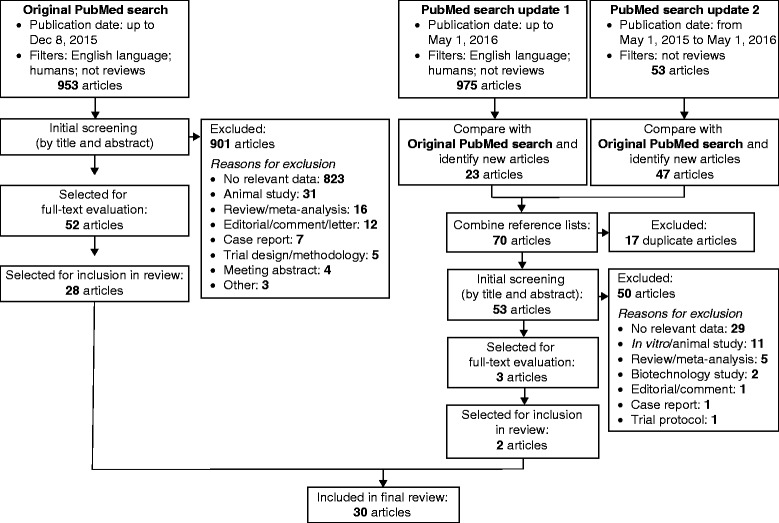
- Systematic review of human studies; PubMed was searched on December 8, 2015 and updated May 1, 2016 using combined DHA/EPA, outcomes, and mechanism-of-action terms; reviews were excluded and filters limited to human studies and English-language publications.
- The search identified 953 articles for screening, 55 potentially relevant articles, and 30 used in the review; 35 additional articles were included for context and completeness.
- Narrative synthesis of clinical studies on production and clearance of apoB-containing lipoproteins (VLDL, chylomicrons, LDL), including kinetic, postprandial, LPL, apolipoprotein, and LDL composition/size studies.
Limitations
- Stated: little is known about the specific cellular and biochemical mechanisms underlying TG-lowering by EPA and DHA in humans; the exact mechanism for reduced VLDL production is not clear; detailed studies on post-translational LPL regulation are generally lacking; and few studies compare EPA versus DHA effects on apoCII and apoCIII.
- Evident: the review is not a meta-analysis, and 35 included articles were not identified by the systematic search; included studies vary in design, dose, duration, and population, with some kinetic studies having very small samples (e.g., n = 4, n = 5, n = 7).
- Evident: some mechanistic evidence comes from in vitro hepatocyte studies or surrogate markers (e.g., blood cell LDL receptor mRNA), limiting direct human mechanistic conclusions.
Model-written summary. Check it against the paper before relying on it.
Integrity signals
Registry
Cites
Statistics
Figures
Verification
Claims the paper makes
9 Valid · 0 Not valid · 51 Not checked · 29 Own results and interpretations
The cited sources support only part of this claim — read each source’s verdict below.
In the paper
“It showed that both acute and chronic supplementation with OM3FAs reduced plasma levels of chylomicrons and postprandial TG levels to a greater extent than saturated fatty acid- or OM6FA-enriched meals.”
§ Omega-3 fatty acids eicosapentaenoic acid and docosahexaenoic acid and their mechanisms of action on apolipoprotein B-containing lipoproteins in humans: a review > Results > Postprandial lipids and chylomicron production and removal
What the sources say
- Partly supportedcites [37] Weintraub MS Zechner R Brown A Eisenberg S Breslow JL Dietary polyunsaturated fats of the W-6 and W-3 series reduce postprandial lipoprotein levels. Chronic and acute effects of fat saturation on postprandial lipoprotein metabolism J Clin Invest 1988 82 1884 1893 10.1172/JCI113806 3058748 PMC442768 sourceExperimental — accuracy not yet measured
The chronic-diet results (section labeled Methods; page unavailable) report lower postprandial chylomicron-marker levels with omega-3 than with saturated fat, and a numerically larger reduction than with omega-6, but say the omega-3–omega-6 difference was not significant. The acute-load results show an omega-3 load lowered chylomicron-marker levels relative to a saturated-fat load on the omega-3 diet; they do not establish that it outperformed an omega-6 load. The cited passages report fasting triglyceride differences, not the claimed comparative reduction in postprandial triglycerides. (LLM, conf=0.88)
plainstates a causen = 8- Asserted: passes — The authors put it forward as true.
- Checkable: passes — It can be checked against evidence.
- Load-bearing: passes — The paper’s conclusions depend on it.
- Based: passes — The paper gives a reason why it holds.
- Partly supported
The cited sources support only part of this claim — read each source’s verdict below.
In the paper
“rather, increased hepatic fatty acid oxidation is likely.”
- Also stated in: § VLDL production and clearance · hedged
“It is therefore possible that OM3FA treatment reduces VLDL production via reduced substrate availability, by increasing fatty acid oxidation”
§ Omega-3 fatty acids eicosapentaenoic acid and docosahexaenoic acid and their mechanisms of action on apolipoprotein B-containing lipoproteins in humans: a review > Abstract > Results
What the sources say
- Not checked yetcites [35] Couet C Delarue J Ritz P Antoine JM Lamisse F Effect of dietary fish oil on body fat mass and basal fat oxidation in healthy adults Int J Obes Relat Metab Disord 1997 21 637 643 10.1038/sj.ijo.0800451 15481762 source
- Partly supportedcites [36] Mostad IL Bjerve KS Bjorgaas MR Lydersen S Grill V Effects of n-3 fatty acids in subjects with type 2 diabetes: reduction of insulin sensitivity and time-dependent alteration from carbohydrate to fat oxidation Am J Clin Nutr 2006 84 540 550 16960167 sourceExperimental — accuracy not yet measured
The Discussion (page unavailable) reports increased fat utilization after nine weeks of fish-oil supplementation and suggests induction of enzymes involved in fatty acid oxidation. It does not locate that oxidation in the liver or link it to reduced VLDL production; searches for VLDL and hepatic oxidation found no such passage. (LLM, conf=0.83)
hedgedstates a possible cause- Asserted: passes — The authors put it forward as true.
- Checkable: passes — It can be checked against evidence.
- Load-bearing: passes — The paper’s conclusions depend on it.
- Based: passes — The paper gives a reason why it holds.
- Also stated in: § VLDL production and clearance · hedged
The cited sources support only part of this claim — read each source’s verdict below.
In the paper
“There is a lack of evidence that OM3FA treatment reduces CV events in patients with hypertriglyceridemia of any severity, as recently reviewed by Siscovick and colleagues [8].”
§ Omega-3 fatty acids eicosapentaenoic acid and docosahexaenoic acid and their mechanisms of action on apolipoprotein B-containing lipoproteins in humans: a review > Background
What the sources say
- Partly supportedcites [8] Siscovick DS Barringer TA Fretts AM Wu JH Lichtenstein AH Costello RB Omega-3 polyunsaturated fatty acid (fish oil) supplementation and the prevention of clinical cardiovascular disease: a science advisory from the American Heart Association Circulation 2017 135 e867 ee84 10.1161/CIR.0000000000000482 28289069 PMC6903779 sourceExperimental — accuracy not yet measured
The Discussion (page not provided) identifies a gap in clinical-outcome evidence: higher-dose omega-3 supplements were still being studied in trials that included patients with hypertriglyceridemia, and the authors distinguish lack of evidence of benefit from evidence of no effect. The advisory does not establish the claim specifically for patients with hypertriglyceridemia of any severity; its conclusions vary by cardiovascular-risk group and indication. (LLM, conf=0.82)
plain- Asserted: passes — The authors put it forward as true.
- Checkable: passes — It can be checked against evidence.
- Load-bearing: unclear — It is unclear whether the paper’s conclusions depend on it.
- Based: passes — The paper gives a reason why it holds.
- Partly supported
The cited sources support only part of this claim — read each source’s verdict below.
In the paper
“However, reduction in atherosclerosis in animal models or humans by administration of OM3FAs has not been convincingly demonstrated [8, 11].”
§ Omega-3 fatty acids eicosapentaenoic acid and docosahexaenoic acid and their mechanisms of action on apolipoprotein B-containing lipoproteins in humans: a review > Background
What the sources say
- Could not verifycites [8] Siscovick DS Barringer TA Fretts AM Wu JH Lichtenstein AH Costello RB Omega-3 polyunsaturated fatty acid (fish oil) supplementation and the prevention of clinical cardiovascular disease: a science advisory from the American Heart Association Circulation 2017 135 e867 ee84 10.1161/CIR.0000000000000482 28289069 PMC6903779 sourceExperimental — accuracy not yet measured
Our copy contains no statement about whether omega-3 PUFA administration reduces atherosclerosis in animal models or humans; searched for 'atherosclerosis', 'plaque', 'intima-media thickness', 'intermediate endpoints', 'animal'. The closest passage (MECHANISMS) only says the proposed mechanism for the CHD-death benefit is stabilization of ischemia-induced myocyte membrane depolarization 'rather than major effects on atherosclerotic progression, plaque stability, plaque rupture, or thrombosis' — a mechanistic attribution credited to their reference 43 (Mozaffarian & Wu 2011), not an assessment of the anti-atherosclerosis evidence base. The advisory explicitly restricted its scope to RCTs of clinical endpoints (DISCUSSION) and cautions that 'a lack of evidence of a benefit differs from evidence of a lack of effect', so it does not support the claim's evidentiary framing; the trials it does report (e.g. OMEGA, Rizos meta-analysis) concern clinical CVD events, not atherosclerosis regression. (LLM, conf=0.65)
- Partly supportedcites [11] de Roos B Mavrommatis Y Brouwer IA Long-chain n-3 polyunsaturated fatty acids: new insights into mechanisms relating to inflammation and coronary heart disease Br J Pharmacol 2009 158 413 428 10.1111/j.1476-5381.2009.00189.x 19422375 PMC2757681 sourceExperimental — accuracy not yet measured
In 'Effects on atherosclerosis' our copy states that in animals "effects of physiological doses of LC n-3 PUFA on atherosclerosis development are again not convincing", and for humans it cites equivocal results from 12 randomized trials of fish oil on restenosis (Balk et al., 2006) and worsening of carotid intima media thickness in the only placebo-controlled trial (Angerer et al., 2002) — so the 'not convincing' verdict is supported, but only for physiological/modest doses. The same section also reports that "Much higher doses of dietary fish oil are causing a more consistent decrease in atherosclerosis development in both animal models" (20% and 5% w/w fish oil, 5% EPA ethyl ester in apoE-/- and LDLR-/- mice), and that a fish oil concentrate modestly mitigated coronary atherosclerosis in 223 CAD patients (von Schacky et al., 1999). The unqualified claim that reduction has not been convincingly demonstrated 'in animal models or humans' therefore overstates the source, which limits the negative conclusion to physiological doses and notes high-dose effects are consistent (though not feasible or advisable in humans). (LLM, conf=0.78)
plain- Asserted: passes — The authors put it forward as true.
- Checkable: passes — It can be checked against evidence.
- Load-bearing: unclear — It is unclear whether the paper’s conclusions depend on it.
- Based: passes — The paper gives a reason why it holds.
- Could not verify
Every source the paper cites for this claim was checked and supports it.
In the paper
“Interestingly, LPL mRNA expression in adipose tissue increased in patients receiving fish oil supplementation.”
§ Omega-3 fatty acids eicosapentaenoic acid and docosahexaenoic acid and their mechanisms of action on apolipoprotein B-containing lipoproteins in humans: a review > Results > Lipoprotein lipase
What the sources say
- Supportedcites [41] Khan S Minihane AM Talmud PJ Wright JW Murphy MC Williams CM Dietary long-chain n-3 PUFAs increase LPL gene expression in adipose tissue of subjects with an atherogenic lipoprotein phenotype J Lipid Res 2002 43 979 985 12032174 source
The Discussion (p. 5) reports that adipose-tissue LPL mRNA increased by 54% with fish oil relative to the olive-oil control. The Study design (p. 2) specifies 6 g of fish oil daily for six weeks, and the opening passage (p. 1) identifies the participants as men with an atherogenic lipoprotein phenotype. (LLM, conf=0.94)
plainstates a cause- Asserted: passes — The authors put it forward as true.
- Checkable: passes — It can be checked against evidence.
- Load-bearing: unclear — It is unclear whether the paper’s conclusions depend on it.
- Based: passes — The paper gives a reason why it holds.
- Supported
58 more claims · 3 with their cited sources checked
Create a free account to see all 89 claims and to verify the 94 references still open.
- It may state two separate claims as one. 26
Claims other papers make about this one
Each is checked against this paper’s own text: does it say what the citing paper says it does?
In the citing paper
“high-dose omega-3 FA [3–4 g/day, usually the combination of docosahexaenoic acid (DHA) and eicosapentaenoic acid (EPA)] reduces VLDL–TG and apoB secretion by ∼25–30%, with variable changes in fractional clearance rate.174,175”
Self-check
Percentages, sums and reported differences re-computed from the paper’s own numbers.
Each contradiction between two passages listed here was confirmed by an independent check.
Rated major: it would touch a result — a value a result rests on, reported and recomputed p-values on opposite sides of the significance level, two passages that conflict with no sign which is right, or a cited work retracted before this paper was published.
In the paper
§ Omega-3 fatty acids eicosapentaenoic acid and docosahexaenoic acid and their mechanisms of action on apolipoprotein B-containing lipoproteins in humans: a review > Results > Postprandial lipids and chylomicron production and removal
“The increased margination of TG-rich lipoproteins with DHA and EPA supplementation indicated that the treatment increased either the amount of endothelial bound LPL or the affinity of lipoproteins to LPL [39].”
§ Omega-3 fatty acids eicosapentaenoic acid and docosahexaenoic acid and their mechanisms of action on apolipoprotein B-containing lipoproteins in humans: a review > Background > Search strategy
“DHA but not EPA increased margination volume as an estimate of LPL binding capacity in the fed state”
Citations
Cites
Triglycerides and Cardiovascular Disease: A Scientific Statement From the American Heart Association
Miller, M., Stone, N. J., Ballantyne, C., Bittner, V., Criqui, M. H., Ginsberg, H. N., Goldberg, A. C., Howard, W. J., Jacobson, M. S., Kris-Etherton, P. M., et al. (2011) · Circulation · doi:10.1161/cir.0b013e3182160726 · Cited by 1,871
Triglycerides and cardiovascular disease
Nordestgaard, B. G., & Varbo, A. (2014) · The Lancet · doi:10.1016/s0140-6736(14)61177-6 · Cited by 1,419 · cited 3×
“Severe hypertriglyceridemia, defined as TG levels greater than 10 mmol/L (885 mg/dL), is mainly associated with an increased risk of acute pancreatitis [2, 3].”
BackgroundLoss-of-Function Mutations in APOC3, Triglycerides, and Coronary Disease
The TG and HDL Working Group of the Exome Sequencing Project, N. H. (2014) · New England Journal of Medicine · doi:10.1056/nejmoa1307095 · Cited by 1,071
Loss-of-Function Mutations in APOC3 and Risk of Ischemic Vascular Disease
Jørgensen, A. B., Frikke-Schmidt, R., Nordestgaard, B. G., & Tybjærg-Hansen, A. (2014) · New England Journal of Medicine · doi:10.1056/nejmoa1308027 · Cited by 919
Evaluation and Treatment of Hypertriglyceridemia: An Endocrine Society Clinical Practice Guideline
Berglund, L., Brunzell, J. D., Goldberg, A. C., Goldberg, I. J., Sacks, F., Murad, M. H., & Stalenhoef, A. F. H. (2012) · The Journal of Clinical Endocrinology & Metabolism · doi:10.1210/jc.2011-3213 · Cited by 887 · cited 4×
“Fibrates are recommended as first-line pharmacologic therapy in patients with severe hypertriglyceridemia, while statins are recommended as first-line treatment in patients with mild-to-moderate hypertriglyceridemia [1, 3].”
BackgroundInfluentialOverproduction of large VLDL particles is driven by increased liver fat content in man
Adiels, M., Taskinen, M.-R., Packard, C., Caslake, M. J., Soro-Paavonen, A., Westerbacka, J., Vehkavaara, S., Häkkinen, A., Olofsson, S.-O., Yki-Järvinen, H., et al. (2006) · Diabetologia · doi:10.1007/s00125-005-0125-z · Cited by 690
Hegele, R. A., Ginsberg, H. N., Chapman, M. J., Nordestgaard, B. G., Kuivenhoven, J. A., Averna, M., Borén, J., Bruckert, E., Catapano, A. L., Descamps, O. S., et al. (2014) · The Lancet Diabetes & Endocrinology · doi:10.1016/s2213-8587(13)70191-8 · Cited by 635 · cited 5×
“Fibrates are recommended as first-line pharmacologic therapy in patients with severe hypertriglyceridemia, while statins are recommended as first-line treatment in patients with mild-to-moderate hypertriglyceridemia [1, 3].”
BackgroundInfluentialSiscovick, D. S., Barringer, T. A., Fretts, A. M., Wu, J. H. Y., Lichtenstein, A. H., Costello, R. B., Kris-Etherton, P. M., Jacobson, T. A., Engler, M. B., Alger, H. M., et al. (2017) · Circulation · doi:10.1161/cir.0000000000000482 · Cited by 629 · cited 2×
“There is a lack of evidence that OM3FA treatment reduces CV events in patients with hypertriglyceridemia of any severity, as recently reviewed by Siscovick and colleagues [8].”
BackgroundSuppression by diets rich in fish oil of very low density lipoprotein production in man.
Nestel, P. J., Connor, W. E., Reardon, M. F., Connor, S., Wong, S., & Boston, R. (1984) · Journal of Clinical Investigation · doi:10.1172/jci111422 · Cited by 616
Mori, T. A., Burke, V., Puddey, I. B., Watts, G. F., O’Neal, D. N., Best, J. D., & Beilin, L. J. (2000) · The American Journal of Clinical Nutrition · doi:10.1093/ajcn/71.5.1085 · Cited by 588 · cited 2×
“Differential effects of DHA and EPA on TG-rich lipoproteins In general, the TG-lowering effects of DHA and EPA are similar in both normotriglyceridemic [18, 23] and hypertriglyceridemic patients [19, 22, 24].”
BackgroundOmega-3 supplementation and non-alcoholic fatty liver disease: A systematic review and meta-analysis
Parker, H. M., Johnson, N. A., Burdon, C. A., Cohn, J. S., O’Connor, H. T., & George, J. (2012) · Journal of Hepatology · doi:10.1016/j.jhep.2011.08.018 · Cited by 569
Why do omega-3 fatty acids lower serum triglycerides?
Harris, W. S., & Bulchandani, D. (2006) · Current Opinion in Lipidology · doi:10.1097/01.mol.0000236363.63840.16 · Cited by 398
Mechanisms for the Hypotriglyceridemic Effect of Marine Omega-3 Fatty Acids
Davidson, M. H. (2006) · The American Journal of Cardiology · doi:10.1016/j.amjcard.2005.12.024 · Cited by 374
Omega-3 fatty acid supplementation accelerates chylomicron triglyceride clearance
Park, Y., & Harris, W. S. (2003) · Journal of Lipid Research · doi:10.1194/jlr.m200282-jlr200 · Cited by 348 · cited 7×
“Hepatic lipase activity is typically unchanged in controlled studies investigating the effects of OM3FAs on patients with dyslipidemia [38, 43, 52].”
BackgroundMethodInfluentialEffect of dietary fish oil on body fat mass and basal fat oxidation in healthy adults
Couet, C., Delarue, J., Ritz, P., Antoine, J.-M., & Lamisse, F. (1997) · International Journal of Obesity · doi:10.1038/sj.ijo.0800451 · Cited by 344
Woodman, R. J., Mori, T. A., Burke, V., Puddey, I. B., Watts, G. F., & Beilin, L. J. (2002) · The American Journal of Clinical Nutrition · doi:10.1093/ajcn/76.5.1007 · Cited by 338 · cited 1×
“Differential effects of DHA and EPA on TG-rich lipoproteins In general, the TG-lowering effects of DHA and EPA are similar in both normotriglyceridemic [18, 23] and hypertriglyceridemic patients [19, 22, 24].”
BackgroundWeintraub, M. S., Zechner, R., Brown, A., Eisenberg, S., & Breslow, J. L. (1988) · Journal of Clinical Investigation · doi:10.1172/jci113806 · Cited by 331 · cited 1×
“5 g OM3FA per 1000 kcal) compared with test meals with mainly saturated fatty acids or mainly omega-6 fatty acids (OM6FAs) on postprandial lipoprotein metabolism was performed in eight normolipidemic individuals [37].”
MethodGrimsgaard, S., Bonaa, K., Hansen, J., & Nordøy, A. (1997) · The American Journal of Clinical Nutrition · doi:10.1093/ajcn/66.3.649 · Cited by 300 · cited 1×
“In some studies, TG lowering tended to be more effective with DHA than with EPA supplementation in hypertriglyceridemic [18, 25] and normolipidemic individuals [18, 23, 26], while in one study EPA was more effective than DHA in normolipidemic individuals [20].”
ResultWei, M. Y., & Jacobson, T. A. (2011) · Current Atherosclerosis Reports · doi:10.1007/s11883-011-0210-3 · Cited by 284
Dejager, S., Bruckert, E., & Chapman, M. (1993) · Journal of Lipid Research · doi:10.1016/s0022-2275(20)40756-4 · Cited by 237
Vidgren, H. M., Ågren, J. J., Schwab, U., Rissanen, T., Hänninen, O., & Uusitupa, M. I. J. (1997) · Lipids · doi:10.1007/s11745-997-0089-x · Cited by 236 · cited 1×
“DHA was found mainly in TGs, while EPA, but not DHA, was found in cholesterol esters [16].”
BackgroundKastelein, J. J. P., Maki, K. C., Susekov, A., Ezhov, M., Nordestgaard, B. G., Machielse, B. N., Kling, D., & Davidson, M. H. (2014) · Journal of Clinical Lipidology · doi:10.1016/j.jacl.2013.10.003 · Cited by 233 · cited 1×
“Treatment with OM3FAs decreases plasma apoCIII levels [7, 44].”
BackgroundZheng, C., Khoo, C., Furtado, J., & Sacks, F. M. (2010) · Circulation · doi:10.1161/circulationaha.109.875807 · Cited by 223 · cited 1×
“Apart from inhibiting LPL, apoCIII in VLDLs reduces clearance of VLDL particles by inhibiting the effect of apoE on receptor-mediated uptake [46].”
BackgroundApoE Polymorphism and Fish Oil Supplementation in Subjects With an Atherogenic Lipoprotein Phenotype
Minihane, A. M., Khan, S., Leigh-Firbank, E. C., Talmud, P., Wright, J. W., Murphy, M. C., Griffin, B. A., & Williams, C. M. (2000) · Arteriosclerosis, Thrombosis, and Vascular Biology · doi:10.1161/01.atv.20.8.1990 · Cited by 215
Triglyceride-lowering effect of marine polyunsaturates in patients with hypertriglyceridemia.
Sanders, T. A., Sullivan, D. R., Reeve, J., & Thompson, G. R. (1985) · Arteriosclerosis: An Official Journal of the American Heart Association, Inc. · doi:10.1161/01.atv.5.5.459 · Cited by 212
Chan, D. C., Watts, G. F., Mori, T. A., Barrett, P. H. R., Redgrave, T. G., & Beilin, L. J. (2003) · The American Journal of Clinical Nutrition · doi:10.1093/ajcn/77.2.300 · Cited by 185 · cited 2×
“The explanation for the enhanced conversion of VLDL to IDL and LDL is likely to be a lower number of VLDL particles per lipoprotein lipase (LPL) enzyme, which leads to a greater proportion of particles being converted into LDL [29].”
BackgroundLee, S.-J., Campos, H., Moye, L. A., & Sacks, F. M. (2003) · Arteriosclerosis, Thrombosis, and Vascular Biology · doi:10.1161/01.atv.0000066131.01313.eb · Cited by 170
Mostad, I. L., Bjerve, K. S., Bjorgaas, M. R., Lydersen, S., & Grill, V. (2006) · The American Journal of Clinical Nutrition · doi:10.1093/ajcn/84.3.540 · Cited by 152 · cited 1×
“Clinical studies have shown that OM3FA treatment increases fatty acid oxidation, as determined by indirect calorimetry [35, 36].”
BackgroundEgert, S., Kannenberg, F., Somoza, V., Erbersdobler, H. F., & Wahrburg, U. (2009) · The Journal of Nutrition · doi:10.3945/jn.108.103861 · Cited by 152 · cited 3×
“The increase in EPA levels following DHA intervention can sometimes exceed the increase in DHA plasma levels [18].”
BackgroundResultde Roos, B., Mavrommatis, Y., & Brouwer, I. A. (2009) · British Journal of Pharmacology · doi:10.1111/j.1476-5381.2009.00189.x · Cited by 151 · cited 2×
“Aside from effects on TG-rich lipoproteins, OM3FAs may reduce CV risk via other mechanisms such as effects on arrhythmias and inflammation, as reviewed by de Roos and colleagues [11].”
BackgroundEicosapentaenoic acid is primarily responsible for hypotriglyceridemic effect of fish oil in humans
Rambjør, G. S., W»len, A. I., Windsor, S. L., & Harris, W. S. (1996) · Lipids · doi:10.1007/bf02637050 · Cited by 147 · cited 2×
“In contrast, one study showed no effect of DHA, but EPA treatment decreased TG levels and increased LDL-C levels in normolipidemic individuals [20].”
ResultDemant, T., Bedford, D., Packard, C. J., & Shepherd, J. (1991) · Journal of Clinical Investigation · doi:10.1172/jci115459 · Cited by 145 · cited 1×
“Another likely explanation for the increase in LDL-C in APOE4 carriers is a greater conversion of VLDL to LDL, which has been shown to occur in APOE4 carriers in kinetic studies [60].”
BackgroundKhan, S., Minihane, A.-M., Talmud, P. J., Wright, J. W., Murphy, M. C., Williams, C. M., & Griffin, B. A. (2002) · Journal of Lipid Research · doi:10.1016/s0022-2275(20)30473-9 · Cited by 145
Influence of n-3 fatty acid supplementation on the endogenous activities of plasma lipases
Harris, W., Lu, G., Rambjør, G., Wõlen, A., Ontko, J., Cheng, Q., & Windsor, S. (1997) · The American Journal of Clinical Nutrition · doi:10.1093/ajcn/66.2.254 · Cited by 135
Calabresi, L., Villa, B., Canavesi, M., Sirtori, C. R., James, R. W., Bernini, F., & Franceschini, G. (2004) · Metabolism · doi:10.1016/j.metabol.2003.09.007 · Cited by 132
Scorletti, E., West, A. L., Bhatia, L. S., Hoile, S. P., McCormick, K. G., Burdge, G. C., Lillycrop, K. A., Clough, G. F., Calder, P. C., & Byrne, C. D. (2015) · Journal of Hepatology · doi:10.1016/j.jhep.2015.07.036 · Cited by 126
APO E gene and gene-environment effects on plasma lipoprotein-lipid levels
HAGBERG, J. M., WILUND, K. R., & FERRELL, R. E. (2000) · Physiological Genomics · doi:10.1152/physiolgenomics.2000.4.2.101 · Cited by 118 · cited 1×
“ApoE4 is associated with a greater lipid response to dietary challenges [58].”
BackgroundBuckley, R., Shewring, B., Turner, R., Yaqoob, P., & Minihane, A. M. (2004) · British Journal of Nutrition · doi:10.1079/bjn20041235 · Cited by 118 · cited 2×
“Differential effects of DHA and EPA on TG-rich lipoproteins In general, the TG-lowering effects of DHA and EPA are similar in both normotriglyceridemic [18, 23] and hypertriglyceridemic patients [19, 22, 24].”
BackgroundResultÅgren, J. J., Hänninen, O., Julkunen, A., Fogelholm, L., Vidgren, H. M., Schwab, U., Pynnönen, O., & Uusitupa, M. I. J. (1996) · PubMed · Cited by 117
Maki, K. C., Orloff, D. G., Nicholls, S. J., Dunbar, R. L., Roth, E. M., Curcio, D., Johnson, J., Kling, D., & Davidson, M. H. (2013) · Clinical Therapeutics · doi:10.1016/j.clinthera.2013.07.420 · Cited by 104 · cited 17×
“PubMed was searched to identify articles of relevance to the review, using combined search terms from three categories: (1) ‘DHA/EPA’; (2) ‘outcomes’ (i.e. lipoproteins, TGs, etc.); and (3) ‘mechanism of action’ (Table 1).”
BackgroundInfluentialApolipoprotein C-III and hepatic triglyceride-rich lipoprotein production
Yao, Z., & Wang, Y. (2012) · Current Opinion in Lipidology · doi:10.1097/mol.0b013e328352dc70 · Cited by 100 · cited 1×
“Experimental studies show that apoCIII enhances hepatic assembly and secretion of VLDL, and human kinetic studies have shown an association between apoCIII and VLDL production [47].”
BackgroundNenseter, M. S., Rustan, A. C., Lund-Katz, S., Søyland, E., Maelandsmo, G., Phillips, M. C., & Drevon, C. A. (1992) · Arteriosclerosis and Thrombosis: A Journal of Vascular Biology · doi:10.1161/01.atv.12.3.369 · Cited by 99 · cited 2×
“Expression of LDL receptor mRNA in peripheral blood, used as a surrogate marker for expression in the liver, was not influenced by OM3FA treatment in normolipidemic individuals [51, 62], but decreased in hyperlipidemic individuals [62, 63].”
BackgroundHansen, J., Grimsgaard, S., Nilsen, H., Nordøy, A., & Bønaa, K. H. (1998) · Lipids · doi:10.1007/s11745-998-0188-8 · Cited by 91 · cited 2×
“In summary, OM3FA treatment increases the capacity for clearance of TG-rich lipoproteins, an effect observed in the postprandial but not in the fasting state, and DHA and EPA seem to have similar effects on postprandial TG levels [21, 38].”
BackgroundOlano-Martin, E., Anil, E., Caslake, M. J., Packard, C. J., Bedford, D., Stewart, G., Peiris, D., Williams, C. M., & Minihane, A. M. (2010) · Atherosclerosis · doi:10.1016/j.atherosclerosis.2009.08.024 · Cited by 83 · cited 3×
“7 g DHA) oils, and a control oil, in a 3 × 4-week study separated by 10week wash-out periods [5].”
ResultInfluentialMaki, K. C., Bays, H. E., Dicklin, M. R., Johnson, S. L., & Shabbout, M. (2011) · Journal of Clinical Lipidology · doi:10.1016/j.jacl.2011.09.001 · Cited by 81
Nordøy, A., Hansen, J. B., Brox, J. H., & Svensson, B. (2001) · PubMed · Cited by 77
Lalia, A. Z., Johnson, M. L., Jensen, M. D., Hames, K. C., Port, J. D., & Lanza, I. R. (2015) · Diabetes Care · doi:10.2337/dc14-3101 · Cited by 73
Kinetics of 13C-DHA before and during fish-oil supplementation in healthy older individuals
Plourde, M., Chouinard‐Watkins, R., Rioux‐Perreault, C., Fortier, M., Dang, M. T. M., Allard, M., Tremblay‐Mercier, J., Zhang, Y., Lawrence, P., Vohl, M., et al. (2014) · American Journal of Clinical Nutrition · doi:10.3945/ajcn.113.074708 · Cited by 57
Lindsey, S., Pronczuk, A., & Hayes, K. (1992) · Journal of Lipid Research · doi:10.1016/s0022-2275(20)41429-4 · Cited by 56
Woodman, R. J., Mori, T. A., Burke, V., Puddey, I. B., Watts, G. F., Best, J. D., & Beilin, L. J. (2003) · Diabetes Care · doi:10.2337/diacare.26.1.253 · Cited by 48 · cited 1×
“However, it is reported that treatment with DHA, but not EPA, increases LDL-C levels and LDL particle size [22, 54].”
BackgroundSchwellenbach, L. J., Olson, K. L., McConnell, K. J., Stolcpart, R. S., Nash, J. D., Merenich, J. A., & for the Clinical Pharmacy Cardiac Risk Service Study Group (2006) · Journal of the American College of Nutrition · doi:10.1080/07315724.2006.10719562 · Cited by 48
Tatsuno, I., Saito, Y., Kudou, K., & Ootake, J. (2013) · Journal of Clinical Lipidology · doi:10.1016/j.jacl.2013.01.006 · Cited by 42 · cited 1×
“Differential effects of DHA and EPA on TG-rich lipoproteins In general, the TG-lowering effects of DHA and EPA are similar in both normotriglyceridemic [18, 23] and hypertriglyceridemic patients [19, 22, 24].”
BackgroundPark, Y., Jones, P. G., & Harris, W. S. (2004) · The American Journal of Clinical Nutrition · doi:10.1093/ajcn/80.1.45 · Cited by 41 · cited 5×
“In a follow-up analysis of the same study population, margination of TG-rich lipoproteins was measured as an estimation of lipoprotein activity [39].”
BackgroundInfluentialGraversen, C. B., Lundbye‐Christensen, S., Thomsen, B. L., Christensen, J. H., & Schmidt, E. B. (2015) · Vascular Pharmacology · doi:10.1016/j.vph.2015.07.001 · Cited by 38
Nozaki, S., Matsuzawa, Y., Hirano, K., Sakai, N., Kubo, M., & Tarui, S. (1992) · PubMed · Cited by 36
Rudkowska, I., Caron‐Dorval, D., Verreault, M., Couture, P., Deshaies, Y., Barbier, O., & Vohl, M. (2010) · Molecular Nutrition & Food Research · doi:10.1002/mnfr.200900085 · Cited by 36 · cited 1×
“A potential mechanism for increased LPL mRNA expression is increased activation of the peroxisome proliferator-activated receptor response element of the LPL gene, which has been demonstrated using a transfection assay [42].”
BackgroundTani, S., Nagao, K., Matsumoto, M., & Hirayama, A. (2013) · Circulation Journal · doi:10.1253/circj.cj-12-1401 · Cited by 31
Ouguerram, K., Maugeais, C., Gardette, J., Magot, T., & Krempf, M. (2006) · British Journal of Nutrition · doi:10.1079/bjn20061806 · Cited by 31 · cited 3×
“The fractional clearance rate of VLDL, IDL or LDL did not change [30].”
BackgroundInfluentialSchmidt, S., Willers, J., Stahl, F., Mutz, K.-O., Scheper, T., Hahn, A., & Schuchardt, J. P. (2012) · Lipids in Health and Disease · doi:10.1186/1476-511x-11-172 · Cited by 31 · cited 1×
“Expression of LDL receptor mRNA in peripheral blood, used as a surrogate marker for expression in the liver, was not influenced by OM3FA treatment in normolipidemic individuals [51, 62], but decreased in hyperlipidemic individuals [62, 63].”
BackgroundWong, A. T. Y., Chan, D. C., Barrett, P. H. R., Adams, L. A., & Watts, G. F. (2014) · The Journal of Clinical Endocrinology & Metabolism · doi:10.1210/jc.2013-4037 · Cited by 30 · cited 2×
“In a recent study, the effects of a hypocaloric diet plus 4 g daily OM3FA supplementation for 12 weeks on apoB48 kinetics after ingestion of a high-fat meal were investigated [40].”
BackgroundHomma, Y., Ohshima, K., Yamaguchi, H., Nakamura, H., Araki, G., & Goto, Y. (1991) · Atherosclerosis · doi:10.1016/0021-9150(91)90196-a · Cited by 29 · cited 2×
“Inconsistent effects on CETP activity have been observed following treatment with OM3FAs: either no change [56], an increase [45] or a decrease [57] in activity.”
BackgroundModulation of blood cell gene expression by DHA supplementation in hypertriglyceridemic men
Dawson, K., Zhao, L., Adkins, Y., Vemuri, M., Rodriguez, R. L., Gregg, J. P., Kelley, D. S., & Hwang, D. H. (2012) · The Journal of Nutritional Biochemistry · doi:10.1016/j.jnutbio.2011.03.004 · Cited by 24
The future of n-3 polyunsaturated fatty acid therapy
Davidson, M. H., & Benes, L. B. (2016) · Current Opinion in Lipidology · doi:10.1097/mol.0000000000000353 · Cited by 18
Rodríguez‐Pérez, C., Ramprasath, V. R., Pu, S., Sabra, A., Quirantes‐Piné, R., Segura‐Carretero, A., & Jones, P. J. (2016) · Lipids · doi:10.1007/s11745-015-4099-4 · Cited by 16
Effects of eicosapentaenoic acid and docosahexaenoic acid on lipoproteins in hypertriglyceridemia
Patel, A., & Budoff, M. J. (2016) · Current Opinion in Endocrinology Diabetes and Obesity · doi:10.1097/med.0000000000000233 · Cited by 12
Cited by
Ginsberg, H. N., Packard, C. J., Chapman, M. J., Borén, J., Aguilar-Salinas, C. A., Averna, M., Ference, B. A., Gaudet, D., Hegele, R. A., Kersten, S., et al. (2021) · European Heart Journal · doi:10.1093/eurheartj/ehab551 · Cited by 979
Causes and consequences of hypertriglyceridemia
Packard, C. J., Boren, J., & Taskinen, M.-R. (2020) · Frontiers in Endocrinology · doi:10.3389/fendo.2020.00252 · Cited by 239
Omega-3 Fatty Acids as Druggable Therapeutics for Neurodegenerative Disorders
Chitre, N. M., Moniri, N. H., & Murnane, K. S. (2019) · CNS & Neurological Disorders - Drug Targets · doi:10.2174/1871527318666191114093749 · Cited by 234
The Roles of ApoC-III on the Metabolism of Triglyceride-Rich Lipoproteins in Humans
Borén, J., Packard, C. J., & Taskinen, M.-R. (2020) · Frontiers in Endocrinology · doi:10.3389/fendo.2020.00474 · Cited by 196
A review on the influence of nutraceuticals and functional foods on health
Vignesh, A., Amal, T. C., Sarvalingam, A., & Vasanth, K. (2024) · Food Chemistry Advances · doi:10.1016/j.focha.2024.100749 · Cited by 196
Metadata
- Authors
- Oscarsson, J., & Hurt-Camejo, E.
- Affiliations
- AstraZeneca (Sweden) (SE)
- Corresponding author
- Oscarsson, Jan
- ORCID
- Oscarsson, Jan
- Venue
- Lipids in Health and Disease
- Published
- 2017-08-10
- Volume
- 16
- Issue
- 1
- Pages
- 149-149
- ISSN
- 1476-511X (ISSN-L)
- PMC
- PMC5553798
- OpenAlex
- W2744078963
- Cited by
- 158
- References
- 65
- Citations by year
- 2026: 12 · 2025: 18 · 2024: 23 · 2023: 22 · 2022: 18 · 2021: 14 · 2020: 28 · 2019: 11 · 2018: 9 · 2017: 1
- FWCI
- 1.38
- Type
- journal article
- Language
- en
- Open access
- gold
- doi.org
- Licence
- cc-by
- Locations
- Lipids in Health and Disease (publishedVersion, cc-by)
- PubMed Central (publishedVersion, cc-by)
- PubMed (publishedVersion)
- DOAJ (DOAJ: Directory of Open Access Journals) (submittedVersion, cc-by-sa)
- Funders
- AstraZeneca
- Topics
- Health Sciences › Nursing › Nutrition and Dietetics › Fatty Acid Research and Health
- Health Sciences › Medicine › Cardiology and Cardiovascular Medicine › Lipid metabolism and disorders
- Life Sciences › Biochemistry, Genetics and Molecular Biology › Biochemistry › Lipid metabolism and biosynthesis
- Keywords
- omega-3 fatty acids, eicosapentaenoic acid, docosahexaenoic acid, apolipoprotein B-containing lipoproteins, triglyceride-rich lipoproteins, low-density lipoprotein, hypertriglyceridemia, VLDL, hepatic fatty acid oxidation, lipoprotein lipase, chylomicron clearance, postprandial triglycerides, APOE genotype, cardiovascular disease
- MeSH terms
- Apolipoproteins B, Apolipoproteins E, Biotransformation, Chylomicrons, Docosahexaenoic Acids, Fasting, Humans, Lipoprotein Lipase, Lipoproteins, HDL, Lipoproteins, LDL, Lipoproteins, VLDL, Liver, Oxidation-Reduction, Triglycerides, Eicosapentaenoic Acid, Hypertriglyceridemia, Postprandial Period, Dietary Supplements
About these checks
Registry, retraction, Cites and statistics results are computed, not judged, with one exception: a printed reference that no index lists is read once by a model before it counts as a citation error. Claims are extracted by a model and kept only when their quote appears verbatim in the text; each cited source is then checked, with a model’s help, for whether it says what the claim relies on. Those verdicts can be wrong — read the claim’s quote and the cited source before relying on one.
The claim verdicts this report counts are experimental: their accuracy is not yet measured.
A language model drew the claims from the paper on 2026-10-04, under version 3 of the claim definition (model deepseek-v4.1-flash, prompt extract-v3).
A second model labelled each claim on 2026-10-04 (model jev-1.13-20260917, definition revision gold-guideline-v0.2).
Cited sources are checked with a language model’s help (gpt-6-sol and qwen3.8-omni-flash).
Statistics and arithmetic are recomputed, not judged.
Confidence bands are shown only for fields calibrated on our annotated test set. None is calibrated yet, so no band is shown.
What counts as a claim ›How we measure confidence ›How we check this ›
Are you an author, or do you see a problem with this page? Request a review
Data sources
Bibliographic data: Semantic Scholar, OpenAlex, Crossref.
Contains information from the Semantic Scholar Academic Graph Datasets, made available under the ODC Attribution License (ODC-BY 1.0).
Semantic Scholar’s data is described in: Kinney, R., et al. (2023). The Semantic Scholar Open Data Platform. arXiv:2301.10140.
