

The DOI matches its Crossref record; 212 of the 212 references it cites were found in a registry or an index; 25 of the 212 sources its claims cite were checked for support.
Apolipoprotein E4, inhibitory network dysfunction, and Alzheimer’s disease
Open accessAbstract
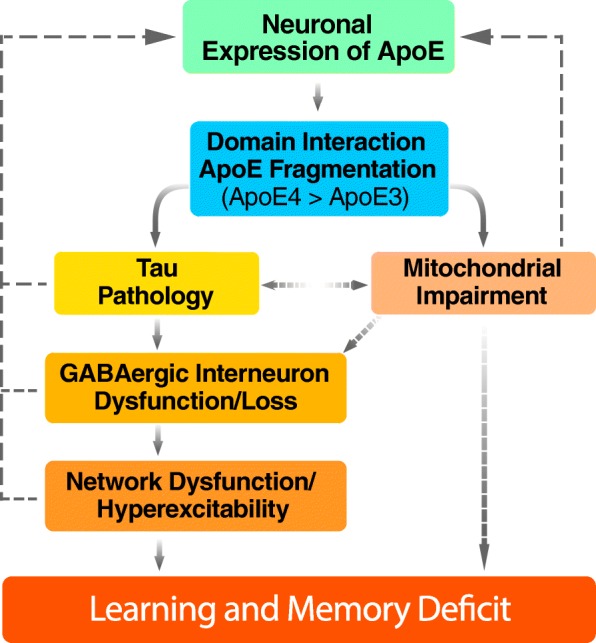
Apolipoprotein (apo) E4 is the major genetic risk factor for Alzheimer's disease (AD), increasing risk and decreasing age of disease onset. Many studies have demonstrated the detrimental effects of apoE4 in varying cellular contexts. However, the underlying mechanisms explaining how apoE4 leads to cognitive decline are not fully understood. Recently, the combination of human induced pluripotent stem cell (hiPSC) modeling of neurological diseases in vitro and electrophysiological studies in vivo have begun to unravel the intersection between apoE4, neuronal subtype dysfunction or loss, subsequent network deficits, and eventual cognitive decline. In this review, we provide an overview of the literature describing apoE4's detrimental effects in the central nervous system (CNS), specifically focusing on its contribution to neuronal subtype dysfunction or loss. We focus on γ-aminobutyric acid (GABA)-expressing interneurons in the hippocampus, which are selectively vulnerable to apoE4-mediated neurotoxicity. Additionally, we discuss the importance of the GABAergic inhibitory network to proper cognitive function and how dysfunction of this network manifests in AD. Finally, we examine how apoE4-mediated GABAergic interneuron loss can lead to inhibitory network deficits and how this deficit results in cognitive decline. We propose the following working model: Aging and/or stress induces neuronal expression of apoE. GABAergic interneurons are selectively vulnerable to intracellularly produced apoE4, through a tau dependent mechanism, which leads to their dysfunction and eventual death. In turn, GABAergic interneuron loss causes hyperexcitability and dysregulation of neural networks in the hippocampus and cortex. This dysfunction results in learning, memory, and other cognitive deficits that are the central features of AD.
Overview
AI snapshot
Written from the paper’s full text.
TL;DR
This review proposes that apolipoprotein E4 (apoE4) selectively injures hippocampal GABAergic interneurons through a tau-dependent mechanism, causing inhibitory network dysfunction, hyperexcitability, and cognitive decline in Alzheimer’s disease (AD). It synthesizes in vivo and in vitro evidence to argue that intraneuronal apoE4, rather than astrocytic apoE4, is central to this interneuron vulnerability.
Key findings
- ApoE4 is the major genetic risk factor for late-onset AD, present in roughly 20–25% of the human population and accounting for 60–75% of AD cases in most clinical studies; it increases risk and decreases age of onset in a gene-dose-dependent manner.
- GABAergic interneurons, especially hippocampal somatostatin-positive hilar interneurons, are selectively vulnerable to apoE4-mediated toxicity; apoE4-KI mice show age- and tau-dependent loss of these interneurons, and tau removal rescues interneuron loss and learning/memory deficits.
- The cellular source of apoE matters: neuronal apoE4 is proteolytically cleaved into neurotoxic fragments, whereas astrocytic apoE4 does not show the same detrimental effects; deletion of apoE4 in GABAergic interneurons, but not astrocytes, protects aged mice from interneuron loss and cognitive deficits.
- Proposed consequences include inhibitory network dysfunction, hyperexcitability, seizures, olfactory deficits, default-mode-network and hippocampal hyperactivity, and reduced sharp-wave ripple/slow gamma activity; 10–22% of AD patients exhibit seizures, and epilepsy patients with at least one APOE4 allele are six times more likely to show treatment resistance.
Methods
- Narrative review synthesizing published in vivo, in vitro, human post-mortem, imaging, electrophysiological, and clinical literature on apoE4, GABAergic interneurons, and AD.
- No primary data collection or systematic meta-analysis is reported; the paper integrates findings from animal models, human induced pluripotent stem cell (hiPSC)-derived neurons, and human studies.
- The authors present a working model in which aging/stress induces neuronal apoE expression; apoE4’s domain interaction makes it more susceptible to cleavage, generating neurotoxic fragments that drive tau-dependent GABAergic interneuron dysfunction and death, leading to network hyperexcitability and cognitive decline.
Limitations
- The paper states that the mechanisms explaining how apoE4 leads to cognitive decline are not fully understood, that the molecular/cellular basis of GABAergic interneuron selective vulnerability remains unclear, and that more research and new animal models are required.
- The paper notes conflicting findings on apoE’s roles in Aβ seeding/aggregation and on apoE isoform effects in tau models, which it attributes to differences in model systems, cell-type specificity, tau expression levels, mutation toxicity, and age.
- Evident from the text: this is a narrative review without a systematic search or meta-analysis, and many central claims rely on animal and hiPSC models; clinical therapeutic evidence is described as limited by small cohorts and short treatment periods.
Model-written summary. Check it against the paper before relying on it.
Integrity signals
Registry
Cites
Statistics
Figures
Verification
Claims the paper makes
85 Not checked yet · 23 Own interpretation · 7 Partly supported · 2 Supported · 2 No basis given · 1 Mixed support · accuracy not yet measured
Some cited sources support this claim and some don’t — read each source’s verdict below.
In the paper
“Greater hippocampal activation during encoding tasks is associated with worse task performance [176] in MCI and AD patients [172, 177]”
§ Apolipoprotein E4, inhibitory network dysfunction, and Alzheimer’s disease > Background > ApoE4-mediated GABAergic interneuron loss and inhibitory network dysfunction in AD
What the sources say
- Supportedcites [176] Yassa MA, Lacy JW, Stark SM, Albert MS, Gallagher M, Stark CE. Pattern separation deficits associated with increased hippocampal CA3 and dentate gyrus activity in nondemented older adults. Hippocampus. 2011;21(9):968–79. source
The Results (Experiment 1; page unavailable) report a negative correlation between right CA3/DG activity and pattern-separation performance, supporting the activation–performance association attributed to this citation. The Discussion cautions that within-group correlations were not statistically reliable. The sentence attaches separate citations to the MCI and AD population claim; this study examined nondemented older adults. (LLM, conf=0.87)
- Disputedcites [172] Dickerson BC, Salat DH, Greve DN, Chua EF, Rand-Giovannetti E, Rentz DM, et al. Increased hippocampal activation in mild cognitive impairment compared to normal aging and AD. Neurology. 2005;65(3):404–11. sourceExperimental — accuracy not yet measured
The Discussion reports the opposite pattern: greater medial temporal lobe activation was associated with better recognition performance in MCI subjects. In the present study, MCI subjects had greater hippocampal activation and performed similarly to controls, whereas AD patients had less activation and poorer performance. (LLM, conf=0.88)
Checked by a reasoning model — may be wrong.
- Not checked yetcites [177] Miller SL, Fenstermacher E, Bates J, Blacker D, Sperling RA, Dickerson BC. Hippocampal activation in adults with mild cognitive impairment predicts subsequent cognitive decline. J Neurol Neurosurg Psychiatry. 2008;79(6):630–5. source
plainstates an association- Asserted: passes — The authors put it forward as true.
- Checkable: passes — It can be checked against evidence.
- Load-bearing: passes — The paper’s conclusions depend on it.
- Based: passes — The paper gives a reason why it holds.
- Supported
The cited sources support only part of this claim — read each source’s verdict below.
In the paper
“Overall, it has been demonstrated, both in vivo and in vitro, that apoE plays major roles in AD pathogenesis in both an Aβ-dependent and independent manner, and different cellular sources of apoE4 may contribute in distinct ways to AD pathogenesis [4–8, 12–14, 21, 22].”
§ Apolipoprotein E4, inhibitory network dysfunction, and Alzheimer’s disease > Background > ApoE structure, function, and expression in the CNS
What the sources say
- Supportedcites [4] Huang Y, Mucke L. Alzheimer mechanisms and therapeutic strategies. Cell. 2012;148(6):1204–22. source
The ApoE4 section explicitly says that in vitro and in vivo studies have explored apoE4’s Aβ-dependent and independent roles in AD pathogenesis. Its separate subsections address both roles; the copy also describes distinct effects associated with different cellular sources of apoE. (LLM, conf=0.94)
- Partly supportedcites [5] Kim J, Basak JM, Holtzman DM. The role of apolipoprotein E in Alzheimer’s disease. Neuron. 2009;63(3):287–303. sourceExperimental — accuracy not yet measured
The Abstract and Concluding Remarks identify effects on Aβ aggregation and clearance as apoE’s main proposed contribution to AD pathogenesis. They discuss non-Aβ mechanisms, including effects on tau, synaptic plasticity and neuroinflammation, but say these remain possible or incompletely understood—not that major Aβ-independent roles have been demonstrated. (LLM, conf=0.88)
- Supportedcites [6] Liu C-C, Kanekiyo T, Xu H, Bu G. Apolipoprotein E and Alzheimer disease: risk, mechanisms and therapy. Nat Rev Neurol. 2013;9(2):106–18. source
The Conclusions state that ApoE4 appears to increase Alzheimer disease risk through both Aβ-dependent and Aβ-independent pathways. The Introduction also describes effects on Aβ aggregation and clearance alongside Aβ-independent functions, supporting the attributed paraphrase. (LLM, conf=0.92)
- Supportedcites [7] Kanekiyo T, Xu H, Bu G. ApoE and Aβ in Alzheimer’s disease: accidental encounters or partners? Neuron. 2014;81(4):740–54. source
The Summary and Perspective section states that apoE regulates Aβ clearance and aggregation as well as Aβ-independent pathways in AD pathogenesis. It also says apoE4 contributes to AD pathogenesis independently of Aβ. (LLM, conf=0.94)
- Supportedcites [8] Huang Y, Mahley RW. Apolipoprotein E: structure and function in lipid metabolism, neurobiology, and Alzheimer’s diseases. Neurobiol Dis. 2014;72:3–12. source
The “Aβ-Dependent Effects of ApoE4 on AD Pathogenesis” section describes apoE’s effects on Aβ metabolism and related neuropathology. The “Aβ-Independent Effects of ApoE4 on AD Pathogenesis” section says in vivo and in vitro studies suggest independent roles that may act alongside the dependent effects. Together, these passages support the attributed claim. (LLM, conf=0.92)
- Supportedcites [12] Bu G. Apolipoprotein E and its receptors in Alzheimer’s disease: pathways, pathogenesis and therapy. Nat Rev Neurosci. 2009;10(5):333–44. source
The Introduction explicitly says the review describes Aβ-dependent and Aβ-independent pathways by which apoE isoforms contribute to AD pathogenesis. It also says several such pathways have been identified in vitro and in vivo. No page number is provided in our copy. (LLM, conf=0.94)
- Supportedcites [13] Mahley RW. Apolipoprotein E: from cardiovascular disease to neurodegenerative disorders. J Mol Med. 2016;94(7):739–46. source
The “Mechanisms for apoE4’s involvement in the amyloid pathway” section describes apoE4’s effects on Aβ deposition and clearance. The “ApoE’s direct effects on neuropathology independent of Aβ” section also describes an Aβ-independent pathway, including detrimental effects observed in vitro and in vivo. The paper emphasizes apoE4 within the broader claim about apoE. (LLM, conf=0.91)
- Supportedcites [14] Mahley RW, Weisgraber KH, Huang Y. Apolipoprotein E4: a causative factor and therapeutic target in neuropathology, including Alzheimer’s disease. Proc Natl Acad Sci U S A. 2006;103(15):5644–51. source
The introduction says the review considers apoE4’s pathological roles with or without amyloid-β, and the ApoE and AD section describes both amyloid-related and other pathways. The paper also discusses distinct cellular sources of apoE and reports evidence from in vivo and in vitro studies. The supplied passages do not give page numbers. (LLM, conf=0.91)
- Not checked yetcites [21] Huang Y. Aβ-independent roles of apolipoprotein E4 in the pathogenesis of Alzheimer’s disease. Trends Mol Med. 2010;16(6):287–94. source
- Supportedcites [22] Mahley RW, Huang Y. Apolipoprotein E sets the stage: response to injury triggers neuropathology. Neuron. 2012;76(5):871–85. source
In the Introduction section “ApoE Modulation of the Aβ Pathway,” the paper describes apoE’s effects on the Aβ pathway and explicitly says apoE can also affect AD pathogenesis independently of Aβ. This supports the quoted claim; the supplied passages do not provide page numbers. (LLM, conf=0.94)
boostedstates a cause- Asserted: passes — The authors put it forward as true.
- Checkable: passes — It can be checked against evidence.
- Load-bearing: passes — The paper’s conclusions depend on it.
- Based: passes — The paper gives a reason why it holds.
- Supported
The cited sources support only part of this claim — read each source’s verdict below.
In the paper
“ApoE assists in Aβ clearance in an isoform-dependent manner wherein apoE2 > apoE3 > apoE4 [29, 30, 59].”
§ Apolipoprotein E4, inhibitory network dysfunction, and Alzheimer’s disease > Background > Aβ-dependent roles of ApoE4 in AD
What the sources say
- Not checked yetcites [29] Bales KR, Verina T, Cummins DJ, Du Y, Dodel RC, Saura J, et al. Apolipoprotein E is essential for amyloid deposition in the APP(V717F) transgenic mouse model of Alzheimer’s disease. Proc Natl Acad Sci. 1999;96(26):15233–8. source
- Partly supportedcites [30] Holtzman DM, Bales KR, Tenkova T, Fagan AM, Parsadanian M, Sartorius LJ, et al. Apolipoprotein E isoform-dependent amyloid deposition and neuritic degeneration in a mouse model of Alzheimer’s disease. Proc Natl Acad Sci U S A. 2000;97(6):2892–7. sourceExperimental — accuracy not yet measured
The Discussion (page unavailable) says human apoE appears to enhance Aβ clearance and proposes that apoE–Aβ interactions regulate it. The Results show more Aβ deposition with apoE4 than apoE3, but the paper does not establish clearance rates for those isoforms or examine apoE2. It therefore does not support the stated apoE2 > apoE3 > apoE4 clearance ranking. (LLM, conf=0.88)
- Partly supportedcites [59] Ma Q, Zhao Z, Sagare AP, Wu Y, Wang M, Owens NC, et al. Blood-brain barrier-associated pericytes internalize and clear aggregated amyloid-β42 by LRP1-dependent apolipoprotein E isoform-specific mechanism. Mol Neurodegener. 2018;13(1):57. sourceExperimental — accuracy not yet measured
The Results report that apoE3, but not apoE4, restored Aβ clearance by mouse brain capillary pericytes with silenced endogenous apoE. The Conclusions likewise describe isoform-specific clearance, but the paper does not establish the claimed apoE2 > apoE3 > apoE4 ranking: its comparison is limited to apoE3 and apoE4. (LLM, conf=0.89)
plainstates a cause- Asserted: passes — The authors put it forward as true.
- Checkable: passes — It can be checked against evidence.
- Load-bearing: unclear — It is unclear whether the paper’s conclusions depend on it.
- Based: passes — The paper gives a reason why it holds.
The cited sources support only part of this claim — read each source’s verdict below.
In the paper
“Since perineuronal nets protect these interneurons from oxidative stress and other injuries [161]”
§ Apolipoprotein E4, inhibitory network dysfunction, and Alzheimer’s disease > Background > ApoE4-mediated GABAergic interneuron loss and inhibitory network dysfunction in AD
What the sources say
- Partly supportedcites [161] Cabungcal J, Steullet P, Morishita H, Kraftsik R, Cuenod M, Hensch TK. Perineuronal nets protect fast-spiking interneurons against oxidative stress. Proc Natl Acad Sci. 2013;110(22):9130–5. sourceExperimental — accuracy not yet measured
The Results section (page not supplied) reports that degrading mature perineuronal nets made parvalbumin-expressing cells more susceptible to oxidative stress. The paper does not establish protection against other kinds of injury; the environmental insults it discusses are linked to oxidative stress. (LLM, conf=0.88)
plainstates a cause- Asserted: passes — The authors put it forward as true.
- Checkable: passes — It can be checked against evidence.
- Load-bearing: passes — The paper’s conclusions depend on it.
- Based: passes — The paper gives a reason why it holds.
- Partly supported
Every source the paper cites for this claim was checked and supports it.
In the paper
“It has been reported that activated microglia migrate to inhibitory synapses and displace them from excitatory neurons [154]”
§ Apolipoprotein E4, inhibitory network dysfunction, and Alzheimer’s disease > Background > ApoE4-mediated GABAergic interneuron loss and inhibitory network dysfunction in AD
What the sources say
- Supportedcites [154] Chen Z, Jalabi W, Hu W, Park H, Gale JT, Kidd GJ, et al. Microglial displacement of inhibitory synapses provides neuroprotection in the adult brain. Nat Commun. 2014;5:4486. source
The Abstract states that activated microglia migrate to inhibitory synapses and displace them from cortical neurons. The Results section, “Activated microglia displace inhibitory GABAergic synapses” (page not provided), identifies those neurons as cortical projection neurons, consistent with the citing sentence’s description of excitatory neurons. (LLM, conf=0.89)
plainstates a cause- Asserted: passes — The authors put it forward as true.
- Checkable: passes — It can be checked against evidence.
- Load-bearing: passes — The paper’s conclusions depend on it.
- Based: passes — The paper gives a reason why it holds.
- Supported
Every source the paper cites for this claim was checked and supports it.
In the paper
“A recent study reports that apoE4-expressing neuronal cells have 50% less reserve capacity to generate ATP than apoE3-expressing neuronal cells”
§ Apolipoprotein E4, inhibitory network dysfunction, and Alzheimer’s disease > Background > Conclusions and perspectives
What the sources say
- Supportedcites [191] Orr AL, Kim C, Jimenez-morales D, Newton BW, Johnson J, Swaney D, et al. Neuronal apolipoprotein E4 expression results in proteome-wide alterations and compromises bioenergetic capacity by disrupting mitochondrial function. J Alzheimers Dis. 2019;68(3):991–1011. source
The Results section (“ApoE4 expression alters the bioenergetics profile in neuronal cells,” Fig. 1D; page not provided) reports that total reserve capacity to generate ATP was about 50% lower in apoE4-expressing neuronal cells than in apoE3-expressing cells. This reserve capacity was assessed under maximal stress stimulation, not under basal conditions. (LLM, conf=0.94)
plainstates a cause- Asserted: passes — The authors put it forward as true.
- Checkable: passes — It can be checked against evidence.
- Load-bearing: passes — The paper’s conclusions depend on it.
- Based: passes — The paper gives a reason why it holds.
- Supported
The cited sources support only part of this claim — read each source’s verdict below.
In the paper
“Second, healthy elderly apoE4 carriers show increased hippocampal and entorhinal activation during encoding task performance [172, 173].”
§ Apolipoprotein E4, inhibitory network dysfunction, and Alzheimer’s disease > Background > ApoE4-mediated GABAergic interneuron loss and inhibitory network dysfunction in AD
What the sources say
- Partly supportedcites [172] Dickerson BC, Salat DH, Greve DN, Chua EF, Rand-Giovannetti E, Rentz DM, et al. Increased hippocampal activation in mild cognitive impairment compared to normal aging and AD. Neurology. 2005;65(3):404–11. sourceExperimental — accuracy not yet measured
The Methods describe a face–name encoding task, and the Results report greater entorhinal activation in APOE ε4 carriers across all 29 participants. But that group included people with MCI and AD as well as healthy elderly controls; the Results do not establish the effect specifically in healthy carriers or report a hippocampal genotype effect. Page numbers are unavailable in our copy. (LLM, conf=0.90)
- Partly supportedcites [173] Bondi MW, Houston WS, Eyler LT, Brown GG. fMRI evidence of compensatory mechanisms in older adults at genetic risk for Alzheimer disease. Neurology. 2005;64(3):501–8. sourceExperimental — accuracy not yet measured
The Results (Search ROI analyses; page unavailable) report greater encoding-related activation in the right hippocampal and parahippocampal cortices of nondemented older APOE ε4 carriers. They do not identify increased entorhinal activation, and they report a lower response in left hippocampal clusters than in ε3 carriers. The claim therefore overgeneralizes the hippocampal finding and adds an unsupported entorhinal finding. (LLM, conf=0.88)
plainstates an association- Asserted: passes — The authors put it forward as true.
- Checkable: passes — It can be checked against evidence.
- Load-bearing: passes — The paper’s conclusions depend on it.
- Based: passes — The paper gives a reason why it holds.
- Partly supported
None of the sources cited for this claim have been checked yet.
In the paper
“Astrocytes are the primary source of apoE in the brain [23, 24].”
§ Apolipoprotein E4, inhibitory network dysfunction, and Alzheimer’s disease > Background > ApoE structure, function, and expression in the CNS
What the sources say
- Not checked yetcites [23] Grehan S, Tse E, Taylor JM. Two distal downstream enhancers direct expression of the human apolipoprotein E gene to astrocytes in the brain. J Neurosci. 2001;21(3):812–22. source
- Not checked yetcites [24] Pitas RE, Boyles JK, Lee SH, Foss D, Mahley RW. Astrocytes synthesize apolipoprotein E and metabolize apolipoprotein E-containing lipoproteins. Biochim Biophys Acta (BBA)/Lipids Lipid Metab. 1987;917(1):148–61. source
plain- Asserted: passes — The authors put it forward as true.
- Checkable: passes — It can be checked against evidence.
- Load-bearing: unclear — It is unclear whether the paper’s conclusions depend on it.
- Based: passes — The paper gives a reason why it holds.
None of the sources cited for this claim have been checked yet.
In the paper
“Cellular origin plays a crucial role in apoE’s biophysical properties and pathological effects.”
§ Apolipoprotein E4, inhibitory network dysfunction, and Alzheimer’s disease > Background > ApoE structure, function, and expression in the CNS
What the sources say
- Not checked yetcites [27] Shi Y, Holtzman DM. Interplay between innate immunity and Alzheimer disease: APOE and TREM2 in the spotlight. Nat Rev Immunol. 2018. https://doi.org/10.1038/s41577-018-0051-1 . source
- Not checked yetcites [28] Huang Y, Weisgraber KH, Mucke L, Mahley RW. Apolipoprotein E: diversity of cellular origins, structural and biophysical properties, and effects in Alzheimer’s disease. J Mol Neurosci. 2004;23(3):189–204. source
plainstates a cause- Asserted: passes — The authors put it forward as true.
- Checkable: passes — It can be checked against evidence.
- Load-bearing: unclear — It is unclear whether the paper’s conclusions depend on it.
- Based: passes — The paper gives a reason why it holds.
None of the sources cited for this claim have been checked yet.
In the paper
“Importantly, this domain interaction renders apoE4 to be more susceptible to proteolytic cleavage, resulting in the generation of neurotoxic apoE4 fragments [20–22].”
§ Apolipoprotein E4, inhibitory network dysfunction, and Alzheimer’s disease > Background > ApoE structure, function, and expression in the CNS
What the sources say
- Not checked yetcites [20] Brecht WJ, Harris FM, Chang S, Tesseur I, Yu G-Q, Xu Q, et al. Neuron-specific apolipoprotein E4 proteolysis is associated with increased tau phosphorylation in brains of transgenic mice. J Neurosci. 2004;24(10):2527–34. source
- Not checked yetcites [21] Huang Y. Aβ-independent roles of apolipoprotein E4 in the pathogenesis of Alzheimer’s disease. Trends Mol Med. 2010;16(6):287–94. source
- Not checked yetcites [22] Mahley RW, Huang Y. Apolipoprotein E sets the stage: response to injury triggers neuropathology. Neuron. 2012;76(5):871–85. source
plainstates a cause- Asserted: passes — The authors put it forward as true.
- Checkable: passes — It can be checked against evidence.
- Load-bearing: passes — The paper’s conclusions depend on it.
- Based: passes — The paper gives a reason why it holds.
None of the sources cited for this claim have been checked yet.
In the paper
“Apolipoprotein (apo) E4, an isoform of the APOE gene in humans, is the major genetic risk factor for late-onset familial and sporadic AD [4–8], which account for most AD cases.”
§ Apolipoprotein E4, inhibitory network dysfunction, and Alzheimer’s disease > Background
What the sources say
- Not checked yetcites [4] Huang Y, Mucke L. Alzheimer mechanisms and therapeutic strategies. Cell. 2012;148(6):1204–22. source
- Not checked yetcites [5] Kim J, Basak JM, Holtzman DM. The role of apolipoprotein E in Alzheimer’s disease. Neuron. 2009;63(3):287–303. source
- Not checked yetcites [6] Liu C-C, Kanekiyo T, Xu H, Bu G. Apolipoprotein E and Alzheimer disease: risk, mechanisms and therapy. Nat Rev Neurol. 2013;9(2):106–18. source
- Not checked yetcites [7] Kanekiyo T, Xu H, Bu G. ApoE and Aβ in Alzheimer’s disease: accidental encounters or partners? Neuron. 2014;81(4):740–54. source
- Not checked yetcites [8] Huang Y, Mahley RW. Apolipoprotein E: structure and function in lipid metabolism, neurobiology, and Alzheimer’s diseases. Neurobiol Dis. 2014;72:3–12. source
plainstates an association- Asserted: passes — The authors put it forward as true.
- Checkable: passes — It can be checked against evidence.
- Load-bearing: passes — The paper’s conclusions depend on it.
- Based: passes — The paper gives a reason why it holds.
None of the sources cited for this claim have been checked yet.
In the paper
“However, under aging and stress conditions, neurons also produce apoE, albeit at lower levels than astrocytes [25, 26].”
§ Apolipoprotein E4, inhibitory network dysfunction, and Alzheimer’s disease > Background > ApoE structure, function, and expression in the CNS
What the sources say
- Not checked yetcites [25] Xu Q, Bernardo A, Walker D, Kanegawa T, Mahley RW, Huang Y. Profile and regulation of apolipoprotein E (ApoE) expression in the CNS in mice with targeting of green fluorescent protein gene to the ApoE locus. J Neurosci. 2006;26(19):4985–94. source
- Not checked yetcites [26] Xu PT, Schmechel D, Rothrock-Christian T, Burkhart DS, Qiu HL, Popko B, et al. Human apolipoprotein E2, E3, and E4 isoform-specific transgenic mice: human-like pattern of glial and neuronal immunoreactivity in central nervous system not observed in wild-type mice. Neurobiol Dis. 1996;3(3):229–45. source
plainstates an association- Asserted: passes — The authors put it forward as true.
- Checkable: passes — It can be checked against evidence.
- Load-bearing: unclear — It is unclear whether the paper’s conclusions depend on it.
- Based: passes — The paper gives a reason why it holds.
In the paper
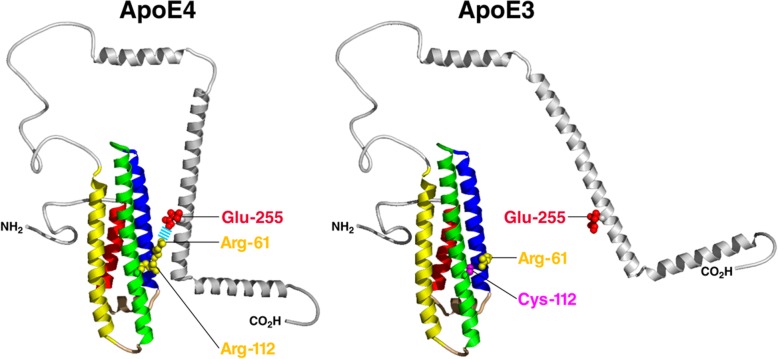
“This domain interaction mediated by a salt bridge formation between Arg-61 and Glu-255 is unique to apoE4 (Fig. 1) [15].”
§ Apolipoprotein E4, inhibitory network dysfunction, and Alzheimer’s disease > Background > ApoE structure, function, and expression in the CNS
What the sources say
- Not checked yetcites [15] Hatters DM, Peters-Libeu CA, Weisgraber KH. Apolipoprotein E structure: insights into function. Trends Biochem Sci. 2006;31(8):445–54. source
plain- Asserted: passes — The authors put it forward as true.
- Checkable: passes — It can be checked against evidence.
- Load-bearing: passes — The paper’s conclusions depend on it.
- Based: passes — The paper gives a reason why it holds.
In the paper
“Although apoE interacts with amyloid, it should be noted that plaque load does not correlate well with cognitive impairments, highlighted most obviously by people with substantial plaque burdens and normal cognition [67].”
§ Apolipoprotein E4, inhibitory network dysfunction, and Alzheimer’s disease > Background > Aβ-dependent roles of ApoE4 in AD
What the sources say
- Not checked yetcites [67] Giannakopoulos P, Herrmann FR, Bussière T, Bouras C, Kövari E, Perl DP, et al. Tangle and neuron numbers, but not amyloid load, predict cognitive status in Alzheimer’s disease. Neurology. 2003;60(9):1495–500. source
plain- Asserted: passes — The authors put it forward as true.
- Checkable: passes — It can be checked against evidence.
- Load-bearing: passes — The paper’s conclusions depend on it.
- Based: passes — The paper gives a reason why it holds.
None of the sources cited for this claim have been checked yet.
In the paper
“As mentioned above, apoE4 is highly susceptible to neuron-specific proteolysis, which generates neurotoxic fragments [20, 77–79].”
§ Apolipoprotein E4, inhibitory network dysfunction, and Alzheimer’s disease > Background > Aβ-independent roles of ApoE4 in AD
What the sources say
- Not checked yetcites [20] Brecht WJ, Harris FM, Chang S, Tesseur I, Yu G-Q, Xu Q, et al. Neuron-specific apolipoprotein E4 proteolysis is associated with increased tau phosphorylation in brains of transgenic mice. J Neurosci. 2004;24(10):2527–34. source
- Not checked yetcites [77] Uddin MS, Kabir MT, Al Mamun A, Abdel-Daim MM, Barreto GE, Ashraf GM. APOE and Alzheimer’s disease: evidence mounts that targeting APOE4 may combat Alzheimer’s pathogenesis. Mol Neurobiol. 2018. https://doi.org/10.1007/s12035-018-1237-z . source
- Not checked yetcites [78] Huang Y, Liu XQ, Wyss-Coray T, Brecht WJ, Sanan DA, Mahley RW. Apolipoprotein E fragments present in Alzheimer’s disease brains induce neurofibrillary tangle-like intracellular inclusions in neurons. Proc Natl Acad Sci. 2001;98(15):8838–43. source
- Not checked yetcites [79] Harris FM, Brecht WJ, Xu Q, Tesseur I, Kekonius L, Wyss-Coray T, et al. Carboxyl-terminal-truncated apolipoprotein E4 causes Alzheimer’s disease-like neurodegeneration and behavioral deficits in transgenic mice. Proc Natl Acad Sci U S A. 2003;100:10966–71. source
plainstates a cause- Asserted: passes — The authors put it forward as true.
- Checkable: passes — It can be checked against evidence.
- Load-bearing: passes — The paper’s conclusions depend on it.
- Based: passes — The paper gives a reason why it holds.
In the paper
“In response to injury, or stress such as normal aging, neurons express apoE, likely to facilitate transport of cholesterol and other lipids for membrane repair and/or remodeling [22].”
§ Apolipoprotein E4, inhibitory network dysfunction, and Alzheimer’s disease > Background > Aβ-independent roles of ApoE4 in AD
What the sources say
- Not checked yetcites [22] Mahley RW, Huang Y. Apolipoprotein E sets the stage: response to injury triggers neuropathology. Neuron. 2012;76(5):871–85. source
hedgedstates a possible cause- Asserted: passes — The authors put it forward as true.
- Checkable: passes — It can be checked against evidence.
- Load-bearing: unclear — It is unclear whether the paper’s conclusions depend on it.
- Based: passes — The paper gives a reason why it holds.
None of the sources cited for this claim have been checked yet.
In the paper
“Loss of GABA, the primary inhibitory neurotransmitter in the brain, is a key component of AD.”
§ Apolipoprotein E4, inhibitory network dysfunction, and Alzheimer’s disease > Background > Inhibitory system dysfunction in AD
What the sources say
- Not checked yetcites [84] Govindpani K, Calvo-Flores Guzmán B, Vinnakota C, Waldvogel H, Faull R, Kwakowsky A, et al. Towards a better understanding of GABAergic remodeling in Alzheimer’s disease. Int J Mol Sci. 2017;18(8):1813. source
- Not checked yetcites [85] Lanctôt KL, Herrmann N, Mazzotta P, Khan LR, Ingber N. GABAergic function in Alzheimer’s disease: evidence for dysfunction and potential as a therapeutic target for the treatment of Behavioural and psychological symptoms of dementia. Can J Psychiatr. 2016;49(7):439–53. source
plainstates a cause- Asserted: passes — The authors put it forward as true.
- Checkable: passes — It can be checked against evidence.
- Load-bearing: passes — The paper’s conclusions depend on it.
- Based: passes — The paper gives a reason why it holds.
In the paper
“Substantial evidence shows that loss of GABAergic tone leads to seizures [97].”
§ Apolipoprotein E4, inhibitory network dysfunction, and Alzheimer’s disease > Background > Inhibitory system dysfunction in AD
What the sources say
- Not checked yetcites [97] Treiman DM. GABAergic mechanisms in epilepsy. Epilepsia. 2001;42(SUPPL. 3):8–12. source
boostedstates a cause- Asserted: passes — The authors put it forward as true.
- Checkable: passes — It can be checked against evidence.
- Load-bearing: passes — The paper’s conclusions depend on it.
- Based: passes — The paper gives a reason why it holds.
In the paper
“In particular, GABAergic interneurons in the dentate gyrus (DG) are particularly vulnerable to apoE4 fragment-mediated neurotoxicity, and in apoE4 fragment transgenic mice, knocking out tau rescues GABAergic interneuron loss as well as learning and memory deficits, demonstrating the tau-dependent nature of apoE4-induced cognitive impairment [71].”
§ Apolipoprotein E4, inhibitory network dysfunction, and Alzheimer’s disease > Background > Aβ-independent roles of ApoE4 in AD
What the sources say
- Not checked yetcites [71] Andrews-Zwilling Y, Bien-Ly N, Xu Q, Li G, Bernardo A, Yoon SY, et al. Apolipoprotein E4 causes age- and tau-dependent impairment of GABAergic interneurons, leading to learning and memory deficits in mice. J Neurosci. 2010;30(41):13707–17. source
plainstates a cause- Asserted: passes — The authors put it forward as true.
- Checkable: passes — It can be checked against evidence.
- Load-bearing: passes — The paper’s conclusions depend on it.
- Based: passes — The paper gives a reason why it holds.
None of the sources cited for this claim have been checked yet.
In the paper
“Additionally, AD patients have a specific loss of somatostatin-positive interneurons in the cortex [94] and hippocampus [95].”
§ Apolipoprotein E4, inhibitory network dysfunction, and Alzheimer’s disease > Background > Inhibitory system dysfunction in AD
What the sources say
- Not checked yetcites [94] Davies P, Katzman R, Terry RD. Reduced somatostatin-like immunoreactivity in cerebral cortex from cases of Alzheimer disease and Alzheimer senile dementa. Nature. 1980;288(5788):279–80. source
- Not checked yetcites [95] Chan-Palay V. Somatostatin immunoreactive neurons in the human hippocampus and cortex shown by immunogold/silver intensification on vibratome sections: coexistence with neuropeptide Y neurons, and effects in Alzheimer-type dementia. J Comp Neurol. 1987;260(2):201–23. source
plainstates an association- Asserted: passes — The authors put it forward as true.
- Checkable: passes — It can be checked against evidence.
- Load-bearing: passes — The paper’s conclusions depend on it.
- Based: passes — The paper gives a reason why it holds.
None of the sources cited for this claim have been checked yet.
In the paper
“For example, both apoE4 transgenic and apoE4-KI mice show age- and sex-dependent learning and memory deficits in the absence of Aβ accumulation, as compared to apoE3 transgenic and apoE3-KI mice [68–71].”
§ Apolipoprotein E4, inhibitory network dysfunction, and Alzheimer’s disease > Background > Aβ-independent roles of ApoE4 in AD
What the sources say
- Not checked yetcites [68] Raber J, Wong D, Buttini M, Orth M, Bellosta S, Pitas RE, et al. Isoform-specific effects of human apolipoprotein E on brain function revealed in ApoE knockout mice: increased susceptibility of females. Proc Natl Acad Sci U S A. 1998;95(18):10914–9. source
- Not checked yetcites [69] Raber J, Wong D, Yu G-Q, Buttini M, Mahley R, Pitas R, et al. Apolipoprotein E and cognitive performance. Nature. 2000;404(6776):352–4. source
- Not checked yetcites [70] Leung L, Andrews-Zwilling Y, Yoon SY, Jain S, Ring K, Dai J, et al. Apolipoprotein E4 causes age- and sex-dependent impairments of hilar GABAergic interneurons and learning and memory deficits in mice. PLoS One. 2012;7(12):e53569. source
- Not checked yetcites [71] Andrews-Zwilling Y, Bien-Ly N, Xu Q, Li G, Bernardo A, Yoon SY, et al. Apolipoprotein E4 causes age- and tau-dependent impairment of GABAergic interneurons, leading to learning and memory deficits in mice. J Neurosci. 2010;30(41):13707–17. source
plainstates an association- Asserted: passes — The authors put it forward as true.
- Checkable: passes — It can be checked against evidence.
- Load-bearing: passes — The paper’s conclusions depend on it.
- Based: passes — The paper gives a reason why it holds.
None of the sources cited for this claim have been checked yet.
In the paper
“Inhibitory interneurons regulate network oscillations, which synchronize neuronal activity to rhythms that are crucial to learning and memory [112–116].”
§ Apolipoprotein E4, inhibitory network dysfunction, and Alzheimer’s disease > Background > Inhibitory system dysfunction in AD
What the sources say
- Not checked yetcites [112] Mongillo G, Rumpel S, Loewenstein Y. Inhibitory connectivity defines the realm of excitatory plasticity. Nat Neurosci. 2018;21(10):1463–70. source
- Not checked yetcites [113] Cobb SR, Buhl EH, Halasy K, Paulsen O, Somogyi P. Synchronization of neuronal activity in hippocampus by individual GABAergic interneurons. Nature. 1995;378(6552):75–8. source
- Not checked yetcites [114] Somogyi P, Klausberger T. Defined types of cortical interneurone structure space and spike timing in the hippocampus. J Physiol. 2005;562(Pt 1):9–26. source
- Not checked yetcites [115] Xu X, An L, Mi X, Zhang T. Impairment of cognitive function and synaptic plasticity associated with alteration of information flow in Theta and gamma oscillations in melamine-treated rats. PLoS One. 2013;8(10):e77796. source
- Not checked yetcites [116] Cardin JA. Inhibitory interneurons regulate temporal precision and correlations in cortical circuits. Trends Neurosci. 2018;41(10):689–700. source
plainstates a cause- Asserted: passes — The authors put it forward as true.
- Checkable: passes — It can be checked against evidence.
- Load-bearing: passes — The paper’s conclusions depend on it.
- Based: passes — The paper gives a reason why it holds.
In the paper
“Strikingly, much of AD pathology seen in vivo was successfully recapitulated in this hiPSC-derived neuronal model in vitro.”
§ Apolipoprotein E4, inhibitory network dysfunction, and Alzheimer’s disease > Background > GABAergic interneuron susceptibility to ApoE4
What the sources say
- Not checked yetcites [128] Wang C, Najm R, Xu Q, Jeong D, Walker D, Balestra ME, et al. Gain of toxic apolipoprotein E4 effects in human iPSC-derived neurons is ameliorated by a Small-molecule structure corrector. Nat Med. 2018;24(5):647–57. source
boostedstates an association- Asserted: passes — The authors put it forward as true.
- Checkable: passes — It can be checked against evidence.
- Load-bearing: passes — The paper’s conclusions depend on it.
- Based: passes — The paper gives a reason why it holds.
In the paper
“Strikingly, the majority of neurons surrounded by perineuronal nets are parvalbumin-expressing GABAergic interneurons [159]”
§ Apolipoprotein E4, inhibitory network dysfunction, and Alzheimer’s disease > Background > ApoE4-mediated GABAergic interneuron loss and inhibitory network dysfunction in AD
What the sources say
- Not checked yetcites [159] Härtig W, Brauer K. G B. Wisteria floribunda agglutinin-labelled nets surround parvalbumin- containing neurons. Neuroreport. 1992;3(10):869–72. source
boostedstates an association- Asserted: passes — The authors put it forward as true.
- Checkable: passes — It can be checked against evidence.
- Load-bearing: passes — The paper’s conclusions depend on it.
- Based: passes — The paper gives a reason why it holds.
None of the sources cited for this claim have been checked yet.
In the paper
“apoE signaling in microglia following phagocytosis of apoptotic neurons or in response to Aβ accumulation leads to a transcriptional switch from promoting homeostasis to promoting inflammation and neurodegeneration [150, 151].”
§ Apolipoprotein E4, inhibitory network dysfunction, and Alzheimer’s disease > Background > ApoE4-mediated GABAergic interneuron loss and inhibitory network dysfunction in AD
What the sources say
- Not checked yetcites [150] Frigerio CS, Wolfs L, Fattorelli N, Perry VH, Fiers M, De SB, et al. The Major risk factors for Alzheimer’s disease: age, sex, and genes modulate the microglia response to Aβ plaques. Cell Rep. 2019;27(4):1293–306. source
- Not checked yetcites [151] Krasemann S, Madore C, Cialic R, Baufeld C, Calcagno N, El Fatimy R, et al. The TREM2-APOE pathway drives the transcriptional phenotype of dysfunctional microglia in neurodegenerative diseases. Immunity. 2017;47(3):566–81 e9. source
plainstates a cause- Asserted: passes — The authors put it forward as true.
- Checkable: passes — It can be checked against evidence.
- Load-bearing: passes — The paper’s conclusions depend on it.
- Based: passes — The paper gives a reason why it holds.
In the paper
“For example, apoE4/4 neurons produced significantly more Aβ and phosphorylated tau than apoE3/3 neurons.”
§ Apolipoprotein E4, inhibitory network dysfunction, and Alzheimer’s disease > Background > GABAergic interneuron susceptibility to ApoE4
What the sources say
- Not checked yetcites [128] Wang C, Najm R, Xu Q, Jeong D, Walker D, Balestra ME, et al. Gain of toxic apolipoprotein E4 effects in human iPSC-derived neurons is ameliorated by a Small-molecule structure corrector. Nat Med. 2018;24(5):647–57. source
plainstates an association- Asserted: passes — The authors put it forward as true.
- Checkable: passes — It can be checked against evidence.
- Load-bearing: passes — The paper’s conclusions depend on it.
- Based: passes — The paper gives a reason why it holds.
None of the sources cited for this claim have been checked yet.
In the paper
“ApoE is upregulated in primed/activated microglia [149, 150]”
§ Apolipoprotein E4, inhibitory network dysfunction, and Alzheimer’s disease > Background > ApoE4-mediated GABAergic interneuron loss and inhibitory network dysfunction in AD
What the sources say
- Not checked yetcites [149] Holtman IR, Raj DD, Miller JA, Schaafsma W, Yin Z, Brouwer N, et al. Induction of a common microglia gene expression signature by aging and neurodegenerative conditions : a co-expression meta-analysis. Acta Neuropathol. 2015;3(31):1–18.
- Not checked yetcites [150] Frigerio CS, Wolfs L, Fattorelli N, Perry VH, Fiers M, De SB, et al. The Major risk factors for Alzheimer’s disease: age, sex, and genes modulate the microglia response to Aβ plaques. Cell Rep. 2019;27(4):1293–306. source
plainstates a cause- Asserted: passes — The authors put it forward as true.
- Checkable: passes — It can be checked against evidence.
- Load-bearing: unclear — It is unclear whether the paper’s conclusions depend on it.
- Based: passes — The paper gives a reason why it holds.
In the paper
“For example, apoE4-KI mice display an age- and tau-dependent decrease in hilar GABAergic somatostatin-positive interneurons in the hippocampus [71].”
§ Apolipoprotein E4, inhibitory network dysfunction, and Alzheimer’s disease > Background > GABAergic interneuron susceptibility to ApoE4
What the sources say
- Not checked yetcites [71] Andrews-Zwilling Y, Bien-Ly N, Xu Q, Li G, Bernardo A, Yoon SY, et al. Apolipoprotein E4 causes age- and tau-dependent impairment of GABAergic interneurons, leading to learning and memory deficits in mice. J Neurosci. 2010;30(41):13707–17. source
plainstates a cause- Asserted: passes — The authors put it forward as true.
- Checkable: passes — It can be checked against evidence.
- Load-bearing: passes — The paper’s conclusions depend on it.
- Based: passes — The paper gives a reason why it holds.
In the paper
“Loss of phasic inhibition manifests as reduced hippocampal rhythms [130].”
§ Apolipoprotein E4, inhibitory network dysfunction, and Alzheimer’s disease > Background > ApoE4-mediated GABAergic interneuron loss and inhibitory network dysfunction in AD
What the sources say
- Not checked yetcites [130] Lee V, Maguire J. The impact of tonic GABAA receptor-mediated inhibition on neuronal excitability varies across brain region and cell type. Front Neural Circuits. 2014;8:3. source
plainstates a cause- Asserted: passes — The authors put it forward as true.
- Checkable: passes — It can be checked against evidence.
- Load-bearing: passes — The paper’s conclusions depend on it.
- Based: passes — The paper gives a reason why it holds.
In the paper
“and an increase in CX3CR1 expression in activated microglia suppresses GABAA receptor signaling in excitatory neurons [155]”
§ Apolipoprotein E4, inhibitory network dysfunction, and Alzheimer’s disease > Background > ApoE4-mediated GABAergic interneuron loss and inhibitory network dysfunction in AD
What the sources say
- Not checked yetcites [155] Roseti C, Fucile S, Lauro C, Martinello K, Bertollini C, Esposito V, et al. Fractalkine/CX3CL1 modulates GABA(a) currents in human temporal lobe epilepsy. Epilepsia. 2013;5(10):1834–44. source
plainstates a cause- Asserted: passes — The authors put it forward as true.
- Checkable: passes — It can be checked against evidence.
- Load-bearing: passes — The paper’s conclusions depend on it.
- Based: passes — The paper gives a reason why it holds.
None of the sources cited for this claim have been checked yet.
In the paper
“Furthermore, reducing hippocampal GABA levels impairs learning and memory [120, 121], and silencing inhibitory interneurons in the dentate gyrus prevents both encoding of new memories and recall of old memories [122].”
§ Apolipoprotein E4, inhibitory network dysfunction, and Alzheimer’s disease > Background > Inhibitory system dysfunction in AD
What the sources say
- Not checked yetcites [120] Hu J-H, Ma Y-H, Jiang J, Yang N, Duan S, Jiang Z-H, et al. Cognitive impairment in mice over-expressing gamma-aminobutyric acid transporter 1 (GAT1). Neuroreport. 2004;15(1):9–12. source
- Not checked yetcites [121] Prut L, Prenosil G, Willadt S, Vogt K, Fritschy J-M, Crestani F. A reduction in hippocampal GABA a receptor α5 subunits disrupts the memory for location of objects in mice. Genes. Brain Behav. 2010;9(5):478–88.
plainstates a cause- Asserted: passes — The authors put it forward as true.
- Checkable: passes — It can be checked against evidence.
- Load-bearing: passes — The paper’s conclusions depend on it.
- Based: passes — The paper gives a reason why it holds.
In the paper
“epilepsy patients with at least one APOE4 allele are six times more likely to exhibit treatment resistance [141].”
§ Apolipoprotein E4, inhibitory network dysfunction, and Alzheimer’s disease > Background > ApoE4-mediated GABAergic interneuron loss and inhibitory network dysfunction in AD
What the sources say
- Not checked yetcites [141] Sporis D, Sertic J, Henigsberg N, Mahovic D, Bogdanovic N, Babic T. Association of refractory complex partial seizures with a polymorphism of ApoE genotype. J Cell Mol Med. 2005;9(3):698–703. source
plainstates an association- Asserted: passes — The authors put it forward as true.
- Checkable: passes — It can be checked against evidence.
- Load-bearing: unclear — It is unclear whether the paper’s conclusions depend on it.
- Based: passes — The paper gives a reason why it holds.
In the paper
“AD patients have reduced perineuronal net density [158].”
§ Apolipoprotein E4, inhibitory network dysfunction, and Alzheimer’s disease > Background > ApoE4-mediated GABAergic interneuron loss and inhibitory network dysfunction in AD
What the sources say
- Not checked yetcites [158] Baig S, Wilcock GK, Love S. Loss of perineuronal net N -acetylgalactosamine in Alzheimer’s disease. Acta Neuropathol. 2005;110(4):393–401. source
plainstates an association- Asserted: passes — The authors put it forward as true.
- Checkable: passes — It can be checked against evidence.
- Load-bearing: passes — The paper’s conclusions depend on it.
- Based: passes — The paper gives a reason why it holds.
In the paper
“and evidence suggests disrupted GABA signaling in the olfactory bulb may mediate this olfactory loss [147].”
§ Apolipoprotein E4, inhibitory network dysfunction, and Alzheimer’s disease > Background > ApoE4-mediated GABAergic interneuron loss and inhibitory network dysfunction in AD
What the sources say
- Not checked yetcites [147] Hu B, Geng C, Hou X-Y. Oligomeric amyloid-β peptide disrupts olfactory information output by impairment of local inhibitory circuits in rat olfactory bulb. Neurobiol Aging. 2017;51:113–21. source
hedgedstates a possible cause- Asserted: passes — The authors put it forward as true.
- Checkable: passes — It can be checked against evidence.
- Load-bearing: passes — The paper’s conclusions depend on it.
- Based: passes — The paper gives a reason why it holds.
A conclusion the paper draws from its own results — it cites no other source for it, so there is none to check. The quote shows it is in the paper.
In the paper
“These studies together suggest that apoE4-mediated odor memory impairment, a potential early biomarker of cognitive dysfunction, may be due to apoE4-induced hyperactivity.”
§ Apolipoprotein E4, inhibitory network dysfunction, and Alzheimer’s disease > Background > ApoE4-mediated GABAergic interneuron loss and inhibitory network dysfunction in AD
hedgedstates a possible cause- Asserted: passes — The authors put it forward as true.
- Checkable: passes — It can be checked against evidence.
- Load-bearing: passes — The paper’s conclusions depend on it.
- Based: passes — The paper gives a reason why it holds.
None of the sources cited for this claim have been checked yet.
In the paper
“First, cognitively normal apoE4 carriers show reduced task-induced deactivation of the default mode network (DMN) [162–164].”
§ Apolipoprotein E4, inhibitory network dysfunction, and Alzheimer’s disease > Background > ApoE4-mediated GABAergic interneuron loss and inhibitory network dysfunction in AD
What the sources say
- Not checked yetcites [162] Persson J, Lind J, Larsson A, Ingvar M, Sleegers K, Van Broeckhoven C, et al. Altered deactivation in individuals with genetic risk for Alzheimer’s disease. Neuropsychologia. 2008;46(6):1679–87. source
- Not checked yetcites [163] Fleisher AS, Sherzai A, Taylor C, Langbaum JBS, Chen K, Buxton RB. Resting-state BOLD networks versus task-associated functional MRI for distinguishing Alzheimer’s disease risk groups. Neuroimage. 2009;47(4):1678–90. source
- Not checked yetcites [164] Pihlajamäki M, Sperling RA. Functional MRI assessment of task-induced deactivation of the default mode network in Alzheimer’s disease and at-risk older individuals. Behav Neurol. 2009;21(1):77–91. source
plainstates a cause- Asserted: passes — The authors put it forward as true.
- Checkable: passes — It can be checked against evidence.
- Load-bearing: passes — The paper’s conclusions depend on it.
- Based: passes — The paper gives a reason why it holds.
In the paper
“Younger mice recorded before the onset of significant interneuron loss do not show significant slow gamma power loss”
§ Apolipoprotein E4, inhibitory network dysfunction, and Alzheimer’s disease > Background > ApoE4-mediated GABAergic interneuron loss and inhibitory network dysfunction in AD
What the sources say
- Not checked yetcites [182] Gillespie AK, Jones EA, Lin Y-H, Karlsson MP, Kay K, Yoon SY, et al. Apolipoprotein E4 causes age-dependent disruption of slow gamma oscillations during hippocampal sharp-wave ripples. Neuron. 2016;90(4):740–51. source
plain- Asserted: passes — The authors put it forward as true.
- Checkable: passes — It can be checked against evidence.
- Load-bearing: passes — The paper’s conclusions depend on it.
- Based: passes — The paper gives a reason why it holds.
A conclusion the paper draws from its own results — it cites no other source for it, so there is none to check. The quote shows it is in the paper.
In the paper
“In turn, GABAergic interneuron loss causes hyperexcitability and dysregulation of neural networks in the hippocampus and cortex.”
§ Apolipoprotein E4, inhibitory network dysfunction, and Alzheimer’s disease > Abstract
plainstates a cause- Asserted: passes — The authors put it forward as true.
- Checkable: passes — It can be checked against evidence.
- Load-bearing: passes — The paper’s conclusions depend on it.
- Based: unclear — It is unclear why the paper says it holds.
In the paper
“and even predicts future cognitive decline in cognitively healthy elderly [178].”
§ Apolipoprotein E4, inhibitory network dysfunction, and Alzheimer’s disease > Background > ApoE4-mediated GABAergic interneuron loss and inhibitory network dysfunction in AD
What the sources say
- Not checked yetcites [178] Leal SL, Landau SM, Bell RK, Jagust WJ. Hippocampal activation is associated with longitudinal amyloid accumulation and cognitive decline. Elife. 2017;6:e22978. source
plainstates an association- Asserted: passes — The authors put it forward as true.
- Checkable: passes — It can be checked against evidence.
- Load-bearing: unclear — It is unclear whether the paper’s conclusions depend on it.
- Based: passes — The paper gives a reason why it holds.
A conclusion the paper draws from its own results — it cites no other source for it, so there is none to check. The quote shows it is in the paper.
In the paper
“This dysfunction results in learning, memory, and other cognitive deficits that are the central features of AD.”
§ Apolipoprotein E4, inhibitory network dysfunction, and Alzheimer’s disease > Abstract
plainstates a cause- Asserted: passes — The authors put it forward as true.
- Checkable: passes — It can be checked against evidence.
- Load-bearing: passes — The paper’s conclusions depend on it.
- Based: unclear — It is unclear why the paper says it holds.
In the paper
“Healthy young and middle-aged adult apoE4 carriers show increased DMN activation at rest [179]”
§ Apolipoprotein E4, inhibitory network dysfunction, and Alzheimer’s disease > Background > ApoE4-mediated GABAergic interneuron loss and inhibitory network dysfunction in AD
What the sources say
- Not checked yetcites [179] Filippini N, MacIntosh BJ, Hough MG, Goodwin GM, Frisoni GB, Smith SM, et al. Distinct patterns of brain activity in young carriers of the APOE-ε4 allele. Proc Natl Acad Sci U S A. 2009;106(17):7209–14. source
plainstates an association- Asserted: passes — The authors put it forward as true.
- Checkable: passes — It can be checked against evidence.
- Load-bearing: passes — The paper’s conclusions depend on it.
- Based: passes — The paper gives a reason why it holds.
In the paper
“as well as widespread changes in mitochondrial protein production and translocation”
§ Apolipoprotein E4, inhibitory network dysfunction, and Alzheimer’s disease > Background > Conclusions and perspectives
What the sources say
- Not checked yetcites [191] Orr AL, Kim C, Jimenez-morales D, Newton BW, Johnson J, Swaney D, et al. Neuronal apolipoprotein E4 expression results in proteome-wide alterations and compromises bioenergetic capacity by disrupting mitochondrial function. J Alzheimers Dis. 2019;68(3):991–1011. source
plainstates an association- Asserted: passes — The authors put it forward as true.
- Checkable: passes — It can be checked against evidence.
- Load-bearing: passes — The paper’s conclusions depend on it.
- Based: passes — The paper gives a reason why it holds.
A conclusion the paper draws from its own results — it cites no other source for it, so there is none to check. The quote shows it is in the paper.
In the paper
“The network dysfunction and hyperexcitability themselves contribute to learning and memory deficits”
§ Apolipoprotein E4, inhibitory network dysfunction, and Alzheimer’s disease > Background > Conclusions and perspectives
plainstates a cause- Asserted: passes — The authors put it forward as true.
- Checkable: passes — It can be checked against evidence.
- Load-bearing: passes — The paper’s conclusions depend on it.
- Based: passes — The paper gives a reason why it holds.
A conclusion the paper draws from its own results — it cites no other source for it, so there is none to check. The quote shows it is in the paper.
In the paper
“suggesting that this DMN hyperactivity could be the result of inhibitory deficits.”
§ Apolipoprotein E4, inhibitory network dysfunction, and Alzheimer’s disease > Background > ApoE4-mediated GABAergic interneuron loss and inhibitory network dysfunction in AD
hedgedstates a possible cause- Asserted: passes — The authors put it forward as true.
- Checkable: passes — It can be checked against evidence.
- Load-bearing: passes — The paper’s conclusions depend on it.
- Based: passes — The paper gives a reason why it holds.
None of the sources cited for this claim have been checked yet.
In the paper
“working model: Aging and/or stress induces neuronal expression of apoE.”
§ Apolipoprotein E4, inhibitory network dysfunction, and Alzheimer’s disease > Abstract
What the sources say
- Not checked yetcites [25] Xu Q, Bernardo A, Walker D, Kanegawa T, Mahley RW, Huang Y. Profile and regulation of apolipoprotein E (ApoE) expression in the CNS in mice with targeting of green fluorescent protein gene to the ApoE locus. J Neurosci. 2006;26(19):4985–94. source
- Not checked yetcites [26] Xu PT, Schmechel D, Rothrock-Christian T, Burkhart DS, Qiu HL, Popko B, et al. Human apolipoprotein E2, E3, and E4 isoform-specific transgenic mice: human-like pattern of glial and neuronal immunoreactivity in central nervous system not observed in wild-type mice. Neurobiol Dis. 1996;3(3):229–45. source
plainstates a cause- Asserted: passes — The authors put it forward as true.
- Checkable: passes — It can be checked against evidence.
- Load-bearing: passes — The paper’s conclusions depend on it.
- Based: unclear — It is unclear why the paper says it holds.
None of the sources cited for this claim have been checked yet.
In the paper
“Reduced ability to deactivate the DMN during memory encoding is found in AD patients [168–170]”
§ Apolipoprotein E4, inhibitory network dysfunction, and Alzheimer’s disease > Background > ApoE4-mediated GABAergic interneuron loss and inhibitory network dysfunction in AD
What the sources say
- Not checked yetcites [168] Buckner RL, Andrews-Hanna JR, Schacter DL. The Brain’s default network:anatomy, function and relevance to disease. Ann N Y Acad Sci. 2008;1124:1–38. source
- Not checked yetcites [169] Mevel K, Chételat G, Eustache F, Desgranges B. The default mode network in healthy aging and Alzheimer’s disease. Int J Alzheimers Dis. 2011;2011:535816. source
- Not checked yetcites [170] Lustig C, Snyder AZ, Bhakta M, O’Brien KC, McAvoy M, Raichle ME, et al. Functional deactivations: change with age and dementia of the Alzheimer type. Proc Natl Acad Sci U S A. 2003;100(24):14504–9. source
plain- Asserted: passes — The authors put it forward as true.
- Checkable: passes — It can be checked against evidence.
- Load-bearing: passes — The paper’s conclusions depend on it.
- Based: passes — The paper gives a reason why it holds.
A conclusion the paper draws from its own results — it cites no other source for it, so there is none to check. The quote shows it is in the paper.
In the paper
“suggesting that apoE4-induced network hyperactivity occurs before significant Aβ accumulation in human brains.”
§ Apolipoprotein E4, inhibitory network dysfunction, and Alzheimer’s disease > Background > ApoE4-mediated GABAergic interneuron loss and inhibitory network dysfunction in AD
hedgedstates a cause- Asserted: passes — The authors put it forward as true.
- Checkable: passes — It can be checked against evidence.
- Load-bearing: passes — The paper’s conclusions depend on it.
- Based: passes — The paper gives a reason why it holds.
A conclusion the paper draws from its own results — it cites no other source for it, so there is none to check. The quote shows it is in the paper.
In the paper
“This activation is dysfunctional hyperactivity rather than task-related, as levetiracetam treatment of amnestic MCI patients both reduces hippocampal over-activation and improves cognitive performance during a recognition memory task [109, 175].”
§ Apolipoprotein E4, inhibitory network dysfunction, and Alzheimer’s disease > Background > ApoE4-mediated GABAergic interneuron loss and inhibitory network dysfunction in AD
plainstates a cause- Asserted: passes — The authors put it forward as true.
- Checkable: passes — It can be checked against evidence.
- Load-bearing: passes — The paper’s conclusions depend on it.
- Based: passes — The paper gives a reason why it holds.
In the paper
“A recent study found that aged apoE4-KI mice had increased field potential synchrony and pyramidal cell firing in the entorhinal cortex [174].”
§ Apolipoprotein E4, inhibitory network dysfunction, and Alzheimer’s disease > Background > ApoE4-mediated GABAergic interneuron loss and inhibitory network dysfunction in AD
What the sources say
- Not checked yetcites [174] Nuriel T, Angulo SL, Khan U, Ashok A, Chen Q, Figueroa HY, et al. Neuronal hyperactivity due to loss of inhibitory tone in APOE4 mice lacking Alzheimer’s disease-like pathology. Nat Commun. 2017;8(1):1464. source
plainstates an association- Asserted: passes — The authors put it forward as true.
- Checkable: passes — It can be checked against evidence.
- Load-bearing: passes — The paper’s conclusions depend on it.
- Based: passes — The paper gives a reason why it holds.
A conclusion the paper draws from its own results — it cites no other source for it, so there is none to check. The quote shows it is in the paper.
In the paper
“and through a tau-dependent mechanism, results in GABAergic interneuron dysfunction and death.”
§ Apolipoprotein E4, inhibitory network dysfunction, and Alzheimer’s disease > Background > Conclusions and perspectives
plainstates a cause- Asserted: passes — The authors put it forward as true.
- Checkable: passes — It can be checked against evidence.
- Load-bearing: passes — The paper’s conclusions depend on it.
- Based: passes — The paper gives a reason why it holds.
In the paper
“treating apoE4-KI mice with pentobarbital early in life prevents learning and memory deficits late in life [126].”
§ Apolipoprotein E4, inhibitory network dysfunction, and Alzheimer’s disease > Background > Conclusions and perspectives
What the sources say
- Not checked yetcites [126] Tong LM, Yoon SY, Andrews-Zwilling Y, Yang A, Lin V, Lei H, et al. Enhancing GABA signaling during middle adulthood prevents age-dependent GABAergic interneuron decline and learning and memory deficits in ApoE4 mice. J Neurosci. 2016;36(7):2316–22. source
plainstates a cause- Asserted: passes — The authors put it forward as true.
- Checkable: passes — It can be checked against evidence.
- Load-bearing: passes — The paper’s conclusions depend on it.
- Based: passes — The paper gives a reason why it holds.
In the paper
“and is correlated with worse task performance [171]”
§ Apolipoprotein E4, inhibitory network dysfunction, and Alzheimer’s disease > Background > ApoE4-mediated GABAergic interneuron loss and inhibitory network dysfunction in AD
What the sources say
- Not checked yetcites [171] Broyd SJ, Demanuele C, Debener S, Helps SK, James CJ, Sonuga-Barke EJS. Default-mode brain dysfunction in mental disorders: a systematic review. Neurosci Biobehav Rev. 2009;33(3):279–96. source
plainstates an association- Asserted: passes — The authors put it forward as true.
- Checkable: passes — It can be checked against evidence.
- Load-bearing: passes — The paper’s conclusions depend on it.
- Based: passes — The paper gives a reason why it holds.
A conclusion the paper draws from its own results — it cites no other source for it, so there is none to check. The quote shows it is in the paper.
In the paper
“Susceptibility of GABAergic interneurons to apoE4 and subsequent loss of inhibitory function can also lead to reduced coordination of hippocampal network activity involved in memory.”
§ Apolipoprotein E4, inhibitory network dysfunction, and Alzheimer’s disease > Background > ApoE4-mediated GABAergic interneuron loss and inhibitory network dysfunction in AD
plainstates a possible cause- Asserted: passes — The authors put it forward as true.
- Checkable: passes — It can be checked against evidence.
- Load-bearing: passes — The paper’s conclusions depend on it.
- Based: passes — The paper gives a reason why it holds.
None of the sources cited for this claim have been checked yet.
In the paper
“the local field potential of hippocampal replay events which are critical for consolidating spatial memory [182, 183]”
§ Apolipoprotein E4, inhibitory network dysfunction, and Alzheimer’s disease > Background > ApoE4-mediated GABAergic interneuron loss and inhibitory network dysfunction in AD
What the sources say
- Not checked yetcites [182] Gillespie AK, Jones EA, Lin Y-H, Karlsson MP, Kay K, Yoon SY, et al. Apolipoprotein E4 causes age-dependent disruption of slow gamma oscillations during hippocampal sharp-wave ripples. Neuron. 2016;90(4):740–51. source
- Not checked yetcites [183] Buzsáki G. Hippocampal sharp wave-ripple: a cognitive biomarker for episodic memory and planning. Hippocampus. 2015;25(10):1073–188. source
plainstates a cause- Asserted: passes — The authors put it forward as true.
- Checkable: passes — It can be checked against evidence.
- Load-bearing: passes — The paper’s conclusions depend on it.
- Based: passes — The paper gives a reason why it holds.
A conclusion the paper draws from its own results — it cites no other source for it, so there is none to check. The quote shows it is in the paper.
In the paper
“indicating that these phenotypes are caused by intraneuronal apoE4 expressed in GABAergic interneurons.”
§ Apolipoprotein E4, inhibitory network dysfunction, and Alzheimer’s disease > Background > ApoE4-mediated GABAergic interneuron loss and inhibitory network dysfunction in AD
hedgedstates a cause- Asserted: passes — The authors put it forward as true.
- Checkable: passes — It can be checked against evidence.
- Load-bearing: passes — The paper’s conclusions depend on it.
- Based: passes — The paper gives a reason why it holds.
In the paper
“Notably, removing apoE4 from inhibitory interneurons specifically rescues slow gamma power and learning and memory deficits”
§ Apolipoprotein E4, inhibitory network dysfunction, and Alzheimer’s disease > Background > ApoE4-mediated GABAergic interneuron loss and inhibitory network dysfunction in AD
What the sources say
- Not checked yetcites [182] Gillespie AK, Jones EA, Lin Y-H, Karlsson MP, Kay K, Yoon SY, et al. Apolipoprotein E4 causes age-dependent disruption of slow gamma oscillations during hippocampal sharp-wave ripples. Neuron. 2016;90(4):740–51. source
plainstates a cause- Asserted: passes — The authors put it forward as true.
- Checkable: passes — It can be checked against evidence.
- Load-bearing: passes — The paper’s conclusions depend on it.
- Based: passes — The paper gives a reason why it holds.
In the paper
“the use of a structure corrector has been shown in vitro to ameliorate apoE4-mediated AD pathologies in hiPSC-derived neurons, including GABAergic neuron deficits [128].”
§ Apolipoprotein E4, inhibitory network dysfunction, and Alzheimer’s disease > Background > Conclusions and perspectives
What the sources say
- Not checked yetcites [128] Wang C, Najm R, Xu Q, Jeong D, Walker D, Balestra ME, et al. Gain of toxic apolipoprotein E4 effects in human iPSC-derived neurons is ameliorated by a Small-molecule structure corrector. Nat Med. 2018;24(5):647–57. source
plainstates a cause- Asserted: passes — The authors put it forward as true.
- Checkable: passes — It can be checked against evidence.
- Load-bearing: passes — The paper’s conclusions depend on it.
- Based: passes — The paper gives a reason why it holds.
A conclusion the paper draws from its own results — it cites no other source for it, so there is none to check. The quote shows it is in the paper.
In the paper
“The loss of hippocampal GABAergic interneurons leads to network dysfunction and hyperexcitability.”
§ Apolipoprotein E4, inhibitory network dysfunction, and Alzheimer’s disease > Background > Conclusions and perspectives
plainstates a cause- Asserted: passes — The authors put it forward as true.
- Checkable: passes — It can be checked against evidence.
- Load-bearing: passes — The paper’s conclusions depend on it.
- Based: unclear — It is unclear why the paper says it holds.
None of the sources cited for this claim have been checked yet.
In the paper
“ApoE4-KI mice show reduced abundance of sharp-wave ripples, the local field potential of hippocampal replay events which are critical for consolidating spatial memory [182, 183].”
§ Apolipoprotein E4, inhibitory network dysfunction, and Alzheimer’s disease > Background > ApoE4-mediated GABAergic interneuron loss and inhibitory network dysfunction in AD
What the sources say
- Not checked yetcites [182] Gillespie AK, Jones EA, Lin Y-H, Karlsson MP, Kay K, Yoon SY, et al. Apolipoprotein E4 causes age-dependent disruption of slow gamma oscillations during hippocampal sharp-wave ripples. Neuron. 2016;90(4):740–51. source
- Not checked yetcites [183] Buzsáki G. Hippocampal sharp wave-ripple: a cognitive biomarker for episodic memory and planning. Hippocampus. 2015;25(10):1073–188. source
plainstates a cause- Asserted: passes — The authors put it forward as true.
- Checkable: passes — It can be checked against evidence.
- Load-bearing: passes — The paper’s conclusions depend on it.
- Based: passes — The paper gives a reason why it holds.
A conclusion the paper draws from its own results — it cites no other source for it, so there is none to check. The quote shows it is in the paper.
In the paper
“leading to increased levels of neurotoxic fragment generation”
§ Apolipoprotein E4, inhibitory network dysfunction, and Alzheimer’s disease > Background > Conclusions and perspectives
plainstates a cause- Asserted: passes — The authors put it forward as true.
- Checkable: passes — It can be checked against evidence.
- Load-bearing: passes — The paper’s conclusions depend on it.
- Based: unclear — It is unclear why the paper says it holds.
None of the sources cited for this claim have been checked yet.
In the paper
“Higher resting state GABA levels in the DMN are associated with enhanced task-induced deactivation of this network [165–167]”
§ Apolipoprotein E4, inhibitory network dysfunction, and Alzheimer’s disease > Background > ApoE4-mediated GABAergic interneuron loss and inhibitory network dysfunction in AD
What the sources say
- Not checked yetcites [165] Hu Y, Chen X, Gu H, Yang Y. Resting-state glutamate and GABA concentrations predict task-induced deactivation in the default mode network. J Neurosci. 2013;33(47):18566–73. source
- Not checked yetcites [166] Kapogiannis D, Reiter DA, Willette AA, Mattson MP. Posteromedial cortex glutamate and GABA predict intrinsic functional connectivity of the default mode network. Neuroimage. 2013;64:112–9. source
- Not checked yetcites [167] Chen X, Fan X, Hu Y, Zuo C, Whitfield-Gabrieli S, Holt D, et al. Regional GABA concentrations modulate inter-network resting-state functional connectivity. Cereb Cortex. 2018. https://doi.org/10.1093/cercor/bhy059 . source
plainstates an association- Asserted: passes — The authors put it forward as true.
- Checkable: passes — It can be checked against evidence.
- Load-bearing: passes — The paper’s conclusions depend on it.
- Based: passes — The paper gives a reason why it holds.
A conclusion the paper draws from its own results — it cites no other source for it, so there is none to check. The quote shows it is in the paper.
In the paper
“further implicating inhibitory interneurons in apoE4-induced hippocampal gamma loss [182].”
§ Apolipoprotein E4, inhibitory network dysfunction, and Alzheimer’s disease > Background > ApoE4-mediated GABAergic interneuron loss and inhibitory network dysfunction in AD
hedgedstates an association- Asserted: passes — The authors put it forward as true.
- Checkable: passes — It can be checked against evidence.
- Load-bearing: passes — The paper’s conclusions depend on it.
- Based: passes — The paper gives a reason why it holds.
The paper states this without a source or data behind it here, so there is nothing to check it against. The quote shows it is in the paper.
In the paper
“Based on both in vivo and in vitro studies, GABAergic interneurons appear to be selectively vulnerable to apoE4 induced neurotoxicity, although the underlying molecular and cellular mechanisms are still unclear.”
§ Apolipoprotein E4, inhibitory network dysfunction, and Alzheimer’s disease > Background > Conclusions and perspectives
hedgedstates a possible cause- Asserted: passes — The authors put it forward as true.
- Checkable: passes — It can be checked against evidence.
- Load-bearing: passes — The paper’s conclusions depend on it.
- Based: passes — The paper gives a reason why it holds.
A conclusion the paper draws from its own results — it cites no other source for it, so there is none to check. The quote shows it is in the paper.
In the paper
“which makes apoE4-expressing neuronal cells more vulnerable to metabolic stress [191].”
§ Apolipoprotein E4, inhibitory network dysfunction, and Alzheimer’s disease > Background > Conclusions and perspectives
plainstates a cause- Asserted: passes — The authors put it forward as true.
- Checkable: passes — It can be checked against evidence.
- Load-bearing: passes — The paper’s conclusions depend on it.
- Based: passes — The paper gives a reason why it holds.
None of the sources cited for this claim have been checked yet.
In the paper
“and increased hippocampal activation during encoding task performance [179–181]”
§ Apolipoprotein E4, inhibitory network dysfunction, and Alzheimer’s disease > Background > ApoE4-mediated GABAergic interneuron loss and inhibitory network dysfunction in AD
What the sources say
- Not checked yetcites [179] Filippini N, MacIntosh BJ, Hough MG, Goodwin GM, Frisoni GB, Smith SM, et al. Distinct patterns of brain activity in young carriers of the APOE-ε4 allele. Proc Natl Acad Sci U S A. 2009;106(17):7209–14. source
- Not checked yetcites [180] Bookheimer SY, Strojwas MH, Cohen MS, Saunders AM, Pericak-Vance MA, Mazziotta JC, et al. Patterns of brain activation in people at risk for Alzheimer’s disease. N Engl J Med. 2000;343(7):450–6. source
- Not checked yetcites [181] Dennis NA, Browndyke JN, Stokes J, Need A, Burke JR, Welsh-Bohmer KA, et al. Temporal lobe functional activity and connectivity in young adult APOE ɛ4 carriers. Alzheimers Dement. 2010;6(4):303–11. source
plainstates an association- Asserted: passes — The authors put it forward as true.
- Checkable: passes — It can be checked against evidence.
- Load-bearing: passes — The paper’s conclusions depend on it.
- Based: passes — The paper gives a reason why it holds.
A conclusion the paper draws from its own results — it cites no other source for it, so there is none to check. The quote shows it is in the paper.
In the paper
“suggesting reduced accuracy of these replay events [182, 184].”
§ Apolipoprotein E4, inhibitory network dysfunction, and Alzheimer’s disease > Background > ApoE4-mediated GABAergic interneuron loss and inhibitory network dysfunction in AD
hedgedstates a possible cause- Asserted: passes — The authors put it forward as true.
- Checkable: passes — It can be checked against evidence.
- Load-bearing: passes — The paper’s conclusions depend on it.
- Based: passes — The paper gives a reason why it holds.
A conclusion the paper draws from its own results — it cites no other source for it, so there is none to check. The quote shows it is in the paper.
In the paper
“This process culminates in further GABAergic interneuron loss and eventual cognitive decline (Fig. 2).”
§ Apolipoprotein E4, inhibitory network dysfunction, and Alzheimer’s disease > Background > Conclusions and perspectives
plainstates a cause- Asserted: passes — The authors put it forward as true.
- Checkable: passes — It can be checked against evidence.
- Load-bearing: passes — The paper’s conclusions depend on it.
- Based: passes — The paper gives a reason why it holds.
In the paper
“However, across several clinical trials, these agents have produced behavioral, but not cognitive, improvements [85].”
§ Apolipoprotein E4, inhibitory network dysfunction, and Alzheimer’s disease > Background > Conclusions and perspectives
What the sources say
- Not checked yetcites [85] Lanctôt KL, Herrmann N, Mazzotta P, Khan LR, Ingber N. GABAergic function in Alzheimer’s disease: evidence for dysfunction and potential as a therapeutic target for the treatment of Behavioural and psychological symptoms of dementia. Can J Psychiatr. 2016;49(7):439–53. source
plainstates a cause- Asserted: passes — The authors put it forward as true.
- Checkable: passes — It can be checked against evidence.
- Load-bearing: passes — The paper’s conclusions depend on it.
- Based: passes — The paper gives a reason why it holds.
In the paper
“theta burst stimulation via transcranial magnetic stimulation has been used successfully to increase GABA within the DMN [200].”
§ Apolipoprotein E4, inhibitory network dysfunction, and Alzheimer’s disease > Background > Conclusions and perspectives
What the sources say
- Not checked yetcites [200] Vidal-Piñeiro D, Martín-Trias P, Falcón C, Bargalló N, Clemente IC, Valls-Solé J, et al. Neurochemical modulation in posteromedial default-mode network cortex induced by transcranial magnetic stimulation. Brain Stimul. 2015;8(5):937–44. source
plainstates a cause- Asserted: passes — The authors put it forward as true.
- Checkable: passes — It can be checked against evidence.
- Load-bearing: passes — The paper’s conclusions depend on it.
- Based: passes — The paper gives a reason why it holds.
In the paper
“transplantation of mouse MGE-derived GABAergic progenitors into aged apoE4-KI mice without or with Aβ accumulation rescues learning and memory deficits [127].”
§ Apolipoprotein E4, inhibitory network dysfunction, and Alzheimer’s disease > Background > Conclusions and perspectives
What the sources say
- Not checked yetcites [127] Tong LM, Djukic B, Arnold C, Gillespie AK, Yoon SY, Wang MM, et al. Inhibitory interneuron progenitor transplantation restores Normal learning and memory in ApoE4 Knock-in mice without or with Aβ accumulation. J Neurosci. 2014;34(29):9506–15. source
plainstates a cause- Asserted: passes — The authors put it forward as true.
- Checkable: passes — It can be checked against evidence.
- Load-bearing: passes — The paper’s conclusions depend on it.
- Based: passes — The paper gives a reason why it holds.
In the paper
“exogenous neuregulin 1 increases excitability of parvalbumin-positive interneurons [206]”
§ Apolipoprotein E4, inhibitory network dysfunction, and Alzheimer’s disease > Background > Conclusions and perspectives
What the sources say
- Not checked yetcites [206] Li K-X, Lu Y-M, Xu Z-H, Zhang J, Zhu J-M, Zhang J-M, et al. Neuregulin 1 regulates excitability of fast-spiking neurons through Kv1.1 and acts in epilepsy. Nat Neurosci. 2011;15(2):267–73. source
plainstates a cause- Asserted: passes — The authors put it forward as true.
- Checkable: passes — It can be checked against evidence.
- Load-bearing: passes — The paper’s conclusions depend on it.
- Based: passes — The paper gives a reason why it holds.
- Probably not a substantial claim. 6
- It may state two separate claims as one. 44
The cited sources support only part of this claim — read each source’s verdict below.
In the paper
“The apoE3 and apoE4 amino acid sequences differ only at position 112 where apoE4 has an Arg instead of a Cys.”
§ Apolipoprotein E4, inhibitory network dysfunction, and Alzheimer’s disease > Background > ApoE structure, function, and expression in the CNS
What the sources say
- Partly supportedcites [4] Huang Y, Mucke L. Alzheimer mechanisms and therapeutic strategies. Cell. 2012;148(6):1204–22. sourceExperimental — accuracy not yet measured
The ApoE4 section, under “ApoE polymorphisms and functions in neurobiology” (page not provided), says the common apoE isoforms differ by single amino acid substitutions. Our copy does not specify position 112 or say that apoE4 has arginine there in place of apoE3’s cysteine; searches for those terms did not establish that part of the claim. (LLM, conf=0.85)
- Supportedcites [6] Liu C-C, Kanekiyo T, Xu H, Bu G. Apolipoprotein E and Alzheimer disease: risk, mechanisms and therapy. Nat Rev Neurol. 2013;9(2):106–18. source
The Introduction lists ApoE3 as Cys112/Arg158 and ApoE4 as Arg112/Arg158. They therefore differ only at position 112, where ApoE4 has arginine rather than cysteine. (LLM, conf=0.95)
- Supportedcites [8] Huang Y, Mahley RW. Apolipoprotein E: structure and function in lipid metabolism, neurobiology, and Alzheimer’s diseases. Neurobiol Dis. 2014;72:3–12. source
The Introduction states that apoE4 differs from apoE3 by a single amino acid substitution at position 112. The section on intramolecular domain interaction identifies that substitution as arginine in apoE4 in place of cysteine in apoE3. (LLM, conf=0.94)
- Supportedcites [13] Mahley RW. Apolipoprotein E: from cardiovascular disease to neurodegenerative disorders. J Mol Med. 2016;94(7):739–46. source
The Abstract states that apoE3 has Cys-112 and Arg-158, while apoE4 has arginine at both positions. It identifies residues 112 and 158 as the sites of amino acid interchange among the isoforms, so apoE3 and apoE4 differ only at residue 112. (LLM, conf=0.94)
- Not checked yetcites [14] Mahley RW, Weisgraber KH, Huang Y. Apolipoprotein E4: a causative factor and therapeutic target in neuropathology, including Alzheimer’s disease. Proc Natl Acad Sci U S A. 2006;103(15):5644–51. source
plain- Asserted: passes — The authors put it forward as true.
- Checkable: passes — It can be checked against evidence.
- Load-bearing: passes — The paper’s conclusions depend on it.
- Based: passes — The paper gives a reason why it holds.
Probably not a substantial claim.
- Partly supported
The cited sources support only part of this claim — read each source’s verdict below.
In the paper
“In mice, slow gamma frequency visual or audio input entrains neural firing to this frequency in the cortex and hippocampus and reduces Aβ pathology and microglial abnormalities [204, 205].”
§ Apolipoprotein E4, inhibitory network dysfunction, and Alzheimer’s disease > Background > Conclusions and perspectives
What the sources say
- Partly supportedcites [204] Iaccarino HF, Singer AC, Martorell AJ, Rudenko A, Gao F, Gillingham TZ, et al. Gamma frequency entrainment attenuates amyloid load and modifies microglia. Nature. 2016;540(7632):230–5. sourceExperimental — accuracy not yet measured
The visual-stimulation sections report that 40 Hz light flicker entrained spiking in mouse visual cortex, reduced Aβ and plaque load, and changed microglial morphology and Aβ uptake. The Discussion also reports 40 Hz entrainment in the hippocampus, but that stimulation was optogenetic, not sensory. This paper does not establish the claim about audio input, and it reports microglial changes rather than showing that pre-existing microglial abnormalities were corrected. (LLM, conf=0.88)
- Not checked yetcites [205] Martorell AJ, Paulson AL, Suk H, Boyden ES, Singer AC, Tsai L. Multi-sensory gamma stimulation ameliorates Alzheimer’s-associated pathology and improves cognition. Cell. 2019;177(2):256–71 e22. source
plainstates a cause- Asserted: passes — The authors put it forward as true.
- Checkable: passes — It can be checked against evidence.
- Load-bearing: unclear — It is unclear whether the paper’s conclusions depend on it.
- Based: passes — The paper gives a reason why it holds.
It may state two separate claims as one.
- Partly supported
The cited sources support only part of this claim — read each source’s verdict below.
In the paper
“Two foundational optogenetic studies demonstrated that optogenetically driving inhibitory interneurons specifically enhances slow gamma frequency oscillations throughout cortex, reducing circuit noise while amplifying circuit signal [201, 202].”
§ Apolipoprotein E4, inhibitory network dysfunction, and Alzheimer’s disease > Background > Conclusions and perspectives
What the sources say
- Partly supportedcites [201] Cardin JA, Carlén M, Meletis K, Knoblich U, Zhang F, Deisseroth K, et al. Driving fast-spiking cells induces gamma rhythm and controls sensory responses. Nature. 2009;459(7247):663–7. sourceExperimental — accuracy not yet measured
The 'Gamma generation is a resonant circuit property' section reports gamma-range amplification after optogenetic stimulation of fast-spiking interneurons. 'Evoked gamma phase regulates sensory processing' reports phase-dependent changes in sensory-response amplitude and precision. The experiments were in barrel cortex, not throughout cortex; the paper does not establish a specific slow-gamma effect or a general reduction in circuit noise coupled with amplification of circuit signal. The indexed passages provide no page numbers. (LLM, conf=0.88)
- Partly supportedcites [202] Sohal VS, Zhang F, Yizhar O, Deisseroth K. Parvalbumin neurons and gamma rhythms enhance cortical circuit performance. Nature. 2009;459(7247):698–702. sourceExperimental — accuracy not yet measured
The paper reports that optogenetically driving parvalbumin interneurons generates gamma-frequency rhythmicity, and that gamma-frequency modulation of excitatory input reduces circuit noise and amplifies signals (Abstract, page unavailable). It does not establish an effect throughout cortex or identify the induced oscillations specifically as slow gamma; the noise-and-signal result comes from modulation of excitatory input, not simply from driving interneurons. (LLM, conf=0.87)
boostedstates a cause- Asserted: passes — The authors put it forward as true.
- Checkable: passes — It can be checked against evidence.
- Load-bearing: passes — The paper’s conclusions depend on it.
- Based: passes — The paper gives a reason why it holds.
It may state two separate claims as one.
- Partly supported
In the paper
“ApoE4 is present in roughly 20–25% of the human population, and apoE4 carriers account for 60–75% of AD cases in most clinical studies [11], highlighting the importance of apoE4 in AD pathogenesis.”
§ Apolipoprotein E4, inhibitory network dysfunction, and Alzheimer’s disease > Background
What the sources say
- Not checked yetcites [11] Farrer LA, Cupples LA, Haines JL, Hyman B, Kukull WA, Mayeux R, et al. Effects of age, sex, and ethnicity on the association between apolipoprotein E genotype and Alzheimer disease: a meta-analysis. JAMA J Am Med Assoc. 1997;278(16):1349–56. source
plainstates an association- Asserted: passes — The authors put it forward as true.
- Checkable: passes — It can be checked against evidence.
- Load-bearing: unclear — It is unclear whether the paper’s conclusions depend on it.
- Based: passes — The paper gives a reason why it holds.
It may state two separate claims as one.
None of the sources cited for this claim have been checked yet.
In the paper
“Both of these pathologies are exacerbated by the presence of apoE4 [4–7, 12].”
§ Apolipoprotein E4, inhibitory network dysfunction, and Alzheimer’s disease > Background
What the sources say
- Not checked yetcites [4] Huang Y, Mucke L. Alzheimer mechanisms and therapeutic strategies. Cell. 2012;148(6):1204–22. source
- Not checked yetcites [5] Kim J, Basak JM, Holtzman DM. The role of apolipoprotein E in Alzheimer’s disease. Neuron. 2009;63(3):287–303. source
- Not checked yetcites [6] Liu C-C, Kanekiyo T, Xu H, Bu G. Apolipoprotein E and Alzheimer disease: risk, mechanisms and therapy. Nat Rev Neurol. 2013;9(2):106–18. source
- Not checked yetcites [7] Kanekiyo T, Xu H, Bu G. ApoE and Aβ in Alzheimer’s disease: accidental encounters or partners? Neuron. 2014;81(4):740–54. source
- Not checked yetcites [12] Bu G. Apolipoprotein E and its receptors in Alzheimer’s disease: pathways, pathogenesis and therapy. Nat Rev Neurosci. 2009;10(5):333–44. source
plainstates a cause- Asserted: passes — The authors put it forward as true.
- Checkable: passes — It can be checked against evidence.
- Load-bearing: passes — The paper’s conclusions depend on it.
- Based: passes — The paper gives a reason why it holds.
It may state two separate claims as one.
None of the sources cited for this claim have been checked yet.
In the paper
“ApoE4 increases the risk and decreases the age of onset of AD in a gene dose dependent manner [4–11].”
§ Apolipoprotein E4, inhibitory network dysfunction, and Alzheimer’s disease > Background
What the sources say
- Not checked yetcites [4] Huang Y, Mucke L. Alzheimer mechanisms and therapeutic strategies. Cell. 2012;148(6):1204–22. source
- Not checked yetcites [5] Kim J, Basak JM, Holtzman DM. The role of apolipoprotein E in Alzheimer’s disease. Neuron. 2009;63(3):287–303. source
- Not checked yetcites [6] Liu C-C, Kanekiyo T, Xu H, Bu G. Apolipoprotein E and Alzheimer disease: risk, mechanisms and therapy. Nat Rev Neurol. 2013;9(2):106–18. source
- Not checked yetcites [7] Kanekiyo T, Xu H, Bu G. ApoE and Aβ in Alzheimer’s disease: accidental encounters or partners? Neuron. 2014;81(4):740–54. source
- Not checked yetcites [8] Huang Y, Mahley RW. Apolipoprotein E: structure and function in lipid metabolism, neurobiology, and Alzheimer’s diseases. Neurobiol Dis. 2014;72:3–12. source
- Not checked yetcites [9] Roses AD. Apolipoprotein E alleles as risk factors in Alzheimer’s disease. Annu Rev Med. 1996;47:387–400. source
- Not checked yetcites [10] Corder EH, Saunders AM, Strittmatter WJ, Schmechel DE, Gaskell PC, Small GW, et al. Gene dose of apolipoprotein E type 4 allele and the risk of Alzheimer’s disease in late onset families. Science. 1993;261(5123):921–3. source
- Not checked yetcites [11] Farrer LA, Cupples LA, Haines JL, Hyman B, Kukull WA, Mayeux R, et al. Effects of age, sex, and ethnicity on the association between apolipoprotein E genotype and Alzheimer disease: a meta-analysis. JAMA J Am Med Assoc. 1997;278(16):1349–56. source
plainstates a cause- Asserted: passes — The authors put it forward as true.
- Checkable: passes — It can be checked against evidence.
- Load-bearing: passes — The paper’s conclusions depend on it.
- Based: passes — The paper gives a reason why it holds.
It may state two separate claims as one.
In the paper
“In mutant human Tau-P301S transgenic mice, expression of apoE4 led to more advanced tau pathology, brain atrophy, and neuroinflammation.”
§ Apolipoprotein E4, inhibitory network dysfunction, and Alzheimer’s disease > Background > Aβ-independent roles of ApoE4 in AD
What the sources say
- Not checked yetcites [80] Shi Y, Yamada K, Liddelow SA, Smith ST, Zhao L, Luo W, et al. ApoE4 markedly exacerbates tau-mediated neurodegeneration in a mouse model of tauopathy. Nature. 2017;549(7673):523–7. source
plainstates a cause- Asserted: passes — The authors put it forward as true.
- Checkable: passes — It can be checked against evidence.
- Load-bearing: passes — The paper’s conclusions depend on it.
- Based: passes — The paper gives a reason why it holds.
It may state two separate claims as one.
None of the sources cited for this claim have been checked yet.
In the paper
“10–22% of AD patients exhibit seizures [98–100], as do hAPPFAD mice [101], and the onset of these seizures precedes cognitive decline [102].”
§ Apolipoprotein E4, inhibitory network dysfunction, and Alzheimer’s disease > Background > Inhibitory system dysfunction in AD
What the sources say
- Not checked yetcites [98] Palop JJ, Mucke L. Epilepsy and cognitive impairments in Alzheimer disease. Arch Neurol. 2009;66(4):435–40. source
- Not checked yetcites [99] Palop JJ, Mucke L. Amyloid-β-induced neuronal dysfunction in Alzheimer’s disease: from synapses toward neural networks. Nat Neurosci. 2010;13(7):812–8. source
- Not checked yetcites [100] Vossel KA, Beagle AJ, Rabinovici GD, Shu H, Lee SE, Naasan G, et al. Seizures and epileptiform activity in the early stages of Alzheimer disease. JAMA Neurol. 2013;70(9):1158–66. source
- Not checked yetcites [101] Palop JJ, Chin J, Roberson ED, Wang J, Thwin MT, Bien-Ly N, et al. Aberrant excitatory neuronal activity and compensatory remodeling of inhibitory hippocampal circuits in mouse models of Alzheimer’s disease. Neuron. 2007;55(5):697–711. source
- Not checked yetcites [102] DiFrancesco JC, Tremolizzo L, Polonia V, Giussani G, Bianchi E, Franchi C, et al. Adult-onset epilepsy in Presymptomatic Alzheimer’s disease: a retrospective study. J Alzheimers Dis. 2017;60(4):1267–74. source
plainstates an association- Asserted: passes — The authors put it forward as true.
- Checkable: passes — It can be checked against evidence.
- Load-bearing: passes — The paper’s conclusions depend on it.
- Based: passes — The paper gives a reason why it holds.
It may state two separate claims as one.
A conclusion the paper draws from its own results — it cites no other source for it, so there is none to check. The quote shows it is in the paper.
In the paper
“Thus, GABAergic dysfunction contributes to network-wide deficits in AD, which may in turn harm cognition.”
§ Apolipoprotein E4, inhibitory network dysfunction, and Alzheimer’s disease > Background > Inhibitory system dysfunction in AD
hedgedstates a possible cause- Asserted: passes — The authors put it forward as true.
- Checkable: passes — It can be checked against evidence.
- Load-bearing: passes — The paper’s conclusions depend on it.
- Based: passes — The paper gives a reason why it holds.
It may state two separate claims as one.
None of the sources cited for this claim have been checked yet.
In the paper
“Furthermore, it impairs adult hippocampal neurogenesis in mice and affects cortical thickness, brain activity, and mitochondrial function well before significant Aβ accumulation in the human brains [74–76].”
§ Apolipoprotein E4, inhibitory network dysfunction, and Alzheimer’s disease > Background > Aβ-independent roles of ApoE4 in AD
What the sources say
- Not checked yetcites [74] Li G, Bien-Ly N, Andrews-Zwilling Y, Xu Q, Bernardo A, Ring K, et al. GABAergic interneuron dysfunction impairs hippocampal neurogenesis in adult apolipoprotein E4 Knockin mice. Cell Stem Cell. 2009;5(6):634–45. source
- Not checked yetcites [75] Shaw P, Lerch JP, Pruessner JC, Taylor KN, Rose AB, Greenstein D, et al. Cortical morphology in children and adolescents with different apolipoprotein E gene polymorphisms: an observational study. Lancet Neurol. 2007;6(6):494–500. source
- Not checked yetcites [76] Braak H, Thal DR, Ghebremedhin E, Del Tredici K. Stages of the pathologic process in Alzheimer disease: age categories from 1 to 100 years. J Neuropathol Exp Neurol. 2011;70(11):960–9. source
plainstates a cause- Asserted: passes — The authors put it forward as true.
- Checkable: passes — It can be checked against evidence.
- Load-bearing: unclear — It is unclear whether the paper’s conclusions depend on it.
- Based: passes — The paper gives a reason why it holds.
It may state two separate claims as one.
None of the sources cited for this claim have been checked yet.
In the paper
“ApoE4 impairs synaptogenesis and decreases dendritic spine density in vivo and in vitro in primary neuronal cultures [72, 73].”
§ Apolipoprotein E4, inhibitory network dysfunction, and Alzheimer’s disease > Background > Aβ-independent roles of ApoE4 in AD
What the sources say
- Not checked yetcites [72] Brodbeck J, McGuire J, Liu Z, Meyer-Franke A, Balestra ME, Jeong DE, et al. Structure-dependent impairment of intracellular apolipoprotein E4 trafficking and its detrimental effects are rescued by Small-molecule structure correctors. J Biol Chem. 2011;286(19):17217–26. source
- Not checked yetcites [73] Dumanis SB, Tesoriero JA, Babus LW, Nguyen MT, Trotter JH, Ladu MJ, et al. ApoE4 decreases spine density and dendritic complexity in cortical neurons in vivo. J Neurosci. 2009;29(48):15317–22. source
plainstates a cause- Asserted: passes — The authors put it forward as true.
- Checkable: passes — It can be checked against evidence.
- Load-bearing: unclear — It is unclear whether the paper’s conclusions depend on it.
- Based: passes — The paper gives a reason why it holds.
It may state two separate claims as one.
In the paper
“These data strongly support apoE4’s gain of toxic effects on tau pathology and its related neurodegeneration and neuroinflammation, all of which are independent of Aβ [80].”
§ Apolipoprotein E4, inhibitory network dysfunction, and Alzheimer’s disease > Background > Aβ-independent roles of ApoE4 in AD
What the sources say
- Not checked yetcites [80] Shi Y, Yamada K, Liddelow SA, Smith ST, Zhao L, Luo W, et al. ApoE4 markedly exacerbates tau-mediated neurodegeneration in a mouse model of tauopathy. Nature. 2017;549(7673):523–7. source
boostedstates a cause- Asserted: passes — The authors put it forward as true.
- Checkable: passes — It can be checked against evidence.
- Load-bearing: passes — The paper’s conclusions depend on it.
- Based: passes — The paper gives a reason why it holds.
It may state two separate claims as one.
None of the sources cited for this claim have been checked yet.
In the paper
“Levetiracetam, an anti-epileptic drug, successfully reverses hyperexcitability and learning and memory deficits in an hAPPFAD mouse model of AD [103, 104] and in aged mice [105–107].”
§ Apolipoprotein E4, inhibitory network dysfunction, and Alzheimer’s disease > Background > Inhibitory system dysfunction in AD
What the sources say
- Not checked yetcites [103] Sanchez PE, Zhu L, Verret L, Vossel KA, Orr AG, Cirrito JR, et al. Levetiracetam suppresses neuronal network dysfunction and reverses synaptic and cognitive deficits in an Alzheimer’s disease model. Proc Natl Acad Sci. 2012;109(42):E2895–903. source
- Not checked yetcites [104] Shi J-Q, Wang B-R, Tian Y-Y, Xu J, Gao L, Zhao S-L, et al. Antiepileptics Topiramate and Levetiracetam alleviate behavioral deficits and reduce neuropathology in APPswe/PS1dE9 transgenic mice. CNS Neurosci Ther. 2013;19(11):871–81. source
- Not checked yetcites [105] Koh MT, Haberman RP, Foti S, McCown TJ, Gallagher M. Treatment strategies targeting excess hippocampal activity benefit aged rats with cognitive impairment. Neuropsychopharmacology. 2010;35(4):1016–25. source
- Not checked yetcites [106] Devi L, Ohno M. Effects of levetiracetam, an antiepileptic drug, on memory impairments associated with aging and Alzheimer’s disease in mice. Neurobiol Learn Mem. 2013;102:7–11. source
- Not checked yetcites [107] Haberman RP, Branch A, Gallagher M. Targeting neural hyperactivity as a treatment to stem progression of late-onset Alzheimer’s disease. Neurotherapeutics. 2017;14(3):662–76. source
plainstates a cause- Asserted: passes — The authors put it forward as true.
- Checkable: passes — It can be checked against evidence.
- Load-bearing: unclear — It is unclear whether the paper’s conclusions depend on it.
- Based: passes — The paper gives a reason why it holds.
It may state two separate claims as one.
In the paper
“These fragments escape the secretory pathway and enter the cytosol, where they stimulate tau-phosphorylation and interact with mitochondria, leading to mitochondrial dysfunction and neurodegeneration [4].”
§ Apolipoprotein E4, inhibitory network dysfunction, and Alzheimer’s disease > Background > Aβ-independent roles of ApoE4 in AD
What the sources say
- Not checked yetcites [4] Huang Y, Mucke L. Alzheimer mechanisms and therapeutic strategies. Cell. 2012;148(6):1204–22. source
plainstates a cause- Asserted: passes — The authors put it forward as true.
- Checkable: passes — It can be checked against evidence.
- Load-bearing: passes — The paper’s conclusions depend on it.
- Based: passes — The paper gives a reason why it holds.
It may state two separate claims as one.
None of the sources cited for this claim have been checked yet.
In the paper
“Post-mortem tissue from AD patients shows reduced GABA level throughout the brain, particularly in temporal, parietal, and frontal cortices [84, 85].”
§ Apolipoprotein E4, inhibitory network dysfunction, and Alzheimer’s disease > Background > Inhibitory system dysfunction in AD
What the sources say
- Not checked yetcites [84] Govindpani K, Calvo-Flores Guzmán B, Vinnakota C, Waldvogel H, Faull R, Kwakowsky A, et al. Towards a better understanding of GABAergic remodeling in Alzheimer’s disease. Int J Mol Sci. 2017;18(8):1813. source
- Not checked yetcites [85] Lanctôt KL, Herrmann N, Mazzotta P, Khan LR, Ingber N. GABAergic function in Alzheimer’s disease: evidence for dysfunction and potential as a therapeutic target for the treatment of Behavioural and psychological symptoms of dementia. Can J Psychiatr. 2016;49(7):439–53. source
- Not checked yetcites [90] Bareggi SR, Franceschi M, Bonini L, Zecca L, Smirne S. Decreased CSF concentrations of Homovanillic acid and γ-aminobutyric acid in Alzheimer’s disease. Age- or disease-related modifications? Arch Neurol. 1982;39(11):709. source
- Not checked yetcites [91] Zimmer R, Teelken AW, Trieling WB, Weber W, Weihmayr T, Lauter H. γ-aminobutyric acid and Homovanillic acid concentration in the CSF of patients with senile dementia of Alzheimer’s type. Arch Neurol. 1984;41(6):602–4. source
- Not checked yetcites [92] Manyam NV, Katz L, Hare TA, Gerber JC, Grossman MH. Levels of γ-aminobutyric acid in cerebrospinal fluid in various neurologic disorders. Arch Neurol. 1980;37(6):352–5. source
- Not checked yetcites [93] Enna SJ, Stern LZ, Wastek GJ, Yamamura HI. Cerebrospinal fluid γ-aminobutyric acid variations in neurological disorders. Arch Neurol. 1977;34(11):683–5. source
plain- Asserted: passes — The authors put it forward as true.
- Checkable: passes — It can be checked against evidence.
- Load-bearing: passes — The paper’s conclusions depend on it.
- Based: passes — The paper gives a reason why it holds.
It may state two separate claims as one.
In the paper
“In particular, GABAergic interneurons in the dentate gyrus (DG) are particularly vulnerable to apoE4 fragment-mediated neurotoxicity, and in apoE4 fragment transgenic mice, knocking out tau rescues GABAergic interneuron loss as well as learning and memory deficits, demonstrating the tau-dependent nature of apoE4-induced cognitive impairment [71].”
§ Apolipoprotein E4, inhibitory network dysfunction, and Alzheimer’s disease > Background > Aβ-independent roles of ApoE4 in AD
What the sources say
- Not checked yetcites [71] Andrews-Zwilling Y, Bien-Ly N, Xu Q, Li G, Bernardo A, Yoon SY, et al. Apolipoprotein E4 causes age- and tau-dependent impairment of GABAergic interneurons, leading to learning and memory deficits in mice. J Neurosci. 2010;30(41):13707–17. source
boostedstates a cause- Asserted: passes — The authors put it forward as true.
- Checkable: passes — It can be checked against evidence.
- Load-bearing: passes — The paper’s conclusions depend on it.
- Based: passes — The paper gives a reason why it holds.
It may state two separate claims as one.
None of the sources cited for this claim have been checked yet.
In the paper
“Taken together, these results indicate that apoE plays a significant role in the initiation of Aβ pathology; however, after Aβ pathology has been initiated, lowering apoE modulates plaque size and toxicity.”
§ Apolipoprotein E4, inhibitory network dysfunction, and Alzheimer’s disease > Background > Aβ-dependent roles of ApoE4 in AD
What the sources say
- Not checked yetcites [54] Liu C-C, Zhao N, Fu Y, Wang N, Linares C, Tsai C-W, et al. ApoE4 accelerates early seeding of amyloid pathology. Neuron. 2017;96(5):1024–1032.e3. source
- Not checked yetcites [55] Huynh T-PV, Liao F, Francis CM, Robinson GO, Serrano JR, Jiang H, et al. Age-dependent effects of apoE reduction using antisense oligonucleotides in a model of β-amyloidosis. Neuron. 2017;96(5):1013–23. source
hedgedstates a cause- Asserted: passes — The authors put it forward as true.
- Checkable: passes — It can be checked against evidence.
- Load-bearing: passes — The paper’s conclusions depend on it.
- Based: passes — The paper gives a reason why it holds.
It may state two separate claims as one.
In the paper
“Interestingly, knocking-out apoE (apoE-KO) protected the mice from Tau-P301S-induced neurodegeneration and neuroinflammation.”
§ Apolipoprotein E4, inhibitory network dysfunction, and Alzheimer’s disease > Background > Aβ-independent roles of ApoE4 in AD
What the sources say
- Not checked yetcites [80] Shi Y, Yamada K, Liddelow SA, Smith ST, Zhao L, Luo W, et al. ApoE4 markedly exacerbates tau-mediated neurodegeneration in a mouse model of tauopathy. Nature. 2017;549(7673):523–7. source
plainstates a cause- Asserted: passes — The authors put it forward as true.
- Checkable: passes — It can be checked against evidence.
- Load-bearing: passes — The paper’s conclusions depend on it.
- Based: passes — The paper gives a reason why it holds.
It may state two separate claims as one.
In the paper
“Perineuronal nets are extracellular matrix structures which surround synapses of highly active neuronal subtypes and are associated with microglia [156].”
§ Apolipoprotein E4, inhibitory network dysfunction, and Alzheimer’s disease > Background > ApoE4-mediated GABAergic interneuron loss and inhibitory network dysfunction in AD
What the sources say
- Not checked yetcites [156] Brockner G, Brauer K, Hartg W, Wolff JR, Rickma MJ, Derouiche A, et al. Perineuronal nets provide a Polyanionic , glia-associated form of microenvironment around certain neurons in many parts of the rat brain. Glia. 1993;8(3):183–200. source
plainstates an association- Asserted: passes — The authors put it forward as true.
- Checkable: passes — It can be checked against evidence.
- Load-bearing: fails — The paper’s conclusions may not depend on it.
- Based: passes — The paper gives a reason why it holds.
Probably not a substantial claim. The paper’s conclusions may not depend on it. It may state two separate claims as one.
In the paper
“Importantly, deletion of apoE4 in GABAergic interneurons, but not deletion of apoE4 in astrocytes, is sufficient to protect aged mice from apoE4-induced GABAergic interneuron loss and learning and memory deficits [125].”
§ Apolipoprotein E4, inhibitory network dysfunction, and Alzheimer’s disease > Background > GABAergic interneuron susceptibility to ApoE4
What the sources say
- Not checked yetcites [125] Knoferle J, Yoon SY, Walker D, Leung L, Gillespie AK, Tong LM, et al. Apolipoprotein E4 produced in GABAergic interneurons causes learning and memory deficits in mice. J Neurosci. 2014 Oct 15;34(42):14069–78. source
plainstates a cause- Asserted: passes — The authors put it forward as true.
- Checkable: passes — It can be checked against evidence.
- Load-bearing: passes — The paper’s conclusions depend on it.
- Based: passes — The paper gives a reason why it holds.
It may state two separate claims as one.
In the paper
“Deletion of the Apoe gene suppresses microglial activation in response to Aβ accumulation and prevents migration of microglia toward amyloid plaques [150].”
§ Apolipoprotein E4, inhibitory network dysfunction, and Alzheimer’s disease > Background > ApoE4-mediated GABAergic interneuron loss and inhibitory network dysfunction in AD
What the sources say
- Not checked yetcites [150] Frigerio CS, Wolfs L, Fattorelli N, Perry VH, Fiers M, De SB, et al. The Major risk factors for Alzheimer’s disease: age, sex, and genes modulate the microglia response to Aβ plaques. Cell Rep. 2019;27(4):1293–306. source
plainstates a cause- Asserted: passes — The authors put it forward as true.
- Checkable: passes — It can be checked against evidence.
- Load-bearing: unclear — It is unclear whether the paper’s conclusions depend on it.
- Based: passes — The paper gives a reason why it holds.
It may state two separate claims as one.
In the paper
“The presence of apoE4 is correlated with smaller neuron size and increased DNA damage in temporal lobes of epilepsy patients [140]”
§ Apolipoprotein E4, inhibitory network dysfunction, and Alzheimer’s disease > Background > ApoE4-mediated GABAergic interneuron loss and inhibitory network dysfunction in AD
What the sources say
- Not checked yetcites [140] Aboud O, Mrak RE, Boop F, Griffin ST. Apolipoprotein epsilon 3 alleles are associated with indicators of neuronal resilience. BMC Med. 2012;10:35. source
plainstates an association- Asserted: passes — The authors put it forward as true.
- Checkable: passes — It can be checked against evidence.
- Load-bearing: unclear — It is unclear whether the paper’s conclusions depend on it.
- Based: passes — The paper gives a reason why it holds.
It may state two separate claims as one.
In the paper
“In vivo electrophysiological recordings from aged apoE4-KI mice with odor memory deficits revealed increased local field potential response to odors in both the olfactory bulb and in primary olfactory cortex [148], which was attributed to inhibitory dysfunction.”
§ Apolipoprotein E4, inhibitory network dysfunction, and Alzheimer’s disease > Background > ApoE4-mediated GABAergic interneuron loss and inhibitory network dysfunction in AD
What the sources say
- Not checked yetcites [148] Peng KY, Mathews PM, Levy E, Wilson DA. Apolipoprotein E4 causes early olfactory network abnormalities and short-term olfactory memory impairments. Neuroscience. 2017;343:364–71. source
plainstates a cause- Asserted: passes — The authors put it forward as true.
- Checkable: passes — It can be checked against evidence.
- Load-bearing: passes — The paper’s conclusions depend on it.
- Based: passes — The paper gives a reason why it holds.
It may state two separate claims as one.
None of the sources cited for this claim have been checked yet.
In the paper
“The extent of this inhibitory interneuron loss correlates with both decreased adult hippocampal neurogenesis and with learning and memory deficits [70, 74].”
§ Apolipoprotein E4, inhibitory network dysfunction, and Alzheimer’s disease > Background > GABAergic interneuron susceptibility to ApoE4
What the sources say
- Not checked yetcites [70] Leung L, Andrews-Zwilling Y, Yoon SY, Jain S, Ring K, Dai J, et al. Apolipoprotein E4 causes age- and sex-dependent impairments of hilar GABAergic interneurons and learning and memory deficits in mice. PLoS One. 2012;7(12):e53569. source
- Not checked yetcites [74] Li G, Bien-Ly N, Andrews-Zwilling Y, Xu Q, Bernardo A, Ring K, et al. GABAergic interneuron dysfunction impairs hippocampal neurogenesis in adult apolipoprotein E4 Knockin mice. Cell Stem Cell. 2009;5(6):634–45. source
plainstates an association- Asserted: passes — The authors put it forward as true.
- Checkable: passes — It can be checked against evidence.
- Load-bearing: passes — The paper’s conclusions depend on it.
- Based: passes — The paper gives a reason why it holds.
It may state two separate claims as one.
In the paper
“Loss of tonic inhibition manifests itself most prominently in AD patients as hypersynchrony, leading to epilepsy and olfactory processing deficits, as well as hyperactivity, leading to aberrantly increased activation of cortical and hippocampal networks [130].”
§ Apolipoprotein E4, inhibitory network dysfunction, and Alzheimer’s disease > Background > ApoE4-mediated GABAergic interneuron loss and inhibitory network dysfunction in AD
What the sources say
- Not checked yetcites [130] Lee V, Maguire J. The impact of tonic GABAA receptor-mediated inhibition on neuronal excitability varies across brain region and cell type. Front Neural Circuits. 2014;8:3. source
plainstates a cause- Asserted: passes — The authors put it forward as true.
- Checkable: passes — It can be checked against evidence.
- Load-bearing: passes — The paper’s conclusions depend on it.
- Based: passes — The paper gives a reason why it holds.
It may state two separate claims as one.
In the paper
“Converting APOE4 to APOE3 by gene editing rescued these pathologies, including tau hyperphosphorylation, Aβ40 and Aβ42 overproduction, and GABAergic interneuron loss, suggesting that neuronal apoE4 expression alone was sufficient to induce these interneuron pathologies.”
§ Apolipoprotein E4, inhibitory network dysfunction, and Alzheimer’s disease > Background > GABAergic interneuron susceptibility to ApoE4
What the sources say
- Not checked yetcites [128] Wang C, Najm R, Xu Q, Jeong D, Walker D, Balestra ME, et al. Gain of toxic apolipoprotein E4 effects in human iPSC-derived neurons is ameliorated by a Small-molecule structure corrector. Nat Med. 2018;24(5):647–57. source
hedgedstates a cause- Asserted: passes — The authors put it forward as true.
- Checkable: passes — It can be checked against evidence.
- Load-bearing: passes — The paper’s conclusions depend on it.
- Based: passes — The paper gives a reason why it holds.
It may state two separate claims as one.
In the paper
“Importantly, there was no significant loss of glutamatergic neurons and dopaminergic neurons in apoE4/4 hiPSC-derived neuron cultures, suggesting a preferential detrimental effect of apoE4 on GABAergic neurons.”
§ Apolipoprotein E4, inhibitory network dysfunction, and Alzheimer’s disease > Background > GABAergic interneuron susceptibility to ApoE4
What the sources say
- Not checked yetcites [128] Wang C, Najm R, Xu Q, Jeong D, Walker D, Balestra ME, et al. Gain of toxic apolipoprotein E4 effects in human iPSC-derived neurons is ameliorated by a Small-molecule structure corrector. Nat Med. 2018;24(5):647–57. source
hedged- Asserted: passes — The authors put it forward as true.
- Checkable: passes — It can be checked against evidence.
- Load-bearing: passes — The paper’s conclusions depend on it.
- Based: passes — The paper gives a reason why it holds.
It may state two separate claims as one.
A conclusion the paper draws from its own results — it cites no other source for it, so there is none to check. The quote shows it is in the paper.
In the paper
“These findings suggest that, although the majority of apoE is produced in astrocytes, it is apoE4 produced within GABAergic interneurons that is detrimental to their survival in vivo which leads to deficits in both learning and memory in AD models.”
§ Apolipoprotein E4, inhibitory network dysfunction, and Alzheimer’s disease > Background > GABAergic interneuron susceptibility to ApoE4
hedgedstates a cause- Asserted: passes — The authors put it forward as true.
- Checkable: passes — It can be checked against evidence.
- Load-bearing: passes — The paper’s conclusions depend on it.
- Based: passes — The paper gives a reason why it holds.
It may state two separate claims as one.
In the paper
“ApoE4 carriers show particularly marked deficits in odor identification and memory relative to non-carriers [146]”
§ Apolipoprotein E4, inhibitory network dysfunction, and Alzheimer’s disease > Background > ApoE4-mediated GABAergic interneuron loss and inhibitory network dysfunction in AD
What the sources say
- Not checked yetcites [146] Misiak MM, Hipolito MS, Ressom HW, Obisesan TO, Manaye KF, Nwulia EA. Apo E4 alleles and impaired olfaction as predictors of Alzheimer’s disease. Clin Exp Psychol. 2017;3(4):169. source
plainstates an association- Asserted: passes — The authors put it forward as true.
- Checkable: passes — It can be checked against evidence.
- Load-bearing: passes — The paper’s conclusions depend on it.
- Based: passes — The paper gives a reason why it holds.
It may state two separate claims as one.
None of the sources cited for this claim have been checked yet.
In the paper
“Strikingly, bolstering inhibitory function, either through systemic GABA-agonist treatment [126] or through transplant of mouse derived inhibitory interneuron progenitors directly into the hippocampus [127], restores learning and memory in aged apoE4-KI mice without or with mutant hAPPFAD expression.”
§ Apolipoprotein E4, inhibitory network dysfunction, and Alzheimer’s disease > Background > GABAergic interneuron susceptibility to ApoE4
What the sources say
- Not checked yetcites [126] Tong LM, Yoon SY, Andrews-Zwilling Y, Yang A, Lin V, Lei H, et al. Enhancing GABA signaling during middle adulthood prevents age-dependent GABAergic interneuron decline and learning and memory deficits in ApoE4 mice. J Neurosci. 2016;36(7):2316–22. source
- Not checked yetcites [127] Tong LM, Djukic B, Arnold C, Gillespie AK, Yoon SY, Wang MM, et al. Inhibitory interneuron progenitor transplantation restores Normal learning and memory in ApoE4 Knock-in mice without or with Aβ accumulation. J Neurosci. 2014;34(29):9506–15. source
boostedstates a cause- Asserted: passes — The authors put it forward as true.
- Checkable: passes — It can be checked against evidence.
- Load-bearing: passes — The paper’s conclusions depend on it.
- Based: passes — The paper gives a reason why it holds.
It may state two separate claims as one.
None of the sources cited for this claim have been checked yet.
In the paper
“ApoE4 carriers have a higher risk [132–136] and earlier onset [137–139] of developing idiopathic or secondary temporal lobe epilepsy.”
§ Apolipoprotein E4, inhibitory network dysfunction, and Alzheimer’s disease > Background > ApoE4-mediated GABAergic interneuron loss and inhibitory network dysfunction in AD
What the sources say
- Not checked yetcites [132] Fu Y, Lv R, Jin L, Lu Q, Shao X, He J, et al. Association of apolipoprotein E polymorphisms with temporal lobe epilepsy in a Chinese Han population. Epilepsy Res. 2010;91(2–3):253–9. source
- Not checked yetcites [133] Li Z, Ding C, Gong X, Wang X, Cui T. Apolipoprotein E ε4 allele was associated with Nonlesional mesial temporal lobe epilepsy in Han Chinese population. Medicine (Baltimore). 2016;95(9):e2894. source
- Not checked yetcites [134] Diaz-Arrastia R, Gong Y, Fair S, Scott KD, Garcia MC, Carlile MC, et al. Increased risk of late posttraumatic seizures associated with inheritance of APOE ∈4 allele. Arch Neurol. 2003;60(6):818–22. source
- Not checked yetcites [135] Salzmann A, Perroud N, Crespel A, Lambercy C, Malafosse A. Candidate genes for temporal lobe epilepsy: a replication study. Neurol Sci. 2008;29(6):397–403. source
- Not checked yetcites [136] Johnson EL, Krauss GL, Lee AK, Schneider ALC, Dearborn JL, Kucharska-Newton AM, et al. Association between midlife risk factors and late-onset epilepsy: results from the atherosclerosis risk in communities study. JAMA Neurol. 2018;75(11):1375–82. source
- Not checked yetcites [137] Briellmann RS, Torn-Broers Y, Busuttil BE, Major BJ, Kalnins RM, Olsen M, et al. APOE ε4 genotype is associated with an earlier onset of chronic temporal lobe epilepsy. Neurology. 2000;55(3):435–7. source
- Not checked yetcites [138] Kauffman MA, Consalvo D, Moron DG, Lereis VP, Kochen S. ApoE ɛ4 genotype and the age at onset of temporal lobe epilepsy: a case–control study and meta-analysis. Epilepsy Res. 2010;90(3):234–9. source
- Not checked yetcites [139] Leal B, Chaves J, Carvalho C, Bettencourt A, Freitas J, Lopes J, et al. Age of onset of mesial temporal lobe epilepsy with hippocampal sclerosis: the effect of apolipoprotein E and febrile seizures. Int J Neurosci. 2017;127(9):800–4. source
plainstates an association- Asserted: passes — The authors put it forward as true.
- Checkable: passes — It can be checked against evidence.
- Load-bearing: passes — The paper’s conclusions depend on it.
- Based: passes — The paper gives a reason why it holds.
It may state two separate claims as one.
A conclusion the paper draws from its own results — it cites no other source for it, so there is none to check. The quote shows it is in the paper.
In the paper
“both of which could contribute to GABAergic inhibitory network deficits in the context of apoE4.”
§ Apolipoprotein E4, inhibitory network dysfunction, and Alzheimer’s disease > Background > ApoE4-mediated GABAergic interneuron loss and inhibitory network dysfunction in AD
hedgedstates a possible cause- Asserted: passes — The authors put it forward as true.
- Checkable: passes — It can be checked against evidence.
- Load-bearing: passes — The paper’s conclusions depend on it.
- Based: passes — The paper gives a reason why it holds.
It may state two separate claims as one.
In the paper
“ApoE4/4 GABAergic interneurons in particular showed degeneration and displayed significantly elevated phosphorylated tau levels compared to apoE3/3 GABAergic interneurons.”
§ Apolipoprotein E4, inhibitory network dysfunction, and Alzheimer’s disease > Background > GABAergic interneuron susceptibility to ApoE4
What the sources say
- Not checked yetcites [128] Wang C, Najm R, Xu Q, Jeong D, Walker D, Balestra ME, et al. Gain of toxic apolipoprotein E4 effects in human iPSC-derived neurons is ameliorated by a Small-molecule structure corrector. Nat Med. 2018;24(5):647–57. source
plainstates an association- Asserted: passes — The authors put it forward as true.
- Checkable: passes — It can be checked against evidence.
- Load-bearing: passes — The paper’s conclusions depend on it.
- Based: passes — The paper gives a reason why it holds.
It may state two separate claims as one.
In the paper
“ApoE4 undergoes proteolytic cleavage which generates neurotoxic fragments only when produced in neurons, but not when produced in astrocytes [20].”
§ Apolipoprotein E4, inhibitory network dysfunction, and Alzheimer’s disease > Background > GABAergic interneuron susceptibility to ApoE4
What the sources say
- Not checked yetcites [20] Brecht WJ, Harris FM, Chang S, Tesseur I, Yu G-Q, Xu Q, et al. Neuron-specific apolipoprotein E4 proteolysis is associated with increased tau phosphorylation in brains of transgenic mice. J Neurosci. 2004;24(10):2527–34. source
plainstates a cause- Asserted: passes — The authors put it forward as true.
- Checkable: passes — It can be checked against evidence.
- Load-bearing: passes — The paper’s conclusions depend on it.
- Based: passes — The paper gives a reason why it holds.
It may state two separate claims as one.
In the paper
“The adverse effects of apoE4 are prevented by tau removal, indicating a direct link between tau pathology, apoE4, and GABAergic interneuron death [71].”
§ Apolipoprotein E4, inhibitory network dysfunction, and Alzheimer’s disease > Background > GABAergic interneuron susceptibility to ApoE4
What the sources say
- Not checked yetcites [71] Andrews-Zwilling Y, Bien-Ly N, Xu Q, Li G, Bernardo A, Yoon SY, et al. Apolipoprotein E4 causes age- and tau-dependent impairment of GABAergic interneurons, leading to learning and memory deficits in mice. J Neurosci. 2010;30(41):13707–17. source
hedgedstates a cause- Asserted: passes — The authors put it forward as true.
- Checkable: passes — It can be checked against evidence.
- Load-bearing: passes — The paper’s conclusions depend on it.
- Based: passes — The paper gives a reason why it holds.
It may state two separate claims as one.
A conclusion the paper draws from its own results — it cites no other source for it, so there is none to check. The quote shows it is in the paper.
In the paper
“We present a model wherein injury or aging-related stress induces neuronal apoE expression.”
§ Apolipoprotein E4, inhibitory network dysfunction, and Alzheimer’s disease > Background > Conclusions and perspectives
plainstates a cause- Asserted: passes — The authors put it forward as true.
- Checkable: passes — It can be checked against evidence.
- Load-bearing: passes — The paper’s conclusions depend on it.
- Based: fails — The paper may give no reason why it holds.
Probably not a substantial claim. The paper may give no reason why it holds.
The paper states this without a source or data behind it here, so there is nothing to check it against. The quote shows it is in the paper.
In the paper
“Due to its pathological conformation (domain interaction), apoE4 is more susceptible to proteolytic cleavage than apoE3”
§ Apolipoprotein E4, inhibitory network dysfunction, and Alzheimer’s disease > Background > Conclusions and perspectives
plainstates a cause- Asserted: passes — The authors put it forward as true.
- Checkable: passes — It can be checked against evidence.
- Load-bearing: passes — The paper’s conclusions depend on it.
- Based: fails — The paper may give no reason why it holds.
Probably not a substantial claim. The paper may give no reason why it holds.
A conclusion the paper draws from its own results — it cites no other source for it, so there is none to check. The quote shows it is in the paper.
In the paper
“Thus, apoE4 leads to reduced instances as well as accuracy of spatial memory consolidation.”
§ Apolipoprotein E4, inhibitory network dysfunction, and Alzheimer’s disease > Background > ApoE4-mediated GABAergic interneuron loss and inhibitory network dysfunction in AD
plainstates a cause- Asserted: passes — The authors put it forward as true.
- Checkable: passes — It can be checked against evidence.
- Load-bearing: passes — The paper’s conclusions depend on it.
- Based: passes — The paper gives a reason why it holds.
It may state two separate claims as one.
None of the sources cited for this claim have been checked yet.
In the paper
“as levetiracetam treatment of amnestic MCI patients both reduces hippocampal over-activation and improves cognitive performance during a recognition memory task [109, 175].”
§ Apolipoprotein E4, inhibitory network dysfunction, and Alzheimer’s disease > Background > ApoE4-mediated GABAergic interneuron loss and inhibitory network dysfunction in AD
What the sources say
- Not checked yetcites [109] Bakker A, Krauss GL, Albert MS, Speck CL, Jones LR, Stark CE, et al. Reduction of hippocampal hyperactivity improves cognition in amnestic mild cognitive impairment. Neuron. 2012;74(3):467–74. source
- Not checked yetcites [175] Bakker A, Albert MS, Krauss G, Speck CL, Gallagher M. Response of the medial temporal lobe network in amnestic mild cognitive impairment to therapeutic intervention assessed by fMRI and memory task performance. NeuroImage Clin. 2015;7:688–98. source
plainstates a cause- Asserted: passes — The authors put it forward as true.
- Checkable: passes — It can be checked against evidence.
- Load-bearing: passes — The paper’s conclusions depend on it.
- Based: passes — The paper gives a reason why it holds.
It may state two separate claims as one.
None of the sources cited for this claim have been checked yet.
In the paper
“GABAA receptor potentiators or agonists ameliorate apoE4- or amyloid-induced toxicity and improve cognition in rodent models of AD and normal aging [126, 194].”
§ Apolipoprotein E4, inhibitory network dysfunction, and Alzheimer’s disease > Background > Conclusions and perspectives
What the sources say
- Not checked yetcites [126] Tong LM, Yoon SY, Andrews-Zwilling Y, Yang A, Lin V, Lei H, et al. Enhancing GABA signaling during middle adulthood prevents age-dependent GABAergic interneuron decline and learning and memory deficits in ApoE4 mice. J Neurosci. 2016;36(7):2316–22. source
- Not checked yetcites [194] Li Y, Sun H, Chen Z, Xu H, Bu G, Zheng H. Implications of GABAergic neurotransmission in Alzheimer’s disease. Front Aging Neurosci. 2016;8:31.
plainstates a cause- Asserted: passes — The authors put it forward as true.
- Checkable: passes — It can be checked against evidence.
- Load-bearing: passes — The paper’s conclusions depend on it.
- Based: passes — The paper gives a reason why it holds.
It may state two separate claims as one.
None of the sources cited for this claim have been checked yet.
In the paper
“Network hyperactivity is an overarching symptom of AD and is evident in human apoE4 carriers.”
§ Apolipoprotein E4, inhibitory network dysfunction, and Alzheimer’s disease > Background > ApoE4-mediated GABAergic interneuron loss and inhibitory network dysfunction in AD
What the sources say
- Not checked yetcites [162] Persson J, Lind J, Larsson A, Ingvar M, Sleegers K, Van Broeckhoven C, et al. Altered deactivation in individuals with genetic risk for Alzheimer’s disease. Neuropsychologia. 2008;46(6):1679–87. source
- Not checked yetcites [163] Fleisher AS, Sherzai A, Taylor C, Langbaum JBS, Chen K, Buxton RB. Resting-state BOLD networks versus task-associated functional MRI for distinguishing Alzheimer’s disease risk groups. Neuroimage. 2009;47(4):1678–90. source
- Not checked yetcites [164] Pihlajamäki M, Sperling RA. Functional MRI assessment of task-induced deactivation of the default mode network in Alzheimer’s disease and at-risk older individuals. Behav Neurol. 2009;21(1):77–91. source
- Not checked yetcites [172] Dickerson BC, Salat DH, Greve DN, Chua EF, Rand-Giovannetti E, Rentz DM, et al. Increased hippocampal activation in mild cognitive impairment compared to normal aging and AD. Neurology. 2005;65(3):404–11. source
- Not checked yetcites [173] Bondi MW, Houston WS, Eyler LT, Brown GG. fMRI evidence of compensatory mechanisms in older adults at genetic risk for Alzheimer disease. Neurology. 2005;64(3):501–8. source
- Not checked yetcites [179] Filippini N, MacIntosh BJ, Hough MG, Goodwin GM, Frisoni GB, Smith SM, et al. Distinct patterns of brain activity in young carriers of the APOE-ε4 allele. Proc Natl Acad Sci U S A. 2009;106(17):7209–14. source
- Not checked yetcites [180] Bookheimer SY, Strojwas MH, Cohen MS, Saunders AM, Pericak-Vance MA, Mazziotta JC, et al. Patterns of brain activation in people at risk for Alzheimer’s disease. N Engl J Med. 2000;343(7):450–6. source
- Not checked yetcites [181] Dennis NA, Browndyke JN, Stokes J, Need A, Burke JR, Welsh-Bohmer KA, et al. Temporal lobe functional activity and connectivity in young adult APOE ɛ4 carriers. Alzheimers Dement. 2010;6(4):303–11. source
plainstates an association- Asserted: passes — The authors put it forward as true.
- Checkable: passes — It can be checked against evidence.
- Load-bearing: passes — The paper’s conclusions depend on it.
- Based: passes — The paper gives a reason why it holds.
It may state two separate claims as one.
A conclusion the paper draws from its own results — it cites no other source for it, so there is none to check. The quote shows it is in the paper.
In the paper
“as well as induce further stress, and therefore more neuronal expression of apoE.”
§ Apolipoprotein E4, inhibitory network dysfunction, and Alzheimer’s disease > Background > Conclusions and perspectives
plainstates a cause- Asserted: passes — The authors put it forward as true.
- Checkable: passes — It can be checked against evidence.
- Load-bearing: passes — The paper’s conclusions depend on it.
- Based: unclear — It is unclear why the paper says it holds.
It may state two separate claims as one.
A conclusion the paper draws from its own results — it cites no other source for it, so there is none to check. The quote shows it is in the paper.
In the paper
“GABAergic interneurons are selectively vulnerable to intracellularly produced apoE4, through a tau dependent mechanism, which leads to their dysfunction and eventual death.”
§ Apolipoprotein E4, inhibitory network dysfunction, and Alzheimer’s disease > Abstract
plainstates a cause- Asserted: passes — The authors put it forward as true.
- Checkable: passes — It can be checked against evidence.
- Load-bearing: passes — The paper’s conclusions depend on it.
- Based: passes — The paper gives a reason why it holds.
It may state two separate claims as one.
In the paper
“transplanting Nav1.1-overexpressing interneurons derived from the mouse MGE into an hAPPFAD mouse model enhances behavior-dependent gamma oscillatory activity, reduces network hypersynchrony, and improves cognitive function [213].”
§ Apolipoprotein E4, inhibitory network dysfunction, and Alzheimer’s disease > Background > Conclusions and perspectives
What the sources say
- Not checked yetcites [213] Martinez-Losa M, Tracy TE, Ma K, Verret L, Clemente-Perez A, Khan AS, et al. Nav1.1-overexpressing interneuron transplants restore brain rhythms and cognition in a mouse model of Alzheimer’s disease. Neuron. 2018;98(1):75–89.e5. source
plainstates a cause- Asserted: passes — The authors put it forward as true.
- Checkable: passes — It can be checked against evidence.
- Load-bearing: passes — The paper’s conclusions depend on it.
- Based: passes — The paper gives a reason why it holds.
It may state two separate claims as one.
In the paper
“In humans, transcranial magnetic stimulation enhances cortical slow waves and thus improve task performance [203].”
§ Apolipoprotein E4, inhibitory network dysfunction, and Alzheimer’s disease > Background > Conclusions and perspectives
What the sources say
- Not checked yetcites [203] Ketz N, Jones AP, Bryant NB, Clark VP, Pilly PK. Closed-loop slow-wave tACS improves sleep-dependent long-term memory generalization by modulating endogenous oscillations. J Neurosci. 2018;38(33):7314–26. source
plainstates a cause- Asserted: passes — The authors put it forward as true.
- Checkable: passes — It can be checked against evidence.
- Load-bearing: unclear — It is unclear whether the paper’s conclusions depend on it.
- Based: passes — The paper gives a reason why it holds.
It may state two separate claims as one.
None of the sources cited for this claim have been checked yet.
In the paper
“with the exception of levetiracetam that improved cognition and reduced hippocampal hyperactivity in preclinical and initial clinical studies [107–110, 175, 197–199].”
§ Apolipoprotein E4, inhibitory network dysfunction, and Alzheimer’s disease > Background > Conclusions and perspectives
What the sources say
- Not checked yetcites [107] Haberman RP, Branch A, Gallagher M. Targeting neural hyperactivity as a treatment to stem progression of late-onset Alzheimer’s disease. Neurotherapeutics. 2017;14(3):662–76. source
- Not checked yetcites [108] Schoenberg MR, Rum RS, Osborn KE, Werz MA. A randomized, double-blind, placebo-controlled crossover study of the effects of levetiracetam on cognition, mood, and balance in healthy older adults. Epilepsia. 2017;58(9):1566–74. source
- Not checked yetcites [109] Bakker A, Krauss GL, Albert MS, Speck CL, Jones LR, Stark CE, et al. Reduction of hippocampal hyperactivity improves cognition in amnestic mild cognitive impairment. Neuron. 2012;74(3):467–74. source
- Not checked yetcites [110] Cumbo E, Ligori LD. Levetiracetam, lamotrigine, and phenobarbital in patients with epileptic seizures and Alzheimer’s disease. Epilepsy Behav. 2010;17(4):461–6. source
- Not checked yetcites [175] Bakker A, Albert MS, Krauss G, Speck CL, Gallagher M. Response of the medial temporal lobe network in amnestic mild cognitive impairment to therapeutic intervention assessed by fMRI and memory task performance. NeuroImage Clin. 2015;7:688–98. source
- Not checked yetcites [197] Helmstaedter C, Witt J-A. Cognitive outcome of antiepileptic treatment with levetiracetam versus carbamazepine monotherapy: a non-interventional surveillance trial. Epilepsy Behav. 2010;18(1–2):74–80. source
- Not checked yetcites [198] Lippa CF, Rosso A, Hepler M, Jenssen S, Pillai J, Irwin D. Levetiracetam: a practical option for seizure management in elderly patients with cognitive impairment. Am J Alzheimer’s Dis Other Dementiasr. 2010;25(2):149–54. source
- Not checked yetcites [199] Haberman RP, Koh MT, Gallagher M. Heightened cortical excitability in aged rodents with memory impairment. Neurobiol Aging. 2017;54:144–51. source
plainstates a cause- Asserted: passes — The authors put it forward as true.
- Checkable: passes — It can be checked against evidence.
- Load-bearing: passes — The paper’s conclusions depend on it.
- Based: passes — The paper gives a reason why it holds.
It may state two separate claims as one.
In the paper
“it has been shown that GABAergic interneuron progenitor transplantation has potential to be an effective method to correct seizure activity in an epilepsy model [212].”
§ Apolipoprotein E4, inhibitory network dysfunction, and Alzheimer’s disease > Background > Conclusions and perspectives
What the sources say
- Not checked yetcites [212] Cunningham M, Cho J-H, Leung A, Savvidis G, Ahn S, Moon M, et al. hPSC-derived maturing GABAergic interneurons ameliorate seizures and abnormal behavior in epileptic mice. Cell Stem Cell. 2014;15(5):559–73. source
hedgedstates a possible cause- Asserted: passes — The authors put it forward as true.
- Checkable: passes — It can be checked against evidence.
- Load-bearing: fails — The paper’s conclusions may not depend on it.
- Based: passes — The paper gives a reason why it holds.
Probably not a substantial claim. The paper’s conclusions may not depend on it.
In the paper
“and has been used to restore hippocampal theta synchrony and fear conditioning in a mouse model of schizophrenia, which showed inhibitory impairments [207].”
§ Apolipoprotein E4, inhibitory network dysfunction, and Alzheimer’s disease > Background > Conclusions and perspectives
What the sources say
- Not checked yetcites [207] Marissal T, Salazar RF, Bertollini C, Mutel S, De Roo M, Rodriguez I, et al. Restoring wild-type-like CA1 network dynamics and behavior during adulthood in a mouse model of schizophrenia. Nat Neurosci. 2018;21(10):1412–20. source
plainstates a cause- Asserted: passes — The authors put it forward as true.
- Checkable: passes — It can be checked against evidence.
- Load-bearing: fails — The paper’s conclusions may not depend on it.
- Based: passes — The paper gives a reason why it holds.
Probably not a substantial claim. The paper’s conclusions may not depend on it.
None of the sources cited for this claim have been checked yet.
In the paper
“Anti-epileptic agents similarly show promise in animal models [103, 104], but have not produced cognitive improvements in clinical trials [85], with the exception of levetiracetam that improved cognition and reduced hippocampal hyperactivity in preclinical and initial clinical studies [107–110, 175, 197–199].”
§ Apolipoprotein E4, inhibitory network dysfunction, and Alzheimer’s disease > Background > Conclusions and perspectives
What the sources say
- Not checked yetcites [103] Sanchez PE, Zhu L, Verret L, Vossel KA, Orr AG, Cirrito JR, et al. Levetiracetam suppresses neuronal network dysfunction and reverses synaptic and cognitive deficits in an Alzheimer’s disease model. Proc Natl Acad Sci. 2012;109(42):E2895–903. source
- Not checked yetcites [104] Shi J-Q, Wang B-R, Tian Y-Y, Xu J, Gao L, Zhao S-L, et al. Antiepileptics Topiramate and Levetiracetam alleviate behavioral deficits and reduce neuropathology in APPswe/PS1dE9 transgenic mice. CNS Neurosci Ther. 2013;19(11):871–81. source
- Not checked yetcites [85] Lanctôt KL, Herrmann N, Mazzotta P, Khan LR, Ingber N. GABAergic function in Alzheimer’s disease: evidence for dysfunction and potential as a therapeutic target for the treatment of Behavioural and psychological symptoms of dementia. Can J Psychiatr. 2016;49(7):439–53. source
- Not checked yetcites [107] Haberman RP, Branch A, Gallagher M. Targeting neural hyperactivity as a treatment to stem progression of late-onset Alzheimer’s disease. Neurotherapeutics. 2017;14(3):662–76. source
- Not checked yetcites [108] Schoenberg MR, Rum RS, Osborn KE, Werz MA. A randomized, double-blind, placebo-controlled crossover study of the effects of levetiracetam on cognition, mood, and balance in healthy older adults. Epilepsia. 2017;58(9):1566–74. source
- Not checked yetcites [109] Bakker A, Krauss GL, Albert MS, Speck CL, Jones LR, Stark CE, et al. Reduction of hippocampal hyperactivity improves cognition in amnestic mild cognitive impairment. Neuron. 2012;74(3):467–74. source
- Not checked yetcites [110] Cumbo E, Ligori LD. Levetiracetam, lamotrigine, and phenobarbital in patients with epileptic seizures and Alzheimer’s disease. Epilepsy Behav. 2010;17(4):461–6. source
- Not checked yetcites [175] Bakker A, Albert MS, Krauss G, Speck CL, Gallagher M. Response of the medial temporal lobe network in amnestic mild cognitive impairment to therapeutic intervention assessed by fMRI and memory task performance. NeuroImage Clin. 2015;7:688–98. source
- Not checked yetcites [197] Helmstaedter C, Witt J-A. Cognitive outcome of antiepileptic treatment with levetiracetam versus carbamazepine monotherapy: a non-interventional surveillance trial. Epilepsy Behav. 2010;18(1–2):74–80. source
- Not checked yetcites [198] Lippa CF, Rosso A, Hepler M, Jenssen S, Pillai J, Irwin D. Levetiracetam: a practical option for seizure management in elderly patients with cognitive impairment. Am J Alzheimer’s Dis Other Dementiasr. 2010;25(2):149–54. source
plain- Asserted: passes — The authors put it forward as true.
- Checkable: passes — It can be checked against evidence.
- Load-bearing: passes — The paper’s conclusions depend on it.
- Based: passes — The paper gives a reason why it holds.
It may state two separate claims as one.
Claims other papers make about this one
Each is checked against this paper’s own text: does it say what the citing paper says it does?
The source backs part of the claim, not all of it — or backs it for a different population, condition or comparison.
In the citing paper
“Previous studies have reported LTP deficits in APOE4-carrying mice compared to APOE3-carrying mice, in addition to morphological alterations in CA1 hippocampal neurons such as shortened dendritic length, reduced spine density, decreased levels of the presynaptic glutamatergic transporter vGLUT and GABAergic interneuron loss [79–81].”
From Analysis of early effects of human APOE isoforms on Alzheimer’s disease and type III hyperlipoproteinemia pathways using knock-in rat models with humanized APP and APOE (2024) · cites this paper as [81]
Experimental — accuracy not yet measuredThe source backs part of the claim, not all of it — or backs it for a different population, condition or comparison.
In the citing paper
“APOE4 is associated with age-dependent decreases in GABA release, postsynaptic GABAergic response, and the density of hilar GABAergic interneurons in the hippocampus, all of which impairs inhibitory transmission (Najm et al., 2019).”
From APOE4 reduces hippocampal expression of phosphoglycerate kinase 1 and sodium potassium pump to enhance seizure susceptibility in mice (2026) · cites this paper as Najm et al., 2019
Experimental — accuracy not yet measuredIn the citing paper
“ApoE4 may have direct pathologic effects on neurons and neuronal networks independent of effects on amyloid and tau pathology”
From Alzheimer Disease: An Update on Pathobiology and Treatment Strategies (2019) · cites this paper as Najm et al., 2019
In the citing paper
“GABAergic inhibitory networks are impaired in AD and may contribute to cognitive impairment”
From Alzheimer Disease: An Update on Pathobiology and Treatment Strategies (2019) · cites this paper as Najm et al., 2019
Self-check
Percentages, sums and reported differences re-computed from the paper’s own numbers.
Each contradiction between two passages listed here was confirmed by an independent check.
Rated minor: it would not touch a result — a value no result rests on, a p-value that stays on the same side of the significance level, or a conflict that is clerical, resolved elsewhere in the paper, or outside its own findings.
In the paper
§ Apolipoprotein E4, inhibitory network dysfunction, and Alzheimer’s disease > Background > Conclusions and perspectives
“In humans, transcranial magnetic stimulation enhances cortical slow waves and thus improve task performance [203].”
§ Apolipoprotein E4, inhibitory network dysfunction, and Alzheimer’s disease > References
“203. Ketz N Jones AP Bryant NB Clark VP Pilly PK Closed-loop slow-wave tACS improves sleep-dependent long-term memory generalization by modulating endogenous oscillations J Neurosci 2018 38 33 7314 7326 10.1523/JNEUROSCI.0273-18.2018 30037830 PMC6596034”
Citations
Cites
The Brain's Default Network: Anatomy, Function, and Relevance to Disease
Buckner, R. L., Andrews‐Hanna, J. R., & Schacter, D. L. (2008) · Annals of the New York Academy of Sciences · doi:10.1196/annals.1440.011 · Cited by 9,761
Corder, E. H., Saunders, A. M., Strittmatter, W. J., Schmechel, D. E., Gaskell, P. C., Small, G. W., Roses, A. D., Haines, J. L., & Pericak-Vance, M. A. (1993) · Science · doi:10.1126/science.8346443 · Cited by 9,429
Querfurth, H. W., & LaFerla, F. M. (2010) · New England Journal of Medicine · doi:10.1056/nejmra0909142 · Cited by 4,569
Oakley, H., Cole, S. L., Logan, S., Maus, E., Shao, P., Craft, J., Guillozet-Bongaarts, A., Ohno, M., Disterhoft, J., Van Eldik, L., et al. (2006) · The Journal of Neuroscience · doi:10.1523/jneurosci.1202-06.2006 · Cited by 3,530
Apolipoprotein E and Alzheimer disease: risk, mechanisms and therapy
Liu, C.-C., Kanekiyo, T., Xu, H., & Bu, G. (2013) · Nature Reviews Neurology · doi:10.1038/nrneurol.2012.263 · Cited by 3,459
Krasemann, S., Madore, C., Cialic, R., Baufeld, C., Calcagno, N., El Fatimy, R., Beckers, L., O’Loughlin, E., Xu, Y., Fanek, Z., et al. (2017) · Immunity · doi:10.1016/j.immuni.2017.08.008 · Cited by 2,979
The molecular pathology of Alzheimer's disease
Selkoe, D. J. (1991) · Neuron · doi:10.1016/0896-6273(91)90052-2 · Cited by 2,708
Parvalbumin neurons and gamma rhythms enhance cortical circuit performance
Sohal, V. S., Zhang, F., Yizhar, O., & Deisseroth, K. (2009) · Nature · doi:10.1038/nature07991 · Cited by 2,606
Driving fast-spiking cells induces gamma rhythm and controls sensory responses
Cardin, J. A., Carlén, M., Meletis, K., Knoblich, U., Zhang, F., Deisseroth, K., Tsai, L.-H., & Moore, C. I. (2009) · Nature · doi:10.1038/nature08002 · Cited by 2,603
Stages of the Pathologic Process in Alzheimer Disease: Age Categories From 1 to 100 Years
Braak, H., Thal, D. R., Ghebremedhin, E., & Del Tredici, K. (2011) · Journal of Neuropathology & Experimental Neurology · doi:10.1097/nen.0b013e318232a379 · Cited by 2,194
Research works printed but not linked: 1
- Frieden C, Garai K. Structural differences between apoE3 and apoE4 may be useful in developing therapeutic agents for Alzheimer’s disease. Proc Natl Acad Sci. 2012;109(28):E1972–9. · DOI
Cited by
Sorted by citations
Alzheimer Disease: An Update on Pathobiology and Treatment Strategies
Long, J. M., & Holtzman, D. M. (2019) · Cell · doi:10.1016/j.cell.2019.09.001 · Cited by 3,204
Jeremic, D., Jiménez-Díaz, L., & Navarro-López, J. D. (2021) · Ageing Research Reviews · doi:10.1016/j.arr.2021.101496 · Cited by 306
Restoring Wnt/β-catenin signaling is a promising therapeutic strategy for Alzheimer’s disease
Jia, L., Piña-Crespo, J., & Li, Y. (2019) · Molecular Brain · doi:10.1186/s13041-019-0525-5 · Cited by 288
Apolipoprotein E and Alzheimer’s disease: Findings, hypotheses, and potential mechanisms
Koutsodendris, N., Nelson, M. R., Rao, A., & Huang, Y. (2022) · Annual Review of Pathology Mechanisms of Disease · doi:10.1146/annurev-pathmechdis-030421-112756 · Cited by 231
Self-citationZalocusky, K. A., Najm, R., Taubes, A. L., Hao, Y., Yoon, S. Y., Koutsodendris, N., Nelson, M. R., Rao, A., Bennett, D. A., Bant, J., et al. (2021) · Nature Neuroscience · doi:10.1038/s41593-021-00851-3 · Cited by 189
Self-citation
Metadata
- Authors
- Najm, R., Jones, E. A., & Huang, Y.
- Affiliations
- Gladstone Institutes (US)
- Corresponding author
- Huang, Yadong
- Venue
- Molecular Neurodegeneration
- Published
- 2019-06-11
- Volume
- 14
- Issue
- 1
- Pages
- 24-24
- ISSN
- 1750-1326 (ISSN-L)
- PMC
- PMC6558779
- OpenAlex
- W2953148923
- Semantic Scholar
- d4943dea227d4e02e59fea2b3183493cd5990395
- Cited by
- 183
- References
- 212
- Citations by year
- 2026: 18 · 2025: 31 · 2024: 22 · 2023: 22 · 2022: 23 · 2021: 38 · 2020: 22 · 2019: 6
- FWCI
- 2.61
- Type
- journal article
- Language
- en
- Open access
- gold
- doi.org
- Locations
- Molecular Neurodegeneration (publishedVersion, cc-by)
- PubMed Central (publishedVersion, cc-by)
- PubMed (publishedVersion)
- eScholarship (California Digital Library) (submittedVersion, cc-by)
- DOAJ (DOAJ: Directory of Open Access Journals) (submittedVersion, cc-by-sa)
- eScholarship (California Digital Library) (submittedVersion)
- Funders
- National Institute on Aging (AG048030, AG048017, AG047655, AG055421, AG055682, 1F31AG057150)
- Topics
- Life Sciences › Neuroscience › Cellular and Molecular Neuroscience › Alzheimer's disease research and treatments
- Health Sciences › Medicine › Psychiatry and Mental health › Dementia and Cognitive Impairment Research
- Life Sciences › Neuroscience › Cellular and Molecular Neuroscience › Neuroscience and Neuropharmacology Research
- Keywords
- APOE ε4, Alzheimer's disease, GABAergic interneurons, hippocampus, cognitive decline, hyperexcitability, induced pluripotent stem cell models, learning and memory impairment
- MeSH terms
- Alzheimer Disease, Animals, Humans, Memory, Memory Disorders, Nerve Net, Apolipoprotein E4, Induced Pluripotent Stem Cells
About these checks
Registry, retraction, Cites and statistics results are computed, not judged, with one exception: a printed reference that no index lists is read once by a model before it counts as a citation error. Claims are extracted by a model and kept only when their quote appears verbatim in the text; each cited source is then checked, with a model’s help, for whether it says what the claim relies on. Those verdicts can be wrong — read the claim’s quote and the cited source before relying on one.
A language model drew the claims from the paper on 2026-10-06, under version 3 of the claim definition (model deepseek-v4.1-flash, prompt extract-v3).
A second model labelled each claim on 2026-10-06 (model jev-1.13-20260917, definition revision gold-guideline-v0.2).
Cited sources are checked with a language model’s help (gpt-6-sol).
Statistics and arithmetic are recomputed, not judged.
Confidence bands are shown only for fields calibrated on our annotated test set. None is calibrated yet, so no band is shown.
What counts as a claim ›How we measure confidence ›How we check this ›
Are you an author, or do you see a problem with this page? Request a review
