

Recent advances in 3D printing of biomaterials
Open accessThe DOI matches its Crossref record; 130 of the 130 references it cites were found in a registry or an index.
Abstract
3D Printing promises to produce complex biomedical devices according to computer design using patient-specific anatomical data. Since its initial use as pre-surgical visualization models and tooling molds, 3D Printing has slowly evolved to create one-of-a-kind devices, implants, scaffolds for tissue engineering, diagnostic platforms, and drug delivery systems. Fueled by the recent explosion in public interest and access to affordable printers, there is renewed interest to combine stem cells with custom 3D scaffolds for personalized regenerative medicine. Before 3D Printing can be used routinely for the regeneration of complex tissues (e.g. bone, cartilage, muscles, vessels, nerves in the craniomaxillofacial complex), and complex organs with intricate 3D microarchitecture (e.g. liver, lymphoid organs), several technological limitations must be addressed. In this review, the major materials and technology advances within the last five years for each of the common 3D Printing technologies (Three Dimensional Printing, Fused Deposition Modeling, Selective Laser Sintering, Stereolithography, and 3D Plotting/Direct-Write/Bioprinting) are described. Examples are highlighted to illustrate progress of each technology in tissue engineering, and key limitations are identified to motivate future research and advance this fascinating field of advanced manufacturing.
Overview
The claims and statistics of this paper haven’t been checked yet.
Free: it reads the open-access text and checks the first 5 claims that cite a source we can check. Create a free account to check every claim.
Integrity signals
Registry
Cites
Statistics
Figures
Verification
Claims the paper makes
The claims and statistics of this paper haven’t been checked yet.
Free: it reads the open-access text and checks the first 5 claims that cite a source we can check. Create a free account to check every claim.
Claims other papers make about this one
Each is checked against this paper’s own text: does it say what the citing paper says it does?
The cited source says what the claim attributes to it.
In the citing paper
“3D printing enables the fabrication of complex three-dimensional structures via computer-aided design, allows precise control over scaffold porosity, pore size, and microstructure, and facilitates accurate modulation of mechanical strength, and creates microstructures with graded porosity within a single scaffold [88–90].”
From Application of PLCL as a biodegradable polymer in biomedical engineering (2026) · cites this paper as [89]
Self-check
Percentages, sums and reported differences re-computed from the paper’s own numbers.
The self-check needs the paper’s full text.
Citations
Cites
1 retracted
Xu, S., Xu, S., Zhou, P., Cheng, X., Xie, Y., Liang, C., & Li, C. (2013) · International Journal of Nanomedicine · doi:10.2147/ijn.s50685 · Cited by 146
RetractedPorous scaffold design for tissue engineering
Hollister, S. J. (2005) · Nature Materials · doi:10.1038/nmat1421 · Cited by 3,969
The interaction of TIGIT with PVR and PVRL2 inhibits human NK cell cytotoxicity
Stanietsky, N., Simic, H., Arapovic, J., Toporik, A., Levy, O., Novik, A., Levine, Z., Beiman, M., Dassa, L., Achdout, H., et al. (2009) · Proceedings of the National Academy of Sciences · doi:10.1073/pnas.0903474106 · Cited by 3,524
Exploring and Engineering the Cell Surface Interface
Stevens, M. M., & George, J. H. (2005) · Science · doi:10.1126/science.1106587 · Cited by 2,607
A review on stereolithography and its applications in biomedical engineering
Melchels, F. P. W., Feijen, J., & Grijpma, D. W. (2010) · Biomaterials · doi:10.1016/j.biomaterials.2010.04.050 · Cited by 2,457
Girois, S., Audouin, L., Jacques Verdu, C., Delprat, P., & Marot, G. (1996) · Cited by 2,213
Printing three-dimensional tissue analogues with decellularized extracellular matrix bioink
Pati, F., Jang, J., Ha, D.-H., Won Kim, S., Rhie, J.-W., Shim, J.-H., Kim, D.-H., & Cho, D.-W. (2014) · Nature Communications · doi:10.1038/ncomms4935 · Cited by 1,904 · cited 1×
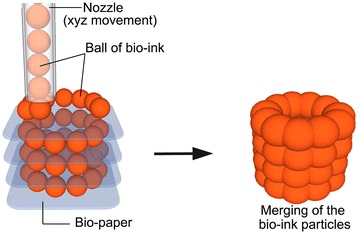
“Lastly, a layer-by-layer process has alternately deposited chondrocyte-laden hydrogel droplets (alginate or decellularized extracellular matrix bioink) and PCL in a layer-by-layer process to create a 3D structure [124-126] (Figure 7).”
BackgroundFused deposition modeling of novel scaffold architectures for tissue engineering applications
Zein, I., Hutmacher, D. W., Tan, K. C., & Teoh, S. H. (2002) · Biomaterials · doi:10.1016/s0142-9612(01)00232-0 · Cited by 1,874
Bone tissue engineering using 3D printing
Bose, S., Vahabzadeh, S., & Bandyopadhyay, A. (2013) · Materials Today · doi:10.1016/j.mattod.2013.11.017 · Cited by 1,866
Bone tissue engineering using polycaprolactone scaffolds fabricated via selective laser sintering
Williams, J. M., Adewunmi, A., Schek, R. M., Flanagan, C. L., Krebsbach, P. H., Feinberg, S. E., Hollister, S. J., & Das, S. (2005) · Biomaterials · doi:10.1016/j.biomaterials.2004.11.057 · Cited by 1,563
Research works printed but not linked: 1
- Dowler C. Automatic model building cuts design time, costs. Plastics Eng. 1989;45:43–5.
Cited by
Polymers for 3D Printing and Customized Additive Manufacturing
Ligon, S. C., Liska, R., Stampfl, J., Gurr, M., & Mülhaupt, R. (2017) · Chemical Reviews · doi:10.1021/acs.chemrev.7b00074 · Cited by 3,741
Kinane, D. F., Stathopoulou, P. G., & Papapanou, P. N. (2017) · Nature Reviews Disease Primers · doi:10.1038/nrdp.2017.38 · Cited by 2,724
Scaffolds for bone tissue engineering: state of the art and new perspectives
Roseti, L., Parisi, V., Petretta, M., Cavallo, C., Desando, G., Bartolotti, I., & Grigolo, B. (2017) · Materials Science and Engineering: C · doi:10.1016/j.msec.2017.05.017 · Cited by 1,320
Progress in 3D bioprinting technology for tissue/organ regenerative engineering
Matai, I., Kaur, G., Seyedsalehi, A., McClinton, A., & Laurencin, C. T. (2020) · Biomaterials · doi:10.1016/j.biomaterials.2019.119536 · Cited by 1,156
Dawood, A., Marti, B. M., Sauret-Jackson, V., & Darwood, A. (2015) · British Dental Journal · doi:10.1038/sj.bdj.2015.914 · Cited by 1,133
Polylactic acid (PLA) controlled delivery carriers for biomedical applications
Tyler, B., Gullotti, D., Mangraviti, A., Utsuki, T., & Brem, H. (2016) · Advanced Drug Delivery Reviews · doi:10.1016/j.addr.2016.06.018 · Cited by 1,050
3D printed microfluidic devices: enablers and barriers
Waheed, S., Cabot, J. M., Macdonald, N. P., Lewis, T., Guijt, R. M., Paull, B., & Breadmore, M. C. (2016) · Lab on a Chip · doi:10.1039/c6lc00284f · Cited by 1,039
Recent advances in biomaterials for 3D scaffolds: A review
Nikolova, M. P., & Chavali, M. S. (2019) · Bioactive Materials · doi:10.1016/j.bioactmat.2019.10.005 · Cited by 907
“The selection of production technique depends on the specific requirements for the scaffold, material of interest, and machine limitation [1].”
BackgroundPCL and PCL-based materials in biomedical applications
Malikmammadov, E., Tanir, T. E., Kiziltay, A., Hasirci, V., & Hasirci, N. (2018) · Journal of Biomaterials Science, Polymer Edition · doi:10.1080/09205063.2017.1394711 · Cited by 894
Three-dimensional (3D) printed scaffold and material selection for bone repair
Zhang, L., Yang, G., Johnson, B. N., & Jia, X. (2019) · Acta Biomaterialia · doi:10.1016/j.actbio.2018.11.039 · Cited by 865
da Silva, D., Kaduri, M., Poley, M., Adir, O., Krinsky, N., Shainsky-Roitman, J., & Schroeder, A. (2018) · Chemical Engineering Journal · doi:10.1016/j.cej.2018.01.010 · Cited by 863
3D printing of hydrogels: Rational design strategies and emerging biomedical applications
Li, J., Wu, C., Chu, P. K., & Gelinsky, M. (2020) · Materials Science and Engineering: R: Reports · doi:10.1016/j.mser.2020.100543 · Cited by 862
Pagac, M., Hajnys, J., Ma, Q.-P., Jancar, L., Jansa, J., Stefek, P., & Mesicek, J. (2021) · Polymers · doi:10.3390/polym13040598 · Cited by 834
Designing Biomaterials for 3D Printing
Guvendiren, M., Molde, J., Soares, R. M. D., & Kohn, J. (2016) · ACS Biomaterials Science & Engineering · doi:10.1021/acsbiomaterials.6b00121 · Cited by 732
Advantages and disadvantages of 3-dimensional printing in surgery: A systematic review
Martelli, N., Serrano, C., van den Brink, H., Pineau, J., Prognon, P., Borget, I., & El Batti, S. (2016) · Surgery · doi:10.1016/j.surg.2015.12.017 · Cited by 681
Kabir, S. M. F., Mathur, K., & Seyam, A.-F. M. (2020) · Composite Structures · doi:10.1016/j.compstruct.2019.111476 · Cited by 678
Metallic Biomaterials: Current Challenges and Opportunities
Prasad, K., Bazaka, O., Chua, M., Rochford, M., Fedrick, L., Spoor, J., Symes, R., Tieppo, M., Collins, C., Cao, A., et al. (2017) · Materials · doi:10.3390/ma10080884 · Cited by 662
3D printing of bone tissue engineering scaffolds
Wang, C., Huang, W., Zhou, Y., He, L., He, Z., Chen, Z., He, X., Tian, S., Liao, J., Lu, B., et al. (2020) · Bioactive Materials · doi:10.1016/j.bioactmat.2020.01.004 · Cited by 661
3D printing in pharmaceutics: A new tool for designing customized drug delivery systems
Goole, J., & Amighi, K. (2016) · International Journal of Pharmaceutics · doi:10.1016/j.ijpharm.2015.12.071 · Cited by 660
Ma, G., Li, Z., & Wang, L. (2018) · Construction and Building Materials · doi:10.1016/j.conbuildmat.2017.12.051 · Cited by 616
Scaffold Techniques and Designs in Tissue Engineering Functions and Purposes: A Review
Eltom, A., Zhong, G., & Muhammad, A. (2019) · Advances in Materials Science and Engineering · doi:10.1155/2019/3429527 · Cited by 615
SERS-Activated Platforms for Immunoassay: Probes, Encoding Methods, and Applications
Wang, Z., Zong, S., Wu, L., Zhu, D., & Cui, Y. (2017) · Chemical Reviews · doi:10.1021/acs.chemrev.7b00027 · Cited by 614
Stereolithographic (SLA) 3D printing of oral modified-release dosage forms
Wang, J., Goyanes, A., Gaisford, S., & Basit, A. W. (2016) · International Journal of Pharmaceutics · doi:10.1016/j.ijpharm.2016.03.016 · Cited by 612
Recent advances in bioprinting techniques: approaches, applications and future prospects
Li, J., Chen, M., Fan, X., & Zhou, H. (2016) · Journal of Translational Medicine · doi:10.1186/s12967-016-1028-0 · Cited by 608
Yuan, L., Ding, S., & Wen, C. (2019) · Bioactive Materials · doi:10.1016/j.bioactmat.2018.12.003 · Cited by 593
2D Black Phosphorus–Based Biomedical Applications
Luo, M., Fan, T., Zhou, Y., Zhang, H., & Mei, L. (2019) · Advanced Functional Materials · doi:10.1002/adfm.201808306 · Cited by 583
González-Henríquez, C. M., Sarabia-Vallejos, M. A., & Rodriguez-Hernandez, J. (2019) · Progress in Polymer Science · doi:10.1016/j.progpolymsci.2019.03.001 · Cited by 562
Hydrogels Based on Schiff Base Linkages for Biomedical Applications
Xu, J., Liu, Y., & Hsu, S.-H. (2019) · Molecules · doi:10.3390/molecules24163005 · Cited by 559
3D Bioprinting for Organ Regeneration
Cui, H., Nowicki, M., Fisher, J. P., & Zhang, L. G. (2017) · Advanced Healthcare Materials · doi:10.1002/adhm.201601118 · Cited by 535
3D Printing of Highly Stretchable, Shape-Memory, and Self-Healing Elastomer toward Novel 4D Printing
Kuang, X., Chen, K., Dunn, C. K., Wu, J., Li, V. C. F., & Qi, H. J. (2018) · ACS Applied Materials & Interfaces · doi:10.1021/acsami.7b18265 · Cited by 523
Fused deposition modelling: Current status, methodology, applications and future prospects
Cano-Vicent, A., Tambuwala, M. M., Hassan, S. S., Barh, D., Aljabali, A. A. A., Birkett, M., Arjunan, A., & Serrano-Aroca, Á. (2021) · Additive Manufacturing · doi:10.1016/j.addma.2021.102378 · Cited by 509
Recent Advances in Extrusion‐Based 3D Printing for Biomedical Applications
Placone, J. K., & Engler, A. J. (2018) · Advanced Healthcare Materials · doi:10.1002/adhm.201701161 · Cited by 486
Yang, F., Zhang, M., Bhandari, B., & Liu, Y. (2018) · LWT · doi:10.1016/j.lwt.2017.08.054 · Cited by 479
Vascularized 3D printed scaffolds for promoting bone regeneration
Yan, Y., Chen, H., Zhang, H., Guo, C., Yang, K., Chen, K., Cheng, R., Qian, N., Sandler, N., Zhang, Y. S., et al. (2019) · Biomaterials · doi:10.1016/j.biomaterials.2018.10.033 · Cited by 475
Poly(N-isopropylacrylamide) and Copolymers: A Review on Recent Progresses in Biomedical Applications
Lanzalaco, S., & Armelin, E. (2017) · Gels · doi:10.3390/gels3040036 · Cited by 442
Maskery, I., Aremu, A. O., Parry, L., Wildman, R. D., Tuck, C. J., & Ashcroft, I. A. (2018) · Materials & Design · doi:10.1016/j.matdes.2018.05.058 · Cited by 441
Additive manufacturing of ceramics for dental applications: A review
Galante, R., Figueiredo-Pina, C. G., & Serro, A. P. (2019) · Dental Materials · doi:10.1016/j.dental.2019.02.026 · Cited by 441
Bioprinting for vascular and vascularized tissue biofabrication
Datta, P., Ayan, B., & Ozbolat, I. T. (2017) · Acta Biomaterialia · doi:10.1016/j.actbio.2017.01.035 · Cited by 431
Current advances and future perspectives of 3D printing natural-derived biopolymers
Liu, J., Sun, L., Xu, W., Wang, Q., Yu, S., & Sun, J. (2019) · Carbohydrate Polymers · doi:10.1016/j.carbpol.2018.11.077 · Cited by 428
3D bioprinting of a corneal stroma equivalent
Isaacson, A., Swioklo, S., & Connon, C. J. (2018) · Experimental Eye Research · doi:10.1016/j.exer.2018.05.010 · Cited by 419
3D and 4D Printing of Polymers for Tissue Engineering Applications
Tamay, D. G., Dursun Usal, T., Alagoz, A. S., Yucel, D., Hasirci, N., & Hasirci, V. (2019) · Frontiers in Bioengineering and Biotechnology · doi:10.3389/fbioe.2019.00164 · Cited by 417
Designing of PLA scaffolds for bone tissue replacement fabricated by ordinary commercial 3D printer
Gregor, A., Filová, E., Novák, M., Kronek, J., Chlup, H., Buzgo, M., Blahnová, V., Lukášová, V., Bartoš, M., Nečas, A., et al. (2017) · Journal of Biological Engineering · doi:10.1186/s13036-017-0074-3 · Cited by 406
Biodegradable materials for bone defect repair
Wei, S., Ma, J.-X., Xu, L., Gu, X.-S., & Ma, X.-L. (2020) · Military Medical Research · doi:10.1186/s40779-020-00280-6 · Cited by 406
Sheikh, Z., Hamdan, N., Ikeda, Y., Grynpas, M., Ganss, B., & Glogauer, M. (2017) · Biomaterials Research · doi:10.1186/s40824-017-0095-5 · Cited by 393
Bao, Z., Xian, C., Yuan, Q., Liu, G., & Wu, J. (2019) · Advanced Healthcare Materials · doi:10.1002/adhm.201900670 · Cited by 383
Vat photopolymerization 3D printing for advanced drug delivery and medical device applications
Xu, X., Awad, A., Robles-Martinez, P., Gaisford, S., Goyanes, A., & Basit, A. W. (2021) · Journal of Controlled Release · doi:10.1016/j.jconrel.2020.10.008 · Cited by 370
Characterization of printed PLA scaffolds for bone tissue engineering
Grémare, A., Guduric, V., Bareille, R., Heroguez, V., Latour, S., L'heureux, N., Fricain, J., Catros, S., & Le Nihouannen, D. (2018) · Journal of Biomedical Materials Research Part A · doi:10.1002/jbm.a.36289 · Cited by 362
Recent advances in 3D printing of porous ceramics: A review
Hwa, L. C., Rajoo, S., Noor, A. M., Ahmad, N., & Uday, M. B. (2017) · Current Opinion in Solid State and Materials Science · doi:10.1016/j.cossms.2017.08.002 · Cited by 343
Ryan, K. R., Down, M. P., & Banks, C. E. (2021) · Chemical Engineering Journal · doi:10.1016/j.cej.2020.126162 · Cited by 338
Zhao, Y., Chen, Y., & Zhou, Y. (2019) · Materials & Design · doi:10.1016/j.matdes.2019.108089 · Cited by 336
Poly(3-Hydroxybutyrate-co-3-Hydroxyvalerate): Enhancement Strategies for Advanced Applications
Rivera-Briso, A. L., & Serrano-Aroca, Á. (2018) · Polymers · doi:10.3390/polym10070732 · Cited by 332
3D printed electrochemical energy storage devices
Chang, P., Mei, H., Zhou, S., Dassios, K. G., & Cheng, L. (2019) · Journal of Materials Chemistry A · doi:10.1039/c8ta11860d · Cited by 329
Polymer Design for 3D Printing Elastomers: Recent Advances in Structure, Properties, and Printing
Herzberger, J., Sirrine, J. M., Williams, C. B., & Long, T. E. (2019) · Progress in Polymer Science · doi:10.1016/j.progpolymsci.2019.101144 · Cited by 329
Krishani, M., Shin, W. Y., Suhaimi, H., & Sambudi, N. S. (2023) · Gels · doi:10.3390/gels9020100 · Cited by 328
3D printing with cellulose materials
Wang, Q., Sun, J., Yao, Q., Ji, C., Liu, J., & Zhu, Q. (2018) · Cellulose · doi:10.1007/s10570-018-1888-y · Cited by 324
Applications of decellularized extracellular matrix in bone and cartilage tissue engineering
Kim, Y. S., Majid, M., Melchiorri, A. J., & Mikos, A. G. (2019) · Bioengineering & Translational Medicine · doi:10.1002/btm2.10110 · Cited by 322
Low temperature fused deposition modeling (FDM) 3D printing of thermolabile drugs
Kollamaram, G., Croker, D. M., Walker, G. M., Goyanes, A., Basit, A. W., & Gaisford, S. (2018) · International Journal of Pharmaceutics · doi:10.1016/j.ijpharm.2018.04.055 · Cited by 318
Advances in pantographic structures: design, manufacturing, models, experiments and image analyses
dell’Isola, F., Seppecher, P., Spagnuolo, M., Barchiesi, E., Hild, F., Lekszycki, T., Giorgio, I., Placidi, L., Andreaus, U., Cuomo, M., et al. (2019) · Continuum Mechanics and Thermodynamics · doi:10.1007/s00161-019-00806-x · Cited by 304
Shi, L., Ding, P., Wang, Y., Zhang, Y., Ossipov, D., & Hilborn, J. (2019) · Macromolecular Rapid Communications · doi:10.1002/marc.201800837 · Cited by 303
Evolution of Bioinks and Additive Manufacturing Technologies for 3D Bioprinting
Jose, R. R., Rodriguez, M. J., Dixon, T. A., Omenetto, F., & Kaplan, D. L. (2016) · ACS Biomaterials Science & Engineering · doi:10.1021/acsbiomaterials.6b00088 · Cited by 302
Additive layer manufacturing of poly (ether ether ketone) via FDM
Rinaldi, M., Ghidini, T., Cecchini, F., Brandao, A., & Nanni, F. (2018) · Composites Part B Engineering · doi:10.1016/j.compositesb.2018.03.029 · Cited by 301
Personalised 3D Printed Medicines: Which Techniques and Polymers Are More Successful?
Konta, A., García-Piña, M., & Serrano, D. (2017) · Bioengineering · doi:10.3390/bioengineering4040079 · Cited by 301
Regenerative Medicine for Periodontal and Peri-implant Diseases
Larsson, L., Decker, A. M., Nibali, L., Pilipchuk, S. P., Berglundh, T., & Giannobile, W. V. (2016) · Journal of Dental Research · doi:10.1177/0022034515618887 · Cited by 300
Ruiz-Morales, J. C., Tarancón, A., Canales-Vázquez, J., Méndez-Ramos, J., Hernández-Afonso, L., Acosta-Mora, P., Marín Rueda, J. R., & Fernández-González, R. (2017) · Energy & Environmental Science · doi:10.1039/c6ee03526d · Cited by 299
Tran, T. S., Dutta, N. K., & Choudhury, N. R. (2018) · Advances in Colloid and Interface Science · doi:10.1016/j.cis.2018.09.003 · Cited by 298
Powder-based 3D printing for bone tissue engineering
Brunello, G., Sivolella, S., Meneghello, R., Ferroni, L., Gardin, C., Piattelli, A., Zavan, B., & Bressan, E. (2016) · Biotechnology Advances · doi:10.1016/j.biotechadv.2016.03.009 · Cited by 296
Photocontrolled RAFT polymerization: past, present, and future
Lee, Y., Boyer, C., & Kwon, M. S. (2023) · Chemical Society Reviews · doi:10.1039/d1cs00069a · Cited by 290
Suiker, A. S. J. (2018) · International Journal of Mechanical Sciences · doi:10.1016/j.ijmecsci.2018.01.010 · Cited by 288
Cuan-Urquizo, E., Barocio, E., Tejada-Ortigoza, V., Pipes, R. B., Rodriguez, C. A., & Roman-Flores, A. (2019) · Materials · doi:10.3390/ma12060895 · Cited by 288
Biobased Acrylate Photocurable Resin Formulation for Stereolithography 3D Printing
Voet, V. S. D., Strating, T., Schnelting, G. H. M., Dijkstra, P., Tietema, M., Xu, J., Woortman, A. J. J., Loos, K., Jager, J., & Folkersma, R. (2018) · ACS Omega · doi:10.1021/acsomega.7b01648 · Cited by 279
Self-assembled micro-organogels for 3D printing silicone structures
O’Bryan, C. S., Bhattacharjee, T., Hart, S., Kabb, C. P., Schulze, K. D., Chilakala, I., Sumerlin, B. S., Sawyer, W. G., & Angelini, T. E. (2017) · Science Advances · doi:10.1126/sciadv.1602800 · Cited by 277
3D printing applications for transdermal drug delivery
Economidou, S. N., Lamprou, D. A., & Douroumis, D. (2018) · International Journal of Pharmaceutics · doi:10.1016/j.ijpharm.2018.01.031 · Cited by 270
Fabrication and Applications of Micro/Nanostructured Devices for Tissue Engineering
Limongi, T., Tirinato, L., Pagliari, F., Giugni, A., Allione, M., Perozziello, G., Candeloro, P., & Di Fabrizio, E. (2017) · Nano-Micro Letters · doi:10.1007/s40820-016-0103-7 · Cited by 269
Dong, L., Wang, S.-J., Zhao, X.-R., Zhu, Y.-F., & Yu, J.-K. (2017) · Scientific Reports · doi:10.1038/s41598-017-13838-7 · Cited by 268
Ma, G., Wang, L., & Ju, Y. (2018) · Science China Technological Sciences · doi:10.1007/s11431-016-9077-7 · Cited by 261
Rapid, continuous additive manufacturing by volumetric polymerization inhibition patterning
de Beer, M. P., van der Laan, H. L., Cole, M. A., Whelan, R. J., Burns, M. A., & Scott, T. F. (2019) · Science Advances · doi:10.1126/sciadv.aau8723 · Cited by 261
3D-printed silica with nanoscale resolution
Wen, X., Zhang, B., Wang, W., Ye, F., Yue, S., Guo, H., Gao, G., Zhao, Y., Fang, Q., Nguyen, C., et al. (2021) · Nature Materials · doi:10.1038/s41563-021-01111-2 · Cited by 259
Various manufacturing methods and ideal properties of scaffolds for tissue engineering applications
Suamte, L., Tirkey, A., Barman, J., & Jayasekhar Babu, P. (2023) · Smart Materials in Manufacturing · doi:10.1016/j.smmf.2022.100011 · Cited by 259
A review on fabricating tissue scaffolds using vat photopolymerization
Chartrain, N. A., Williams, C. B., & Whittington, A. R. (2018) · Acta Biomaterialia · doi:10.1016/j.actbio.2018.05.010 · Cited by 253
A review on 3D printed matrix polymer composites: its potential and future challenges
Saroia, J., Wang, Y., Wei, Q., Lei, M., Li, X., Guo, Y., & Zhang, K. (2020) · The International Journal of Advanced Manufacturing Technology · doi:10.1007/s00170-019-04534-z · Cited by 253
3D printing of hydrogel composite systems: Recent advances in technology for tissue engineering
Jang, T.-S., Jung, H.-D., Pan, H. M., Han, W. T., Chen, S., & Song, J. (2024) · International Journal of Bioprinting · doi:10.18063/ijb.v4i1.126 · Cited by 251
3D printing for the design and fabrication of polymer-based gradient scaffolds
Bracaglia, L. G., Smith, B. T., Watson, E., Arumugasaamy, N., Mikos, A. G., & Fisher, J. P. (2017) · Acta Biomaterialia · doi:10.1016/j.actbio.2017.03.030 · Cited by 251
3D Printing—Encompassing the Facets of Dentistry
Oberoi, G., Nitsch, S., Edelmayer, M., Janjić, K., Müller, A. S., & Agis, H. (2018) · Frontiers in Bioengineering and Biotechnology · doi:10.3389/fbioe.2018.00172 · Cited by 250
Three-Dimensional Printing of Wood-Derived Biopolymers: A Review Focused on Biomedical Applications
Xu, W., Wang, X., Sandler, N., Willför, S., & Xu, C. (2018) · ACS Sustainable Chemistry & Engineering · doi:10.1021/acssuschemeng.7b03924 · Cited by 248
4D Printing: A Review on Recent Progresses
Chu, H., Yang, W., Sun, L., Cai, S., Yang, R., Liang, W., Yu, H., & Liu, L. (2020) · Micromachines · doi:10.3390/mi11090796 · Cited by 247
Additive Manufacturing as a Method to Design and Optimize Bioinspired Structures
Velasco‐Hogan, A., Xu, J., & Meyers, M. A. (2018) · Advanced Materials · doi:10.1002/adma.201800940 · Cited by 247
Lakkala, P., Munnangi, S. R., Bandari, S., & Repka, M. (2023) · International Journal of Pharmaceutics: X · doi:10.1016/j.ijpx.2023.100159 · Cited by 246
Smart polymers and nanocomposites for 3D and 4D printing
Falahati, M., Ahmadvand, P., Safaee, S., Chang, Y.-C., Lyu, Z., Chen, R., Li, L., & Lin, Y. (2020) · Materials Today · doi:10.1016/j.mattod.2020.06.001 · Cited by 245
Structural failure during extrusion-based 3D printing processes
Wolfs, R. J. M., & Suiker, A. S. J. (2019) · The International Journal of Advanced Manufacturing Technology · doi:10.1007/s00170-019-03844-6 · Cited by 244
Fused filament fabrication of peek: A review of process-structure-property relationships
Zanjanijam, A. R., Major, I., Lyons, J. G., Lafont, U., & Devine, D. M. (2020) · Polymers · doi:10.3390/polym12081665 · Cited by 240
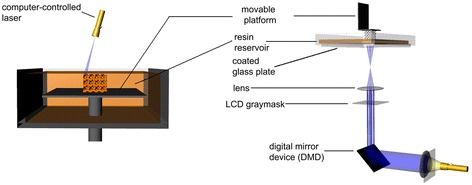
“In SLA, a photopolymer resin is cured using an energy source, mostly UV laser, to form a single layer of the desired object.”
3D bioprinting and the current applications in tissue engineering
Huang, Y., Zhang, X., Gao, G., Yonezawa, T., & Cui, X. (2017) · Biotechnology Journal · doi:10.1002/biot.201600734 · Cited by 240
Hydrogels for Biomedical Applications: Cellulose, Chitosan, and Protein/Peptide Derivatives
Del Valle, L., Díaz, A., & Puiggalí, J. (2017) · Gels · doi:10.3390/gels3030027 · Cited by 239
Silico-Aluminophosphate and Alkali-Aluminosilicate Geopolymers: A Comparative Review
Wang, Y.-S., Alrefaei, Y., & Dai, J.-G. (2019) · Frontiers in Materials · doi:10.3389/fmats.2019.00106 · Cited by 239
Vithani, K., Goyanes, A., Jannin, V., Basit, A. W., Gaisford, S., & Boyd, B. J. (2019) · Pharmaceutical Research · doi:10.1007/s11095-018-2531-1 · Cited by 233
3D-printed microneedles in biomedical applications
Dabbagh, S. R., Sarabi, M. R., Rahbarghazi, R., Sokullu, E., Yetisen, A. K., & Tasoglu, S. (2021) · iScience · doi:10.1016/j.isci.2020.102012 · Cited by 231
Lin, C., Lin, Y., Lai, Y., & Lee, S. (2019) · Journal of Prosthetic Dentistry · doi:10.1016/j.prosdent.2019.05.002 · Cited by 228
Optimization of collagen type I-hyaluronan hybrid bioink for 3D bioprinted liver microenvironments
Mazzocchi, A., Devarasetty, M., Huntwork, R., Soker, S., & Skardal, A. (2018) · Biofabrication · doi:10.1088/1758-5090/aae543 · Cited by 226
Totu, E. E., Nechifor, A. C., Nechifor, G., Aboul-Enein, H. Y., & Cristache, C. M. (2017) · Journal of Dentistry · doi:10.1016/j.jdent.2017.02.012 · Cited by 226
Fused deposition modeling of thermoplastic elastomeric materials: Challenges and opportunities
Awasthi, P., & Banerjee, S. S. (2021) · Additive Manufacturing · doi:10.1016/j.addma.2021.102177 · Cited by 222
3D printing of polyether-ether-ketone for biomedical applications
Singh, S., Prakash, C., & Ramakrishna, S. (2019) · European Polymer Journal · doi:10.1016/j.eurpolymj.2019.02.035 · Cited by 220
Metadata
- Authors
- Chia, H. N., & Wu, B. M.
- Affiliations
- University of California, Los Angeles (US)
- Corresponding author
- Wu, Benjamin M
- ORCID
- Wu, Benjamin M
- Venue
- Journal of Biological Engineering
- Published
- 2015-03-01
- Volume
- 9
- Issue
- 1
- Pages
- 4-4
- ISSN
- 1754-1611 (ISSN-L)
- PMC
- PMC4392469
- OpenAlex
- W2172143926
- Semantic Scholar
- c3469ac1064a4045c1bb519a1247bb60c464ab8c
- Cited by
- 1,734
- References
- 127
- Citations by year
- 2026: 63 · 2025: 117 · 2024: 123 · 2023: 153 · 2022: 154 · 2021: 192 · 2020: 213 · 2019: 205 · 2018: 227 · 2017: 165 · 2016: 95 · 2015: 25
- FWCI
- 84.79
- Type
- journal article
- Language
- en
- Open access
- gold
- doi.org
- Locations
- Journal of Biological Engineering (publishedVersion, cc-by)
- PubMed Central (publishedVersion, cc-by)
- PubMed (publishedVersion)
- eScholarship (California Digital Library) (submittedVersion)
- eScholarship (California Digital Library) (submittedVersion, cc-by)
- Topics
- Physical Sciences › Engineering › Biomedical Engineering › 3D Printing in Biomedical Research
- Physical Sciences › Engineering › Industrial and Manufacturing Engineering › Additive Manufacturing and 3D Printing Technologies
- Physical Sciences › Engineering › Biomedical Engineering › Anatomy and Medical Technology
- Keywords
- 3D printing, biomaterials, bioprinting, tissue engineering scaffolds, patient-specific implants, stem cell scaffolds, regenerative medicine, fused deposition modeling, selective laser sintering, stereolithography, 3D plotting, organ regeneration, 3D printing materials
About these checks
Registry, retraction, Cites and statistics results are computed, not judged, with one exception: a printed reference that no index lists is read once by a model before it counts as a citation error. Claims are extracted by a model and kept only when their quote appears verbatim in the text; each cited source is then checked, with a model’s help, for whether it says what the claim relies on. Those verdicts can be wrong — read the claim’s quote and the cited source before relying on one.
Statistics and arithmetic are recomputed, not judged.
Confidence bands are shown only for fields calibrated on our annotated test set. None is calibrated yet, so no band is shown.
What counts as a claim ›How we measure confidence ›How we check this ›
Are you an author, or do you see a problem with this page? Request a review
Data sources
Bibliographic data: Semantic Scholar, OpenAlex, Crossref.
Contains information from the Semantic Scholar Academic Graph Datasets, made available under the ODC Attribution License (ODC-BY 1.0).
Semantic Scholar’s data is described in: Kinney, R., et al. (2023). The Semantic Scholar Open Data Platform. arXiv:2301.10140.
