

The DOI matches its Crossref record; 209 of the 209 references it cites were found in a registry or an index; 5 of the 290 sources its claims cite were checked for support.
Artificial intelligence enhanced sensors - enabling technologies to next-generation healthcare and biomedical platform
Open accessAbstract
The fourth industrial revolution has led to the development and application of health monitoring sensors that are characterized by digitalization and intelligence. These sensors have extensive applications in medical care, personal health management, elderly care, sports, and other fields, providing people with more convenient and real-time health services. However, these sensors face limitations such as noise and drift, difficulty in extracting useful information from large amounts of data, and lack of feedback or control signals. The development of artificial intelligence has provided powerful tools and algorithms for data processing and analysis, enabling intelligent health monitoring, and achieving high-precision predictions and decisions. By integrating the Internet of Things, artificial intelligence, and health monitoring sensors, it becomes possible to realize a closed-loop system with the functions of real-time monitoring, data collection, online analysis, diagnosis, and treatment recommendations. This review focuses on the development of healthcare artificial sensors enhanced by intelligent technologies from the aspects of materials, device structure, system integration, and application scenarios. Specifically, this review first introduces the great advances in wearable sensors for monitoring respiration rate, heart rate, pulse, sweat, and tears; implantable sensors for cardiovascular care, nerve signal acquisition, and neurotransmitter monitoring; soft wearable electronics for precise therapy. Then, the recent advances in volatile organic compound detection are highlighted. Next, the current developments of human-machine interfaces, AI-enhanced multimode sensors, and AI-enhanced self-sustainable systems are reviewed. Last, a perspective on future directions for further research development is also provided. In summary, the fusion of artificial intelligence and artificial sensors will provide more intelligent, convenient, and secure services for next-generation healthcare and biomedical applications.
Overview
AI snapshot
Written from the paper’s full text.
TL;DR
This review argues that integrating AI, IoT, and health monitoring sensors can enable closed-loop healthcare systems with real-time monitoring, data analysis, diagnosis, and treatment recommendations. It surveys wearable, implantable, therapeutic, VOC-sensing, human-machine interface, multimodal, and self-sustainable sensor technologies enhanced by machine learning.
Key findings
- AI is presented as a solution to major HMS limitations: sensor noise and drift, difficulty extracting useful information from large data, and the open-loop nature of traditional sensors lacking feedback or control signals.
- Wearable and implantable examples include a spider-inspired TUNES sensor for pulse, muscle contraction, and respiration; a PEDOT-coated mask for real-time respiratory rate; and an NiO thermistor that recorded a 27% rise in respiratory rate and a 65% reduction in temperature variation amplitude under low blood oxygen saturation.
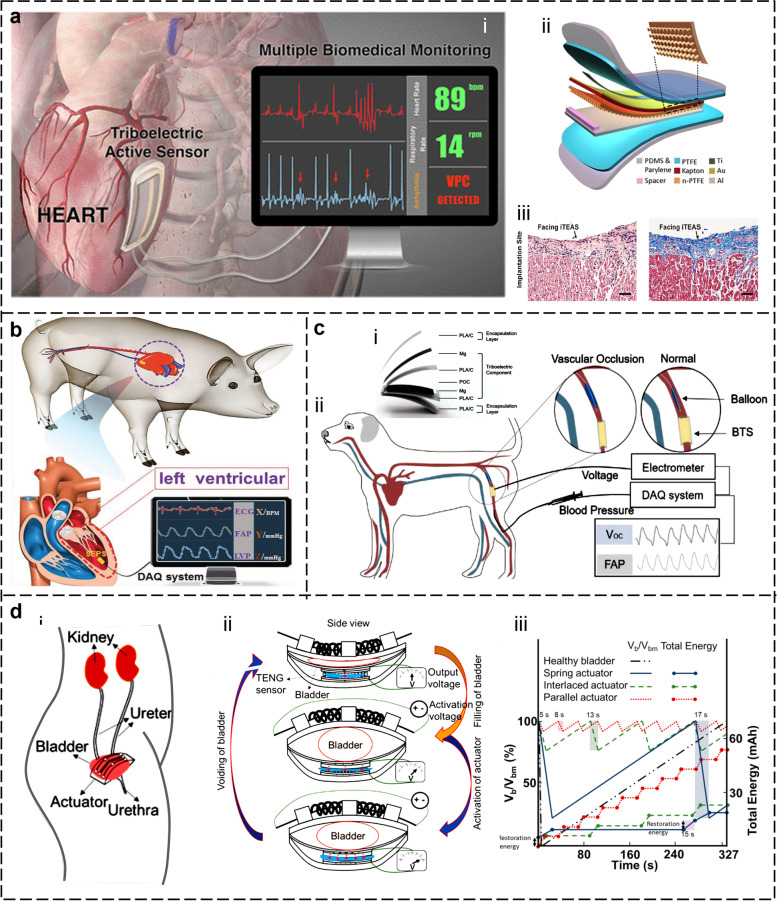
- Self-powered implantable sensors include iTEAS, which monitored functions for 72 hours after chest closure, and SEPS, which achieved 1.195 mV/mmHg sensitivity with linearity R²=0.997 for intracardiac pressure monitoring.
- AI-enhanced VOC and HMI systems report high performance: a graphene plasmon SEIRA platform detected SO₂, NO₂, N₂O, and NO with a 1-minute response time and 800 zeptomoles per μm²; a MOF-based SERS platform reached a 10 ppb detection limit; a graphene varactor array achieved 98% accuracy for five analytes and 89% with 1-octene added; PCA+SVM reached 100% recognition for methanol, ethanol, and isopropanol; a TENG smart sock achieved 93.54% accuracy for 13 gait patterns; a smart mat achieved 96.0%; and HSVM fusion of radar and pressure sensors reached 92.5% gesture classification accuracy.
Methods
- Narrative review covering wearable physical and chemical sensors, in vivo self-powered sensors, neural interfaces, flexible electronics for therapy, VOC detection, human-machine interfaces, AI-enhanced multimode sensors, and AI-enhanced self-sustainable systems.
- Synthesizes cited studies and figures across materials, device structure, system integration, and application scenarios; no primary data collection, systematic search protocol, or meta-analysis is reported.
- Discusses AI roles including sensor design, data preprocessing, dimensionality reduction, classification, and multimodal data fusion.
Limitations
- Paper-stated: successful implementation of AI-enhanced sensors faces challenges in data privacy and security, regulatory and ethical considerations, and robust validation frameworks including generalizability, robustness to data variation, and interpretability.
- Paper-stated: implantable neural interfaces still need long-term stable interfaces, improved resolution and specificity, ability to interface with large neuron populations, and safe clinical protocols.
- Evident from text: as a review, it does not provide a systematic search strategy, inclusion criteria, or quantitative synthesis, and many performance numbers come from cited primary studies rather than new experiments.
Model-written summary. Check it against the paper before relying on it.
Integrity signals
Registry
Cites
Statistics
Figures
Verification
Claims the paper makes
210 Not checked yet · 16 Own interpretation · 3 Supported · 2 No basis given · 1 Partly supported · 1 Couldn’t confirm · 1 Sources not found · accuracy not yet measured
Every source the paper cites for this claim was checked and supports it.
In the paper
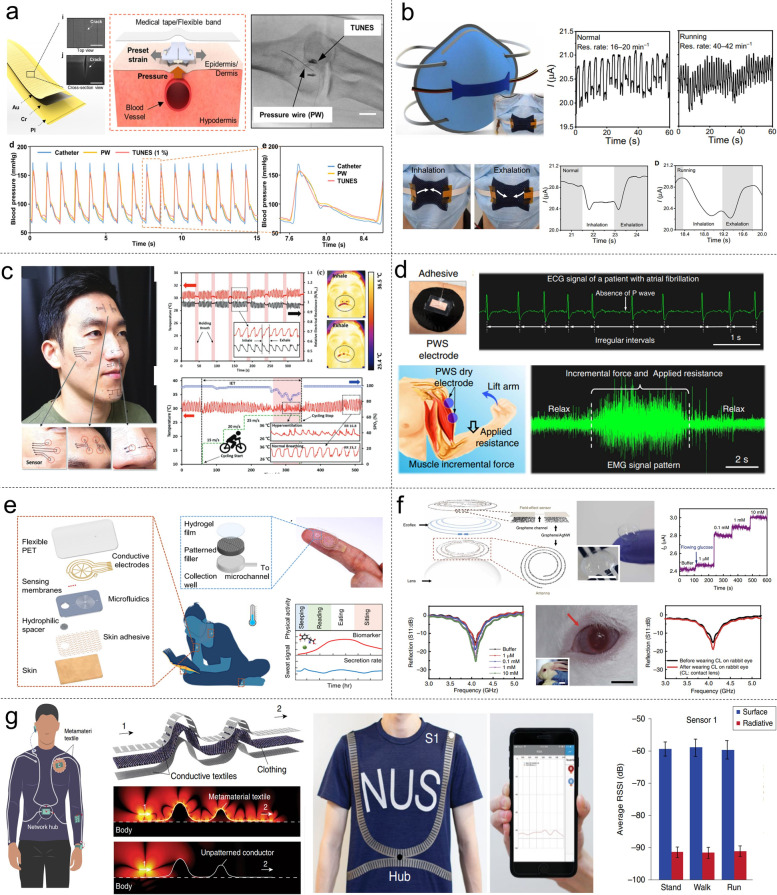
“Figure 2e illustrates a recent study showcasing a wearable patch designed to continuously track sweat rate during rest periods (Nyein et al. 2021).”
§ Artificial intelligence enhanced sensors - enabling technologies to next-generation healthcare and biomedical platform > Wearable sensors > Wearable chemical sensors
What the sources say
- Supportedcites Nyein et al. 2021 source
The Introduction explicitly presents a wearable patch for continuous measurement of at-rest thermoregulatory sweat rate. The Results and discussion section also reports sweat-rate measurements during sedentary periods (Fig. 4b). (LLM, conf=0.94)
plain- Asserted: passes — The authors put it forward as true.
- Checkable: passes — It can be checked against evidence.
- Load-bearing: unclear — It is unclear whether the paper’s conclusions depend on it.
- Based: passes — The paper gives a reason why it holds.
- Supported
Every source the paper cites for this claim was checked and supports it.
In the paper
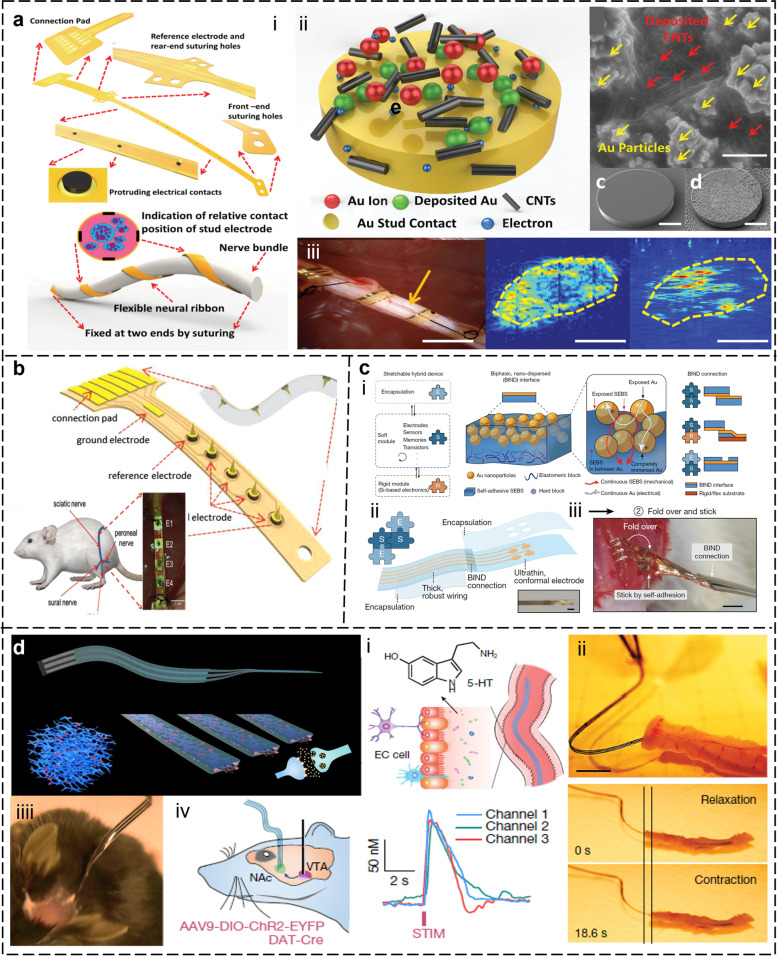
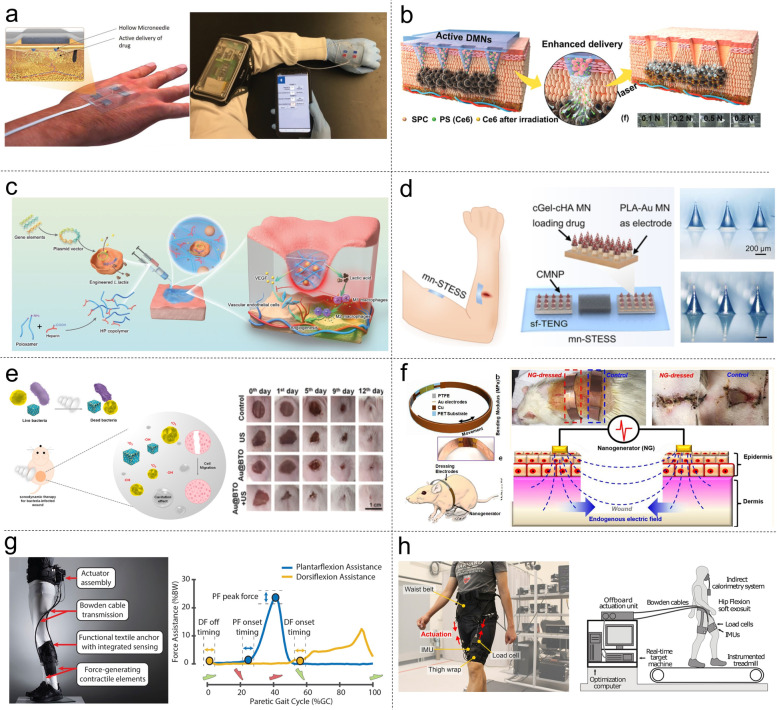
“For instance, A. Tamayol’s group developed a wearable and programmable bandage, which incorporates polymeric miniaturized needle arrays (MNAs) to facilitate the targeted delivery of essential pharmacological agents and growth factors into the deeper layers of a wound (Fig. 5a) (Derakhshandeh et al. 2020).”
§ Artificial intelligence enhanced sensors - enabling technologies to next-generation healthcare and biomedical platform > Wearable sensors > Neural interfaces
What the sources say
- Supportedcites Derakhshandeh et al. 2020 source
The Introduction describes the authors’ wearable, programmable bandage as equipped with polymeric miniaturized needle arrays to deliver pharmacological agents and growth factors into deeper layers of the wound bed. The Results and Discussions likewise describes targeted delivery to those deeper layers. (LLM, conf=0.95)
plaindirect- Asserted: passes — The authors put it forward as true.
- Checkable: passes — It can be checked against evidence.
- Load-bearing: unclear — It is unclear whether the paper’s conclusions depend on it.
- Based: passes — The paper gives a reason why it holds.
- Supported
The cited sources support only part of this claim — read each source’s verdict below.
In the paper
“Furthermore, these wearable sensors can collect and provide crucial information regarding the wearer's identity, health status, and activity level.”
§ Artificial intelligence enhanced sensors - enabling technologies to next-generation healthcare and biomedical platform > AI-enhanced self-sustainable system
What the sources say
- Partly supportedcites Zhang, Z. et al. 2020 sourceExperimental — accuracy not yet measured
The Abstract and Clinical setting study sections (page numbers unavailable) report healthcare monitoring and measurements of muscle activity. The paper studies skin-mounted dry electrodes, not smart socks, and does not show that they provide the wearer’s identity or overall activity level. (LLM, conf=0.88)
plaindirect- Asserted: passes — The authors put it forward as true.
- Checkable: passes — It can be checked against evidence.
- Load-bearing: passes — The paper’s conclusions depend on it.
- Based: passes — The paper gives a reason why it holds.
- Partly supported
None of the sources cited for this claim have been checked yet.
In the paper
“First, sensors can be subject to noise and drift, which can cause fluctuations in the measurements they provide (Dong et al. 2021; Kai Dong et al. 2020; Takeda et al. 2014).”
§ Artificial intelligence enhanced sensors - enabling technologies to next-generation healthcare and biomedical platform > Introduction
What the sources say
plaindirect- Asserted: passes — The authors put it forward as true.
- Checkable: passes — It can be checked against evidence.
- Load-bearing: passes — The paper’s conclusions depend on it.
- Based: passes — The paper gives a reason why it holds.
In the paper
“Recently, Kim et al. developed a sensor called Tunable, Ultrasensitive, Nature-inspired, Epidermal Sensor (TUNES), which exhibits the capability to detect a broad range of signals, ranging from minute pulses to more substantial muscular contractions and respiration (Kim et al. 2023).”
§ Artificial intelligence enhanced sensors - enabling technologies to next-generation healthcare and biomedical platform > Wearable sensors > Wearable physical sensors
What the sources say
- Not checked yetcites Kim et al. 2023
plain- Asserted: passes — The authors put it forward as true.
- Checkable: passes — It can be checked against evidence.
- Load-bearing: passes — The paper’s conclusions depend on it.
- Based: passes — The paper gives a reason why it holds.
In the paper
“Figure 2b presents a respiration rate sensor fabricated on a face mask through oxidative chemical vapor deposition (oCVD), a unique method that can form patterned polymer films with adjustable thickness, enabling the sensor to maintain the advantageous features of fabrics (Clevenger et al. 2021).”
§ Artificial intelligence enhanced sensors - enabling technologies to next-generation healthcare and biomedical platform > Wearable sensors > Wearable physical sensors
What the sources say
- Not checked yetcites Clevenger et al. 2021
plaindirect- Asserted: passes — The authors put it forward as true.
- Checkable: passes — It can be checked against evidence.
- Load-bearing: passes — The paper’s conclusions depend on it.
- Based: passes — The paper gives a reason why it holds.
In the paper
“In the field of health monitoring sensors, the development of AI provides powerful tools and algorithms for data processing and analysis, which provides solutions for developing limitations faced by HMSs (Zhang et al. 2023).”
§ Artificial intelligence enhanced sensors - enabling technologies to next-generation healthcare and biomedical platform > Introduction
What the sources say
- Not checked yetcites Zhang et al. 2023
plaindirect- Asserted: passes — The authors put it forward as true.
- Checkable: passes — It can be checked against evidence.
- Load-bearing: passes — The paper’s conclusions depend on it.
- Based: passes — The paper gives a reason why it holds.
In the paper
“The data collected by HMSs can be processed and analyzed using AI algorithms, thereby achieving intelligent health monitoring (Gao, S. et al. 2021a).”
§ Artificial intelligence enhanced sensors - enabling technologies to next-generation healthcare and biomedical platform > Introduction
What the sources say
- Not checked yetcites Gao, S. et al. 2021a
plaindirect- Asserted: passes — The authors put it forward as true.
- Checkable: passes — It can be checked against evidence.
- Load-bearing: passes — The paper’s conclusions depend on it.
- Based: passes — The paper gives a reason why it holds.
In the paper
“TUNES proves effective in measuring pulse waves at different pulse points and even during physical activities such as walking or cycling.”
§ Artificial intelligence enhanced sensors - enabling technologies to next-generation healthcare and biomedical platform > Wearable sensors > Wearable physical sensors
What the sources say
- Not checked yetcites Kim et al. 2023
plain- Asserted: passes — The authors put it forward as true.
- Checkable: passes — It can be checked against evidence.
- Load-bearing: passes — The paper’s conclusions depend on it.
- Based: passes — The paper gives a reason why it holds.
None of the sources cited for this claim have been checked yet.
In the paper
“To address this need, wearable chemical sensors have been developed for the real-time detection of biomarkers from biofluids and the surrounding environment (He et al. 2023; Wen, Feng et al. 2020a).”
§ Artificial intelligence enhanced sensors - enabling technologies to next-generation healthcare and biomedical platform > Wearable sensors > Wearable chemical sensors
What the sources say
- Not checked yetcites He et al. 2023
- Not checked yetcites Wen, Feng et al. 2020a
plain- Asserted: passes — The authors put it forward as true.
- Checkable: passes — It can be checked against evidence.
- Load-bearing: passes — The paper’s conclusions depend on it.
- Based: passes — The paper gives a reason why it holds.
- It may state two separate claims as one. 75
- The quote only partly states this claim. 3
- Probably not a substantial claim. 20
Every source the paper cites for this claim was checked and supports it.
In the paper
“The ECG results exhibited aberrant patterns consistent with atrial fibrillation, while the EMG signals obtained from PWS dry electrodes accurately captured changes in muscle activity during various tasks.”
§ Artificial intelligence enhanced sensors - enabling technologies to next-generation healthcare and biomedical platform > Wearable sensors > Wearable physical sensors
What the sources say
- Supportedcites Zhang, L. et al. 2020 source
The Clinical setting study reports that ECG recorded with PWS dry electrodes showed absent P peaks and irregular R–R intervals, consistent with atrial fibrillation. It also reports that the electrodes detected increases in muscle activity during tendon tapping and sustained contraction, followed by a decline during relaxation; the Biopotential detection section describes EMG changes during gripping and finger movements. (LLM, conf=0.94)
plaincorrelational- Asserted: passes — The authors put it forward as true.
- Checkable: passes — It can be checked against evidence.
- Load-bearing: passes — The paper’s conclusions depend on it.
- Based: passes — The paper gives a reason why it holds.
It may state two separate claims as one.
- Supported
The cited sources that could be checked couldn’t confirm or dispute this claim.
In the paper
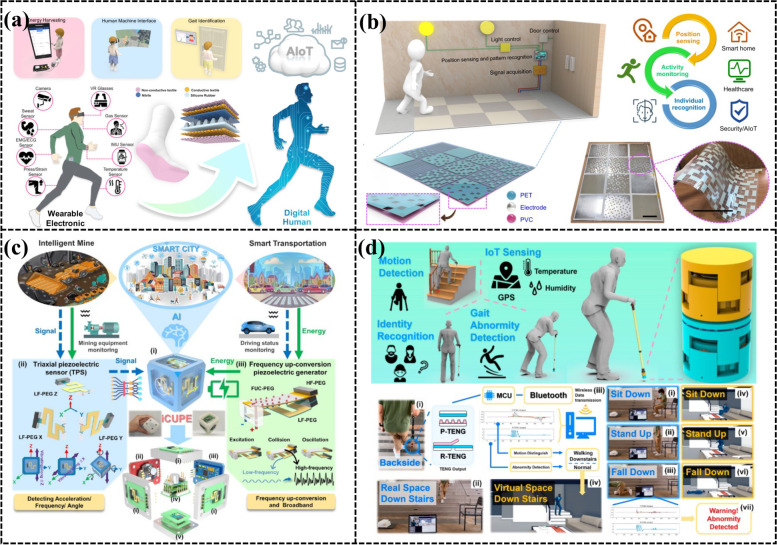
“A high accuracy of 93.54% is achieved when identifying 13 individual gait patterns.”
§ Artificial intelligence enhanced sensors - enabling technologies to next-generation healthcare and biomedical platform > AI-enhanced self-sustainable system
What the sources say
- Could not verifycites Zhang, Z. et al. 2020 sourceExperimental — accuracy not yet measured
The 'Biopotential detection using PWS dry electrodes' section reports ECG and EMG measurements, including signals recorded during movement, but does not report gait-pattern identification. Searches for '93.54%', '13 individual gait patterns', and smart socks found no supporting passage in our copy. (LLM, conf=0.76)
plainn = 13- Asserted: passes — The authors put it forward as true.
- Checkable: passes — It can be checked against evidence.
- Load-bearing: passes — The paper’s conclusions depend on it.
- Based: passes — The paper gives a reason why it holds.
The quote only partly states this claim.
- Could not verify
A conclusion the paper draws from its own results — it cites no other source for it, so there is none to check. The quote shows it is in the paper.
In the paper
“Integrating Internet of Things (IoT) technology, AI technology and HMS, a close loop with real-time monitoring, data collection, online analysis and diagnosis and treatment recommendations can be realized.”
§ Artificial intelligence enhanced sensors - enabling technologies to next-generation healthcare and biomedical platform > Introduction
plaindirect- Asserted: passes — The authors put it forward as true.
- Checkable: passes — It can be checked against evidence.
- Load-bearing: passes — The paper’s conclusions depend on it.
- Based: fails — The paper may give no reason why it holds.
Probably not a substantial claim. The paper may give no reason why it holds.
None of the sources cited for this claim have been checked yet.
In the paper
“Besides, multiple sensors are used to monitor various aspects of the target (Borchers and Pieler 2010; Dong et al. 2022). These sensors may be independent of each other (Poitras et al. 2019), meaning that they are not designed to work together or provide a unified view of the system being monitored.”
§ Artificial intelligence enhanced sensors - enabling technologies to next-generation healthcare and biomedical platform > Introduction
What the sources say
hedged- Asserted: passes — The authors put it forward as true.
- Checkable: passes — It can be checked against evidence.
- Load-bearing: passes — The paper’s conclusions depend on it.
- Based: passes — The paper gives a reason why it holds.
It may state two separate claims as one.
A conclusion the paper draws from its own results — it cites no other source for it, so there is none to check. The quote shows it is in the paper.
In the paper
“AI-enhanced sensors will provide more intelligent, convenient, and secure services for healthcare and biomedical applications.”
§ Artificial intelligence enhanced sensors - enabling technologies to next-generation healthcare and biomedical platform > Introduction
plaindirect- Asserted: passes — The authors put it forward as true.
- Checkable: fails — It may be too vague to check against evidence.
- Load-bearing: passes — The paper’s conclusions depend on it.
- Based: passes — The paper gives a reason why it holds.
Probably not a substantial claim. It may be too vague to check against evidence.
- Rests on an assumption: Encryption, identity authentication, and other technologies ensure the security of health data and the privacy of patients.
The paper states this without a source or data behind it here, so there is nothing to check it against. The quote shows it is in the paper.
In the paper
“A significant challenge arises in making sense of the vast amount of data generated by health monitoring sensors and extracting meaningful insights.”
§ Artificial intelligence enhanced sensors - enabling technologies to next-generation healthcare and biomedical platform > Introduction
plain- Asserted: passes — The authors put it forward as true.
- Checkable: passes — It can be checked against evidence.
- Load-bearing: passes — The paper’s conclusions depend on it.
- Based: passes — The paper gives a reason why it holds.
Probably not a substantial claim.
In the paper
“As shown in Fig. 2a, the authors developed a sensor that mimics the geometry and tuning mechanism of the slit organ in spiders. By creating nanoscale cracks on a metalized polyimide (PI) film and adjusting the sensor's sensitivity through pre-strain, akin to a spider leg, they were able to measure strain and pressure across various scales using a single sensor.”
§ Artificial intelligence enhanced sensors - enabling technologies to next-generation healthcare and biomedical platform > Wearable sensors > Wearable physical sensors
What the sources say
- Not checked yetcites Kim et al. 2023
plaindirect- Asserted: passes — The authors put it forward as true.
- Checkable: passes — It can be checked against evidence.
- Load-bearing: passes — The paper’s conclusions depend on it.
- Based: passes — The paper gives a reason why it holds.
It may state two separate claims as one.
In the paper
“As shown in Fig. 2d, Zhang et al. developed a highly conductive polymer dry electrode (PWS film), which possesses remarkable attributes such as self-adhesiveness, stretchability, and conductivity (Zhang, L. et al. 2020).”
§ Artificial intelligence enhanced sensors - enabling technologies to next-generation healthcare and biomedical platform > Wearable sensors > Wearable physical sensors
What the sources say
- Not checked yetcites Zhang, L. et al. 2020 source
plain- Asserted: passes — The authors put it forward as true.
- Checkable: passes — It can be checked against evidence.
- Load-bearing: passes — The paper’s conclusions depend on it.
- Based: passes — The paper gives a reason why it holds.
It may state two separate claims as one.
In the paper
“By analyzing these changes, the sensor can estimate the wearer's respiratory rate and identify abnormal ranges, which could be indicative of various health conditions such as lung degradation, anxiety, fever, and cardiac conditions.”
§ Artificial intelligence enhanced sensors - enabling technologies to next-generation healthcare and biomedical platform > Wearable sensors > Wearable physical sensors
What the sources say
- Not checked yetcites Clevenger et al. 2021
hedgedcorrelational- Asserted: passes — The authors put it forward as true.
- Checkable: passes — It can be checked against evidence.
- Load-bearing: passes — The paper’s conclusions depend on it.
- Based: passes — The paper gives a reason why it holds.
It may state two separate claims as one.
In the paper
“This study involved the identification of electrocardiographic arrhythmia, detection of muscle activity during deep tendon reflex testing, and quantification of muscular strength during contraction and relaxation.”
§ Artificial intelligence enhanced sensors - enabling technologies to next-generation healthcare and biomedical platform > Wearable sensors > Wearable physical sensors
What the sources say
- Not checked yetcites Zhang, L. et al. 2020 source
plaindirect- Asserted: passes — The authors put it forward as true.
- Checkable: passes — It can be checked against evidence.
- Load-bearing: passes — The paper’s conclusions depend on it.
- Based: passes — The paper gives a reason why it holds.
It may state two separate claims as one.
In the paper
“It revealed a notable 27% rise in respiratory rate and a significant 65% reduction in temperature variation amplitude, indicating shallow breath, when confronted with low blood oxygen saturation levels.”
§ Artificial intelligence enhanced sensors - enabling technologies to next-generation healthcare and biomedical platform > Wearable sensors > Wearable physical sensors
What the sources say
- Not checked yetcites Shin et al. 2020 source
plaindirect- Asserted: passes — The authors put it forward as true.
- Checkable: passes — It can be checked against evidence.
- Load-bearing: passes — The paper’s conclusions depend on it.
- Based: passes — The paper gives a reason why it holds.
It may state two separate claims as one.
In the paper
“It has been demonstrated that it can capture small temperature variations associated with inhalation and exhalation. Besides, it was also able to accurately monitor changes in respiration patterns during intense physical activities.”
§ Artificial intelligence enhanced sensors - enabling technologies to next-generation healthcare and biomedical platform > Wearable sensors > Wearable physical sensors
What the sources say
- Not checked yetcites Shin et al. 2020 source
boostedcorrelational- Asserted: passes — The authors put it forward as true.
- Checkable: passes — It can be checked against evidence.
- Load-bearing: passes — The paper’s conclusions depend on it.
- Based: passes — The paper gives a reason why it holds.
It may state two separate claims as one.
In the paper
“The real-time glucose detection in the tears of a rabbit eye and wireless tracking of intraocular pressure in a bovine eyeball in vitro have been successfully demonstrated.”
§ Artificial intelligence enhanced sensors - enabling technologies to next-generation healthcare and biomedical platform > Wearable sensors > Wearable chemical sensors
What the sources say
- Not checked yetcites Kim et al. 2017 source
boosted- Asserted: passes — The authors put it forward as true.
- Checkable: passes — It can be checked against evidence.
- Load-bearing: passes — The paper’s conclusions depend on it.
- Based: passes — The paper gives a reason why it holds.
It may state two separate claims as one.
In the paper
“It is specifically designed to detect the level of glucose in tears and measures intraocular pressure by utilizing the resistance and capacitance properties.”
§ Artificial intelligence enhanced sensors - enabling technologies to next-generation healthcare and biomedical platform > Wearable sensors > Wearable chemical sensors
What the sources say
- Not checked yetcites Kim et al. 2017 source
plaindirect- Asserted: passes — The authors put it forward as true.
- Checkable: passes — It can be checked against evidence.
- Load-bearing: passes — The paper’s conclusions depend on it.
- Based: passes — The paper gives a reason why it holds.
It may state two separate claims as one.
In the paper
“The patch has undergone testing to evaluate its performance in dynamic sweat behaviors during light physical activities, glucose fluctuations, and drug administration for Parkinson's disease, demonstrating its potential as an ideal platform for daily monitoring of an individual's physiological status and medical condition in clinical and research settings.”
§ Artificial intelligence enhanced sensors - enabling technologies to next-generation healthcare and biomedical platform > Wearable sensors > Wearable chemical sensors
What the sources say
- Not checked yetcites Nyein et al. 2021 source
boosted- Asserted: passes — The authors put it forward as true.
- Checkable: passes — It can be checked against evidence.
- Load-bearing: passes — The paper’s conclusions depend on it.
- Based: passes — The paper gives a reason why it holds.
It may state two separate claims as one.
In the paper
“For instance, as shown in Fig. 2f Kim et al. introduced a tear sensor using a graphene field-effect transistor (FET) integrated with a graphene-silver nanowire (AgNW) composite antenna, which works at radio frequency and wirelessly transmits sensory information upon the occurrence of glucose oxidation on the graphene channel (Kim et al. 2017).”
§ Artificial intelligence enhanced sensors - enabling technologies to next-generation healthcare and biomedical platform > Wearable sensors > Wearable chemical sensors
What the sources say
- Not checked yetcites Kim et al. 2017 source
plaindirect- Asserted: passes — The authors put it forward as true.
- Checkable: passes — It can be checked against evidence.
- Load-bearing: unclear — It is unclear whether the paper’s conclusions depend on it.
- Based: passes — The paper gives a reason why it holds.
It may state two separate claims as one.
In the paper
“To address the challenge of low sweat secretion rates during rest, microfluidics is integrated into the patch, which prevents evaporation and detects sweat rate selectively. Additionally, a laminated hydrophilic filler is incorporated, enabling rapid uptake of sweat into the sensing channel, hence reducing sweat accumulation time.”
§ Artificial intelligence enhanced sensors - enabling technologies to next-generation healthcare and biomedical platform > Wearable sensors > Wearable chemical sensors
What the sources say
- Not checked yetcites Nyein et al. 2021 source
plaindirect- Asserted: passes — The authors put it forward as true.
- Checkable: passes — It can be checked against evidence.
- Load-bearing: passes — The paper’s conclusions depend on it.
- Based: passes — The paper gives a reason why it holds.
It may state two separate claims as one.
In the paper
“Moreover, wireless communication is limited to a range of 10 cm from the body, ensuring that sensing signals are secure and cannot be intercepted by external sources in the surrounding area.”
§ Artificial intelligence enhanced sensors - enabling technologies to next-generation healthcare and biomedical platform > Wearable sensors > Wearable body sensors network
What the sources say
- Not checked yetcites Tian, X. et al. 2019b
plaindirect- Asserted: passes — The authors put it forward as true.
- Checkable: passes — It can be checked against evidence.
- Load-bearing: passes — The paper’s conclusions depend on it.
- Based: passes — The paper gives a reason why it holds.
It may state two separate claims as one.
A conclusion the paper draws from its own results — it cites no other source for it, so there is none to check. The quote shows it is in the paper.
In the paper
“These findings suggest that clothing can be used to manipulate electromagnetic waves around the body, providing a foundation for integrating concepts derived from microwave or photonic circuits into textiles, and enabling wireless sensing, signal processing, and energy transfer applications.”
§ Artificial intelligence enhanced sensors - enabling technologies to next-generation healthcare and biomedical platform > Wearable sensors > Wearable body sensors network
hedgeddirect- Asserted: passes — The authors put it forward as true.
- Checkable: passes — It can be checked against evidence.
- Load-bearing: passes — The paper’s conclusions depend on it.
- Based: passes — The paper gives a reason why it holds.
It may state two separate claims as one.
In the paper
“The improved signal transmission efficiency by a factor of 1,000 results in reduced power usage and increased data transfer speed.”
§ Artificial intelligence enhanced sensors - enabling technologies to next-generation healthcare and biomedical platform > Wearable sensors > Wearable body sensors network
What the sources say
- Not checked yetcites Tian, X. et al. 2019b
plaindirect- Asserted: passes — The authors put it forward as true.
- Checkable: passes — It can be checked against evidence.
- Load-bearing: passes — The paper’s conclusions depend on it.
- Based: passes — The paper gives a reason why it holds.
It may state two separate claims as one.
None of the sources cited for this claim have been checked yet.
In the paper
“For example, the normal functions of the heart and blood vessels (Ouyang et al. 2021), the recovery progress of the injured tissue (Zhang et al. 2021), and the abnormality of the central nervous signal (Shin et al. 2021), etc., all of which require devices to be implanted inside the body for a long-term status monitoring (Jiang et al. 2020).”
§ Artificial intelligence enhanced sensors - enabling technologies to next-generation healthcare and biomedical platform > Wearable sensors > Wearable body sensors network
What the sources say
plaindirect- Asserted: passes — The authors put it forward as true.
- Checkable: passes — It can be checked against evidence.
- Load-bearing: passes — The paper’s conclusions depend on it.
- Based: passes — The paper gives a reason why it holds.
It may state two separate claims as one.
In the paper
“The SEPS demonstrated its feasibility through in vitro and in vivo experiments, addressing the limitations of traditional invasive monitoring methods by providing a minimally invasive and self-powered solution.”
§ Artificial intelligence enhanced sensors - enabling technologies to next-generation healthcare and biomedical platform > Wearable sensors > In vivo self-powered sensors
What the sources say
- Not checked yetcites Liu et al. 2019 source
boosteddirect- Asserted: passes — The authors put it forward as true.
- Checkable: passes — It can be checked against evidence.
- Load-bearing: passes — The paper’s conclusions depend on it.
- Based: passes — The paper gives a reason why it holds.
It may state two separate claims as one.
In the paper
“After good packaging, this active sensor remained to monitor functions for 72 hours after the closure of the chest and behaved good biocompatibility (Fig. 3aiii).”
§ Artificial intelligence enhanced sensors - enabling technologies to next-generation healthcare and biomedical platform > Wearable sensors > In vivo self-powered sensors
What the sources say
- Not checked yetcites Ma et al. 2016
plainSingle case- Asserted: passes — The authors put it forward as true.
- Checkable: passes — It can be checked against evidence.
- Load-bearing: passes — The paper’s conclusions depend on it.
- Based: passes — The paper gives a reason why it holds.
It may state two separate claims as one.
In the paper
“After optimization exploration, SEPS achieved a sensitivity of 1.195 mV/mmHg with a linearity of R2=0.997.”
§ Artificial intelligence enhanced sensors - enabling technologies to next-generation healthcare and biomedical platform > Wearable sensors > In vivo self-powered sensors
What the sources say
- Not checked yetcites Liu et al. 2019 source
plain- Asserted: passes — The authors put it forward as true.
- Checkable: passes — It can be checked against evidence.
- Load-bearing: passes — The paper’s conclusions depend on it.
- Based: passes — The paper gives a reason why it holds.
It may state two separate claims as one.
In the paper
“In this system, a TENG-based pressure sensor was employed to detect the filling state of the bladder. A bistable micro-actuator based on shape memory alloy was used to induce contraction and relaxation of the bladder for urination.”
§ Artificial intelligence enhanced sensors - enabling technologies to next-generation healthcare and biomedical platform > Wearable sensors > In vivo self-powered sensors
What the sources say
- Not checked yetcites Arab Hassani et al. 2018
plaindirect- Asserted: passes — The authors put it forward as true.
- Checkable: passes — It can be checked against evidence.
- Load-bearing: unclear — It is unclear whether the paper’s conclusions depend on it.
- Based: passes — The paper gives a reason why it holds.
It may state two separate claims as one.
None of the sources cited for this claim have been checked yet.
In the paper
“Transient electrons can be degraded and absorbed within the body after they complete their service, saving patients from pain and the risk of infection from a second surgery to remove the implant (Chao et al. 2020; Li et al. 2018; Li et al. 2023; Qiang Zheng et al. 2016).”
§ Artificial intelligence enhanced sensors - enabling technologies to next-generation healthcare and biomedical platform > Wearable sensors > In vivo self-powered sensors
What the sources say
- Not checked yetcites Chao et al. 2020
- Not checked yetcites Li et al. 2018
- Not checked yetcites Li et al. 2023
plaindirect- Asserted: passes — The authors put it forward as true.
- Checkable: passes — It can be checked against evidence.
- Load-bearing: passes — The paper’s conclusions depend on it.
- Based: passes — The paper gives a reason why it holds.
It may state two separate claims as one.
In the paper
“Additionally, electronics assembled with this interface were used for in vivo neural modulation and skin electromyography monitoring with high signal quality and mechanical robustness.”
§ Artificial intelligence enhanced sensors - enabling technologies to next-generation healthcare and biomedical platform > Wearable sensors > Neural interfaces
What the sources say
- Not checked yetcites Jiang et al. 2023 source
plaindirect- Asserted: passes — The authors put it forward as true.
- Checkable: passes — It can be checked against evidence.
- Load-bearing: passes — The paper’s conclusions depend on it.
- Based: passes — The paper gives a reason why it holds.
It may state two separate claims as one.
In the paper
“High-quality recordings from SUNI contributed differentiate tactile and proprioceptive stimuli, and furtherly provided for high spatial resolution classification of neural signals.”
§ Artificial intelligence enhanced sensors - enabling technologies to next-generation healthcare and biomedical platform > Wearable sensors > Neural interfaces
What the sources say
- Not checked yetcites Wang, J. et al., 2018 source
plaindirect- Asserted: passes — The authors put it forward as true.
- Checkable: passes — It can be checked against evidence.
- Load-bearing: passes — The paper’s conclusions depend on it.
- Based: passes — The paper gives a reason why it holds.
It may state two separate claims as one.
None of the sources cited for this claim have been checked yet.
In the paper
“Through tracking physiological and pathological factors and delivering therapeutic agents acting in an on-demand manner, IWMDs have become indispensable in providing predictive bio-analysis, timely treatment intervention, and improved drug efficacy, thereby promoting precision medicine (cheol Jeong et al. 2018; Tan et al. 2022).”
§ Artificial intelligence enhanced sensors - enabling technologies to next-generation healthcare and biomedical platform > Wearable sensors > Neural interfaces
What the sources say
plaindirect- Asserted: passes — The authors put it forward as true.
- Checkable: passes — It can be checked against evidence.
- Load-bearing: passes — The paper’s conclusions depend on it.
- Based: passes — The paper gives a reason why it holds.
It may state two separate claims as one.
In the paper
“Another challenge is the need for improved resolution and specificity of neural recording and stimulation, as well as the ability to interface with large populations of neurons (Li et al. 2022).”
§ Artificial intelligence enhanced sensors - enabling technologies to next-generation healthcare and biomedical platform > Wearable sensors > Neural interfaces
What the sources say
- Not checked yetcites Li et al. 2022
plain- Asserted: passes — The authors put it forward as true.
- Checkable: passes — It can be checked against evidence.
- Load-bearing: fails — The paper’s conclusions may not depend on it.
- Based: passes — The paper gives a reason why it holds.
Probably not a substantial claim. The paper’s conclusions may not depend on it. It may state two separate claims as one.
In the paper
“Figure 5b presents a novel approach for achieving transdermal delivery of photosensitizers in a deeper and faster manner and improving photodynamic therapy (PDT) through the utilization of microneedle (MN) patches loaded with PS and O2 propellant (Liu, P. et al. 2022b).”
§ Artificial intelligence enhanced sensors - enabling technologies to next-generation healthcare and biomedical platform > Wearable sensors > Neural interfaces
What the sources say
- Not checked yetcites Liu, P. et al. 2022b
plaindirect- Asserted: passes — The authors put it forward as true.
- Checkable: passes — It can be checked against evidence.
- Load-bearing: passes — The paper’s conclusions depend on it.
- Based: passes — The paper gives a reason why it holds.
It may state two separate claims as one.
In the paper
“Additionally, the system secretes lactic acid, which helps shift macrophages into an anti-inflammatory phenotype, facilitating angiogenesis in diabetic wounds.”
§ Artificial intelligence enhanced sensors - enabling technologies to next-generation healthcare and biomedical platform > Wearable sensors > Neural interfaces
What the sources say
- Not checked yetcites Lu et al. 2021
plaindirect- Asserted: passes — The authors put it forward as true.
- Checkable: passes — It can be checked against evidence.
- Load-bearing: passes — The paper’s conclusions depend on it.
- Based: passes — The paper gives a reason why it holds.
It may state two separate claims as one.
In the paper
“The results demonstrated a lower growth rate and reduced mass of the tumor, confirming the improved efficacy of PDT when using the proposed approach.”
§ Artificial intelligence enhanced sensors - enabling technologies to next-generation healthcare and biomedical platform > Wearable sensors > Neural interfaces
What the sources say
- Not checked yetcites Liu, P. et al. 2022b
boosteddirect- Asserted: passes — The authors put it forward as true.
- Checkable: passes — It can be checked against evidence.
- Load-bearing: passes — The paper’s conclusions depend on it.
- Based: passes — The paper gives a reason why it holds.
It may state two separate claims as one.
In the paper
“This electrical stimulation serves as a supplementary factor that counteracts the decline in epidermal growth factor caused by glutathione and enhances the expression of its receptors in keratinocyte cells, effectively addressing the issue of receptor desensitization.”
§ Artificial intelligence enhanced sensors - enabling technologies to next-generation healthcare and biomedical platform > Wearable sensors > Neural interfaces
What the sources say
- Not checked yetcites Yang, Yuan et al. 2022d
plaindirect- Asserted: passes — The authors put it forward as true.
- Checkable: passes — It can be checked against evidence.
- Load-bearing: passes — The paper’s conclusions depend on it.
- Based: passes — The paper gives a reason why it holds.
It may state two separate claims as one.
In the paper
“By utilizing the living system, the production and protection of vascular endothelial growth factor (VEGF) is achieved, leading to enhanced proliferation, migration, and tube formation in endothelial cells.”
§ Artificial intelligence enhanced sensors - enabling technologies to next-generation healthcare and biomedical platform > Wearable sensors > Neural interfaces
What the sources say
- Not checked yetcites Lu et al. 2021
plaindirect- Asserted: passes — The authors put it forward as true.
- Checkable: passes — It can be checked against evidence.
- Load-bearing: passes — The paper’s conclusions depend on it.
- Based: passes — The paper gives a reason why it holds.
It may state two separate claims as one. The quote only partly states this claim.
In the paper
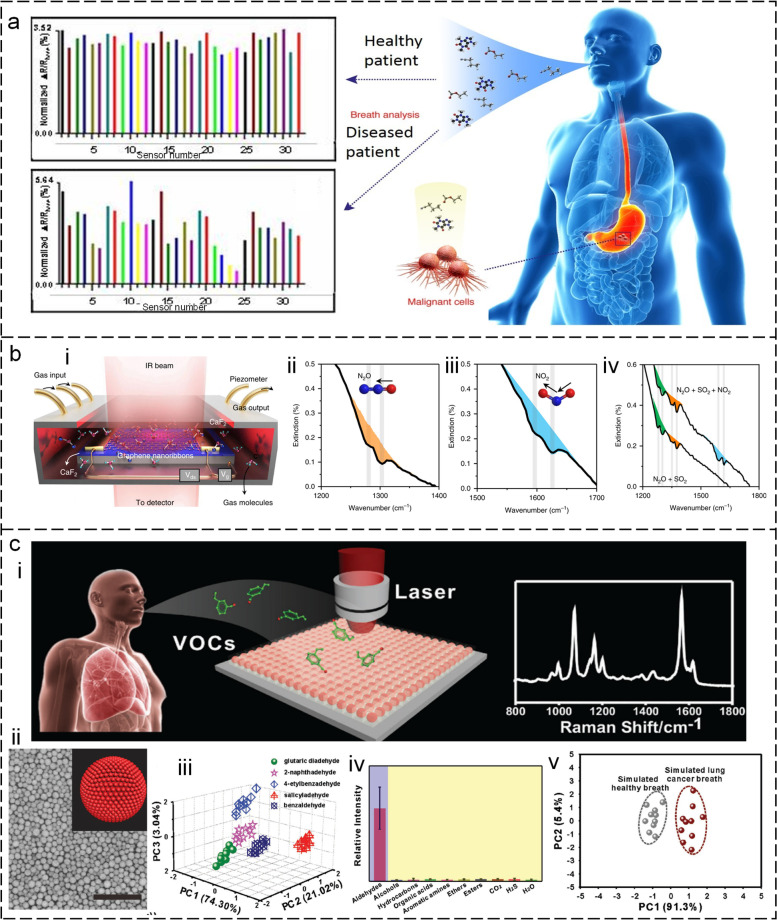
“Changes in the levels of certain VOCs, such as ethane and pentane, have been associated with asthma (Peel et al. 2020).”
§ Artificial intelligence enhanced sensors - enabling technologies to next-generation healthcare and biomedical platform > VOC detection > Optical VOC gas identification
What the sources say
- Not checked yetcites Peel et al. 2020 source
plaincorrelational- Asserted: passes — The authors put it forward as true.
- Checkable: passes — It can be checked against evidence.
- Load-bearing: fails — The paper’s conclusions may not depend on it.
- Based: passes — The paper gives a reason why it holds.
Probably not a substantial claim. The paper’s conclusions may not depend on it.
None of the sources cited for this claim have been checked yet.
In the paper
“VOC detection by infrared (IR) spectroscopy is advantageous (Lin and Xu 2020; Liu et al. 2021; Liu, X. et al. 2022d; Zhou, J. et al. 2023b; Zhu et al. 2021). Because it can not only detect the amount of VOC but also identify its type, which is very important for the diagnosis of diseases.”
§ Artificial intelligence enhanced sensors - enabling technologies to next-generation healthcare and biomedical platform > VOC detection > Optical VOC gas identification
What the sources say
- Not checked yetcites Lin and Xu 2020
- Not checked yetcites Liu et al. 2021
- Not checked yetcites Liu, X. et al. 2022d
plaindirect- Asserted: passes — The authors put it forward as true.
- Checkable: passes — It can be checked against evidence.
- Load-bearing: passes — The paper’s conclusions depend on it.
- Based: passes — The paper gives a reason why it holds.
It may state two separate claims as one.
In the paper
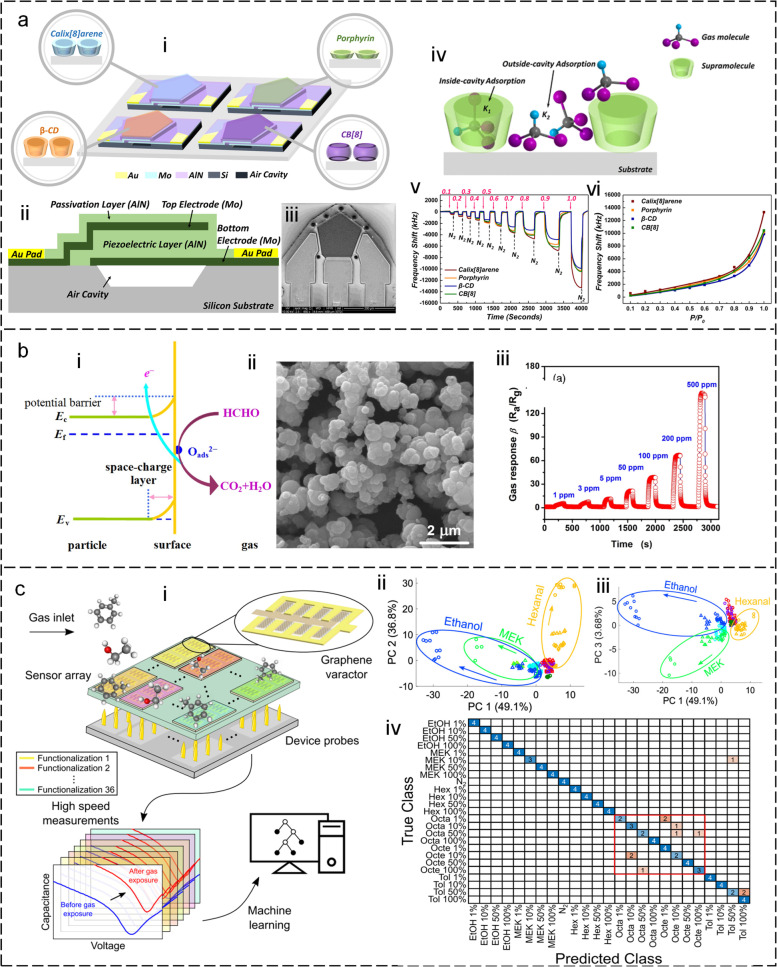
“When an electrical signal is applied to the piezoelectric substrate, it generates an acoustic wave that propagates through the substrate and the sensing film.”
§ Artificial intelligence enhanced sensors - enabling technologies to next-generation healthcare and biomedical platform > VOC detection > Electronic VOC gas detection
What the sources say
- Not checked yetcites McGinn et al. 2020 source
plaindirect- Asserted: passes — The authors put it forward as true.
- Checkable: passes — It can be checked against evidence.
- Load-bearing: fails — The paper’s conclusions may not depend on it.
- Based: passes — The paper gives a reason why it holds.
Probably not a substantial claim. The paper’s conclusions may not depend on it.
In the paper
“Combined with a machine learning algorithm, the platform can distinguish between lung cancer and healthy lung breath (Fig. 6c-iii, iv, v), which can be used as an in vitro diagnostic tool for early-stage lung cancer.”
§ Artificial intelligence enhanced sensors - enabling technologies to next-generation healthcare and biomedical platform > VOC detection > Optical VOC gas identification
What the sources say
- Not checked yetcites Qiao et al. 2018 source
plaindirect- Asserted: passes — The authors put it forward as true.
- Checkable: passes — It can be checked against evidence.
- Load-bearing: passes — The paper’s conclusions depend on it.
- Based: passes — The paper gives a reason why it holds.
It may state two separate claims as one.
None of the sources cited for this claim have been checked yet.
In the paper
“Representative methods include acoustic wave devices (AWDs) based on the piezoelectric effect (Chen et al. 2018; Dou et al. 2018; Zhang et al. 2018), semiconductor metal oxide (Lin et al. 2019), and two-dimensional materials (Sun et al. 2018).”
§ Artificial intelligence enhanced sensors - enabling technologies to next-generation healthcare and biomedical platform > VOC detection > Electronic VOC gas detection
What the sources say
plain- Asserted: passes — The authors put it forward as true.
- Checkable: passes — It can be checked against evidence.
- Load-bearing: unclear — It is unclear whether the paper’s conclusions depend on it.
- Based: passes — The paper gives a reason why it holds.
It may state two separate claims as one.
In the paper
“Semiconducting metal oxides (SMOs) are widely used for VOC detection due to their high sensitivity and low cost (Steinhauer 2021).”
§ Artificial intelligence enhanced sensors - enabling technologies to next-generation healthcare and biomedical platform > VOC detection > Electronic VOC gas detection
What the sources say
- Not checked yetcites Steinhauer 2021
plaindirect- Asserted: passes — The authors put it forward as true.
- Checkable: passes — It can be checked against evidence.
- Load-bearing: fails — The paper’s conclusions may not depend on it.
- Based: passes — The paper gives a reason why it holds.
Probably not a substantial claim. The paper’s conclusions may not depend on it.
In the paper
“By preferentially adsorbing the target gas molecules onto their surface, these films amplify the sensor's sensitivity, allowing for the detection of even trace amounts of the gas.”
§ Artificial intelligence enhanced sensors - enabling technologies to next-generation healthcare and biomedical platform > VOC detection > Electronic VOC gas detection
What the sources say
- Not checked yetcites McGinn et al. 2020 source
plaindirect- Asserted: passes — The authors put it forward as true.
- Checkable: passes — It can be checked against evidence.
- Load-bearing: passes — The paper’s conclusions depend on it.
- Based: passes — The paper gives a reason why it holds.
It may state two separate claims as one.
In the paper
“Their engineered composition ensures long-term stability and reversibility, enabling consistent and reliable performance of the gas sensor over-time.”
§ Artificial intelligence enhanced sensors - enabling technologies to next-generation healthcare and biomedical platform > VOC detection > Electronic VOC gas detection
What the sources say
- Not checked yetcites McGinn et al. 2020 source
plaindirect- Asserted: passes — The authors put it forward as true.
- Checkable: passes — It can be checked against evidence.
- Load-bearing: unclear — It is unclear whether the paper’s conclusions depend on it.
- Based: passes — The paper gives a reason why it holds.
It may state two separate claims as one.
In the paper
“The presence of VOCs increases the number of free electrons, which in turn increases the conductivity of the sensor material.”
§ Artificial intelligence enhanced sensors - enabling technologies to next-generation healthcare and biomedical platform > VOC detection > Electronic VOC gas detection
What the sources say
- Not checked yetcites Steinhauer 2021
plaindirect- Asserted: passes — The authors put it forward as true.
- Checkable: passes — It can be checked against evidence.
- Load-bearing: unclear — It is unclear whether the paper’s conclusions depend on it.
- Based: passes — The paper gives a reason why it holds.
It may state two separate claims as one.
In the paper
“Optical methods for VOC gas detection offer high sensitivity, excellent selectivity, and fast response times (Khan et al. 2020).”
§ Artificial intelligence enhanced sensors - enabling technologies to next-generation healthcare and biomedical platform > VOC detection > Electronic VOC gas detection
What the sources say
- Not checked yetcites Khan et al. 2020 source
plain- Asserted: passes — The authors put it forward as true.
- Checkable: passes — It can be checked against evidence.
- Load-bearing: unclear — It is unclear whether the paper’s conclusions depend on it.
- Based: passes — The paper gives a reason why it holds.
It may state two separate claims as one.
In the paper
“Li et al. (Li et al. 2017) prepared SnO2 microspheres for formaldehyde gas sensing by a simple hydrothermal method (Fig. 7b-i, ii).”
§ Artificial intelligence enhanced sensors - enabling technologies to next-generation healthcare and biomedical platform > VOC detection > Electronic VOC gas detection
What the sources say
- Not checked yetcites Li et al. 2017
plain- Asserted: passes — The authors put it forward as true.
- Checkable: passes — It can be checked against evidence.
- Load-bearing: fails — The paper’s conclusions may not depend on it.
- Based: passes — The paper gives a reason why it holds.
Probably not a substantial claim. The paper’s conclusions may not depend on it.
In the paper
“The results show that the sensor has a response value of 38.3 to 100 ppm formaldehyde at an operating temperature of 200 °C, and the detection limit reaches 1 ppm (Fig. 7b-iii).”
§ Artificial intelligence enhanced sensors - enabling technologies to next-generation healthcare and biomedical platform > VOC detection > Electronic VOC gas detection
What the sources say
- Not checked yetcites Li et al. 2017
plain- Asserted: passes — The authors put it forward as true.
- Checkable: passes — It can be checked against evidence.
- Load-bearing: unclear — It is unclear whether the paper’s conclusions depend on it.
- Based: passes — The paper gives a reason why it holds.
It may state two separate claims as one.
In the paper
“While electrical methods may have slightly lower sensitivity compared to optical methods, they can compensate with the use of sensor arrays and pattern recognition techniques to enhance selectivity.”
§ Artificial intelligence enhanced sensors - enabling technologies to next-generation healthcare and biomedical platform > VOC detection > Electronic VOC gas detection
What the sources say
- Not checked yetcites McGinn et al. 2020 source
plaindirect- Asserted: passes — The authors put it forward as true.
- Checkable: passes — It can be checked against evidence.
- Load-bearing: unclear — It is unclear whether the paper’s conclusions depend on it.
- Based: passes — The paper gives a reason why it holds.
It may state two separate claims as one.
In the paper
“Electrical methods generally have faster response times and can be more resilient to environmental interferences.”
§ Artificial intelligence enhanced sensors - enabling technologies to next-generation healthcare and biomedical platform > VOC detection > Electronic VOC gas detection
What the sources say
- Not checked yetcites McGinn et al. 2020 source
plaincorrelational- Asserted: passes — The authors put it forward as true.
- Checkable: passes — It can be checked against evidence.
- Load-bearing: unclear — It is unclear whether the paper’s conclusions depend on it.
- Based: passes — The paper gives a reason why it holds.
It may state two separate claims as one.
In the paper
“However, they may be susceptible to interference from environmental factors and can be costlier due to specialized optical components.”
§ Artificial intelligence enhanced sensors - enabling technologies to next-generation healthcare and biomedical platform > VOC detection > Electronic VOC gas detection
What the sources say
- Not checked yetcites Khan et al. 2020 source
hedgedconditional- Asserted: passes — The authors put it forward as true.
- Checkable: passes — It can be checked against evidence.
- Load-bearing: unclear — It is unclear whether the paper’s conclusions depend on it.
- Based: passes — The paper gives a reason why it holds.
It may state two separate claims as one.
In the paper
“However, they may require periodic calibration or replacement of sensing materials, and their selectivity may be limited for individual sensors.”
§ Artificial intelligence enhanced sensors - enabling technologies to next-generation healthcare and biomedical platform > VOC detection > Electronic VOC gas detection
What the sources say
- Not checked yetcites McGinn et al. 2020 source
hedgedconditional- Asserted: passes — The authors put it forward as true.
- Checkable: passes — It can be checked against evidence.
- Load-bearing: unclear — It is unclear whether the paper’s conclusions depend on it.
- Based: passes — The paper gives a reason why it holds.
It may state two separate claims as one.
In the paper
“On the other hand, electrical methods exhibit good sensitivity in the parts per million (ppm) range and offer flexibility in sensor design (McGinn et al. 2020).”
§ Artificial intelligence enhanced sensors - enabling technologies to next-generation healthcare and biomedical platform > VOC detection > Electronic VOC gas detection
What the sources say
- Not checked yetcites McGinn et al. 2020 source
plain- Asserted: passes — The authors put it forward as true.
- Checkable: passes — It can be checked against evidence.
- Load-bearing: unclear — It is unclear whether the paper’s conclusions depend on it.
- Based: passes — The paper gives a reason why it holds.
It may state two separate claims as one.
None of the sources cited for this claim have been checked yet.
In the paper
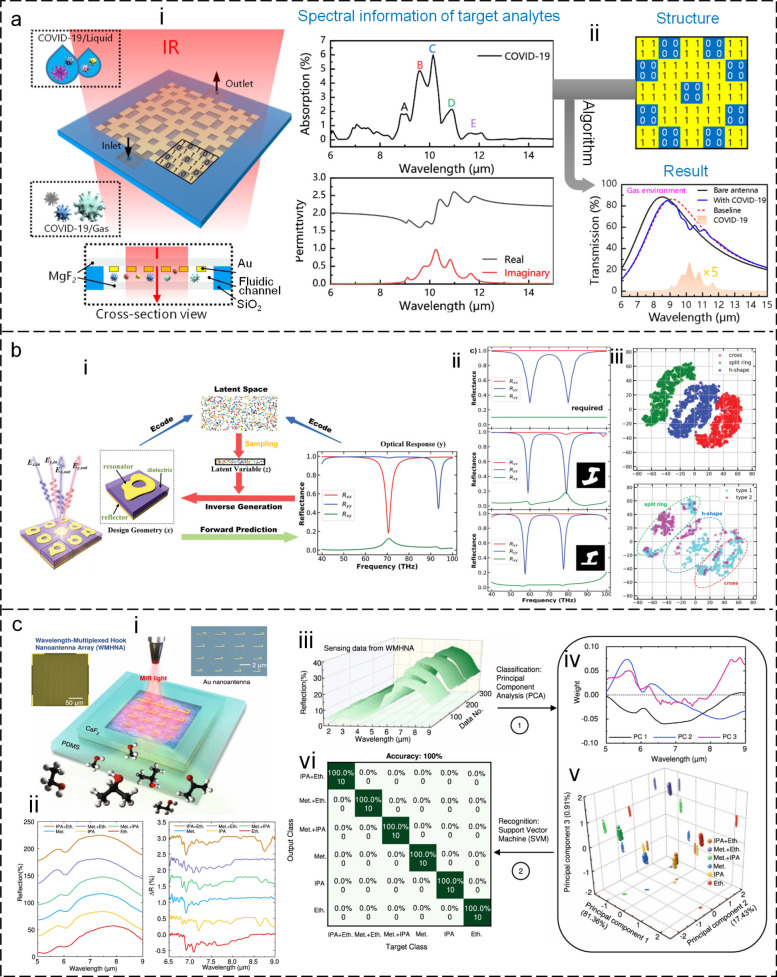
“AI-assisted design systems efficiently handle these tasks, leading to more effective and efficient design outcomes.”
§ Artificial intelligence enhanced sensors - enabling technologies to next-generation healthcare and biomedical platform > VOC detection > AI-enhanced VOC platform
What the sources say
plaindirect- Asserted: passes — The authors put it forward as true.
- Checkable: passes — It can be checked against evidence.
- Load-bearing: passes — The paper’s conclusions depend on it.
- Based: passes — The paper gives a reason why it holds.
It may state two separate claims as one.
None of the sources cited for this claim have been checked yet.
In the paper
“Subsequently, the GA rapidly identified the optimal solution with high sensitivity, zero detuning of plasmonic resonance and molecular vibration, and high enhancement factor from multi-design parameter problems (Fig. 8a-ii).”
§ Artificial intelligence enhanced sensors - enabling technologies to next-generation healthcare and biomedical platform > VOC detection > AI-enhanced VOC platform
What the sources say
- Not checked yetcites Li, D. et al. 2021a
- Not checked yetcites Li, D. et al. 2021b
plaindirect- Asserted: passes — The authors put it forward as true.
- Checkable: passes — It can be checked against evidence.
- Load-bearing: passes — The paper’s conclusions depend on it.
- Based: passes — The paper gives a reason why it holds.
It may state two separate claims as one.
A conclusion the paper draws from its own results — it cites no other source for it, so there is none to check. The quote shows it is in the paper.
In the paper
“Overall, the advances in artificial intelligence techniques offer the promising potential to enhance VOC sensors through rapid sensor design and automated data processing, thus enabling them to effectively address the challenges of the future.”
§ Artificial intelligence enhanced sensors - enabling technologies to next-generation healthcare and biomedical platform > VOC detection > AI-enhanced VOC platform
hedgedconditional- Asserted: passes — The authors put it forward as true.
- Checkable: passes — It can be checked against evidence.
- Load-bearing: passes — The paper’s conclusions depend on it.
- Based: passes — The paper gives a reason why it holds.
It may state two separate claims as one.
In the paper
“Besides, physical knowledge can improve the algorithm’s performance and reduce the difficulty of optimization.”
§ Artificial intelligence enhanced sensors - enabling technologies to next-generation healthcare and biomedical platform > VOC detection > AI-enhanced VOC platform
What the sources say
- Not checked yetcites Khatib et al. 2022
plaindirect- Asserted: passes — The authors put it forward as true.
- Checkable: passes — It can be checked against evidence.
- Load-bearing: unclear — It is unclear whether the paper’s conclusions depend on it.
- Based: passes — The paper gives a reason why it holds.
It may state two separate claims as one.
In the paper
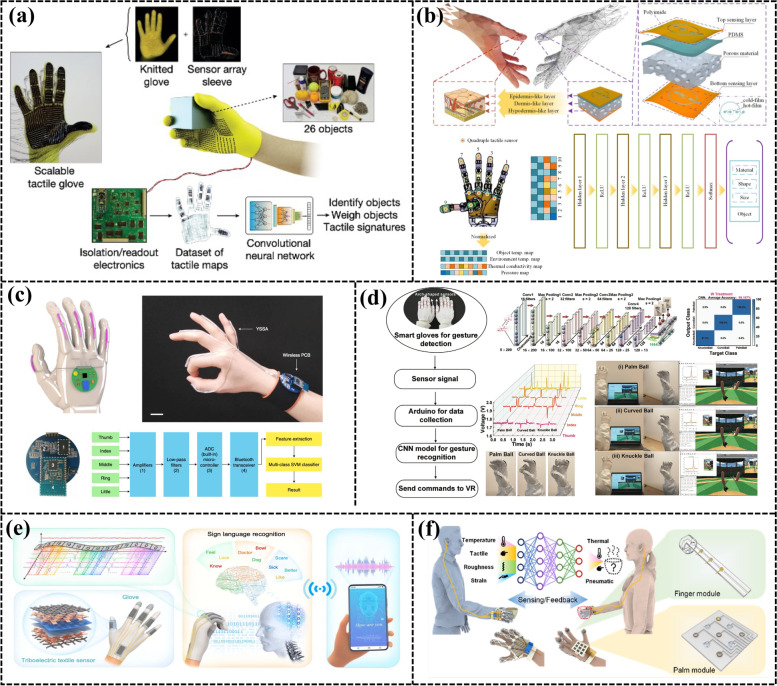
“The STAG comprises a sensing sleeve with 584 piezoresistive sensors, a knit glove, and readout electronics that utilize the ResNet-18 architecture to train the model and ultimately recognize 26 distinct objects.”
§ Artificial intelligence enhanced sensors - enabling technologies to next-generation healthcare and biomedical platform > Human-machine interfaces > Tactile sensor
What the sources say
- Not checked yetcites Sundaram et al. 2019 source
plain- Asserted: passes — The authors put it forward as true.
- Checkable: passes — It can be checked against evidence.
- Load-bearing: unclear — It is unclear whether the paper’s conclusions depend on it.
- Based: passes — The paper gives a reason why it holds.
It may state two separate claims as one.
In the paper
“The tactile sensors can detect multiple stimuli simultaneously with negligible cross-coupling errors, offering more insightful features related to the objects and improving recognition precision during the ML process.”
§ Artificial intelligence enhanced sensors - enabling technologies to next-generation healthcare and biomedical platform > Human-machine interfaces > Tactile sensor
What the sources say
- Not checked yetcites Li et al, 2020
plaindirect- Asserted: passes — The authors put it forward as true.
- Checkable: passes — It can be checked against evidence.
- Load-bearing: passes — The paper’s conclusions depend on it.
- Based: passes — The paper gives a reason why it holds.
It may state two separate claims as one.
In the paper
“As portrayed in Fig. 9b, Li et al. develop a flexible quadruple tactile sensor that enables a robotic hand to perceive grasped objects of varying materials and shapes and further employs a multilayer perceptron (MLP) with three hidden layers to achieve automatic waste classification.”
§ Artificial intelligence enhanced sensors - enabling technologies to next-generation healthcare and biomedical platform > Human-machine interfaces > Tactile sensor
What the sources say
- Not checked yetcites Li et al, 2020
plaindirect- Asserted: passes — The authors put it forward as true.
- Checkable: passes — It can be checked against evidence.
- Load-bearing: passes — The paper’s conclusions depend on it.
- Based: passes — The paper gives a reason why it holds.
It may state two separate claims as one.
None of the sources cited for this claim have been checked yet.
In the paper
“The rapid development of sensor technology has been a driving force behind Industry 4.0 (Wang, T. et al.2018c; Zhou et al. 2015; Zhu et al. 2019).”
§ Artificial intelligence enhanced sensors - enabling technologies to next-generation healthcare and biomedical platform > Human-machine interfaces
What the sources say
- Not checked yetcites Wang, T. et al.2018c
- Not checked yetcites Zhou et al. 2015
- Not checked yetcites Zhu et al. 2019
plaindirect- Asserted: passes — The authors put it forward as true.
- Checkable: passes — It can be checked against evidence.
- Load-bearing: fails — The paper’s conclusions may not depend on it.
- Based: passes — The paper gives a reason why it holds.
Probably not a substantial claim. The paper’s conclusions may not depend on it.
None of the sources cited for this claim have been checked yet.
In the paper
“By harnessing advanced sensor technology and AI data analytics, wearable devices can offer real-time insights, facilitating smarter decision-making and enhancing efficiency across various applications (Han et al. 2018; Liu, H. et al 2020b; Wang, Y. et al., 2021).”
§ Artificial intelligence enhanced sensors - enabling technologies to next-generation healthcare and biomedical platform > Human-machine interfaces
What the sources say
- Not checked yetcites Han et al. 2018 source
- Not checked yetcites Liu, H. et al 2020b
- Not checked yetcites Wang, Y. et al., 2021
plaindirect- Asserted: passes — The authors put it forward as true.
- Checkable: passes — It can be checked against evidence.
- Load-bearing: unclear — It is unclear whether the paper’s conclusions depend on it.
- Based: passes — The paper gives a reason why it holds.
It may state two separate claims as one.
In the paper
“These methods demonstrate that a substantially larger amount of information becomes available for examining interactions at a more profound level, thanks to the advancements in flexible electronic components and the support of DL techniques, thus facilitating the future design and development of next-generation wearable electronics and systems.”
§ Artificial intelligence enhanced sensors - enabling technologies to next-generation healthcare and biomedical platform > Human-machine interfaces > Tactile sensor
What the sources say
- Not checked yetcites Sundaram et al. 2019 source
boosteddirect- Asserted: passes — The authors put it forward as true.
- Checkable: passes — It can be checked against evidence.
- Load-bearing: passes — The paper’s conclusions depend on it.
- Based: passes — The paper gives a reason why it holds.
It may state two separate claims as one.
The paper states this without a source or data behind it here, so there is nothing to check it against. The quote shows it is in the paper.
In the paper
“In comparison to conventional and prevalent resistive and capacitive sensors, piezoelectric sensors and triboelectric sensors can generate self-produced voltage upon mechanical deformation, removing the need for external power sources.”
§ Artificial intelligence enhanced sensors - enabling technologies to next-generation healthcare and biomedical platform > Human-machine interfaces > AI-enhanced HMIs
plaindirect- Asserted: passes — The authors put it forward as true.
- Checkable: passes — It can be checked against evidence.
- Load-bearing: passes — The paper’s conclusions depend on it.
- Based: passes — The paper gives a reason why it holds.
Probably not a substantial claim. It may state two separate claims as one.
None of the sources cited for this claim have been checked yet.
In the paper
“This innovative design allows for complex gesture recognition and control in both real and virtual spaces while minimizing the negative effects of humidity and sweat on performance.”
§ Artificial intelligence enhanced sensors - enabling technologies to next-generation healthcare and biomedical platform > Human-machine interfaces > AI-enhanced HMIs
What the sources say
- Not checked yetcites Wen, F. et al. 2020a
- Not checked yetcites Wen, F. et al. 2020b
- Not checked yetcites Wen, F. et al. 2020c
plaindirect- Asserted: passes — The authors put it forward as true.
- Checkable: passes — It can be checked against evidence.
- Load-bearing: passes — The paper’s conclusions depend on it.
- Based: passes — The paper gives a reason why it holds.
It may state two separate claims as one.
In the paper
“This shows an economical approach to enable communication between individuals who use sign language and those who do not, and it also highlights the potential use of TENG-based HMI in healthcare settings.”
§ Artificial intelligence enhanced sensors - enabling technologies to next-generation healthcare and biomedical platform > Human-machine interfaces > AI-enhanced HMIs
What the sources say
- Not checked yetcites Zhou, Z. et al. 2020b
plaindirect- Asserted: passes — The authors put it forward as true.
- Checkable: passes — It can be checked against evidence.
- Load-bearing: passes — The paper’s conclusions depend on it.
- Based: passes — The paper gives a reason why it holds.
It may state two separate claims as one.
In the paper
“The system maintains an overall precision above 98.63% and exhibits a quick response time (less than 1 second).”
§ Artificial intelligence enhanced sensors - enabling technologies to next-generation healthcare and biomedical platform > Human-machine interfaces > AI-enhanced HMIs
What the sources say
- Not checked yetcites Zhou, Z. et al. 2020b
plain- Asserted: passes — The authors put it forward as true.
- Checkable: passes — It can be checked against evidence.
- Load-bearing: passes — The paper’s conclusions depend on it.
- Based: passes — The paper gives a reason why it holds.
It may state two separate claims as one.
None of the sources cited for this claim have been checked yet.
In the paper
“This textile has a quicker recovery time from high-humidity environments, threefold boosted triboelectric performance, and better biomechanical energy scavenging compared to pristine textiles.”
§ Artificial intelligence enhanced sensors - enabling technologies to next-generation healthcare and biomedical platform > Human-machine interfaces > AI-enhanced HMIs
What the sources say
- Not checked yetcites Wen, F. et al. 2020a
- Not checked yetcites Wen, F. et al. 2020b
- Not checked yetcites Wen, F. et al. 2020c
plaindirect- Asserted: passes — The authors put it forward as true.
- Checkable: passes — It can be checked against evidence.
- Load-bearing: passes — The paper’s conclusions depend on it.
- Based: passes — The paper gives a reason why it holds.
It may state two separate claims as one.
None of the sources cited for this claim have been checked yet.
In the paper
“The glove-based HMI, enhanced with machine learning, demonstrates a high recognition accuracy of 96.7%, outperforming non-superhydrophobic systems (92.1%).”
§ Artificial intelligence enhanced sensors - enabling technologies to next-generation healthcare and biomedical platform > Human-machine interfaces > AI-enhanced HMIs
What the sources say
- Not checked yetcites Wen, F. et al. 2020a
- Not checked yetcites Wen, F. et al. 2020b
- Not checked yetcites Wen, F. et al. 2020c
boosteddirect- Asserted: passes — The authors put it forward as true.
- Checkable: passes — It can be checked against evidence.
- Load-bearing: passes — The paper’s conclusions depend on it.
- Based: passes — The paper gives a reason why it holds.
It may state two separate claims as one.
In the paper
“The deep learning algorithm initially identifies word components, followed by the reconstruction of the original sentences, achieving respective accuracies of 82.81% and 85.58%.”
§ Artificial intelligence enhanced sensors - enabling technologies to next-generation healthcare and biomedical platform > Human-machine interfaces > AI-enhanced HMIs
What the sources say
- Not checked yetcites Wen, F. et al. 2021 source
plaindirect- Asserted: passes — The authors put it forward as true.
- Checkable: passes — It can be checked against evidence.
- Load-bearing: passes — The paper’s conclusions depend on it.
- Based: passes — The paper gives a reason why it holds.
It may state two separate claims as one.
None of the sources cited for this claim have been checked yet.
In the paper
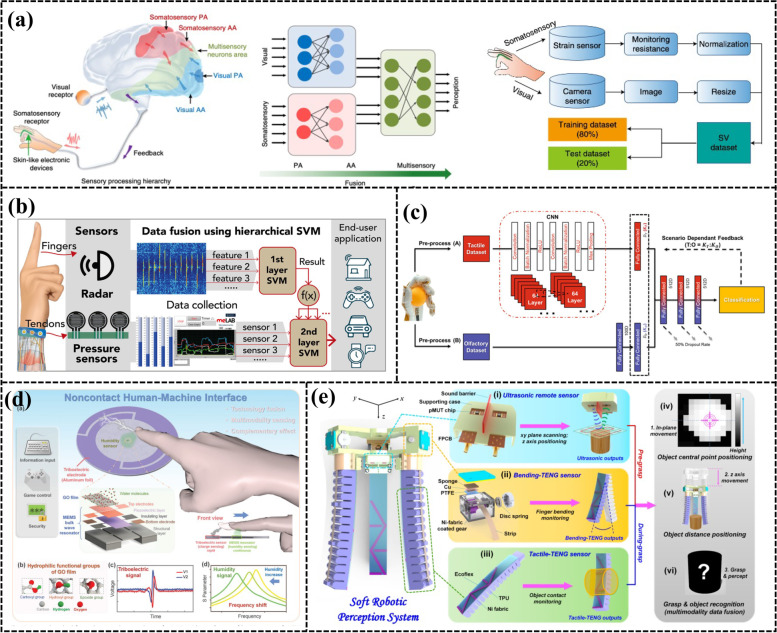
“Multimodality offers numerous benefits, including improved accuracy, redundancy, complementary information, adaptability, robustness, enhanced functionality, and scalability (Sun et al. 2021; Shih et al., 2020).”
§ Artificial intelligence enhanced sensors - enabling technologies to next-generation healthcare and biomedical platform > AI-enhanced multimode sensor
What the sources say
- Not checked yetcites Sun et al. 2021
- Not checked yetcites Shih et al., 2020
plaindirect- Asserted: passes — The authors put it forward as true.
- Checkable: passes — It can be checked against evidence.
- Load-bearing: passes — The paper’s conclusions depend on it.
- Based: passes — The paper gives a reason why it holds.
It may state two separate claims as one.
In the paper
“This breakthrough in recognizing both existing and new sentences enhances the practicality of sign language recognition systems, marking a significant step towards minimizing communication obstacles between sign language users and non-signers.”
§ Artificial intelligence enhanced sensors - enabling technologies to next-generation healthcare and biomedical platform > Human-machine interfaces > AI-enhanced HMIs
What the sources say
- Not checked yetcites Wen, F. et al. 2021 source
plaindirect- Asserted: passes — The authors put it forward as true.
- Checkable: passes — It can be checked against evidence.
- Load-bearing: passes — The paper’s conclusions depend on it.
- Based: passes — The paper gives a reason why it holds.
It may state two separate claims as one.
None of the sources cited for this claim have been checked yet.
In the paper
“These advantages make smart sensor systems an essential component of various fields, such as robotics, environmental monitoring, healthcare, and security, where reliable and comprehensive information is vital for effective decision-making and performance, allowing smart homes to make informed decisions and customized actions.”
§ Artificial intelligence enhanced sensors - enabling technologies to next-generation healthcare and biomedical platform > AI-enhanced multimode sensor
What the sources say
- Not checked yetcites Sun et al. 2021
- Not checked yetcites Shih et al., 2020
plaindirect- Asserted: passes — The authors put it forward as true.
- Checkable: passes — It can be checked against evidence.
- Load-bearing: fails — The paper’s conclusions may not depend on it.
- Based: passes — The paper gives a reason why it holds.
Probably not a substantial claim. The paper’s conclusions may not depend on it.
In the paper
“Upon analyzing the datasets collected from a wide range of 15 participants, it was observed that standalone radar technology resulted in a decent average classification accuracy of 76.7%, while the pressure sensors alone clocked an accuracy of 69.0%.”
§ Artificial intelligence enhanced sensors - enabling technologies to next-generation healthcare and biomedical platform > AI-enhanced multimode sensor
What the sources say
- Not checked yetcites Liang et al. 2019 source
plainn = 15- Asserted: passes — The authors put it forward as true.
- Checkable: passes — It can be checked against evidence.
- Load-bearing: passes — The paper’s conclusions depend on it.
- Based: passes — The paper gives a reason why it holds.
It may state two separate claims as one.
None of the sources cited for this claim have been checked yet.
In the paper
“This method of data fusion achieves a stellar recognition accuracy of 100%, while maintaining this accuracy under less than non-ideal conditions for the image sensor, such as noise, under-exposure, or over-exposure.”
§ Artificial intelligence enhanced sensors - enabling technologies to next-generation healthcare and biomedical platform > AI-enhanced multimode sensor
What the sources say
- Not checked yetcites Wang, M. et al. 2020a
- Not checked yetcites Wang, M. et al. 2020b
- Not checked yetcites Wang, M. et al. 2020c
plaindirect- Asserted: passes — The authors put it forward as true.
- Checkable: passes — It can be checked against evidence.
- Load-bearing: passes — The paper’s conclusions depend on it.
- Based: passes — The paper gives a reason why it holds.
It may state two separate claims as one.
In the paper
“As shown in Fig. 11a, Zhang et al. developed smart socks based on TENG, which are designed not only to capture and repurpose waste energy generated by low-frequency body movements but also to transmit sensory data wirelessly (Zhang, Z. et al. 2020).”
§ Artificial intelligence enhanced sensors - enabling technologies to next-generation healthcare and biomedical platform > AI-enhanced self-sustainable system
What the sources say
- Not checked yetcites Zhang, Z. et al. 2020 source
plaindirect- Asserted: passes — The authors put it forward as true.
- Checkable: passes — It can be checked against evidence.
- Load-bearing: passes — The paper’s conclusions depend on it.
- Based: passes — The paper gives a reason why it holds.
It may state two separate claims as one.
In the paper
“However, a significant improvement was noticed when the HSVM algorithm was implemented, as it combines the outputs from both the pressure sensors and radar, pushing the classification accuracy rate to a commendable 92.5%.”
§ Artificial intelligence enhanced sensors - enabling technologies to next-generation healthcare and biomedical platform > AI-enhanced multimode sensor
What the sources say
- Not checked yetcites Liang et al. 2019 source
plaindirectn = 15- Asserted: passes — The authors put it forward as true.
- Checkable: passes — It can be checked against evidence.
- Load-bearing: passes — The paper’s conclusions depend on it.
- Based: passes — The paper gives a reason why it holds.
It may state two separate claims as one.
In the paper
“This integration enables high-precision, multifunctional vibration recognition with resolutions of 0.01g for acceleration, 0.01 Hz for frequency, and 2° for tilting angle.”
§ Artificial intelligence enhanced sensors - enabling technologies to next-generation healthcare and biomedical platform > AI-enhanced self-sustainable system
What the sources say
- Not checked yetcites Huang et al. 2023 source
plaindirect- Asserted: passes — The authors put it forward as true.
- Checkable: passes — It can be checked against evidence.
- Load-bearing: passes — The paper’s conclusions depend on it.
- Based: passes — The paper gives a reason why it holds.
It may state two separate claims as one. The quote only partly states this claim.
In the paper
“Contrasting with camera-based monitoring systems that often provoke privacy concerns, this smart floor monitoring system employs a digital twin of the individual in a virtual setting, displaying solely the position information and recognized identity, which is crucial for automation, healthcare, and security applications.”
§ Artificial intelligence enhanced sensors - enabling technologies to next-generation healthcare and biomedical platform > AI-enhanced self-sustainable system
What the sources say
- Not checked yetcites Shi, Q. et al. 2020b
plaindirect- Asserted: passes — The authors put it forward as true.
- Checkable: passes — It can be checked against evidence.
- Load-bearing: passes — The paper’s conclusions depend on it.
- Based: passes — The paper gives a reason why it holds.
It may state two separate claims as one.
In the paper
“Remarkably, the iCUPE, without requiring an external power supply, is competent at capturing vibrational signals in its environment, thereby yielding preliminary data points such as frequency and acceleration.”
§ Artificial intelligence enhanced sensors - enabling technologies to next-generation healthcare and biomedical platform > AI-enhanced self-sustainable system
What the sources say
- Not checked yetcites Huang et al. 2023 source
plaindirect- Asserted: passes — The authors put it forward as true.
- Checkable: passes — It can be checked against evidence.
- Load-bearing: passes — The paper’s conclusions depend on it.
- Based: passes — The paper gives a reason why it holds.
It may state two separate claims as one.
In the paper
“Built around a three-dimensional (3D) hexahedral modular arrangement, the iCUPE embodies a self-sustainable system with AIoT capabilities.”
§ Artificial intelligence enhanced sensors - enabling technologies to next-generation healthcare and biomedical platform > AI-enhanced self-sustainable system
What the sources say
- Not checked yetcites Huang et al. 2023 source
plain- Asserted: passes — The authors put it forward as true.
- Checkable: passes — It can be checked against evidence.
- Load-bearing: unclear — It is unclear whether the paper’s conclusions depend on it.
- Based: passes — The paper gives a reason why it holds.
It may state two separate claims as one.
A conclusion the paper draws from its own results — it cites no other source for it, so there is none to check. The quote shows it is in the paper.
In the paper
“This network, coupled with a cloud server infrastructure, facilitates the systematic collection, storage, and analysis of data, enabling intelligent decision-making processes.”
§ Artificial intelligence enhanced sensors - enabling technologies to next-generation healthcare and biomedical platform > Conclusion
plaindirect- Asserted: passes — The authors put it forward as true.
- Checkable: passes — It can be checked against evidence.
- Load-bearing: passes — The paper’s conclusions depend on it.
- Based: passes — The paper gives a reason why it holds.
Probably not a substantial claim.
A conclusion the paper draws from its own results — it cites no other source for it, so there is none to check. The quote shows it is in the paper.
In the paper
“In addition, AI-enabled sensors can facilitate real-time monitoring of vital signs, enabling rapid detection of abnormalities and timely intervention, thus potentially saving lives.”
§ Artificial intelligence enhanced sensors - enabling technologies to next-generation healthcare and biomedical platform > Conclusion
plainconditional- Asserted: passes — The authors put it forward as true.
- Checkable: passes — It can be checked against evidence.
- Load-bearing: passes — The paper’s conclusions depend on it.
- Based: fails — The paper may give no reason why it holds.
Probably not a substantial claim. The paper may give no reason why it holds. It may state two separate claims as one.
In the paper
“The mechanical energy harvested powers a self-sustaining IoT system with GPS tracking, and environmental temperature and humidity sensing capabilities, ensuring comprehensive user monitoring.”
§ Artificial intelligence enhanced sensors - enabling technologies to next-generation healthcare and biomedical platform > AI-enhanced self-sustainable system
What the sources say
- Not checked yetcites Guo, X. et al. 2021b
plaindirect- Asserted: passes — The authors put it forward as true.
- Checkable: passes — It can be checked against evidence.
- Load-bearing: passes — The paper’s conclusions depend on it.
- Based: passes — The paper gives a reason why it holds.
It may state two separate claims as one.
In the paper
“If a fall occurs, the anomaly is detected immediately, allowing for a quick call for help.”
§ Artificial intelligence enhanced sensors - enabling technologies to next-generation healthcare and biomedical platform > AI-enhanced self-sustainable system
What the sources say
- Not checked yetcites Guo, X. et al. 2021b
plaindirect- Asserted: passes — The authors put it forward as true.
- Checkable: passes — It can be checked against evidence.
- Load-bearing: passes — The paper’s conclusions depend on it.
- Based: passes — The paper gives a reason why it holds.
It may state two separate claims as one.
A conclusion the paper draws from its own results — it cites no other source for it, so there is none to check. The quote shows it is in the paper.
In the paper
“Over the past few decades, there has been significant progress in the development of flexible sensors, which have demonstrated remarkable capabilities in reliably monitoring vital biomedical and physiological data, as well as daily activities.”
§ Artificial intelligence enhanced sensors - enabling technologies to next-generation healthcare and biomedical platform > Conclusion
boosted- Asserted: passes — The authors put it forward as true.
- Checkable: passes — It can be checked against evidence.
- Load-bearing: fails — The paper’s conclusions may not depend on it.
- Based: fails — The paper may give no reason why it holds.
Probably not a substantial claim. The paper’s conclusions may not depend on it. The paper may give no reason why it holds.
A conclusion the paper draws from its own results — it cites no other source for it, so there is none to check. The quote shows it is in the paper.
In the paper
“By continuously monitoring physiological parameters and seamlessly integrating them with an individual's medical history, AI algorithms can generate personalized recommendations for disease prevention, early intervention, and chronic disease management.”
§ Artificial intelligence enhanced sensors - enabling technologies to next-generation healthcare and biomedical platform > Conclusion
plaindirect- Asserted: passes — The authors put it forward as true.
- Checkable: passes — It can be checked against evidence.
- Load-bearing: passes — The paper’s conclusions depend on it.
- Based: fails — The paper may give no reason why it holds.
Probably not a substantial claim. The paper may give no reason why it holds.
A conclusion the paper draws from its own results — it cites no other source for it, so there is none to check. The quote shows it is in the paper.
In the paper
“One of the key benefits of AI-enhanced sensor systems is the realization of personalized healthcare.”
§ Artificial intelligence enhanced sensors - enabling technologies to next-generation healthcare and biomedical platform > Conclusion
plaindirect- Asserted: passes — The authors put it forward as true.
- Checkable: passes — It can be checked against evidence.
- Load-bearing: passes — The paper’s conclusions depend on it.
- Based: passes — The paper gives a reason why it holds.
Probably not a substantial claim.
A conclusion the paper draws from its own results — it cites no other source for it, so there is none to check. The quote shows it is in the paper.
In the paper
“Empowered by advanced therapeutic devices, such as drug delivery patches and neural interfaces, closed-loop sensing-therapy systems emerge as a promising platform to provide enhanced benefits to patients suffering from chronic diseases.”
§ Artificial intelligence enhanced sensors - enabling technologies to next-generation healthcare and biomedical platform > Conclusion
hedgedconditional- Asserted: passes — The authors put it forward as true.
- Checkable: fails — It may be too vague to check against evidence.
- Load-bearing: passes — The paper’s conclusions depend on it.
- Based: fails — The paper may give no reason why it holds.
Probably not a substantial claim. It may be too vague to check against evidence. The paper may give no reason why it holds.
A conclusion the paper draws from its own results — it cites no other source for it, so there is none to check. The quote shows it is in the paper.
In the paper
“Moreover, with the advent of advanced wireless communication technologies such as 5G and 6G, alongside the integration of IoT devices and AI technology, an interconnected network known as the AIoT becomes feasible.”
§ Artificial intelligence enhanced sensors - enabling technologies to next-generation healthcare and biomedical platform > Conclusion
plaindirect- Asserted: passes — The authors put it forward as true.
- Checkable: passes — It can be checked against evidence.
- Load-bearing: passes — The paper’s conclusions depend on it.
- Based: fails — The paper may give no reason why it holds.
Probably not a substantial claim. The paper may give no reason why it holds.
A conclusion the paper draws from its own results — it cites no other source for it, so there is none to check. The quote shows it is in the paper.
In the paper
“Meanwhile, notable advancements in the fields of flexible electronics and MEMS/ NEMS have fostered the progress of implantable devices for sensing, neural signal recording/modulation, and actuation.”
§ Artificial intelligence enhanced sensors - enabling technologies to next-generation healthcare and biomedical platform > Conclusion
plaindirect- Asserted: passes — The authors put it forward as true.
- Checkable: passes — It can be checked against evidence.
- Load-bearing: fails — The paper’s conclusions may not depend on it.
- Based: fails — The paper may give no reason why it holds.
Probably not a substantial claim. The paper’s conclusions may not depend on it. The paper may give no reason why it holds.
In the paper
“The deep learning model captures the user's live motion status at home and mirrors it in the virtual environment.”
§ Artificial intelligence enhanced sensors - enabling technologies to next-generation healthcare and biomedical platform > AI-enhanced self-sustainable system
What the sources say
- Not checked yetcites Guo, X. et al. 2021b
plaindirect- Asserted: passes — The authors put it forward as true.
- Checkable: passes — It can be checked against evidence.
- Load-bearing: passes — The paper’s conclusions depend on it.
- Based: passes — The paper gives a reason why it holds.
It may state two separate claims as one.
In the paper
“Analyzing the P-TENG output through a 1D-CNN deep learning structure, the stick identifies five distinct movements (rising, sitting, walking, ascending, and descending stairs), evaluates three separate statuses, and recognizes ten different users.”
§ Artificial intelligence enhanced sensors - enabling technologies to next-generation healthcare and biomedical platform > AI-enhanced self-sustainable system
What the sources say
- Not checked yetcites Guo, X. et al. 2021b
plaindirect- Asserted: passes — The authors put it forward as true.
- Checkable: passes — It can be checked against evidence.
- Load-bearing: passes — The paper’s conclusions depend on it.
- Based: passes — The paper gives a reason why it holds.
It may state two separate claims as one.
A conclusion the paper draws from its own results — it cites no other source for it, so there is none to check. The quote shows it is in the paper.
In the paper
“Concurrently, the emergence of energy harvesters and self-powered sensors has presented promising alternatives and supplementary approaches in establishing a bodyNET framework.”
§ Artificial intelligence enhanced sensors - enabling technologies to next-generation healthcare and biomedical platform > Conclusion
plaincorrelational- Asserted: passes — The authors put it forward as true.
- Checkable: passes — It can be checked against evidence.
- Load-bearing: fails — The paper’s conclusions may not depend on it.
- Based: fails — The paper may give no reason why it holds.
Probably not a substantial claim. The paper’s conclusions may not depend on it. The paper may give no reason why it holds.
The paper relies on this without support.
Encryption, identity authentication, and other technologies ensure the security of health data and the privacy of patients.
“Furthermore, by adopting encryption, identity authentication, and other technologies, the security of health data and the privacy of patients also get ensured.”
The paper relies on this without support.
Implantable sensors function inside the body and perform more directly healthy states than wearable sensors.
“implantable sensors function inside body perform more directly healthy states.”
The paper relies on this without support.
Tears and saliva offer advantages over sweat for noninvasive health monitoring, including short accumulation time and sufficient volume without additional extraction methods.
“Tears and saliva offer several advantages over sweat when it comes to noninvasive health monitoring. These bodily fluids have a short accumulation time and provide sufficient volume, eliminating the need for additional extraction methods.”
The paper relies on this without support.
Contact lenses are a viable substrate for tear sensors due to their biocompatibility and compliance.
“Contact lenses have garnered significant attention as a viable substrate for tear sensors due to their biocompatibility and compliance.”
The paper relies on this without support.
Wireless connectivity between contact lens-based tear sensors and measuring equipment is essential to address the potential risk of inflammation caused by wires in contact with the eyeballs.
“However, to address the potential risk of inflammation caused by wires in contact with the eyeballs, it is essential to establish wireless connectivity between contact lens-based tear sensors and the measuring equipment.”
The paper relies on this without support.
Wireless interconnection approaches are crucial to create a network of discrete wearable devices, enabling seamless communication and functionality while preserving usability and user comfort.
“Therefore, wireless interconnection approaches are crucial to create a network of discrete wearable devices, enabling seamless communication and functionality while preserving usability and user comfort.”
The paper relies on this without support.
TENG-based SIBE stands out in vivo energy harvesting, cardiovascular monitoring, cardiac pacing, muscle/nerve electrical stimulation, tissue regeneration, and drug delivery.
“After that with the advantages of lightweight, low cost, and high output energy density, TENG-based SIBE stands out in vivo energy harvesting, cardiovascular monitoring, cardiac pacing, muscle/nerve electrical stimulation, tissue regeneration, and drug delivery.”
The paper relies on this without support.
The mismatch between hard and hydrophobic neural interfaces and soft and wet nervous tissue is the most important cause of immune rejection and nerve electrode failure.
“The mismatch between hard and hydrophobic NIs and the soft and wet nervous tissue is the most important cause of immune rejection and nerve electrode failure.”
The paper relies on this without support.
Internal signals of nerve fiber bundles contain more conduction and response related to the recovery of limb movement and sensory function than surface potential signals.
“Compared to the surface potential signals, the internal signals of nerve fiber bundles contain more conduction and response related to the recovery of limb movement and sensory function.”
The paper relies on this without support.
The detection performance of infrared spectroscopy for VOCs is limited due to the low molecular absorption cross-section (10-20 cm2 per molecule in the mid-infrared).
“However, the detection performance of this method is limited due to the low molecular absorption cross-section (10-20 cm2 per molecule in the mid-infrared).”
The paper relies on this without support.
Monitoring human health status necessitates the coordinated operation of multiple functional devices, imposing new requirements for system integration and information processing.
“Considering the human body as a complex system, the monitoring of its health status necessitates the coordinated operation of multiple functional devices, imposing new requirements for system integration and information processing.”
The paper relies on this without support.
Currently available COVID-19 diagnostic methods, such as RT-PCR, serological tests, or chest computed tomography scans, have limitations such as low sensitivity and time-consuming procedures.
“The currently available COVID-19 diagnostic methods, such as RT-PCR, serological tests, or chest computed tomography scans, have their limitations, such as low sensitivity and time-consuming procedures.”
The paper relies on this without support.
Current noncontact human-machine interfaces grapple with challenges including excessive power consumption, complicated signal processing circuits, and an absence of support for multidimensional interaction.
“Current noncontact HMIs grapple with challenges including excessive power consumption, complicated signal processing circuits, and an absence of support for multidimensional interaction.”
The paper relies on this without support.
As technological advancements in sensors and the number of gases continue to increase, data volume will inevitably rise.
“As technological advancements in sensors and the number of gases continue to increase, it is foreseeable that data volume will inevitably rise.”
The paper relies on this without support.
Each person's walking gait patterns are unique.
“Since each person's walking gait patterns are unique, distinctive output voltage patterns are produced when a person walks on the triboelectric DLES-mat array.”
The paper relies on this without support.
The global elderly population and those with mobility impairments has already surpassed one billion and continues to rise.
“In response to the needs of the global elderly population and those with mobility impairments - a demographic that has already surpassed one billion and continues to rise - a multifunctional walking stick is proposed, as depicted in Fig. 11d (Guo, X. et al. 2021b).”
Claims other papers make about this one
Each is checked against this paper’s own text: does it say what the citing paper says it does?
In the citing paper
“Implantable sensors represent a frontier in healthcare, designed to interact with biological components for support and treatment of bodily functions and mental health monitoring [245,246].”
From The emergence of AI-based wearable sensors for digital health technology: a review (2023) · cites this paper as [246]
Citations
Cites
Items 201–209 of 209
Dual-resonator Lamb wave strain sensor with temperature compensation and enhanced sensitivity
Dou, S., Cao, J., Zhou, H., Chen, C., Wang, Y., Yang, J., Wang, D., Shang, Z., & Mu, X. (2018) · Applied Physics Letters · doi:10.1063/1.5046120 · Cited by 23
Self-citationBinson, V. A., & Subramoniam, M. (2022) · Journal of Biomimetics, Biomaterials and Biomedical Engineering · doi:10.4028/p-dab04j · Cited by 14
Zhang, F., Chen, C., Dou, S., Zhou, H., Yang, J., Wang, D., Chen, Y., Cheng, Y., Shang, Z., & Mu, X. (2018) · Applied Physics Letters · doi:10.1063/1.5047658 · Cited by 12
Self-citationA disposable MEMS biosensor for aflatoxin M1 molecule detection
Erdil, K., Akcan, Ö. G., Gül, Ö., et al. (2022) · Sensors and Actuators A Physical · doi:10.1016/j.sna.2022.113438 · Cited by 12
Investigation of the Temperature Fluctuation of Single-Phase Fluid Based Microchannel Heat Sink
Wang, T., Wang, J., He, J., et al. (2018) · Sensors · doi:10.3390/s18051498 · Cited by 10
Surface-Enhanced Raman Sensing of Semi-Volatile Organic Compounds by Plasmonic Nanostructures
Ly, N. H., Son, S. J., Jang, S., Lee, C.-M., Lee, J. I., & Joo, S. (2021) · Nanomaterials · doi:10.3390/nano11102619 · Cited by 10
Self-citationMechanism of peripheral nerve modulation and recent applications
Shin, H., Kang, M., & Lee, S. (2021) · International Journal of Optomechatronics · doi:10.1080/15599612.2021.1978601 · Cited by 9
Barucha, A., Mauch, R. M., Duckstein, F., Zagoya, C., & Mainz, J. G. (2022) · Expert Review of Respiratory Medicine · doi:10.1080/17476348.2022.2104249 · Cited by 6
Wide Amplitude String Galvanometer for Direct Recording
Browder, L. B. (1956) · Review of Scientific Instruments · doi:10.1063/1.1715574 · Cited by 2
Research works printed but not linked: 6
- Chao S, Ouyang H, Jiang D, Fan Y, Li Z. Triboelectric nanogenerator based on degradable materials. EcoMat. 2020;3: e12072.
- Mahmood L, Ghommem M, Bahroun Z. Smart Gas Sensors: Materials, Technologies, Practical Applications, and Use of Machine Learning-A Review. J Appl Comput Mechan. 2023;9:775–803.
- Ren Z, Dong B, Qiao Q, Liu X, Liu J, Zhou G, Lee C. Subwavelength on-chip light focusing with bigradient all-dielectric metamaterials for dense photonic integration. InfoMat. 2021;4: e12264.
- Wen F, Sun Z, He T, Shi Q, Zhu M, Zhang Z, Li L, Zhang T, Lee C. Machine learning glove using self-powered conductive superhydrophobic triboelectric textile for gesture recognition in VR/AR applications. Adv Sci. 2020;7:2000261. · DOI
- Zhou F, Chai Y. Near-sensor and in-sensor computing Nat Electron. 2020;3:664–71.
- Zhou H, Li D, Hui X, Mu X. Infrared metamaterial for surface-enhanced infrared absorption spectroscopy: pushing the frontier of ultrasensitive on-chip sensing. I J Optomechan. 2021;15:97–119.
Cited by
Sorted by citations
The emergence of AI-based wearable sensors for digital health technology: a review
Shajari, S., Kuruvinashetti, K., Komeili, A., & Sundararaj, U. (2023) · Sensors · doi:10.3390/s23239498 · Cited by 535
Metadata
- Authors
- Wang, C., He, T., Zhou, H., Zhang, Z., & Lee, C.
- Affiliations
- National University of Singapore (SG)
- Corresponding author
- Lee, Chengkuo
- Venue
- Bioelectronic Medicine
- Published
- 2023-08-02
- Volume
- 9
- Issue
- 1
- Pages
- 17-17
- ISSN
- 2332-8886 (ISSN-L)
- PMC
- PMC10394931
- OpenAlex
- W4385448491
- Semantic Scholar
- ec072fc375d9d5f50bfca643c34f72d65407e688
- Cited by
- 295
- References
- 209
- Citations by year
- 2026: 74 · 2025: 142 · 2024: 69 · 2023: 10
- FWCI
- 6.62
- Type
- journal article
- Language
- en
- Open access
- gold
- doi.org
- Locations
- Bioelectronic Medicine (publishedVersion, cc-by)
- PubMed Central (publishedVersion, cc-by)
- PubMed (publishedVersion)
- DOAJ (DOAJ: Directory of Open Access Journals) (submittedVersion, cc-by-sa)
- Funders
- Reimagine Research Scheme (A-0009037-02-00, A0009037-03-00, A-0009454-01-00)
- Ministry of Education of Singapore (A-0009520-01-00)
- Advanced Research and Technology Innovation Centre, College of Design and Engineering, National University of Singapore (A-0005947-20-00)
- Topics
- Physical Sciences › Engineering › Biomedical Engineering › Advanced Sensor and Energy Harvesting Materials
- Physical Sciences › Engineering › Biomedical Engineering › Non-Invasive Vital Sign Monitoring
- Physical Sciences › Computer Science › Information Systems › Internet of Things and AI
- Keywords
- artificial intelligence, health monitoring sensors, wearable sensors, implantable sensors, volatile organic compound detection, human-machine interaction, Internet of Things, respiration rate monitoring, heart rate monitoring, neurotransmitter monitoring, closed-loop drug delivery
About these checks
Registry, retraction, Cites and statistics results are computed, not judged, with one exception: a printed reference that no index lists is read once by a model before it counts as a citation error. Claims are extracted by a model and kept only when their quote appears verbatim in the text; each cited source is then checked, with a model’s help, for whether it says what the claim relies on. Those verdicts can be wrong — read the claim’s quote and the cited source before relying on one.
A language model drew the claims from the paper on 2026-10-09, under version 3 of the claim definition (model deepseek-v4.1-flash, prompt extract-v3).
A second model labelled each claim on 2026-10-09 (model jev-1.13-20260917, definition revision gold-guideline-v0.2).
Cited sources are checked with a language model’s help (gpt-6-sol).
Statistics and arithmetic are recomputed, not judged.
Confidence bands are shown only for fields calibrated on our annotated test set. None is calibrated yet, so no band is shown.
What counts as a claim ›How we measure confidence ›How we check this ›
Are you an author, or do you see a problem with this page? Request a review
