

Population Structure and Eigenanalysis
Open accessThe DOI matches its Crossref record; 48 of the 49 references it cites were found in a registry or an index.
Abstract
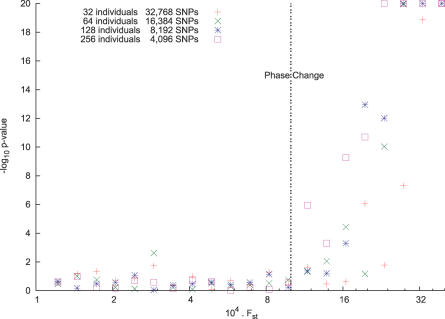
Current methods for inferring population structure from genetic data do not provide formal significance tests for population differentiation. We discuss an approach to studying population structure (principal components analysis) that was first applied to genetic data by Cavalli-Sforza and colleagues. We place the method on a solid statistical footing, using results from modern statistics to develop formal significance tests. We also uncover a general "phase change" phenomenon about the ability to detect structure in genetic data, which emerges from the statistical theory we use, and has an important implication for the ability to discover structure in genetic data: for a fixed but large dataset size, divergence between two populations (as measured, for example, by a statistic like FST) below a threshold is essentially undetectable, but a little above threshold, detection will be easy. This means that we can predict the dataset size needed to detect structure.
Overview
The claims and statistics of this paper haven’t been checked yet.
Free: it reads the open-access text and checks the first 5 claims that cite a source we can check. Create a free account to check every claim.
Integrity signals
Registry
Cites
Statistics
Figures
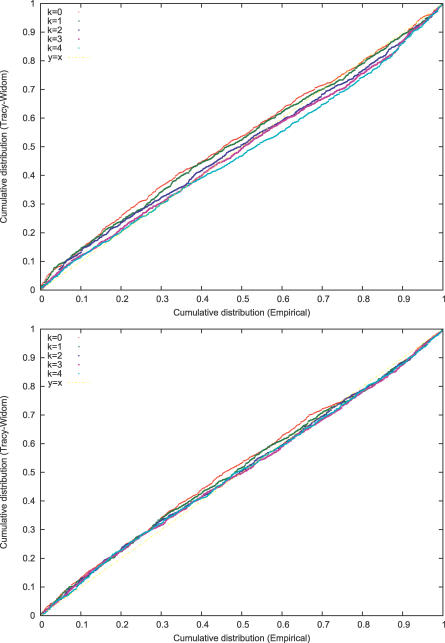
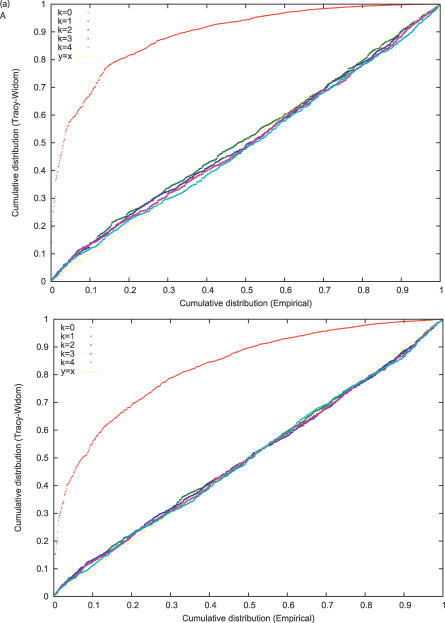
Verification
Claims the paper makes
The claims and statistics of this paper haven’t been checked yet.
Free: it reads the open-access text and checks the first 5 claims that cite a source we can check. Create a free account to check every claim.
Claims other papers make about this one
Each is checked against this paper’s own text: does it say what the citing paper says it does?
The source backs part of the claim, not all of it — or backs it for a different population, condition or comparison.
In the citing paper
“It is notable that PCA clustering is sensitive to the sample size of different ancestries and also to their amount of genetic drift, which exaggerates principal component distances 207,208,211,212 .”
From Ancient DNA analysis (2021) · cites this paper as [207]
Experimental — accuracy not yet measured
Self-check
Percentages, sums and reported differences re-computed from the paper’s own numbers.
The self-check needs the paper’s full text.
Citations
Cites
Inference of Population Structure Using Multilocus Genotype Data
Pritchard, J. K., Stephens, M., & Donnelly, P. (2000) · Genetics · doi:10.1093/genetics/155.2.945 · Cited by 33,908
Principal components analysis corrects for stratification in genome-wide association studies
Price, A. L., Patterson, N. J., Plenge, R. M., Weinblatt, M. E., Shadick, N. A., & Reich, D. (2006) · Nature Genetics · doi:10.1038/ng1847 · Cited by 10,248 · cited 2×
“A parallel paper [14] explores applications to medical genetics.”
BackgroundSelf-citationFalush, D., Stephens, M., & Pritchard, J. K. (2003) · Genetics · doi:10.1093/genetics/164.4.1567 · Cited by 7,959
The International HapMap Project
†The International HapMap Consortium, Genotyping centres: Baylor College of Medicine and ParAllele BioScience, Gibbs, R. A., Belmont, J. W., Hardenbol, P., Willis, T. D., Yu, F., Chinese HapMap Consortium, Yang, H., Ch'ang, L.-Y., et al. (2003) · Nature · doi:10.1038/nature02168 · Cited by 6,057
A haplotype map of the human genome
The International HapMap Consortium (2005) · Nature · doi:10.1038/nature04226 · Cited by 5,858 · cited 1×
“For instance, in the International Haplotype Map project [ 26 ], markers were chosen about 5,000 bases apart (phase 1), or about 1,000 bases apart (phase 2), and so nearby markers will often be in LD. Mathematically this will induce correlation between nearby columns of our matrix M. The effect of this will be that th…”
BackgroundSpielman, R. S., McGinnis, R. E., & Ewens, W. J. (1993) · PubMed · Cited by 3,651
Searle, S. R., & Searle, S. R. (1971) · Cited by 3,229
The History and Geography of Human Genes: Abridged paperback Edition
Cavalli-Sforza, L. L., Menozzi, P., & Piazza, A. (2018) · Princeton University Press eBooks · doi:10.2307/j.ctv301gjp · Cited by 3,175
Genomic Control for Association Studies
Devlin, B., & Roeder, K. (1999) · Biometrics · doi:10.1111/j.0006-341x.1999.00997.x · Cited by 3,162 · cited 3×
“If e([1]) is the principal eigenvector of the matrix X, this means that the sum of squares”
BackgroundOn the distribution of the largest eigenvalue in principal components analysis
Johnstone, I. M. (2001) · The Annals of Statistics · doi:10.1214/aos/1009210544 · Cited by 1,949 · cited 13×
“> λm, then Johnstone [1] shows that with suitable normalization and for large m and n, the largest eigenvalue λ1 is well approximated by the Tracy-Widom distribution.”
BackgroundMethodInfluential
Research works printed but not linked: 39
- Devlin, 1999, Biometrics, 55, 997
- Menozzi, 1978, Science, 201, 786
- Cavalli-Sforza, 2003, Nat Genet, 33, 266
- Shriver, 2005, Human Genomics, 2, 81
- Capelli, 2006, Ann Hum Genet, 70, 207
- Lovell, 2005, Ann Hum Genet, 69, 275
- Stoneking, 1997, Genome Res, 7, 1061
- Pritchard, 2000, Genetics, 155, 945
- Falush, 2003, Genetics, 164, 1567
- Hoggart, 2004, Am J Hum Genet, 74, 965
- Patterson, 2004, Am J Hum Genet, 74, 979
- Montana, 2004, Am J Hum Genet, 75, 771
- Price, 2006, Nat Genet, 38, 904
- Baik, 2005, Ann Probability, 33, 1643
- Baik, 2006, J Multivariate Anal, 97, 1643
- Nicholson, 2002, JRSS(B), 64, 695
- Bowcock, 1994, Nature, 368, 455
- Johnstone, 2001, Ann Stat, 29, 295
- Tracy, 1994, Commun Math Phys, 159, 151
- El Karoui, 2003, On the largest eigenvalue of Wishart matrices with identity covariance when p/n → ∞
- Soshnikov, 2002, J Stat Physics, 108, 1033
- Altshuler, 2005, Nature, 437, 1299
- Macarthur, 1957, Proc Natl Acad Sci U S A, 43, 293
- Pielou, 1975, Ecological diversity
- Ramachandran, 2005, Proc Natl Acad Sci, 102, 15942
- Gibbs, 2004, Nature, 426, 789
- Smith, 2004, Am J Hum Genet, 74, 1001
- Daly, 2001, Nat Genet, 29, 229
- Patil, 2001, Science, 294, 1719
- Allen, 2003, Am J Hum Genet, 72, 671
- Clayton, 2005, Nat Genet, 37, 1243
- Serre, 2004, Genome Res, 14, 1679
- Spielman, 1993, Am J Hum Genet, 52, 506
- Freedman, 2004, Nat Genet, 36, 388
- Marchini, 2004, Nat Genet, 36, 512
- Helgason, 2005, Nat Genet, 37, 90
- Balding, 1995, Genetica, 96, 3
- Rosenberg, 2006, Ann Hum Gen, 70, 841
- Schaffner, 2005, Genome Res, 15, 1576
Cited by
Items 1,001–1,074 of 1,074
Hudjashov, G., Endicott, P., Post, H., Nagle, N., Ho, S. Y. W., Lawson, D. J., Reidla, M., Karmin, M., Rootsi, S., Metspalu, E., et al. (2018) · Scientific Reports · doi:10.1038/s41598-018-20026-8 · Cited by 72
Calcium Signaling Pathway Genes RUNX2 and CACNA1C Are Associated With Calcific Aortic Valve Disease
Guauque-Olarte, S., Messika-Zeitoun, D., Droit, A., Lamontagne, M., Tremblay-Marchand, J., Lavoie-Charland, E., Gaudreault, N., Arsenault, B. J., Dubé, M.-P., Tardif, J.-C., et al. (2015) · Circulation: Cardiovascular Genetics · doi:10.1161/circgenetics.115.001145 · Cited by 72
Mbarek, H., Milaneschi, Y., Fedko, I. O., Hottenga, J., de Moor, M. H. M., Jansen, R., Gelernter, J., Sherva, R., Willemsen, G., Boomsma, D. I., et al. (2015) · American Journal of Medical Genetics Part B: Neuropsychiatric Genetics · doi:10.1002/ajmg.b.32379 · Cited by 66
“Principal components (PC’s) of genetic ancestry were inferred using EIGENSOFT [Patterson et al., 2006].”
MethodChoi, K., Lee, J., Gunasekaran, T., Kang, S., Lee, W., Jeong, J., Lim, H., Zhang, X., Zhu, C., Won, S.-Y., et al. (2019) · Journal of Clinical Medicine · doi:10.3390/jcm8081236 · Cited by 72
Identification of genomic variants putatively targeted by selection during dog domestication
Cagan, A., & Blass, T. (2016) · BMC Evolutionary Biology · doi:10.1186/s12862-015-0579-7 · Cited by 69
“To visualize the relationship between samples we created a PCA plot of the samples included in all analyses using EIGENSOFT and SMARTPCA [75, 76] (Additional file 5: Figure S1).”
MethodSchubert, M., Mashkour, M., Gaunitz, C., Fages, A., Seguin-Orlando, A., Sheikhi, S., Alfarhan, A. H., Alquraishi, S. A., Al-Rasheid, K. A. S., Chuang, R., et al. (2017) · Journal of Archaeological Science · doi:10.1016/j.jas.2016.12.005 · Cited by 69
“PCAs are carried out using EIGENSOFT 'SmartPCA' (Price et al., 2006, Patterson et al., 2006).”
MethodComparing signals of natural selection between three Indigenous North American populations
Reynolds, A. W., Mata-Míguez, J., Miró-Herrans, A., Briggs-Cloud, M., Sylestine, A., Barajas-Olmos, F., Garcia-Ortiz, H., Rzhetskaya, M., Orozco, L., Raff, J. A., et al. (2019) · Proceedings of the National Academy of Sciences · doi:10.1073/pnas.1819467116 · Cited by 67
“Principal component analysis was performed on these samples using the smartpca program in EIGENSOFT (42).”
MethodPrediction of Alzheimer's disease using multi-variants from a Chinese genome-wide association study
Jia, L., Li, F., Wei, C., Zhu, M., Qu, Q., Qin, W., Tang, Y., Shen, L., Wang, Y., Shen, L., et al. (2021) · Brain · doi:10.1093/brain/awaa364 · Cited by 67
Huang, Q. Q., Sallah, N., Dunca, D., Trivedi, B., Hunt, K. A., Hodgson, S., Lambert, S. A., Arciero, E., Wright, J., Griffiths, C., et al. (2022) · Nature Communications · doi:10.1038/s41467-022-32095-5 · Cited by 66
Systematic benchmark of ancient DNA read mapping
Oliva, A., Tobler, R., Cooper, A., Llamas, B., & Souilmi, Y. (2021) · Briefings in Bioinformatics · doi:10.1093/bib/bbab076 · Cited by 63
Leveraging population admixture to characterize the heritability of complex traits
Zaitlen, N., Pasaniuc, B., Sankararaman, S., Bhatia, G., Zhang, J., Gusev, A., Young, T., Tandon, A., Pollack, S., Vilhjálmsson, B. J., et al. (2014) · Nature Genetics · doi:10.1038/ng.3139 · Cited by 63
Self-citationTransferability and Fine Mapping of Type 2 Diabetes Loci in African Americans
Ng, M. C. Y., Saxena, R., Li, J., Palmer, N. D., Dimitrov, L., Xu, J., Rasmussen-Torvik, L. J., Zmuda, J. M., Siscovick, D. S., Patel, S. R., et al. (2013) · Diabetes · doi:10.2337/db12-0266 · Cited by 62
“By analyzing unrelated samples from all studies using SMARTPCA (33), only the fi rst PC appeared to account for substantial genetic variation in the screen plot (data not shown), whereas the subsequent PCs may re fl ect sampling noise and/or relatedness in samples (34).”
Barth, J. M. I., Damerau, M., Matschiner, M., Jentoft, S., & Hanel, R. (2017) · Genome Biology and Evolution · doi:10.1093/gbe/evx067 · Cited by 62
“Multivariate analyses like PCA and DAPC describe the largest variation of the data, but they do not take advantage of population genetic models (Patterson et al. 2006).”
MethodFabbri, C., Kasper, S., Kautzky, A., Bartova, L., Dold, M., Zohar, J., Souery, D., Montgomery, S., Albani, D., Raimondi, I., et al. (2019) · British Journal of Psychiatry · doi:10.1192/bjp.2018.256 · Cited by 61
Exome arrays capture polygenic rare variant contributions to schizophrenia
Richards, A. L., Leonenko, G., Walters, J. T., Kavanagh, D. H., Rees, E. G., Evans, A., Chambert, K. D., Moran, J. L., Goldstein, J., Neale, B. M., et al. (2016) · Human Molecular Genetics · doi:10.1093/hmg/ddv620 · Cited by 50
Investigating Population History Using Temporal Genetic Differentiation
Skoglund, P., Sjödin, P., Skoglund, T., Lascoux, M., & Jakobsson, M. (2014) · Molecular Biology and Evolution · doi:10.1093/molbev/msu192 · Cited by 60
“Except in the case of microsatellites and the three- 2524 Downloaded from https://academic.oup.com/mbe/article-abstract/31/9/2516/2925787 by guest on 26 July 2018 dimensional stepping-stone model with temporal samples, we used the normalization suggested by Patterson et al. (2006).”
X Chromosome Contribution to the Genetic Architecture of Primary Biliary Cholangitis
Asselta, R., Paraboschi, E. M., Gerussi, A., Cordell, H. J., Mells, G. F., Sandford, R. N., Jones, D. E., Nakamura, M., Ueno, K., Hitomi, Y., et al. (2021) · Gastroenterology · doi:10.1053/j.gastro.2021.02.061 · Cited by 55
“22 This procedure was performed using the principal component analysis method implemented in the EIGENSOFT program (https:// genetics.med.harvard.edu/reich/Reich_Lab/Software.html), 26,27 after pruning for linkage disequilibrium (LD) and removing large LD blocks.”
MethodVariation and signatures of selection on the human face
Guo, J., Tan, J., Yang, Y., Zhou, H., Hu, S., Hashan, A., Bahaxar, N., Xu, S., Weaver, T. D., Jin, L., et al. (2014) · Journal of Human Evolution · doi:10.1016/j.jhevol.2014.08.001 · Cited by 54
“The raw data were not scaled, i.e., an equivalent scale was assumed for all of the points.”
BackgroundXia, X., Zhang, F., Li, S., Luo, X., Peng, L., Dong, Z., Pausch, H., Leonard, A. S., Crysnanto, D., Wang, S., et al. (2023) · Genome biology · doi:10.1186/s13059-023-03052-2 · Cited by 53
“PCA was conducted using the smartPCA program in EIGENSOFT (v.5.0) [77].”
MethodInfluentialSusat, J., Bonczarowska, J. H., Pētersone-Gordina, E., Immel, A., Nebel, A., Gerhards, G., & Krause-Kyora, B. (2020) · Scientific Reports · doi:10.1038/s41598-020-71530-9 · Cited by 53
Genome-Wide and Paternal Diversity Reveal a Recent Origin of Human Populations in North Africa
Fadhlaoui-Zid, K., Haber, M., Martínez-Cruz, B., Zalloua, P., Benammar Elgaaied, A., & Comas, D. (2013) · PLoS ONE · doi:10.1371/journal.pone.0080293 · Cited by 52
“0 package [61].”
Population history and gene divergence in native Mexicans inferred from 76 human exomes
Ávila-Arcos, M. C., McManus, K. F., Sandoval, K., Rodríguez-Rodríguez, J. E., Villa-Islas, V., Martin, A. R., Luisi, P., Peñaloza-Espinosa, R. I., Eng, C., Huntsman, S., et al. (2020) · Molecular Biology and Evolution · doi:10.1093/molbev/msz282 · Cited by 50
“A predominance of Native American genetic ancestry in the remaining 76 NM individuals was corroborated with ADMIXTURE(Alexander, Novembre, and Lange 2009a) and principal components analysis (PCA) (Supplementary figure 3).”
Influence of Admixture and Paleolithic Range Contractions on Current European Diversity Gradients
Arenas, M., François, O., Currat, M., Ray, N., & Excoffier, L. (2013) · Molecular Biology and Evolution · doi:10.1093/molbev/mss203 · Cited by 50
“…the genetic diversity of European populations, and it remains a useful technique to analyze genetic diversity (e.g., Jakobsson et al. 2008; Novembre and Stephens 2008) as it nicely summarizes information embedded in large genetic data sets (Patterson et al. 2006; Novembre and Ramachandran 2011).”
BackgroundMethodRecent Selection and Introgression Facilitated High-Altitude Adaptation in Cattle
Lyu, Y., Wang, F., Cheng, H., Han, J., Dang, R., Xia, X., Wang, H., Zhong, J., Lenstra, J. A., Zhang, H., et al. (2024) · Science Bulletin · doi:10.1016/j.scib.2024.05.030 · Cited by 50
Chung, R.-H., Ma, D., Wang, K., Hedges, D. J., Jaworski, J. M., Gilbert, J. R., Cuccaro, M. L., Wright, H. H., Abramson, R. K., Konidari, I., et al. (2011) · Molecular Autism · doi:10.1186/2040-2392-2-18 · Cited by 49
“EIGENSTRAT [12] was used to identify population stratification and remove outliers.”
Genetic Ancestry of Rapanui before and after European Contact
Fehren-Schmitz, L., Jarman, C. L., Harkins, K. M., Kayser, M., Popp, B. N., & Skoglund, P. (2017) · Current Biology · doi:10.1016/j.cub.2017.09.029 · Cited by 47
Frontobasal gray matter loss is associated with the TREM2 p.R47H variant
Luis, E. O., Ortega-Cubero, S., Lamet, I., Razquin, C., Cruchaga, C., Benitez, B. A., Lorenzo, E., Irigoyen, J., Pastor, M. A., & Pastor, P. (2014) · Neurobiology of Aging · doi:10.1016/j.neurobiolaging.2014.06.007 · Cited by 47
“ADNI1 GWAS data (common variants Illumina 610) as well as HapMap data were used to calculate the principal component factors from population strati fi cation using EIGENSOFT version 5.0.1 (Patterson et al., 2006) to assure that all ADNI1 subjects had a European descent.”
InfluentialHuman CRY1 variants associate with attention deficit/hyperactivity disorder
Onat, O. E., Kars, M. E., Gül, Ş., Bilguvar, K., Wu, Y., Özhan, A., Aydın, C., Başak, A. N., Trusso, M. A., Goracci, A., et al. (2020) · Journal of Clinical Investigation · doi:10.1172/jci135500 · Cited by 47
“(49), and no outlier samples were observed (Supplemental Figure 1C).”
BackgroundA Truncated Singleton NLR Causes Hybrid Necrosis in Arabidopsis thaliana
Barragan, A. C., Collenberg, M., Wang, J., Lee, R. R. Q., Cher, W. Y., Rabanal, F. A., Ashkenazy, H., Weigel, D., & Chae, E. (2021) · Molecular Biology and Evolution · doi:10.1093/molbev/msaa245 · Cited by 46
“PCAs were calculated with smartPCA (Patterson et al. 2006).”
Malaspinas, A.-S., Tange, O., Moreno-Mayar, J. V., Rasmussen, M., DeGiorgio, M., Wang, Y., Valdiosera, C. E., Politis, G., Willerslev, E., & Nielsen, R. (2014) · Bioinformatics · doi:10.1093/bioinformatics/btu410 · Cited by 45
“Received on April 10, 2014; revised on June 16, 2014; accepted on June 23, 2014”
BackgroundWang, H., Haiman, C. A., Kolonel, L. N., Henderson, B. E., Wilkens, L. R., Le Marchand, L., & Stram, D. O. (2010) · Human Genetics · doi:10.1007/s00439-010-0841-4 · Cited by 45
“The power of the PCA approach (Patterson et al. 2006; Price et al. 2006) in correcting for stratification has been demonstrated in numerous reports.”
Mei, C., Wang, H., Liao, Q., Khan, R., Raza, S. H. A., Zhao, C., Wang, H., Cheng, G., Tian, W., Li, Y., et al. (2019) · Genomics · doi:10.1016/j.ygeno.2018.09.021 · Cited by 45
Prediction model for pancreatic cancer risk in the general Japanese population
Nakatochi, M., Lin, Y., Ito, H., Hara, K., Kinoshita, F., Kobayashi, Y., Ishii, H., Ozaka, M., Sasaki, T., Sasahira, N., et al. (2018) · PLOS ONE · doi:10.1371/journal.pone.0203386 · Cited by 45
“Furthermore, PCA based on only our samples was performed to identify population outliers.”
MethodInference of Population Structure from Time-Series Genotype Data
Joseph, T. A., & Pe’er, I. (2019) · The American Journal of Human Genetics · doi:10.1016/j.ajhg.2019.06.002 · Cited by 37
50,000 years of evolutionary history of India: Impact on health and disease variation
Kerdoncuff, E., Skov, L., Patterson, N., Banerjee, J., Khobragade, P., Chakrabarti, S. S., Chakrawarty, A., Chatterjee, P., Dhar, M., Gupta, M., et al. (2025) · Cell · doi:10.1016/j.cell.2025.04.027 · Cited by 36
Self-citationKang, S., Gim, J., Lee, J., Gunasekaran, T. I., Choi, K. Y., Lee, J. J., Seo, E. H., Ko, P.-W., Chung, J. Y., Choi, S.-M., et al. (2021) · Journal of Alzheimer's Disease · doi:10.3233/jad-210145 · Cited by 36
Kunkle, B., Grenier-Boley, B., Sims, R., Bis, J., Naj, A., Boland, A., Vronskaya, M., van der Lee, S., Amlie-Wolf, A., Bellenguez, C., et al. (2018) · doi:10.1101/294629 · Cited by 35
Jongjaroenprasert, W., Phusantisampan, T., Mahasirimongkol, S., Mushiroda, T., Hirankarn, N., Snabboon, T., Chanprasertyotin, S., Tantiwong, P., Soonthornpun, S., Rattanapichart, P., et al. (2012) · Journal of Human Genetics · doi:10.1038/jhg.2012.20 · Cited by 33
Engelken, J., Espadas, G., Mancuso, F. M., Bonet, N., Scherr, A.-L., Jímenez-Álvarez, V., Codina-Solà, M., Medina-Stacey, D., Spataro, N., Stoneking, M., et al. (2016) · Molecular Biology and Evolution · doi:10.1093/molbev/msv267 · Cited by 31
“Statistical Analysis PCA was performed on individual SNP genotypes with the SmartPCA software package (Patterson et al. 2006).”
MethodKrissaane, I., De Niz, C., Gutiérrez-Sacristán, A., Korodi, G., Ede, N., Kumar, R., Lyons, J., Manrai, A., Patel, C., Kohane, I., et al. (2020) · Journal of the American Medical Informatics Association · doi:10.1093/jamia/ocaa068 · Cited by 28
Norton, H. L., Edwards, M., Krithika, S., Johnson, M., Werren, E. A., & Parra, E. J. (2016) · American Journal of Physical Anthropology · doi:10.1002/ajpa.22861 · Cited by 30
Middle Holocene Siberian genomes reveal highly connected gene pools throughout North Asia
Wang, K., Yu, H., Radzevičiūtė, R., Kiryushin, Y. F., Tishkin, A. A., Frolov, Y. V., Stepanova, N. F., Kiryushin, K. Y., Kungurov, A. L., Shnaider, S. V., et al. (2023) · Current Biology · doi:10.1016/j.cub.2022.11.062 · Cited by 30
Does COMT genotype influence the effects of d‐amphetamine on executive functioning?
Wardle, M. C., Hart, A. B., Palmer, A. A., & de Wit, H. (2013) · Genes, Brain and Behavior · doi:10.1111/gbb.12012 · Cited by 29
“Inclusion criteria were: Body Mass Index (BMI) 18–26, no current prescription drug use, no medical conditions/contraindications to amphetamine, not pregnant, nursing or trying to become pregnant, no past year DSM-IV Axis I Disorders or lifetime history of drug dependence, mania or psychosis, some previous recreational…”
BackgroundGenetic disposition to inflammation and response to antidepressants in major depressive disorder
Zwicker, A., Fabbri, C., Rietschel, M., Hauser, J., Mors, O., Maier, W., Zobel, A., Farmer, A., Aitchison, K. J., McGuffin, P., et al. (2018) · Journal of Psychiatric Research · doi:10.1016/j.jpsychires.2018.08.011 · Cited by 28
FixItFelix: improving genomic analysis by fixing reference errors
Behera, S., LeFaive, J., Orchard, P., Mahmoud, M., Paulin, L. F., Farek, J., Soto, D. C., Parker, S. C. J., Smith, A. V., Dennis, M. Y., et al. (2023) · Genome Biology · doi:10.1186/s13059-023-02863-7 · Cited by 28
“EIGENSOFT [41, 42] (git commit 09ed563f) was used for the PCA, computing the top 15 PCs (smartpca.perl with options -k 15 -m 0). cis-eQTL scans were performed using tensorQTL [43] (slightly modified from v1.”
MethodThe fine-scale genetic structure and evolution of the Japanese population
Takeuchi, F., Katsuya, T., Kimura, R., Nabika, T., Isomura, M., Ohkubo, T., Tabara, Y., Yamamoto, K., Yokota, M., Liu, X., et al. (2017) · PLOS ONE · doi:10.1371/journal.pone.0185487 · Cited by 28
Ancient DNA analysis of a nineteenth century tobacco pipe from a Maryland slave quarter
Schablitsky, J. M., Witt, K. E., Madrigal, J. R., Ellegaard, M. R., Malhi, R. S., & Schroeder, H. (2019) · Journal of Archaeological Science · doi:10.1016/j.jas.2019.02.006 · Cited by 27
The genetic and cultural impact of the Steppe migration into Europe
Scorrano, G., Yediay, F. E., Pinotti, T., Feizabadifarahani, M., & Kristiansen, K. (2021) · Annals of Human Biology · doi:10.1080/03014460.2021.1942984 · Cited by 27
The effects of a MAP2K5 microRNA target site SNP on risk for anxiety and depressive disorders
Jensen, K. P., Kranzler, H. R., Stein, M. B., & Gelernter, J. (2014) · American Journal of Medical Genetics Part B: Neuropsychiatric Genetics · doi:10.1002/ajmg.b.32219 · Cited by 25
“were assigned based on the first two principal components of the GWAS determined with Eigensoft [Patterson et al., 2006; Price et al., 2006] using HapMap 3 CEU, YRI, and CHB reference populations as described elsewhere [Gelernter et al.”
MethodInference of Admixture Origins in Indigenous African Cattle
Kim, K., Kim, D., Hanotte, O., Lee, C., Kim, H., & Jeong, C. (2023) · Molecular Biology and Evolution · doi:10.1093/molbev/msad257 · Cited by 24
Liu, X., Li, Z., Yan, Y., Li, Y., Wu, H., Pei, J., Yan, P., Yang, R., Guo, X., & Lan, X. (2021) · Evolutionary Applications · doi:10.1111/eva.13168 · Cited by 23
“2.10; Patterson et al., 2006) was used for principal component analysis (PCA) of the 27 individuals.”
MethodInfluentialMigliano, A. B., Romero, I. G., Metspalu, M., Leavesley, M., Pagani, L., Antao, T., Huang, D.-W., Sherman, B. T., Siddle, K., Scholes, C., et al. (2013) · Human Biology · doi:10.1353/hub.2013.a530634 · Cited by 23
Social-Science Genomics: Progress, Challenges, and Future Directions
Benjamin, D., Cesarini, D., Turley, P., & Young, A. S. (2024) · doi:10.3386/w32404 · Cited by 20
Genetic affinities of the Jewish populations of India
Chaubey, G., Singh, M., Rai, N., Kariappa, M., Singh, K., Singh, A., Pratap Singh, D., Tamang, R., Selvi Rani, D., Reddy, A. G., et al. (2016) · Scientific Reports · doi:10.1038/srep19166 · Cited by 19
The genomic formation of First American ancestors in East and Northeast Asia
Ning, C., Fernandes, D., Changmai, P., Flegontova, O., Yüncü, E., Maier, R., Altınışık, N. E., Kassian, A. S., Krause, J., Lalueza-Fox, C., et al. (2020) · doi:10.1101/2020.10.12.336628 · Cited by 19
Self-citationBioMaster: Multi-agent System for Automated Bioinformatics Analysis Workflow
Su, H., Long, W., & Zhang, Y. (2025) · doi:10.1101/2025.01.23.634608 · Cited by 18
Hart, A. B., Lynch, K. G., Farrer, L., Gelernter, J., & Kranzler, H. R. (2016) · Addiction Biology · doi:10.1111/adb.12244 · Cited by 17
Crossett, A., Kent, B. P., Klei, L., Ringquist, S., Trucco, M., Roeder, K., & Devlin, B. (2010) · Statistics in Medicine · doi:10.1002/sim.4057 · Cited by 15
“For the case-control design, a large panel of genetic markers can be used to estimate genetic ancestry by using principal components analysis (PCA) [10; 11] or related dimension reduction techniques [12], which are referred to as eigenmaps.”
MethodInfluentialGenomic Analyses Unveil Helmeted Guinea Fowl (Numida meleagris) Domestication in West Africa
Shen, Q.-K., Peng, M.-S., Adeola, A. C., Kui, L., Duan, S., Miao, Y.-W., Eltayeb, N. M., Lichoti, J. K., Otecko, N. O., Strillacci, M. G., et al. (2021) · Genome Biology and Evolution · doi:10.1093/gbe/evab090 · Cited by 15
Structural Variations Associated with Adaptation and Coat Color in Qinghai-Tibetan Plateau Cattle
Xia, X., Wang, F., Luo, X., Li, S., Lyu, Y., Zheng, Y., Ma, Z., Qu, K., Song, R., Liu, J., et al. (2025) · Advanced Science · doi:10.1002/advs.202503258 · Cited by 14
Ferreira, J. C., Alshamali, F., Montinaro, F., Cavadas, B., Torroni, A., Pereira, L., Raveane, A., & Fernandes, V. (2021) · Genome Biology and Evolution · doi:10.1093/gbe/evab194 · Cited by 12
Vyas, D. N., & Mulligan, C. J. (2019) · American Journal of Physical Anthropology · doi:10.1002/ajpa.23818 · Cited by 11
Ancient Genomes Illuminate the Origins and Dynamic History of East Asian Cattle
Cai, D., Kim, D., Zhang, N., Wang, X., Li, T., Li, J., Li, C., Lian, S., Shao, X., Hu, S., et al. (2025) · Science · doi:10.1126/science.adu9904 · Cited by 11
Guan, X., Xiang, W., Qu, K., Ahmed, Z., Liu, J., Cai, M., Zhang, J., Chen, N., Lei, C., & Huang, B. (2025) · BMC Genomics · doi:10.1186/s12864-024-11033-3 · Cited by 10
“PCA was carried out employing SmartPCA, included within the EIGENSOFT [51], to elucidate the principal components of the SNP data.”
Miranda, J. P., Lardone, M. C., Rodríguez, F., Cutler, G. B., Santos, J. L., Corvalán, C., Pereira, A., & Mericq, V. (2022) · The Journal of Clinical Endocrinology & Metabolism · doi:10.1210/clinem/dgab814 · Cited by 10
Bian, C., Chen, W., Ruan, Z., Hu, Z., Huang, Y., Lv, Y., Xu, T., Li, J., Shi, Q., & Ge, W. (2020) · International Journal of Molecular Sciences · doi:10.3390/ijms21072385 · Cited by 9
“0) [46], and the remarkable factors of eigenvectors were calculated using the Tracey–Widom test in R package (Figure 2c,d).”
MethodKrettek, K.-L., Casas-Vargas, A., Mas-Sandoval, A., Alvis, L. A., Reiter, E., Madero, J. M., Urban, M., Vargas, J. C. N., Usaquén, W., Cuenca, J. V. R., et al. (2025) · Science Advances · doi:10.1126/sciadv.ads6284 · Cited by 9
“To conduct PCA, we used the software smartpca ( 59 ) with parameter lsqproject : YES.”
Evaluation of chromatin accessibility in prefrontal cortex of schizophrenia cases and controls
Bryois, J., Garrett, M. E., Song, L., Safi, A., Giusti-Rodriguez, P., Johnson, G. D., Demur, A. B., Fullard, J. F., Roussos, P., Sklar, P., et al. (2017) · bioRxiv (Cold Spring Harbor Laboratory) · doi:10.1101/141986 · Cited by 7
Real-life helping behaviours in North America: A genome-wide association approach.
Primes, G., & Fieder, M. (2018) · PLoS ONE · doi:10.1371/journal.pone.0190950 · Cited by 4
Genomes of the Golden Horde elites and their implications for the rulers of the Mongol Empire
Askapuli, A., Kanzawa-Kiriyama, H., Kakuda, T., Kassenali, A., Yessen, S., Schamiloglu, U., Schrodi, S. J., Hawks, J., & Saitou, N. (2026) · Proceedings of the National Academy of Sciences · doi:10.1073/pnas.2531003123 · Cited by 5
“…affinity of the Kenggir individuals with modern and ancient human populations in Eurasia, we performed an analysis on autosomal genetic variants (Chr1–22) via smartPCA (36), which calculates principal components using modern individuals and projects ancient individuals on top of the PCA space.”
(2023) · doi:10.3389/fpls.2023.1104303 · Cited by 5
“1 (Price et al., 2006; Patterson et al., 2006) at least 130,000 SNPs were used.”
MethodPower and Limitations of Inferring Genetic Ancestry
Bird, N., King, T., & Hellenthal, G. (2025) · Annals of Human Genetics · doi:10.1111/ahg.70007 · Cited by 5
“…approach to inferring genetic ancestry, other commonly used approaches perform matching using summaries of SNP data, e.g., projecting people with unknown ancestry onto principal components extracted from reference sample data (Herrando-Pérez et al. 2021; Patterson et al. 2006; Price et al. 2006).”
Moreno-Mayar, J. V. (2022) · G3 Genes|Genomes|Genetics · doi:10.1093/g3journal/jkab357 · Cited by 4
Heritable Tissue‐Specific Gene Expression Associates With Chronic Wound Microbial Species
Omeir, K., Ancira, J., Gabrilska, R., Tipton, C., Miller, C., Noe, A., Subasinghe, K., Rowe, M., Phillips, N., Wolcott, J., et al. (2025) · Wound Repair and Regeneration · doi:10.1111/wrr.70055 · Cited by 3
“…testing, which is consistent with expectations of K − 1 ( K = number of populations) significant vectors demonstrated by Patterson et al. [30] Wound type was not included as a covariate, as a previous study of ~3000 chronic wounds from the same clinic demonstrated that wound type…”
Metadata
- Authors
- Patterson, N., Price, A. L., & Reich, D.
- Affiliations
- Broad Institute (US)
- Corresponding author
- Patterson, Nick
- Venue
- PLoS Genetics
- Publisher
- Public Library of Science (PLoS)
- Published
- 2006
- Volume
- 2
- Issue
- 12
- Pages
- e190
- ISSN
- 1553-7390 (ISSN-L)
- 1553-7404
- PMC
- PMC1713260
- OpenAlex
- W2108169091
- Cited by
- 5,280
- References
- 49
- Citations by year
- 2026: 303 · 2025: 380 · 2024: 430 · 2023: 361 · 2022: 393 · 2021: 405 · 2020: 352 · 2019: 324 · 2018: 313 · 2017: 298 · 2016: 270 · 2015: 250 · 2014: 248 · 2013: 227 · 2012: 212
- FWCI
- 35.78
- Type
- journal article
- Language
- en
- Open access
- gold
- doi.org
- Locations
- PLoS Genetics (publishedVersion, cc-by)
- Europe PMC (PubMed Central) (publishedVersion, cc-by)
- PubMed Central (publishedVersion, cc-by)
- PubMed (publishedVersion)
- Digital Access to Scholarship at Harvard (DASH) (Harvard University) (submittedVersion, cc-by)
- RePEc: Research Papers in Economics (submittedVersion)
- DOAJ (DOAJ: Directory of Open Access Journals) (submittedVersion)
- Funders
- Wellcome Trust
- National Human Genome Research Institute (R01HG006399)
- Topics
- Life Sciences › Biochemistry, Genetics and Molecular Biology › Genetics › Genetic diversity and population structure
- Life Sciences › Biochemistry, Genetics and Molecular Biology › Genetics › Forensic and Genetic Research
- Life Sciences › Biochemistry, Genetics and Molecular Biology › Genetics › Genetic Associations and Epidemiology
- Keywords
- population structure, principal component analysis, significance tests, genetic differentiation, phase transitions, sample size determination, FST, genetic data, eigenvalue analysis
- MeSH terms
- Computer Simulation, Genetic Markers, Genetics, Medical, Genetics, Population, Humans, Models, Genetic, Genetic Variation, Models, Statistical, Principal Component Analysis
About these checks
Registry, retraction, Cites and statistics results are computed, not judged, with one exception: a printed reference that no index lists is read once by a model before it counts as a citation error. Claims are extracted by a model and kept only when their quote appears verbatim in the text; each cited source is then checked, with a model’s help, for whether it says what the claim relies on. Those verdicts can be wrong — read the claim’s quote and the cited source before relying on one.
Statistics and arithmetic are recomputed, not judged.
Confidence bands are shown only for fields calibrated on our annotated test set. None is calibrated yet, so no band is shown.
What counts as a claim ›How we measure confidence ›How we check this ›
Are you an author, or do you see a problem with this page? Request a review
Data sources
Bibliographic data: Semantic Scholar, OpenAlex, Crossref.
Contains information from the Semantic Scholar Academic Graph Datasets, made available under the ODC Attribution License (ODC-BY 1.0).
Semantic Scholar’s data is described in: Kinney, R., et al. (2023). The Semantic Scholar Open Data Platform. arXiv:2301.10140.
