

Population Structure and Eigenanalysis
Open accessThe DOI matches its Crossref record; 48 of the 49 references it cites were found in a registry or an index.
Abstract
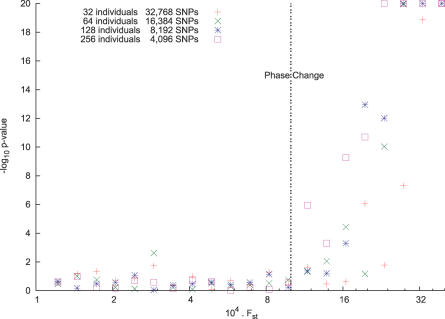
Current methods for inferring population structure from genetic data do not provide formal significance tests for population differentiation. We discuss an approach to studying population structure (principal components analysis) that was first applied to genetic data by Cavalli-Sforza and colleagues. We place the method on a solid statistical footing, using results from modern statistics to develop formal significance tests. We also uncover a general "phase change" phenomenon about the ability to detect structure in genetic data, which emerges from the statistical theory we use, and has an important implication for the ability to discover structure in genetic data: for a fixed but large dataset size, divergence between two populations (as measured, for example, by a statistic like FST) below a threshold is essentially undetectable, but a little above threshold, detection will be easy. This means that we can predict the dataset size needed to detect structure.
Overview
The claims and statistics of this paper haven’t been checked yet.
Free: it reads the open-access text and checks the first 5 claims that cite a source we can check. Create a free account to check every claim.
Integrity signals
Registry
Cites
Statistics
Figures
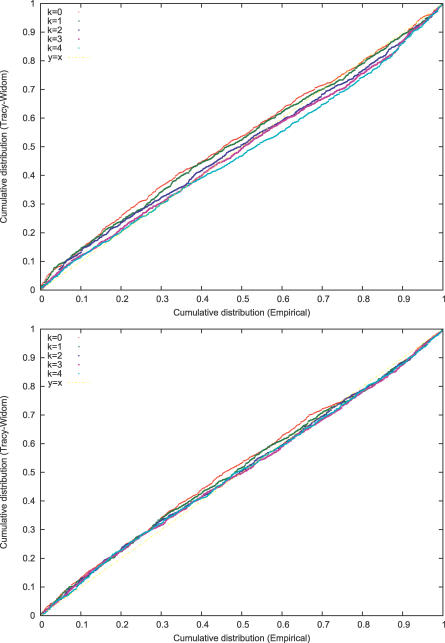
Verification
Claims the paper makes
The claims and statistics of this paper haven’t been checked yet.
Free: it reads the open-access text and checks the first 5 claims that cite a source we can check. Create a free account to check every claim.
Claims other papers make about this one
Each is checked against this paper’s own text: does it say what the citing paper says it does?
The source backs part of the claim, not all of it — or backs it for a different population, condition or comparison.
In the citing paper
“It is notable that PCA clustering is sensitive to the sample size of different ancestries and also to their amount of genetic drift, which exaggerates principal component distances 207,208,211,212 .”
From Ancient DNA analysis (2021) · cites this paper as [207]
Experimental — accuracy not yet measured
Self-check
Percentages, sums and reported differences re-computed from the paper’s own numbers.
The self-check needs the paper’s full text.
Citations
Cites
Inference of Population Structure Using Multilocus Genotype Data
Pritchard, J. K., Stephens, M., & Donnelly, P. (2000) · Genetics · doi:10.1093/genetics/155.2.945 · Cited by 33,908
Principal components analysis corrects for stratification in genome-wide association studies
Price, A. L., Patterson, N. J., Plenge, R. M., Weinblatt, M. E., Shadick, N. A., & Reich, D. (2006) · Nature Genetics · doi:10.1038/ng1847 · Cited by 10,248 · cited 2×
“A parallel paper [14] explores applications to medical genetics.”
BackgroundSelf-citationFalush, D., Stephens, M., & Pritchard, J. K. (2003) · Genetics · doi:10.1093/genetics/164.4.1567 · Cited by 7,959
The International HapMap Project
†The International HapMap Consortium, Genotyping centres: Baylor College of Medicine and ParAllele BioScience, Gibbs, R. A., Belmont, J. W., Hardenbol, P., Willis, T. D., Yu, F., Chinese HapMap Consortium, Yang, H., Ch'ang, L.-Y., et al. (2003) · Nature · doi:10.1038/nature02168 · Cited by 6,057
A haplotype map of the human genome
The International HapMap Consortium (2005) · Nature · doi:10.1038/nature04226 · Cited by 5,858 · cited 1×
“For instance, in the International Haplotype Map project [ 26 ], markers were chosen about 5,000 bases apart (phase 1), or about 1,000 bases apart (phase 2), and so nearby markers will often be in LD. Mathematically this will induce correlation between nearby columns of our matrix M. The effect of this will be that th…”
BackgroundSpielman, R. S., McGinnis, R. E., & Ewens, W. J. (1993) · PubMed · Cited by 3,651
Searle, S. R., & Searle, S. R. (1971) · Cited by 3,229
The History and Geography of Human Genes: Abridged paperback Edition
Cavalli-Sforza, L. L., Menozzi, P., & Piazza, A. (2018) · Princeton University Press eBooks · doi:10.2307/j.ctv301gjp · Cited by 3,175
Genomic Control for Association Studies
Devlin, B., & Roeder, K. (1999) · Biometrics · doi:10.1111/j.0006-341x.1999.00997.x · Cited by 3,162 · cited 3×
“If e([1]) is the principal eigenvector of the matrix X, this means that the sum of squares”
BackgroundOn the distribution of the largest eigenvalue in principal components analysis
Johnstone, I. M. (2001) · The Annals of Statistics · doi:10.1214/aos/1009210544 · Cited by 1,949 · cited 13×
“> λm, then Johnstone [1] shows that with suitable normalization and for large m and n, the largest eigenvalue λ1 is well approximated by the Tracy-Widom distribution.”
BackgroundMethodInfluential
Research works printed but not linked: 39
- Devlin, 1999, Biometrics, 55, 997
- Menozzi, 1978, Science, 201, 786
- Cavalli-Sforza, 2003, Nat Genet, 33, 266
- Shriver, 2005, Human Genomics, 2, 81
- Capelli, 2006, Ann Hum Genet, 70, 207
- Lovell, 2005, Ann Hum Genet, 69, 275
- Stoneking, 1997, Genome Res, 7, 1061
- Pritchard, 2000, Genetics, 155, 945
- Falush, 2003, Genetics, 164, 1567
- Hoggart, 2004, Am J Hum Genet, 74, 965
- Patterson, 2004, Am J Hum Genet, 74, 979
- Montana, 2004, Am J Hum Genet, 75, 771
- Price, 2006, Nat Genet, 38, 904
- Baik, 2005, Ann Probability, 33, 1643
- Baik, 2006, J Multivariate Anal, 97, 1643
- Nicholson, 2002, JRSS(B), 64, 695
- Bowcock, 1994, Nature, 368, 455
- Johnstone, 2001, Ann Stat, 29, 295
- Tracy, 1994, Commun Math Phys, 159, 151
- El Karoui, 2003, On the largest eigenvalue of Wishart matrices with identity covariance when p/n → ∞
- Soshnikov, 2002, J Stat Physics, 108, 1033
- Altshuler, 2005, Nature, 437, 1299
- Macarthur, 1957, Proc Natl Acad Sci U S A, 43, 293
- Pielou, 1975, Ecological diversity
- Ramachandran, 2005, Proc Natl Acad Sci, 102, 15942
- Gibbs, 2004, Nature, 426, 789
- Smith, 2004, Am J Hum Genet, 74, 1001
- Daly, 2001, Nat Genet, 29, 229
- Patil, 2001, Science, 294, 1719
- Allen, 2003, Am J Hum Genet, 72, 671
- Clayton, 2005, Nat Genet, 37, 1243
- Serre, 2004, Genome Res, 14, 1679
- Spielman, 1993, Am J Hum Genet, 52, 506
- Freedman, 2004, Nat Genet, 36, 388
- Marchini, 2004, Nat Genet, 36, 512
- Helgason, 2005, Nat Genet, 37, 90
- Balding, 1995, Genetica, 96, 3
- Rosenberg, 2006, Ann Hum Gen, 70, 841
- Schaffner, 2005, Genome Res, 15, 1576
Cited by
Items 101–200 of 1,074
Origins and Genetic Legacy of Neolithic Farmers and Hunter-Gatherers in Europe
Skoglund, P., Malmström, H., Raghavan, M., Storå, J., Hall, P., Willerslev, E., Gilbert, M. T. P., Götherström, A., & Jakobsson, M. (2012) · Science · doi:10.1126/science.1216304 · Cited by 521
Southern African ancient genomes estimate modern human divergence to 350,000 to 260,000 years ago
Schlebusch, C. M., Malmström, H., Günther, T., Sjödin, P., Coutinho, A., Edlund, H., Munters, A. R., Vicente, M., Steyn, M., Soodyall, H., et al. (2017) · Science · doi:10.1126/science.aao6266 · Cited by 519
“PCA was performed using EIGENSOFT (89, 90) with the following parameters: r2 threshold of 0.”
MethodGreenlandic Inuit show genetic signatures of diet and climate adaptation
Fumagalli, M., Moltke, I., Grarup, N., Racimo, F., Bjerregaard, P., Jørgensen, M. E., Korneliussen, T. S., Gerbault, P., Skotte, L., Linneberg, A., et al. (2015) · Science · doi:10.1126/science.aab2319 · Cited by 510
Ozeki, T., Mushiroda, T., Yowang, A., Takahashi, A., Kubo, M., Shirakata, Y., Ikezawa, Z., Iijima, M., Shiohara, T., Hashimoto, K., et al. (2011) · Human Molecular Genetics · doi:10.1093/hmg/ddq537 · Cited by 515
The prehistoric peopling of Southeast Asia
McColl, H., Racimo, F., Vinner, L., Demeter, F., Gakuhari, T., Moreno-Mayar, J. V., van Driem, G., Gram Wilken, U., Seguin-Orlando, A., de la Fuente Castro, C., et al. (2018) · Science · doi:10.1126/science.aat3628 · Cited by 517
Variants in the CDKN2B and RTEL1 regions are associated with high-grade glioma susceptibility
Wrensch, M., Jenkins, R. B., Chang, J. S., Yeh, R.-F., Xiao, Y., Decker, P. A., Ballman, K. V., Berger, M., Buckner, J. C., Chang, S., et al. (2009) · Nature Genetics · doi:10.1038/ng.408 · Cited by 510
“The principal component approach was implemented in EIGENSTRAT to determine if there was any evidence of population stratification in the Mayo cases and controls 3,27.”
Mace, E. S., Tai, S., Gilding, E. K., Li, Y., Prentis, P. J., Bian, L., Campbell, B. C., Hu, W., Innes, D. J., Han, X., et al. (2013) · Nature Communications · doi:10.1038/ncomms3320 · Cited by 490
“Principal component analysis of the SNPs was performed using the software EIGENSOFT 52 .”
Sequence variants in SLC16A11 are a common risk factor for type 2 diabetes in Mexico
The SIGMA Type 2 Diabetes Consortium (2014) · Nature · doi:10.1038/nature12828 · Cited by 507
Self-citationCorrelation between Genetic and Geographic Structure in Europe
Lao, O., Lu, T. T., Nothnagel, M., Junge, O., Freitag-Wolf, S., Caliebe, A., Balascakova, M., Bertranpetit, J., Bindoff, L. A., Comas, D., et al. (2008) · Current Biology · doi:10.1016/j.cub.2008.07.049 · Cited by 503
“Principal-component analysis was performed with the Eigensoft program with the default settings [38].”
Complete Khoisan and Bantu genomes from southern Africa
Schuster, S. C., Miller, W., Ratan, A., Tomsho, L. P., Giardine, B., Kasson, L. R., Harris, R. S., Petersen, D. C., Zhao, F., Qi, J., et al. (2010) · Nature · doi:10.1038/nature08795 · Cited by 499
Self-citationApplication of SNPs for population genetics of nonmodel organisms: new opportunities and challenges
HELYAR, S. J., HEMMER‐HANSEN, J., BEKKEVOLD, D., TAYLOR, M. I., OGDEN, R., LIMBORG, M. T., CARIANI, A., MAES, G. E., DIOPERE, E., CARVALHO, G. R., et al. (2011) · Molecular Ecology Resources · doi:10.1111/j.1755-0998.2010.02943.x · Cited by 478
“As an alternative to Bayesian clustering, principal component analysis (PCA) and related approaches have been applied in several SNP studies of human population structure (Patterson et al. 2006).”
MethodHan, J., Kraft, P., Nan, H., Guo, Q., Chen, C., Qureshi, A., Hankinson, S. E., Hu, F. B., Duffy, D. L., Zhao, Z. Z., et al. (2008) · PLoS Genetics · doi:10.1371/journal.pgen.1000074 · Cited by 499
“The top four eigenvectors were chosen on the basis of significant (p,0.05) Tracy-Wisdom tests [ 30 ].”
MethodInfluentialSeparating endogenous ancient DNA from modern day contamination in a Siberian Neandertal
Skoglund, P., Northoff, B. H., Shunkov, M. V., Derevianko, A. P., Pääbo, S., Krause, J., & Jakobsson, M. (2014) · Proceedings of the National Academy of Sciences · doi:10.1073/pnas.1318934111 · Cited by 499
A Simple Genetic Architecture Underlies Morphological Variation in Dogs
Boyko, A. R., Quignon, P., Li, L., Schoenebeck, J. J., Degenhardt, J. D., Lohmueller, K. E., Zhao, K., Brisbin, A., Parker, H. G., vonHoldt, B. M., et al. (2010) · PLoS Biology · doi:10.1371/journal.pbio.1000451 · Cited by 494
“Using 5,157 unlinked SNPs genotyped on 890 dogs from 80 breeds, we evaluated population structure using Principal Component Analysis (PCA; [43]) and the Bayesian clustering program STRUCTURE (Figure S4) [44,45].”
MethodQuality control and quality assurance in genotypic data for genome‐wide association studies
Laurie, C. C., Doheny, K. F., Mirel, D. B., Pugh, E. W., Bierut, L. J., Bhangale, T., Boehm, F., Caporaso, N. E., Cornelis, M. C., Edenberg, H. J., et al. (2010) · Genetic Epidemiology · doi:10.1002/gepi.20516 · Cited by 480
“To investigate population structure, we use principal components analysis (PCA), essentially as described by Patterson et al. [2006]. The choice of which SNPs to use for principal components analysis is not obvious.”
MethodA route to de novo domestication of wild allotetraploid rice
Yu, H., Lin, T., Meng, X., Du, H., Zhang, J., Liu, G., Chen, M., Jing, Y., Kou, L., Li, X., et al. (2021) · Cell · doi:10.1016/j.cell.2021.01.013 · Cited by 484
Common variants at five new loci associated with early-onset inflammatory bowel disease
Western Regional Research Alliance for Pediatric IBD, Imielinski, M., International IBD Genetics Consortium, Baldassano, R. N., Griffiths, A., Russell, R. K., Annese, V., Dubinsky, M., Kugathasan, S., Bradfield, J. P., et al. (2009) · Nature Genetics · doi:10.1038/ng.489 · Cited by 482
“First, we computed principal components for our data set by running smartpca in the EIGENSTRA”
Population Structure and Cryptic Relatedness in Genetic Association Studies
Astle, W., & Balding, D. J. (2009) · Statistical Science · doi:10.1214/09-sts307 · Cited by 459
Tett, A., Huang, K. D., Asnicar, F., Fehlner-Peach, H., Pasolli, E., Karcher, N., Armanini, F., Manghi, P., Bonham, K., Zolfo, M., et al. (2019) · Cell Host & Microbe · doi:10.1016/j.chom.2019.08.018 · Cited by 476
“Principal Component Analysis (PCA) (Patterson et al., 2006; Price et al., 2006) on the resulting SNP dataset show that the humanDNA form the two coprolite samples has the greatest genetic affinity with modern Native Americans (Figure S5D).”
BackgroundGenetic adaptation and Neandertal admixture shaped the immune system of human populations
Quach, H., Rotival, M., Pothlichet, J., Loh, Y.-H. E., Dannemann, M., Zidane, N., Laval, G., Patin, E., Harmant, C., Lopez, M., et al. (2016) · Cell · doi:10.1016/j.cell.2016.09.024 · Cited by 475
“REAGENT or RESOURCE SOURCE IDENTIFIER GATK v.3.2.2 (DePristo et al., 2011) https://software.broadinstitute.org/gatk/ SHAPEIT2 (Delaneau et al., 2013) http://www.shapeit.fr IMPUTE v.2 (Howie et al., 2009) http://mathgen.stats.ox.ac.uk/impute/impute_v2.1.0.html EIGENSTRAT (Patterson et al., 2006) http://genepath.med.har…”
InfluentialRothman, N., Garcia-Closas, M., Chatterjee, N., Malats, N., Wu, X., Figueroa, J. D., Real, F. X., Van Den Berg, D., Matullo, G., Baris, D., et al. (2010) · Nature Genetics · doi:10.1038/ng.687 · Cited by 481
Key susceptibility locus for nonsyndromic cleft lip with or without cleft palate on chromosome 8q24
Birnbaum, S., Ludwig, K. U., Reutter, H., Herms, S., Steffens, M., Rubini, M., Baluardo, C., Ferrian, M., Almeida de Assis, N., Alblas, M. A., et al. (2009) · Nature Genetics · doi:10.1038/ng.333 · Cited by 471
Ancient DNA indicates human population shifts and admixture in northern and southern China
Yang, M. A., Fan, X., Sun, B., Chen, C., Lang, J., Ko, Y.-C., Tsang, C.-H., Chiu, H., Wang, T., Bao, Q., et al. (2020) · Science · doi:10.1126/science.aba0909 · Cited by 472
Self-citationInferring admixture histories of human populations using linkage disequilibrium
Loh, P.-R., Lipson, M., Patterson, N., Moorjani, P., Pickrell, J. K., Reich, D., & Berger, B. (2013) · Genetics · doi:10.1534/genetics.112.147330 · Cited by 466
Self-citationGenome-wide association study identifies three loci associated with melanoma risk
Bishop, D. T., Demenais, F., Iles, M. M., Harland, M., Taylor, J. C., Corda, E., Randerson-Moor, J., Aitken, J. F., Avril, M.-F., Azizi, E., et al. (2009) · Nature Genetics · doi:10.1038/ng.411 · Cited by 462
“PCA was applied to the remaining SNPs using EIGENSTRA”
MethodDiversity and scale: Genetic architecture of 2068 traits in the VA Million Veteran Program
Verma, A., Huffman, J. E., Rodriguez, A., Conery, M., Liu, M., Ho, Y.-L., Kim, Y., Heise, D. A., Guare, L., Panickan, V. A., et al. (2024) · Science · doi:10.1126/science.adj1182 · Cited by 463
Genomic Variation in Seven Khoe-San Groups Reveals Adaptation and Complex African History
Schlebusch, C. M., Skoglund, P., Sjödin, P., Gattepaille, L. M., Hernandez, D., Jay, F., Li, S., De Jongh, M., Singleton, A., Blum, M. G. B., et al. (2012) · Science · doi:10.1126/science.1227721 · Cited by 468
Genome-wide patterns of population structure and admixture in West Africans and African Americans
Bryc, K., Auton, A., Nelson, M. R., Oksenberg, J. R., Hauser, S. L., Williams, S., Froment, A., Bodo, J.-M., Wambebe, C., Tishkoff, S. A., et al. (2010) · Proceedings of the National Academy of Sciences · doi:10.1073/pnas.0909559107 · Cited by 455
“smartpca from the package eigenstrat (30) on a reduced dataset of 251,253 SNPs, where r(2) < 0.”
BackgroundMethodInfluentialThe Allen Ancient DNA Resource (AADR) a curated compendium of ancient human genomes
Mallick, S., Micco, A., Mah, M., Ringbauer, H., Lazaridis, I., Olalde, I., Patterson, N., & Reich, D. (2024) · Scientific Data · doi:10.1038/s41597-024-03031-7 · Cited by 368
“…we manually curate the genotypes to check that the data from each individual has sensible population genetic properties, by looking for potential outliers based on ADMIXTURE 27 and principal components analysis 28 . curation of metainformation and integration of ongoing community feedback.”
MethodSelf-citationZhou, X., Feliciano, P., Shu, C., Wang, T., Astrovskaya, I., Hall, J. B., Obiajulu, J. U., Wright, J. R., Murali, S. C., Xu, S. X., et al. (2022) · Nature Genetics · doi:10.1038/s41588-022-01148-2 · Cited by 453
The population history of northeastern Siberia since the Pleistocene
Sikora, M., Pitulko, V. V., Sousa, V. C., Allentoft, M. E., Vinner, L., Rasmussen, S., Margaryan, A., de Barros Damgaard, P., de la Fuente, C., Renaud, G., et al. (2019) · Nature · doi:10.1038/s41586-019-1279-z · Cited by 389
The sequences of 150,119 genomes in the UK Biobank
Halldorsson, B. V., Eggertsson, H. P., Moore, K. H. S., Hauswedell, H., Eiriksson, O., Ulfarsson, M. O., Palsson, G., Hardarson, M. T., Oddsson, A., Jensson, B. O., et al. (2022) · Nature · doi:10.1038/s41586-022-04965-x · Cited by 448
Duan, N., Bai, Y., Sun, H., Wang, N., Ma, Y., Li, M., Wang, X., Jiao, C., Legall, N., Mao, L., et al. (2017) · Nature Communications · doi:10.1038/s41467-017-00336-7 · Cited by 432
Long-Range LD Can Confound Genome Scans in Admixed Populations
Price, A. L., Weale, M. E., Patterson, N., Myers, S. R., Need, A. C., Shianna, K. V., Ge, D., Rotter, J. I., Torres, E., Taylor, K. D., et al. (2008) · The American Journal of Human Genetics · doi:10.1016/j.ajhg.2008.06.005 · Cited by 443
Self-citationGenome-wide patterns of population structure and admixture among Hispanic/Latino populations
Bryc, K., Velez, C., Karafet, T., Moreno-Estrada, A., Reynolds, A., Auton, A., Hammer, M., Bustamante, C. D., & Ostrer, H. (2010) · Proceedings of the National Academy of Sciences · doi:10.1073/pnas.0914618107 · Cited by 442
Genome-wide association analysis identifies 30 new susceptibility loci for schizophrenia
Li, Z., Chen, J., Yu, H., He, L., Xu, Y., Zhang, D., Yi, Q., Li, C., Li, X., Shen, J., et al. (2017) · Nature Genetics · doi:10.1038/ng.3973 · Cited by 442
Challenges in analysis and interpretation of microsatellite data for population genetic studies
Putman, A. I., & Carbone, I. (2014) · Ecology and Evolution · doi:10.1002/ece3.1305 · Cited by 409
“alter results of population structure inference (Patterson et al. 2006; Lawson et al. 2012; Baran et al. 2013).”
BackgroundExcess of rare variants in genes identified by genome-wide association study of hypertriglyceridemia
Johansen, C. T., Wang, J., Lanktree, M. B., Cao, H., McIntyre, A. D., Ban, M. R., Martins, R. A., Kennedy, B. A., Hassell, R. G., Visser, M. E., et al. (2010) · Nature Genetics · doi:10.1038/ng.628 · Cited by 437
“Covariates entered into all analyses included sex, body-mass index, diabetes status and ten principal components of ancestry as generated by Eigenstra”
Genomic insights into the formation of human populations in East Asia
Wang, C.-C., Yeh, H.-Y., Popov, A. N., Zhang, H.-Q., Matsumura, H., Sirak, K., Cheronet, O., Kovalev, A., Rohland, N., Kim, A. M., et al. (2021) · Nature · doi:10.1038/s41586-021-03336-2 · Cited by 408
Self-citationGenomic and archaeological evidence suggest a dual origin of domestic dogs
Frantz, L. A. F., Mullin, V. E., Pionnier-Capitan, M., Lebrasseur, O., Ollivier, M., Perri, A., Linderholm, A., Mattiangeli, V., Teasdale, M. D., Dimopoulos, E. A., et al. (2016) · Science · doi:10.1126/science.aaf3161 · Cited by 430
Conomos, M. P., Miller, M. B., & Thornton, T. A. (2015) · Genetic Epidemiology · doi:10.1002/gepi.21896 · Cited by 437
“Principal components analysis (PCA) [Patterson et al., 2006; Price et al., 2006] has been the prevailing approach in recent years for both population structure inference and correction of population stratification in genome-wide association studies (GWAS) with high-density single nucleotide polymorphism (SNP) genotypi…”
BackgroundMethodInfluentialAncient genomes document multiple waves of migration in Southeast Asian prehistory
Lipson, M., Cheronet, O., Mallick, S., Rohland, N., Oxenham, M., Pietrusewsky, M., Pryce, T. O., Willis, A., Matsumura, H., Buckley, H., et al. (2018) · Science · doi:10.1126/science.aat3188 · Cited by 428
“We performed PCA by computing principal components for present-day populations (except as noted) and then projecting ancient samples, using the “lsqproject” and “au-toshrink” options in smartpca [ 48, 49 ].”
MethodSelf-citationThe genome sequence of African rice (Oryza glaberrima) and evidence for independent domestication
Wang, M., Yu, Y., Haberer, G., Marri, P. R., Fan, C., Goicoechea, J. L., Zuccolo, A., Song, X., Kudrna, D., Ammiraju, J. S. S., et al. (2014) · Nature Genetics · doi:10.1038/ng.3044 · Cited by 409
Transancestral mapping and genetic load in systemic lupus erythematosus
Langefeld, C. D., Ainsworth, H. C., Graham, D. S. C., Kelly, J. A., Comeau, M. E., Marion, M. C., Howard, T. D., Ramos, P. S., Croker, J. A., Morris, D. L., et al. (2017) · Nature Communications · doi:10.1038/ncomms16021 · Cited by 420
Reconstructing Prehistoric African Population Structure
Skoglund, P., Thompson, J. C., Prendergast, M. E., Mittnik, A., Sirak, K., Hajdinjak, M., Salie, T., Rohland, N., Mallick, S., Peltzer, A., et al. (2017) · Cell · doi:10.1016/j.cell.2017.08.049 · Cited by 425
“60 Cell 171, 59–71, September 21, 2017 An Ancient Cline of Southern and Eastern African Hunter-Gatherers We used principal component analysis (PCA) (Patterson et al., 2006) and automated clustering (Alexander et al., 2009) to relate the 16 ancient individuals to present-day sub-Saharan Africans…”
MethodInfluentialSelf-citationGenomic islands of speciation separate cichlid ecomorphs in an East African crater lake
Malinsky, M., Challis, R. J., Tyers, A. M., Schiffels, S., Terai, Y., Ngatunga, B. P., Miska, E. A., Durbin, R., Genner, M. J., & Turner, G. F. (2015) · Science · doi:10.1126/science.aac9927 · Cited by 420
Upper Palaeolithic genomes reveal deep roots of modern Eurasians
Jones, E. R., Gonzalez-Fortes, G., Connell, S., Siska, V., Eriksson, A., Martiniano, R., McLaughlin, R. L., Gallego Llorente, M., Cassidy, L. M., Gamba, C., et al. (2015) · Nature Communications · doi:10.1038/ncomms9912 · Cited by 417
Genetic signals of origin, spread, and introgression in a large sample of maize landraces
van Heerwaarden, J., Doebley, J., Briggs, W. H., Glaubitz, J. C., Goodman, M. M., de Jesus Sanchez Gonzalez, J., & Ross-Ibarra, J. (2011) · Proceedings of the National Academy of Sciences · doi:10.1073/pnas.1013011108 · Cited by 405
“We analyzed the genetic groups identified by PCA-based Ward clustering separately for this purpose.”
BackgroundMethodInfluentialAnalysis of genomic diversity in Mexican Mestizo populations to develop genomic medicine in Mexico
Silva-Zolezzi, I., Hidalgo-Miranda, A., Estrada-Gil, J., Fernandez-Lopez, J. C., Uribe-Figueroa, L., Contreras, A., Balam-Ortiz, E., del Bosque-Plata, L., Velazquez-Fernandez, D., Lara, C., et al. (2009) · Proceedings of the National Academy of Sciences · doi:10.1073/pnas.0903045106 · Cited by 417
“We measured heterozygosity (HET), performed principal components analysis (PCA) (32), and calculated FST statistics using data sets obtained for Mexican and HapMap populations.”
MethodInfluentialStatistical methods in spatial genetics
GUILLOT, G., LEBLOIS, R., COULON, A., & FRANTZ, A. C. (2009) · Molecular Ecology · doi:10.1111/j.1365-294x.2009.04410.x · Cited by 409
“Patterson et al. (2006) showed recently that PCA can be successfully used to detect population structure in particular large data sets consisting of thousands of SNPs where implementing a more complex method (e.g. Bayesian clustering discussed in Clustering methods section below) becomes…”
MethodGenomic insights into the peopling of the Southwest Pacific
Skoglund, P., Posth, C., Sirak, K., Spriggs, M., Valentin, F., Bedford, S., Clark, G. R., Reepmeyer, C., Petchey, F., Fernandes, D., et al. (2016) · Nature · doi:10.1038/nature19844 · Cited by 414
Self-citationOrlando, L., Allaby, R., Skoglund, P., Der Sarkissian, C., Stockhammer, P. W., Ávila-Arcos, M. C., Fu, Q., Krause, J., Willerslev, E., Stone, A. C., et al. (2021) · Nature Reviews Methods Primers · doi:10.1038/s43586-020-00011-0 · Cited by 411
Population genomics reveal recent speciation and rapid evolutionary adaptation in polar bears
Liu, S., Lorenzen, E. D., Fumagalli, M., Li, B., Harris, K., Xiong, Z., Zhou, L., Korneliussen, T. S., Somel, M., Babbitt, C., et al. (2014) · Cell · doi:10.1016/j.cell.2014.03.054 · Cited by 411
Bredeson, J. V., Lyons, J. B., Prochnik, S. E., Wu, G. A., Ha, C. M., Edsinger-Gonzales, E., Grimwood, J., Schmutz, J., Rabbi, I. Y., Egesi, C., et al. (2016) · Nature Biotechnology · doi:10.1038/nbt.3535 · Cited by 418
Abundant contribution of short tandem repeats to gene expression variation in humans
Gymrek, M., Willems, T., Guilmatre, A., Zeng, H., Markus, B., Georgiev, S., Daly, M. J., Price, A. L., Pritchard, J. K., Sharp, A. J., et al. (2016) · Nature Genetics · doi:10.1038/ng.3461 · Cited by 410
Self-citationThe genome-wide structure of the Jewish people
Behar, D. M., Yunusbayev, B., Metspalu, M., Metspalu, E., Rosset, S., Parik, J., Rootsi, S., Chaubey, G., Kutuev, I., Yudkovsky, G., et al. (2010) · Nature · doi:10.1038/nature09103 · Cited by 415
Model-free Estimation of Recent Genetic Relatedness
Conomos, M. P., Reiner, A. P., Weir, B. S., & Thornton, T. A. (2016) · The American Journal of Human Genetics · doi:10.1016/j.ajhg.2015.11.022 · Cited by 419
Raj, T., Li, Y. I., Wong, G., Humphrey, J., Wang, M., Ramdhani, S., Wang, Y.-C., Ng, B., Gupta, I., Haroutunian, V., et al. (2018) · Nature Genetics · doi:10.1038/s41588-018-0238-1 · Cited by 410
Yang, X., Gao, S., Xu, S., Zhang, Z., Prasanna, B. M., Li, L., Li, J., & Yan, J. (2011) · Molecular Breeding · doi:10.1007/s11032-010-9500-7 · Cited by 402
“Consequently, it was suggested that the PCA model dissects the phenotypic variation from population structure along continuous axes (Patterson et al. 2006; Price et al. 2006).”
BackgroundMethodInfluentialReconstructing the Deep Population History of Central and South America
Posth, C., Nakatsuka, N., Lazaridis, I., Skoglund, P., Mallick, S., Lamnidis, T. C., Rohland, N., Nägele, K., Adamski, N., Bertolini, E., et al. (2018) · Cell · doi:10.1016/j.cell.2018.10.027 · Cited by 397
“Principal component analysis We used smartpca from EIGENSOFT and default settings (Patterson et al., 2006) to compute principal components using presentday populations.”
MethodSelf-citationChen, N., Cai, Y., Chen, Q., Li, R., Wang, K., Huang, Y., Hu, S., Huang, S., Zhang, H., Zheng, Z., et al. (2018) · Nature Communications · doi:10.1038/s41467-018-04737-0 · Cited by 403
Boston Children's JIA Registry, Hinks, A., British Society of Paediatric and Adolescent Rheumatology (BSPAR) Study Group, (CAPS), C. A. P. S., (CHARMS), C. A. R. T. M. S., German Society for Pediatric Rheumatology (GKJR), Study, J. G. E., NIAMS JIA Genetic Registry, Study, T., United Kingdom Juvenile Idiopathic Arthritis Genetics Consortium (UKJIAGC), et al. (2013) · Nature Genetics · doi:10.1038/ng.2614 · Cited by 404
Reconciling the analysis of IBD and IBS in complex trait studies
Powell, J. E., Visscher, P. M., & Goddard, M. E. (2010) · Nature Reviews Genetics · doi:10.1038/nrg2865 · Cited by 389
Eckert, A. J., van Heerwaarden, J., Wegrzyn, J. L., Nelson, C. D., Ross-Ibarra, J., González-Martínez, S. C., & Neale, D. B. (2010) · Genetics · doi:10.1534/genetics.110.115543 · Cited by 396
“Following outlier removal and reanalysis of M, the significance of PCs was determined by comparing the value of each standardized eigenvalue to a Tracy–Widom distribution (Patterson et al. 2006).”
Methodpong: fast analysis and visualization of latent clusters in population genetic data
Behr, A. A., Liu, K. Z., Liu-Fang, G., Nakka, P., & Ramachandran, S. (2016) · Bioinformatics · doi:10.1093/bioinformatics/btw327 · Cited by 381
The UK-PSCSC Consortium, Liu, J. Z., The International IBD Genetics Consortium, The International PSC Study Group, Hov, J. R., Folseraas, T., Ellinghaus, E., Rushbrook, S. M., Doncheva, N. T., Andreassen, O. A., et al. (2013) · Nature Genetics · doi:10.1038/ng.2616 · Cited by 391
Parallel palaeogenomic transects reveal complex genetic history of early European farmers
Lipson, M., Szécsényi-Nagy, A., Mallick, S., Pósa, A., Stégmár, B., Keerl, V., Rohland, N., Stewardson, K., Ferry, M., Michel, M., et al. (2017) · Nature · doi:10.1038/nature24476 · Cited by 389
“48).”
Self-citationActionable, Pathogenic Incidental Findings in 1,000 Participants’ Exomes
Dorschner, M. O., Amendola, L. M., Turner, E. H., Robertson, P. D., Shirts, B. H., Gallego, C. J., Bennett, R. L., Jones, K. L., Tokita, M. J., Bennett, J. T., et al. (2013) · The American Journal of Human Genetics · doi:10.1016/j.ajhg.2013.08.006 · Cited by 385
Genetic diversity of the African malaria vector Anopheles gambiae
The Anopheles gambiae 1000 Genomes Consortium (2017) · Nature · doi:10.1038/nature24995 · Cited by 411
The Geography of Recent Genetic Ancestry across Europe
Ralph, P., & Coop, G. (2013) · PLoS Biology · doi:10.1371/journal.pbio.1001555 · Cited by 384
“…to individuals whose grandparents came from the same geographic region, first performing principal components analysis on the data using SMARTPCA (Patterson et al., 2006), and excluding 41 individuals who clustered with populations outside Europe (the majority of such were already excluded by…”
MethodInfluentialGenomic Diversity and Admixture Differs for Stone-Age Scandinavian Foragers and Farmers
Skoglund, P., Malmström, H., Omrak, A., Raghavan, M., Valdiosera, C., Günther, T., Hall, P., Tambets, K., Parik, J., Sjögren, K.-G., et al. (2014) · Science · doi:10.1126/science.1253448 · Cited by 387
FlashPCA2: principal component analysis of Biobank-scale genotype datasets
Abraham, G., Qiu, Y., & Inouye, M. (2017) · Bioinformatics · doi:10.1093/bioinformatics/btx299 · Cited by 383
Spatially explicit Bayesian clustering models in population genetics
FRANÇOIS, O., & DURAND, E. (2010) · Molecular Ecology Resources · doi:10.1111/j.1755-0998.2010.02868.x · Cited by 362
“The results of PCA can provide a useful validation of Bayesian clustering outputs in particular if admixture models are used (Patterson et al. 2006; McVean 2009).”
BackgroundMethodInfluentialCharacterization of Greater Middle Eastern genetic variation for enhanced disease gene discovery
Greater Middle East Variome Consortium, Scott, E. M., Halees, A., Itan, Y., Spencer, E. G., He, Y., Azab, M. A., Gabriel, S. B., Belkadi, A., Boisson, B., et al. (2016) · Nature Genetics · doi:10.1038/ng.3592 · Cited by 376
“The PCA based outlier analysis algorithm from the EIGENSOFT software library was also run, but failed to find any additional samples violating a standard deviation threshold of 5.0 40 .”
InfluentialAboriginal mitogenomes reveal 50,000 years of regionalism in Australia
Tobler, R., Rohrlach, A., Soubrier, J., Bover, P., Llamas, B., Tuke, J., Bean, N., Abdullah-Highfold, A., Agius, S., O’Donoghue, A., et al. (2017) · Nature · doi:10.1038/nature21416 · Cited by 363
Gelernter, J., Kranzler, H. R., Sherva, R., Almasy, L., Koesterer, R., Smith, A. H., Anton, R., Preuss, U. W., Ridinger, M., Rujescu, D., et al. (2014) · Molecular Psychiatry · doi:10.1038/mp.2013.145 · Cited by 370
Quality Control Procedures for Genome‐Wide Association Studies
Turner, S., Armstrong, L. L., Bradford, Y., Carlson, C. S., Crawford, D. C., Crenshaw, A. T., de Andrade, M., Doheny, K. F., Haines, J. L., Hayes, G., et al. (2011) · Current Protocols in Human Genetics · doi:10.1002/0471142905.hg0119s68 · Cited by 356
“Eigenstrat analysis (Patterson et al., 2006; Price et al., 2006) uses principal components analysis to explicitly detect and adjust for population stratification on a genome-wide scale with large sample sizes in a computationally efficient manner.”
MethodStolk, L., Perry, J. R. B., Chasman, D. I., He, C., Mangino, M., Sulem, P., Barbalic, M., Broer, L., Byrne, E. M., Ernst, F., et al. (2012) · Nature Genetics · doi:10.1038/ng.1051 · Cited by 372
High-depth African genomes inform human migration and health
Choudhury, A., Aron, S., Botigué, L. R., Sengupta, D., Botha, G., Bensellak, T., Wells, G., Kumuthini, J., Shriner, D., Fakim, Y. J., et al. (2020) · Nature · doi:10.1038/s41586-020-2859-7 · Cited by 355
“We used the smartPCA program from EIGENSOFT 50 to perform PCA on the pruned dataset and the Genesis software 51 for PCA visualization (Supplementary Table 23).”
Actionable exomic incidental findings in 6503 participants: challenges of variant classification
Amendola, L. M., Dorschner, M. O., Robertson, P. D., Salama, J. S., Hart, R., Shirts, B. H., Murray, M. L., Tokita, M. J., Gallego, C. J., Kim, D. S., et al. (2015) · Genome Research · doi:10.1101/gr.183483.114 · Cited by 363
“Ancestry was inferred from analysis of principal components (Patterson et al. 2006; Price et al. 2006).”
MethodKalinowski, S. T. (2011) · Heredity · doi:10.1038/hdy.2010.95 · Cited by 361
Fast Principal-Component Analysis Reveals Convergent Evolution of ADH1B in Europe and East Asia
Galinsky, K. J., Bhatia, G., Loh, P.-R., Georgiev, S., Mukherjee, S., Patterson, N. J., & Price, A. L. (2016) · The American Journal of Human Genetics · doi:10.1016/j.ajhg.2015.12.022 · Cited by 371
Self-citationAscertainment Biases in SNP Chips Affect Measures of Population Divergence
Albrechtsen, A., Nielsen, F. C., & Nielsen, R. (2010) · Molecular Biology and Evolution · doi:10.1093/molbev/msq148 · Cited by 345
“This ignores the allele frequencies so we choose to perform PCA using the method used in the Eigensoft software (Patterson et al. 2006).”
MethodDerived immune and ancestral pigmentation alleles in a 7,000-year-old Mesolithic European
Olalde, I., Allentoft, M. E., Sánchez-Quinto, F., Santpere, G., Chiang, C. W. K., DeGiorgio, M., Prado-Martinez, J., Rodríguez, J. A., Rasmussen, S., Quilez, J., et al. (2014) · Nature · doi:10.1038/nature12960 · Cited by 360
“To investigate the relationship to extant European samples, we conducted Principal Component Analysis (PCA) 10 and found the ~7,000-year-old Mesolithic sample was divergent from extant European populations (Extended Data Fig.”
MethodInfluentialFujimura, J. H., & Rajagopalan, R. (2011) · Social Studies of Science · doi:10.1177/0306312710379170 · Cited by 349
“Some of the geneticists we interviewed had been involved in the HapMap project and were already sensitive and sympathetic to these critiques.”
InfluentialAssociation Mapping for Enhancing Maize (Zea mays L.) Genetic Improvement
Yan, J., Warburton, M., & Crouch, J. (2011) · Crop Science · doi:10.2135/cropsci2010.04.0233 · Cited by 360
“…Roeder, 1999; Mackay, and Powell, 2007), structured association (Pritchard et al., 2000; Falush et al., 2003), principal components analysis (PCA) (Patterson et al., 2006; Price et al., 2006), nonmetric multidimensional scaling (nMDS) (Zhu and Yu, 2009), and the unifi ed mixed-model approach…”
BackgroundMethodInfluentialOut of southern East Asia: the natural history of domestic dogs across the world
Wang, G.-D., Zhai, W., Yang, H.-C., Wang, L., Zhong, L., Liu, Y.-H., Fan, R.-X., Yin, T.-T., Zhu, C.-L., Poyarkov, A. D., et al. (2016) · Cell Research · doi:10.1038/cr.2015.147 · Cited by 351
Sohail, M., Maier, R. M., Ganna, A., Bloemendal, A., Martin, A. R., Turchin, M. C., Chiang, C. W., Hirschhorn, J., Daly, M. J., Patterson, N., et al. (2019) · eLife · doi:10.7554/elife.39702 · Cited by 359
“, the ability to detect and correct population structure is dependent on sample size (Patterson et al., 2006; Price et al., 2006).”
BackgroundSelf-citationGenomewide association for schizophrenia in the CATIE study: results of stage 1
Sullivan, P. F., Lin, D., Tzeng, J.-Y., van den Oord, E., Perkins, D., Stroup, T. S., Wagner, M., Lee, S., Wright, F. A., Zou, F., et al. (2008) · Molecular Psychiatry · doi:10.1038/mp.2008.25 · Cited by 355
“We thank Dr. Nick Patterson for assistance with the EigenSoft program.”
MethodInfluentialZhao, S., Zheng, P., Dong, S., Zhan, X., Wu, Q., Guo, X., Hu, Y., He, W., Zhang, S., Fan, W., et al. (2013) · Nature Genetics · doi:10.1038/ng.2494 · Cited by 355
The genetic prehistory of southern Africa
Pickrell, J. K., Patterson, N., Barbieri, C., Berthold, F., Gerlach, L., Güldemann, T., Kure, B., Mpoloka, S. W., Nakagawa, H., Naumann, C., et al. (2012) · Nature Communications · doi:10.1038/ncomms2140 · Cited by 347
“ical admixture 4.1 Motivation A common approach to looking for historical admixture in a population is to use clustering analyses like those implemented in STRUCTURE [Pritchard et al., 2000] and PCA [Patterson et al., 2006]. These are useful approaches to summarizing the major components of variation in genetic data.…”
MethodInfluentialSelf-citationMelin, B. S., Barnholtz-Sloan, J. S., Wrensch, M. R., Johansen, C., Il'yasova, D., Kinnersley, B., Ostrom, Q. T., Labreche, K., Chen, Y., Armstrong, G., et al. (2017) · Nature Genetics · doi:10.1038/ng.3823 · Cited by 350
“4) 61 by merging cases and controls with Phase II HapMap samples 10 .”
Sun, X., Jiao, C., Schwaninger, H., Chao, C. T., Ma, Y., Duan, N., Khan, A., Ban, S., Xu, K., Cheng, L., et al. (2020) · Nature Genetics · doi:10.1038/s41588-020-00723-9 · Cited by 344
Yamaguchi-Kabata, Y., Nakazono, K., Takahashi, A., Saito, S., Hosono, N., Kubo, M., Nakamura, Y., & Kamatani, N. (2008) · The American Journal of Human Genetics · doi:10.1016/j.ajhg.2008.08.019 · Cited by 352
“The Ameri 60 European, 60 African, and 90 East-Asian (45 Japanese and 45 Han Chinese) individuals from the International HapMap project were analyzed by Eigenanalysis with the program smartpca.(15) The two-dimensional plots with the first and the second components (Figure 2A) showed that African (HapMap population of…”
MethodInfluentialYang, J., Li, W.-R., Lv, F.-H., He, S.-G., Tian, S.-L., Peng, W.-F., Sun, Y.-W., Zhao, Y.-X., Tu, X.-L., Zhang, M., et al. (2016) · Molecular Biology and Evolution · doi:10.1093/molbev/msw129 · Cited by 342
“0 (Patterson et al. 2006).”
Carpenter, M. L., Buenrostro, J. D., Valdiosera, C., Schroeder, H., Allentoft, M. E., Sikora, M., Rasmussen, M., Gravel, S., Guillén, S., Nekhrizov, G., et al. (2013) · The American Journal of Human Genetics · doi:10.1016/j.ajhg.2013.10.002 · Cited by 322
Evans, L. M., Slavov, G. T., Rodgers-Melnick, E., Martin, J., Ranjan, P., Muchero, W., Brunner, A. M., Schackwitz, W., Gunter, L., Chen, J.-G., et al. (2014) · Nature Genetics · doi:10.1038/ng.3075 · Cited by 343
Principles and methods for transferring polygenic risk scores across global populations
Kachuri, L., Chatterjee, N., Hirbo, J., Schaid, D. J., Martin, I., Kullo, I. J., Kenny, E. E., Pasaniuc, B., Polygenic Risk Methods in Diverse Populations (PRIMED) Consortium Methods Working Group, Auer, P. L., et al. (2024) · Nature Reviews Genetics · doi:10.1038/s41576-023-00637-2 · Cited by 328
“Global ancestry can be inferred using both model-based 162 and data-driven methods 163,164 .”
Multiple Deeply Divergent Denisovan Ancestries in Papuans
Jacobs, G. S., Hudjashov, G., Saag, L., Kusuma, P., Darusallam, C. C., Lawson, D. J., Mondal, M., Pagani, L., Ricaut, F.-X., Stoneking, M., et al. (2019) · Cell · doi:10.1016/j.cell.2019.02.035 · Cited by 346
Ancient genomes from northern China suggest links between subsistence changes and human migration
Ning, C., Li, T., Wang, K., Zhang, F., Li, T., Wu, X., Gao, S., Zhang, Q., Zhang, H., Hudson, M. J., et al. (2020) · Nature Communications · doi:10.1038/s41467-020-16557-2 · Cited by 305
Metadata
- Authors
- Patterson, N., Price, A. L., & Reich, D.
- Affiliations
- Broad Institute (US)
- Corresponding author
- Patterson, Nick
- Venue
- PLoS Genetics
- Publisher
- Public Library of Science (PLoS)
- Published
- 2006
- Volume
- 2
- Issue
- 12
- Pages
- e190
- ISSN
- 1553-7390 (ISSN-L)
- 1553-7404
- PMC
- PMC1713260
- OpenAlex
- W2108169091
- Cited by
- 5,280
- References
- 49
- Citations by year
- 2026: 303 · 2025: 380 · 2024: 430 · 2023: 361 · 2022: 393 · 2021: 405 · 2020: 352 · 2019: 324 · 2018: 313 · 2017: 298 · 2016: 270 · 2015: 250 · 2014: 248 · 2013: 227 · 2012: 212
- FWCI
- 35.78
- Type
- journal article
- Language
- en
- Open access
- gold
- doi.org
- Locations
- PLoS Genetics (publishedVersion, cc-by)
- Europe PMC (PubMed Central) (publishedVersion, cc-by)
- PubMed Central (publishedVersion, cc-by)
- PubMed (publishedVersion)
- Digital Access to Scholarship at Harvard (DASH) (Harvard University) (submittedVersion, cc-by)
- RePEc: Research Papers in Economics (submittedVersion)
- DOAJ (DOAJ: Directory of Open Access Journals) (submittedVersion)
- Funders
- Wellcome Trust
- National Human Genome Research Institute (R01HG006399)
- Topics
- Life Sciences › Biochemistry, Genetics and Molecular Biology › Genetics › Genetic diversity and population structure
- Life Sciences › Biochemistry, Genetics and Molecular Biology › Genetics › Forensic and Genetic Research
- Life Sciences › Biochemistry, Genetics and Molecular Biology › Genetics › Genetic Associations and Epidemiology
- Keywords
- population structure, principal component analysis, significance tests, genetic differentiation, phase transitions, sample size determination, FST, genetic data, eigenvalue analysis
- MeSH terms
- Computer Simulation, Genetic Markers, Genetics, Medical, Genetics, Population, Humans, Models, Genetic, Genetic Variation, Models, Statistical, Principal Component Analysis
About these checks
Registry, retraction, Cites and statistics results are computed, not judged, with one exception: a printed reference that no index lists is read once by a model before it counts as a citation error. Claims are extracted by a model and kept only when their quote appears verbatim in the text; each cited source is then checked, with a model’s help, for whether it says what the claim relies on. Those verdicts can be wrong — read the claim’s quote and the cited source before relying on one.
Statistics and arithmetic are recomputed, not judged.
Confidence bands are shown only for fields calibrated on our annotated test set. None is calibrated yet, so no band is shown.
What counts as a claim ›How we measure confidence ›How we check this ›
Are you an author, or do you see a problem with this page? Request a review
Data sources
Bibliographic data: Semantic Scholar, OpenAlex, Crossref.
Contains information from the Semantic Scholar Academic Graph Datasets, made available under the ODC Attribution License (ODC-BY 1.0).
Semantic Scholar’s data is described in: Kinney, R., et al. (2023). The Semantic Scholar Open Data Platform. arXiv:2301.10140.
