

Population Structure and Eigenanalysis
Open accessThe DOI matches its Crossref record; 48 of the 49 references it cites were found in a registry or an index.
Abstract
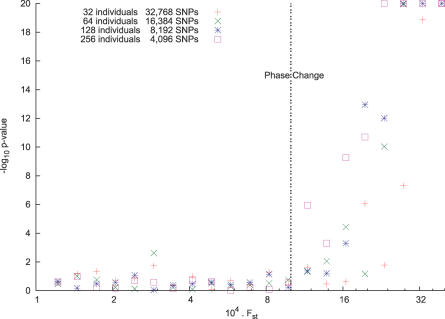
Current methods for inferring population structure from genetic data do not provide formal significance tests for population differentiation. We discuss an approach to studying population structure (principal components analysis) that was first applied to genetic data by Cavalli-Sforza and colleagues. We place the method on a solid statistical footing, using results from modern statistics to develop formal significance tests. We also uncover a general "phase change" phenomenon about the ability to detect structure in genetic data, which emerges from the statistical theory we use, and has an important implication for the ability to discover structure in genetic data: for a fixed but large dataset size, divergence between two populations (as measured, for example, by a statistic like FST) below a threshold is essentially undetectable, but a little above threshold, detection will be easy. This means that we can predict the dataset size needed to detect structure.
Overview
The claims and statistics of this paper haven’t been checked yet.
Free: it reads the open-access text and checks the first 5 claims that cite a source we can check. Create a free account to check every claim.
Integrity signals
Registry
Cites
Statistics
Figures
Verification
Claims the paper makes
The claims and statistics of this paper haven’t been checked yet.
Free: it reads the open-access text and checks the first 5 claims that cite a source we can check. Create a free account to check every claim.
Claims other papers make about this one
Each is checked against this paper’s own text: does it say what the citing paper says it does?
The source backs part of the claim, not all of it — or backs it for a different population, condition or comparison.
In the citing paper
“It is notable that PCA clustering is sensitive to the sample size of different ancestries and also to their amount of genetic drift, which exaggerates principal component distances 207,208,211,212 .”
From Ancient DNA analysis (2021) · cites this paper as [207]
Experimental — accuracy not yet measured
Self-check
Percentages, sums and reported differences re-computed from the paper’s own numbers.
The self-check needs the paper’s full text.
Citations
Cites
Inference of Population Structure Using Multilocus Genotype Data
Pritchard, J. K., Stephens, M., & Donnelly, P. (2000) · Genetics · doi:10.1093/genetics/155.2.945 · Cited by 33,908
Principal components analysis corrects for stratification in genome-wide association studies
Price, A. L., Patterson, N. J., Plenge, R. M., Weinblatt, M. E., Shadick, N. A., & Reich, D. (2006) · Nature Genetics · doi:10.1038/ng1847 · Cited by 10,248 · cited 2×
“A parallel paper [14] explores applications to medical genetics.”
BackgroundSelf-citationFalush, D., Stephens, M., & Pritchard, J. K. (2003) · Genetics · doi:10.1093/genetics/164.4.1567 · Cited by 7,959
The International HapMap Project
†The International HapMap Consortium, Genotyping centres: Baylor College of Medicine and ParAllele BioScience, Gibbs, R. A., Belmont, J. W., Hardenbol, P., Willis, T. D., Yu, F., Chinese HapMap Consortium, Yang, H., Ch'ang, L.-Y., et al. (2003) · Nature · doi:10.1038/nature02168 · Cited by 6,057
A haplotype map of the human genome
The International HapMap Consortium (2005) · Nature · doi:10.1038/nature04226 · Cited by 5,858 · cited 1×
“For instance, in the International Haplotype Map project [ 26 ], markers were chosen about 5,000 bases apart (phase 1), or about 1,000 bases apart (phase 2), and so nearby markers will often be in LD. Mathematically this will induce correlation between nearby columns of our matrix M. The effect of this will be that th…”
BackgroundSpielman, R. S., McGinnis, R. E., & Ewens, W. J. (1993) · PubMed · Cited by 3,651
Searle, S. R., & Searle, S. R. (1971) · Cited by 3,229
The History and Geography of Human Genes: Abridged paperback Edition
Cavalli-Sforza, L. L., Menozzi, P., & Piazza, A. (2018) · Princeton University Press eBooks · doi:10.2307/j.ctv301gjp · Cited by 3,175
Genomic Control for Association Studies
Devlin, B., & Roeder, K. (1999) · Biometrics · doi:10.1111/j.0006-341x.1999.00997.x · Cited by 3,162 · cited 3×
“If e([1]) is the principal eigenvector of the matrix X, this means that the sum of squares”
BackgroundOn the distribution of the largest eigenvalue in principal components analysis
Johnstone, I. M. (2001) · The Annals of Statistics · doi:10.1214/aos/1009210544 · Cited by 1,949 · cited 13×
“> λm, then Johnstone [1] shows that with suitable normalization and for large m and n, the largest eigenvalue λ1 is well approximated by the Tracy-Widom distribution.”
BackgroundMethodInfluential
Research works printed but not linked: 39
- Devlin, 1999, Biometrics, 55, 997
- Menozzi, 1978, Science, 201, 786
- Cavalli-Sforza, 2003, Nat Genet, 33, 266
- Shriver, 2005, Human Genomics, 2, 81
- Capelli, 2006, Ann Hum Genet, 70, 207
- Lovell, 2005, Ann Hum Genet, 69, 275
- Stoneking, 1997, Genome Res, 7, 1061
- Pritchard, 2000, Genetics, 155, 945
- Falush, 2003, Genetics, 164, 1567
- Hoggart, 2004, Am J Hum Genet, 74, 965
- Patterson, 2004, Am J Hum Genet, 74, 979
- Montana, 2004, Am J Hum Genet, 75, 771
- Price, 2006, Nat Genet, 38, 904
- Baik, 2005, Ann Probability, 33, 1643
- Baik, 2006, J Multivariate Anal, 97, 1643
- Nicholson, 2002, JRSS(B), 64, 695
- Bowcock, 1994, Nature, 368, 455
- Johnstone, 2001, Ann Stat, 29, 295
- Tracy, 1994, Commun Math Phys, 159, 151
- El Karoui, 2003, On the largest eigenvalue of Wishart matrices with identity covariance when p/n → ∞
- Soshnikov, 2002, J Stat Physics, 108, 1033
- Altshuler, 2005, Nature, 437, 1299
- Macarthur, 1957, Proc Natl Acad Sci U S A, 43, 293
- Pielou, 1975, Ecological diversity
- Ramachandran, 2005, Proc Natl Acad Sci, 102, 15942
- Gibbs, 2004, Nature, 426, 789
- Smith, 2004, Am J Hum Genet, 74, 1001
- Daly, 2001, Nat Genet, 29, 229
- Patil, 2001, Science, 294, 1719
- Allen, 2003, Am J Hum Genet, 72, 671
- Clayton, 2005, Nat Genet, 37, 1243
- Serre, 2004, Genome Res, 14, 1679
- Spielman, 1993, Am J Hum Genet, 52, 506
- Freedman, 2004, Nat Genet, 36, 388
- Marchini, 2004, Nat Genet, 36, 512
- Helgason, 2005, Nat Genet, 37, 90
- Balding, 1995, Genetica, 96, 3
- Rosenberg, 2006, Ann Hum Gen, 70, 841
- Schaffner, 2005, Genome Res, 15, 1576
Cited by
Two new Later Stone Age sites from the Final Pleistocene in the Falémé Valley, eastern Senegal
Ndiaye, M., Lespez, L., Tribolo, C., Rassé, M., Hadjas, I., Davidoux, S., Huysecom, É., & Douze, K. (2024) · Monash University Research Portal (Monash University) · doi:10.3929/ethz-b-000667478 · Cited by 23,868
Fast model-based estimation of ancestry in unrelated individuals
Alexander, D. H., Novembre, J., & Lange, K. (2009) · Genome Research · doi:10.1101/gr.094052.109 · Cited by 9,898
“EIGENSTRAT (Patterson et al. 2006; Price et al. 2006) is a popular implementation of PCA for ancestry inference.”
MethodLD Score regression distinguishes confounding from polygenicity in genome-wide association studies
Schizophrenia Working Group of the Psychiatric Genomics Consortium, Bulik-Sullivan, B. K., Loh, P.-R., Finucane, H. K., Ripke, S., Yang, J., Patterson, N., Daly, M. J., Price, A. L., & Neale, B. M. (2015) · Nature Genetics · doi:10.1038/ng.3211 · Cited by 5,559
Self-citationJombart, T., Devillard, S., & Balloux, F. (2010) · BMC Genetics · doi:10.1186/1471-2156-11-94 · Cited by 4,963
“Multivariate analyses have been used for decades to extract various types of information from genetic data and have attracted renewed interest in the field [ 6-12 ].”
Common SNPs explain a large proportion of the heritability for human height
Yang, J., Benyamin, B., McEvoy, B. P., Gordon, S., Henders, A. K., Nyholt, D. R., Madden, P. A., Heath, A. C., Martin, N. G., Montgomery, G. W., et al. (2010) · Nature Genetics · doi:10.1038/ng.608 · Cited by 4,446
Meta-Analysis of 74,046 Individuals Identifies 11 New Susceptibility Loci for Alzheimer’s Disease
(EADI), E. A. D. I., Lambert, J.-C., (GERAD), G. A. E. R. I. A. D., Alzheimer's Disease Genetic Consortium (ADGC), (CHARGE), C. F. H. A. A. R. I. G. E., Ibrahim-Verbaas, C. A., Harold, D., Naj, A. C., Sims, R., Bellenguez, C., et al. (2013) · Nature Genetics · doi:10.1038/ng.2802 · Cited by 4,336
Peterson, B. K., Weber, J. N., Kay, E. H., Fisher, H. S., & Hoekstra, H. E. (2012) · PLoS ONE · doi:10.1371/journal.pone.0037135 · Cited by 3,646
“0 [37] and found 7 significant eigenvectors (first two shown in Figure 5D).”
Inferring weak population structure with the assistance of sample group information
HUBISZ, M. J., FALUSH, D., STEPHENS, M., & PRITCHARD, J. K. (2009) · Molecular Ecology Resources · doi:10.1111/j.1755-0998.2009.02591.x · Cited by 3,475
“The number of clusters inferred by SMARTPCA was taken as one plus the number of eigenvalues with p-value £ 0.05.”
BackgroundMethodInfluentialAlzheimer Disease Genetics Consortium (ADGC), Kunkle, B. W., The European Alzheimer’s Disease Initiative (EADI), Cohorts for Heart and Aging Research in Genomic Epidemiology Consortium (CHARGE), Genetic and Environmental Risk in AD/Defining Genetic, P. A. E. R. F. A. D. C. (., Grenier-Boley, B., Sims, R., Bis, J. C., Damotte, V., Naj, A. C., et al. (2019) · Nature Genetics · doi:10.1038/s41588-019-0358-2 · Cited by 2,946
Ancient Admixture in Human History
Patterson, N., Moorjani, P., Luo, Y., Mallick, S., Rohland, N., Zhan, Y., Genschoreck, T., Webster, T., & Reich, D. (2012) · Genetics · doi:10.1534/genetics.112.145037 · Cited by 2,848
“Populations closely related geographically often mix genetically, which leaves a clear signal in PCA plots.”
MethodInfluentialSelf-citationVariance component model to account for sample structure in genome-wide association studies
Kang, H. M., Sul, J. H., Service, S. K., Zaitlen, N. A., Kong, S.-Y., Freimer, N. B., Sabatti, C., & Eskin, E. (2010) · Nature Genetics · doi:10.1038/ng.548 · Cited by 2,817
Inference of population splits and mixtures from genome-wide allele frequency data
Pickrell, J. K., & Pritchard, J. K. (2012) · PLoS Genetics · doi:10.1371/journal.pgen.1002967 · Cited by 2,731
“Another plausible transformation would be to scale all allele frequencies by m̂(1{m̂), where m̂ is the mean allele frequency across populations [19,33].”
BackgroundIdentification of common genetic risk variants for autism spectrum disorder
Autism Spectrum Disorder Working Group of the Psychiatric Genomics Consortium, Grove, J., BUPGEN, Major Depressive Disorder Working Group of the Psychiatric Genomics Consortium, 23andMe Research Team, Ripke, S., Als, T. D., Mattheisen, M., Walters, R. K., Won, H., et al. (2019) · Nature Genetics · doi:10.1038/s41588-019-0344-8 · Cited by 2,421
Greenacre, M., Groenen, P. J. F., Hastie, T., D’Enza, A. I., Markos, A., & Tuzhilina, E. (2022) · Nature Reviews Methods Primers · doi:10.1038/s43586-022-00184-w · Cited by 1,773
Massive migration from the steppe was a source for Indo-European languages in Europe
Haak, W., Lazaridis, I., Patterson, N., Rohland, N., Mallick, S., Llamas, B., Brandt, G., Nordenfelt, S., Harney, E., Stewardson, K., et al. (2015) · Nature · doi:10.1038/nature14317 · Cited by 1,940
Self-citationEfficient Control of Population Structure in Model Organism Association Mapping
Kang, H. M., Zaitlen, N. A., Wade, C. M., Kirby, A., Heckerman, D., Daly, M. J., & Eskin, E. (2008) · Genetics · doi:10.1534/genetics.107.080101 · Cited by 1,835
“The most widely used methods to reduce such bias in human association mapping are genomic control (D evlin and R oeder 1999), structured association (P ritchard et al. 2000), and principal component analysis (P atterson et al. 2006; P rice et al. 2006).”
MethodIL28B is associated with response to chronic hepatitis C interferon-α and ribavirin therapy
Study, F. T. H. C., Suppiah, V., Moldovan, M., Ahlenstiel, G., Berg, T., Weltman, M., Abate, M. L., Bassendine, M., Spengler, U., Dore, G. J., et al. (2009) · Nature Genetics · doi:10.1038/ng.447 · Cited by 1,826
“Principal components were tested for significance using the Tracy-Widom statisti”
MethodLEA: An R package for landscape and ecological association studies
Frichot, E., & François, O. (2015) · Methods in Ecology and Evolution · doi:10.1111/2041-210x.12382 · Cited by 1,674
“3 Analysis of population structure and imputation of missing data The R package LEA implements two classical approaches for the estimation of population genetic structure: principal component analysis (pca) and admixture analysis (Patterson et al., 2006; Pritchard et al., 2000) using sparse nonnegative matrix factoriz…”
MethodfastSTRUCTURE: Variational Inference of Population Structure in Large SNP Data Sets
Raj, A., Stephens, M., & Pritchard, J. K. (2014) · Genetics · doi:10.1534/genetics.114.164350 · Cited by 1,714
“Although the size of each genotype matrix was kept fi xed in these simulations, the performance characteristics of the algorithms are expected to be similar if the strength of population structure is kept fi xed and the data set size is varied (Patterson et al. 2006).”
BackgroundMethodReconstructing Indian population history
Reich, D., Thangaraj, K., Patterson, N., Price, A. L., & Singh, L. (2009) · Nature · doi:10.1038/nature08365 · Cited by 1,674
Self-citationLiu, X., Huang, M., Fan, B., Buckler, E. S., & Zhang, Z. (2016) · PLOS Genetics · doi:10.1371/journal.pgen.1005767 · Cited by 1,573
“Therefore, we used FaST-LMM-Select with the first 5 PCs generated from Eigensoft[8,34] (which were the same five suggested by PC Select).”
MethodEnhancements to the ADMIXTURE algorithm for individual ancestry estimation
Alexander, D. H., & Lange, K. (2011) · BMC Bioinformatics · doi:10.1186/1471-2105-12-246 · Cited by 1,574
“We speculate that this phenomenon may have a theoretical connection to the “phase-change” phenomenon observed by Patterson et al. [11].”
BackgroundThe Simons Genome Diversity Project: 300 genomes from 142 diverse populations
Mallick, S., Li, H., Lipson, M., Mathieson, I., Gymrek, M., Racimo, F., Zhao, M., Chennagiri, N., Nordenfelt, S., Tandon, A., et al. (2016) · Nature · doi:10.1038/nature18964 · Cited by 1,584
Self-citationThe Genetic Structure and History of Africans and African Americans
Tishkoff, S. A., Reed, F. A., Friedlaender, F. R., Ehret, C., Ranciaro, A., Froment, A., Hirbo, J. B., Awomoyi, A. A., Bodo, J.-M., Doumbo, O., et al. (2009) · Science · doi:10.1126/science.1172257 · Cited by 1,573
GERAD1 Consortium, Pardiñas, A. F., CRESTAR Consortium, Holmans, P., Pocklington, A. J., Escott-Price, V., Ripke, S., Carrera, N., Legge, S. E., Bishop, S., et al. (2018) · Nature Genetics · doi:10.1038/s41588-018-0059-2 · Cited by 1,552
Population genomics of Bronze Age Eurasia
Allentoft, M. E., Sikora, M., Sjögren, K.-G., Rasmussen, S., Rasmussen, M., Stenderup, J., Damgaard, P. B., Schroeder, H., Ahlström, T., Vinner, L., et al. (2015) · Nature · doi:10.1038/nature14507 · Cited by 1,550
SC3: consensus clustering of single-cell RNA-seq data
Kiselev, V. Y., Kirschner, K., Schaub, M. T., Andrews, T., Yiu, A., Chandra, T., Natarajan, K. N., Reik, W., Barahona, M., Green, A. R., et al. (2017) · Nature Methods · doi:10.1038/nmeth.4236 · Cited by 1,500
Hunter, D. J., Kraft, P., Jacobs, K. B., Cox, D. G., Yeager, M., Hankinson, S. E., Wacholder, S., Wang, Z., Welch, R., Hutchinson, A., et al. (2007) · Nature Genetics · doi:10.1038/ng2075 · Cited by 1,481
Genes mirror geography within Europe
Novembre, J., Johnson, T., Bryc, K., Kutalik, Z., Boyko, A. R., Auton, A., Indap, A., King, K. S., Bergmann, S., Nelson, M. R., et al. (2008) · Nature · doi:10.1038/nature07331 · Cited by 1,479
“To conduct PCA, we used the smartpca software 8,12 .”
MethodStatus and Prospects of Association Mapping in Plants
Zhu, C., Gore, M., Buckler, E. S., & Yu, J. (2008) · The Plant Genome · doi:10.3835/plantgenome2008.02.0089 · Cited by 1,343
“Principal component analysis (PCA) has long been used in genetic diversity analysis and was recently proposed as a fast and ef ective way to diagnose population structure (Patterson et al., 2007; Price et al., 2006).”
MethodAncient human genomes suggest three ancestral populations for present-day Europeans
Lazaridis, I., Patterson, N., Mittnik, A., Renaud, G., Mallick, S., Kirsanow, K., Sudmant, P. H., Schraiber, J. G., Castellano, S., Lipson, M., et al. (2014) · Nature · doi:10.1038/nature13673 · Cited by 1,357
Self-citationData quality control in genetic case-control association studies
Anderson, C. A., Pettersson, F. H., Clarke, G. M., Cardon, L. R., Morris, A. P., & Zondervan, K. T. (2010) · Nature Protocols · doi:10.1038/nprot.2010.116 · Cited by 1,318
New approaches to population stratification in genome-wide association studies
Price, A. L., Zaitlen, N. A., Reich, D., & Patterson, N. (2010) · Nature Reviews Genetics · doi:10.1038/nrg2813 · Cited by 1,205
Self-citationInference of Population Structure using Dense Haplotype Data
Lawson, D. J., Hellenthal, G., Myers, S., & Falush, D. (2012) · PLoS Genetics · doi:10.1371/journal.pgen.1002453 · Cited by 1,188
“This helps explain previous observations [50] that structure is frequently detectable using both types of approach, or neither.”
ResultARUK Consortium, Sims, R., GERAD/PERADES, C., van der Lee, S. J., Naj, A. C., Bellenguez, C., Badarinarayan, N., Jakobsdottir, J., Kunkle, B. W., Boland, A., et al. (2017) · Nature Genetics · doi:10.1038/ng.3916 · Cited by 1,012
Shared molecular neuropathology across major psychiatric disorders parallels polygenic overlap
Gandal, M. J., Haney, J. R., Parikshak, N. N., Leppa, V., Ramaswami, G., Hartl, C., Schork, A. J., Appadurai, V., Buil, A., Werge, T. M., et al. (2018) · Science · doi:10.1126/science.aad6469 · Cited by 1,095
Lee, S., Emond, M. J., Bamshad, M. J., Barnes, K. C., Rieder, M. J., Nickerson, D. A., Christiani, D. C., Wurfel, M. M., & Lin, X. (2012) · The American Journal of Human Genetics · doi:10.1016/j.ajhg.2012.06.007 · Cited by 1,066
What can genetics tell us about population connectivity?: GENETIC AND DEMOGRAPHIC CONNECTIVITY
LOWE, W. H., & ALLENDORF, F. W. (2010) · Molecular Ecology · doi:10.1111/j.1365-294x.2010.04688.x · Cited by 1,032
“In general, dataset size and choice of statistical methods appear to strongly affect detection of departures from panmixia (Patterson et al. 2006; Reich et al. 2008).”
Insights into human genetic variation and population history from 929 diverse genomes
Bergström, A., McCarthy, S. A., Hui, R., Almarri, M. A., Ayub, Q., Danecek, P., Chen, Y., Felkel, S., Hallast, P., Kamm, J., et al. (2020) · Science · doi:10.1126/science.aay5012 · Cited by 1,020
Self-citationpcadapt : an Rpackage to perform genome scans for selection based on principal component analysis
Luu, K., Bazin, E., & Blum, M. G. B. (2017) · Molecular Ecology Resources · doi:10.1111/1755-0998.12592 · Cited by 971
“114 Then, we use the normalized genotype matrix ̃ G to ascertain population structure 115 with PCA (Patterson et al., 2006).”
BackgroundMethodInfluentialDsuite ‐ Fast D ‐statistics and related admixture evidence from VCF files
Malinsky, M., Matschiner, M., & Svardal, H. (2021) · Molecular Ecology Resources · doi:10.1111/1755-0998.13265 · Cited by 992
“While the results of other methods such as PCA (Patterson et al., 2006), STRUCTURE (Pritchard et al., 2000), and ADMIXTURE (Alexander et al., 2009) may be hard to interpret historically, because they do not explicitly fit a historical model or unrealistically assume that all populations have radiated from a single anc…”
MethodFast and Efficient Estimation of Individual Ancestry Coefficients
Frichot, E., Mathieu, F., Trouillon, T., Bouchard, G., & François, O. (2014) · Genetics · doi:10.1534/genetics.113.160572 · Cited by 931
“Using PCA can lead to results surprisingly close to likelihood methods, and connections between methods have been intensively investigated during the last years (Patterson et al. 2006; Engelhardt and Stephens 2010; Frichot et al. 2012; Lawson et al. 2012; Lawson and Falush 2012).”
MethodGenomic analyses provide insights into the history of tomato breeding
Lin, T., Zhu, G., Zhang, J., Xu, X., Yu, Q., Zheng, Z., Zhang, Z., Lun, Y., Li, S., Wang, X., et al. (2014) · Nature Genetics · doi:10.1038/ng.3117 · Cited by 955
Upper Palaeolithic Siberian genome reveals dual ancestry of Native Americans
Raghavan, M., Skoglund, P., Graf, K. E., Metspalu, M., Albrechtsen, A., Moltke, I., Rasmussen, S., Stafford Jr, T. W., Orlando, L., Metspalu, E., et al. (2014) · Nature · doi:10.1038/nature12736 · Cited by 963
Genomic insights into the origin of farming in the ancient Near East
Lazaridis, I., Nadel, D., Rollefson, G., Merrett, D. C., Rohland, N., Mallick, S., Fernandes, D., Novak, M., Gamarra, B., Sirak, K., et al. (2016) · Nature · doi:10.1038/nature19310 · Cited by 955
Self-citationWang, I. J., & Bradburd, G. S. (2014) · Molecular Ecology · doi:10.1111/mec.12938 · Cited by 921
“With many sequenced loci in two populations, it is therefore possible to get good estimates of the differentiation between them, even if the sample size at each locus is small, and the estimate of differentiation is therefore noisy (Patterson et al. 2006).”
BackgroundKijas, J. W., Lenstra, J. A., Hayes, B., Boitard, S., Porto Neto, L. R., San Cristobal, M., Servin, B., McCulloch, R., Whan, V., Gietzen, K., et al. (2012) · PLoS Biology · doi:10.1371/journal.pbio.1001258 · Cited by 904
“To ensure uncorrected LD did not distort the PCA [55], SNP pruning was used to identify two SNP sets.”
MethodInfluentialA HapMap harvest of insights into the genetics of common disease
Manolio, T. A., Brooks, L. D., & Collins, F. S. (2008) · Journal of Clinical Investigation · doi:10.1172/jci34772 · Cited by 889
A practical guide to environmental association analysis in landscape genomics
Rellstab, C., Gugerli, F., Eckert, A. J., Hancock, A. M., & Holderegger, R. (2015) · Molecular Ecology · doi:10.1111/mec.13322 · Cited by 824
“Other popular methods, at the level of individual samples, include matrix factorization methods (e.g. PCA, Patterson et al. 2006) and clustering algorithms like STRUCTURE (Pritchard et al. 2000).”
MethodGenome-wide survey of SNP variation uncovers the genetic structure of cattle breeds
The Bovine HapMap Consortium, Gibbs, R. A., Taylor, J. F., Van Tassell, C. P., Barendse, W., Eversole, K. A., Gill, C. A., Green, R. D., Hamernik, D. L., Kappes, S. M., et al. (2009) · Science · doi:10.1126/science.1167936 · Cited by 868
Testing for Associations between Loci and Environmental Gradients Using Latent Factor Mixed Models
Frichot, E., Schoville, S. D., Bouchard, G., & François, O. (2013) · Molecular Biology and Evolution · doi:10.1093/molbev/mst063 · Cited by 827
“choice of K on Tracy–Widom theory (Patterson et al. 2006).”
BackgroundMethodInfluentialXu, X., Liu, X., Ge, S., Jensen, J. D., Hu, F., Li, X., Dong, Y., Gutenkunst, R. N., Fang, L., Huang, L., et al. (2012) · Nature Biotechnology · doi:10.1038/nbt.2050 · Cited by 850
Recalibrating equus evolution using the genome sequence of an early middle pleistocene horse
Orlando, L., Ginolhac, A., Zhang, G., Froese, D., Albrechtsen, A., Stiller, M., Schubert, M., Cappellini, E., Petersen, B., Moltke, I., et al. (2013) · Nature · doi:10.1038/nature12323 · Cited by 841
Genetic structure and domestication history of the grape
Myles, S., Boyko, A. R., Owens, C. L., Brown, P. J., Grassi, F., Aradhya, M. K., Prins, B., Reynolds, A., Chia, J.-M., Ware, D., et al. (2011) · Proceedings of the National Academy of Sciences · doi:10.1073/pnas.1009363108 · Cited by 790
Genome-wide association study identifies multiple susceptibility loci for pulmonary fibrosis
Fingerlin, T. E., Murphy, E., Zhang, W., Peljto, A. L., Brown, K. K., Steele, M. P., Loyd, J. E., Cosgrove, G. P., Lynch, D., Groshong, S., et al. (2013) · Nature Genetics · doi:10.1038/ng.2609 · Cited by 809
The formation of human populations in South and Central Asia
Narasimhan, V. M., Patterson, N., Moorjani, P., Rohland, N., Bernardos, R., Mallick, S., Lazaridis, I., Nakatsuka, N., Olalde, I., Lipson, M., et al. (2019) · Science · doi:10.1126/science.aat7487 · Cited by 648
“Analysis Strategy 150 We carried out Principal Component Analysis (PCA) projecting the ancient samples onto 151 patterns of genetic variation in present-day Eurasians (Figure 1).(6, 7) This analysis revealed 152 three major groupings, closely corresponding to the geographic regions of Steppe, Iran/Turan 153 and South…”
BackgroundMethodSelf-citationA genetic atlas of human admixture history
Hellenthal, G., Busby, G. B. J., Band, G., Wilson, J. F., Capelli, C., Falush, D., & Myers, S. (2014) · Science · doi:10.1126/science.1243518 · Cited by 798
Peterson, R. E., Kuchenbaecker, K., Walters, R. K., Chen, C.-Y., Popejoy, A. B., Periyasamy, S., Lam, M., Iyegbe, C., Strawbridge, R. J., Brick, L., et al. (2019) · Cell · doi:10.1016/j.cell.2019.08.051 · Cited by 797
“, fine structure, genotyping/technical artifacts) but at the cost of potentially reduced control for stratification related to population structure shared across subsets (Patterson et al., 2006).”
Amundadottir, L., Kraft, P., Stolzenberg-Solomon, R. Z., Fuchs, C. S., Petersen, G. M., Arslan, A. A., Bueno-de-Mesquita, H. B., Gross, M., Helzlsouer, K., Jacobs, E. J., et al. (2009) · Nature Genetics · doi:10.1038/ng.429 · Cited by 706
Mapping Human Genetic Diversity in Asia
The HUGO Pan-Asian SNP Consortium, Abdulla, M. A., Ahmed, I., Assawamakin, A., Bhak, J., Brahmachari, S. K., Calacal, G. C., Chaurasia, A., Chen, C.-H., Chen, J., et al. (2009) · Science · doi:10.1126/science.1177074 · Cited by 708
Winkelmann, J., Schormair, B., Lichtner, P., Ripke, S., Xiong, L., Jalilzadeh, S., Fulda, S., Pütz, B., Eckstein, G., Hauk, S., et al. (2007) · Nature Genetics · doi:10.1038/ng2099 · Cited by 704
Estimation of significance thresholds for genomewide association scans
Dudbridge, F., & Gusnanto, A. (2008) · Genetic Epidemiology · doi:10.1002/gepi.20297 · Cited by 703
“Let X ¼ 1=n MM0 ð5Þ where n is the number of markers and M is a normalized matrix of genotypes with one row per subject and one column per marker [for details, see Patterson et al., 2006].”
BackgroundMethodReconstructing Native American population history
Reich, D., Patterson, N., Campbell, D., Tandon, A., Mazieres, S., Ray, N., Parra, M. V., Rojas, W., Duque, C., Mesa, N., et al. (2012) · Nature · doi:10.1038/nature11258 · Cited by 696
Self-citationPitfalls of predicting complex traits from SNPs
Wray, N. R., Yang, J., Hayes, B. J., Price, A. L., Goddard, M. E., & Visscher, P. M. (2013) · Nature Reviews Genetics · doi:10.1038/nrg3457 · Cited by 691
Self-citationInterpreting principal component analyses of spatial population genetic variation
Novembre, J., & Stephens, M. (2008) · Nature Genetics · doi:10.1038/ng.139 · Cited by 668
Inferring Population Structure and Admixture Proportions in Low-Depth NGS Data
Meisner, J., & Albrechtsen, A. (2018) · Genetics · doi:10.1534/genetics.118.301336 · Cited by 673
Single-Cell Exome Sequencing Reveals Single-Nucleotide Mutation Characteristics of a Kidney Tumor
Xu, X., Hou, Y., Yin, X., Bao, L., Tang, A., Song, L., Li, F., Tsang, S., Wu, K., Wu, H., et al. (2012) · Cell · doi:10.1016/j.cell.2012.02.025 · Cited by 667
“Finally, all of these consensus sequences were grouped into population genotype (Lam et al., 2010; Patterson et al., 2006; Xia et al., 2009; Yi et al., 2010).”
BackgroundMethodGenome flux and stasis in a five millennium transect of European prehistory
Gamba, C., Jones, E. R., Teasdale, M. D., McLaughlin, R. L., Gonzalez-Fortes, G., Mattiangeli, V., Domboróczki, L., Kővári, I., Pap, I., Anders, A., et al. (2014) · Nature Communications · doi:10.1038/ncomms6257 · Cited by 667
Denisova Admixture and the First Modern Human Dispersals into Southeast Asia and Oceania
Reich, D., Patterson, N., Kircher, M., Delfin, F., Nandineni, M. R., Pugach, I., Ko, A. M.-S., Ko, Y.-C., Jinam, T. A., Phipps, M. E., et al. (2011) · The American Journal of Human Genetics · doi:10.1016/j.ajhg.2011.09.005 · Cited by 656
“We carried out principal components analysis by using EIGENSOFT.”
MethodSelf-citationVisualizing spatial population structure with estimated effective migration surfaces
Petkova, D., Novembre, J., & Stephens, M. (2016) · Nature Genetics · doi:10.1038/ng.3464 · Cited by 637
“Among these, admixture-based clustering [14, 15, 16] and principal components analysis (PCA) [17, 18] are most widely used.”
MethodAn overview of STRUCTURE: applications, parameter settings, and supporting software
Porras-Hurtado, L., Ruiz, Y., Santos, C., Phillips, C., Carracedo, Á., & Lareu, M. V. (2013) · Frontiers in Genetics · doi:10.3389/fgene.2013.00098 · Cited by 609
Genetic Variation and Population Structure in Native Americans
Wang, S., Lewis, C. M., Jakobsson, M., Ramachandran, S., Ray, N., Bedoya, G., Rojas, W., Parra, M. V., Molina, J. A., Gallo, C., et al. (2007) · PLoS Genetics · doi:10.1371/journal.pgen.0030185 · Cited by 619
“Recent genomic studies have produced detailed genomewide descriptions of genetic diversity and population structure for awide variety of humanpopulations, both at the global level [7–19] and for individual geographic regions, including East Asia [20], Europe [21,22], and India [23].”
Revealing cryptic spatial patterns in genetic variability by a new multivariate method
Jombart, T., Devillard, S., Dufour, A.-B., & Pontier, D. (2008) · Heredity · doi:10.1038/hdy.2008.34 · Cited by 619
“Similarly, a recent study demonstrated that the number of significant eigenvalues of PCA can be directly related to the number of subpopulations in a set of genotypes (Patterson et al., 2006).”
BackgroundDeep generative models of genetic variation capture the effects of mutations
Riesselman, A. J., Ingraham, J. B., & Marks, D. S. (2018) · Nature Methods · doi:10.1038/s41592-018-0138-4 · Cited by 601
Petersen, G. M., Amundadottir, L., Fuchs, C. S., Kraft, P., Stolzenberg-Solomon, R. Z., Jacobs, K. B., Arslan, A. A., Bueno-de-Mesquita, H. B., Gallinger, S., Gross, M., et al. (2010) · Nature Genetics · doi:10.1038/ng.522 · Cited by 596
“Five principal components were included as quantitative covariates to correct for population substructur”
MethodBigham, A., Bauchet, M., Pinto, D., Mao, X., Akey, J. M., Mei, R., Scherer, S. W., Julian, C. G., Wilson, M. J., López Herráez, D., et al. (2010) · PLoS Genetics · doi:10.1371/journal.pgen.1001116 · Cited by 597
“We performed a principle component analysis (PCA) to detect population structure and applied the maximum likelihood method as implemented in frappe to estimate individual ancestry proportions (see Materials and Methods section for details) [29,30].”
MethodThe Beaker phenomenon and the genomic transformation of northwest Europe
Olalde, I., Brace, S., Allentoft, M. E., Armit, I., Kristiansen, K., Booth, T., Rohland, N., Mallick, S., Szécsényi-Nagy, A., Mittnik, A., et al. (2018) · Nature · doi:10.1038/nature25738 · Cited by 765
Self-citationLotterhos, K. E., & Whitlock, M. C. (2015) · Molecular Ecology · doi:10.1111/mec.13100 · Cited by 566
“As recommended by the authors, we based our choice of K on a Tracy–Widom test (Patterson et al. 2006).”
MethodBeaty, T. H., Murray, J. C., Marazita, M. L., Munger, R. G., Ruczinski, I., Hetmanski, J. B., Liang, K. Y., Wu, T., Murray, T., Fallin, M. D., et al. (2010) · Nature Genetics · doi:10.1038/ng.580 · Cited by 584
“PCA on 33,078 randomly selected, independent and highly polymorphic SNPs was done on 4,599 independent founders using the EIGENSOFT packag”
MethodCommon variants at 7p21 are associated with frontotemporal lobar degeneration with TDP-43 inclusions
Van Deerlin, V. M., Sleiman, P. M. A., Martinez-Lage, M., Chen-Plotkin, A., Wang, L.-S., Graff-Radford, N. R., Dickson, D. W., Rademakers, R., Boeve, B. F., Grossman, M., et al. (2010) · Nature Genetics · doi:10.1038/ng.536 · Cited by 579
“Each case was subsequently matched to four controls by 'genetic matching' by smartPC”
MethodInsights into the Maize Pan-Genome and Pan-Transcriptome
Hirsch, C. N., Foerster, J. M., Johnson, J. M., Sekhon, R. S., Muttoni, G., Vaillancourt, B., Peñagaricano, F., Lindquist, E., Pedraza, M. A., Barry, K., et al. (2014) · The Plant Cell · doi:10.1105/tpc.113.119982 · Cited by 572
“marker-allele frequencies (Patterson et al., 2006), and X, W, and Z are”
BackgroundA genomic perspective on hybridization and speciation
Payseur, B. A., & Rieseberg, L. H. (2016) · Molecular Ecology · doi:10.1111/mec.13557 · Cited by 552
“Principal components analysis (PCA) (a nonparametric approach) can be efficiently applied to whole-genome data sets from large numbers of individuals (Patterson et al. 2006; Price et al. 2006), but it provides no direct insights into the causes of resulting patterns.”
MethodA Genealogical Interpretation of Principal Components Analysis
McVean, G. (2009) · PLoS Genetics · doi:10.1371/journal.pgen.1000686 · Cited by 568
“Typically, the positions of samples along the first two or three axes are presented, although methods for obtaining the statistical significance of any given axis have been developed [1].”
BackgroundInfluentialWhole-genome sequences of Malawi cichlids reveal multiple radiations interconnected by gene flow
Malinsky, M., Svardal, H., Tyers, A. M., Miska, E. A., Genner, M. J., Turner, G. F., & Durbin, R. (2018) · Nature Ecology & Evolution · doi:10.1038/s41559-018-0717-x · Cited by 575
Efficient mapping of mendelian traits in dogs through genome-wide association
Karlsson, E. K., Baranowska, I., Wade, C. M., Salmon Hillbertz, N. H. C., Zody, M. C., Anderson, N., Biagi, T. M., Patterson, N., Pielberg, G. R., Kulbokas, E. J., et al. (2007) · Nature Genetics · doi:10.1038/ng.2007.10 · Cited by 561
Self-citationA tutorial on how not to over-interpret STRUCTURE and ADMIXTURE bar plots
Lawson, D. J., van Dorp, L., & Falush, D. (2018) · Nature Communications · doi:10.1038/s41467-018-05257-7 · Cited by 560
Genomic analyses identify distinct patterns of selection in domesticated pigs and Tibetan wild boars
Li, M., Tian, S., Jin, L., Zhou, G., Li, Y., Zhang, Y., Wang, T., Yeung, C. K. L., Chen, L., Ma, J., et al. (2013) · Nature Genetics · doi:10.1038/ng.2811 · Cited by 556
The genomic history of the Iberian Peninsula over the past 8000 years
Olalde, I., Mallick, S., Patterson, N., Rohland, N., Villalba-Mouco, V., Silva, M., Dulias, K., Edwards, C. J., Gandini, F., Pala, M., et al. (2019) · Science · doi:10.1126/science.aav4040 · Cited by 552
Self-citationA SUMOylation-defective MITF germline mutation predisposes to melanoma and renal carcinoma
Bertolotto, C., Lesueur, F., Giuliano, S., Strub, T., de Lichy, M., Bille, K., Dessen, P., d’Hayer, B., Mohamdi, H., Remenieras, A., et al. (2011) · Nature · doi:10.1038/nature10539 · Cited by 526
“PCA was then applied to 1,954 subjects that passed quality control using EIGENSTRAT softwar”
MethodHorton, M. W., Hancock, A. M., Huang, Y. S., Toomajian, C., Atwell, S., Auton, A., Muliyati, N. W., Platt, A., Sperone, F. G., Vilhjálmsson, B. J., et al. (2012) · Nature Genetics · doi:10.1038/ng.1042 · Cited by 543
“Our samples comprised large regional panels and smaller samples combined after fine-scale principal components analysis (PCA”
BackgroundRethinking Dog Domestication by Integrating Genetics, Archeology, and Biogeography
Larson, G., Karlsson, E. K., Perri, A., Webster, M. T., Ho, S. Y. W., Peters, J., Stahl, P. W., Piper, P. J., Lingaas, F., Fredholm, M., et al. (2012) · Proceedings of the National Academy of Sciences · doi:10.1073/pnas.1203005109 · Cited by 540
“Breed assignment was con fi rmed using principal component analysis with smartpca (part of the EIGENSOFT software package) (54).”
Genomic evidence for the Pleistocene and recent population history of Native Americans
Raghavan, M., Steinrücken, M., Harris, K., Schiffels, S., Rasmussen, S., DeGiorgio, M., Albrechtsen, A., Valdiosera, C., Ávila-Arcos, M. C., Malaspinas, A.-S., et al. (2015) · Science · doi:10.1126/science.aab3884 · Cited by 540
Sensitive detection of chromosomal segments of distinct ancestry in admixed populations
Price, A. L., Tandon, A., Patterson, N., Barnes, K. C., Rafaels, N., Ruczinski, I., Beaty, T. H., Mathias, R., Reich, D., & Myers, S. (2009) · PLoS Genetics · doi:10.1371/journal.pgen.1000519 · Cited by 539
“To verify this, we ran principal components analysis on the Mozabite samples together with French and Yoruba samples from HGDP, using the EIGENSOFT software [27].”
MethodSelf-citationImproving human forensics through advances in genetics, genomics and molecular biology
Kayser, M., & de Knijff, P. (2011) · Nature Reviews Genetics · doi:10.1038/nrg2952 · Cited by 526
Genetic Management of Fragmented Animal and Plant Populations
Frankham, R., Ballou, J. D., Ralls, K., Eldridge, M., Dudash, M. R., Fenster, C. B., Lacy, R. C., & Sunnucks, P. (2017) · doi:10.1093/oso/9780198783398.001.0001 · Cited by 530
Randomized Algorithms for Matrices and Data
MAHONEY, M. (2012) · Chapman & Hall/CRC Data Mining and Knowledge Discovery Series · doi:10.1201/b11822-37 · Cited by 409
Practical aspects of imputation-driven meta-analysis of genome-wide association studies
de Bakker, P. I. W., Ferreira, M. A. R., Jia, X., Neale, B. M., Raychaudhuri, S., & Voight, B. F. (2008) · Human Molecular Genetics · doi:10.1093/hmg/ddn288 · Cited by 531
“Principal component analysis (PCA) using EIGENSTRAT is a powerful alternative to correct for population stratification (30), also providing functionality for removal of population sample outliers (in its helper routine SMARTPCA), and estimation of the number of statistically significant eigenvectors (only valid for ho…”
MethodA QTL influencing F cell production maps to a gene encoding a zinc-finger protein on chromosome 2p15
Menzel, S., Garner, C., Gut, I., Matsuda, F., Yamaguchi, M., Heath, S., Foglio, M., Zelenika, D., Boland, A., Rooks, H., et al. (2007) · Nature Genetics · doi:10.1038/ng2108 · Cited by 529
Pearl millet genome sequence provides a resource to improve agronomic traits in arid environments
Varshney, R. K., Shi, C., Thudi, M., Mariac, C., Wallace, J., Qi, P., Zhang, H., Zhao, Y., Wang, X., Rathore, A., et al. (2017) · Nature Biotechnology · doi:10.1038/nbt.3943 · Cited by 513
Worldwide Patterns of Ancestry, Divergence, and Admixture in Domesticated Cattle
Decker, J. E., McKay, S. D., Rolf, M. M., Kim, J., Molina Alcalá, A., Sonstegard, T. S., Hanotte, O., Götherström, A., Seabury, C. M., Praharani, L., et al. (2014) · PLoS Genetics · doi:10.1371/journal.pgen.1004254 · Cited by 521
“Worldwide patterns We used principal component analysis (PCA) [19], ancestry graphs implemented in TreeMix [20], and ancestry models implemented in ADMIXTURE [21] to analyze the relationships between 134 breeds of domesticated bovids (Table S1).”
MethodInfluential
Metadata
- Authors
- Patterson, N., Price, A. L., & Reich, D.
- Affiliations
- Broad Institute (US)
- Corresponding author
- Patterson, Nick
- Venue
- PLoS Genetics
- Publisher
- Public Library of Science (PLoS)
- Published
- 2006
- Volume
- 2
- Issue
- 12
- Pages
- e190
- ISSN
- 1553-7390 (ISSN-L)
- 1553-7404
- PMC
- PMC1713260
- OpenAlex
- W2108169091
- Cited by
- 5,280
- References
- 49
- Citations by year
- 2026: 303 · 2025: 380 · 2024: 430 · 2023: 361 · 2022: 393 · 2021: 405 · 2020: 352 · 2019: 324 · 2018: 313 · 2017: 298 · 2016: 270 · 2015: 250 · 2014: 248 · 2013: 227 · 2012: 212
- FWCI
- 35.78
- Type
- journal article
- Language
- en
- Open access
- gold
- doi.org
- Locations
- PLoS Genetics (publishedVersion, cc-by)
- Europe PMC (PubMed Central) (publishedVersion, cc-by)
- PubMed Central (publishedVersion, cc-by)
- PubMed (publishedVersion)
- Digital Access to Scholarship at Harvard (DASH) (Harvard University) (submittedVersion, cc-by)
- RePEc: Research Papers in Economics (submittedVersion)
- DOAJ (DOAJ: Directory of Open Access Journals) (submittedVersion)
- Funders
- Wellcome Trust
- National Human Genome Research Institute (R01HG006399)
- Topics
- Life Sciences › Biochemistry, Genetics and Molecular Biology › Genetics › Genetic diversity and population structure
- Life Sciences › Biochemistry, Genetics and Molecular Biology › Genetics › Forensic and Genetic Research
- Life Sciences › Biochemistry, Genetics and Molecular Biology › Genetics › Genetic Associations and Epidemiology
- Keywords
- population structure, principal component analysis, significance tests, genetic differentiation, phase transitions, sample size determination, FST, genetic data, eigenvalue analysis
- MeSH terms
- Computer Simulation, Genetic Markers, Genetics, Medical, Genetics, Population, Humans, Models, Genetic, Genetic Variation, Models, Statistical, Principal Component Analysis
About these checks
Registry, retraction, Cites and statistics results are computed, not judged, with one exception: a printed reference that no index lists is read once by a model before it counts as a citation error. Claims are extracted by a model and kept only when their quote appears verbatim in the text; each cited source is then checked, with a model’s help, for whether it says what the claim relies on. Those verdicts can be wrong — read the claim’s quote and the cited source before relying on one.
Statistics and arithmetic are recomputed, not judged.
Confidence bands are shown only for fields calibrated on our annotated test set. None is calibrated yet, so no band is shown.
What counts as a claim ›How we measure confidence ›How we check this ›
Are you an author, or do you see a problem with this page? Request a review
Data sources
Bibliographic data: Semantic Scholar, OpenAlex, Crossref.
Contains information from the Semantic Scholar Academic Graph Datasets, made available under the ODC Attribution License (ODC-BY 1.0).
Semantic Scholar’s data is described in: Kinney, R., et al. (2023). The Semantic Scholar Open Data Platform. arXiv:2301.10140.
