

The DOI matches its Crossref record; 193 of the 193 references it cites were found in a registry or an index.
Outside in: Unraveling the Role of Neuroinflammation in the Progression of Parkinson's Disease
Open accessAbstract
Neuroinflammation is one of the most important processes involved in the pathogenesis of Parkinson's disease (PD). The current concept of neuroinflammation comprises an inflammation process, which occurs in the central nervous system due to molecules released from brain-resident and/or blood-derived immune cells. Furthermore, the evidence of the contribution of systemic delivered molecules to the disease pathogenesis, such as the gut microbiota composition, has been increasing during the last years. Under physiological conditions, microglia and astrocytes support the well-being and well-function of the brain through diverse functions, including neurotrophic factor secretion in both intact and injured brain. On the other hand, genes that cause PD are expressed in astrocytes and microglia, shifting their neuroprotective role to a pathogenic one, contributing to disease onset and progression. In addition, growth factors are a subset of molecules that promote cellular survival, differentiation and maturation, which are critical signaling factors promoting the communication between cells, including neurons and blood-derived immune cells. We summarize the potential targeting of astrocytes and microglia and the systemic contribution of the gut microbiota in neuroinflammation process archived in PD.
Overview
The claims and statistics of this paper haven’t been checked yet.
Run the check — free, no account needed. It reads the open-access text and checks the sources it cites.
Integrity signals
Registry
Cites
Statistics
Figures
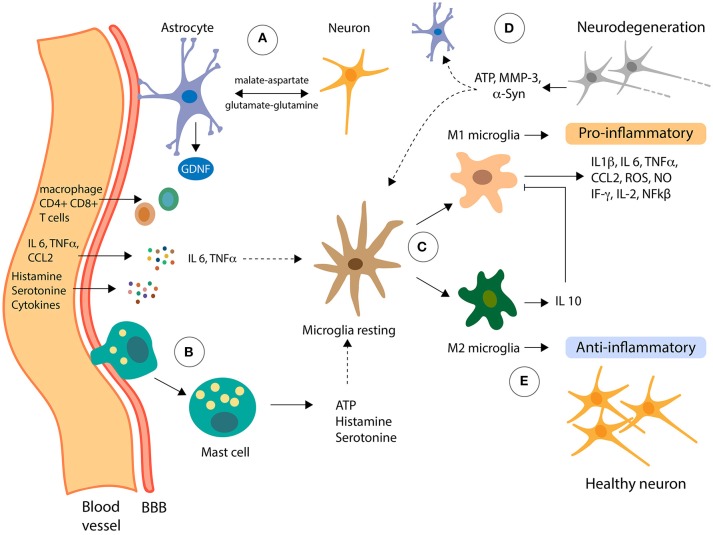
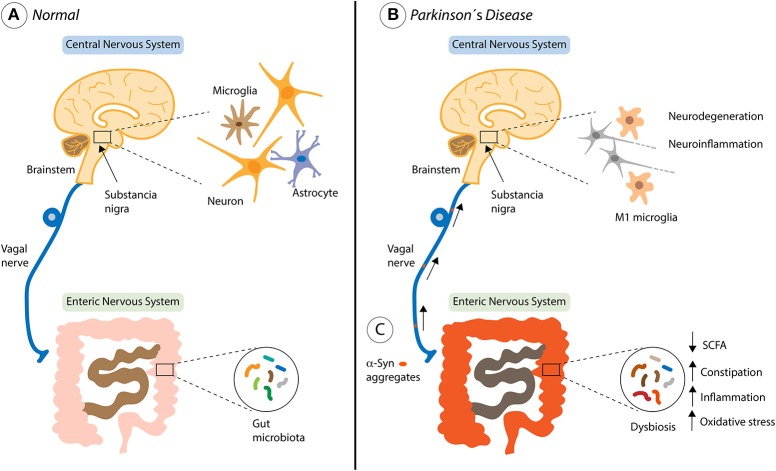
Verification
Claims the paper makes
The claims and statistics of this paper haven’t been checked yet.
Run the check — free, no account needed. It reads the open-access text and checks the sources it cites.
Claims other papers make about this one
Each is checked against this paper’s own text: does it say what the citing paper says it does?
In the citing paper
“In fact, neuroinflammation is closely related to neurodegenerative diseases, as Huntington’s [133], Alzheimer’s [134] and Parkinson’s disease [135] and neuropsychiatric disorders, such as major depressive disorder, bipolar disorder and anxiety [136].”
From Hyperactivation of P2X7 receptors as a culprit of COVID-19 neuropathology (2021) · cites this paper as [135]
Self-check
Percentages, sums and reported differences re-computed from the paper’s own numbers.
The self-check needs the paper’s full text.
Citations
Cites
2 retracted
Zhao, Y., Haney, M. J., Gupta, R., Bohnsack, J. P., He, Z., Kabanov, A. V., & Batrakova, E. V. (2014) · PLoS ONE · doi:10.1371/journal.pone.0106867 · Cited by 144
RetractedMani, S., Sekar, S., Barathidasan, R., Manivasagam, T., Thenmozhi, A. J., Sevanan, M., Chidambaram, S. B., Essa, M. M., Guillemin, G. J., & Sakharkar, M. K. (2018) · Neurotoxicity Research · doi:10.1007/s12640-018-9869-3 · Cited by 79
RetractedStaging of brain pathology related to sporadic Parkinson’s disease
Braak, H., Tredici, K. D., Rüb, U., de Vos, R. A. I., Jansen Steur, E. N. H., & Braak, E. (2003) · Neurobiology of Aging · doi:10.1016/s0197-4580(02)00065-9 · Cited by 10,777
Mutation in the α-Synuclein Gene Identified in Families with Parkinson's Disease
Polymeropoulos, M. H., Lavedan, C., Leroy, E., Ide, S. E., Dehejia, A., Dutra, A., Pike, B., Root, H., Rubenstein, J., Boyer, R., et al. (1997) · Science · doi:10.1126/science.276.5321.2045 · Cited by 8,240
Neurotoxic reactive astrocytes are induced by activated microglia
Liddelow, S. A., Guttenplan, K. A., Clarke, L. E., Bennett, F. C., Bohlen, C. J., Schirmer, L., Bennett, M. L., Münch, A. E., Chung, W.-S., Peterson, T. C., et al. (2017) · Nature · doi:10.1038/nature21029 · Cited by 7,971
Parkinson's disease: clinical features and diagnosis
Jankovic, J. (2008) · Journal of Neurology, Neurosurgery & Psychiatry · doi:10.1136/jnnp.2007.131045 · Cited by 5,720
Astrocytes: Biology and pathology
Sofroniew, M. V., & Vinters, H. V. (2010) · Acta Neuropathologica · doi:10.1007/s00401-009-0619-8 · Cited by 5,196
Host-gut microbiota metabolic interactions
Nicholson, J. K., Holmes, E., Kinross, J., Burcelin, R., Gibson, G., Jia, W., & Pettersson, S. (2012) · Science · doi:10.1126/science.1223813 · Cited by 4,760
Mind-altering microorganisms: the impact of the gut microbiota on brain and behaviour
Cryan, J. F., & Dinan, T. G. (2012) · Nature Reviews Neuroscience · doi:10.1038/nrn3346 · Cited by 4,572
Microglia-mediated neurotoxicity: uncovering the molecular mechanisms
Block, M. L., Zecca, L., & Hong, J.-S. (2007) · Nature Reviews Neuroscience · doi:10.1038/nrn2038 · Cited by 4,110
Gut microbiota regulate motor deficits and neuroinflammation in a model of Parkinson's disease
Sampson, T. R., Debelius, J. W., Thron, T., Janssen, S., Shastri, G. G., Ilhan, Z. E., Challis, C., Schretter, C. E., Rocha, S., Gradinaru, V., et al. (2016) · Cell · doi:10.1016/j.cell.2016.11.018 · Cited by 3,622
Indigenous bacteria from the gut microbiota regulate host serotonin biosynthesis
Yano, J. M., Yu, K., Donaldson, G. P., Shastri, G. G., Ann, P., Ma, L., Nagler, C. R., Ismagilov, R. F., Mazmanian, S. K., & Hsiao, E. Y. (2015) · Cell · doi:10.1016/j.cell.2015.02.047 · Cited by 3,614
Mechanisms underlying inflammation in neurodegeneration
Glass, C. K., Saijo, K., Winner, B., Marchetto, M. C., & Gage, F. H. (2010) · Cell · doi:10.1016/j.cell.2010.02.016 · Cited by 3,580
Host microbiota constantly control maturation and function of microglia in the CNS
Erny, D., Hrabě de Angelis, A. L., Jaitin, D., Wieghofer, P., Staszewski, O., David, E., Keren-Shaul, H., Mahlakoiv, T., Jakobshagen, K., Buch, T., et al. (2015) · Nature Neuroscience · doi:10.1038/nn.4030 · Cited by 3,569
AGEING AND PARKINSON'S DISEASE: SUBSTANTIA NIGRA REGIONAL SELECTIVITY
FEARNLEY, J. M., & LEES, A. J. (1991) · Brain · doi:10.1093/brain/114.5.2283 · Cited by 3,529
Gut microbiota, metabolites and host immunity
Rooks, M. G., & Garrett, W. S. (2016) · Nature reviews. Immunology · doi:10.1038/nri.2016.42 · Cited by 3,409
Ecological and Evolutionary Forces Shaping Microbial Diversity in the Human Intestine
Ley, R. E., Peterson, D. A., & Gordon, J. I. (2006) · Cell · doi:10.1016/j.cell.2006.02.017 · Cited by 3,358
Normal gut microbiota modulates brain development and behavior
Heijtz, R. D., Wang, S., Anuar, F., Qian, Y., Björkholm, B., Samuelsson, A., Hibberd, M. L., Forssberg, H., & Pettersson, S. (2011) · Proceedings of the National Academy of Sciences · doi:10.1073/pnas.1010529108 · Cited by 3,228
GDNF: a Glial Cell Line-Derived Neurotrophic Factor for Midbrain Dopaminergic Neurons
Lin, L.-F. H., Doherty, D. H., Lile, J. D., Bektesh, S. L., & Collins, F. (1993) · Science · doi:10.1126/science.8493557 · Cited by 3,206
Sudo, N., Chida, Y., Aiba, Y., Sonoda, J., Oyama, N., Yu, X., Kubo, C., & Koga, Y. (2004) · The Journal of Physiology · doi:10.1113/jphysiol.2004.063388 · Cited by 2,735
Stages in the development of Parkinson’s disease-related pathology
Braak, H., Ghebremedhin, E., Rüb, U., Bratzke, H., & Del Tredici, K. (2004) · Cell and Tissue Research · doi:10.1007/s00441-004-0956-9 · Cited by 2,689
Molecular dissection of reactive astrogliosis and glial scar formation
Sofroniew, M. V. (2009) · Trends in Neurosciences · doi:10.1016/j.tins.2009.08.002 · Cited by 2,594
Genomic analysis of reactive astrogliosis
Zamanian, J. L., Xu, L., Foo, L. C., Nouri, N., Zhou, L., Giffard, R. G., & Barres, B. A. (2012) · The Journal of Neuroscience · doi:10.1523/jneurosci.6221-11.2012 · Cited by 2,404
Zhang, Y., Sloan, S. A., Clarke, L. E., Caneda, C., Plaza, C. A., Blumenthal, P. D., Vogel, H., Steinberg, G. K., Edwards, M. S. B., Li, G., et al. (2016) · Neuron · doi:10.1016/j.neuron.2015.11.013 · Cited by 2,295
Systemic LPS causes chronic neuroinflammation and progressive neurodegeneration
Qin, L., Wu, X., Block, M. L., Liu, Y., Breese, G. R., Hong, J., Knapp, D. J., & Crews, F. T. (2007) · Glia · doi:10.1002/glia.20467 · Cited by 2,144
Microglia and macrophages in brain homeostasis and disease
Li, Q., & Barres, B. A. (2018) · Nature Reviews Immunology · doi:10.1038/nri.2017.125 · Cited by 1,999
How neuroinflammation contributes to neurodegeneration
Ransohoff, R. M. (2016) · Science · doi:10.1126/science.aag2590 · Cited by 1,967 · cited 1×
“Microglia are in a quiescent state in the absence of any stimulus, which is achieved by the immunosuppressant microenvironment present in the CNS, where immunoregulatory molecules are expressed and/or released by healthy neurons (44).”
BackgroundClarke, G., Grenham, S., Scully, P., Fitzgerald, P., Moloney, R. D., Shanahan, F., Dinan, T. G., & Cryan, J. F. (2013) · Molecular Psychiatry · doi:10.1038/mp.2012.77 · Cited by 1,893
The GDNF family: Signalling, biological functions and therapeutic value
Airaksinen, M. S., & Saarma, M. (2002) · Nature reviews. Neuroscience · doi:10.1038/nrn812 · Cited by 1,862
Shibuya, M. (2011) · Genes & Cancer · doi:10.1177/1947601911423031 · Cited by 1,850
Bercik, P., Denou, E., Collins, J., Jackson, W., Lu, J., Jury, J., Deng, Y., Blennerhassett, P., Macri, J., McCoy, K. D., et al. (2011) · Gastroenterology · doi:10.1053/j.gastro.2011.04.052 · Cited by 1,748
Neuroinflammation and M2 Microglia: The Good, the Bad, and the Inflamed
Cherry, J. D., Olschowka, J. A., & O’Banion, M. K. (2014) · Journal of Neuroinflammation · doi:10.1186/1742-2094-11-98 · Cited by 1,748
Braak, H., R�b, U., Gai, W. P., & Del Tredici, K. (2003) · Journal of Neural Transmission · doi:10.1007/s00702-002-0808-2 · Cited by 1,683
Neuroinflammation: The Devil Is in the Details
DiSabato, D. J., Quan, N., & Godbout, J. P. (2016) · Journal of Neurochemistry · doi:10.1111/jnc.13607 · Cited by 1,640
The central nervous system and the gut microbiome
Sharon, G., Sampson, T. R., Geschwind, D. H., & Mazmanian, S. K. (2016) · Cell · doi:10.1016/j.cell.2016.10.027 · Cited by 1,513
Signals from the gut microbiota to distant organs in physiology and disease
Schroeder, B. O., & Bäckhed, F. (2016) · Nature Medicine · doi:10.1038/nm.4185 · Cited by 1,409
Neufeld, K. M., Kang, N., Bienenstock, J., & Foster, J. A. (2011) · Neurogastroenterology & Motility · doi:10.1111/j.1365-2982.2010.01620.x · Cited by 1,392
Colonic bacterial composition in Parkinson's disease
Keshavarzian, A., Green, S. J., Engen, P. A., Voigt, R. M., Naqib, A., Forsyth, C. B., Mutlu, E., & Shannon, K. M. (2015) · Movement Disorders · doi:10.1002/mds.26307 · Cited by 1,281
Nicklas, W. J., Vyas, I. L., & Heikkila, R. E. (1985) · Life Sciences · doi:10.1016/0024-3205(85)90146-8 · Cited by 1,273
Zhang, W., Wang, T., Pei, Z., Miller, D. S., Wu, X., Block, M. L., Wilson, B., Zhang, W., Zhou, Y., Hong, J.-S., et al. (2005) · The FASEB Journal · doi:10.1096/fj.04-2751com · Cited by 1,265
Gut Microbiota and Metabolic Endotoxemia in Young Obese Mexican Subjects
Radilla-Vázquez, R. B., Parra‐Rojas, I., Martínez-Hernández, N. E., Márquez‐Sandoval, F., Illades‐Aguiar, B., & Castro-Alarcón, N. (2016) · Obesity Facts · doi:10.1159/000442479 · Cited by 1,200
Consumption of fermented milk product with probiotic modulates brain activity
Tillisch, K., Labus, J., Kilpatrick, L., Jiang, Z., Stains, J., Ebrat, B., Guyonnet, D., Legrain–Raspaud, S., Trotin, B., Naliboff, B., et al. (2013) · Gastroenterology · doi:10.1053/j.gastro.2013.02.043 · Cited by 1,192
Wu, D. C., Jackson-Lewis, V., Vila, M., Tieu, K., Teismann, P., Vadseth, C., Choi, D.-K., Ischiropoulos, H., & Przedborski, S. (2002) · The Journal of Neuroscience · doi:10.1523/jneurosci.22-05-01763.2002 · Cited by 1,183
Microglia development follows a stepwise program to regulate brain homeostasis
Matcovitch-Natan, O., Winter, D. R., Giladi, A., Vargas Aguilar, S., Spinrad, A., Sarrazin, S., Ben-Yehuda, H., David, E., Zelada González, F., Perrin, P., et al. (2016) · Science · doi:10.1126/science.aad8670 · Cited by 1,180
Brochard, V., Combadière, B., Prigent, A., Laouar, Y., Perrin, A., Beray-Berthat, V., Bonduelle, O., Alvarez-Fischer, D., Callebert, J., Launay, J.-M., et al. (2008) · Journal of Clinical Investigation · doi:10.1172/jci36470 · Cited by 1,172
Unger, M. M., Spiegel, J., Dillmann, K.-U., Grundmann, D., Philippeit, H., Bürmann, J., Faßbender, K., Schwiertz, A., & Schäfer, K.-H. (2016) · Parkinsonism & Related Disorders · doi:10.1016/j.parkreldis.2016.08.019 · Cited by 1,159
Astrocyte-mediated control of cerebral blood flow
Takano, T., Tian, G.-F., Peng, W., Lou, N., Libionka, W., Han, X., & Nedergaard, M. (2005) · Nature Neuroscience · doi:10.1038/nn1623 · Cited by 1,137
Microglial priming in neurodegenerative disease
Perry, V. H., & Holmes, C. (2014) · Nature Reviews Neurology · doi:10.1038/nrneurol.2014.38 · Cited by 1,127
Block of A1 astrocyte conversion by microglia is neuroprotective in models of Parkinson’s disease
Yun, S. P., Kam, T.-I., Panicker, N., Kim, S., Oh, Y., Park, J.-S., Kwon, S.-H., Park, Y. J., Karuppagounder, S. S., Park, H., et al. (2018) · Nature Medicine · doi:10.1038/s41591-018-0051-5 · Cited by 1,123
Selective neuronal vulnerability in Parkinson disease
Surmeier, D. J., Obeso, J. A., & Halliday, G. M. (2017) · Nature Reviews Neuroscience · doi:10.1038/nrn.2016.178 · Cited by 1,116
The Complement System: An Unexpected Role in Synaptic Pruning During Development and Disease
Stephan, A. H., Barres, B. A., & Stevens, B. (2012) · Annual Review of Neuroscience · doi:10.1146/annurev-neuro-061010-113810 · Cited by 1,113
Protection and repair of the nigrostriatal dopaminergic system by GDNF in vivo
Tomac, A., Lindqvist, E., Lin, L.-F. H., Ögren, S. O., Young, D., Hoffer, B. J., & Olson, L. (1995) · Nature · doi:10.1038/373335a0 · Cited by 1,079
Parkinson's disease: a dual‐hit hypothesis
Hawkes, C. H., Del Tredici, K., & Braak, H. (2007) · Neuropathology and Applied Neurobiology · doi:10.1111/j.1365-2990.2007.00874.x · Cited by 1,021
Clinical progression in Parkinson disease and the neurobiology of axons
Cheng, H., Ulane, C. M., & Burke, R. E. (2010) · Annals of Neurology · doi:10.1002/ana.21995 · Cited by 1,012
Saijo, K., Winner, B., Carson, C. T., Collier, J. G., Boyer, L., Rosenfeld, M. G., Gage, F. H., & Glass, C. K. (2009) · Cell · doi:10.1016/j.cell.2009.01.038 · Cited by 957
Direct evidence of Parkinson pathology spread from the gastrointestinal tract to the brain in rats
Holmqvist, S., Chutna, O., Bousset, L., Aldrin-Kirk, P., Li, W., Björklund, T., Wang, Z.-Y., Roybon, L., Melki, R., & Li, J.-Y. (2014) · Acta Neuropathologica · doi:10.1007/s00401-014-1343-6 · Cited by 925
Eroglu, Ç., Allen, N. J., Susman, M. W., O'Rourke, N. A., Park, C. Y., Özkan, E., Chakraborty, C., Mulinyawe, S. B., Annis, D. S., Huberman, A. D., et al. (2009) · Cell · doi:10.1016/j.cell.2009.09.025 · Cited by 893
Meta‐analysis of early nonmotor features and risk factors for Parkinson disease
Noyce, A. J., Bestwick, J. P., Silveira‐Moriyama, L., Hawkes, C. H., Giovannoni, G., Lees, A. J., & Schrag, A. E. (2012) · Annals of Neurology · doi:10.1002/ana.23687 · Cited by 834
Vagotomy and subsequent risk of Parkinson's disease
Svensson, E., Horváth‐Puhó, E., Thomsen, R. W., Djurhuus, J. C., Pedersen, L., Borghammer, P., & Sørensen, H. T. (2015) · Annals of Neurology · doi:10.1002/ana.24448 · Cited by 806
Review: microglia of the aged brain: primed to be activated and resistant to regulation
Norden, D. M., & Godbout, J. P. (2013) · Neuropathology and Applied Neurobiology · doi:10.1111/j.1365-2990.2012.01306.x · Cited by 792
Olfactory dysfunction in Parkinson disease
Doty, R. L. (2012) · Nature Reviews Neurology · doi:10.1038/nrneurol.2012.80 · Cited by 737
Microglia: biology and pathology
Graeber, M. B., & Streit, W. J. (2009) · Acta Neuropathologica · doi:10.1007/s00401-009-0622-0 · Cited by 736
Microbiome-wide association studies link dynamic microbial consortia to disease
Gilbert, J. A., Quinn, R. A., Debelius, J. W., Xu, Z. Z., Morton, J. T., Garg, N., Jansson, J. K., Dorrestein, P. C., & Knight, R. D. (2016) · Nature · doi:10.1038/nature18850 · Cited by 731
Toll‐like receptor 4 is required for α‐synuclein dependent activation of microglia and astroglia
Fellner, L., Irschick, R., Schanda, K., Reindl, M., Klimaschewski, L., Poewe, W., Wenning, G. K., & Stefanova, N. (2013) · Glia · doi:10.1002/glia.22437 · Cited by 697
Revisiting the Mechanisms of CNS Immune Privilege
Louveau, A., Harris, T. H., & Kipnis, J. (2015) · Trends in Immunology · doi:10.1016/j.it.2015.08.006 · Cited by 682
What Genetics Tells us About the Causes and Mechanisms of Parkinson's Disease
Corti, O., Lesage, S., & Brice, A. (2011) · Physiological Reviews · doi:10.1152/physrev.00022.2010 · Cited by 652
Wilhelmsson, U., Bushong, E. A., Price, D. L., Smarr, B. L., Phung, V., Terada, M., Ellisman, M. H., & Pekny, M. (2006) · Proceedings of the National Academy of Sciences · doi:10.1073/pnas.0602841103 · Cited by 643 · cited 1×
“Reactive astrocytes experience changes in gene expression (69) and in morphology (70), which leads to the formation of a glial scar in the site of injury.”
BackgroundBasic mechanisms of neurodegeneration: a critical update
Jellinger, K. A. (2010) · Journal of Cellular and Molecular Medicine · doi:10.1111/j.1582-4934.2010.01010.x · Cited by 640
The Role of Astrocyte Dysfunction in Parkinson’s Disease Pathogenesis
Booth, H. D. E., Hirst, W. D., & Wade-Martins, R. (2017) · Trends in Neurosciences · doi:10.1016/j.tins.2017.04.001 · Cited by 633
Colonic inflammation in Parkinson's disease
Devos, D., Lebouvier, T., Lardeux, B., Biraud, M., Rouaud, T., Pouclet, H., Coron, E., Bruley des Varannes, S., Naveilhan, P., Nguyen, J.-M., et al. (2013) · Neurobiology of Disease · doi:10.1016/j.nbd.2012.09.007 · Cited by 627
Schulz-Schaeffer, W. J. (2010) · Acta Neuropathologica · doi:10.1007/s00401-010-0711-0 · Cited by 627
The parkinson's complex: Parkinsonism is just the tip of the iceberg
Langston, J. W. (2006) · Annals of Neurology · doi:10.1002/ana.20834 · Cited by 608
Pull, S. L., Doherty, J. M., Mills, J. C., Gordon, J. I., & Stappenbeck, T. S. (2004) · Proceedings of the National Academy of Sciences · doi:10.1073/pnas.0405979102 · Cited by 605
Inflammatory Response in the CNS: Friend or Foe?
Sochocka, M., Diniz, B. S., & Leszek, J. (2017) · Molecular Neurobiology · doi:10.1007/s12035-016-0297-1 · Cited by 573
Parkin Protects against the Toxicity Associated with Mutant α-Synuclein
Petrucelli, L., O’Farrell, C., Lockhart, P. J., Baptista, M. J., Kehoe, K. J., Vink, L., Choi, P., Wolozin, B. L., Farrer, M. J., Hardy, J., et al. (2002) · Neuron · doi:10.1016/s0896-6273(02)01125-x · Cited by 561
Microglial cell dysregulation in brain aging and neurodegeneration
von Bernhardi, R., Eugenín-von Bernhardi, L., & Eugenín, J. (2015) · Frontiers in Aging Neuroscience · doi:10.3389/fnagi.2015.00124 · Cited by 556
Biology of vascular endothelial growth factors
Roy, H., Bhardwaj, S., & Ylä‐Herttuala, S. (2006) · FEBS Letters · doi:10.1016/j.febslet.2006.03.087 · Cited by 549
Understanding the role of gut microbiome–host metabolic signal disruption in health and disease
Holmes, E., Li, J. V., Athanasiou, T., Ashrafian, H., & Nicholson, J. K. (2011) · Trends in Microbiology · doi:10.1016/j.tim.2011.05.006 · Cited by 541
Intestinal dysbiosis and lowered serum lipopolysaccharide-binding protein in Parkinson's disease
Hasegawa, S., Goto, S., Tsuji, H., Okuno, T., Asahara, T., Nomoto, K., Shibata, A., Fujisawa, Y., Minato, T., Okamoto, A., et al. (2015) · PLOS ONE · doi:10.1371/journal.pone.0142164 · Cited by 523
Specification and Morphogenesis of Astrocytes
Freeman, M. R. (2010) · Science · doi:10.1126/science.1190928 · Cited by 489
A Guide to Neurotoxic Animal Models of Parkinson's Disease
Tieu, K. (2011) · Cold Spring Harbor Perspectives in Medicine · doi:10.1101/cshperspect.a009316 · Cited by 483
Mittelbronn, M., Dietz, K., Schluesener, H. J., & Meyermann, R. (2001) · Acta Neuropathologica · doi:10.1007/s004010000284 · Cited by 482
An Inflammation-Centric View of Neurological Disease: Beyond the Neuron
Skaper, S. D., Facci, L., Zusso, M., & Giusti, P. (2018) · Frontiers in Cellular Neuroscience · doi:10.3389/fncel.2018.00072 · Cited by 477
Rotenone destroys dopaminergic neurons and induces parkinsonian symptoms in rats
Alam, M., & Schmidt, W. (2002) · Behavioural Brain Research · doi:10.1016/s0166-4328(02)00180-8 · Cited by 475
Möhle, L., Mattei, D., Heimesaat, M. M., Bereswill, S., Fischer, A., Alutis, M., French, T., Hambardzumyan, D., Matzinger, P., Dunay, I. R., et al. (2016) · Cell Reports · doi:10.1016/j.celrep.2016.04.074 · Cited by 470
Is alpha-synuclein in the colon a biomarker for premotor Parkinson’s disease? Evidence from 3 cases
Shannon, K. M., Keshavarzian, A., Dodiya, H. B., Jakate, S., & Kordower, J. H. (2012) · Movement Disorders · doi:10.1002/mds.25020 · Cited by 464
A large kindred with autosomal dominant Parkinson's disease
Golbe, L., Iorio, G. D., Bonavita, V., Miller, D. C., & Duvoisin, R. (1990) · Annals of Neurology · doi:10.1002/ana.410270309 · Cited by 463
Hoffer, B. J., Hoffman, A. F., Bowenkamp, K., Huettl, P. F., Hudson, J., Martin, D., Lin, L.-F. H., & Gerhardt, G. A. (1994) · Neuroscience Letters · doi:10.1016/0304-3940(94)90218-6 · Cited by 453
Novel neurotrophic factor CDNF protects and rescues midbrain dopamine neurons in vivo
Lindholm, P., Voutilainen, M. H., Laurén, J., Peränen, J., Leppänen, V., Andressoo, J., Lindahl, M., Janhunen, S. K., Kalkkinen, N., Timmusk, T., et al. (2007) · Nature · doi:10.1038/nature05957 · Cited by 444
Leenders, K. L., Salmon, É., Tyrrell, P. J., Perani, D., Brooks, D. J., Sager, H., Jones, T., MARSDEN, C. D., & Frackowiak, R. S. J. (1990) · Archives of Neurology · doi:10.1001/archneur.1990.00530120034007 · Cited by 375
Bacterial Neuroactive Compounds Produced by Psychobiotics
Wall, R., Cryan, J. F., Ross, R. P., Fitzgerald, G. F., Dinan, T. G., & Stanton, C. (2014) · Advances in experimental medicine and biology · doi:10.1007/978-1-4939-0897-4_10 · Cited by 373
The role of α-synuclein in Parkinson's disease: insights from animal models
Lad, E. M., Dass, B., Collier, T. J., Kordower, J. H., & Steece‐Collier, K. (2003) · Nature reviews. Neuroscience · doi:10.1038/nrn1199 · Cited by 357
Petrova, P. S., Raibekas, A. A., Pevsner, J., Vigo, N. T., Anafi, M., Moore, M. K., Peaire, A. E., Shridhar, V., Smith, D. I., Kelly, J., et al. (2003) · Journal of Molecular Neuroscience · doi:10.1385/jmn:20:2:173 · Cited by 353
Targeting Microglial Activation States as a Therapeutic Avenue in Parkinson’s Disease
Subramaniam, S., & Federoff, H. J. (2017) · Frontiers in Aging Neuroscience · doi:10.3389/fnagi.2017.00176 · Cited by 353
Gu, X., Long, C.-X., Sun, L., Xie, C., Lin, X. Z., & Cai, H. (2010) · Molecular Brain · doi:10.1186/1756-6606-3-12 · Cited by 351
MHC-I expression renders catecholaminergic neurons susceptible to T-cell-mediated degeneration
Cebrián, C., Zucca, F. A., Mauri, P., Steinbeck, J. A., Studer, L., Scherzer, C. R., Kanter, E., Budhu, S., Mandelbaum, J., Vonsattel, J. P., et al. (2014) · Nature Communications · doi:10.1038/ncomms4633 · Cited by 338
Reactive Astrogliosis after Spinal Cord Injury—Beneficial and Detrimental Effects
Karimi-Abdolrezaee, S., & Billakanti, R. (2012) · Molecular Neurobiology · doi:10.1007/s12035-012-8287-4 · Cited by 331
Bianco, C. L., Schneider, B. L., Bauer, M., Sajadi, A., Brice, A., Iwatsubo, T., & Aebischer, P. (2004) · Proceedings of the National Academy of Sciences · doi:10.1073/pnas.0405313101 · Cited by 329
The Role of Innate and Adaptive Immunity in Parkinson's Disease
Kannarkat, G. T., Boss, J. M., & Tansey, M. G. (2013) · Journal of Parkinson’s Disease · doi:10.3233/jpd-130250 · Cited by 324
The immunoregulatory role of dopamine: An update
Sarkar, C., Basu, B., Chakroborty, D., Dasgupta, P., & Basu, S. (2009) · Brain Behavior and Immunity · doi:10.1016/j.bbi.2009.10.015 · Cited by 323
Hunter, R. L., Dragicevic, N., Seifert, K., Choi, D. Y., Liu, M., Kim, H., Cass, W. A., Sullivan, P. G., & Bing, G. (2007) · Journal of Neurochemistry · doi:10.1111/j.1471-4159.2006.04327.x · Cited by 322
Altered brain-gut axis in autism: comorbidity or causative mechanisms
Mayer, E. A., Padua, D., & Tillisch, K. (2014) · BioEssays · doi:10.1002/bies.201400075 · Cited by 304
Testa, C. M., Sherer, T., & Greenamyre, J. T. (2005) · Molecular Brain Research · doi:10.1016/j.molbrainres.2004.11.007 · Cited by 296
Pathological correlates of gastrointestinal dysfunction in Parkinson's disease
Cersosimo, M. G., & Benarroch, E. E. (2011) · Neurobiology of Disease · doi:10.1016/j.nbd.2011.10.014 · Cited by 294
New roles for VEGF in nervous tissue?beyond blood vessels
Rosenstein, J. M. (2004) · Experimental Neurology · doi:10.1016/j.expneurol.2004.01.022 · Cited by 286
Reactive Astrogliosis Causes the Development of Spontaneous Seizures
Robel, S., Buckingham, S. C., Boni, J. L., Campbell, S. L., Danbolt, N. C., Riedemann, T., Sutor, B., & Sontheimer, H. (2015) · The Journal of Neuroscience · doi:10.1523/jneurosci.1574-14.2015 · Cited by 283
Falkowska, A., Gutowska, I., Goschorska, M., Nowacki, P., Chlubek, D., & Baranowska-Bosiacka, I. (2015) · International Journal of Molecular Sciences · doi:10.3390/ijms161125939 · Cited by 277
Pisanu, A., Lecca, D., Mulas, G., Wardas, J., Simbula, G., Spiga, S., & Carta, A. R. (2014) · Neurobiology of Disease · doi:10.1016/j.nbd.2014.08.011 · Cited by 273
The impact of gut microbiota on brain and behaviour
Dinan, T. G., & Cryan, J. F. (2015) · Current Opinion in Clinical Nutrition & Metabolic Care · doi:10.1097/mco.0000000000000221 · Cited by 267
Rosenblad, C., Kirik, D., Devaux, B., Moffat, B., PHILLIPS, H. S., & Björklund, A. (1999) · European Journal of Neuroscience · doi:10.1046/j.1460-9568.1999.00566.x · Cited by 261
The olfactory bulb as the entry site for prion-like propagation in neurodegenerative diseases
Rey, N. L., Wesson, D. W., & Brundin, P. (2018) · Neurobiology of Disease · doi:10.1016/j.nbd.2016.12.013 · Cited by 257
Appel, S. H., Beers, D. R., & Henkel, J. S. (2010) · Trends in Immunology · doi:10.1016/j.it.2009.09.003 · Cited by 256
Disease‐modifying strategies for Parkinson's disease
Kalia, L. V., Kalia, S. K., & Lang, A. E. (2015) · Movement Disorders · doi:10.1002/mds.26354 · Cited by 254
Silverman, W. F., Krum, J. M., Mani, N., & Rosenstein, J. M. (1999) · Neuroscience · doi:10.1016/s0306-4522(98)00540-5 · Cited by 240
Iannielli, A., Bido, S., Folladori, L., Segnali, A., Cancellieri, C., Maresca, A., Massimino, L., Rubio, A., Morabito, G., Caporali, L., et al. (2018) · Cell Reports · doi:10.1016/j.celrep.2018.01.089 · Cited by 239
Olfactory bulb α-synucleinopathy has high specificity and sensitivity for Lewy body disorders
Beach, T. G., White, C. L., Hladik, C. L., Sabbagh, M. N., Connor, D. J., Shill, H. A., Sue, L. I., Sasse, J., Bachalakuri, J., Henry-Watson, J., et al. (2008) · Acta Neuropathologica · doi:10.1007/s00401-008-0450-7 · Cited by 237
Tang, Y., Li, T., Li, J., Yang, J., Liu, H., Zhang, X.-X., & Le, W. (2013) · Cell Death and Differentiation · doi:10.1038/cdd.2013.159 · Cited by 227
Yasuhara, T., Shingo, T., Kobayashi, K., Takeuchi, A., Yano, A., Muraoka, K., Matsui, T., Miyoshi, Y., Hamada, H., & Date, I. (2004) · European Journal of Neuroscience · doi:10.1111/j.1460-9568.2004.03254.x · Cited by 216
Astrocytes convert the parkinsonism inducing neurotoxin, MPTP, to its active metabolite, MPP+
Ransom, B. R., Kunis, D. M., Irwin, I., & Langston, J. W. (1987) · Neuroscience Letters · doi:10.1016/0304-3940(87)90543-x · Cited by 209
M1 and M2 immune activation in Parkinson’s Disease: Foe and ally?
Moehle, M. S., & West, A. B. (2014) · Neuroscience · doi:10.1016/j.neuroscience.2014.11.018 · Cited by 209
Astrocyte-derived GDNF is a potent inhibitor of microglial activation
Rocha, S. M., Cristóvão, A. C., Campos, F. L., Fonseca, C. P., & Baltazar, G. (2012) · Neurobiology of Disease · doi:10.1016/j.nbd.2012.04.014 · Cited by 189
Mangia, S., Simpson, I. A., Vannucci, S. J., & Carruthers, A. (2009) · Journal of Neurochemistry · doi:10.1111/j.1471-4159.2009.06003.x · Cited by 189
Microglial Phenotype and Adaptation
Eggen, B. J. L., Raj, D. D. A., Hanisch, U., & Boddeke, H. W. G. M. (2013) · Journal of Neuroimmune Pharmacology · doi:10.1007/s11481-013-9490-4 · Cited by 187
GDNF fails to exert neuroprotection in a rat -synuclein model of Parkinson's disease
Decressac, M., Ulusoy, A., Mattsson, B., Georgievska, B., Romero‐Ramos, M., Kirik, D., & Björklund, A. (2011) · Brain · doi:10.1093/brain/awr149 · Cited by 184
Rai, S. N., Birla, H., Singh, S. S., Zahra, W., Patil, R. R., Jadhav, J. P., Gedda, M. R., & Singh, S. P. (2017) · Frontiers in Aging Neuroscience · doi:10.3389/fnagi.2017.00421 · Cited by 161
Hoenen, C., Gustin, A., Birck, C., Kirchmeyer, M., Beaume, N., Felten, P., Grandbarbe, L., Heuschling, P., & Heurtaux, T. (2016) · PLOS ONE · doi:10.1371/journal.pone.0162717 · Cited by 159
Couch, Y., Alvarez-Erviti, L., Sibson, N. R., Wood, M. J., & Anthony, D. C. (2011) · Journal of Neuroinflammation · doi:10.1186/1742-2094-8-166 · Cited by 155
Putignani, L., CHIERICO, F. D., Vernocchi, P., Cicala, M., Cucchiara, S., & Dallapiccola, B. (2015) · Inflammatory Bowel Diseases · doi:10.1097/mib.0000000000000602 · Cited by 153
Evidence of Inflammatory System Involvement in Parkinson’s Disease
Chao, Y., Wong, S. C., & Tan, E. K. (2014) · BioMed Research International · doi:10.1155/2014/308654 · Cited by 152
α-Synuclein Expression Modulates Microglial Activation Phenotype
Austin, S. A., Floden, A. M., Murphy, E. J., & Combs, C. K. (2006) · Journal of Neuroscience · doi:10.1523/jneurosci.1799-06.2006 · Cited by 150
Souza, L. C., Antunes, M. S., Filho, C. B., Fabbro, L. D., de Gomes, M. G., Goes, A. T. R., Donato, F., Prigol, M., Boeira, S. P., & Jessé, C. R. (2015) · Pharmacology Biochemistry and Behavior · doi:10.1016/j.pbb.2015.04.010 · Cited by 145
Goes, A. T. R., Jessé, C. R., Antunes, M. S., Ladd, F. V. L., Ladd, A. A. B. L., Luchese, C., Paroul, N., & Boeira, S. P. (2017) · Chemico-Biological Interactions · doi:10.1016/j.cbi.2017.10.019 · Cited by 143
Ohlin, K. E., Francardo, V., Lindgren, H. S., Sillivan, S. E., O’Sullivan, S. S., Luksik, A. S., Vassoler, F. M., Lees, A. J., Konradi, C. L., & Cenci, M. A. (2011) · Brain · doi:10.1093/brain/awr165 · Cited by 140
Trophic Factor Gene Therapy for Parkinson's Disease
Kordower, J. H., & Björklund, A. (2013) · Movement Disorders · doi:10.1002/mds.25344 · Cited by 129
He, X.-L., Wang, Y., Ming-gang, B., & Du, G. (2012) · European Journal of Pharmacology · doi:10.1016/j.ejphar.2012.01.025 · Cited by 124
Volpicelli‐Daley, L. A., Kirik, D., Stoyka, L. E., Standaert, D. G., & Harms, A. S. (2016) · Journal of Neurochemistry · doi:10.1111/jnc.13627 · Cited by 123
Protective Microglia and Their Regulation in Parkinson’s Disease
Le, W., Wu, J., & Tang, Y. (2016) · Frontiers in Molecular Neuroscience · doi:10.3389/fnmol.2016.00089 · Cited by 123
Metabolic tinkering by the gut microbiome
Selkrig, J., Wong, P., Zhang, X., & Pettersson, S. (2014) · Gut Microbes · doi:10.4161/gmic.28681 · Cited by 120
Li, X., Lee, C., Tang, Z., Zhang, F., Arjunan, P., Li, Y., Hou, X., Kumar, A., & Dong, L. (2009) · Cell Adhesion & Migration · doi:10.4161/cam.3.4.9459 · Cited by 119
Lofrumento, D. D., Saponaro, C., Cianciulli, A., Nuccio, F. D., Mitolo, V., Nicolardi, G., & Panaro, M. A. (2010) · NeuroImmunoModulation · doi:10.1159/000320027 · Cited by 109
Biju, K. C., Zhou, Q., Li, G., Imam, S. Z., Roberts, J. L., Morgan, W. W., Clark, R. A., & Li, S. (2010) · Molecular Therapy · doi:10.1038/mt.2010.107 · Cited by 106
Roodveldt, C., Labrador‐Garrido, A., González‐Rey, E., Fernández-Montesinos, R., Caro, M., Lachaud, C. C., Waudby, C. A., Delgado, M., Dobson, C. M., & Pozo, D. (2010) · PLoS ONE · doi:10.1371/journal.pone.0013481 · Cited by 99
Immune Responses in Parkinson’s Disease: Interplay between Central and Peripheral Immune Systems
Su, X., & Federoff, H. J. (2014) · BioMed Research International · doi:10.1155/2014/275178 · Cited by 96
Necrostatin-1 protection of dopaminergic neurons
Cheng, Y., Wu, J., Wang, J., Zhou, S.-K., Yang, L., Yin, J.-L., & Cao, J. (2015) · Neural Regeneration Research · doi:10.4103/1673-5374.160108 · Cited by 92
Does Our Gut Microbiome Predict Cardiovascular Risk?
Griffin, J. L., Wang, X., & Stanley, E. G. (2015) · Circulation Cardiovascular Genetics · doi:10.1161/circgenetics.114.000219 · Cited by 92
Genetic variants and animal models in SNCA and Parkinson disease
Deng, H., & Yuan, L. (2014) · Ageing Research Reviews · doi:10.1016/j.arr.2014.04.002 · Cited by 89
Sun, L., Shen, R., Agnihotri, S. K., Chen, Y., Huang, Z., & Büeler, H. (2018) · Scientific Reports · doi:10.1038/s41598-017-18786-w · Cited by 88
Hoban, D. B., Howard, L., & Dowd, E. (2015) · Neuroscience · doi:10.1016/j.neuroscience.2015.07.014 · Cited by 86
Thundyil, J., & Lim, K. (2014) · Ageing Research Reviews · doi:10.1016/j.arr.2014.11.003 · Cited by 85
Voutilainen, M. H., Arumäe, U., Airavaara, M., & Saarma, M. (2015) · FEBS Letters · doi:10.1016/j.febslet.2015.09.031 · Cited by 83
A ventral glomerular deficit in Parkinson’s disease revealed by whole olfactory bulb reconstruction
Zapiec, B., Dieriks, B. V., Tan, S., Faull, R. L. M., Mombaerts, P., & Curtis, M. A. (2017) · Brain · doi:10.1093/brain/awx208 · Cited by 83
Yadav, S. K., Prakash, J., Chouhan, S., Westfall, S., Verma, M., Singh, T. D., & Singh, S. P. (2013) · Neurochemistry International · doi:10.1016/j.neuint.2013.12.001 · Cited by 80
Kir6.1/K-ATP channel modulates microglia phenotypes: implication in Parkinson’s disease
Du, R., Sun, H., Hu, Z., Lu, M., Ding, J., & Hu, G. (2018) · Cell Death and Disease · doi:10.1038/s41419-018-0437-9 · Cited by 80
Invited Article: Functional imaging in Parkinson disease
Nandhagopal, R., McKeown, M. J., & Stoessl, A. J. (2008) · Neurology · doi:10.1212/01.wnl.0000310432.92489.90 · Cited by 77
Prospects of Neurotrophic Factors for Parkinson's Disease: Comparison of Protein and Gene Therapy
Domanskyi, A., Saarma, M., & Airavaara, M. (2015) · Human Gene Therapy · doi:10.1089/hum.2015.065 · Cited by 76
Nadella, R., Voutilainen, M. H., Saarma, M., González-Barrios, J. A., León‐Chávez, B. A., Jiménez, J. M. D., Jiménez, S. H. D., Escobedo, L., & Martínez‐Fong, D. (2014) · Journal of Neuroinflammation · doi:10.1186/s12974-014-0209-0 · Cited by 75
General Anesthetics Inhibit LPS-Induced IL-1β Expression in Glial Cells
Tanaka, T., Kai, S., Matsuyama, T., Adachi, T., Fukuda, K., & Hirota, K. (2013) · PLoS ONE · doi:10.1371/journal.pone.0082930 · Cited by 73
Falk, T., Zhang, S., & Sherman, S. J. (2009) · Molecular Neurodegeneration · doi:10.1186/1750-1326-4-49 · Cited by 72
Muñoz, A., Garrido‐Gil, P., Dominguez‐Meijide, A., & Labandeira-García, J. L. (2014) · Experimental Neurology · doi:10.1016/j.expneurol.2014.08.019 · Cited by 71
Zhao, H., Cheng, L., Liu, Y., Zhang, W., Maharjan, S., Cui, Z., Wang, X., Tang, D., & Nie, L. (2013) · Journal of Molecular Neuroscience · doi:10.1007/s12031-013-0120-7 · Cited by 70
A not entirely benign procedure: progression of Parkinson’s disease
Tredici, K. D., & Braak, H. (2008) · Acta Neuropathologica · doi:10.1007/s00401-008-0355-5 · Cited by 67
Cebrián, C., Loike, J. D., & Sulzer, D. (2014) · Current Topics in Behavioral Neurosciences · doi:10.1007/7854_2014_356 · Cited by 65
Garbayo, E., Ansorena, E., Lana, H., Carmona‐Abellán, M., Marcilla, I., Lanciego, J. L., Luquín, M. R., & Blanco‐Prieto, M. J. (2016) · Biomaterials · doi:10.1016/j.biomaterials.2016.09.015 · Cited by 65
Cheng, L., Zhao, H., Zhang, W., Liu, B., Liu, Y., Guo, Y., & Nie, L. (2013) · Biochemical and Biophysical Research Communications · doi:10.1016/j.bbrc.2013.04.029 · Cited by 64
Chien, C.-H., Lee, M., Liou, H., Liou, H., & Fu, W. (2016) · PLoS ONE · doi:10.1371/journal.pone.0151569 · Cited by 64
Hernández, R. M., Herrán, E., Requejo, C., Ruíz-Ortega, J. Á., Aristieta, A., Igartúa, M., Bengoetxea, H., Ugedo, L., Pedraz, J. L., & Lafuente, J. V. (2014) · International Journal of Nanomedicine · doi:10.2147/ijn.s61940 · Cited by 63
Cancer and the microbiome: potential applications as new tumor biomarker
Shahanavaj, K., Bazo, I. G., Castiglia, M., Bronte, G., Passiglia, F., Carreca, A. P., del Pozo, J. L., Russo, A. D., Peeters, M., & Rolfo, C. D. (2014) · Expert Review of Anticancer Therapy · doi:10.1586/14737140.2015.992785 · Cited by 62
Falk, T., Yue, X., Zhang, S., McCourt, A. D., Yee, B., Gonzalez, R. T., & Sherman, S. J. (2011) · Neuroscience Letters · doi:10.1016/j.neulet.2011.03.088 · Cited by 61
Non-motor symptoms: Identification and management
Muzerengi, S., Contrafatto, D., & Chaudhuri, К. R. (2007) · Parkinsonism & Related Disorders · doi:10.1016/s1353-8020(08)70048-8 · Cited by 58
Tian, Y., Tang, C., Wang, J., Feng, Y., Chen, X., Wang, L., Qiao, X., & Sun, S.-G. (2007) · Neuroscience Letters · doi:10.1016/j.neulet.2007.05.033 · Cited by 56
Su, X., Fischer, D. L., Li, X., Bankiewicz, K. S., Sortwell, C. E., & Federoff, H. J. (2017) · Molecular Therapy · doi:10.1016/j.ymthe.2017.04.018 · Cited by 56
Yue, X., Hariri, D. J., Caballero, B., Zhang, S., Bartlett, M. J., Kaut, O., Mount, D. W., Wüllner, U., Sherman, S. J., & Falk, T. (2013) · Neuroscience · doi:10.1016/j.neuroscience.2013.11.038 · Cited by 53
Shi, X., Chen, Y., Liu, H., & Qu, H. (2016) · Molecular Medicine Reports · doi:10.3892/mmr.2016.5573 · Cited by 53
Nasrolahi, A., Mahmoudi, J., Akbarzadeh, A., Karimipour, M., Sadigh‐Eteghad, S., Salehi, R., & Farhoudi, M. (2018) · Reviews in the Neurosciences · doi:10.1515/revneuro-2017-0040 · Cited by 52
Cristiane, L., Cabral, K. M. D. S., de Oliveira, G. A. P., Raymundo, D. P., de Freitas, J. A., Johanson, L., Romão, L. F., Palhano, F. L., Herrmann, T., Almeida, M. S., et al. (2015) · Journal of Biological Chemistry · doi:10.1074/jbc.m115.662254 · Cited by 50
Teh, D. B. L., Prasad, A., Jiang, W., Ariffin, M. Z., Khanna, S., Belorkar, A., Wong, L., Liu, X., & All, A. H. (2017) · Scientific Reports · doi:10.1038/s41598-017-13174-w · Cited by 50
Grondin, R., Littrell, O. M., Zhang, Z., Ai, Y., Huettl, P. F., Pomerleau, F., Quintero, J. E., Andersen, A. H., Stenslik, M. J., Bradley, L. H., et al. (2018) · Neuropharmacology · doi:10.1016/j.neuropharm.2018.05.014 · Cited by 49
Comparison of subacute and chronic scar tissues after complete spinal cord transection
Li, X., Yang, B., Xiao, Z., Zhao, Y., Han, S., Yin, Y., Chen, B., & Dai, J. (2018) · Experimental Neurology · doi:10.1016/j.expneurol.2018.05.008 · Cited by 46
Haas, S. J.-P., Zhou, X., Machado, V., Wree, A., KRIEGLSTEIN, K. G., & Spittau, B. (2016) · Frontiers in Molecular Neuroscience · doi:10.3389/fnmol.2016.00007 · Cited by 44
Chen, C., Li, X., Ge, G., Liu, J., Biju, K. C., Laing, S. D., Qian, Y., Ballard, C., He, Z., Masliah, E., et al. (2018) · Scientific Reports · doi:10.1038/s41598-018-23795-4 · Cited by 44
A case of late onset sporadic Parkinson's disease with an A53T mutation in -synuclein
Michell, A. W. (2005) · Journal of Neurology Neurosurgery & Psychiatry · doi:10.1136/jnnp.2004.046425 · Cited by 41
Airavaara, M., Voutilainen, M. H., Wang, Y., & Hoffer, B. J. (2011) · Parkinsonism & Related Disorders · doi:10.1016/s1353-8020(11)70045-1 · Cited by 40
Richards, R. I., Robertson, S. A., O’Keefe, L. V., Fornarino, D. L., Scott, A., Lardelli, M. T., & Baune, B. T. (2016) · Frontiers in Neuroscience · doi:10.3389/fnins.2016.00193 · Cited by 39
Fricke, I. B., Viel, T., Worlitzer, M. M. A., Collmann, F. M., Vrachimis, A., Faust, A., Wachsmuth, L., Faber, C., Dollé, F., Kuhlmann, M. T., et al. (2016) · European Journal of Neuroscience · doi:10.1111/ejn.13232 · Cited by 37
Insights into the Mechanisms Involved in Protective Effects of VEGF-B in Dopaminergic Neurons
Caballero, B. R., Sherman, S. J., & Falk, T. (2017) · Parkinson s Disease · doi:10.1155/2017/4263795 · Cited by 35
Non-motor symptoms in genetically defined dystonia: Homogenous groups require systematic assessment
Peall, K. J., Kuiper, A., de Koning, T. J., & Tijssen, M. A. J. (2015) · Parkinsonism & Related Disorders · doi:10.1016/j.parkreldis.2015.07.003 · Cited by 34
Doursout, M., Schurdell, M. S., Young, L. M., Osuagwu, U., Hook, D. M., Poindexter, B. J., Schiess, M. C., Bick, D. L. M., & Bick, R. J. (2013) · Journal of Interferon & Cytokine Research · doi:10.1089/jir.2012.0088 · Cited by 31
The management of gastrointestinal symptoms in Parkinson’s disease
Salat-Foix, D., & Suchowersky, O. (2012) · Expert Review of Neurotherapeutics · doi:10.1586/ern.11.192 · Cited by 30
Autonomic dysfunction in genetic forms of synucleinopathies
Chelban, V., Vichayanrat, E., Schottlaende, L., Iodice, V., & Houlden, H. (2018) · Movement Disorders · doi:10.1002/mds.27343 · Cited by 28
Huotarinen, A., Penttinen, A., Bäck, S., Voutilainen, M. H., Julku, U. H., Piepponen, P. T., Männistö, P. T., Saarma, M., Tuominen, R. K., Laakso, A., et al. (2018) · Neuroscience · doi:10.1016/j.neuroscience.2018.01.052 · Cited by 28
Predicting alpha-synuclein pathology by REM sleep behavior disorder diagnosis
Shprecher, D., Adler, C. H., Zhang, N., Hentz, J. G., Serrano, G. E., Dugger, B. N., Shill, H. A., Savica, R., Caviness, J. N., Sabbagh, M. N., et al. (2018) · Parkinsonism & Related Disorders · doi:10.1016/j.parkreldis.2018.05.020 · Cited by 26
Wang, X., Cui, G., Yang, X., Zhang, Z., Shi, H., Zu, J., Hua, F., & Shen, X. (2014) · Brain Research Bulletin · doi:10.1016/j.brainresbull.2014.02.006 · Cited by 25
Qudrat, A., & Rajesh, N. U. (2016) · PubMed Central · Cited by 1
Cited by
Sorted by citations
The blood-brain barrier in aging and neurodegeneration
Knox, E. G., Aburto, M. R., Clarke, G., Cryan, J. F., & O’Driscoll, C. M. (2022) · Molecular Psychiatry · doi:10.1038/s41380-022-01511-z · Cited by 738
Impact of microbiota on central nervous system and neurological diseases: the gut-brain axis
Ma, Q., Xing, C., Long, W., Wang, H. Y., Liu, Q., & Wang, R. (2019) · Journal of Neuroinflammation · doi:10.1186/s12974-019-1434-3 · Cited by 767
Vascular Inflammation and Oxidative Stress: Major Triggers for Cardiovascular Disease
Steven, S., Frenis, K., Oelze, M. W., Kalinovic, S., Kuntić, M., Jiménez, M. T. B., Vujačić-Mirski, K., Helmstädter, J., Kröller‐Schön, S., Münzel, T. F., et al. (2019) · Oxidative Medicine and Cellular Longevity · doi:10.1155/2019/7092151 · Cited by 756
Glutamate-induced excitotoxicity in Parkinson's disease: The role of glial cells
Iovino, L., Tremblay, M., & Civiero, L. (2020) · Journal of Pharmacological Sciences · doi:10.1016/j.jphs.2020.07.011 · Cited by 387
Kopp, K. O., Glotfelty, E. J., Li, Y., & Greig, N. H. (2022) · Pharmacological Research · doi:10.1016/j.phrs.2022.106550 · Cited by 298
Metadata
- Authors
- Troncoso-Escudero, P., Parra, A., Nassif, M., & Vidal, R. L.
- Affiliations
- Universidad Mayor (CL)
- Venue
- Frontiers in Neurology
- Publisher
- Frontiers Media SA
- Published
- 2018-10-15
- Volume
- 9
- Pages
- 860-860
- ISSN
- 1664-2295 (ISSN-L)
- PMC
- PMC6232883
- OpenAlex
- W2895971387
- Cited by
- 191
- References
- 193
- Citations by year
- 2026: 12 · 2025: 27 · 2024: 22 · 2023: 38 · 2022: 35 · 2021: 19 · 2020: 32 · 2019: 6
- FWCI
- 1.35
- Type
- journal article
- Language
- en
- Open access
- gold
- doi.org
- Locations
- Frontiers in Neurology (publishedVersion, cc-by)
- Europe PMC (PubMed Central) (publishedVersion, cc-by)
- PubMed Central (publishedVersion, cc-by)
- PubMed (publishedVersion)
- DOAJ (DOAJ: Directory of Open Access Journals) (submittedVersion)
- Universidad de Chile (submittedVersion, cc-by-nc-nd)
- Funders
- Fondo Nacional de Desarrollo Científico y Tecnológico (1150608, 11160288)
- Comisión Nacional de Investigación Científica y Tecnológica (21160843, 21181114)
- Topics
- Life Sciences › Neuroscience › Neurology › Neuroinflammation and Neurodegeneration Mechanisms
- Health Sciences › Medicine › Clinical Neurology › Parkinson's Disease Mechanisms and Treatments
- Life Sciences › Biochemistry, Genetics and Molecular Biology › Molecular Biology › Nuclear Receptors and Signaling
- Keywords
- Parkinson's disease, neuroinflammation, microglia, astrocytes, gut microbiota, systemic inflammation, disease progression, neuroprotective factors, growth factors, neurotrophic factors, immune cells, therapeutic targeting
About these checks
Registry, retraction, Cites and statistics results are computed, not judged, with one exception: a printed reference that no index lists is read once by a model before it counts as a citation error. Claims are extracted by a model and kept only when their quote appears verbatim in the text; each cited source is then checked, with a model’s help, for whether it says what the claim relies on. Those verdicts can be wrong — read the claim’s quote and the cited source before relying on one.
Statistics and arithmetic are recomputed, not judged.
Confidence bands are shown only for fields calibrated on our annotated test set. None is calibrated yet, so no band is shown.
What counts as a claim ›How we measure confidence ›How we check this ›
Are you an author, or do you see a problem with this page? Request a review
