

Structure, function and diversity of the healthy human microbiome
Open accessThe DOI matches its Crossref record; 29 of the 29 references it cites were found in a registry or an index.
Abstract
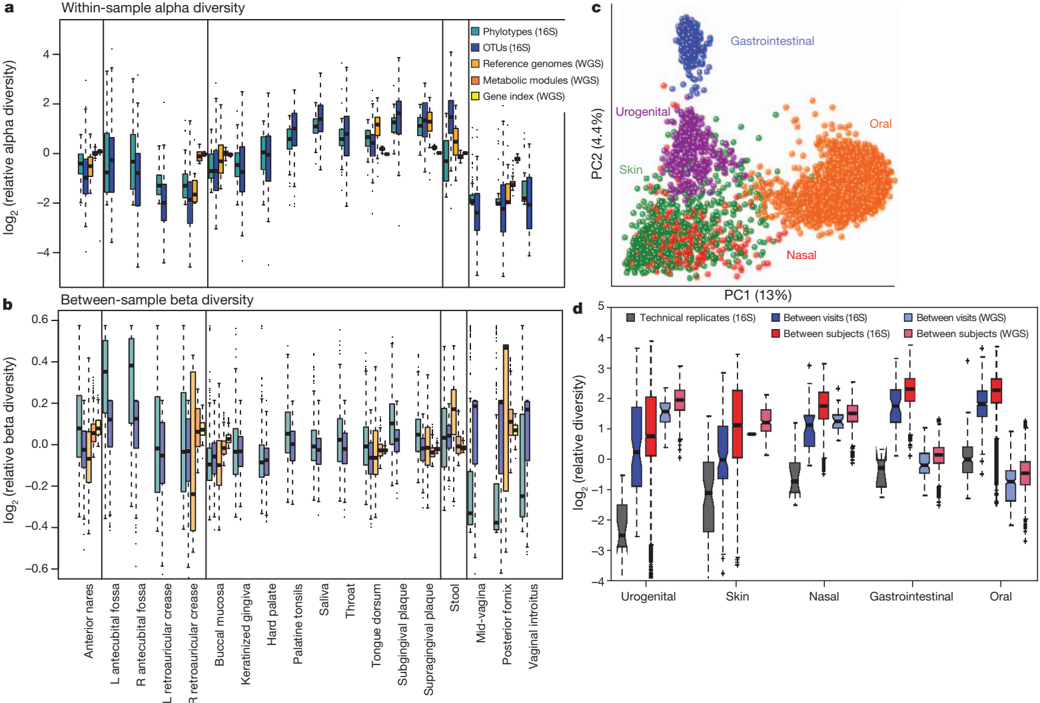
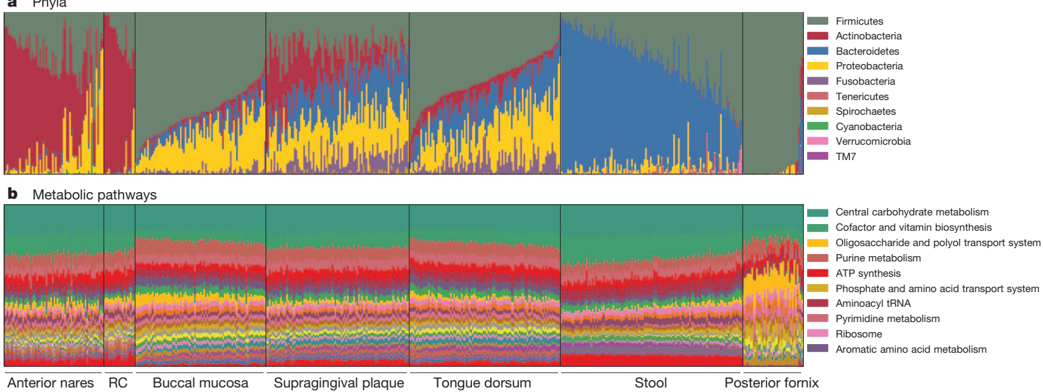
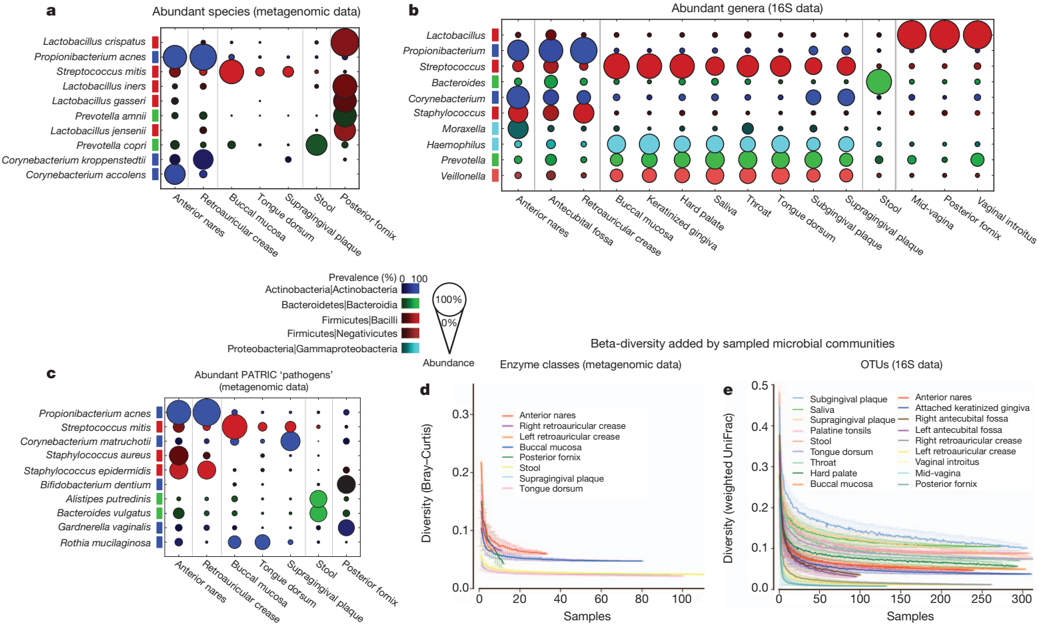
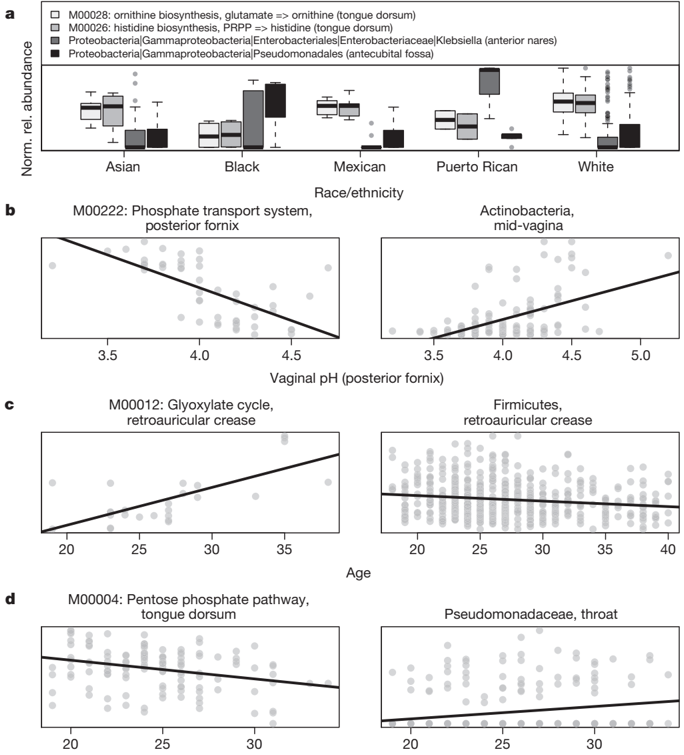
Studies of the human microbiome have revealed that even healthy individuals differ remarkably in the microbes that occupy habitats such as the gut, skin and vagina. Much of this diversity remains unexplained, although diet, environment, host genetics and early microbial exposure have all been implicated. Accordingly, to characterize the ecology of human-associated microbial communities, the Human Microbiome Project has analysed the largest cohort and set of distinct, clinically relevant body habitats so far. We found the diversity and abundance of each habitat’s signature microbes to vary widely even among healthy subjects, with strong niche specialization both within and among individuals. The project encountered an estimated 81–99% of the genera, enzyme families and community configurations occupied by the healthy Western microbiome. Metagenomic carriage of metabolic pathways was stable among individuals despite variation in community structure, and ethnic/racial background proved to be one of the strongest associations of both pathways and microbes with clinical metadata. These results thus delineate the range of structural and functional configurations normal in the microbial communities of a healthy population, enabling future characterization of the epidemiology, ecology and translational applications of the human microbiome.
Overview
The claims and statistics of this paper haven’t been checked yet.
Free: it reads the open-access text and checks the first 5 claims that cite a source we can check. Create a free account to check every claim.
Integrity signals
Registry
Cites
Statistics
Figures
Verification
Claims the paper makes
The claims and statistics of this paper haven’t been checked yet.
Free: it reads the open-access text and checks the first 5 claims that cite a source we can check. Create a free account to check every claim.
Claims other papers make about this one
Each is checked against this paper’s own text: does it say what the citing paper says it does?
The cited source doesn’t support the claim as written.
In the citing paper
“newly diagnosed cases with adenocarcinoma of the colon or rectum were recruited prior to surgery and treatment during 1985–19891, 2. Controls were patients awaiting elective surgery for non-oncologic, non-gastrointestinal conditions at these hospitals during the same period.”
From Assessment of variation in microbial community amplicon sequencing by the Microbiome Quality Control (MBQC) project consortium (2017) · cites this paper as [1]
Checked by a reasoning model — may be wrong.
Experimental — accuracy not yet measuredThe source backs part of the claim, not all of it — or backs it for a different population, condition or comparison.
In the citing paper
“Multiple factors affect the composition of the human gut microbiome, including geography, diet, infection and drug usage56,61–64.”
From Intestinal microbiota signatures of clinical response and immune-related adverse events in melanoma patients treated with anti-PD-1 (2022) · cites this paper as [64]
Experimental — accuracy not yet measuredThe source backs part of the claim, not all of it — or backs it for a different population, condition or comparison.
In the citing paper
“suggesting that no severe gut microbiome dysbiosis was present in the study group at baseline”
From Gut microbiome affects the response to anti-PD-1 immunotherapy in patients with hepatocellular carcinoma (2019) · cites this paper as [9]
Experimental — accuracy not yet measuredThe source backs part of the claim, not all of it — or backs it for a different population, condition or comparison.
In the citing paper
“Gut microbiota comprise thousands of microbial species that are involved in host metabolism by regulating energy extraction, activation of the immune system, drug metabolism, and other processes.”
From The Gut Microbiome Contributes to a Substantial Proportion of the Variation in Blood Lipids (2015) · cites this paper as [3]
Experimental — accuracy not yet measuredThe source backs part of the claim, not all of it — or backs it for a different population, condition or comparison.
In the citing paper
“The human gut microbiota contains thousands of different bacterial taxa as well as various archaea, eukaryotic microbes and viruses, more than three million genes, and harbors an enormous metabolic capacity [1, 2].”
From The athletic gut microbiota (2020) · cites this paper as [1]
Experimental — accuracy not yet measured
20 more claims about this paper
Create a free account to see every claim other papers make about this one.
Self-check
Percentages, sums and reported differences re-computed from the paper’s own numbers.
The self-check needs the paper’s full text.
Citations
Cites
Fast and accurate short read alignment with Burrows-Wheeler transform
Li, H., & Durbin, R. (2009) · Bioinformatics · doi:10.1093/bioinformatics/btp324 · Cited by 58,607
QIIME allows analysis of high-throughput community sequencing data
Caporaso, J. G., Kuczynski, J., Stombaugh, J., Bittinger, K., Bushman, F. D., Costello, E. K., Fierer, N., Peña, A. G., Goodrich, J. K., Gordon, J. I., et al. (2010) · Nature Methods · doi:10.1038/nmeth.f.303 · Cited by 34,887
Fast and accurate long-read alignment with Burrows-Wheeler transform.
Li, H., & Durbin, R. (2010) · Bioinformatics · doi:10.1093/bioinformatics/btp698 · Cited by 12,063
A human gut microbial gene catalogue established by metagenomic sequencing
MetaHIT Consortium, Qin, J., Li, R., Raes, J., Arumugam, M., Burgdorf, K. S., Manichanh, C., Nielsen, T., Pons, N., Levenez, F., et al. (2010) · Nature · doi:10.1038/nature08821 · Cited by 11,624
A core gut microbiome in obese and lean twins
Turnbaugh, P. J., Hamady, M., Yatsunenko, T., Cantarel, B. L., Duncan, A., Ley, R. E., Sogin, M. L., Jones, W. J., Roe, B. A., Affourtit, J. P., et al. (2009) · Nature · doi:10.1038/nature07540 · Cited by 7,823
Self-citationSokol, H., Pigneur, B., Watterlot, L., Lakhdari, O., Bermúdez-Humarán, L. G., Gratadoux, J.-J., Blugeon, S., Bridonneau, C., Furet, J.-P., Corthier, G., et al. (2008) · Proceedings of the National Academy of Sciences · doi:10.1073/pnas.0804812105 · Cited by 4,413
Vaginal microbiome of reproductive-age women
Ravel, J., Gajer, P., Abdo, Z., Schneider, G. M., Koenig, S. S. K., McCulle, S. L., Karlebach, S., Gorle, R., Russell, J., Tacket, C. O., et al. (2011) · Proceedings of the National Academy of Sciences · doi:10.1073/pnas.1002611107 · Cited by 4,254
Bacterial Community Variation in Human Body Habitats Across Space and Time
Costello, E. K., Lauber, C. L., Hamady, M., Fierer, N., Gordon, J. I., & Knight, R. (2009) · Science · doi:10.1126/science.1177486 · Cited by 3,231
Defining the normal bacterial flora of the oral cavity
Aas, J. A., Paster, B. J., Stokes, L. N., Olsen, I., & Dewhirst, F. E. (2005) · Journal of Clinical Microbiology · doi:10.1128/jcm.43.11.5721-5732.2005 · Cited by 3,092
Topographical and Temporal Diversity of the Human Skin Microbiome
Grice, E. A., Kong, H. H., Conlan, S., Deming, C. B., Davis, J., Young, A. C., Program, N. C. S., Bouffard, G. G., Blakesley, R. W., Murray, P. R., et al. (2009) · Science · doi:10.1126/science.1171700 · Cited by 2,953
Cited by
Items 501–600 of 1,676
Yu, G., Gail, M. H., Consonni, D., Carugno, M., Humphrys, M., Pesatori, A. C., Caporaso, N. E., Goedert, J. J., Ravel, J., & Landi, M. T. (2016) · Genome Biology · doi:10.1186/s13059-016-1021-1 · Cited by 405
Di Rienzi, S. C., Sharon, I., Wrighton, K. C., Koren, O., Hug, L. A., Thomas, B. C., Goodrich, J. K., Bell, J. T., Spector, T. D., Banfield, J. F., et al. (2013) · eLife · doi:10.7554/elife.01102 · Cited by 404
“DOI: 10.7554/eLife.01102 1 of 25”
BackgroundInfluentialStructure and function of the healthy pre-adolescent pediatric gut microbiome
Hollister, E. B., Riehle, K., Luna, R. A., Weidler, E. M., Rubio-Gonzales, M., Mistretta, T.-A., Raza, S., Doddapaneni, H. V., Metcalf, G. A., Muzny, D. M., et al. (2015) · Microbiome · doi:10.1186/s40168-015-0101-x · Cited by 406
The Ruminococci: key symbionts of the gut ecosystem
La Reau, A. J., & Suen, G. (2018) · Journal of Microbiology · doi:10.1007/s12275-018-8024-4 · Cited by 397
Chung, W. S. F., Meijerink, M., Zeuner, B., Holck, J., Louis, P., Meyer, A. S., Wells, J. M., Flint, H. J., & Duncan, S. H. (2017) · FEMS Microbiology Ecology · doi:10.1093/femsec/fix127 · Cited by 392
A global metagenomic map of urban microbiomes and antimicrobial resistance
Danko, D., Bezdan, D., Afshin, E. E., Ahsanuddin, S., Bhattacharya, C., Butler, D. J., Chng, K. R., Donnellan, D., Hecht, J., Jackson, K., et al. (2021) · Cell · doi:10.1016/j.cell.2021.05.002 · Cited by 373
Ticinesi, A., Lauretani, F., Milani, C., Nouvenne, A., Tana, C., Del Rio, D., Maggio, M., Ventura, M., & Meschi, T. (2017) · Nutrients · doi:10.3390/nu9121303 · Cited by 401
Gut microbiota and cardiovascular disease: opportunities and challenges
Kazemian, N., Mahmoudi, M., Halperin, F., Wu, J. C., & Pakpour, S. (2020) · Microbiome · doi:10.1186/s40168-020-00821-0 · Cited by 384
Microbial signatures of health, gingivitis and periodontitis
Abusleme, L., Hoare, A., Hong, B., & Diaz, P. I. (2021) · Periodontology 2000 · doi:10.1111/prd.12362 · Cited by 400
Thomas, S., Izard, J., Walsh, E., Batich, K., Chongsathidkiet, P., Clarke, G., Sela, D. A., Muller, A. J., Mullin, J. M., Albert, K., et al. (2017) · Cancer Research · doi:10.1158/0008-5472.can-16-2929 · Cited by 367
The Role of the Gut Microbiota in Bile Acid Metabolism
Ramírez-Pérez, O., Cruz-Ramón, V., Chinchilla-López, P., & Méndez-Sánchez, N. (2017) · Annals of Hepatology · doi:10.5604/01.3001.0010.5672 · Cited by 391
Knights, D., Ward, T. L., McKinlay, C. E., Miller, H., Gonzalez, A., McDonald, D., & Knight, R. (2014) · Cell Host & Microbe · doi:10.1016/j.chom.2014.09.013 · Cited by 396
Self-citationColonization of the upper genital tract by vaginal bacterial species in nonpregnant women
Mitchell, C. M., Haick, A., Nkwopara, E., Garcia, R., Rendi, M., Agnew, K., Fredricks, D. N., & Eschenbach, D. (2015) · American Journal of Obstetrics and Gynecology · doi:10.1016/j.ajog.2014.11.043 · Cited by 388
Gut Microbiota Dysbiosis: Pathogenesis, Diseases, Prevention, and Therapy
Shen, Y., Fan, N., Ma, S., Cheng, X., Yang, X., & Wang, G. (2025) · MedComm · doi:10.1002/mco2.70168 · Cited by 301
“However, these microbiomes are highly complex, dynamic, and personalized ecosystems, exhibiting significant interindividual variability in terms of species composition [328] and abundance profiles [329].”
Integrated Metagenomics/Metaproteomics Reveals Human Host-Microbiota Signatures of Crohn's Disease
Erickson, A. R., Cantarel, B. L., Lamendella, R., Darzi, Y., Mongodin, E. F., Pan, C., Shah, M., Halfvarson, J., Tysk, C., Henrissat, B., et al. (2012) · PLoS ONE · doi:10.1371/journal.pone.0049138 · Cited by 395
“Several of these studies have found a large variation in the gut microbial community composition between individuals, but considerable functional redundancy [5], [8].”
BackgroundGrundy, M. M.-L., Edwards, C. H., Mackie, A. R., Gidley, M. J., Butterworth, P. J., & Ellis, P. R. (2016) · British Journal of Nutrition · doi:10.1017/s0007114516002610 · Cited by 395
“The gut microbiota markedly differs in diversity and quantity between humans, even among healthy individuals((175)), and varies significantly with age and in different anatomical regions of the GI tract((176)).”
BackgroundVinarov, Z., Abdallah, M., Agundez, J. A. G., Allegaert, K., Basit, A. W., Braeckmans, M., Ceulemans, J., Corsetti, M., Griffin, B. T., Grimm, M., et al. (2021) · European Journal of Pharmaceutical Sciences · doi:10.1016/j.ejps.2021.105812 · Cited by 359
“bacteria inhibiting the GIT at the genomic level (Huttenhower et al., 2012).”
BackgroundRole of the Gut Microbiome in Uremia: A Potential Therapeutic Target
Ramezani, A., Massy, Z. A., Meijers, B., Evenepoel, P., Vanholder, R., & Raj, D. S. (2016) · American Journal of Kidney Diseases · doi:10.1053/j.ajkd.2015.09.027 · Cited by 394
The human mycobiome in health and disease
Cui, L., Morris, A., & Ghedin, E. (2013) · Genome Medicine · doi:10.1186/gm467 · Cited by 380
“In particular, two large government-backed projects launched in the past fi ve years - the Human Microbiome Project (HMP) in the United States and Metagenomics of the Human Intestinal Tract (MetaHit) in Europe - have provided progress in this new fi eld of research [4-6].”
BackgroundGoedert, J. J., Jones, G., Hua, X., Xu, X., Yu, G., Flores, R., Falk, R. T., Gail, M. H., Shi, J., Ravel, J., et al. (2015) · JNCI: Journal of the National Cancer Institute · doi:10.1093/jnci/djv147 · Cited by 393
The human microbiome in evolution
Davenport, E. R., Sanders, J. G., Song, S. J., Amato, K. R., Clark, A. G., & Knight, R. (2017) · BMC Biology · doi:10.1186/s12915-017-0454-7 · Cited by 393
Self-citationHelminth Colonization Is Associated with Increased Diversity of the Gut Microbiota
Lee, S. C., Tang, M. S., Lim, Y. A. L., Choy, S. H., Kurtz, Z. D., Cox, L. M., Gundra, U. M., Cho, I., Bonneau, R., Blaser, M. J., et al. (2014) · PLoS Neglected Tropical Diseases · doi:10.1371/journal.pntd.0002880 · Cited by 378
The commensal lifestyle of Staphylococcus aureus and its interactions with the nasal microbiota
Krismer, B., Weidenmaier, C., Zipperer, A., & Peschel, A. (2017) · Nature Reviews Microbiology · doi:10.1038/nrmicro.2017.104 · Cited by 375
Modulators of mercury risk to wildlife and humans in the context of rapid global change
Eagles-Smith, C. A., Silbergeld, E. K., Basu, N., Bustamante, P., Diaz-Barriga, F., Hopkins, W. A., Kidd, K. A., & Nyland, J. F. (2018) · Ambio · doi:10.1007/s13280-017-1011-x · Cited by 380
“2007), and contain a number of genes that code for functions that support host physiology (Huttenhower et al. 2012).”
BackgroundHoles in the Hologenome: Why Host-Microbe Symbioses Are Not Holobionts
Douglas, A. E., & Werren, J. H. (2016) · mBio · doi:10.1128/mbio.02099-15 · Cited by 363
Malireddi, R. K. S., Gurung, P., Kesavardhana, S., Samir, P., Burton, A., Mummareddy, H., Vogel, P., Pelletier, S., Burgula, S., & Kanneganti, T.-D. (2020) · Journal of Experimental Medicine · doi:10.1084/jem.20191644 · Cited by 384
“Because microbes are ubiquitous and have evolved to inhibit host TAK1 signaling (Human Microbiome Project Consortium, 2012; Meinzer et al., 2012; Orth et al., 1999; Peterson et al., 2017), we investigated the cellular and molecular consequences of microbial (or TLR) priming on the role of RIPK1 under the conditions of…”
BackgroundSanz, M., Beighton, D., Curtis, M. A., Cury, J. A., Dige, I., Dommisch, H., Ellwood, R., Giacaman, R. A., Herrera, D., Herzberg, M. C., et al. (2017) · Journal of Clinical Periodontology · doi:10.1111/jcpe.12682 · Cited by 390
Dysbiosis of the gut and lung microbiome has a role in asthma
Hufnagl, K., Pali-Schöll, I., Roth-Walter, F., & Jensen-Jarolim, E. (2020) · Seminars in Immunopathology · doi:10.1007/s00281-019-00775-y · Cited by 364
Microbiome and metabolic disease: revisiting the bacterial phylum Bacteroidetes
Johnson, E. L., Heaver, S. L., Walters, W. A., & Ley, R. E. (2017) · Journal of Molecular Medicine · doi:10.1007/s00109-016-1492-2 · Cited by 389
Human microbiomes and their roles in dysbiosis, common diseases, and novel therapeutic approaches
Belizário, J. E., & Napolitano, M. (2015) · Frontiers in Microbiology · doi:10.3389/fmicb.2015.01050 · Cited by 372
Yunes, R. A., Poluektova, E. U., Dyachkova, M. S., Klimina, K. M., Kovtun, A. S., Averina, O. V., Orlova, V. S., & Danilenko, V. N. (2016) · Anaerobe · doi:10.1016/j.anaerobe.2016.10.011 · Cited by 376
Probiotics, prebiotics and amelioration of diseases
Tsai, Y.-L., Lin, T.-L., Chang, C.-J., Wu, T.-R., Lai, W.-F., Lu, C.-C., & Lai, H.-C. (2019) · Journal of Biomedical Science · doi:10.1186/s12929-018-0493-6 · Cited by 388
Mimee, M., Tucker, A. C., Voigt, C. A., & Lu, T. K. (2015) · Cell Systems · doi:10.1016/j.cels.2015.06.001 · Cited by 387
Strain-level microbial epidemiology and population genomics from shotgun metagenomics
Scholz, M., Ward, D. V., Pasolli, E., Tolio, T., Zolfo, M., Asnicar, F., Truong, D. T., Tett, A., Morrow, A. L., & Segata, N. (2016) · Nature Methods · doi:10.1038/nmeth.3802 · Cited by 376
Alterations in Enteric Virome Are Associated With Colorectal Cancer and Survival Outcomes
Nakatsu, G., Zhou, H., Wu, W. K. K., Wong, S. H., Coker, O. O., Dai, Z., Li, X., Szeto, C.-H., Sugimura, N., Lam, T. Y.-T., et al. (2018) · Gastroenterology · doi:10.1053/j.gastro.2018.04.018 · Cited by 386
Vaz-Moreira, I., Nunes, O. C., & Manaia, C. M. (2014) · FEMS Microbiology Reviews · doi:10.1111/1574-6976.12062 · Cited by 364
Altered Fecal Microbiota Composition Associated with Food Allergy in Infants
Ling, Z., Li, Z., Liu, X., Cheng, Y., Luo, Y., Tong, X., Yuan, L., Wang, Y., Sun, J., Li, L., et al. (2014) · Applied and Environmental Microbiology · doi:10.1128/aem.00003-14 · Cited by 374
The gut microbiota modulates host amino acid and glutathione metabolism in mice
Mardinoglu, A., Shoaie, S., Bergentall, M., Ghaffari, P., Zhang, C., Larsson, E., Bäckhed, F., & Nielsen, J. (2015) · Molecular Systems Biology · doi:10.15252/msb.20156487 · Cited by 383
Aagaard, K., Petrosino, J., Keitel, W., Watson, M., Katancik, J., Garcia, N., Patel, S., Cutting, M., Madden, T., Hamilton, H., et al. (2013) · The FASEB Journal · doi:10.1096/fj.12-220806 · Cited by 383
Self-citationJu, F., Li, B., Ma, L., Wang, Y., Huang, D., & Zhang, T. (2016) · Water Research · doi:10.1016/j.watres.2015.11.071 · Cited by 381
Development of the Chick Microbiome: How Early Exposure Influences Future Microbial Diversity
Ballou, A. L., Ali, R. A., Mendoza, M. A., Ellis, J. C., Hassan, H. M., Croom, W. J., & Koci, M. D. (2016) · Frontiers in Veterinary Science · doi:10.3389/fvets.2016.00002 · Cited by 364
“Changes in taxonomic diversity are the most used indicator to infer changes in microbiological activity, but it is becoming apparent that many of the functions of a normal microbiome can be carried out by a number of microbial groups (37, 38).”
BackgroundLiu, X., Tong, X., Zou, Y., Lin, X., Zhao, H., Tian, L., Jie, Z., Wang, Q., Zhang, Z., Lu, H., et al. (2022) · Nature Genetics · doi:10.1038/s41588-021-00968-y · Cited by 369
Compartmentalized and systemic control of tissue immunity by commensals
Belkaid, Y., & Naik, S. (2013) · Nature Immunology · doi:10.1038/ni.2604 · Cited by 382
The early infant gut microbiome varies in association with a maternal high-fat diet
Chu, D. M., Antony, K. M., Ma, J., Prince, A. L., Showalter, L., Moller, M., & Aagaard, K. M. (2016) · Genome Medicine · doi:10.1186/s13073-016-0330-z · Cited by 375
Critical Assessment of Metagenome Interpretation: the second round of challenges
Meyer, F., Fritz, A., Deng, Z.-L., Koslicki, D., Lesker, T. R., Gurevich, A., Robertson, G., Alser, M., Antipov, D., Beghini, F., et al. (2022) · Nature Methods · doi:10.1038/s41592-022-01431-4 · Cited by 366
Genetic and environmental control of host-gut microbiota interactions
Org, E., Parks, B. W., Joo, J. W. J., Emert, B., Schwartzman, W., Kang, E. Y., Mehrabian, M., Pan, C., Knight, R., Gunsalus, R., et al. (2015) · Genome Research · doi:10.1101/gr.194118.115 · Cited by 381
The Immunomodulatory Functions of Butyrate
Siddiqui, M. T., & Cresci, G. A. (2021) · Journal of Inflammation Research · doi:10.2147/jir.s300989 · Cited by 381
Differences in fecal microbial metabolites and microbiota of children with autism spectrum disorders
Kang, D.-W., Ilhan, Z. E., Isern, N. G., Hoyt, D. W., Howsmon, D. P., Shaffer, M., Lozupone, C. A., Hahn, J., Adams, J. B., & Krajmalnik-Brown, R. (2018) · Anaerobe · doi:10.1016/j.anaerobe.2017.12.007 · Cited by 381
Self-citationDeciphering functional redundancy in the human microbiome
Tian, L., Wang, X.-W., Wu, A.-K., Fan, Y., Friedman, J., Dahlin, A., Waldor, M. K., Weinstock, G. M., Weiss, S. T., & Liu, Y.-Y. (2020) · Nature Communications · doi:10.1038/s41467-020-19940-1 · Cited by 380
Self-citationThe mucosal immune system: master regulator of bidirectional gut-brain communications
Powell, N., Walker, M. M., & Talley, N. J. (2017) · Nature Reviews Gastroenterology & Hepatology · doi:10.1038/nrgastro.2016.191 · Cited by 379
Gut microbial molecules in behavioural and neurodegenerative conditions
Needham, B. D., Kaddurah-Daouk, R., & Mazmanian, S. K. (2020) · Nature Reviews Neuroscience · doi:10.1038/s41583-020-00381-0 · Cited by 379
A Type VI Secretion-Related Pathway in Bacteroidetes Mediates Interbacterial Antagonism
Russell, A. B., Wexler, A. G., Harding, B. N., Whitney, J. C., Bohn, A. J., Goo, Y. A., Tran, B. Q., Barry, N. A., Zheng, H., Peterson, S. B., et al. (2014) · Cell Host & Microbe · doi:10.1016/j.chom.2014.07.007 · Cited by 372
“Bacteroidetes Cell Hos constitute 20%–80% of the fecal microbiota of most adult humans and are largely represented by two genera, Bacteroides and Prevotella (Human Microbiome Project Consortium, 2012).”
Mohr, A. E., Jäger, R., Carpenter, K. C., Kerksick, C. M., Purpura, M., Townsend, J. R., West, N. P., Black, K., Gleeson, M., Pyne, D. B., et al. (2020) · Journal of the International Society of Sports Nutrition · doi:10.1186/s12970-020-00353-w · Cited by 378
“Blooming” in the gut: how dysbiosis might contribute to pathogen evolution.
Stecher, B., Maier, L., & Hardt, W.-D. (2013) · Nature Reviews Microbiology · doi:10.1038/nrmicro2989 · Cited by 378
Community characteristics of the gut microbiomes of competitive cyclists
Petersen, L. M., Bautista, E. J., Nguyen, H., Hanson, B. M., Chen, L., Lek, S. H., Sodergren, E., & Weinstock, G. M. (2017) · Microbiome · doi:10.1186/s40168-017-0320-4 · Cited by 377
“Studies such as the Human Microbiome Project (HMP) and MetaHIT showed that the gut microbiome is comprised of thousands of different bacterial taxa as well as various archaea, eukaryotic microbes, and viruses [1, 2].”
BackgroundSelf-citationShifts in human skin and nares microbiota of healthy children and adults
Oh, J., Conlan, S., Polley, E. C., Segre, J. A., & Kong, H. H. (2012) · Genome Medicine · doi:10.1186/gm378 · Cited by 367
Modulating the microbiome to improve therapeutic response in cancer
McQuade, J. L., Daniel, C. R., Helmink, B. A., & Wargo, J. A. (2019) · The Lancet Oncology · doi:10.1016/s1470-2045(18)30952-5 · Cited by 376
The environment ontology: contextualising biological and biomedical entities
Buttigieg, P., Morrison, N., Smith, B., Mungall, C. J., Lewis, S. E., & the ENVO Consortium (2013) · Journal of Biomedical Semantics · doi:10.1186/2041-1480-4-43 · Cited by 358
The Microbiome and Human Biology
Knight, R., Callewaert, C., Marotz, C., Hyde, E. R., Debelius, J. W., McDonald, D., & Sogin, M. L. (2017) · Annual Review of Genomics and Human Genetics · doi:10.1146/annurev-genom-083115-022438 · Cited by 373
Self-citationThe Common Gut Microbe Eubacterium hallii also Contributes to Intestinal Propionate Formation
Engels, C., Ruscheweyh, H.-J., Beerenwinkel, N., Lacroix, C., & Schwab, C. (2016) · Frontiers in Microbiology · doi:10.3389/fmicb.2016.00713 · Cited by 372
Carnitine metabolism to trimethylamine by an unusual Rieske-type oxygenase from human microbiota
Zhu, Y., Jameson, E., Crosatti, M., Schäfer, H., Rajakumar, K., Bugg, T. D. H., & Chen, Y. (2014) · Proceedings of the National Academy of Sciences · doi:10.1073/pnas.1316569111 · Cited by 372
van Schaik, W. (2015) · Philosophical Transactions of the Royal Society B: Biological Sciences · doi:10.1098/rstb.2014.0087 · Cited by 364
Altered Mucosal Microbiome Diversity and Disease Severity in Sjögren Syndrome
de Paiva, C. S., Jones, D. B., Stern, M. E., Bian, F., Moore, Q. L., Corbiere, S., Streckfus, C. F., Hutchinson, D. S., Ajami, N. J., Petrosino, J. F., et al. (2016) · Scientific Reports · doi:10.1038/srep23561 · Cited by 364
A healthy gastrointestinal microbiome is dependent on dietary diversity
Heiman, M. L., & Greenway, F. L. (2016) · Molecular Metabolism · doi:10.1016/j.molmet.2016.02.005 · Cited by 370
Targeted capture in evolutionary and ecological genomics
Jones, M. R., & Good, J. M. (2016) · Molecular Ecology · doi:10.1111/mec.13304 · Cited by 352
The role of the microbiota in infectious diseases
Libertucci, J., & Young, V. B. (2018) · Nature Microbiology · doi:10.1038/s41564-018-0278-4 · Cited by 357
Endocannabinoids–at the crossroads between the gut microbiota and host metabolism
Cani, P. D., Plovier, H., Van Hul, M., Geurts, L., Delzenne, N. M., Druart, C., & Everard, A. (2016) · Nature Reviews Endocrinology · doi:10.1038/nrendo.2015.211 · Cited by 367
d'Enfert, C., Kaune, A.-K., Alaban, L.-R., Chakraborty, S., Cole, N., Delavy, M., Kosmala, D., Marsaux, B., Fróis-Martins, R., Morelli, M., et al. (2021) · FEMS Microbiology Reviews · doi:10.1093/femsre/fuaa060 · Cited by 347
Soluble Dietary Fiber, One of the Most Important Nutrients for the Gut Microbiota
Guan, Z.-W., Yu, E.-Z., & Feng, Q. (2021) · Molecules · doi:10.3390/molecules26226802 · Cited by 336
Colorectal Cancer and the Human Gut Microbiome: Reproducibility with Whole-Genome Shotgun Sequencing
Vogtmann, E., Hua, X., Zeller, G., Sunagawa, S., Voigt, A. Y., Hercog, R., Goedert, J. J., Shi, J., Bork, P., & Sinha, R. (2016) · PLOS ONE · doi:10.1371/journal.pone.0155362 · Cited by 366
Bioengineered and biohybrid bacteria-based systems for drug delivery
Hosseinidoust, Z., Mostaghaci, B., Yasa, O., Park, B.-W., Singh, A. V., & Sitti, M. (2016) · Advanced Drug Delivery Reviews · doi:10.1016/j.addr.2016.09.007 · Cited by 368
Nagpal, R., Wang, S., Ahmadi, S., Hayes, J., Gagliano, J., Subashchandrabose, S., Kitzman, D. W., Becton, T., Read, R., & Yadav, H. (2018) · Scientific Reports · doi:10.1038/s41598-018-30114-4 · Cited by 347
Malla, M. A., Dubey, A., Kumar, A., Yadav, S., Hashem, A., & Abd_Allah, E. F. (2019) · Frontiers in Immunology · doi:10.3389/fimmu.2018.02868 · Cited by 345
“Deep sequencing of metagenomic samples, as was used in the Human Microbiome Project and Metagenomics of the Human Intestinal Tract, provides extensive sequence information even of minor components (taxa) present in the metagenome.”
BackgroundMethodInfluentialMolecular cartography of the human skin surface in 3D
Bouslimani, A., Porto, C., Rath, C. M., Wang, M., Guo, Y., Gonzalez, A., Berg-Lyon, D., Ackermann, G., Moeller Christensen, G. J., Nakatsuji, T., et al. (2015) · Proceedings of the National Academy of Sciences · doi:10.1073/pnas.1424409112 · Cited by 355
The Intestinal Metabolome: An Intersection Between Microbiota and Host
Ursell, L. K., Haiser, H. J., Van Treuren, W., Garg, N., Reddivari, L., Vanamala, J., Dorrestein, P. C., Turnbaugh, P. J., & Knight, R. (2014) · Gastroenterology · doi:10.1053/j.gastro.2014.03.001 · Cited by 355
Computational pan-genomics: status, promises and challenges
(2016) · Briefings in Bioinformatics · doi:10.1093/bib/bbw089 · Cited by 287
Sun, S., Jones, R. B., & Fodor, A. A. (2020) · Microbiome · doi:10.1186/s40168-020-00815-y · Cited by 335
Neugent, M. L., Hulyalkar, N. V., Nguyen, V. H., Zimmern, P. E., & De Nisco, N. J. (2020) · mBio · doi:10.1128/mbio.00218-20 · Cited by 326
Liévin-Le Moal, V., & Servin, A. L. (2014) · Clinical Microbiology Reviews · doi:10.1128/cmr.00080-13 · Cited by 354
Roslund, M. I., Puhakka, R., Grönroos, M., Nurminen, N., Oikarinen, S., Gazali, A. M., Cinek, O., Kramná, L., Siter, N., Vari, H. K., et al. (2020) · Science Advances · doi:10.1126/sciadv.aba2578 · Cited by 363
Fan, P., Liu, P., Song, P., Chen, X., & Ma, X. (2017) · Scientific Reports · doi:10.1038/srep43412 · Cited by 352
Bacteroides fragilis subverts mucosal biology: from symbiont to colon carcinogenesis
Sears, C. L., Geis, A. L., & Housseau, F. (2014) · Journal of Clinical Investigation · doi:10.1172/jci72334 · Cited by 353
“The first phase of the HMP, completed in 2012, focused on establishing the “normal” microbiota and now has evolved to address the key scientific challenge of translating findings from this phase to understand how the microbiota contributes to disease pathophysiology (2).”
Unlocking the bacterial and fungal communities assemblages of sugarcane microbiome
de Souza, R. S. C., Okura, V. K., Armanhi, J. S. L., Jorrín, B., Lozano, N., da Silva, M. J., González-Guerrero, M., de Araújo, L. M., Verza, N. C., Bagheri, H. C., et al. (2016) · Scientific Reports · doi:10.1038/srep28774 · Cited by 349
Microbiome and colorectal cancer: Roles in carcinogenesis and clinical potential
Saus, E., Iraola-Guzmán, S., Willis, J. R., Brunet-Vega, A., & Gabaldón, T. (2019) · Molecular Aspects of Medicine · doi:10.1016/j.mam.2019.05.001 · Cited by 350
The Oral Microbiota: Community Composition, Influencing Factors, Pathogenesis, and Interventions
Li, X., Liu, Y., Yang, X., Li, C., & Song, Z. (2022) · Frontiers in Microbiology · doi:10.3389/fmicb.2022.895537 · Cited by 328
Microbial Succession and Flavor Production in the Fermented Dairy Beverage Kefir
Walsh, A. M., Crispie, F., Kilcawley, K., O’Sullivan, O., O’Sullivan, M. G., Claesson, M. J., & Cotter, P. D. (2016) · mSystems · doi:10.1128/msystems.00052-16 · Cited by 343
Kers, J. G., & Saccenti, E. (2022) · Frontiers in Microbiology · doi:10.3389/fmicb.2021.796025 · Cited by 359
“Human Microbiome Project Dataset This dataset was obtained from the Human Microbiome Project (HMP) phase I (Huttenhower et al., 2012).”
BackgroundMethodMoreno, I., Cicinelli, E., Garcia-Grau, I., Gonzalez-Monfort, M., Bau, D., Vilella, F., De Ziegler, D., Resta, L., Valbuena, D., & Simon, C. (2018) · American Journal of Obstetrics and Gynecology · doi:10.1016/j.ajog.2018.02.012 · Cited by 344
Host habitat is the major determinant of the gut microbiome of fish
Kim, P. S., Shin, N.-R., Lee, J.-B., Kim, M.-S., Whon, T. W., Hyun, D.-W., Yun, J.-H., Jung, M.-J., Kim, J. Y., & Bae, J.-W. (2021) · Microbiome · doi:10.1186/s40168-021-01113-x · Cited by 342
“We compared the microbiota data for fish obtained in the current study with data for humans (Human Gut Microbiota Project [HMP] data [35, 36]), 66 aquatic mammals [37], 39 non-human mammals [38], 41 iguanas and snakes (reptiles) [39, 40], and 124 wild birds [41].”
MethodInfluentialAlteration of the cutaneous microbiome in psoriasis and potential role in Th17 polarization
Chang, H.-W., Yan, D., Singh, R., Liu, J., Lu, X., Ucmak, D., Lee, K., Afifi, L., Fadrosh, D., Leech, J., et al. (2018) · Microbiome · doi:10.1186/s40168-018-0533-1 · Cited by 344
Noninvasive monitoring of infection and rejection after lung transplantation
De Vlaminck, I., Martin, L., Kertesz, M., Patel, K., Kowarsky, M., Strehl, C., Cohen, G., Luikart, H., Neff, N. F., Okamoto, J., et al. (2015) · Proceedings of the National Academy of Sciences · doi:10.1073/pnas.1517494112 · Cited by 349
Marcobal, A., Kashyap, P. C., Nelson, T. A., Aronov, P. A., Donia, M. S., Spormann, A., Fischbach, M. A., & Sonnenburg, J. L. (2013) · The ISME Journal · doi:10.1038/ismej.2013.89 · Cited by 355
“Sequencing-focused techniques have been used extensively to characterize the species and gene content of gut microbial communities associated with health or a variety of diseases (Qin et al., 2010; Arumugam et al., 2011; Huttenhower et al., 2012).”
MethodA review of the relationship between the gut microbiota and amino acid metabolism
Lin, R., Liu, W., Piao, M., & Zhu, H. (2017) · Amino Acids · doi:10.1007/s00726-017-2493-3 · Cited by 342
The gut microbiota and its biogeography
McCallum, G., & Tropini, C. (2024) · Nature Reviews Microbiology · doi:10.1038/s41579-023-00969-0 · Cited by 329
“…this Review uses prokaryotic phylum names recently defined and published by the International Committee on Systematics of Prokaryotes 15 ), representing ~90% of the total bacterial abundance in most individuals, with few individuals dominated by Pseudomonadota (formerly Proteobacteria) 16,17 .”
Next-generation sequencing in the clinic: Promises and challenges
Xuan, J., Yu, Y., Qing, T., Guo, L., & Shi, L. (2013) · Cancer Letters · doi:10.1016/j.canlet.2012.11.025 · Cited by 344
Assembly of the Caenorhabditis elegans gut microbiota from diverse soil microbial environments
Berg, M., Stenuit, B., Ho, J., Wang, A., Parke, C., Knight, M., Alvarez-Cohen, L., & Shapira, M. (2016) · The ISME Journal · doi:10.1038/ismej.2015.253 · Cited by 362
Bacteria in cancer initiation, promotion and progression
El Tekle, G., & Garrett, W. S. (2023) · Nature Reviews Cancer · doi:10.1038/s41568-023-00594-2 · Cited by 343
Nayfach, S., & Pollard, K. S. (2015) · Genome Biology · doi:10.1186/s13059-015-0611-7 · Cited by 359
Yan, M., Pamp, S. J., Fukuyama, J., Hwang, P. H., Cho, D.-Y., Holmes, S., & Relman, D. A. (2013) · Cell Host & Microbe · doi:10.1016/j.chom.2013.11.005 · Cited by 351
Advancing functional and translational microbiome research using meta-omics approaches
Zhang, X., Li, L., Butcher, J., Stintzi, A., & Figeys, D. (2019) · Microbiome · doi:10.1186/s40168-019-0767-6 · Cited by 340
Metadata
- Authors
- The Human Microbiome Project Consortium
- Venue
- Nature
- Published
- 2012-06
- Volume
- 486
- Issue
- 7402
- Pages
- 207-214
- ISSN
- 0028-0836 (ISSN-L)
- 1476-4687
- PMC
- PMC3564958
- OpenAlex
- W2128769815
- Semantic Scholar
- 0c431405ec1eb4b84a52ed1fcc530454a4b8bf6f
- Cited by
- 11,726
- References
- 29
- Citations by year
- 2026: 586 · 2025: 748 · 2024: 890 · 2023: 950 · 2022: 1024 · 2021: 1202 · 2020: 1137 · 2019: 1032 · 2018: 863 · 2017: 853 · 2016: 732 · 2015: 651 · 2014: 532 · 2013: 413 · 2012: 104
- FWCI
- 218.52
- Type
- journal article
- Language
- en
- Open access
- hybrid
- doi.org
- Licence
- cc-by-nc-sa
- creativecommons.org/licenses/by-nc-sa/3.0/ (tdm)
- Locations
- Nature (publishedVersion, cc-by-nc-sa)
- PubMed (publishedVersion)
- Goce Delchev University Repository (Goce Delčev University of Štip) (acceptedVersion)
- Europe PMC (PubMed Central) (acceptedVersion)
- PubMed Central (acceptedVersion)
- eScholarship (California Digital Library) (submittedVersion, cc-by)
- Rutgers University Community Repository (Rutgers University) (submittedVersion)
- Open Access Server of the Woods Hole Scientific Community (Woods Hole Scientific Community) (submittedVersion)
- eScholarship (California Digital Library) (submittedVersion)
- Funders
- National Science Foundation (DEAC02-05CH11231, 1053486, 0812111)
- Howard Hughes Medical Institute (DE-AC02-05CH11231)
- U.S. Department of Energy (-AC02-05CH11231, Contract No. DE-AC02-05-CH11231, 05CH11231, No. DE-AC02-05-CH11231, DE AC02 05CH11231, DE-AC02-)
- Gordon and Betty Moore Foundation
- Rice University
- Gladstone Institutes
- Crohn's and Colitis Foundation
- Crohn's and Colitis Foundation of Canada
- Fonds Wetenschappelijk Onderzoek (DE-AC02-05CH11231)
- Vlaamse regering
- National Institutes of Health (5r01hg005172-03, n01hg62088-6-0-1, DE-AC02–05CH11231, DBI-1053486, DP2OD001500, 5r01hg004857-03, n01ai30071-19-0-3)
- Defense Threat Reduction Agency (B104153I, DE-AC02-05CH11231, B084531I)
- Office of Science (No. DE-AC02- 05-CH11231, DEAC02–05CH11231, AC02-05CH11231, DE-AC02, 05CH11231, Contract No. DE-AC02-05CH11231)
- Horace H. Rackham School of Graduate Studies, University of Michigan
- National Human Genome Research Institute (R01HG004885, U54HG003067, R01HG005975, R01-HG004857, U54HG004969, R01HG004853, U54HG003079, U01HG004866, R01HG005969, R01-HG005172, U54HG003273, R01HG004872, R21HG005811, U54HG004968, N01 HG062088, R01HG004906, R01HG004908, U54HG004973, R01HG004856, R01HG004900, R01HG005171, R01HG004877)
- National Cancer Institute (R21CA139193)
- National Institute of General Medical Sciences (T32GM087237)
- National Institute of Allergy and Infectious Diseases (UH2AI083263, UH3AI083263, U54AI084844, T32AI007528, N01 AI030071)
- National Institute of Diabetes and Digestive and Kidney Diseases (UH2DK083990, UH3DK083993)
- National Institute of Arthritis and Musculoskeletal and Skin Diseases (UH2 AR057504, UH2AR057506, UH3-AR057504)
- National Institute of Dental and Craniofacial Research (P30DE020751, R01DE021574, U01DE016937, RC1DE0202098, R37DE016937, RC1DE020298)
- U.S. National Library of Medicine
- Division of Biological Infrastructure (DBI-1053486)
- Army Research Office (DE-AC02-05CH11231, W911NF-11-1-0473, W911NF, W911NF-11)
- Los Alamos National Laboratory (DE-AC02-05CH11231)
- Topics
- Life Sciences › Biochemistry, Genetics and Molecular Biology › Molecular Biology › Gut microbiota and health
- Physical Sciences › Environmental Science › Ecology › Microbial Community Ecology and Physiology
- Health Sciences › Dentistry › Periodontics › Oral microbiology and periodontitis research
- Keywords
- human microbiome, healthy individuals, microbial diversity, gut microbiota, skin microbiome, vaginal microbiota, ecological specialization, metabolic pathways, Human Microbiome Project, metagenomics, microbial ecology
- MeSH terms
- Adolescent, Adult, Bacteria, Female, Health, Humans, Male, Phenotype, RNA, Ribosomal, 16S, Ecosystem, Biodiversity, Metabolic Networks and Pathways, Metagenome, Young Adult, Metagenomics
About these checks
Registry, retraction, Cites and statistics results are computed, not judged, with one exception: a printed reference that no index lists is read once by a model before it counts as a citation error. Claims are extracted by a model and kept only when their quote appears verbatim in the text; each cited source is then checked, with a model’s help, for whether it says what the claim relies on. Those verdicts can be wrong — read the claim’s quote and the cited source before relying on one.
Statistics and arithmetic are recomputed, not judged.
Confidence bands are shown only for fields calibrated on our annotated test set. None is calibrated yet, so no band is shown.
What counts as a claim ›How we measure confidence ›How we check this ›
Are you an author, or do you see a problem with this page? Request a review
Data sources
Bibliographic data: Semantic Scholar, OpenAlex, Crossref.
Contains information from the Semantic Scholar Academic Graph Datasets, made available under the ODC Attribution License (ODC-BY 1.0).
Semantic Scholar’s data is described in: Kinney, R., et al. (2023). The Semantic Scholar Open Data Platform. arXiv:2301.10140.
