

Structure, function and diversity of the healthy human microbiome
Open accessThe DOI matches its Crossref record; 29 of the 29 references it cites were found in a registry or an index.
Abstract
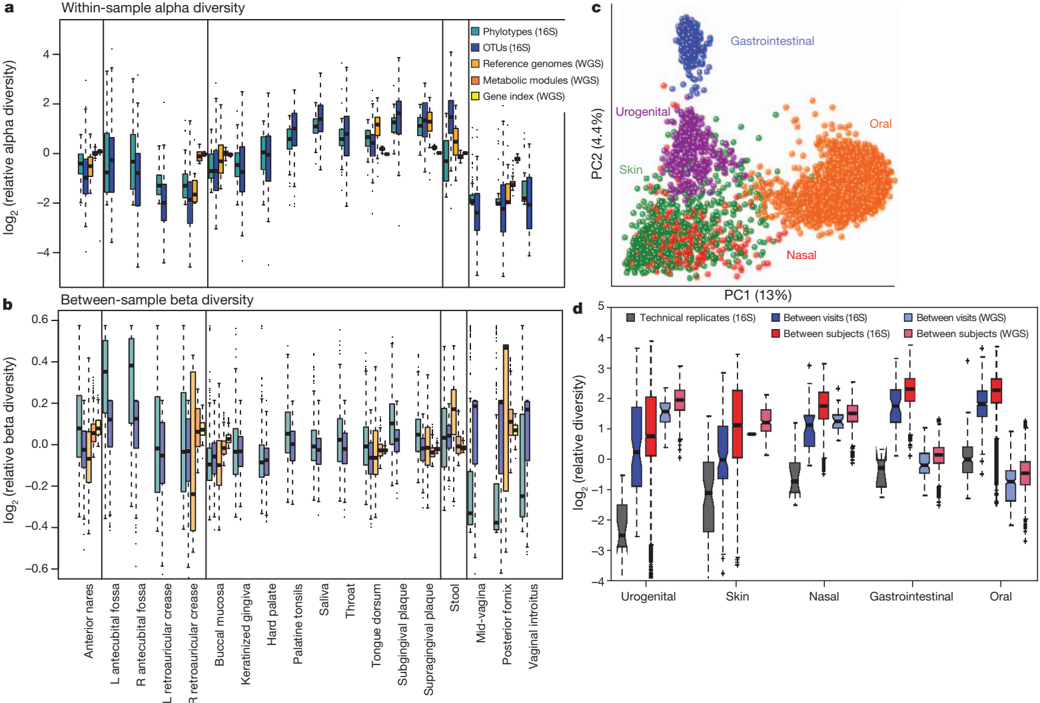
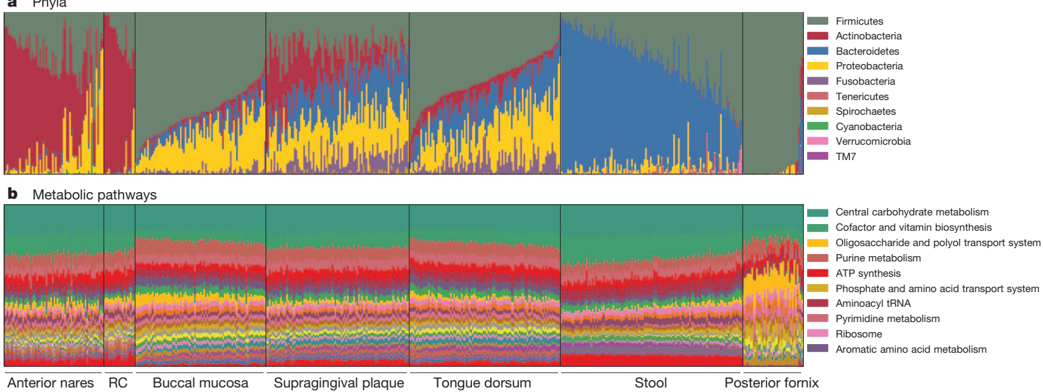
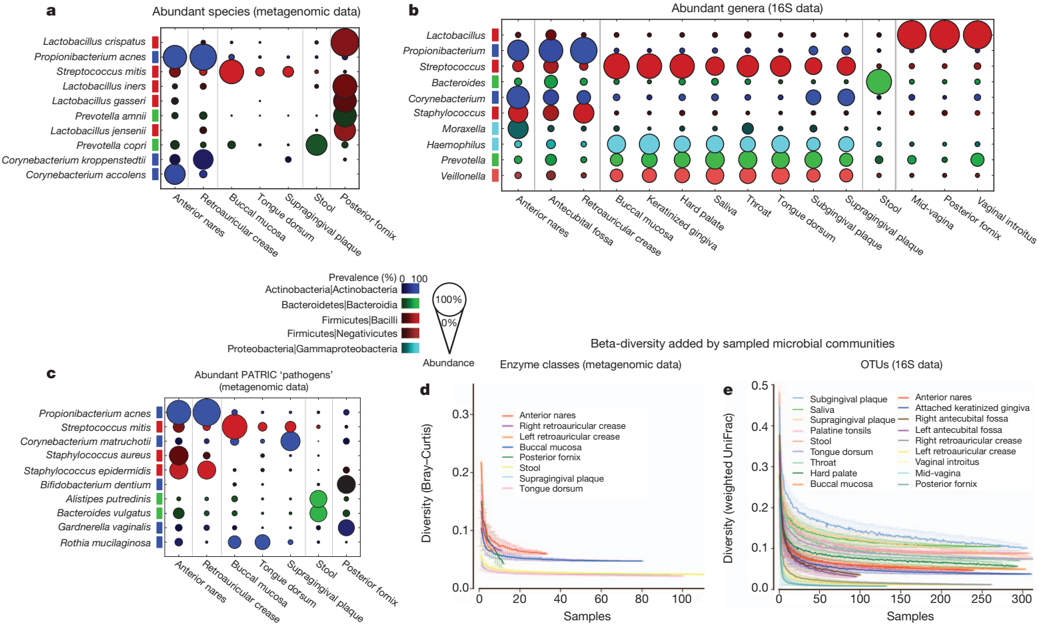
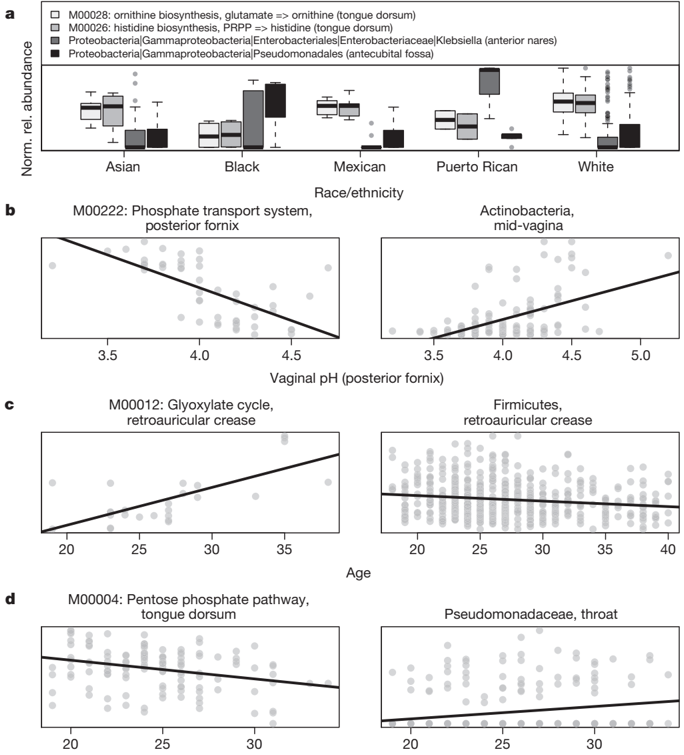
Studies of the human microbiome have revealed that even healthy individuals differ remarkably in the microbes that occupy habitats such as the gut, skin and vagina. Much of this diversity remains unexplained, although diet, environment, host genetics and early microbial exposure have all been implicated. Accordingly, to characterize the ecology of human-associated microbial communities, the Human Microbiome Project has analysed the largest cohort and set of distinct, clinically relevant body habitats so far. We found the diversity and abundance of each habitat’s signature microbes to vary widely even among healthy subjects, with strong niche specialization both within and among individuals. The project encountered an estimated 81–99% of the genera, enzyme families and community configurations occupied by the healthy Western microbiome. Metagenomic carriage of metabolic pathways was stable among individuals despite variation in community structure, and ethnic/racial background proved to be one of the strongest associations of both pathways and microbes with clinical metadata. These results thus delineate the range of structural and functional configurations normal in the microbial communities of a healthy population, enabling future characterization of the epidemiology, ecology and translational applications of the human microbiome.
Overview
The claims and statistics of this paper haven’t been checked yet.
Free: it reads the open-access text and checks the first 5 claims that cite a source we can check. Create a free account to check every claim.
Integrity signals
Registry
Cites
Statistics
Figures
Verification
Claims the paper makes
The claims and statistics of this paper haven’t been checked yet.
Free: it reads the open-access text and checks the first 5 claims that cite a source we can check. Create a free account to check every claim.
Claims other papers make about this one
Each is checked against this paper’s own text: does it say what the citing paper says it does?
The cited source doesn’t support the claim as written.
In the citing paper
“newly diagnosed cases with adenocarcinoma of the colon or rectum were recruited prior to surgery and treatment during 1985–19891, 2. Controls were patients awaiting elective surgery for non-oncologic, non-gastrointestinal conditions at these hospitals during the same period.”
From Assessment of variation in microbial community amplicon sequencing by the Microbiome Quality Control (MBQC) project consortium (2017) · cites this paper as [1]
Checked by a reasoning model — may be wrong.
Experimental — accuracy not yet measuredThe source backs part of the claim, not all of it — or backs it for a different population, condition or comparison.
In the citing paper
“Multiple factors affect the composition of the human gut microbiome, including geography, diet, infection and drug usage56,61–64.”
From Intestinal microbiota signatures of clinical response and immune-related adverse events in melanoma patients treated with anti-PD-1 (2022) · cites this paper as [64]
Experimental — accuracy not yet measuredThe source backs part of the claim, not all of it — or backs it for a different population, condition or comparison.
In the citing paper
“suggesting that no severe gut microbiome dysbiosis was present in the study group at baseline”
From Gut microbiome affects the response to anti-PD-1 immunotherapy in patients with hepatocellular carcinoma (2019) · cites this paper as [9]
Experimental — accuracy not yet measuredThe source backs part of the claim, not all of it — or backs it for a different population, condition or comparison.
In the citing paper
“Gut microbiota comprise thousands of microbial species that are involved in host metabolism by regulating energy extraction, activation of the immune system, drug metabolism, and other processes.”
From The Gut Microbiome Contributes to a Substantial Proportion of the Variation in Blood Lipids (2015) · cites this paper as [3]
Experimental — accuracy not yet measuredThe source backs part of the claim, not all of it — or backs it for a different population, condition or comparison.
In the citing paper
“The human gut microbiota contains thousands of different bacterial taxa as well as various archaea, eukaryotic microbes and viruses, more than three million genes, and harbors an enormous metabolic capacity [1, 2].”
From The athletic gut microbiota (2020) · cites this paper as [1]
Experimental — accuracy not yet measured
20 more claims about this paper
Create a free account to see every claim other papers make about this one.
Self-check
Percentages, sums and reported differences re-computed from the paper’s own numbers.
The self-check needs the paper’s full text.
Citations
Cites
Fast and accurate short read alignment with Burrows-Wheeler transform
Li, H., & Durbin, R. (2009) · Bioinformatics · doi:10.1093/bioinformatics/btp324 · Cited by 58,607
QIIME allows analysis of high-throughput community sequencing data
Caporaso, J. G., Kuczynski, J., Stombaugh, J., Bittinger, K., Bushman, F. D., Costello, E. K., Fierer, N., Peña, A. G., Goodrich, J. K., Gordon, J. I., et al. (2010) · Nature Methods · doi:10.1038/nmeth.f.303 · Cited by 34,887
Fast and accurate long-read alignment with Burrows-Wheeler transform.
Li, H., & Durbin, R. (2010) · Bioinformatics · doi:10.1093/bioinformatics/btp698 · Cited by 12,063
A human gut microbial gene catalogue established by metagenomic sequencing
MetaHIT Consortium, Qin, J., Li, R., Raes, J., Arumugam, M., Burgdorf, K. S., Manichanh, C., Nielsen, T., Pons, N., Levenez, F., et al. (2010) · Nature · doi:10.1038/nature08821 · Cited by 11,624
A core gut microbiome in obese and lean twins
Turnbaugh, P. J., Hamady, M., Yatsunenko, T., Cantarel, B. L., Duncan, A., Ley, R. E., Sogin, M. L., Jones, W. J., Roe, B. A., Affourtit, J. P., et al. (2009) · Nature · doi:10.1038/nature07540 · Cited by 7,823
Self-citationSokol, H., Pigneur, B., Watterlot, L., Lakhdari, O., Bermúdez-Humarán, L. G., Gratadoux, J.-J., Blugeon, S., Bridonneau, C., Furet, J.-P., Corthier, G., et al. (2008) · Proceedings of the National Academy of Sciences · doi:10.1073/pnas.0804812105 · Cited by 4,413
Vaginal microbiome of reproductive-age women
Ravel, J., Gajer, P., Abdo, Z., Schneider, G. M., Koenig, S. S. K., McCulle, S. L., Karlebach, S., Gorle, R., Russell, J., Tacket, C. O., et al. (2011) · Proceedings of the National Academy of Sciences · doi:10.1073/pnas.1002611107 · Cited by 4,254
Bacterial Community Variation in Human Body Habitats Across Space and Time
Costello, E. K., Lauber, C. L., Hamady, M., Fierer, N., Gordon, J. I., & Knight, R. (2009) · Science · doi:10.1126/science.1177486 · Cited by 3,231
Defining the normal bacterial flora of the oral cavity
Aas, J. A., Paster, B. J., Stokes, L. N., Olsen, I., & Dewhirst, F. E. (2005) · Journal of Clinical Microbiology · doi:10.1128/jcm.43.11.5721-5732.2005 · Cited by 3,092
Topographical and Temporal Diversity of the Human Skin Microbiome
Grice, E. A., Kong, H. H., Conlan, S., Deming, C. B., Davis, J., Young, A. C., Program, N. C. S., Bouffard, G. G., Blakesley, R. W., Murray, P. R., et al. (2009) · Science · doi:10.1126/science.1171700 · Cited by 2,953
Cited by
Items 201–300 of 1,676
PICRUSt2: An improved and customizable approach for metagenome inference
Douglas, G. M., Maffei, V. J., Zaneveld, J., Yurgel, S. N., Brown, J. R., Taylor, C. M., Huttenhower, C., & Langille, M. G. I. (2019) · bioRxiv (Cold Spring Harbor Laboratory) · doi:10.1101/672295 · Cited by 714
Pathological bacterial translocation in liver cirrhosis
Wiest, R., Lawson, M., & Geuking, M. (2014) · Journal of Hepatology · doi:10.1016/j.jhep.2013.07.044 · Cited by 805
Bacterial–fungal interactions: ecology, mechanisms and challenges
Deveau, A., Bonito, G., Uehling, J., Paoletti, M., Becker, M., Bindschedler, S., Hacquard, S., Hervé, V., Labbé, J., Lastovetsky, O. A., et al. (2018) · FEMS Microbiology Reviews · doi:10.1093/femsre/fuy008 · Cited by 794
Comparison of the Respiratory Microbiome in Healthy Nonsmokers and Smokers
Morris, A., Beck, J. M., Schloss, P. D., Campbell, T. B., Crothers, K., Curtis, J. L., Flores, S. C., Fontenot, A. P., Ghedin, E., Huang, L., et al. (2013) · American Journal of Respiratory and Critical Care Medicine · doi:10.1164/rccm.201210-1913oc · Cited by 822
The gut-brain axis: how microbiota and host inflammasome influence brain physiology and pathology
Rutsch, A., Kantsjö, J. B., & Ronchi, F. (2020) · Frontiers in Immunology · doi:10.3389/fimmu.2020.604179 · Cited by 821
“Therefore, the microbiota composition differs remarkably even between healthy individuals (2).”
BackgroundRole of the microbiome in human development
Dominguez-Bello, M. G., Godoy-Vitorino, F., Knight, R., & Blaser, M. J. (2019) · Gut · doi:10.1136/gutjnl-2018-317503 · Cited by 783
Compact graphical representation of phylogenetic data and metadata with GraPhlAn
Asnicar, F., Weingart, G., Tickle, T. L., Huttenhower, C., & Segata, N. (2015) · PeerJ · doi:10.7717/peerj.1029 · Cited by 817
Microbiota Dysbiosis Controls the Neuroinflammatory Response after Stroke
Singh, V., Roth, S., Llovera, G., Sadler, R., Garzetti, D., Stecher, B., Dichgans, M., & Liesz, A. (2016) · Journal of Neuroscience · doi:10.1523/jneurosci.1114-16.2016 · Cited by 794
Anahtar, M. N., Byrne, E. H., Doherty, K. E., Bowman, B. A., Yamamoto, H. S., Soumillon, M., Padavattan, N., Ismail, N., Moodley, A., Sabatini, M. E., et al. (2015) · Immunity · doi:10.1016/j.immuni.2015.04.019 · Cited by 795
Antioxidant mechanism of tea polyphenols and its impact on health benefits
Yan, Z., Zhong, Y., Duan, Y., Chen, Q., & Li, F. (2020) · Animal Nutrition · doi:10.1016/j.aninu.2020.01.001 · Cited by 769
Xenobiotics shape the physiology and gene expression of the active human gut microbiome
Maurice, C. F., Haiser, H. J., & Turnbaugh, P. J. (2013) · Cell · doi:10.1016/j.cell.2012.10.052 · Cited by 811
Sartor, R. B., & Wu, G. D. (2017) · Gastroenterology · doi:10.1053/j.gastro.2016.10.012 · Cited by 808
Fassarella, M., Blaak, E. E., Penders, J., Nauta, A., Smidt, H., & Zoetendal, E. G. (2021) · Gut · doi:10.1136/gutjnl-2020-321747 · Cited by 772
Host–microbiota interactions in inflammatory bowel disease
Caruso, R., Lo, B. C., & Núñez, G. (2020) · Nature Reviews Immunology · doi:10.1038/s41577-019-0268-7 · Cited by 780
Sex differences and hormonal effects on gut microbiota composition in mice
Org, E., Mehrabian, M., Parks, B. W., Shipkova, P., Liu, X., Drake, T. A., & Lusis, A. J. (2016) · Gut Microbes · doi:10.1080/19490976.2016.1203502 · Cited by 796
Alterations of the Gut Microbiota in Patients With Coronavirus Disease 2019 or H1N1 Influenza
Gu, S., Chen, Y., Wu, Z., Chen, Y., Gao, H., Lv, L., Guo, F., Zhang, X., Luo, R., Huang, C., et al. (2020) · Clinical Infectious Diseases · doi:10.1093/cid/ciaa709 · Cited by 788
Dietary metabolism, the gut microbiome, and heart failure
Tang, W. H. W., Li, D. Y., & Hazen, S. L. (2019) · Nature Reviews Cardiology · doi:10.1038/s41569-018-0108-7 · Cited by 789
How bacterial pathogens colonize their hosts and invade deeper tissues
Ribet, D., & Cossart, P. (2015) · Microbes and Infection · doi:10.1016/j.micinf.2015.01.004 · Cited by 752
Greengenes2 unifies microbial data in a single reference tree
McDonald, D., Jiang, Y., Balaban, M., Cantrell, K., Zhu, Q., Gonzalez, A., Morton, J. T., Nicolaou, G., Parks, D. H., Karst, S. M., et al. (2024) · Nature Biotechnology · doi:10.1038/s41587-023-01845-1 · Cited by 681
“Past efforts to reconcile 16S and shotgun datasets have led to non-overlapping distributions, and only techniques such as Pro-crustes analysis can show relationships between the results 15 .”
Enaud, R., Prevel, R., Ciarlo, E., Beaufils, F., Wieërs, G., Guery, B., & Delhaes, L. (2020) · Frontiers in Cellular and Infection Microbiology · doi:10.3389/fcimb.2020.00009 · Cited by 738
Interplay between the human gut microbiome and host metabolism
Visconti, A., Le Roy, C. I., Rosa, F., Rossi, N., Martin, T. C., Mohney, R. P., Li, W., de Rinaldis, E., Bell, J. T., Venter, J. C., et al. (2019) · Nature Communications · doi:10.1038/s41467-019-12476-z · Cited by 782
Self-citationMicrobiota and Host Nutrition across Plant and Animal Kingdoms
Hacquard, S., Garrido-Oter, R., González, A., Spaepen, S., Ackermann, G., Lebeis, S., McHardy, A. C., Dangl, J. L., Knight, R., Ley, R., et al. (2015) · Cell Host & Microbe · doi:10.1016/j.chom.2015.04.009 · Cited by 779
Terpou, A., Papadaki, A., Lappa, I., Kachrimanidou, V., Bosnea, L., & Kopsahelis, N. (2019) · Nutrients · doi:10.3390/nu11071591 · Cited by 779
A novel Ruminococcus gnavus clade enriched in inflammatory bowel disease patients
Hall, A. B., Yassour, M., Sauk, J., Garner, A., Jiang, X., Arthur, T., Lagoudas, G. K., Vatanen, T., Fornelos, N., Wilson, R., et al. (2017) · Genome Medicine · doi:10.1186/s13073-017-0490-5 · Cited by 777
Self-citationHuman Gut Microbiome: Function Matters
Heintz-Buschart, A., & Wilmes, P. (2018) · Trends in Microbiology · doi:10.1016/j.tim.2017.11.002 · Cited by 740
Llewellyn, M. S., Boutin, S., Hoseinifar, S. H., & Derome, N. (2014) · Frontiers in Microbiology · doi:10.3389/fmicb.2014.00207 · Cited by 745
Oral microbiomes: more and more importance in oral cavity and whole body
Gao, L., Xu, T., Huang, G., Jiang, S., Gu, Y., & Chen, F. (2018) · Protein & Cell · doi:10.1007/s13238-018-0548-1 · Cited by 770
Insights from 20 years of bacterial genome sequencing
Land, M., Hauser, L., Jun, S.-R., Nookaew, I., Leuze, M. R., Ahn, T.-H., Karpinets, T., Lund, O., Kora, G., Wassenaar, T., et al. (2015) · Functional & Integrative Genomics · doi:10.1007/s10142-015-0433-4 · Cited by 727
“…especially the human microbiomes, have dramatically changed our view of the microbial world to the point that the general public is now aware of the possible beneficial effects of bacteria on their health and not just as the source of illness (Claesson et al. 2012; Huttenhower et al. 2012).”
BackgroundMethodMicrobiota as Predictor of Mortality in Allogeneic Hematopoietic-Cell Transplantation
Peled, J. U., Gomes, A. L. C., Devlin, S. M., Littmann, E. R., Taur, Y., Sung, A. D., Weber, D., Hashimoto, D., Slingerland, A. E., Slingerland, J. B., et al. (2020) · New England Journal of Medicine · doi:10.1056/nejmoa1900623 · Cited by 765
Sequencing and beyond: integrating molecular 'omics' for microbial community profiling
Franzosa, E. A., Hsu, T., Sirota-Madi, A., Shafquat, A., Abu-Ali, G., Morgan, X. C., & Huttenhower, C. (2015) · Nature Reviews Microbiology · doi:10.1038/nrmicro3451 · Cited by 719
Gut microbiota–generated metabolites in animal health and disease
Lee, W.-J., & Hase, K. (2014) · Nature Chemical Biology · doi:10.1038/nchembio.1535 · Cited by 756
Forest microbiome: diversity, complexity and dynamics
Baldrian, P. (2016) · FEMS Microbiology Reviews · doi:10.1093/femsre/fuw040 · Cited by 710
“Not surprisingly, the concept of the humanmicrobiome was among the first to emerge with the aim to address the whole microbiota associated with habitats of the human body (Huttenhower et al. 2012).”
BackgroundThe gut microbiota and the brain–gut–kidney axis in hypertension and chronic kidney disease
Yang, T., Richards, E. M., Pepine, C. J., & Raizada, M. K. (2018) · Nature Reviews Nephrology · doi:10.1038/s41581-018-0018-2 · Cited by 753
Bhatti, J. S., Sehrawat, A., Mishra, J., Sidhu, I. S., Navik, U., Khullar, N., Kumar, S., Bhatti, G. K., & Reddy, P. H. (2022) · Free Radical Biology and Medicine · doi:10.1016/j.freeradbiomed.2022.03.019 · Cited by 693
The Gut Microbiome Contributes to a Substantial Proportion of the Variation in Blood Lipids
Fu, J., Bonder, M. J., Cenit, M. C., Tigchelaar, E. F., Maatman, A., Dekens, J. A. M., Brandsma, E., Marczynska, J., Imhann, F., Weersma, R. K., et al. (2015) · Circulation Research · doi:10.1161/circresaha.115.306807 · Cited by 748
Prevotella Diversity, Niches and Interactions with the Human Host
Tett, A., Pasolli, E., Masetti, G., Ercolini, D., & Segata, N. (2021) · Nature Reviews Microbiology · doi:10.1038/s41579-021-00559-y · Cited by 748
Self-citationHost genetic variation impacts microbiome composition across human body sites
Blekhman, R., Goodrich, J. K., Huang, K., Sun, Q., Bukowski, R., Bell, J. T., Spector, T. D., Keinan, A., Ley, R. E., Gevers, D., et al. (2015) · Genome Biology · doi:10.1186/s13059-015-0759-1 · Cited by 745
Self-citationDaily sampling reveals personalized diet-microbiome associations in humans
Johnson, A. J., Vangay, P., Al-Ghalith, G. A., Hillmann, B. M., Ward, T. L., Shields-Cutler, R. R., Kim, A. D., Shmagel, A. K., Syed, A. N., Walter, J., et al. (2019) · Cell Host & Microbe · doi:10.1016/j.chom.2019.05.005 · Cited by 742
Impact of Omega-3 Fatty Acids on the Gut Microbiota
Costantini, L., Molinari, R., Farinon, B., & Merendino, N. (2017) · International Journal of Molecular Sciences · doi:10.3390/ijms18122645 · Cited by 741
The intestinal microbiota: Antibiotics, colonization resistance, and enteric pathogens
Kim, S., Covington, A., & Pamer, E. G. (2017) · Immunological Reviews · doi:10.1111/imr.12563 · Cited by 741
The Female Urinary Microbiome: a Comparison of Women with and without Urgency Urinary Incontinence
Pearce, M. M., Hilt, E. E., Rosenfeld, A. B., Zilliox, M. J., Thomas-White, K., Fok, C., Kliethermes, S., Schreckenberger, P. C., Brubaker, L., Gai, X., et al. (2014) · mBio · doi:10.1128/mbio.01283-14 · Cited by 725
New insights from uncultivated genomes of the global human gut microbiome
Nayfach, S., Shi, Z. J., Seshadri, R., Pollard, K. S., & Kyrpides, N. C. (2019) · Nature · doi:10.1038/s41586-019-1058-x · Cited by 737
The Human Gut Virome Is Highly Diverse, Stable, and Individual Specific
Shkoporov, A. N., Clooney, A. G., Sutton, T. D. S., Ryan, F. J., Daly, K. M., Nolan, J. A., McDonnell, S. A., Khokhlova, E. V., Draper, L. A., Forde, A., et al. (2019) · Cell Host & Microbe · doi:10.1016/j.chom.2019.09.009 · Cited by 737
Relating the metatranscriptome and metagenome of the human gut
Franzosa, E. A., Morgan, X. C., Segata, N., Waldron, L., Reyes, J., Earl, A. M., Giannoukos, G., Boylan, M. R., Ciulla, D., Gevers, D., et al. (2014) · Proceedings of the National Academy of Sciences · doi:10.1073/pnas.1319284111 · Cited by 704
Microbiome-wide association studies link dynamic microbial consortia to disease
Gilbert, J. A., Quinn, R. A., Debelius, J., Xu, Z. Z., Morton, J., Garg, N., Jansson, J. K., Dorrestein, P. C., & Knight, R. (2016) · Nature · doi:10.1038/nature18850 · Cited by 718
Wu, Y.-W., Tang, Y.-H., Tringe, S. G., Simmons, B. A., & Singer, S. W. (2014) · Microbiome · doi:10.1186/2049-2618-2-26 · Cited by 706
Next-Generation Sequencing Platforms
Mardis, E. R. (2013) · Annual Review of Analytical Chemistry · doi:10.1146/annurev-anchem-062012-092628 · Cited by 667
Kynurenine pathway metabolism and the microbiota-gut-brain axis
Kennedy, P. J., Cryan, J. F., Dinan, T. G., & Clarke, G. (2017) · Neuropharmacology · doi:10.1016/j.neuropharm.2016.07.002 · Cited by 724
Establishing Causality: Opportunities of Synthetic Communities for Plant Microbiome Research
Vorholt, J. A., Vogel, C., Carlström, C. I., & Müller, D. B. (2017) · Cell Host & Microbe · doi:10.1016/j.chom.2017.07.004 · Cited by 685
The mycobiota: interactions between commensal fungi and the host immune system
Underhill, D. M., & Iliev, I. D. (2014) · Nature Reviews Immunology · doi:10.1038/nri3684 · Cited by 695
Goodrich, J. K., Di Rienzi, S. C., Poole, A. C., Koren, O., Walters, W. A., Caporaso, J. G., Knight, R., & Ley, R. E. (2014) · Cell · doi:10.1016/j.cell.2014.06.037 · Cited by 714
Alcohol, liver disease and the gut microbiota
Bajaj, J. S. (2019) · Nature Reviews Gastroenterology & Hepatology · doi:10.1038/s41575-018-0099-1 · Cited by 697
MetaQUAST: evaluation of metagenome assemblies
Mikheenko, A., Saveliev, V., & Gurevich, A. (2016) · Bioinformatics · doi:10.1093/bioinformatics/btv697 · Cited by 711
Pammi, M., Cope, J., Tarr, P. I., Warner, B. B., Morrow, A. L., Mai, V., Gregory, K. E., Kroll, J. S., McMurtry, V., Ferris, M. J., et al. (2017) · Microbiome · doi:10.1186/s40168-017-0248-8 · Cited by 708
Donia, M. S., Cimermancic, P., Schulze, C. J., Wieland Brown, L. C., Martin, J., Mitreva, M., Clardy, J., Linington, R. G., & Fischbach, M. A. (2014) · Cell · doi:10.1016/j.cell.2014.08.032 · Cited by 705
“The gut and oral cavity are by far the richest in BGCs, reflecting their increased microbial abundance relative to the other body sites (see also Figure S2A, see Experimental Procedures) (Human Microbiome Project Consortium, 2012b).”
BackgroundInfluentialSelf-citationAn introduction to the analysis of shotgun metagenomic data
Sharpton, T. J. (2014) · Frontiers in Plant Science · doi:10.3389/fpls.2014.00209 · Cited by 653
Zheng, P., Zeng, B., Liu, M., Chen, J., Pan, J., Han, Y., Liu, Y., Cheng, K., Zhou, C., Wang, H., et al. (2019) · Science Advances · doi:10.1126/sciadv.aau8317 · Cited by 704
Gut Bifidobacteria Populations in Human Health and Aging
Arboleya, S., Watkins, C., Stanton, C., & Ross, R. P. (2016) · Frontiers in Microbiology · doi:10.3389/fmicb.2016.01204 · Cited by 668
The composition of the gut microbiota shapes the colon mucus barrier
Jakobsson, H. E., Rodríguez‐Piñeiro, A. M., Schütte, A., Ermund, A., Boysen, P., Bemark, M., Sommer, F., Bäckhed, F., Hansson, G. C., & Johansson, M. E. (2015) · The EMBO Reports · doi:10.15252/embr.201439263 · Cited by 700
Deschasaux, M., Bouter, K. E., Prodan, A., Levin, E., Groen, A. K., Herrema, H., Tremaroli, V., Bakker, G. J., Attaye, I., Pinto-Sietsma, S.-J., et al. (2018) · Nature Medicine · doi:10.1038/s41591-018-0160-1 · Cited by 695
Diversity, structure and convergent evolution of the global sponge microbiome
Thomas, T., Moitinho-Silva, L., Lurgi, M., Björk, J. R., Easson, C., Astudillo-García, C., Olson, J. B., Erwin, P. M., López-Legentil, S., Luter, H., et al. (2016) · Nature Communications · doi:10.1038/ncomms11870 · Cited by 680
Pöschl, U., & Shiraiwa, M. (2015) · Chemical Reviews · doi:10.1021/cr500487s · Cited by 657
Biogeography of the ecosystems of the healthy human body
Zhou, Y., Gao, H., Mihindukulasuriya, K. A., La Rosa, P. S., Wylie, K. M., Vishnivetskaya, T., Podar, M., Warner, B., Tarr, P. I., Nelson, D. E., et al. (2013) · Genome Biology · doi:10.1186/gb-2013-14-1-r1 · Cited by 682
Assembling Genomes and Mini-metagenomes from Highly Chimeric Reads
Nurk, S., Bankevich, A., Antipov, D., Gurevich, A., Korobeynikov, A., Lapidus, A., Prjibelsky, A., Pyshkin, A., Sirotkin, A., Sirotkin, Y., et al. (2013) · Lecture Notes in Computer Science · doi:10.1007/978-3-642-37195-0_13 · Cited by 661
“Indeed, capturing and sequencing even 100,000 randomly chosen single cells from the human microbiome is unlikely to comprehensively sample the bacterial diversity, since many of the 10,000+ species in the human microbiome are underrepresented [11,12].”
BackgroundKembel, S. W., O’Connor, T. K., Arnold, H. K., Hubbell, S. P., Wright, S. J., & Green, J. L. (2014) · Proceedings of the National Academy of Sciences · doi:10.1073/pnas.1216057111 · Cited by 663
Antibiotics and the Gut Microbiota
Modi, S. R., Collins, J. J., & Relman, D. A. (2014) · Journal of Clinical Investigation · doi:10.1172/jci72333 · Cited by 667
Role of gut microbiota in atherosclerosis
Jonsson, A. L., & Bäckhed, F. (2017) · Nature Reviews Cardiology · doi:10.1038/nrcardio.2016.183 · Cited by 644
Machine Learning Meta-analysis of Large Metagenomic Datasets: Tools and Biological Insights
Pasolli, E., Truong, D. T., Malik, F., Waldron, L., & Segata, N. (2016) · PLOS Computational Biology · doi:10.1371/journal.pcbi.1004977 · Cited by 659
The composition of the zebrafish intestinal microbial community varies across development
Stephens, W. Z., Burns, A. R., Stagaman, K., Wong, S., Rawls, J. F., Guillemin, K., & Bohannan, B. J. M. (2016) · The ISME Journal · doi:10.1038/ismej.2015.140 · Cited by 650
Liu, B.-N., Liu, X.-T., Liang, Z.-H., & Wang, J.-H. (2021) · World Journal of Gastroenterology · doi:10.3748/wjg.v27.i25.3837 · Cited by 606
Noda, S., Suárez-Fariñas, M., Ungar, B., Kim, S. J., de Guzman Strong, C., Xu, H., Peng, X., Estrada, Y. D., Nakajima, S., Honda, T., et al. (2015) · Journal of Allergy and Clinical Immunology · doi:10.1016/j.jaci.2015.08.015 · Cited by 657
The microbiome of the urinary tract—a role beyond infection
Whiteside, S. A., Razvi, H., Dave, S., Reid, G., & Burton, J. P. (2015) · Nature Reviews Urology · doi:10.1038/nrurol.2014.361 · Cited by 633
Liang, S., Wang, T., Hu, X., Luo, J., Li, W., Wu, X., Duan, Y., & Jin, F. (2015) · Neuroscience · doi:10.1016/j.neuroscience.2015.09.033 · Cited by 651
Engineering Microbiomes to Improve Plant and Animal Health
Mueller, U. G., & Sachs, J. L. (2015) · Trends in Microbiology · doi:10.1016/j.tim.2015.07.009 · Cited by 628
“Single-cell Genomics, Whole-Community Metagenomics and Metaproteomics Genomic, transcriptomic, or proteomic data can inform biochemical and metabolic analyses of microbiome–host interactions [2,24,85,86].”
BackgroundInfluentialThe Gut Virome Database Reveals Age-Dependent Patterns of Virome Diversity in the Human Gut
Gregory, A. C., Zablocki, O., Zayed, A. A., Howell, A., Bolduc, B., & Sullivan, M. B. (2020) · Cell Host & Microbe · doi:10.1016/j.chom.2020.08.003 · Cited by 658
Improved metagenome binning and assembly using deep variational autoencoders
Nissen, J. N., Johansen, J., Allesøe, R. L., Sønderby, C. K., Armenteros, J. J. A., Grønbech, C. H., Jensen, L. J., Nielsen, H. B., Petersen, T. N., Winther, O., et al. (2021) · Nature Biotechnology · doi:10.1038/s41587-020-00777-4 · Cited by 649
Ounit, R., Wanamaker, S., Close, T. J., & Lonardi, S. (2015) · BMC Genomics · doi:10.1186/s12864-015-1419-2 · Cited by 632
“In the nose sample, the high presence of Propionibacterium and Staphylococcus is consistent with the results in [2].”
BackgroundMethodResultInfluentialInflammatory bowel diseases (IBD) and the microbiome-searching the crime scene for clues
Lee, M., & Chang, E. B. (2021) · Gastroenterology · doi:10.1053/j.gastro.2020.09.056 · Cited by 645
The contributory role of gut microbiota in cardiovascular disease
Tang, W. H. W., & Hazen, S. L. (2014) · Journal of Clinical Investigation · doi:10.1172/jci72331 · Cited by 641
“Indeed, a sobering fact is that Homo sapiens DNA is estimated to represent less than 10% of the total DNA within our bodies, due to the staggeringly large numbers of microbes that reside in and on us, primarily within our gut (9).”
BackgroundMicroRNAs and complex diseases: from experimental results to computational models
Chen, X., Xie, D., Zhao, Q., & You, Z.-H. (2019) · Briefings in Bioinformatics · doi:10.1093/bib/bbx130 · Cited by 638
Bacterial colonization factors control specificity and stability of the gut microbiota
Lee, S. M., Donaldson, G. P., Mikulski, Z., Boyajian, S., Ley, K., & Mazmanian, S. K. (2013) · Nature · doi:10.1038/nature12447 · Cited by 626
An insider's perspective: Bacteroides as a window into the microbiome
Wexler, A. G., & Goodman, A. L. (2017) · Nature Microbiology · doi:10.1038/nmicrobiol.2017.26 · Cited by 641
Microbial genes, brain & behaviour – epigenetic regulation of the gut–brain axis
Stilling, R. M., Dinan, T. G., & Cryan, J. F. (2014) · Genes, Brain and Behavior · doi:10.1111/gbb.12109 · Cited by 637
Salonen, A., Lahti, L., Salojärvi, J., Holtrop, G., Korpela, K., Duncan, S. H., Date, P., Farquharson, F., Johnstone, A. M., Lobley, G. E., et al. (2014) · The ISME Journal · doi:10.1038/ismej.2014.63 · Cited by 626
Adler, C. J., Dobney, K., Weyrich, L. S., Kaidonis, J., Walker, A. W., Haak, W., Bradshaw, C. J. A., Townsend, G., Sołtysiak, A., Alt, K. W., et al. (2013) · Nature Genetics · doi:10.1038/ng.2536 · Cited by 621
Advancing Our Understanding of the Human Microbiome Using QIIME
Navas-Molina, J. A., Peralta-Sánchez, J. M., González, A., McMurdie, P. J., Vázquez-Baeza, Y., Xu, Z., Ursell, L. K., Lauber, C., Zhou, H., Song, S. J., et al. (2013) · Methods in Enzymology · doi:10.1016/b978-0-12-407863-5.00019-8 · Cited by 609
NetCoMi: network construction and comparison for microbiome data in R
Peschel, S., Müller, C. L., von Mutius, E., Boulesteix, A.-L., & Depner, M. (2021) · Briefings in Bioinformatics · doi:10.1093/bib/bbaa290 · Cited by 604
“A common exploratory analysis approach for microbiome survey data [13–17] is the estimation of microbe–microbe association networks [18–21], allowing for high-level insights into the global structure of microbial communities.”
Pathogens and host immunity in the ancient human oral cavity
Warinner, C., Rodrigues, J. F. M., Vyas, R., Trachsel, C., Shved, N., Grossmann, J., Radini, A., Hancock, Y., Tito, R. Y., Fiddyment, S., et al. (2014) · Nature Genetics · doi:10.1038/ng.2906 · Cited by 618
“3-7 Dental calculus, a complex, calcified bacterial biofilm formed from dental plaque, saliva, and gingival crevicular fluid, 8 is emerging as a potential substrate for the direct investigation of oral microbiome evolution and associated measures of oral health and diet.”
Microbial Ecology along the Gastrointestinal Tract
Hillman, E. T., Lu, H., Yao, T., & Nakatsu, C. H. (2017) · Microbes and environments · doi:10.1264/jsme2.me17017 · Cited by 580
Host variables confound gut microbiota studies of human disease
Vujkovic-Cvijin, I., Sklar, J., Jiang, L., Natarajan, L., Knight, R., & Belkaid, Y. (2020) · Nature · doi:10.1038/s41586-020-2881-9 · Cited by 614
Self-citationGut Microbiota Diversity and Human Diseases: Should We Reintroduce Key Predators in Our Ecosystem?
Mosca, A., Leclerc, M., & Hugot, J. P. (2016) · Frontiers in Microbiology · doi:10.3389/fmicb.2016.00455 · Cited by 612
“However, the commensal microbiota can be qualitatively and quantitatively modulated by the environment (Huttenhower et al., 2012).”
BackgroundEren, A. M., Morrison, H. G., Lescault, P. J., Reveillaud, J., Vineis, J. H., & Sogin, M. L. (2015) · The ISME Journal · doi:10.1038/ismej.2014.195 · Cited by 607
“We used two datasets to demonstrate the utility of MED: a new V4-V5 rRNA gene dataset from previously described host microbiomes of deep-sea sponges (Reveillaud et al. , 2014) and a publicly available human oral microbiome dataset (The Human Microbiome Project Consortium, 2012b).”
BackgroundMethodAnimal models of human disease: challenges in enabling translation
McGonigle, P., & Ruggeri, B. (2014) · Biochemical Pharmacology · doi:10.1016/j.bcp.2013.08.006 · Cited by 610
Sex differences in gut microbiota
Kim, Y. S., Unno, T., Kim, B.-Y., & Park, M.-S. (2020) · The World Journal of Men s Health · doi:10.5534/wjmh.190009 · Cited by 610
Mouse models for human intestinal microbiota research: a critical evaluation
Hugenholtz, F., & de Vos, W. M. (2018) · Cellular and Molecular Life Sciences · doi:10.1007/s00018-017-2693-8 · Cited by 577
Gut Microbiota’s Effect on Mental Health: The Gut-Brain Axis
Clapp, M., Aurora, N., Herrera, L., Bhatia, M., Wilen, E., & Wakefield, S. (2017) · Clinics and Practice · doi:10.4081/cp.2017.987 · Cited by 608
Microplastics in the soil environment: A critical review
Sajjad, M., Huang, Q., Khan, S., Khan, M. A., Liu, Y., Wang, J., Lian, F., Wang, Q., & Guo, G. (2022) · Environmental Technology & Innovation · doi:10.1016/j.eti.2022.102408 · Cited by 576
Effects of antibiotics on gut microbiota
Lange, K., Buerger, M., Stallmach, A., & Bruns, T. (2016) · Digestive Diseases · doi:10.1159/000443360 · Cited by 607
Qiita: rapid, web-enabled microbiome meta-analysis
Gonzalez, A., Navas-Molina, J. A., Kosciolek, T., McDonald, D., Vázquez-Baeza, Y., Ackermann, G., DeReus, J., Janssen, S., Swafford, A. D., Orchanian, S. B., et al. (2018) · Nature Methods · doi:10.1038/s41592-018-0141-9 · Cited by 624
Escapa, I. F., Chen, T., Huang, Y., Gajare, P., Dewhirst, F. E., & Lemon, K. P. (2018) · mSystems · doi:10.1128/msystems.00187-18 · Cited by 590
Metadata
- Authors
- The Human Microbiome Project Consortium
- Venue
- Nature
- Published
- 2012-06
- Volume
- 486
- Issue
- 7402
- Pages
- 207-214
- ISSN
- 0028-0836 (ISSN-L)
- 1476-4687
- PMC
- PMC3564958
- OpenAlex
- W2128769815
- Semantic Scholar
- 0c431405ec1eb4b84a52ed1fcc530454a4b8bf6f
- Cited by
- 11,726
- References
- 29
- Citations by year
- 2026: 586 · 2025: 748 · 2024: 890 · 2023: 950 · 2022: 1024 · 2021: 1202 · 2020: 1137 · 2019: 1032 · 2018: 863 · 2017: 853 · 2016: 732 · 2015: 651 · 2014: 532 · 2013: 413 · 2012: 104
- FWCI
- 218.52
- Type
- journal article
- Language
- en
- Open access
- hybrid
- doi.org
- Licence
- cc-by-nc-sa
- creativecommons.org/licenses/by-nc-sa/3.0/ (tdm)
- Locations
- Nature (publishedVersion, cc-by-nc-sa)
- PubMed (publishedVersion)
- Goce Delchev University Repository (Goce Delčev University of Štip) (acceptedVersion)
- Europe PMC (PubMed Central) (acceptedVersion)
- PubMed Central (acceptedVersion)
- eScholarship (California Digital Library) (submittedVersion, cc-by)
- Rutgers University Community Repository (Rutgers University) (submittedVersion)
- Open Access Server of the Woods Hole Scientific Community (Woods Hole Scientific Community) (submittedVersion)
- eScholarship (California Digital Library) (submittedVersion)
- Funders
- National Science Foundation (DEAC02-05CH11231, 1053486, 0812111)
- Howard Hughes Medical Institute (DE-AC02-05CH11231)
- U.S. Department of Energy (-AC02-05CH11231, Contract No. DE-AC02-05-CH11231, 05CH11231, No. DE-AC02-05-CH11231, DE AC02 05CH11231, DE-AC02-)
- Gordon and Betty Moore Foundation
- Rice University
- Gladstone Institutes
- Crohn's and Colitis Foundation
- Crohn's and Colitis Foundation of Canada
- Fonds Wetenschappelijk Onderzoek (DE-AC02-05CH11231)
- Vlaamse regering
- National Institutes of Health (5r01hg005172-03, n01hg62088-6-0-1, DE-AC02–05CH11231, DBI-1053486, DP2OD001500, 5r01hg004857-03, n01ai30071-19-0-3)
- Defense Threat Reduction Agency (B104153I, DE-AC02-05CH11231, B084531I)
- Office of Science (No. DE-AC02- 05-CH11231, DEAC02–05CH11231, AC02-05CH11231, DE-AC02, 05CH11231, Contract No. DE-AC02-05CH11231)
- Horace H. Rackham School of Graduate Studies, University of Michigan
- National Human Genome Research Institute (R01HG004885, U54HG003067, R01HG005975, R01-HG004857, U54HG004969, R01HG004853, U54HG003079, U01HG004866, R01HG005969, R01-HG005172, U54HG003273, R01HG004872, R21HG005811, U54HG004968, N01 HG062088, R01HG004906, R01HG004908, U54HG004973, R01HG004856, R01HG004900, R01HG005171, R01HG004877)
- National Cancer Institute (R21CA139193)
- National Institute of General Medical Sciences (T32GM087237)
- National Institute of Allergy and Infectious Diseases (UH2AI083263, UH3AI083263, U54AI084844, T32AI007528, N01 AI030071)
- National Institute of Diabetes and Digestive and Kidney Diseases (UH2DK083990, UH3DK083993)
- National Institute of Arthritis and Musculoskeletal and Skin Diseases (UH2 AR057504, UH2AR057506, UH3-AR057504)
- National Institute of Dental and Craniofacial Research (P30DE020751, R01DE021574, U01DE016937, RC1DE0202098, R37DE016937, RC1DE020298)
- U.S. National Library of Medicine
- Division of Biological Infrastructure (DBI-1053486)
- Army Research Office (DE-AC02-05CH11231, W911NF-11-1-0473, W911NF, W911NF-11)
- Los Alamos National Laboratory (DE-AC02-05CH11231)
- Topics
- Life Sciences › Biochemistry, Genetics and Molecular Biology › Molecular Biology › Gut microbiota and health
- Physical Sciences › Environmental Science › Ecology › Microbial Community Ecology and Physiology
- Health Sciences › Dentistry › Periodontics › Oral microbiology and periodontitis research
- Keywords
- human microbiome, healthy individuals, microbial diversity, gut microbiota, skin microbiome, vaginal microbiota, ecological specialization, metabolic pathways, Human Microbiome Project, metagenomics, microbial ecology
- MeSH terms
- Adolescent, Adult, Bacteria, Female, Health, Humans, Male, Phenotype, RNA, Ribosomal, 16S, Ecosystem, Biodiversity, Metabolic Networks and Pathways, Metagenome, Young Adult, Metagenomics
About these checks
Registry, retraction, Cites and statistics results are computed, not judged, with one exception: a printed reference that no index lists is read once by a model before it counts as a citation error. Claims are extracted by a model and kept only when their quote appears verbatim in the text; each cited source is then checked, with a model’s help, for whether it says what the claim relies on. Those verdicts can be wrong — read the claim’s quote and the cited source before relying on one.
Statistics and arithmetic are recomputed, not judged.
Confidence bands are shown only for fields calibrated on our annotated test set. None is calibrated yet, so no band is shown.
What counts as a claim ›How we measure confidence ›How we check this ›
Are you an author, or do you see a problem with this page? Request a review
Data sources
Bibliographic data: Semantic Scholar, OpenAlex, Crossref.
Contains information from the Semantic Scholar Academic Graph Datasets, made available under the ODC Attribution License (ODC-BY 1.0).
Semantic Scholar’s data is described in: Kinney, R., et al. (2023). The Semantic Scholar Open Data Platform. arXiv:2301.10140.
