

Structure, function and diversity of the healthy human microbiome
Open accessThe DOI matches its Crossref record; 29 of the 29 references it cites were found in a registry or an index.
Abstract
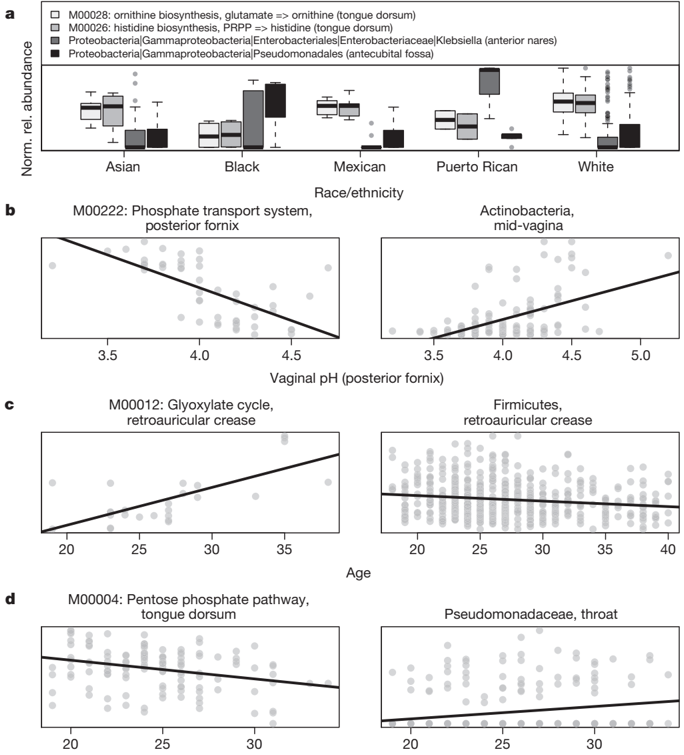
Studies of the human microbiome have revealed that even healthy individuals differ remarkably in the microbes that occupy habitats such as the gut, skin and vagina. Much of this diversity remains unexplained, although diet, environment, host genetics and early microbial exposure have all been implicated. Accordingly, to characterize the ecology of human-associated microbial communities, the Human Microbiome Project has analysed the largest cohort and set of distinct, clinically relevant body habitats so far. We found the diversity and abundance of each habitat’s signature microbes to vary widely even among healthy subjects, with strong niche specialization both within and among individuals. The project encountered an estimated 81–99% of the genera, enzyme families and community configurations occupied by the healthy Western microbiome. Metagenomic carriage of metabolic pathways was stable among individuals despite variation in community structure, and ethnic/racial background proved to be one of the strongest associations of both pathways and microbes with clinical metadata. These results thus delineate the range of structural and functional configurations normal in the microbial communities of a healthy population, enabling future characterization of the epidemiology, ecology and translational applications of the human microbiome.
Overview
The claims and statistics of this paper haven’t been checked yet.
Free: it reads the open-access text and checks the first 5 claims that cite a source we can check. Create a free account to check every claim.
Integrity signals
Registry
Cites
Statistics
Figures
Verification
Claims the paper makes
The claims and statistics of this paper haven’t been checked yet.
Free: it reads the open-access text and checks the first 5 claims that cite a source we can check. Create a free account to check every claim.
Claims other papers make about this one
Each is checked against this paper’s own text: does it say what the citing paper says it does?
The cited source doesn’t support the claim as written.
In the citing paper
“newly diagnosed cases with adenocarcinoma of the colon or rectum were recruited prior to surgery and treatment during 1985–19891, 2. Controls were patients awaiting elective surgery for non-oncologic, non-gastrointestinal conditions at these hospitals during the same period.”
From Assessment of variation in microbial community amplicon sequencing by the Microbiome Quality Control (MBQC) project consortium (2017) · cites this paper as [1]
Checked by a reasoning model — may be wrong.
Experimental — accuracy not yet measuredThe source backs part of the claim, not all of it — or backs it for a different population, condition or comparison.
In the citing paper
“Multiple factors affect the composition of the human gut microbiome, including geography, diet, infection and drug usage56,61–64.”
From Intestinal microbiota signatures of clinical response and immune-related adverse events in melanoma patients treated with anti-PD-1 (2022) · cites this paper as [64]
Experimental — accuracy not yet measuredThe source backs part of the claim, not all of it — or backs it for a different population, condition or comparison.
In the citing paper
“suggesting that no severe gut microbiome dysbiosis was present in the study group at baseline”
From Gut microbiome affects the response to anti-PD-1 immunotherapy in patients with hepatocellular carcinoma (2019) · cites this paper as [9]
Experimental — accuracy not yet measuredThe source backs part of the claim, not all of it — or backs it for a different population, condition or comparison.
In the citing paper
“Gut microbiota comprise thousands of microbial species that are involved in host metabolism by regulating energy extraction, activation of the immune system, drug metabolism, and other processes.”
From The Gut Microbiome Contributes to a Substantial Proportion of the Variation in Blood Lipids (2015) · cites this paper as [3]
Experimental — accuracy not yet measuredThe source backs part of the claim, not all of it — or backs it for a different population, condition or comparison.
In the citing paper
“The human gut microbiota contains thousands of different bacterial taxa as well as various archaea, eukaryotic microbes and viruses, more than three million genes, and harbors an enormous metabolic capacity [1, 2].”
From The athletic gut microbiota (2020) · cites this paper as [1]
Experimental — accuracy not yet measured
20 more claims about this paper
Create a free account to see every claim other papers make about this one.
Self-check
Percentages, sums and reported differences re-computed from the paper’s own numbers.
The self-check needs the paper’s full text.
Citations
Cites
Fast and accurate short read alignment with Burrows-Wheeler transform
Li, H., & Durbin, R. (2009) · Bioinformatics · doi:10.1093/bioinformatics/btp324 · Cited by 58,607
QIIME allows analysis of high-throughput community sequencing data
Caporaso, J. G., Kuczynski, J., Stombaugh, J., Bittinger, K., Bushman, F. D., Costello, E. K., Fierer, N., Peña, A. G., Goodrich, J. K., Gordon, J. I., et al. (2010) · Nature Methods · doi:10.1038/nmeth.f.303 · Cited by 34,887
Fast and accurate long-read alignment with Burrows-Wheeler transform.
Li, H., & Durbin, R. (2010) · Bioinformatics · doi:10.1093/bioinformatics/btp698 · Cited by 12,063
A human gut microbial gene catalogue established by metagenomic sequencing
MetaHIT Consortium, Qin, J., Li, R., Raes, J., Arumugam, M., Burgdorf, K. S., Manichanh, C., Nielsen, T., Pons, N., Levenez, F., et al. (2010) · Nature · doi:10.1038/nature08821 · Cited by 11,624
A core gut microbiome in obese and lean twins
Turnbaugh, P. J., Hamady, M., Yatsunenko, T., Cantarel, B. L., Duncan, A., Ley, R. E., Sogin, M. L., Jones, W. J., Roe, B. A., Affourtit, J. P., et al. (2009) · Nature · doi:10.1038/nature07540 · Cited by 7,823
Self-citationSokol, H., Pigneur, B., Watterlot, L., Lakhdari, O., Bermúdez-Humarán, L. G., Gratadoux, J.-J., Blugeon, S., Bridonneau, C., Furet, J.-P., Corthier, G., et al. (2008) · Proceedings of the National Academy of Sciences · doi:10.1073/pnas.0804812105 · Cited by 4,413
Vaginal microbiome of reproductive-age women
Ravel, J., Gajer, P., Abdo, Z., Schneider, G. M., Koenig, S. S. K., McCulle, S. L., Karlebach, S., Gorle, R., Russell, J., Tacket, C. O., et al. (2011) · Proceedings of the National Academy of Sciences · doi:10.1073/pnas.1002611107 · Cited by 4,254
Bacterial Community Variation in Human Body Habitats Across Space and Time
Costello, E. K., Lauber, C. L., Hamady, M., Fierer, N., Gordon, J. I., & Knight, R. (2009) · Science · doi:10.1126/science.1177486 · Cited by 3,231
Defining the normal bacterial flora of the oral cavity
Aas, J. A., Paster, B. J., Stokes, L. N., Olsen, I., & Dewhirst, F. E. (2005) · Journal of Clinical Microbiology · doi:10.1128/jcm.43.11.5721-5732.2005 · Cited by 3,092
Topographical and Temporal Diversity of the Human Skin Microbiome
Grice, E. A., Kong, H. H., Conlan, S., Deming, C. B., Davis, J., Young, A. C., Program, N. C. S., Bouffard, G. G., Blakesley, R. W., Murray, P. R., et al. (2009) · Science · doi:10.1126/science.1171700 · Cited by 2,953
Cited by
Items 301–400 of 1,676
CoNet app: inference of biological association networks using Cytoscape
Faust, K., & Raes, J. (2016) · F1000Research · doi:10.12688/f1000research.9050.1 · Cited by 615
High taxonomic variability despite stable functional structure across microbial communities
Louca, S., Jacques, S. M. S., Pires, A. P. F., Leal, J. S., Srivastava, D. S., Parfrey, L. W., Farjalla, V. F., & Doebeli, M. (2016) · Nature Ecology & Evolution · doi:10.1038/s41559-016-0015 · Cited by 589
Looking for a Signal in the Noise: Revisiting Obesity and the Microbiome
Sze, M. A., & Schloss, P. D. (2016) · mBio · doi:10.1128/mbio.01018-16 · Cited by 600
The gut microbiota, obesity and insulin resistance
Shen, J., Obin, M. S., & Zhao, L. (2013) · Molecular Aspects of Medicine · doi:10.1016/j.mam.2012.11.001 · Cited by 599
Microbiome of prebiotic-treated mice reveals novel targets involved in host response during obesity
Everard, A., Lazarevic, V., Gaïa, N., Johansson, M., Ståhlman, M., Backhed, F., Delzenne, N. M., Schrenzel, J., François, P., & Cani, P. D. (2014) · The ISME Journal · doi:10.1038/ismej.2014.45 · Cited by 598
Systematic Review of Gut Microbiota and Major Depression
Cheung, S. G., Goldenthal, A. R., Uhlemann, A.-C., Mann, J. J., Miller, J. M., & Sublette, M. E. (2019) · Frontiers in Psychiatry · doi:10.3389/fpsyt.2019.00034 · Cited by 597
“Gut microbiome distribution across individuals demonstrates surprisingly low convergence even between individuals on identical diets (42), in accord with evidence of conserved metabolic processes across taxa (43).”
BackgroundSelf-citationInteraction of gut microbiota with bile acid metabolism and its influence on disease states
Staley, C., Weingarden, A. R., Khoruts, A., & Sadowsky, M. J. (2017) · Applied Microbiology and Biotechnology · doi:10.1007/s00253-016-8006-6 · Cited by 581
Ray Meta: scalable de novo metagenome assembly and profiling
Boisvert, S., Raymond, F., Godzaridis, É., Laviolette, F., & Corbeil, J. (2012) · Genome Biology · doi:10.1186/gb-2012-13-12-r122 · Cited by 590
The Role of the Bacterial Flagellum in Adhesion and Virulence
Haiko, J., & Westerlund-Wikström, B. (2013) · Biology · doi:10.3390/biology2041242 · Cited by 589
The Microbiome Quality Control Project Consortium, Sinha, R., Abu-Ali, G., Vogtmann, E., Fodor, A. A., Ren, B., Amir, A., Schwager, E., Crabtree, J., Ma, S., et al. (2017) · Nature Biotechnology · doi:10.1038/nbt.3981 · Cited by 587
Mucins: A biologically relevant glycan barrier in mucosal protection
Corfield, A. P. (2015) · Biochimica et Biophysica Acta (BBA) - General Subjects · doi:10.1016/j.bbagen.2014.05.003 · Cited by 568
Patterned progression of bacterial populations in the premature infant gut
La Rosa, P. S., Warner, B. B., Zhou, Y., Weinstock, G. M., Sodergren, E., Hall-Moore, C. M., Stevens, H. J., Bennett, W. E., Shaikh, N., Linneman, L. A., et al. (2014) · Proceedings of the National Academy of Sciences · doi:10.1073/pnas.1409497111 · Cited by 573
Priority effects in microbiome assembly
Debray, R., Herbert, R. A., Jaffe, A. L., Crits-Christoph, A., Power, M. E., & Koskella, B. (2022) · Nature Reviews Microbiology · doi:10.1038/s41579-021-00604-w · Cited by 545
Bacterial Communities: Interactions to Scale
Stubbendieck, R. M., Vargas-Bautista, C., & Straight, P. D. (2016) · Frontiers in Microbiology · doi:10.3389/fmicb.2016.01234 · Cited by 572
Global chemical effects of the microbiome include new bile-acid conjugations
Quinn, R. A., Melnik, A. V., Vrbanac, A., Fu, T., Patras, K. A., Christy, M. P., Bodai, Z., Belda-Ferre, P., Tripathi, A., Chung, L. K., et al. (2020) · Nature · doi:10.1038/s41586-020-2047-9 · Cited by 579
Bile Acids Activated Receptors Regulate Innate Immunity
Fiorucci, S., Biagioli, M., Zampella, A., & Distrutti, E. (2018) · Frontiers in Immunology · doi:10.3389/fimmu.2018.01853 · Cited by 562
Dynamic modulation of the gut microbiota and metabolome by bacteriophages in a mouse model
Hsu, B. B., Gibson, T. E., Yeliseyev, V., Liu, Q., Lyon, L., Bry, L., Silver, P. A., & Gerber, G. K. (2019) · Cell Host & Microbe · doi:10.1016/j.chom.2019.05.001 · Cited by 573
Dickson, R. P., Erb-Downward, J. R., Freeman, C. M., McCloskey, L., Beck, J. M., Huffnagle, G. B., & Curtis, J. L. (2015) · Annals of the American Thoracic Society · doi:10.1513/annalsats.201501-029oc · Cited by 567
Microbiome, probiotics and neurodegenerative diseases: deciphering the gut brain axis
Westfall, S., Lomis, N., Kahouli, I., Dia, S. Y., Singh, S. P., & Prakash, S. (2017) · Cellular and Molecular Life Sciences · doi:10.1007/s00018-017-2550-9 · Cited by 541
A human gut bacterial genome and culture collection for improved metagenomic analyses
Forster, S. C., Kumar, N., Anonye, B. O., Almeida, A., Viciani, E., Stares, M. D., Dunn, M., Mkandawire, T. T., Zhu, A., Shao, Y., et al. (2019) · Nature Biotechnology · doi:10.1038/s41587-018-0009-7 · Cited by 580
Schubert, M., Ermini, L., Sarkissian, C. D., Jónsson, H., Ginolhac, A., Schaefer, R., Martin, M. D., Fernández, R., Kircher, M., McCue, M., et al. (2014) · Nature Protocols · doi:10.1038/nprot.2014.063 · Cited by 562
“MetaPhlAn has been successfully applied to the profiling of clinical microbiomes 64 and to that of ancient fossil remains preserved on frozen soils 65 .”
MethodStructure and function of the human skin microbiome
Schommer, N. N., & Gallo, R. L. (2013) · Trends in Microbiology · doi:10.1016/j.tim.2013.10.001 · Cited by 532
Hollister, E. B., Gao, C., & Versalovic, J. (2014) · Gastroenterology · doi:10.1053/j.gastro.2014.01.052 · Cited by 527
“pathways that were present consistently in the intestinal microbiome of healthy adults included spermidine biosynthesis and methionine degradation.(4) Among HGC adults, who are relatively healthy, the relative abundance of genes belonging to pathways involved in hydrogen and methane production are enriched, whereas pa…”
BackgroundMethodInfluentialManrique, P., Bolduc, B., Walk, S. T., van der Oost, J., de Vos, W. M., & Young, M. J. (2016) · Proceedings of the National Academy of Sciences · doi:10.1073/pnas.1601060113 · Cited by 545
“The healthy-GM structure is conserved among individuals at higher taxonomic levels (especially phylum) (2, 4), and a core GM at the species level shared by more than 90% of the individuals.”
BackgroundGenomic approaches to studying the human microbiota
Weinstock, G. M. (2012) · Nature · doi:10.1038/nature11553 · Cited by 539
Antibiotics, Pediatric Dysbiosis, and Disease
Vangay, P., Ward, T., Gerber, J. S., & Knights, D. (2015) · Cell Host & Microbe · doi:10.1016/j.chom.2015.04.006 · Cited by 530
Effects of Psychological, Environmental and Physical Stressors on the Gut Microbiota
Karl, J. P., Hatch, A. M., Arcidiacono, S. M., Pearce, S. C., Pantoja-Feliciano, I. G., Doherty, L. A., & Soares, J. W. (2018) · Frontiers in Microbiology · doi:10.3389/fmicb.2018.02013 · Cited by 530
Sakr, A., Brégeon, F., Mège, J.-L., Rolain, J.-M., & Blin, O. (2018) · Frontiers in Microbiology · doi:10.3389/fmicb.2018.02419 · Cited by 555
“The adult nasal microbiota differs between individuals, but species belonging to Corynebacterium, Propionibacterium, and Staphylococcus genera are the most abundant bacteria (Frank et al., 2010; Human Microbiome Project Consortium, 2012; Yan et al., 2013; Kaspar et al., 2016).”
BackgroundPolysaccharide Utilization Loci: Fueling Microbial Communities
Grondin, J. M., Tamura, K., Déjean, G., Abbott, D. W., & Brumer, H. (2017) · Journal of Bacteriology · doi:10.1128/jb.00860-16 · Cited by 554
Heintz‐Buschart, A., Pandey, U., Wicke, T., Sixel‐Döring, F., Janzen, A., Sittig‐Wiegand, E., Trenkwalder, C., Oertel, W. H., Mollenhauer, B., & Wilmes, P. (2018) · Movement Disorders · doi:10.1002/mds.27105 · Cited by 554
Durable coexistence of donor and recipient strains after fecal microbiota transplantation
Li, S. S., Zhu, A., Benes, V., Costea, P. I., Hercog, R., Hildebrand, F., Huerta-Cepas, J., Nieuwdorp, M., Salojärvi, J., Voigt, A. Y., et al. (2016) · Science · doi:10.1126/science.aad8852 · Cited by 547
Microbiota of Human Breast Tissue
Urbaniak, C., Cummins, J., Brackstone, M., Macklaim, J. M., Gloor, G. B., Baban, C. K., Scott, L., O'Hanlon, D. M., Burton, J. P., Francis, K. P., et al. (2014) · Applied and Environmental Microbiology · doi:10.1128/aem.00242-14 · Cited by 552
Lazar, V., Ditu, L.-M., Pircalabioru, G. G., Gheorghe, I., Curutiu, C., Holban, A. M., Picu, A., Petcu, L., & Chifiriuc, M. C. (2018) · Frontiers in Immunology · doi:10.3389/fimmu.2018.01830 · Cited by 525
The Gut Microbiome, Aging, and Longevity: A Systematic Review
Badal, V. D., Vaccariello, E. D., Murray, E. R., Yu, K. E., Knight, R., Jeste, D. V., & Nguyen, T. T. (2020) · Nutrients · doi:10.3390/nu12123759 · Cited by 551
“While sex differences in the gut microbial composition have been documented [82], the influence of sex on the gut microbiome may be less influential than other clinical factors, such as genetics [83] or geographical origin [84].”
BackgroundEnhancing the accuracy of next-generation sequencing for detecting rare and subclonal mutations
Salk, J. J., Schmitt, M. W., & Loeb, L. A. (2018) · Nature Reviews Genetics · doi:10.1038/nrg.2017.117 · Cited by 541
Plant-based diets and cardiovascular health
Satija, A., & Hu, F. B. (2018) · Trends in Cardiovascular Medicine · doi:10.1016/j.tcm.2018.02.004 · Cited by 550
Zheng, Y., Wang, T., Tu, X., Huang, Y., Zhang, H., Tan, D., Jiang, W., Cai, S., Zhao, P., Song, R., et al. (2019) · Journal for ImmunoTherapy of Cancer · doi:10.1186/s40425-019-0650-9 · Cited by 550
Britton, G. J., Contijoch, E. J., Mogno, I., Vennaro, O. H., Llewellyn, S. R., Ng, R., Li, Z., Mortha, A., Merad, M., Das, A., et al. (2019) · Immunity · doi:10.1016/j.immuni.2018.12.015 · Cited by 549
Aguiar-Pulido, V., Huang, W., Suarez-Ulloa, V., Cickovski, T., Mathee, K., & Narasimhan, G. (2016) · Evolutionary Bioinformatics · doi:10.4137/ebo.s36436 · Cited by 499
Mass spectrometry-based metabolomics in microbiome investigations
Bauermeister, A., Mannochio-Russo, H., Costa-Lotufo, L. V., Jarmusch, A. K., & Dorrestein, P. C. (2022) · Nature Reviews Microbiology · doi:10.1038/s41579-021-00621-9 · Cited by 525
Primer and platform effects on 16S rRNA tag sequencing
Tremblay, J., Singh, K., Fern, A., Kirton, E. S., He, S., Woyke, T., Lee, J., Chen, F., Dangl, J. L., & Tringe, S. G. (2015) · Frontiers in Microbiology · doi:10.3389/fmicb.2015.00771 · Cited by 529
McClements, D. J., & Xiao, H. (2017) · npj Science of Food · doi:10.1038/s41538-017-0005-1 · Cited by 535
Host-microbiota interactions: from holobiont theory to analysis
Simon, J.-C., Marchesi, J. R., Mougel, C., & Selosse, M.-A. (2019) · Microbiome · doi:10.1186/s40168-019-0619-4 · Cited by 495
Immunomodulatory potential of gut microbiome-derived short-chain fatty acids (SCFAs)
Ratajczak, W., Rył, A., Mizerski, A., Walczakiewicz, K., Sipak, O., & Laszczyńska, M. (2019) · Acta Biochimica Polonica · doi:10.18388/abp.2018_2648 · Cited by 514
Bacteroides-Derived Sphingolipids Are Critical for Maintaining Intestinal Homeostasis and Symbiosis
Brown, E. M., Ke, X., Hitchcock, D., Jeanfavre, S., Avila-Pacheco, J., Nakata, T., Arthur, T. D., Fornelos, N., Heim, C., Franzosa, E. A., et al. (2019) · Cell Host & Microbe · doi:10.1016/j.chom.2019.04.002 · Cited by 529
Beckers, B., Op De Beeck, M., Weyens, N., Boerjan, W., & Vangronsveld, J. (2017) · Microbiome · doi:10.1186/s40168-017-0241-2 · Cited by 525
Lauder, A. P., Roche, A. M., Sherrill-Mix, S., Bailey, A., Laughlin, A. L., Bittinger, K., Leite, R., Elovitz, M. A., Parry, S., & Bushman, F. D. (2016) · Microbiome · doi:10.1186/s40168-016-0172-3 · Cited by 539
Bile Acid-Activated Receptors, Intestinal Microbiota, and the Treatment of Metabolic Disorders
Fiorucci, S., & Distrutti, E. (2015) · Trends in Molecular Medicine · doi:10.1016/j.molmed.2015.09.001 · Cited by 539
Solving the etiology of dental caries
Simón-Soro, A., & Mira, A. (2015) · Trends in Microbiology · doi:10.1016/j.tim.2014.10.010 · Cited by 509
Berni Canani, R., Sangwan, N., Stefka, A. T., Nocerino, R., Paparo, L., Aitoro, R., Calignano, A., Khan, A. A., Gilbert, J. A., & Nagler, C. R. (2016) · The ISME Journal · doi:10.1038/ismej.2015.151 · Cited by 525
Animal Behavior and the Microbiome
Ezenwa, V. O., Gerardo, N. M., Inouye, D. W., Medina, M., & Xavier, J. B. (2012) · Science · doi:10.1126/science.1227412 · Cited by 522
(2014) · Cell Host & Microbe · doi:10.1016/j.chom.2014.08.014 · Cited by 536
The gut microbiome in human neurological disease: A review
Tremlett, H., Bauer, K. C., Appel‐Cresswell, S., Finlay, B. B., & Waubant, E. (2017) · Annals of Neurology · doi:10.1002/ana.24901 · Cited by 535
The respiratory tract microbiome and lung inflammation: a two-way street.
Huffnagle, G. B., Dickson, R. P., & Lukacs, N. W. (2017) · Mucosal Immunology · doi:10.1038/mi.2016.108 · Cited by 535
A discrete genetic locus confers xyloglucan metabolism in select human gut Bacteroidetes
Larsbrink, J., Rogers, T. E., Hemsworth, G. R., McKee, L. S., Tauzin, A. S., Spadiut, O., Klinter, S., Pudlo, N. A., Urs, K., Koropatkin, N. M., et al. (2014) · Nature · doi:10.1038/nature12907 · Cited by 523
De la Cuesta-Zuluaga, J., Mueller, N., Álvarez-Quintero, R., Velásquez-Mejía, E., Sierra, J., Corrales-Agudelo, V., Carmona, J., Abad, J., & Escobar, J. (2018) · Nutrients · doi:10.3390/nu11010051 · Cited by 533
Menstruation: science and society
Critchley, H. O. D., Babayev, E., Bulun, S. E., Clark, S., Garcia-Grau, I., Gregersen, P. K., Kilcoyne, A., Kim, J.-Y. J., Lavender, M., Marsh, E. E., et al. (2020) · American Journal of Obstetrics and Gynecology · doi:10.1016/j.ajog.2020.06.004 · Cited by 448
Human oral mucosa cell atlas reveals a stromal-neutrophil axis regulating tissue immunity
Williams, D. W., Greenwell-Wild, T., Brenchley, L., Dutzan, N., Overmiller, A., Sawaya, A. P., Webb, S., Martin, D., Hajishengallis, G., Divaris, K., et al. (2021) · Cell · doi:10.1016/j.cell.2021.05.013 · Cited by 512
The structure and diversity of human, animal and environmental resistomes
Pal, C., Bengtsson-Palme, J., Kristiansson, E., & Larsson, D. G. J. (2016) · Microbiome · doi:10.1186/s40168-016-0199-5 · Cited by 505
The truth about metagenomics: quantifying and counteracting bias in 16S rRNA studies
Vaginal Microbiome Consortium (additional members), Brooks, J. P., Edwards, D. J., Harwich, M. D., Rivera, M. C., Fettweis, J. M., Serrano, M. G., Reris, R. A., Sheth, N. U., Huang, B., et al. (2015) · BMC Microbiology · doi:10.1186/s12866-015-0351-6 · Cited by 528
Hua, S. (2020) · Frontiers in Pharmacology · doi:10.3389/fphar.2020.00524 · Cited by 527
Identifying personal microbiomes using metagenomic codes
Franzosa, E. A., Huang, K., Meadow, J. F., Gevers, D., Lemon, K. P., Bohannan, B. J. M., & Huttenhower, C. (2015) · Proceedings of the National Academy of Sciences · doi:10.1073/pnas.1423854112 · Cited by 497
Bacterial species involved in the conversion of dietary flavonoids in the human gut
Braune, A., & Blaut, M. (2016) · Gut Microbes · doi:10.1080/19490976.2016.1158395 · Cited by 509
“The intestinal microbiota is mainly composed of representatives of 5 dominant phyla, Bacteroidetes, Firmicutes, Actinobacteria, Proteobacteria, and Verrucomicrobia with the first 2 accounting for more than 90% of the bacteria.(4,5) It has been proposed to distinguish between a core microbiome and a peripheral microbio…”
BackgroundGut microbiome and liver diseases
Tilg, H., Cani, P. D., & Mayer, E. A. (2016) · Gut · doi:10.1136/gutjnl-2016-312729 · Cited by 525
Lactobacillus species as biomarkers and agents that can promote various aspects of vaginal health
Petrova, M. I., Lievens, E., Malik, S., Imholz, N., & Lebeer, S. (2015) · Frontiers in Physiology · doi:10.3389/fphys.2015.00081 · Cited by 523
The links between the gut microbiome and non-alcoholic fatty liver disease (NAFLD)
Safari, Z., & Gérard, P. (2019) · Cellular and Molecular Life Sciences · doi:10.1007/s00018-019-03011-w · Cited by 502
Hays, K. E., Pfaffinger, J. M., & Ryznar, R. (2024) · Gut Microbes · doi:10.1080/19490976.2024.2393270 · Cited by 453
Mailing, L. J., Allen, J. M., Buford, T. W., Fields, C. J., & Woods, J. A. (2019) · Exercise and Sport Sciences Reviews · doi:10.1249/jes.0000000000000183 · Cited by 521
Human genetic variation and the gut microbiome in disease
Hall, A. B., Tolonen, A. C., & Xavier, R. J. (2017) · Nature Reviews Genetics · doi:10.1038/nrg.2017.63 · Cited by 517
Colston, T. J., & Jackson, C. R. (2016) · Molecular Ecology · doi:10.1111/mec.13730 · Cited by 505
Exploring host–microbiota interactions in animal models and humans
Kostic, A. D., Howitt, M. R., & Garrett, W. S. (2013) · Genes & Development · doi:10.1101/gad.212522.112 · Cited by 494
Accessible, curated metagenomic data through ExperimentHub
Pasolli, E., Schiffer, L., Manghi, P., Renson, A., Obenchain, V., Truong, D. T., Beghini, F., Malik, F., Ramos, M., Dowd, J. B., et al. (2017) · Nature Methods · doi:10.1038/nmeth.4468 · Cited by 514
Self-citationFunctions of the skin microbiota in health and disease
Sanford, J. A., & Gallo, R. L. (2013) · Seminars in Immunology · doi:10.1016/j.smim.2013.09.005 · Cited by 479
Let the Core Microbiota Be Functional
Lemanceau, P., Blouin, M., Muller, D., & Moënne-Loccoz, Y. (2017) · Trends in Plant Science · doi:10.1016/j.tplants.2017.04.008 · Cited by 484
The microbiome: a key regulator of stress and neuroinflammation
Rea, K., Dinan, T. G., & Cryan, J. F. (2016) · Neurobiology of Stress · doi:10.1016/j.ynstr.2016.03.001 · Cited by 508
Koren, O., Knights, D., Gonzalez, A., Waldron, L., Segata, N., Knight, R., Huttenhower, C., & Ley, R. E. (2013) · PLoS Computational Biology · doi:10.1371/journal.pcbi.1002863 · Cited by 508
Use of 16S rRNA Gene for Identification of a Broad Range of Clinically Relevant Bacterial Pathogens
Srinivasan, R., Karaoz, U., Volegova, M., MacKichan, J., Kato-Maeda, M., Miller, S., Nadarajan, R., Brodie, E. L., & Lynch, S. V. (2015) · PLOS ONE · doi:10.1371/journal.pone.0117617 · Cited by 470
Networking in the Plant Microbiome
van der Heijden, M. G. A., & Hartmann, M. (2016) · PLOS Biology · doi:10.1371/journal.pbio.1002378 · Cited by 490
The gut microbiome of healthy Japanese and its microbial and functional uniqueness
Nishijima, S., Suda, W., Oshima, K., Kim, S.-W., Hirose, Y., Morita, H., & Hattori, M. (2016) · DNA Research · doi:10.1093/dnares/dsw002 · Cited by 493
Identification of antimicrobial peptides from the human gut microbiome using deep learning
Ma, Y., Guo, Z., Xia, B., Zhang, Y., Liu, X., Yu, Y., Tang, N., Tong, X., Wang, M., Ye, X., et al. (2022) · Nature Biotechnology · doi:10.1038/s41587-022-01226-0 · Cited by 490
Song, Z., Cai, Y., Lao, X., Wang, X., Lin, X., Cui, Y., Kalavagunta, P. K., Liao, J., Jin, L., Shang, J., et al. (2019) · Microbiome · doi:10.1186/s40168-019-0628-3 · Cited by 505
Host–microbiota interactions in immune-mediated diseases
Ruff, W. E., Greiling, T. M., & Kriegel, M. A. (2020) · Nature Reviews Microbiology · doi:10.1038/s41579-020-0367-2 · Cited by 487
Ingala, M. R., Simmons, N. B., Wultsch, C., Krampis, K., Speer, K. A., & Perkins, S. L. (2018) · Frontiers in Microbiology · doi:10.3389/fmicb.2018.00803 · Cited by 501
“The vertebrate bacterial gut microbiome is intimately linked to host physiology, nutrition, and health (e.g., Hooper et al., 2012; Sommer and Bäckhed, 2013; The Human Microbiome Project Consortium, 2013; Mosca et al., 2016).”
BackgroundCommensal bacteria make GPCR ligands that mimic human signalling molecules
Cohen, L. J., Esterhazy, D., Kim, S.-H., Lemetre, C., Aguilar, R. R., Gordon, E. A., Pickard, A. J., Cross, J. R., Emiliano, A. B., Han, S. M., et al. (2017) · Nature · doi:10.1038/nature23874 · Cited by 500
The Microbiome of Aseptically Collected Human Breast Tissue in Benign and Malignant Disease
Hieken, T. J., Chen, J., Hoskin, T. L., Walther-Antonio, M., Johnson, S., Ramaker, S., Xiao, J., Radisky, D. C., Knutson, K. L., Kalari, K. R., et al. (2016) · Scientific Reports · doi:10.1038/srep30751 · Cited by 494
Colonic Butyrate-Producing Communities in Humans: an Overview Using Omics Data
Vital, M., Karch, A., & Pieper, D. H. (2017) · mSystems · doi:10.1128/msystems.00130-17 · Cited by 483
Chapter 12: Human Microbiome Analysis
Morgan, X. C., & Huttenhower, C. (2012) · PLoS Computational Biology · doi:10.1371/journal.pcbi.1002808 · Cited by 496
Use of Metatranscriptomics in Microbiome Research
Bashiardes, S., Zilberman-Schapira, G., & Elinav, E. (2016) · Bioinformatics and Biology Insights · doi:10.4137/bbi.s34610 · Cited by 465
The role of the microbiome in exacerbations of chronic lung diseases
Dickson, R. P., Martinez, F. J., & Huffnagle, G. B. (2014) · The Lancet · doi:10.1016/s0140-6736(14)61136-3 · Cited by 495
Respiratory viral infection-induced microbiome alterations and secondary bacterial pneumonia.
Hanada, S., Pirzadeh, M., Carver, K. Y., & Deng, J. C. (2018) · Frontiers in Immunology · doi:10.3389/fimmu.2018.02640 · Cited by 495
Preservation Methods Differ in Fecal Microbiome Stability, Affecting Suitability for Field Studies
Song, S. J., Amir, A., Metcalf, J. L., Amato, K. R., Xu, Z. Z., Humphrey, G., & Knight, R. (2016) · mSystems · doi:10.1128/msystems.00021-16 · Cited by 483
Personalized Mapping of Drug Metabolism by the Human Gut Microbiome
Javdan, B., Lopez, J. G., Chankhamjon, P., Lee, Y.-C. J., Hull, R., Wu, Q., Wang, X., Chatterjee, S., & Donia, M. S. (2020) · Cell · doi:10.1016/j.cell.2020.05.001 · Cited by 474
“…M anuscript A uthor M anuscript A uthor M anuscript A uthor M anuscript Project (HMP-1-1 and HMP-1-2, 299 subjects from the USA) (Human Microbiome Project, 2012; Lloyd-Price et al., 2017), the Metagenomics of the Human Intestinal Tract Consortium (MetaHIT, 219 subjects from Spain and 176…”
BackgroundMethodInfluentialThe Human Microbiome Project: A Community Resource for the Healthy Human Microbiome
Gevers, D., Knight, R., Petrosino, J. F., Huang, K., McGuire, A. L., Birren, B. W., Nelson, K. E., White, O., Methé, B. A., & Huttenhower, C. (2012) · PLoS Biology · doi:10.1371/journal.pbio.1001377 · Cited by 493
The Human Oral Microbiome in Health and Disease: From Sequences to Ecosystems
Willis, J. R., & Gabaldón, T. (2020) · Microorganisms · doi:10.3390/microorganisms8020308 · Cited by 468
The role of the gut microbiome in the healthy adult status
D’Argenio, V., & Salvatore, F. (2015) · Clinica Chimica Acta · doi:10.1016/j.cca.2015.01.003 · Cited by 492
Biosynthesis of polyketides by trans-AT polyketide synthases
Helfrich, E. J. N., & Piel, J. (2016) · Natural Product Reports · doi:10.1039/c5np00125k · Cited by 478
Brugiroux, S., Beutler, M., Pfann, C., Garzetti, D., Ruscheweyh, H.-J., Ring, D., Diehl, M., Herp, S., Lötscher, Y., Hussain, S., et al. (2016) · Nature Microbiology · doi:10.1038/nmicrobiol.2016.215 · Cited by 476
The ancestral and industrialized gut microbiota and implications for human health
Sonnenburg, E. D., & Sonnenburg, J. L. (2019) · Nature Reviews Microbiology · doi:10.1038/s41579-019-0191-8 · Cited by 489
Human milk microbiota profiles in relation to birthing method, gestation and infant gender
Urbaniak, C., Angelini, M., Gloor, G. B., & Reid, G. (2016) · Microbiome · doi:10.1186/s40168-015-0145-y · Cited by 477
Species–function relationships shape ecological properties of the human gut microbiome
Vieira-Silva, S., Falony, G., Darzi, Y., Lima-Mendez, G., Garcia Yunta, R., Okuda, S., Vandeputte, D., Valles-Colomer, M., Hildebrand, F., Chaffron, S., et al. (2016) · Nature Microbiology · doi:10.1038/nmicrobiol.2016.88 · Cited by 483
Metadata
- Authors
- The Human Microbiome Project Consortium
- Venue
- Nature
- Published
- 2012-06
- Volume
- 486
- Issue
- 7402
- Pages
- 207-214
- ISSN
- 0028-0836 (ISSN-L)
- 1476-4687
- PMC
- PMC3564958
- OpenAlex
- W2128769815
- Semantic Scholar
- 0c431405ec1eb4b84a52ed1fcc530454a4b8bf6f
- Cited by
- 11,726
- References
- 29
- Citations by year
- 2026: 586 · 2025: 748 · 2024: 890 · 2023: 950 · 2022: 1024 · 2021: 1202 · 2020: 1137 · 2019: 1032 · 2018: 863 · 2017: 853 · 2016: 732 · 2015: 651 · 2014: 532 · 2013: 413 · 2012: 104
- FWCI
- 218.52
- Type
- journal article
- Language
- en
- Open access
- hybrid
- doi.org
- Licence
- cc-by-nc-sa
- creativecommons.org/licenses/by-nc-sa/3.0/ (tdm)
- Locations
- Nature (publishedVersion, cc-by-nc-sa)
- PubMed (publishedVersion)
- Goce Delchev University Repository (Goce Delčev University of Štip) (acceptedVersion)
- Europe PMC (PubMed Central) (acceptedVersion)
- PubMed Central (acceptedVersion)
- eScholarship (California Digital Library) (submittedVersion, cc-by)
- Rutgers University Community Repository (Rutgers University) (submittedVersion)
- Open Access Server of the Woods Hole Scientific Community (Woods Hole Scientific Community) (submittedVersion)
- eScholarship (California Digital Library) (submittedVersion)
- Funders
- National Science Foundation (DEAC02-05CH11231, 1053486, 0812111)
- Howard Hughes Medical Institute (DE-AC02-05CH11231)
- U.S. Department of Energy (-AC02-05CH11231, Contract No. DE-AC02-05-CH11231, 05CH11231, No. DE-AC02-05-CH11231, DE AC02 05CH11231, DE-AC02-)
- Gordon and Betty Moore Foundation
- Rice University
- Gladstone Institutes
- Crohn's and Colitis Foundation
- Crohn's and Colitis Foundation of Canada
- Fonds Wetenschappelijk Onderzoek (DE-AC02-05CH11231)
- Vlaamse regering
- National Institutes of Health (5r01hg005172-03, n01hg62088-6-0-1, DE-AC02–05CH11231, DBI-1053486, DP2OD001500, 5r01hg004857-03, n01ai30071-19-0-3)
- Defense Threat Reduction Agency (B104153I, DE-AC02-05CH11231, B084531I)
- Office of Science (No. DE-AC02- 05-CH11231, DEAC02–05CH11231, AC02-05CH11231, DE-AC02, 05CH11231, Contract No. DE-AC02-05CH11231)
- Horace H. Rackham School of Graduate Studies, University of Michigan
- National Human Genome Research Institute (R01HG004885, U54HG003067, R01HG005975, R01-HG004857, U54HG004969, R01HG004853, U54HG003079, U01HG004866, R01HG005969, R01-HG005172, U54HG003273, R01HG004872, R21HG005811, U54HG004968, N01 HG062088, R01HG004906, R01HG004908, U54HG004973, R01HG004856, R01HG004900, R01HG005171, R01HG004877)
- National Cancer Institute (R21CA139193)
- National Institute of General Medical Sciences (T32GM087237)
- National Institute of Allergy and Infectious Diseases (UH2AI083263, UH3AI083263, U54AI084844, T32AI007528, N01 AI030071)
- National Institute of Diabetes and Digestive and Kidney Diseases (UH2DK083990, UH3DK083993)
- National Institute of Arthritis and Musculoskeletal and Skin Diseases (UH2 AR057504, UH2AR057506, UH3-AR057504)
- National Institute of Dental and Craniofacial Research (P30DE020751, R01DE021574, U01DE016937, RC1DE0202098, R37DE016937, RC1DE020298)
- U.S. National Library of Medicine
- Division of Biological Infrastructure (DBI-1053486)
- Army Research Office (DE-AC02-05CH11231, W911NF-11-1-0473, W911NF, W911NF-11)
- Los Alamos National Laboratory (DE-AC02-05CH11231)
- Topics
- Life Sciences › Biochemistry, Genetics and Molecular Biology › Molecular Biology › Gut microbiota and health
- Physical Sciences › Environmental Science › Ecology › Microbial Community Ecology and Physiology
- Health Sciences › Dentistry › Periodontics › Oral microbiology and periodontitis research
- Keywords
- human microbiome, healthy individuals, microbial diversity, gut microbiota, skin microbiome, vaginal microbiota, ecological specialization, metabolic pathways, Human Microbiome Project, metagenomics, microbial ecology
- MeSH terms
- Adolescent, Adult, Bacteria, Female, Health, Humans, Male, Phenotype, RNA, Ribosomal, 16S, Ecosystem, Biodiversity, Metabolic Networks and Pathways, Metagenome, Young Adult, Metagenomics
About these checks
Registry, retraction, Cites and statistics results are computed, not judged, with one exception: a printed reference that no index lists is read once by a model before it counts as a citation error. Claims are extracted by a model and kept only when their quote appears verbatim in the text; each cited source is then checked, with a model’s help, for whether it says what the claim relies on. Those verdicts can be wrong — read the claim’s quote and the cited source before relying on one.
Statistics and arithmetic are recomputed, not judged.
Confidence bands are shown only for fields calibrated on our annotated test set. None is calibrated yet, so no band is shown.
What counts as a claim ›How we measure confidence ›How we check this ›
Are you an author, or do you see a problem with this page? Request a review
Data sources
Bibliographic data: Semantic Scholar, OpenAlex, Crossref.
Contains information from the Semantic Scholar Academic Graph Datasets, made available under the ODC Attribution License (ODC-BY 1.0).
Semantic Scholar’s data is described in: Kinney, R., et al. (2023). The Semantic Scholar Open Data Platform. arXiv:2301.10140.
