

Genome-scale CRISPR screens identify PTGES3 as a direct modulator of androgen receptor function in advanced prostate cancer
Open accessThe DOI matches its Crossref record, with a small difference in title or year; 100 of the 101 references it cites were found in a registry or an index; 56 of the 77 sources its claims cite were checked for support.
Abstract
The androgen receptor (AR) is a critical driver of prostate cancer (PCa). Here, to study regulators of AR protein levels and oncogenic activity, we developed a live-cell quantitative endogenous AR fluorescent reporter. Leveraging this AR reporter, we performed genome-scale CRISPRi flow cytometry sorting screens to systematically identify genes that modulate AR protein levels. We identified and validated known AR protein regulators, including HOXB13 and GATA2, and also unexpected top hits including PTGES3-a poorly characterized gene in PCa. PTGES3 repression resulted in loss of AR protein, cell-cycle arrest and cell death in AR-driven PCa models. Clinically, analysis of PCa data demonstrates that PTGES3 expression is associated with AR-directed therapy resistance. Mechanistically, we show PTGES3 binds directly to AR, regulates AR protein stability and is necessary for AR function in the nucleus at AR target genes. PTGES3 represents a potential therapeutic target for overcoming known mechanisms of resistance to existing AR-directed therapies in PCa.
Overview
CoChat Summary
## TL;DR
The paper identifies PTGES3 as a direct regulator of androgen receptor (AR) protein levels and AR-dependent transcription in advanced prostate cancer using an endogenous AR fluorescent reporter and genome-scale CRISPRi screens. PTGES3 loss reduces AR protein, impairs AR function, and delays tumor growth, while higher PTGES3 expression is associated with worse clinical outcomes and AR-directed therapy resistance.
## Key findings
- A live-cell endogenous AR mNeonGreen2 reporter was built in C42B prostate cancer cells and used for genome-scale CRISPRi flow-sorting screens; the screen recovered known AR regulators such as HOXB13 and GATA2 and nominated PTGES3 as a top hit.
- PTGES3 repression reduced AR protein in multiple AR-driven models, including C42B, 22RV1, VCaP, and enzalutamide-resistant MR49F cells, and lowered AR splice variant 7 in 22RV1 cells.
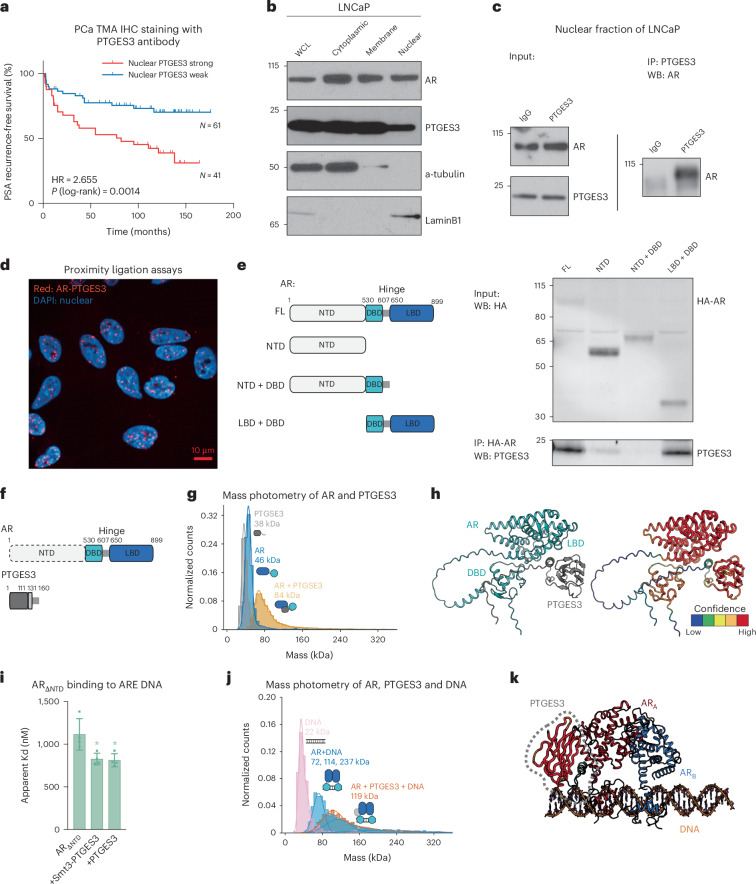
- In clinical samples, PTGES3 protein was present in cytosolic and nuclear compartments in a tissue microarray of 120 PCa biopsies; high nuclear PTGES3 was associated with worse PSA-recurrent free survival, with hazard ratio = 2.655 and log-rank P = 0.0014.
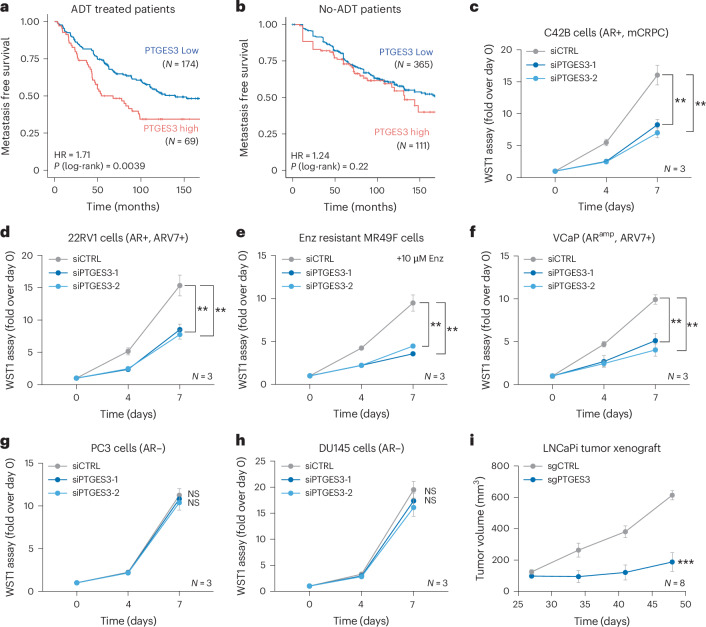
- In a cohort of 641 prostatectomy samples, PTGES3 overexpression was associated with significantly worse metastasis-free survival in patients who received adjuvant ADT after prostatectomy, and higher tumor PTGES3 expression was correlated with worse overall survival in mCRPC patients treated with first-line AR-targeted therapy.
## Methods
- The study combined an endogenous AR split-fluorescent reporter with genome-scale CRISPRi screens in two C42BmNG2-AR clonal cell lines; cells were sorted into the top and bottom quartiles of AR fluorescence and sgRNA abundances were sequenced to identify AR regulators.
- Follow-up assays included qPCR, western blotting, co-IP, proximity ligation, luciferase reporter assays, mass spectrometry, ChIP–qPCR/ChIP–seq, ATAC-seq, and in vivo xenograft experiments in male NSG mice with inducible PTGES3 repression.
- Clinical association analyses used a 120-sample prostate tumor tissue microarray and public expression data from 641 prostatectomy samples plus mCRPC cohorts; survival was analyzed with Kaplan–Meier, log-rank tests, and Cox proportional hazards regression.
## Limitations
- The paper states that no statistical methods were used to predetermine sample sizes, and that data distribution was assumed to be normal but not formally tested.
- The text makes evident that several assays were performed in cell-line and mouse models, so direct clinical efficacy of PTGES3 targeting in patients is not established (evident from the study design).
- The text also makes evident that some results are associative in patient cohorts rather than causal, for example the PTGES3 expression-survival analyses (evident from the clinical cohort analyses).
Model-written summary. Check it against the paper before relying on it.
Integrity signals
Registry
Cites
Statistics
Figures
Verification
Claims the paper makes
23 Valid · 0 Not valid · 6 Not checked · 91 Own results and interpretations
The cited sources support only part of this claim — read each source’s verdict below.
In the paper
“We and other groups have identified tumor alterations that reactivate AR signaling during treatment with an ARSI2,22–29.”
§ Genome-scale CRISPR screens identify PTGES3 as a direct modulator of androgen receptor function in advanced prostate cancer > Main
What the sources say
- Partly supportedcites [2] Quigley, D. A. et al. Genomic hallmarks and structural variation in metastatic prostate cancer. Cell 174, 758–769 (2018). 30033370 PMC6425931 sourceExperimental — accuracy not yet measured
The Results section (“Duplications target AR, MYC, and FOXA1”; page not provided) identifies AR and upstream-enhancer amplifications associated with increased AR expression. The Discussion links enhancer amplification to resistance following first-line androgen deprivation therapy, but the Results say it was not associated with prior abiraterone or enzalutamide treatment. The paper therefore supports the identification of alterations that increase AR expression, not specifically their emergence during treatment with an ARSI. (LLM, conf=0.85)
- Not checked — no full text of the sourcecites [22] Visakorpi, T. et al. In vivo amplification of the androgen receptor gene and progression of human prostate cancer. Nat. Genet. 9, 401–406 (1995). 7795646 source
- Partly supportedcites [23] Grasso, C. S. et al. The mutational landscape of lethal castration-resistant prostate cancer. Nature 487, 239–243 (2012). 22722839 PMC3396711 sourceExperimental — accuracy not yet measured
The paper reports aberrations in AR and interacting proteins in heavily pretreated castration-resistant prostate cancer and says androgen signaling can remain active after androgen-deprivation therapy (Abstract; page unavailable). It does not show that these alterations reactivate AR signaling during treatment with an AR signaling inhibitor (ARSI); its tested FOXA1 mutations instead repress androgen signaling. (LLM, conf=0.85)
- Partly supportedcites [24] Takeda, D. Y. et al. A somatically acquired enhancer of the androgen receptor is a noncoding driver in advanced prostate cancer. Cell 174, 422–432 (2018). 29909987 PMC6046260 sourceExperimental — accuracy not yet measured
The Results section (‘AR enhancer allelic knock-in confers a castration resistant state’; page unavailable) shows that an added AR enhancer copy increased AR expression and reduced sensitivity to enzalutamide, an AR-signaling inhibitor. The paper identifies this alteration in advanced prostate cancer, but the cited passages do not establish that it arose during ARSI treatment in patients. (LLM, conf=0.84)
- Supportedcites [25] Viswanathan, S. R. et al. Structural alterations driving castration-resistant prostate cancer revealed by linked-read genome sequencing. Cell 174, 433–447 (2018). 29909985 PMC6046279 source
The Results section, “Persistent Selective Pressure on AR and AR Enhancer During Androgen Pathway Inhibition,” reports gains at the AR gene and enhancer loci during progression on enzalutamide and abiraterone. The Discussion states that these elements maintain increased AR expression and activated AR signaling in mCRPC. Page numbers were not provided in our copy. (LLM, conf=0.93)
- Not checked — no full text of the sourcecites [26] Gregory, C. W., Johnson, R. T., Mohler, J. L., French, F. S. & Wilson, E. M. Androgen receptor stabilization in recurrent prostate cancer is associated with hypersensitivity to low androgen. Cancer Res. 61, 2892–2898 (2001). 11306464
- Supportedcites [27] Henzler, C. et al. Truncation and constitutive activation of the androgen receptor by diverse genomic rearrangements in prostate cancer. Nat. Commun. 7, 13668 (2016). 27897170 PMC5141345 source
The Abstract identifies AR genomic structural rearrangements as drivers of persistent AR signalling despite second-generation AR-targeted therapies. The Discussion reports that rearrangement-dependent AR variants have enzalutamide-resistant transcriptional activity, supporting the claim that identified tumour alterations can sustain AR signalling under AR-targeted treatment. (LLM, conf=0.90)
- Partly supportedcites [28] Dehm, S. M., Schmidt, L. J., Heemers, H. V., Vessella, R. L. & Tindall, D. J. Splicing of a novel androgen receptor exon generates a constitutively active androgen receptor that mediates prostate cancer therapy resistance. Cancer Res. 68, 5469–5477 (2008). 18593950 PMC2663383 sourceExperimental — accuracy not yet measured
The Abstract and Discussion (pages unavailable) identify a novel AR splice variant that is constitutively active and enriched in therapy-resistant prostate cancer xenografts. The paper links this alteration to resistance to androgen ablation, but does not establish that it arose during treatment with a specific AR signaling inhibitor (ARSI). (LLM, conf=0.82)
- Partly supportedcites [29] Chang, K.-H. et al. A gain-of-function mutation in DHT synthesis in castration-resistant prostate cancer. Cell 154, 1074–1084 (2013). 23993097 PMC3931012 sourceExperimental — accuracy not yet measured
The Results section reports selection of the HSD3B1(1245C) mutation in abiraterone-treated xenograft tumors and shows that its protein product amplifies androgen-regulated gene expression in a separate model. The Discussion says this suggests a mechanism of abiraterone resistance, but notes that its contribution to clinical resistance remains undetermined; the paper does not directly show AR signaling being reactivated during ARSI treatment. (LLM, conf=0.83)
plainstates a cause- Asserted: passes — The authors put it forward as true.
- Checkable: passes — It can be checked against evidence.
- Load-bearing: passes — The paper’s conclusions depend on it.
- Based: passes — The paper gives a reason why it holds.
- Partly supported
Every source the paper cites for this claim was checked and supports it.
In the paper
“However, aggressive PCa frequently escapes these therapies by reactivating AR signaling19.”
§ Genome-scale CRISPR screens identify PTGES3 as a direct modulator of androgen receptor function in advanced prostate cancer > Main
What the sources say
- Supportedcites [19] Watson, P. A., Arora, V. K. & Sawyers, C. L. Emerging mechanisms of resistance to androgen receptor inhibitors in prostate cancer. Nat. Rev. Cancer 15, 701–711 (2015). 26563462 PMC4771416 source
The Introduction describes progression after hormonal therapy and identifies restored AR signaling as a category of resistance to AR-targeted treatment. The Restored Androgen Receptor Signaling section reports AR mutation or amplification in more than 60% of castration-resistant cases, supporting the claim that this is a frequent escape mechanism. The review also describes other resistance mechanisms; the claim does not say AR reactivation is the only one. (LLM, conf=0.90)
plainstates a cause- Asserted: passes — The authors put it forward as true.
- Checkable: passes — It can be checked against evidence.
- Load-bearing: passes — The paper’s conclusions depend on it.
- Based: passes — The paper gives a reason why it holds.
- Supported
The cited sources support only part of this claim — read each source’s verdict below.
In the paper
“The androgen receptor (AR) is a critical driver of prostate cancer (PCa).”
- Also stated in: § Main · plain
“The androgen receptor (AR) is a central driver of tumorigenesis and disease progression in prostate cancer (PCa)1,2.”
§ Genome-scale CRISPR screens identify PTGES3 as a direct modulator of androgen receptor function in advanced prostate cancer > Abstract
What the sources say
- Partly supportedcites [1] Robinson, D. et al. Integrative clinical genomics of advanced prostate cancer. Cell 161, 1215–1228 (2015). 26000489 PMC4484602 sourceExperimental — accuracy not yet measured
The Results (AR signaling pathway; page unavailable) report AR-pathway alterations in 107 of 150 advanced prostate cancer cases. The Discussion (page unavailable) says this strongly implies that most patients with metastatic castration-resistant prostate cancer remain dependent on AR signaling. That supports AR’s central role in the advanced disease studied, but does not establish the claim for prostate cancer generally. (LLM, conf=0.82)
- Partly supportedcites [2] Quigley, D. A. et al. Genomic hallmarks and structural variation in metastatic prostate cancer. Cell 174, 758–769 (2018). 30033370 PMC6425931 sourceExperimental — accuracy not yet measured
The Results (“A landscape of mutations and structural alterations,” page unavailable) report AR-related alterations in 85% of the metastatic castration-resistant prostate cancer samples, supporting AR’s importance in that setting. The claim refers to prostate cancer generally, while this paper’s findings concern its metastatic castration-resistant form. (LLM, conf=0.78)
plainstates a cause- Asserted: passes — The authors put it forward as true.
- Checkable: passes — It can be checked against evidence.
- Load-bearing: passes — The paper’s conclusions depend on it.
- Based: passes — The paper gives a reason why it holds.
- Also stated in: § Main · plain
The cited sources support only part of this claim — read each source’s verdict below.
In the paper
“Recent analyses of clinical samples have demonstrated that the vast majority of mCRPC samples from patients resistant to ARSI agents abiraterone and enzalutamide exhibit robust AR/nuclear AR staining20,21.”
§ Genome-scale CRISPR screens identify PTGES3 as a direct modulator of androgen receptor function in advanced prostate cancer > Main
What the sources say
- Partly supportedcites [20] Aggarwal, R. et al. Clinical and genomic characterization of treatment-emergent small-cell neuroendocrine prostate cancer: a multi-institutional prospective study. J. Clin. Oncol. 36, 2492–2503 (2018). 29985747 PMC6366813 sourceExperimental — accuracy not yet measured
The Results (page not provided) report strong nuclear AR staining in 90 of 106 tested biopsies (15 of 20 t-SCNC and 75 of 86 adenocarcinoma specimens). They also report that 73% of enrolled patients had progressed on abiraterone and/or enzalutamide, but do not give the staining rate specifically for those patients. The claim extends the overall staining finding to that resistant subgroup. (LLM, conf=0.85)
- Partly supportedcites [21] Bluemn, E. G. et al. Androgen receptor pathway-independent prostate cancer is sustained through FGF signaling. Cancer Cell 32, 474–489 (2017). 29017058 PMC5750052 sourceExperimental — accuracy not yet measured
The Discussion (page not provided) says resistance to AR-directed therapy is usually accompanied by reactivation of AR signaling. But the Results (page not provided) give the 85% AR-active figure for tumors collected before enzalutamide and abiraterone were approved; they do not establish that the vast majority of samples from patients resistant to those drugs have robust AR or nuclear AR staining. (LLM, conf=0.82)
boostedstates an association- Asserted: passes — The authors put it forward as true.
- Checkable: passes — It can be checked against evidence.
- Load-bearing: passes — The paper’s conclusions depend on it.
- Based: passes — The paper gives a reason why it holds.
- Partly supported
The cited sources support only part of this claim — read each source’s verdict below.
In the paper
“Among them, FKBP4, PTGES3, UBE2I, HOXB13 and GATA2 showed evidence for physical subnetwork interactions with AR37.”
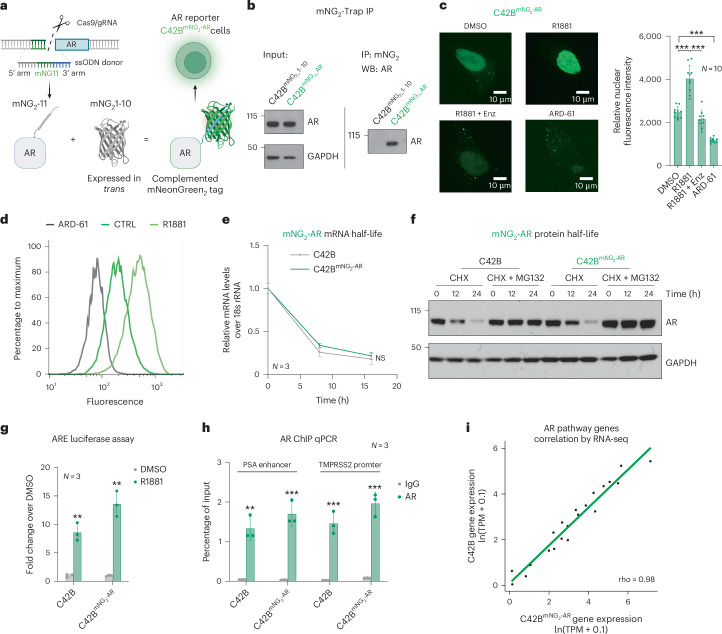
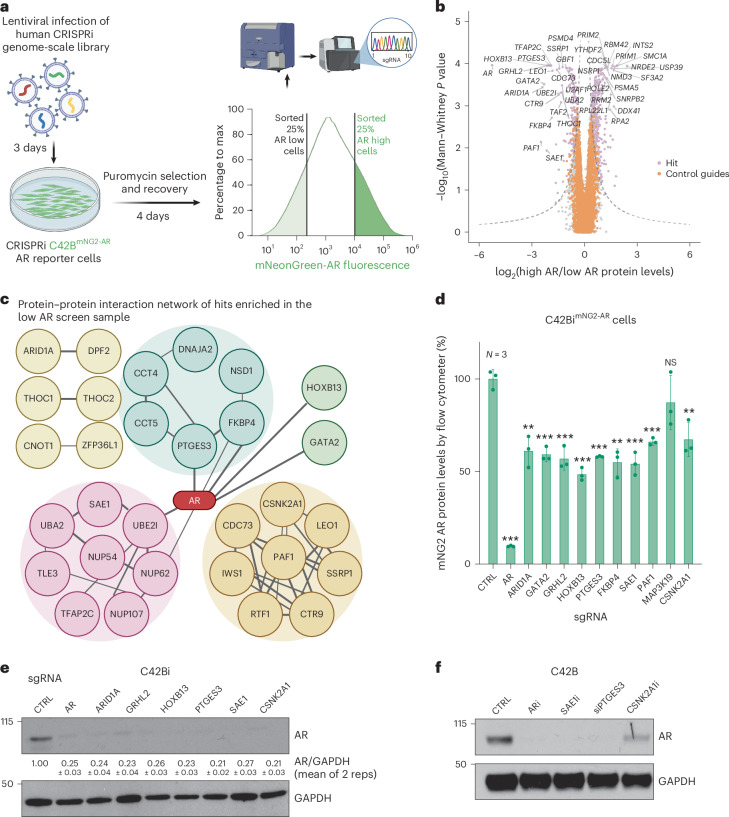
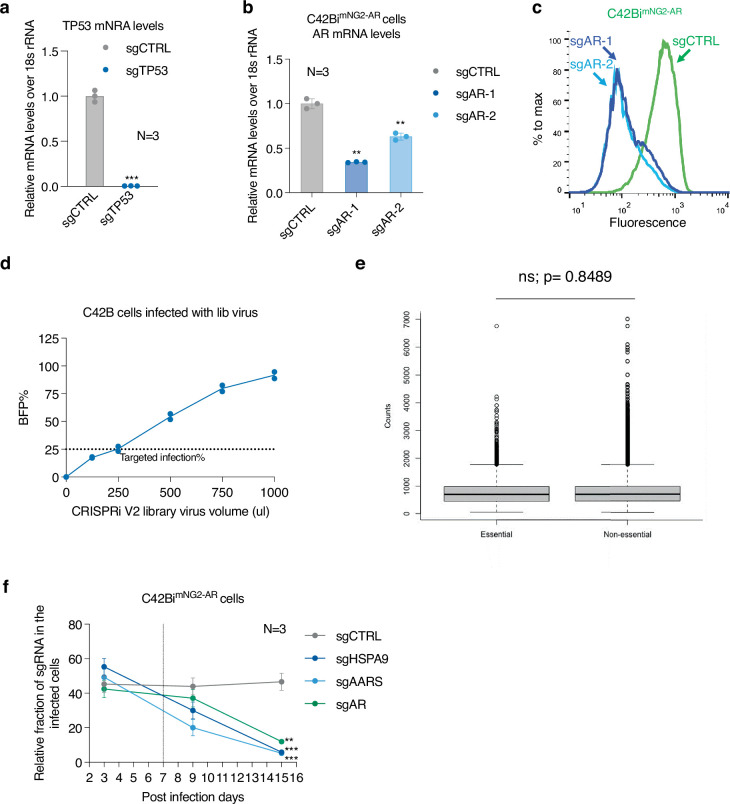
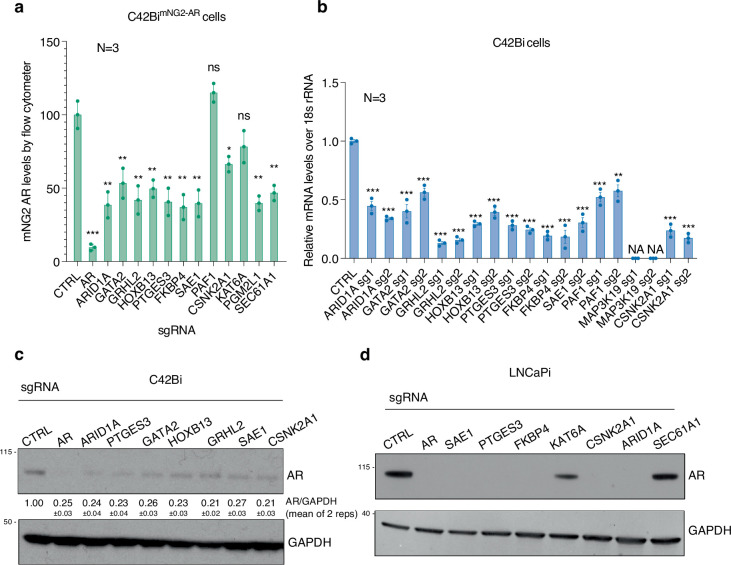
§ Genome-scale CRISPR screens identify PTGES3 as a direct modulator of androgen receptor function in advanced prostate cancer > Results > Identification of regulators of AR using a genome-scale CRISPRi screen We next set out to use our C42BmNG2-AR cell lines to identify genes that regulate AR protein abundance. We first stably expressed a dCas9-KRAB fusion CRISPRi construct in C42BmNG2-AR cells. Control experiments targeting TP53 and AR demonstrated CRISPRi gene silencing activity (Extended Data Fig. 2a–c). We next performed genome-scale CRISPRi screens in two C42BmNG2-AR clonal cell lines using fluorescence-activated cell sorting to identify genes whose repression would decrease or increase AR protein levels (Fig. 2a and Extended Data Fig. 2d). Genome-scale pooled genetic screens were performed by transducing C42BmNG2-AR stably expressing dCas9-KRAB (C42BimNG2-AR) with a genome-scale CRISPRi library35. Samples were collected, fixed with 3% paraformaldehyde (PFA), and then sorted to isolate cells in the top and bottom quartile of AR fluorescent signal. We extracted genomic DNA and amplified the sgRNAs present and quantified sgRNA abundance in each sample by quantitative sequencing to identify genes that regulate AR levels. We confirmed that our screening strategy could robustly capture phenotypes induced by repression of genes such as AR or other commonly essential genes that induce strong growth phenotypes when repressed using timecourse fluorescent competition growth assays and by analysis of the abundance of commonly essential and nonessential single-guide RNA (sgRNA) in our CRISPRi genome-scale screening data (Extended Data Fig. 2e,f). We chose to focus solely on genes required for maintenance of AR levels, as such genes, if targetable, would be therapeutically relevant to PCa therapy. As expected, sgRNAs targeting AR were enriched strongly in the low AR screen sample, meaning that repression of AR resulted in the greatest decrease in AR protein levels. We also identified other known AR regulators including HOXB13, GRHL2 and GATA2 as top hits suggesting our screen robustly identifies genes required for AR protein abundance (Fig. 2b). Top hits required for AR abundance include genes involved in chromatin transcription, RNA transportation, transcription factor and post-translation regulation, indicating that numerous biological processes influence AR protein levels. Top gene hits included protein complexes such as PAF and proteins such as HOXB13 and GATA2 known to interact directly or indirectly with AR36 (Fig. 2c). Among them, FKBP4, PTGES3, UBE2I, HOXB13 and GATA2 showed evidence for physical subnetwork interactions with AR37. Several genes known to be regulated transcriptionally by AR were identified as hit genes, suggesting AR protein levels may be regulated by AR target genes, as has been demonstrated previously for select examples such as FKBP438. We validated individual top hit genes including ARID1A, GATA2, GRHL2, HOXB13, PTGES3, FKBP4, SAE1, PAF1, MAP3K19 and CSNK2A1 in two C42BimNG2-AR clonal cell lines demonstrating our screen results were reproducible and identified genes that modulate AR levels (Fig. 2d and Extended Data Fig. 3a). As a control we confirmed by quantitative PCR (qPCR) with reverse transcription (RT–qPCR) that CRISPRi knockdown of top hits decreased the mRNA expression of each targeted hit gene as expected (Extended Data Fig. 3b). To extend our results beyond the C42BimNG2-AR model, we confirmed repression of top hits identified in the screen decreased AR protein levels in parental C42B and LNCaP cells expressing dCas9-KRAB (hereafter C42Bi and LNCaPi), demonstrating the tagged mNG2-AR protein and unmodified AR protein are regulated by the same genes and further confirming the mNG2-AR model as a robust tool for studying AR biology (Fig. 2e and Extended Data Fig. 3c,d). We also validated our screen results using orthogonal genetic and chemical strategies, (ARD-61 for AR, ML-792 for SAE1, siPTGES3 for PTGES3 and CX-4945 for CSNK2A1). In each case, perturbation of candidate genes reduced AR protein levels (Fig. 2f). Our results demonstrate genome-scale fluorescence-activated cell sorting (FACS)-based CRISPRi screens utilizing the C42BmNG2-AR model robustly identified both known and unexpected genes that regulate AR levels.
What the sources say
- Partly supportedcites [37] Szklarczyk, D. et al. STRING v11: protein-protein association networks with increased coverage, supporting functional discovery in genome-wide experimental datasets. Nucleic Acids Res. 47, D607–D613 (2019). 30476243 PMC6323986 sourceExperimental — accuracy not yet measured
The Introduction describes STRING as a tool for visualizing protein-association networks, which supports its use for a subnetwork analysis. But the Database Content section says STRING associations need not be physical interactions, and our copy does not report interactions between AR and the five named proteins. (LLM, conf=0.84)
plainstates an association- Asserted: passes — The authors put it forward as true.
- Checkable: passes — It can be checked against evidence.
- Load-bearing: unclear — It is unclear whether the paper’s conclusions depend on it.
- Based: passes — The paper gives a reason why it holds.
- Partly supported
50 more claims · 4 with their cited sources checked
Create a free account to see all 120 claims and to verify the 4 references still open.
- Probably not a substantial claim. 36
- It may state two separate claims as one. 33
- The quote only partly states this claim. 1
Citations
Cites
Moderated estimation of fold change and dispersion for RNA-seq data with DESeq2
Love, M. I., Huber, W., & Anders, S. (2014) · Genome Biology · doi:10.1186/s13059-014-0550-8 · Cited by 95,106
The Sequence Alignment/Map format and SAMtools
Li, H., Handsaker, B., Wysoker, A., Fennell, T., Ruan, J., Homer, N., Marth, G., Abecasis, G., Durbin, R., & 1000 Genome Project Data Processing Subgroup (2009) · Bioinformatics · doi:10.1093/bioinformatics/btp352 · Cited by 62,041
Self-citationFast and accurate short read alignment with Burrows-Wheeler transform
Li, H., & Durbin, R. (2009) · Bioinformatics · doi:10.1093/bioinformatics/btp324 · Cited by 58,607
Self-citationFast gapped-read alignment with Bowtie 2
Langmead, B., & Salzberg, S. L. (2012) · Nature Methods · doi:10.1038/nmeth.1923 · Cited by 56,400
STAR: ultrafast universal RNA-seq aligner
Dobin, A., Davis, C. A., Schlesinger, F., Drenkow, J., Zaleski, C., Jha, S., Batut, P., Chaisson, M., & Gingeras, T. R. (2013) · Bioinformatics · doi:10.1093/bioinformatics/bts635 · Cited by 51,709
Cutadapt removes adapter sequences from high-throughput sequencing reads
Martin, M. (2011) · EMBnet.journal · doi:10.14806/ej.17.1.200 · Cited by 33,889
BEDTools: a flexible suite of utilities for comparing genomic features
Quinlan, A. R., & Hall, I. M. (2010) · Bioinformatics · doi:10.1093/bioinformatics/btq033 · Cited by 27,437
Model-based Analysis of ChIP-Seq (MACS)
Zhang, Y., Liu, T., Meyer, C. A., Eeckhoute, J., Johnson, D. S., Bernstein, B. E., Nusbaum, C., Myers, R. M., Brown, M., Li, W., et al. (2008) · Genome Biology · doi:10.1186/gb-2008-9-9-r137 · Cited by 18,386
Self-citationSzklarczyk, D., Gable, A. L., Lyon, D., Junge, A., Wyder, S., Huerta-Cepas, J., Simonovic, M., Doncheva, N. T., Morris, J. H., Bork, P., et al. (2019) · Nucleic Acids Research · doi:10.1093/nar/gky1131 · Cited by 17,749 · cited 1×
“Among them, FKBP4, PTGES3, UBE2I, HOXB13 and GATA2 showed evidence for physical subnetwork interactions with AR 37 .”
Cerami, E., Gao, J., Dogrusoz, U., Gross, B. E., Sumer, S. O., Aksoy, B. A., Jacobsen, A., Byrne, C. J., Heuer, M. L., Larsson, E., et al. (2012) · Cancer Discovery · doi:10.1158/2159-8290.cd-12-0095 · Cited by 17,455
Accurate structure prediction of biomolecular interactions with AlphaFold 3
Abramson, J., Adler, J., Dunger, J., Evans, R., Green, T., Pritzel, A., Ronneberger, O., Willmore, L., Ballard, A. J., Bambrick, J., et al. (2024) · Nature · doi:10.1038/s41586-024-07487-w · Cited by 15,861 · cited 1×
“Structural models of PTGES3 and AR chaperone and DNA-bound complexes were generated using a combination of experimentally derived structural models (PDB: 1XOW; PDB: 1R4I; PDB: 7KRJ) 43,50,67,68 and Alphafold 3 69 .”
Robinson, J. T., Thorvaldsdóttir, H., Winckler, W., Guttman, M., Lander, E. S., Getz, G., & Mesirov, J. P. (2011) · Nature Biotechnology · doi:10.1038/nbt.1754 · Cited by 15,390 · cited 1×
“Visualization snapshots were obtained using Integrative Genomics Viewer 82 (IGV, v.2.19.1).”
InfluentialTwelve years of SAMtools and BCFtools
Danecek, P., Bonfield, J. K., Liddle, J., Marshall, J., Ohan, V., Pollard, M. O., Whitwham, A., Keane, T., McCarthy, S. A., Davies, R. M., et al. (2021) · GigaScience · doi:10.1093/gigascience/giab008 · Cited by 15,343 · cited 1×
“Alignments with MAPQ scores lower than 30 were filtered out using SAMtools 77 , and ENCODE blacklisted regions 78 were excluded using BEDTools 79 (v.2.31.0).”
InfluentialSelf-citationIntegrative Analysis of Complex Cancer Genomics and Clinical Profiles Using the cBioPortal
Gao, J., Aksoy, B. A., Dogrusoz, U., Dresdner, G., Gross, B., Sumer, S. O., Sun, Y., Jacobsen, A., Sinha, R., Larsson, E., et al. (2013) · Science Signaling · doi:10.1126/scisignal.2004088 · Cited by 15,160 · cited 1×
“Publicly available gene expression data from a matched cohort established previously 59 or mCRPC was downloaded from cBioportal (20 May 2021) 94–96 .”
Heinz, S., Benner, C., Spann, N., Bertolino, E., Lin, Y. C., Laslo, P., Cheng, J. X., Murre, C., Singh, H., & Glass, C. K. (2010) · Molecular Cell · doi:10.1016/j.molcel.2010.05.004 · Cited by 13,382
MEME SUITE: tools for motif discovery and searching
Bailey, T. L., Boden, M., Buske, F. A., Frith, M., Grant, C. E., Clementi, L., Ren, J., Li, W. W., & Noble, W. S. (2009) · Nucleic Acids Research · doi:10.1093/nar/gkp335 · Cited by 10,648 · cited 1×
“The MEME tool 91 was used to discover TF binding motifs de novo.”
deepTools2: a next generation web server for deep-sequencing data analysis
Ramírez, F., Ryan, D. P., Grüning, B., Bhardwaj, V., Kilpert, F., Richter, A. S., Heyne, S., Dündar, F., & Manke, T. (2016) · Nucleic Acids Research · doi:10.1093/nar/gkw257 · Cited by 8,096
Buenrostro, J. D., Giresi, P. G., Zaba, L. C., Chang, H. Y., & Greenleaf, W. J. (2013) · Nature Methods · doi:10.1038/nmeth.2688 · Cited by 6,422 · cited 1×
“ATAC-seq was performed as described previously 84,85 with the following modifications.”
ChIPseeker: an R/Bioconductor package for ChIP peak annotation, comparison and visualization
Yu, G., Wang, L.-G., & He, Q.-Y. (2015) · Bioinformatics · doi:10.1093/bioinformatics/btv145 · Cited by 4,362
CRISPR-Mediated Modular RNA-Guided Regulation of Transcription in Eukaryotes
Gilbert, L. A., Larson, M. H., Morsut, L., Liu, Z., Brar, G. A., Torres, S. E., Stern-Ginossar, N., Brandman, O., Whitehead, E. H., Doudna, J. A., et al. (2013) · Cell · doi:10.1016/j.cell.2013.06.044 · Cited by 3,696 · cited 1×
“These cells which stably express CRISPRi were used for both the genome-scale screens and subsequent experiments 58 .”
Self-citationIntegrative Clinical Genomics of Advanced Prostate Cancer
Robinson, D., Van Allen, E. M., Wu, Y.-M., Schultz, N., Lonigro, R. J., Mosquera, J.-M., Montgomery, B., Taplin, M.-E., Pritchard, C. C., Attard, G., et al. (2015) · Cell · doi:10.1016/j.cell.2015.05.001 · Cited by 3,645
Self-citationDefining a Cancer Dependency Map
Tsherniak, A., Vazquez, F., Montgomery, P. G., Weir, B. A., Kryukov, G., Cowley, G. S., Gill, S., Harrington, W. F., Pantel, S., Krill-Burger, J. M., et al. (2017) · Cell · doi:10.1016/j.cell.2017.06.010 · Cited by 3,276
Enzalutamide in Metastatic Prostate Cancer before Chemotherapy
Beer, T. M., Armstrong, A. J., Rathkopf, D. E., Loriot, Y., Sternberg, C. N., Higano, C. S., Iversen, P., Bhattacharya, S., Carles, J., Chowdhury, S., et al. (2014) · New England Journal of Medicine · doi:10.1056/nejmoa1405095 · Cited by 3,028
Liao, Y., Smyth, G. K., & Shi, W. (2019) · Nucleic Acids Research · doi:10.1093/nar/gkz114 · Cited by 2,936
Abiraterone in Metastatic Prostate Cancer without Previous Chemotherapy
Ryan, C. J., Smith, M. R., de Bono, J. S., Molina, A., Logothetis, C. J., de Souza, P., Fizazi, K., Mainwaring, P., Piulats, J. M., Ng, S., et al. (2013) · New England Journal of Medicine · doi:10.1056/nejmoa1209096 · Cited by 2,796
Self-citationLi, W., Xu, H., Xiao, T., Cong, L., Love, M. I., Zhang, F., Irizarry, R. A., Liu, J. S., Brown, M., & Liu, X. S. (2014) · Genome Biology · doi:10.1186/s13059-014-0554-4 · Cited by 2,684
The mutational landscape of lethal castration-resistant prostate cancer
Grasso, C. S., Wu, Y.-M., Robinson, D. R., Cao, X., Dhanasekaran, S. M., Khan, A. P., Quist, M. J., Jing, X., Lonigro, R. J., Brenner, J. C., et al. (2012) · Nature · doi:10.1038/nature11125 · Cited by 2,517
Self-citationAn improved ATAC-seq protocol reduces background and enables interrogation of frozen tissues
Corces, M. R., Trevino, A. E., Hamilton, E. G., Greenside, P. G., Sinnott-Armstrong, N. A., Vesuna, S., Satpathy, A. T., Rubin, A. J., Montine, K. S., Wu, B., et al. (2017) · Nature Methods · doi:10.1038/nmeth.4396 · Cited by 2,496 · cited 1×
“ATAC-seq was performed as described previously 84,85 with the following modifications.”
MSFragger: ultrafast and comprehensive peptide identification in mass spectrometry–based proteomics
Kong, A. T., Leprevost, F. V., Avtonomov, D. M., Mellacheruvu, D., & Nesvizhskii, A. I. (2017) · Nature Methods · doi:10.1038/nmeth.4256 · Cited by 2,402 · cited 1×
“The MS/MS raw data (.raw files) were processed using MSFragger within FragPipe 63 with default label free quantification settings and searched against the human uniprot database.”
The ENCODE Blacklist: Identification of Problematic Regions of the Genome
Amemiya, H. M., Kundaje, A., & Boyle, A. P. (2019) · Scientific Reports · doi:10.1038/s41598-019-45839-z · Cited by 1,831 · cited 1×
“Alignments with MAPQ scores lower than 30 were filtered out using SAMtools 77 , and ENCODE blacklisted regions 78 were excluded using BEDTools 79 (v.2.31.0).”
InfluentialAbiraterone for prostate cancer not previously treated with hormone therapy
James, N. D., de Bono, J. S., Spears, M. R., Clarke, N. W., Mason, M. D., Dearnaley, D. P., Ritchie, A. W. S., Amos, C. L., Gilson, C., Jones, R. J., et al. (2017) · New England Journal of Medicine · doi:10.1056/nejmoa1702900 · Cited by 1,801
Androgen Receptor in Prostate Cancer
Heinlein, C. A., & Chang, C. (2004) · Endocrine Reviews · doi:10.1210/er.2002-0032 · Cited by 1,780 · cited 1×
“Upon androgen stimulation, AR translocates into the nucleus, binds to genomic androgen response elements and modulates gene expression of target genes 40 .”
JASPAR 2020: update of the open-access database of transcription factor binding profiles
Fornes, O., Castro-Mondragon, J. A., Khan, A., van der Lee, R., Zhang, X., Richmond, P. A., Modi, B. P., Correard, S., Gheorghe, M., Baranašić, D., et al. (2019) · Nucleic Acids Research · doi:10.1093/nar/gkz1001 · Cited by 1,763
Bolla, M., Collette, L., Blank, L., Warde, P., Dubois, J. B., Mirimanoff, R.-O., Storme, G., Bernier, J., Kuten, A., Sternberg, C., et al. (2002) · The Lancet · doi:10.1016/s0140-6736(02)09408-4 · Cited by 1,686
Enzalutamide with Standard First-Line Therapy in Metastatic Prostate Cancer
Davis, I. D., Martin, A. J., Stockler, M. R., Begbie, S., Chi, K. N., Chowdhury, S., Coskinas, X., Frydenberg, M., Hague, W. E., Horvath, L. G., et al. (2019) · New England Journal of Medicine · doi:10.1056/nejmoa1903835 · Cited by 1,633
Apalutamide for Metastatic, Castration-Sensitive Prostate Cancer
Chi, K. N., Agarwal, N., Bjartell, A., Chung, B. H., Pereira de Santana Gomes, A. J., Given, R., Juárez Soto, Á., Merseburger, A. S., Özgüroğlu, M., Uemura, H., et al. (2019) · New England Journal of Medicine · doi:10.1056/nejmoa1903307 · Cited by 1,564
Emerging mechanisms of resistance to androgen receptor inhibitors in prostate cancer
Watson, P. A., Arora, V. K., & Sawyers, C. L. (2015) · Nature Reviews Cancer · doi:10.1038/nrc4016 · Cited by 1,536
In vivo amplification of the androgen receptor gene and progression of human prostate cancer
Visakorpi, T., Hyytinen, E., Koivisto, P., Tanner, M., Keinänen, R., Palmberg, C., Palotie, A., Tammela, T., Isola, J., & Kallioniemi, O.-P. (1995) · Nature Genetics · doi:10.1038/ng0495-401 · Cited by 1,484 · cited 2×
“We and other groups have identified tumor alterations that reactivate AR signaling during treatment with an ARSI 2,22–29 .”
Kechin, A., Boyarskikh, U., Kel, A., & Filipenko, M. (2017) · Journal of Computational Biology · doi:10.1089/cmb.2017.0096 · Cited by 1,391
Genomic correlates of clinical outcome in advanced prostate cancer
Abida, W., Cyrta, J., Heller, G., Prandi, D., Armenia, J., Coleman, I., Cieslik, M., Benelli, M., Robinson, D., Van Allen, E. M., et al. (2019) · Proceedings of the National Academy of Sciences · doi:10.1073/pnas.1902651116 · Cited by 1,372 · cited 1×
“Publicly available gene expression data from a matched cohort established previously 59 or mCRPC was downloaded from cBioportal (20 May 2021) 94–96 .”
Self-citationApalutamide Treatment and Metastasis-free Survival in Prostate Cancer
Smith, M. R., Saad, F., Chowdhury, S., Oudard, S., Hadaschik, B. A., Graff, J. N., Olmos, D., Mainwaring, P. N., Lee, J. Y., Uemura, H., et al. (2018) · New England Journal of Medicine · doi:10.1056/nejmoa1715546 · Cited by 1,344
Self-citationsurvminer: Drawing Survival Curves using 'ggplot2'
Kassambara, A., Kosinski, M., & Biecek, P. (2016) · CRAN: Contributed Packages · doi:10.32614/cran.package.survminer · Cited by 1,177
Protein tagging and detection with engineered self-assembling fragments of green fluorescent protein
Cabantous, S., Terwilliger, T. C., & Waldo, G. S. (2005) · Nature Biotechnology · doi:10.1038/nbt1044 · Cited by 938 · cited 1×
“…in PCa cells are essential to developing the next generation of therapeutic approaches that target AR. Existing methods that fuse a full-length fluorescent reporter protein to an endogenous or exogenously overexpressed target protein can affect target function, and are not ideal reporters 30,31 .”
Darolutamide in Nonmetastatic, Castration-Resistant Prostate Cancer
Fizazi, K., Shore, N., Tammela, T. L., Ulys, A., Vjaters, E., Polyakov, S., Jievaltas, M., Luz, M., Alekseev, B., Kuss, I., et al. (2019) · New England Journal of Medicine · doi:10.1056/nejmoa1815671 · Cited by 930
Rapid protein-folding assay using green fluorescent protein
Waldo, G. S., Standish, B. M., Berendzen, J., & Terwilliger, T. C. (1999) · Nature Biotechnology · doi:10.1038/10904 · Cited by 903 · cited 1×
“…in PCa cells are essential to developing the next generation of therapeutic approaches that target AR. Existing methods that fuse a full-length fluorescent reporter protein to an endogenous or exogenously overexpressed target protein can affect target function, and are not ideal reporters 30,31 .”
Horlbeck, M. A., Gilbert, L. A., Villalta, J. E., Adamson, B., Pak, R. A., Chen, Y., Fields, A. P., Park, C. Y., Corn, J. E., Kampmann, M., et al. (2016) · eLife · doi:10.7554/elife.19760 · Cited by 894 · cited 1×
“https://doi.org/10.1038/s41588-025-02388-8 genome-scale CRISPRi library 35 .”
InfluentialSelf-citationDehm, S. M., Schmidt, L. J., Heemers, H. V., Vessella, R. L., & Tindall, D. J. (2008) · Cancer Research · doi:10.1158/0008-5472.can-08-0594 · Cited by 834 · cited 1×
“These mechanisms of resistance include AR gene amplification 22,23 , AR enhancer amplification 2,24,25 , AR mutation 26 , AR genomic structural rearrangements 27 , AR splice variants 28 and polymorphisms in androgen metabolism genes 29 .”
Aggarwal, R., Huang, J., Alumkal, J. J., Zhang, L., Feng, F. Y., Thomas, G. V., Weinstein, A. S., Friedl, V., Zhang, C., Witte, O. N., et al. (2018) · Journal of Clinical Oncology · doi:10.1200/jco.2017.77.6880 · Cited by 810 · cited 1×
“PTGES3 knockdown also decreased levels exhibit robust AR/nuclear AR staining 20,21 .”
Self-citationAndrogen Receptor Pathway-Independent Prostate Cancer Is Sustained through FGF Signaling
Bluemn, E. G., Coleman, I. M., Lucas, J. M., Coleman, R. T., Hernandez-Lopez, S., Tharakan, R., Bianchi-Frias, D., Dumpit, R. F., Kaipainen, A., Corella, A. N., et al. (2017) · Cancer Cell · doi:10.1016/j.ccell.2017.09.003 · Cited by 744 · cited 1×
“PTGES3 knockdown also decreased levels exhibit robust AR/nuclear AR staining 20,21 .”
Self-citationGenomic Hallmarks and Structural Variation in Metastatic Prostate Cancer
Quigley, D. A., Dang, H. X., Zhao, S. G., Lloyd, P., Aggarwal, R., Alumkal, J. J., Foye, A., Kothari, V., Perry, M. D., Bailey, A. M., et al. (2018) · Cell · doi:10.1016/j.cell.2018.06.039 · Cited by 733
Self-citationTanioka, T., Nakatani, Y., Semmyo, N., Murakami, M., & Kudo, I. (2000) · Journal of Biological Chemistry · doi:10.1074/jbc.m003504200 · Cited by 708 · cited 4×
“PTGES3 is also reported to be a cytosolic prostaglandin synthase that converts Prostaglandin H2 (PGH2) to Prostaglandin E2 (PGE2) 47 ; of note, other prostaglandin synthases in the same family as PTGES3 have been implicated in the production of androgens 48,49 .”
InfluentialRadiation with or without Antiandrogen Therapy in Recurrent Prostate Cancer
Shipley, W. U., Seiferheld, W., Lukka, H. R., Major, P. P., Heney, N. M., Grignon, D. J., Sartor, O., Patel, M. P., Bahary, J.-P., Zietman, A. L., et al. (2017) · New England Journal of Medicine · doi:10.1056/nejmoa1607529 · Cited by 663
Self-citationPurhonen, J., Banerjee, R., McDonald, A. E., Fellman, V., & Kallijärvi, J. (2020) · Nucleic Acids Research · doi:10.1093/nar/gkaa516 · Cited by 657
Hieronymus, H., Lamb, J., Ross, K. N., Peng, X. P., Clement, C., Rodina, A., Nieto, M., Du, J., Stegmaier, K., Raj, S. M., et al. (2006) · Cancer Cell · doi:10.1016/j.ccr.2006.09.005 · Cited by 624
Attard, G., Swennenhuis, J. F., Olmos, D., Reid, A. H. M., Vickers, E., A'Hern, R., Levink, R., Coumans, F., Moreira, J., Riisnaes, R., et al. (2009) · Cancer Research · doi:10.1158/0008-5472.can-08-3667 · Cited by 533
(2001) · PubMed · Cited by 500
The androgen receptor cistrome is extensively reprogrammed in human prostate tumorigenesis
Pomerantz, M. M., Li, F., Takeda, D. Y., Lenci, R., Chonkar, A., Chabot, M., Cejas, P., Vazquez, F., Cook, J., Shivdasani, R. A., et al. (2015) · Nature Genetics · doi:10.1038/ng.3419 · Cited by 470
Versatile protein tagging in cells with split fluorescent protein
Kamiyama, D., Sekine, S., Barsi-Rhyne, B., Hu, J., Chen, B., Gilbert, L. A., Ishikawa, H., Leonetti, M. D., Marshall, W. F., Weissman, J. S., et al. (2016) · Nature Communications · doi:10.1038/ncomms11046 · Cited by 456 · cited 2×
“We previously developed a split fluorescent protein tagging strategy, enabling us to visualize and measure the expression of endogenous genes without antibodies 32 .”
Self-citationEnzalutamide and Survival in Nonmetastatic, Castration-Resistant Prostate Cancer
Sternberg, C. N., Fizazi, K., Saad, F., Shore, N. D., De Giorgi, U., Penson, D. F., Ferreira, U., Efstathiou, E., Madziarska, K., Kolinsky, M. P., et al. (2020) · New England Journal of Medicine · doi:10.1056/nejmoa2003892 · Cited by 428
Disassembly of Transcriptional Regulatory Complexes by Molecular Chaperones
Freeman, B. C., & Yamamoto, K. R. (2002) · Science · doi:10.1126/science.1073051 · Cited by 400 · cited 1×
“PTGES3 has also been reported to localize to the nucleus and previous publications showed nuclear PTGES3 is a glucocorticoid receptor (GR) co-factor that modulates GR activity in the nucleus at GR response elements 44,45 .”
Structural basis of androgen receptor binding to selective androgen response elements
Shaffer, P. L., Jivan, A., Dollins, D. E., Claessens, F., & Gewirth, D. T. (2004) · Proceedings of the National Academy of Sciences · doi:10.1073/pnas.0401123101 · Cited by 400 · cited 1×
“Structural models of PTGES3 and AR chaperone and DNA-bound complexes were generated using a combination of experimentally derived structural models (PDB: 1XOW; PDB: 1R4I; PDB: 7KRJ) 43,50,67,68 and Alphafold 3 69 .”
Viswanathan, S. R., Ha, G., Hoff, A. M., Wala, J. A., Carrot-Zhang, J., Whelan, C. W., Haradhvala, N. J., Freeman, S. S., Reed, S. C., Rhoades, J., et al. (2018) · Cell · doi:10.1016/j.cell.2018.05.036 · Cited by 365 · cited 1×
“These mechanisms of resistance include AR gene amplification 22,23 , AR enhancer amplification 2,24,25 , AR mutation 26 , AR genomic structural rearrangements 27 , AR splice variants 28 and polymorphisms in androgen metabolism genes 29 .”
Self-citation(1994) · PubMed Central · Cited by 328
Takeda, D. Y., Spisák, S., Seo, J.-H., Bell, C., O’Connor, E., Korthauer, K., Ribli, D., Csabai, I., Solymosi, N., Szállási, Z., et al. (2018) · Cell · doi:10.1016/j.cell.2018.05.037 · Cited by 317 · cited 1×
“These mechanisms of resistance include AR gene amplification 22,23 , AR enhancer amplification 2,24,25 , AR mutation 26 , AR genomic structural rearrangements 27 , AR splice variants 28 and polymorphisms in androgen metabolism genes 29 .”
A Gain-of-Function Mutation in DHT Synthesis in Castration-Resistant Prostate Cancer
Chang, K.-H., Li, R., Kuri, B., Lotan, Y., Roehrborn, C. G., Liu, J., Vessella, R., Nelson, P. S., Kapur, P., Guo, X., et al. (2013) · Cell · doi:10.1016/j.cell.2013.07.029 · Cited by 312 · cited 2×
“We and other groups have identified tumor alterations that reactivate AR signaling during treatment with an ARSI 2,22–29 .”
Self-citationHe, B., Gampe, R. T., Kole, A. J., Hnat, A. T., Stanley, T. B., An, G., Stewart, E. L., Kalman, R. I., Minges, J. T., & Wilson, E. M. (2004) · Molecular Cell · doi:10.1016/j.molcel.2004.09.036 · Cited by 295 · cited 1×
“Structural models of PTGES3 and AR chaperone and DNA-bound complexes were generated using a combination of experimentally derived structural models (PDB: 1XOW; PDB: 1R4I; PDB: 7KRJ) 43,50,67,68 and Alphafold 3 69 .”
Distinct structural classes of activating FOXA1 alterations in advanced prostate cancer
Parolia, A., Cieslik, M., Chu, S.-C., Xiao, L., Ouchi, T., Zhang, Y., Wang, X., Vats, P., Cao, X., Pitchiaya, S., et al. (2019) · Nature · doi:10.1038/s41586-019-1347-4 · Cited by 284
Self-citationAndrogen receptor signaling in prostate cancer
Culig, Z., & Santer, F. R. (2014) · Cancer and Metastasis Reviews · doi:10.1007/s10555-013-9474-0 · Cited by 283
Improved split fluorescent proteins for endogenous protein labeling
Feng, S., Sekine, S., Pessino, V., Li, H., Leonetti, M. D., & Huang, B. (2017) · Nature Communications · doi:10.1038/s41467-017-00494-8 · Cited by 272
Self-citationSadi, M. V., Walsh, P. C., & Barrack, E. R. (1991) · Cancer · doi:10.1002/1097-0142(19910615)67:12<3057::aid-cncr2820671221>3.0.co;2-s · Cited by 263
A scalable strategy for high-throughput GFP tagging of endogenous human proteins
Leonetti, M. D., Sekine, S., Kamiyama, D., Weissman, J. S., & Huang, B. (2016) · Proceedings of the National Academy of Sciences · doi:10.1073/pnas.1606731113 · Cited by 237 · cited 1×
“This approach has advantages, including reduced perturbation to the genomic locus and the protein–protein interactions of the target compared to traditional methods 32–34 .”
Self-citationZeng, P.-Y., Vakoc, C. R., Chen, Z.-C., Blobel, G. A., & Berger, S. L. (2006) · BioTechniques · doi:10.2144/000112297 · Cited by 190 · cited 1×
“ChIP and Dual X ChIP assays were performed as described previously 62,70 .”
KRAS G12C inhibition produces a driver-limited state revealing collateral dependencies
Lou, K., Steri, V., Ge, A. Y., Hwang, Y. C., Yogodzinski, C. H., Shkedi, A. R., Choi, A. L. M., Mitchell, D. C., Swaney, D. L., Hann, B., et al. (2019) · Science Signaling · doi:10.1126/scisignal.aaw9450 · Cited by 175
Self-citationHenzler, C., Li, Y., Yang, R., McBride, T., Ho, Y., Sprenger, C., Liu, G., Coleman, I., Lakely, B., Li, R., et al. (2016) · Nature Communications · doi:10.1038/ncomms13668 · Cited by 173 · cited 1×
“These mechanisms of resistance include AR gene amplification 22,23 , AR enhancer amplification 2,24,25 , AR mutation 26 , AR genomic structural rearrangements 27 , AR splice variants 28 and polymorphisms in androgen metabolism genes 29 .”
Self-citationNoddings, C. M., Wang, R. Y.-R., & Agard, D. A. (2020) · doi:10.1101/2020.09.12.294975 · Cited by 166
Structure of Hsp90–p23–GR reveals the Hsp90 client-remodelling mechanism
Noddings, C. M., Wang, R. Y.-R., Johnson, J. L., & Agard, D. A. (2022) · Nature · doi:10.1038/s41586-021-04236-1 · Cited by 164 · cited 2×
“Structural models of PTGES3 and AR chaperone and DNA-bound complexes were generated using a combination of experimentally derived structural models (PDB: 1XOW; PDB: 1R4I; PDB: 7KRJ) 43,50,67,68 and Alphafold 3 69 .”
Integrative epigenetic taxonomy of primary prostate cancer
Stelloo, S., Nevedomskaya, E., Kim, Y., Schuurman, K., Valle-Encinas, E., Lobo, J., Krijgsman, O., Peeper, D. S., Chang, S. L., Feng, F. Y.-C., et al. (2018) · Nature Communications · doi:10.1038/s41467-018-07270-2 · Cited by 154 · cited 2×
“…several representative differentially accessible ATAC-seq peaks have been highlighted. j , A graph depicting the overlap in genomic loci with differentially accessible ATAC-seq peaks upon PTGES3 knockdown that are or are not also bound by AR as measured by ChIP–seq in LNCaP cells 52 (Stello2018).”
Self-citationDe Leon, J. T., Iwai, A., Feau, C., Garcia, Y., Balsiger, H. A., Storer, C. L., Suro, R. M., Garza, K. M., Lee, S., Sang Kim, Y., et al. (2011) · Proceedings of the National Academy of Sciences · doi:10.1073/pnas.1105160108 · Cited by 132 · cited 4×
“To investigate the mechanism by which PTGES3 regulates AR, we confirmed that repression of PTGES3 or known co-chaperones of cytosolic AR, HSP90 or FKBP4, resulted in decreased AR protein levels as expected (Extended Data Fig.”
InfluentialRole for Hsp90-Associated Cochaperone p23 in Estrogen Receptor Signal Transduction
Knoblauch, R., & Garabedian, M. J. (1999) · Molecular and Cellular Biology · doi:10.1128/mcb.19.5.3748 · Cited by 126 · cited 1×
“PTGES3 is reported to have a cytosolic HSP90-dependent protein chaperone function for steroid nuclear receptors, but its activity in PCa is poorly characterized 41,43–46 .”
Stelloo, S., Nevedomskaya, E., Kim, Y., Hoekman, L., Bleijerveld, O. B., Mirza, T., Wessels, L. F. A., van Weerden, W. M., Altelaar, A. F. M., Bergman, A. M., et al. (2018) · Oncogene · doi:10.1038/onc.2017.330 · Cited by 118 · cited 1×
“Top gene hits included protein complexes such as PAF and proteins such as HOXB13 and GATA2 known to interact directly or indirectly with AR 36 (Fig.”
Penning, T. M. (2019) · Molecular and Cellular Endocrinology · doi:10.1016/j.mce.2018.07.002 · Cited by 117 · cited 1×
“PTGES3 is also reported to be a cytosolic prostaglandin synthase that converts Prostaglandin H2 (PGH2) to Prostaglandin E2 (PGE2) 47 ; of note, other prostaglandin synthases in the same family as PTGES3 have been implicated in the production of androgens 48,49 .”
Mehra, R., Shi, Y., Udager, A. M., Prensner, J. R., Sahu, A., Iyer, M. K., Siddiqui, J., Cao, X., Wei, J., Jiang, H., et al. (2014) · Neoplasia · doi:10.1016/j.neo.2014.11.006 · Cited by 95 · cited 1×
“The prostate tumor microarray (TMA) with correlated clinical information from 120 clinically localized PCa patients was constructed by the University of Michigan Center for Translational Pathology as previously reported 65 .”
Self-citationEftekharzadeh, B., Banduseela, V. C., Chiesa, G., Martínez-Cristóbal, P., Rauch, J. N., Nath, S. R., Schwarz, D. M. C., Shao, H., Marin-Argany, M., Di Sanza, C., et al. (2019) · Nature Communications · doi:10.1038/s41467-019-11594-y · Cited by 76 · cited 1×
“In the absence of androgen ligands, AR protein is bound by protein chaperones such as HSP90 and localized in the cytosol 39 .”
Self-citationChesner, L. N., Polesso, F., Graff, J. N., Hawley, J. E., Smith, A. K., Lundberg, A., Das, R., Shenoy, T., Sjöström, M., Zhao, F., et al. (2024) · Cancer Discovery · doi:10.1158/2159-8290.cd-24-0559 · Cited by 65 · cited 1×
“The genome-scale CRISPRi screens were performed following the Weissman laboratory protocol (weissmanlab.ucsf.edu) as we reported previously 60 .”
Self-citationPARP‐1 regulates DNA repair factor availability
Schiewer, M. J., Mandigo, A. C., Gordon, N., Huang, F., Gaur, S., de Leeuw, R., Zhao, S. G., Evans, J., Han, S., Parsons, T., et al. (2018) · EMBO Molecular Medicine · doi:10.15252/emmm.201708816 · Cited by 64 · cited 1×
“IHC was performed as described previously 66 .”
Self-citationWasmuth, E. V., Hoover, E. A., Antar, A., Klinge, S., Chen, Y., & Sawyers, C. L. (2020) · Proceedings of the National Academy of Sciences · doi:10.1073/pnas.1922159117 · Cited by 50 · cited 2×
“Protein expression constructs, expression and purification of recombinant mouse AR constructs, including the DNA-binding domain (AR DBD , residues 548–651) and a variant lacking the N-terminal domain (AR ΔNTD , residues 548–909) were performed as described previously 50,51 .”
Self-citationAllosteric interactions prime androgen receptor dimerization and activation
Wasmuth, E. V., Broeck, A. V., LaClair, J. R., Hoover, E. A., Lawrence, K. E., Paknejad, N., Pappas, K., Matthies, D., Wang, B., Feng, W., et al. (2022) · Molecular Cell · doi:10.1016/j.molcel.2022.03.035 · Cited by 50 · cited 4×
“Structural models of PTGES3 and AR chaperone and DNA-bound complexes were generated using a combination of experimentally derived structural models (PDB: 1XOW; PDB: 1R4I; PDB: 7KRJ) 43,50,67,68 and Alphafold 3 69 .”
InfluentialSelf-citationReebye, V., Querol Cano, L., Lavery, D. N., Brooke, G. N., Powell, S. M., Chotai, D., Walker, M. M., Whitaker, H. C., Wait, R., Hurst, H. C., et al. (2012) · Molecular Endocrinology · doi:10.1210/me.2012-1056 · Cited by 47 · cited 3×
“PTGES3 is reported to have a cytosolic HSP90-dependent protein chaperone function for steroid nuclear receptors, but its activity in PCa is poorly characterized 41,43–46 .”
Zelin, E., Zhang, Y., Toogun, O. A., Zhong, S., & Freeman, B. C. (2012) · Molecular Cell · doi:10.1016/j.molcel.2012.08.026 · Cited by 46 · cited 2×
“Consistent with a previous report 44 , among the transcriptional regulators p300, KAT2A and FOXA1, nuclear PTGES3 interacts with histone acetyltransferase KAT2A by co-IP western (Extended Data Fig.”
IFITM proteins assist cellular uptake of diverse linked chemotypes
Lou, K., Wassarman, D. R., Yang, T., Paung, Y., Zhang, Z., O’Loughlin, T. A., Moore, M. K., Egan, R. K., Greninger, P., Benes, C. H., et al. (2022) · Science · doi:10.1126/science.abl5829 · Cited by 42
Self-citationRoggero, C. M., Jin, L., Cao, S., Sonavane, R., Kopplin, N. G., Ta, H. Q., Ekoue, D. N., Witwer, M., Ma, S., Liu, H., et al. (2020) · Oncogene · doi:10.1038/s41388-020-01585-5 · Cited by 40
Das, R., Sjöström, M., Shrestha, R., Yogodzinski, C., Egusa, E. A., Chesner, L. N., Chen, W. S., Chou, J., Dang, D. K., Swinderman, J. T., et al. (2021) · Nature Communications · doi:10.1038/s41467-021-24919-7 · Cited by 38
Self-citationShrestha, R., Chesner, L. N., Zhang, M., Zhou, S., Foye, A., Lundberg, A., Weinstein, A. S., Sjöström, M., Zhu, X., Moreno-Rodriguez, T., et al. (2024) · Cancer Research · doi:10.1158/0008-5472.can-24-0890 · Cited by 38 · cited 1×
“All pipelines for ATAC data processing are described previously 93 and are available at https://github.com/haolongli87/ ptges3_resources.”
Self-citationThe co‐chaperone p23 promotes prostate cancer motility and metastasis
Querol Cano, L., Lavery, D. N., Sin, S., Spanjaard, E., Brooke, G. N., Tilman, J. D., Abroaf, A., Gaughan, L., Robson, C. N., Heer, R., et al. (2015) · Molecular Oncology · doi:10.1016/j.molonc.2014.08.014 · Cited by 33
Jeong, K., Jung, J., Kim, J., & Kang, H. (2018) · International Journal of Molecular Sciences · doi:10.3390/ijms19020556 · Cited by 30 · cited 2×
“PTGES3 is also reported to be a cytosolic prostaglandin synthase that converts Prostaglandin H2 (PGH2) to Prostaglandin E2 (PGE2) 47 ; of note, other prostaglandin synthases in the same family as PTGES3 have been implicated in the production of androgens 48,49 .”
Karnes, R. J., Sharma, V., Choeurng, V., Ashab, H. A.-D., Erho, N., Alshalalfa, M., Trock, B., Ross, A., Yousefi, K., Tsai, H., et al. (2018) · Clinical Cancer Research · doi:10.1158/1078-0432.ccr-17-2745 · Cited by 30
Self-citationKothari, V., Goodwin, J. F., Zhao, S. G., Drake, J. M., Yin, Y., Chang, S. L., Evans, J. R., Wilder-Romans, K., Gabbara, K. M., Dylgjeri, E., et al. (2019) · Clinical Cancer Research · doi:10.1158/1078-0432.ccr-18-2387 · Cited by 27 · cited 1×
“ChIP and Dual X ChIP assays were performed as described previously 62,70 .”
Self-citationZhang, M., Sjöström, M., Cui, X., Foye, A., Farh, K. K., Shrestha, R., Lundberg, A., Dang, H. X., Li, H., Febbo, P. G., et al. (2024) · Nature Cell Biology · doi:10.1038/s41556-024-01438-3 · Cited by 24
Self-citationBarpanda, A., Biswas, D., Verma, A., Parihari, S., Singh, A. K., Kapoor, S., Kantharia, C. V., & Srivastava, S. (2023) · Journal of Proteome Research · doi:10.1021/acs.jproteome.2c00646 · Cited by 12 · cited 1×
“Statistical analysis and data visualization were performed in R studio and MetaboAnalyst 5.0 64 .”
InfluentialSelf-citationA multiomics approach reveals RNA dynamics promote cellular sensitivity to DNA hypomethylation
Ge, A. Y., Arab, A., Dai, R., Navickas, A., Fish, L., Garcia, K., Asgharian, H., Goudreau, J., Lee, S., Keenan, K., et al. (2024) · Scientific Reports · doi:10.1038/s41598-024-77314-9 · Cited by 4
Self-citationGenome-wide CRISPR screens identify PTGES3 as a novel AR modulator
Shrestha, R. (2025) · Zenodo (CERN European Organization for Nuclear Research) · doi:10.5281/zenodo.15678437 · Cited by 1
Self-citation
Cited by
Nandakumar, R., Mahin, A., Gopalakrishnan, A. P., Subair, S., Krishnan, D., & Raju, R. (2026) · OMICS A Journal of Integrative Biology · doi:10.1177/15578100261422809 · Cited by 2
“Similarly, the co-chaperone PTGES3 (p23) modulates androgen receptor (AR) stability and has been implicated in resistance to AR-targeted therapies in prostate cancer, as iden-ti fi ed in genome-scale Clustered regularly interspaced short palindromic repeats (CRISPR) screens (Li et al., 2025).”
Mishra, R., Song, S., Choradia, D., Rudoy, D., Wladyka, C. L., Hoang, P., kim, J. Y., Coleman, I. M., Arora, S., Dobersch, S., et al. (2026) · Journal of Clinical Investigation · doi:10.1172/jci199838 · Cited by 4
“To further narrow down functional posttranslational regulators of AR, we compared our upregulated proteins to a genome-scale CRISPRi screen for positive regulators of AR expression (Supplemental Figure 6G) (44).”
Self-citationA molecular cell atlas of endocrine signaling in human neural organoids
Matassa, G., Rigoli, M. T., Castaldi, D., Valenti, A., Lessi, M., Caporale, N., Stucchi, S., Muda, B., Nagni, R., Mainardi, L., et al. (2026) · Cell Press Blue · doi:10.1016/j.cpblue.2026.100077 · Cited by 7
Wang, N., Chen, W., Shen, S., Qi, J., Wang, S., Wang, R., Li, M., Chen, Z., Chen, J., Hong, B., et al. (2026) · Molecular Biomedicine · doi:10.1186/s43556-026-00431-6 · Cited by 1
“This distinguishes its mode of action from co-regulator roles observed in lung cancer (targeting COX-2 ) [14] or prostate cancer (targeting AR) [27].”
Self-citationAgent-Driven Validation of Oncology Therapeutic TargetsPreprint
Huang, K.-L. (2026) · bioRxiv (Cold Spring Harbor Laboratory) · doi:10.64898/2026.04.29.721634
Metadata
- Authors
- Li, H., Melnyk, J. E., Fu, B. X. H., Shrestha, R., Zhang, M., Sjöström, M., Feng, S., Anderson, J. A., Han, W., Chesner, L. N., Shin, H. J., Farsh, T., Suarez, H. J., Nath, S., Chou, J., Das, R., Egusa, E. A., Calvert, M., Kishishita, A., Barpanda, A., Zhu, J., Maheshwari, A., Chen, W. S., Alshalalfa, M., Winters, A., Hua, J. T., Liu, T., Davicioni, E., Wiita, A. P., Stohr, B. A., Siddiqui, J., Huang, B., Small, E. J., Shokat, K. M., Nelson, P. S., Quigley, D. A., Wasmuth, E. V., Gilbert, L. A., & Feng, F. Y.
- Affiliations
- University of California, San Francisco (US)
- Emory University (US)
- Fred Hutch Cancer Center (US)
- The University of Texas at San Antonio Health Science Center (US)
- University of Michigan (US)
- Howard Hughes Medical Institute (US)
- Corresponding author
- Li, Haolong
- Gilbert, Luke A.
- ORCID
- Li, Haolong
- Melnyk, James E.
- Fu, Becky Xu Hua
- Shrestha, Raunak
- Zhang, Meng
- Sjöström, Martin
- Anderson, Jasmine A.
- Han, Wanting
- Chesner, Lisa N.
- Farsh, Tatyanah
- Nath, Seema
- Chou, Jonathan
- Das, Rajdeep
- Egusa, Emily A.
- Kishishita, Audrey
- Barpanda, Abhilash
- Zhu, Jun
- Maheshwari, Ashutosh
- Chen, William S.
- Alshalalfa, Mohammed
- Hua, Junjie T.
- Liu, Tianyi
- Davicioni, Elai
- Wiita, Arun P.
- Stohr, Bradley A.
- Siddiqui, Javed
- Huang, Bo
- Small, Eric J.
- Shokat, Kevan M.
- Nelson, Peter S.
- Quigley, David A.
- Wasmuth, Elizabeth V.
- Gilbert, Luke A.
- Feng, Felix Y.
- Venue
- Nature Genetics
- Published
- 2025-11-05
- Volume
- 57
- Issue
- 12
- Pages
- 3027-3038
- ISSN
- 1061-4036 (ISSN-L)
- 1546-1718
- PMC
- PMC12695660
- OpenAlex
- W4415913528
- Semantic Scholar
- 55b624f946f0cc87b60d21d7777716b1e092cc49
- Cited by
- 10
- References
- 95
- Citations by year
- 2026: 10
- FWCI
- 6.51
- Type
- journal article
- Language
- en
- Open access
- hybrid
- doi.org
- Licence
- cc-by
- creativecommons.org/licenses/by/4.0 (tdm)
- creativecommons.org/licenses/by/4.0 (vor)
- Locations
- Nature Genetics (publishedVersion, cc-by)
- bioRxiv (Cold Spring Harbor Laboratory) (acceptedVersion)
- PubMed (publishedVersion)
- PubMed Central (publishedVersion, cc-by)
- PubMed Central (submittedVersion)
- Lund University Publications (Lund University) (submittedVersion)
- Funders
- U.S. Department of Defense (HT94252310462, HT94252410252, W81XWH2010136, W81XWH2210833, W81XWH2110046, W81XWH)
- Howard Hughes Medical Institute
- U.S. Department of Health and Human Services (1R01CA221969-01, R01GM131641, CA230516-02S1, 1F32CA236347-01, CA204602, 1R01CA230516-01, 1R01CA244550, R01GM124334, P50 CA186786, 1R01CA227025)
- Prostate Cancer Foundation (SU2C-AACR-DT0812, P50CA097186, 21CHAL06, P30 CA015704, 17CHAL06, 21YOUN12, CA-097186, PC230420)
- V Foundation for Cancer Research (V2024-016)
- Cancer Prevention and Research Institute of Texas
- Cancerfonden
- Vetenskapsrådet (2018-00382, 2018-)
- Svenska Läkaresällskapet
- National Institutes of Health (1f32ca236347-01, 1s10od016229-01, W81XWH, K99-R00, CA015704, CA-097186, K99/R00 CA204602)
- University of California, San Francisco
- Stand Up To Cancer (SU2C-AACR-DT0812, DT0812)
- National Cancer Institute (CA097186, K99CA204602, R01CA221969, DP2CA239597, R01CA227025, CA015704, K99‐R00, F32 CA236347, R01CA244550, K99/R00 CA204602, R01CA230516, CA186786, R01CA234715, R00CA204602, R01CA266452, R01CA290875, P30CA015704, P50CA097186, P50CA186786, P50CA275741)
- National Institute of General Medical Sciences (R01GM124334, P41GM103481, R00GM140264, R01GM131641)
- Department of Medicine, University of California, San Francisco
- DOD Prostate Cancer Research Program
- Topics
- Life Sciences › Biochemistry, Genetics and Molecular Biology › Cancer Research › Prostate Cancer Treatment and Research
- Life Sciences › Biochemistry, Genetics and Molecular Biology › Molecular Biology › Chromatin Remodeling and Cancer
- Health Sciences › Medicine › Urology › Prostate Cancer Diagnosis and Treatment
- Keywords
- PTGES3, androgen receptor, advanced prostate cancer, CRISPRi screen, cell cycle arrest, cell death, therapeutic target, HOXB13, GATA2
About these checks
Registry, retraction, Cites and statistics results are computed, not judged, with one exception: a printed reference that no index lists is read once by a model before it counts as a citation error. Claims are extracted by a model and kept only when their quote appears verbatim in the text; each cited source is then checked, with a model’s help, for whether it says what the claim relies on. Those verdicts can be wrong — read the claim’s quote and the cited source before relying on one.
The claim verdicts this report counts are experimental: their accuracy is not yet measured.
A language model drew the claims from the paper on 2026-10-10, under version 3 of the claim definition (model deepseek-v4.1-flash, prompt extract-v3).
A second model labelled each claim on 2026-10-10 (model jev-1.13-20260917, definition revision gold-guideline-v0.2).
Cited sources are checked with a language model’s help (gpt-6-sol).
Statistics and arithmetic are recomputed, not judged.
Confidence bands are shown only for fields calibrated on our annotated test set. None is calibrated yet, so no band is shown.
What counts as a claim ›How we measure confidence ›How we check this ›
Are you an author, or do you see a problem with this page? Request a review
Data sources
Bibliographic data: Semantic Scholar, OpenAlex, Crossref.
Contains information from the Semantic Scholar Academic Graph Datasets, made available under the ODC Attribution License (ODC-BY 1.0).
Semantic Scholar’s data is described in: Kinney, R., et al. (2023). The Semantic Scholar Open Data Platform. arXiv:2301.10140.
