

Safety and efficacy concerns in Indian probiotics: Insights from whole-genome sequencing and in vitro assessment
Open accessThe DOI matches its Crossref record; 50 of the 50 references it cites were found in a registry or an index; 31 of the 69 sources its claims cite were checked for support.
Abstract
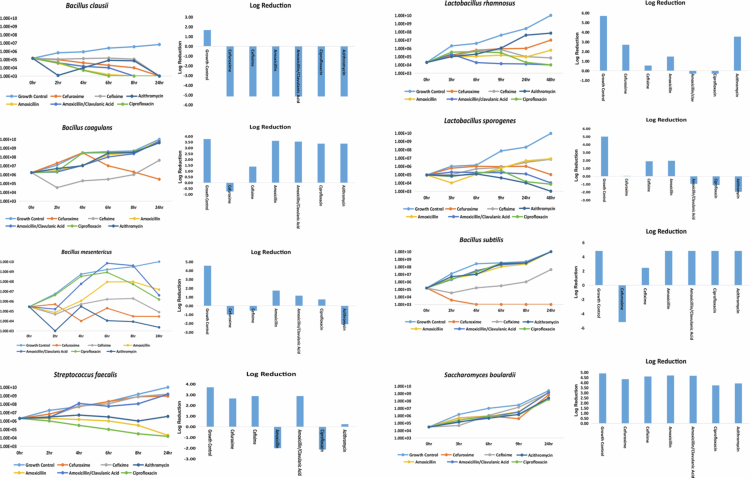
Acute diarrhea remains a major public health challenge in India, particularly among children, where probiotics are commonly used as adjunctive therapy. However, concerns regarding the quality, safety, and regulatory oversight of commercial probiotic formulations persist. This study evaluated 13 probiotic products marketed in India for antibiotic susceptibility, gastrointestinal survivability, and safety. A combined in vitro and genomic approach was employed, including microbial enumeration, MALDI-TOF identification, MIC testing, time-kill assays, simulated gastrointestinal survival, and whole-genome sequencing to assess strain identity, antimicrobial susceptibility, antimicrobial resistance genes (ARGs), and virulence-associated determinants. Five of the 13 products showed discrepancies between labeled and laboratory-enumerated CFU counts, and some contained contaminants such as Enterococcus faecium. Several bacterial probiotics used outdated nomenclature (e.g., “LAB” or Lactobacillus sporogenes), inconsistent with current taxonomy. Bacterial probiotics were found to be susceptible to co-prescribed antibiotics, which may compromise their therapeutic persistence. Whole-genome sequencing identified multiple antimicrobial resistance determinants, including tet(L), erm(34), blaBCL-1, catA10, and ant(4′)-Ib. Among these, tet(L), catA10, and ant(4′)-Ib showed higher predicted potential for mobilization, supported by literature and the presence of insertion sequence elements.
Overview
CoChat Summary
## TL;DR
This study evaluated 13 commercial probiotic products marketed in India using CFU enumeration, MALDI-TOF, antibiotic susceptibility testing, simulated GI survival assays, and whole-genome sequencing. It found frequent labeling and CFU discrepancies, some contamination/misidentification, and strain-specific safety differences, with S. boulardii (Econorm) performing best overall.
## Key findings
- 5 of 13 products showed discrepancies between labeled and laboratory-enumerated CFU counts; the paper names Bifilac Sachet, Nutrolin B, Enterogermina (Vial), Sporit GG (against S. boulardii), and Ecoviva.
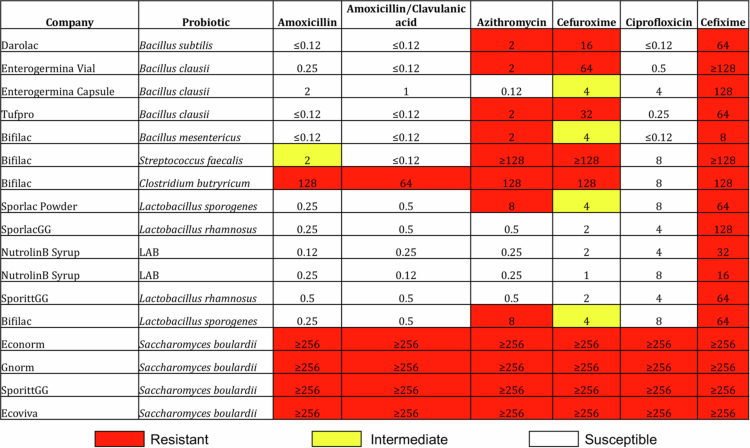
- All tested strains were resistant to cefixime, with MICs ranging from 8–256 mg/L; MICs across antibiotics ranged from 0.06 to 256 mg/L.
- In the GI simulation, Econorm (S. boulardii) had the highest survival across compartments: 8.62 ± 0.2 log CFU/mL in the stomach, 9.15 ± 0.5 in the duodenum, and 9.7 ± 0.1 in the ileum.
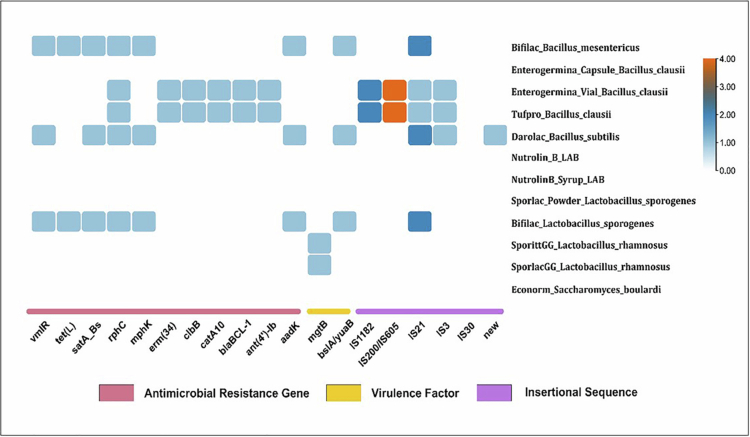
- Whole-genome sequencing found multiple AMR determinants, including tet(L), erm(34), blaBCL-1, catA10, and ant(4′)-Ib; the paper says tet(L), catA10, and ant(4′)-Ib had higher predicted mobilization potential.
- Econorm / S. boulardii showed no detected AMR genes or virulence factors and was described as the most clinically suitable product for acute diarrhea.
## Methods
- The study assessed 13 commercially available probiotic products marketed in India, selected purposively for high prescription frequency, OTC availability, and routine clinical use.
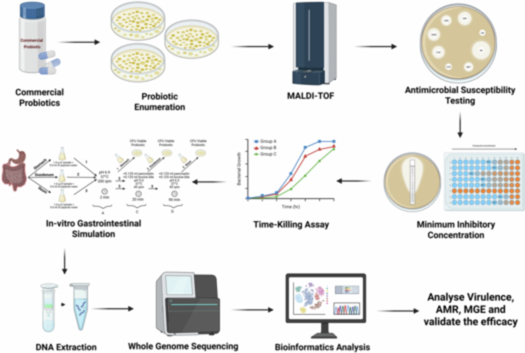
- It used a combined in vitro and genomic design: CFU enumeration, MALDI-TOF MS, broth microdilution MIC testing against 6 antibiotics, time-kill assays, a stepwise simulated GI digestion model, and whole-genome sequencing with bioinformatic screening for ARGs and virulence factors.
- Analysis included strain identification and comparison of label claims vs. observed counts/taxonomy, plus genomic safety screening and interpretation of susceptibility patterns in relation to intrinsic vs. acquired resistance.
## Limitations
- The paper states that probiotic viability was measured at a single time point per batch, without shelf-life stability or storage-time assessment.
- It notes that the genomic context of detected AMR genes was not assessed, so mobility potential needs further investigation.
- It also says the GI simulation was comparative and excluded control strains due to the lack of established standards.
Model-written summary. Check it against the paper before relying on it.
Integrity signals
Registry
Cites
Statistics
Figures
Verification
Claims the paper makes
21 Valid · 5 Not valid · 15 Not checked · 104 Own results and interpretations
The cited sources support only part of this claim — read each source’s verdict below.
In the paper
“However, bacterial probiotics are often sensitive to commonly used antibiotics (e.g., penicillin, tetracycline, and ofloxacin), limiting their viability during therapy.6,7”
§ Safety and efficacy concerns in Indian probiotics: Insights from whole-genome sequencing and in vitro assessment > Introduction
What the sources say
- Not checked — no full text of the sourcecites [6] Neut C, Mahieux S, Dubreuil LJ. Antibiotic susceptibility of probiotic strains: is it reasonable to combine probiotics with antibiotics? Med Mal Infect. 2017; 47(7): 477– 483. doi: 10.1016/j.medmal.2017.07.001. 28797834 source
- Partly supportedcites [7] Ouwehand AC, Forssten S, Hibberd AA, Lyra A, Stahl B. Probiotic approach to prevent antibiotic resistance. Ann Med. 2016; 48(4): 246– 255. doi: 10.3109/07853890.2016.1161232. 27092975 sourceExperimental — accuracy not yet measured
The “Probiotics’ antibiotic resistance profiles” section says resistance to ampicillin is atypical in lactic acid bacteria and bifidobacteria, and tetracycline resistance is relatively low in some probiotic Lactobacillus species. It does not establish sensitivity to ofloxacin or say that antibiotic sensitivity limits probiotic viability during therapy. Page numbers are unavailable in our copy. (LLM, conf=0.82)
plainstates a cause- Asserted: passes — The authors put it forward as true.
- Checkable: passes — It can be checked against evidence.
- Load-bearing: passes — The paper’s conclusions depend on it.
- Based: passes — The paper gives a reason why it holds.
The cited sources support only part of this claim — read each source’s verdict below.
In the paper
“Also, these products represent globally established probiotic categories, including lactic acid bacteria (notably Lactobacillus rhamnosus GG and other Lactobacillus spp.), Bifidobacterium spp., spore-forming Bacillus spp., and yeast-based probiotics (S. boulardii).”
§ Safety and efficacy concerns in Indian probiotics: Insights from whole-genome sequencing and in vitro assessment > Methodology > Enumeration of probiotic
What the sources say
- Partly supportedcites [10] Maftei NM, Raileanu CR, Balta AA, Ambrose L, Boev M, Marin DB, Lisa EL. The potential impact of probiotics on human health: an update on their health-promoting properties. Microorganisms. 2024; 12(2): 234. doi: 10.3390/microorganisms12020234. 38399637 PMC10891645 sourceExperimental — accuracy not yet measured
Section 2 (page unavailable) describes Lactobacillus, Bifidobacterium, Saccharomyces, and Bacillus as commonly used probiotic groups; section 5.2 specifically names L. rhamnosus GG and S. boulardii as frequently used strains. The copy does not describe the Bacillus probiotics as spore-forming, so it does not support that qualifier. (LLM, conf=0.85)
- Supportedcites [11] Sarita B, Samadhan D, Hassan MZ, Kovaleva EG. A comprehensive review of probiotics and human health-current prospective and applications. Front Microbiol. 2025; 15: 1487641. doi: 10.3389/fmicb.2024.1487641. 39834364 PMC11743475 source
The Probiotics classification section lists Lactobacillus, Bifidobacterium, Bacillus and Saccharomyces among commonly used probiotics. It also identifies Bacillus coagulans as spore-forming and S. boulardii as a commonly used probiotic, supporting the category-level claim. No page numbers are available in our copy. (LLM, conf=0.87)
- Not checked — no full text of the sourcecites [12] Tukaram KS, Sopanrao SR, Kacharu LO. Unveiling the therapeutic potential of probiotics: a review. Journal of Future Foods. 2025. S2772566925002630. doi: 10.1016/j.jfutfo.2025.09.011. source
boosted- Asserted: passes — The authors put it forward as true.
- Checkable: passes — It can be checked against evidence.
- Load-bearing: unclear — It is unclear whether the paper’s conclusions depend on it.
- Based: passes — The paper gives a reason why it holds.
- Partly supported
The cited sources support only part of this claim — read each source’s verdict below.
In the paper
“These findings align with global assessments, which report label-claim discrepancies in over 40% of commercial probiotics.24,25”
§ Safety and efficacy concerns in Indian probiotics: Insights from whole-genome sequencing and in vitro assessment > Discussion
What the sources say
- Partly supportedcites [24] Fusco V, Fanelli F, De Souza EL. Editorial: authenticity of probiotic foods and dietary supplements. Front Microbiol. 2021; 12: 789049. doi: 10.3389/fmicb.2021.789049. 34912324 PMC8667336 sourceExperimental — accuracy not yet measured
The editorial reports that several studies found discrepancies between commercial probiotic products and their labels, including viable-cell counts and microorganism identity. It does not report a global assessment finding discrepancies in over 40% of products; searches for that figure found no supporting passage in our copy. (LLM, conf=0.89)
- Partly supportedcites [25] Morovic W, Hibberd AA, Zabel B, Barrangou R, Stahl B. Genotyping by PCR and high-throughput sequencing of commercial probiotic products reveals composition biases. Front Microbiol. 2016; 7. [cited 2025 Dec 24]. doi: 10.3389/fmicb.2016.01747/full. PMC5093124 27857709 sourceExperimental — accuracy not yet measured
The Results section reports labeling discrepancies in 22 of 52 tested products (42.3%), supporting the ‘over 40%’ figure. But the Materials and methods section says the products were purchased from retailers in Madison, Wisconsin; this study does not establish a global rate of discrepancies. (LLM, conf=0.88)
plain- Asserted: passes — The authors put it forward as true.
- Checkable: passes — It can be checked against evidence.
- Load-bearing: unclear — It is unclear whether the paper’s conclusions depend on it.
- Based: passes — The paper gives a reason why it holds.
- Partly supported
The cited sources support only part of this claim — read each source’s verdict below.
In the paper
“The presence of such ARGs and VFs may have clinical relevance, particularly in immunocompromised individuals or those with disrupted gut barriers, where opportunities for opportunistic infection or horizontal gene transfer may be increased.22,29-35”
§ Safety and efficacy concerns in Indian probiotics: Insights from whole-genome sequencing and in vitro assessment > Discussion
What the sources say
- Partly supportedcites [22] Doron S, Snydman DR. Risk and safety of probiotics. Clin Infect Dis. 2015; 60(suppl_2): S129– 34. doi: 10.1093/cid/civ085. 25922398 PMC4490230 sourceExperimental — accuracy not yet measured
The Gene Transfer section (page unavailable) describes antibiotic-resistance genes in probiotic bacteria and possible transfer, while Table 2 identifies immunosuppression and potential translocation across a compromised bowel wall as safety concerns. The paper also reports probiotic-associated infections. It does not link virulence factors to those infections or show that horizontal gene transfer is more likely in these patients; it says no clinical evidence of antimicrobial-resistance transfer has been seen. (LLM, conf=0.84)
- Not checked — no full text of the sourcecites [29] Daniali M, Nikfar S, Abdollahi M. Antibiotic resistance propagation through probiotics. Expert Opin Drug Metab Toxicol. 2020; 16(12): 1207– 1215. doi: 10.1080/17425255.2020.1825682. 32938241 source
- Not checked — no full text of the sourcecites [30] Cohen PA. Probiotic Safety—No guarantees. JAMA Intern Med. 2018; 178(12): 1577. doi: 10.1001/jamainternmed.2018.5403. 30242393 source
- Partly supportedcites [31] Opara NU. A rare case of pulmonary and gastrointestinal mucormycosis due to Rhizopus spp. In a child with chronic granulomatous disease. Infect Dis Rep. 2022; 14(4): 579– 586. doi: 10.3390/idr14040062. 36005264 PMC9408395 sourceExperimental — accuracy not yet measured
The Discussion (page unavailable) says Rhizopus can cause opportunistic infection when immune defenses are breached, supporting the concern about immunocompromised individuals. It does not discuss antibiotic-resistance genes (ARGs), horizontal gene transfer, or disrupted gut barriers; its reference to virulence factors is not evidence about the presence of virulence-factor genes (VFs). (LLM, conf=0.86)
- Partly supportedcites [32] Vallabhaneni S, Walker TA, Lockhart SR, Ng D, Chiller T, Melchreit R, et al. Notes from the field: fatal gastrointestinal mucormycosis in a premature infant associated with a contaminated dietary supplement--Connecticut, 2014. MMWR Morb Mortal Wkly Rep. 2015; 64(6): 155– 156. 25695322 PMC4584706Experimental — accuracy not yet measured
The paper’s main text (page unavailable) documents fatal gastrointestinal fungal infection in a premature infant who received a contaminated dietary supplement, and cautions about using such products in vulnerable populations. It does not discuss antibiotic resistance genes (ARGs), virulence factors (VFs), horizontal gene transfer, or disrupted gut barriers, so it supports only the general concern about infection in a vulnerable person. (LLM, conf=0.84)
- Not checked — no full text of the sourcecites [33] Sanders ME, Merenstein DJ, Reid G, Gibson GR, Rastall RA. Author correction: probiotics and prebiotics in intestinal health and disease: from biology to the clinic. Nat Rev Gastroenterol Hepatol. 2019; 16(10): 642– 642. doi: 10.1038/s41575-019-0199-6. 31399728 source
- Not checked — no full text of the sourcecites [34] Bafeta A, Koh M, Riveros C, Ravaud P. Harms reporting in randomized controlled trials of interventions aimed at modifying microbiota: a systematic review. Ann Intern Med. 2018; 169(4): 240– 247. doi: 10.7326/M18-0343. 30014150 source
- Partly supportedcites [35] Kaźmierczak-Siedlecka K, Ruszkowski J, Fic M, Folwarski M, Makarewicz W. Saccharomyces boulardii CNCM I-745: a non-bacterial microorganism used as probiotic agent in supporting treatment of selected diseases. Curr Microbiol. 2020; 77(9): 1987– 1996. doi: 10.1007/s00284-020-02053-9. 32472262 PMC7415030 sourceExperimental — accuracy not yet measured
The “Safety of S. boulardii” section (page unavailable) reports more Saccharomyces infections in critically ill or immunocompromised patients and identifies fungemia as a severe complication, particularly in patients with severe intestinal disease and an indwelling catheter. That supports a limited concern about opportunistic infection, but the paper does not link that risk to the presence of ARGs or VFs or report increased horizontal gene transfer in these patients. (LLM, conf=0.83)
hedgedstates a possible cause- Asserted: passes — The authors put it forward as true.
- Checkable: passes — It can be checked against evidence.
- Load-bearing: passes — The paper’s conclusions depend on it.
- Based: passes — The paper gives a reason why it holds.
- Partly supported
The cited sources support only part of this claim — read each source’s verdict below.
In the paper
“Genomic studies of the composite genome of Bacillus clausii from the probiotic Enterogermina® formulation have similarly reported a mobilome enriched with transposons and other mobile genetic elements, along with a novel plasmid sequence.36”
§ Safety and efficacy concerns in Indian probiotics: Insights from whole-genome sequencing and in vitro assessment > Discussion
What the sources say
- Partly supportedcites [36] Khatri I, Sharma G, Subramanian S. Composite genome sequence of Bacillus clausii, a probiotic commercially available as Enterogermina®, and insights into its probiotic properties. BMC Microbiol. 2019; 19(1): 307. doi: 10.1186/s12866-019-1680-7. 31888501 PMC6937992 sourceExperimental — accuracy not yet measured
The Results section (‘Genome features of B. clausii ENTPro’; page unavailable) reports a novel plasmid sequence and labels a COG category ‘Mobilome: prophages, transposons.’ It does not report that the ENTPro mobilome is enriched with transposons or other mobile genetic elements, so the enrichment claim is unsupported. (LLM, conf=0.84)
plain- Asserted: passes — The authors put it forward as true.
- Checkable: passes — It can be checked against evidence.
- Load-bearing: unclear — It is unclear whether the paper’s conclusions depend on it.
- Based: passes — The paper gives a reason why it holds.
- Partly supported
73 more claims · 5 with their cited sources checked
Create a free account to see all 145 claims and to verify the 3 references still open.
- Probably not a substantial claim. 21
- It may state two separate claims as one. 56
Citations
Cites
Hill (2014) · doi:10.1038/nrgastro.2014.66 · Cited by 9,592
Doron, S., & Snydman, D. R. (2015) · Clinical Infectious Diseases · doi:10.1093/cid/civ085 · Cited by 942 · cited 1×
“33 Probiotic strains may carry transferable antibiotic resistance genes, 22,33 and underreporting of adverse effects in trials hinders risk evaluation.”
(FEEDAP), E. P. O. A. A. P. O. S. U. I. A. F. (2012) · EFSA Journal · doi:10.2903/j.efsa.2012.2740 · Cited by 904
Safety assessment of probiotics for human use
Sanders, M. E., Akkermans, L. M. A., Haller, D., Hammerman, C., Heimbach, J. T., Hörmannsperger, G., & Huys, G. (2010) · Gut Microbes · doi:10.4161/gmic.1.3.12127 · Cited by 816
Antibiotic resistance in food lactic acid bacteria—a review
Mathur, S., & Singh, R. (2005) · International Journal of Food Microbiology · doi:10.1016/j.ijfoodmicro.2005.03.008 · Cited by 754 · cited 2×
“28 These findings demonstrate that antibiotic resistance is highly strain-dependent, challenging the reliability of species-level assumptions.”
Antibiotic resistance in probiotic bacteria
Gueimonde, M., Sánchez, B., G. de los Reyes-Gavilán, C., & Margolles, A. (2013) · Frontiers in Microbiology · doi:10.3389/fmicb.2013.00202 · Cited by 691 · cited 2×
“8 Strategies such as strain-specific selection and timing of administration (2–4 hours apart) help mitigate these effects.”
Monostrain, multistrain and multispecies probiotics—A comparison of functionality and efficacy
Timmerman, H. M., Koning, C. J. M., Mulder, L., Rombouts, F. M., & Beynen, A. C. (2004) · International Journal of Food Microbiology · doi:10.1016/j.ijfoodmicro.2004.05.012 · Cited by 631
Schleifer, K. H., & Kilpper-Balz, R. (1984) · International Journal of Systematic Bacteriology · doi:10.1099/00207713-34-1-31 · Cited by 603 · cited 1×
“26 Similarly, Nutrolin B and Sporlac Powder used the outdated and ambiguous designation “Lactic Acid Bacillus” or “ Lactobacillus sporogenes ,” both of which are misnomers for B. coagulans .”
Review article: yeast as probiotics – Saccharomyces boulardii
CZERUCKA, D., PICHE, T., & RAMPAL, P. (2007) · Alimentary Pharmacology & Therapeutics · doi:10.1111/j.1365-2036.2007.03442.x · Cited by 587 · cited 2×
“4,5 Strain-specific formulations (e.g., capsules, sachets) are standardized for mass production, though patenting remains challenging.”
A Meta-Analysis of Probiotic Efficacy for Gastrointestinal Diseases
Ritchie, M. L., & Romanuk, T. N. (2012) · PLoS ONE · doi:10.1371/journal.pone.0034938 · Cited by 474
Probiotic supplements might not be universally-effective and safe: A review
Kothari, D., Patel, S., & Kim, S.-K. (2019) · Biomedicine & Pharmacotherapy · doi:10.1016/j.biopha.2018.12.104 · Cited by 445
The Potential Impact of Probiotics on Human Health: An Update on Their Health-Promoting Properties
Maftei, N.-M., Raileanu, C. R., Balta, A. A., Ambrose, L., Boev, M., Marin, D. B., & Lisa, E. L. (2024) · Microorganisms · doi:10.3390/microorganisms12020234 · Cited by 381
Snydman, D. R. (2008) · Clinical Infectious Diseases · doi:10.1086/523331 · Cited by 336
The Unregulated Probiotic Market
de Simone, C. (2019) · Clinical Gastroenterology and Hepatology · doi:10.1016/j.cgh.2018.01.018 · Cited by 317 · cited 1×
“38 The European Union lacks dedicated probiotic legislation, though health claims are regulated.”
A comprehensive review of probiotics and human health-current prospective and applications
Sarita, B., Samadhan, D., Hassan, M. Z., & Kovaleva, E. G. (2025) · Frontiers in Microbiology · doi:10.3389/fmicb.2024.1487641 · Cited by 250 · cited 1×
“11,55 To enhance probiotic quality and clinical reliability, key strategies include enforcing strain-specific labeling using validated nomenclature and genomic confirmation to ensure accurate identification and efficacy.”
Gut Microbiota and Diarrhea: An Updated Review
Li, Y., Xia, S., Jiang, X., Feng, C., Gong, S., Ma, J., Fang, Z., Yin, J., & Yin, Y. (2021) · Frontiers in Cellular and Infection Microbiology · doi:10.3389/fcimb.2021.625210 · Cited by 219 · cited 1×
“In addition, non-infectious factors like antibiotics, malnutrition, and food hypersensitivity also lead to diarrhea 1,2 that can lead to serious dehydration and malnutrition if not treated.”
Probiotic approach to prevent antibiotic resistance
Ouwehand, A. C., Forssten, S., Hibberd, A. A., Lyra, A., & Stahl, B. (2016) · Annals of Medicine · doi:10.3109/07853890.2016.1161232 · Cited by 216 · cited 1×
“6,7 Though Bacillus species has been shown greater resilience due to spore formation, strain-dependent susceptibility can undermine their efficacy.”
World Gastroenterology Organisation Global Guidelines: Probiotics and Prebiotics
Guarner, F., Sanders, M. E., Szajewska, H., Cohen, H., Eliakim, R., Herrera-deGuise, C., Karakan, T., Merenstein, D., Piscoya, A., Ramakrishna, B., et al. (2024) · Journal of Clinical Gastroenterology · doi:10.1097/mcg.0000000000002002 · Cited by 209 · cited 2×
“11,55 To enhance probiotic quality and clinical reliability, key strategies include enforcing strain-specific labeling using validated nomenclature and genomic confirmation to ensure accurate identification and efficacy.”
In vitro test to evaluate survival in the gastrointestinal tract of commercial probiotics
Naissinger da Silva, M., Tagliapietra, B. L., Flores, V. D. A., & Pereira dos Santos Richards, N. S. (2021) · Current Research in Food Science · doi:10.1016/j.crfs.2021.04.006 · Cited by 198
ICMR-DBT guidelines for evaluation of probiotics in food.
(2011) · PubMed Central · Cited by 174
Bafeta, A., Koh, M., Riveros, C., & Ravaud, P. (2018) · Annals of Internal Medicine · doi:10.7326/m18-0343 · Cited by 162
Whole genome sequencing for the risk assessment of probiotic lactic acid bacteria
Peng, X., Ed-Dra, A., & Yue, M. (2023) · Critical Reviews in Food Science and Nutrition · doi:10.1080/10408398.2022.2087174 · Cited by 144 · cited 1×
“50,51 52-54 Reported effective doses commonly range from 10⁹–10¹⁰ CFU per dose, although requirements vary by strain; for example, S. boulardii CNCM I-745 has demonstrated efficacy at approximately 5 × 10⁹ CFU (~250 mg) administered twice daily.”
Spacova, I., Binda, S., ter Haar, J. A., Henoud, S., Legrain-Raspaud, S., Dekker, J., Espadaler-Mazo, J., Langella, P., Martín, R., Pane, M., et al. (2023) · Frontiers in Microbiology · doi:10.3389/fmicb.2023.1272754 · Cited by 129 · cited 1×
“39 Given the projected growth of India's probiotic market to US $961.856 million by 2025, regulatory harmonization with global best practices is both urgent and feasible.”
InfluentialKaźmierczak-Siedlecka, K., Ruszkowski, J., Fic, M., Folwarski, M., & Makarewicz, W. (2020) · Current Microbiology · doi:10.1007/s00284-020-02053-9 · Cited by 127 · cited 1×
“29-35 Genomic studies of the composite genome of Bacillus from the probiotic Enterogermina ® formulation have similarly reported a mobilome enriched with transposons and other mobile genetic elements, along with a novel plasmid sequence.”
(2015) · PubMed Central · Cited by 122
Probiotic safety—No guarantees
Cohen, P. A. (2018) · JAMA Internal Medicine · doi:10.1001/jamainternmed.2018.5403 · Cited by 113 · cited 1×
“30,44”
Probiotics: towards demonstrating efficacy
Mattila-Sandholm, T., Blum, S., Collins, J. K., Crittenden, R., de Vos, W., Dunne, C., Fondén, R., Grenov, G., Isolauri, E., Kiely, B., et al. (1999) · Trends in Food Science & Technology · doi:10.1016/s0924-2244(00)00029-7 · Cited by 110
Morovic, W., Hibberd, A. A., Zabel, B., Barrangou, R., & Stahl, B. (2016) · Frontiers in Microbiology · doi:10.3389/fmicb.2016.01747 · Cited by 99 · cited 1×
“24,25 A recurring issue across multiple products was the discrepancy between labeled and actual contents, as revealed by MALDI-TOF-based identification and genomic sequencing.”
Neut, C., Mahieux, S., & Dubreuil, L. J. (2017) · Médecine et Maladies Infectieuses · doi:10.1016/j.medmal.2017.07.001 · Cited by 96 · cited 2×
“6 Further, the genetic basis of resistance was further assessed by screening for antimicrobial resistance genes using ResFinder (v4.”
Antibiotic resistance propagation through probiotics
Daniali, M., Nikfar, S., & Abdollahi, M. (2020) · Expert Opinion on Drug Metabolism & Toxicology · doi:10.1080/17425255.2020.1825682 · Cited by 90 · cited 1×
“29-35 Genomic studies of the composite genome of Bacillus from the probiotic Enterogermina ® formulation have similarly reported a mobilome enriched with transposons and other mobile genetic elements, along with a novel plasmid sequence.”
Khatri, I., Sharma, G., & Subramanian, S. (2019) · BMC Microbiology · doi:10.1186/s12866-019-1680-7 · Cited by 80 · cited 3×
“9,36,37 Globally, regulatory inconsistency prevails.”
Klaenhammer, T. R., & Kleeman, E. G. (1981) · Applied and Environmental Microbiology · doi:10.1128/aem.41.6.1461-1467.1981 · Cited by 79
Sanders, M. E., Merenstein, D. J., Reid, G., Gibson, G. R., & Rastall, R. A. (2019) · Nature Reviews Gastroenterology & Hepatology · doi:10.1038/s41575-019-0199-6 · Cited by 66 · cited 1×
“33 Probiotic strains may carry transferable antibiotic resistance genes, 22,33 and underreporting of adverse effects in trials hinders risk evaluation.”
Sudha, M. R., Jayanthi, N., Pandey, D. C., & Verma, A. K. (2019) · Beneficial Microbes · doi:10.3920/bm2018.0094 · Cited by 53 · cited 1×
“…supported strains include B. clausii UBBC-07 (Tufpro), which decreased diarrhea duration in Indian children (75.66 vs. 81.6 hours, p 0.05), 46 and L. rhamnosus ATCC 53103 (Sporit GG, Sporlac GG), which significantly reduced infantile colic (104 vs. 242 minutes, p 0.001) and increased…”
InfluentialRiaz, M., Alam, S., Malik, A., & Ali, S. M. (2012) · The Indian Journal of Pediatrics · doi:10.1007/s12098-011-0573-z · Cited by 43 · cited 2×
“9,36,37 Globally, regulatory inconsistency prevails.”
Kligler, B., Hanaway, P., & Cohrssen, A. (2007) · Pediatric Clinics of North America · doi:10.1016/j.pcl.2007.10.002 · Cited by 41
Seddik, H., Boutallaka, H., Elkoti, I., Nejjari, F., Berraida, R., Berrag, S., Loubaris, K., Sentissi, S., & Benkirane, A. (2019) · European Journal of Clinical Pharmacology · doi:10.1007/s00228-019-02625-0 · Cited by 41 · cited 2×
“9,36,37 Globally, regulatory inconsistency prevails.”
Savino, F., Montanari, P., Galliano, I., Daprà, V., & Bergallo, M. (2020) · Nutrients · doi:10.3390/nu12061693 · Cited by 41
Should Lactobacillus sporogenes and Bacillus coagulans Have a future?
Drago, L., & De Vecchi, E. (2009) · Journal of Chemotherapy · doi:10.1179/joc.2009.21.4.371 · Cited by 37 · cited 1×
“27 These findings highlight the need for stricter regulation, better quality control, and adherence to updated taxonomy to ensure accurate probiotic labeling.”
Mourey, F., Sureja, V., Kheni, D., Shah, P., Parikh, D., Upadhyay, U., Satia, M., Shah, D., Troise, C., & Decherf, A. (2020) · Pediatric Infectious Disease Journal · doi:10.1097/inf.0000000000002849 · Cited by 33
Kharwar, A. K., Bazaz, M. R., & Dandekar, M. P. (2022) · BMC Microbiology · doi:10.1186/s12866-022-02631-w · Cited by 27 · cited 1×
“23 These findings align with global assessments, which report label-claim discrepancies in over 40% of commercial probiotics.”
Shin, E., Paek, J. J., & Lee, Y. (2023) · Journal of Microbiology and Biotechnology · doi:10.4014/jmb.2210.10041 · Cited by 25
Unveiling The Therapeutic Potential of Probiotics: A Review
Tukaram, K. S., Sopanrao, S. R., & Kacharu, L. O. (2025) · Journal of Future Foods · doi:10.1016/j.jfutfo.2025.09.011 · Cited by 19
Stevens, D. L., Bryant, A. E., & Carroll, K. C. (2015) · ASM Press eBooks · doi:10.1128/9781555817381.ch53 · Cited by 18
Gut microbiota as a regulator of vaccine efficacy: implications for personalized vaccination
Lu, Q., Feng, Y., Wang, H., Zhu, K., Teng, L., Yue, M., & Li, Y. (2025) · Gut Microbes · doi:10.1080/19490976.2025.2563709 · Cited by 17 · cited 1×
“50,51 52-54 Reported effective doses commonly range from 10⁹–10¹⁰ CFU per dose, although requirements vary by strain; for example, S. boulardii CNCM I-745 has demonstrated efficacy at approximately 5 × 10⁹ CFU (~250 mg) administered twice daily.”
Opara, N. U. (2022) · Infectious Disease Reports · doi:10.3390/idr14040062 · Cited by 8
Probiotics: Origin, Products, and Regulations in India
Narula, A. (2021) · Microorganisms for Sustainability · doi:10.1007/978-981-16-1947-2_4 · Cited by 6
Dhongade, A. R., Joshi, S. S., Kulkarni, S. V., Jadhav, S. S., Nargundkar, N., Deshmukh, D., & Mehta, A. D. (2022) · Pediatric Infectious Disease · doi:10.5005/jp-journals-10081-1370 · Cited by 5 · cited 1×
“48,49”
Editorial: Authenticity of Probiotic Foods and Dietary Supplements
Fusco, V., Fanelli, F., & de Souza, E. L. (2021) · Frontiers in Microbiology · doi:10.3389/fmicb.2021.789049 · Cited by 2 · cited 1×
“24,25 A recurring issue across multiple products was the discrepancy between labeled and actual contents, as revealed by MALDI-TOF-based identification and genomic sequencing.”
Ogawa, T., Hirasawa, E., Nishizawa, Y., & Nagano, N. (2024) · Nephrology Dialysis Transplantation · doi:10.1093/ndt/gfae069.169
Research works printed but not linked: 3
- Manary M, Iannotti L, Trehan I, Weisz A. Systematic review of the care of children with diarrhoea in the community-based management of severe acute malnutrition. Washington, DC: World Health Organization; 2012. Available from. https://ln.run/Ng4tj).
- Institute LS. Clinical and laboratory standards institute. In Performance standards for antimicrobial susceptibility testing. 2024. Wayne, PA: CLSI. 34th ed.
- European committee on antimicrobial susceptibility testing. Breakpoint tables for interpretation of MICs and zone diameters. EUCAST. 2024; 14: 2024.
Cited by
Izadi, N., & Kafil, H. S. (2026) · Nutrition and Dietary Supplements · doi:10.2147/nds.s634379
“284 Similarly, E. faecium ST651ea, ST7119ea, and ST7319ea exhibited favorable probiotic traits, including gastrointestinal tolerance and antibacterial activity against Listeria spp . and VRE, based on in vitro experimental evidence.”
Metadata
- Authors
- Madhumathi, I., Ramesh, V., Rathakrishnan, B., Abirami, B., Gunasekaran, K., Kumar, T. S., Jeyasankar, P., Raja, G., Selvam, K., Rajendran, S., Neeravi, A., Walia, K., & Veeraraghavan, B.
- Affiliations
- Department of Clinical Microbiology, Christian Medical College
- Christian Medical College, Vellore (IN)
- Division of Descriptive Research, Indian Council of Medical Research
- Corresponding author
- Veeraraghavan, Balaji
- ORCID
- Venue
- Gut microbes reports
- Publisher
- Informa UK Limited
- Published
- 2026-05-14
- Volume
- 3
- Issue
- 1
- Pages
- 2668863-2668863
- ISSN
- 2993-3935 (ISSN-L)
- PMC
- PMC13178174
- OpenAlex
- W7161181900
- Semantic Scholar
- 8d318d3af2fed488648fa08b813b14753e1dd4d1
- Cited by
- 0
- References
- 45
- FWCI
- 0.00
- Type
- journal article
- Language
- en
- Open access
- diamond
- doi.org
- Licence
- Locations
- Gut Microbes Reports (publishedVersion, cc-by)
- PubMed Central (publishedVersion, cc-by)
- PubMed (publishedVersion)
- DOAJ (DOAJ: Directory of Open Access Journals) (submittedVersion)
- Topics
- Life Sciences › Agricultural and Biological Sciences › Food Science › Probiotics and Fermented Foods
- Health Sciences › Medicine › Microbiology (medical) › Antibiotic Resistance in Bacteria
- Life Sciences › Biochemistry, Genetics and Molecular Biology › Molecular Biology › Gut microbiota and health
- Keywords
- probiotics, antimicrobial resistance genes, antibiotic susceptibility, acute diarrhea, Lactobacillus, Saccharomyces boulardii, insertion sequences, tet(L), virulence factors, probiotic regulation, India
About these checks
Registry, retraction, Cites and statistics results are computed, not judged, with one exception: a printed reference that no index lists is read once by a model before it counts as a citation error. Claims are extracted by a model and kept only when their quote appears verbatim in the text; each cited source is then checked, with a model’s help, for whether it says what the claim relies on. Those verdicts can be wrong — read the claim’s quote and the cited source before relying on one.
The claim verdicts this report counts are experimental: their accuracy is not yet measured.
A language model drew the claims from the paper on 2026-10-09, under version 3 of the claim definition (model deepseek-v4.1-flash, prompt extract-v3).
A second model labelled each claim on 2026-10-09 (model jev-1.13-20260917, definition revision gold-guideline-v0.2).
Cited sources are checked with a language model’s help (gpt-6-sol).
Statistics and arithmetic are recomputed, not judged.
Confidence bands are shown only for fields calibrated on our annotated test set. None is calibrated yet, so no band is shown.
What counts as a claim ›How we measure confidence ›How we check this ›
Are you an author, or do you see a problem with this page? Request a review
Data sources
Bibliographic data: Semantic Scholar, OpenAlex, Crossref.
Contains information from the Semantic Scholar Academic Graph Datasets, made available under the ODC Attribution License (ODC-BY 1.0).
Semantic Scholar’s data is described in: Kinney, R., et al. (2023). The Semantic Scholar Open Data Platform. arXiv:2301.10140.
