

The DOI matches its Crossref record; 198 of the 198 references it cites were found in a registry or an index; 44 of the 288 sources its claims cite were checked for support.
Toward the development of a molecular toolkit for the microbial remediation of per-and polyfluoroalkyl substances
Open accessAbstract
Per- and polyfluoroalkyl substances (PFAS) are highly fluorinated synthetic organic compounds that have been used extensively in various industries owing to their unique properties. The PFAS family encompasses diverse classes, with only a fraction being commercially relevant. These substances are found in the environment, including in water sources, soil, and wildlife, leading to human exposure and fueling concerns about potential human health impacts. Although PFAS degradation is challenging, biodegradation offers a promising, eco-friendly solution. Biodegradation has been effective for a variety of organic contaminants but is yet to be successful for PFAS due to a paucity of identified microbial species capable of transforming these compounds. Recent studies have investigated PFAS biotransformation and fluoride release; however, the number of specific microorganisms and enzymes with demonstrable activity with PFAS remains limited. This review discusses enzymes that could be used in PFAS metabolism, including haloacid dehalogenases, reductive dehalogenases, cytochromes P450, alkane and butane monooxygenases, peroxidases, laccases, desulfonases, and the mechanisms of microbial resistance to intracellular fluoride. Finally, we emphasize the potential of enzyme and microbial engineering to advance PFAS degradation strategies and provide insights for future research in this field.
Verifying this paper
8 of 9 steps done · this page updates itself — you can leave and come back
- Registry recordVerified
- Full textRead the full text
- Reference list198 references found
- Reference checkChecking each cited work — 198 of 198
- StatisticsRecomputed
- Claims192 claims anchored to a quote
- Cited sourcesChecked
- Self-checkChecked
- VerificationFindings verified
Overview
AI snapshot
Written from the paper’s full text.
TL;DR
This review surveys the enzymes proposed to catalyze PFAS defluorination (haloacid dehalogenases, reductive dehalogenases, cytochromes P450, alkane/butane monooxygenases, peroxidases, laccases, desulfonases) and the supporting molecular processes (fluoride resistance, PFAS uptake), arguing that a progenitor "biochemical toolkit" for PFAS biodegradation already exists and could be advanced through enzyme and microbial engineering.
Key findings
- Fluoroacetate dehalogenases are the best-characterized defluorinases: e.g., RPA1163 defluorinates bulky substrates (2-fluoro-2-phenyl acetic acid), 2-fluoropropionic acid, 2,3,3,3-tetrafluoropropionic acid, and difluoroacetate; DAR3835, NOS0089, and POL4478 act on difluoroacetate, 2,2-difluoropropionic acid, and 5,5,5-trifluoropentanoic acid; RJO0230 is implicated in 6:2 FTOH/6:2 FTSA defluorination via inhibition tests and heterologous expression in *Rhodococcus opacus* PD631.
- Reported PFAS transformation extents vary widely and are largely indirect: HRP removed ~68% of PFOA (850 µM initial) but released <1% fluoride (2 mg/L measured vs 165 mg/L theoretical); laccase–HBT degraded ~50% of PFOA (0.5 µM) over 157 days with 28% defluorination, and PFOS degradation was 59% (0.59 µM) with Cu2+ vs 35% (0.35 µM) with Mg2+ over 162 days; *Acidimicrobium* sp. A6 defluorinated PFOS and PFOA up to 60% under iron-reducing conditions.
- Reductive defluorination of PFAS remains unproven and contested: there is no direct evidence for it, organofluoride redox midpoint potentials may be too low (as low as −2,700 mV), and no reductive dehalogenase gene transcription was observed during KB-1 consortium defluorination.
- Fluoride resistance machinery is well understood (fluoride riboswitches, Fluc channels with 10,000-fold F−/Cl− specificity, CLCF antiporters), but microbial PFAS uptake is a substantial knowledge gap; most candidate enzymes are intracellular or membrane-bound.
Methods
- Narrative review of published literature on PFAS biotransformation, organized by enzyme class, with proposed reactions tabulated (Table 1) and representative haloacid dehalogenases summarized (Table 2: 7 proteins with UniProt/PDB entries, sources, and substrates).
- Evidence base spans crystallography, QM/MM and molecular dynamics calculations, site-directed mutagenesis, inhibition tests, heterologous expression, transcriptomics/proteomics, and culture-based defluorination assays from cited primary studies.
- Perspective/Outlook section evaluates evidence standards and proposes enzyme engineering, microbial engineering, and AI/machine-learning-guided design as routes forward.
Limitations
- Stated: many PFAS biodegradation reports rely on indirect or incomplete evidence — fluoride release or substrate loss alone is insufficient; all reaction products and mass balances are needed; gene/enzyme claims require knockouts, complementation, heterologous expression, or in vitro evidence; PFAS uptake mechanisms in microbes are largely unknown; extracellular enzyme strategies preclude cofactor-dependent enzymes.
- Evident from the text (not framed as limitations by the authors): several headline results are statistically weak or incomplete — e.g., the engineered *E. coli* PFOA defluorination showed no statistically significant fluoride difference vs controls; the A6 reductive dehalogenase gene sequence is missing >100 C-terminal amino acids and lacks direct functional evidence; SsuD desulfonation of 6:2 FTSA lacks detection of the required aldehyde product.
Model-written summary. Check it against the paper before relying on it.
Integrity signals
Registry
Cites
Statistics
Figures
Verification
Claims the paper makes
78 Not checked yet · 59 No full text of the sources · 23 Own interpretation · 12 Partly supported · 8 Supported · 6 Supported so far · 5 No basis given · 1 Not supported · accuracy not yet measured
The sources with a verdict support this claim; the rest weren’t checked yet, have no full text we could read, or their verdicts aren’t rated yet.
In the paper
“However, the identification of specific microorganisms or enzymes that catalyze the defluorination of PFAS remains limited (1, 48–50).”
§ Toward the development of a molecular toolkit for the microbial remediation of per-and polyfluoroalkyl substances > INTRODUCTION
What the sources say
- Supportedcites [1] Berhanu A, Mutanda I, Taolin J, Qaria MA, Yang B, Zhu D. 2023. A review of microbial degradation of per-and polyfluoroalkyl substances (PFAS): biotransformation routes and enzymes. Sci Total Environ 859: 160010. doi: 10.1016/j.scitotenv.2022.160010 36356780 source
Section 4 says that only a limited number of strains have been identified that catalyze PFAS defluorination. Section 3.4 adds that the identities of the responsible enzymes are largely unknown. Together, these passages support the claim. (LLM, conf=0.94)
- Supportedcites [48] Liu J, Mejia Avendaño S. 2013. Microbial degradation of polyfluoroalkyl chemicals in the environment: a review. Environ Int 61: 98– 114. doi: 10.1016/j.envint.2013.08.022 24126208 source
The Conclusions and recommendations for future work (page unavailable) call for identifying degrading microorganisms in environmental settings and further exploring the enzymes responsible for defluorination. Section 2.2 names some bacteria already shown to defluorinate particular PFAS precursors, consistent with the claim that identification remains limited rather than absent. (LLM, conf=0.88)
- Not checked — no full text of the sourcecites [49] Zhang Z, Sarkar D, Biswas JK, Datta R. 2022. Biodegradation of per-and polyfluoroalkyl substances (PFAS): a review. Bioresour Technol 344: 126223. doi: 10.1016/j.biortech.2021.126223 34756980 source
- Not checked yetcites [50] Wackett LP, Robinson SL. 2020. The ever-expanding limits of enzyme catalysis and biodegradation: polyaromatic, polychlorinated, polyfluorinated, and polymeric compounds. Biochem J 477: 2875– 2891. doi: 10.1042/BCJ20190720 32797216 PMC7428800 source
Checked before — its earlier verdict is held back until a new check runs.
plain- Asserted: passes — The authors put it forward as true.
- Checkable: passes — It can be checked against evidence.
- Load-bearing: passes — The paper’s conclusions depend on it.
- Based: passes — The paper gives a reason why it holds.
- Supported
Every source the paper cites for this claim was checked and supports it.
In the paper
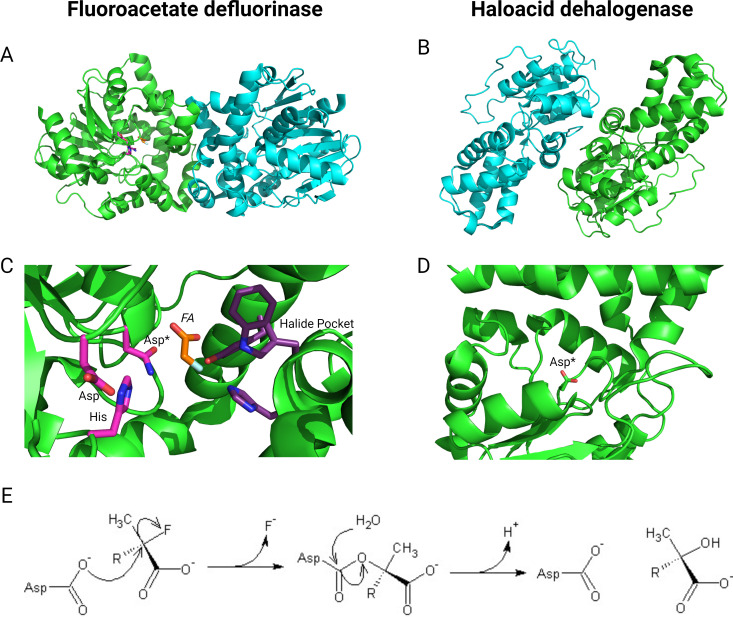
“The latter was subsequently hydrolyzed by a water molecule activated by His-272 (71).”
§ Toward the development of a molecular toolkit for the microbial remediation of per-and polyfluoroalkyl substances > ENZYMES INVOLVED IN PFAS DEFLUORINATION > Haloacid dehalogenases
What the sources say
- Supportedcites [71] Liu J-Q, Kurihara T, Ichiyama S, Miyagi M, Tsunasawa S, Kawasaki H, Soda K, Esaki N. 1998. Reaction mechanism of fluoroacetate dehalogenase from Moraxella sp. B. J Biol Chem 273: 30897– 30902. doi: 10.1074/jbc.273.47.30897 9812982 source
The Discussion (page unavailable) proposes this catalytic mechanism and states that the ester intermediate is hydrolyzed by a water molecule activated by His-272. This directly matches the step attributed to the paper. (LLM, conf=0.91)
plaindirect- Asserted: passes — The authors put it forward as true.
- Checkable: passes — It can be checked against evidence.
- Load-bearing: unclear — It is unclear whether the paper’s conclusions depend on it.
- Based: passes — The paper gives a reason why it holds.
- Supported
Every source the paper cites for this claim was checked and supports it.
In the paper
“HRP, extracted and obtained from horseradish roots, can catalyze the oxidation of phenolic acids, aromatic phenols, and non-aromatic amines using H2O2 (139).”
§ Toward the development of a molecular toolkit for the microbial remediation of per-and polyfluoroalkyl substances > ENZYMES INVOLVED IN PFAS DEFLUORINATION > Peroxidases
What the sources say
- Supportedcites [139] Bilal M, Adeel M, Rasheed T, Zhao Y, Iqbal HMN. 2019. Emerging contaminants of high concern and their enzyme-assisted biodegradation – A review. Environ Int 124: 336– 353. doi: 10.1016/j.envint.2019.01.011 30660847 source
Section 12, “HRP-assisted degradation of hazardous pollutants,” states that enzymes are extracted from horseradish roots and identifies HRP as one of them. It explicitly says HRP catalyzes oxidation of phenolic acids, aromatic phenols, and nonaromatic amines using hydrogen peroxide. (LLM, conf=0.95)
plaindirect- Asserted: passes — The authors put it forward as true.
- Checkable: passes — It can be checked against evidence.
- Load-bearing: unclear — It is unclear whether the paper’s conclusions depend on it.
- Based: passes — The paper gives a reason why it holds.
- Supported
The sources with a verdict support this claim; the rest weren’t checked yet, have no full text we could read, or their verdicts aren’t rated yet.
In the paper
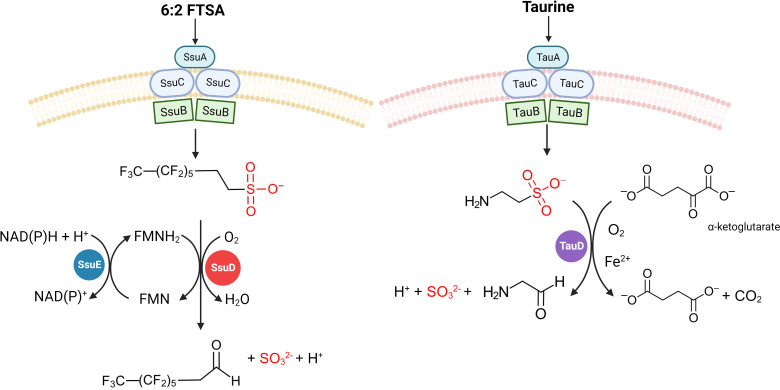
“Its activity is dependent on reduced flavin mononucleotide (FMNH2) that is provided by SsuE (an NAD(P)H-dependent FMN reductase) (158), where the reduced flavin functions as a co-substrate, instead of a bound prosthetic group (151, 154).”
§ Toward the development of a molecular toolkit for the microbial remediation of per-and polyfluoroalkyl substances > ENZYMES INVOLVED IN PFAS DEFLUORINATION > Desulfonases that may participate in fluorotelomer biodegradation
What the sources say
- Supportedcites [158] Eichhorn E, van der Ploeg JR, Leisinger T. 1999. Characterization of a two-component alkanesulfonate monooxygenase from Escherichia coli. J Biol Chem 274: 26639– 26646. doi: 10.1074/jbc.274.38.26639 10480865 source
The Results state that purified SsuD activity was absolutely dependent on SsuE, NAD(P)H, and FMN. The paper also identifies SsuE as an NAD(P)H:FMN oxidoreductase and FMNH₂ as SsuD’s reduced-flavin substrate. The separate claim about a bound prosthetic group is attached to citations (151, 154), not this source’s citation (158). (LLM, conf=0.93)
- Not checked yetcites [151] Kertesz MA. 2000. Riding the sulfur cycle–metabolism of sulfonates and sulfate esters in Gram-negative bacteria. FEMS Microbiol Rev 24: 135– 175. doi: 10.1016/S0168-6445(99)00033-9 10717312 source
Checked before — its earlier verdict is held back until a new check runs.
- Not checked — no full text of the sourcecites [154] Eichhorn E, Davey CA, Sargent DF, Leisinger T, Richmond TJ. 2002. Crystal structure of Escherichia coli alkanesulfonate monooxygenase SsuD. J Mol Biol 324: 457– 468. doi: 10.1016/s0022-2836(02)01069-0 12445781 source
plaindirect- Asserted: passes — The authors put it forward as true.
- Checkable: passes — It can be checked against evidence.
- Load-bearing: unclear — It is unclear whether the paper’s conclusions depend on it.
- Based: passes — The paper gives a reason why it holds.
- Supported
The sources with a verdict support this claim; the rest weren’t checked yet, have no full text we could read, or their verdicts aren’t rated yet.
In the paper
“The pathways associated with PFAS uptake by roots and their subsequent transportation within plants are intricate and species dependent (18, 179, 184, 185), influenced by various factors, such as PFAS properties (180, 185, 186), and environmental factors (such as pH, temperature, and soil organic carbon) [reviewed by Adu et al. (186), Mei et al. (184), and Ghisi et al. (18)].”
§ Toward the development of a molecular toolkit for the microbial remediation of per-and polyfluoroalkyl substances > OTHER MOLECULAR PROCESSES NEEDED TO SUPPORT MICROBIAL PFAS DEFLUORINATION > PFAS uptake
What the sources say
- Not checked — no full text of the sourcecites [18] Ghisi R, Vamerali T, Manzetti S. 2019. Accumulation of perfluorinated alkyl substances (PFAS) in agricultural plants: a review. Environ Res 169: 326– 341. doi: 10.1016/j.envres.2018.10.023 30502744 source
- Not checked yetcites [179] Costello MCS, Lee LS. 2020. Sources, fate, and plant uptake in agricultural systems of per- and polyfluoroalkyl substances. Curr Pollution Rep. doi: 10.1007/s40726-020-00168-y
- Supportedcites [184] Mei W, Sun H, Song M, Jiang L, Li Y, Lu W, Ying G-G, Luo C, Zhang G. 2021. Per- and polyfluoroalkyl substances (PFASs) in the soil–plant system: sorption, root uptake, and translocation. Environ Int 156: 106642. doi: 10.1016/j.envint.2021.106642 34004449 source
The Concluding remarks (section 6; page unavailable) state that PFAS transport processes and pathways are plant-species specific. Section 4.2 links translocation to PFAS properties, while sections 3.3.1–3.3.3 discuss the effects of soil organic carbon, pH, and temperature on plant uptake. (LLM, conf=0.94)
plaincorrelational- Asserted: passes — The authors put it forward as true.
- Checkable: passes — It can be checked against evidence.
- Load-bearing: unclear — It is unclear whether the paper’s conclusions depend on it.
- Based: passes — The paper gives a reason why it holds.
Every source the paper cites for this claim was checked and supports it.
In the paper
“Sulfite (60–100 µM) was detected in the reaction mixture containing crude enzymes of SsuD/SsuE and 6:2 FTSA (500 µM) with 1 hour incubation at 30℃ (73).”
§ Toward the development of a molecular toolkit for the microbial remediation of per-and polyfluoroalkyl substances > ENZYMES INVOLVED IN PFAS DEFLUORINATION > Desulfonases that may participate in fluorotelomer biodegradation
What the sources say
- Supportedcites [73] Yang SH, Shi Y, Strynar M, Chu KH. 2022. Desulfonation and defluorination of 6: 2 fluorotelomer sulfonic acid (6: 2 FTSA) by Rhodococcus jostii RHA1: carbon and sulfur sources, enzymes, and pathways. J Hazard Mater 423: 127052. doi: 10.1016/j.jhazmat.2021.127052 34523492 PMC8823295 source
The Results section reports 60–100 μM SO3− in a solution containing crude SsuD/SsuE enzymes and 500 μM 6:2 FTSA within 1 hour at 30 °C. This matches the cited sentence; the paper also tested hexanesulfonate as an alternative substrate. (LLM, conf=0.95)
plain- Asserted: passes — The authors put it forward as true.
- Checkable: passes — It can be checked against evidence.
- Load-bearing: passes — The paper’s conclusions depend on it.
- Based: passes — The paper gives a reason why it holds.
- Supported
Every source the paper cites for this claim was checked and supports it.
In the paper
“The genome of Dietzia aurantiaca J3 (strain J3), isolated from landfill leachate exposed to some PFAS (e.g., 6:2 FTSA, PFOS, PFOA, and PFHxS), contains an operon related to uptake and assimilation of organosulfonates.”
§ Toward the development of a molecular toolkit for the microbial remediation of per-and polyfluoroalkyl substances > ENZYMES INVOLVED IN PFAS DEFLUORINATION > Desulfonases that may participate in fluorotelomer biodegradation
What the sources say
- Supportedcites [162] Méndez V, Holland S, Bhardwaj S, McDonald J, Khan S, O’Carroll D, Pickford R, Richards S, O’Farrell C, Coleman N, Lee M, Manefield MJ. 2022. Aerobic biotransformation of 6: 2 fluorotelomer sulfonate by Dietzia aurantiaca J3 under sulfur-limiting conditions. Sci Total Environ 829: 154587. doi: 10.1016/j.scitotenv.2022.154587 35306084 source
Section 2.2 reports that strain J3 was isolated from landfill leachate containing 6:2 FTS, PFHxS, PFOS and PFOA. Section 3.2 identifies a six-gene cluster in its genome containing genes for alkanesulfonate transport and assimilation, supporting the claim’s description of an operon. (LLM, conf=0.93)
plainSingle case- Asserted: passes — The authors put it forward as true.
- Checkable: passes — It can be checked against evidence.
- Load-bearing: passes — The paper’s conclusions depend on it.
- Based: passes — The paper gives a reason why it holds.
- Supported
The cited sources support only part of this claim — read each source’s verdict below.
In the paper
“The ntaB annotated based on NCBI Prokaryotic Genome Annotation Pipeline (MCD2262842.1) shares 100% identity with flavin reductase family protein (WP_230929925.1) in Dietzia aurantiaca, which provides reduced flavin for desulfonation.”
§ Toward the development of a molecular toolkit for the microbial remediation of per-and polyfluoroalkyl substances > ENZYMES INVOLVED IN PFAS DEFLUORINATION > Desulfonases that may participate in fluorotelomer biodegradation
What the sources say
- Partly supportedcites [162] Méndez V, Holland S, Bhardwaj S, McDonald J, Khan S, O’Carroll D, Pickford R, Richards S, O’Farrell C, Coleman N, Lee M, Manefield MJ. 2022. Aerobic biotransformation of 6: 2 fluorotelomer sulfonate by Dietzia aurantiaca J3 under sulfur-limiting conditions. Sci Total Environ 829: 154587. doi: 10.1016/j.scitotenv.2022.154587 35306084 sourceExperimental — accuracy not yet measured
Section 3.2 identifies a nitrilotriacetate monooxygenase component B in D. aurantiaca J3 as SsuE, a flavin reductase. The Discussion says SsuE supplies reduced flavin to the monooxygenase involved in sulfonate cleavage. The paper does not establish the claimed ntaB annotation, either protein accession, or their 100% identity; its genome annotation methods instead name Prokka and RAST. (LLM, conf=0.86)
plaindirect- Asserted: passes — The authors put it forward as true.
- Checkable: passes — It can be checked against evidence.
- Load-bearing: unclear — It is unclear whether the paper’s conclusions depend on it.
- Based: passes — The paper gives a reason why it holds.
- Partly supported
Every source the paper cites for this claim was checked and supports it.
In the paper
“Proteomics, where strain J3 grew amended with 6:2 FTSA and MgSO4 as sulfur sources, respectively, revealed that putative enzymes capable of transporting and desulfonating 6:2 FTSA were significantly upregulated (162).”
§ Toward the development of a molecular toolkit for the microbial remediation of per-and polyfluoroalkyl substances > ENZYMES INVOLVED IN PFAS DEFLUORINATION > Desulfonases that may participate in fluorotelomer biodegradation
What the sources say
- Supportedcites [162] Méndez V, Holland S, Bhardwaj S, McDonald J, Khan S, O’Carroll D, Pickford R, Richards S, O’Farrell C, Coleman N, Lee M, Manefield MJ. 2022. Aerobic biotransformation of 6: 2 fluorotelomer sulfonate by Dietzia aurantiaca J3 under sulfur-limiting conditions. Sci Total Environ 829: 154587. doi: 10.1016/j.scitotenv.2022.154587 35306084 source
Section 2.8 describes J3 cultures grown with either 6:2 FTS or MgSO4 as the sulfur source. Section 3.3 reports that putative alkanesulfonate transport and transformation proteins were significantly upregulated in the 6:2 FTS-grown cells relative to the MgSO4-grown controls. (LLM, conf=0.94)
hedgedcorrelationalSingle case- Asserted: passes — The authors put it forward as true.
- Checkable: passes — It can be checked against evidence.
- Load-bearing: passes — The paper’s conclusions depend on it.
- Based: passes — The paper gives a reason why it holds.
- Supported
Every source the paper cites for this claim was checked and supports it.
In the paper
“Strain RHA1, a pure strain isolated from γ-hexachlorocyclohexane-contaminated soil, is capable of desulfonating and defluorinating 6:2 FTSA, where 6:2 FTSA is used as a sole sulfur source to support growth (73).”
§ Toward the development of a molecular toolkit for the microbial remediation of per-and polyfluoroalkyl substances > ENZYMES INVOLVED IN PFAS DEFLUORINATION > Desulfonases that may participate in fluorotelomer biodegradation
What the sources say
- Supportedcites [73] Yang SH, Shi Y, Strynar M, Chu KH. 2022. Desulfonation and defluorination of 6: 2 fluorotelomer sulfonic acid (6: 2 FTSA) by Rhodococcus jostii RHA1: carbon and sulfur sources, enzymes, and pathways. J Hazard Mater 423: 127052. doi: 10.1016/j.jhazmat.2021.127052 34523492 PMC8823295 source
The Introduction identifies RHA1 as a strain isolated from γ-hexachlorocyclohexane-contaminated soil. The Results report growth with 6:2 FTSA as the sole sulfur source and fluoride release under sulfur-free conditions; the Discussion states that RHA1 biotransformed 6:2 FTSA via desulfonation and defluorination under those conditions. No page numbers are provided in our copy. (LLM, conf=0.94)
plaindirectSingle case- Asserted: passes — The authors put it forward as true.
- Checkable: passes — It can be checked against evidence.
- Load-bearing: passes — The paper’s conclusions depend on it.
- Based: passes — The paper gives a reason why it holds.
- Supported
- It may state two separate claims as one. 56
- Probably not a substantial claim. 63
- The quote only partly states this claim. 1
At least one cited source doesn’t support this claim or points to a different paper, and none confirmed it — see the verdicts below.
In the paper
“However, the aldehyde product was not observed in these reactions, which is necessary to confirm the desulfonation of 6:2 FTSA by SsuD/SsuE in strain RHA1.”
§ Toward the development of a molecular toolkit for the microbial remediation of per-and polyfluoroalkyl substances > ENZYMES INVOLVED IN PFAS DEFLUORINATION > Desulfonases that may participate in fluorotelomer biodegradation
What the sources say
- Disputedcites [73] Yang SH, Shi Y, Strynar M, Chu KH. 2022. Desulfonation and defluorination of 6: 2 fluorotelomer sulfonic acid (6: 2 FTSA) by Rhodococcus jostii RHA1: carbon and sulfur sources, enzymes, and pathways. J Hazard Mater 423: 127052. doi: 10.1016/j.jhazmat.2021.127052 34523492 PMC8823295 sourceExperimental — accuracy not yet measured
In Results, under “Effects of carbon and sulfur sources,” the paper reports sulfite production in the SsuD/SsuE assays and explicitly says this confirmed desulfonation of 6:2 FTSA. It does not say that observing an aldehyde is necessary for confirmation. A separate Results section, “A proposed biotransformation pathway,” says the study’s method could not detect the proposed downstream aldehyde, 6:2 FTAL; no page numbers are available in our copy. (LLM, conf=0.85)
Checked by a reasoning model — may be wrong.
plain- Asserted: passes — The authors put it forward as true.
- Checkable: passes — It can be checked against evidence.
- Load-bearing: unclear — It is unclear whether the paper’s conclusions depend on it.
- Based: passes — The paper gives a reason why it holds.
It may state two separate claims as one.
- Disputed
The cited sources support only part of this claim — read each source’s verdict below.
In the paper
“2-Fluoroacid dehalogenases (often referred to as fluoroacetate dehalogenases) exhibit enzymatic defluorinase activity and often possess activity against other haloalkanoic acids, such as chloroacetate, albeit often with lower efficacy than with fluoroacetate (54–56).”
§ Toward the development of a molecular toolkit for the microbial remediation of per-and polyfluoroalkyl substances > ENZYMES INVOLVED IN PFAS DEFLUORINATION > Haloacid dehalogenases
What the sources say
- Partly supportedcites [54] Kawasaki H, Tone N, Tonomura K. 1981. Plasmid-determined dehalogenation of haloacetates in Moraxella species. Agric Biol Chem 45: 29– 34. doi: 10.1271/bbb1961.45.29 sourceExperimental — accuracy not yet measured
The Abstract and the Drug-resistancy section report that Moraxella halidohydrolase 1 acts on both fluoroacetate and chloroacetate, supporting the defluorination and cross-substrate activity. The Discussion says enzymes from two Pseudomonas strains favored fluoroacetate over other haloacetates, but our copy does not establish that lower activity against chloroacetate is generally common or that it applies to the Moraxella enzyme. (LLM, conf=0.84)
- Not matchedcites [55] Kawasaki H, Miyoshi K, Tonomura K. 1981. Purification, crystallization and properties of haloacetate halidohydrolase from Pseudomonas species. Agric Biol Chem 45: 543– 544. doi: 10.1271/bbb1961.45.543
Couldn’t be matched to a paper in Crossref, so it can’t be checked.
- Not checked — no full text of the sourcecites [56] Kurihara T, Yamauchi T, Ichiyama S, Takahata H, Esaki N. 2003. Purification, characterization, and gene cloning of a novel fluoroacetate dehalogenase from Burkholderia sp. FA1. J Mol Catal B: Enzym 23: 347– 355. doi: 10.1016/S1381-1177(03)00098-5 source
hedgeddirect- Asserted: passes — The authors put it forward as true.
- Checkable: passes — It can be checked against evidence.
- Load-bearing: unclear — It is unclear whether the paper’s conclusions depend on it.
- Based: passes — The paper gives a reason why it holds.
It may state two separate claims as one.
- Partly supported
Every source the paper cites for this claim was checked and supports it.
In the paper
“PFAS have been widely employed in numerous industrial and consumer applications since the 1950s due to their exceptional physicochemical properties, including hydrophobicity, lipophobicity, and thermal stability (2–4).”
§ Toward the development of a molecular toolkit for the microbial remediation of per-and polyfluoroalkyl substances > INTRODUCTION
What the sources say
- Supportedcites [2] Buck RC, Franklin J, Berger U, Conder JM, Cousins IT, de Voogt P, Jensen AA, Kannan K, Mabury SA, van Leeuwen SPJ. 2011. Perfluoroalkyl and polyfluoroalkyl substances in the environment: terminology, classification, and origins. Integr Environ Assess Manag 7: 513– 541. doi: 10.1002/ieam.258 21793199 PMC3214619 source
The Introduction states that PFASs have been widely used in industrial and commercial applications since 1950. It also attributes the useful properties of PFAS-containing surfactants and polymers to the perfluoroalkyl moiety’s chemical and thermal stability, hydrophobicity, and lipophobicity, and gives consumer-product examples. (LLM, conf=0.94)
- Supportedcites [3] Glüge J, Scheringer M, Cousins IT, DeWitt JC, Goldenman G, Herzke D, Lohmann R, Ng CA, Trier X, Wang Z. 2020. An overview of the uses of per- and polyfluoroalkyl substances (PFAS). Environ Sci Process Impacts 22: 2345– 2373. doi: 10.1039/d0em00291g 33125022 PMC7784712 source
The Introduction (page not provided) says PFAS have been produced since the 1940s and used in a broad range of consumer products and industrial applications. It also identifies hydrophobicity, oleophobicity, stability, and performance across wide temperature ranges as reasons for their use. The paper gives an earlier starting date than the claim’s 1950s, but supports the claim’s account of longstanding, widespread use. (LLM, conf=0.90)
- Supportedcites [4] Gaines LGT. 2023. Historical and current usage of per- and polyfluoroalkyl substances (PFAS): a literature review. Am J Ind Med 66: 353– 378. doi: 10.1002/ajim.23362 35614869 source
The Conclusion states that PFAS’ particular properties have led to a wide variety of consumer and industrial applications since at least the 1950s. The Textiles section describes water and oil repellency, and the Medical uses section describes a fluorinated coating that increases thermal stability, hydrophobicity, and oleophobicity. (LLM, conf=0.93)
plaindirect- Asserted: passes — The authors put it forward as true.
- Checkable: passes — It can be checked against evidence.
- Load-bearing: fails — The paper’s conclusions may not depend on it.
- Based: passes — The paper gives a reason why it holds.
Probably not a substantial claim. The paper’s conclusions may not depend on it.
- Supported
The cited sources support only part of this claim — read each source’s verdict below.
In the paper
“Consequently, both wildlife and humans are subject to exposure to PFAS contamination (19–24).”
§ Toward the development of a molecular toolkit for the microbial remediation of per-and polyfluoroalkyl substances > INTRODUCTION
What the sources say
- Partly supportedcites [19] Pitter G, Da Re F, Canova C, Barbieri G, Zare Jeddi M, Daprà F, Manea F, Zolin R, Bettega AM, Stopazzolo G, Vittorii S, Zambelli L, Martuzzi M, Mantoan D, Russo F. 2020. Serum levels of perfluoroalkyl substances (PFAS) in adolescents and young adults exposed to contaminated drinking water in the Veneto region, Italy: a cross-sectional study based on a health surveillance program. Environ Health Perspect 128: 27007. doi: 10.1289/EHP5337 32068468 PMC7064325 sourceExperimental — accuracy not yet measured
The Introduction and Discussion describe human PFAS exposure through contaminated drinking water, and the Results report PFAS in participants’ serum. The Introduction discusses bioaccumulation in organisms and PFAS elimination in animals, but it does not specifically establish exposure of wildlife to PFAS contamination. (LLM, conf=0.82)
- Not checked — no full text of the sourcecites [20] Domingo JL, Nadal M. 2019. Human exposure to per-and polyfluoroalkyl substances (PFAS) through drinking water: a review of the recent scientific literature. Environ Res 177: 108648. doi: 10.1016/j.envres.2019.108648 31421451 source
- Not checked — no full text of the sourcecites [21] Sörengård M, Bergström S, McCleaf P, Wiberg K, Ahrens L. 2022. Long-distance transport of per-and polyfluoroalkyl substances (PFAS) in a Swedish drinking water aquifer. Environ Pollut 311: 119981. doi: 10.1016/j.envpol.2022.119981 35988673 source
- Not checked — no full text of the sourcecites [22] Lee K, Alava JJ, Cottrell P, Cottrell L, Grace R, Zysk I, Raverty S. 2023. Emerging contaminants and new POPs (PFAS and HBCDD) in endangered southern resident and bigg’s (transient) killer whales (Orcinus orca): in utero maternal transfer and pollution management implications. Environ Sci Technol 57: 360– 374. doi: 10.1021/acs.est.2c04126 36512803 source
- Partly supportedcites [23] Muensterman DJ, Cahuas L, Titaley IA, Schmokel C, De la Cruz FB, Barlaz MA, Carignan CC, Peaslee GF, Field JA. 2022. Per- and polyfluoroalkyl substances (PFAS) in facemasks: potential source of human exposure to PFAS with implications for disposal to landfills. Environ Sci Technol Lett 9: 320– 326. doi: 10.1021/acs.estlett.2c00019 37599856 PMC10438898 sourceExperimental — accuracy not yet measured
The Introduction (page not available) identifies facemasks as a potential source of human PFAS exposure, and the PFAS Exposure Estimation methods model that exposure. The Landfill and Wastewater Environment Implications section estimates PFAS release to leachate and wastewater, but does not address wildlife exposure; that part of the claim is unsupported by our copy. (LLM, conf=0.84)
- Supportedcites [24] De Silva AO, Armitage JM, Bruton TA, Dassuncao C, Heiger-Bernays W, Hu XC, Kärrman A, Kelly B, Ng C, Robuck A, Sun M, Webster TF, Sunderland EM. 2021. PFAS exposure pathways for humans and wildlife: a synthesis of current knowledge and key gaps in understanding. Environ Toxicol Chem 40: 631– 657. doi: 10.1002/etc.4935 33201517 PMC7906948 source
The paper’s wildlife occurrence section reports elevated PFAS exposures across numerous animal groups. Its section on communities near contaminated sites reports human exposure through contaminated drinking water. Together, these passages support the claim that both wildlife and humans are exposed to PFAS contamination. (LLM, conf=0.94)
plaincorrelational- Asserted: passes — The authors put it forward as true.
- Checkable: passes — It can be checked against evidence.
- Load-bearing: fails — The paper’s conclusions may not depend on it.
- Based: passes — The paper gives a reason why it holds.
Probably not a substantial claim. The paper’s conclusions may not depend on it. It may state two separate claims as one.
- Partly supported
The cited sources support only part of this claim — read each source’s verdict below.
In the paper
“Numerous epidemiological and mechanistic investigations have implied a connection between exposure to PFAS and a wide range of diseases, such as altered immune function, adverse reproductive effects, liver and kidney damage, obesity, and cancers (25–31).”
§ Toward the development of a molecular toolkit for the microbial remediation of per-and polyfluoroalkyl substances > INTRODUCTION
What the sources say
- Partly supportedcites [25] Ehrlich V, Bil W, Vandebriel R, Granum B, Luijten M, Lindeman B, Grandjean P, Kaiser A-M, Hauzenberger I, Hartmann C, Gundacker C, Uhl M. 2023. Consideration of pathways for immunotoxicity of per-and polyfluoroalkyl substances (PFAS). Environ Health 22: 19. doi: 10.1186/s12940-022-00958-5 36814257 PMC9944481 sourceExperimental — accuracy not yet measured
The Conclusions (page not available) report epidemiological and mechanistic evidence that PFAS exposure alters immune function. The paper focuses on immunotoxicity; the passages reviewed do not support the full attributed list of adverse reproductive effects, liver and kidney damage, obesity, and cancers. (LLM, conf=0.88)
- Supportedcites [26] Fenton SE, Ducatman A, Boobis A, DeWitt JC, Lau C, Ng C, Smith JS, Roberts SM. 2021. Per‐and polyfluoroalkyl substance toxicity and human health review: current state of knowledge and strategies for informing future research. Environ Toxicol Chem 40: 606– 630. doi: 10.1002/etc.4890 33017053 PMC7906952 source
The review’s Immune function and Reproductive and developmental outcomes sections link PFAS exposure to immune suppression and adverse reproductive outcomes. Its Liver disease and cancer, Kidney disease, uric acid, and kidney cancer, and Obesity sections report evidence of the other listed associations, while noting uncertainty and mixed findings for some outcomes. The citing sentence’s cautious wording, “implied a connection,” reflects those qualifications; page numbers were not available in our copy. (LLM, conf=0.92)
- Partly supportedcites [27] Rickard BP, Rizvi I, Fenton SE. 2022. Per- and poly-fluoroalkyl substances (PFAS) and female reproductive outcomes: PFAS elimination, endocrine-mediated effects, and disease. Toxicology 465: 153031. doi: 10.1016/j.tox.2021.153031 34774661 PMC8743032 sourceExperimental — accuracy not yet measured
The sections on female reproductive tract disease and the breast (page unavailable) report associations between PFAS exposure and adverse reproductive outcomes and some cancers. The paper also discusses metabolic effects, but the passages found do not support the specific claims about altered immune function, liver or kidney damage, or obesity. (LLM, conf=0.86)
- Partly supportedcites [28] Bassler J, Ducatman A, Elliott M, Wen S, Wahlang B, Barnett J, Cave MC. 2019. Environmental perfluoroalkyl acid exposures are associated with liver disease characterized by apoptosis and altered serum adipocytokines. Environ Pollut 247: 1055– 1063. doi: 10.1016/j.envpol.2019.01.064 30823334 PMC6404528 sourceExperimental — accuracy not yet measured
The Introduction describes PFAS as immunotoxic and hepatotoxic and discusses epidemiological associations with liver enzymes and experimental effects on immune function and liver cells. The Discussion addresses altered adipokines and obesity-related disease, but not a clear PFAS–obesity association. The passages reviewed do not establish the claimed links to adverse reproductive effects, kidney damage, or cancers. (LLM, conf=0.86)
- Not checked — no full text of the sourcecites [29] Geiger SD, Yao P, Vaughn MG, Qian Z. 2021. PFAS exposure and overweight/obesity among children in a nationally representative sample. Chemosphere 268: 128852. doi: 10.1016/j.chemosphere.2020.128852 33223205 source
- Partly supportedcites [30] Zhang X, Flaws JA, Spinella MJ, Irudayaraj J. 2022. The relationship between typical environmental endocrine disruptors and kidney disease. Toxics 11: 32. doi: 10.3390/toxics11010032 36668758 PMC9863798 sourceExperimental — accuracy not yet measured
Section 3.3 reports epidemiological associations between PFAS exposure and kidney cancer, along with studies of renal injury mechanisms; it also mentions emerging evidence concerning other cancers. The passages do not establish the claimed links to adverse reproductive effects, obesity, or liver damage, and altered immune function appears only in a reference title. Section 3.2 also notes conflicting evidence on chronic kidney disease. (LLM, conf=0.87)
- Partly supportedcites [31] Boyd RI, Ahmad S, Singh R, Fazal Z, Prins GS, Madak Erdogan Z, Irudayaraj J, Spinella MJ. 2022. Toward a mechanistic understanding of poly-and perfluoroalkylated substances and cancer. Cancers (Basel) 14: 2919. doi: 10.3390/cancers14122919 35740585 PMC9220899 sourceExperimental — accuracy not yet measured
The Introduction links PFAS exposure to several cancers, section 2.1 describes liver toxicity and metabolic effects, and section 2.2 reports adverse reproductive effects. The cited paper does not establish the other listed connections—altered immune function, non-cancer kidney damage, or obesity. Its discussion of kidney cancer is not evidence of kidney damage generally. (LLM, conf=0.85)
hedgedcorrelational- Asserted: passes — The authors put it forward as true.
- Checkable: passes — It can be checked against evidence.
- Load-bearing: fails — The paper’s conclusions may not depend on it.
- Based: passes — The paper gives a reason why it holds.
Probably not a substantial claim. The paper’s conclusions may not depend on it.
- Partly supported
The sources with a verdict support this claim; the rest weren’t checked yet, have no full text we could read, or their verdicts aren’t rated yet.
In the paper
“Due to the extensive use and consequent discharge, PFAS have been identified in a range of environmental contexts, such as drinking water (7, 8), surface and groundwater (9, 10), soils (11, 12), wastewater (13, 14), landfills (15), remote areas (far from any local point sources, e.g., Arctic environment) (16, 17), and agricultural plants (18).”
§ Toward the development of a molecular toolkit for the microbial remediation of per-and polyfluoroalkyl substances > INTRODUCTION
What the sources say
- Supportedcites [7] Mussabek D, Söderman A, Imura T, Persson KM, Nakagawa K, Ahrens L, Berndtsson R. 2022. PFAS in the drinking water source: analysis of the contamination levels, origin and emission rates. Water 15: 137. doi: 10.3390/w15010137 source
The cited paper is offered for the surface- and groundwater portion of the sentence, not the entire list of environmental contexts. Its Introduction discusses PFAS transport in both surface water and groundwater, and its Conclusions report measured PFAS contamination in groundwater. (LLM, conf=0.91)
- Supportedcites [8] Liu L, Qu Y, Huang J, Weber R. 2021. Per-and polyfluoroalkyl substances (PFASs) in Chinese drinking water: risk assessment and geographical distribution. Environ Sci Eur 33: 6. doi: 10.1186/s12302-020-00425-3 source
This source is cited for the drinking-water example (references 7 and 8), not for every environment listed in the sentence. The Background reports PFAS detection in drinking water, including in China. (LLM, conf=0.94)
- Supportedcites [9] Johnson GR, Brusseau ML, Carroll KC, Tick GR, Duncan CM. 2022. Global distributions, source-type dependencies, and concentration ranges of per-and polyfluoroalkyl substances in groundwater. Sci Total Environ 841: 156602. doi: 10.1016/j.scitotenv.2022.156602 35690215 PMC9653090 source
The citation is attached to “surface and groundwater,” not the sentence’s entire list of environmental contexts. The Conclusion reports the widespread presence of PFAS in both surface water and groundwater. (LLM, conf=0.93)
- Not checked — no full text of the sourcecites [10] Sims JL, Stroski KM, Kim S, Killeen G, Ehalt R, Simcik MF, Brooks BW. 2022. Global occurrence and probabilistic environmental health hazard assessment of per-and polyfluoroalkyl substances (PFASs) in groundwater and surface waters. Sci Total Environ 816: 151535. doi: 10.1016/j.scitotenv.2021.151535 34762945 source
- Supportedcites [11] Brusseau ML, Anderson RH, Guo B. 2020. PFAS concentrations in soils: background levels versus contaminated sites. Sci Total Environ 740: 140017. doi: 10.1016/j.scitotenv.2020.140017 32927568 PMC7654437 source
This source is cited alongside the sentence’s claim about soils, not the full list of environmental contexts. The Abstract reports PFAS in soil at almost every site tested, including remote regions, and the Results (section 3.2) report measurable levels across varied soil-sampling locations. (LLM, conf=0.94)
- Not checked — no full text of the sourcecites [12] Zhu Q, Qian J, Huang S, Li Q, Guo L, Zeng J, Zhang W, Cao X, Yang J. 2022. Occurrence, distribution, and input pathways of per- and polyfluoroalkyl substances in soils near different sources in Shanghai. Environ Pollut 308: 119620. doi: 10.1016/j.envpol.2022.119620 35709920 source
plain- Asserted: passes — The authors put it forward as true.
- Checkable: passes — It can be checked against evidence.
- Load-bearing: fails — The paper’s conclusions may not depend on it.
- Based: passes — The paper gives a reason why it holds.
Probably not a substantial claim. The paper’s conclusions may not depend on it.
- Supported
The cited sources support only part of this claim — read each source’s verdict below.
In the paper
“However, of the 4,730 PFAS with CAS registry numbers, only 256 are considered commercially relevant (5, 6).”
§ Toward the development of a molecular toolkit for the microbial remediation of per-and polyfluoroalkyl substances > INTRODUCTION
What the sources say
- Could not verifycites [5] Williams AJ, Gaines LGT, Grulke CM, Lowe CN, Sinclair GFB, Samano V, Thillainadarajah I, Meyer B, Patlewicz G, Richard AM. 2022. Assembly and curation of lists of per- and polyfluoroalkyl substances (PFAS) to support environmental science research. Front Environ Sci 10: 1– 13. doi: 10.3389/fenvs.2022.850019 PMC9350880 35936994 sourceExperimental — accuracy not yet measured
The Introduction (Background; page unavailable) discusses PFAS in commerce, and the Results (page unavailable) give counts under different PFAS definitions. Neither reports 4,730 PFAS with CAS registry numbers or identifies 256 as commercially relevant. Searches for both numbers and commercial relevance found no passage establishing the claimed comparison. (LLM, conf=0.72)
- Supportedcites [6] Buck RC, Korzeniowski SH, Laganis E, Adamsky F. 2021. Identification and classification of commercially relevant per- and poly-fluoroalkyl substances (PFAS). Integr Environ Assess Manag 17: 1045– 1055. doi: 10.1002/ieam.4450 33991049 PMC9292543 source
The Materials and Methods section identifies the list as 4,730 PFAS-related CAS numbers. The Summary and Conclusions section states that the study identified 256 of those substances as commercially relevant, based on input from three major global producers. (LLM, conf=0.94)
plain- Asserted: passes — The authors put it forward as true.
- Checkable: passes — It can be checked against evidence.
- Load-bearing: fails — The paper’s conclusions may not depend on it.
- Based: passes — The paper gives a reason why it holds.
Probably not a substantial claim. The paper’s conclusions may not depend on it.
- Could not verify
The cited sources support only part of this claim — read each source’s verdict below.
In the paper
“Furthermore, the crystallographic findings reveal that both FA1 and RPA1163 are homodimer proteins, belonging to α/β hydrolase superfamily (67, 68).”
§ Toward the development of a molecular toolkit for the microbial remediation of per-and polyfluoroalkyl substances > ENZYMES INVOLVED IN PFAS DEFLUORINATION > Haloacid dehalogenases
What the sources say
- Partly supportedcites [67] Chan PWY, Yakunin AF, Edwards EA, Pai EF. 2011. Mapping the reaction coordinates of enzymatic defluorination. J Am Chem Soc 133: 7461– 7468. doi: 10.1021/ja200277d 21510690 PMC3101105 sourceExperimental — accuracy not yet measured
The Results and Discussion section, “Overall Structure of RPA1163” (page unavailable), explicitly describes RPA1163 as a homodimer with an α/β hydrolase fold. It compares RPA1163 with a Burkholderia FAcD, but does not identify that enzyme as FA1 or state that FA1 is homodimeric. The FA1 portion therefore remains unsupported by this source. (LLM, conf=0.86)
- Not checked — no full text of the sourcecites [68] Jitsumori K, Omi R, Kurihara T, Kurata A, Mihara H, Miyahara I, Hirotsu K, Esaki N. 2009. X-Ray crystallographic and mutational studies of fluoroacetate dehalogenase from Burkholderia sp. strain FA1. J Bacteriol 191: 2630– 2637. doi: 10.1128/JB.01654-08 19218394 PMC2668400 source
plain- Asserted: passes — The authors put it forward as true.
- Checkable: passes — It can be checked against evidence.
- Load-bearing: unclear — It is unclear whether the paper’s conclusions depend on it.
- Based: passes — The paper gives a reason why it holds.
It may state two separate claims as one.
- Partly supported
The cited sources support only part of this claim — read each source’s verdict below.
In the paper
“Reductive dehalogenation of organochlorides, bromides, and iodides has been demonstrated in biochemical and microbiological studies (86).”
§ Toward the development of a molecular toolkit for the microbial remediation of per-and polyfluoroalkyl substances > ENZYMES INVOLVED IN PFAS DEFLUORINATION > Reductive dehalogenases
What the sources say
- Partly supportedcites [86] Fincker M, Spormann AM. 2017. Biochemistry of catabolic reductive dehalogenation. Annu Rev Biochem 86: 357– 386. doi: 10.1146/annurev-biochem-061516-044829 28654328 sourceExperimental — accuracy not yet measured
Section 2.3 (Substrate Range and Specificity; page unavailable) reports characterized reductive dehalogenases acting on chlorinated and brominated organic compounds, supporting those parts of the claim. The copy does not report reductive dehalogenation of organoiodides; the iodide-cobalamin signal mentioned in Figure 5 does not establish that reaction. (LLM, conf=0.85)
boosteddirect- Asserted: passes — The authors put it forward as true.
- Checkable: passes — It can be checked against evidence.
- Load-bearing: fails — The paper’s conclusions may not depend on it.
- Based: passes — The paper gives a reason why it holds.
Probably not a substantial claim. The paper’s conclusions may not depend on it.
- Partly supported
Every source the paper cites for this claim was checked and supports it.
In the paper
“One line of evidence against the feasibility of reductive defluorination of PFAS is that the redox midpoint potential of organofluorides may be too low to yield energy when used as terminal electron acceptors for biologically relevant electron donors (46).”
§ Toward the development of a molecular toolkit for the microbial remediation of per-and polyfluoroalkyl substances > ENZYMES INVOLVED IN PFAS DEFLUORINATION > Reductive dehalogenases
What the sources say
- Supportedcites [46] Wackett LP. 2021. Why is the biodegradation of polyfluorinated compounds so rare? mSphere 6: e0072121. doi: 10.1128/mSphere.00721-21 34643420 PMC8513679 source
The PERSPECTIVE section says that the reduction potential of many polyfluorinated compounds is negative, making them unable to serve as final electron acceptors. It contrasts this with reductive dechlorination, whose sufficiently positive potential can support ATP-generating electron transport. This supports the cited sentence’s proposed energetic obstacle to reductive defluorination. (LLM, conf=0.92)
hedgedconditional- Asserted: passes — The authors put it forward as true.
- Checkable: passes — It can be checked against evidence.
- Load-bearing: fails — The paper’s conclusions may not depend on it.
- Based: passes — The paper gives a reason why it holds.
Probably not a substantial claim. The paper’s conclusions may not depend on it.
- Supported
The cited sources support only part of this claim — read each source’s verdict below.
In the paper
“Laccases catalyze the oxidation of various substrates via a single-electron transfer, involving a chemical mediator.”
§ Toward the development of a molecular toolkit for the microbial remediation of per-and polyfluoroalkyl substances > ENZYMES INVOLVED IN PFAS DEFLUORINATION > Laccases
What the sources say
- Partly supportedcites [145] Gu Y, Yuan L, Jia L, Xue P, Yao H. 2021. Recent developments of a co-immobilized laccase–mediator system: a review. RSC Adv 11: 29498– 29506. doi: 10.1039/d1ra05104k 35479547 PMC9040808 sourceExperimental — accuracy not yet measured
The Laccase section describes oxidation of various substrates through single-electron reactions. The Laccase–mediator system section says chemical mediators can extend the range of substrates, but also describes laccase oxidizing some substrates directly. Thus, the source does not support implying that a chemical mediator is involved in every such reaction; page numbers are not provided in our copy. (LLM, conf=0.84)
- Partly supportedcites [146] Rodríguez-Delgado MM, Alemán-Nava GS, Rodríguez-Delgado JM, Dieck-Assad G, Martínez-Chapa SO, Barceló D, Parra R. 2015. Laccase-based biosensors for detection of phenolic compounds. Trends Analyt Chem 74: 21– 45. doi: 10.1016/j.trac.2015.05.008 sourceExperimental — accuracy not yet measured
Section 2.2 describes laccases oxidizing various substrates through electron transfer and explains that mediator compounds enable indirect oxidation of substrates laccases cannot oxidize directly. It does not say a chemical mediator is involved in oxidation generally; laccases can oxidize other substrates directly. The paper describes four-electron reduction of oxygen alongside the electron-transfer step. (LLM, conf=0.88)
plaindirect- Asserted: passes — The authors put it forward as true.
- Checkable: passes — It can be checked against evidence.
- Load-bearing: fails — The paper’s conclusions may not depend on it.
- Based: passes — The paper gives a reason why it holds.
Probably not a substantial claim. The paper’s conclusions may not depend on it.
- Partly supported
The cited sources support only part of this claim — read each source’s verdict below.
In the paper
“Specifically, they oxidize suitable redox mediators through a single-electron transfer mediated by the copper site, forming a free radical cation.”
§ Toward the development of a molecular toolkit for the microbial remediation of per-and polyfluoroalkyl substances > ENZYMES INVOLVED IN PFAS DEFLUORINATION > Laccases
What the sources say
- Supportedcites [145] Gu Y, Yuan L, Jia L, Xue P, Yao H. 2021. Recent developments of a co-immobilized laccase–mediator system: a review. RSC Adv 11: 29498– 29506. doi: 10.1039/d1ra05104k 35479547 PMC9040808 source
The Laccase section says that laccase oxidizes a redox substrate by single-electron transfer mediated by T1 copper, forming a free-radical cation. The Laccase–mediator system section states that laccase oxidizes mediators. Together, these passages support the paraphrase. (LLM, conf=0.91)
- Partly supportedcites [146] Rodríguez-Delgado MM, Alemán-Nava GS, Rodríguez-Delgado JM, Dieck-Assad G, Martínez-Chapa SO, Barceló D, Parra R. 2015. Laccase-based biosensors for detection of phenolic compounds. Trends Analyt Chem 74: 21– 45. doi: 10.1016/j.trac.2015.05.008 sourceExperimental — accuracy not yet measured
Section 2.2 describes electron transfer at the T1 copper site and says laccase–mediator compounds act as intermediate substrates for laccase. It does not say that oxidation of a mediator forms a free radical cation, so that product is unsupported by our copy. No page number is available for the passage. (LLM, conf=0.85)
plaindirect- Asserted: passes — The authors put it forward as true.
- Checkable: passes — It can be checked against evidence.
- Load-bearing: fails — The paper’s conclusions may not depend on it.
- Based: passes — The paper gives a reason why it holds.
Probably not a substantial claim. The paper’s conclusions may not depend on it.
- Supported
The sources with a verdict support this claim; the rest weren’t checked yet, have no full text we could read, or their verdicts aren’t rated yet.
In the paper
“In addition to following a similar catalytic cycle (e.g., HRP or LiP), MnP uses Mn2+ ions as electron donors, wherein these ions are oxidized to Mn3+ ions using H2O2.”
§ Toward the development of a molecular toolkit for the microbial remediation of per-and polyfluoroalkyl substances > ENZYMES INVOLVED IN PFAS DEFLUORINATION > Peroxidases
What the sources say
- Not checked — no full text of the sourcecites [134] Morsi R, Bilal M, Iqbal HMN, Ashraf SS. 2020. Laccases and peroxidases: the smart, greener and futuristic biocatalytic tools to mitigate recalcitrant emerging pollutants. Sci Total Environ 714: 136572. doi: 10.1016/j.scitotenv.2020.136572 31986384 source
- Supportedcites [141] Khan MF, Hof C, Niemcová P, Murphy CD. 2023. Recent advances in fungal xenobiotic metabolism: enzymes and applications. World J Microbiol Biotechnol 39: 296. doi: 10.1007/s11274-023-03737-7 37658215 PMC10474215 source
The Peroxidases (EC 1.11.1.x) section states that MnP oxidizes Mn2+ to Mn3+ using H2O2. It also describes a catalytic cycle shared by peroxidases, including LiP. (LLM, conf=0.94)
plaindirect- Asserted: passes — The authors put it forward as true.
- Checkable: passes — It can be checked against evidence.
- Load-bearing: fails — The paper’s conclusions may not depend on it.
- Based: passes — The paper gives a reason why it holds.
Probably not a substantial claim. The paper’s conclusions may not depend on it. It may state two separate claims as one.
The cited sources support only part of this claim — read each source’s verdict below.
In the paper
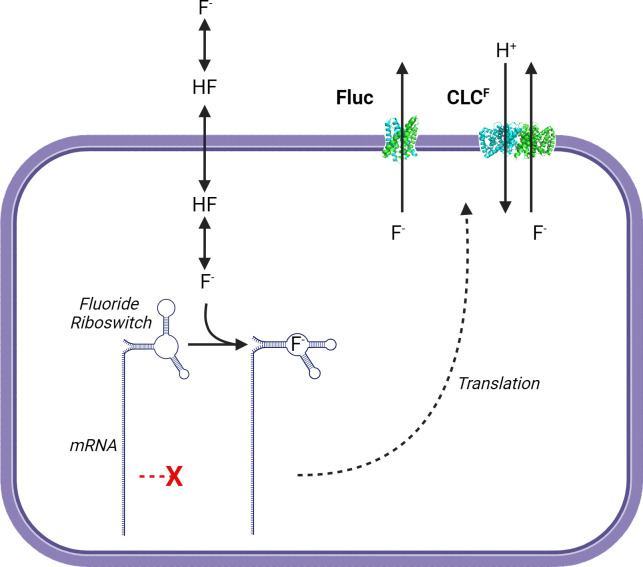
“When coupled to a reporter system, the fluoride riboswitch has also been shown to have utility as a sensitive and biocompatible fluoride sensor that can be used in living bacteria or in wholly in vitro systems (170, 173).”
§ Toward the development of a molecular toolkit for the microbial remediation of per-and polyfluoroalkyl substances > OTHER MOLECULAR PROCESSES NEEDED TO SUPPORT MICROBIAL PFAS DEFLUORINATION > Resistance to intracellular fluoride
What the sources say
- Partly supportedcites [170] Baker JL, Sudarsan N, Weinberg Z, Roth A, Stockbridge RB, Breaker RR. 2012. Widespread genetic switches and toxicity resistance proteins for fluoride. Science 335: 233– 235. doi: 10.1126/science.1215063 22194412 PMC4140402 sourceExperimental — accuracy not yet measured
The indexed paper (section labeled Abstract; no page supplied) reports fluoride-responsive lacZ reporter constructs operating in living B. subtilis and E. coli. It also reports in vitro fluoride-binding assays, but does not show a reporter-coupled sensor operating wholly in vitro or establish the claimed biocompatibility. (LLM, conf=0.86)
- Supportedcites [173] Husser C, Vuilleumier S, Ryckelynck M. 2023. FluorMango, an RNA-based fluorogenic biosensor for the direct and specific detection of fluoride. Small 19: e2205232. doi: 10.1002/smll.202205232 36436882 source
The Introduction describes a biocompatible fluoride sensor made by coupling the crcB riboswitch aptamer to a fluorescent RNA reporter. The paper reports fluoride detection with purified RNA in vitro (Figure 2) and monitoring defluorinase activity from living bacterial cells (Section 2.4). It does not claim FluorMango is as sensitive as amplified methods for detecting trace fluoride, but the citing sentence makes no such comparison. (LLM, conf=0.87)
plaincorrelational- Asserted: passes — The authors put it forward as true.
- Checkable: passes — It can be checked against evidence.
- Load-bearing: fails — The paper’s conclusions may not depend on it.
- Based: passes — The paper gives a reason why it holds.
Probably not a substantial claim. The paper’s conclusions may not depend on it.
- Partly supported
The sources with a verdict support this claim; the rest weren’t checked yet, have no full text we could read, or their verdicts aren’t rated yet.
In the paper
“TauD is an Fe (II) and α-ketoglutarate-dependent dioxygenase, with activity with a range of sulfonates (e.g., butanesulfonate and pentanesulfonate), but a preference for taurine (153, 157).”
§ Toward the development of a molecular toolkit for the microbial remediation of per-and polyfluoroalkyl substances > ENZYMES INVOLVED IN PFAS DEFLUORINATION > Desulfonases that may participate in fluorotelomer biodegradation
What the sources say
- Not checked — no full text of the sourcecites [153] van der Ploeg JR, Eichhorn E, Leisinger T. 2001. Sulfonate-sulfur metabolism and its regulation in Escherichia coli. Arch Microbiol 176: 1– 8. doi: 10.1007/s002030100298 11479697 source
- Supportedcites [157] Eichhorn E, van der Ploeg JR, Kertesz MA, Leisinger T. 1997. Characterization of α-ketoglutarate-dependent taurine dioxygenase from Escherichia coli. J Biol Chem 272: 23031– 23036. doi: 10.1074/jbc.272.37.23031 9287300 source
The enzyme-characterization results report that TauD activity depends on Fe(II) and that taurine desulfonation is coupled to α-ketoglutarate oxidation. Table II lists activity with butanesulfonic and pentanesulfonic acids, while showing a lower Km and higher Vmax for taurine than for either; this supports the stated preference. Page numbers are unavailable in our copy. (LLM, conf=0.94)
plain- Asserted: passes — The authors put it forward as true.
- Checkable: passes — It can be checked against evidence.
- Load-bearing: unclear — It is unclear whether the paper’s conclusions depend on it.
- Based: passes — The paper gives a reason why it holds.
It may state two separate claims as one.
The cited sources support only part of this claim — read each source’s verdict below.
In the paper
“TauD catalyzes the oxygen-dependent desulfonation of taurine into sulfite and aminoacetaldehyde, with the unstable intermediate 1-hydroxyaminoethanesulfonate presumed as an intermediate (157) (Fig. 5).”
§ Toward the development of a molecular toolkit for the microbial remediation of per-and polyfluoroalkyl substances > ENZYMES INVOLVED IN PFAS DEFLUORINATION > Desulfonases that may participate in fluorotelomer biodegradation
What the sources say
- Partly supportedcites [157] Eichhorn E, van der Ploeg JR, Kertesz MA, Leisinger T. 1997. Characterization of α-ketoglutarate-dependent taurine dioxygenase from Escherichia coli. J Biol Chem 272: 23031– 23036. doi: 10.1074/jbc.272.37.23031 9287300 sourceExperimental — accuracy not yet measured
The Desulfonation of Taurine section reports oxygen-dependent sulfite release and proposes that a hydroxylated product decomposes to aminoacetaldehyde and sulfite. It names the putative product **1-hydroxy-2-aminoethanesulfonic acid**, not the claimed 1-hydroxyaminoethanesulfonate. The paper also calls aminoacetaldehyde, rather than the proposed intermediate, unstable. (LLM, conf=0.87)
hedgeddirect- Asserted: passes — The authors put it forward as true.
- Checkable: passes — It can be checked against evidence.
- Load-bearing: fails — The paper’s conclusions may not depend on it.
- Based: passes — The paper gives a reason why it holds.
Probably not a substantial claim. The paper’s conclusions may not depend on it. It may state two separate claims as one.
- Partly supported
The cited sources support only part of this claim — read each source’s verdict below.
In the paper
“In general, PFAS uptake by plants occurs through root uptake and foliar uptake, with the former widely regarded as the primary pathway (181, 183, 184) and the latter potentially for semi-volatile PFAA precursors and their degradation products (such as FTOHs) (180, 183).”
§ Toward the development of a molecular toolkit for the microbial remediation of per-and polyfluoroalkyl substances > OTHER MOLECULAR PROCESSES NEEDED TO SUPPORT MICROBIAL PFAS DEFLUORINATION > PFAS uptake
What the sources say
- Not checked — no full text of the sourcecites [181] Lesmeister L, Lange FT, Breuer J, Biegel-Engler A, Giese E, Scheurer M. 2021. Extending the knowledge about PFAS bioaccumulation factors for agricultural plants – A review. Sci Total Environ 766: 142640. doi: 10.1016/j.scitotenv.2020.142640 33077210 source
- Not checked — no full text of the sourcecites [183] Li J, Sun J, Li P. 2022. Exposure routes, bioaccumulation and toxic effects of per- and polyfluoroalkyl substances (PFASs) on plants: a critical review. Environ Int 158: 106891. doi: 10.1016/j.envint.2021.106891 34592655 source
- Partly supportedcites [184] Mei W, Sun H, Song M, Jiang L, Li Y, Lu W, Ying G-G, Luo C, Zhang G. 2021. Per- and polyfluoroalkyl substances (PFASs) in the soil–plant system: sorption, root uptake, and translocation. Environ Int 156: 106642. doi: 10.1016/j.envint.2021.106642 34004449 sourceExperimental — accuracy not yet measured
Split into 2 atoms — 0 confirmed, 1 partially supported, 0 disputed, 0 misattributed, 1 unverifiable. Expand the claim to see per-atom verdicts.
hedgedcorrelational- Asserted: passes — The authors put it forward as true.
- Checkable: passes — It can be checked against evidence.
- Load-bearing: fails — The paper’s conclusions may not depend on it.
- Based: passes — The paper gives a reason why it holds.
Probably not a substantial claim. The paper’s conclusions may not depend on it. It may state two separate claims as one.
None of the sources cited for this claim have been checked yet.
In the paper
“For example, haloacid dehalogenase H-2 (H-2) (Uniprot ID: Q01399), isolated and purified from D. acidovorans B (formerly Moraxella sp. B), can dehalogenate chloroacetate, bromoacetate, and iodoacetate, and has some catalytic activity on 2,2-dichloroacetate and 2-chloropropionate (54, 65).”
§ Toward the development of a molecular toolkit for the microbial remediation of per-and polyfluoroalkyl substances > ENZYMES INVOLVED IN PFAS DEFLUORINATION > Haloacid dehalogenases
What the sources say
- Not checked yetcites [54] Kawasaki H, Tone N, Tonomura K. 1981. Plasmid-determined dehalogenation of haloacetates in Moraxella species. Agric Biol Chem 45: 29– 34. doi: 10.1271/bbb1961.45.29 source
Checked before — its earlier verdict is held back until a new check runs.
- Not matchedcites [65] Kawasaki H, Tone N, Tonomura K. 1981. Purification and properties of haloacetate halidohydrolase specified by plasmid from Moraxella sp. strain B. Agric Biol Chem 45: 35– 42. doi: 10.1271/bbb1961.45.35
Couldn’t be matched to a paper in Crossref, so it can’t be checked.
plaindirect- Asserted: passes — The authors put it forward as true.
- Checkable: passes — It can be checked against evidence.
- Load-bearing: unclear — It is unclear whether the paper’s conclusions depend on it.
- Based: passes — The paper gives a reason why it holds.
It may state two separate claims as one.
- Not checked yet
A claim is checked only against the cited paper’s full text, never its abstract, and none is available for its sources.
In the paper
“Second, polyfluorinated products are not known in nature, and only a few naturally occurring monofluorinated compounds have been observed (44, 45).”
§ Toward the development of a molecular toolkit for the microbial remediation of per-and polyfluoroalkyl substances > INTRODUCTION
What the sources say
- Not checked — no full text of the sourcecites [44] O’Hagan D, Deng H. 2015. Enzymatic fluorination and biotechnological developments of the fluorinase. Chem Rev 115: 634– 649. doi: 10.1021/cr500209t 25253234 source
- Not checked — no full text of the sourcecites [45] Zhao C, Li P, Deng Z, Ou H-Y, McGlinchey RP, O’Hagan D. 2012. Insights into fluorometabolite biosynthesis in Streptomyces cattleya DSM46488 through genome sequence and knockout mutants. Bioorg Chem 44: 1– 7. doi: 10.1016/j.bioorg.2012.06.002 22858315 source
plain- Asserted: passes — The authors put it forward as true.
- Checkable: passes — It can be checked against evidence.
- Load-bearing: passes — The paper’s conclusions depend on it.
- Based: passes — The paper gives a reason why it holds.
It may state two separate claims as one.
None of the sources cited for this claim have been checked yet.
In the paper
“Biodegradation using microbes or cell-free enzymes has been demonstrated to be technically effective for a range of contaminants, including herbicides (33), insecticides (34, 35), fungicides (36–38), and industrial solvents (39, 40).”
§ Toward the development of a molecular toolkit for the microbial remediation of per-and polyfluoroalkyl substances > INTRODUCTION
What the sources say
- Not checked yetcites [33] Esquirol L, Peat TS, Sugrue E, Balotra S, Rottet S, Warden AC, Wilding M, Hartley CJ, Jackson CJ, Newman J, Scott C. 2020. Chapter four - bacterial catabolism of s-triazine herbicides: biochemistry, evolution and application. Adv Microb Physiol 76: 129– 186. doi: 10.1016/bs.ampbs.2020.01.004 32408946
- Not checked — no full text of the sourcecites [34] Scott C, Begley C, Taylor MJ, Pandey G, Momiroski V, French N, Brearley C, Kotsonis SE, Selleck MJ, Carino FA, Bajet CM, Clarke C, Oakeshott JG, Russell RJ. 2011. Free-enzyme bioremediation of pesticides, p 155– 174. In Goh KS, Bret BL, Potter TL, Gan J (ed), Pesticide mitigation strategies for surface water quality. Vol. 1075. American Chemical Society. source
- Not checked yetcites [35] Lal R, Pandey G, Sharma P, Kumari K, Malhotra S, Pandey R, Raina V, Kohler H-PE, Holliger C, Jackson C, Oakeshott JG. 2010. Biochemistry of microbial degradation of hexachlorocyclohexane and prospects for bioremediation. Microbiol Mol Biol Rev 74: 58– 80. doi: 10.1128/MMBR.00029-09 20197499 PMC2832351 source
Checked before — its earlier verdict is held back until a new check runs.
- Not checked — no full text of the sourcecites [36] Singh S, Singh N, Kumar V, Datta S, Wani AB, Singh D, Singh K, Singh J. 2016. Toxicity, monitoring and biodegradation of the fungicide carbendazim. Environ Chem Lett 14: 317– 329. doi: 10.1007/s10311-016-0566-2 source
- Not checked — no full text of the sourcecites [37] Clinton B, Warden AC, Haboury S, Easton CJ, Kotsonis S, Taylor MC, Oakeshott JG, Russell RJ, Scott C. 2011. Bacterial degradation of strobilurin fungicides: a role for a promiscuous methyl esterase activity of the subtilisin proteases? Biocatal Biotransformation 29: 119– 129. doi: 10.3109/10242422.2011.578740 source
- Not checked yetcites [38] Pandey G, Dorrian SJ, Russell RJ, Brearley C, Kotsonis S, Oakeshott JG. 2010. Cloning and biochemical characterization of a novel carbendazim (Methyl-1H-benzimidazol-2-ylcarbamate)-hydrolyzing esterase from the newly isolated Nocardioides sp. strain SG-4G and its potential for use in enzymatic bioremediation. Appl Environ Microbiol 76: 2940– 2945. doi: 10.1128/AEM.02990-09 20228105 PMC2863442 source
Checked before — its earlier verdict is held back until a new check runs.
boosteddirect- Asserted: passes — The authors put it forward as true.
- Checkable: passes — It can be checked against evidence.
- Load-bearing: fails — The paper’s conclusions may not depend on it.
- Based: passes — The paper gives a reason why it holds.
Probably not a substantial claim. The paper’s conclusions may not depend on it.
A claim is checked only against the cited paper’s full text, never its abstract, and none is available for its sources.
In the paper
“Fluoroacetate is a natural organofluoride compound that is toxic to mammals and produced by actinomycetes, such as Streptomyces cattleya (57), and acts as a defense molecule in some plants (58, 59).”
§ Toward the development of a molecular toolkit for the microbial remediation of per-and polyfluoroalkyl substances > ENZYMES INVOLVED IN PFAS DEFLUORINATION > Haloacid dehalogenases
What the sources say
- Not checked — no full text of the sourcecites [57] Murphy CD, Schaffrath C, O’Hagan D. 2003. Fluorinated natural products: the biosynthesis of fluoroacetate and 4-fluorothreonine in Streptomyces cattleya. Chemosphere 52: 455– 461. doi: 10.1016/S0045-6535(03)00191-7 12738270 source
- Not checked — no full text of the sourcecites [58] Baron ML, Bothroyd CM, Rogers GI, Staffa A, Rae ID. 1987. Detection and measurement of fluoroacetate in plant extracts by 19FNMR. Phytochemistry 26: 2293– 2295. doi: 10.1016/S0031-9422(00)84704-4 source
- Not checked — no full text of the sourcecites [59] O’Hagan D, B. Harper D. 1999. Fluorine-containing natural products. J Fluor Chemi 100: 127– 133. doi: 10.1016/S0022-1139(99)00201-8 source
plaindirect- Asserted: passes — The authors put it forward as true.
- Checkable: passes — It can be checked against evidence.
- Load-bearing: fails — The paper’s conclusions may not depend on it.
- Based: passes — The paper gives a reason why it holds.
Probably not a substantial claim. The paper’s conclusions may not depend on it. It may state two separate claims as one.
None of the sources cited for this claim have been checked yet.
In the paper
“The FA1 shared a sequence identity of 61% with H-1 (56) and 42% with RPA1163 (67).”
§ Toward the development of a molecular toolkit for the microbial remediation of per-and polyfluoroalkyl substances > ENZYMES INVOLVED IN PFAS DEFLUORINATION > Haloacid dehalogenases
What the sources say
- Not checked — no full text of the sourcecites [56] Kurihara T, Yamauchi T, Ichiyama S, Takahata H, Esaki N. 2003. Purification, characterization, and gene cloning of a novel fluoroacetate dehalogenase from Burkholderia sp. FA1. J Mol Catal B: Enzym 23: 347– 355. doi: 10.1016/S1381-1177(03)00098-5 source
- Not checked yetcites [67] Chan PWY, Yakunin AF, Edwards EA, Pai EF. 2011. Mapping the reaction coordinates of enzymatic defluorination. J Am Chem Soc 133: 7461– 7468. doi: 10.1021/ja200277d 21510690 PMC3101105 source
plain- Asserted: passes — The authors put it forward as true.
- Checkable: passes — It can be checked against evidence.
- Load-bearing: fails — The paper’s conclusions may not depend on it.
- Based: passes — The paper gives a reason why it holds.
Probably not a substantial claim. The paper’s conclusions may not depend on it. It may state two separate claims as one.
None of the sources cited for this claim have been checked yet.
In the paper
“The biodegradation of naturally occurring and synthetic organochlorides has been investigated and documented extensively (41, 42).”
§ Toward the development of a molecular toolkit for the microbial remediation of per-and polyfluoroalkyl substances > INTRODUCTION
What the sources say
- Not checked yetcites [41] Atashgahi S, Liebensteiner MG, Janssen DB, Smidt H, Stams AJM, Sipkema D. 2018. Microbial synthesis and transformation of inorganic and organic chlorine compounds. Front Microbiol 9: 3079. doi: 10.3389/fmicb.2018.03079 30619161 PMC6299022 source
Checked before — its earlier verdict is held back until a new check runs.
- Not checked yetcites [42] Nagata Y, Tabata M, Ohtsubo Y, Tsuda M. 2016. Biodegradation of organochlorine pesticides, p 5.1.2-1–5.1.2-30. In Yates MV, Nakatsu CH, Miller RV, Pillai SD (ed), Manual of environmental microbiology. American Societ for Microbiology.
boosted- Asserted: passes — The authors put it forward as true.
- Checkable: passes — It can be checked against evidence.
- Load-bearing: fails — The paper’s conclusions may not depend on it.
- Based: passes — The paper gives a reason why it holds.
Probably not a substantial claim. The paper’s conclusions may not depend on it.
- Not checked yet
In the paper
“Haloacid dehalogenases are a class of hydrolases that specialize in hydrolytic cleavage of carbon-halide bonds (51).”
§ Toward the development of a molecular toolkit for the microbial remediation of per-and polyfluoroalkyl substances > ENZYMES INVOLVED IN PFAS DEFLUORINATION > Haloacid dehalogenases
What the sources say
- Not checked yetcites [51] Shukla E, Bendre AD, Gaikwad SM. 2022. Hydrolases: the most diverse class of enzymes. In Haider S, Haider A, Catalá A (ed), Hydrolases. IntechOpen, London.
plaindirect- Asserted: passes — The authors put it forward as true.
- Checkable: passes — It can be checked against evidence.
- Load-bearing: fails — The paper’s conclusions may not depend on it.
- Based: passes — The paper gives a reason why it holds.
Probably not a substantial claim. The paper’s conclusions may not depend on it.
A conclusion the paper draws from its own results — it cites no other source for it, so there is none to check. The quote shows it is in the paper.
In the paper
“This suggests that until the recent introduction of anthropogenic organofluorides, there was no strong selection pressure for the catabolism of these compounds, the exception being for highly toxic natural organofluorides such as fluoroacetate.”
§ Toward the development of a molecular toolkit for the microbial remediation of per-and polyfluoroalkyl substances > INTRODUCTION
hedgeddirect- Asserted: passes — The authors put it forward as true.
- Checkable: passes — It can be checked against evidence.
- Load-bearing: unclear — It is unclear whether the paper’s conclusions depend on it.
- Based: passes — The paper gives a reason why it holds.
It may state two separate claims as one.
A claim is checked only against the cited paper’s full text, never its abstract, and none is available for its sources.
In the paper
“In particular, Trp150 plays a crucial role specifically in the defluorination of fluoroacetate, while its involvement is not necessary for the dechlorination of chloroacetate.”
§ Toward the development of a molecular toolkit for the microbial remediation of per-and polyfluoroalkyl substances > ENZYMES INVOLVED IN PFAS DEFLUORINATION > Haloacid dehalogenases
What the sources say
- Not checked — no full text of the sourcecites [68] Jitsumori K, Omi R, Kurihara T, Kurata A, Mihara H, Miyahara I, Hirotsu K, Esaki N. 2009. X-Ray crystallographic and mutational studies of fluoroacetate dehalogenase from Burkholderia sp. strain FA1. J Bacteriol 191: 2630– 2637. doi: 10.1128/JB.01654-08 19218394 PMC2668400 source
- Not checked — no full text of the sourcecites [78] Kamachi T, Nakayama T, Shitamichi O, Jitsumori K, Kurihara T, Esaki N, Yoshizawa K. 2009. The catalytic mechanism of fluoroacetate dehalogenase: a computational exploration of biological dehalogenation. Chemistry 15: 7394– 7403. doi: 10.1002/chem.200801813 19551770 source
plaindirect- Asserted: passes — The authors put it forward as true.
- Checkable: passes — It can be checked against evidence.
- Load-bearing: passes — The paper’s conclusions depend on it.
- Based: passes — The paper gives a reason why it holds.
It may state two separate claims as one.
In the paper
“Similarly, the crystal structure of fluoroacetate dehalogenase RPA1163 revealed the presence of a catalytic triad (Asp110-His280-Asp134; RPA1163 numbering) and an active site composition that is identical to that of FA1 and confirming the functional roles of His155, Trp156, and Tyr219 residues in stabilization of the leaving fluoride (67).”
§ Toward the development of a molecular toolkit for the microbial remediation of per-and polyfluoroalkyl substances > ENZYMES INVOLVED IN PFAS DEFLUORINATION > Haloacid dehalogenases
What the sources say
- Not checked yetcites [67] Chan PWY, Yakunin AF, Edwards EA, Pai EF. 2011. Mapping the reaction coordinates of enzymatic defluorination. J Am Chem Soc 133: 7461– 7468. doi: 10.1021/ja200277d 21510690 PMC3101105 source
plaindirect- Asserted: passes — The authors put it forward as true.
- Checkable: passes — It can be checked against evidence.
- Load-bearing: unclear — It is unclear whether the paper’s conclusions depend on it.
- Based: passes — The paper gives a reason why it holds.
It may state two separate claims as one.
The paper states this without a source or data behind it here, so there is nothing to check it against. The quote shows it is in the paper.
In the paper
“Cytochromes P450 (P450s or CYPs) are a widely distributed superfamily of enzymes found in all three domains of life (Archaea, Eubacteria, and Eukaryotes).”
§ Toward the development of a molecular toolkit for the microbial remediation of per-and polyfluoroalkyl substances > ENZYMES INVOLVED IN PFAS DEFLUORINATION > Cytochromes P450
plain- Asserted: passes — The authors put it forward as true.
- Checkable: passes — It can be checked against evidence.
- Load-bearing: fails — The paper’s conclusions may not depend on it.
- Based: fails — The paper may give no reason why it holds.
Probably not a substantial claim. The paper’s conclusions may not depend on it. The paper may give no reason why it holds.
In the paper
“Specifically, the strain RHA1, cultivated with 6:2 FTOH in the absence of CuSO4 (which inhibits L-2-haloacid dehalogenases), exhibited a substantially higher fluoride release compared to samples containing the inhibitor, consistent with the involvement of an L-2-haloacid dehalogenase.”
§ Toward the development of a molecular toolkit for the microbial remediation of per-and polyfluoroalkyl substances > ENZYMES INVOLVED IN PFAS DEFLUORINATION > Haloacid dehalogenases
What the sources say
- Not checked yetcites [73] Yang SH, Shi Y, Strynar M, Chu KH. 2022. Desulfonation and defluorination of 6: 2 fluorotelomer sulfonic acid (6: 2 FTSA) by Rhodococcus jostii RHA1: carbon and sulfur sources, enzymes, and pathways. J Hazard Mater 423: 127052. doi: 10.1016/j.jhazmat.2021.127052 34523492 PMC8823295 source
plaincorrelational- Asserted: passes — The authors put it forward as true.
- Checkable: passes — It can be checked against evidence.
- Load-bearing: passes — The paper’s conclusions depend on it.
- Based: passes — The paper gives a reason why it holds.
It may state two separate claims as one. The quote only partly states this claim.
A claim is checked only against the cited paper’s full text, never its abstract, and none is available for its sources.
In the paper
“Moreover, several studies have now demonstrated abiotic reductive defluorination of branched and unsaturated PFAS (e.g., br-PFOS and br-PFHxS) in vitamin B12-Ti(III) citrate catalytic system (94, 95) and vitamin B12-nanoscale zerovalent zinc system (96), suggesting that cobalamin-dependent respiratory reductive dehalogenases could have a role in the defluorination of organofluorides.”
§ Toward the development of a molecular toolkit for the microbial remediation of per-and polyfluoroalkyl substances > ENZYMES INVOLVED IN PFAS DEFLUORINATION > Reductive dehalogenases
What the sources say
- Not checked — no full text of the sourcecites [94] Ochoa-Herrera V, Sierra-Alvarez R, Somogyi A, Jacobsen NE, Wysocki VH, Field JA. 2008. Reductive defluorination of perfluorooctane sulfonate. Environ Sci Technol 42: 3260– 3264. doi: 10.1021/es702842q 18522103 source
- Not checked — no full text of the sourcecites [95] Liu J, Van Hoomissen DJ, Liu T, Maizel A, Huo X, Fernández SR, Ren C, Xiao X, Fang Y, Schaefer CE, Higgins CP, Vyas S, Strathmann TJ. 2018. Reductive defluorination of branched per-and polyfluoroalkyl substances with cobalt complex catalysts. Environ Sci Technol Lett 5: 289– 294. doi: 10.1021/acs.estlett.8b00122 source
- Not checked — no full text of the sourcecites [96] Park S, de Perre C, Lee LS. 2017. Alternate reductants with VB12 to transform C8 and C6 perfluoroalkyl sulfonates: limitations and insights into isomer-specific transformation rates, products and pathways. Environ Sci Technol 51: 13869– 13877. doi: 10.1021/acs.est.7b03744 29129060 source
hedgedconditional- Asserted: passes — The authors put it forward as true.
- Checkable: passes — It can be checked against evidence.
- Load-bearing: passes — The paper’s conclusions depend on it.
- Based: passes — The paper gives a reason why it holds.
It may state two separate claims as one.
None of the sources cited for this claim have been checked yet.
In the paper
“The catabolic reductive dehalogenases are cytoplasmic and more oxygen tolerant than their respiratory counterparts (86, 89–91).”
§ Toward the development of a molecular toolkit for the microbial remediation of per-and polyfluoroalkyl substances > ENZYMES INVOLVED IN PFAS DEFLUORINATION > Reductive dehalogenases
What the sources say
- Not checked yetcites [86] Fincker M, Spormann AM. 2017. Biochemistry of catabolic reductive dehalogenation. Annu Rev Biochem 86: 357– 386. doi: 10.1146/annurev-biochem-061516-044829 28654328 source
Checked before — its earlier verdict is held back until a new check runs.
- Not checked — no full text of the sourcecites [89] Jugder BE, Ertan H, Lee M, Manefield M, Marquis CP. 2015. Reductive dehalogenases come of age in biological destruction of organohalides. Trends Biotechnol 33: 595– 610. doi: 10.1016/j.tibtech.2015.07.004 26409778 source
- Not checked yetcites [90] Lohner ST, Spormann AM. 2013. Identification of a reductive tetrachloroethene dehalogenase in Shewanella sediminis. Philos Trans R Soc Lond B Biol Sci 368: 20120326. doi: 10.1098/rstb.2012.0326 23479755 PMC3638466 source
Checked before — its earlier verdict is held back until a new check runs.
- Not checked yetcites [91] Halliwell T, Fisher K, Payne KAP, Rigby SEJ, Leys D. 2020. Catabolic reductive dehalogenase substrate complex structures underpin rational repurposing of substrate scope. Microorganisms 8: 1344. doi: 10.3390/microorganisms8091344 32887524 PMC7565698 source
Checked before — its earlier verdict is held back until a new check runs.
plain- Asserted: passes — The authors put it forward as true.
- Checkable: passes — It can be checked against evidence.
- Load-bearing: unclear — It is unclear whether the paper’s conclusions depend on it.
- Based: passes — The paper gives a reason why it holds.
It may state two separate claims as one.
- Not checked yet
In the paper
“However, these results proved difficult to reproduce in methanogenic samples from different environments (100), and the microorganisms and enzymes responsible for reductive defluorination were not identified in the original studies.”
§ Toward the development of a molecular toolkit for the microbial remediation of per-and polyfluoroalkyl substances > ENZYMES INVOLVED IN PFAS DEFLUORINATION > Reductive dehalogenases
What the sources say
- Not checked — no full text of the sourcecites [100] Emptage M, Tabinowski J, Odom JM. 1997. Effect of fluoroacetates on methanogenesis in samples from selected methanogenic environments. Environ Sci Technol 31: 732– 734. doi: 10.1021/es9603822 source
plain- Asserted: passes — The authors put it forward as true.
- Checkable: passes — It can be checked against evidence.
- Load-bearing: passes — The paper’s conclusions depend on it.
- Based: passes — The paper gives a reason why it holds.
It may state two separate claims as one.
None of the sources cited for this claim have been checked yet.
In the paper
“P450 2E1 from human livers exhibited oxidative defluorination activity on fluorinated inhalation anesthetics (e.g., sevoflurane, isoflurane, and methoxyflurane), resulting in the generation of toxic metabolic intermediates (116, 117).”
§ Toward the development of a molecular toolkit for the microbial remediation of per-and polyfluoroalkyl substances > ENZYMES INVOLVED IN PFAS DEFLUORINATION > Cytochromes P450
What the sources say
- Not checked yetcites [116] Kharasch ED, Thummel KE. 1993. Identification of cytochrome P450 2E1 as the predominant enzyme catalyzing human liver microsomal defluorination of sevoflurane, isoflurane, and methoxyflurane. Anesthesiology 79: 795– 807. doi: 10.1097/00000542-199310000-00023 8214760 source
Checked before — its earlier verdict is held back until a new check runs.
- Not checked — no full text of the sourcecites [117] Njoku D, Laster MJ, Gong DH, Eger EI, Reed GF, Martin JL. 1997. Biotransformation of halothane, enflurane, isoflurane, and desflurane to trifluoroacetylated liver proteins: association between protein acylation and hepatic injury. Anesth Analg 84: 173– 178. doi: 10.1097/00000539-199701000-00031 8989020 source
plaindirect- Asserted: passes — The authors put it forward as true.
- Checkable: passes — It can be checked against evidence.
- Load-bearing: fails — The paper’s conclusions may not depend on it.
- Based: passes — The paper gives a reason why it holds.
Probably not a substantial claim. The paper’s conclusions may not depend on it.
- Not checked yet
In the paper
“and so while this demonstrates that the corrinoid cofactor may be able to catalyze the reduction of organofluorides, there is still doubt that sufficiently low potential biological electron donors are available for this catalysis to be physiologically relevant.”
§ Toward the development of a molecular toolkit for the microbial remediation of per-and polyfluoroalkyl substances > ENZYMES INVOLVED IN PFAS DEFLUORINATION > Reductive dehalogenases
What the sources say
- Not checked — no full text of the sourcecites [97] Uppal R, Incarvito CD, Lakshmi KV, Valentine AM. 2006. Aqueous spectroscopy and redox properties of carboxylate-bound titanium. Inorg Chem 45: 1795– 1804. doi: 10.1021/ic051714j 16471996 source
hedgedconditional- Asserted: passes — The authors put it forward as true.
- Checkable: passes — It can be checked against evidence.
- Load-bearing: passes — The paper’s conclusions depend on it.
- Based: passes — The paper gives a reason why it holds.
It may state two separate claims as one.
None of the sources cited for this claim have been checked yet.
In the paper
“Furthermore, P450BM3-F87G, a mutant form of P450BM3 from Bacillus megaterium, catalyzed the oxidative defluorination of 4-fluorophenol to benzoquinone that was further reduced to hydroquinone through the NADPH P450-reductase (118) (Fig. 4).”
§ Toward the development of a molecular toolkit for the microbial remediation of per-and polyfluoroalkyl substances > ENZYMES INVOLVED IN PFAS DEFLUORINATION > Cytochromes P450
What the sources say
- Not checked yetcites [118] Harkey A, Kim H-J, Kandagatla S, Raner GM. 2012. Defluorination of 4-fluorophenol by cytochrome P450(BM₃)-F87G: activation by long chain fatty aldehydes. Biotechnol Lett 34: 1725– 1731. doi: 10.1007/s10529-012-0957-9 22639088 source
Checked before — its earlier verdict is held back until a new check runs.
plaindirect- Asserted: passes — The authors put it forward as true.
- Checkable: passes — It can be checked against evidence.
- Load-bearing: unclear — It is unclear whether the paper’s conclusions depend on it.
- Based: passes — The paper gives a reason why it holds.
It may state two separate claims as one.
- Not checked yet
None of the sources cited for this claim have been checked yet.
In the paper
“Structures for both respiratory and catabolic reductive dehalogenases have been obtained, which share several similarities, including the presence of cobalamin and two [4Fe-4S] clusters in the active site (Fig. 3) (92).”
§ Toward the development of a molecular toolkit for the microbial remediation of per-and polyfluoroalkyl substances > ENZYMES INVOLVED IN PFAS DEFLUORINATION > Reductive dehalogenases
What the sources say
- Not checked yetcites [92] Kunze C, Bommer M, Hagen WR, Uksa M, Dobbek H, Schubert T, Diekert G. 2017. Cobamide-mediated enzymatic reductive dehalogenation via long-range electron transfer. Nat Commun 8: 15858. doi: 10.1038/ncomms15858 28671181 PMC5500849 source
Checked before — its earlier verdict is held back until a new check runs.
plain- Asserted: passes — The authors put it forward as true.
- Checkable: passes — It can be checked against evidence.
- Load-bearing: unclear — It is unclear whether the paper’s conclusions depend on it.
- Based: passes — The paper gives a reason why it holds.
It may state two separate claims as one.
- Not checked yet
In the paper
“The crystal structures of DAR3835 and NOS0089 resemble that of RPA1163, featuring conserved catalytic triads (Asp-His-Asp) and substrate-binding residues engaged in coordinating both the substrate fluorine and carboxylate groups.”
§ Toward the development of a molecular toolkit for the microbial remediation of per-and polyfluoroalkyl substances > ENZYMES INVOLVED IN PFAS DEFLUORINATION > Haloacid dehalogenases
What the sources say
- Not checked yetcites [74] Khusnutdinova AN, Batyrova KA, Brown G, Fedorchuk T, Chai YS, Skarina T, Flick R, Petit AP, Savchenko A, Stogios P, Yakunin AF. 2023. Structural insights into hydrolytic defluorination of difluoroacetate by microbial fluoroacetate dehalogenases. FEBS J 290: 4966– 4983. doi: 10.1111/febs.16903 37437000 source
plaincorrelational- Asserted: passes — The authors put it forward as true.
- Checkable: passes — It can be checked against evidence.
- Load-bearing: passes — The paper’s conclusions depend on it.
- Based: passes — The paper gives a reason why it holds.
It may state two separate claims as one.
In the paper
“In terms of PFAS defluorination, P450 from strain RHA1 was implicated in the defluorination of 6:2 FTOH (73); it exhibited a significantly higher rate of release of fluoride when cultivated with 6:2 FTOH in the absence of P450 inhibitors (1-aminobenzotriazole and allylthiourea) than when those inhibitors were present.”
§ Toward the development of a molecular toolkit for the microbial remediation of per-and polyfluoroalkyl substances > ENZYMES INVOLVED IN PFAS DEFLUORINATION > Cytochromes P450
What the sources say
- Not checked yetcites [73] Yang SH, Shi Y, Strynar M, Chu KH. 2022. Desulfonation and defluorination of 6: 2 fluorotelomer sulfonic acid (6: 2 FTSA) by Rhodococcus jostii RHA1: carbon and sulfur sources, enzymes, and pathways. J Hazard Mater 423: 127052. doi: 10.1016/j.jhazmat.2021.127052 34523492 PMC8823295 source
hedgeddirect- Asserted: passes — The authors put it forward as true.
- Checkable: passes — It can be checked against evidence.
- Load-bearing: passes — The paper’s conclusions depend on it.
- Based: passes — The paper gives a reason why it holds.
It may state two separate claims as one.
In the paper
“However, it should be noted that the redox midpoint potential for Ti(III) citrate is lower than −800 mV (97), which is considerably lower than physiologically relevant electron donors”
§ Toward the development of a molecular toolkit for the microbial remediation of per-and polyfluoroalkyl substances > ENZYMES INVOLVED IN PFAS DEFLUORINATION > Reductive dehalogenases
What the sources say
- Not checked — no full text of the sourcecites [97] Uppal R, Incarvito CD, Lakshmi KV, Valentine AM. 2006. Aqueous spectroscopy and redox properties of carboxylate-bound titanium. Inorg Chem 45: 1795– 1804. doi: 10.1021/ic051714j 16471996 source
plain- Asserted: passes — The authors put it forward as true.
- Checkable: passes — It can be checked against evidence.
- Load-bearing: passes — The paper’s conclusions depend on it.
- Based: passes — The paper gives a reason why it holds.
It may state two separate claims as one.
The paper states this without a source or data behind it here, so there is nothing to check it against. The quote shows it is in the paper.
In the paper
“However, there is no direct evidence for reductive defluorination and relatively few reports in which this enzymatic activity has been inferred from indirect evidence; as such, the feasibility of this defluorination mechanism remains unproven and contested.”
§ Toward the development of a molecular toolkit for the microbial remediation of per-and polyfluoroalkyl substances > ENZYMES INVOLVED IN PFAS DEFLUORINATION > Reductive dehalogenases
plain- Asserted: passes — The authors put it forward as true.
- Checkable: passes — It can be checked against evidence.
- Load-bearing: passes — The paper’s conclusions depend on it.
- Based: passes — The paper gives a reason why it holds.
It may state two separate claims as one.
In the paper
“Subsequently, the gene (rha1_ro00230) encoding RJO0230 was successfully cloned and expressed in Rhodococcus opacus PD631 (strain PD631), which then gained defluorination activity against 6:2 FTOH as evidenced by the detection of elevated fluoride levels (73).”
§ Toward the development of a molecular toolkit for the microbial remediation of per-and polyfluoroalkyl substances > ENZYMES INVOLVED IN PFAS DEFLUORINATION > Haloacid dehalogenases
What the sources say
- Not checked yetcites [73] Yang SH, Shi Y, Strynar M, Chu KH. 2022. Desulfonation and defluorination of 6: 2 fluorotelomer sulfonic acid (6: 2 FTSA) by Rhodococcus jostii RHA1: carbon and sulfur sources, enzymes, and pathways. J Hazard Mater 423: 127052. doi: 10.1016/j.jhazmat.2021.127052 34523492 PMC8823295 source
plaindirect- Asserted: passes — The authors put it forward as true.
- Checkable: passes — It can be checked against evidence.
- Load-bearing: passes — The paper’s conclusions depend on it.
- Based: passes — The paper gives a reason why it holds.
It may state two separate claims as one.
None of the sources cited for this claim have been checked yet.
In the paper
“The oxygen-sensitive respiratory reductive dehalogenases use these substrates as terminal electron acceptors and are exported into the periplasm via a twin-arginine transport signal, where they form a complex with a membrane anchor protein (86–88).”
§ Toward the development of a molecular toolkit for the microbial remediation of per-and polyfluoroalkyl substances > ENZYMES INVOLVED IN PFAS DEFLUORINATION > Reductive dehalogenases
What the sources say
- Not checked yetcites [86] Fincker M, Spormann AM. 2017. Biochemistry of catabolic reductive dehalogenation. Annu Rev Biochem 86: 357– 386. doi: 10.1146/annurev-biochem-061516-044829 28654328 source
Checked before — its earlier verdict is held back until a new check runs.
- Not checked — no full text of the sourcecites [87] Hug LA, Maphosa F, Leys D, Löffler FE, Smidt H, Edwards EA, Adrian L. 2013. Overview of organohalide-respiring bacteria and a proposal for a classification system for reductive dehalogenases. Philos Trans R Soc Lond B Biol Sci 368: 20120322. doi: 10.1098/rstb.2012.0322 23479752 PMC3638463 source
- Not checked — no full text of the sourcecites [88] Müller JA, Rosner BM, Von Abendroth G, Meshulam-Simon G, McCarty PL, Spormann AM. 2004. Molecular identification of the catabolic vinyl chloride reductase from Dehalococcoides sp. strain VS and its environmental distribution. Appl Environ Microbiol 70: 4880– 4888. doi: 10.1128/AEM.70.8.4880-4888.2004 15294827 PMC492378 source
plaindirect- Asserted: passes — The authors put it forward as true.
- Checkable: passes — It can be checked against evidence.
- Load-bearing: unclear — It is unclear whether the paper’s conclusions depend on it.
- Based: passes — The paper gives a reason why it holds.
It may state two separate claims as one.
- Not checked yet
In the paper
“Subsequently, the gene responsible for encoding the responsible P450 was successfully cloned and expressed in strain PD631, which then gained defluorination activity on 6:2 FTOH.”
§ Toward the development of a molecular toolkit for the microbial remediation of per-and polyfluoroalkyl substances > ENZYMES INVOLVED IN PFAS DEFLUORINATION > Cytochromes P450
What the sources say
- Not checked yetcites [73] Yang SH, Shi Y, Strynar M, Chu KH. 2022. Desulfonation and defluorination of 6: 2 fluorotelomer sulfonic acid (6: 2 FTSA) by Rhodococcus jostii RHA1: carbon and sulfur sources, enzymes, and pathways. J Hazard Mater 423: 127052. doi: 10.1016/j.jhazmat.2021.127052 34523492 PMC8823295 source
plaindirect- Asserted: passes — The authors put it forward as true.
- Checkable: passes — It can be checked against evidence.
- Load-bearing: passes — The paper’s conclusions depend on it.
- Based: passes — The paper gives a reason why it holds.
It may state two separate claims as one.
In the paper
“After over a decade, an anaerobic strain [named MFA1, formally Cloacibacillus porcorum strain MFA1 (101)] belonging to Synergistetes phylum was shown to defluorinate MFA but not TFA (102).”
§ Toward the development of a molecular toolkit for the microbial remediation of per-and polyfluoroalkyl substances > ENZYMES INVOLVED IN PFAS DEFLUORINATION > Reductive dehalogenases
What the sources say
- Not checked — no full text of the sourcecites [102] Davis CK, Webb RI, Sly LI, Denman SE, McSweeney CS. 2012. Isolation and survey of novel fluoroacetate-degrading bacteria belonging to the phylum Synergistetes. FEMS Microbiol Ecol 80: 671– 684. doi: 10.1111/j.1574-6941.2012.01338.x 22372434 source
plaindirectSingle case- Asserted: passes — The authors put it forward as true.
- Checkable: passes — It can be checked against evidence.
- Load-bearing: passes — The paper’s conclusions depend on it.
- Based: passes — The paper gives a reason why it holds.
It may state two separate claims as one.
In the paper
“Furthermore, Yue et al. (70) showed that RPA1163 facilitated the defluorination of difluoroacetate to glyoxylate, leading to a change in the rate-determining step for difluoroacetate degradation to C-F bond activation.”
§ Toward the development of a molecular toolkit for the microbial remediation of per-and polyfluoroalkyl substances > ENZYMES INVOLVED IN PFAS DEFLUORINATION > Haloacid dehalogenases
What the sources say
- Not checked — no full text of the sourcecites [70] Yue Y, Fan J, Xin G, Huang Q, Wang JB, Li Y, Zhang Q, Wang W. 2021. Comprehensive understanding of fluoroacetate dehalogenase-catalyzed degradation of fluorocarboxylic acids: a QM/MM approach. Environ Sci Technol 55: 9817– 9825. doi: 10.1021/acs.est.0c08811 34080849 source
plaindirect- Asserted: passes — The authors put it forward as true.
- Checkable: passes — It can be checked against evidence.
- Load-bearing: unclear — It is unclear whether the paper’s conclusions depend on it.
- Based: passes — The paper gives a reason why it holds.
It may state two separate claims as one.
None of the sources cited for this claim have been checked yet.
In the paper
“Laccases, primarily obtained from bacteria, fungi, plants, and insects, constitute a subgroup within the enzyme family of multi-copper oxidases (143).”
§ Toward the development of a molecular toolkit for the microbial remediation of per-and polyfluoroalkyl substances > ENZYMES INVOLVED IN PFAS DEFLUORINATION > Laccases
What the sources say
- Not checked yetcites [143] Arregui L, Ayala M, Gómez-Gil X, Gutiérrez-Soto G, Hernández-Luna CE, Herrera de Los Santos M, Levin L, Rojo-Domínguez A, Romero-Martínez D, Saparrat MCN, Trujillo-Roldán MA, Valdez-Cruz NA. 2019. Laccases: structure, function, and potential application in water bioremediation. Microb Cell Fact 18: 200. doi: 10.1186/s12934-019-1248-0 31727078 PMC6854816 source
Checked before — its earlier verdict is held back until a new check runs.
plain- Asserted: passes — The authors put it forward as true.
- Checkable: passes — It can be checked against evidence.
- Load-bearing: fails — The paper’s conclusions may not depend on it.
- Based: passes — The paper gives a reason why it holds.
Probably not a substantial claim. The paper’s conclusions may not depend on it.
- Not checked yet
None of the sources cited for this claim have been checked yet.
In the paper
“Although these enzymes exhibit varying specificity toward oxidizable substrates, they follow a shared catalytic cycle. Upon interaction with an H2O2 molecule, enzymatic reactions proceed via a sequence of three successive redox steps.”
§ Toward the development of a molecular toolkit for the microbial remediation of per-and polyfluoroalkyl substances > ENZYMES INVOLVED IN PFAS DEFLUORINATION > Peroxidases
What the sources say
- Not checked yetcites [135] Battistuzzi G, Bellei M, Bortolotti CA, Sola M. 2010. Redox properties of heme peroxidases. Arch Biochem Biophys 500: 21– 36. doi: 10.1016/j.abb.2010.03.002 20211593 source
Checked before — its earlier verdict is held back until a new check runs.
plaindirect- Asserted: passes — The authors put it forward as true.
- Checkable: passes — It can be checked against evidence.
- Load-bearing: fails — The paper’s conclusions may not depend on it.
- Based: passes — The paper gives a reason why it holds.
Probably not a substantial claim. The paper’s conclusions may not depend on it.
- Not checked yet
None of the sources cited for this claim have been checked yet.
In the paper
“This radical cation formed by mediator oxidation diffuses from the enzyme-active site and non-specifically oxidizes reduced compounds in the local environment.”
§ Toward the development of a molecular toolkit for the microbial remediation of per-and polyfluoroalkyl substances > ENZYMES INVOLVED IN PFAS DEFLUORINATION > Laccases
What the sources say
- Not checked yetcites [145] Gu Y, Yuan L, Jia L, Xue P, Yao H. 2021. Recent developments of a co-immobilized laccase–mediator system: a review. RSC Adv 11: 29498– 29506. doi: 10.1039/d1ra05104k 35479547 PMC9040808 source
Checked before — its earlier verdict is held back until a new check runs.
- Not checked yetcites [146] Rodríguez-Delgado MM, Alemán-Nava GS, Rodríguez-Delgado JM, Dieck-Assad G, Martínez-Chapa SO, Barceló D, Parra R. 2015. Laccase-based biosensors for detection of phenolic compounds. Trends Analyt Chem 74: 21– 45. doi: 10.1016/j.trac.2015.05.008 source
Checked before — its earlier verdict is held back until a new check runs.
plaindirect- Asserted: passes — The authors put it forward as true.
- Checkable: passes — It can be checked against evidence.
- Load-bearing: fails — The paper’s conclusions may not depend on it.
- Based: passes — The paper gives a reason why it holds.
Probably not a substantial claim. The paper’s conclusions may not depend on it.
- Not checked yet
None of the sources cited for this claim have been checked yet.
In the paper
“Both LiP and MnP can oxidize a wide range of environmental pollutants such as phenolic and non-phenolic compounds, dyes, and xenobiotics (134, 139, 142).”
§ Toward the development of a molecular toolkit for the microbial remediation of per-and polyfluoroalkyl substances > ENZYMES INVOLVED IN PFAS DEFLUORINATION > Peroxidases
What the sources say
- Not checked — no full text of the sourcecites [134] Morsi R, Bilal M, Iqbal HMN, Ashraf SS. 2020. Laccases and peroxidases: the smart, greener and futuristic biocatalytic tools to mitigate recalcitrant emerging pollutants. Sci Total Environ 714: 136572. doi: 10.1016/j.scitotenv.2020.136572 31986384 source
- Not checked yetcites [139] Bilal M, Adeel M, Rasheed T, Zhao Y, Iqbal HMN. 2019. Emerging contaminants of high concern and their enzyme-assisted biodegradation – A review. Environ Int 124: 336– 353. doi: 10.1016/j.envint.2019.01.011 30660847 source
Checked before — its earlier verdict is held back until a new check runs.
- Not checked — no full text of the sourcecites [142] Singh AK, Bilal M, Iqbal HMN, Raj A. 2021. Lignin peroxidase in focus for catalytic elimination of contaminants — A critical review on recent progress and perspectives. Int J Biol Macromol 177: 58– 82. doi: 10.1016/j.ijbiomac.2021.02.032 33577817 source
plaindirect- Asserted: passes — The authors put it forward as true.
- Checkable: passes — It can be checked against evidence.
- Load-bearing: fails — The paper’s conclusions may not depend on it.
- Based: passes — The paper gives a reason why it holds.
Probably not a substantial claim. The paper’s conclusions may not depend on it.
The paper states this without a source or data behind it here, so there is nothing to check it against. The quote shows it is in the paper.
In the paper
“Peroxidases, heme-containing enzymes, are ubiquitously distributed across fungi, bacteria, plants, and animals.”
§ Toward the development of a molecular toolkit for the microbial remediation of per-and polyfluoroalkyl substances > ENZYMES INVOLVED IN PFAS DEFLUORINATION > Peroxidases
plain- Asserted: passes — The authors put it forward as true.
- Checkable: passes — It can be checked against evidence.
- Load-bearing: fails — The paper’s conclusions may not depend on it.
- Based: passes — The paper gives a reason why it holds.
Probably not a substantial claim. The paper’s conclusions may not depend on it. It may state two separate claims as one.
A claim is checked only against the cited paper’s full text, never its abstract, and none is available for its sources.
In the paper
“Consequently, peroxidases play a crucial role in catalyzing the biodegradation of diverse contaminants, including pesticides, phenolic pollutants, textile dyes, polycyclic aromatic hydrocarbons, and polychlorinated biphenyls [reviewed by Bilal et al. (137) and Sellami et al. (138)].”
§ Toward the development of a molecular toolkit for the microbial remediation of per-and polyfluoroalkyl substances > ENZYMES INVOLVED IN PFAS DEFLUORINATION > Peroxidases
What the sources say
- Not checked — no full text of the sourcecites [137] Bilal M, Rasheed T, Iqbal HMN, Yan Y. 2018. Peroxidases-assisted removal of environmentally-related hazardous pollutants with reference to the reaction mechanisms of industrial dyes. Sci Total Environ 644: 1– 13. doi: 10.1016/j.scitotenv.2018.06.274 29980079 source
- Not checked — no full text of the sourcecites [138] Sellami K, Couvert A, Nasrallah N, Maachi R, Abouseoud M, Amrane A. 2022. Peroxidase enzymes as green catalysts for bioremediation and biotechnological applications: a review. Sci Total Environ 806: 150500. doi: 10.1016/j.scitotenv.2021.150500 34852426 source
plaindirect- Asserted: passes — The authors put it forward as true.
- Checkable: passes — It can be checked against evidence.
- Load-bearing: fails — The paper’s conclusions may not depend on it.
- Based: passes — The paper gives a reason why it holds.
Probably not a substantial claim. The paper’s conclusions may not depend on it.
In the paper
“Accompanied by PFOA degradation, fluoride ions (less than 1%) and various short-chain fluorinated compounds were identified via ion chromatography and gas chromatography-mass spectrometry, respectively.”
§ Toward the development of a molecular toolkit for the microbial remediation of per-and polyfluoroalkyl substances > ENZYMES INVOLVED IN PFAS DEFLUORINATION > Peroxidases
What the sources say
- Not checked — no full text of the sourcecites [140] Colosi LM, Pinto RA, Huang Q, Weber WJJ. 2009. Peroxidase-mediated degradation of perfluorooctanoic acid. Environ Toxicol Chem 28: 264– 271. doi: 10.1897/08-282.1 18808217 source
plaincorrelational- Asserted: passes — The authors put it forward as true.
- Checkable: passes — It can be checked against evidence.
- Load-bearing: unclear — It is unclear whether the paper’s conclusions depend on it.
- Based: passes — The paper gives a reason why it holds.
It may state two separate claims as one.
None of the sources cited for this claim have been checked yet.
In the paper
“Like the peroxidases, extracellular laccases are used by saprophytes in the decomposition of complex biological polymers, such as polysaccharides and lignin (136).”
§ Toward the development of a molecular toolkit for the microbial remediation of per-and polyfluoroalkyl substances > ENZYMES INVOLVED IN PFAS DEFLUORINATION > Laccases
What the sources say
- Not checked yetcites [136] Janusz G, Pawlik A, Sulej J, Swiderska-Burek U, Jarosz-Wilkolazka A, Paszczynski A. 2017. Lignin degradation: microorganisms, enzymes involved, genomes analysis and evolution. FEMS Microbiol Rev 41: 941– 962. doi: 10.1093/femsre/fux049 29088355 PMC5812493 source
Checked before — its earlier verdict is held back until a new check runs.
plaindirect- Asserted: passes — The authors put it forward as true.
- Checkable: passes — It can be checked against evidence.
- Load-bearing: fails — The paper’s conclusions may not depend on it.
- Based: passes — The paper gives a reason why it holds.
Probably not a substantial claim. The paper’s conclusions may not depend on it.
- Not checked yet
In the paper
“Correspondingly, the LiP activity exhibited a progressive increase over time, whereas the MnP activity remained stable between days 7 and 14, followed by an upsurge on day 28.”
§ Toward the development of a molecular toolkit for the microbial remediation of per-and polyfluoroalkyl substances > ENZYMES INVOLVED IN PFAS DEFLUORINATION > Peroxidases
What the sources say
- Not checked — no full text of the sourcecites [122] Merino N, Wang N, Gao Y, Wang M, Mahendra S. 2023. Roles of various enzymes in the biotransformation of 6:2 fluorotelomer alcohol (6:2 FTOH) by a white-rot fungus. J Hazard Mater 450: 131007. doi: 10.1016/j.jhazmat.2023.131007 36871371 source
plaincorrelational- Asserted: passes — The authors put it forward as true.
- Checkable: passes — It can be checked against evidence.
- Load-bearing: unclear — It is unclear whether the paper’s conclusions depend on it.
- Based: passes — The paper gives a reason why it holds.
It may state two separate claims as one.
In the paper
“These observations suggest that both enzymes may have contributed to the biotransformation of 5:3 FTCA or were positively influenced by 5:3 FTCA and its metabolites.”
§ Toward the development of a molecular toolkit for the microbial remediation of per-and polyfluoroalkyl substances > ENZYMES INVOLVED IN PFAS DEFLUORINATION > Peroxidases
What the sources say
- Not checked — no full text of the sourcecites [122] Merino N, Wang N, Gao Y, Wang M, Mahendra S. 2023. Roles of various enzymes in the biotransformation of 6:2 fluorotelomer alcohol (6:2 FTOH) by a white-rot fungus. J Hazard Mater 450: 131007. doi: 10.1016/j.jhazmat.2023.131007 36871371 source
hedgedconditional- Asserted: passes — The authors put it forward as true.
- Checkable: passes — It can be checked against evidence.
- Load-bearing: passes — The paper’s conclusions depend on it.
- Based: passes — The paper gives a reason why it holds.
It may state two separate claims as one.
None of the sources cited for this claim have been checked yet.
In the paper
“By employing hydrogen peroxide (H2O2) or organic hydroperoxides as co-substrates, these enzymes facilitate oxidative reactions involving numerous inorganic and organic substrates (134, 135).”
§ Toward the development of a molecular toolkit for the microbial remediation of per-and polyfluoroalkyl substances > ENZYMES INVOLVED IN PFAS DEFLUORINATION > Peroxidases
What the sources say
- Not checked — no full text of the sourcecites [134] Morsi R, Bilal M, Iqbal HMN, Ashraf SS. 2020. Laccases and peroxidases: the smart, greener and futuristic biocatalytic tools to mitigate recalcitrant emerging pollutants. Sci Total Environ 714: 136572. doi: 10.1016/j.scitotenv.2020.136572 31986384 source
- Not checked yetcites [135] Battistuzzi G, Bellei M, Bortolotti CA, Sola M. 2010. Redox properties of heme peroxidases. Arch Biochem Biophys 500: 21– 36. doi: 10.1016/j.abb.2010.03.002 20211593 source
Checked before — its earlier verdict is held back until a new check runs.
plaindirect- Asserted: passes — The authors put it forward as true.
- Checkable: passes — It can be checked against evidence.
- Load-bearing: fails — The paper’s conclusions may not depend on it.
- Based: passes — The paper gives a reason why it holds.
Probably not a substantial claim. The paper’s conclusions may not depend on it.
None of the sources cited for this claim have been checked yet.
In the paper
“Examples of such mediators include 2,2′-azino-bis(3-ethylbenzothiazoline-6-sulfonic acid) and 1-hydroxybenzotriazole (HBT) (144, 145).”
§ Toward the development of a molecular toolkit for the microbial remediation of per-and polyfluoroalkyl substances > ENZYMES INVOLVED IN PFAS DEFLUORINATION > Laccases
What the sources say
- Not checked — no full text of the sourcecites [144] Bhardwaj P, Kaur N, Selvaraj M, Ghramh HA, Al-Shehri BM, Singh G, Arya SK, Bhatt K, Ghotekar S, Mani R, Chang SW, Ravindran B, Awasthi MK. 2022. Laccase-assisted degradation of emerging recalcitrant compounds – A review. Bioresour Technol 364: 128031. doi: 10.1016/j.biortech.2022.128031 36167178 source
- Not checked yetcites [145] Gu Y, Yuan L, Jia L, Xue P, Yao H. 2021. Recent developments of a co-immobilized laccase–mediator system: a review. RSC Adv 11: 29498– 29506. doi: 10.1039/d1ra05104k 35479547 PMC9040808 source
Checked before — its earlier verdict is held back until a new check runs.
plain- Asserted: passes — The authors put it forward as true.
- Checkable: passes — It can be checked against evidence.
- Load-bearing: fails — The paper’s conclusions may not depend on it.
- Based: passes — The paper gives a reason why it holds.
Probably not a substantial claim. The paper’s conclusions may not depend on it.
In the paper
“Fluoride ions were detected, and the concentration revealed 28% defluorination of PFOA.”
§ Toward the development of a molecular toolkit for the microbial remediation of per-and polyfluoroalkyl substances > ENZYMES INVOLVED IN PFAS DEFLUORINATION > Laccases
What the sources say
- Not checked — no full text of the sourcecites [147] Luo Q, Lu J, Zhang H, Wang Z, Feng M, Chiang S-YD, Woodward D, Huang Q. 2015. Laccase-catalyzed degradation of perfluorooctanoic acid. Environ Sci Technol Lett 2: 198– 203. doi: 10.1021/acs.estlett.5b00119 source
plaindirect- Asserted: passes — The authors put it forward as true.
- Checkable: passes — It can be checked against evidence.
- Load-bearing: passes — The paper’s conclusions depend on it.
- Based: passes — The paper gives a reason why it holds.
It may state two separate claims as one.
None of the sources cited for this claim have been checked yet.
In the paper
“Within their active sites, these enzymes harbor four copper atoms, categorized into three types: single “blue” copper (type 1, T1), single “non-blue” copper (type 2, T2), and a copper-copper pair (type 3, T3) (143, 144).”
§ Toward the development of a molecular toolkit for the microbial remediation of per-and polyfluoroalkyl substances > ENZYMES INVOLVED IN PFAS DEFLUORINATION > Laccases
What the sources say
- Not checked yetcites [143] Arregui L, Ayala M, Gómez-Gil X, Gutiérrez-Soto G, Hernández-Luna CE, Herrera de Los Santos M, Levin L, Rojo-Domínguez A, Romero-Martínez D, Saparrat MCN, Trujillo-Roldán MA, Valdez-Cruz NA. 2019. Laccases: structure, function, and potential application in water bioremediation. Microb Cell Fact 18: 200. doi: 10.1186/s12934-019-1248-0 31727078 PMC6854816 source
Checked before — its earlier verdict is held back until a new check runs.
- Not checked — no full text of the sourcecites [144] Bhardwaj P, Kaur N, Selvaraj M, Ghramh HA, Al-Shehri BM, Singh G, Arya SK, Bhatt K, Ghotekar S, Mani R, Chang SW, Ravindran B, Awasthi MK. 2022. Laccase-assisted degradation of emerging recalcitrant compounds – A review. Bioresour Technol 364: 128031. doi: 10.1016/j.biortech.2022.128031 36167178 source
plain- Asserted: passes — The authors put it forward as true.
- Checkable: passes — It can be checked against evidence.
- Load-bearing: fails — The paper’s conclusions may not depend on it.
- Based: passes — The paper gives a reason why it holds.
Probably not a substantial claim. The paper’s conclusions may not depend on it.
- Not checked yet
In the paper
“Based on the structural similarity shared between n-alkanes and FTOHs, it was postulated that alkane-degrading enzymes, particularly butane and alkane monooxygenases, may possess the ability to degrade FTOHs as well (133).”
§ Toward the development of a molecular toolkit for the microbial remediation of per-and polyfluoroalkyl substances > ENZYMES INVOLVED IN PFAS DEFLUORINATION > Alkane and butane monooxygenases
What the sources say
- Not checked — no full text of the sourcecites [133] Kim MH, Wang N, McDonald T, Chu KH. 2012. Biodefluorination and biotransformation of fluorotelomer alcohols by two alkane-degrading Pseudomonas strains. Biotechnol Bioeng 109: 3041– 3048. doi: 10.1002/bit.24561 22614340 source
hedgedconditional- Asserted: passes — The authors put it forward as true.
- Checkable: passes — It can be checked against evidence.
- Load-bearing: passes — The paper’s conclusions depend on it.
- Based: passes — The paper gives a reason why it holds.
Probably not a substantial claim.
None of the sources cited for this claim have been checked yet.
In the paper
“Subsequently, an internal electron is transferred from the reduced T1 to the T2 and T3 copper sites, where the bound O2 molecule undergoes activation and reduction to water in the T2/T3 trinuclear domain (145, 146).”
§ Toward the development of a molecular toolkit for the microbial remediation of per-and polyfluoroalkyl substances > ENZYMES INVOLVED IN PFAS DEFLUORINATION > Laccases
What the sources say
- Not checked yetcites [145] Gu Y, Yuan L, Jia L, Xue P, Yao H. 2021. Recent developments of a co-immobilized laccase–mediator system: a review. RSC Adv 11: 29498– 29506. doi: 10.1039/d1ra05104k 35479547 PMC9040808 source
Checked before — its earlier verdict is held back until a new check runs.
- Not checked yetcites [146] Rodríguez-Delgado MM, Alemán-Nava GS, Rodríguez-Delgado JM, Dieck-Assad G, Martínez-Chapa SO, Barceló D, Parra R. 2015. Laccase-based biosensors for detection of phenolic compounds. Trends Analyt Chem 74: 21– 45. doi: 10.1016/j.trac.2015.05.008 source
Checked before — its earlier verdict is held back until a new check runs.
plaindirect- Asserted: passes — The authors put it forward as true.
- Checkable: passes — It can be checked against evidence.
- Load-bearing: fails — The paper’s conclusions may not depend on it.
- Based: passes — The paper gives a reason why it holds.
Probably not a substantial claim. The paper’s conclusions may not depend on it.
- Not checked yet
None of the sources cited for this claim have been checked yet.
In the paper
“This renders them extensively applicable in the oxidative removal of various pollutants, such as herbicides, synthetic dyes, and pharmaceuticals (134, 143, 144).”
§ Toward the development of a molecular toolkit for the microbial remediation of per-and polyfluoroalkyl substances > ENZYMES INVOLVED IN PFAS DEFLUORINATION > Laccases
What the sources say
- Not checked — no full text of the sourcecites [134] Morsi R, Bilal M, Iqbal HMN, Ashraf SS. 2020. Laccases and peroxidases: the smart, greener and futuristic biocatalytic tools to mitigate recalcitrant emerging pollutants. Sci Total Environ 714: 136572. doi: 10.1016/j.scitotenv.2020.136572 31986384 source
- Not checked yetcites [143] Arregui L, Ayala M, Gómez-Gil X, Gutiérrez-Soto G, Hernández-Luna CE, Herrera de Los Santos M, Levin L, Rojo-Domínguez A, Romero-Martínez D, Saparrat MCN, Trujillo-Roldán MA, Valdez-Cruz NA. 2019. Laccases: structure, function, and potential application in water bioremediation. Microb Cell Fact 18: 200. doi: 10.1186/s12934-019-1248-0 31727078 PMC6854816 source
Checked before — its earlier verdict is held back until a new check runs.
- Not checked — no full text of the sourcecites [144] Bhardwaj P, Kaur N, Selvaraj M, Ghramh HA, Al-Shehri BM, Singh G, Arya SK, Bhatt K, Ghotekar S, Mani R, Chang SW, Ravindran B, Awasthi MK. 2022. Laccase-assisted degradation of emerging recalcitrant compounds – A review. Bioresour Technol 364: 128031. doi: 10.1016/j.biortech.2022.128031 36167178 source
plaindirect- Asserted: passes — The authors put it forward as true.
- Checkable: passes — It can be checked against evidence.
- Load-bearing: fails — The paper’s conclusions may not depend on it.
- Based: passes — The paper gives a reason why it holds.
Probably not a substantial claim. The paper’s conclusions may not depend on it.
None of the sources cited for this claim have been checked yet.
In the paper
“Laccases exhibit the capability to oxidize a wide range of phenolic and non-phenolic compounds and employ O2 as an electron acceptor (four-electron reduction of oxygen), yielding water as a by-product (143).”
§ Toward the development of a molecular toolkit for the microbial remediation of per-and polyfluoroalkyl substances > ENZYMES INVOLVED IN PFAS DEFLUORINATION > Laccases
What the sources say
- Not checked yetcites [143] Arregui L, Ayala M, Gómez-Gil X, Gutiérrez-Soto G, Hernández-Luna CE, Herrera de Los Santos M, Levin L, Rojo-Domínguez A, Romero-Martínez D, Saparrat MCN, Trujillo-Roldán MA, Valdez-Cruz NA. 2019. Laccases: structure, function, and potential application in water bioremediation. Microb Cell Fact 18: 200. doi: 10.1186/s12934-019-1248-0 31727078 PMC6854816 source
Checked before — its earlier verdict is held back until a new check runs.
plaindirect- Asserted: passes — The authors put it forward as true.
- Checkable: passes — It can be checked against evidence.
- Load-bearing: fails — The paper’s conclusions may not depend on it.
- Based: passes — The paper gives a reason why it holds.
Probably not a substantial claim. The paper’s conclusions may not depend on it. It may state two separate claims as one.
- Not checked yet
None of the sources cited for this claim have been checked yet.
In the paper
“Many peroxidases are excreted into the environment to catalyze the decomposition of complex organic polymers, such as cellulose and lignin, by saprotrophic organisms (136).”
§ Toward the development of a molecular toolkit for the microbial remediation of per-and polyfluoroalkyl substances > ENZYMES INVOLVED IN PFAS DEFLUORINATION > Peroxidases
What the sources say
- Not checked yetcites [136] Janusz G, Pawlik A, Sulej J, Swiderska-Burek U, Jarosz-Wilkolazka A, Paszczynski A. 2017. Lignin degradation: microorganisms, enzymes involved, genomes analysis and evolution. FEMS Microbiol Rev 41: 941– 962. doi: 10.1093/femsre/fux049 29088355 PMC5812493 source
Checked before — its earlier verdict is held back until a new check runs.
plaindirect- Asserted: passes — The authors put it forward as true.
- Checkable: passes — It can be checked against evidence.
- Load-bearing: fails — The paper’s conclusions may not depend on it.
- Based: passes — The paper gives a reason why it holds.
Probably not a substantial claim. The paper’s conclusions may not depend on it.
- Not checked yet
None of the sources cited for this claim have been checked yet.
In the paper
“As an integral membrane-bound diiron ω-hydroxylase, alkane monooxygenase from Pseudomonas putida Gpo1 (formerly known as Pseudomonas oleovorans) can selectively introduce O2 into the unreactive terminal methyl group of C5–C12 linear alkanes, generating primary alcohols (131, 132).”
§ Toward the development of a molecular toolkit for the microbial remediation of per-and polyfluoroalkyl substances > ENZYMES INVOLVED IN PFAS DEFLUORINATION > Alkane and butane monooxygenases
What the sources say
- Not checked yetcites [131] Tsai YF, Luo WI, Chang JL, Chang CW, Chuang HC, Ramu R, Wei GT, Zen JM, Yu SSF. 2017. Electrochemical hydroxylation of C3–C12 n-alkanes by recombinant alkane hydroxylase (AlkB) and rubredoxin-2 (AlkG) from Pseudomonas putida GPo1. Sci Rep 7: 8369. doi: 10.1038/s41598-017-08610-w 28827709 PMC5566439 source
Checked before — its earlier verdict is held back until a new check runs.
- Not checked yetcites [132] Shanklin J, Achim C, Schmidt H, Fox BG, Münck E. 1997. Mössbauer studies of alkane ω-hydroxylase: evidence for a diiron cluster in an integral-membrane enzyme. Proc Natl Acad Sci U S A 94: 2981– 2986. doi: 10.1073/pnas.94.7.2981 9096332 PMC20308 source
Checked before — its earlier verdict is held back until a new check runs.
plaindirect- Asserted: passes — The authors put it forward as true.
- Checkable: passes — It can be checked against evidence.
- Load-bearing: fails — The paper’s conclusions may not depend on it.
- Based: passes — The paper gives a reason why it holds.
Probably not a substantial claim. The paper’s conclusions may not depend on it.
- Not checked yet
In the paper
“Notably, Cu2+ and Fe3+ can complex with PFOA, thereby enhancing PFOA degradation and increasing the HBT radical efficacy.”
§ Toward the development of a molecular toolkit for the microbial remediation of per-and polyfluoroalkyl substances > ENZYMES INVOLVED IN PFAS DEFLUORINATION > Laccases
What the sources say
- Not checked — no full text of the sourcecites [148] Luo Q, Wang Z, Feng M, Chiang D, Woodward D, Liang S, Lu J, Huang Q. 2017. Factors controlling the rate of perfluorooctanoic acid degradation in laccase-mediator systems: the impact of metal ions. Environ Pollut 224: 649– 657. doi: 10.1016/j.envpol.2017.02.050 28262377 source
plaindirect- Asserted: passes — The authors put it forward as true.
- Checkable: passes — It can be checked against evidence.
- Load-bearing: passes — The paper’s conclusions depend on it.
- Based: passes — The paper gives a reason why it holds.
It may state two separate claims as one.
A claim is checked only against the cited paper’s full text, never its abstract, and none is available for its sources.
In the paper
“Hence, in addition to its application in the degradation of phenol-containing wastewater, HRP has also been extensively employed for the transformation/degradation of dyes, pesticides, pharmaceuticals, and various hazardous contaminants (137, 138).”
§ Toward the development of a molecular toolkit for the microbial remediation of per-and polyfluoroalkyl substances > ENZYMES INVOLVED IN PFAS DEFLUORINATION > Peroxidases
What the sources say
- Not checked — no full text of the sourcecites [137] Bilal M, Rasheed T, Iqbal HMN, Yan Y. 2018. Peroxidases-assisted removal of environmentally-related hazardous pollutants with reference to the reaction mechanisms of industrial dyes. Sci Total Environ 644: 1– 13. doi: 10.1016/j.scitotenv.2018.06.274 29980079 source
- Not checked — no full text of the sourcecites [138] Sellami K, Couvert A, Nasrallah N, Maachi R, Abouseoud M, Amrane A. 2022. Peroxidase enzymes as green catalysts for bioremediation and biotechnological applications: a review. Sci Total Environ 806: 150500. doi: 10.1016/j.scitotenv.2021.150500 34852426 source
boosteddirect- Asserted: passes — The authors put it forward as true.
- Checkable: passes — It can be checked against evidence.
- Load-bearing: fails — The paper’s conclusions may not depend on it.
- Based: passes — The paper gives a reason why it holds.
Probably not a substantial claim. The paper’s conclusions may not depend on it.
None of the sources cited for this claim have been checked yet.
In the paper
“This oxidative transformation is a crucial step contributing to lignin degradation and activation of the ligninolytic system (134, 141).”
§ Toward the development of a molecular toolkit for the microbial remediation of per-and polyfluoroalkyl substances > ENZYMES INVOLVED IN PFAS DEFLUORINATION > Peroxidases
What the sources say
- Not checked — no full text of the sourcecites [134] Morsi R, Bilal M, Iqbal HMN, Ashraf SS. 2020. Laccases and peroxidases: the smart, greener and futuristic biocatalytic tools to mitigate recalcitrant emerging pollutants. Sci Total Environ 714: 136572. doi: 10.1016/j.scitotenv.2020.136572 31986384 source
- Not checked yetcites [141] Khan MF, Hof C, Niemcová P, Murphy CD. 2023. Recent advances in fungal xenobiotic metabolism: enzymes and applications. World J Microbiol Biotechnol 39: 296. doi: 10.1007/s11274-023-03737-7 37658215 PMC10474215 source
Checked before — its earlier verdict is held back until a new check runs.
plaindirect- Asserted: passes — The authors put it forward as true.
- Checkable: passes — It can be checked against evidence.
- Load-bearing: fails — The paper’s conclusions may not depend on it.
- Based: passes — The paper gives a reason why it holds.
Probably not a substantial claim. The paper’s conclusions may not depend on it.
None of the sources cited for this claim have been checked yet.
In the paper
“Moreover, proteins in plant roots have been identified in various studies as factors influencing the processes of PFAS uptake and accumulation (179, 185, 186).”
§ Toward the development of a molecular toolkit for the microbial remediation of per-and polyfluoroalkyl substances > OTHER MOLECULAR PROCESSES NEEDED TO SUPPORT MICROBIAL PFAS DEFLUORINATION > PFAS uptake
What the sources say
- Not checked yetcites [179] Costello MCS, Lee LS. 2020. Sources, fate, and plant uptake in agricultural systems of per- and polyfluoroalkyl substances. Curr Pollution Rep. doi: 10.1007/s40726-020-00168-y
- Not checked — no full text of the sourcecites [185] Mayakaduwage S, Ekanayake A, Kurwadkar S, Rajapaksha AU, Vithanage M. 2022. Phytoremediation prospects of per- and polyfluoroalkyl substances: a review. Environ Res 212: 113311. doi: 10.1016/j.envres.2022.113311 35460639 source
- Not checked — no full text of the sourcecites [186] Adu O, Ma X, Sharma VK. 2023. Bioavailability, phytotoxicity and plant uptake of per-and polyfluoroalkyl substances (PFAS): a review. J Hazard Mater 447: 130805. doi: 10.1016/j.jhazmat.2023.130805 36669401 source
plaincorrelational- Asserted: passes — The authors put it forward as true.
- Checkable: passes — It can be checked against evidence.
- Load-bearing: fails — The paper’s conclusions may not depend on it.
- Based: passes — The paper gives a reason why it holds.
Probably not a substantial claim. The paper’s conclusions may not depend on it.
In the paper
“This enzyme consists of two components, NtaA and NtaB (165).”
§ Toward the development of a molecular toolkit for the microbial remediation of per-and polyfluoroalkyl substances > ENZYMES INVOLVED IN PFAS DEFLUORINATION > Desulfonases that may participate in fluorotelomer biodegradation
What the sources say
- Not checked — no full text of the sourcecites [165] Xu Y, Mortimer MW, Fisher TS, Kahn ML, Brockman FJ, Xun L. 1997. Cloning, sequencing, and analysis of a gene cluster from Chelatobacter heintzii ATCC 29600 encoding nitrilotriacetate monooxygenase and NADH: flavin mononucleotide oxidoreductase. J Bacteriol 179: 1112– 1116. doi: 10.1128/jb.179.4.1112-1116.1997 9023192 PMC178806 source
plain- Asserted: passes — The authors put it forward as true.
- Checkable: passes — It can be checked against evidence.
- Load-bearing: fails — The paper’s conclusions may not depend on it.
- Based: passes — The paper gives a reason why it holds.
Probably not a substantial claim. The paper’s conclusions may not depend on it.
In the paper
“Meanwhile, the latter, a flavin reductase, utilizes NADH to reduce FMN to FMNH2, a requisite cofactor in the oxidization step by NtaA (165).”
§ Toward the development of a molecular toolkit for the microbial remediation of per-and polyfluoroalkyl substances > ENZYMES INVOLVED IN PFAS DEFLUORINATION > Desulfonases that may participate in fluorotelomer biodegradation
What the sources say
- Not checked — no full text of the sourcecites [165] Xu Y, Mortimer MW, Fisher TS, Kahn ML, Brockman FJ, Xun L. 1997. Cloning, sequencing, and analysis of a gene cluster from Chelatobacter heintzii ATCC 29600 encoding nitrilotriacetate monooxygenase and NADH: flavin mononucleotide oxidoreductase. J Bacteriol 179: 1112– 1116. doi: 10.1128/jb.179.4.1112-1116.1997 9023192 PMC178806 source
plaindirect- Asserted: passes — The authors put it forward as true.
- Checkable: passes — It can be checked against evidence.
- Load-bearing: fails — The paper’s conclusions may not depend on it.
- Based: passes — The paper gives a reason why it holds.
Probably not a substantial claim. The paper’s conclusions may not depend on it.
None of the sources cited for this claim have been checked yet.
In the paper
“Consistent with their metabolic function, the Tau and Ssu proteins demonstrate a lower-than-average content of sulfur-containing amino acid residues (151, 153–155).”
§ Toward the development of a molecular toolkit for the microbial remediation of per-and polyfluoroalkyl substances > ENZYMES INVOLVED IN PFAS DEFLUORINATION > Desulfonases that may participate in fluorotelomer biodegradation
What the sources say
- Not checked yetcites [151] Kertesz MA. 2000. Riding the sulfur cycle–metabolism of sulfonates and sulfate esters in Gram-negative bacteria. FEMS Microbiol Rev 24: 135– 175. doi: 10.1016/S0168-6445(99)00033-9 10717312 source
Checked before — its earlier verdict is held back until a new check runs.
- Not checked — no full text of the sourcecites [153] van der Ploeg JR, Eichhorn E, Leisinger T. 2001. Sulfonate-sulfur metabolism and its regulation in Escherichia coli. Arch Microbiol 176: 1– 8. doi: 10.1007/s002030100298 11479697 source
- Not checked — no full text of the sourcecites [154] Eichhorn E, Davey CA, Sargent DF, Leisinger T, Richmond TJ. 2002. Crystal structure of Escherichia coli alkanesulfonate monooxygenase SsuD. J Mol Biol 324: 457– 468. doi: 10.1016/s0022-2836(02)01069-0 12445781 source
- Not checked — no full text of the sourcecites [155] Scott C, Hilton ME, Coppin CW, Russell RJ, Oakeshott JG, Sutherland TD. 2007. A global response to sulfur starvation in Pseudomonas putida and its relationship to the expression of low-sulfur-content proteins. FEMS Microbiol Lett 267: 184– 193. doi: 10.1111/j.1574-6968.2006.00575.x 17187657 source
boosted- Asserted: passes — The authors put it forward as true.
- Checkable: passes — It can be checked against evidence.
- Load-bearing: fails — The paper’s conclusions may not depend on it.
- Based: passes — The paper gives a reason why it holds.
Probably not a substantial claim. The paper’s conclusions may not depend on it.
- Not checked yet
None of the sources cited for this claim have been checked yet.
In the paper
“SsuD is an alkanesulfonate monooxygenase belonging to a two-component system that catalyzes the desulfonation of organosulfonates to sulfite and the corresponding aldehyde (153, 154, 158) (Fig. 5).”
§ Toward the development of a molecular toolkit for the microbial remediation of per-and polyfluoroalkyl substances > ENZYMES INVOLVED IN PFAS DEFLUORINATION > Desulfonases that may participate in fluorotelomer biodegradation
What the sources say
- Not checked — no full text of the sourcecites [153] van der Ploeg JR, Eichhorn E, Leisinger T. 2001. Sulfonate-sulfur metabolism and its regulation in Escherichia coli. Arch Microbiol 176: 1– 8. doi: 10.1007/s002030100298 11479697 source
- Not checked — no full text of the sourcecites [154] Eichhorn E, Davey CA, Sargent DF, Leisinger T, Richmond TJ. 2002. Crystal structure of Escherichia coli alkanesulfonate monooxygenase SsuD. J Mol Biol 324: 457– 468. doi: 10.1016/s0022-2836(02)01069-0 12445781 source
- Not checked yetcites [158] Eichhorn E, van der Ploeg JR, Leisinger T. 1999. Characterization of a two-component alkanesulfonate monooxygenase from Escherichia coli. J Biol Chem 274: 26639– 26646. doi: 10.1074/jbc.274.38.26639 10480865 source
Checked before — its earlier verdict is held back until a new check runs.
plaindirect- Asserted: passes — The authors put it forward as true.
- Checkable: passes — It can be checked against evidence.
- Load-bearing: passes — The paper’s conclusions depend on it.
- Based: passes — The paper gives a reason why it holds.
It may state two separate claims as one.
None of the sources cited for this claim have been checked yet.
In the paper
“Moreover, neither strain is able to grow with PFOS or PFHxS as sole sulfur sources (160, 162).”
§ Toward the development of a molecular toolkit for the microbial remediation of per-and polyfluoroalkyl substances > ENZYMES INVOLVED IN PFAS DEFLUORINATION > Desulfonases that may participate in fluorotelomer biodegradation
What the sources say
- Not checked — no full text of the sourcecites [160] Van Hamme JD, Bottos EM, Bilbey NJ, Brewer SE. 2013. Genomic and proteomic characterization of Gordonia sp. NB4-1Y in relation to 6: 2 fluorotelomer sulfonate biodegradation. Microbiology (Reading) 159: 1618– 1628. doi: 10.1099/mic.0.068932-0 23744905 source
- Not checked yetcites [162] Méndez V, Holland S, Bhardwaj S, McDonald J, Khan S, O’Carroll D, Pickford R, Richards S, O’Farrell C, Coleman N, Lee M, Manefield MJ. 2022. Aerobic biotransformation of 6: 2 fluorotelomer sulfonate by Dietzia aurantiaca J3 under sulfur-limiting conditions. Sci Total Environ 829: 154587. doi: 10.1016/j.scitotenv.2022.154587 35306084 source
plain- Asserted: passes — The authors put it forward as true.
- Checkable: passes — It can be checked against evidence.
- Load-bearing: passes — The paper’s conclusions depend on it.
- Based: passes — The paper gives a reason why it holds.
It may state two separate claims as one.
None of the sources cited for this claim have been checked yet.
In the paper
“NTA-Mo belongs to the family of two-component monooxygenases as SsuD/SsuE, functioning as an oxidoreductase for initiating the oxidation of NTA under aerobic conditions (164, 165).”
§ Toward the development of a molecular toolkit for the microbial remediation of per-and polyfluoroalkyl substances > ENZYMES INVOLVED IN PFAS DEFLUORINATION > Desulfonases that may participate in fluorotelomer biodegradation
What the sources say
- Not checked yetcites [164] van Berkel WJH, Kamerbeek NM, Fraaije MW. 2006. Flavoprotein monooxygenases, a diverse class of oxidative biocatalysts. J Biotechnol 124: 670– 689. doi: 10.1016/j.jbiotec.2006.03.044 16712999
- Not checked — no full text of the sourcecites [165] Xu Y, Mortimer MW, Fisher TS, Kahn ML, Brockman FJ, Xun L. 1997. Cloning, sequencing, and analysis of a gene cluster from Chelatobacter heintzii ATCC 29600 encoding nitrilotriacetate monooxygenase and NADH: flavin mononucleotide oxidoreductase. J Bacteriol 179: 1112– 1116. doi: 10.1128/jb.179.4.1112-1116.1997 9023192 PMC178806 source
plaindirect- Asserted: passes — The authors put it forward as true.
- Checkable: passes — It can be checked against evidence.
- Load-bearing: unclear — It is unclear whether the paper’s conclusions depend on it.
- Based: passes — The paper gives a reason why it holds.
It may state two separate claims as one.
None of the sources cited for this claim have been checked yet.
In the paper
“A subclass of bacterial CLC proteins has been described that lack the conserved chloride-binding motif and that were expressed under the control of a fluoride-inducible riboswitch.”
§ Toward the development of a molecular toolkit for the microbial remediation of per-and polyfluoroalkyl substances > OTHER MOLECULAR PROCESSES NEEDED TO SUPPORT MICROBIAL PFAS DEFLUORINATION > Resistance to intracellular fluoride
plain- Asserted: passes — The authors put it forward as true.
- Checkable: passes — It can be checked against evidence.
- Load-bearing: unclear — It is unclear whether the paper’s conclusions depend on it.
- Based: passes — The paper gives a reason why it holds.
It may state two separate claims as one.
None of the sources cited for this claim have been checked yet.
In the paper
“Both operons encode an ABC-type transport system for the uptake of organosulfonates (tauABC and ssuABC) and an oxygenase system for their desulfonation (tauD and ssuDE) (Fig. 5).”
§ Toward the development of a molecular toolkit for the microbial remediation of per-and polyfluoroalkyl substances > ENZYMES INVOLVED IN PFAS DEFLUORINATION > Desulfonases that may participate in fluorotelomer biodegradation
What the sources say
- Not checked yetcites [151] Kertesz MA. 2000. Riding the sulfur cycle–metabolism of sulfonates and sulfate esters in Gram-negative bacteria. FEMS Microbiol Rev 24: 135– 175. doi: 10.1016/S0168-6445(99)00033-9 10717312 source
Checked before — its earlier verdict is held back until a new check runs.
plain- Asserted: passes — The authors put it forward as true.
- Checkable: passes — It can be checked against evidence.
- Load-bearing: unclear — It is unclear whether the paper’s conclusions depend on it.
- Based: passes — The paper gives a reason why it holds.
It may state two separate claims as one.
- Not checked yet
The paper states this without a source or data behind it here, so there is nothing to check it against. The quote shows it is in the paper.
In the paper
“The broader CLC family members are chloride transporters that are found in every domain of life.”
§ Toward the development of a molecular toolkit for the microbial remediation of per-and polyfluoroalkyl substances > OTHER MOLECULAR PROCESSES NEEDED TO SUPPORT MICROBIAL PFAS DEFLUORINATION > Resistance to intracellular fluoride
plain- Asserted: passes — The authors put it forward as true.
- Checkable: passes — It can be checked against evidence.
- Load-bearing: fails — The paper’s conclusions may not depend on it.
- Based: passes — The paper gives a reason why it holds.
Probably not a substantial claim. The paper’s conclusions may not depend on it. It may state two separate claims as one.
In the paper
“Moreover, expression of CLCF has been demonstrated to confer resistance to fluoride toxicity, supporting the hypothesis that F− efflux is its physiological function (172).”
§ Toward the development of a molecular toolkit for the microbial remediation of per-and polyfluoroalkyl substances > OTHER MOLECULAR PROCESSES NEEDED TO SUPPORT MICROBIAL PFAS DEFLUORINATION > Resistance to intracellular fluoride
What the sources say
- Not checked yetcites [172] Stockbridge RB, Lim H-H, Otten R, Williams C, Shane T, Weinberg Z, Miller C. 2012. Fluoride resistance and transport by riboswitch-controlled CLC antiporters. Proc Natl Acad Sci U S A 109: 15289– 15294. doi: 10.1073/pnas.1210896109 22949689 PMC3458365 source
boosteddirect- Asserted: passes — The authors put it forward as true.
- Checkable: passes — It can be checked against evidence.
- Load-bearing: unclear — It is unclear whether the paper’s conclusions depend on it.
- Based: passes — The paper gives a reason why it holds.
It may state two separate claims as one.
None of the sources cited for this claim have been checked yet.
In the paper
“Under sulfur-limiting conditions, certain bacteria express two operons, tau and ssu, to utilize organosulfonates as sulfur sources for growth.”
§ Toward the development of a molecular toolkit for the microbial remediation of per-and polyfluoroalkyl substances > ENZYMES INVOLVED IN PFAS DEFLUORINATION > Desulfonases that may participate in fluorotelomer biodegradation
What the sources say
- Not checked yetcites [151] Kertesz MA. 2000. Riding the sulfur cycle–metabolism of sulfonates and sulfate esters in Gram-negative bacteria. FEMS Microbiol Rev 24: 135– 175. doi: 10.1016/S0168-6445(99)00033-9 10717312 source
Checked before — its earlier verdict is held back until a new check runs.
plaindirect- Asserted: passes — The authors put it forward as true.
- Checkable: passes — It can be checked against evidence.
- Load-bearing: fails — The paper’s conclusions may not depend on it.
- Based: passes — The paper gives a reason why it holds.
Probably not a substantial claim. The paper’s conclusions may not depend on it.
- Not checked yet
In the paper
“The former exhibits monooxygenase activity, catalyzing the oxidative conversion of NTA to iminodiacetate (IDA) and glyoxylate in the presence of FMNH2 and O2.”
§ Toward the development of a molecular toolkit for the microbial remediation of per-and polyfluoroalkyl substances > ENZYMES INVOLVED IN PFAS DEFLUORINATION > Desulfonases that may participate in fluorotelomer biodegradation
What the sources say
- Not checked — no full text of the sourcecites [165] Xu Y, Mortimer MW, Fisher TS, Kahn ML, Brockman FJ, Xun L. 1997. Cloning, sequencing, and analysis of a gene cluster from Chelatobacter heintzii ATCC 29600 encoding nitrilotriacetate monooxygenase and NADH: flavin mononucleotide oxidoreductase. J Bacteriol 179: 1112– 1116. doi: 10.1128/jb.179.4.1112-1116.1997 9023192 PMC178806 source
plaindirect- Asserted: passes — The authors put it forward as true.
- Checkable: passes — It can be checked against evidence.
- Load-bearing: fails — The paper’s conclusions may not depend on it.
- Based: passes — The paper gives a reason why it holds.
Probably not a substantial claim. The paper’s conclusions may not depend on it.
The paper states this without a source or data behind it here, so there is nothing to check it against. The quote shows it is in the paper.
In the paper
“There are two known classes of F− channels, which appear to have evolved independently of each other: fluoride-specific members of the CLC family and the Fluc family of proteins.”
§ Toward the development of a molecular toolkit for the microbial remediation of per-and polyfluoroalkyl substances > OTHER MOLECULAR PROCESSES NEEDED TO SUPPORT MICROBIAL PFAS DEFLUORINATION > Resistance to intracellular fluoride
hedged- Asserted: passes — The authors put it forward as true.
- Checkable: passes — It can be checked against evidence.
- Load-bearing: fails — The paper’s conclusions may not depend on it.
- Based: passes — The paper gives a reason why it holds.
Probably not a substantial claim. The paper’s conclusions may not depend on it.
None of the sources cited for this claim have been checked yet.
In the paper
“The Fluc proteins are small, homodimeric permeases (175), with extremely high specificity for the fluoride anion (10,000-fold versus chloride) (176).”
§ Toward the development of a molecular toolkit for the microbial remediation of per-and polyfluoroalkyl substances > OTHER MOLECULAR PROCESSES NEEDED TO SUPPORT MICROBIAL PFAS DEFLUORINATION > Resistance to intracellular fluoride
What the sources say
- Not checked yetcites [175] McIlwain BC, Gundepudi R, Koff BB, Stockbridge RB. 2021. The fluoride permeation pathway and anion recognition in Fluc family fluoride channels. Elife 10: e69482. doi: 10.7554/eLife.69482 34250906 PMC8315801 source
Checked before — its earlier verdict is held back until a new check runs.
- Not checked yetcites [176] Stockbridge RB, Koide A, Miller C, Koide S. 2014. Proof of dual-topology architecture of Fluc F− channels with monobody blockers. Nat Commun 5: 5120. doi: 10.1038/ncomms6120 25290819 PMC4265568 source
Checked before — its earlier verdict is held back until a new check runs.
plain- Asserted: passes — The authors put it forward as true.
- Checkable: passes — It can be checked against evidence.
- Load-bearing: unclear — It is unclear whether the paper’s conclusions depend on it.
- Based: passes — The paper gives a reason why it holds.
It may state two separate claims as one.
- Not checked yet
None of the sources cited for this claim have been checked yet.
In the paper
“In addition, the TauABC and SsuABC transport systems are not interchangeable due to no shared membrane component or ATPase between the periplasmic binding proteins of these two systems (153, 156).”
§ Toward the development of a molecular toolkit for the microbial remediation of per-and polyfluoroalkyl substances > ENZYMES INVOLVED IN PFAS DEFLUORINATION > Desulfonases that may participate in fluorotelomer biodegradation
What the sources say
- Not checked — no full text of the sourcecites [153] van der Ploeg JR, Eichhorn E, Leisinger T. 2001. Sulfonate-sulfur metabolism and its regulation in Escherichia coli. Arch Microbiol 176: 1– 8. doi: 10.1007/s002030100298 11479697 source
- Not checked yetcites [156] Eichhorn EE. 2000. Sulfonate-sulfur assimilation in Escherichia coli Doctoral dissertation, ETH Zurich
plaindirect- Asserted: passes — The authors put it forward as true.
- Checkable: passes — It can be checked against evidence.
- Load-bearing: fails — The paper’s conclusions may not depend on it.
- Based: passes — The paper gives a reason why it holds.
Probably not a substantial claim. The paper’s conclusions may not depend on it.
A conclusion the paper draws from its own results — it cites no other source for it, so there is none to check. The quote shows it is in the paper.
In the paper
“The majority of enzymes discussed in this review are either intracellular or membrane bound.”
§ Toward the development of a molecular toolkit for the microbial remediation of per-and polyfluoroalkyl substances > OTHER MOLECULAR PROCESSES NEEDED TO SUPPORT MICROBIAL PFAS DEFLUORINATION > PFAS uptake
plain- Asserted: passes — The authors put it forward as true.
- Checkable: passes — It can be checked against evidence.
- Load-bearing: passes — The paper’s conclusions depend on it.
- Based: fails — The paper may give no reason why it holds.
Probably not a substantial claim. The paper may give no reason why it holds.
In the paper
“For the putative desulfonase annotated as ssuD in strain J3 (MCD2262844.1) (162), it actually has over 99% identity with luciferase-like monooxygenase class flavin-dependent oxidoreductase (WP_269074981.1) and over 89% identity with alkanesulfonate monooxygenase (PAY22235.1) in Dietzia sp.”
§ Toward the development of a molecular toolkit for the microbial remediation of per-and polyfluoroalkyl substances > ENZYMES INVOLVED IN PFAS DEFLUORINATION > Desulfonases that may participate in fluorotelomer biodegradation
What the sources say
- Not checked yetcites [162] Méndez V, Holland S, Bhardwaj S, McDonald J, Khan S, O’Carroll D, Pickford R, Richards S, O’Farrell C, Coleman N, Lee M, Manefield MJ. 2022. Aerobic biotransformation of 6: 2 fluorotelomer sulfonate by Dietzia aurantiaca J3 under sulfur-limiting conditions. Sci Total Environ 829: 154587. doi: 10.1016/j.scitotenv.2022.154587 35306084 source
plain- Asserted: passes — The authors put it forward as true.
- Checkable: passes — It can be checked against evidence.
- Load-bearing: passes — The paper’s conclusions depend on it.
- Based: passes — The paper gives a reason why it holds.
It may state two separate claims as one.
None of the sources cited for this claim have been checked yet.
In the paper
“SsuD has a broad substrate range, including linear alkanesulfonates (from methanesulfonate to tetradecanesulfonate) and several substituted sulfonated compounds, but not taurine (158, 159).”
§ Toward the development of a molecular toolkit for the microbial remediation of per-and polyfluoroalkyl substances > ENZYMES INVOLVED IN PFAS DEFLUORINATION > Desulfonases that may participate in fluorotelomer biodegradation
What the sources say
- Not checked yetcites [158] Eichhorn E, van der Ploeg JR, Leisinger T. 1999. Characterization of a two-component alkanesulfonate monooxygenase from Escherichia coli. J Biol Chem 274: 26639– 26646. doi: 10.1074/jbc.274.38.26639 10480865 source
Checked before — its earlier verdict is held back until a new check runs.
- Not checked — no full text of the sourcecites [159] Eichhorn E, Leisinger T. 2001. Escherichia coli utilizes methanesulfonate and l-cysteate as sole sulfur sources for growth. FEMS Microbiol Lett 205: 271– 275. doi: 10.1111/j.1574-6968.2001.tb10960.x 11750815 source
plain- Asserted: passes — The authors put it forward as true.
- Checkable: passes — It can be checked against evidence.
- Load-bearing: unclear — It is unclear whether the paper’s conclusions depend on it.
- Based: passes — The paper gives a reason why it holds.
It may state two separate claims as one.
- Not checked yet
In the paper
“For example, Wen et al. (187) explored the plant uptake mechanism of PFOS and PFOA in maize, finding that PFOA uptake by maize roots is an active (energy-dependent) process, potentially involving anion channels, whereas PFOS uptake is a passive (carrier-mediated) process, potentially occurring through aquaporins and anion channels in root cell membranes.”
§ Toward the development of a molecular toolkit for the microbial remediation of per-and polyfluoroalkyl substances > OTHER MOLECULAR PROCESSES NEEDED TO SUPPORT MICROBIAL PFAS DEFLUORINATION > PFAS uptake
What the sources say
- Not checked — no full text of the sourcecites [187] Wen B, Li L, Liu Y, Zhang H, Hu X, Shan X, Zhang S. 2013. Mechanistic studies of perfluorooctane sulfonate, perfluorooctanoic acid uptake by maize (Zea mays L. cv. TY2). Plant Soil 370: 345– 354. doi: 10.1007/s11104-013-1637-9 source
hedgedconditional- Asserted: passes — The authors put it forward as true.
- Checkable: passes — It can be checked against evidence.
- Load-bearing: fails — The paper’s conclusions may not depend on it.
- Based: passes — The paper gives a reason why it holds.
Probably not a substantial claim. The paper’s conclusions may not depend on it. It may state two separate claims as one.
A claim is checked only against the cited paper’s full text, never its abstract, and none is available for its sources.
In the paper
“In addition, short-chain PFAS tend to accumulate in plant leaves because of their small molecular size and relatively high water solubility. This feature facilitates their ease of passage through root cell walls, leading to higher translocation and bioaccumulation potentials (180, 186).”
§ Toward the development of a molecular toolkit for the microbial remediation of per-and polyfluoroalkyl substances > OTHER MOLECULAR PROCESSES NEEDED TO SUPPORT MICROBIAL PFAS DEFLUORINATION > PFAS uptake
What the sources say
- Not checked — no full text of the sourcecites [180] Jiao X, Shi Q, Gan J. 2021. Uptake, accumulation and metabolism of PFASs in plants and health perspectives: a critical review. Crit Rev Environ Sci Technol 51: 2745– 2776. doi: 10.1080/10643389.2020.1809219 source
- Not checked — no full text of the sourcecites [186] Adu O, Ma X, Sharma VK. 2023. Bioavailability, phytotoxicity and plant uptake of per-and polyfluoroalkyl substances (PFAS): a review. J Hazard Mater 447: 130805. doi: 10.1016/j.jhazmat.2023.130805 36669401 source
plaindirect- Asserted: passes — The authors put it forward as true.
- Checkable: passes — It can be checked against evidence.
- Load-bearing: unclear — It is unclear whether the paper’s conclusions depend on it.
- Based: passes — The paper gives a reason why it holds.
It may state two separate claims as one.
None of the sources cited for this claim have been checked yet.
In the paper
“Pesticides, such as triazine herbicides and organophosphate insecticides, were introduced in the same 1950s and 1930s, respectively, and microbial degradation of these compounds has been observed and characterized in molecular detail since before the start of this millennium (33, 191).”
§ Toward the development of a molecular toolkit for the microbial remediation of per-and polyfluoroalkyl substances > OUTLOOK
What the sources say
- Not checked yetcites [33] Esquirol L, Peat TS, Sugrue E, Balotra S, Rottet S, Warden AC, Wilding M, Hartley CJ, Jackson CJ, Newman J, Scott C. 2020. Chapter four - bacterial catabolism of s-triazine herbicides: biochemistry, evolution and application. Adv Microb Physiol 76: 129– 186. doi: 10.1016/bs.ampbs.2020.01.004 32408946
- Not checked — no full text of the sourcecites [191] Singh BK, Walker A. 2006. Microbial degradation of organophosphorus compounds. FEMS Microbiol Rev 30: 428– 471. doi: 10.1111/j.1574-6976.2006.00018.x 16594965 source
plain- Asserted: passes — The authors put it forward as true.
- Checkable: passes — It can be checked against evidence.
- Load-bearing: fails — The paper’s conclusions may not depend on it.
- Based: passes — The paper gives a reason why it holds.
Probably not a substantial claim. The paper’s conclusions may not depend on it. It may state two separate claims as one.
A conclusion the paper draws from its own results — it cites no other source for it, so there is none to check. The quote shows it is in the paper.
In the paper
“While the use of extracellular enzymes may mitigate the need for PFAS uptake, this strategy precludes the use of enzymes that require intracellular cofactors (e.g., NAD(P)H) to function.”
§ Toward the development of a molecular toolkit for the microbial remediation of per-and polyfluoroalkyl substances > OUTLOOK
plaindirect- Asserted: passes — The authors put it forward as true.
- Checkable: passes — It can be checked against evidence.
- Load-bearing: passes — The paper’s conclusions depend on it.
- Based: passes — The paper gives a reason why it holds.
Probably not a substantial claim. It may state two separate claims as one.
A conclusion the paper draws from its own results — it cites no other source for it, so there is none to check. The quote shows it is in the paper.
In the paper
“It is very likely that multiple enzymes with promiscuous defluorination activity would be required within a bacterium or bacterial community to achieve complete defluorination of a PFAS molecule and provide a starting point for the evolution and assembly of dedicated PFAS catabolic pathways.”
§ Toward the development of a molecular toolkit for the microbial remediation of per-and polyfluoroalkyl substances > OUTLOOK
hedgedconditional- Asserted: passes — The authors put it forward as true.
- Checkable: fails — It may be too vague to check against evidence.
- Load-bearing: passes — The paper’s conclusions depend on it.
- Based: passes — The paper gives a reason why it holds.
Probably not a substantial claim. It may be too vague to check against evidence.
None of the sources cited for this claim have been checked yet.
In the paper
“and the application of these techniques to the PFAS problem has already started to appear in the scientific literature (197–199).”
§ Toward the development of a molecular toolkit for the microbial remediation of per-and polyfluoroalkyl substances > OUTLOOK
What the sources say
- Not checked yetcites [197] Karbassiyazdi E, Fattahi F, Yousefi N, Tahmassebi A, Taromi AA, Manzari JZ, Gandomi AH, Altaee A, Razmjou A. 2022. XGBoost model as an efficient machine learning approach for PFAS removal: effects of material characteristics and operation conditions. Environ Res 215: 114286. doi: 10.1016/j.envres.2022.114286 36096170 source
Checked before — its earlier verdict is held back until a new check runs.
- Not checked — no full text of the sourcecites [198] Andraju N, Curtzwiler G, Ji Y, Kozliak E, Ranganathan P. 2023. Machine learning models for PFAS tracking, detection and remediation: a review, p 137– 142. In 2023 IEEE International conference on electro information technology (eIT). IEEE, Romeoville, IL, USA. source
- Not checked — no full text of the sourcecites [199] Fernandez N, Nejadhashemi AP, Loveall C. 2023. Large-scale assessment of PFAS compounds in drinking water sources using machine learning. Water Res 243: 120307. doi: 10.1016/j.watres.2023.120307 37480598 source
hedged- Asserted: passes — The authors put it forward as true.
- Checkable: passes — It can be checked against evidence.
- Load-bearing: fails — The paper’s conclusions may not depend on it.
- Based: passes — The paper gives a reason why it holds.
Probably not a substantial claim. The paper’s conclusions may not depend on it.
- Not checked yet
A conclusion the paper draws from its own results — it cites no other source for it, so there is none to check. The quote shows it is in the paper.
In the paper
“PFAS could potentially provide a carbon source after defluorination, but to access any carbon atom in the molecule requires the removal of up to three fluorides.”
§ Toward the development of a molecular toolkit for the microbial remediation of per-and polyfluoroalkyl substances > OUTLOOK
hedgedconditional- Asserted: passes — The authors put it forward as true.
- Checkable: passes — It can be checked against evidence.
- Load-bearing: fails — The paper’s conclusions may not depend on it.
- Based: fails — The paper may give no reason why it holds.
Probably not a substantial claim. The paper’s conclusions may not depend on it. The paper may give no reason why it holds. It may state two separate claims as one.
A conclusion the paper draws from its own results — it cites no other source for it, so there is none to check. The quote shows it is in the paper.
In the paper
“Similarly, for claims involving the identification of gene/enzyme systems and molecular mechanisms of defluorination, direct evidence is needed. The presence of homologs of genes that encode proteins that are mechanistically plausible candidate PFAS degraders is not sufficient.”
§ Toward the development of a molecular toolkit for the microbial remediation of per-and polyfluoroalkyl substances > OUTLOOK
plain- Asserted: passes — The authors put it forward as true.
- Checkable: passes — It can be checked against evidence.
- Load-bearing: passes — The paper’s conclusions depend on it.
- Based: passes — The paper gives a reason why it holds.
Probably not a substantial claim.
In the paper
“Wang et al. (188) investigated the uptake process of PFOA and PFOS in the wetland plant Alisma orientale, revealing active absorption facilitated by water and anion channels in the roots.”
§ Toward the development of a molecular toolkit for the microbial remediation of per-and polyfluoroalkyl substances > OTHER MOLECULAR PROCESSES NEEDED TO SUPPORT MICROBIAL PFAS DEFLUORINATION > PFAS uptake
What the sources say
- Not checked — no full text of the sourcecites [188] Wang TT, Ying GG, He LY, Liu YS, Zhao JL. 2020. Uptake mechanism, subcellular distribution, and uptake process of perfluorooctanoic acid and perfluorooctane sulfonic acid by wetland plant Alisma orientale. Sci Total Environ 733: 139383. doi: 10.1016/j.scitotenv.2020.139383 32446090 source
plaindirect- Asserted: passes — The authors put it forward as true.
- Checkable: passes — It can be checked against evidence.
- Load-bearing: fails — The paper’s conclusions may not depend on it.
- Based: passes — The paper gives a reason why it holds.
Probably not a substantial claim. The paper’s conclusions may not depend on it.
A conclusion the paper draws from its own results — it cites no other source for it, so there is none to check. The quote shows it is in the paper.
In the paper
“The formation of fluoride or reduction in concentration of substrate is an insufficient line of evidence to support claims of PFAS biodegradation.”
§ Toward the development of a molecular toolkit for the microbial remediation of per-and polyfluoroalkyl substances > OUTLOOK
plain- Asserted: passes — The authors put it forward as true.
- Checkable: passes — It can be checked against evidence.
- Load-bearing: passes — The paper’s conclusions depend on it.
- Based: passes — The paper gives a reason why it holds.
Probably not a substantial claim.
A conclusion the paper draws from its own results — it cites no other source for it, so there is none to check. The quote shows it is in the paper.
In the paper
“Fluoride toxicity and resistance mechanisms are well understood and will be necessary for bioremediation using live organisms.”
§ Toward the development of a molecular toolkit for the microbial remediation of per-and polyfluoroalkyl substances > OUTLOOK
boosteddirect- Asserted: passes — The authors put it forward as true.
- Checkable: passes — It can be checked against evidence.
- Load-bearing: fails — The paper’s conclusions may not depend on it.
- Based: fails — The paper may give no reason why it holds.
Probably not a substantial claim. The paper’s conclusions may not depend on it. The paper may give no reason why it holds. It may state two separate claims as one.
A conclusion the paper draws from its own results — it cites no other source for it, so there is none to check. The quote shows it is in the paper.
In the paper
“However, as the biochemical potential for PFAS defluorination is clear, synthetic biology and enzyme engineering may afford non-natural approaches to approaches to developing PFAS bioremediants.”
§ Toward the development of a molecular toolkit for the microbial remediation of per-and polyfluoroalkyl substances > OUTLOOK
hedgedconditional- Asserted: passes — The authors put it forward as true.
- Checkable: fails — It may be too vague to check against evidence.
- Load-bearing: passes — The paper’s conclusions depend on it.
- Based: passes — The paper gives a reason why it holds.
Probably not a substantial claim. It may be too vague to check against evidence. It may state two separate claims as one.
A conclusion the paper draws from its own results — it cites no other source for it, so there is none to check. The quote shows it is in the paper.
In the paper
“Regardless of the molecular mechanisms proposed, many of the reports of PFAS biodegradation to date rely on indirect or incomplete evidence to support their claims.”
§ Toward the development of a molecular toolkit for the microbial remediation of per-and polyfluoroalkyl substances > OUTLOOK
plain- Asserted: passes — The authors put it forward as true.
- Checkable: passes — It can be checked against evidence.
- Load-bearing: passes — The paper’s conclusions depend on it.
- Based: passes — The paper gives a reason why it holds.
Probably not a substantial claim.
A conclusion the paper draws from its own results — it cites no other source for it, so there is none to check. The quote shows it is in the paper.
In the paper
“As discussed in this review, the progenitor “biochemical tool kit” for the biodegradation of PFAS and other highly fluorinated anthropogenic compounds already exists;”
§ Toward the development of a molecular toolkit for the microbial remediation of per-and polyfluoroalkyl substances > OUTLOOK
plain- Asserted: passes — The authors put it forward as true.
- Checkable: passes — It can be checked against evidence.
- Load-bearing: passes — The paper’s conclusions depend on it.
- Based: fails — The paper may give no reason why it holds.
Probably not a substantial claim. The paper may give no reason why it holds.
A conclusion the paper draws from its own results — it cites no other source for it, so there is none to check. The quote shows it is in the paper.
In the paper
“However, there is a substantial knowledge gap concerning PFAS uptake in microorganisms.”
§ Toward the development of a molecular toolkit for the microbial remediation of per-and polyfluoroalkyl substances > OUTLOOK
plain- Asserted: passes — The authors put it forward as true.
- Checkable: passes — It can be checked against evidence.
- Load-bearing: passes — The paper’s conclusions depend on it.
- Based: fails — The paper may give no reason why it holds.
Probably not a substantial claim. The paper may give no reason why it holds.
None of the sources cited for this claim have been checked yet.
In the paper
“None of these compounds are toxic to bacteria but instead provide access to otherwise limited nutrients, providing a selective pressure by virtue of the growth advantage their catabolism provides (192).”
§ Toward the development of a molecular toolkit for the microbial remediation of per-and polyfluoroalkyl substances > OUTLOOK
What the sources say
- Not checked yetcites [192] Russell RJ, Scott C, Jackson CJ, Pandey R, Pandey G, Taylor MC, Coppin CW, Liu JW, Oakeshott JG. 2011. The evolution of new enzyme function: lessons from xenobiotic metabolizing bacteria versus insecticide-resistant insects. Evol Appl 4: 225– 248. doi: 10.1111/j.1752-4571.2010.00175.x 25567970 PMC3352558 source
Checked before — its earlier verdict is held back until a new check runs.
plaindirect- Asserted: passes — The authors put it forward as true.
- Checkable: passes — It can be checked against evidence.
- Load-bearing: unclear — It is unclear whether the paper’s conclusions depend on it.
- Based: passes — The paper gives a reason why it holds.
It may state two separate claims as one.
- Not checked yet
None of the sources cited for this claim have been checked yet.
In the paper
“Rapid advances in artificial intelligence and machine learning are already enabling substantial advances in biological design that were unimaginable 5 years ago (193–196), and the application of these techniques to the PFAS problem has already started to appear in the scientific literature (197–199).”
§ Toward the development of a molecular toolkit for the microbial remediation of per-and polyfluoroalkyl substances > OUTLOOK
What the sources say
- Not checked yetcites [193] Mahmud M, Kaiser MS, Hussain A, Vassanelli S. 2018. Applications of deep learning and reinforcement learning to biological data. IEEE Trans Neural Netw Learn Syst 29: 2063– 2079. doi: 10.1109/TNNLS.2018.2790388 29771663 source
Checked before — its earlier verdict is held back until a new check runs.
- Not checked — no full text of the sourcecites [194] Cui F, Zhang Z, Cao C, Zou Q, Chen D, Su X. 2022. Protein–DNA/RNA interactions: machine intelligence tools and approaches in the era of artificial intelligence and big data. Proteomics 22: e2100197. doi: 10.1002/pmic.202100197 35112474 source
- Not checked — no full text of the sourcecites [195] Neftci EO, Averbeck BB. 2019. Reinforcement learning in artificial and biological systems. Nat Mach Intell 1: 133– 143. doi: 10.1038/s42256-019-0025-4 source
- Not checked yetcites [196] Yang KK, Wu Z, Arnold FH. 2019. Machine-learning-guided directed evolution for protein engineering. Nat Methods 16: 687– 694. doi: 10.1038/s41592-019-0496-6 31308553 source
Checked before — its earlier verdict is held back until a new check runs.
plaindirect- Asserted: passes — The authors put it forward as true.
- Checkable: passes — It can be checked against evidence.
- Load-bearing: fails — The paper’s conclusions may not depend on it.
- Based: passes — The paper gives a reason why it holds.
Probably not a substantial claim. The paper’s conclusions may not depend on it.
- Not checked yet
The paper relies on this without support.
PFAS biodegradation has been rarely demonstrated in natural environments.
“However, for organofluorides, particularly PFAS, biodegradation has been rarely demonstrated in natural environments.”
Self-check
Percentages, sums and reported differences re-computed from the paper’s own numbers.
Each contradiction between two passages listed here was confirmed by an independent check.
Rated minor: it would not touch a result — a value no result rests on, a p-value that stays on the same side of the significance level, or a conflict that is clerical, resolved elsewhere in the paper, or outside its own findings.
In the paper
§ Toward the development of a molecular toolkit for the microbial remediation of per-and polyfluoroalkyl substances > OTHER MOLECULAR PROCESSES NEEDED TO SUPPORT MICROBIAL PFAS DEFLUORINATION > Resistance to intracellular fluoride
“the H+/F− CLCF antiporter (PDB: 36D0J) (178).”
§ Toward the development of a molecular toolkit for the microbial remediation of per-and polyfluoroalkyl substances > References
“178. Roth C, Gröning JAD, Kaschabek SR, Schlömann M, Sträter N. 2013. Crystal structure and catalytic mechanism of chloromuconolactone dehalogenase ClcF from Rhodococcus opacus 1CP.”
Citations
Cites
Buck, R. C., Franklin, J., Berger, U., Conder, J. M., Cousins, I. T., de Voogt, P., Jensen, A. A., Kannan, K., Mabury, S. A., & van Leeuwen, S. P. (2011) · Integrated Environmental Assessment and Management · doi:10.1002/ieam.258 · Cited by 4,641
An overview of the uses of per- and polyfluoroalkyl substances (PFAS)
Glüge, J., Scheringer, M., Cousins, I. T., DeWitt, J. C., Goldenman, G., Herzke, D., Lohmann, R., Ng, C. A., Trier, X., & Wang, Z. (2020) · Environmental Science: Processes & Impacts · doi:10.1039/d0em00291g · Cited by 2,466
Fenton, S. E., Ducatman, A., Boobis, A., DeWitt, J. C., Lau, C., Ng, C., Smith, J. S., & Roberts, S. M. (2020) · Environmental Toxicology and Chemistry · doi:10.1002/etc.4890 · Cited by 2,445
Machine-learning-guided directed evolution for protein engineering
Yang, K. K., Wu, Z., & Arnold, F. H. (2019) · Nature Methods · doi:10.1038/s41592-019-0496-6 · Cited by 1,130
Microbial degradation of organophosphorus compounds
Singh, B. K., & Walker, A. (2006) · FEMS Microbiology Reviews · doi:10.1111/j.1574-6976.2006.00018.x · Cited by 1,013
Lignin degradation: microorganisms, enzymes involved, genomes analysis and evolution
Janusz, G., Pawlik, A., Sulej, J., Świderska-Burek, U., Jarosz-Wilkołazka, A., & Paszczyński, A. (2017) · FEMS Microbiology Reviews · doi:10.1093/femsre/fux049 · Cited by 984
Kurwadkar, S., Dane, J., Kanel, S. R., Nadagouda, M. N., Cawdrey, R. W., Ambade, B., Struckhoff, G. C., & Wilkin, R. (2022) · Science of The Total Environment · doi:10.1016/j.scitotenv.2021.151003 · Cited by 937
De Silva, A. O., Armitage, J. M., Bruton, T. A., Dassuncao, C., Heiger-Bernays, W., Hu, X. C., Kärrman, A., Kelly, B., Ng, C., Robuck, A., et al. (2020) · Environmental Toxicology and Chemistry · doi:10.1002/etc.4935 · Cited by 835
PFAS concentrations in soils: Background levels versus contaminated sites
Brusseau, M. L., Anderson, R. H., & Guo, B. (2020) · Science of The Total Environment · doi:10.1016/j.scitotenv.2020.140017 · Cited by 817 · cited 1×
“10), soils (11, 12), wastewater (13, 14), landfills (15), remote areas (far from any local point sources, e.g., Arctic environment) (16, 17), and agricultural plants (18).”
BackgroundApplications of deep learning and reinforcement learning to biological data
Mahmud, M., Kaiser, M. S., Hussain, A., & Vassanelli, S. (2018) · IEEE Transactions on Neural Networks and Learning Systems · doi:10.1109/tnnls.2018.2790388 · Cited by 765
Research works printed but not linked: 5
- Ouellette RJ, Rawn JD. 2018. 3 - introduction to organic reaction mechanisms, p 51–86. In Ouellette RJ, Rawn JD (ed), Organic chemistry, 2nd ed. Academic Press.
- 10.1271/bbb1961.45.29 · DOI
- 10.1271/bbb1961.45.543 · DOI
- 10.1271/bbb1961.45.35 · DOI
- 10.1080/00021369.1981.10864721 · DOI · Paper page
Cited by
Sorted by citations
Thirumalaivasan, N., Gnanasekaran, L., Kumar, S., Durvasulu, R., Sundaram, T., Rajendran, S., Nangan, S., & Kanagaraj, K. (2024) · Frontiers in Materials · doi:10.3389/fmats.2024.1416445 · Cited by 103
Khan, M. F. (2025) · Processes · doi:10.3390/pr13072017 · Cited by 61
Laccase based per- and polyfluoroalkyl substances degradation: Status and future perspectives
Mekureyaw, M. F., Junker, A. L., Bai, L., Zhang, Y., Wei, Z., & Guo, Z. (2024) · Water Research · doi:10.1016/j.watres.2024.122888 · Cited by 54
Confronting PFAS persistence: enzymes catalyzing C–F bond cleavage
Wackett, L. P. (2024) · Trends in Biochemical Sciences · doi:10.1016/j.tibs.2024.11.001 · Cited by 39
A prescription for engineering PFAS biodegradation
Wackett, L. P., & Robinson, S. L. (2024) · Biochemical Journal · doi:10.1042/bcj20240283 · Cited by 32
Metadata
- Authors
- Hu, M., & Scott, C.
- Affiliations
- Commonwealth Scientific and Industrial Research Organisation (AU)
- Corresponding author
- Scott, Colin
- ORCID
- Venue
- Applied and Environmental Microbiology
- Publisher
- American Society for Microbiology
- Published
- 2024-04-17
- Volume
- 90
- Issue
- 4
- Pages
- e0015724-e0015724
- ISSN
- 0099-2240 (ISSN-L)
- 1098-5336
- PMC
- PMC11022551
- OpenAlex
- W4392892920
- Cited by
- 63
- References
- 198
- Citations by year
- 2026: 38 · 2025: 16 · 2024: 9
- FWCI
- 1.84
- Type
- journal article
- Language
- en
- Open access
- hybrid
- doi.org
- Licence
- Locations
- Applied and Environmental Microbiology (publishedVersion, cc-by)
- PubMed Central (publishedVersion, cc-by)
- PubMed (publishedVersion)
- Funders
- DISR | Commonwealth Scientific and Industrial Research Organisation (CERC Postdoctoral Fellowship)
- Topics
- Physical Sciences › Environmental Science › Environmental Chemistry › Per- and polyfluoroalkyl substances research
- Physical Sciences › Environmental Science › Pollution › Microbial bioremediation and biosurfactants
- Physical Sciences › Environmental Science › Environmental Chemistry › Environmental Chemistry and Analysis
- Keywords
- per- and polyfluoroalkyl substances, microbial bioremediation, biotransformation, fluoride release, haloacid dehalogenase, reductive dehalogenase, cytochrome P450, alkane monooxygenase, peroxidase, laccase, enzyme engineering, microbial engineering
- MeSH terms
- Alkanes, Animals, Animals, Wild, Biodegradation, Environmental, Fluorides, Fluorocarbons, Humans, Water Pollutants, Chemical
About these checks
Registry, retraction, Cites and statistics results are computed, not judged, with one exception: a printed reference that no index lists is read once by a model before it counts as a citation error. Claims are extracted by a model and kept only when their quote appears verbatim in the text; each cited source is then checked, with a model’s help, for whether it says what the claim relies on. Those verdicts can be wrong — read the claim’s quote and the cited source before relying on one.
A language model drew the claims from the paper on 2026-11-10, under version 3 of the claim definition (model deepseek-v4.1-flash, prompt extract-v3).
A second model labelled each claim on 2026-11-10 (model jev-1.13-20260917, definition revision gold-guideline-v0.2).
Cited sources are checked with a language model’s help (gpt-6-sol).
Statistics and arithmetic are recomputed, not judged.
Confidence bands are shown only for fields calibrated on our annotated test set. None is calibrated yet, so no band is shown.
What counts as a claim ›How we measure confidence ›How we check this ›
Are you an author, or do you see a problem with this page? Request a review
