

The DOI matches its Crossref record; 126 of the 128 references it cites were found in a registry or an index; 3 of the 138 sources its claims cite were checked for support.
Vector-borne helminths of dogs and humans in Europe
Open accessAbstract
Presently, 45% of the total human population of Europe, as well as their domestic and companion animals, are exposed to the risk of vector-borne helminths (VBH) causing diseases. A plethora of intrinsic biological and extrinsic factors affect the relationship among helminths, vectors and animal hosts, in a constantly changing environment. Although canine dirofilarioses by Dirofilaria immitis and Dirofilaria repens are key examples of the success of VBH spreading into non-endemic areas, another example is represented by Thelazia callipaeda eyeworm, an emergent pathogen of dogs, cats and humans in several regions of Europe. The recent finding of Onchocerca lupi causing canine and human infestation in Europe and overseas renders the picture of VBH even more complicated. Similarly, tick-transmitted filarioids of the genus Cercopithifilaria infesting the skin of dogs were recently shown to be widespread in Europe. Although for most of the VBH above there is an increasing accumulation of research data on their distribution at national level, the overall impact of the diseases they cause in dogs and humans is not fully recognised in many aspects. This review investigates the reasons underlying the increasing trend in distribution of VBH in Europe and discusses the diagnostic and control strategies currently available. In addition, this article provides the authors' opinion on some topics related to VBH that would deserve further scientific investigation.
Overview
AI snapshot
Written from the paper’s full text.
TL;DR
This narrative review examines vector-borne helminths (VBH) of dogs and humans in Europe, focusing on Dirofilaria immitis, Dirofilaria repens, Thelazia callipaeda, Onchocerca lupi, Cercopithifilaria spp., and Acanthocheilonema spp. It argues that VBH distribution is increasing due to vector spread, environmental change, and host-vector factors, while diagnosis, prevention, and control remain uneven and under-recognized.
Key findings
- 45% of Europe’s total human population, along with domestic and companion animals, is exposed to the risk of VBH.
- Dirofilaria immitis and D. repens are key spreading filarioids; adult females develop in 120–180 and 189–259 days, respectively, and main European vectors include Aedimorphus vexans, Culex pipiens pipiens, and Stegomyia albopicta.
- Thelazia callipaeda is endemic in France, Switzerland, Spain, and Portugal at latitudes between 39° and 46° N; in southern Italy, prevalence reaches about 60% in dogs and 49.3% in foxes, with human cases reported in north-western Italy, south-eastern France, and Spain.
- Cercopithifilaria sp.1 has been diagnosed in dogs from Spain, Greece, and southern Italy with prevalence rates up to 21.6%, and Rhipicephalus sanguineus has been experimentally demonstrated as its intermediate host; Onchocerca lupi has been found in dogs in southern and Central Europe and the United States, with human cases in Turkey and Tunisia.
Methods
- Narrative review; no systematic search strategy, inclusion criteria, or meta-analysis is described.
- Synthesizes published literature on VBH distribution, vectors, host-vector interactions, human impact, diagnosis, prevention, and treatment, and includes the authors’ opinion on research priorities.
- Includes distribution maps and a table of macrocyclic lactones licensed for prevention of Dirofilaria immitis and/or D. repens in dogs.
Limitations
- Stated: the overall impact of VBH diseases in dogs and humans is not fully recognized; biological mechanisms behind increased VBH cases remain uncertain; vector roles for many VBH are lacking; some VBH are poorly investigated, and lack of awareness constrains management and control.
- Stated: human VBH impact in Europe is likely underestimated because physicians may lack awareness of exotic parasites and misidentify cases.
- Evident from the text: as a narrative review, it provides no primary data, no systematic search or quality appraisal, and its conclusions and future-research opinions are authors’ synthesis.
Model-written summary. Check it against the paper before relying on it.
Integrity signals
Registry
Cites
Statistics
Figures
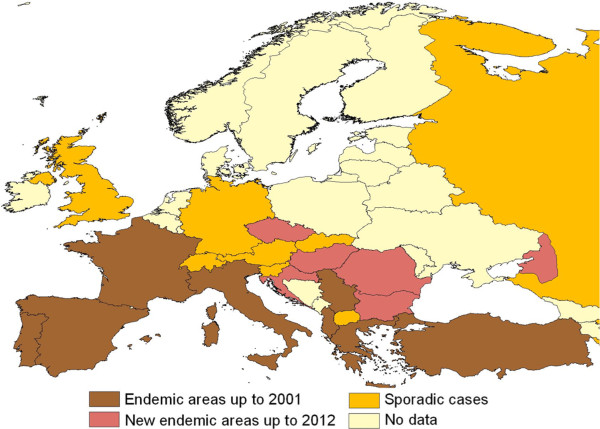
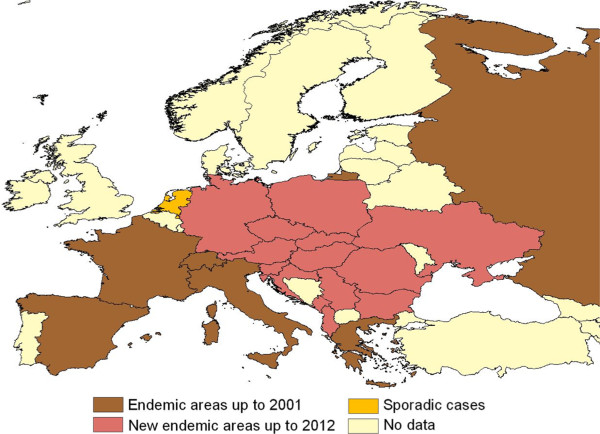
Verification
Claims the paper makes
77 Not checked yet · 15 Own interpretation · 4 No basis given · 1 Partly supported · accuracy not yet measured
The cited sources support only part of this claim — read each source’s verdict below.
In the paper
“Based on this model, the number of reports of T. callipaeda infestation may be expected to increase over the next years in areas where it is now considered as non-endemic.”
§ Vector-borne helminths of dogs and humans in Europe > Review > The role of vectors of VBH in a changing environment
What the sources say
- Partly supportedcites [12] Ruytoor P, Dean E, Pennant O, Dorchies P, Chermette R, Otranto D, Guillot J: Ocular thelaziosis in dogs. France. Emerg Infect Dis. 2010, 16: 1943-1945. 10.3201/eid1612.100872. sourceExperimental — accuracy not yet measured
The Discussion (page not provided) cites a predictive geoclimatic model identifying areas where the T. callipaeda vector could be present, and the Conclusions discuss possible emergence of human cases in Dordogne. The paper does not say the model predicts an increase in infestation reports over the next years in areas currently considered non-endemic. (LLM, conf=0.80)
- Partly supportedcites [14] Miró G, Montoya A, Hernández L, Dado D, Vázquez MV, Benito M, Villagrasa M, Brianti E, Otranto D: Thelazia callipaeda infection in dogs: a new parasite for Spain. Parasit Vectors. 2011, 27: 148- sourceExperimental — accuracy not yet measured
The Discussion (page unavailable) predicts that new cases are likely to emerge in other areas of Spain and Europe. The Background describes an ecological niche model suggesting that infection could have spread into previously non-endemic areas. But the paper does not identify that model as GARP or base its prediction of future cases on it; the Discussion bases that prediction on observed prevalence and epidemiological knowledge. (LLM, conf=0.86)
- Partly supportedcites [15] Vieira L, Rodrigues FT, Costa A, Diz-Lopes D, Machado J, Coutinho T, Tuna J, Latrofa MS, Cardoso L, Otranto D: First report of canine ocular thelaziosis by Thelazia callipaeda in Portugal. Parasit Vectors. 2012, 21: 124- sourceExperimental — accuracy not yet measured
The Background says disease mapping identified large areas of Europe with suitable conditions for T. callipaeda, and the Discussion says infestations are spreading across Europe. The Discussion also links the Portuguese cases to a predictive geoclimatic model. Our copy does not state that the model predicts an increase in reports over the next few years specifically in areas currently considered non-endemic. (LLM, conf=0.82)
- Not checked yetcites [65] Roggero C, Schaffner F, Bächli G, Mathis A, Schnyder M: Survey of Phortica drosophilid flies within and outside of a recently identified transmission area of the eye worm Thelazia callipaeda in Switzerland. Vet Parasitol. 2010, 171: 58-67. 10.1016/j.vetpar.2010.03.012. source
hedgedconditional- Asserted: passes — The authors put it forward as true.
- Checkable: passes — It can be checked against evidence.
- Load-bearing: passes — The paper’s conclusions depend on it.
- Based: passes — The paper gives a reason why it holds.
- Partly supported
In the paper
“Since the beginning of the millennium, many vectors have been introduced into Europe as a consequence of human demographics (e.g., the growth of cities), international movement of people (travellers and refugees), the smuggling of wildlife, the trade of animals and goods, such as used tires and ornamental plants [5].”
§ Vector-borne helminths of dogs and humans in Europe > Introduction
What the sources say
- Not checked yetcites [5] Colwell DD, Dantas-Torres F, Otranto D: Vector-borne parasitic zoonoses: emerging scenarios and new perspectives. Vet Parasitol. 2010, 24: 14-21.
plaindirect- Asserted: passes — The authors put it forward as true.
- Checkable: passes — It can be checked against evidence.
- Load-bearing: unclear — It is unclear whether the paper’s conclusions depend on it.
- Based: passes — The paper gives a reason why it holds.
In the paper
“Similarly, tick-transmitted filarioids of the genus Cercopithifilaria infesting the skin of dogs were recently shown to be widespread in Europe.”
§ Vector-borne helminths of dogs and humans in Europe > Abstract
What the sources say
- Not checked yetcites [6] Otranto D, Brianti E, Latrofa MS, Annoscia G, Weigl S, Lia RP, Gaglio G, Napoli E, Giannetto S, Papadopoulos E, Mirò G, Dantas-Torres F, Bain O: On a Cercopithifilaria sp. transmitted by Rhipicephalus sanguineus: a neglected, but widespread filarioid of dogs. Parasit Vectors. 2012, 5: 1-10.1186/1756-3305-5-1. source
plain- Asserted: passes — The authors put it forward as true.
- Checkable: passes — It can be checked against evidence.
- Load-bearing: unclear — It is unclear whether the paper’s conclusions depend on it.
- Based: passes — The paper gives a reason why it holds.
In the paper
“another example is represented by Thelazia callipaeda eyeworm, an emergent pathogen of dogs, cats and humans in several regions of Europe.”
§ Vector-borne helminths of dogs and humans in Europe > Abstract
What the sources say
- Not checked yetcites [5] Colwell DD, Dantas-Torres F, Otranto D: Vector-borne parasitic zoonoses: emerging scenarios and new perspectives. Vet Parasitol. 2010, 24: 14-21.
plain- Asserted: passes — The authors put it forward as true.
- Checkable: passes — It can be checked against evidence.
- Load-bearing: unclear — It is unclear whether the paper’s conclusions depend on it.
- Based: passes — The paper gives a reason why it holds.
None of the sources cited for this claim have been checked yet.
In the paper
“Although canine dirofilarioses by Dirofilaria immitis and Dirofilaria repens are key examples of the success of VBH spreading into non-endemic areas, another example is represented by Thelazia callipaeda eyeworm, an emergent pathogen of dogs, cats and humans in several regions of Europe.”
§ Vector-borne helminths of dogs and humans in Europe > Abstract
What the sources say
- Not checked yetcites [1] Otranto D, Eberhard ML: Zoonotic helminths affecting the human eye. Parasit Vectors. 2011, 23: 41- source
- Not checked yetcites [2] Genchi C, Kramer LH, Rivasi F: Dirofilarial infections in Europe. Vector Borne Zoonotic Dis. 2011, 11: 1307-1317. 10.1089/vbz.2010.0247. source
- Not checked yetcites [3] Morchón R, Carretón E, González-Miguel J, Mellado-Hernández I: Heartworm disease (Dirofilaria immitis) and their vectors in Europe - new distribution trends. Front Physiol. 2012, 3: 196- source
plain- Asserted: passes — The authors put it forward as true.
- Checkable: passes — It can be checked against evidence.
- Load-bearing: unclear — It is unclear whether the paper’s conclusions depend on it.
- Based: passes — The paper gives a reason why it holds.
None of the sources cited for this claim have been checked yet.
In the paper
“The recent finding of Onchocerca lupi causing canine and human infestation in Europe and overseas renders the picture of VBH even more complicated.”
§ Vector-borne helminths of dogs and humans in Europe > Abstract
What the sources say
- Not checked yetcites [22] Egyed Z, Sréter T, Széll Z, Beszteri B, Oravecz , Márialigeti K, Varga I: Morphologic and genetic characterization of Onchocerca lupi infesting dogs. Vet Parasitol. 2001, 102: 309-319. 10.1016/S0304-4017(01)00541-6. source
- Not checked yetcites [23] Széll Z, Erdélyi I, Sréter T, Albert M, Varga I: Canine ocular onchocercosis in Hungary. Vet Parasitol. 2001, 97: 245-251. 10.1016/S0304-4017(01)00397-1. source
- Not checked yetcites [24] Komnenou A, Eberhard ML, Kaldrymidou E, Tsalie E, Dessiris A: Subconjunctival filariasis due to Onchocerca sp. in dogs: report of 23 cases in Greece. Vet Ophthalmol. 2002, 5: 119-126. 10.1046/j.1463-5224.2002.00235.x. source
- Not checked yetcites [25] Hermosilla A, Hetzel U, Bausch M, Grübl J, Bauer C: First autochthonous case of canine ocular onchocercosis in Germany. Vet Rec. 2005, 154: 450-452. source
- Not checked yetcites [26] Sréter-Lancz Z, Széll Z, Sréter T: Molecular genetic comparison of Onchocerca sp. infecting dogs in Europe with other spirurid nematodes including Onchocerca lienalis. Vet Parasitol. 2007, 148: 365-370. 10.1016/j.vetpar.2007.06.021. source
- Not checked yetcites [27] Faísca P, Morales-Hojas R, Alves M, Gomes J, Botelho M, Melo M, Xufre A: A case of canine ocular onchocercosis in Portugal. Vet Ophthalmol. 2010, 13: 117-121. 10.1111/j.1463-5224.2010.00763.x. source
- Not checked yetcites [28] Orihel TC, Ash LR, Holshuh HJ, Santenelli S: Onchocerciasis in a California dog. Am J Trop Med Hyg. 1991, 44: 513-517. source
- Not checked yetcites [29] Eberhard ML, Ortega Y, Dial S, Schiller CA, Sears AW, Greiner E: Ocular Onchocerca infections in western United States. Vet Parasitol. 2000, 90: 333-338. 10.1016/S0304-4017(00)00252-1. source
- Not checked yetcites [30] Zarfoss MK, Dubielzig RR, Eberhard ML, Schmidt KS: Canine ocular onchocerciasis in the United States: two new cases and a review of the literature. Vet Ophthalmol. 2005, 8: 51-57. 10.1111/j.1463-5224.2005.00348.x. source
- Not checked yetcites [31] Labelle AL, Daniels JB, Dix M, Labelle P: Onchocerca lupi causing ocular disease in two cats. Vet Ophthalmol. 2011, Suppl 1: 105-110. source
plaindirect- Asserted: passes — The authors put it forward as true.
- Checkable: passes — It can be checked against evidence.
- Load-bearing: unclear — It is unclear whether the paper’s conclusions depend on it.
- Based: passes — The paper gives a reason why it holds.
In the paper
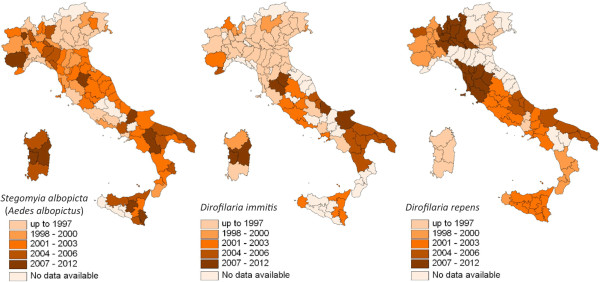
“Accordingly, the rapid spread of this vector species throughout the country likely broadened the dirofilariosis range to southern regions not previously infected [47]”
§ Vector-borne helminths of dogs and humans in Europe > Review > The role of vectors of VBH in a changing environment
What the sources say
- Not checked yetcites [47] Otranto D, Capelli G, Genchi C: Changing distribution patterns of canince vector borne disease in Italy: leishmaniosis vs. dirofilariosis. Parasit Vectors. 2009, 26: Suppl 1 S2-
hedgedconditional- Asserted: passes — The authors put it forward as true.
- Checkable: passes — It can be checked against evidence.
- Load-bearing: unclear — It is unclear whether the paper’s conclusions depend on it.
- Based: passes — The paper gives a reason why it holds.
A conclusion the paper draws from its own results — it cites no other source for it, so there is none to check. The quote shows it is in the paper.
In the paper
“The sympatric occurrence of both vectors, having diurnal and nocturnal biting activities, may enhance the risk of infestation to dogs and humans, thus increasing the vector-host contact and, eventually, the number of vectors which may carry filarioids in endemic areas throughout the day.”
§ Vector-borne helminths of dogs and humans in Europe > Review > The role of vectors of VBH in a changing environment
hedgedconditional- Asserted: passes — The authors put it forward as true.
- Checkable: passes — It can be checked against evidence.
- Load-bearing: passes — The paper’s conclusions depend on it.
- Based: passes — The paper gives a reason why it holds.
None of the sources cited for this claim have been checked yet.
In the paper
“whereas D. repens, causing subcutaneous infestation in dogs, is the main agent of human dirofilariosis.”
§ Vector-borne helminths of dogs and humans in Europe > Introduction
What the sources say
- Not checked yetcites [87] Pampiglione S, Canestri Trotti G, Rivasi F: Human dirofilariasis due to Dirofilaria (Nochtiella) repens in Italy: a review of word literature. Parassitologia. 1995, 37: 149-193.
- Not checked yetcites [88] Pampiglione S, Rivasi F, Gustinelli A: Dirofilarial human cases in the old world, attributed to Dirofilaria immitis: a critical analysis. Histopathology. 2009, 54: 192-204. 10.1111/j.1365-2559.2008.03197_a.x. source
plaindirect- Asserted: passes — The authors put it forward as true.
- Checkable: passes — It can be checked against evidence.
- Load-bearing: unclear — It is unclear whether the paper’s conclusions depend on it.
- Based: passes — The paper gives a reason why it holds.
In the paper
“Phortica variegata, the vector of T. callipaeda, was studied in an area of Italy where dog thelaziosis is highly prevalent [16] and found to be more active at 20–25°C and 50–75% RH during July-August in southern Italy [19].”
§ Vector-borne helminths of dogs and humans in Europe > Review > The role of vectors of VBH in a changing environment
What the sources say
- Not checked yetcites [19] Otranto D, Cantacessi C, Testini G, Lia RP: Phortica variegata as an intermediate host of Thelazia callipaeda under natural conditions: evidence for pathogen transmission by a male arthropod vector. Int J Parasitol. 2006, 36: 1167-1173. 10.1016/j.ijpara.2006.06.006. source
plaincorrelational- Asserted: passes — The authors put it forward as true.
- Checkable: passes — It can be checked against evidence.
- Load-bearing: unclear — It is unclear whether the paper’s conclusions depend on it.
- Based: passes — The paper gives a reason why it holds.
- It may state two separate claims as one. 33
- Probably not a substantial claim. 7
None of the sources cited for this claim have been checked yet.
In the paper
“A large number of vector-borne helminths (VBH) are prevalent in Europe, and some of them are of growing importance due to the significant level of disease they cause in dogs and humans [1-3].”
§ Vector-borne helminths of dogs and humans in Europe > Introduction
What the sources say
- Not checked yetcites [1] Otranto D, Eberhard ML: Zoonotic helminths affecting the human eye. Parasit Vectors. 2011, 23: 41- source
- Not checked yetcites [2] Genchi C, Kramer LH, Rivasi F: Dirofilarial infections in Europe. Vector Borne Zoonotic Dis. 2011, 11: 1307-1317. 10.1089/vbz.2010.0247. source
- Not checked yetcites [3] Morchón R, Carretón E, González-Miguel J, Mellado-Hernández I: Heartworm disease (Dirofilaria immitis) and their vectors in Europe - new distribution trends. Front Physiol. 2012, 3: 196- source
plaindirect- Asserted: passes — The authors put it forward as true.
- Checkable: passes — It can be checked against evidence.
- Load-bearing: unclear — It is unclear whether the paper’s conclusions depend on it.
- Based: passes — The paper gives a reason why it holds.
It may state two separate claims as one.
The paper states this without a source or data behind it here, so there is nothing to check it against. The quote shows it is in the paper.
In the paper
“Indeed, the spreading process of VBH in previously non-endemic geographical areas has been primarily associated with the biology and ecology of the arthropod vectors and their capability to establish transmission cycles, maintaining the infestation in populations of susceptible hosts.”
§ Vector-borne helminths of dogs and humans in Europe > Introduction
plaincorrelational- Asserted: passes — The authors put it forward as true.
- Checkable: passes — It can be checked against evidence.
- Load-bearing: fails — The paper’s conclusions may not depend on it.
- Based: fails — The paper may give no reason why it holds.
Probably not a substantial claim. The paper’s conclusions may not depend on it. The paper may give no reason why it holds.
The paper states this without a source or data behind it here, so there is nothing to check it against. The quote shows it is in the paper.
In the paper
“For example, domestic dogs are excellent reservoirs of filarioids, being able to survive for a long time with a considerable worm burden, to harbour different species of filarioids at the same time and to provide infectious microfilariae for competent vectors all over their season of activity.”
§ Vector-borne helminths of dogs and humans in Europe > Review > Host-vector interactions
plaindirect- Asserted: passes — The authors put it forward as true.
- Checkable: passes — It can be checked against evidence.
- Load-bearing: unclear — It is unclear whether the paper’s conclusions depend on it.
- Based: passes — The paper gives a reason why it holds.
It may state two separate claims as one.
In the paper
“Over the last two decades, climate conditions have become more suitable for the Asian tiger mosquito over Benelux, western Germany and the Balkans, while they have become less suitable over southern Spain.”
§ Vector-borne helminths of dogs and humans in Europe > Review > The role of vectors of VBH in a changing environment
What the sources say
- Not checked yetcites [59] Caminade C, Medlock JM, Ducheyne E, McIntyre KM, Leach S, Baylis M, Morse AP: Suitability of European climate for the Aedes albopictus: recent trends and future scenarios. J R Soc Interface. 2012, 9: 2708-2717. 10.1098/rsif.2012.0138. source
plaindirect- Asserted: passes — The authors put it forward as true.
- Checkable: passes — It can be checked against evidence.
- Load-bearing: unclear — It is unclear whether the paper’s conclusions depend on it.
- Based: passes — The paper gives a reason why it holds.
It may state two separate claims as one.
In the paper
“Therefore, it was predicted that, due to global warming and raising of mean temperatures, most of the European countries will be suitable for Dirofilaria transmission, with a lengthening in the duration of the filarial transmission season [7].”
§ Vector-borne helminths of dogs and humans in Europe > Review > The role of vectors of VBH in a changing environment
What the sources say
- Not checked yetcites [7] Genchi C, Rinaldi L, Mortarino M, Genchi M, Cringoli G: Climate and Dirofilaria infection in Europe. Vet Parasitol. 2009, 163: 286-292. 10.1016/j.vetpar.2009.03.026. source
plaindirect- Asserted: passes — The authors put it forward as true.
- Checkable: passes — It can be checked against evidence.
- Load-bearing: passes — The paper’s conclusions depend on it.
- Based: passes — The paper gives a reason why it holds.
It may state two separate claims as one.
In the paper
“However, in addition biting midges (Diptera, Ceratopogonidae) feeding on a wide range of hosts (humans, livestock and other mammals, amphibians, and birds) might be implicated in the transmission of O. lupi since some species of Culicoides have been involved in transmission of Onchocerca cervicalis and Onchocerca gutturosa to horses and cattle, respectively, in Europe [55].”
§ Vector-borne helminths of dogs and humans in Europe > Review > The role of vectors of VBH in a changing environment
What the sources say
- Not checked yetcites [55] Crosskey RW: The Natural History of Blackflies. British Museum (Natural History). 1990, John Wiley & Sons Ltd
hedgedconditional- Asserted: passes — The authors put it forward as true.
- Checkable: passes — It can be checked against evidence.
- Load-bearing: unclear — It is unclear whether the paper’s conclusions depend on it.
- Based: passes — The paper gives a reason why it holds.
It may state two separate claims as one.
In the paper
“For example, human activities have initiated the spread of invasive mosquito species and vector-borne diseases, and on-going globalization and increases in mean temperature may greatly extend the magnitude of this process [4].”
§ Vector-borne helminths of dogs and humans in Europe > Introduction
What the sources say
- Not checked yetcites [4] Petrić D, Zgomba M, Bellini R, Becker N: Surveillance of Mosquito Populations: A Key Element to Understanding the Spread of Invasive Vector Species and Vector-Borne Diseases in Europe. Essays on Fundamental and Applied Environmental Topics. Edited by: Mihailović D. 2012, Hauppauge, New York: Nova Science Publishers, 192-224.
hedgedconditional- Asserted: passes — The authors put it forward as true.
- Checkable: passes — It can be checked against evidence.
- Load-bearing: fails — The paper’s conclusions may not depend on it.
- Based: passes — The paper gives a reason why it holds.
Probably not a substantial claim. The paper’s conclusions may not depend on it. It may state two separate claims as one.
In the paper
“Black flies may play a role in the transmission of O. lupi in dogs and humans, no convincing scientific evidence in this regard has been produced so far [33].”
§ Vector-borne helminths of dogs and humans in Europe > Review > The role of vectors of VBH in a changing environment
What the sources say
- Not checked yetcites [33] Otranto D, Dantas-Torres F, Papadopoulos E, Petrić D, Ćupina AI, Bain O: Tracking the vector of Onchocerca lupi in a rural area of Greece. Emerg Infect Dis. 2012, 18: 1196-1200. 10.3201/eid1807.AD1807. source
hedgedconditional- Asserted: passes — The authors put it forward as true.
- Checkable: passes — It can be checked against evidence.
- Load-bearing: unclear — It is unclear whether the paper’s conclusions depend on it.
- Based: passes — The paper gives a reason why it holds.
It may state two separate claims as one.
In the paper
“For example, climate change (e.g., increase in mean temperatures) has affected the mosquito abundance and their seasonal survival in many areas of Europe greatly impacting on the spread of filarial infestation [7].”
§ Vector-borne helminths of dogs and humans in Europe > Review > The role of vectors of VBH in a changing environment
What the sources say
- Not checked yetcites [7] Genchi C, Rinaldi L, Mortarino M, Genchi M, Cringoli G: Climate and Dirofilaria infection in Europe. Vet Parasitol. 2009, 163: 286-292. 10.1016/j.vetpar.2009.03.026. source
plaindirect- Asserted: passes — The authors put it forward as true.
- Checkable: passes — It can be checked against evidence.
- Load-bearing: unclear — It is unclear whether the paper’s conclusions depend on it.
- Based: passes — The paper gives a reason why it holds.
It may state two separate claims as one.
None of the sources cited for this claim have been checked yet.
In the paper
“Suitable environments for the geographic distribution and development of P. variegata across Italy and Europe were predicted using a desktop implementation of the Genetic Algorithm for Rule-Set Prediction and all recent reports of T. callipaeda fall within the suitable areas indicated by the model [12,14,15,65].”
§ Vector-borne helminths of dogs and humans in Europe > Review > The role of vectors of VBH in a changing environment
What the sources say
- Not checked yetcites [12] Ruytoor P, Dean E, Pennant O, Dorchies P, Chermette R, Otranto D, Guillot J: Ocular thelaziosis in dogs. France. Emerg Infect Dis. 2010, 16: 1943-1945. 10.3201/eid1612.100872. source
- Not checked yetcites [14] Miró G, Montoya A, Hernández L, Dado D, Vázquez MV, Benito M, Villagrasa M, Brianti E, Otranto D: Thelazia callipaeda infection in dogs: a new parasite for Spain. Parasit Vectors. 2011, 27: 148- source
- Not checked yetcites [15] Vieira L, Rodrigues FT, Costa A, Diz-Lopes D, Machado J, Coutinho T, Tuna J, Latrofa MS, Cardoso L, Otranto D: First report of canine ocular thelaziosis by Thelazia callipaeda in Portugal. Parasit Vectors. 2012, 21: 124- source
- Not checked yetcites [65] Roggero C, Schaffner F, Bächli G, Mathis A, Schnyder M: Survey of Phortica drosophilid flies within and outside of a recently identified transmission area of the eye worm Thelazia callipaeda in Switzerland. Vet Parasitol. 2010, 171: 58-67. 10.1016/j.vetpar.2010.03.012. source
plaincorrelational- Asserted: passes — The authors put it forward as true.
- Checkable: passes — It can be checked against evidence.
- Load-bearing: passes — The paper’s conclusions depend on it.
- Based: passes — The paper gives a reason why it holds.
It may state two separate claims as one.
In the paper
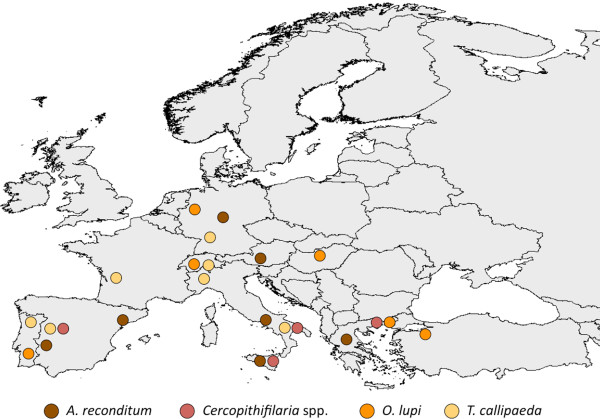
“this filarioid was diagnosed in dogs from Spain, Greece and southern Italy (i.e., Apulia, Basilicata and Sicily regions) (Figure 3), with prevalence rates reaching up to 21.6% [6].”
§ Vector-borne helminths of dogs and humans in Europe > Review > Old and emerging VBH of dogs and humans in Europe
What the sources say
- Not checked yetcites [6] Otranto D, Brianti E, Latrofa MS, Annoscia G, Weigl S, Lia RP, Gaglio G, Napoli E, Giannetto S, Papadopoulos E, Mirò G, Dantas-Torres F, Bain O: On a Cercopithifilaria sp. transmitted by Rhipicephalus sanguineus: a neglected, but widespread filarioid of dogs. Parasit Vectors. 2012, 5: 1-10.1186/1756-3305-5-1. source
plain- Asserted: passes — The authors put it forward as true.
- Checkable: passes — It can be checked against evidence.
- Load-bearing: unclear — It is unclear whether the paper’s conclusions depend on it.
- Based: passes — The paper gives a reason why it holds.
It may state two separate claims as one.
A conclusion the paper draws from its own results — it cites no other source for it, so there is none to check. The quote shows it is in the paper.
In the paper
“All of the potential indigenous vectors are highly mammophylic and anthropophylic (excluding some members of An. maculipennis complex and Cx. theileri that only occasionally feed on humans) and could increase transmission rate of these filarioids.”
§ Vector-borne helminths of dogs and humans in Europe > Review > The role of vectors of VBH in a changing environment
hedgedconditional- Asserted: passes — The authors put it forward as true.
- Checkable: passes — It can be checked against evidence.
- Load-bearing: passes — The paper’s conclusions depend on it.
- Based: passes — The paper gives a reason why it holds.
It may state two separate claims as one.
A conclusion the paper draws from its own results — it cites no other source for it, so there is none to check. The quote shows it is in the paper.
In the paper
“Indeed, projected increment in temperature will impact on insect vectors through broadening areas of colonization, invasion of new sites and, eventually, resulting in physiological changes and increased vector capacity.”
§ Vector-borne helminths of dogs and humans in Europe > Review > The role of vectors of VBH in a changing environment
plaindirect- Asserted: passes — The authors put it forward as true.
- Checkable: passes — It can be checked against evidence.
- Load-bearing: passes — The paper’s conclusions depend on it.
- Based: passes — The paper gives a reason why it holds.
It may state two separate claims as one.
In the paper
“Similar trends are likely to be observed in the future, with an increased risk simulated over northern Europe and slightly decreased risk over southern Europe where drier and warmer summers might limit southward expansion of this species [59].”
§ Vector-borne helminths of dogs and humans in Europe > Review > The role of vectors of VBH in a changing environment
What the sources say
- Not checked yetcites [59] Caminade C, Medlock JM, Ducheyne E, McIntyre KM, Leach S, Baylis M, Morse AP: Suitability of European climate for the Aedes albopictus: recent trends and future scenarios. J R Soc Interface. 2012, 9: 2708-2717. 10.1098/rsif.2012.0138. source
hedgedconditional- Asserted: passes — The authors put it forward as true.
- Checkable: passes — It can be checked against evidence.
- Load-bearing: unclear — It is unclear whether the paper’s conclusions depend on it.
- Based: passes — The paper gives a reason why it holds.
It may state two separate claims as one.
In the paper
“Indeed, among filarioids only D. immitis can cause a fatal and severe disease, but presently the majority of dogs harbour a low-medium burden of nematodes, and they show a few symptoms with chronic progression in almost all the cases [66].”
§ Vector-borne helminths of dogs and humans in Europe > Review > Host-vector interactions
What the sources say
- Not checked yetcites [66] McCall JW, Genchi C, Kramer LH, Guerrero J, Venco L: Heartworm disease in animals and humans. Adv Parasitol. 2008, 66: 193-285. source
plaindirect- Asserted: passes — The authors put it forward as true.
- Checkable: passes — It can be checked against evidence.
- Load-bearing: unclear — It is unclear whether the paper’s conclusions depend on it.
- Based: passes — The paper gives a reason why it holds.
It may state two separate claims as one.
None of the sources cited for this claim have been checked yet.
In the paper
“The dissemination of VBH in Europe has been primarily attributed to rapid geographic expansion of their vectors (e.g., invasive mosquitoes, zoophilic fruit flies) and/or increases in their population density.”
§ Vector-borne helminths of dogs and humans in Europe > Review > The role of vectors of VBH in a changing environment
What the sources say
- Not checked yetcites [39] Root TL, Price JT, Hall KR, Schneider SH, Rosenzweig C, Pounds JA: Fingerprints of global warming on wild animals and plants. Nature. 2003, 421: 57-60. 10.1038/nature01333. source
- Not checked yetcites [40] Khasnis AA, Nettleman MD: Global warming and infectious disease. Arch Med Res. 2005, 36: 689-696. 10.1016/j.arcmed.2005.03.041. source
- Not checked yetcites [41] Purse BV, Mellor PS, Rogers DJ, Samuel AR, Mertens PP, Baylis M: Climate change and the recent emergence of bluetongue in Europe. Nat Rev Microbiol. 2005, 3: 171-181. 10.1038/nrmicro1090. source
plaindirect- Asserted: passes — The authors put it forward as true.
- Checkable: passes — It can be checked against evidence.
- Load-bearing: unclear — It is unclear whether the paper’s conclusions depend on it.
- Based: passes — The paper gives a reason why it holds.
It may state two separate claims as one.
In the paper
“since warmer climates could favour mosquito breeding and, along with higher air temperatures, shorten their extrinsic incubation periods as demonstrated for Stegomyia aegypti [Ae. aegypti] [44].”
§ Vector-borne helminths of dogs and humans in Europe > Review > The role of vectors of VBH in a changing environment
What the sources say
- Not checked yetcites [44] Wilson N, Lush D, Baker MG: Meteorological and climate change themes at the 2010 International Conference on Emerging Infectious Diseases. Euro Surveill. 2010, 15: pii=19627- source
hedgedconditional- Asserted: passes — The authors put it forward as true.
- Checkable: passes — It can be checked against evidence.
- Load-bearing: unclear — It is unclear whether the paper’s conclusions depend on it.
- Based: passes — The paper gives a reason why it holds.
It may state two separate claims as one.
None of the sources cited for this claim have been checked yet.
In the paper
“These molecular findings and studies on P. variegata indicate a high level of affinity of the nematode for its vector [18,19,85] and low degree of specificity for definitive hosts.”
§ Vector-borne helminths of dogs and humans in Europe > Review > Host-vector interactions
What the sources say
- Not checked yetcites [18] Otranto D, Lia RP, Cantacessi C, Testini G, Troccoli A, Shen JL, Wang ZX: Nematode biology and larval development of Thelazia callipaeda (Spirurida, Thelaziidae) in the drosophilid intermediate host in Europe and China. Parasitology. 2005, 131: 847-855. 10.1017/S0031182005008395. source
- Not checked yetcites [19] Otranto D, Cantacessi C, Testini G, Lia RP: Phortica variegata as an intermediate host of Thelazia callipaeda under natural conditions: evidence for pathogen transmission by a male arthropod vector. Int J Parasitol. 2006, 36: 1167-1173. 10.1016/j.ijpara.2006.06.006. source
- Not checked yetcites [85] Otranto D, Testini G, Deluca F, Hu M, Shamsi S, Gasser RB: Analysis of genetic variability within Thelazia callipaeda (Nematoda: Thelazioidea) from Europe and Asia by sequencing and mutation scanning of mitochondrial cytochrome c oxidase subunit 1. Mol Cell Probes. 2005, 19: 306-313. 10.1016/j.mcp.2005.05.001. source
hedgedcorrelational- Asserted: passes — The authors put it forward as true.
- Checkable: passes — It can be checked against evidence.
- Load-bearing: passes — The paper’s conclusions depend on it.
- Based: passes — The paper gives a reason why it holds.
It may state two separate claims as one.
None of the sources cited for this claim have been checked yet.
In the paper
“This species is colonizing colder environments, therefore increasing the possibility to enlarge the area at risk for dirofilariosis in Europe.”
§ Vector-borne helminths of dogs and humans in Europe > Review > Host-vector interactions
What the sources say
- Not checked yetcites [75] Versteirt V, De Clercq E, Dekoninck W, Damiens D, Ayrinhac A, Jacobs F, Van Bortel W: Mosquito vectors of disease: spatial biodiversity, drivers of change, and risk". Final Report. 2009, Brussels: Belgian Science Policy, 152-(Research Programme Science for a Sustainable Development); available online at http://www.belspo.be/belspo/SSD/science/Reports/FinalReport_MODIRISK%20ML.pdf
- Not checked yetcites [76] Capelli G, Drago A, Martini S, Montarsi F, Soppelsa M, Delai N, Ravagnan S, Mazzon L, Schaffner F, Mathis A, Di Luca M, Romi R, Russo F: First report in Italy of the exotic mosquito species Aedes (Finlaya) koreicus, a potential vector of arboviruses and filariae. Parasit Vectors. 2011, 28: 188- source
hedgeddirect- Asserted: passes — The authors put it forward as true.
- Checkable: passes — It can be checked against evidence.
- Load-bearing: passes — The paper’s conclusions depend on it.
- Based: passes — The paper gives a reason why it holds.
It may state two separate claims as one.
In the paper
“The occurrence of very high prevalence of thelaziosis by T. callipaeda in foxes (49.3%) as well as in other wild carnivore species (i.e., wolves, beech martens, brown hares, and wild cats) in some areas of southern Italy where canine thelaziosis is highly prevalent (i.e., about 60% of dogs) indicates the status of hyper-endemicity of eyeworm infestation in this area and the primary role foxes play”
§ Vector-borne helminths of dogs and humans in Europe > Review > Host-vector interactions
What the sources say
- Not checked yetcites [10] Otranto D, Dantas-Torres F, Mallia E, DiGeronimo PM, Brianti E, Testini G, Traversa D, Lia RP: Thelazia callipaeda (Spirurida, Thelaziidae) in wild animals: report of new host species and ecological implications. Vet Parasitol. 2009, 166: 262-267. 10.1016/j.vetpar.2009.08.027. source
hedgeddirect- Asserted: passes — The authors put it forward as true.
- Checkable: passes — It can be checked against evidence.
- Load-bearing: passes — The paper’s conclusions depend on it.
- Based: passes — The paper gives a reason why it holds.
It may state two separate claims as one.
None of the sources cited for this claim have been checked yet.
In the paper
“Among the zoonotic filarioids, D. immitis and D. repens probably represent the species more frequently reported in humans where they are detected predominantly in the subcutaneous tissues, pulmonary vessels, testicles and also in the central nervous system, causing a range of clinical manifestations from asymptomatic to, more rarely, fatal syndromes [1,2,66].”
§ Vector-borne helminths of dogs and humans in Europe > Review > Impact of VBH on humans
What the sources say
- Not checked yetcites [1] Otranto D, Eberhard ML: Zoonotic helminths affecting the human eye. Parasit Vectors. 2011, 23: 41- source
- Not checked yetcites [2] Genchi C, Kramer LH, Rivasi F: Dirofilarial infections in Europe. Vector Borne Zoonotic Dis. 2011, 11: 1307-1317. 10.1089/vbz.2010.0247. source
- Not checked yetcites [66] McCall JW, Genchi C, Kramer LH, Guerrero J, Venco L: Heartworm disease in animals and humans. Adv Parasitol. 2008, 66: 193-285. source
hedgedcorrelational- Asserted: passes — The authors put it forward as true.
- Checkable: passes — It can be checked against evidence.
- Load-bearing: unclear — It is unclear whether the paper’s conclusions depend on it.
- Based: passes — The paper gives a reason why it holds.
It may state two separate claims as one.
In the paper
“In the same study, D. repens was found in Cx. p. pipiens only (rate of infestation of 0.23–0.71%).”
§ Vector-borne helminths of dogs and humans in Europe > Review > Host-vector interactions
What the sources say
- Not checked yetcites [64] Latrofa MS, Montarsi F, Ciocchetta S, Annoscia G, Dantas-Torres F, Ravagnan S, Capelli G, Otranto D: Molecular xenomonitoring of Dirofilaria immitis and Dirofilaria repens in mosquitoes from north-eastern Italy by real-time PCR coupled with melting curve analysis. Parasit Vectors. 2012, 5: 76-10.1186/1756-3305-5-76. source
plain- Asserted: passes — The authors put it forward as true.
- Checkable: passes — It can be checked against evidence.
- Load-bearing: unclear — It is unclear whether the paper’s conclusions depend on it.
- Based: passes — The paper gives a reason why it holds.
It may state two separate claims as one.
None of the sources cited for this claim have been checked yet.
In the paper
“However, cases of human dirofilariosis by D. immitis have been recently described in Italy, Greece and Spain [89-91] and this trend is at an increase in Europe, most likely paralleling the spread of infestation in dogs in central and north-eastern countries (e.g., south of Switzerland, Czech Republic, Hungary, Serbia and Slovak Republic) [5,7,48-52].”
§ Vector-borne helminths of dogs and humans in Europe > Review > Impact of VBH on humans
What the sources say
- Not checked yetcites [89] Miliaras D, Meditskou S, Kelekis A, Papachristos I: Human pulmonary Dirofilariasis: one more case in Greece suggests that Dirofilaria is a rather common cause of coin lesions in the lungs in endemic areas of Europe. Int J Immunopathol Pharmacol. 2010, 23: 345-348. source
- Not checked yetcites [90] Morchón R, Moya I, González-Miguel J, Montoya MN, Simón F: Zoonotic Dirofilaria immitis infections in a province of Northern Spain. Epidemiol Infect. 2010, 138 (3): 380-383. 10.1017/S0950268809990434. source
- Not checked yetcites [91] Avellis FO, Kramer LH, Mora P, Bartolino A, Benedetti P, Rivasi F: A case of human conjunctival dirofilariosis by Dirofilaria immitis in Italy. Vector Borne Zoonotic Dis. 2011, 11: 451-452. 10.1089/vbz.2010.0067. source
- Not checked yetcites [5] Colwell DD, Dantas-Torres F, Otranto D: Vector-borne parasitic zoonoses: emerging scenarios and new perspectives. Vet Parasitol. 2010, 24: 14-21.
- Not checked yetcites [7] Genchi C, Rinaldi L, Mortarino M, Genchi M, Cringoli G: Climate and Dirofilaria infection in Europe. Vet Parasitol. 2009, 163: 286-292. 10.1016/j.vetpar.2009.03.026. source
- Not checked yetcites [48] Genchi C, Rinaldi L, Cascone C, Mortasino M, Cringoli G: Is heartworm disease really spreading in Europe?. Vet Parasitol. 2005, 133: 137-148. 10.1016/j.vetpar.2005.04.009. source
- Not checked yetcites [49] Svobodova V, Misonova P: The potential risk of Dirofilaria immitis becoming established in the Czech Republic by imported dogs. Vet Parasitol. 2005, 128: 137-140. 10.1016/j.vetpar.2004.11.018. source
- Not checked yetcites [50] Svobodova Z, Svobodova V, Genchi C, Forejtek P: The first report of autochthonous dirofilariosis in dogs in the Czech Republic. Helminthol. 2006, 43: 242-245. 10.2478/s11687-006-0046-5. source
- Not checked yetcites [51] Babal P, Kobzova D, Novak I, Dubinsky P, Jalili N: First case of cutaneous human dirofilariosis in Slovak Republic. Bratisl Lek List. 2008, 109: 486-488.
- Not checked yetcites [52] Tasić A, Rossi L, Tasić S, Miladinović-Tasić N, Ilić T, Dimitrijević S: Survey of canine dirofilariasis in Vojvodina. Serbia. Parasitol Res. 2008, 103: 1297-1302. 10.1007/s00436-008-1132-z. source
hedgedcorrelational- Asserted: passes — The authors put it forward as true.
- Checkable: passes — It can be checked against evidence.
- Load-bearing: unclear — It is unclear whether the paper’s conclusions depend on it.
- Based: passes — The paper gives a reason why it holds.
It may state two separate claims as one.
None of the sources cited for this claim have been checked yet.
In the paper
“On the contrary, red foxes (Vulpes vulpes) were found infected by D. immitis in Italy, Spain and Bulgaria [3], with prevalence up to 32% in irrigated areas of Spain [79].”
§ Vector-borne helminths of dogs and humans in Europe > Review > Host-vector interactions
What the sources say
- Not checked yetcites [3] Morchón R, Carretón E, González-Miguel J, Mellado-Hernández I: Heartworm disease (Dirofilaria immitis) and their vectors in Europe - new distribution trends. Front Physiol. 2012, 3: 196- source
- Not checked yetcites [79] Gortazar C, Castillo JA, Lucientes J, Blanco JC, Arriolabengoa A, Calvete C: Factors affecting Dirofilaria immitis prevalence in red foxes in northeastern Spain. J Wildl Dis. 1994, 30: 545-547. source
plain- Asserted: passes — The authors put it forward as true.
- Checkable: passes — It can be checked against evidence.
- Load-bearing: passes — The paper’s conclusions depend on it.
- Based: passes — The paper gives a reason why it holds.
It may state two separate claims as one.
A conclusion the paper draws from its own results — it cites no other source for it, so there is none to check. The quote shows it is in the paper.
In the paper
“All these hosts are likely to represent an epi-phenomenon of dog infection, with the exception of red foxes, which may act as a wild reservoir of the infection.”
§ Vector-borne helminths of dogs and humans in Europe > Review > Host-vector interactions
hedgedconditional- Asserted: passes — The authors put it forward as true.
- Checkable: passes — It can be checked against evidence.
- Load-bearing: passes — The paper’s conclusions depend on it.
- Based: passes — The paper gives a reason why it holds.
It may state two separate claims as one.
None of the sources cited for this claim have been checked yet.
In the paper
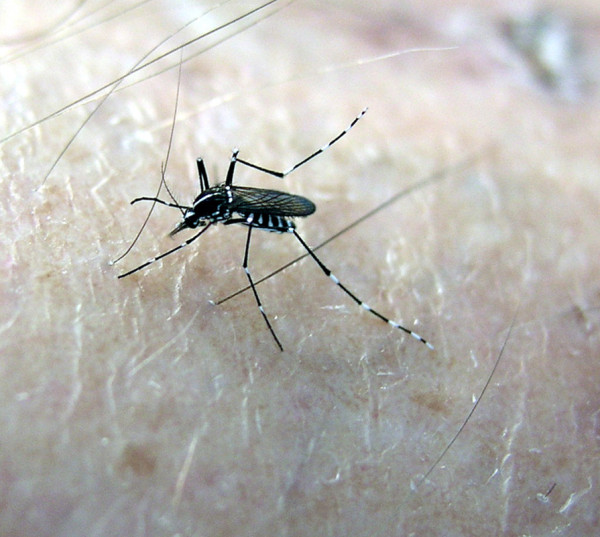
“Stegomyia albopicta, a vector of D. immitis[46,73] and of D. repens[74] is active throughout the whole day and year in southern areas, especially in urban habitats.”
§ Vector-borne helminths of dogs and humans in Europe > Review > Host-vector interactions
What the sources say
- Not checked yetcites [46] Cancrini G, Ricci I, Tessarin C, Gabrielli S, Pietrobelli M: Aedes albopictus is a natural vector of Dirofilaria immitis in Italy. Vet Parasitol. 2003, 118: 195-202. 10.1016/j.vetpar.2003.10.011. source
- Not checked yetcites [73] Cancrini G, Scaramozzino P, Gabrielli S, Di Paolo M, Toma L, Romi R: Aedes albopictus and Culex pipiens implicated as natural vectors of Dirofilaria repens in central Italy. J Med Entomol. 2007, 44: 1064-1066. 10.1603/0022-2585(2007)44[1064:AAACPI]2.0.CO;2. source
- Not checked yetcites [74] Cancrini G, Romi R, Gabrielli S, Toma L, Di Paolo M, Scaramozzino P: First finding of Dirofilaria repens in a natural population of Aedes albopictus. Med Vet Entomol. 2003, 17: 448-451. 10.1111/j.1365-2915.2003.00463.x. source
plaindirect- Asserted: passes — The authors put it forward as true.
- Checkable: passes — It can be checked against evidence.
- Load-bearing: unclear — It is unclear whether the paper’s conclusions depend on it.
- Based: passes — The paper gives a reason why it holds.
It may state two separate claims as one.
The paper states this without a source or data behind it here, so there is nothing to check it against. The quote shows it is in the paper.
In the paper
“No information is available on the usefulness of any drug as repellents on animals against P. variegata.”
§ Vector-borne helminths of dogs and humans in Europe > Review > Managing VBH in dogs and humans
plain- Asserted: passes — The authors put it forward as true.
- Checkable: passes — It can be checked against evidence.
- Load-bearing: fails — The paper’s conclusions may not depend on it.
- Based: fails — The paper may give no reason why it holds.
Probably not a substantial claim. The paper’s conclusions may not depend on it. The paper may give no reason why it holds.
In the paper
“Even though the three-dose scheme is indicated for those animals with a relevant risk of pulmonary thromboembolism post-treatment, this protocol is recommend by the AHS guidelines for the therapy of all infected dogs [101].”
§ Vector-borne helminths of dogs and humans in Europe > Review > Managing VBH in dogs and humans
What the sources say
- Not checked yetcites [101] Nelson CT, McCall JW, Rubin SB, Buzhardt LF, Doiron DW, Graham W, Longhofer SL, Guerrero J, Robertson-Plough C, Paul A: Guidelines for the diagnosis, prevention and management of heartworm (Dirofilaria immitis) infection in dogs. Vet Parasitol. 2005, 133: 255-266. source
plain- Asserted: passes — The authors put it forward as true.
- Checkable: passes — It can be checked against evidence.
- Load-bearing: fails — The paper’s conclusions may not depend on it.
- Based: passes — The paper gives a reason why it holds.
Probably not a substantial claim. The paper’s conclusions may not depend on it. It may state two separate claims as one.
In the paper
“The rationale for that relies on the occurrence of certain mosquito vectors, such as St. albopicta, which may survive in temperate areas as adults even during winter and, at least, for nine months per year [100].”
§ Vector-borne helminths of dogs and humans in Europe > Review > Managing VBH in dogs and humans
What the sources say
- Not checked yetcites [100] Romi R, Severini F, Toma L: Cold acclimation and overwintering of female Aedes albopictus in Roma. J Am Mosq Control Assoc. 2006, 22: 149-151. 10.2987/8756-971X(2006)22[149:CAAOOF]2.0.CO;2. source
hedgeddirect- Asserted: passes — The authors put it forward as true.
- Checkable: passes — It can be checked against evidence.
- Load-bearing: passes — The paper’s conclusions depend on it.
- Based: passes — The paper gives a reason why it holds.
It may state two separate claims as one.
In the paper
“Current guidelines on management of D. immitis infestation in dogs promoted by the European Scientific Counsel on Companion Animal Parasites (ESCCAP) and by the American Heartworm Society (AHS) suggest extending treatment to 7–8 months or even the year round.”
§ Vector-borne helminths of dogs and humans in Europe > Review > Managing VBH in dogs and humans
What the sources say
- Not checked yetcites [101] Nelson CT, McCall JW, Rubin SB, Buzhardt LF, Doiron DW, Graham W, Longhofer SL, Guerrero J, Robertson-Plough C, Paul A: Guidelines for the diagnosis, prevention and management of heartworm (Dirofilaria immitis) infection in dogs. Vet Parasitol. 2005, 133: 255-266. source
hedged- Asserted: passes — The authors put it forward as true.
- Checkable: passes — It can be checked against evidence.
- Load-bearing: fails — The paper’s conclusions may not depend on it.
- Based: passes — The paper gives a reason why it holds.
Probably not a substantial claim. The paper’s conclusions may not depend on it.
None of the sources cited for this claim have been checked yet.
In the paper
“In fact, such prolonged treatment period does not prevent from the onset of cardiopulmonary damage in the infected dogs, thus impairing a full clinical recovery [103,104].”
§ Vector-borne helminths of dogs and humans in Europe > Review > Managing VBH in dogs and humans
What the sources say
- Not checked yetcites [103] Rawlings CA, Bowman DD, Howerth EW, Stansfield DG, Legg W, Luempert LG: Response of dogs treated with ivermectin or milbemycin starting at various intervals after Dirofilaria immitis infection. Vet Ther. 2001, 2: 193-207.
- Not checked yetcites [104] Venco L, McCall JW, Guerrero J, Genchi C: Efficacy of long-term monthly administration of ivermectin on the progress of naturally acquired heartworm infection in dogs. Vet Parasitol. 2004, 124: 259-268. 10.1016/j.vetpar.2004.06.024. source
plaindirect- Asserted: passes — The authors put it forward as true.
- Checkable: passes — It can be checked against evidence.
- Load-bearing: passes — The paper’s conclusions depend on it.
- Based: passes — The paper gives a reason why it holds.
It may state two separate claims as one.
A conclusion the paper draws from its own results — it cites no other source for it, so there is none to check. The quote shows it is in the paper.
In the paper
“Although other filarioids of dogs, but not D. immitis, are considered less clinically relevant, microfilaricide treatment is required to control D. repens microfilaria-associated syndromes (e.g., cutaneous erythema and ulcerative pruritic lesions) and to decrease the risk of human and animal infestation in endemic areas.”
§ Vector-borne helminths of dogs and humans in Europe > Review > Managing VBH in dogs and humans
plaindirect- Asserted: passes — The authors put it forward as true.
- Checkable: passes — It can be checked against evidence.
- Load-bearing: passes — The paper’s conclusions depend on it.
- Based: passes — The paper gives a reason why it holds.
It may state two separate claims as one.
In the paper
“Other diagnostic tools may include echocardiography, which has high sensitivity although requiring high professional expertise while performing the test [125].”
§ Vector-borne helminths of dogs and humans in Europe > Review > Managing VBH in dogs and humans
What the sources say
- Not checked yetcites [125] Venco L, Genchi M, Genchi C, Gatti D, Kramer L: Can heartworm prevalence in dogs be used as provisional data for assessing the prevalence of the infection in cats?. Vet Parasitol. 2011, 176: 300-303. 10.1016/j.vetpar.2011.01.013. source
plain- Asserted: passes — The authors put it forward as true.
- Checkable: passes — It can be checked against evidence.
- Load-bearing: unclear — It is unclear whether the paper’s conclusions depend on it.
- Based: passes — The paper gives a reason why it holds.
It may state two separate claims as one.
None of the sources cited for this claim have been checked yet.
In the paper
“Ribosomal or mitochondrial DNA sequence fragments of D. immitis, D. repens and A. reconditum may be amplified and analysed with a restriction fragment length polymorphism, specific PCR amplifications or with primers yielding species-specific amplicons [126,127] and their usefulness has been demonstrated in epidemiological and clinical studies [112,128,129].”
§ Vector-borne helminths of dogs and humans in Europe > Review > Managing VBH in dogs and humans
What the sources say
- Not checked yetcites [126] Casiraghi M, Mazzocchi C, Mortarino M, Ottina E, Genchi C: A simple molecular method for discrimination common filarial nematodes of dogs (Canis familiaris). Vet Parasitol. 2006, 141: 368-372. 10.1016/j.vetpar.2006.06.006. source
- Not checked yetcites [127] Rishniw M, Barr SC, Simpson KW, Frongillo MF, Franz M, Dominguez Alpizar JL: Discrimination between six species of canine microfilariae by a single polymerase chain reaction. Vet Parasitol. 2006, 135: 303-314. 10.1016/j.vetpar.2005.10.013. source
- Not checked yetcites [112] Traversa D, Aste G, Milillo P, Capelli G, Pampurini F, Tunesi C, Santori D, Paoletti B, Boari A: Autochthonous foci of canine and feline infections by Dirofilaria immitis and Dirofilaria repens in central Italy. Vet Parasitol. 2010, 169: 128-132. 10.1016/j.vetpar.2009.12.034. source
- Not checked yetcites [128] Oh HW, Jun HK, You MJ, Hayasaki M, Song KH: Ectopic migration of an adult heartworm in a dog with dirofilariasis (case report). Korean J Parasitol. 2008, 46: 171-173. 10.3347/kjp.2008.46.3.171. source
- Not checked yetcites [129] Megat Abd Rani PA, Irwin PJ, Gatne M, Coleman GT, McInnes LM, Traub RJ: A survey of canine filarial diseases of veterinary and public health significance in India. Parasit Vectors. 2010, 3: 30-10.1186/1756-3305-3-30. source
hedged- Asserted: passes — The authors put it forward as true.
- Checkable: passes — It can be checked against evidence.
- Load-bearing: unclear — It is unclear whether the paper’s conclusions depend on it.
- Based: passes — The paper gives a reason why it holds.
It may state two separate claims as one.
None of the sources cited for this claim have been checked yet.
In the paper
“Indeed, microfilariae of D. immitis are 260–340 mm in length and 5–7.5 mm in width, while those of D. repens are longer and slightly wider (325–380 × 5–8 mm) and those of A. reconditum are smaller and thinner (240–290 × 4.5–5.5 mm) [123,124].”
§ Vector-borne helminths of dogs and humans in Europe > Review > Managing VBH in dogs and humans
What the sources say
- Not checked yetcites [123] Sloss MW, Kemp RL, Zajac AM: Veterinary Clinical Parasitology. 1994, Iowa, USA: University Press
- Not checked yetcites [124] Taylor MA, Coop RL, Wall RL: Veterinary Parasitology. 2007, Oxford: Blackwell Publishing
plain- Asserted: passes — The authors put it forward as true.
- Checkable: passes — It can be checked against evidence.
- Load-bearing: unclear — It is unclear whether the paper’s conclusions depend on it.
- Based: passes — The paper gives a reason why it holds.
It may state two separate claims as one.
None of the sources cited for this claim have been checked yet.
In the paper
“However, some microfilaraemic animals may score negative at these tests for the low worm burden or for the persistence of microfilariae after the death of adult worms [66,112,113].”
§ Vector-borne helminths of dogs and humans in Europe > Review > Managing VBH in dogs and humans
What the sources say
- Not checked yetcites [66] McCall JW, Genchi C, Kramer LH, Guerrero J, Venco L: Heartworm disease in animals and humans. Adv Parasitol. 2008, 66: 193-285. source
- Not checked yetcites [112] Traversa D, Aste G, Milillo P, Capelli G, Pampurini F, Tunesi C, Santori D, Paoletti B, Boari A: Autochthonous foci of canine and feline infections by Dirofilaria immitis and Dirofilaria repens in central Italy. Vet Parasitol. 2010, 169: 128-132. 10.1016/j.vetpar.2009.12.034. source
- Not checked yetcites [113] Traversa D, Aste G, Di Cesare A, Paoletti B, Di Tommaso M, Di Giulio E, Pampurini F, Tunesi C, Boari A: Efficacy of a single administration of a spot-on solution containing imidacloprid 10%/moxidectin 2.5% in eliminating Dirofilaria repens microfilariae in naturally infected dogs. Vet Parasitol. 2011, 179: 107-112. 10.1016/j.vetpar.2011.02.018. source
hedgedconditional- Asserted: passes — The authors put it forward as true.
- Checkable: passes — It can be checked against evidence.
- Load-bearing: unclear — It is unclear whether the paper’s conclusions depend on it.
- Based: passes — The paper gives a reason why it holds.
It may state two separate claims as one.
A conclusion the paper draws from its own results — it cites no other source for it, so there is none to check. The quote shows it is in the paper.
In the paper
“Under the above circumstances, the economic crisis and the subsequent population movements from southern to central and northern European areas may render it difficult to afford effective therapeutic treatments and a correct management of the environment, towards the reduction of arthropod vector breeding sites.”
§ Vector-borne helminths of dogs and humans in Europe > Conclusions
hedgedconditional- Asserted: passes — The authors put it forward as true.
- Checkable: fails — It may be too vague to check against evidence.
- Load-bearing: passes — The paper’s conclusions depend on it.
- Based: fails — The paper may give no reason why it holds.
Probably not a substantial claim. It may be too vague to check against evidence. The paper may give no reason why it holds.
A conclusion the paper draws from its own results — it cites no other source for it, so there is none to check. The quote shows it is in the paper.
In the paper
“Indeed public health authorities should be concerned about the potential risk of introduction and establishment of new and exotic vectors, which may alter the VBH scenario in a manner that may not be easily foreseeable.”
§ Vector-borne helminths of dogs and humans in Europe > Conclusions
hedgedconditional- Asserted: passes — The authors put it forward as true.
- Checkable: fails — It may be too vague to check against evidence.
- Load-bearing: passes — The paper’s conclusions depend on it.
- Based: fails — The paper may give no reason why it holds.
Probably not a substantial claim. It may be too vague to check against evidence. The paper may give no reason why it holds.
The paper relies on this without support.
The overall impact of the diseases caused by vector-borne helminths in dogs and humans is not fully recognised in many aspects.
“Although for most of the VBH above there is an increasing accumulation of research data on their distribution at national level, the overall impact of the diseases they cause in dogs and humans is not fully recognised in many aspects.”
The paper relies on this without support.
The availability of suitable hosts for a given vector-borne helminth and the vector’s feeding behaviour are among the most important factors impacting on vector-borne helminth distribution.
“The availability of suitable hosts for a given VBH and the vector’s feeding behaviour are among the most important factors impacting on VBH distribution.”
The paper relies on this without support.
No specific pharmacological treatments have been reported for O. lupi infestation in dogs.
“No specific pharmacological treatments have been reported yet for O. lupi infestation in dogs.”
The paper relies on this without support.
No similar antigen tests are available for filarioids other than D. immitis.
“No similar tests are available for the other filarioids.”
The paper relies on this without support.
The biological mechanisms behind the increased number of cases of vector-borne helminths in Europe remain uncertain and research on the role played by insect vectors for many of them is lacking.
“The biological mechanisms behind the increased number of cases of VBH in Europe remain uncertain and research on the role played by insect vectors for many of them is lacking.”
The paper relies on this without support.
The number of cases of vector-borne helminths in Europe is increasing.
“The increasing trend of VBH in Europe”
The paper relies on this without support.
Some vector-borne helminths are relatively poorly investigated.
“some VBH are relatively poorly investigated”
Claims other papers make about this one
Each is checked against this paper’s own text: does it say what the citing paper says it does?
The source backs part of the claim, not all of it — or backs it for a different population, condition or comparison.
In the citing paper
“From 2011, heartworm disease was considered an endemic reality in eastern and central Europe, where it had spread from southern countries in a short period of time [1,9].”
From What has happened to heartworm disease in Europe in the last 10 years? (2022) · cites this paper as [9]
Experimental — accuracy not yet measuredThe source backs part of the claim, not all of it — or backs it for a different population, condition or comparison.
In the citing paper
“Previously, epidemiological reports indicated that prevalence in the north of the country was decreasing while in the centre and south of the country, it was increasing, and even regions with autochthonous cases were appearing in previously non-endemic areas [2,9,25,26,27,28].”
From What has happened to heartworm disease in Europe in the last 10 years? (2022) · cites this paper as [9]
Experimental — accuracy not yet measuredThe source backs part of the claim, not all of it — or backs it for a different population, condition or comparison.
In the citing paper
“The Czech Republic was considered endemic 10 years ago, with reports of autochthonous cases and infected dogs coming from neighbouring endemic countries [2,9]. However, in the last decade, there has been no increase in the number of reported cases and only one study has been published in a dog co-infected with D. repens in Příbram, in the Central Bohemian region, being an imported case of Hungary”
From What has happened to heartworm disease in Europe in the last 10 years? (2022) · cites this paper as [9]
Experimental — accuracy not yet measuredThe source backs part of the claim, not all of it — or backs it for a different population, condition or comparison.
In the citing paper
“Global warming promotes survival and reproduction rate of arthropods and molluscs.”
From Fleas infesting pets in the era of emerging extra-intestinal nematodes (2013) · cites this paper as [2]
Experimental — accuracy not yet measuredIn the citing paper
“Heartworm disease is an endemic disease that is continuously expanding in the European continent from the southern countries, traditionally endemic, to the centre and north of the continent”
From Expansion of canine heartworm in Spain (2022) · cites this paper as [6]
In the citing paper
“In France, while until 2011 no indication of expansion from the south, traditionally endemic, was published, there are recent data showing presence of canine heartworm in the centre of the country, with prevalence rates between 29.41–35.2% [9,42,43].”
From What has happened to heartworm disease in Europe in the last 10 years? (2022) · cites this paper as [9]
In the citing paper
“Until 10 years ago, in Slovakia and Hungary, reports of D. immitis were based on isolated or imported cases [2,4,9]. However, recent studies demonstrated the endemic status of these countries.”
From What has happened to heartworm disease in Europe in the last 10 years? (2022) · cites this paper as [9]
In the citing paper
“In Italy, studies are still scarce. If previously, prevalence in cats was heterogeneous being 6.06–27% in the north and centre of the country, in addition to reports of isolated cases [4,9,123,124], in the last decade, studies in cats showed a prevalence of 17.6% in Linosa (an island halfway between the island of Sicily and the African coast of Tunisia) [40].”
From What has happened to heartworm disease in Europe in the last 10 years? (2022) · cites this paper as [9]
In the citing paper
“Several epidemiological reviews carried out in this regard [1,2,4,9,168] discussed some of these factors, such as the movement of microfilaremic reservoirs from endemic areas or travel of pets from heartworm-free regions to endemic areas.”
From What has happened to heartworm disease in Europe in the last 10 years? (2022) · cites this paper as [9]
In the citing paper
“Current epidemiological data confirm the expanding trend of D. immitis in Italy, as observed in the rest of Europe [3, 15].”
From Dirofilaria immitis and Angiostrongylus vasorum: the contemporaneous detection in kennels (2015) · cites this paper as [3]
In the citing paper
“Serbia is an endemic area for D. repens (as well as for D. immitis, see Otranto et al., 2013), due to its climate conditions supporting the development of numerous mosquito species such as those already recognised as vectors of D. repens (Anopheles maculipennis and Aedes albopictus).”
From First records of Dirofilaria repens in wild canids from the region of Central Balkan (2014) · cites this paper as Otranto et al., 2013
In the citing paper
“Among vector-borne helminths, Dirofilaria spp. have been recognised as emerging zoonotic agents, currently spreading throughout Europe [5,6].”
From Risk of canine and human exposure to Dirofilaria immitis infected mosquitoes in endemic areas of Italy (2013) · cites this paper as [6]
In the citing paper
“Both Dirofilaria spp. are zoonotic; however, D. repens is the one involved in most human cases recorded in Europe [8, 9].”
From Role of golden jackals (Canis aureus) as natural reservoirs of Dirofilaria spp. in Romania (2016) · cites this paper as [9]
In the citing paper
“Dirofilariases are widely distributed in Europe. The southern countries are historically endemic or even hyperendemic territories, and during the last decades, the infection has spread also into the north-eastern and central Europe [9, 10].”
From Role of golden jackals (Canis aureus) as natural reservoirs of Dirofilaria spp. in Romania (2016) · cites this paper as [9]
In the citing paper
“Cardio-respiratory nematodes affecting dogs and cats are nowadays prevalent in several countries, where they have a growing importance due to their clinical impact, possible zoonotic hazard, and geographical emergence and spreading in both endemic regions and areas previously free of infection.”
From Fleas infesting pets in the era of emerging extra-intestinal nematodes (2013) · cites this paper as [2]
In the citing paper
“Warmer climates and higher air temperatures favour insect breeding and may reduce parasitic extrinsic incubation periods [2,55], as shown for D. immitis[2].”
From Fleas infesting pets in the era of emerging extra-intestinal nematodes (2013) · cites this paper as [2]
In the citing paper
“Environmental conditions, host availability and preferences, abundance and feeding behavior of vectors and hosts are the most important drivers influencing the geographic dissemination of helminths and arthropods [2,49,50].”
From Fleas infesting pets in the era of emerging extra-intestinal nematodes (2013) · cites this paper as [2]
In the citing paper
“Additionally, the epidemiology of vector-borne parasites is associated with vector phenology and biology, movements of goods and animals, globalization, increase of wildlife in peri-urban and urban areas, and climate changes [2,3,51].”
From Fleas infesting pets in the era of emerging extra-intestinal nematodes (2013) · cites this paper as [2]
In the citing paper
“This mosquito has the potential to extend animal and human risk of exposure to heartworms during the whole year, especially in urban habitats of southern areas [2].”
From Fleas infesting pets in the era of emerging extra-intestinal nematodes (2013) · cites this paper as [2]
In the citing paper
“In fact, chemopreventatives reduce the abundance of reservoirs, as shown in some areas of Northern Italy [155], thus they could be useful in reducing the spread of D. immitis also where the infection has a low prevalence and/or the nematode has emerged recently [2,156].”
From Fleas infesting pets in the era of emerging extra-intestinal nematodes (2013) · cites this paper as [2]
In the citing paper
“Considering that in Italy, and possibly in other countries, intermediate and paratenic hosts of heartworms and lungworms can be present throughout the year [2,3], the opportunity of all-year-round controls should be taken into account.”
From Fleas infesting pets in the era of emerging extra-intestinal nematodes (2013) · cites this paper as [2]
Citations
Cites
Fingerprints of global warming on wild animals and plants
Root, T. L., Price, J. T., Hall, K. R., Schneider, S. H., Rosenzweig, C., & Pounds, J. A. (2003) · Nature · doi:10.1038/nature01333 · Cited by 4,774
Nematode parasites of vertebrates: their development and transmission
Anderson, R. C. (2000) · CABI Publishing eBooks · doi:10.1079/9780851994215.0000 · Cited by 2,501
Becker, N., Petric, D., Zgomba, M., Boase, C., Madon, M., Dahl, C., & Kaiser, A. (2010) · doi:10.1007/978-3-540-92874-4 · Cited by 1,403
Veterinary Clinical Parasitology
Benbrook, E. A., & Sloss, M. W. (1955) · Iowa State University Press eBooks · doi:10.31274/isudp.1955.76 · Cited by 1,093
Georgis' Parasitology for Veterinarians
(2021) · Elsevier eBooks · doi:10.1016/c2016-0-02298-2 · Cited by 975
Climate change and the recent emergence of bluetongue in Europe
Purse, B. V., Mellor, P. S., Rogers, D. J., Samuel, A. R., Mertens, P., & Baylis, M. (2005) · Nature Reviews Microbiology · doi:10.1038/nrmicro1090 · Cited by 826
The Nematode Parasites of Vertebrates
Yorke, W., & Maplestone, P. A. (1926) · Transactions of the American Microscopical Society · doi:10.2307/3221805 · Cited by 774
Climate change and infectious diseases in Europe
Semenza, J. C., & Menne, B. (2009) · The Lancet Infectious Diseases · doi:10.1016/s1473-3099(09)70104-5 · Cited by 679
Chapter 4 Heartworm Disease in Animals and Humans
McCall, J. W., Genchi, C., Kramer, L. H., Guerrero, J., & Venco, L. (2008) · Advances in Parasitology · doi:10.1016/s0065-308x(08)00204-2 · Cited by 609
Self-citationOtranto, D., Brianti, E., Latrofa, M. S., Annoscia, G., Weigl, S., Lia, R. P., Gaglio, G., Napoli, E., Giannetto, S., Papadopoulos, E., et al. (2012) · Parasites & Vectors · doi:10.1186/1756-3305-5-1 · Cited by 456
Self-citation
Research works printed but not linked: 9
- Petrić D, Zgomba M, Bellini R, Becker N: Surveillance of Mosquito Populations: A Key Element to Understanding the Spread of Invasive Vector Species and Vector-Borne Diseases in Europe. Essays on Fundamental and Applied Environmental Topics. Edited by: Mihailović D. 2012, Hauppauge, New York: Nova Science Publishers, 192-224.
- Bain O, Uni S, Takaoka H: A synthetic look at a twenty years old taxon, Cercopithifilaria its probable evolution. Proceedings of the 10th International Congress of Parasitology (ICOPA):. 2002, Vancouver
- Sabatini A, Raineri V, Trovato G, Coluzzi M: Aedes albopictus in Italia e possibile diffusione della specie nell’area del mediterraneo. Parassitologia. 1990, 32: 301-304.
- Ignjatovic Cupina A, Petric D, Papadopoulos E, Ptochos S, Otranto D, Dantas-Torres F, Mutafchiev J, Bain O: Notes on blackfly fauna in Western Thrace (northeastern Greece). Тhe British Simuliid Group Bulletin. in press
- Genchi C, Di Sacco B, Cancrini G: Epizootiology of canine and feline heartworm infection in northern Italy: possible mosquito vectors. Proceedings of heartworm Symposium. 1992
- Versteirt V, De Clercq E, Dekoninck W, Damiens D, Ayrinhac A, Jacobs F, Van Bortel W: Mosquito vectors of disease: spatial biodiversity, drivers of change, and risk". Final Report. 2009, Brussels: Belgian Science Policy, 152-(Research Programme Science for a Sustainable Development); available online at http://www.belspo.be/belspo/SSD/science/Reports/FinalReport_MODIRISK%20ML.pdf
- Kirkova Z, Ivanov A, Georgieva D: Dirofilariosis in dogs and wild carnivores in Bulgaria. Dirofilaria immitis and D. repens in Dog and Cat and Human Infections. Edited by: Genchi C, Rinaldi L, Cringoli G. 2007
- Atkins C, Miller MW: Is there a better way to administer heartworm adulticidal therapy?. Vet Med. 2003, 98: 310-317.
- Rossi L, Peruccio C: Thelaziosi oculare nel Cane: aspetti clinici e terapeutici. Veterinaria. 1989, B: 47-50.
Cited by
Sorted by citations
Recent advances on Dirofilaria repens in dogs and humans in Europe
Capelli, G., Genchi, C., Baneth, G., Bourdeau, P., Brianti, E., Cardoso, L., Danesi, P., Fuehrer, H.-P., Giannelli, A., Ionică, A. M., et al. (2018) · Parasites & Vectors · doi:10.1186/s13071-018-3205-x · Cited by 298
Self-citationOtranto, D., Dantas‐Torres, F., Mihalca, A. D., Traub, R. J., Lappin, M. R., & Baneth, G. (2017) · Trends in Parasitology · doi:10.1016/j.pt.2017.05.013 · Cited by 215
Self-citationMajor Parasitic Zoonoses Associated with Dogs and Cats in Europe
Baneth, G., Thamsborg, S. M., Otranto, D., Guillot, J., Blaga, R., Deplazes, P., & Solano‐Gallego, L. (2015) · Journal of Comparative Pathology · doi:10.1016/j.jcpa.2015.10.179 · Cited by 214
Self-citationOtranto, D., Cantacessi, C., Dantas‐Torres, F., Brianti, E., Pfeffer, M., Genchi, C., Gubertì, V., Capelli, G., & Deplazes, P. (2015) · Veterinary Parasitology · doi:10.1016/j.vetpar.2015.04.020 · Cited by 194
Self-citationDirofilariosis in the Americas: a more virulent Dirofilaria immitis?
Dantas‐Torres, F., & Otranto, D. (2013) · Parasites & Vectors · doi:10.1186/1756-3305-6-288 · Cited by 165
Self-citation
Metadata
- Authors
- Otranto, D., Dantas-Torres, F., Brianti, E., Traversa, D., Petrić, D., Genchi, C., & Capelli, G.
- Affiliations
- University of Bari Aldo Moro (IT)
- University of Messina (IT)
- University of Teramo (IT)
- University of Milan (IT)
- Istituto Zooprofilattico Sperimentale delle Venezie (IT)
- Corresponding author
- Otranto, Domenico
- Venue
- Parasites & Vectors
- Published
- 2013-01-16
- Volume
- 6
- Issue
- 1
- Pages
- 16-16
- ISSN
- 1756-3305 (ISSN-L)
- PMC
- PMC3564894
- OpenAlex
- W2163390948
- Cited by
- 336
- References
- 128
- Citations by year
- 2026: 17 · 2025: 17 · 2024: 37 · 2023: 17 · 2022: 28 · 2021: 31 · 2020: 29 · 2019: 18 · 2018: 19 · 2017: 22 · 2016: 22 · 2015: 32 · 2014: 28 · 2013: 19
- FWCI
- 4.34
- Type
- journal article
- Language
- en
- Open access
- gold
- doi.org
- Licence
- Locations
- Parasites & Vectors (publishedVersion, cc-by)
- Europe PMC (PubMed Central) (publishedVersion, cc-by)
- PubMed Central (publishedVersion, cc-by)
- PubMed (publishedVersion)
- Archivio Istituzionale della Ricerca (Universita Degli Studi Di Milano) (submittedVersion, other-oa)
- DOAJ (DOAJ: Directory of Open Access Journals) (submittedVersion, cc-by-sa)
- UniTERAMO Research Catalog (University of Teramo) (submittedVersion)
- CINECA IRIS Institutional Research Information System (University of Bari Aldo Moro) (submittedVersion, cc-by)
- Topics
- Health Sciences › Medicine › Infectious Diseases › Parasitic Diseases Research and Treatment
- Life Sciences › Immunology and Microbiology › Parasitology › Helminth infection and control
- Life Sciences › Immunology and Microbiology › Parasitology › Vector-borne infectious diseases
- Keywords
- dogs, human, Dirofilaria immitis, Dirofilaria repens, Thelazia callipaeda, Onchocerca lupi, emerging pathogens, helminth distribution, diagnostic approach, helminth control, zoonoses, Europe
- MeSH terms
- Animals, Dog Diseases, Dogs, Europe, Helminthiasis, Humans, Insect Vectors
About these checks
Registry, retraction, Cites and statistics results are computed, not judged, with one exception: a printed reference that no index lists is read once by a model before it counts as a citation error. Claims are extracted by a model and kept only when their quote appears verbatim in the text; each cited source is then checked, with a model’s help, for whether it says what the claim relies on. Those verdicts can be wrong — read the claim’s quote and the cited source before relying on one.
A language model drew the claims from the paper on 2026-10-09, under version 3 of the claim definition (model deepseek-v4.1-flash, prompt extract-v3).
A second model labelled each claim on 2026-10-09 (model jev-1.13-20260917, definition revision gold-guideline-v0.2).
Cited sources are checked with a language model’s help (gpt-6-sol).
Statistics and arithmetic are recomputed, not judged.
Confidence bands are shown only for fields calibrated on our annotated test set. None is calibrated yet, so no band is shown.
What counts as a claim ›How we measure confidence ›How we check this ›
Are you an author, or do you see a problem with this page? Request a review
