

Nitrogen and phosphorus stress as a tool to induce lipid production in microalgae
Open accessThe DOI matches its Crossref record; 121 of the 123 references it cites were found in a registry or an index; 29 of the 75 sources its claims cite were checked for support.
Abstract
Review/meta-analysis of nitrogen and phosphorus restriction experiments to increase lipid productivity in microalgae.
Overview
CoChat Summary
TL;DR
This review/systematic analysis compiles 301 experiments to assess how nitrogen and phosphorus restriction affects lipid content and productivity across microalgal taxonomic and ecological groups. It proposes standardized N and P supply ranges and concludes that responses are highly group-, species-, and strain-specific, complicating direct comparison across studies.
Key findings
- Across nutrient media and modifications, nitrogen ranged from 0 to 0.494 g L−1, phosphorus from 0.0003 to 0.227 g L−1, and N:P from 0.12:1 to 823.33:1; the paper proposes categories: replete -N >0.4, moderate -N 0.4–0.2, moderate N-limitation 0.19–0.1, strong N-limitation <0.1, without nitrogen 0; replete -P >0.2, moderate -P 0.2–0.02, moderate P-limitation 0.019–0.01, strong P-limitation <0.01, without phosphorus 0.
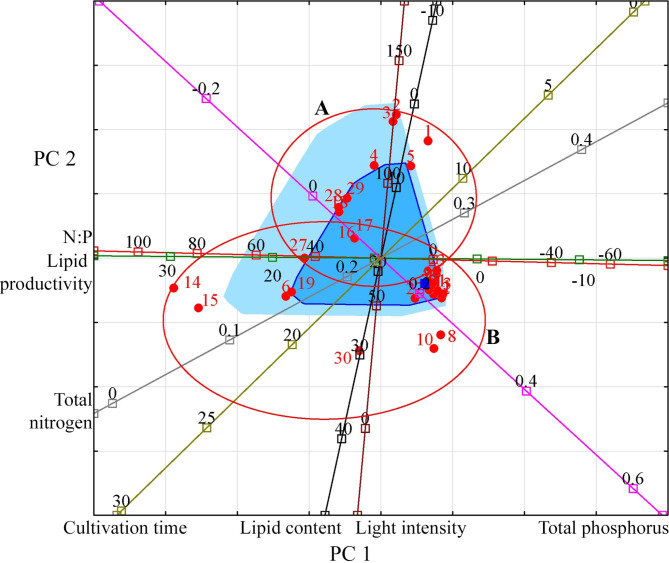
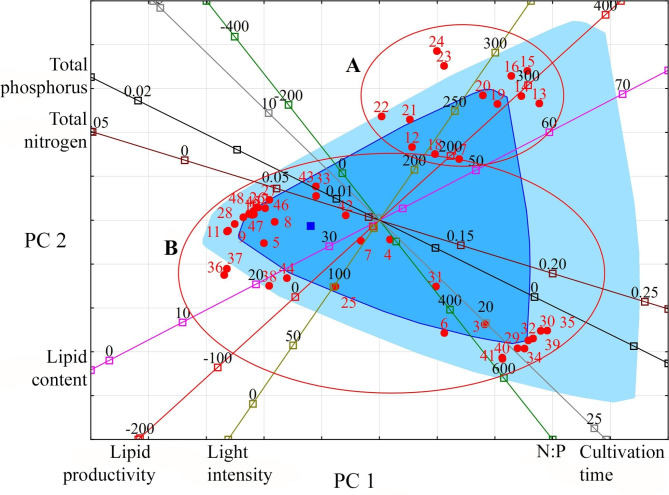
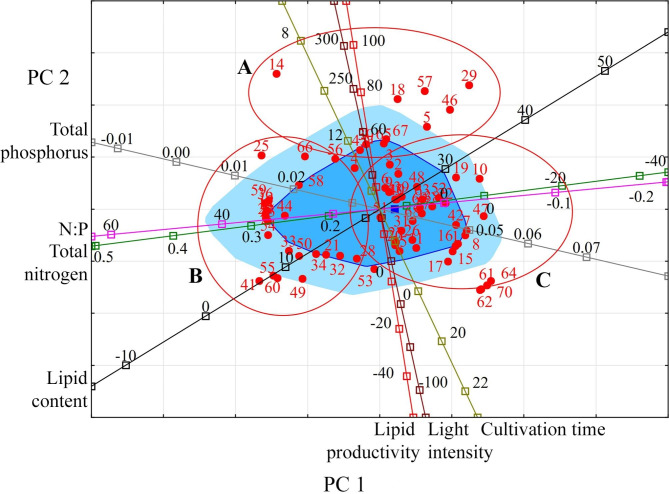
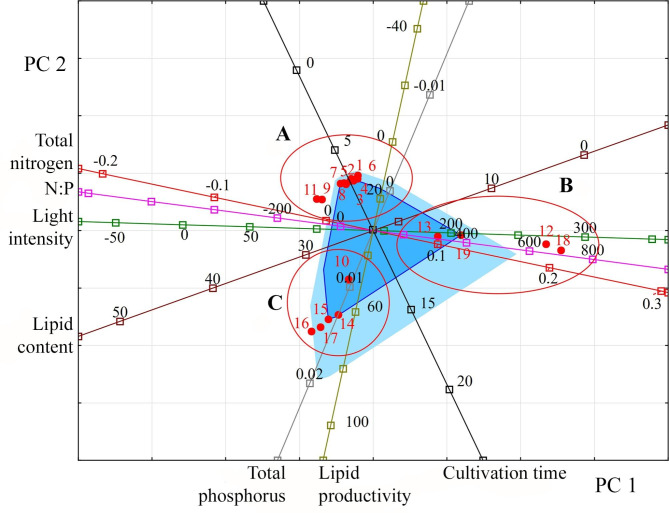
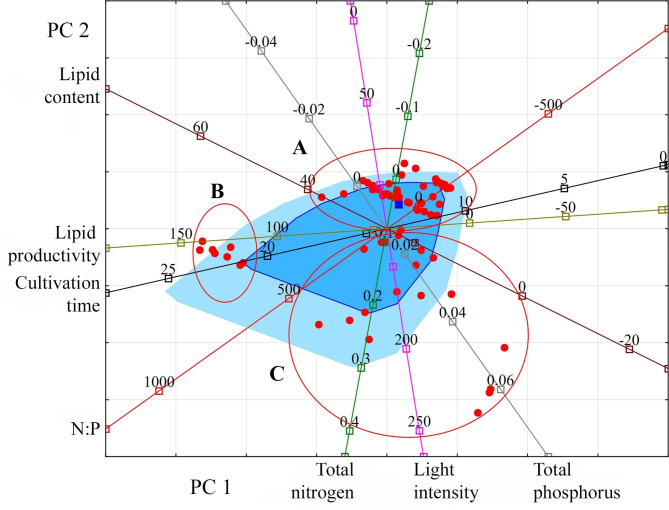
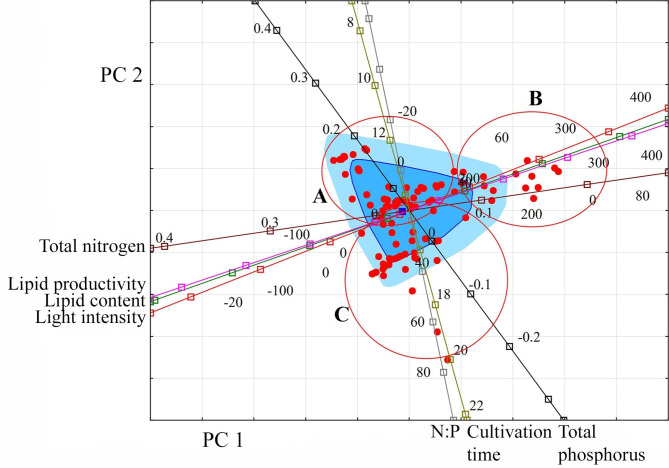
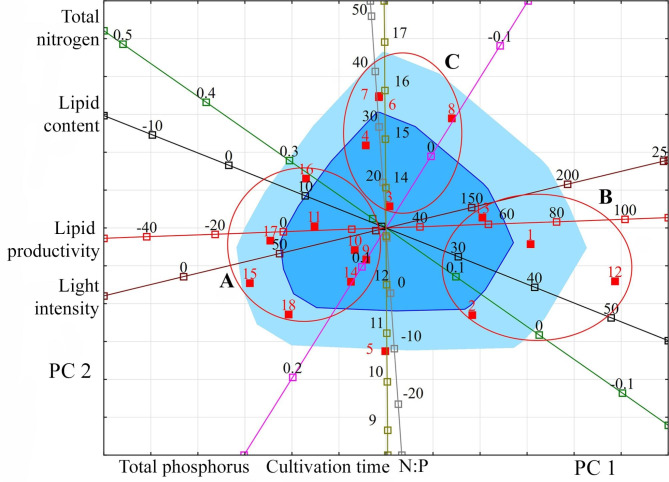
- PCA showed different relationships among lipid content/productivity, N, P, N:P, light, and cultivation time for Cyanobacteria, Heterokontophyta/Ochrophyta, Chlorophyta, Dinophyta, Haptophyta, and marine vs freshwater/terrestrial groups; some species increased lipids under N/P deprivation while others decreased or showed no change.
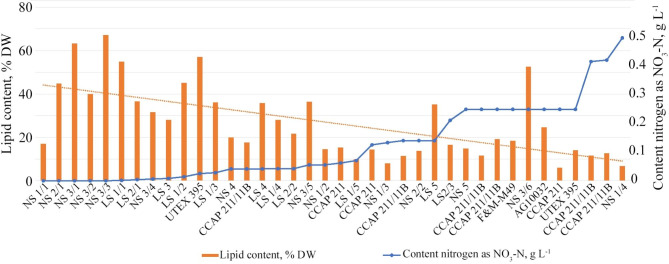
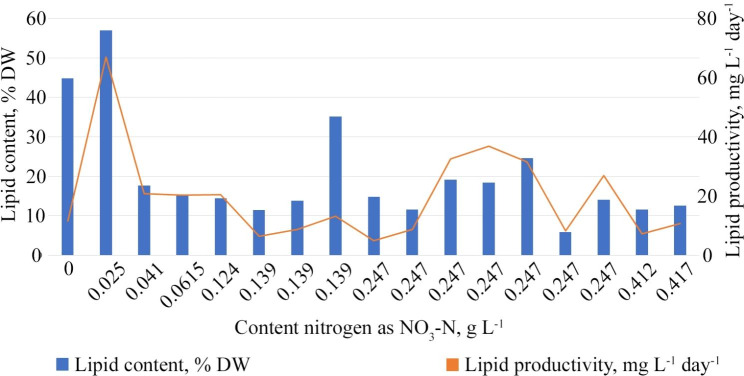
- In *Chlorella vulgaris*, 38 experiments showed lipid content from 5.9 to 67.1% DW and lipid productivity from 5.0 to 204.9 mg L−1 day−1, with a general trend of decreasing lipid content as nitrogen increased, but different strains did not show identical lipid amounts or productivity at the same nitrogen concentration.
- Promising biodiesel candidates listed include *Ankistrodesmus falcatus*, *Ankistrodesmus fusiformis*, *Chlorella sorokiniana*, *Chlorella vulgaris*, *Cylindrotheca fusiformis*, *Diacronema lutheri*, *Ettlia oleoabundans*, *Microchloropsis salina*, *Microcystis aeruginosa*, *Nannochloropsis granulata*, *Nannochloropsis oceanica*, *Nannochloropsis oculata*, *Phaeodactylum tricornutum*, *Prymnesium parvum*, *Rebecca salina*, *Tetradesmus deserticola*, *Tetradesmus obliquus*, *Tetraselmis suecica*, *Vischeria magna*, and *Vischeria vischeri*.
Methods
- Data were collected from publications on batch cultures of microalgae grown with varying nitrogen and phosphorus, recording taxonomy, culture conditions, light intensity, medium, N/P source and concentration, growth rate, and experiment duration; 301 experiments were included.
- Principal component analysis (PCA) was used to examine relationships among lipid content, lipid productivity, N, P, N:P ratio, cultivation time, and light intensity, with calculations and plotting in Statistica ver.12.0.
- A separate PCA and trend analysis was performed for *Chlorella vulgaris* using 38 experiments with nitrogen concentrations from 0 to 0.494 g L−1.
Limitations
- The paper states that no single approach is used to determine experimental N and P concentrations, preventing correct interpretation and potentially leading to erroneous conclusions; terminology for N/P deficiency also differs across publications.
- The paper notes scarce data for Rhodophyta and Cryptophyta, limited information for heterocytic Cyanobacteria, and that growth-rate information was not always available for species accumulating lipids over 50% DW.
- Evident from the text: this is a synthesis of heterogeneous published experiments rather than a controlled new experiment, PCA identifies associations but not causation, and incomplete records were excluded from some analyses.
Model-written summary. Check it against the paper before relying on it.
Integrity signals
Registry
Cites
Statistics
Figures
Verification
Claims the paper makes
16 Valid · 6 Not valid · 16 Not checked · 127 Own results and interpretations
Every source the paper cites for this claim was checked and supports it.
In the paper
“An increase in lipid content in response to nitrogen restriction is considered a general pattern [36, 80].”
§ Nitrogen and phosphorus stress as a tool to induce lipid production in microalgae > Introduction > Effect of nitrogen and phosphorus Starvation on the content and productivity of lipids in various taxonomic and ecological groups of microalgae
What the sources say
- Supportedcites [36] Li YX Zhao FJ Yu DD Effect of nitrogen limitation on cell growth, lipid accumulation and gene expression in Chlorella sorokiniana Braz Arch Biol Technol 2015 58 3 462 7 10.1590/S1516-8913201500391 source
The Discussion states that limiting nitrogen led to lipid accumulation in the studied Chlorella sorokiniana and also describes increased fatty-acid content under nitrogen limitation in Isochrysis galbana. The Introduction treats increased lipid production under nitrogen deficiency as a broader pattern in microalgae, supporting the citing sentence in that context. (LLM, conf=0.88)
- Supportedcites [80] Ratomski P Hawrot-Paw M Influence of nutrient-stress conditions on Chlorella vulgaris biomass production and lipid content Catal 2021 11 5 573 10.3390/CATAL11050573 source
The Introduction states that many microalgal species produce and accumulate more lipids when nitrogen is limited. Section 2.2.3 describes increased lipid content under nitrogen limitation in the study and in studies of other algae, supporting the claim as a general pattern rather than an exception-free rule. Page numbers are not provided in our copy. (LLM, conf=0.91)
plainstates a cause- Asserted: passes — The authors put it forward as true.
- Checkable: passes — It can be checked against evidence.
- Load-bearing: passes — The paper’s conclusions depend on it.
- Based: passes — The paper gives a reason why it holds.
- Supported
The sources with a verdict support this claim; the rest weren’t checked yet, have no full text we could read, or their verdicts aren’t rated yet.
In the paper
“A comparative assessment of the ability of microalgae to accumulate lipids without specifying information on cultivation media [13, 135] can only be indicative.”
§ Nitrogen and phosphorus stress as a tool to induce lipid production in microalgae > Introduction > Optimisation of the approach for the analysis of the amount of nitrogen and phosphorus in nutrient media
What the sources say
- Not checked — no full text of the sourcecites [13] Mata TM Martins AA Caetano NS Microalgae for biodiesel production and other applications: a review Renew Sust Energ Rev 2010 14 1 217 32 10.1016/j.rser.2009.07.020 source
- Supportedcites [135] Dahiya S Chowdhury R Tao W Kumar P Biomass and lipid productivity by two algal strains of Chlorella sorokiniana grown in hydrolysate of water hyacinth Energies 2021 14 5 1411 10.3390/EN14051411 source
Section 3.4 (p. 11) reports different lipid productivities for the same strains in nitrogen- and phosphorus-amended media. It also compares those strains with lipid-productivity values from the literature (p. 12). These findings support treating comparisons that omit cultivation-media information as indicative rather than definitive. (LLM, conf=0.86)
plain- Asserted: passes — The authors put it forward as true.
- Checkable: unclear — It is unclear whether it could be checked against evidence.
- Load-bearing: passes — The paper’s conclusions depend on it.
- Based: passes — The paper gives a reason why it holds.
The cited sources support only part of this claim — read each source’s verdict below.
In the paper
“For example, f/2 media [130–132] and BG-11 [83, 133, 134] differ by 20 times in the amount of nitrogen (-N).”
§ Nitrogen and phosphorus stress as a tool to induce lipid production in microalgae > Introduction > Optimisation of the approach for the analysis of the amount of nitrogen and phosphorus in nutrient media
What the sources say
- Not checked — no full text of the sourcecites [130] Doan Y Sivaloganathan B Obbard J Screening of marine microalgae for biodiesel feedstock Biomass Bioenergy 2011 35 7 34 2544 10.1016/j.biombioe.2011.02.021 source
- Could not verifycites [131] Duong VT Thomas-Hall SR Schenk PM Growth and lipid accumulation of microalgae from fluctuating brackish and sea water locations in South East Queensland–Australia Front Plant Sci 2015 6 359 10.3389/fpls.2015.00359 26042142 PMC4436584 sourceExperimental — accuracy not yet measured
The Materials and methods section (page unavailable) says the strains were grown in f/2 medium and that nitrate was monitored, but gives no nitrogen-content comparison with BG-11. Searches for BG-11, medium composition, and the claimed 20-fold difference found no passage addressing that comparison. (LLM, conf=0.76)
- Partly supportedcites [132] Rafay R Uratani JM Hernandez HH Rodríguez J Growth and nitrate uptake in Nannochloropsis gaditana and Tetraselmis chuii cultures grown in sequential batch reactors Front Mar Sci 2020 7 77 10.3389/FMARS.2020.00077 sourceExperimental — accuracy not yet measured
The Growth Rates of N. gaditana section states that the cultures were grown in f/2 medium, supporting the citation’s identification of that medium. The passages found for BG-11, nitrogen concentration, and the 20-fold figure do not establish a comparison between the two media; no page number is available in our copy. (LLM, conf=0.82)
- Not checked — no full text of the sourcecites [83] Xu J Li T Li CL Zhu SN Wang ZM Zeng EY Lipid accumulation and eicosapentaenoic acid distribution in response to nitrogen limitation in microalga Eustigmatos vischeri JHsu-01 (Eustigmatophyceae) Algal Res 2020 48 101910 10.1016/J.ALGAL.2020.101910 source
- Could not verifycites [133] Krzemińska I Nosalewicz A Reszczyńska E Pawlik-Skowrońska B Enhanced light-induced biosynthesis of fatty acids suitable for biodiesel production by the yellow-green alga Eustigmatos Magnus Energies 2020 13 22 6098 10.3390/en13226098 sourceExperimental — accuracy not yet measured
Section 5.1 (page unavailable) says the study grew Eustigmatos magnus in BG 11 medium, but gives no nitrogen concentration or comparison with f/2 medium. Searches for f/2, BG-11 and nitrogen concentrations found no passage supporting the claimed 20-fold difference. (LLM, conf=0.76)
- Partly supportedcites [134] Sharafi H Fooladi J Tabatabaei M Heravi MM Memari H Lipid production capacity of a newly characterized cyanobacterial strain Synechocystis sp. MH01: a comparative performance evaluation of cyanobacterial lipid-based biodiesel Iran J Biotechnol 2021 19 1 96 105 10.30498/IJB.2021.2313 PMC8217539 34179185 doi:10.30498/ijb.2021.2313Experimental — accuracy not yet measured
Materials and Methods §3.1 gives the BG-11 formulation, including 1.5 g of NaNO3, and §3.5.3 identifies NaNO3 as a nitrogen source. The paper does not give an f/2 formulation or state that the media differ twentyfold in nitrogen content, so it supports only the BG-11 side of the comparison. No page number is available in our copy. (LLM, conf=0.82)
plain- Asserted: passes — The authors put it forward as true.
- Checkable: passes — It can be checked against evidence.
- Load-bearing: unclear — It is unclear whether the paper’s conclusions depend on it.
- Based: passes — The paper gives a reason why it holds.
The sources with a verdict support this claim; the rest weren’t checked yet, have no full text we could read, or their verdicts aren’t rated yet.
In the paper
“The optimal concentration of phosphorus in the culture medium has been reported to be in the range of 0.001 g L− 1 to 0.179 g L− 1 [46, 69].”
§ Nitrogen and phosphorus stress as a tool to induce lipid production in microalgae > Introduction > Optimisation of the approach for the analysis of the amount of nitrogen and phosphorus in nutrient media
What the sources say
- Supportedcites [46] Yaakob MA Mohamed RMSR Al-Gheethi A Gokare RA Ambati RR Influence of nitrogen and phosphorus on microalgal growth, biomass, lipid, and fatty acid production: an overview Cells 2021 10 2 393 10.3390/CELLS10020393 33673015 PMC7918059 source
Section 2.2, “Role of Phosphorus,” states that the optimum phosphorus concentration for microalgae is 0.001–0.179 g/L. No page number is provided in our copy. (LLM, conf=0.95)
- Not checked — no full text of the sourcecites [69] Roopnarain A Gray VM Sym SD Phosphorus limitation and Starvation effects on cell growth and lipid accumulation in Isochrysis galbana U4 for biodiesel production Bioresour Technol 2014 156 408 11 10.1016/J.BIORTECH.2014.01.092 24534441 source
plain- Asserted: passes — The authors put it forward as true.
- Checkable: passes — It can be checked against evidence.
- Load-bearing: unclear — It is unclear whether the paper’s conclusions depend on it.
- Based: passes — The paper gives a reason why it holds.
- Supported
The cited sources support only part of this claim — read each source’s verdict below.
In the paper
“As noted above, the ratio of nitrogen and phosphorus in cultivation media is considered essential for ensuring microalgae growth [68, 99].”
§ Nitrogen and phosphorus stress as a tool to induce lipid production in microalgae > Introduction > Optimisation of the approach for the analysis of the amount of nitrogen and phosphorus in nutrient media
What the sources say
- Partly supportedcites [68] Wong YK Ho YH Ho KC Leung HM Yung KKL Growth medium screening for Chlorella vulgaris growth and lipid production J Aquac Mar Biol 2017 6 1 00143 10.15406/JAMB.2017.06.00143 sourceExperimental — accuracy not yet measured
The Stage discussion says nitrogen affects biomass growth, and the passage on phosphorus says starvation can reduce growth. Table 3 lists both nutrients in the media, but the paper does not establish that their ratio is essential for microalgal growth. No page numbers are available in our copy. (LLM, conf=0.84)
- Not matchedcites [99] Kadhim DAH Abbood HAN Al-Essawi AY Mardan AJ Kadhim HF Estimation of lipids content for some algal species isolated from different regions in Al-Najaf city under different conditions Plant Arch 2020 20 2 4035 42
Its entry has no title and year that we can search by.
plainstates a cause- Asserted: passes — The authors put it forward as true.
- Checkable: passes — It can be checked against evidence.
- Load-bearing: unclear — It is unclear whether the paper’s conclusions depend on it.
- Based: passes — The paper gives a reason why it holds.
- Partly supported
91 more claims · 3 with their cited sources checked
Create a free account to see all 165 claims and to verify the 5 references still open.
- It may state two separate claims as one. 52
- Probably not a substantial claim. 18
- The quote only partly states this claim. 2
Self-check
Percentages, sums and reported differences re-computed from the paper’s own numbers.
Each contradiction between two passages listed here was confirmed by an independent check.
Rated minor: it would not touch a result — a value no result rests on, a p-value that stays on the same side of the significance level, or a conflict that is clerical, resolved elsewhere in the paper, or outside its own findings.
In the paper
§ Nitrogen and phosphorus stress as a tool to induce lipid production in microalgae > Introduction > Dinophyta and Haptophyta
“Species from group C are characterised by the best indicators of lipid productivity and lipid content (up to 50.2–190 mg L− 1 day− 1 and 35.5%, respectively) among the analysed samples of Dinophyta and Haptophyta species.”
§ Nitrogen and phosphorus stress as a tool to induce lipid production in microalgae > Introduction > Dinophyta and Haptophyta
“Group A is characterised by a lipid content in the range of 16–39%”
Rated minor: it would not touch a result — a value no result rests on, a p-value that stays on the same side of the significance level, or a conflict that is clerical, resolved elsewhere in the paper, or outside its own findings.
In the paper
§ Nitrogen and phosphorus stress as a tool to induce lipid production in microalgae > Introduction > Optimisation of the approach for the analysis of the amount of nitrogen and phosphorus in nutrient media
“the nitrogen content in the media, when converted to nitrogen (-N), lies in an extensive range from 0.007 g L− 1 to 0.417 g L− 1 (Table 7).”
§ Nitrogen and phosphorus stress as a tool to induce lipid production in microalgae > Introduction > Optimisation of the approach for the analysis of the amount of nitrogen and phosphorus in nutrient media
“| ASW (seawater) | [119] | dH2O | 0.004 | 0.0003 | 13:1 | 11 |”
Rated minor: it would not touch a result — a value no result rests on, a p-value that stays on the same side of the significance level, or a conflict that is clerical, resolved elsewhere in the paper, or outside its own findings.
In the paper
§ Nitrogen and phosphorus stress as a tool to induce lipid production in microalgae > Conclusion
“phosphorus from 0.12 to 0.227 g L-1”
§ Nitrogen and phosphorus stress as a tool to induce lipid production in microalgae > Introduction > Optimisation of the approach for the analysis of the amount of nitrogen and phosphorus in nutrient media
“The phosphorus content lies in a more extensive range in the media used for microalgae growth: from 0.0003 g L− 1 to 0.227 g L− 1 (Table 7).”
Rated minor: it would not touch a result — a value no result rests on, a p-value that stays on the same side of the significance level, or a conflict that is clerical, resolved elsewhere in the paper, or outside its own findings.
In the paper
§ Nitrogen and phosphorus stress as a tool to induce lipid production in microalgae > Introduction > Effect of nitrogen Starvation on lipid content and productivity in different strains of Chlorella vulgaris
“The sample represented a range of nitrogen concentrations from 0 g L− 1 to 0.494 g L− 1 tested in 38 experiments.”
§ Nitrogen and phosphorus stress as a tool to induce lipid production in microalgae > Introduction > Effect of nitrogen Starvation on lipid content and productivity in different strains of Chlorella vulgaris
“Lipid productivity also differed in the range of 5.0 mg L− 1 day− 1 to 204.9 mg L− 1 day− 1 except for the concentration of 0.497 g L− 1 for which there is no data.”
Cited works that were retracted
Works this paper cites that were later retracted, from the retraction notices publishers deposit. Major when the notice came out before this paper was published.
A note, not an issue: for example, a cited work that was retracted only after this paper was published, which its authors could not have known.
In the paper
“For example, under phosphorus starvation, the content of total lipids increased threefold in Chloroidium ellipsoideum (CUH/ Al/MW-189), and twofold in Chlorococcum infusionum (CUH/Al/MW-190) [42].”
Cited work 10.1155/2016/8712470 · retracted 2026-06-08 · notice 10.1155/advb/9816729 · this paper published 2023-11-20
Citations
Cites
1 retracted
Satpati, G. G., Gorain, P. C., & Pal, R. (2016) · Advances in Biology · doi:10.1155/2016/8712470 · Cited by 33 · cited 1×
“For example, under phosphorus starvation, the content of total lipids increased threefold in Chloroidium ellipsoideum (CUH/ Al/MW-189), and twofold in Chlorococcum infusionum (CUH/Al/MW-190) [42].”
BackgroundRetractedChisti, Y. (2007) · Biotechnology Advances · doi:10.1016/j.biotechadv.2007.02.001 · Cited by 9,524 · cited 4×
“Among the promising areas is the use of lipid-rich microalgae biomass for the production of bio-diesel, a third-generation fuel [1–10].”
BackgroundInfluentialGuillard, R. R. L., & Ryther, J. H. (1962) · Canadian Journal of Microbiology · doi:10.1139/m62-029 · Cited by 7,685
Generic Assignments, Strain Histories and Properties of Pure Cultures of Cyanobacteria
Rippka, R., Stanier, R. Y., Deruelles, J., Herdman, M., & Waterbury, J. B. (1979) · Microbiology · doi:10.1099/00221287-111-1-1 · Cited by 7,606 · cited 1×
“Their chemical composition is designed to take into account the need for specific taxa or groups of taxa for nutrients, macro-and microelements and other specific compounds [113–118].”
BackgroundMicroalgae for biodiesel production and other applications: A review
Mata, T. M., Martins, A. A., & Caetano, N. S. (2010) · Renewable and Sustainable Energy Reviews · doi:10.1016/j.rser.2009.07.020 · Cited by 5,685 · cited 2×
“A comparative assessment of the ability of microalgae to accumulate lipids without specifying information on cultivation media [13, 135] can only be indicative.”
BackgroundMicroalgal triacylglycerols as feedstocks for biofuel production: perspectives and advances
Hu, Q., Sommerfeld, M., Jarvis, E., Ghirardi, M., Posewitz, M., Seibert, M., & Darzins, A. (2008) · The Plant Journal · doi:10.1111/j.1365-313x.2008.03492.x · Cited by 3,745 · cited 1×
“Its amount in some microalgae can reach up to 80% of the total amount of lipids [2, 15].”
BackgroundRodolfi, L., Chini Zittelli, G., Bassi, N., Padovani, G., Biondi, N., Bonini, G., & Tredici, M. R. (2009) · Biotechnology and Bioengineering · doi:10.1002/bit.22033 · Cited by 2,879
Camargo, J. A., & Alonso, Á. (2006) · Environment International · doi:10.1016/j.envint.2006.05.002 · Cited by 2,248 · cited 2×
“These two forms of ammonia are linked by chemical equilibrium, but as pH and temperature increase, these shifts and the NH 3 concentration increases [59].”
BackgroundConverti, A., Casazza, A. A., Ortiz, E. Y., Perego, P., & Del Borghi, M. (2009) · Chemical Engineering and Processing: Process Intensification · doi:10.1016/j.cep.2009.03.006 · Cited by 1,466
Lipid productivity as a key characteristic for choosing algal species for biodiesel production
Griffiths, M. J., & Harrison, S. T. L. (2009) · Journal of Applied Phycology · doi:10.1007/s10811-008-9392-7 · Cited by 1,421 · cited 4×
“When studying the lipid-producing ability of microalgae under conditions of nitrogen deprivation, the existing differences between marine and freshwater species are often noted [91, 103].”
BackgroundInfluentialRedfield revisited: Variability of C:N: P in marine microalgae and its biochemical basis
Geider, R., & La Roche, J. (2002) · European Journal of Phycology · doi:10.1017/s0967026201003456 · Cited by 1,412 · cited 1×
“These issues have already become the subject of research [37, 71, 74, 75] and suggest revealing the response of different species and taxonomic groups of microalgae to various transformations of the content nutrients in the growth medium.”
BackgroundStichochrysis immobilis is a diatom, not a chrysophyte
Guillard, R. R. L., & Hargraves, P. E. (1993) · Phycologia · doi:10.2216/i0031-8884-32-3-234.1 · Cited by 1,182
Xin, L., Hong-ying, H., Ke, G., & Ying-xue, S. (2010) · Bioresource Technology · doi:10.1016/j.biortech.2010.02.016 · Cited by 1,115 · cited 4×
“Similar conclusions were also made in other works [39, 71, 72].”
BackgroundResultInfluentialHigh lipid induction in microalgae for biodiesel production
Sharma, K. K., Schuhmann, H., & Schenk, P. M. (2012) · Energies · doi:10.3390/en5051532 · Cited by 886 · cited 1×
“They also form cell membranes and can be precursors or intermediates of cell signalling systems that respond to changing environmental conditions [14].”
BackgroundYaakob, M. A., Mohamed, R. M. S. R., Al-Gheethi, A., Aswathnarayana Gokare, R., & Ambati, R. R. (2021) · Cells · doi:10.3390/cells10020393 · Cited by 677 · cited 4×
“However, stress conditions caused by a lack of nitrogen or phosphorus can decrease the growth rate of microalgae, biomass accumulation and, accordingly, the reduction in the final lipid yield [44–46].”
BackgroundInfluentialPreparation and Chemistry of the Artificial Algal Culture Medium Aquil
Price, N. M., Harrison, G. I., Hering, J. G., Hudson, R. J., Nirel, P. M. V., Palenik, B., & Morel, F. M. M. (1989) · Biological Oceanography · doi:10.1080/01965581.1988.10749544 · Cited by 563
Sajjadi, B., Chen, W.-Y., Raman, A. A. A., & Ibrahim, S. (2018) · Renewable and Sustainable Energy Reviews · doi:10.1016/j.rser.2018.07.050 · Cited by 535 · cited 3×
“Numerous studies have shown that the lipid content in the biomass of some microalgae can reach up to 75% [11].”
BackgroundInfluentialNascimento, I. A., Marques, S. S. I., Cabanelas, I. T. D., Pereira, S. A., Druzian, J. I., de Souza, C. O., Vich, D. V., de Carvalho, G. C., & Nascimento, M. A. (2013) · BioEnergy Research · doi:10.1007/s12155-012-9222-2 · Cited by 517 · cited 3×
“Information on lipid content in other growth phases is less common [19, 82, 83].”
BackgroundAcclimation and toxicity of high ammonium concentrations to unicellular algae
Collos, Y., & Harrison, P. J. (2014) · Marine Pollution Bulletin · doi:10.1016/j.marpolbul.2014.01.006 · Cited by 517 · cited 1×
“There is an indication that the action of ammonium can have both short-term and long-term adverse effects on microalgae growth rate and photosynthetic activity [60].”
BackgroundCell Size as a Key Determinant of Phytoplankton Metabolism and Community Structure
Marañón, E. (2015) · Annual Review of Marine Science · doi:10.1146/annurev-marine-010814-015955 · Cited by 514 · cited 2×
“Small species show similar specific volume V (max N) compared to their larger counterparts but have higher nitrogen requirements [96].”
BackgroundMaltsev, Y., Maltseva, K., Kulikovskiy, M., & Maltseva, S. (2021) · Biology · doi:10.3390/biology10101060 · Cited by 511 · cited 1×
“A detailed analysis of such parameters as intensity, duration of illumination, and spectral composition of the light flux was made by us in previous work [76].”
MethodSelf-citationPancha, I., Chokshi, K., George, B., Ghosh, T., Paliwal, C., Maurya, R., & Mishra, S. (2014) · Bioresource Technology · doi:10.1016/j.biortech.2014.01.025 · Cited by 492
The Morphology of Chlamydomonas chlamydogama, Sp. Nov.
Bold, H. C. (1949) · Bulletin of the Torrey Botanical Club · doi:10.2307/2482218 · Cited by 490
Understanding nitrate assimilation and its regulation in microalgae
Sanz-Luque, E., Chamizo-Ampudia, A., Llamas, A., Galvan, A., & Fernandez, E. (2015) · Frontiers in Plant Science · doi:10.3389/fpls.2015.00899 · Cited by 447 · cited 1×
“According to Sanz-Luque et al. [62], in ocean waters, the estimated concentration of nitrate is between 7 and 31 µM; of ammonium, 0.001–0.3 µM; and nitrite, about 0.006–0.1 µM.”
BackgroundInfluentialMinhas, A. K., Hodgson, P., Barrow, C. J., & Adholeya, A. (2016) · Frontiers in Microbiology · doi:10.3389/fmicb.2016.00546 · Cited by 445 · cited 1×
“It is, for example, the use of abiotic stress factors during cultivation [30, 31], including nutrient restriction.”
BackgroundGorham, P. R., McLachlan, J., Hammer, U. T., & Kim, W. K. (1964) · SIL Proceedings, 1922-2010 · doi:10.1080/03680770.1962.11895606 · Cited by 436
Handbook of Microalgal Mass Culture (1986)
(2017) · CRC Press eBooks · doi:10.1201/9780203712405 · Cited by 420
Lipid Production from Nannochloropsis
Ma, X.-N., Chen, T.-P., Yang, B., Liu, J., & Chen, F. (2016) · Marine Drugs · doi:10.3390/md14040061 · Cited by 394 · cited 2×
“Simultaneously with an increase in lipid content, nitrogen starvation can decrease PUFA production, which is valuable for biodiesel production [1, 17–19].”
BackgroundHe, Q., Yang, H., Wu, L., & Hu, C. (2015) · Bioresource Technology · doi:10.1016/j.biortech.2015.05.021 · Cited by 367
Cultures and collections of algae
Provasoli, L. (1968) · Medical Entomology and Zoology · Cited by 363
Fan, J., Cui, Y., Wan, M., Wang, W., & Li, Y. (2014) · Biotechnology for Biofuels · doi:10.1186/1754-6834-7-17 · Cited by 341
Griffiths, M. J., van Hille, R. P., & Harrison, S. T. L. (2012) · Journal of Applied Phycology · doi:10.1007/s10811-011-9723-y · Cited by 341 · cited 5×
“…Ettlia oleoabundans (1.69 day − 1 ) [93], Phaeodacty-lum tricornutum CCMP 2561 (1.63 day − 1 ), Cryptomonas baltica NIVA-5/91(1.4 day − 1 ) [94], Chlorella vulgaris (1.34 day − 1 ), Tetraselmis suecica (1.32 day − 1 ), Isochrysis sp. (1.32 day − 1 ) [93], Arthrospira platensis (1.28 day − 1 ) [95].”
BackgroundInfluentialFatty Acid Profiles and Production in Marine Phytoplankton
Jónasdóttir, S. H. (2019) · Marine Drugs · doi:10.3390/md17030151 · Cited by 321 · cited 1×
“The main constraint is the low profitability of such production [24].”
BackgroundAmmonium assimilation in cyanobacteria
Muro-Pastor, M. I., Reyes, J. C., & Florencio, F. J. (2005) · Photosynthesis Research · doi:10.1007/s11120-004-2082-7 · Cited by 287 · cited 1×
“Compared to nitrates, ammonium may have an advantage as a source of nitrogen [49, 55, 56].”
BackgroundGeorge, B., Pancha, I., Desai, C., Chokshi, K., Paliwal, C., Ghosh, T., & Mishra, S. (2014) · Bioresource Technology · doi:10.1016/j.biortech.2014.08.086 · Cited by 287
Microalgal lipids: A review of lipids potential and quantification for 95 phytoplankton species
Morales, M., Aflalo, C., & Bernard, O. (2021) · Biomass and Bioenergy · doi:10.1016/j.biombioe.2021.106108 · Cited by 273 · cited 1×
“To systematise experimental data on the relationship between nitrogen starvation and the ability of algae to synthesise lipids, Sajjadi et al. [11], Morales et al. [136] attempted to divide them into groups taking into account the N content: “N-replete” and “N-starvation”, and “N-deficiency”.”
BackgroundProduction of biodiesel from microalgae through biological carbon capture: a review
Mondal, M., Goswami, S., Ghosh, A., Oinam, G., Tiwari, O. N., Das, P., Gayen, K., Mandal, M. K., & Halder, G. N. (2017) · 3 Biotech · doi:10.1007/s13205-017-0727-4 · Cited by 268
Screening of marine microalgae for biodiesel feedstock
Doan, T. T. Y., Sivaloganathan, B., & Obbard, J. P. (2011) · Biomass and Bioenergy · doi:10.1016/j.biombioe.2011.02.021 · Cited by 247 · cited 1×
“For example, f/2 media [130–132] and BG-11 [83, 133, 134] differ by 20 times in the amount of nitrogen (-”
BackgroundAmmonium Utilization in Microalgae: A Sustainable Method for Wastewater Treatment
Salbitani, G., & Carfagna, S. (2021) · Sustainability · doi:10.3390/su13020956 · Cited by 245 · cited 2×
“For example, urea was the predominant nitrogen source for Arthrospira platensis and Arthrospira sp. compared to nitrates [49, 53], for Chlamydomonas [54] and ammonium for Chlorella vulgaris [50], nitrate for Botryococcus braunii and Dunaliella tertiolecta [47].”
BackgroundMujtaba, G., Choi, W., Lee, C.-G., & Lee, K. (2012) · Bioresource Technology · doi:10.1016/j.biortech.2012.07.057 · Cited by 241 · cited 1×
“…LS 3 [82]; UTEX 395 [93]; NS 4 [107]; CCAP 211/11B [68]; LS 4 [108]; CCAP 211 [109]; LS 5 [110]; NS 5 [111]; CCAP 211/11B [103]; F&M-M49 [103]; AG10032 [112] As a source of nitrogen in nutrient media, mainly NaNO 3 is used, less often KNO 3 [117, 121], Ca(NO 3 ) 2 [113], Fe(NH 4 ) 2 (SO 4 ) [122].”
Light and growth medium effect on Chlorella vulgaris biomass production
Blair, M. F., Kokabian, B., & Gude, V. G. (2014) · Journal of Environmental Chemical Engineering · doi:10.1016/j.jece.2013.11.005 · Cited by 238 · cited 1×
“Microalgae growth (as an increase in cell number) has four distinct phases: lag, logarithmic (sometimes linear), stationary, and death [39, 79].”
BackgroundCulture collection of algae and protozoa : catalogue of strains 1988
Thompson, A., Rhodes, J., & Pettman, I. (1988) · Medical Entomology and Zoology · Cited by 236
Mandalam, R. K., & Palsson, B. (1998) · Biotechnology and Bioengineering · doi:10.1002/(sici)1097-0290(19980905)59:5<605::aid-bit11>3.0.co;2-8 · Cited by 235
Zarrinmehr, M. J., Farhadian, O., Heyrati, F. P., Keramat, J., Koutra, E., Kornaros, M., & Daneshvar, E. (2020) · Egyptian Journal of Aquatic Research · doi:10.1016/j.ejar.2019.11.003 · Cited by 227 · cited 8×
“…example, the specific growth rate of Isochrysis galbana at a nitrogen concentration of 72, 144, and 288 mg L − 1 from the Log phase to the stationary one decreased from 1.02 to 1.23 to 0.32–0.36 day − 1 , and at a nitrogen concentration of 0 and 36 mg L − 1 decreased from 0.71 to 0.13 day − 1 [39].”
BackgroundResultInfluentialFatty Acids of Microalgae: Diversity and Applications
Maltsev, Y., & Maltseva, K. (2021) · Reviews in Environmental Science and Bio/Technology · doi:10.1007/s11157-021-09571-3 · Cited by 226 · cited 1×
“In the composition of various classes of lipids, as well as in the free state in microalgae cells, 135 fatty acids were noted, differing in the length of the hydrocarbon chain, and the presence and number of double bonds [16].”
BackgroundSelf-citationRu, I. T. K., Sung, Y. Y., Jusoh, M., Wahid, M. E. A., & Nagappan, T. (2020) · Applied Phycology · doi:10.1080/26388081.2020.1715256 · Cited by 219
Aiba, S., & Ogawa, T. (1977) · Journal of General Microbiology · doi:10.1099/00221287-102-1-179 · Cited by 195
Revisiting nitrogen utilization in algae: A review on the process of regulation and assimilation
Kumar, A., & Bera, S. (2020) · Bioresource Technology Reports · doi:10.1016/j.biteb.2020.100584 · Cited by 187 · cited 1×
“Nitrogen makes up from 1 to 14% of the dry weight of microalgae [47] and provides metabolism associated with the synthesis of proteins and nucleic acids [48].”
BackgroundInorganic nitrogen assimilation in Chlamydomonas
Fernandez, E., & Galvan, A. (2007) · Journal of Experimental Botany · doi:10.1093/jxb/erm106 · Cited by 177
Algae: Critical Sources of Very Long-Chain Polyunsaturated Fatty Acids
Harwood, J. (2019) · Biomolecules · doi:10.3390/biom9110708 · Cited by 171 · cited 1×
“Neutral lipids and TAGs are rich in MUFAs, while polar lipids (glycolipids and phospholipids) show a higher percentage of PUFAs [22, 23].”
BackgroundKnothe, G. (2012) · Energy & Fuels · doi:10.1021/ef300700v · Cited by 160 · cited 1×
“On the contrary, a high content of saturated fatty acids leads to an increase in the cetane number, and a sufficient amount of monounsatu-rated fatty acids significantly improves the fluidity of bio-diesel fuel at low temperatures [20].”
BackgroundGenomic Foundation of Starch-to-Lipid Switch in Oleaginous Chlorella spp.
Fan, J., Ning, K., Zeng, X., Luo, Y., Wang, D., Hu, J., Li, J., Xu, H., Huang, J., Wan, M., et al. (2015) · Plant Physiology · doi:10.1104/pp.15.01174 · Cited by 144 · cited 1×
“Molecular and metabolic engineering, and gene editing technology (CRISPR/Cas9) are used to induce high lipid levels in addition to nutrition [27–29].”
BackgroundNg, I., Keskin, B. B., & Tan, S. (2020) · Biotechnology Journal · doi:10.1002/biot.201900228 · Cited by 135
Wang, X., Fosse, H. K., Li, K., Chauton, M. S., Vadstein, O., & Reitan, K. I. (2019) · Frontiers in Marine Science · doi:10.3389/fmars.2019.00095 · Cited by 131 · cited 2×
“…) [92], Ettlia oleoabundans (1.69 day − 1 ) [93], Phaeodacty-lum tricornutum CCMP 2561 (1.63 day − 1 ), Cryptomonas baltica NIVA-5/91(1.4 day − 1 ) [94], Chlorella vulgaris (1.34 day − 1 ), Tetraselmis suecica (1.32 day − 1 ), Isochrysis sp. (1.32 day − 1 ) [93], Arthrospira platensis (1.28 day −…”
InfluentialChaffin, J. D., & Bridgeman, T. B. (2014) · Journal of Applied Phycology · doi:10.1007/s10811-013-0118-0 · Cited by 127 · cited 1×
“Compared to nitrates, ammonium may have an advantage as a source of nitrogen [49, 55, 56].”
BackgroundNitrogen Fixing Cyanobacteria: Future Prospect
A., A., Hemida, M., & Ohyam, T. (2014) · Advances in Biology and Ecology of Nitrogen Fixation · doi:10.5772/56995 · Cited by 124 · cited 1×
“Nitrogen gas is available for some cyanobacteria [51].”
BackgroundImpact of temperature and light intensity on triacylglycerol accumulation in marine microalgae
Kurpan Nogueira, D. P., Silva, A. F., Araújo, O. Q. F., & Chaloub, R. M. (2015) · Biomass and Bioenergy · doi:10.1016/j.biombioe.2014.10.017 · Cited by 122
Giridhar Babu, A., Wu, X., Kabra, A. N., & Kim, D.-P. (2017) · Algal Research · doi:10.1016/j.algal.2017.02.004 · Cited by 118
Biosynthesis of Triacylglycerol Molecules with a Tailored PUFA Profile in Industrial Microalgae
Xin, Y., Shen, C., She, Y., Chen, H., Wang, C., Wei, L., Yoon, K., Han, D., Hu, Q., & Xu, J. (2019) · Molecular Plant · doi:10.1016/j.molp.2018.12.007 · Cited by 108 · cited 1×
“Neutral lipids and TAGs are rich in MUFAs, while polar lipids (glycolipids and phospholipids) show a higher percentage of PUFAs [22, 23].”
BackgroundMa, Y.-H., Wang, X., Niu, Y.-F., Yang, Z.-K., Zhang, M.-H., Wang, Z.-M., Yang, W.-D., Liu, J.-S., & Li, H.-Y. (2014) · Microbial Cell Factories · doi:10.1186/s12934-014-0100-9 · Cited by 106 · cited 1×
“[101], Chlorella vulgaris (67.1”
InfluentialRoopnarain, A., Gray, V. M., & Sym, S. D. (2014) · Bioresource Technology · doi:10.1016/j.biortech.2014.01.092 · Cited by 104 · cited 2×
“The optimal concentration of phosphorus in the culture medium has been reported to be in the range of 0.001 g L − 1 to 0.179 g L − 1 [46, 69].”
BackgroundInfluentialNitrate or ammonium: Influences of nitrogen source on the physiology of a green alga
Lachmann, S. C., Mettler‐Altmann, T., Wacker, A., & Spijkerman, E. (2019) · Ecology and Evolution · doi:10.1002/ece3.4790 · Cited by 96 · cited 1×
“Evidence shows that different microalgae taxa have specific preferences regarding nitrogen sources [52].”
BackgroundShokravi, Z., Shokravi, H., Chyuan, O. H., Lau, W. J., Koloor, S. S. R., Petrů, M., & Ismail, A. F. (2020) · Sustainability · doi:10.3390/su12219083 · Cited by 95
Unkefer, C. J., Sayre, R. T., Magnuson, J. K., Anderson, D. B., Baxter, I., Blaby, I. K., Brown, J. K., Carleton, M., Cattolico, R. A., Dale, T., et al. (2017) · Algal Research · doi:10.1016/j.algal.2016.06.002 · Cited by 90
Bogard, M. J., Vogt, R. J., Hayes, N. M., & Leavitt, P. R. (2020) · Environmental Science & Technology · doi:10.1021/acs.est.9b06299 · Cited by 85 · cited 1×
“The facts of changes in the composition and abundance of microalgae with changes in the trophic base of water bodies, determined primarily by the number of biogenic compounds of nitrogen and phosphorus, are well described [66, 67].”
BackgroundAlgal Lipids and Their Metabolism
Guschina, I. A., & Harwood, J. L. (2013) · Algae for Biofuels and Energy · doi:10.1007/978-94-007-5479-9_2 · Cited by 83 · cited 1×
“Its amount in some microalgae can reach up to 80% of the total amount of lipids [2, 15].”
BackgroundZhu, S., Wang, Y., Shang, C., Wang, Z., Xu, J., & Yuan, Z. (2015) · Journal of Bioscience and Bioengineering · doi:10.1016/j.jbiosc.2014.12.018 · Cited by 80 · cited 1×
“It is reported that a lack of nitrogen changes the direction of carbon flow from protein synthesis to carbohydrate or lipid synthesis [86].”
BackgroundAssessing the potential of polyculture to accelerate algal biofuel production
Newby, D. T., Mathews, T. J., Pate, R. C., Huesemann, M. H., Lane, T. W., Wahlen, B. D., Mandal, S., Engler, R. K., Feris, K. P., & Shurin, J. B. (2016) · Algal Research · doi:10.1016/j.algal.2016.09.004 · Cited by 78
Influence of Nutrient-Stress Conditions on Chlorella vulgaris Biomass Production and Lipid Content
Ratomski, P., & Hawrot-Paw, M. (2021) · Catalysts · doi:10.3390/catal11050573 · Cited by 75 · cited 2×
“The stationary phase is considered the most TAG accumulating [80, 81], which is why it is preferred in studying lipid content in microalgae.”
BackgroundAdamakis, I. S., Lazaridis, P. A., Terzopoulou, E., Torofias, S. A., Valari, M., Kalaitzi, P., Rousonikolos, V., Gkoutzikostas, D., Zouboulis, A. I., Zalidis, G. C., et al. (2018) · Environmental Science and Pollution Research · doi:10.1007/s11356-018-2368-5 · Cited by 74
Effects of Nitrogen Forms and Supply Mode on Lipid Production of Microalga Scenedesmus obliquus
An, M., Gao, L., Zhao, W., Chen, W., & Li, M. (2020) · Energies · doi:10.3390/en13030697 · Cited by 69 · cited 1×
“This is because nitrates need to be converted by nitrate reductase before they are involved in metabolism, which is costlier for cells from an energy point of view [45].”
BackgroundRós, P., Silva, C., Silva-Stenico, M., Fiore, M., & Castro, H. (2013) · Marine Drugs · doi:10.3390/md11072365 · Cited by 68
Water Quality Conditions Associated with Cattle Grazing and Recreation on National Forest Lands
Roche, L. M., Kromschroeder, L., Atwill, E. R., Dahlgren, R. A., & Tate, K. W. (2013) · PLoS ONE · doi:10.1371/journal.pone.0068127 · Cited by 68 · cited 1×
“For example, in the surface waters of the forests of Northern California, USA [64], 0.03–0.1 mg L − 1 , 0.5–2.4 mg L − 1 in the waters of forest and agroecosystems in China [65]; 90.0–4218.5 µg L − 1 in the southern alpine lakes in northern Italy [61].”
BackgroundInfluentialDanesi, E. D. G., Rangel-Yagui, C. O., Sato, S., & Carvalho, J. C. M. D. (2011) · Brazilian Journal of Microbiology · doi:10.1590/s1517-83822011000100046 · Cited by 67 · cited 1×
“For example, urea was the predominant nitrogen source for Arthrospira platensis and Arthrospira sp. compared to nitrates [49, 53], for Chlamydomonas [54] and ammonium for Chlorella vulgaris [50], nitrate for Botryococcus braunii and Dunaliella tertiolecta [47].”
BackgroundGrowth Medium Screening for Chlorella vulgaris Growth and Lipid Production
Wong, Y. (2017) · Journal of Aquaculture & Marine Biology · doi:10.15406/jamb.2017.06.00143 · Cited by 67
Shaikh, K. M., Nesamma, A. A., Abdin, M. Z., & Jutur, P. P. (2019) · Biotechnology for Biofuels · doi:10.1186/s13068-019-1521-9 · Cited by 62 · cited 1×
“9.”
Thrane, J., Hessen, D. O., & Andersen, T. (2017) · Limnology and Oceanography · doi:10.1002/lno.10500 · Cited by 61 · cited 2×
“These issues have already become the subject of research [37, 71, 74, 75] and suggest revealing the response of different species and taxonomic groups of microalgae to various transformations of the content nutrients in the growth medium.”
BackgroundDuong, V. T., Thomas-Hall, S. R., & Schenk, P. M. (2015) · Frontiers in Plant Science · doi:10.3389/fpls.2015.00359 · Cited by 60
Liu, N., Zhang, H., Zhao, J., Xu, Y., & Ge, F. (2020) · Journal of Hazardous Materials · doi:10.1016/j.jhazmat.2019.121063 · Cited by 58 · cited 1×
“At the same time, it is known that at specific concentrations, ammonium (NH 4 + ) is toxic to microalgae [57, 58].”
BackgroundAmmonium Transformation in 14 Lakes along a Trophic Gradient
Leoni, B., Patelli, M., Soler, V., & Nava, V. (2018) · Water · doi:10.3390/w10030265 · Cited by 58 · cited 2×
“In natural ecosystems, the conversion of NH 4 + to nitrite (NO 2 − ) and then to nitrate (NO 3 − ) is a vital part of the complex nitrogen cycle, which also involves living organisms [61].”
BackgroundInfluentialPiligaev, A. V., Sorokina, K. N., Bryanskaya, A. V., Peltek, S. E., Kolchanov, N. A., & Parmon, V. N. (2015) · Algal Research · doi:10.1016/j.algal.2015.08.026 · Cited by 55 · cited 1×
“4.”
Satpati, G. G., & Pal, R. (2015) · Annals of Microbiology · doi:10.1007/s13213-014-0937-5 · Cited by 54 · cited 1×
“It was reported that in Chloroidium ellipsoideum (CUH/ Al/MW-189) and Chlorococcum infusionum (CUH/Al/ MW-190), the total lipid content was maximum in the absence of nitrogen in the medium, and an increase in nitrate content resulted in a decrease in lipid content [38].”
BackgroundXu, Z., Zhang, X., Xie, J., Yuan, G., Tang, X., Sun, X., & Yu, G. (2014) · PLoS ONE · doi:10.1371/journal.pone.0092850 · Cited by 53 · cited 1×
“For example, in the surface waters of the forests of Northern California, USA [64], 0.03–0.1 mg L − 1 , 0.5–2.4 mg L − 1 in the waters of forest and agroecosystems in China [65]; 90.0–4218.5 µg L − 1 in the southern alpine lakes in northern Italy [61].”
BackgroundInfluentialMtaki, K., Kyewalyanga, M. S., & Mtolera, M. S. P. (2021) · Annals of Microbiology · doi:10.1186/s13213-020-01618-0 · Cited by 52 · cited 1×
“]; LS 3 [82]; UTEX 395 [93]; NS 4 [107]; CCAP 211/11B [68]; LS 4 [108]; CCAP 211 [109]; LS 5 [110]; NS 5 [111]; CCAP 211/11B [103]; F&M-M49 [103]; AG10032 [112] As a source of nitrogen in nutrient media, mainly NaNO 3 is used, less often KNO 3 [117, 121], Ca(NO 3 ) 2 [113], Fe(NH 4 ) 2 (SO 4 )…”
Kumari, K., Samantaray, S., Sahoo, D., & Tripathy, B. C. (2021) · Photosynthesis Research · doi:10.1007/s11120-021-00828-0 · Cited by 50 · cited 1×
“As a result, the activity of photosynthesis decreases in both eukaryotic algae and cyanobacteria [49, 85].”
BackgroundEffects of nutritional conditions on lipid production by cyanobacteria
CORDEIRO, R. S., VAZ, I. C. D., MAGALHÃES, S. M. S., & BARBOSA, F. A. R. (2017) · Anais da Academia Brasileira de Ciências · doi:10.1590/0001-3765201720150707 · Cited by 48 · cited 3×
“Different microalgae species are sensitive to phosphorus deficiency, requiring additional research to understand its effect on microalgae growth and lipid accumulation [37, 68].”
BackgroundLi, T., Wan, L., Li, A., & Zhang, C. (2013) · Chinese Journal of Oceanology and Limnology · doi:10.1007/s00343-013-2316-7 · Cited by 47 · cited 4×
“In experiments with nitrogen deficiency, the culture medium can be utterly devoid of nitrogen [33] or contain some of it [102].”
BackgroundInfluentialDeschoenmaeker, F., Bayon-Vicente, G., Sachdeva, N., Depraetere, O., Cabrera Pino, J. C., Leroy, B., Muylaert, K., & Wattiez, R. (2017) · Bioresource Technology · doi:10.1016/j.biortech.2017.03.145 · Cited by 44 · cited 5×
“Compared to nitrates, ammonium may have an advantage as a source of nitrogen [49, 55, 56].”
BackgroundInfluentialXu, J., Li, T., Li, C.-L., Zhu, S.-N., Wang, Z.-M., & Zeng, E. Y. (2020) · Algal Research · doi:10.1016/j.algal.2020.101910 · Cited by 44 · cited 3×
“For example, f/2 media [130–132] and BG-11 [83, 133, 134] differ by 20 times in the amount of nitrogen (-”
BackgroundMaltsev, Y., Krivova, Z., Maltseva, S., Maltseva, K., Gorshkova, E., & Kulikovskiy, M. (2021) · Scientific Reports · doi:10.1038/s41598-021-99376-9 · Cited by 40 · cited 1×
“It is, for example, the use of abiotic stress factors during cultivation [30, 31], including nutrient restriction.”
BackgroundSelf-citationLi, Y. X., Zhao, F. J., & Yu, D. D. (2015) · Brazilian Archives of Biology and Technology · doi:10.1590/s1516-8913201500391 · Cited by 38 · cited 2×
“There is evidence of a significant increase in lipid levels during cultivation with nitrogen restriction in Tetradesmus obliquus , Chlorella vulgaris and Mychon-astes homosphaera [34]; in Auxenochlorella pyrenoidosa [35] in Isochrysis galbana [36]; in Microcystis [37].”
BackgroundPaul, T., Sinharoy, A., Baskaran, D., Pakshirajan, K., Pugazhenthi, G., & Lens, P. N. L. (2022) · Critical Reviews in Environmental Science and Technology · doi:10.1080/10643389.2020.1820803 · Cited by 37 · cited 1×
“Among the promising areas is the use of lipid-rich microalgae biomass for the production of bio-diesel, a third-generation fuel [1–10].”
BackgroundBiofuel toxicity and mechanisms of biofuel tolerance in three model cyanobacteria
Ruffing, A. M., & Trahan, C. A. (2014) · Algal Research · doi:10.1016/j.algal.2014.07.006 · Cited by 34 · cited 1×
“3.”
Farahin, A. W., Natrah, I., Nagao, N., Yusoff, F. M., Shariff, M., Banerjee, S., Katayama, T., Nakakuni, M., Koyama, M., Nakasaki, K., et al. (2021) · Frontiers in Bioengineering and Biotechnology · doi:10.3389/fbioe.2021.568776 · Cited by 34 · cited 2×
“N [58].”
BackgroundEutrophication and Phytoplankton: Some Generalities from Lakes and Reservoirs of the Americas
González, E. J., & Roldán, G. (2019) · IntechOpen eBooks · doi:10.5772/intechopen.89010 · Cited by 31 · cited 1×
“The facts of changes in the composition and abundance of microalgae with changes in the trophic base of water bodies, determined primarily by the number of biogenic compounds of nitrogen and phosphorus, are well described [66, 67].”
BackgroundMaltsev, Y., Maltseva, I., Maltseva, S., Kociolek, J. P., & Kulikovskiy, M. (2021) · Journal of Phycology · doi:10.1111/jpy.13116 · Cited by 31 · cited 1×
“In addition to nitrogen, limiting the amount of phosphorus in nutrient media is also accompanied by changes in the content and qualitative composition of microalgae lipids [40, 41].”
BackgroundSelf-citationBiodiesel production from yeast Cryptococcus sp. using Jerusalem artichoke
Sung, M., Seo, Y. H., Han, S., & Han, J.-I. (2014) · Bioresource Technology · doi:10.1016/j.biortech.2013.12.024 · Cited by 30 · cited 1×
“C16-C18 fatty acids can improve the combustion characteristics of biodiesel [21].”
BackgroundOnay, M., Sonmez, C., Oktem, H. A., & Yucel, M. (2016) · American Journal of Analytical Chemistry · doi:10.4236/ajac.2016.72012 · Cited by 30
Caracterização bioquímica de linhagens de soja com alto teor de proteína
Moraes, R. M. A. D., José, I. C., Ramos, F. G., Barros, E. G. D., & Moreira, M. A. (2006) · Pesquisa Agropecuária Brasileira · doi:10.1590/s0100-204x2006000500002 · Cited by 30 · cited 1×
“%) in the biomass of soybeans, one of the most used oil crops [1, 12, 13].”
BackgroundTevatia, R., Allen, J., Blum, P., Demirel, Y., & Black, P. (2014) · Bioresource Technology · doi:10.1016/j.biortech.2014.07.043 · Cited by 29 · cited 1×
“Recent studies support the ability to regulate micro-algae growth and lipid accumulation through precision nutrient restriction [43].”
BackgroundMaltsev, Y., Gusev, E., Maltseva, I., Kulikovskiy, M., Namsaraev, Z., Petrushkina, M., Filimonova, A., Sorokin, B., Golubeva, A., Butaeva, G., et al. (2018) · Algal Research · doi:10.1016/j.algal.2018.06.008 · Cited by 29 · cited 1×
“In addition to nitrogen, limiting the amount of phosphorus in nutrient media is also accompanied by changes in the content and qualitative composition of microalgae lipids [40, 41].”
BackgroundSelf-citationSero, E. T., Siziba, N., Bunhu, T., & Shoko, R. (2021) · All Life · doi:10.1080/26895293.2021.1911862 · Cited by 29 · cited 1×
“]; LS 3 [82]; UTEX 395 [93]; NS 4 [107]; CCAP 211/11B [68]; LS 4 [108]; CCAP 211 [109]; LS 5 [110]; NS 5 [111]; CCAP 211/11B [103]; F&M-M49 [103]; AG10032 [112] As a source of nitrogen in nutrient media, mainly NaNO 3 is used, less often KNO 3 [117, 121], Ca(NO 3 ) 2 [113], Fe(NH 4 ) 2 (SO 4 )…”
Romanchuk, L. D., Fedonuk, T. P., & Khant, G. O. (2017) · Regulatory Mechanisms in Biosystems · doi:10.15421/021770 · Cited by 26
Liu, Q., Pang, T., Li, L., Liu, J., & Lin, W. (2014) · Biomass and Bioenergy · doi:10.1016/j.biombioe.2013.11.003 · Cited by 25 · cited 2×
“Similar conclusions were also made in other works [39, 71, 72].”
BackgroundResultInfluentialHamedi, S., Mahdavi, M. A., & Gheshlaghi, R. (2016) · Biofuel Research Journal · doi:10.18331/brj2016.3.2.6 · Cited by 25 · cited 1×
“]; LS 3 [82]; UTEX 395 [93]; NS 4 [107]; CCAP 211/11B [68]; LS 4 [108]; CCAP 211 [109]; LS 5 [110]; NS 5 [111]; CCAP 211/11B [103]; F&M-M49 [103]; AG10032 [112] As a source of nitrogen in nutrient media, mainly NaNO 3 is used, less often KNO 3 [117, 121], Ca(NO 3 ) 2 [113], Fe(NH 4 ) 2 (SO 4 )…”
Rafay, R., Uratani, J. M., Hernandez, H. H., & Rodríguez, J. (2020) · Frontiers in Marine Science · doi:10.3389/fmars.2020.00077 · Cited by 24 · cited 1×
“For example, f/2 media [130–132] and BG-11 [83, 133, 134] differ by 20 times in the amount of nitrogen (-”
BackgroundPhosphorus Limitation, Uptake, and Turnover in Benthic Stream Algae
Steinman, A. D., & Duhamel, S. (2017) · Methods in Stream Ecology · doi:10.1016/b978-0-12-813047-6.00011-5 · Cited by 23
Rock, A., Novoveská, L., & Green, D. H. (2021) · Applied Phycology · doi:10.1080/26388081.2021.1886872 · Cited by 23 · cited 1×
“Various strategies are used to overcome this limitation, and several recent reviews are devoted to their discussion [25, 26].”
BackgroundXu, S. J., Wu, K.-C., Chan, S. C.-Y., Yau, Y.-H., Chan, K.-K., & Lee, F. W.-F. (2020) · Journal of Marine Science and Engineering · doi:10.3390/jmse8060381 · Cited by 22
Arthrospira platensis as a Feasible Feedstock for Bioethanol Production
Gonzalez Bautista, E., & Laroche, C. (2021) · Applied Sciences · doi:10.3390/app11156756 · Cited by 22 · cited 1×
“For example, depletion of N from the environment leads to the suppression of de novo protein synthesis in Arthrospira and increases glycogen production and partial conversion of existing proteins into carbohydrates [49, 87].”
BackgroundKawamura, K., Nishikawa, S., Hirano, K., Ardianor, A., Nugroho, R. A., & Okada, S. (2021) · Scientific Reports · doi:10.1038/s41598-021-86760-8 · Cited by 21 · cited 1×
“There is evidence of an increase in lipid content and lipid productivity in some microalgae under nitrogen starvation conditions [32, 33].”
BackgroundSonkar, S., & Mallick, N. (2017) · Environmental Progress & Sustainable Energy · doi:10.1002/ep.12443 · Cited by 20 · cited 4×
“For Tetradesmus obliquus , a similar conclusion is drawn for significantly lower concentrations of 0.01–0.1 g L − 1 KNO 3 [34].”
BackgroundInfluentialBiomass and nutrient composition of Spirulina platensis grown in goat manure media
Sopandi, T. (2020) · Asian Journal of Agriculture and Biology · doi:10.35495/ajab.2019.06.274 · Cited by 20 · cited 1×
“…Ettlia oleoabundans (1.69 day − 1 ) [93], Phaeodacty-lum tricornutum CCMP 2561 (1.63 day − 1 ), Cryptomonas baltica NIVA-5/91(1.4 day − 1 ) [94], Chlorella vulgaris (1.34 day − 1 ), Tetraselmis suecica (1.32 day − 1 ), Isochrysis sp. (1.32 day − 1 ) [93], Arthrospira platensis (1.28 day − 1 ) [95].”
InfluentialDahiya, S., Chowdhury, R., Tao, W., & Kumar, P. (2021) · Energies · doi:10.3390/en14051411 · Cited by 19 · cited 1×
“A comparative assessment of the ability of microalgae to accumulate lipids without specifying information on cultivation media [13, 135] can only be indicative.”
BackgroundAssessment of triacylglycerol content in Chlorella vulgaris cultivated in a two-stage process
dos Santos, R. R., Kunigami, C. N., Gomes Aranda, D. A., & Luz Lapa Teixeira, C. M. (2016) · Biomass and Bioenergy · doi:10.1016/j.biombioe.2016.05.014 · Cited by 18 · cited 1×
“In other cyanobacteria ( Micro-cystis, Synechococcus ), on the contrary, nitrogen starvation stimulates lipid accumulation [88, 89].”
BackgroundKrzemińska, I., Nosalewicz, A., Reszczyńska, E., & Pawlik-Skowrońska, B. (2020) · Energies · doi:10.3390/en13226098 · Cited by 17 · cited 1×
“For example, f/2 media [130–132] and BG-11 [83, 133, 134] differ by 20 times in the amount of nitrogen (-”
BackgroundToumi, A., & Politaeva, N. A. (2021) · IOP Conference Series: Earth and Environmental Science · doi:10.1088/1755-1315/689/1/012026 · Cited by 16 · cited 4×
“In experiments with nitrogen deficiency, the culture medium can be utterly devoid of nitrogen [33] or contain some of it [102].”
BackgroundInfluentialEnstitüsü, D. E. Ü. D. B. V. T., Seyhaneyıldız Can, Ş., 2 Ege University Fisheries Faculty, Koru, E., Ege University Fisheries Faculty, Cirik, S., Ege University Fisheries Faculty, Turan, G., Ege University Fisheries Faculty, Tekoğul, H., et al. (2021) · Acta Natura et Scientia · doi:10.29329/actanatsci.2021.350.03 · Cited by 10
Biodiesel Production from Microalgae with Trans-esterification Method Using Microwave
Qadariyah, L., Mujaddid, F., Bhuana, D. S., & Mahfud, M. (2019) · IOP Conference Series: Materials Science and Engineering · doi:10.1088/1757-899x/543/1/012073 · Cited by 7
(2021) · PubMed Central · doi:10.30498/ijb.2021.2313 · Cited by 5 · cited 1×
“For example, f/2 media [130–132] and BG-11 [83, 133, 134] differ by 20 times in the amount of nitrogen (-”
BackgroundLipid Composition of a Green Alga,Botryococcus braunii
Yamaguchi, K., Nakano, H., Murakami, M., Konosu, S., Nakayama, O., Kanda, M., Nakamura, A., & Iwamoto, H. (1987) · Agricultural and Biological Chemistry · doi:10.1080/00021369.1987.10868040 · Cited by 5
Шашуловская, Е. А., Мосияш, С. А., Далечина, И. Н., et al. (2020) · SibFU Digital Repository (Siberian Federal University) · doi:10.17516/1997-1389-0334 · Cited by 3
Research works printed but not linked: 12
- Sen S Satpati GG CRISPR mediated lipid enhancement in microalgae Res J Biotechnol 2021 16 1 213 9
- Saseendran SK Saramma AV Optimization and effect of culture medium and concentration on the growth and biochemical composition of marine microalga- nannochloropsis salina Int J Curr Res Life Sci 2018 7 2013 9
- Kamyab H Lee CT Din MFM Mohamad SEP Khudhair AB Maslahaiti Roudi A Biodiesel production from microalgae – Chlorella sorokoniana Aust J Basic & Appl Sci 2014 8 3 140 5
- Kadhim DAH Abbood HAN Al-Essawi AY Mardan AJ Kadhim HF Estimation of lipids content for some algal species isolated from different regions in Al-Najaf city under different conditions Plant Arch 2020 20 2 4035 42
- He S-S Gao B-Y Huang L-D LI A-F, Zhang C-W Growth and oil-production characteristics of Eustigmatos Vischeri Hibberd under different cultivation modes Plant Sci J 2016 34 2 289 98 10.11913/PSJ.2095-0837.2016.20289 · doi:10.11913/psj.2095-0837.2016.20289
- Battah M El-Ayoty Y Abomohra AE-F El-Ghany SA Esmael A Optimization of growth and lipid production of the chlorophyte microalga Chlorella vulgaris as a feedstock for biodiesel production World Appl Scien J 2013 28 11 1536 43 10.5829/idosi.wasj.2013.28.11.1918 · doi:10.5829/idosi.wasj.2013.28.11.1918
- Abdo SM Ahmed E El-Enin SA El Din RS Diwani GE Ali G Growth rate and fatty acids profile of 19 microalgal strains isolated from River Nile for biodiesel production J Algal Biomass Utln 2013 4 4 51 9
- Kassim TI Al-Saadi HA Al-Lami AA Alwan YA Spatial and seasonal variation at phytoplankton in Qadisia Lake, Iraq IAEC Sci J 1999 1 99 111
- Bischoff HW Bold HC Bischoff HW Bold HC Some soil algae from Enchanted Rock and related algal species Phycological studies IV 1963 Austoin University of Texas Publication 6318
- Walne PR. Studies on the food value of nineteen genera of algae to juvenile bivalves of the genera Ostrea, Crassostrea, Mercenaria, and Mytilus. Fish Invest. 1970;26:1–62.
- Zarrouk C. Contribution à l’étude d’une cyanophycée.Influence de divers facteurs physiques et chimiques sur lacroissance et photosynthèse de Spirulina maxima Geitler. University of Paris: Ph.D. Thesis;1966.
- Zolotaryova OK Shnyukova EI Sivash OO Mykhaylenko NF Perspectives use of microalgae in biotechnology 2008 Kyiv Alterpress
Cited by
Algal carbohydrates: Sources, biosynthetic pathway, production, and applications
Sarkar, P. K., Bandyopadhyay, T. K., Gopikrishna, K., Tiwari, O. N., Bhunia, B., & Muthuraj, M. (2024) · Bioresource Technology · doi:10.1016/j.biortech.2024.131489 · Cited by 64
Microalgal lipid production: A comparative analysis of Nannochloropsis and Microchloropsis strains
Abdel-Karim, O. H., Wijffels, R. H., & Barbosa, M. J. (2024) · Journal of Applied Phycology · doi:10.1007/s10811-024-03318-7 · Cited by 66
“To counteract this, TAG biosynthesis is stimulated to act as an alternative sink for the excess reductant power to protect the photosynthetic apparatus and enhance lipid accumulation functioning as energy reserves for cell survival (Klok et al. 2013; Karima et al. 2018; Maltsev et al. 2023).”
The Microalgae Chlamydomonas for Bioremediation and Bioproduct Production
Bellido-Pedraza, C. M., Torres, M. J., & Llamas, Á. (2024) · Cells · doi:10.3390/cells13131137 · Cited by 68
“Phosphorus stress also triggers TAG production in Chlamydomonas [141].”
BackgroundYang, L., & Lu, Q. (2025) · International Journal of Molecular Sciences · doi:10.3390/ijms26157470 · Cited by 56
Wang, T., Zhou, S., Liu, X., et al. (2024) · Lab on a Chip · doi:10.1039/d4lc00804a · Cited by 27
Metadata
- Authors
- Maltsev, Y., Kulikovskiy, M., & Maltseva, S.
- Affiliations
- Timiryazev Institute of Plant Physiology (RU)
- Corresponding author
- Maltsev, Yevhen
- Venue
- Microbial Cell Factories
- Published
- 2023-11-20
- Volume
- 22
- Issue
- 1
- Pages
- 239-239
- ISSN
- 1475-2859 (ISSN-L)
- PMC
- PMC10658923
- OpenAlex
- W4388815796
- Semantic Scholar
- 1ff68435b25c38f075c5e5fa5305893f3db7012f
- Cited by
- 174
- References
- 123
- Citations by year
- 2026: 88 · 2025: 57 · 2024: 28 · 2023: 1
- FWCI
- 2.66
- Type
- journal article
- Language
- en
- Open access
- gold
- doi.org
- Licence
- cc-by
- creativecommons.org/licenses/by/4.0 (tdm)
- creativecommons.org/licenses/by/4.0 (vor)
- Locations
- Microbial Cell Factories (publishedVersion, cc-by)
- PubMed Central (publishedVersion, cc-by)
- PubMed (publishedVersion)
- DOAJ (DOAJ: Directory of Open Access Journals) (submittedVersion, cc-by-sa)
- Funders
- Russian Science Foundation (23-74-10081)
- Ministry of Science and Higher Education of the Russian Federation (122042700045-3)
- Topics
- Physical Sciences › Energy › Renewable Energy, Sustainability and the Environment › Algal biology and biofuel production
- Physical Sciences › Environmental Science › Environmental Chemistry › Aquatic Ecosystems and Phytoplankton Dynamics
- Life Sciences › Biochemistry, Genetics and Molecular Biology › Molecular Biology › Microbial Metabolic Engineering and Bioproduction
- Keywords
- microalgae, lipid production, nitrogen limitation, phosphorus limitation, nutritional stress, N:P ratio, lipid productivity, biodiesel feedstock, phosphorus supply, cyanobacteria, dinoflagellates, red algae, green algae, light intensity, phosphorus sources
- MeSH terms
- Lipids, Nitrogen, Phosphorus, Biomass, Biofuels, Stramenopiles, Microalgae
About these checks
Registry, retraction, Cites and statistics results are computed, not judged, with one exception: a printed reference that no index lists is read once by a model before it counts as a citation error. Claims are extracted by a model and kept only when their quote appears verbatim in the text; each cited source is then checked, with a model’s help, for whether it says what the claim relies on. Those verdicts can be wrong — read the claim’s quote and the cited source before relying on one.
The claim verdicts this report counts are experimental: their accuracy is not yet measured.
A language model drew the claims from the paper on 2026-10-10, under version 3 of the claim definition (model deepseek-v4.1-flash, prompt extract-v3).
A second model labelled each claim on 2026-10-10 (model jev-1.13-20260917, definition revision gold-guideline-v0.2).
Cited sources are checked with a language model’s help (gpt-6-sol).
Statistics and arithmetic are recomputed, not judged.
Confidence bands are shown only for fields calibrated on our annotated test set. None is calibrated yet, so no band is shown.
What counts as a claim ›How we measure confidence ›How we check this ›
Are you an author, or do you see a problem with this page? Request a review
Data sources
Bibliographic data: Semantic Scholar, OpenAlex, Crossref.
Contains information from the Semantic Scholar Academic Graph Datasets, made available under the ODC Attribution License (ODC-BY 1.0).
Semantic Scholar’s data is described in: Kinney, R., et al. (2023). The Semantic Scholar Open Data Platform. arXiv:2301.10140.
