

Marine microplastics as vectors of major ocean pollutants and its hazards to the marine ecosystem and humans
Open accessThe DOI matches its Crossref record; 304 of the 304 references it cites were found in a registry or an index.
Abstract
Microplastic pollutes water, land, air, and groundwater environments not only visually but also ecologically for plants, animals, and humans. Microplastic has been reported to act as vectors by sorbing pollutants and contributing to the bioaccumulation of pollutants, particularly in marine ecosystems, organisms, and subsequently food webs. The inevitable exposure of microplastic to humans emphasises the need to review the potential effects, exposure pathways, and toxicity of microplastic toward human health. Therefore, this review was aimed to reveal the risks of pollutant sorption and bioaccumulation by microplastic toward humans, as well as the dominant types of pollutants sorbed by microplastic, and the types of pollutants that are bioaccumulated by microplastic in the living organisms of the marine ecosystem. The possible factors influencing the sorption and bioaccumulation of pollutants by microplastic in marine ecosystems were also reviewed. The review also revealed the prevailing types of microplastic, abundance of microplastic, and geographical distribution of microplastic in the aquatic environment globally. The literature review revealed that microplastic characteristics, chemical interactions, and water properties played a role in the sorption of pollutants by microplastic. The evidence of microplastic posing a direct medical threat to humans is still lacking albeit substantial literature has reported the health hazards of microplastic-associated monomers, additives, and pollutants. This review recommends future research on the existing knowledge gaps in microplastic research, which include the toxicity of microplastic, particularly to humans, as well as the factors influencing the sorption and bioaccumulation of pollutants by microplastic.
Overview
The claims and statistics of this paper haven’t been checked yet.
Free: it reads the open-access text and checks the first 5 claims that cite a source we can check. Create a free account to check every claim.
Integrity signals
Registry
Cites
Statistics
Figures
Verification
Claims the paper makes
The claims and statistics of this paper haven’t been checked yet.
Free: it reads the open-access text and checks the first 5 claims that cite a source we can check. Create a free account to check every claim.
Claims other papers make about this one
Each is checked against this paper’s own text: does it say what the citing paper says it does?
The source backs part of the claim, not all of it — or backs it for a different population, condition or comparison.
In the citing paper
“MPs have been shown to act as a major vector for chemical contami nation, and, as DEHP is lipophilic, MPs have the potential to promote its concentration, distribution and persistence within the marine environ ment (Amelia et al., 2021; Ye et al., 2020).”
From Trophic transfer of polyester microfibres across a multi-level marine food web. (2025) · cites this paper as Amelia et al., 2021
Experimental — accuracy not yet measuredThe source backs part of the claim, not all of it — or backs it for a different population, condition or comparison.
In the citing paper
“MPs have been shown to act as a major vector for chemical contami nation, and, as DEHP is lipophilic, MPs have the potential to promote its concentration, distribution and persistence within the marine environ ment (Amelia et al., 2021; Ye et al., 2020).”
From Trophic transfer of polyester microfibres across a multi-level marine food web. (2025) · cites this paper as Amelia et al., 2021
Experimental — accuracy not yet measured
Self-check
Percentages, sums and reported differences re-computed from the paper’s own numbers.
The self-check needs the paper’s full text.
Citations
Cites
1 retracted
Yu, F., Yang, C., Zhu, Z., Bai, X., & Ma, J. (2019) · Science of The Total Environment · doi:10.1016/j.scitotenv.2019.133643 · Cited by 737 · cited 5×
“Microplastic is a ubiquitous occurrence in terrestrial, freshwater, and marine environments (Yu et al. 2019a).”
BackgroundInfluentialRetractedPlastic waste inputs from land into the ocean
Jambeck, J. R., Geyer, R., Wilcox, C., Siegler, T. R., Perryman, M., Andrady, A., Narayan, R., & Law, K. L. (2015) · Science · doi:10.1126/science.1260352 · Cited by 13,163 · cited 2×
“7 million metric tons entering the ocean in 2010 (Jambeck et al. 2015).”
BackgroundInfluentialMicroplastics in the marine environment
Andrady, A. L. (2011) · Marine Pollution Bulletin · doi:10.1016/j.marpolbul.2011.05.030 · Cited by 8,105 · cited 1×
“The fragmentation of larger plastic in the environment is caused by chemical (e.g. photolysis, hydrolysis, and thermal), mechanical (e.g. abrasion), and biological (e.g. bacteria and fungi) degradation (Andrady 2011; Ivleva et al. 2017).”
BackgroundMicroplastics as contaminants in the marine environment: A review
Cole, M., Lindeque, P., Halsband, C., & Galloway, T. S. (2011) · Marine Pollution Bulletin · doi:10.1016/j.marpolbul.2011.09.025 · Cited by 6,023 · cited 1×
“Other than this, ingested microplastic that is excreted along with faecal matter can alter the density and sinking velocity of the latter, which is an important food source, hence interrupting the normal pattern of food distribution for other marine organisms (Cole et al. 2011, 2016).”
BackgroundThe Physical Impacts of Microplastics on Marine Organisms: A Review
Wright, S. L., Thompson, R. C., & Galloway, T. S. (2013) · Environmental Pollution · doi:10.1016/j.envpol.2013.02.031 · Cited by 4,524 · cited 3×
“Ingested microplastic is transferred throughout the food web, driving increasing concerns about the threats to aquatic biota (Betts 2008; Wright et al. 2013a).”
BackgroundHorton, A. A., Walton, A., Spurgeon, D. J., Lahive, E., & Svendsen, C. (2017) · Science of The Total Environment · doi:10.1016/j.scitotenv.2017.01.190 · Cited by 3,756 · cited 4×
“Microplastic can accumulate and pose hazards in marine ecosystems and organisms (Guzzetti et al. 2018; Horton et al. 2017).”
BackgroundInfluentialPlastic and Human Health: A Micro Issue?
Wright, S. L., & Kelly, F. J. (2017) · Environmental Science & Technology · doi:10.1021/acs.est.7b00423 · Cited by 3,413 · cited 3×
“Based on the abundances observed, it was estimated that Chinese shellfish consumers could be exposed to 100,000 microplastics each year (Wright and Kelly 2017).”
BackgroundLife in the “plastisphere”: microbial communities on plastic marine debris
Zettler, E. R., Mincer, T. J., & Amaral-Zettler, L. A. (2013) · Environmental Science & Technology · doi:10.1021/es401288x · Cited by 3,368 · cited 1×
“…transport pathogens and release plasticizers or additives, microplastic can sorb and desorb and, hence, bioaccumulate quantitatively more toxic pollutants because of the larger ratio of the surface area to the volume of the microplastic (Avio et al. 2017; Zettler et al. 2013; Teuten et al. 2009).”
BackgroundA bacterium that degrades and assimilates poly(ethylene terephthalate)
Yoshida, S., Hiraga, K., Takehana, T., Taniguchi, I., Yamaji, H., Maeda, Y., Toyohara, K., Miyamoto, K., Kimura, Y., & Oda, K. (2016) · Science · doi:10.1126/science.aad6359 · Cited by 3,367 · cited 1×
“…(PS), and polylactic acid (PLA), showed adhesion, colonisation, and damage by the associated bacterial and fungal strains, for example Aspergillus flavus (Auta et al. 2018; Kim et al. 2017a; Mohan et al. 2016; Paco et al. 2017; Devi et al. 2015; Uscategui et al. 2016; Yoshida et al. 2016).”
BackgroundPlastics, the environment and human health: current consensus and future trends
Thompson, R. C., Moore, C. J., vom Saal, F. S., & Swan, S. H. (2009) · Philosophical Transactions of the Royal Society B: Biological Sciences · doi:10.1098/rstb.2009.0053 · Cited by 3,032 · cited 1×
“…monomers, and additives in microplastic are POP and EDC that have been detected in the human body in a higher amount than expected by gut exposure, indicating substance introduction via other possible routes (Galloway 2015; Koelmans et al. 2016; Thompson et al. 2009; Vethaak and Leslie 2016).”
BackgroundTransport and release of chemicals from plastics to the environment and to wildlife
Teuten, E. L., Saquing, J. M., Knappe, D. R. U., Barlaz, M. A., Jonsson, S., Björn, A., Rowland, S. J., Thompson, R. C., Galloway, T. S., Yamashita, R., et al. (2009) · Philosophical Transactions of the Royal Society B: Biological Sciences · doi:10.1098/rstb.2008.0284 · Cited by 2,938 · cited 1×
“…transport pathogens and release plasticizers or additives, microplastic can sorb and desorb and, hence, bioaccumulate quantitatively more toxic pollutants because of the larger ratio of the surface area to the volume of the microplastic (Avio et al. 2017; Zettler et al. 2013; Teuten et al. 2009).”
BackgroundAlimi, O. S., Farner Budarz, J., Hernandez, L. M., & Tufenkji, N. (2018) · Environmental Science & Technology · doi:10.1021/acs.est.7b05559 · Cited by 2,668 · cited 2×
“…chiefly refers to the visible or observable presence of microplastic in the food sources, the above-significant levels of microplastic concentrations in the ecosystems, and the risks of microplastic to the environment and public health (Abbasi et al. 2018; Akarsu et al. 2020; Alimi et al. 2018).”
BackgroundAuta, H. S., Emenike, C. U., & Fauziah, S. H. (2017) · Environment International · doi:10.1016/j.envint.2017.02.013 · Cited by 2,649 · cited 1×
“Primary microplastic is originally manufactured as microplastic that is usually applied in cosmeceutical products, drug vectors, and engineering or industrial applications (Auta et al. 2017).”
BackgroundFuture Scenarios of Global Plastic Waste Generation and Disposal
Lebreton, L., & Andrady, A. (2019) · Palgrave Communications · doi:10.1057/s41599-018-0212-7 · Cited by 2,327 · cited 1×
“In terms of microplastic waste, 60 to 99 million metric tons was generated in 2015 (Lebreton and Andrady 2019).”
BackgroundLu, Y., Zhang, Y., Deng, Y., Jiang, W., Zhao, Y., Geng, J., Ding, L., & Ren, H. (2016) · Environmental Science & Technology · doi:10.1021/acs.est.6b00183 · Cited by 2,125 · cited 2×
“2018), inflammation (Lu et al. 2016), and alteration of metabolic profile (Mattsson et al.”
BackgroundLusher, A. L., McHugh, M., & Thompson, R. C. (2013) · Marine Pollution Bulletin · doi:10.1016/j.marpolbul.2012.11.028 · Cited by 2,075 · cited 2×
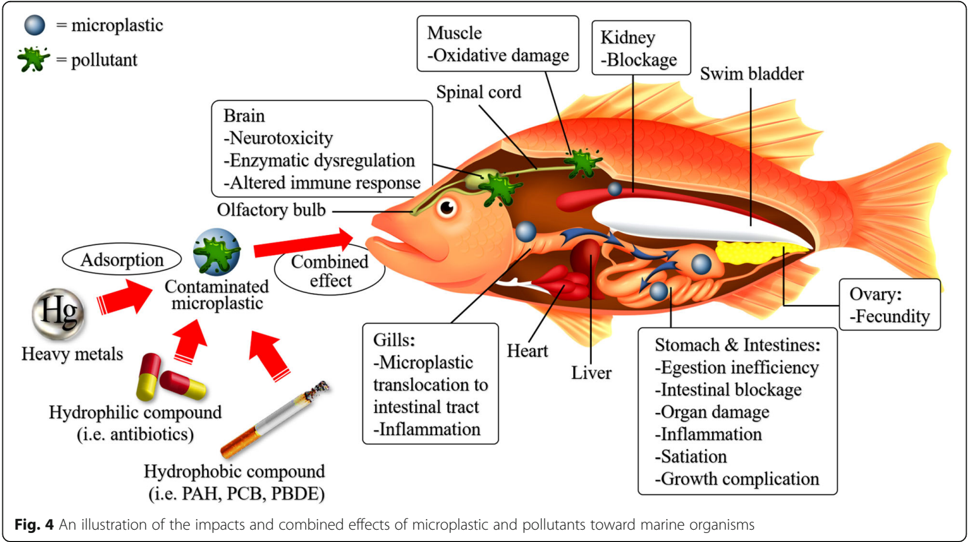
“Moreover, microplastic causes gastrointestinal blockage, reduced feeding or satiation (Lusher et al. 2013), structural deterioration, nutritional or growth complications (Jabeen et al.”
BackgroundIngested plastic transfers hazardous chemicals to fish and induces hepatic stress
Rochman, C. M., Hoh, E., Kurobe, T., & Teh, S. J. (2013) · Scientific Reports · doi:10.1038/srep03263 · Cited by 2,027 · cited 25×
“…diphenyl ether (PBDE), in living organisms, such as lugworms, marine amphipods, mussels, rainbow fish, and microalgae, via sorption on microplastic have been detected (Fisner et al. 2017; Guo et al. 2020; Llorca et al. 2018; Rehse et al. 2018; Rochman et al. 2013b; Wang et al. 2020b).”
BackgroundInfluentialMicroplastics in wastewater treatment plants: Detection, occurrence and removal
Sun, J., Dai, X., Wang, Q., van Loosdrecht, M. C. M., & Ni, B.-J. (2019) · Water Research · doi:10.1016/j.watres.2018.12.050 · Cited by 2,025 · cited 2×
“Other efforts to alleviate microplastic pollution also include research on the application of water treatment systems and microbial degradation or biosynthesis of plastic-like material (Amelia et al. 2019; Bolto and Xie 2019; Hu et al. 2019; Ngo et al. 2019; Raju et al. 2018; Sun et al. 2019; Talvitie et al. 2017; Zha…”
BackgroundDetection of Various Microplastics in Human Stool: A Prospective Case Series
Schwabl, P., Köppel, S., Königshofer, P., Bucsics, T., Trauner, M., Reiberger, T., & Liebmann, B. (2019) · Annals of Internal Medicine · doi:10.7326/m19-0618 · Cited by 1,951 · cited 1×
“A recent study reported the presence of mainly PET and PP microplastics in all the eight human stool samples considered (Schwabl et al. 2019).”
BackgroundThe deep sea is a major sink for microplastic debris
Woodall, L. C., Sanchez-Vidal, A., Canals, M., Paterson, G. L. J., Coppock, R., Sleight, V., Calafat, A., Rogers, A. D., Narayanaswamy, B. E., & Thompson, R. C. (2014) · Royal Society Open Science · doi:10.1098/rsos.140317 · Cited by 1,946 · cited 2×
“…of microplastic include the ocean dynamics (i.e. surface drifting, vertical mixing, beaching, settling, and entrainment) and the physical characteristics of microplastic (i.e. size, shape, and density) (Enders et al. 2015; Guo et al. 2020; Kanhai et al. 2018; Li et al. 2020; Woodall et al. 2014).”
BackgroundPlastic Resin Pellets as a Transport Medium for Toxic Chemicals in the Marine Environment
Mato, Y., Isobe, T., Takada, H., Kanehiro, H., Ohtake, C., & Kaminuma, T. (2001) · Environmental Science & Technology · doi:10.1021/es0010498 · Cited by 1,909 · cited 3×
“Furthermore, microplastics of higher density were reported to contain lower concentrations of PAH, PCB, and phenanthrene (Fries and Zarfl 2012; Karapanagioti and Klontza 2008; Mato et al. 2001).”
BackgroundDuis, K., & Coors, A. (2016) · Environmental Sciences Europe · doi:10.1186/s12302-015-0069-y · Cited by 1,782 · cited 1×
“The classification of microplastic is subjected to two categories, namely primary microplastic (i.e. microplastic produced in micro-sized particles such as microbeads) and secondary microplastic (i.e. microplastic from the breakdown of larger plastic materials) (Duis and Coors 2016).”
BackgroundMechanisms of polymer degradation and erosion
Göpferich, A. (1996) · Biomaterials · doi:10.1016/0142-9612(96)85755-3 · Cited by 1,781 · cited 1×
“…can also change the functional groups and other chemical properties of microplastic, and hence, more directly aggravate the sorption of pollutants by microplastic (Göpferich 1995; Hernandez et al. 2017; Horton et al. 2016; Jun et al. 2014; Liu et al. 2019a; Ter et al. 2016; Wang et al. 2019a).”
BackgroundIngestion and transfer of microplastics in the planktonic food web
Setälä, O., Fleming-Lehtinen, V., & Lehtiniemi, M. (2014) · Environmental Pollution · doi:10.1016/j.envpol.2013.10.013 · Cited by 1,635 · cited 1×
“…Greven et al. 2016; Jeong et al. 2016; Jovanovic 2017; Lei et al. 2018; Leroueil et al. 2008; Naidu et al. 2018; Nakki et al. 2017; Prokic et al. 2019; Savoca et al. 2019; Setala et al. 2014; Song et al. 2014; Vajargah et al. 2018; Vajargah et al. 2019; Veneman et al. 2017; Wright et al. 2013b).”
BackgroundThe present and future of microplastic pollution in the marine environment
Ivar do Sul, J. A., & Costa, M. F. (2014) · Environmental Pollution · doi:10.1016/j.envpol.2013.10.036 · Cited by 1,605 · cited 1×
“The abundance of microplastic in a water column depends on its density, wherein low-density microplastic such as PE and PP is buoyant in the water, while high-density microplastic tends to sink in the sediment (Sul and Costa 2014).”
BackgroundMicroplastics as vector for heavy metal contamination from the marine environment
Brennecke, D., Duarte, B., Paiva, F., Caçador, I., & Canning-Clode, J. (2016) · Estuarine, Coastal and Shelf Science · doi:10.1016/j.ecss.2015.12.003 · Cited by 1,603 · cited 6×
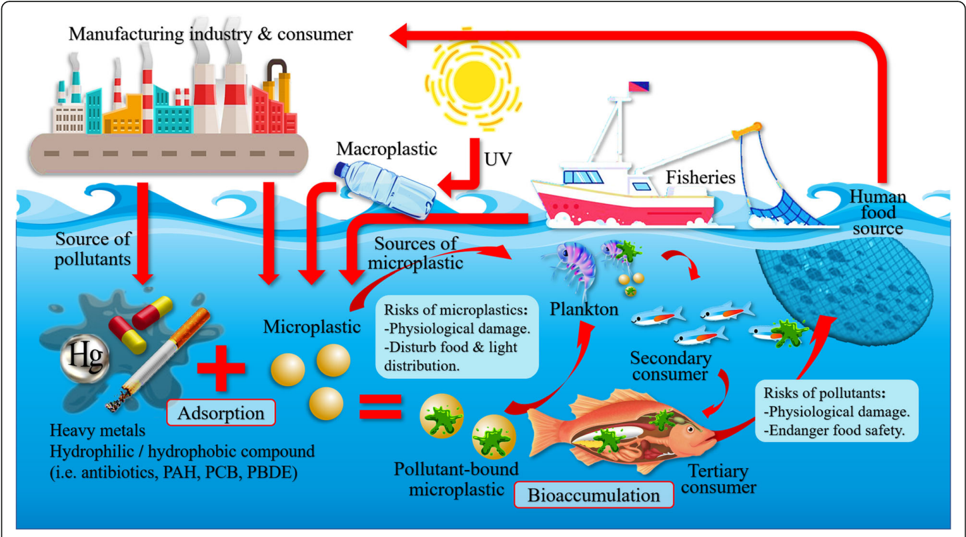
“In a typical marine ecosystem, microplastic acts as a reservoir or vector, thus accumulating chemical contaminants, transporting them over long distances, and leading to the high bioavailability of pollutants toward organisms when consumed (Avio et al. 2017; Brennecke et al. 2016; Caruso 2019; Liao and Yang 2020) (Fig.”
BackgroundInfluentialKoelmans, A. A., Bakir, A., Burton, G. A., & Janssen, C. R. (2016) · Environmental Science & Technology · doi:10.1021/acs.est.5b06069 · Cited by 1,599 · cited 3×
“However, most of the model analyses indicated that the ingestion of microplastic may not be an important pathway for the transfer of sorbed chemicals from the seawater to the ecosystem (Bakir et al. 2016; Gouin et al. 2011; Koelmans et al. 2014; Koelmans et al. 2016).”
BackgroundMarine microplastic debris: An emerging issue for food security, food safety and human health
Barboza, L. G. A., Dick Vethaak, A., Lavorante, B. R. B. O., Lundebye, A.-K., & Guilhermino, L. (2018) · Marine Pollution Bulletin · doi:10.1016/j.marpolbul.2018.05.047 · Cited by 1,591 · cited 6×
“The factors of bioaccumulation are desorption, organism internal environment, and retention time (Bakir et al. 2014; Barboza et al. 2018a; Ma et al. 2020a).”
BackgroundInfluentialWear and Tear of Tyres: A Stealthy Source of Microplastics in the Environment
Kole, P. J., Löhr, A. J., Van Belleghem, F., & Ragas, A. (2017) · International Journal of Environmental Research and Public Health · doi:10.3390/ijerph14101265 · Cited by 1,587 · cited 1×
“…sources, fertilisers, artificial turf, road and air transportation, textiles, coastal and tourism activities, commercial fishing, marine vessels, aquaculture, and oil rigs (Belzagui et al. 2019; Gieré et al. 2018; Kole et al. 2017; Liu et al. 2019b; Li et al. 2018a; Weithmann et al. 2018).”
BackgroundTalvitie, J., Mikola, A., Koistinen, A., & Setälä, O. (2017) · Water Research · doi:10.1016/j.watres.2017.07.005 · Cited by 1,558 · cited 2×
“Other efforts to alleviate microplastic pollution also include research on the application of water treatment systems and microbial degradation or biosynthesis of plastic-like material (Amelia et al. 2019; Bolto and Xie 2019; Hu et al. 2019; Ngo et al. 2019; Raju et al. 2018; Sun et al. 2019; Talvitie et al. 2017; Zha…”
BackgroundSteinmetz, Z., Wollmann, C., Schaefer, M., Buchmann, C., David, J., Tröger, J., Muñoz, K., Frör, O., & Schaumann, G. E. (2016) · Science of The Total Environment · doi:10.1016/j.scitotenv.2016.01.153 · Cited by 1,551 · cited 2×
“…of microplastic conducted using model organisms or human cell lines as the reference, there is an urgent need for a more recent investigation on the possibility of microplastic causing any medical condition directly against human patients (Pauly et al. 1998; Porter et al. 1999; Stock et al. 2019).”
BackgroundTrophic level transfer of microplastic: Mytilus edulis (L.) to Carcinus maenas (L.)
Farrell, P., & Nelson, K. (2013) · Environmental Pollution · doi:10.1016/j.envpol.2013.01.046 · Cited by 1,507 · cited 2×
“Ingested microplastic could either be transferred up the trophic levels via predation (Farrell and Nelson 2013) or be egested from the food web and then very likely be re-ingested (Mazurais et al. 2015).”
BackgroundEvidence of microplastic accumulation in agricultural soils from sewage sludge disposal
Corradini, F., Meza, P., Eguiluz, R., Casado, F., Huerta-Lwanga, E., & Geissen, V. (2019) · Science of The Total Environment · doi:10.1016/j.scitotenv.2019.03.368 · Cited by 1,436 · cited 1×
“The sources of microplastic include wastewater treatment plants, landfills, irrigation, agricultural fields, industrial effluent, and domestic runoff (Conley et al. 2019; Corradini et al. 2019; Gündoğdu et al. 2018; He et al. 2019; Li et al. 2018a; Rochman 2018; Steinmetz et al. 2016).”
BackgroundAdsorption of antibiotics on microplastics
Li, J., Zhang, K., & Zhang, H. (2018) · Environmental Pollution · doi:10.1016/j.envpol.2018.02.050 · Cited by 1,401 · cited 7×
“However, increased salinity was reported to decrease sorption capacities, namely in dichlorodiphenyltrichloroethane (DDT) and ciprofloxacin because of the competition for the sorption site (Bakir et al. 2014; Li et al. 2018b; Liu et al. 2018).”
BackgroundInfluentialLei, L., Wu, S., Lu, S., Liu, M., Song, Y., Fu, Z., Shi, H., Raley-Susman, K. M., & He, D. (2018) · Science of The Total Environment · doi:10.1016/j.scitotenv.2017.11.103 · Cited by 1,399 · cited 2×
“…(Besseling et al. 2015; Betts 2008; Courtene-Jones et al. 2017; Gambardella et al. 2017; Greven et al. 2016; Jeong et al. 2016; Jovanovic 2017; Lei et al. 2018; Leroueil et al. 2008; Naidu et al. 2018; Nakki et al. 2017; Prokic et al. 2019; Savoca et al. 2019; Setala et al. 2014; Song et al.…”
BackgroundPlastic accumulation in the North Atlantic subtropical gyre
Law, K. L., Morét-Ferguson, S., Maximenko, N. A., Proskurowski, G., Peacock, E. E., Hafner, J., & Reddy, C. M. (2010) · Science · doi:10.1126/science.1192321 · Cited by 1,377 · cited 1×
“…surface convergence, naturally accumulating up to 580,000 plastic pieces per square kilometre, such as the garbage patches near the Kuroshio Extension and in the western North Atlantic Ocean and Caribbean Sea (Howell et al. 2012; Law et al. 2010; Maximenko et al. 2012; Yamashita and Tanimura 2007).”
BackgroundMicroplastics research—from sink to source
Rochman, C. M. (2018) · Science · doi:10.1126/science.aar7734 · Cited by 1,346 · cited 1×
“The sources of microplastic include wastewater treatment plants, landfills, irrigation, agricultural fields, industrial effluent, and domestic runoff (Conley et al. 2019; Corradini et al. 2019; Gündoğdu et al. 2018; He et al. 2019; Li et al. 2018a; Rochman 2018; Steinmetz et al. 2016).”
BackgroundA Global Perspective on Microplastics
Hale, R. C., Seeley, M. E., La Guardia, M. J., Mai, L., & Zeng, E. Y. (2020) · Journal of Geophysical Research: Oceans · doi:10.1029/2018jc014719 · Cited by 1,338 · cited 1×
“…tracing the sources and sinks of plastics, grasping the complex microplastic– environment interactions, implementing policies, biotechnological approaches, and infrastructure and technology advances are required in combination (Hale et al. 2020; Barceló and Picó 2020; Agamuthu et al. 2019).”
Brown, D. M., Wilson, M. R., MacNee, W., Stone, V., & Donaldson, K. (2001) · Toxicology and Applied Pharmacology · doi:10.1006/taap.2001.9240 · Cited by 1,329 · cited 2×
“Investigations of microplastic in model mammalian systems indicated possible translocation from living cells to human organ systems, such as the lymphatic and circulatory systems and, thus, the ability to indirectly impact the immune system (Brown et al. 2001; Eldridge et al. 1989; Frohlich et al. 2009; Hodges et al.…”
BackgroundPlastic ingestion by planktivorous fishes in the North Pacific central gyre
Boerger, C. M., Lattin, G. L., Moore, S. L., & Moore, C. J. (2010) · Marine Pollution Bulletin · doi:10.1016/j.marpolbul.2010.08.007 · Cited by 1,273 · cited 2×
“ingestion likelihood, egestion rate, and translocation potential) (Baldwin 1995; Boerger et al. 2010; Cheung et al. 2018; Kokalj et al. 2018; Ory et al. 2017; Peters et al. 2017).”
BackgroundPotential for Plastics to Transport Hydrophobic Contaminants
Teuten, E. L., Rowland, S. J., Galloway, T. S., & Thompson, R. C. (2007) · Environmental Science & Technology · doi:10.1021/es071737s · Cited by 1,268 · cited 3×
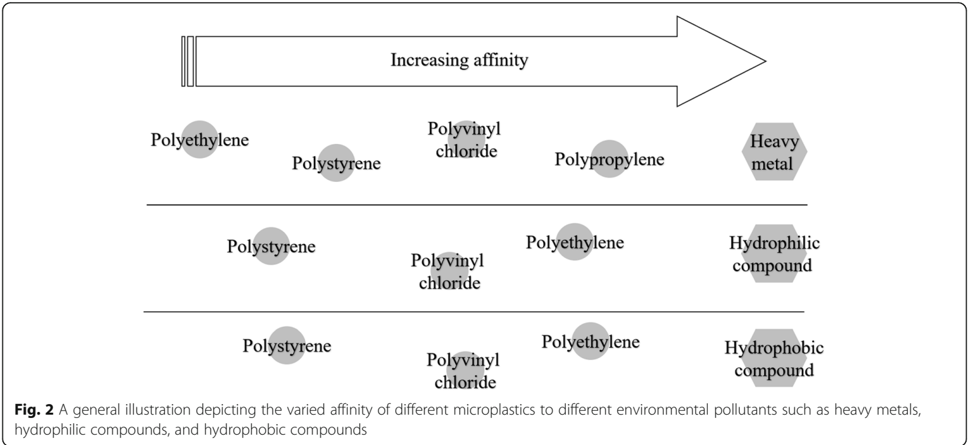
“The former’s larger surface area, greater gap between polymer chains, and free volume led to relatively higher sorption capacity and diffusion of the pollutant into PE (Karapanagioti and Klontza 2008; Rochman et al. 2013a; Teuten et al. 2007).”
BackgroundResultAgency for toxic substances and disease registry
(1988) · doi:10.2172/5400458 · Cited by 1,258
Plastics and microplastics in the oceans: From emerging pollutants to emerged threat
Avio, C. G., Gorbi, S., & Regoli, F. (2017) · Marine Environmental Research · doi:10.1016/j.marenvres.2016.05.012 · Cited by 1,248 · cited 4×
“…microplastic acts as a reservoir or vector, thus accumulating chemical contaminants, transporting them over long distances, and leading to the high bioavailability of pollutants toward organisms when consumed (Avio et al. 2017; Brennecke et al. 2016; Caruso 2019; Liao and Yang 2020) (Fig.”
BackgroundInfluentialJeong, C.-B., Won, E.-J., Kang, H.-M., Lee, M.-C., Hwang, D.-S., Hwang, U.-K., Zhou, B., Souissi, S., Lee, S.-J., & Lee, J.-S. (2016) · Environmental Science & Technology · doi:10.1021/acs.est.6b01441 · Cited by 1,233 · cited 2×
“…severe intestinal damage, and mortality (Besseling et al. 2015; Betts 2008; Courtene-Jones et al. 2017; Gambardella et al. 2017; Greven et al. 2016; Jeong et al. 2016; Jovanovic 2017; Lei et al. 2018; Leroueil et al. 2008; Naidu et al. 2018; Nakki et al. 2017; Prokic et al. 2019; Savoca et al.…”
BackgroundSource, migration and toxicology of microplastics in soil
Guo, J.-J., Huang, X.-P., Xiang, L., Wang, Y.-Z., Li, Y.-W., Li, H., Cai, Q.-Y., Mo, C.-H., & Wong, M.-H. (2020) · Environment International · doi:10.1016/j.envint.2019.105263 · Cited by 1,211 · cited 2×
“…of microplastic include the ocean dynamics (i.e. surface drifting, vertical mixing, beaching, settling, and entrainment) and the physical characteristics of microplastic (i.e. size, shape, and density) (Enders et al. 2015; Guo et al. 2020; Kanhai et al. 2018; Li et al. 2020; Woodall et al. 2014).”
BackgroundBrowne, M. A., Niven, S. J., Galloway, T. S., Rowland, S. J., & Thompson, R. C. (2013) · Current Biology · doi:10.1016/j.cub.2013.10.012 · Cited by 1,160 · cited 2×
“ing TCS or nonylphenol (NP) resulted in lower survivorship, feeding rate, and phagocytic activity than that of the lugworms to clean PVC particles (Browne et al. 2013).”
Background(Nano)plastics in the environment - Sources, fates and effects
da Costa, J. P., Santos, P. S. M., Duarte, A. C., & Rocha-Santos, T. (2016) · Science of The Total Environment · doi:10.1016/j.scitotenv.2016.05.041 · Cited by 1,139 · cited 1×
“More recently, the health risks of microplastic have also been reported but are limited to the use of model organisms and relatively focused on the intoxication of organisms by the additives and pollutants leached from the microplastic than the microplastic itself (Costa et al. 2016).”
BackgroundMicroplastic Pollution in Table Salts from China
Yang, D., Shi, H., Li, L., Li, J., Jabeen, K., & Kolandhasamy, P. (2015) · Environmental Science & Technology · doi:10.1021/acs.est.5b03163 · Cited by 1,112
Liu, G., Zhu, Z., Yang, Y., Sun, Y., Yu, F., & Ma, J. (2019) · Environmental Pollution · doi:10.1016/j.envpol.2018.11.100 · Cited by 1,080 · cited 6×
“However, increased salinity was reported to decrease sorption capacities, namely in dichlorodiphenyltrichloroethane (DDT) and ciprofloxacin because of the competition for the sorption site (Bakir et al. 2014; Li et al. 2018b; Liu et al. 2018).”
BackgroundInfluentialMicroplastic ingestion decreases energy reserves in marine worms
Wright, S. L., Rowe, D., Thompson, R. C., & Galloway, T. S. (2013) · Current Biology · doi:10.1016/j.cub.2013.10.068 · Cited by 1,079 · cited 3×
“Ingested microplastic is transferred throughout the food web, driving increasing concerns about the threats to aquatic biota (Betts 2008; Wright et al. 2013a).”
BackgroundAdsorption of trace metals to plastic resin pellets in the marine environment
Holmes, L. A., Turner, A., & Thompson, R. C. (2012) · Environmental Pollution · doi:10.1016/j.envpol.2011.08.052 · Cited by 1,071 · cited 2×
“Virgin PE, which showed less affinity, possessed charged or polar surfaces, charged contaminants or additives, and nonspecific interactions between the metal organic complexes and the hydrophobic surface (Holmes et al. 2012).”
BackgroundZhao, S., Zhu, L., Wang, T., & Li, D. (2014) · Marine Pollution Bulletin · doi:10.1016/j.marpolbul.2014.06.032 · Cited by 1,060 · cited 1×
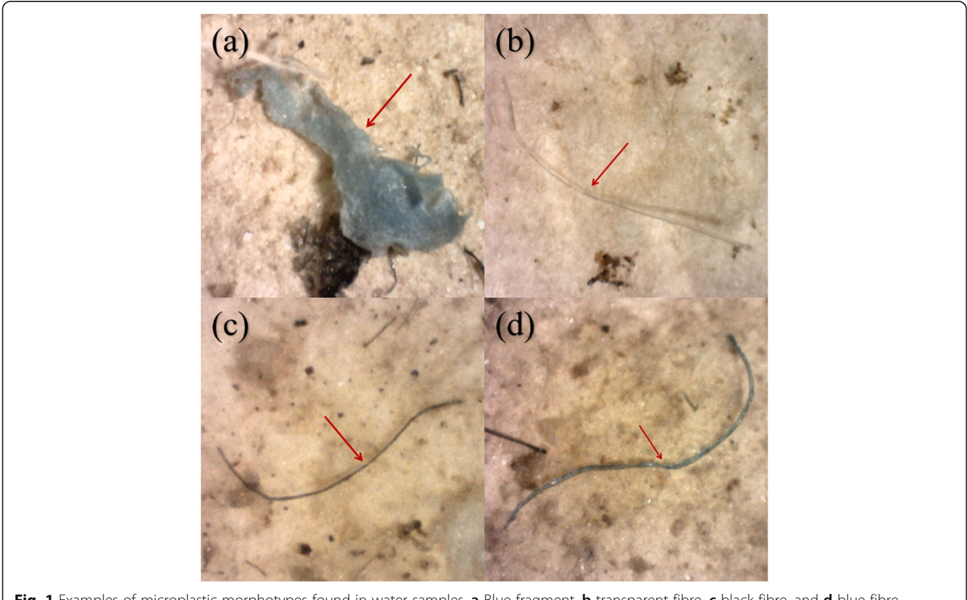
“For example, research work in the Yangtze estuary and coastal area of the East China Sea revealed fibre as the dominant morphotype collected up to 79.1% and 83.2%, respectively (Zhao et al. 2014).”
BackgroundInfluentialOrganic fertilizer as a vehicle for the entry of microplastic into the environment
Weithmann, N., Möller, J. N., Löder, M. G. J., Piehl, S., Laforsch, C., & Freitag, R. (2018) · Science Advances · doi:10.1126/sciadv.aap8060 · Cited by 1,048 · cited 2×
“Microplastic is released from atmospheric deposition, land-based sources, fertilisers, artificial turf, road and air transportation, textiles, coastal and tourism activities, commercial fishing, marine vessels, aquaculture, and oil rigs (Belzagui et al. 2019; Gieré et al. 2018; Kole et al. 2017; Liu et al. 2019b; Li e…”
BackgroundInvestigating microplastic trophic transfer in marine top predators
Nelms, S. E., Galloway, T. S., Godley, B. J., Jarvis, D. S., & Lindeque, P. K. (2018) · Environmental Pollution · doi:10.1016/j.envpol.2018.02.016 · Cited by 1,039 · cited 1×
“The ingestion of microplastic has been reported for a wide range of organisms, from herbivores and secondary consumers to the top predators (e.g. Barboza et al. 2018a; Clark et al. 2016; Nelms et al. 2018; Vroom et al. 2017; Wang et al. 2020b).”
BackgroundMicroplastics in sewage sludge from the wastewater treatment plants in China
Li, X., Chen, L., Mei, Q., Dong, B., Dai, X., Ding, G., & Zeng, E. Y. (2018) · Water Research · doi:10.1016/j.watres.2018.05.034 · Cited by 1,031 · cited 7×
“However, increased salinity was reported to decrease sorption capacities, namely in dichlorodiphenyltrichloroethane (DDT) and ciprofloxacin because of the competition for the sorption site (Bakir et al. 2014; Li et al. 2018b; Liu et al. 2018).”
BackgroundInfluentialYang, J., Yang, Y., Wu, W.-M., Zhao, J., & Jiang, L. (2014) · Environmental Science & Technology · doi:10.1021/es504038a · Cited by 1,022
Effects of Microplastic on Fitness and PCB Bioaccumulation by the Lugworm Arenicola marina (L.)
Besseling, E., Wegner, A., Foekema, E. M., van den Heuvel-Greve, M. J., & Koelmans, A. A. (2013) · Environmental Science & Technology · doi:10.1021/es302763x · Cited by 1,012 · cited 3×
“Lugworms that were exposed to PCB-contaminated PE showed an increase in bioaccumulation than the control group exposed to PCB alone (Besseling et al. 2013), which was in agreement with an earlier estimation of the bioavailability model discussed by Teuten et al. (2007).”
BackgroundResultSource and potential risk assessment of suspended atmospheric microplastics in Shanghai
Liu, K., Wang, X., Fang, T., Xu, P., Zhu, L., & Li, D. (2019) · Science of The Total Environment · doi:10.1016/j.scitotenv.2019.04.110 · Cited by 979
Bioavailability and effects of microplastics on marine zooplankton: A review
Botterell, Z. L. R., Beaumont, N., Dorrington, T., Steinke, M., Thompson, R. C., & Lindeque, P. K. (2019) · Environmental Pollution · doi:10.1016/j.envpol.2018.10.065 · Cited by 966 · cited 1×
“Research has shown that microplastic is readily ingested by zooplanktons (Botterell et al. 2019), which is the main food source for many secondary consumers.”
BackgroundRochman, C. M., Hoh, E., Hentschel, B. T., & Kaye, S. (2013) · Environmental Science & Technology · doi:10.1021/es303700s · Cited by 958 · cited 25×
“…diphenyl ether (PBDE), in living organisms, such as lugworms, marine amphipods, mussels, rainbow fish, and microalgae, via sorption on microplastic have been detected (Fisner et al. 2017; Guo et al. 2020; Llorca et al. 2018; Rehse et al. 2018; Rochman et al. 2013b; Wang et al. 2020b).”
BackgroundInfluentialHorton, A. A., Svendsen, C., Williams, R. J., Spurgeon, D. J., & Lahive, E. (2017) · Marine Pollution Bulletin · doi:10.1016/j.marpolbul.2016.09.004 · Cited by 955 · cited 2×
“…can also change the functional groups and other chemical properties of microplastic, and hence, more directly aggravate the sorption of pollutants by microplastic (Göpferich 1995; Hernandez et al. 2017; Horton et al. 2016; Jun et al. 2014; Liu et al. 2019a; Ter et al. 2016; Wang et al. 2019a).”
BackgroundPersistent organic pollutants carried by synthetic polymers in the ocean environment
Rios, L. M., Moore, C., & Jones, P. R. (2007) · Marine Pollution Bulletin · doi:10.1016/j.marpolbul.2007.03.022 · Cited by 953 · cited 1×
“Hydrophobic POP are currently among the most researched microplastic-associated pollutants because of their high affinity and hydrophobicity-driven sorption with microplastic (Liu et al. 2019d; Rios et al. 2007).”
BackgroundMicroplastic in Aquatic Ecosystems
Ivleva, N. P., Wiesheu, A. C., & Niessner, R. (2017) · Angewandte Chemie International Edition · doi:10.1002/anie.201606957 · Cited by 943 · cited 1×
“The fragmentation of larger plastic in the environment is caused by chemical (e.g. photolysis, hydrolysis, and thermal), mechanical (e.g. abrasion), and biological (e.g. bacteria and fungi) degradation (Andrady 2011; Ivleva et al. 2017).”
BackgroundStrong Sorption of PCBs to Nanoplastics, Microplastics, Carbon Nanotubes, and Fullerenes
Velzeboer, I., Kwadijk, C. J. A. F., & Koelmans, A. A. (2014) · Environmental Science & Technology · doi:10.1021/es405721v · Cited by 939 · cited 5×
“Increased salinity has been reported to increase sorption capacities (Velzeboer et al. 2014; Wang et al. 2015), such as elevated PCB or lubrication oil in PE and PS (Hu et al. 2017; Zhan et al. 2016).”
BackgroundInfluentialRocha-Santos, T., & Duarte, A. C. (2015) · TrAC Trends in Analytical Chemistry · doi:10.1016/j.trac.2014.10.011 · Cited by 932 · cited 1×
“In contrast, secondary microplastic is originally manufactured as relatively large plastic that is degraded and fragmented into smaller pieces by complex weathering interactions (Rocha-Santos and Duarte 2015).”
BackgroundInteraction of toxic chemicals with microplastics: A critical review
Wang, F., Wong, C. S., Chen, D., Lu, X., Wang, F., & Zeng, E. Y. (2018) · Water Research · doi:10.1016/j.watres.2018.04.003 · Cited by 925 · cited 1×
“Moreover, other hypotheses suggested the deleterious effects of microplastic, regarding its role in the delivery of harmful chemicals to the ecosystem via the food chain (Avio et al. 2017; Hartmann et al. 2017; Lohmann 2017; Wang et al. 2018a; Wang et al. 2020b; Zhang et al. 2020a).”
BackgroundFate of nano- and microplastic in freshwater systems: A modeling study
Besseling, E., Quik, J. T. K., Sun, M., & Koelmans, A. A. (2017) · Environmental Pollution · doi:10.1016/j.envpol.2016.10.001 · Cited by 919 · cited 1×
“The role of dissolved and particulate organic matter in microplastic sorption requires attention, as it can alter the in situ sorption capacity and distribution of marine microplastic (Besseling et al. 2016; Koelmans et al. 2009; Lambert et al. 2013).”
BackgroundHe, P., Chen, L., Shao, L., Zhang, H., & Lü, F. (2019) · Water Research · doi:10.1016/j.watres.2019.04.060 · Cited by 894 · cited 1×
“The sources of microplastic include wastewater treatment plants, landfills, irrigation, agricultural fields, industrial effluent, and domestic runoff (Conley et al. 2019; Corradini et al. 2019; Gündoğdu et al. 2018; He et al. 2019; Li et al. 2018a; Rochman 2018; Steinmetz et al. 2016).”
BackgroundMicrobial degradation and other environmental aspects of microplastics/plastics
Yuan, J., Ma, J., Sun, Y., Zhou, T., Zhao, Y., & Yu, F. (2020) · Science of The Total Environment · doi:10.1016/j.scitotenv.2020.136968 · Cited by 872 · cited 1×
“Although microplastic can persist in the environment and resist degradation, some microplasticassociated bacteria can degrade microplastic (Alimi et al. 2018; Kim et al. 2017b; Sen and Raut 2015; Yuan et al. 2020).”
BackgroundMicroplastic in marine organism: Environmental and toxicological effects
Guzzetti, E., Sureda, A., Tejada, S., & Faggio, C. (2018) · Environmental Toxicology and Pharmacology · doi:10.1016/j.etap.2018.10.009 · Cited by 806 · cited 2×
“Microplastic can accumulate and pose hazards in marine ecosystems and organisms (Guzzetti et al. 2018; Horton et al. 2017).”
BackgroundTransport of microplastics in coastal seas
Zhang, H. (2017) · Estuarine, Coastal and Shelf Science · doi:10.1016/j.ecss.2017.09.032 · Cited by 794 · cited 2×
“…diatoms, can rapidly accumulate on the surface of plastic debris and form a biofilm, which then increases the density and causes the sinking of the floating or suspended low-density microplastic, hence redistributing the latter (Galgani et al. 2015; Zhang 2017; Zhao et al. 2018; Zhao et al. 2017).”
BackgroundAuta, H. S., Emenike, C. U., Jayanthi, B., & Fauziah, S. H. (2018) · Marine Pollution Bulletin · doi:10.1016/j.marpolbul.2017.11.036 · Cited by 782 · cited 1×
“…(PS), and polylactic acid (PLA), showed adhesion, colonisation, and damage by the associated bacterial and fungal strains, for example Aspergillus flavus (Auta et al. 2018; Kim et al. 2017a; Mohan et al. 2016; Paco et al. 2017; Devi et al. 2015; Uscategui et al. 2016; Yoshida et al. 2016).”
BackgroundHernandez, E., Nowack, B., & Mitrano, D. M. (2017) · Environmental Science & Technology · doi:10.1021/acs.est.7b01750 · Cited by 779 · cited 2×
“…can also change the functional groups and other chemical properties of microplastic, and hence, more directly aggravate the sorption of pollutants by microplastic (Göpferich 1995; Hernandez et al. 2017; Horton et al. 2016; Jun et al. 2014; Liu et al. 2019a; Ter et al. 2016; Wang et al. 2019a).”
BackgroundEnders, K., Lenz, R., Stedmon, C. A., & Nielsen, T. G. (2015) · Marine Pollution Bulletin · doi:10.1016/j.marpolbul.2015.09.027 · Cited by 775 · cited 1×
“…of microplastic include the ocean dynamics (i.e. surface drifting, vertical mixing, beaching, settling, and entrainment) and the physical characteristics of microplastic (i.e. size, shape, and density) (Enders et al. 2015; Guo et al. 2020; Kanhai et al. 2018; Li et al. 2020; Woodall et al. 2014).”
BackgroundBarboza, L. G. A., Vieira, L. R., Branco, V., Figueiredo, N., Carvalho, F., Carvalho, C., & Guilhermino, L. (2018) · Aquatic Toxicology · doi:10.1016/j.aquatox.2017.12.008 · Cited by 766 · cited 6×
“The factors of bioaccumulation are desorption, organism internal environment, and retention time (Bakir et al. 2014; Barboza et al. 2018a; Ma et al. 2020a).”
BackgroundInfluentialGlobal Distribution, Composition and Abundance of Marine Litter
Galgani, F., Hanke, G., & Maes, T. (2015) · Marine Anthropogenic Litter · doi:10.1007/978-3-319-16510-3_2 · Cited by 732 · cited 1×
“…diatoms, can rapidly accumulate on the surface of plastic debris and form a biofilm, which then increases the density and causes the sinking of the floating or suspended low-density microplastic, hence redistributing the latter (Galgani et al. 2015; Zhang 2017; Zhao et al. 2018; Zhao et al. 2017).”
BackgroundBiodegradation of polyethylene microplastics by the marine fungus Zalerion maritimum
Paço, A., Duarte, K., da Costa, J. P., Santos, P. S. M., Pereira, R., Pereira, M. E., Freitas, A. C., Duarte, A. C., & Rocha-Santos, T. A. P. (2017) · Science of The Total Environment · doi:10.1016/j.scitotenv.2017.02.017 · Cited by 724 · cited 1×
“…(PS), and polylactic acid (PLA), showed adhesion, colonisation, and damage by the associated bacterial and fungal strains, for example Aspergillus flavus (Auta et al. 2018; Kim et al. 2017a; Mohan et al. 2016; Paco et al. 2017; Devi et al. 2015; Uscategui et al. 2016; Yoshida et al. 2016).”
BackgroundOliveira, M., Ribeiro, A., Hylland, K., & Guilhermino, L. (2013) · Ecological Indicators · doi:10.1016/j.ecolind.2013.06.019 · Cited by 722 · cited 2×
“mortality of fish Pomatoschistus microps (Oliveira et al. 2013).”
BackgroundYang, Y., Yang, J., Wu, W.-M., Zhao, J., Song, Y., Gao, L., Yang, R., & Jiang, L. (2015) · Environmental Science & Technology · doi:10.1021/acs.est.5b02661 · Cited by 720 · cited 2×
“Furthermore, approximately 700 microplastics/kg of microplastic, mainly PET and PE, were found in 15 brands of commercial sea salt (Yang et al. 2015a).”
BackgroundMicroplastics in different tissues of fish and prawn from the Musa Estuary, Persian Gulf
Abbasi, S., Soltani, N., Keshavarzi, B., Moore, F., Turner, A., & Hassanaghaei, M. (2018) · Chemosphere · doi:10.1016/j.chemosphere.2018.04.076 · Cited by 719 · cited 2×
“…translocation routes can begin from the ingestion or inhalation of microplastic to the gastrointestinal tracts, gills, or lungs, and then to the circulatory system, haemolymph, liver, or kidney (Abbasi et al. 2018; Leroueil et al. 2008; Su et al. 2018; Vajargah et al. 2018; Vajargah et al. 2019).”
BackgroundPaul-Pont, I., Lacroix, C., González Fernández, C., Hégaret, H., Lambert, C., Le Goïc, N., Frère, L., Cassone, A.-L., Sussarellu, R., Fabioux, C., et al. (2016) · Environmental Pollution · doi:10.1016/j.envpol.2016.06.039 · Cited by 714 · cited 5×
“Examples that resembled this scenario include the low bioaccumulation of pre-sorbed fluoranthene and Ag by PE in mussels and zebrafish, respectively (Khan et al. 2015; Magara et al. 2018; Paul-Pont et al. 2016).”
BackgroundInfluentialAccumulation of plastic-derived chemicals in tissues of seabirds ingesting marine plastics
Tanaka, K., Takada, H., Yamashita, R., Mizukawa, K., Fukuwaka, M.-A., & Watanuki, Y. (2013) · Marine Pollution Bulletin · doi:10.1016/j.marpolbul.2012.12.010 · Cited by 704 · cited 1×
“For the top predators, namely great shearwaters (Puffinus gravis) (Ryan 1988) and short-tailed shearwaters (Puffinus tenuirostris) (Tanaka et al. 2013), the concentrations of PCB and PBDE in the fat tissue and eggs showed a positive correlation to the amount of ingested plastic particles.”
BackgroundPotential toxicity of polystyrene microplastic particles
Hwang, J., Choi, D., Han, S., Jung, S. Y., Choi, J., & Hong, J. (2020) · Scientific Reports · doi:10.1038/s41598-020-64464-9 · Cited by 699 · cited 2×
“These chemicals, now considered to be environmental contaminants, bioaccumulate in the fatty tissues of animals, which are eventually consumed by humans (Hwang et al. 2020).”
BackgroundInteractions between trace metals and plastic production pellets under estuarine conditions
Holmes, L. A., Turner, A., & Thompson, R. C. (2014) · Marine Chemistry · doi:10.1016/j.marchem.2014.06.001 · Cited by 689 · cited 2×
“However, when the pH decreases, the sorption capacity of HDPE for Pb, Ni, Co, and Cd decreases, whereas for Cr and Cu, the sorption capacity increases and remains constant, respectively (Holmes et al. 2012; Holmes et al. 2014).”
BackgroundMicroplastics Alter the Properties and Sinking Rates of Zooplankton Faecal Pellets
Cole, M., Lindeque, P. K., Fileman, E., Clark, J., Lewis, C., Halsband, C., & Galloway, T. S. (2016) · Environmental Science & Technology · doi:10.1021/acs.est.5b05905 · Cited by 683 · cited 2×
“Other than this, ingested microplastic that is excreted along with faecal matter can alter the density and sinking velocity of the latter, which is an important food source, hence interrupting the normal pattern of food distribution for other marine organisms (Cole et al. 2011, 2016).”
BackgroundSorption of non-polar organic compounds by micro-sized plastic particles in aqueous solution
Hüffer, T., & Hofmann, T. (2016) · Environmental Pollution · doi:10.1016/j.envpol.2016.04.018 · Cited by 682 · cited 3×
“For example, the influence of microplastic age and material against the sorption capacity of a pollutant was eventually still because of the differences in the surface functional groups, polarity, or chemical forces such as hydrophobicity over time or across various pollutant types (Huffer and Hofmann 2016; Liu et al.…”
BackgroundPathways of marine debris derived from trajectories of Lagrangian drifters
Maximenko, N., Hafner, J., & Niiler, P. (2012) · Marine Pollution Bulletin · doi:10.1016/j.marpolbul.2011.04.016 · Cited by 675 · cited 1×
“…surface convergence, naturally accumulating up to 580,000 plastic pieces per square kilometre, such as the garbage patches near the Kuroshio Extension and in the western North Atlantic Ocean and Caribbean Sea (Howell et al. 2012; Law et al. 2010; Maximenko et al. 2012; Yamashita and Tanimura 2007).”
BackgroundHartmann, N. B., Rist, S., Bodin, J., Jensen, L. H., Schmidt, S. N., Mayer, P., Meibom, A., & Baun, A. (2017) · Integrated Environmental Assessment and Management · doi:10.1002/ieam.1904 · Cited by 675 · cited 1×
“Moreover, other hypotheses suggested the deleterious effects of microplastic, regarding its role in the delivery of harmful chemicals to the ecosystem via the food chain (Avio et al. 2017; Hartmann et al. 2017; Lohmann 2017; Wang et al. 2018a; Wang et al. 2020b; Zhang et al. 2020a).”
BackgroundOry, N. C., Sobral, P., Ferreira, J. L., & Thiel, M. (2017) · Science of The Total Environment · doi:10.1016/j.scitotenv.2017.01.175 · Cited by 673 · cited 1×
“…morphology, and mobility of microplastic, as well as the species, morphology, and physiology of organisms (e.g. ingestion likelihood, egestion rate, and translocation potential) (Baldwin 1995; Boerger et al. 2010; Cheung et al. 2018; Kokalj et al. 2018; Ory et al. 2017; Peters et al. 2017).”
BackgroundIngestion of microplastics by fish and its potential consequences from a physical perspective
Jovanović, B. (2017) · Integrated Environmental Assessment and Management · doi:10.1002/ieam.1913 · Cited by 632 · cited 1×
“…and mortality (Besseling et al. 2015; Betts 2008; Courtene-Jones et al. 2017; Gambardella et al. 2017; Greven et al. 2016; Jeong et al. 2016; Jovanovic 2017; Lei et al. 2018; Leroueil et al. 2008; Naidu et al. 2018; Nakki et al. 2017; Prokic et al. 2019; Savoca et al. 2019; Setala et al.…”
BackgroundRochman, C. M., Hentschel, B. T., & Teh, S. J. (2014) · PLoS ONE · doi:10.1371/journal.pone.0085433 · Cited by 631 · cited 1×
“For example, Rochman and co-workers reported the nil toxic effect of virgin microplastic against a fish cell line (Rochman et al. 2014).”
BackgroundUptake and effects of orally ingested polystyrene microplastic particles in vitro and in vivo
Stock, V., Böhmert, L., Lisicki, E., Block, R., Cara-Carmona, J., Pack, L. K., Selb, R., Lichtenstein, D., Voss, L., Henderson, C. J., et al. (2019) · Archives of Toxicology · doi:10.1007/s00204-019-02478-7 · Cited by 617 · cited 4×
“For example, a study analysed the in vitro gastrointestinal uptake of microplastic by using the human intestinal epithelial cell line and co-cultures mimicking intestinal M-cells and goblet cells, which showed no interference by the microplastic in terms of differentiation and activation (Stock et al. 2019).”
BackgroundInfluentialMa, Y., Huang, A., Cao, S., Sun, F., Wang, L., Guo, H., & Ji, R. (2016) · Environmental Pollution · doi:10.1016/j.envpol.2016.10.061 · Cited by 616 · cited 4×
“Bioaccumulation has been investigated and reported by several studies (Barboza et al. 2018a; Besseling et al. 2017; Chua et al. 2014; Ma et al. 2016; Rehse et al. 2018; Rochman et al. 2013b).”
BackgroundInfluentialUnderstanding the fragmentation pattern of marine plastic debris
ter Halle, A., Ladirat, L., Gendre, X., Goudouneche, D., Pusineri, C., Routaboul, C., Tenailleau, C., Duployer, B., & Perez, E. (2016) · Environmental Science & Technology · doi:10.1021/acs.est.6b00594 · Cited by 613 · cited 2×
“…can also change the functional groups and other chemical properties of microplastic, and hence, more directly aggravate the sorption of pollutants by microplastic (Göpferich 1995; Hernandez et al. 2017; Horton et al. 2016; Jun et al. 2014; Liu et al. 2019a; Ter et al. 2016; Wang et al. 2019a).”
BackgroundPedà, C., Caccamo, L., Fossi, M. C., Gai, F., Andaloro, F., Genovese, L., Perdichizzi, A., Romeo, T., & Maricchiolo, G. (2016) · Environmental Pollution · doi:10.1016/j.envpol.2016.01.083 · Cited by 611 · cited 2×
“2013), structural deterioration, nutritional or growth complications (Jabeen et al. 2018; Peda et al. 2016; Yin et al. 2018), inflammation (Lu et al.”
BackgroundLarge Accumulation of Micro-sized Synthetic Polymer Particles in the Sea Surface Microlayer
Song, Y. K., Hong, S. H., Jang, M., Kang, J.-H., Kwon, O. Y., Han, G. M., & Shim, W. J. (2014) · Environmental Science & Technology · doi:10.1021/es501757s · Cited by 609 · cited 3×
“Other than having physiological effects, microplastic causes external effects to the ecosystem by shifting the distribution of food and light for organisms (Cole et al. 2016; Song et al. 2014).”
BackgroundMicroplastic pollution in the surface waters of the Bohai Sea, China
Zhang, W., Zhang, S., Wang, J., Wang, Y., Mu, J., Wang, P., Lin, X., & Ma, D. (2017) · Environmental Pollution · doi:10.1016/j.envpol.2017.08.058 · Cited by 601 · cited 4×
“The source of microplastic was linked to fishing activities and marine farming in the Bohai Sea (Zhang et al. 2017).”
BackgroundInfluentialAdsorption of trace metals by microplastic pellets in fresh water
Turner, A., & Holmes, L. A. (2015) · Environmental Chemistry · doi:10.1071/en14143 · Cited by 595 · cited 2×
“ute to the relatively high partition coefficient (Brennecke et al. 2016; Mato et al. 2001; Turner and Holmes 2015).”
BackgroundSorption of organic compounds by aged polystyrene microplastic particles
Hüffer, T., Weniger, A.-K., & Hofmann, T. (2018) · Environmental Pollution · doi:10.1016/j.envpol.2018.01.022 · Cited by 590 · cited 6×
“However, aged microplastic was also reported to show higher pollutant sorption capacity than virgin microplastic (Huffer et al. 2018; Liu et al. 2018; Yu et al. 2019a).”
BackgroundMethodInfluentialBatel, A., Linti, F., Scherer, M., Erdinger, L., & Braunbeck, T. (2016) · Environmental Toxicology and Chemistry · doi:10.1002/etc.3361 · Cited by 589 · cited 2×
“Batel et al. (2016) reported biomagnification when microplastic was found to transfer benzo [a] pyrene (BaP) from shrimp nauplii to zebrafish in an artificial aquatic food chain of zebrafish Danio rerio and brine shrimp nauplii Artemia sp. Tourinho et al. suggested four possible scenarios of…”
BackgroundEffects of microplastics on wastewater and sewage sludge treatment and their removal: A review
Zhang, Z., & Chen, Y. (2020) · Chemical Engineering Journal · doi:10.1016/j.cej.2019.122955 · Cited by 585 · cited 2×
“Other efforts to alleviate microplastic pollution also include research on the application of water treatment systems and microbial degradation or biosynthesis of plastic-like material (Amelia et al. 2019; Bolto and Xie 2019; Hu et al. 2019; Ngo et al. 2019; Raju et al. 2018; Sun et al. 2019; Talvitie et al. 2017; Zha…”
BackgroundAltered Behavior, Physiology, and Metabolism in Fish Exposed to Polystyrene Nanoparticles
Mattsson, K., Ekvall, M. T., Hansson, L.-A., Linse, S., Malmendal, A., & Cedervall, T. (2015) · Environmental Science & Technology · doi:10.1021/es5053655 · Cited by 581 · cited 2×
“2016), and alteration of metabolic profile (Mattsson et al. 2014).”
BackgroundMicroplastics in aquatic environments: Toxicity to trigger ecological consequences
Ma, H., Pu, S., Liu, S., Bai, Y., Mandal, S., & Xing, B. (2020) · Environmental Pollution · doi:10.1016/j.envpol.2020.114089 · Cited by 576 · cited 7×
“According to Ma et al. weathered or aged microplastic was reported to possess less pollutant sorption capacity (Ma et al. 2020a).”
BackgroundInfluentialBrandon, A. M., Gao, S.-H., Tian, R., Ning, D., Yang, S.-S., Zhou, J., Wu, W.-M., & Criddle, C. S. (2018) · Environmental Science & Technology · doi:10.1021/acs.est.8b02301 · Cited by 576 · cited 1×
“Moreover, microorganisms including pathogens were discovered to be associated with microplastic (Brandon et al. 2018; Syranidou et al. 2017).”
BackgroundWang, F., Shih, K. M., & Li, X. Y. (2015) · Chemosphere · doi:10.1016/j.chemosphere.2014.08.047 · Cited by 575 · cited 6×
“For example, non-polar PFOSA was more attracted to the non-polar PE via hydrophobic interactions but less attracted to the benzene-containing PS caused by decreased free volume, steric hindrance, and bond rotation (Wang et al. 2015).”
BackgroundInfluentialCompetitive sorption of persistent organic pollutants onto microplastics in the marine environment
Bakir, A., Rowland, S. J., & Thompson, R. C. (2012) · Marine Pollution Bulletin · doi:10.1016/j.marpolbul.2012.09.010 · Cited by 560 · cited 1×
“These chemicals may originate from the chemical additives that were incorporated into plastics during manufacture (Kwon et al. 2017) or accumulated from the surrounding polluted water because of its high sorption capacity (Bakir et al. 2012; Liu et al. 2016; Velzeboer et al. 2014).”
BackgroundZhu, D., Chen, Q.-L., An, X.-L., Yang, X.-R., Christie, P., Ke, X., Wu, L.-H., & Zhu, Y.-G. (2018) · Soil Biology and Biochemistry · doi:10.1016/j.soilbio.2017.10.027 · Cited by 557 · cited 2×
“Researchers should consider the presence or absence of preincubation or pre-sorption, depuration period, combined co-exposure effect of a microplastic/pollutant mixture analysis, single effect of a pollutant-only analysis, and a dose–response analysis (Khan et al. 2015; Zhu et al. 2018a).”
BackgroundWide Varieties of Cationic Nanoparticles Induce Defects in Supported Lipid Bilayers
Leroueil, P. R., Berry, S. A., Duthie, K., Han, G., Rotello, V. M., McNerny, D. Q., Baker, J. R., Orr, B. G., & Banaszak Holl, M. M. (2008) · Nano Letters · doi:10.1021/nl0722929 · Cited by 557 · cited 3×
“…translocation routes can begin from the ingestion or inhalation of microplastic to the gastrointestinal tracts, gills, or lungs, and then to the circulatory system, haemolymph, liver, or kidney (Abbasi et al. 2018; Leroueil et al. 2008; Su et al. 2018; Vajargah et al. 2018; Vajargah et al. 2019).”
BackgroundBioavailability and toxicity of microplastics to fish species: A review
Wang, W., Ge, J., & Yu, X. (2020) · Ecotoxicology and Environmental Safety · doi:10.1016/j.ecoenv.2019.109913 · Cited by 557 · cited 5×
“…diphenyl ether (PBDE), in living organisms, such as lugworms, marine amphipods, mussels, rainbow fish, and microalgae, via sorption on microplastic have been detected (Fisner et al. 2017; Guo et al. 2020; Llorca et al. 2018; Rehse et al. 2018; Rochman et al. 2013b; Wang et al. 2020b).”
BackgroundInfluentialLusher, A. L., Hernandez-Milian, G., O'Brien, J., Berrow, S., O'Connor, I., & Officer, R. (2015) · Environmental Pollution · doi:10.1016/j.envpol.2015.01.023 · Cited by 551 · cited 2×
“aquaculture, energy production, fishing, and shipping), and the death and injury of marine wildlife (Lusher et al. 2015).”
BackgroundChallenges and opportunities of biodegradable plastics: a mini review
Rujnić-Sokele, M., & Pilipović, A. (2017) · Waste Management & Research: The Journal for a Sustainable Circular Economy · doi:10.1177/0734242x16683272 · Cited by 550
Environmental Factors Support the Formation of Specific Bacterial Assemblages on Microplastics
Oberbeckmann, S., Kreikemeyer, B., & Labrenz, M. (2018) · Frontiers in Microbiology · doi:10.3389/fmicb.2017.02709 · Cited by 549 · cited 1×
“Reports have also shown that bacteria not exclusively associated with plastic have been colonising microplastic, which included the families of Rhodobacteraceae, Hyphomonadaceae, and Sphingomonadaceae (Mata et al. 2017; Moura et al. 2018; Oberbeckmann et al. 2018).”
BackgroundTransport of persistent organic pollutants by microplastics in estuarine conditions
Bakir, A., Rowland, S. J., & Thompson, R. C. (2014) · Estuarine, Coastal and Shelf Science · doi:10.1016/j.ecss.2014.01.004 · Cited by 537 · cited 6×
“However, increased salinity was reported to decrease sorption capacities, namely in dichlorodiphenyltrichloroethane (DDT) and ciprofloxacin because of the competition for the sorption site (Bakir et al. 2014; Li et al. 2018b; Liu et al. 2018).”
BackgroundInfluentialPlastic as a Carrier of POPs to Aquatic Organisms: A Model Analysis
Koelmans, A. A., Besseling, E., Wegner, A., & Foekema, E. M. (2013) · Environmental Science & Technology · doi:10.1021/es401169n · Cited by 529 · cited 1×
“Furthermore, the chemical affinities of the plastics may influence their vector role (Koelmans et al. 2013).”
BackgroundMicro- and Nano-plastics and Human Health
Galloway, T. S. (2015) · Marine Anthropogenic Litter · doi:10.1007/978-3-319-16510-3_13 · Cited by 527 · cited 2×
“…monomers, and additives in microplastic are POP and EDC that have been detected in the human body in a higher amount than expected by gut exposure, indicating substance introduction via other possible routes (Galloway 2015; Koelmans et al. 2016; Thompson et al. 2009; Vethaak and Leslie 2016).”
BackgroundProkić, M. D., Radovanović, T. B., Gavrić, J. P., & Faggio, C. (2019) · TrAC Trends in Analytical Chemistry · doi:10.1016/j.trac.2018.12.001 · Cited by 527 · cited 1×
“…et al. 2017; Greven et al. 2016; Jeong et al. 2016; Jovanovic 2017; Lei et al. 2018; Leroueil et al. 2008; Naidu et al. 2018; Nakki et al. 2017; Prokic et al. 2019; Savoca et al. 2019; Setala et al. 2014; Song et al. 2014; Vajargah et al. 2018; Vajargah et al. 2019; Veneman et al. 2017; Wright…”
BackgroundTourinho, P. S., Kočí, V., Loureiro, S., & van Gestel, C. A. M. (2019) · Environmental Pollution · doi:10.1016/j.envpol.2019.06.030 · Cited by 507 · cited 3×
“In this scenario, the main source of pollutants is typically through dietary means; hence, the distribution or bioavailability of pollutants would be the same with or without microplastic (Tourinho et al. 2019).”
BackgroundAging of microplastics promotes their ingestion by marine zooplankton
Vroom, R. J. E., Koelmans, A. A., Besseling, E., & Halsband, C. (2017) · Environmental Pollution · doi:10.1016/j.envpol.2017.08.088 · Cited by 502 · cited 1×
“The ingestion of microplastic has been reported for a wide range of organisms, from herbivores and secondary consumers to the top predators (e.g. Barboza et al. 2018a; Clark et al. 2016; Nelms et al. 2018; Vroom et al. 2017; Wang et al. 2020b).”
BackgroundConley, K., Clum, A., Deepe, J., Lane, H., & Beckingham, B. (2019) · Water Research X · doi:10.1016/j.wroa.2019.100030 · Cited by 501 · cited 1×
“The sources of microplastic include wastewater treatment plants, landfills, irrigation, agricultural fields, industrial effluent, and domestic runoff (Conley et al. 2019; Corradini et al. 2019; Gündoğdu et al. 2018; He et al. 2019; Li et al. 2018a; Rochman 2018; Steinmetz et al. 2016).”
BackgroundLeaching of plastic additives to marine organisms
Koelmans, A. A., Besseling, E., & Foekema, E. M. (2014) · Environmental Pollution · doi:10.1016/j.envpol.2013.12.013 · Cited by 499 · cited 1×
“However, most of the model analyses indicated that the ingestion of microplastic may not be an important pathway for the transfer of sorbed chemicals from the seawater to the ecosystem (Bakir et al. 2016; Gouin et al. 2011; Koelmans et al. 2014; Koelmans et al. 2016).”
BackgroundInhaled cellulosic and plastic fibers found in human lung tissue.
Pauly, J. L., Stegmeier, S. J., Allaart, H. A., Cheney, R. T., Zhang, P. J., Mayer, A. G., & Streck, R. J. (1998) · PubMed · Cited by 497
Chua, E. M., Shimeta, J., Nugegoda, D., Morrison, P. D., & Clarke, B. O. (2014) · Environmental Science & Technology · doi:10.1021/es405717z · Cited by 494 · cited 3×
“In another study, PBDE was bioaccumulated in the marine amphipod Allorchestes compressa in the presence of PE microplastic (Chua et al. 2014).”
BackgroundChemical Pollutants Sorbed to Ingested Microbeads from Personal Care Products Accumulate in Fish
Wardrop, P., Shimeta, J., Nugegoda, D., Morrison, P. D., Miranda, A., Tang, M., & Clarke, B. O. (2016) · Environmental Science & Technology · doi:10.1021/acs.est.5b06280 · Cited by 493
Su, L., Deng, H., Li, B., Chen, Q., Pettigrove, V., Wu, C., & Shi, H. (2019) · Journal of Hazardous Materials · doi:10.1016/j.jhazmat.2018.11.024 · Cited by 480 · cited 2×
“…translocation routes can begin from the ingestion or inhalation of microplastic to the gastrointestinal tracts, gills, or lungs, and then to the circulatory system, haemolymph, liver, or kidney (Abbasi et al. 2018; Leroueil et al. 2008; Su et al. 2018; Vajargah et al. 2018; Vajargah et al. 2019).”
BackgroundMicroplastic ingestion by riverine macroinvertebrates
Windsor, F. M., Tilley, R. M., Tyler, C. R., & Ormerod, S. J. (2019) · Science of The Total Environment · doi:10.1016/j.scitotenv.2018.07.271 · Cited by 480 · cited 1×
“The translocation of microplastic in marine organisms has been reported (Scanes et al. 2019; Windsor et al. 2019).”
BackgroundYin, L., Chen, B., Xia, B., Shi, X., & Qu, K. (2018) · Journal of Hazardous Materials · doi:10.1016/j.jhazmat.2018.07.110 · Cited by 478 · cited 2×
“2013), structural deterioration, nutritional or growth complications (Jabeen et al. 2018; Peda et al. 2016; Yin et al. 2018), inflammation (Lu et al.”
BackgroundGouin, T., Roche, N., Lohmann, R., & Hodges, G. (2011) · Environmental Science & Technology · doi:10.1021/es1032025 · Cited by 475 · cited 1×
“However, most of the model analyses indicated that the ingestion of microplastic may not be an important pathway for the transfer of sorbed chemicals from the seawater to the ecosystem (Bakir et al. 2016; Gouin et al. 2011; Koelmans et al. 2014; Koelmans et al. 2016).”
BackgroundMarine Microbial Assemblages on Microplastics: Diversity, Adaptation, and Role in Degradation
Oberbeckmann, S., & Labrenz, M. (2020) · Annual Review of Marine Science · doi:10.1146/annurev-marine-010419-010633 · Cited by 471 · cited 1×
“The use of microplastic-degrading microbes can enhance the biodegradation of marine microplastic already subjected to weathering and external physicochemical factors (Oberbeckmann and Labrenz 2020; Qi et al. 2017).”
BackgroundCourtene-Jones, W., Quinn, B., Gary, S. F., Mogg, A. O. M., & Narayanaswamy, B. E. (2017) · Environmental Pollution · doi:10.1016/j.envpol.2017.08.026 · Cited by 464 · cited 4×
“2019), deep ocean biota (Courtene-Jones et al. 2017), and larger mammals (Bes-”
BackgroundInfluentialNew advances in the biodegradation of Poly(lactic) acid
Qi, X., Ren, Y., & Wang, X. (2017) · International Biodeterioration & Biodegradation · doi:10.1016/j.ibiod.2017.01.010 · Cited by 462 · cited 1×
“The use of microplastic-degrading microbes can enhance the biodegradation of marine microplastic already subjected to weathering and external physicochemical factors (Oberbeckmann and Labrenz 2020; Qi et al. 2017).”
BackgroundMicrobial degradation of low density polyethylene (LDPE): a review
Kumar Sen, S., & Raut, S. (2015) · Journal of Environmental Chemical Engineering · doi:10.1016/j.jece.2015.01.003 · Cited by 456 · cited 1×
“Although microplastic can persist in the environment and resist degradation, some microplasticassociated bacteria can degrade microplastic (Alimi et al. 2018; Kim et al. 2017b; Sen and Raut 2015; Yuan et al. 2020).”
BackgroundPark, S. Y., & Kim, C. G. (2019) · Chemosphere · doi:10.1016/j.chemosphere.2019.01.159 · Cited by 455 · cited 1×
“Among the bacteria groups detected in microplastic were Bacillus sp. Paenibacillus sp., Actinobacteria, and Firmicutes (Lwanga et al. 2018; Park and Kim 2019).”
BackgroundLiu, J., Zhang, T., Tian, L., Liu, X., Qi, Z., Ma, Y., Ji, R., & Chen, W. (2019) · Environmental Science & Technology · doi:10.1021/acs.est.9b00787 · Cited by 447
Huerta Lwanga, E., Thapa, B., Yang, X., Gertsen, H., Salánki, T., Geissen, V., & Garbeva, P. (2018) · Science of The Total Environment · doi:10.1016/j.scitotenv.2017.12.144 · Cited by 446 · cited 1×
“Among the bacteria groups detected in microplastic were Bacillus sp. Paenibacillus sp., Actinobacteria, and Firmicutes (Lwanga et al. 2018; Park and Kim 2019).”
BackgroundFeeding type affects microplastic ingestion in a coastal invertebrate community
Setälä, O., Norkko, J., & Lehtiniemi, M. (2016) · Marine Pollution Bulletin · doi:10.1016/j.marpolbul.2015.11.053 · Cited by 444 · cited 2×
“…traits of microplastic influence the bioavailability of microplastic to organisms, by altering the distribution and availability of microplastic as food for organisms, which influences the microplastic-associated hazards or extent of damage faced by different species (Setala et al. 2016).”
BackgroundResultMicroplastic in a macro filter feeder: Humpback whale Megaptera novaeangliae
Besseling, E., Foekema, E. M., Van Franeker, J. A., Leopold, M. F., Kühn, S., Bravo Rebolledo, E. L., Heße, E., Mielke, L., IJzer, J., Kamminga, P., et al. (2015) · Marine Pollution Bulletin · doi:10.1016/j.marpolbul.2015.04.007 · Cited by 443 · cited 4×
“…alteration, abnormal metabolism, immune response, behavioural alteration, fecundity, egestion inefficiency, severe intestinal damage, and mortality (Besseling et al. 2015; Betts 2008; Courtene-Jones et al. 2017; Gambardella et al. 2017; Greven et al. 2016; Jeong et al. 2016; Jovanovic 2017; Lei et…”
BackgroundInfluentialMicroplastic contamination in the San Francisco Bay, California, USA
Sutton, R., Mason, S. A., Stanek, S. K., Willis-Norton, E., Wren, I. F., & Box, C. (2016) · Marine Pollution Bulletin · doi:10.1016/j.marpolbul.2016.05.077 · Cited by 439 · cited 1×
“For example, Sutton et al. (2016) found the occurrence of microplastic in San Francisco Bay, CA, USA.”
BackgroundWen, B., Jin, S.-R., Chen, Z.-Z., Gao, J.-Z., Liu, Y.-N., Liu, J.-H., & Feng, X.-S. (2018) · Environmental Pollution · doi:10.1016/j.envpol.2018.09.029 · Cited by 434
Bakir, A., O'Connor, I. A., Rowland, S. J., Hendriks, A. J., & Thompson, R. C. (2016) · Environmental Pollution · doi:10.1016/j.envpol.2016.09.046 · Cited by 433 · cited 1×
“However, most of the model analyses indicated that the ingestion of microplastic may not be an important pathway for the transfer of sorbed chemicals from the seawater to the ecosystem (Bakir et al. 2016; Gouin et al. 2011; Koelmans et al. 2014; Koelmans et al. 2016).”
BackgroundMicroplastics in sub-surface waters of the Arctic Central Basin
Kanhai, L. D. K., Gårdfeldt, K., Lyashevska, O., Hassellöv, M., Thompson, R. C., & O'Connor, I. (2018) · Marine Pollution Bulletin · doi:10.1016/j.marpolbul.2018.03.011 · Cited by 433 · cited 1×
“…of microplastic include the ocean dynamics (i.e. surface drifting, vertical mixing, beaching, settling, and entrainment) and the physical characteristics of microplastic (i.e. size, shape, and density) (Enders et al. 2015; Guo et al. 2020; Kanhai et al. 2018; Li et al. 2020; Woodall et al. 2014).”
BackgroundSorption properties of tylosin on four different microplastics
Guo, X., Pang, J., Chen, S., & Jia, H. (2018) · Chemosphere · doi:10.1016/j.chemosphere.2018.06.100 · Cited by 430 · cited 2×
“Overall, although the pH of the surrounding water has been shown to influence the pollutant sorption by microplastic, such as through protonation (Guo et al. 2018), the literature regarding the impact of pH against pollutant sorption by microplastic exhibits a need for a broader comparative or…”
BackgroundZhu, L., Bai, H., Chen, B., Sun, X., Qu, K., & Xia, B. (2018) · Science of The Total Environment · doi:10.1016/j.scitotenv.2018.04.182 · Cited by 420
Guo, X., Wang, X., Zhou, X., Kong, X., Tao, S., & Xing, B. (2012) · Environmental Science & Technology · doi:10.1021/es301386z · Cited by 418 · cited 1×
“In terms of crystallinity, hydrophobic organic pollutants typically favoured amorphous to crystalline structures, as organic contaminants harboured higher affinities for rubber plastics than glass plastics (Guo et al. 2012; Rochman et al. 2013a; Wu et al. 2001).”
BackgroundMazurais, D., Ernande, B., Quazuguel, P., Severe, A., Huelvan, C., Madec, L., Mouchel, O., Soudant, P., Robbens, J., Huvet, A., et al. (2015) · Marine Environmental Research · doi:10.1016/j.marenvres.2015.09.009 · Cited by 407
Sorption of pharmaceuticals and personal care products to polyethylene debris
Wu, C., Zhang, K., Huang, X., & Liu, J. (2016) · Environmental Science and Pollution Research · doi:10.1007/s11356-016-6121-7 · Cited by 405
Pathway, classification and removal efficiency of microplastics in wastewater treatment plants
Ngo, P. L., Pramanik, B. K., Shah, K., & Roychand, R. (2019) · Environmental Pollution · doi:10.1016/j.envpol.2019.113326 · Cited by 401 · cited 2×
“Other efforts to alleviate microplastic pollution also include research on the application of water treatment systems and microbial degradation or biosynthesis of plastic-like material (Amelia et al. 2019; Bolto and Xie 2019; Hu et al. 2019; Ngo et al. 2019; Raju et al. 2018; Sun et al. 2019; Talvitie et al. 2017; Zha…”
BackgroundViršek, M. K., Lovšin, M. N., Koren, Š., Kržan, A., & Peterlin, M. (2017) · Marine Pollution Bulletin · doi:10.1016/j.marpolbul.2017.08.024 · Cited by 400 · cited 1×
“Viršek et al. (2017) demonstrated 28 bacterial species on the microplastic collected from North Adriatic, including Aeromonas salmonicida, which is a pathogenic bacterium that severely impacts fish aquaculture.”
BackgroundSurface properties of beached plastic pellets
Fotopoulou, K. N., & Karapanagioti, H. K. (2012) · Marine Environmental Research · doi:10.1016/j.marenvres.2012.08.010 · Cited by 387 · cited 1×
“The ageing of microplastic cannot be ignored because weathered microplastic not only increases in surface area but also generates oxygen groups, porosity, roughness, charge, and polarity (Fotopoulou and Karapanagioti 2012).”
BackgroundPlastic Debris Is a Human Health Issue
Vethaak, A. D., & Leslie, H. A. (2016) · Environmental Science & Technology · doi:10.1021/acs.est.6b02569 · Cited by 381 · cited 1×
“…monomers, and additives in microplastic are POP and EDC that have been detected in the human body in a higher amount than expected by gut exposure, indicating substance introduction via other possible routes (Galloway 2015; Koelmans et al. 2016; Thompson et al. 2009; Vethaak and Leslie 2016).”
BackgroundAdsorption of perfluoroalkyl substances on microplastics under environmental conditions
Llorca, M., Schirinzi, G., Martínez, M., Barceló, D., & Farré, M. (2018) · Environmental Pollution · doi:10.1016/j.envpol.2017.12.075 · Cited by 381 · cited 5×
“…diphenyl ether (PBDE), in living organisms, such as lugworms, marine amphipods, mussels, rainbow fish, and microalgae, via sorption on microplastic have been detected (Fisner et al. 2017; Guo et al. 2020; Llorca et al. 2018; Rehse et al. 2018; Rochman et al. 2013b; Wang et al. 2020b).”
BackgroundInfluentialDai, Z., Zhang, H., Zhou, Q., Tian, Y., Chen, T., Tu, C., Fu, C., & Luo, Y. (2018) · Environmental Pollution · doi:10.1016/j.envpol.2018.07.131 · Cited by 376 · cited 1×
“A comprehensive study was carried out by Dai et al. (2018) to understand the impact of human intervention on microplastic pollution in Bohai Sea waters.”
BackgroundMicroplastics as Both a Sink and a Source of Bisphenol A in the Marine Environment
Liu, X., Shi, H., Xie, B., Dionysiou, D. D., & Zhao, Y. (2019) · Environmental Science & Technology · doi:10.1021/acs.est.9b02834 · Cited by 376 · cited 5×
“…can also change the functional groups and other chemical properties of microplastic, and hence, more directly aggravate the sorption of pollutants by microplastic (Göpferich 1995; Hernandez et al. 2017; Horton et al. 2016; Jun et al. 2014; Liu et al. 2019a; Ter et al. 2016; Wang et al. 2019a).”
BackgroundInfluentialEffects of Virgin Microplastics on Goldfish (Carassius auratus)
Jabeen, K., Li, B., Chen, Q., Su, L., Wu, C., Hollert, H., & Shi, H. (2018) · Chemosphere · doi:10.1016/j.chemosphere.2018.09.031 · Cited by 369 · cited 2×
“2013), structural deterioration, nutritional or growth complications (Jabeen et al. 2018; Peda et al. 2016; Yin et al. 2018), inflammation (Lu et al.”
BackgroundMicroplastic pollution in the marine waters and sediments of Hong Kong
Tsang, Y. Y., Mak, C. W., Liebich, C., Lam, S. W., Sze, E. T.-P., & Chan, K. M. (2017) · Marine Pollution Bulletin · doi:10.1016/j.marpolbul.2016.11.003 · Cited by 368 · cited 1×
“However, in Hong Kong marine waters, Tsang et al. (2017) found a relatively low density of microplastic, such as PP and PE.”
BackgroundZhang, S., Ding, J., Razanajatovo, R. M., Jiang, H., Zou, H., & Zhu, W. (2019) · Science of The Total Environment · doi:10.1016/j.scitotenv.2018.08.266 · Cited by 366 · cited 1×
“…fish (Savoca et al. 2019), deep ocean biota (Courtene-Jones et al. 2017), and larger mammals (Barboza et al. 2018a; Besseling et al. 2015; Wang et al. 2020b), causing neurotoxicity and genotoxicity, as well as reduced feeding, filtration, survival, and reproductive abilities (Zhang et al. 2019a).”
BackgroundMicroplastic pollution in the Maowei Sea, a typical mariculture bay of China
Zhu, J., Zhang, Q., Li, Y., Tan, S., Kang, Z., Yu, X., Lan, W., Cai, L., Wang, J., & Shi, H. (2019) · Science of The Total Environment · doi:10.1016/j.scitotenv.2018.12.192 · Cited by 362 · cited 2×
“At another mariculture site in Maowei Sea, China, a similar pattern of a majority of fibre made from the PET, PP, and PE polymers was observed (Zhu et al. 2019).”
BackgroundA quantitative analysis of microplastic pollution along the south-eastern coastline of South Africa
Nel, H. A., & Froneman, P. W. (2015) · Marine Pollution Bulletin · doi:10.1016/j.marpolbul.2015.09.043 · Cited by 361 · cited 1×
“Nel and Froneman (2015) reported a quantitative microplastic concentration in the water column ranging from 257 to 1215 particles/m3 and the dominant proportion of the morphotype of fibre.”
BackgroundMicroplastics as vectors of contaminants
Caruso, G. (2019) · Marine Pollution Bulletin · doi:10.1016/j.marpolbul.2019.07.052 · Cited by 360 · cited 2×
“…microplastic acts as a reservoir or vector, thus accumulating chemical contaminants, transporting them over long distances, and leading to the high bioavailability of pollutants toward organisms when consumed (Avio et al. 2017; Brennecke et al. 2016; Caruso 2019; Liao and Yang 2020) (Fig.”
BackgroundGreven, A.-C., Merk, T., Karagöz, F., Mohr, K., Klapper, M., Jovanović, B., & Palić, D. (2016) · Environmental Toxicology and Chemistry · doi:10.1002/etc.3501 · Cited by 357 · cited 1×
“…inefficiency, severe intestinal damage, and mortality (Besseling et al. 2015; Betts 2008; Courtene-Jones et al. 2017; Gambardella et al. 2017; Greven et al. 2016; Jeong et al. 2016; Jovanovic 2017; Lei et al. 2018; Leroueil et al. 2008; Naidu et al. 2018; Nakki et al. 2017; Prokic et al.…”
BackgroundResin pellets from beaches of the Portuguese coast and adsorbed persistent organic pollutants
Antunes, J. C., Frias, J. G. L., Micaelo, A. C., & Sobral, P. (2013) · Estuarine Coastal and Shelf Science · doi:10.1016/j.ecss.2013.06.016 · Cited by 352 · cited 1×
“It has been reported that the microplastic of a lighter colour contained PAH of lower molecular weight and lower concentrations of PAH or PCB than the microplastic of a darker colour (Antunes et al. 2013; Fisner et al. 2017).”
BackgroundQiao, R., Lu, K., Deng, Y., Ren, H., & Zhang, Y. (2019) · Science of The Total Environment · doi:10.1016/j.scitotenv.2019.05.163 · Cited by 345 · cited 1×
“…reduced growth rate, reduced chlorophyll concentration, altered immune response, genotoxicity, and mortality (Barboza et al. 2018b; Batel et al. 2016; Khan et al. 2017; Kim et al. 2017a; Ma et al. 2016; Prata et al. 2018; Qiao et al. 2019; Qu et al. 2018; Syberg et al. 2017; Zhu et al. 2019).”
BackgroundMicroplastics pollution and reduction strategies
Wu, W.-M., Yang, J., & Criddle, C. S. (2017) · Frontiers of Environmental Science & Engineering · doi:10.1007/s11783-017-0897-7 · Cited by 330 · cited 1×
“The strategies and solutions to mitigate microplastic pollution include source control, remediation, clean up, regional involvement, and research (Agamuthu et al. 2019; Ma et al. 2020b; Wu et al. 2017).”
BackgroundOccurrence, Degradation, and Effect of Polymer-Based Materials in the Environment
Lambert, S., Sinclair, C., & Boxall, A. (2014) · Reviews of Environmental Contamination and Toxicology · doi:10.1007/978-3-319-01327-5_1 · Cited by 319 · cited 1×
“Additionally, long-term consumption of water contaminated with a plasticizer, phthalate, at levels above the US Environmental Protection Agency (USEPA) threshold (< 6 μg/ L) could cause liver and reproductive complications (Lambert et al. 2014; Martin and Voulvoulis 2009; USEPA 2012).”
BackgroundSize effect of polystyrene microplastics on sorption of phenanthrene and nitrobenzene
Wang, J., Liu, X., Liu, G., Zhang, Z., Wu, H., Cui, B., Bai, J., & Zhang, W. (2019) · Ecotoxicology and Environmental Safety · doi:10.1016/j.ecoenv.2019.02.037 · Cited by 319 · cited 2×
“…can also change the functional groups and other chemical properties of microplastic, and hence, more directly aggravate the sorption of pollutants by microplastic (Göpferich 1995; Hernandez et al. 2017; Horton et al. 2016; Jun et al. 2014; Liu et al. 2019a; Ter et al. 2016; Wang et al. 2019a).”
BackgroundZhao, S., Danley, M., Ward, J. E., Li, D., & Mincer, T. J. (2017) · Analytical Methods · doi:10.1039/c6ay02302a · Cited by 315 · cited 2×
“…diatoms, can rapidly accumulate on the surface of plastic debris and form a biofilm, which then increases the density and causes the sinking of the floating or suspended low-density microplastic, hence redistributing the latter (Galgani et al. 2015; Zhang 2017; Zhao et al. 2018; Zhao et al. 2017).”
BackgroundZheng, Y., Li, J., Cao, W., Liu, X., Jiang, F., Ding, J., Yin, X., & Sun, C. (2019) · Science of The Total Environment · doi:10.1016/j.scitotenv.2019.04.008 · Cited by 314 · cited 1×
“In addition, residual current and sediment mobility were other factors with a significant impact on the microplastic distribution and composition (Zheng et al. 2019).”
BackgroundZuo, L.-Z., Li, H.-X., Lin, L., Sun, Y.-X., Diao, Z.-H., Liu, S., Zhang, Z.-Y., & Xu, X.-R. (2019) · Chemosphere · doi:10.1016/j.chemosphere.2018.09.173 · Cited by 310 · cited 3×
“For example, PBAT has a greater vector effect than traditional materials because of its higher sorption and desorption capacities as an organic pollutant (Zuo et al. 2019).”
BackgroundPrata, J. C., Lavorante, B. R. B. O., B.S.M. Montenegro, M. D. C., & Guilhermino, L. (2018) · Aquatic Toxicology · doi:10.1016/j.aquatox.2018.02.015 · Cited by 303 · cited 1×
“…reduced growth rate, reduced chlorophyll concentration, altered immune response, genotoxicity, and mortality (Barboza et al. 2018b; Batel et al. 2016; Khan et al. 2017; Kim et al. 2017a; Ma et al. 2016; Prata et al. 2018; Qiao et al. 2019; Qu et al. 2018; Syberg et al. 2017; Zhu et al. 2019).”
BackgroundBarboza, L. G. A., Vieira, L. R., Branco, V., Carvalho, C., & Guilhermino, L. (2018) · Scientific Reports · doi:10.1038/s41598-018-34125-z · Cited by 302 · cited 6×
“The factors of bioaccumulation are desorption, organism internal environment, and retention time (Bakir et al. 2014; Barboza et al. 2018a; Ma et al. 2020a).”
BackgroundInfluentialRieux, A. D., Ragnarsson, E. G. E., Gullberg, E., Préat, V., Schneider, Y.-J., & Artursson, P. (2005) · European Journal of Pharmaceutical Sciences · doi:10.1016/j.ejps.2005.04.015 · Cited by 298 · cited 2×
“Investigations of microplastic in model mammalian systems indicated possible translocation from living cells to human organ systems, such as the lymphatic and circulatory systems and, thus, the ability to indirectly impact the immune system (Brown et al. 2001; Eldridge et al. 1989; Frohlich et al. 2009; Hodges et al.…”
BackgroundTan, X., Yu, X., Cai, L., Wang, J., & Peng, J. (2019) · Chemosphere · doi:10.1016/j.chemosphere.2019.01.022 · Cited by 298 · cited 1×
“For example, the strong interaction between microplastic and hydrophobic organic PAH in the aquatic environment has been reported ubiquitously (Tan et al. 2019).”
BackgroundEffects of polystyrene microbeads in marine planktonic crustaceans
Gambardella, C., Morgana, S., Ferrando, S., Bramini, M., Piazza, V., Costa, E., Garaventa, F., & Faimali, M. (2017) · Ecotoxicology and Environmental Safety · doi:10.1016/j.ecoenv.2017.07.036 · Cited by 296
Mixture Toxicity of Nickel and Microplastics with Different Functional Groups on Daphnia magna
Kim, D., Chae, Y., & An, Y.-J. (2017) · Environmental Science & Technology · doi:10.1021/acs.est.7b03732 · Cited by 290
Gündoğdu, S., Çevik, C., Güzel, E., & Kilercioğlu, S. (2018) · Environmental Monitoring and Assessment · doi:10.1007/s10661-018-7010-y · Cited by 290 · cited 1×
“The sources of microplastic include wastewater treatment plants, landfills, irrigation, agricultural fields, industrial effluent, and domestic runoff (Conley et al. 2019; Corradini et al. 2019; Gündoğdu et al. 2018; He et al. 2019; Li et al. 2018a; Rochman 2018; Steinmetz et al. 2016).”
BackgroundAssessment of microplastics derived from mariculture in Xiangshan Bay, China
Chen, M., Jin, M., Tao, P., Wang, Z., Xie, W., Yu, X., & Wang, K. (2018) · Environmental Pollution · doi:10.1016/j.envpol.2018.07.133 · Cited by 286 · cited 1×
“Chen et al. (2018) revealed more than 50% of microplastic of the fibre type derived from mariculture activities.”
BackgroundMicroplastics' emissions: Microfibers’ detachment from textile garments
Belzagui, F., Crespi, M., Álvarez, A., Gutiérrez-Bouzán, C., & Vilaseca, M. (2019) · Environmental Pollution · doi:10.1016/j.envpol.2019.02.059 · Cited by 282 · cited 2×
“Microplastic is released from atmospheric deposition, land-based sources, fertilisers, artificial turf, road and air transportation, textiles, coastal and tourism activities, commercial fishing, marine vessels, aquaculture, and oil rigs (Belzagui et al. 2019; Gieré et al. 2018; Kole et al. 2017; Liu et al. 2019b; Li e…”
BackgroundMicrobial assisted High Impact Polystyrene (HIPS) degradation
Mohan, A. J., Sekhar, V. C., Bhaskar, T., & Nampoothiri, K. M. (2016) · Bioresource Technology · doi:10.1016/j.biortech.2016.03.021 · Cited by 280 · cited 2×
“Pores and irregularities that were observed on the surface of microplastic, such as polypropylene (PP), polyethylene (PE), polyethylene terephthalate (PET), polystyrene (PS), and polylactic acid (PLA), showed adhesion, colonisation, and damage by the associated bacterial and fungal strains, for example Aspergillus fla…”
BackgroundTanaka, K., Takada, H., Yamashita, R., Mizukawa, K., Fukuwaka, M.-A., & Watanuki, Y. (2015) · Environmental Science & Technology · doi:10.1021/acs.est.5b01376 · Cited by 279
Global environmental losses of plastics across their value chains
Ryberg, M. W., Hauschild, M. Z., Wang, F., Averous-Monnery, S., & Laurent, A. (2019) · Resources, Conservation and Recycling · doi:10.1016/j.resconrec.2019.104459 · Cited by 274
Sørensen, L., Rogers, E., Altin, D., Salaberria, I., & Booth, A. M. (2020) · Environmental Pollution · doi:10.1016/j.envpol.2019.113844 · Cited by 274
Herzke, D., Anker-Nilssen, T., Nøst, T. H., Götsch, A., Christensen-Dalsgaard, S., Langset, M., Fangel, K., & Koelmans, A. A. (2016) · Environmental Science & Technology · doi:10.1021/acs.est.5b04663 · Cited by 274 · cited 2×
“comparison with the concentrations of stomach plastic debris revealed that high PCB levels in northern fulmar (Fulmarus glacialis) are more likely to be contributed by their prey, instead of the plastics debris (Herzke et al. 2016).”
ResultFrydkjær, C. K., Iversen, N., & Roslev, P. (2017) · Bulletin of Environmental Contamination and Toxicology · doi:10.1007/s00128-017-2186-3 · Cited by 269 · cited 1×
“A similar finding was reported where the microplastic PE/phenanthrene mixture and the phenanthrene-only setup did not exhibit dissimilar EC50 for the immobilisation of Daphnia magna (Frydkjaer et al. 2017).”
ResultMicroplastics in seawater and zooplankton from the Yellow Sea
Sun, X., Liang, J., Zhu, M., Zhao, Y., & Zhang, B. (2018) · Environmental Pollution · doi:10.1016/j.envpol.2018.07.014 · Cited by 268 · cited 1×
“High concentrations were observed close to coastal cities, thus indicating that the Yellow Sea coastal current played a significant role in the microplastic distribution (Sun et al. 2018).”
BackgroundKhan, F. R., Syberg, K., Shashoua, Y., & Bury, N. R. (2015) · Environmental Pollution · doi:10.1016/j.envpol.2015.06.009 · Cited by 262
Sorption of polycyclic aromatic hydrocarbons to polystyrene nanoplastic
Liu, L., Fokkink, R., & Koelmans, A. A. (2015) · Environmental Toxicology and Chemistry · doi:10.1002/etc.3311 · Cited by 259 · cited 2×
“2017) or accumulated from the surrounding polluted water because of its high sorption capacity (Bakir et al. 2012; Liu et al. 2016; Velzeboer et al. 2014).”
BackgroundBiodegradation of HDPE by Aspergillus spp. from marine ecosystem of Gulf of Mannar, India
Sangeetha Devi, R., Rajesh Kannan, V., Nivas, D., Kannan, K., Chandru, S., & Robert Antony, A. (2015) · Marine Pollution Bulletin · doi:10.1016/j.marpolbul.2015.05.050 · Cited by 258 · cited 2×
“Pores and irregularities that were observed on the surface of microplastic, such as polypropylene (PP), polyethylene (PE), polyethylene terephthalate (PET), polystyrene (PS), and polylactic acid (PLA), showed adhesion, colonisation, and damage by the associated bacterial and fungal strains, for example Aspergillus fla…”
BackgroundZhang, X., Chen, J., & Li, J. (2020) · Chemosphere · doi:10.1016/j.chemosphere.2020.126360 · Cited by 254 · cited 4×
“Moreover, other hypotheses suggested the deleterious effects of microplastic, regarding its role in the delivery of harmful chemicals to the ecosystem via the food chain (Avio et al. 2017; Hartmann et al. 2017; Lohmann 2017; Wang et al. 2018a; Wang et al. 2020b; Zhang et al. 2020a).”
BackgroundInfluentialYu, X., Ladewig, S., Bao, S., Toline, C. A., Whitmire, S., & Chow, A. T. (2018) · Science of The Total Environment · doi:10.1016/j.scitotenv.2017.09.100 · Cited by 248 · cited 1×
“Subsequently, microplastic accumulates in the deep sea, pristine polar regions, ice sheet, living organisms, and contaminants such as polycyclic aromatic hydrocarbons (PAH), heavy metals, and antibiotics (Obbard 2018; Woodall et al. 2014; Yu et al. 2018).”
BackgroundEffects of ingested plastic on seabird feeding: Evidence from chickens
Ryan, P. G. (1988) · Marine Pollution Bulletin · doi:10.1016/0025-326x(88)90708-4 · Cited by 248 · cited 2×
“For the top predators, namely great shearwaters (Puffinus gravis) (Ryan 1988) and short-tailed shearwaters (Puffinus tenuirostris) (Tanaka et al. 2013), the concentrations of PCB and PBDE in the fat tissue and eggs showed a positive correlation to the amount of ingested plastic particles.”
BackgroundZhao, S., Ward, J. E., Danley, M., & Mincer, T. J. (2018) · Environmental Science & Technology · doi:10.1021/acs.est.8b03467 · Cited by 246 · cited 2×
“…diatoms, can rapidly accumulate on the surface of plastic debris and form a biofilm, which then increases the density and causes the sinking of the floating or suspended low-density microplastic, hence redistributing the latter (Galgani et al. 2015; Zhang 2017; Zhao et al. 2018; Zhao et al. 2017).”
BackgroundClark, J. R., Cole, M., Lindeque, P. K., Fileman, E., Blackford, J., Lewis, C., Lenton, T. M., & Galloway, T. S. (2016) · Frontiers in Ecology and the Environment · doi:10.1002/fee.1297 · Cited by 245 · cited 1×
“The ingestion of microplastic has been reported for a wide range of organisms, from herbivores and secondary consumers to the top predators (e.g. Barboza et al. 2018a; Clark et al. 2016; Nelms et al. 2018; Vroom et al. 2017; Wang et al. 2020b).”
BackgroundMicroplastics in the surface seawaters of Chabahar Bay, Gulf of Oman (Makran Coasts)
Aliabad, M. K., Nassiri, M., & Kor, K. (2019) · Marine Pollution Bulletin · doi:10.1016/j.marpolbul.2019.04.037 · Cited by 242 · cited 1×
“In the Arabic region, Aliabad et al. (2019) conducted a study on the microplastic abundance in Chabahar Bay, Oman, involving surface water from the seven selected stations.”
BackgroundMarine debris: A review of impacts and global initiatives
Agamuthu, P., Mehran, S., Norkhairah, A., & Norkhairiyah, A. (2019) · Waste Management & Research: The Journal for a Sustainable Circular Economy · doi:10.1177/0734242x19845041 · Cited by 241 · cited 3×
“…tracing the sources and sinks of plastics, grasping the complex microplastic– environment interactions, implementing policies, biotechnological approaches, and infrastructure and technology advances are required in combination (Hale et al. 2020; Barceló and Picó 2020; Agamuthu et al. 2019).”
BackgroundWhy small plastic particles may pose a big problem in the oceans
Betts, K. (2008) · Environmental Science & Technology · doi:10.1021/es802970v · Cited by 239 · cited 2×
“Ingested microplastic is transferred throughout the food web, driving increasing concerns about the threats to aquatic biota (Betts 2008; Wright et al. 2013a).”
BackgroundKarapanagioti, H. K., & Klontza, I. (2008) · Marine Environmental Research · doi:10.1016/j.marenvres.2007.11.005 · Cited by 232 · cited 2×
“The former’s larger surface area, greater gap between polymer chains, and free volume led to relatively higher sorption capacity and diffusion of the pollutant into PE (Karapanagioti and Klontza 2008; Rochman et al. 2013a; Teuten et al. 2007).”
BackgroundReviews of Environmental Contamination and Toxicology
(2013) · Reviews of Environmental Contamination and Toxicology · doi:10.1007/978-1-4614-6470-9 · Cited by 229
Davarpanah, E., & Guilhermino, L. (2015) · Estuarine, Coastal and Shelf Science · doi:10.1016/j.ecss.2015.07.023 · Cited by 228 · cited 1×
“Furthermore, recent studies have shown that microplastic can be a vector for heavy metal contamination in the marine environment (Brennecke et al. 2016; Davarpanah and Guilhermino 2015).”
BackgroundKazour, M., Jemaa, S., Issa, C., Khalaf, G., & Amara, R. (2019) · Science of The Total Environment · doi:10.1016/j.scitotenv.2019.133933 · Cited by 228 · cited 1×
“In the region of the Mediterranean Sea, the first study on microplastic abundance was reported by Kazour et al. (2019), which focused on a Lebanese coastal area, namely the Levantine Basin.”
BackgroundMicroplastic ingestion by zooplankton in Terengganu coastal waters, southern South China Sea
Md Amin, R., Sohaimi, E. S., Anuar, S. T., & Bachok, Z. (2020) · Marine Pollution Bulletin · doi:10.1016/j.marpolbul.2019.110616 · Cited by 226 · cited 1×
“A water surface that is polluted with microplastic impedes the respiration and photosynthesis of marine plankton (Amin et al. 2020; Song et al. 2014).”
BackgroundMicroplastic serves as a potential vector for Cr in an in-vitro human digestive model
Liao, Y.-L., & Yang, J.-Y. (2020) · Science of The Total Environment · doi:10.1016/j.scitotenv.2019.134805 · Cited by 226 · cited 3×
“In another example, Crcontaminated PLA microplastic in the human digestive system was studied using the whole digestive system in vitro method, a systematic model that included the mouth, gastric, small intestine, and large intestine digestive phases (Liao and Yang 2020).”
BackgroundMethod
Research works printed but not linked: 4
- Neufeld L, Stassen F, Sheppard R, Gilman T (2016) The new plastics economy - rethinking the future of plastics. World economic forum, Ellen MacArthur Foundation, McKinsey & Company http://www.ellenmacarthurfoundation. org/publications
- Ogonowski M, Wenman V, Danielsson S, Gorokhova E (2017) Ingested microplastic is not correlated to HOC concentrations in Baltic Sea herring. CEST [internet]. Rhodes, Greece
- PlasticsEurope (2017) Plastics -the facts 2017. An analysis of European plastics production, demand and waste data. PlasticsEurope Retrieved from https:// www.plasticseurope.org/en/resources/publications/274-plastics-facts-2017 Accessed on 17 August 2020
- PlasticsEurope (2019) Plastics -the facts 2019. An analysis of European plastics production, demand and waste data. PlasticsEurope Retrieved from https:// www.plasticseurope.org/en/resources/publications/1804-plastics-facts-2019 Accessed on 17 August 2020
Cited by
Kumar, R., Verma, A., Shome, A., Sinha, R., Sinha, S., Jha, P. K., Kumar, R., Kumar, P., Shubham, Das, S., et al. (2021) · Sustainability · doi:10.3390/su13179963 · Cited by 1,111
He, S., Jia, M., Xiang, Y., Song, B., Xiong, W., Cao, J., Peng, H., Yang, Y., Wang, W., Yang, Z., et al. (2022) · Journal of Hazardous Materials · doi:10.1016/j.jhazmat.2021.127286 · Cited by 410
Microplastics in environment: global concern, challenges, and controlling measures
Lamichhane, G., Acharya, A., Marahatha, R., Modi, B., Paudel, R., Adhikari, A., Raut, B. K., Aryal, S., & Parajuli, N. (2023) · International Journal of Environmental Science and Technology · doi:10.1007/s13762-022-04261-1 · Cited by 370
Microplastics as carriers of toxic pollutants: Source, transport, and toxicological effects
Rafa, N., Ahmed, B., Zohora, F., Bakya, J., Ahmed, S., Ahmed, S. F., Mofijur, M., Chowdhury, A. A., & Almomani, F. (2024) · Environmental Pollution · doi:10.1016/j.envpol.2023.123190 · Cited by 373
Yang, X., Man, Y. B., Wong, M. H., Owen, R. B., & Chow, K. L. (2022) · Science of The Total Environment · doi:10.1016/j.scitotenv.2022.154025 · Cited by 275
Metadata
- Authors
- Amelia, T. S. M., Khalik, W. M. A. W. M., Ong, M. C., Shao, Y. T., Pan, H.-J., & Bhubalan, K.
- Affiliations
- Universiti Malaysia Terengganu (MY)
- National Taiwan Ocean University (TW)
- Corresponding author
- Shao, Yi Ta
- Pan, Hui-Juan
- Bhubalan, Kesaven
- ORCID
- Venue
- Progress in Earth and Planetary Science
- Published
- 2021-01-22
- Volume
- 8
- Issue
- 1
- ISSN
- 2197-4284 (ISSN-L)
- OpenAlex
- W3165321398
- Cited by
- 641
- References
- 304
- Citations by year
- 2026: 113 · 2025: 160 · 2024: 133 · 2023: 117 · 2022: 90 · 2021: 28
- FWCI
- 22.82
- Type
- journal article
- Language
- en
- Open access
- gold
- doi.org
- Licence
- cc-by
- creativecommons.org/licenses/by/4.0 (tdm)
- creativecommons.org/licenses/by/4.0 (vor)
- Locations
- Progress in Earth and Planetary Science (publishedVersion, cc-by)
- DOAJ (DOAJ: Directory of Open Access Journals) (submittedVersion, cc-by-sa)
- Greater South Information System
- Funders
- Ministry of Science and Technology, Taiwan (MOST109-2621-M019-001)
- Universiti Malaysia Terengganu (55193/1)
- Topics
- Physical Sciences › Environmental Science › Pollution › Microplastics and Plastic Pollution
- Physical Sciences › Environmental Science › Health, Toxicology and Mutagenesis › Environmental Toxicology and Ecotoxicology
- Physical Sciences › Environmental Science › Pollution › Pharmaceutical and Antibiotic Environmental Impacts
- Keywords
- marine microplastics, pollutant sorption, bioaccumulation, human health risk, polymer additives, food webs, exposure pathways, microplastic distribution, microplastic toxicity
About these checks
Registry, retraction, Cites and statistics results are computed, not judged, with one exception: a printed reference that no index lists is read once by a model before it counts as a citation error. Claims are extracted by a model and kept only when their quote appears verbatim in the text; each cited source is then checked, with a model’s help, for whether it says what the claim relies on. Those verdicts can be wrong — read the claim’s quote and the cited source before relying on one.
Statistics and arithmetic are recomputed, not judged.
Confidence bands are shown only for fields calibrated on our annotated test set. None is calibrated yet, so no band is shown.
What counts as a claim ›How we measure confidence ›How we check this ›
Are you an author, or do you see a problem with this page? Request a review
Data sources
Bibliographic data: Semantic Scholar, OpenAlex, Crossref.
Contains information from the Semantic Scholar Academic Graph Datasets, made available under the ODC Attribution License (ODC-BY 1.0).
Semantic Scholar’s data is described in: Kinney, R., et al. (2023). The Semantic Scholar Open Data Platform. arXiv:2301.10140.
