

The DOI matches its Crossref record; 37 of the 37 references it cites were found in a registry or an index.
FastTree 2 – Approximately Maximum-Likelihood Trees for Large Alignments
Open accessAbstract
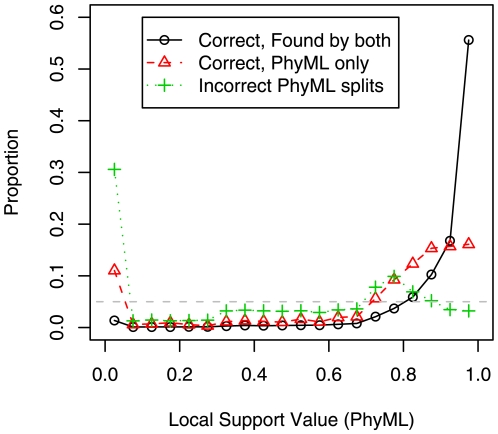
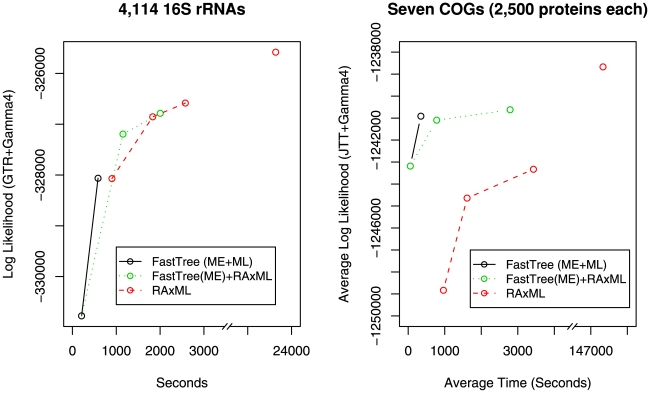
BACKGROUND: We recently described FastTree, a tool for inferring phylogenies for alignments with up to hundreds of thousands of sequences. Here, we describe improvements to FastTree that improve its accuracy without sacrificing scalability. METHODOLOGY/PRINCIPAL FINDINGS: Where FastTree 1 used nearest-neighbor interchanges (NNIs) and the minimum-evolution criterion to improve the tree, FastTree 2 adds minimum-evolution subtree-pruning-regrafting (SPRs) and maximum-likelihood NNIs. FastTree 2 uses heuristics to restrict the search for better trees and estimates a rate of evolution for each site (the "CAT" approximation). Nevertheless, for both simulated and genuine alignments, FastTree 2 is slightly more accurate than a standard implementation of maximum-likelihood NNIs (PhyML 3 with default settings). Although FastTree 2 is not quite as accurate as methods that use maximum-likelihood SPRs, most of the splits that disagree are poorly supported, and for large alignments, FastTree 2 is 100-1,000 times faster. FastTree 2 inferred a topology and likelihood-based local support values for 237,882 distinct 16S ribosomal RNAs on a desktop computer in 22 hours and 5.8 gigabytes of memory. CONCLUSIONS/SIGNIFICANCE: FastTree 2 allows the inference of maximum-likelihood phylogenies for huge alignments. FastTree 2 is freely available at http://www.microbesonline.org/fasttree.
Overview
The claims and statistics of this paper haven’t been checked yet.
Run the check — free, no account needed. It reads the open-access text and checks the sources it cites.
Integrity signals
Registry
Cites
Statistics
Figures
Verification
Claims the paper makes
The claims and statistics of this paper haven’t been checked yet.
Run the check — free, no account needed. It reads the open-access text and checks the sources it cites.
Claims other papers make about this one
Each is checked against this paper’s own text: does it say what the citing paper says it does?
The cited source says what the claim attributes to it.
In the citing paper
“Thus, the validation process for our methods is centered around the comparison of phylogenetic trees estimated from the alignment with FastTree 2.1 (ref. 34).”
From Improving microbial phylogeny with citizen science within a mass-market video game (2025) · cites this paper as [34]
In the citing paper
“On the other hand, FastTree was found to be much faster than RAxML and PhyML but reported lower likelihood scores for data sets with both small and large numbers of sequences (Guindon et al. 2010; Price et al. 2010; Liu et al. 2011).”
From Evaluating fast maximum likelihood-based phylogenetic programs using empirical phylogenomic data sets (2018) · cites this paper as Price et al. 2010
In the citing paper
“So far, these four programs have only been evaluated using simulated data (Guindon et al. 2010; Price et al. 2010; Liu et al. 2011), and empirical data sets with wide ranges of taxon numbers (e.g., up to 237,882 taxa in Price et al. [2010]) but relatively small numbers of genes (from ∼10 [Price et al. 2010; Liu et al. 2011; Chernomor et al. 2016] to ∼200 [Guindon et al. 2010; Money and Whelan 2012”
From Evaluating fast maximum likelihood-based phylogenetic programs using empirical phylogenomic data sets (2018) · cites this paper as Price et al. 2010
In the citing paper
“As a tradeoff, FastTree generates less accurate tree estimates than SPR-based ML methods (Price et al. 2010).”
From Evaluating fast maximum likelihood-based phylogenetic programs using empirical phylogenomic data sets (2018) · cites this paper as Price et al. 2010
In the citing paper
“For example, the recently developed FastTree program can be orders of magnitude faster than either PhyML or RAxML/ExaML (Price et al. 2010).”
From Evaluating fast maximum likelihood-based phylogenetic programs using empirical phylogenomic data sets (2018) · cites this paper as Price et al. 2010
Self-check
Percentages, sums and reported differences re-computed from the paper’s own numbers.
The self-check needs the paper’s full text.
Citations
Cites
The neighbor-joining method: a new method for reconstructing phylogenetic trees.
Saitou, N., & Nei, M. (1987) · Molecular Biology and Evolution · doi:10.1093/oxfordjournals.molbev.a040454 · Cited by 59,959
CONFIDENCE LIMITS ON PHYLOGENIES: AN APPROACH USING THE BOOTSTRAP
Felsenstein, J. (1985) · Evolution · doi:10.1111/j.1558-5646.1985.tb00420.x · Cited by 44,735
DeLong, E. R., DeLong, D. M., & Clarke-Pearson, D. L. (1988) · Biometrics · doi:10.2307/2531595 · Cited by 22,649
Guindon, S., Dufayard, J.-F., Lefort, V., Anisimova, M., Hordijk, W., & Gascuel, O. (2010) · Systematic Biology · doi:10.1093/sysbio/syq010 · Cited by 18,376
A Simple, Fast, and Accurate Algorithm to Estimate Large Phylogenies by Maximum Likelihood
Guindon, S., & Gascuel, O. (2003) · Systematic Biology · doi:10.1080/10635150390235520 · Cited by 16,923
RAxML-VI-HPC: maximum likelihood-based phylogenetic analyses with thousands of taxa and mixed models
Stamatakis, A. (2006) · Bioinformatics · doi:10.1093/bioinformatics/btl446 · Cited by 15,582
Evolutionary trees from DNA sequences: A maximum likelihood approach.
Felsenstein, J. (1981) · Journal of Molecular Evolution · doi:10.1007/bf01734359 · Cited by 14,571
Greengenes, a Chimera-Checked 16S rRNA Gene Database and Workbench Compatible with ARB
DeSantis, T. Z., Hugenholtz, P., Larsen, N., Rojas, M., Brodie, E. L., Keller, K., Huber, T., Dalevi, D., Hu, P., & Andersen, G. L. (2006) · Applied and Environmental Microbiology · doi:10.1128/aem.03006-05 · Cited by 10,891
A Rapid Bootstrap Algorithm for the RAxML Web Servers
Stamatakis, A., Hoover, P., & Rougemont, J. (2008) · Systematic Biology · doi:10.1080/10635150802429642 · Cited by 7,028
FastTree: Computing Large Minimum Evolution Trees with Profiles instead of a Distance Matrix
Price, M. N., Dehal, P. S., & Arkin, A. P. (2009) · Molecular Biology and Evolution · doi:10.1093/molbev/msp077 · Cited by 5,602
Self-citation
Cited by
Sorted by citations
Items 1,001–1,081 of 1,081
Evolutionary trajectory of pattern recognition receptors in plants
(2024) · doi:10.1038/s41467-023-44408-3 · Cited by 119
Characterization of the nasopharyngeal microbiota in health and during rhinovirus challenge
Allen, E. K., Koeppel, A. F., Hendley, J. O., Turner, S. D., Winther, B., & Sale, M. M. (2014) · Microbiome · doi:10.1186/2049-2618-2-22 · Cited by 118
Support for a clade of Placozoa and Cnidaria in genes with minimal compositional bias
Laumer, C. E., Gruber-Vodicka, H., Hadfield, M. G., Pearse, V. B., Riesgo, A., Marioni, J. C., & Giribet, G. (2018) · eLife · doi:10.7554/elife.36278 · Cited by 112
Effects of Proton Pump Inhibitors on the Gastric Mucosa-Associated Microbiota in Dyspeptic Patients
Paroni Sterbini, F., Palladini, A., Masucci, L., Cannistraci, C. V., Pastorino, R., Ianiro, G., Bugli, F., Martini, C., Ricciardi, W., Gasbarrini, A., et al. (2016) · Applied and Environmental Microbiology · doi:10.1128/aem.01437-16 · Cited by 108
Metabolic independence drives gut microbial colonization and resilience in health and disease
Watson, A. R., Füssel, J., Veseli, I., DeLongchamp, J. Z., Silva, M., Trigodet, F., Lolans, K., Shaiber, A., Fogarty, E., Runde, J. M., et al. (2023) · Genome Biology · doi:10.1186/s13059-023-02924-x · Cited by 92
Deciphering protein evolution and fitness landscapes with latent space models
Ding, X., Zou, Z., & Brooks III, C. L. (2019) · Nature Communications · doi:10.1038/s41467-019-13633-0 · Cited by 106
McAllan, L., Skuse, P., Cotter, P. D., Connor, P. O., Cryan, J. F., Ross, R. P., Fitzgerald, G., Roche, H. M., & Nilaweera, K. N. (2014) · PLoS ONE · doi:10.1371/journal.pone.0088904 · Cited by 106
Sousa, F. L., & Martin, W. F. (2014) · Biochimica et Biophysica Acta (BBA) - Bioenergetics · doi:10.1016/j.bbabio.2014.02.001 · Cited by 100
Phylogenetic Signal, Congruence, and Uncertainty across Bacteria and Archaea
Martinez-Gutierrez, C. A., & Aylward, F. O. (2021) · Molecular Biology and Evolution · doi:10.1093/molbev/msab254 · Cited by 95
Multicomponent nature underlies the extraordinary mechanical properties of spider dragline silk
Kono, N., Nakamura, H., Mori, M., Yoshida, Y., Ohtoshi, R., Malay, A. D., Pedrazzoli Moran, D. A., Tomita, M., Numata, K., & Arakawa, K. (2021) · Proceedings of the National Academy of Sciences · doi:10.1073/pnas.2107065118 · Cited by 99
Carvalho, M. J., Sands, K., Thomson, K., Portal, E., Mathias, J., Milton, R., Gillespie, D., Dyer, C., Akpulu, C., Boostrom, I., et al. (2022) · Nature Microbiology · doi:10.1038/s41564-022-01184-y · Cited by 95
Tamburini, F. B., Maghini, D., Oduaran, O. H., Brewster, R., Hulley, M. R., Sahibdeen, V., Norris, S. A., Tollman, S., Kahn, K., Wagner, R. G., et al. (2022) · Nature Communications · doi:10.1038/s41467-021-27917-x · Cited by 88
ATP synthase evolution on a cross-braced dated tree of life
Mahendrarajah, T. A., Moody, E. R. R., Schrempf, D., Szánthó, L. L., Dombrowski, N., Davín, A. A., Pisani, D., Donoghue, P. C. J., Szöllősi, G. J., Williams, T. A., et al. (2023) · Nature Communications · doi:10.1038/s41467-023-42924-w · Cited by 86
Phelps, C. M., Willis, N. B., Duan, T., Lee, A. H., Zhang, Y., Rodriguez J, D. M., Pandey, S. P., Laughlin, C. R., Rosen, A. B. I., McPherson, A. C., et al. (2025) · Cell · doi:10.1016/j.cell.2025.06.018 · Cited by 91
Design of highly functional genome editors by modeling the universe of CRISPR-Cas sequences
Ruffolo, J. A., Nayfach, S., Gallagher, J., Bhatnagar, A., Beazer, J., Hussain, R., Russ, J., Yip, J., Hill, E., Pacesa, M., et al. (2024) · doi:10.1101/2024.04.22.590591 · Cited by 90
Microbial hitchhikers harbouring antimicrobial-resistance genes in the riverine plastisphere
Zadjelovic, V., Wright, R. J., Borsetto, C., Quartey, J., Cairns, T. N., Langille, M. G. I., Wellington, E. M. H., & Christie-Oleza, J. A. (2023) · Microbiome · doi:10.1186/s40168-023-01662-3 · Cited by 87
Archaeology of Eukaryotic DNA Replication
Makarova, K. S., & Koonin, E. V. (2013) · Cold Spring Harbor Perspectives in Biology · doi:10.1101/cshperspect.a012963 · Cited by 87
Bzioueche, H., Simonyté Sjödin, K., West, C. E., Khemis, A., Rocchi, S., Passeron, T., & Tulic, M. K. (2021) · Journal of Investigative Dermatology · doi:10.1016/j.jid.2021.01.036 · Cited by 77
Raber, J., Yamazaki, J., Torres, E. R. S., Kirchoff, N., Stagaman, K., Sharpton, T., Turker, M. S., & Kronenberg, A. (2019) · Frontiers in Physiology · doi:10.3389/fphys.2019.00179 · Cited by 78
The multiple evolutionary origins of the eukaryotic N-glycosylation pathway
Lombard, J. (2016) · Biology Direct · doi:10.1186/s13062-016-0137-2 · Cited by 70
Sato, H., Zhang, L. S., Martinez, K., Chang, E. B., Yang, Q., Wang, F., Howles, P. N., Hokari, R., Miura, S., & Tso, P. (2016) · Gastroenterology · doi:10.1053/j.gastro.2016.07.009 · Cited by 75
A Unique Clade of SARS-CoV-2 Viruses is Associated with Lower Viral Loads in Patient Upper Airways
Lorenzo-Redondo, R., Nam, H. H., Roberts, S. C., Simons, L. M., Jennings, L. J., Qi, C., Achenbach, C. J., Hauser, A. R., Ison, M. G., Hultquist, J. F., et al. (2020) · doi:10.1101/2020.05.19.20107144 · Cited by 111
“11 (21), assessing the tree topology with the Shimodaira–Hasegawa approximate likelihood ratio test (SH-aLRT) (22) with 1000 replicates.”
Pitta, D. W., Indugu, N., Vecchiarelli, B., Rico, D. E., & Harvatine, K. J. (2018) · Journal of Dairy Science · doi:10.3168/jds.2016-12514 · Cited by 73
Petersen, C., Wankhade, U. D., Bharat, D., Wong, K., Mueller, J. E., Chintapalli, S. V., Piccolo, B. D., Jalili, T., Jia, Z., Symons, J. D., et al. (2019) · The Journal of Nutritional Biochemistry · doi:10.1016/j.jnutbio.2019.01.004 · Cited by 73
Barrett's esophagus is associated with a distinct oral microbiome
Snider, E. J., Compres, G., Freedberg, D. E., Giddins, M. J., Khiabanian, H., Lightdale, C. J., Nobel, Y. R., Toussaint, N. C., Uhlemann, A.-C., & Abrams, J. A. (2018) · Clinical and Translational Gastroenterology · doi:10.1038/s41424-018-0005-8 · Cited by 72
Dmitrijeva, M., Tackmann, J., Matias Rodrigues, J. F., Huerta-Cepas, J., Coelho, L. P., & von Mering, C. (2024) · Nature Ecology & Evolution · doi:10.1038/s41559-024-02357-0 · Cited by 72
Drouin, P., Tremblay, J., & Chaucheyras-Durand, F. (2019) · Microorganisms · doi:10.3390/microorganisms7120595 · Cited by 71
Silas, S., Makarova, K. S., Shmakov, S., Páez-Espino, D., Mohr, G., Liu, Y., Davison, M., Roux, S., Krishnamurthy, S. R., Fu, B. X. H., et al. (2017) · mBio · doi:10.1128/mbio.00897-17 · Cited by 62
Endosymbiotic gene transfer in tertiary plastid-containing dinoflagellates
Burki, F., Imanian, B., Hehenberger, E., Hirakawa, Y., Maruyama, S., & Keeling, P. J. (2014) · Eukaryotic Cell · doi:10.1128/ec.00299-13 · Cited by 67
Bosch, M. E., Dodiya, H. B., Michalkiewicz, J., Lee, C., Shaik, S. M., Weigle, I. Q., Zhang, C., Osborn, J., Nambiar, A., Patel, P., et al. (2024) · Molecular Neurodegeneration · doi:10.1186/s13024-023-00700-w · Cited by 70
Multi-omics Analysis of Periodontal Pocket Microbial Communities Pre- and Posttreatment
Califf, K. J., Schwarzberg-Lipson, K., Garg, N., Gibbons, S. M., Caporaso, J. G., Slots, J., Cohen, C., Dorrestein, P. C., & Kelley, S. T. (2017) · mSystems · doi:10.1128/msystems.00016-17 · Cited by 66
Ford, A. L., Nagulesapillai, V., Piano, A., Auger, J., Girard, S.-A., Christman, M., Tompkins, T. A., & Dahl, W. J. (2020) · Journal of the Academy of Nutrition and Dietetics · doi:10.1016/j.jand.2019.12.009 · Cited by 63
Nasopharyngeal microbiome diversity changes over time in children with asthma
Pérez-Losada, M., Alamri, L., Crandall, K. A., & Freishtat, R. J. (2017) · PLoS ONE · doi:10.1371/journal.pone.0170543 · Cited by 63
Rusch, C., Beke, M., Tucciarone, L., Nieves, C., Ukhanova, M., Tagliamonte, M. S., Mai, V., Suh, J. H., Wang, Y., Chiu, S., et al. (2021) · Frontiers in Neurology · doi:10.3389/fneur.2021.794640 · Cited by 63
Gong, W., Granados, A. A., Hu, J., Jones, M. G., Raz, O., Salvador-Martínez, I., Zhang, H., Chow, K.-H. K., Kwak, I.-Y., Retkute, R., et al. (2021) · Cell Systems · doi:10.1016/j.cels.2021.05.008 · Cited by 62
Transposon-encoded nucleases use guide RNAs to promote their selfish spread
Meers, C., Le, H. C., Pesari, S. R., Hoffmann, F. T., Walker, M. W. G., Gezelle, J., Tang, S., & Sternberg, S. H. (2023) · Nature · doi:10.1038/s41586-023-06597-1 · Cited by 60
Zhu, M., Frank, M. W., Radka, C. D., Jeanfavre, S., Xu, J., Tse, M. W., Pacheco, J. A., Kim, J. S., Pierce, K., Deik, A., et al. (2024) · Cell · doi:10.1016/j.cell.2024.07.029 · Cited by 61
Drouin, P., Tremblay, J., Renaud, J., & Apper, E. (2021) · MicrobiologyOpen · doi:10.1002/mbo3.1153 · Cited by 60
Evolutionary Histories of Type III Polyketide Synthases in Fungi
Navarro-Muñoz, J. C., & Collemare, J. (2020) · Frontiers in Microbiology · doi:10.3389/fmicb.2019.03018 · Cited by 59
“…KOG2314 (translation initiation factor 3, subunit b eIF-3b) were retrieved from the JGI Mycocosm repository for all genomes that contain a type III PKS. Nucleotide sequences were aligned using MAFFT (Katoh and Standley, 2013) and phylogenetic trees were built using FastTree (Price et al., 2010).”
MethodAmes, C. L., Ohdera, A. H., Colston, S. M., Collins, A. G., Fitt, W. K., Morandini, A. C., Erickson, J. S., & Vora, G. J. (2021) · Frontiers in Marine Science · doi:10.3389/fmars.2021.640527 · Cited by 58
Berkemer, S. J., & McGlynn, S. E. (2020) · Molecular Biology and Evolution · doi:10.1093/molbev/msaa089 · Cited by 52
Shimizu, Y., Yamamura, R., Yokoi, Y., Ayabe, T., Ukawa, S., Nakamura, K., Okada, E., Imae, A., Nakagawa, T., Tamakoshi, A., et al. (2023) · Gut Microbes · doi:10.1080/19490976.2023.2190306 · Cited by 53
Dynamic bacterial and fungal microbiomes during sweet sorghum ensiling impact bioethanol production
Gallagher, D., Parker, D., Allen, D. J., & Tsesmetzis, N. (2018) · Bioresource Technology · doi:10.1016/j.biortech.2018.05.053 · Cited by 54
Cenci, U., Sibbald, S. J., Curtis, B. A., Kamikawa, R., Eme, L., Moog, D., Henrissat, B., Maréchal, E., Chabi, M., Djemiel, C., et al. (2018) · BMC Biology · doi:10.1186/s12915-018-0593-5 · Cited by 53
Dietary ursolic acid improves health span and life span in male Drosophila melanogaster
Staats, S., Wagner, A. E., Lüersen, K., Künstner, A., Meyer, T., Kahns, A. K., Derer, S., Graspeuntner, S., Rupp, J., Busch, H., et al. (2019) · BioFactors · doi:10.1002/biof.1467 · Cited by 48
The diversity and evolution of microbial dissimilatory phosphite oxidation
Ewens, S. D., Gomberg, A. F. S., Barnum, T. P., Borton, M. A., Carlson, H. K., Wrighton, K. C., & Coates, J. D. (2021) · Proceedings of the National Academy of Sciences · doi:10.1073/pnas.2020024118 · Cited by 48
Badrane, H., Cheng, S., Dupont, C., Hao, B., Driscoll, E., Morder, K., Liu, G., Newbrough, A., Fleres, G., Kaul, D., et al. (2023) · doi:10.21203/rs.3.rs-2706400/v1 · Cited by 48
Yeast metabolic innovations emerged via expanded metabolic network and gene positive selection
Lu, H., Li, F., Yuan, L., Domenzain, I., Yu, R., Wang, H., Li, G., Chen, Y., Ji, B., Kerkhoven, E. J., et al. (2021) · Molecular Systems Biology · doi:10.15252/msb.202110427 · Cited by 44
Mycobacteriaceae Mineralizes Micropolyethylene in Riverine Ecosystems.
Sun, X., Chen, Z., Kong, T., Chen, Z., Dong, Y., Kolton, M., Cao, Z., Zhang, X., Zhang, H., Liu, G., et al. (2022) · Environmental Science & Technology · doi:10.1021/acs.est.2c05346 · Cited by 46
The evolution and spread of sulfur cycling enzymes reflect the redox state of the early Earth
Mateos, K., Chappell, G., Klos, A., Le, B., Boden, J., Stüeken, E., & Anderson, R. (2023) · Science Advances · doi:10.1126/sciadv.ade4847 · Cited by 43
Obana, N., Takada, H., Crowe-McAuliffe, C., Iwamoto, M., Egorov, A. A., Wu, K. J. Y., Chiba, S., Murina, V., Paternoga, H., Tresco, B. I. C., et al. (2023) · Nucleic Acids Research · doi:10.1093/nar/gkad193 · Cited by 42
Alexander, H., Hu, S. K., Krinos, A. I., Pachiadaki, M., Tully, B. J., Neely, C. J., & Reiter, T. (2021) · doi:10.1101/2021.07.25.453713 · Cited by 67
Jeraldo, P., Hernandez, A., Nielsen, H. B., Chen, X., White, B. A., Goldenfeld, N., Nelson, H., Alhquist, D., Boardman, L., & Chia, N. (2016) · Frontiers in Microbiology · doi:10.3389/fmicb.2016.00783 · Cited by 38
Weninger, S. N., Herman, C., Meyer, R. K., Beauchemin, E. T., Kangath, A., Lane, A. I., Martinez, T. M., Hasneen, T., Jaramillo, S. A., Lindsey, J., et al. (2023) · Microbiome · doi:10.1186/s40168-023-01590-2 · Cited by 37
Shen, Y.-C., Lee, P.-C., Kuo, Y.-L., Wu, W.-K., Chen, C.-C., Lei, C.-H., Yeh, C.-P., Hsu, C., Hsu, C.-H., Lin, Z.-Z., et al. (2021) · Journal of Hepatocellular Carcinoma · doi:10.2147/jhc.s315696 · Cited by 36
“A phylogenetic tree was constructed with a set of sequences representative of the OTUs using the FastTree.29,30 OTU abundance information was rarefied to the minimum sequence depth using the QIIME script (single_rarefaction.py) to normalize the variations in sequence depth across samples.”
MethodAbdelhamid, A. G., & El-Dougdoug, N. K. (2021) · Biochemical and Biophysical Research Communications · doi:10.1016/j.bbrc.2021.02.046 · Cited by 32
Myer, P. R., McDaneld, T. G., Kuehn, L. A., Dedonder, K. D., Apley, M. D., Capik, S. F., Lubbers, B. V., Harhay, G. P., Harhay, D. M., Keele, J. W., et al. (2020) · PLOS ONE · doi:10.1371/journal.pone.0235498 · Cited by 31
Bitalac, J. M. S., Lantican, N. B., Gomez, N. C. F., & Onda, D. F. L. (2023) · Journal of Hazardous Materials · doi:10.1016/j.jhazmat.2023.131124 · Cited by 25
Bouquet, J., Gardy, J. L., Brown, S., Pfeil, J., Miller, R. R., Morshed, M., Avina-Zubieta, A., Shojania, K., McCabe, M., Parker, S., et al. (2017) · Clinical Infectious Diseases · doi:10.1093/cid/ciw767 · Cited by 25
OrthoFinder: improved phylogenetic orthology inference with enhanced accuracy and scalability
Emms, D. M., Liu, Y., Belcher, L., Holmes, J., & Kelly, S. (2026) · Nature Methods · doi:10.1038/s41592-026-03126-6 · Cited by 25
Samarra, A., Cabrera-Rubio, R., Martínez-Costa, C., & Collado, M. C. (2024) · Gut Microbes · doi:10.1080/19490976.2024.2357176 · Cited by 25
Disentangling artificial and natural benthic weathering in organic rich Baltic Sea sediments
Fuhr, M., Wallmann, K., Dale, A. W., Diercks, I., Kalapurakkal, H. T., Schmidt, M., Sommer, S., Böhnke, S., Perner, M., & Geilert, S. (2023) · Frontiers in Climate · doi:10.3389/fclim.2023.1245580 · Cited by 24
Casaro, M. B., Thomas, A. M., Mendes, E., Fukumori, C., Ribeiro, W. R., Oliveira, F. A., Crisma, A. R., Murata, G. M., Bizzarro, B., Sá-Nunes, A., et al. (2021) · Microbiome · doi:10.1186/s40168-021-01081-2 · Cited by 24
Bifidobacteriaceae diversity in the human microbiome from a large-scale genome-wide analysis
Pasolli, E., Mauriello, I. E., Avagliano, M., Cavaliere, S., De Filippis, F., & Ercolini, D. (2024) · Cell Reports · doi:10.1016/j.celrep.2024.115027 · Cited by 22
Socioeconomic position links circulatory microbiota differences with biological age
Craven, H., McGuinness, D., Buchanan, S., Galbraith, N., McGuinness, D. H., Jones, B., Combet, E., Mafra, D., Bergman, P., Ellaway, A., et al. (2021) · Scientific Reports · doi:10.1038/s41598-021-92042-0 · Cited by 21
Schäffer, D. E., Iyer, L. M., Burroughs, A. M., & Aravind, L. (2020) · Frontiers in Genetics · doi:10.3389/fgene.2020.00034 · Cited by 20
Xue, Z., Brooks, J. T., Quart, Z., Stevens, E. T., Kable, M. E., Heidenreich, J., McLeod, J., & Marco, M. L. (2021) · mSystems · doi:10.1128/msystems.01114-20 · Cited by 17
Associations between Escherichia coli O157 shedding and the faecal microbiota of dairy cows
Stenkamp‐Strahm, C., McConnel, C., Magzamen, S., Abdo, Z., & Reynolds, S. (2018) · Journal of Applied Microbiology · doi:10.1111/jam.13679 · Cited by 18
Comparative Genomics and Pan-Genome Driven Prediction of a Reduced Genome of Akkermansia muciniphila
Bukhari, S. A. R., Irfan, M., Ahmad, I., & Chen, L. (2022) · Microorganisms · doi:10.3390/microorganisms10071350 · Cited by 18
Kitamura, K., & Shimizu, H. (2021) · Viruses · doi:10.3390/v13071407 · Cited by 14
Xu, Q., Wen, L., Wei, G., Zhao, X., Liu, Y., Xiong, W., Zhang, T., Fan, Y., Chen, C., Xiang, C., et al. (2022) · Frontiers in Microbiology · doi:10.3389/fmicb.2022.819523 · Cited by 11
Genomic Analyses Unveil Helmeted Guinea Fowl (Numida meleagris) Domestication in West Africa
Shen, Q.-K., Peng, M.-S., Adeola, A. C., Kui, L., Duan, S., Miao, Y.-W., Eltayeb, N. M., Lichoti, J. K., Otecko, N. O., Strillacci, M. G., et al. (2021) · Genome Biology and Evolution · doi:10.1093/gbe/evab090 · Cited by 15
Alyousif, Z., Miller, J. L., Auger, J., Sandoval, M., Piano, A., Tompkins, T. A., & Dahl, W. J. (2020) · Molecular Genetics & Genomic Medicine · doi:10.1002/mgg3.1535 · Cited by 11
“Using QIIMETM’s visualization tools alpha diversity profiles, including Pielou's evenness, Faith's phylogenetic diversity, Shannon diversity index, observed Operational Taxonomic Units (OTUs), and individual taxonomic profiles were generated and examined (Amir et al., 2017; Bokulich et al., 2013; Bolyen et al., 2019;…”
MethodParker, C. W., Senko, J. M., Auler, A. S., Sasowsky, I. D., Schulz, F., Woyke, T., & Barton, H. A. (2022) · Scientific Reports · doi:10.1038/s41598-022-21365-3 · Cited by 12
Díaz-Muñoz, C., Verce, M., De Vuyst, L., & Weckx, S. (2022) · iScience · doi:10.1016/j.isci.2022.105309 · Cited by 10
Ramirez, M. D., Bui, T. N., & Katz, P. S. (2024) · Journal of Comparative Neurology · doi:10.1002/cne.25628 · Cited by 10
Improving microbial phylogeny with citizen science within a mass-market video game
Sarrazin-Gendron, R., Ghasemloo Gheidari, P., Butyaev, A., Keding, T., Cai, E., Zheng, J., Mutalova, R., Mounthanyvong, J., Zhu, Y., Nazarova, E., et al. (2025) · Nature Biotechnology · doi:10.1038/s41587-024-02175-6 · Cited by 9
Nicastro, G. G., Sibinelli-Sousa, S., Hespanhol, J. T., Santos, T. W. C., Munoz, J. P., Santos, R. S., Perez-Sepulveda, B. M., Miyamoto, S., Aravind, L., de Souza, R. F., et al. (2024) · doi:10.1101/2024.09.27.615498 · Cited by 9
“To analyze whether Tox-Act1 is a T6SS substrate and contributes to interbacterial competition in vivo , we performed competitive index assays using S. Typhimurium strain IC33Q that naturally encodes Tox-Act1 (Fig 3A).”
Ghaly, T. M., Rajabal, V., Russell, D., Colombi, E., & Tetu, S. G. (2025) · doi:10.1101/2025.04.02.646905 · Cited by 5
Bacteriocin gene-mediated ecological adaptation of Bifidobacterium breve in the adult human gut
Wang, J., Qian, X., Li, Q., Jin, Z., Liu, N., Zhao, J., Chen, W., Wang, S., & Tian, P. (2026) · Cell Genomics · doi:10.1016/j.xgen.2025.101106 · Cited by 5
CoCoNuTs: A diverse subclass of Type IV restriction systems predicted to target RNA
Bell, R. T., Sahakyan, H., Makarova, K. S., Wolf, Y. I., & Koonin, E. V. (2023) · doi:10.1101/2023.07.31.551357 · Cited by 1
Metadata
- Authors
- Price, M. N., Dehal, P. S., & Arkin, A. P.
- Affiliations
- Lawrence Berkeley National Laboratory (US)
- Corresponding author
- Price, Morgan N.
- Venue
- PLoS ONE
- Publisher
- Public Library of Science (PLoS)
- Published
- 2010-03-10
- Volume
- 5
- Issue
- 3
- Pages
- e9490
- ISSN
- 1932-6203 (ISSN-L)
- PMC
- PMC2835736
- OpenAlex
- W2031611770
- Cited by
- 14,894
- References
- 37
- Citations by year
- 2026: 1298 · 2025: 1543 · 2024: 1657 · 2023: 1486 · 2022: 1676 · 2021: 1651 · 2020: 1363 · 2019: 1013 · 2018: 776 · 2017: 686 · 2016: 521 · 2015: 415 · 2014: 309 · 2013: 256 · 2012: 133
- FWCI
- 63.80
- Type
- journal article
- Language
- en
- Open access
- gold
- doi.org
- Locations
- PLoS ONE (publishedVersion, cc-by)
- PubMed Central (publishedVersion, cc-by)
- PubMed (publishedVersion)
- OSTI OAI (U.S. Department of Energy Office of Scientific and Technical Information) (submittedVersion)
- DOAJ (DOAJ: Directory of Open Access Journals) (submittedVersion, cc-by-sa)
- eScholarship (California Digital Library) (submittedVersion)
- eScholarship (California Digital Library) (submittedVersion, cc-by)
- Figshare (submittedVersion, cc-by)
- Funders
- U.S. Department of Energy (-AC02-05CH11231, 05CH11231, DE AC02 05CH11231, DE-AC02-)
- Topics
- Life Sciences › Biochemistry, Genetics and Molecular Biology › Molecular Biology › Genomics and Phylogenetic Studies
- Life Sciences › Biochemistry, Genetics and Molecular Biology › Molecular Biology › RNA and protein synthesis mechanisms
- Life Sciences › Biochemistry, Genetics and Molecular Biology › Molecular Biology › Fractal and DNA sequence analysis
- Keywords
- phylogenetic inference, maximum likelihood phylogeny, nearest neighbor interchange, cat model, 16S rRNA, phylogenetic accuracy, scalability
- MeSH terms
- Algorithms, Animals, Computers, Data Interpretation, Statistical, Genetic Techniques, Humans, Models, Genetic, Phylogeny, RNA, Ribosomal, 16S, Software, Likelihood Functions, Sequence Alignment, Databases, Protein
About these checks
Registry, retraction, Cites and statistics results are computed, not judged, with one exception: a printed reference that no index lists is read once by a model before it counts as a citation error. Claims are extracted by a model and kept only when their quote appears verbatim in the text; each cited source is then checked, with a model’s help, for whether it says what the claim relies on. Those verdicts can be wrong — read the claim’s quote and the cited source before relying on one.
Statistics and arithmetic are recomputed, not judged.
Confidence bands are shown only for fields calibrated on our annotated test set. None is calibrated yet, so no band is shown.
What counts as a claim ›How we measure confidence ›How we check this ›
Are you an author, or do you see a problem with this page? Request a review
