

The DOI matches its Crossref record; 220 of the 220 references it cites were found in a registry or an index; 12 of the 187 sources its claims cite were checked for support.
Current Advances in Chitosan Nanoparticles Based Oral Drug Delivery for Colorectal Cancer Treatment
Open accessAbstract
As per the WHO, colorectal cancer (CRC) caused around 935,173 deaths worldwide in 2020 in both sexes and at all ages. The available anticancer therapies including chemotherapy, radiotherapy and anticancer drugs are all associated with limited therapeutic efficacy, adverse effects and low chances. This has urged to emerge several novel therapeutic agents as potential therapies for CRC including synthetic and natural materials. Orally administrable and targeted drug delivery systems are attractive strategies for CRC therapy as they minimize the side effects, enhance the efficacy of anticancer drugs. Nevertheless, oral drug delivery till today faces several challenges like poor drug solubility, stability, and permeability. Various oral nano-based approaches and targeted drug delivery systems have been developed recently, as a result of the ability of nanoparticles to control the release of the encapsulant, drug targeting and reduce the number of dosages administered. The unique physicochemical properties of chitosan polymer assist to overcome oral drug delivery barriers and target the colon tumour cells. Chitosan-based nanocarriers offered additional improvements by enhancing the stability, targeting and bioavailability of several anti-colorectal cancer agents. Modified chitosan derivatives also facilitated CRC targeting through strengthening the protection of encapsulant against acidic and enzyme degradation of gastrointestinal track (GIT). This review aims to provide an overview of CRC pathology, therapy and the barriers against oral drug delivery. It also emphasizes the role of nanotechnology in oral drug targeted delivery system and the growing interest towards chitosan and its derivatives. The present review summarizes the relevant works to date that have studied the potential applications of chitosan-based nanocarrier towards CRC treatment.
Overview
AI snapshot
Written from the paper’s full text.
TL;DR
This review summarizes oral chitosan-based nanoparticle strategies for colorectal cancer (CRC), covering CRC pathology, oral delivery barriers, chitosan derivatives, and passive/active targeting. It reports that chitosan and modified chitosan nanocarriers can improve stability, mucoadhesion, colon targeting, and anticancer efficacy, but human efficacy remains unestablished.
Key findings
- CRC caused around 935,173 deaths worldwide in 2020; regional deaths were 506,449 in Asia, 244,824 in Europe, 63,987 in North America, and 69,435 in Latin America and the Caribbean, with morbidity expected to reach 1.1 million worldwide by 2030. Stage I–II 5-year survival is 37–74%, dropping to 6% in advanced stages.
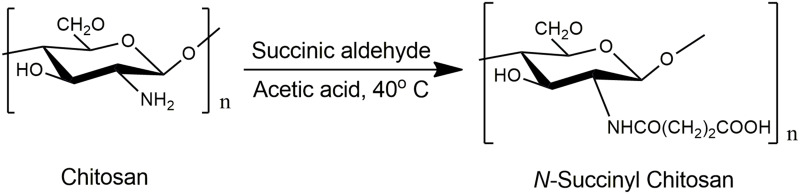
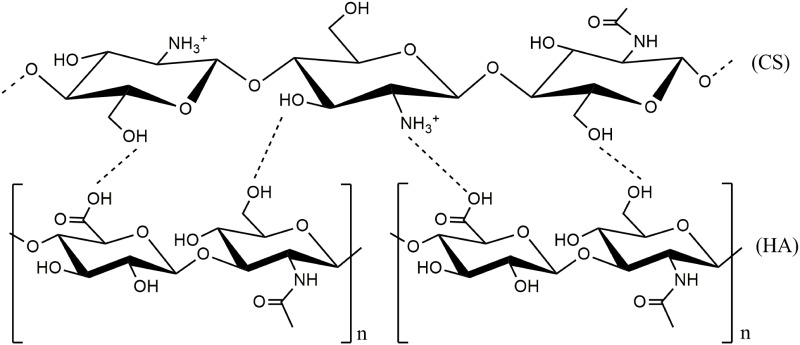
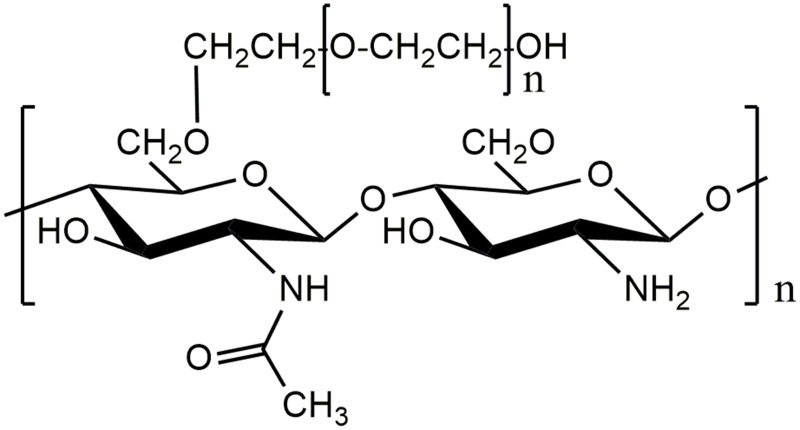
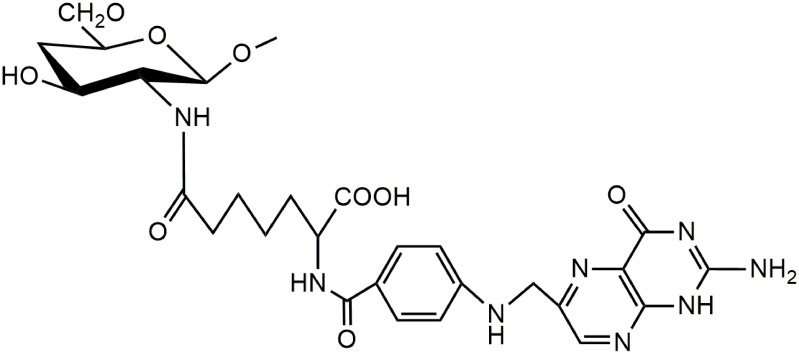
- Chitosan-based nanoparticles (CSNPs) are reported to overcome oral delivery barriers through cationic mucoadhesion, transient tight-junction opening, and biodegradation by colonic microflora; modified derivatives such as trimethyl chitosan, carboxymethyl chitosan, N-succinyl-chitosan, hyaluronic acid-, PEG-, and folic acid-conjugated chitosan enhance solubility, targeting, and circulation.
- In summarized studies, chitosan-cellulose 5-fluorouracil nanoparticles released 42.37 ± 0.43% at pH 1.2 and 76.82 ± 1.29% at pH 7.4; at 250 µg/mL they eliminated 8.16 ± 2.11% of CCD112 normal cells versus 56.42 ± 0.41% of HCT-116 cancer cells. Mesoporous silica nanoparticles coated with folic acid chitosan-glycin complex showed 4% toxicity against normal cells versus 60% for colchicine alone.
- Chitosan-based siRNA delivery protected siRNA and reduced β-catenin protein to around 40.10% in HT-29 cells; carboxymethyl dextran-CSNPs delivering snail siRNA and doxorubicin altered EMT genes and inhibited HCT-116 growth, migration, and induced apoptosis.
Methods
- Narrative review; no systematic review protocol or meta-analysis is stated. It synthesizes literature on CRC pathology and therapy, oral drug delivery barriers, nanotechnology, chitosan and its derivatives, and CSNPs for CRC and siRNA delivery.
- Data/sample: published studies and tables summarizing chitosan-based nanoparticle formulations, active compounds, nanoparticle characteristics (e.g., particle size, zeta potential, encapsulation efficiency), cell lines, and outcomes, including Tables 4, 5, and 6.
- Main analysis: qualitative synthesis and tabulation of preclinical in vitro and in vivo findings; no primary experiments are reported.
Limitations
- The paper states that toxicity and immunogenicity of chitosan nanocarriers toward more normal cell lines need to be studied, particularly for long-term effects, and that approaches have yet to progress beyond animal studies and establish relevant efficacy in humans.
- Evident from the text: as a narrative review, it provides no primary data or systematic quality assessment; included studies vary in cell lines, formulations, and outcome measures, and some table entries are incomplete (e.g., targeted receptor listed as “-”).
Model-written summary. Check it against the paper before relying on it.
Integrity signals
Registry
Cites
Statistics
Figures

Verification
Claims the paper makes
72 No full text of the sources · 68 Not checked yet · 53 No basis given · 20 Own interpretation · 5 Supported · 3 Partly supported · 2 Supported so far · 1 Check pending · accuracy not yet measured
The cited sources support only part of this claim — read each source’s verdict below.
In the paper
“Mucus layer is continuously secreted and degraded or digested, thus rightly called dynamic.129”
§ Current Advances in Chitosan Nanoparticles Based Oral Drug Delivery for Colorectal Cancer Treatment > Chitosan and Its Physicochemical Properties > Interaction Between Chitosan and Colon Mucosa
What the sources say
- Partly supportedcites [129] Petrou, 2018, Biomater Sci sourceExperimental — accuracy not yet measured
The Introduction says goblet cells secrete mucins, and “Mucin-based protective barriers” describes active turnover of the mucus layer. The “Dynamicity” passage also describes constant changes in mucus properties. Our copy does not say that the layer is continuously degraded or digested, so it does not support that stated reason for calling it dynamic. (LLM, conf=0.85)
plaindirect- Asserted: passes — The authors put it forward as true.
- Checkable: passes — It can be checked against evidence.
- Load-bearing: unclear — It is unclear whether the paper’s conclusions depend on it.
- Based: passes — The paper gives a reason why it holds.
- Partly supported
Every source the paper cites for this claim was checked and supports it.
In the paper
“Additionally, nanoparticles facilitate the drug diffusion and accumulation in tumour cell, through enhanced permeability and retention (EPR) effect.142”
§ Current Advances in Chitosan Nanoparticles Based Oral Drug Delivery for Colorectal Cancer Treatment > Nanotechnology in Drug Targeted Delivery System
What the sources say
- Supportedcites [142] Sutradhar, 2014, ISRN Nanotechnol source
Section 3.2 (Passive Targeting) says the EPR effect facilitates drug accumulation in the tumor interstitium and that nanoparticles can accumulate through this effect and then diffuse into cells. This supports the citing sentence’s account of accumulation and diffusion, though the paper distinguishes accumulation around tumor cells from subsequent entry into them. (LLM, conf=0.93)
plaindirect- Asserted: passes — The authors put it forward as true.
- Checkable: passes — It can be checked against evidence.
- Load-bearing: unclear — It is unclear whether the paper’s conclusions depend on it.
- Based: passes — The paper gives a reason why it holds.
- Supported
In the paper
“Coated NPs showed significant inhibition of colon cancer cells (HT-29) compared to uncoated NPs or free drug solution.38”
§ Current Advances in Chitosan Nanoparticles Based Oral Drug Delivery for Colorectal Cancer Treatment > Introduction
What the sources say
- Not checked — no full text of the sourcecites [38] Badran, 2017, Int J Biol Macromol source
plaindirect- Asserted: passes — The authors put it forward as true.
- Checkable: passes — It can be checked against evidence.
- Load-bearing: unclear — It is unclear whether the paper’s conclusions depend on it.
- Based: passes — The paper gives a reason why it holds.
- Rests on an assumption: In vitro CRC cell lines (e.g., HT-29, HCT-116) are valid models for predicting clinical anti-CRC efficacy in humans.
In the paper
“The inhibition efficiency and anti-colon cancer activity of the combined treatment were more stronger than either type of nanoparticle alone or the free drugs.43”
§ Current Advances in Chitosan Nanoparticles Based Oral Drug Delivery for Colorectal Cancer Treatment > Introduction
What the sources say
- Not checked — no full text of the sourcecites [43] Wang, 2021, Eur J Pharm Sci source
plaindirect- Asserted: passes — The authors put it forward as true.
- Checkable: passes — It can be checked against evidence.
- Load-bearing: unclear — It is unclear whether the paper’s conclusions depend on it.
- Based: passes — The paper gives a reason why it holds.
- Rests on an assumption: In vitro CRC cell lines (e.g., HT-29, HCT-116) are valid models for predicting clinical anti-CRC efficacy in humans.
The paper states this without a source or data behind it here, so there is nothing to check it against. The quote shows it is in the paper.
In the paper
“While many studies have been done in recent years to develop a successful system for oral drug and gene delivery, the approaches have yet to progress beyond animal studies and establish relevant efficacy in humans.”
§ Current Advances in Chitosan Nanoparticles Based Oral Drug Delivery for Colorectal Cancer Treatment > Conclusion
plain- Asserted: passes — The authors put it forward as true.
- Checkable: passes — It can be checked against evidence.
- Load-bearing: passes — The paper’s conclusions depend on it.
- Based: unclear — It is unclear why the paper says it holds.
A claim is checked only against the cited paper’s full text, never its abstract, and none is available for its sources.
In the paper
“Modified chitosan derivatives also facilitated CRC targeting through strengthening the protection of encapsulant against acidic and enzyme degradation of gastrointestinal track (GIT).”
- Also stated in: § Introduction · plain
“These chitosan modifications also facilitated CRC targeting where the drug need to be protected from acidic and enzyme degradation with minimal loss until it reaches the colon.41,42”
§ Current Advances in Chitosan Nanoparticles Based Oral Drug Delivery for Colorectal Cancer Treatment > Abstract
What the sources say
plaindirect- Asserted: passes — The authors put it forward as true.
- Checkable: passes — It can be checked against evidence.
- Load-bearing: passes — The paper’s conclusions depend on it.
- Based: passes — The paper gives a reason why it holds.
- Rests on an assumption: Results from in vitro and animal studies of chitosan-based nanocarriers are predictive of clinical benefit in human CRC patients.
- Also stated in: § Introduction · plain
The paper states this without a source or data behind it here, so there is nothing to check it against. The quote shows it is in the paper.
In the paper
“Moreover, chitosan was also used as a coating agent due to its unique properties that enhances the permeation of anti-cancer drugs by transiently opening the tight junction between epithelial cells.”
§ Current Advances in Chitosan Nanoparticles Based Oral Drug Delivery for Colorectal Cancer Treatment > Introduction
plaindirect- Asserted: passes — The authors put it forward as true.
- Checkable: passes — It can be checked against evidence.
- Load-bearing: passes — The paper’s conclusions depend on it.
- Based: passes — The paper gives a reason why it holds.
The paper states this without a source or data behind it here, so there is nothing to check it against. The quote shows it is in the paper.
In the paper
“Mucus is the second barrier for effective oral drug delivery.”
§ Current Advances in Chitosan Nanoparticles Based Oral Drug Delivery for Colorectal Cancer Treatment > Oral Route of Drug Delivery > Factors Influencing Gastrointestinal Tract
plain- Asserted: passes — The authors put it forward as true.
- Checkable: passes — It can be checked against evidence.
- Load-bearing: unclear — It is unclear whether the paper’s conclusions depend on it.
- Based: passes — The paper gives a reason why it holds.
The paper states this without a source or data behind it here, so there is nothing to check it against. The quote shows it is in the paper.
In the paper
“Mechanical degradation inside the lumen including the peristalsis of the GIT muscles, the shear stresses by gastric juice flow rate within the lumen as well as the osmolarity along the GIT are factors that reduce the drug efficiency.”
§ Current Advances in Chitosan Nanoparticles Based Oral Drug Delivery for Colorectal Cancer Treatment > Oral Route of Drug Delivery > Factors Influencing Gastrointestinal Tract
plaindirect- Asserted: passes — The authors put it forward as true.
- Checkable: passes — It can be checked against evidence.
- Load-bearing: unclear — It is unclear whether the paper’s conclusions depend on it.
- Based: passes — The paper gives a reason why it holds.
A conclusion the paper draws from its own results — it cites no other source for it, so there is none to check. The quote shows it is in the paper.
In the paper
“Chitosan-based nanocarriers offered additional improvements by enhancing the stability, targeting and bioavailability of several anti-colorectal cancer agents.”
§ Current Advances in Chitosan Nanoparticles Based Oral Drug Delivery for Colorectal Cancer Treatment > Abstract
plaindirect- Asserted: passes — The authors put it forward as true.
- Checkable: passes — It can be checked against evidence.
- Load-bearing: passes — The paper’s conclusions depend on it.
- Based: passes — The paper gives a reason why it holds.
- Rests on an assumption: Results from in vitro and animal studies of chitosan-based nanocarriers are predictive of clinical benefit in human CRC patients.
- It may state two separate claims as one. 90
- Probably not a substantial claim. 77
The sources with a verdict support this claim; the rest weren’t checked yet, have no full text we could read, or their verdicts aren’t rated yet.
In the paper
“Various oral nano-based approaches and targeted drug delivery systems have been developed recently, as a result of the ability of nanoparticles to control the release of the encapsulant, drug targeting and reduce the number of dosages administered.”
- Also stated in: § Introduction · plain
“Furthermore, since nanoparticles allow for continuous or controlled release, the physical encapsulation of anticancer drugs improves their pharmacokinetic properties while reducing the number of dosages administered.”
§ Current Advances in Chitosan Nanoparticles Based Oral Drug Delivery for Colorectal Cancer Treatment > Abstract
What the sources say
- Not checked — no full text of the sourcecites [12] Kundu, 2020, Mater Sci Eng C source
- Supportedcites [13] Kamaly, 2016, Chem Rev source
The nanoparticle-targeting passage describes polymeric nanoparticles designed to localize at disease sites, and the paper discusses controlled release from these particles. Its discussion of controlled-release systems also says they can minimize dosing regimens. Page numbers are not supplied in our copy. (LLM, conf=0.88)
- Supportedcites [14] Kuen, 2022, Molecules source
Section 3 describes controlled and targeted release as properties of nanoparticle drug-delivery systems. Section 5.2 states that controlled-release chitosan nanoparticle systems can reduce administration frequency, supporting the claim about fewer doses. (LLM, conf=0.91)
plaindirect- Asserted: passes — The authors put it forward as true.
- Checkable: passes — It can be checked against evidence.
- Load-bearing: passes — The paper’s conclusions depend on it.
- Based: passes — The paper gives a reason why it holds.
It may state two separate claims as one.
- Also stated in: § Introduction · plain
The cited sources support only part of this claim — read each source’s verdict below.
In the paper
“The main factors affecting GIT absorption of the drug is drug physicochemical characteristics (polymorphism, solubility, partition coefficient, and pH-pKa), biological factors (blood flow at absorption site, mucus, absorption surface area, ionic concentration, enzymes, and microbiome) as well as maintenance of sync condition (drug concentration at the absorption site).76”
§ Current Advances in Chitosan Nanoparticles Based Oral Drug Delivery for Colorectal Cancer Treatment > Oral Route of Drug Delivery
What the sources say
- Partly supportedcites [76] Hua, 2020, Front Pharmacol sourceExperimental — accuracy not yet measured
Split into 3 atoms — 0 confirmed, 3 partially supported, 0 disputed, 0 misattributed, 0 unverifiable. Expand the claim to see per-atom verdicts.
plaindirect- Asserted: passes — The authors put it forward as true.
- Checkable: passes — It can be checked against evidence.
- Load-bearing: fails — The paper’s conclusions may not depend on it.
- Based: passes — The paper gives a reason why it holds.
Probably not a substantial claim. The paper’s conclusions may not depend on it. It may state two separate claims as one.
- Partly supported
Every source the paper cites for this claim was checked and supports it.
In the paper
“The composition of the microbiome varies between individuals based on genetic and environmental factors.84”
§ Current Advances in Chitosan Nanoparticles Based Oral Drug Delivery for Colorectal Cancer Treatment > Oral Route of Drug Delivery > Factors Influencing Gastrointestinal Tract
What the sources say
- Supportedcites [84] Sartor, 2010, Gastroenterology source
In the discussion of factors shaping gut bacterial composition, the paper states that host genotype helps shape intestinal microbial composition and that early-life environmental influences alter the final microbiota profile. It also identifies diet and antibiotics as environmental contributors. The supplied passages do not give page numbers. (LLM, conf=0.94)
plaindirect- Asserted: passes — The authors put it forward as true.
- Checkable: passes — It can be checked against evidence.
- Load-bearing: fails — The paper’s conclusions may not depend on it.
- Based: passes — The paper gives a reason why it holds.
Probably not a substantial claim. The paper’s conclusions may not depend on it.
- Supported
The sources with a verdict support this claim; the rest weren’t checked yet, have no full text we could read, or their verdicts aren’t rated yet.
In the paper
“gastrointestinal pH changes affect the extent of drug molecules ionisation, subsequently impact drug absorption.79,80”
§ Current Advances in Chitosan Nanoparticles Based Oral Drug Delivery for Colorectal Cancer Treatment > Oral Route of Drug Delivery > Factors Influencing Gastrointestinal Tract
What the sources say
- Not checked yetcites [79] 2018
- Supportedcites [80] 2015 source
Section 8, “Drug absorption,” states that the balance between ionized and non-ionized drug forms depends on pH relative to pKa, and that absorption depends on the ratio of those forms at a given site. Its comparison of the stomach and intestine supports the claim about gastrointestinal pH and drug absorption. (LLM, conf=0.93)
plaindirect- Asserted: passes — The authors put it forward as true.
- Checkable: passes — It can be checked against evidence.
- Load-bearing: fails — The paper’s conclusions may not depend on it.
- Based: passes — The paper gives a reason why it holds.
Probably not a substantial claim. The paper’s conclusions may not depend on it. It may state two separate claims as one.
The cited sources support only part of this claim — read each source’s verdict below.
In the paper
“Both chitin and chitosan have attracted tremendous attention in various fields, such as food technology,31 textile industry,127 and diverse medical and pharmaceutical applications including wound healing,32 tissue engineering33 and gene delivery.34”
§ Current Advances in Chitosan Nanoparticles Based Oral Drug Delivery for Colorectal Cancer Treatment > Chitosan and Its Physicochemical Properties
What the sources say
- Not checked — no full text of the sourcecites [31] 2019 source
- Supportedcites [127] Grgac, 2020, Materials source
Citation 127 is attached to “textile industry,” so the other applications in the sentence are not attributed to this source. The Introduction states that research on chitosan applications in textiles has grown significantly, and the Conclusions discuss potential industrial application. (LLM, conf=0.94)
- Partly supportedcites [32] Feng, 2021, Front Bioeng Biotechnol sourceExperimental — accuracy not yet measured
The Introduction and the section on chitosan’s effects on skin wounds describe chitosan as a wound-care material that promotes healing. The cited paper describes chitin as a source from which chitosan is made, but does not establish chitin’s use in wound healing. The other applications in the citing sentence have separate citations. (LLM, conf=0.84)
plain- Asserted: passes — The authors put it forward as true.
- Checkable: passes — It can be checked against evidence.
- Load-bearing: fails — The paper’s conclusions may not depend on it.
- Based: passes — The paper gives a reason why it holds.
Probably not a substantial claim. The paper’s conclusions may not depend on it.
Every source the paper cites for this claim was checked and supports it.
In the paper
“TK peptide has a high affinity to α6β1 integrin, that is upregulated in colorectal cancer.”
§ Current Advances in Chitosan Nanoparticles Based Oral Drug Delivery for Colorectal Cancer Treatment > Oral Route of Drug Delivery > Approaches for Oral Colon Delivery in Colorectal Cancer
What the sources say
- Supportedcites [117] Ren, 2016, Drug Deliv source
The Introduction states that integrin α6β1 is upregulated in human colon cancer cells. The binding-affinity results report that TK binds α6β1 with high affinity relative to a control peptide. Page numbers are not available in the supplied copy. (LLM, conf=0.94)
plaincorrelational- Asserted: passes — The authors put it forward as true.
- Checkable: passes — It can be checked against evidence.
- Load-bearing: passes — The paper’s conclusions depend on it.
- Based: passes — The paper gives a reason why it holds.
It may state two separate claims as one.
- Supported
Every source the paper cites for this claim was checked and supports it.
In the paper
“In order to overcome those drawbacks, nanotechnology has been widely embraced to develop effective targeting drug loading systems.138”
§ Current Advances in Chitosan Nanoparticles Based Oral Drug Delivery for Colorectal Cancer Treatment > Nanotechnology in Drug Targeted Delivery System
What the sources say
- Supportedcites [138] Yao, 2020, Front Mol Biosci source
The Introduction (page not provided) says nanotechnology has been increasingly used in medicine and describes nanoparticle drug-delivery systems designed to target tumor cells. This supports the broad claim in the context of cancer therapy. (LLM, conf=0.92)
plain- Asserted: passes — The authors put it forward as true.
- Checkable: passes — It can be checked against evidence.
- Load-bearing: passes — The paper’s conclusions depend on it.
- Based: passes — The paper gives a reason why it holds.
Probably not a substantial claim.
- Supported
Every source the paper cites for this claim was checked and supports it.
In the paper
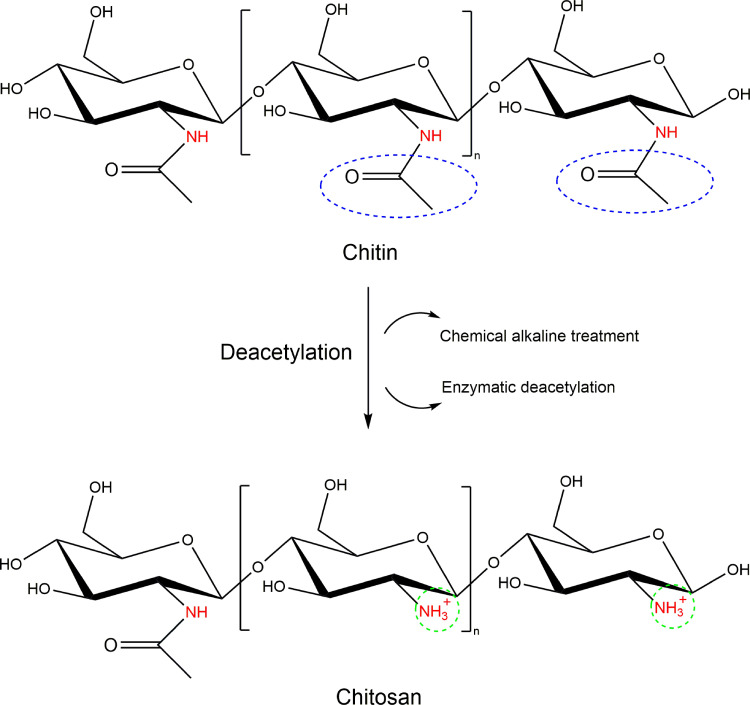
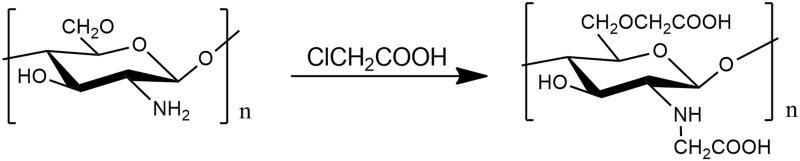
“The most common method for chemical modifications of chitosan is N-substitution, in which the amino group (–NH2) of chitosan serves as the functional group that reacts.30”
§ Current Advances in Chitosan Nanoparticles Based Oral Drug Delivery for Colorectal Cancer Treatment > The Role of Chitosan and Its Derivatives for Colorectal Cancer Targeted Drug Delivery
What the sources say
- Supportedcites [30] Seyam, 2020, Pharmaceuticals source
Section 4, “Chitosan Modification,” directly states that N-substitution is the most widely employed method for chemical modification of chitosan and that its amino group (–NH2) is the reacting functional group. (LLM, conf=0.95)
plain- Asserted: passes — The authors put it forward as true.
- Checkable: passes — It can be checked against evidence.
- Load-bearing: fails — The paper’s conclusions may not depend on it.
- Based: passes — The paper gives a reason why it holds.
Probably not a substantial claim. The paper’s conclusions may not depend on it.
- Supported
In the paper
“Nevertheless, oral drug delivery till today faces several challenges like poor drug solubility, stability, and permeability.”
- Also stated in: § Introduction · plain
“Nevertheless, oral drug delivery can be challenging due to the complexity of GIT and obstacles that impact drug delivery like poor drug solubility, stability, and permeability.17”
- Also stated in: § Oral Route of Drug Delivery · plain
“Nevertheless, oral drug delivery can be challenging due to the complexity of GIT, even among healthy people, which poses some obstacles that impact delivery such as poor drug solubility, stability, and permeability.17”
§ Current Advances in Chitosan Nanoparticles Based Oral Drug Delivery for Colorectal Cancer Treatment > Abstract
What the sources say
- Not checked yetcites [17] Martinez, 2002, J Clin Pharmacol source
plain- Asserted: passes — The authors put it forward as true.
- Checkable: passes — It can be checked against evidence.
- Load-bearing: passes — The paper’s conclusions depend on it.
- Based: passes — The paper gives a reason why it holds.
It may state two separate claims as one.
- Also stated in: § Introduction · plain
In the paper
“The available anticancer therapies including chemotherapy, radiotherapy and anticancer drugs are all associated with limited therapeutic efficacy, adverse effects and low chances.”
- Also stated in: § Introduction · plain
“However, the administration of these medicines, has been linked to adverse effects, such as vomiting, hair loss and nausea and not demonstrated the expected efficacy.8”
§ Current Advances in Chitosan Nanoparticles Based Oral Drug Delivery for Colorectal Cancer Treatment > Abstract
What the sources say
- Not checked — no full text of the sourcecites [8] Duran, 2020, J Chemother source
plaincorrelational- Asserted: passes — The authors put it forward as true.
- Checkable: passes — It can be checked against evidence.
- Load-bearing: passes — The paper’s conclusions depend on it.
- Based: passes — The paper gives a reason why it holds.
It may state two separate claims as one.
- Also stated in: § Introduction · plain
In the paper
“Variety of drawbacks also associated with anticancer drugs, such as hydrophobicity, low water solubility, inadequate biodistribution, and susceptibility to multiple drug resistance.9”
- Also stated in: § Need for Novel Oral Drug Delivery Systems · plain
“Anticancer drugs also have a variety of drawbacks, including the hydrophobicity, low water solubility, inadequate biodistribution, and susceptibility to multiple drug resistance.9”
§ Current Advances in Chitosan Nanoparticles Based Oral Drug Delivery for Colorectal Cancer Treatment > Introduction
What the sources say
- Not checked — no full text of the sourcecites [9] Yang, 2021, Int J Pharm source
plaincorrelational- Asserted: passes — The authors put it forward as true.
- Checkable: passes — It can be checked against evidence.
- Load-bearing: passes — The paper’s conclusions depend on it.
- Based: passes — The paper gives a reason why it holds.
It may state two separate claims as one.
- Also stated in: § Need for Novel Oral Drug Delivery Systems · plain
In the paper
“Controlling fluidity is crucial for gastrointestinal function.81”
§ Current Advances in Chitosan Nanoparticles Based Oral Drug Delivery for Colorectal Cancer Treatment > Oral Route of Drug Delivery > Factors Influencing Gastrointestinal Tract
What the sources say
- Not checked — no full text of the sourcecites [81] 2014 source
plaindirect- Asserted: passes — The authors put it forward as true.
- Checkable: passes — It can be checked against evidence.
- Load-bearing: fails — The paper’s conclusions may not depend on it.
- Based: passes — The paper gives a reason why it holds.
Probably not a substantial claim. The paper’s conclusions may not depend on it.
The paper states this without a source or data behind it here, so there is nothing to check it against. The quote shows it is in the paper.
In the paper
“Therefore, chemical modifications have been performed on chitosan structure mainly on the functional groups (-NH2 and -OH).”
§ Current Advances in Chitosan Nanoparticles Based Oral Drug Delivery for Colorectal Cancer Treatment > Introduction
plain- Asserted: passes — The authors put it forward as true.
- Checkable: passes — It can be checked against evidence.
- Load-bearing: fails — The paper’s conclusions may not depend on it.
- Based: passes — The paper gives a reason why it holds.
Probably not a substantial claim. The paper’s conclusions may not depend on it.
The paper states this without a source or data behind it here, so there is nothing to check it against. The quote shows it is in the paper.
In the paper
“Biologics and microencapsulation are the major elements sensitive to mechanical destruction through mechanical stresses.”
§ Current Advances in Chitosan Nanoparticles Based Oral Drug Delivery for Colorectal Cancer Treatment > Oral Route of Drug Delivery > Factors Influencing Gastrointestinal Tract
plaindirect- Asserted: passes — The authors put it forward as true.
- Checkable: passes — It can be checked against evidence.
- Load-bearing: fails — The paper’s conclusions may not depend on it.
- Based: fails — The paper may give no reason why it holds.
Probably not a substantial claim. The paper’s conclusions may not depend on it. The paper may give no reason why it holds.
The paper states this without a source or data behind it here, so there is nothing to check it against. The quote shows it is in the paper.
In the paper
“Besides that, pancreatic enzymes secreted into the intestinal lumen including trypsin, amylase, lipase, and peptidases.”
§ Current Advances in Chitosan Nanoparticles Based Oral Drug Delivery for Colorectal Cancer Treatment > Oral Route of Drug Delivery > Factors Influencing Gastrointestinal Tract
plain- Asserted: passes — The authors put it forward as true.
- Checkable: passes — It can be checked against evidence.
- Load-bearing: fails — The paper’s conclusions may not depend on it.
- Based: passes — The paper gives a reason why it holds.
Probably not a substantial claim. The paper’s conclusions may not depend on it.
In the paper
“Gender is highly affecting the colonic transit time and females have significantly longer colonic transit times compared to males.92”
§ Current Advances in Chitosan Nanoparticles Based Oral Drug Delivery for Colorectal Cancer Treatment > Oral Route of Drug Delivery > Factors Influencing Gastrointestinal Tract
What the sources say
- Not checked — no full text of the sourcecites [92] Buhmann, 2006, Eur Radiol source
plaindirect- Asserted: passes — The authors put it forward as true.
- Checkable: passes — It can be checked against evidence.
- Load-bearing: fails — The paper’s conclusions may not depend on it.
- Based: passes — The paper gives a reason why it holds.
Probably not a substantial claim. The paper’s conclusions may not depend on it. It may state two separate claims as one.
In the paper
“Drugs may be absorbed in four ways: transcellular (transcytosis of the drug by crossing epithelial cells membrane), paracellular (permits only small hydrophilic molecules diffusion through epithelial cell spaces), facilitated transport, and carrier-mediated transcellular.96”
§ Current Advances in Chitosan Nanoparticles Based Oral Drug Delivery for Colorectal Cancer Treatment > Oral Route of Drug Delivery > Factors Influencing Gastrointestinal Tract
What the sources say
- Not checked yetcites [96] Lombardo, 2019, J Nanomater source
hedged- Asserted: passes — The authors put it forward as true.
- Checkable: passes — It can be checked against evidence.
- Load-bearing: fails — The paper’s conclusions may not depend on it.
- Based: passes — The paper gives a reason why it holds.
Probably not a substantial claim. The paper’s conclusions may not depend on it.
In the paper
“For instance, diet can have a big impact on the GIT free fluid volume, bile salts, and digestive enzyme levels.81”
§ Current Advances in Chitosan Nanoparticles Based Oral Drug Delivery for Colorectal Cancer Treatment > Oral Route of Drug Delivery > Factors Influencing Gastrointestinal Tract
What the sources say
- Not checked — no full text of the sourcecites [81] 2014 source
plaindirect- Asserted: passes — The authors put it forward as true.
- Checkable: passes — It can be checked against evidence.
- Load-bearing: fails — The paper’s conclusions may not depend on it.
- Based: passes — The paper gives a reason why it holds.
Probably not a substantial claim. The paper’s conclusions may not depend on it.
None of the sources cited for this claim have been checked yet.
In the paper
“Goblet cells are continuously secreted mucus; consequently, it is cleared in each part of the GIT (50–270 min).20”
§ Current Advances in Chitosan Nanoparticles Based Oral Drug Delivery for Colorectal Cancer Treatment > Oral Route of Drug Delivery > Factors Influencing Gastrointestinal Tract
What the sources say
- Not checked yetcites [20] Homayun, 2019, Pharmaceutics source
Checked before — its earlier verdict is held back until a new check runs.
plaindirect- Asserted: passes — The authors put it forward as true.
- Checkable: passes — It can be checked against evidence.
- Load-bearing: unclear — It is unclear whether the paper’s conclusions depend on it.
- Based: passes — The paper gives a reason why it holds.
It may state two separate claims as one.
- Not checked yet
In the paper
“Gastric transit time varies from several minutes to hours, depending on several factors, such as age, gender, body posture, osmotic pressure, dietary intake, physical activity, etc.89”
§ Current Advances in Chitosan Nanoparticles Based Oral Drug Delivery for Colorectal Cancer Treatment > Oral Route of Drug Delivery > Factors Influencing Gastrointestinal Tract
What the sources say
- Not checked — no full text of the sourcecites [89] Kagan, 2008, Expert Opin Drug Deliv source
plaincorrelational- Asserted: passes — The authors put it forward as true.
- Checkable: passes — It can be checked against evidence.
- Load-bearing: fails — The paper’s conclusions may not depend on it.
- Based: passes — The paper gives a reason why it holds.
Probably not a substantial claim. The paper’s conclusions may not depend on it.
The paper states this without a source or data behind it here, so there is nothing to check it against. The quote shows it is in the paper.
In the paper
“These enzymes are especially abundant in duodenum, and their concentrations are reduced significantly in the later intestinal parts.”
§ Current Advances in Chitosan Nanoparticles Based Oral Drug Delivery for Colorectal Cancer Treatment > Oral Route of Drug Delivery > Factors Influencing Gastrointestinal Tract
plaindirect- Asserted: passes — The authors put it forward as true.
- Checkable: passes — It can be checked against evidence.
- Load-bearing: fails — The paper’s conclusions may not depend on it.
- Based: fails — The paper may give no reason why it holds.
Probably not a substantial claim. The paper’s conclusions may not depend on it. The paper may give no reason why it holds. It may state two separate claims as one.
In the paper
“while small intestine transit time is considered constant at approximately 4 h.90”
§ Current Advances in Chitosan Nanoparticles Based Oral Drug Delivery for Colorectal Cancer Treatment > Oral Route of Drug Delivery > Factors Influencing Gastrointestinal Tract
What the sources say
- Not checked — no full text of the sourcecites [90] Hu, 2000, Pharm Res source
plain- Asserted: passes — The authors put it forward as true.
- Checkable: passes — It can be checked against evidence.
- Load-bearing: fails — The paper’s conclusions may not depend on it.
- Based: passes — The paper gives a reason why it holds.
Probably not a substantial claim. The paper’s conclusions may not depend on it.
A claim is checked only against the cited paper’s full text, never its abstract, and none is available for its sources.
In the paper
“Increased fluid secretion and reduced fluid reabsorption dilute the digestive enzymes and affect the intestinal microbiota which in turn alter the digestion of carbohydrates94 and contribute to changes in intestinal transit time.95”
§ Current Advances in Chitosan Nanoparticles Based Oral Drug Delivery for Colorectal Cancer Treatment > Oral Route of Drug Delivery > Factors Influencing Gastrointestinal Tract
What the sources say
plaindirect- Asserted: passes — The authors put it forward as true.
- Checkable: passes — It can be checked against evidence.
- Load-bearing: fails — The paper’s conclusions may not depend on it.
- Based: passes — The paper gives a reason why it holds.
Probably not a substantial claim. The paper’s conclusions may not depend on it. It may state two separate claims as one.
The paper states this without a source or data behind it here, so there is nothing to check it against. The quote shows it is in the paper.
In the paper
“The drug molecule properties determine where it will be absorbed and how it will cross the intestinal epithelial cells.”
§ Current Advances in Chitosan Nanoparticles Based Oral Drug Delivery for Colorectal Cancer Treatment > Oral Route of Drug Delivery > Factors Influencing Gastrointestinal Tract
plaindirect- Asserted: passes — The authors put it forward as true.
- Checkable: passes — It can be checked against evidence.
- Load-bearing: unclear — It is unclear whether the paper’s conclusions depend on it.
- Based: passes — The paper gives a reason why it holds.
It may state two separate claims as one.
In the paper
“The colon contains the bulk of the intestinal microbiome and they ferment carbohydrates as the main source of nutrition.83”
§ Current Advances in Chitosan Nanoparticles Based Oral Drug Delivery for Colorectal Cancer Treatment > Oral Route of Drug Delivery > Factors Influencing Gastrointestinal Tract
What the sources say
- Not checked — no full text of the sourcecites [83] Macfarlane, 2011, J Clin Gastroenterol source
plaindirect- Asserted: passes — The authors put it forward as true.
- Checkable: passes — It can be checked against evidence.
- Load-bearing: passes — The paper’s conclusions depend on it.
- Based: passes — The paper gives a reason why it holds.
It may state two separate claims as one.
In the paper
“Mucus facilitates the digested moiety passage and protects the underlying epithelium from mechanical stress and pathogens by capturing any foreign moieties (especially hydrophobic molecules).”
§ Current Advances in Chitosan Nanoparticles Based Oral Drug Delivery for Colorectal Cancer Treatment > Oral Route of Drug Delivery > Factors Influencing Gastrointestinal Tract
What the sources say
- Not checked yetcites [93] Johansson, 2013, Nat Rev Gastroenterol Hepatol source
plaindirect- Asserted: passes — The authors put it forward as true.
- Checkable: passes — It can be checked against evidence.
- Load-bearing: unclear — It is unclear whether the paper’s conclusions depend on it.
- Based: passes — The paper gives a reason why it holds.
It may state two separate claims as one.
In the paper
“The pH is influenced by fluid-to-matter ratios, which can potentially alter drug absorption and delivery, especially in lower GIT.”
§ Current Advances in Chitosan Nanoparticles Based Oral Drug Delivery for Colorectal Cancer Treatment > Oral Route of Drug Delivery > Factors Influencing Gastrointestinal Tract
What the sources say
- Not checked — no full text of the sourcecites [81] 2014 source
hedgedconditional- Asserted: passes — The authors put it forward as true.
- Checkable: passes — It can be checked against evidence.
- Load-bearing: fails — The paper’s conclusions may not depend on it.
- Based: passes — The paper gives a reason why it holds.
Probably not a substantial claim. The paper’s conclusions may not depend on it. It may state two separate claims as one.
In the paper
“Although mouth and oesophagus lack a distinct mucus layer, they are washed by salivary gland mucus.93”
§ Current Advances in Chitosan Nanoparticles Based Oral Drug Delivery for Colorectal Cancer Treatment > Oral Route of Drug Delivery > Factors Influencing Gastrointestinal Tract
What the sources say
- Not checked yetcites [93] Johansson, 2013, Nat Rev Gastroenterol Hepatol source
plain- Asserted: passes — The authors put it forward as true.
- Checkable: passes — It can be checked against evidence.
- Load-bearing: fails — The paper’s conclusions may not depend on it.
- Based: passes — The paper gives a reason why it holds.
Probably not a substantial claim. The paper’s conclusions may not depend on it. It may state two separate claims as one.
In the paper
“Owing to the presence of amino groups, chitosan carries a cationic charge that is responsible for its permeation enhancing and mucoadhesion effect.”
§ Current Advances in Chitosan Nanoparticles Based Oral Drug Delivery for Colorectal Cancer Treatment > Introduction
What the sources say
- Not checked — no full text of the sourcecites [29] Ravishankar, 2020, React Funct Polym source
plaindirect- Asserted: passes — The authors put it forward as true.
- Checkable: passes — It can be checked against evidence.
- Load-bearing: passes — The paper’s conclusions depend on it.
- Based: passes — The paper gives a reason why it holds.
It may state two separate claims as one.
The paper states this without a source or data behind it here, so there is nothing to check it against. The quote shows it is in the paper.
In the paper
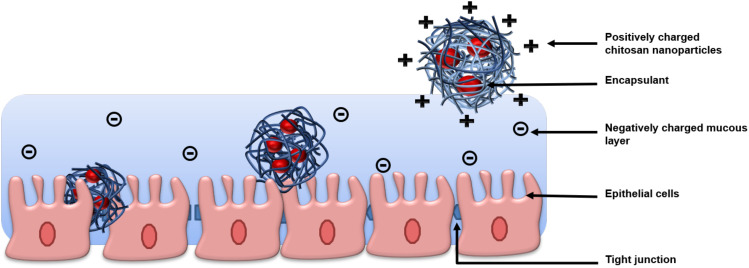
“Chitosan can efficiently bind to the negatively charged mucus membrane, increasing the retention time and enhancing the probability of their cellular uptake.”
§ Current Advances in Chitosan Nanoparticles Based Oral Drug Delivery for Colorectal Cancer Treatment > Introduction
plaindirect- Asserted: passes — The authors put it forward as true.
- Checkable: passes — It can be checked against evidence.
- Load-bearing: passes — The paper’s conclusions depend on it.
- Based: passes — The paper gives a reason why it holds.
It may state two separate claims as one.
None of the sources cited for this claim have been checked yet.
In the paper
“Other important factors impacting CTDD efficacy include colonic fluid viscosity and the presence of microbial enzymes.25”
§ Current Advances in Chitosan Nanoparticles Based Oral Drug Delivery for Colorectal Cancer Treatment > Introduction
What the sources say
- Not checked yetcites [25] Amidon, 2015, AAPS PharmSciTech source
Checked before — its earlier verdict is held back until a new check runs.
plaincorrelational- Asserted: passes — The authors put it forward as true.
- Checkable: passes — It can be checked against evidence.
- Load-bearing: unclear — It is unclear whether the paper’s conclusions depend on it.
- Based: passes — The paper gives a reason why it holds.
It may state two separate claims as one.
- Not checked yet
In the paper
“Small intestine microbiome composition can highly fluctuate over a short period as it is affected by dietary intake variations.88”
§ Current Advances in Chitosan Nanoparticles Based Oral Drug Delivery for Colorectal Cancer Treatment > Oral Route of Drug Delivery > Factors Influencing Gastrointestinal Tract
What the sources say
- Not checked — no full text of the sourcecites [88] Booijink, 2010, Environ Microbiol source
plaindirect- Asserted: passes — The authors put it forward as true.
- Checkable: passes — It can be checked against evidence.
- Load-bearing: fails — The paper’s conclusions may not depend on it.
- Based: passes — The paper gives a reason why it holds.
Probably not a substantial claim. The paper’s conclusions may not depend on it.
In the paper
“Cecum pH decreases just below pH 6 and again increases in the colon and reaches pH 6.7 at the rectum.77”
§ Current Advances in Chitosan Nanoparticles Based Oral Drug Delivery for Colorectal Cancer Treatment > Oral Route of Drug Delivery > Factors Influencing Gastrointestinal Tract
What the sources say
- Not checked — no full text of the sourcecites [77] Bratten, 2006, Dig Dis source
plaindirect- Asserted: passes — The authors put it forward as true.
- Checkable: passes — It can be checked against evidence.
- Load-bearing: fails — The paper’s conclusions may not depend on it.
- Based: passes — The paper gives a reason why it holds.
Probably not a substantial claim. The paper’s conclusions may not depend on it. It may state two separate claims as one.
None of the sources cited for this claim have been checked yet.
In the paper
“Drugs that are administered through the oral route have a slower absorption as they must be solubilised in the gastric fluid to be absorbed.20”
§ Current Advances in Chitosan Nanoparticles Based Oral Drug Delivery for Colorectal Cancer Treatment > Oral Route of Drug Delivery
What the sources say
- Not checked yetcites [20] Homayun, 2019, Pharmaceutics source
Checked before — its earlier verdict is held back until a new check runs.
plaindirect- Asserted: passes — The authors put it forward as true.
- Checkable: passes — It can be checked against evidence.
- Load-bearing: fails — The paper’s conclusions may not depend on it.
- Based: passes — The paper gives a reason why it holds.
Probably not a substantial claim. The paper’s conclusions may not depend on it.
- Not checked yet
The paper states this without a source or data behind it here, so there is nothing to check it against. The quote shows it is in the paper.
In the paper
“The pH of GIT varies based on GIT part and fed state to unfed state.”
§ Current Advances in Chitosan Nanoparticles Based Oral Drug Delivery for Colorectal Cancer Treatment > Oral Route of Drug Delivery > Factors Influencing Gastrointestinal Tract
plaincorrelational- Asserted: passes — The authors put it forward as true.
- Checkable: passes — It can be checked against evidence.
- Load-bearing: passes — The paper’s conclusions depend on it.
- Based: passes — The paper gives a reason why it holds.
Probably not a substantial claim. It may state two separate claims as one.
In the paper
“The fluid environment allows digestive enzymes to contact with food, and this aids in transit the intestinal contents along the GIT without damaging the epithelial lining and it facilitates the nutrients and drugs solubility and absorption.81”
§ Current Advances in Chitosan Nanoparticles Based Oral Drug Delivery for Colorectal Cancer Treatment > Oral Route of Drug Delivery > Factors Influencing Gastrointestinal Tract
What the sources say
- Not checked — no full text of the sourcecites [81] 2014 source
plaindirect- Asserted: passes — The authors put it forward as true.
- Checkable: passes — It can be checked against evidence.
- Load-bearing: fails — The paper’s conclusions may not depend on it.
- Based: passes — The paper gives a reason why it holds.
Probably not a substantial claim. The paper’s conclusions may not depend on it. It may state two separate claims as one.
In the paper
“they are important for digestion and metabolism of the ingested food as well as for intestinal health.83”
§ Current Advances in Chitosan Nanoparticles Based Oral Drug Delivery for Colorectal Cancer Treatment > Oral Route of Drug Delivery > Factors Influencing Gastrointestinal Tract
What the sources say
- Not checked — no full text of the sourcecites [83] Macfarlane, 2011, J Clin Gastroenterol source
plaindirect- Asserted: passes — The authors put it forward as true.
- Checkable: passes — It can be checked against evidence.
- Load-bearing: fails — The paper’s conclusions may not depend on it.
- Based: passes — The paper gives a reason why it holds.
Probably not a substantial claim. The paper’s conclusions may not depend on it. It may state two separate claims as one.
The paper states this without a source or data behind it here, so there is nothing to check it against. The quote shows it is in the paper.
In the paper
“Flowing gastric juice could reduce the contact time between the epithelial layer and drugs, hence impeding their absorption.”
§ Current Advances in Chitosan Nanoparticles Based Oral Drug Delivery for Colorectal Cancer Treatment > Oral Route of Drug Delivery > Factors Influencing Gastrointestinal Tract
hedgeddirect- Asserted: passes — The authors put it forward as true.
- Checkable: passes — It can be checked against evidence.
- Load-bearing: fails — The paper’s conclusions may not depend on it.
- Based: passes — The paper gives a reason why it holds.
Probably not a substantial claim. The paper’s conclusions may not depend on it.
In the paper
“The major site of the enzymes that are involved in food digestion is mouth (salivary amylase), stomach (pepsin).81”
§ Current Advances in Chitosan Nanoparticles Based Oral Drug Delivery for Colorectal Cancer Treatment > Oral Route of Drug Delivery > Factors Influencing Gastrointestinal Tract
What the sources say
- Not checked — no full text of the sourcecites [81] 2014 source
plain- Asserted: passes — The authors put it forward as true.
- Checkable: passes — It can be checked against evidence.
- Load-bearing: fails — The paper’s conclusions may not depend on it.
- Based: passes — The paper gives a reason why it holds.
Probably not a substantial claim. The paper’s conclusions may not depend on it. It may state two separate claims as one.
A conclusion the paper draws from its own results — it cites no other source for it, so there is none to check. The quote shows it is in the paper.
In the paper
“Chitosan has been formulated into chitosan nanoparticles (CSNPs) with attracted features especially in ocular and oral delivery. CSNPs are considered a very promising strategy to overcome the low stability and bioavailability of many active ingredients.”
§ Current Advances in Chitosan Nanoparticles Based Oral Drug Delivery for Colorectal Cancer Treatment > Introduction
plaindirect- Asserted: passes — The authors put it forward as true.
- Checkable: passes — It can be checked against evidence.
- Load-bearing: passes — The paper’s conclusions depend on it.
- Based: passes — The paper gives a reason why it holds.
Probably not a substantial claim.
- Rests on an assumption: Results from in vitro and animal studies of chitosan-based nanocarriers are predictive of clinical benefit in human CRC patients.
In the paper
“The daily water balance in a healthy adult human GIT is determined by the secretion from saliva (1.5 L), gastric juice (2.5 L), pancreatic, and other intestinal components (~2.5 L), and absorption from the small and large intestine (7 L and 1.9 L, respectively).81”
§ Current Advances in Chitosan Nanoparticles Based Oral Drug Delivery for Colorectal Cancer Treatment > Oral Route of Drug Delivery > Factors Influencing Gastrointestinal Tract
What the sources say
- Not checked — no full text of the sourcecites [81] 2014 source
plaindirect- Asserted: passes — The authors put it forward as true.
- Checkable: passes — It can be checked against evidence.
- Load-bearing: fails — The paper’s conclusions may not depend on it.
- Based: passes — The paper gives a reason why it holds.
Probably not a substantial claim. The paper’s conclusions may not depend on it.
None of the sources cited for this claim have been checked yet.
In the paper
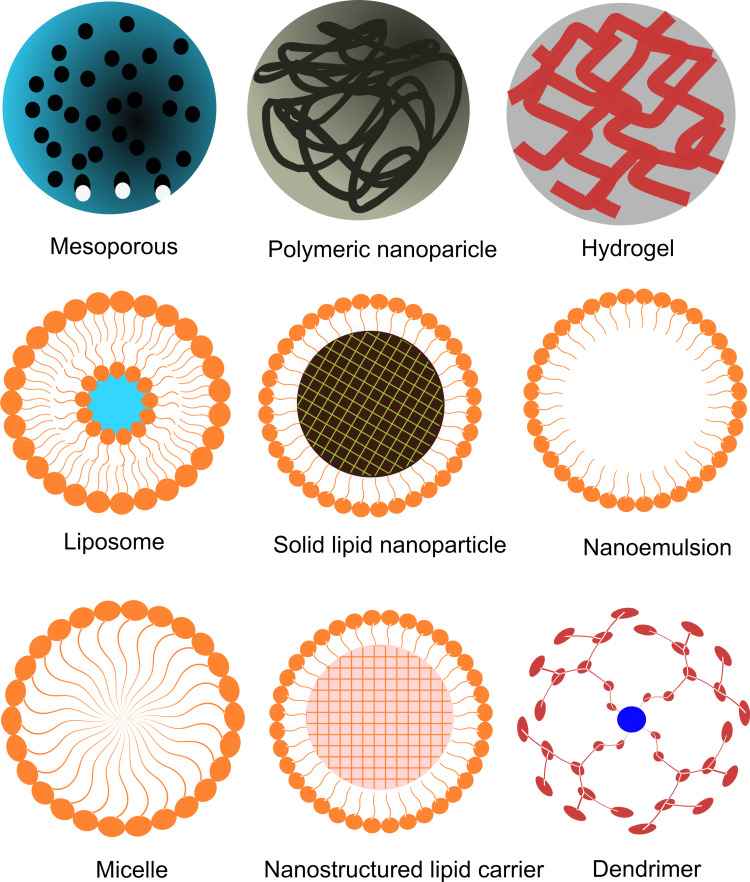
“In addition, amphiphilic lipid-based nanoparticles, such as micelles, possess a hydrophilic surface and a hydrophobic core and able to increase the solubility of hydrophobic drugs.16”
- Also stated in: § Need for Novel Oral Drug Delivery Systems · plain
“Furthermore, amphiphilic lipid-based nanoparticles, such as micelles, possess a hydrophilic surface and a hydrophobic core and able to increase the solubility of hydrophobic drugs.”
§ Current Advances in Chitosan Nanoparticles Based Oral Drug Delivery for Colorectal Cancer Treatment > Introduction
What the sources say
- Not checked yetcites [16] Mohanty, 2020, Molecules source
Checked before — its earlier verdict is held back until a new check runs.
plaindirect- Asserted: passes — The authors put it forward as true.
- Checkable: passes — It can be checked against evidence.
- Load-bearing: fails — The paper’s conclusions may not depend on it.
- Based: passes — The paper gives a reason why it holds.
Probably not a substantial claim. The paper’s conclusions may not depend on it. It may state two separate claims as one.
- Also stated in: § Need for Novel Oral Drug Delivery Systems · plain
None of the sources cited for this claim have been checked yet.
In the paper
“Moreover, oral drugs may also have an unpleasant taste, induce gastric irritation, and be subjected to intestinal and hepatic barriers metabolism.19,20”
- Also stated in: § Oral Route of Drug Delivery · hedged
“Moreover, oral drugs may also have an unpleasant taste, induce gastric irritation, and/or be subjected to intestinal and hepatic barriers.19,20”
§ Current Advances in Chitosan Nanoparticles Based Oral Drug Delivery for Colorectal Cancer Treatment > Introduction
What the sources say
hedgedconditional- Asserted: passes — The authors put it forward as true.
- Checkable: passes — It can be checked against evidence.
- Load-bearing: unclear — It is unclear whether the paper’s conclusions depend on it.
- Based: passes — The paper gives a reason why it holds.
It may state two separate claims as one.
- Also stated in: § Oral Route of Drug Delivery · hedged
In the paper
“Nevertheless, the dominant species appear to be consistent and represent the majority of the colonic flora.82”
§ Current Advances in Chitosan Nanoparticles Based Oral Drug Delivery for Colorectal Cancer Treatment > Oral Route of Drug Delivery > Factors Influencing Gastrointestinal Tract
What the sources say
- Not checked yetcites [82] Huttenhower, 2012, Nature source
hedged- Asserted: passes — The authors put it forward as true.
- Checkable: passes — It can be checked against evidence.
- Load-bearing: fails — The paper’s conclusions may not depend on it.
- Based: passes — The paper gives a reason why it holds.
Probably not a substantial claim. The paper’s conclusions may not depend on it. It may state two separate claims as one.
A conclusion the paper draws from its own results — it cites no other source for it, so there is none to check. The quote shows it is in the paper.
In the paper
“The unique physicochemical properties of chitosan polymer assist to overcome oral drug delivery barriers and target the colon tumour cells.”
§ Current Advances in Chitosan Nanoparticles Based Oral Drug Delivery for Colorectal Cancer Treatment > Abstract
plaindirect- Asserted: passes — The authors put it forward as true.
- Checkable: passes — It can be checked against evidence.
- Load-bearing: passes — The paper’s conclusions depend on it.
- Based: unclear — It is unclear why the paper says it holds.
It may state two separate claims as one.
- Rests on an assumption: Results from in vitro and animal studies of chitosan-based nanocarriers are predictive of clinical benefit in human CRC patients.
In the paper
“The high surface area (>300 m2) of gastrointestinal track coated with a viscous mucosal layer facilitates drug adhesion and absorption.18”
- Also stated in: § Oral Route of Drug Delivery · plain
“Furthermore, a high surface area (>300 m2) of gastrointestinal track coated with a viscous mucosal layer facilitates drug adhesion and absorption.18”
§ Current Advances in Chitosan Nanoparticles Based Oral Drug Delivery for Colorectal Cancer Treatment > Introduction
What the sources say
- Not checked — no full text of the sourcecites [18] Helander, 2014, Scand J Gastroenterol source
plaindirect- Asserted: passes — The authors put it forward as true.
- Checkable: passes — It can be checked against evidence.
- Load-bearing: fails — The paper’s conclusions may not depend on it.
- Based: passes — The paper gives a reason why it holds.
Probably not a substantial claim. The paper’s conclusions may not depend on it.
- Also stated in: § Oral Route of Drug Delivery · plain
In the paper
“The pH increases rapidly in duodenum (pH 6) and rises along the small intestine to reach pH 7.4 at the terminal ileum.18”
§ Current Advances in Chitosan Nanoparticles Based Oral Drug Delivery for Colorectal Cancer Treatment > Oral Route of Drug Delivery > Factors Influencing Gastrointestinal Tract
What the sources say
- Not checked — no full text of the sourcecites [18] Helander, 2014, Scand J Gastroenterol source
plaindirect- Asserted: passes — The authors put it forward as true.
- Checkable: passes — It can be checked against evidence.
- Load-bearing: fails — The paper’s conclusions may not depend on it.
- Based: passes — The paper gives a reason why it holds.
Probably not a substantial claim. The paper’s conclusions may not depend on it. It may state two separate claims as one.
A conclusion the paper draws from its own results — it cites no other source for it, so there is none to check. The quote shows it is in the paper.
In the paper
“duodenum transit time is relatively short (10% of the whole small intestine residence time) and is not enough for the enzymatic degradation of the drugs.”
§ Current Advances in Chitosan Nanoparticles Based Oral Drug Delivery for Colorectal Cancer Treatment > Oral Route of Drug Delivery > Factors Influencing Gastrointestinal Tract
plaindirect- Asserted: passes — The authors put it forward as true.
- Checkable: passes — It can be checked against evidence.
- Load-bearing: unclear — It is unclear whether the paper’s conclusions depend on it.
- Based: unclear — It is unclear why the paper says it holds.
It may state two separate claims as one.
The paper states this without a source or data behind it here, so there is nothing to check it against. The quote shows it is in the paper.
In the paper
“The pH inside the gastric environment is extremely acidic (pH 1–2) in unfed state and it could rise to pH 5 in fed state.”
§ Current Advances in Chitosan Nanoparticles Based Oral Drug Delivery for Colorectal Cancer Treatment > Oral Route of Drug Delivery > Factors Influencing Gastrointestinal Tract
hedgeddirect- Asserted: passes — The authors put it forward as true.
- Checkable: passes — It can be checked against evidence.
- Load-bearing: fails — The paper’s conclusions may not depend on it.
- Based: passes — The paper gives a reason why it holds.
Probably not a substantial claim. The paper’s conclusions may not depend on it. It may state two separate claims as one.
A conclusion the paper draws from its own results — it cites no other source for it, so there is none to check. The quote shows it is in the paper.
In the paper
“While the inner mucus layer facilitates the absorption and improves the drug uptake efficiency, justifying the dual role of mucus in the absorption/desorption of oral administrated drugs.”
§ Current Advances in Chitosan Nanoparticles Based Oral Drug Delivery for Colorectal Cancer Treatment > Oral Route of Drug Delivery > Factors Influencing Gastrointestinal Tract
plaindirect- Asserted: passes — The authors put it forward as true.
- Checkable: passes — It can be checked against evidence.
- Load-bearing: fails — The paper’s conclusions may not depend on it.
- Based: fails — The paper may give no reason why it holds.
Probably not a substantial claim. The paper’s conclusions may not depend on it. The paper may give no reason why it holds. It may state two separate claims as one.
The paper states this without a source or data behind it here, so there is nothing to check it against. The quote shows it is in the paper.
In the paper
“Variations in intestinal fluid volume can impact the way drugs are processed in the GIT.”
§ Current Advances in Chitosan Nanoparticles Based Oral Drug Delivery for Colorectal Cancer Treatment > Oral Route of Drug Delivery > Factors Influencing Gastrointestinal Tract
plainconditional- Asserted: passes — The authors put it forward as true.
- Checkable: passes — It can be checked against evidence.
- Load-bearing: fails — The paper’s conclusions may not depend on it.
- Based: passes — The paper gives a reason why it holds.
Probably not a substantial claim. The paper’s conclusions may not depend on it.
None of the sources cited for this claim have been checked yet.
In the paper
“Oral drug delivery is the most preferred and convenient route for drug administration and can be utilised for both systemic or local drug delivery.17”
- Also stated in: § Oral Route of Drug Delivery · plain
“Oral drug delivery has been recognised as the most attractive approach of drug administration among various others and can be utilised for systemic or local drug delivery as well as enhance the drug solubility and dissolution of low solubility drugs.17”
§ Current Advances in Chitosan Nanoparticles Based Oral Drug Delivery for Colorectal Cancer Treatment > Introduction
What the sources say
- Not checked yetcites [17] Martinez, 2002, J Clin Pharmacol source
Checked before — its earlier verdict is held back until a new check runs.
plain- Asserted: passes — The authors put it forward as true.
- Checkable: passes — It can be checked against evidence.
- Load-bearing: fails — The paper’s conclusions may not depend on it.
- Based: passes — The paper gives a reason why it holds.
Probably not a substantial claim. The paper’s conclusions may not depend on it. It may state two separate claims as one.
- Also stated in: § Oral Route of Drug Delivery · plain
In the paper
“Nanoparticles taken intravenously can circulate for extended period of time with reduced clearance rates from the renal system due to their ultra-small size and superior drug loading and encapsulation efficacy.11”
- Also stated in: § Need for Novel Oral Drug Delivery Systems · plain
“Nanoparticles can circulate for extended periods of time and have reduced clearance rates from the renal system due to their ultra-small size and superior drug loading and encapsulation efficacy.11”
§ Current Advances in Chitosan Nanoparticles Based Oral Drug Delivery for Colorectal Cancer Treatment > Introduction
What the sources say
- Not checked yetcites [11] Mitchell, 2021, Nat Rev Drug Discov source
plaindirect- Asserted: passes — The authors put it forward as true.
- Checkable: passes — It can be checked against evidence.
- Load-bearing: unclear — It is unclear whether the paper’s conclusions depend on it.
- Based: passes — The paper gives a reason why it holds.
It may state two separate claims as one.
- Also stated in: § Need for Novel Oral Drug Delivery Systems · plain
None of the sources cited for this claim have been checked yet.
In the paper
“Tight junctions, that affect the paracellular absorption pathway for orally delivered drugs, are the primary extracellular biological barrier against oral administration.97”
§ Current Advances in Chitosan Nanoparticles Based Oral Drug Delivery for Colorectal Cancer Treatment > Oral Route of Drug Delivery > Factors Influencing Gastrointestinal Tract
What the sources say
- Not checked yetcites [97] Zeeshan, 2014, Int Nano Lett source
Checked before — its earlier verdict is held back until a new check runs.
plaindirect- Asserted: passes — The authors put it forward as true.
- Checkable: passes — It can be checked against evidence.
- Load-bearing: unclear — It is unclear whether the paper’s conclusions depend on it.
- Based: passes — The paper gives a reason why it holds.
It may state two separate claims as one.
- Not checked yet
In the paper
“Nevertheless, the pH ranges can vary with factors like dietary intake, microbial metabolism, and diurnal cycle.78”
§ Current Advances in Chitosan Nanoparticles Based Oral Drug Delivery for Colorectal Cancer Treatment > Oral Route of Drug Delivery > Factors Influencing Gastrointestinal Tract
What the sources say
- Not checked — no full text of the sourcecites [78] Ibekwe, 2008, Pharm Res source
plaindirect- Asserted: passes — The authors put it forward as true.
- Checkable: passes — It can be checked against evidence.
- Load-bearing: fails — The paper’s conclusions may not depend on it.
- Based: passes — The paper gives a reason why it holds.
Probably not a substantial claim. The paper’s conclusions may not depend on it.
In the paper
“The transit time in gastric can vary from 0 to 6 h based on fast/fed state,81”
§ Current Advances in Chitosan Nanoparticles Based Oral Drug Delivery for Colorectal Cancer Treatment > Oral Route of Drug Delivery > Factors Influencing Gastrointestinal Tract
What the sources say
- Not checked — no full text of the sourcecites [81] 2014 source
plaincorrelational- Asserted: passes — The authors put it forward as true.
- Checkable: passes — It can be checked against evidence.
- Load-bearing: fails — The paper’s conclusions may not depend on it.
- Based: passes — The paper gives a reason why it holds.
Probably not a substantial claim. The paper’s conclusions may not depend on it.
In the paper
“This is due to the intestinal fluid volume, rapid luminal flow, and bactericidal compounds secretion in this part of the GIT.87”
§ Current Advances in Chitosan Nanoparticles Based Oral Drug Delivery for Colorectal Cancer Treatment > Oral Route of Drug Delivery > Factors Influencing Gastrointestinal Tract
What the sources say
- Not checked yetcites [87] Aidy, 2015, Curr Opin Biotechnol source
plaindirect- Asserted: passes — The authors put it forward as true.
- Checkable: passes — It can be checked against evidence.
- Load-bearing: fails — The paper’s conclusions may not depend on it.
- Based: passes — The paper gives a reason why it holds.
Probably not a substantial claim. The paper’s conclusions may not depend on it.
A conclusion the paper draws from its own results — it cites no other source for it, so there is none to check. The quote shows it is in the paper.
In the paper
“This defines the final mucus layer thickness (Table 1).”
§ Current Advances in Chitosan Nanoparticles Based Oral Drug Delivery for Colorectal Cancer Treatment > Oral Route of Drug Delivery > Factors Influencing Gastrointestinal Tract
plaindirect- Asserted: passes — The authors put it forward as true.
- Checkable: passes — It can be checked against evidence.
- Load-bearing: unclear — It is unclear whether the paper’s conclusions depend on it.
- Based: passes — The paper gives a reason why it holds.
It may state two separate claims as one.
In the paper
“It is also biodegradable, biocompatible and non-toxic.29”
§ Current Advances in Chitosan Nanoparticles Based Oral Drug Delivery for Colorectal Cancer Treatment > Introduction
What the sources say
- Not checked — no full text of the sourcecites [29] Ravishankar, 2020, React Funct Polym source
plain- Asserted: passes — The authors put it forward as true.
- Checkable: passes — It can be checked against evidence.
- Load-bearing: passes — The paper’s conclusions depend on it.
- Based: passes — The paper gives a reason why it holds.
It may state two separate claims as one.
In the paper
“The intestinal microbiome has over 500 bacterial species,82”
§ Current Advances in Chitosan Nanoparticles Based Oral Drug Delivery for Colorectal Cancer Treatment > Oral Route of Drug Delivery > Factors Influencing Gastrointestinal Tract
What the sources say
- Not checked yetcites [82] Huttenhower, 2012, Nature source
plain- Asserted: passes — The authors put it forward as true.
- Checkable: passes — It can be checked against evidence.
- Load-bearing: fails — The paper’s conclusions may not depend on it.
- Based: passes — The paper gives a reason why it holds.
Probably not a substantial claim. The paper’s conclusions may not depend on it.
In the paper
“The small intestine has a loose and unattached mucosal layer, while the stomach and colon have a two-layered mucus system composed of an outer loosely adherent layer and an inner firmly adherent layer.93”
§ Current Advances in Chitosan Nanoparticles Based Oral Drug Delivery for Colorectal Cancer Treatment > Oral Route of Drug Delivery > Factors Influencing Gastrointestinal Tract
What the sources say
- Not checked yetcites [93] Johansson, 2013, Nat Rev Gastroenterol Hepatol source
plain- Asserted: passes — The authors put it forward as true.
- Checkable: passes — It can be checked against evidence.
- Load-bearing: unclear — It is unclear whether the paper’s conclusions depend on it.
- Based: passes — The paper gives a reason why it holds.
It may state two separate claims as one.
None of the sources cited for this claim have been checked yet.
In the paper
“Furthermore, since nanoparticles allow for continuous or controlled release, the physical encapsulation of anticancer drugs improves their pharmacokinetic properties while reducing the number of dosages administered.”
- Also stated in: § Need for Novel Oral Drug Delivery Systems · plain
“Furthermore, since nanoparticles allow for continuous or controlled release, the physical confinement of diagnostics agents and anticancer drugs improves their pharmacokinetic properties while reducing the number of dosages administered.”
§ Current Advances in Chitosan Nanoparticles Based Oral Drug Delivery for Colorectal Cancer Treatment > Introduction
What the sources say
plaindirect- Asserted: passes — The authors put it forward as true.
- Checkable: passes — It can be checked against evidence.
- Load-bearing: passes — The paper’s conclusions depend on it.
- Based: passes — The paper gives a reason why it holds.
It may state two separate claims as one.
- Also stated in: § Need for Novel Oral Drug Delivery Systems · plain
In the paper
“The density of the microbiome inside the small intestinal is lower compared to that of the large intestine.”
§ Current Advances in Chitosan Nanoparticles Based Oral Drug Delivery for Colorectal Cancer Treatment > Oral Route of Drug Delivery > Factors Influencing Gastrointestinal Tract
What the sources say
- Not checked yetcites [87] Aidy, 2015, Curr Opin Biotechnol source
plain- Asserted: passes — The authors put it forward as true.
- Checkable: passes — It can be checked against evidence.
- Load-bearing: fails — The paper’s conclusions may not depend on it.
- Based: passes — The paper gives a reason why it holds.
Probably not a substantial claim. The paper’s conclusions may not depend on it.
A conclusion the paper draws from its own results — it cites no other source for it, so there is none to check. The quote shows it is in the paper.
In the paper
“Thus, CSNPs could go through the mucus and reach the cell surface or be shed with the mucus.”
§ Current Advances in Chitosan Nanoparticles Based Oral Drug Delivery for Colorectal Cancer Treatment > Chitosan and Its Physicochemical Properties > Interaction Between Chitosan and Colon Mucosa
hedgeddirect- Asserted: passes — The authors put it forward as true.
- Checkable: passes — It can be checked against evidence.
- Load-bearing: passes — The paper’s conclusions depend on it.
- Based: passes — The paper gives a reason why it holds.
It may state two separate claims as one.
In the paper
“Chitosan is a linear polysaccharide, comprises of randomly repeated units of N-acetyl-D-glucosamine and D-glucosamine linked by β(1→4) glycosidic bonds.121”
§ Current Advances in Chitosan Nanoparticles Based Oral Drug Delivery for Colorectal Cancer Treatment > Chitosan and Its Physicochemical Properties
What the sources say
- Not checked yetcites [121] 2020
plain- Asserted: passes — The authors put it forward as true.
- Checkable: passes — It can be checked against evidence.
- Load-bearing: fails — The paper’s conclusions may not depend on it.
- Based: passes — The paper gives a reason why it holds.
Probably not a substantial claim. The paper’s conclusions may not depend on it.
None of the sources cited for this claim have been checked yet.
In the paper
“Mucins are consisted of highly glycosylated proteins (>106 Da) that are the main components of mucus covering epithelia.”
§ Current Advances in Chitosan Nanoparticles Based Oral Drug Delivery for Colorectal Cancer Treatment > Chitosan and Its Physicochemical Properties > Interaction Between Chitosan and Colon Mucosa
What the sources say
plain- Asserted: passes — The authors put it forward as true.
- Checkable: passes — It can be checked against evidence.
- Load-bearing: fails — The paper’s conclusions may not depend on it.
- Based: passes — The paper gives a reason why it holds.
Probably not a substantial claim. The paper’s conclusions may not depend on it. It may state two separate claims as one.
The paper states this without a source or data behind it here, so there is nothing to check it against. The quote shows it is in the paper.
In the paper
“Peptide is gaining popularity as a possible ligand for targeted drug delivery.”
§ Current Advances in Chitosan Nanoparticles Based Oral Drug Delivery for Colorectal Cancer Treatment > Oral Route of Drug Delivery > Approaches for Oral Colon Delivery in Colorectal Cancer
hedged- Asserted: passes — The authors put it forward as true.
- Checkable: passes — It can be checked against evidence.
- Load-bearing: fails — The paper’s conclusions may not depend on it.
- Based: passes — The paper gives a reason why it holds.
Probably not a substantial claim. The paper’s conclusions may not depend on it.
The paper states this without a source or data behind it here, so there is nothing to check it against. The quote shows it is in the paper.
In the paper
“The usage of nanoparticles in drug formulations has a lower dose requirement compared to the amount needed for conventional dosing.”
§ Current Advances in Chitosan Nanoparticles Based Oral Drug Delivery for Colorectal Cancer Treatment > Oral Route of Drug Delivery > Approaches for Oral Colon Delivery in Colorectal Cancer
plaindirect- Asserted: passes — The authors put it forward as true.
- Checkable: passes — It can be checked against evidence.
- Load-bearing: fails — The paper’s conclusions may not depend on it.
- Based: fails — The paper may give no reason why it holds.
Probably not a substantial claim. The paper’s conclusions may not depend on it. The paper may give no reason why it holds.
The paper states this without a source or data behind it here, so there is nothing to check it against. The quote shows it is in the paper.
In the paper
“The interaction between mucins and chitosan depends mainly on electrostatic attraction, hydrophobic interactions and hydrogen bonding that determines the fate and behaviour of chitosan-based drug delivery systems.”
§ Current Advances in Chitosan Nanoparticles Based Oral Drug Delivery for Colorectal Cancer Treatment > Chitosan and Its Physicochemical Properties > Interaction Between Chitosan and Colon Mucosa
plaindirect- Asserted: passes — The authors put it forward as true.
- Checkable: passes — It can be checked against evidence.
- Load-bearing: passes — The paper’s conclusions depend on it.
- Based: passes — The paper gives a reason why it holds.
It may state two separate claims as one.
In the paper
“Moreover, the negative charge of the sialic acid, sulfate groups on the oligosaccharide chains of mucins and surrounding anions aid gel formation as well as they enhance the association in the mucus layer and subsequent internalization via endocytosis of CSNPs.133”
§ Current Advances in Chitosan Nanoparticles Based Oral Drug Delivery for Colorectal Cancer Treatment > Chitosan and Its Physicochemical Properties > Interaction Between Chitosan and Colon Mucosa
What the sources say
- Not checked — no full text of the sourcecites [133] Gavini, 2010, J Pharm Pharmacol source
plaindirect- Asserted: passes — The authors put it forward as true.
- Checkable: passes — It can be checked against evidence.
- Load-bearing: passes — The paper’s conclusions depend on it.
- Based: passes — The paper gives a reason why it holds.
It may state two separate claims as one.
A claim is checked only against the cited paper’s full text, never its abstract, and none is available for its sources.
In the paper
“Generally, hydrophilic small drugs prefer paracellular routes, while hydrophobic drug molecules prefer to be absorbed via transcellular routes.98,99”
§ Current Advances in Chitosan Nanoparticles Based Oral Drug Delivery for Colorectal Cancer Treatment > Oral Route of Drug Delivery > Factors Influencing Gastrointestinal Tract
What the sources say
plaincorrelational- Asserted: passes — The authors put it forward as true.
- Checkable: passes — It can be checked against evidence.
- Load-bearing: fails — The paper’s conclusions may not depend on it.
- Based: passes — The paper gives a reason why it holds.
Probably not a substantial claim. The paper’s conclusions may not depend on it. It may state two separate claims as one.
None of the sources cited for this claim have been checked yet.
In the paper
“Chitosan is the most valuable derivative of chitin, the second most abundant naturally occurring polymer following cellulose.122”
§ Current Advances in Chitosan Nanoparticles Based Oral Drug Delivery for Colorectal Cancer Treatment > Chitosan and Its Physicochemical Properties
What the sources say
- Not checked yetcites [122] Nurhayati, 2020, Malaysian J Appl Sci source
Checked before — its earlier verdict is held back until a new check runs.
plain- Asserted: passes — The authors put it forward as true.
- Checkable: passes — It can be checked against evidence.
- Load-bearing: fails — The paper’s conclusions may not depend on it.
- Based: passes — The paper gives a reason why it holds.
Probably not a substantial claim. The paper’s conclusions may not depend on it. It may state two separate claims as one.
- Not checked yet
None of the sources cited for this claim have been checked yet.
In the paper
“They are involved with several functions such as forming a viscous matrix that controls the adhesion of the mucosal layer to the cells as well as drug targeting and pathogens penetration.129,130”
§ Current Advances in Chitosan Nanoparticles Based Oral Drug Delivery for Colorectal Cancer Treatment > Chitosan and Its Physicochemical Properties > Interaction Between Chitosan and Colon Mucosa
What the sources say
plaindirect- Asserted: passes — The authors put it forward as true.
- Checkable: passes — It can be checked against evidence.
- Load-bearing: unclear — It is unclear whether the paper’s conclusions depend on it.
- Based: passes — The paper gives a reason why it holds.
It may state two separate claims as one.
The paper states this without a source or data behind it here, so there is nothing to check it against. The quote shows it is in the paper.
In the paper
“The disulfide bond is stable in the upper GIT and can be disintegrated via extracellular bacterial reduction process or intracellular enzymes.”
§ Current Advances in Chitosan Nanoparticles Based Oral Drug Delivery for Colorectal Cancer Treatment > Oral Route of Drug Delivery > Approaches for Oral Colon Delivery in Colorectal Cancer
plaindirect- Asserted: passes — The authors put it forward as true.
- Checkable: passes — It can be checked against evidence.
- Load-bearing: passes — The paper’s conclusions depend on it.
- Based: fails — The paper may give no reason why it holds.
Probably not a substantial claim. The paper may give no reason why it holds. It may state two separate claims as one.
In the paper
“Chitin polymer can be called chitosan when the degree of deacetylation (DD) exceeds 50%.126”
§ Current Advances in Chitosan Nanoparticles Based Oral Drug Delivery for Colorectal Cancer Treatment > Chitosan and Its Physicochemical Properties
What the sources say
- Not checked — no full text of the sourcecites [126] Moine, 2021, Int J Biol Macromol source
plain- Asserted: passes — The authors put it forward as true.
- Checkable: passes — It can be checked against evidence.
- Load-bearing: fails — The paper’s conclusions may not depend on it.
- Based: passes — The paper gives a reason why it holds.
Probably not a substantial claim. The paper’s conclusions may not depend on it.
The paper states this without a source or data behind it here, so there is nothing to check it against. The quote shows it is in the paper.
In the paper
“Chitosan can efficiently bind to the negatively charged mucus membrane, increase the retention time and enhance the probability of their cellular uptake.”
§ Current Advances in Chitosan Nanoparticles Based Oral Drug Delivery for Colorectal Cancer Treatment > Chitosan and Its Physicochemical Properties
plaindirect- Asserted: passes — The authors put it forward as true.
- Checkable: passes — It can be checked against evidence.
- Load-bearing: passes — The paper’s conclusions depend on it.
- Based: passes — The paper gives a reason why it holds.
It may state two separate claims as one.
None of the sources cited for this claim have been checked yet.
In the paper
“Various types of materials have been used to fabricate nanoparticles for colorectal cancer treatment including liposomal,143 polymeric, inorganic,144 mesoporous silica nanoparticles.145”
§ Current Advances in Chitosan Nanoparticles Based Oral Drug Delivery for Colorectal Cancer Treatment > Nanotechnology in Drug Targeted Delivery System
What the sources say
plain- Asserted: passes — The authors put it forward as true.
- Checkable: passes — It can be checked against evidence.
- Load-bearing: fails — The paper’s conclusions may not depend on it.
- Based: passes — The paper gives a reason why it holds.
Probably not a substantial claim. The paper’s conclusions may not depend on it.
In the paper
“Hyaluronic acid is a polysaccharide that has a high affinity for CD44 receptors, which is overexpressed in many tumours including colorectal cancer.111”
§ Current Advances in Chitosan Nanoparticles Based Oral Drug Delivery for Colorectal Cancer Treatment > Oral Route of Drug Delivery > Approaches for Oral Colon Delivery in Colorectal Cancer
What the sources say
- Not checked — no full text of the sourcecites [111] Yu, 2012, Nanoscale source
plaincorrelational- Asserted: passes — The authors put it forward as true.
- Checkable: passes — It can be checked against evidence.
- Load-bearing: unclear — It is unclear whether the paper’s conclusions depend on it.
- Based: passes — The paper gives a reason why it holds.
It may state two separate claims as one.
In the paper
“Bioadhesion is the attachment of anionic nanoparticles to inflamed tissues by electrostatic interactions with positively charged proteins like eosinophil and transferrin.105”
§ Current Advances in Chitosan Nanoparticles Based Oral Drug Delivery for Colorectal Cancer Treatment > Oral Route of Drug Delivery > Approaches for Oral Colon Delivery in Colorectal Cancer
What the sources say
- Not checked — no full text of the sourcecites [105] Peterson, 2002, Am J Gastroenterol source
plaindirect- Asserted: passes — The authors put it forward as true.
- Checkable: passes — It can be checked against evidence.
- Load-bearing: fails — The paper’s conclusions may not depend on it.
- Based: passes — The paper gives a reason why it holds.
Probably not a substantial claim. The paper’s conclusions may not depend on it.
The paper states this without a source or data behind it here, so there is nothing to check it against. The quote shows it is in the paper.
In the paper
“Mucus sticks to most particles, it is as a tenacious barrier prevents their penetration to the epithelial surface.”
§ Current Advances in Chitosan Nanoparticles Based Oral Drug Delivery for Colorectal Cancer Treatment > Chitosan and Its Physicochemical Properties > Interaction Between Chitosan and Colon Mucosa
plaindirect- Asserted: passes — The authors put it forward as true.
- Checkable: passes — It can be checked against evidence.
- Load-bearing: passes — The paper’s conclusions depend on it.
- Based: passes — The paper gives a reason why it holds.
It may state two separate claims as one.
The paper states this without a source or data behind it here, so there is nothing to check it against. The quote shows it is in the paper.
In the paper
“Peptide functionalised nanoparticles are mainly being investigated as a viable strategy for tumour-targeted drug delivery.”
§ Current Advances in Chitosan Nanoparticles Based Oral Drug Delivery for Colorectal Cancer Treatment > Oral Route of Drug Delivery > Approaches for Oral Colon Delivery in Colorectal Cancer
plain- Asserted: passes — The authors put it forward as true.
- Checkable: passes — It can be checked against evidence.
- Load-bearing: fails — The paper’s conclusions may not depend on it.
- Based: passes — The paper gives a reason why it holds.
Probably not a substantial claim. The paper’s conclusions may not depend on it.
None of the sources cited for this claim have been checked yet.
In the paper
“Polysaccharide-based drug delivery systems provide additional advantages such as low toxicity, low cost, immunogenicity, biodegradability, and biocompatibility.120”
§ Current Advances in Chitosan Nanoparticles Based Oral Drug Delivery for Colorectal Cancer Treatment > Oral Route of Drug Delivery > Approaches for Oral Colon Delivery in Colorectal Cancer
What the sources say
- Not checked yetcites [120] Barclay, 2019, Carbohydr Polym source
Checked before — its earlier verdict is held back until a new check runs.
plaindirect- Asserted: passes — The authors put it forward as true.
- Checkable: passes — It can be checked against evidence.
- Load-bearing: unclear — It is unclear whether the paper’s conclusions depend on it.
- Based: passes — The paper gives a reason why it holds.
It may state two separate claims as one.
- Not checked yet
In the paper
“CTDD protects the drug from hydrolysis by enzymes and decreases their degradation in the duodenum and jejunum, subsequently greater drug systemic bioavailability23”
§ Current Advances in Chitosan Nanoparticles Based Oral Drug Delivery for Colorectal Cancer Treatment > Oral Route of Drug Delivery > Approaches for Oral Colon Delivery in Colorectal Cancer
What the sources say
- Not checked yetcites [23] Prasanth, 2012, J Appl Pharm Sci
plaindirect- Asserted: passes — The authors put it forward as true.
- Checkable: passes — It can be checked against evidence.
- Load-bearing: passes — The paper’s conclusions depend on it.
- Based: passes — The paper gives a reason why it holds.
It may state two separate claims as one.
The paper states this without a source or data behind it here, so there is nothing to check it against. The quote shows it is in the paper.
In the paper
“Nanoparticles are also prone to be uptaken by macrophages at the inflamed areas of the colon, thus allowing the drug to remain in the colon for a longer time.”
§ Current Advances in Chitosan Nanoparticles Based Oral Drug Delivery for Colorectal Cancer Treatment > Oral Route of Drug Delivery > Approaches for Oral Colon Delivery in Colorectal Cancer
plaindirect- Asserted: passes — The authors put it forward as true.
- Checkable: passes — It can be checked against evidence.
- Load-bearing: passes — The paper’s conclusions depend on it.
- Based: fails — The paper may give no reason why it holds.
Probably not a substantial claim. The paper may give no reason why it holds.
None of the sources cited for this claim have been checked yet.
In the paper
“Nanosized particles possess increased epithelial permeability and retention, that promotes selective delivery into inflamed tissues,103 prevents removal through diarrhoea,104 and enhances uptake by immune cells accumulated in the inflamed colon portions.”
§ Current Advances in Chitosan Nanoparticles Based Oral Drug Delivery for Colorectal Cancer Treatment > Oral Route of Drug Delivery > Approaches for Oral Colon Delivery in Colorectal Cancer
What the sources say
plaindirect- Asserted: passes — The authors put it forward as true.
- Checkable: passes — It can be checked against evidence.
- Load-bearing: passes — The paper’s conclusions depend on it.
- Based: passes — The paper gives a reason why it holds.
It may state two separate claims as one.
The paper states this without a source or data behind it here, so there is nothing to check it against. The quote shows it is in the paper.
In the paper
“Some examples of known polycation nanoparticles can interact with inflamed tissues of the intestine, while polyanion nanoparticles interact with cationic components (cytokines) in colorectal cancer.”
§ Current Advances in Chitosan Nanoparticles Based Oral Drug Delivery for Colorectal Cancer Treatment > Oral Route of Drug Delivery > Approaches for Oral Colon Delivery in Colorectal Cancer
plaincorrelational- Asserted: passes — The authors put it forward as true.
- Checkable: passes — It can be checked against evidence.
- Load-bearing: fails — The paper’s conclusions may not depend on it.
- Based: fails — The paper may give no reason why it holds.
Probably not a substantial claim. The paper’s conclusions may not depend on it. The paper may give no reason why it holds. It may state two separate claims as one.
The paper states this without a source or data behind it here, so there is nothing to check it against. The quote shows it is in the paper.
In the paper
“The ideal polymer should withstand gastric acidic pH and proximal small intestine while being dissolved in pH of the terminal ileum and colon.”
§ Current Advances in Chitosan Nanoparticles Based Oral Drug Delivery for Colorectal Cancer Treatment > Oral Route of Drug Delivery > Approaches for Oral Colon Delivery in Colorectal Cancer
plain- Asserted: passes — The authors put it forward as true.
- Checkable: passes — It can be checked against evidence.
- Load-bearing: passes — The paper’s conclusions depend on it.
- Based: passes — The paper gives a reason why it holds.
Probably not a substantial claim. It may state two separate claims as one.
None of the sources cited for this claim have been checked yet.
In the paper
“Hence, TK peptide-functionalised PEG-PLA micelles loaded with doxorubicin showed significantly stronger toxicity and more effectively penetrated the tumour spheroids, indicating TK peptide as a potential targeting ligand for CTDD.117”
§ Current Advances in Chitosan Nanoparticles Based Oral Drug Delivery for Colorectal Cancer Treatment > Oral Route of Drug Delivery > Approaches for Oral Colon Delivery in Colorectal Cancer
What the sources say
- Not checked yetcites [117] Ren, 2016, Drug Deliv source
Checked before — its earlier verdict is held back until a new check runs.
hedgeddirect- Asserted: passes — The authors put it forward as true.
- Checkable: passes — It can be checked against evidence.
- Load-bearing: unclear — It is unclear whether the paper’s conclusions depend on it.
- Based: passes — The paper gives a reason why it holds.
It may state two separate claims as one.
- Not checked yet
In the paper
“Chitin can be found in the exoskeleton of insects and crustaceans, in addition to the cell walls of certain fungi.123”
§ Current Advances in Chitosan Nanoparticles Based Oral Drug Delivery for Colorectal Cancer Treatment > Chitosan and Its Physicochemical Properties
What the sources say
- Not checked — no full text of the sourcecites [123] 2019 source
plain- Asserted: passes — The authors put it forward as true.
- Checkable: passes — It can be checked against evidence.
- Load-bearing: fails — The paper’s conclusions may not depend on it.
- Based: passes — The paper gives a reason why it holds.
Probably not a substantial claim. The paper’s conclusions may not depend on it. It may state two separate claims as one.
The paper states this without a source or data behind it here, so there is nothing to check it against. The quote shows it is in the paper.
In the paper
“Chitosan has become of great interest to be formulated into CSNPs.”
§ Current Advances in Chitosan Nanoparticles Based Oral Drug Delivery for Colorectal Cancer Treatment > Chitosan and Its Physicochemical Properties
plain- Asserted: passes — The authors put it forward as true.
- Checkable: fails — It may be too vague to check against evidence.
- Load-bearing: fails — The paper’s conclusions may not depend on it.
- Based: passes — The paper gives a reason why it holds.
Probably not a substantial claim. It may be too vague to check against evidence. The paper’s conclusions may not depend on it.
In the paper
“Besides, most of the active pharmaceutical ingredients (API) are often likely to exhibit limited bioavailability, poor water solubility and inadvertent serious side effects.137”
§ Current Advances in Chitosan Nanoparticles Based Oral Drug Delivery for Colorectal Cancer Treatment > Nanotechnology in Drug Targeted Delivery System
What the sources say
- Not checked — no full text of the sourcecites [137] Da Silva, 2020, Expert Opin Drug Discov source
hedged- Asserted: passes — The authors put it forward as true.
- Checkable: passes — It can be checked against evidence.
- Load-bearing: passes — The paper’s conclusions depend on it.
- Based: passes — The paper gives a reason why it holds.
It may state two separate claims as one.
The paper states this without a source or data behind it here, so there is nothing to check it against. The quote shows it is in the paper.
In the paper
“Polysaccharide mucoadhesiveness may be beneficial for drug absorption through extended contact between drug delivery carriers and the mucosal surface.”
§ Current Advances in Chitosan Nanoparticles Based Oral Drug Delivery for Colorectal Cancer Treatment > Oral Route of Drug Delivery > Approaches for Oral Colon Delivery in Colorectal Cancer
hedgedconditional- Asserted: passes — The authors put it forward as true.
- Checkable: passes — It can be checked against evidence.
- Load-bearing: fails — The paper’s conclusions may not depend on it.
- Based: passes — The paper gives a reason why it holds.
Probably not a substantial claim. The paper’s conclusions may not depend on it.
None of the sources cited for this claim have been checked yet.
In the paper
“Chitosan, the partially deacetylated form of chitin, can be obtained by chitin deacetylase enzyme or chemical alkaline treatment using concentrating NaOH as shown in (Figure 2).124,125”
§ Current Advances in Chitosan Nanoparticles Based Oral Drug Delivery for Colorectal Cancer Treatment > Chitosan and Its Physicochemical Properties
What the sources say
plaindirect- Asserted: passes — The authors put it forward as true.
- Checkable: passes — It can be checked against evidence.
- Load-bearing: fails — The paper’s conclusions may not depend on it.
- Based: passes — The paper gives a reason why it holds.
Probably not a substantial claim. The paper’s conclusions may not depend on it.
The paper states this without a source or data behind it here, so there is nothing to check it against. The quote shows it is in the paper.
In the paper
“Nanotechnology has significantly advanced current drug formulations for improved absorption and site-specificity.”
§ Current Advances in Chitosan Nanoparticles Based Oral Drug Delivery for Colorectal Cancer Treatment > Oral Route of Drug Delivery > Approaches for Oral Colon Delivery in Colorectal Cancer
boosteddirect- Asserted: passes — The authors put it forward as true.
- Checkable: passes — It can be checked against evidence.
- Load-bearing: passes — The paper’s conclusions depend on it.
- Based: fails — The paper may give no reason why it holds.
Probably not a substantial claim. The paper may give no reason why it holds.
None of the sources cited for this claim have been checked yet.
In the paper
“Passive drug diffusion via intercellular pathways is only conceivable for substances as small as 0.5–3 nm, which is too small for most drug molecules to be delivered.100,101”
§ Current Advances in Chitosan Nanoparticles Based Oral Drug Delivery for Colorectal Cancer Treatment > Oral Route of Drug Delivery > Factors Influencing Gastrointestinal Tract
What the sources say
plaindirect- Asserted: passes — The authors put it forward as true.
- Checkable: passes — It can be checked against evidence.
- Load-bearing: unclear — It is unclear whether the paper’s conclusions depend on it.
- Based: passes — The paper gives a reason why it holds.
It may state two separate claims as one.
None of the sources cited for this claim have been checked yet.
In the paper
“Previous studies have examined the effectiveness of hyaluronic acid nanoparticles as CTDD for colorectal cancer.112,113”
§ Current Advances in Chitosan Nanoparticles Based Oral Drug Delivery for Colorectal Cancer Treatment > Oral Route of Drug Delivery > Approaches for Oral Colon Delivery in Colorectal Cancer
What the sources say
plain- Asserted: passes — The authors put it forward as true.
- Checkable: passes — It can be checked against evidence.
- Load-bearing: fails — The paper’s conclusions may not depend on it.
- Based: passes — The paper gives a reason why it holds.
Probably not a substantial claim. The paper’s conclusions may not depend on it.
A conclusion the paper draws from its own results — it cites no other source for it, so there is none to check. The quote shows it is in the paper.
In the paper
“In addition, the metabolic instability caused by proteases can be addressed by peptide sequence alteration, encouraging the use of peptide ligands in targeted drug delivery systems.”
§ Current Advances in Chitosan Nanoparticles Based Oral Drug Delivery for Colorectal Cancer Treatment > Oral Route of Drug Delivery > Approaches for Oral Colon Delivery in Colorectal Cancer
plaindirect- Asserted: passes — The authors put it forward as true.
- Checkable: passes — It can be checked against evidence.
- Load-bearing: unclear — It is unclear whether the paper’s conclusions depend on it.
- Based: passes — The paper gives a reason why it holds.
It may state two separate claims as one.
The paper states this without a source or data behind it here, so there is nothing to check it against. The quote shows it is in the paper.
In the paper
“Polymeric nanoparticles selectively release drugs through the enzymatic activity of colonic bacteria or by manipulating colon transit time for time-dependent release nanoparticles.”
§ Current Advances in Chitosan Nanoparticles Based Oral Drug Delivery for Colorectal Cancer Treatment > Oral Route of Drug Delivery > Approaches for Oral Colon Delivery in Colorectal Cancer
plaindirect- Asserted: passes — The authors put it forward as true.
- Checkable: passes — It can be checked against evidence.
- Load-bearing: passes — The paper’s conclusions depend on it.
- Based: passes — The paper gives a reason why it holds.
It may state two separate claims as one.
The paper states this without a source or data behind it here, so there is nothing to check it against. The quote shows it is in the paper.
In the paper
“Chitosan interacts with mucins as well as it absorbs and changes the rheology of mucus.”
§ Current Advances in Chitosan Nanoparticles Based Oral Drug Delivery for Colorectal Cancer Treatment > Chitosan and Its Physicochemical Properties > Interaction Between Chitosan and Colon Mucosa
plaindirect- Asserted: passes — The authors put it forward as true.
- Checkable: passes — It can be checked against evidence.
- Load-bearing: passes — The paper’s conclusions depend on it.
- Based: passes — The paper gives a reason why it holds.
It may state two separate claims as one.
None of the sources cited for this claim have been checked yet.
In the paper
“Among the forenamed nanoparticles, polymeric nanoparticles have numerous advantages due to their ease of synthesis and modification, ability of loading and protecting the loaded-molecules from degradation by surrounding environment, high in vivo and in vitro stability profiles and their potential use for targeted controlled releases.146”
§ Current Advances in Chitosan Nanoparticles Based Oral Drug Delivery for Colorectal Cancer Treatment > Nanotechnology in Drug Targeted Delivery System
What the sources say
- Not checked yetcites [146] Zielinska, 2020, Molecules source
Checked before — its earlier verdict is held back until a new check runs.
plaindirect- Asserted: passes — The authors put it forward as true.
- Checkable: passes — It can be checked against evidence.
- Load-bearing: unclear — It is unclear whether the paper’s conclusions depend on it.
- Based: passes — The paper gives a reason why it holds.
It may state two separate claims as one.
- Not checked yet
None of the sources cited for this claim have been checked yet.
In the paper
“On the other hand, mucins are glycoproteins with pI between 2 and 3, therefore they will be charged negatively in medium pH > pI, promoting electrostatic interaction between mucins and chitosan especially at pH between 2.4 and 6.3.131”
§ Current Advances in Chitosan Nanoparticles Based Oral Drug Delivery for Colorectal Cancer Treatment > Chitosan and Its Physicochemical Properties > Interaction Between Chitosan and Colon Mucosa
What the sources say
- Not checked yetcites [131] Collado-González, 2019, Biomimetics source
Checked before — its earlier verdict is held back until a new check runs.
plaindirect- Asserted: passes — The authors put it forward as true.
- Checkable: passes — It can be checked against evidence.
- Load-bearing: passes — The paper’s conclusions depend on it.
- Based: passes — The paper gives a reason why it holds.
It may state two separate claims as one.
- Not checked yet
None of the sources cited for this claim have been checked yet.
In the paper
“Unlike chitin, chitosan is readily soluble at pH below its pKa (pKa≈6.5) ascribing to the protonation of its amino group (-NH2) at C-2 in each repeating D-glucosamine unit turning the chitosan into a cationic polymer.30”
§ Current Advances in Chitosan Nanoparticles Based Oral Drug Delivery for Colorectal Cancer Treatment > Chitosan and Its Physicochemical Properties
What the sources say
- Not checked yetcites [30] Seyam, 2020, Pharmaceuticals source
Checked before — its earlier verdict is held back until a new check runs.
plaindirect- Asserted: passes — The authors put it forward as true.
- Checkable: passes — It can be checked against evidence.
- Load-bearing: passes — The paper’s conclusions depend on it.
- Based: passes — The paper gives a reason why it holds.
It may state two separate claims as one.
- Not checked yet
The paper states this without a source or data behind it here, so there is nothing to check it against. The quote shows it is in the paper.
In the paper
“Compared to microparticles, nanoparticles have larger surface area with tremendous modifiable options enabling the delivery of the anti-tumour drug to the targeted location with less probability of opsonisation.”
§ Current Advances in Chitosan Nanoparticles Based Oral Drug Delivery for Colorectal Cancer Treatment > Nanotechnology in Drug Targeted Delivery System
plaindirect- Asserted: passes — The authors put it forward as true.
- Checkable: passes — It can be checked against evidence.
- Load-bearing: passes — The paper’s conclusions depend on it.
- Based: passes — The paper gives a reason why it holds.
It may state two separate claims as one.
None of the sources cited for this claim have been checked yet.
In the paper
“Chitosan based nanoparticles stand out among polymeric nanoparticles by being efficient, readily available, environment friendly, non-immunogenic, biocompatible and biodegradable nanoparticles.147”
§ Current Advances in Chitosan Nanoparticles Based Oral Drug Delivery for Colorectal Cancer Treatment > Nanotechnology in Drug Targeted Delivery System
What the sources say
- Not checked yetcites [147] Begines, 2020, Nanomaterials source
Checked before — its earlier verdict is held back until a new check runs.
plain- Asserted: passes — The authors put it forward as true.
- Checkable: passes — It can be checked against evidence.
- Load-bearing: passes — The paper’s conclusions depend on it.
- Based: passes — The paper gives a reason why it holds.
It may state two separate claims as one.
- Not checked yet
The paper states this without a source or data behind it here, so there is nothing to check it against. The quote shows it is in the paper.
In the paper
“The use of nanosystems facilitates the delivery of active compounds to cancer tissues in the colon.”
§ Current Advances in Chitosan Nanoparticles Based Oral Drug Delivery for Colorectal Cancer Treatment > Oral Route of Drug Delivery > Approaches for Oral Colon Delivery in Colorectal Cancer
plaindirect- Asserted: passes — The authors put it forward as true.
- Checkable: passes — It can be checked against evidence.
- Load-bearing: passes — The paper’s conclusions depend on it.
- Based: fails — The paper may give no reason why it holds.
Probably not a substantial claim. The paper may give no reason why it holds.
None of the sources cited for this claim have been checked yet.
In the paper
“Nanocarriers for cancer treatment are aimed to deliver the loaded-molecules to and around the targeted pathologic tissue, killing cancer cells without harming the normal ones.141”
§ Current Advances in Chitosan Nanoparticles Based Oral Drug Delivery for Colorectal Cancer Treatment > Nanotechnology in Drug Targeted Delivery System
What the sources say
- Not checked yetcites [141] White, 2019, Biomolecules source
Checked before — its earlier verdict is held back until a new check runs.
plaindirect- Asserted: passes — The authors put it forward as true.
- Checkable: passes — It can be checked against evidence.
- Load-bearing: passes — The paper’s conclusions depend on it.
- Based: passes — The paper gives a reason why it holds.
Probably not a substantial claim.
- Not checked yet
The paper states this without a source or data behind it here, so there is nothing to check it against. The quote shows it is in the paper.
In the paper
“In fact, the interaction between mucins and chitosan is still difficult to understand and predict.”
§ Current Advances in Chitosan Nanoparticles Based Oral Drug Delivery for Colorectal Cancer Treatment > Chitosan and Its Physicochemical Properties > Interaction Between Chitosan and Colon Mucosa
plain- Asserted: passes — The authors put it forward as true.
- Checkable: fails — It may be too vague to check against evidence.
- Load-bearing: fails — The paper’s conclusions may not depend on it.
- Based: fails — The paper may give no reason why it holds.
Probably not a substantial claim. It may be too vague to check against evidence. The paper’s conclusions may not depend on it. The paper may give no reason why it holds.
The paper states this without a source or data behind it here, so there is nothing to check it against. The quote shows it is in the paper.
In the paper
“Any drug delivery system can carry therapeutic agents, only if it was able to reach the site of action from the site of administration crossing all the biological barriers.”
§ Current Advances in Chitosan Nanoparticles Based Oral Drug Delivery for Colorectal Cancer Treatment > Nanotechnology in Drug Targeted Delivery System
plainconditional- Asserted: passes — The authors put it forward as true.
- Checkable: passes — It can be checked against evidence.
- Load-bearing: fails — The paper’s conclusions may not depend on it.
- Based: fails — The paper may give no reason why it holds.
Probably not a substantial claim. The paper’s conclusions may not depend on it. The paper may give no reason why it holds.
A conclusion the paper draws from its own results — it cites no other source for it, so there is none to check. The quote shows it is in the paper.
In the paper
“Therefore, it is a major challenge to deliver therapeutic agents to specific organ or tissue for the treatment of certain disease.”
§ Current Advances in Chitosan Nanoparticles Based Oral Drug Delivery for Colorectal Cancer Treatment > Nanotechnology in Drug Targeted Delivery System
plain- Asserted: passes — The authors put it forward as true.
- Checkable: passes — It can be checked against evidence.
- Load-bearing: passes — The paper’s conclusions depend on it.
- Based: passes — The paper gives a reason why it holds.
Probably not a substantial claim.
The paper states this without a source or data behind it here, so there is nothing to check it against. The quote shows it is in the paper.
In the paper
“Oral drug administration in the form of a prodrug can enhance its bioavailability and prevent early degradation in the upper GIT.”
§ Current Advances in Chitosan Nanoparticles Based Oral Drug Delivery for Colorectal Cancer Treatment > Oral Route of Drug Delivery > Approaches for Oral Colon Delivery in Colorectal Cancer
plaindirect- Asserted: passes — The authors put it forward as true.
- Checkable: passes — It can be checked against evidence.
- Load-bearing: fails — The paper’s conclusions may not depend on it.
- Based: fails — The paper may give no reason why it holds.
Probably not a substantial claim. The paper’s conclusions may not depend on it. The paper may give no reason why it holds. It may state two separate claims as one.
The paper states this without a source or data behind it here, so there is nothing to check it against. The quote shows it is in the paper.
In the paper
“Nanoparticles with different polymers that are capable of entrapping drugs into their matrix until further release in the colon, have been designed.”
§ Current Advances in Chitosan Nanoparticles Based Oral Drug Delivery for Colorectal Cancer Treatment > Oral Route of Drug Delivery > Approaches for Oral Colon Delivery in Colorectal Cancer
plaindirect- Asserted: passes — The authors put it forward as true.
- Checkable: passes — It can be checked against evidence.
- Load-bearing: fails — The paper’s conclusions may not depend on it.
- Based: passes — The paper gives a reason why it holds.
Probably not a substantial claim. The paper’s conclusions may not depend on it.
In the paper
“5-fluorouracil loaded Folic acid conjugated liposomes enhance the selective drug delivery to cancer cells as it showed higher anti-cancer activity and significantly decrease the volume of the tumour when compared to free 5-fluorouracil.110”
§ Current Advances in Chitosan Nanoparticles Based Oral Drug Delivery for Colorectal Cancer Treatment > Oral Route of Drug Delivery > Approaches for Oral Colon Delivery in Colorectal Cancer
What the sources say
- Not checked — no full text of the sourcecites [110] Handali, 2018, Biomed Pharmacother source
plaindirect- Asserted: passes — The authors put it forward as true.
- Checkable: passes — It can be checked against evidence.
- Load-bearing: unclear — It is unclear whether the paper’s conclusions depend on it.
- Based: passes — The paper gives a reason why it holds.
It may state two separate claims as one.
In the paper
“Besides this cationic nature that is responsible for chitosan permeation enhancing and mucoadhesion effects, being also biodegradable, biocompatible and non-toxic enable chitosan to be a polymer of choice for various drug delivery applications.29”
§ Current Advances in Chitosan Nanoparticles Based Oral Drug Delivery for Colorectal Cancer Treatment > Chitosan and Its Physicochemical Properties
What the sources say
- Not checked — no full text of the sourcecites [29] Ravishankar, 2020, React Funct Polym source
plaindirect- Asserted: passes — The authors put it forward as true.
- Checkable: passes — It can be checked against evidence.
- Load-bearing: passes — The paper’s conclusions depend on it.
- Based: passes — The paper gives a reason why it holds.
It may state two separate claims as one.
None of the sources cited for this claim have been checked yet.
In the paper
“Peptides have several pros, such as simplicity, low cost, chemical variety, biocompatibility, and stimulus responsiveness.114,115”
§ Current Advances in Chitosan Nanoparticles Based Oral Drug Delivery for Colorectal Cancer Treatment > Oral Route of Drug Delivery > Approaches for Oral Colon Delivery in Colorectal Cancer
What the sources say
plain- Asserted: passes — The authors put it forward as true.
- Checkable: passes — It can be checked against evidence.
- Load-bearing: fails — The paper’s conclusions may not depend on it.
- Based: passes — The paper gives a reason why it holds.
Probably not a substantial claim. The paper’s conclusions may not depend on it. It may state two separate claims as one.
In the paper
“The value of pH of the media is one of the environment factors, the pK0 of chitosan is around 6.5, thus the amine group will be protonated at pH lower than the pK0.132”
§ Current Advances in Chitosan Nanoparticles Based Oral Drug Delivery for Colorectal Cancer Treatment > Chitosan and Its Physicochemical Properties > Interaction Between Chitosan and Colon Mucosa
What the sources say
- Not checked — no full text of the sourcecites [132] 2021 source
plaindirect- Asserted: passes — The authors put it forward as true.
- Checkable: passes — It can be checked against evidence.
- Load-bearing: passes — The paper’s conclusions depend on it.
- Based: passes — The paper gives a reason why it holds.
It may state two separate claims as one.
The paper states this without a source or data behind it here, so there is nothing to check it against. The quote shows it is in the paper.
In the paper
“Nanoparticles can be tailored with various charges to treat colonic diseases.”
§ Current Advances in Chitosan Nanoparticles Based Oral Drug Delivery for Colorectal Cancer Treatment > Oral Route of Drug Delivery > Approaches for Oral Colon Delivery in Colorectal Cancer
plaindirect- Asserted: passes — The authors put it forward as true.
- Checkable: passes — It can be checked against evidence.
- Load-bearing: fails — The paper’s conclusions may not depend on it.
- Based: fails — The paper may give no reason why it holds.
Probably not a substantial claim. The paper’s conclusions may not depend on it. The paper may give no reason why it holds.
In the paper
“While only particles smaller than 2 nm are permeable through normal cells, the pores size of most tumours are from 10 to 1000 nm.151”
§ Current Advances in Chitosan Nanoparticles Based Oral Drug Delivery for Colorectal Cancer Treatment > Nanotechnology in Drug Targeted Delivery System > Passive Targeting
What the sources say
- Not checked — no full text of the sourcecites [151] Shah, 2019, Nanocarriers Cancer Diagnosis Target Chemother source
plaindirect- Asserted: passes — The authors put it forward as true.
- Checkable: passes — It can be checked against evidence.
- Load-bearing: passes — The paper’s conclusions depend on it.
- Based: passes — The paper gives a reason why it holds.
It may state two separate claims as one.
None of the sources cited for this claim have been checked yet.
In the paper
“The deposition of hyaluronic acid preferentially on the chitosan-based nanoparticles’ surface can improve cells targeting with overexpressed receptors, enhance in vivo stability and prolong circulation times of therapeutic agents.182,184”
§ Current Advances in Chitosan Nanoparticles Based Oral Drug Delivery for Colorectal Cancer Treatment > The Role of Chitosan and Its Derivatives for Colorectal Cancer Targeted Drug Delivery > Chitosan Derivatives with Functional Modifications
What the sources say
plaindirect- Asserted: passes — The authors put it forward as true.
- Checkable: passes — It can be checked against evidence.
- Load-bearing: unclear — It is unclear whether the paper’s conclusions depend on it.
- Based: passes — The paper gives a reason why it holds.
It may state two separate claims as one.
In the paper
“This modification increases chitosan solubility in neutral and basic solutions without negatively affecting other important characteristics.166”
§ Current Advances in Chitosan Nanoparticles Based Oral Drug Delivery for Colorectal Cancer Treatment > The Role of Chitosan and Its Derivatives for Colorectal Cancer Targeted Drug Delivery > Chitosan Derivatives with Functional Modifications
What the sources say
- Not checked — no full text of the sourcecites [166] Shariatinia, 2018, Int J Biol Macromol source
plaindirect- Asserted: passes — The authors put it forward as true.
- Checkable: passes — It can be checked against evidence.
- Load-bearing: unclear — It is unclear whether the paper’s conclusions depend on it.
- Based: passes — The paper gives a reason why it holds.
It may state two separate claims as one.
In the paper
“The prepared nanoparticles showed a swelling behaviour at colonic pH that resulted in a sequential release profile for both the drugs. The drug combination also exhibited a cytotoxic effect against HT-29 cell line, besides of a remarkable G2/M phase arrest.”
§ Current Advances in Chitosan Nanoparticles Based Oral Drug Delivery for Colorectal Cancer Treatment > The Role of Chitosan and Its Derivatives for Colorectal Cancer Targeted Drug Delivery > Chitosan Derivatives with Functional Modifications
What the sources say
- Not checked — no full text of the sourcecites [212] Guo, 2015, Drug Res source
plaindirect- Asserted: passes — The authors put it forward as true.
- Checkable: passes — It can be checked against evidence.
- Load-bearing: passes — The paper’s conclusions depend on it.
- Based: passes — The paper gives a reason why it holds.
It may state two separate claims as one.
None of the sources cited for this claim have been checked yet.
In the paper
“SiRNA was used for several purposes including suppression proliferation of colorectal cancer, induction of cell apoptosis as well as prevention of colorectal cancer metastasis due to its ability to bind to the corresponding mRNA and further induce the mRNAs cleavage.196”
§ Current Advances in Chitosan Nanoparticles Based Oral Drug Delivery for Colorectal Cancer Treatment > Chitosan Nanoparticles for siRNA Delivery
What the sources say
- Not checked yetcites [196] Mahmoodi Chalbatani, 2019, Int J Nanomedicine source
Checked before — its earlier verdict is held back until a new check runs.
plaindirect- Asserted: passes — The authors put it forward as true.
- Checkable: passes — It can be checked against evidence.
- Load-bearing: passes — The paper’s conclusions depend on it.
- Based: passes — The paper gives a reason why it holds.
It may state two separate claims as one.
- Not checked yet
A claim is checked only against the cited paper’s full text, never its abstract, and none is available for its sources.
In the paper
“Furthermore, this derivative has shown a good water solubility in a wide pH-range with biocompatibility in vitro and in vivo, low toxicity, long-term retention in the systemic circulation and high accumulation in tumour tissue.173,178”
§ Current Advances in Chitosan Nanoparticles Based Oral Drug Delivery for Colorectal Cancer Treatment > The Role of Chitosan and Its Derivatives for Colorectal Cancer Targeted Drug Delivery > Chitosan Derivatives with Functional Modifications
What the sources say
plain- Asserted: passes — The authors put it forward as true.
- Checkable: passes — It can be checked against evidence.
- Load-bearing: unclear — It is unclear whether the paper’s conclusions depend on it.
- Based: passes — The paper gives a reason why it holds.
It may state two separate claims as one.
The paper states this without a source or data behind it here, so there is nothing to check it against. The quote shows it is in the paper.
In the paper
“Nanoparticles can target the cancer cells by two distinguished approaches, namely, passive and active targeting approaches (Table 3).”
§ Current Advances in Chitosan Nanoparticles Based Oral Drug Delivery for Colorectal Cancer Treatment > Nanotechnology in Drug Targeted Delivery System
plaindirect- Asserted: passes — The authors put it forward as true.
- Checkable: passes — It can be checked against evidence.
- Load-bearing: fails — The paper’s conclusions may not depend on it.
- Based: passes — The paper gives a reason why it holds.
Probably not a substantial claim. The paper’s conclusions may not depend on it.
In the paper
“Delivering snail siRNA and doxorubicin via CSNPs led to significant changes of Epithelial mesenchymal transition genes as (Down regulation the expression of Vimentin and MMP-9 and upregulation of E-cadherin) well as inhibited growth, migration and induced apoptosis cell death of HCT-116 cells.”
§ Current Advances in Chitosan Nanoparticles Based Oral Drug Delivery for Colorectal Cancer Treatment > Chitosan Nanoparticles for siRNA Delivery
What the sources say
- Not checked — no full text of the sourcecites [197] Sadreddini, 2017, Immunol Lett source
plaindirect- Asserted: passes — The authors put it forward as true.
- Checkable: passes — It can be checked against evidence.
- Load-bearing: passes — The paper’s conclusions depend on it.
- Based: passes — The paper gives a reason why it holds.
It may state two separate claims as one.
In the paper
“Without any specific ligand targeting, nanoparticles can extravasate from leaky tumour vessels, reaching the cancer cells and can increase the concentration of the drugs acting on these cells for days or even weeks as a result of the sluggish lymphatic drainage.150”
§ Current Advances in Chitosan Nanoparticles Based Oral Drug Delivery for Colorectal Cancer Treatment > Nanotechnology in Drug Targeted Delivery System > Passive Targeting
What the sources say
- Not checked yetcites [150] 2019
plaindirect- Asserted: passes — The authors put it forward as true.
- Checkable: passes — It can be checked against evidence.
- Load-bearing: unclear — It is unclear whether the paper’s conclusions depend on it.
- Based: passes — The paper gives a reason why it holds.
It may state two separate claims as one.
The paper states this without a source or data behind it here, so there is nothing to check it against. The quote shows it is in the paper.
In the paper
“Chitosan has three different types of reactive functional groups: a primary hydroxyl group at the C-6, an amino group at the C-6 and a secondary hydroxyl group at the C-3.”
§ Current Advances in Chitosan Nanoparticles Based Oral Drug Delivery for Colorectal Cancer Treatment > The Role of Chitosan and Its Derivatives for Colorectal Cancer Targeted Drug Delivery
plain- Asserted: passes — The authors put it forward as true.
- Checkable: passes — It can be checked against evidence.
- Load-bearing: fails — The paper’s conclusions may not depend on it.
- Based: passes — The paper gives a reason why it holds.
Probably not a substantial claim. The paper’s conclusions may not depend on it.
The paper states this without a source or data behind it here, so there is nothing to check it against. The quote shows it is in the paper.
In the paper
“Also, drug release is still affected by its solubility and its molecular weight, as well as the release profile is influenced by polymer-drug ratio.”
§ Current Advances in Chitosan Nanoparticles Based Oral Drug Delivery for Colorectal Cancer Treatment > The Role of Chitosan and Its Derivatives for Colorectal Cancer Targeted Drug Delivery
plaindirect- Asserted: passes — The authors put it forward as true.
- Checkable: passes — It can be checked against evidence.
- Load-bearing: unclear — It is unclear whether the paper’s conclusions depend on it.
- Based: passes — The paper gives a reason why it holds.
It may state two separate claims as one.
None of the sources cited for this claim have been checked yet.
In the paper
“Furthermore, CSNPs permeate through cancer cell membranes selectively, enhance the drug potency and bioavailability in the cancer cells while being non-toxic to normal cells.40”
§ Current Advances in Chitosan Nanoparticles Based Oral Drug Delivery for Colorectal Cancer Treatment > Nanotechnology in Drug Targeted Delivery System
What the sources say
- Not checked yetcites [40] Adhikari, 2018, Int J Biomater source
Checked before — its earlier verdict is held back until a new check runs.
plaindirect- Asserted: passes — The authors put it forward as true.
- Checkable: passes — It can be checked against evidence.
- Load-bearing: passes — The paper’s conclusions depend on it.
- Based: passes — The paper gives a reason why it holds.
It may state two separate claims as one.
- Not checked yet
None of the sources cited for this claim have been checked yet.
In the paper
“PEGylation is a suitable method for introducing new physicochemical properties to chitosan such as the solubility at wide range of pH values.188”
- Also stated in: § Chitosan Derivatives with Functional Modifications · plain
“It is also a critical way in developing CSNPs as biomedical carriers and can improve the colloid stability of the particle system.189”
§ Current Advances in Chitosan Nanoparticles Based Oral Drug Delivery for Colorectal Cancer Treatment > The Role of Chitosan and Its Derivatives for Colorectal Cancer Targeted Drug Delivery > Chitosan Derivatives with Functional Modifications
What the sources say
plaindirect- Asserted: passes — The authors put it forward as true.
- Checkable: passes — It can be checked against evidence.
- Load-bearing: unclear — It is unclear whether the paper’s conclusions depend on it.
- Based: passes — The paper gives a reason why it holds.
It may state two separate claims as one.
- Also stated in: § Chitosan Derivatives with Functional Modifications · plain
In the paper
“In terms of colorectal cancer targeting, chitosan can form complexes with anionic drugs, reduce premature release of entrapped drugs at the upper GIT and release the encapsulant at colon part of body due to its biodegradability via glycosidic linkage lysis by means of the specified enzyme of the colonic microflora.35”
§ Current Advances in Chitosan Nanoparticles Based Oral Drug Delivery for Colorectal Cancer Treatment > The Role of Chitosan and Its Derivatives for Colorectal Cancer Targeted Drug Delivery
What the sources say
- Not checked — no full text of the sourcecites [35] Gulbake, 2012, Expert Opin Drug Deliv source
plaindirect- Asserted: passes — The authors put it forward as true.
- Checkable: passes — It can be checked against evidence.
- Load-bearing: passes — The paper’s conclusions depend on it.
- Based: passes — The paper gives a reason why it holds.
It may state two separate claims as one.
In the paper
“Several studies have applied TMC due to its solubility in a wide range of pH (1–9), thus the advantageous properties of the polymer are maintained regardless of the varying pH values along GIT.165”
§ Current Advances in Chitosan Nanoparticles Based Oral Drug Delivery for Colorectal Cancer Treatment > The Role of Chitosan and Its Derivatives for Colorectal Cancer Targeted Drug Delivery > Chitosan Derivatives with Functional Modifications
What the sources say
- Not checked — no full text of the sourcecites [165] Kotze, 1999, Eur J Pharm Biopharm source
plaindirect- Asserted: passes — The authors put it forward as true.
- Checkable: passes — It can be checked against evidence.
- Load-bearing: passes — The paper’s conclusions depend on it.
- Based: passes — The paper gives a reason why it holds.
It may state two separate claims as one.
In the paper
“Nanoparticles were taken up by HT-29 and Caco-2 cell lines after short-term of uptake period and the drug accumulated in cancer cells as a result of the folate receptor as well as the folic acid modification.”
§ Current Advances in Chitosan Nanoparticles Based Oral Drug Delivery for Colorectal Cancer Treatment > The Role of Chitosan and Its Derivatives for Colorectal Cancer Targeted Drug Delivery > Chitosan Derivatives with Functional Modifications
What the sources say
- Not checked — no full text of the sourcecites [209] Yang, 2010, Bioconjug Chem source
plaindirect- Asserted: passes — The authors put it forward as true.
- Checkable: passes — It can be checked against evidence.
- Load-bearing: passes — The paper’s conclusions depend on it.
- Based: passes — The paper gives a reason why it holds.
It may state two separate claims as one.
The paper states this without a source or data behind it here, so there is nothing to check it against. The quote shows it is in the paper.
In the paper
“The physicochemical properties of the polymeric nanoparticles can be easily modified by altering the formulation composition or by the synthetic method.”
§ Current Advances in Chitosan Nanoparticles Based Oral Drug Delivery for Colorectal Cancer Treatment > Nanotechnology in Drug Targeted Delivery System > Passive Targeting
plaindirect- Asserted: passes — The authors put it forward as true.
- Checkable: passes — It can be checked against evidence.
- Load-bearing: fails — The paper’s conclusions may not depend on it.
- Based: fails — The paper may give no reason why it holds.
Probably not a substantial claim. The paper’s conclusions may not depend on it. The paper may give no reason why it holds.
In the paper
“Chitosan polymer has received immense attention in developing nanocarriers as drug delivery systems for anticancer agents.157”
§ Current Advances in Chitosan Nanoparticles Based Oral Drug Delivery for Colorectal Cancer Treatment > The Role of Chitosan and Its Derivatives for Colorectal Cancer Targeted Drug Delivery
What the sources say
- Not checked — no full text of the sourcecites [157] Senthil Kumar, 2020, Carbohydr Polym source
boosted- Asserted: passes — The authors put it forward as true.
- Checkable: passes — It can be checked against evidence.
- Load-bearing: fails — The paper’s conclusions may not depend on it.
- Based: passes — The paper gives a reason why it holds.
Probably not a substantial claim. The paper’s conclusions may not depend on it.
In the paper
“In active targeting, high affinity targeting molecules with innate ability can be conjugated on the surface of nanodelivery systems in order to attach to specific receptor expressed at the target site.153”
§ Current Advances in Chitosan Nanoparticles Based Oral Drug Delivery for Colorectal Cancer Treatment > Nanotechnology in Drug Targeted Delivery System > Active Targeting
What the sources say
- Not checked — no full text of the sourcecites [153] Salahpour anarjan, 2019, Nano Struct Nano Objects source
plaindirect- Asserted: passes — The authors put it forward as true.
- Checkable: passes — It can be checked against evidence.
- Load-bearing: fails — The paper’s conclusions may not depend on it.
- Based: passes — The paper gives a reason why it holds.
Probably not a substantial claim. The paper’s conclusions may not depend on it.
In the paper
“Tumor growth and prolonged the survival time were efficiently suppressed by N-trimethyl chitosan nanocolloids compared with free camptothecin in the CT26 colon carcinoma subcutaneous model.”
§ Current Advances in Chitosan Nanoparticles Based Oral Drug Delivery for Colorectal Cancer Treatment > The Role of Chitosan and Its Derivatives for Colorectal Cancer Targeted Drug Delivery > Chitosan Derivatives with Functional Modifications
What the sources say
- Not checked — no full text of the sourcecites [213] Sun, 2015, J Nanosci Nanotechnol source
boosteddirect- Asserted: passes — The authors put it forward as true.
- Checkable: passes — It can be checked against evidence.
- Load-bearing: passes — The paper’s conclusions depend on it.
- Based: passes — The paper gives a reason why it holds.
It may state two separate claims as one.
A conclusion the paper draws from its own results — it cites no other source for it, so there is none to check. The quote shows it is in the paper.
In the paper
“Studies in colon tumor HT-29, Caco-2, HCT-116, SW480, CT26 and MCF-7 cell lines have shown high anticancer activity as well as significant decrease in tumor volume.”
§ Current Advances in Chitosan Nanoparticles Based Oral Drug Delivery for Colorectal Cancer Treatment > Conclusion
plaindirect- Asserted: passes — The authors put it forward as true.
- Checkable: passes — It can be checked against evidence.
- Load-bearing: passes — The paper’s conclusions depend on it.
- Based: unclear — It is unclear why the paper says it holds.
It may state two separate claims as one.
The paper states this without a source or data behind it here, so there is nothing to check it against. The quote shows it is in the paper.
In the paper
“Different functional groups such as -NH2 and -OH are reactive groups on the chitosan molecule that are involved in chemical modification.”
§ Current Advances in Chitosan Nanoparticles Based Oral Drug Delivery for Colorectal Cancer Treatment > The Role of Chitosan and Its Derivatives for Colorectal Cancer Targeted Drug Delivery
plaincorrelational- Asserted: passes — The authors put it forward as true.
- Checkable: passes — It can be checked against evidence.
- Load-bearing: fails — The paper’s conclusions may not depend on it.
- Based: passes — The paper gives a reason why it holds.
Probably not a substantial claim. The paper’s conclusions may not depend on it.
None of the sources cited for this claim have been checked yet.
In the paper
“CSNPs can combine both approaches, the passive targeting through EPR effect, and the active targeting through ligand conjugations.148”
§ Current Advances in Chitosan Nanoparticles Based Oral Drug Delivery for Colorectal Cancer Treatment > Nanotechnology in Drug Targeted Delivery System
What the sources say
- Not checked yetcites [148] Herdiana, 2021, Polymers source
Checked before — its earlier verdict is held back until a new check runs.
plaindirect- Asserted: passes — The authors put it forward as true.
- Checkable: passes — It can be checked against evidence.
- Load-bearing: unclear — It is unclear whether the paper’s conclusions depend on it.
- Based: passes — The paper gives a reason why it holds.
It may state two separate claims as one.
- Not checked yet
None of the sources cited for this claim have been checked yet.
In the paper
“The binding between targeting molecules and receptors takes place via endosome-depending mechanism, in which cancer cells can be directly killed.156”
§ Current Advances in Chitosan Nanoparticles Based Oral Drug Delivery for Colorectal Cancer Treatment > Nanotechnology in Drug Targeted Delivery System > Active Targeting
What the sources say
- Not checked yetcites [156] Hwang, 2020, Front Bioeng Biotechnol source
Checked before — its earlier verdict is held back until a new check runs.
plaindirect- Asserted: passes — The authors put it forward as true.
- Checkable: passes — It can be checked against evidence.
- Load-bearing: unclear — It is unclear whether the paper’s conclusions depend on it.
- Based: passes — The paper gives a reason why it holds.
It may state two separate claims as one.
- Not checked yet
The paper relies on this without support.
Results from in vitro and animal studies of chitosan-based nanocarriers are predictive of clinical benefit in human CRC patients.
“CSNPs are considered a very promising strategy to overcome the low stability and bioavailability of many active ingredients.”
“In 2021, Wang and his team combined of oxaliplatin and resveratrol successfully into N,O-carboxymethyl chitosan nanoparticles as a promise strategy for colorectal cancer therapy.”
The paper relies on this without support.
In vitro CRC cell lines (e.g., HT-29, HCT-116) are valid models for predicting clinical anti-CRC efficacy in humans.
“Coated NPs showed significant inhibition of colon cancer cells (HT-29) compared to uncoated NPs or free drug solution.38”
“The inhibition efficiency and anti-colon cancer activity of the combined treatment were more stronger than either type of nanoparticle alone or the free drugs.43”
The paper relies on this without support.
The pH of the gastrointestinal tract denatures or depurinates most orally administered drugs and substantially reduces their effectiveness.
“The pH is the first biological barrier to any orally delivered drug, which denature/depurination most of the administered drugs and substantially reduces their effectiveness.”
The paper relies on this without support.
Enzymatic degradation of dosage forms and drugs occurs throughout the gastrointestinal tract and affects their stability.
“Enzymatic degradation of dosage forms and drugs can occur throughout the GIT and hence can affect their stability.”
The paper relies on this without support.
PEG chains prevent adhesion of opsonins in blood by forming a barrier layer around particles that is invisible to phagocytic cells.
“PEG chains prevent the adhesion of opsonins existing in the blood by generating a barrier layer surrounding the particles that can be “invisible” to phagocytic cells.”
The paper relies on this without support.
Folate receptors are among the most expressed receptors on many cancer cell types, and their expression is limited in normal cells.
“Folate receptors are considered as one of the most expressed among receptors on many cancer cells types, besides, their expression levels are limited in normal cells.”
The paper relies on this without support.
Targeted delivery of siRNA faces low intracellular uptake and rapid degradation.
“However, the targeted delivery of siRNA has faced several challenges, including low intracellular uptake and rapid degradation.”
The paper relies on this without support.
The degree of quaternization increases the permeation-enhancing effect of trimethyl chitosan.
“In addition, the degree of quarternization increases the permeation-enhancing effect.”
Self-check
Percentages, sums and reported differences re-computed from the paper’s own numbers.
Each contradiction between two passages listed here was confirmed by an independent check.
Rated minor: it would not touch a result — a value no result rests on, a p-value that stays on the same side of the significance level, or a conflict that is clerical, resolved elsewhere in the paper, or outside its own findings.
In the paper
§ Current Advances in Chitosan Nanoparticles Based Oral Drug Delivery for Colorectal Cancer Treatment > Introduction
“Stage 0, the presence of abnormal colon cells or polyps on the mucosa, is completely curable with a surgical resection when found early enough. Similarly, surgical excision is the conventional treatment for stages I–II in most cases”
§ Current Advances in Chitosan Nanoparticles Based Oral Drug Delivery for Colorectal Cancer Treatment > Emerging Oral Therapeutic Agents for Treating Colorectal Cancer (Synthetic & Natural)
“The main treatment for stage 0 (the early stage) and stages I to III of non-metastatic CRC is radiotherapy with/without chemotherapy”
Rated minor: it would not touch a result — a value no result rests on, a p-value that stays on the same side of the significance level, or a conflict that is clerical, resolved elsewhere in the paper, or outside its own findings.
In the paper
§ Current Advances in Chitosan Nanoparticles Based Oral Drug Delivery for Colorectal Cancer Treatment > The Role of Chitosan and Its Derivatives for Colorectal Cancer Targeted Drug Delivery
“Chitosan has three different types of reactive functional groups: a primary hydroxyl group at the C-6, an amino group at the C-6 and a secondary hydroxyl group at the C-3.”
§ Current Advances in Chitosan Nanoparticles Based Oral Drug Delivery for Colorectal Cancer Treatment > Chitosan and Its Physicochemical Properties
“the protonation of its amino group (-NH2) at C-2 in each repeating D-glucosamine unit”
Rated minor: it would not touch a result — a value no result rests on, a p-value that stays on the same side of the significance level, or a conflict that is clerical, resolved elsewhere in the paper, or outside its own findings.
In the paper
§ Current Advances in Chitosan Nanoparticles Based Oral Drug Delivery for Colorectal Cancer Treatment > The Role of Chitosan and Its Derivatives for Colorectal Cancer Targeted Drug Delivery > Chitosan Derivatives with Functional Modifications
“| solid lipid nanoparticles of irinotecan coupled with chitosan surface modification | 5-fluorouracil and curcumin |”
§ Current Advances in Chitosan Nanoparticles Based Oral Drug Delivery for Colorectal Cancer Treatment > References
“220. Bhaskaran NA, Jitta SR, Cheruku S, et al. Orally delivered solid lipid nanoparticles of irinotecan coupled with chitosan surface modification to treat colon cancer:”
Cited works that were retracted
Works this paper cites that were later retracted, from the retraction notices publishers deposit. Major when the notice came out before this paper was published.
A note, not an issue: for example, a cited work that was retracted only after this paper was published, which its authors could not have known.
In the paper
“Ji, 2013, PLoS One, 8, e78700, 10.1371/journal.pone.0078700”
Cited work 10.1371/journal.pone.0078700 · retracted 2025-07-14 · notice 10.1371/journal.pone.0328012 · this paper published 2022-09
Citations
Cites
1 retracted
Ji, Q., Liu, X., Fu, X., Zhang, L., Sui, H. X., Zhou, L., Sun, J., Cai, J., Qin, J., Ren, J., et al. (2013) · PLoS ONE · doi:10.1371/journal.pone.0078700 · Cited by 355
RetractedStructure, function and diversity of the healthy human microbiome
The Human Microbiome Project Consortium (2012) · Nature · doi:10.1038/nature11234 · Cited by 11,726
Engineering precision nanoparticles for drug delivery
Mitchell, M. J., Billingsley, M. M., Haley, R. M., Wechsler, M. E., Peppas, N. A., & Langer, R. (2021) · Nature Reviews Drug Discovery · doi:10.1038/s41573-020-0090-8 · Cited by 7,933
Amin, M. B., Greene, F. L., Edge, S. B., Compton, C. C., Gershenwald, J. E., Brookland, R. K., Meyer, L., Gress, D. M., Byrd, D. R., & Winchester, D. P. (2017) · CA A Cancer Journal for Clinicians · doi:10.3322/caac.21388 · Cited by 6,531
Natural products as sources of new drugs from 1981 to 2014
Newman, D. J., & Cragg, G. M. (2016) · Journal of Natural Products · doi:10.1021/acs.jnatprod.5b01055 · Cited by 5,858
Global patterns and trends in colorectal cancer incidence and mortality
Arnold, M., Sierra, M. S., Laversanne, M., Soerjomataram, I., Jemal, A., & Bray, F. (2016) · Gut · doi:10.1136/gutjnl-2015-310912 · Cited by 5,392
Drug delivery and nanoparticles: Applications and hazards
de Jong (2008) · International Journal of Nanomedicine · doi:10.2147/ijn.s596 · Cited by 3,854
Kamaly, N., Yameen, B., Wu, J., & Farokhzad, O. C. (2016) · Chemical Reviews · doi:10.1021/acs.chemrev.5b00346 · Cited by 3,070
Polymeric Nanoparticles: Production, Characterization, Toxicology and Ecotoxicology
Zielińska, A., Carreiró, F., Oliveira, A. M., Neves, A., Pires, B., Venkatesh, D. N., Durazzo, A., Lucarini, M., Eder, P., Silva, A. M., et al. (2020) · Molecules · doi:10.3390/molecules25163731 · Cited by 1,560
Nanoparticle-Based Drug Delivery in Cancer Therapy and Its Role in Overcoming Drug Resistance
Yao, Y., Zhou, Y., Liu, L., Xu, Y., Chen, Q., Wang, Y., Wu, S., Deng, Y., Zhang, J., & Shao, A. (2020) · Frontiers in Molecular Biosciences · doi:10.3389/fmolb.2020.00193 · Cited by 1,451
Research works printed but not linked: 10
- Tian, 2018, J Buon, 23, 1331
- Prasanth, 2012, J Appl Pharm Sci, 2, 163
- Armaghany, 2012, Gastrointest Cancer Res, 5, 19
- Grothey, 2019, Clin Adv Hematol Oncol, 17, 16
- Su, 2006, Anticancer Res, 26, 4379
- 2018, Goodman & Gilman’s: The Pharmacological Basis of Therapeutics
- 2020, Handbook of Chitin and Chitosan
- 2019, Encyclopedia of Biomedical Engineering
- Raizaday, 2015, Cell Chem Technol, 49, 41
- Guo, 2015, Drug Res, 65, 199
Cited by
Sorted by citations
pH ‐responsive polymers for drug delivery: Trends and opportunities
Singh, J., & Nayak, P. (2023) · Journal of Polymer Science · doi:10.1002/pol.20230403 · Cited by 327
Haider, A., Khan, S., Iqbal, D. N., Shrahili, M., Haider, S., Mohammad, K., Mohammad, A., Rizwan, M., Kanwal, Q., & Mustafa, G. (2024) · European Polymer Journal · doi:10.1016/j.eurpolymj.2024.112983 · Cited by 161
Chitosan-based formulations for therapeutic applications. A recent overview
Gonciarz, W., Balcerczak, E., Brzeziński, M., Jeleń, A. M., Pietrzyk‐Brzezinska, A. J., Narayanan, V. H. B., & Chmiela, M. (2025) · Journal of Biomedical Science · doi:10.1186/s12929-025-01161-7 · Cited by 161
Drug Loading in Chitosan-Based Nanoparticles
Herdiana, Y., Febrina, E., Nurhasanah, S. F., Gozali, D., Elamin, K. M., & Wathoni, N. (2024) · Pharmaceutics · doi:10.3390/pharmaceutics16081043 · Cited by 114
Functionalized chitosan for cancer nano drug delivery
Zaiki, Y., Iskandar, A., & Wong, T. W. (2023) · Biotechnology Advances · doi:10.1016/j.biotechadv.2023.108200 · Cited by 108
Folate-engineered chitosan nanoparticles: next-generation anticancer nanocarriers
Kesharwani, P., Halwai, K., Jha, S. K., Mughram, M. H. A., Almujri, S. S., Almalki, W. H., & Sahebkar, A. (2024) · Molecular Cancer · doi:10.1186/s12943-024-02163-z · Cited by 98
Kurczewska, J. (2023) · Pharmaceutics · doi:10.3390/pharmaceutics15020503 · Cited by 89
El‐Saadony, M. T., Saad, A. M., Alkafaas, S. S., Dladla, M., Ghosh, S., Elkafas, S. S., Hafez, W., Ezzat, S. M., Khedr, S. A., Hussien, A. M., et al. (2025) · International Journal of Biological Macromolecules · doi:10.1016/j.ijbiomac.2025.142832 · Cited by 76
Chitosan-Based Nano-Smart Drug Delivery System in Breast Cancer Therapy
Herdiana, Y., Wathoni, N., Gozali, D., Shamsuddin, S., & Muchtaridi, M. (2023) · Pharmaceutics · doi:10.3390/pharmaceutics15030879 · Cited by 68
Mohamadzadeh, M., Fazeli, A., & Shojaosadati, S. A. (2024) · International Journal of Biological Macromolecules · doi:10.1016/j.ijbiomac.2024.129287 · Cited by 67
Chitosan-Based Nano Systems for Natural Antioxidants in Breast Cancer Therapy
Herdiana, Y., Husni, P., Nurhasanah, S. F., Shamsuddin, S., & Wathoni, N. (2023) · Polymers · doi:10.3390/polym15132953 · Cited by 62
Wang, Z., Huang, W., Zhang, S., Chu, M., Yin, N., Zhu, C., Zhang, Z., Shi, J., & Liu, J. (2023) · Advanced Functional Materials · doi:10.1002/adfm.202212013 · Cited by 52
Alfatama, M., Shahzad, Y., & Choukaife, H. (2024) · Advances in Colloid and Interface Science · doi:10.1016/j.cis.2024.103098 · Cited by 52
Self-citationGong, T., Liu, X., Wang, X., Lu, Y., & Wang, X. (2024) · International Journal of Biological Macromolecules · doi:10.1016/j.ijbiomac.2024.133623 · Cited by 47
Imran, H., Tang, Y., Wang, S., Yan, X., Liu, C., Guo, L., Wang, E., & Xu, C. (2023) · Molecules · doi:10.3390/molecules29010031 · Cited by 43
Khorasani, M. A., & Naghib, S. M. (2025) · International Journal of Biological Macromolecules · doi:10.1016/j.ijbiomac.2025.141394 · Cited by 41
El-Meligy, M. A., El-Monaem, E. M. A., Eltaweil, A. S., Eldin, M. S. M., Ziora, Z. M., Heydari, A., & Omer, A. M. (2024) · Molecules · doi:10.3390/molecules29102393 · Cited by 37
Tian, Y., Xia, L., Song, X., & Chen, Y. (2025) · Advanced Functional Materials · doi:10.1002/adfm.202422274 · Cited by 37
Greco, A., Gabold, B., Chen, S., Wang, X., Xu, Z., Hartschuh, A., Chiesa, E., Genta, I., Ried, C. L., Merdan, T., et al. (2023) · European Journal of Pharmaceutics and Biopharmaceutics · doi:10.1016/j.ejpb.2023.05.010 · Cited by 37
Current Advances of Nanomaterial-Based Oral Drug Delivery for Colorectal Cancer Treatment
Wang, N., Chen, L., Huang, W., Gao, Z., & Jin, M. (2024) · Nanomaterials · doi:10.3390/nano14070557 · Cited by 36
Wijayawardana, S., Thambiliyagodage, C. J., & Jayanetti, M. (2024) · Arabian Journal of Chemistry · doi:10.1016/j.arabjc.2024.105896 · Cited by 36
Kurl, S., Kumar, A., Reena, R., Mittal, N., Singh, D., Bassi, P., & Kaur, G. (2023) · Carbohydrate Polymer Technologies and Applications · doi:10.1016/j.carpta.2023.100361 · Cited by 31
Loke, Y. H., Jayakrishnan, A., Razif, M. R. F. M., Yee, K. M., Kee, P. E., Goh, B. H., Uddin, A. B. M. H., Lakshminarayanan, V., & Liew, K. B. (2024) · Current Pharmaceutical Design · doi:10.2174/0113816128338560240923073357 · Cited by 31
Phan, V. H. G., Nguyen, B.-P. T., Nguyen, T. Y. N., Tran, C.-N. D., Nguyen, Q.-N. D., Luu, C. H., Manivasagan, P., Jang, E., Yang, D., Yang, D. U., et al. (2025) · International Journal of Biological Macromolecules · doi:10.1016/j.ijbiomac.2025.142254 · Cited by 26
Smart Drug Delivery Systems Based on Cyclodextrins and Chitosan for Cancer Therapy
Păduraru, L., Panainte, A. D., Peptu, C. A., Apostu, M., Vieriu, M., Bibire, T., Sava, A., & Bibire, N. (2025) · Pharmaceuticals · doi:10.3390/ph18040564 · Cited by 26
Pourmadadi, M., Hafezi, A. R., Mafirad, S., Nouri, M., Shirazi, M., Younesi, M., Ajalli, N., Rahdar, A., Fathi‐karkan, S., Bakhshayesh, A. R. D., et al. (2025) · Journal of Drug Delivery Science and Technology · doi:10.1016/j.jddst.2025.106632 · Cited by 25
Key Fabrications of Chitosan Nanoparticles for Effective Drug Delivery Using Flow Chemistry Reactors
Huanbutta, K., Sriamornsak, P., Suwanpitak, K., Klinchuen, N., Deebugkum, T., Teppitak, V., & Sangnim, T. (2023) · International Journal of Nanomedicine · doi:10.2147/ijn.s433756 · Cited by 24
Medina-Moreno, A., El‐Hammadi, M. M., & Arias, J. L. (2023) · Journal of Drug Delivery Science and Technology · doi:10.1016/j.jddst.2023.104594 · Cited by 22
Najm, A., Niculescu, A.-G., Bolocan, A., Rădulescu, M., Grumezescu, A. M., Beuran, M., & Gașpar, B. S. (2023) · Pharmaceutics · doi:10.3390/pharmaceutics16010043 · Cited by 22
Biomaterials for inflammatory bowel disease: treatment, diagnosis and organoids
Wang, J., Shi, Y., Mao, B., Zhang, B., Yang, J., Hu, Z., & Liao, W. (2024) · Applied Materials Today · doi:10.1016/j.apmt.2024.102078 · Cited by 22
Chitosan based smart injectable hydrogels for biomedical applications: A comprehensive review
Salamat, Q., Moradi, R., Nadizadeh, Z., Kavehpour, P., Soylak, M., Asimov, A., Rahman, M. Z., Kovářík, T., Babuška, V., & Deshmukh, K. (2025) · Bioactive Materials · doi:10.1016/j.bioactmat.2025.09.028 · Cited by 21
Xiong, M., Li, Y., He, H., Hao, S., Fang, P., Xu, M., Chen, Y., Chen, Y., Yu, S., & Hu, H. (2023) · European Journal of Pharmaceutics and Biopharmaceutics · doi:10.1016/j.ejpb.2023.06.010 · Cited by 21
Seyam, S., Choukaife, H., Rahal, O. A., & Alfatama, M. (2024) · International Journal of Biological Macromolecules · doi:10.1016/j.ijbiomac.2024.136549 · Cited by 21
Self-citationMu, R., Zhang, H., Zhang, Z., Li, X., Ji, J., Wang, X., Gu, Y., & Qin, X. (2023) · Journal of Oral Microbiology · doi:10.1080/20002297.2023.2243067 · Cited by 20
Jarak, I., Santos, A. I., Pinto, A. H., Domingues, C., da Silva, I. S., Melo, R., Veiga, F., & Figueiras, A. (2023) · International Journal of Pharmaceutics · doi:10.1016/j.ijpharm.2023.123456 · Cited by 20
Algae-Based Nanoparticles for Oral Drug Delivery Systems
Drori, E., Patel, D., Coopersmith, S., Rahamim, V., Drori, C., Jadhav, S. S., Avital, R., Anker, Y., & Azagury, A. (2024) · Marine Drugs · doi:10.3390/md22030098 · Cited by 20
Guo, M., Ling, J., Xu, X., & Ouyang, X. (2023) · International Journal of Molecular Sciences · doi:10.3390/ijms24076854 · Cited by 19
Curcumin-shellac nanoparticle-loaded GelMA/SilMA hydrogel for colorectal cancer therapy
Zhang, B., Yan, J., Jin, Y. C., Yang, Y., & Zhao, X. (2024) · European Journal of Pharmaceutics and Biopharmaceutics · doi:10.1016/j.ejpb.2024.114409 · Cited by 19
Xia, Z., Zhou, Q., Zhang, Y., Zhang, T., & Xue, W. (2024) · Journal of Advanced Research · doi:10.1016/j.jare.2024.05.029 · Cited by 17
Eshkiki, Z. S., Mansouri, F., Karamzadeh, A. R., Namazi, A., Heydari, H., Akhtari, J., Tabaeian, S. P., & Akbari, A. (2024) · Journal of Clinical Pharmacy and Therapeutics · doi:10.1155/2024/1239661 · Cited by 15
Encapsulated Rose Bengal Enhances the Photodynamic Treatment of Triple-Negative Breast Cancer Cells
Uddin, M. M. N., Bekmukhametova, A., Antony, A., BARMAN, S. K., Houang, J., Wu, M. J., Hook, J. M., George, L., Wuhrer, R., Mawad, D., et al. (2024) · Molecules · doi:10.3390/molecules29020546 · Cited by 14
Alfatama, M., Choukaife, H., Rahal, O. A., & Zin, N. Z. M. (2024) · Pharmaceutics · doi:10.3390/pharmaceutics16111460 · Cited by 14
Self-citationAlallam, B., Kadir, E. A., Hayati, A., Keong, Y. Y., & Lim, V. (2025) · Drug Delivery and Translational Research · doi:10.1007/s13346-024-01777-6 · Cited by 14
Self-citationNano technology-based drug delivery systems and herbal medicine
Kathole, K. S., Hatwar, P. R., Bakal, R. L., & Karule, V. G. (2025) · Journal of Drug Delivery and Therapeutics · doi:10.22270/jddt.v15i3.7017 · Cited by 14
Li, X., Wang, Y., Huang, D., Jiang, Z., He, Z., Luo, M., Lei, J., & Xiao, Y. (2023) · International Journal of Nanomedicine · doi:10.2147/ijn.s418675 · Cited by 14
The challenges to develop antibody-conjugated nanomedicine products
Hui, L., Chen, W., & Najlah, M. (2023) · Nano TransMed · doi:10.1016/j.ntm.2023.100018 · Cited by 13
Seyam, S., Alallam, B., Fadzilah, N. H., & Kadir, E. A. (2025) · Journal of Controlled Release · doi:10.1016/j.jconrel.2025.114036 · Cited by 13
Self-citationOral Administration of Cancer Vaccines: Challenges and Future Perspectives
Gambirasi, M., Safa, A., Vruzhaj, I., Giacomin, A., Sartor, F., & Toffoli, G. (2023) · Vaccines · doi:10.3390/vaccines12010026 · Cited by 13
The enhanced surface permeability and retention effect of topically administrated nanoparticles
Chen, Y., Liu, Z., Zheng, B., Wang, C., Hua, X., Zhang, P., & Zhang, D. (2025) · Journal of drug targeting · doi:10.1080/1061186x.2025.2534184 · Cited by 12
Zhang, Y. L., Lu, Y., Li, S., Zheng, F., Dong, Y., Tang, H., Wang, X., & Wang, J. (2025) · Materials Today Bio · doi:10.1016/j.mtbio.2025.102392 · Cited by 12
Gvozdeva, Y., & Georgieva, P. (2025) · BioChem · doi:10.3390/biochem5030026 · Cited by 11
Ray, S., Moonshi, S. S., & Ta, H. T. (2025) · Advanced Healthcare Materials · doi:10.1002/adhm.202403162 · Cited by 11
Metwaly, A. M., Abd-El-Azim, H., Zewail, M., Alsfouk, A. A., Elkaeed, E. B., & Eissa, I. H. (2024) · Journal of Computational Biophysics and Chemistry · doi:10.1142/s2737416524500716 · Cited by 9
Re, F., Pelucchi, S., Pettini, F., Prantera, A., Troisi, F., Mahmoud, R. M. A., Giovannoni, R., & Barisani, D. (2025) · Nanomedicine · doi:10.1080/17435889.2025.2520157 · Cited by 9
Advanced oral therapies for colorectal cancer via nanomedicine and microbiota modulation
Wang, Y., Chen, C., Xiao, X. H., Kang, Y., He, J., Beloqui, A., & Xu, Y. (2025) · Advanced Drug Delivery Reviews · doi:10.1016/j.addr.2025.115741 · Cited by 9
Segneanu, A., Mogoşanu, G. D., Bejenaru, C., Kostici, R., & Bejenaru, L. E. (2026) · Plants · doi:10.3390/plants15060908 · Cited by 9
Blachman, A., Birocco, A. M., Curcio, S., Camperi, S. A., Gianvincenzo, P. D., Rodríguez, J. A., Barredo‐Vacchelli, G. R., Cenci, G., Sosnik, A., Moya, S. E., et al. (2023) · Macromolecular Bioscience · doi:10.1002/mabi.202300193 · Cited by 9
Mapping the intellectual structure and landscape of nano-drug delivery systems in colorectal cancer
Chang, Y., Ou, Q., Zhou, C., Nie, K., Yan, H., Liu, J., Li, J., & Zhang, S. (2023) · Frontiers in Pharmacology · doi:10.3389/fphar.2023.1258937 · Cited by 9
Upasana, U., & Bhattacharya, S. (2025) · ACS Applied Bio Materials · doi:10.1021/acsabm.5c00714 · Cited by 8
Alfatama, M., Doolaanea, A. A., & Choukaife, H. (2024) · Food Bioscience · doi:10.1016/j.fbio.2024.104852 · Cited by 8
Self-citationUpasana, U., Bhattacharya, S., Beldar, V. G., Sangave, P. C., Bagade, S. B., Sharma, S., & Khan, R. (2025) · Journal of drug targeting · doi:10.1080/1061186x.2025.2578296 · Cited by 6
Yang, G., Cao, Y., Yang, X., Cui, T., Tan, N. Z. V., Lim, Y. K., Fu, Y., Cao, X., Bhandari, A., Enikeev, M. E., et al. (2024) · Experimental and Molecular Pathology · doi:10.1016/j.yexmp.2024.104904 · Cited by 6
Shinde, V. R., Khatun, S., Thanekar, A. M., Bhattacharjee, B., & Rengan, A. K. (2024) · Chemical Biology & Drug Design · doi:10.1111/cbdd.14594 · Cited by 6
Kalia, P., Thakur, P., & Kumar, R. (2025) · Interdisciplinary biotechnological advances · doi:10.1007/978-981-95-2104-3_8 · Cited by 5
Wang, X., Zhai, H., Guo, J., Wang, X., Gu, L., Li, T., & Liu, Q. (2024) · BMC Genomics · doi:10.1186/s12864-024-11141-0 · Cited by 5
Systems biology for mushroom cultivation promoting quality life
Malakar, S., Sutaoney, P., Singh, P., Shah, K., & Chauhan, N. S. (2025) · Circular Agricultural Systems · doi:10.48130/cas-0025-0007 · Cited by 4
Engineered microbe-based micro/nanorobots for interventional therapy of luminal cancers
Wang, L., Du, T., Ran, N., Kang, Y., & Ji, X. (2026) · Medicine Plus · doi:10.1016/j.medp.2026.100156 · Cited by 4
López-Viota, M., Martín-Pozo, L., Parera, B., Vílchez, J. L., López-Viota, M., Alhareth, K., & El‐Hammadi, M. M. (2023) · Journal of Drug Delivery Science and Technology · doi:10.1016/j.jddst.2023.104982 · Cited by 4
Zhao, N., Chen, H., Cai, S., Li, Q., Wang, J., Wang, W., & Lv, C. (2025) · Industrial Crops and Products · doi:10.1016/j.indcrop.2025.121608 · Cited by 4
Bhattacharya, S., & Singh, D. (2025) · Journal of Macromolecular Science Part B · doi:10.1080/00222348.2025.2450569 · Cited by 4
Biomaterials in Drug Delivery Systems
Naik, H. S., Sah, P. M., & Raut, R. W. (2023) · Studies in mechanobiology, tissue engineering and biomaterials · doi:10.1007/978-981-99-6564-9_12 · Cited by 4
Kumar, P., & Prashanth, K. V. H. (2024) · Carbohydrate Polymer Technologies and Applications · doi:10.1016/j.carpta.2024.100555 · Cited by 3
Wang, Q., Liu, Z., & Jin, K. (2026) · International Journal of Nanomedicine · doi:10.2147/ijn.s581940 · Cited by 3
Mahgoub, S. M., Hamed, S. M., Allam, A. A., Abdel-Gawad, D. R. I., Soliman, A. G., Metwally, K., & Mahmoud, R. K. (2026) · RSC Advances · doi:10.1039/d6ra02003h · Cited by 3
Dudhwala, Y. D., Shah, D. P., Haswani, N. G., Kapoor, D. U., Prajapati, B. G., Alsaidan, O. A., & Alzarea, S. I. (2026) · International Journal of Pharmaceutics · doi:10.1016/j.ijpharm.2026.127098 · Cited by 3
A new frontier: Terpenes in the fight against colon cancer
Keshari, A. K., Singh, V., Patni, T., Mishra, T., Mishra, A., & Gupta, R. K. (2025) · ASPET Discovery · doi:10.1016/j.aspetd.2025.100016 · Cited by 3
Masoudi, E., Soleimani, M., Zarinfard, G., Homayoun, M., & Bakhtiari, M. (2024) · Research in Pharmaceutical Sciences · doi:10.4103/1735-5362.394820 · Cited by 3
Cheng, P., Zhong, Z., Wang, Y., Feng, C., Zheng, J., SuogaoWang, Meng, X., & Wang, D. (2025) · Cancer Nanotechnology · doi:10.1186/s12645-025-00311-8 · Cited by 2
Kumar, R., Muthukrishnan, S., Rathinavel, A., Rajendran, K., Gunasangkaran, G., Ravi, A. K., Arumugam, V. A., Velayuthaprabhu, S., Arockianathan, P. M., Ashokkumar, K., et al. (2025) · Cytotechnology · doi:10.1007/s10616-025-00809-4 · Cited by 2
Chen, X., Li, N., Cheng, H., Zhang, Y., Pan, R., Shen, Q., & Yan, G. (2026) · Carbohydrate Polymers · doi:10.1016/j.carbpol.2026.125138 · Cited by 2
Yang, M., Zhu, Y., Li, Q., Deng, Z., Xu, C., Wei, X., Ma, Y., Ding, C., Zhang, M., Ma, S., et al. (2026) · Acta Pharmaceutica Sinica B · doi:10.1016/j.apsb.2026.06.032 · Cited by 2
Fu, Y., Ge, Y., Yi, S., Peng, Q., Jiang, H., & Zhou, J. (2026) · Frontiers in Pharmacology · doi:10.3389/fphar.2026.1854700 · Cited by 2
Optically tuneable chitosan nanoparticles for biomedical imaging application
Sapre, N., Gumathannavar, R., Shirolkar, M. M., Dalai, S., Kanojiya, P., Saroj, S. D., & Kulkarni, A. (2024) · Sensing Technology · doi:10.1080/28361466.2024.2428590 · Cited by 2
Kurl, S., & Kaur, G. (2025) · Journal of Biomaterials Science Polymer Edition · doi:10.1080/09205063.2025.2504711 · Cited by 2
Chitosan, Chitosan Derivatives, Polysaccharides and Their Applications—2nd Edition
Wiącek, A. E. (2026) · Molecules · doi:10.3390/molecules31050761 · Cited by 2
Diffusion Models for Oral Drug Delivery to the Colon Using Porous Materials
Evers, A., & Alexander, S. L. M. (2025) · Critical Reviews in Biomedical Engineering · doi:10.1615/critrevbiomedeng.2025056706 · Cited by 1
Bioactive‐Based Nanocarriers for Gastrointestinal System Disease
Chandra, P., Pathak, R., Sachan, N., Gupta, A. K., & Verma, A. K. (2025) · Wiley eBooks · doi:10.1002/9781394287345.ch7 · Cited by 1
Pandi, K., Cheriyan, B. V., Ramesh, V., Murugavel, S., & Venkatesan, J. S. (2025) · Journal of Applied Pharmaceutical Research · doi:10.69857/joapr.v13i3.1032 · Cited by 1
Nanoscale drug delivery systems for gastrointestinal therapeutics
Mohapatra, D., Shreya, S., Senapati, P. C., Biswal, S., Naik, G. G., Kathait, P., Malang, S. D., Patel, P. K., ., S., Ankur, A., et al. (2025) · Elsevier eBooks · doi:10.1016/b978-0-443-34039-0.00005-6 · Cited by 1
Polysaccharides Based on Smart Chitosan Nanoparticles for Gene Delivery and Gene Therapy
Naghib, S. M. (2025) · Series in bioengineering · doi:10.1007/978-981-95-1888-3_10 · Cited by 1
Harnessing 5-fluorouracil-loaded chitosan nanoparticles for targeted colon cancer therapy
Paria, A., Rawat, E., Sharma, S., Almoyad, M. A. A., Wahab, S., Gandhi, S. M., & Kapoor, D. U. (2026) · Therapeutic Delivery · doi:10.1080/20415990.2026.2653447 · Cited by 1
Throat, S., Bhattacharya, S., Beldar, V., Sangave, P. C., Sharma, S., Khan, R., Saoji, S. D., & Joshi, A. (2026) · Journal of Dispersion Science and Technology · doi:10.1080/01932691.2026.2661848 · Cited by 1
Colorectal Cancer Stem Cells: Mechanisms of Resistance and Emerging Therapeutic Targeting Strategies
Alsaeedi, F. A. (2026) · Onco · doi:10.3390/onco6020026 · Cited by 1
Kumar, G., Sharma, N., & Hajam, Y. A. (2026) · Discover Nano · doi:10.1186/s11671-026-04698-0 · Cited by 1
Mohamed, A. M. A., Dardeer, H. M., Ahmed, A. M. A., Alsedfy, M. Y., Elhadi, A. E. A., Elsanosy, A. M. A., Ahmed, A. E. M., & Said, A. H. (2026) · Scientific Reports · doi:10.1038/s41598-026-60468-z · Cited by 1
Chitosan in Modern Pharmacotherapy: Chitosan Nanoparticles and Delivery Systems
Lažauskas, R., Stanevičienė, I., & Kuršvietienė, L. (2026) · Pharmaceutics · doi:10.3390/pharmaceutics18091118 · Cited by 1
Chitosan Nanoparticles: Drug Delivery Carriers in Cancer Therapy
Joy, K., Seeli, D. S., & Prabaharan, M. (2024) · Advances in polymer science · doi:10.1007/12_2024_177 · Cited by 1
Gene Drug Delivery for the Treatment of Cancer
Dhiman, S. (2025) · IGI Global eBooks · doi:10.4018/979-8-3693-6972-2.ch003 · Cited by 1
The effects of nanoparticle based drugs on Helicobacter pylori infection and gastric cancer
Ebrahimi, Z., Hamid, H., Salari, P., Beyrami, M., & Binabaj, M. M. (2025) · Gene Reports · doi:10.1016/j.genrep.2025.102223 · Cited by 1
Development of Biocompatible Nanocarriers for the Treatment of Colorectal Cancer
Neerooa, B. N. H. M., Anuar, N. A. B. S., Brianna, B., Yusefi, M., Shameli, K., & Teow, S. (2023) · Interdisciplinary cancer research · doi:10.1007/16833_2023_158
Metadata
- Authors
- Choukaife, H., Seyam, S., Alallam, B., Doolaanea, A. A., & Alfatama, M.
- Affiliations
- Sultan Zainal Abidin University (MY)
- Universiti Sains Malaysia (MY)
- International Islamic University Malaysia (MY)
- Corresponding author
- Alfatama, Mulham
- Venue
- International Journal of Nanomedicine
- Publisher
- Informa UK Limited
- Published
- 2022-09
- Volume
- Volume 17
- Pages
- 3933-3966
- ISSN
- 1176-9114 (ISSN-L)
- 1178-2013
- PMC
- PMC9465052
- OpenAlex
- W4294762977
- Cited by
- 127
- References
- 220
- Citations by year
- 2026: 34 · 2025: 39 · 2024: 29 · 2023: 25
- FWCI
- 1.96
- Type
- journal article
- Language
- en
- Open access
- gold
- doi.org
- Locations
- International Journal of Nanomedicine (publishedVersion, cc-by)
- PubMed (publishedVersion)
- PubMed Central (publishedVersion, cc-by-nc)
- DOAJ (DOAJ: Directory of Open Access Journals) (submittedVersion, cc-by-sa)
- Dove Medical Press (Taylor and Francis Group) (submittedVersion, cc-by-nc)
- Funders
- Universiti Sultan Zainal Abidin
- Topics
- Life Sciences › Pharmacology, Toxicology and Pharmaceutics › Pharmaceutical Science › Advanced Drug Delivery Systems
- Physical Sciences › Materials Science › Biomaterials › Nanoparticle-Based Drug Delivery
- Life Sciences › Pharmacology, Toxicology and Pharmaceutics › Pharmaceutical Science › Drug Solubulity and Delivery Systems
- Keywords
- chitosan nanoparticles, colorectal cancer, oral drug delivery, targeted drug delivery, chitosan derivatives, nanocarriers, colon-targeted drug delivery, bioavailability, anticancer drug delivery
- MeSH terms
- Antineoplastic Agents, Neoplasms, Drug Delivery Systems, Nanotechnology, Chitosan, Nanoparticles
About these checks
Registry, retraction, Cites and statistics results are computed, not judged, with one exception: a printed reference that no index lists is read once by a model before it counts as a citation error. Claims are extracted by a model and kept only when their quote appears verbatim in the text; each cited source is then checked, with a model’s help, for whether it says what the claim relies on. Those verdicts can be wrong — read the claim’s quote and the cited source before relying on one.
A language model drew the claims from the paper on 2026-11-10, under version 3 of the claim definition (model deepseek-v4.1-flash, prompt extract-v3).
A second model labelled each claim on 2026-11-10 (model jev-1.13-20260917, definition revision gold-guideline-v0.2).
Cited sources are checked with a language model’s help (gpt-6-sol).
Statistics and arithmetic are recomputed, not judged.
Confidence bands are shown only for fields calibrated on our annotated test set. None is calibrated yet, so no band is shown.
What counts as a claim ›How we measure confidence ›How we check this ›
Are you an author, or do you see a problem with this page? Request a review
