

The DOI matches its Crossref record; 151 of the 153 references it cites were found in a registry or an index; 2 of the 131 sources its claims cite were checked for support.
A Cross-Talk between Diet and the Oral Microbiome: Balance of Nutrition on Inflammation and Immune System’s Response during Periodontitis
Open accessAbstract
Over the last few decades, studies on the oral microbiome have increased awareness that the balance between the host and the microbial species that coexist in it is essential for oral health at all stages of life. However, this balance is extremely difficult to maintain, and many factors can disrupt it: general eating habits, sugar consumption, tobacco smoking, oral hygiene, and use of antibiotics and other antimicrobials. It is now known that alterations in the oral microbiota are responsible for developing and promoting many oral diseases, including periodontal disease. In this context, diet is an area for further investigation as it has been observed that the intake of particular foods, such as farmed animal meat, dairy products, refined vegetable oils, and processed cereals, affects the composition of the microbiota, leading to an increased representation of acid-producing and acid-tolerant organisms and periodontal pathogens. However, little is known about the influence of diet on the oral microbiome and the creation of a suitable microenvironment for the development of periodontal disease. The aim of the present study is to evaluate current knowledge on the role of diet in the oral dysbiosis underlying periodontal disease.
Overview
AI snapshot
Written from the paper’s full text.
TL;DR
This narrative review synthesizes evidence that diet shapes the oral microbiome and periodontal inflammation, with Westernized/high-refined-carbohydrate, saturated-fat, and animal-protein patterns promoting dysbiosis and periodontitis, while fruits, vegetables, complex carbohydrates, certain vitamins, and probiotics/prebiotics may support periodontal health. Evidence remains limited by few interventional and mechanistic studies, especially on micronutrient–oral microbiome interactions.
Key findings
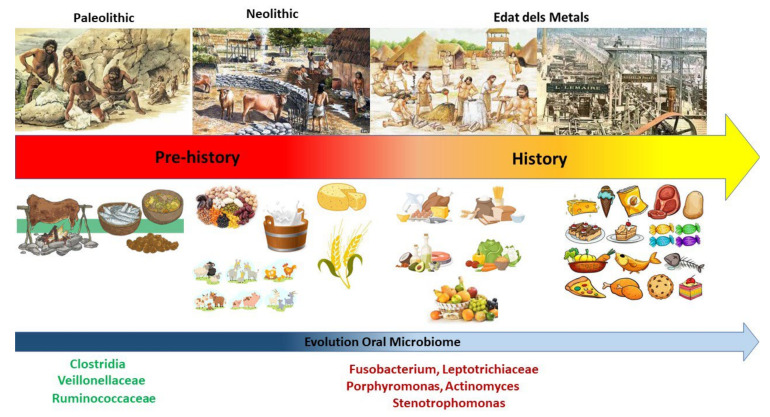
- Diet is proposed to drive oral dysbiosis: Westernized patterns rich in farmed animal meat, sugary dairy, refined vegetable oils, and processed grains increase acid-producing/acid-tolerant organisms and periodontal pathogens; archaeological dental calculus shows agricultural/Neolithic onward plaque dominated by caries-associated Veillonellaceae and periodontal taxa *P. gingivalis*, *T. forsythia*, and *T. denticola*.
- Macronutrient effects include refined/high-glycemic carbohydrates promoting saccharolytic microbes and acidification, protein-rich neutral-alkaline environments favoring periodontal pathogens, and saturated fatty acids positively associated with periodontal lesions in 264 Japanese participants; a vegetarian group (100) had significantly less pocket depth, less bleeding on probing, and better oral hygiene than 100 nonvegetarians.
- Micronutrient findings include low vitamin C, B12, and D linked to periodontitis; beta-carotene intake ≥7.07 mg/d associated with a lower percentage of sites with probing depth >3 mm after nonsurgical periodontal treatment in nonsmokers; higher vitamin E intake inversely associated with periodontal disease progression over 2 years in 264 patients; and vitamin K supplementation unable to reduce pro-inflammatory factors in periodontal tissue.
- Probiotic/prebiotic evidence is mixed: *L. rhamnosus* SP1 (2 × 10⁷ CFU daily for 3 months) in 28 patients gave improvements similar to scaling and root planing alone; heat-killed *L. plantarum* L-137 (10 mg daily for 12 weeks) reduced probing depth; a Bacillus probiotic in 40 gingivitis patients reduced plaque and gingivitis after 8 weeks but not significantly versus placebo; no direct evidence exists for micronutrient–oral microbiome interactions.
Methods
- Narrative review aiming to evaluate current knowledge on the role of diet in oral dysbiosis underlying periodontal disease.
- Evidence is drawn from cited literature including historical/archaeological dental calculus studies, cross-sectional and cohort studies, clinical trials, and animal/in vitro studies; no systematic search strategy, databases, inclusion/exclusion criteria, or risk-of-bias assessment is reported.
- Main analysis is a qualitative/narrative synthesis organized by oral microbiome, food texture and diet, macronutrients, micronutrients, and probiotics/prebiotics.
Limitations
- Stated in the paper: little is known about the influence of diet on the oral microbiome and creation of a suitable microenvironment for periodontal disease; few studies exist on vitamin A in periodontal therapy; further randomized controlled interventional studies are needed for vitamin D; interventional studies on prebiotics in periodontal disease are lacking; and there is no direct evidence of interactions between micronutrient intake and the oral microbiome.
- Evident from the text: as a narrative review, it lacks a systematic protocol or quantitative synthesis, so conclusions rely on heterogeneous observational, animal, and in vitro evidence and cannot establish causality or precise effect sizes.
- Evident from the text: several cited associations come from small or selected samples (e.g., 28 patients in a probiotic trial, 40 gingivitis patients, 100 vegetarians vs 100 nonvegetarians), and some findings conflict (e.g., no diet-related differences in oral bacterial communities in some studies versus small salivary metabolomic differences in others).
Model-written summary. Check it against the paper before relying on it.
Integrity signals
Registry
Cites
Statistics
Figures
Verification
Claims the paper makes
94 Not checked yet · 7 Own interpretation · 1 Partly supported · 1 Couldn’t confirm · accuracy not yet measured
The cited sources support only part of this claim — read each source’s verdict below.
In the paper
“it has been observed that the intake of particular foods, such as farmed animal meat, dairy products, refined vegetable oils, and processed cereals, affects the composition of the microbiota, leading to an increased representation of acid-producing and acid-tolerant organisms and periodontal pathogens.”
- Also stated in: § 1. Introduction · plain
“The influence of diet on the oral microbiome has become more evident over the last decades while observing a shift toward a “Westernized” dietary pattern characterized by staple foods, such as farmed animal meats, high-sugary dairy products, refined vegetable oils, and processed grains that were accompanied by pathological changes in the oral microbiota, including increased representation of acid-”
§ A Cross-Talk between Diet and the Oral Microbiome: Balance of Nutrition on Inflammation and Immune System’s Response during Periodontitis > Abstract
What the sources say
- Partly supportedcites [3] Baker, 2019, Exploiting the oral microbiome to prevent tooth decay: Has evolution already provided the best tools?, Front. Microbiol. sourceExperimental — accuracy not yet measured
Split into 2 atoms — 0 confirmed, 2 partially supported, 0 disputed, 0 misattributed, 0 unverifiable. Expand the claim to see per-atom verdicts.
- Not checked yetcites [20] Alhassani, A.A., Hu, F.B., Rimm, E.B., Li, Y., Rosner, B.A., Willett, W.C., and Joshipura, K.J. (2020). Dietary flavonoid intake and risk of periodontitis. J. Periodontol., Online ahead of print. source
plaindirect- Asserted: passes — The authors put it forward as true.
- Checkable: passes — It can be checked against evidence.
- Load-bearing: passes — The paper’s conclusions depend on it.
- Based: passes — The paper gives a reason why it holds.
- Also stated in: § 1. Introduction · plain
The cited sources that could be checked couldn’t confirm or dispute this claim.
In the paper
“These effects on periodontal parameters were found to be greater in adult nonsmokers than in adult smokers with chronic periodontitis [8].”
§ A Cross-Talk between Diet and the Oral Microbiome: Balance of Nutrition on Inflammation and Immune System’s Response during Periodontitis > 6. Impact of Micronutrients during Periodontitis > 6.1. Vitamin A
What the sources say
- Could not verifycites [8] Aas, 2005, Defining the normal bacterial flora of the oral cavity, J. Clin. Microbiol. sourceExperimental — accuracy not yet measured
Materials and Methods (page unavailable) describes five subjects with healthy periodontia, and Results and Discussion (page unavailable) examines their oral bacterial flora. Searches for beta-carotene intake and smoking-related periodontal effects found no passage comparing adult nonsmokers with smokers who have chronic periodontitis. (LLM, conf=0.76)
plaindirect- Asserted: passes — The authors put it forward as true.
- Checkable: passes — It can be checked against evidence.
- Load-bearing: unclear — It is unclear whether the paper’s conclusions depend on it.
- Based: passes — The paper gives a reason why it holds.
- Could not verify
None of the sources cited for this claim have been checked yet.
In the paper
“It is now known that alterations in the oral microbiota are responsible for developing and promoting many oral diseases, including periodontal disease.”
- Also stated in: § 1. Introduction · hedged
“The induction and progression of the disease are promoted by a dysbiosis of the oral commensal microbiota, which may affect the host’s immune defenses, causing an inflammatory response that ultimately leads to irredeemable destruction of the periodontium (i.e., alveolar bone and periodontal ligament) in a susceptible host [7,8,9].”
§ A Cross-Talk between Diet and the Oral Microbiome: Balance of Nutrition on Inflammation and Immune System’s Response during Periodontitis > Abstract
What the sources say
- Not checked yetcites [7] Avila, 2009, The oral microbiota: Living with a permanent guest, DNA Cell Biol. source
- Not checked yetcites [8] Aas, 2005, Defining the normal bacterial flora of the oral cavity, J. Clin. Microbiol. source
- Not checked yetcites [9] Jakubovics, N.S., and Palmer, R.J. (2013). Detection and culture of novel oral Bacteria. Oral Microbial Ecology—Current Research and New Perspectives, Caister Academic Press.
boosteddirect- Asserted: passes — The authors put it forward as true.
- Checkable: passes — It can be checked against evidence.
- Load-bearing: passes — The paper’s conclusions depend on it.
- Based: passes — The paper gives a reason why it holds.
- Also stated in: § 1. Introduction · hedged
In the paper
“Evidence indicates that macronutrients and micronutrients can modulate pro-inflammatory and anti-inflammatory cascades, influencing a person’s baseline inflammatory status [19].”
§ A Cross-Talk between Diet and the Oral Microbiome: Balance of Nutrition on Inflammation and Immune System’s Response during Periodontitis > 1. Introduction
What the sources say
- Not checked yetcites [19] Grosso, G., Laudisio, D., Frias-Toral, E., Barrea, L., Muscogiuri, G., Savastano, S., and Colao, A. (2022). Anti-inflammatory nutrients and obesity-associated metabolic-inflammation: State of the art and future direction. Nutrients, 14. source
hedgeddirect- Asserted: passes — The authors put it forward as true.
- Checkable: passes — It can be checked against evidence.
- Load-bearing: passes — The paper’s conclusions depend on it.
- Based: passes — The paper gives a reason why it holds.
In the paper
“Several nutrients have an important impact on periodontal health [18].”
§ A Cross-Talk between Diet and the Oral Microbiome: Balance of Nutrition on Inflammation and Immune System’s Response during Periodontitis > 1. Introduction
What the sources say
- Not checked yetcites [18] Rosan, 2000, Dental plaque formation, Microbes Infect. source
plaindirect- Asserted: passes — The authors put it forward as true.
- Checkable: passes — It can be checked against evidence.
- Load-bearing: passes — The paper’s conclusions depend on it.
- Based: passes — The paper gives a reason why it holds.
None of the sources cited for this claim have been checked yet.
In the paper
“The rationale for this hypothesis relies on historical observation of two key periods in human history: the Neolithic and Industrial revolutions. These periods represented two critical junctures in our history with repercussions beyond economic, cultural, and social matters. Indeed, the foods and processing techniques that arose in these two historical periods significantly altered the central”
§ A Cross-Talk between Diet and the Oral Microbiome: Balance of Nutrition on Inflammation and Immune System’s Response during Periodontitis > 4. Impact of Food Texture and Diet on the Oral Microbiome
What the sources say
plaincorrelational- Asserted: passes — The authors put it forward as true.
- Checkable: passes — It can be checked against evidence.
- Load-bearing: passes — The paper’s conclusions depend on it.
- Based: passes — The paper gives a reason why it holds.
None of the sources cited for this claim have been checked yet.
In the paper
“Periodontal disease severity is related to both modifiable (smoking, diet) and non-modifiable host risk factors (genetic susceptibility) as well as environmental factors [10,11,12].”
§ A Cross-Talk between Diet and the Oral Microbiome: Balance of Nutrition on Inflammation and Immune System’s Response during Periodontitis > 1. Introduction
What the sources say
- Not checked yetcites [10] Krom, 2014, Candida and other fungal species: Forgotten players of healthy oral microbiota, J. Dent. Res. source
- Not checked yetcites [11] Ghannoum, M.A., Jurevic, R.J., Mukherjee, P.K., Cui, F., Sikaroodi, M., Naqvi, A., and Gillevet, P.M. (2010). Characterization of the oral fungal microbiome (mycobiome) in healthy individuals. PLoS Pathog., 6. source
- Not checked yetcites [12] Dridi, 2011, Archaea as emerging organisms in complex human microbiomes, Anaerobe source
plaincorrelational- Asserted: passes — The authors put it forward as true.
- Checkable: passes — It can be checked against evidence.
- Load-bearing: unclear — It is unclear whether the paper’s conclusions depend on it.
- Based: passes — The paper gives a reason why it holds.
In the paper
“The pre-agricultural diet consisted mainly of unprocessed wild fruits and vegetables, tubers, nuts and wild animals [52].”
§ A Cross-Talk between Diet and the Oral Microbiome: Balance of Nutrition on Inflammation and Immune System’s Response during Periodontitis > 4. Impact of Food Texture and Diet on the Oral Microbiome
What the sources say
- Not checked yetcites [52] Cordain, 2000, Plant-animal subsistence ratios and macronutrient energy estimations in worldwide hunter-gatherer diets, Am. J. Clin. Nutr. source
plain- Asserted: passes — The authors put it forward as true.
- Checkable: passes — It can be checked against evidence.
- Load-bearing: unclear — It is unclear whether the paper’s conclusions depend on it.
- Based: passes — The paper gives a reason why it holds.
None of the sources cited for this claim have been checked yet.
In the paper
“The persistence of periodontal inflammation can result in residual pockets and the persistent of periodontal bacteria, leading to new tissue destruction [16,17].”
§ A Cross-Talk between Diet and the Oral Microbiome: Balance of Nutrition on Inflammation and Immune System’s Response during Periodontitis > 1. Introduction
What the sources say
plaindirect- Asserted: passes — The authors put it forward as true.
- Checkable: passes — It can be checked against evidence.
- Load-bearing: passes — The paper’s conclusions depend on it.
- Based: passes — The paper gives a reason why it holds.
In the paper
“The transition from hunter-gatherer to agrarian lifestyles introduced cereals, pulses, dairy products and meat into the human diet [53].”
§ A Cross-Talk between Diet and the Oral Microbiome: Balance of Nutrition on Inflammation and Immune System’s Response during Periodontitis > 4. Impact of Food Texture and Diet on the Oral Microbiome
What the sources say
- Not checked yetcites [53] Zhang, 2021, Extending the vitamin D pathway to vitamin D3 and CYP27A1 in periodontal ligament cells. 2021;9:44-53, J. Periodontol.
plaindirect- Asserted: passes — The authors put it forward as true.
- Checkable: passes — It can be checked against evidence.
- Load-bearing: unclear — It is unclear whether the paper’s conclusions depend on it.
- Based: passes — The paper gives a reason why it holds.
- It may state two separate claims as one. 28
- Probably not a substantial claim. 11
None of the sources cited for this claim have been checked yet.
In the paper
“The induction and progression of the disease are promoted by a dysbiosis of the oral commensal microbiota, which may affect the host’s immune defenses, causing an inflammatory response that ultimately leads to irredeemable destruction of the periodontium (i.e., alveolar bone and periodontal ligament) in a susceptible host [7,8,9].”
§ A Cross-Talk between Diet and the Oral Microbiome: Balance of Nutrition on Inflammation and Immune System’s Response during Periodontitis > 1. Introduction
What the sources say
- Not checked yetcites [7] Avila, 2009, The oral microbiota: Living with a permanent guest, DNA Cell Biol. source
- Not checked yetcites [8] Aas, 2005, Defining the normal bacterial flora of the oral cavity, J. Clin. Microbiol. source
- Not checked yetcites [9] Jakubovics, N.S., and Palmer, R.J. (2013). Detection and culture of novel oral Bacteria. Oral Microbial Ecology—Current Research and New Perspectives, Caister Academic Press.
hedgeddirect- Asserted: passes — The authors put it forward as true.
- Checkable: passes — It can be checked against evidence.
- Load-bearing: passes — The paper’s conclusions depend on it.
- Based: passes — The paper gives a reason why it holds.
It may state two separate claims as one.
In the paper
“Periodontitis is a disease with a multifactorial etiology that, following infection induced by bacteria of the periodontal biofilm, can determine tooth loss following host response [5].”
§ A Cross-Talk between Diet and the Oral Microbiome: Balance of Nutrition on Inflammation and Immune System’s Response during Periodontitis > 1. Introduction
What the sources say
- Not checked yetcites [5] Isola, 2022, Periodontitis activates the NLRP3 inflammasome in serum and saliva, J. Periodontol. source
plaindirect- Asserted: passes — The authors put it forward as true.
- Checkable: passes — It can be checked against evidence.
- Load-bearing: fails — The paper’s conclusions may not depend on it.
- Based: passes — The paper gives a reason why it holds.
Probably not a substantial claim. The paper’s conclusions may not depend on it. It may state two separate claims as one.
In the paper
“The actual influence of diet on oral microbiota has been long debated [49].”
§ A Cross-Talk between Diet and the Oral Microbiome: Balance of Nutrition on Inflammation and Immune System’s Response during Periodontitis > 4. Impact of Food Texture and Diet on the Oral Microbiome
What the sources say
- Not checked yetcites [49] Loesche, W., and Gibbons, R. (1966). Influence of nutrition on the ecology and cariogenicity of the oral microflora. The Science of Nutrition and its Application in Clinical Dentistry, Saunders.
plain- Asserted: passes — The authors put it forward as true.
- Checkable: fails — It may be too vague to check against evidence.
- Load-bearing: fails — The paper’s conclusions may not depend on it.
- Based: passes — The paper gives a reason why it holds.
Probably not a substantial claim. It may be too vague to check against evidence. The paper’s conclusions may not depend on it.
None of the sources cited for this claim have been checked yet.
In the paper
“The influence of diet on the oral microbiome has become more evident over the last decades while observing a shift toward a “Westernized” dietary pattern characterized by staple foods, such as farmed animal meats, high-sugary dairy products, refined vegetable oils, and processed grains that were accompanied by pathological changes in the oral microbiota, including increased representation of acid-”
§ A Cross-Talk between Diet and the Oral Microbiome: Balance of Nutrition on Inflammation and Immune System’s Response during Periodontitis > 1. Introduction
What the sources say
- Not checked yetcites [3] Baker, 2019, Exploiting the oral microbiome to prevent tooth decay: Has evolution already provided the best tools?, Front. Microbiol. source
- Not checked yetcites [20] Alhassani, A.A., Hu, F.B., Rimm, E.B., Li, Y., Rosner, B.A., Willett, W.C., and Joshipura, K.J. (2020). Dietary flavonoid intake and risk of periodontitis. J. Periodontol., Online ahead of print. source
plaincorrelational- Asserted: passes — The authors put it forward as true.
- Checkable: passes — It can be checked against evidence.
- Load-bearing: passes — The paper’s conclusions depend on it.
- Based: passes — The paper gives a reason why it holds.
It may state two separate claims as one.
In the paper
“Diet provides nutritional sources for the oral microbiota and exerts a selective pressure, favoring the survival and replication of organisms best adapted to utilize specific food resources derived from the host [8].”
§ A Cross-Talk between Diet and the Oral Microbiome: Balance of Nutrition on Inflammation and Immune System’s Response during Periodontitis > 1. Introduction
What the sources say
- Not checked yetcites [8] Aas, 2005, Defining the normal bacterial flora of the oral cavity, J. Clin. Microbiol. source
plaindirect- Asserted: passes — The authors put it forward as true.
- Checkable: passes — It can be checked against evidence.
- Load-bearing: passes — The paper’s conclusions depend on it.
- Based: passes — The paper gives a reason why it holds.
It may state two separate claims as one.
In the paper
“Carbohydrates are an essential source of energy for the body and are involved in fat metabolism [65].”
§ A Cross-Talk between Diet and the Oral Microbiome: Balance of Nutrition on Inflammation and Immune System’s Response during Periodontitis > 5. Impact of Macronutrients during Periodontitis > 5.1. Carbohydrates
What the sources say
- Not checked yetcites [65] Schifferle, 2005, Nutrition and periodontal disease, Dent. Clin.
plaindirect- Asserted: passes — The authors put it forward as true.
- Checkable: passes — It can be checked against evidence.
- Load-bearing: fails — The paper’s conclusions may not depend on it.
- Based: passes — The paper gives a reason why it holds.
Probably not a substantial claim. The paper’s conclusions may not depend on it. It may state two separate claims as one.
In the paper
“Several animal studies have shown the relationship between oral health and the texture of food eaten: wild animals have a higher oral health status because domestic animals eat refined foods that do not require intense chewing effort [59].”
§ A Cross-Talk between Diet and the Oral Microbiome: Balance of Nutrition on Inflammation and Immune System’s Response during Periodontitis > 4. Impact of Food Texture and Diet on the Oral Microbiome
What the sources say
- Not checked yetcites [59] Crittenden, A.N., Sorrentino, J., Moonie, S.A., Peterson, M., Mabulla, A., and Ungar, P.S. (2017). Oral health in transition: The Hadza foragers of Tanzania. PLoS ONE, 12. source
boosteddirect- Asserted: passes — The authors put it forward as true.
- Checkable: passes — It can be checked against evidence.
- Load-bearing: unclear — It is unclear whether the paper’s conclusions depend on it.
- Based: passes — The paper gives a reason why it holds.
It may state two separate claims as one.
In the paper
“Streptococci, in particular, play a major role in obtaining sugar residues from glycoproteins [60].”
§ A Cross-Talk between Diet and the Oral Microbiome: Balance of Nutrition on Inflammation and Immune System’s Response during Periodontitis > 4. Impact of Food Texture and Diet on the Oral Microbiome
What the sources say
- Not checked yetcites [60] Schmitt, 2004, Patterns and universals of adult romantic attachment across 62 cultural regions: Are models of self and of other pancultural constructs?, J. Cross-Cult. Psychol. source
plaindirect- Asserted: passes — The authors put it forward as true.
- Checkable: passes — It can be checked against evidence.
- Load-bearing: fails — The paper’s conclusions may not depend on it.
- Based: passes — The paper gives a reason why it holds.
Probably not a substantial claim. The paper’s conclusions may not depend on it.
In the paper
“Therefore, the transition from hunter-gatherer to agrarian lifestyles introduced dairy products, refined carbohydrates, vegetable oils, and alcohol into the human diet, which are staples of the modern diet [53].”
§ A Cross-Talk between Diet and the Oral Microbiome: Balance of Nutrition on Inflammation and Immune System’s Response during Periodontitis > 4. Impact of Food Texture and Diet on the Oral Microbiome
What the sources say
- Not checked yetcites [53] Zhang, 2021, Extending the vitamin D pathway to vitamin D3 and CYP27A1 in periodontal ligament cells. 2021;9:44-53, J. Periodontol.
plaindirect- Asserted: passes — The authors put it forward as true.
- Checkable: passes — It can be checked against evidence.
- Load-bearing: unclear — It is unclear whether the paper’s conclusions depend on it.
- Based: passes — The paper gives a reason why it holds.
It may state two separate claims as one.
In the paper
“The introduction of these foods into the daily human routine has been linked with a decline in oral health and several other diseases, including (but not limited to) cardiovascular disease, inflammatory bowel disease, rheumatic diseases, many cancers, and obesity [55].”
§ A Cross-Talk between Diet and the Oral Microbiome: Balance of Nutrition on Inflammation and Immune System’s Response during Periodontitis > 4. Impact of Food Texture and Diet on the Oral Microbiome
What the sources say
- Not checked yetcites [55] 2004, Dietary fiber intake and dental health status in urban-marginal, and rural communities in central Mexico, J. Nutr. Health Aging
plaincorrelational- Asserted: passes — The authors put it forward as true.
- Checkable: passes — It can be checked against evidence.
- Load-bearing: unclear — It is unclear whether the paper’s conclusions depend on it.
- Based: passes — The paper gives a reason why it holds.
It may state two separate claims as one.
None of the sources cited for this claim have been checked yet.
In the paper
“Recent human studies have shown no difference in the growth rates of oral bacteria in the presence or absence of food, indicating no relationship between diet and the composition of oral bacterial communities [60,61].”
§ A Cross-Talk between Diet and the Oral Microbiome: Balance of Nutrition on Inflammation and Immune System’s Response during Periodontitis > 4. Impact of Food Texture and Diet on the Oral Microbiome
What the sources say
- Not checked yetcites [60] Schmitt, 2004, Patterns and universals of adult romantic attachment across 62 cultural regions: Are models of self and of other pancultural constructs?, J. Cross-Cult. Psychol. source
- Not checked yetcites [61] Beckers, 1982, Growth rates of Actinomyces viscosus and Streptococcus mutans during early colonization of tooth surfaces in gnotobiotic rats, Infect. Immun. source
plain- Asserted: passes — The authors put it forward as true.
- Checkable: passes — It can be checked against evidence.
- Load-bearing: unclear — It is unclear whether the paper’s conclusions depend on it.
- Based: passes — The paper gives a reason why it holds.
It may state two separate claims as one.
In the paper
“Macronutrients are the main foods that need to be consumed in large quantities, as they are the most important source of energy for the human organism.”
§ A Cross-Talk between Diet and the Oral Microbiome: Balance of Nutrition on Inflammation and Immune System’s Response during Periodontitis > 5. Impact of Macronutrients during Periodontitis
What the sources say
- Not checked yetcites [64] Najeeb, S., Zafar, M.S., Khurshid, Z., Zohaib, S., and Almas, K. (2016). The role of nutrition in periodontal health: An update. Nutrients, 8. source
plain- Asserted: passes — The authors put it forward as true.
- Checkable: passes — It can be checked against evidence.
- Load-bearing: fails — The paper’s conclusions may not depend on it.
- Based: passes — The paper gives a reason why it holds.
Probably not a substantial claim. The paper’s conclusions may not depend on it. It may state two separate claims as one.
In the paper
“Men who lived in the bush did not maintain the similar oral health status of their female counterparts, presumably due to cultural influences, such as high honey ingestion and tobacco consumption, among others [55].”
§ A Cross-Talk between Diet and the Oral Microbiome: Balance of Nutrition on Inflammation and Immune System’s Response during Periodontitis > 4. Impact of Food Texture and Diet on the Oral Microbiome
What the sources say
- Not checked yetcites [55] 2004, Dietary fiber intake and dental health status in urban-marginal, and rural communities in central Mexico, J. Nutr. Health Aging
hedgedconditional- Asserted: passes — The authors put it forward as true.
- Checkable: passes — It can be checked against evidence.
- Load-bearing: unclear — It is unclear whether the paper’s conclusions depend on it.
- Based: passes — The paper gives a reason why it holds.
It may state two separate claims as one.
In the paper
“In line with this hypothesis, a study of 161 subjects observed a large baseline microbiota in more than 98% of the subjects tested, with no differences in relation to diet type (omnivorous, ovo-lacto-vegetarian, or vegan) [62].”
§ A Cross-Talk between Diet and the Oral Microbiome: Balance of Nutrition on Inflammation and Immune System’s Response during Periodontitis > 4. Impact of Food Texture and Diet on the Oral Microbiome
What the sources say
- Not checked yetcites [62] De Filippis, F., Vannini, L., La Storia, A., Laghi, L., Piombino, P., Stellato, G., Serrazanetti, D.I., Gozzi, G., Turroni, S., and Ferrocino, I. (2014). The same microbiota and a potentially discriminant metabolome in the saliva of omnivore, ovo-lacto-vegetarian and vegan individuals. PLoS ONE, 9. source
plainn = 161- Asserted: passes — The authors put it forward as true.
- Checkable: passes — It can be checked against evidence.
- Load-bearing: unclear — It is unclear whether the paper’s conclusions depend on it.
- Based: passes — The paper gives a reason why it holds.
It may state two separate claims as one.
In the paper
“These bacteria can cause demineralization of dental enamel and development of carious lesions, and on the other hand, promote bacterial acidogenicity and acidification by increasing cell membrane permeability to protons, induction of H+- ATPase activity, and stimulation of metabolic pathways involved in acid neutralization and alkalinization [83].”
§ A Cross-Talk between Diet and the Oral Microbiome: Balance of Nutrition on Inflammation and Immune System’s Response during Periodontitis > 5. Impact of Macronutrients during Periodontitis > 5.1. Carbohydrates
What the sources say
- Not checked yetcites [83] Takahashi, 2015, Oral microbiome metabolism: From “Who Are They?” to “What Are They Doing?”, J. Dent. Res. source
plaindirect- Asserted: passes — The authors put it forward as true.
- Checkable: passes — It can be checked against evidence.
- Load-bearing: unclear — It is unclear whether the paper’s conclusions depend on it.
- Based: passes — The paper gives a reason why it holds.
It may state two separate claims as one.
In the paper
“It has been observed that Provetella intermedia, Prevotella nigrescens, and Porphyromonas increased their growth in the presence of glucose; at the same time, they significantly reduced the production of cytotoxic end products (succinate, isobutyrate, isovalerate, and ammonia) and proteolytic activities (immunoglobulin, albumin, and casein degradation activities).”
§ A Cross-Talk between Diet and the Oral Microbiome: Balance of Nutrition on Inflammation and Immune System’s Response during Periodontitis > 5. Impact of Macronutrients during Periodontitis > 5.1. Carbohydrates
What the sources say
- Not checked yetcites [84] Saito, 2001, Effects of glucose on formation of cytotoxic end-products and proteolytic activity of Prevotella intermedia, Prevotella nigrescens and Porphyromonas gingivalis, J. Periodontal Res. source
plaindirect- Asserted: passes — The authors put it forward as true.
- Checkable: passes — It can be checked against evidence.
- Load-bearing: passes — The paper’s conclusions depend on it.
- Based: passes — The paper gives a reason why it holds.
It may state two separate claims as one.
In the paper
“These microbes have a favorable nutritional environment and are able to become the predominant micro-organisms in the oral microbiota, outcompeting slower-growing species with alternative nutritional requirements [81].”
§ A Cross-Talk between Diet and the Oral Microbiome: Balance of Nutrition on Inflammation and Immune System’s Response during Periodontitis > 5. Impact of Macronutrients during Periodontitis > 5.1. Carbohydrates
What the sources say
- Not checked yetcites [81] Satokari, R. (2020). High intake of sugar and the balance between Pro- and anti-inflammatory gut bacteria. Nutrients, 12. source
plaindirect- Asserted: passes — The authors put it forward as true.
- Checkable: passes — It can be checked against evidence.
- Load-bearing: unclear — It is unclear whether the paper’s conclusions depend on it.
- Based: passes — The paper gives a reason why it holds.
It may state two separate claims as one.
In the paper
“The intake of refined carbohydrates has increased more and more in recent years, promoting the growth of saccharolytic microbes.”
§ A Cross-Talk between Diet and the Oral Microbiome: Balance of Nutrition on Inflammation and Immune System’s Response during Periodontitis > 5. Impact of Macronutrients during Periodontitis > 5.1. Carbohydrates
What the sources say
- Not checked yetcites [81] Satokari, R. (2020). High intake of sugar and the balance between Pro- and anti-inflammatory gut bacteria. Nutrients, 12. source
plaindirect- Asserted: passes — The authors put it forward as true.
- Checkable: passes — It can be checked against evidence.
- Load-bearing: unclear — It is unclear whether the paper’s conclusions depend on it.
- Based: passes — The paper gives a reason why it holds.
It may state two separate claims as one.
None of the sources cited for this claim have been checked yet.
In the paper
“The saccharolytic bacteria include Streptococcus, Actinomyces, and Veillonella, which have the unique ability to degrade carbohydrates via the Embden−Meyerhof−Pernas pathway, producing acidic by-products including lactate, acetate, ethanol, and formate [1,82].”
§ A Cross-Talk between Diet and the Oral Microbiome: Balance of Nutrition on Inflammation and Immune System’s Response during Periodontitis > 5. Impact of Macronutrients during Periodontitis > 5.1. Carbohydrates
What the sources say
- Not checked yetcites [1] Moye, 2014, Fueling the caries process: Carbohydrate metabolism and gene regulation by Streptococcus mutans, J. Oral Microbiol. source
- Not checked yetcites [82] Klein, 2009, Structural and molecular basis of the role of starch and sucrose in Streptococcus mutans biofilm development, Appl. Environ. Microbiol. source
plaindirect- Asserted: passes — The authors put it forward as true.
- Checkable: passes — It can be checked against evidence.
- Load-bearing: unclear — It is unclear whether the paper’s conclusions depend on it.
- Based: passes — The paper gives a reason why it holds.
It may state two separate claims as one.
In the paper
“The digestion of carbohydrates begins in the oral cavity through the enzyme salivary α-amylase, which catalyzes the hydrolysis of starch by breaking down the α- 1,4-glycosidic bonds to produce small saccharide units, such as maltose, maltotriose, and alpha-limit dextrins [79].”
§ A Cross-Talk between Diet and the Oral Microbiome: Balance of Nutrition on Inflammation and Immune System’s Response during Periodontitis > 5. Impact of Macronutrients during Periodontitis > 5.1. Carbohydrates
What the sources say
- Not checked yetcites [79] Bornhorst, 2012, Bolus formation and disintegration during digestion of food carbohydrates, Compr. Rev. Food Sci. Food Saf. source
plaindirect- Asserted: passes — The authors put it forward as true.
- Checkable: passes — It can be checked against evidence.
- Load-bearing: fails — The paper’s conclusions may not depend on it.
- Based: passes — The paper gives a reason why it holds.
Probably not a substantial claim. The paper’s conclusions may not depend on it.
In the paper
“A 2014 study indicated that refined sugar intake among adults in the United States has risen by more than 30% over the past three decennia [71].”
§ A Cross-Talk between Diet and the Oral Microbiome: Balance of Nutrition on Inflammation and Immune System’s Response during Periodontitis > 5. Impact of Macronutrients during Periodontitis > 5.1. Carbohydrates
What the sources say
- Not checked yetcites [71] Ng, 2014, Global, regional, and national prevalence of overweight and obesity in children and adults during 1980-2013: A systematic analysis for the Global Burden of Disease Study 2013, Lancet source
hedged- Asserted: passes — The authors put it forward as true.
- Checkable: passes — It can be checked against evidence.
- Load-bearing: fails — The paper’s conclusions may not depend on it.
- Based: passes — The paper gives a reason why it holds.
Probably not a substantial claim. The paper’s conclusions may not depend on it.
In the paper
“A seminary investigation has indicated that refined carbohydrates are a risk factor for both caries and periodontal disease. [78].”
§ A Cross-Talk between Diet and the Oral Microbiome: Balance of Nutrition on Inflammation and Immune System’s Response during Periodontitis > 5. Impact of Macronutrients during Periodontitis > 5.1. Carbohydrates
What the sources say
- Not checked yetcites [78] Chapple, 2017, Interaction of lifestyle, behaviour or systemic diseases with dental caries and periodontal diseases: Consensus report of group 2 of the joint EFP/ORCA workshop on the boundaries between caries and periodontal diseases, J. Clin. Periodontol. source
hedgeddirect- Asserted: passes — The authors put it forward as true.
- Checkable: passes — It can be checked against evidence.
- Load-bearing: unclear — It is unclear whether the paper’s conclusions depend on it.
- Based: passes — The paper gives a reason why it holds.
It may state two separate claims as one.
In the paper
“In one study, it was seen that although glucose is an essential nutrient for the survival of oral bacteria, its exogenous supply can be discontinuous, and the depth of the periodontal pocket can influence its concentration within a periodontal pocket.”
§ A Cross-Talk between Diet and the Oral Microbiome: Balance of Nutrition on Inflammation and Immune System’s Response during Periodontitis > 5. Impact of Macronutrients during Periodontitis > 5.1. Carbohydrates
What the sources say
- Not checked yetcites [84] Saito, 2001, Effects of glucose on formation of cytotoxic end-products and proteolytic activity of Prevotella intermedia, Prevotella nigrescens and Porphyromonas gingivalis, J. Periodontal Res. source
plaincorrelational- Asserted: passes — The authors put it forward as true.
- Checkable: passes — It can be checked against evidence.
- Load-bearing: unclear — It is unclear whether the paper’s conclusions depend on it.
- Based: passes — The paper gives a reason why it holds.
It may state two separate claims as one.
In the paper
“Moreover, the authors pointed out that the vegetarian patients presented a higher level of education and healthier lifestyle than the non-vegetarians [89].”
§ A Cross-Talk between Diet and the Oral Microbiome: Balance of Nutrition on Inflammation and Immune System’s Response during Periodontitis > 5. Impact of Macronutrients during Periodontitis > 5.2. Proteins
What the sources say
- Not checked yetcites [89] Staufenbiel, 2013, Periodontal conditions in vegetarians: A clinical study, Eur. J. Clin. Nutr. source
plaincorrelational- Asserted: passes — The authors put it forward as true.
- Checkable: passes — It can be checked against evidence.
- Load-bearing: fails — The paper’s conclusions may not depend on it.
- Based: passes — The paper gives a reason why it holds.
Probably not a substantial claim. The paper’s conclusions may not depend on it. It may state two separate claims as one.
In the paper
“Instead, vegetable protein has been linked to a decreased risk of cardiovascular disease, type 2 diabetes mellitus, and kidney disease [88].”
§ A Cross-Talk between Diet and the Oral Microbiome: Balance of Nutrition on Inflammation and Immune System’s Response during Periodontitis > 5. Impact of Macronutrients during Periodontitis > 5.2. Proteins
What the sources say
- Not checked yetcites [88] Richter, 2015, Plant protein and animal proteins: Do they differentially affect cardiovascular disease risk?, Adv. Nutr. source
plaincorrelational- Asserted: passes — The authors put it forward as true.
- Checkable: passes — It can be checked against evidence.
- Load-bearing: fails — The paper’s conclusions may not depend on it.
- Based: passes — The paper gives a reason why it holds.
Probably not a substantial claim. The paper’s conclusions may not depend on it. It may state two separate claims as one.
In the paper
“A cross-sectional clinical study by Staufenbiel et al. evaluated the periodontal status of 100 vegetarian subjects compared with that of 100 nonvegetarian individuals. The findings indicated that the vegetarian group had significantly less pocket depth, less bleeding on probing, and better oral hygiene when compared with the nonvegetarian group.”
§ A Cross-Talk between Diet and the Oral Microbiome: Balance of Nutrition on Inflammation and Immune System’s Response during Periodontitis > 5. Impact of Macronutrients during Periodontitis > 5.2. Proteins
What the sources say
- Not checked yetcites [89] Staufenbiel, 2013, Periodontal conditions in vegetarians: A clinical study, Eur. J. Clin. Nutr. source
hedgedcorrelationaln = 100- Asserted: passes — The authors put it forward as true.
- Checkable: passes — It can be checked against evidence.
- Load-bearing: passes — The paper’s conclusions depend on it.
- Based: passes — The paper gives a reason why it holds.
It may state two separate claims as one.
In the paper
“Trans fatty acids are the result of overheating fats and are therefore typical of particular forms of cooking foods, such as frying, baking, or roasting [91].”
§ A Cross-Talk between Diet and the Oral Microbiome: Balance of Nutrition on Inflammation and Immune System’s Response during Periodontitis > 5. Impact of Macronutrients during Periodontitis > 5.3. Lipids
What the sources say
- Not checked yetcites [91] 2009, Trans fatty acids (tFA): Sources and intake levels, biological effects and content in commercial Spanish food, Nutr. Hosp.
plaindirect- Asserted: passes — The authors put it forward as true.
- Checkable: passes — It can be checked against evidence.
- Load-bearing: fails — The paper’s conclusions may not depend on it.
- Based: passes — The paper gives a reason why it holds.
Probably not a substantial claim. The paper’s conclusions may not depend on it. It may state two separate claims as one.
A conclusion the paper draws from its own results — it cites no other source for it, so there is none to check. The quote shows it is in the paper.
In the paper
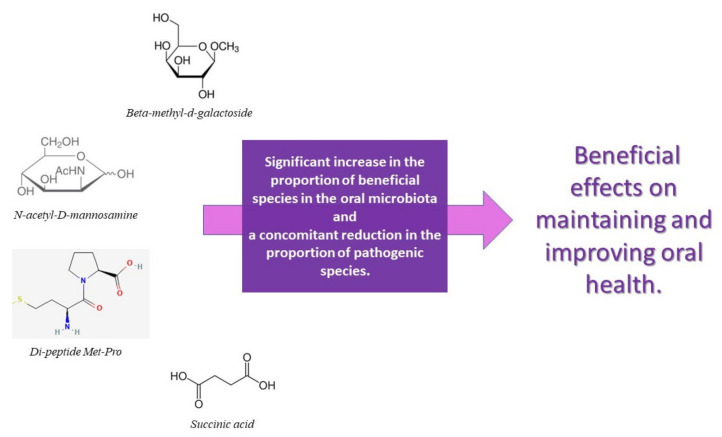
“N-acetyl-D-mannosamine, succinic acid, and the di-peptide Met-Pro are promising oral prebiotic compounds, which have beneficial effects on maintaining and improving oral health.”
§ A Cross-Talk between Diet and the Oral Microbiome: Balance of Nutrition on Inflammation and Immune System’s Response during Periodontitis > 7. Strategies against Dysbiotic Microbiota
plaindirect- Asserted: passes — The authors put it forward as true.
- Checkable: passes — It can be checked against evidence.
- Load-bearing: passes — The paper’s conclusions depend on it.
- Based: passes — The paper gives a reason why it holds.
It may state two separate claims as one.
- Rests on an assumption: The efficacy of N-acetyl-D-mannosamine in a nutrient-rich environment recreated similar to that of the oral cavity is not reduced.
In the paper
“Several studies investigate the role of probiotics on periodontal health, while there is a lack of interventional studies on the effects of prebiotics on periodontal disease [151].”
§ A Cross-Talk between Diet and the Oral Microbiome: Balance of Nutrition on Inflammation and Immune System’s Response during Periodontitis > 7. Strategies against Dysbiotic Microbiota
What the sources say
- Not checked yetcites [151] Slomka, 2018, Oral prebiotics and the influence of environmental conditions in vitro, J. Periodontol. source
plain- Asserted: passes — The authors put it forward as true.
- Checkable: passes — It can be checked against evidence.
- Load-bearing: unclear — It is unclear whether the paper’s conclusions depend on it.
- Based: passes — The paper gives a reason why it holds.
It may state two separate claims as one.
In the paper
“It is well established that some bacteria in the gut microbiota, lactic acid bacteria (LAB) and bifidobacteria, can produce vitamins, including vitamin B12.”
§ A Cross-Talk between Diet and the Oral Microbiome: Balance of Nutrition on Inflammation and Immune System’s Response during Periodontitis > 6. Impact of Micronutrients during Periodontitis > 6.6. Vitamin K
What the sources say
- Not checked yetcites [123] LeBlanc, 2013, Bacteria as vitamin suppliers to their host: A gut microbiota perspective, Curr. Opin. Biotechnol. source
boosteddirect- Asserted: passes — The authors put it forward as true.
- Checkable: passes — It can be checked against evidence.
- Load-bearing: fails — The paper’s conclusions may not depend on it.
- Based: passes — The paper gives a reason why it holds.
Probably not a substantial claim. The paper’s conclusions may not depend on it.
In the paper
“A recent in vitro study showed that treatment of multi-species biofilms with N-acetyl-D-mannosamine, succinic acid, and the di-peptide Met-Pro resulted in a significant increase in the proportion of beneficial species in the oral microbiota and a concomitant reduction in the proportion of pathogenic species.”
§ A Cross-Talk between Diet and the Oral Microbiome: Balance of Nutrition on Inflammation and Immune System’s Response during Periodontitis > 7. Strategies against Dysbiotic Microbiota
What the sources say
- Not checked yetcites [152] Feghali, 2012, Cranberry proanthocyanidins: Natural weapons against periodontal diseases, J. Agric. Food Chem. source
plaindirect- Asserted: passes — The authors put it forward as true.
- Checkable: passes — It can be checked against evidence.
- Load-bearing: passes — The paper’s conclusions depend on it.
- Based: passes — The paper gives a reason why it holds.
It may state two separate claims as one.
In the paper
“Plaque and gingivitis indices were significantly reduced after 8 weeks of treatment but showed no statistically significant differences between the placebo and probiotic groups [141].”
§ A Cross-Talk between Diet and the Oral Microbiome: Balance of Nutrition on Inflammation and Immune System’s Response during Periodontitis > 7. Strategies against Dysbiotic Microbiota
What the sources say
- Not checked yetcites [141] Slomka, 2017, Nutritional stimulation of commensal oral bacteria suppresses pathogens: The prebiotic concept, J. Clin. Periodontol. source
plaindirectn = 40- Asserted: passes — The authors put it forward as true.
- Checkable: passes — It can be checked against evidence.
- Load-bearing: unclear — It is unclear whether the paper’s conclusions depend on it.
- Based: passes — The paper gives a reason why it holds.
It may state two separate claims as one.
A conclusion the paper draws from its own results — it cites no other source for it, so there is none to check. The quote shows it is in the paper.
In the paper
“Among foods, with the greatest impact on periodontal disease, we find proteins and simple carbohydrates, which on the one hand favor the establishment of a microenvironment with an acid pH and, on the other, favor inflammation.”
§ A Cross-Talk between Diet and the Oral Microbiome: Balance of Nutrition on Inflammation and Immune System’s Response during Periodontitis > 8. Conclusions
plaindirect- Asserted: passes — The authors put it forward as true.
- Checkable: passes — It can be checked against evidence.
- Load-bearing: passes — The paper’s conclusions depend on it.
- Based: passes — The paper gives a reason why it holds.
It may state two separate claims as one.
The paper relies on this without support.
Little is known about the influence of diet on the oral microbiome and the creation of a suitable microenvironment for the development of periodontal disease.
“However, little is known about the influence of diet on the oral microbiome and the creation of a suitable microenvironment for the development of periodontal disease.”
The paper relies on this without support.
The balance between the host and the microbial species that coexist in the oral microbiome is essential for oral health at all stages of life.
“studies on the oral microbiome have increased awareness that the balance between the host and the microbial species that coexist in it is essential for oral health at all stages of life.”
The paper relies on this without support.
Little evidence of dental and periodontal disease exists for pre-neolithic hunter-gatherer societies.
“Little evidence of dental and periodontal disease exists for pre-neolithic hunter-gatherer societies.”
The paper relies on this without support.
There is no direct evidence in the literature of interactions between micronutrient intake and the oral microbiome.
“Currently, there is no direct evidence in the literature of interactions between micronutrient intake and the oral microbiome.”
The paper relies on this without support.
The positive periodontal effects of a vegetarian diet are not due to the higher education and healthier lifestyle of vegetarians.
“Therefore, the vegetarian diet appears to affect periodontal health positively.”
The paper relies on this without support.
The efficacy of N-acetyl-D-mannosamine in a nutrient-rich environment recreated similar to that of the oral cavity is not reduced.
“It is important to specify that the efficacy of N-acetyl-D-mannosamine in a nutrient-rich environment, recreated similar to that of the oral cavity, is not reduced.”
Claims other papers make about this one
Each is checked against this paper’s own text: does it say what the citing paper says it does?
The source backs part of the claim, not all of it — or backs it for a different population, condition or comparison.
In the citing paper
“Microbiome-mediated links between diet and health have been prevalently investigated by considering the role of the abiotic components of foods. 35-41”
From Unexplored microbial diversity from 2,500 food metagenomes and links with the human microbiome. (2024) · cites this paper as [40]
Experimental — accuracy not yet measured
Self-check
Percentages, sums and reported differences re-computed from the paper’s own numbers.
Each contradiction between two passages listed here was confirmed by an independent check.
Rated minor: it would not touch a result — a value no result rests on, a p-value that stays on the same side of the significance level, or a conflict that is clerical, resolved elsewhere in the paper, or outside its own findings.
In the paper
§ A Cross-Talk between Diet and the Oral Microbiome: Balance of Nutrition on Inflammation and Immune System’s Response during Periodontitis > 6. Impact of Micronutrients during Periodontitis > 6.1. Vitamin A
“High dietary intake of beta-carotene (≥7.07 mg/d) was associated by Dodington et al. with a significantly lower percentage of sites with probing depth >3 mm after nonsurgical periodontal treatment. These effects on periodontal parameters were found to be greater in adult nonsmokers than in adult smokers with chronic periodontitis [8].”
§ A Cross-Talk between Diet and the Oral Microbiome: Balance of Nutrition on Inflammation and Immune System’s Response during Periodontitis > References
“8. Aas J.A. Paster B.J. Stokes L.N. Olsen I. Dewhirst F.E. Defining the normal bacterial flora of the oral cavity J. Clin. Microbiol. 2005 43 5721 5732”
Rated minor: it would not touch a result — a value no result rests on, a p-value that stays on the same side of the significance level, or a conflict that is clerical, resolved elsewhere in the paper, or outside its own findings.
In the paper
§ A Cross-Talk between Diet and the Oral Microbiome: Balance of Nutrition on Inflammation and Immune System’s Response during Periodontitis > 7. Strategies against Dysbiotic Microbiota
“In a recent study, Slomka et al. identified two prebiotics, beta-methyl-d-galactoside and N-acetyl-d-mannosamine, which could be used in the promotion of bacteria associated with oral health [76].”
§ A Cross-Talk between Diet and the Oral Microbiome: Balance of Nutrition on Inflammation and Immune System’s Response during Periodontitis > References
“76. Jenzsch A. Eick S. Rassoul F. Purschwitz R. Jentsch H. Nutritional intervention in patients with periodontal disease: Clinical, immunological and microbiological variables during 12 months”
Rated minor: it would not touch a result — a value no result rests on, a p-value that stays on the same side of the significance level, or a conflict that is clerical, resolved elsewhere in the paper, or outside its own findings.
In the paper
§ A Cross-Talk between Diet and the Oral Microbiome: Balance of Nutrition on Inflammation and Immune System’s Response during Periodontitis > 6. Impact of Micronutrients during Periodontitis > 6.4. Vitamin D
“Laky et al., through a case-control study, observed that patients with periodontal disease were common with higher vitamin D deficiency (<50 nmol/L) than healthy subjects [115].”
§ A Cross-Talk between Diet and the Oral Microbiome: Balance of Nutrition on Inflammation and Immune System’s Response during Periodontitis > References
“115. Lindblad M. Tveden-Nyborg P. Lykkesfeldt J. Regulation of vitamin C homeostasis during deficiency Nutrients 2013 5 2860 2879”
Rated minor: it would not touch a result — a value no result rests on, a p-value that stays on the same side of the significance level, or a conflict that is clerical, resolved elsewhere in the paper, or outside its own findings.
In the paper
§ A Cross-Talk between Diet and the Oral Microbiome: Balance of Nutrition on Inflammation and Immune System’s Response during Periodontitis > 4. Impact of Food Texture and Diet on the Oral Microbiome
“Recent human studies have shown no difference in the growth rates of oral bacteria in the presence or absence of food, indicating no relationship between diet and the composition of oral bacterial communities [60,61].”
§ A Cross-Talk between Diet and the Oral Microbiome: Balance of Nutrition on Inflammation and Immune System’s Response during Periodontitis > References
“61. Beckers H. Van der Hoeven J. Growth rates of Actinomyces viscosus and Streptococcus mutans during early colonization of tooth surfaces in gnotobiotic rats”
Rated minor: it would not touch a result — a value no result rests on, a p-value that stays on the same side of the significance level, or a conflict that is clerical, resolved elsewhere in the paper, or outside its own findings.
In the paper
§ A Cross-Talk between Diet and the Oral Microbiome: Balance of Nutrition on Inflammation and Immune System’s Response during Periodontitis > 4. Impact of Food Texture and Diet on the Oral Microbiome
“Changes in the pre-neolithic oral microbiota were further exacerbated by the evolution of food manufacturing techniques as a result of industrial revolution about 200 years ago [57]. The invention of mechanical mills allowed for the refining of carbohydrates”
§ A Cross-Talk between Diet and the Oral Microbiome: Balance of Nutrition on Inflammation and Immune System’s Response during Periodontitis > 4. Impact of Food Texture and Diet on the Oral Microbiome
“Therefore, the transition from hunter-gatherer to agrarian lifestyles introduced dairy products, refined carbohydrates, vegetable oils, and alcohol into the human diet, which are staples of the modern diet [53].”
Rated minor: it would not touch a result — a value no result rests on, a p-value that stays on the same side of the significance level, or a conflict that is clerical, resolved elsewhere in the paper, or outside its own findings.
In the paper
§ A Cross-Talk between Diet and the Oral Microbiome: Balance of Nutrition on Inflammation and Immune System’s Response during Periodontitis > 8. Conclusions
“Among foods, with the greatest impact on periodontal disease, we find proteins and simple carbohydrates, which on the one hand favor the establishment of a microenvironment with an acid pH and, on the other, favor inflammation.”
§ A Cross-Talk between Diet and the Oral Microbiome: Balance of Nutrition on Inflammation and Immune System’s Response during Periodontitis > 5. Impact of Macronutrients during Periodontitis > 5.2. Proteins
“Fermentation of amino acids neutralizes acidic environments, creating a more favorable atmosphere for the growth of other periodontitis’ pathogens [83].”
Citations
Cites
Holick, M. F. (2007) · New England Journal of Medicine · doi:10.1056/nejmra070553 · Cited by 13,720
Ng, M., Fleming, T., Robinson, M., Thomson, B., Graetz, N., Margono, C., Mullany, E. C., Biryukov, S., Abbafati, C., Abera, S. F., et al. (2014) · The Lancet · doi:10.1016/s0140-6736(14)60460-8 · Cited by 11,952
Gibson, G. R., Hutkins, R., Sanders, M. E., Prescott, S. L., Reimer, R. A., Salminen, S. J., Scott, K., Stanton, C., Swanson, K. S., Cani, P. D., et al. (2017) · Nature Reviews Gastroenterology & Hepatology · doi:10.1038/nrgastro.2017.75 · Cited by 5,634
Dewhirst, F. E., Chen, T., Izard, J., Paster, B. J., Tanner, A. C. R., Yu, W.-H., Lakshmanan, A., & Wade, W. G. (2010) · Journal of Bacteriology · doi:10.1128/jb.00542-10 · Cited by 3,352
Defining the normal bacterial flora of the oral cavity
Aas, J. A., Paster, B. J., Stokes, L. N., Olsen, I., & Dewhirst, F. E. (2005) · Journal of Clinical Microbiology · doi:10.1128/jcm.43.11.5721-5732.2005 · Cited by 3,092
Vitamin D deficiency: a worldwide problem with health consequences
Holick, M. F., & Chen, T. C. (2008) · The American Journal of Clinical Nutrition · doi:10.1093/ajcn/87.4.1080s · Cited by 2,689
Origins and evolution of the Western diet: health implications for the 21st century1,2
Cordain, L., Eaton, S. B., Sebastian, A., Mann, N., Lindeberg, S., Watkins, B. A., O’Keefe, J. H., & Brand-Miller, J. (2005) · The American Journal of Clinical Nutrition · doi:10.1093/ajcn.81.2.341 · Cited by 2,397
Occlusal Caries: Biological Approach for Its Diagnosis and Management
Carvalho, J. C., Dige, I., Mačhiulskienė, V., Qvist, V., Bakhshandeh, A., Parolo, C. C. F., & Maltz, M. (2016) · Caries Research · doi:10.1159/000448662 · Cited by 2,159
Bacterial Diversity in Human Subgingival Plaque
Paster, B. J., Boches, S. K., Galvin, J. L., Ericson, R. E., Lau, C. N., Levanos, V. A., Sahasrabudhe, A., & Dewhirst, F. E. (2001) · Journal of Bacteriology · doi:10.1128/jb.183.12.3770-3783.2001 · Cited by 2,008
Vitamin C as an Antioxidant: Evaluation of Its Role in Disease Prevention
Padayatty, S. J., Katz, A., Wang, Y., Eck, P., Kwon, O., Lee, J.-H., Chen, S., Corpe, C., Dutta, A., Dutta, S. K., et al. (2003) · Journal of the American College of Nutrition · doi:10.1080/07315724.2003.10719272 · Cited by 1,949
Research works printed but not linked: 3
- Jakubovics, N.S., and Palmer, R.J. (2013). Detection and culture of novel oral Bacteria. Oral Microbial Ecology—Current Research and New Perspectives, Caister Academic Press.
- Loesche, W., and Gibbons, R. (1966). Influence of nutrition on the ecology and cariogenicity of the oral microflora. The Science of Nutrition and its Application in Clinical Dentistry, Saunders.
- Aufderheide, A.C., Rodriguez-Martin, C., and Langsjoen, O. (1998). The Cambridge Encyclopedia of Human Paleopathology, Cambridge University Press.
Cited by
Sorted by citations
Oral microbiome: a review of its impact on oral and systemic health
Rajasekaran, J. J., Krishnamurthy, H. K., Bosco, J., Jayaraman, V., Krishna, K., Wang, T., & Bei, K. (2024) · Microorganisms · doi:10.3390/microorganisms12091797 · Cited by 272
“This process involves specialized bacteria that degrade glycoproteins and sugars, a crucial step in nutrient utilization [42].”
BackgroundOral microbiota in human health and disease: A perspective
Santacroce, L., Passarelli, P. C., Azzolino, D., Bottalico, L., Charitos, I. A., Cazzolla, A. P., Colella, M., Topi, S., Godoy, F. G., & D’Addona, A. (2023) · Experimental Biology and Medicine · doi:10.1177/15353702231187645 · Cited by 178
“51,127 Prebiotics can be envisioned as nutrients for those probiotic bacteria.”
BackgroundUnexplored microbial diversity from 2,500 food metagenomes and links with the human microbiome.
Carlino, N., Blanco-Míguez, A., Punčochář, M., Mengoni, C., Pinto, F., Tatti, A., Manghi, P., Armanini, F., Avagliano, M., Barcenilla, C., et al. (2024) · Cell · doi:10.1016/j.cell.2024.07.039 · Cited by 146
The Complicated Relationship of Short-Chain Fatty Acids and Oral Microbiome: A Narrative Review
Leonov, G. E., Varaeva, Y. R., Николаевна, Л. Е., & Starodubova, A. V. (2023) · Biomedicines · doi:10.3390/biomedicines11102749 · Cited by 78
The Oral–Gut Microbiome–Brain Axis in Cognition
Adil, N. A., Omo-erigbe, C., Yadav, H., & Jain, S. (2025) · Microorganisms · doi:10.3390/microorganisms13040814 · Cited by 65
“…rich in fibers, vitamins, and minerals that promote the growth of beneficial bacteria in the oral microbiome, including oral Streptococci, such as Streptococcus sanguinis , Streptococcus gordonii , and Streptococcus salivarius , which are some of the first colonizers within the oral cavity [154].”
Metadata
- Authors
- Santonocito, S., Giudice, A., Polizzi, A., Troiano, G., Merlo, E. M., Sclafani, R., Grosso, G., & Isola, G.
- Affiliations
- University of Catania (IT)
- Magna Graecia University (IT)
- University of Foggia (IT)
- University of Messina (IT)
- Corresponding author
- Polizzi, Alessandro
- Grosso, Giuseppe
- ORCID
- Venue
- Nutrients
- Publisher
- MDPI AG
- Published
- 2022-06-11
- Volume
- 14
- Issue
- 12
- Pages
- 2426
- ISSN
- 2072-6643 (ISSN-L)
- PMC
- PMC9227938
- OpenAlex
- W4282561604
- Semantic Scholar
- bb7c18b5738ad38e230c391570d7e5db5f5f956a
- Cited by
- 144
- References
- 153
- Citations by year
- 2026: 25 · 2025: 63 · 2024: 34 · 2023: 20 · 2022: 2
- FWCI
- 5.53
- Type
- journal article
- Language
- en
- Open access
- gold
- doi.org
- Licence
- Locations
- Nutrients (publishedVersion, cc-by)
- PubMed Central (publishedVersion, cc-by)
- PubMed (publishedVersion)
- DOAJ (DOAJ: Directory of Open Access Journals) (submittedVersion, cc-by-sa)
- Funders
- Prof. G. Isola, University of Catania, Catania, Italy
- Topics
- Health Sciences › Dentistry › Periodontics › Oral microbiology and periodontitis research
- Life Sciences › Biochemistry, Genetics and Molecular Biology › Molecular Biology › Gut microbiota and health
- Health Sciences › Dentistry › General Dentistry › Dental Health and Care Utilization
- Keywords
- diet, oral microbiota, periodontitis, periodontal disease, oral dysbiosis, inflammation, immune response, sugar consumption, acidogenic bacteria, periodontal pathogens
- MeSH terms
- Animals, Diet, Immune System, Inflammation, Periodontal Diseases, Periodontitis, Microbiota, Dysbiosis
About these checks
Registry, retraction, Cites and statistics results are computed, not judged, with one exception: a printed reference that no index lists is read once by a model before it counts as a citation error. Claims are extracted by a model and kept only when their quote appears verbatim in the text; each cited source is then checked, with a model’s help, for whether it says what the claim relies on. Those verdicts can be wrong — read the claim’s quote and the cited source before relying on one.
A language model drew the claims from the paper on 2026-10-09, under version 3 of the claim definition (model deepseek-v4.1-flash, prompt extract-v3).
A second model labelled each claim on 2026-10-09 (model jev-1.13-20260917, definition revision gold-guideline-v0.2).
Cited sources are checked with a language model’s help (gpt-6-sol).
Statistics and arithmetic are recomputed, not judged.
Confidence bands are shown only for fields calibrated on our annotated test set. None is calibrated yet, so no band is shown.
What counts as a claim ›How we measure confidence ›How we check this ›
Are you an author, or do you see a problem with this page? Request a review
