

The DOI matches its Crossref record; 444 of the 445 references it cites were found in a registry or an index.
The Oxygen Paradox, the French Paradox, and age-related diseases
Open accessAbstract
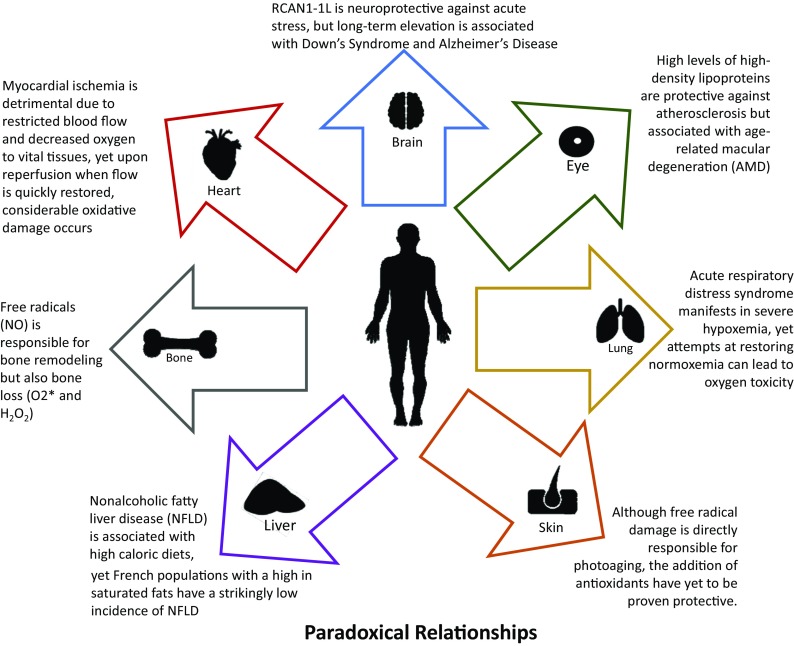
A paradox is a seemingly absurd or impossible concept, proposition, or theory that is often difficult to understand or explain, sometimes apparently self-contradictory, and yet ultimately correct or true. How is it possible, for example, that oxygen "a toxic environmental poison" could be also indispensable for life (Beckman and Ames Physiol Rev 78(2):547-81, 1998; Stadtman and Berlett Chem Res Toxicol 10(5):485-94, 1997)?: the so-called Oxygen Paradox (Davies and Ursini 1995; Davies Biochem Soc Symp 61:1-31, 1995). How can French people apparently disregard the rule that high dietary intakes of cholesterol and saturated fats (e.g., cheese and paté) will result in an early death from cardiovascular diseases (Renaud and de Lorgeril Lancet 339(8808):1523-6, 1992; Catalgol et al. Front Pharmacol 3:141, 2012; Eisenberg et al. Nat Med 22(12):1428-1438, 2016)?: the so-called, French Paradox. Doubtless, the truth is not a duality and epistemological bias probably generates apparently self-contradictory conclusions. Perhaps nowhere in biology are there so many apparently contradictory views, and even experimental results, affecting human physiology and pathology as in the fields of free radicals and oxidative stress, antioxidants, foods and drinks, and dietary recommendations; this is particularly true when issues such as disease-susceptibility or avoidance, "healthspan," "lifespan," and ageing are involved. Consider, for example, the apparently paradoxical observation that treatment with low doses of a substance that is toxic at high concentrations may actually induce transient adaptations that protect against a subsequent exposure to the same (or similar) toxin. This particular paradox is now mechanistically explained as "Adaptive Homeostasis" (Davies Mol Asp Med 49:1-7, 2016; Pomatto et al. 2017a; Lomeli et al. Clin Sci (Lond) 131(21):2573-2599, 2017; Pomatto and Davies 2017); the non-damaging process by which an apparent toxicant can activate biological signal transduction pathways to increase expression of protective genes, by mechanisms that are completely different from those by which the same agent induces toxicity at high concentrations. In this review, we explore the influences and effects of paradoxes such as the Oxygen Paradox and the French Paradox on the etiology, progression, and outcomes of many of the major human age-related diseases, as well as the basic biological phenomenon of ageing itself.
Overview
The claims and statistics of this paper haven’t been checked yet.
Run the check — free, no account needed. It reads the open-access text and checks the sources it cites.
Integrity signals
Registry
Cites
Statistics
Figures
Verification
Claims the paper makes
The claims and statistics of this paper haven’t been checked yet.
Run the check — free, no account needed. It reads the open-access text and checks the sources it cites.
Claims other papers make about this one
Each is checked against this paper’s own text: does it say what the citing paper says it does?
In the citing paper
“Under conditions of an imbalanced redox state, increased mitochondrial ROS production might lead to modifications of the arterial walls180, followed by an inflammatory environment181.”
From Mitochondrial and metabolic dysfunction in ageing and age-related diseases (2022) · cites this paper as [181]
Self-check
Percentages, sums and reported differences re-computed from the paper’s own numbers.
The self-check needs the paper’s full text.
Citations
Cites
1 retracted
Xiao, Y., Yan, W., Lu, L., Wang, Y., Lu, W., Cao, Y. L., & Cai, W. (2015) · Cell Cycle · doi:10.1080/15384101.2015.1026491 · Cited by 74
RetractedCancer incidence and mortality worldwide: Sources, methods and major patterns in GLOBOCAN 2012
Ferlay, J., Soerjomataram, I., Dikshit, R., Eser, S., Mathers, C., Rebelo, M., Parkin, D. M., Forman, D., & Bray, F. (2015) · International Journal of Cancer · doi:10.1002/ijc.29210 · Cited by 28,766
(2000) · New England Journal of Medicine · doi:10.1056/nejm200005043421801 · Cited by 12,941
The metabolic syndrome—a new worldwide definition
Alberti, K. G. M., Zimmet, P., & Shaw, J. (2005) · The Lancet · doi:10.1016/s0140-6736(05)67402-8 · Cited by 9,352 · cited 2×
“insulin resistance, and high blood pressure and blood triglycerides (Alberti et al. 2005).”
BackgroundGlutamate neurotoxicity and diseases of the nervous system
Choi, D. W. (1988) · Neuron · doi:10.1016/0896-6273(88)90162-6 · Cited by 8,188
Molecular Mechanisms of Stress-Responsive Changes in Collagen and Elastin Networks in Skin
Aziz, J., Shezali, H., Radzi, Z., Yahya, N. A., Abu Kassim, N. H., Czernuszka, J., & Rahman, M. T. (2016) · Skin Pharmacology and Physiology · doi:10.1159/000447017 · Cited by 7,323
The L-Arginine-Nitric Oxide Pathway
Epstein, F. H., Moncada, S., & Higgs, A. (1993) · New England Journal of Medicine · doi:10.1056/nejm199312303292706 · Cited by 6,678
Osteoclast differentiation and activation
Boyle, W. J., Simonet, W. S., & Lacey, D. L. (2003) · Nature · doi:10.1038/nature01658 · Cited by 6,670 · cited 1×
“If these two actions are not in balance, pathology ensues (Boyle et al. 2003; Nohl 1993; Wauquier et al. 2009; Vaananen et al. 2000).”
BackgroundHeart Disease and Stroke Statistics—2015 Update: A Report From the American Heart Association
Mozaffarian, D., Benjamin, E. J., Go, A. S., Arnett, D. K., Blaha, M. J., Cushman, M., de Ferranti, S., Després, J.-P., Fullerton, H. J., Howard, V. J., et al. (2015) · Circulation · doi:10.1161/cir.0000000000000152 · Cited by 5,797
Wong, W. L., Su, X., Li, X., Cheung, C. M. G., Klein, R., Cheng, C., & Wong, T. Y. (2014) · The Lancet Global Health · doi:10.1016/s2214-109x(13)70145-1 · Cited by 5,545
Chronic Parkinsonism in Humans Due to a Product of Meperidine-Analog Synthesis
Langston, J. W., Ballard, P., Tetrud, J. W., & Irwin, I. (1983) · Science · doi:10.1126/science.6823561 · Cited by 4,914
Vascular endothelial growth factor induced by hypoxia may mediate hypoxia-initiated angiogenesis
Shweiki, D., Itin, A., Soffer, D., & Keshet, E. (1992) · Nature · doi:10.1038/359843a0 · Cited by 4,617
The Free Radical Theory of Aging Matures
BECKMAN, K. B., & AMES, B. N. (1998) · Physiological Reviews · doi:10.1152/physrev.1998.78.2.547 · Cited by 3,879 · cited 2×
“Epidermal thickening or atrophy may also occur (Beckman and Ames 1998).”
BackgroundYellon, D. M., & Hausenloy, D. J. (2007) · New England Journal of Medicine · doi:10.1056/nejmra071667 · Cited by 3,797
Interplay between Cortical Spreading Depolarization and Seizures
Kramer, D. R., Fujii, T., Ohiorhenuan, I. E., & Liu, C. Y. (2017) · Stereotactic and Functional Neurosurgery · doi:10.1159/000452841 · Cited by 3,721
Wine, alcohol, platelets, and the French paradox for coronary heart disease
Renaud, S., & de Lorgeril, M. (1992) · The Lancet · doi:10.1016/0140-6736(92)91277-f · Cited by 3,700
Prevalence of Hepatic Steatosis in An Urban Population in the United States: Impact of Ethnicity
Browning, J. D., Szczepaniak, L. S., Dobbins, R., Nuremberg, P., Horton, J. D., Cohen, J. C., Grundy, S. M., & Hobbs, H. H. (2004) · Hepatology · doi:10.1002/hep.20466 · Cited by 3,664
Modulation of oxidative stress as an anticancer strategy
Gorrini, C., Harris, I. S., & Mak, T. W. (2013) · Nature Reviews Drug Discovery · doi:10.1038/nrd4002 · Cited by 3,579 · cited 1×
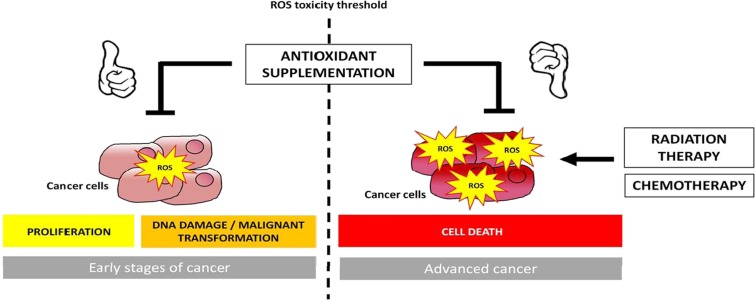
“Oxidative stress is a key factor in both carcinogenesis and response to anticancer therapies, increasing the interest in reactive oxygen species-targeted therapies (Gorrini et al. 2013; Gentric et al. 2017; Batista et al. 2013; Costa et al. 2014).”
BackgroundAn Energy Budget for Signaling in the Grey Matter of the Brain
Attwell, D., & Laughlin, S. B. (2001) · Journal of Cerebral Blood Flow & Metabolism · doi:10.1097/00004647-200110000-00001 · Cited by 3,543 · cited 2×
“The brain is the most metabolically demanding organ in the human body (Attwell and Laughlin 2001).”
BackgroundUttara, B., Singh, A., Zamboni, P., & Mahajan, R. (2009) · Current Neuropharmacology · doi:10.2174/157015909787602823 · Cited by 3,378
Glass, C. K., & Witztum, J. L. (2001) · Cell · doi:10.1016/s0092-8674(01)00238-0 · Cited by 3,094 · cited 2×
“tected in the intima of the arterial wall), and the production of inflammatory mediators, cytokines, and extracellular matrix-degrading enzymes (Glass and Witztum 2001).”
BackgroundMcGeer, P. L., Itagaki, S., Boyes, B. E., & McGeer, E. G. (1988) · Neurology · doi:10.1212/wnl.38.8.1285 · Cited by 2,990
Pellerin, L., & Magistretti, P. J. (1994) · Proceedings of the National Academy of Sciences · doi:10.1073/pnas.91.22.10625 · Cited by 2,927 · cited 2×
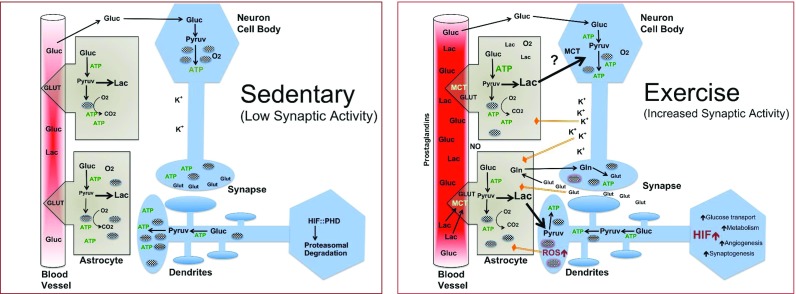
“and (iii) lactate is shuttled from astrocytes to neurons via monocarboxylate transporters (MCTs) where it is converted back to pyruvate and enters the TCA cycle in mitochondria (Pellerin and Magistretti 1994).”
BackgroundThe stunned myocardium: prolonged, postischemic ventricular dysfunction.
D, E. B. M., & Kloner, R. A. (1982) · Circulation · doi:10.1161/01.cir.66.6.1146 · Cited by 2,824 · cited 2×
“Stunned myocardium refers to previously ischemic viable myocardium that has been salvaged by reperfusion, in which there is prolonged, but transient post-ischemic contractile dysfunction (Braunwald and Kloner 1982).”
BackgroundSelf-citationMacrophages in the Pathogenesis of Atherosclerosis
Moore, K. J., & Tabas, I. (2011) · Cell · doi:10.1016/j.cell.2011.04.005 · Cited by 2,669 · cited 35×
“, vitronectin, complement factors, and apolipoprotein E) and important amounts of cholesterol and cholesterol esters (Moore and Tabas 2011; Pikuleva and Curcio 2014; Hageman and Mullins 1999; Mullins et al. 2000; Curcio et al. 2001).”
BackgroundInfluentialSignal integration by JNK and p38 MAPK pathways in cancer development
Wagner, E. F., & Nebreda, Á. R. (2009) · Nature reviews. Cancer · doi:10.1038/nrc2694 · Cited by 2,635 · cited 1×
“Many adaptive mechanisms that modulate gene expression are activated in response to oxidative stress, including the p38α mitogen-activated protein kinase (MAPK) family, recognized to suppress tumorigenesis by blocking proliferation or promoting apoptosis (Hui et al. 2007; Wagner and Nebreda 2009).”
BackgroundProduction of large amounts of hydrogen peroxide by human tumor cells.
Szatrowski, T. P., & Nathan, C. (1991) · PubMed · Cited by 2,504
Stewart, B. W., & Kleihues, P. (2003) · Cited by 2,389
Mitochondrial Complex I Deficiency in Parkinson's Disease
Schapira, A. H. V., Cooper, J. M., Dexter, D., Clark, J. B., Jenner, P., & Marsden, C. D. (1990) · Journal of Neurochemistry · doi:10.1111/j.1471-4159.1990.tb02325.x · Cited by 2,283
Nathan, C., & Ding, A. (2010) · Cell · doi:10.1016/j.cell.2010.02.029 · Cited by 2,183 · cited 2×
“MPs include monocytes (Mo), resident macrophages (rMφ) such as microglial cells (MC), and monocyte-derived inflammatory macrophages (iMφ) that arise during inflammation (Nathan and Ding 2010).”
BackgroundObesity and nonalcoholic fatty liver disease: biochemical, metabolic, and clinical implications
Fabbrini, E., Sullivan, S., & Klein, S. (2010) · Hepatology · doi:10.1002/hep.23280 · Cited by 2,100 · cited 2×
“The early stages of the disease are characterized by the accumulation of triglycerides (TAG) in over 5% of hepatic cells, resulting in not only ectopic fat accumulation, but the negative repercussion of low-grade chronic inflammation resulting in tissue normally not accustomed to lipid accumulation (Fabbrini et al. 20…”
BackgroundNeuroinflammation in Parkinson’s disease: A target for neuroprotection?
Hirsch, E. C., & Hunot, S. (2009) · The Lancet Neurology · doi:10.1016/s1474-4422(09)70062-6 · Cited by 1,984 · cited 1×
“In addition to these so-called cell autonomous mechanisms, non-ce l l au tonomous mechan i sms such as neuroinflammatory processes or dysregulation of trophic support also contribute to neuronal degeneration and self-perpetuation of degeneration (for review see (Hirsch and Hunot 2009)).”
BackgroundApolipoprotein E polymorphism and atherosclerosis.
Davignon, J., Gregg, R. E., & Sing, C. F. (1988) · Arteriosclerosis: An Official Journal of the American Heart Association, Inc. · doi:10.1161/01.atv.8.1.1 · Cited by 1,981
The “no-reflow” phenomenon after temporary coronary occlusion in the dog
Kloner, R. A., Ganote, C. E., & Jennings, R. B. (1974) · Journal of Clinical Investigation · doi:10.1172/jci107898 · Cited by 1,842 · cited 1×
“…studies showed that following release of a 90-min or longer coronary artery occlusion in the canine model of myocardial infarction that the markers of flow do not perfuse portions of the subendo-and mid-myocardium, despite the fact that the epicardial infarct artery is patent (Kloner et al. 1974).”
BackgroundSelf-citationApolipoprotein E: Far More Than a Lipid Transport Protein
Mahley, R. W., & Rall, S. C. (2000) · Annual Review of Genomics and Human Genetics · doi:10.1146/annurev.genom.1.1.507 · Cited by 1,836
Principles of cancer therapy: oncogene and non-oncogene addiction
Luo, J., Solimini, N. L., & Elledge, S. J. (2009) · Cell · doi:10.1016/j.cell.2009.02.024 · Cited by 1,765 · cited 1×
“̂ Among these are DNA damage, mitotic stress, metabolic stress, and oxidative stress, which are all sensitive to reactive oxygen species-mediated signaling (Luo et al. 2009).”
BackgroundMITOCHONDRIAL COMPLEX I DEFICIENCY IN PARKINSON'S DISEASE
Schapira, A. H. V., Cooper, J. A. D., Dexter, D. T., Jenner, P. G., Clark, J. B., & MARSDEN, C. D. (1989) · The Lancet · doi:10.1016/s0140-6736(89)92366-0 · Cited by 1,757
Synaptic Energy Use and Supply
Harris, J. J., Jolivet, R., & Attwell, D. (2012) · Neuron · doi:10.1016/j.neuron.2012.08.019 · Cited by 1,747 · cited 1×
“In addition, neuronal computation is extremely energetically demanding, with most energy consumption occurring at the synapse (Harris et al. 2012).”
BackgroundAstrocyte-Neuron Lactate Transport Is Required for Long-Term Memory Formation
Suzuki, A., Stern, S. A., Bozdagi, O., Huntley, G. W., Walker, R. H., Magistretti, P. J., & Alberini, C. M. (2011) · Cell · doi:10.1016/j.cell.2011.02.018 · Cited by 1,711
Localization of neuronal and glial glutamate transporters
Rothstein, J. D., Martin, L. J., Levey, A. I., Dykes‐Hoberg, M., Jin, L., Wu, D. M., Nash, N. R., & Kuncl, R. W. (1994) · Neuron · doi:10.1016/0896-6273(94)90038-8 · Cited by 1,703 · cited 1×
“With astrocytic processes enveloping neuronal synapses, the astrocytic excitatory amino acid transporter 1 and 2 (EAAT1 and 2) serve as sensors of neuronal activation (and subsequent glutamate release) and facilitate uptake of glutamate from the synaptic cleft (Rothstein et al. 1994).”
BackgroundRoche, J. J. W., Wenn, R., Sahota, O., & Moran, C. G. (2005) · BMJ · doi:10.1136/bmj.38643.663843.55 · Cited by 1,426
Przyklenk, K., Bauer, B., Ovize, M., Kloner, R. A., & Whittaker, P. (1993) · Circulation · doi:10.1161/01.cir.87.3.893 · Cited by 1,379
Self-citationMechanism of hepatic insulin resistance in non-alcoholic fatty liver disease
Samuel, V. T., Liu, Z.-X., Qu, X., Elder, B. D., Bilz, S., Befroy, D., Romanelli, A. J., & Shulman, G. I. (2004) · Journal of Biological Chemistry · doi:10.1074/jbc.m313478200 · Cited by 1,322
Musso, G., Gambino, R., Cassader, M., & Pagano, G. (2010) · Annals of Medicine · doi:10.3109/07853890.2010.518623 · Cited by 1,306
Melanized dopaminergic neurons are differentially susceptible to degeneration in Parkinson's disease
Hirsch, E., Graybiel, A. M., & Agid, Y. A. (1988) · Nature · doi:10.1038/334345a0 · Cited by 1,301 · cited 2×
“Several lines of evidence suggest oxidative stress plays a very special role in the degeneration of melanized dopamine in Parkinson disease, which are particularly sensitive to oxygen radicals (Hirsch et al. 1988).”
BackgroundMetabolic control of muscle mitochondrial function and fatty acid oxidation through SIRT1/PGC‐1α
Gerhart‐Hines, Z., Rodgers, J. T., Bare, O., Lerin, C., Kim, S., Mostoslavsky, R., Alt, F. W., Wu, Z., & Puigserver, P. (2007) · The EMBO Journal · doi:10.1038/sj.emboj.7601633 · Cited by 1,294
Oxidative stress inhibits distant metastasis by human melanoma cells
Piskounova, E., Agathocleous, M., Murphy, M. M., Hu, Z., Huddlestun, S. E., Zhao, Z., Leitch, A. M., Johnson, T. M., DeBerardinis, R. J., & Morrison, S. J. (2015) · Nature · doi:10.1038/nature15726 · Cited by 1,269
Cytochrome oxidase: an endogenous metabolic marker for neuronal activity
Wong-Riley, M. T. T. (1989) · Trends in Neurosciences · doi:10.1016/0166-2236(89)90165-3 · Cited by 1,238
Direct measurement of free radical generation following reperfusion of ischemic myocardium.
Zweier, J. L., Flaherty, J. T., & Weisfeldt, M. L. (1987) · Proceedings of the National Academy of Sciences · doi:10.1073/pnas.84.5.1404 · Cited by 1,189
ROS homeostasis and metabolism: a dangerous liason in cancer cells
Panieri, E., & Santoro, M. M. (2016) · Cell Death and Disease · doi:10.1038/cddis.2016.105 · Cited by 1,187 · cited 2×
“…NADPH oxidases (NOX), nitric oxide synthase (NOS), and inducible nitric oxide synthase (iNOS) and mitochondria in cancer cells (Huang et al. 2015; Roy et al. 2015; Panieri and Santoro 2016), play a dual role in cancer, depending on the levels generated within the cell or in the microenvironment.”
BackgroundBrochard, V., Combadière, B., Prigent, A., Laouar, Y., Perrin, A., Beray-Berthat, V., Bonduelle, O., Alvarez-Fischer, D., Callebert, J., Launay, J.-M., et al. (2008) · Journal of Clinical Investigation · doi:10.1172/jci36470 · Cited by 1,172
Cardioprotection and lifespan extension by the natural polyamine spermidine
Eisenberg, T., Abdellatif, M., Schroeder, S., Primessnig, U., Stekovic, S., Pendl, T., Harger, A., Schipke, J., Zimmermann, A., Schmidt, A., et al. (2016) · Nature Medicine · doi:10.1038/nm.4222 · Cited by 1,168
The Five-year Incidence and Progression of Age-related Maculopathy
Klein, R., Klein, R., Jensen, S. C., & Meuer, S. M. (1997) · Ophthalmology · doi:10.1016/s0161-6420(97)30368-6 · Cited by 1,154 · cited 1×
“Curiously, the reverse is the case: high levels of HDL, protective against atherosclerosis, are associated with AMD (Klein et al. 1993; Klein et al. 1997; Klein et al. 2003; Delcourt et al. 2001; van Leeuwen et al. 2004; Paun et al. 2015).”
BackgroundOxidative stress: the paradox of aerobic life
Davies, K. J. A. (1995) · Biochemical Society Symposia · doi:10.1042/bss0610001 · Cited by 1,150
Self-citationGenetic associations with human longevity at the APOE and ACE loci
Schächter, F., Faure-Delanef, L., Guénot, F., Rouger, H., Froguel, P., Lesueur-Ginot, L., & Cohen, D. (1994) · Nature Genetics · doi:10.1038/ng0194-29 · Cited by 1,095
Oxidative Stress in Aging Human Skin
Rinnerthaler, M., Bischof, J., Streubel, M., Trost, A., & Richter, K. (2015) · Biomolecules · doi:10.3390/biom5020545 · Cited by 1,053
Heyndrickx, G. R., Millard, R. W., McRitchie, R. J., Maroko, P. R., & Vatner, S. F. (1975) · Journal of Clinical Investigation · doi:10.1172/jci108178 · Cited by 1,012
Targher, G., Bertolini, L., Padovani, R., Rodella, S., Tessari, R., Zenari, L., Day, C. P., & Arcaro, G. (2007) · Diabetes Care · doi:10.2337/dc06-2247 · Cited by 1,004
Cancer risk and oxidative DNA damage in man
Loft, S. H., & Poulsen, H. E. (1996) · Journal of Molecular Medicine · doi:10.1007/bf00207507 · Cited by 964
Increased nigral iron content in postmortem parkinsonian brain
Dexter, D. T., Wells, F. R., Agid, F., Agid, Y., Lees, A. J., Jenner, P., & Marsden, C. D. (1987) · The Lancet · doi:10.1016/s0140-6736(87)91361-4 · Cited by 963
Mullins, R. F., Russell, S. R., Anderson, D. H., & Hageman, G. S. (2000) · The FASEB Journal · doi:10.1096/fasebj.14.7.835 · Cited by 937
The epidemiology of age-related macular degeneration
Klein, R., Peto, T., Bird, A., & Vannewkirk, M. R. (2004) · American Journal of Ophthalmology · doi:10.1016/j.ajo.2003.11.069 · Cited by 932
Inflammatory mediators in the elderly
Krabbe, K. S., Pedersen, M., & Bruunsgaard, H. (2004) · Experimental Gerontology · doi:10.1016/j.exger.2004.01.009 · Cited by 928 · cited 1×
“Elevated serum levels of pro-inflammatory cytokines such as IL-1, IL6, IL-18, TNFα, and CRP have been shown to increase with ageing (Krabbe et al. 2004; Cesari et al. 2004).”
BackgroundInflammatory Markers and Physical Performance in Older Persons: The InCHIANTI Study
Cesari, M., Penninx, B. W. J. H., Pahor, M., Lauretani, F., Corsi, A. M., Williams, G. R., Guralnik, J. M., & Ferrucci, L. (2004) · The Journals of Gerontology Series A: Biological Sciences and Medical Sciences · doi:10.1093/gerona/59.3.m242 · Cited by 901
Reactive Oxygen-Mediated Protein Oxidation in Aging and Disease
Stadtman, E. R., & Berlett, B. S. (1998) · Drug Metabolism Reviews · doi:10.3109/03602539808996310 · Cited by 899
Ageing and degeneration in the macular region: A clinico-pathological study
Sarks, S. H. (1976) · British Journal of Ophthalmology · doi:10.1136/bjo.60.5.324 · Cited by 891 · cited 31×
“Our study also sheds an interesting light on the puzzling differences of the APOE isoform association with AMD (McKay et al. 2011) and Alzheimer disease (Mahley and Rall 2000), two major age-related neurodegenerative diseases: In Alzheimer disease, the APOE4-allele is associated with greater β-amyloid burden, possibly…”
BackgroundInfluentialAntioxidants Accelerate Lung Cancer Progression in Mice
Sayin, V. I., Ibrahim, M. X., Larsson, E., Nilsson, J. A., Lindahl, P., & Bergo, M. O. (2014) · Science Translational Medicine · doi:10.1126/scitranslmed.3007653 · Cited by 867
Alam, Z. I., Jenner, A., Daniel, S. E., Lees, A. J., Cairns, N., Marsden, C. D., Jenner, P., & Halliwell, B. (1997) · Journal of Neurochemistry · doi:10.1046/j.1471-4159.1997.69031196.x · Cited by 845
Clinical risk factors for age-related macular degeneration: a systematic review and meta-analysis
Chakravarthy, U., Wong, T. Y., Fletcher, A., Piault, E., Evans, C., Zlateva, G., Buggage, R., Pleil, A., & Mitchell, P. (2010) · BMC Ophthalmology · doi:10.1186/1471-2415-10-31 · Cited by 842
Physical Activity, Biomarkers, and Disease Outcomes in Cancer Survivors: A Systematic Review
Ballard-Barbash, R. R., Friedenreich, C. M., Courneya, K. S., Siddiqi, S. M., McTiernan, A., & Alfano, C. M. (2012) · JNCI Journal of the National Cancer Institute · doi:10.1093/jnci/djs207 · Cited by 832
Vistoli, G., De Maddis, D., Cipak, A., Zarkovic, N., Carini, M., & Aldini, G. (2013) · Free Radical Research · doi:10.3109/10715762.2013.815348 · Cited by 823
Accumulation of premutagenic DNA lesions in mice defective in removal of oxidative base damage
Klungland, A., Rosewell, I., Hollenbach, S., Larsen, E., Daly, G., Epe, B., Seeberg, E., Lindahl, T., & Barnes, D. E. (1999) · Proceedings of the National Academy of Sciences · doi:10.1073/pnas.96.23.13300 · Cited by 807
Garrett, I. R., Boyce, B. F., Oreffo, R. O. C., Bonewald, L. F., Poser, J. W., & Mundy, G. R. (1990) · Journal of Clinical Investigation · doi:10.1172/jci114485 · Cited by 807
Gambini, J., Inglés, M., González, G. O., López-Grueso, R., Bonet-Costa, V., Gimeno-Mallench, L., Mas‐Bargues, C., Abdelaziz, K. M., Gómez‐Cabrera, M. C., Viña, J., et al. (2015) · Oxidative Medicine and Cellular Longevity · doi:10.1155/2015/837042 · Cited by 779 · cited 1×
“…the French diet, which is primarily known for its rich diet (i.e., foods high in saturated fats), which are known contributors of chronic conditions, including NAFLD and coronary artery disease, yet strikingly shows a relatively low prevalence in the French population (Gambini et al. 2015).”
BackgroundThe Adult Respiratory Distress Syndrome
Petty, T. L., & Ashbaugh, D. G. (1971) · CHEST Journal · doi:10.1378/chest.60.3.233 · Cited by 779 · cited 1×
“In the 1970s, high fraction of inspired oxygen (FIO2), volume ventilation, and positive end expiratory pressure allowed for some improvement in maintaining normoxemia (Petty and Ashbaugh 1971).”
BackgroundMeyerhardt, J. A., Heseltine, D., Niedzwiecki, D., Hollis, D. R., Saltz, L. B., Mayer, R. J., Thomas, J. P., Nelson, H., Whittom, R., Hantel, A., et al. (2006) · Journal of Clinical Oncology · doi:10.1200/jco.2006.06.0863 · Cited by 774
Increased iron (III) and total iron content in post mortem substantia nigra of parkinsonian brain
Sofic, E., Riederer, P. F., Heinsen, H., Beckmann, H., Reynolds, G. P., Hebenstreit, G. F., & Youdim, M. B. H. (1988) · Journal of Neural Transmission · doi:10.1007/bf01244786 · Cited by 754
Nonalcoholic Fatty Liver Disease, Hepatic Insulin Resistance, and Type 2 Diabetes
Birkenfeld, A. L., & Shulman, G. I. (2013) · Hepatology · doi:10.1002/hep.26672 · Cited by 752 · cited 1×
“NAFLD stems from hepatic TAG generation exceeding the rate of hepatic TAG catabolism (Birkenfeld and Shulman 2014).”
BackgroundThe cell biology of osteoclast function
Väänänen, H. K., Zhao, H., Mulari, M. T. K., & Halleen, J. M. (2000) · Journal of Cell Science · doi:10.1242/jcs.113.3.377 · Cited by 750
The vascular smooth muscle cell in arterial pathology: a cell that can take on multiple roles
Lacolley, P. J., Regnault, V., Nicoletti, A., Li, Z., & Michel, J. (2012) · Cardiovascular Research · doi:10.1093/cvr/cvs135 · Cited by 744
Self-citationReview: Alzheimer's Amyloid β-Peptide-Associated Free Radical Oxidative Stress and Neurotoxicity
Varadarajan, S., Yatin, S., Aksenova, M., & Butterfield, D. A. (2000) · Journal of Structural Biology · doi:10.1006/jsbi.2000.4274 · Cited by 735
Articular cartilage: structure, injuries and review of management
Bhosale, A., & Richardson, J. (2008) · British Medical Bulletin · doi:10.1093/bmb/ldn025 · Cited by 725 · cited 2×
“…only 5% of the joint mass. Ageing results in cell senescence (Musumeci et al. 2015), loss of chondrocyte phenotype and thus abnormal remodeling of the extracellular matrix (Quintero et al. 1984; Lotz et al. 2010), and age-related changes in the extracellular matrix (Bhosale and Richardson 2008).”
BackgroundHartmann, A., Hunot, S., Michel, P. P., Muriel, M., Vyas, S., Faucheux, B. A., Prigent, A., Turmel, H., Srinivasan, A. N., Ruberg, M., et al. (2000) · Proceedings of the National Academy of Sciences · doi:10.1073/pnas.040556597 · Cited by 717
Allanbutterfield, D., Castegna, A., Lauderback, C. M., & Drake, J. (2002) · Neurobiology of Aging · doi:10.1016/s0197-4580(01)00340-2 · Cited by 715
Gandhi, S., Wood-Kaczmar, A., Yao, Z., Plun-Favreau, H., Deas, E., Klupsch, K., Downward, J., Latchman, D. S., Tabrizi, S. J., Wood, N. W., et al. (2009) · Molecular Cell · doi:10.1016/j.molcel.2009.02.013 · Cited by 682
Keap1/Nrf2 Signaling Regulates Oxidative Stress Tolerance and Lifespan in Drosophila
Sykiotis, G. P., & Bohmann, D. (2008) · Developmental Cell · doi:10.1016/j.devcel.2007.12.002 · Cited by 660 · cited 2×
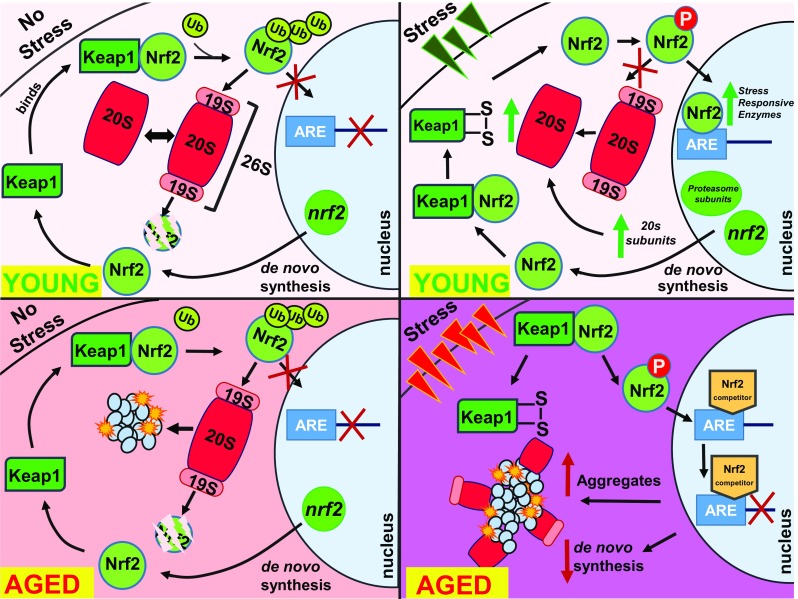
“This pathway and its constituent components (i.e., the Nrf2 ortholog, cap’-n’collar isoform-C (CncC), and the Keap1 and Maf proteins) are conserved in Drosophila and appear to engage in similar regulatory interactions as in vertebrates (Sykiotis and Bohmann 2008).”
BackgroundMarrero, J., Fontana, R. J., Su, G. L., Conjeevaram, H. S., Emick, D. M., & Lok, A. S.-F. (2002) · Hepatology · doi:10.1053/jhep.2002.36939 · Cited by 659
Amyloid A4 Protein and Its Precursor in Down's Syndrome and Alzheimer's Disease
Rumble, B. A., Retallack, R. W., Hilbich, C., Simms, G., Multhaup, G., Martins, R. N., Hockey, A., Montgomery, P., Beyreuther, K. T., & Masters, C. L. (1989) · New England Journal of Medicine · doi:10.1056/nejm198906013202203 · Cited by 656
Reactive Oxygen-Mediated Protein Oxidation in Aging and Disease
Stadtman, E. R., & Berlett, B. S. (1997) · Chemical Research in Toxicology · doi:10.1021/tx960133r · Cited by 652 · cited 3×
“…reactive oxygen/nitrogen species and various processes related to the formation of advanced glycated/lipid peroxidation end products (AGEs and ALEs) are hallmarks of the ageing process in different organs and tissues across different species (Stadtman and Berlett 1997; Baraibar and Friguet 2013).”
BackgroundTargeting Chelatable Iron as a Therapeutic Modality in Parkinson's Disease
Devos, D., Moreau, C., Devedjian, J. C., Kluza, J., Pétrault, M., Laloux, C., Jonneaux, A., Ryckewaert, G., Garçon, G., Rouaix, N., et al. (2013) · Antioxidants and Redox Signaling · doi:10.1089/ars.2013.5593 · Cited by 641
Consequences and Therapeutic Implications of Macrophage Apoptosis in Atherosclerosis
Tabas, I. A. (2005) · Arteriosclerosis Thrombosis and Vascular Biology · doi:10.1161/01.atv.0000184783.04864.9f · Cited by 641 · cited 1×
“If left unchecked, will eventually lead to the formation of a lipid core of advanced atherosclerotic plaques (Tabas 2005).”
BackgroundIncreased overall mortality and liver-related mortality in non-alcoholic fatty liver disease
Ong, J. P., Pitts, A., & Younossi, Z. M. (2008) · Journal of Hepatology · doi:10.1016/j.jhep.2008.06.018 · Cited by 636 · cited 2×
“Consequently, these individuals are at a greater risk for developing more advanced forms of NAFLD, and ultimately, increased risk of mortality (Ong et al. 2008).”
BackgroundAntioxidants can increase melanoma metastasis in mice
Le Gal, K., Ibrahim, M. X., Wiel, C., Sayin, V. I., Akula, M. K., Karlsson, C., Dalin, M. G., Akyürek, L. M., Lindahl, P., Nilsson, J., et al. (2015) · Science Translational Medicine · doi:10.1126/scitranslmed.aad3740 · Cited by 632
Combadière, C., Feumi, C., Raoul, W., Keller, N., Rodéro, M., Pézard, A., Lavalette, S., Houssier, M., Jonet, L., Picard, E., et al. (2007) · Journal of Clinical Investigation · doi:10.1172/jci31692 · Cited by 618
Self-citationPeri, F., & Nüsslein-Volhard, C. (2008) · Cell · doi:10.1016/j.cell.2008.04.037 · Cited by 617 · cited 16×
“2004) and in mononuclear phagocytes (MPs), such as Mφs and MCs (Levy et al. 2015a; Peri and Nusslein-Volhard 2008).”
BackgroundInfluentialGupta, N., Brown, K. E., & Milam, A. H. (2003) · Experimental Eye Research · doi:10.1016/s0014-4835(02)00332-9 · Cited by 582 · cited 1×
“Early and late forms of AMD show chronic, nonresolving subretinal accumulation of mononuclear phagocytes (MP) (Levy et al. 2015a; Combadiere et al. 2007; Sennlaub et al. 2013; Lad et al. 2015; Gupta et al. 2003).”
BackgroundApolipoprotein E: structure determines function, from atherosclerosis to Alzheimer's disease to AIDS
Mahley, R. W., Weisgraber, K. H., & Huang, Y. (2009) · Journal of Lipid Research · doi:10.1194/jlr.r800069-jlr200 · Cited by 580
Free radicals in cerebral ischemia.
Flamm, E. S., Demopoulos, H. B., Seligman, M. L., Poser, R. G., & Ransohoff, J. (1978) · Stroke · doi:10.1161/01.str.9.5.445 · Cited by 577 · cited 1×
“…onset of cerebral ischemia, a decrease in oxygen levels removes controls over the free radicals generated by electron transport and leads to decreased levels of antioxidants, such as vitamins E and C, as they are consumed in the attempt to quench the increase in free radicals (Flamm et al. 1978).”
BackgroundOxidative stress in vascular disease: causes, defense mechanisms and potential therapies
Förstermann, U. (2008) · Nature Clinical Practice Cardiovascular Medicine · doi:10.1038/ncpcardio1211 · Cited by 576 · cited 1×
“Interestingly, this protein decreases dramatically with risk factors (Forstermann 2008).”
BackgroundEl‐Domyati, M., Attia, S., Saleh, F., Brown, D., Birk, D. E., Gasparro, F., Ahmad, H., & Uitto, J. (2002) · Experimental Dermatology · doi:10.1034/j.1600-0625.2002.110502.x · Cited by 556
Alam, Z. I., Daniel, S. E., Lees, A. J., Marsden, D. C., Jenner, P. G., & Halliwell, B. B. (1997) · Journal of Neurochemistry · doi:10.1046/j.1471-4159.1997.69031326.x · Cited by 547
Lee, S., Varvel, N. H., Konerth, M. E., Xu, G., Cardona, A. E., Ransohoff, R. M., & Lamb, B. T. (2010) · The American Journal of Pathology · doi:10.2353/ajpath.2010.100265 · Cited by 522
Blood lactate is an important energy source for the human brain.
van Hall, G., Stømstad, M., Rasmussen, P., Jans, Ø., Zaar, M., Gam, C., Quistorff, B., Secher, N. H., & Nielsen, H. B. (2009) · Journal of Cerebral Blood Flow & Metabolism · doi:10.1038/jcbfm.2009.35 · Cited by 522
Van'T Hof, R. J., & Ralston, S. H. (2001) · Immunology · doi:10.1046/j.1365-2567.2001.01261.x · Cited by 518
Chen, W., Stambolian, D., Edwards, A. O., Branham, K. E., Othman, M., Jakobsdottir, J., Tosakulwong, N., Pericak-Vance, M. A., Campochiaro, P. A., Klein, M. L., et al. (2010) · Proceedings of the National Academy of Sciences · doi:10.1073/pnas.0912702107 · Cited by 506
Lactate promotes plasticity gene expression by potentiating NMDA signaling in neurons
Yang, J., Ruchti, E., Petit, J.-M., Jourdain, P., Grenningloh, G., Allaman, I., & Magistretti, P. J. (2014) · Proceedings of the National Academy of Sciences · doi:10.1073/pnas.1322912111 · Cited by 504
State of the epidemiological evidence on physical activity and cancer prevention
Friedenreich, C. M., Neilson, H. K., & Lynch, B. M. (2010) · European Journal of Cancer · doi:10.1016/j.ejca.2010.07.028 · Cited by 502 · cited 1×
“In addition, patients’ diet and physical activity levels are known to modulate the efficiency of these anticancer treatments, but the molecular mechanisms remain unknown (Friedenreich et al. 2010; Davies et al. 2011).”
BackgroundmiR-141 and miR-200a act on ovarian tumorigenesis by controlling oxidative stress response
Mateescu, B., Batista, L., Cardon, M., Gruosso, T., de Feraudy, Y., Mariani, O., Nicolas, A., Meyniel, J.-P., Cottu, P., Sastre-Garau, X., et al. (2011) · Nature Medicine · doi:10.1038/nm.2512 · Cited by 502
Self-citationOxidative stress in bone remodelling and disease
Wauquier, F., Léotoing, L., Coxam, V., Guicheux, J., & Wittrant, Y. (2009) · Trends in Molecular Medicine · doi:10.1016/j.molmed.2009.08.004 · Cited by 501
Macrophage Depletion Inhibits Experimental Choroidal Neovascularization
Sakurai, E., Anand, A., Ambati, B. K., van Rooijen, N., & Ambati, J. (2003) · Investigative Ophthalmology & Visual Science · doi:10.1167/iovs.03-0097 · Cited by 498
Atherosclerosis in the Apolipoprotein E–Deficient Mouse
Meir, K. S., & Leitersdorf, E. (2004) · Arteriosclerosis Thrombosis and Vascular Biology · doi:10.1161/01.atv.0000128849.12617.f4 · Cited by 498 · cited 2×
“Accordingly, APOE mice have extremely high lipid levels and massive amounts of cholesterol-rich β-VLDL and spontaneously develop atherosclerotic lesions (Meir and Leitersdorf 2004).”
BackgroundGenetic Association of Apolipoprotein E with Age-Related Macular Degeneration
Klaver, C. C. W., Kliffen, M., van Duijn, C. M., Hofman, A., Cruts, M., Grobbee, D. E., van Broeckhoven, C., & de Jong, P. T. V. M. (1998) · The American Journal of Human Genetics · doi:10.1086/301901 · Cited by 498
Lactate Produced by Glycogenolysis in Astrocytes Regulates Memory Processing
Newman, L. A., Korol, D. L., & Gold, P. E. (2011) · PLoS ONE · doi:10.1371/journal.pone.0028427 · Cited by 492 · cited 1×
“Intra-hippocampal infusions of lactate enhance working memory and blocking neuronal uptake of lactate impairs memory formation in rats (Newman et al. 2011).”
BackgroundFinch, C. E., & Tanzi, R. E. (1997) · Science · doi:10.1126/science.278.5337.407 · Cited by 485
Self-citationVoelcker‐Rehage, C., Godde, B., & Staudinger, U. M. (2011) · Frontiers in Human Neuroscience · doi:10.3389/fnhum.2011.00026 · Cited by 472
Navarro, A., Gómez, C., López-Cepero, J. M., & Boveris, A. (2004) · American Journal of Physiology-Regulatory, Integrative and Comparative Physiology · doi:10.1152/ajpregu.00208.2003 · Cited by 460
Langston, J. W. (2017) · Journal of Parkinson s Disease · doi:10.3233/jpd-179006 · Cited by 457 · cited 2×
“With respect to Parkinson disease, the discovery of MPTP-induced parkinsonism shed light on mitochondria as a contributor to disease process (Langston et al. 1983; Langston 2017).”
BackgroundMagenta, A., Cencioni, C., Fasanaro, P., Zaccagnini, G., Greco, S., Sarra-Ferraris, G., Antonini, A., Martelli, F., & Capogrossi, M. C. (2011) · Cell Death and Differentiation · doi:10.1038/cdd.2011.42 · Cited by 456
Hall, C. N., Klein-Flugge, M. C., Howarth, C., & Attwell, D. (2012) · Journal of Neuroscience · doi:10.1523/jneurosci.0026-12.2012 · Cited by 451
Resveratrol: French Paradox Revisited
Catalgol, B., Batirel, S., Taga, Y., & Ozer, N. K. (2012) · Frontiers in Pharmacology · doi:10.3389/fphar.2012.00141 · Cited by 449
Accumulation of cholesterol with age in human Bruch's membrane.
Curcio, C. A., Millican, C. L., Bailey, T. A., & Kruth, H. S. (2001) · PubMed · Cited by 442
Cacciottolo, M., Wang, X., Driscoll, I. F., Woodward, N., Saffari, A., Reyes, J. M., Serre, M. L., Vizuete, W., Sioutas, C., Morgan, T. E., et al. (2017) · Translational Psychiatry · doi:10.1038/tp.2016.280 · Cited by 441
Self-citationMenopausal changes in bone remodeling.
Heaney, R. P., Recker, R. R., & Saville, P. D. (1978) · PubMed · Cited by 435
Increased Reactive Oxygen Species Formation and Oxidative Stress in Rheumatoid Arthritis
Mateen, S., Moin, S., Khan, A. Q., Zafar, A., & Fatima, N. (2016) · PLoS ONE · doi:10.1371/journal.pone.0152925 · Cited by 434
Fullerton, S. M., Clark, A. G., Weiss, K. M., Nickerson, D. A., Taylor, S. L., Stengård, J., Salomaa, V. V., Vartiainen, E. A., Perola, M., Boerwinkle, E., et al. (2000) · The American Journal of Human Genetics · doi:10.1086/303070 · Cited by 429
Selective distribution of lactate dehydrogenase isoenzymes in neurons and astrocytes of human brain
Bittar, P. G., Charnay, Y., Pellerin, L., Bouras, C., & Magistretti, P. J. (1996) · Journal of Cerebral Blood Flow & Metabolism · doi:10.1097/00004647-199611000-00001 · Cited by 423
Salazar, J., Mena, N., Hunot, S., Prigent, A., Alvarez-Fischer, D., Arredondo, M., Duyckaerts, C., Sazdovitch, V., Zhao, L., Garrick, L. M., et al. (2008) · Proceedings of the National Academy of Sciences · doi:10.1073/pnas.0804373105 · Cited by 409
Pillai, J. B., Isbatan, A., Imai, S., & Gupta, M. P. (2005) · Journal of Biological Chemistry · doi:10.1074/jbc.m506162200 · Cited by 404
Alexandre, J., Hu, Y., Lu, W., Pelicano, H., & Huang, P. (2007) · Cancer Research · doi:10.1158/0008-5472.can-06-3914 · Cited by 391
Early Destructive Effect of Sunlight on Human Skin
Kligman, A. M. (1969) · JAMA · doi:10.1001/jama.1969.03160390039008 · Cited by 389 · cited 2×
“actinic elastosis, a hallmark of photoaging (Kligman 1969; Lewis et al. 2004).”
BackgroundNew insights in photoaging, UVA induced damage and skin types
Battie, C., Jitsukawa, S., Bernerd, F., Del Bino, S., Marionnet, C., & Verschoore, M. (2014) · Experimental Dermatology · doi:10.1111/exd.12388 · Cited by 382
Krebiehl, G., Ruckerbauer, S., Burbulla, L. F., Kieper, N., Maurer, B., Waak, J., Wolburg, H., Gizatullina, Z. Z., Gellerich, F. N., Woitalla, D., et al. (2010) · PLoS ONE · doi:10.1371/journal.pone.0009367 · Cited by 381
Panich, U., Sittithumcharee, G., Rathviboon, N., & Jirawatnotai, S. (2016) · Stem Cells International · doi:10.1155/2016/7370642 · Cited by 374
PETERS, L. L. (1964) · The Lancet · doi:10.1016/s0140-6736(64)90527-6 · Cited by 372
Physical activity and the risk of Parkinson disease
Chen, H., Zhang, S. M., Schwarzschild, M. A., Hernán, M. A., & Ascherio, A. (2005) · Neurology · doi:10.1212/01.wnl.0000151960.28687.93 · Cited by 371
An abundant dysfunctional apolipoprotein A1 in human atheroma
Huang, Y. R., DiDonato, J. A., Levison, B. S., Schmitt, D., Li, L., Wu, Y., Buffa, J. A., Kim, T., Gerstenecker, G. S., Gu, X., et al. (2014) · Nature Medicine · doi:10.1038/nm.3459 · Cited by 369
Exercise training increases mitochondrial biogenesis in the brain
Steiner, J. L., Murphy, E. A., McClellan, J. L., Carmichael, M. D., & Davis, J. M. (2011) · Journal of Applied Physiology · doi:10.1152/japplphysiol.00343.2011 · Cited by 368
Klein, R., Klein, B. E. K., Tomany, S. C., Meuer, S. M., & Huang, G.-H. (2002) · Ophthalmology · doi:10.1016/s0161-6420(02)01146-6 · Cited by 363
Boumezbeur, F., Petersen, K. F., Cline, G. W., Mason, G. F., Behar, K. L., Shulman, G. I., & Rothman, D. L. (2010) · Journal of Neuroscience · doi:10.1523/jneurosci.2040-10.2010 · Cited by 362
Kloner, R. A., Sg, E., Lange, R., & D, E. B. M. (1983) · PubMed · Cited by 362
Self-citationDavies, K. J. A. (2016) · Molecular Aspects of Medicine · doi:10.1016/j.mam.2016.04.007 · Cited by 362 · cited 2×
“Thankfully, we can nowmechanistically explain this particular ostensible paradox as the phenomenon of BAdaptive Homeostasis^ (Eisenberg et al. 2016; Davies 2016; Pomatto et al. 2017a; Lomeli et al. 2017; Pomatto and Davies 2017),;the non-damaging process by which an apparent toxicant can activate…”
BackgroundSelf-citationSeddon, J. M. (2005) · Archives of Ophthalmology · doi:10.1001/archopht.123.6.774 · Cited by 354
p38α suppresses normal and cancer cell proliferation by antagonizing the JNK–c-Jun pathway
Hui, L., Bakiri, L., Mairhorfer, A., Schweifer, N., Haslinger, C., Kenner, L., Komnenovic, V., Scheuch, H., Beug, H., & Wagner, E. F. (2007) · Nature Genetics · doi:10.1038/ng2033 · Cited by 353
The exposome in practice: Design of the EXPOsOMICS project
Vineis, P., Chadeau‐Hyam, M., Gmuender, H., Gulliver, J., Herceg, Z., Kleinjans, J. C. S., Kogevinas, M., Kyrtopoulos, S. Α., Nieuwenhuijsen, M. J., Phillips, D. H., et al. (2016) · International Journal of Hygiene and Environmental Health · doi:10.1016/j.ijheh.2016.08.001 · Cited by 353
Przyklenk, K., & Kloner, R. A. (1986) · Circulation Research · doi:10.1161/01.res.58.1.148 · Cited by 349 · cited 5×
“(Przyklenk and Kloner 1986) showed that superoxide dismutase and catalase, given prior to, during occlusion and during reperfusion, improved the recovery of the”
BackgroundMethodInfluentialSelf-citationImpact of Apolipoprotein E (ApoE) Polymorphism on Brain ApoE Levels
Riddell, D. R., Zhou, H., Atchison, K., Warwick, H. K., Atkinson, P. J., Jefferson, J., Xu, L., Aschmies, S., Kirksey, Y., Hu, Y., et al. (2008) · The Journal of Neuroscience · doi:10.1523/jneurosci.1972-08.2008 · Cited by 346
Self-citationOxygen-derived free radicals and postischemic myocardial dysfunction (“stunned myocardium”)
Bolli, R. (1988) · Journal of the American College of Cardiology · doi:10.1016/0735-1097(88)90381-6 · Cited by 345 · cited 1×
“This finding and those of the Bolli group (Bolli 1988) showed that the mechanism of stunned myocardium involved reactive oxygen species and that a potential therapy for stunned myocardium was oxygen radical scavengers.”
ResultThe role of reactive oxygen species and metabolism on cancer cells and their microenvironment
Costa, A., Scholer‐Dahirel, A., & Mechta‐Grigoriou, F. (2014) · Seminars in Cancer Biology · doi:10.1016/j.semcancer.2013.12.007 · Cited by 344 · cited 2×
“The type of tumor, the context of tumor’s microenvironment, and the nature of stimuli will determine if reactive oxygen species will shift the balance toward a pro-survival or pro-death response (Gentric et al. 2017; Costa et al. 2014).”
BackgroundSelf-citationNormalization of NAD + Redox Balance as a Therapy for Heart Failure
Lee, C. F., Chavez, J. D., Garcia‐Menendez, L., Choi, Y. S., Roe, N. D., Chiao, Y. A., Edgar, J. S., Goo, Y. A., Goodlett, D. R., Bruce, J. E., et al. (2016) · Circulation · doi:10.1161/circulationaha.116.022495 · Cited by 342
Prospective study of dietary pattern and risk of Parkinson disease
Gao, X., Chen, H., Fung, T. T., Logroscino, G., Schwarzschild, M. A., Hu, F. B., & Ascherio, A. (2007) · American Journal of Clinical Nutrition · doi:10.1093/ajcn/86.5.1486 · Cited by 340
The association of cardiovascular disease with the long-term incidence of age-related maculopathy
Klein, R., Klein, R., Tomany, S. C., & Cruickshanks, K. J. (2003) · Ophthalmology · doi:10.1016/s0161-6420(02)01448-3 · Cited by 339
A prospective study of carotenoid intake and risk of cataract extraction in US men
Brown, L., Rimm, E. B., Seddon, J. M., Giovannucci, E. L., Chasan‐Taber, L., Spiegelman, D. L., Willett, W. C., & Hankinson, S. E. (1999) · American Journal of Clinical Nutrition · doi:10.1093/ajcn/70.4.517 · Cited by 339
The Antioxidant Effect of Exercise: A Systematic Review and Meta-Analysis
Sousa, C. V., Sales, M. M., Rosa, T. D. S., Lewis, J. E., de Andrade, R. V., & Simões, H. G. (2016) · Sports Medicine · doi:10.1007/s40279-016-0566-1 · Cited by 339
Ultraviolet radiation and the skin: Photobiology and sunscreen photoprotection
Young, A. R., Claveau, J., & Rossi, A. B. (2017) · Journal of the American Academy of Dermatology · doi:10.1016/j.jaad.2016.09.038 · Cited by 339 · cited 1×
“Clinical signs of photoaging from baseline to the end of the trial were reduced by 24% in the daily sunscreen group compared to the discretionary sunscreen group (relative odds 0.76, 95% confidence interval (0.59–0.98) (Young et al. 2016).”
BackgroundInfluentialMetabolic signaling by lactate in the brain
Barros, L. F. (2013) · Trends in Neurosciences · doi:10.1016/j.tins.2013.04.002 · Cited by 333 · cited 14×
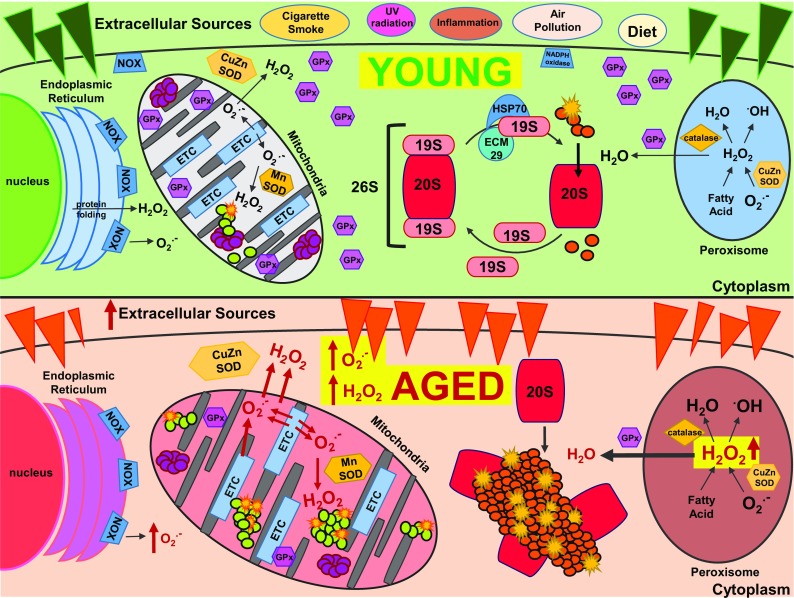
“During periods of oxidative stress, the 19S regulatory caps of the 26 proteasome are sequestered away by HSP70 and ECM29, increasing the available pool of ATP-independent 20S proteasomes.”
BackgroundInfluentialPINK1 and Parkin: emerging themes in mitochondrial homeostasis
McWilliams, T. G., & Muqit, M. M. K. (2017) · Current Opinion in Cell Biology · doi:10.1016/j.ceb.2017.03.013 · Cited by 333 · cited 2×
“Mutations in this genetic pathway are implicated in Parkinson disease characteristic dopaminergic degeneration (McWilliams and Muqit 2017).”
BackgroundChronic systemic complex I inhibition induces a hypokinetic multisystem degeneration in rats
Höglinger, G. U., Féger, J., Prigent, A., Michel, P. P., Parain, K., Champy, P., Ruberg, M., Oertel, W. H., & Hirsch, É. C. (2003) · Journal of Neurochemistry · doi:10.1046/j.1471-4159.2003.01533.x · Cited by 331
Petzinger, G. M., Walsh, J. P., Akopian, G., Hogg, E., Abernathy, A., Arevalo, P., Turnquist, P., Vučković, M., Fisher, B. E., Togasaki, D. M., et al. (2007) · The Journal of Neuroscience · doi:10.1523/jneurosci.1069-07.2007 · Cited by 329
Self-citationSennlaub, F., Auvynet, C., Calippe, B., Lavalette, S., Poupel, L., Hu, S. J., Dominguez, E., Camelo, S., Levy, O., Guyon, E., et al. (2013) · EMBO Molecular Medicine · doi:10.1002/emmm.201302692 · Cited by 325
Self-citationArthritis and Allied Conditions: A Textbook of Rheumatology
Smyth, C. J. (1985) · JAMA · doi:10.1001/jama.1985.03360180182053 · Cited by 323
Nitric Oxide Synthase Expression in Bone Cells
Fox, S. W., & Chow, J. W. M. (1998) · Bone · doi:10.1016/s8756-3282(98)00070-2 · Cited by 320 · cited 2×
“…expressed in bone marrow stromal cells, osteoblasts, osteocytes, and osteoclasts (Helfrich et al. 1997), while inducible NOS (iNOS) has been observed in fetal bone (Hukkanen et al. 1999)—suggesting a role in skeletal development, but not constitutively in normal adult bone (Fox and Chow 1998).”
BackgroundHuman Apolipoprotein E4 Domain Interaction
Dong, L.-M., & Weisgraber, K. H. (1996) · Journal of Biological Chemistry · doi:10.1074/jbc.271.32.19053 · Cited by 318 · cited 10×
“In vitro oxidation of either apoA1 or HDL particles by MPO impairs their cholesterol acceptor function.”
BackgroundInfluentialFree radicals as triggers of brain edema formation after stroke
Heo, J. H., Han, S., & Lee, S. (2005) · Free Radical Biology and Medicine · doi:10.1016/j.freeradbiomed.2005.03.035 · Cited by 317 · cited 1×
“Even following the immediate danger of a stroke, free radicals continue to exert detrimental effects that lead to other complications such as brain edema, which can result from disruption of the blood brain barrier leading to fluid accumulation (Heo et al. 2005).”
BackgroundLiao, S., Umekita, Y., Guo, J., Kokontis, J. M., & Hiipakka, R. A. (1995) · Cancer Letters · doi:10.1016/0304-3835(95)03948-v · Cited by 316
Nutrient intake and cataract extraction in women: a prospective study.
Hankinson, S. E., Stampfer, M. J., Seddon, J. M., Colditz, G. A., ROSNER, B. A., Speizer, F. E., & Willett, W. C. (1992) · BMJ · doi:10.1136/bmj.305.6849.335 · Cited by 312
Fisher, B. E., Petzinger, G. M., Nixon, K., Hogg, E., Bremmer, S., Meshul, C. K., & Jakowec, M. W. (2004) · Journal of Neuroscience Research · doi:10.1002/jnr.20162 · Cited by 311
Yamamoto, T., Byun, J., Zhai, P., Ikeda, Y., Oka, S., & Sadoshima, J. (2014) · PLoS ONE · doi:10.1371/journal.pone.0098972 · Cited by 305
Physical Activity and Cancer Outcomes: A Precision Medicine Approach
Friedenreich, C. M., Neilson, H. K., Farris, M. S., & Courneya, K. S. (2016) · Clinical Cancer Research · doi:10.1158/1078-0432.ccr-16-0067 · Cited by 305
Oxidative stress in malignant melanoma and non-melanoma skin cancer
Sander, C. S., Hamm, F., Elsner, P. U., & Thiele, J. J. (2003) · British Journal of Dermatology · doi:10.1046/j.1365-2133.2003.05303.x · Cited by 300
Increased atherosclerosis in mice reconstituted with apolipoprotein E null macrophages
Fazio, S., Babaev, V. R., Murray, A. B., Hasty, A. H., Carter, K. J., Gleaves, L. A., Atkinson, J. B., & Linton, M. F. (1997) · Proceedings of the National Academy of Sciences · doi:10.1073/pnas.94.9.4647 · Cited by 295
Fibers for hearts: A critical review on electrospinning for cardiac tissue engineering
Κιτσαρά, Μ., Agbulut, O., Kontziampasis, D., Chen, Y., & Menasché, P. (2016) · Acta Biomaterialia · doi:10.1016/j.actbio.2016.11.014 · Cited by 289 · cited 1×
“The principle of tissue engineering mainly relies upon the promotion of cells growth on a bio-inspired scaffold that mimics both physical and chemical properties of cardiac tissues (Kitsara et al. 2016).”
BackgroundSelf-citationCobb, L. J., Lee, C. D., Xiao, J., Yen, K., Wong, R. G., Nakamura, H. K., Mehta, H. H., Gao, Q., Ashur, C., Huffman, D. M., et al. (2016) · Aging · doi:10.18632/aging.100943 · Cited by 288
Self-citationResistance to Paclitaxel Is Proportional to Cellular Total Antioxidant Capacity
Ramanathan, B., Jan, K.-Y., Chen, C., Hour, T., Yu, H., & Pu, Y. (2005) · Cancer Research · doi:10.1158/0008-5472.can-05-1162 · Cited by 287
Cholesterol in the retina: The best is yet to come
Pikuleva, I. A., & Curcio, C. A. (2014) · Progress in Retinal and Eye Research · doi:10.1016/j.preteyeres.2014.03.002 · Cited by 287 · cited 3×
“These observations and experimental data led to the hypothesis that drusen lesions develop secondary to a deficit in the reverse cholesterol transport (RCT) similar to atherosclerotic plaques (Pikuleva and Curcio 2014; Malek et al. 2005; Ong et al. 2001).”
BackgroundApolipoprotein E allele-dependent pathogenesis: a model for age-related retinal degeneration
Malek, G., Johnson, L. V., Mace, B. E., Saloupis, P., Schmechel, D. E., Rickman, D. W., Toth, C. A., Sullivan, P. M., & Rickman, C. B. (2005) · Proceedings of the National Academy of Sciences · doi:10.1073/pnas.0503015102 · Cited by 284
A prospective study of carotenoid and vitamin A intakes and risk of cataract extraction in US women
Chasan‐Taber, L., Willett, W. C., Seddon, J. M., Stampfer, M. J., ROSNER, B. A., Colditz, G. A., Speizer, F. E., & Hankinson, S. E. (1999) · American Journal of Clinical Nutrition · doi:10.1093/ajcn/70.4.509 · Cited by 283
Lactate: A Preferred Fuel for Human Brain Metabolism in Vivo
Smith, D., Pernet, A., Hallett, W. A., Bingham, E., Marsden, P. K., & Amiel, S. A. (2003) · Journal of Cerebral Blood Flow & Metabolism · doi:10.1097/01.wcb.0000063991.19746.11 · Cited by 282
Davies, N. J., Batehup, L., & Thomas, R. (2011) · British Journal of Cancer · doi:10.1038/bjc.2011.423 · Cited by 277 · cited 1×
“In addition, patients’ diet and physical activity levels are known to modulate the efficiency of these anticancer treatments, but the molecular mechanisms remain unknown (Friedenreich et al. 2010; Davies et al. 2011).”
BackgroundTsutsumi, C., Sonoda, K.-H., Egashira, K., Qiao, H., Hisatomi, T., Nakao, S., Ishibashi, M., Charo, I. F., Sakamoto, T., Murata, T., et al. (2003) · Journal of Leukocyte Biology · doi:10.1189/jlb.0902436 · Cited by 277
Etiology and Pathogenesis of Rheumatoid Arthritis
Firestein, G. S. (2016) · Elsevier eBooks · doi:10.1016/b978-0-323-31696-5.00069-3 · Cited by 277
Lau, Y.-S., Patki, G., Das-Panja, K., Le, W.-D., & Ahmad, S. O. (2011) · European Journal of Neuroscience · doi:10.1111/j.1460-9568.2011.07626.x · Cited by 275
Human APOE Isoform-Dependent Effects on Brain β-Amyloid Levels in PDAPP Transgenic Mice
Bales, K. R., Liu, F., Wu, S., Lin, S., Koger, D., DeLong, C., Hansen, J. C., Sullivan, P. M., & Paul, S. M. (2009) · The Journal of Neuroscience · doi:10.1523/jneurosci.0887-09.2009 · Cited by 274
Hartmann, A., Troadec, J., Hunot, S., Kikly, K., Faucheux, B. A., Prigent, A., Ruberg, M., Agid, Y., & Hirsch, É. C. (2001) · Journal of Neuroscience · doi:10.1523/jneurosci.21-07-02247.2001 · Cited by 274
Inhibition of endogenous thioredoxin in the heart increases oxidative stress and cardiac hypertrophy
Yamamoto, M., Yang, G., Hong, C., Liu, J., Holle, E., Yu, X., Wagner, T. E., Vatner, S. F., & Sadoshima, J. (2003) · Journal of Clinical Investigation · doi:10.1172/jci17700 · Cited by 274
Bostwick, D. G., Alexander, E. E., Singh, R., Shan, A., Qian, J., Santella, R. M., Oberley, L. W., Yan, T., Zhong, W., Jiang, X., et al. (2000) · Cancer · doi:10.1002/1097-0142(20000701)89:1 · Cited by 273
Intracerebral Hemorrhage, Oxidative Stress, and Antioxidant Therapy
Duan, X., Wen, Z., Shen, H., Shen, M., & Chen, G. (2016) · Oxidative Medicine and Cellular Longevity · doi:10.1155/2016/1203285 · Cited by 273
The Relationship of Cardiovascular Disease and Its Risk Factors to Age-related Maculopathy
Klein, R., Klein, R., & Franke, T. M. (1993) · Ophthalmology · doi:10.1016/s0161-6420(93)31634-9 · Cited by 262 · cited 31×
“Our study also sheds an interesting light on the puzzling differences of the APOE isoform association with AMD (McKay et al. 2011) and Alzheimer disease (Mahley and Rall 2000), two major age-related neurodegenerative diseases: In Alzheimer disease, the APOE4-allele is associated with greater β-amyloid burden, possibly…”
BackgroundInfluentialTotal oxidative/anti-oxidative status and relation to bone mineral density in osteoporosis
Altındağ, Ö., Erel, Ö., Soran, N., Çelık, H., & Selek, Ş. (2007) · Rheumatology International · doi:10.1007/s00296-007-0452-0 · Cited by 261
Epidemiologic evidence of a role for the antioxidant vitamins and carotenoids in cataract prevention
Jacques, P. F., & Chylack, L. T. (1991) · American Journal of Clinical Nutrition · doi:10.1093/ajcn/53.1.352s · Cited by 261 · cited 1×
“Dietary supplementation of vitamin C has been associated with reduced risk of developing age-related cataracts (Yoshida et al. 2007; Jacques and Chylack 1991; Hankinson et al. 1992).”
BackgroundOverview of skin aging and photoaging.
Helfrich, Y. R., Sachs, D. L., & Voorhees, J. J. (2008) · PubMed · Cited by 257
Anderson, D. H., Ozaki, S., Nealon, M., Neitz, J., Mullins, R. F., Hageman, G. S., & Johnson, L. V. (2001) · American Journal of Ophthalmology · doi:10.1016/s0002-9394(00)00961-2 · Cited by 255
Flaherty, J. T., Pitt, B., Gruber, J. W., Heuser, R. R., ROTHBAUM, D. A., Burwell, L. R., George, B. S., Kereiakes, D. J., Deitchman, D., & Gustafson, N. (1994) · Circulation · doi:10.1161/01.cir.89.5.1982 · Cited by 255
Champy, P., Höglinger, G. U., Féger, J., Gleye, C., Hocquemiller, R., Laurens, A., Guérineau, V., Laprévôte, O., Medja, F., Lombès, A., et al. (2003) · Journal of Neurochemistry · doi:10.1046/j.1471-4159.2003.02138.x · Cited by 254
Krutmann, J. (2000) · Journal of Dermatological Science · doi:10.1016/s0923-1811(99)00077-8 · Cited by 248 · cited 1×
“The key biological mechanism by which sun exposure leads to photoaging is the generation of reactive oxygen species (Gilchrest 2013; Yaar and Gilchrest 2012; Krutmann 2000).”
BackgroundHeterogeneity in Cancer Metabolism: New Concepts in an Old Field
Gentric, G., Mieulet, V., & Mechta‐Grigoriou, F. (2016) · Antioxidants and Redox Signaling · doi:10.1089/ars.2016.6750 · Cited by 248 · cited 2×
“The type of tumor, the context of tumor’s microenvironment, and the nature of stimuli will determine if reactive oxygen species will shift the balance toward a pro-survival or pro-death response (Gentric et al. 2017; Costa et al. 2014).”
BackgroundSelf-citationCutaneous responses to environmental stressors
Valacchi, G., Sticozzi, C., Pecorelli, A., Cervellati, F., Cervellati, C., & Maioli, E. (2012) · Annals of the New York Academy of Sciences · doi:10.1111/j.1749-6632.2012.06724.x · Cited by 243
Prebiotic and Probiotic Regulation of Bone Health: Role of the Intestine and its Microbiome
McCabe, L. R., Britton, R. A., & Parameswaran, N. (2015) · Current Osteoporosis Reports · doi:10.1007/s11914-015-0292-x · Cited by 242 · cited 1×
“Direct modulation of the quantity of bacteria present (through use of antibiotics), as well as addition of bacterial substrates (prebiotics) and addition of beneficial bacteria (probiotics) can affect measures of bone health and calcium metabolism (reviewed in McCabe L et al. (McCabe et al. 2015)).”
BackgroundReducing falls and resulting hip fractures among older women
Stevens, J. A., & Olson, S. J. (2000) · Home Care Provider · doi:10.1067/mhc.2000.109232 · Cited by 242 · cited 2×
“At least half of hip fracture patients never regain their previous function (Stevens and Olson 2000), and post-hip fracture mortality at 1 year remains as high as 33% (Roche et al.”
BackgroundDelcourt, C., Michel, F., Colvez, A., Lacroux, A., Delage, M., & Vernet, M.-H. (2001) · Ophthalmic Epidemiology · doi:10.1076/opep.8.4.237.1613 · Cited by 241
Lotz, M., Otsuki, S., Grogan, S. P., Sah, R. L., Terkeltaub, R. A., & DʼLima, D. D. (2010) · Arthritis & Rheumatism · doi:10.1002/art.27528 · Cited by 241 · cited 1×
“…only 5% of the joint mass. Ageing results in cell senescence (Musumeci et al. 2015), loss of chondrocyte phenotype and thus abnormal remodeling of the extracellular matrix (Quintero et al. 1984; Lotz et al. 2010), and age-related changes in the extracellular matrix (Bhosale and Richardson 2008).”
Background
Research works printed but not linked: 4
- Garrod AB (1859) Treatise on nature of gout and rheumatic gout. Walton and Maberly, London
- Kurien BT, Mohan C, Scofield H (2012) Mechanisms of tissue damage-free radicals and fibrosis. In: Wallace DJ (ed) Dubois’ Lupus Erythematosus and Related Syndromes E-Book: Expert Consult-Online, 8th edn. Elsevier Health Sciences, London, p 175–189
- Rui Yin QC, Hamblin MR (2015) Skin aging and photoaging, in Skin photoaging. Morgan & Claypool, San Rafael, pp 1–4
- Yaar M, Gilchrest BA (2012) Aging of the skin, in Fitspatrick’s dermatology in general medicine. McGraw Hill, New York, pp 1213–1211
Cited by
Sorted by citations
Mitochondrial and metabolic dysfunction in ageing and age-related diseases
Amorim, J. A., Coppotelli, G., Rolo, A. P., Palmeira, C. M., Ross, J. M., & Sinclair, D. A. (2022) · Nature Reviews Endocrinology · doi:10.1038/s41574-021-00626-7 · Cited by 990
Charlton, N. C., Mastyugin, M., Török, B., & Török, M. (2023) · Molecules · doi:10.3390/molecules28031057 · Cited by 292
“The so-called “French Paradox” especially increased interest in dietary small molecule antioxidants after it was noted that despite high saturated fat and alcohol intake, Mediterranean populations are less likely to develop coronary heart disease [42].”
BackgroundOxInflammation: From Subclinical Condition to Pathological Biomarker
Valacchi, G., Virgili, F., Cervellati, C., & Pecorelli, A. (2018) · Frontiers in Physiology · doi:10.3389/fphys.2018.00858 · Cited by 212
“Possible leaks from this outpost can be then countered by further repair systems such as proteinases, lipases, DNA repair enzymes (Davies et al., 2017).”
BackgroundMelatonin: Clinical Perspectives in Neurodegeneration
Cardinali, D. P. (2019) · Frontiers in Endocrinology · doi:10.3389/fendo.2019.00480 · Cited by 210
“Although the regular intake of antioxidants has been proposed for prevention of neurodegeneration, its effectiveness, however, has been questioned (3).”
BackgroundMarcucci, G., Domazetovic, V., Nediani, C., Ruzzolini, J., Favre, C., & Brandi, M. L. (2023) · Antioxidants · doi:10.3390/antiox12020373 · Cited by 200
“It has also been demonstrated that ROS stimulates osteoclastogenesis through RANKL as reported in human stromal cells [26,81].”
Background
Metadata
- Authors
- Davies, J. M. S., Cillard, J., Friguet, B., Cadenas, E., Cadet, J., Cayce, R., Fishmann, A., Liao, D., Bulteau, A.-L., Derbré, F., Rébillard, A., Burstein, S., Hirsch, E., Kloner, R. A., Jakowec, M., Petzinger, G., Sauce, D., Sennlaub, F., Limon, I., Ursini, F., Maiorino, M., Economides, C., Pike, C. J., Cohen, P., Salvayre, A. N., Halliday, M. R., Lundquist, A. J., Jakowec, N. A., Mechta-Grigoriou, F., Mericskay, M., Mariani, J., Li, Z., Huang, D., Grant, E., Forman, H. J., Finch, C. E., Sun, P. Y., Pomatto, L. C. D., Agbulut, O., Warburton, D., Neri, C., Rouis, M., Cillard, P., Capeau, J., Rosenbaum, J., & Davies, K. J. A.
- Affiliations
- University of Southern California (US)
- Université de Rennes (FR)
- Centre National de la Recherche Scientifique (FR)
- Université de Sherbrooke (CA)
- Good Samaritan Hospital (US)
- École Normale Supérieure de Lyon (FR)
- Université Rennes 2 (FR)
- Huntington Medical Research Institutes (US)
- Inserm (FR)
- Institut de la Vision (FR)
- University of Padua (IT)
- Université Paris-Sud (FR)
- Corresponding author
- Davies, Kelvin J. A.
- ORCID
- Friguet, Bertrand
- Cadenas, Enrique
- Cadet, Jean
- Bulteau, Anne-Laure
- Rébillard, Amélie
- Kloner, Robert A.
- Jakowec, Michael
- Petzinger, Giselle
- Sauce, Delphine
- Sennlaub, Florian
- Limon, Isabelle
- Ursini, Fulvio
- Maiorino, Matilde
- Pike, Christian J.
- Cohen, Pinchas
- Halliday, Matthew R.
- Lundquist, Adam J.
- Jakowec, Nicolaus A.
- Mericskay, Mathias
- Mariani, Jean
- Li, Zhenlin
- Grant, Ellsworth
- Forman, Henry J.
- Finch, Caleb E.
- Sun, Patrick Y.
- Pomatto, Laura C. D.
- Agbulut, Onnik
- Warburton, David
- Rouis, Mustapha
- Capeau, Jacqueline
- Rosenbaum, Jean
- Davies, Kelvin J. A.
- Venue
- GeroScience
- Published
- 2017-12
- Volume
- 39
- Issue
- 5-6
- Pages
- 499-550
- ISSN
- 2152-4041 (ISSN-L)
- 2509-2715
- 2509-2723
- PMC
- PMC5745211
- OpenAlex
- W2779963304
- Cited by
- 82
- References
- 445
- Citations by year
- 2026: 4 · 2025: 4 · 2024: 9 · 2023: 8 · 2022: 7 · 2021: 13 · 2020: 10 · 2019: 19 · 2018: 7
- FWCI
- 1.13
- Type
- journal article
- Language
- en
- Open access
- hybrid
- doi.org
- Licence
- Locations
- GeroScience (publishedVersion, cc-by)
- PubMed Central (publishedVersion, cc-by)
- PubMed (publishedVersion)
- HAL (submittedVersion, cc-by)
- eScholarship (California Digital Library) (submittedVersion)
- eScholarship (California Digital Library) (submittedVersion, cc-by)
- Padua Research Archive (University of Padova) (submittedVersion, cc-by)
- Funders
- National Science Foundation (#DGE-1418060)
- National Institute of Environmental Health Sciences (#ES023864, #R01ES020812, #D43ES022862, #ES003598)
- Institut National de la Santé et de la Recherche Médicale
- National Institute on Aging (# AG-040753, # AG058068, # P01AG034906, # R01AG034430, # AG052374)
- Agence Nationale de la Recherche
- Université Pierre et Marie Curie
- Université Toulouse III - Paul Sabatier
- Conseil Régional de Bretagne
- Ligue Contre le Cancer
- Fondation de France
- Centre National de la Recherche Scientifique
- Assistance Publique - Hôpitaux de Paris
- U.S. Department of Defense (DOD-PC160353U)
- American Foundation for Aging Research
- Don Roberto Gonzalez and Family Foundation
- National Parkinson Foundation
- National Heart, Lung, and Blood Institute (#U01HL122681)
- Pasadena Guild
- Children's Hospital Los Angeles
- the webb foundation
- The Garland Foundation
- Topics
- Health Sciences › Medicine › Biochemistry (medical) › Antioxidant Activity and Oxidative Stress
- Health Sciences › Medicine › Biochemistry (medical) › Phytochemicals and Antioxidant Activities
- Health Sciences › Medicine › Public Health, Environmental and Occupational Health › Nutritional Studies and Diet
- Keywords
- oxygen paradox, French paradox, free radicals, oxidative stress, antioxidants, cardiovascular disease, age-related diseases, healthspan, lifespan, aging, adaptive homeostasis, hormesis, epigenetics, epigenetic reprogramming, epigenetic drift, epigenetic plasticity, epigenetic memory, epigenetic inheritance, epigenetic noise
- MeSH terms
- Diet, High-Protein, Adaptation, Physiological, Aged, Aged, 80 and over, Aging, Female, France, Free Radicals, Humans, Hypercholesterolemia, Male, Middle Aged, Oxygen, Geriatric Assessment, Oxidative Stress, Risk Assessment
About these checks
Registry, retraction, Cites and statistics results are computed, not judged, with one exception: a printed reference that no index lists is read once by a model before it counts as a citation error. Claims are extracted by a model and kept only when their quote appears verbatim in the text; each cited source is then checked, with a model’s help, for whether it says what the claim relies on. Those verdicts can be wrong — read the claim’s quote and the cited source before relying on one.
Statistics and arithmetic are recomputed, not judged.
Confidence bands are shown only for fields calibrated on our annotated test set. None is calibrated yet, so no band is shown.
What counts as a claim ›How we measure confidence ›How we check this ›
Are you an author, or do you see a problem with this page? Request a review
