

Sarcopenia and cachexia: the adaptations of negative regulators of skeletal muscle mass
Open accessThe DOI matches its Crossref record; 259 of the 261 references it cites were found in a registry or an index.
Abstract
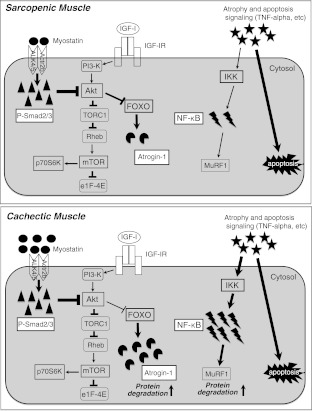
Recent advances in our understanding of the biology of muscle, and how anabolic and catabolic stimuli interact to control muscle mass and function, have led to new interest in the pharmacological treatment of muscle wasting. Loss of muscle occurs as a consequence of several chronic diseases (cachexia) as well as normal aging (sarcopenia). Although many negative regulators [Atrogin-1, muscle ring finger-1, nuclear factor-kappaB (NF-κB), myostatin, etc.] have been proposed to enhance protein degradation during both sarcopenia and cachexia, the adaptation of mediators markedly differs among these conditions. Sarcopenic and cachectic muscles have been demonstrated to be abundant in myostatin- and apoptosis-linked molecules. The ubiquitin-proteasome system (UPS) is activated during many different types of cachexia (cancer cachexia, cardiac heart failure, chronic obstructive pulmonary disease), but not many mediators of the UPS change during sarcopenia. NF-κB signaling is activated in cachectic, but not in sarcopenic, muscle. Some studies have indicated a change of autophagic signaling during both sarcopenia and cachexia, but the adaptation remains to be elucidated. This review provides an overview of the adaptive changes in negative regulators of muscle mass in both sarcopenia and cachexia.
Overview
The claims and statistics of this paper haven’t been checked yet.
Free: it reads the open-access text and checks the first 5 claims that cite a source we can check. Create a free account to check every claim.
Integrity signals
Registry
Cites
Statistics
Figures
Verification
Claims the paper makes
The claims and statistics of this paper haven’t been checked yet.
Free: it reads the open-access text and checks the first 5 claims that cite a source we can check. Create a free account to check every claim.
Claims other papers make about this one
Each is checked against this paper’s own text: does it say what the citing paper says it does?
The cited source says what the claim attributes to it.
In the citing paper
“Namely, the circulating levels of microbiota-derived indoxyl sulfate are positively associated with the expression of myostatin and atrogin-1 [29], representing two of the main negative regulators of skeletal muscle mass [30].”
From Gut Microbiota, Muscle Mass and Function in Aging: A Focus on Physical Frailty and Sarcopenia (2019) · cites this paper as [30]
Self-check
Percentages, sums and reported differences re-computed from the paper’s own numbers.
The self-check needs the paper’s full text.
Citations
Cites
2 retracted
Wenz, T., Rossi, S. G., Rotundo, R. L., Spiegelman, B. M., & Moraes, C. T. (2009) · Proceedings of the National Academy of Sciences · doi:10.1073/pnas.0911570106 · Cited by 600 · cited 2×
“[111] recognized a”
RetractedMariño, G., Urı́a, J. A., Puente, X. S., Quesada, V., Bordallo, J., & López-Otı́n, C. (2003) · Journal of Biological Chemistry · doi:10.1074/jbc.m208247200 · Cited by 208
RetractedRepertoires of Autophagy in the Pathogenesis of Ocular Diseases
Li, Y.-J., Jiang, Q., Cao, G.-F., Yao, J., & Yan, B. (2015) · Cellular Physiology and Biochemistry · doi:10.1159/000373980 · Cited by 16,304
Cui, C., Cui, J., Jin, F., Cui, Y., Li, R., Jiang, X., Tian, Y., Wang, K., Jiang, P., & Gao, J. (2017) · Cellular Physiology and Biochemistry · doi:10.1159/000479571 · Cited by 5,203
Danial, N. N., & Korsmeyer, S. J. (2004) · Cell · doi:10.1016/s0092-8674(04)00046-7 · Cited by 4,651
Pankiv, S., Clausen, T. H., Lamark, T., Brech, A., Bruun, J.-A., Outzen, H., Øvervatn, A., Bjørkøy, G., & Johansen, T. (2007) · Journal of Biological Chemistry · doi:10.1074/jbc.m702824200 · Cited by 4,578 · cited 1×
“p62/SQSTM1 interacts with the autophagosome membrane microtubule-associated protein light chain (LC3) protein which facilitates the delivery of its polyubiquitinated cargo for lysosomal degradation [101, 102].”
BackgroundThe Ubiquitin-Proteasome Proteolytic Pathway: Destruction for the Sake of Construction
Glickman, M. H., & Ciechanover, A. (2002) · Physiological Reviews · doi:10.1152/physrev.00027.2001 · Cited by 4,237
Levine, B., & Klionsky, D. J. (2004) · Developmental Cell · doi:10.1016/s1534-5807(04)00099-1 · Cited by 3,678
Identification of ubiquitin ligases required for skeletal muscle atrophy.
Bodine, S. C., Latres, E., Baumhueter, S., Lai, V. K.-M., Nunez, L., Clarke, B. A., Poueymirou, W. T., Panaro, F. J., Na, E., Dharmarajan, K., et al. (2001) · Science · doi:10.1126/science.1065874 · Cited by 3,521 · cited 2×
“improved knowledge of the regulation of the ubiquitin– proteasome system in skeletal muscle [47].”
BackgroundBjørkøy, G., Lamark, T., Brech, A., Outzen, H., Perander, M., Øvervatn, A., Stenmark, H., & Johansen, T. (2005) · The Journal of Cell Biology · doi:10.1083/jcb.200507002 · Cited by 3,276 · cited 1×
“p62/SQSTM1 interacts with the autophagosome membrane microtubule-associated protein light chain (LC3) protein which facilitates the delivery of its polyubiquitinated cargo for lysosomal degradation [101, 102].”
BackgroundSandri, M., Sandri, C., Gilbert, A., Skurk, C., Calabria, E., Picard, A., Walsh, K., Schiaffino, S., Lecker, S. H., & Goldberg, A. L. (2004) · Cell · doi:10.1016/s0092-8674(04)00400-3 · Cited by 3,012 · cited 23×
“Furthermore, MuRF-1, a downstream mediator of the IKKβ/NF-κB pathway, is more abundant in cachectic muscle [65, 174, 175].”
BackgroundInfluentialGhrelin: Structure and Function
Kojima, M., & Kangawa, K. (2005) · Physiological Reviews · doi:10.1152/physrev.00012.2004 · Cited by 2,810
Ghrelin enhances appetite and increases food intake in humans
Wren, A. M., Seal, L. J., Cohen, M. A., Brynes, A. E., Frost, G. S., Murphy, K. G., Dhillo, W. S., Ghatei, M. A., & Bloom, S. R. (2001) · The Journal of Clinical Endocrinology & Metabolism · doi:10.1210/jcem.86.12.8111 · Cited by 2,494 · cited 1×
“centers and stimulating gastric emptying, which facilitates increased food intake [245].”
BackgroundSTRUCTURE AND FUNCTIONS OF THE 20S AND 26S PROTEASOMES
Coux, O., Tanaka, K., & Goldberg, A. L. (1996) · Annual Review of Biochemistry · doi:10.1146/annurev.bi.65.070196.004101 · Cited by 2,487
Impairment of starvation-induced and constitutive autophagy in Atg7 -deficient mice
Komatsu, M., Waguri, S., Ueno, T., Iwata, J., Murata, S., Tanida, I., Ezaki, J., Mizushima, N., Ohsumi, Y., Uchiyama, Y., et al. (2005) · The Journal of Cell Biology · doi:10.1083/jcb.200412022 · Cited by 2,331 · cited 2×
“autophagy [114].”
Autophagosome formation: core machinery and adaptations
Xie, Z., & Klionsky, D. J. (2007) · Nature Cell Biology · doi:10.1038/ncb1007-1102 · Cited by 2,164
THE BIOLOGY OF HUMAN STARVATION
(1951) · Medical Journal of Australia · doi:10.5694/j.1326-5377.1951.tb56499.x · Cited by 2,049
The Biology of Human Starvation: Volume I
KEYS, A., BROŽEK, J., HENSCHEL, A., MICKELSEN, O., & TAYLOR, H. L. (1950) · doi:10.5749/j.ctv9b2tqv · Cited by 2,039
The Role of Mitochondria in Apoptosis
Wang, C., & Youle, R. J. (2009) · Annual Review of Genetics · doi:10.1146/annurev-genet-102108-134850 · Cited by 1,987
Stitt, T. N., Drujan, D., Clarke, B. A., Panaro, F., Timofeyva, Y., Kline, W. O., Gonzalez, M., Yancopoulos, G. D., & Glass, D. J. (2004) · Molecular Cell · doi:10.1016/s1097-2765(04)00211-4 · Cited by 1,964
FoxO3 Controls Autophagy in Skeletal Muscle In Vivo
Mammucari, C., Milan, G., Romanello, V., Masiero, E., Rudolf, R., Del Piccolo, P., Burden, S. J., Di Lisi, R., Sandri, C., Zhao, J., et al. (2007) · Cell Metabolism · doi:10.1016/j.cmet.2007.11.001 · Cited by 1,953 · cited 2×
“Recently, autophagy-related genes have been shown to be hyperexpressed during muscle atrophy induced by denervation or fasting [44–46].”
BackgroundYakes, F. M., & Van Houten, B. (1997) · Proceedings of the National Academy of Sciences · doi:10.1073/pnas.94.2.514 · Cited by 1,854
Regulation of myostatin activity and muscle growth
Lee, S.-J., & McPherron, A. C. (2001) · Proceedings of the National Academy of Sciences · doi:10.1073/pnas.151270098 · Cited by 1,616 · cited 1×
“Moreover, mouse skeletal muscle engineered to overexpress the myostatin propeptide, the naturally occurring myostatin inhibitor follistatin, or a dominant-negative form of the Activin IIB receptor (ActRIIB—the main myostatin receptor) [121] all display similar, if not greater, increases in size [121].”
BackgroundThe healthcare costs of sarcopenia in the United States
Janssen, I., Shepard, D. S., Katzmarzyk, P. T., & Roubenoff, R. (2004) · Journal of the American Geriatrics Society · doi:10.1111/j.1532-5415.2004.52014.x · Cited by 1,546 · cited 1×
“5% of total healthcare expenditures for that year [11].”
BackgroundMultiple types of skeletal muscle atrophy involve a common program of changes in gene expression
Lecker, S. H., Jagoe, R. T., Gilbert, A., Gomes, M., Baracos, V., Bailey, J., Price, S. R., Mitch, W. E., & Goldberg, A. L. (2004) · The FASEB Journal · doi:10.1096/fj.03-0610com · Cited by 1,539 · cited 14×
“Furthermore, MuRF-1, a downstream mediator of the IKKβ/NF-κB pathway, is more abundant in cachectic muscle [65, 174, 175].”
BackgroundInfluentialThe Proteasome: Paradigm of a Self-Compartmentalizing Protease
Baumeister, W., Walz, J., Zühl, F., & Seemüller, E. (1998) · Cell · doi:10.1016/s0092-8674(00)80929-0 · Cited by 1,494
Zhao, J., Brault, J. J., Schild, A., Cao, P., Sandri, M., Schiaffino, S., Lecker, S. H., & Goldberg, A. L. (2007) · Cell Metabolism · doi:10.1016/j.cmet.2007.11.004 · Cited by 1,489 · cited 1×
“It has now been linked to the expression of autophagy-related genes in skeletal muscle in vivo and C2C12 myotubes [103].”
BackgroundWasting as independent risk factor for mortality in chronic heart failure
Anker, S. D., Ponikowski, P., Varney, S., Chua, T. P., Clark, A. L., Webb-Peploe, K. M., Harrington, D., Kox, W. J., Poole-Wilson, P. A., & Coats, A. J. (1997) · The Lancet · doi:10.1016/s0140-6736(96)07015-8 · Cited by 1,399
IKKβ/NF-κB Activation Causes Severe Muscle Wasting in Mice
Cai, D., Frantz, J. D., Tawa, N. E., Melendez, P. A., Oh, B.-C., Lidov, H. G. W., Hasselgren, P.-O., Frontera, W. R., Lee, J., Glass, D. J., et al. (2004) · Cell · doi:10.1016/j.cell.2004.09.027 · Cited by 1,367
Human aging, muscle mass, and fiber type composition.
Evans, W. J., & Lexell, J. (1995) · The Journals of Gerontology Series A: Biological Sciences and Medical Sciences · doi:10.1093/gerona/50a.special_issue.11 · Cited by 1,308
Autophagy is required to maintain muscle mass.
Masiero, E., Agatea, L., Mammucari, C., Blaauw, B., Loro, E., Komatsu, M., Metzger, D., Reggiani, C., Schiaffino, S., & Sandri, M. (2009) · Cell Metabolism · doi:10.1016/j.cmet.2009.10.008 · Cited by 1,282 · cited 1×
“[104] found an intriguing characteristic using musclespecific autophagy knockout mice.”
BackgroundSCF and Cullin/RING H2-Based Ubiquitin Ligases
Deshaies, R. J. (1999) · Annual Review of Cell and Developmental Biology · doi:10.1146/annurev.cellbio.15.1.435 · Cited by 1,242
Molecular inflammation: Underpinnings of aging and age-related diseases
Chung, H. Y., Cesari, M., Anton, S., Marzetti, E., Giovannini, S., Seo, A. Y., Carter, C., Yu, B. P., & Leeuwenburgh, C. (2009) · Ageing Research Reviews · doi:10.1016/j.arr.2008.07.002 · Cited by 1,203 · cited 1×
“[155] hypothesized that abundant NFκB protein induced age-related increases in interleukin (IL)6 and TNF-α.”
BackgroundTisdale, M. J. (2009) · Physiological Reviews · doi:10.1152/physrev.00016.2008 · Cited by 1,192
Notch-Mediated Restoration of Regenerative Potential to Aged Muscle
Conboy, I. M., Conboy, M. J., Smythe, G. M., & Rando, T. A. (2003) · Science · doi:10.1126/science.1087573 · Cited by 1,121
Rosenberg, I. H. (1989) · The American Journal of Clinical Nutrition · doi:10.1093/ajcn/50.5.1231 · Cited by 1,102
Myostatin, a Negative Regulator of Muscle Growth, Functions by Inhibiting Myoblast Proliferation
Thomas, M., Langley, B., Berry, C., Sharma, M., Kirk, S., Bass, J., & Kambadur, R. (2000) · Journal of Biological Chemistry · doi:10.1074/jbc.m004356200 · Cited by 1,014
Kihara, A., Noda, T., Ishihara, N., & Ohsumi, Y. (2001) · The Journal of Cell Biology · doi:10.1083/jcb.152.3.519 · Cited by 1,004 · cited 1×
“formation of preautophagosome structures [113], were”
Drozdzowska, B., Pluskiewicz, W., Halaba, Z. P., Misiołek, H., & Beck, B. R. (2005) · Cited by 984
Reversal of Cancer Cachexia and Muscle Wasting by ActRIIB Antagonism Leads to Prolonged Survival
Zhou, X., Wang, J. L., Lu, J., Song, Y., Kwak, K. S., Jiao, Q., Rosenfeld, R., Chen, Q., Boone, T., Simonet, W. S., et al. (2010) · Cell · doi:10.1016/j.cell.2010.07.011 · Cited by 940
NF-κB-Induced Loss of MyoD Messenger RNA: Possible Role in Muscle Decay and Cachexia
Guttridge, D. C., Mayo, M. W., Madrid, L. V., Wang, C.-Y., & Baldwin Jr., A. S. (2000) · Science · doi:10.1126/science.289.5488.2363 · Cited by 924
Myostatin Inhibits Myoblast Differentiation by Down-regulating MyoD Expression
Langley, B., Thomas, M., Bishop, A., Sharma, M., Gilmour, S., & Kambadur, R. (2002) · Journal of Biological Chemistry · doi:10.1074/jbc.m204291200 · Cited by 908
Induction of Cachexia in Mice by Systemically Administered Myostatin
Zimmers, T. A., Davies, M. V., Koniaris, L. G., Haynes, P., Esquela, A. F., Tomkinson, K. N., McPherron, A. C., Wolfman, N. M., & Lee, S.-J. (2002) · Science · doi:10.1126/science.1069525 · Cited by 907
An overview of sarcopenia: facts and numbers on prevalence and clinical impact
von Haehling, S., Morley, J. E., & Anker, S. D. (2010) · Journal of Cachexia, Sarcopenia and Muscle · doi:10.1007/s13539-010-0014-2 · Cited by 888
Dixit, V. D., Schaffer, E. M., Pyle, R. S., Collins, G. D., Sakthivel, S. K., Palaniappan, R., Lillard, J. W., & Taub, D. D. (2004) · Journal of Clinical Investigation · doi:10.1172/jci200421134 · Cited by 875
Functional improvement of dystrophic muscle by myostatin blockade
Bogdanovich, S., Krag, T. O. B., Barton, E. R., Morris, L. D., Whittemore, L.-A., Ahima, R. S., & Khurana, T. S. (2002) · Nature · doi:10.1038/nature01154 · Cited by 831 · cited 1×
“2F (Sgcg), and amyotrophic lateral sclerosis (SOD1 transgenic mouse) [125–127].”
BackgroundREGULATION OF MUSCLE MASS BY MYOSTATIN
Lee, S.-J. (2004) · Annual Review of Cell and Developmental Biology · doi:10.1146/annurev.cellbio.20.012103.135836 · Cited by 819 · cited 1×
“superfamily and was shown to be a potent negative regulator of muscle growth [117].”
BackgroundNF-κB Signals Induce the Expression of c-FLIP
Micheau, O., Lens, S., Gaide, O., Alevizopoulos, K., & Tschopp, J. (2001) · Molecular and Cellular Biology · doi:10.1128/mcb.21.16.5299-5305.2001 · Cited by 813
Predictors of skeletal muscle mass in elderly men and women
Baumgartner, R. N., Waters, D. L., Gallagher, D., Morley, J. E., & Garry, P. J. (1999) · Mechanisms of Ageing and Development · doi:10.1016/s0047-6374(98)00130-4 · Cited by 809 · cited 1×
“Age-related muscle loss is a result of reductions in the size and number of muscle fibers [23] possibly due to a multifactorial process that involves physical activity, nutritional intake, oxidative stress, and hormonal changes [10, 24, 25].”
BackgroundYeh, W.-C., Shahinian, A., Speiser, D., Kraunus, J., Billia, F., Wakeham, A., de la Pompa, J. L., Ferrick, D., Hum, B., Iscove, N., et al. (1997) · Immunity · doi:10.1016/s1074-7613(00)80391-x · Cited by 798
Myostatin reduces Akt/TORC1/p70S6K signaling, inhibiting myoblast differentiation and myotube size
Trendelenburg, A. U., Meyer, A., Rohner, D., Boyle, J., Hatakeyama, S., & Glass, D. J. (2009) · American Journal of Physiology-Cell Physiology · doi:10.1152/ajpcell.00105.2009 · Cited by 792
Autophagy and aging: The importance of maintaining "clean" cells
Cuervo, A. M., Bergamini, E., Brunk, U. T., Dröge, W., Ffrench, M., & Terman, A. (2005) · Autophagy · doi:10.4161/auto.1.3.2017 · Cited by 792
Mitochondria in homeostasis of reactive oxygen species in cell, tissues, and organism
Ježek, P., & Hlavatá, L. (2005) · The International Journal of Biochemistry & Cell Biology · doi:10.1016/j.biocel.2005.05.013 · Cited by 744
Du, J., Wang, X., Miereles, C., Bailey, J. L., Debigare, R., Zheng, B., Price, S. R., & Mitch, W. E. (2004) · Journal of Clinical Investigation · doi:10.1172/jci18330 · Cited by 731
Roubenoff, R., & Hughes, V. A. (2000) · The Journals of Gerontology Series A: Biological Sciences and Medical Sciences · doi:10.1093/gerona/55.12.m716 · Cited by 685
Schaap, L. A., Pluijm, S. M. F., Deeg, D. J. H., Harris, T. B., Kritchevsky, S. B., Newman, A. B., Colbert, L. H., Pahor, M., Rubin, S. M., Tylavsky, F. A., et al. (2009) · The Journals of Gerontology Series A: Biological Sciences and Medical Sciences · doi:10.1093/gerona/glp097 · Cited by 683
Mechanisms of Intracellular Protein Breakdown
Hershko, A., & Ciechanover, A. (1982) · Annual Review of Biochemistry · doi:10.1146/annurev.bi.51.070182.002003 · Cited by 647
Oxidative Stress, Molecular Inflammation and Sarcopenia
Meng, S.-J., & Yu, L.-J. (2010) · International Journal of Molecular Sciences · doi:10.3390/ijms11041509 · Cited by 637 · cited 1×
“Indeed, a marked production of ROS has been documented in muscle of the elderly [157, 158].”
BackgroundFerrucci, L., Penninx, B. W. J. H., Volpato, S., Harris, T. B., Bandeen‐Roche, K., Balfour, J., Leveille, S. G., Fried, L. P., & Md, J. M. G. (2002) · Journal of the American Geriatrics Society · doi:10.1046/j.1532-5415.2002.50605.x · Cited by 618
Regulation and role of autophagy in mammalian cells
Meijer, A. J., & Codogno, P. (2004) · The International Journal of Biochemistry & Cell Biology · doi:10.1016/j.biocel.2004.02.002 · Cited by 615
Oxidative Stress, Mitochondrial DNA Mutation, and Impairment of Antioxidant Enzymes in Aging
Wei, Y.-H., & Lee, H.-C. (2002) · Experimental Biology and Medicine · doi:10.1177/153537020222700901 · Cited by 601
III, L. J. M., Khosla, S., Crowson, C. S., O'Connor, M. K., O'Fallon, W. M., & Riggs, B. L. (2000) · Journal of the American Geriatrics Society · doi:10.1111/j.1532-5415.2000.tb04719.x · Cited by 598 · cited 2×
“80 years and older [8].”
BackgroundRosenberg, I. H. (1989) · American Journal of Clinical Nutrition · Cited by 589
Sacheck, J. M., Hyatt, J. K., Raffaello, A., Thomas Jagoe, R., Roy, R. R., Reggie Edgerton, V., Lecker, S. H., & Goldberg, A. L. (2007) · The FASEB Journal · doi:10.1096/fj.06-6604com · Cited by 585 · cited 1×
“[78] has defined the rapid and transient expression of Atrogin-1 and MuRF-1, the mRNA levels of these atrogenes would not necessarily correspond with those of”
BackgroundGonzalez-Cadavid, N. F., Taylor, W. E., Yarasheski, K., Sinha-Hikim, I., Ma, K., Ezzat, S., Shen, R., Lalani, R., Asa, S., Mamita, M., et al. (1998) · Proceedings of the National Academy of Sciences · doi:10.1073/pnas.95.25.14938 · Cited by 571
The caspase-8 inhibitor FLIP promotes activation of NF-κB and Erk signaling pathways
Kataoka, T., Budd, R. C., Holler, N., Thome, M., Martinon, F., Irmler, M., Burns, K., Hahne, M., Kennedy, N., Kovacsovics, M., et al. (2000) · Current Biology · doi:10.1016/s0960-9822(00)00512-1 · Cited by 552
Grumati, P., Coletto, L., Sabatelli, P., Cescon, M., Angelin, A., Bertaggia, E., Blaauw, B., Urciuolo, A., Tiepolo, T., Merlini, L., et al. (2010) · Nature Medicine · doi:10.1038/nm.2247 · Cited by 540
Effect of Testosterone Treatment on Body Composition and Muscle Strength in Men Over 65 Years of Age
Snyder, P. J. (1999) · Journal of Clinical Endocrinology & Metabolism · doi:10.1210/jc.84.8.2647 · Cited by 531 · cited 1×
“decrease in muscle mass [219–221] and grip strength [218].”
BackgroundThe Molecular Mechanism of Autophagy
Wang, C.-W., & Klionsky, D. J. (2003) · Molecular Medicine · doi:10.1007/bf03402040 · Cited by 530
Ferrando, A. A., Sheffield-Moore, M., Yeckel, C. W., Gilkison, C., Jiang, J., Achacosa, A., Lieberman, S. A., Tipton, K., Wolfe, R. R., & Urban, R. J. (2002) · American Journal of Physiology-Endocrinology and Metabolism · doi:10.1152/ajpendo.00362.2001 · Cited by 522 · cited 1×
“decrease in muscle mass [219–221] and grip strength [218].”
BackgroundLatres, E., Amini, A. R., Amini, A. A., Griffiths, J., Martin, F. J., Wei, Y., Lin, H. C., Yancopoulos, G. D., & Glass, D. J. (2005) · Journal of Biological Chemistry · doi:10.1074/jbc.m407517200 · Cited by 521
Smad2 and 3 transcription factors control muscle mass in adulthood
Sartori, R., Milan, G., Patron, M., Mammucari, C., Blaauw, B., Abraham, R., & Sandri, M. (2009) · American Journal of Physiology-Cell Physiology · doi:10.1152/ajpcell.00104.2009 · Cited by 517 · cited 1×
“In contrast, Smad2/3 inhibition promotes muscle hypertrophy partially dependent on mTOR signaling [124].”
BackgroundRegulation of muscle growth by multiple ligands signaling through activin type II receptors
Lee, S.-J., Reed, L. A., Davies, M. V., Girgenrath, S., Goad, M. E. P., Tomkinson, K. N., Wright, J. F., Barker, C., Ehrmantraut, G., Holmstrom, J., et al. (2005) · Proceedings of the National Academy of Sciences · doi:10.1073/pnas.0505996102 · Cited by 501 · cited 1×
“11 and the activins [151].”
Lenk, K., Schuler, G., & Adams, V. (2010) · Journal of Cachexia, Sarcopenia and Muscle · doi:10.1007/s13539-010-0007-1 · Cited by 494
Satellite cell content is specifically reduced in type II skeletal muscle fibers in the elderly
Verdijk, L. B., Koopman, R., Schaart, G., Meijer, K., Savelberg, H. H. C. M., & van Loon, L. J. C. (2007) · American Journal of Physiology-Endocrinology and Metabolism · doi:10.1152/ajpendo.00278.2006 · Cited by 489 · cited 1×
“[16] showed a reduction in type II muscle fiber satellite cell content with aging.”
BackgroundImbalance between pSmad3 and Notch induces CDK inhibitors in old muscle stem cells
Carlson, M. E., Hsu, M., & Conboy, I. M. (2008) · Nature · doi:10.1038/nature07034 · Cited by 487
A phase I/IItrial of MYO‐029 in adult subjects with muscular dystrophy
Wagner, K. R., Fleckenstein, J. L., Amato, A. A., Barohn, R. J., Bushby, K., Escolar, D. M., Flanigan, K. M., Pestronk, A., Tawil, R., Wolfe, G. I., et al. (2008) · Annals of Neurology · doi:10.1002/ana.21338 · Cited by 481 · cited 1×
“muscular dystrophy [128].”
McFarlane, C., Plummer, E., Thomas, M., Hennebry, A., Ashby, M., Ling, N., Smith, H., Sharma, M., & Kambadur, R. (2006) · Journal of Cellular Physiology · doi:10.1002/jcp.20757 · Cited by 480
Autophagy: Many paths to the same end
Cuervo, A. M. (2004) · Molecular and Cellular Biochemistry · doi:10.1023/b:mcbi.0000041848.57020.57 · Cited by 476
Age and aerobic exercise training effects on whole body and muscle protein metabolism
Short, K. R., Vittone, J. L., Bigelow, M. L., Proctor, D. N., & Nair, K. S. (2004) · American Journal of Physiology-Endocrinology and Metabolism · doi:10.1152/ajpendo.00366.2003 · Cited by 470 · cited 1×
“total body weight in young adults, but declines with aging to 25% at 75–80 years old [12, 13].”
BackgroundTumor necrosis factor-α and muscle wasting: a cellular perspective
Reid, M. B., & Li, Y.-P. (2001) · Respiratory Research · doi:10.1186/rr67 · Cited by 457
Characterization of a cancer cachectic factor
Todorov, P., Cariuk, P., McDevitt, T., Coles, B., Fearon, K., & Tisdale, M. (1996) · Nature · doi:10.1038/379739a0 · Cited by 437
Cellular and molecular mechanisms underlying age-related skeletal muscle wasting and weakness
Ryall, J. G., Schertzer, J. D., & Lynch, G. S. (2008) · Biogerontology · doi:10.1007/s10522-008-9131-0 · Cited by 423 · cited 1×
“This aging-related deficiency in the anabolic hormone milieu takes several different forms, being relatively sudden and dramatic in the case of estrogen in women, but more gradual and steady for testosterone in men, and GH in both genders [203–207].”
BackgroundWagers, A. J., & Conboy, I. M. (2005) · Cell · doi:10.1016/j.cell.2005.08.021 · Cited by 421
Sharma, M., Kambadur, R., Matthews, K. G., Somers, W. G., Devlin, G. P., Conaglen, J. V., Fowke, P. J., & Bass, J. J. (1999) · Journal of Cellular Physiology · doi:10.1002/(sici)1097-4652(199907)180:1<1::aid-jcp1>3.0.co;2-v · Cited by 404
Wohlgemuth, S. E., Seo, A. Y., Marzetti, E., Lees, H. A., & Leeuwenburgh, C. (2010) · Experimental Gerontology · doi:10.1016/j.exger.2009.11.002 · Cited by 397 · cited 4×
“None of the studies determining the transcript level of autophagylinked molecules found a significant increase with age [109, 110, 112].”
BackgroundInfluentialProteasomes: multicatalytic proteinase complexes
Rivett, A. J. (1993) · Biochemical Journal · doi:10.1042/bj2910001 · Cited by 391
Effects of Testosterone and Resistance Training in Men with Chronic Obstructive Pulmonary Disease
Casaburi, R., Bhasin, S., Cosentino, L., Porszasz, J., Somfay, A., Lewis, M. I., Fournier, M., & Storer, T. W. (2004) · American Journal of Respiratory and Critical Care Medicine · doi:10.1164/rccm.200305-617oc · Cited by 388
WANAGAT, J., CAO, Z., PATHARE, P., & AIKEN, J. M. (2001) · The FASEB Journal · doi:10.1096/fj.00-0320com · Cited by 378
Verdijk, L. B., Gleeson, B. G., Jonkers, R. A. M., Meijer, K., Savelberg, H. H. C. M., Dendale, P., & van Loon, L. J. C. (2009) · The Journals of Gerontology Series A: Biological Sciences and Medical Sciences · doi:10.1093/gerona/gln050 · Cited by 372 · cited 2×
“Although various investigators support such an age-related decrease in the number of satellite cells [16–20], some reports [21, 22] indicate no such change.”
BackgroundOsterziel, K. J., Strohm, O., Schuler, J., Friedrich, M., Hänlein, D., Willenbrock, R., Anker, S. D., Poole-Wilson, P. A., Ranke, M. B., & Dietz, R. (1998) · The Lancet · doi:10.1016/s0140-6736(97)11329-0 · Cited by 368
Oxidative Stress, Accumulation of Biological 'Garbage', and Aging
Terman, A., & Brunk, U. T. (2006) · Antioxidants & Redox Signaling · doi:10.1089/ars.2006.8.197 · Cited by 363
Signaling pathways perturbing muscle mass.
Glass, D. J. (2010) · Current Opinion in Clinical Nutrition and Metabolic Care · doi:10.1097/mco.0b013e32833862df · Cited by 359 · cited 1×
“3-kinase (PI3K) which is involved in the Akt-mTOR (mammalian target of rapamycin) signaling pathway leading to protein anabolism [63, 64].”
BackgroundGene expression profile of aging in human muscle
Welle, S., Brooks, A. I., Delehanty, J. M., Needler, N., & Thornton, C. A. (2003) · Physiological Genomics · doi:10.1152/physiolgenomics.00049.2003 · Cited by 353
Systemic inflammation, cachexia and prognosis in patients with cancer
Deans, C., & Wigmore, S. J. (2005) · Current Opinion in Clinical Nutrition & Metabolic Care · doi:10.1097/01.mco.0000165004.93707.88 · Cited by 331
A Population of Myogenic Stem Cells That Survives Skeletal Muscle Aging
Collins, C. A., Zammit, P. S., Ruiz, A. P., Morgan, J. E., & Partridge, T. A. (2007) · Stem Cells · doi:10.1634/stemcells.2006-0372 · Cited by 320
Sinha-Hikim, I., Cornford, M., Gaytan, H., Lee, M. L., & Bhasin, S. (2006) · The Journal of Clinical Endocrinology & Metabolism · doi:10.1210/jc.2006-0357 · Cited by 318 · cited 1×
“reported increased leg lean body mass and leg and arm strength [223].”
BackgroundAcharyya, S., Butchbach, M. E. R., Sahenk, Z., Wang, H., Saji, M., Carathers, M., Ringel, M. D., Skipworth, R. J. E., Fearon, K. C. H., Hollingsworth, M. A., et al. (2005) · Cancer Cell · doi:10.1016/j.ccr.2005.10.004 · Cited by 314
Brack, A. S., Bildsoe, H., & Hughes, S. M. (2005) · Journal of Cell Science · doi:10.1242/jcs.02602 · Cited by 306
Catabolism of aging: is it an inflammatory process?
Roubenoff, R. (2003) · Current Opinion in Clinical Nutrition & Metabolic Care · doi:10.1097/01.mco.0000068965.34812.62 · Cited by 305
Bhasin, S., Calof, O. M., Storer, T. W., Lee, M. L., Mazer, N. A., Jasuja, R., Montori, V. M., Gao, W., & Dalton, J. T. (2006) · Nature Clinical Practice Endocrinology & Metabolism · doi:10.1038/ncpendmet0120 · Cited by 300
Glucocorticoids and muscle catabolism
Hasselgren, P.-O. (1999) · Current Opinion in Clinical Nutrition and Metabolic Care · doi:10.1097/00075197-199905000-00002 · Cited by 295
Larsson, L. (1978) · PubMed · Cited by 293
The syndrome of cardiac cachexia
Anker, S. D., & Sharma, R. (2002) · International Journal of Cardiology · doi:10.1016/s0167-5273(02)00233-4 · Cited by 293
Pu, C. T., Johnson, M. T., Forman, D. E., Hausdorff, J. M., Roubenoff, R., Foldvari, M., Fielding, R. A., & Singh, M. A. F. (2001) · Journal of Applied Physiology · doi:10.1152/jappl.2001.90.6.2341 · Cited by 290
Phillips, T., & Leeuwenburgh, C. (2005) · The FASEB Journal · doi:10.1096/fj.04-2870fje · Cited by 283 · cited 2×
“Leeuwenburgh [160] found that neither p65 protein expression nor the binding activity of NF-κB was significantly altered in the vastus lateralis muscles of 26-monthold rats despite the marked upregulation of TNF-α expression in both blood and muscle.”
BackgroundAmirouche, A., Durieux, A.-C., Banzet, S., Koulmann, N., Bonnefoy, R., Mouret, C., Bigard, X., Peinnequin, A., & Freyssenet, D. (2009) · Endocrinology · doi:10.1210/en.2008-0959 · Cited by 282
Hormonal and lifestyle determinants of appendicular skeletal muscle mass in men: the MINOS study
Szulc, P., Duboeuf, F., Marchand, F., & Delmas, P. D. (2004) · The American Journal of Clinical Nutrition · doi:10.1093/ajcn/80.2.496 · Cited by 279
Myostatin Gene Deletion Prevents Glucocorticoid-Induced Muscle Atrophy
Gilson, H., Schakman, O., Combaret, L., Lause, P., Grobet, L., Attaix, D., Ketelslegers, J. M., & Thissen, J. P. (2007) · Endocrinology · doi:10.1210/en.2006-0539 · Cited by 278
Léger, B., Derave, W., De Bock, K., Hespel, P., & Russell, A. P. (2008) · Rejuvenation Research · doi:10.1089/rej.2007.0588 · Cited by 274
Candow, D. G., & Chilibeck, P. D. (2005) · The Journals of Gerontology Series A: Biological Sciences and Medical Sciences · doi:10.1093/gerona/60.2.148 · Cited by 272 · cited 1×
“Aging is associated with a progressive decline of muscle mass, quality, and strength, a condition known as sarcopenia [7].”
BackgroundThe involvement of the ubiquitin proteasome system in human skeletal muscle remodelling and atrophy
Murton, A. J., Constantin, D., & Greenhaff, P. L. (2008) · Biochimica et Biophysica Acta (BBA) - Molecular Basis of Disease · doi:10.1016/j.bbadis.2008.10.011 · Cited by 267
Baracos, V. E., DeVivo, C., Hoyle, D. H., & Goldberg, A. L. (1995) · American Journal of Physiology-Endocrinology and Metabolism · doi:10.1152/ajpendo.1995.268.5.e996 · Cited by 263
Day, K., Shefer, G., Shearer, A., & Yablonka-Reuveni, Z. (2010) · Developmental Biology · doi:10.1016/j.ydbio.2010.01.006 · Cited by 254 · cited 1×
“Although various investigators support such an age-related decrease in the number of satellite cells [16–20], some reports [21, 22] indicate no such change.”
BackgroundLocal and Systemic Inflammation in Chronic Obstructive Pulmonary Disease
Wouters, E. F. M. (2005) · Proceedings of the American Thoracic Society · doi:10.1513/pats.200408-039ms · Cited by 253
Muscle Atrophy and Hypertrophy Signaling in Patients with Chronic Obstructive Pulmonary Disease
Doucet, M., Russell, A. P., Léger, B., Debigaré, R., Joanisse, D. R., Caron, M.-A., LeBlanc, P., & Maltais, F. (2007) · American Journal of Respiratory and Critical Care Medicine · doi:10.1164/rccm.200605-704oc · Cited by 243 · cited 1×
“Furthermore, MuRF-1, a downstream mediator of the IKKβ/NF-κB pathway, is more abundant in cachectic muscle [65, 174, 175].”
BackgroundApoptosis and Aging: Role of the Mitochondria
Pollack, M., & Leeuwenburgh, C. (2001) · The Journals of Gerontology Series A: Biological Sciences and Medical Sciences · doi:10.1093/gerona/56.11.b475 · Cited by 241
Catabolic/Anabolic Balance and Muscle Wasting in Patients With COPD
Debigaré, R., Marquis, K., Côté, C. H., Tremblay, R. R., Michaud, A., LeBlanc, P., & Maltais, F. (2003) · Chest · doi:10.1378/chest.124.1.83 · Cited by 240
Genetic deletion of myostatin from the heart prevents skeletal muscle atrophy in heart failure
Heineke, J., Auger-Messier, M., Xu, J., Sargent, M., York, A., Welle, S., & Molkentin, J. D. (2010) · Circulation · doi:10.1161/circulationaha.109.882068 · Cited by 238 · cited 2×
“[146] observed a therapeutic effect of an anti-myostatin antibody (JA-16) to the atrophy of several skeletal muscles occurring after cardiac cachexia caused by transverse aortic constriction.”
BackgroundModulation of myostatin expression during modified muscle use
WEHLING, M., CAI, B., & TIDBALL, J. G. (2000) · The FASEB Journal · doi:10.1096/fasebj.14.1.103 · Cited by 229
Benny Klimek, M. E., Aydogdu, T., Link, M. J., Pons, M., Koniaris, L. G., & Zimmers, T. A. (2010) · Biochemical and Biophysical Research Communications · doi:10.1016/j.bbrc.2009.12.123 · Cited by 229
Allen, D. L., & Unterman, T. G. (2007) · American Journal of Physiology-Cell Physiology · doi:10.1152/ajpcell.00542.2005 · Cited by 229
Targeted ablation of TRAF6 inhibits skeletal muscle wasting in mice
Paul, P. K., Gupta, S. K., Bhatnagar, S., Panguluri, S. K., Darnay, B. G., Choi, Y., & Kumar, A. (2010) · Journal of Cell Biology · doi:10.1083/jcb.201006098 · Cited by 227
Altun, M., Besche, H. C., Overkleeft, H. S., Piccirillo, R., Edelmann, M. J., Kessler, B. M., Goldberg, A. L., & Ulfhake, B. (2010) · Journal of Biological Chemistry · doi:10.1074/jbc.m110.129718 · Cited by 226 · cited 1×
“[72] recently found that the hindlimb muscles”
BURDET, L., de MURALT, B., SCHUTZ, Y., PICHARD, C., & FITTING, J.-W. (1997) · American Journal of Respiratory and Critical Care Medicine · doi:10.1164/ajrccm.156.6.9704142 · Cited by 225
Mitochondrial abnormalities are more frequent in muscles undergoing sarcopenia
Bua, E. A., McKiernan, S. H., Wanagat, J., McKenzie, D., & Aiken, J. M. (2002) · Journal of Applied Physiology · doi:10.1152/japplphysiol.01102.2001 · Cited by 223 · cited 1×
“oxidative damage [189], particularly in aged mammalian muscles [190, 191], due to its proximity to the electron”
BackgroundAnker, S. D., Volterrani, M., Pflaum, C.-D., Strasburger, C. J., Osterziel, K. J., Doehner, W., Ranke, M. B., Poole-Wilson, P. A., Giustina, A., Dietz, R., et al. (2001) · Journal of the American College of Cardiology · doi:10.1016/s0735-1097(01)01385-7 · Cited by 221
Clavel, S., Coldefy, A.-S., Kurkdjian, E., Salles, J., Margaritis, I., & Derijard, B. (2006) · Mechanisms of Ageing and Development · doi:10.1016/j.mad.2006.07.005 · Cited by 218
Yang, W., Zhang, Y., Li, Y., Wu, Z., & Zhu, D. (2007) · Journal of Biological Chemistry · doi:10.1074/jbc.m610185200 · Cited by 218
The meaning and measurement of lean body mass
Roubenoff, R., & Kehayias, J. J. (2009) · Nutrition Reviews · doi:10.1111/j.1753-4887.1991.tb03013.x · Cited by 218
Increased ATP-ubiquitin-dependent proteolysis in skeletal muscles of tumor-bearing rats.
Temparis, S., Asensi, M., Taillandier, D., AUROUSSEAU, E., Larbaud, D., Obled, A., Béchet, D., Ferrara, M., Estrela, J. M., & Attaix, D. (1994) · PubMed · Cited by 214
Molecular Pathways Leading to Cancer Cachexia
Tisdale, M. J. (2005) · Physiology · doi:10.1152/physiol.00019.2005 · Cited by 213
The role of the insulin-like growth factor 1 (IGF-1) in skeletal muscle physiology.
Philippou, Α., Maridaki, M. D., Halapas, A., & Koutsilieris, M. (2007) · PubMed · Cited by 213
The role of cytokines in cancer cachexia
Argilés, J. M., Busquets, S., Toledo, M., & López-Soriano, F. J. (2009) · Current Opinion in Supportive & Palliative Care · doi:10.1097/spc.0b013e3283311d09 · Cited by 211
Apoptosis in muscle atrophy: Relevance to sarcopenia
Dupont-Versteegden, E. E. (2005) · Experimental Gerontology · doi:10.1016/j.exger.2005.04.003 · Cited by 207
Wilkes, E. A., Selby, A. L., Atherton, P. J., Patel, R., Rankin, D., Smith, K., & Rennie, M. J. (2009) · The American Journal of Clinical Nutrition · doi:10.3945/ajcn.2009.27543 · Cited by 204
Altered proteasome function and subunit composition in aged muscle
Husom, A. D., Peters, E. A., Kolling, E. A., Fugere, N. A., Thompson, L. V., & Ferrington, D. A. (2004) · Archives of Biochemistry and Biophysics · doi:10.1016/j.abb.2003.10.010 · Cited by 203
Niebauer, J., Pflaum, C.-D., Clark, A. L., Strasburger, C. J., Hooper, J., Poole-Wilson, P. A., Coats, A. J. S., & Anker, S. D. (1998) · Journal of the American College of Cardiology · doi:10.1016/s0735-1097(98)00226-5 · Cited by 201
Kovacheva, E. L., Sinha Hikim, A. P., Shen, R., Sinha, I., & Sinha-Hikim, I. (2010) · Endocrinology · doi:10.1210/en.2009-1177 · Cited by 197
Atrogin-1/MAFbx and MuRF1 are downregulated in aging-related loss of skeletal muscle
Edstrom, E., Altun, M., Hagglund, M., & Ulfhake, B. (2006) · The Journals of Gerontology Series A: Biological Sciences and Medical Sciences · doi:10.1093/gerona/61.7.663 · Cited by 196
Kamischke, A., Kemper, D., Castel, M., Luthke, M., Rolf, C., Behre, H., Magnussen, H., & Nieschlag, E. (1998) · European Respiratory Journal · doi:10.1183/09031936.98.11010041 · Cited by 195
Autophagy in Health and Disease
(2013) · Elsevier eBooks · doi:10.1016/c2010-0-66523-0 · Cited by 194
Cellular Markers of Muscle Atrophy in Chronic Obstructive Pulmonary Disease
Plant, P. J., Brooks, D., Faughnan, M., Bayley, T., Bain, J., Singer, L., Correa, J., Pearce, D., Binnie, M., & Batt, J. (2010) · American Journal of Respiratory Cell and Molecular Biology · doi:10.1165/rcmb.2008-0382oc · Cited by 190 · cited 1×
“suggested that the upregulation of myostatin is involved in the development of muscle atrophy associated with COPD [116, 147].”
BackgroundPape, G. S., Friedman, M., Underwood, L. E., & Clemmons, D. R. (1991) · Chest · doi:10.1378/chest.99.6.1495 · Cited by 190
Ageing and Human Muscle: Observations From Sweden
Lexell, J. (1993) · Canadian Journal of Applied Physiology · doi:10.1139/h93-002 · Cited by 182
Wajant, H., Haas, E., Schwenzer, R., Mühlenbeck, F., Kreuz, S., Schubert, G., Grell, M., Smith, C., & Scheurich, P. (2000) · Journal of Biological Chemistry · doi:10.1074/jbc.m000811200 · Cited by 181
Ca2+-dependent proteolysis in muscle wasting
Costelli, P., Reffo, P., Penna, F., Autelli, R., Bonelli, G., & Baccino, F. M. (2005) · The International Journal of Biochemistry & Cell Biology · doi:10.1016/j.biocel.2005.03.010 · Cited by 181
Rieu, I., Magne, H., Savary‐Auzeloux, I., Averous, J., Bos, C., Peyron, M. A., Combaret, L., & Dardevet, D. (2009) · The Journal of Physiology · doi:10.1113/jphysiol.2009.178319 · Cited by 181
Muscle myostatin signalling is enhanced in experimental cancer cachexia
Costelli, P., Muscaritoli, M., Bonetto, A., Penna, F., Reffo, P., Bossola, M., Bonelli, G., Doglietto, G. B., Baccino, F. M., & Fanelli, F. R. (2008) · European Journal of Clinical Investigation · doi:10.1111/j.1365-2362.2008.01970.x · Cited by 181
LeBrasseur, N. K., Schelhorn, T. M., Bernardo, B. L., Cosgrove, P. G., Loria, P. M., & Brown, T. A. (2009) · The Journals of Gerontology Series A: Biological Sciences and Medical Sciences · doi:10.1093/gerona/glp068 · Cited by 180
Autophagy in the heart and liver during normal aging and calorie restriction
Wohlgemuth, S. E., Julian, D., Akin, D. E., Fried, J., Toscano, K., Leeuwenburgh, C., & Dunn, Jr. (2007) · Rejuvenation Research · doi:10.1089/rej.2006.0535 · Cited by 179
Testosterone and the Aging Male
TENOVER, J. L. (1997) · Journal of Andrology · doi:10.1002/j.1939-4640.1997.tb01887.x · Cited by 179
The ubiquitin-proteasome pathway as a therapeutic target for muscle wasting.
Tisdale, M. J. (2005) · PubMed · Cited by 178
IGF-1 is downregulated in experimental cancer cachexia
Costelli, P., Muscaritoli, M., Bossola, M., Penna, F., Reffo, P., Bonetto, A., Busquets, S., Bonelli, G., Lopez-Soriano, F. J., Doglietto, G. B., et al. (2006) · American Journal of Physiology-Regulatory, Integrative and Comparative Physiology · doi:10.1152/ajpregu.00104.2006 · Cited by 175
Mitochondrial death effectors: Relevance to sarcopenia and disuse muscle atrophy
Marzetti, E., Hwang, J. C. Y., Lees, H. A., Wohlgemuth, S. E., Dupont-Versteegden, E. E., Carter, C. S., Bernabei, R., & Leeuwenburgh, C. (2010) · Biochimica et Biophysica Acta (BBA) - General Subjects · doi:10.1016/j.bbagen.2009.05.007 · Cited by 174 · cited 1×
“Several reports indicate that apoptosis is enhanced in aged skeletal muscle, likely contributing to the development of sarcopenia [182].”
BackgroundFrailty and muscle metabolism dysregulation in the elderly
Evans, W. J., Paolisso, G., Abbatecola, A. M., Corsonello, A., Bustacchini, S., Strollo, F., & Lattanzio, F. (2010) · Biogerontology · doi:10.1007/s10522-010-9297-0 · Cited by 173
Adams, V (2002) · Cardiovascular Research · doi:10.1016/s0008-6363(02)00228-6 · Cited by 172
Hormone substitution in male hypogonadism
Zitzmann, M., & Nieschlag, E. (2000) · Molecular and Cellular Endocrinology · doi:10.1016/s0303-7207(99)00227-0 · Cited by 169
Anticachectic Effects of Formoterol
Busquets, S., Figueras, M. T., Fuster, G., Almendro, V., Moore-Carrasco, R., Ametller, E., Argilés, J. M., & López-Soriano, F. J. (2004) · Cancer Research · doi:10.1158/0008-5472.can-04-0425 · Cited by 167
Amino Acids as Regulators of Proteolysis
Kadowaki, M., & Kanazawa, T. (2003) · The Journal of Nutrition · doi:10.1093/jn/133.6.2052s · Cited by 167
Raben, N., Schreiner, C., Baum, R., Takikita, S., Xu, S., Xie, T., Myerowitz, R., Komatsu, M., Van Der Meulen, J. H., Nagaraju, K., et al. (2010) · Autophagy · doi:10.4161/auto.6.8.13378 · Cited by 164
Standardization of nomenclature of body composition in weight loss
Roubenoff, R., Heymsfield, S., Kehayias, J. J., Cannon, J., & Rosenberg, I. H. (1997) · American Journal of Clinical Nutrition · doi:10.1093/ajcn/66.1.192 · Cited by 163
Increased expression of proteasome subunits in skeletal muscle of cancer patients with weight loss
Khal, J., Hine, A. V., Fearon, K. C. H., Dejong, C. H. C., & Tisdale, M. J. (2004) · The International Journal of Biochemistry & Cell Biology · doi:10.1016/j.biocel.2004.10.017 · Cited by 161
MacDOUGALL, J. D., GREEN, H. J., SUTTON, J. R., COATES, G., CYMERMAN, A., YOUNG, P., & HOUSTON, C. S. (1991) · Acta Physiologica Scandinavica · doi:10.1111/j.1748-1716.1991.tb09176.x · Cited by 159
Whitman, S. A., Wacker, M. J., Richmond, S. R., & Godard, M. P. (2005) · Pflügers Archiv - European Journal of Physiology · doi:10.1007/s00424-005-1473-8 · Cited by 156
Aging-sensitive cellular and molecular mechanisms associated with skeletal muscle hypertrophy
Haddad, F., & Adams, G. R. (2006) · Journal of Applied Physiology · doi:10.1152/japplphysiol.01227.2005 · Cited by 155
Exercise training attenuates age-induced changes in apoptotic signaling in rat skeletal muscle
Song, W., Kwak, H.-B., & Lawler, J. M. (2006) · Antioxidants & Redox Signaling · doi:10.1089/ars.2006.8.517 · Cited by 155 · cited 1×
“In addition, several researchers [186, 187] have suggested that the mitochondrial permeability transition pore could induce the release of”
BackgroundDi Marco, S., Mazroui, R., Dallaire, P., Chittur, S., Tenenbaum, S. A., Radzioch, D., Marette, A., & Gallouzi, I.-E. (2005) · Molecular and Cellular Biology · doi:10.1128/mcb.25.15.6533-6545.2005 · Cited by 154
Cells secreting tumour necrosis factor show enhanced metastasis in nude mice
Malik, S., Naylor, M. S., East, N., Oliff, A., & Balkwill, F. R. (1990) · European Journal of Cancer and Clinical Oncology · doi:10.1016/0277-5379(90)90044-t · Cited by 153
Skeletal muscle proteolysis in aging
Combaret, L., Dardevet, D., Béchet, D., Taillandier, D., Mosoni, L., & Attaix, D. (2009) · Current Opinion in Clinical Nutrition & Metabolic Care · doi:10.1097/mco.0b013e32831b9c31 · Cited by 152
Autophagy in health and disease. 3. Involvement of autophagy in muscle atrophy
Sandri, M. (2010) · American Journal of Physiology-Cell Physiology · doi:10.1152/ajpcell.00531.2009 · Cited by 152
Properties of a conductive cellular chloride pathway in the skin of the toad (Bufo bufo)
Larsen, E. H., & Kristensen, P. (1978) · Acta Physiologica Scandinavica · doi:10.1111/j.1748-1716.1978.tb06041.x · Cited by 145
Prolonged absence of myostatin reduces sarcopenia
Siriett, V., Platt, L., Salerno, M. S., Ling, N., Kambadur, R., & Sharma, M. (2006) · Journal of Cellular Physiology · doi:10.1002/jcp.20778 · Cited by 140
Role of Hormones in the Pathogenesis and Management of Sarcopenia
Kamel, H. K., Maas, D. L., & Duthie, E. H. (2002) · Drugs & Aging · doi:10.2165/00002512-200219110-00004 · Cited by 138
Modulation of GH/IGF-1 axis: Potential strategies to counteract sarcopenia in older adults
Giovannini, S., Marzetti, E., Borst, S. E., & Leeuwenburgh, C. (2008) · Mechanisms of Ageing and Development · doi:10.1016/j.mad.2008.08.001 · Cited by 136
Induction of cachexia in mice by a product isolated from the urine of cachectic cancer patients
Cariuk, P., Lorite, M., Todorov, P., Field, W. N., Wigmore, S. J., & Tisdale, M. (1997) · British Journal of Cancer · doi:10.1038/bjc.1997.433 · Cited by 136
Nogalska, A., Terracciano, C., D’Agostino, C., King Engel, W., & Askanas, V. (2009) · Acta Neuropathologica · doi:10.1007/s00401-009-0564-6 · Cited by 134
Insulin-like growth factor-1 and insulin resistance in skeletal muscles of adult and old rats
Dardevet, D. (1994) · Endocrinology · doi:10.1210/en.134.3.1475 · Cited by 134
Wyke, S. M., & Tisdale, M. J. (2005) · British Journal of Cancer · doi:10.1038/sj.bjc.6602402 · Cited by 130
Testosterone Improves Rehabilitation Outcomes in Ill Older Men
Bakhshi, V., Elliott, M., Gentili, A., Godschalk, M., & Mulligan, T. (2000) · Journal of the American Geriatrics Society · doi:10.1111/j.1532-5415.2000.tb05002.x · Cited by 126
Murphy, K. T., Koopman, R., Naim, T., Léger, B., Trieu, J., Ibebunjo, C., & Lynch, G. S. (2010) · The FASEB Journal · doi:10.1096/fj.10-159608 · Cited by 124
Tumor necrosis factor-α gene transfer induces cachexia and inhibits muscle regeneration
Coletti, D., Moresi, V., Adamo, S., Molinaro, M., & Sassoon, D. (2005) · genesis · doi:10.1002/gene.20160 · Cited by 123
Altered responses in skeletal muscle protein turnover during aging in anabolic and catabolic periods
Attaix, D., Mosoni, L., Dardevet, D., Combaret, L., Mirand, P. P., & Grizard, J. (2005) · The International Journal of Biochemistry & Cell Biology · doi:10.1016/j.biocel.2005.04.009 · Cited by 123 · cited 1×
“ties) were always reduced (as reported in other tissues) [79] or unchanged with aging [70, 79, 80].”
BackgroundTNF-α impairs regulation of muscle oxidative phenotype: implications for cachexia?
Remels, A. H. V., Gosker, H. R., Schrauwen, P., Hommelberg, P. P. H., Sliwinski, P., Polkey, M., Galdiz, J., Wouters, E. F. M., Langen, R. C. J., & Schols, A. M. W. J. (2010) · The FASEB Journal · doi:10.1096/fj.09-150714 · Cited by 122
Sakuma, K., Watanabe, K., Sano, M., Uramoto, I., & Totsuka, T. (2000) · Biochimica et Biophysica Acta (BBA) - Molecular Cell Research · doi:10.1016/s0167-4889(00)00044-6 · Cited by 120
Self-citationSmith, I. J., & Dodd, S. L. (2007) · Experimental Physiology · doi:10.1113/expphysiol.2006.035790 · Cited by 119
Crul, T., Spruit, M. A., Gayan‐Ramirez, G., Quarck, R., Gosselink, R., Troosters, T., Pitta, F., & Decramer, M. (2007) · European Journal of Clinical Investigation · doi:10.1111/j.1365-2362.2007.01867.x · Cited by 117 · cited 1×
“In addition, reduced levels of anabolic hormones, such as testosterone and IGF-I, have been observed in COPD patients [227–229].”
BackgroundKawamura, I., Morishita, R., Tomita, N., Lacey, E., Aketa, M., Tsujimoto, S., Manda, T., Tomoi, M., Kida, I., Higaki, J., et al. (1999) · Gene Therapy · doi:10.1038/sj.gt.3300819 · Cited by 117
Muscle wasting in diabetic and in tumor-bearing rats: Role of oxidative stress
Mastrocola, R., Reffo, P., Penna, F., Tomasinelli, C. E., Boccuzzi, G., Baccino, F. M., Aragno, M., & Costelli, P. (2007) · Free Radical Biology and Medicine · doi:10.1016/j.freeradbiomed.2007.10.047 · Cited by 116
Cancer Cachexia: Traditional Therapies and Novel Molecular Mechanism-Based Approaches to Treatment
Kumar, N. B., Kazi, A., Smith, T., Crocker, T., Yu, D., Reich, R. R., Reddy, K., Hastings, S., Exterman, M., Balducci, L., et al. (2010) · Current Treatment Options in Oncology · doi:10.1007/s11864-010-0127-z · Cited by 114
Marzetti, E., Carter, C. S., Wohlgemuth, S. E., Lees, H. A., Giovannini, S., Anderson, B., Quinn, L. S., & Leeuwenburgh, C. (2009) · Mechanisms of Ageing and Development · doi:10.1016/j.mad.2008.12.008 · Cited by 113
Marzetti, E., Lawler, J. M., Hiona, A., Manini, T., Seo, A. Y., & Leeuwenburgh, C. (2008) · Free Radical Biology and Medicine · doi:10.1016/j.freeradbiomed.2007.05.028 · Cited by 113 · cited 1×
“rodent studies indicate an association between myocyte apoptosis and declines in muscle mass and strength [184].”
BackgroundDeath receptor-associated pro-apoptotic signaling in aged skeletal muscle
Pistilli, E. E., Jackson, J. R., & Alway, S. E. (2006) · APOPTOSIS · doi:10.1007/s10495-006-0194-6 · Cited by 113
Ethical guidelines for authorship and publishing in the Journal of Cachexia, Sarcopenia and Muscle
von Haehling, S., Morley, J. E., Coats, A. J. S., & Anker, S. D. (2010) · Journal of Cachexia, Sarcopenia and Muscle · doi:10.1007/s13539-010-0003-5 · Cited by 113
Morphological and functional charactereistic of the aging skeletal muscle in man
Laesson, L. (1978) · Medical Entomology and Zoology · Cited by 112
Kwak, K. S., Zhou, X., Solomon, V., Baracos, V. E., Davis, J., Bannon, A. W., Boyle, W. J., Lacey, D. L., & Han, H. Q. (2004) · Cancer Research · doi:10.1158/0008-5472.can-04-2102 · Cited by 111
Age-related changes in the regulation of autophagic proteolysis in rat isolated hepatocytes
Donati, A., Cavallini, G., Paradiso, C., Vittorini, S., Pollera, M., Gori, Z., & Bergamini, E. (2001) · The Journals of Gerontology Series A: Biological Sciences and Medical Sciences · doi:10.1093/gerona/56.7.b288 · Cited by 110 · cited 1×
“phagic activity in liver declines with age [107], one group suggests that autophagy is maintained in the heart of aged rats [108].”
BackgroundRussell, S. T., & Tisdale, M. J. (2005) · British Journal of Cancer · doi:10.1038/sj.bjc.6602404 · Cited by 109
Ubiquitin-proteasome-dependent proteolysis in skeletal muscle.
Attaix, D., Aurousseau, E., Combaret, L., Kee, A., Larbaud, D., Rallière, C., Souweine, B., Taillandier, D., & Tilignac, T. (1998) · Reproduction Nutrition Development · doi:10.1051/rnd:19980202 · Cited by 109 · cited 1×
“muscles undergo atrophy through the degradation of myofibrillar proteins via the UPS [54, 57].”
BackgroundUpdate on clinical trials of growth factors and anabolic steroids in cachexia and wasting
Gullett, N. P., Hebbar, G., & Ziegler, T. R. (2010) · American Journal of Clinical Nutrition · doi:10.3945/ajcn.2010.28608e · Cited by 108
Research works printed but not linked: 3
- Roubenoff R Hughes VA Sarcopenia: current concepts J Gerontol A Biol Sci Med Sci 2000 55 M716 M724 10.1093/gerona/55.12.M716 11129393 · DOI · Paper page
- Sakuma K, Yamaguchi A (2011) Sarcopenia: molecular mechanisms and current therapeutic strategy. In: Perloft JW, Wong AH (eds) Cell aging. Nova Science, New York (in press)
- Moresi V Pristera A Scicchitano BM Molinaro M Teodori L Sassoon D Tumor necrosis factor-α inhibition of skeletal muscle regeneration is mediated by a caspase-dependent stem cell response Stem Cells 2008 26 997 11008 10.1634/stemcells.2007-0493 18258721 · DOI · Paper page
Cited by
Quality of Life in Sarcopenia and Frailty
Rizzoli, R., Reginster, J.-Y., Arnal, J.-F., Bautmans, I., Beaudart, C., Bischoff-Ferrari, H., Biver, E., Boonen, S., Brandi, M.-L., Chines, A., et al. (2013) · Calcified Tissue International · doi:10.1007/s00223-013-9758-y · Cited by 425
“inflammatory conditions)[50].”
Mitochondria and ageing: Role in heart, skeletal muscle and adipose tissue
Boengler, K., Kosiol, M., Mayr, M., Schulz, R., & Rohrbach, S. (2017) · Journal of Cachexia Sarcopenia and Muscle · doi:10.1002/jcsm.12178 · Cited by 421
“sponse to a chronic disease such as cancer, shows not only some similarities in the underlying mechanisms of muscle loss but also a number of significant differences compared with sarcopenia.(114,115) Cancer-associated cachexia, which is characterized by severe muscle wasting, systemic inflammation, and malnutrition,…”
ResultGut Microbiota, Muscle Mass and Function in Aging: A Focus on Physical Frailty and Sarcopenia
Ticinesi, A., Nouvenne, A., Cerundolo, N., Catania, P., Prati, B., Tana, C., & Meschi, T. (2019) · Nutrients · doi:10.3390/nu11071633 · Cited by 418
“Namely, the circulating levels of microbiota-derived indoxyl sulfate are positively associated with the expression of myostatin and atrogin-1 [29], representing two of the main negative regulators of skeletal muscle mass [30].”
BackgroundLee, Y., Kim, S. U., Song, K., Park, J. Y., Kim, D. Y., Ahn, S. H., Lee, B., Kang, E. S., Cha, B., & Han, K. (2016) · Hepatology · doi:10.1002/hep.28376 · Cited by 340
Wakabayashi, H., & Sakuma, K. (2014) · Journal of Cachexia, Sarcopenia and Muscle · doi:10.1007/s13539-014-0162-x · Cited by 334
Self-citation
Metadata
- Authors
- Sakuma, K., & Yamaguchi, A.
- Affiliations
- Toyohashi University of Technology (JP)
- Health Sciences University of Hokkaido (JP)
- Corresponding author
- Sakuma, Kunihiro
- Venue
- Journal of Cachexia Sarcopenia and Muscle
- Publisher
- Wiley
- Published
- 2012-01-12
- Volume
- 3
- Issue
- 2
- Pages
- 77-94
- ISSN
- 2190-5991 (ISSN-L)
- 2190-6009
- PMC
- PMC3374017
- OpenAlex
- W2079792861
- Cited by
- 137
- References
- 261
- Citations by year
- 2026: 2 · 2025: 12 · 2024: 7 · 2023: 7 · 2022: 9 · 2021: 10 · 2020: 5 · 2019: 6 · 2018: 11 · 2017: 11 · 2016: 7 · 2015: 11 · 2014: 15 · 2013: 21 · 2012: 3
- FWCI
- 6.42
- Type
- journal article
- Language
- en
- Open access
- gold
- doi.org
- Licence
- Locations
- Journal of Cachexia Sarcopenia and Muscle (publishedVersion, cc-by-nc)
- Europe PMC (PubMed Central) (publishedVersion, cc-by-nc)
- PubMed Central (publishedVersion, cc-by-nc)
- PubMed (publishedVersion)
- Funders
- Japan Society for the Promotion of Science (23500778)
- Topics
- Life Sciences › Biochemistry, Genetics and Molecular Biology › Molecular Biology › Muscle Physiology and Disorders
- Health Sciences › Medicine › Physiology (medical) › Nutrition and Health in Aging
- Health Sciences › Nursing › Nutrition and Dietetics › Muscle metabolism and nutrition
- Keywords
- sarcopenia, cachexia, muscle atrophy, skeletal muscle mass, atrogin-1, MuRF1, NF-κB signaling, myostatin, ubiquitin-proteasome system, apoptosis, autophagy, protein degradation, aging, cancer cachexia, heart failure, chronic obstructive pulmonary disease
About these checks
Registry, retraction, Cites and statistics results are computed, not judged, with one exception: a printed reference that no index lists is read once by a model before it counts as a citation error. Claims are extracted by a model and kept only when their quote appears verbatim in the text; each cited source is then checked, with a model’s help, for whether it says what the claim relies on. Those verdicts can be wrong — read the claim’s quote and the cited source before relying on one.
Statistics and arithmetic are recomputed, not judged.
Confidence bands are shown only for fields calibrated on our annotated test set. None is calibrated yet, so no band is shown.
What counts as a claim ›How we measure confidence ›How we check this ›
Are you an author, or do you see a problem with this page? Request a review
Data sources
Bibliographic data: Semantic Scholar, OpenAlex, Crossref.
Contains information from the Semantic Scholar Academic Graph Datasets, made available under the ODC Attribution License (ODC-BY 1.0).
Semantic Scholar’s data is described in: Kinney, R., et al. (2023). The Semantic Scholar Open Data Platform. arXiv:2301.10140.
