

A pneumonia outbreak associated with a new coronavirus of probable bat origin
Open accessPublished version of a preprint
The DOI matches its Crossref record; 21 of the 21 references it cites were found in a registry or an index.
Abstract
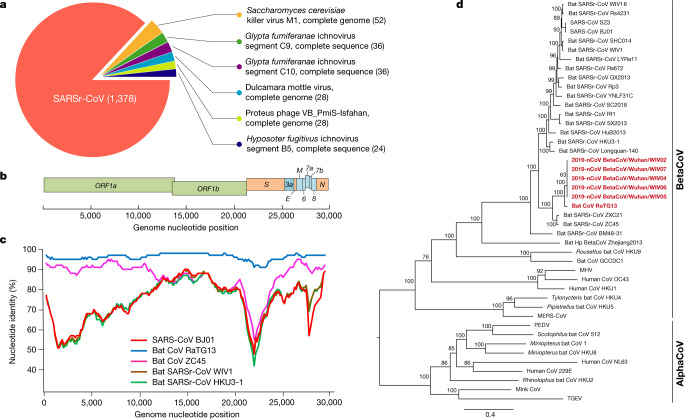
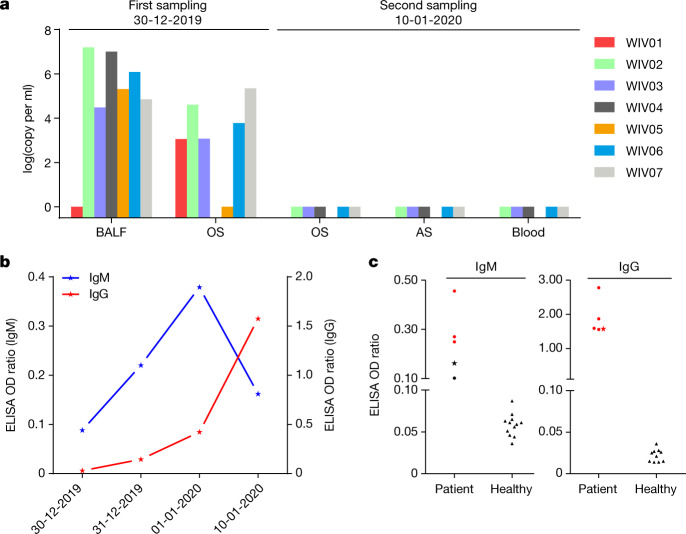
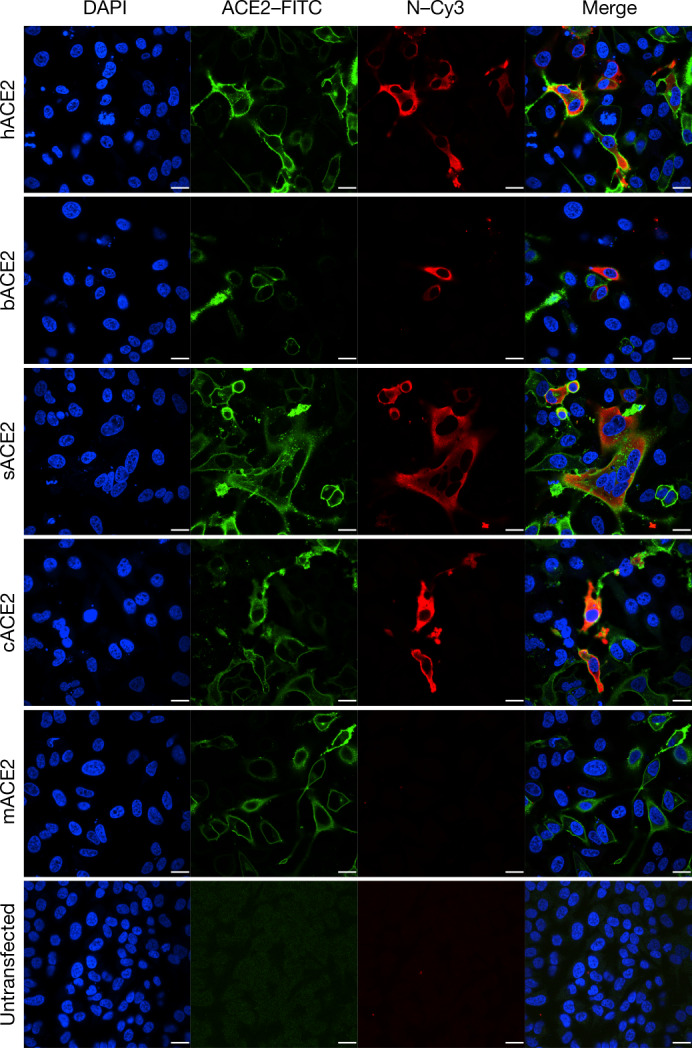
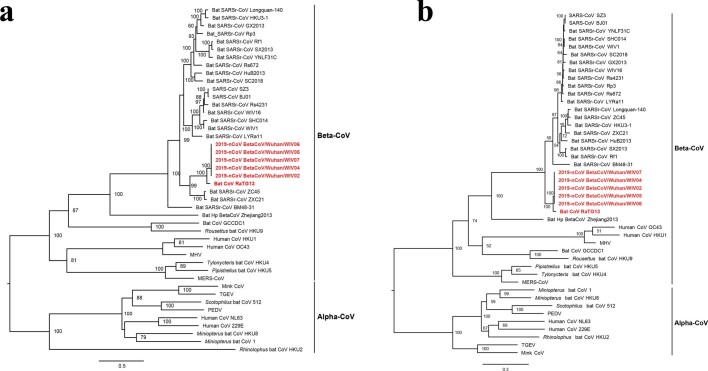
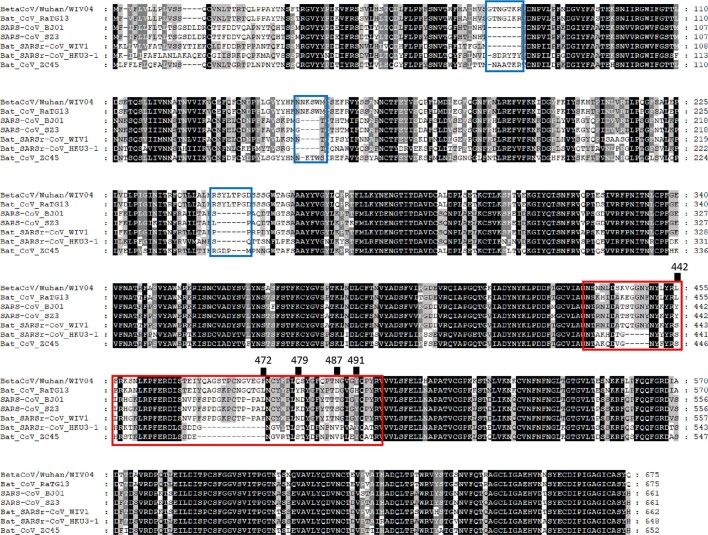
Since the outbreak of severe acute respiratory syndrome (SARS) 18 years ago, a large number of SARS-related coronaviruses (SARSr-CoVs) have been discovered in their natural reservoir host, bats 1–4 . Previous studies have shown that some bat SARSr-CoVs have the potential to infect humans 5–7 . Here we report the identification and characterization of a new coronavirus (2019-nCoV), which caused an epidemic of acute respiratory syndrome in humans in Wuhan, China. The epidemic, which started on 12 December 2019, had caused 2,794 laboratory-confirmed infections including 80 deaths by 26 January 2020. Full-length genome sequences were obtained from five patients at an early stage of the outbreak. The sequences are almost identical and share 79.6% sequence identity to SARS-CoV. Furthermore, we show that 2019-nCoV is 96% identical at the whole-genome level to a bat coronavirus. Pairwise protein sequence analysis of seven conserved non-structural proteins domains show that this virus belongs to the species of . In addition, 2019-nCoV virus isolated from the bronchoalveolar lavage fluid of a critically ill patient could be neutralized by sera from several patients. Notably, we confirmed that 2019-nCoV uses the same cell entry receptor—angiotensin converting enzyme II (ACE2)—as SARS-CoV.
Overview
The claims and statistics of this paper haven’t been checked yet.
Free: it reads the open-access text and checks the first 5 claims that cite a source we can check. Create a free account to check every claim.
Integrity signals
Registry
Cites
Statistics
Figures
Verification
Claims the paper makes
The claims and statistics of this paper haven’t been checked yet.
Free: it reads the open-access text and checks the first 5 claims that cite a source we can check. Create a free account to check every claim.
Claims other papers make about this one
Each is checked against this paper’s own text: does it say what the citing paper says it does?
The source backs part of the claim, not all of it — or backs it for a different population, condition or comparison.
In the citing paper
“SARS-CoV-2 is an enveloped, single-stranded positive-sense RNA virus with the highest, i.e. 96% of genome identity with horseshoe bat virus RaTG13 Rhinolophus affinis [3].”
From Waves and variants of SARS-CoV-2: understanding the causes and effect of the COVID-19 catastrophe (2022) · cites this paper as [3]
Experimental — accuracy not yet measuredThe source backs part of the claim, not all of it — or backs it for a different population, condition or comparison.
In the citing paper
“The disease is estimated to have originated from a seafood market in Wuhan where wild animals were traded such as marmots, bats, snakes and birds (Zhou et al., 2020).”
From How energy innovation in indoor vertical farming can improve food security, sustainability, and food safety? (2020) · cites this paper as Zhou et al., 2020
Experimental — accuracy not yet measuredThe source backs part of the claim, not all of it — or backs it for a different population, condition or comparison.
In the citing paper
“Genome sequencing demonstrated that SARS-CoV-2 shares 79.5% sequence identity with SARS-CoV (Zhou et al., 2020)”
From Oral Microbiome and SARS-CoV-2: Beware of Lung Co-infection (2020) · cites this paper as Zhou et al., 2020
Experimental — accuracy not yet measuredThe source backs part of the claim, not all of it — or backs it for a different population, condition or comparison.
In the citing paper
“This interaction requires cleavage of the S protein, likely by the cell surface protease TMPRSS2, although other proteases (such as Cathepsin B and L, CTSB/CTSL) may also be involved (4-6, 22-25).”
From Non-neuronal expression of SARS-CoV-2 entry genes in the olfactory system suggests mechanisms underlying COVID-19-associated anosmia (2020) · cites this paper as [4]
Experimental — accuracy not yet measuredThe source backs part of the claim, not all of it — or backs it for a different population, condition or comparison.
In the citing paper
“Bats (Chiroptera), representing ~22% of all mammalian species, are natural reservoirs for a wide range of zoonotic viruses, including coronaviruses, rhabdoviruses, and paramyxoviruses ( 1 – 3 ).”
From Ecological vaccination: A strategy to prevent zoonotic spillover from bats (2026) · cites this paper as [1]
Experimental — accuracy not yet measured
8 more claims about this paper
Create a free account to see every claim other papers make about this one.
Self-check
Percentages, sums and reported differences re-computed from the paper’s own numbers.
The self-check needs the paper’s full text.
Citations
Cites
Coronaviridae Study Group of the International Committee on Taxonomy of Viruses, Gorbalenya, A. E., Baker, S. C., Baric, R. S., de Groot, R. J., Drosten, C., Gulyaeva, A. A., Haagmans, B. L., Lauber, C., Leontovich, A. M., et al. (2020) · Nature Microbiology · doi:10.1038/s41564-020-0695-z · Cited by 8,403
Angiotensin-converting enzyme 2 is a functional receptor for the SARS coronavirus
Li, W., Moore, M. J., Vasilieva, N., Sui, J., Wong, S. K., Berne, M. A., Somasundaran, M., Sullivan, J. L., Luzuriaga, K., Greenough, T. C., et al. (2003) · Nature · doi:10.1038/nature02145 · Cited by 5,923
Isolation of a Novel Coronavirus from a Man with Pneumonia in Saudi Arabia
Zaki, A. M., van Boheemen, S., Bestebroer, T. M., Osterhaus, A. D. M. E., & Fouchier, R. A. M. (2012) · New England Journal of Medicine · doi:10.1056/nejmoa1211721 · Cited by 5,735
Origin and evolution of pathogenic coronaviruses
Cui, J., Li, F., & Shi, Z.-L. (2019) · Nature Reviews Microbiology · doi:10.1038/s41579-018-0118-9 · Cited by 5,515
Self-citationIdentification of a novel coronavirus in patients with severe acute respiratory syndrome
Drosten, C., Günther, S., Preiser, W., van der Werf, S., Brodt, H.-R., Becker, S., Rabenau, H., Panning, M., Kolesnikova, L., Fouchier, R. A. M., et al. (2003) · New England Journal of Medicine · doi:10.1056/nejmoa030747 · Cited by 4,574
Bats Are Natural Reservoirs of SARS-Like Coronaviruses
Li, W., Shi, Z., Yu, M., Ren, W., Smith, C., Epstein, J. H., Wang, H., Crameri, G., Hu, Z., Zhang, H., et al. (2005) · Science · doi:10.1126/science.1118391 · Cited by 2,560
Self-citationIsolation and characterization of a bat SARS-like coronavirus that uses the ACE2 receptor
Ge, X.-Y., Li, J.-L., Yang, X.-L., Chmura, A. A., Zhu, G., Epstein, J. H., Mazet, J. K., Hu, B., Zhang, W., Peng, C., et al. (2013) · Nature · doi:10.1038/nature12711 · Cited by 1,778
Self-citationGorbalenya, A. E., Baker, S. C., Baric, R. S., et al. (2020) · bioRxiv (Cold Spring Harbor Laboratory) · doi:10.1101/2020.02.07.937862 · Cited by 1,408
Al-Hanawi, M. K., Angawi, K., Alshareef, N., Qattan, A. M. N., Helmy, H. Z., Abudawood, Y., Alqurashi, M., Kattan, W. M., Kadasah, N. A., Chirwa, G. C., et al. (2020) · Frontiers in Public Health · doi:10.3389/fpubh.2020.00217 · Cited by 967
Hu, B., Zeng, L.-P., Yang, X.-L., Ge, X.-Y., Zhang, W., Li, B., Xie, J.-Z., Shen, X.-R., Zhang, Y.-Z., Wang, N., et al. (2017) · PLOS Pathogens · doi:10.1371/journal.ppat.1006698 · Cited by 950
Self-citation
Cited by
Items 201–300 of 1,208
Data-based analysis, modelling and forecasting of the COVID-19 outbreak
Anastassopoulou, C., Russo, L., Tsakris, A., & Siettos, C. (2020) · PLOS ONE · doi:10.1371/journal.pone.0230405 · Cited by 946
“The origin of COVID-19 has not yet been determined although preliminary investigations are suggestive of a zoonotic, possibly of bat, origin [4, 5].”
BackgroundZoonotic origins of human coronaviruses
Ye, Z.-W., Yuan, S., Yuen, K.-S., Fung, S.-Y., Chan, C.-P., & Jin, D.-Y. (2020) · International Journal of Biological Sciences · doi:10.7150/ijbs.45472 · Cited by 944
Barnes, C. O., West, A. P., Huey-Tubman, K. E., Hoffmann, M. A. G., Sharaf, N. G., Hoffman, P. R., Koranda, N., Gristick, H. B., Gaebler, C., Muecksch, F., et al. (2020) · Cell · doi:10.1016/j.cell.2020.06.025 · Cited by 795
“Phylogenetic analyses confirm that SARS-CoV-2 and SARS-CoV are more closely related to each other than to other human coronaviruses (Figure 1B).”
InfluentialHeightened Innate Immune Responses in the Respiratory Tract of COVID-19 Patients
Zhou, Z., Ren, L., Zhang, L., Zhong, J., Xiao, Y., Jia, Z., Guo, L., Yang, J., Wang, C., Jiang, S., et al. (2020) · Cell Host & Microbe · doi:10.1016/j.chom.2020.04.017 · Cited by 938
Self-citationThe Food Systems in the Era of the Coronavirus (COVID-19) Pandemic Crisis
Galanakis, C. M. (2020) · Foods · doi:10.3390/foods9040523 · Cited by 926
“[3] used sequencing technology to show that SARS-CoV-2 and bat coronavirus possess a similarity of gene sequence up to 96.”
BackgroundMethodRemdesivir, lopinavir, emetine, and homoharringtonine inhibit SARS-CoV-2 replication in vitro
Choy, K.-T., Wong, A. Y.-L., Kaewpreedee, P., Sia, S. F., Chen, D., Hui, K. P. Y., Chu, D. K. W., Chan, M. C. W., Cheung, P. P.-H., Huang, X., et al. (2020) · Antiviral Research · doi:10.1016/j.antiviral.2020.104786 · Cited by 922
Clinical Features of COVID-19-Related Liver Functional Abnormality
Fan, Z., Chen, L., Li, J., Cheng, X., Yang, J., Tian, C., Zhang, Y., Huang, S., Liu, Z., & Cheng, J. (2020) · Clinical Gastroenterology and Hepatology · doi:10.1016/j.cgh.2020.04.002 · Cited by 921
“Abnormality in liver function tests has been reported; almost one-half of patients experience different degrees of liver test abnormalitities.7,8 According to a recent study using single-cell RNA sequencing, angiotensin-converting enzyme 2 was highly expressed not only in type II alveolar epithelial cells, but also in…”
BackgroundInfluentialSingle-Cell RNA Expression Profiling of ACE2, the Receptor of SARS-CoV-2
Zhao, Y., Zhao, Z., Wang, Y., Zhou, Y., Ma, Y., & Zuo, W. (2020) · American Journal of Respiratory and Critical Care Medicine · doi:10.1164/rccm.202001-0179le · Cited by 916
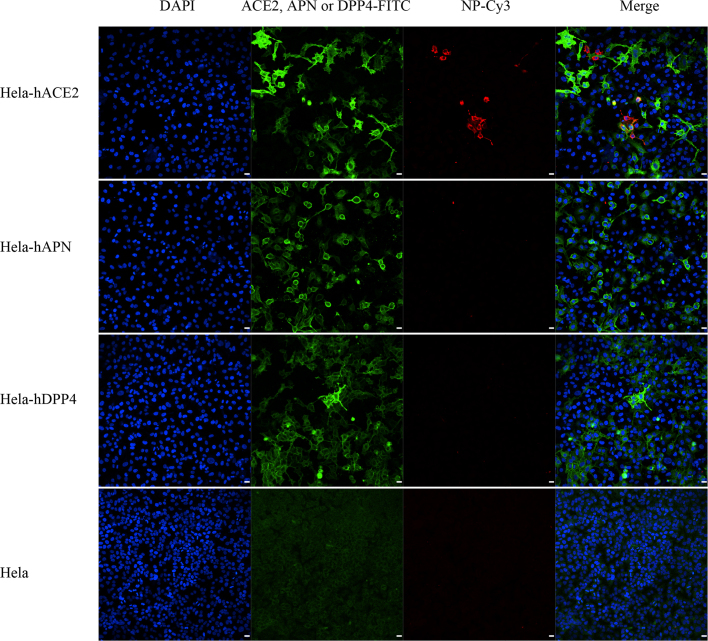
“Zhou and colleagues conducted virus infectivity studies and showed that ACE2 is essential for SARSCoV-2 to enter HeLa cells (13).”
BackgroundSelf-citationCOVID-19: immunopathogenesis and Immunotherapeutics
Yang, L., Liu, S., Liu, J., Zhang, Z., Wan, X., Huang, B., Chen, Y., & Zhang, Y. (2020) · Signal Transduction and Targeted Therapy · doi:10.1038/s41392-020-00243-2 · Cited by 912
Self-citationCOVID ‐19 and Older Adults: What We Know
Shahid, Z., Kalayanamitra, R., McClafferty, B., Kepko, D., Ramgobin, D., Patel, R., Aggarwal, C. S., Vunnam, R., Sahu, N., Bhatt, D., et al. (2020) · Journal of the American Geriatrics Society · doi:10.1111/jgs.16472 · Cited by 909
Coronavirus Disease 19 (COVID-19): Implications for Clinical Dental Care
Ather, A., Patel, B., Ruparel, N. B., Diogenes, A., & Hargreaves, K. M. (2020) · Journal of Endodontics · doi:10.1016/j.joen.2020.03.008 · Cited by 901
Human kidney is a target for novel severe acute respiratory syndrome coronavirus 2 infection
Diao, B., Wang, C., Wang, R., Feng, Z., Zhang, J., Yang, H., Tan, Y., Wang, H., Wang, C., Liu, L., et al. (2021) · Nature Communications · doi:10.1038/s41467-021-22781-1 · Cited by 900
Self-citationSARS-CoV-2 variants B.1.351 and P.1 escape from neutralizing antibodies
Hoffmann, M., Arora, P., Groß, R., Seidel, A., Hörnich, B. F., Hahn, A. S., Krüger, N., Graichen, L., Hofmann-Winkler, H., Kempf, A., et al. (2021) · Cell · doi:10.1016/j.cell.2021.03.036 · Cited by 897
“, 2020), and these processes can be disrupted by soluble ACE2 and serine protease inhibitors (Hoffmann et al., 2020b; Monteil et al., 2020; Zhou et al., 2020).”
Beyerstedt, S., Casaro, E. B., & Rangel, É. B. (2021) · European Journal of Clinical Microbiology & Infectious Diseases · doi:10.1007/s10096-020-04138-6 · Cited by 897
“SARS-CoV-2 shares 80% identity with SARS-CoV [1], and both viruses use the angiotensin-converting enzyme 2 (ACE2) as a cellular entry receptor [2, 3].”
BackgroundA mathematical model for simulating the phase-based transmissibility of a novel coronavirus
Chen, T.-M., Rui, J., Wang, Q.-P., Zhao, Z.-Y., Cui, J.-A., & Yin, L. (2020) · Infectious Diseases of Poverty · doi:10.1186/s40249-020-00640-3 · Cited by 890
“It is reported that the virus might be bat origin [2], and the transmission of the virus might related to a seafood market (Huanan Seafood Wholesale Market) exposure [3, 4].”
BackgroundPreexisting and de novo humoral immunity to SARS-CoV-2 in humans
Ng, K. W., Faulkner, N., Cornish, G. H., Rosa, A., Harvey, R., Hussain, S., Ulferts, R., Earl, C., Wrobel, A. G., Benton, D. J., et al. (2020) · Science · doi:10.1126/science.abe1107 · Cited by 886
Viral and host factors related to the clinical outcome of COVID-19
Zhang, X., Tan, Y., Ling, Y., Lu, G., Liu, F., Yi, Z., Jia, X., Wu, M., Shi, B., Xu, S., et al. (2020) · Nature · doi:10.1038/s41586-020-2355-0 · Cited by 885
Self-citationInterleukin‐6 in Covid‐19: A systematic review and meta‐analysis
Coomes, E. A., & Haghbayan, H. (2020) · Reviews in Medical Virology · doi:10.1002/rmv.2141 · Cited by 883
Structural basis for translational shutdown and immune evasion by the Nsp1 protein of SARS-CoV-2
Thoms, M., Buschauer, R., Ameismeier, M., Koepke, L., Denk, T., Hirschenberger, M., Kratzat, H., Hayn, M., Mackens-Kiani, T., Cheng, J., et al. (2020) · Science · doi:10.1126/science.abc8665 · Cited by 881
Chan, J. F.-W., Yip, C. C.-Y., To, K. K.-W., Tang, T. H.-C., Wong, S. C.-Y., Leung, K.-H., Fung, A. Y.-F., Ng, A. C.-K., Zou, Z., Tsoi, H.-W., et al. (2020) · Journal of Clinical Microbiology · doi:10.1128/jcm.00310-20 · Cited by 880
Analytical sensitivity and efficiency comparisons of SARS-CoV-2 RT–qPCR primer–probe sets
Vogels, C. B. F., Brito, A. F., Wyllie, A. L., Fauver, J. R., Ott, I. M., Kalinich, C. C., Petrone, M. E., Casanovas-Massana, A., Catherine Muenker, M., Moore, A. J., et al. (2020) · Nature Microbiology · doi:10.1038/s41564-020-0761-6 · Cited by 876
“Here, we used the same (1) primer–probe concentrations (500 nM of forward and reverse primer and 250 nM of probe); (2) PCR reagents (New England Biolabs, Luna Universal Probe One-step RT–qPCR kit); and (3) thermocycler conditions (10 min at 55 °C, 1 min at 95 °C, followed by 40 cycles (45 for clinical samples) of 10 s…”
Mao, L., Wang, M., Chen, S., He, Q., Chang, J., Hong, C., Zhou, Y., Wang, D., Li, Y., Jin, H., et al. (2020) · medRxiv · doi:10.1101/2020.02.22.20026500 · Cited by 875
“2019-nCov was reported to have symptoms resembled that of severe acute respiratory syndrome coronavirus (SARS-CoV) in 2003 [2].”
BackgroundSelf-citationSARS-CoV-2: Structure, Biology, and Structure-Based Therapeutics Development
Wang, M.-Y., Zhao, R., Gao, L.-J., Gao, X.-F., Wang, D.-P., & Cao, J.-M. (2020) · Frontiers in Cellular and Infection Microbiology · doi:10.3389/fcimb.2020.587269 · Cited by 874
COVID-19 immune features revealed by a large-scale single-cell transcriptome atlas
Ren, X., Wen, W., Fan, X., Hou, W., Su, B., Cai, P., Li, J., Liu, Y., Tang, F., Zhang, F., et al. (2021) · Cell · doi:10.1016/j.cell.2021.01.053 · Cited by 865
Self-citationCao, Y., Li, L., Feng, Z., Wan, S., Huang, P., Sun, X., Wen, F., Huang, X., Ning, G., & Wang, W. (2020) · Cell Discovery · doi:10.1038/s41421-020-0147-1 · Cited by 865
Zoonotic diseases: etiology, impact, and control
Rahman, M. T., Sobur, M. A., Islam, M. S., Ievy, S., Hossain, M. J., El Zowalaty, M. E., Rahman, A. T., & Ashour, H. M. (2020) · Microorganisms · doi:10.3390/microorganisms8091405 · Cited by 853
Clinical Characteristics of Refractory Coronavirus Disease 2019 in Wuhan, China
Mo, P., Xing, Y., Xiao, Y., Deng, L., Zhao, Q., Wang, H., Xiong, Y., Cheng, Z., Gao, S., Liang, K., et al. (2021) · Clinical Infectious Diseases · doi:10.1093/cid/ciaa270 · Cited by 853
“Epidemiological data demonstrated person-to-person transmission in hospital and family settings [7, 8] The high infectivity of COVID-19 resulted in a rapid increase of new cases and a worldwide outbreak [9, 10].”
BackgroundEffects of COVID-19 on hotel marketing and management: a perspective article
Jiang, Y., & Wen, J. (2020) · International Journal of Contemporary Hospitality Management · doi:10.1108/ijchm-03-2020-0237 · Cited by 848
Neutralizing Antibodies against SARS-CoV-2 and Other Human Coronaviruses
Jiang, S., Hillyer, C., & Du, L. (2020) · Trends in Immunology · doi:10.1016/j.it.2020.03.007 · Cited by 847
“Different from SARS-CoV and MERSCoV, SARS-CoV-2 was first reported in Wuhan, China in December 2019 and is characterized by its rapid spread and virulent human-to-human transmission [4], resulting in 125 048 confirmed cases including 4613 deaths (CFR 3.”
BackgroundResultInfluentialLeung, J. M., Yang, C. X., Tam, A., Shaipanich, T., Hackett, T.-L., Singhera, G. K., Dorscheid, D. R., & Sin, D. D. (2020) · European Respiratory Journal · doi:10.1183/13993003.00688-2020 · Cited by 845
Yang, Y., Yang, M., Shen, C., Wang, F., Yuan, J., Li, J., Zhang, M., Wang, Z., Xing, L., Wei, J., et al. (2020) · doi:10.1101/2020.02.11.20021493 · Cited by 836
Self-citationCOVID-19 with Different Severities: A Multicenter Study of Clinical Features
Feng, Y., Ling, Y., Bai, T., Xie, Y., Huang, J., Li, J., Xiong, W., Yang, D., Chen, R., Lu, F., et al. (2020) · American Journal of Respiratory and Critical Care Medicine · doi:10.1164/rccm.202002-0445oc · Cited by 838
Self-citationCOVID-19: what has been learned and to be learned about the novel coronavirus disease
Yi, Y., Lagniton, P. N. P., Ye, S., Li, E., & Xu, R.-H. (2020) · International Journal of Biological Sciences · doi:10.7150/ijbs.45134 · Cited by 832
Severe Acute Respiratory Syndrome Coronavirus-2 (SARS-CoV-2): An Update
Pal, M., Berhanu, G., Desalegn, C., & Kandi, V. (2020) · Cureus · doi:10.7759/cureus.7423 · Cited by 830
A Genomic Perspective on the Origin and Emergence of SARS-CoV-2
Zhang, Y.-Z., & Holmes, E. C. (2020) · Cell · doi:10.1016/j.cell.2020.03.035 · Cited by 818
SARS-CoV-2 infection protects against rechallenge in rhesus macaques
Chandrashekar, A., Liu, J., Martinot, A. J., McMahan, K., Mercado, N. B., Peter, L., Tostanoski, L. H., Yu, J., Maliga, Z., Nekorchuk, M., et al. (2020) · Science · doi:10.1126/science.abc4776 · Cited by 816
Receptor binding and priming of the spike protein of SARS-CoV-2 for membrane fusion
Benton, D. J., Wrobel, A. G., Xu, P., Roustan, C., Martin, S. R., Rosenthal, P. B., Skehel, J. J., & Gamblin, S. J. (2020) · Nature · doi:10.1038/s41586-020-2772-0 · Cited by 804
What we know so far: COVID-19 current clinical knowledge and research
Lake, M. A. (2020) · Clinical Medicine · doi:10.7861/clinmed.2019-coron · Cited by 800
The Science Underlying COVID-19: Implications for the Cardiovascular System
Liu, P. P., Blet, A., Smyth, D., & Li, H. (2020) · Circulation · doi:10.1161/circulationaha.120.047549 · Cited by 800
Structure of replicating SARS-CoV-2 polymerase
Hillen, H. S., Kokic, G., Farnung, L., Dienemann, C., Tegunov, D., & Cramer, P. (2020) · Nature · doi:10.1038/s41586-020-2368-8 · Cited by 790
“2, 3 ).”
BackgroundSingle-Shot Ad26 Vaccine Protects Against SARS-CoV-2 in Rhesus Macaques
Mercado, N. B., Zahn, R., Wegmann, F., Loos, C., Chandrashekar, A., Yu, J., Liu, J., Peter, L., McMahan, K., Tostanoski, L. H., et al. (2020) · Nature · doi:10.1038/s41586-020-2607-z · Cited by 789
Fu, Y., Cheng, Y., & Wu, Y. (2020) · Virologica Sinica · doi:10.1007/s12250-020-00207-4 · Cited by 788
Laboratory diagnosis of emerging human coronavirus infections – the state of the art
Loeffelholz, M. J., & Tang, Y.-W. (2020) · Emerging Microbes & Infections · doi:10.1080/22221751.2020.1745095 · Cited by 788
Alterations of the Gut Microbiota in Patients With Coronavirus Disease 2019 or H1N1 Influenza
Gu, S., Chen, Y., Wu, Z., Chen, Y., Gao, H., Lv, L., Guo, F., Zhang, X., Luo, R., Huang, C., et al. (2020) · Clinical Infectious Diseases · doi:10.1093/cid/ciaa709 · Cited by 788
“invade human cells, and these receptors are highly expressed in the intestinal epithelium[5].”
BackgroundSelf-citationChen, J. (2020) · Microbes and Infection · doi:10.1016/j.micinf.2020.01.004 · Cited by 783
Self-citationAn Infectious cDNA Clone of SARS-CoV-2
Xie, X., Muruato, A., Lokugamage, K. G., Narayanan, K., Zhang, X., Zou, J., Liu, J., Schindewolf, C., Bopp, N. E., Aguilar, P. V., et al. (2020) · Cell Host & Microbe · doi:10.1016/j.chom.2020.04.004 · Cited by 647
“Severe acute respiratory syndrome coronavirus 2 (SARS-CoV-2) emerged in early 2020 with human cases in Wuhan, China (Zhou et al., 2020; Zhu et al., 2020) .”
BackgroundA vaccine targeting the RBD of the S protein of SARS-CoV-2 induces protective immunity
Yang, J., Wang, W., Chen, Z., Lu, S., Yang, F., Bi, Z., Bao, L., Mo, F., Li, X., Huang, Y., et al. (2020) · Nature · doi:10.1038/s41586-020-2599-8 · Cited by 780
Self-citationViral epitope profiling of COVID-19 patients reveals cross-reactivity and correlates of severity
Shrock, E., Fujimura, E., Kula, T., Timms, R. T., Lee, I.-H., Leng, Y., Robinson, M. L., Sie, B. M., Li, M. Z., Chen, Y., et al. (2020) · Science · doi:10.1126/science.abd4250 · Cited by 678
COVID-19: Current understanding of its Pathophysiology, Clinical presentation and Treatment
Parasher, A. (2021) · Postgraduate Medical Journal · doi:10.1136/postgradmedj-2020-138577 · Cited by 776
SARS-CoV-2 and Coronavirus Disease 2019: What We Know So Far
Rabi, F. A., Al Zoubi, M. S., Kasasbeh, G. A., Salameh, D. M., & Al-Nasser, A. D. (2020) · Pathogens · doi:10.3390/pathogens9030231 · Cited by 775
Emergence of genomic diversity and recurrent mutations in SARS-CoV-2
van Dorp, L., Acman, M., Richard, D., Shaw, L. P., Ford, C. E., Ormond, L., Owen, C. J., Pang, J., Tan, C. C. S., Boshier, F. A. T., et al. (2020) · Infection, Genetics and Evolution · doi:10.1016/j.meegid.2020.104351 · Cited by 774
COVID-19: a new virus, but a familiar receptor and cytokine release syndrome
Hirano, T., & Murakami, M. (2020) · Immunity · doi:10.1016/j.immuni.2020.04.003 · Cited by 772
“Furthermore, utilizing replication-defective vesicular stomatitis virus (VSV) particles bearing either SARS-2-S or SARS-CoV S protein (SARS-S), they showed that either S protein entered the cells with an identical spectrum of cell lines from various animal species, which is consistent with the amino acid residues esse…”
InfluentialThe SARS-CoV-2 main protease as drug target
Ullrich, S., & Nitsche, C. (2020) · Bioorganic & Medicinal Chemistry Letters · doi:10.1016/j.bmcl.2020.127377 · Cited by 772
Liu, B., Li, M., Zhou, Z., Guan, X., & Xiang, Y. (2020) · Journal of Autoimmunity · doi:10.1016/j.jaut.2020.102452 · Cited by 763
Initiative, T. C.-1. H. G. (2020) · European Journal of Human Genetics · doi:10.1038/s41431-020-0636-6 · Cited by 763
Adaptation of SARS-CoV-2 in BALB/c mice for testing vaccine efficacy
Gu, H., Chen, Q., Yang, G., He, L., Fan, H., Deng, Y.-Q., Wang, Y., Teng, Y., Zhao, Z., Cui, Y., et al. (2020) · Science · doi:10.1126/science.abc4730 · Cited by 762
Self-citationCoronavirus membrane fusion mechanism offers a potential target for antiviral development
Tang, T., Bidon, M., Jaimes, J. A., Whittaker, G. R., & Daniel, S. (2020) · Antiviral Research · doi:10.1016/j.antiviral.2020.104792 · Cited by 761
Paraskevis, D., Kostaki, E. G., Magiorkinis, G., Panayiotakopoulos, G., Sourvinos, G., & Tsiodras, S. (2020) · Infection, Genetics and Evolution · doi:10.1016/j.meegid.2020.104212 · Cited by 760
SARS-CoV-2 in wastewater: State of the knowledge and research needs
Kitajima, M., Ahmed, W., Bibby, K., Carducci, A., Gerba, C. P., Hamilton, K. A., Haramoto, E., & Rose, J. B. (2020) · Science of The Total Environment · doi:10.1016/j.scitotenv.2020.139076 · Cited by 759
Wu, F., Wang, A., Liu, M., Wang, Q., Chen, J., Xia, S., Ling, Y., Zhang, Y., Xun, J., Lu, L., et al. (2020) · doi:10.1101/2020.03.30.20047365 · Cited by 754
Self-citationHottz, E. D., Azevedo-Quintanilha, I. G., Palhinha, L., Teixeira, L., Barreto, E. A., Pão, C. R. R., Righy, C., Franco, S., Souza, T. M. L., Kurtz, P., et al. (2020) · Blood · doi:10.1182/blood.2020007252 · Cited by 751
Wang, H., Zhang, Y., Huang, B., Deng, W., Quan, Y., Wang, W., Xu, W., Zhao, Y., Li, N., Zhang, J., et al. (2020) · Cell · doi:10.1016/j.cell.2020.06.008 · Cited by 748
Self-citationChu, H., Chan, J. F.-W., Yuen, T. T.-T., Shuai, H., Yuan, S., Wang, Y., Hu, B., Yip, C. C.-Y., Tsang, J. O.-L., Huang, X., et al. (2020) · The Lancet Microbe · doi:10.1016/s2666-5247(20)30004-5 · Cited by 748
“3 However, the spike protein S1 subunits of the two viruses share only approximately 70% amino acid identity.”
BackgroundSelf-citationInfection of dogs with SARS-CoV-2
Sit, T. H. C., Brackman, C. J., Ip, S. M., Tam, K. W. S., Law, P. Y. T., To, E. M. W., Yu, V. Y. T., Sims, L. D., Tsang, D. N. C., Chu, D. K. W., et al. (2020) · Nature · doi:10.1038/s41586-020-2334-5 · Cited by 744
Tan, A. T., Linster, M., Tan, C. W., Le Bert, N., Chia, W. N., Kunasegaran, K., Zhuang, Y., Tham, C. Y. L., Chia, A., Smith, G. J. D., et al. (2021) · Cell Reports · doi:10.1016/j.celrep.2021.108728 · Cited by 740
Immune response, inflammation, and the clinical spectrum of COVID-19
García, L. F. (2020) · Frontiers in Immunology · doi:10.3389/fimmu.2020.01441 · Cited by 739
“(10), who named itWH-Human 1 and 2019-nCoV, respectively.”
BackgroundLoss of Bcl-6-Expressing T Follicular Helper Cells and Germinal Centers in COVID-19
Kaneko, N., Kuo, H.-H., Boucau, J., Farmer, J. R., Allard-Chamard, H., Mahajan, V. S., Piechocka-Trocha, A., Lefteri, K., Osborn, M., Bals, J., et al. (2020) · Cell · doi:10.1016/j.cell.2020.08.025 · Cited by 734
“Severely ill patients experience a life-threatening acute respiratory distress syndrome, and even in an advanced care setting, some patients sustain severe lung damage and succumb early (Zhu et al., 2020; Zhou et al., 2020).”
Entrenas Castillo, M., Entrenas Costa, L. M., Vaquero Barrios, J. M., Alcalá Díaz, J. F., López Miranda, J., Bouillon, R., & Quesada Gomez, J. M. (2020) · The Journal of Steroid Biochemistry and Molecular Biology · doi:10.1016/j.jsbmb.2020.105751 · Cited by 732
SARS-CoV-2 structure and replication characterized by in situ cryo-electron tomography
Klein, S., Cortese, M., Winter, S. L., Wachsmuth-Melm, M., Neufeldt, C. J., Cerikan, B., Stanifer, M. L., Boulant, S., Bartenschlager, R., & Chlanda, P. (2020) · Nature Communications · doi:10.1038/s41467-020-19619-7 · Cited by 731
The furin cleavage site in the SARS-CoV-2 spike protein is required for transmission in ferrets
Peacock, T. P., Goldhill, D. H., Zhou, J., Baillon, L., Frise, R., Swann, O. C., Kugathasan, R., Penn, R., Brown, J. C., Sanchez-David, R. Y., et al. (2021) · Nature Microbiology · doi:10.1038/s41564-021-00908-w · Cited by 731
“Depending on the sequence of spike at the S1/S2 junction, the cleavage can occur: (1) during trafficking in the producer cell by host furin-like enzymes; (2) by serine proteases such as the transmembrane protease, serine 2 (TMPRSS2), at the cell surface during attachment; or (3) by cathepsin proteases in the late endo…”
BackgroundLax, S. F., Skok, K., Zechner, P., Kessler, H. H., Kaufmann, N., Koelblinger, C., Vander, K., Bargfrieder, U., & Trauner, M. (2020) · Annals of Internal Medicine · doi:10.7326/m20-2566 · Cited by 730
SARS-CoV-2 B.1.1.7 sensitivity to mRNA vaccine-elicited, convalescent and monoclonal antibodies
Collier, D. A., De Marco, A., Ferreira, I. A. T. M., Meng, B., Datir, R., Walls, A. C., Kemp S, S. A., Bassi, J., Pinto, D., Fregni, C. S., et al. (2021) · doi:10.1101/2021.01.19.21249840 · Cited by 729
Sensitivity of SARS-CoV-2 B.1.1.7 to mRNA vaccine-elicited antibodies
Collier, D. A., De Marco, A., Ferreira, I. A. T. M., Meng, B., Datir, R. P., Walls, A. C., Kemp, S. A., Bassi, J., Pinto, D., Silacci-Fregni, C., et al. (2021) · Nature · doi:10.1038/s41586-021-03412-7 · Cited by 728
Self-citationIsolation of SARS-CoV-2-related coronavirus from Malayan pangolins
Xiao, K., Zhai, J., Feng, Y., Zhou, N., Zhang, X., Zou, J.-J., Li, N., Guo, Y., Li, X., Shen, X., et al. (2020) · Nature · doi:10.1038/s41586-020-2313-x · Cited by 728
Self-citationACE2 Expression in Pancreas May Cause Pancreatic Damage After SARS-CoV-2 Infection
Liu, F., Long, X., Zhang, B., Zhang, W., Chen, X., & Zhang, Z. (2020) · Clinical Gastroenterology and Hepatology · doi:10.1016/j.cgh.2020.04.040 · Cited by 718
Self-citationEmerging Pandemic Diseases: How We Got to COVID-19
Morens, D. M., & Fauci, A. S. (2020) · Cell · doi:10.1016/j.cell.2020.08.021 · Cited by 716
“Evidence suggests that there are many bat coronaviruses pre-adapted to emerge, and possibly to emerge pandemically (Andersen et al., 2020; Hasan et al., 2020; Hu et al., 2017; Menachery et al., 2016; Wang et al., 2018; Zhou et al., 2020a).”
InfluentialStructural basis of a shared antibody response to SARS-CoV-2
Yuan, M., Liu, H., Wu, N. C., Lee, C.-C. D., Zhu, X., Zhao, F., Huang, D., Yu, W., Hua, Y., Tien, H., et al. (2020) · Science · doi:10.1126/science.abd2321 · Cited by 589
Covid‐19 and the digestive system
Wong, S. H., Lui, R. N., & Sung, J. J. (2020) · Journal of Gastroenterology and Hepatology · doi:10.1111/jgh.15047 · Cited by 713
Establishment and validation of a pseudovirus neutralization assay for SARS-CoV-2
Nie, J., Li, Q., Wu, J., Zhao, C., Hao, H., Liu, H., Zhang, L., Nie, L., Qin, H., Wang, M., et al. (2020) · Emerging Microbes & Infections · doi:10.1080/22221751.2020.1743767 · Cited by 711
“The wide-type SARS-CoV-2 has been successfully isolated in both Vero (monkey kidney cell) and Huh7 (human hepatoma cell) [22].”
BackgroundSelf-citationSARS-CoV-2 and COVID-19: The most important research questions
Yuen, K.-S., Ye, Z. W., Fung, S.-Y., Chan, C.-P., & Jin, D.-Y. (2020) · Cell & Bioscience · doi:10.1186/s13578-020-00404-4 · Cited by 707
Fusion mechanism of 2019-nCoV and fusion inhibitors targeting HR1 domain in spike protein
Xia, S., Zhu, Y., Liu, M., Lan, Q., Xu, W., Wu, Y., Ying, T., Liu, S., Shi, Z., Jiang, S., et al. (2020) · Cellular & Molecular Immunology · doi:10.1038/s41423-020-0374-2 · Cited by 704
Self-citationHu, Y., Sun, J., Dai, Z., Deng, H., Li, X., Huang, Q., Wu, Y., Sun, L., & Xu, Y. (2020) · Journal of Clinical Virology · doi:10.1016/j.jcv.2020.104371 · Cited by 703
COVID-19 update: Covid-19-associated coagulopathy
Becker, R. C. (2020) · Journal of Thrombosis and Thrombolysis · doi:10.1007/s11239-020-02134-3 · Cited by 698
BNT162b vaccines protect rhesus macaques from SARS-CoV-2
Vogel, A. B., Kanevsky, I., Che, Y., Swanson, K. A., Muik, A., Vormehr, M., Kranz, L. M., Walzer, K. C., Hein, S., Güler, A., et al. (2021) · Nature · doi:10.1038/s41586-021-03275-y · Cited by 694
Clinical features and short-term outcomes of 221 patients with COVID-19 in Wuhan, China
Zhang, G., Hu, C., Luo, L., Fang, F., Chen, Y., Li, J., Peng, Z., & Pan, H. (2020) · Journal of Clinical Virology · doi:10.1016/j.jcv.2020.104364 · Cited by 694
Self-citationAkhmerov, A., & Marbán, E. (2020) · Circulation Research · doi:10.1161/circresaha.120.317055 · Cited by 693
Helmy, Y. A., Fawzy, M., Elaswad, A., Sobieh, A., Kenney, S. P., & Shehata, A. A. (2020) · Journal of Clinical Medicine · doi:10.3390/jcm9041225 · Cited by 692
Metallodrugs are unique: opportunities and challenges of discovery and development
Anthony, E. J., Bolitho, E. M., Bridgewater, H. E., Carter, O. W. L., Donnelly, J. M., Imberti, C., Lant, E. C., Lermyte, F., Needham, R. J., Palau, M., et al. (2020) · Chemical Science · doi:10.1039/d0sc04082g · Cited by 692
Self-citationLiu, Z., Xiao, X., Wei, X., Li, J., Yang, J., Tan, H., Zhu, J., Zhang, Q., Wu, J., & Liu, L. (2020) · Journal of Medical Virology · doi:10.1002/jmv.25726 · Cited by 691
“It was reported that SARS‐CoV‐2 uses the same cell entry receptor.(18) To understand the possibility of SARS‐CoV‐2 RBD binding with ACE2, the structure of spike protein of SARS‐CoV‐2 was simulated (Figure 4A).”
BackgroundSelf-citationCOVID-19: Epidemiology, Evolution, and Cross-Disciplinary Perspectives
Sun, J., He, W.-T., Wang, L., Lai, A., Ji, X., Zhai, X., Li, G., Suchard, M. A., Tian, J., Zhou, J., et al. (2020) · Trends in Molecular Medicine · doi:10.1016/j.molmed.2020.02.008 · Cited by 685
Chest CT Severity Score: An Imaging Tool for Assessing Severe COVID-19
Yang, R., Li, X., Liu, H., Zhen, Y., Zhang, X., Xiong, Q., Luo, Y., Gao, C., & Zeng, W. (2020) · Radiology: Cardiothoracic Imaging · doi:10.1148/ryct.2020200047 · Cited by 685
Self-citationXu, J., Zhao, S., Teng, T., Abdalla, A. E., Zhu, W., Xie, L., Wang, Y., & Guo, X. (2020) · Viruses · doi:10.3390/v12020244 · Cited by 683
Self-citationLu, X., Wang, L., Sakthivel, S. K., Whitaker, B., Murray, J., Kamili, S., Lynch, B., Malapati, L., Burke, S. A., Harcourt, J., et al. (2020) · Emerging Infectious Diseases · doi:10.3201/eid2608.201246 · Cited by 676
“Detected in 2013 from China, this virus appears to be the nearest bat precursor of SARS-CoV-2 (15), having 96% genome and 97% N gene sequence identity with SARS-CoV-2.”
BackgroundIdentification of Antiviral Drug Candidates against SARS-CoV-2 from FDA-Approved Drugs
Jeon, S., Ko, M., Lee, J., Choi, I., Byun, S. Y., Park, S., Shum, D., & Kim, S. (2020) · Antimicrobial Agents and Chemotherapy · doi:10.1128/aac.00819-20 · Cited by 675
A mouse-adapted model of SARS-CoV-2 to test COVID-19 countermeasures
Dinnon, K. H., Leist, S. R., Schäfer, A., Edwards, C. E., Martinez, D. R., Montgomery, S. A., West, A., Yount, B. L., Hou, Y. J., Adams, L. E., et al. (2020) · Nature · doi:10.1038/s41586-020-2708-8 · Cited by 675
D-dimer as a biomarker for disease severity and mortality in COVID-19 patients: a case control study
Yao, Y., Cao, J., Wang, Q., Shi, Q., Liu, K., Luo, Z., Chen, X., Chen, S., Yu, K., Huang, Z., et al. (2020) · Journal of Intensive Care · doi:10.1186/s40560-020-00466-z · Cited by 675
Self-citationThe epidemiology and clinical information about COVID-19
Ge, H., Wang, X., Yuan, X., Xiao, G., Wang, C., Deng, T., Yuan, Q., & Xiao, X. (2020) · European Journal of Clinical Microbiology & Infectious Diseases · doi:10.1007/s10096-020-03874-z · Cited by 672
Self-citationA thermostable mRNA vaccine against COVID-19
Zhang, N.-N., Li, X.-F., Deng, Y.-Q., Zhao, H., Huang, Y.-J., Yang, G., Huang, W.-J., Gao, P., Zhou, C., Zhang, R.-R., et al. (2020) · Cell · doi:10.1016/j.cell.2020.07.024 · Cited by 694
“Severe acute respiratory syndrome coronavirus 2 (SARS-CoV2), a novel human coronavirus closely related to SARS-CoV (Wu et al., 2020; Zhou et al., 2020; Zhu et al., 2020b), has spread throughout the world and is causing global public health crises.”
Self-citationCoronavirus COVID-19 impacts to dentistry and potential salivary diagnosis
Sabino-Silva, R., Jardim, A. C. G., & Siqueira, W. L. (2020) · Clinical Oral Investigations · doi:10.1007/s00784-020-03248-x · Cited by 671
COVID-19: Immunology and treatment options
Felsenstein, S., Herbert, J. A., McNamara, P. S., & Hedrich, C. M. (2020) · Clinical Immunology · doi:10.1016/j.clim.2020.108448 · Cited by 669
Metadata
- Authors
- Zhou, P., Yang, X.-L., Wang, X.-G., Hu, B., Zhang, L., Zhang, W., Si, H.-R., Zhu, Y., Li, B., Huang, C.-L., Chen, H.-D., Chen, J., Luo, Y., Guo, H., Jiang, R.-D., Liu, M.-Q., Chen, Y., Shen, X.-R., Wang, X., Zheng, X.-S., Zhao, K., Chen, Q.-J., Deng, F., Liu, L.-L., Yan, B., Zhan, F.-X., Wang, Y.-Y., Xiao, G.-F., & Shi, Z.-L.
- Affiliations
- Chinese Academy of Sciences (CN)
- Jinyintan Hospital (CN)
- Hubei Provincial Center for Disease Control and Prevention (CN)
- Corresponding author
- Shi, Zheng-Li
- Venue
- Nature
- Published
- 2020-02-03
- Volume
- 579
- Issue
- 7798
- Pages
- 270-273
- ISSN
- 0028-0836 (ISSN-L)
- 1476-4687
- PMC
- PMC7095418
- OpenAlex
- W3004280078
- Cited by
- 21,969
- References
- 19
- Citations by year
- 2026: 363 · 2025: 769 · 2024: 1366 · 2023: 2080 · 2022: 3751 · 2021: 6147 · 2020: 7448
- FWCI
- 638.99
- Type
- journal article
- Language
- en
- Update notices
- addendum (2020-11-17)
- Open access
- hybrid
- doi.org
- Licence
- cc-by
- creativecommons.org/licenses/by/4.0 (tdm)
- creativecommons.org/licenses/by/4.0 (vor)
- Locations
- Nature (publishedVersion, cc-by)
- bioRxiv (Cold Spring Harbor Laboratory) (acceptedVersion)
- PubMed Central (publishedVersion, cc-by)
- PubMed (publishedVersion)
- LA Referencia (Red Federada de Repositorios Institucionales de Publicaciones Científicas) (publishedVersion, cc-by)
- Digital Commons - University of South Florida (University of South Florida) (submittedVersion)
- RePEc: Research Papers in Economics (submittedVersion)
- LA Referencia (Red Federada de Repositorios Institucionales de Publicaciones Científicas) (submittedVersion, cc-by)
- Funders
- Chinese Academy of Sciences (XDB29010101, 2019328)
- Youth Innovation Promotion Association
- Topics
- Health Sciences › Medicine › Infectious Diseases › SARS-CoV-2 and COVID-19 Research
- Life Sciences › Agricultural and Biological Sciences › Animal Science and Zoology › Animal Virus Infections Studies
- Health Sciences › Medicine › Infectious Diseases › COVID-19 Clinical Research Studies
- Keywords
- SARS-CoV-2, coronavirus outbreak, bat coronaviruses, zoonotic transmission, SARS-related coronaviruses, complete genome sequence, neutralizing antibodies, ACE2 receptor
- MeSH terms
- Betacoronavirus, Angiotensin-Converting Enzyme 2, COVID-19, SARS-CoV-2, Animals, Antibodies, Viral, Cell Line, Chlorocebus aethiops, China, Chiroptera, Disease Outbreaks, Female, Humans, Peptidyl-Dipeptidase A, Male, Phylogeny, Pneumonia, Viral, Sequence Homology, Nucleic Acid, Vero Cells, Genome, Viral, Coronavirus Infections, Severe Acute Respiratory Syndrome, Severe acute respiratory syndrome-related coronavirus
About these checks
Registry, retraction, Cites and statistics results are computed, not judged, with one exception: a printed reference that no index lists is read once by a model before it counts as a citation error. Claims are extracted by a model and kept only when their quote appears verbatim in the text; each cited source is then checked, with a model’s help, for whether it says what the claim relies on. Those verdicts can be wrong — read the claim’s quote and the cited source before relying on one.
Statistics and arithmetic are recomputed, not judged.
Confidence bands are shown only for fields calibrated on our annotated test set. None is calibrated yet, so no band is shown.
What counts as a claim ›How we measure confidence ›How we check this ›
Are you an author, or do you see a problem with this page? Request a review
Data sources
Bibliographic data: Semantic Scholar, OpenAlex, Crossref.
Contains information from the Semantic Scholar Academic Graph Datasets, made available under the ODC Attribution License (ODC-BY 1.0).
Semantic Scholar’s data is described in: Kinney, R., et al. (2023). The Semantic Scholar Open Data Platform. arXiv:2301.10140.
